Home Improvement
20 Front Porch Flower Pot Decor Ideas That Make Every Arrival Feel Warmly Welcomed
By Anna Wells · · 18 min read
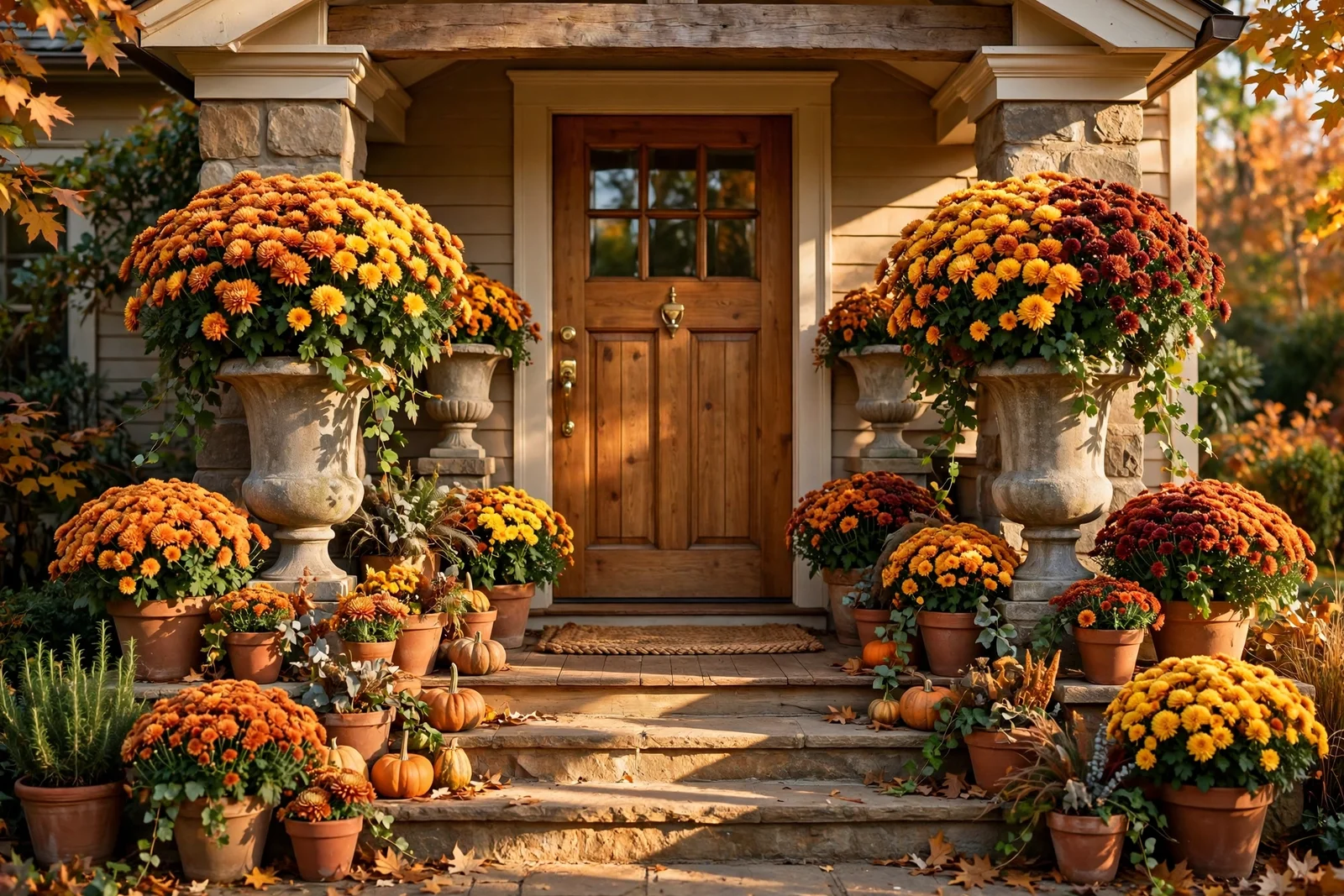
Twenty warm, practical front porch flower pot ideas, from terracotta pairs to layered autumn clusters, that make every arrival feel genuinely welcomed.
There is a particular kind of welcome that begins before the door opens. It starts with the soft rustle of ornamental grass beside the steps, the warm orange of terracotta catching afternoon light, and the gentle scent of herbs brushing against a sleeve. A porch dressed with flower pots tells every visitor that someone inside cares about the small details.
Front porch flower pots work harder than any other decoration because they live at the threshold. They frame the door, soften the steps and carry the seasons past your front step, from spring bulbs to autumn chrysanthemums. With a few thoughtful arrangements, even a modest porch becomes a gracious entrance.
This guide gathers 20 practical ideas, from matched terracotta pairs to five-pot staggered runs, each one built on real materials, real sizes and honest budgets. Whether your porch is a wide farmhouse veranda or a single step and a door, you will find arrangements that fit your space, your season and your watering routine.
So gather your pots, check your tap distance and pick one idea to try this week. Every arrival at your door, from the daily post to family visiting for Sunday tea, deserves a warm welcome, and it begins with a flower pot.
1. Frame the Front Door With a Matched Pair of Terracotta Pots
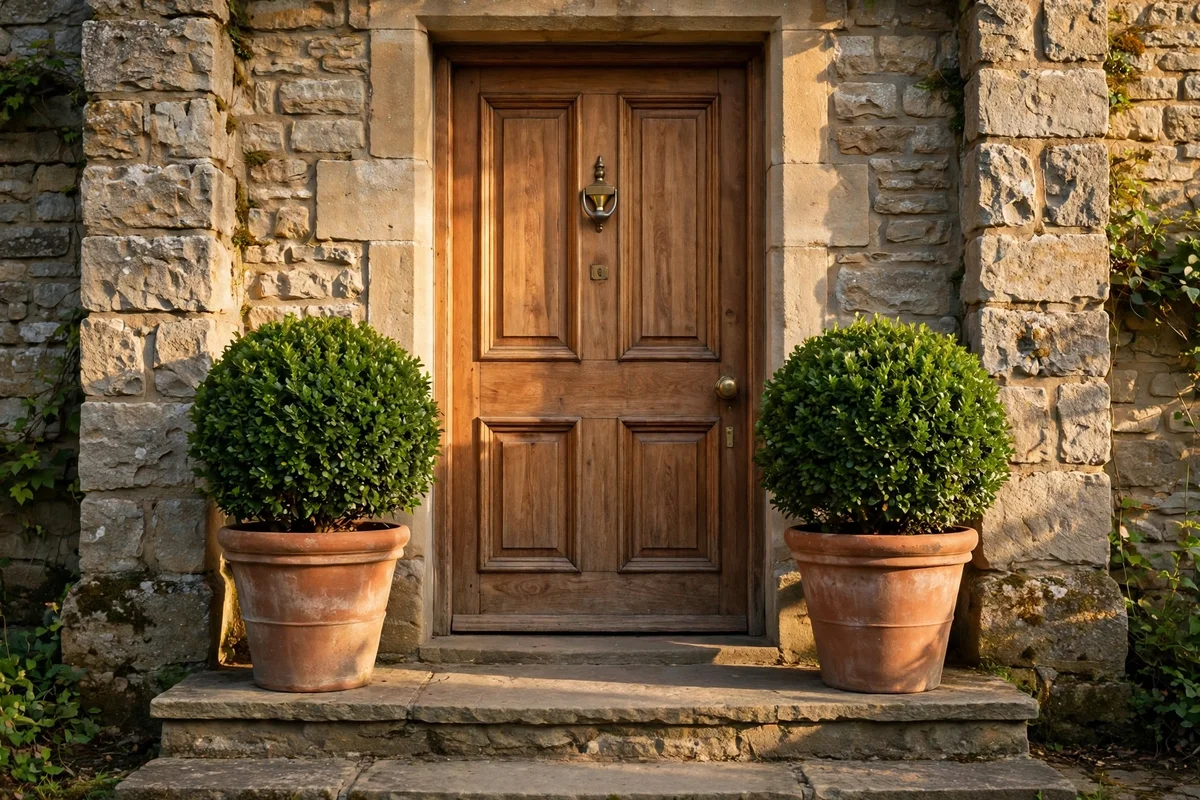
A matched pair of terracotta pots, each 35 to 45 cm tall, set one on either side of the front door gives an instant sense of order. Fill both with the same plant so the symmetry reads cleanly, for example round clipped boxwood balls or a single dense chrysanthemum per pot in autumn. Position each pot 60 to 90 cm from the door frame so the door swings freely and visitors have a clear walking line.
Terracotta breathes better than glazed ceramic, which keeps roots cooler in summer sun, though it dries faster so check soil daily in July and August. Add a 5 cm layer of mulch on top to slow evaporation. Budget tip: two large plain terracotta pots often cost less than one designer urn. The mistake to avoid is choosing pots taller than 55 cm right beside a narrow door, where they block the letterbox view and crowd the step.
2. Group Three Pots in an Odd Cluster on One Doorstep Corner
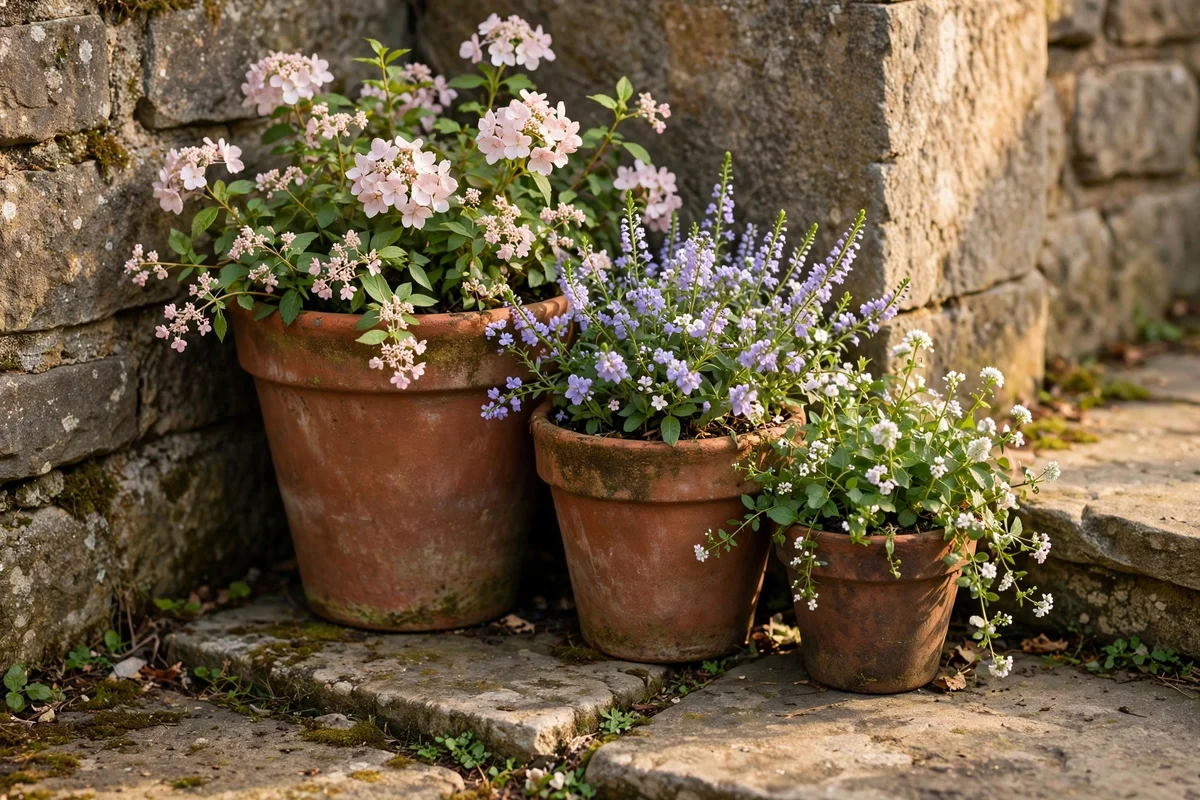
Odd groupings look relaxed and intentional, and three pots of different heights on one doorstep corner soften a porch without cluttering the walking path. Choose heights of roughly 25, 40 and 60 cm so the eye moves upward in steps. Keep the tallest pot at the back and the smallest at the front, tucked tight together so the cluster reads as one arrangement rather than three separate plants.
Use the same plant family across the trio, such as three chrysanthemums in different shades, to hold the group together. A watering tip is to place the cluster near the top of the steps so you can reach every pot without bending past railings. The mistake to avoid is spacing the pots evenly apart, which breaks the cluster feel. Budget tip: buy one large plant and two small ones, since the large one sets the tone and the small ones fill in cheaply.
3. Anchor Each Door Side With a Tall Stone Urn
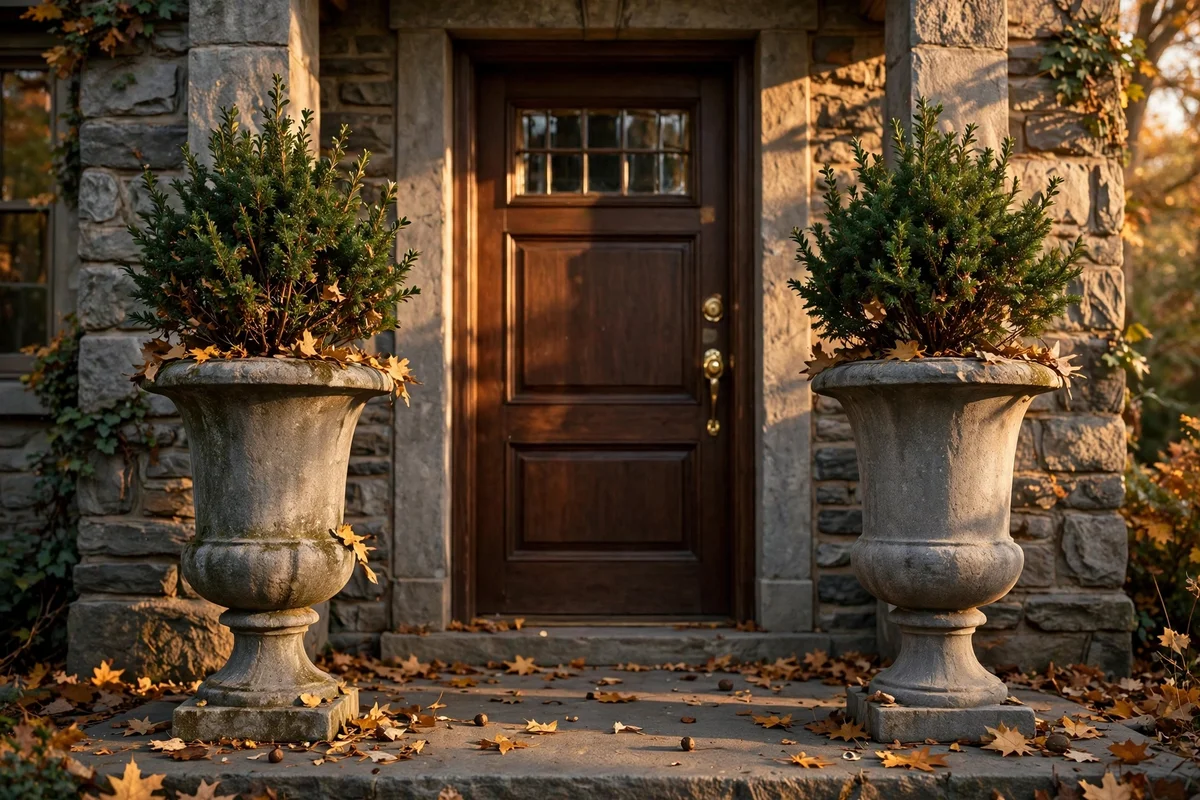
A pair of tall stone urns, 70 to 90 cm high, gives weight and permanence beside a front door and frames the entrance through every season. Stone is heavy enough to stay put in winter wind, which matters if your porch faces an open street. Plant each urn with a small evergreen shrub at the centre and seasonal fillers around it, so the structure stays in winter and the colour changes around it.
Position urns at least 40 cm from the wall so air moves behind them and the facade stays dry. Because stone pots are an investment, choose a classic shape such as a tapered cup or a simple pedestal jar that suits the house style for years. The mistake to avoid is placing a stone urn where it gets full southern sun with no shade, since stone heats up and stresses roots. A light mulch layer and a deep weekly soak keep plantings happy.
4. Raise Mid Pots on Low Wooden Stands for Layered Height
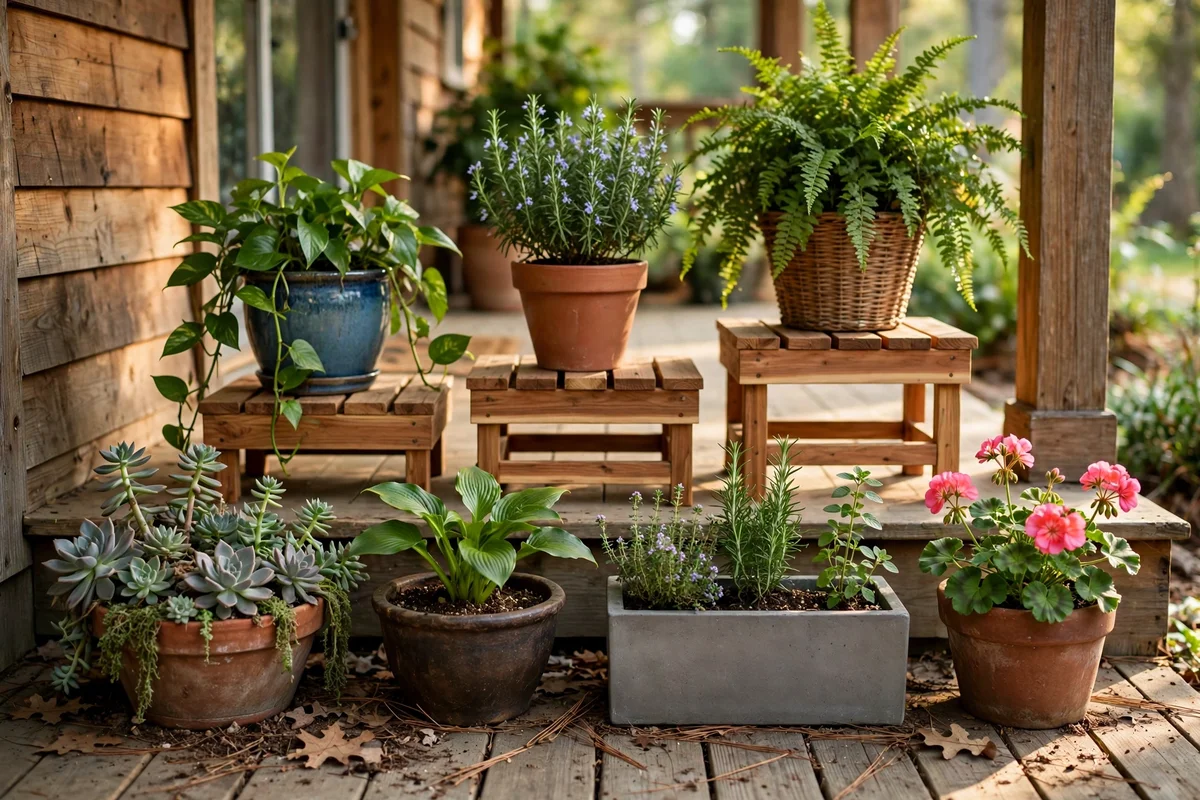
Low wooden stands, 15 to 25 cm high, lift middle pots into the composition and stop a porch floor from looking flat. Place one or two stands behind your front row of pots so shorter plantings read clearly instead of hiding. Cedar or pressure-treated timber suits outdoor use and resists rot for several seasons. Keep stand tops level and pots fully on the surface so nothing wobbles when brushed by a passing shoulder bag.
Vary stand heights rather than buying identical ones, so the layering looks natural. A 15 cm stand at the front and a 25 cm stand at the back creates a gentle stair effect. The mistake to avoid is placing a heavy terracotta pot on a flimsy stand meant for light plastic pots, which can crack under the weight. Budget tip: sturdy offcuts of timber or old bricks wrapped in burlap make free risers that look intentionally rustic.
5. Stack Two Crates as Rustic Risers for Autumn Planters
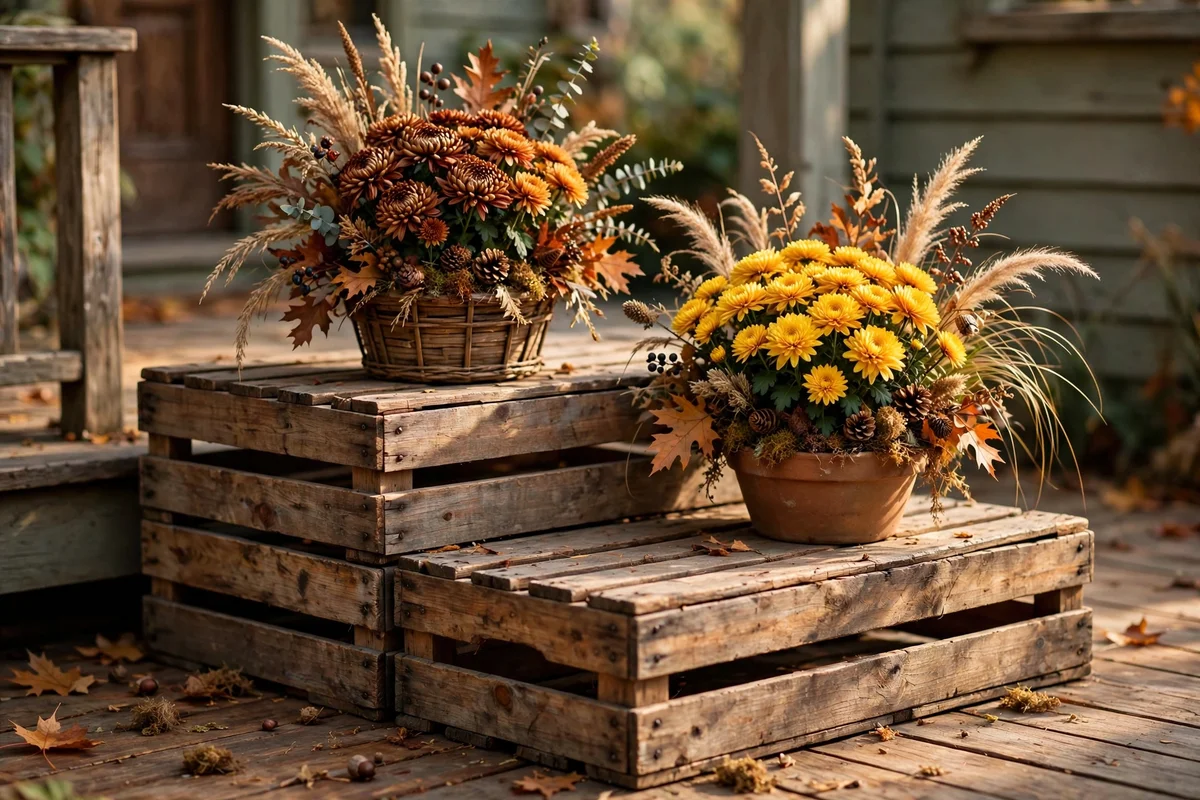
Two wooden crates stacked on their sides become instant risers for autumn pots, adding height and a handcrafted feel that suits chrysanthemums and ornamental grasses. Turn one crate upright and lay the other on its side next to it so the levels step down toward the door. Standard 30 cm fruit crates are ideal because they fit medium pots of 25 to 30 cm diameter without overhang.
Line the crate interiors with landscape fabric so soil does not sift through the slats onto the porch floor. Place the tallest plant at the top crate and trailing plants at the lowest level so the display cascades naturally. The mistake to avoid is leaving crates on bare soil without drainage, which rots the wood within a single wet season. Budget tip: ask local grocers for spare crates, which they often give away free.
6. Mix Terracotta, Stone and Woven Planters in One Trio
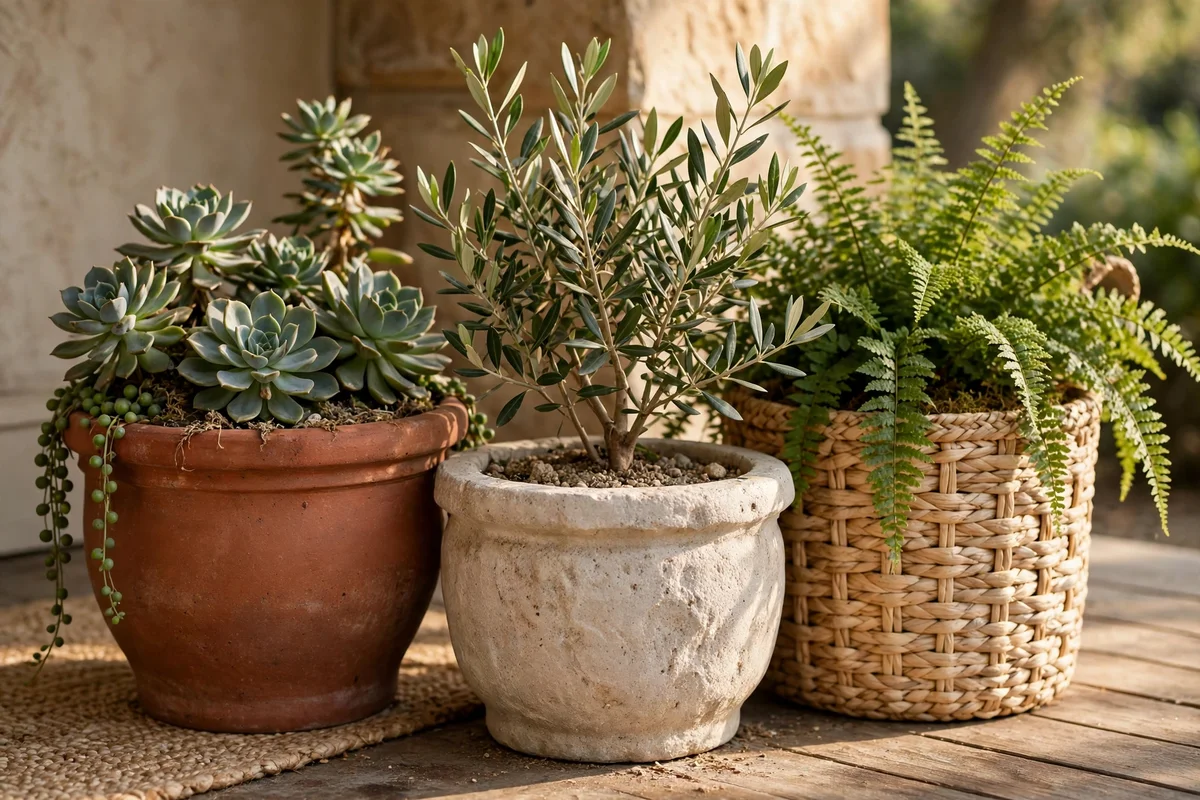
A trio that mixes terracotta, stone and woven planters adds texture richness that a matching set cannot give. Keep the three materials within a shared warm palette, such as clay orange, pale limestone and natural seagrass, so the contrast feels calm rather than busy. Vary the pot heights by at least 10 cm so each material gets its own visual slot in the group.
Repeat one of the three materials somewhere else on the porch, for example a second woven basket by the bench, so the mix looks planned. Woven planters need a plastic liner inside to hold soil moisture, while terracotta wants a saucer underneath to protect porch boards. The mistake to avoid is mixing glossy painted pots with these earthy textures, since the shine breaks the calm, natural mood. Budget tip: a single bag of clay-tinted pots plus one stone urn keeps costs moderate.
7. Plant a Trio of Chrysanthemums for Autumn Colour
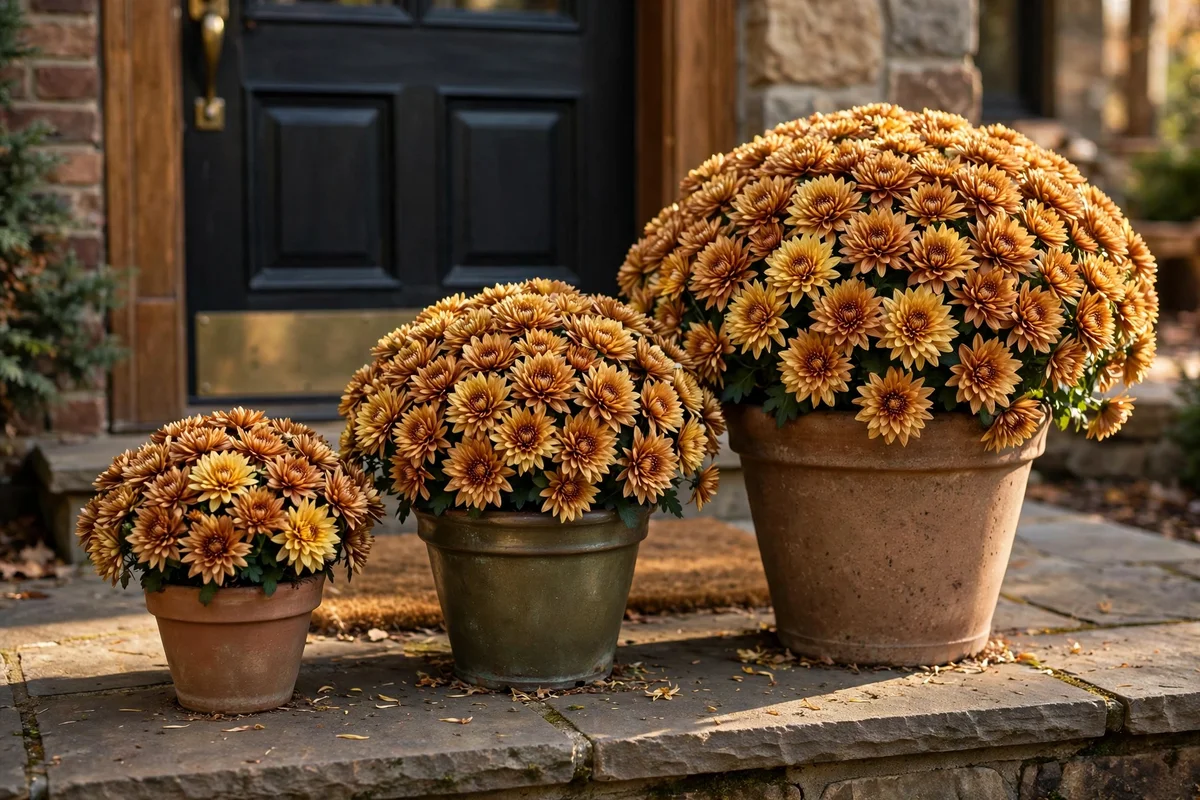
Three chrysanthemums in graduated sizes bring generous autumn colour to a porch, with blooms lasting six to eight weeks if deadheaded regularly. Choose pots of 25 to 35 cm diameter so the root balls stay moist between waterings. Set the tallest mum at the back of the grouping and two smaller ones flanking it, which gives a full, rounded display that reads well from the street.
Buy mums with more buds than open flowers in early autumn so the display lasts longer. Water at the base of the plant, not over the blooms, to keep petals clean and prevent rot. The mistake to avoid is planting mums in pots without drainage holes, since soggy roots collapse within days. Budget tip: garden centres discount mums in late October, which is perfect timing for a porch refresh that carries into November.
8. Add One Tall Ornamental Grass for Movement and Height
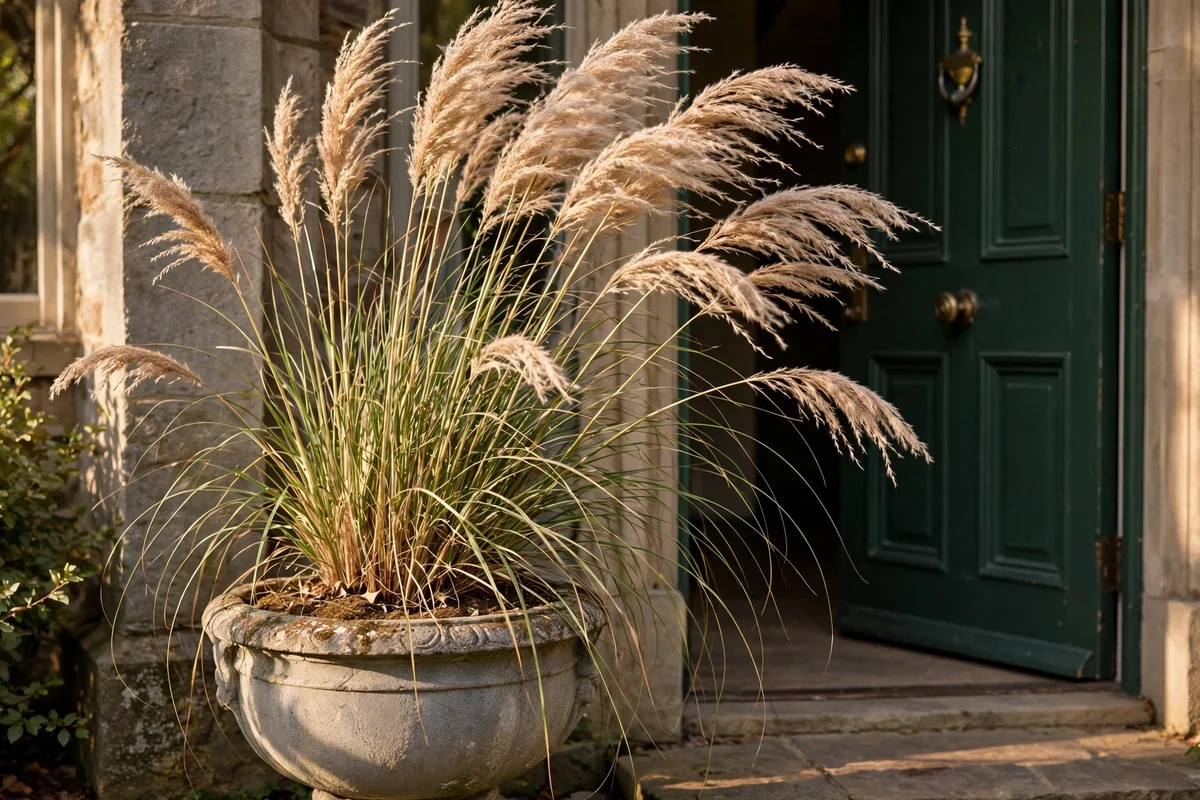
A single tall ornamental grass, such as pennisetum or miscanthus, adds height and soft movement that flowers alone cannot provide. Choose a variety that reaches 60 to 90 cm above the pot rim for a porch-scale presence. Place it at the back of a cluster or as a lone statement in a tall urn, where its plumes catch the breeze and the light, drawing the eye upward from the doorstep.
Use a pot of at least 35 cm diameter so the root clump has room and the container looks balanced under the tall foliage. Water deeply once or twice a week rather than a little every day, since grasses prefer a thorough soak. The mistake to avoid is placing the grass where it blocks the doorbell or the house number, since its plumes spread widely. In late winter, cut the foliage back to 10 cm and it returns fresh each spring.
9. Let Trailing Plants Spill Over the Edge of High Pots
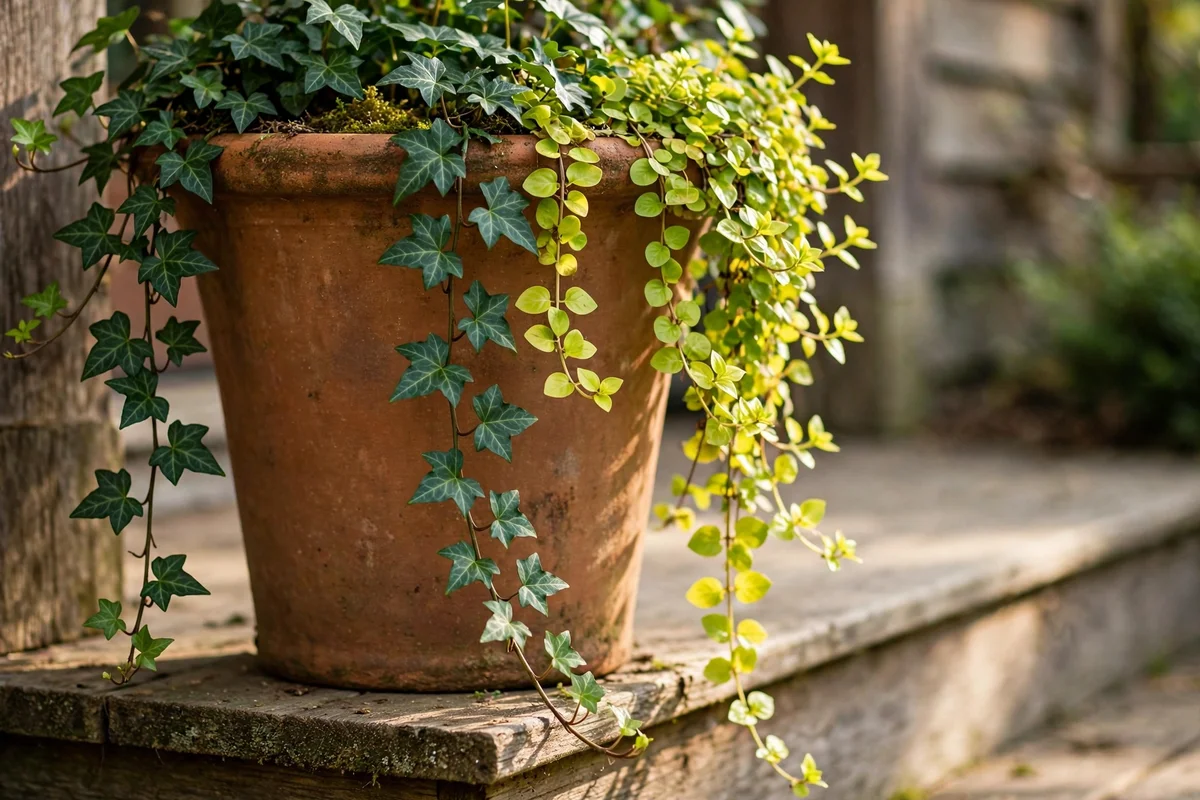
Trailing plants such as ivy, creeping jenny or string of pearls spill gracefully over pot edges and soften the hard line of a tall container. Choose a trailing plant that cascades 30 to 50 cm for a balanced waterfall effect against a 40 cm pot. Plant two or three trailers around the rim of the pot, spaced evenly, so the spill flows in every direction rather than one lopsided side.
Trailing plants need water more often than upright plants in the same pot, since their long stems lose moisture quickly. Tuck the trailers slightly inside the rim so new growth naturally falls outward. The mistake to avoid is mixing an aggressive trailer like ivy with a delicate upright plant that gets shaded out, since ivy wins quickly. Budget tip: one nursery pot of creeping jenny divides easily into three plantings, giving you triple the spill for the price of one.
10. Place a Watering-Friendly Pot Within Hose Reach of the Tap
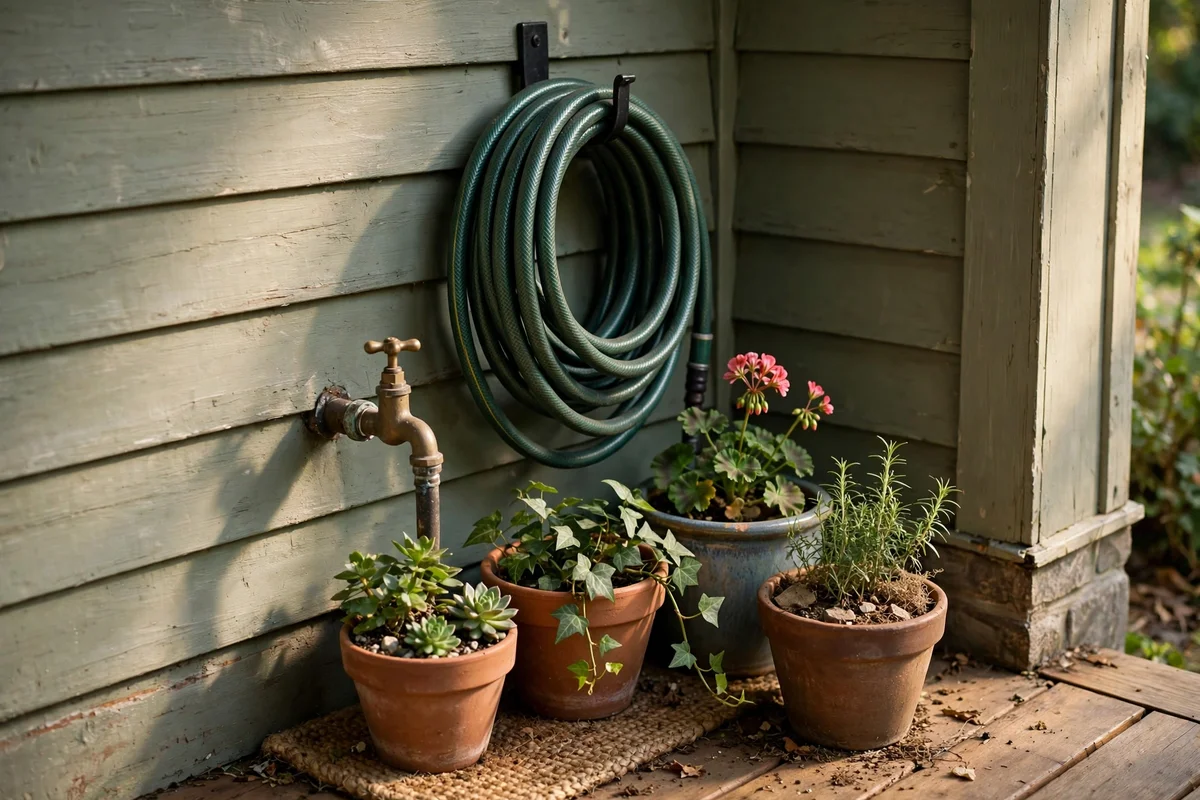
Porch pots thrive when watering is easy, so place your thirstiest plantings within hose reach of the outdoor tap or just a few steps from the kitchen door. Measure the distance from the tap to the farthest pot and keep it under 10 metres, since longer hoses tangle and discourage daily watering. A coiled hose hook mounted near the porch corner keeps the setup tidy and the plants consistently watered.
If no tap is near, keep a 5 litre watering can filled and stored beside the door as a visual reminder. Group pots with similar thirst together so you are not dragging water back and forth across the porch. The mistake to avoid is placing pots at the far end of a long porch away from water, which is the fastest route to wilted plants by midsummer. A simple saucer under each pot catches drips and protects the porch floor.
11. Rotate Spring Bulbs Into Pots as Soon as Frost Risk Passes
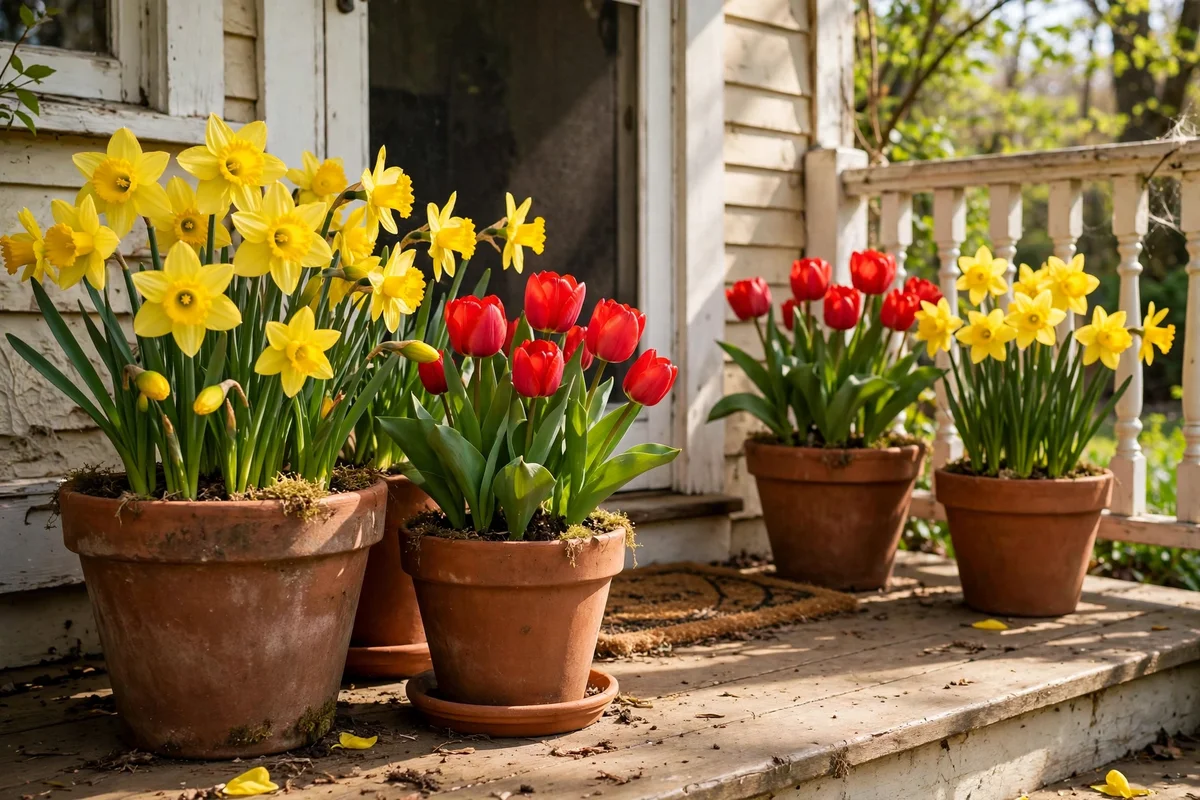
Spring bulbs bring the first colour to a porch, so plant daffodils and tulips in pots in late autumn, setting bulbs 10 to 15 cm deep with their tips pointing up. Use a pot of at least 30 cm diameter and place bulbs in a tight grid, about 5 cm apart, for a dense display. Store the pots in a sheltered porch corner through winter, where the bulbs chill naturally and sprout when days lengthen.
As soon as frost risk passes, usually late March in most regions, move the pots to the sunniest porch spot for full bloom. Once flowers fade, leave the foliage for six weeks so the bulbs store energy, then lift and replant in autumn. The mistake to avoid is overwatering bulbs in winter, since sitting water rots them fast. Budget tip: bulb packs of 20 or 30 from autumn sales fill several pots for the price of one small flowering plant.
12. Refresh Summer Pots With Heat-Tolerant Annuals in June
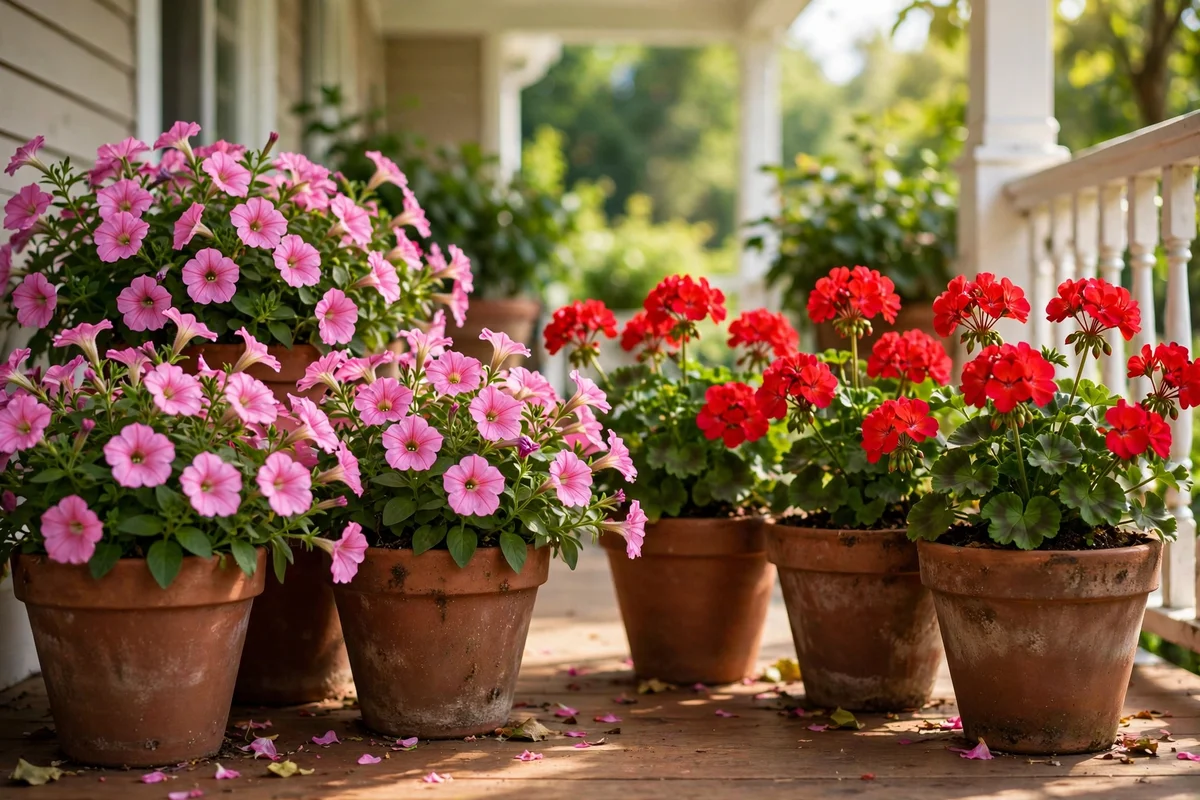
By June, spring bulbs fade and porch pots need fresh energy, so replant with heat-tolerant annuals such as petunias, geraniums or lantana. Choose three plants per 30 cm pot, spaced 10 cm apart, so the pot fills out within three weeks. Pinch back the first flower buds at planting time, which pushes the plant to branch and produce twice as many blooms through the season.
Summer annuals drink heavily, so water every morning in hot spells and add a slow-release fertiliser granule at planting, which feeds for about three months. Move heat-stressed pots a few centimetres back from the porch edge if they wilt in afternoon sun. The mistake to avoid is letting petunias go leggy, since a hard trim in August triggers a fresh flush of flowers. Budget tip: six-packs of young annuals cost far less than full-sized nursery plants.
13. Layer Low, Medium and Tall Pots Down Each Side of the Steps
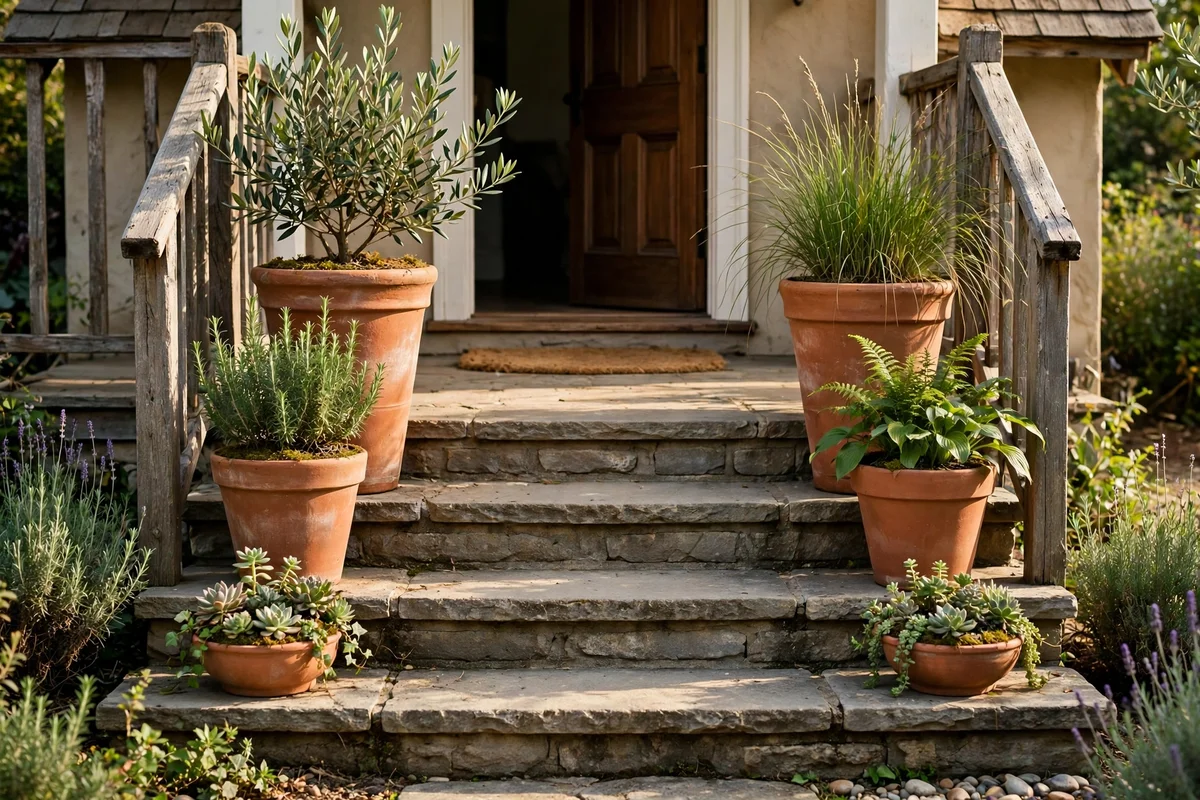
Steps are a natural staircase for pots, so arrange low, medium and tall containers down each side in matching pairs. Place the tallest pot, 50 to 60 cm, at the top step and the shortest, 20 to 25 cm, at the bottom, so the heights follow the slope of the stairs. Keep pots within 15 cm of the step edge so they frame the path without narrowing the walking space.
Repeat the same plant on both sides for calm symmetry, or mirror the pot shapes while varying the plants for a relaxed feel. Heavy stone or concrete pots suit steps best because they resist tipping if someone brushes past. The mistake to avoid is placing pots in the middle of the tread, which trips visitors and blocks handrail access. Budget tip: buy two identical sets of three pots, since matched pairs look far more deliberate than singles.
14. Keep a Small Watering Can and Saucer Set Beside the Door
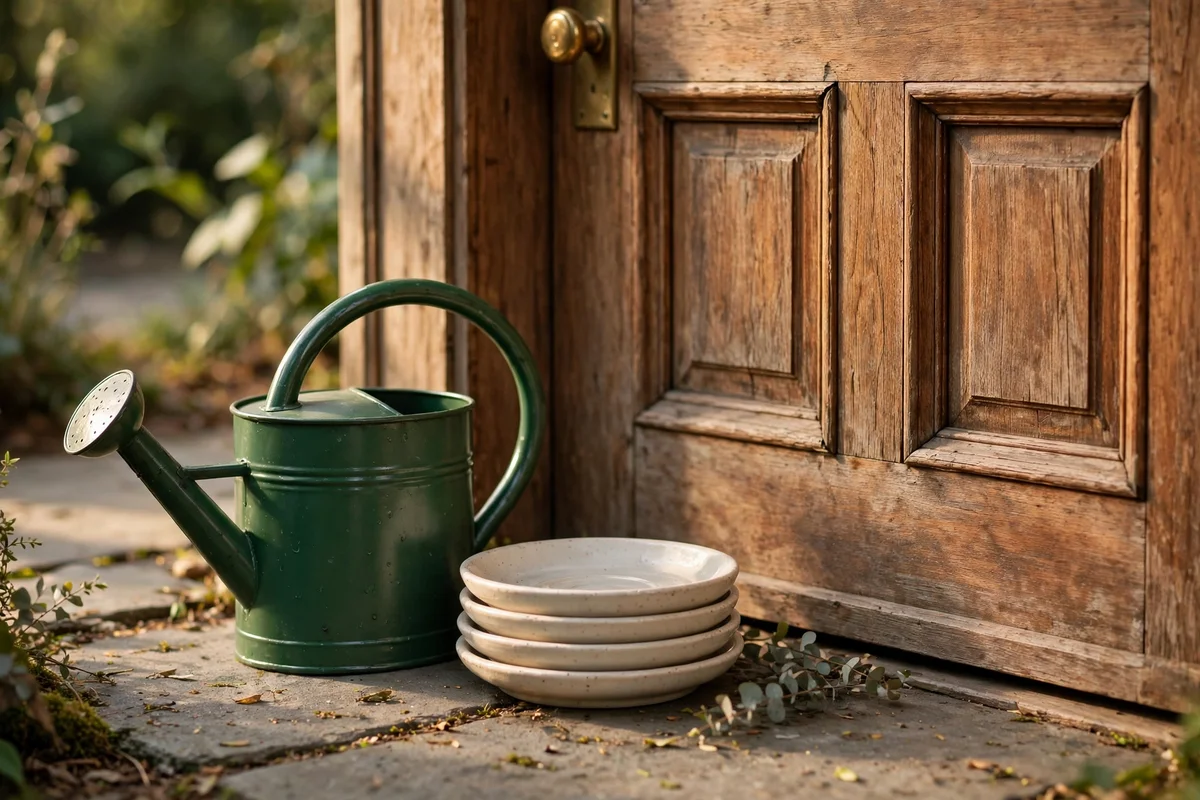
A small watering can kept beside the door turns watering from a chore into a habit, since you see it every time you come home. Choose a 3 to 5 litre can with a long spout that reaches into deep pots without splashing leaves. Pair it with a stack of spare saucers in a matching finish, so you can swap a cracked saucer in seconds and keep the porch floor spotless.
A metal can in a dark finish such as forest green or charcoal doubles as porch decor and resists cracking in winter cold. Empty the can in autumn frosts so trapped water does not split the seams. The mistake to avoid is choosing a can without a rose attachment, since the gentle spray protects delicate seedlings from being blasted out of the soil. Budget tip: a basic metal watering can lasts a decade, making it the cheapest long-term watering tool you can own.
15. Use Self-Watering Liners in South-Facing Pots
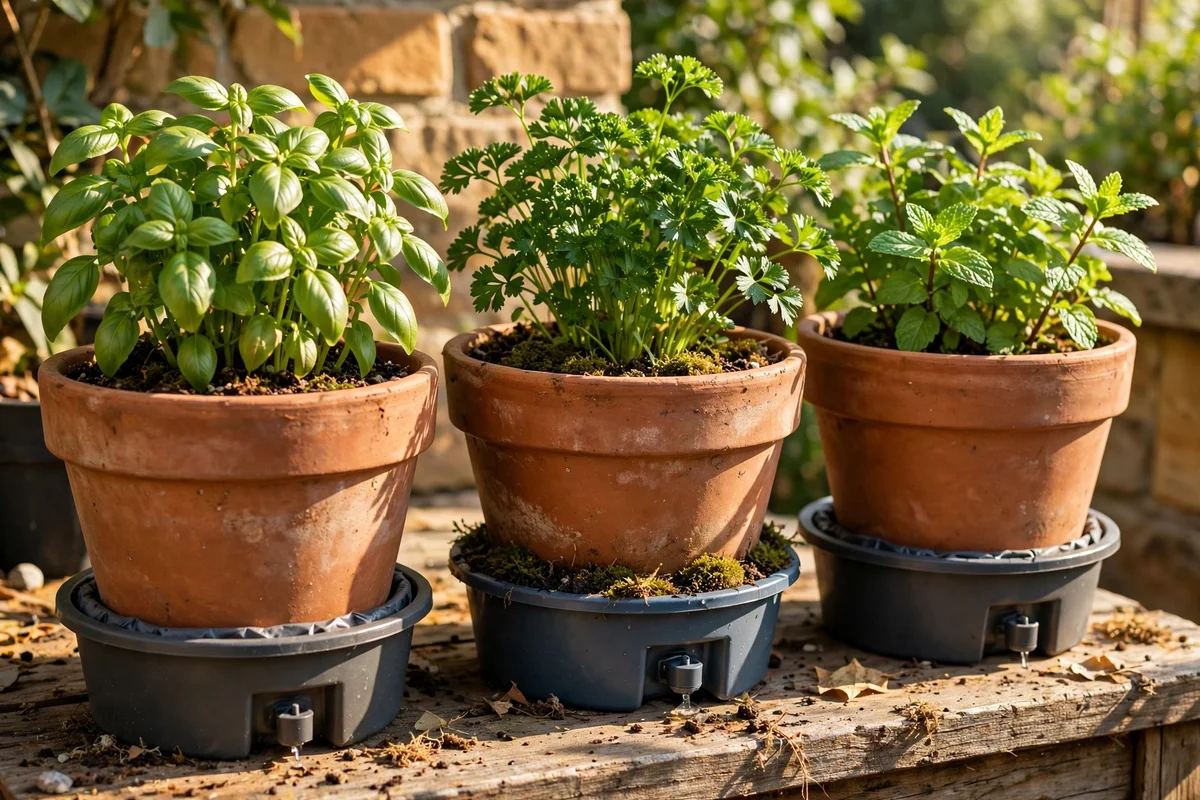
South-facing porch pots dry out fast, so fit self-watering liners or reservoir inserts inside the decorative pot. These liners hold a water reserve of 1 to 3 litres beneath the soil, which roots draw on between waterings. This setup keeps moisture steady for three to five days, making it ideal for busy households or for pots you water only when you remember.
Choose liners that sit 5 cm below the pot rim so you can top them up without soil washing out. Refill the reservoir through the fill tube, not over the soil surface, to keep the mechanism working cleanly. The mistake to avoid is using self-watering liners for plants that hate wet roots, such as lavender or rosemary, since constant moisture rots them. Budget tip: one set of three liners often costs less than replacing a single sun-baked plant.
16. Tuck a Scented Herb Pot by the Door Handle for Welcome Fragrance
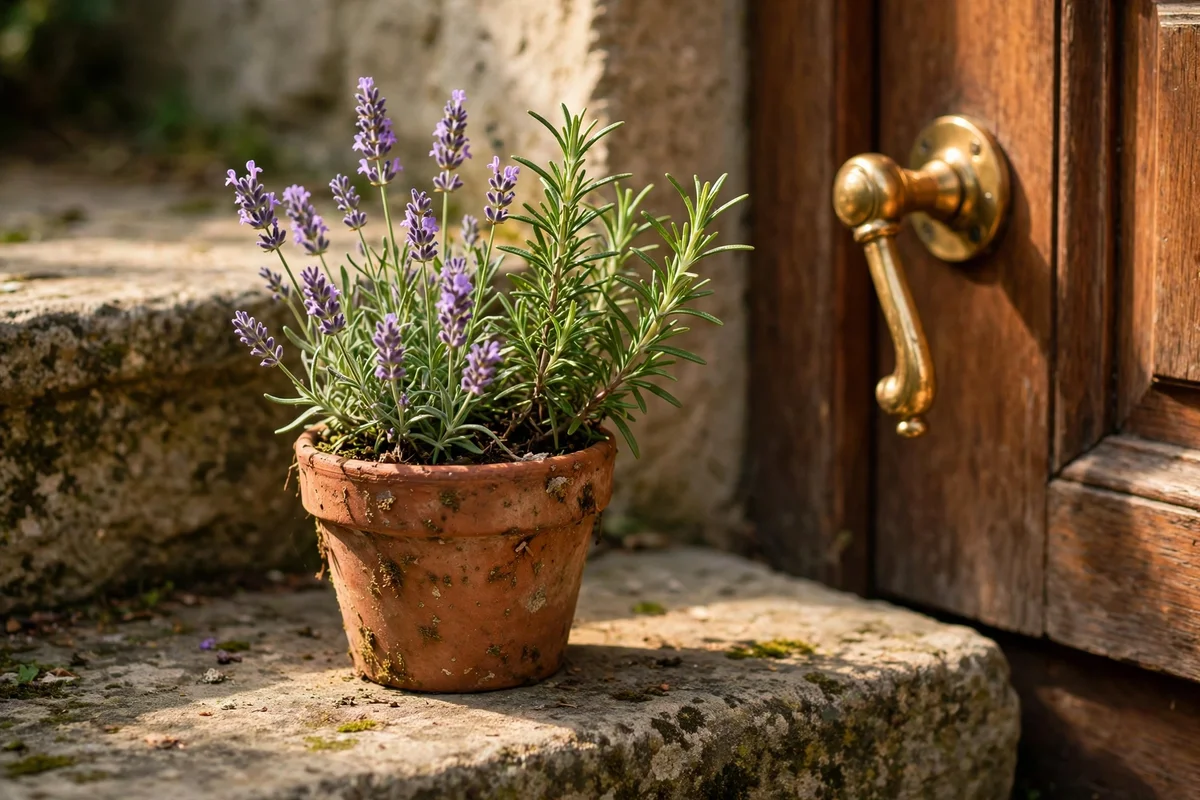
A small pot of scented herbs beside the door handle greets every arrival with fragrance before they even step inside. Lavender, rosemary and mint all release scent when brushed, so place a 20 to 25 cm pot at hand height on a stand or step within 30 cm of the handle. The herbs stay compact with a light trim every few weeks, and you can snip sprigs for cooking as a bonus.
Lavender prefers a sunny spot and sharp drainage, so mix grit into its soil and keep it in terracotta for extra breathability. Mint is thirstier and spreads fast, so give it its own pot rather than sharing with other herbs. The mistake to avoid is placing the herb pot where it gets knocked by opening doors, since stems snap easily. Budget tip: a small herb pot from the supermarket shelf costs a few pounds or dollars and establishes within two weeks.
17. Choose a Five-Pot Staggered Run Along the Porch Rail
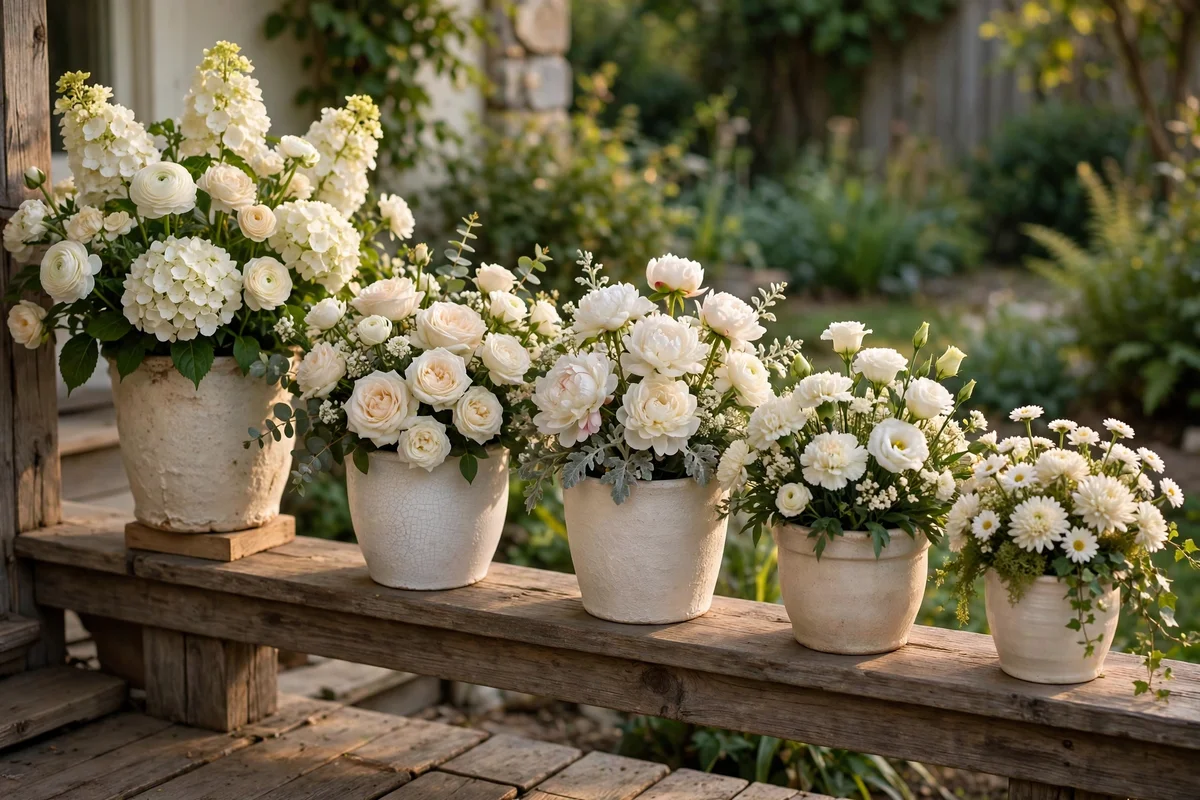
A five-pot run along the porch rail creates rhythm without fuss, with each pot stepping up or down from the next. Alternate heights of 25, 35 and 45 cm in a staggered sequence so the line undulates gently rather than marching in lockstep. Keep every pot 10 cm back from the rail so watering spills land on the porch, not on the path below.
Use odd numbers like five because even runs look like fence posts, while odd numbers feel relaxed. Plant the same colour family through the run, such as white and cream blooms, for a calm sweep. The mistake to avoid is crowding pots so close that air cannot circulate, which invites mildew in damp months. Budget tip: build the run over time, starting with three pots and adding two more when a seasonal sale arrives.
18. Set a Woven Basket of Seasonal Cuttings Beside the Welcome Mat
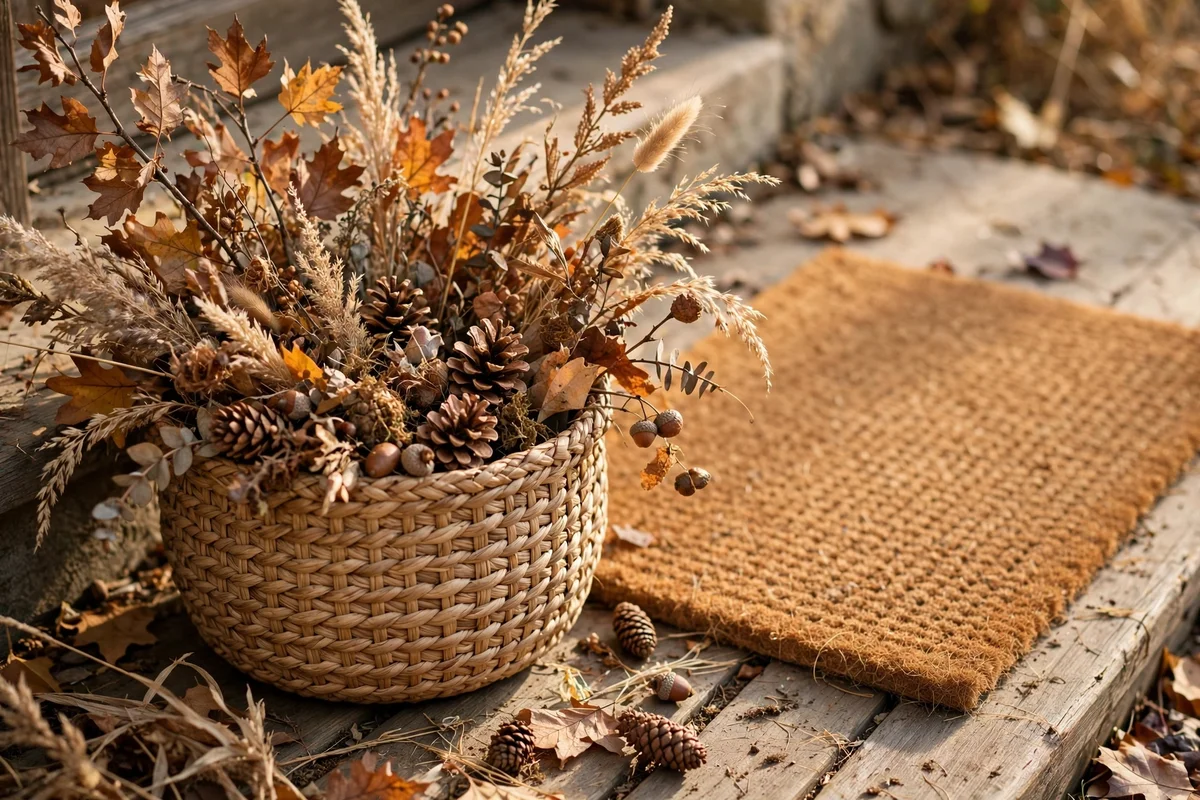
A woven basket filled with seasonal cuttings beside the welcome mat adds a soft, gathered touch that planted pots alone cannot give. Fill it with autumn branches, dried grasses and pinecones in October, or fresh greenery and berries in December. Choose a basket 30 to 40 cm wide with a sturdy handle, and line it with a plastic bag so damp stems do not stain the porch floor.
Refresh the cuttings monthly so the basket always looks intentional rather than forgotten. Pair it with a small planted pot of the same seasonal colour to tie the basket into the wider arrangement. The mistake to avoid is using fresh cut flowers in the basket, since they wilt within days without water and look sad fast. Budget tip: cuttings from your own garden or a friendly neighbour cost nothing and often look the most natural.
19. Group Pots of Three Heights Around the Door Lantern
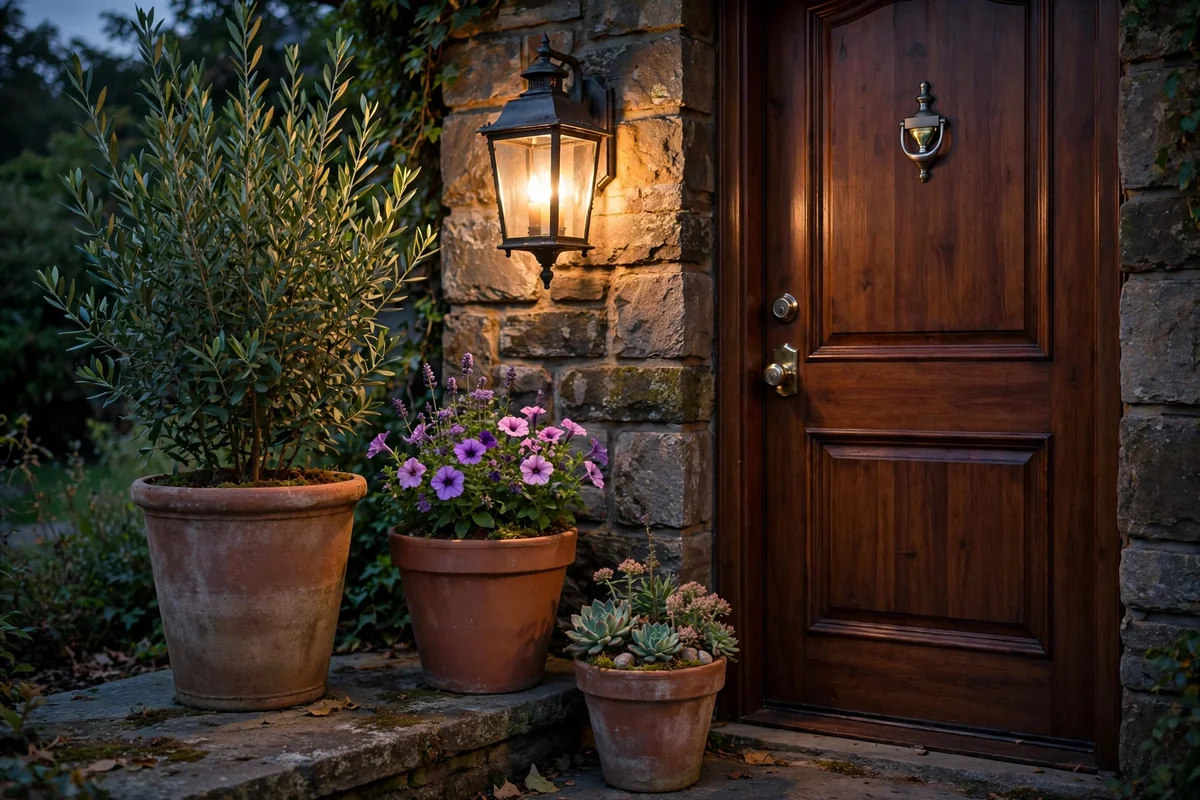
The door lantern is a natural focal point, so group three pots of different heights around its base to draw the eye to the entrance. Choose heights of 20, 35 and 50 cm, placing the tallest on the lantern side and the shortest on the outer edge. At dusk, the lantern light catches the foliage and turns the grouping into a glowing welcome for everyone arriving.
Keep plants 15 cm clear of the lantern so heat from the bulb does not scorch leaves. A warm 2700K bulb suits the calm mood and flatters green foliage. The mistake to avoid is choosing plants that grow tall enough to cover the lantern, since a hidden light defeats the purpose of the grouping. Budget tip: three graduated nursery pots in the same colour cost less than one statement planter and achieve a similar layered effect.
20. Finish With a Shared Colour Thread Across Every Pot
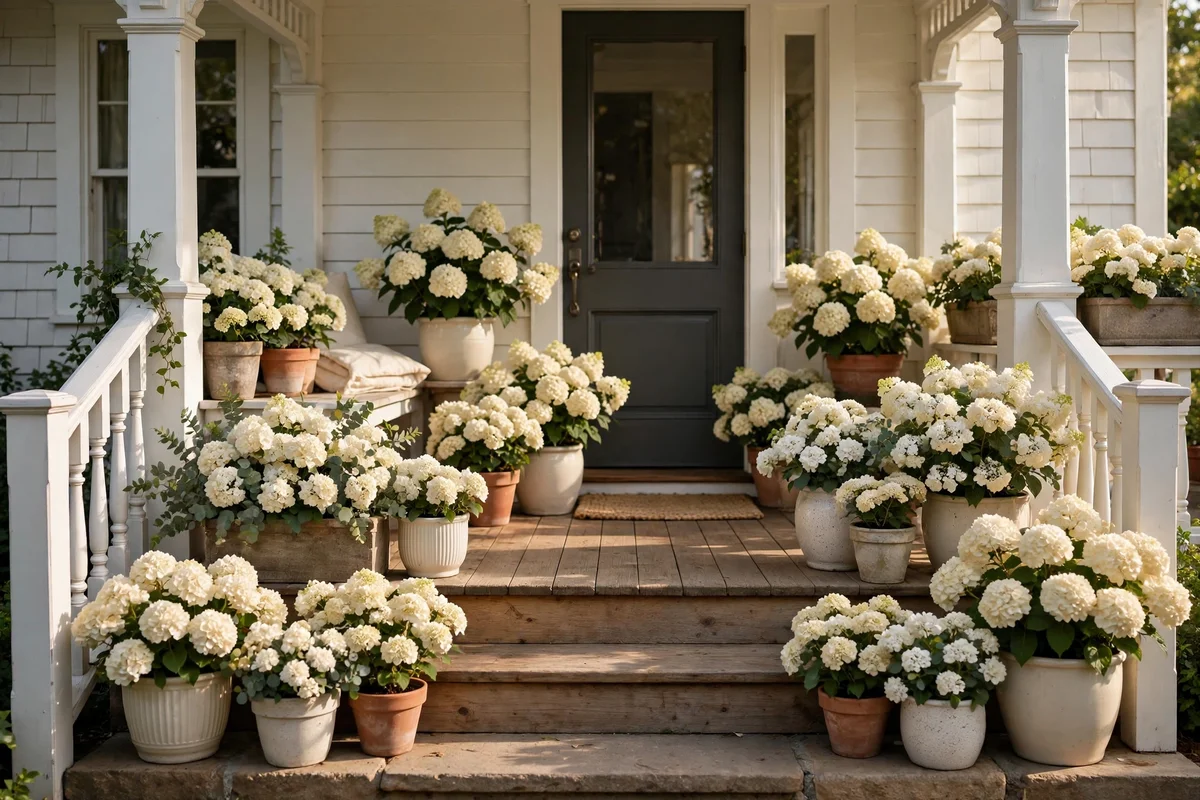
A shared colour thread ties a whole porch together, so repeat one bloom colour in every pot, for example white petunias in each container or golden chrysanthemums across the autumn display. Keep the repeat colour to about one third of each planting, with green foliage and a second accent filling the rest. This rhythm makes mixed pots and mixed materials read as one deliberate design.
Choose the thread colour to flatter the house exterior, such as cream against red brick or soft pink against grey stone. Change the thread colour with the seasons for a porch that always feels fresh. The mistake to avoid is repeating the pot colour instead of the plant colour, since matching pots across mixed materials is nearly impossible. Budget tip: one flat of the same bedding plant stretches across five or six pots and costs less than a single large feature plant.
A welcoming porch does not need a large budget or a grand staircase. It needs a few good pots, a shared thread of colour and the small habit of keeping plants watered. Whether you start with a matched terracotta pair or a woven basket of autumn cuttings, each pot you place tells visitors they matter.
This week, try the easiest idea of all: set three pots of different heights in one doorstep corner, with a trailing plant like ivy in the smallest to soften the edge, and watch how the whole entrance lifts. Water them deeply each morning for the first fortnight so roots settle, then check soil moisture with a fingertip before watering again. Once that trio thrives, the rest of the porch will follow, and guests will feel welcomed before they even ring the bell.
Frequently Asked Questions
How many pots should I put on a small front porch?
Three to five pots suit most small porches. Start with a trio of different heights in one corner, which fills the space without blocking the door. If the porch still feels bare, add one tall urn or a five-pot staggered run along the rail. Fewer, well-chosen pots always look calmer than a crowd of small ones.
What are the easiest flowers for porch pots?
Chrysanthemums in autumn, petunias and geraniums in summer, and daffodils in spring are the most forgiving choices. They tolerate a missed watering, bloom for weeks and cost little as bedding plants. For foliage that lasts all year, add a small evergreen shrub or a hardy ornamental grass to the centre of the pot.
How do I keep porch pots watered without a nearby tap?
Keep a 5 litre watering can filled beside the door and make it part of your morning routine. Group thirsty pots together so one trip waters them all. For south-facing pots, fit self-watering liners with a 1 to 3 litre reservoir, which keeps soil moist for three to five days between top-ups.
Can I mix different pot materials on one porch?
Yes, mixing terracotta, stone and woven planters adds texture, as long as you keep them in a shared warm palette. Repeat one of the materials elsewhere on the porch, such as a second woven basket, so the mix looks planned. Avoid adding glossy painted pots to the group, since the shine breaks the calm natural mood.
How much does it cost to dress a front porch with flower pots?
A welcoming porch costs between 40 and 150 pounds or dollars. Three medium terracotta pots with autumn mums run about 50, while adding a stone urn or self-watering liners pushes the total higher. Build the display over a season, buying one or two pots at a time, since spreading the cost also lets you adjust the arrangement as it grows.