Home Improvement
21 Basement Bar Ideas That Turn Your Basement Into a Cozy Lounge
By Anna Wells · · 11 min read
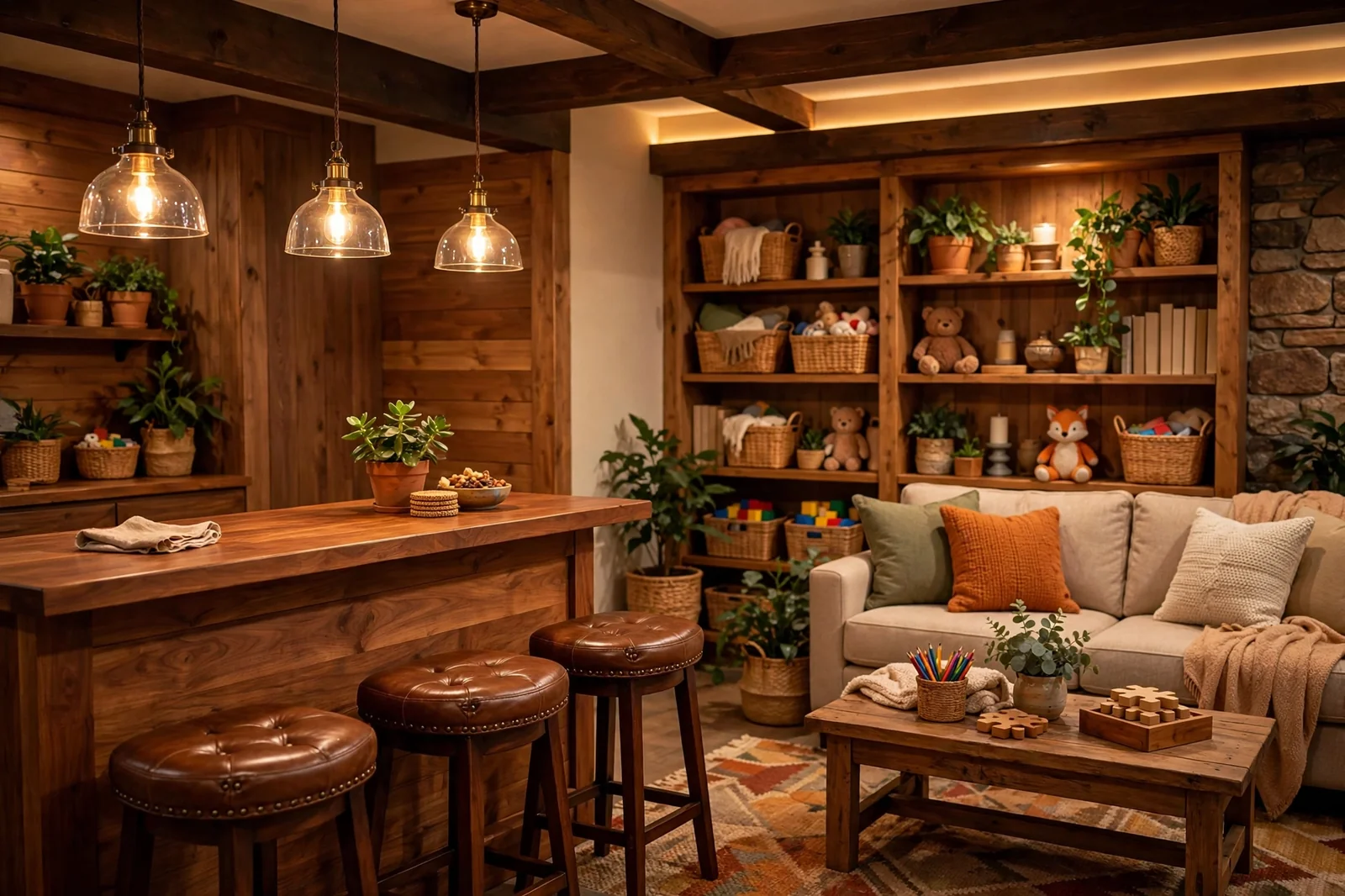
There is something about a basement bar that instantly makes a home feel more inviting. It turns the basement from extra storage into somewhere people actually want to hang out: movie nights, game nights, casual gatherings with friends, or a quiet place to unwind. These 21 basement bar ideas focus on warm, comfortable lounges with personality, from wood counters and cozy seating to lighting, entertainment zones and serving stations the whole family can enjoy.
A basement bar works best when it feels like a natural extension of your home, not a theme park. Warm materials, comfortable seating, good light and zones for how you actually spend time: that is the formula. Whether you have a large finished basement or one corner to transform, these 21 ideas cover the counter, the seating, the lighting and the little details that turn a basement into the room everyone gravitates toward.
1. A Warm Wood Bar Counter
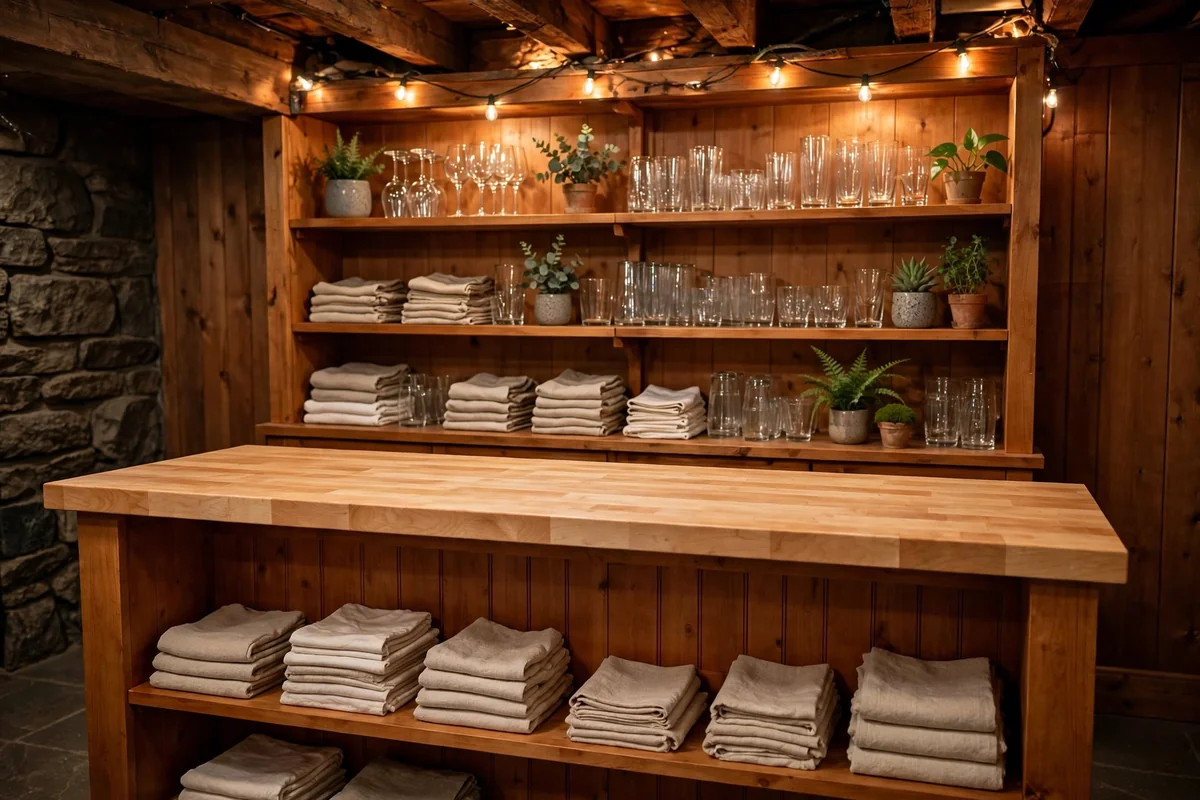
Wood instantly makes basement spaces feel warmer and less cold. Since basements naturally lack sunlight, wood tones balance that out beautifully. A simple bar counter built from butcher block, reclaimed planks or stock cabinets with a wood top costs far less than custom millwork. Standard bar height is 42 inches with a 24-inch-deep top; allow a 12-inch overhang on the seating side for knee room.
Seal the top with polyurethane or hardwax oil to protect against rings and spills. Even a basic straight counter transforms the room’s feeling; you can add foot rails and trim later. Avoid dark stains that absorb what little light exists; medium warm tones glow best. A wood counter is the single element that says lounge instead of storage room.
2. Comfortable Bar Stool Seating
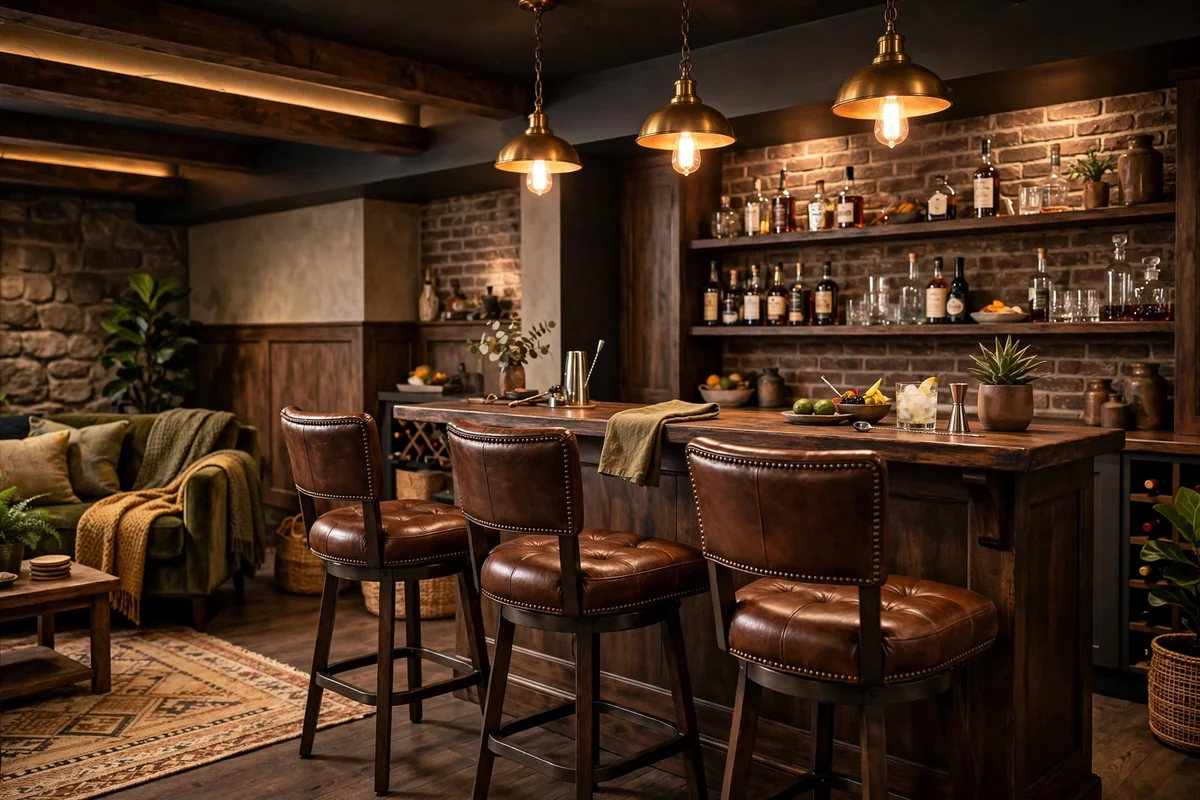
Comfortable stools decide whether people linger or leave. For a 42-inch counter, choose 30-inch seat-height stools; for 36-inch counter height, 24-inch stools. Stools with backs and footrests suit long evenings, while backless stools tuck neatly under the counter in tight spaces. Allow 24 inches of counter width per person so nobody elbows their neighbor.
Leather, wood and woven seats all suit basement bars; pick what matches your style and wipes clean easily. Swivel stools add fun but need more clearance. Test stability before buying; a wobbly stool ruins the experience. Keep two extra stools nearby for bigger gatherings. Good seating is not the place to economize; comfort is what makes the bar the favorite seat in the house.
3. Layered Warm Lighting
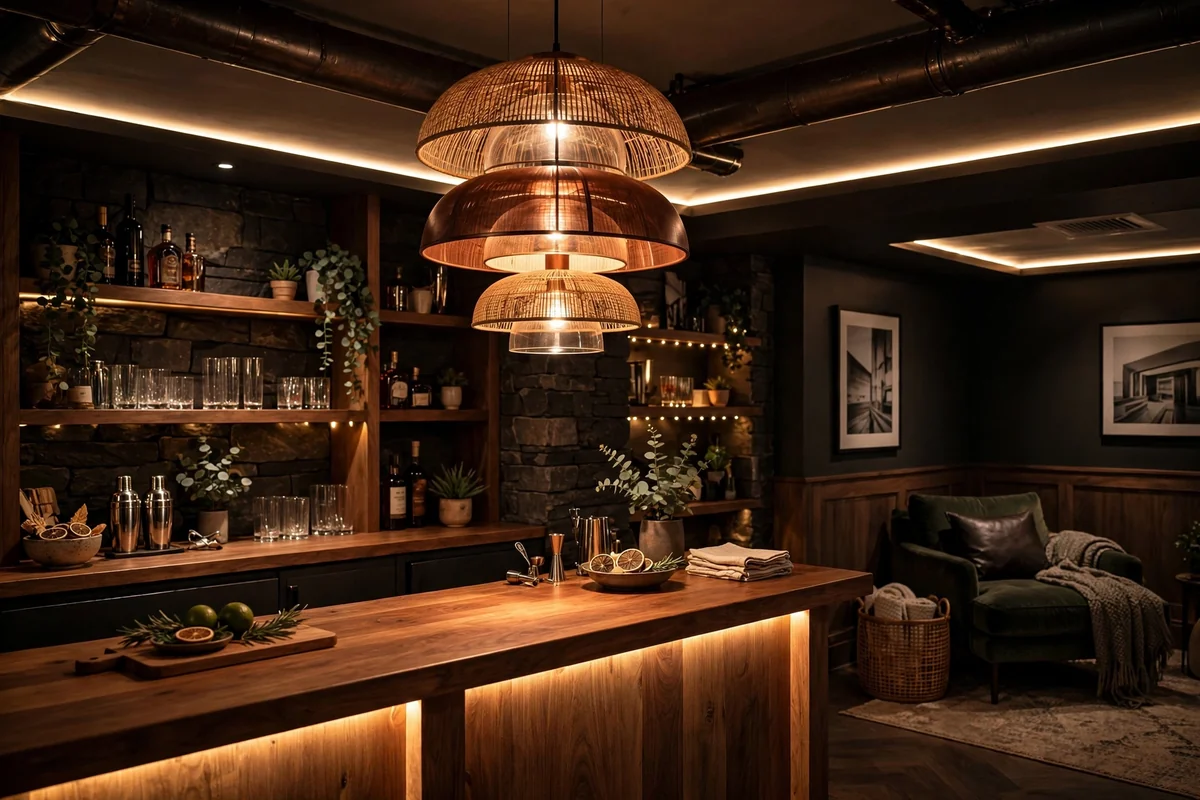
Basements need layered warm light to feel inviting. Combine pendant lights over the bar counter, recessed or track lighting for general brightness, and accent lights like LED strips under the counter overhang or behind shelves. Use 2700K bulbs throughout; cool light makes basements feel institutional. Dimmers let you shift from bright game night to soft movie mood.
Hang pendants 30 to 36 inches above the bar top, spaced 24 to 30 inches apart. The under-counter glow is a designer trick that makes the bar appear to float. Avoid relying on a single harsh overhead; shadows are what make basements feel cave-like. Battery-powered LED strips work where wiring is difficult. Lighting is the highest-impact basement upgrade, full stop.
4. A Stone Accent Wall
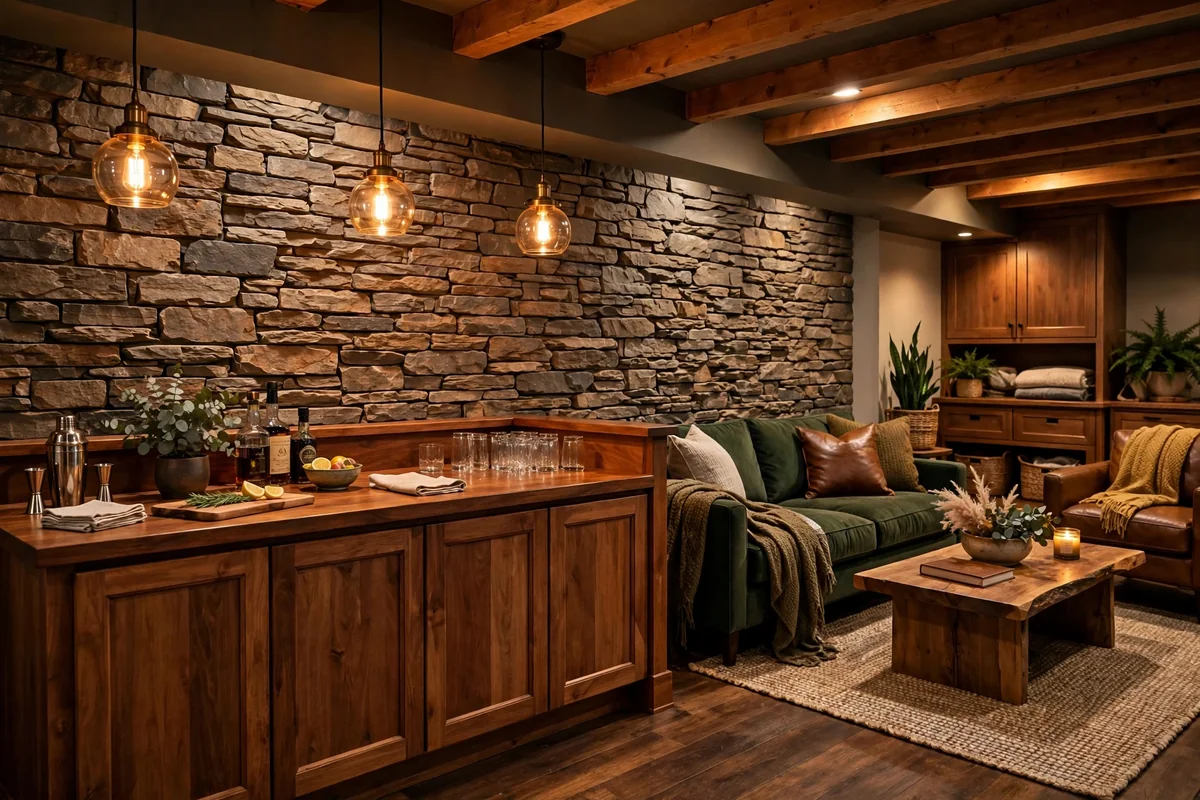
A stone or brick accent wall gives a basement bar texture and permanence. Faux stone panels install over drywall with construction adhesive and look remarkably real; a single 8-foot wall costs $200 to $500 in materials. The natural variation catches warm light beautifully and adds the old-world character basements often lack.
Keep the stone to one wall so it reads as a feature, not a cave. Pair it with wood and warm metals for a cohesive rustic-luxe feel. Seal porous stone to resist moisture and make cleaning easier. Avoid covering walls with moisture problems; fix water issues first, since stone hides warning signs. Done right, the accent wall becomes the backdrop every photo gets taken against.
5. Open Shelving for Glassware
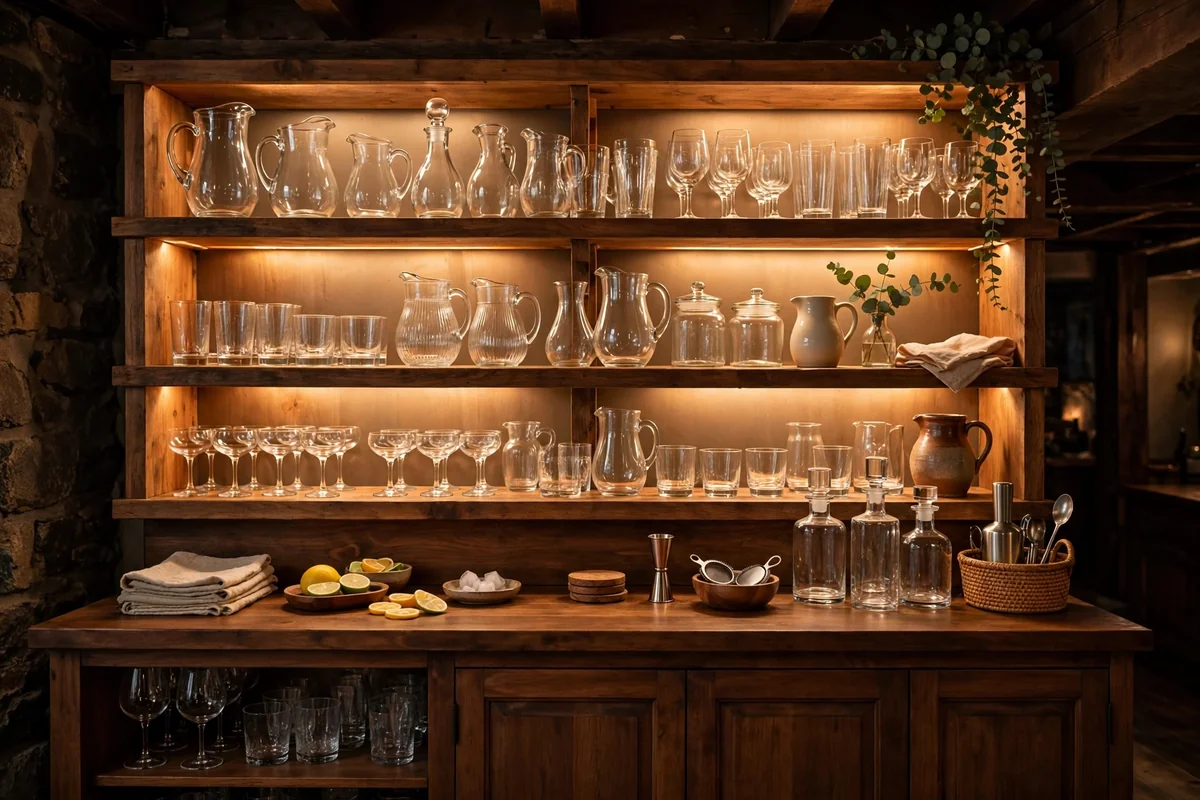
Open shelves display glassware, pitchers and pretty bottles of syrups and mixers as decor. Solid wood shelves with black metal brackets suit most basement styles; mount into studs with brackets rated for the load. Space shelves 12 to 15 inches apart and keep the arrangement curated: everyday glasses below, decorative pieces above.
Glassware catches the warm light and sparkles, which brightens the whole bar area. Keep the collection tight; a dozen beautiful glasses beat forty mismatched ones. Dust shelves monthly since basements can be dusty. Avoid overloading shelves until they sag; glass is heavy. Open shelving turns storage into display and makes the bar feel like a real serving station.
6. A Coffee and Mocktail Station
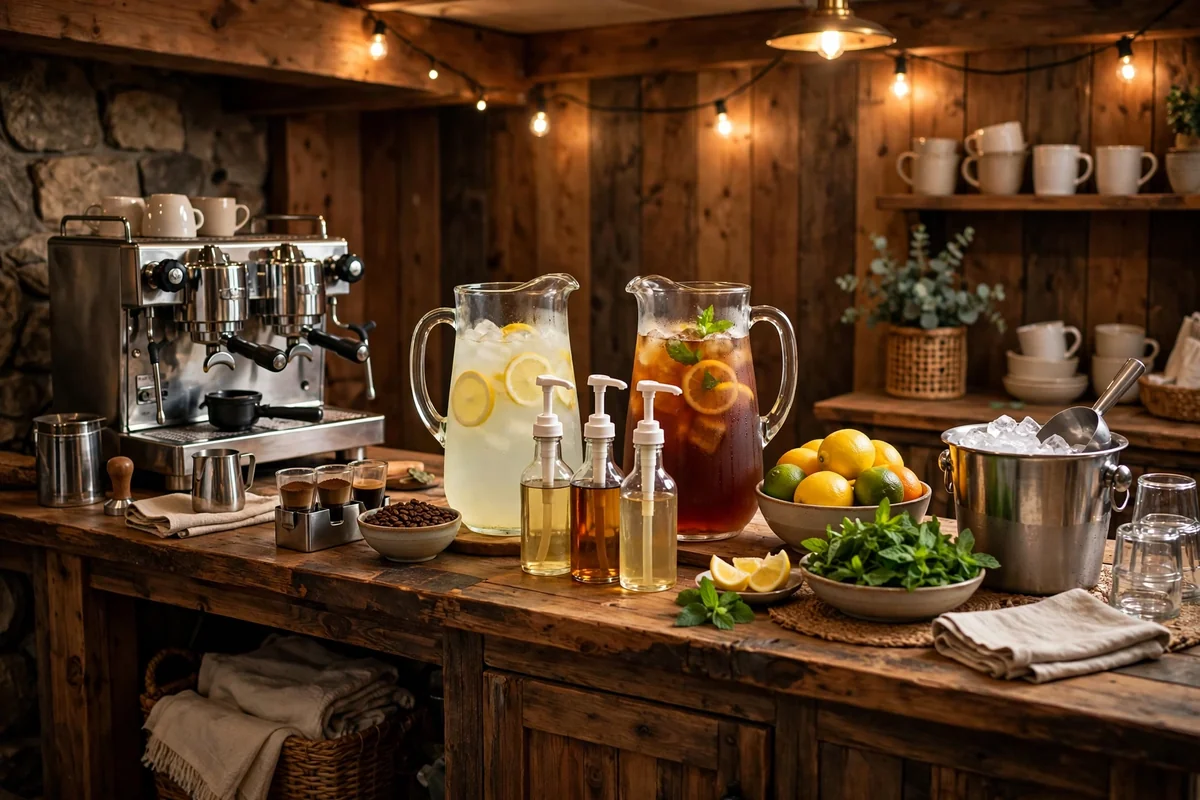
A coffee and mocktail station makes the basement bar welcoming for everyone. Set up a coffee maker or espresso machine alongside a tray of syrups, sparkling water, citrus and fresh mint for creative alcohol-free drinks. A small menu board with two or three house specials makes it feel like a cafe. Keep everything on one section of the counter so serving stays organized.
Store syrups in pump bottles for clean pouring and label them clearly. A mini fridge nearby holds cream, citrus and chilled glasses. This station shines during family gatherings and game nights when not everyone wants the same thing. Avoid cluttering the whole bar with beverage gear; one dedicated zone keeps the rest clear. Thoughtful drink options are hospitality at its best.
7. A Game Night Corner
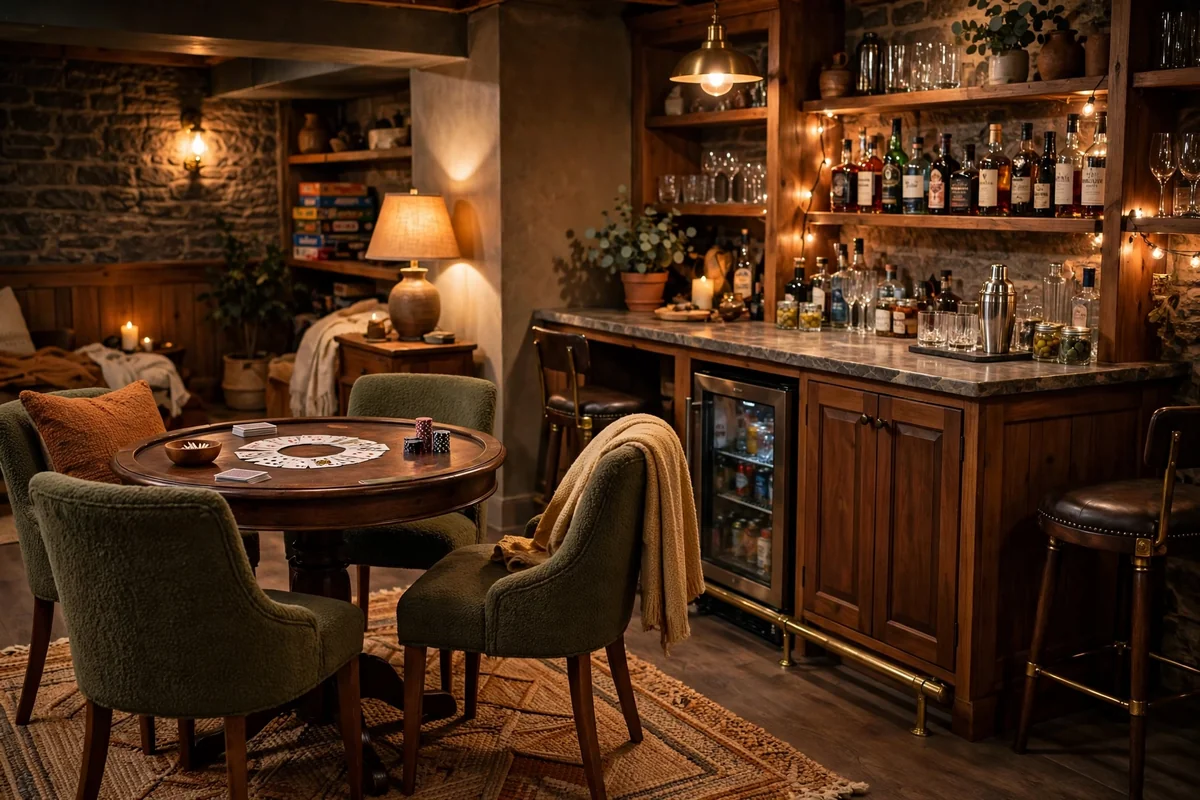
A game corner gives the basement bar its social engine. Dedicate space for a pool table, dartboard, card table or board game shelf depending on your room and budget. A card table with four comfortable chairs needs about 10 by 10 feet; a dartboard needs 8 feet of clear throw distance. Good lighting over the game zone prevents eye strain.
Store board games on a dedicated shelf or in a cabinet so setup takes minutes. Choose durable, easy-clean surfaces nearby since snacks are part of game night. Avoid cramming games into walkways; circulation matters. The game corner is what turns occasional basement visits into weekly traditions. Plan it around the games your household actually plays.
8. A Movie Night Setup
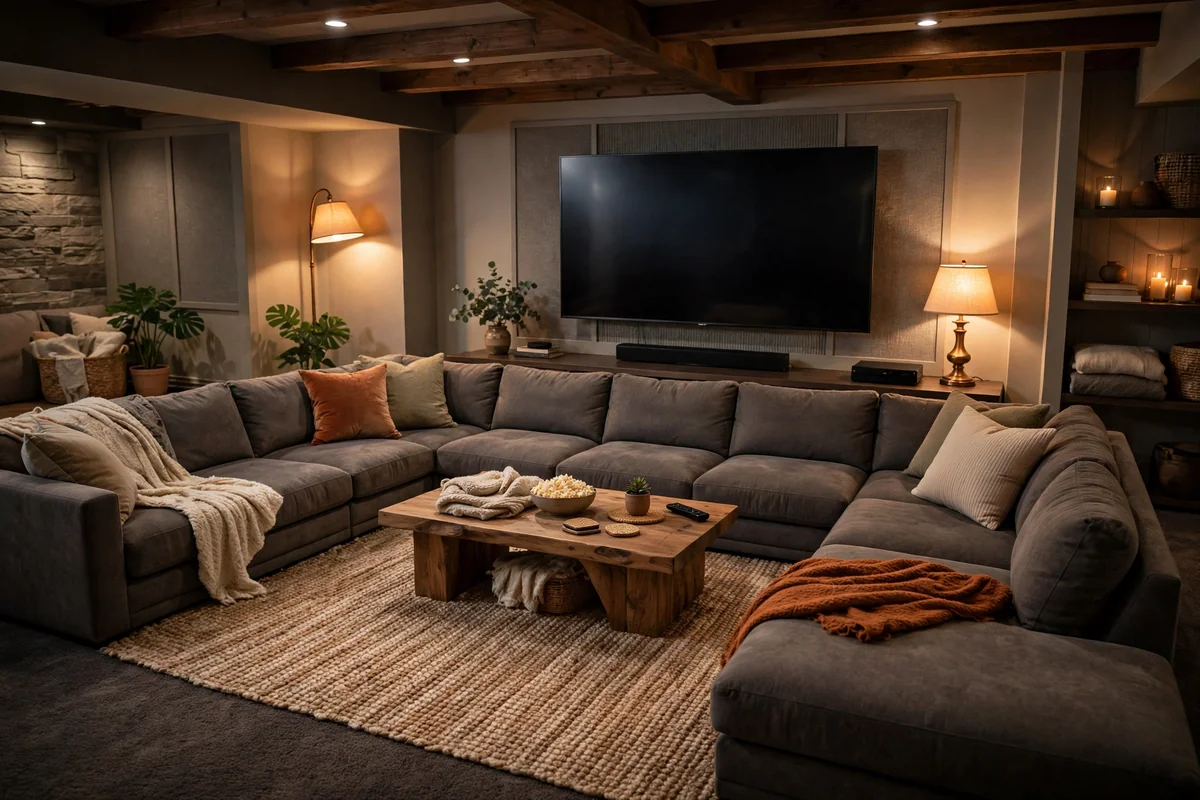
Basements are natural theaters: dark, enclosed and separate from bedrooms. A large TV or projector with comfortable sectional seating creates a movie zone beside the bar. For projectors, allow 10 to 12 feet of throw distance and a light-colored wall or screen. Add blackout curtains if any windows exist. A popcorn station on the bar completes the experience.
Arrange seating 8 to 12 feet from a 65-inch TV for comfortable viewing. Include soft throws and dimmable lights for intermission. Keep the sound contained with rugs and soft furnishings that absorb echo. Avoid placing the screen where bar traffic crosses the view. Movie nights give the basement bar a purpose beyond gatherings; it becomes part of the weekly routine.
9. Industrial Style Details
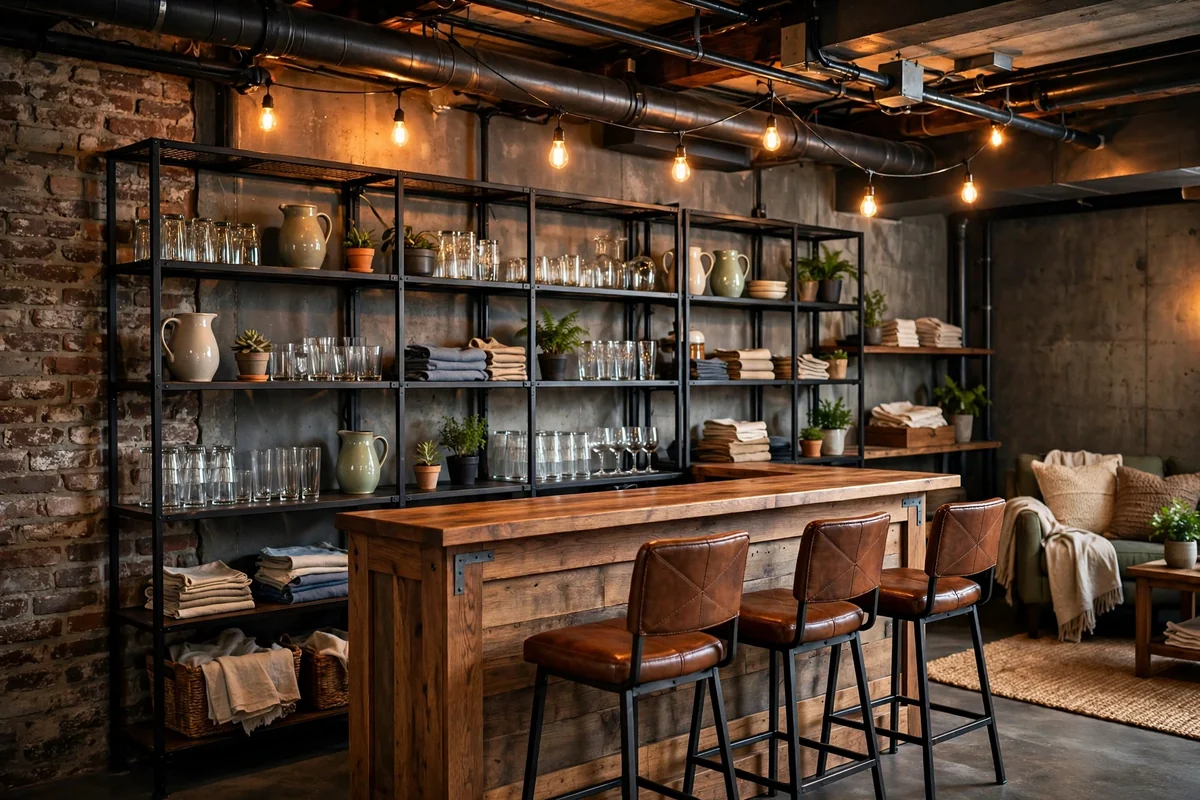
Industrial details suit basements’ raw bones: black metal shelving, Edison-style LED bulbs, concrete-look counters, exposed ductwork painted dark. The style embraces what basements already are instead of fighting it. Keep the palette warm: black metal with wood and brass reads industrial-cozy rather than cold warehouse, and the honest materials age gracefully, gaining character instead of just wearing out.
Soften the edges with textiles: leather stools, a woven rug, linen curtains over small windows. Good lighting is essential; industrial style without warm light feels stark. Avoid going full factory; a few well-chosen industrial pieces mixed with warm materials is the sweet spot. This style is also budget-friendly, since it celebrates unfinished elements rather than hiding them.
10. A Rustic Farmhouse Bar
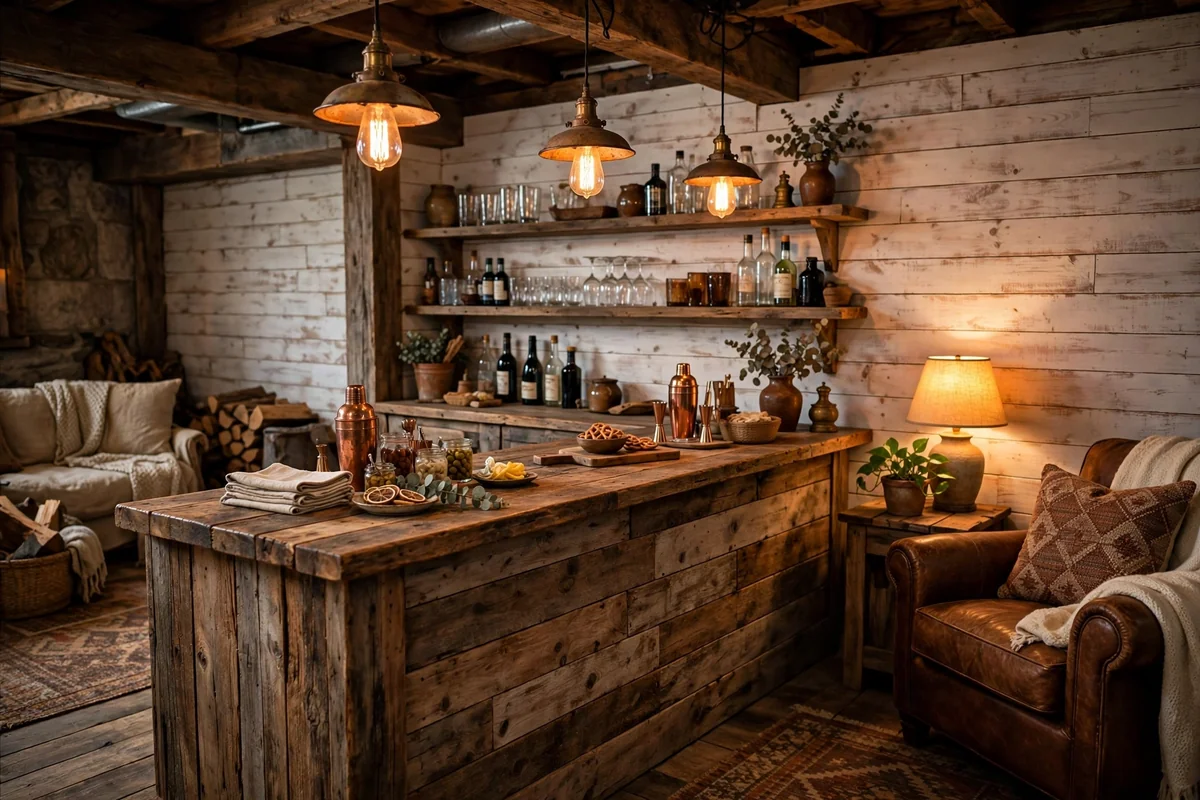
A rustic farmhouse bar brings countryside warmth underground. Reclaimed wood counters, shiplap or beadboard walls, vintage-style lighting and galvanized metal accents create the look. Distressed finishes are forgiving in basements where perfection is hard to maintain. Keep the palette creamy whites, warm woods and soft blacks, and the collected, unpretentious feeling will make every guest relax the moment they come downstairs.
Mix old and new: a vintage sign or antique crates alongside clean-lined stools keeps it fresh rather than themed. Warm lighting is non-negotiable; farmhouse style glows at 2700K. Avoid cluttering every surface with rustic knickknacks; restraint keeps it charming. This style feels personal and collected, which is exactly what makes guests comfortable.
11. A Modern Minimalist Bar
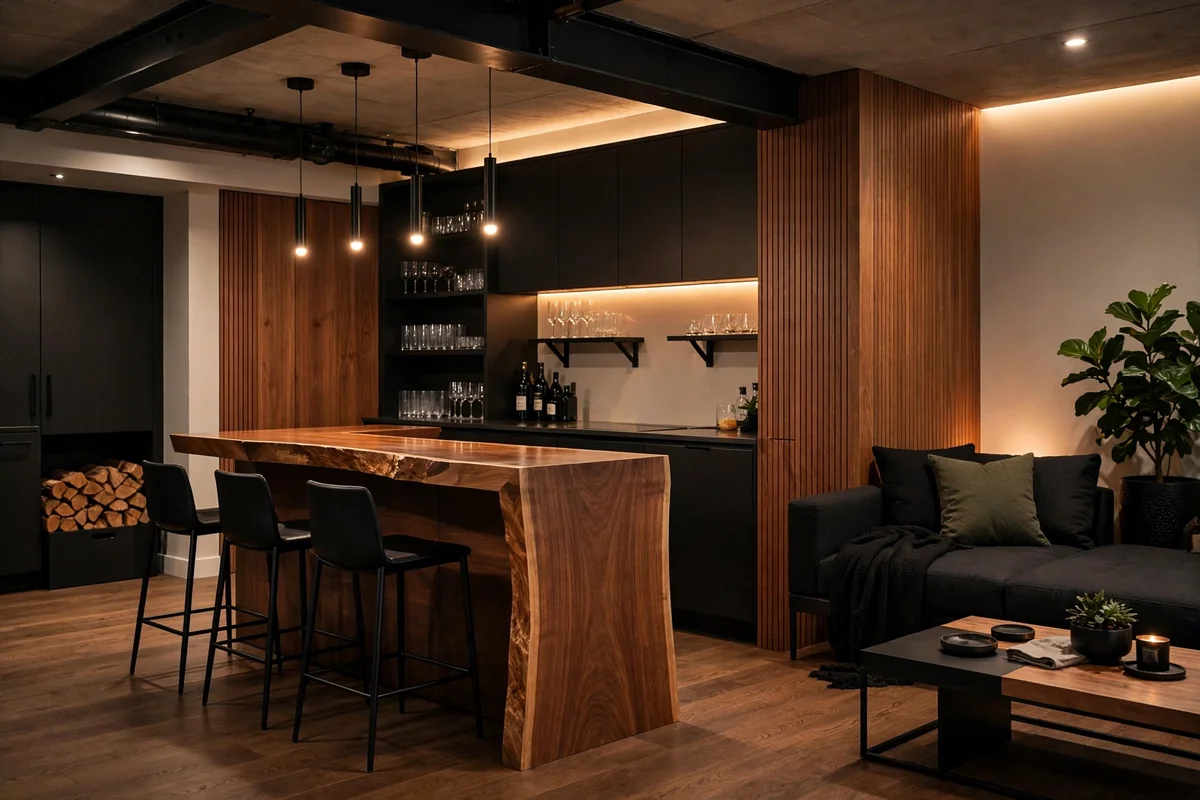
A modern minimalist bar proves basements can feel sleek. Clean-lined cabinetry, a waterfall-edge counter, handleless storage and a restrained palette of warm white, wood and black create calm. Hide clutter behind closed storage; the look depends on clear surfaces. One sculptural light fixture provides the focal point, while hidden LED strips under the counter keep the sleek surfaces glowing softly after dark.
Keep materials honest: real wood, stone, metal. Good lighting design carries minimalism; without it, the space feels flat. Avoid the temptation to fill empty space; negative space is the design. This style suits homeowners who want the basement to feel like an extension of a modern main floor. Serene, uncluttered and quietly luxurious.
12. A Small Serving Counter With Sink
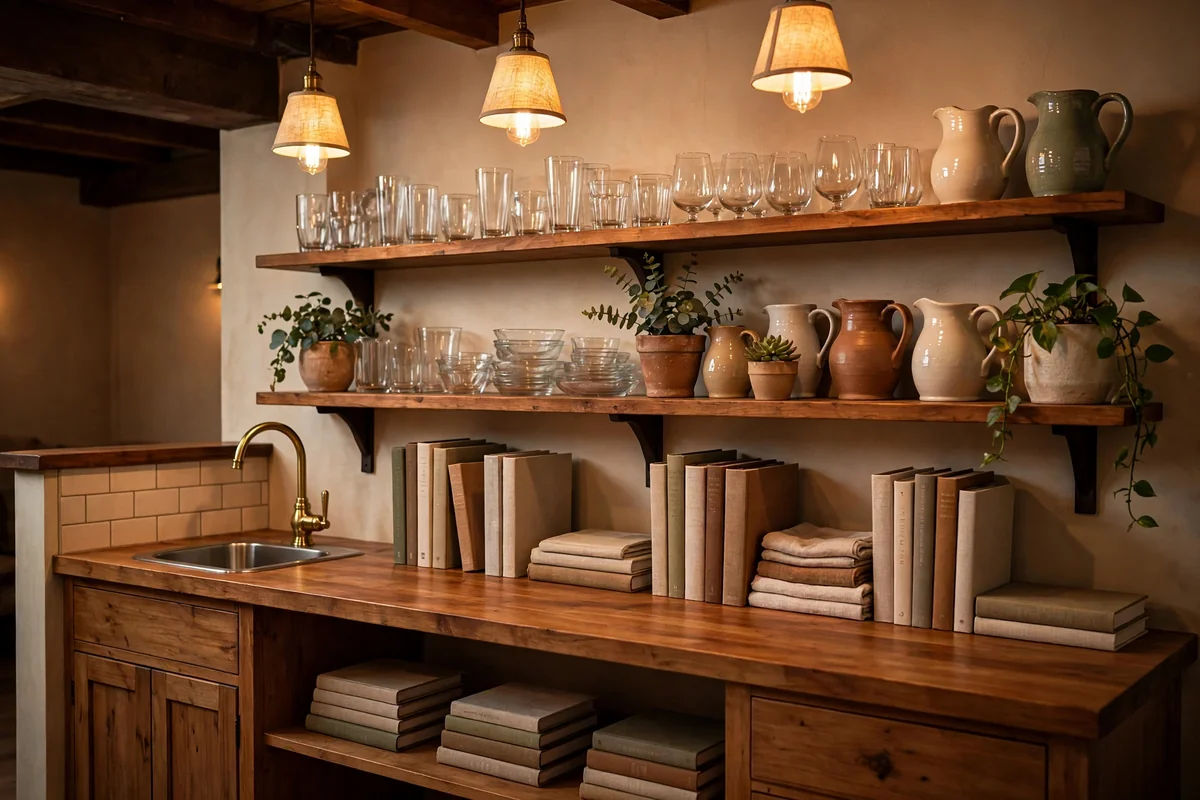
A sink elevates a basement bar from furniture to function. Rinsing glasses, filling the coffee maker and quick cleanups all happen steps away instead of upstairs. A small bar sink, 15 by 15 inches, fits most counters. Plumbing is simplest near existing water lines; consult a plumber about tying into drainage before planning.
Budget $500 to $1,500 for basic sink plumbing depending on distance to existing lines. Choose a deep single-bowl sink that hides clutter. Add a gooseneck faucet for filling tall pitchers. If plumbing is impractical, a dry bar with a large water dispenser works nearly as well. The sink is a luxury, not a necessity; plan it only if the plumbing math makes sense.
13. Floating Display Shelves
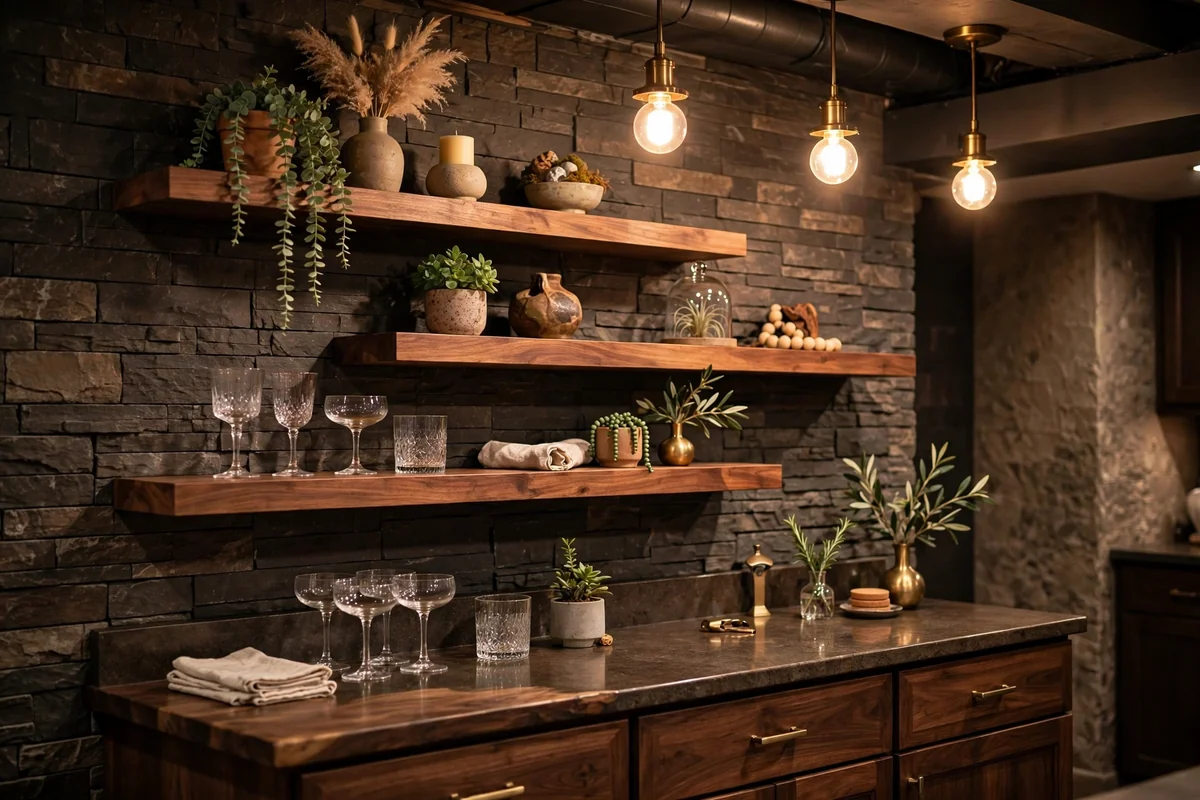
Floating shelves with hidden brackets give the bar a clean, modern display zone. Use them for glassware, small plants, framed photos and collectibles. Solid wood shelves 8 to 10 inches deep, mounted into studs, hold substantial weight. The floating look keeps the wall feeling light, which matters in low-ceiling basements.
Style shelves with breathing room; crowded floating shelves look cluttered rather than curated. Add LED strip lighting under one shelf for a warm glow. Keep daily-use items low and decorative pieces high. Avoid exceeding the bracket weight ratings; glass collections are deceptively heavy. Floating shelves are the refined alternative to bulky cabinetry.
14. Brass and Leather Accents
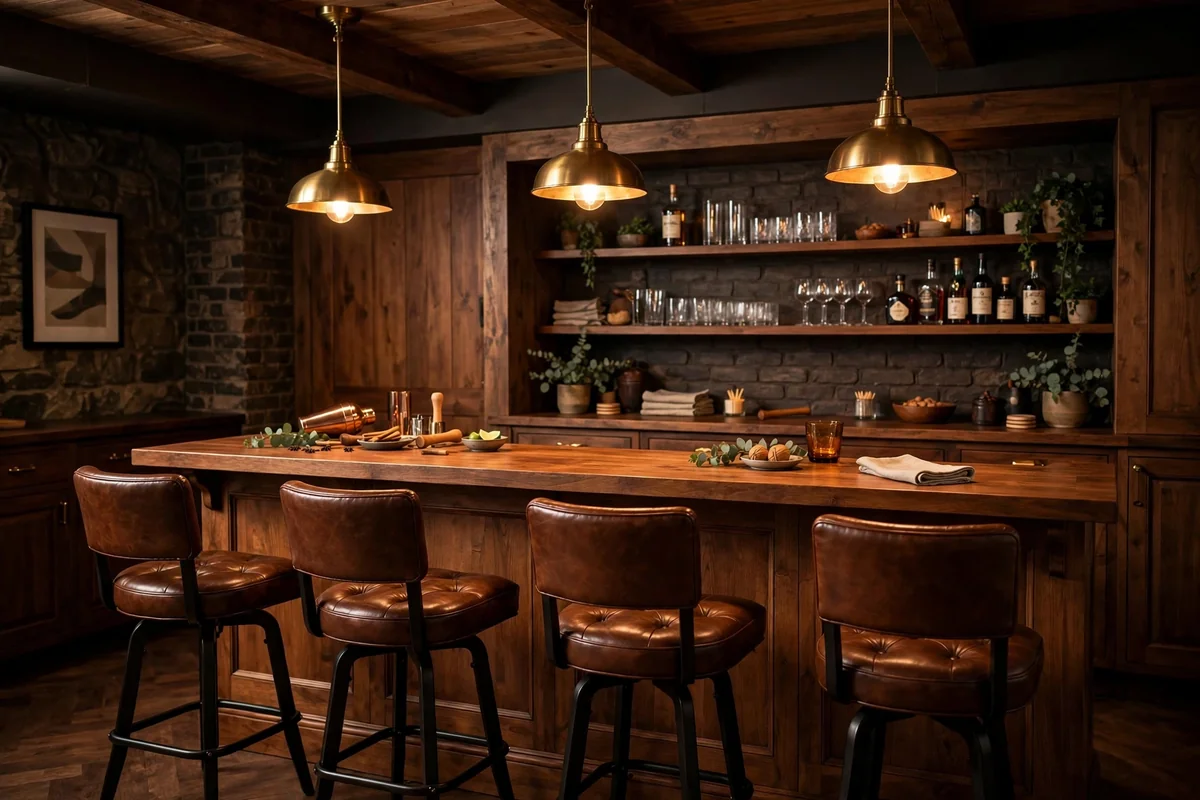
Brass and leather warm up basement bars like nothing else. Brass pendant lights, leather bar stools, a brass foot rail, small brass trays: the materials glow in warm light and add richness against wood and stone. Repeat each material at least three times so it reads as intentional. Brushed and aged finishes suit the relaxed basement mood.
Keep other metals quiet so brass stays the star. Leather develops character with use, which suits a gathering space. Vintage brass finds polish up beautifully for little money. Avoid lacquered brass-look pieces that read as plastic. In evening light, brass and leather together are the definition of cozy sophistication that makes everyone want to stay a little longer.
15. Seating Around a Fireplace
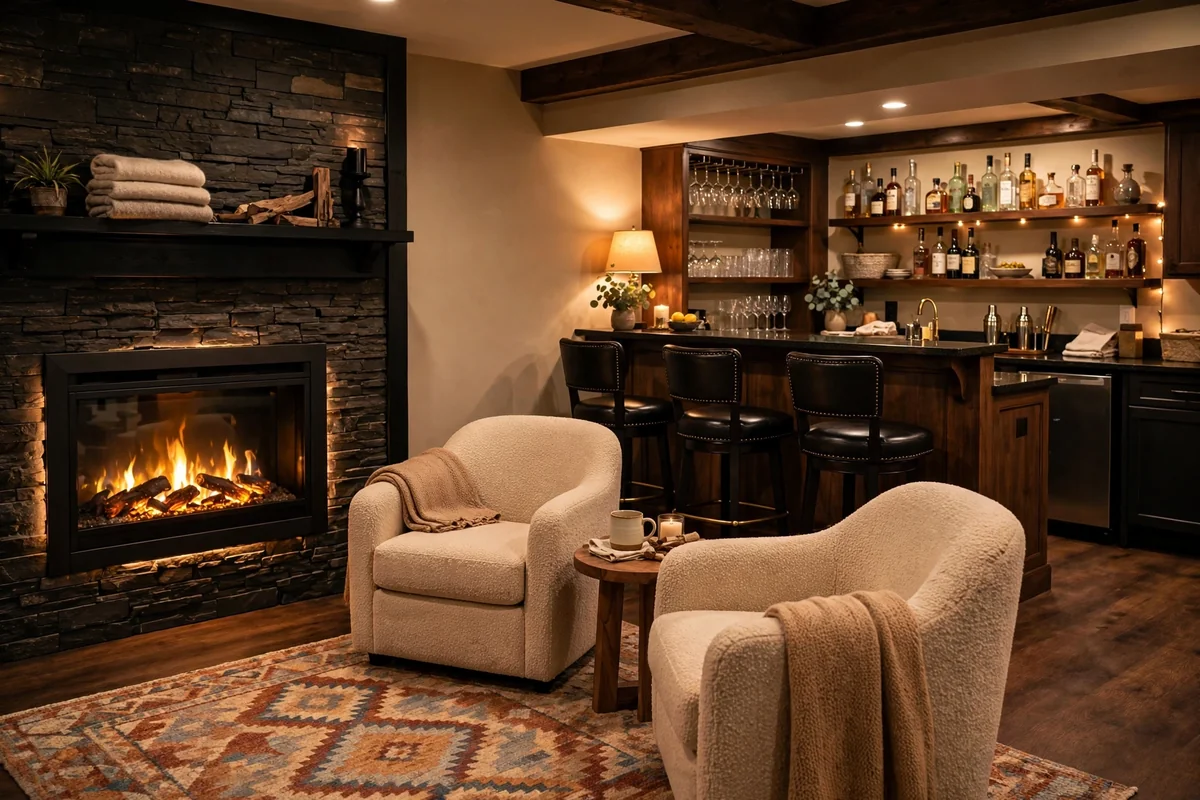
If your basement has a fireplace, or room for an electric one, arrange lounge seating around it near the bar. The fire becomes the room’s heart while the bar serves it. Electric fireplaces install almost anywhere with just an outlet and provide convincing flames without venting. Position seating to face both the fire and the bar for easy flow.
Keep the mantel styling simple: art, a few objects, greenery. The firelight plus warm lamps makes the whole basement glow. Ensure clearances meet the manufacturer’s specs and keep textiles away from heat. Even a small electric unit transforms a basement’s atmosphere completely. Fire and gathering are humanity’s oldest pairing; the bar just makes it convenient.
16. Vintage Finds With Character
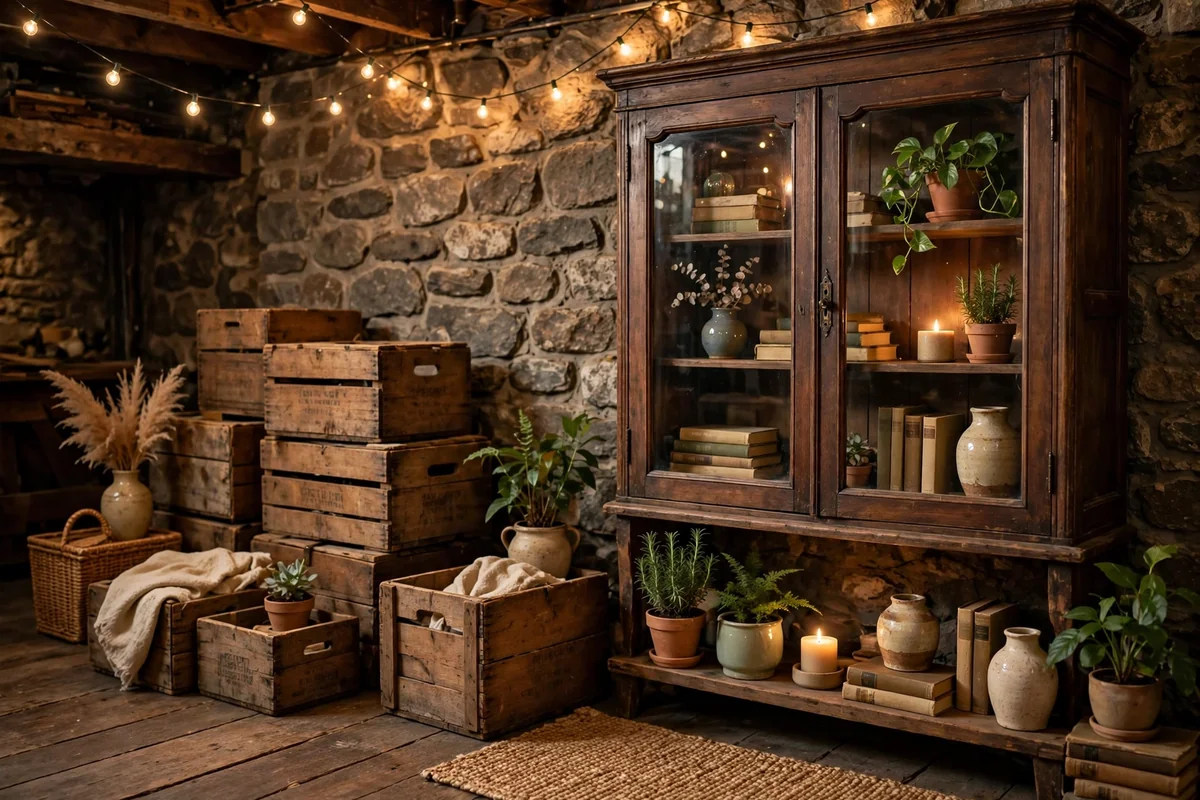
Vintage finds give a basement bar soul that new furniture cannot. An antique cabinet for glassware, vintage signs, old crates as shelving, a reclaimed door as the bar front: each piece adds story. Thrift stores, estate sales and salvage yards are treasure hunts; buy what you love and build around it.
Check vintage furniture for stability and refinish as needed; a coat of paint unifies disparate finds. Keep the mix curated; one person’s collection is another’s clutter. Ensure old electrical items are rewired safely. Avoid filling the bar with so many vintage pieces it feels like a shop; edit to the best. Character is what makes guests remember a basement bar.
17. Brighten With Light and Color
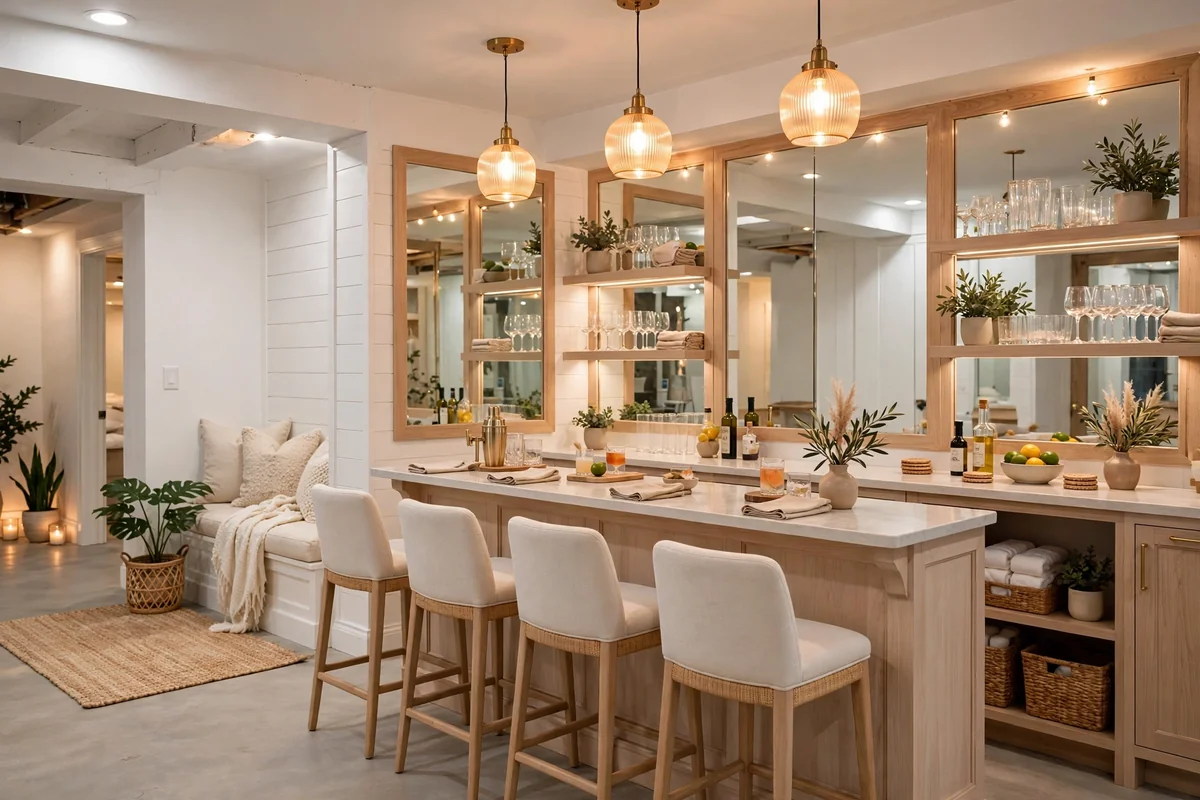
Basements fight darkness, so be deliberate about brightness. Paint walls warm white or pale warm tones, use light-colored flooring or large light rugs, and maximize every lumen with mirrors and reflective surfaces. Light finishes bounce the warm lighting around instead of absorbing it. Keep window wells clean and window coverings minimal.
Contrast the light envelope with rich bar elements: a dark wood counter or deep green cabinets pop beautifully against pale walls. This contrast is what makes the bar the focal point. Avoid all-dark schemes unless the lighting is truly excellent; most basements cannot pull them off. Brightness is not about white everything; it is about giving light something to bounce off.
18. A Snack Station
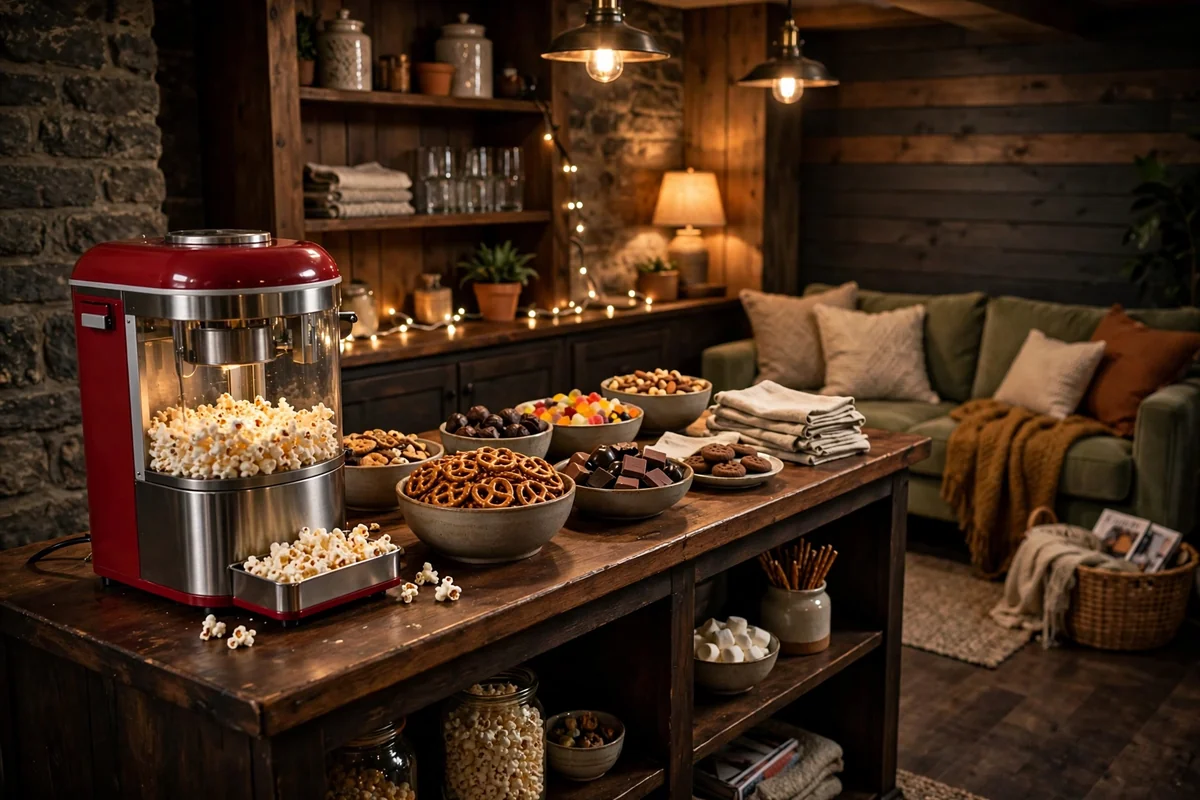
A snack station keeps gatherings fueled without trips upstairs. Dedicate a section of counter or a small cart to popcorn, nuts, crackers and treats in attractive containers. A popcorn maker is the classic basement bar appliance; its smell alone creates atmosphere. Keep serving bowls and napkins stocked in a nearby drawer.
Choose containers with lids to keep snacks fresh between gatherings. A small tray corrals everything and makes cleanup quick. Restock after each use so the station is always ready. Avoid perishable snacks that spoil unnoticed; shelf-stable is the way. The snack station is a small touch that makes the basement feel like a real venue.
19. A Comfortable Lounge Area
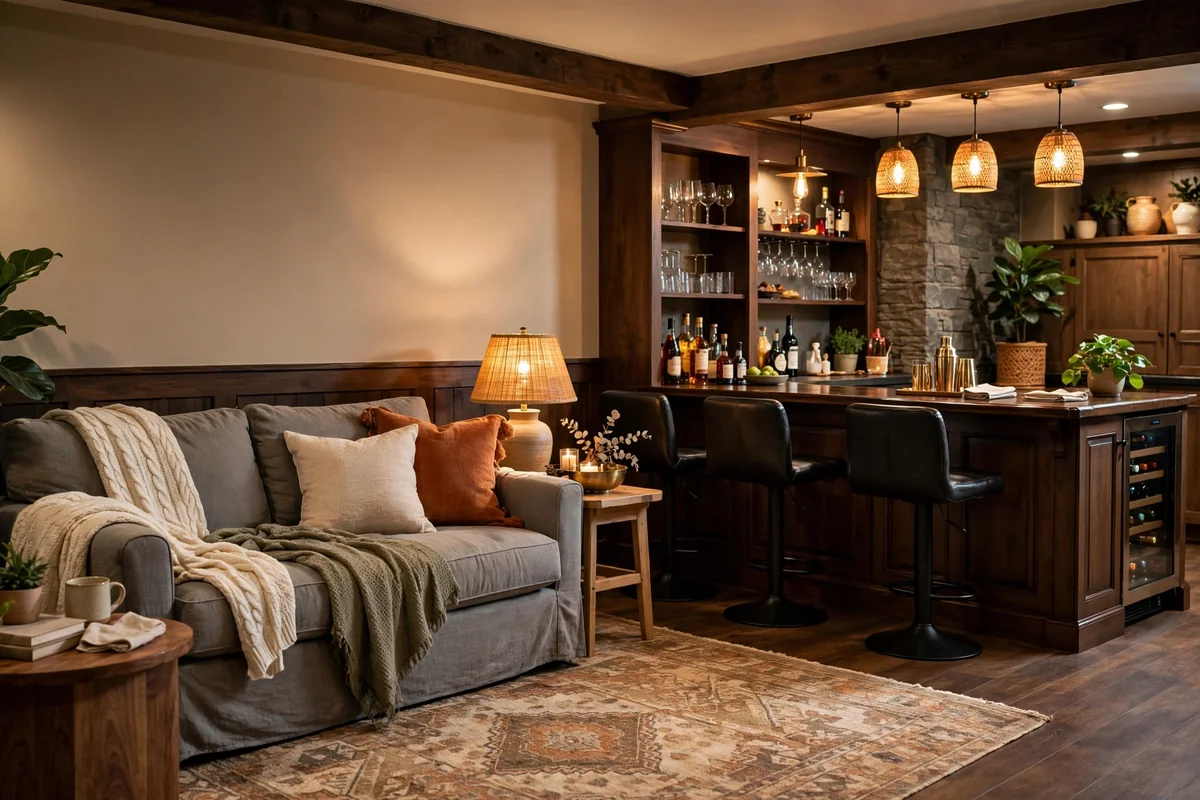
Not everyone wants a bar stool; a lounge area with a sofa or deep chairs gives the basement a second way to relax. Position it near the bar but as its own zone, defined by a rug and facing the fireplace or TV. Deep, comfortable seating with soft throws invites lingering. This is where the basement becomes a true living space.
Choose performance fabrics that resist stains since snacks are inevitable. A rug defines the zone and absorbs sound. Keep a side table within reach of every seat for drinks. Avoid pushing all furniture against walls; floating the arrangement feels more intentional. The lounge area ensures the basement works for quiet evenings as well as parties.
20. Music and Sound Setup
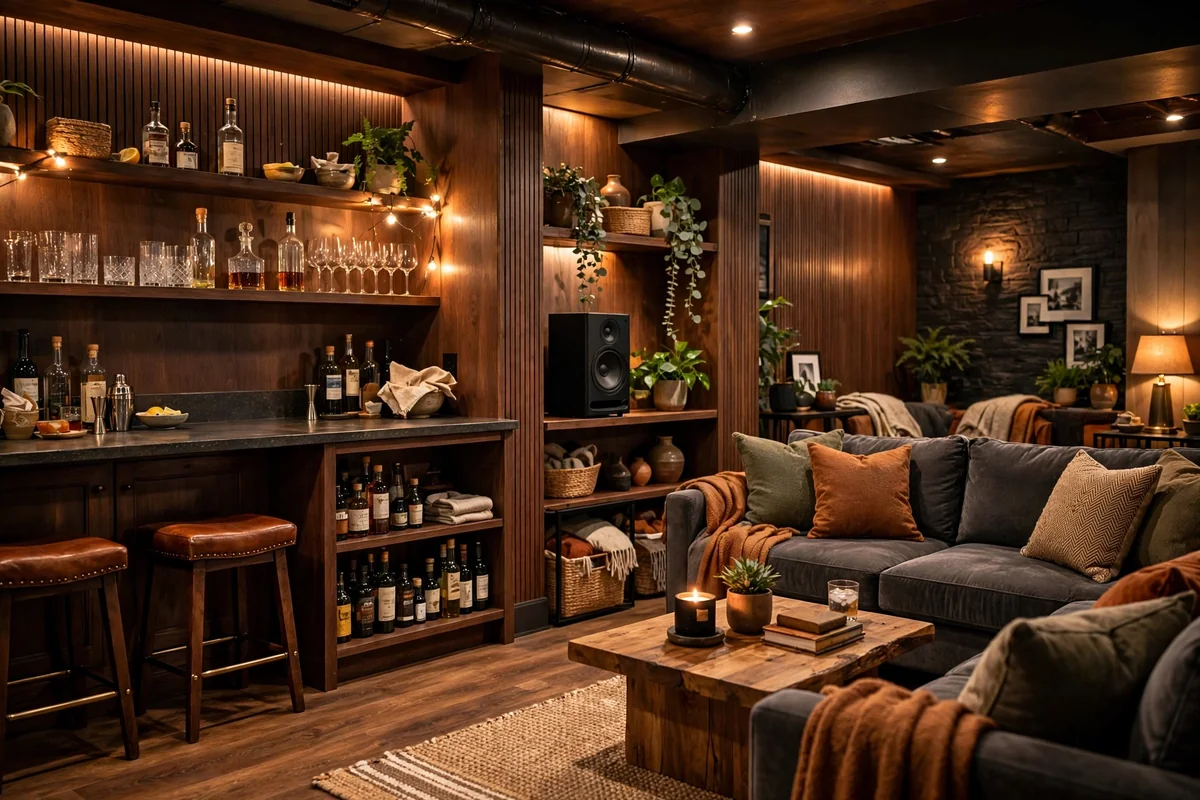
Good sound makes a basement bar feel complete. A quality Bluetooth speaker or a simple multi-room speaker setup fills the space with music for gatherings and quiet evenings alike. Position speakers at ear height, away from corners where bass booms. Soft furnishings, rugs, curtains, upholstery, tame the echo that plagues bare basements.
Keep controls simple; a single speaker everyone can connect to beats a complex system nobody uses. Consider the neighbors and the rest of the household; basements carry sound surprisingly well through floors. A small amount of acoustic treatment, even just bookshelves and fabric panels, improves clarity enormously. Music is the atmosphere layer that turns a nice room into a favorite room.
21. A Budget-Friendly Bar Build
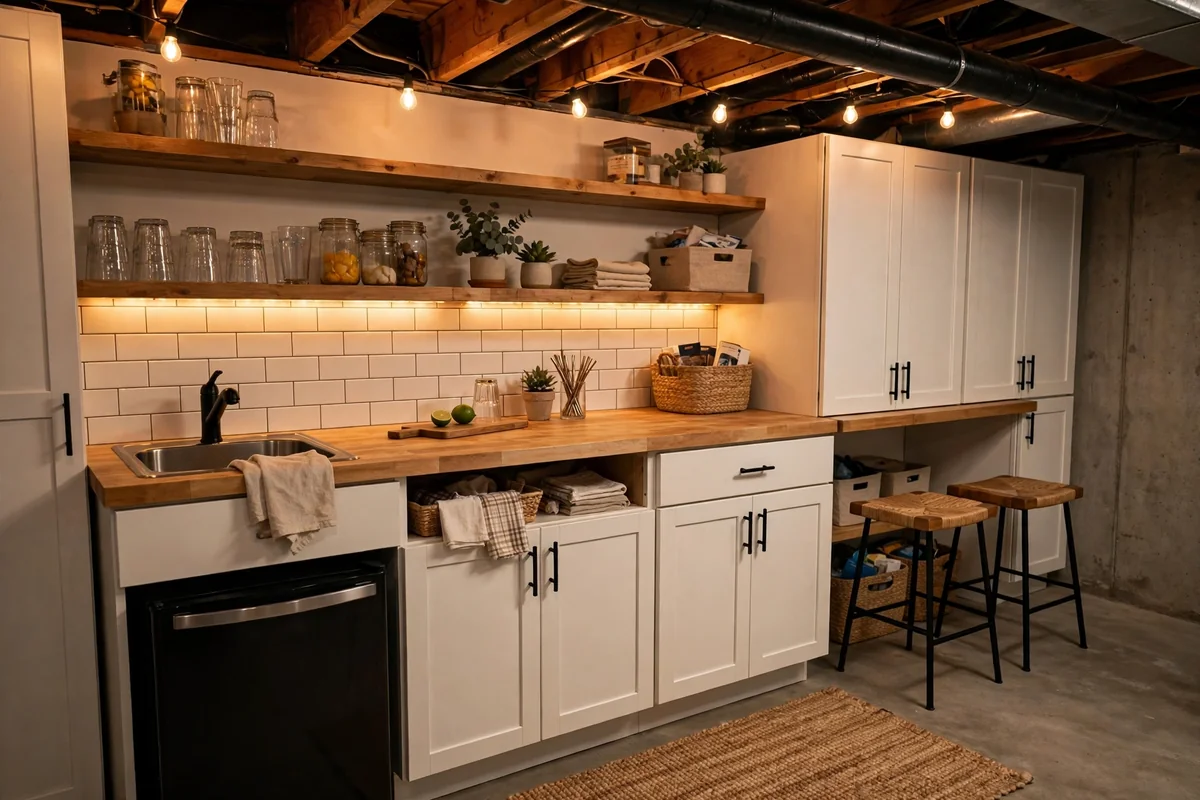
A great basement bar does not require a big budget. Stock base cabinets topped with butcher block, a secondhand counter, or pallets and plywood with a good finish all make solid bars for $500 to $1,500. Spend the savings on what matters most: comfortable stools, warm lighting and a good rug. Paint unifies budget materials beautifully.
Shop secondhand for stools, lighting and decor; basements suit the collected look. Do the work yourself where skills allow and hire out only plumbing and electrical. Phase the project: counter and stools first, sink and stone later. Avoid cheap materials that look cheap; honest budget materials, wood, metal, paint, look better than fake luxury. Resourcefulness is a design skill, and basement bars reward it.
Conclusion
The best basement bars are not the biggest or most expensive; they are the warmest and most personal. Wood, warm light, comfortable seating and zones for how you actually spend time: that is the whole formula. Start with the counter and the lighting, add the pieces that fit your life, and let the basement become the room everyone asks about. Build it for your people, and they will come.
Frequently Asked Questions
How much does it cost to build a basement bar?
A simple DIY bar using stock cabinets or reclaimed wood can cost $500 to $1,500. A mid-range build with a sink, lighting and good seating runs $2,000 to $5,000. Full custom builds with plumbing and stonework start around $8,000 and go up from there.
What is a good size for a basement bar?
A comfortable bar counter is 6 to 8 feet long, 24 inches deep, and 42 inches high for bar stools. Allow 24 inches of width per stool and 36 inches of walkway behind seated guests. Even a 4-foot counter works in a small corner.
Do you need plumbing for a basement bar?
Not necessarily. Many great basement bars are dry bars with no sink. If you want a sink, you will need water supply and drainage, which is easiest when the bar sits near existing plumbing. A plumber can advise on what is feasible.
How do you make a basement feel less dark?
Layer warm lighting at 2700K, use light wall colors, add mirrors to bounce light, choose warm wood tones, and keep window areas unblocked. Good lighting design matters more than any single fixture.
What seating works best at a home bar?
Backless or low-back stools 30 inches high suit 42-inch counters and tuck away neatly. For lingering, choose stools with backs and footrests. Allow 24 inches per person and keep a few extra seats nearby for larger gatherings.