Bathroom
21 Blue and Green Bathroom Decor Ideas That Feel Fresh, Serene and Timelessly Calm
By Anna Wells · · 17 min read
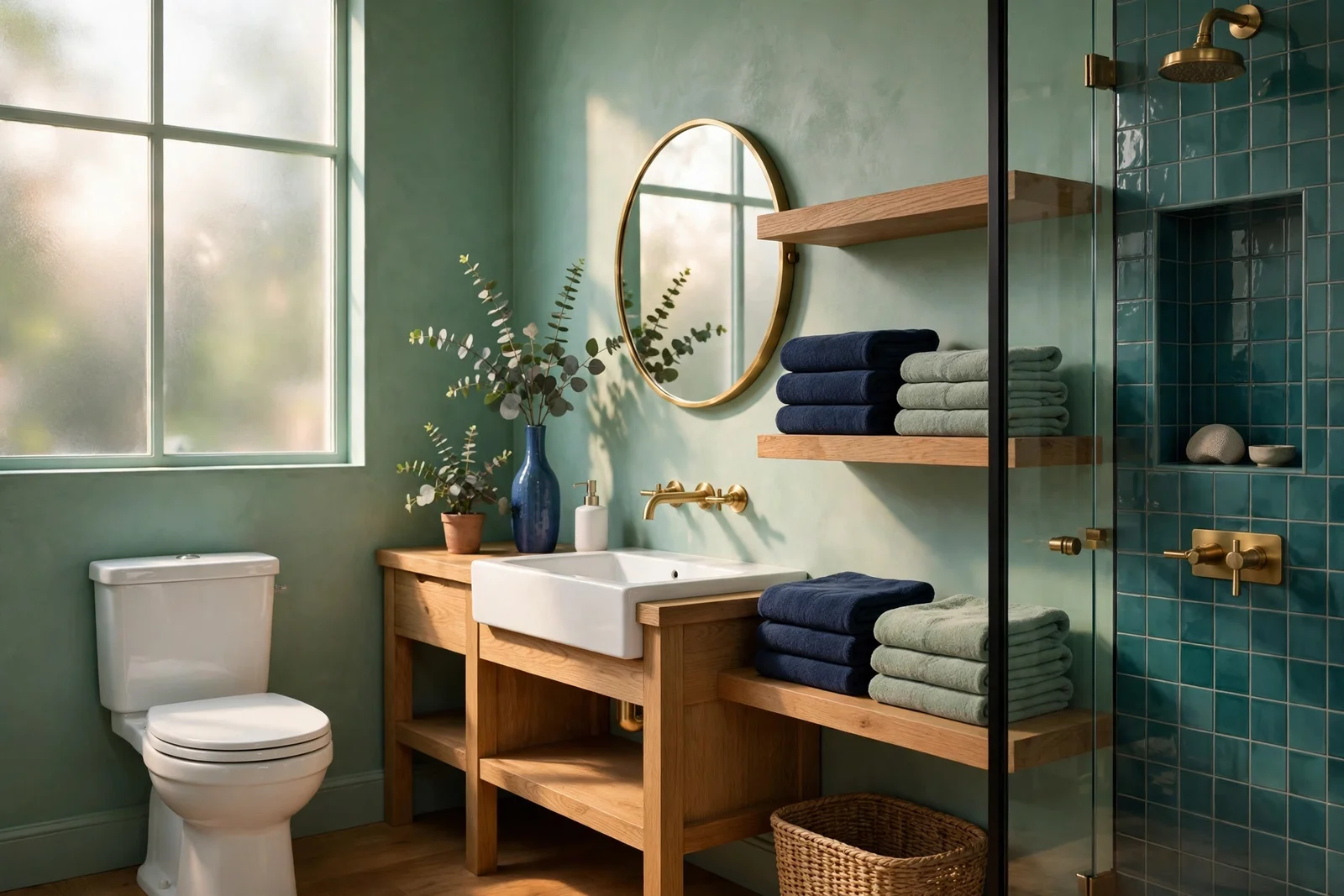
Blue and green together bring the calm of clear water and fresh leaves into the bathroom. These 21 practical ideas layer sea glass, sage, navy and teal with honest materials for a fresh, serene room that never feels cold.
Step into a bathroom washed in the colours of clear water and fresh leaves, and the day seems to slow down on its own. Blue and green together carry the calm of a still lake edged with reeds, a pairing that feels both fresh and deeply restful. Unlike icy monochrome schemes, this combination stays warm and welcoming when the tones are chosen well.
The secret lies in balance. Sea glass, eucalyptus, sage and mint bring the gentle greens, while navy, teal and duck egg add blue depth that keeps the room grounded. Mixed thoughtfully, they never turn cold or clinical. They read like nature brought indoors, serene and quietly timeless.
This guide gathers 21 practical ideas that build the look layer by layer, from sea glass walls and teal tile niches to brass taps, linen curtains and humidity loving plants. Every idea includes real sizes, materials and budget guidance, so you can start with one small change or plan a full refresh.
Begin with the idea that appeals most, perhaps the eucalyptus wreath or the folded towel stacks, and let the palette grow naturally from there. Small, deliberate steps create the calmest rooms.
1. Wash the Walls in Soft Sea Glass Green for a Water Clear Backdrop
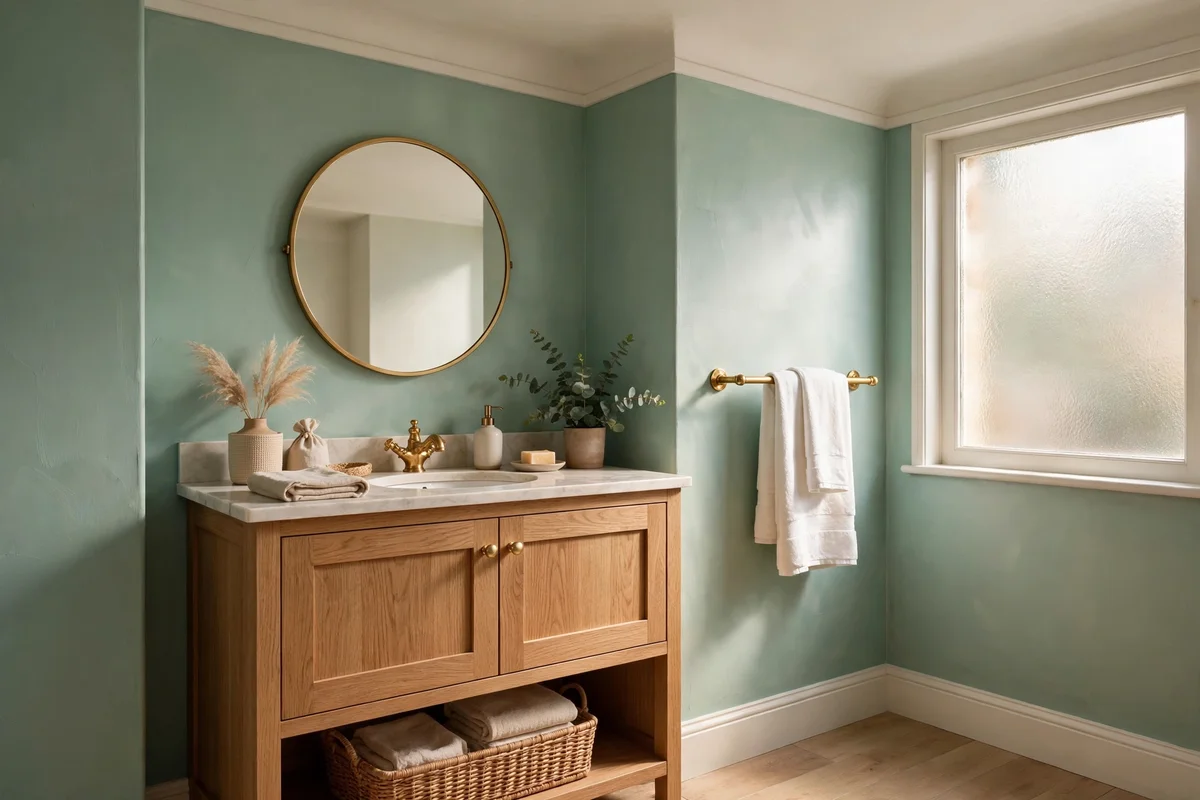
Sea glass green sits exactly between blue and green, so it reads calm from every corner of the room. Choose a paint with a light reflectance value between 55 and 65 so walls glow softly without glare, and pick an eggshell finish formulated for bathrooms. Test a large sample board in morning daylight and evening lamplight, since greens shift more than most colours. Two coats over primer cover most pale walls.
Keep the ceiling a clean warm white so sea glass walls feel like water meeting sky. The common mistake is choosing a sea glass that leans too minty, which can look cold under LED lighting; warm it with oak, rattan or brass accessories. One 2.5 litre tin of quality bathroom paint covers roughly 25 square metres, usually enough for two coats in a small bathroom.
2. Pair a Navy Vanity With Sage Open Shelving for Two Tone Depth
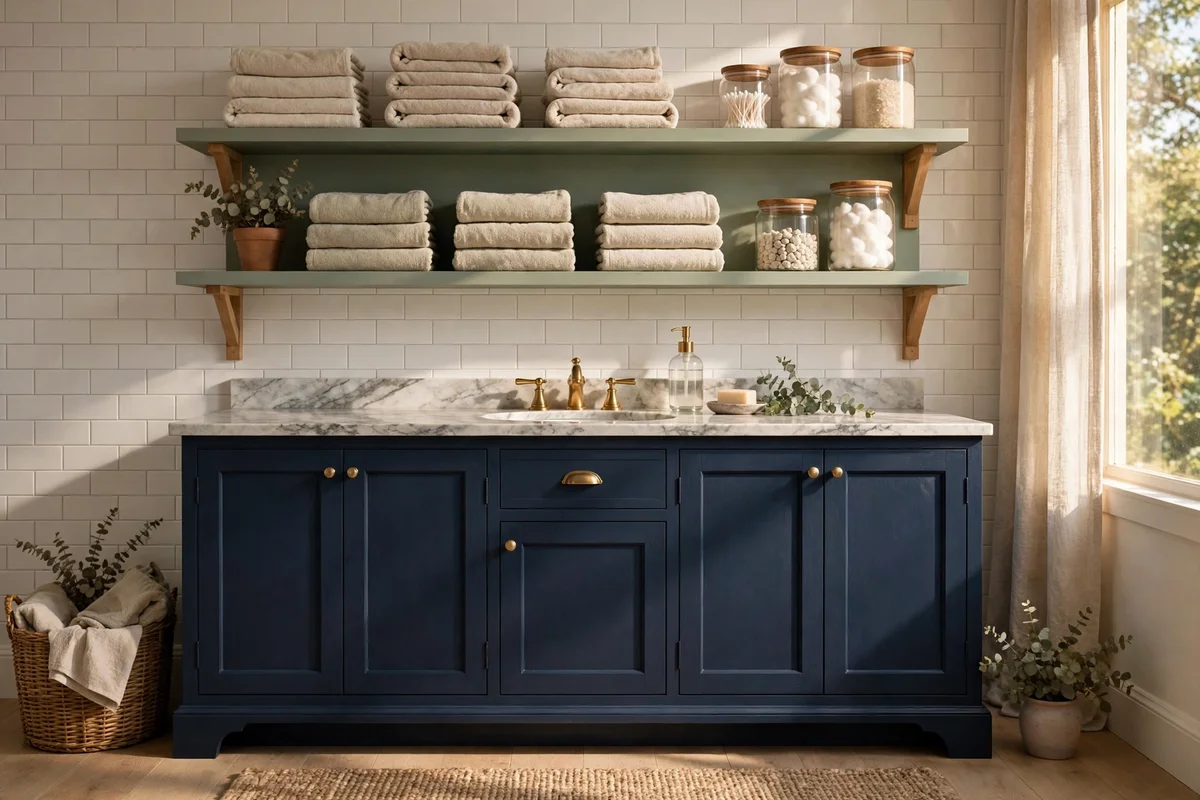
A navy vanity base paired with sage open shelving gives depth without heaviness. Paint the vanity in a deep navy and choose sage for a tall linen cupboard or wall shelves, so blue and green balance across the room. Keep all handles in one finish, brass or chrome, so the two tone scheme reads intentional rather than accidental. Satin paint resists steam marks better than matt.
Let navy anchor the room and repeat sage on at least two other surfaces, perhaps the shelves and a stool cushion, so the colour travels around the space. The mistake to avoid is adding a third strong colour at equal strength; whites and pale oak fill that supporting role instead. Repainting a vanity costs 60 to 120 in paint and primer, while new doors sit in the mid range.
3. Line the Shower Niche With Teal Zellige Tiles That Catch the Light
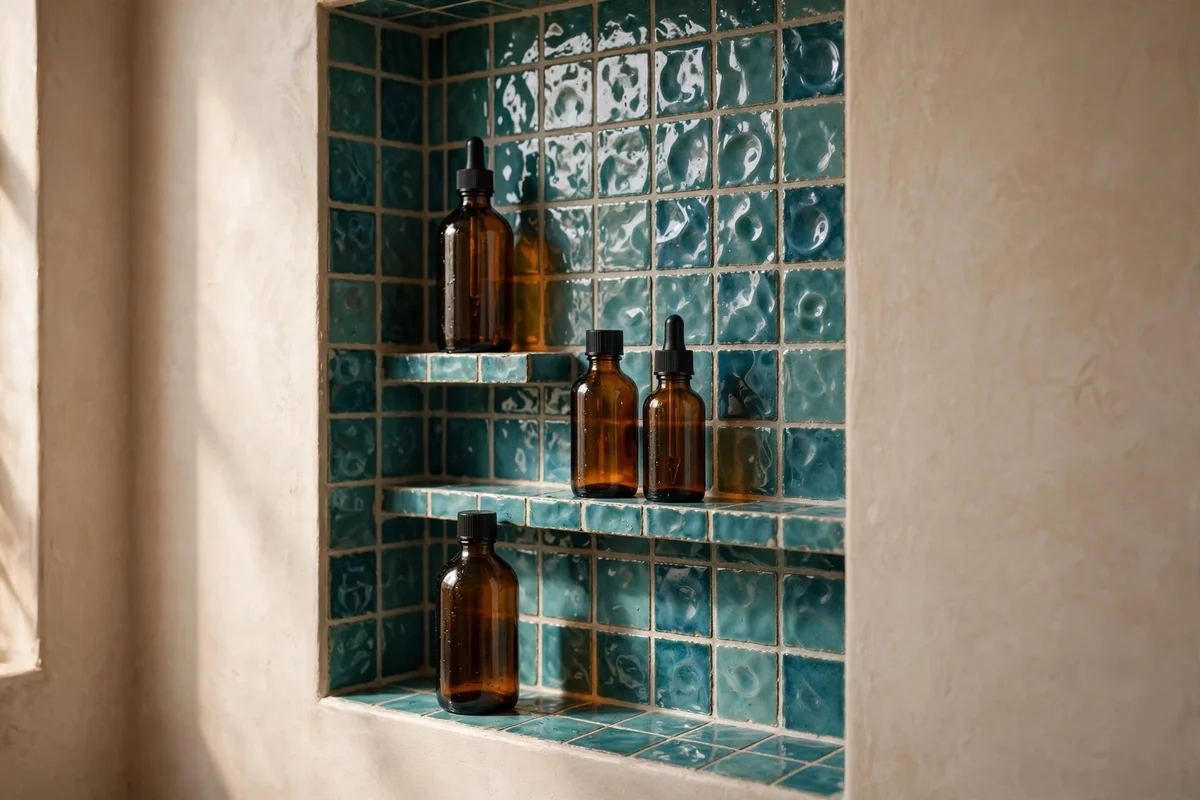
A shower niche lined in teal zellige tiles turns a plain recess into a jewel box. Zellige tiles are handmade with slight surface variation, so they catch light in small ripples that echo water. Use 10 by 10 cm squares for a classic look, and seal the grout with a penetrating sealer since niches take constant spray. Order 10 percent extra tile to cover cuts and breakage.
Keep surrounding wall tiles a quiet white or pale mint so the teal niche becomes the focal point. The mistake to avoid is tiling the niche in a dark grout that shows soap residue; a mid tone sand or grey grout hides marks. Budget zellige style ceramic copies cost far less than handmade tiles and still deliver the ripple effect at a glance.
4. Lay Duck Egg Subway Tile With Soft Olive Grout Along the Tub Surround
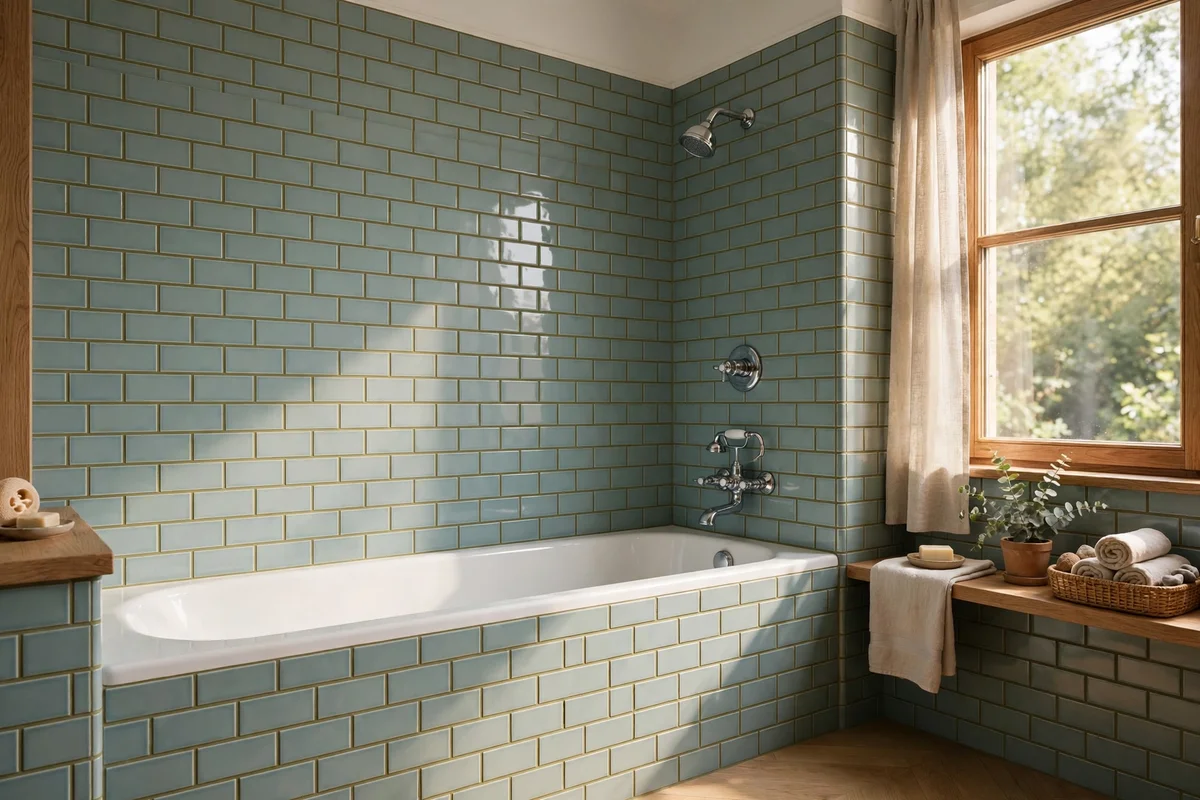
Duck egg subway tiles with soft olive grout give the tub surround a gentle, layered look. Standard 7.5 by 15 cm tiles in a brick pattern suit most tubs, and an olive or sage grout adds depth without the harsh lines of dark grout. Run the tile to the ceiling around the tub for a finished feel, and use a waterproof membrane behind the boards first.
Wipe grout lines with a pH neutral cleaner weekly to keep the olive tone even, since hard water can leave pale deposits. The common mistake is stopping the tile halfway up the wall, which leaves an awkward paint line in the splash zone. Tiles and grout for a standard tub surround typically land in the mid budget range if you keep the layout simple.
5. Hang a Fresh Eucalyptus Wreath Above the Towel Rail
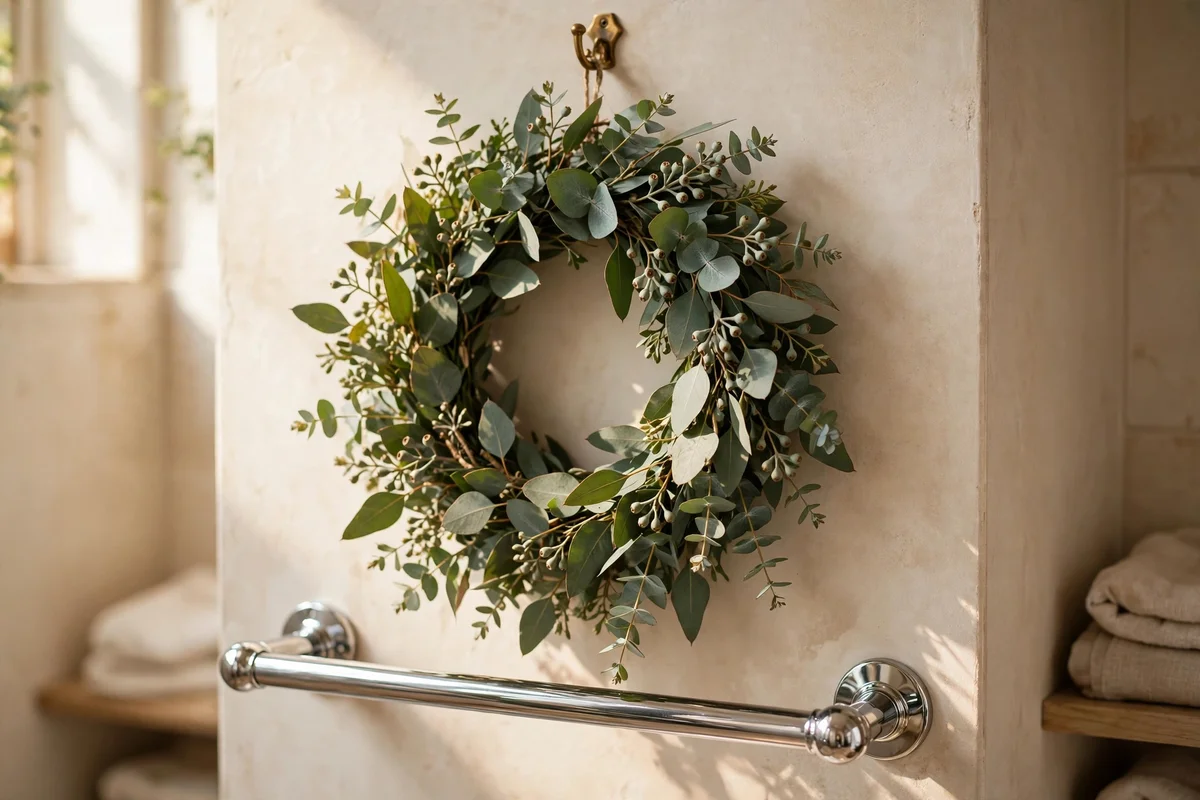
A fresh eucalyptus wreath above the towel rail adds living colour and a clean scent that suits a bathroom. Choose a 30 to 40 cm wreath of silver dollar or baby blue eucalyptus, and hang it on a small brass hook set about 20 cm above the rail. Steam from the shower releases the scent naturally, and the leaves dry slowly in place for months.
Refresh the wreath every eight to twelve weeks, or when the leaves lose their silvery colour. The mistake to avoid is hanging real foliage directly inside the shower spray, where it rots quickly; a spot above the rail catches steam without soaking. Dried eucalyptus wreaths are a budget buy, while fresh ones cost a little more at a florist.
6. Fold Navy and Sage Towels in Graduated Stacks on Open Shelves
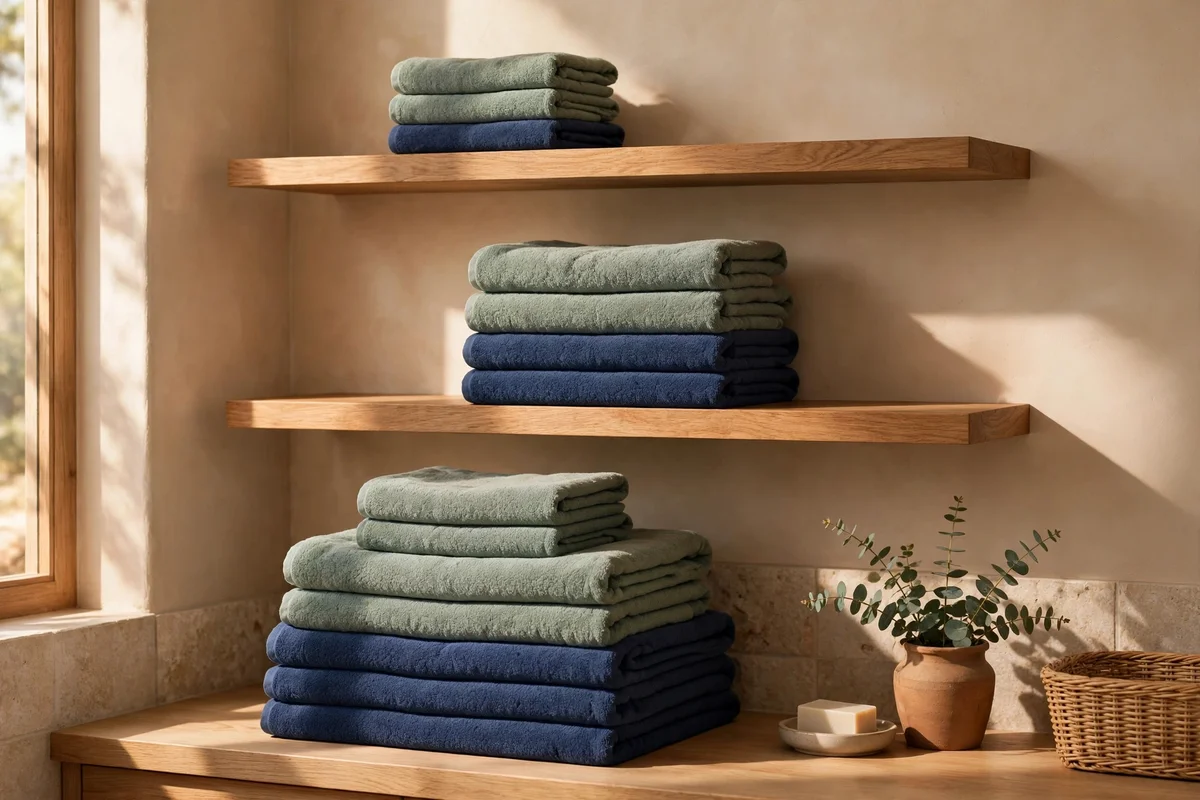
Fold navy and sage towels in graduated stacks, largest at the bottom, on open shelves for a calm colour rhythm. Bath sheets of 70 by 140 cm fold to neat rectangles, with hand towels of 50 by 100 cm on top and flannels above. Roll the stack edges to face forward so the colour gradient shows. Cotton towels in 550 to 600 gsm feel plush and dry reasonably fast.
Keep two spare sets per colour so laundry day never empties the shelf. The mistake to avoid is mixing faded and new towels in one stack; retire worn towels to cleaning duty. Budget sets work well for guests, while investing in one good set for daily use makes the routine feel considered. A small shelf 60 cm wide holds about six folded sets.
7. Dress the Shower in Washed Linen Curtains in Soft Mint
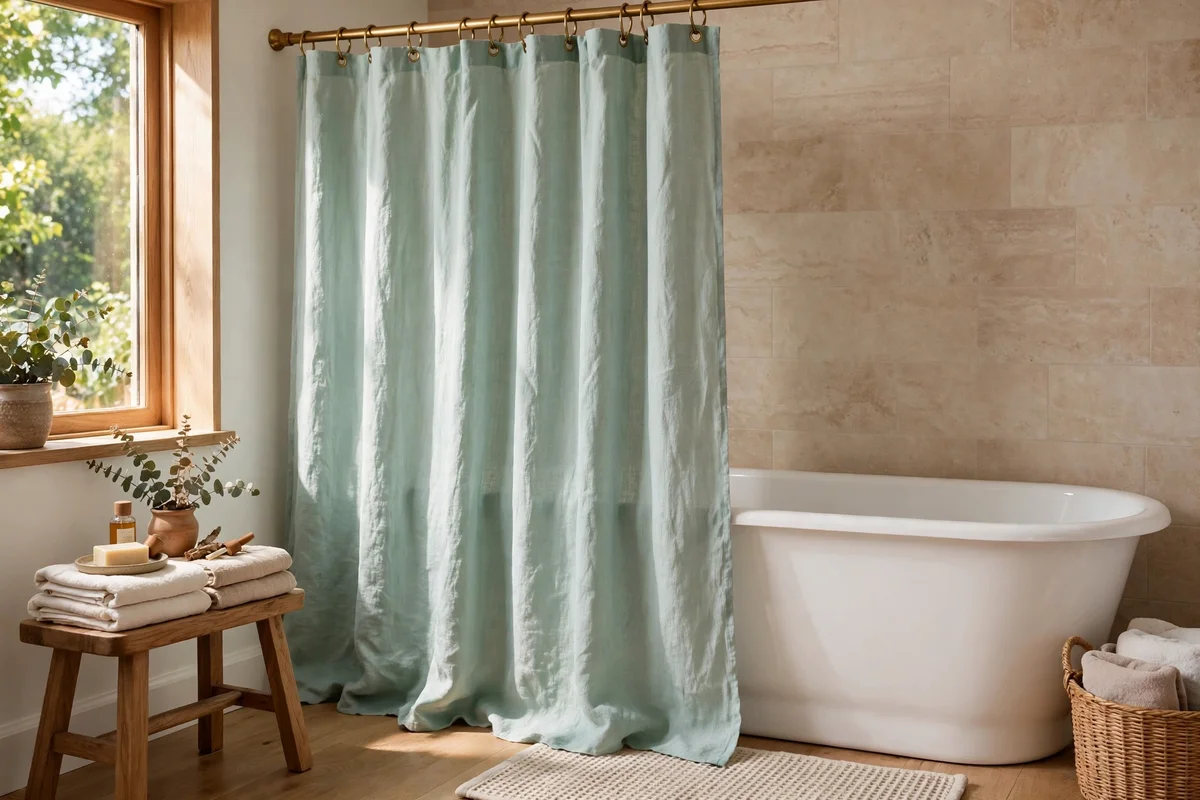
Washed linen shower curtains in soft mint move gently and filter light beautifully. Choose a curtain 180 cm wide and 200 cm long for a standard tub, and hang it on rings that glide, since linen is heavier than plastic. A fabric curtain needs a separate waterproof liner behind it, hung a few centimetres shorter so it stays hidden. Wash the linen monthly in warm water.
Let the curtain fall just above the tub edge rather than dragging inside it, which causes mildew. The common mistake is buying a curtain too narrow; extra fullness looks far more generous and hangs better. Mid range linen curtains cost more than polyester but last years, and mint pairs well with brass rings and a pale floor.
8. Layer a Flatweave Bath Mat in Sea Glass and Warm Sand
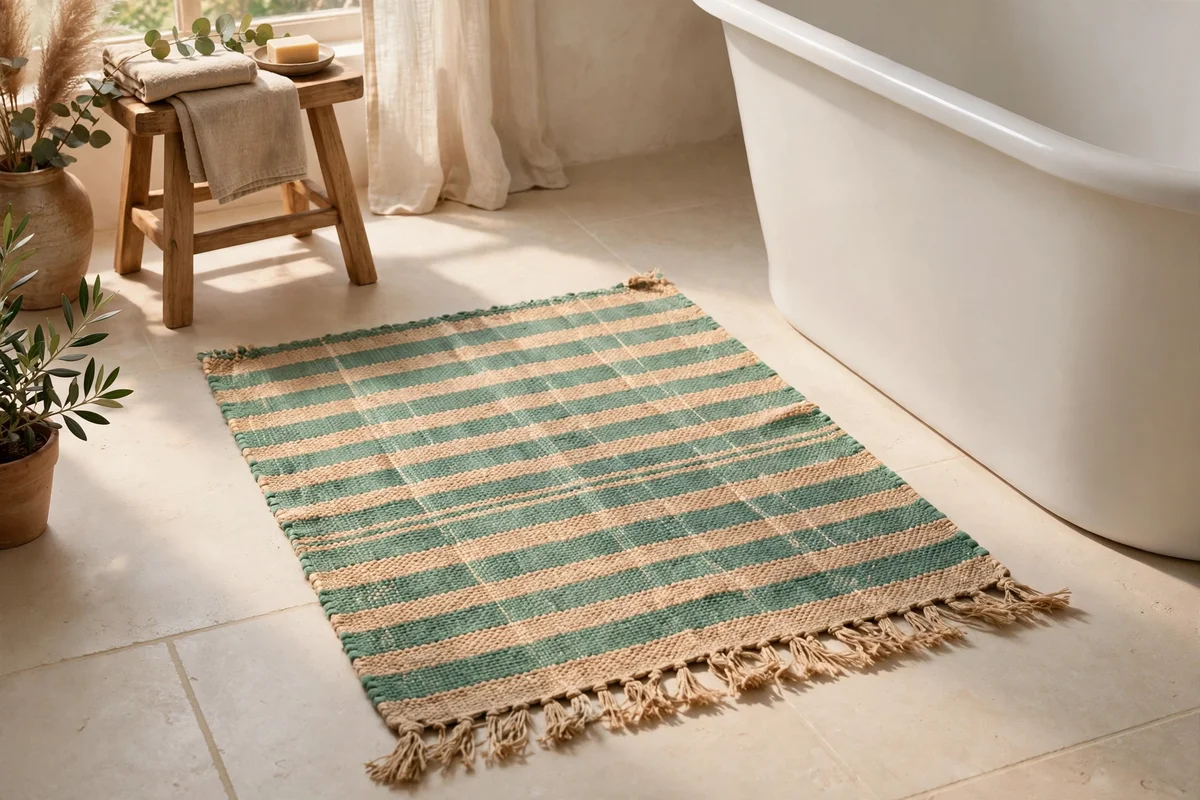
A flatweave bath mat in sea glass and warm sand brings the shoreline underfoot. Choose a mat around 60 by 90 cm in cotton or a cotton and linen blend, with a low pile that dries quickly between showers. Place it centred on the bath or shower exit, leaving about 15 cm of floor visible on each side for balance. Shake it out daily and wash weekly.
Add a small non slip rug pad underneath if the floor is smooth tile. The mistake to avoid is a thick shaggy mat in sea glass, which stays damp and dulls the fresh colour. Two mats in rotation mean one is always dry, and budget cotton flatweaves cost little while still looking crisp. Sand tones keep the green from feeling cool.
9. Fill Ribbed Glass Jars With Olive Bath Salts on the Counter
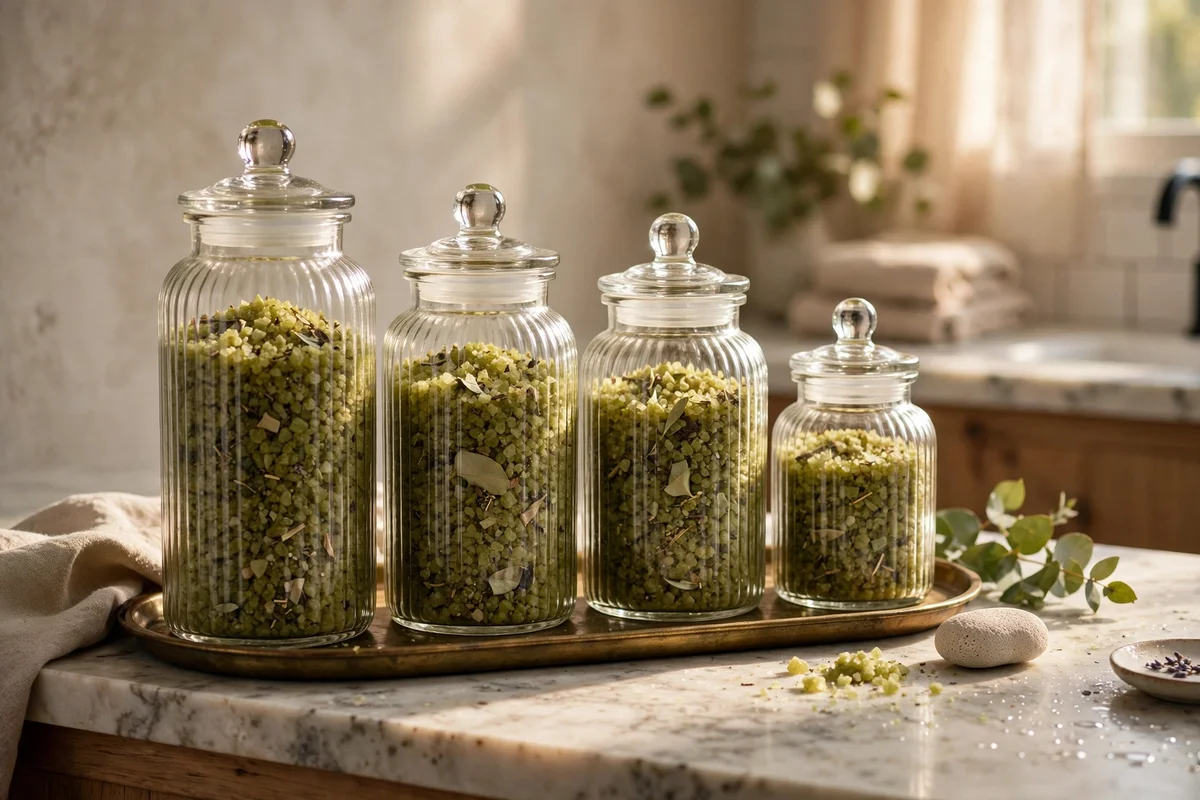
Ribbed glass jars filled with olive bath salts turn the counter into a small apothecary display. Choose jars 12 to 18 cm tall with airtight lids, and fill them with Epsom salt tinted with a drop of green mineral colour or layered with dried lavender buds. Place two or three jars together on a small tray to keep the group tidy, and keep them away from the tap splash.
Label jars with small paper tags tied in twine for a handcrafted touch. The mistake to avoid is using metal lids without a liner, since bath salts corrode metal over time; glass or ceramic lids last longer. Jars from a homeware store are a budget find, and refilling salt costs little, so this display stays fresh for months.
10. Set a Trailing Pothos in a Teal Pot Beside the Basin
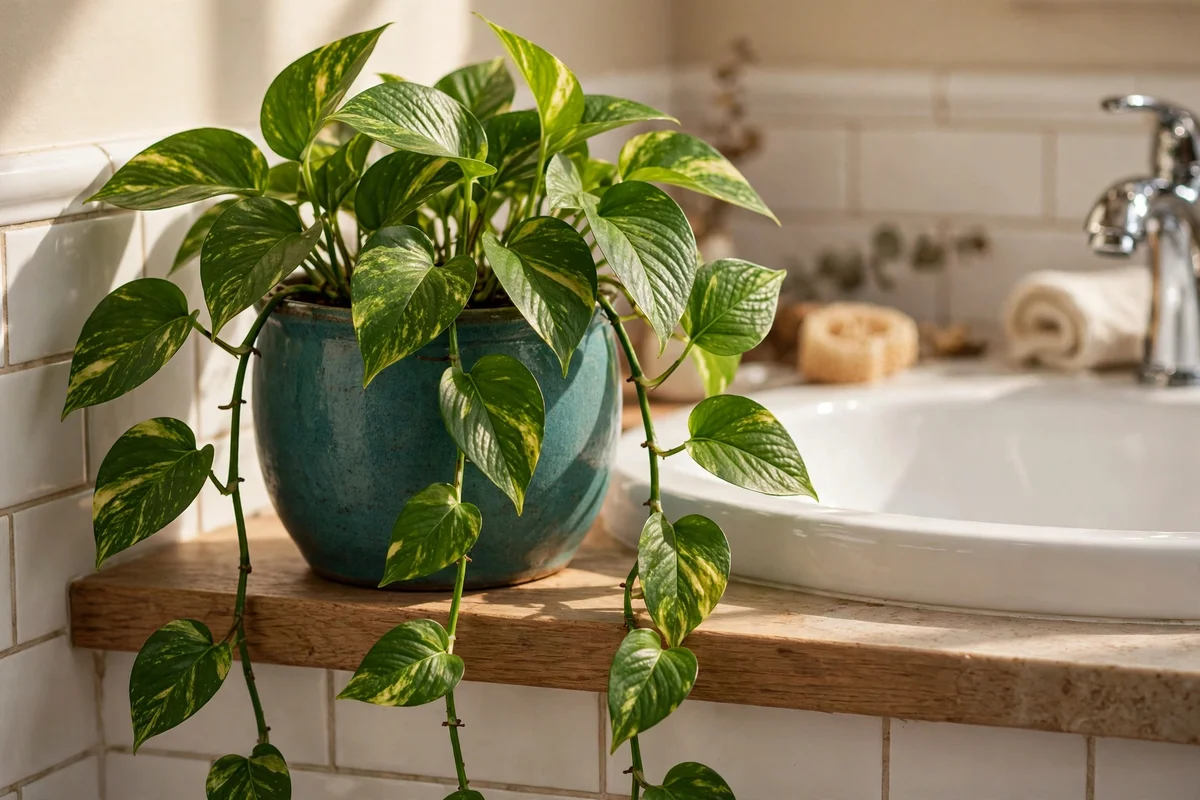
A trailing pothos in a teal pot beside the basin loves bathroom humidity and adds soft green movement. Pothos tolerates low light and steamy air, needing water only when the top 3 cm of soil feels dry, roughly every ten days. Choose a pot 15 cm wide with drainage holes and a saucer, and let the vines trail down a shelf edge or climb a small trellis.
Rotate the pot a quarter turn each month so growth stays even. The mistake to avoid is placing the plant where the shower sprays directly; constant soaking rots the roots. A small pothos is a budget plant, and cuttings root in water within two weeks, so one plant soon becomes three for other rooms. Teal pottery echoes the wall or tile palette.
11. Fit Brushed Brass Taps Against Deep Teal Vanity Doors
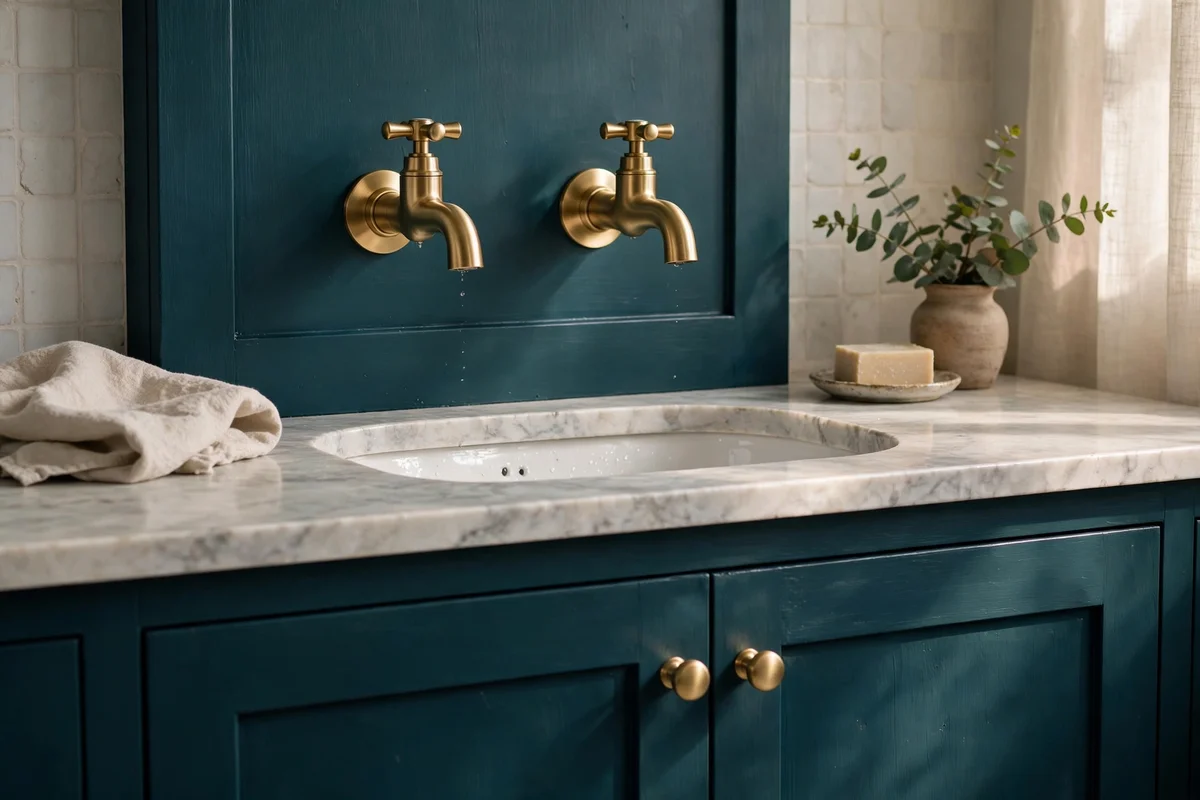
Brushed brass taps against deep teal vanity doors create a warm, jewel like pairing. Unlacquered brass develops a soft patina that suits the aged calm of teal, while lacquered brass stays bright with less care. Choose a mixer tap with a single lever for easy cleaning, and match the waste and overflow ring to the same finish. Wipe taps dry after use to prevent water spots.
Repeat brass at least once more, on a mirror frame or towel ring, so the finish feels planned. The mistake to avoid is mixing brushed brass taps with polished gold accessories; the tones clash. Brass tap sets sit in the mid range, while a full suite with matching shower fittings is an investment. Deep teal cabinetry makes brass glow without shouting.
12. Keep Polished Chrome Fixtures on Pale Duck Egg Wall Tile
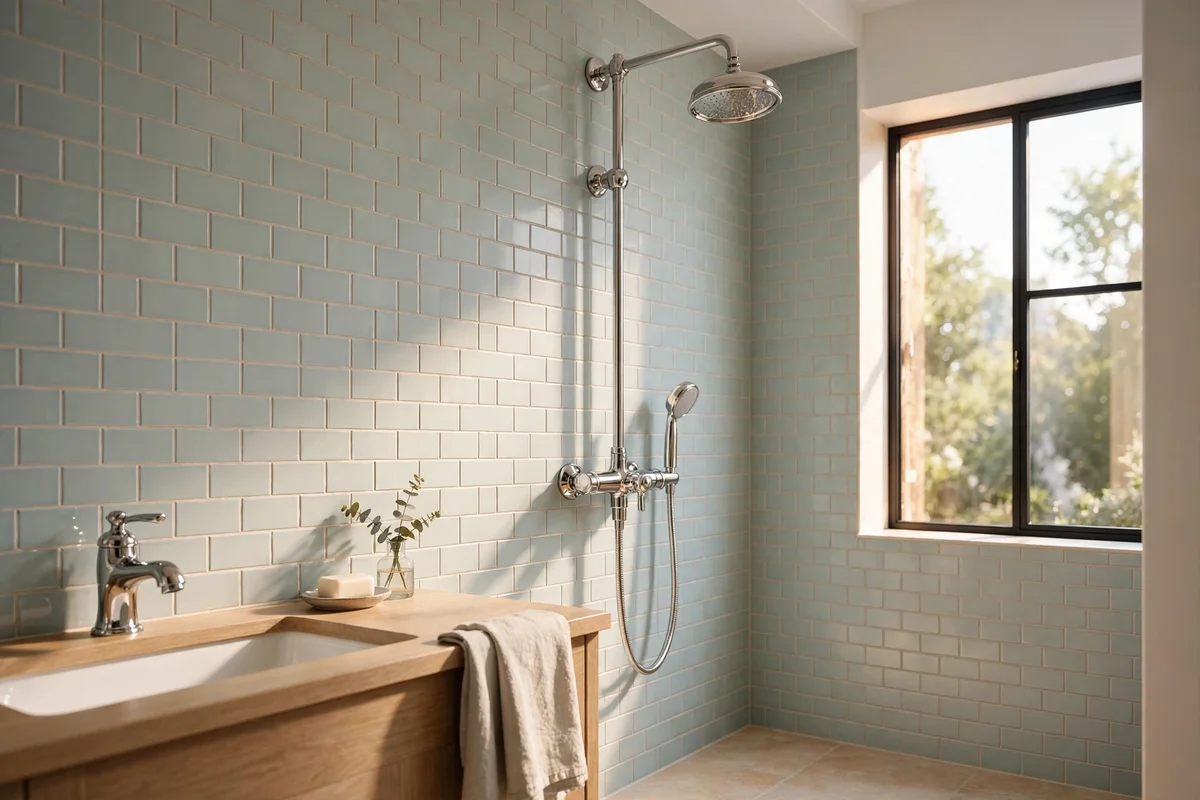
Polished chrome fixtures on pale duck egg wall tile give a crisp, timeless combination that stays bright in small rooms. Chrome reflects light, so it pairs best with tiles in the lightest duck egg shades, around LRV 70, which keep the reflection soft. Choose simple lever handles and a fixed shower head for a clean line, and keep the silicone seals white and neat.
Buff chrome monthly with a microfibre cloth to keep water marks away. The mistake to avoid is pairing chrome with heavily textured tile, where the shine fights the surface; smooth gloss or satin tile works best. Chrome fittings are the most budget friendly finish, widely available, and they suit renters since they read neutral against any future wall colour.
13. Paint the Ceiling a Whisper of Mint to Lift a Low Room
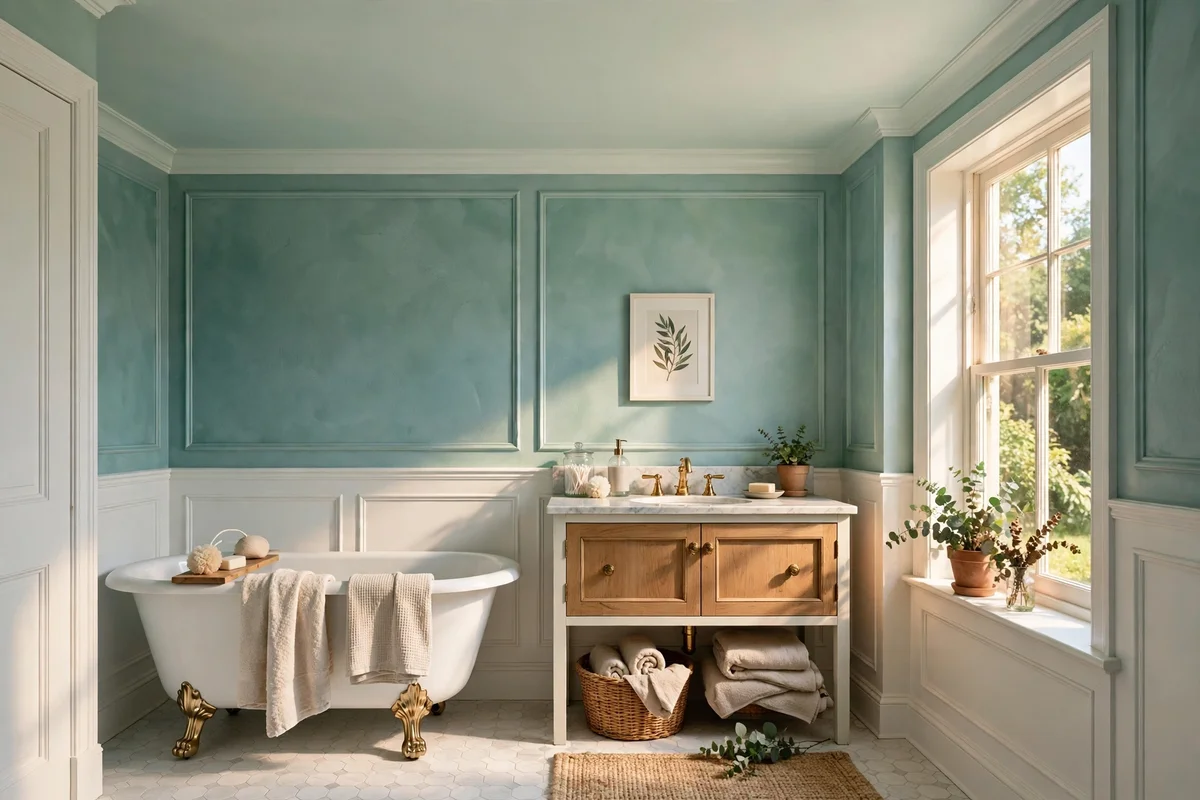
Painting the ceiling a whisper of mint lifts a low bathroom and completes the blue green envelope. Choose a mint at least three shades paler than the walls, so the ceiling reads as light rather than colour, and use a flat ceiling paint to avoid glare. In rooms under 2.3 metres high, a pale tinted ceiling makes the space feel taller by softening the wall to ceiling edge.
Carry the same mint onto the top 10 cm of the walls for a seamless transition. The mistake to avoid is a stark white ceiling against saturated walls, which can feel like a lid; the tinted ceiling keeps the calm continuous. One litre usually covers a small bathroom ceiling twice, making this the cheapest change in the whole set.
14. Inlay Sea Glass Mosaic Borders Into a Marble Tiled Floor
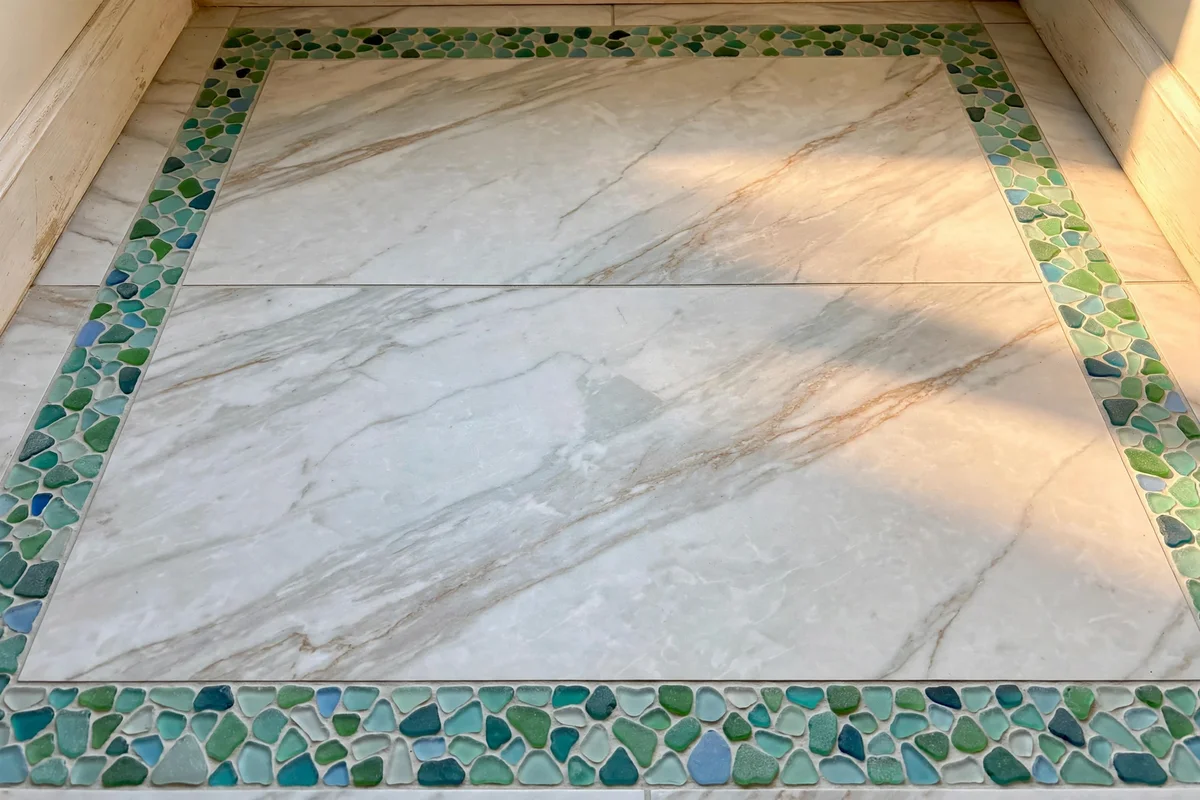
A marble tiled floor with sea glass mosaic borders brings quiet luxury underfoot. Lay large 30 by 60 cm marble effect porcelain tiles for the field, then set a 10 cm border of sea glass mosaic sheets around the perimeter or across the shower threshold. Porcelain needs less sealing than real marble and handles wet feet well; choose a matt finish with good slip resistance.
Grout the border in a soft grey that matches the mosaic backing so the sea glass pieces glow. The mistake to avoid is a glossy mosaic on the main walking area, which gets slippery; keep glass borders at the edges. Mosaic sheets are a mid range accent, and laying the border yourself saves the labour cost of a full mosaic floor.
15. Mount a Round Oak Mirror With a Hand Painted Olive Frame
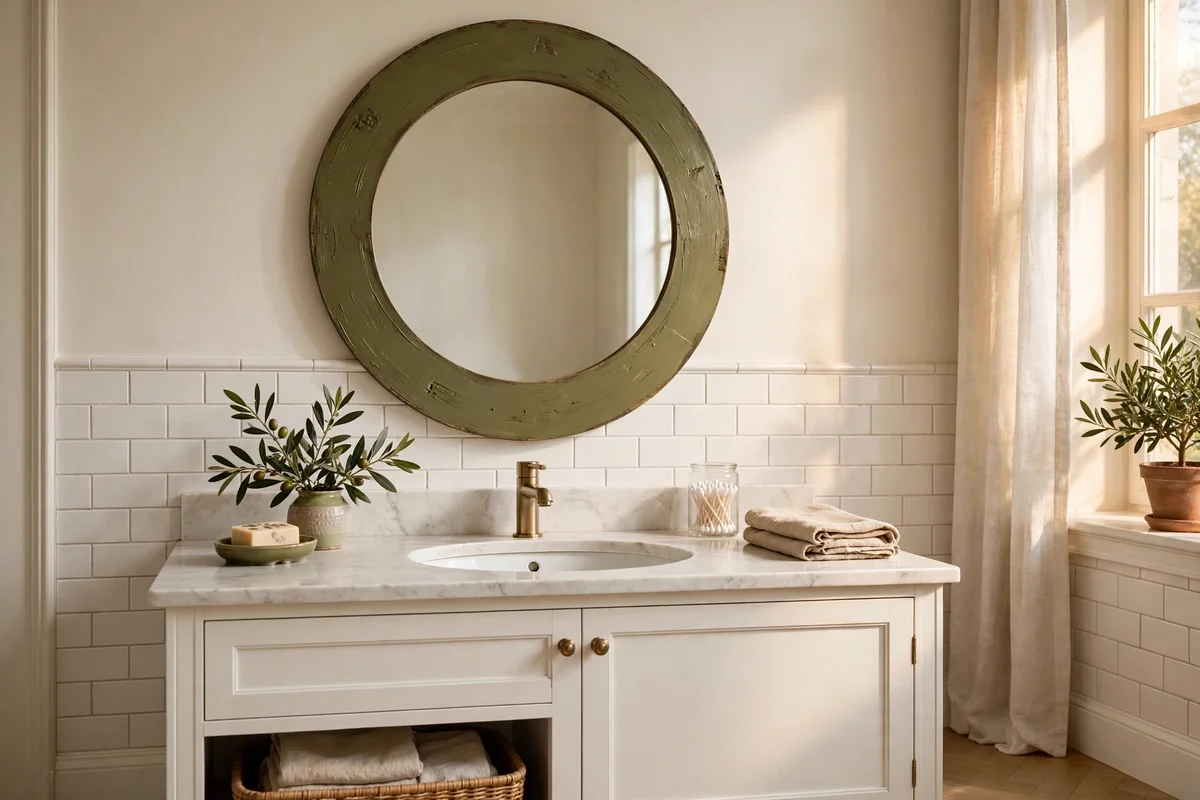
A round oak mirror with a hand painted olive frame softens the hard lines of a bathroom. Choose a 60 to 80 cm diameter mirror for above a standard 60 cm vanity, and hang it so the centre sits about 150 cm from the floor. Sand the frame lightly, apply primer, then two coats of olive satin paint, sealing with clear wax for steam resistance. The round shape echoes basins and jars.
Centre the mirror over the tap so the reflection feels balanced. The mistake to avoid is a frame painted in a glossy olive that fights matt tiles; satin or eggshell sits better. A plain oak mirror is a budget base, and one small tin of paint covers the frame twice. Olive bridges the blue and green tones elsewhere in the room.
16. Style a Wooden Stool With a Fern Pot and Folded Green Towels
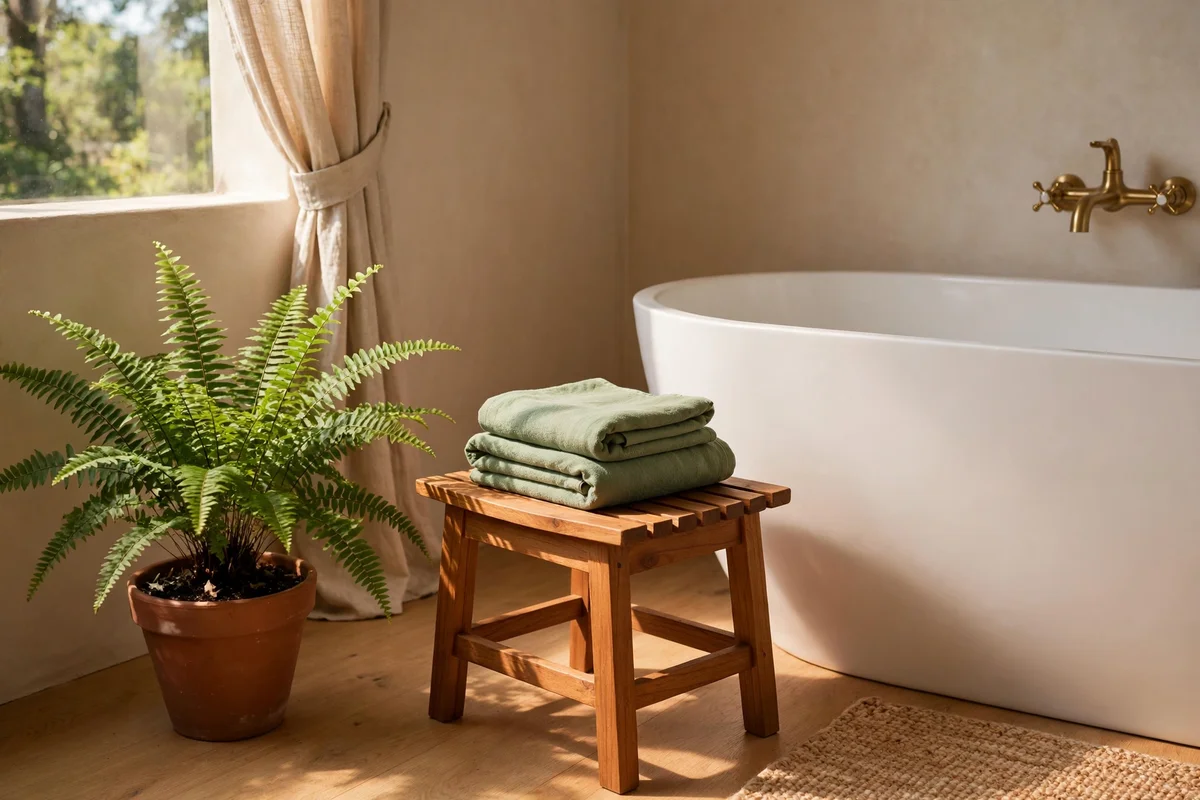
A small wooden stool styled with a fern pot and folded green towels adds a spa like corner to any bathroom. Choose a stool 40 to 45 cm high in teak or acacia, which tolerate humidity, and top it with a Boston fern in a 13 cm pot plus two folded hand towels. Place it beside the tub or in an empty corner where it catches soft daylight.
Mist the fern two or three times a week, since bathrooms dry out between showers. The mistake to avoid is a varnished softwood stool, which peels in steam; oil finished hardwood lasts far longer. A simple hardwood stool is a budget to mid range buy, and the fern is one of the cheapest humidity loving plants. Fold towels in thirds for crisp edges.
17. Add a Navy Cushion in Outdoor Fabric to the Vanity Stool
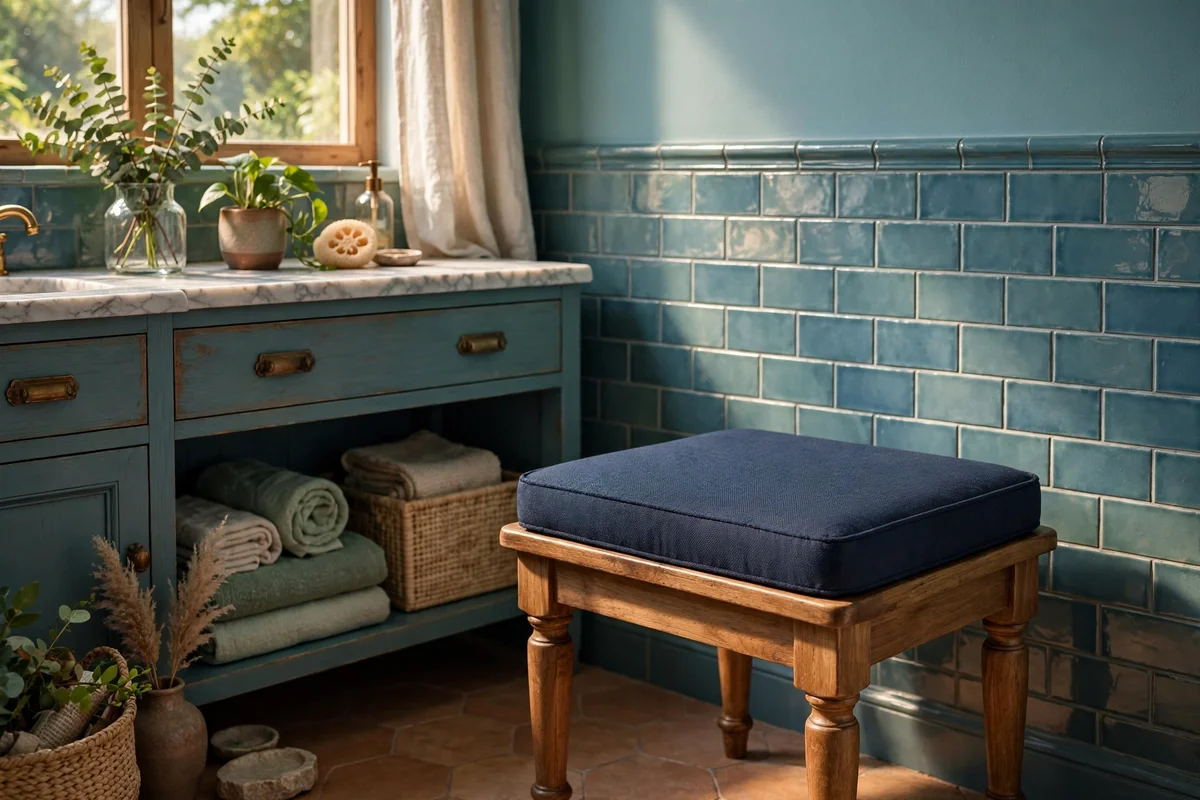
A navy cushion in outdoor fabric on the vanity stool brings washable comfort to the seating spot. Outdoor fabric resists moisture and wipes clean, making it ideal for steamy rooms. Choose a cushion 35 to 40 cm square with a zip cover, filled with quick dry foam rather than feather, which holds damp. Navy grounds the seat and ties back to towels or cabinetry.
Air the cushion outside monthly to keep it fresh. The mistake to avoid is a cotton cushion cover that absorbs steam and smells musty within weeks. Outdoor fabric cushions are a budget to mid range buy, and a zip cover means you can wash it at 30 degrees. One cushion is enough; two would crowd a small stool.
18. Hang Two Framed Fern Prints in Sage and Sea Glass Tones
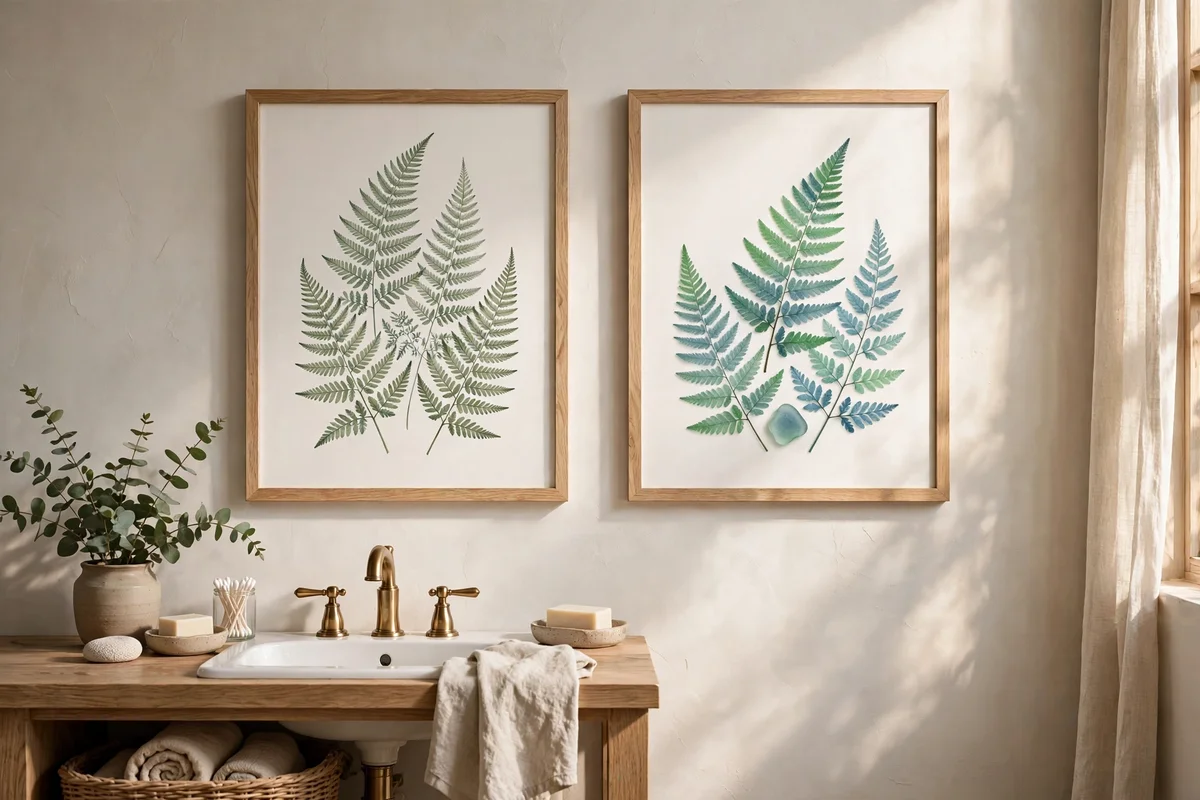
Two framed fern prints in sage and sea glass tones give bare walls a botanical calm. Choose prints around 30 by 40 cm with simple white or oak frames, and hang them as a pair with 8 to 10 cm between them, centred about 150 cm from the floor. Botanical line drawings in muted sage suit the palette better than bright photographic prints.
Hang prints away from direct shower spray, ideally on the wall opposite the wet area. The mistake to avoid is small fussy frames that get lost on a large wall; scale up for impact. Framed prints are a budget to mid range buy, and many print shops offer sage toned botanical sets. Glass fronts wipe clean of steam easily.
19. Run a Slim Floating Shelf for Blue and Green Apothecary Bottles
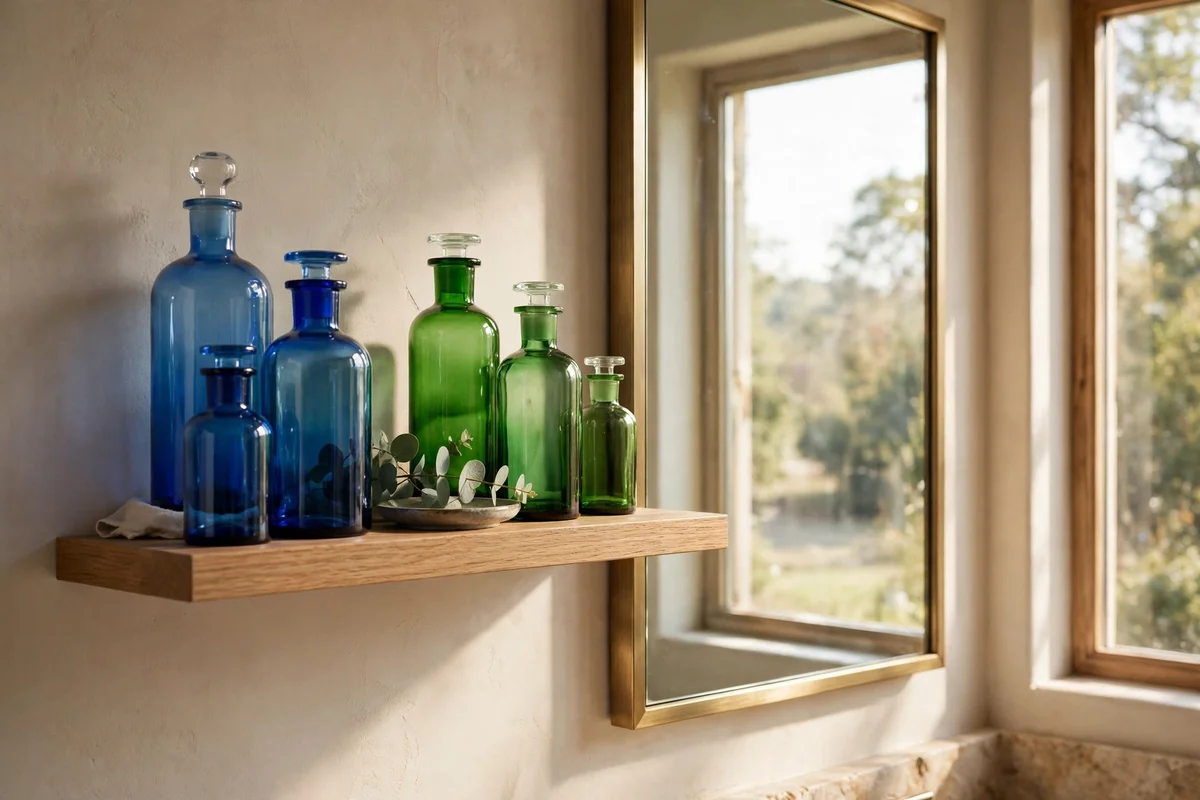
A slim floating shelf for blue and green apothecary bottles turns everyday items into decor. Fit a shelf 60 to 90 cm long and 12 to 15 cm deep on the wall beside the mirror, fixed into studs or with proper plaster anchors. Arrange bottles of mouthwash, bath oil and hand soap in blue and green glass, tallest at the back, with labels facing forward.
Leave at least 5 cm of breathing space between groups so the shelf reads styled rather than crowded. The mistake to avoid is overloading the shelf; it should hold six to eight bottles, not twenty. A solid oak shelf is a mid range buy, and decanting products into matching bottles costs little. Wipe the shelf weekly to prevent dust in humid air.
20. Place a Stone Soap Dish on an Olive Ceramic Tray by the Sink
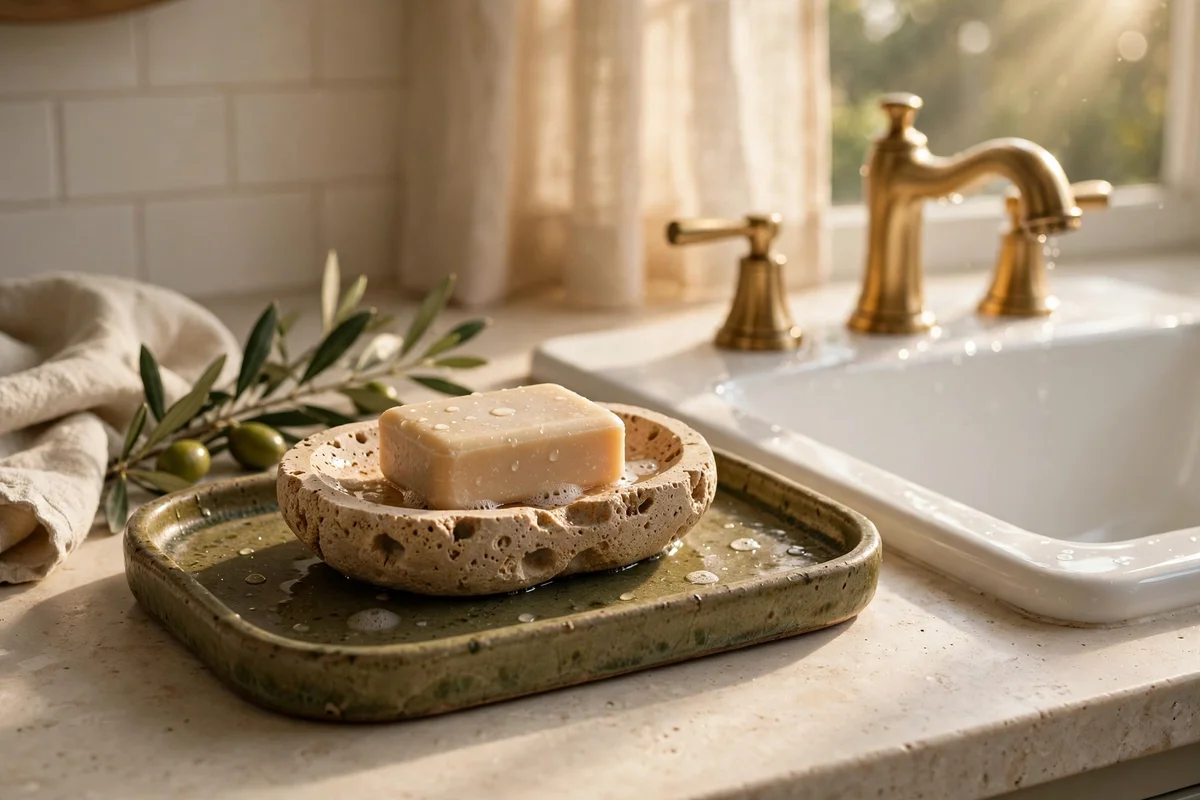
A stone soap dish on an olive ceramic tray by the sink keeps the basin area tidy and tonal. Choose a tray 25 to 30 cm long in matt olive ceramic, and set a natural stone or concrete soap dish on one end with a small hand towel folded beside it. The tray catches drips and lifts everything off the counter, making cleaning a single wipe.
Rinse the tray weekly to prevent soap film building in the glaze. The mistake to avoid is a wooden tray without sealant, which swells and stains; ceramic or stone needs no treatment. A ceramic tray and stone dish are a budget pairing, and the olive tone links to plants, grout or painted frames elsewhere. Keep the group within easy reach of the tap.
21. Finish the Corner With Eucalyptus Stems in a Tall Blue Vase
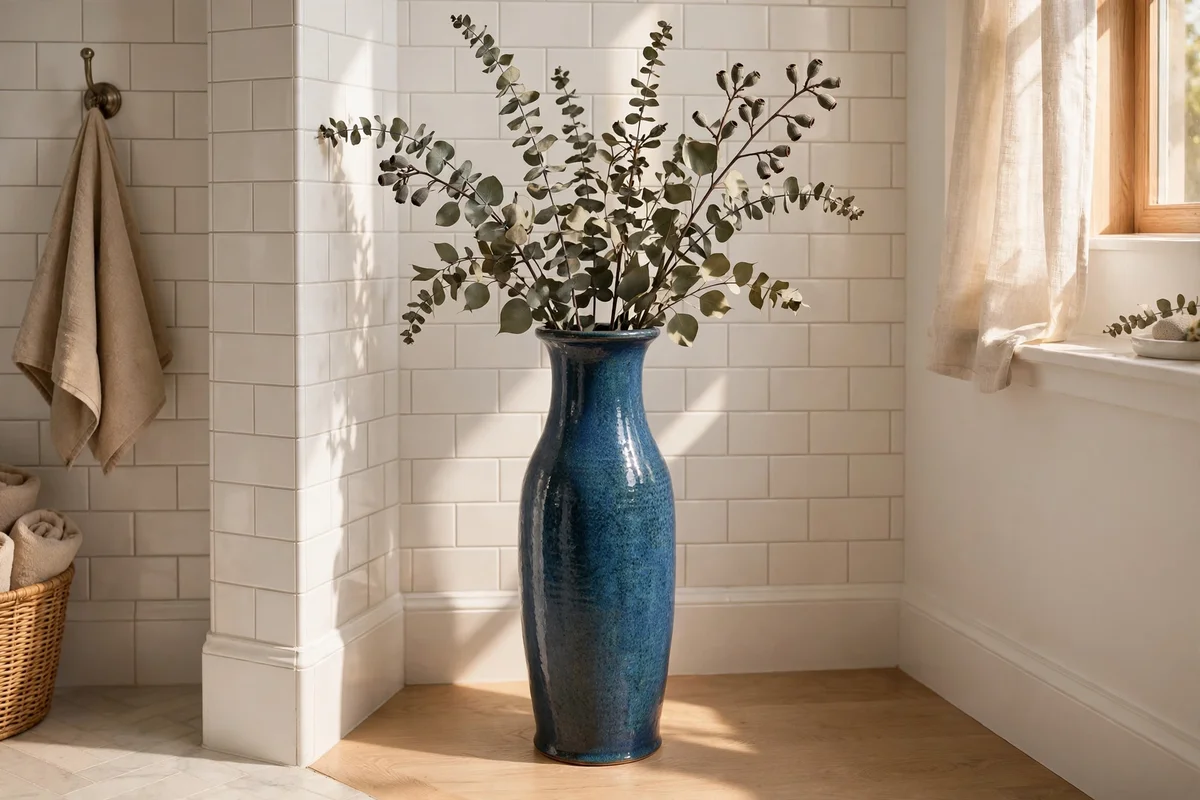
A tall blue vase with eucalyptus stems finishes an empty bathroom corner with height and scent. Choose a vase 40 to 50 cm tall in glazed blue ceramic with a narrow neck, which holds stems upright without arranging skill. Place five to seven stems of preserved eucalyptus, trimmed to vary heights by 10 cm, so the arrangement feels natural. Set it on the floor where it catches daylight.
Dust the stems monthly with a soft cloth to keep the silvery colour bright. The mistake to avoid is a wide mouthed vase, where stems splay and look messy; the narrow neck does the work. Preserved eucalyptus lasts a year or more, making the vase a one time mid range buy. Blue glass or ceramic echoes the watery side of the palette.
A blue and green bathroom works because it borrows its calm from nature: clear water, soft leaves, quiet mornings. Each of these 21 ideas adds one more layer of that serenity, whether it is a painted ceiling, a brushed brass tap or a simple trailing plant. Stick to two or three greens and two blues at most and repeat each colour at least twice around the room. Warm lighting and honest materials like wood, stone and linen keep the cool tones welcoming.
Start this week with the easiest change: hang a fresh eucalyptus wreath above the towel rail or fold your towels in navy and sage stacks. One small, deliberate step is all it takes for the calm to begin. Give yourself one afternoon and live with each change for a few days before adding more. Note what catches your eye in morning light, then adjust. Calm rooms are built slowly, one thoughtful layer at a time.
Frequently Asked Questions
Will blue and green make a small bathroom feel cold?
Not if you choose warm leaning tones. Sea glass, sage and duck egg with warm undertones keep the room cosy, while navy grounds the scheme. Pair the colours with oak, brass or rattan to add warmth, and use 2700K lighting. Avoid icy mint paired with stark white, which is the combination most likely to feel clinical.
What is the cheapest way to try blue and green in a rented bathroom?
Start with textiles and plants, which need no permission. Navy and sage towels, a soft mint shower curtain, a sea glass bath mat and a pothos in a teal pot transform the room for under 80. Removable adhesive hooks hold an eucalyptus wreath, and everything travels with you on moving day.
Do blue and green bathroom tiles go out of style?
Classic pairings like duck egg subway tile and teal zellige have stayed popular for decades because they echo nature. Trends in exact shades come and go, but watery blues and leafy greens return in every cycle. Choose handmade look tiles and simple layouts, which age far better than bold patterned fashions.
Should I choose brass or chrome with blue and green?
Both work. Brass warms deep tones like navy and teal, adding a handcrafted feel, while chrome keeps pale duck egg and sea glass schemes crisp and bright. Pick one finish and repeat it on taps, mirror frames and hooks for a considered look. Mixing the two in one small room usually looks unsettled.
Which plants actually survive in a steamy bathroom?
Pothos, Boston ferns and spider plants thrive in humidity and low light. Water pothos when the top 3 cm of soil dries, mist ferns two or three times weekly, and keep all pots out of direct shower spray. Avoid succulents, which rot in constant steam. Most of these plants cost little and propagate easily.