Home Improvement
21 Climbing Plant Ideas That Make Walls Feel Alive
By Anna Wells · · 20 min read
Twenty-one practical ways to train climbing plants on walls indoors and outdoors, with honest warnings about damaging species, safe choices for family homes, and simple watering and pruning rhythms.
A plain wall can feel like a pause in a room, a flat surface where the eye stops. Train a living plant across it and everything changes: the wall softens, light moves through leaves, and the room gains a quiet green rhythm that no picture frame can match. Climbing plants ask for little more than a little guidance and a little patience. This collection gathers 21 practical ideas for growing them indoors and out.
You will find training methods for easy indoor favourites such as pothos and ivy, using simple trellises, picture ledges and moss poles that suit small homes. Outdoors, we cover jasmine and climbing roses on garden walls, with honest notes on spacing, supports and the tying technique that keeps stems safe. Nothing here needs a greenhouse or a big budget, just steady care and a plan before the first leaf appears.
We also include the warnings that matter. Some vigorous self-clinging climbers can damage old mortar, crumbling render and wooden fences, and several popular indoor species are toxic if a curious child or pet chews the leaves. Knowing which plants to avoid, and where to plant the strong ones, protects both the home and the family. Read those sections first if you share your home with small hands or curious paws.
Finally, there are watering and pruning rhythms that keep climbers green through every season, feeding schedules for pots, and budget tips throughout. Whether you are training your first pothos along a hallway shelf or planning a rose-covered garden wall, start with the idea that fits your space today. The wall will take care of the rest.
1. Train Pothos Along an Indoor Wall Trellis of Natural Bamboo
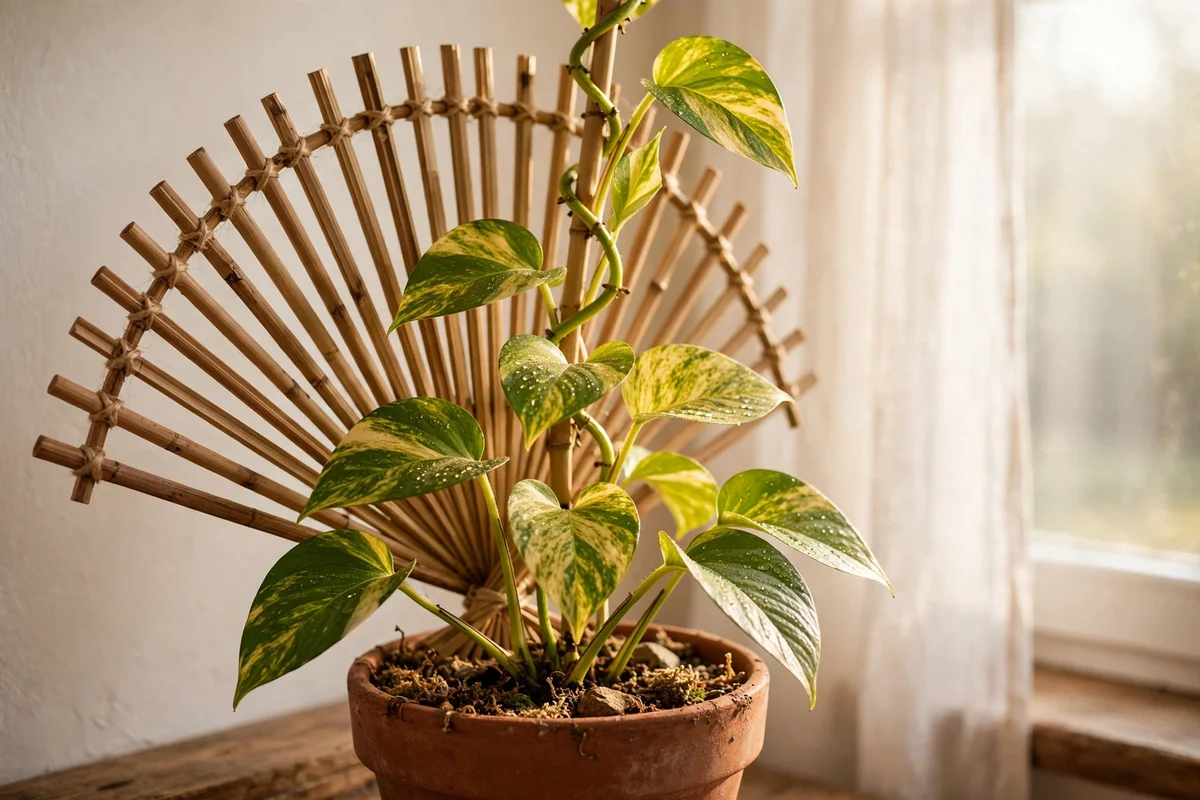
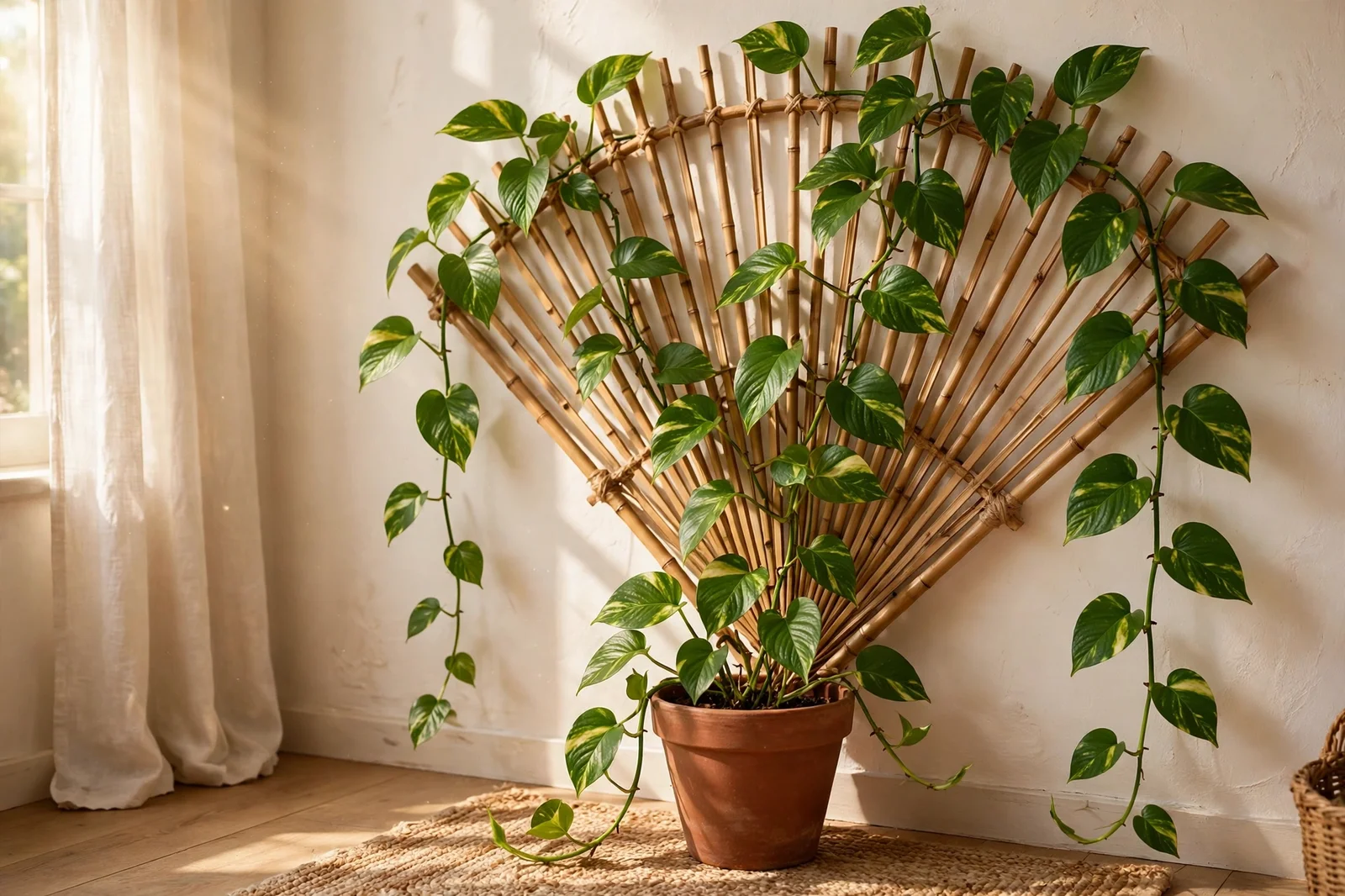
A fan-shaped bamboo trellis fixed 10 to 15 cm out from the wall gives a pothos room to breathe while it climbs. Push the trellis base 8 cm into the potting mix of a 20 cm pot, then lean the top against the wall with a small adhesive hook or a nail. Water the plant first so the stems are flexible, then loop the longest vine gently around the trellis spokes. Loose loops, never tight knots, let the stem thicken without damage.
Train new growth every two to three weeks in spring and summer, adding one soft twine tie per 20 cm of fresh stem. Golden pothos and marble queen both climb happily in bright indirect light, 1 to 2 metres from a sunny window. The common mistake is tying stems flat against a cold outer wall in winter, where condensation chills the leaves. Keep the trellis in a living space with steady warmth instead.
2. Guide Ivy Across a Picture Ledge Shelf for a Soft Green Curtain
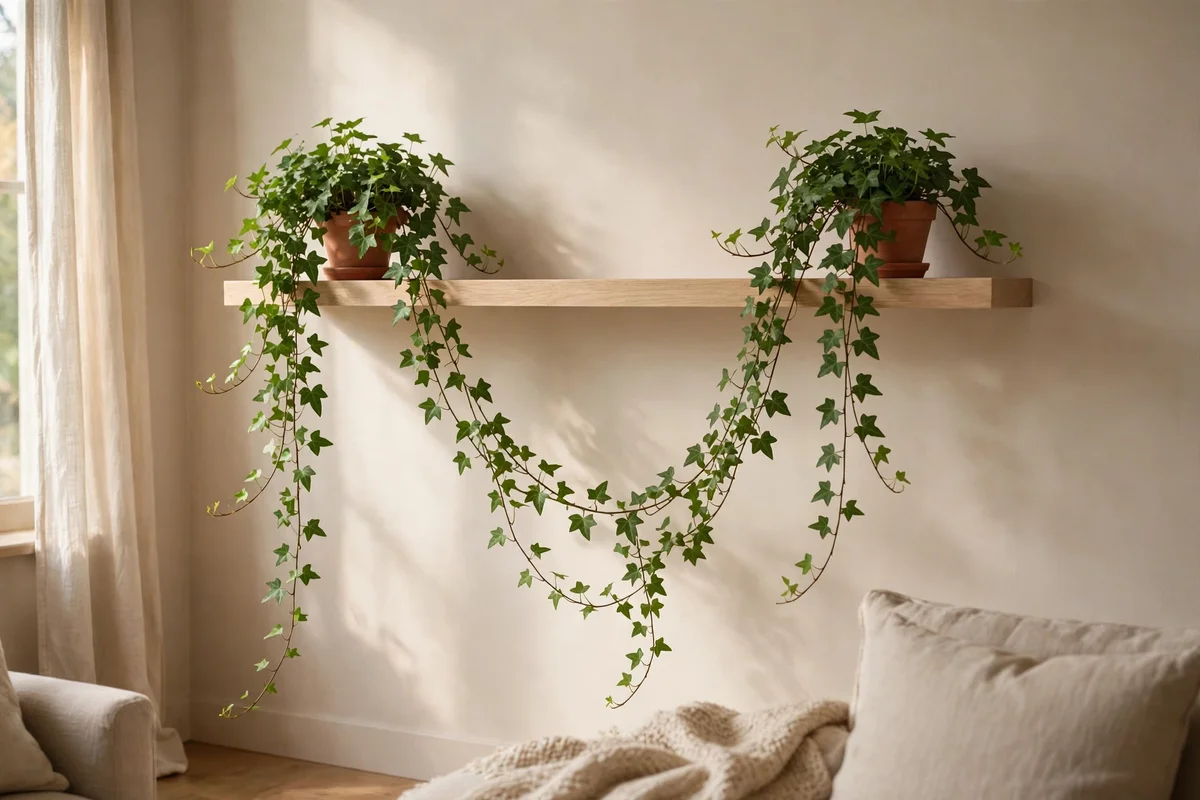
A picture ledge fixed 1.6 to 1.8 m high along a living room wall becomes a natural runway for trailing ivy. Set two small pots, 12 to 15 cm across, at each end of a 120 cm ledge, letting the vines drape toward the centre. English ivy tolerates medium light and cool rooms, making it ideal for a north-facing wall. Wipe the ledge monthly so dust does not settle on the lower leaves.
Trim the trailing tips when they reach 60 to 80 cm long to keep the curtain neat, cutting just above a leaf node so the vine branches. Train a few longer stems sideways with small adhesive plant clips every 25 cm for a fuller screen. The mistake to avoid is letting vines rest on the floor, where they collect dust and can creep toward furniture. A 15-minute monthly trim keeps the whole ledge display crisp.
3. Plant Climbing Jasmine at the Base of a Sunny Garden Wall
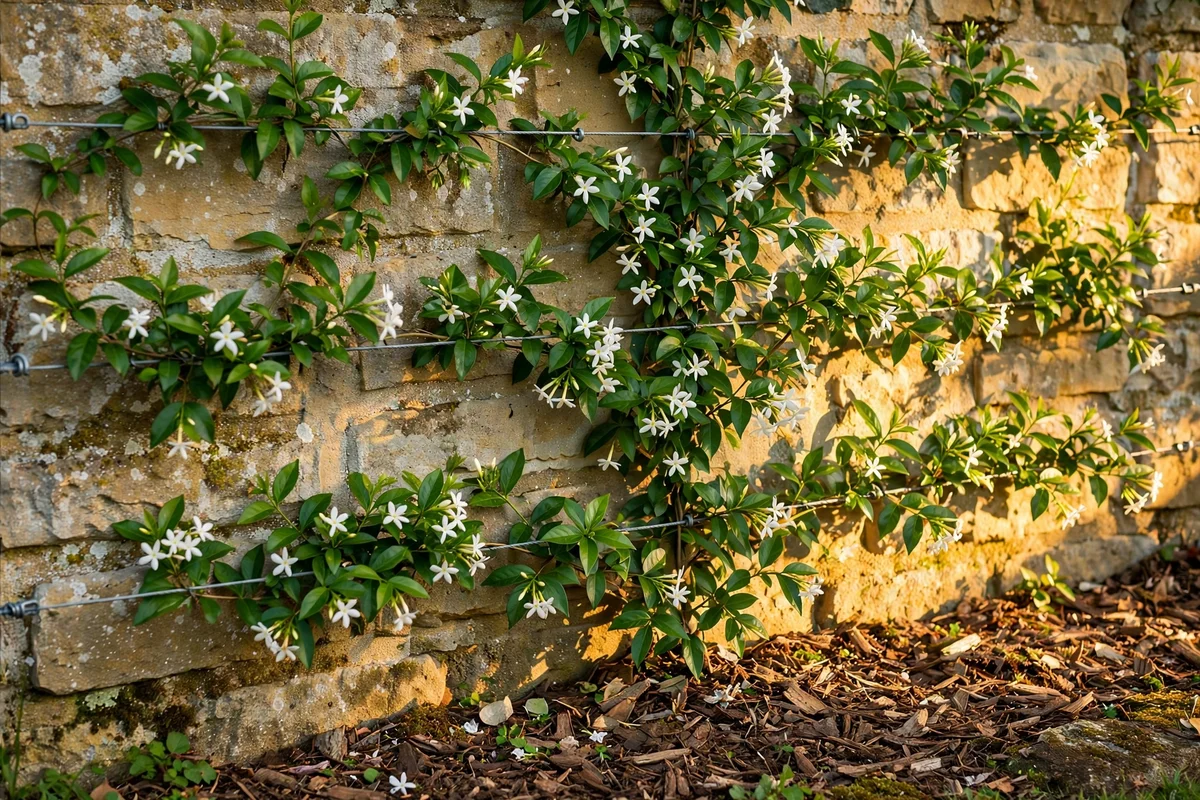
Star jasmine thrives on a south or west facing wall that receives at least six hours of sun daily. Plant it 30 to 40 cm away from the wall base in a 60 cm wide planting hole improved with compost, so the roots spread without competing with wall foundations. Fix horizontal training wires at 30, 60 and 90 cm heights using vine eyes screwed into the mortar joints. Young jasmine cannot cling alone, so tie stems to the wires loosely.
Water deeply twice a week in the first growing season, about 10 litres per plant, then weekly once established. Feed with a balanced granular fertiliser each spring at the rate shown on the packet. Prune after flowering in late summer, shortening the longest shoots by a third to keep the shape flat against the wall. The mistake to avoid is planting jasmine against a shaded north wall, where flowering stays sparse and stems turn leggy.
4. Support Climbing Roses on a Freestanding Garden Wall Trellis
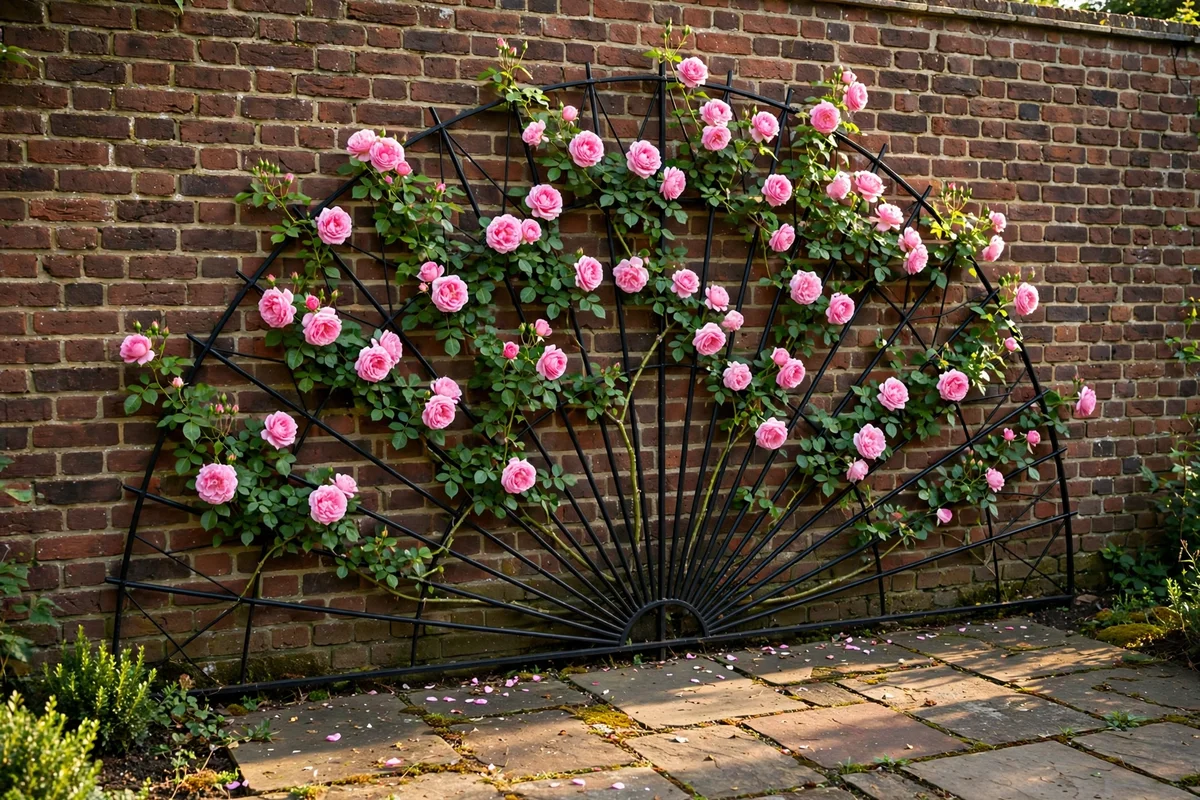
Climbing roses need a trellis that stands 8 to 10 cm proud of the wall, letting air circulate behind the stems and keeping dampness off the masonry. Choose a galvanised or powder-coated steel trellis 180 cm tall and 60 cm wide, fixed with stand-off brackets at the top, middle and base. Plant the rose 40 cm from the wall and 25 cm from the trellis leg, angling the rootball slightly toward the support so new shoots find it fast.
Tie the main canes to the trellis in a gentle fan pattern using rubber-coated garden ties, one tie every 30 cm along each cane. Fan training encourages side shoots that carry the blooms, rather than one tall bare stem. Feed with rose fertiliser in March and again after the first flush of flowers, watering 15 litres around the base each week in dry spells. The mistake to avoid is pruning a once-flowering rambler in spring, which removes that summer’s buds.
5. Space Garden Climbers 45 cm Apart for Healthy Airflow
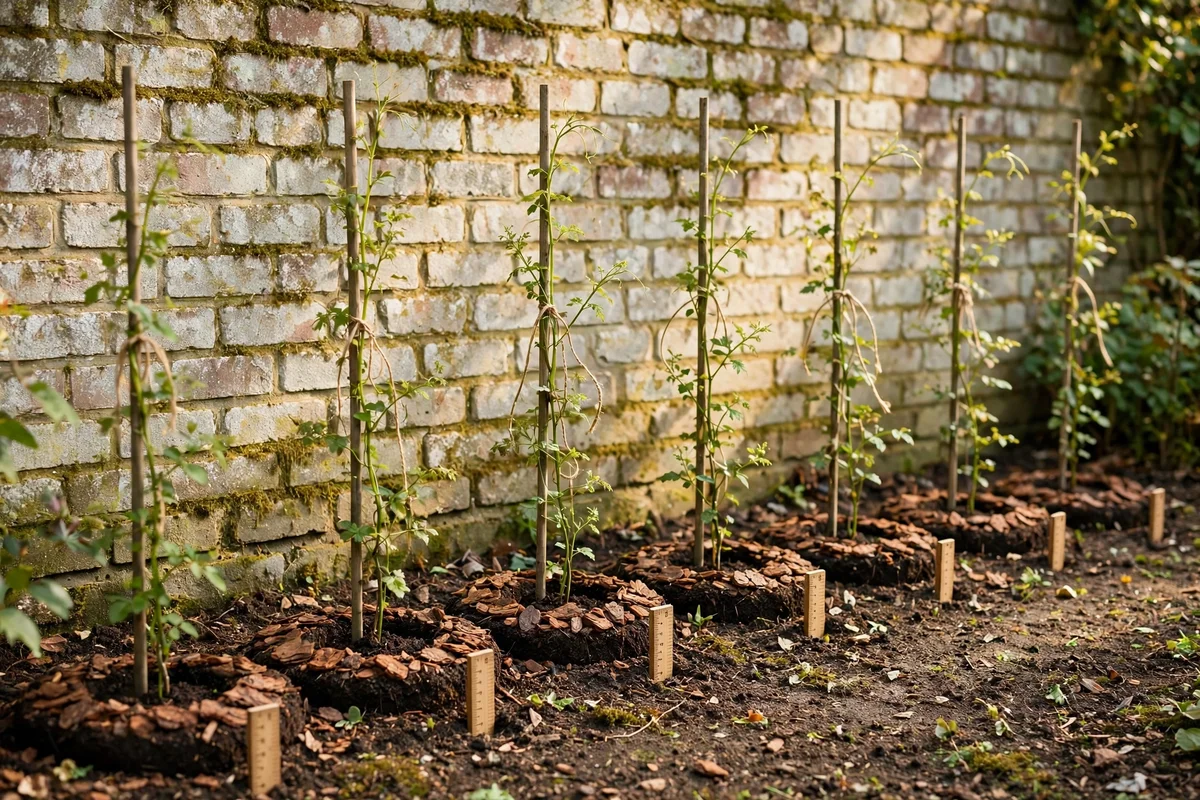
Spacing matters more than speed when planting a row of climbers along a fence or wall. Place each plant 45 to 60 cm from its neighbour, measuring centre to centre, so foliage can dry after rain and powdery mildew finds no damp pocket. Dig individual holes rather than one long trench, adding a bucket of compost to each. For very vigorous types such as Russian vine or kiwi, widen the gap to 90 cm or they will swamp everything.
Give each plant 30 cm of clearance between its stem and the wall face so air flows behind the leaves. In the first year, mulch a 60 cm ring around each plant with 5 cm of bark to keep soil moisture steady. Check spacing again after two seasons, because fast growers often close the gap early. The mistake to avoid is planting at half the recommended distance for an instant full wall; crowded roots mean weak growth and constant disease by year three.
6. Tie Young Stems With Soft Jute Twine in Loose Figure-Eight Loops
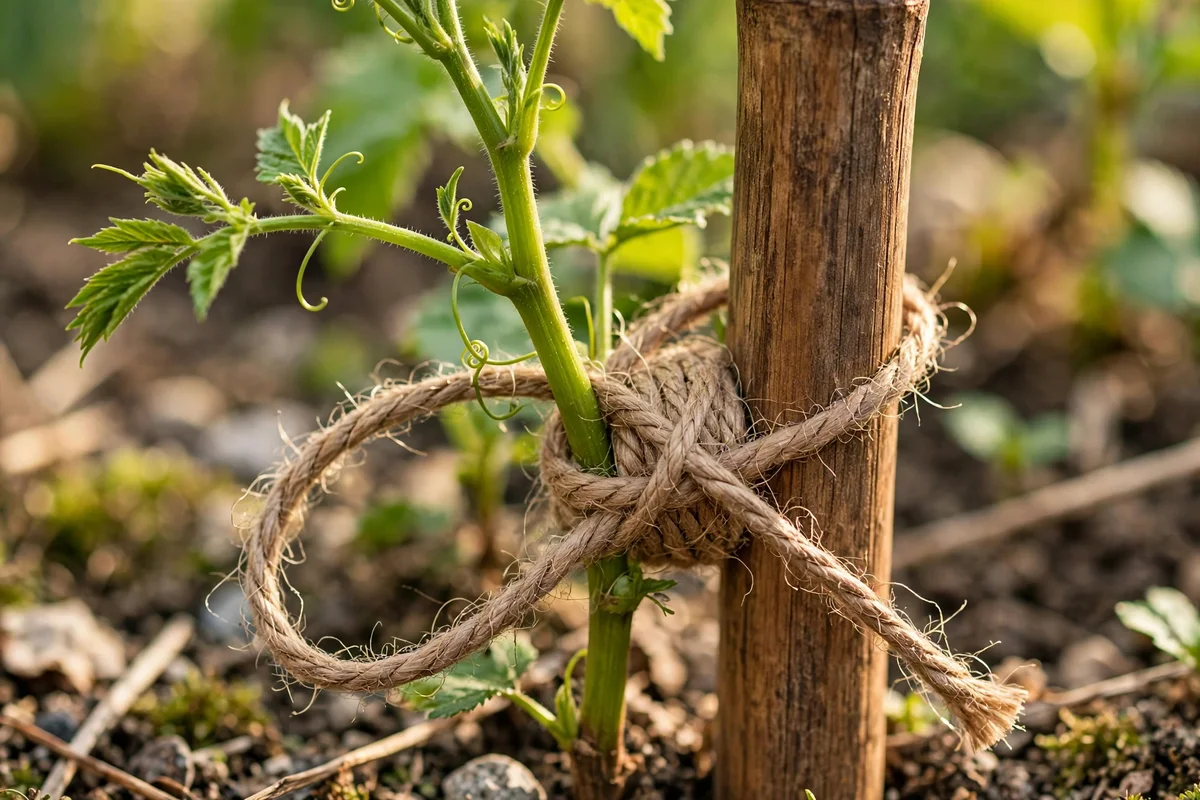
New climber stems are brittle, so tie them with soft jute twine or fabric strips rather than wire or plastic. Make a figure-eight loop: pass the twine around the support, cross it over itself, then loop it gently around the stem. The cross sits between stem and support, acting as a cushion that stops rubbing in wind. Space ties every 20 to 25 cm along a young stem, and leave a finger-width of slack so the stem can thicken.
Check ties each spring and autumn, because a tie that fitted in May can strangle a stem by September. Cut and replace any twine that is biting into the bark, and add fresh ties to the season’s new growth. For heavy stems such as mature wisteria, upgrade to rubber-coated garden ties, which grip without cutting. The mistake to avoid is reusing thin plastic string year after year; it slices into growing bark and creates wounds where disease enters.
7. Choose Deep Pots With Drainage for Balcony Climbers
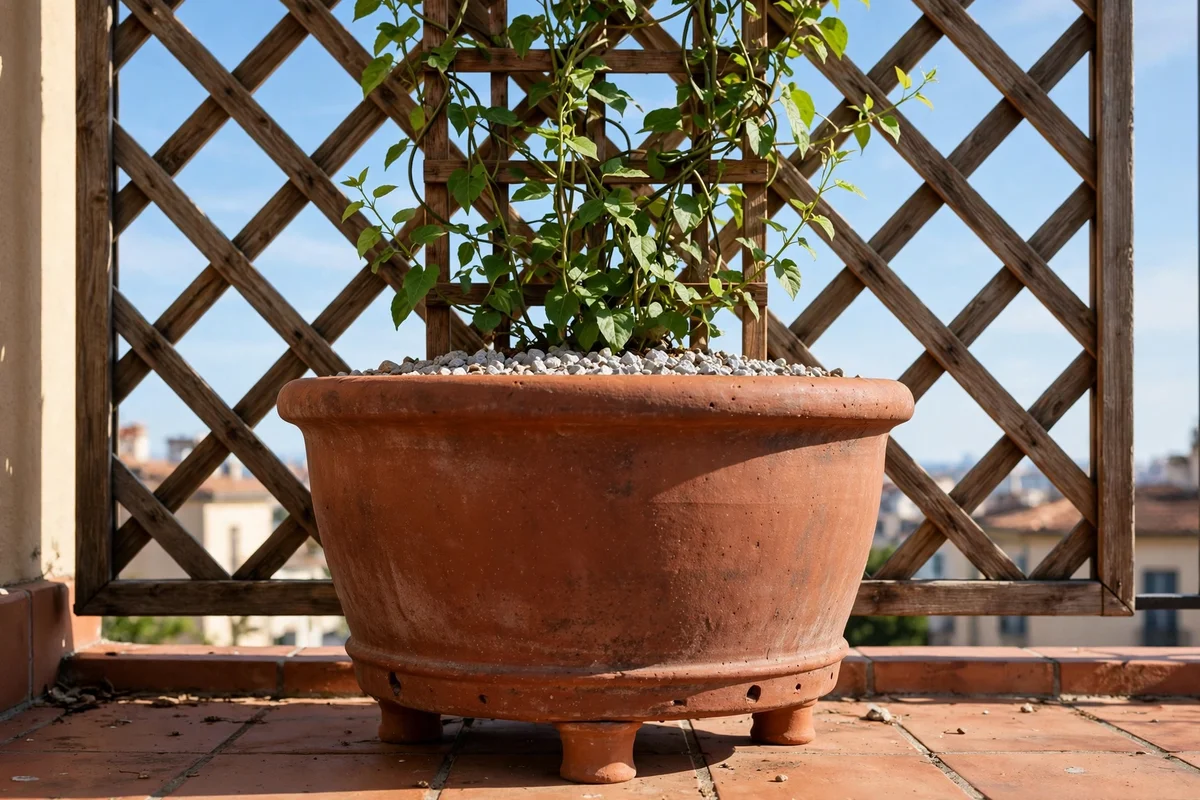
A balcony climber needs a pot at least 35 to 40 cm deep and wide, because shallow pots dry out in a single hot afternoon. Choose frost-proof terracotta, glazed ceramic or sturdy resin, and drill the base if it lacks holes; one pot needs at least three 12 mm drainage holes. Fill the bottom 3 cm with gravel, then use a peat-free multipurpose compost mixed with 20 percent perlite for free-draining structure.
Raise the pot on three terracotta feet so water drains freely and the base never sits in a saucer of rain. In summer, water container climbers every two to three days, soaking until water runs from the holes. The mistake to avoid is choosing a beautiful pot with no drainage, which turns the rootball into a swamp within weeks. If you already own a solid pot, use it as a cachepot with a plastic inner pot that lifts out.
8. Plant Vigorous Climbers in the Ground for Long-Term Strength
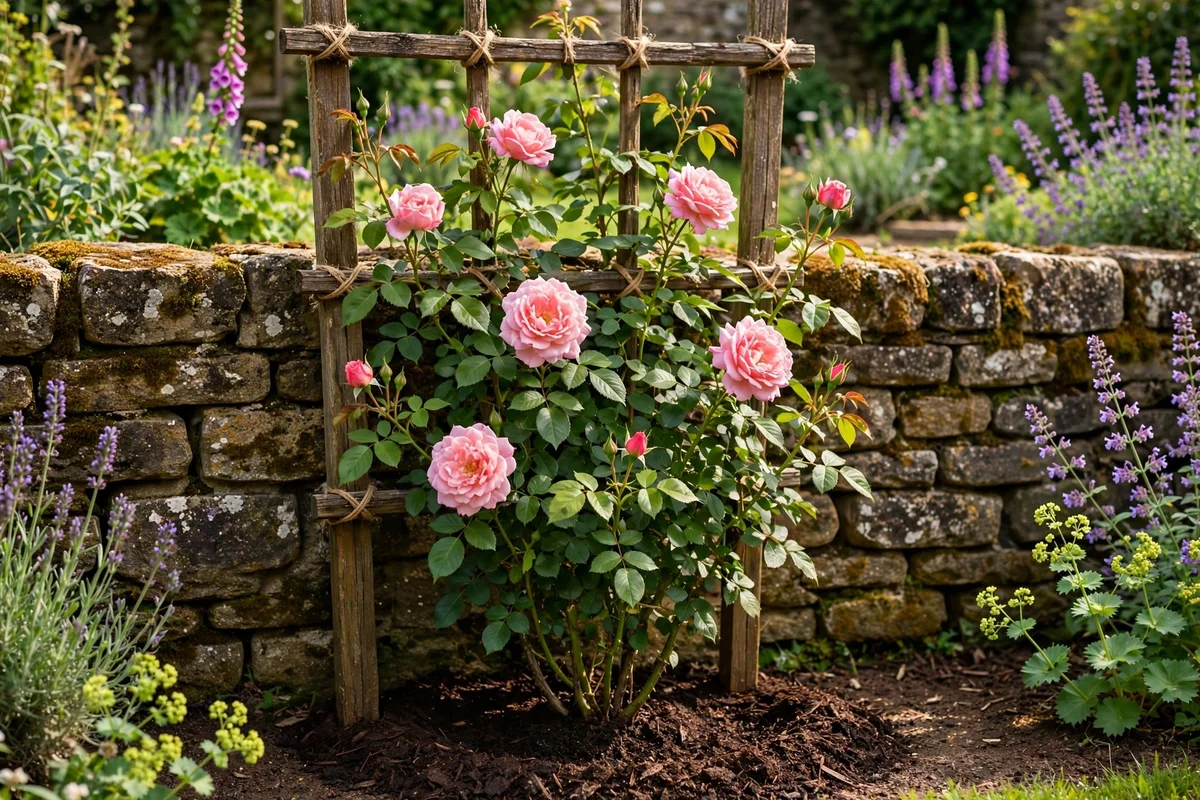
Strong climbers such as wisteria, trumpet vine and mature grapevines outgrow even large pots within three years, so plant them in the ground near a sturdy wall or pergola. Dig a hole 60 cm wide and 45 cm deep, 50 cm from the wall face, and work in two buckets of well-rotted manure. Backfill with the excavated soil, firm gently, and water in with a full 10-litre can so air pockets collapse around the roots.
Ground planting suits plants expected to live twenty years or more, because the roots tap deep moisture and need less watering after year two. Spread a 7 cm mulch ring, 80 cm across, each spring, keeping it 10 cm clear of the stem. The mistake to avoid is planting a vigorous climber in a narrow border beside a small fence; within five years the fence posts lean and the roots lift nearby paving. Give strong plants strong structures.
9. Keep Self-Clinging Vines Away From Old Mortar and Render
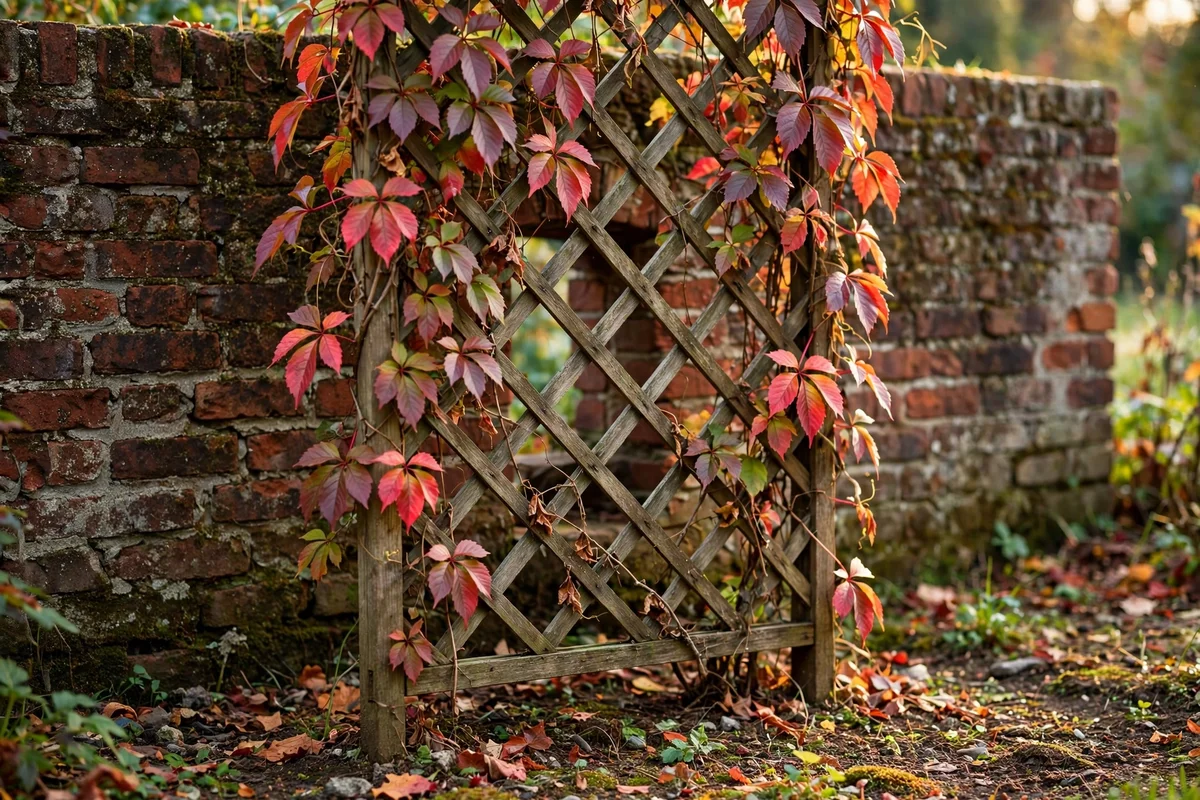
Virginia creeper, Boston ivy and English ivy climb with aerial roots or adhesive pads that grip masonry firmly. On sound modern brick they cause little harm, but on walls with crumbling mortar, flaking render or cracked pebble-dash they work into every weak joint and widen it year by year. Before planting, test the mortar with a blunt screwdriver; if it crumbles, choose a different plant or fix the wall first.
If you love the look but own an old wall, grow the same vines on a freestanding wooden or metal trellis set 15 cm from the masonry. The foliage will still read as a living wall from across the garden, while the wall stays dry and intact behind it. Budget for a proper repair bill before ripping established ivy off an old wall; pulling the rootlets tears off render and paint in patches. Cut stems at the base and let them die back first.
10. Grow Ivy on a Freestanding Trellis Set Away From the Fence
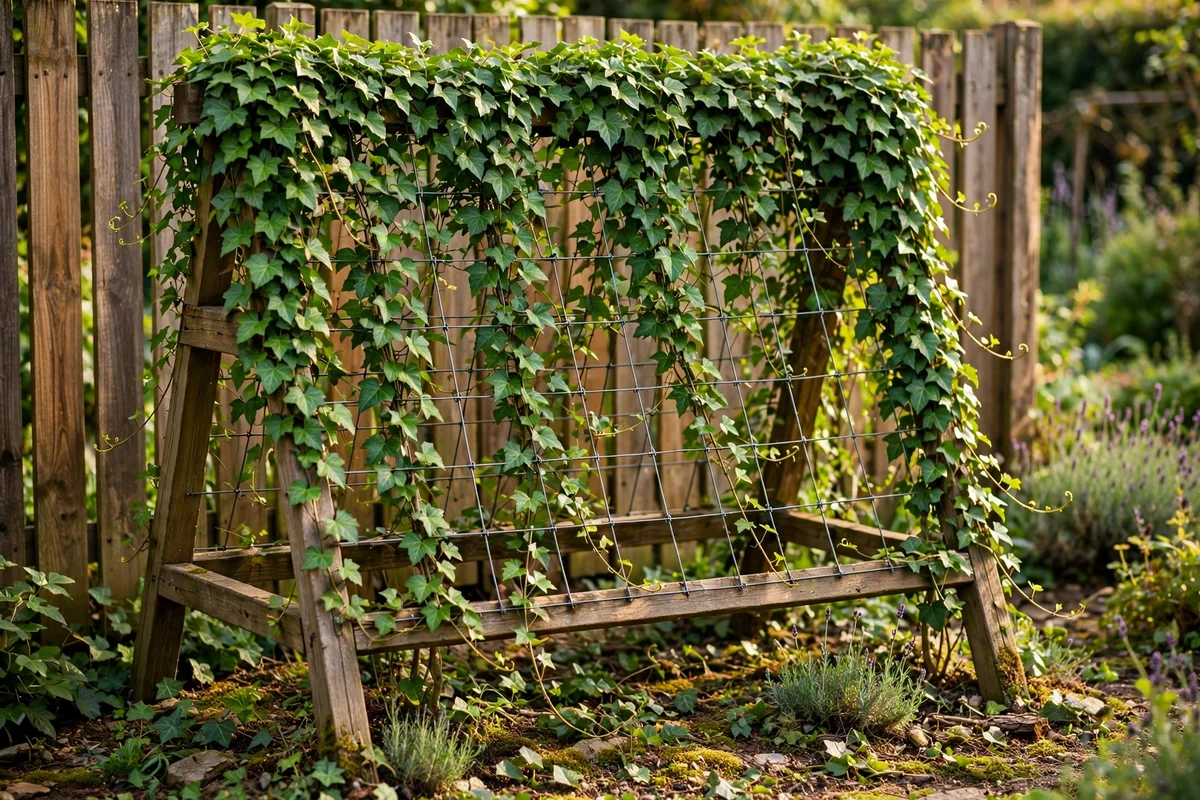
Garden ivy on a wooden fence traps moisture against the boards and adds serious weight, shortening the fence’s life by years. A smarter method is to fix a freestanding wire or timber trellis 10 cm in front of the fence, anchored by its own posts set 60 cm deep in concrete. The ivy climbs the trellis, air flows behind it, and the fence stays dry. You can still reach the fence for repainting or repairs.
Space the trellis posts every 1.8 m and run two horizontal rails, at 60 and 120 cm, for the stems to grip. Train young ivy with soft ties until the aerial roots take hold, usually within one season. The mistake to avoid is letting ivy climb straight up the fence boards and over the coping; once it reaches the top it drapes down the far side and pulls palings loose in wind. Cut back any growth that passes the fence line.
11. Pick Non-Toxic Climbers When Toddlers and Pets Share the Room
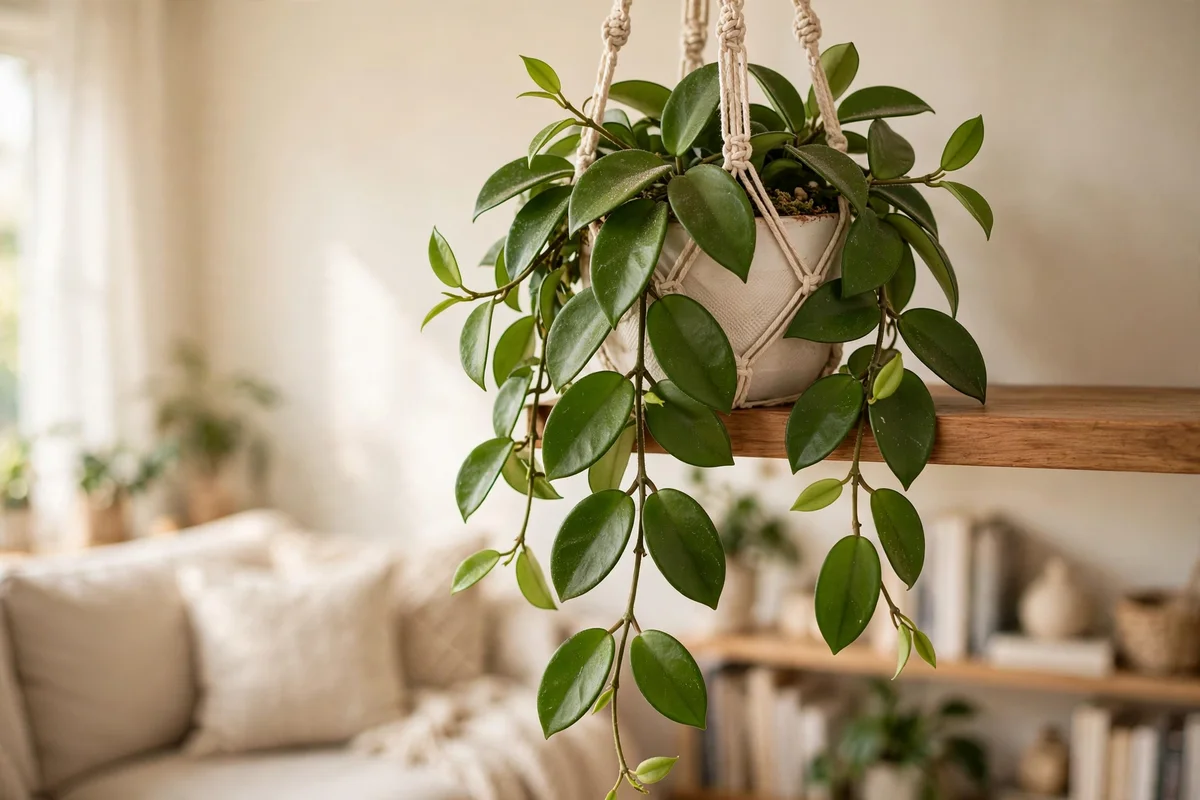
Households with crawling children or cats that chew leaves should build their indoor greenery from species known to be gentle. Hoya carnosa, lipstick plant and most prayer plants climb or trail without known toxicity, and they look just as lush as their risky cousins. Keep a printed list of your plants’ Latin names on the fridge so a babysitter or guest can identify them quickly. Nurseries can confirm safety before you buy.
Place even safe plants out of easy reach where possible, because any plant eaten in quantity can upset a small stomach. Hanging baskets at 1.8 m or high shelves above a doorway keep leaves in view but out of mouths. The mistake to avoid is assuming a plant is safe because it is common in shops; popularity says nothing about toxicity. Check every new plant against a trusted plant safety list before it enters your home.
12. Move Known Toxic Climbers Out of Reach or Out of the Home
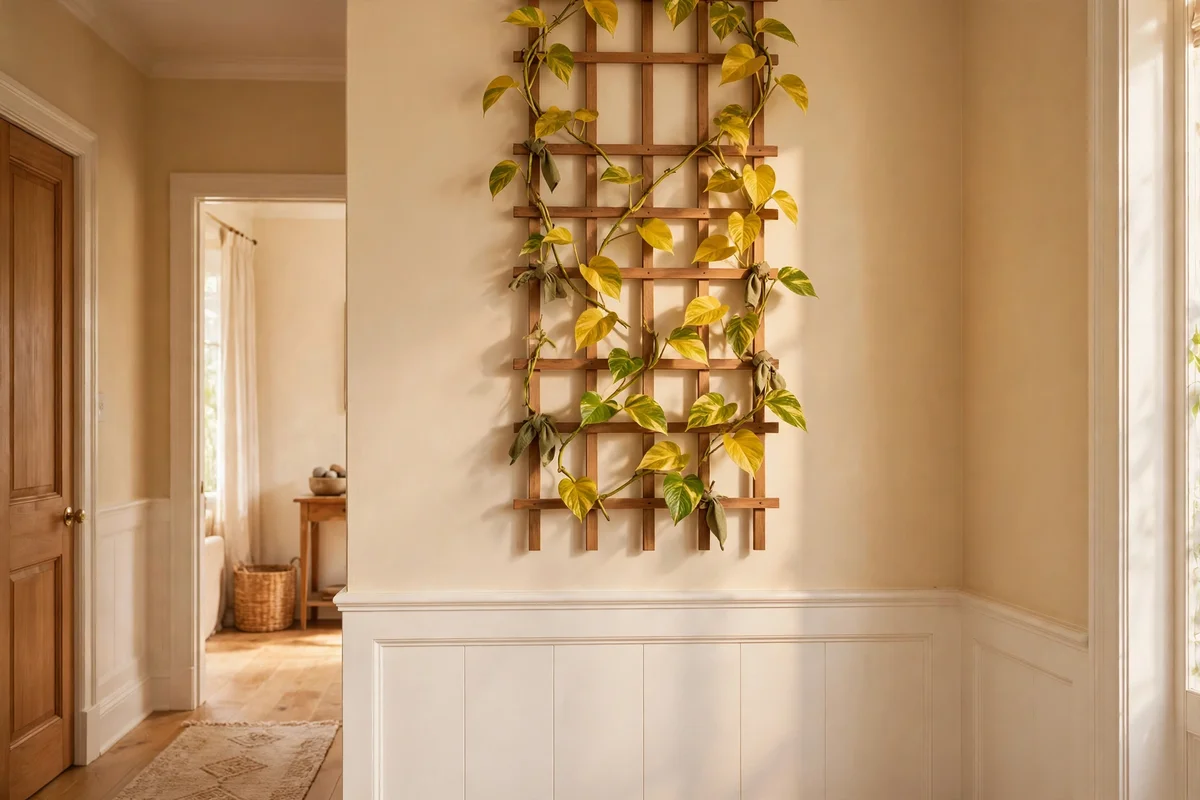
Pothos, philodendron, devil’s ivy, English ivy and many monstera varieties contain compounds that irritate the mouth and stomach if chewed. They are perfectly fine houseplants, but they belong on high shelves or in rooms that pets and small children do not enter alone. Place them at least 1.5 m above the floor, with vines trained upward so no tip dangles into reach. Secure trailing baskets with strong hooks rated for twice the wet weight.
Teach older children the simple rule that plant leaves are for looking, not tasting, and never let toddlers play unsupervised near trailing vines. If a child or pet does chew leaves, remove the pieces from the mouth and call your local poison helpline with the plant’s name. The mistake to avoid is waiting to see if symptoms appear; early advice is calmer and safer. When a species worries you, rehome it to a friend without pets.
13. Water Indoor Climbers When the Top 5 cm of Soil Dries Out
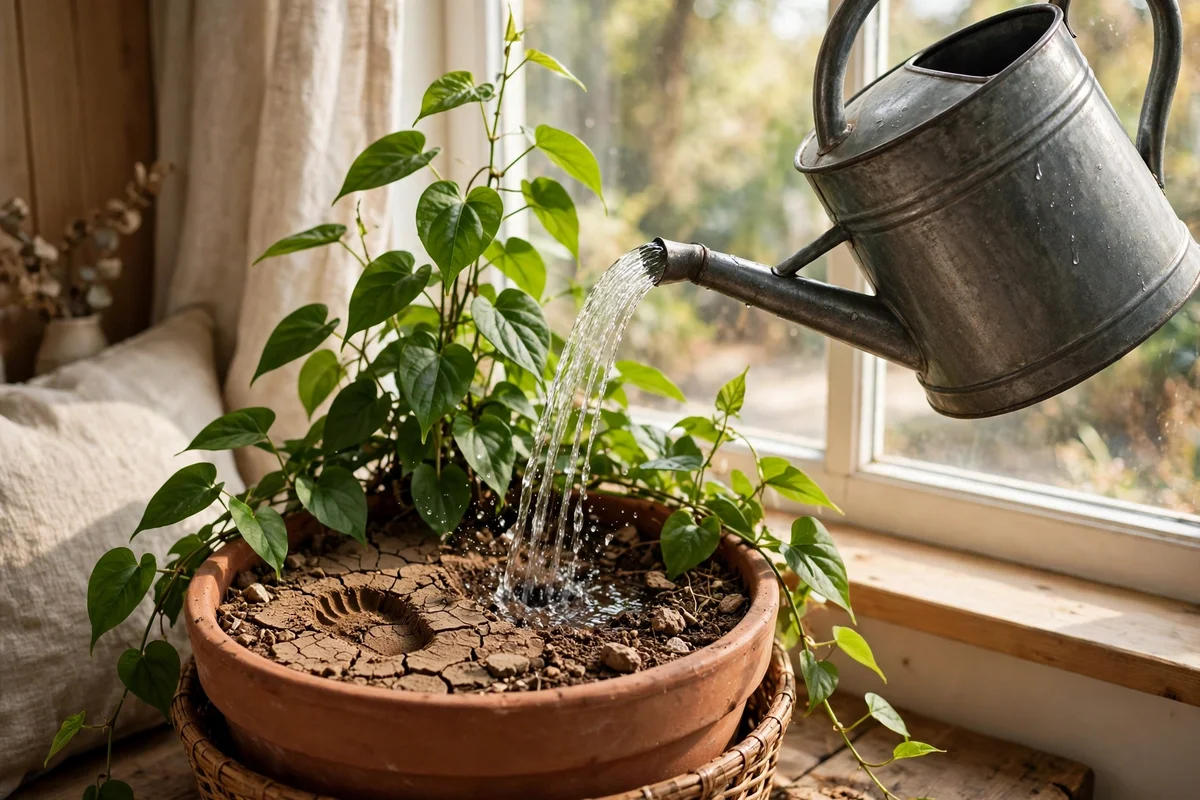
Indoor climbers rot faster from overwatering than from thirst, so water by feel rather than by calendar. Push a finger 5 cm into the compost; if it feels dry and crumbly, water thoroughly until liquid runs from the drainage holes. In a normal living room this means every 7 to 10 days, but a pot near a radiator may need water every 5 days. Empty the saucer after 15 minutes so roots never sit wet.
Water in the morning so leaves dry before evening, which keeps fungal spots away. Use room-temperature water, since a cold shock can stall growth for weeks. For large floor pots, try the wooden skewer test: push a clean skewer to the pot base and pull it out after an hour; damp soil darkens the wood. The mistake to avoid is watering a little every day; frequent sips keep the surface soggy while the rootball stays thirsty.
14. Deep-Water Outdoor Climbers Once a Week in Dry Weather
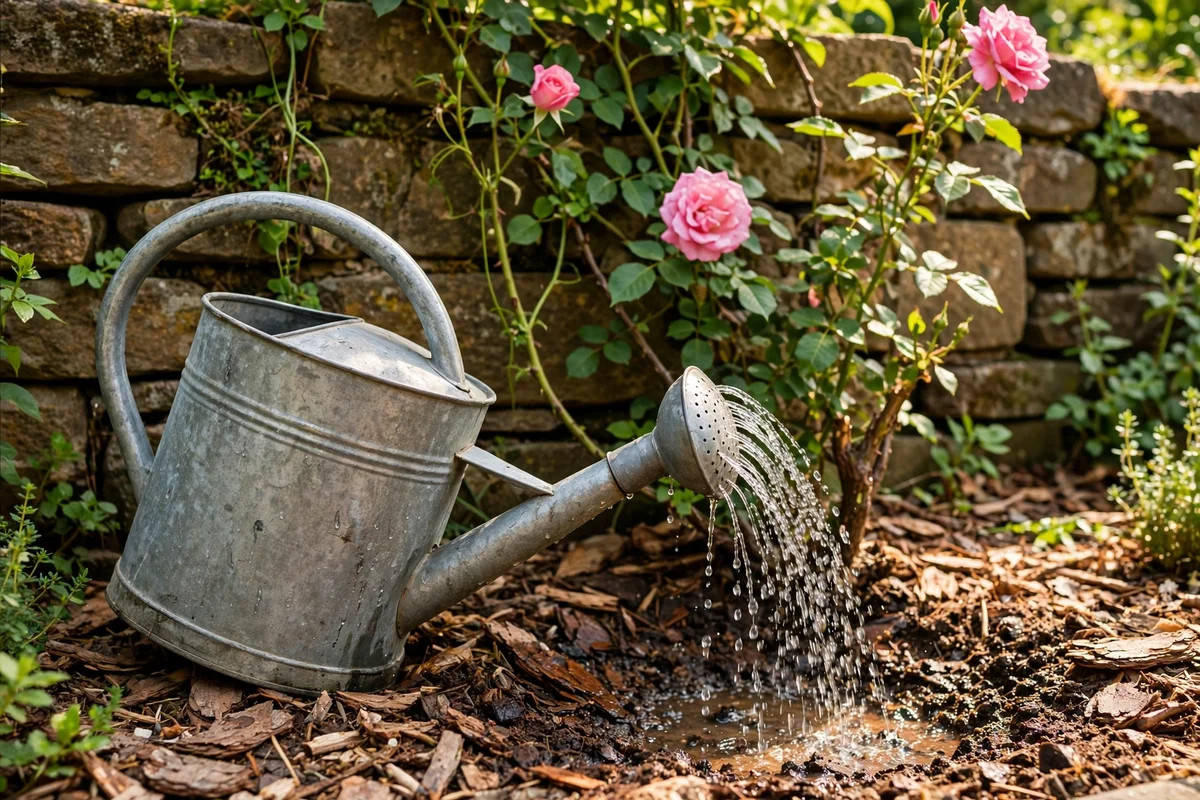
Outdoor climbers near walls live in a rain shadow, so the wall base stays dry even after heavy rain. Water each plant with 15 to 20 litres once a week from May to September, pouring slowly so the water soaks 30 cm deep rather than running off. A watering can with a rose head, or a drip ring on a hose, keeps the stream gentle. Mulch with 7 cm of bark to cut evaporation.
Check moisture by pushing a trowel 15 cm into the soil beside the stem; if the lower soil is dry, water even if the surface looks fine. New plantings need this deep watering twice a week for the first summer, whatever the forecast says. The mistake to avoid is trusting a brief summer shower; it wets the leaves and the top 2 cm of soil while the roots sit dry. Give wall climbers their own watering round, separate from the lawn.
15. Prune Indoor Pothos After New Growth to Keep the Shape Tidy
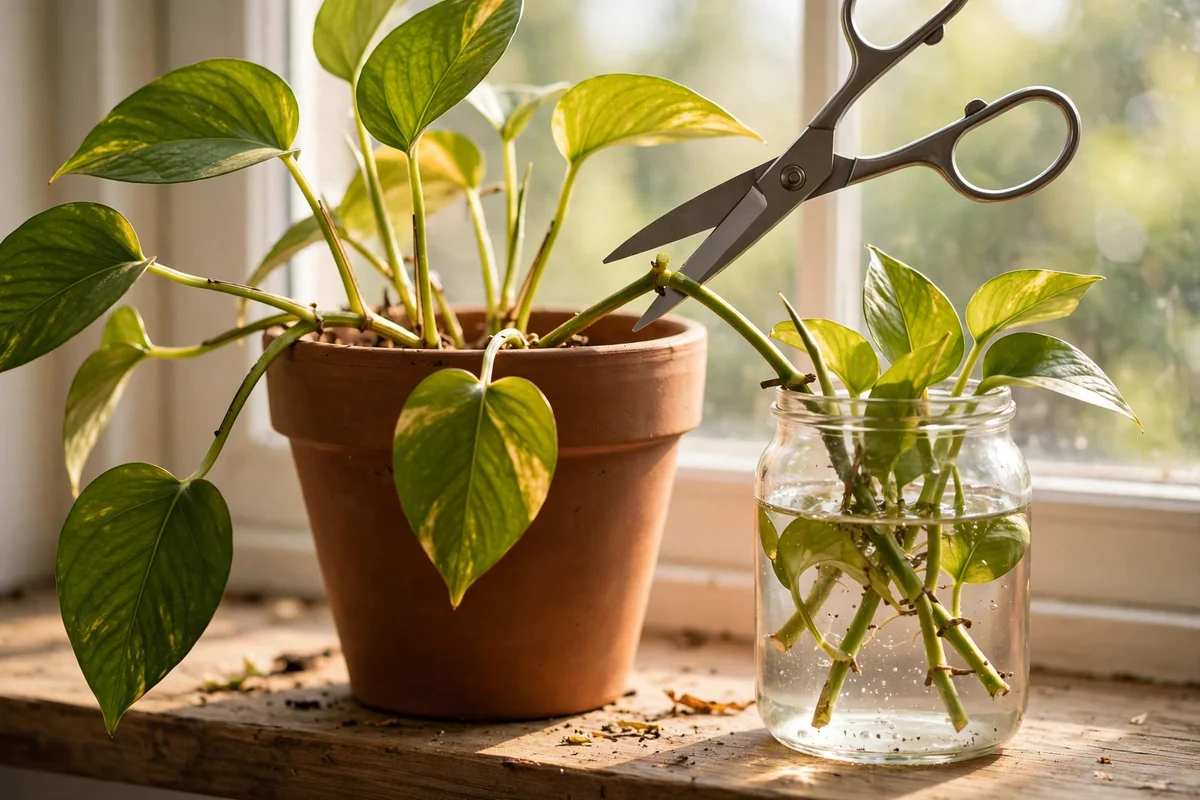
Pothos grows fast enough to double its length in one summer, so prune in early spring to keep the shape full rather than stringy. Cut each leggy stem back to just above a healthy leaf node, removing up to a third of the plant. Use clean sharp scissors, wiping the blades with soapy water between cuts. The cuttings root easily in a jar of water on a windowsill, giving you free plants within three weeks.
Pinch out the growing tips through the season, snipping the top 2 cm of any shoot that outruns the rest. This forces side buds to break and fills the middle of the plant instead of one long whip. Feed every two weeks from March to September with a half-strength liquid houseplant fertiliser. The mistake to avoid is cutting the oldest, woodiest stem right at the soil; it may not regrow. Always leave several leafy stems behind.
16. Prune Flowering Climbers Right After Their Bloom Fades
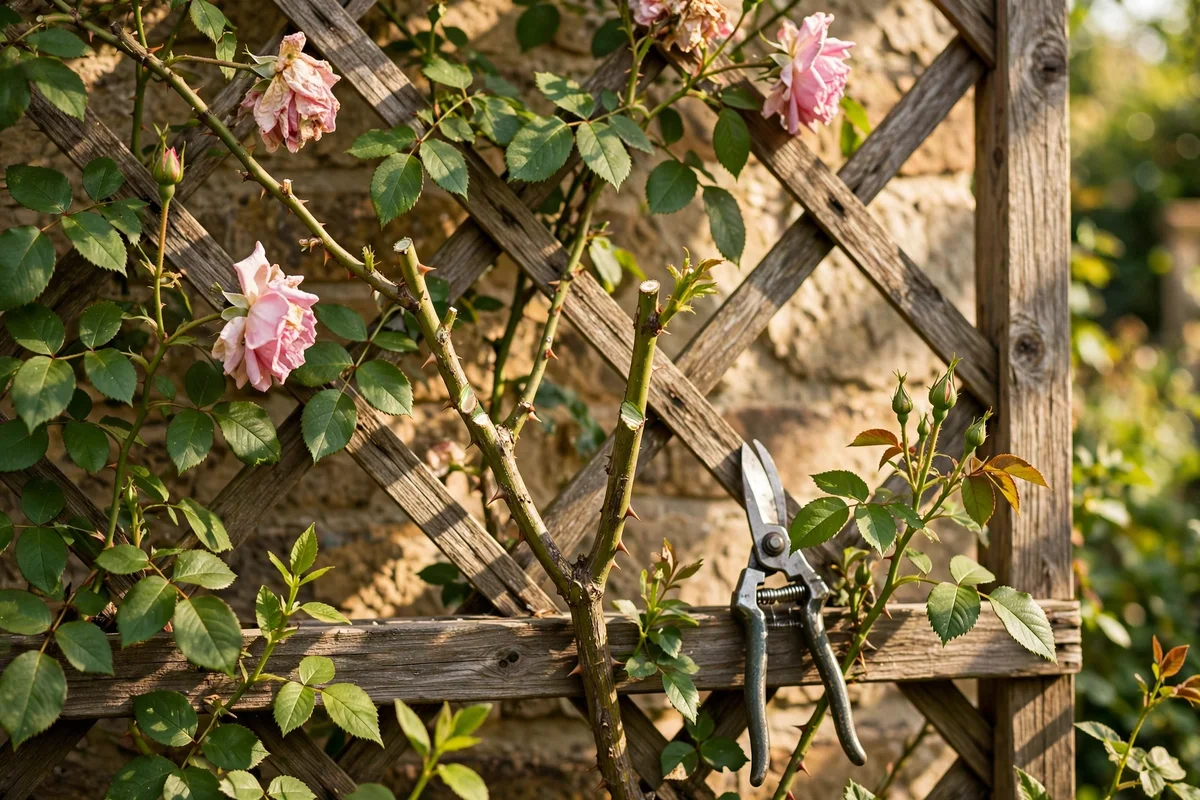
Timing is everything with flowering climbers. Roses, jasmine and clematis that flower on old wood should be pruned within two to three weeks after the last bloom fades, because they form next year’s buds on this season’s growth. Shorten side shoots to three or four healthy buds, and remove any dead or crossing stems back to the main frame. Keep your cuts clean and angled just above a bud.
For repeat-flowering roses, deadhead weekly through summer by cutting each spent bloom back to the first five-leaflet leaf. This simple habit can double the number of flowers across the season. Leave the final autumn flush uncut so hips form for winter interest. The mistake to avoid is a hard autumn prune on tender climbers; fresh cuts in cold weather invite dieback. Save the heavy shaping work for late winter or spring.
17. Feed Container Climbers Monthly From Spring to Early Autumn
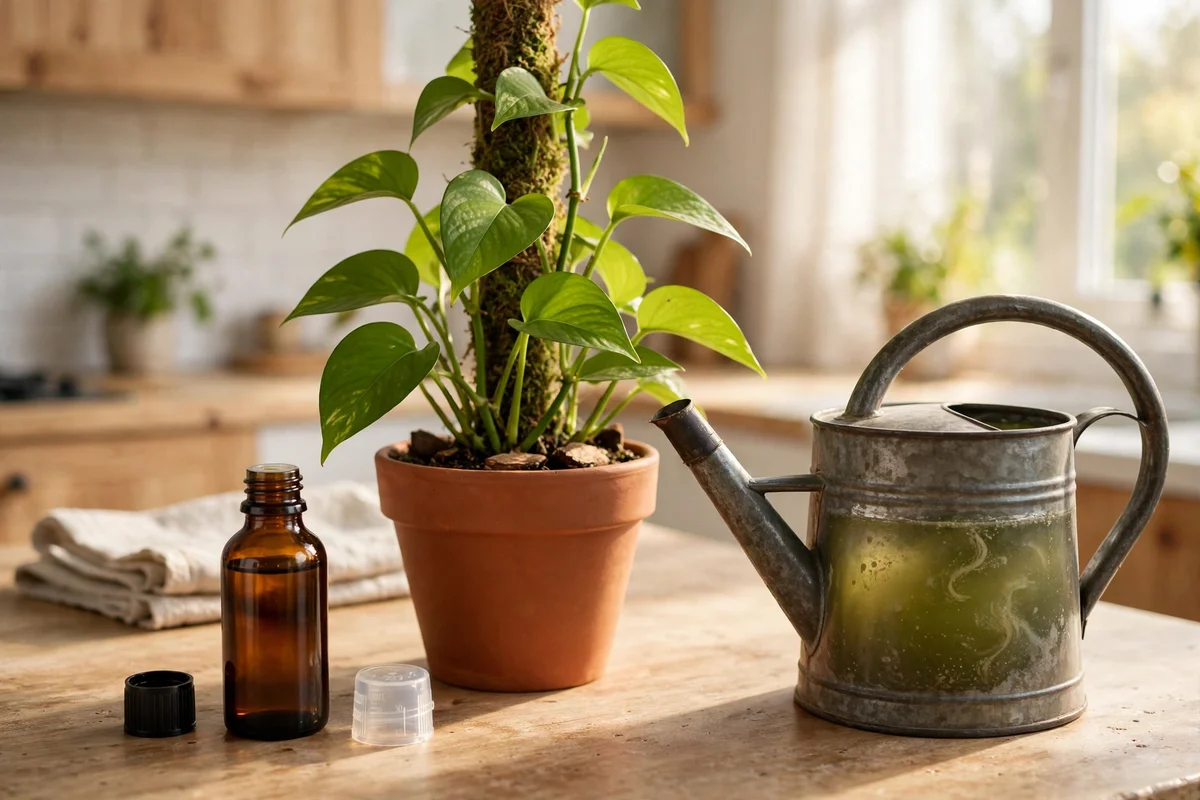
Pots hold limited nutrients, so container climbers need regular feeding to keep leaves green and growth strong. From March to September, feed every two weeks with a balanced liquid fertiliser diluted to the strength on the label. Slow-release granules work too: sprinkle 30 g over a 40 cm pot in April and again in July. Water the compost first so fertiliser never meets dry roots, which can scorch them.
Flowering climbers in pots appreciate a high-potash feed from June, which supports buds rather than leaves. Stop all feeding by the end of September so new growth hardens before winter. The mistake to avoid is doubling the dose for faster results; overfed pots develop brown leaf edges and weak, sappy stems. A steady, labelled dose beats a generous one every time. Mark feeding days on a kitchen calendar so the rhythm sticks.
18. Mist Indoor Climbers Weekly to Keep Leaves Fresh in Dry Rooms
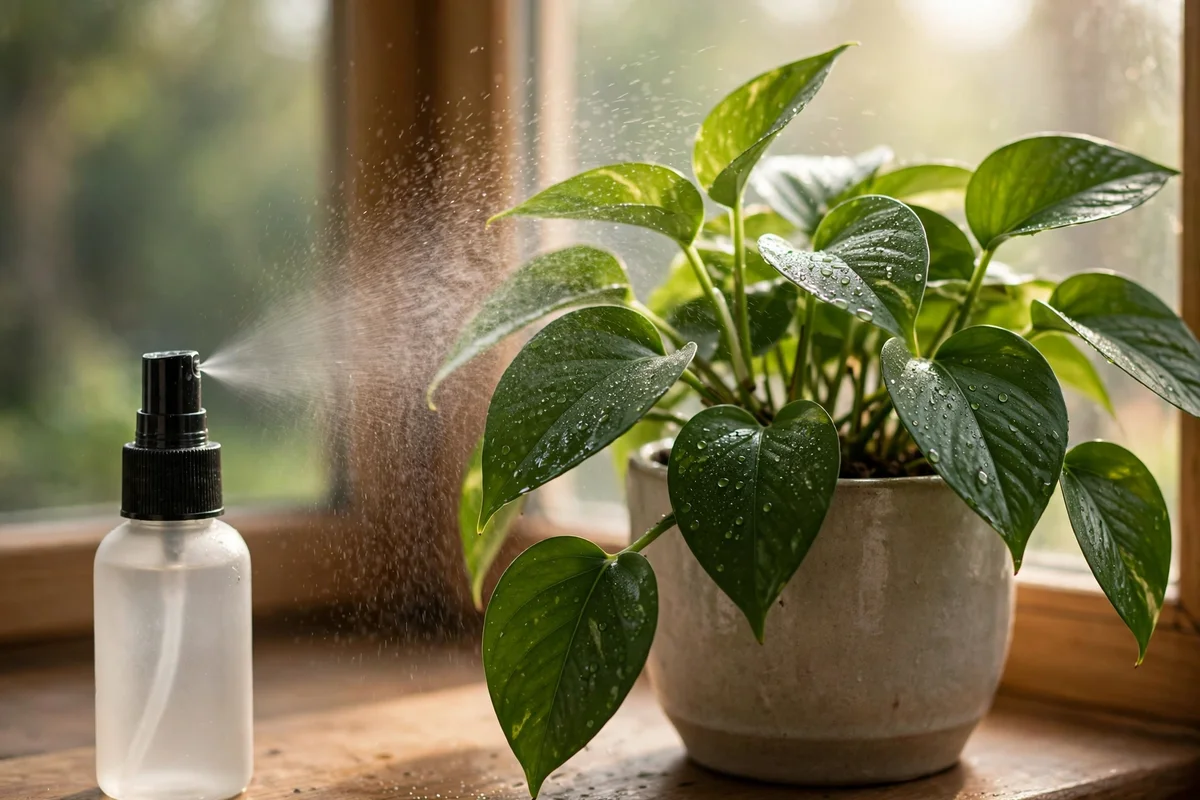
Central heating drops indoor humidity to desert levels in winter, and climbing plants show it with brown leaf edges and crisping tips. Mist the foliage once or twice a week with room-temperature water in a fine spray, covering both sides of the leaves. Early morning misting works best, since leaves dry before nightfall. A 500 ml spray bottle is enough for a shelf of six medium climbers.
Group climbers together on a tray of damp pebbles for a steadier humidity boost; the evaporating water creates a gentle microclimate. Wipe large leaves monthly with a damp cloth to clear dust, which blocks the tiny pores that breathe. The mistake to avoid is misting right before the plant sleeps in a dark corner; wet leaves in still air invite grey mould. Mist only plants that get enough light to dry.
19. Add a Moss Pole Behind a Monstera for Stronger Upward Growth
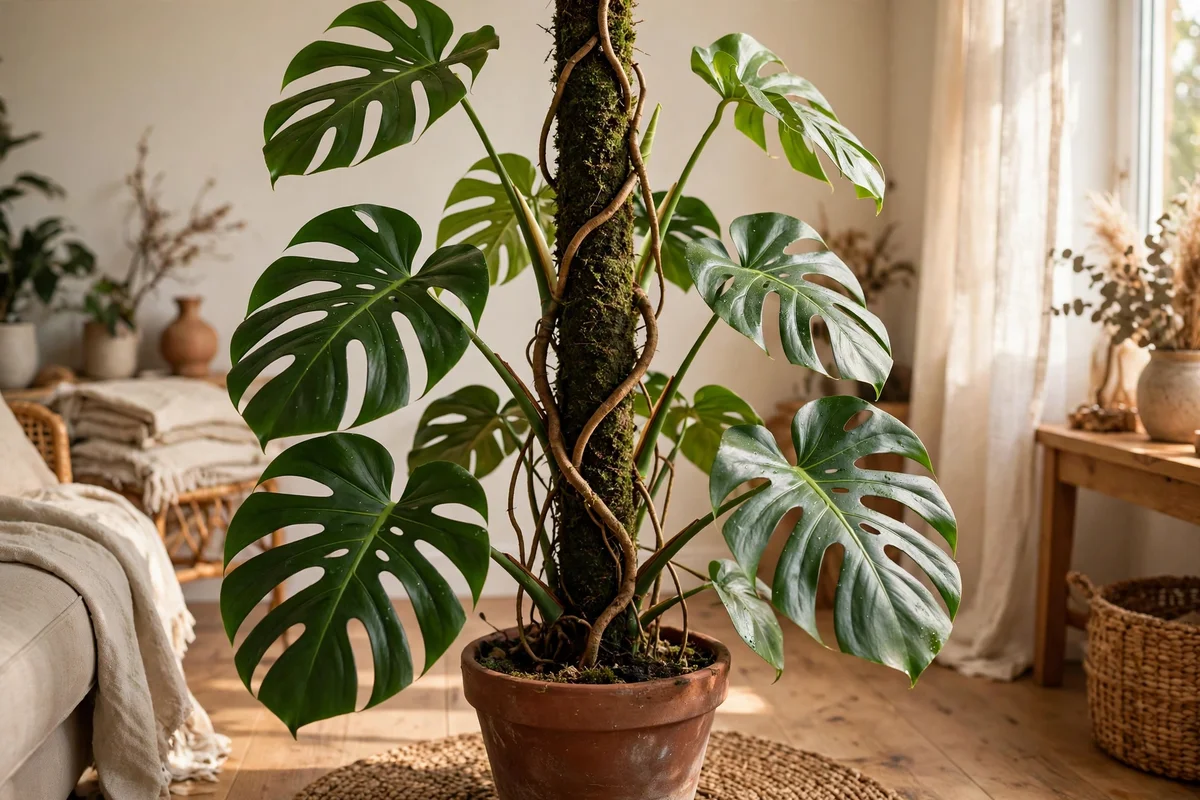
Monsteras climb trees in the wild, sending aerial roots into bark for support and moisture. A moss pole 60 to 90 cm tall, pressed 15 cm into the pot behind the main stem, mimics that trunk. Mist the pole twice a week so the aerial roots grip the damp coir or sphagnum and draw water from it. Tie the stem loosely to the pole every 15 cm with soft fabric ties as it rises.
Plants on poles grow larger, more deeply split leaves than trailing ones, because the support triggers the climbing habit. When the plant outgrows the pole, stack a second one on top rather than replacing it; unstacking damages the roots. The mistake to avoid is using a dry decorative pole that never gets misted, since roots ignore bone-dry moss. Keep the pole damp, and the plant will climb it eagerly.
20. Cover a Plain Stairwell Wall With a Living Trellis Panel
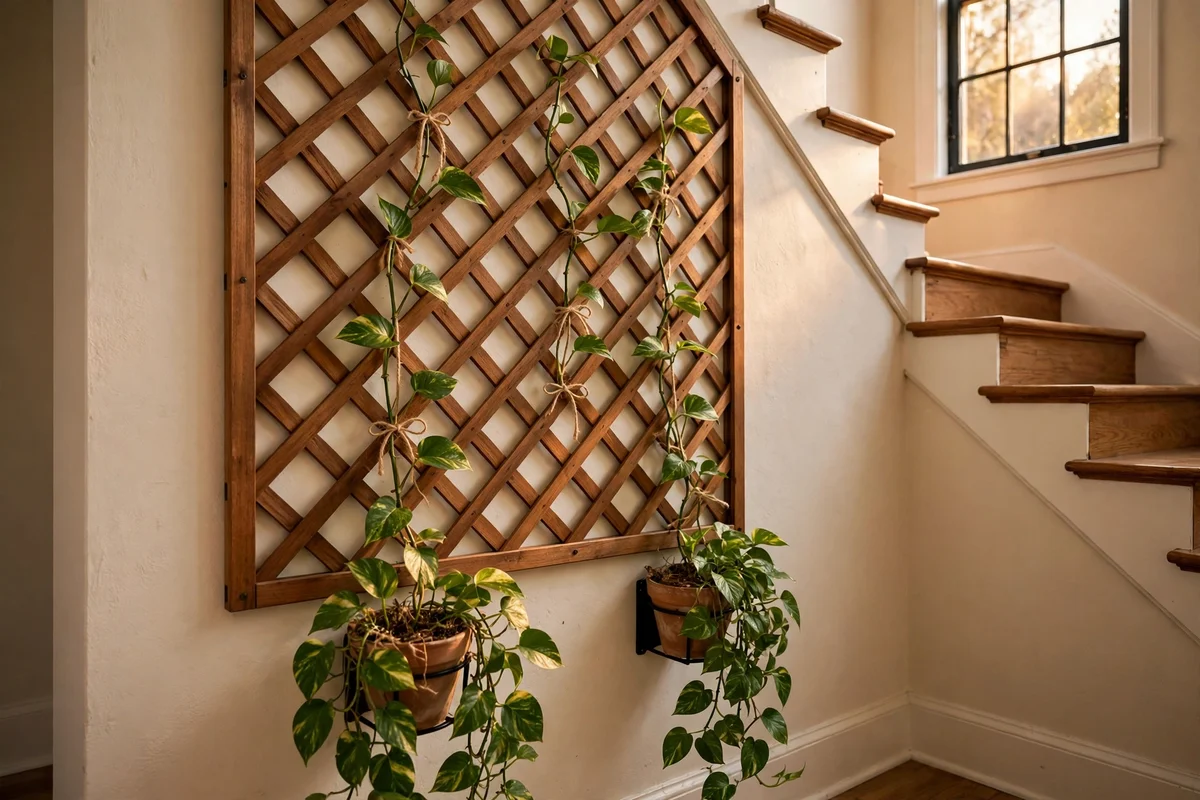
A stairwell wall gets good light but little attention, making it ideal for a vertical plant display. Fix a wooden lattice panel 100 cm wide and 150 cm tall to the wall with four spacer battens, leaving a 3 cm air gap for airflow. Set two trailing pothos in 15 cm pots on wall brackets at the panel’s base, one per 50 cm of width. Train the vines upward through the lattice with soft ties every 25 cm.
Choose pothos or heartleaf philodendron for low light stairwells, since both tolerate the softer light of a half-landing window. Water the bracket pots weekly, catching drips with a small tray fixed beneath each pot. The mistake to avoid is letting vines trail down the staircase where they catch sleeves and step traffic; always train upward or sideways along the panel. A monthly 10-minute tidy keeps the whole display safe and green.
21. Frame a Garden Gate With Paired Climbing Roses in Matching Pots
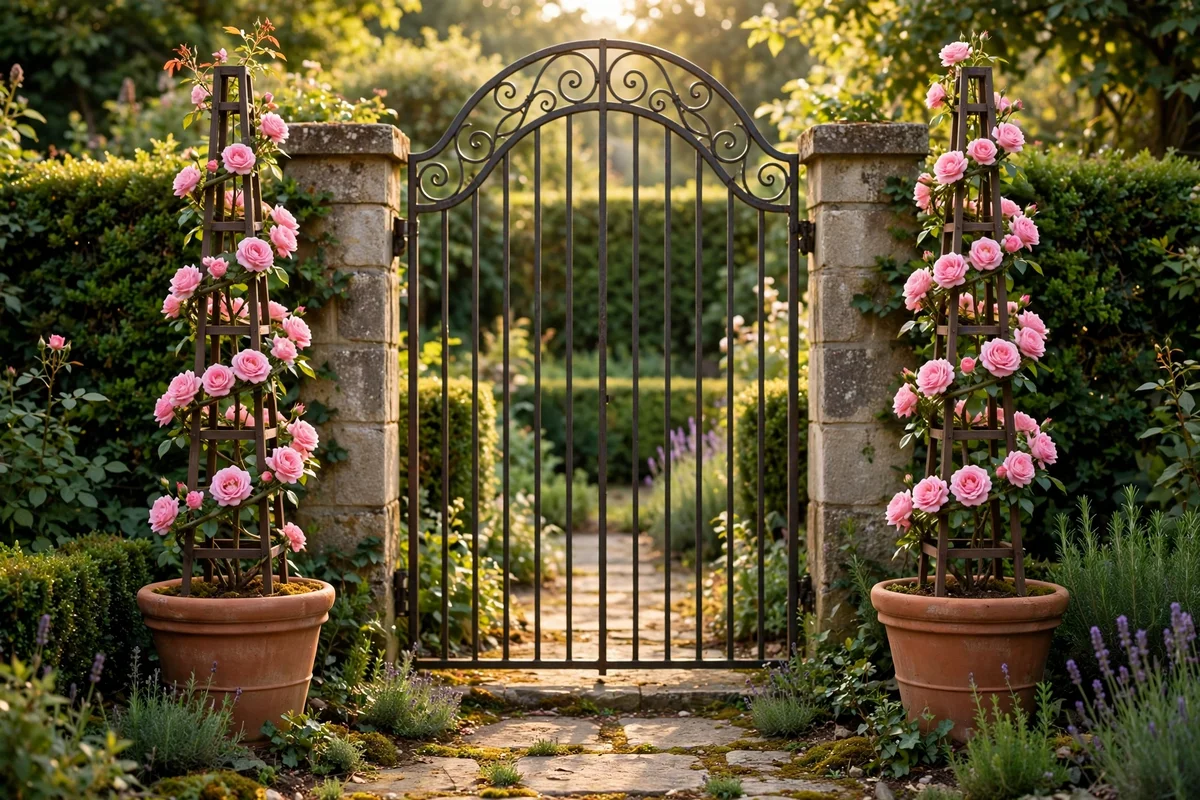
Two matching climbing roses flanking a garden gate create a welcome that guests remember. Use two 50 cm terracotta pots, one on each side of the gate, and fix a slim 150 cm obelisk or fan trellis inside each. Plant a repeat-flowering rose such as a classic pink variety, mulching the surface with 5 cm of bark. Train the canes in a spiral around the obelisk, tying every 20 cm.
Water each pot with 8 to 10 litres every three days in summer, because pots dry far faster than garden soil. Deadhead weekly to keep the flowers coming, and feed with rose fertiliser each month from April to August. The mistake to avoid is choosing mismatched pots or different rose colours, which breaks the symmetry that makes this pairing work. Keep the pair identical, and the gate reads as one deliberate, elegant entrance.
A wall covered in green leaves is never just decoration. It is a slow project that rewards small habits: a weekly watering check, a monthly feeding, a few minutes of tying in new growth each spring. Choose one idea from this collection that fits your space and your budget, and give it this week. The plant will do the patient work while you watch it climb.
Start with the simplest step of all: pot up a pothos, place it near a bright wall, and train one stem along a small bamboo trellis. Water it when the top soil dries, and you will see new growth within a month. That one small success will teach you more about climbing plants than any guide, and the next wall will feel less like a blank space and more like an invitation.
Frequently Asked Questions
How much does it cost to set up a simple indoor trellis for a pothos?
A small bamboo or willow fan trellis costs 8 to 20 pounds or dollars, and a bag of jute twine adds about 3. Add a 15 to 20 cm pot with drainage and potting mix for another 10 to 15, so a full setup usually lands between 25 and 40. Buying the trellis second-hand cuts the cost further.
Which climbing plants are safe around cats and dogs?
Hoyas, most ferns and many marantas are safer choices for pet homes, while pothos, philodendron and English ivy are toxic if chewed. The ASPCA plant lists and your local nursery can confirm a specific species before you buy. When in doubt, grow toxic climbers in a hanging basket far from pet areas, or choose a safer species entirely.
How far apart should I plant climbers on a garden wall?
Space vigorous wall climbers 45 to 60 cm apart, and leave at least 30 cm between the stem and the wall face. This spacing gives each plant room for airflow, which keeps mildew away, and stops roots from competing too hard for water. Planting closer looks lush faster but leads to weak, tangled growth within two seasons.
Will ivy damage my brick wall or garden fence?
English ivy grips with aerial rootlets that can creep into cracked mortar, loose render and peeling paint, widening the damage over years. Sound brick in good condition usually survives, but old or soft mortar suffers. For fences, ivy traps dampness against timber and adds weight, so grow it on a freestanding trellis a few centimetres away from the fence instead.
How often should I water and prune indoor climbing plants?
Water indoor climbers when the top 3 to 5 cm of potting mix feels dry, usually every 7 to 10 days in normal rooms and weekly near radiators or heating vents. Reduce watering in winter when growth slows. Prune leggy stems in early spring, cutting back up to a third, and pinch out weak new tips through the growing season to keep the shape full.