Home Improvement
21 Cozy Window Decor Ideas That Make Every Window a Feature
By Anna Wells · · 16 min read
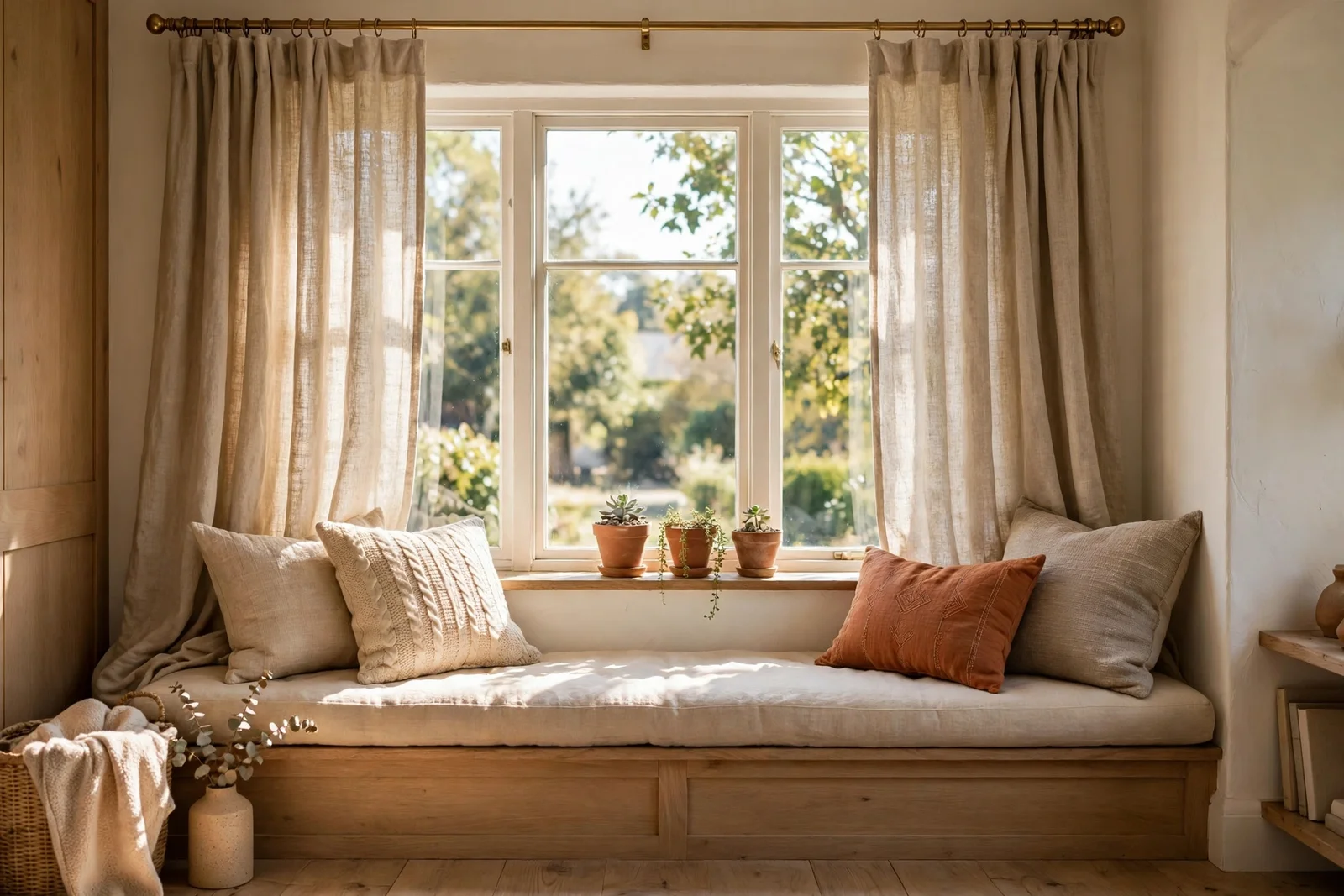
Morning light, honest materials, and calm rooms: 21 practical ways to dress windows in kitchens, bathrooms, and living rooms.
Morning light lands differently when a window is dressed with care. A linen panel pulled to one side, a row of small green pots on the sill, a garland resting along the frame: these small decisions turn glass and frame into the warmest corner of the room. Windows shape how a home feels at every hour, from the first kettle of the day to the last lamp at night.
This collection gathers 21 practical ideas for kitchens, bathrooms, and living rooms alike. You will find curtain fullness ratios, puddle lengths, shutter sizing, sill plant groupings, and privacy solutions, each with real measurements and budget notes. Nothing here needs a tradesperson on speed dial, and most ideas fit into a single weekend.
Work through the list one window at a time. Start with the room you sit in most, fix its light and privacy, then carry what you learned to the next pane. By the end, every window in the house will earn its place, and the rooms will feel calmer for it.
All of the materials are easy to find: cotton, linen, brass, timber, and plain greenery. The methods are renter friendly where it matters, and every idea keeps the room calm, classic, and welcoming to family and guests.
1. Hang Linen Curtains at Double Fullness on Wide Brass Rods
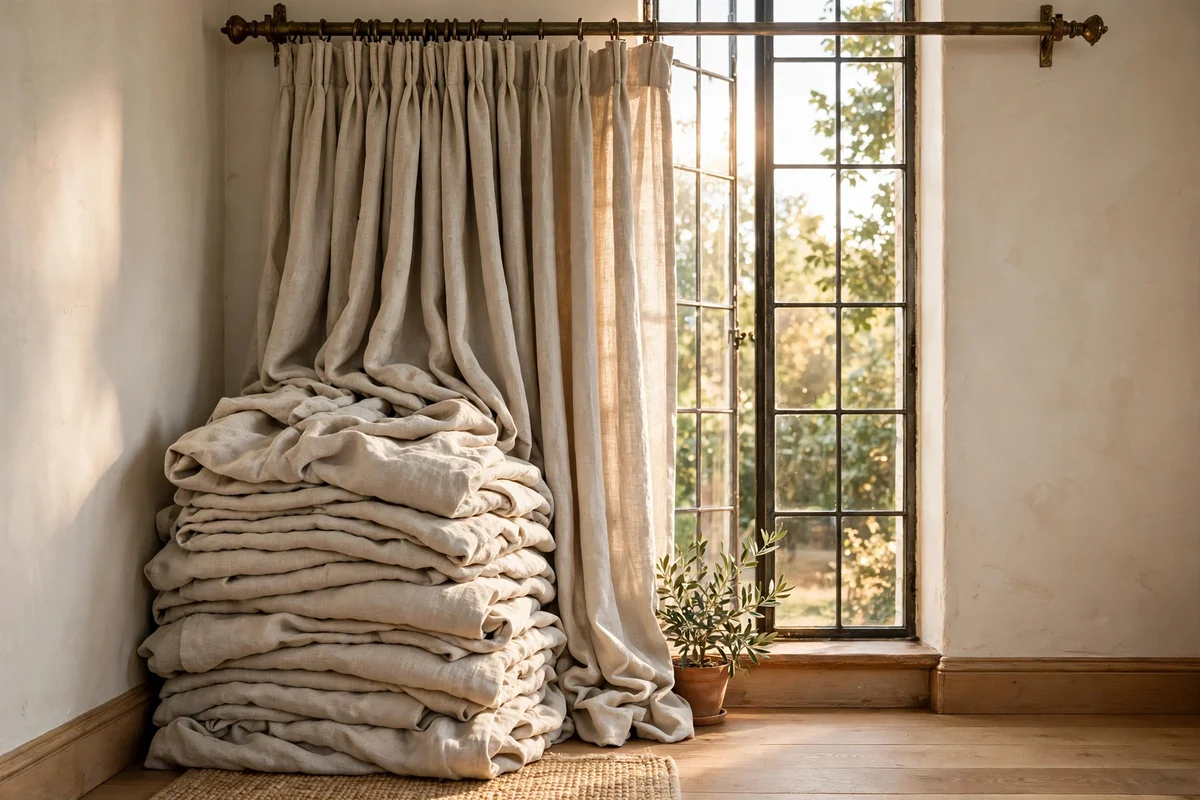
Hang the rod 10 to 15 cm above the frame and extend it 15 to 20 cm past each side, so the panels stack on the wall rather than covering the glass. Buy panels totalling 1.5 to 2 times the rod width for gentle fullness, or 2 to 2.5 times for a fuller, gathered look. A linen blend with a soft slub falls gracefully and suits warm whites, sage, and oat tones beautifully.
Choose a rod in aged brass or matte black with simple round finials for a heritage feel. Hem panels to kiss the floor or break by 2 cm; a full puddle suits formal rooms only. The common mistake is buying panels at exactly window width, which pulls flat and looks thin. Budget tip: one wide rod plus four ready-made panels usually costs less than a single custom pair.
2. Let Cotton Panels Puddle Gently on the Floor
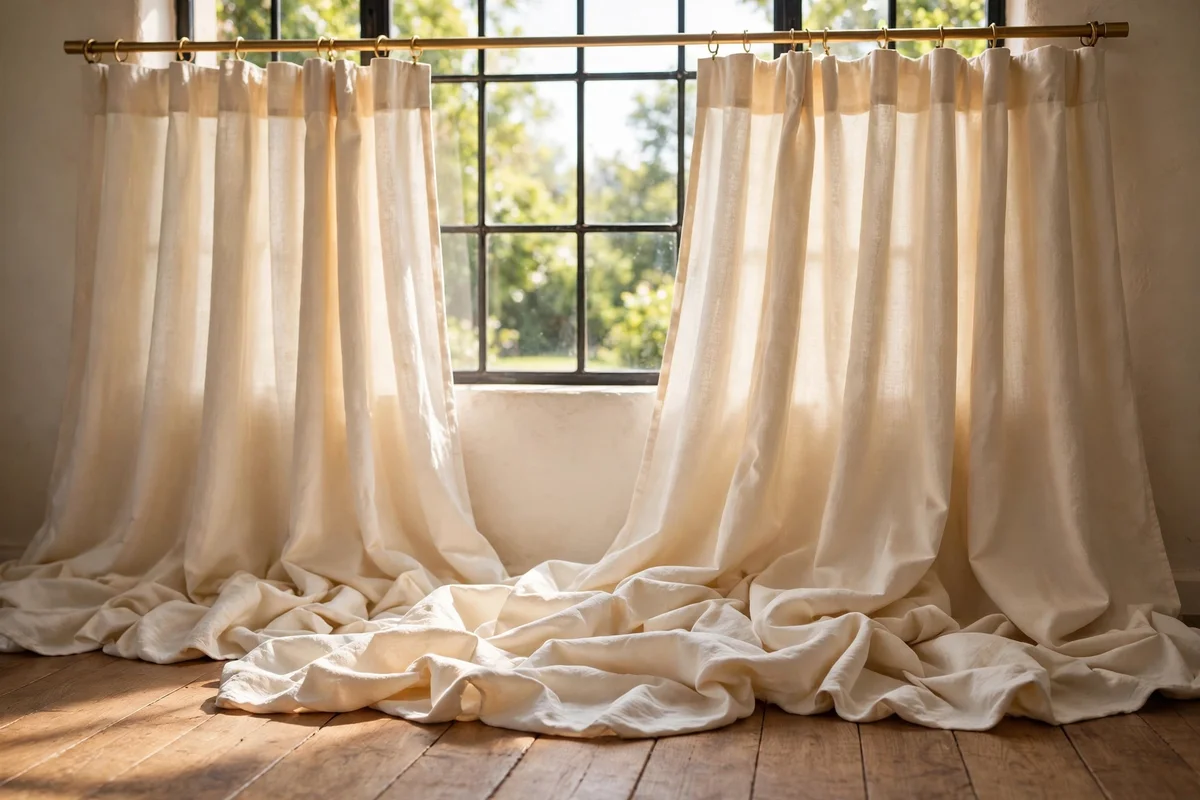
For a relaxed puddle, add 5 to 8 cm of extra length beyond floor level so the fabric pools softly on the rug or boards. This works best with washable cotton, linen, or medium-weight velvet, since these fabrics fold rather than crease. Puddling draws the eye downward and makes a standard 240 cm drop feel grander and more settled.
Vacuum the hems monthly, because fabric touching the floor collects dust faster than hanging panels. In homes with toddlers or large dogs, choose a 2 cm break instead of a full puddle to keep hems cleaner. The mistake to avoid is puddling thin polyester, which wrinkles instead of folding. A mid-range pair of cotton panels at proper length costs about 80 to 140.
3. Layer Sheers Behind Main Curtains for Soft Daylight
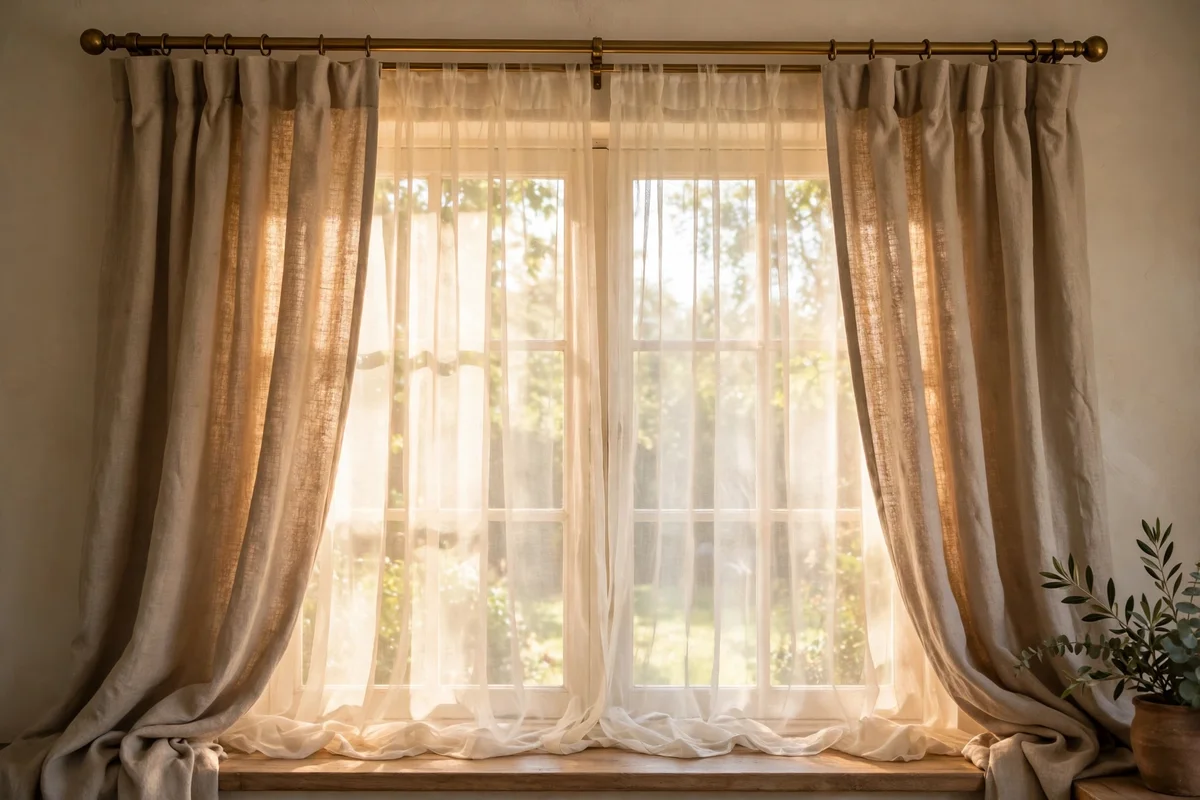
Mount a double rod or a slim inner track 5 to 8 cm behind the main drapes and hang voile or muslin sheers at full width. Sheers diffuse harsh sun while the main panels stay open, keeping rooms bright without glare. Choose off-white or ivory rather than stark white, which can look cold against warm paint and timber floors.
Press sheers with a cool iron or hang them straight from the dryer to release creases. At night, close the main panels over the sheers for full privacy; by day, the sheer layer alone softens street views. Avoid heavy embroidered sheers on wide spans, since the weight drags the track. A pair of ready-made voiles usually costs 20 to 45.
4. Fit Painted Interior Shutters for Timeless Privacy
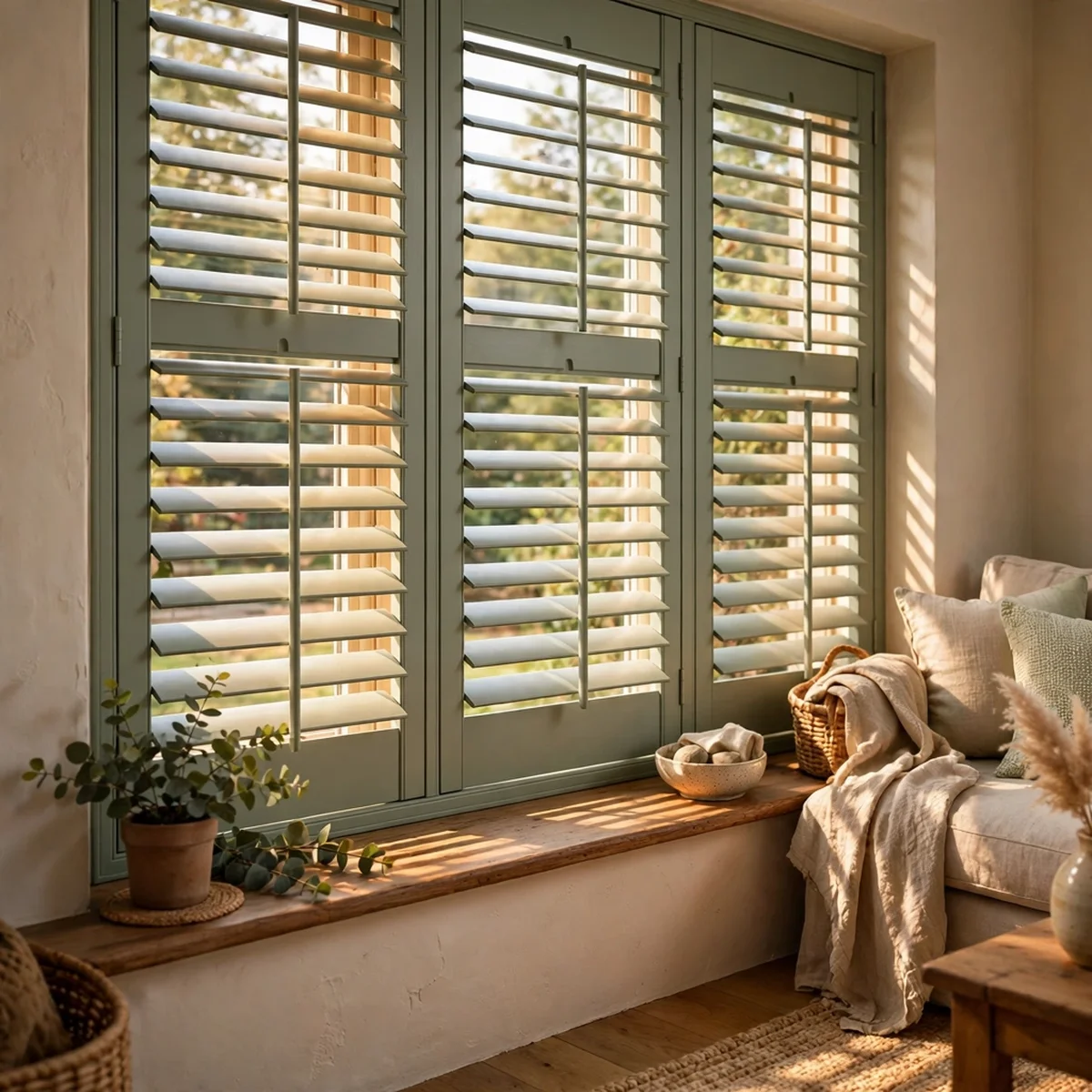
Interior plantation shutters in painted poplar or moisture-rated composite suit living rooms and street-facing windows. Choose louvre widths of 64 mm for classic proportions or 89 mm for a more open view. A soft white, warm grey, or sage finish blends with heritage palettes. Measure the recess exactly, since shutters can fit inside the frame or face-mounted on the architrave.
Tilt the louvres downward from the top to admit sky light while blocking sightlines from the street. Dust with a microfibre cloth or soft brush attachment weekly, and never soak painted timber. The mistake to avoid is fitting shutters where deep window handles clash with the frame. Made-to-measure shutters are an investment, often 250 to 500 per window.
5. Dress a Window Seat With a Deep Cushion and Layered Pillows
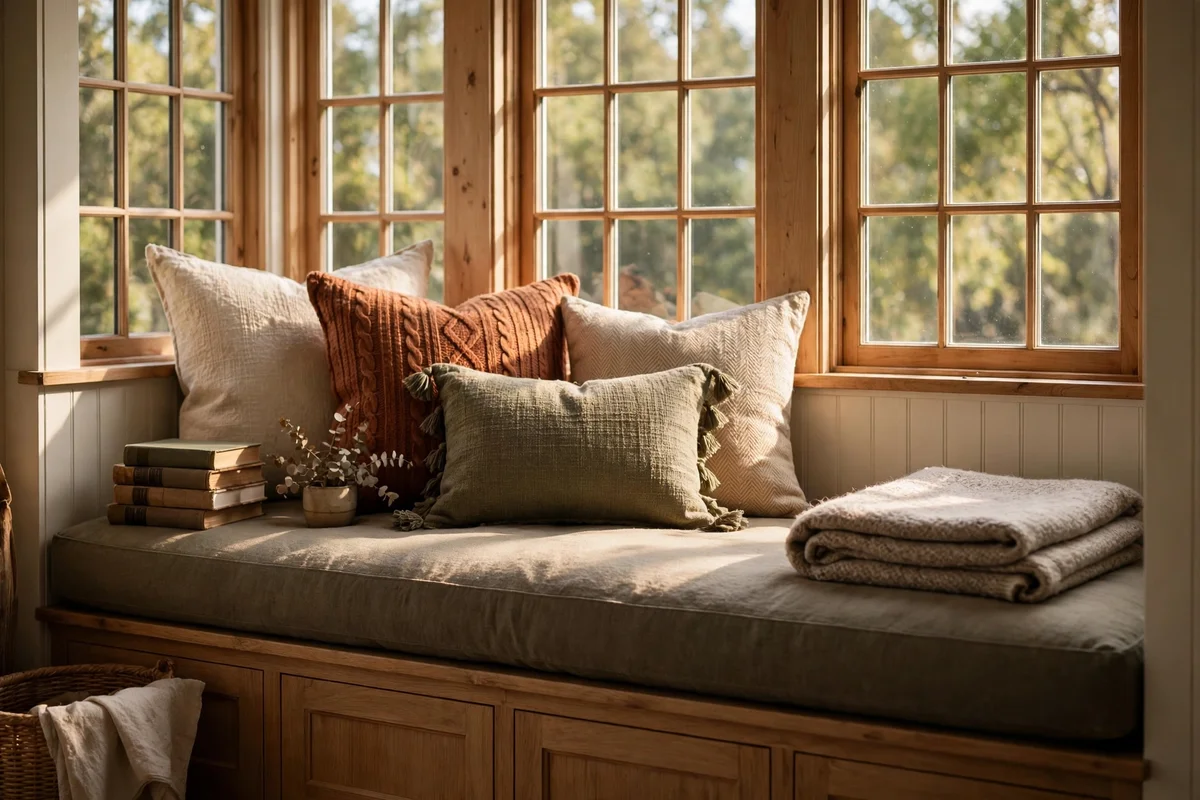
A window seat cushion 8 to 10 cm thick in firm upholstery foam keeps the nook comfortable for long reading sessions. Cover it in a washable cotton or linen slip in oatmeal, ticking stripe, or a small floral. Add three to five throw pillows in mixed textures: one lumbar, two squares, and one bolster. Box the cushion with piping for a tailored edge that holds its shape.
Anchor the seat with a folded wool throw across one end for chilly mornings. Keep the sill above clear of heavy objects so the nook feels open and light. The common mistake is using soft fibre-fill cushions that flatten within weeks. Budget tip: a local upholsterer can cut foam and sew a slip for far less than a custom bench seat.
6. Arrange Three or Five Small Plants Along the Sill

Odd-numbered groupings read as natural rather than staged, so cluster three or five small pots on the sill. Mix heights for rhythm: a trailing pothos, a compact fern, and a small flowering plant such as an African violet. Choose pots in one material family, like terracotta or glazed stoneware, in two sizes so the group feels collected, not matched.
Match plants to the window’s light: herbs and succulents for south-facing sills, ferns and peace lilies for north-facing ones. Water in the sink, let pots drain fully, then return them so sills stay dry and paint stays sound. The mistake to avoid is lining up identical pots in a straight row, which looks like a shop display. Three small plants usually cost under 30.
7. Drape a Plain Greenery Garland Along the Window Frame
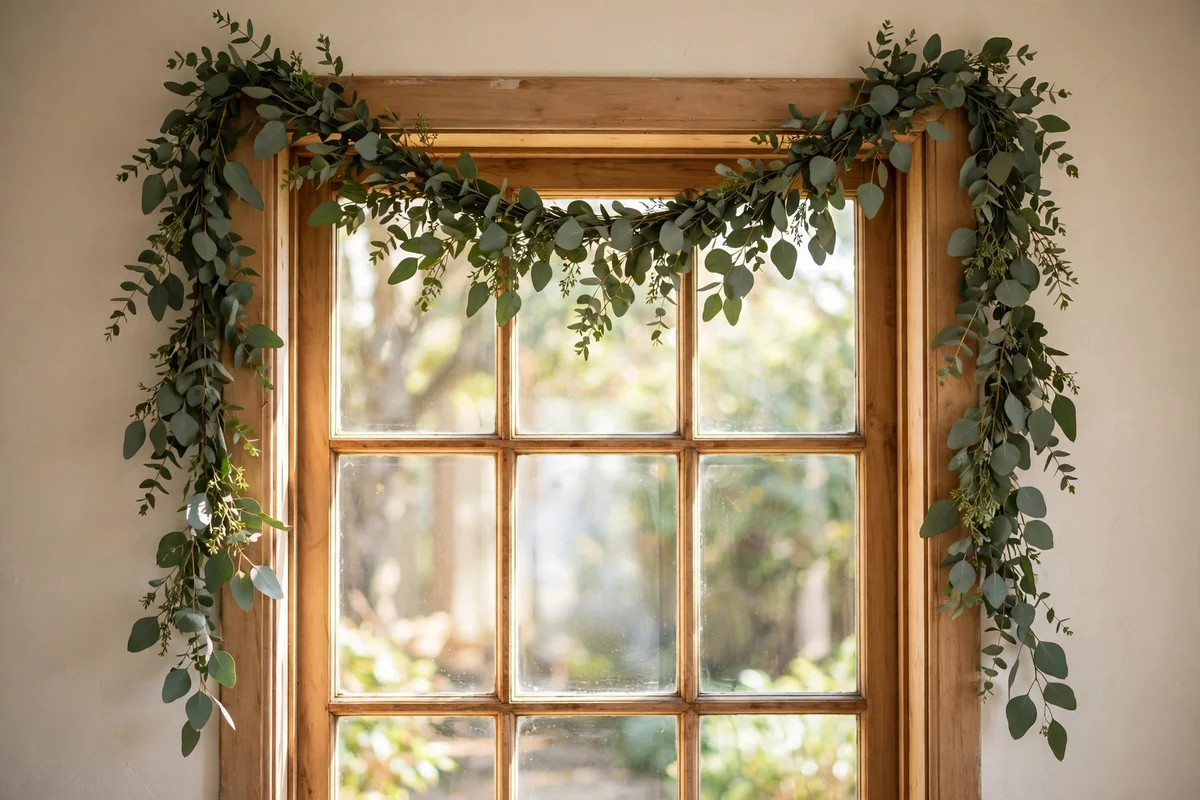
For autumn and winter, swag a simple garland of faux eucalyptus, olive branches, or pine along the top of the frame. Secure it with clear removable hooks rated for the weight, spacing them every 30 to 40 cm. Let the ends trail 20 to 30 cm down each side for a soft, gathered look that frames the glass.
Keep the garland plain rather than glittered so it suits the season quietly and stores flat in a box. Fluff wired stems by bending each branchlet outward for fullness before hanging. The mistake to avoid is nailing into painted frames, which chips the finish. A good 180 cm faux garland costs 15 to 35 and lasts for years.
8. Apply Heritage-Patterned Privacy Film to Bathroom Windows
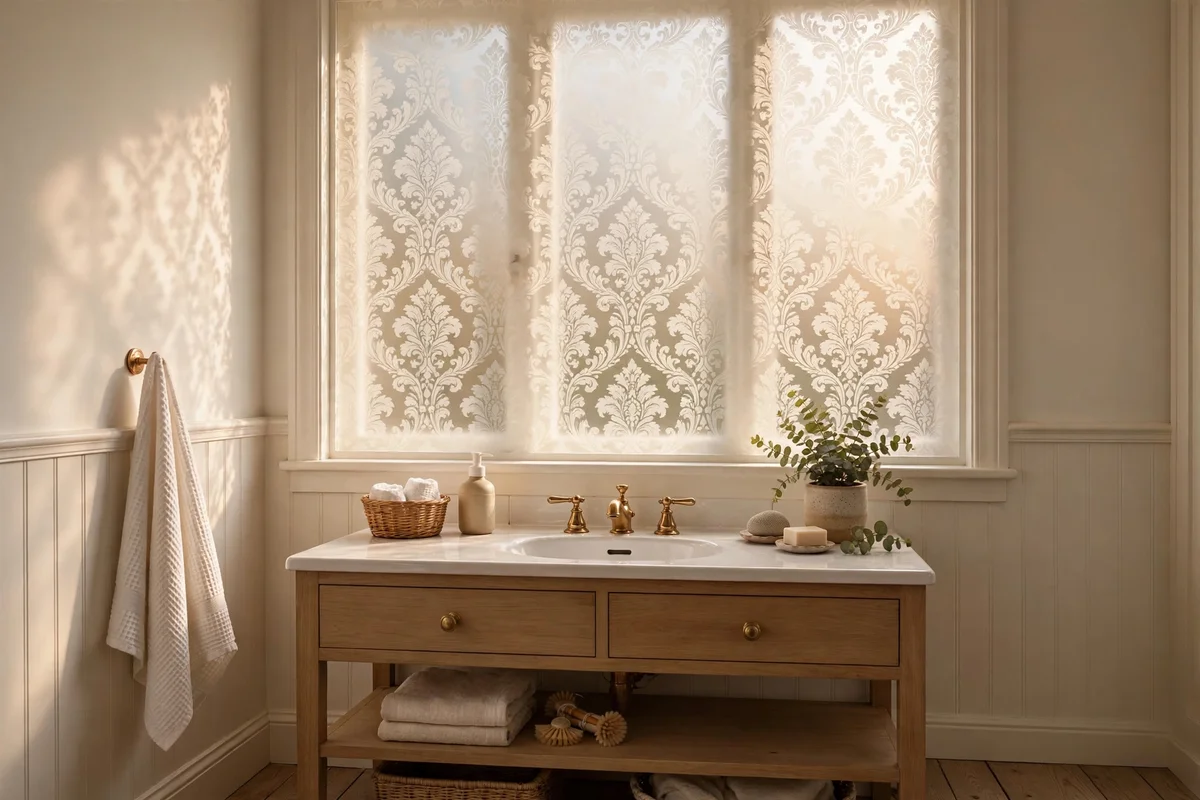
Static-cling window film with a frosted damask or reeded-glass pattern gives daytime privacy without curtains in bathrooms. Cut the film 2 mm smaller than the glass on each side, mist the pane with soapy water, and smooth from the centre outward with a squeegee. Static film peels off cleanly, which renters appreciate when moving out.
Choose patterns that read as frosted texture rather than printed pictures for a heritage feel. The film still admits about 80 percent of daylight, keeping small bathrooms bright. Avoid adhesive films on textured glass, where bubbles cannot be smoothed out. A roll covering one standard window costs 10 to 20.
9. Dress Small Windows With One Tailored Roman Shade
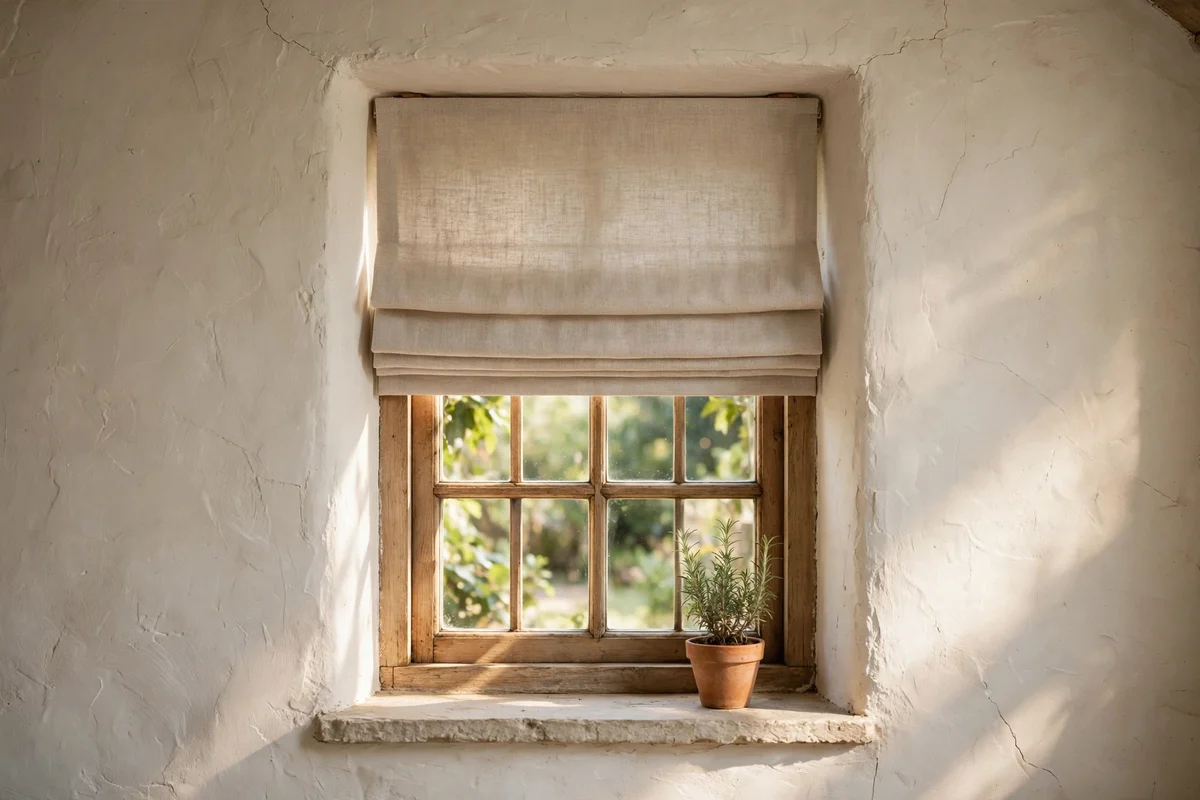
A single roman shade in a tailored flat fold suits small windows far better than gathered curtains. Mount it inside the recess for a neat fit, or outside the frame to make the window look larger. Natural linen, cotton duck, or a small check keeps the scale honest. Aim for the shade to cover the glass fully when lowered.
Add a slim pelmet board only if the top of the recess looks bare. Cordless mechanisms are safest and now standard on ready-made shades. The mistake to avoid is choosing a busy large-scale print that overwhelms a small pane. A ready-made roman shade for a 60 cm window costs 25 to 60.
10. Style Tall Windows With a High Rod and Stacked Panels
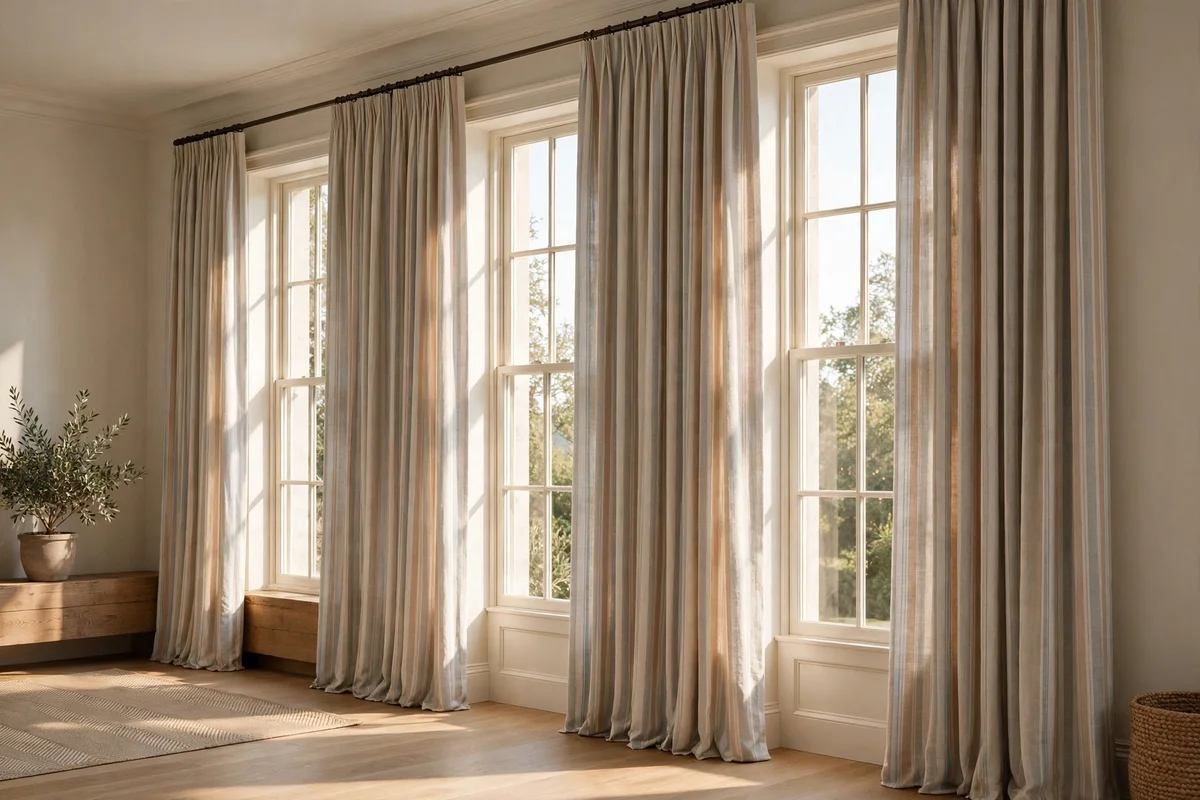
Tall windows need height emphasis, so mount the rod within 5 cm of the ceiling or cornice. Use full-length panels in a fabric with vertical interest, like a pinstripe or a subtle striped weave, to draw the eye upward. Double the usual fullness so the long drop keeps its body instead of hanging limp.
Break tall expanses with a mid-height tie-back in rope or fabric for a collected, classic look. Steam panels in place rather than taking them down each season. The mistake to avoid is hemming tall panels too short, which makes ceilings feel lower. Custom-length panels for tall windows start around 60 per pair.
11. Treat Corner Windows as One Continuous Feature
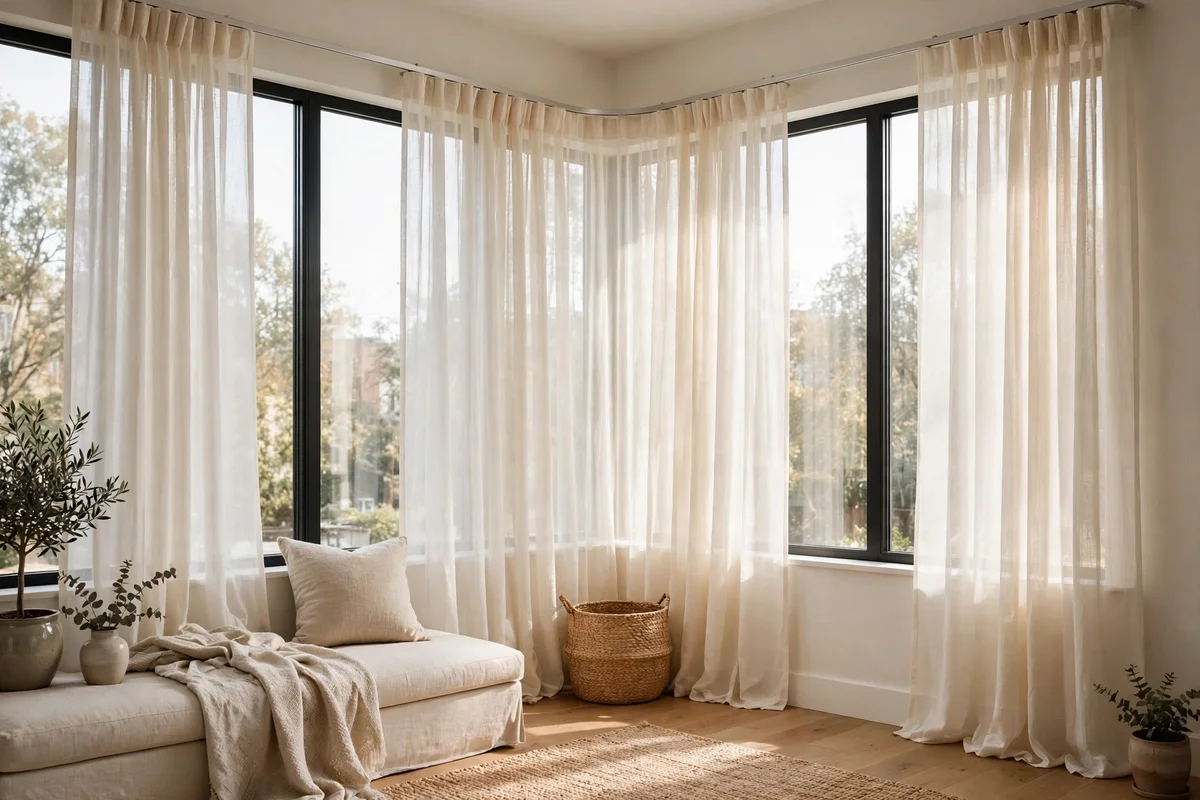
Corner windows read best when dressed as a single feature rather than two separate ones. Run an L-shaped track or two rods joined with a corner connector, and carry the same fabric around the bend. This unifies the corner, keeps light even on both faces, and makes the architecture feel intentional.
Keep the fabric light, since corner windows are prime daylight sources and heavy drapes darken the junction. Sheers work beautifully here, alone or layered. The mistake to avoid is leaving a gap at the corner, which breaks the line and looks unfinished. Corner track kits cost 40 to 90. A corner connector piece keeps the fabric gliding smoothly around the bend.
12. Hang Cafe Curtains at Mid-Height in the Kitchen
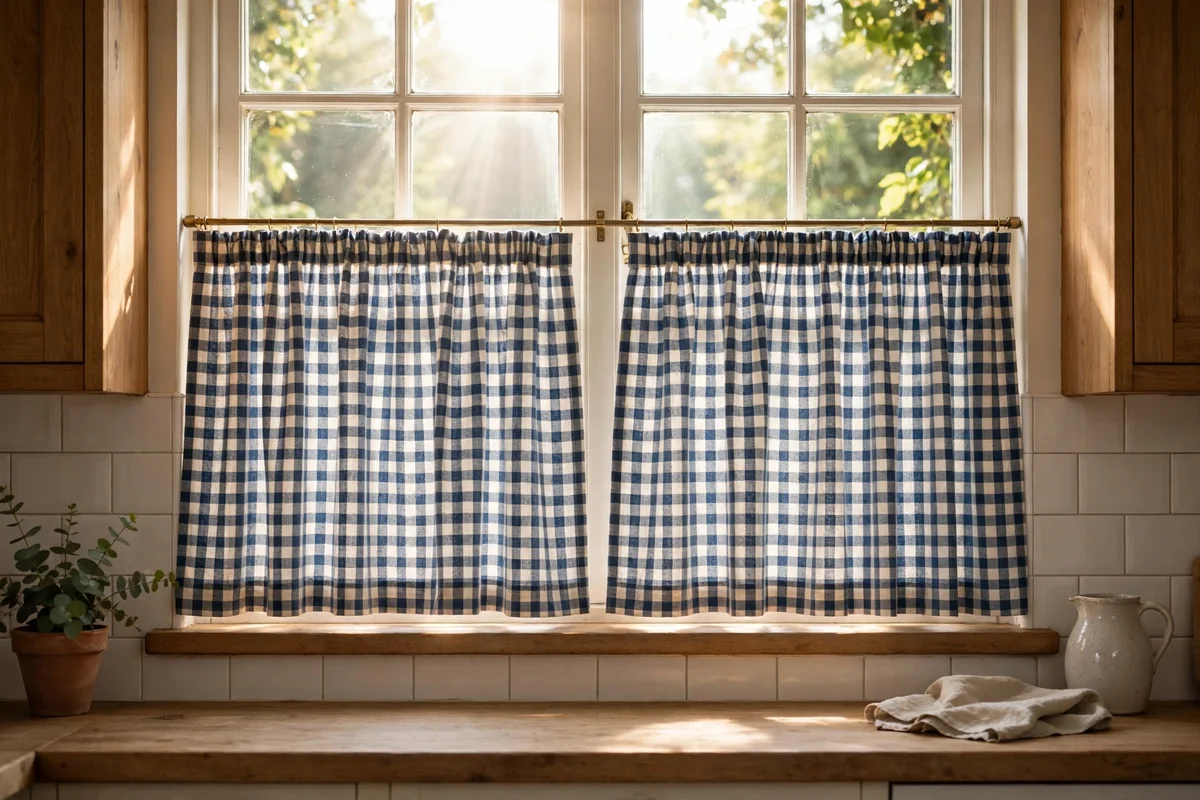
Cafe curtains covering the lower half of the window give kitchen privacy while leaving the top open for daylight. Mount a slim tension rod or brass rail at the middle of the frame, about 90 to 110 cm from the sill in most kitchens. Choose gingham, ticking stripe, or plain linen in a washable weave that survives steam.
Hem the top with a simple rod pocket and keep the drop just below the meeting rail. Wash monthly, since kitchens collect grease on fabric faster than other rooms. The mistake to avoid is using full-length curtains that drag near the cooker or sink. A pair of cafe panels costs 15 to 35.
13. Grow a Trio of Herbs on the Kitchen Sill
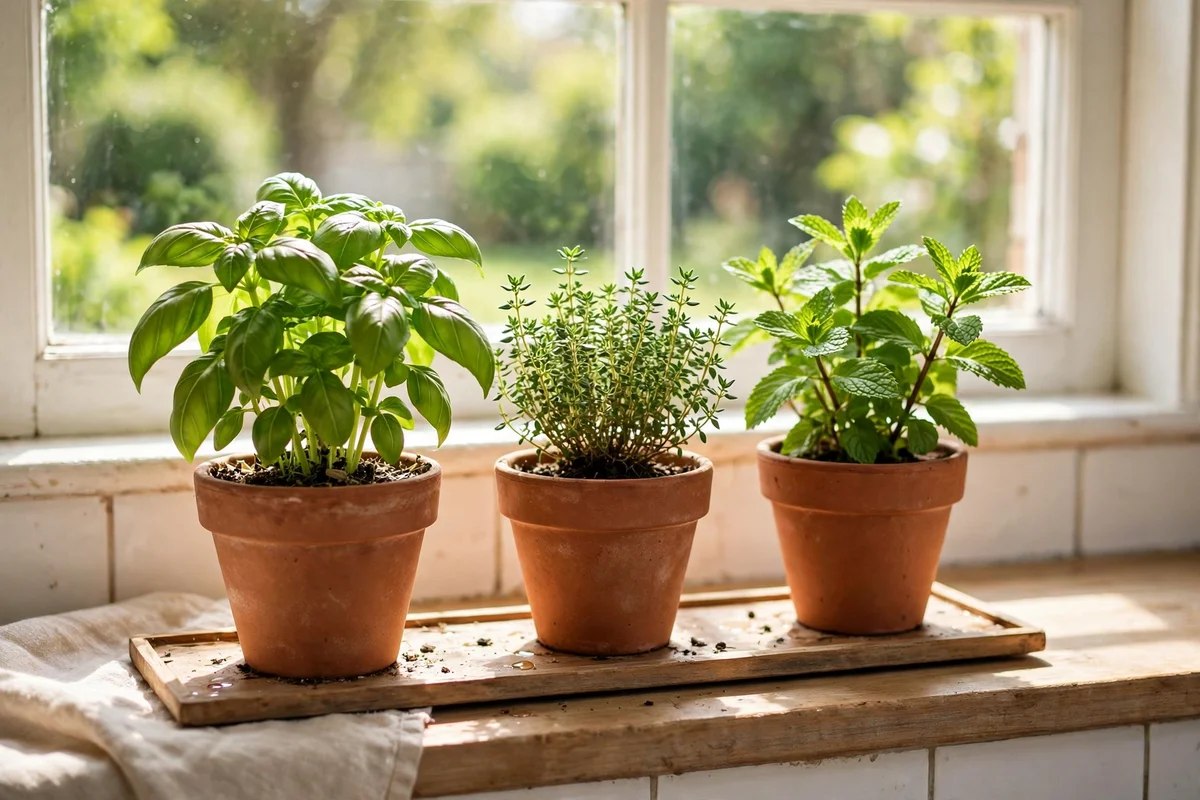
Three small pots of basil, thyme, and mint turn a kitchen sill into a working feature. Use 10 to 12 cm pots with drainage holes set on a slim tray to protect the sill from water marks. Basil needs the sunniest spot, while mint tolerates shade and should stay in its own pot so it does not crowd the others.
Snip herbs regularly to keep plants bushy, and rotate the pots weekly for even growth. Feed with a weak liquid feed every two weeks in the growing season. The mistake to avoid is overwatering; most herbs prefer the top 2 cm of soil to dry out. Three starter plants cost under 15.
14. Fit Moisture-Safe Faux Wood Blinds in Bathrooms
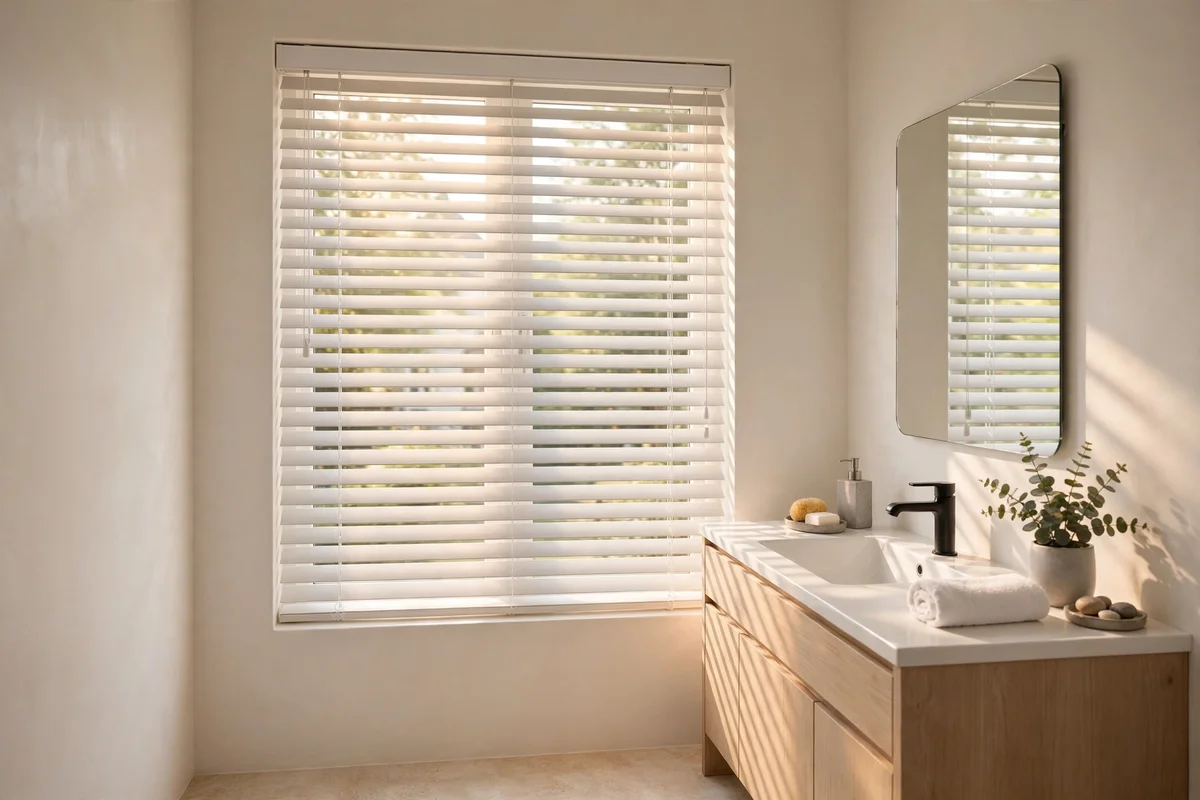
Faux wood blinds in moisture-resistant PVC suit bathrooms where real timber would warp and swell. Choose slats of 50 mm for a calm scale and a cordless wand tilt for safety. Mount inside the recess for a clean line, leaving 1 cm clearance on each side. White or warm grey finishes keep small bathrooms bright.
Wipe the slats with a damp cloth monthly to prevent mildew in steamy rooms. Keep the bottom rail clear of the bath edge so splashes do not pool on it. The mistake to avoid is fitting fabric roman shades on a shower-adjacent window, where steam ruins them. A made-to-measure faux wood blind costs 60 to 120.
15. Finish Kitchen Windows With a Simple Fabric Valance
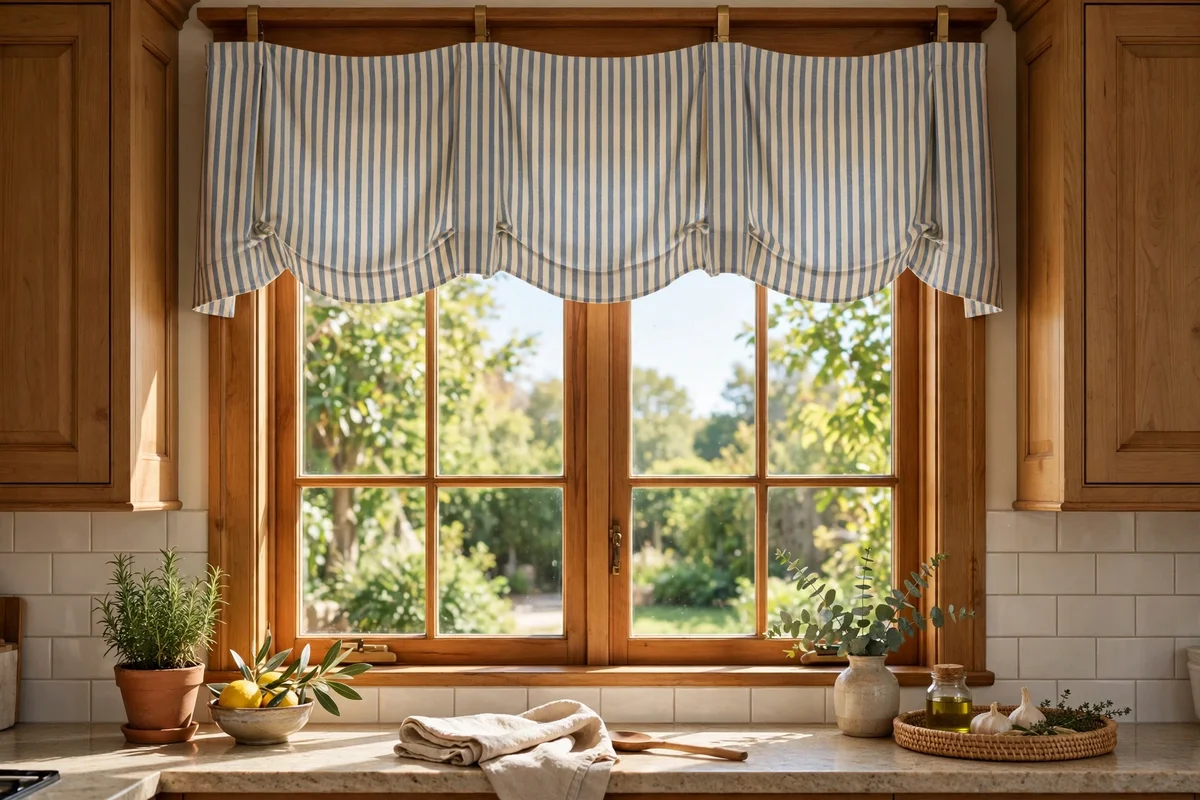
A tailored valance 25 to 35 cm deep softens the top of a kitchen window without blocking light. Mount it on a slim board or rod just above the frame. Box-pleat or flat styles suit farmhouse and heritage kitchens, while fussy scallops date quickly. Match the fabric to a tea towel or blind for quiet cohesion.
Choose washable cotton, since valances catch cooking steam and dust. Vacuum the top edge monthly to keep it fresh. The mistake to avoid is hanging the valance too low, which shrinks the window visually and darkens the room. A ready-made valance costs 20 to 40. Iron the valance once a season to keep pleats crisp.
16. Style a Slim Ledge Above the Window Frame
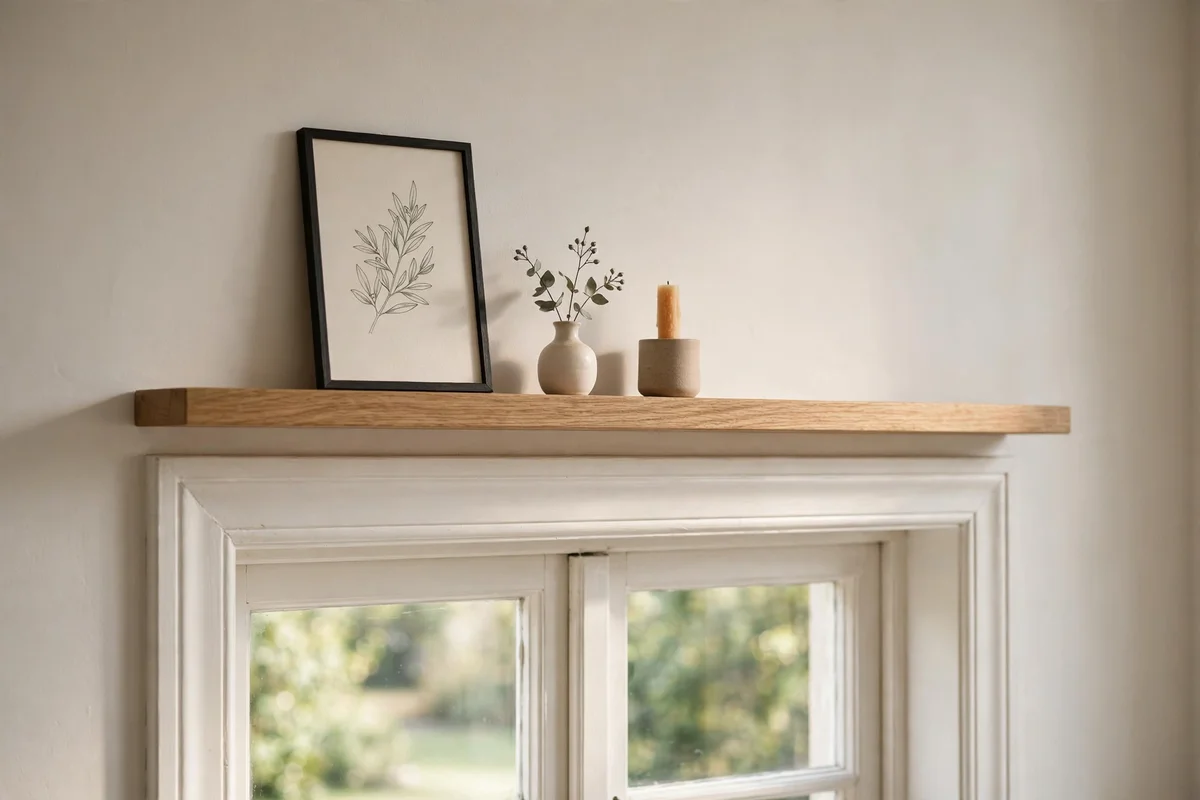
A narrow picture ledge 8 to 12 cm deep, mounted 10 to 15 cm above the architrave, turns dead wall space into a display. Style it with three small objects: a framed print, a tiny vase, and a candle holder. Keep items under 20 cm tall so the window stays the star and the arrangement reads as calm.
Fix the ledge into studs or use proper wall anchors, since even small objects add up in weight. Dust the ledge when you clean the glass each month. The mistake to avoid is overloading the ledge, which crowds the window and collects dust. A 60 cm oak ledge costs 15 to 30.
17. Build a Calm Candle and Book Vignette on a Deep Sill
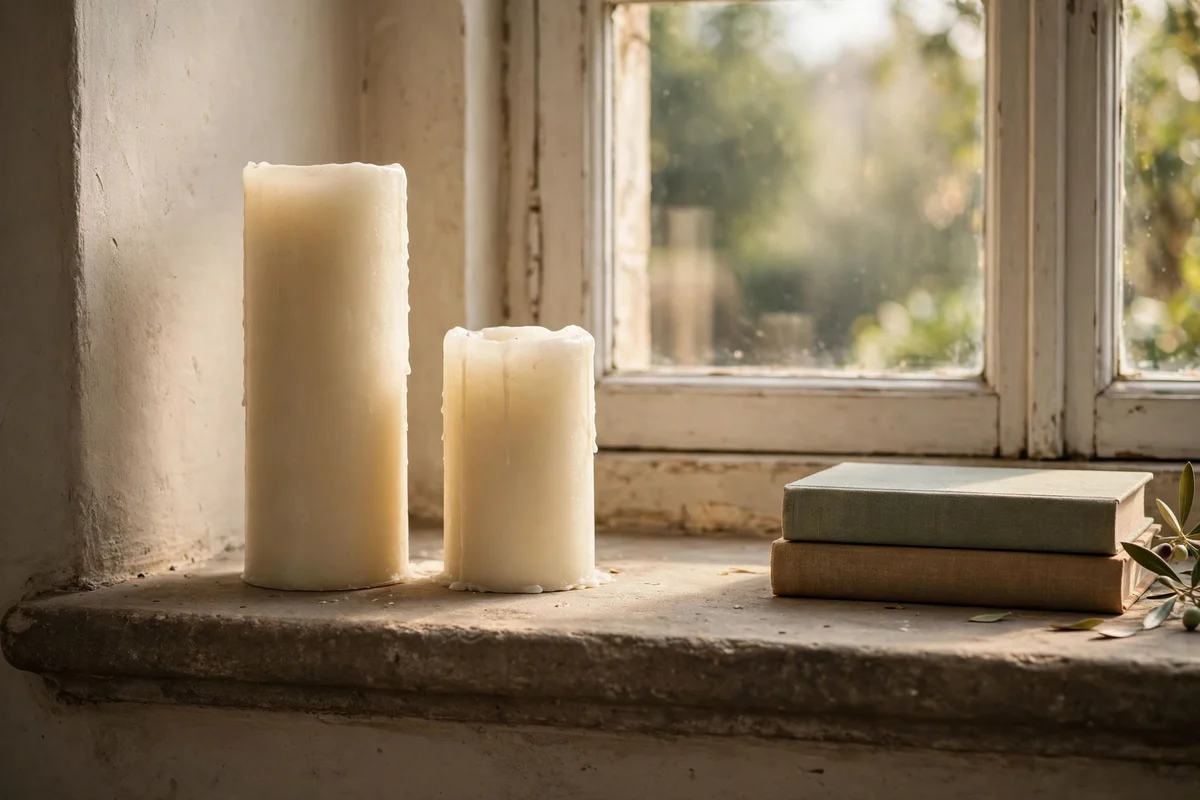
Deep sills of 15 cm or more hold a quiet vignette: two pillar candles of different heights, a small stack of two books, and one tiny bowl. Keep everything to one side of the sill so the glass stays clear and light flows in. Unscented ivory candles suit heritage rooms best and never fight with cooking smells.
Never leave lit candles unattended near curtains; battery candles give the same glow safely. Rotate the stack seasonally with one new small object to keep it fresh. The mistake to avoid is lining the whole sill with ornaments, which blocks light and looks cluttered. Two good pillar candles cost 10 to 25.
18. Line Drafty Windows With Heavy Thermal Interlining
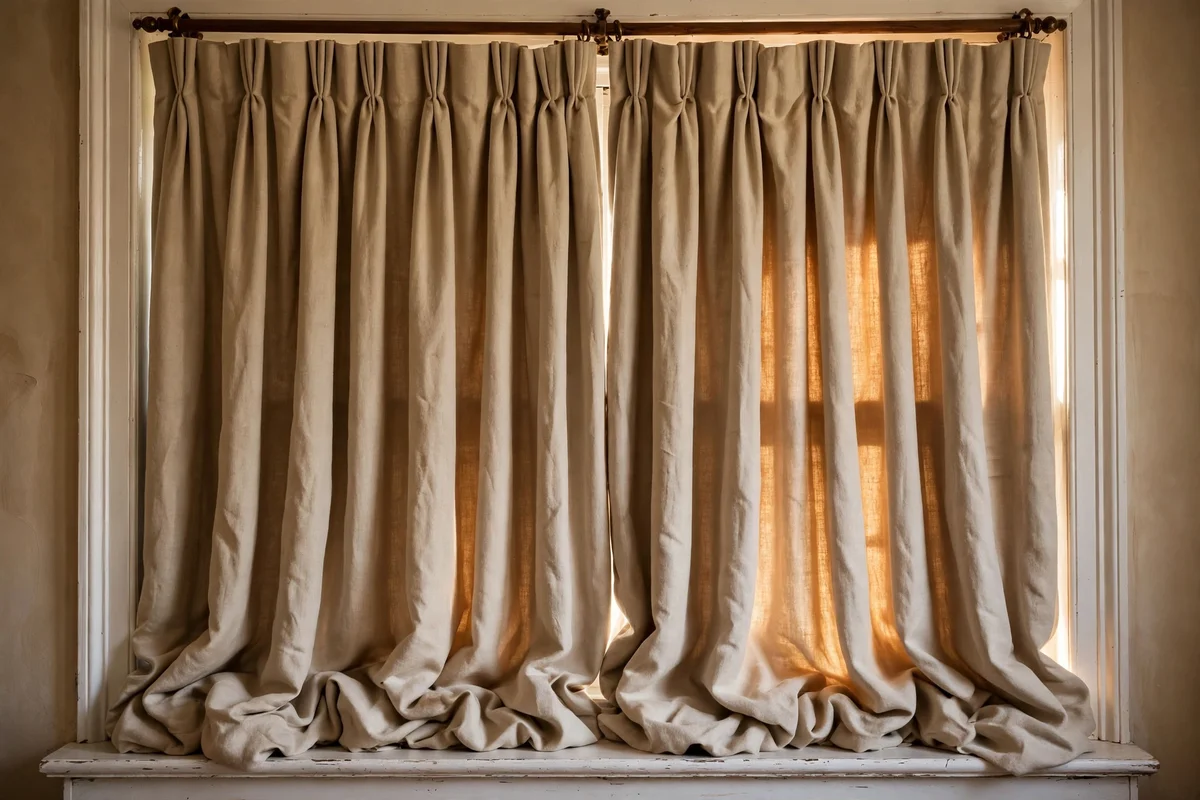
Thermal interlining sewn between the face fabric and lining cuts draughts and adds body to curtains. Choose a brushed cotton or fleece interlining of about 100 to 150 gsm. It works best on windows with single glazing or rattling sashes, and the extra weight helps panels hang in clean, even folds.
Have the interlining lock-stitched at a workroom, or buy ready-made thermal-lined panels off the shelf. Expect the fabric needed to rise by about 10 percent to keep fullness. The mistake to avoid is interlining sheers, which need to stay translucent. Thermal-lined ready-made pairs cost 70 to 150. Close interlined curtains fully on cold nights to feel the full benefit.
19. Dress Bay Windows With a Curved Track or Individual Blinds
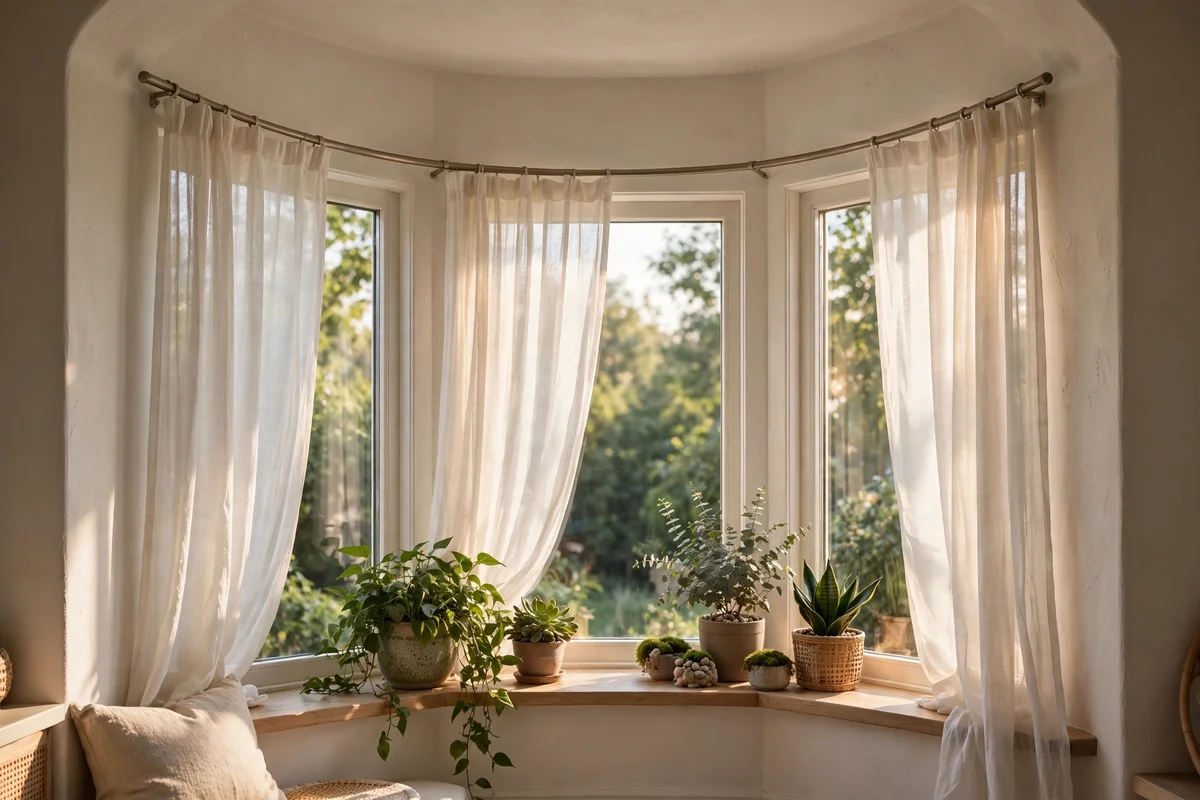
Bay windows need either a flexible curved track that follows the angles or separate blinds in each facet. A curved ceiling track with sheer curtains softens the whole bay, while individual roman blinds keep each pane crisp and tailored. Measure every facet separately, since bays are rarely symmetrical. Note the depth of each facet too, so blinds clear the handles when lowered.
If using one fabric, cut panels per facet rather than forcing one wide panel around bends. Keep sill areas clear so plants get the light. The mistake to avoid is a straight rod across a bay, which fights the architecture. Curved track kits cost 50 to 110. Overlap panels slightly at each angle so no bare track shows from the side.
20. Highlight Arched Windows With a Fan-Style Shade
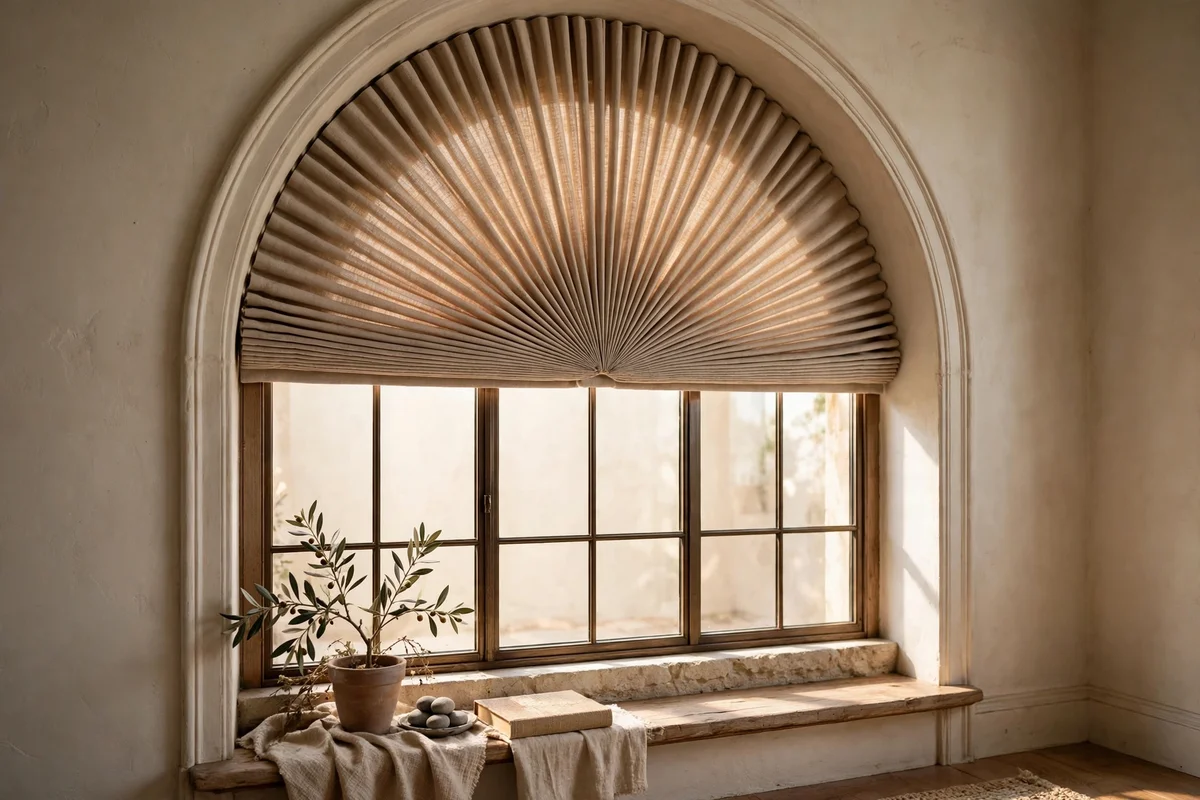
Arched tops suit a fixed fan shade or a simple gathered swag that follows the curve. A fan-pleated shade in the arch with straight panels below keeps the shape visible and elegant. Alternatively, leave the arch bare and dress only the rectangular lower section, which honours the architecture instead of hiding it.
Measure the arch radius carefully or make a paper template, since arches vary widely between houses. Light fabrics keep the curve graceful rather than heavy. The mistake to avoid is covering the arch with a straight valance, which hides its best feature. Photograph the arch beside a tape measure so the maker sees the true curve. Custom arched shades start around 90.
21. Choose Cordless Shades and Anchored Hardware for Family Safety
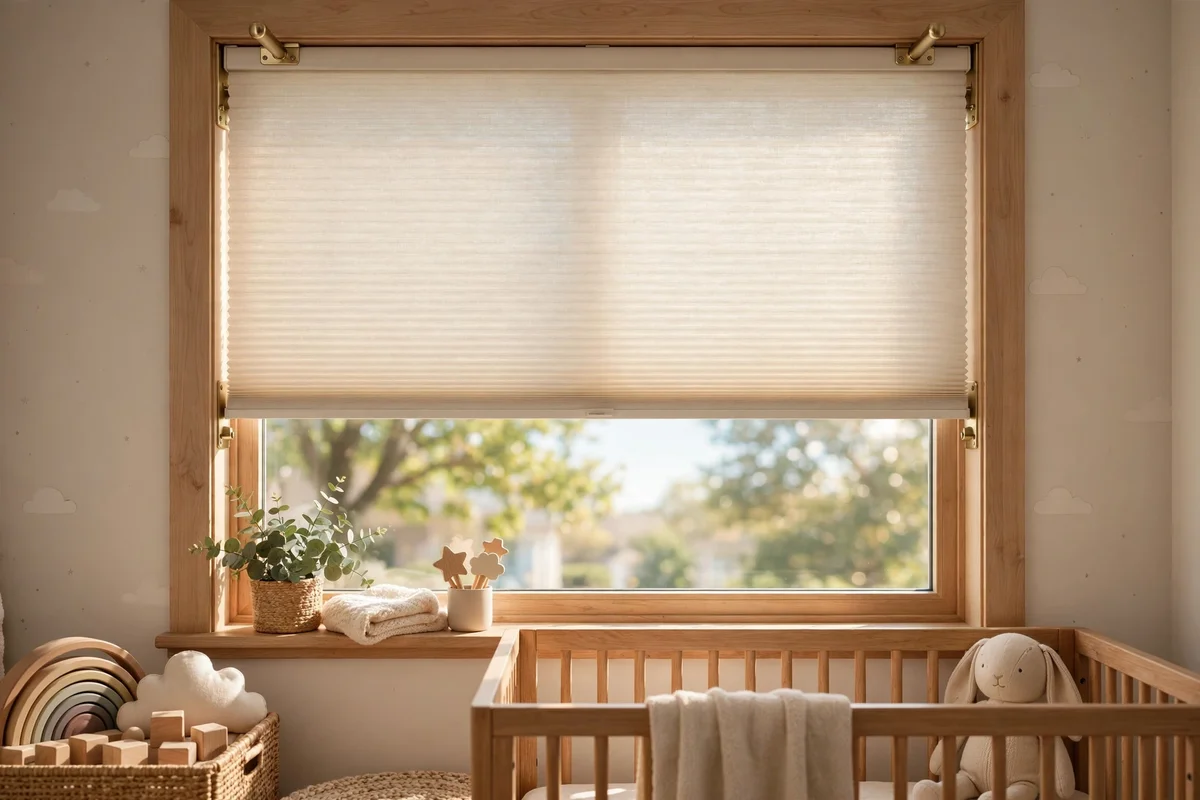
Cordless roller and cellular shades remove looped cords, the main window hazard for small children. Choose top-down bottom-up cellular shades so light enters from above while the lower half stays private. Anchor every bracket into studs or use rated wall anchors so shades cannot pull free under a tug. Test each bracket with a firm pull before hanging the shade.
Keep cots and climbable furniture away from windows regardless of the treatment fitted. Check cordless mechanisms yearly for smooth operation and re-tension as needed. The mistake to avoid is keeping old corded blinds without fitting a cleat or tensioner. Cordless cellular shades cost 70 to 160 per window. Fit cord cleats high on the frame for any cords that must remain.
The thread running through all 21 ideas is simple: treat the window as furniture, not as a hole in the wall. Give it proper fabric with honest fullness, add a sill styled with plants or candles, solve privacy with shutters or film, and it will repay you with better light, softer evenings, and a room that finally feels finished. Start with one window and let the habit spread room by room.
If you do one thing this week, measure your most-used window and order a wider rod plus panels at double fullness. It is the fastest change on this list, it suits almost every room from kitchen to bedroom, and you will notice the difference the same evening the new curtains go up. Take ten minutes with a tape measure tonight, and the room will thank you.
Frequently Asked Questions
How much fullness do curtains need to look good?
Aim for panels totalling 1.5 to 2 times the rod width for a relaxed look, or 2 to 2.5 times for full, gathered folds. Measure the rod, not the window, since rods extend past the frame. Buying panels at exactly window width is the most common mistake; the fabric hangs flat and reads as cheap.
What is the cheapest way to make windows look cozy?
A plain greenery garland along the frame, three small plants on the sill, and a wider curtain rod cost under 60 together and change the whole feel of a room. Static-cling privacy film is the cheapest bathroom fix at 10 to 20 per window. Shop second-hand for brass rods and trays.
How do I dress a window in a rental without drilling?
Use tension rods inside the frame, static-cling privacy film instead of blinds, and removable adhesive hooks for garlands. Cafe curtains on a tension rod need no screws at all. Keep the original fixings untouched and choose cordless shades that mount with minimal brackets you can fill later.
Which window treatments suit bathrooms best?
Choose moisture-safe options: faux wood blinds, static-cling privacy film with a heritage pattern, or a simple waterproof roller blind. Avoid real timber shutters near showers and fabric shades where steam collects. Wipe slats monthly to prevent mildew, and keep the bottom rail clear of splashes.
How do I style an awkward small or corner window?
Mount one tailored roman shade inside the recess for small windows, and use an L-shaped track with one continuous fabric for corner windows. Extend rods past the frame to make small panes look larger. Keep fabrics light so awkward windows stay bright rather than heavy and dark.