Bathroom
21 Moody Powder Room Decor Ideas That Feel Deep, Calm and Timeless
By Anna Wells · · 19 min read
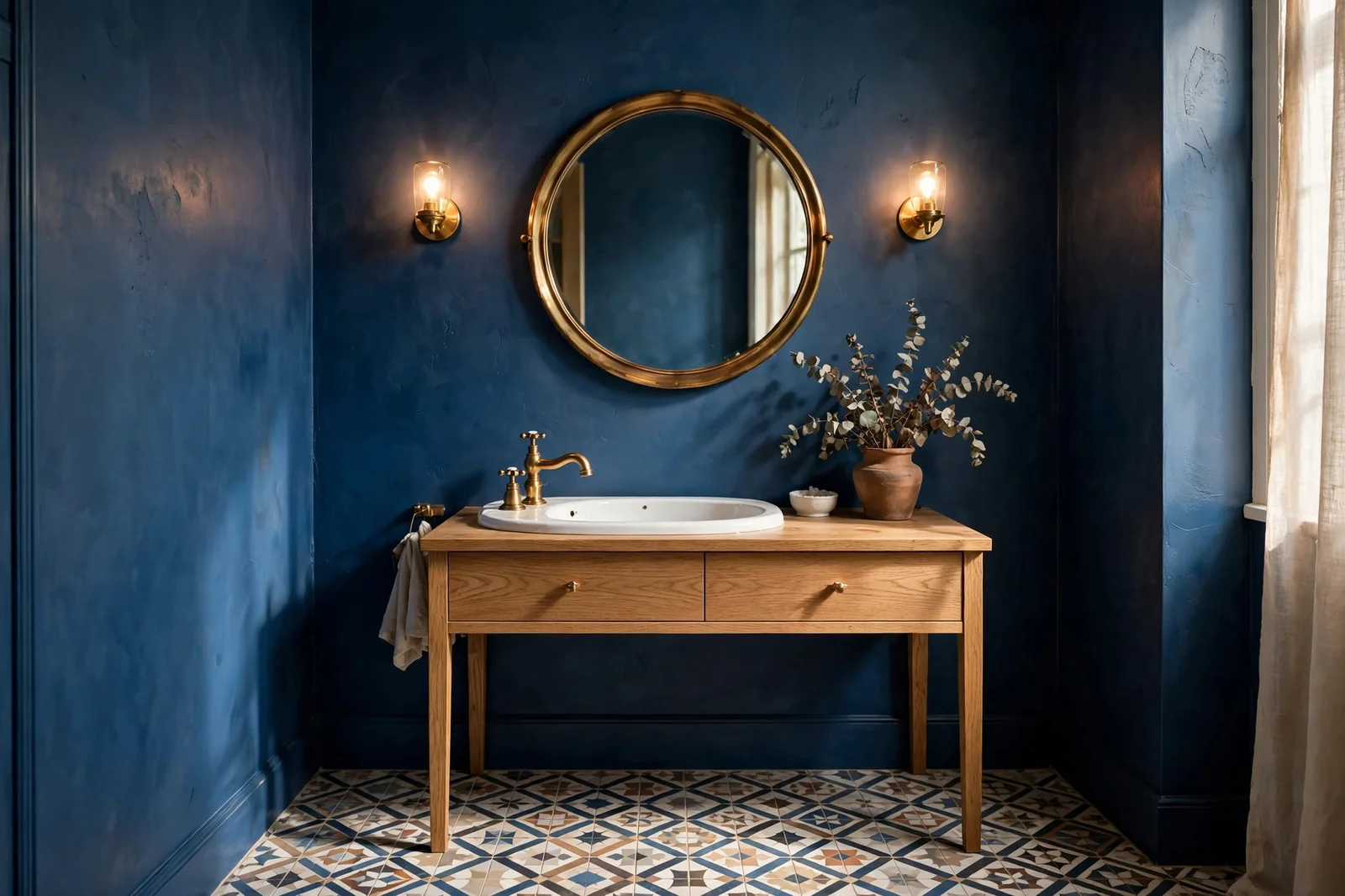
A small powder room can hold deep colour beautifully when warm light and honest materials keep it calm. Here are 21 practical ideas, from inky blue walls to warm brass taps and patterned tiles, for a moody space that feels rich, serene and timeless.
Step into a powder room washed in deep inky blue, the wall lights glowing softly either side of a round brass mirror, and the whole small space feels like a deep breath. That is the promise of a moody powder room: not darkness, but depth, the kind of calm that comes from rich colour held in check by warm light.
Small rooms take dark colour better than large ones, because every wall sits close enough to feel intentional. The trick is balance. One deep tone on the walls, warm metal on the taps, a pale basin top to rest the eye, and lighting that flatters everyone who steps up to the mirror.
This collection gathers 21 concrete ideas for building that balance, from forest green panelling and charcoal tongue and groove to patterned floor tiles and quiet ventilation for a windowless room. Each one is practical, with sizes, materials and budget notes you can act on.
Whether you are repainting a single wall this weekend or planning a full refresh, start where the change is easiest and let the room settle. Here are the ideas, in the order most rooms need them.
1. Wash the Walls in Deep Inky Blue for Calm Depth
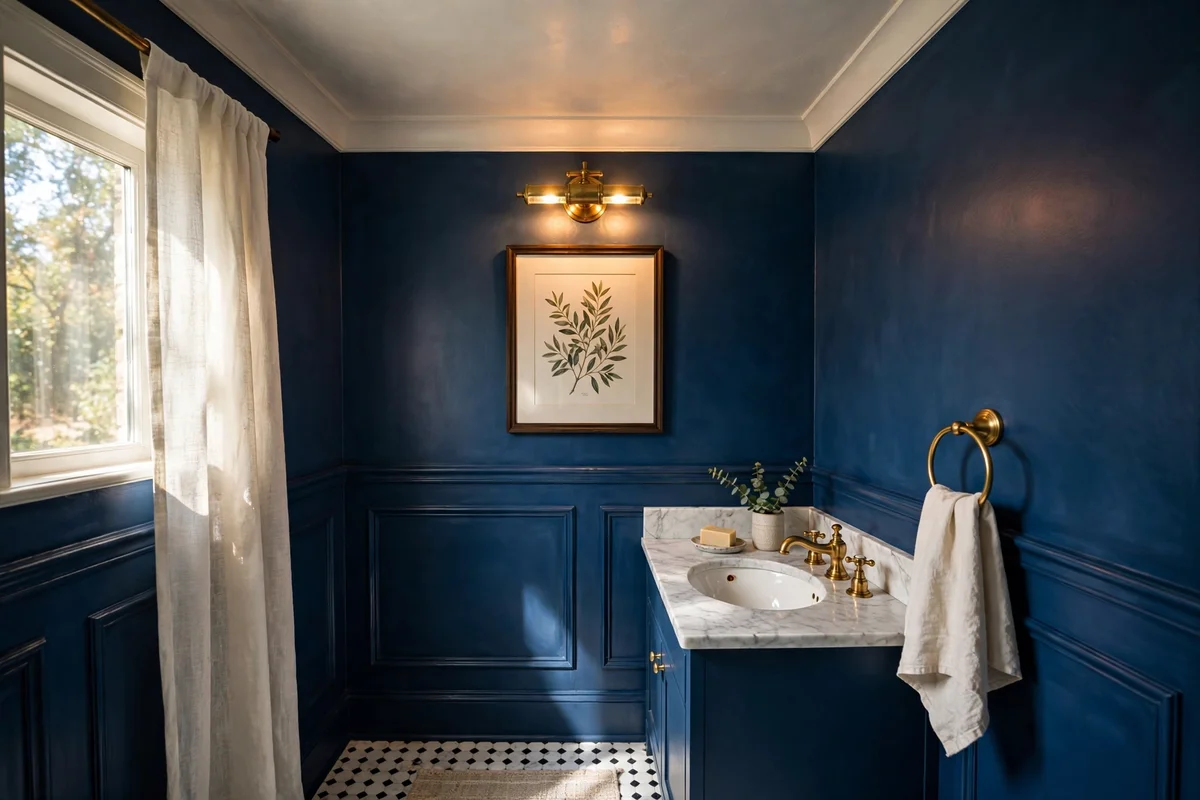
A deep inky blue on all four walls turns a small powder room into a calm retreat, and one coat rarely does the job, so plan for two full coats of matt or eggshell paint. Choose a blue with a grey or green undertone rather than a bright navy, since flat primaries can feel loud in a tiny room. Test a large A3 swatch on the wall facing the door first, then live with it for two full days in both daylight and evening light before committing.
Keep the ceiling a soft warm off white so the dark walls do not press down on the room. Paint skirtings the same blue as the walls for a quiet, tailored line instead of a harsh white stripe. The common mistake is stopping at one coat, which leaves patchy dark spots that show under warm bulbs. A two coat job on a room this small needs one 2.5 litre tin, a budget friendly weekend project.
2. Panel the Lower Walls in Muted Forest Green
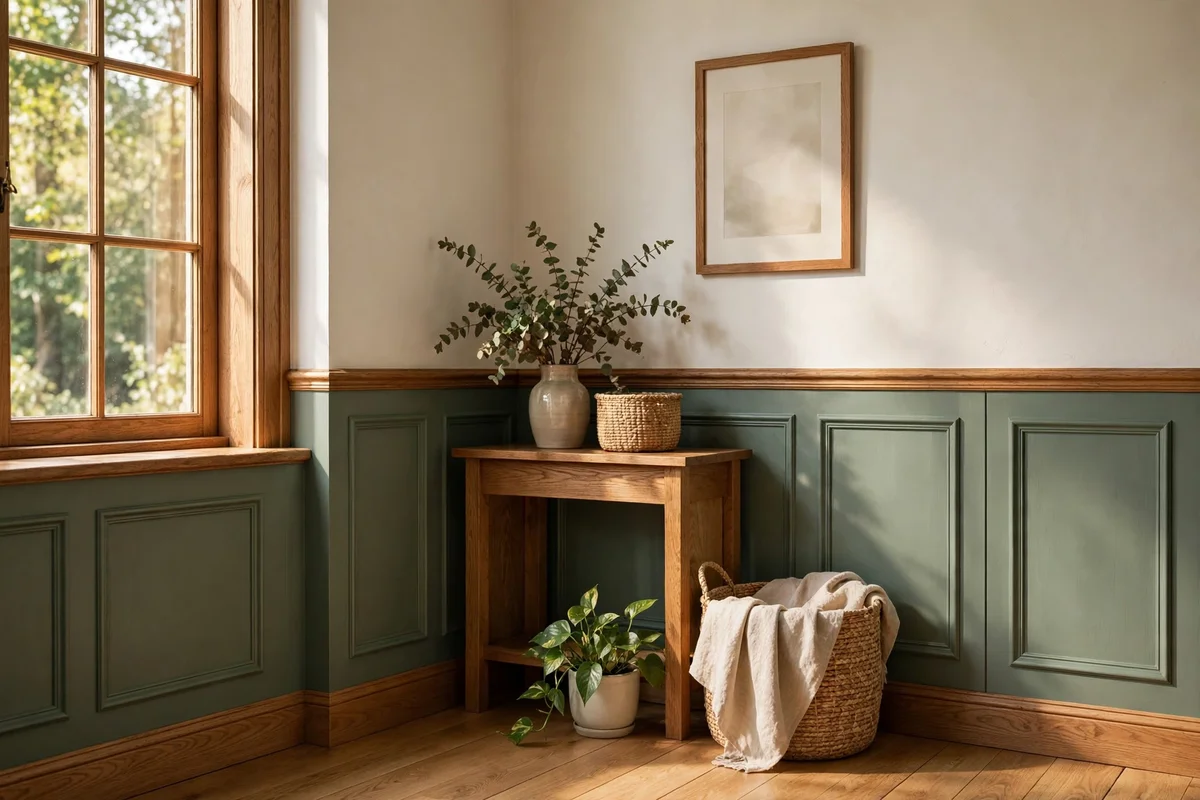
Forest green wainscoting up to dado height, roughly 90 to 110 cm from the floor, gives a powder room a heritage feel without painting every surface dark. Use ready primed MDF panels or simple beadboard, fixed to battens, and finish them in a muted forest green with a scrubbable eggshell sheen. Pair the green lower walls with a warm off white above so the room keeps enough reflected light for the mirror.
Run a slim chair rail along the top edge to catch dust before it reaches the wall, and paint the rail the same green for one unbroken block of colour. Behind a toilet or basin, add a clear silicone bead along the bottom edge to stop mop water creeping under the panels. The mistake to avoid is choosing a yellow based green, which can read olive under warm bulbs; ask for a blue based forest instead.
3. Line One Wall With Charcoal Tongue and Groove
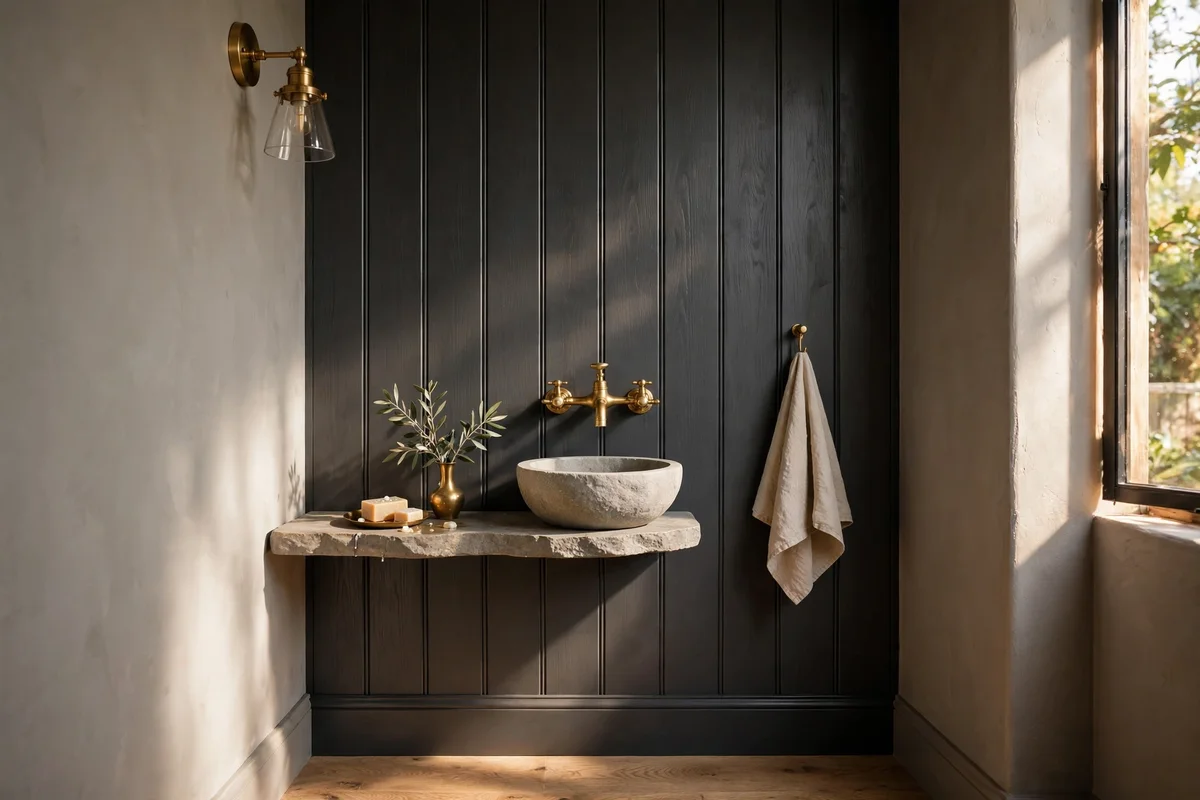
A single charcoal tongue and groove wall, usually the one behind the door or behind the basin, adds texture that flat paint cannot match. Vertical boards draw the eye upward and make a low ceiling feel a little taller, while the shadow lines between boards break up the solid darkness. Use moisture resistant MDF boards, sealed on all edges before fitting, and finish with two coats of charcoal eggshell paint for wipeable protection.
Keep the other three walls in a softer tone, such as warm grey or deep greige, so the charcoal feature wall stays the quiet star. Fit a slim brass picture light or leave the boards plain above the mirror for contrast. The mistake to avoid is running the boards behind a sink splash zone without sealing; wipe any standing water within the hour and the boards will last for years.
4. Hang a Round Brass Mirror as the Room’s Focal Point
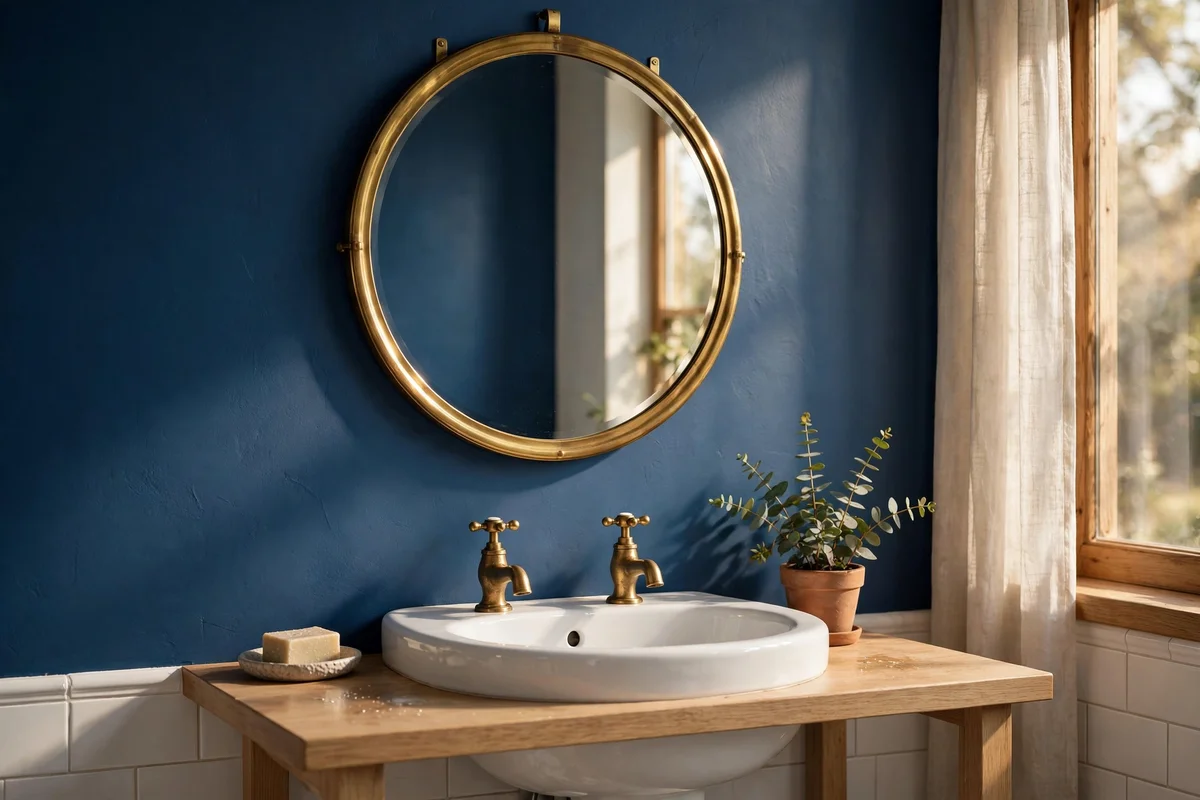
A round mirror 50 to 60 cm across suits a small powder room better than a tall rectangle, since it softens the box shape of the walls. Hang it so the centre sits about 150 to 155 cm from the floor, which flatters most guests, and leave at least 15 cm between the mirror’s lower edge and the basin backsplash. A slim brushed brass frame, about 2 cm wide, adds warmth against inky blue or charcoal walls without dominating.
Fix the mirror with a proper wall anchor rated for its weight, usually 3 to 6 kg, and tilt it forward by a degree or two if the wall light sits close, which reduces glare. The mistake to avoid is choosing an oversized mirror that covers the whole wall; it reflects clutter back at you. Budget tip: second hand round mirrors with tired frames can be refinished with a 15 pound brass effect spray, then sealed.
5. Choose an Arched Mirror With a Warm Antiqued Frame
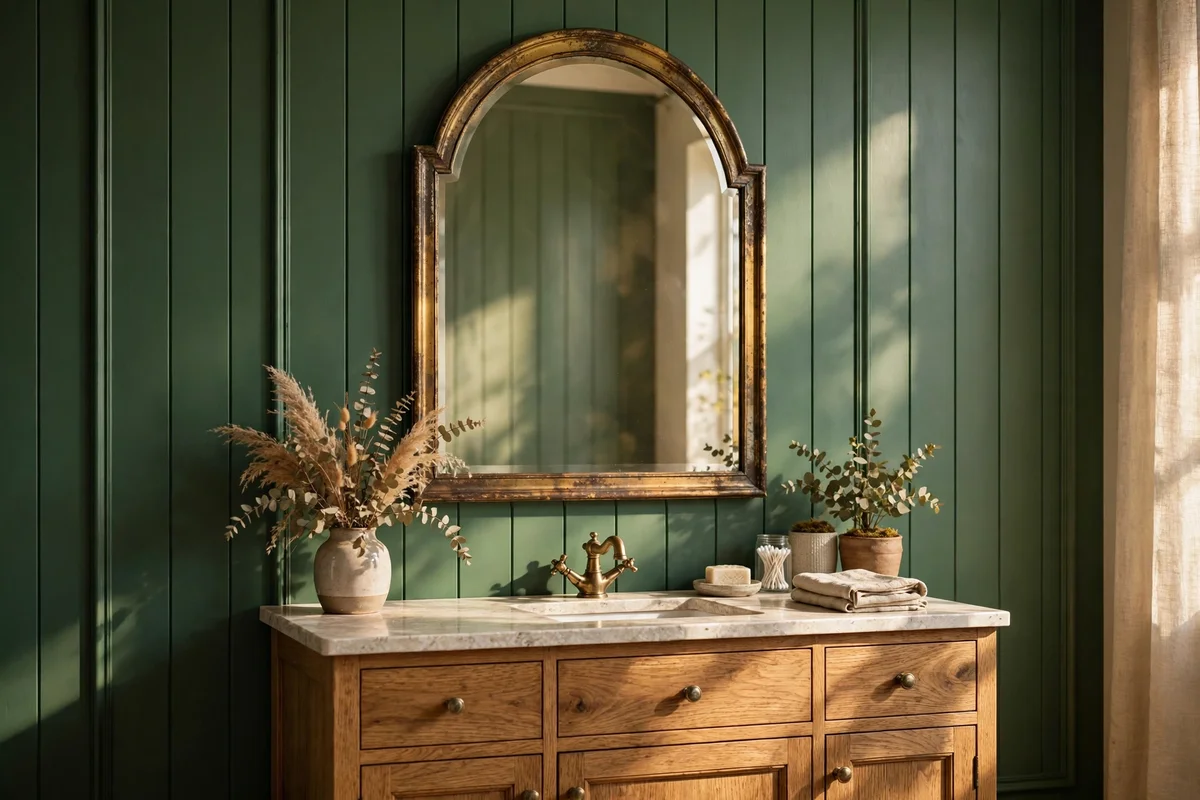
An arched mirror brings a gentle architectural curve into a boxy powder room, and the shape flatters faces by drawing the eye upward. Look for a frame 60 cm wide by 80 to 90 cm tall in antiqued brass or warm bronze, which reads softer than polished gold against muted walls. Hang it centred over the vanity with its lower edge 10 to 15 cm above the backsplash, keeping a clear line of sight for guests.
Antiqued frames hide fingerprints and water spots far better than mirror polished metal, so the mirror stays presentable between cleans. Wipe the frame with a dry microfibre cloth once a week and never spray cleaner directly onto aged metal, since liquid seeps behind the finish. The mistake to avoid is picking a frame wider than the vanity; the mirror should sit a few centimetres inside the vanity edges on both sides.
6. Fit Warm Brass Taps Beside a Small Ceramic Basin
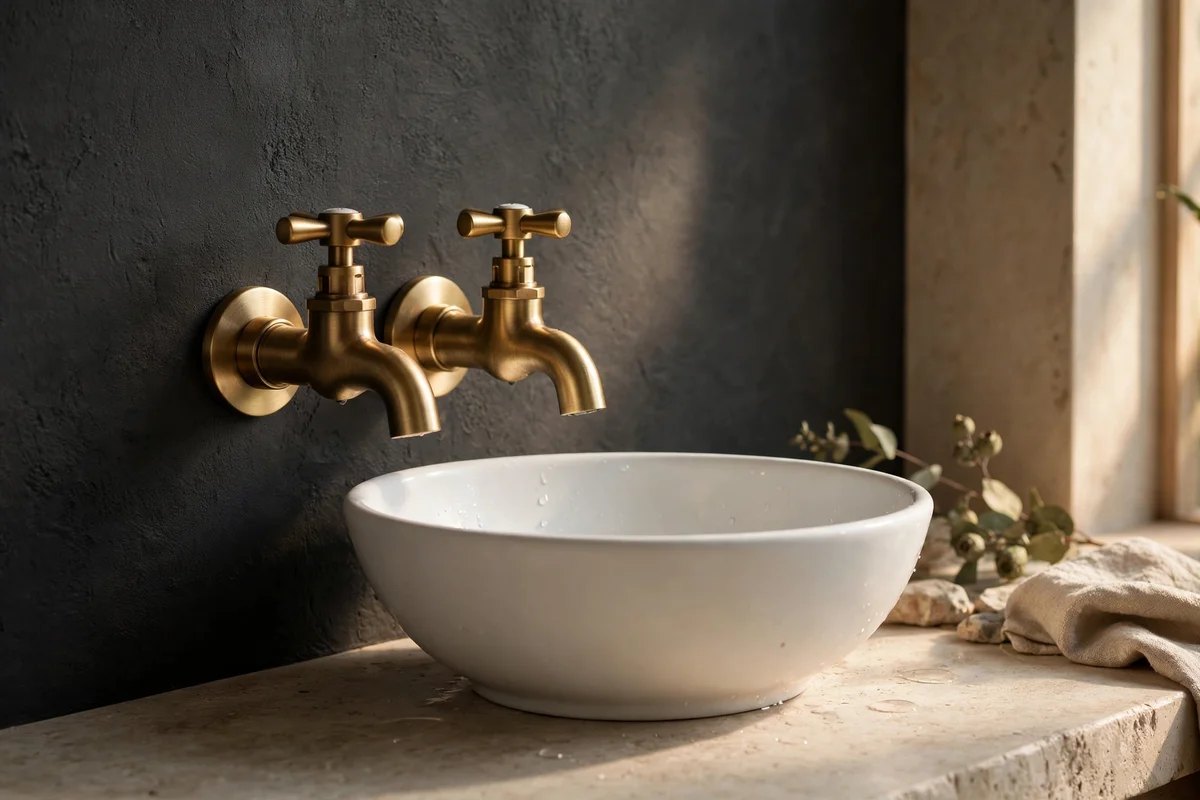
Warm brass taps are the natural partner for a moody powder room, since the metal glows softly against inky blue, forest or charcoal. Choose a basin tap 12 to 16 cm tall for a small cloakroom basin, in brushed or unlacquered brass, and pair it with a simple white ceramic basin so the tap is the quiet highlight. Check the tap suits your water pressure; many brass basin mixers need at least 0.5 bar to flow well.
Match the tap finish to the mirror frame and any towel ring so the metals read as one family; mixed golds and bronzes in a tiny room look accidental. Wipe the tap dry after evening guests to slow water spotting, and clean unlacquered brass with a damp cloth only, since harsh descalers strip the finish. The mistake to avoid is fitting a tall vessel tap on a shallow basin, which sends splashes across the worktop.
7. Add a Crosshead Tap With Porcelain Handles for Heritage Feel
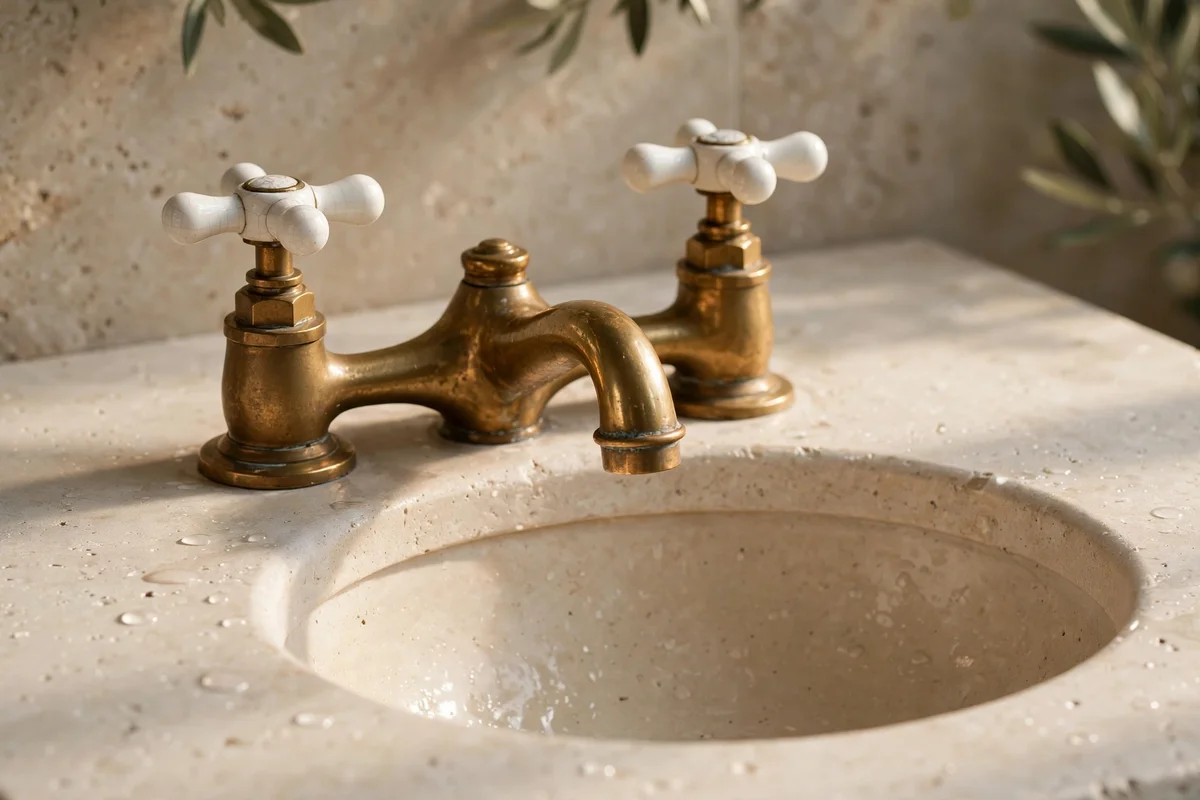
A traditional crosshead tap with white porcelain handles suits a moody powder room that leans toward heritage rather than modern minimalism. The porcelain insets repeat the white of the basin and keep the brass from feeling heavy, while the crosshead shape is easy to grip with damp hands. Look for a deck mounted pair or a single mixer, and confirm the handle clearance allows full turning where the basin sits close to a wall.
Porcelain handles wipe clean with a damp cloth and never tarnish, which keeps maintenance simple in a busy family home. Choose ceramic cartridges inside the tap for drip free use; they cost a little more upfront but save the annoyance of a constant drip in a quiet house. The mistake to avoid is mixing porcelain handled taps with ultra modern square accessories, since the two styles argue in a room this small.
8. Mount a Pair of Wall Lights Either Side of the Mirror
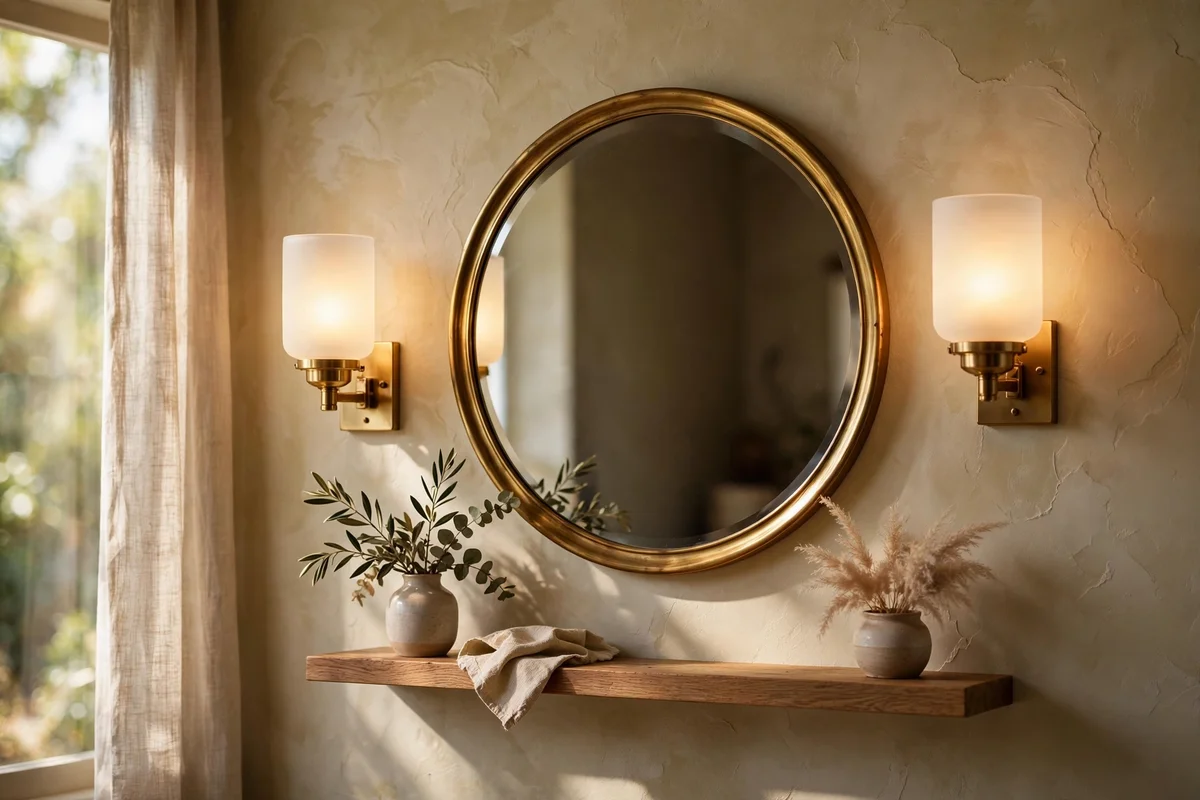
Wall lights placed either side of the mirror, roughly 150 to 165 cm from the floor and 30 to 40 cm out from the mirror edges, give the most flattering light a small bathroom can offer. Light arriving from both sides fills shadows across the face, which overhead light alone never does. Choose shaded or opal glass fittings that push light sideways and slightly down, avoiding bare bulbs that glare in the mirror.
Wire the pair onto a separate switch from any ceiling light so guests can use the softer option alone in the evening. In a room with no natural light, add a discreet timer or sensor with a warm default setting so the lights never get left blazing. The mistake to avoid is mounting the lights too close to the mirror, which creates bright hotspots; keep at least 25 cm of clear wall between fitting and glass.
9. Choose Frosted Glass Shades and Warm 2700K Bulbs
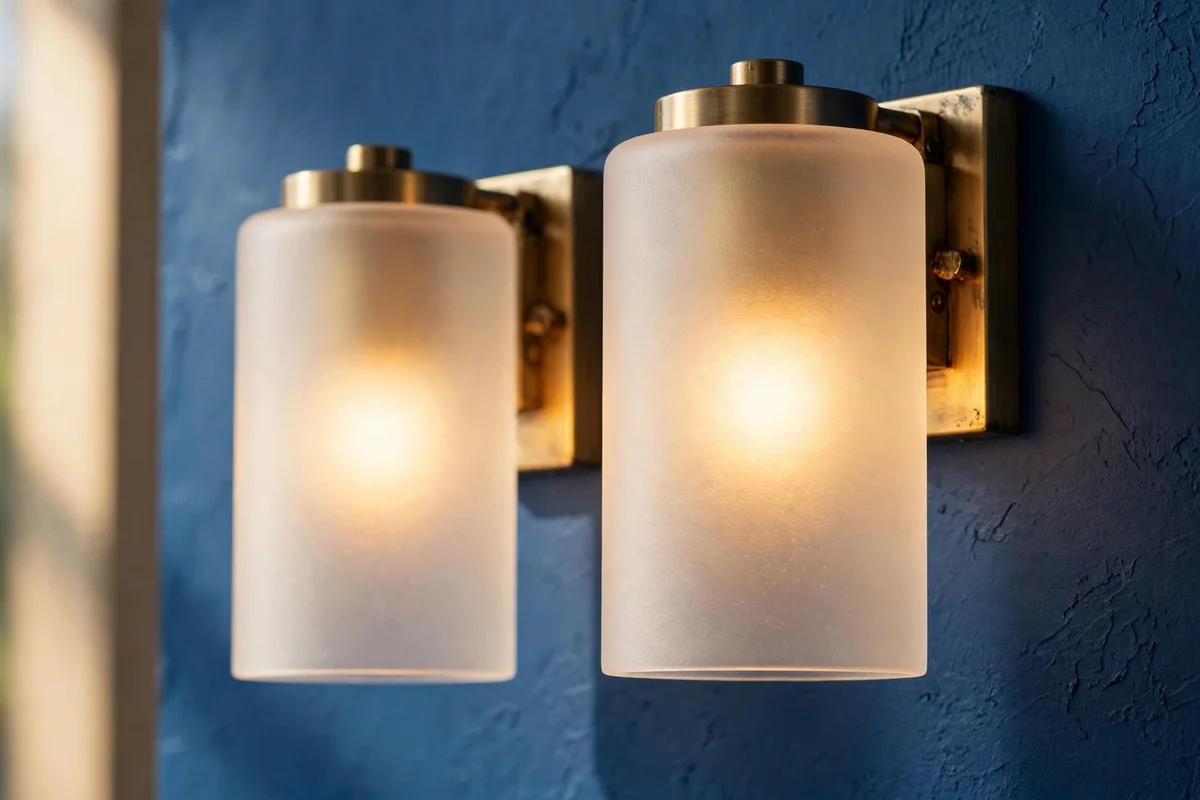
Frosted or opal glass shades turn hard bulb glare into a soft wash of light, which is exactly what deep coloured walls need to feel calm rather than gloomy. Pair the shades with warm 2700K LED bulbs, and choose a brightness around 400 to 600 lumens per fitting for a powder room, enough to see clearly without clinical brightness. Dimmable bulbs with a compatible dimmer let one room serve bright mornings and soft evenings.
Replace bulbs as a matching pair so one side never looks cooler than the other; LED colour can drift between batches, so buy both from the same pack. Keep a spare bulb in the vanity drawer so a failure never leaves the room dark for guests. The mistake to avoid is fitting 4000K daylight bulbs, which make inky blue walls look grey and tired and flatter nobody in the mirror.
10. Pick a Slim Oak Vanity With Two Deep Drawers
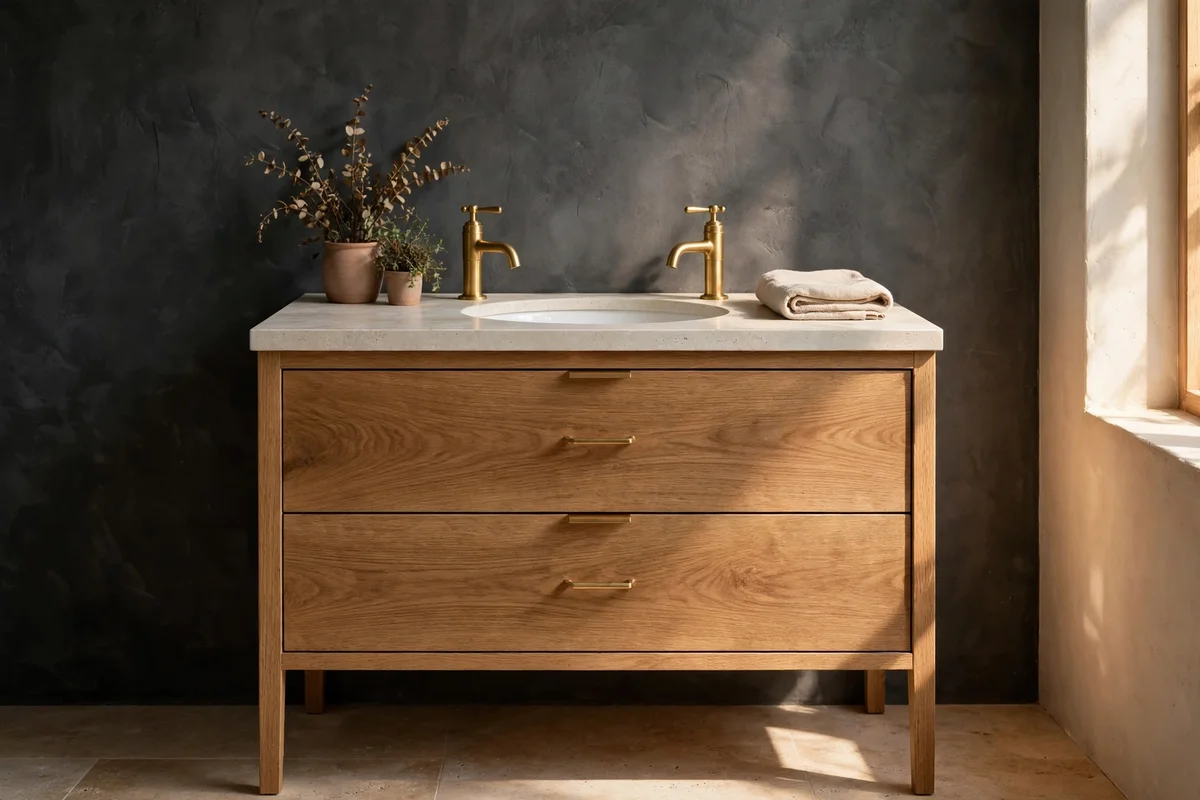
A slim oak vanity, 45 to 55 cm deep and 60 to 80 cm wide, fits a powder room without blocking the door swing, and two deep drawers hold more than a cupboard with a door. Solid oak or oak veneer brings a warm mid tone that balances dark walls, and a matt lacquer finish resists steam and splashes. Measure the door swing before ordering; leave at least 5 cm of clearance when the door opens fully.
Use the top drawer for daily items and the deeper lower drawer for spare rolls and cleaning supplies, with a simple drawer divider to stop things sliding. Soft close runners prevent slamming in a quiet house. The mistake to avoid is choosing a vanity with open shelving below; folded towels look tidy for a day, then gather dust and clutter in a room guests actually use.
11. Float a Charcoal Vanity to Keep the Floor Visible
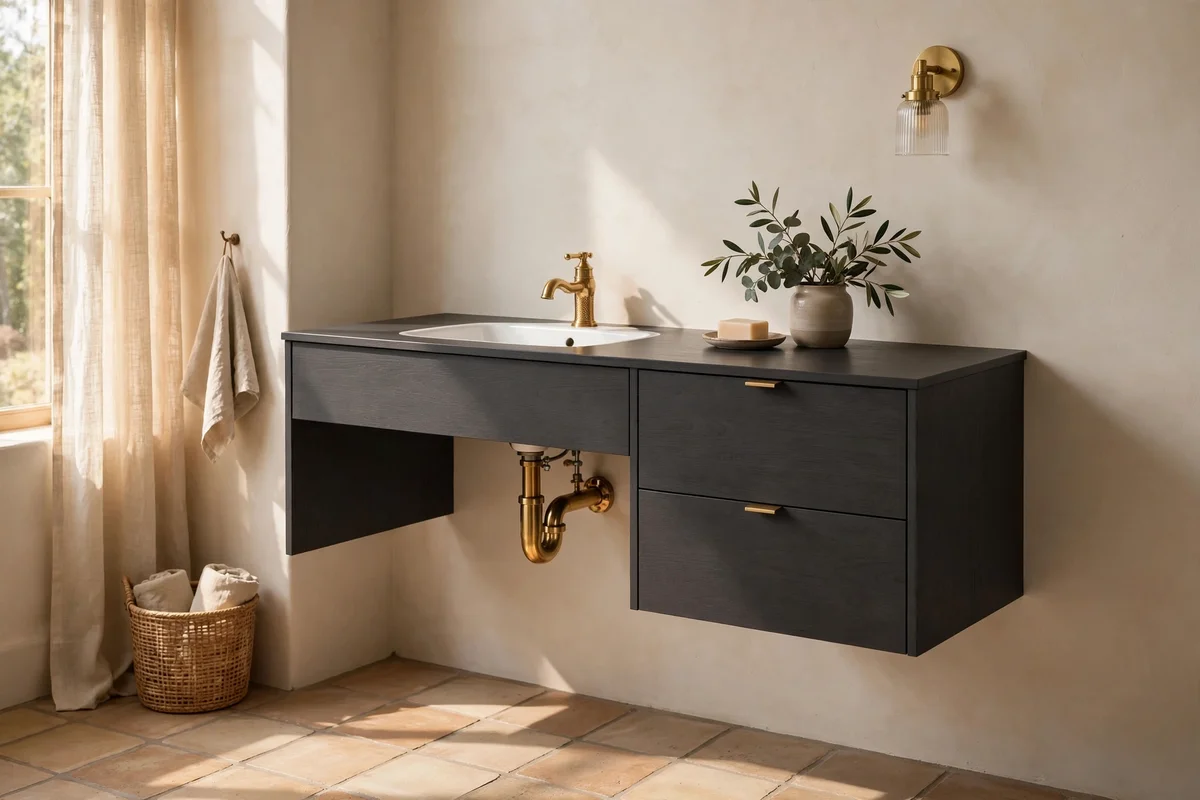
A wall hung vanity in charcoal keeps a stretch of floor visible, which makes a small powder room feel a touch larger than a floor standing unit allows. Mount the top edge 80 to 85 cm from the floor, a comfortable height for most adults, and fix it into solid wall or proper studs, since a loaded vanity can weigh 25 kg or more. The shadow gap beneath also makes mopping the floor far easier.
Run the vanity in the same charcoal as one wall for a seamless block of colour, or contrast it against forest green panelling for depth. Keep pipework boxed neatly behind or beneath the unit, and fit a bottle trap in matching brass for a considered finish. The mistake to avoid is floating the vanity too high; anything above 90 cm strains shorter guests and children washing their hands.
12. Lay Patterned Floor Tiles That Forgive Splashes
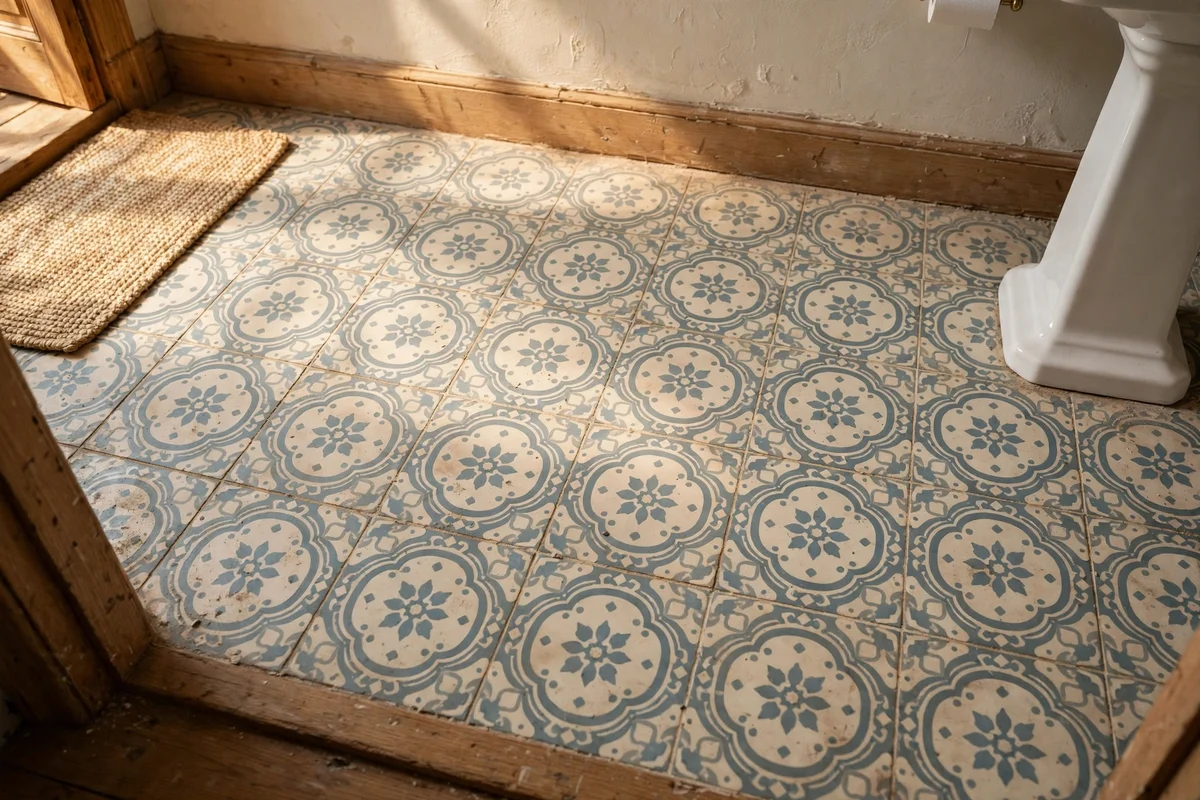
Patterned floor tiles in muted blues, greys and creams hide water spots and dust far better than plain dark or white tiles. Look for 15 or 20 cm square encaustic look porcelain tiles, which carry the pattern through a durable glaze and suit underfloor heating if you ever add it. A small powder room floor of 2 to 3 square metres needs only 25 to 35 tiles, keeping material costs modest.
Lay the tiles on the diagonal or in a straight grid with 3 mm joints, and seal cement based grout after installation. Keep three or four spare tiles in a cupboard for future repairs, since patterned ranges get discontinued. The mistake to avoid is choosing a busy large scale pattern in a tiny room; a small repeat with a calm border reads richer and less chaotic underfoot.
13. Set Dark Grout to Keep the Floor Looking Clean
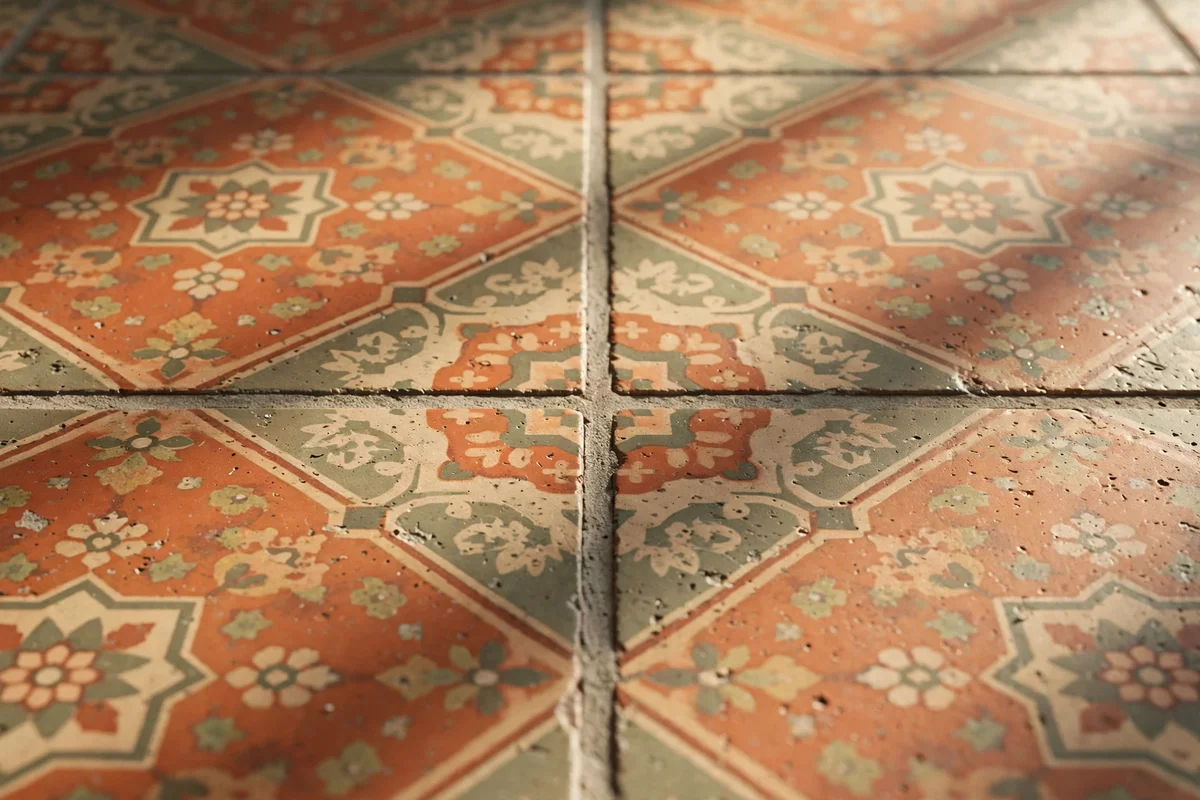
Mid to dark grey grout, rather than bright white, keeps a powder room floor looking clean between deep cleans. White grout near a basin and toilet discolours within months, while a warm charcoal grout blends with the tile pattern and hides everyday marks. Choose an epoxy or stain resistant grout for the splash zone around the basin pedestal, and seal standard cement grout twice after laying.
Match the grout tone to the darkest line in the tile pattern so the floor reads as one continuous surface. Clean grout lines monthly with a soft brush and a mild pH neutral cleaner, avoiding bleach, which lightens coloured grout over time. The mistake to avoid is using unsanded grout on joints wider than 3 mm; it cracks and crumbles, so check the joint width first.
14. Balance Dark Walls With a Pale Stone Basin Top
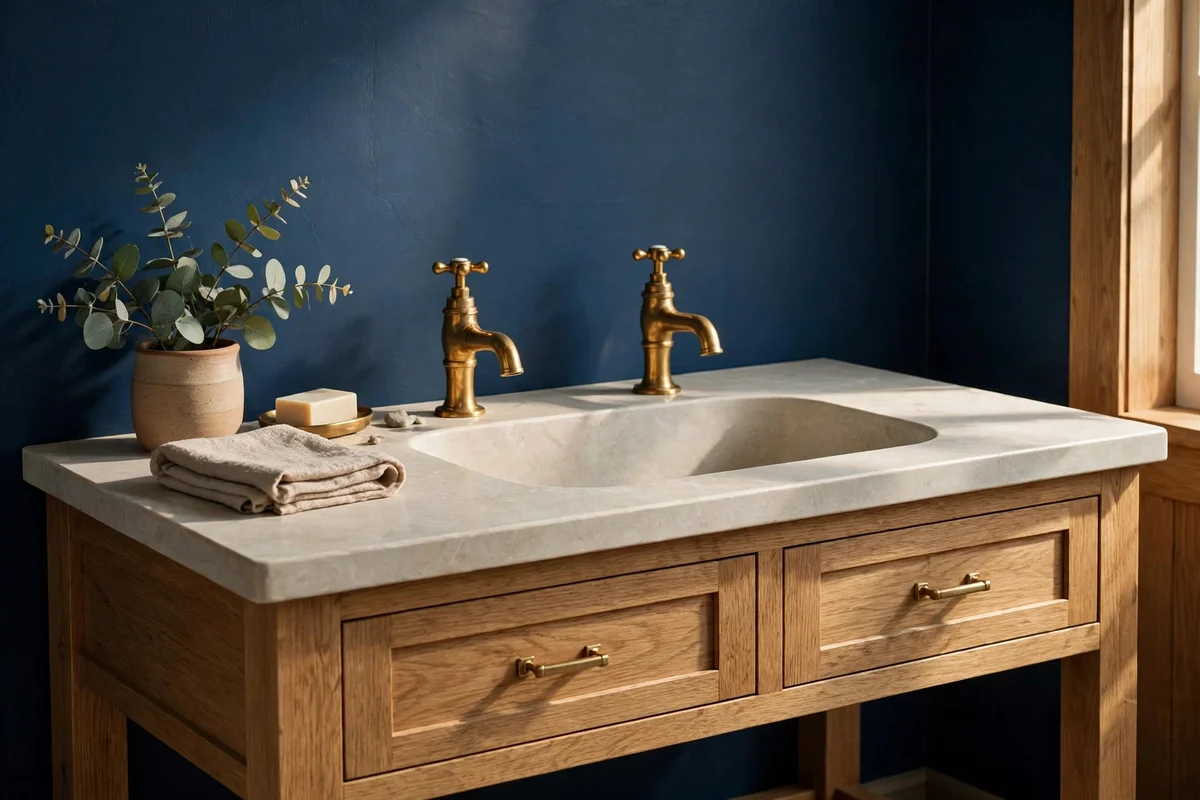
A pale stone or quartz basin top, in warm white or soft greige, gives the eye a resting place against deep wall colour. A 60 cm wide top, 2 to 3 cm thick, suits a compact vanity and leaves enough depth for a soap dispenser and a small tray. Honed or matt finishes show fewer water marks than high polish, which matters beside a basin guests use often.
Seal natural stone tops twice a year with a penetrating sealer to resist rings from soap and toothpaste. Pair the pale top with warm brass taps and a dark wall behind for a layered, timeless contrast. The mistake to avoid is choosing pure brilliant white, which can look stark against moody tones; a warm white with a hint of cream sits far more calmly.
15. Layer a Small Washable Runner Beside the Vanity
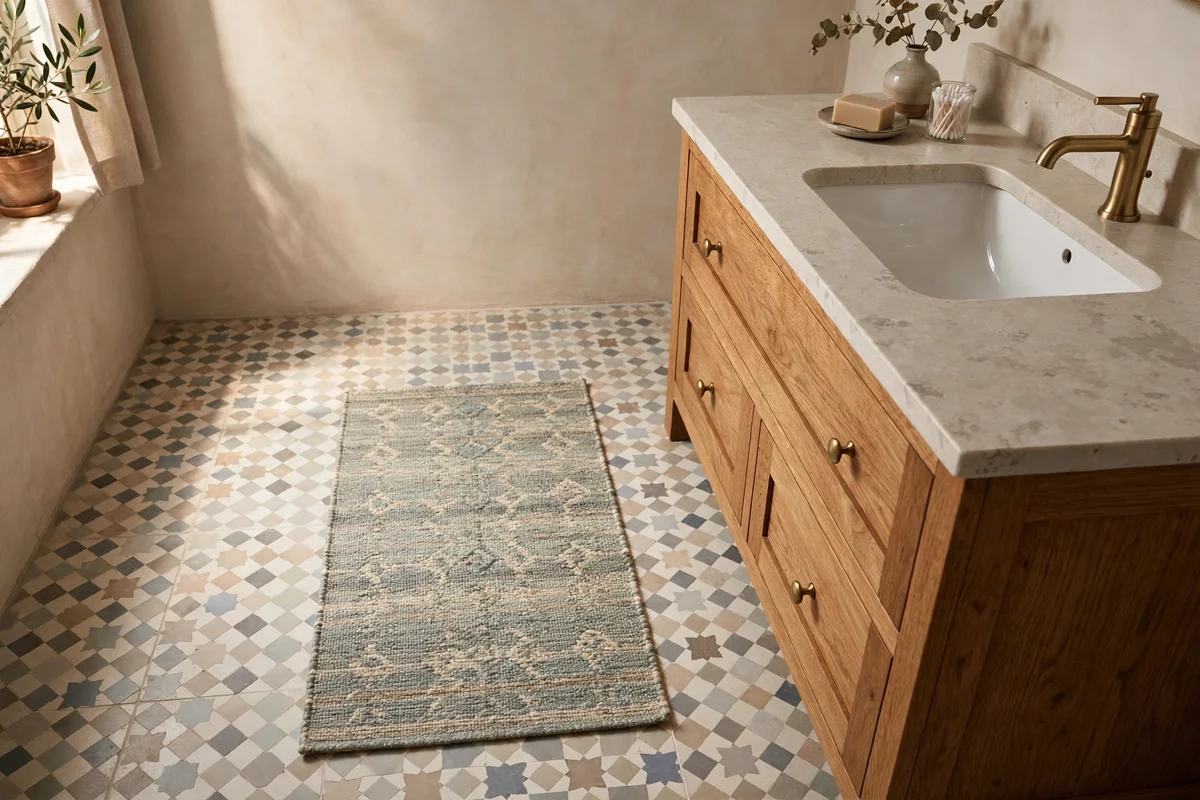
A small washable runner, roughly 50 by 80 cm, placed beside the vanity softens the step from hallway to powder room and catches drips before they reach the tiles. Choose a low pile cotton or flatweave design in muted tones that echo the wall colour, so it feels intentional rather than an afterthought. A latex or rubber backing keeps it from sliding on smooth porcelain tiles.
Machine wash the runner monthly on a gentle cycle and air dry it flat, since tumble heat curls the backing. Keep a second runner in the linen cupboard so the room never sits bare on wash day. The mistake to avoid is a thick shaggy bath mat in this room; it holds moisture against the tiles and takes days to dry in a windowless space.
16. Add One Oak Shelf Above the Toilet for Spares
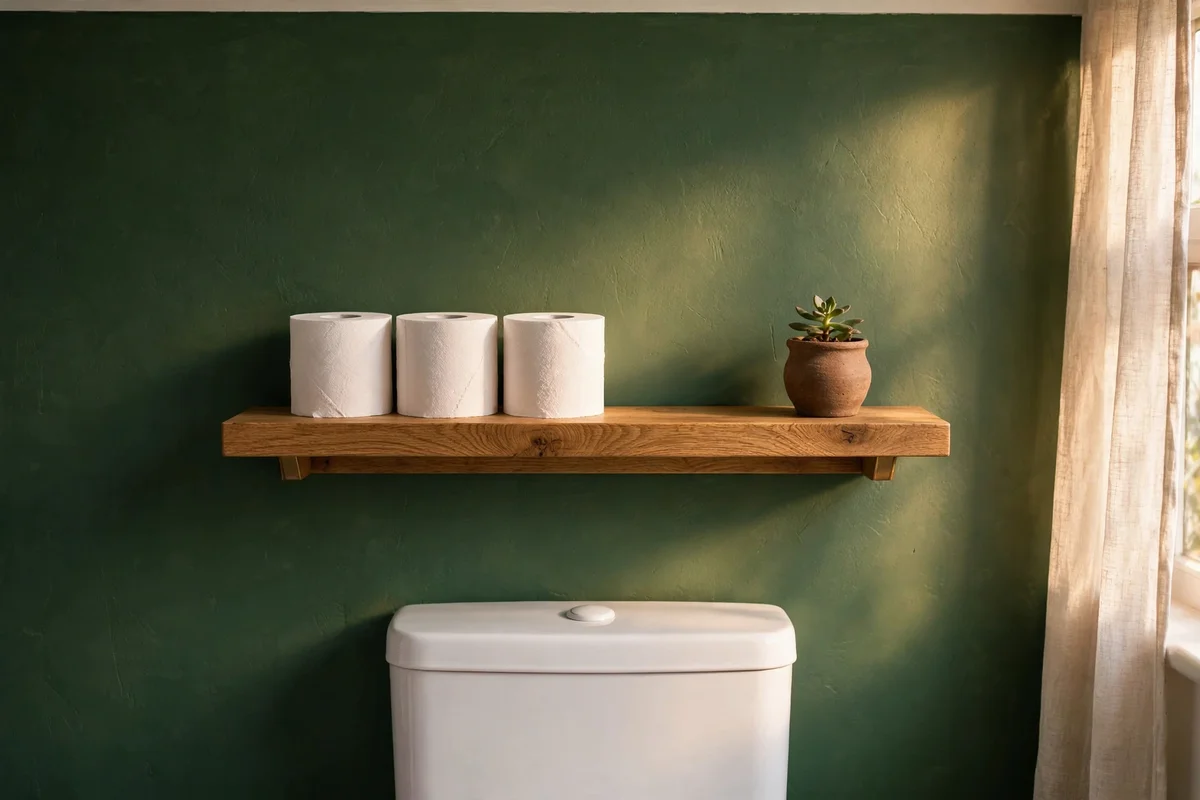
A single oak shelf, 60 to 80 cm wide and 18 to 20 cm deep, mounted 40 to 50 cm above the cistern, holds spare rolls and a small plant without crowding a tiny room. Use concealed brackets rated for at least 10 kg, and finish the oak with a hardwax oil so steam and splashes bead off. Style it with three items only: two spare rolls and one small object.
Keep heavier items like cleaning bottles in the vanity instead, since a shelf above a toilet is awkward for daily reaching. Dust the shelf weekly with a dry cloth, because dust shows quickly on dark walls nearby. The mistake to avoid is stacking the shelf with five or six decorative pieces; in a powder room, restraint keeps the room feeling calm and easy to clean.
17. Style Dried Eucalyptus in a Simple Clay Vessel
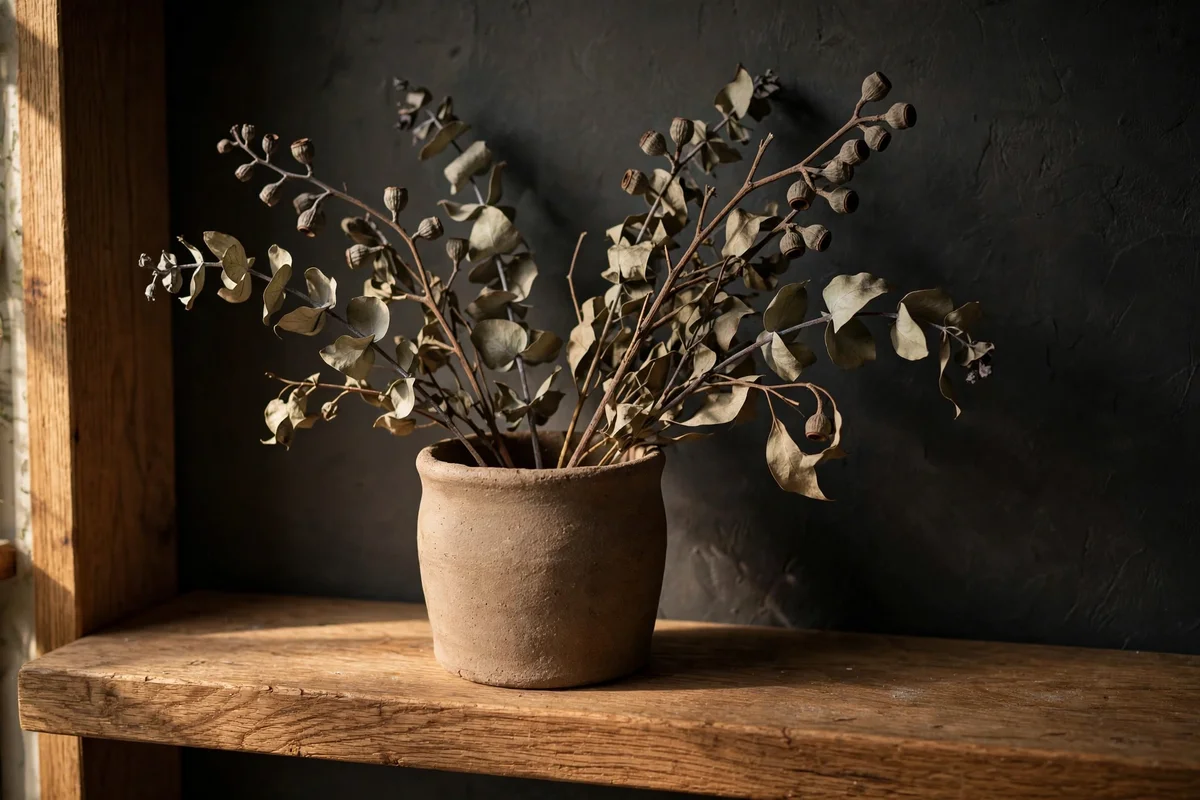
A small bunch of dried eucalyptus in an unglazed clay pot brings a soft natural note into a moody powder room without needing light or water. Choose stems 30 to 40 cm tall so they sit above the shelf or cistern without brushing the ceiling, and trim the bunch to five or seven stems for a full but tidy shape. The muted grey green leaves sit beautifully against inky blue or charcoal walls.
Dried stems last a year or more in a dry room, but keep them away from direct steam bursts and replace them when they shed. A clay vessel with a narrow neck holds stems upright and costs very little. The mistake to avoid is live plants in a windowless powder room; most fade within weeks, while dried botanicals stay calm and clean with zero care.
18. Fit a Quiet Extractor Fan in a Windowless Room
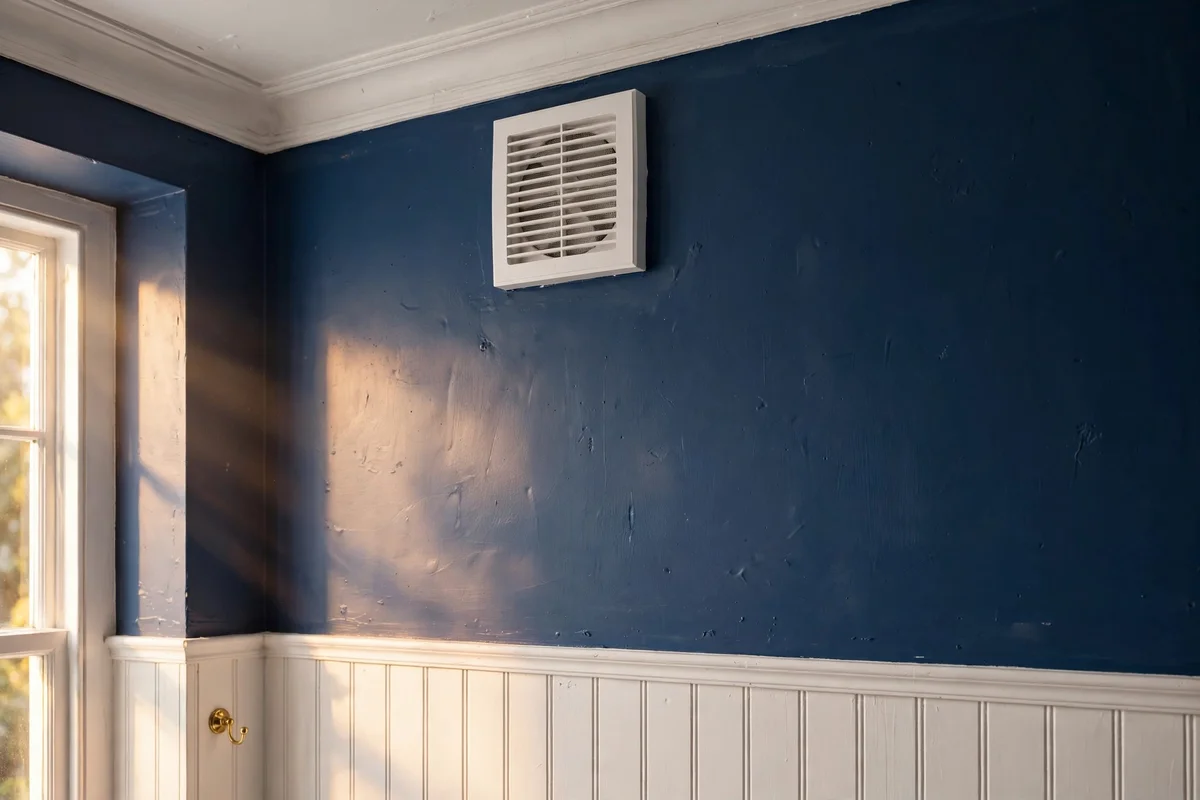
A windowless powder room needs an extractor fan that runs quietly, ideally below 30 decibels, so guests are not startled by a roar. Choose a 100 mm axial fan with a timer overrun of 10 to 15 minutes, wired to the light switch, so moisture clears after the room empties. Position the fan high on the wall or ceiling, as far from the door as possible, so air sweeps across the whole room.
Clean the fan grille every three months with a damp cloth, since dust buildup halves its pull within a year. If the existing fan is loud, a modern replacement unit costs little and fits the same 100 mm duct. The mistake to avoid is switching the fan off at the isolator to save noise; a silent, damp room grows mildew on dark painted walls faster than on light ones.
19. Leave a Small Door Gap or Vent Grille for Airflow
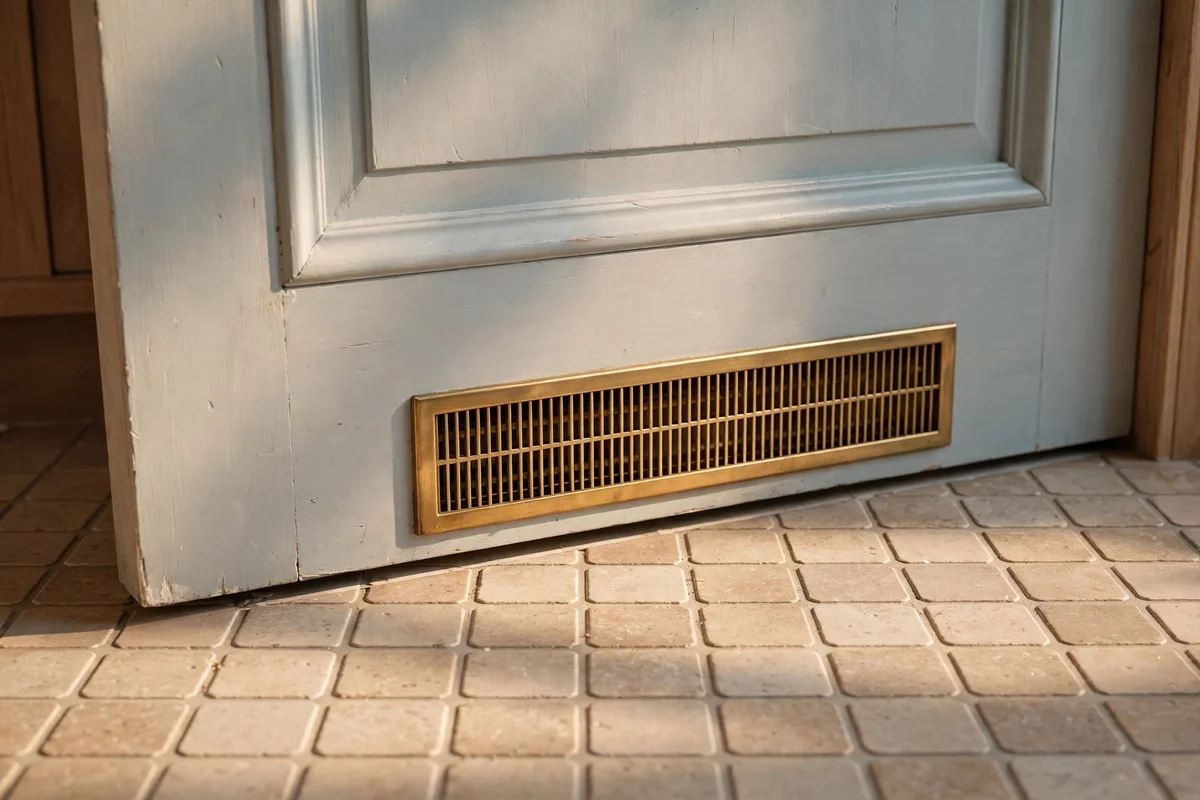
An extractor fan can only work if replacement air can enter the room, so leave a 10 mm gap under the powder room door or fit a discreet transfer grille low in the door. The gap is barely noticeable under a closed door, yet it lets the fan draw a steady stream of drier hallway air through the room. Check the gap after laying new flooring, since a thicker floor can close it accidentally.
If a gap feels draughty, fit a slim brass or white vent grille at the bottom of the door instead; it looks intentional and moves the same air. Never seal the door fully with a draught excluder in a windowless bathroom. The mistake to avoid is running a powerful fan with no air path, which strains the motor and leaves humidity sitting on the coldest wall.
20. Protect Walls With Moisture Resistant Paint Finishes
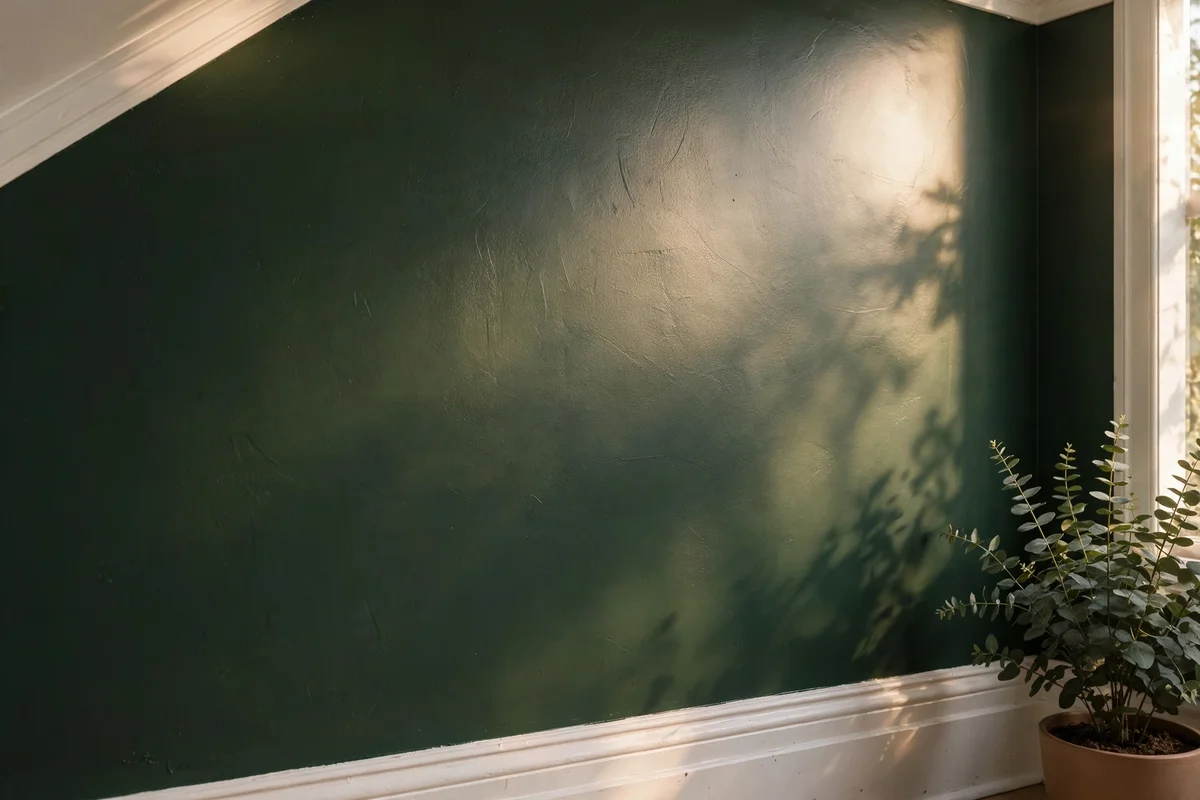
In a small damp prone room, choose a kitchen and bathroom paint or a quality eggshell with moisture resistance, rather than flat matt emulsion. These finishes let you wipe condensation and splashes without marking the paint, which matters on dark walls where every scuff shows. Apply two coats over a stain blocking primer, and allow a full 24 hours of drying with the fan running before the room is used.
Behind the basin, consider a small upstand or a 15 cm splashback of tile to take the direct splashes, saving the paintwork. Recoat high wear edges, like the wall beside the door handle, every two to three years. The mistake to avoid is standard matt paint in a windowless powder room; it absorbs steam, marks easily, and needs repainting within a year.
21. Warm the Ceiling With Soft Off White and Gentle Light
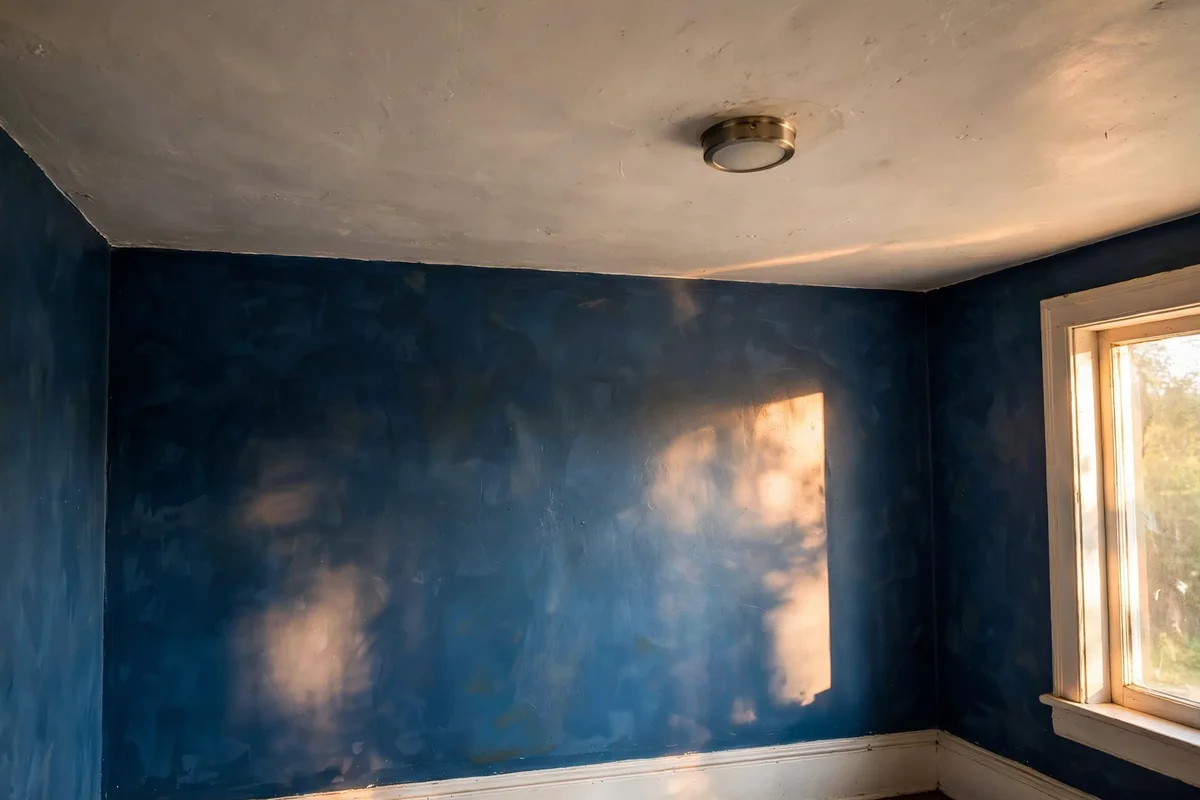
Paint the ceiling a soft warm off white rather than brilliant white, so it glows gently against the dark walls instead of glaring. A warm ceiling bounces the wall lights’ glow back down and stops the room feeling like a box with a lid. Add one small flush ceiling light, 20 to 25 cm across, on its own switch for cleaning days when full brightness helps.
Keep the ceiling paint in a wipeable finish too, since steam rises and settles there first in a windowless room. Check the ceiling for early mildew spots every couple of months, and wipe them with a mild mould cleaner before repainting the patch. The mistake to avoid is a dark ceiling in a room under 2.4 metres high; it presses the space down and makes the wall lights work too hard.
A moody powder room succeeds when deep colour is balanced with warm light and honest materials, not when every surface shouts at once. The ideas above share one thread: restraint. One dark wall colour, one warm metal, one clear light plan and a floor that forgives daily life will carry the whole room. Start with whatever feels easiest, perhaps the wall lights or the runner, and let the room settle before the next change.
This week, try the simplest move first: swap the bulbs to warm 2700K and add a pair of frosted shades if the fittings allow it. That single evening of work changes how the whole room feels after dark, and it costs less than a tin of paint. Once the light is right, the deep walls, brass taps and patterned tiles will fall quietly into place around it.
Frequently Asked Questions
Will dark walls make my tiny powder room feel smaller?
Not if the light plan is right. Deep inky blue or charcoal recedes visually, and warm wall lights either side of the mirror keep the room glowing. Keep the ceiling soft off white and the floor patterned but calm, and the room will feel rich and cocooning rather than cramped.
What is the best paint finish for a windowless powder room?
A moisture resistant eggshell or a dedicated kitchen and bathroom paint. These finishes wipe clean and resist steam, which matters on dark walls where marks show. Apply two coats over primer, run the extractor fan while drying for 24 hours, and avoid flat matt emulsion, which stains and needs repainting within a year.
How much does a moody powder room refresh cost?
Between 150 and 600 pounds or dollars for a cosmetic refresh: paint, bulbs and shades, a runner and a shelf. Mid range additions like brass taps or a new vanity add 200 to 500 more. Start with light and paint, the two changes with the biggest effect per pound, and add fittings as budget allows.
Can I use brass taps with low water pressure?
Yes, but check the tap’s minimum pressure rating first; many brass basin mixers need 0.5 bar. If your pressure is lower, choose taps rated for 0.1 or 0.2 bar, or fit a small pump. A plumber can test your pressure in minutes, which is cheaper than buying the wrong tap twice.
How do I stop mildew in a powder room with no window?
Run a quiet extractor fan with a 10 to 15 minute overrun after every use, leave a 10 mm gap under the door for airflow, and use moisture resistant paint. Wipe condensation from the coldest wall when you see it, and clean the fan grille quarterly. Steady ventilation beats any amount of scrubbing later.