Home Improvement
21 Stylish Interior Door Color Ideas That Transform Your Home
By Anna Wells · · 12 min read
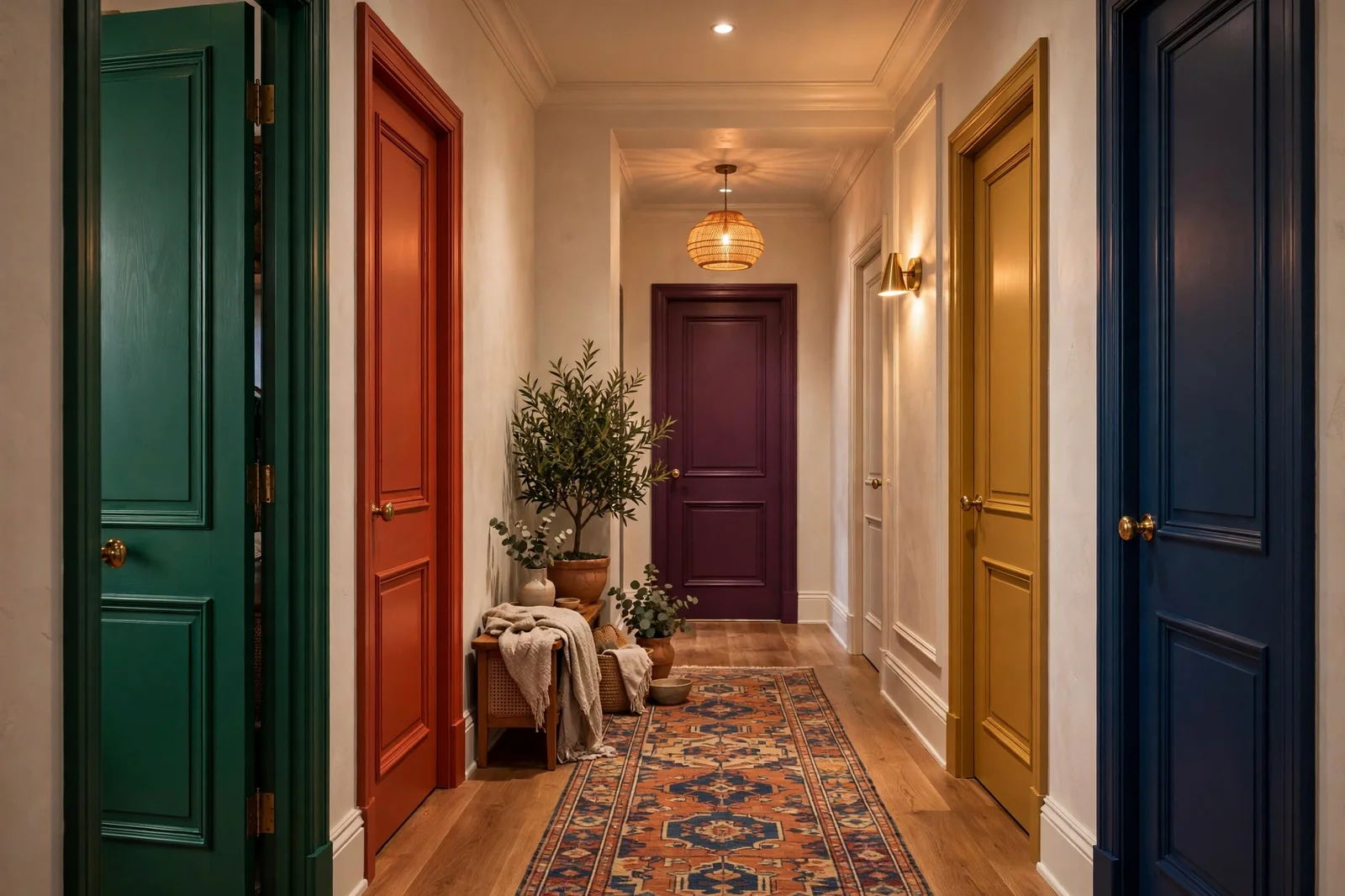
Interior doors are one of those things most people stop noticing, until a painted door shows how much they affect a home's feel. A dark charcoal door can make a hallway look finished, walls look brighter, and the space feel intentional. These 21 stylish interior door color ideas cover door and trim combinations that add contrast, warmth or softness naturally, no remodel required.
A painted interior door is the smallest renovation with the biggest personality payoff. One gallon of paint, one weekend, and a hallway transforms from builder-basic to intentional. The magic is in the combination: door color plus trim color plus hardware. Get those three working together and every room the door opens to feels more considered. These 21 combinations range from classic to bold, so there is one for every home and every level of courage.
1. White Doors With Black Trim
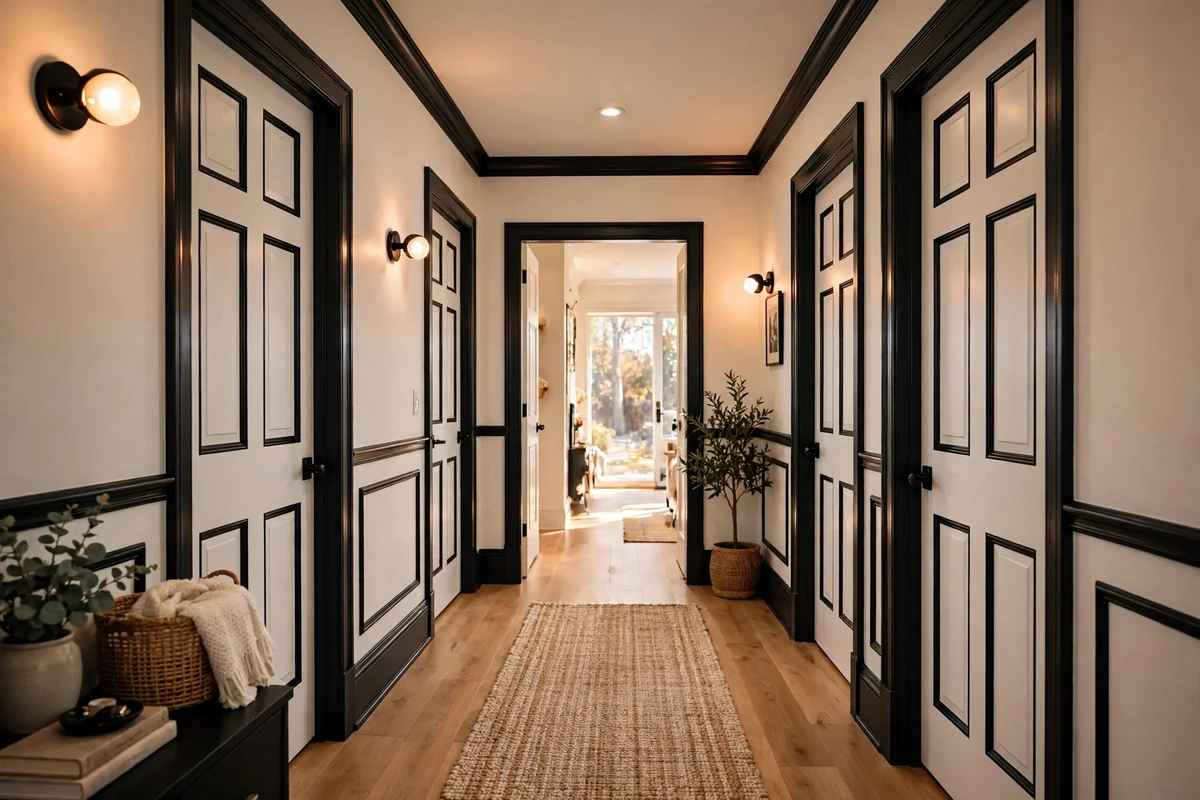
This combination feels crisp and modern without being overly dramatic. The white keeps things bright while the black trim outlines the door beautifully and makes everything feel more architectural. It works especially well in homes with modern or transitional style. The contrast is sharp but timeless, and the architectural feel suits hallways especially well.
Keep walls neutral so the trim contrast shines. This is the combination that makes hallways look designed. Against white walls, black-trimmed doors are pure architecture. Crisp, clean and confident. Paint the trim in semi-gloss for the crispest lines, and the black will look sharp for years to come. Touch up chips as they appear.
2. Black Doors With White Trim
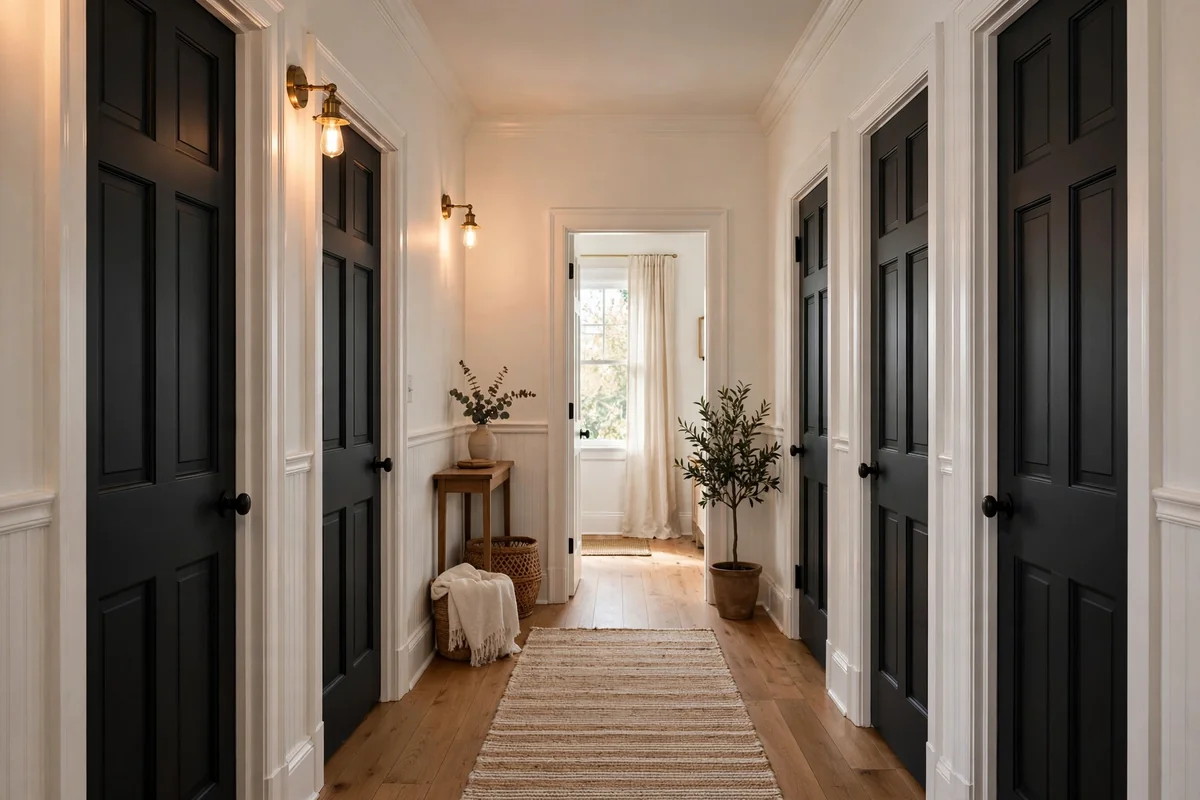
Black doors with white trim are bold and beautiful. The dark door becomes a focal point while the white trim keeps it crisp. This works best in bright spaces where the black adds drama without darkness. The contrast is striking and sophisticated, and the doors become the hallway’s artwork, and the bold choice always impresses.
Use quality paint; black shows imperfections. Keep the surrounding decor simple so the doors star. Against light walls, black doors are pure drama. Bold, elegant and unforgettable. Touch up scuffs promptly; black shows every mark, so always keep a small pot of the paint handy for quick fixes. A foam roller gives the smoothest finish.
3. Soft Grey Doors
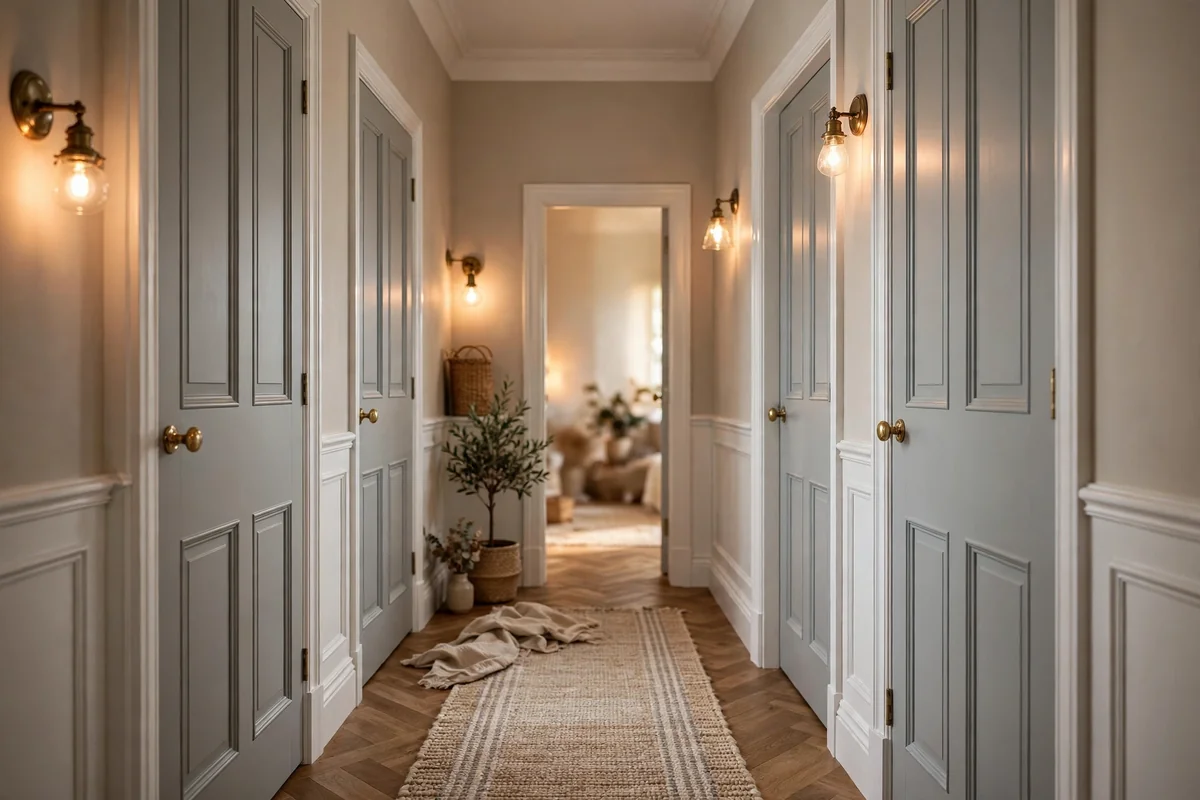
Soft grey doors are the gentle alternative to white. The grey adds subtle depth while staying neutral and versatile. Pair with white trim for a classic look. Grey doors suit both modern and traditional homes, and the neutral color never fights the surrounding decor in any room, and the versatility suits renters too.
Choose warm or cool grey to match your palette. The soft color hides scuffs better than white. Against neutral walls, grey doors are quietly sophisticated. Subtle, versatile and timeless, and the soft hue works in every light. Grey is the safe choice that never looks boring or dated. Pair it with crisp white trim.
4. Navy Doors
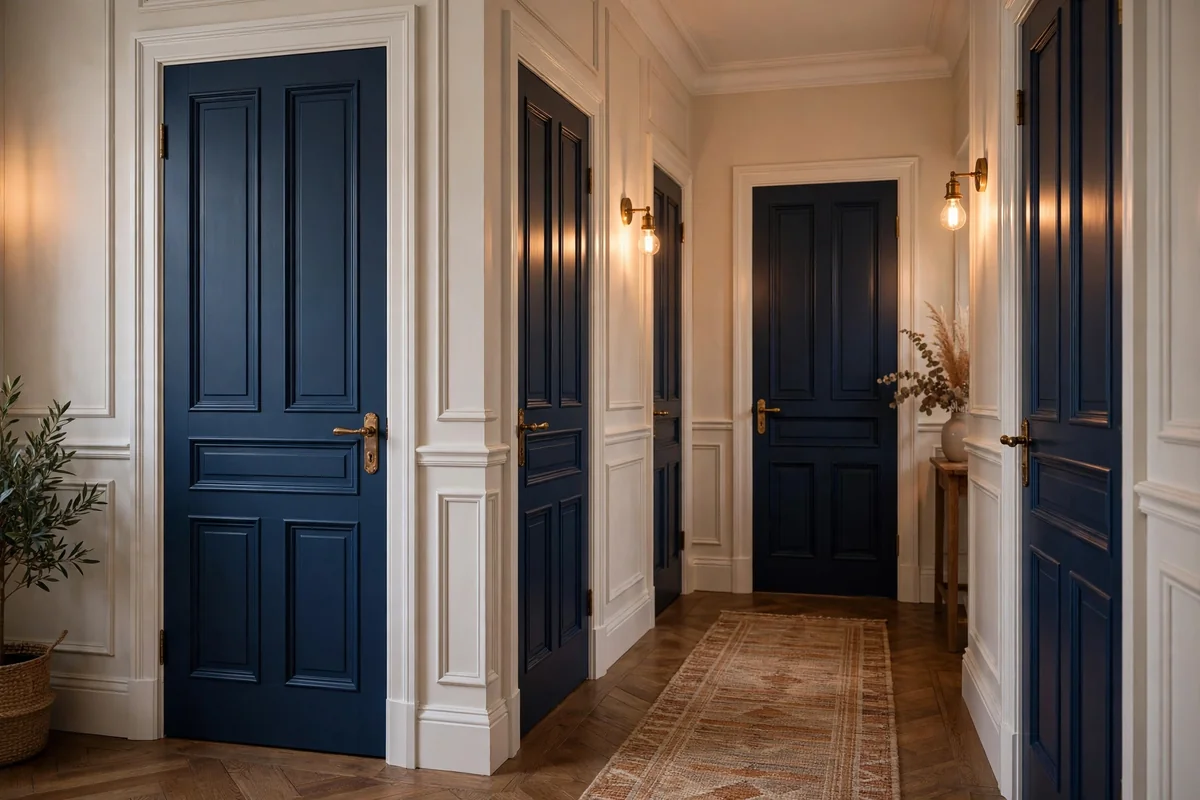
Navy doors bring rich, classic color. The deep blue is bold without being loud, and it pairs beautifully with white trim and brass hardware. Navy suits traditional and coastal homes especially. The color feels both historic and current, and the depth makes even plain hallways feel grand, and the classic hue never dates.
Keep the navy deep rather than bright. The richness rewards good lighting. Against white trim, navy doors are timeless elegance. Rich, classic and confident, and the brass hardware completes the look. Always sample the navy on the door itself; small paint chips lie about the true color, and the large sample reveals undertones.
5. Sage Green Doors
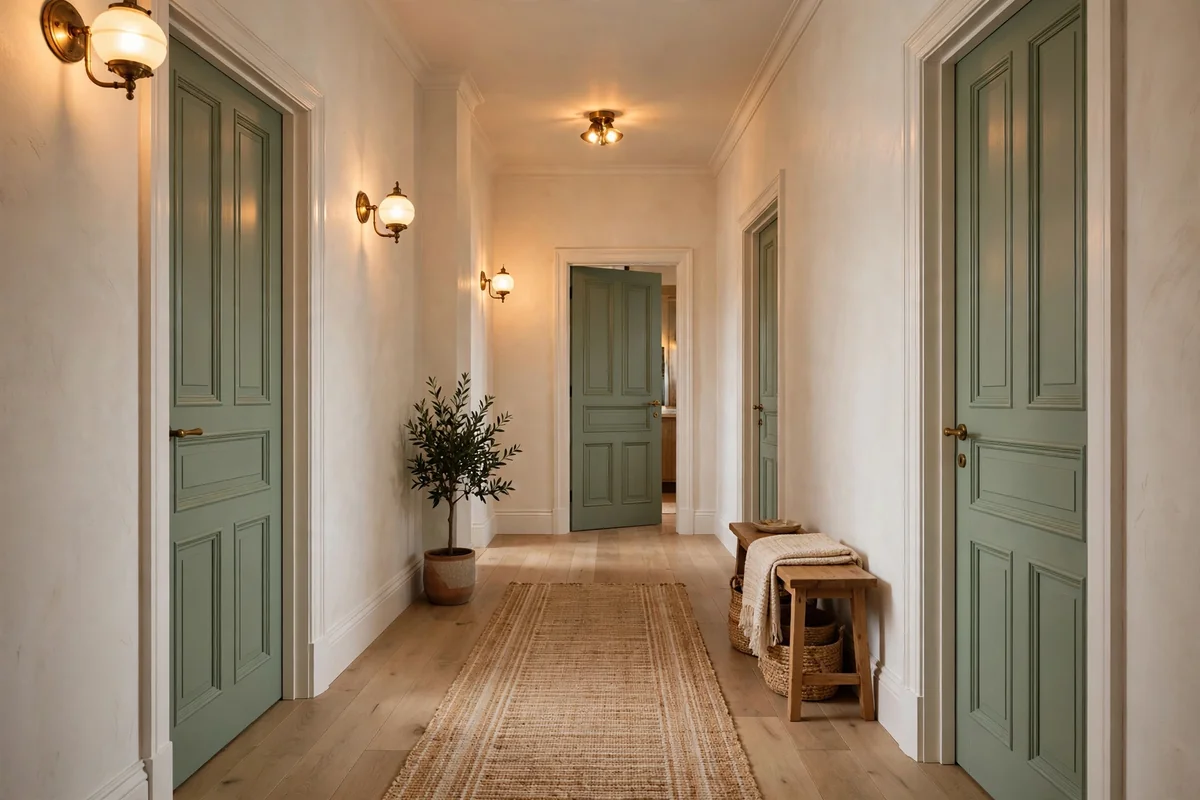
Sage green doors add nature’s calm to interiors. The muted green is soothing and versatile, pairing with white, cream or wood trim. Sage suits farmhouse, traditional and eclectic homes. The color feels fresh without being trendy, and the organic hue suits natural wood floors beautifully, and the earthy tone grounds the space.
Choose a greyed sage rather than mint. The muted tone ages gracefully. Against warm neutrals, sage doors are serene. Natural, calming and lovely, and the green brings the outdoors in. Pair it with warm brass hardware for a particularly pretty and timeless combination that endures for years, and the muted green suits every season.
6. Charcoal Doors
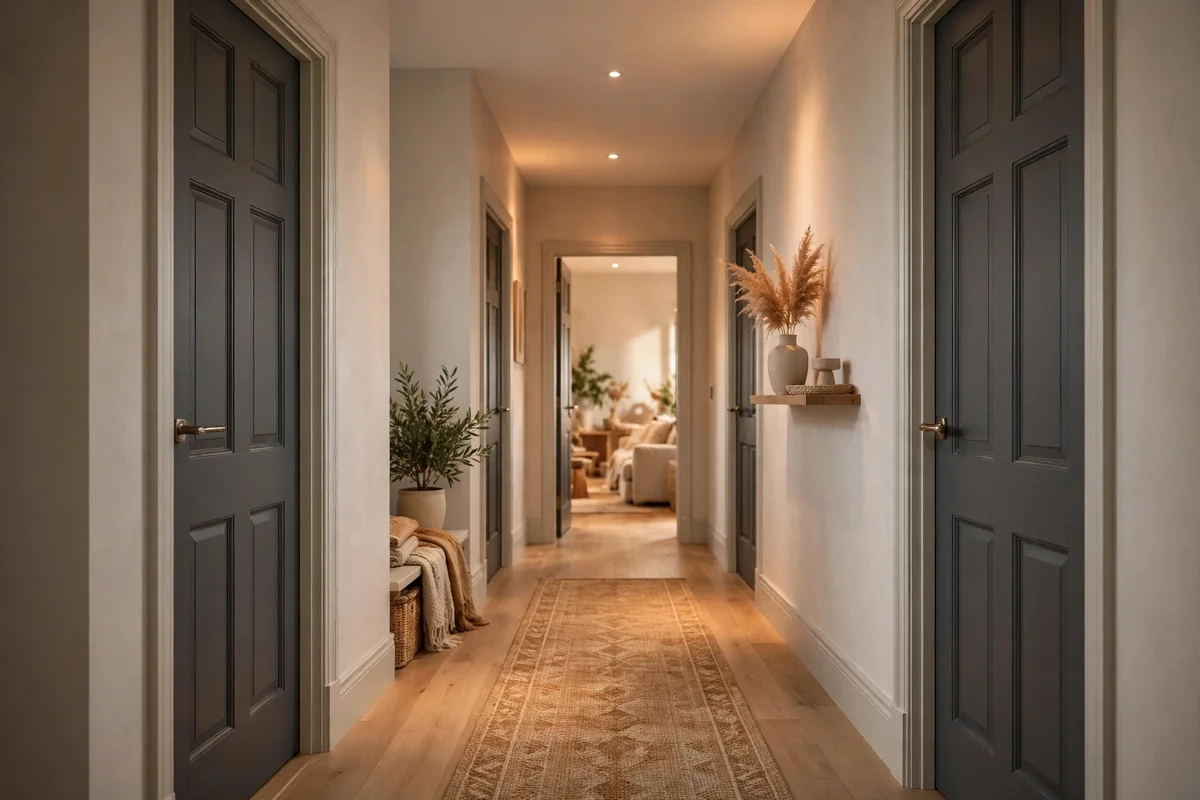
Charcoal doors are black’s softer sibling. The deep grey is dramatic but less stark than black, and it works in more lighting conditions. Pair with white or light grey trim. Charcoal suits modern and industrial homes, and the soft dark flatters any artwork hung nearby, and the moody tone adds depth.
The softer dark is more forgiving than black. Keep walls light for contrast. Against bright hallways, charcoal doors are sophisticated drama. Deep, elegant and modern, and the grey undertone keeps it livable. Charcoal is the dark door choice for the commitment-shy who still want real drama, and the soft dark flatters everyone.
7. Wood Doors With White Trim
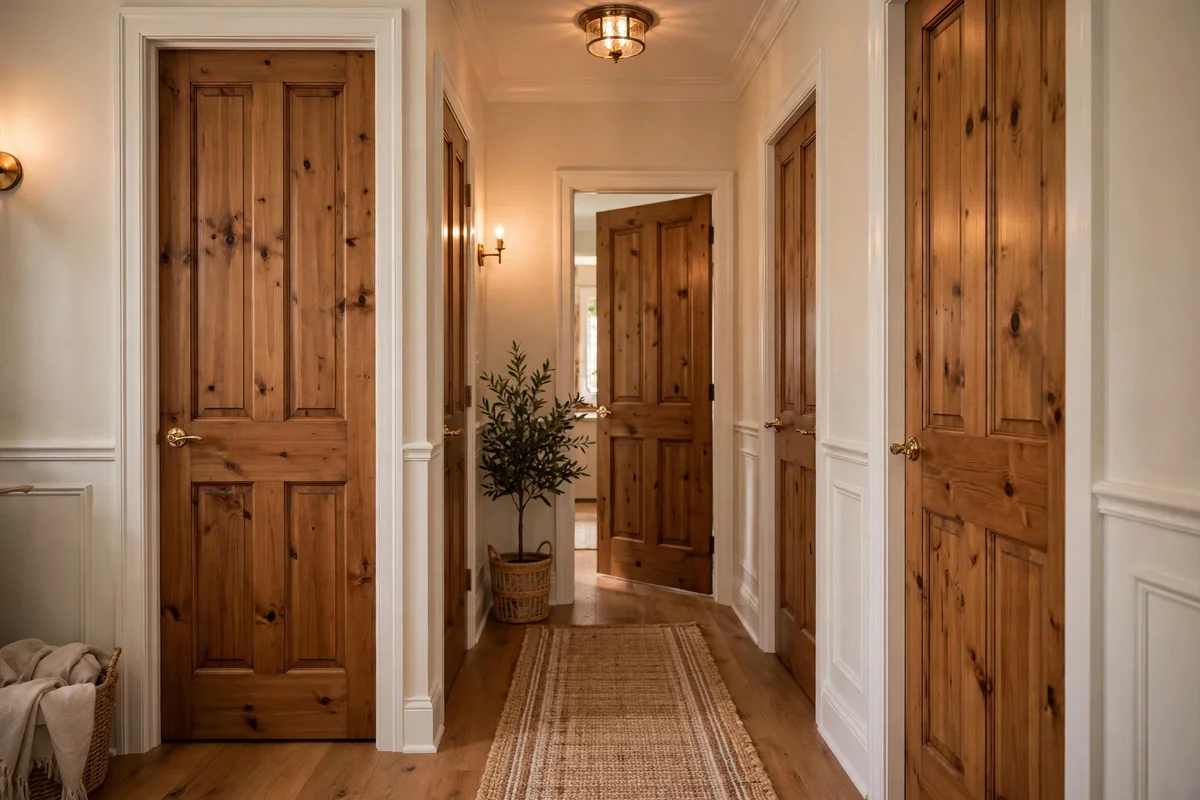
Natural wood doors with white trim are timeless warmth. The wood’s grain becomes the decoration, and the white trim keeps it crisp. This suits traditional, craftsman and farmhouse homes. The combination is classic for a reason, and the natural wood material ages gracefully with time, and the patina only improves.
Keep the wood sealed and conditioned. The natural variation is the beauty. Against white trim, wood doors are warm heritage. Classic, warm and enduring, and the wood grain patterns are never repeated. Every single door is genuinely unique, which is honestly part of the lasting charm here, and the variation is the beauty.
8. Cream Doors With Wood Trim
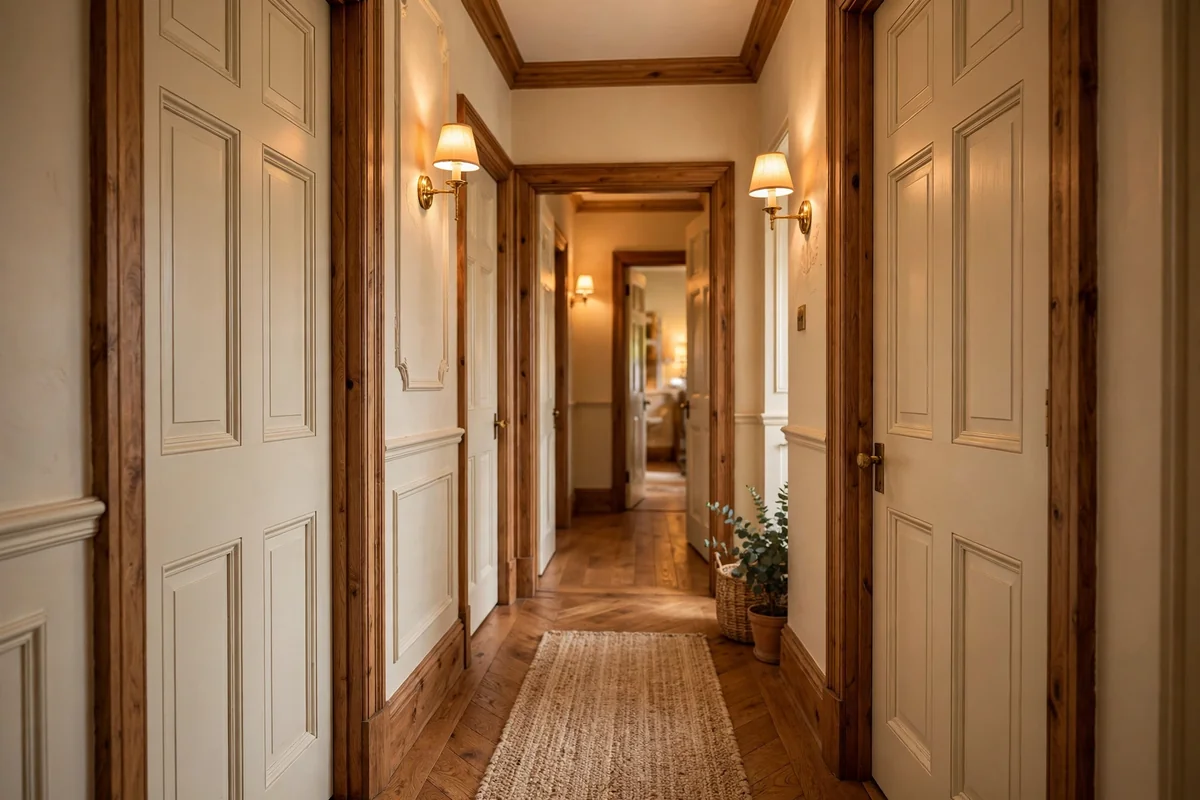
Cream doors with wood trim reverse the classic pairing. The warm cream softens the look while the wood trim adds richness. This suits traditional and cottage homes. The combination feels cozy and collected, and the warm tones welcome you home every single day without fail, and the cozy feeling never fades.
Keep the cream warm, not yellow. The wood trim should complement flooring. Against warm walls, this pairing is pure comfort. Soft, warm and inviting, and the cream brightens even the darkest hallways beautifully. Always choose a cream with enough depth to read as intentional, never as dirty, and the warm white glows softly.
9. Dusty Blue Doors
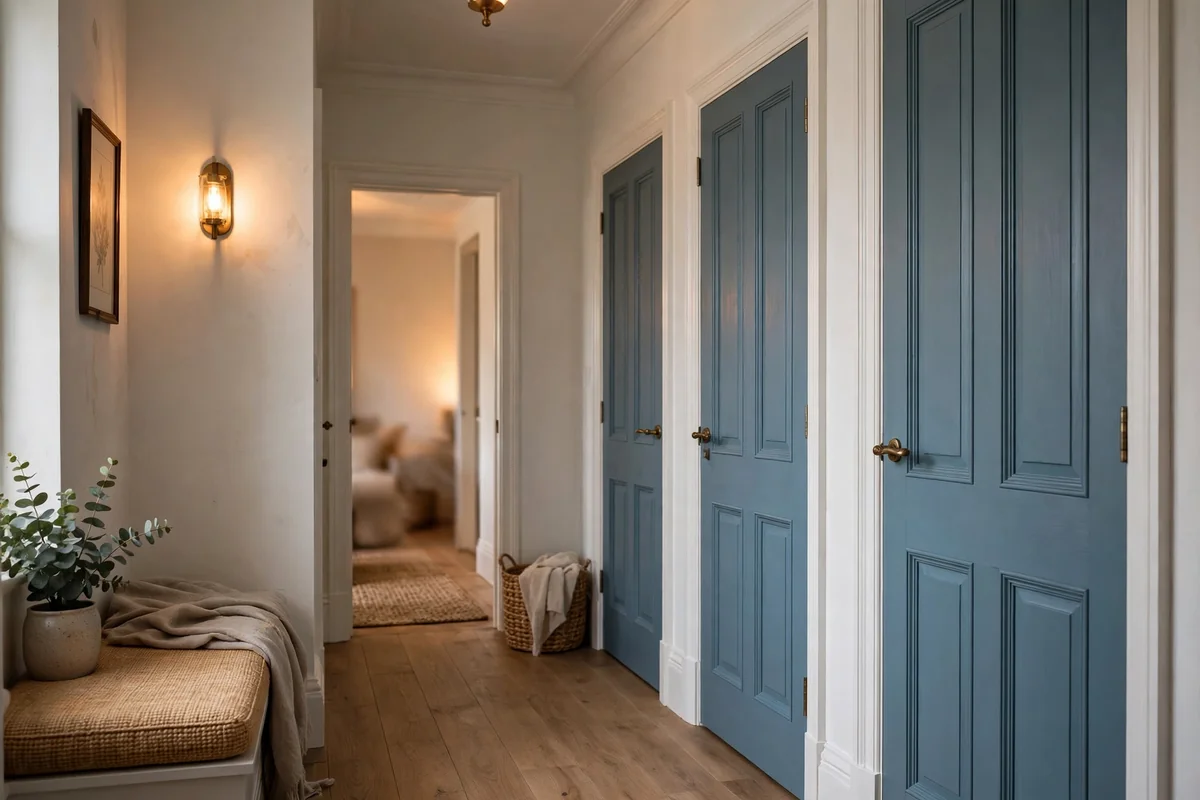
Dusty blue doors are serene and versatile. The muted blue-grey works with many palettes and never feels loud. Pair with white trim for crispness. Dusty blue suits coastal, traditional and modern homes, and the adaptable muted hue never overwhelms any space it graces, and the calm hue suits bedrooms too.
The grey undertones keep it sophisticated. Test in your light; blues shift. Against neutral walls, dusty blue doors are calm color. Serene, adaptable and pretty. Test it beside your trim; the right dusty blue makes white look even crisper, and the combination feels effortlessly coastal and calm, and the serene pairing never tires.
10. Black Doors in a White Hallway
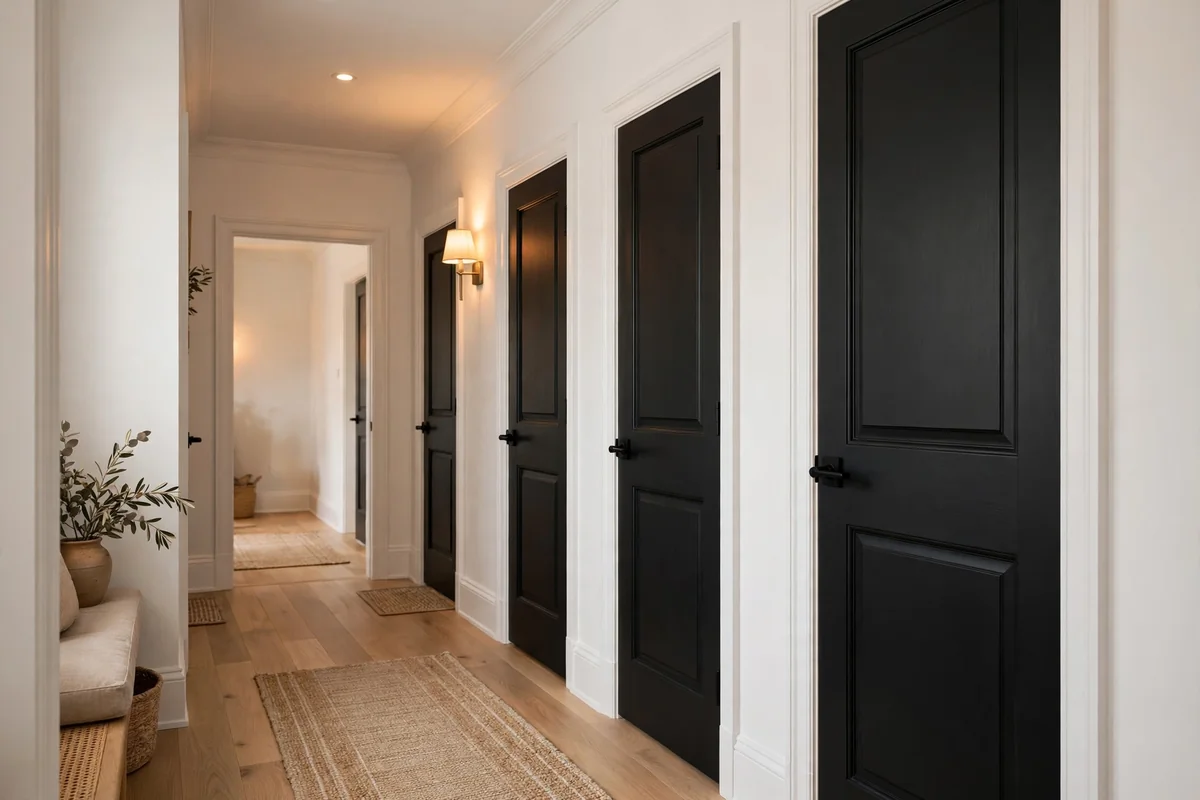
A white hallway with black doors is high contrast done right. The bright walls keep the space airy while the black doors add rhythm and drama. This is the most striking hallway combination. Keep the hallway well lit, and the dramatic contrast will do the rest, and the drama speaks for itself.
The repetition of black doors creates architectural rhythm. Against white, black doors are graphic and bold. This is the hallway that photographs beautifully. Dramatic, crisp and architectural, and the repeating dark rhythm guides you gracefully through the entire home. This is the hallway guests photograph and remember, and the bold rhythm guides guests.
11. Two-Tone Door Designs
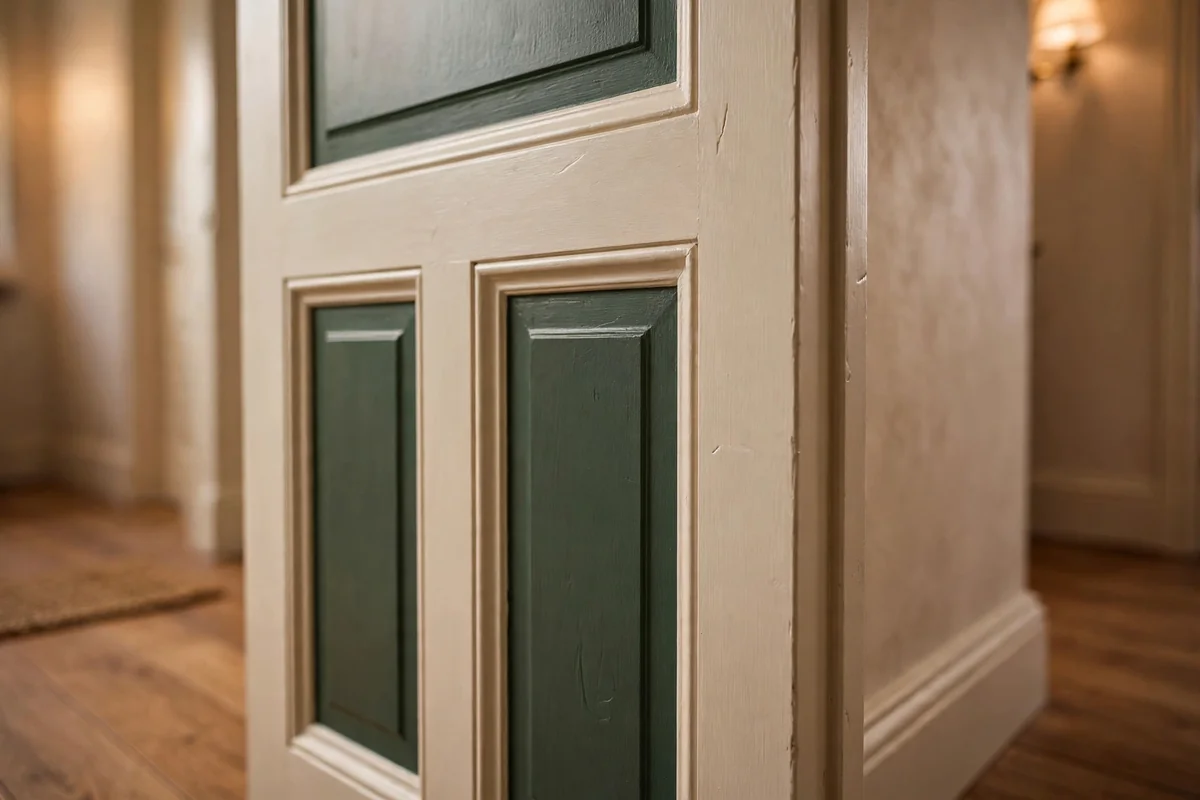
Two-tone doors add custom detail. Paint the panels one color and the stiles another, or the door one color and the trim a contrast. The detail work suits traditional paneled doors best. Keep the two tones in the same family for harmony, and the subtle shift reads as custom, and the detail elevates plain doors.
Use painter’s tape for crisp lines. The custom look elevates simple doors. Against plain walls, two-tone doors are bespoke. Detailed, custom and charming, and the careful painted detail rewards a closer look every single time you pass through the hallway. It is craftsmanship you can see, and the effort shows beautifully.
12. Doors That Match the Walls
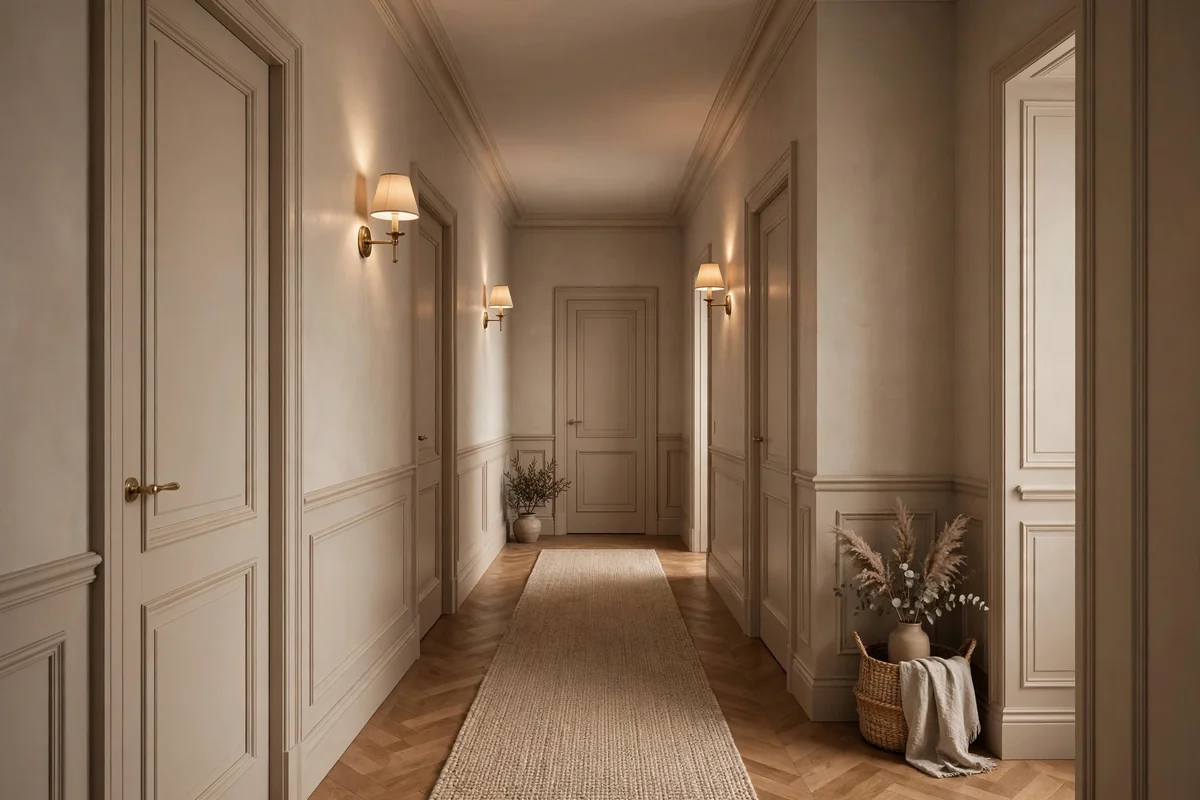
Painting doors the same color as walls creates seamless, enveloping rooms. The doors disappear into the architecture, making spaces feel larger and calmer. This suits bold wall colors especially. Use the same sheen or slightly higher on doors, and the uniform color calms even busy rooms, and the seamless look enlarges spaces.
The monochrome look is sophisticated and modern. Against the matching walls, doors become texture rather than feature. This is the minimalist’s choice. Seamless, calm and spacious, and the eye flows uninterrupted around the entire room. This simple trick makes small rooms feel significantly larger, and the calm is worth it.
13. A Bold Color Inside the Front Door
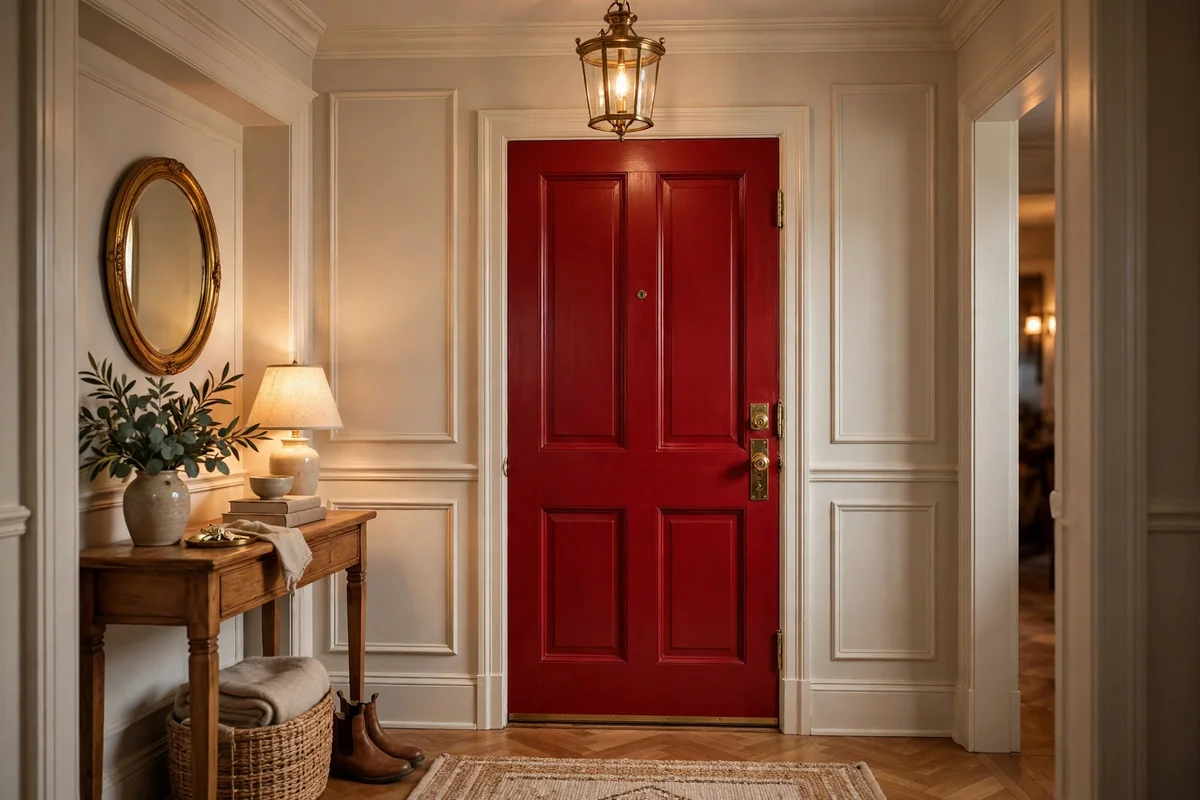
Painting the inside of the front door a bold color makes every entrance joyful. The exterior stays classic while the interior surprises. Choose a color you love seeing daily. This is commitment-free boldness, and the cheerful surprise delights every single guest who visits your home, and the joy is contagious.
The door becomes the entry’s art. Against the entry walls, a bold door is pure personality. This is the smile you come home to. Joyful, personal and welcoming, and the vibrant color sets the cheerful tone for the entire home beyond your front door, and every entry feels like a celebration.
14. Muted Terracotta Doors
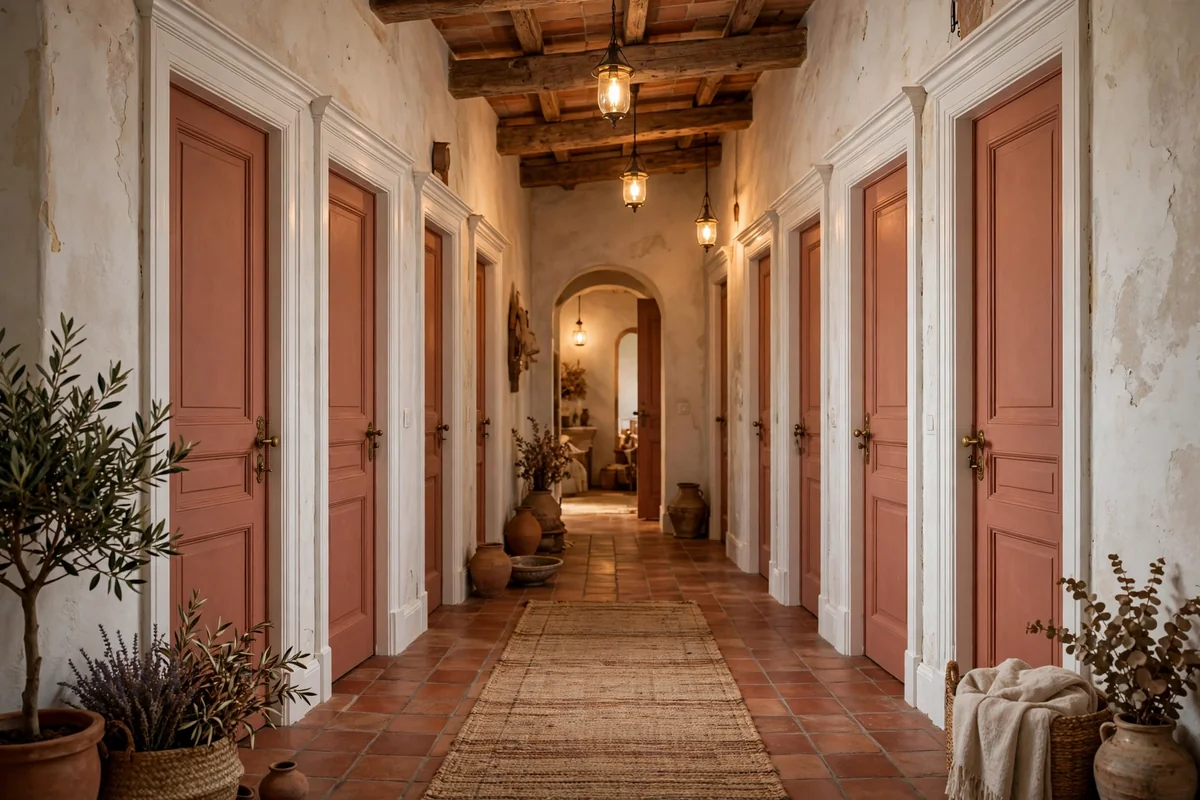
Muted terracotta doors bring earthy warmth. The clay hue is rich without being loud, pairing beautifully with white trim and warm neutrals. Terracotta suits Mediterranean, boho and eclectic homes. The color feels artisanal and warm, and the earthy clay tone suits natural wood floors, and the earthy warmth is irresistible.
Keep it muted, not orange. The earthiness grounds the palette. Against white trim, terracotta doors are warm character. Earthy, rich and inviting, and the natural warmth welcomes you into every room it touches. Terracotta is truly the color of hospitality itself, and the welcoming doors greet everyone who enters with warmth.
15. Deep Green Doors
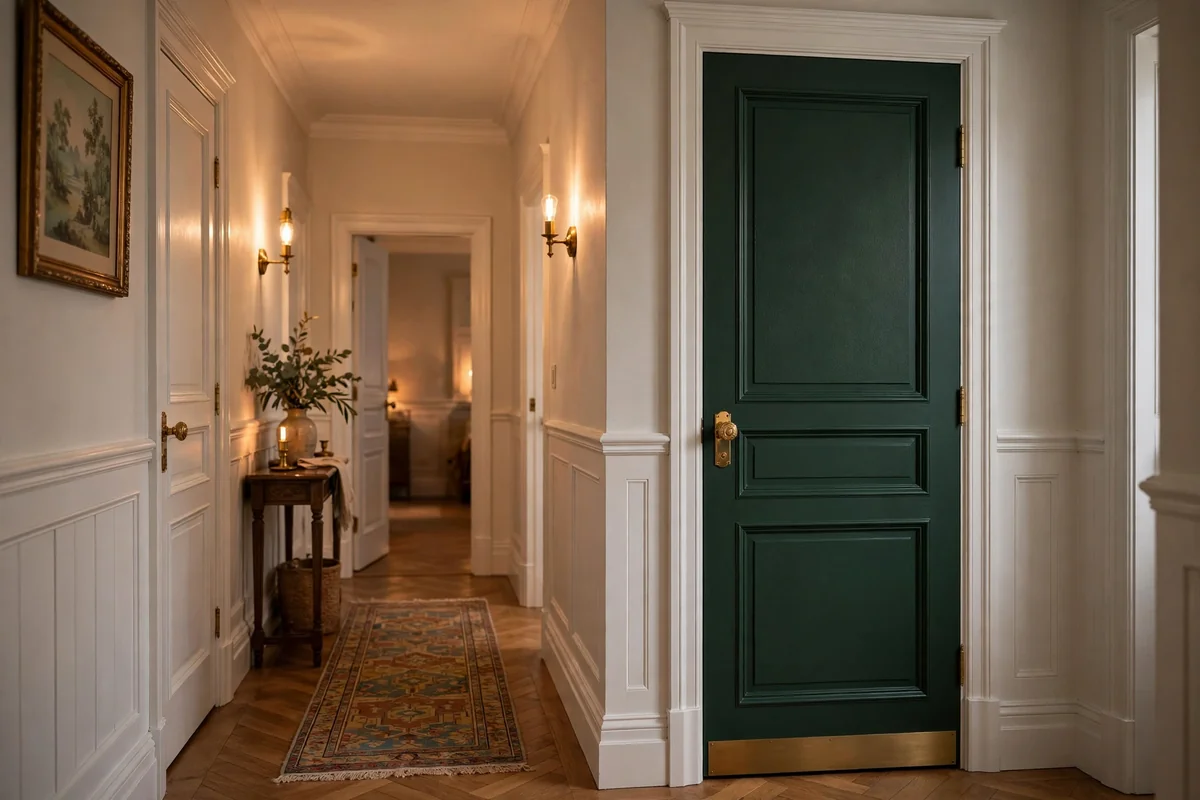
Deep green doors are rich and timeless. The forest or emerald hue pairs beautifully with brass hardware and white trim. Green suits traditional and moody modern homes. The color feels like heritage, and the rich depth suits traditional paneled doors beautifully. It is a color with real presence, and the deep hue commands attention.
Keep the green deep for sophistication. The richness needs good light. Against white trim, green doors are classic elegance. Deep, rich and storied, and the warm brass hardware is the perfect finishing partner. Together they feel like a grand historic estate, and the timeless pairing never goes out of style.
16. Doors With Brass Hardware
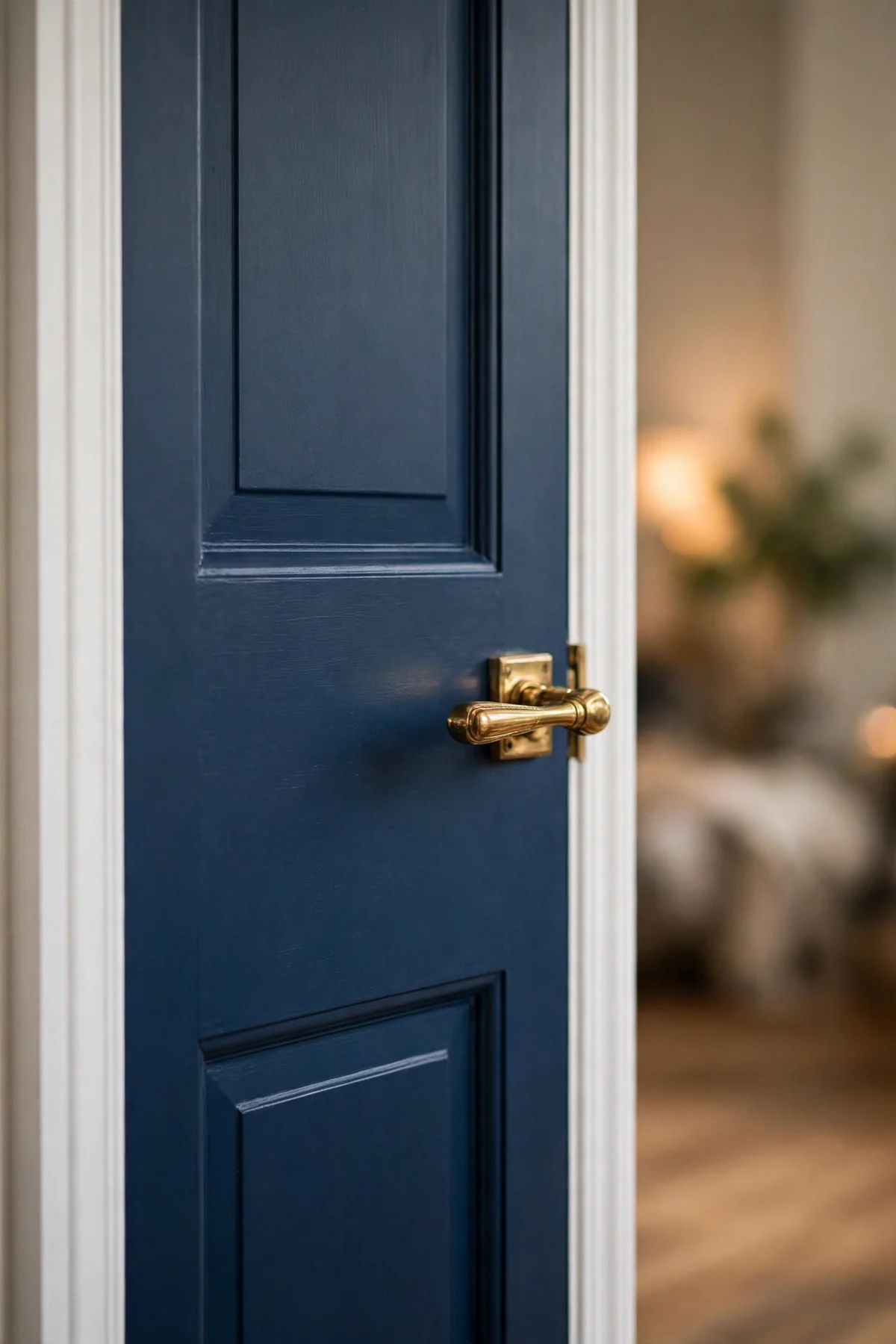
Brass hardware elevates any door color. The warm metal against painted doors, especially navy, green or black, is jewelry. Choose solid brass for quality. The hardware is the detail that signals intention, and the small upgrade has truly outsized visual impact throughout the home, and the detail is worth it.
Keep all hardware consistent throughout. Against dark doors, brass glows beautifully. This is the finishing touch that matters. Warm, refined and classic, and the warm metallic glow flatters every single door color beautifully. Brass is the jewelry every door deserves, and the warm metal never tarnishes the timeless classic look.
17. White Doors With Natural Wood Trim
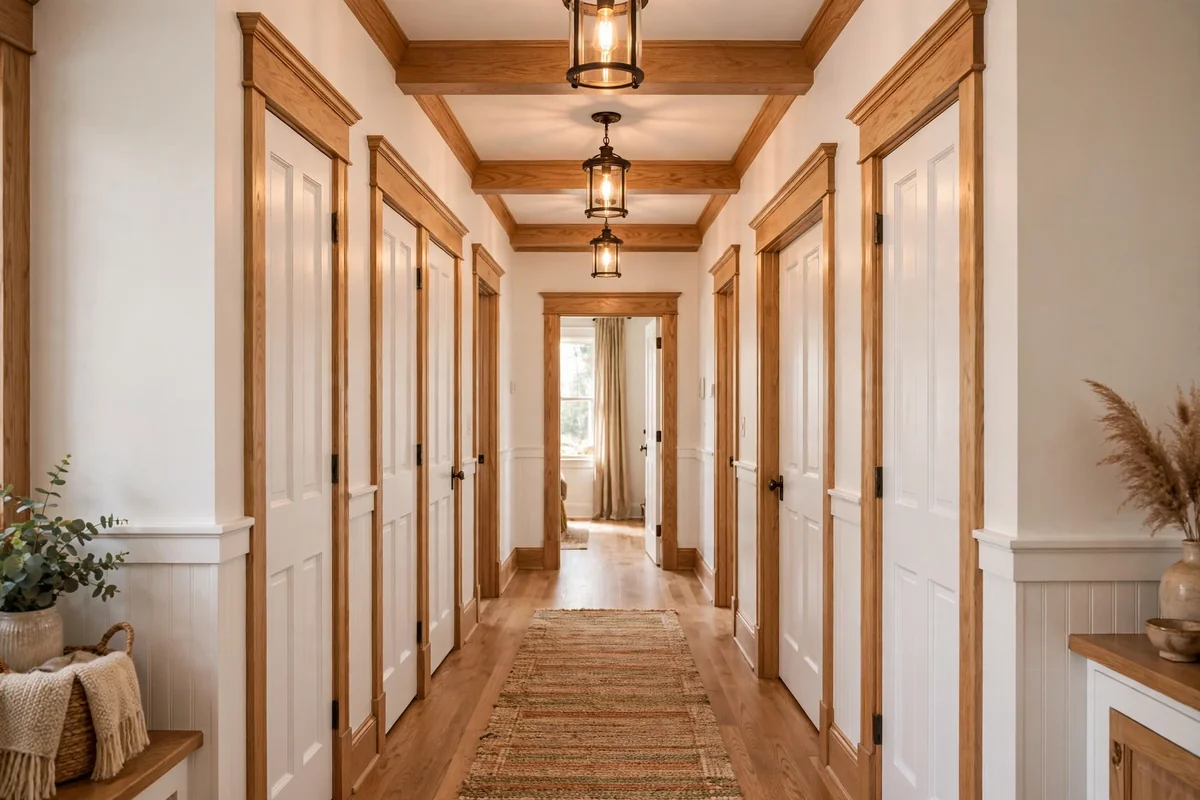
White doors with wood trim combine crispness and warmth. The white keeps things bright while the wood adds organic richness. This suits craftsman, Scandinavian and modern rustic homes. The pairing is fresh and warm, and the natural wood materials age beautifully over the passing years, and the character deepens beautifully.
Keep the wood tone consistent with floors. The natural trim is the warmth. Against white doors, wood trim is organic architecture. Bright, warm and natural, and the welcoming combination never feels cold or stark. It is truly the best of both worlds, and the perfect balance always feels exactly right for any home.
18. Grey Doors With Black Hardware
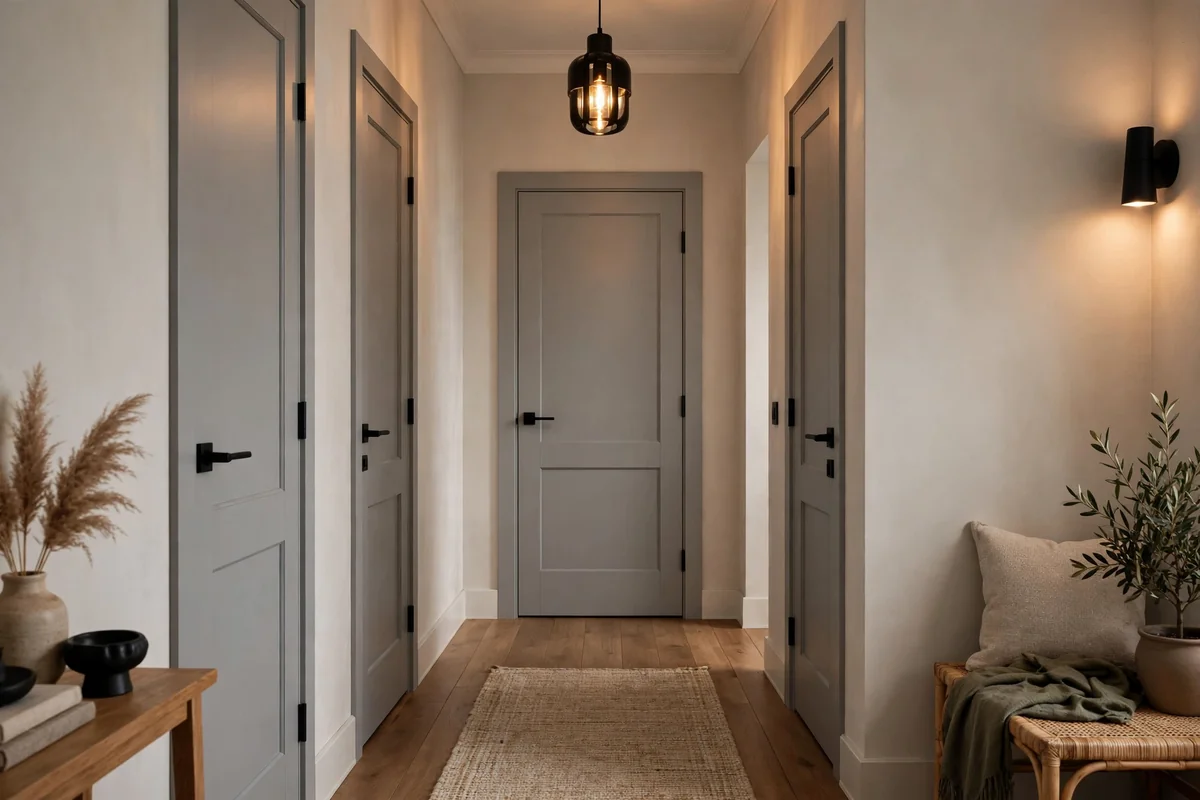
Grey doors with black hardware are modern and cohesive. The dark hardware echoes the grey’s depth. This suits contemporary homes. The combination is understated and sharp, and the quiet restraint feels confident and modern. In this refined pairing, less is truly always more, and the quiet confidence always shows through.
Match hardware finish throughout. Against grey, black hardware is quiet contrast. This is modern minimalism done warm. Sleek, cohesive and calm, and the quiet monochrome palette soothes the eye completely. This is modern minimalism with real warmth and lasting depth throughout, and the calm monochrome palette endures beautifully over time.
19. Pastel Doors for Softness
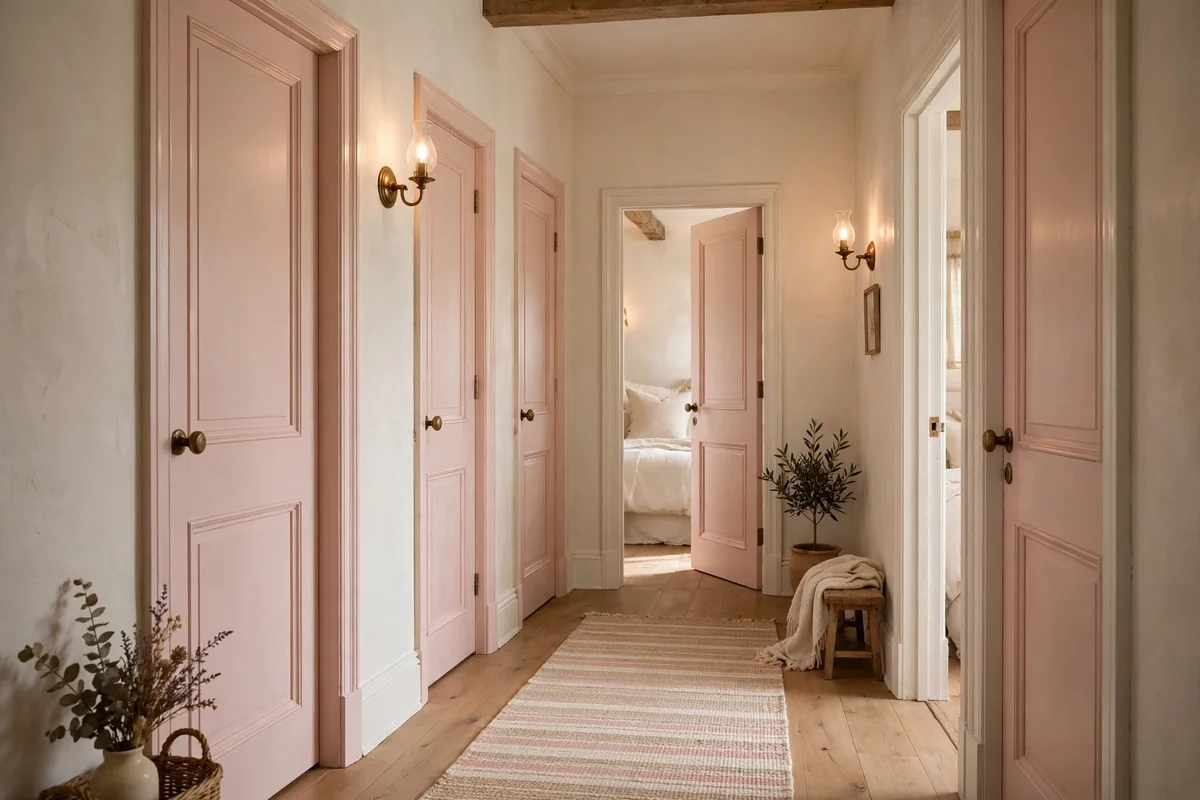
Pastel doors add gentle color. Blush, powder blue or soft mint doors bring sweetness without intensity. This suits bedrooms, nurseries and cottage homes. The softness is charming, and the gentle pastel hues calm even the busiest family homes beautifully. They are like a deep breath, and the soft hues soothe daily.
Keep pastels muted, not candy. The gentleness needs restraint elsewhere. Against white trim, pastel doors are soft joy. Gentle, sweet and pretty, and the soft color delights you every single day. Pastels are pure happiness in paint form, softly glowing, and the gentle color lifts your mood every single day.
20. Dark Doors in Small Spaces
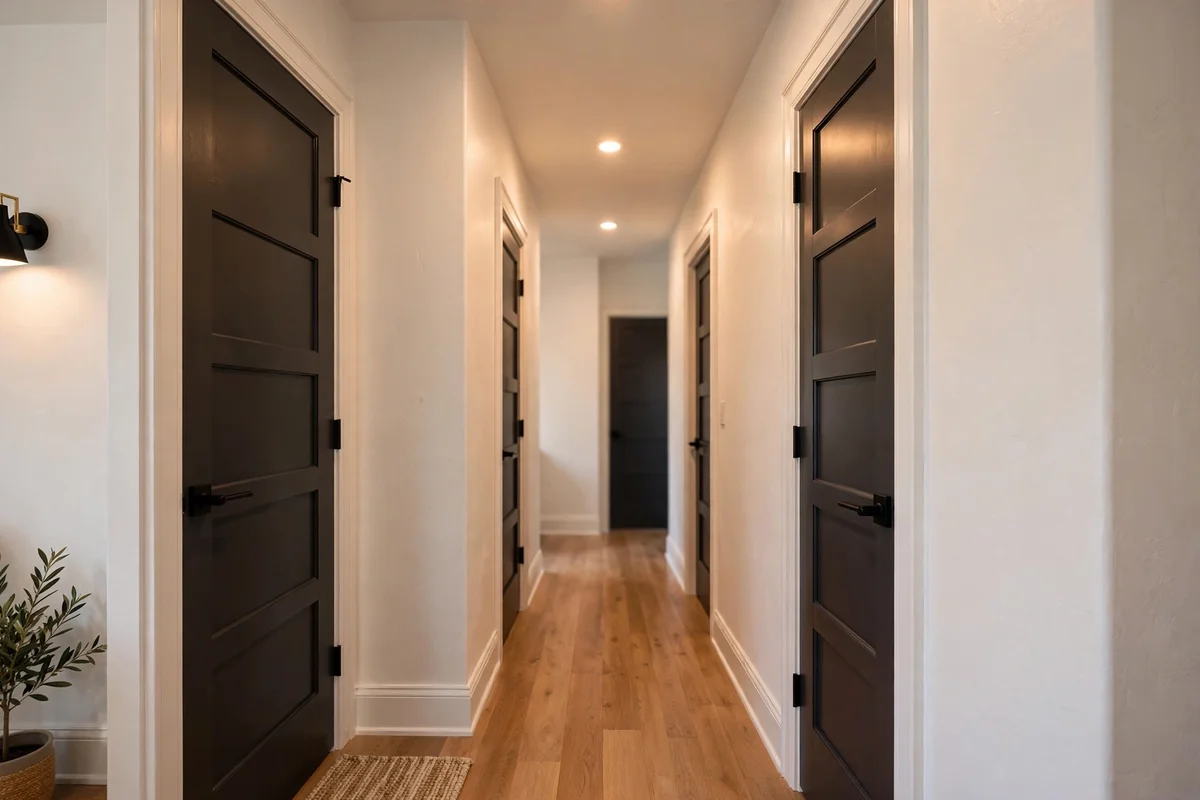
Dark doors can work in small spaces. The depth makes walls recede and the space feel larger, especially with good lighting. Keep the trim light for definition. This is counterintuitive but effective, and the surprising result delights everyone who sees it. Try it on one door first, and the low risk encourages experimenting.
Ensure adequate light; dark needs illumination. Against light walls, dark doors add depth. This is the small space trick that surprises. Deep, spacious and bold, and the clever trick costs only a single can of paint. It is the cheapest spatial illusion, and the surprising effect delights every single visitor.
21. Keep the Trim Consistent
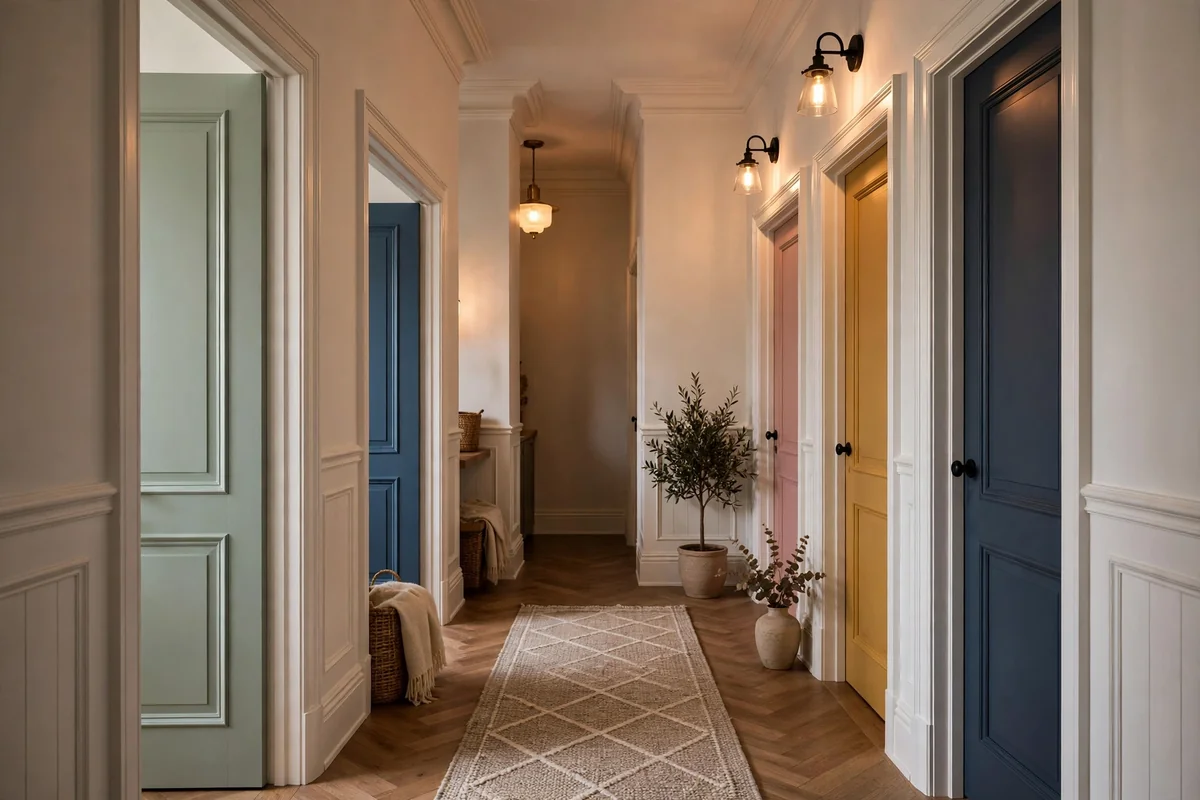
The final rule: keep trim consistent throughout. Whatever door colors you choose, consistent trim ties the home together. The trim is the thread that unifies varied doors. This discipline keeps bold choices feeling intentional, and the entire home feels beautifully cohesive from room to room, and the unity feels intentional.
Paint all trim the same white or cream. Against varied doors, consistent trim is the calm. This is the rule that makes everything else work. Consistent, unifying and essential, and this simple rule never fails you. It is the backbone of every beautiful home, and the consistency pays off daily.
Conclusion
Interior doors deserve more attention than they get. One weekend, one gallon of paint, and the right trim combination transforms hallways from forgettable to intentional. Start with the combination that excites you, keep the trim consistent, and let the doors become the quiet design detail your home was missing. Small change, enormous impact.
Frequently Asked Questions
What is the most popular interior door color?
White remains the most popular for its brightness and versatility, but black, charcoal and navy are increasingly popular for contrast. Soft greys and sage greens are timeless alternatives. The best choice depends on your trim, walls and style.
Should interior doors match the trim?
Traditionally yes, but contrast is now popular: white doors with black trim, or colored doors with white trim. Matching doors to trim creates a seamless look; contrasting makes doors a feature. Either works when done consistently.
What paint finish is best for interior doors?
Satin or semi-gloss. Both wipe clean and resist scuffs better than flat paint. Semi-gloss highlights the door’s details; satin is more forgiving of imperfections. Use quality paint and prep well for a smooth finish.
Do dark doors make rooms look smaller?
Not necessarily. In hallways and rooms with good light, dark doors add depth and make walls look brighter by contrast. In very small, dark spaces, keep doors lighter. The trim contrast matters more than the door color alone.
Can you paint interior doors yourself?
Yes. Remove hardware, clean and lightly sand, prime, then apply two coats of quality paint with a brush or sprayer. Take doors off hinges for the smoothest finish. A weekend project transforms a whole hallway.