Home Improvement
21 Under Desk Storage Ideas That Keep Your Workspace Clear and Clutter Free
By Anna Wells · · 23 min read
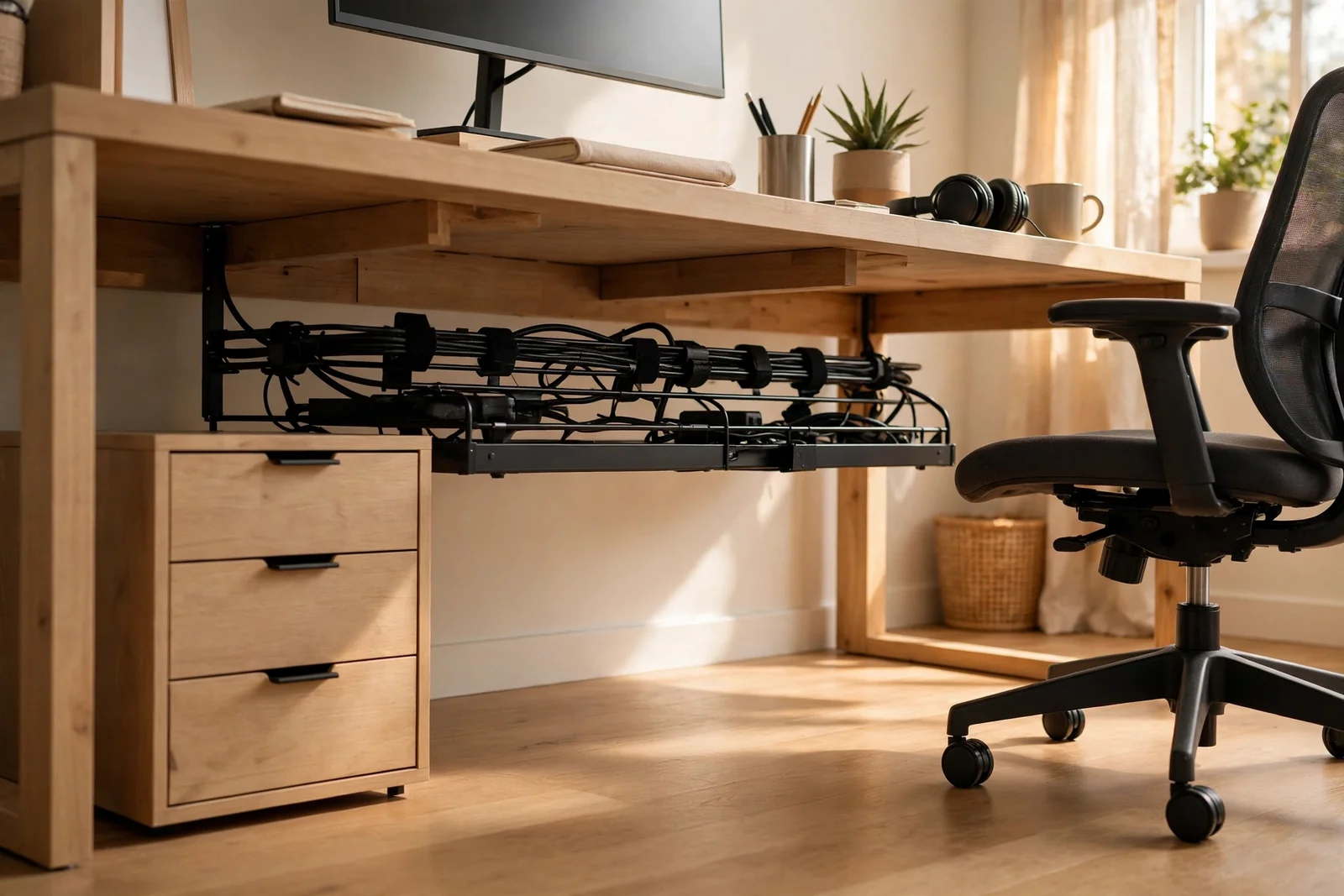
The space beneath a desk is some of the most useful storage in the home, and these twenty-one ideas turn it into calm, reachable order for cables, papers and supplies while your legs keep the room they deserve.
Most tidying advice stops at the desktop, yet the clutter that makes a workspace feel chaotic usually lives underneath it: cables pooling on the floor, notebooks migrating into corners, and boxes that were only ever meant to wait there a day. Treated properly, the under-desk bay is a whole cupboard of storage that stays invisible from the doorway and effortless from the chair.
The golden rule is to protect your legroom first. Keep the central knee space, about 60 centimetres wide, completely clear, and build storage at the sides, along the back, or mounted up beneath the desktop. Measure height, width and depth before buying anything, noting crossbars and modesty panels. With those dimensions in hand, the twenty-one ideas below will fit almost any desk, from a full home office to a homework corner.
1. A Slim Wheeled Drawer Pedestal Parked at One Side
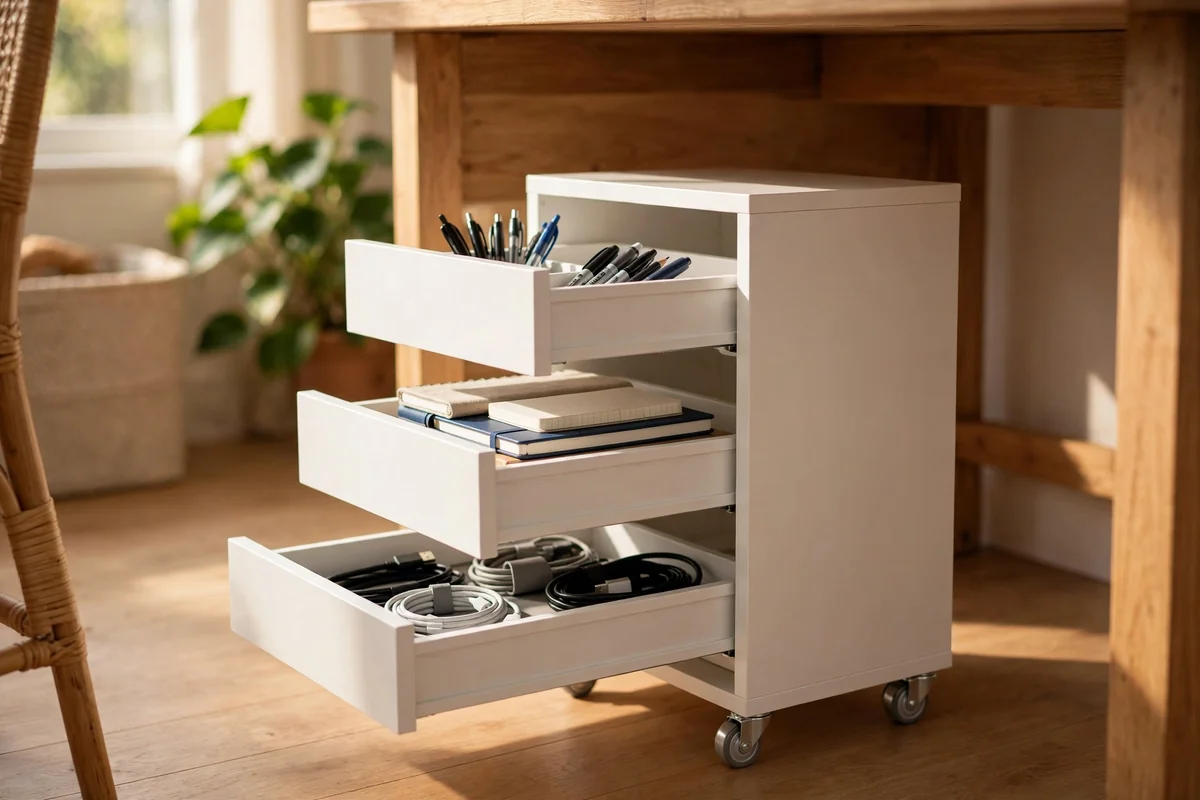
A narrow pedestal is the backbone of under-desk storage. Choose one around 40 centimetres wide with several shallow drawers rather than one deep cavern, and give each drawer a single job: pens and small tools, notebooks, cables, then paper. Parked at one side of the desk, it supports the desktop visually while leaving the centre free for your chair and legs.
Wheels matter more than they first appear. You can roll the pedestal out to clean behind it, to reach a wall socket, or to bring supplies beside you during a big project. Measure the full under-desk height including any support bar before buying, and leave a centimetre or two of clearance. Add simple dividers inside each drawer, because shallow drawers only stay tidy when small items cannot wander.
2. A Wire Basket Mounted Beneath the Desktop for Daily Papers
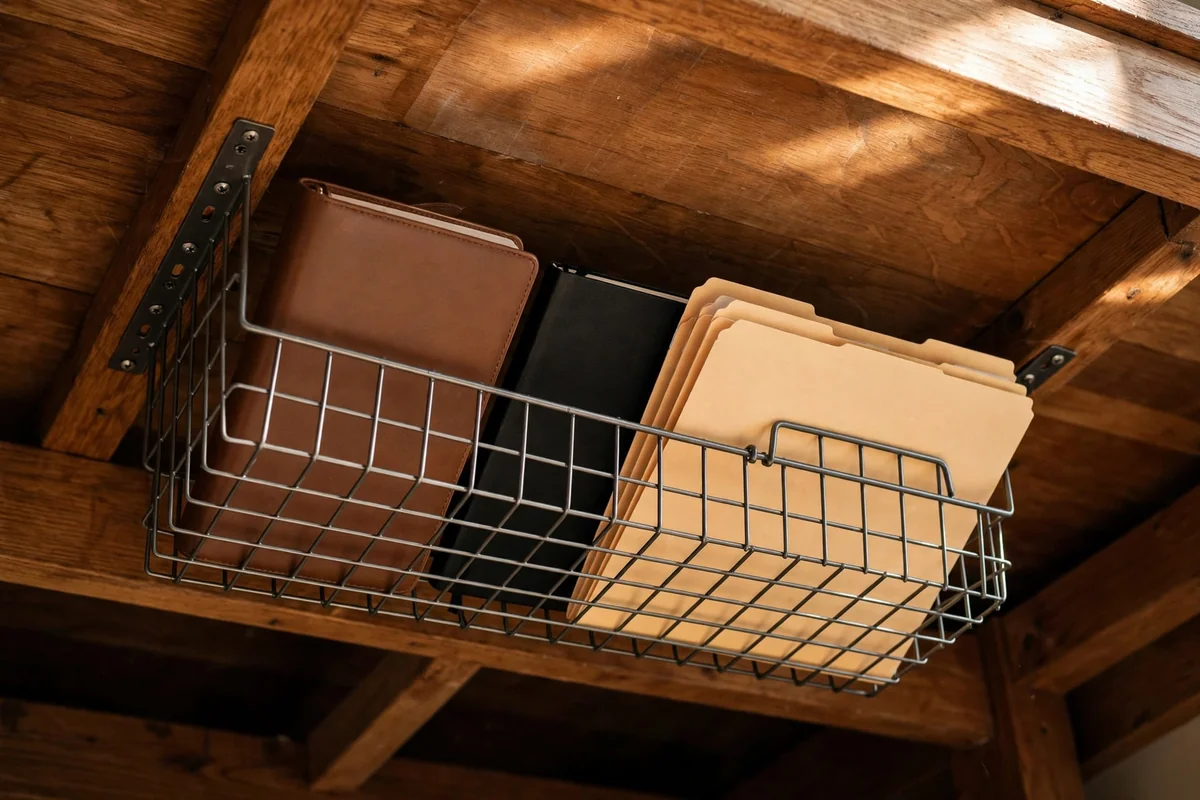
Some papers are needed daily but do not deserve desktop space. A sturdy wire basket screwed beneath one side of the desktop holds a planner, current notebook, tablet or a small stack of folders completely off the floor, yet within a single reach. Because the basket is open, you see the contents at a glance, which ends the habit of piling documents just in case.
Fit the basket toward the front half of the desk where your hand naturally falls, and check that it clears your knees when the chair is pulled in. Wire baskets around 35 by 25 centimetres suit most desks. Keep only genuinely current items in it; a weekly sort stops the basket becoming a prettier version of the pile it replaced, and the open design means dust is easy to shake out.
3. A Shallow Add-On Drawer Under a Drawerless Desk
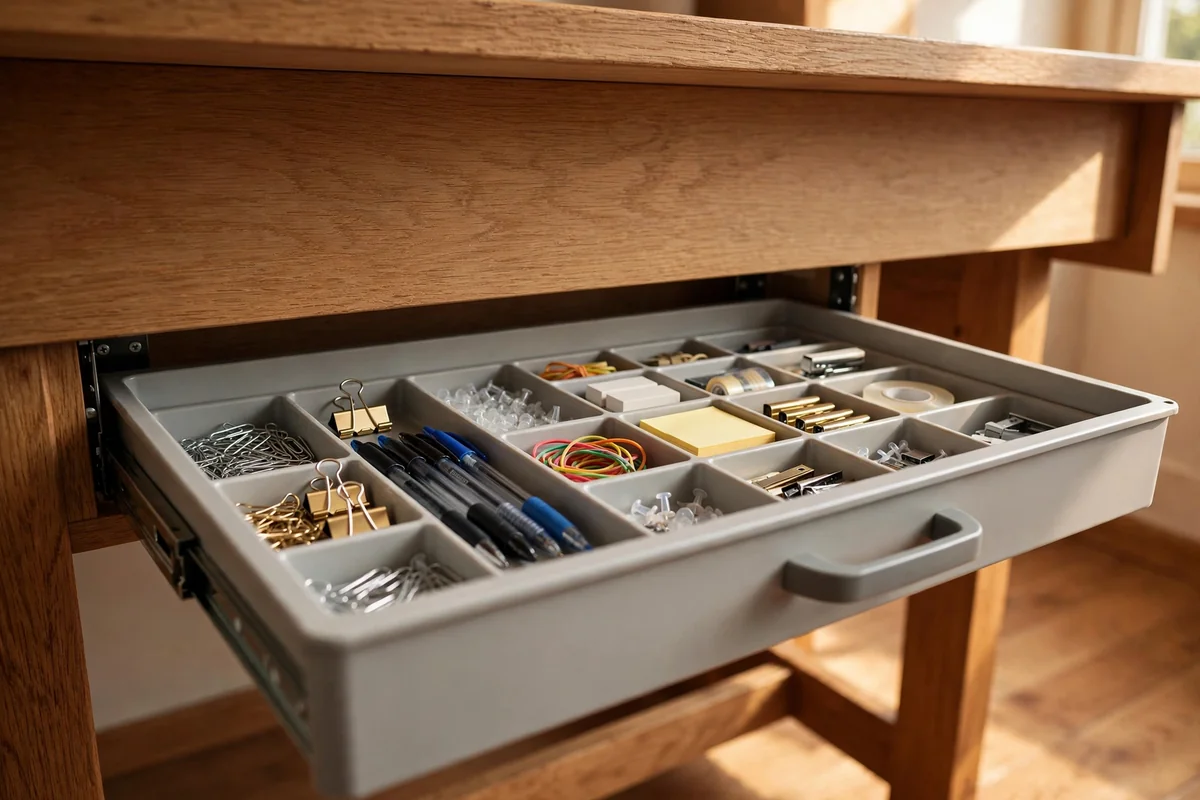
Many beautiful desks have no drawers at all, and an add-on drawer fixes that in an afternoon. These slim units screw or clamp beneath the desktop, adding a drawer around 8 to 12 centimetres deep that swallows the small things that otherwise scatter: charging cables, sticky notes, headphones, memory sticks, tape and scissors. Hidden storage like this is why some workspaces look effortlessly clean.
Choose a drawer with smooth runners and a soft close if you can, because it will be opened many times a day. Position it off-centre so it never meets your knees, and confirm the desktop is thick and solid enough to hold the screws. Avoid overloading it with heavy books, since the fixings are designed for light everyday supplies, not a library.
4. A Perforated Cable Tray Keeping Power Strips Off the Floor
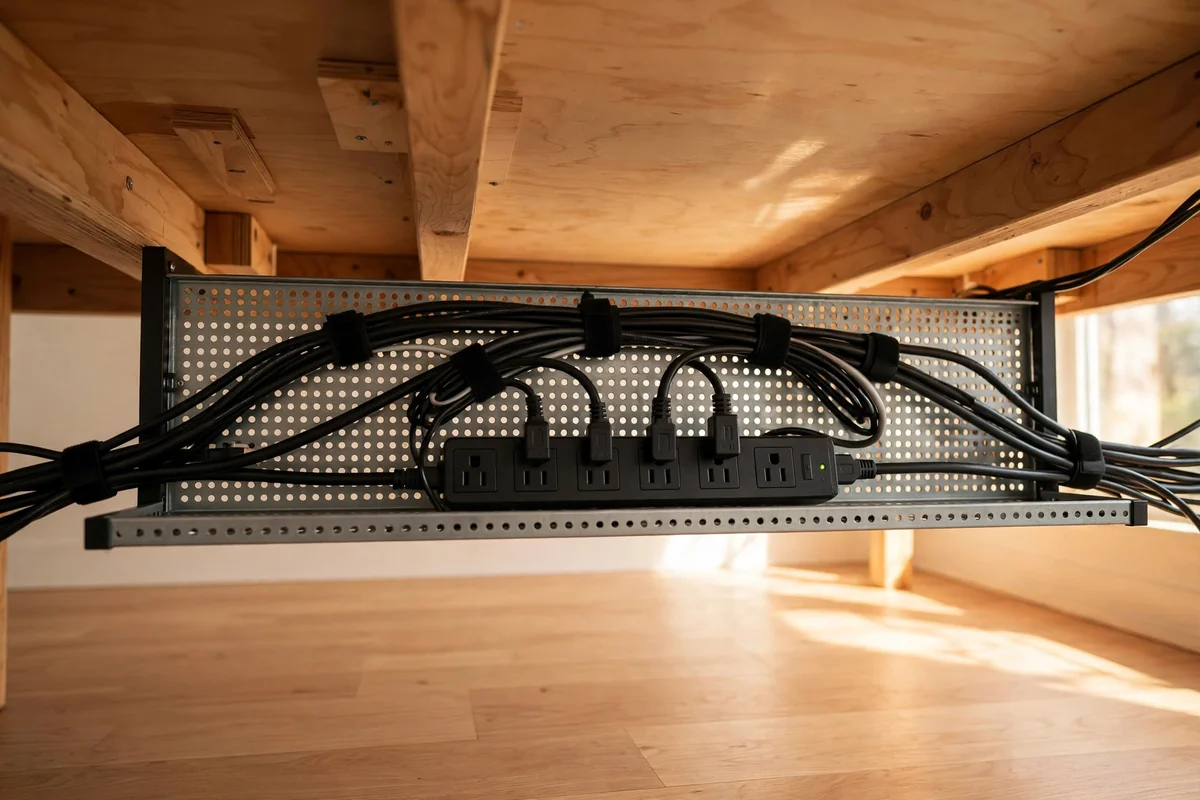
Nothing undoes a tidy desk faster than a nest of cords beneath it. A perforated metal tray mounted under the rear edge holds the power strip, adapters and spare cable length up off the floor, out of sight and out of the dust. Perforations matter: they let heat escape, give you endless points for cable ties, and keep the tray light.
Route each cable along the tray and clip the drop to each device neatly, leaving gentle slack loops for anything that moves, such as a laptop. Cleaning becomes dramatically easier when the floor underneath is bare. Label both ends of each cable with small tags, and future you, crouched with a torch replacing a charger, will be quietly grateful. Keep one socket spare for temporary gadgets.
5. A Small Peg Panel Inside the Desk Bay for Tools
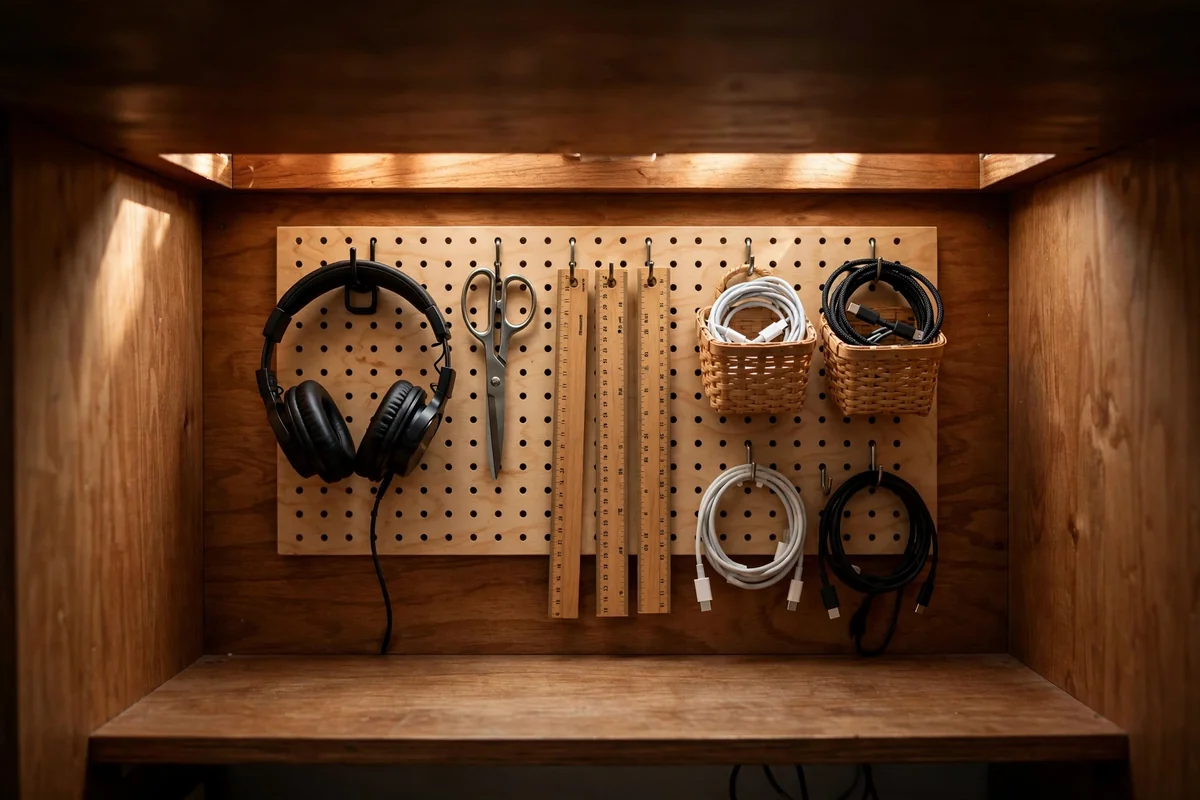
A compact peg panel turns the inside face of the desk bay into a flexible tool wall. Hooks, small baskets and clips hold headphones, scissors, rulers, tape measures and coiled cables in plain sight but completely hidden from the room. Because peg systems rearrange in seconds, the storage evolves with your projects instead of forcing you to buy new containers each time your work changes.
Mount the panel on the side you use less for legroom, and keep the most-grabbed tools at the front edge. Panels around 40 by 30 centimetres are enough for a useful station. Avoid hanging anything heavy or sharp at knee height, and choose hooks with rounded ends. The satisfaction of this idea is quiet but real: everything has a silhouette to return to at the end of the day.
6. Linen Bins on a Low Shelf Beneath the Desk Top
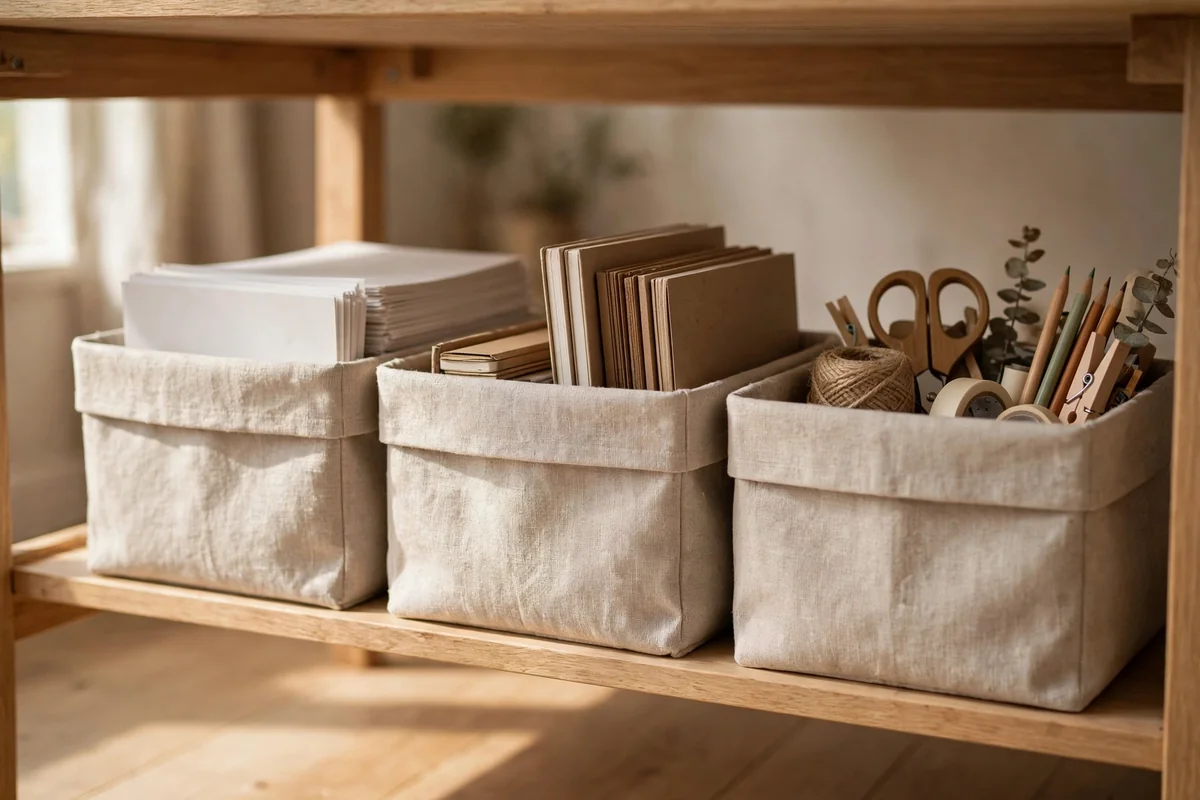
If your desk has the clearance, a single low shelf along the back creates a calm row of storage that looks like furniture rather than equipment. Matching linen or canvas bins, one for printer paper, one for notebooks and planners, one for craft or shipping supplies, hide visual noise while adding soft texture that suits home offices far better than plastic tubs.
Keep the shelf shallow, around 25 centimetres deep, so bins slide out easily and never crowd your legs behind the chair line. Identical bins in one neutral colour read as a single composed unit. Label the inside rim of each bin rather than the front if you prefer a seamless look. This arrangement is especially kind in rooms that double as guest spaces, where office storage must behave like decor.
7. An Upright File Sorter Fixed to the Underside
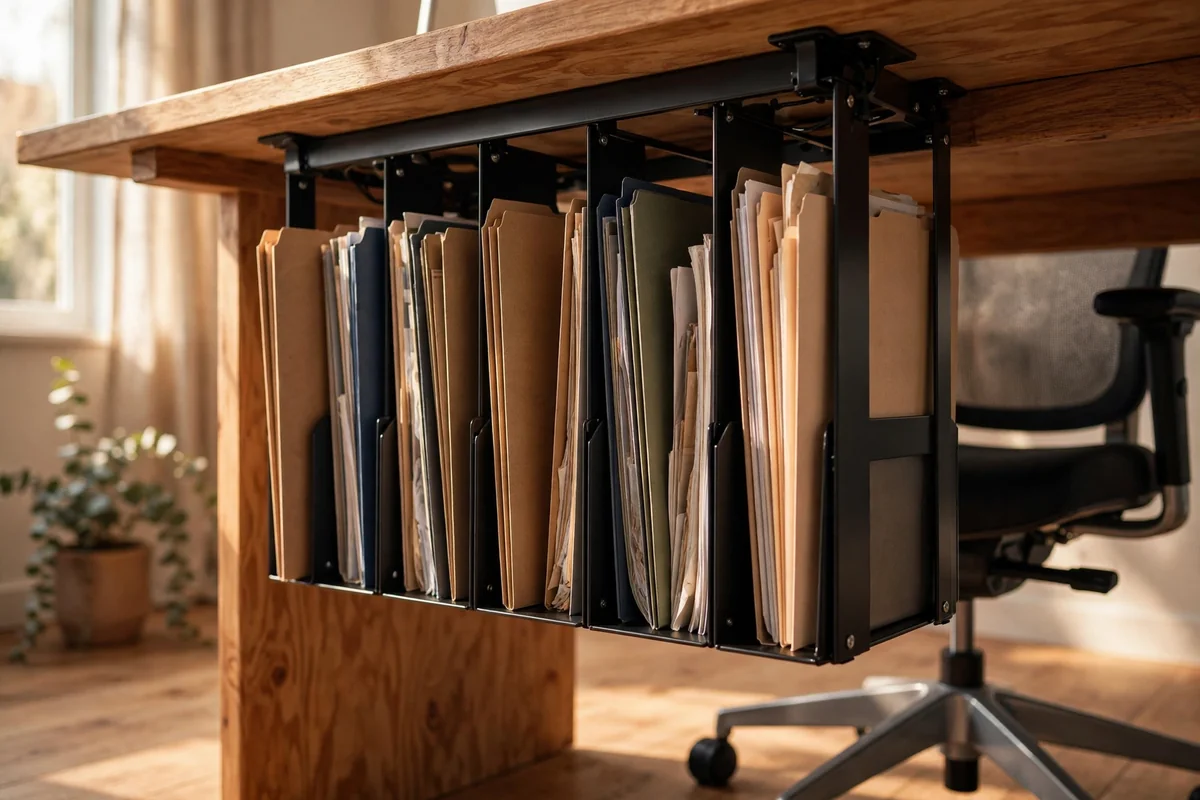
Paper piles spread because flat surfaces invite stacking. An upright file sorter mounted beneath the desk keeps current projects, bills and reference folders standing in separate slots, visible at the edges and reachable without leaving your chair. Filing vertically means you flip through options instead of excavating a pile, and finished paperwork has an obvious moment to leave the system.
Choose a sorter with five to seven compartments and fix it where your dominant hand falls naturally. Give each slot a purpose, such as action, waiting, and filing, rather than a person’s name, so the system survives busy weeks. Review it every Friday and empty one slot completely. The small discipline of upright storage is often the difference between a desk that resets daily and one that drifts.
8. A Compact Filing Cabinet That Rolls Out to Meet You
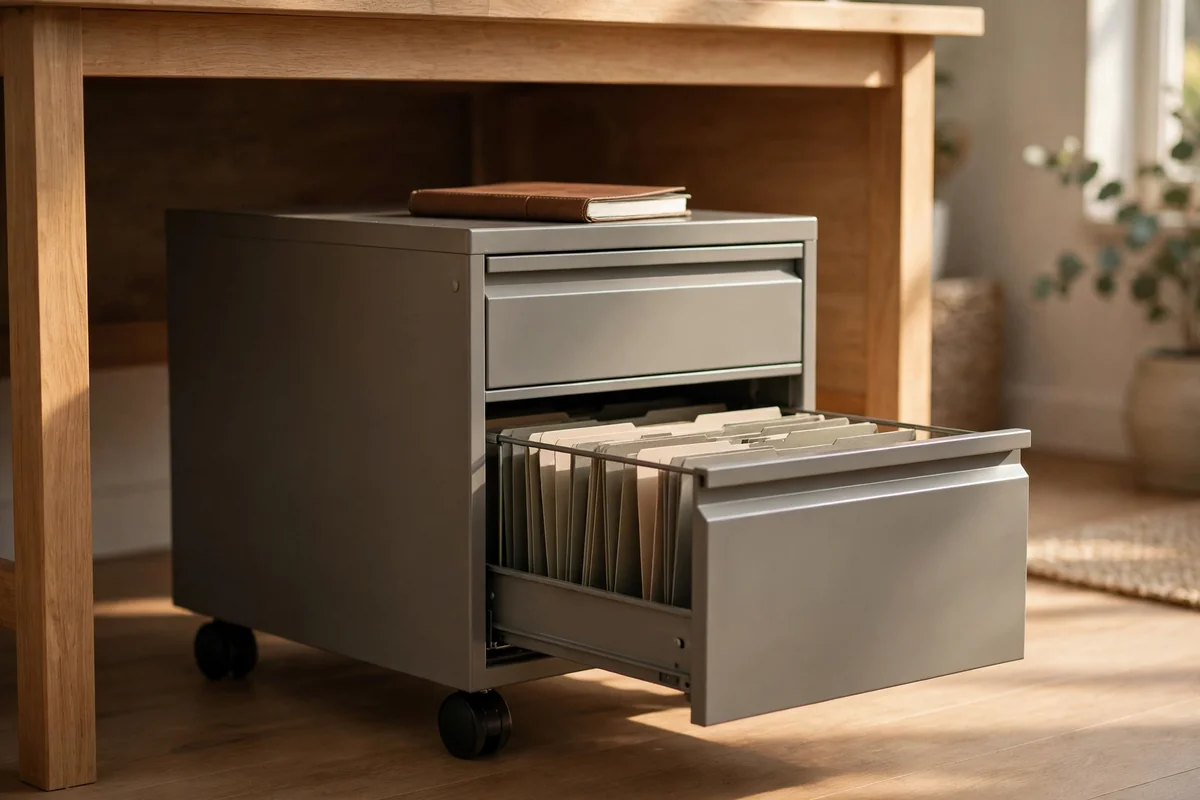
When paperwork is a real part of your work, a compact filing cabinet earns its footprint. A narrow model with one supply drawer above a deep file drawer keeps hanging folders upright and browsable. Castors transform it: instead of reaching awkwardly beneath the desk, roll the cabinet beside your chair, work with the top as a temporary side surface, then slide it home again.
Measure the under-desk height precisely, including handles and any cable tray, before ordering, because filing cabinets vary by a few critical centimetres. Keep the heaviest files toward the back of the drawer so the cabinet stays stable when open. A lockable top drawer is a sensible bonus for sensitive documents. This is the one under-desk piece worth buying well, since runners and wheels carry daily loads for years.
9. A Soft Fabric Sling for a Spare Keyboard or Tablet
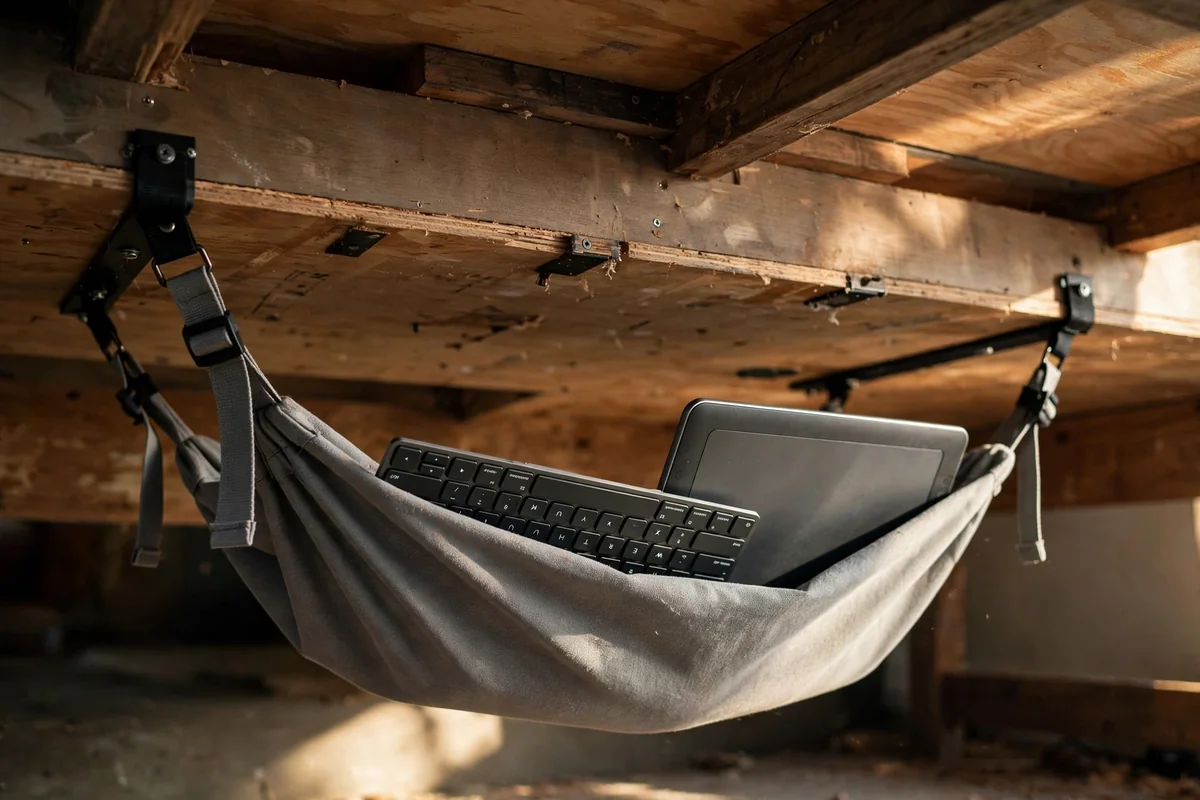
A fabric sling creates a soft suspended shelf for flat things that are needed often but not constantly: a spare keyboard, a closed drawing tablet, a large notebook or a slim laptop sleeve. Hung beneath the desktop toward the back or side, it keeps these items off the floor, safe from kicks, and protected from scratches by the fabric itself.
Strong straps and secure mounting points are essential, especially for anything with weight, so follow the maker’s limits and never load a sling with several heavy devices. Position it so it cannot brush your knees when you sit down. This idea suits renters and minimalists particularly well, because it adds real storage with no furniture at all, and it removes in minutes when you move or rearrange the room.
10. A Wide Keyboard Tray That Doubles as a Notebook Shelf
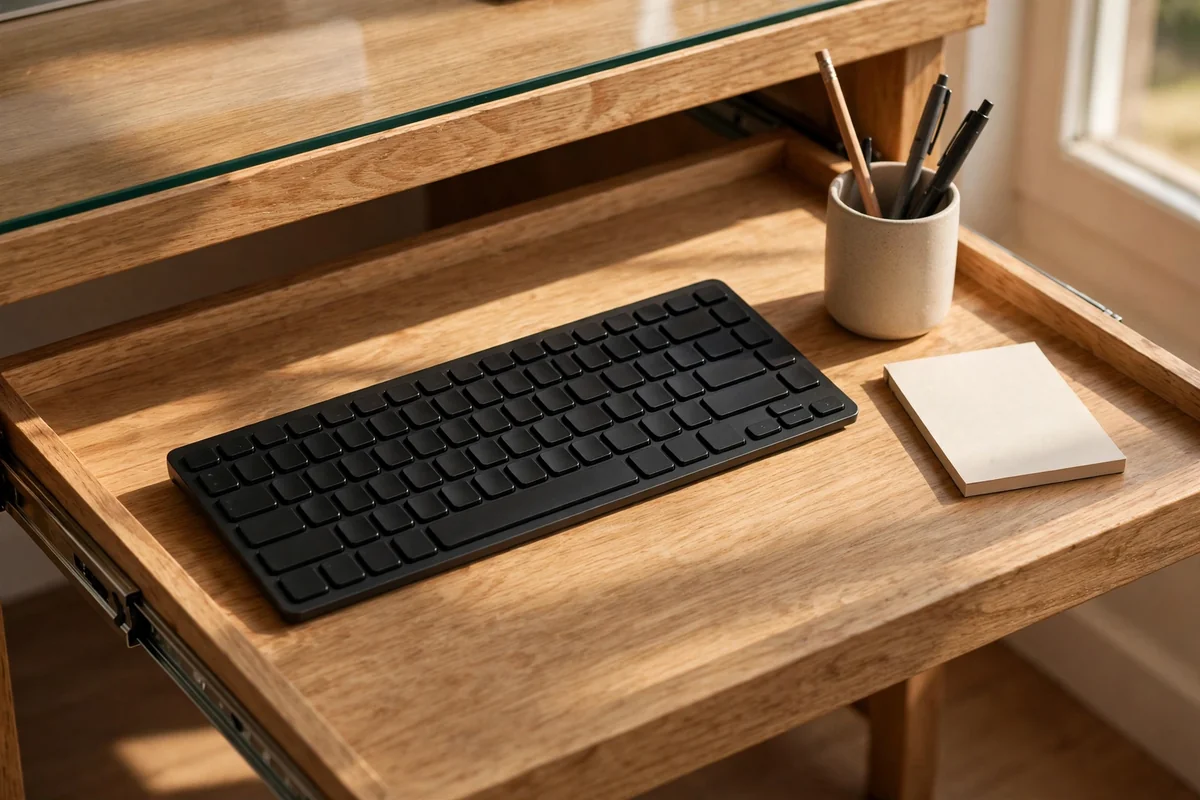
A keyboard tray is usually sold as an ergonomic extra, but it is also excellent storage. Moving the keyboard and mouse below the desktop frees the whole surface for writing, reading and spreading out documents. Choose a wide tray, around 70 centimetres, and there is room at one side for a small notepad, stylus or pen cup without crowding your hands.
Height and smoothness decide whether a tray helps or irritates. It should slide easily, sit level with your elbows, and clear your chair arms. Rounded front edges are kinder on wrists during long sessions. If you rarely type, the same tray becomes a pull-out shelf for a laptop or sketchbook. Avoid trays that sit too low, since cramped knees will undo every ergonomic benefit within a week.
11. A Narrow Two-Tier Book Trolley for Reference Binders
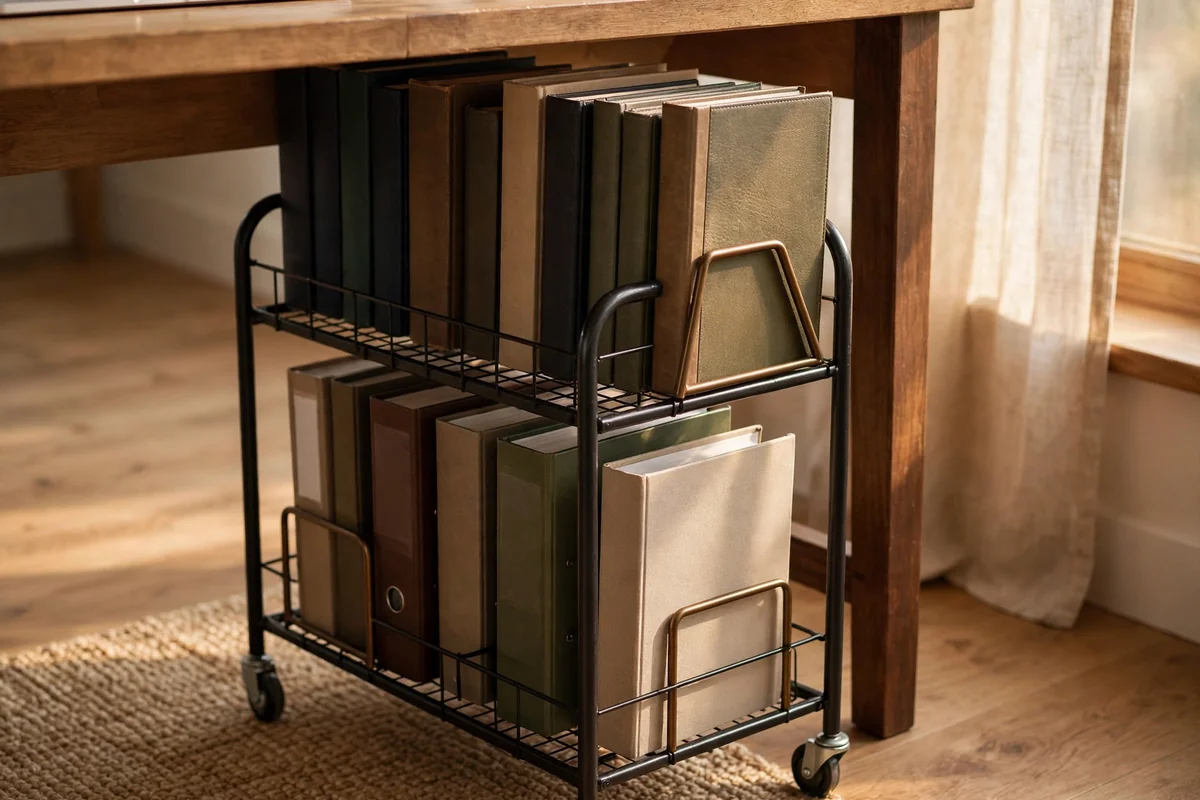
Books and binders are heavy, bulky and forever migrating onto the desk. A narrow two-tier trolley, slim enough to slide into the bay beside your chair, keeps reference materials upright and mobile. Current work lives on the top tier, less-used volumes below, and bookends or a magazine file stop thin notebooks from slumping. When a project needs the books elsewhere, the whole library rolls with you.
Limit each tier to one category so the trolley never becomes a general overflow. Metal trolleys in a colour that matches your desk read as intentional furniture, especially with matching files. The common failure is overfilling until the trolley will not slide; leave visible air on each tier. If your desk bay is shallow, park the trolley against the desk side instead, where it works as a slim sidecar.
12. A Locking Mini Drawer for Documents and Backup Drives
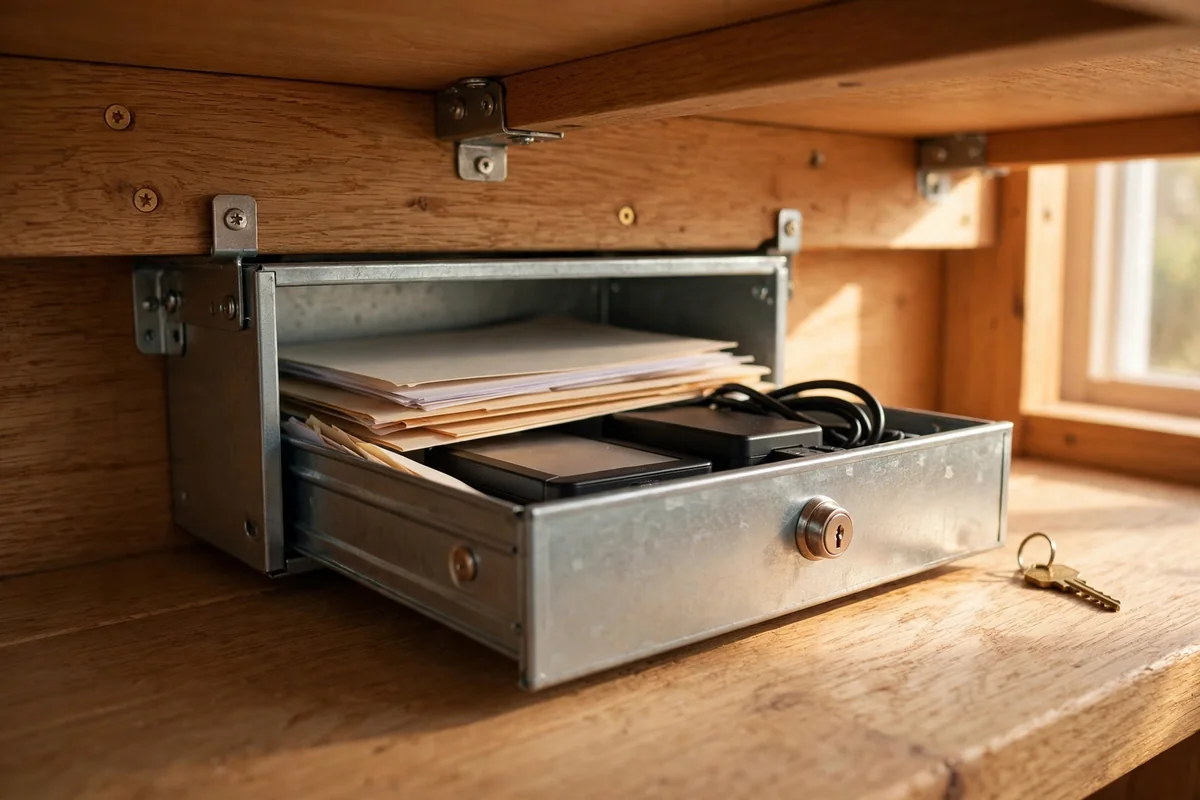
Some things should be close but not casual. A small locking drawer beneath the desktop holds important documents, backup drives, spare keys and private work materials out of sight, without the bulk of a safe. It is controlled storage, not a hiding place for clutter, so keep its contents to a short, deliberate list and store the key somewhere separate and sensible.
Before installing, check the weight rating of the drawer and confirm the desktop can carry it, because a poorly mounted drawer works loose over time. Metal drawers feel more secure than plastic and usually include better locks. This is also a thoughtful addition in shared homes and family offices, where privacy is mostly about keeping curious small hands and casual visitors away from things that matter.
13. An Open Cubby Block Tucked Beneath One End of the Desk
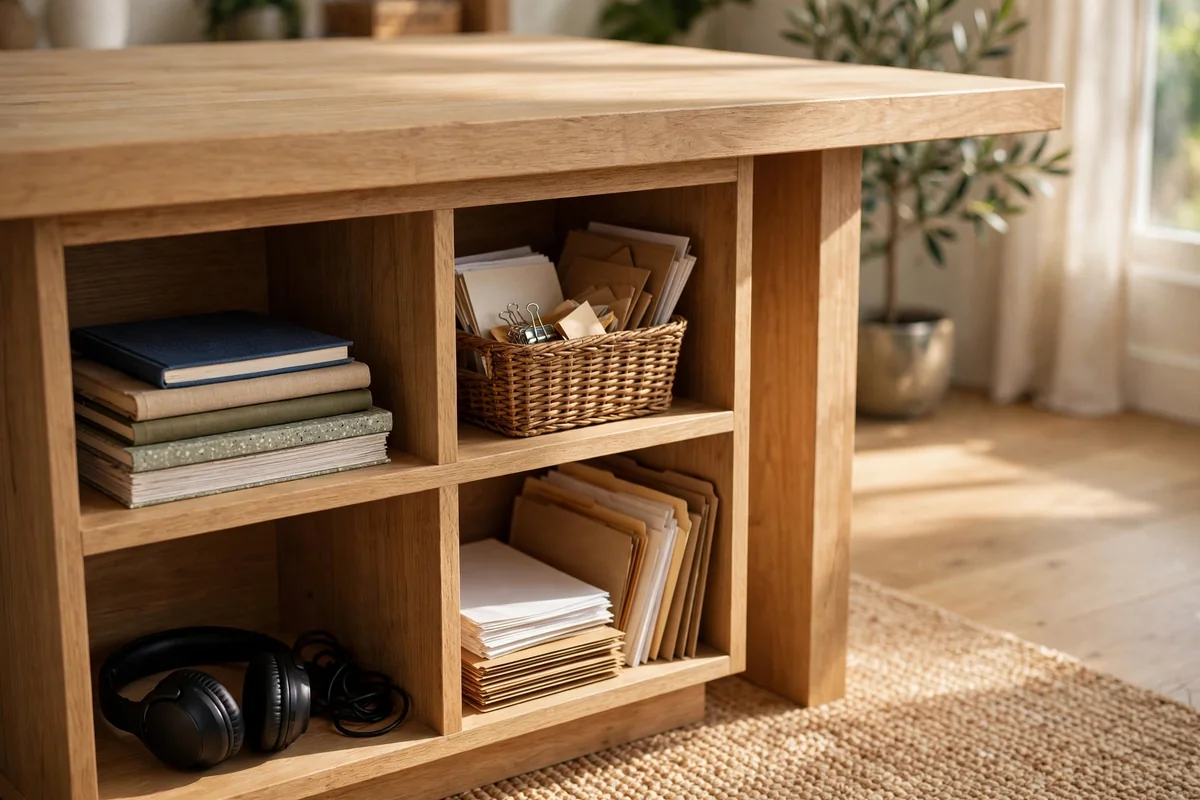
An open cubby block is the middle path between drawers and shelves. Separate compartments give notebooks, paper supplies, headphones and small boxes a visible home each, and because nothing is hidden, you can survey the whole system at a glance before starting work. It suits people who forget what they cannot see, which is a great many of us.
Place the block beneath one end of a wider desk, never in the centre, and mix open compartments with one or two baskets for untidy items such as cables or craft bits. Four to six compartments is plenty; more becomes a honeycomb of tiny decisions. Keep the top of the block clear or use it for the printer, and the whole end of the desk becomes a calm, hardworking station.
14. Clear Lidded Boxes Stacked for Cables and Small Tech
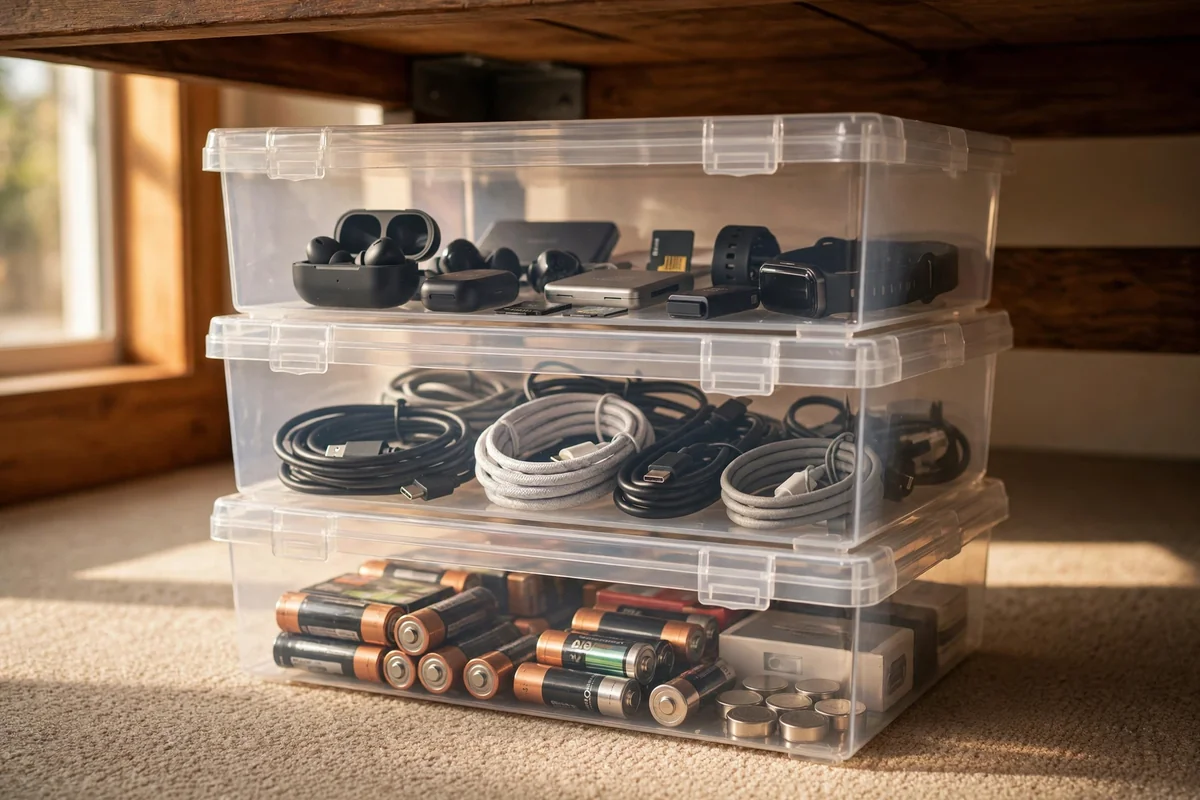
Small technology multiplies quietly: spare cables, adapters, batteries, cartridges and chargers. Clear lidded boxes bring it under control, because you can identify contents without opening anything. Use shallow boxes, one category each, stacked no more than three high in the least accessible corner of the bay, since these are weekly rather than hourly supplies.
Lids keep dust out and stop small pieces escaping when boxes are moved. Leave a little headroom in each box for future arrivals, and add a plain label on the end even though the sides are clear, because labels still read faster. Resist the single giant tech box; everything tangles, nothing can be found, and you will buy duplicates of cables you already own. Small, honest categories are the entire secret.
15. See-Through Mesh Pockets Hanging From the Desk Side
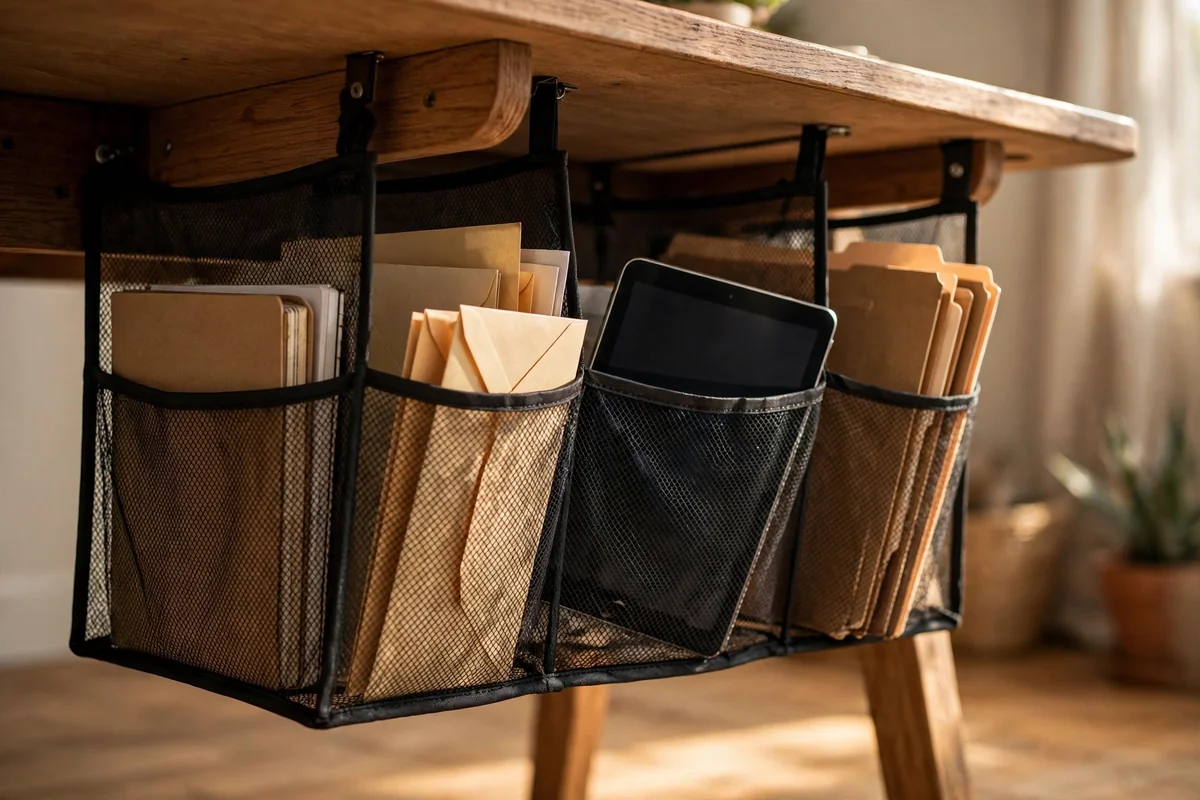
Mesh pockets add storage with almost no visual or physical bulk. Hung beneath the side of the desk or along its inner face, they hold notebooks, planners, envelopes, tablets and folders you reach for constantly, and the see-through mesh means the right one is found without any rummaging. Reinforced mesh keeps its shape, so choose sturdy stitching over the cheapest option.
This idea shines in the smallest home offices, where floor storage is impossible. Keep pockets for light, flat items only; heavy loads stretch mesh and pull fixings loose. Two or three pockets in a row form a tidy run. Because everything is visible, the pockets gently discourage hoarding, since a pocket stuffed beyond its shape is obvious at a glance and quick to correct during a weekly reset.
16. Wooden Crates on Furniture Sliders for Paper and Supplies
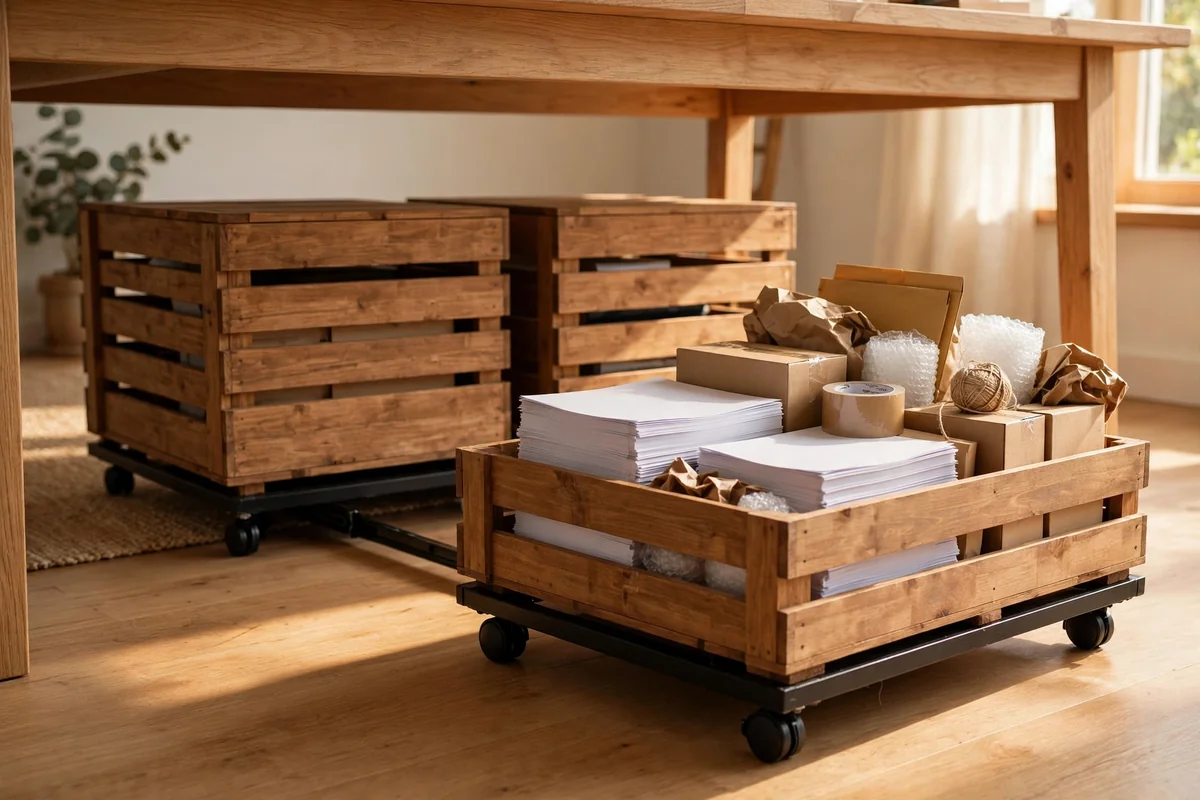
Plain crates become genuinely useful when they glide. Set wooden or sturdy plastic crates on low furniture sliders or small castors and they slide out from beneath the desk like drawers, bringing printer paper, shipping supplies and spare notebooks with them. Separate crates by job, and the system costs a fraction of fitted furniture while looking warm and intentional, especially when the crates match.
A handle cut-out or a short rope handle makes pulling easier. Keep crates to a size you can lift when full, around 40 by 30 centimetres, because paper is deceptively heavy. This arrangement suits desks with open legs and no modesty panel. Line wooden crates with a sheet of paper if splinters threaten documents, and enjoy how easily the floor beneath can finally be cleaned.
17. A Ventilated Docking Shelf That Hides the Closed Laptop
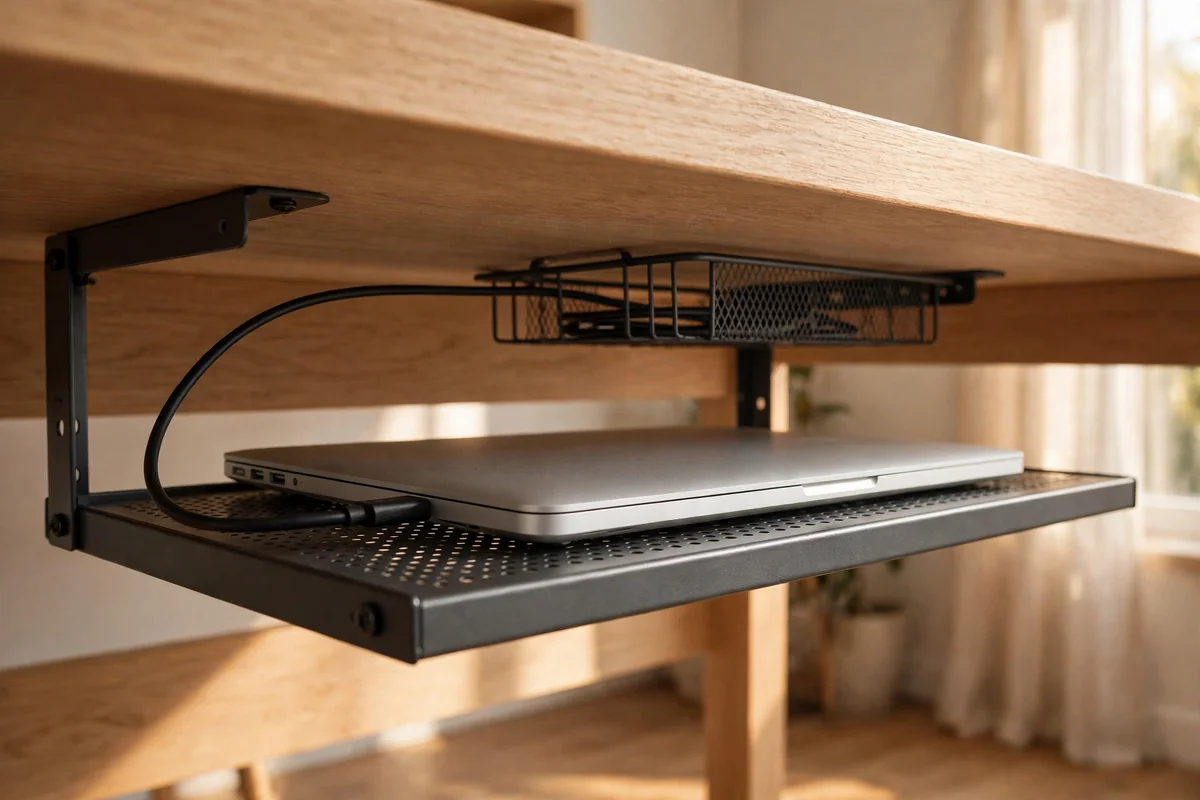
If you work from a laptop with an external monitor, the closed laptop still eats half your desk. A slim ventilated shelf mounted beneath the desktop gives it a proper home: protected, out of sight, and with air flowing around it so it stays cool while it runs. The desktop above becomes completely clear for paper work, which changes how spacious a small office feels.
Ventilation is the detail that matters, so choose a perforated or slatted shelf and keep the vents of the machine unobstructed. Route the charging and monitor cables straight from the shelf into your cable tray for a nearly wireless look. Confirm the shelf is rated well above your laptop’s weight, and position it toward the back of the bay so the machine is safe from knees and chair wheels.
18. Adjustable Dividers Turning One Drawer Into Many
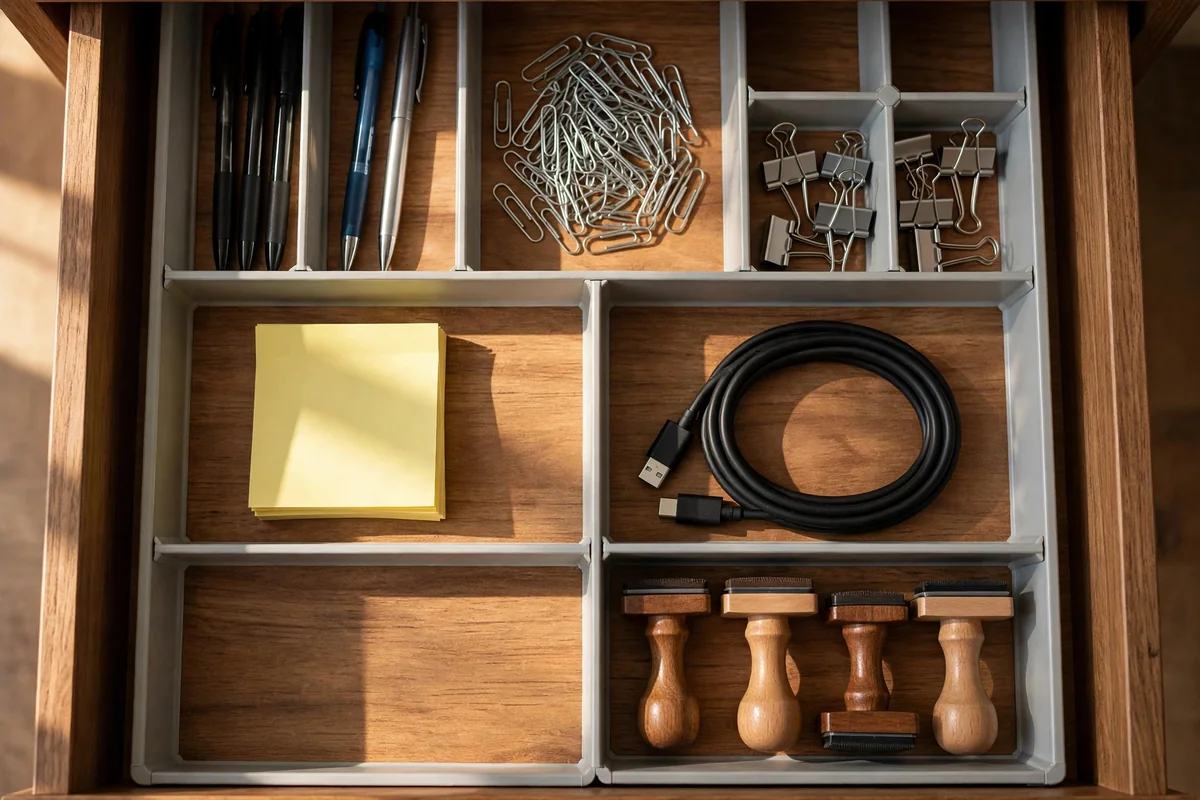
A single open drawer becomes chaos within a month unless it is divided. Adjustable dividers, the kind that slot together into a grid, let you carve the drawer into compartments sized for exactly what you own: long channels for pens and rulers, small squares for stamps, clips and sticky notes, and a wider bay for a calculator or tape dispenser.
Rearrange the grid whenever your supplies change, which is the advantage over fixed trays. Keep the most-used items at the front and the rarely touched at the back, so opening the drawer feels like reading a menu. The golden rule is one category per compartment, with no miscellaneous section, because a miscellaneous section is simply clutter with a label. A two-minute tidy each Friday keeps the grid honest.
19. A Footrest Crate With a Cushioned Top and Storage Inside
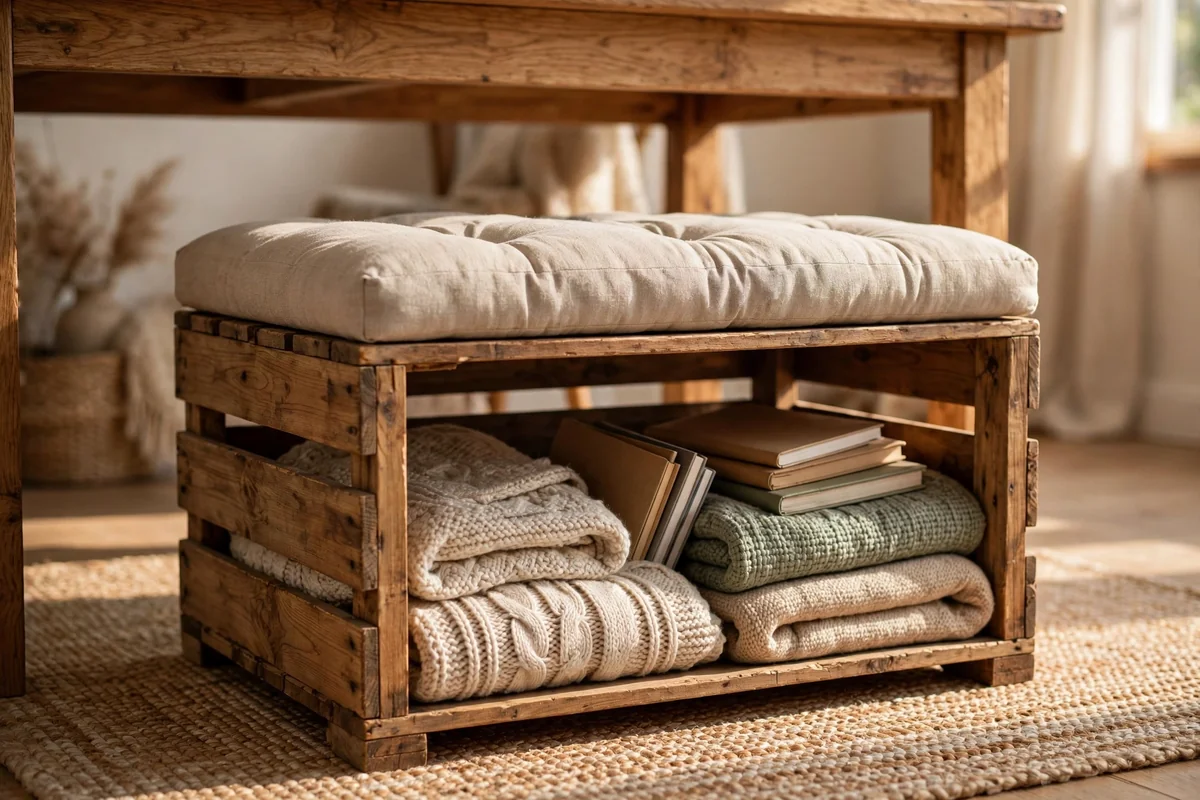
Under-desk space can comfort as well as store. A sturdy wooden crate topped with a cushion works as a footrest that improves your sitting posture, while the inside holds a folded throw, spare notebooks or the craft project that lives near the desk. It earns its place twice, which is exactly what small workspaces need from every object they contain.
Size the crate to your legs: roughly 40 centimetres wide and 25 to 30 high suits most chairs, and the cushion should be firm rather than soft so your feet rest at a natural angle. Keep the stored contents light and soft so the crate stays easy to slide. This is a kind answer for desks in living rooms, where a crate looks like furniture and hides its office job gracefully.
20. Hooks Along the Inner Leg for Headphones and a Day Bag
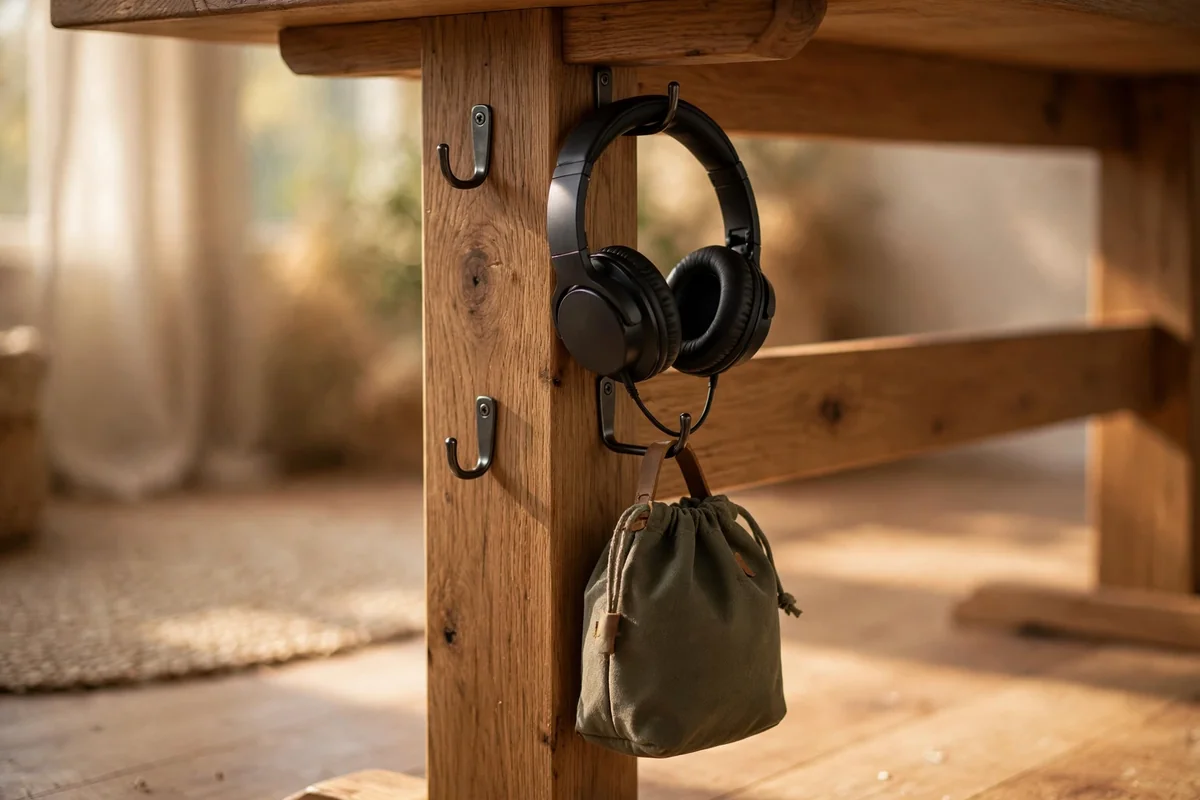
Two sturdy hooks on the inner face of a desk leg clear two everyday offenders from the floor and desktop at once. Headphones hang at ear height ready to grab, safe from being rolled over by chair wheels, and a day bag or tote hangs beside them instead of collapsing into a heap that collects dust and trips feet.
Use adhesive hooks rated for the weight if you cannot screw into the desk, and place them high enough that bags clear the floor but low enough to reach from the chair. Keep this to two or three hooks; a whole row invites coats, cables and clutter to migrate. It is a five-minute, five-pound improvement that makes the whole under-desk area look considered rather than accidental.
21. Two Clear Zones, Work on the Left and Personal on the Right
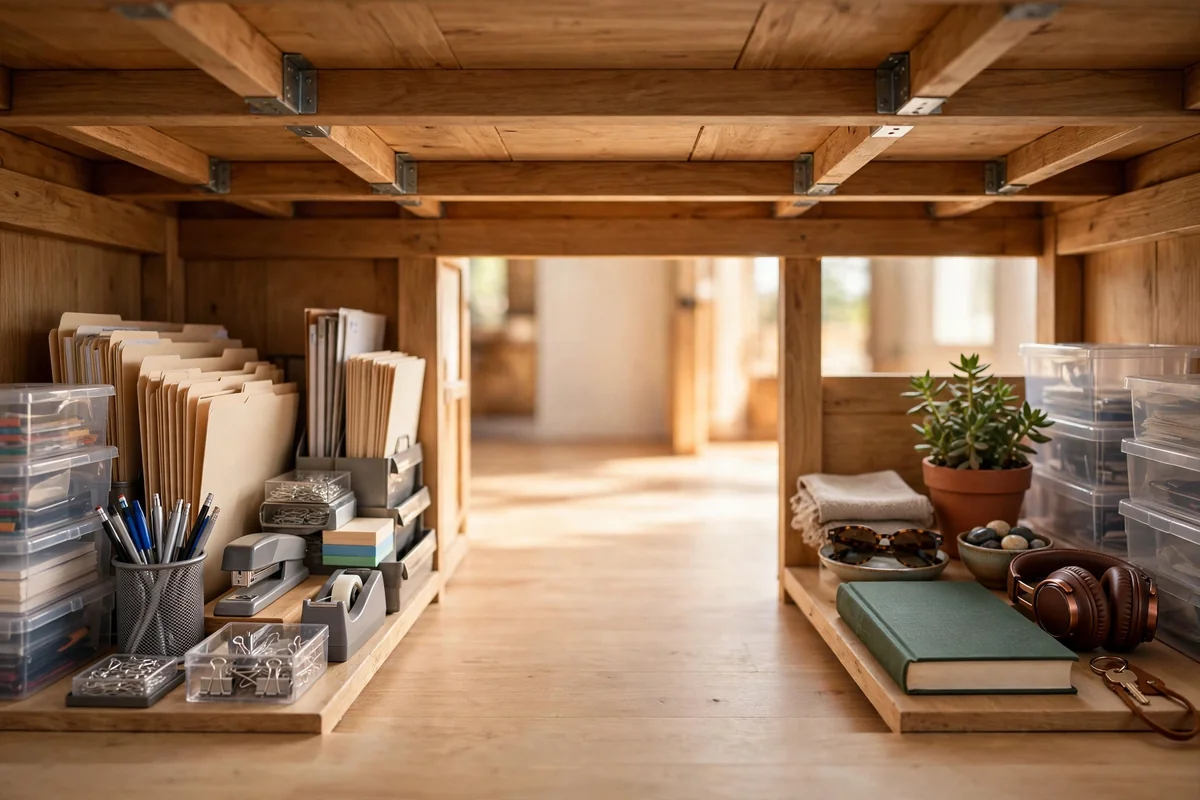
Systems survive when they match how you think, and zoning is the simplest system of all. Divide the under-desk bay into two territories with the clear knee space between them: work storage on one side, such as files, pedestal and paper, and personal storage on the other, such as a bag, a book, a small plant or a footrest crate. Everything you own for the desk then has exactly two possible homes.
Zoning makes tidying almost thoughtless, because the question is never where precisely something goes, only which side. It also protects the boundary between work and rest in a home office, since personal things visibly wait on their own side until the day ends. Review the zones monthly, evict anything that serves neither, and your under-desk space will stay as calm as the day you organized it.
A Few Final Thoughts
Under-desk storage works when it is planned around your legs, your habits and the handful of things you truly reach for each day. Measure carefully, mount what you can, give every container one honest job, and keep the middle clear. Start with a cable tray and one set of drawers, because those two changes alone transform most desks, then add ideas from this list only where a real need appears. Calm, reachable order is the goal.
Frequently Asked Questions
How much legroom should I leave under my desk?
Keep the central knee space completely clear, roughly 60 centimetres wide, the full depth of the desk and high enough that your thighs never meet a drawer. Sit in your chair, cross your legs and swivel before fixing anything permanently, because comfort problems only appear in real use. Storage belongs at the sides of the bay, along the back panel, or mounted up under the desktop where it cannot meet knees, feet or chair arms.
What is the best under desk storage for a small desk?
Mounted storage wins in small spaces because it adds capacity without touching the floor. A cable tray along the back, one shallow add-on drawer, a wire basket for daily papers and a small peg panel together hold most of what a small desk needs. If you add just one freestanding piece, make it a narrow rolling pedestal or trolley that can leave the bay entirely when you need the room.
How do I hide cables under my desk neatly?
Start with a perforated tray mounted beneath the rear edge of the desktop, and place the power strip and all adapters inside it. Coil excess cable length into gentle loops within the tray, then run each lead along the tray and clip it up the desk leg or frame to its device with reusable straps. Label both ends of every cable. The floor should end up completely bare, which makes cleaning and finding faults simple.
Can under desk storage work with a standing desk?
Yes, provided everything either mounts to the desk or weighs very little. Add-on drawers, cable trays, baskets and peg panels fixed to the desktop rise and fall with it, which is exactly what you want. Freestanding pedestals and filing cabinets stay on the floor, so leave enough cable slack between them and the moving desk. Check the desk’s lifting capacity too, because mounted storage and equipment together count toward the total load.
How do I stop under desk storage becoming a dumping ground?
Name every container’s single job and refuse second jobs. One box for cables, one drawer for documents, one basket for daily papers. Then protect the system with a five minute weekly reset: return strays, empty one container fully to check its contents, and remove anything that has no job. Clutter returns through vague storage, so the clearer the categories, the longer your calm under-desk order will last.