Bathroom
22 Bathroom Shelf Decor Ideas That Turn Storage Into a Small Moment of Beauty
By Anna Wells · · 22 min read
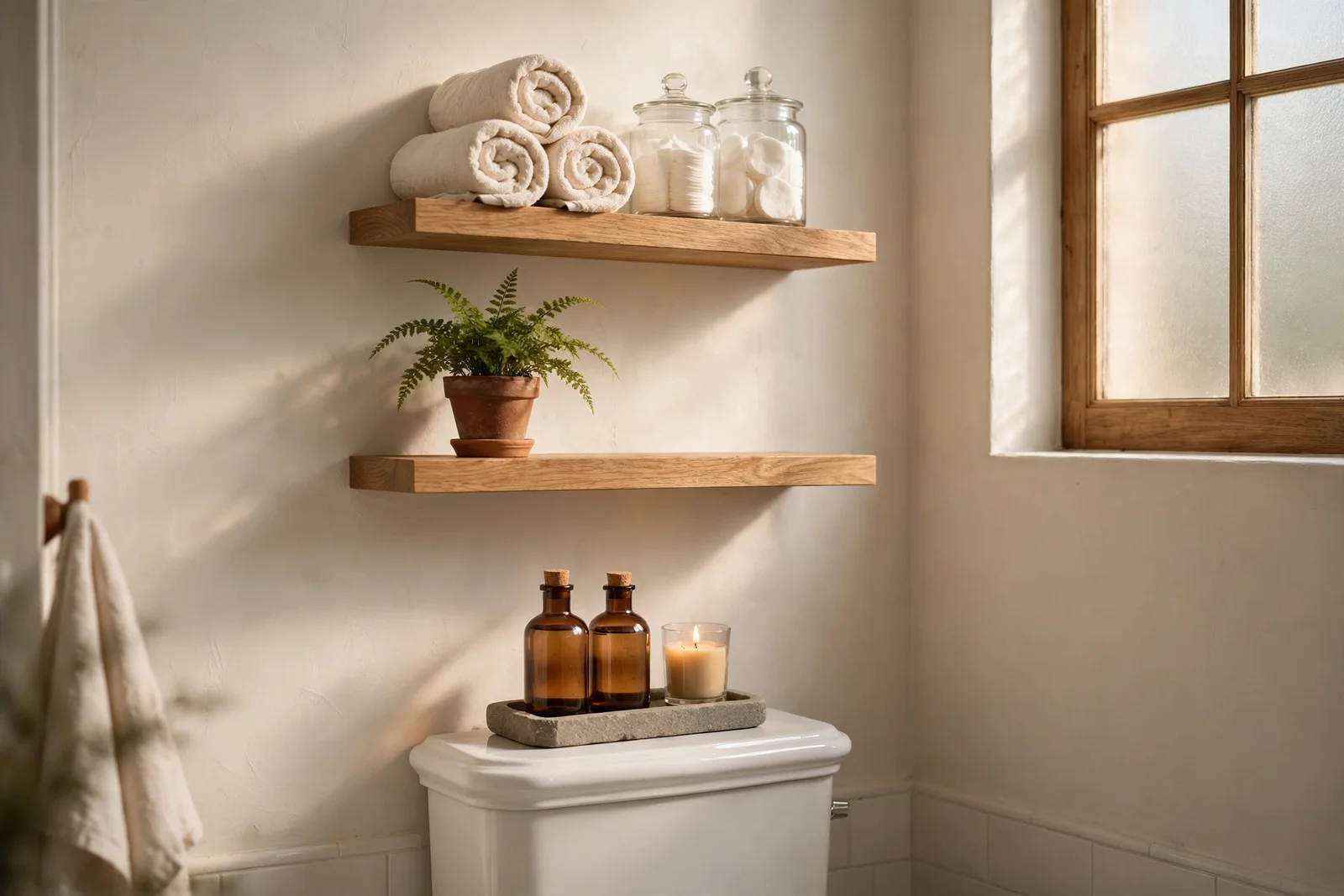
Bathroom shelves hold the busiest everyday things, yet with moisture-safe materials and a calm styling hand they become one of the prettiest corners of the house.
Early morning light lands on the wall above the toilet, and for a moment the shelf there holds nothing but a folded towel, a small plant and a glass jar catching the glow. It is a quiet scene, yet it shows how much a simple shelf can do when it is styled with intention.
Bathroom shelves carry the busiest items in the house: toothbrushes, bottles, spare towels and cotton pads. That is exactly why they deserve real styling thought, because the most-used corner of the room sets the mood for every morning routine.
This guide gathers 22 practical ideas, from floating shelves above the toilet to ladder units in the corner, rolled towels, glass jars, woven baskets, trays, candles and framed prints. Every idea names sizes, materials and budgets, plus one mistake to avoid, so you can style with complete confidence.
1. Mount Two Floating Shelves Above the Toilet for Daily Essentials
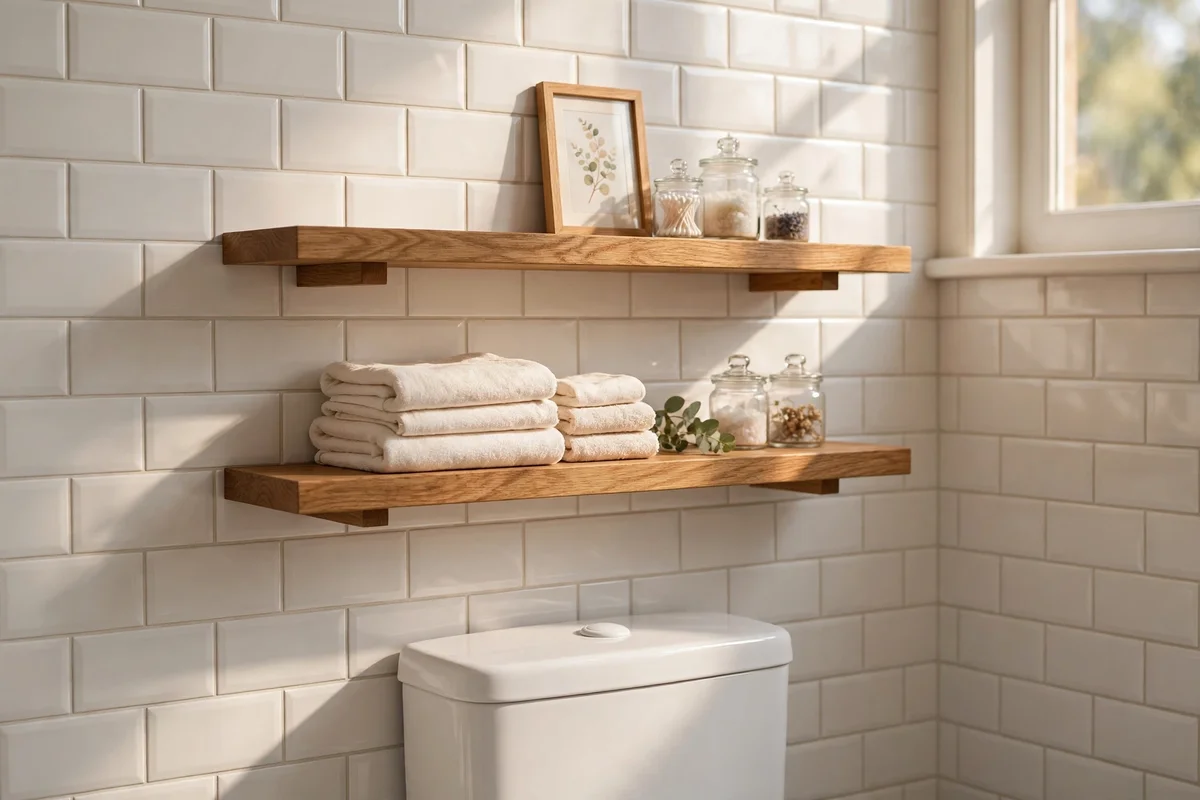
The wall above the toilet is usually wasted space, yet it is the perfect height for two floating shelves holding everyday things. Mount the first shelf about 45 cm above the cistern lid so the tank lid can still lift for maintenance. A 60 to 80 cm wide shelf suits most bathroom widths without overwhelming the wall. Choose solid oak or sealed pine for a warm look, or powder coated metal if your style leans modern. Keep both shelves level using a spirit level, since even a 5 mm tilt shows on bare walls.
Style the lower shelf with the items you reach for daily, like a small soap dish, spare toilet rolls and a folded hand towel. The upper shelf suits prettier, lighter things: a small plant, a glass jar of cotton pads and one framed print. The mistake to avoid is loading the lower shelf with heavy bottles, which makes the arrangement topple visually and physically. Check your shelf fixings are rated for at least 7 kg each, since books and full jars weigh more than they look. Budget tip: two stained pine shelves with concealed brackets cost 25 to 40 dollars.
2. Line the Wall Beside the Mirror With a Slim Shelf for Everyday Bottles
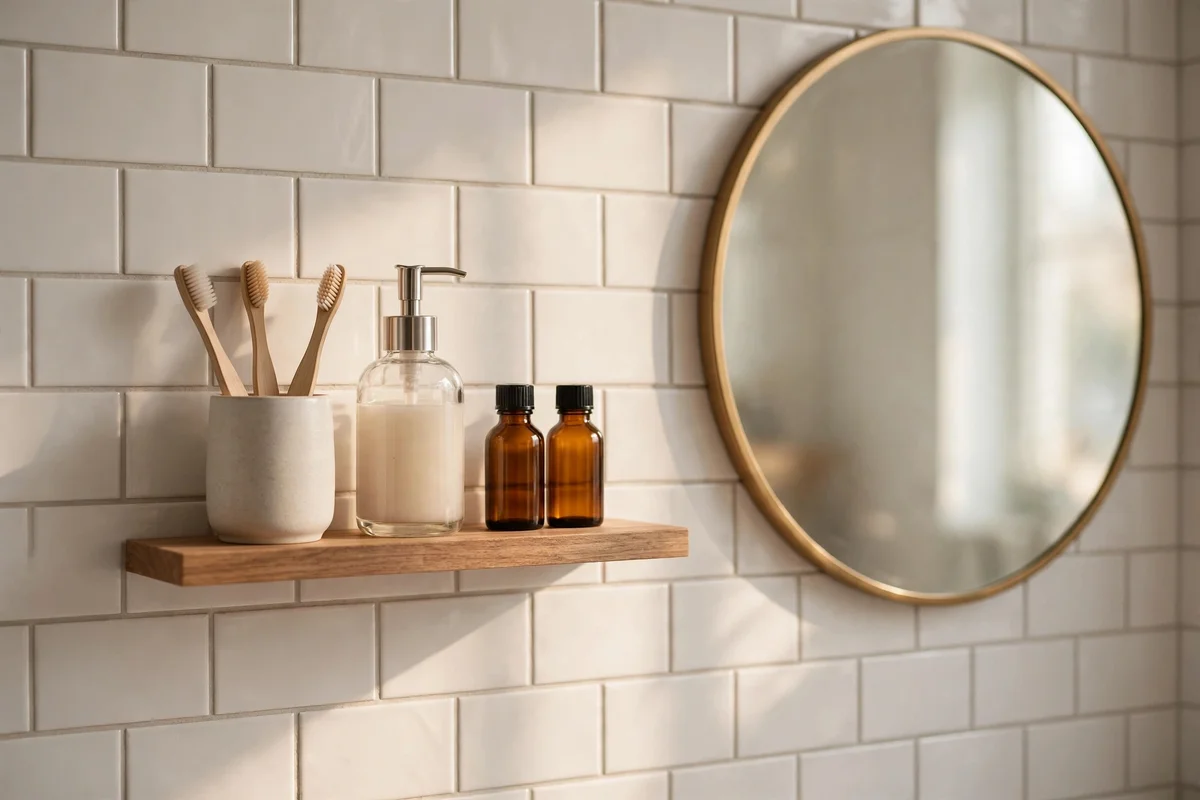
A shelf 10 to 12 cm deep beside the mirror keeps serums, toothbrushes and small bottles within arm’s reach without crowding the sink. Mount it at eye level, roughly 150 to 160 cm from the floor, so you can read labels without bending. Solid-surface corian or sealed timber resists splashes, while raw untreated wood warps quickly in this splash zone. Fix into a stud or use butterfly anchors in plasterboard, because daily knocks add up. Keep the shelf length to the width of the mirror, about 50 to 70 cm, so the pair reads as one composition.
Place only three to five items here: a toothbrush cup, one soap pump and two daily bottles, so everything stays easy to wipe. The mistake to avoid is lining up ten tiny bottles, which looks chaotic and collects grime around every base. A small tray underneath the bottles catches drips and lifts off for rinsing in seconds. Choose a pump bottle in glass or ceramic rather than branded plastic packaging to calm the look. Budget tip: one slim shelf, a ceramic cup and a matching pump usually total under 35 dollars, and the tidy result reads far more expensive.
3. Lean a Wooden Ladder Shelf in the Corner for Towels and Baskets
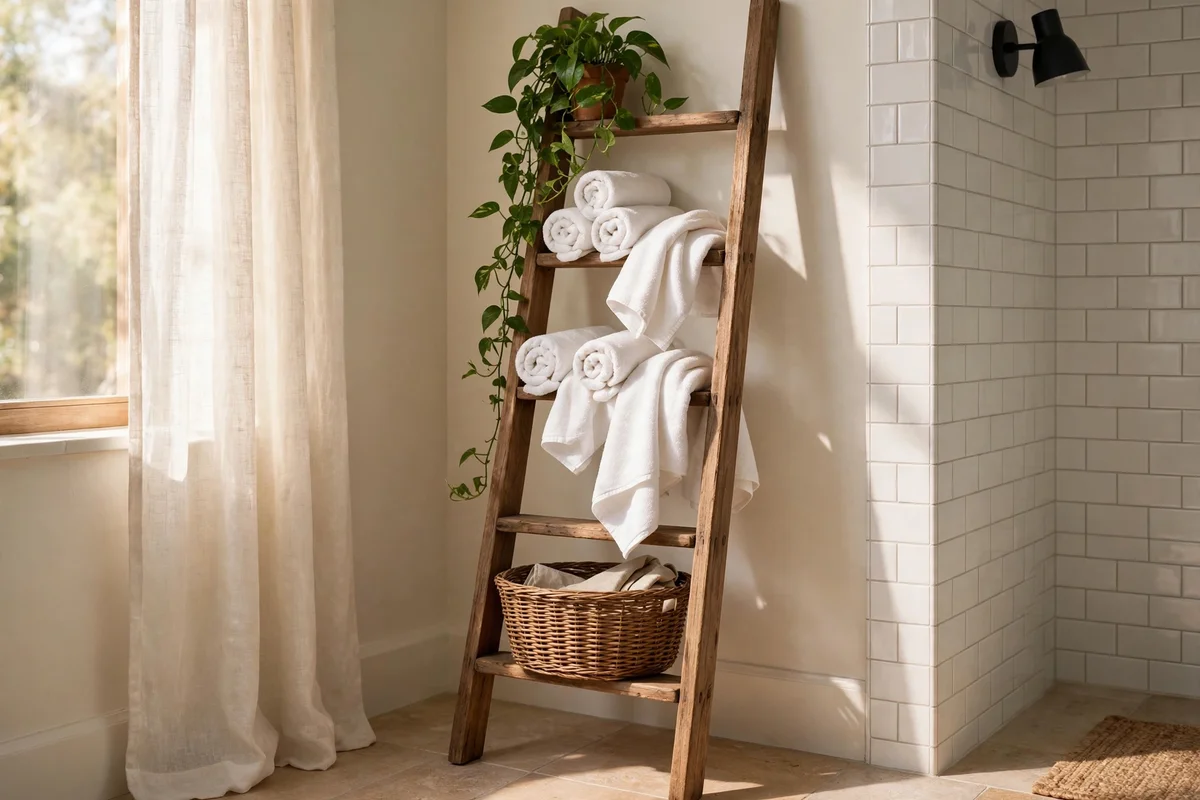
A leaning ladder shelf needs no screws, which makes it a natural choice for rented bathrooms. Pick one 150 to 180 cm tall with four or five rungs, each 25 to 35 cm deep, so folded towels and baskets sit safely. Position it in a dry corner, at least 30 cm from the shower spray, to protect the timber. Teak and acacia handle humidity better than plain pine; if you buy pine, seal it with two coats of exterior wood oil. The feet should sit on the floor and the top should rest against the wall at a slight angle.
Drape two rolled bath towels over the middle rungs and slide a woven basket onto the bottom rung for spare toilet rolls. The top rung suits a trailing plant or a folded guest towel stack, since nothing heavy should sit where it could topple. The mistake to avoid is placing the ladder beside the shower curtain where it catches drips, because standing water rots the feet fast. Add small felt pads under the feet to protect tiles and stop slipping. Budget tip: pine ladders start around 30 dollars, while solid teak versions run 90 to 140 and last for decades.
4. Roll Guest Towels Into Tight Cylinders on the Lowest Shelf
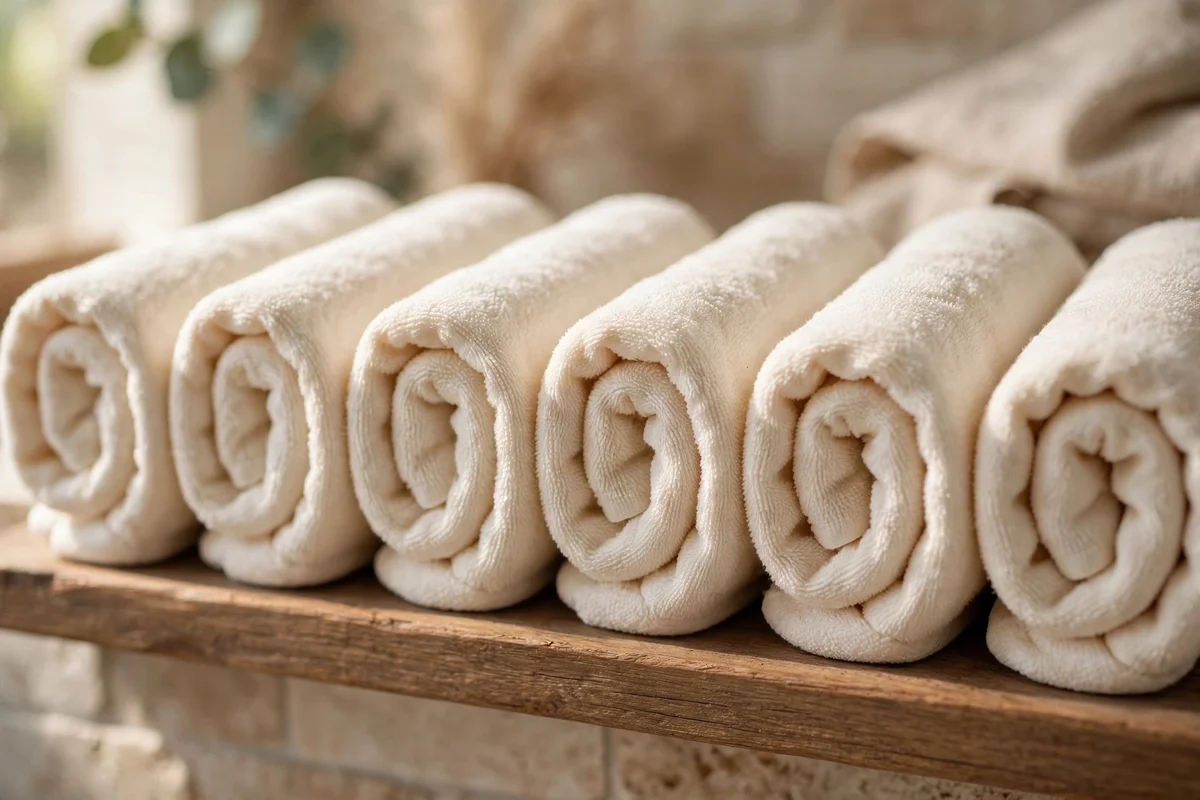
Rolled towels sit securely on a low shelf where folded stacks might slide, and they look neat from every angle. Roll each hand towel from one short edge into a firm cylinder about 10 cm across, then tuck the loose end underneath. Line up four to six rolls side by side, seams hidden, on a shelf at least 12 cm deep. Matching tones matter here: a set of six white or cream towels costs little and reads calm. Fluff each roll with a quick shake before rolling so the pile looks full.
Keep rolled towels for guest and display use, since daily towels wear faster and look tired quickly. The mistake to avoid is rolling damp towels, because trapped moisture breeds musty smells within a day. Wash display towels weekly at 60 degrees so they stay bright and hygienic. If your bathroom is small, two rolls on a narrow 30 cm shelf make the same calm point as six on a wide one. Budget tip: sets of six hand towels in one tone cost 15 to 25 dollars from most home stores, and rolling replaces any need for fancy folding.
5. Fold Bath Towels in Thirds for a Calm Hotel-Look Stack
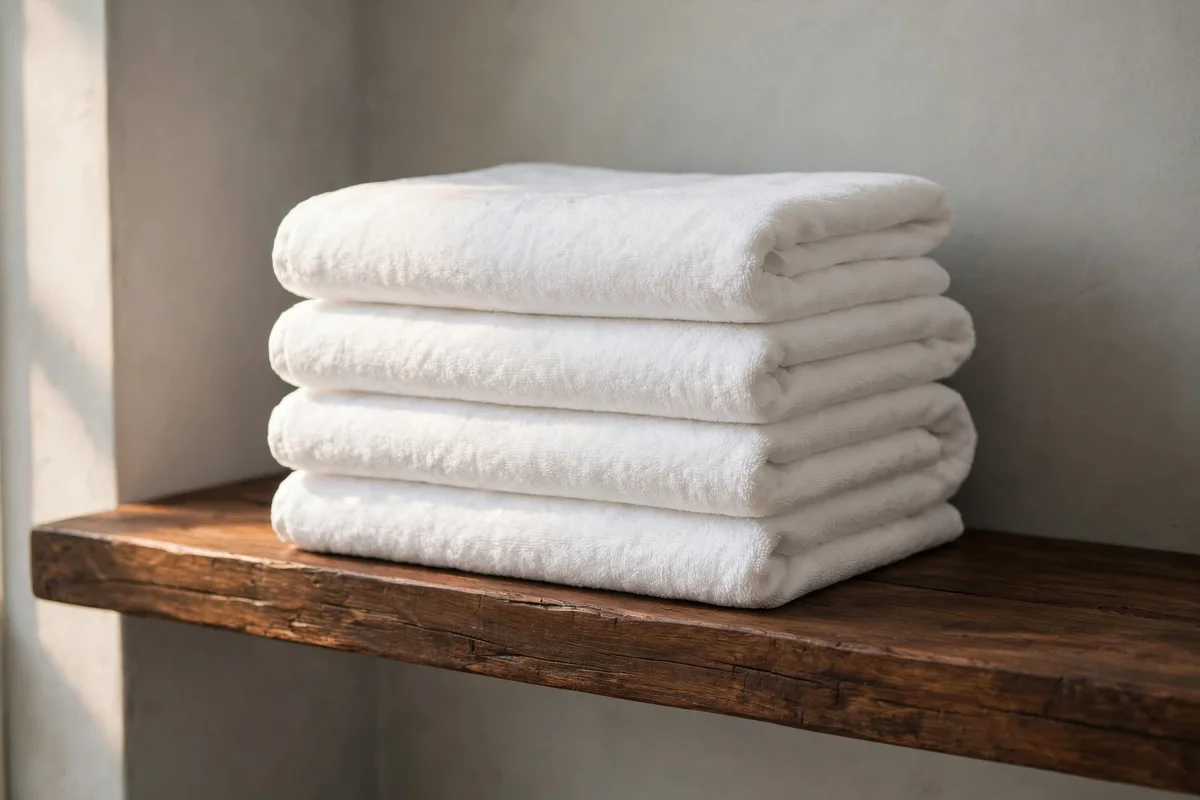
Folding bath towels in thirds creates slim, even rectangles that stack neatly on a shelf 35 to 40 cm deep. Lay the towel flat, fold each long edge toward the centre, then fold the strip into thirds again. A stack of three or four towels, each 70 by 140 cm, reaches about 20 cm high and suits a shelf with 25 cm clearance. Keep all towels in one colour family, such as white, cream or soft grey, because mixed brights read as clutter. Smooth the top towel with your palm for a crisp finish.
Place the stack on the middle shelf, where it is easy to reach and its weight sits low. The mistake to avoid is stacking more than five towels high, since tall stacks lean and collapse when you pull one out. Store the daily in-use towel on a hook instead, and keep the shelf stack as the fresh reserve. Wash bath towels every three to four uses so the display stack never smells stale. Budget tip: buying four matching bath towels as a set often costs 20 to 35 dollars, less than buying them one by one.
6. Fill Glass Jars With Cotton Pads, Bath Salts and Soap Bars
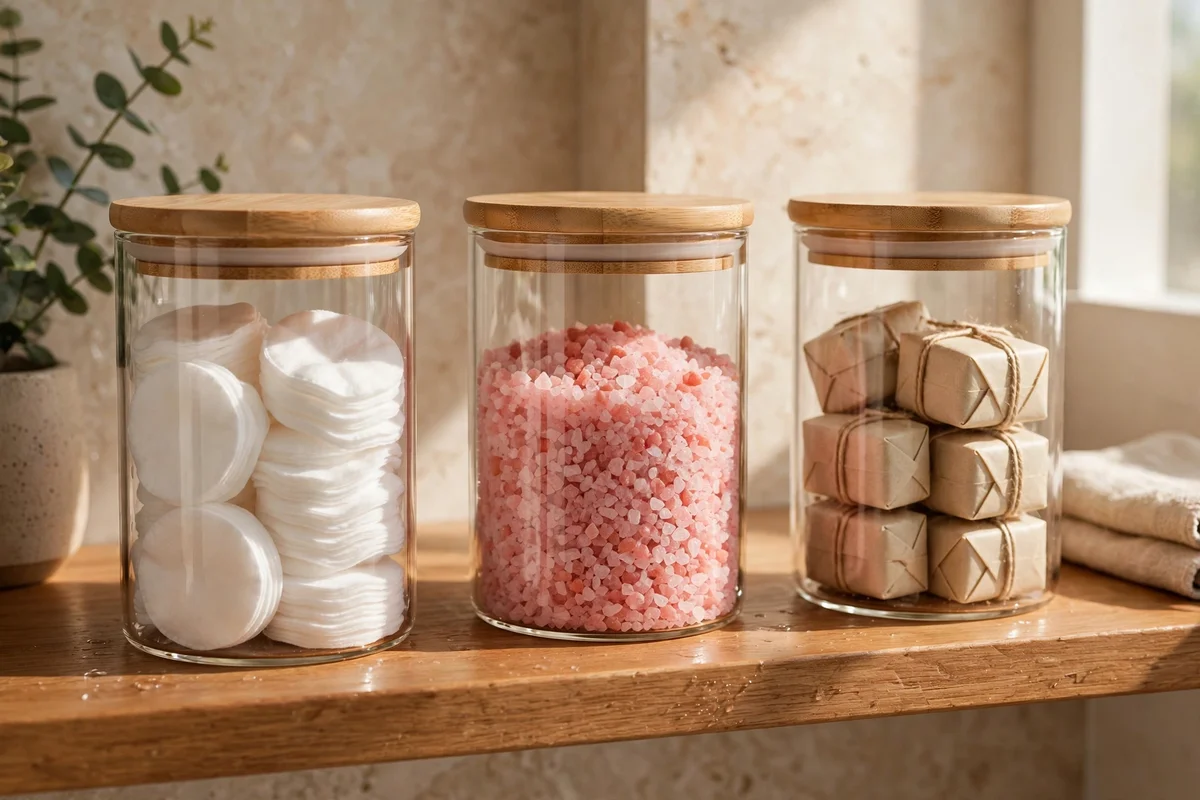
Glass jars turn small necessities into part of the decor, so choose jars 12 to 20 cm tall with wide mouths for easy refills. Fill one with cotton pads, another with bath salts and a third with wrapped soap bars, and the contents themselves become the colour story. Place jars in a row with 3 cm gaps so you can lift each one without knocking its neighbours. Borosilicate glass costs a little more but survives hot steam and accidental knocks better than thin soda-lime glass. Keep jars away from the shower stream.
Match lids across your jars, bamboo or matte black, because three different lids break the calm line. The mistake to avoid is filling jars to the brim, since full-to-bursting containers read as clutter and make refilling messy. Leave 2 cm of air at the top of each jar. Rinse jars monthly so residue does not cloud the glass, and dry them fully before refilling. Budget tip: a set of three matching glass canisters costs 12 to 20 dollars, and filling them with everyday cotton pads costs almost nothing.
7. Slide Woven Baskets Onto Deeper Shelves to Hide Everyday Clutter
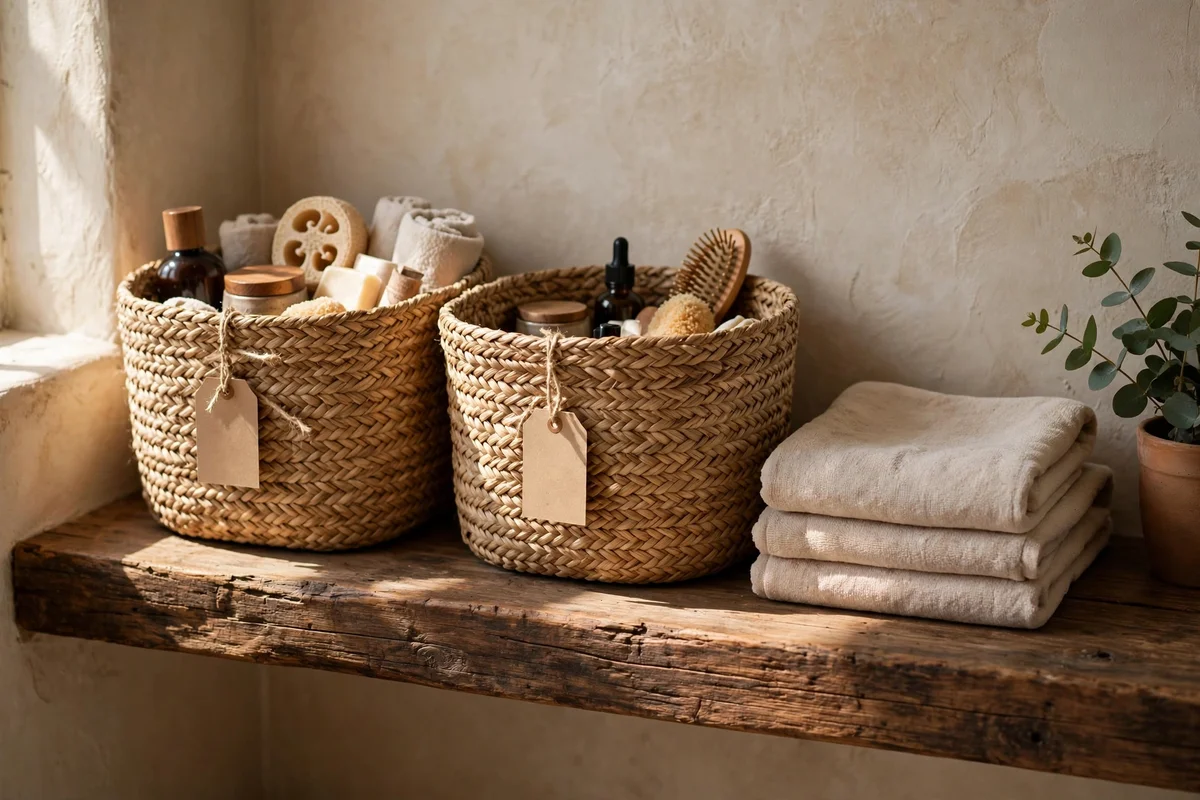
Woven baskets hide the messy things, spare razors, first aid bits and cleaning cloths, behind a natural texture. Choose baskets 20 to 30 cm wide and at least 15 cm deep so they sit firmly on shelves 25 cm or deeper. Seagrass, water hyacinth and rattan suit humid rooms better than unsealed wicker, which can spot in constant damp. Label each basket with a small tag if you share the bathroom, so everyone returns things to the right place. Keep one basket per person for personal items.
Leave 2 cm of air on each side of a basket so you can slide it out without scraping the shelf paint. The mistake to avoid is packing baskets so full that lids will not close, because overflowing baskets defeat the whole calm purpose. Wipe baskets with a dry cloth monthly and air them in sunlight yearly to prevent mustiness. If baskets feel pricey, charity shops often carry sturdy ones for 3 to 6 dollars each. Budget tip: two medium seagrass baskets usually cost 15 to 25 dollars new and last for years with basic care.
8. Set a Small Fern or Pothos on the Top Shelf in a Terracotta Pot
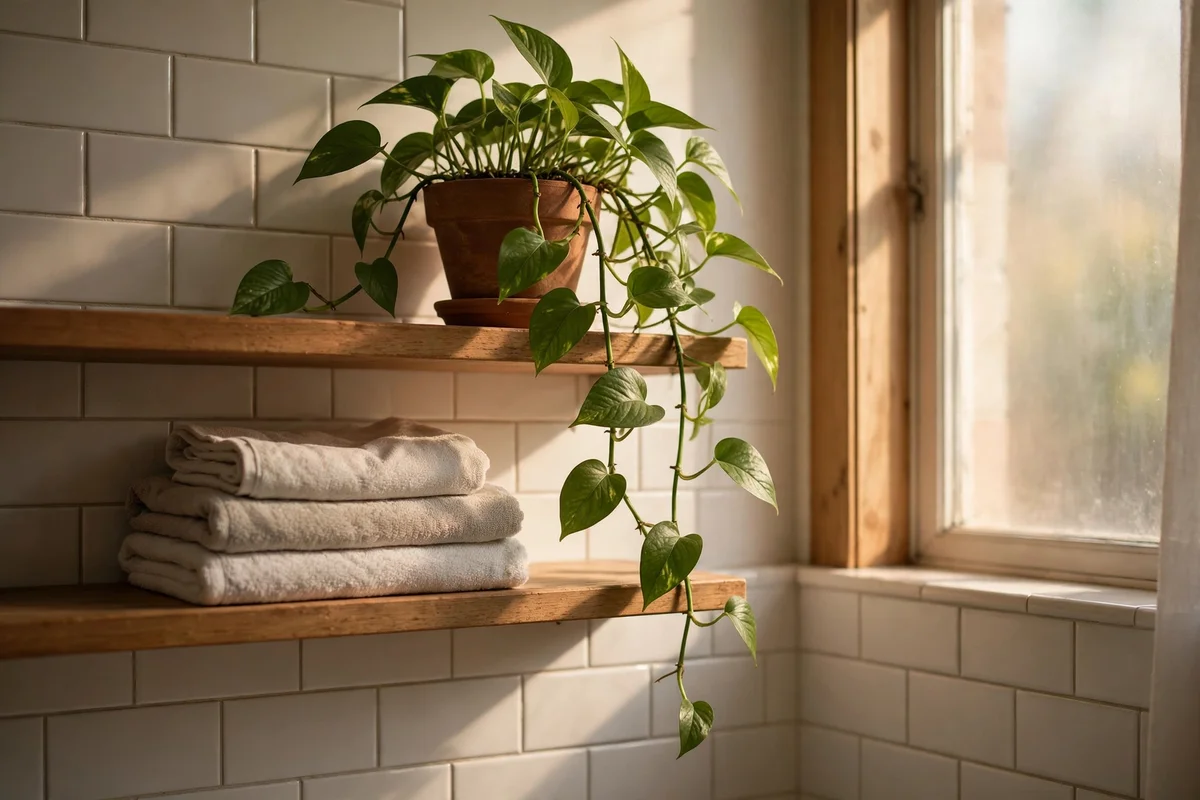
A small plant brings soft life to a bathroom shelf, and ferns and pothos tolerate low light and steamy air. Choose a plant 15 to 25 cm tall in a terracotta pot 10 to 12 cm wide, which breathes and suits the humid room. Place it on the top shelf where it gets whatever daylight the window offers without being knocked. Water only when the top 2 cm of soil feels dry, usually once a week in a humid bathroom. Terracotta also hides mineral marks better than glazed ceramic.
Trim brown leaf tips with clean scissors so the plant always looks cared for. The mistake to avoid is choosing a plant that needs full sun, because a light-starved plant drops leaves and spoils the shelf. If your bathroom has no window, swap the plant for a dried eucalyptus sprig in a small vase, which needs no light at all. Wipe leaves with a damp cloth monthly to remove dust and soap film. Budget tip: a small pothos costs 5 to 10 dollars, and one terracotta pot adds about 3 dollars, a cheap green anchor for any shelf.
9. Gather Bottles on a Stone Tray so the Shelf Stays Tidy
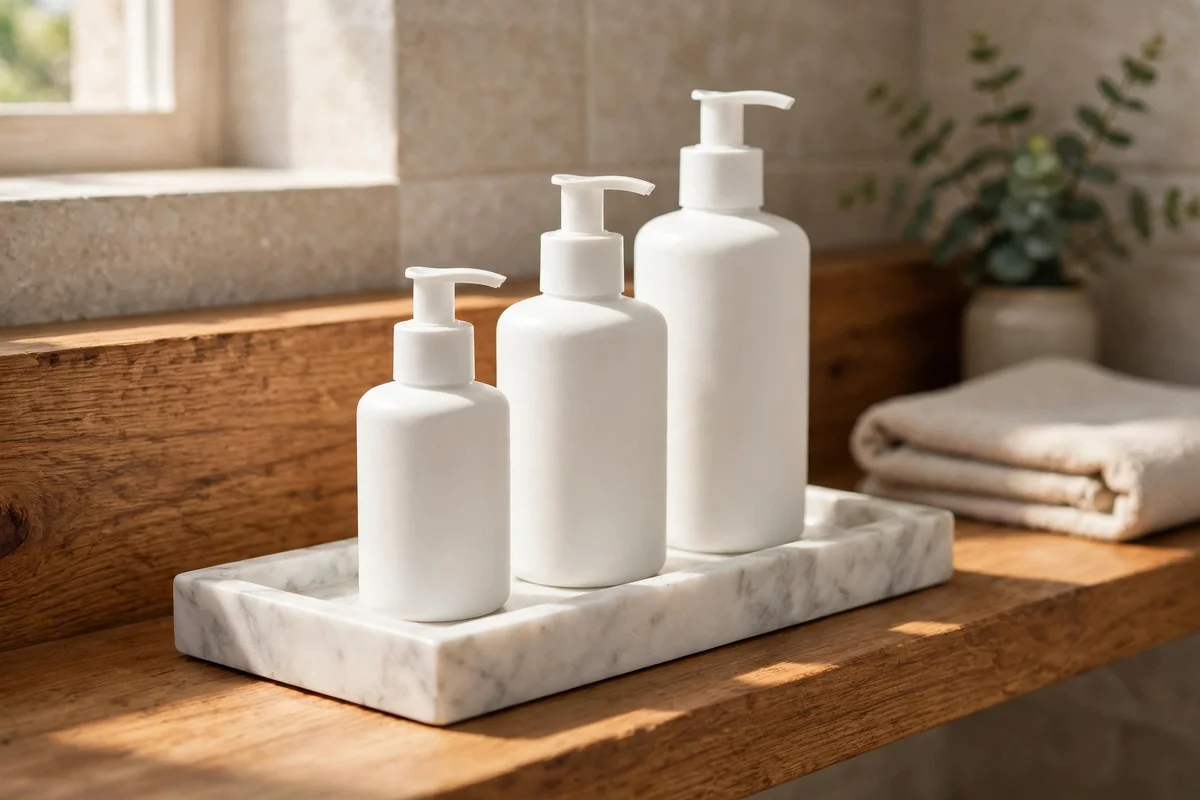
A tray turns a scattered row of bottles into one deliberate object, and a stone or marble tray 25 to 35 cm long suits most shelf depths. Place your daily bottles on it, three to five at most, with the tallest at the back. The tray catches drips and product smears, so the shelf underneath stays clean. Choose a tray with a slight lip, about 1 cm, to stop bottles sliding off when you pull one out. Wipe the tray with warm soapy water weekly.
Leave 2 cm between bottles so each one lifts out without toppling the others. The mistake to avoid is cramming seven or eight bottles onto the tray, because an overcrowded tray reads as clutter no matter how pretty the stone. Decant bulky products into two matching pump bottles to calm the silhouette. Budget tip: small stone trays cost 10 to 18 dollars, and you can decant with 3 dollar glass pumps, a tidy upgrade for under 25 dollars total.
10. Place One Scented Candle Beside a Folded Towel for Evening Calm
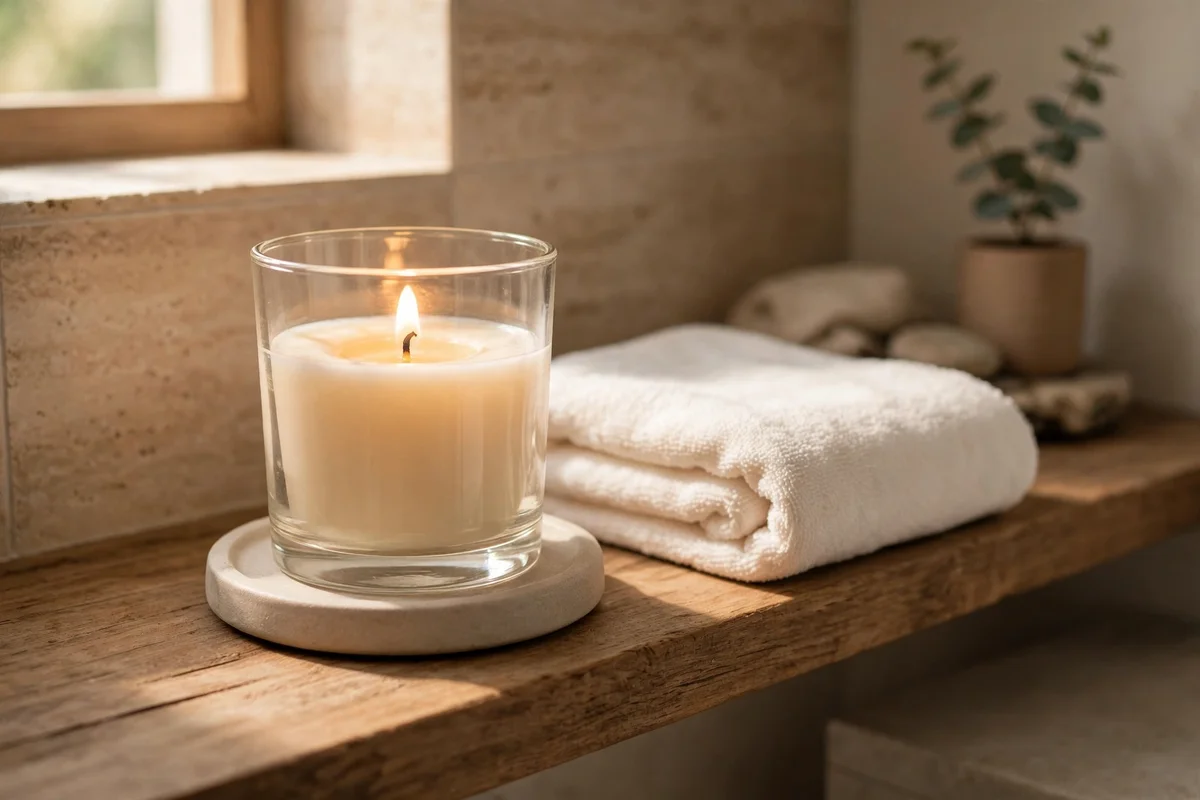
A single candle gives a bathroom shelf a quiet evening mood, so keep it to one, never a row of five. Choose a candle in a glass vessel 8 to 10 cm wide, with a fresh or herbal scent rather than anything heavy. Set it at least 15 cm from towels and 30 cm below the shelf above, since heat rises. Never burn a candle on a shelf above head height where you cannot see the flame properly. Always place it on a heat-safe dish.
Burn the candle for one to two hours so the wax melts evenly to the glass edge and never tunnels. The mistake to avoid is lighting it and leaving the room, because bathroom draughts from extractor fans can blow the flame sideways. Trim the wick to 5 mm before each lighting to prevent soot on the glass. When the candle is finished, reuse the cleaned vessel for cotton buds. Budget tip: good soy candles in glass vessels cost 8 to 15 dollars and burn 30 to 40 hours.
11. Prop a Small Framed Print Against the Wall Above the Bottles
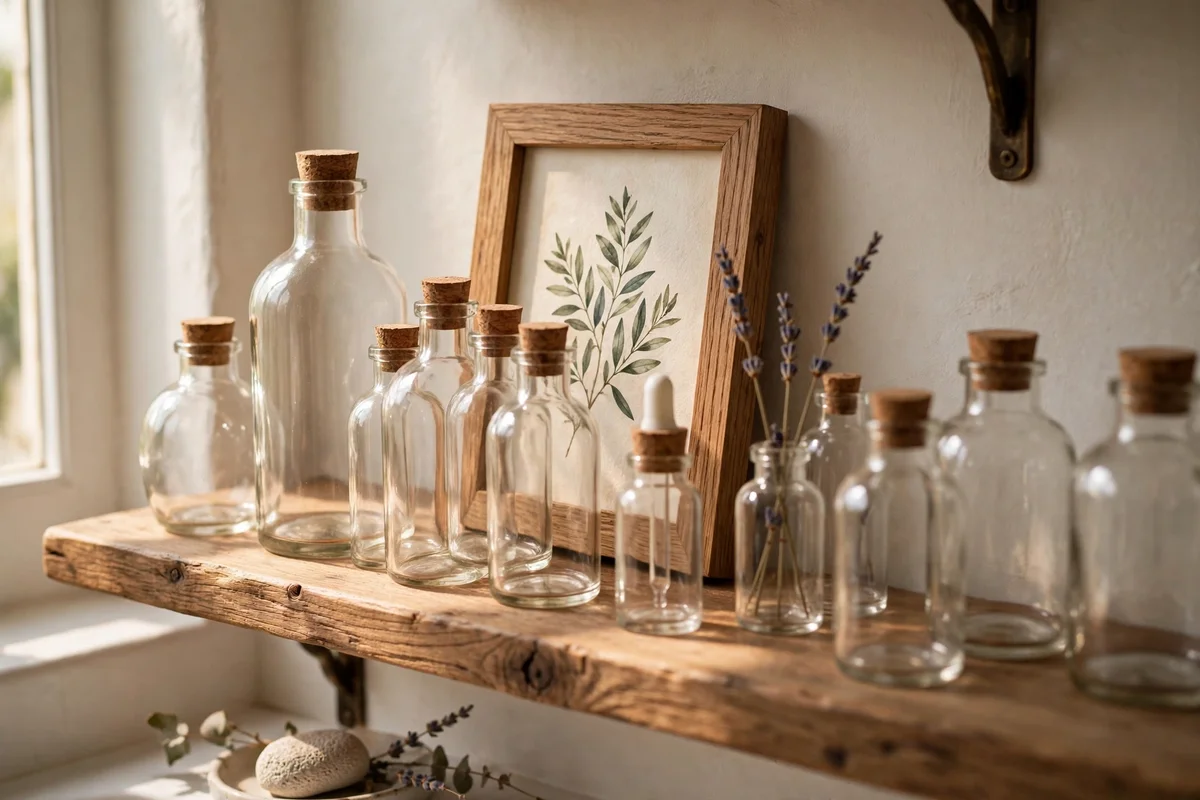
A small framed print lifts a bathroom shelf from storage to something styled, so prop one frame 15 by 20 cm against the wall at the back. Botanical sketches, simple line drawings and soft landscapes suit bathroom steam, while photos can fade in damp air. Choose a frame in natural oak or matte black, both handle humidity better than gold-painted plastic. Lean the frame at a slight angle rather than hanging it, so it reads as styled rather than fixed.
Keep the frame behind lighter items so it frames the display without blocking anything. The mistake to avoid is using a large heavy frame, because it dominates a small shelf and risks falling onto glass jars. A frame under 500 grams is safe to lean. Seal the back of the print with tape to stop damp creeping in. Budget tip: small prints cost 5 to 10 dollars at art shops, and simple frames add 8 to 15, a cheap gallery moment for under 25 dollars.
12. Keep Floating Shelf Weight Under 7 kg With Proper Wall Anchors
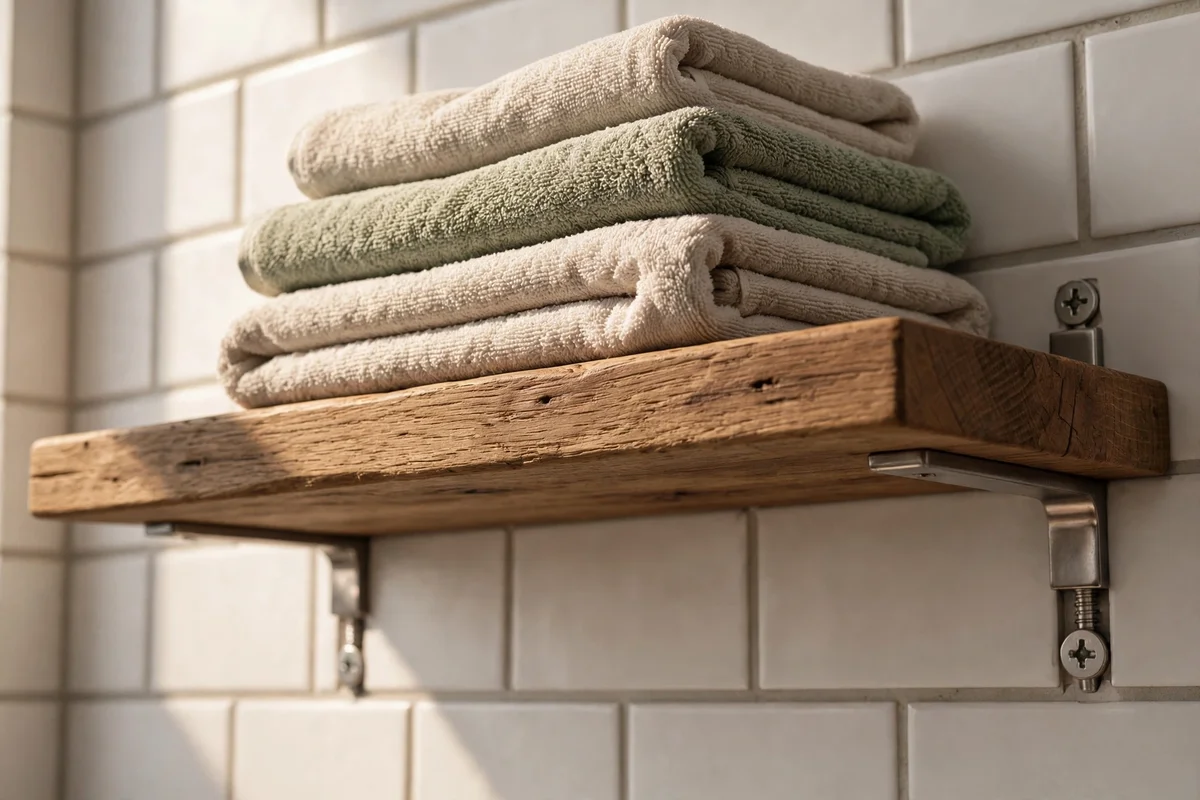
Bathroom walls are often tiled plasterboard, which holds far less weight than solid brick, so plan your load. A floating shelf 60 cm long on two concealed brackets safely carries 5 to 7 kg when fixed into studs or with proper cavity anchors. Weigh your heaviest combination, full jars, books and bottles, on a kitchen scale before loading. Spread weight across the shelf length instead of piling it at one end, which twists the brackets. Never guess at fixings, because a falling shelf shatters glass jars on tile.
Tighten brackets yearly, because bathroom humidity loosens fixings over time. The mistake to avoid is hanging a shelf on tile adhesive alone, which peels under weight within months. Use a stud finder before drilling, and choose stainless or coated screws that resist rust. If you rent, this weight rule still applies to adhesive shelves, just with lower limits. Budget tip: a quality bracket pair with cavity anchors costs 8 to 15 dollars, cheap insurance against a midnight crash.
13. Leave 30 cm of Clear Space Between Shelves for Tall Bottles
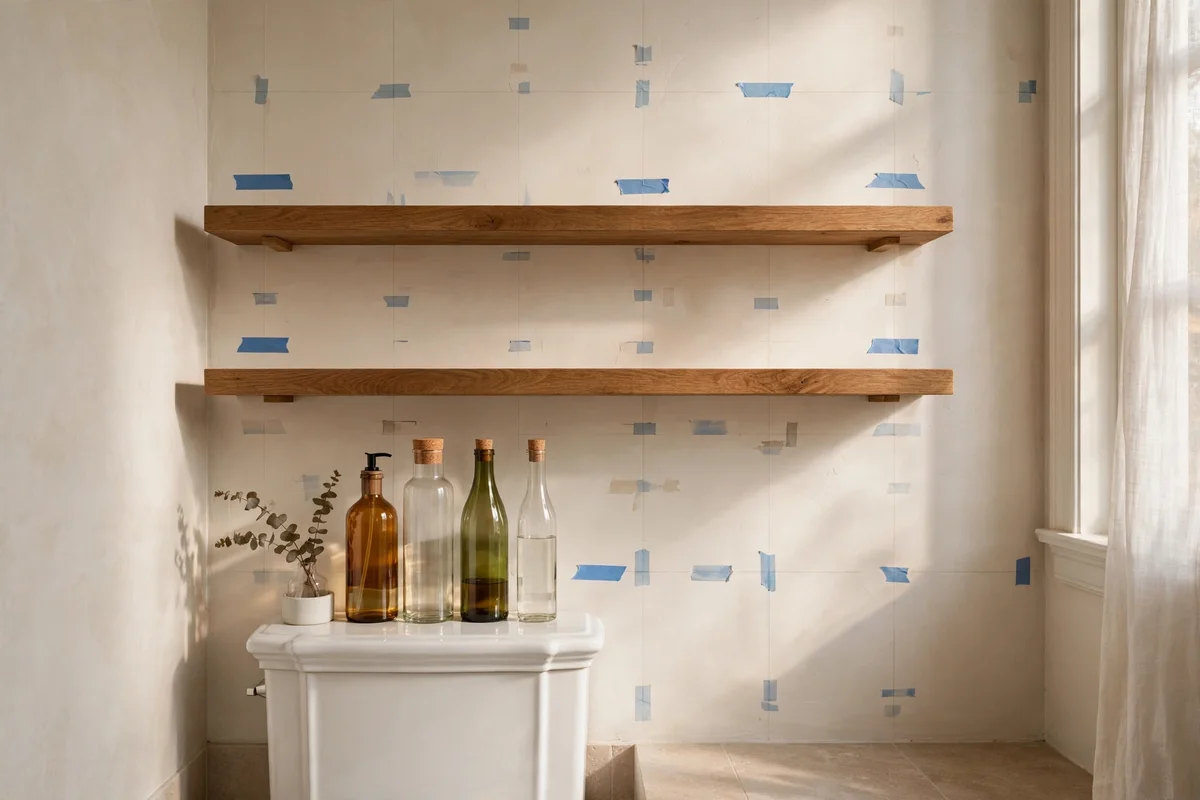
Tall shampoo and lotion bottles need 25 to 30 cm of clearance, so measure your tallest bottle before fixing the next shelf. A gap of 30 to 35 cm between shelf boards suits most bathroom products and keeps the wall feeling airy. Mark shelf positions with painter’s tape on the wall first, then step back and check the rhythm. If your shelves hold only short jars and rolled towels, 20 to 25 cm spacing feels tighter and tidier. Spacing is the difference between styled and cramped.
Keep the lowest shelf 40 to 45 cm above the cistern so the lid opens freely for maintenance. The mistake to avoid is spacing shelves by eye alone, because a 3 cm shortfall leaves your tallest bottle leaning at a sad angle. Write down the heights of your three tallest products before you drill. Budget tip: painter’s tape and a pencil cost under 5 dollars and save you from filling wrongly drilled holes with filler.
14. Choose Teak, Sealed Oak or Powder-Coated Metal for Humid Air
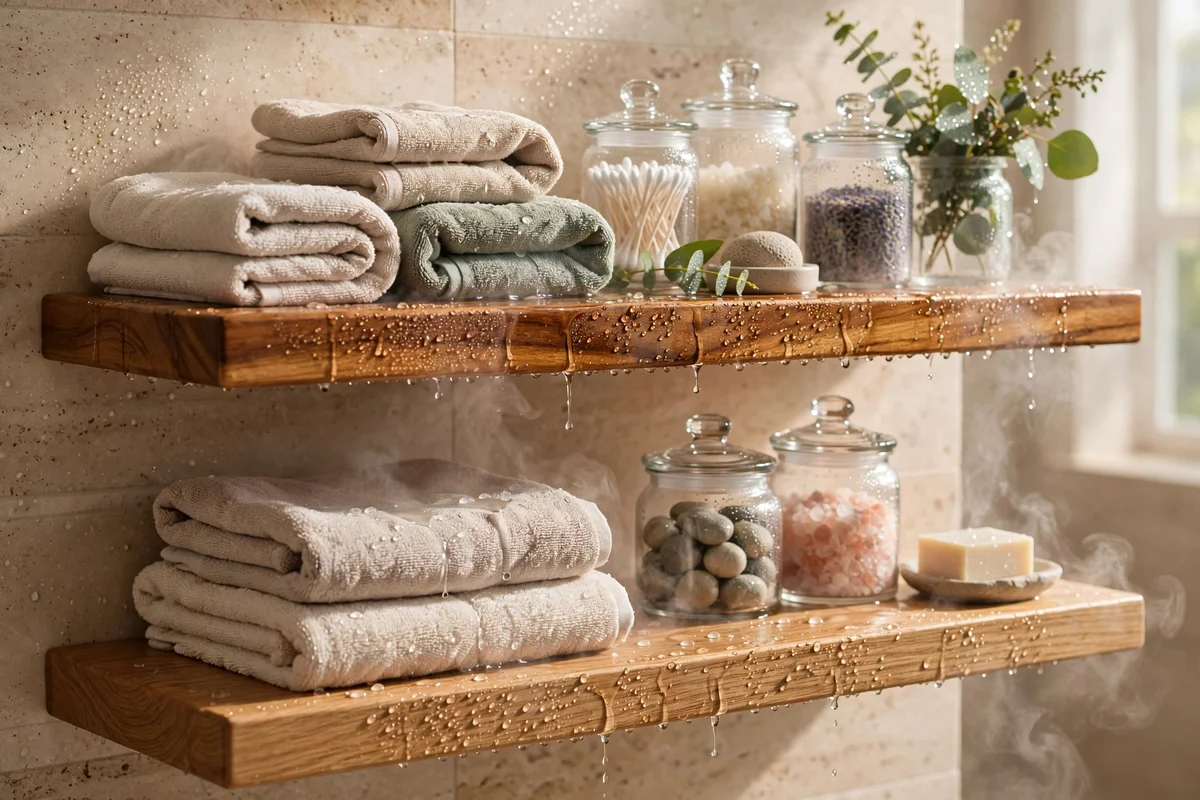
Bathroom air stays damp for hours after every shower, so shelf materials must resist moisture. Teak naturally contains oils that repel water, which is why it suits bathrooms and boats alike. Sealed oak works well too, provided it gets two coats of marine varnish or exterior oil, recoated yearly. Powder-coated metal brackets and shelves resist rust far better than chrome, which pits in steam. Avoid raw MDF, because it swells and crumbles within months of damp exposure.
Check for mildew on timber shelves every month, and wipe spots with white vinegar before they spread. The mistake to avoid is painting shelves with interior wall paint, which bubbles and peels in constant steam. Use exterior-grade paint or proper wood oil instead. Budget tip: a sealed oak shelf costs 20 to 35 dollars, while a powder-coated metal shelf of the same size runs 15 to 25, both cheaper than replacing swollen MDF twice.
15. Use a No-Drill Adhesive Shelf Rated for 5 kg in Rented Bathrooms
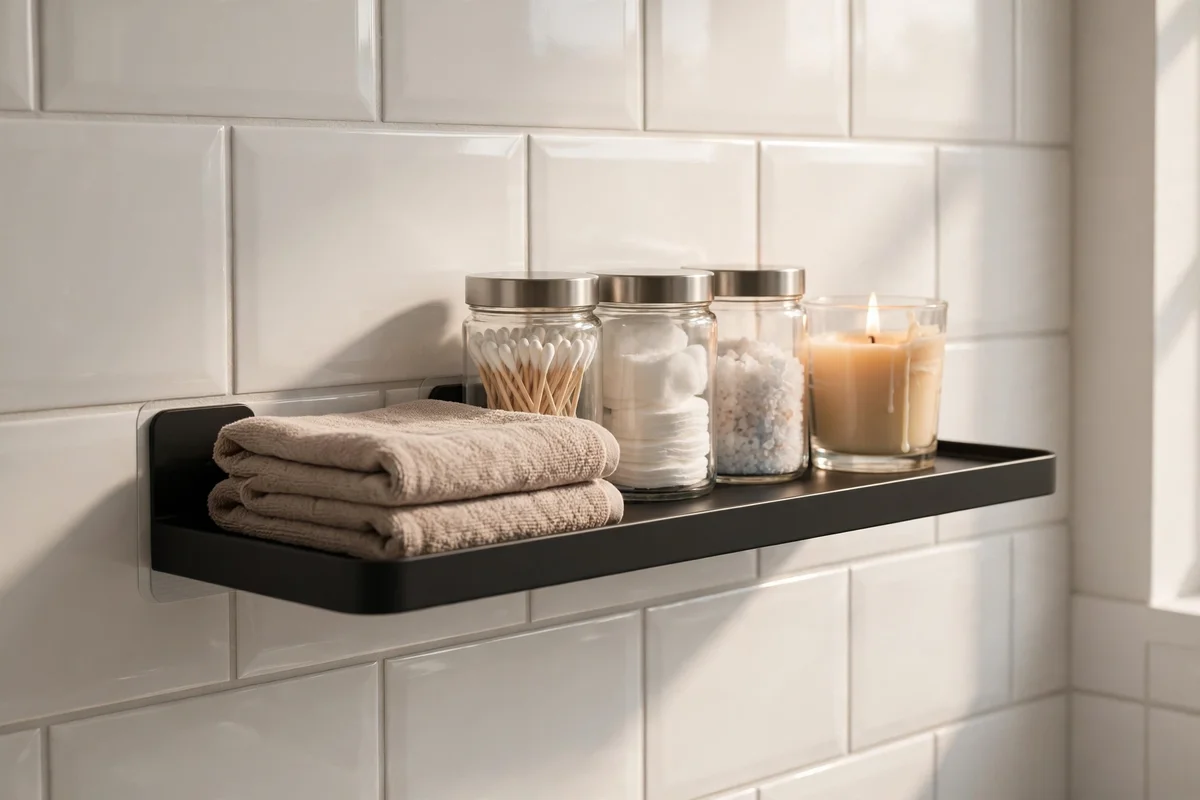
Renters can enjoy styled shelves without losing their deposit, because modern adhesive mounts hold real weight. Choose a shelf with nano-tape or suction mounts rated for at least 5 kg, and read the rating on the packet rather than trusting the picture. Clean the tile with rubbing alcohol and let it dry fully before sticking, because grease and dust halve the hold. Press each mount firmly for 60 seconds, then wait the full 24 hours the maker recommends before loading.
Load adhesive shelves with light things, folded hand towels, small jars and a candle, and keep heavy bottles on the vanity. The mistake to avoid is sticking mounts to grout lines, because the uneven surface cuts the hold dramatically. Stick only to smooth, clean tile. Test the shelf with a gentle downward pull after 24 hours before trusting it with glass. Budget tip: quality adhesive shelf kits cost 15 to 30 dollars, far less than a deposit deduction for drilled holes.
16. Hang a Tension-Mounted Shelf Over the Toilet Without Screws
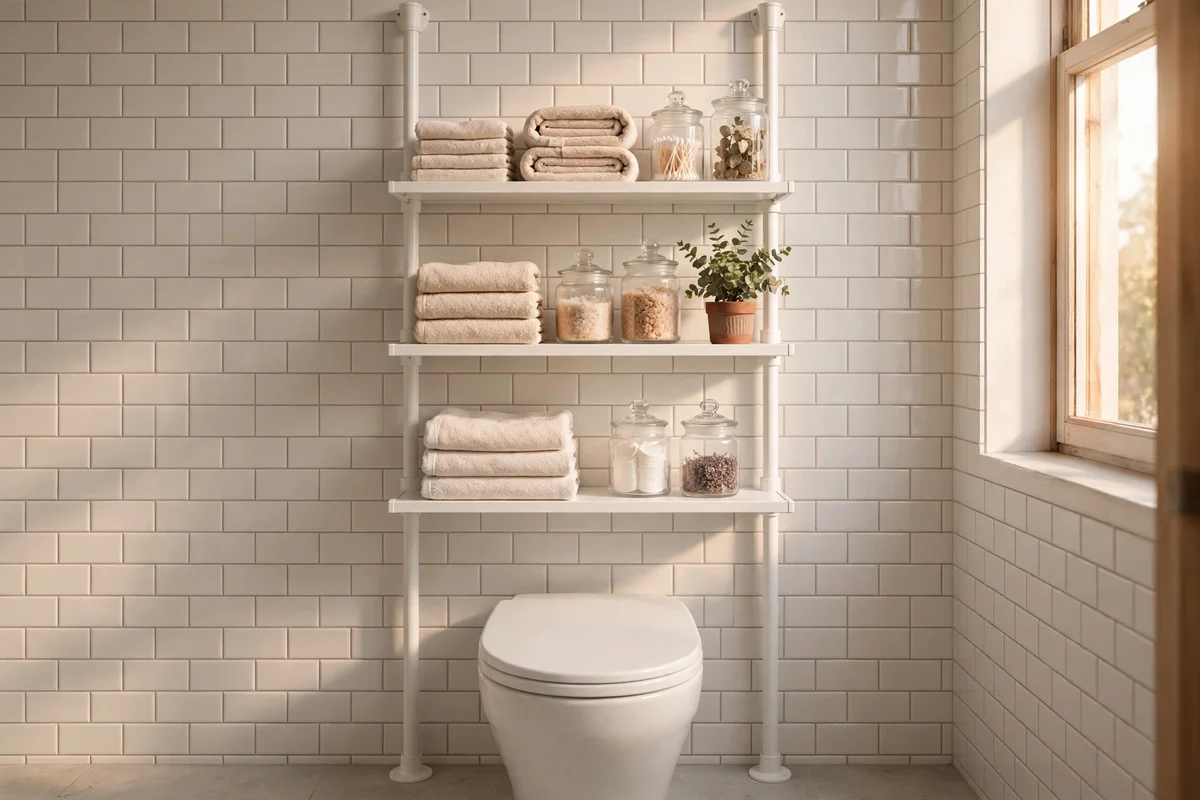
Tension poles turn the dead space above the toilet into storage without a single screw. Choose a floor-to-ceiling tension pole 200 to 270 cm tall, with shelves that lock at your chosen heights. Twist the pole firmly until it grips, then test it with a hard sideways push before loading. Place it 10 to 15 cm behind the cistern so it never touches the lid. White or chrome poles disappear against tiled walls.
Load the middle shelf with daily items and the top shelf with pretty spares, keeping weight under 5 kg total. The mistake to avoid is extending the pole past its maximum length, because an overstretched pole loses grip and topples. Measure your ceiling height before buying. Check the twist tension every few months, since vibration slowly loosens it. Budget tip: tension pole caddies with three shelves cost 25 to 45 dollars and assemble in about 20 minutes.
17. Style Shelves in Odd Numbers: Groups of Three and Five
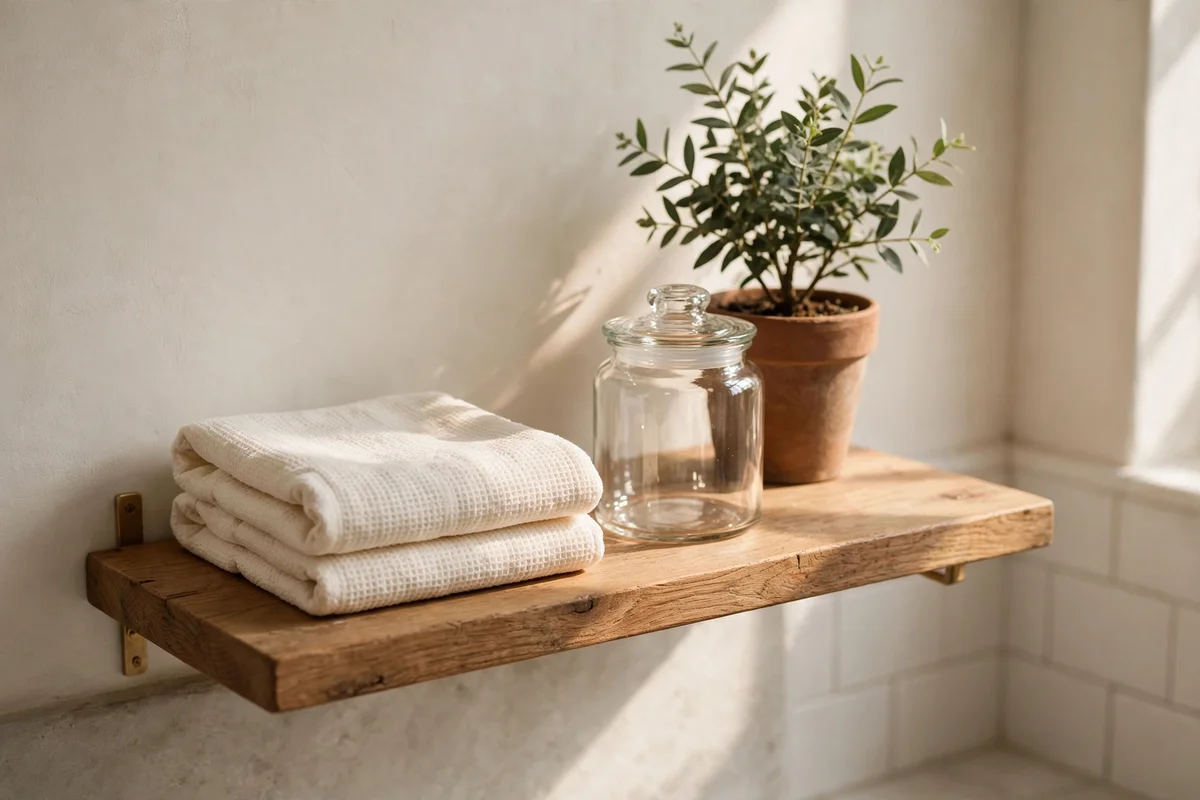
Odd numbers look natural to the eye, so arrange shelf objects in groups of three or five rather than even pairs. Place a tall item, a medium item and a small item together to form a triangle of heights, which keeps the eye moving. A classic trio might be a glass jar, a folded towel and a small plant, each in a different height band. Leave breathing room around each group, because a crowded trio looks like clutter. Step back after styling to judge the balance.
Repeat one material or colour across groups, like oak frames and cream towels, to tie the shelves together. The mistake to avoid is making every shelf a separate theme, because five unrelated mini scenes fight for attention. Two anchor colours and one repeated material create calm. Photograph the shelf with your phone to spot imbalances you miss in person. Budget tip: restyling with things you already own costs nothing, and a phone photo review takes two minutes.
18. Match Towels to Two Tones From Your Wall Paint
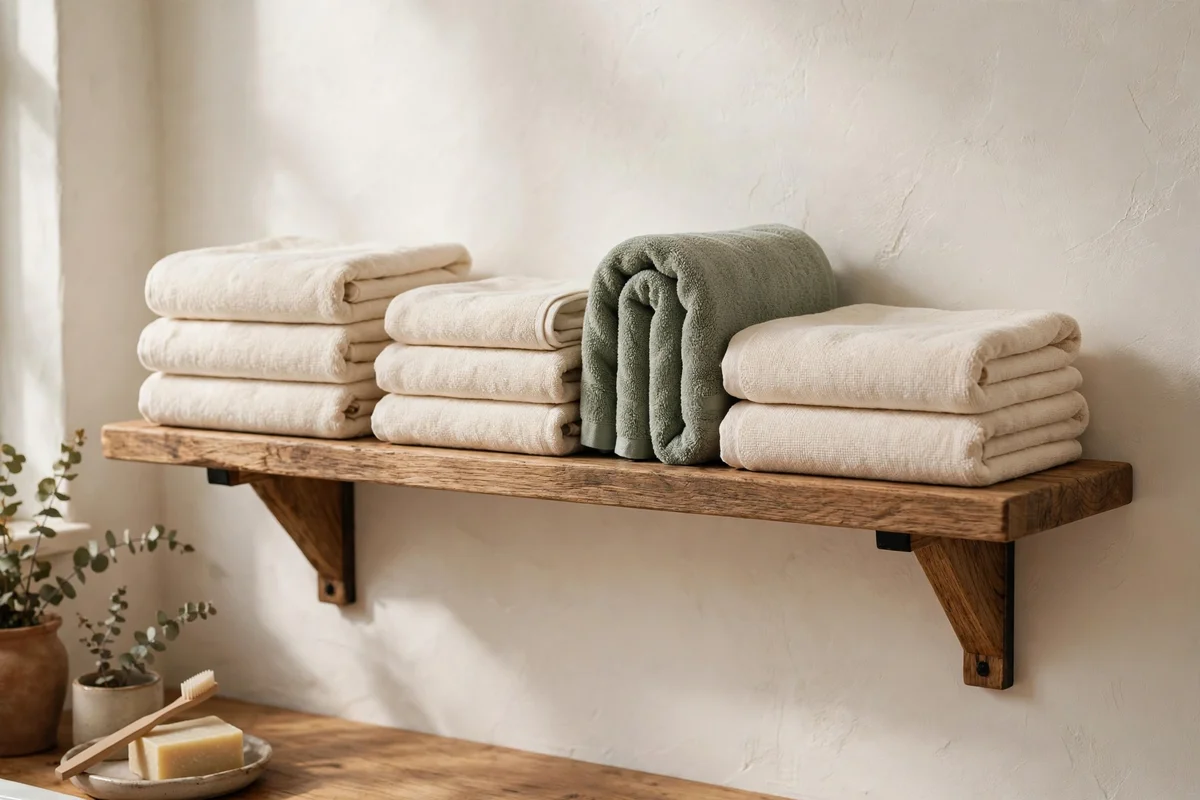
Shelves look calm when towel colours echo the room, so pick two tones from your wall paint or tiles. If your walls are warm white, choose cream towels with one sage or dusty blue accent. Buy all towels in those two tones, because five different colours on one shelf reads as noise. Keep the accent tone to about one third of the visible textiles, so it lifts the scheme without taking over. Match hand towels to bath towels for a collected look.
Test the tones together under your bathroom light before buying, because showroom lighting lies. The mistake to avoid is matching towels exactly to the wall colour, which makes the shelf disappear into the background. Go one shade deeper or lighter for gentle contrast. Wash new towels twice before their shelf debut so the colour settles. Budget tip: a six-piece set in two coordinated tones costs 25 to 45 dollars, and the unified look beats a random pile every time.
19. Leave One Third of Every Shelf Empty so the Display Breathes
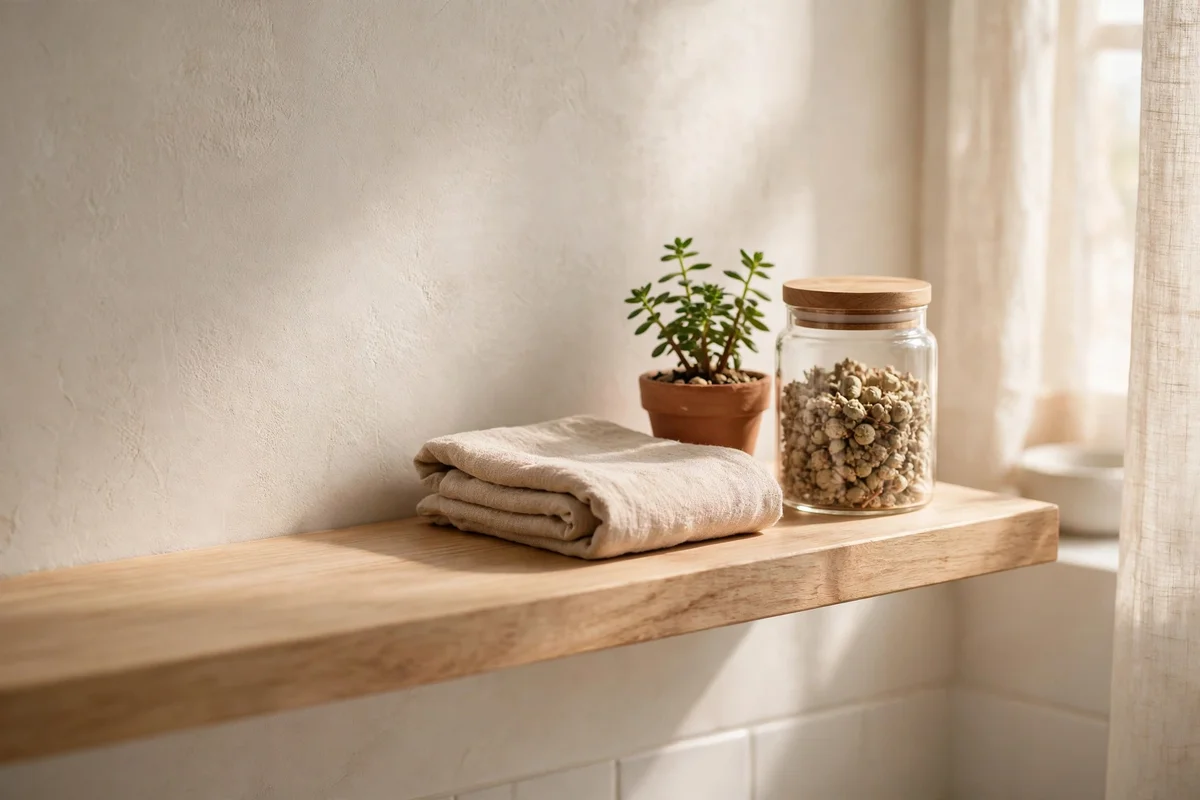
Empty space is a styling tool, so leave about one third of every shelf clear. A shelf that is full edge to edge looks like a storage cupboard, while one with breathing room looks like decor. Pull two items off each shelf and see how the remaining pieces suddenly stand out. This rule works on shelves of any size, from a 40 cm floating shelf to a full ladder unit. If you cannot bear to remove things, move them into a basket instead.
Use the empty third at the ends of the shelf, because gaps in the middle look like something is missing. The mistake to avoid is filling the freed space within a week, which happens when shelves double as landing zones for clutter. Make it a weekly habit to clear stray items back to their homes. Budget tip: this edit costs nothing and is the fastest upgrade on this list, since removing always beats adding.
20. Swap Open Containers for Lidded Ones Where Dust Settles
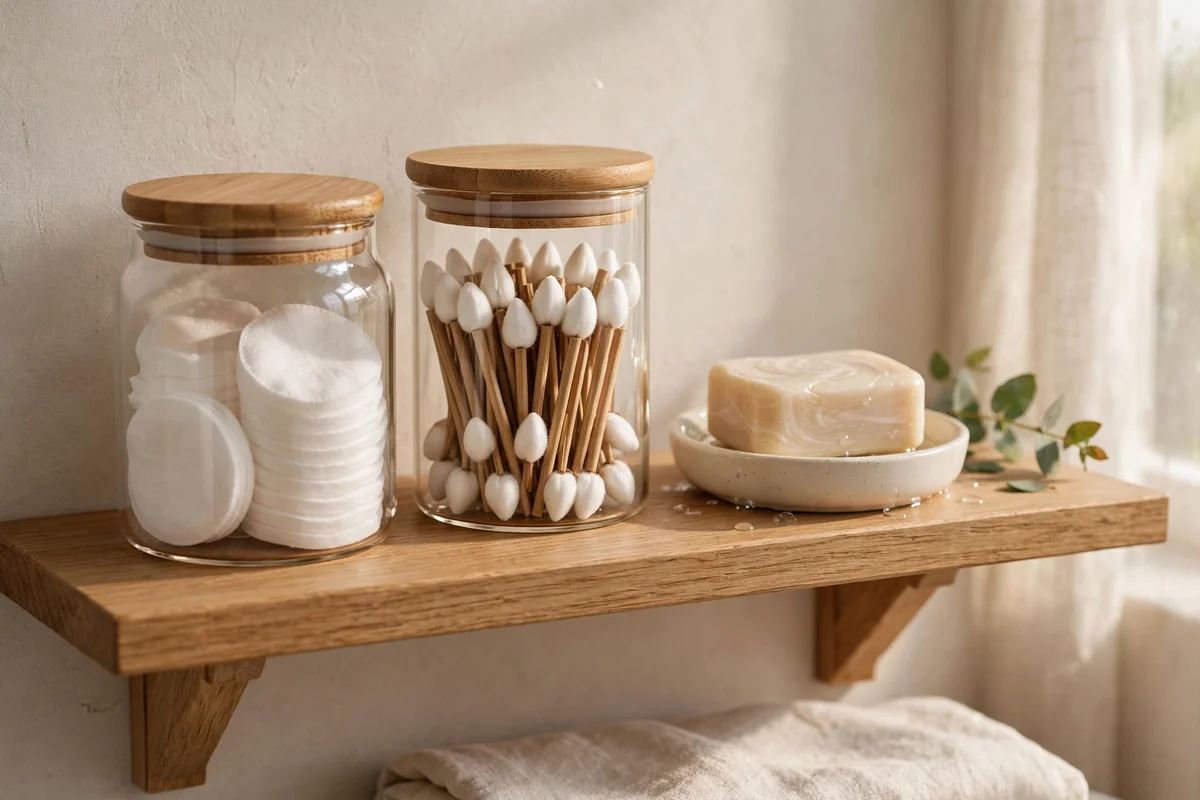
Bathrooms collect dust and lint on every surface, so lidded containers protect the small things. Swap open pots of cotton buds for lidded glass jars, and loose soap dishes for covered ones. A lidded jar 10 to 15 cm tall holds a month of cotton pads and keeps them crisp. Choose lids that close firmly but lift with one hand, because fiddly lids annoy you daily. Bamboo lids suit most shelf styles and seal reasonably well.
Keep one open container only for the item you grab daily, like hand soap, and lid everything else. The mistake to avoid is buying airtight kitchen jars with stiff clasps, because they fight you at 6 am. Smooth twist lids or simple lift lids work best in bathrooms. Wipe lids weekly with the same damp cloth as the shelves. Budget tip: three lidded glass jars cost 12 to 20 dollars, and they halve your dusting time.
21. Rotate One Seasonal Accent on the Shelf Each Month
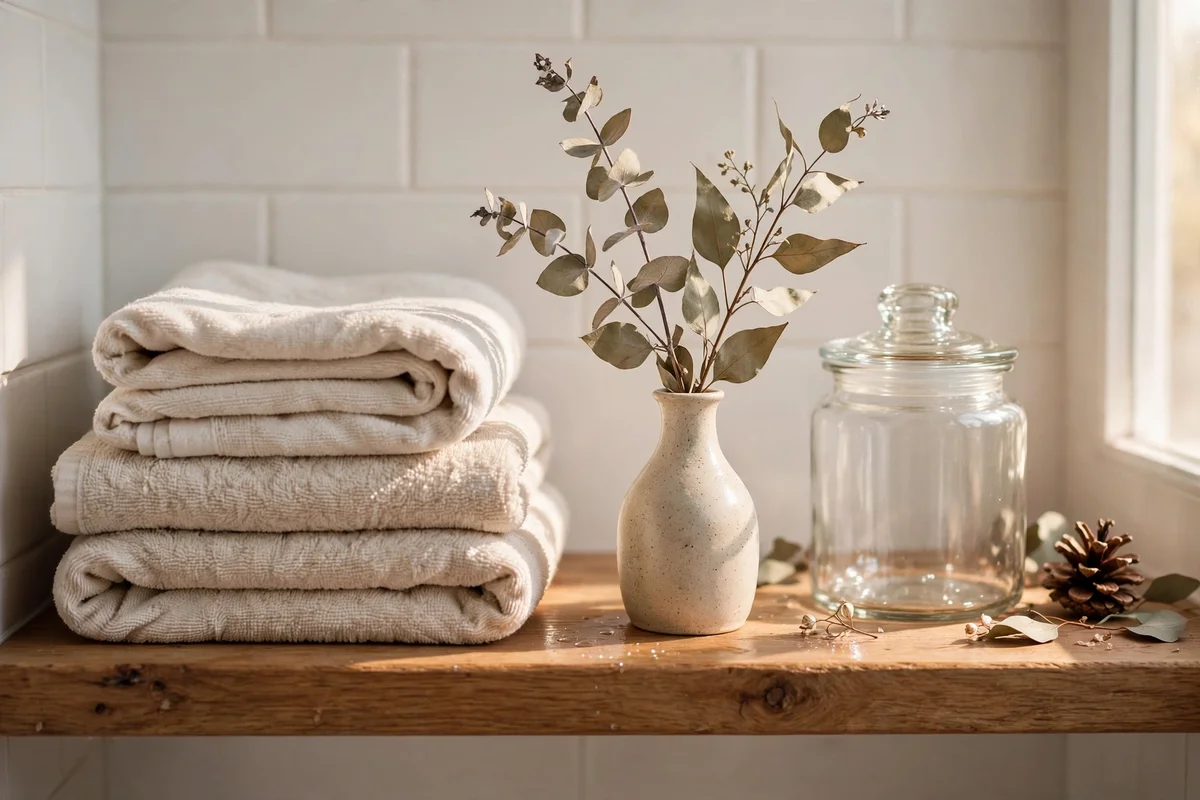
A small seasonal swap keeps shelves feeling fresh without a full restyle. Change one accent monthly, a dried eucalyptus sprig in spring, a small shell in summer, a pinecone in autumn, a sprig of holly in winter. Keep the accent under 20 cm tall so it never dominates the shelf. Place it in a small bud vase or lay it on the empty third of the shelf. This gentle rhythm gives the bathroom a lived-in, cared-for feeling all year.
Store the other three seasons’ accents in one small box in the linen cupboard. The mistake to avoid is buying a new accent every month, because a drawer of seasonal decor quietly eats money. Forage pinecones, shells and sprigs for free, or dry flowers from your garden. Check dried items yearly and replace anything dusty or faded. Budget tip: this habit costs nothing if you forage, and a small bud vase is a one-time buy of 5 to 10 dollars.
22. Wipe Shelves With a Damp Cloth Weekly to Beat Soap Film and Mildew
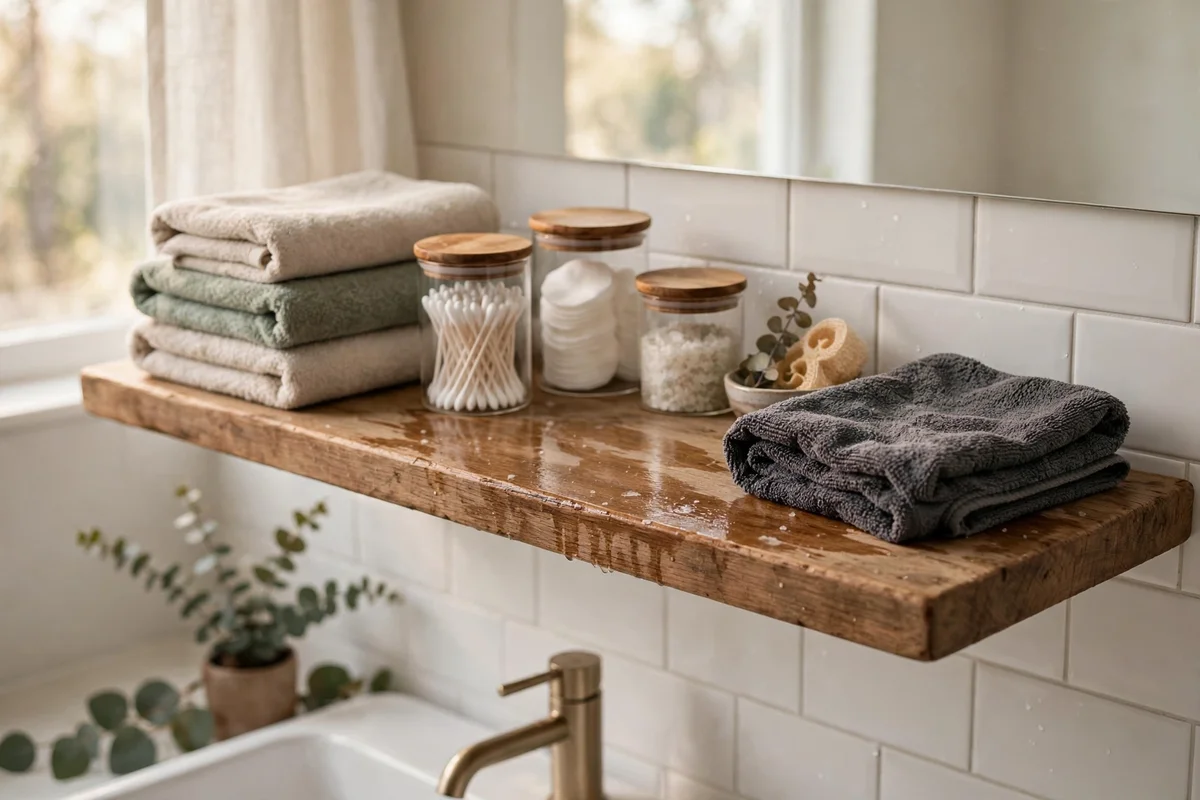
Weekly wiping keeps shelves bright and stops soap film from building into a grey layer. Run a damp microfibre cloth over each shelf every week, lifting each item rather than wiping around it. Pay extra attention to the shelf under the soap and bottle tray, where film gathers fastest. Use warm water only for regular wipes, since harsh cleaners damage wood finishes and stone sealant. A quick wipe takes under five minutes for two shelves.
Check shelf corners for mildew spots monthly, and dab them with white vinegar before they spread. The mistake to avoid is soaking timber shelves, because standing water seeps into joints and warps boards. Wring the cloth well and dry shelves with a second cloth if the room is steamy. Finish by replacing each item in its exact spot so the styling holds. Budget tip: microfibre cloths cost 5 dollars for a pack of five and last for years of weekly wiping.
Most bathroom shelves improve the moment you remove a third of what sits on them, choose one material that loves damp air, and repeat two colours throughout the room. The ideas here share one spirit: calm storage that works as hard as it looks. Work on one shelf at a time, repeating the same timber or metal finish on every bracket for quiet rhythm. Gather daily bottles onto a single tray, fold towels in two matching tones, and leave the remaining shelf space deliberately empty.
Start this week with the easiest win, which is pulling two items off your busiest shelf and leaving the space empty. Then set a shallow tray under your loose bottles so drips never touch the timber. These small edits compound, and your shelves will feel styled without a single big purchase. Move anything you use less than weekly into a cabinet, keeping only daily items in sight. Stand at the doorway for a final glance, because that distance catches clutter your eye missed up close.
Frequently Asked Questions
How much weight can a bathroom floating shelf hold?
A 60 cm floating shelf on two concealed brackets holds 5 to 7 kg when fixed into studs or with proper cavity anchors, which covers jars, folded towels and light books. Weigh your heaviest load on a kitchen scale first, and spread items along the shelf rather than piling them at one end.
What shelf material survives bathroom humidity best?
Teak and sealed oak handle steamy air well, since teak holds natural water-repelling oils and sealed oak gets protection from marine varnish or exterior oil. Powder-coated metal shelves and brackets resist rust better than chrome. Avoid raw MDF, which swells and crumbles within months of damp exposure.
How do I style bathroom shelves without making them look cluttered?
Leave one third of every shelf empty, group objects in odd numbers like threes, and hide small messy items in woven baskets. Limit towel colours to two tones and gather bottles on one tray so loose rows become a single shape. Remove one item for every new one you add.
Can renters put up bathroom shelves without drilling?
Yes. Adhesive-mount shelves rated for at least 5 kg stick to clean smooth tile and hold folded towels, small jars and a candle. Floor-to-ceiling tension poles add three shelves over the toilet with zero screws. Avoid sticking mounts on grout lines, and wait the full recommended curing time before loading anything.
How often should I clean bathroom shelves?
Wipe shelves with a damp microfibre cloth once a week, lifting each item rather than wiping around it. Check timber corners for mildew monthly and dab spots with white vinegar. Wring the cloth well on wood, since soaking warps boards, and rinse glass jars monthly so residue never clouds them.