Home Improvement
22 Budget Decor Ideas That Make Your Home Look More Expensive
By Anna Wells · · 11 min read
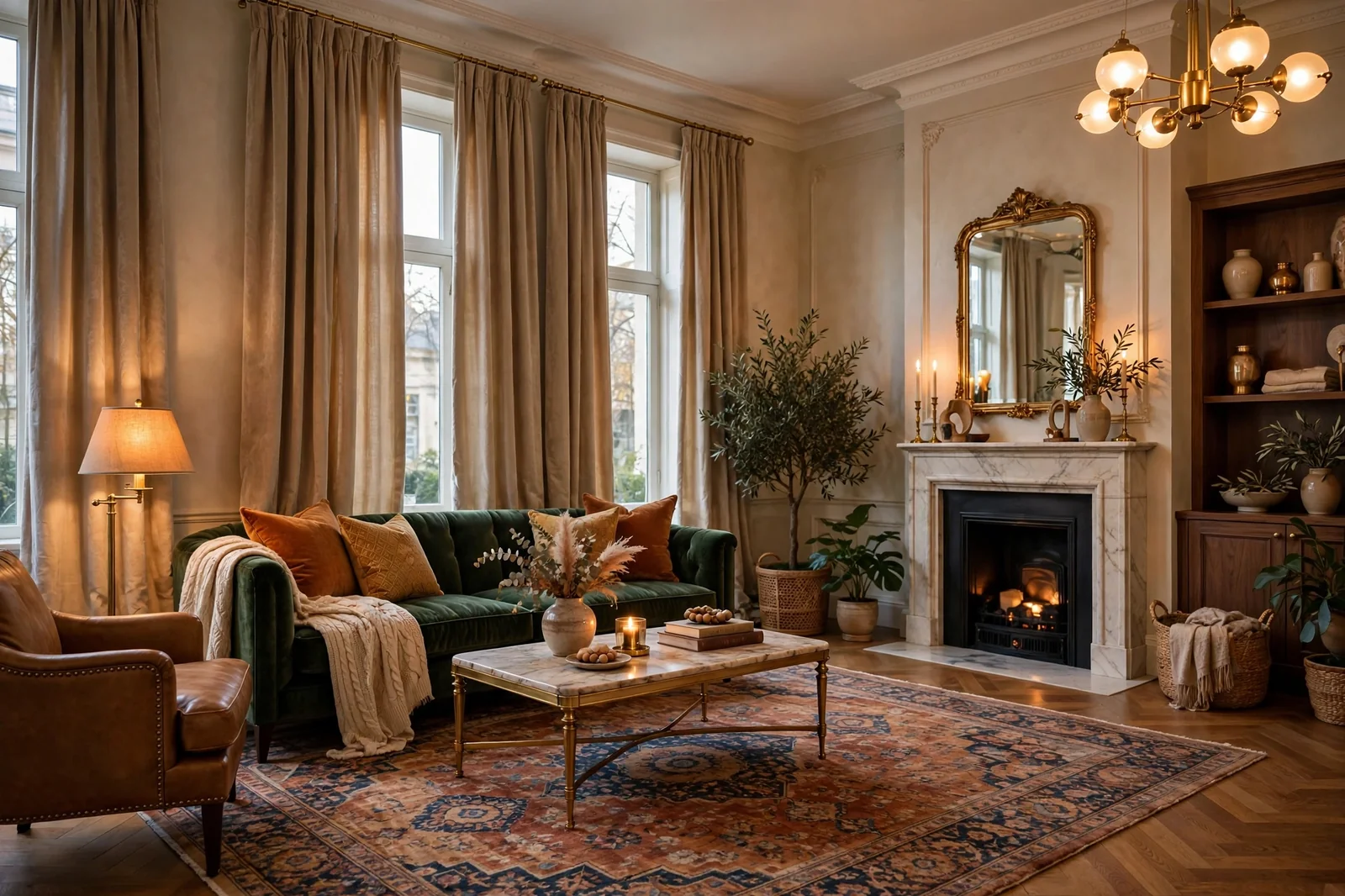
There is a big difference between a home that looks expensive and one that actually is. Most of the time, it is not about how much you spend but how you style what you already have. These 22 ways that make your home look more expensive focus on the upgrades that actually move the needle: better lighting, larger rugs, thoughtful paint, layered texture and the small details that make a room feel intentional, polished and quietly luxurious.
Expensive-looking rooms share a set of quiet qualities: good light, generous scale, thoughtful color, varied texture and an absence of clutter. None of these require a big budget. They require attention. Walk through your home with fresh eyes and notice what feels flat: the lonely overhead light, the rug that floats in the middle of the floor, the curtains hung at window height. These 22 upgrades address exactly those things, ordered from highest impact to finest detail, so you can start wherever your budget and energy allow.
1. Swap Out Harsh Lighting
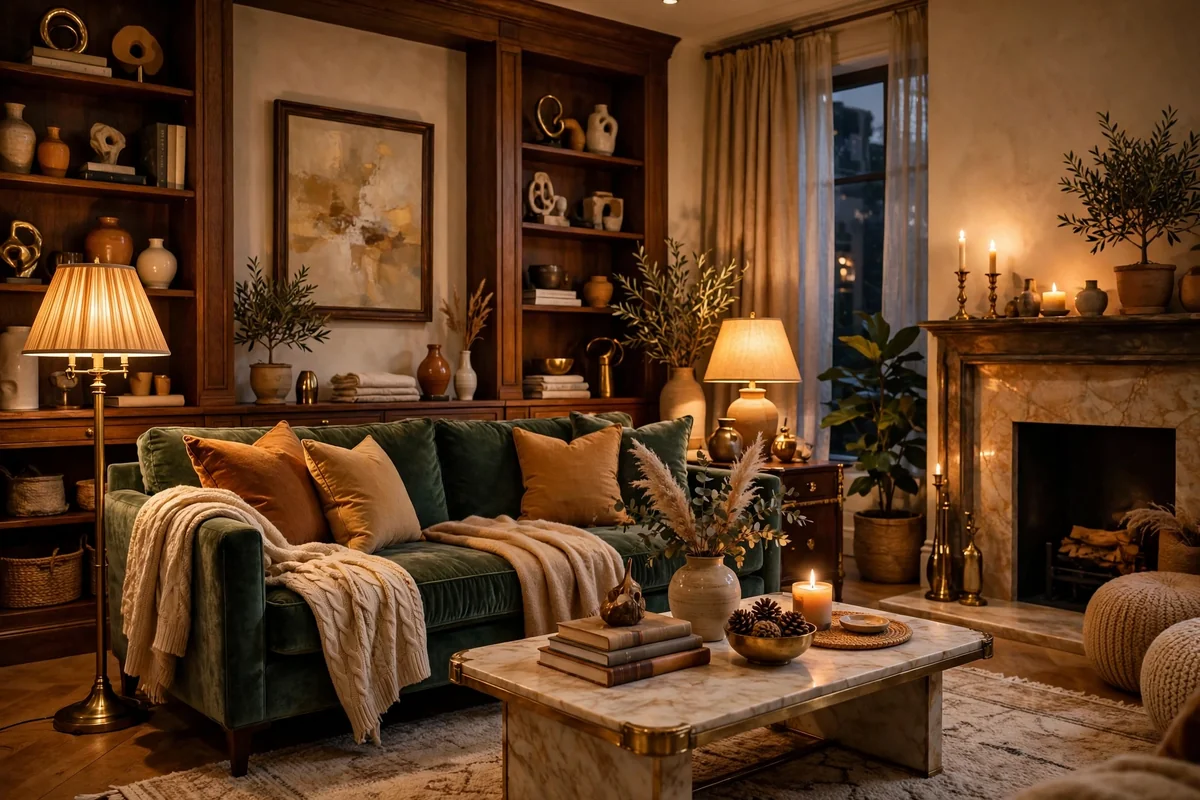
Lighting changes everything about how a home feels. Cool white bulbs make rooms feel sterile and cheap, while warm light around 2700K instantly makes a space feel cozy and high-end. Replace every daylight bulb in living areas with warm white, then layer the light: floor lamps, table lamps and accent lights instead of a single overhead. Three warm light sources beat one harsh ceiling light every time.
Place lamps where they flatter: table lamps at both ends of a sofa, a floor lamp in a dark corner, a picture light over art. Add dimmers, even plug-in ones, so you can shift from bright daytime to soft evening. Avoid bare bulbs and visible cool LEDs; shades and warm tones are what read as expensive. This single change, often under $50 in bulbs, transforms how every other upgrade looks.
2. Use Larger Rugs Than You Think
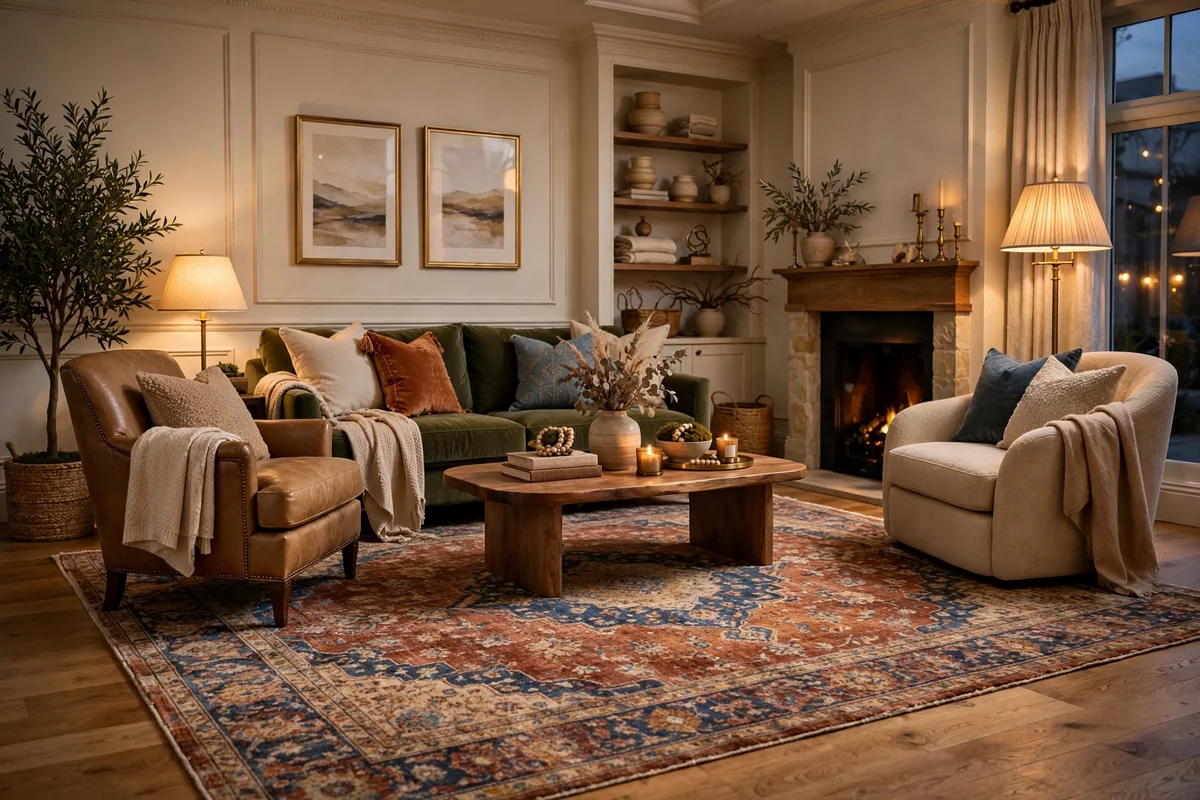
Small rugs make rooms feel cheap; there is no gentle way to say it. A large rug that slides under the front legs of your furniture anchors the space and makes everything feel intentional. In living rooms, 8 by 10 feet is the standard for a reason; in bedrooms, the rug should extend at least 18 inches beyond the bed on each side. When in doubt, size up.
A big rug unifies disparate furniture and quiets visual noise, which is why expensive rooms almost always have generous rugs. If budget is tight, a large natural-fiber rug costs less than a small wool one and still delivers the scale. Avoid the postage-stamp rug floating in the middle of the floor; it shrinks the room visually. Measure your seating group before shopping and choose the rug that fits the furniture, not the leftover floor.
3. Hang Curtains Higher and Wider
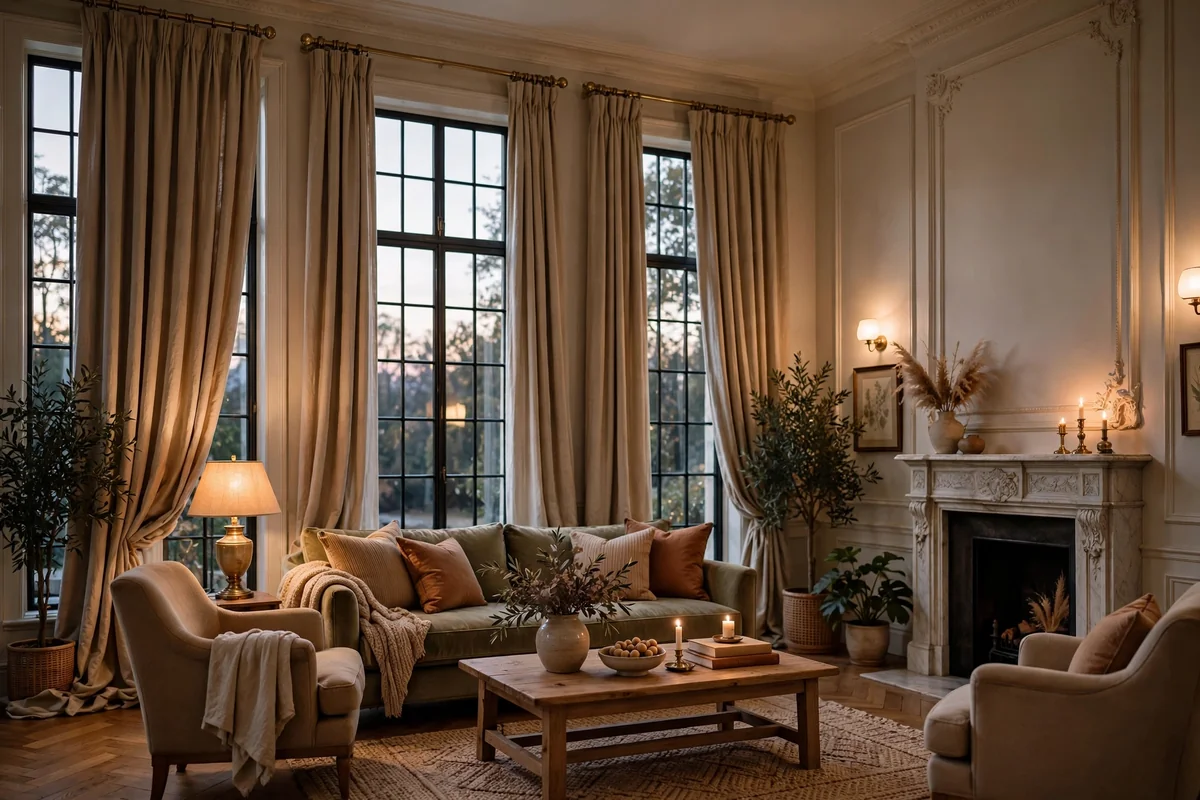
Hanging curtains high and wide is one of the biggest visual upgrades you can make. Mount the rod 4 to 6 inches below the ceiling and extend it 6 to 10 inches beyond each side of the window frame. Use panels at least twice the window width in fabric so they hang in full folds and kiss the floor. The result: windows look larger, ceilings look taller, and the room looks custom.
Skimpy curtains hung at window height do the opposite, making everything look small and cheap. This upgrade costs only the rod and panels, and ready-made extra-long curtains are widely available. Keep the fabric simple and elegant: linen-look weaves in neutral tones suit almost every room. Avoid short curtains that end at the sill unless it is a deliberate cafe style; floor-length is the expensive look.
4. Declutter Every Surface
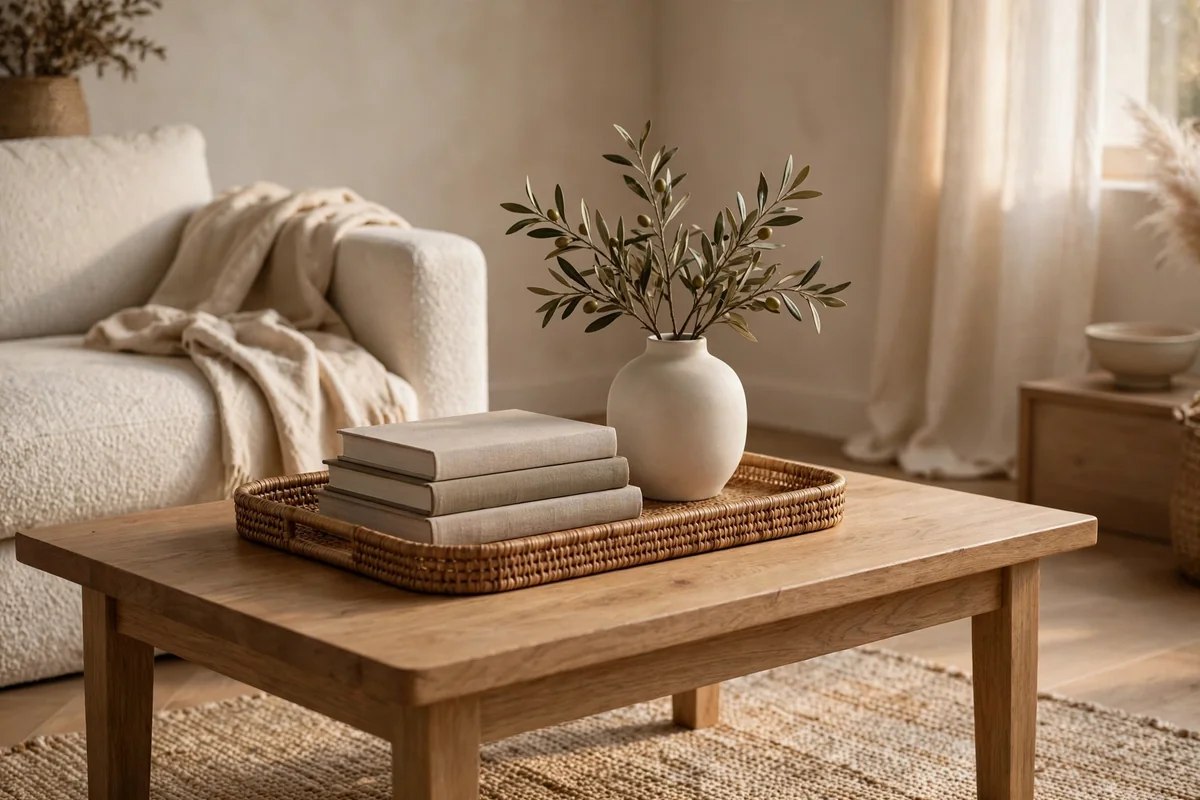
Expensive rooms breathe. Clear every surface down to a few intentional objects: a coffee table needs a tray, a book stack and one decorative piece, not twelve. Walk through with a box and remove everything that is not beautiful or useful. You will be shocked how much larger and calmer rooms feel. This costs nothing and outperforms almost every purchase.
After clearing, style what remains with intention: group objects in odd numbers, vary heights, leave empty space. Store the removed items properly rather than shoving them in a closet; the goal is less stuff, not hidden stuff. Repeat seasonally, since clutter creeps back. The discipline of editing is the true luxury secret: high-end interiors are defined as much by what is absent as by what is present.
5. Add Crown Molding and Trim
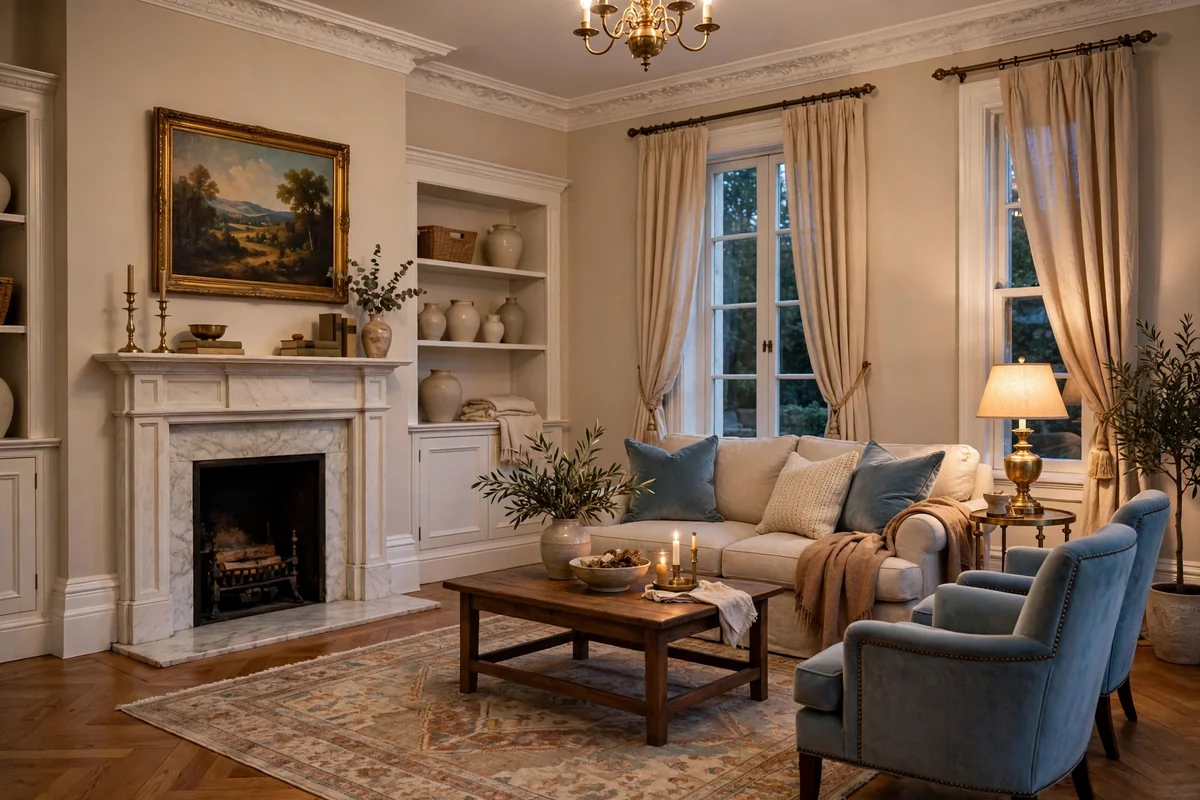
Crown molding and upgraded trim give rooms architectural substance that reads as expensive. Even simple 3-inch crown molding transforms a plain box into a finished space. Baseboards matter too: replacing skimpy 2-inch builder baseboards with 4 or 5-inch versions changes the room’s proportions. Paint trim a crisp warm white in satin for contrast against wall color.
This is a moderate DIY project: molding, a miter saw or pre-cut corners, caulk and paint. A single room costs $100 to $300 in materials. Keep profiles simple and consistent throughout the house; mixing ornate and plain trims looks disjointed. In rentals, consider foam or peel-and-stick molding options that add the look without permanence. Architectural detail is one of the clearest signals of a thought-through home.
6. Update Cabinet Hardware
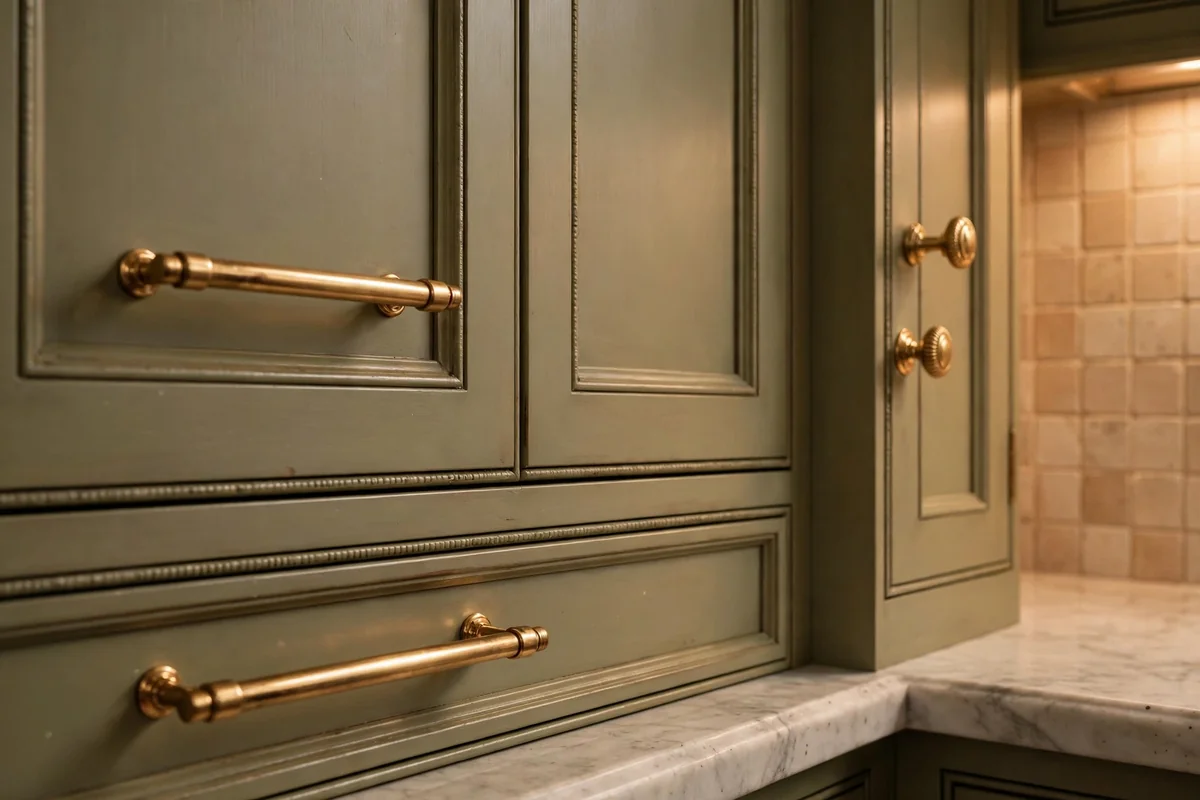
Cabinet hardware is the jewelry of kitchens and bathrooms, and updating it is a classic high-impact, low-cost upgrade. Replace dated knobs with solid bar pulls or elegant knobs in brass, matte black or brushed nickel. Choose one finish and use it consistently. Measure the existing hole spacing before buying; matching it avoids drilling new holes.
Solid-feeling hardware reads as expensive; lightweight hollow pulls do not. Budget $3 to $8 per piece, and do an entire kitchen for $100 to $200. While you are at it, tighten hinges and align doors; hardware shines brightest on cabinets that close properly. Avoid mixing three different finishes in one small kitchen. This weekend project takes a few hours and makes builder-grade cabinets look custom.
7. Paint in Rich, Complex Tones
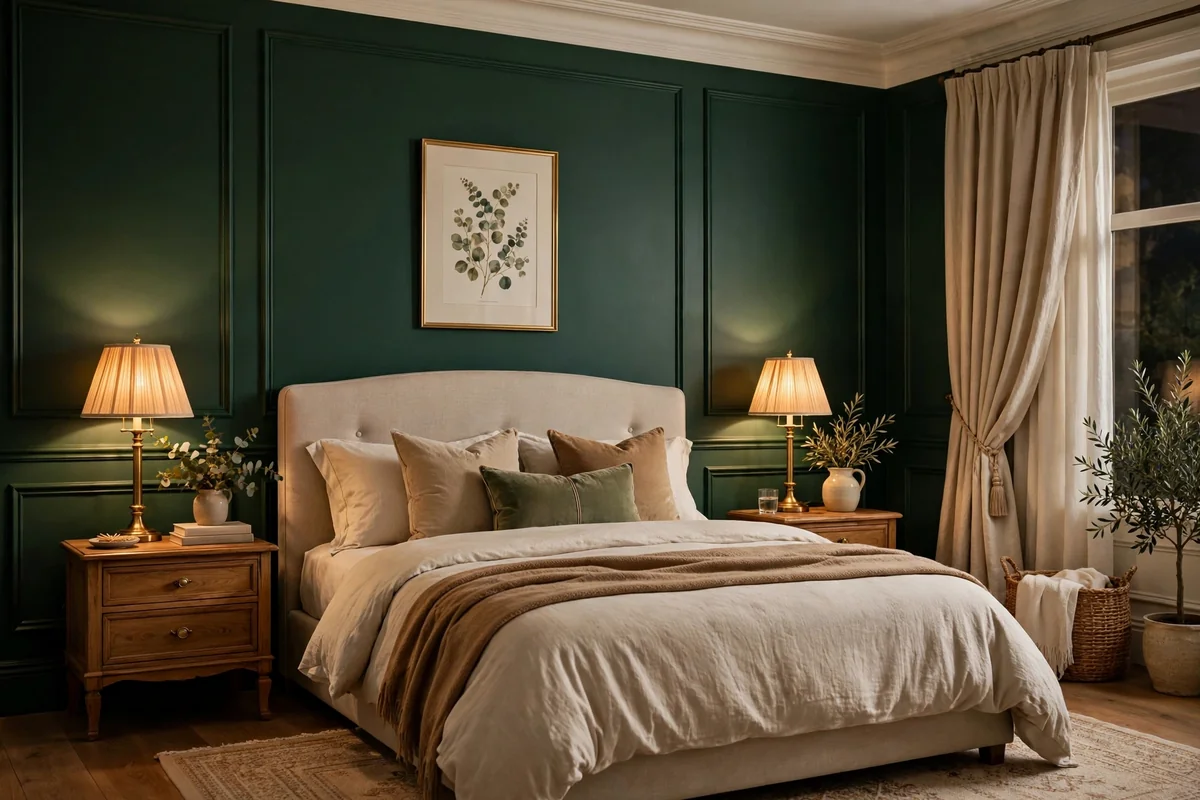
Fresh paint in rich, complex colors makes a home look cared for and intentional. Complex tones, colors with visible depth and undertone like deep olive, warm charcoal, dusty teal, read as designer-chosen. Flat, chalky builder white reads as default. You do not need dark walls everywhere; one rich accent wall plus fresh warm white elsewhere transforms a room.
Test large swatches and observe them in daylight and lamplight before committing; undertones shift dramatically. Use quality paint with good coverage; cheap paint needs extra coats that cost more in the end. Keep ceilings a clean white to lift the room. A $50 gallon of paint is the best value in decorating. Avoid trendy neons or ultra-specific shades that date quickly; complex neutrals and deep classics have the longest life.
8. Layer Textures Everywhere
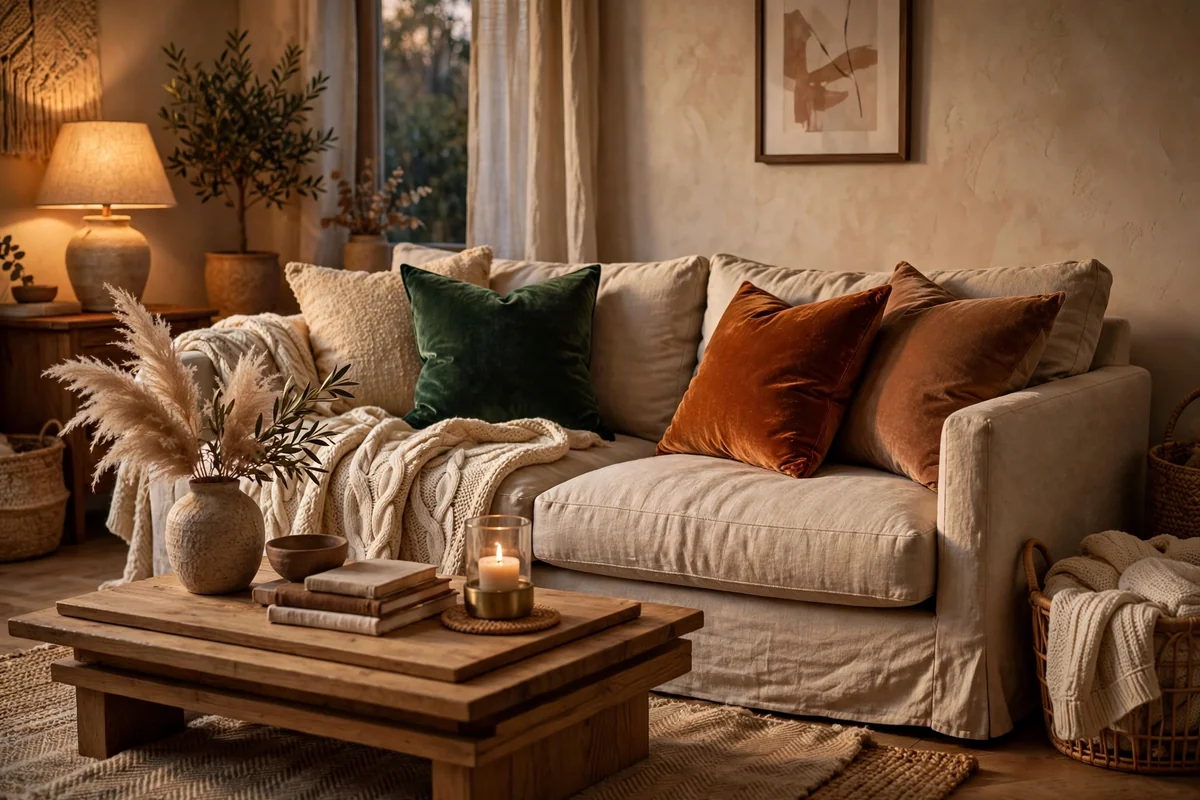
Expensive rooms are touchable. Layer linen, velvet, wool, leather, wood and woven fibers so the eye finds richness everywhere. A smooth leather chair with a nubby wool throw, a linen sofa with velvet pillows, a jute rug under a marble tray: contrast is what makes texture read as luxury. Flat, single-texture rooms feel cheap no matter what they cost.
You do not need expensive materials, just varied ones. A $20 knit throw adds as much texture as a designer one. Mix matte and sheen: velvet’s glow against linen’s flatness is inherently rich. Avoid rooms where everything is the same microfiber or the same shiny polyester; uniformity reads as budget. Touch is the sense luxury speaks to most directly, so make every seat and surface interesting to the hand.
9. Add One Statement Light Fixture
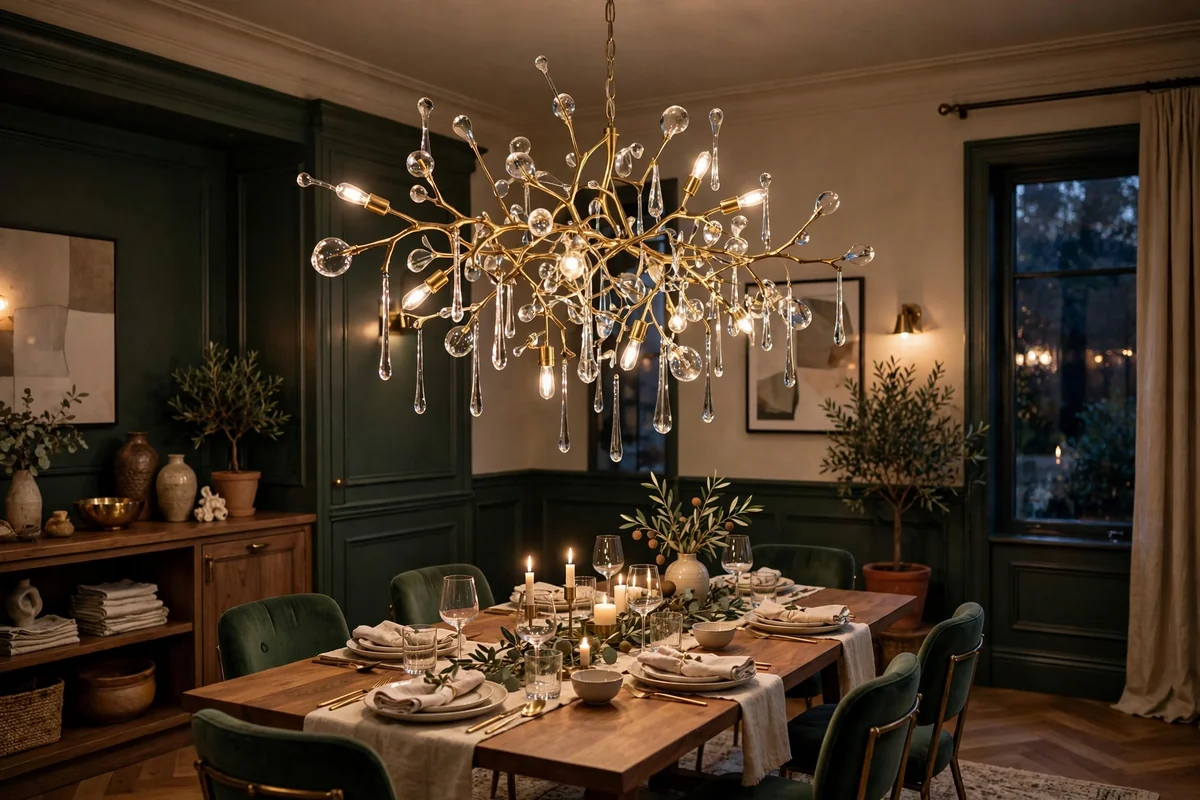
One statement light fixture gives a room a focal point that reads as designed. A sculptural pendant over the dining table, a dramatic chandelier in the entry, or an arc floor lamp in the living room anchors the space like jewelry. Scale matters: the fixture should be generous, roughly one-third the width of the table beneath it for pendants, hung 30 to 36 inches above the surface.
You do not need to spend thousands; sculptural fixtures exist at every price, and vintage finds are full of character. Keep the rest of the room’s lighting simple so the statement piece shines. Ensure the bulb temperature is warm, since a beautiful fixture with harsh light still feels cheap. One confident fixture beats three timid ones. This is the upgrade guests notice and remember.
10. Go Big With Art
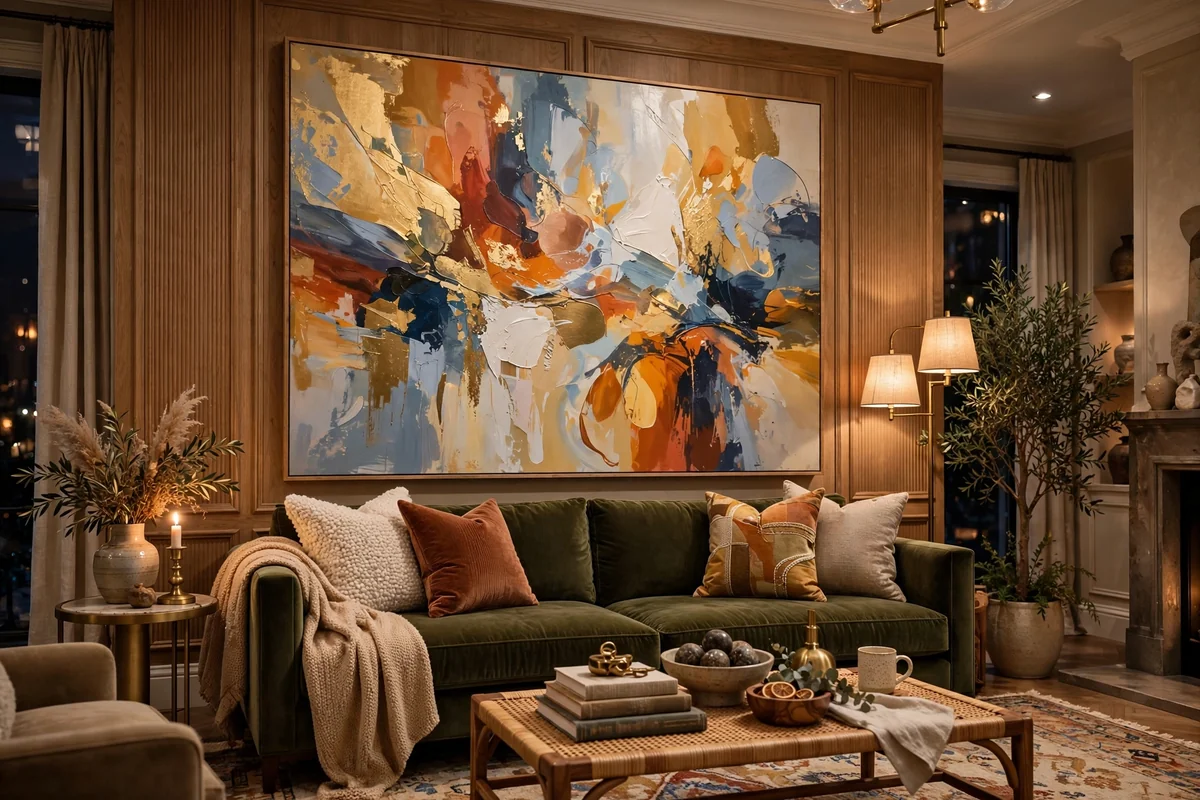
Large-scale art makes rooms feel gallery-curated and expensive. One big piece, 36 by 48 inches or larger, over a sofa or mantel has more impact than a dozen small frames. It fills the wall properly and gives the room a clear focal point. Oversized prints in good frames are affordable; the scale does the work, not the price tag.
Hang the center at 57 to 60 inches from the floor. Choose art with colors that echo the room’s palette so it feels integrated. Good framing matters enormously: a large print in a cheap frame still looks cheap, while a simple gallery frame elevates anything. Avoid tiny art floating on big walls; it makes both look lost. If original art is out of reach, quality reproductions and photography prints at large scale deliver the same architectural effect.
11. Use Mirrors Strategically
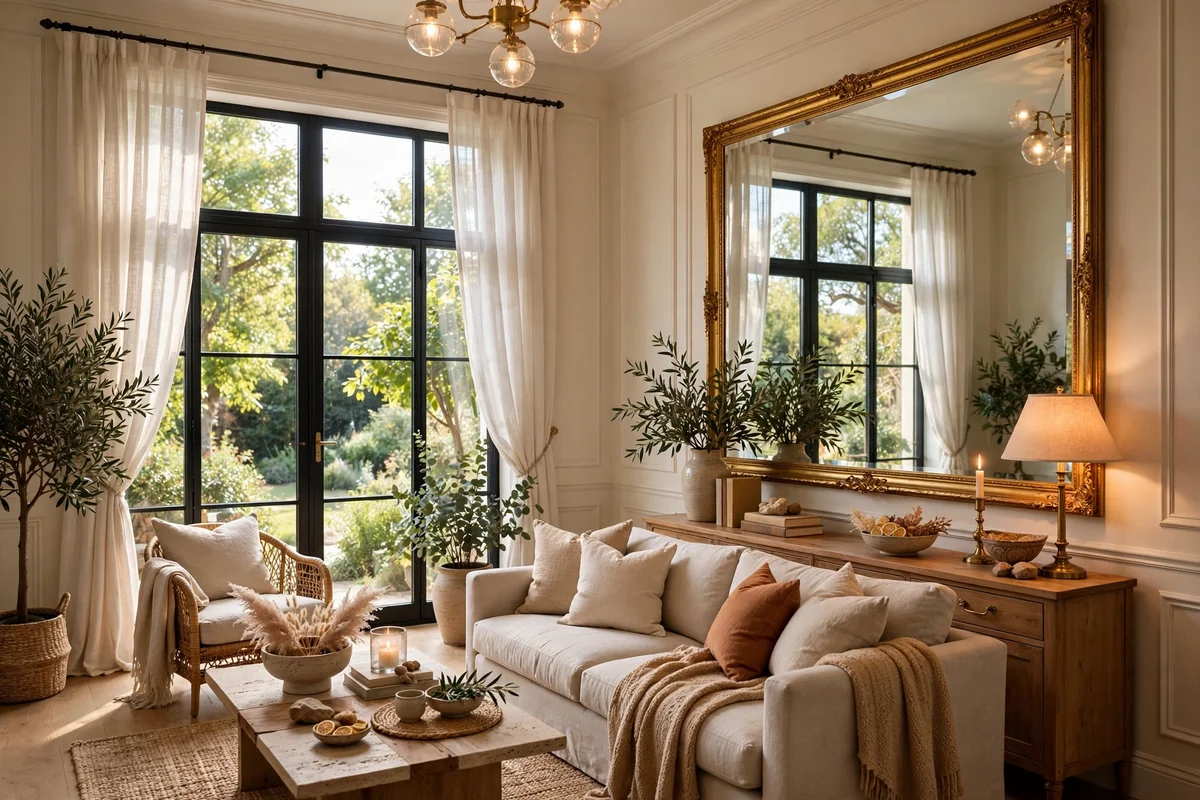
Mirrors double light, views and the sense of space, which is why expensive rooms use them generously. A large mirror opposite a window bounces daylight deep into the room; a mirror behind a lamp doubles its glow. Choose substantial mirrors with good frames; small, frameless mirrors read as bathroom fixtures. Lean a floor mirror against a wall for a relaxed, designer look.
Place mirrors where they reflect something beautiful: a window, art, greenery. Avoid reflecting clutter or blank walls, which just doubles the problem. Keep mirrors clean; dusty mirrors dull the effect instantly. One large mirror outperforms several small ones. In dining rooms, a mirror makes candlelight magical. This is an old designer trick because it works: light and space are the essence of luxury.
12. Upgrade Your Throw Pillows
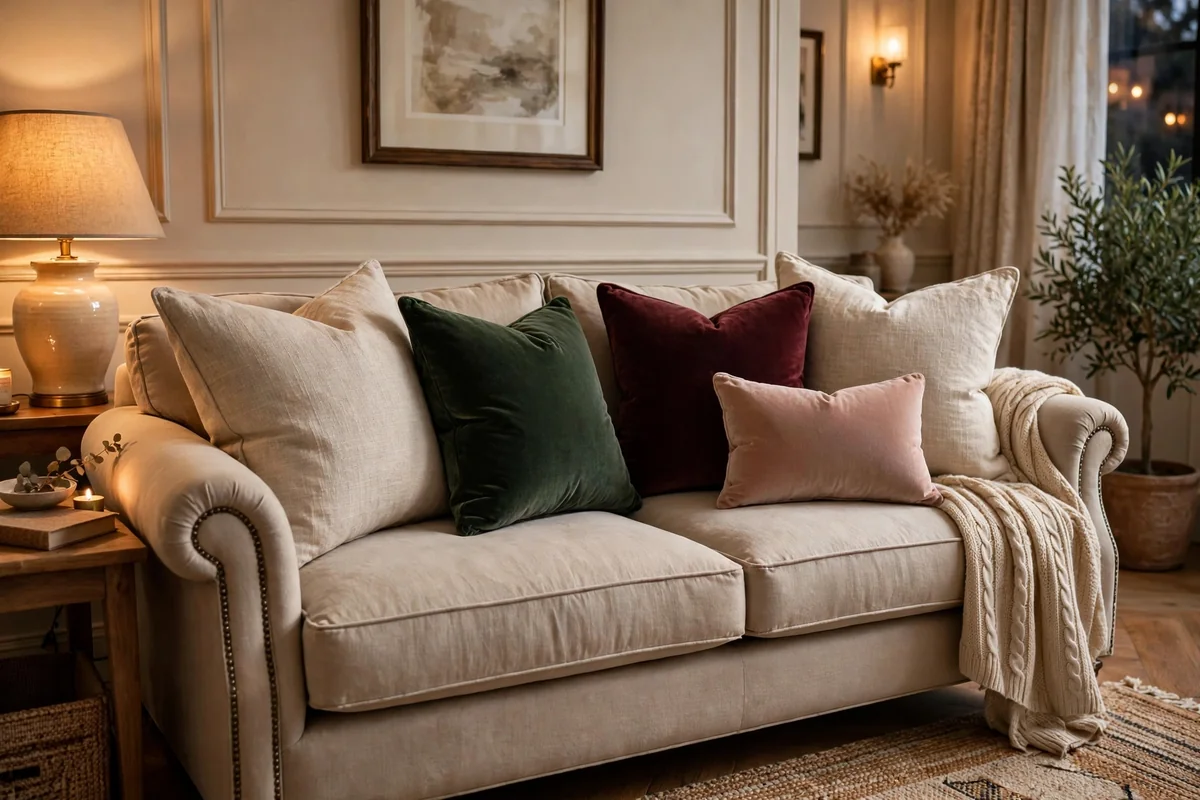
Throw pillows are the fastest soft-furnishing upgrade. Replace flat, small, sad pillows with generous ones: 20 to 22-inch squares with real down or down-alternative inserts that hold their shape. Quality inserts make even budget covers look expensive. Mix textures, linen, velvet, knit, in a tight color palette rather than a rainbow of cheap prints.
Use odd numbers and varied sizes for a styled look: two large squares, two medium, one lumbar. Avoid the stiff, overstuffed pillows that come with sofa sets; they scream showroom. Washable covers with hidden zippers keep everything fresh. This $100 upgrade, mostly in inserts, transforms a sofa completely. Pillows are touched daily, so their quality registers subconsciously; cheap pillows are felt before they are seen.
13. Add Fresh Flowers and Greenery
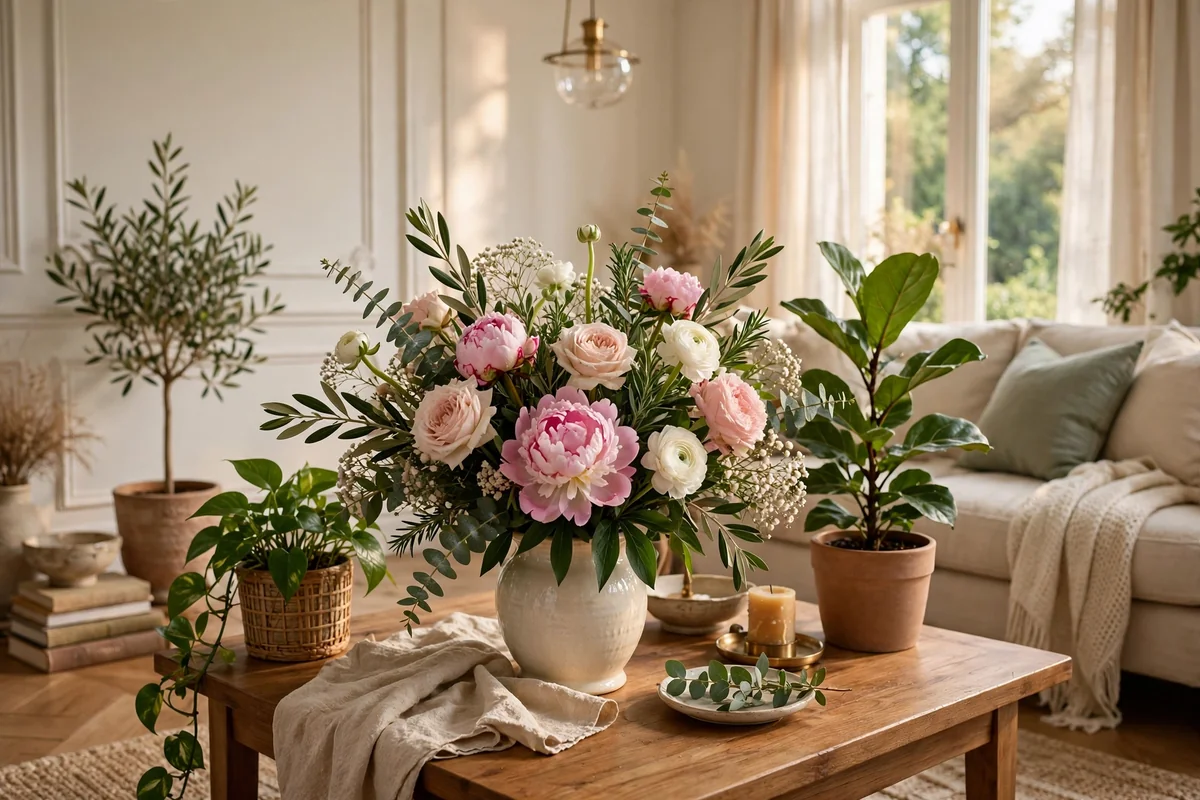
Nothing says cared-for like living things. A vase of fresh flowers on the coffee table, a tall plant in an empty corner, herbs on the kitchen sill: greenery makes rooms feel alive and tended. You do not need expensive arrangements; a $10 grocery bouquet divided into small bud vases looks intentional and generous.
Choose low-maintenance plants if you are not a natural gardener: snake plants, pothos and ZZ plants forgive neglect. Put plants in real pots, ceramic, terracotta, woven baskets, not nursery plastic. Fresh flowers weekly cost less than most decor purchases and transform a room’s feeling instantly. Avoid sad, dusty faux plants; one real plant beats five fake ones. Life is the ultimate luxury detail.
14. Commit to a Color Palette
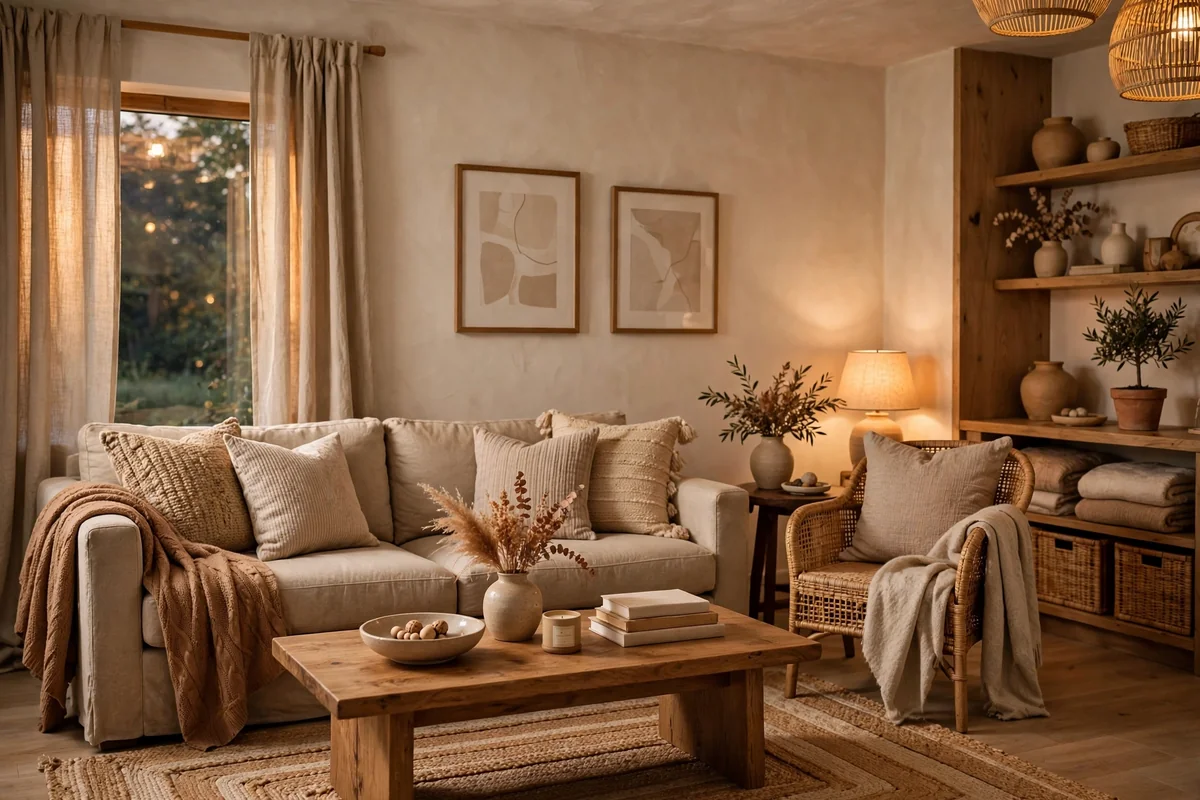
Expensive rooms commit to a palette and repeat it. Choose three to five colors and carry them through textiles, art and accessories in every room. Repetition creates the cohesion that reads as designed. A whole house in warm whites, camel, charcoal and brass feels curated; the same house with random colors in each room feels accidental.
Write your palette down and check purchases against it. This discipline prevents the impulse buys that dilute a scheme. The palette does not need to be neutral; deep green, navy or terracotta-based palettes look rich when committed to fully. Avoid introducing a new accent color in every room. Restraint is the difference between collected and cluttered, and it costs nothing at all.
15. Hide Cords and Visual Clutter
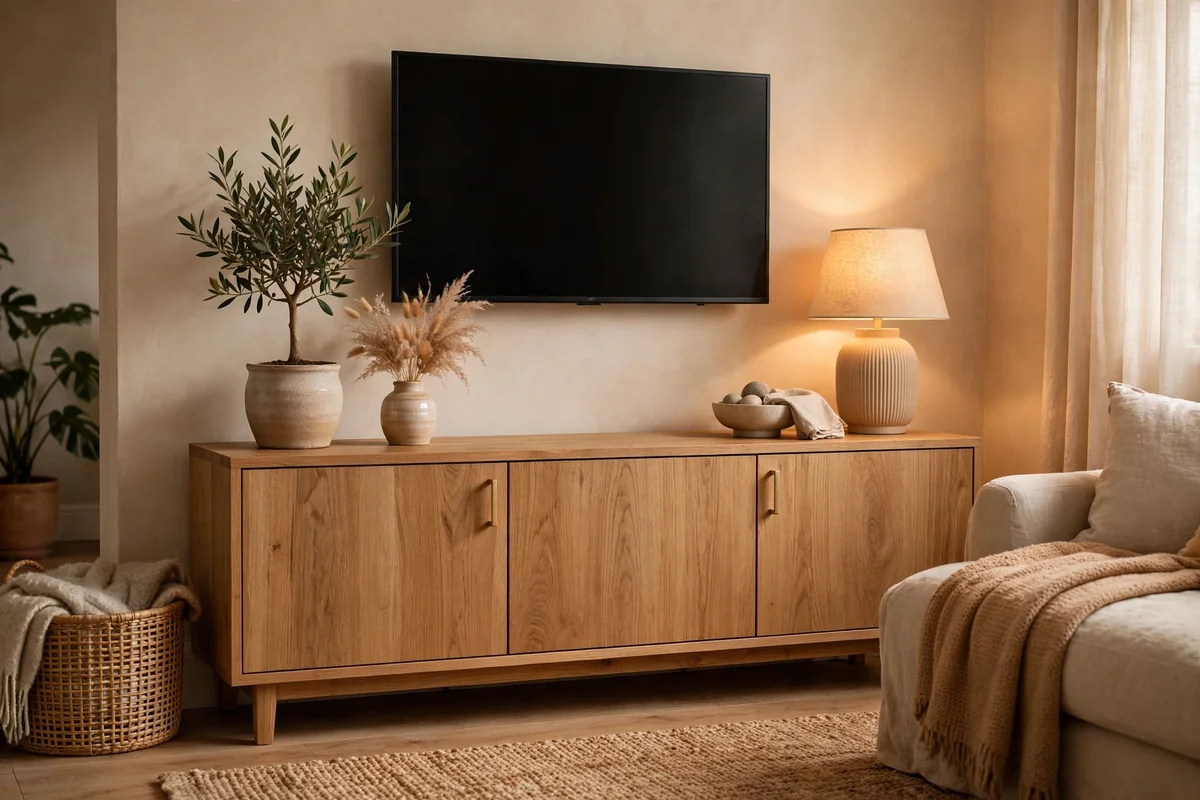
Visible cords instantly cheapen a room. Corral them with cable covers painted to match the wall, cord clips behind furniture, and power strips mounted under desks. Bundle lamp cords with velcro ties and route them behind furniture legs. This unglamorous task has an outsized visual payoff; the eye stops snagging and the room feels calm.
Go further: hide the router in a ventilated box, use a charging drawer for devices, keep remotes in a tray. The principle is that technology should serve invisibly. Avoid the tangle behind the media console that everyone has; an hour of organizing fixes it permanently. Expensive rooms look effortless because the effort is hidden. Cord control is pure, cheap luxury.
16. Invest in Quality Bedding
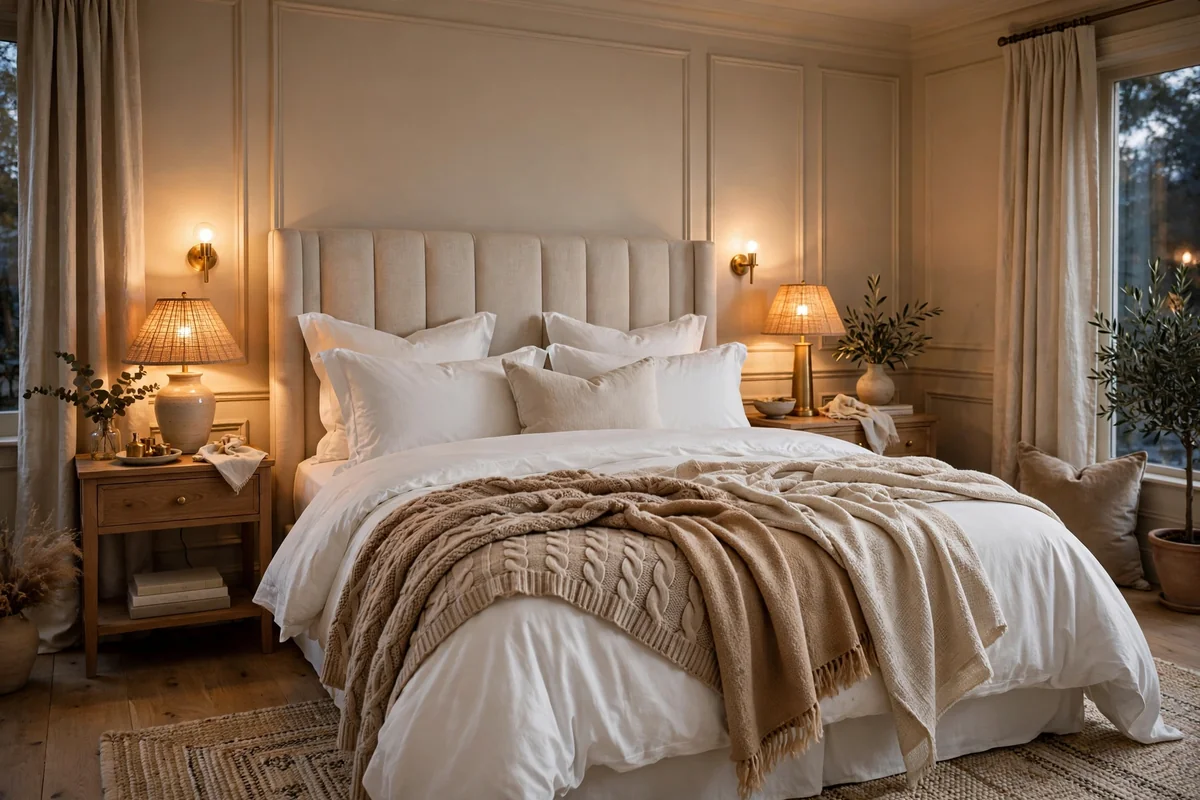
The bedroom is where luxury is felt most literally, so bedding matters. Crisp cotton or linen sheets, a real duvet with a washable cover, and plump pillows transform sleep and style. White or ivory bedding looks hotel-luxe and hides nothing, which forces the quality to be real. Layer a throw and two sleeping pillows plus two shams for the classic made-bed look.
You do not need the highest thread count; good cotton percale in the 300 to 400 range feels wonderful. Wash bedding weekly; fresh sheets are the cheapest luxury there is. Avoid the thin, shiny sheet sets that pill after three washes. Make the bed every morning; an unmade bed undoes every other upgrade. The bedroom is private, but its quality sets the tone for the whole home.
17. Style Your Bookshelves
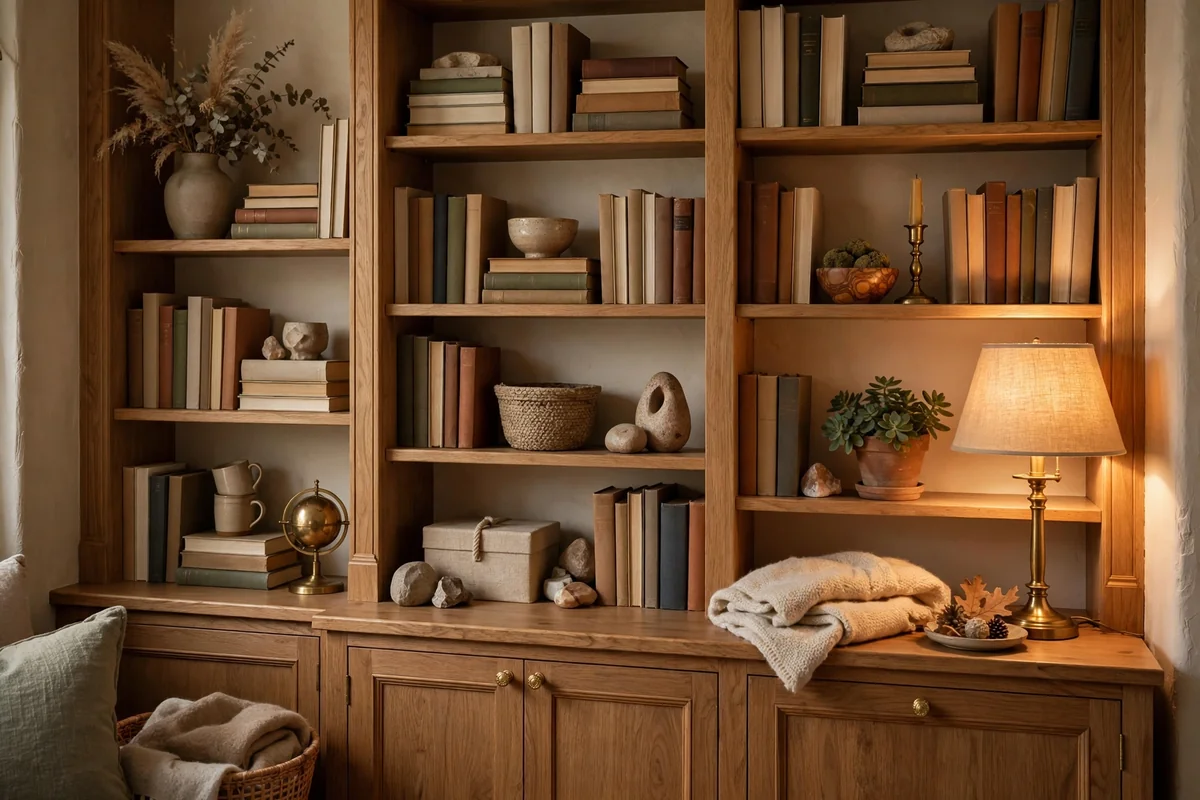
Styled bookshelves signal a thoughtful home. Arrange books both vertically and horizontally, leave breathing room, and intersperse a few beautiful objects: a vase, a small sculpture, a framed photo. Group by color or size for cohesion. Remove the clutter of random papers and broken items; shelves should look curated, not like storage.
Follow the rule of thirds: roughly two-thirds books, one-third objects and empty space. Turn some book stacks horizontal to create pedestals for objects. Avoid cramming every inch; negative space is what makes shelves look designed. Dust regularly, since dusty shelves read as neglected. Well-styled shelves make a room feel intellectual and personal, which is a form of luxury no money can fake.
18. Upgrade Faucets and Fixtures
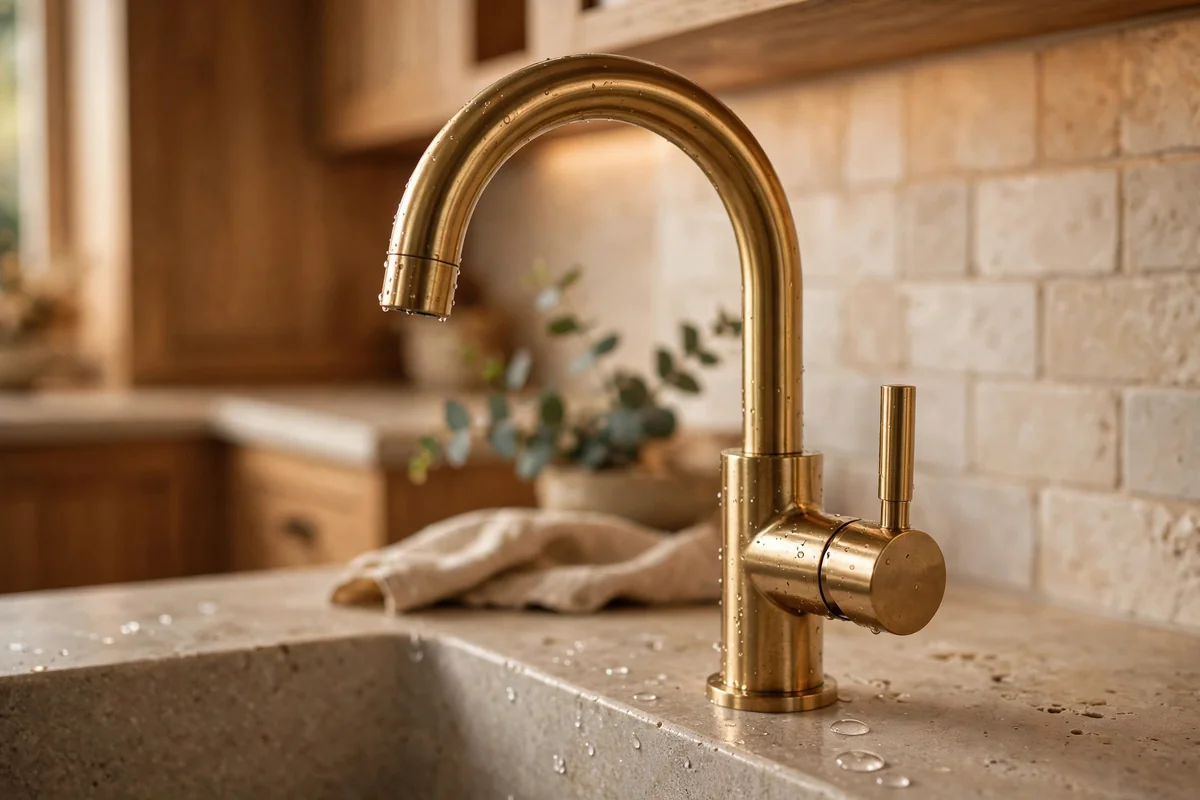
Faucets, showerheads and door handles are touched daily, so their quality registers. Replacing builder-grade chrome with solid-feeling fixtures in brass, matte black or brushed nickel elevates kitchens and bathrooms enormously. Choose one finish per room and match it across faucet, hardware and lighting for cohesion, and the difference is felt every single time you turn on the tap.
This is a moderate DIY or a short plumber visit; a kitchen faucet swap takes under an hour. Budget $150 to $400 for a quality faucet that will last decades. While upgrading, replace dated switch plates and outlet covers; the details compound. Avoid mixing finishes randomly. Fixtures are small but constant; every touch reminds you of quality, which is the essence of feeling expensive.
19. Perfect the Entryway
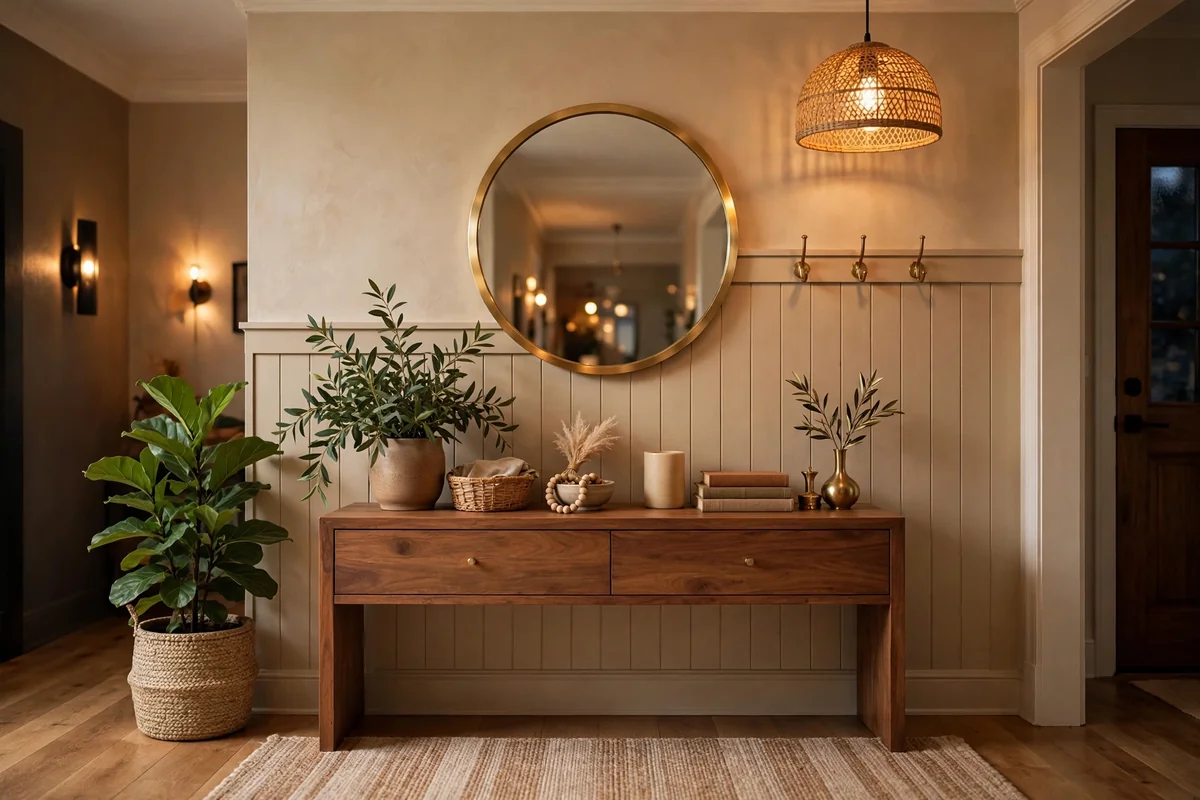
The entryway sets the expectation for the whole home. Give it a console or bench, a mirror, a tray for keys, good lighting and something living: a plant or fresh flowers. Keep it ruthlessly tidy; entryway clutter colors the entire visit. A rug that fits the space, a piece of art and a candle complete the welcome.
Scale to your space: a small wall-mounted shelf and hooks work in tiny entries. Ensure the lighting is warm and flattering; nobody feels luxurious under a harsh bulb. The entryway is also where scent matters most; a subtle diffuser makes the first impression. Avoid using the entry as overflow storage. This small zone does disproportionate work: guests decide how expensive your home feels within seconds of arriving.
20. Add Scent and Ambience
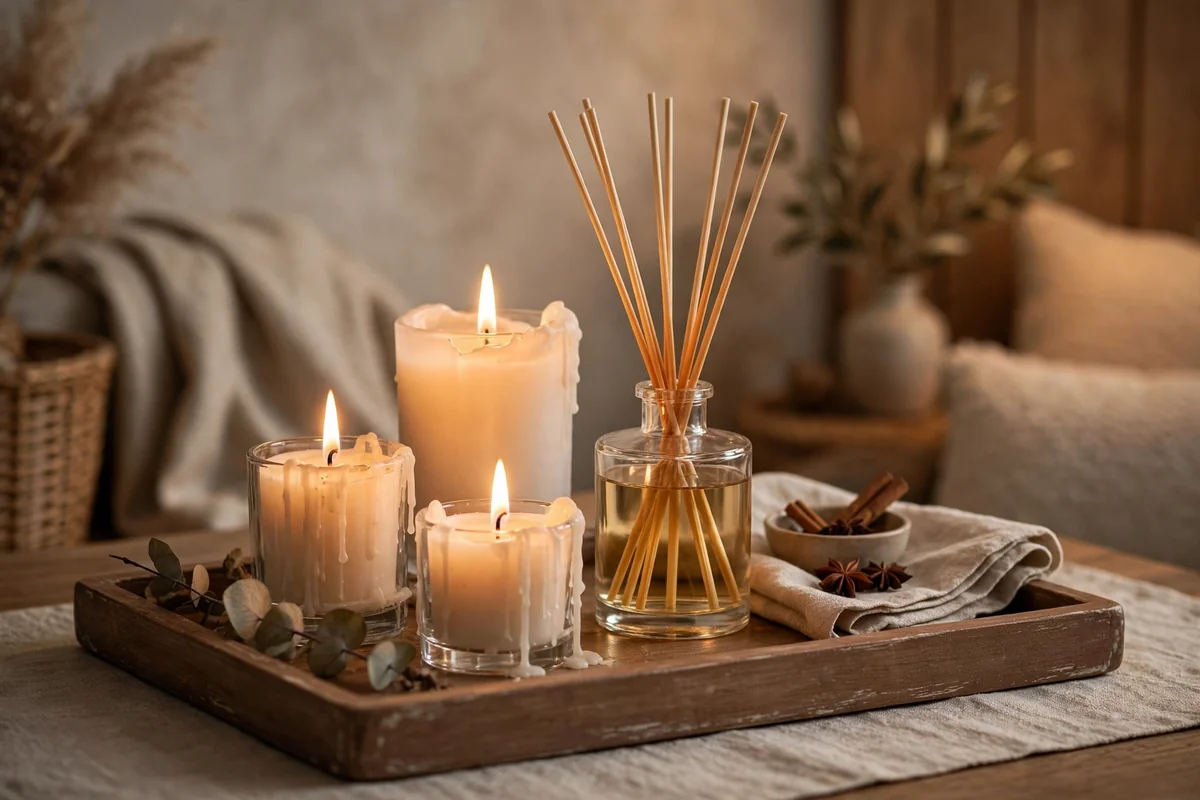
Expensive homes smell intentional. A subtle reed diffuser in the entry, a quality candle in the living room, fresh eucalyptus in the bathroom: scent is the invisible layer of luxury. Choose one signature scent family, citrus, woody, floral, and repeat it rather than mixing competing fragrances. Keep it subtle; overpowering scent has the opposite effect.
Candles add flicker that electric light cannot match; group them in odd numbers on a tray for safety and style. Fresh flowers contribute scent naturally. Avoid plug-in air fresheners with artificial smells, which read as masking rather than luxury. Open windows regularly; fresh air is the foundation no product replaces. Ambience is felt more than seen, which makes it the most sophisticated upgrade on this list.
21. Coordinate Containers and Storage
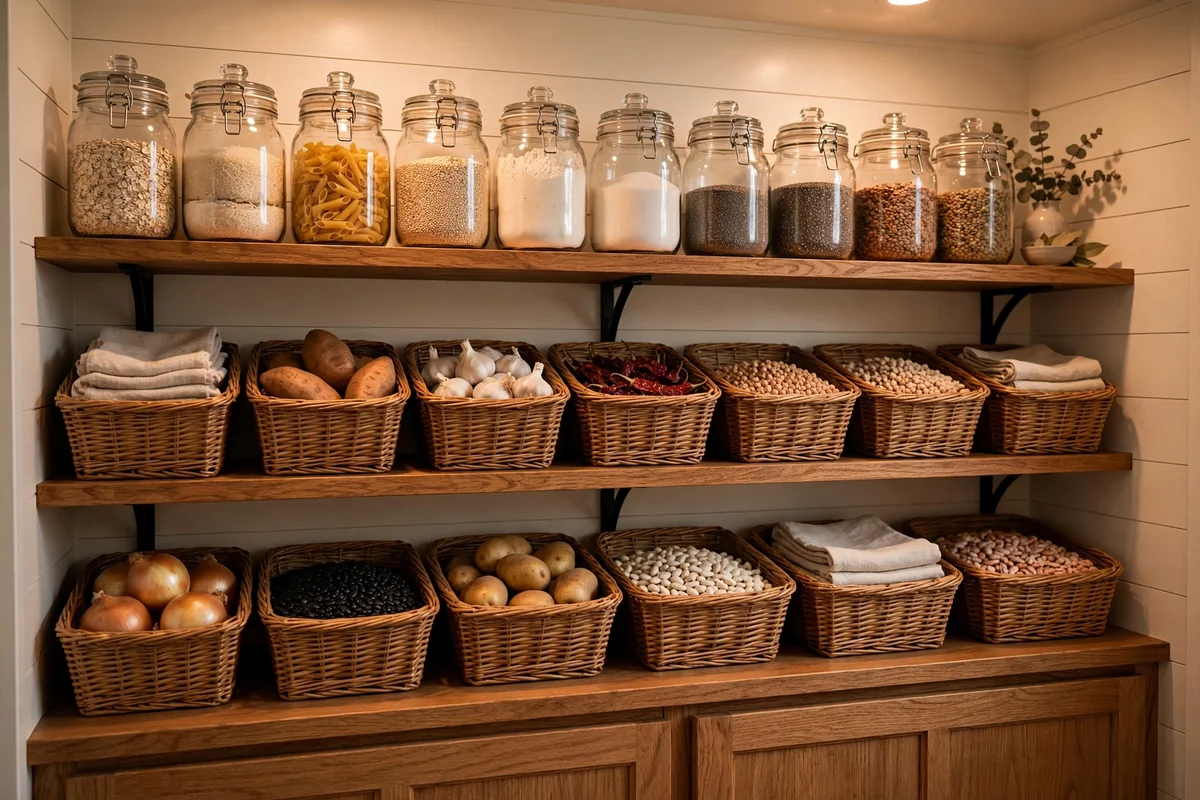
Matching containers make storage look intentional. Decant pantry staples into uniform glass jars, use matching baskets in closets, corral bathroom products on trays. The uniformity reads as curated even when the contents are ordinary. This works in pantries, bathrooms, laundry rooms and offices: anywhere storage is visible, and the calm visual rhythm instantly makes shelves look designed rather than merely full.
You do not need expensive containers; consistent inexpensive ones beat mismatched premium ones. Label jars simply for a finished look. Avoid keeping original packaging visible; boxes and bags are visual noise. The principle extends to hangers: matching slim hangers make any closet look boutique. Coordination is a small effort with a transformative effect on how organized, and therefore expensive, a home feels.
22. Deep Clean Everything
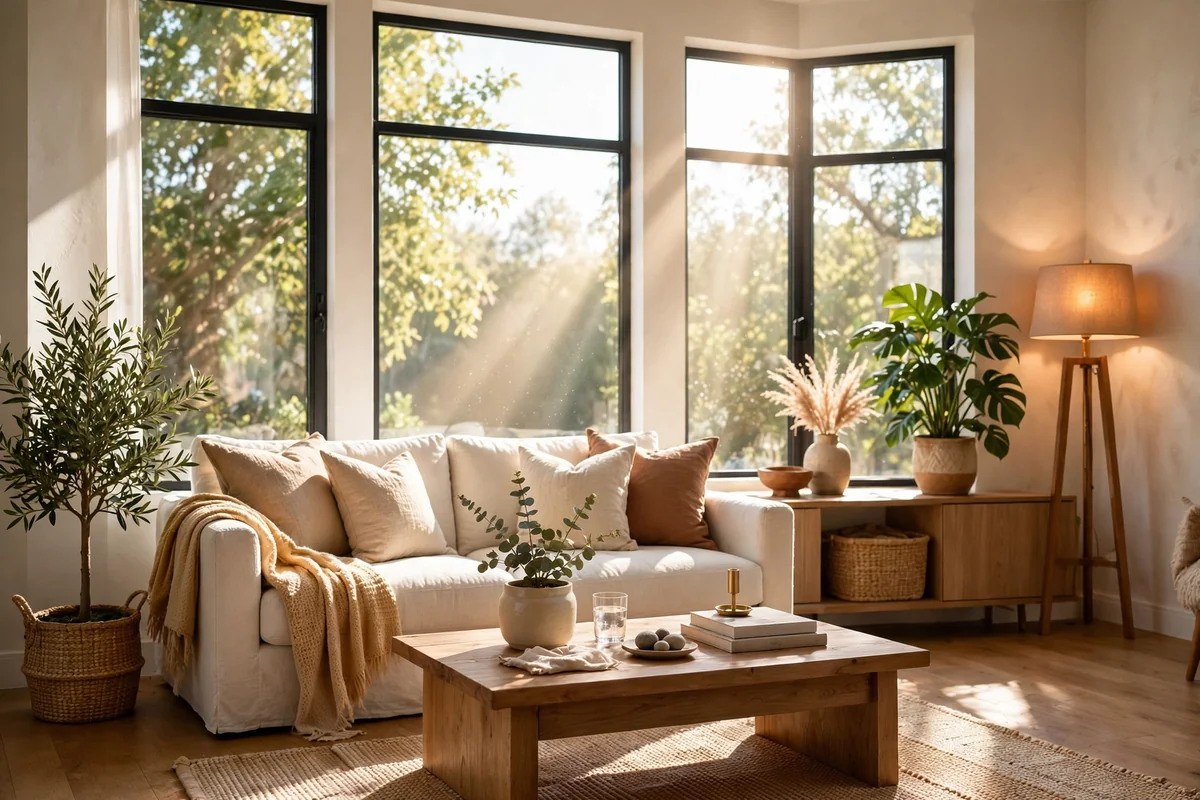
Nothing looks expensive dirty. A true deep clean, baseboards, grout, windows inside and out, light fixtures, under furniture, transforms a home more than any purchase. Clean windows alone can double the perceived light. Wash walls where hands touch, degrease the kitchen, descale the bathroom: the details compound into an unmistakable feeling of care.
Work room by room with a checklist so nothing is missed. Rent or borrow a carpet cleaner for a dramatic refresh. Keep it up with weekly maintenance; deep cleaning twice a year prevents the slow decline. Avoid masking dirt with decor; cleanliness is the foundation every other upgrade stands on. Of all 22 ways, this is the most democratic: it costs almost nothing and changes everything.
Conclusion
Looking expensive was never about spending more; it is about seeing clearly. Good light, generous scale, honest materials, thoughtful color and relentless editing: these are the real luxuries, and most of them are free. Start with decluttering and light, add the details that matter to you, and your home will feel expensive because it is genuinely well cared for. That is the only kind of luxury that lasts.
Frequently Asked Questions
What is the cheapest way to make a home look expensive?
Decluttering costs nothing and makes the biggest difference. After that, warm light bulbs, a deep clean, and rearranging furniture you own are nearly free upgrades that instantly make rooms feel more intentional and polished.
Does paint really make a home look more expensive?
Yes. Fresh paint in rich, complex tones covers wear and makes everything look cared for. Warm whites, deep greens and sophisticated neutrals read as expensive; flat, builder-grade white can look cheap by comparison.
How do curtains make a room look expensive?
Hanging curtains high and wide, using full panels that kiss the floor, makes windows look larger and ceilings taller. Skimpy, short curtains have the opposite effect. Good curtain hanging is one of the highest-impact, lowest-cost upgrades.
What makes a living room look cheap?
Common culprits are small floating rugs, harsh overhead-only lighting, cluttered surfaces, mismatched small decor items, visible cords and flat builder-grade finishes. Fixing these basics elevates any room regardless of furniture cost.
Can you make a rental look expensive?
Absolutely. Focus on reversible upgrades: warm bulbs, large rugs, high-hung curtains, removable wallpaper, coordinated textiles, art and plants. These transform a rental without touching anything permanent.