Home Improvement
22 DIY Carpet Stain Remover Ideas That Lift Marks With Simple Pantry Staples
By Anna Wells · · 18 min read

Most carpet stains surrender to things already sitting in your kitchen cupboards, as long as you match the remedy to the spill and give it time to work.
A splash of tea during breakfast, muddy prints by the door, a mysterious grey patch in the hallway: carpets collect the story of a busy home. The good news is that most marks respond beautifully to simple pantry staples when you pair the right ingredient with the right kind of spill, work gently, and give each remedy a fair few minutes to do its job.
Before you begin, gather a small kit: white cloths or plain paper towels, a spray bottle, a bowl, a spoon, and your vacuum. White cloth matters because coloured towels can transfer dye onto damp carpet. Always blot from the outside edge of a stain toward the centre, and always patch test a new mixture on a hidden corner first.
1. Equal Parts Vinegar and Warm Water in a Spray Bottle
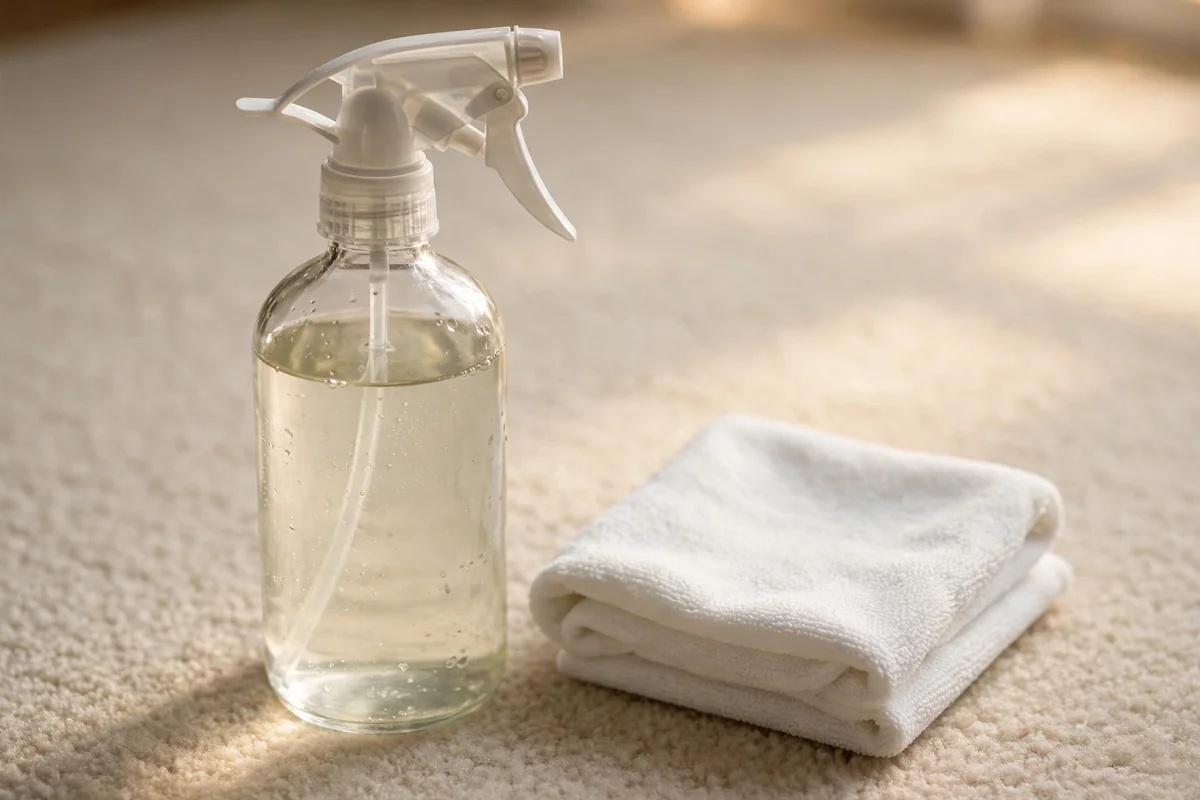
Mix 250 millilitres of white vinegar with 250 millilitres of warm water in a clean spray bottle and shake it gently. This mild, slightly acidic spray is the kindest first response for juice splashes, light tea marks, and the general dullness that settles into busy doorways and sofa fronts in homes with children and pets.
Blot up any loose spill first, then mist the mark until it is damp rather than soaked. Wait five to ten minutes, blot firmly with a clean white cloth, and repeat once if the colour is still lifting. Finish with a light mist of plain water so no vinegar scent lingers in the pile.
2. Thick Baking Soda Paste That Pulls Grease Upward
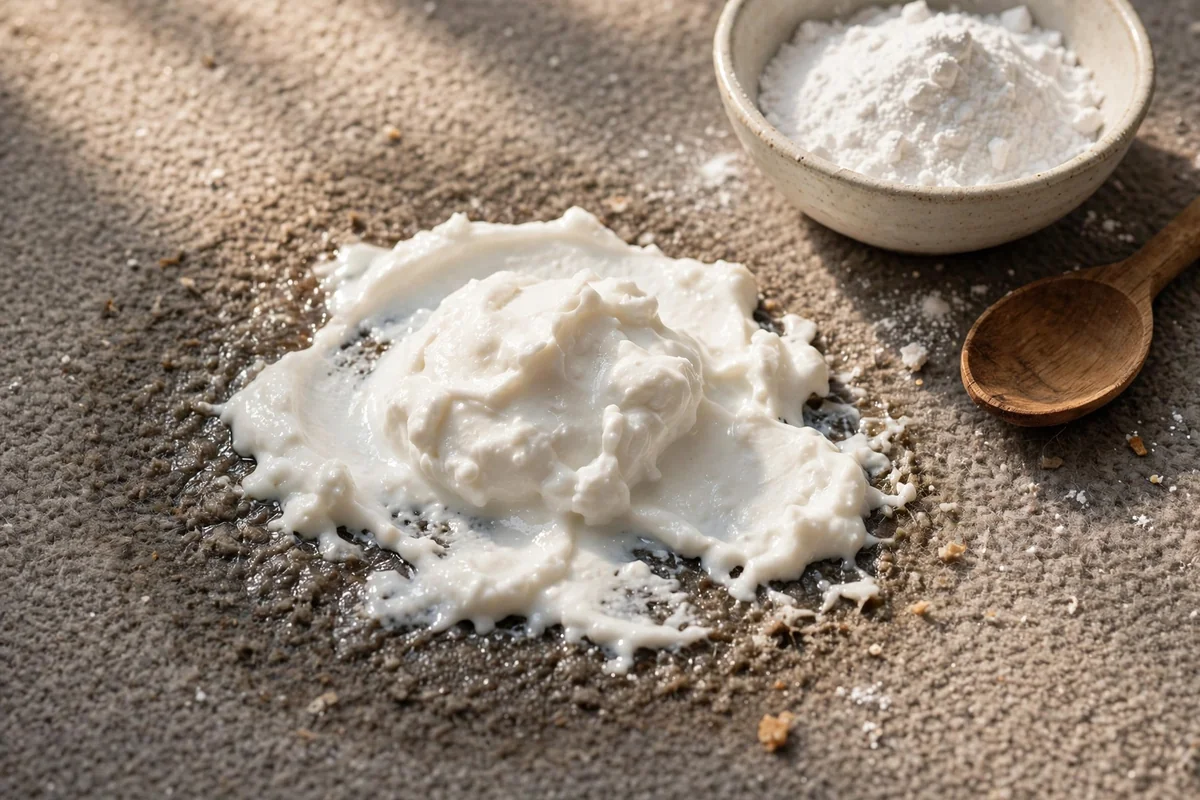
Grease from butter, salad dressing, or a dropped chip laughs at plain water, so reach for a dry worker instead. Stir three tablespoons of baking soda with just enough water, roughly two teaspoons, to make a paste the thickness of toothpaste, then spread it evenly over the whole greasy patch with a spoon.
Leave the paste until it dries completely, usually thirty to forty minutes, because the powder absorbs oil as it dries. Vacuum up the crust, then dab the area with a cloth dampened in warm water. For an old, deep grease mark, repeat the whole cycle once more rather than scrubbing harder.
3. Two Drops of Dish Soap for Supper Time Spills
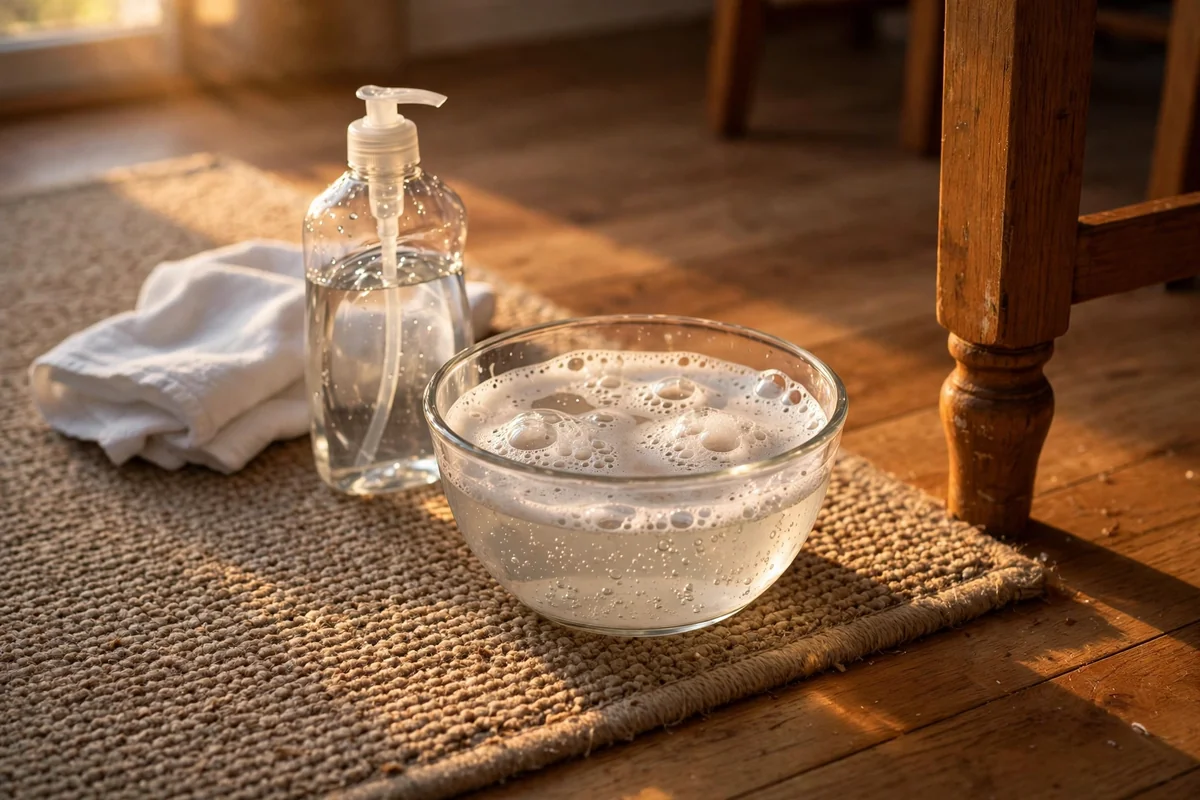
For soup, gravy, and sauce spills, fill a bowl with 500 millilitres of warm water and add only two drops of clear dish soap. Too much soap leaves a sticky film that quietly collects fresh dirt for weeks, so resist the urge to add a generous squirt more than that.
Dip a white cloth in the solution, wring it well, and blot from the outer edge inward, rinsing the cloth often. When the colour stops transferring, go over the spot with a second cloth dampened in plain water. This rinse step is the one most people skip, and it is the reason cleaned patches often turn grey again.
4. Fizzy Club Soda Poured Slowly Over Fresh Berry Juice
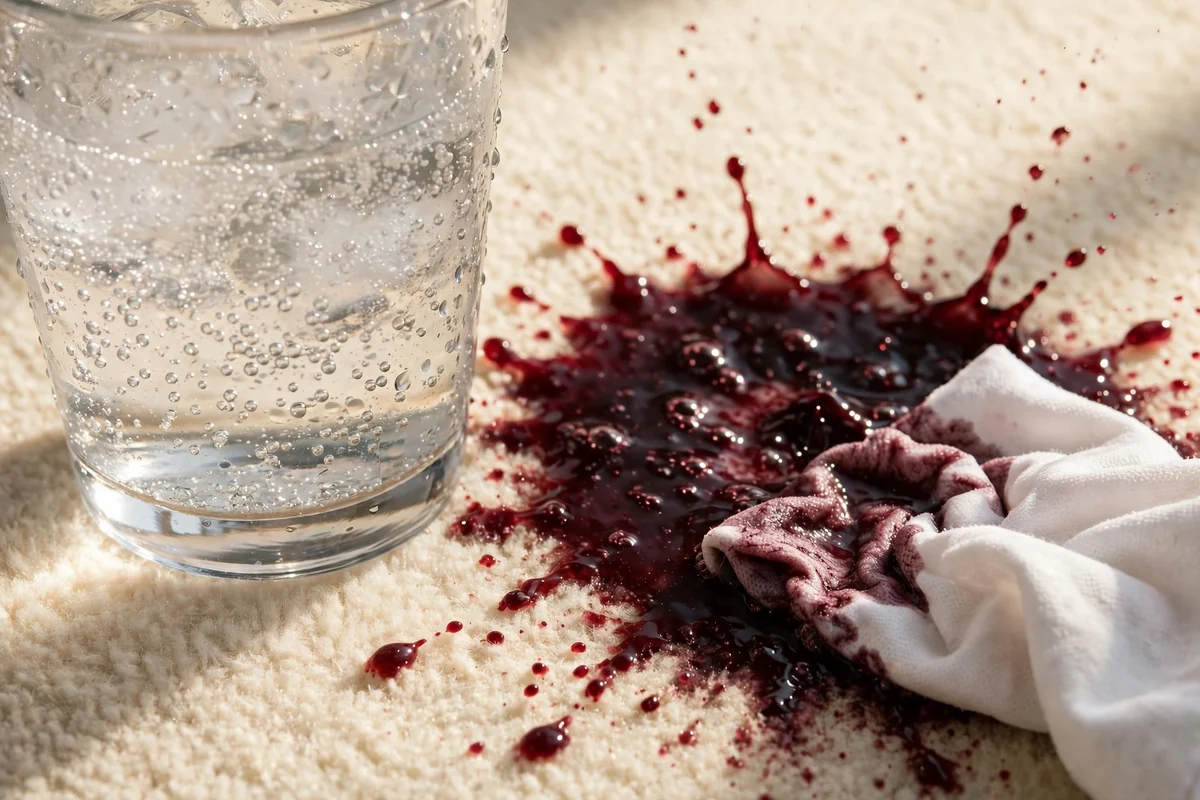
Fresh berry and grape juice spills need speed more than strength. Blot immediately with a clean cloth, then pour club soda slowly over the stain, a few spoonfuls at a time, letting the bubbles fizz through the fibres and lift the pigment before it can settle and bond with the carpet fibres.
Keep blotting with fresh sections of cloth as the colour transfers, and repeat the pour two or three times. The carbonation does the loosening work, so there is no need to rub. If a faint shadow remains once the carpet dries, follow with the vinegar spray from the first idea.
5. Three Percent Peroxide Dabbed Only on Pale Fibres
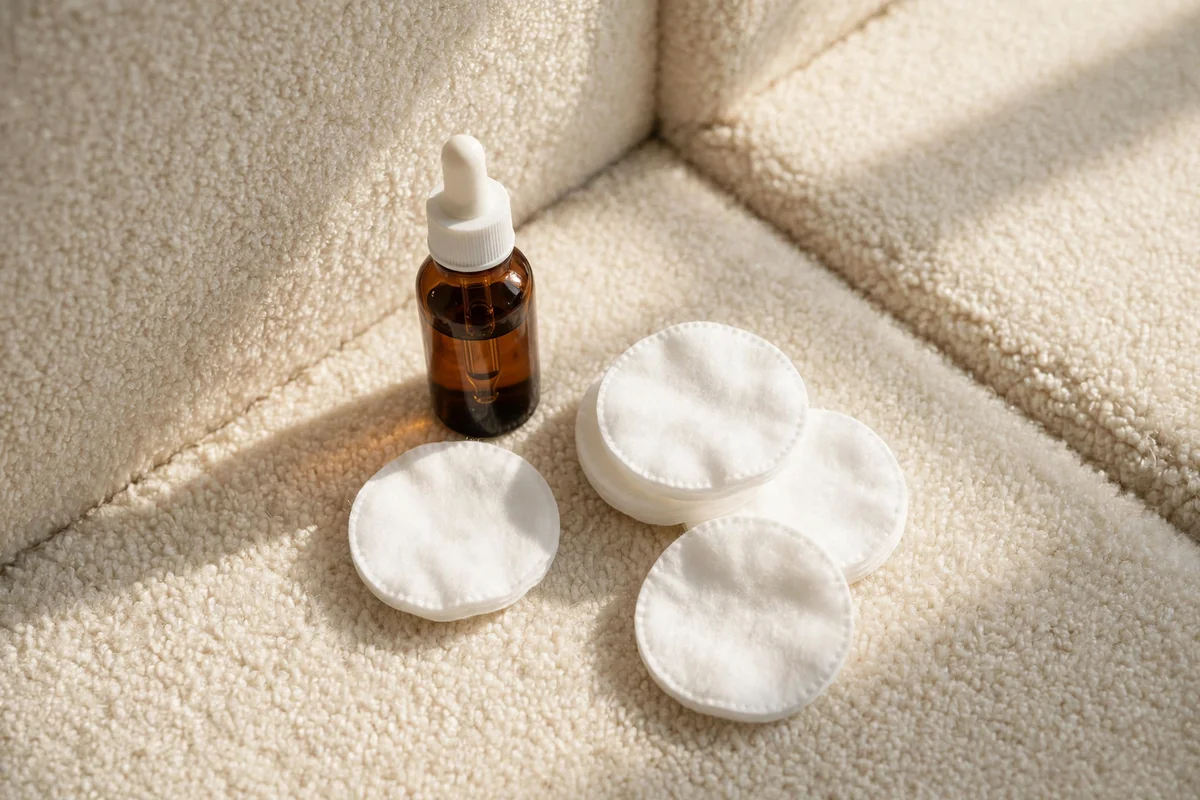
Ordinary three percent hydrogen peroxide from the medicine cabinet can lift organic marks such as berry juice and small food stains from white and very pale carpets. It has a gentle bleaching action, which is exactly why it must stay away from darker colours and patterned wool. Keep to the pale end of the carpet family.
Patch test behind a door first. If the test spot is unchanged after ten minutes, dampen a cotton pad with peroxide, press it onto the stain for five minutes, then blot. Work in small rounds rather than flooding the area, and rinse with a cloth dampened in plain water at the end.
6. A Dry Cornstarch Blanket Before Any Water Touches Oil
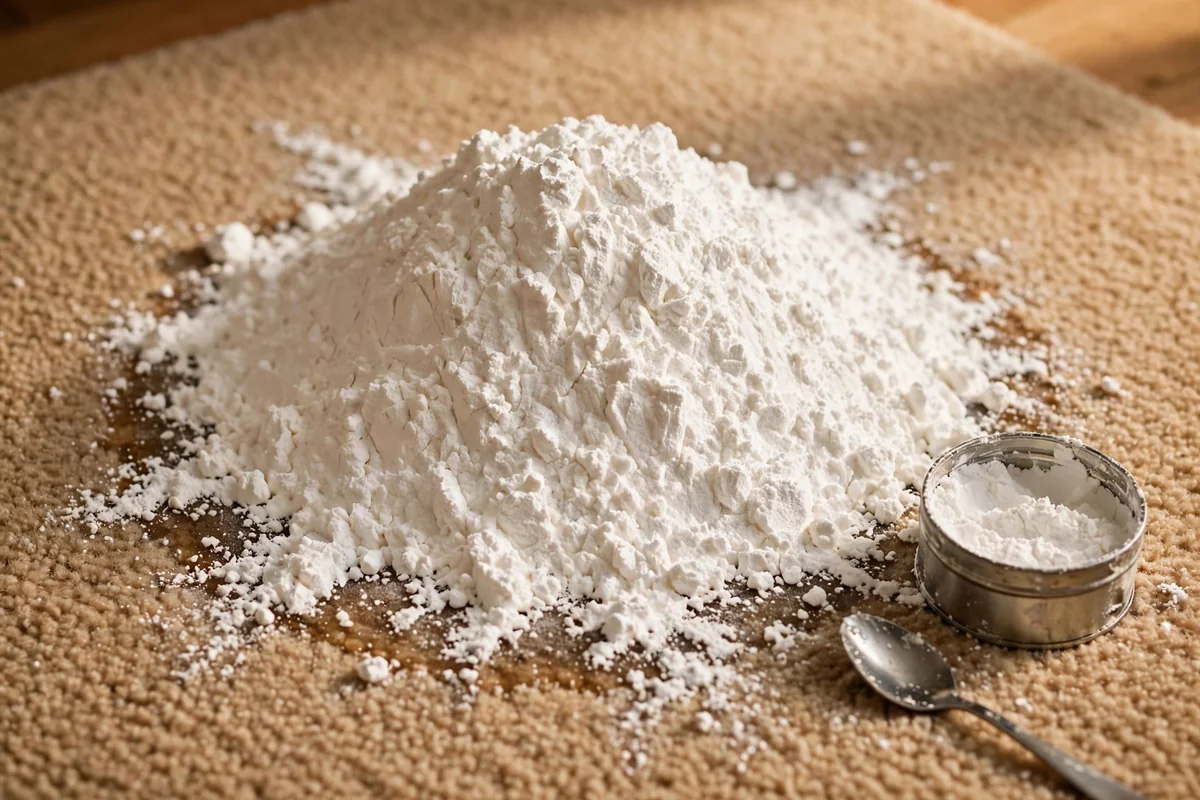
When cooking oil, salad oil, or a greasy cosmetic lands on carpet, water is the worst first move because it spreads the oil sideways. Instead, cover the spot completely with cornstarch, about two tablespoons for a palm sized spill, and press the powder lightly into the pile using the back of a spoon.
Give it at least thirty minutes, and overnight for a large spill, then vacuum thoroughly. You will often find most of the oil has travelled up into the powder. If a faint ring remains, finish with the two drop dish soap solution, blotting gently until the cloth comes away clean.
7. Plain White Shaving Foam for Marks of Unknown Origin
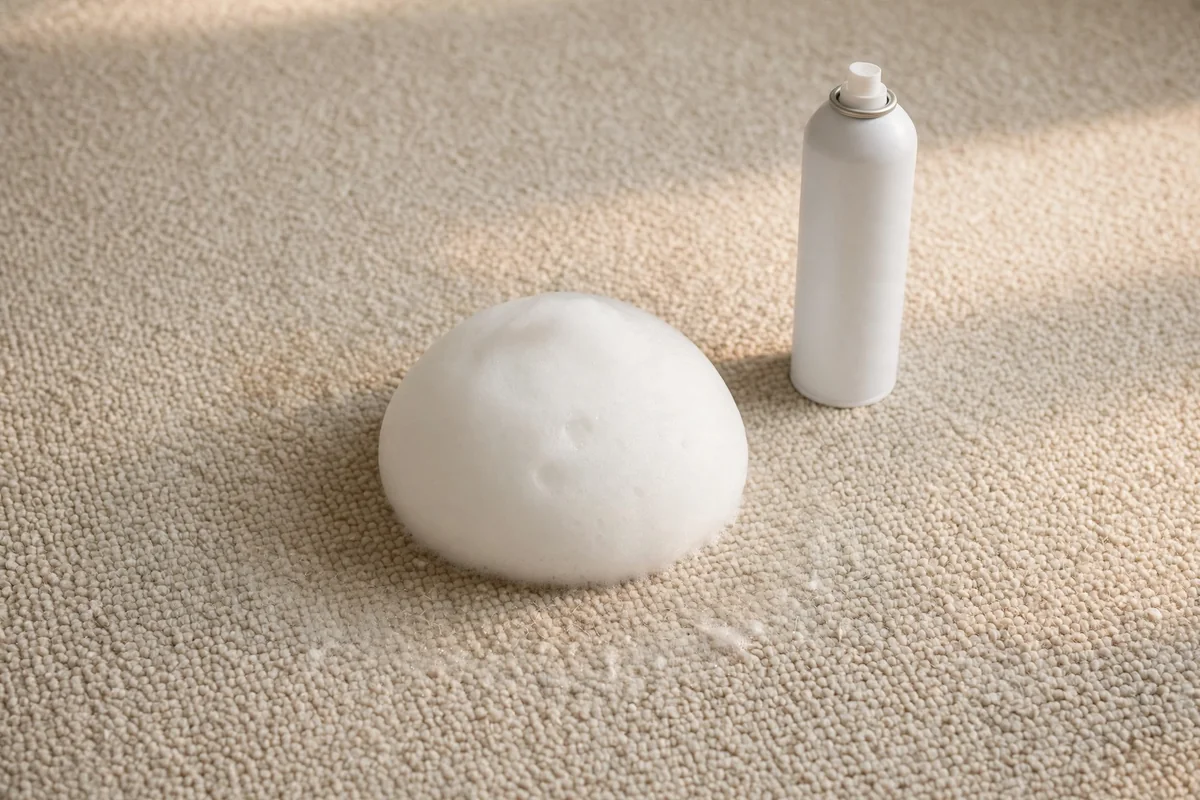
Every home has one mystery mark that nobody admits to making. Plain white shaving foam, the old fashioned foaming kind rather than gel, contains gentle surfactants that loosen light dirt and scuffs without soaking the carpet backing or leaving it stiff. It is a gentle and forgiving place to begin.
Shake the can, spread a layer about five millimetres thick over the mark, and let it rest for twenty minutes. Blot the foam away with a damp white cloth, working from the edges inward, then mist lightly with plain water and blot again. It is especially kind to shoe scuffs and light beverage shadows.
8. Rubbing Alcohol Blotted Onto Pen and Marker Ink
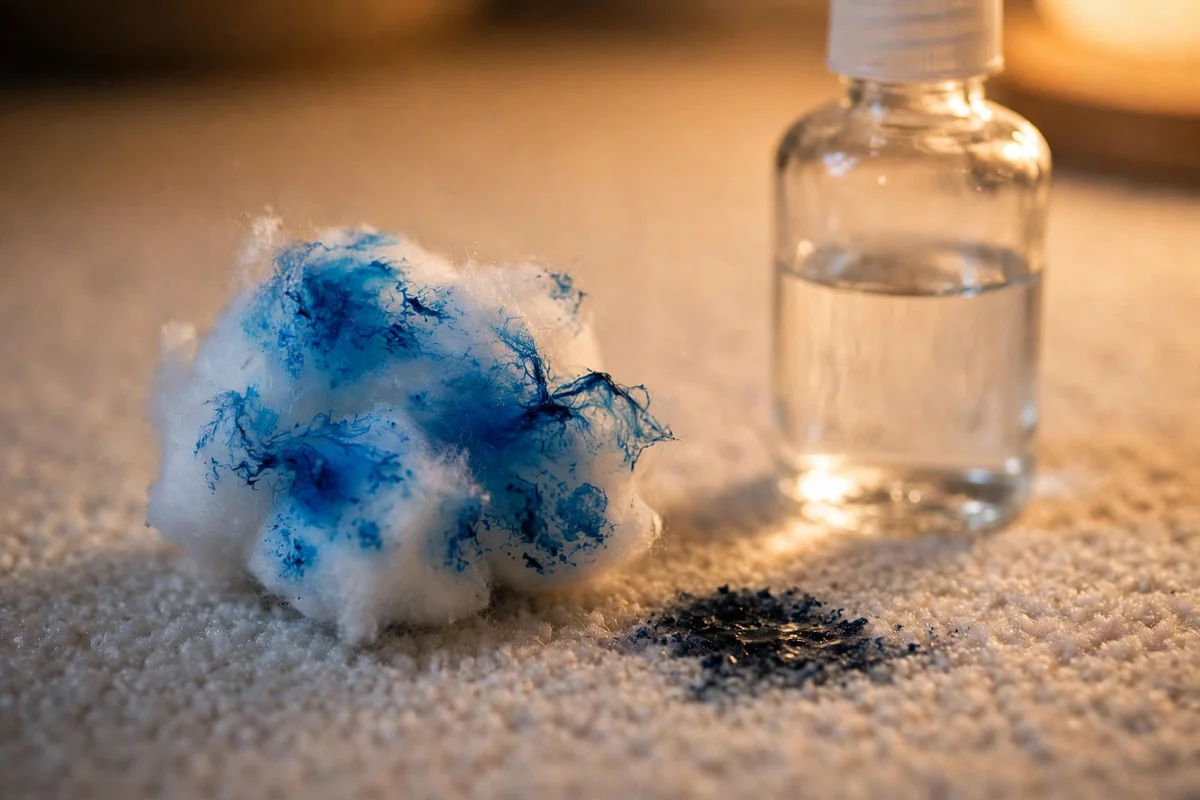
Ink looks permanent, but seventy percent rubbing alcohol dissolves many pen and marker pigments before they bond with the fibres. The secret is restraint: dampen a cotton ball, never pour, because a flood of alcohol can carry the ink deeper and wider in seconds. Patience here really protects the carpet.
Dab the spot repeatedly, turning to a clean part of the cotton as colour lifts, and check your progress every few dabs. Work only on the ink itself, not the clean carpet around it. When no more colour transfers, blot with a cloth dampened in plain water and let the patch air dry before vacuuming.
9. Fine Salt Under Club Soda for This Morning’s Coffee
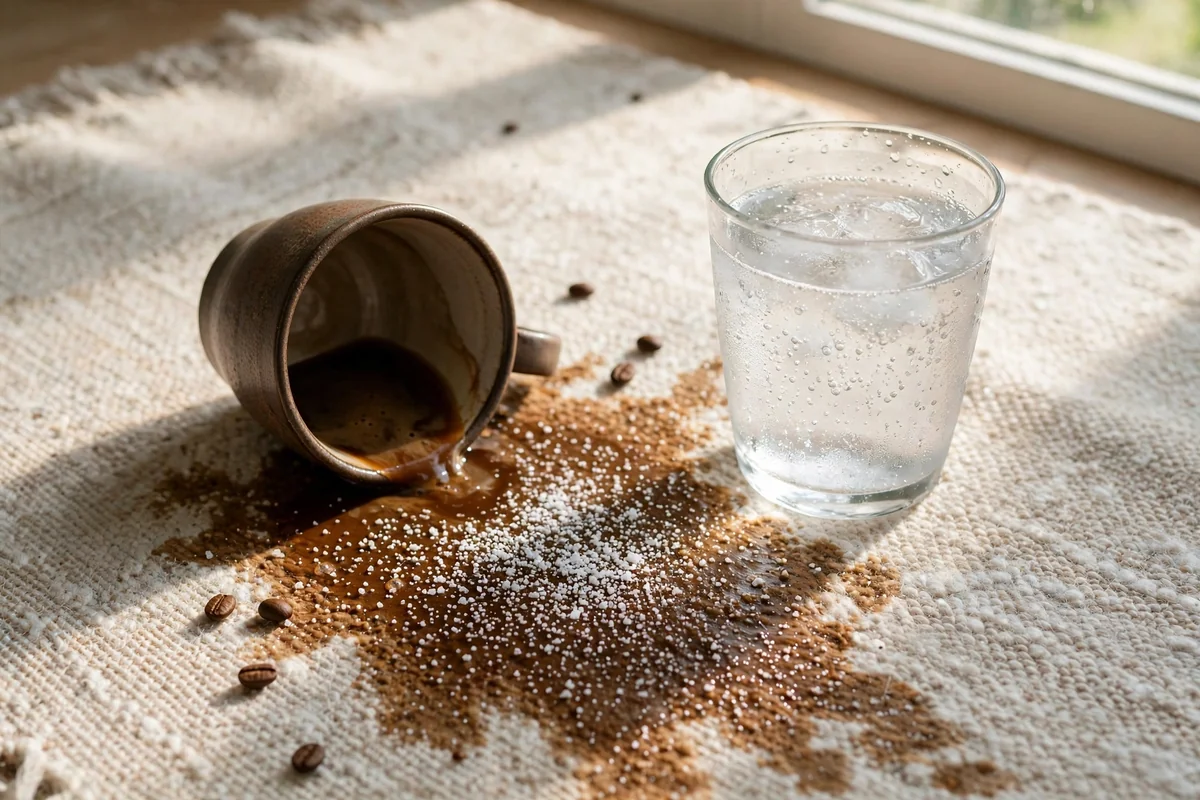
Coffee carries brown pigments that love to settle fast, so start by blotting up as much liquid as you can. Pour a little club soda over the patch, then cover the damp area with a tablespoon of fine table salt, which draws moisture and colour upward as it sits on the patch.
Leave the salt for about fifteen minutes, until it looks damp and slightly tan, then vacuum it away. Blot what remains with a clean damp cloth. On pale carpets this pairing often clears a fresh coffee spill completely, and it costs almost nothing to repeat the round once more if needed.
10. Lemon Juice With Baking Soda for a Gentle Brighten
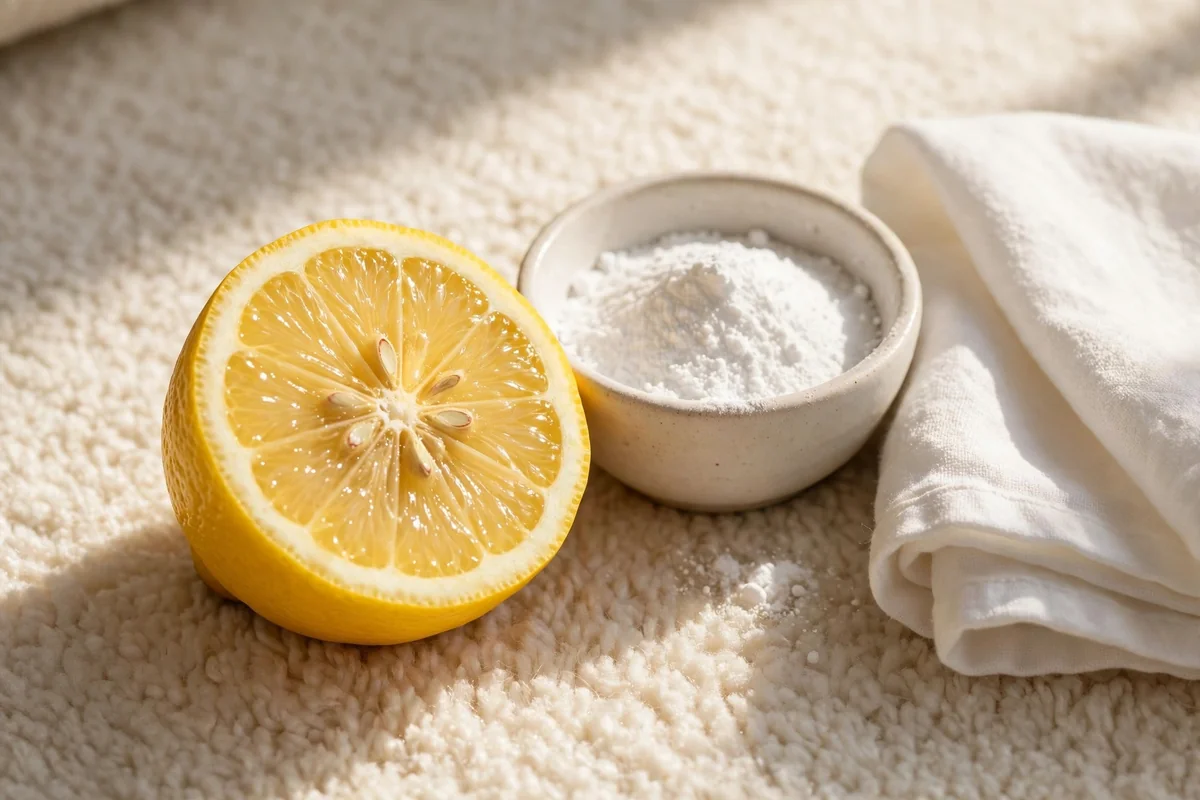
Sometimes there is no single stain, just a tired, slightly dull square where the family always sits. Stir the juice of half a lemon into three tablespoons of baking soda to make a soft, fizzing paste, and spread it thinly over the dull area with the back of a spoon.
Because lemon is a natural lightener, keep this brightener for cream and white carpets only, and patch test first. Leave it ten minutes, blot with a damp cloth, then rinse blot once more with plain water. Used once in a while, it freshens fibres and leaves a clean, honest citrus scent.
11. Baking Soda and Peroxide Fizz for Pet Accident Corners
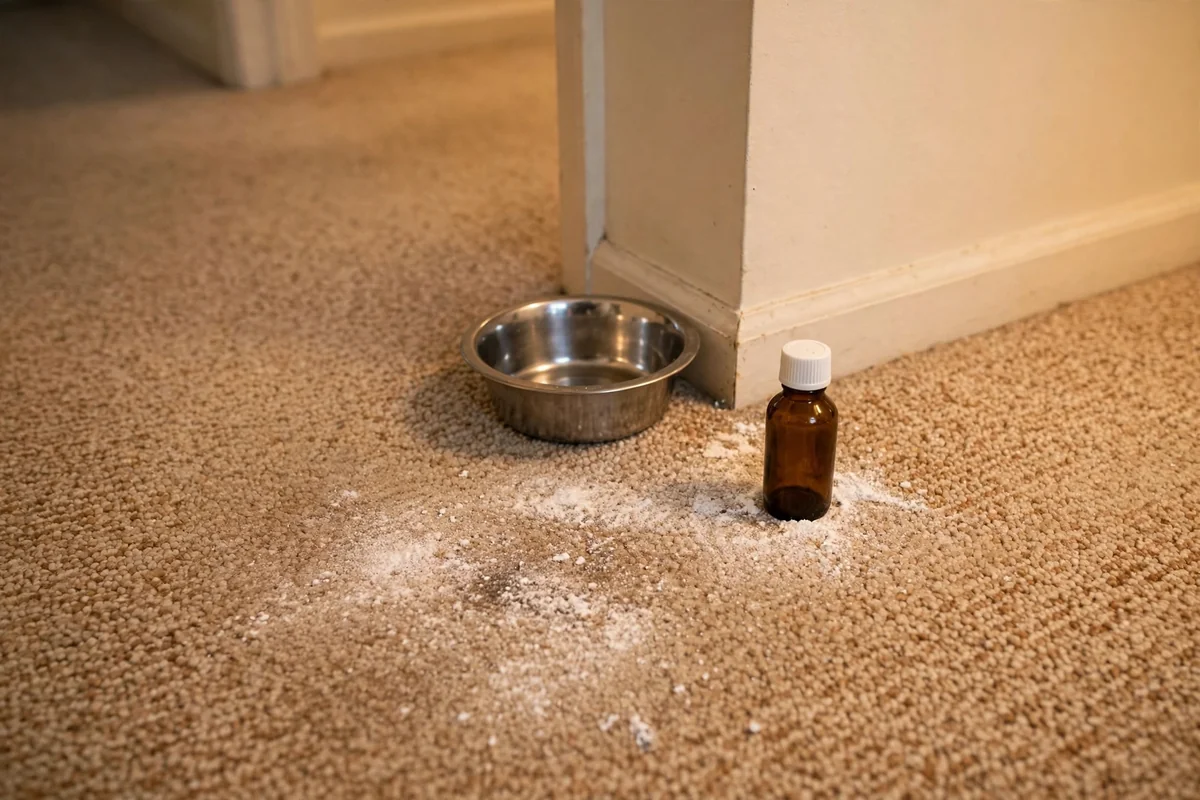
Pet accidents need odour care as much as stain care, or the family pet will return to the same corner. Blot up all the moisture you can, sprinkle baking soda generously over the patch, then drizzle over it about 60 millilitres of three percent peroxide mixed with a single drop of dish soap.
Press the mixture gently into the pile with an old cloth and let it dry completely, which may take several hours. Vacuum well once dry. Keep this remedy for light coloured carpets, patch test first, and keep pets and children off the spot until it is completely dry and vacuumed.
12. Let Mud Dry Completely Before You Touch It
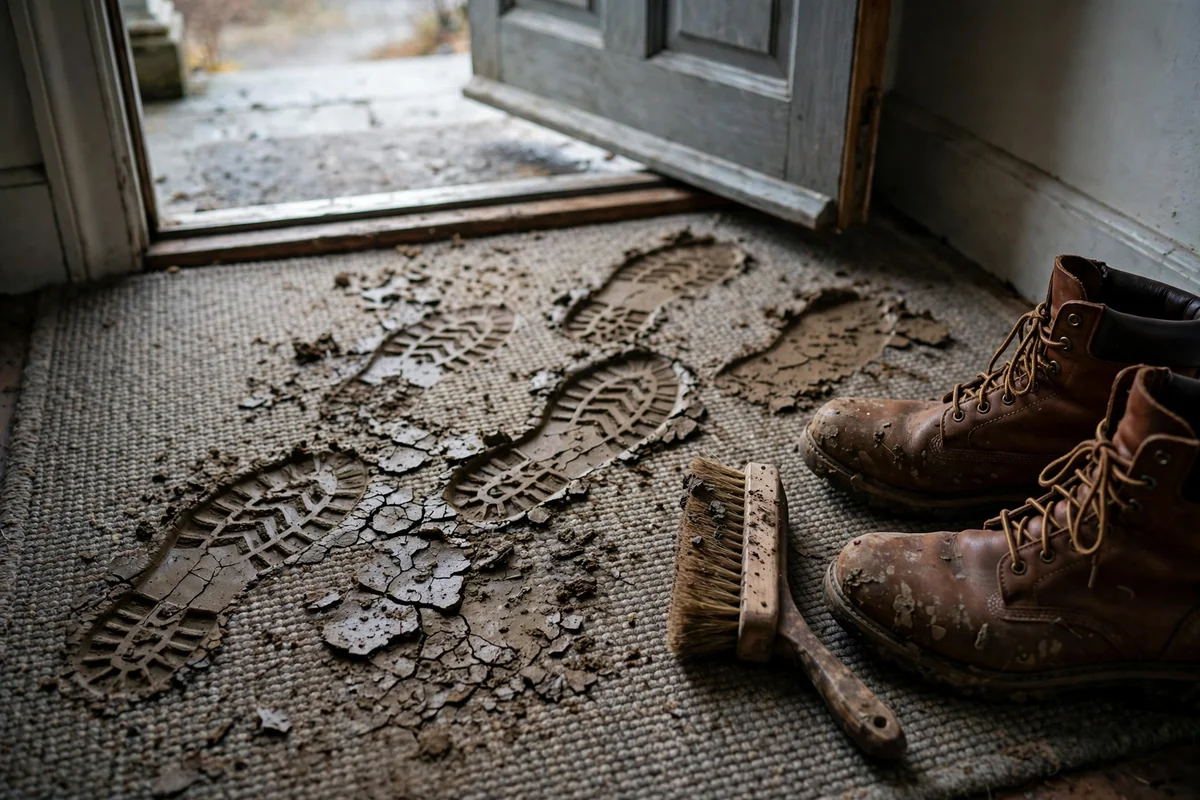
Wet mud smeared across carpet is mostly a problem of timing. Scrubbing fresh mud pushes soil deep between the fibres, while dry mud is simply loose dirt waiting to be vacuumed. Close the door on your impatience, let the prints dry fully, then break up the crust with a stiff brush.
Vacuum slowly in several directions until no more grit lifts. What usually remains is a faint shadow, which responds to warm water with two drops of dish soap and a splash of vinegar, blotted patiently. Most of the hard work, though, was done by simply waiting for the mud to dry.
13. Cornstarch and Milk Paste, an Old Fashioned Ink Trick
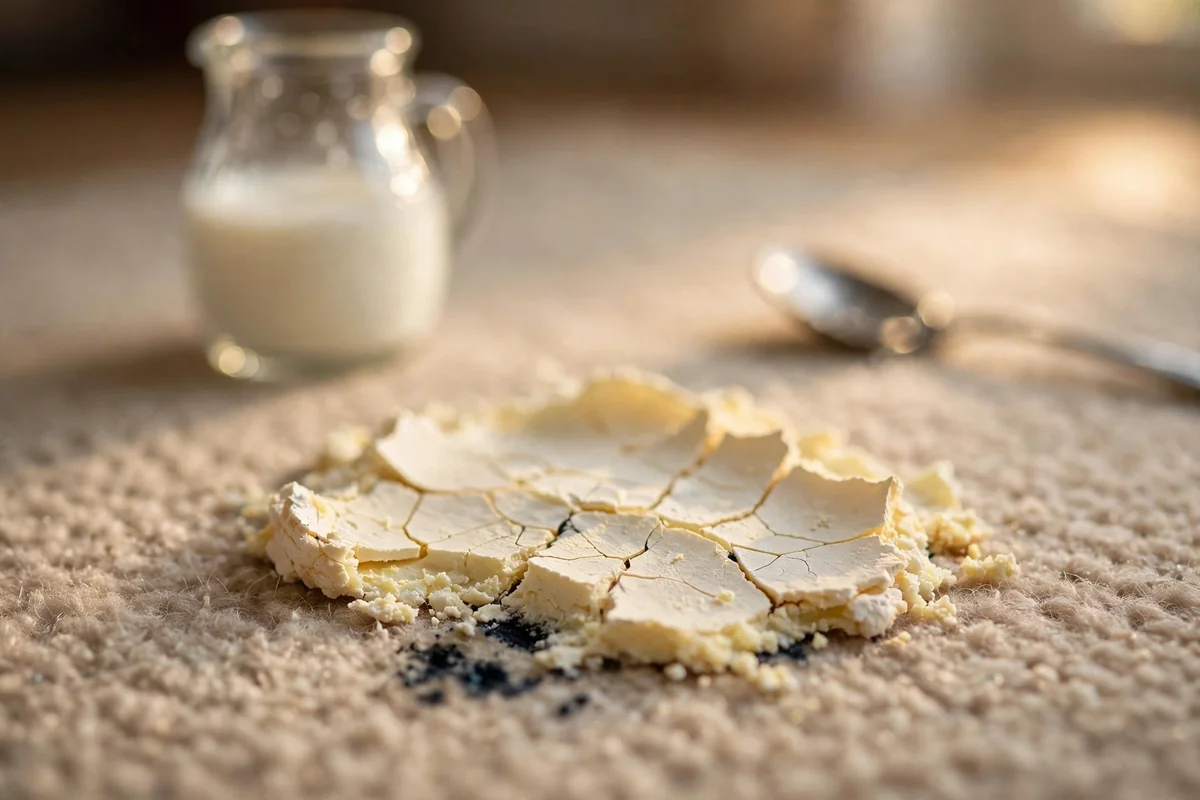
Grandmothers knew this one: stir two tablespoons of cornstarch with about a tablespoon of milk to make a thick, spreadable paste, and cover a fresh ink spot completely, from edge to edge. As the paste dries over several hours, it can draw loose ink up out of the pile with it.
Let it dry until it cracks, then brush and vacuum away the crumbs. Judge what is left honestly: a faint trace often responds to a careful dab of rubbing alcohol on a cotton ball. This gentle paste suits washable synthetic carpets best, and it rewards patience far more than pressure.
14. Vinegar, Soap and Warm Water for Dark Fruit Juice
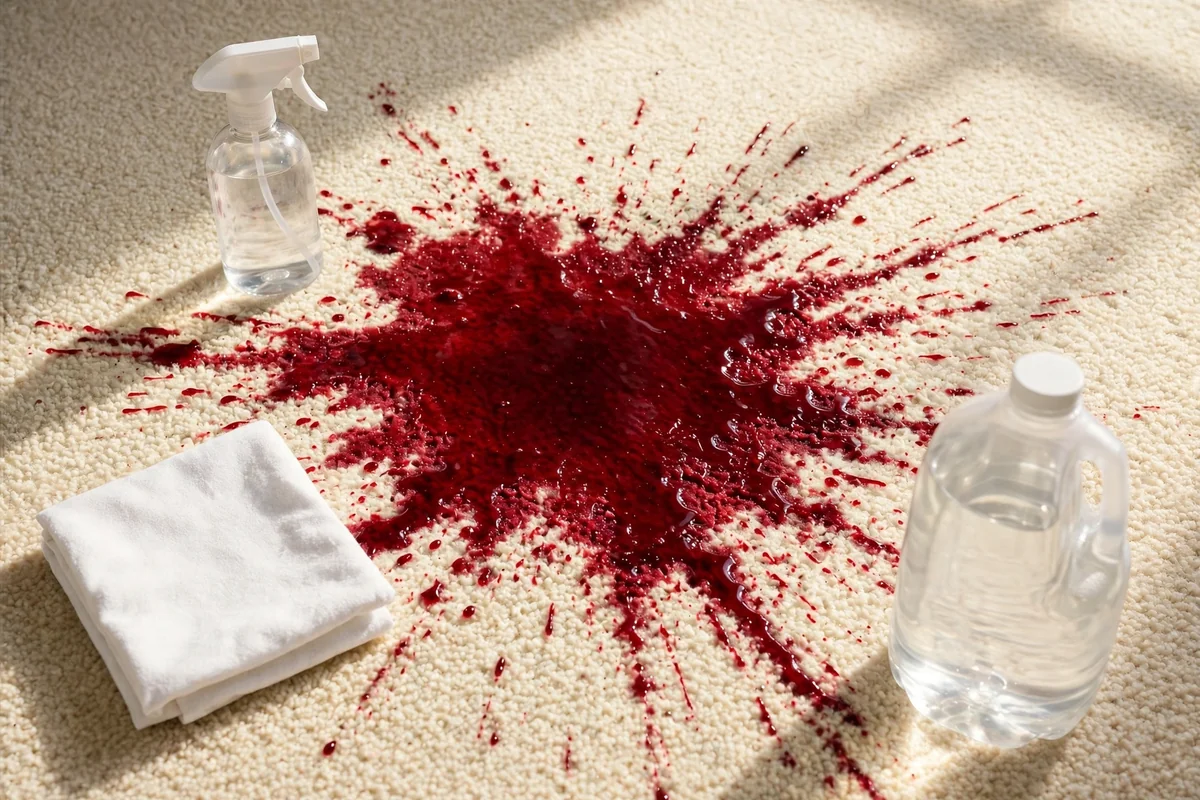
Grape, cranberry, and blackcurrant juices carry strong natural dyes, so they need a combined effort. Mix 250 millilitres of warm water with a tablespoon of white vinegar and two drops of clear dish soap in a spray bottle, then shake it lightly until fully blended and ready to spray on the stain.
Blot the spill first, spray the mixture over the stain, and give it five minutes before blotting with a clean white cloth. Repeat the spray and blot cycle rather than scrubbing, because rubbing spreads coloured juice outward. Finish with a plain water rinse blot so no soap film remains to dull the fibres.
15. A Bag of Ice Cubes to Freeze Out Chewing Gum
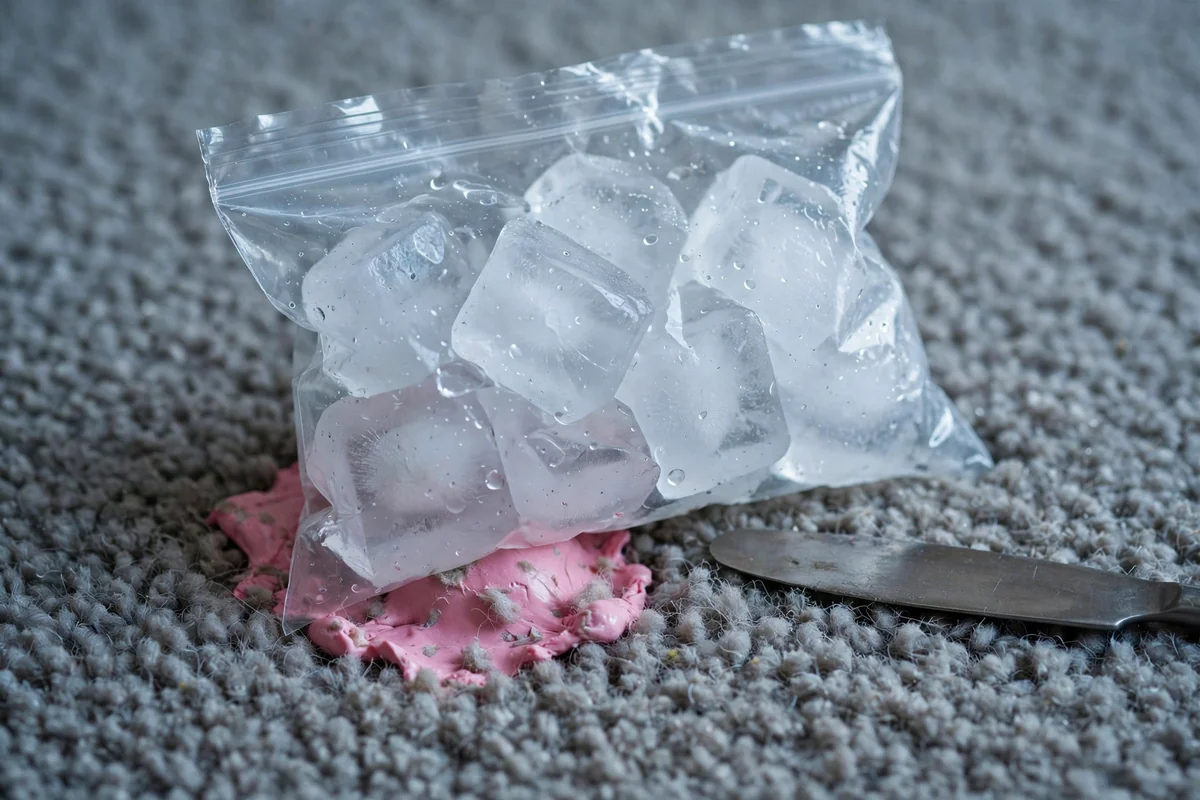
Pulling soft chewing gum only stretches it into a worse mess, so freeze it instead. Fill a sealed plastic bag with ice cubes, lay it directly over the gum, and leave it for fifteen to twenty minutes, until the gum feels hard and brittle all the way through to its centre.
Lift the gum away in pieces with a dull butter knife or a plastic scraper, working gently so you do not snip or tear the pile. Any sticky residue that remains will usually surrender to a cloth barely dampened with rubbing alcohol, followed by a plain water blot and a patient air dry.
16. Brown Paper and a Low Iron for Candle Wax Drips
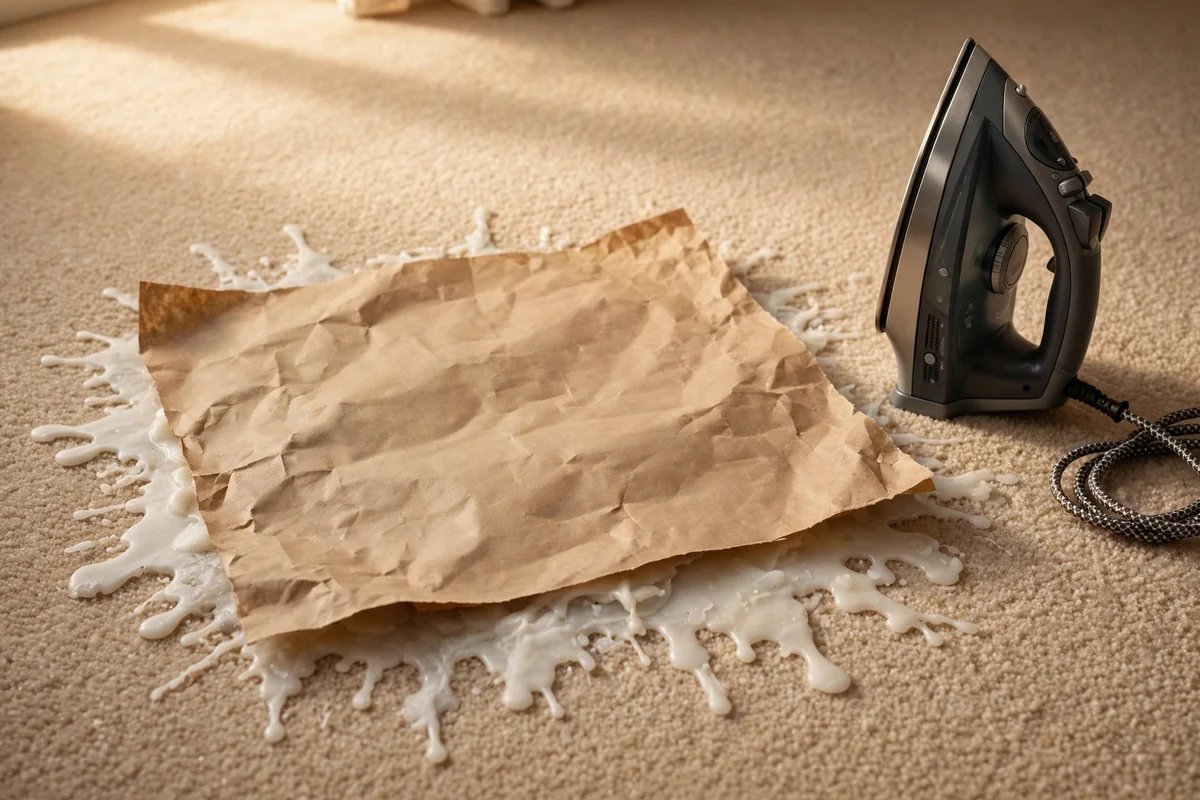
Candle wax looks alarming but melts out more easily than it scrapes off. First let the drip harden fully, then crack and lift away the loose pieces with a blunt knife. Lay a sheet of plain brown paper or a doubled paper towel over what remains in the fibres of the carpet.
Set your iron to its lowest warm setting and press it over the paper for ten seconds at a time. The wax melts and wicks up into the paper; move to a clean section of paper and repeat until nothing more transfers. Never use a hot iron, and never leave it resting unattended.
17. A Generous Salt Soak for a Fresh Tea Spill
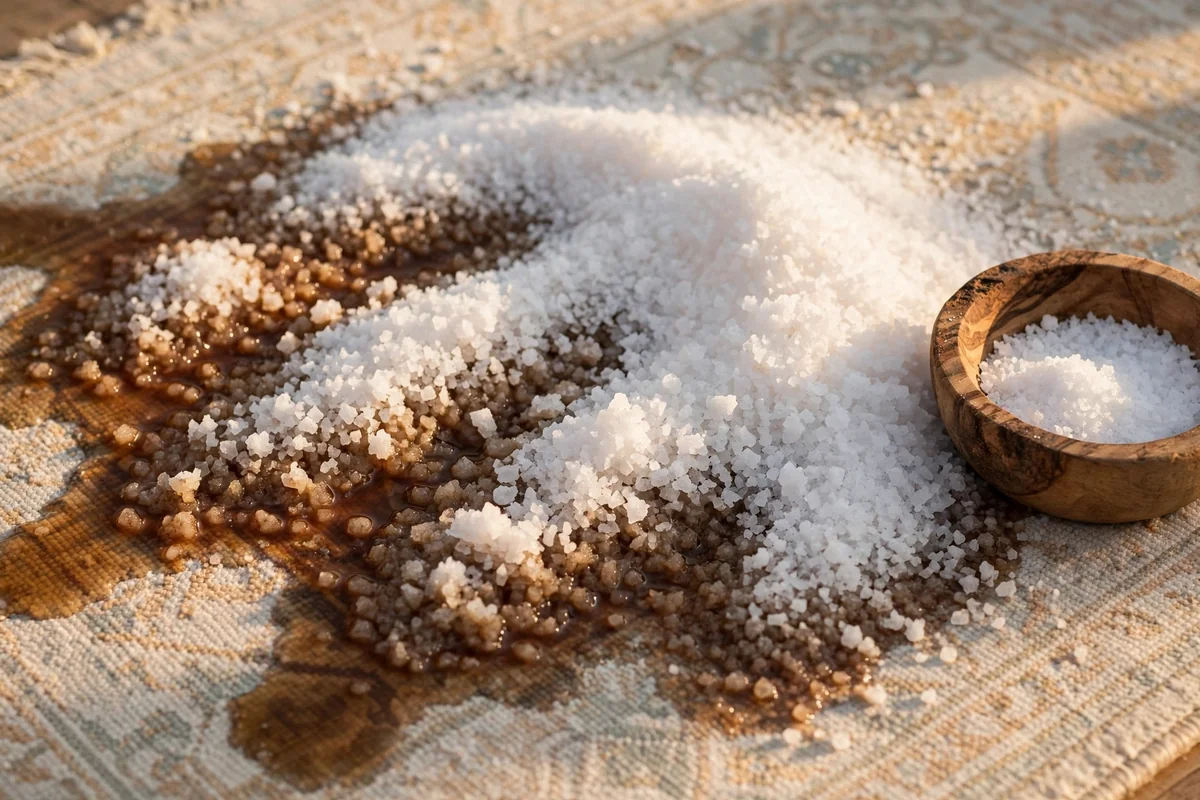
Salt is the oldest spill remedy in the house, and it earns its place whenever tea goes over. Blot the spill once, then heap fine table salt over the whole damp area, roughly a tablespoon for each ten centimetres of spill, and watch it begin to darken as it drinks.
Leave the salt for twenty minutes, then vacuum it up and inspect the patch in good light. A light stain that remains can be misted with the vinegar and water spray and blotted. The key is speed: salt works beautifully on a fresh spill and only politely on a dried one.
18. Vegetable Glycerin to Soften a Dried On Patch
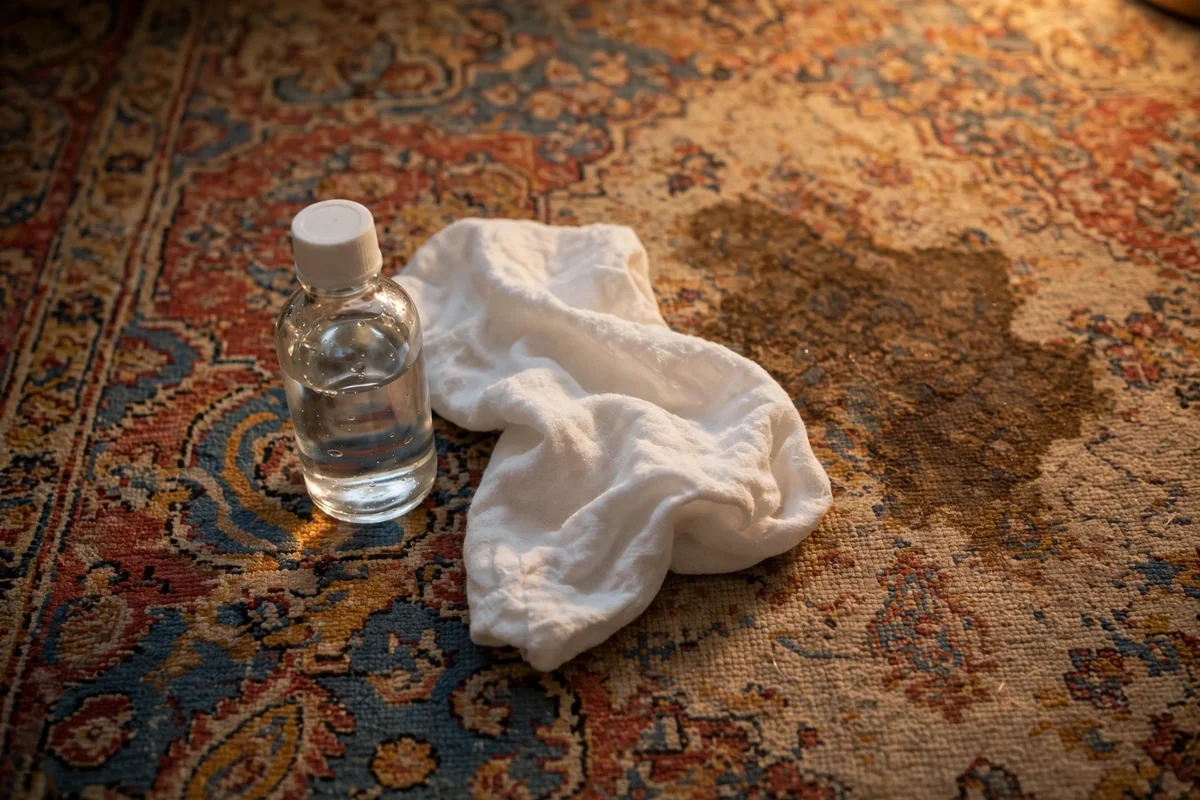
Some stains are discovered days later, dried hard and set into the pile. A few drops of vegetable glycerin, available from baking and pharmacy shelves, can soften many dried food and drink marks so that ordinary cleaning can finally get a grip on them. This simple softening step changes everything.
Rub about a teaspoon of glycerin into the patch with a soft cloth and leave it for thirty minutes. Follow with the warm water and dish soap solution, blotting patiently. Patch test first on patterned or vintage rugs, and rinse well, because glycerin left behind feels slightly tacky and will hold dust.
19. Borax Paste for Ground In Hallway Grime
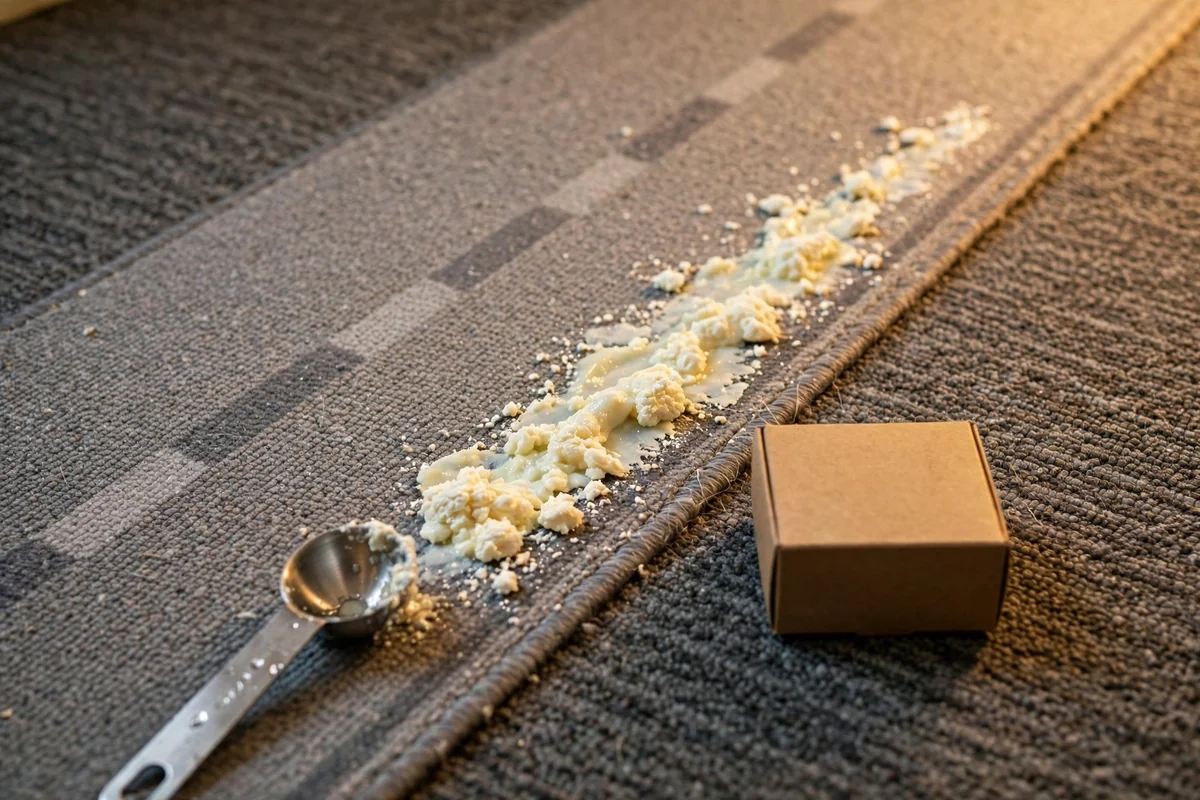
Hallway traffic lanes are many small stains layered together, and they sometimes need a stronger hand. Stir two tablespoons of borax into enough warm water to make a loose paste, spread it along the grey lane, and work it lightly into the pile with a soft brush or an old cloth.
Leave the paste for twenty minutes, then rinse by blotting repeatedly with a cloth dampened in plain water, and vacuum when dry. Borax is a real cleaning chemical despite its old fashioned image, so wear gloves, keep children and pets away until the area is rinsed and dry, and store it safely.
20. Mild Castile Suds for Wool and Delicate Rugs
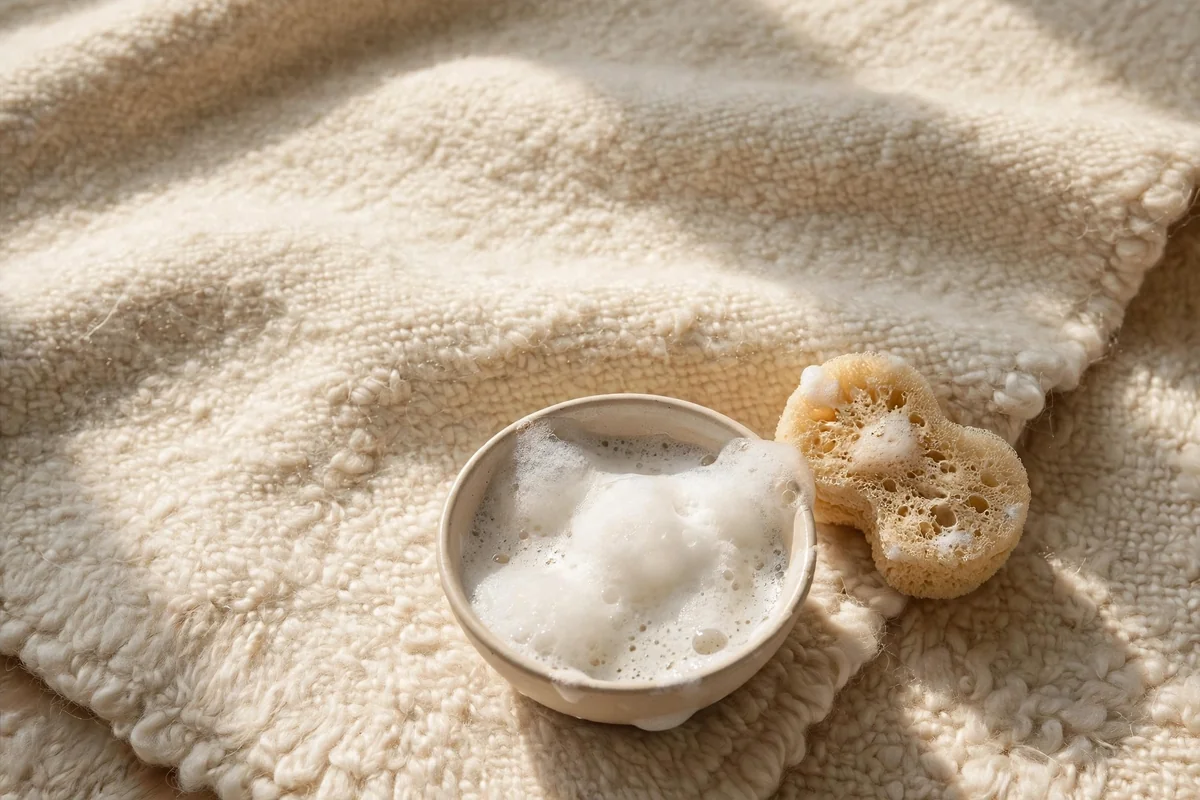
Wool and treasured rugs deserve the gentlest treatment in this list. Whisk half a teaspoon of liquid castile soap into 500 millilitres of cool water until it foams, then apply only the suds, scooped onto a soft sponge, rather than soaking the rug with liquid. Wool thanks you for that restraint.
Blot and lift, reapplying fresh suds as the mark fades, and rinse by pressing with a cloth dampened in plain cool water. Keep water use modest, dry the rug flat with good air movement, and avoid vinegar or peroxide on wool, because delicate natural fibres resent strong acids and lighteners.
21. Alcohol and a Pinch of Salt for Lipstick Smears
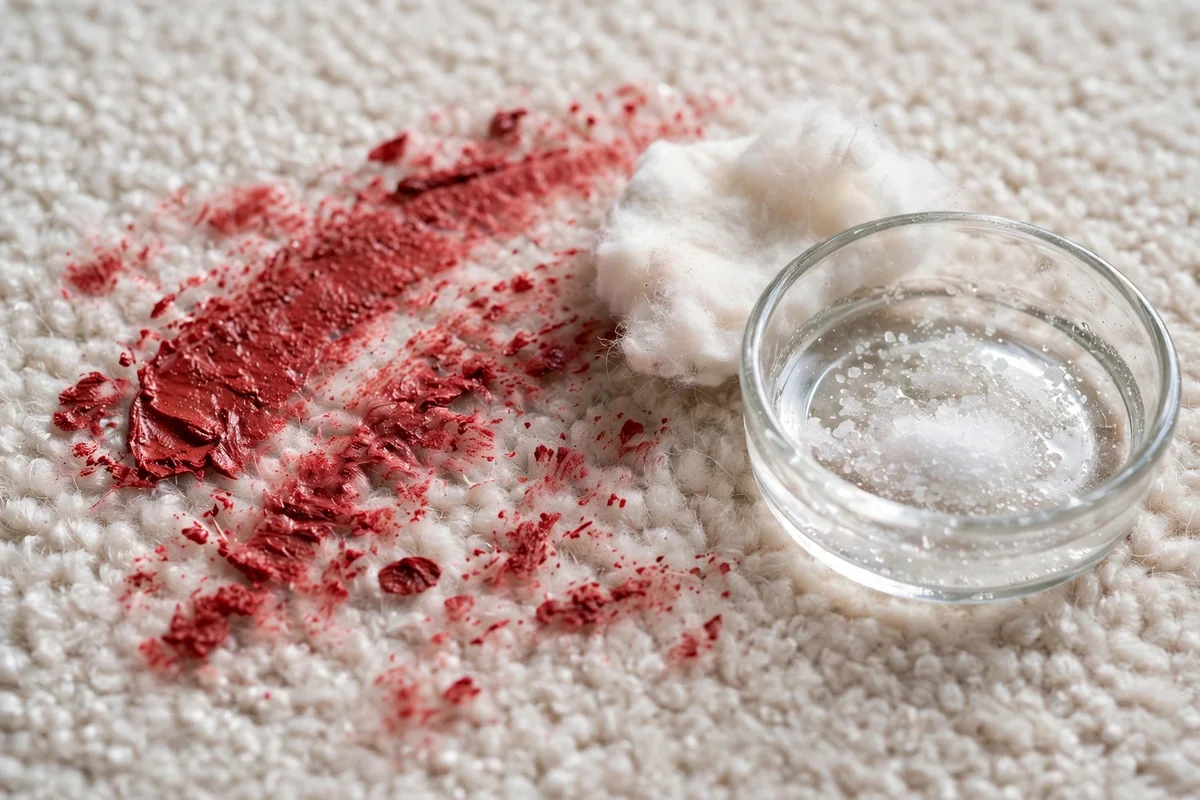
Lipstick and many makeup marks are wax and pigment together, so they need a solvent first and an absorber second. Dampen a cotton pad with rubbing alcohol and press it onto the smear for a minute, letting the alcohol loosen the waxy colour without any rubbing or scrubbing at all.
Lift the pad, check how much colour has transferred, and repeat with fresh pads. When the smear stops giving up colour, sprinkle a pinch of fine salt over the damp patch to draw out the last residue, leave it ten minutes, vacuum, and finish with a careful plain water blot.
22. Clear Water Rinse and a Weighted Towel Finish
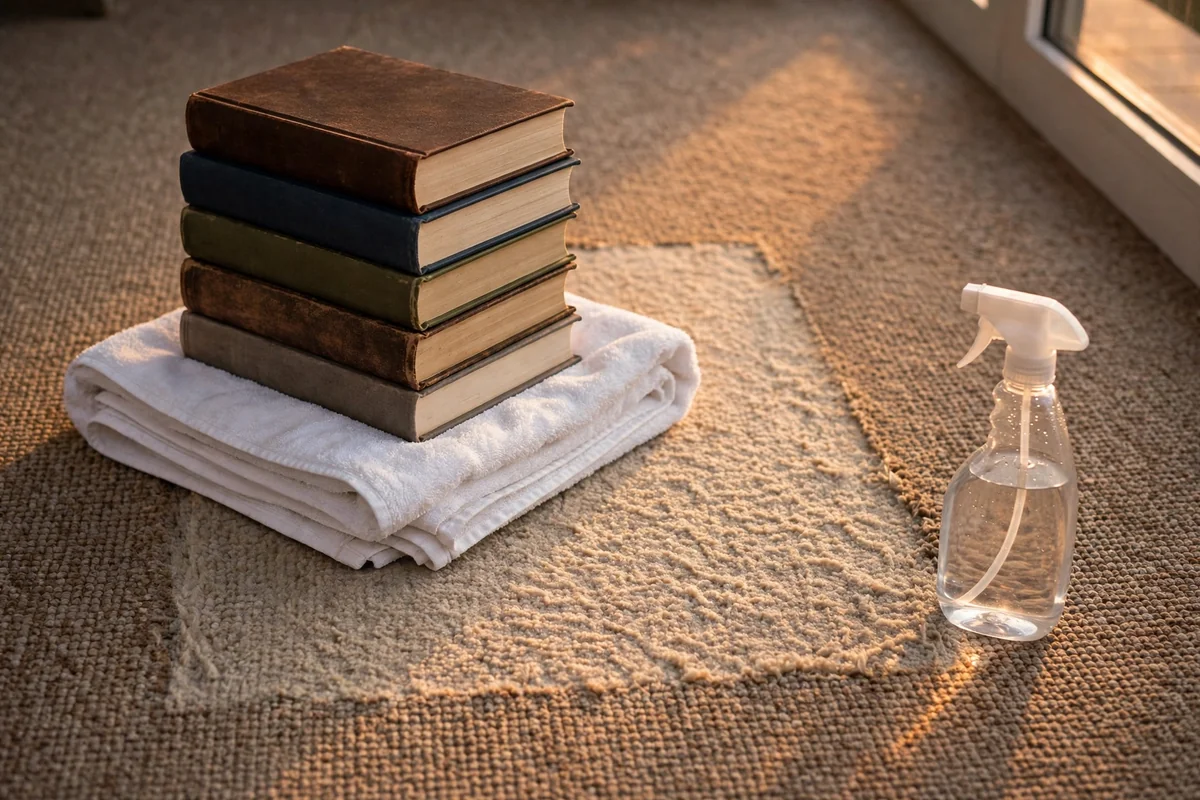
Whatever remedy you used, how you finish decides whether the patch stays clean. Mist the treated area with plain water, blot firmly, and repeat until your white cloth shows no soapiness and no colour. Leftover solution of any kind dries sticky and quietly gathers fresh dirt for weeks on end.
Finally, fold a clean white towel over the damp patch, weight it with a stack of heavy books, and leave it for several hours or overnight. The towel wicks up the deep moisture and the last loosened soil as the carpet dries, and lifting it in the morning is deeply satisfying.
A Few Final Thoughts
A calm routine beats a heroic scrub every time. Blot first, choose the remedy that matches the spill, give it its minutes, and rinse away every trace of what you put down. Keep your small kit together in one basket, cloths, spray bottle, baking soda, vinegar, salt, and cornstarch, and the next spill becomes a five minute task instead of a ruined evening. Patch test without fail, ventilate the room when you use alcohol or borax, and never mix bleach with vinegar, acids, or ammonia. Simple staples, used patiently, keep a family carpet looking cared for and welcoming for years.
Frequently Asked Questions
Should I always patch test a homemade carpet cleaner first?
Yes, every single time, even with gentle mixtures. Dab a little of the solution onto a hidden corner, perhaps under the sofa or behind a door, wait ten minutes, and blot with a white cloth. If colour transfers to the cloth or the pile feels different, choose a milder remedy from this list. Two quiet minutes of testing have saved many carpets from a permanent pale patch.
Why do my stains come back a day after cleaning?
A returning stain usually means the spill soaked deeper than your surface clean, and moisture has wicked the colour back up as the carpet dried, or that soapy residue was left behind and collected new dirt. Rinse with plain water, blot thoroughly, and finish with the weighted towel method so the deep dampness, and the loosened soil with it, lifts up and out.
Which homemade mixture is safest for dark carpets?
Choose the vinegar and warm water spray or the two drop dish soap solution, both of which clean without lightening dye. Keep peroxide, lemon juice, and borax pastes away from dark and richly patterned carpets, because their brightening action can leave a visible pale patch. Even with gentle mixtures, a hidden patch test first is the wisest habit in this whole list.
Can I mix vinegar and bleach for a stronger cleaner?
Never, under any circumstances. Vinegar and every other acid react with bleach to release harmful chlorine gas, and bleach combined with ammonia is just as dangerous. Homemade remedies work one at a time. If you change from one mixture to another on the same patch, rinse the area with plain water and blot it well in between.
How long should a homemade stain remover sit on the carpet?
Sprays and light solutions generally need five to ten minutes, pastes twenty to thirty minutes, and dry powders such as salt and cornstarch at least thirty minutes, with overnight being even better for oil. Rushing is the most common reason a good remedy looks disappointing. Set a timer, make a cup of tea, and let the ingredients do the patient work.