Bathroom
22 Toilet Bowl Ring Fixes That Leave Porcelain Bright, Calm and Guest Ready
By Anna Wells · · 19 min read
A pale ring around the toilet bowl ruins an otherwise spotless bathroom. Here are 22 gentle, practical fixes that erase mineral and rust rings while protecting the porcelain glaze, plus simple habits that keep them away.
Early morning light falls across the bathroom tiles, and everything looks clean and calm, except for one pale brown ring circling the inside of the toilet bowl. It is the kind of small flaw guests notice in seconds and hosts notice for weeks. Hard water minerals, a little rust, and standing water have quietly drawn that line while nobody was looking.
The good news is that a toilet bowl ring is one of the most fixable problems in the home. Below are 22 concrete, practical ideas ordered from the gentlest first: simple soaks with baking soda and vinegar, citric acid treatments, borax paste, porcelain safe pumice, careful wet sanding, and commercial removers for the toughest cases. Then come the prevention habits that keep rings away for good.
Every method here respects the porcelain glaze, because bright porcelain is the whole point. Follow along, start with the gentlest fix that fits your stain, and by the end of the week your bowl can look as calm and guest ready as the rest of the room.
1. Start With a Baking Soda and Vinegar Overnight Soak
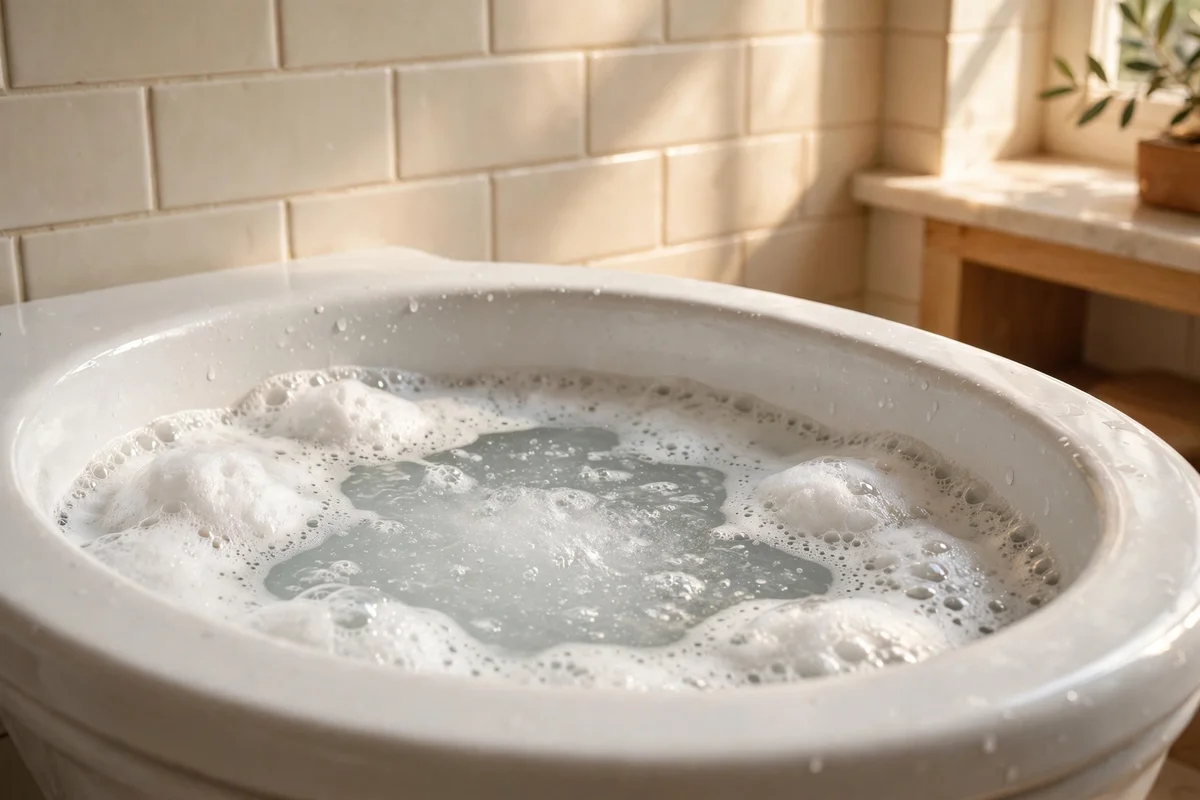
Start with one cup of baking soda scattered around the inside of the bowl, working it under the rim with a bowl brush. Wait five minutes, then pour in two cups of warm white vinegar and let the mixture fizz for an hour at room temperature. The mild acids loosen calcium and lime deposits without touching the glaze. For a light ring, one hour of soaking is often enough to brush the stain away cleanly.
For deeper rings, refresh the same recipe and leave it overnight, eight to twelve hours, with the bathroom door open for air. In the morning, brush firmly around the waterline and flush twice to rinse. The common mistake is adding vinegar straight to a bowl full of other cleaners; work with one recipe at a time. Budget tip: a large box of baking soda and a jug of white vinegar cost very little and handle dozens of cleanings.
2. Treat Stubborn Mineral Lines With Citric Acid
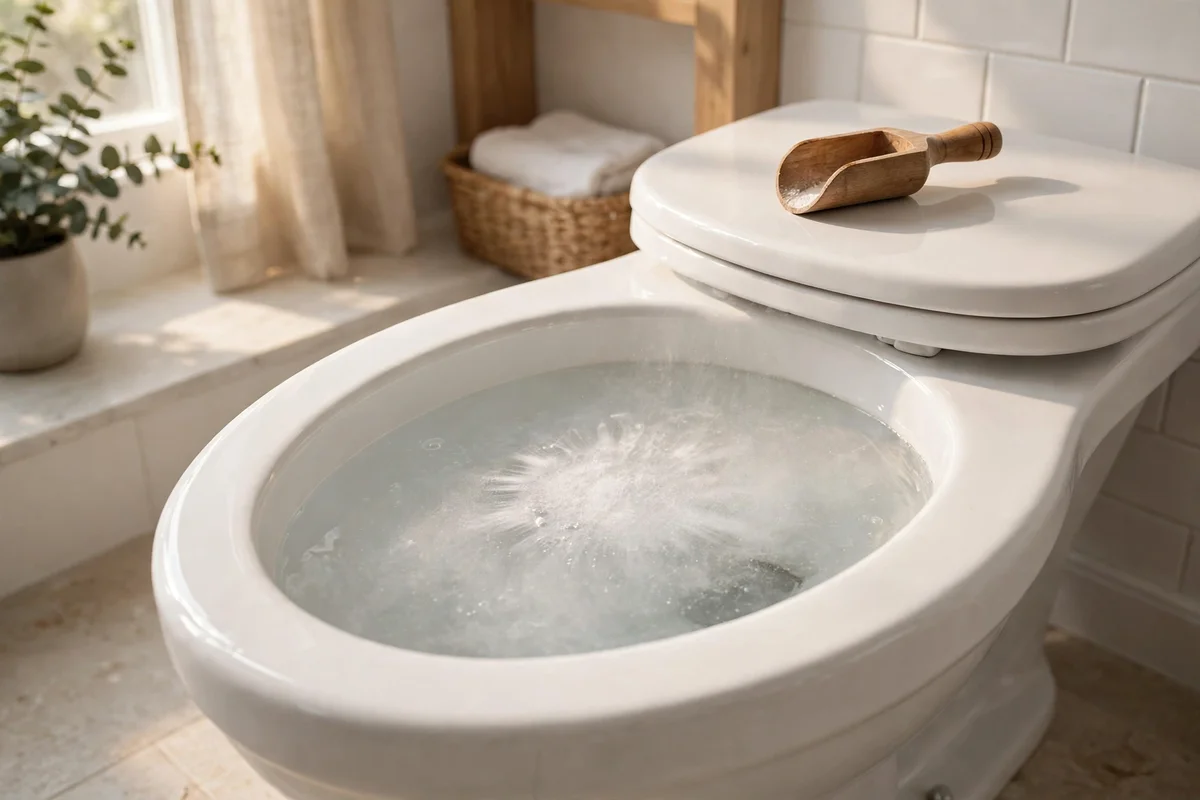
Citric acid is a gentle fruit derived acid that dissolves hard water scale faster than vinegar, and it suits rings that survived the baking soda soak. Lower the bowl water level first by turning off the supply valve and flushing once, then sprinkle three to four tablespoons of food grade citric acid powder directly onto the ring line. Let it sit for one to two hours while it works into the mineral layer.
Brush the loosened deposits with a bowl brush, then turn the water back on and flush well. For heavy buildup, repeat the treatment the next day rather than doubling the dose, since patience protects the glaze. The mistake to avoid is leaving citric acid in the tank, where it can wear rubber seals. Citric acid is inexpensive in bulk bags and also descalcs kettles and showerheads around the house.
3. Press a Borax Paste Into the Stain Under the Rim
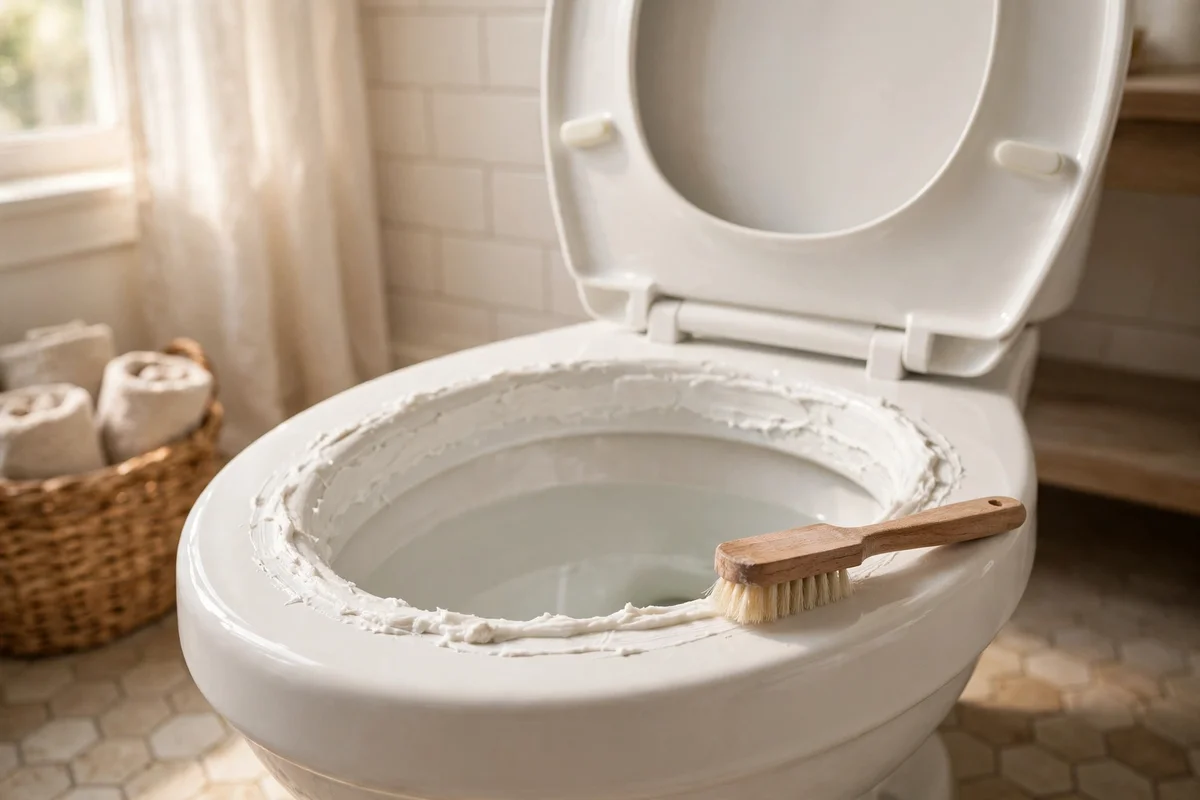
Borax makes a thick, clinging paste that stays put under the rim where rings often hide, giving the cleaner long contact time. Mix half a cup of borax with just enough warm water to form a paste the texture of soft butter, then press it onto the stained band with a brush or an old toothbrush. Cover the whole waterline ring and let it rest for two to three hours or overnight for deep stains.
Brush the area firmly, working from the rim downward so loosened minerals wash into the bowl, then flush twice. Borax handles rust tinted rings particularly well when vinegar has not finished the job. The mistake to avoid is using borax in a dry bowl, since the paste needs the stain slightly damp to grip. Keep borax away from children and pets during use and rinse every trace away at the end.
4. Lift the Ring With a Pumice Stone Made for Porcelain
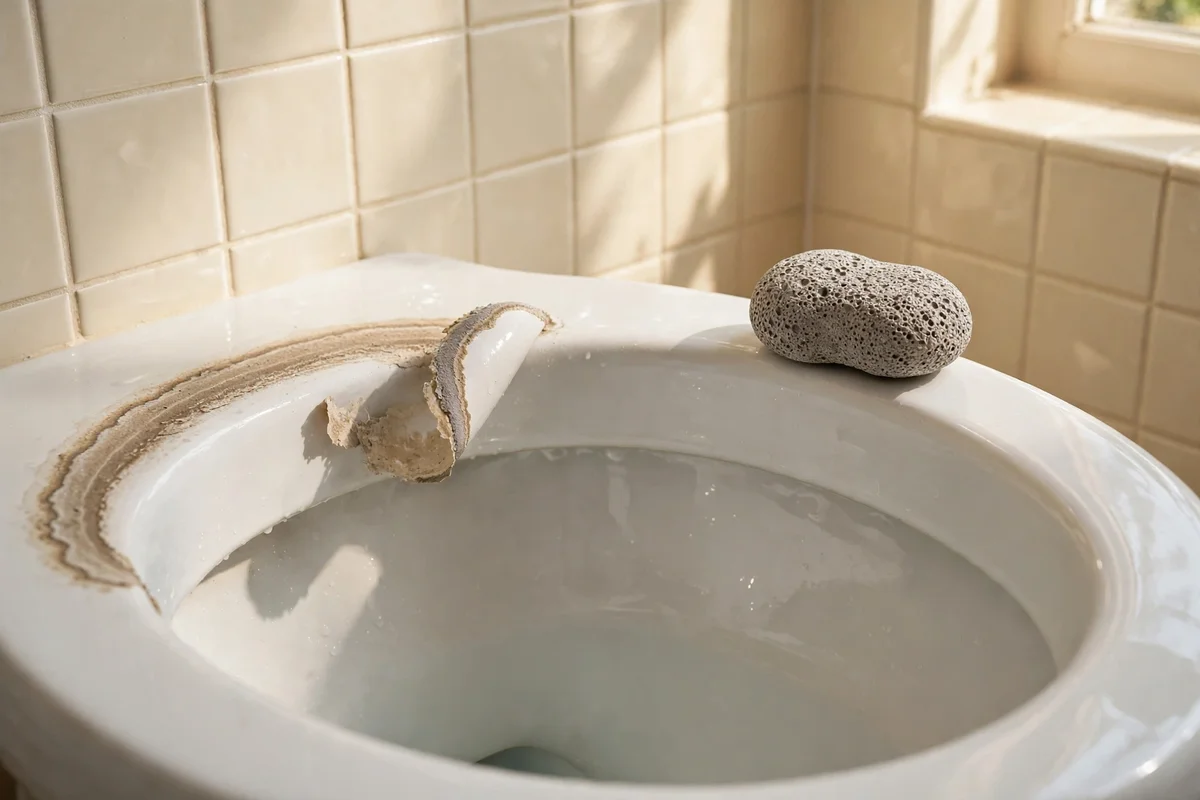
A pumice stone made specifically for porcelain is the classic tool for rings that chemicals cannot lift, and it is safe when used correctly. Soak the stone in warm water for five minutes first, then keep both the stone and the bowl surface wet while you rub the ring with light, even strokes. The stone wears away gradually instead of scratching, lifting mineral crust layer by layer. Work in small circles along the waterline for a few minutes at a time.
Rinse and check your progress often, brushing away the grey paste the stone leaves behind. Never use the pumice dry or press hard, since dry grinding can dull the glaze that makes porcelain shine. Test on a hidden area under the rim first for confidence. A porcelain safe pumice stone is a small investment that lasts through many cleanings and also works on tile grout haze.
5. Wet Sand the Toughest Spots With 2000 Grit Paper
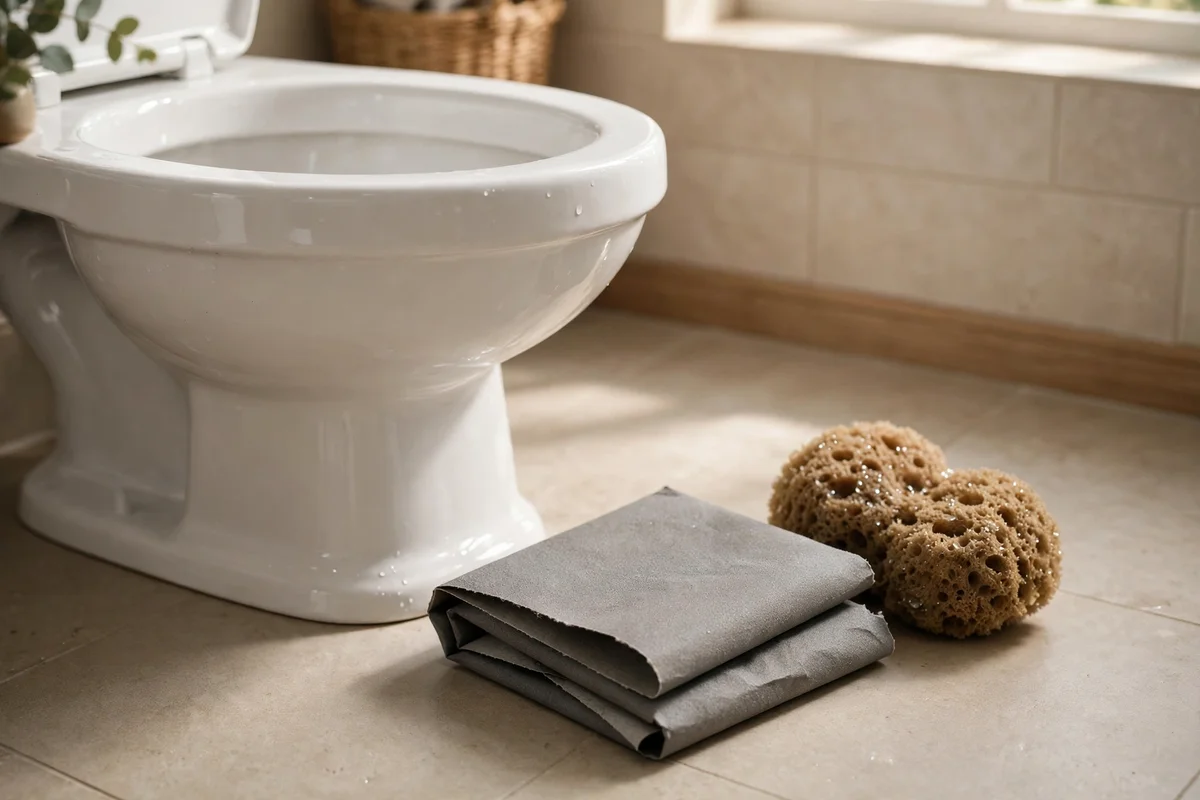
For extremely hard mineral rings, 2000 grit wet or dry sandpaper used wet is the finest mechanical option, gentler than most people expect. Fold a small square of paper and keep it dripping wet, then rub the ring with feather light pressure in short strokes, rewetting constantly. The ultra fine grit removes only the mineral deposit while leaving the glaze untouched. Spend no more than two or three minutes on one spot before rinsing to check.
This method is for porcelain only, never for fiberglass or acrylic bowls that scratch easily. The mistake to avoid is sanding dry or using a coarser grit like 400, which will leave visible scratches in the glaze. After the ring is gone, flush and dry the rim with a soft cloth to admire the smooth finish. A few sheets of 2000 grit paper cost very little and each sheet handles several cleanings.
6. Apply a Commercial Mineral Remover Exactly as Labelled
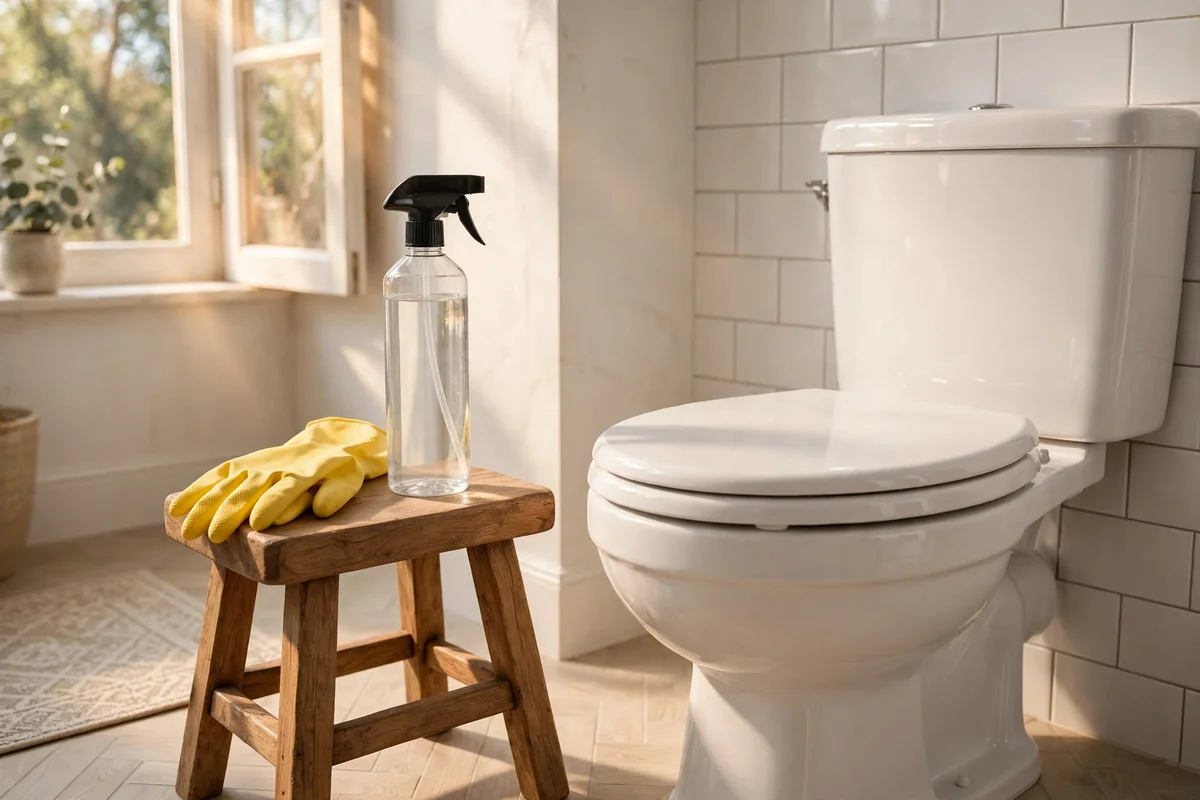
When natural methods fall short, a commercial mineral remover designed for toilets gives extra power for thick scale and iron rust rings. Choose a product labelled safe for porcelain and follow the label exactly: usually a measured squirt around the bowl, a contact time of ten to thirty minutes, and a thorough brushing before flushing. These formulas target calcium, lime and rust that household acids cannot always dissolve.
Use gloves and open a window, since these cleaners are stronger than vinegar or citric acid. Never mix a commercial remover with any other product, especially bleach or ammonia, and flush twice to rinse the bowl fully. The mistake to avoid is leaving the product in the bowl for hours out of impatience, which can etch the glaze. One bottle is a modest mid range purchase and lasts many months of occasional use.
7. Lower the Bowl Water Level Before Any Deep Clean
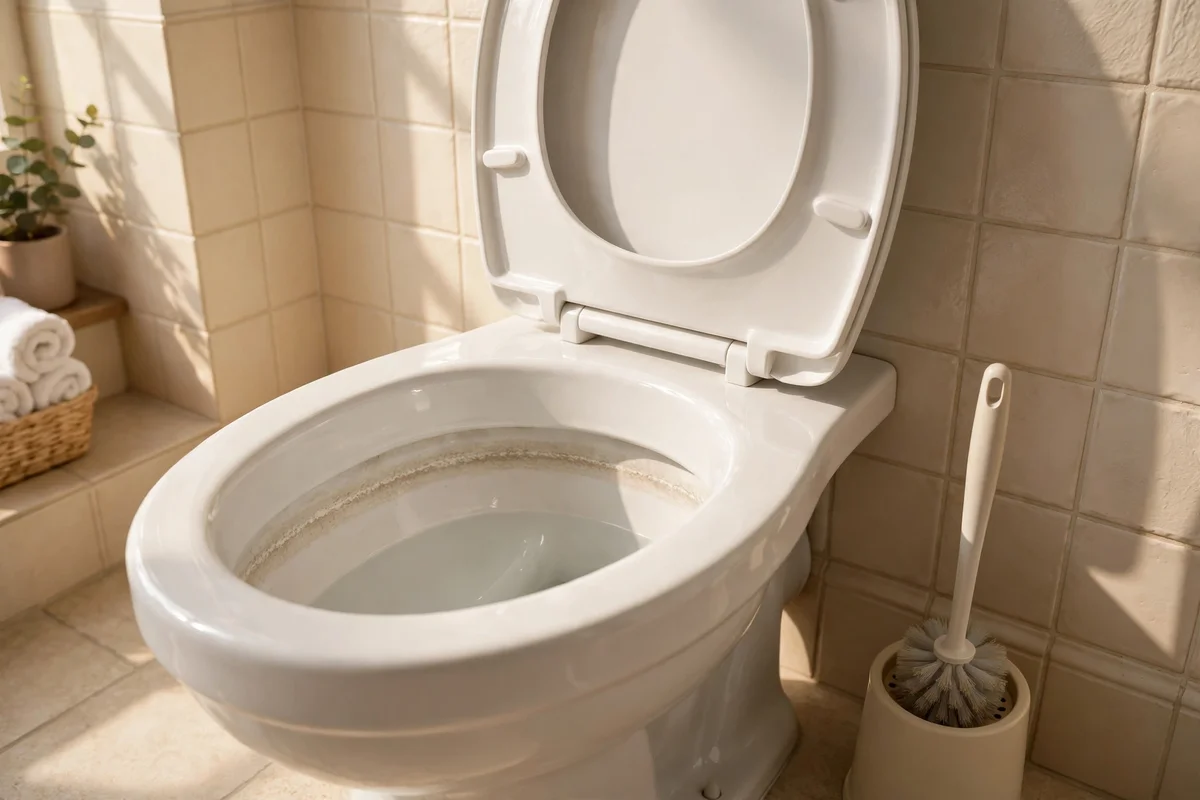
Every deep cleaning method works better when the stain sits above the water instead of under it, because cleaners grip exposed porcelain far longer. Turn off the small supply valve behind the toilet, then flush and hold the handle down until the bowl empties to its lowest level. Bail out the last cup of water with an old cup or sponge so the full ring is exposed to air and ready for treatment.
Apply your chosen cleaner directly to the exposed band and it will cling for hours instead of diluting. When the job is done, turn the valve back on slowly, let the cistern refill, and flush twice to rinse. The mistake to avoid is forcing a stiff old valve, which can snap; turn it gently and use a wrench only if needed. This one preparation step doubles the power of every gentle method above.
8. Cling a Vinegar Soaked Cloth Along the Waterline
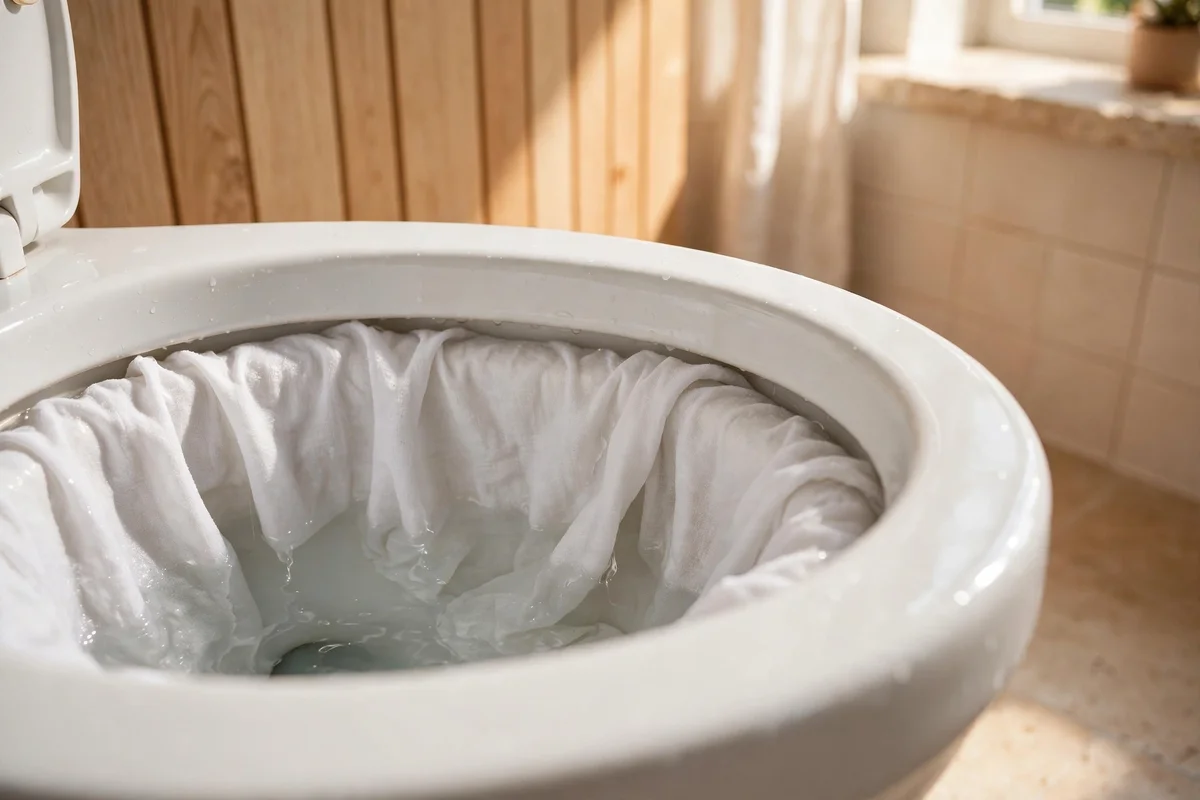
For a ring sitting right at the waterline, a vinegar soaked cloth pressed against the porcelain delivers hours of contact where pouring alone cannot. Soak a strip of old cotton cloth or a few paper towels in undiluted white vinegar, then drape and press the cloth firmly along the stained band so it touches every inch. Leave it for two to four hours, rewetting once if it dries, while the acid softens the minerals.
Peel the cloth away and brush the softened ring with a bowl brush, watching it lift in pale flakes. Flush twice to rinse the bowl completely. The mistake to avoid is using coloured rags, which can leave dye on the porcelain, so choose plain white cloth. This method costs almost nothing beyond vinegar and is ideal for the faint grey line that keeps returning at the water level.
9. Clear the Rim Jet Holes to Restore a Strong Flush
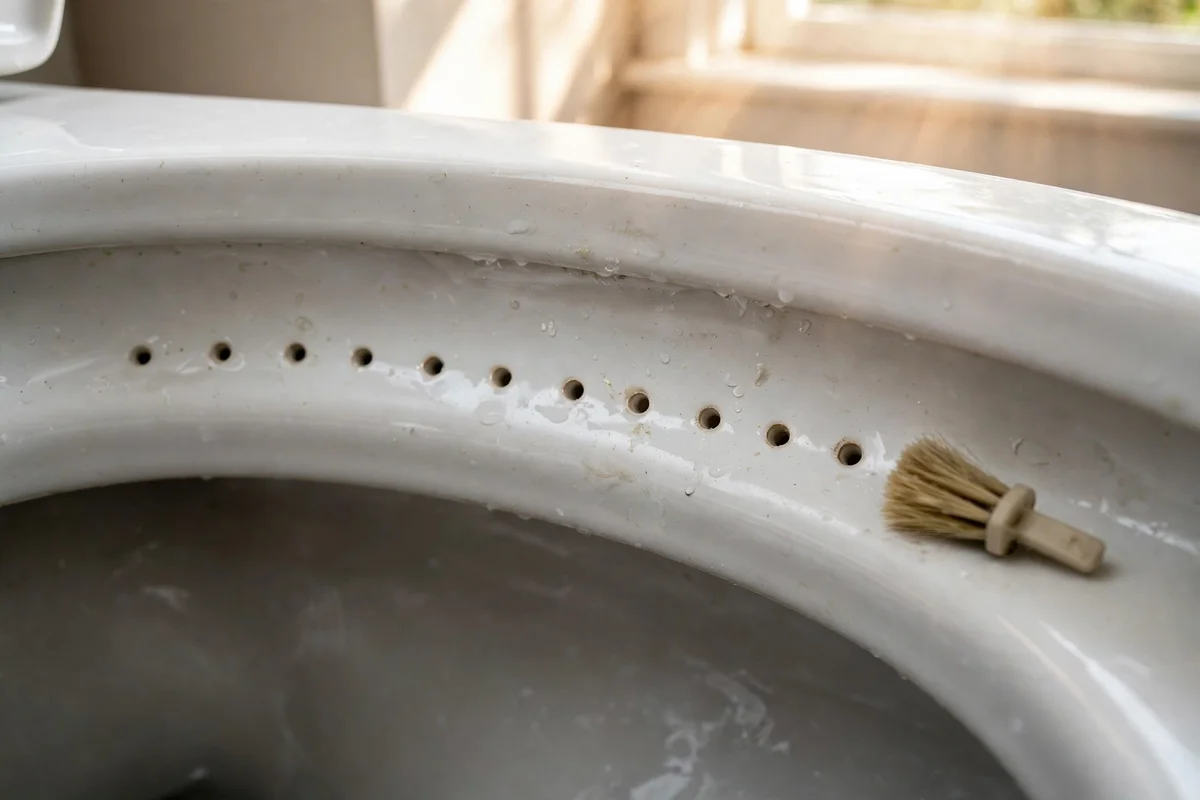
Mineral scale also clogs the small jet holes under the rim, which weakens the flush and lets stains settle faster. With the bowl water lowered, press white vinegar soaked cotton balls into each jet opening and leave them for an hour so the acid dissolves the scale inside. Remove the cotton, then poke each hole gently with a straightened paperclip or a small stiff brush to clear the last crust.
Flush several times and watch the swirl grow stronger, which tells you the jets are clear. The mistake to avoid is forcing metal tools into the porcelain, since a scratched jet hole roughens and collects minerals faster. Keep to vinegar, cotton and a gentle poke. Clear jets mean a fuller rinse with every flush, so the bowl simply stays cleaner between your regular brushings.
10. Lift Rust Rings With Cream of Tartar and Peroxide
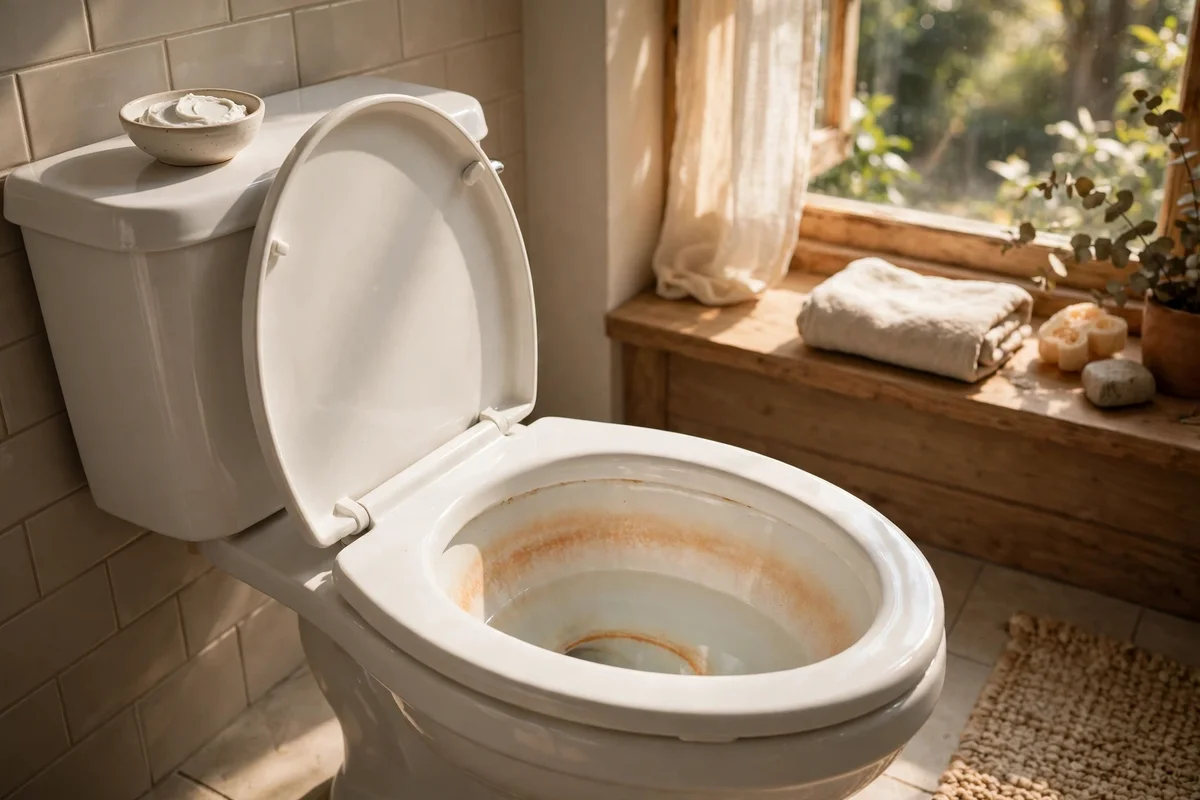
Orange or brown rings usually mean iron or rust, and they respond best to a paste of cream of tartar and hydrogen peroxide. Mix three tablespoons of cream of tartar with just enough three percent hydrogen peroxide to make a thick paste, then spread it over the rust stained band with an old toothbrush. Let it sit for thirty to sixty minutes while the mild acids and gentle oxidation loosen the iron.
Brush the area in small circles, then flush and rinse the bowl well. Repeat once if a faint shadow remains, since rust stains often lift in layers. The mistake to avoid is reaching for chlorine bleach, which can set rust stains darker instead of removing them. Cream of tartar sits cheaply in the baking aisle, and a bottle of three percent peroxide lasts through many household cleaning jobs.
11. Drop In a Denture Tablet Soak Between Deep Cleans
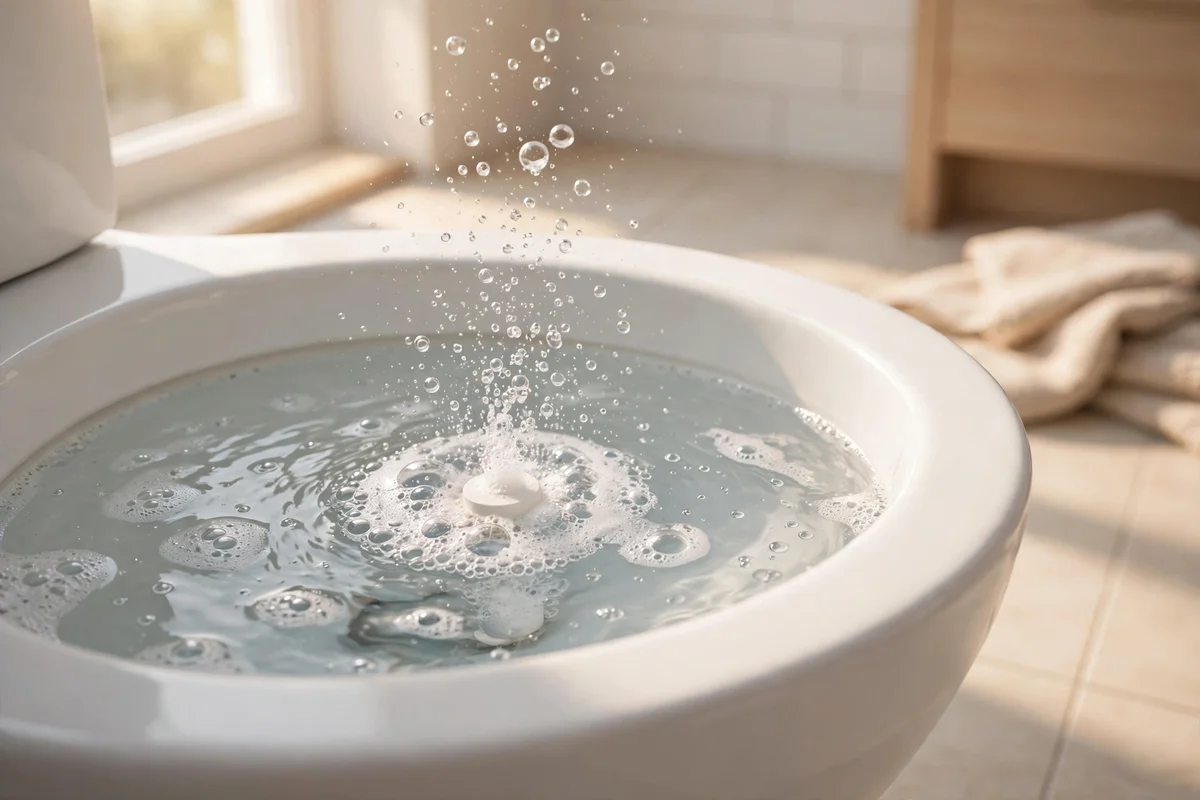
Denture cleaning tablets offer a gentle weekly maintenance soak that keeps light rings from hardening into stubborn scale. Drop two tablets into the bowl before bed and let them fizz and dissolve overnight, eight hours or so, while their mild acids and gentle effervescence soften fresh mineral film. In the morning, give the bowl a quick brushing and flush, and the porcelain stays bright with almost no effort.
This method suits prevention better than cure, since it will not erase a thick old ring on its own. Use it between your deeper cleanings as a quiet overnight helper. The mistake to avoid is expecting one tablet in a heavily stained bowl to perform miracles; match the method to the stain level. A box of tablets is an inexpensive mid range purchase and doubles for actual denture care or vase cleaning.
12. Protect the Porcelain Glaze From Harsh Scouring
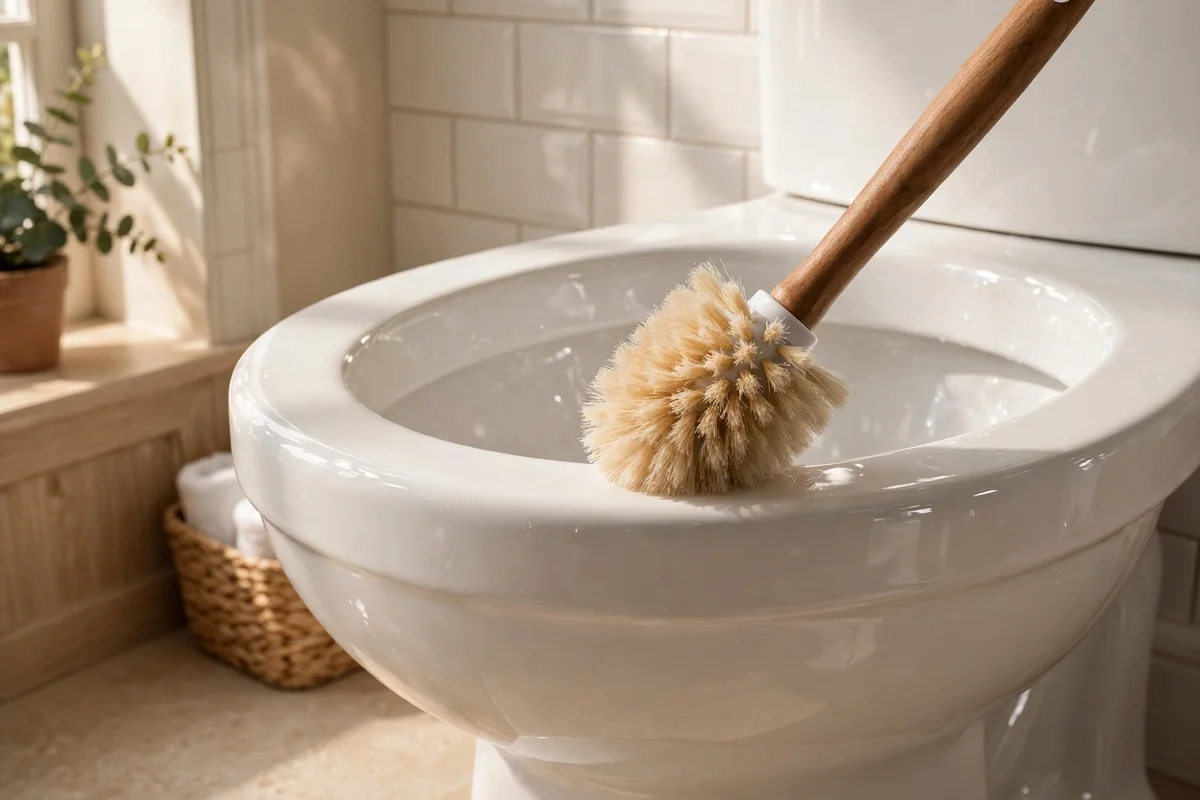
The porcelain glaze is a thin glass like coating, and protecting it is what keeps your bowl shiny for decades. Always choose non scratch tools: soft bowl brushes, porcelain safe pumice used wet, and fine 2000 grit paper rather than steel wool, scouring pads or stiff wire brushes. Work with gentle pressure and plenty of water or cleaner as lubricant, letting the product do the work instead of your arm.
A damaged glaze turns rough and porous, which means minerals grip faster and rings return within days instead of months. The mistake to avoid is scrubbing with a green scouring pad on a stubborn spot, since those tiny scratches become permanent stain magnets. Think of glaze care like caring for a good enamel pan: gentle tools, mild cleaners, and patience keep the bright finish that makes the whole bathroom feel fresh.
13. Keep Bleach Away From Mineral Ring Stains
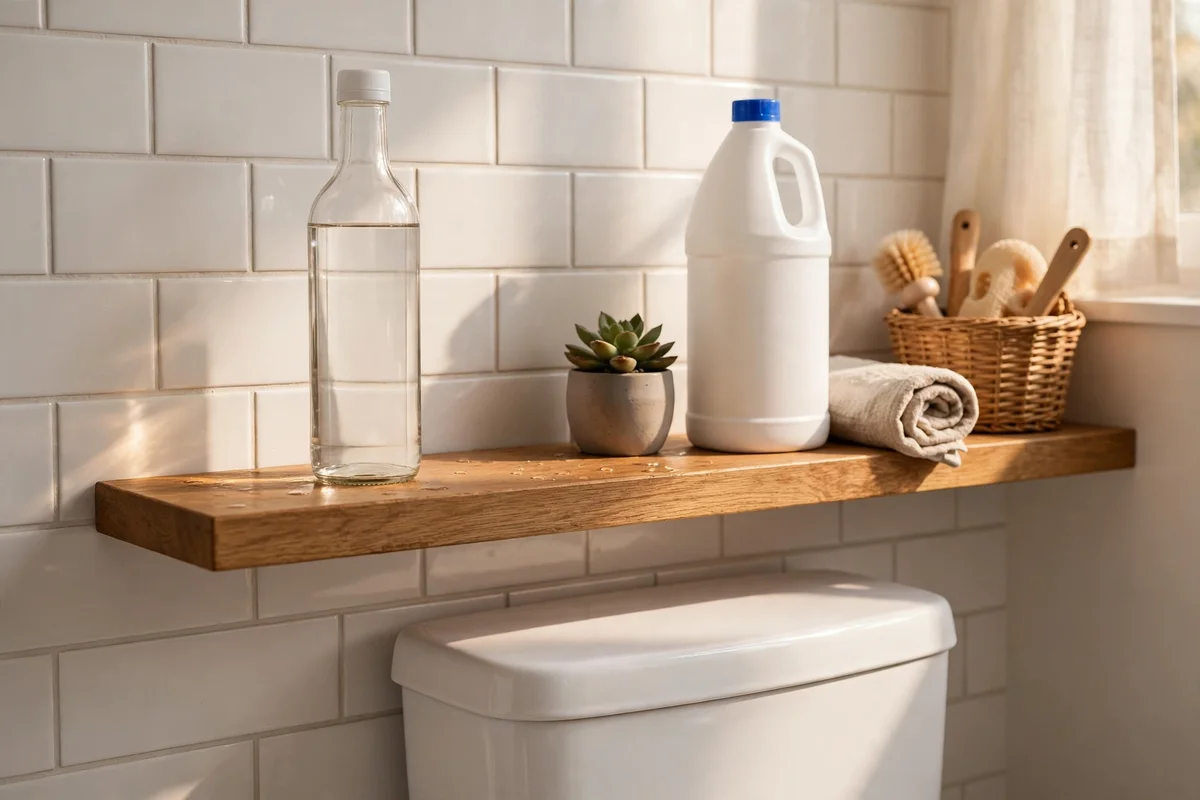
Bleach whitens and disinfects, but it cannot dissolve the calcium, lime or iron that form toilet bowl rings, so it wastes effort on mineral stains. Worse, using bleach after vinegar or an acid cleaner without a full flush between can create dangerous fumes. Treat ring cleaning and disinfecting as two separate jobs: dissolve the minerals first with acids or pumice, flush completely, and only then use bleach if you want extra sanitising.
When you do disinfect, pour half a cup of bleach into the bowl, wait ten minutes, brush and flush. The mistake to avoid is pouring bleach onto a rust ring expecting it to fade, since chlorine can oxidise iron and leave the stain darker and more permanent. Keep one simple rule in the bathroom: acids for minerals, bleach only for germs, never the two together.
14. Brush the Bowl Twice Weekly to Stop Rings Forming
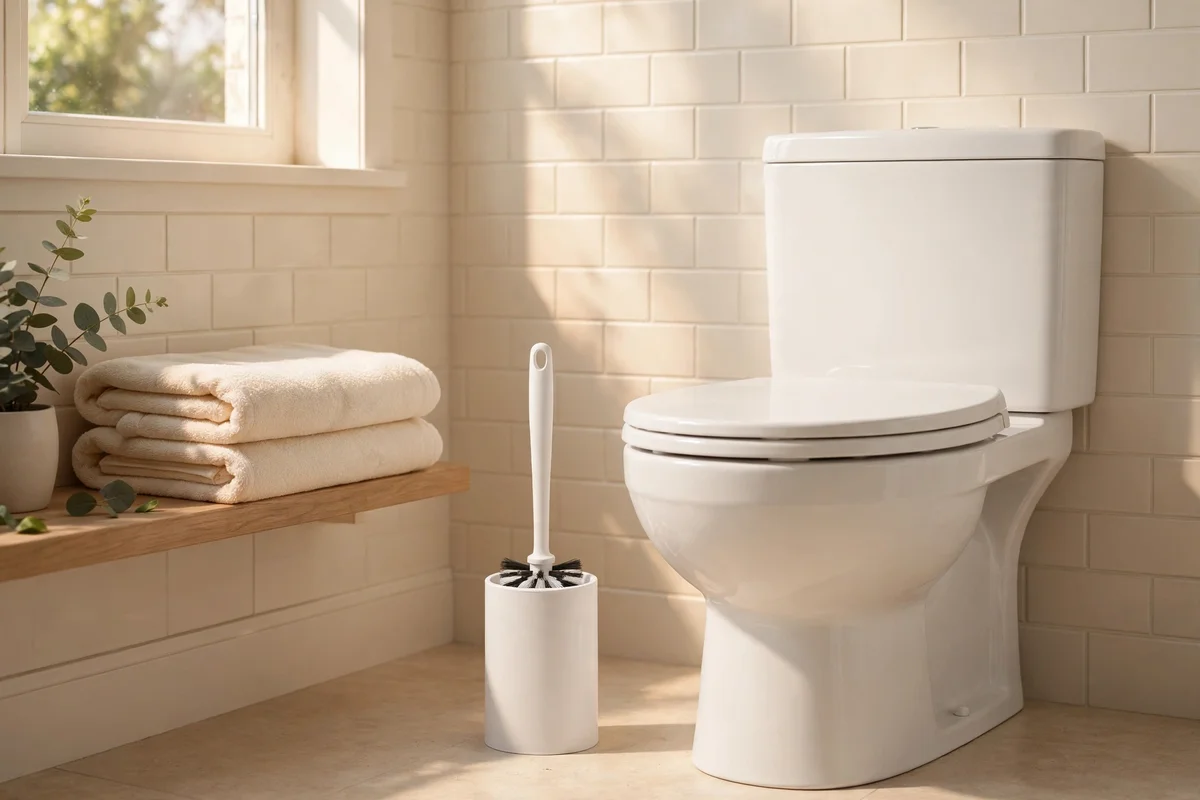
Prevention beats every cure, and a twice weekly brushing habit stops rings before minerals harden. Keep a sturdy bowl brush in a clean holder beside the toilet, and every three or four days give the bowl a thirty second scrub around the waterline and under the rim. A squirt of mild bathroom cleaner or plain water is enough; the mechanical action sweeps away fresh mineral film while it is still soft.
Choose a brush with firm but flexible bristles that reach under the rim, and replace it every six months or when bristles splay. The mistake to avoid is storing the brush in a puddle of dirty water, so rinse it with a flush of clean water and let it drip dry. This tiny habit costs nothing, takes half a minute, and is the single most effective ring prevention there is.
15. Fix a Slow Trickling Cistern Without Delay
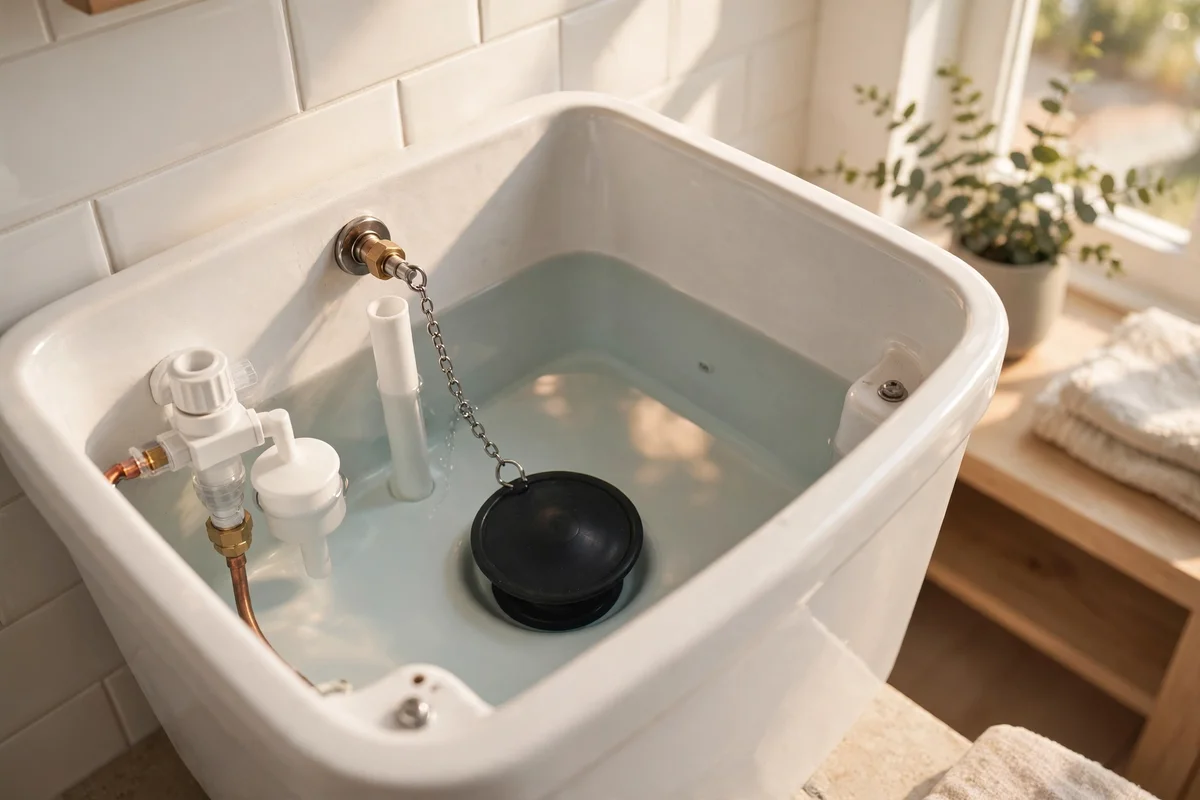
A cistern that trickles constantly is the number one cause of returning rings, because fresh mineral water keeps flowing over the same porcelain line all day. Test yours by adding a few drops of food colouring to the cistern and waiting fifteen minutes without flushing; if colour appears in the bowl, water is leaking past the flapper or fill valve. A new flapper costs very little and usually pushes or clips into place in minutes.
If the fill valve hisses or the water level sits too high, adjusting or replacing the valve stops the silent trickle. Turn off the supply, drain the cistern, and follow the valve instructions, or call a plumber for a quick affordable visit. The mistake to avoid is ignoring a faint trickle because the toilet still flushes fine; that tiny leak can also raise your water bill noticeably over a year.
16. Soften Hard Water to Stop Rings at the Source
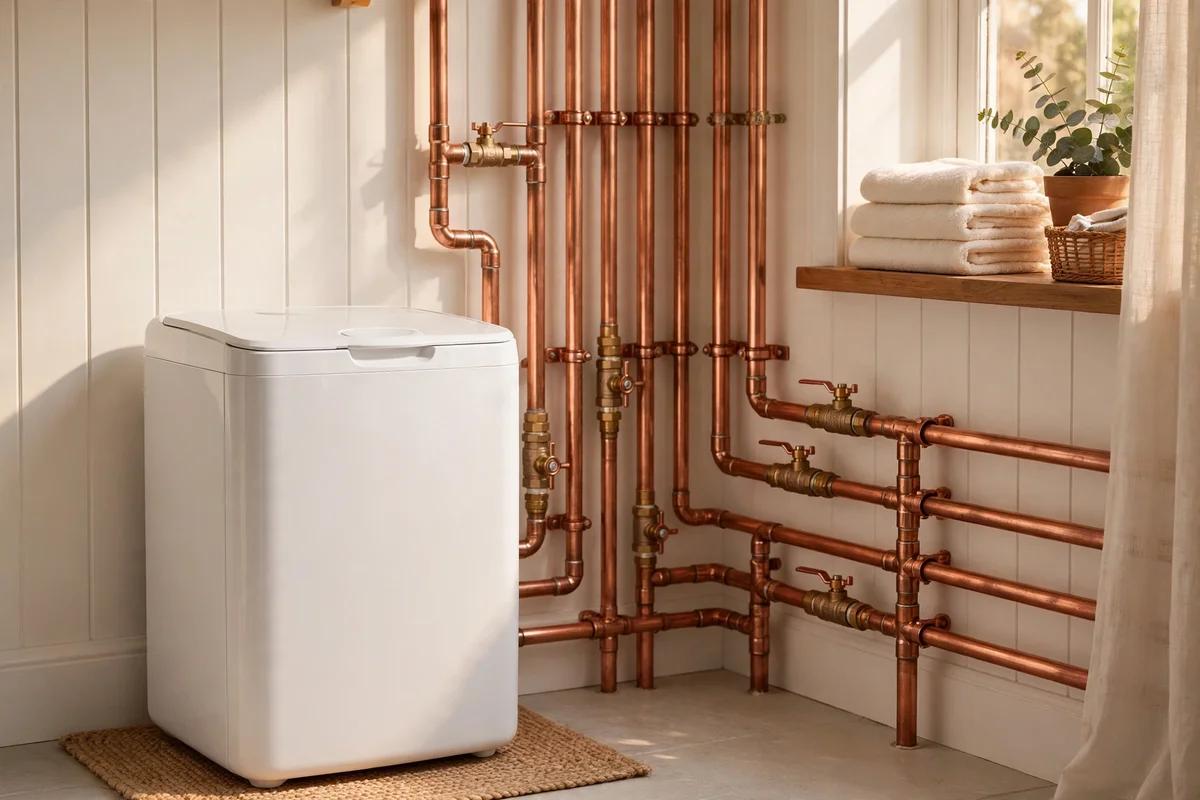
If your tap water is very hard, rings will keep returning no matter how well you clean, and softening the water solves the problem at its source. A whole house softener treats every tap and is the investment option, while a compact inline softener on the bathroom supply line costs far less and still protects the toilet, taps and showerhead. Both work by swapping calcium and magnesium for sodium before the water reaches your bowl.
Test your water hardness first with an inexpensive strip kit so you buy the right size unit. The mistake to avoid is installing a softener and forgetting the salt or cartridge refills, since an exhausted unit does nothing. With softened water, the twice weekly brush often becomes enough on its own, and kettles, shower doors and taps all stay cleaner too, which makes the investment feel worthwhile.
17. Give the Bowl a Monthly Vinegar Maintenance Flush
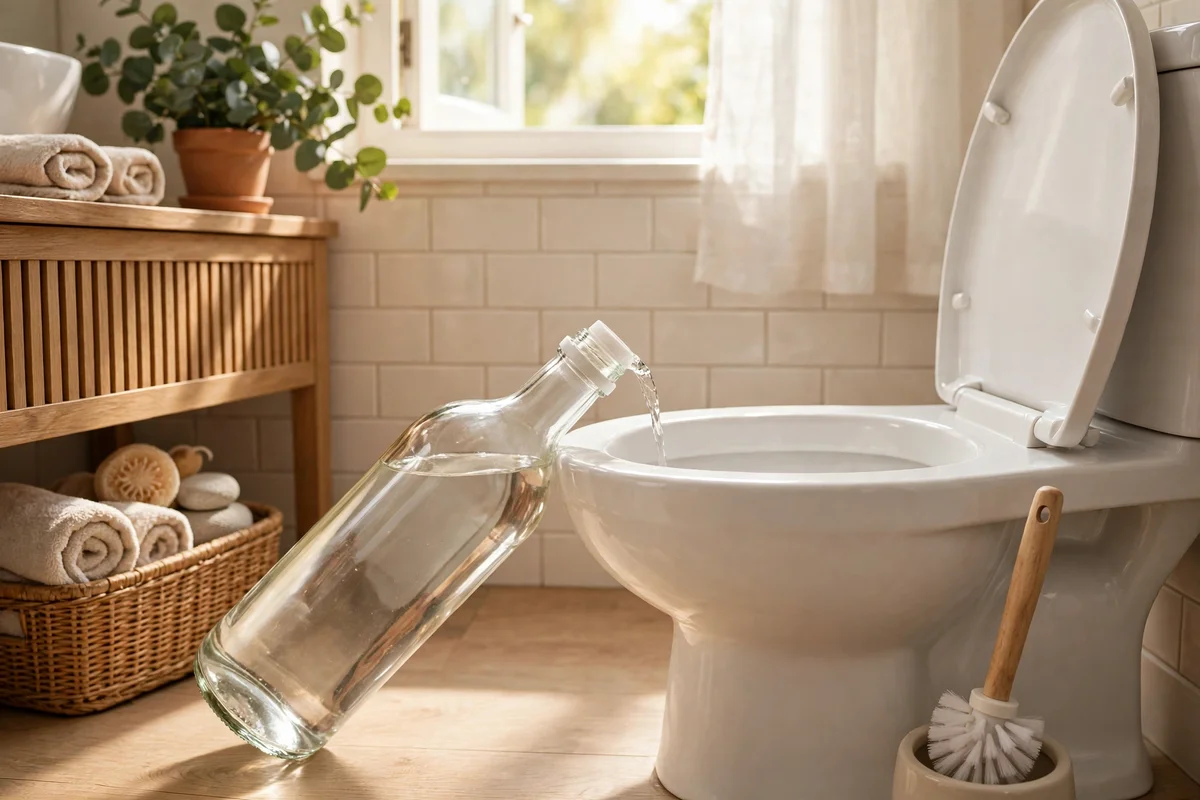
A monthly maintenance flush with vinegar keeps mineral film from ever hardening into a visible ring. Once a month, pour two cups of white vinegar around the bowl, swish it under the rim with the brush, and leave it for thirty minutes before flushing. The mild acid dissolves the thin fresh deposits that the twice weekly brushing might miss, especially in homes with moderately hard water.
Pair this with a quick check of the waterline and a wipe of the seat hinges with a damp cloth, so the whole toilet looks cared for in one short session. The mistake to avoid is treating the monthly flush as a replacement for brushing; it is a supplement, not a substitute. Mark it on the calendar for the same day each month, and the bowl will greet every guest with bright, even porcelain.
18. Polish the Seat, Hinges and Base for a Fully Bright Look
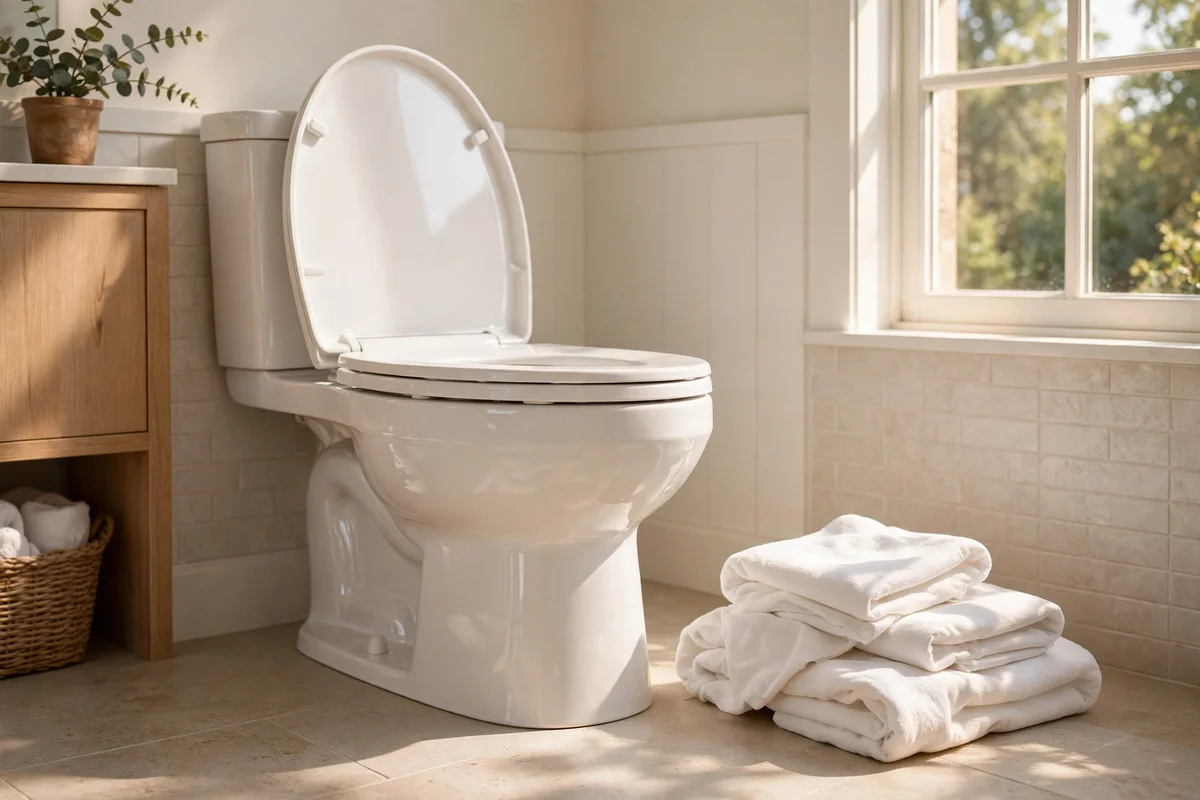
A perfectly clean bowl still looks dull if the seat, base and hinges carry dust and water spots, so finish the job around the whole toilet. Wipe the seat top and underside, the hinges, and the porcelain base with a soft cloth dampened in warm water with a drop of mild soap. Dry with a second cloth so no streaks remain, and check the bolts at the base for any grime hiding underneath the caps.
Use a cotton swab for the tight corners where the seat meets the bowl, since guests notice these details up close. The mistake to avoid is spraying harsh cleaners on the seat hinges, where they can corrode metal parts over time. This ten minute polish, done monthly alongside the vinegar flush, makes the entire toilet look new and keeps the bathroom feeling calm and thoughtfully kept.
19. Ventilate the Bathroom So Surfaces Dry Quickly
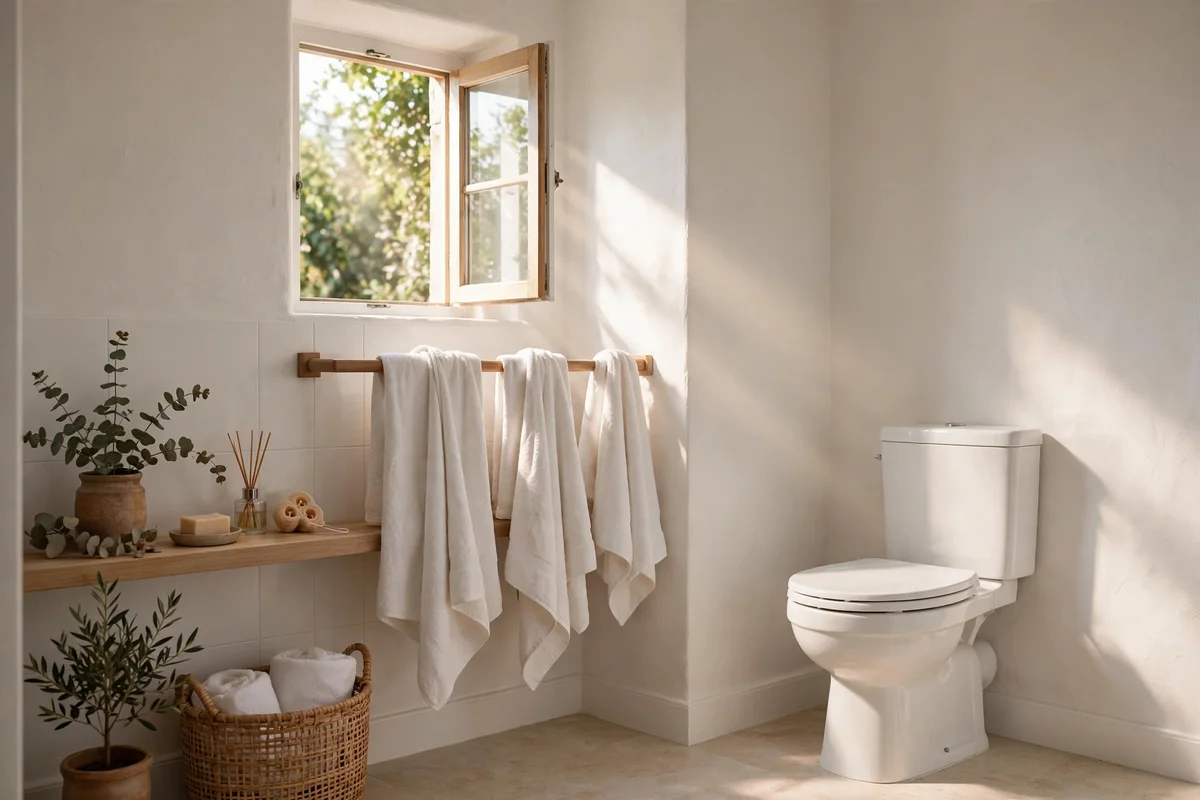
Good airflow slows mineral buildup because a bathroom that dries quickly leaves less standing moisture for deposits to form. After showers, open the window or run the extractor fan for twenty to thirty minutes so humidity drops and surfaces dry. A small squeegee on the shower walls helps too, since less airborne moisture means fewer water spots settling on every surface, including the toilet.
Keep the toilet lid closed between uses in humid weather, which reduces condensation forming inside the bowl. The mistake to avoid is running the fan for only two minutes and calling it done; moisture needs real time to clear. This habit costs nothing beyond a little electricity, protects paint and grout as well as porcelain, and leaves the whole room feeling fresher and calmer for the next person.
20. Keep a Tidy Cleaning Caddy Beside the Toilet
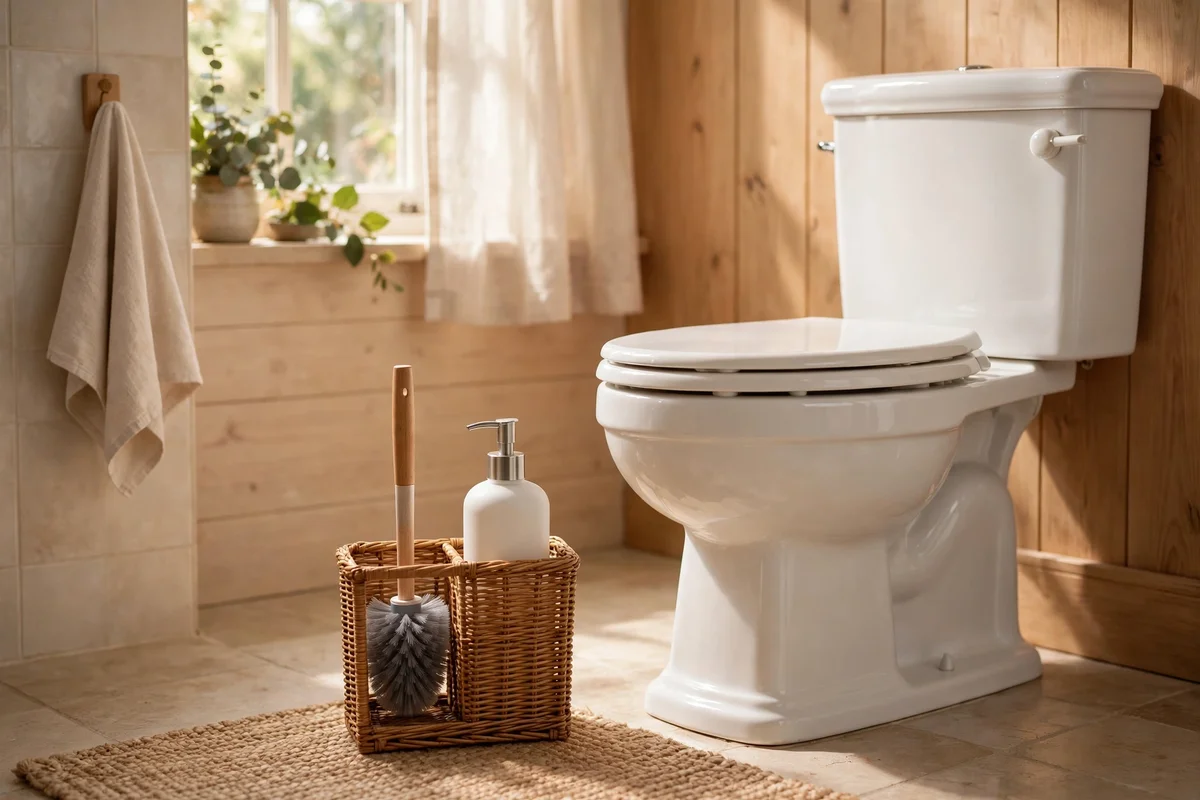
A small guest ready caddy beside the toilet turns maintenance into a one minute job instead of a chore you postpone. Choose a slim basket or tray about 25 to 30 cm wide that fits between the toilet and the wall, and stock it with a bowl brush, a bottle of white vinegar or mild cleaner, and a spare cloth. Everything you need stays within arm’s reach, so the twice weekly brushing actually happens.
Label nothing and keep the look calm: decant the vinegar into a plain pump bottle for a tidy appearance. The mistake to avoid is overfilling the caddy with five products you never use, which just collects dust. Two or three essentials are enough. This little station also reassures guests, since a visibly cared for bathroom with tools at hand feels welcoming rather than neglected.
21. Test Your Water Hardness to Choose the Right Fix
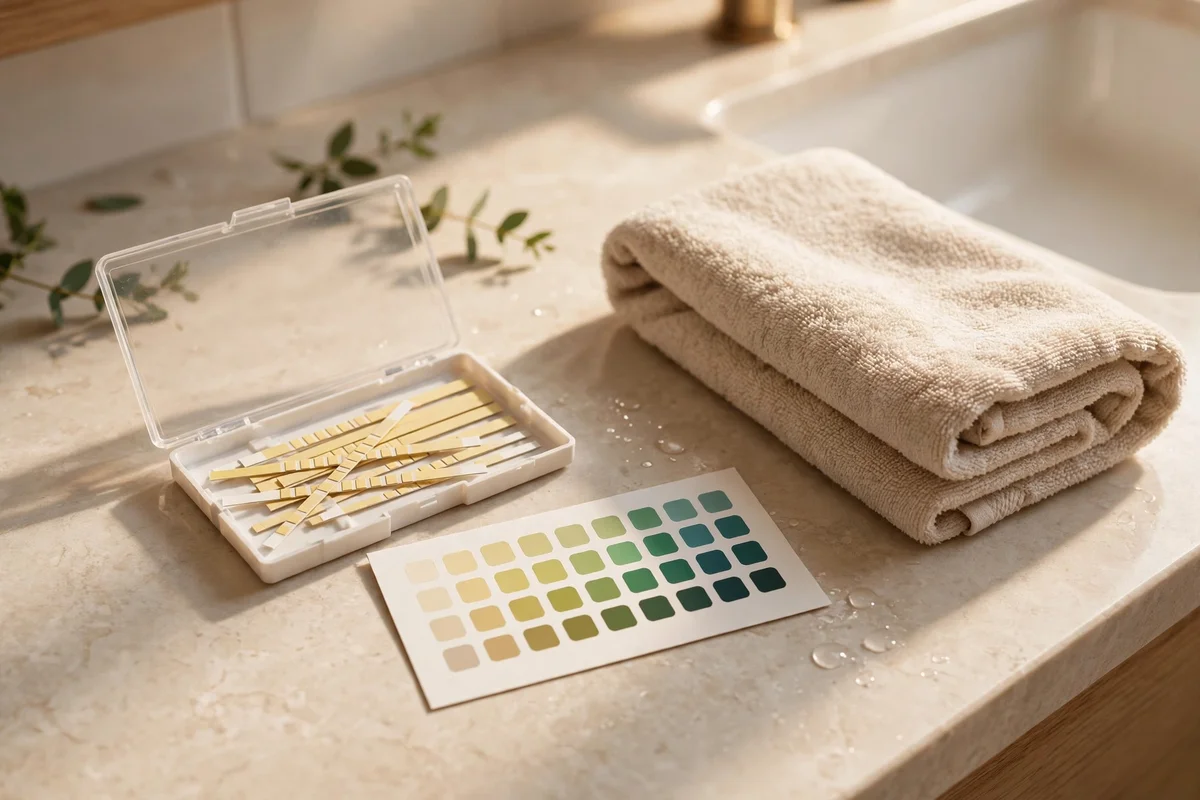
Knowing your water hardness takes the guesswork out of choosing methods and prevention. Inexpensive test strips, dipped in tap water for a few seconds and matched to a colour chart, tell you whether your water is soft, moderate or very hard. Very hard water explains fast returning rings and points you toward a softener, while moderate hardness usually responds to vinegar routines and regular brushing alone.
Test both the bathroom tap and the kitchen tap, since hardness can vary through the house. The mistake to avoid is buying an expensive softener for mildly hard water that a simple routine would handle. Retest once a year or after any plumbing work. This small diagnostic step, costing only a few pounds or dollars, guides every other decision in this list and saves money on unnecessary products.
22. Style the Room Around the Bright Bowl for Guests
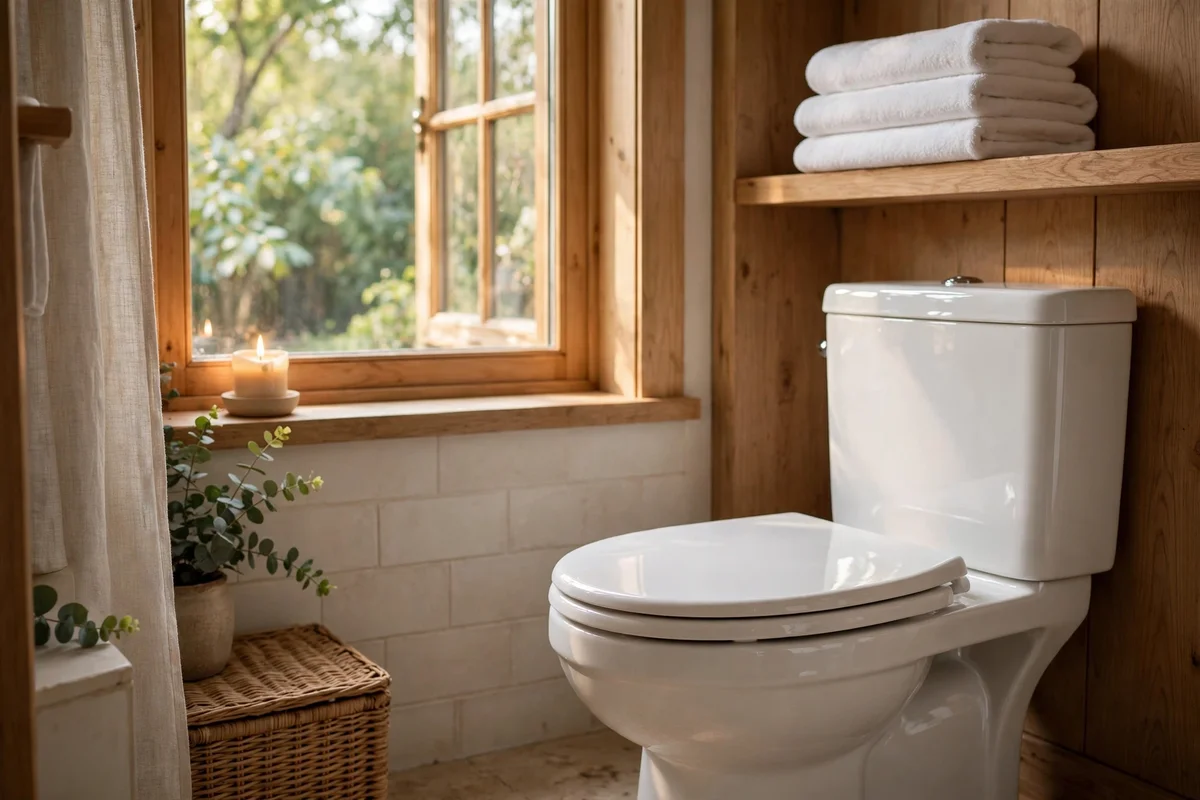
With the ring gone, finish the room so the bright bowl feels part of a calm whole. Fold two soft white hand towels on a nearby rail or shelf, set a small unscented candle or a sprig of dried lavender on the windowsill, and make sure the mirror is spot free. These quiet touches take five minutes and shift the bathroom from merely clean to genuinely welcoming, which is what guests remember.
Keep the styling simple and timeless: white or cream textiles, one natural scent, and clear surfaces. The mistake to avoid is adding strong air fresheners or cluttered decor that fight the calm mood. When the porcelain gleams and the room feels serene, all your careful cleaning work shows at its best, and the bathroom becomes a small, peaceful corner of the home anyone would appreciate.
A ring in the toilet bowl is only mineral dust and time, and every fix above meets it with patience rather than force. Gentle soaks, careful tools and small habits keep the porcelain glaze intact for years, which is the real secret behind a bowl that always looks bright. Nothing here asks for expensive equipment or harsh chemicals.
This week, start with the simplest step: one cup of baking soda and two cups of warm vinegar left in the bowl overnight, then a brisk brushing in the morning. If the waterline clears, keep the twice weekly brush routine going. That single habit prevents most rings before they ever form.
Frequently Asked Questions
How long should a baking soda and vinegar soak sit in the bowl?
Plan for eight to twelve hours, ideally overnight. Add one cup of baking soda to the bowl, wait a few minutes, then pour in two cups of warm white vinegar and let it rest undisturbed. The fizz softens mineral deposits so morning brushing lifts them easily. Rinse with a full flush afterward.
Will a pumice stone scratch my toilet bowl?
A pumice stone made for porcelain is safe when used wet on wet porcelain with light, even pressure. Keep both the stone and the bowl surface soaked while you work, and test on a hidden spot first. Never use it dry or with heavy force, since grinding dry can dull the glaze. If the stone leaves grey marks, a vinegar rinse removes them.
What does cleaning a toilet bowl ring realistically cost?
Almost nothing. Baking soda, white vinegar, borax and citric acid each cost a few pounds or dollars and cover many cleanings. A porcelain safe pumice stone or a few sheets of 2000 grit wet sandpaper costs under ten. Commercial mineral removers run higher but one bottle lasts months. Prevention costs nothing: brushing twice weekly stops rings forming.
Why does the toilet bowl ring keep coming back?
Hard water leaves minerals with every flush, so rings return when brushing lapses or water sits still. A slowly trickling cistern is the most common cause, because constant fresh mineral water feeds the line. Check that your cistern fully seals, keep a twice weekly brushing habit, and consider a water softener if your supply is very hard.
Can I use bleach to clean a toilet bowl ring?
Never mix them, and keep bleach away from mineral stains entirely. Bleach does not dissolve calcium, lime or rust, and mixed with vinegar it creates harmful chlorine gas. Work with one product at a time and flush well between steps. For ring stains, mineral dissolvers like citric acid or vinegar are the right tools, not bleach.