Home Improvement
22 Ways to Work Out Exactly How Much Paint a Room Needs
By Anna Wells · · 22 min read
Stop guessing at the paint shop. Here are 22 clear steps to measure, calculate and buy exactly the right amount of paint for any room.
There is a particular quiet that settles over a room the morning after painting, when the walls look even and the light feels softer somehow. Getting there starts long before the first roller stroke, with a tape measure and a few honest numbers. Buy too little and the job stalls halfway through the second coat. Buy too much and tins gather dust in the garage for years.
This guide walks you through the maths step by step, from measuring wall area to choosing tin sizes that leave almost no waste. You will learn how doors, windows and ceilings change the numbers, what coverage rates to trust for emulsion, eggshell and gloss, and how a small five percent buffer protects you without waste.
Three full worked examples show real numbers for a small bedroom, a living room and a hallway, all in metres and litres. By the end you will know exactly how many tins to carry home, how to test colours before committing, and how to keep the family safe while you paint.
So fetch your tape measure, a notepad and a calculator. Twenty two small steps stand between you and a perfectly stocked decorating day, and each one takes only a minute or two.
1. Measure Your Ceiling Height Once and Write It Down
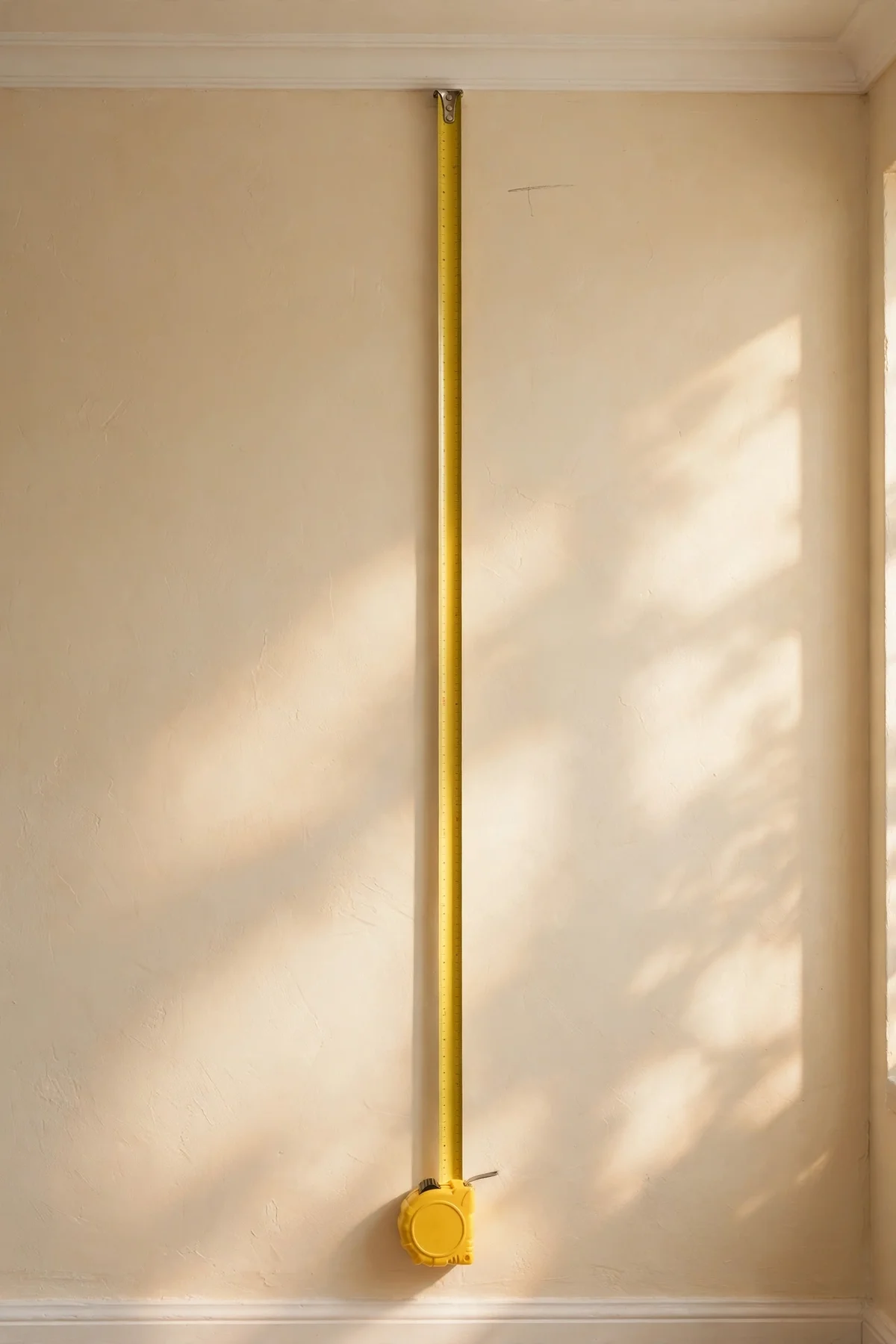
Take one careful measurement of your ceiling height and treat it as the master number for the whole room. Most homes sit between 2.4 and 2.7 metres, so confirm yours rather than guessing. Measure in two places with a tape or laser measure because ceilings can slope slightly across a room. Write the figure on paper or in your phone notes before you do anything else. Every later calculation multiplies this height by wall length, so a small error here grows across all four walls.
The mistake most people make is measuring height fresh at every wall and rounding differently each time. Pick the largest of your two readings so you never run short, and use that single number everywhere. If the room has a dropped section or a bulkhead, measure that separately and add it later. Keep the figure in metres with one decimal place for simple multiplication. Consistency matters more than precision to the millimetre, and one written number removes the most common source of paint miscalculation.
2. Add Up the Length of Every Wall Into One Total
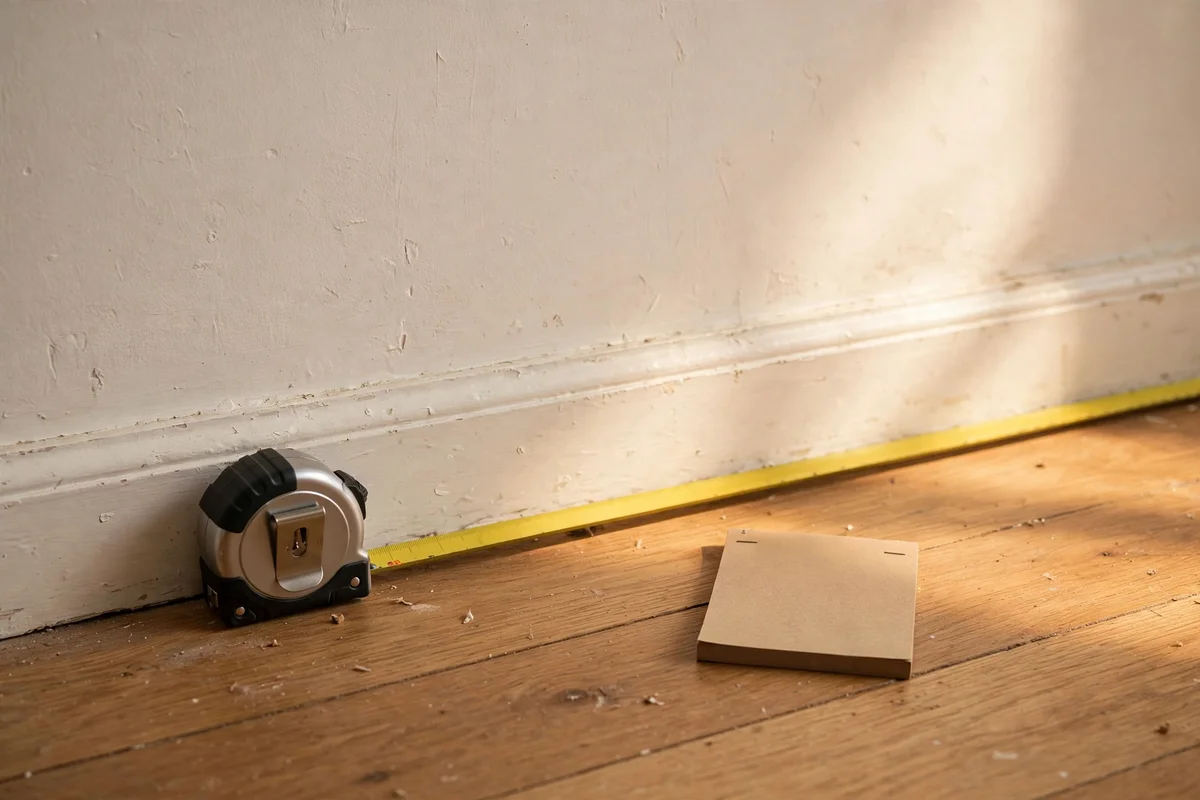
Walk the room with a tape measure and record the length of each wall, corner to corner, ignoring doors and windows for now. Add the four figures together to get one total wall length, which is usually between 12 and 16 metres for a bedroom. Measure to the nearest centimetre and do not round down at this stage. Working wall by wall keeps you honest because alcoves and chimney breasts often hide extra length. Write each figure down as you go so nothing gets estimated from memory.
If a wall has a chimney breast, measure around each side of the protrusion rather than across the front only. Those extra corners add real paintable area that a straight measurement misses completely. For an L-shaped room, treat each straight run as its own wall and add them all. Bay windows count too, with each angled panel measured separately. A quick sketch on paper with the lengths marked beside each line takes two minutes and prevents the double guessing that ruins most paint estimates.
3. Multiply Total Length by Height for True Wall Area
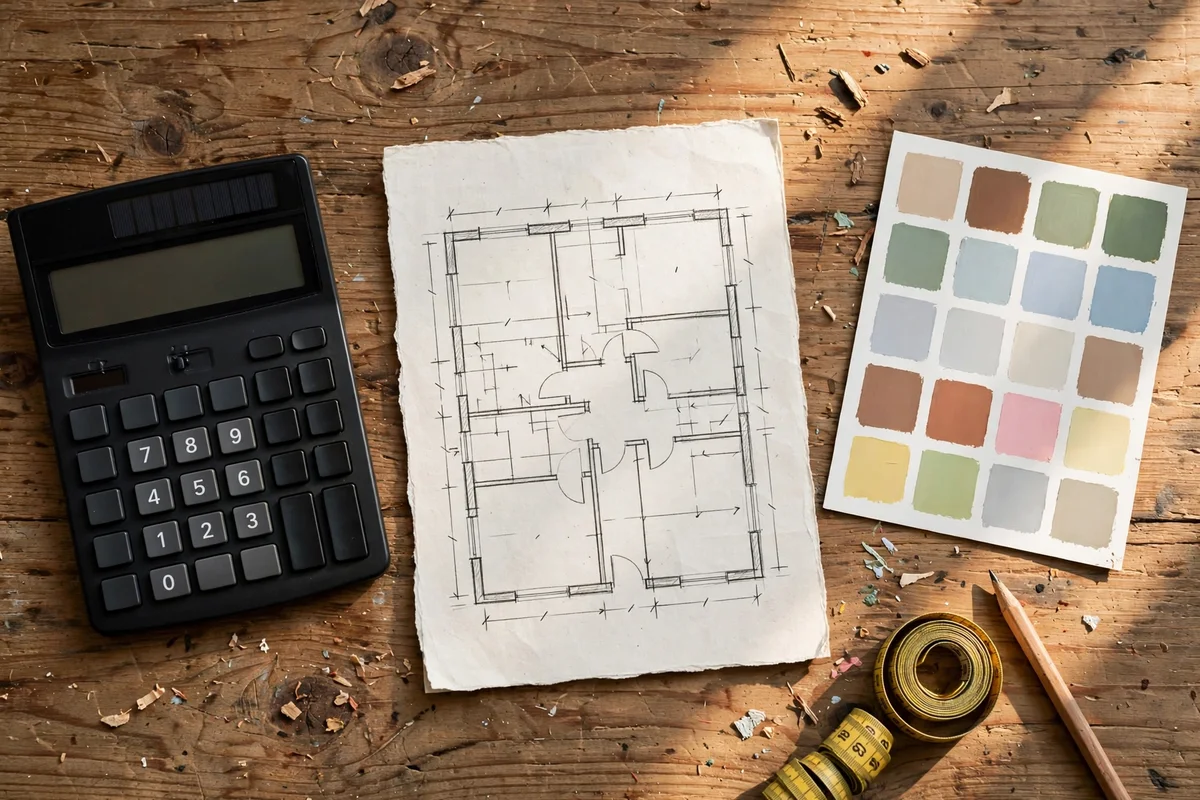
Multiply your total wall length by your single ceiling height to get the gross wall area in square metres. A room with 14 metres of wall and a 2.5 metre ceiling gives 35 square metres of paintable wall. This figure assumes every centimetre is painted, which you will refine by subtracting doors and windows next. Do the sum once on a calculator and round the answer to one decimal place. Keeping this gross figure written down lets you test different coat plans without remeasuring the room.
Check the maths with a rough sense test before moving on. Most bedrooms land between 30 and 45 square metres of gross wall, while a generous living room can reach 50 to 65. If your answer is wildly outside those ranges, recheck the wall lengths first because a misread tape is the usual culprit. Remember this gross area is the starting point, not the shopping number. You will subtract doors and windows, then multiply by your chosen coats to reach the real litres you need.
4. Subtract a Standard Door Opening of About Two Square Metres
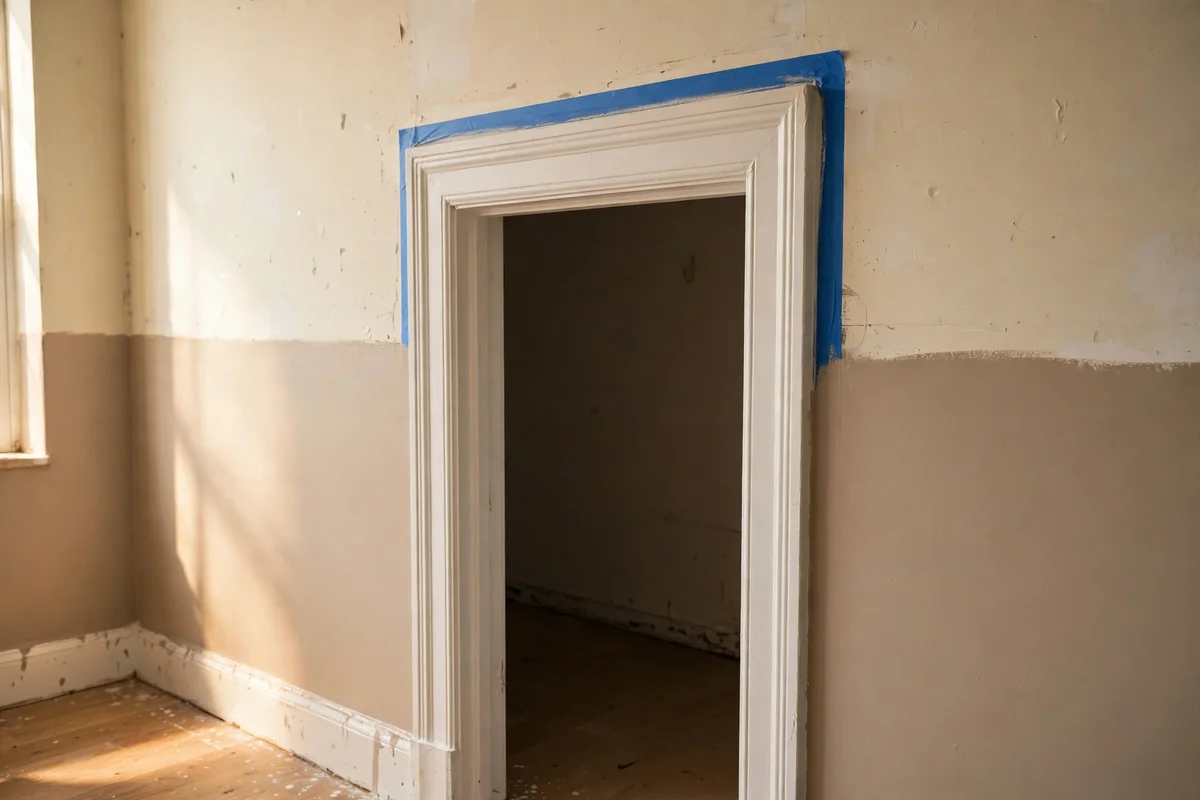
Every standard interior door removes about 2 square metres from your wall area, since a typical door is 0.8 metres wide and 2 metres tall. Count each door the room has, including cupboard doors that you will paint around rather than over. Multiply the door count by 2 and subtract that from your gross wall area. Two doors in a bedroom therefore remove 4 square metres. This one deduction often saves you a whole litre of paint.
Measure any door that is clearly not standard, such as double doors or a tall Victorian doorway, and subtract its true area instead. A pair of French doors at 1.6 by 2.1 metres removes 3.4 square metres, which is noticeably more than the standard allowance. Do not subtract the architrave trim itself, because you will paint that separately with trim paint. The mistake to avoid is forgetting wardrobe doors and room entrances you walk through; count every opening that breaks the wall surface.
5. Deduct Each Window at Roughly One Square Metre
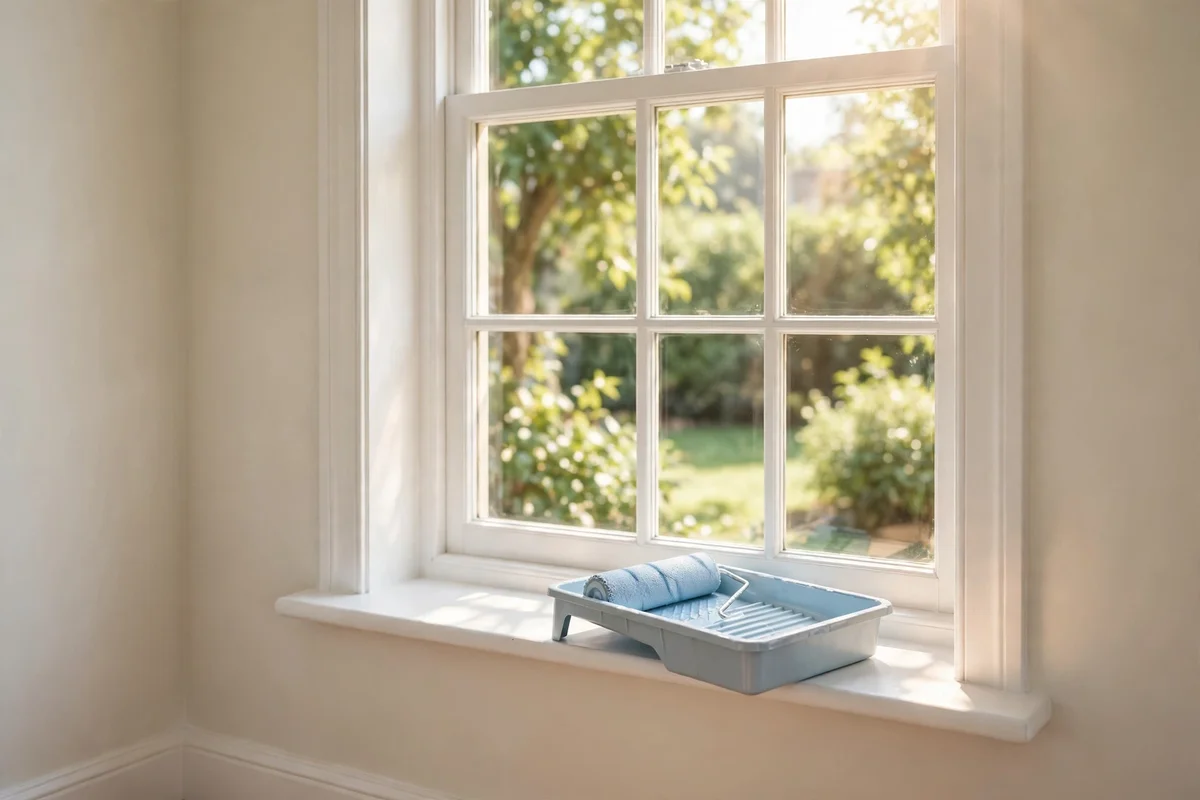
A standard window removes roughly 1.2 square metres, based on a typical 1.2 by 1 metre opening, and many painters round this to 1 square metre for speed. Count every window in the room, including small bathroom-style windows, and subtract the total from your running wall area. Three windows therefore remove about 3.6 square metres. Like doors, this deduction comes off the wall paint only, because sills and frames belong in the trim calculation.
Measure picture windows or floor-to-ceiling glazing properly instead of using the standard figure. A large 2.4 by 1.5 metre picture window removes 3.6 square metres on its own, which changes your paint order by more than a litre over two coats. Wide patio doors count as windows for this purpose, not as doors. The common mistake is deducting windows from both the wall paint and the ceiling paint; windows sit in walls only, so the ceiling area stays untouched.
6. Leave Radiators and Fixed Fixtures Out of the Calculation
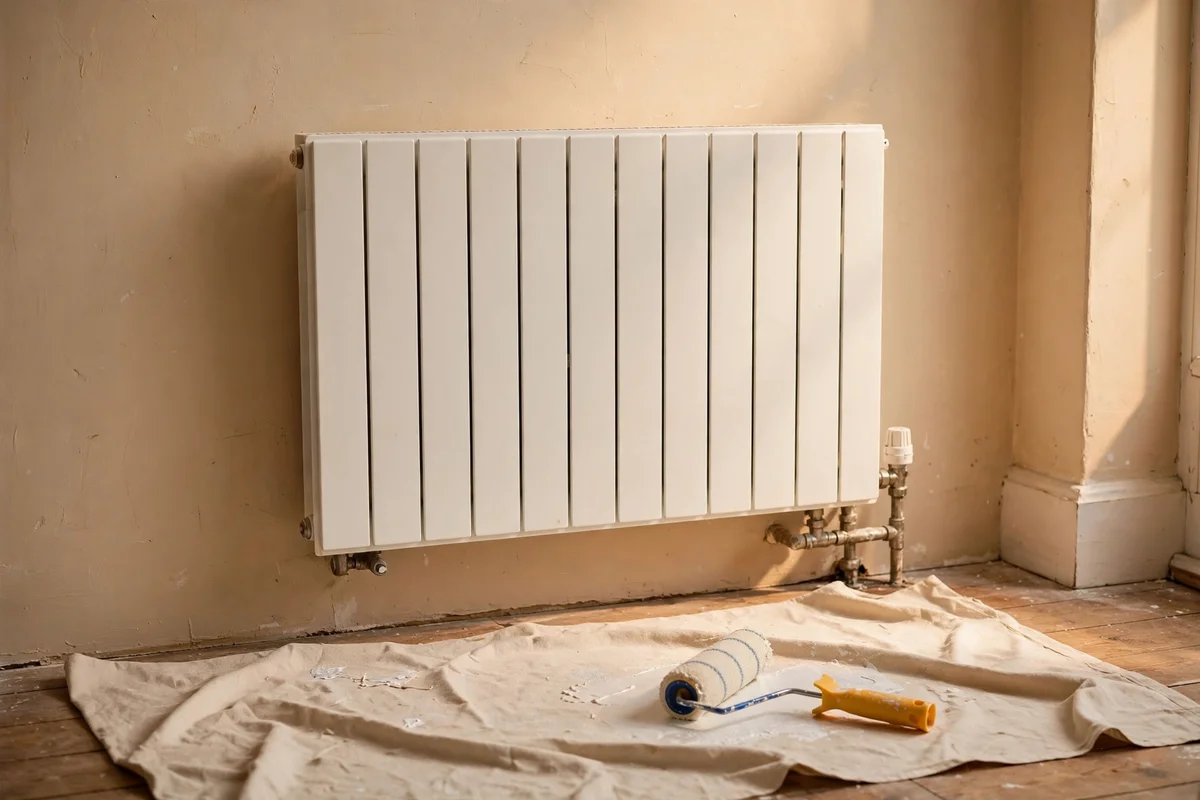
Radiators, boilers and built-in wardrobes interrupt wall space but are not subtracted in a simple calculation, because painters usually roll right behind or around them. Leave them in the area total so you keep a built-in margin rather than buying short. If a wardrobe covers a full wall, you can subtract that wall from the total, but note it clearly. Wall-mounted shelves and pictures need no adjustment at all. Keeping fixtures in the sum is the safe, professional habit that protects you from mid-project shortages.
Feature areas you plan to wallpaper or tile should be fully subtracted, since paint never touches them. Measure the exact wallpapered area and remove it from the wall total before dividing by coverage. The same applies to a tiled splashback that runs full height behind a cooker. The mistake to avoid is subtracting a small radiator cover and then discovering the wall behind it was never painted before; leave small fixtures counted in. Big permanent changes get subtracted, small moveable items stay in.
7. Decide One Coat Versus Two Before You Buy
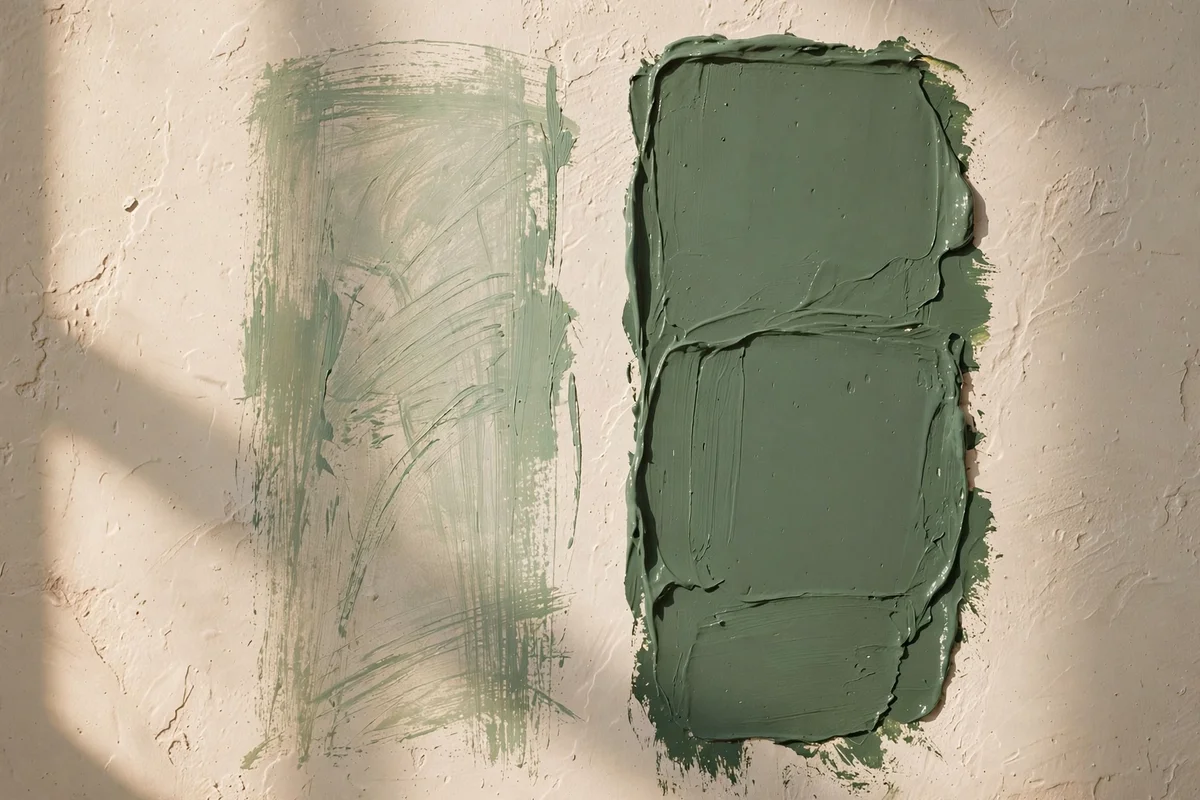
One coat suits walls that already wear the same or a very similar colour in good condition. Two coats are needed for any colour change, for bare plaster, and for walls with stains or patch repairs showing through. Decide this before shopping because the coat count doubles or halves your paint order. Many beginners buy for one coat, run out halfway, and pay for a second rushed trip. Two coats also give a deeper, more even finish that reads as professional work.
If you are unsure, budget for two coats and treat any saving as a bonus. A second coat over fresh paint dries quickly and hides roller marks that one coat often leaves visible. The only time one coat genuinely works is a refresh in the identical shade on sound paintwork. Gloss and eggshell trims almost always need two coats for full opacity. The mistake to avoid is splitting the difference by stretching one coat too thin; thin paint dries patchy and forces a full second coat anyway.
8. Count a Dedicated Primer as a Real Coat
Primer is a coat in every sense that matters for your maths, because it covers the same square metres as a topcoat. Bare plaster, fresh filler and new wood all drink paint, so a mist coat or primer seals the surface first. Count that sealing coat when you divide area by coverage, then count your finish coats on top. Three tins for primer plus two finish coats is a normal order for a fresh room. Skipping primer on bare plaster can double how much topcoat the wall absorbs.
For bare plaster, thin your first coat with clean water at roughly one part water to nine parts emulsion, which professionals call a mist coat. New wood trim needs a proper wood primer rather than thinned paint, since knots can bleed through plain coats. Paint-and-primer products help only on previously painted walls, not on bare surfaces. The mistake to avoid is counting primer as free coverage that replaces a finish coat; it prepares the surface but never provides the final colour depth.
9. Know That Emulsion Covers About Ten Square Metres a Litre
Standard matt emulsion covers about 10 square metres per litre on a prepared wall, which is the figure printed on most tins. Divide your net wall area by 10 to find the litres needed for one coat. A 30 square metre wall therefore needs 3 litres per coat, or 6 litres for two coats. This rate assumes normal application with a roller, not heavy loading. Dark colours over light walls can reduce effective coverage, so keep the 10 figure as a best case.
Always check the tin label, because premium emulsions sometimes claim 12 square metres per litre while budget ones manage only 8. For shopping maths, rounding down to 10 keeps you safe across brands. Contract or trade matt often covers less on rough plaster, so use 8 for textured walls. The mistake to avoid is trusting the optimistic printed figure on a first coat over patched filler, where 7 or 8 square metres per litre is more honest. One verified tin figure beats guesswork.
10. Expect Eggshell to Cover Slightly Less Than Emulsion
Eggshell sits between matt and gloss in sheen and typically covers 9 to 12 square metres per litre, a touch less than emulsion in real rooms. It goes on kitchen and bathroom walls, wooden furniture and some trims, where its wipeable finish earns its keep. Divide your eggshell area by 10 for planning, just as with emulsion, but expect the second coat to flow thinner. Because eggshell costs more per litre than emulsion, a small area error hurts the budget more.
Eggshell shows brush marks more readily than matt, so most painters plan a definite two coats for a smooth result. On previously glossed wood, an adhesion primer or a light sand comes before the eggshell, and that primer is its own litre in the budget. New MDF and bare pine drink the first eggshell coat fast, dropping real coverage toward 8 square metres per litre. The mistake to avoid is buying eggshell in the same tin size as your wall emulsion; trim and feature areas are small, so 1 and 2.5 litre tins usually cover the job.
11. Reserve Gloss for Small Areas Because Its Coverage Is Lower
Gloss covers roughly 10 to 14 square metres per litre, but trim areas are so small that the per-litre figure matters less than careful measuring. A standard door needs about 0.5 litres for two coats, and a room of skirting boards takes roughly the same. Because gloss is thick, overloading the brush wastes paint and creates drips. Buy gloss last, after the walls are measured, so you order only what the trim demands.
Water-based gloss behaves like 10 square metres per litre in practice, while traditional solvent gloss stretches a little further. Two thin coats beat one thick coat every time, so double your measured trim area before dividing by coverage. The mistake to avoid is using leftover wall emulsion as a gloss substitute on doors; it scuffs within weeks and costs you a repaint. A single 1 litre tin of gloss with a 2.5 litre backup plan covers the trim of most bedrooms.
12. Calculate the Ceiling as a Separate Paint Job
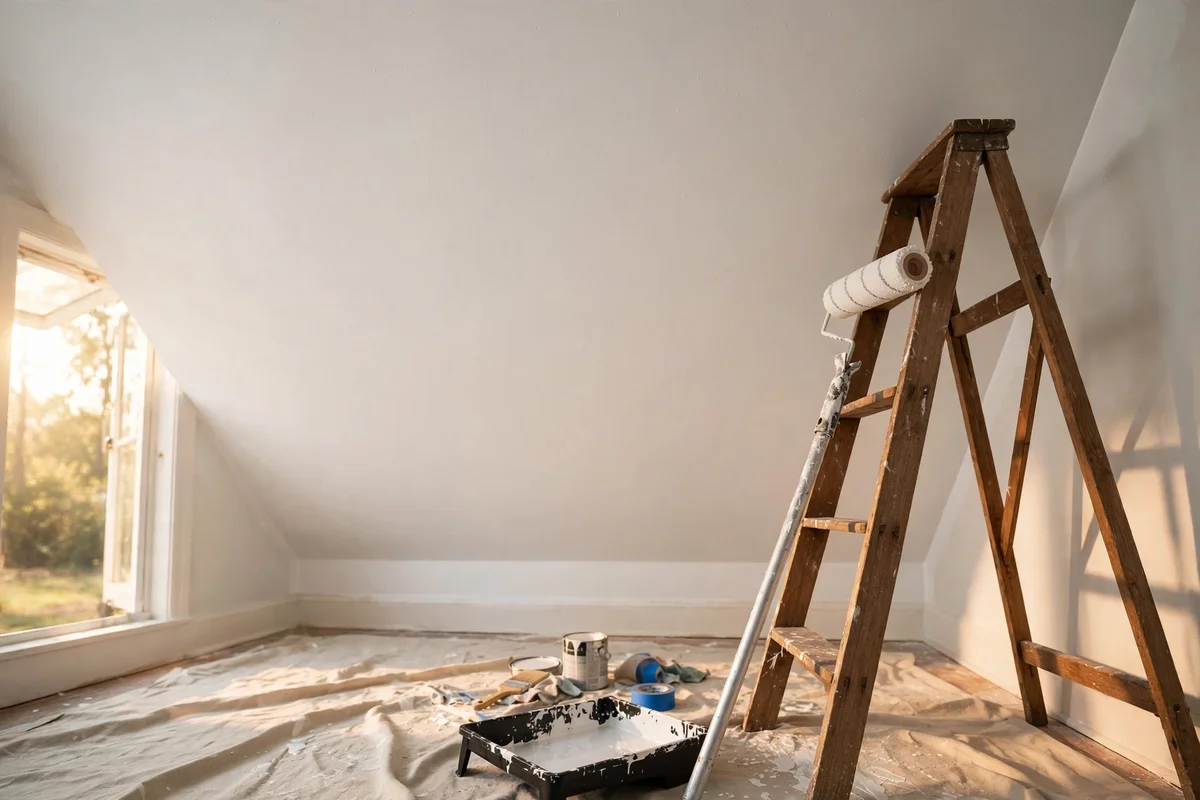
The ceiling is simply the floor area: room length times room width. A 4 by 3.5 metre bedroom has a 14 square metre ceiling. Ceiling paint covers about 10 square metres per litre, so one coat needs 1.4 litres and two coats need 2.8. Many painters buy a dedicated 5 litre tin of ceiling white for one average room. Calculate it separately because ceiling paint is cheaper than wall emulsion and you should not waste wall paint overhead.
Ceilings almost always need two coats, even in white, because the first coat flashes patchy under daylight. A textured or artex ceiling drinks more paint, so budget coverage at 8 square metres per litre there. Cut in the edges with a brush before rolling the main area to avoid lap marks. The mistake to avoid is rolling the ceiling with the same roller used for walls; a medium pile sleeve holds more paint and leaves a smoother overhead finish.
13. Price Doors, Skirting and Architrave From Trim Coverage
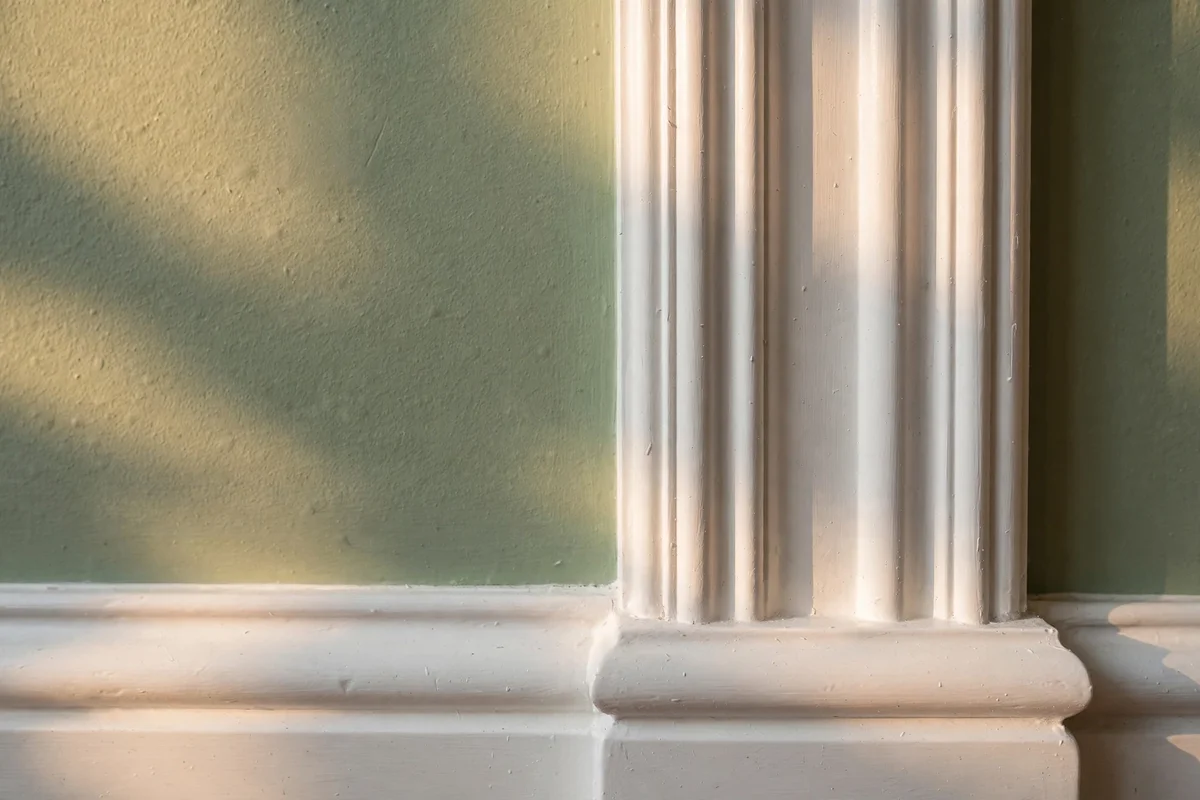
Trim means skirting boards, door architraves, window sills and the doors themselves, and it needs its own maths. Measure the total length of skirting and multiply by its height, usually 0.15 metres, for the area. A bedroom with 14 metres of skirting has about 2.1 square metres of skirting paint. Add architrave lengths at roughly 0.1 metres wide. Because trim paint costs more per litre, this separate sum stops you buying a big tin you will barely touch.
Count each door face at roughly 1.6 square metres for a standard door, both sides doubling it to 3.2. Add all trim areas together, double for two coats, then divide by 10 for the litres of eggshell or gloss. Most bedrooms need 1 to 2.5 litres of trim paint in total. The mistake to avoid is lumping trim into the wall paint order; trim paint has a different sheen and a higher price, so a combined number either wastes money or leaves the doors half painted.
14. Use Tester Pots to Preview Colour for Very Little Money
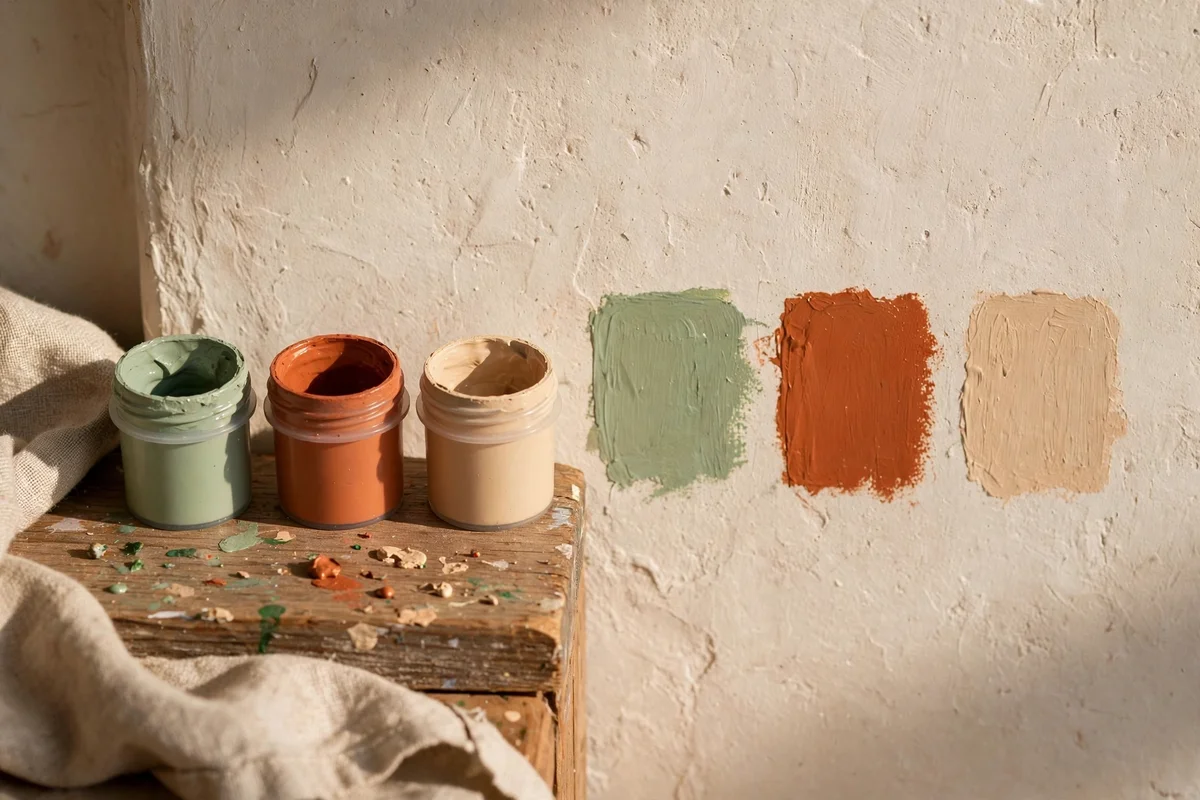
Tester pots hold about 75 millilitres and cost a fraction of a full tin, making them the cheapest insurance in decorating. Paint a patch at least 30 by 30 centimetres on each wall you plan to paint, since colour shifts with the light direction. Two coats of the tester show the true depth, because one thin coat lies to you. Leave the patch up for two full days so you see it in different lights.
Buy testers for your top two or three shades only, or the testing bill creeps toward the price of a tin. Paint testers on lining paper if the wall already wears a strong colour, because old paint distorts the sample. The mistake to avoid is testing on a tiny postage-stamp patch beside the tin lid; small patches and lid colours mislead, while a proper wall patch tells the truth. Three honest patches beat ten timid dabs every time.
15. Judge Every Colour in Daylight and Evening Light
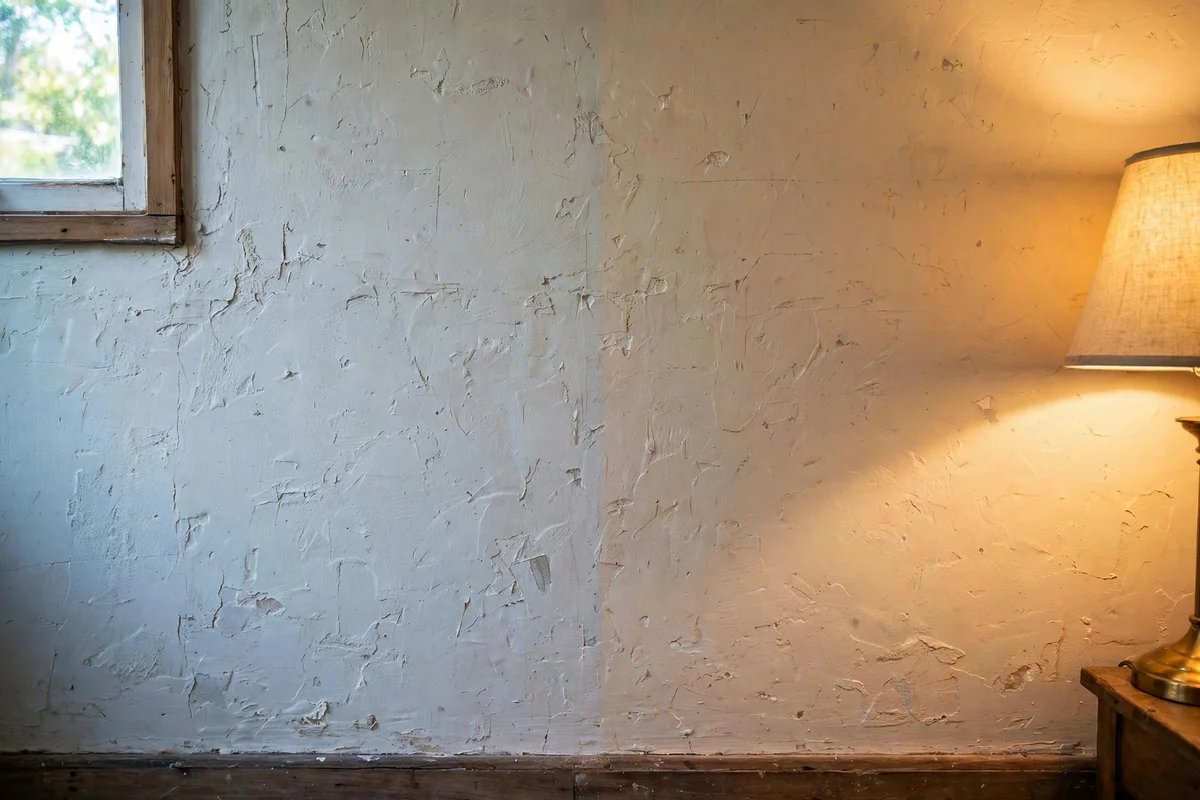
Every paint colour must be judged in natural daylight and again under evening lamps, because most shades swing warmer after dark. A calm grey that looks fresh at noon can turn flat and cold under cool white bulbs. Check your tester patches at midday, at sunset and once more with the room lights on. Warm 2700K bulbs flatter creams and heritage greens, while daylight bulbs keep blues honest. Choose the bulb temperature before the paint colour, since the light rewrites the wall.
North-facing rooms get cooler, bluer daylight, so warm-leaning colours balance them better than icy shades. South-facing rooms take stronger sun, which deepens rich colours and can make pale ones glare. The mistake to avoid is choosing a colour in the shop under fluorescent tubes and ordering tins the same day. Live with the tester for a full weekend first. Two light checks take minutes and prevent the most expensive decorating regret of all.
16. Buy a Five Percent Buffer and Nothing More
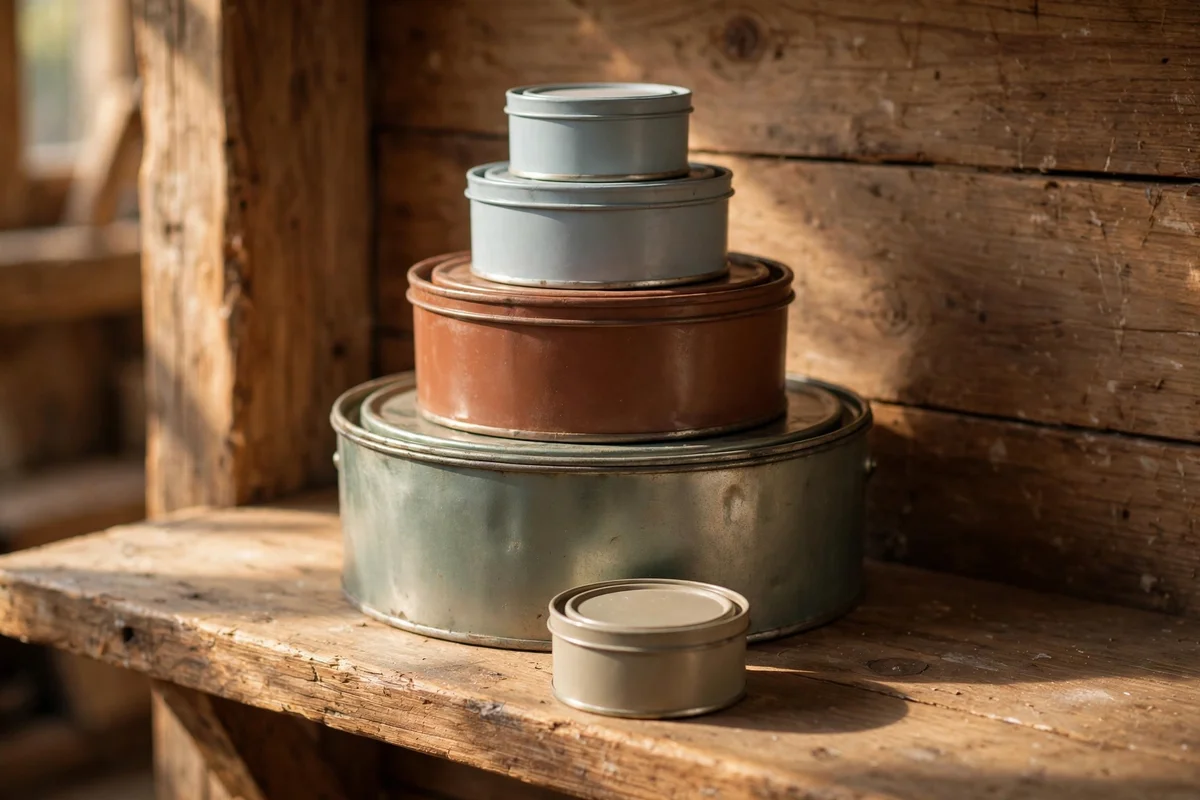
Add five percent to your final litre figure as a buffer for touch ups and small measuring errors. On a 6 litre order that means 6.3 litres, which rounds up to the next whole tin anyway. This margin covers roller absorption, paint left in the tray and the odd patch repair. Ten percent is too generous for most rooms and leaves tins sitting unopened. Five percent is the professional standard that keeps waste down without risking a shortfall.
Keep the buffer paint in a clearly labelled tin for future scuffs and nail holes. Write the room name, colour code and date on the lid with a marker so you can find it years later. The mistake to avoid is opening a fresh tin for every tiny touch up while half tins dry out unsealed. One opened tin, sealed well between uses, serves a room for years. Buy the buffer once, store it properly, and you may never buy that colour again.
17. A Worked Example for a Small Bedroom in Metres and Litres
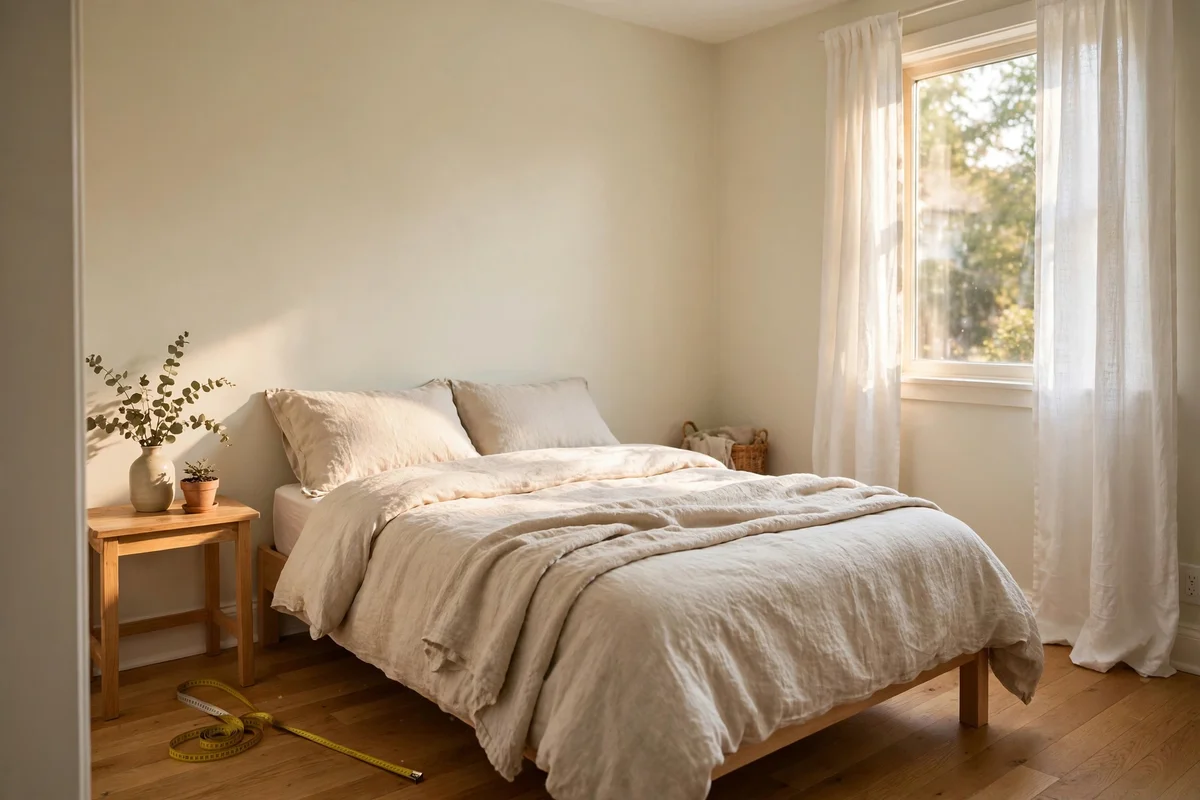
Take a small bedroom measuring 3.6 by 3 metres with a 2.5 metre ceiling. Add the wall lengths to get 13.2 metres, then multiply by the height for 33 square metres of gross wall. Subtract one standard door at 2 square metres and one window at 1.2 square metres, leaving 29.8 square metres of net wall. This single example shows the whole method in action, and every figure above took one tape measure and a calculator.
For two coats of emulsion at 10 square metres per litre, divide 29.8 by 10 and double it, which gives 5.96 litres. Add a five percent buffer to reach 6.26 litres, so buy three 2.5 litre tins for 7.5 litres total. The ceiling is 10.8 square metres, needing 2.16 litres for two coats, so one 2.5 litre tin of ceiling white covers it. Skirting and one door need about 1 litre of eggshell for two coats, so a 2.5 litre trim tin leaves a comfortable margin.
18. A Worked Example for a Living Room in Metres and Litres
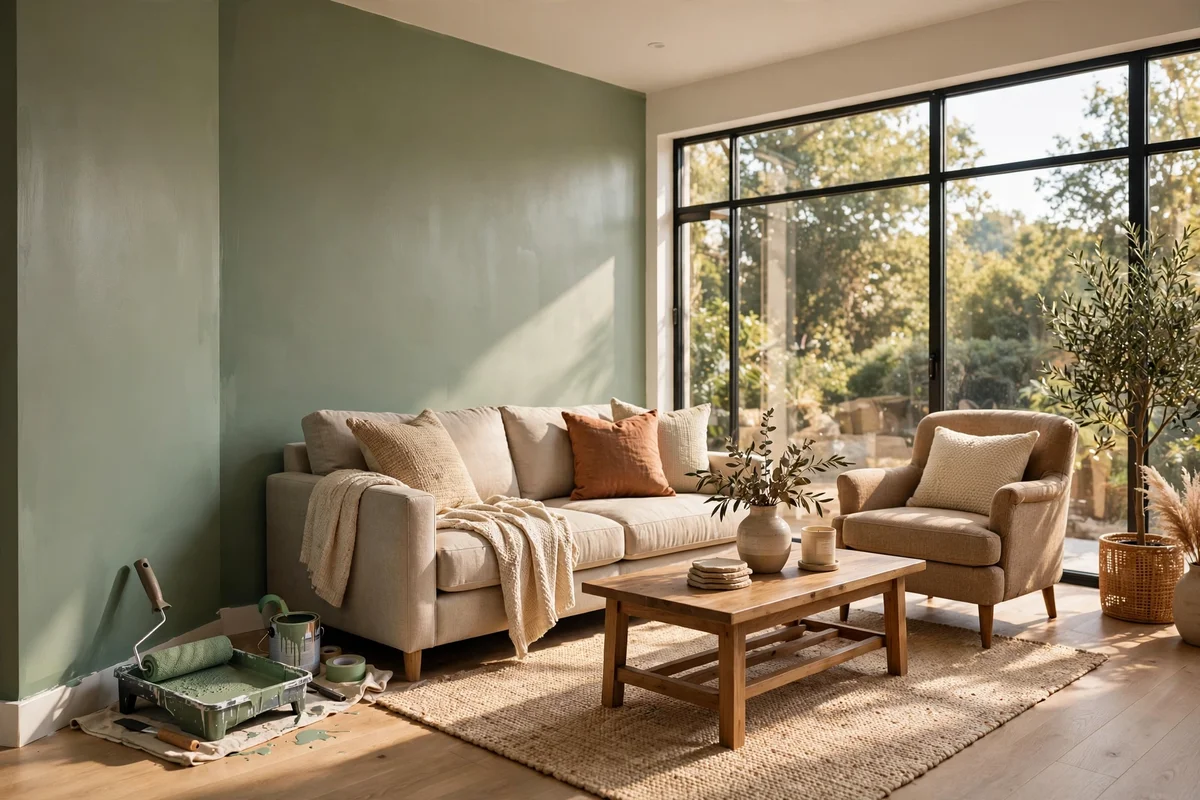
Take a living room of 5.5 by 4.2 metres with a 2.6 metre ceiling. Total wall length is 19.4 metres, giving 50.4 square metres of gross wall. Subtract two doors at 4 square metres and two windows, one picture window at 3.6 and one standard at 1.2, for 4.8 square metres of glass. The net wall area is 41.6 square metres. Larger rooms reward careful measuring because every extra metre of wall adds two coats of paint to the bill.
Two coats of emulsion at 10 square metres per litre need 8.32 litres, and a five percent buffer lifts that to 8.74 litres. Buy two 5 litre tins for 10 litres, keeping the spare for touch ups. The 23.1 square metre ceiling needs 4.62 litres for two coats, so one 5 litre tin of ceiling white does the job. Skirting and two doors need about 1.9 litres of trim paint, so a single 2.5 litre tin of eggshell covers everything with a little left over.
19. A Worked Example for a Hallway in Metres and Litres
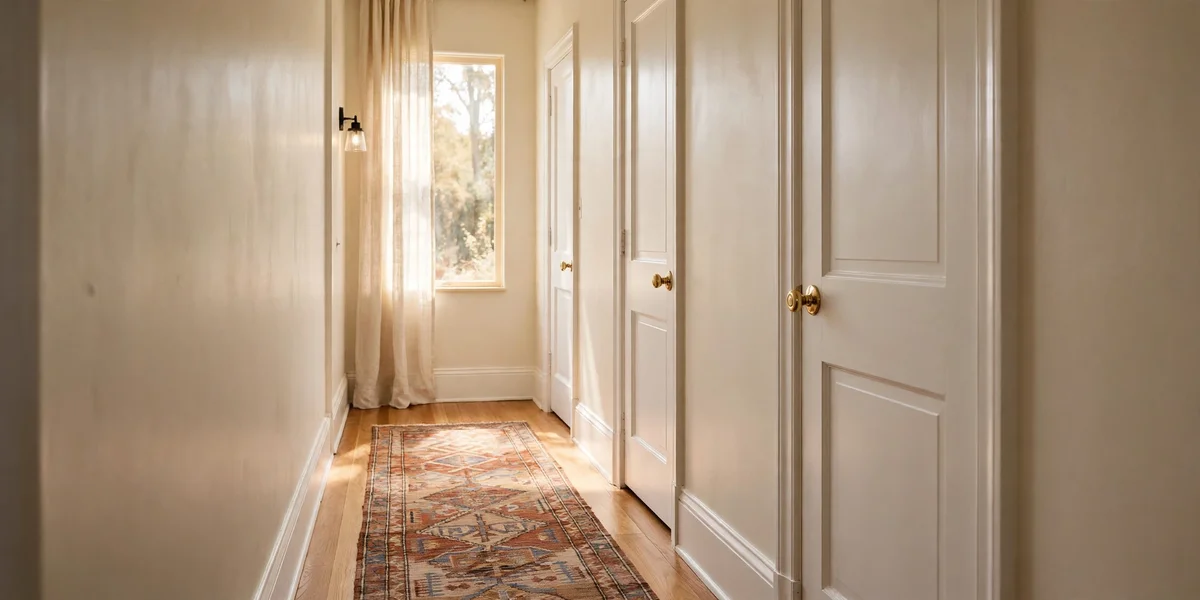
Take a hallway of 4.5 by 1.2 metres with a 2.4 metre ceiling. Wall length totals 11.4 metres, giving 27.4 square metres of gross wall. Subtract three doors at 6 square metres and no windows, leaving 21.4 square metres of net wall. Hallways have more doors per metre than any other room, so the door deduction matters more here. Measure each doorway properly because older homes often mix standard and narrow doors.
Two coats of durable emulsion need 4.28 litres, and a five percent buffer brings that to 4.5 litres. Buy two 2.5 litre tins for 5 litres total, since hallway walls take knocks and deserve extra for touch ups. The 5.4 square metre ceiling needs just 1.08 litres for two coats, so one 2.5 litre tin of ceiling white is plenty. Skirting plus three doors needs about 2.3 litres of hardwearing eggshell, so one 2.5 litre tin covers the trim.
20. Ventilate the Room on Every Painting Day
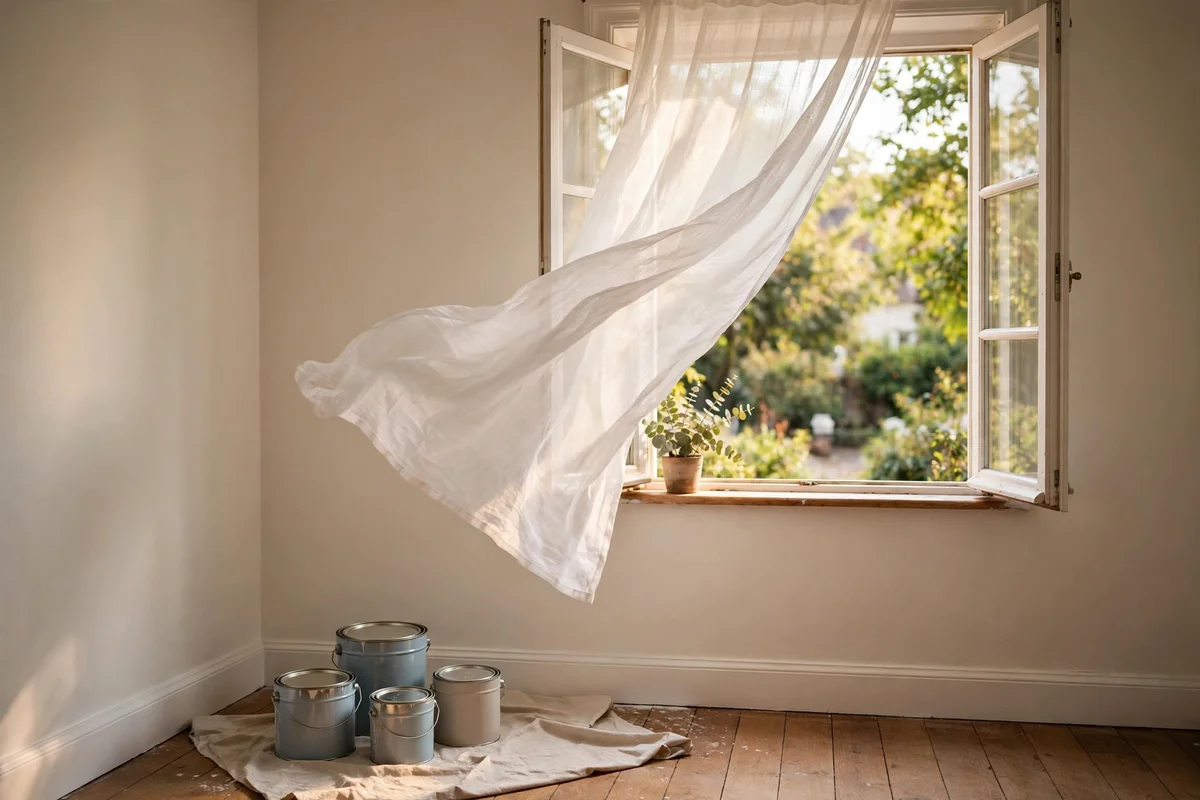
Open windows on opposite sides of the room to create a gentle cross breeze before you open the first tin. Good airflow carries solvent fumes and paint vapour out and brings fresh air in, which also helps the paint cure evenly. Water-based paints still release vapour as they dry, so ventilation matters even without strong smells. Keep the airflow steady for at least two hours after the last coat. A small fan placed in a doorway moves air without blowing dust onto wet paint.
Never sleep in a freshly painted room the same night, especially when using solvent-based gloss on trim. Let the room air for a full day before moving bedding and soft furnishings back in. Pregnant women, babies and anyone with asthma should stay out of the room until the paint smell has fully gone. The mistake to avoid is sealing every window to speed drying; still air slows curing and traps vapour at head height. Ventilation is free and it protects everyone.
21. Keep Paint Off Skin and Well Away From Children
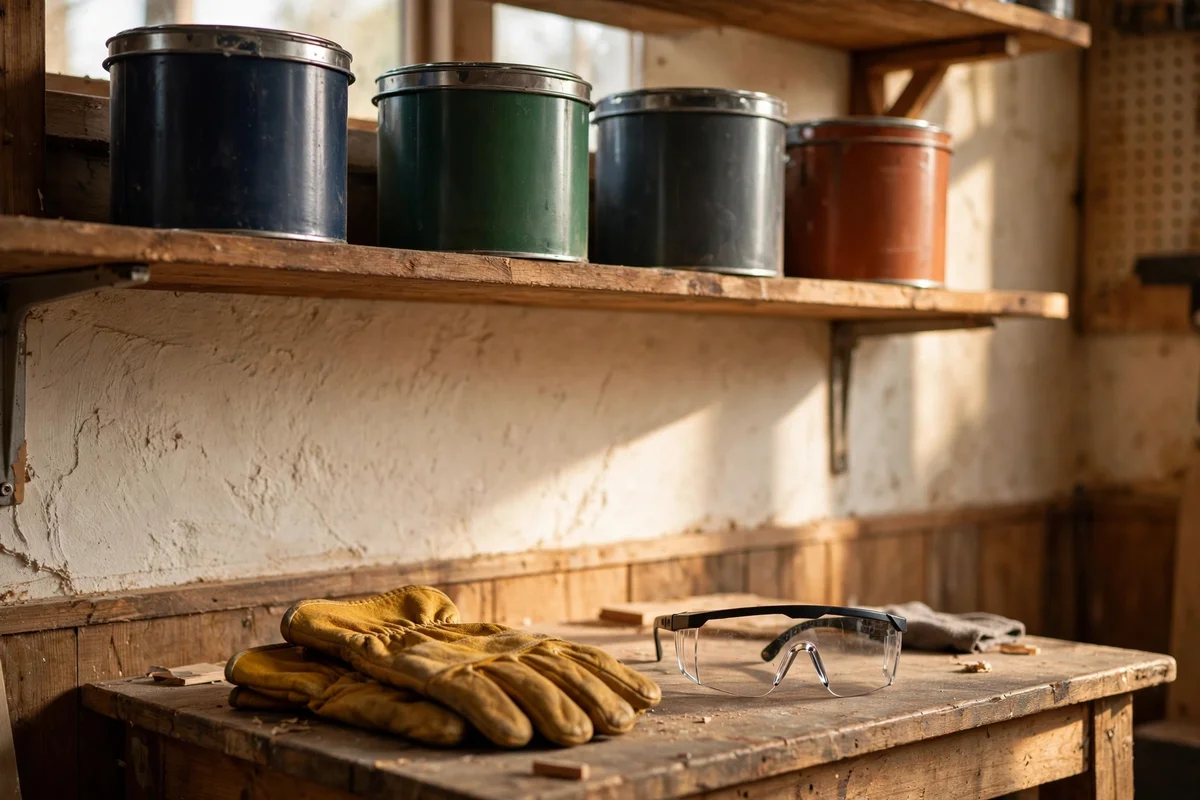
Wear old long sleeves, gloves and safety glasses so paint stays off skin and out of eyes. Water-based paint washes off with soap and warm water if you catch it quickly, while solvent paint needs white spirit and patience. Keep a damp cloth nearby for drips rather than wiping with fingers. Paint on skin can irritate sensitive areas, so wash hands before eating or touching your face. Barrier cream on exposed skin makes cleanup faster.
Keep children and pets out of the room while you paint and until everything is touch dry. Store open tins and brushes on a high surface during breaks, never on the floor where small hands can reach. Ladders and wet paint are a double hazard, so close the door when you step out. The mistake to avoid is letting children help with real paint; give them their own craft corner elsewhere instead. A closed door and a high shelf keep the whole family safe.
22. Store Leftover Tins Safely for Future Touch Ups
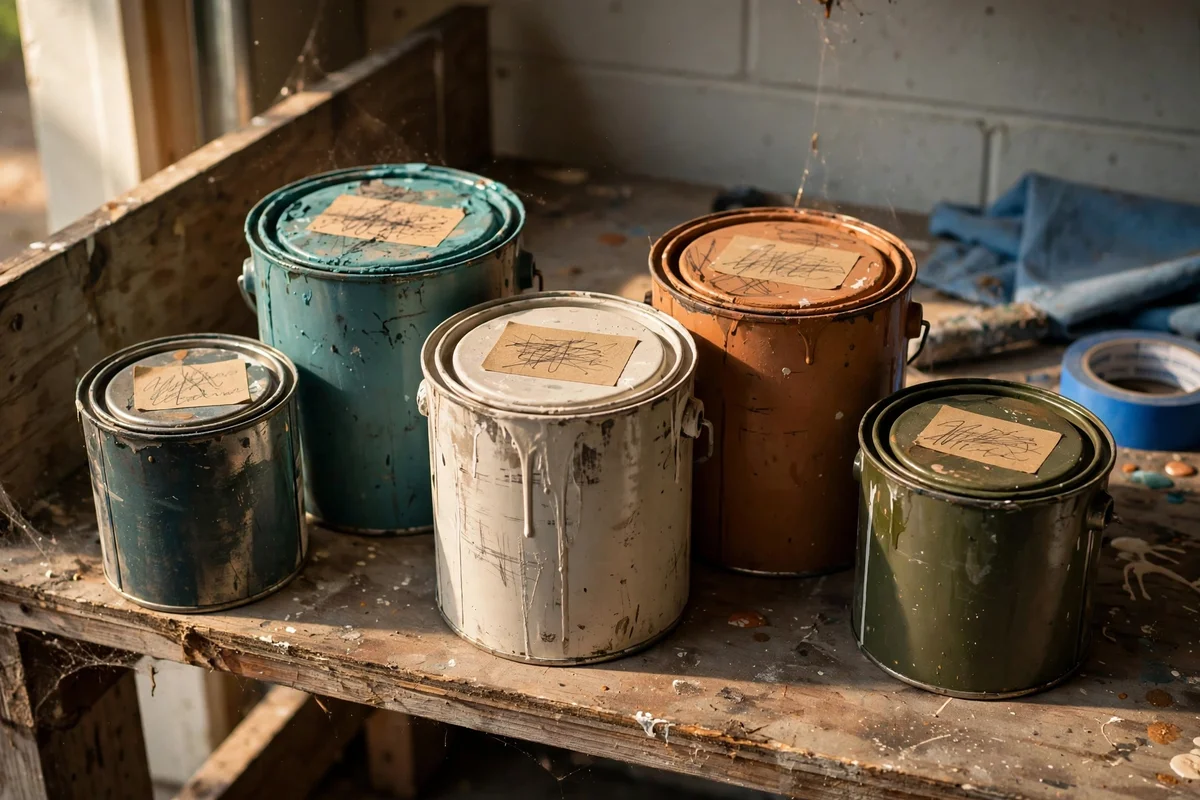
Pour leftover paint into a smaller airtight tin or jar so less air sits above the paint. Seal the lid firmly and wipe the rim clean so it closes properly every time. Write the room, colour name, code and date on the lid with a permanent marker. Store tins upright in a cool, dry place away from frost and direct sun. A garage shelf above flood level or an indoor cupboard works well.
Check stored paint before reuse by stirring well and brushing a test patch on card. If it smells sour or refuses to mix smooth, dispose of it at your local paint recycling point. Never pour paint down drains or into household bins. The mistake to avoid is keeping a dozen near-empty tins that all dry out; decant leftovers into one labelled tin per colour. Well stored paint stays usable for two to five years and saves you buying fresh tins for small repairs.
Accurate paint maths is really a series of small honest measurements added up with care. Measure the height once, add the wall lengths, subtract the doors and windows, and let the coverage rates do the rest. The worked examples show the method never changes, only the numbers. Once you have bought with this kind of precision, the painting itself feels calmer because the right tins are already waiting.
Your easiest first step this week is to measure one room and run the numbers on paper. Take the ceiling height, add the wall lengths, and see how close your old guesses were. Then buy tester pots for your favourite colours and watch them in daylight and lamplight. Good preparation turns painting from a stressful gamble into one of the most satisfying weekends a home can offer.
Frequently Asked Questions
How much paint do I need for a 4 by 4 metre bedroom?
About 6 to 7 litres of emulsion for two coats. Wall length totals 16 metres, times 2.5 metre height gives 40 square metres, minus a door and window leaves roughly 36.8, so two coats need 7.4 litres before a buffer. Buy three 2.5 litre tins and keep one sealed for touch ups. Add one 2.5 litre tin of ceiling white and one 2.5 litre tin of eggshell for the trim.
Does primer count as one of my two coats?
No, primer prepares the surface but never replaces a finish coat. Count it as a separate coat in your maths: one primer coat plus two topcoats is the standard for bare plaster or new wood. Thin the first coat on bare plaster with one part water to nine parts emulsion. On previously painted walls in good condition you can usually skip primer entirely.
How many square metres does one litre of paint cover?
About 10 square metres per litre for standard matt emulsion on a prepared wall. Eggshell manages 9 to 12, gloss roughly 10 to 14, and ceiling paint about 10. Always check the tin label because budget paints may manage only 8. For first coats over filler or bare plaster, plan on 7 or 8 to stay safe.
Should I include the ceiling in my wall paint calculation?
No, calculate the ceiling separately because it uses cheaper ceiling paint, not wall emulsion. Multiply room length by width for the ceiling area, then divide by 10 square metres per litre and double for two coats. Ceilings nearly always need two coats even in white. Keeping the sums apart stops you wasting expensive wall paint overhead.
How do I store leftover paint so it stays usable?
Decant leftovers into a smaller airtight tin so less air sits above the paint, then seal the lid firmly and wipe the rim clean. Write the room, colour code and date on the lid. Store upright in a cool, dry place away from frost. Well stored paint lasts two to five years. Never pour paint down drains; take spoiled paint to a recycling point.