Home Improvement
23 Apartment Storage Ideas That Make Tiny Homes Feel Roomy and Serene
By Anna Wells · · 19 min read
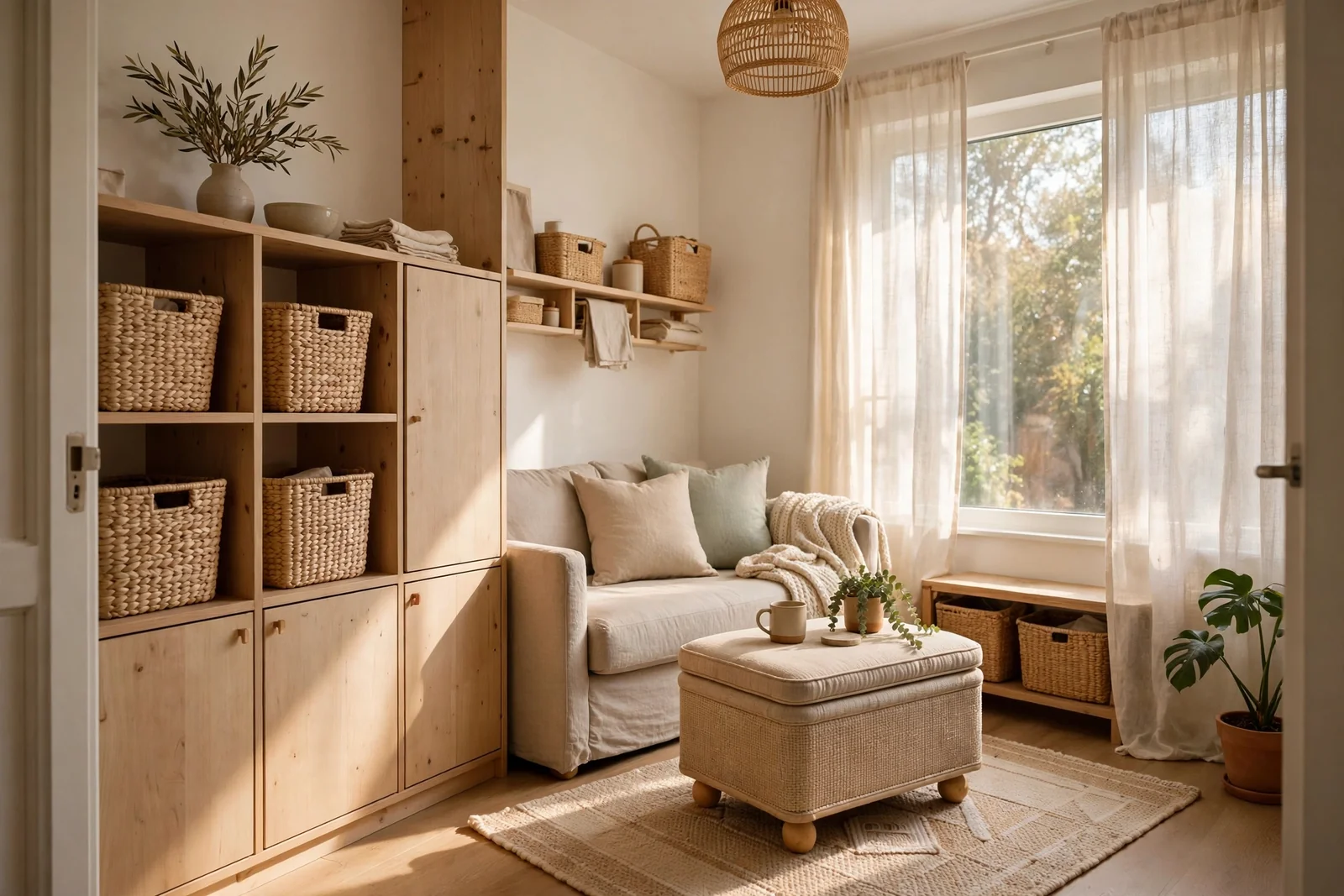
A small apartment feels roomy not when it holds less, but when everything it holds has a planned home: inside furniture, above doors, under beds and along walls that most people never think to use.
Living in a small apartment teaches you to look at a room differently. The floor plan may be fixed, but the walls rise to the ceiling, the bed hides a suitcase-sized hollow, and every door is a storage surface waiting to be used. The ideas below treat those forgotten volumes as the real square footage of a tiny home, and each one is chosen to make daily life calmer, not just tidier.
Work through them in the order that suits your rooms. Most need no drilling, several cost almost nothing, and all of them favour furniture and fittings that do two jobs at once. Measure your gaps before you buy anything, keep containers consistent in colour and material, and your apartment will start to feel serene rather than squeezed.
1. A Lidded Ottoman Where the Coffee Table Stood
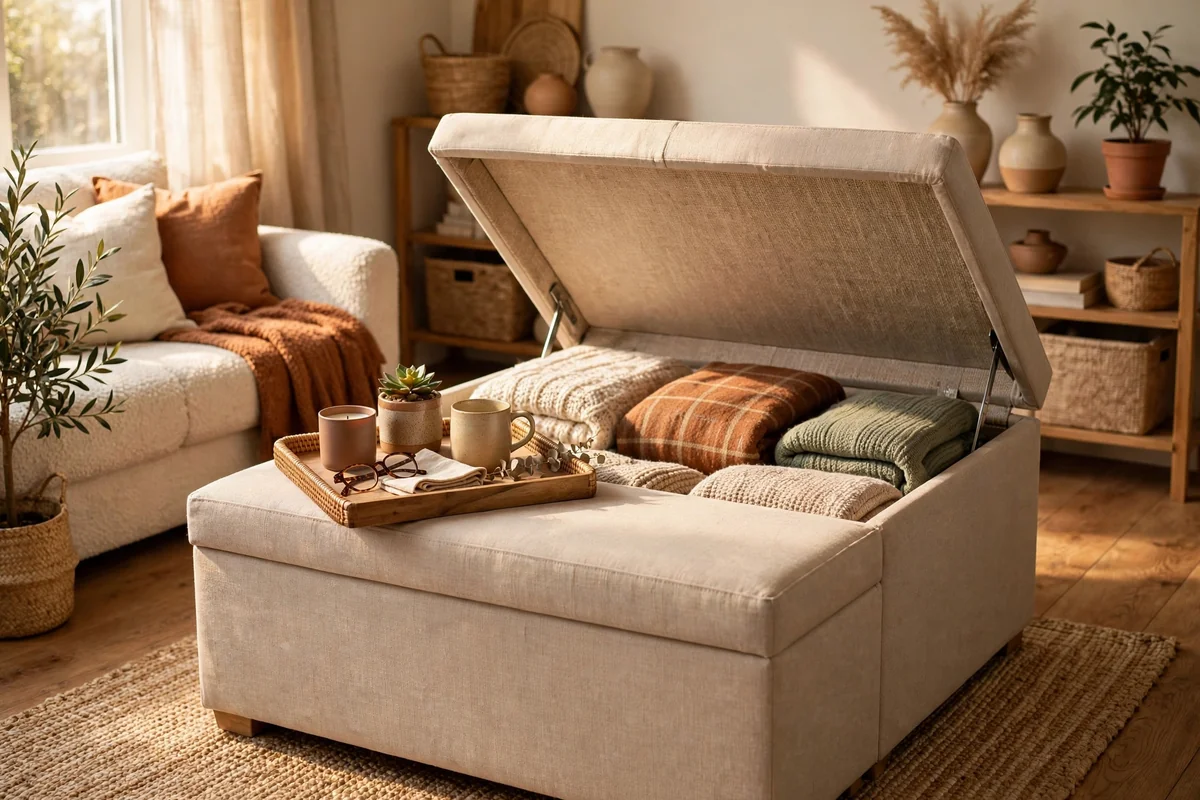
Swapping a solid coffee table for a lidded storage ottoman is the single easiest win in a small living room. The hollow inside swallows throws, board games, spare cushions and the remote collection that usually colonises the sofa. Choose one around 90 centimetres long with a firm top, and rest a wooden tray on it so drinks still have a stable landing place.
An ottoman also moonlights as extra seating when friends visit and as a footrest every evening, which no fixed table can do. Pick a washable fabric in a mid tone that hides everyday marks. Measure the walkway around it carefully, because a small room needs at least 40 centimetres of clear passage on the main route through.
2. Shelf Runs That Climb Right to the Ceiling Line
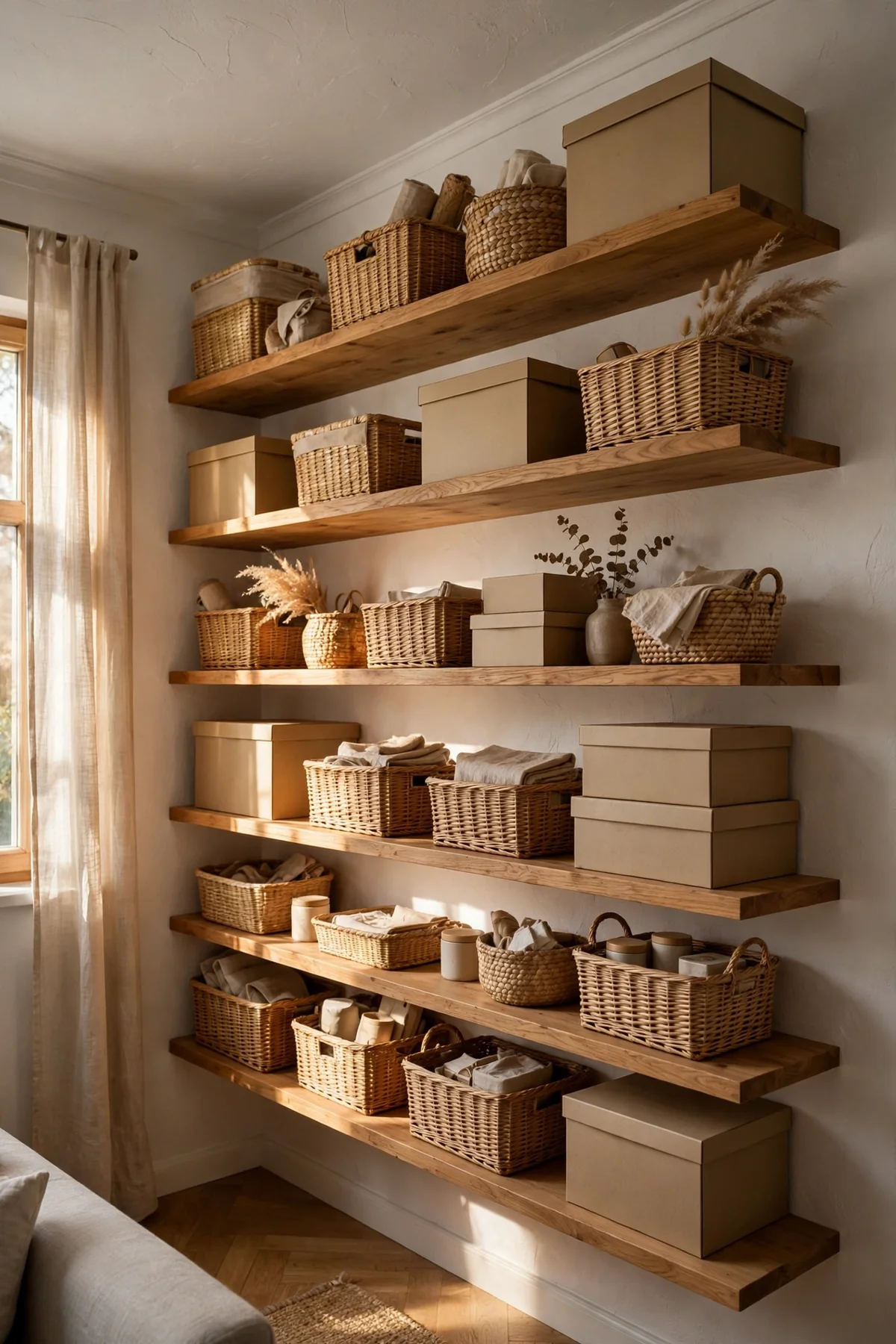
When floor space runs out, the only direction left is up. A run of floating shelves that continues past eye level to within 20 centimetres of the ceiling uses air that normally holds nothing but dust. Reserve the top shelves for baskets of seasonal decor, spare linens, keepsakes and books you love but rarely open.
Continuing the shelves high also draws the eye upward, which makes a low ceiling feel taller than it is. Keep every container in the run the same colour or material so the wall reads as one calm surface rather than a jumble. Use a sturdy step stool, store nothing heavy overhead, and fix shelves into studs or with proper wall anchors.
3. Rolling Low Bins That Vanish Beneath the Bed
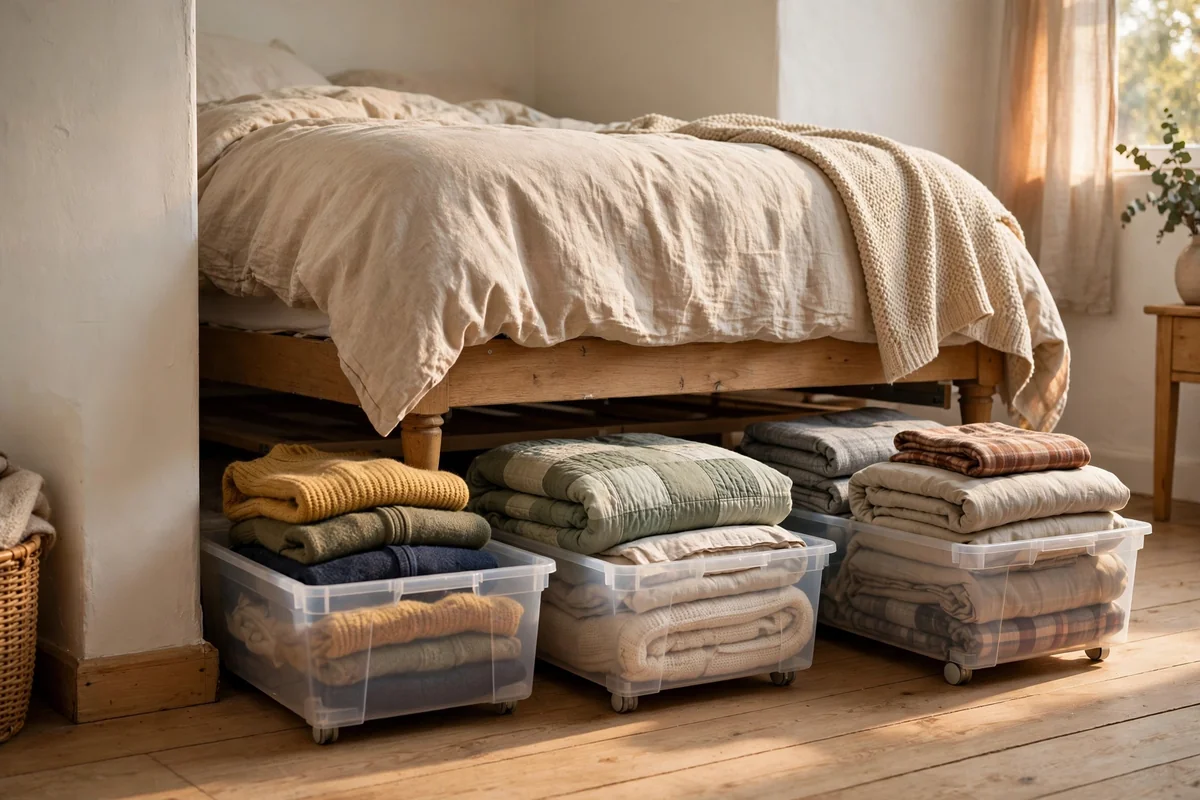
The space under a standard bed is roughly the size of a wardrobe laid on its back, yet in most apartments it collects only dust. Low rolling bins, ideally under 15 centimetres tall including wheels, turn it into a silent drawer for off-season clothes, spare bedding, shoes and gift wrap. Measure your frame clearance before ordering anything.
Lidded bins keep contents dust free, and a simple label on the short end tells you what is inside without a full excavation. Vacuum bags inside the bins double the clothing capacity. Keep one bin empty if you can: it becomes the overflow valve for guests, laundry day and seasonal changeovers, and stops clutter creeping back onto chairs.
4. Pocket Organisers Hung Behind Every Door
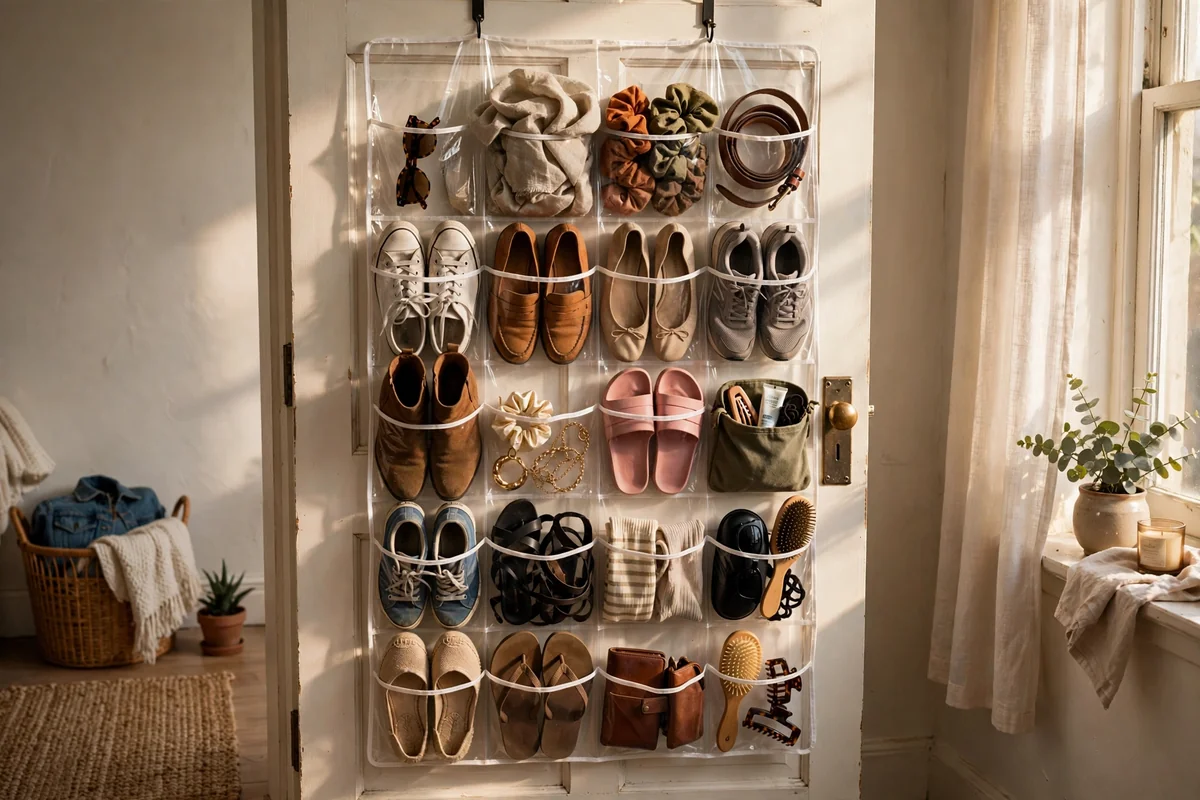
Every door in an apartment is a free storage wall that moves. A clear pocket organiser hung over the top adds twenty or more slots without touching a single screw. In the bathroom it holds toiletries and hair tools, in the bedroom shoes and accessories, and on a pantry door packets, snacks and spice refills.
Match the organiser to the room instead of forcing one style everywhere: slim wire racks suit heavy pantry items, soft fabric pockets suit shoes and accessories. Check that the door still closes fully with the hooks fitted, and pad the hooks with felt if they rattle. Behind-door storage keeps counters clear while everything stays visible at a glance.
5. Uniform Woven Baskets to Calm Open Shelving
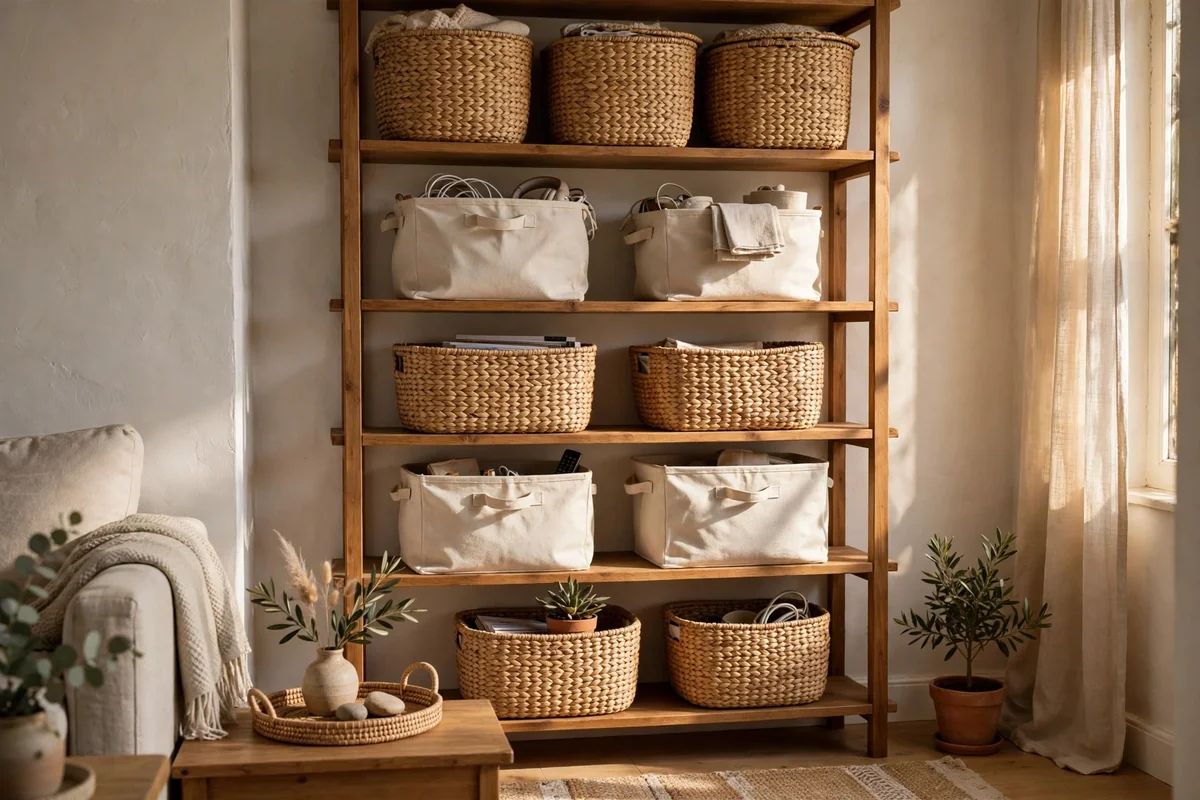
Open shelves fail when forty small objects shout at once. The fix is not fewer things but better containers: a row of matching woven baskets turns visual noise into one calm texture. Seagrass, water hyacinth and canvas all work, as long as every basket on the shelf shares a material and a similar tone.
Give each basket a single category, such as chargers, craft supplies, medicines or paperwork, and the shelf becomes a filing system you can tidy in minutes. Leave one or two shelves partly decorative with a plant and a stack of books so the unit feels styled, not warehousey. Handles matter more than looks: you will pull these down daily.
6. A Wall-Mounted Landing Strip by the Entrance
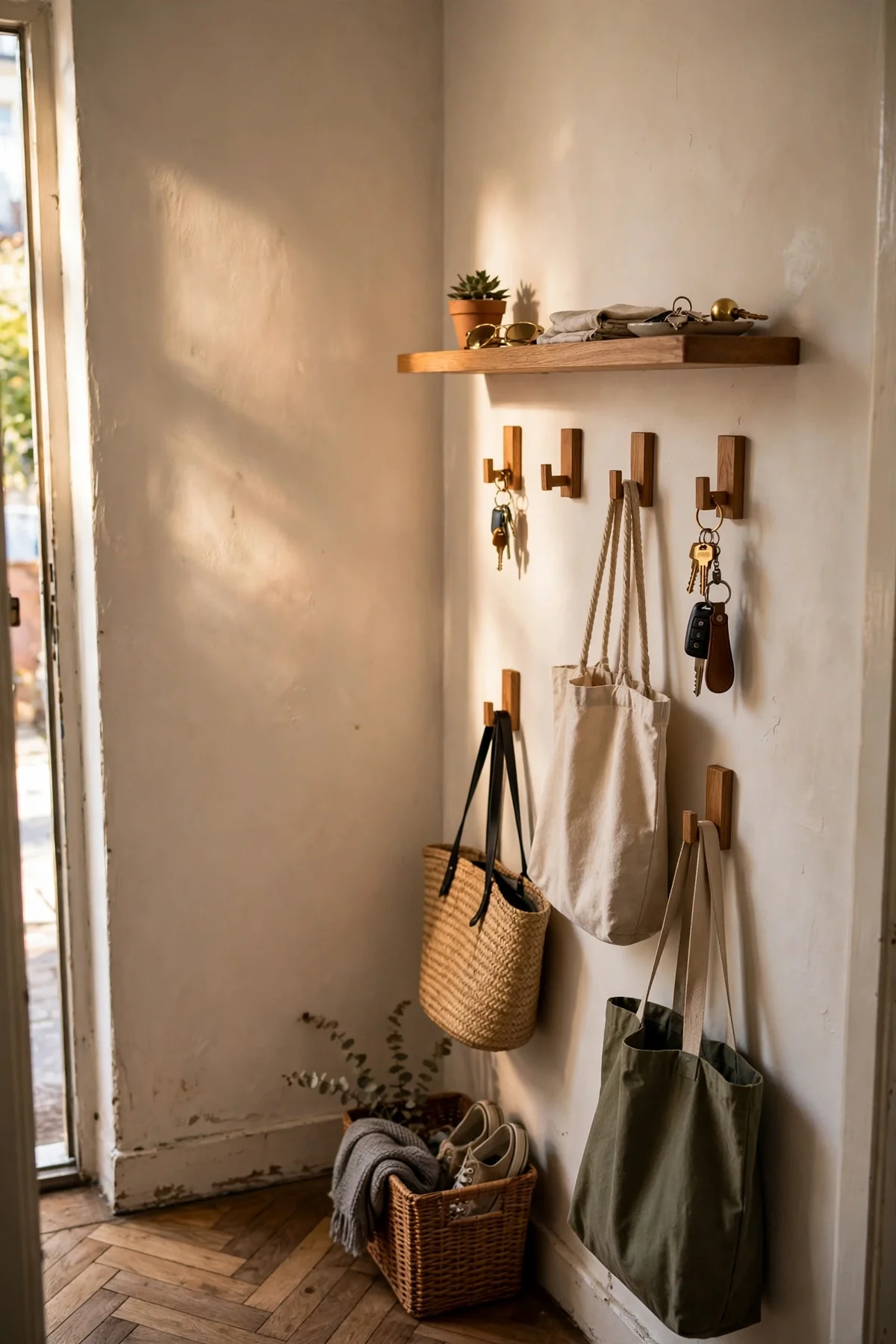
Even the smallest hallway benefits from a defined landing strip: one narrow floating shelf, a short row of hooks and a single basket. Keys, sunglasses, post and reusable bags land here instead of migrating across every surface in the home. A shelf just 15 centimetres deep holds the essentials without narrowing the passage.
Mount the shelf at about waist height with hooks above it for bags and hats, and keep the basket underneath for gloves and umbrellas. Because everything you need before leaving lives in one square metre, mornings run calmer and nothing important gets buried. If you rent, a leaning ladder shelf with hooks achieves the same result without fixings.
7. Racks and Bins Fixed Inside Cabinet Doors
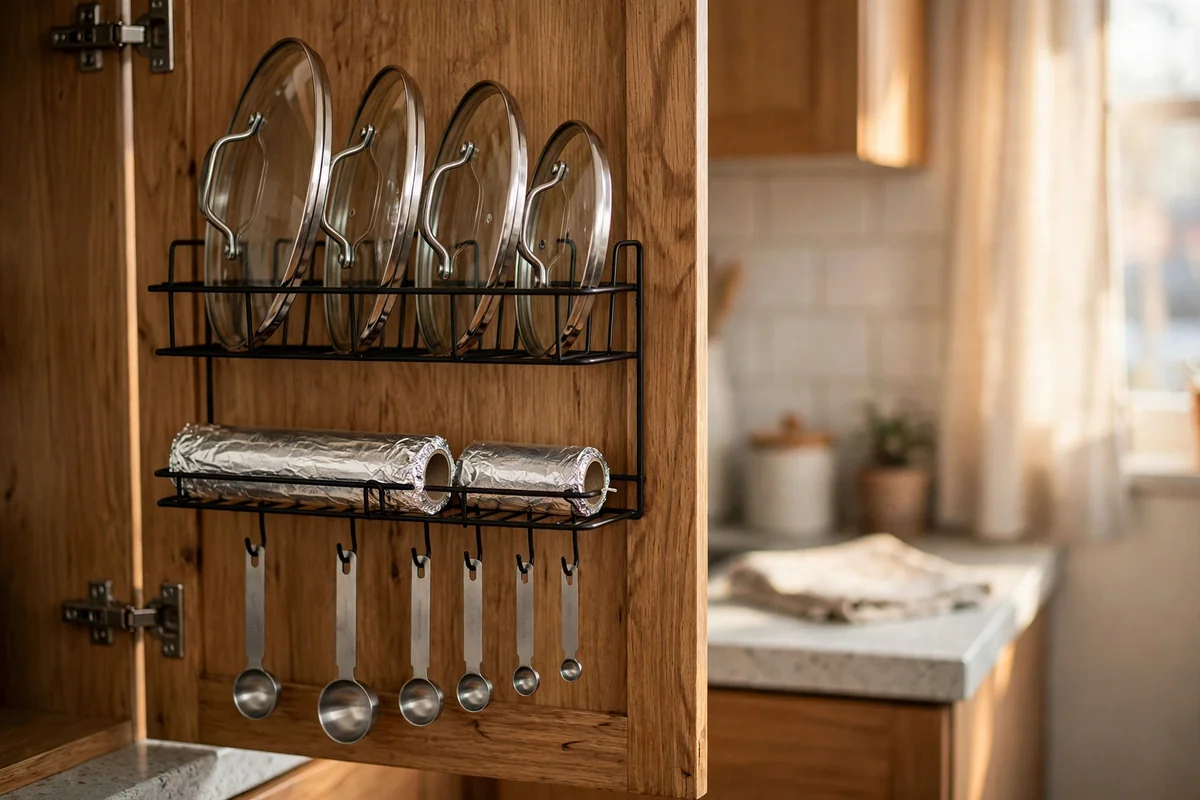
The inside face of every cabinet door is flat, empty and perfectly placed for the slim things that clutter drawers. A narrow rack holds pot lids upright, another takes foil and wrap rolls, and small bins corral measuring spoons and cleaning cloths. Suddenly the shelves inside are free for the bulky cookware that truly needs them.
Check the hinge clearance before fixing anything: the rack plus its contents must clear the shelf edge when the door swings shut. Adhesive and over-door versions suit renters, while screwed racks carry more weight. This trick works in bathroom vanities and wardrobe doors too, anywhere a door hides an underused flat surface.
8. Stacking Cubes That Reclaim Dead Closet Height
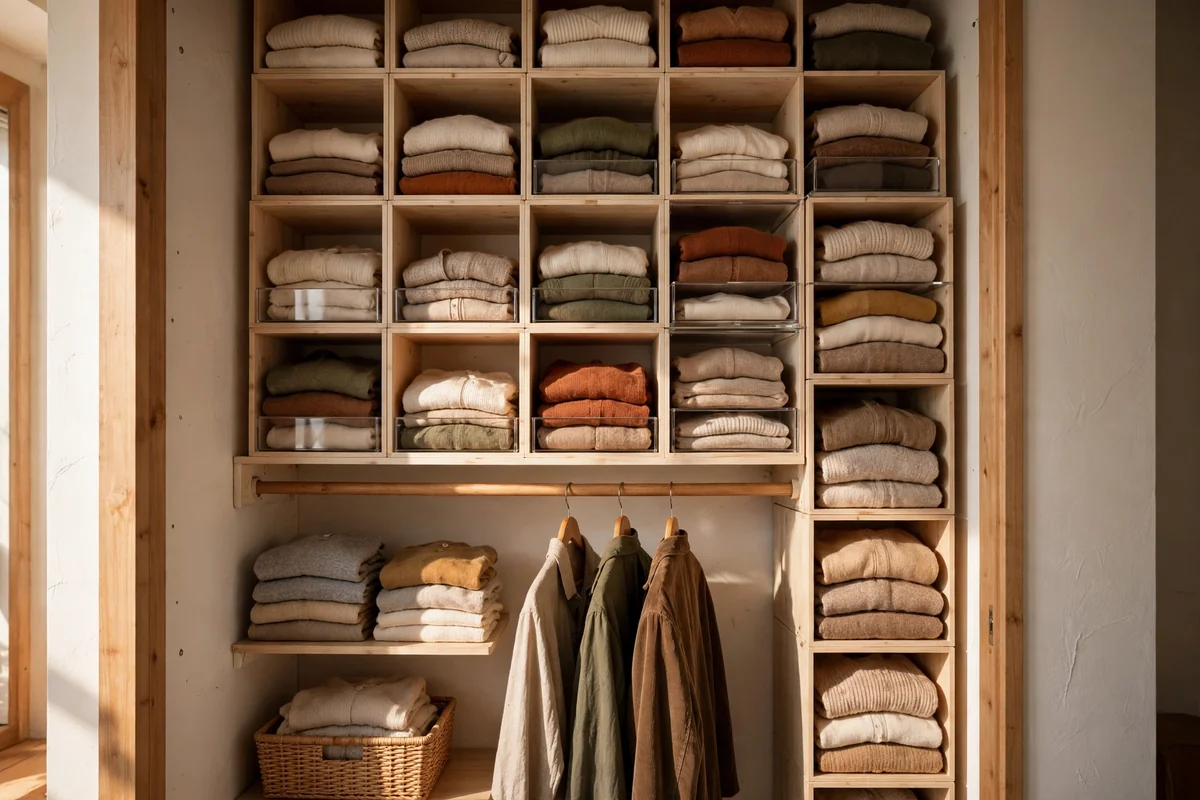
Most closets waste the metre above the hanging rail and the corners beside it. Stackable cubes and shelf risers divide that dead air into tidy levels for folded knits, handbags, towels and shoe boxes. Modular pieces can be rearranged when your wardrobe changes, which makes them a better long term buy than one fixed unit.
Build upward in the least accessed corner first, and keep everyday clothes at the front where they are easy to reach. Avoid stacking higher than you can safely lift a full box down. A small label on each cube saves the daily rummage, and matching cubes in white or pale wood keep the closet feeling light rather than crowded.
9. Drawer Nightstands That Swallow Bedtime Clutter
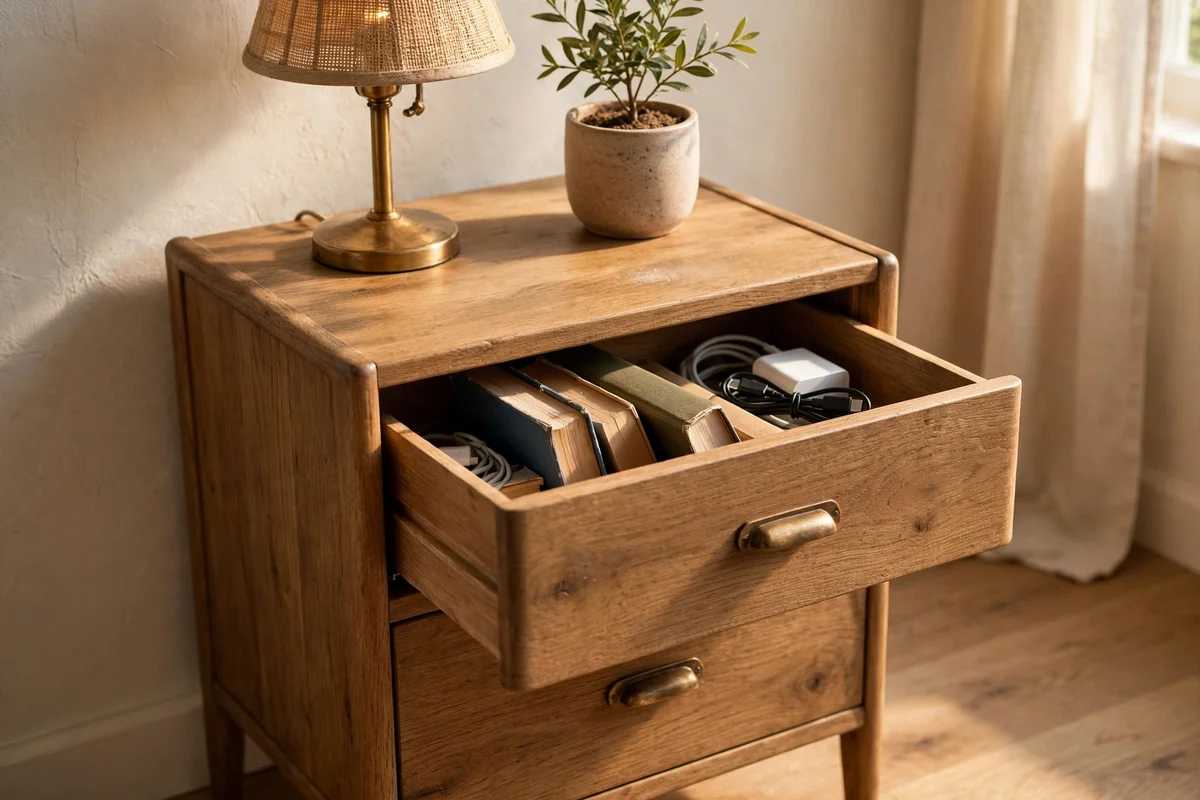
A nightstand that is only a tabletop wastes the most useful cubic foot in the bedroom. Choose one with two deep drawers or a small cupboard and it quietly absorbs books, chargers, journals, glasses and medicines, leaving the top free for a lamp, a plant and nothing else. The room feels calmer the moment the surface clears.
If replacing furniture is not an option, slide a lidded box or a shallow drawer unit beneath an open nightstand to gain the same hidden capacity. Keep a small cable hole or slot at the back of the drawer so devices can charge out of sight overnight. Limit the top strictly: three objects is a good rule.
10. A Slim Slide-Out Larder in the Kitchen Gap
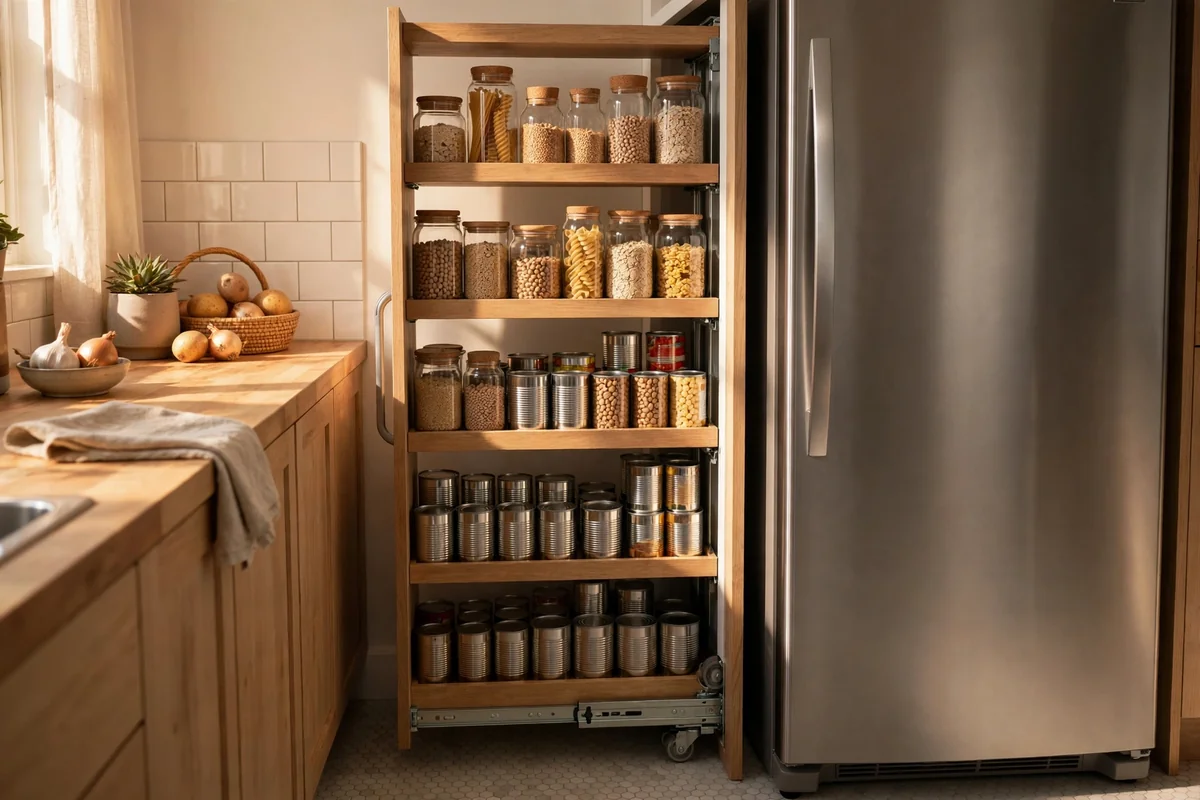
Many kitchens hide a useless gap of 10 to 15 centimetres beside the fridge or between cupboards. A slim slide-out larder on castors fits exactly there and holds a surprising pantry: cans, jars, spice refills, baking supplies and oils, all visible in one pull. In a small kitchen this can replace an entire wall cupboard.
Line each tier with non-slip matting so jars do not travel when the unit rolls, and group by category so cooking stays quick. Keep the heaviest items on the lowest tier for stability. If no gap exists, the same narrow unit works against any free wall section in a hallway just outside the kitchen door.
11. A Three-Tier Trolley That Parks Itself Anywhere
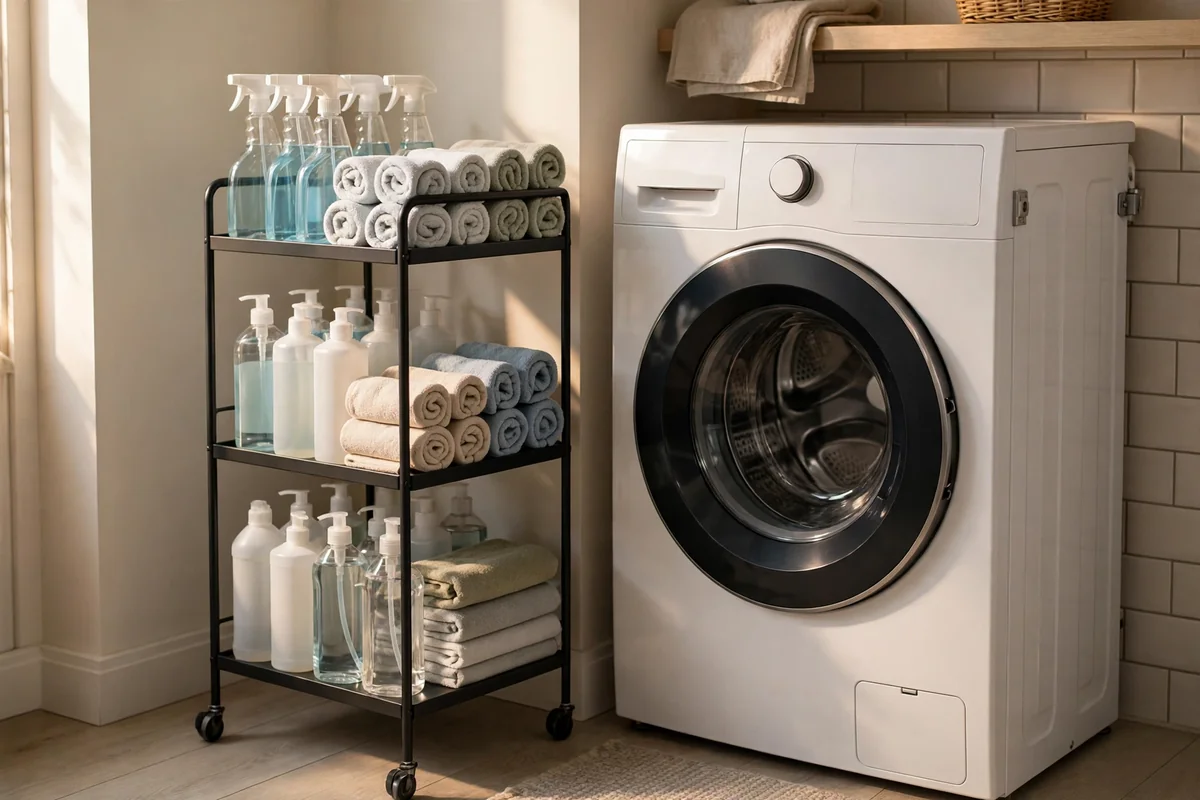
Cleaning supplies scattered across four cupboards waste both space and time. A slim three-tier rolling trolley gathers sprays, cloths, brushes and refills into one mobile station that parks beside the washing machine, inside a closet or in the fridge gap, then rolls to wherever the mess is. Cleaning becomes one trip instead of six.
Give each tier a job: liquids on top, cloths and brushes in the middle, paper goods and refills below. Choose a trolley no wider than 25 centimetres so it slips into standard gaps, and check that the wheels roll smoothly on your floor type. The same trolley design also works as a bathroom or craft station in tiny homes.
12. One Long Shelf Above the Door Frame
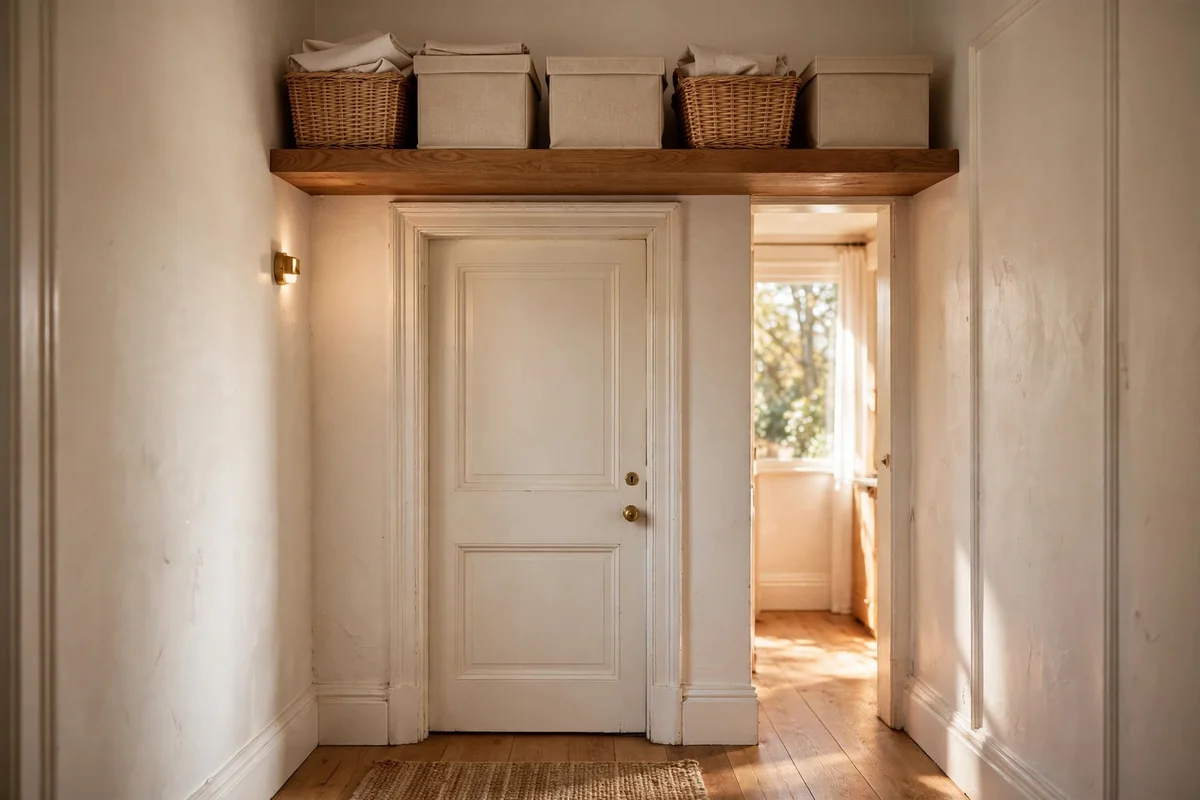
The strip of wall above an interior door is pure dead space, and one sturdy shelf there adds a metre of storage without touching the room’s footprint. It suits baskets of seasonal items, spare books, decorative boxes and anything you want kept but not seen daily. Hallway and bathroom doors are usually the most rewarding spots.
Fix the shelf into studs or use heavy duty anchors, because a loaded shelf above a walkway must be beyond doubt. Keep the styling restrained with matching containers so the eye passes over it calmly. Avoid storing anything you need weekly up there; the step stool trip should be a rare, planned event, not a daily chore.
13. Nesting Side Tables That Tuck Into One Footprint
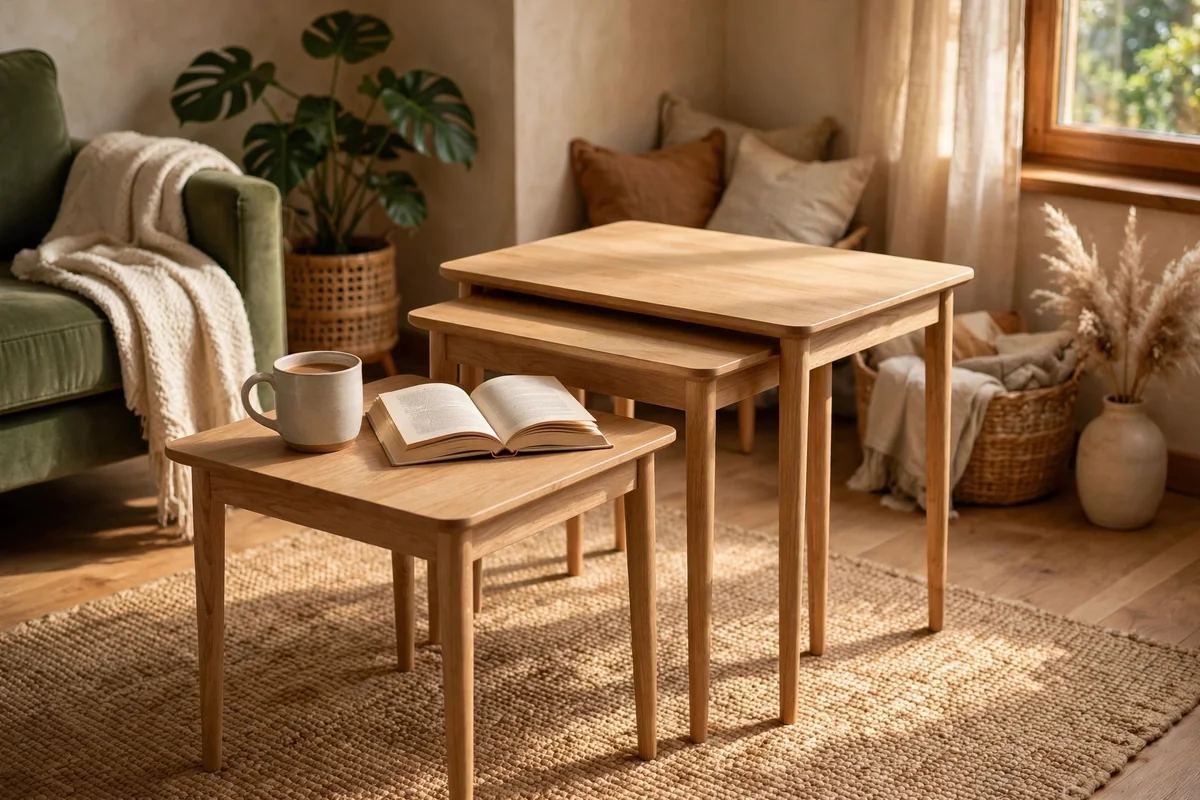
A set of nesting tables gives a small living room flexible surfaces without a permanent crowd. Tucked together they occupy one footprint; pulled apart they serve drinks beside the sofa, hold a laptop, or give guests somewhere to set a plate. Some sets add a low shelf or drawer, which quietly stores remotes, coasters and notebooks.
Choose tables whose legs slide easily and whose heights step by about 5 centimetres so they nest smoothly. Solid wood or metal frames survive years of daily shuffling better than thin flat-pack boards. When not in use, style the largest table alone with a plant and leave the others nested, so the room always looks composed.
14. Spring Dividers That Give Every Drawer Zones
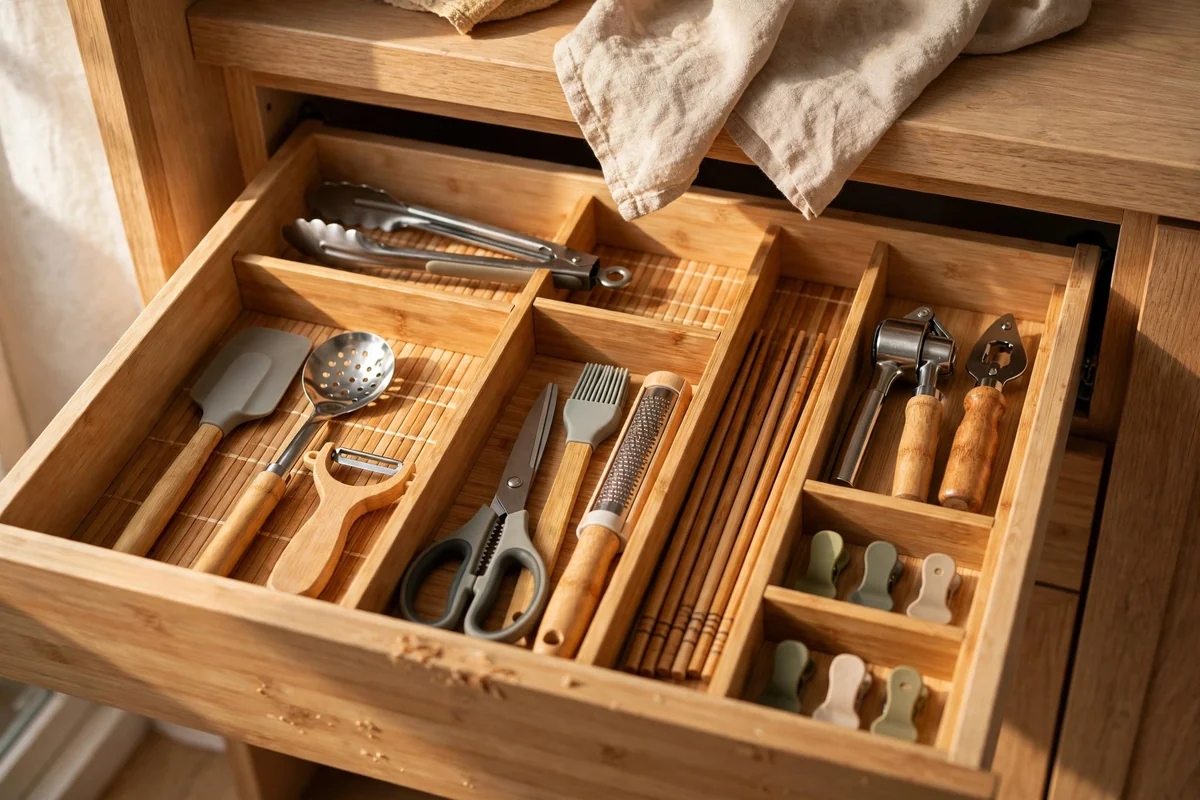
A drawer without dividers is a soup: everything slides into one mixed pile and half the volume goes unused. Adjustable spring dividers or bamboo inserts split kitchen, bathroom and dresser drawers into zones, so utensils, toiletries, socks and stationery each hold their own territory. The same drawer suddenly fits more, and finding things takes seconds.
Measure drawer depth and height before buying, because dividers that are too tall jam the drawer shut. Start with the kitchen junk drawer and the cutlery drawer, where the transformation is most dramatic. The deeper benefit is maintenance: when every item has a bordered home, drawers stay tidy on their own instead of needing a monthly rescue.
15. A Lidded Cable Box as a Hidden Charging Dock
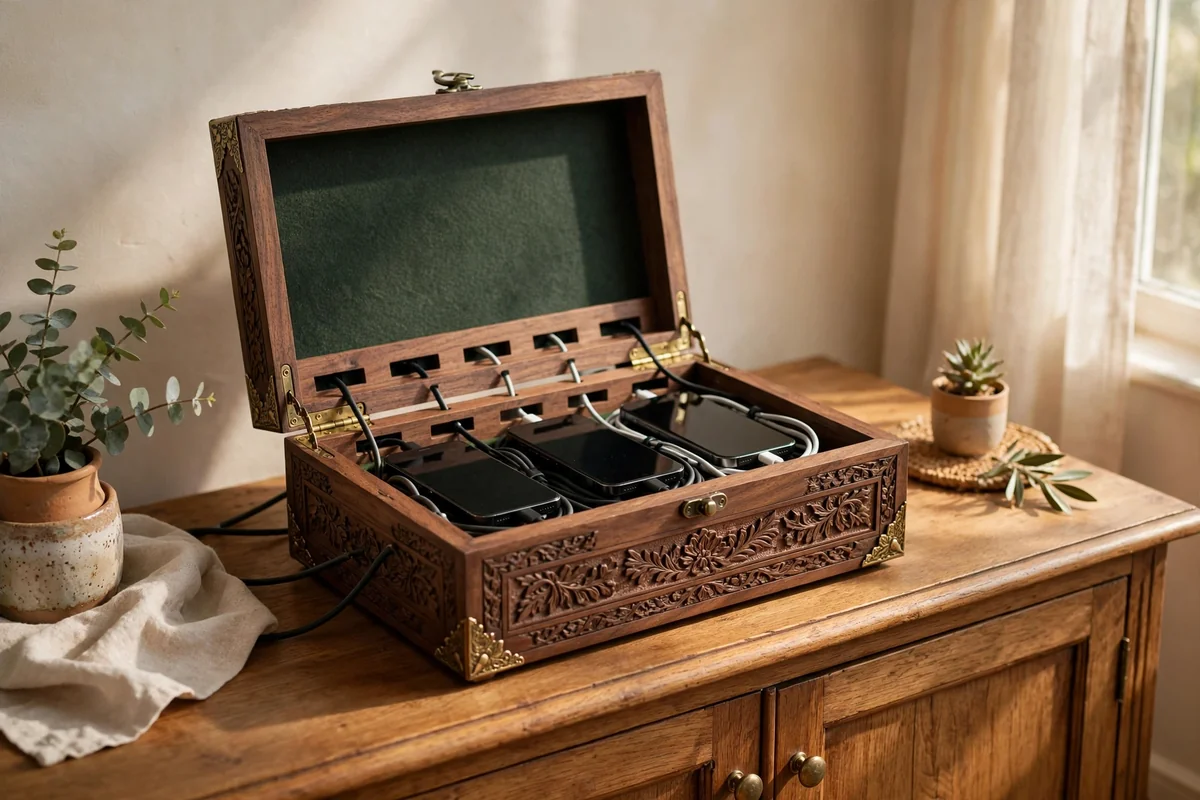
Charging cables snaking across a room make even a tidy apartment look restless. A lidded cable box, or a small cabinet with discreet slots, hides the power strip and bricks while phones, tablets and watches charge inside or on top. One dedicated dock also ends the daily hunt for a missing charger.
Choose a box with ventilation or an open back, because power supplies warm up in use, and never coil cables tightly inside. A wooden or woven box blends with furniture better than plastic. Place the dock where everyone naturally drops their devices, such as the hallway console or the living room sideboard, and the habit will stick.
16. Flat Trays of Seasonal Pieces Under the Sofa
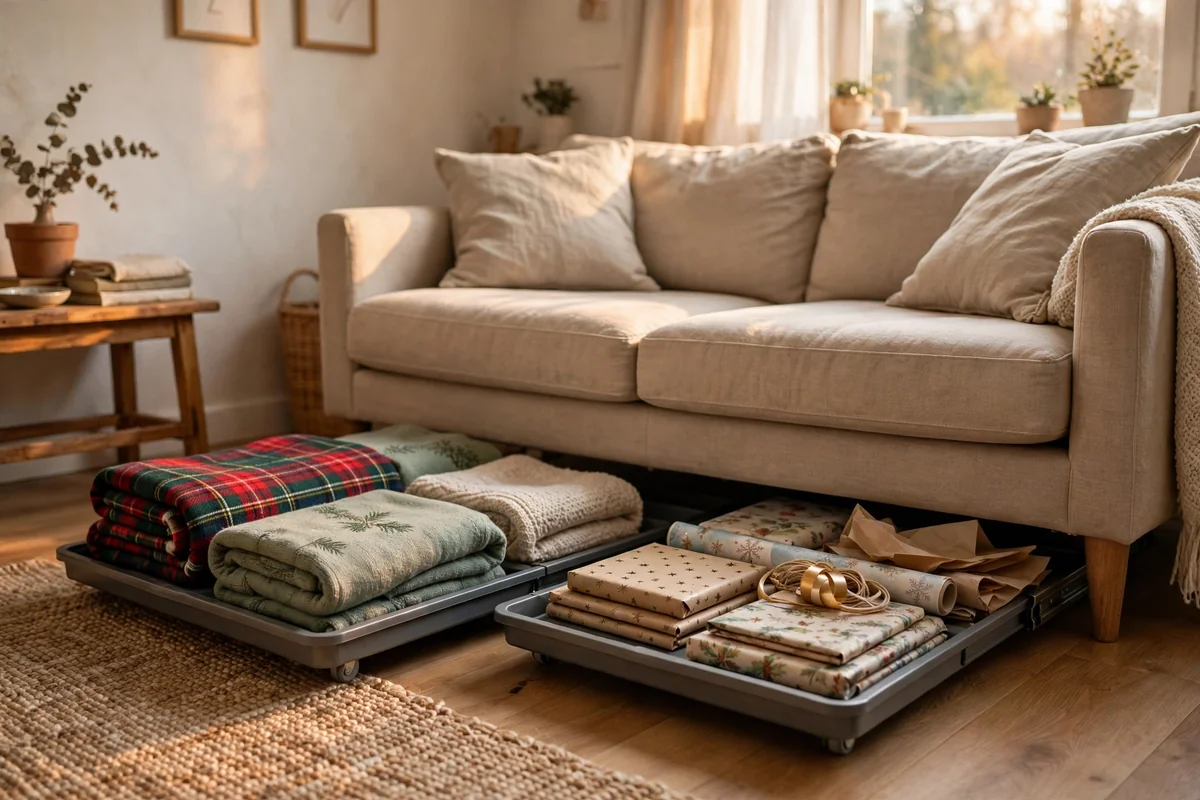
Most sofas stand on legs with 8 to 12 centimetres of clearance, and that shallow layer is ideal for flat trays of things you need only a few times a year: seasonal decorations, spare blankets, scarves, gift wrap and board game expansions. Low lidded trays or wheeled boards slide in and out without scratching the floor.
Measure the clearance at the lowest point of the frame before buying trays, because sofa skirts and support bars often reduce it. Label each tray on the short end facing out. Keeping seasonal storage here frees the closet for clothes you actually wear, and the living room gains storage nobody will ever notice.
17. A Painted Peg Rail Wall for Tools and Totes
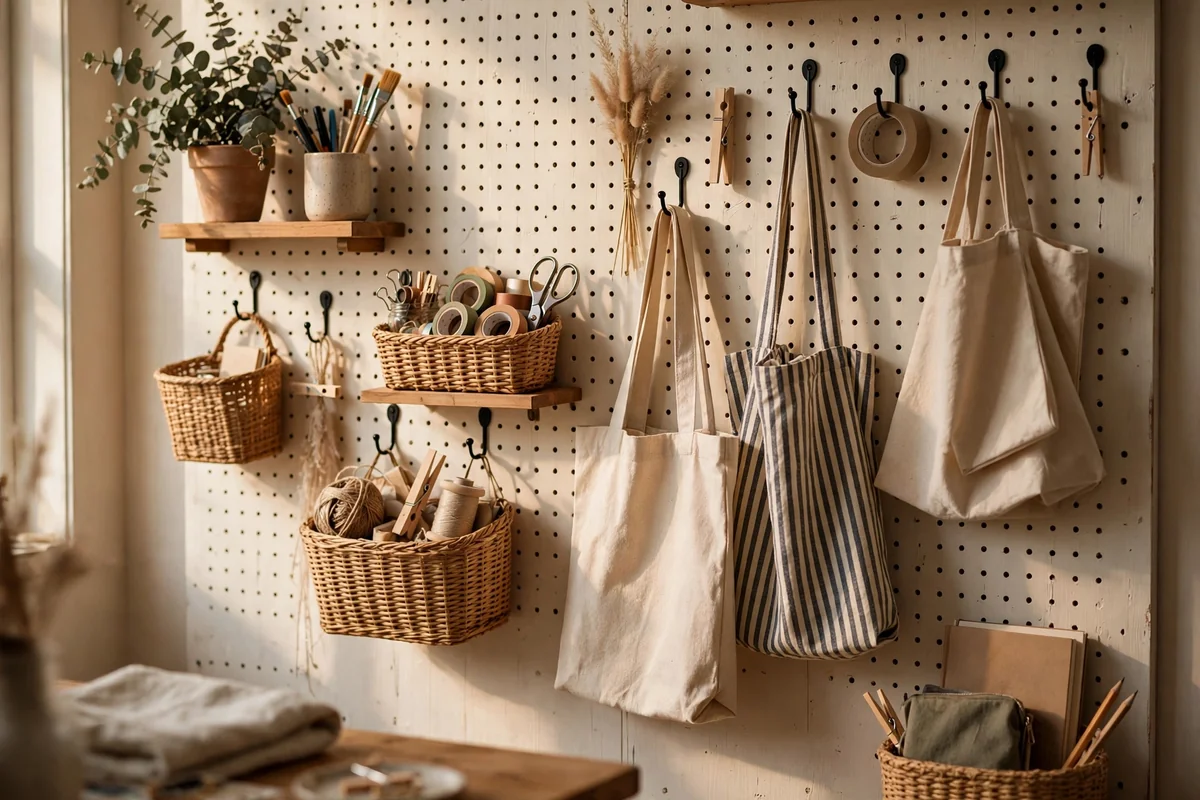
A pegboard wall turns one flat surface into storage you can rearrange forever without new holes. Hooks, small shelves, baskets and rails click into the holes for kitchen tools, craft supplies, office kit or entryway bags. Painted in the wall colour or a soft contrasting tone, it looks like decor rather than workshop equipment.
Start with a panel around 90 by 60 centimetres and live with it for a month before expanding. Wooden boards feel warmer than metal in living areas. The discipline is editing: a peg wall shows everything it holds, so keep the palette tight and leave some holes empty, or the wall becomes the clutter it was meant to cure.
18. Tiered Corner Shelving in the Forgotten Angle
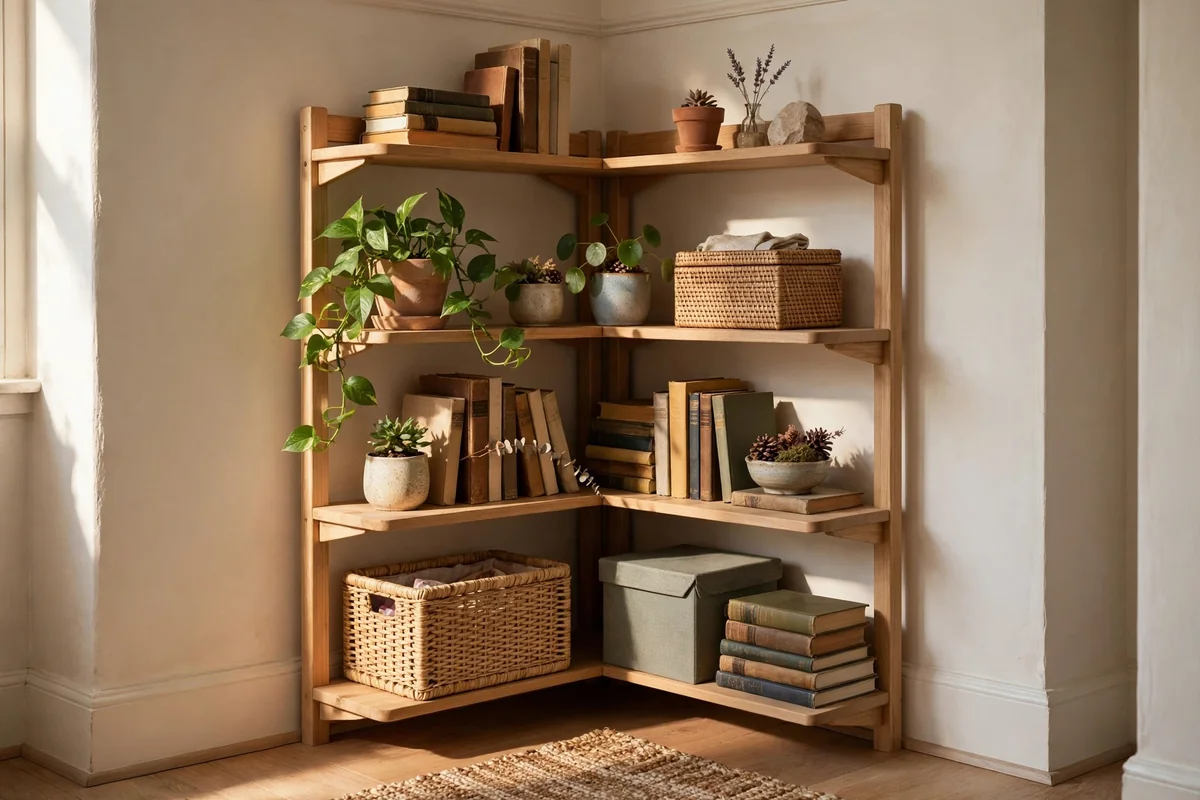
Corners are where small rooms quietly waste space, because standard furniture is square and rooms are not. A tiered corner shelf, ladder shelf or triangular cabinet claims that angle for books, plants, baskets and pretty storage boxes. Even a modest unit with four tiers can replace a bulky bookcase elsewhere in the room.
Distribute corner storage around the apartment rather than loading one wall, and traffic will flow better because furniture follows the room’s shape. Keep the heaviest items on the lowest tier. A corner beside the sofa suits reading things, a kitchen corner suits jars and cookbooks, and a bedroom corner suits folded linens in baskets.
19. Adhesive Hooks Lining the Inside of Cupboards
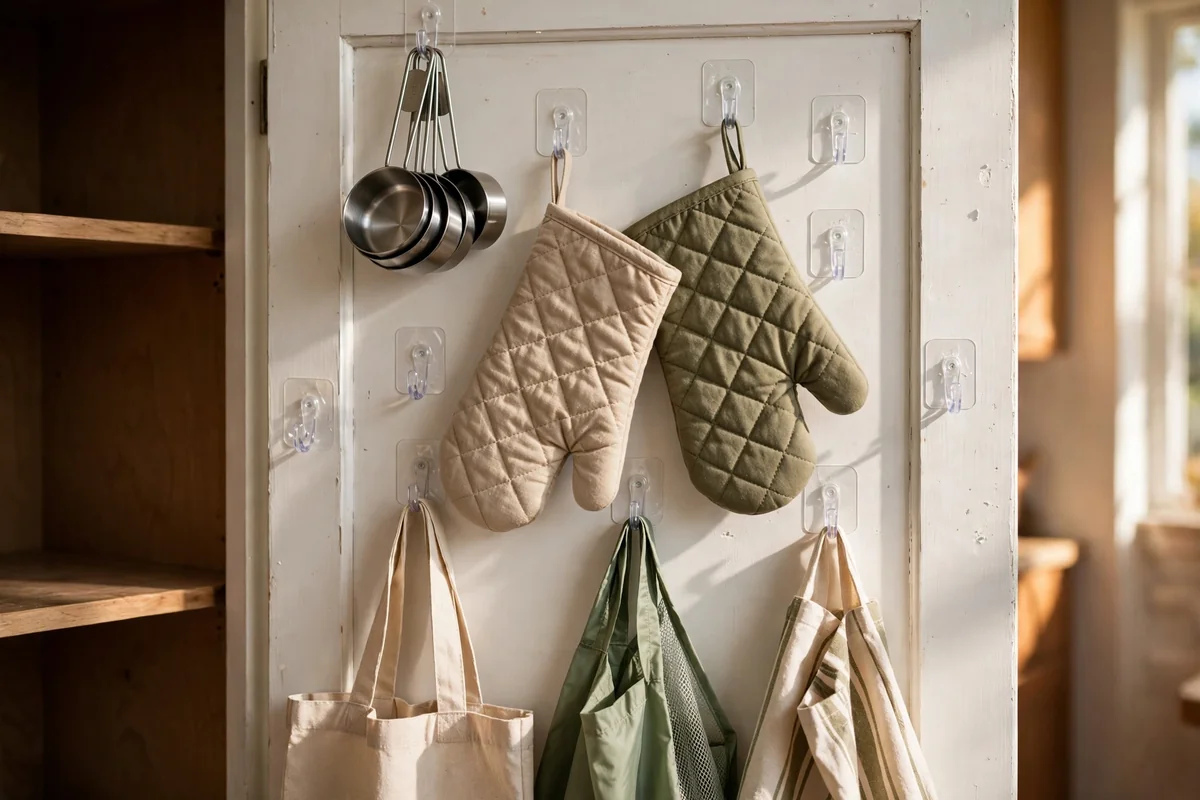
The cheapest storage upgrade in this whole list costs a few coins: removable adhesive hooks stuck inside cupboard doors. Measuring cups, oven mitts, dusters, reusable bags and light utensils hang individually where you can grab them in seconds, instead of burying themselves under heavier cookware in drawers and deep shelves.
Adhesive hooks need no drilling, which makes them perfect for rentals, and they remove cleanly with a pull tab. Respect the weight limit printed on the pack, usually around half a kilo per hook, and let the adhesive cure overnight before hanging anything. Because each item hangs alone, you can see your whole inventory at a glance and duplicates stop appearing.
20. A Cushioned Window Bench With a Storage Cavity
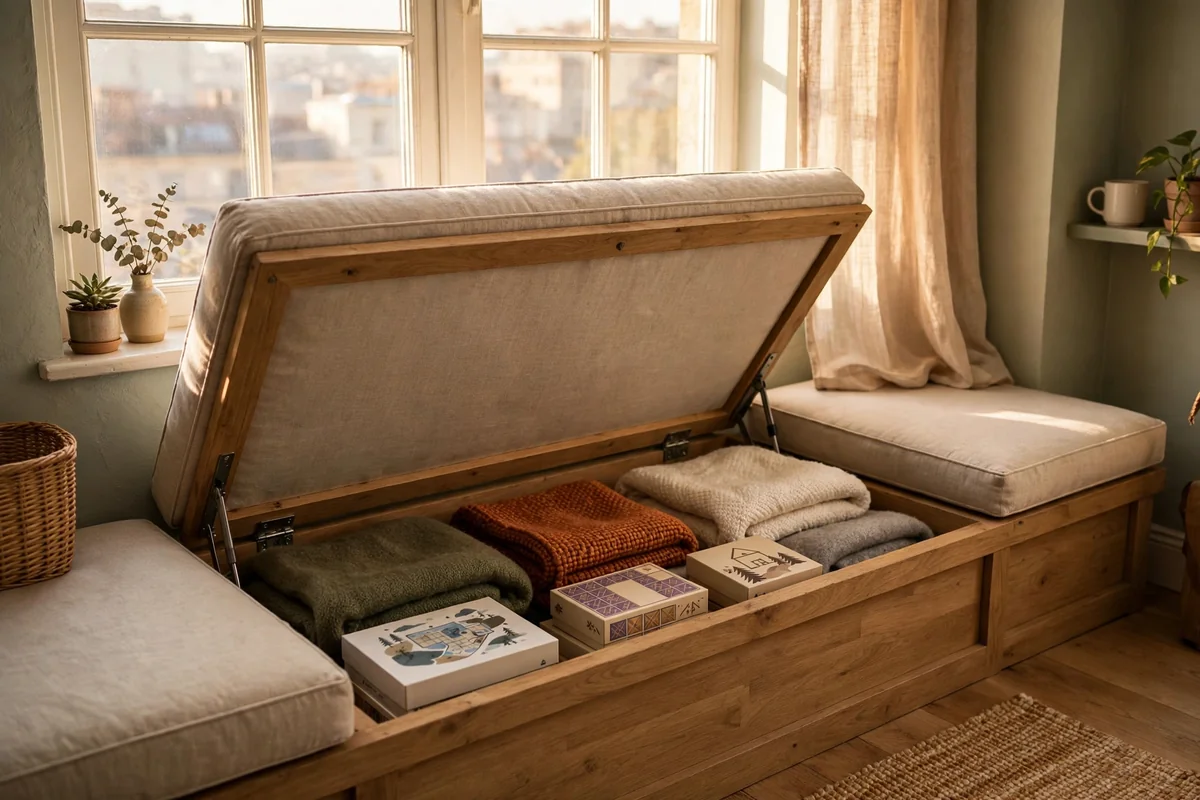
A window bench earns its place three ways: it is seating, it is the nicest reading spot in the home, and its hollow base is a chest for blankets, board games, spare cushions or children’s toys. A ready-made storage bench around 100 centimetres wide fits most apartment windows, or a carpenter can build one to the exact alcove.
Add a thick cushion in a washable fabric and two or three pillows, and the bench becomes the seat everyone chooses. Piano hinges on the lid are safer than free hinges around fingers. Keep the contents soft or boxed so nothing rattles, and the bench will feel like a piece of calm architecture rather than a hiding place.
21. Ladder Shelving Over the Loo and Basin
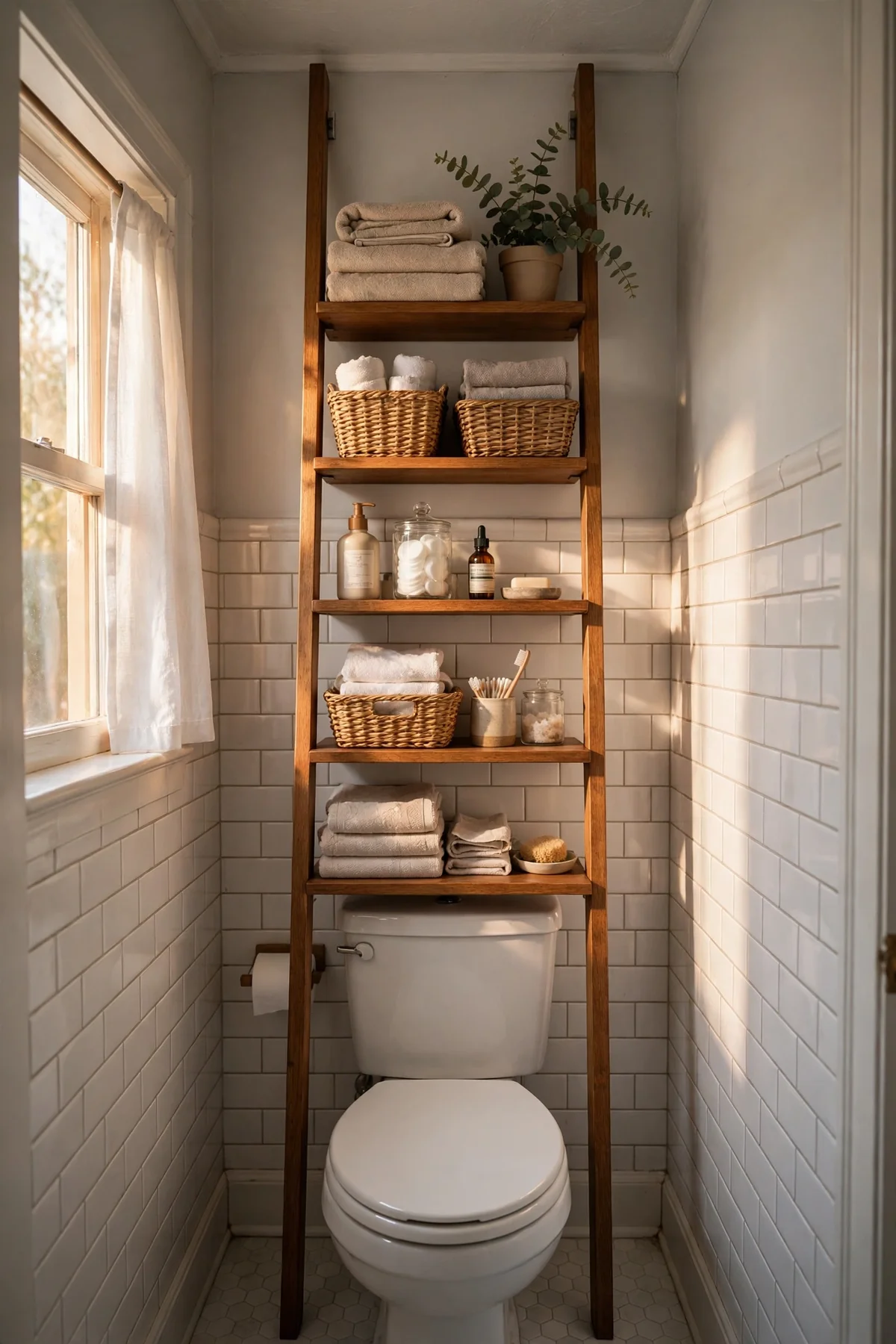
Tiny bathrooms rarely have a cupboard, but they almost always have a blank wall above the toilet. A ladder shelf that straddles the cistern adds three or four tiers for folded towels, baskets of toiletries and spare rolls, using height that costs no floor at all. Freestanding versions suit renters perfectly.
Choose a shelf wide enough to clear the cistern with room to spare, and measure the flush access before buying. Keep everyday items on the lowest tier and refills above. Baskets matter here more than anywhere, because small bottles look messy in the open; two matching baskets make the whole wall look like a calm hotel bathroom.
22. Suitcases on the Wardrobe Top as Archive Boxes
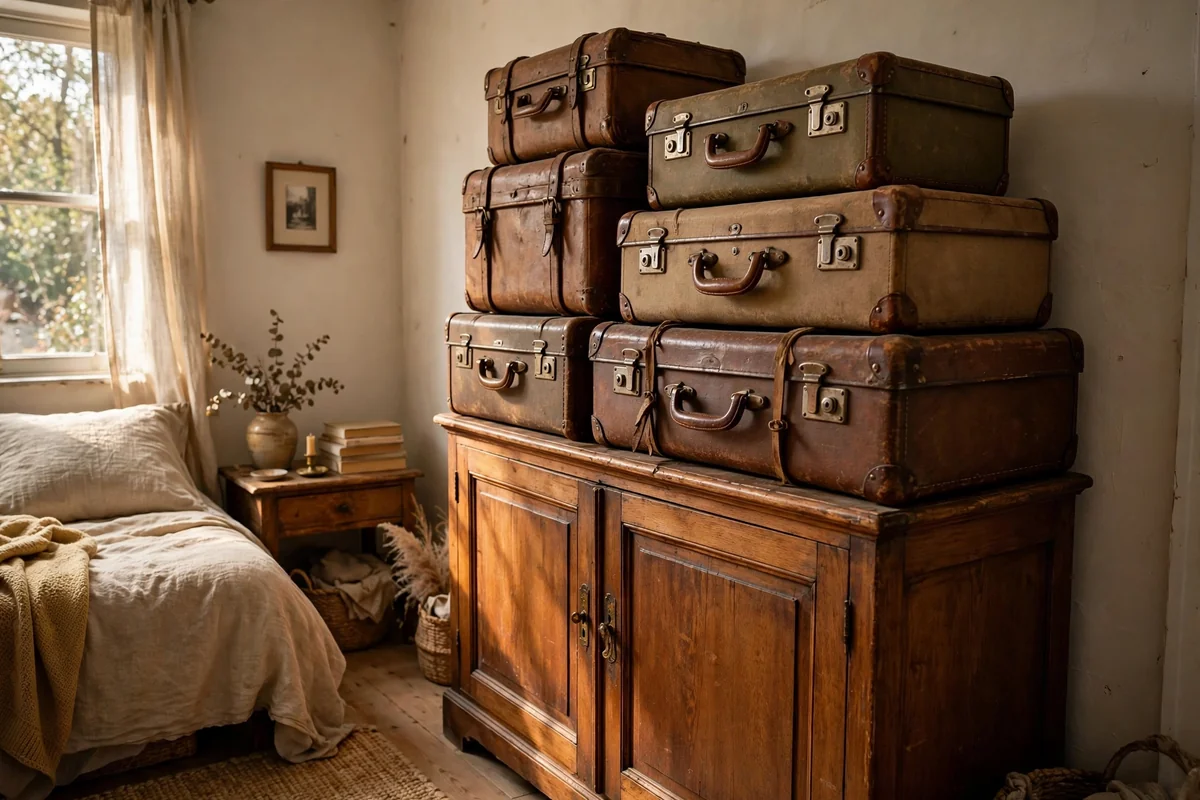
The gap between a wardrobe top and the ceiling is awkward, dusty and hard to reach, which makes it perfect for the things you store for years: documents, photographs, keepsakes and out-of-season treasures. Vintage suitcases or uniform archive boxes fill the gap handsomely and protect contents far better than plastic bags or loose piles.
Line cases with tissue, add a clear contents list inside the lid, and group them by theme so one trip with the step stool finds everything. Because the cases look decorative, the bedroom gains storage that reads as styling. Dust them when you change the bedding each season and the archive will stay clean and forgotten until needed.
23. A Fold-Down Wall Desk That Disappears at Night
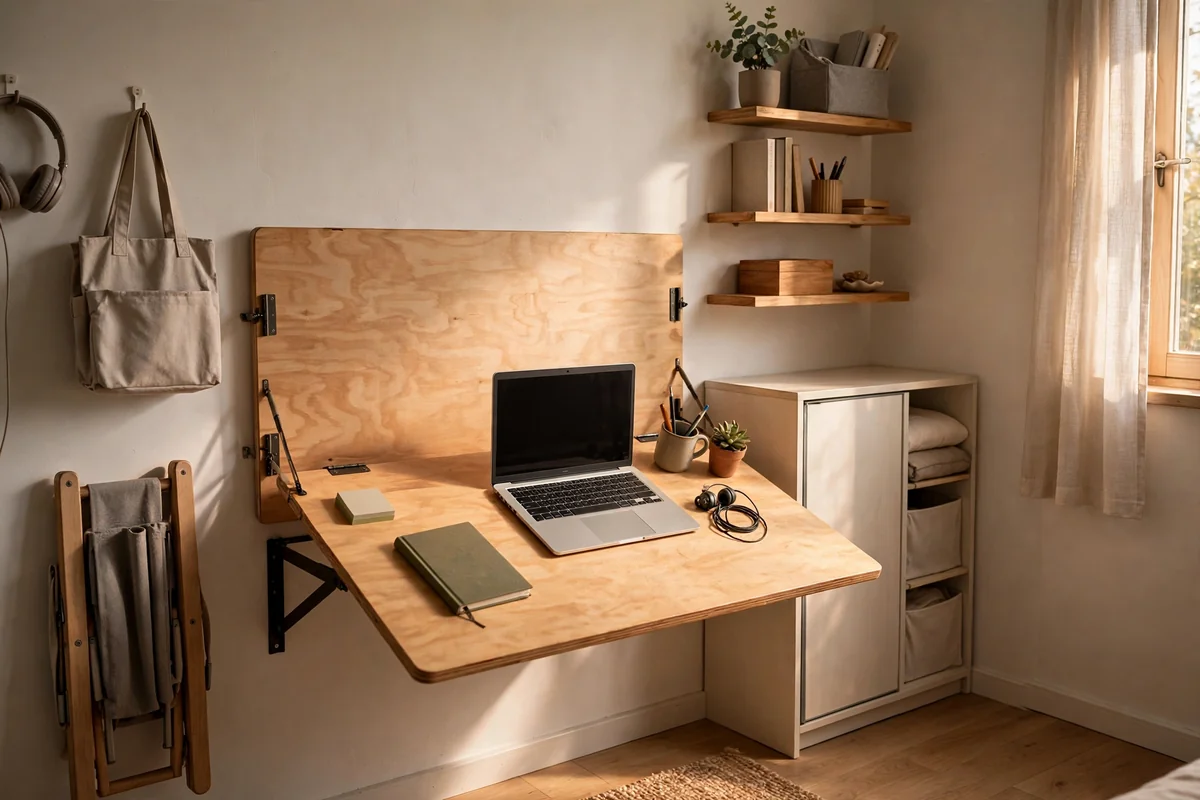
A fold-down wall desk gives a studio apartment a real workspace that vanishes after hours. The hinged top opens to a surface around 80 by 50 centimetres, big enough for a laptop and notebook, with small shelves inside the cabinet for stationery. Folded flat at night, it is just a shallow panel on the wall and the room is a living room again.
Fix the cabinet into studs or solid masonry, because a loaded desk acts like a lever on its screws. Add a folding or stacking chair that stores beside it. The ritual of opening and closing the desk also draws a healthy line between work and rest, which small home living needs as much as storage.
A Few Final Thoughts
A serene small apartment is not built in one heroic weekend. It grows one honest zone at a time: a door that earns its keep, a drawer with borders, a shelf where blank wall used to be. Measure first, buy matching containers, and put seasonal things high and hidden while daily things stay within easy reach. Do that steadily and even the tiniest home starts to feel roomy, because the calm you notice is simply everything knowing its place.
Frequently Asked Questions
Where should I start in a very small apartment?
Start with the biggest wasted volumes rather than the messiest surfaces. Under-bed bins, one lidded ottoman and a set of over-door organisers usually free more usable space in a single afternoon than a week of surface tidying. Once those anchors exist, smaller fixes like drawer dividers and cabinet door racks fall into place and the whole home feels calmer.
How do I add storage without drilling holes as a renter?
Rely on systems that hang, lean or stand: over-door pocket organisers, adhesive hooks inside cupboards, tension rods, freestanding ladder shelves over the toilet, rolling trolleys and furniture with built-in storage such as ottomans and drawer nightstands. Every one of them lifts out cleanly at moving time and leaves the walls exactly as you found them.
What makes open shelves look calm instead of cluttered?
Consistency. A shelf of mixed bottles, boxes and gadgets looks busy no matter how neatly it is arranged, while the same items hidden inside matching baskets read as one quiet texture. Limit the shelf to one material and colour family, give each basket a single category, and leave a little breathing space instead of filling every centimetre.
Which items belong in high or hidden storage?
Anything you use seasonally or rarely: spare bedding, decorations, archive papers, keepsakes and out-of-season clothes. High shelves, wardrobe tops, under-bed and under-sofa spaces suit them perfectly. Keep daily items between knee and eye height instead, because storage you have to climb for every day quickly becomes storage you stop using properly.
How do I keep a small apartment tidy once it is organised?
Give every category one fixed home and label the hidden containers so everyone in the household can return things correctly. Then hold a two minute reset each evening: surfaces cleared, items back in their zones, landing strip emptied. Small homes do not need more discipline than big ones, just a nightly habit measured in minutes.