Home Improvement
23 Harvest Front Porch Planter Ideas That Welcome Guests With Autumn Abundance
By Anna Wells · · 21 min read
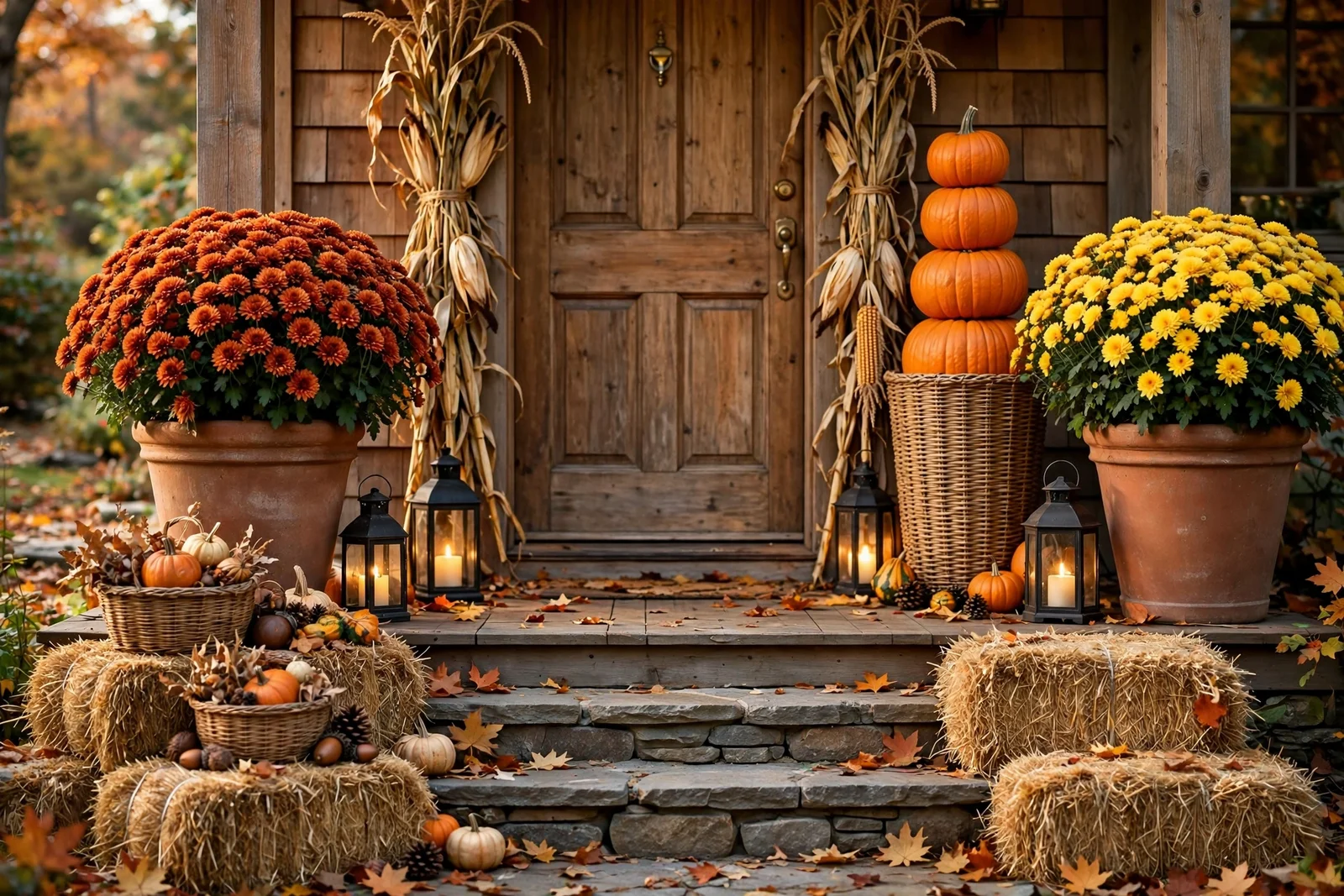
Stacked pumpkins, rust mums and lantern glow: twenty-three ideas for a front porch that welcomes every guest with the abundance of harvest season.
There is a particular kind of welcome that only a front porch can give. The air smells of fallen leaves, the light turns gold earlier each evening, and the door you open for guests deserves a little ceremony of its own. Dressing your planters for harvest season is that ceremony: pots filled with rust chrysanthemums, ornamental kale and stacked pumpkins that say you are glad people came.
These twenty-three ideas cover every part of the display, from choosing pots big enough to matter, to drainage that survives autumn rain, to watering rhythms and a mid-season refresh. You will find farmhouse touches like corn stalks, hay bale risers and woven baskets alongside practical care advice for frost timing and feeding. Each idea is concrete enough to do in a single weekend afternoon.
Start with whichever idea suits your porch and your budget, then add one more each week through October. By the time the first frost silvers the kale, your doorway will read like a farmhouse harvest table brought outside: layered, generous and unmistakably welcoming.
1. Flank the Door With Twin 50 cm Terracotta Planters of Rust Mums
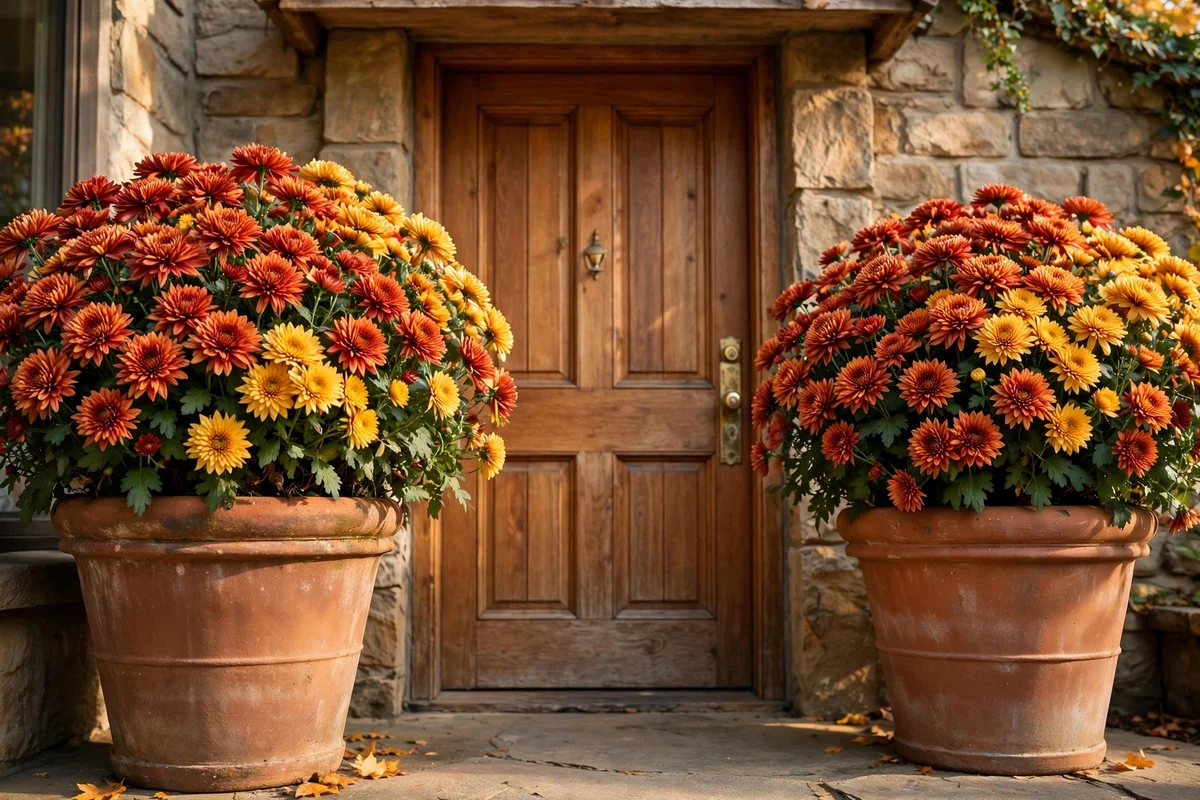
Two matching planters about 50 cm wide and 40 cm tall on either side of the door give the entry real presence without crowding a standard porch. Choose terracotta, aged stone or dark bronze plastic that mimics clay so the pots look weighty in warm light. Fill each with three garden mums in rust, burnt orange and gold, planted so the blooms sit 10 to 15 cm above the rim. The pair reads as deliberate framing, and three plants per pot keeps each full from day one.
Keep the two planters level by setting them on flat paving or low plinths rather than directly on uneven boards. Water each pot with about two litres in the morning, since mum roots dry out fast in autumn wind. The mistake to avoid is buying one large pot and one small one, which breaks the symmetry the doorway needs. Budget tip: two plastic terracotta-look pots of this size usually cost 15 to 25 dollars each, so the whole frame stays affordable.
2. Plant an Ornamental Kale Crown for Frost-Tinted Colour
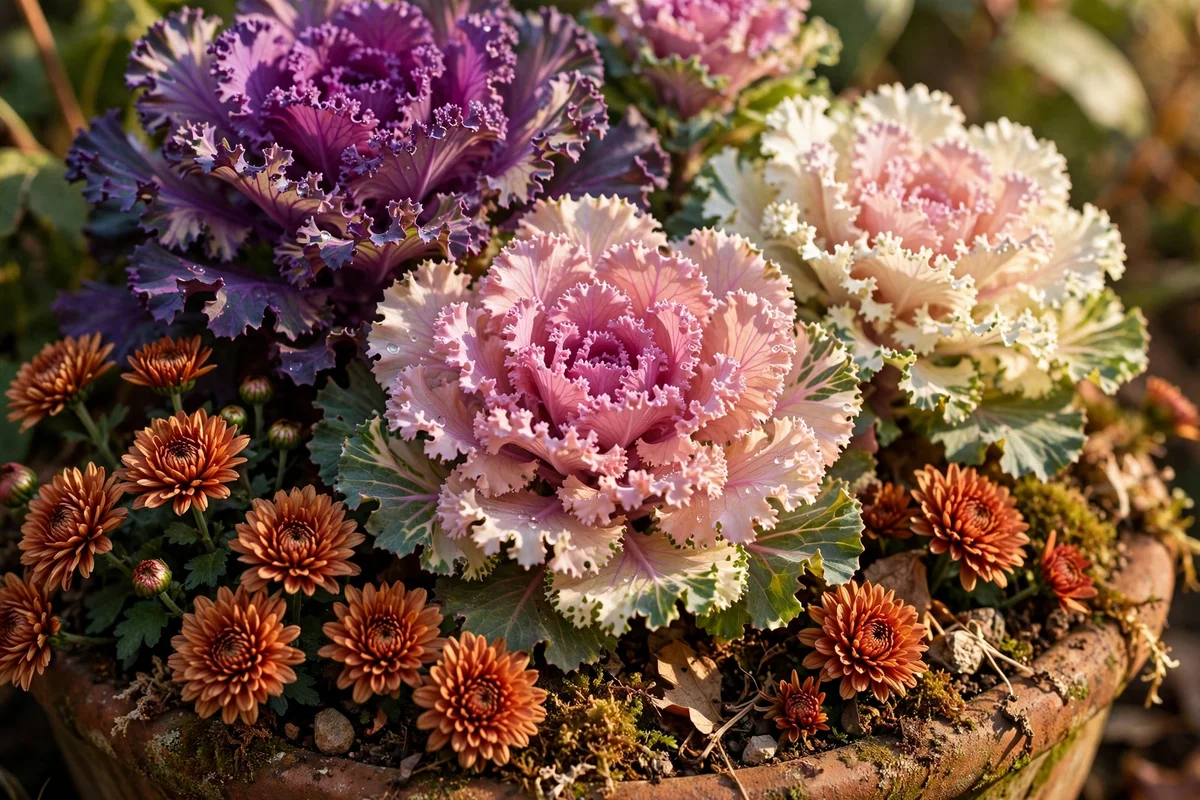
When nights turn cool, ornamental kale deepens to rose, violet and cream, giving planters colour that survives light frost. Plant one kale at the centre of each pot, choosing heads about 20 to 25 cm across so they read as a crown above the mums. Tuck them in with about 10 cm of space between the kale and the mum stems so air moves freely and mildew stays away. Kale tolerates temperatures down to about minus 7 Celsius, which stretches your display weeks past the first frost.
Water kale at the base rather than over the leaves, since wet foliage in cold air invites rot. Feed once with a half-strength liquid feed in early autumn, then stop feeding so the plants harden before frost. The mistake to avoid is planting kale while daytime temperatures still reach 25 Celsius or higher, because heat turns the foliage green and floppy. In most regions, the second or third week of September is the right moment to set them out.
3. Build a Stacked Pumpkin Tower Inside One Tall Planter
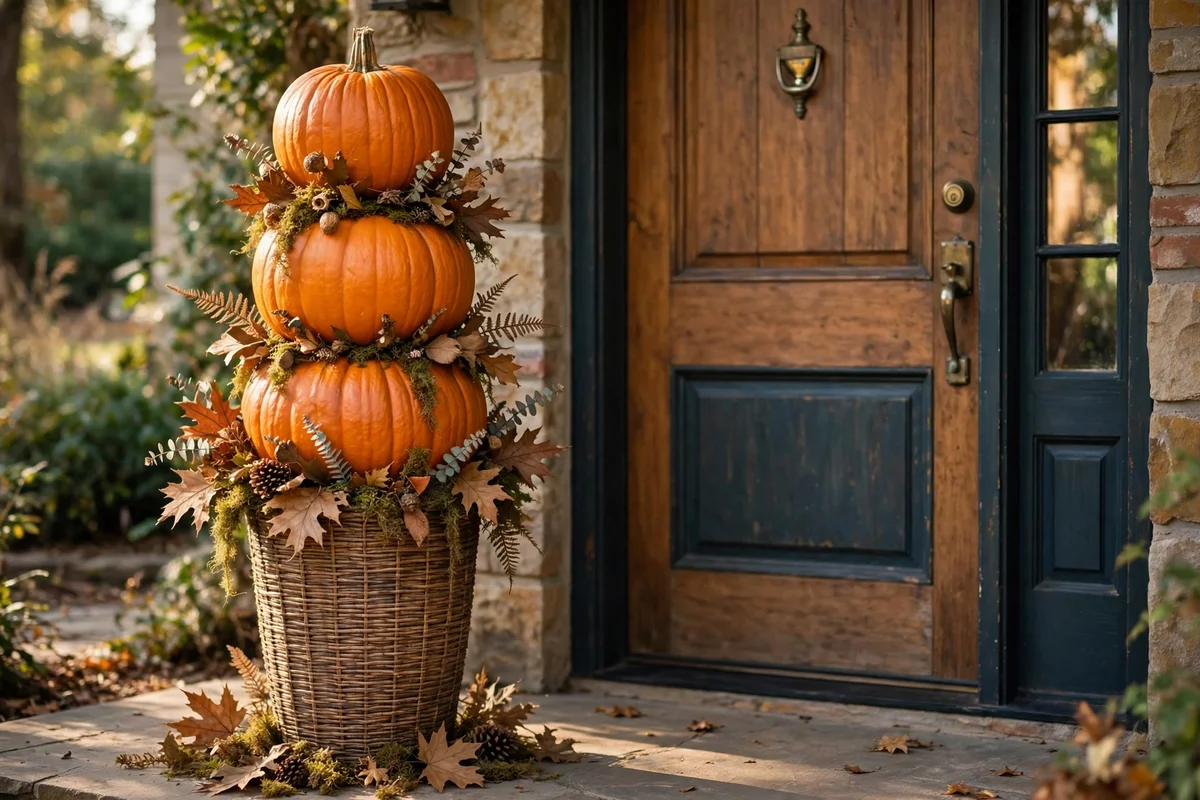
Stacking pumpkins directly inside a tall planter creates the abundant harvest tower look without buying a tower of soil. Choose a pot at least 55 cm tall and 40 cm wide, fill the bottom half with bark chips or upside-down plastic pots to take up space, then set pumpkins of decreasing size on top: a 25 cm pumpkin at the base, an 18 cm one in the middle, and a 12 cm one on top. Tuck moss or dried leaves between the pumpkins so the stack looks gathered, not perched.
Use real or good faux pumpkins, but never drill holes into real ones because the cuts invite decay in autumn rain. Set the tower where it catches morning light and keep it off constantly wet soil by resting the planter on pot feet. The mistake to avoid is stacking more than three pumpkins, since taller stacks topple in wind and overwhelm the doorway. Budget tip: small field pumpkins cost one to three dollars each at farm stands in October.
4. Set Woven Baskets as Cache Pots Around the Base
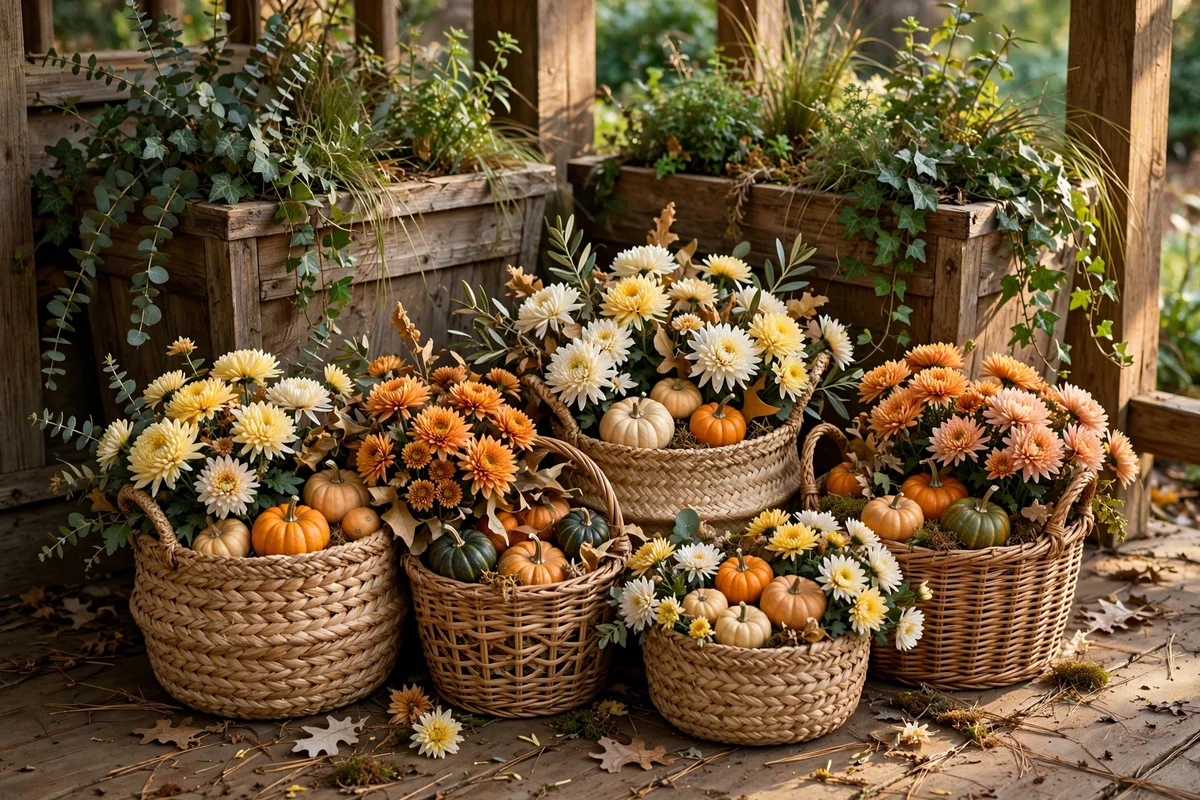
Slip plain nursery pots inside woven baskets so plastic disappears and the porch reads warm and handcrafted. Choose baskets 30 to 40 cm wide with a sturdy weave such as seagrass, rattan or water hyacinth, and always drop a plastic liner or the original nursery pot inside to protect the weave from soil and water. Cluster two or three baskets of different heights near the main planters, filling them with mums, trailing ivy or small pumpkins. The mix of textures instantly softens hard paving.
Never place woven baskets where rain pours directly off the roofline, because constant soaking weakens the fibres within weeks. Tuck them slightly back under the porch overhang and tip out any standing water after storms. The mistake to avoid is skipping the liner, which lets wet soil press straight against the weave and stain it dark. Thrift shops sell sturdy baskets for two to five dollars, so this is one of the cheapest ways to dress a porch.
5. Tie Dried Corn Stalks in Pairs Beside the Door Frame
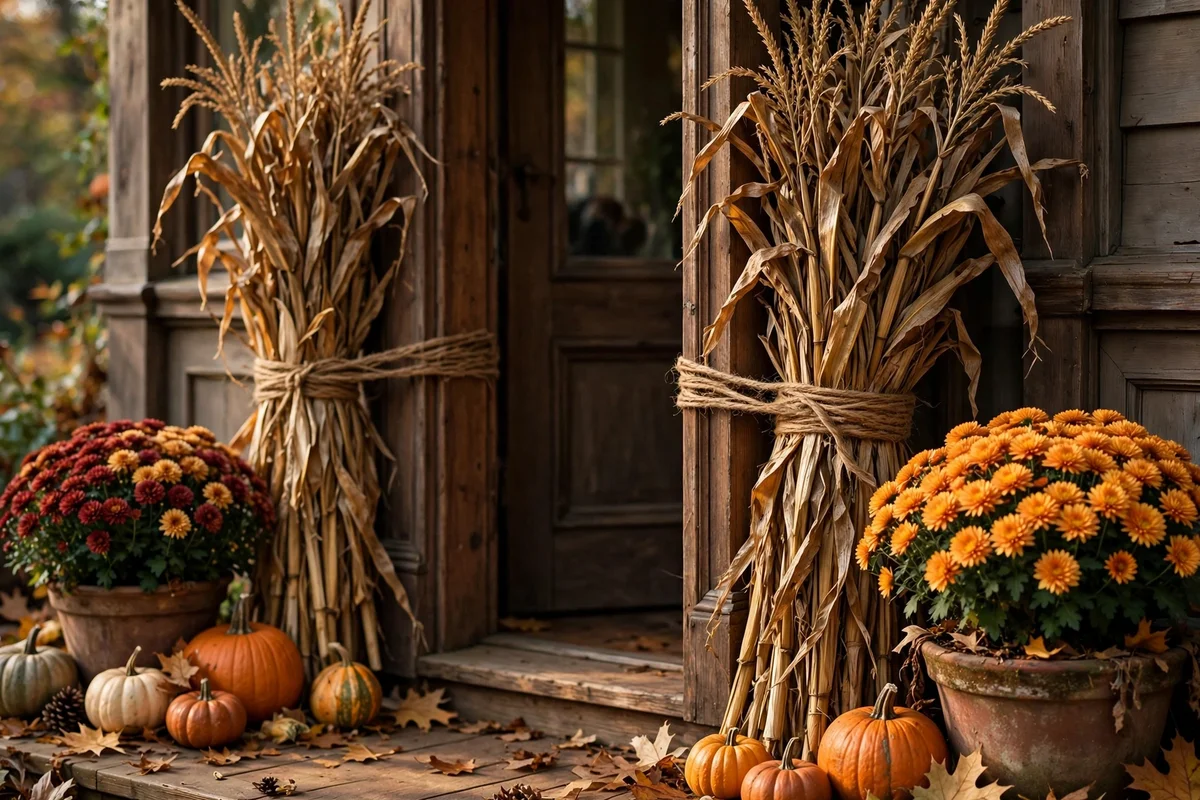
Two or three dried corn stalks tied with jute twine on each side of the door give instant farmhouse harvest height. Choose stalks about 180 to 210 cm tall with full husks, and lash them to the door frame, a railing or a stake behind the planter so wind cannot knock them over. Tie the bundle at two points, roughly 60 cm and 140 cm from the ground, so the stalks stand straight. The golden colour echoes pumpkins and mums without adding any plastic.
Harvest your own stalks only after the corn has fully dried on the plant, or buy bundles of five or six from a farm stand for about five dollars. Store spare bundles upright in a dry garage so they stay crisp for next year. The mistake to avoid is pushing stalks straight into soft soil without a stake, because one windy night will snap them. Refresh the twine mid season if the bundle starts to lean.
6. Rest Small Planters on Hay Bales as Rustic Risers
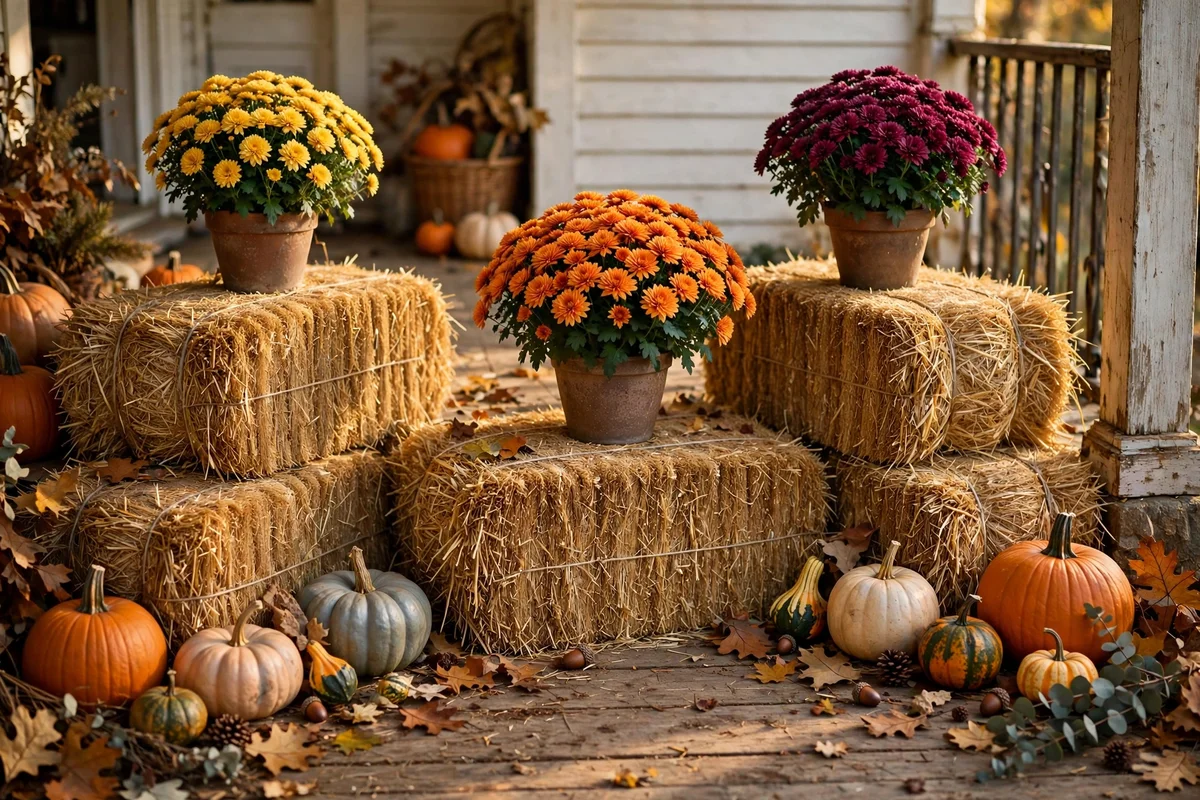
One or two small rectangular hay bales make perfect risers that lift pots to different heights and add a harvest-field feel. Choose bales about 45 cm long, 30 cm wide and 30 cm tall, and set them on the porch floor or lower steps where they will not block the walkway. Rest a mum pot or a small pumpkin display on top, keeping at least 60 cm of clear walking space beside each bale. The golden straw colour ties the whole doorway palette together.
Slip a square of burlap or a plastic tray under each bale so loose straw does not scatter across the steps and scratch flooring. Keep bales under cover or brush off standing water, because a soaked bale grows heavy and mouldy fast. The mistake to avoid is leaving bales out through November rain, since they break down into mush. Buy decorative bales for three to six dollars each and compost them in the garden when the season ends.
7. Nestle Lanterns Between the Pots for Evening Glow
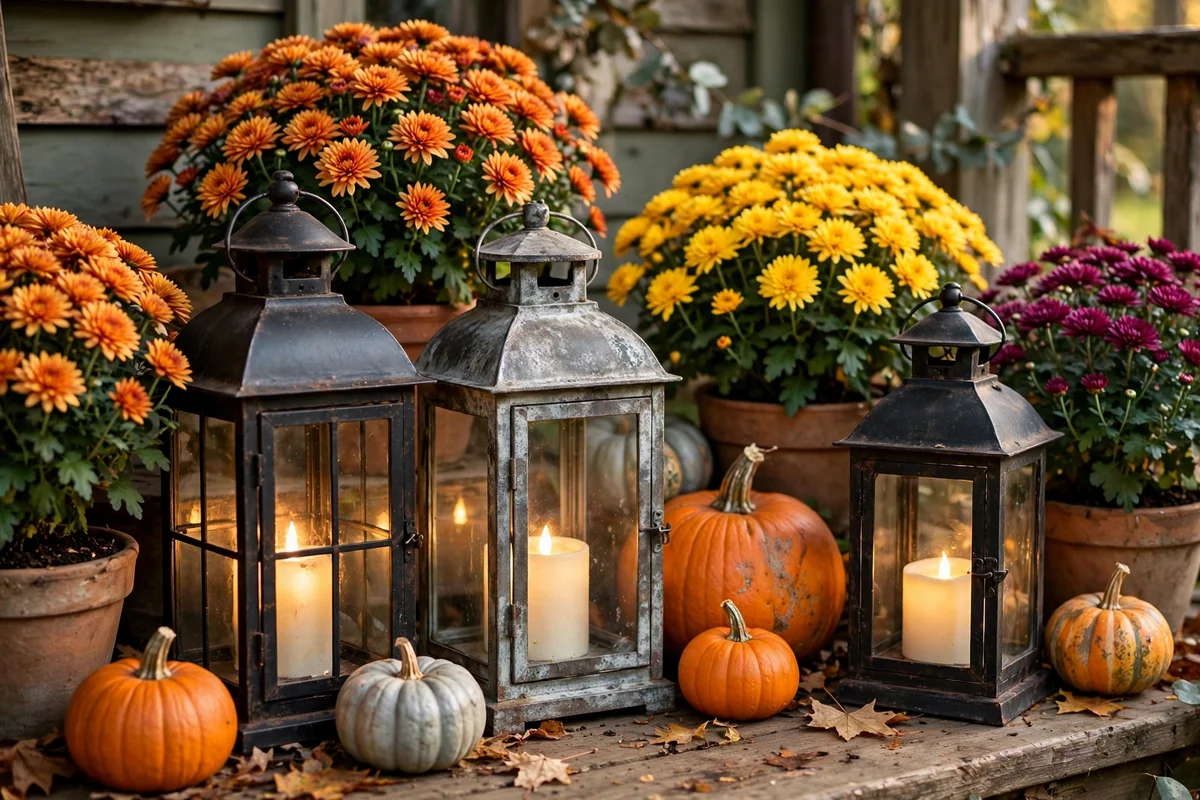
Place two or three lanterns between and behind the planters so the doorway glows after sunset. Choose lanterns 25 to 40 cm tall in black metal, aged zinc or warm wood, and set them on the floor or on a low step where they will not get knocked by the door swing. Fill them with LED pillar candles on a timer, which switch on at dusk and cost far less than real candles over the season. The flickering light turns rust mums and gold pumpkins into an evening welcome.
Keep lantern glass clean with a quick wipe each week, because autumn dust dulls the glow surprisingly fast. Use only outdoor-rated LED candles and bring paper-based lanterns inside during heavy rain. The mistake to avoid is using real flame candles on a porch near dried corn stalks and hay bales, which are highly flammable. Sets of three metal lanterns usually cost 20 to 35 dollars and last for years.
8. Layer Planters Up the Steps in Rising Heights
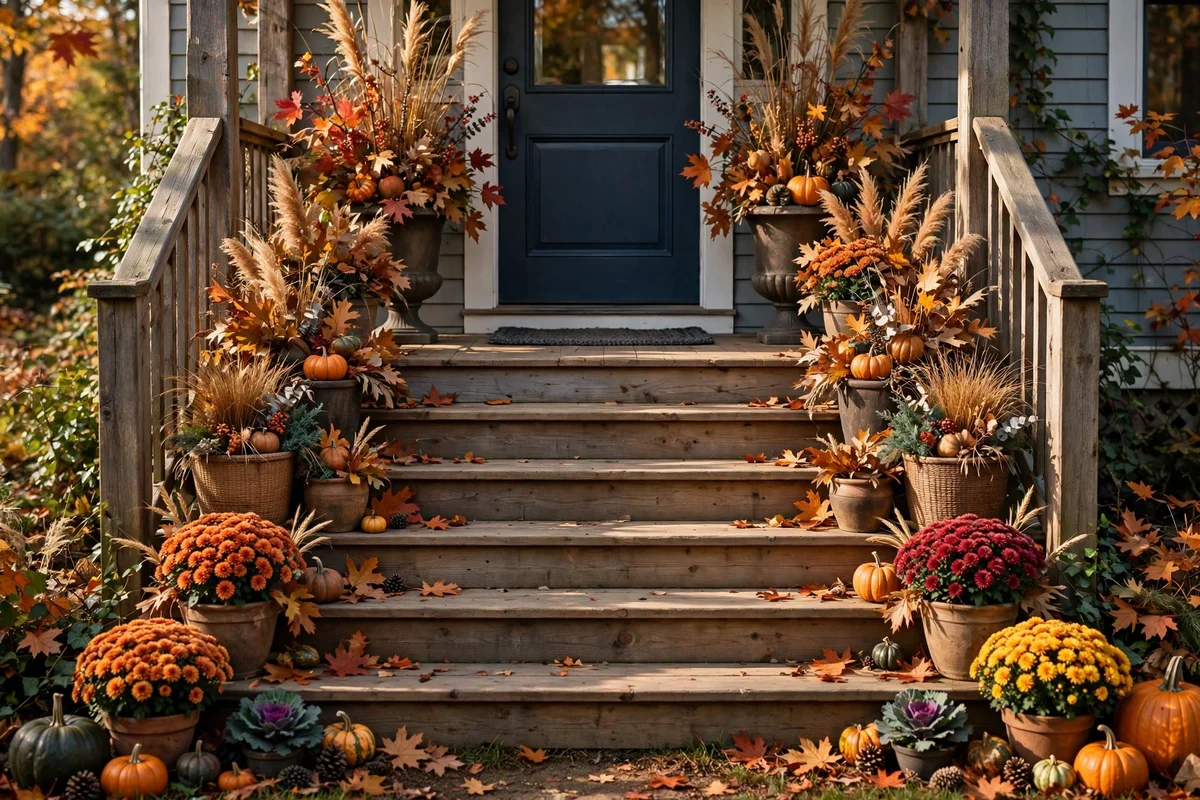
Run pots along both sides of the porch steps in rising heights so guests climb a staircase of autumn colour. Start with low 25 cm pots at the bottom step and finish with 45 cm or taller planters near the door, keeping every pot at least 15 cm back from the step edge. Aim for three to five pots per side, depending on step width, and repeat the same plants in different sizes so the whole climb feels planned. The rising line draws the eye straight to the welcome mat.
Choose heavy pots for steps, because a gust can send a light plastic pot tumbling down to the path. Place a non-slip rubber pad under each pot on wooden or painted steps. The mistake to avoid is blocking the handrail side completely, since guests need that grip on wet autumn evenings. Budget tip: buy pots in graduated sizes from the same range, which often costs less than mixing brands.
9. Choose Pots 35 cm or Wider for Real Doorway Presence
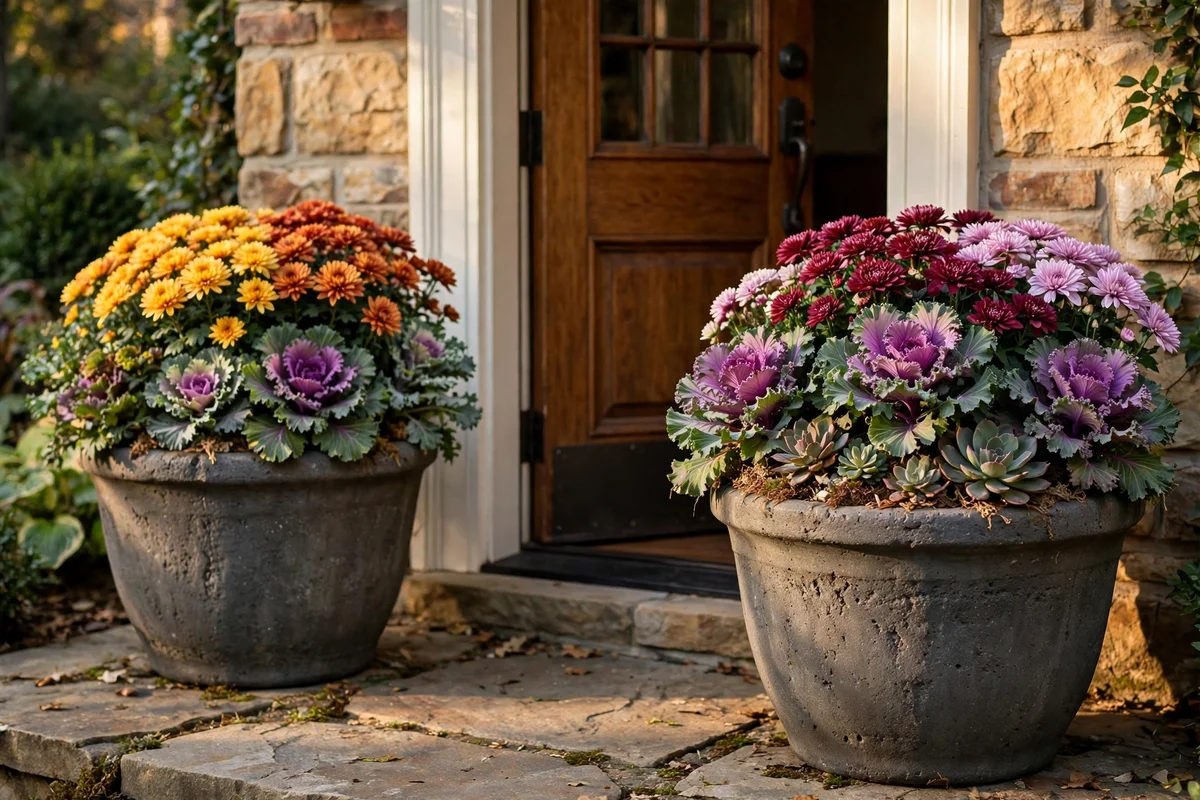
Small 20 cm pots disappear beside a front door, so choose planters at least 35 cm wide and 30 cm deep for real presence. A pot this size holds enough soil to support three mums plus one kale centre without crowding, and the weight keeps it steady in wind. Measure your door width first: pots should take up no more than a third of the doorway width on each side. The generous scale is what makes a porch feel abundant rather than decorated.
Deep pots also stay watered longer, since more soil means slower drying in autumn wind. Fill the bottom quarter with drainage material such as bark chips or broken terracotta before adding compost. The mistake to avoid is choosing a wide but shallow pot, which looks big but dries out by noon and topples easily. Second-hand stone or concrete planters of this size often cost 10 to 20 dollars at garden sales.
10. Drill Extra Drainage Holes Before the Autumn Rain
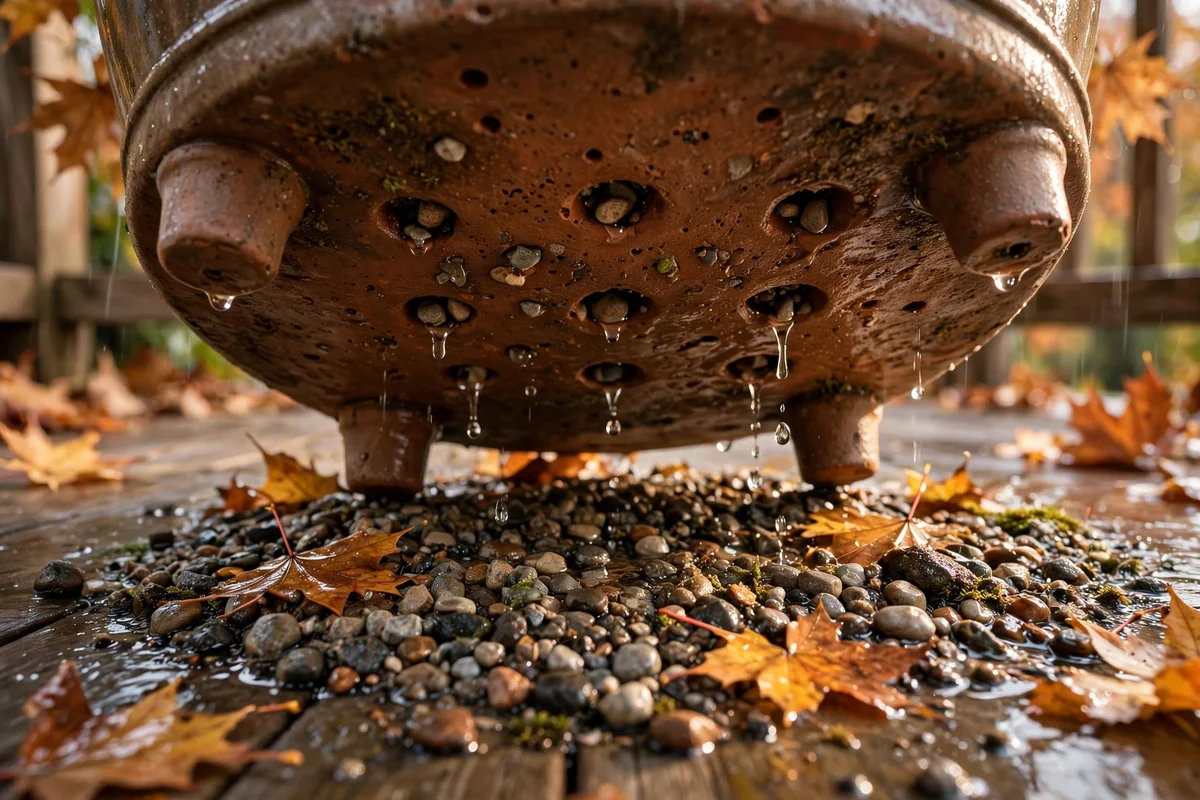
Autumn rain sits in planters fast, so every pot needs enough drainage before planting begins. Check that each pot has at least three holes of 12 mm or wider at the base, and drill extras with a masonry bit if a decorative pot has none. Raise pots on 2 to 3 cm pot feet or small wooden blocks so water flows out freely instead of pooling underneath. Roots sitting in waterlogged soil rot within days, which kills mums far faster than any cold snap.
Layer 5 cm of gravel or coarse bark at the bottom of each pot before adding compost, since this keeps soil from sealing the holes shut. After heavy storms, tip each pot slightly to check water actually runs out. The mistake to avoid is lining pots with plastic bags to keep soil in, because the bags trap water exactly where you least want it. A simple set of pot feet costs under five dollars and saves whole displays.
11. Water in the Morning and Skip Rainy Days
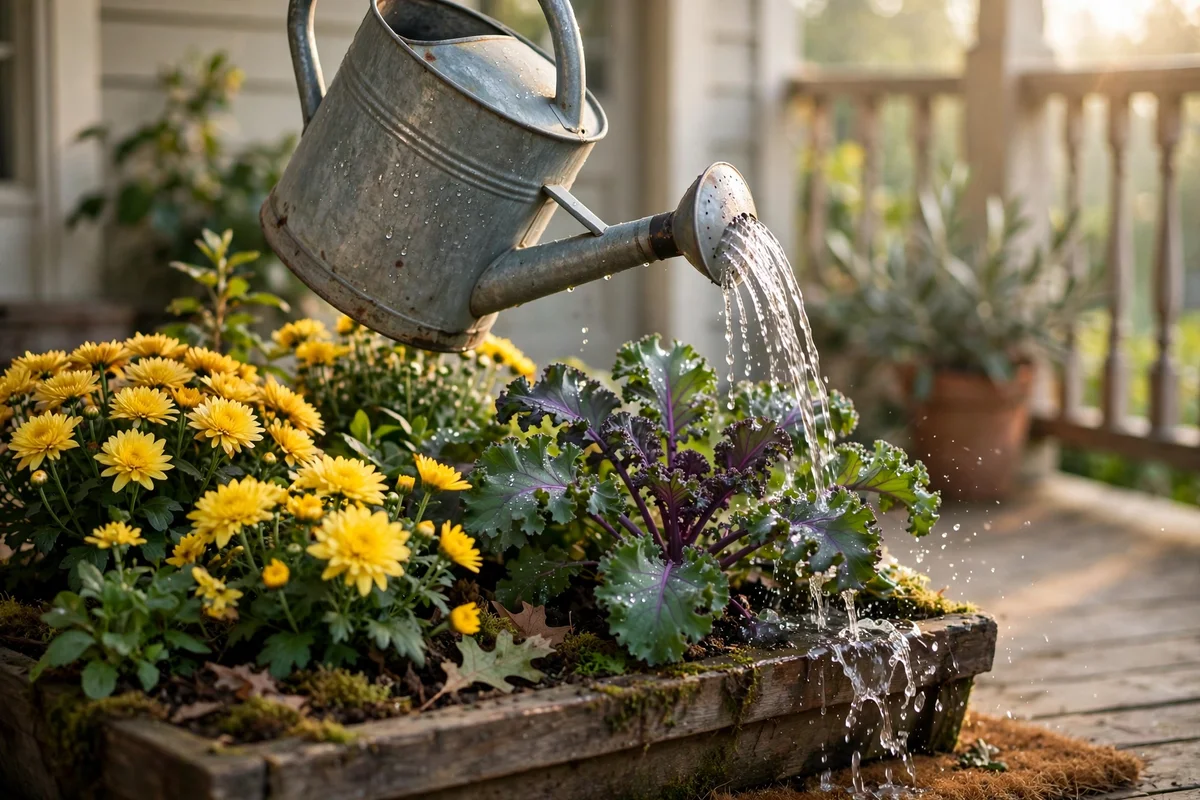
Autumn mums and kale need steady moisture but hate soggy roots, so water in the morning only when the top 3 cm of soil feels dry. Use about one to two litres per medium pot, pouring slowly so the water soaks in rather than running down the sides. Morning watering lets foliage dry before evening cold, which matters because wet leaves in frosty air develop spots quickly. Skip watering entirely on days when rain has soaked the pots.
Lift each pot briefly every few days to judge its weight, since a heavy pot still holds water even if the surface looks dry. Reduce watering further as nights drop below 5 Celsius, because cold soil holds moisture longer. The mistake to avoid is evening watering, which leaves roots cold and wet overnight and invites fungal problems. A simple moisture meter for about eight dollars takes the guesswork out completely.
12. Swap Spent Mums for Fresh Bunches Mid Season
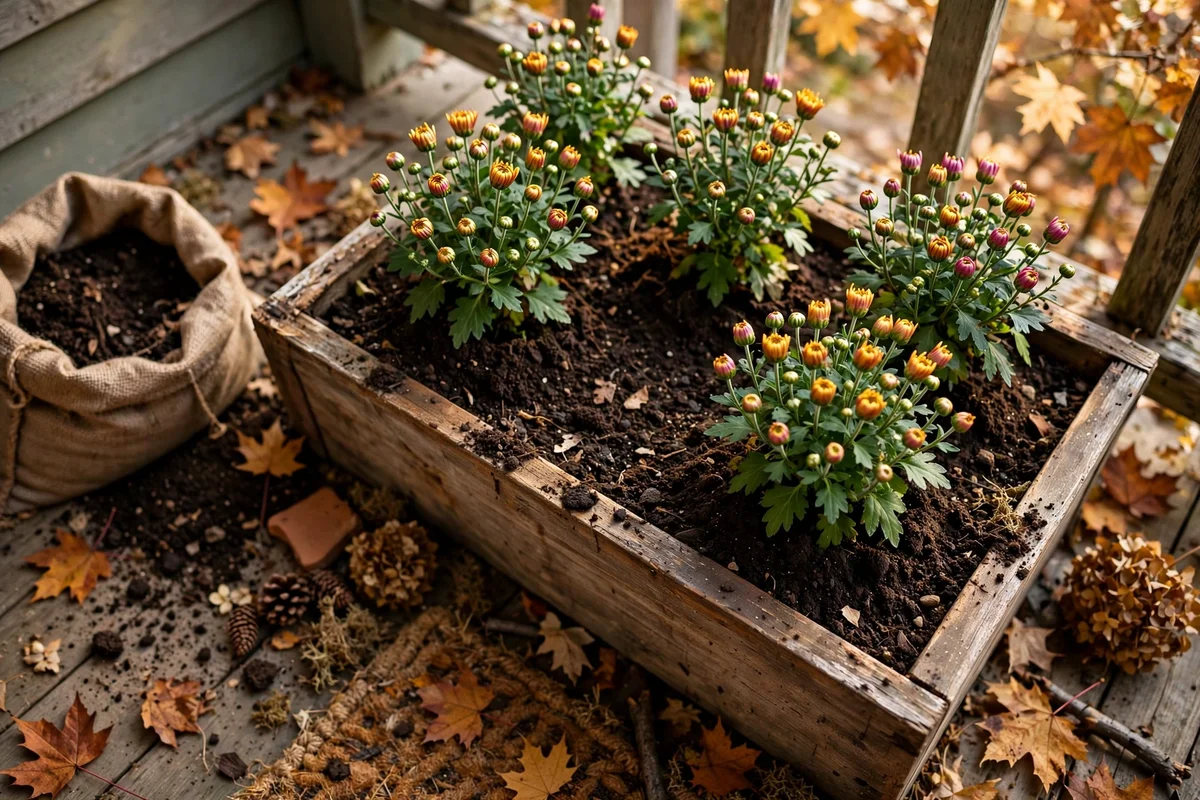
Garden mums bloom hard for about three to four weeks, then fade, so plan one mid-season refresh to keep the porch abundant. In the third week of October, pull out tired plants and drop in fresh mums still in bud, choosing heads about 20 cm across for instant fullness. Water the new plants well and keep the original soil if it still drains freely. This single swap extends a display that would otherwise look shabby through November.
Buy replacement mums from a local nursery rather than a discount bin, because nursery stock is still actively growing and lasts longer. Trim off any browned leaves before planting so the display looks fresh from day one. The mistake to avoid is feeding faded mums in hope they rebloom, since spent mums rarely produce a second flush before frost. Fresh mums cost about five to eight dollars each, so refreshing four pots stays under thirty dollars.
13. Tuck White Cabbage Beside Gold Mums for Contrast
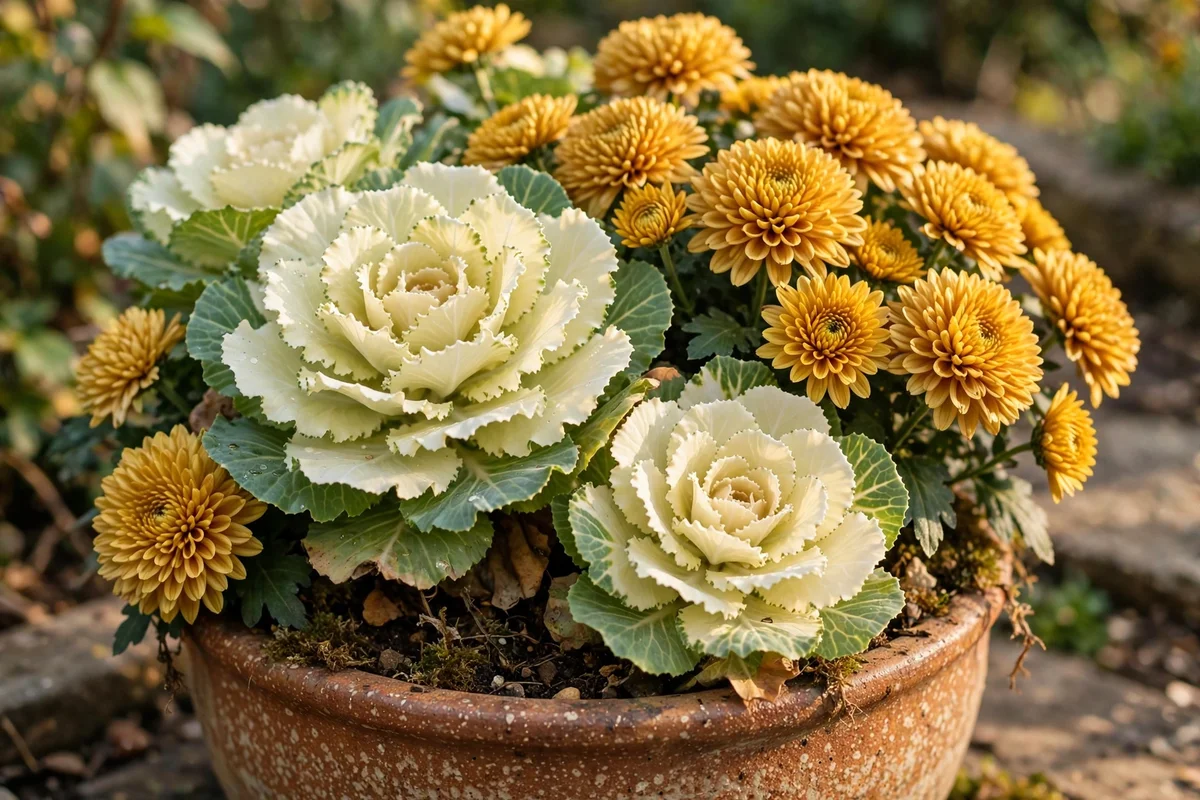
Pale ornamental cabbage beside deep gold mums creates the contrast that makes each colour glow. Plant one cabbage per pot at about two thirds of the rim height, choosing heads 20 to 25 cm across in cream, pale green or blush pink. The cool tones calm the fiery oranges and give the arrangement a layered, gathered-from-the-garden feel. Cabbage handles frost to about minus 10 Celsius, so it often outlasts the mums beside it.
Space cabbage about 15 cm from neighbouring plants so the wide leaves have room to spread without crushing the mums. Water at soil level, since water pooling in the leaf cup causes rot in cold weather. The mistake to avoid is planting cabbage too deep, because buried stems soften and collapse. One cabbage per pot is usually enough, and nursery-grown heads cost four to seven dollars each.
14. Fill the Gaps With Mini Pumpkins and Gourds
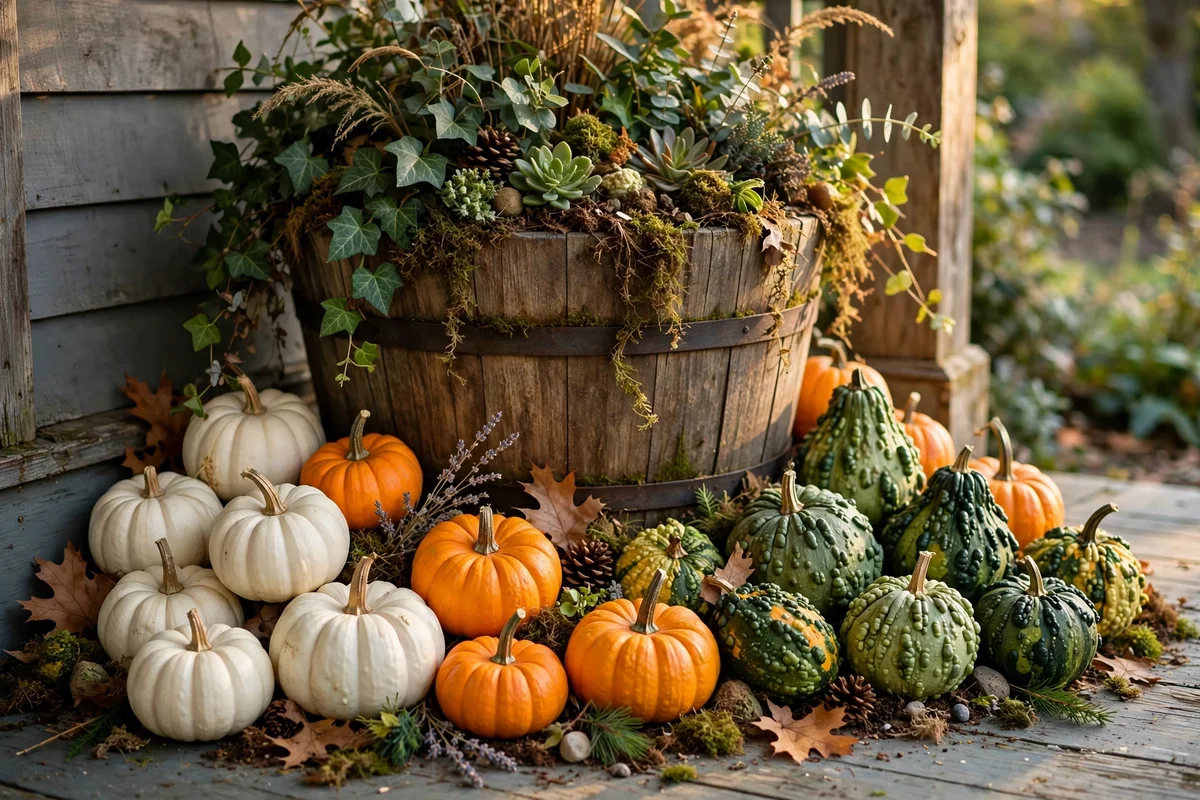
Small gaps between pots and soil look unfinished, so fill them with mini pumpkins and gourds in white, green and orange. Nestle five to seven minis around each large planter base, mixing round pumpkins with warty gourds for shape contrast. Tuck them onto the soil surface or the porch floor, turning each so its best side faces the path. These small fruits cost very little but add the scattered-abundance look of a real harvest.
Choose hard, unblemished skins so the minis last six to eight weeks outdoors without softening. Replace any that develop spots promptly, because one rotting pumpkin spreads decay to its neighbours. The mistake to avoid is stacking minis more than two deep, since the bottom ones crush and rot under the weight. Bags of assorted minis cost three to six dollars at farm shops, making this the cheapest filler of all.
15. Mulch the Soil Surface With Bark and Dried Leaves
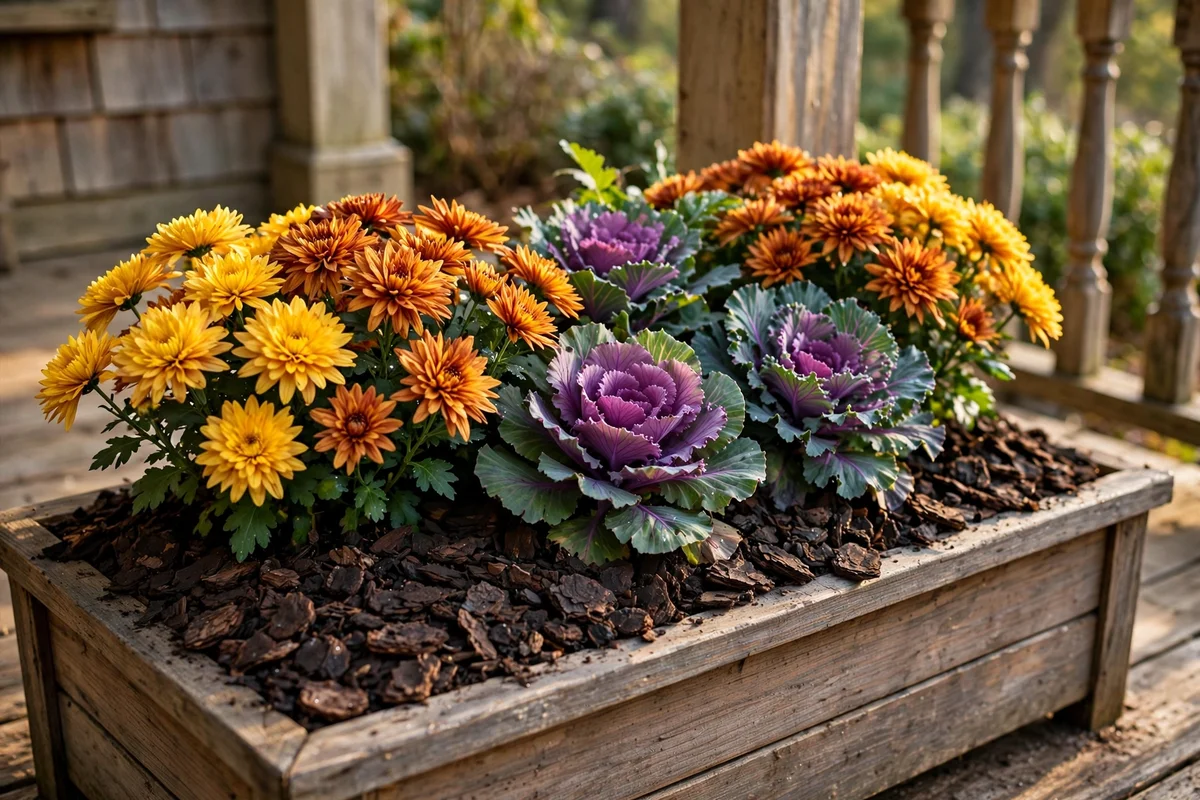
A 3 to 5 cm layer of mulch over the soil surface protects roots from early frost and stops autumn rain from splashing soil onto leaves. Use shredded bark, pine needles or dried leaves collected from the garden, spreading them evenly but keeping the mulch about 3 cm back from each plant stem. The dark layer also makes gold mums and pale cabbage stand out more vividly. Refresh the mulch after storms if heavy rain washes patches thin.
Avoid fresh grass clippings as mulch, because they mat down and trap moisture against the stems. Straw works well too, and it echoes the harvest theme of the porch. The mistake to avoid is piling mulch against the stems in a volcano shape, which holds dampness exactly where rot starts. A single bag of bark mulch covers four to five medium pots and costs about four dollars.
16. Anchor the Porch With One Oversized Stone Urn
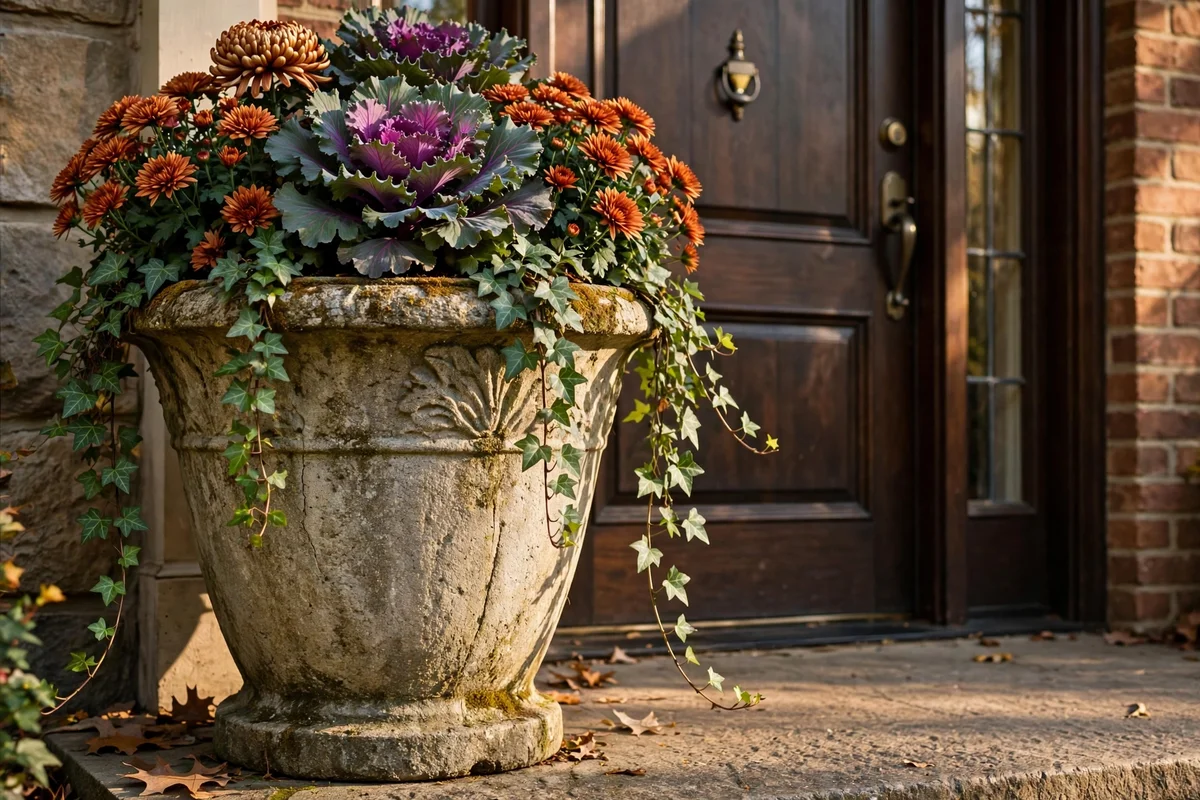
One oversized urn of about 60 cm diameter and 70 cm height gives the whole doorway a focal point that smaller pots gather around. Place it slightly off centre beside the door, where it anchors the arrangement without blocking the path. Fill it with a tall kale centre, ringed by rust mums and finished with trailing ivy at the rim. The generous scale reads as confident and welcoming, like the centrepiece of a harvest table.
Half-fill the urn with lightweight filler such as crushed plastic bottles or bark before adding compost, because a full urn of soil weighs too much to move. Set it on a wheeled plant caddy if you plan to shift it for sweeping. The mistake to avoid is placing the urn where the door swings, since one bump chips stone or tips a top-heavy plant. Stone-look fibreglass urns cost 40 to 70 dollars and weigh a fraction of real stone.
17. Drop Self-Watering Liners Into Planters for Busy Weeks
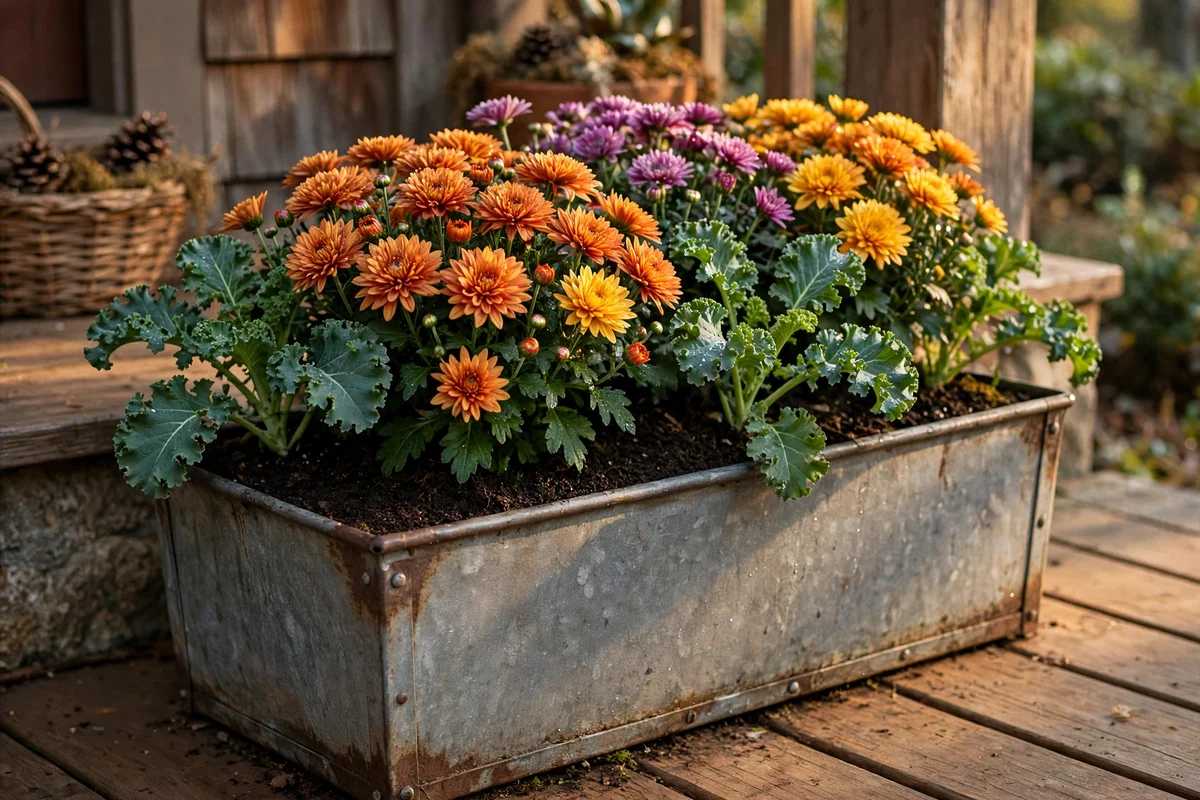
Self-watering liners with a built-in reservoir keep mums and kale evenly moist during busy weeks when daily watering slips. Choose liners that fit pots of 35 cm or larger, with a reservoir of at least two litres, and set the planted nursery pot inside so roots draw water upward. Fill the reservoir once a week in cool weather and twice in warm spells. This steady supply prevents the wilt-and-recover cycle that shortens mum bloom time.
Empty any leftover reservoir water before a predicted hard freeze, because ice expands and can crack the liner. Clean the reservoir with mild soapy water between plantings so algae does not build up. The mistake to avoid is treating the liner as fully automatic, since roots still need the occasional top watering to flush salts from the soil. Liners cost eight to fifteen dollars each and fit most standard porch pots.
18. Mix Ornamental Grasses for Soft Texture and Movement
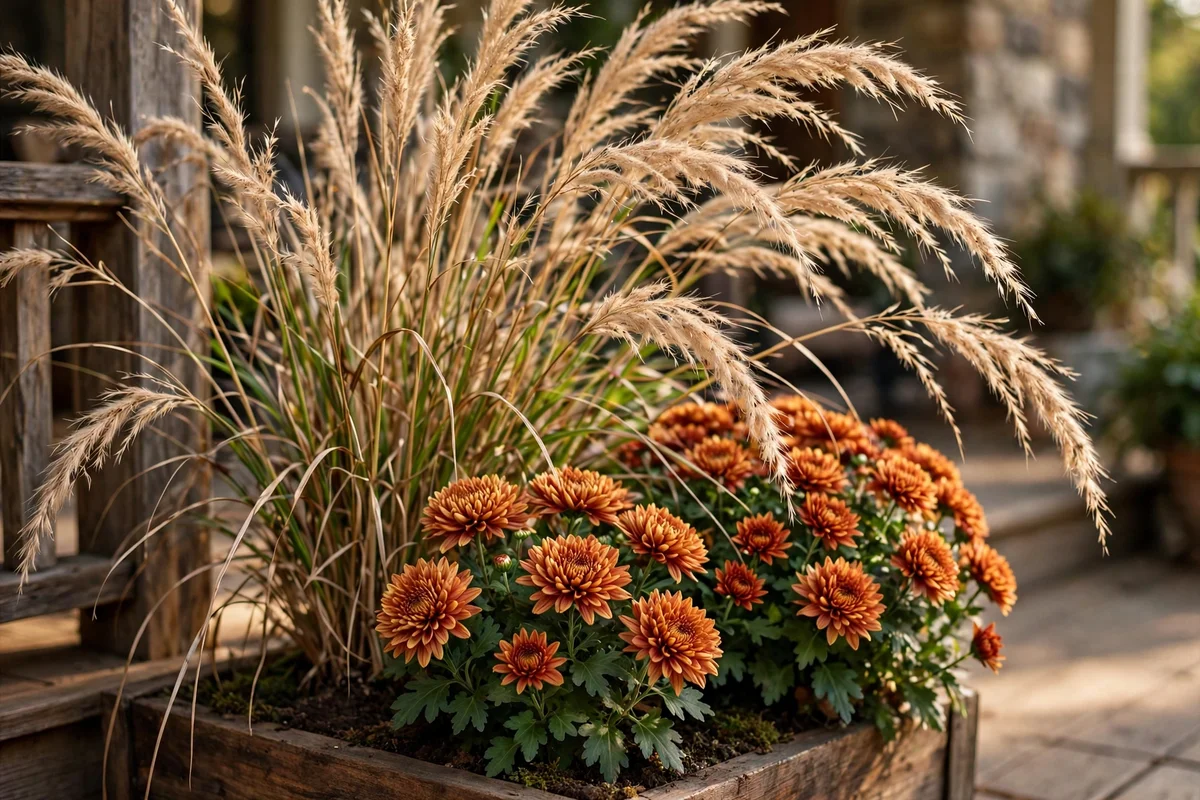
Feathered ornamental grasses bring soft movement to planters that mums and pumpkins cannot provide on their own. Plant one fountain grass or purple millet at the back of each pot, choosing varieties that reach 60 to 80 cm so they rise above the flowers. The arching blades catch autumn light and sway gently, adding life to the arrangement. Leave the seed heads standing, since their tan colour suits the harvest palette perfectly.
Cut grasses back only after the seed heads turn ragged, since they add structure through early frost. Divide one large grass plant into two or three pieces to fill several pots cheaply. The mistake to avoid is planting running grass varieties directly in the ground beside the porch, because they escape into lawns and flowerbeds. A one-litre grass plant costs six to nine dollars and fills a pot within weeks.
19. Paint Plain Pots in Warm Terracotta and Ochre Tones
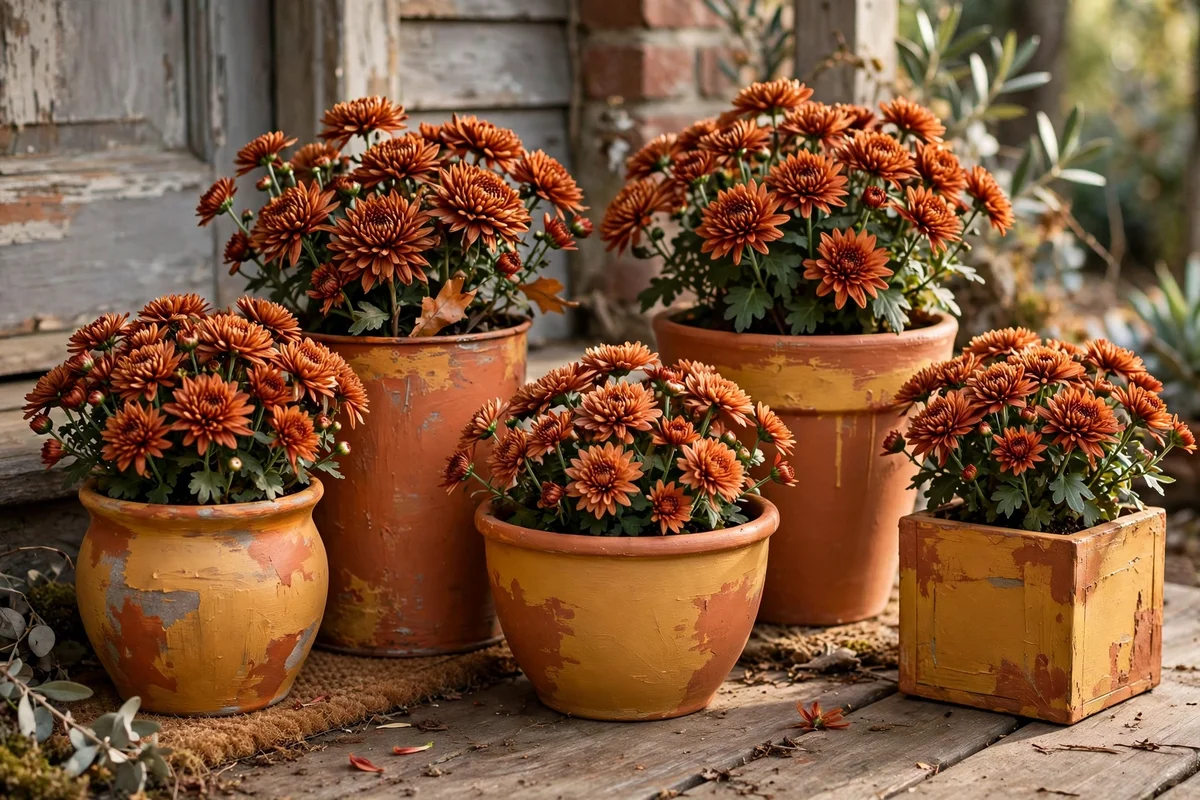
A set of mismatched pots looks accidental, so unite them with paint in warm terracotta, ochre or brick tones. Clean each pot with soapy water, let it dry fully, then apply two coats of outdoor masonry or chalk paint rated for exterior use. Terracotta suits rust mums beautifully and hides autumn dust far better than white or cream. Allow 24 hours of drying between coats so the finish cures hard.
Keep the original drainage holes clear by poking them open again after painting, since dried paint seals small holes shut. Avoid painting the inside of the pot, because soil moisture will blister interior paint within weeks. The mistake to avoid is using indoor emulsion, which peels at the first frost. One tin of exterior paint covers six to eight medium pots and costs about twelve dollars.
20. Slide a Low Woven Trough Under the Porch Window
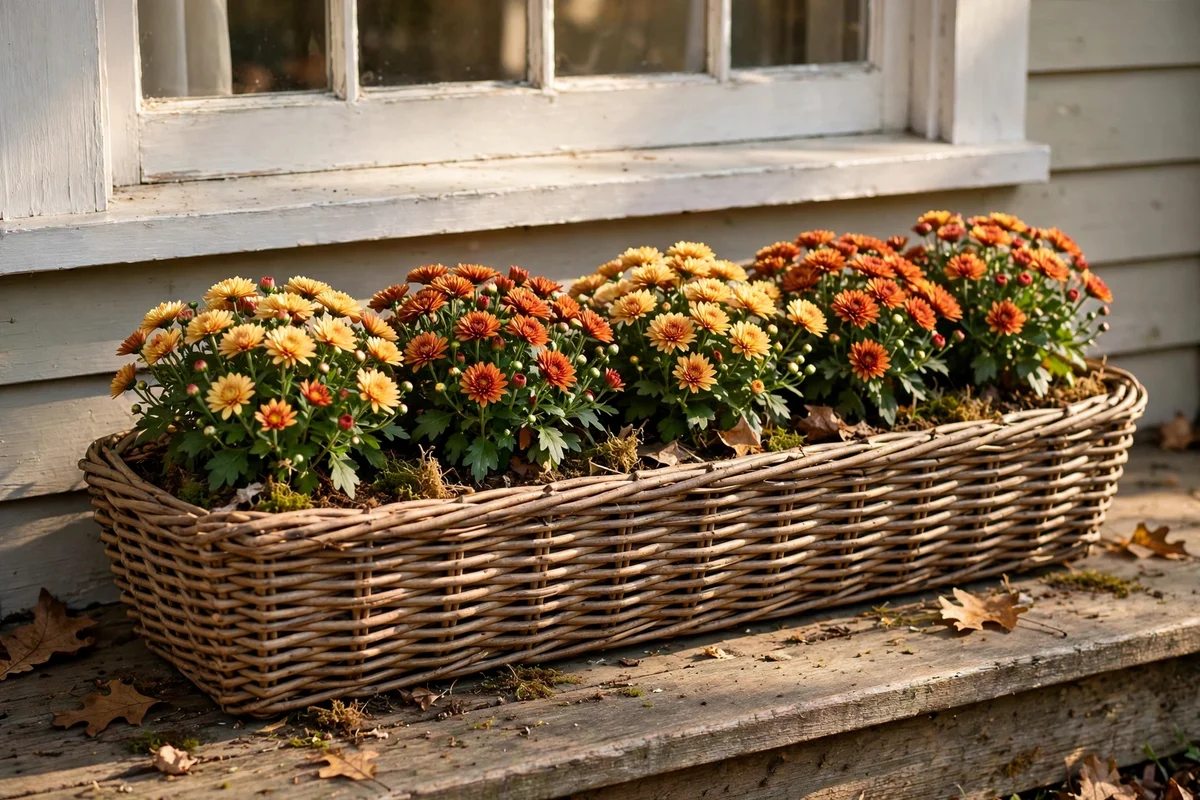
A low woven trough about 80 cm long and 25 cm tall under the porch window extends the display sideways and balances tall door planters. Line it with a plastic tray, then fill it with a row of small mums alternating rust, gold and cream, set 15 cm apart for a full hedge effect. The long horizontal shape draws the eye across the whole frontage and makes even a small porch feel generously planted.
Water troughs a little more often than deep pots, because the shallow soil dries faster in wind. Tuck a few mini gourds along the front edge to hide the tray rim and add texture. The mistake to avoid is overfilling the trough so water spills onto the window frame and stains the paint. A woven trough liner set costs 15 to 25 dollars and works for several seasons.
21. Feed Once With Slow-Release Granules at Planting
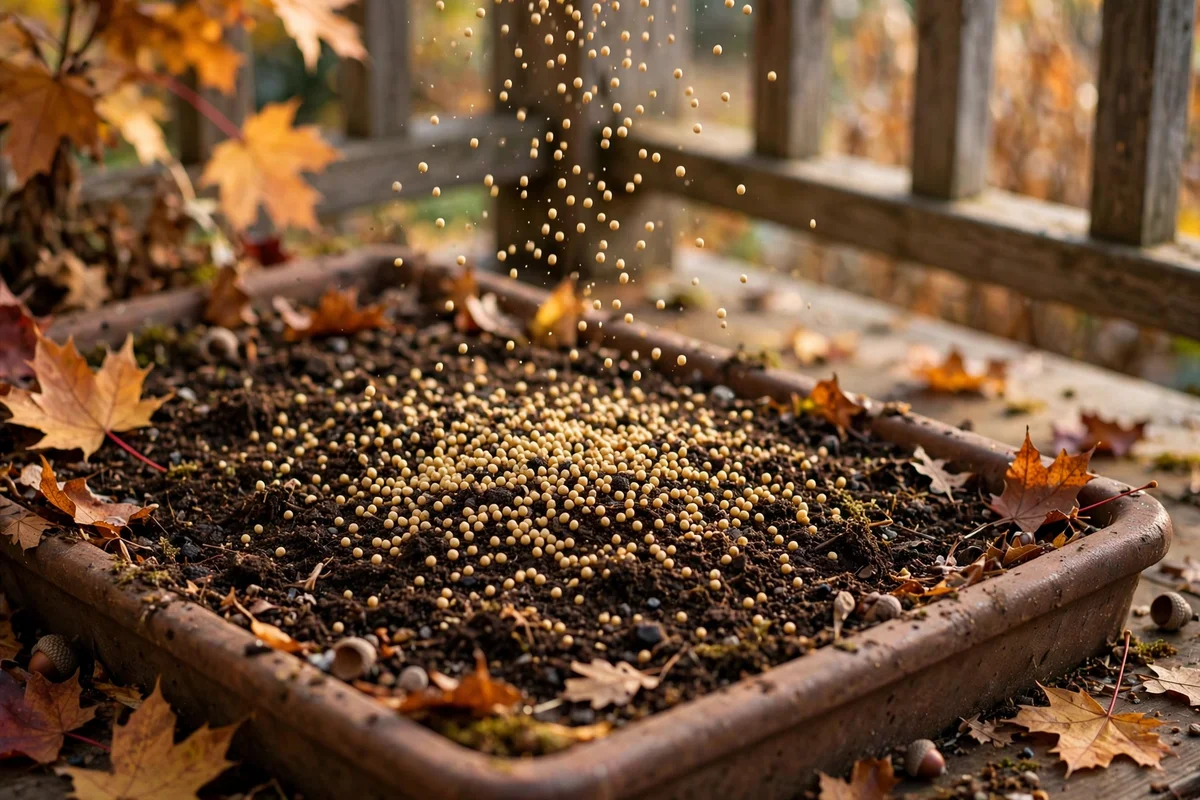
Autumn plants need a gentle start, so mix one tablespoon of slow-release granular feed into the top 5 cm of soil at planting time. The granules release nutrition steadily for six to eight weeks, which covers the whole harvest season without a second application. This slow supply keeps mums blooming and kale colouring up without pushing soft growth that frost would damage. One small box feeds a whole porch of planters.
Scatter the granules rather than piling them against stems, since concentrated feed burns young roots. Water well after applying so the granules start releasing immediately. The mistake to avoid is using high-nitrogen summer feed, which grows soft leafy plants that collapse at the first frost. Slow-release autumn feed costs about six dollars and suits every planter on the porch.
22. Plant Out in Mid September Before the Cold Arrives
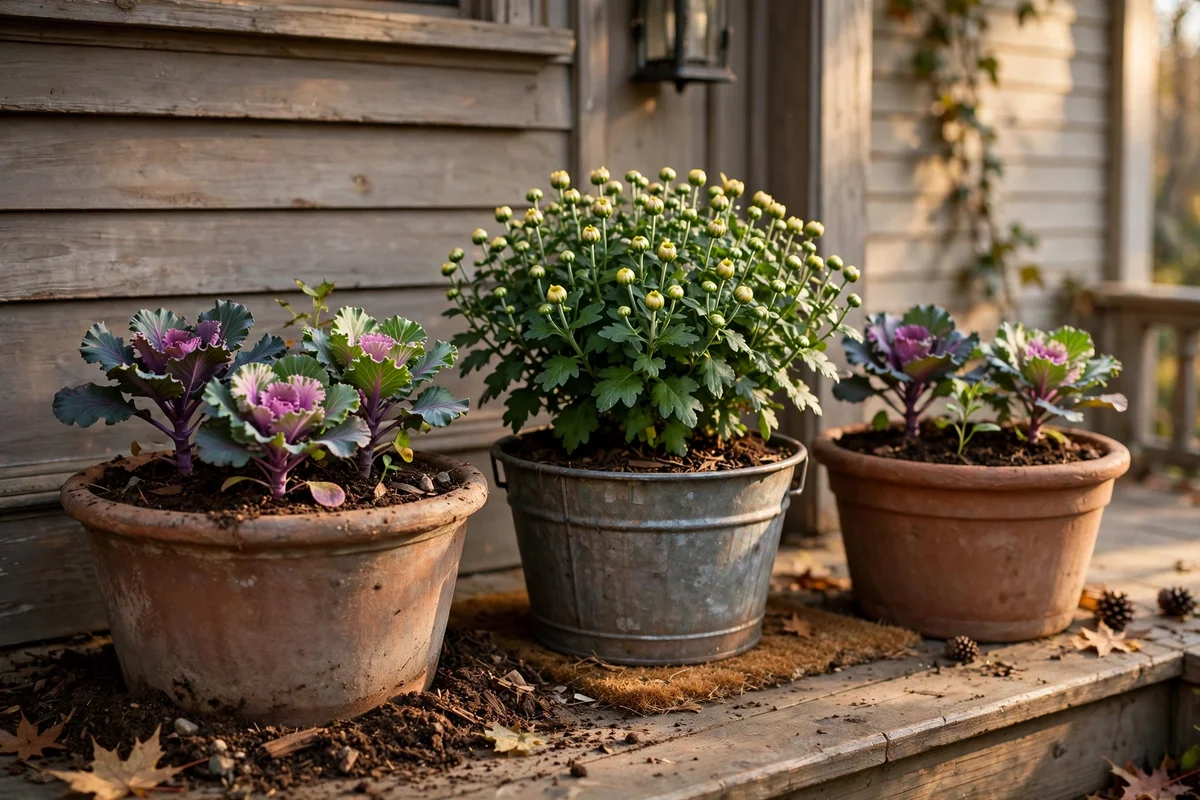
Timing decides everything, so plant autumn pots in the second or third week of September in most regions. At that point, nights are cool enough for kale to colour and mums to set buds, but roots still have weeks to establish before frost. Check your local first-frost date and count back four to six weeks as your planting window. Pots planted in this window look full by early October, exactly when the harvest display matters most.
If you missed September, buy plants still in tight bud in early October rather than fully open blooms, since buds open on your porch and last longer. Protect newly planted pots with horticultural fleece if an early frost threatens. The mistake to avoid is planting heat-stressed summer bedding in September, because it never recovers enough to look good by October. Mark your calendar now so next year the timing is automatic.
23. Frame the Doormat With Low Pots on Both Sides
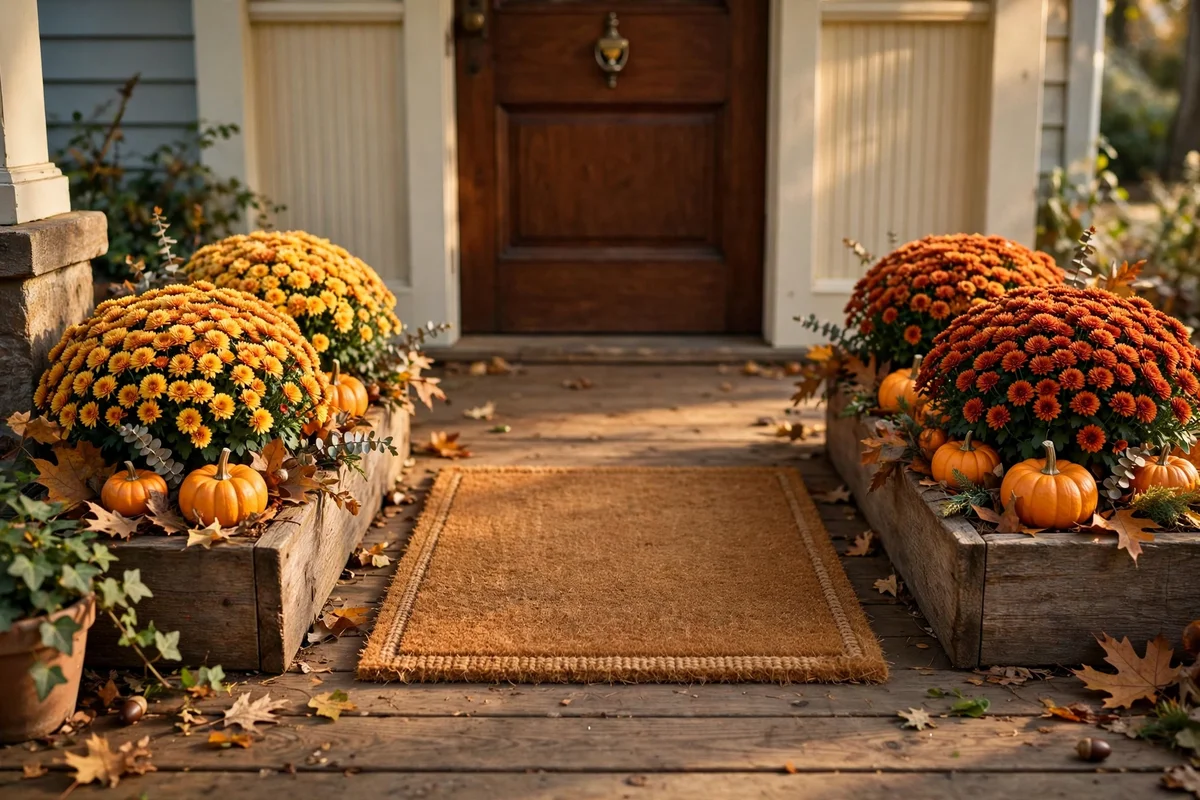
The doormat is the final focal point, so frame it with two low pots of about 25 cm height, one on each side and slightly behind the mat edge. Plant each with a compact mum or a cluster of three mini pumpkins on moss, keeping the display low so it never trips guests or hides the mat message. The low frame completes the layered heights, since tall stalks rise behind and the mat sits at ground level.
Choose pots with a flat, stable base for the mat zone, because this is the busiest foot traffic area of the porch. Brush fallen leaves off the mat daily so the welcome stays readable. The mistake to avoid is placing pots in front of the mat, which narrows the stepping space and annoys every guest. Two small pots plus plants for this spot usually cost under twenty dollars total.
A harvest porch is really a collection of small decisions made generously: a bigger pot than you first reached for, one extra layer of mulch, a lantern lit on time each evening. When the planters, pumpkins and stalks work together, the doorway stops being a pass-through and becomes the warmest part of the house. Guests notice the abundance before they notice any single plant, and that is exactly the welcome you want.
This week, pick the easiest win on your porch: swap two tired summer pots for rust mums in planters at least 35 cm wide, and tuck three mini pumpkins around their bases. That one move changes the whole doorway in under an hour. Once you see how the colour and weight feel, the corn stalks, kale crowns and lanterns will follow naturally through the rest of October.
Frequently Asked Questions
How big should front porch planters be for a harvest display?
Choose pots at least 35 cm wide and 30 cm deep, with a statement urn of about 60 cm if space allows. Small pots vanish beside a door and dry out fast. Measure your doorway and keep each planter within a third of the door width per side. Larger pots hold more soil, water less often, and give the abundant look harvest styling needs.
How do I keep planter soil from getting waterlogged in autumn rain?
Give every pot at least three drainage holes of 12 mm or wider, add 5 cm of gravel or bark at the base, and raise pots on 2 to 3 cm feet. Skip plastic bag liners, which trap water. After storms, tip each pot to confirm water runs out freely. Good drainage matters more than feeding, because soggy roots rot mums within days.
When should I plant autumn porch pots to beat the frost?
Plant in the second or third week of September in most regions. Cool nights help kale colour and mums set buds, while roots still have weeks to establish. Count back four to six weeks from your local first-frost date. If you missed September, buy mums still in tight bud in early October and cover new pots with fleece if frost threatens early.
How do I keep mums looking good all season?
Water in the morning when the top 3 cm of soil is dry, and mulch the surface with bark to hold moisture. Deadhead spent blooms weekly. In the third week of October, swap faded plants for fresh mums still in bud for an instant second act. This one refresh costs about five to eight dollars per plant and keeps the porch abundant into November.
Can I use woven baskets outside on the porch?
Yes, as long as you drop a plastic liner or nursery pot inside to protect the weave, and keep baskets tucked under the porch overhang away from direct roof runoff. Tip out standing water after storms. Seagrass, rattan and water hyacinth baskets look warm and cost two to five dollars second-hand, making them a cheap way to hide plain plastic pots.