Living Room
23 Small Living Room Design Ideas That Make Every Inch Feel Bigger and Brighter
By Anna Wells · · 20 min read
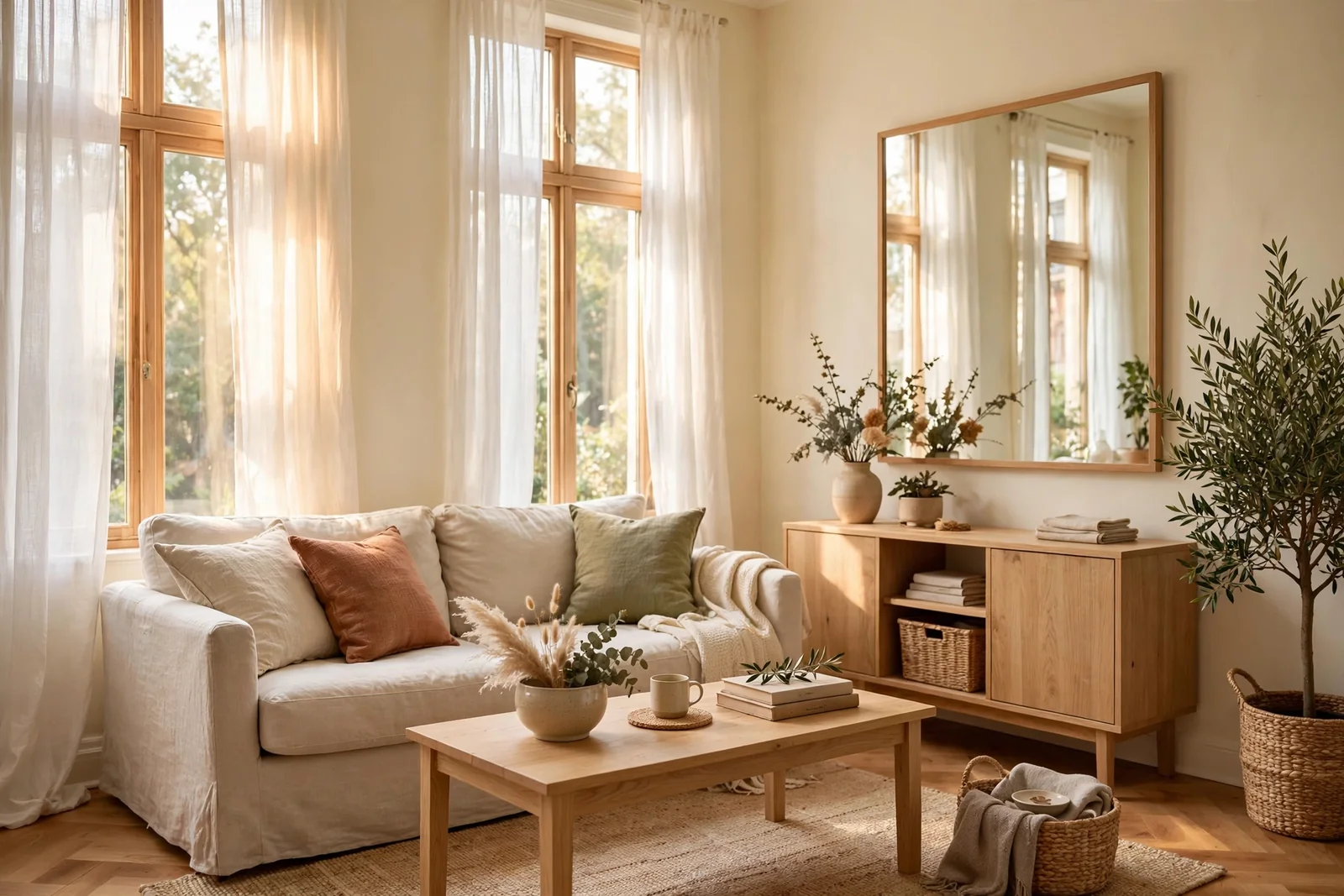
A small living room does not need more square metres to feel generous. It needs light that travels further, furniture that fits its scale, and storage that quietly hides the everyday clutter. The ideas below work in that order, starting with colour and layout and ending with the small styling touches that make a compact room feel calm, warm and surprisingly spacious.
A small living room rarely feels small because of its measurements alone. It feels small when dark corners collect shadows, when furniture blocks the walkways, and when every surface carries a little clutter. Fix those three things and the same room can feel calm, bright and genuinely welcoming, without moving a single wall.
The ideas in this guide build on each other. Start with the pale palette and the layout, then add the mirror, the rug and the layered light. Finish with the quiet styling rules, like editing surfaces and repeating one accent colour, that stop a compact room from slipping back into visual noise.
1. Wash the Walls in Warm White and Cream
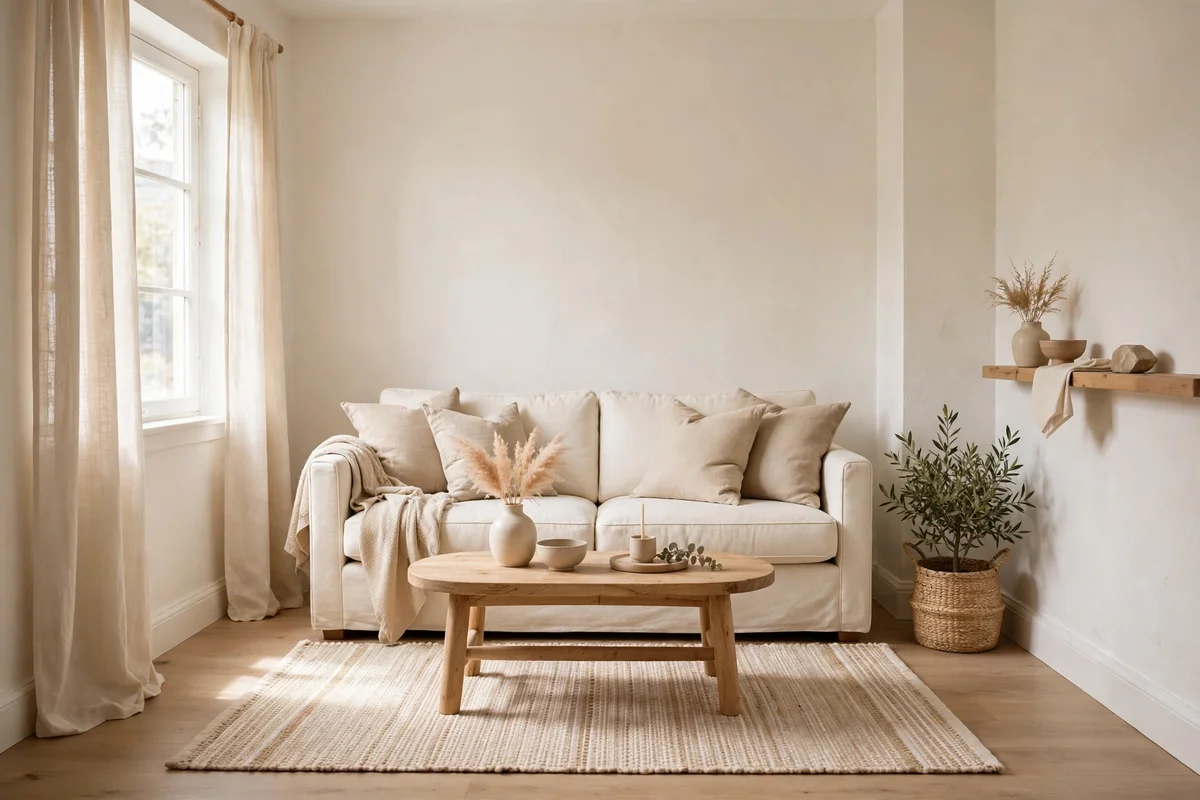
Begin with the largest surface in the room. Warm white, cream, ivory and pale greige bounce daylight around instead of absorbing it, so corners look softer and the walls seem to step back. Paint skirting and door frames the same shade as the walls to remove hard outlines, and keep the finish matte or eggshell so the light spreads evenly without glare.
A pale palette only feels cold when everything is smooth and shiny. Layer in texture instead of extra colour, with a nubby linen sofa, a wool throw, a jute rug and unglazed pottery. Test paint on a full wall first and check it at morning and evening, because north facing rooms can turn a clean white slightly blue and need a warmer cream to balance them.
2. Pull the Sofa a Few Inches From the Wall
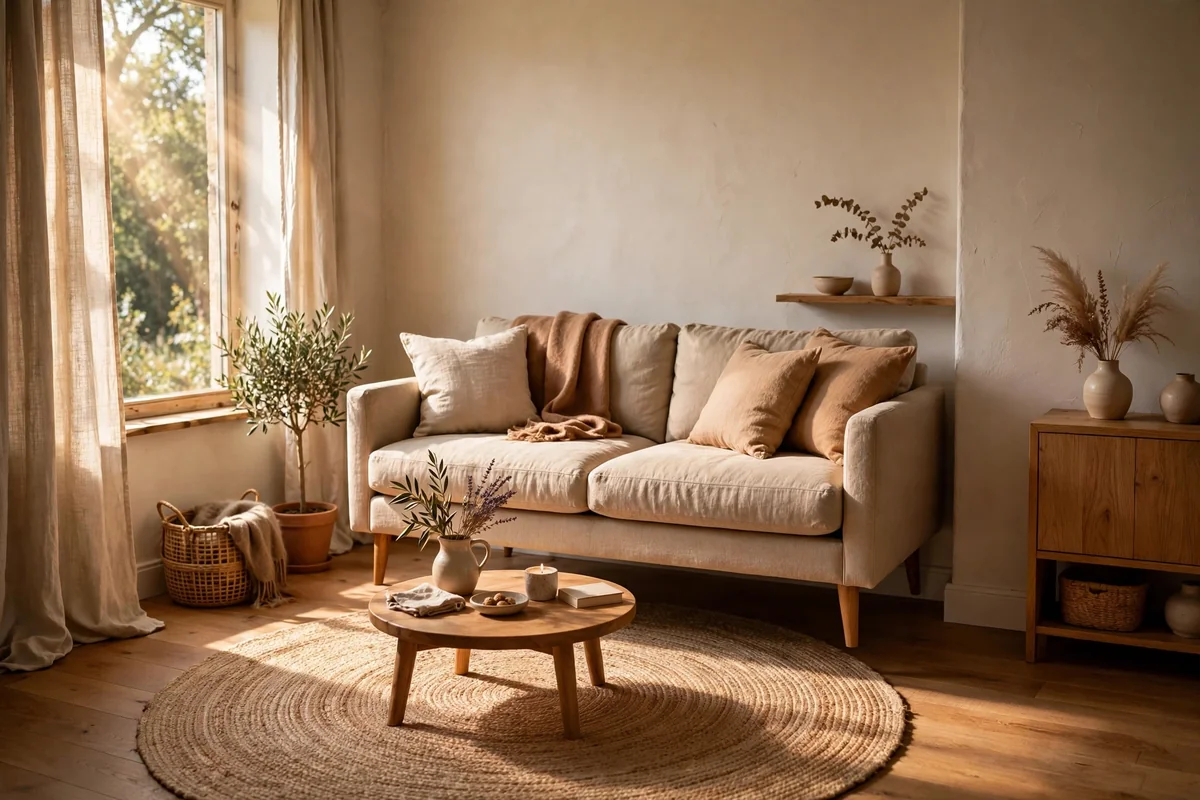
Pushing every piece flat against the walls seems logical, yet it often leaves a dead, crowded strip of furniture around an empty middle. Pull the sofa just 8 to 10 centimetres forward and a slim shadow gap appears behind it. That small gap tricks the eye into reading the room as deeper, and the seating group starts to feel planned rather than parked.
Anchor the floated arrangement with a rug and a coffee table so it reads as one conversation zone. Keep the gap consistent along the wall and run lamp cords neatly behind the sofa with clips. Avoid pulling pieces too far into the room, because a gap wider than about 15 centimetres starts to waste the floor you were trying to save.
3. Pick Seating Raised on Slim Wooden Legs
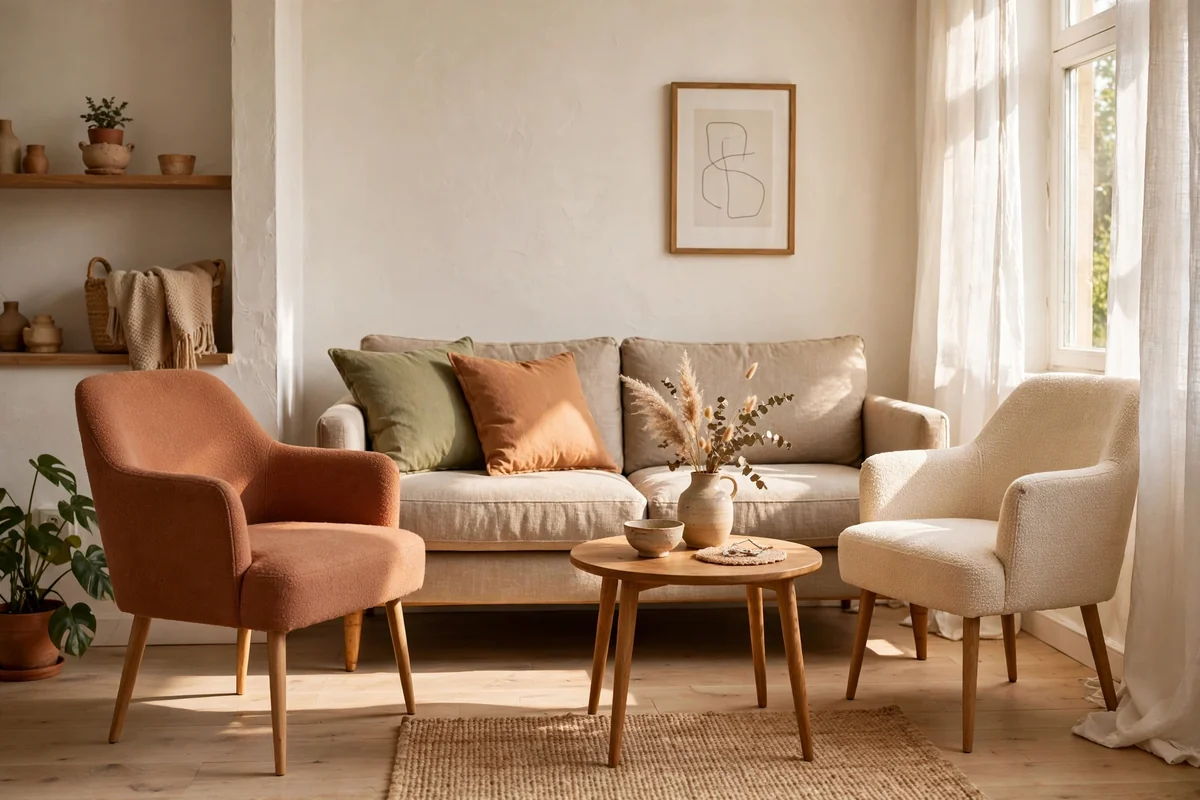
Furniture that stands on visible legs lets the floor run underneath it, and that unbroken floor line is one of the oldest tricks for making a room feel larger. Look for sofas, armchairs and media consoles raised 12 to 18 centimetres on tapered wood or slim metal legs. The space beneath also makes vacuuming quicker, which keeps pale floors looking brighter.
Skirted and blocky bases are not forbidden, but limit them to one piece so the room keeps its light rhythm. Pair leggy seating with a low pile rug so the legs sit steady and the pattern stays visible. If you already own a solid base sofa, raise the lighter pieces instead, like side tables and chairs, to get most of the same effect.
4. Hang Linen Curtains Just Below the Ceiling
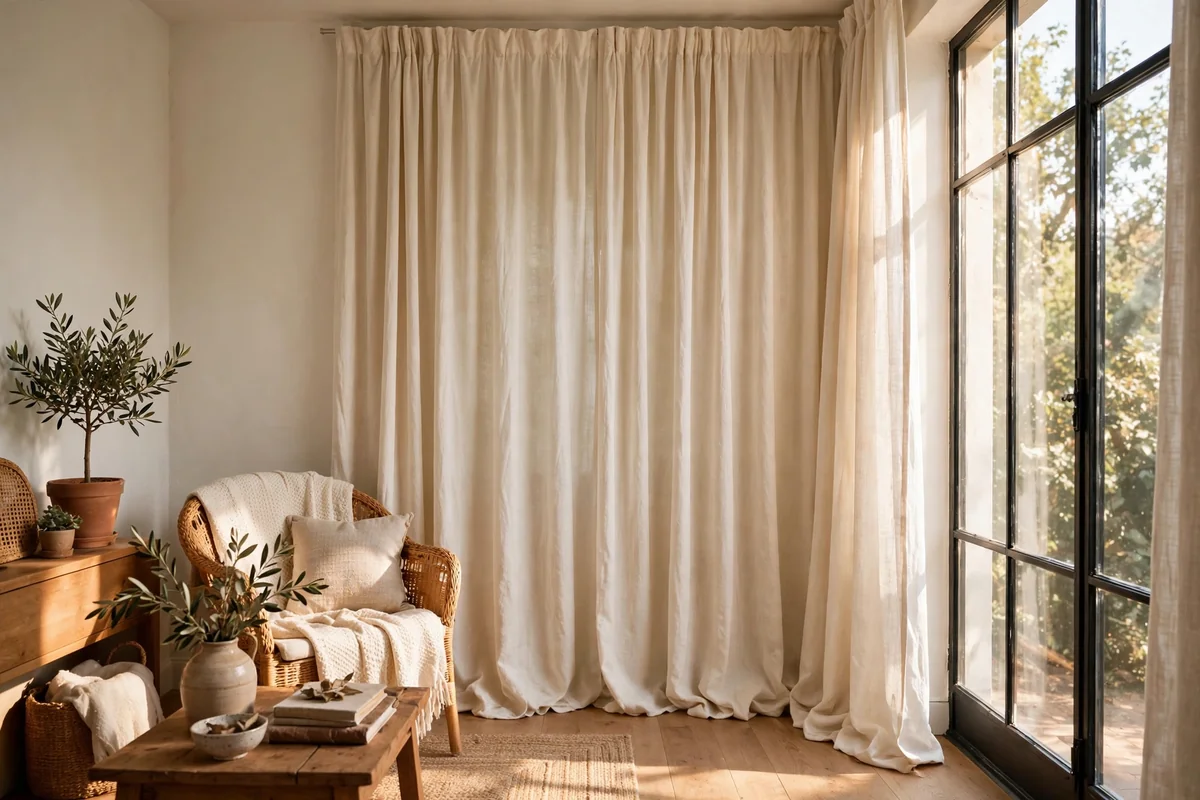
Mount the curtain rod 5 to 10 centimetres below the ceiling rather than just above the window frame, and let the fabric fall to the floor. The long vertical lines pull the eye upward, so the ceiling reads higher and the window reads taller. Extend the rod 15 to 20 centimetres beyond each side of the frame so the open curtains cover wall, not glass.
Choose washed linen or a linen look blend in cream, oat or soft white, which filters sunlight into a gentle glow instead of blocking it. Avoid heavy interlined drapes in a small room, because they eat light and add bulk at the exact place you want airiness. A simple wave fold or pencil pleat keeps the fall clean and tailored.
5. Lean an Oversized Arched Mirror Opposite the Window
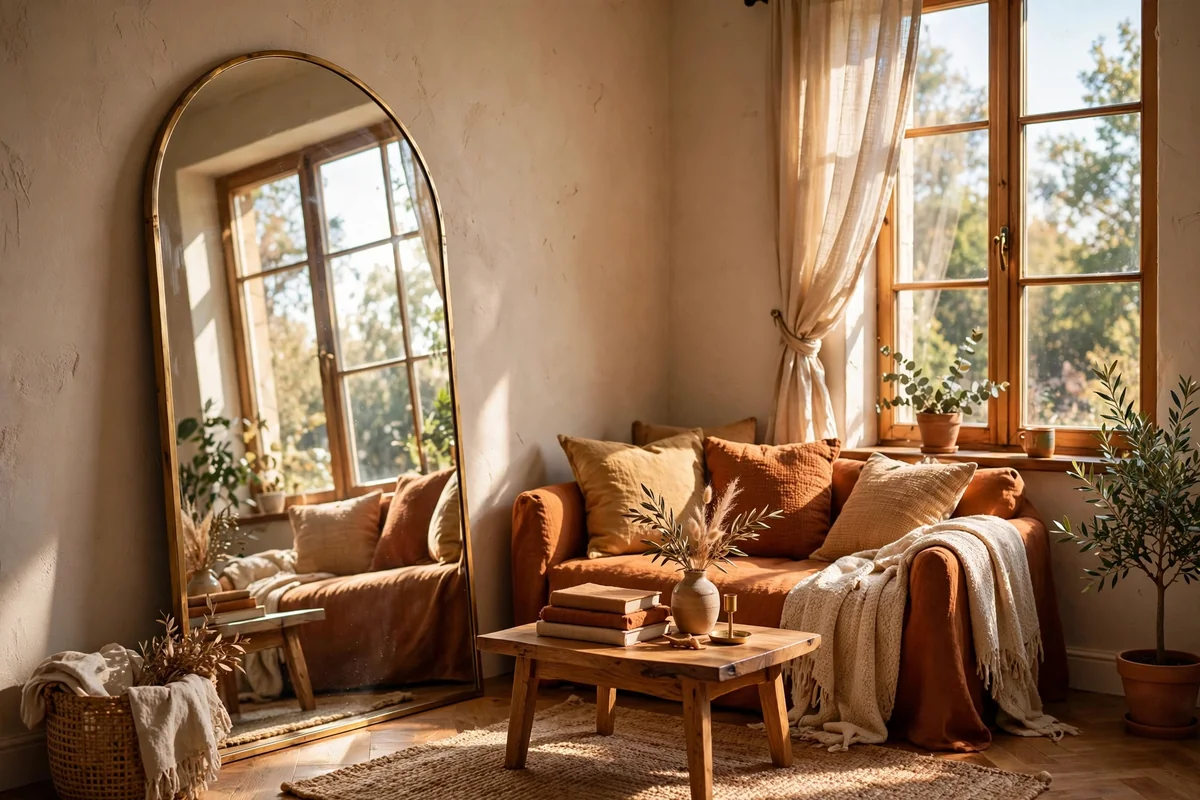
A large mirror placed opposite or just beside a window catches the daylight and the view and throws both back into the room, which can make the space feel close to double its depth. Go bigger than feels safe, around 80 by 160 centimetres for a leaning floor mirror, because a small mirror reads as decoration while a large one reads as architecture.
An arched top softens all the straight lines in a small room, and a thin brass, black or pale wood frame adds definition without weight. Lean the mirror at a slight angle and secure it to the wall with a safety strap, especially in homes with children. Keep the reflected view pleasant, since the mirror will show it twice, so aim it at the window, a plant or artwork.
6. Swap the Blocky Table for a Glass Top One
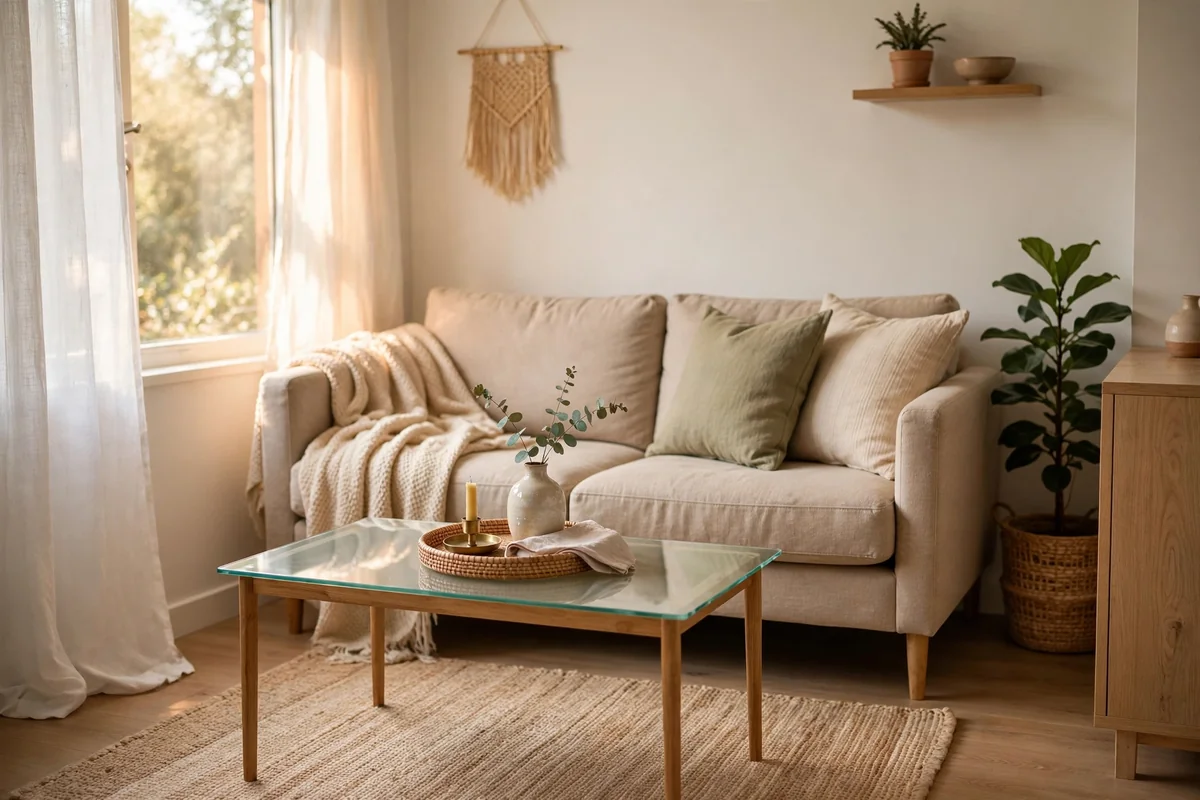
A solid timber coffee table can swallow the middle of a small room. A glass top on a slim wooden or metal frame keeps the same useful surface while letting light and sightlines pass straight through, so the rug pattern stays visible and the seating feels open. Tempered glass at least 10 millimetres thick handles daily use, books and trays without flexing.
If glass feels too cool, try a pale oak table with a lower shelf, or two small round nesting tables you can separate when guests arrive. Keep the top lightly dressed with one tray, one small plant and one book stack. Wipe glass with a microfibre cloth and a drop of vinegar water to stop fingerprints dulling the effect.
7. Build Storage Upward With a Narrow Ladder Shelf
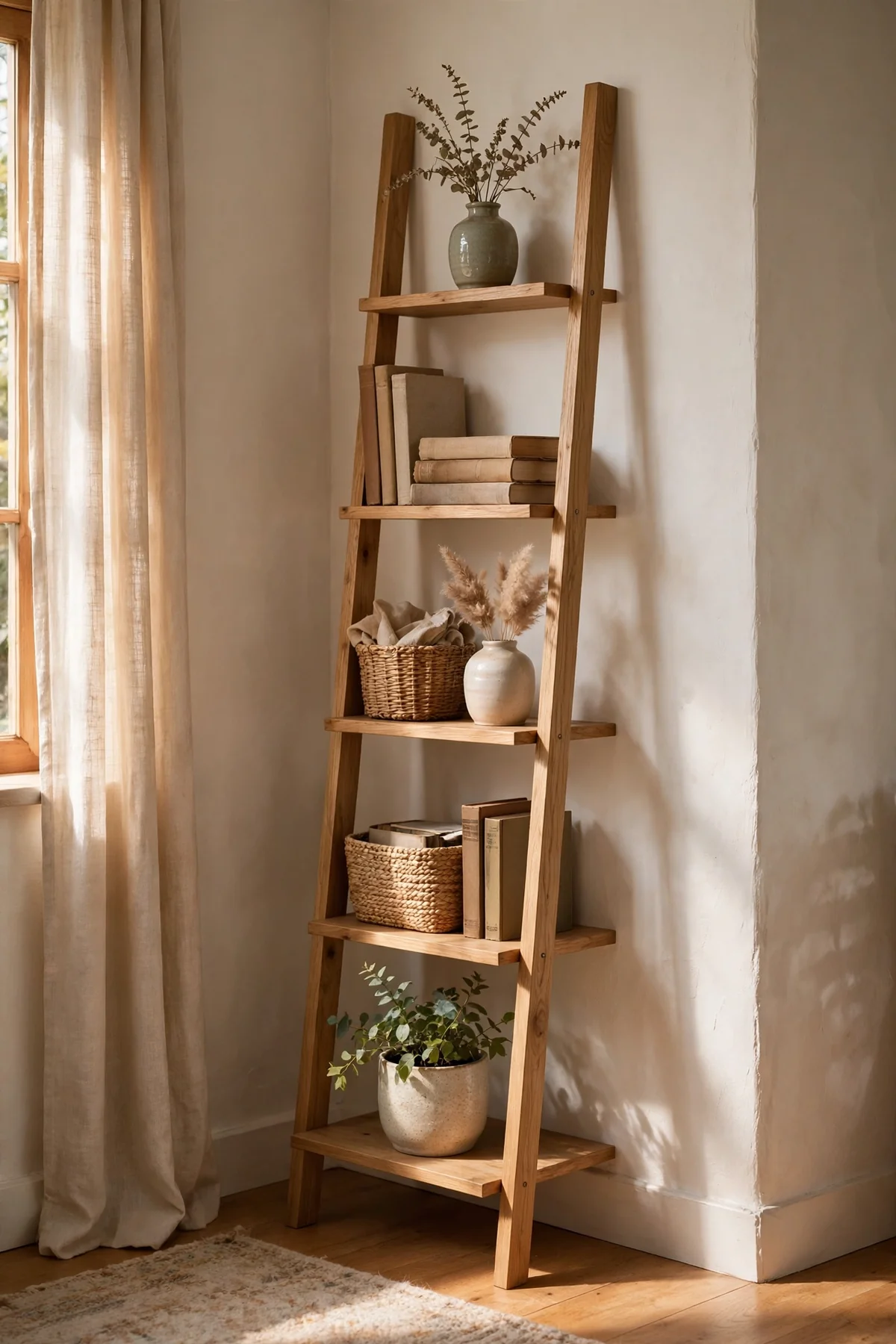
When the floor plan is tight, the walls hold the spare capacity. A ladder shelf only about 40 centimetres deep at the base leans into the wall and narrows as it rises, giving five levels of storage on less than half a square metre of floor. Tall storage also lifts the eye, which quietly stretches the room upward.
Style it in loose groups rather than filling every centimetre. Books low down add weight and stability, woven baskets in the middle hide remotes and chargers, and the top shelves suit light pieces like vases and a trailing plant. Leave roughly a third of each shelf empty. Fix the top of the shelf to the wall with the supplied strap so it cannot tip.
8. Choose a Loveseat Instead of a Sectional
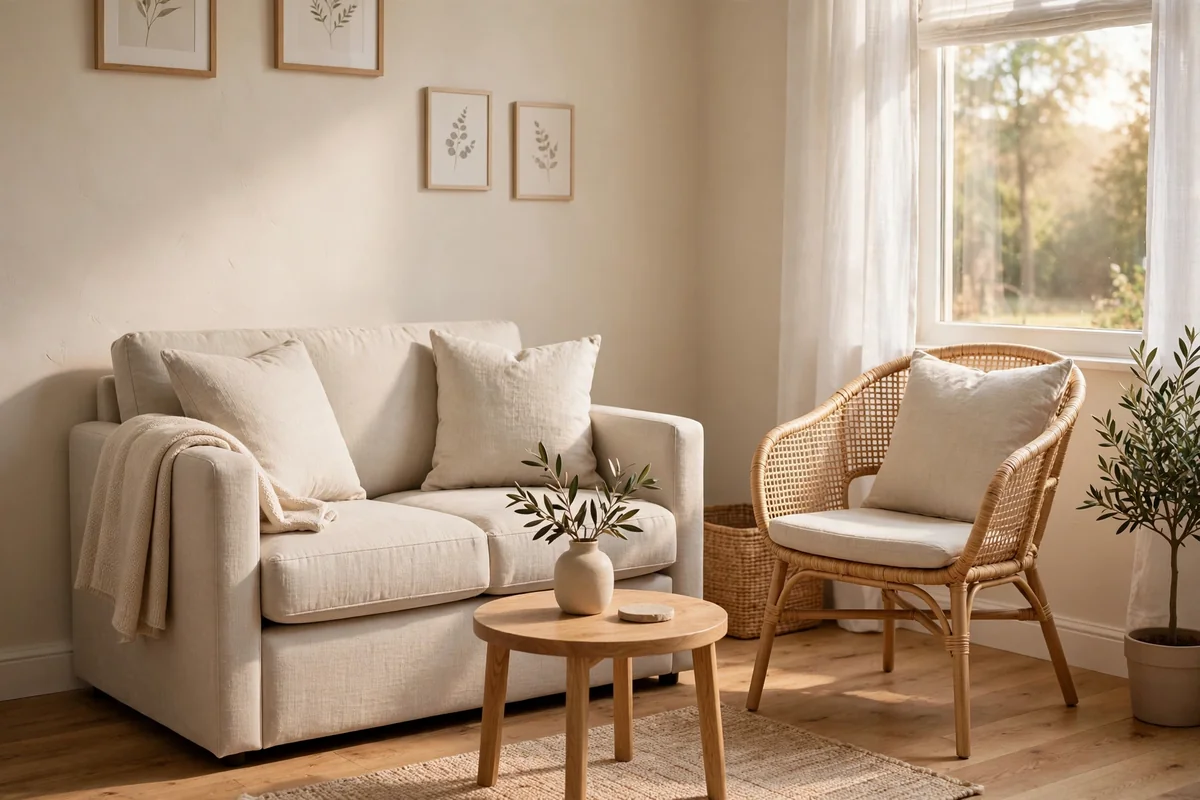
Scale is the quiet difference between snug and cramped. A loveseat around 140 to 160 centimetres wide seats two comfortably while leaving room for a side table and a clear walkway, where a deep sectional would consume the whole wall. Slim arms, around 10 centimetres, return precious seat width without adding bulk to the outline.
Measure the room, the doorway and the stair turn before ordering, and tape the sofa footprint on the floor with masking tape for a day to test the routes through it. Pair the loveseat with one lightweight accent chair you can angle or move, instead of a second sofa. A washable slipcover in oatmeal or stone keeps the large piece pale without worry.
9. Keep a Clear Path From Door to Window
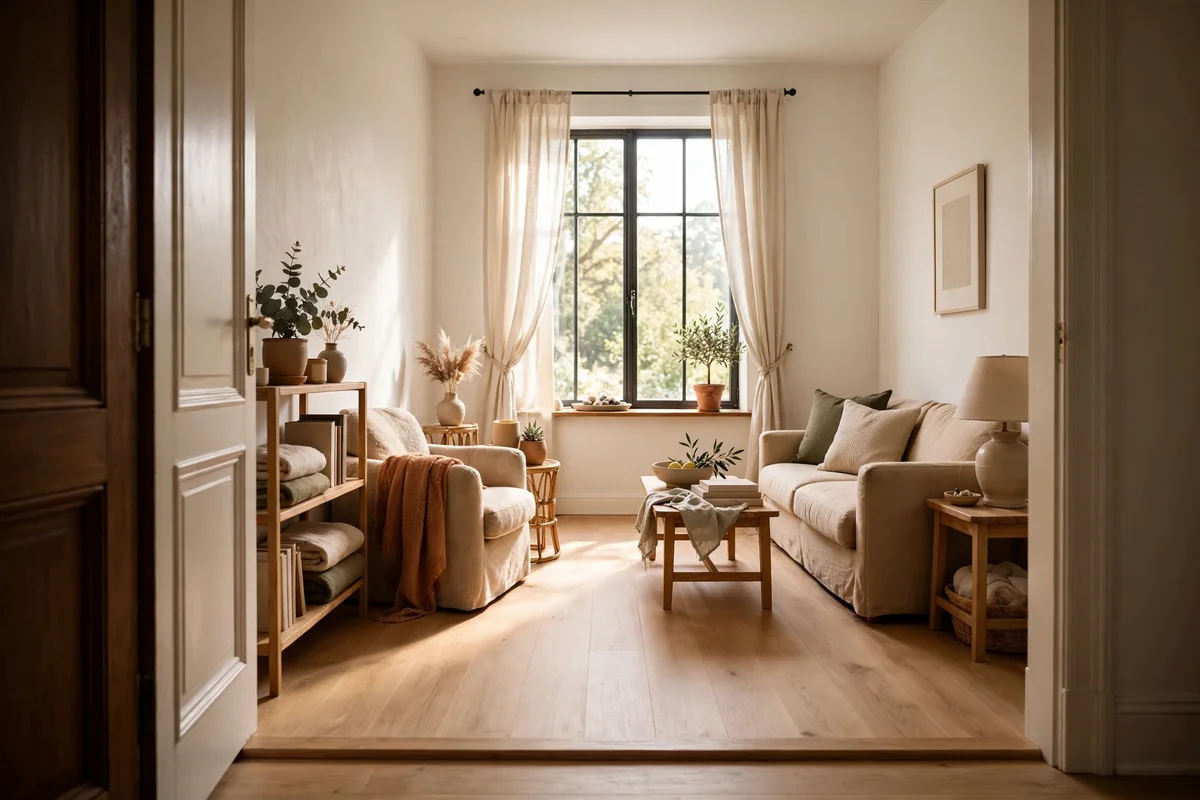
Rooms feel larger when you can cross them without sidestepping. Plan one clear route from the door to the window or the next room, ideally 75 to 90 centimetres wide, and keep it free of plant stands, baskets and side tables. When the eye travels the full length of a room uninterrupted, the brain registers the whole distance as usable space.
Test the layout by walking the route carrying a laundry basket, which quickly reveals the corners that catch hips and shins. Angle a chair rather than shifting the whole group if one corner intrudes. Avoid rugs with raised edges across the path, and tuck trailing cables along the skirting so the route reads as one clean, open line.
10. Fit Shallow Built-Ins Around the Television
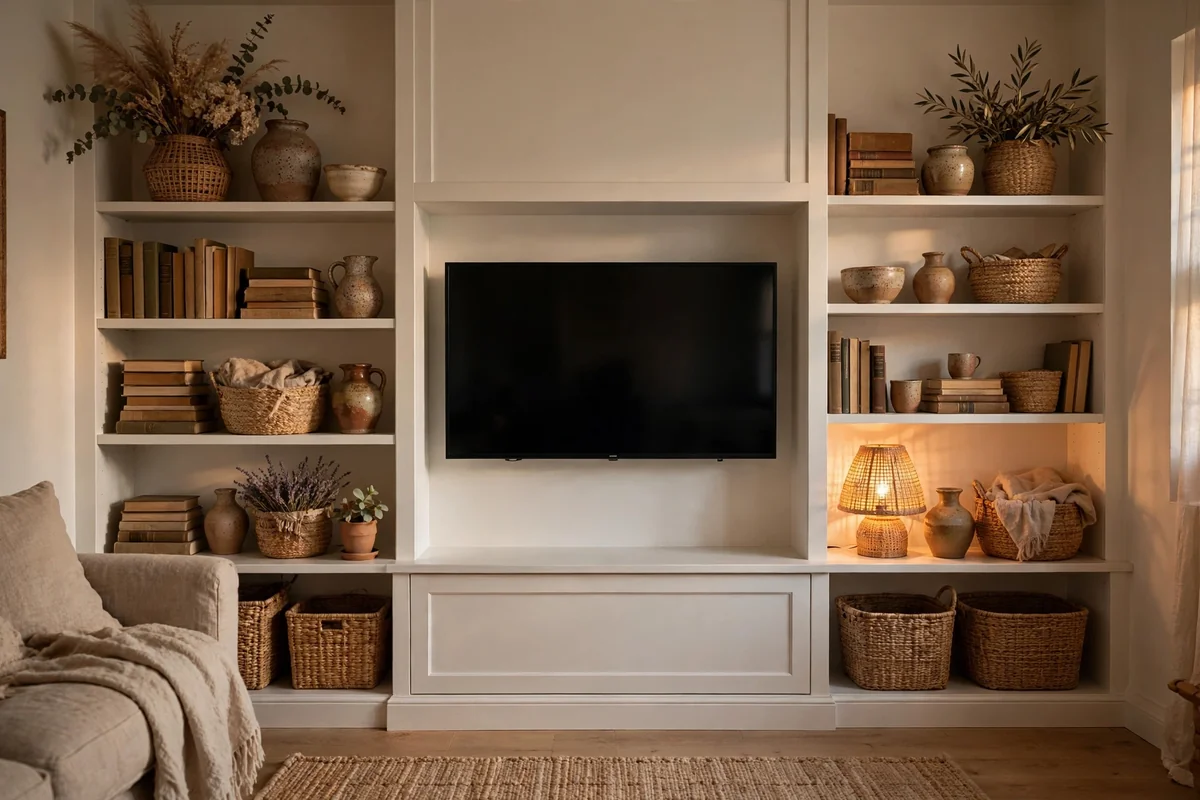
Built-in shelving gives the storage of a bookcase without the projecting bulk, because it sits within a shallow depth of 25 to 30 centimetres. Framing the television with shelves turns a black screen into part of a composed wall, and painting the units the same colour as the walls makes the whole assembly recede. Add cupboards at the base for games, routers and blankets.
A carpenter can build simple painted MDF units in a weekend project, and flat pack carcasses adapted with filler panels give a similar fitted look for less. Keep the styling restful, with books turned to neutral spines in one section and pottery in another. Run cables inside the unit so no wires interrupt the calm lines.
11. Lay One Large Pale Rug Under Every Front Leg
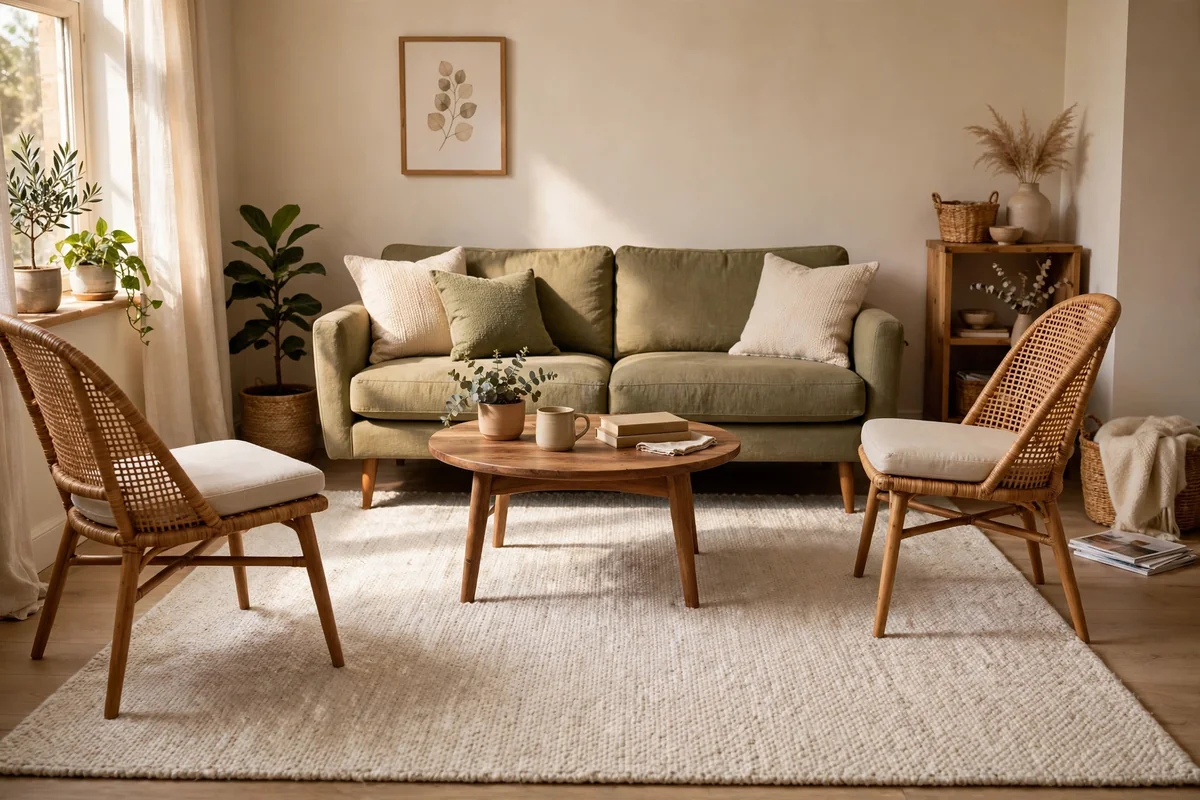
Several small rugs chop the floor into patches and make a small room feel smaller. One generously sized rug, usually 160 by 230 centimetres or larger, gathers the seating into a single zone and lets the eye read the whole area as one expanse. Place it so the front legs of the sofa and chairs rest on the rug while the back legs sit on the floor.
Pick a pale, low pile weave in wool look fibres that hide crumbs and resist flattening in walkways. A subtle tonal pattern adds interest without the visual noise of a bold design. Use a thin anti slip underlay rather than a thick pad, which can trip the edges, and rotate the rug every few months so the light fades it evenly.
12. Layer Light at Three Heights Around the Room
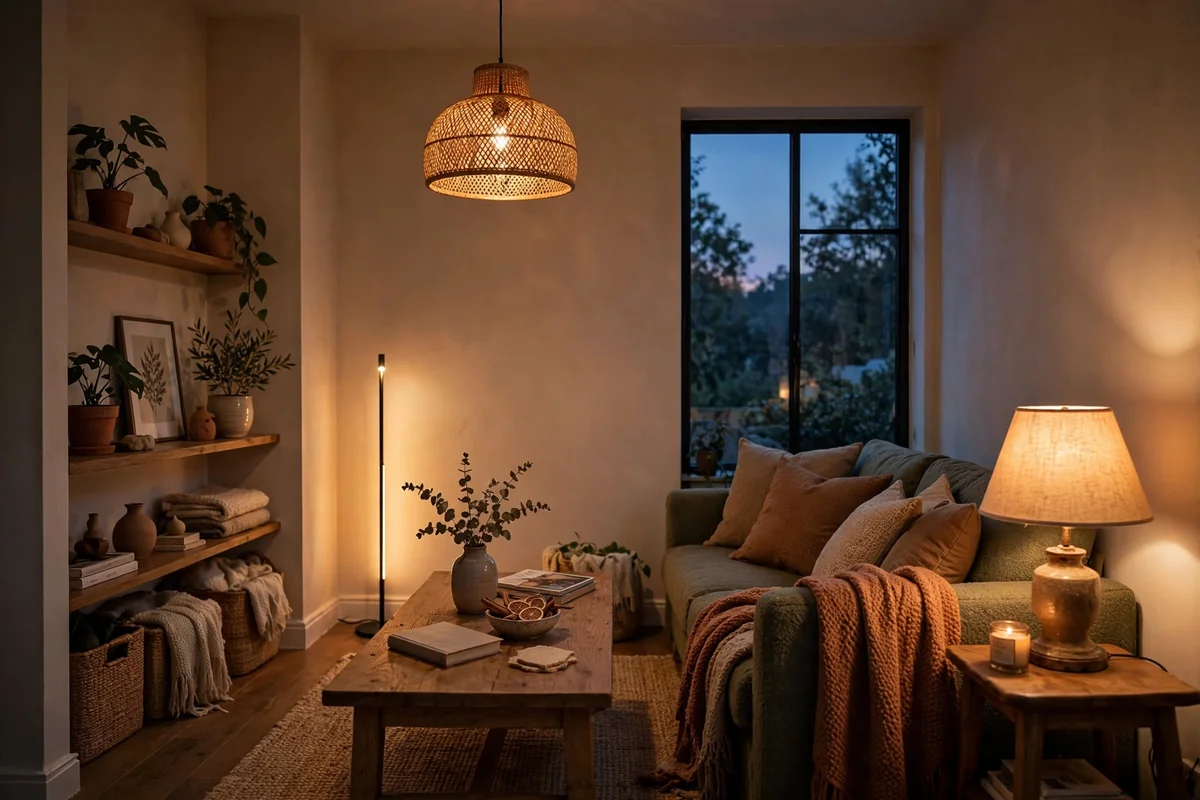
One ceiling light flattens a small room and leaves the corners in shadow, which pulls the walls inward. Layer light at three heights instead, with a ceiling pendant or flush fitting above, a table lamp at seat height, and a slim floor lamp or wall washer lifting the darkest corner. Each layer softens shadows so the room reads wider and taller.
Use bulbs in a warm 2700 to 3000 kelvin range and put the lamps on separate switches or smart plugs so the mood can change through the evening. A lamp with an opaque shade throws light up and down in pools, while a linen shade glows in all directions and suits small rooms better. Keep cords managed behind furniture.
13. Edit Surfaces Down to Three Beautiful Objects
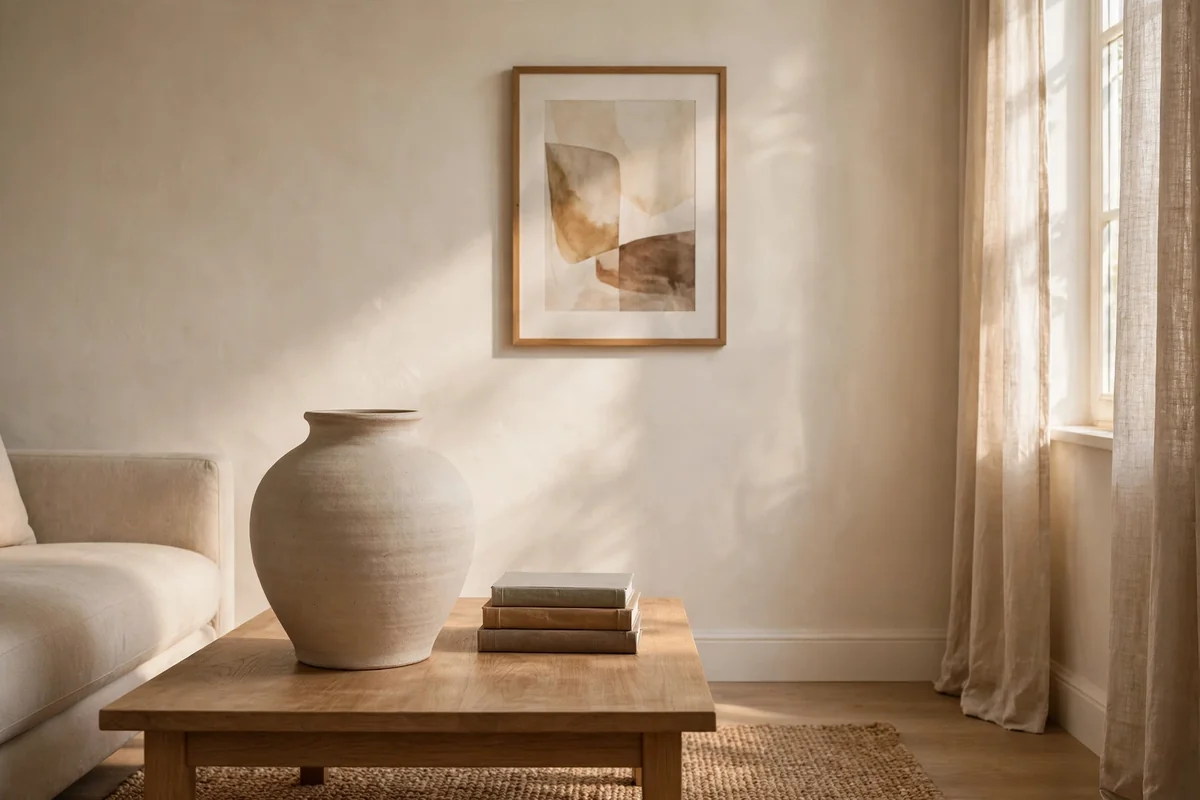
A small room shows everything you own at once, so a dozen tiny ornaments quickly become visual static. Edit each surface, like the coffee table, the console and the mantel, down to three considered pieces, perhaps one tall, one medium and one flat, such as a vase, a framed print and a stack of two books. The empty space around them is what makes them look expensive.
Choose pieces with presence, like an oversized stoneware vase or a single large artwork, rather than clusters of miniatures. Keep the palette within the room tones so the objects harmonise instead of competing. Review the surfaces monthly and return stray items to their homes, because a small room drifts back to clutter faster than a large one.
14. Hide Everyday Clutter in Woven Lidded Baskets
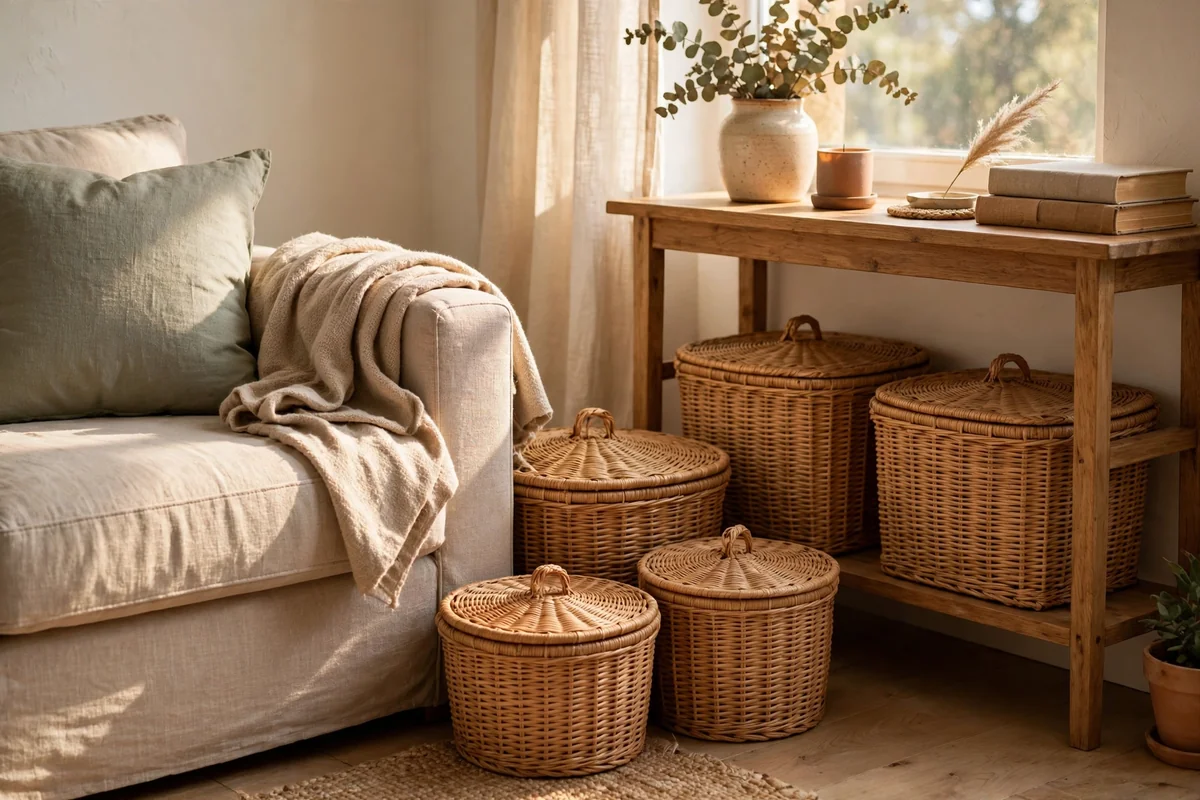
The fastest way to make a small room feel bigger is to remove the small things from sight. Woven baskets with lids gather throws, toys, magazines and charging cables into calm, uniform shapes that read as decor rather than storage. Seagrass, water hyacinth and rattan add the warm texture a pale room needs, and lids keep the contents from spoiling the effect.
Place one large basket beside the sofa for blankets, a medium pair under the console for daily clutter, and small ones on shelves for remotes and coasters. Label the inside of each lid so everyone in the house can reset the room in minutes. Avoid clear boxes on open shelves, because visible contents still register as clutter to the eye.
15. Fill an Empty Corner With One Tall Olive Tree
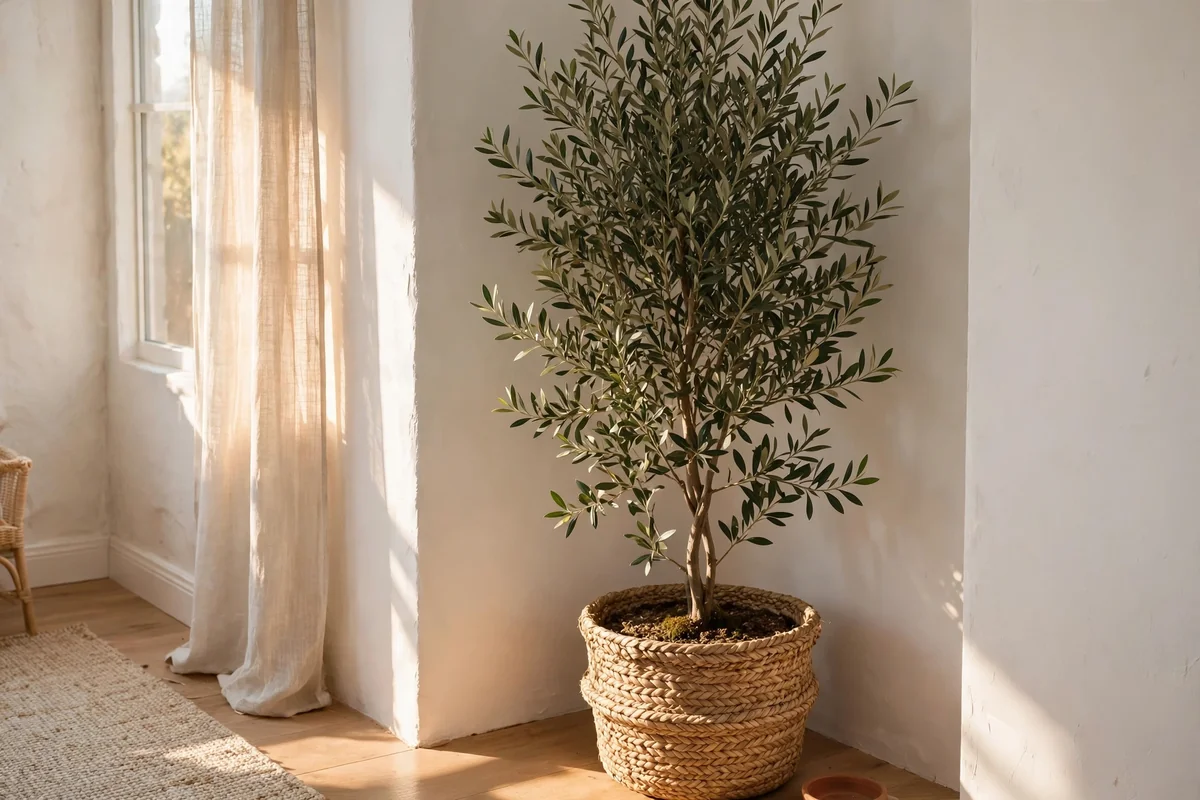
A single tall plant gives a small room height, life and softness in one move. An olive tree, rubber plant or fiddle leaf fig reaching 150 to 180 centimetres draws the eye upward and fills the awkward corner where furniture never quite fits. One statement plant looks calmer than a scatter of small pots, which can read as clutter at floor level.
Set the pot in a woven basket or aged terracotta planter that matches the room textures, and raise it on a low stand if the ceiling is high. Give the plant the brightest corner you have and rotate it monthly for even growth. A good quality faux tree is a fair choice for dark corners, chosen with varied, matte leaves.
16. Arrange a Calm Grid Gallery in Matching Frames
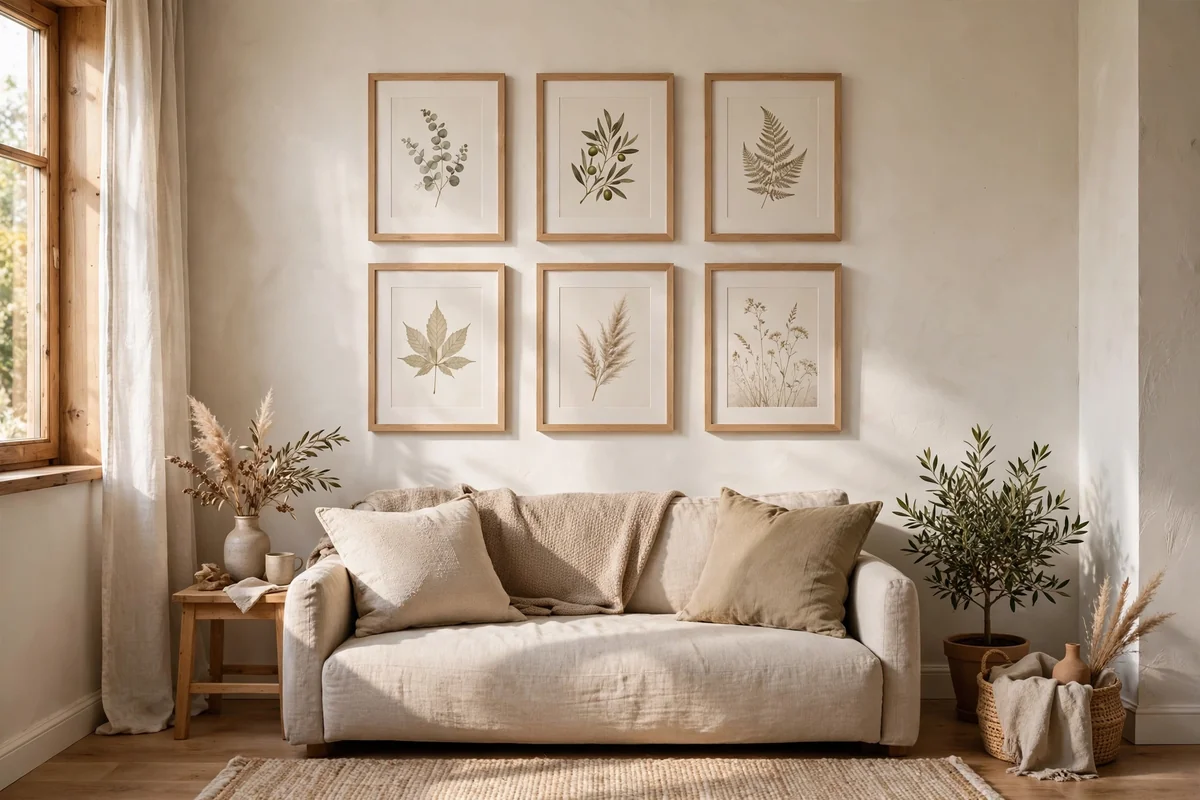
Artwork adds personality without using any floor space, and a tidy grid keeps it feeling serene. Choose six to nine frames in one finish, like pale oak or thin black, and fill them with prints that share a soft colour story, such as botanical studies, landscapes or simple line drawings. Even spacing of 5 to 6 centimetres between frames makes the group read as one large piece.
Hang the grid so its centre sits near eye level, around 145 centimetres from the floor, and keep the bottom edge 20 centimetres above the sofa back. Lay the arrangement on the floor first and photograph it before drilling. Paper templates taped to the wall let you live with the positions for a day before committing to holes.
17. Let an Ottoman Work as Table, Seat and Storage
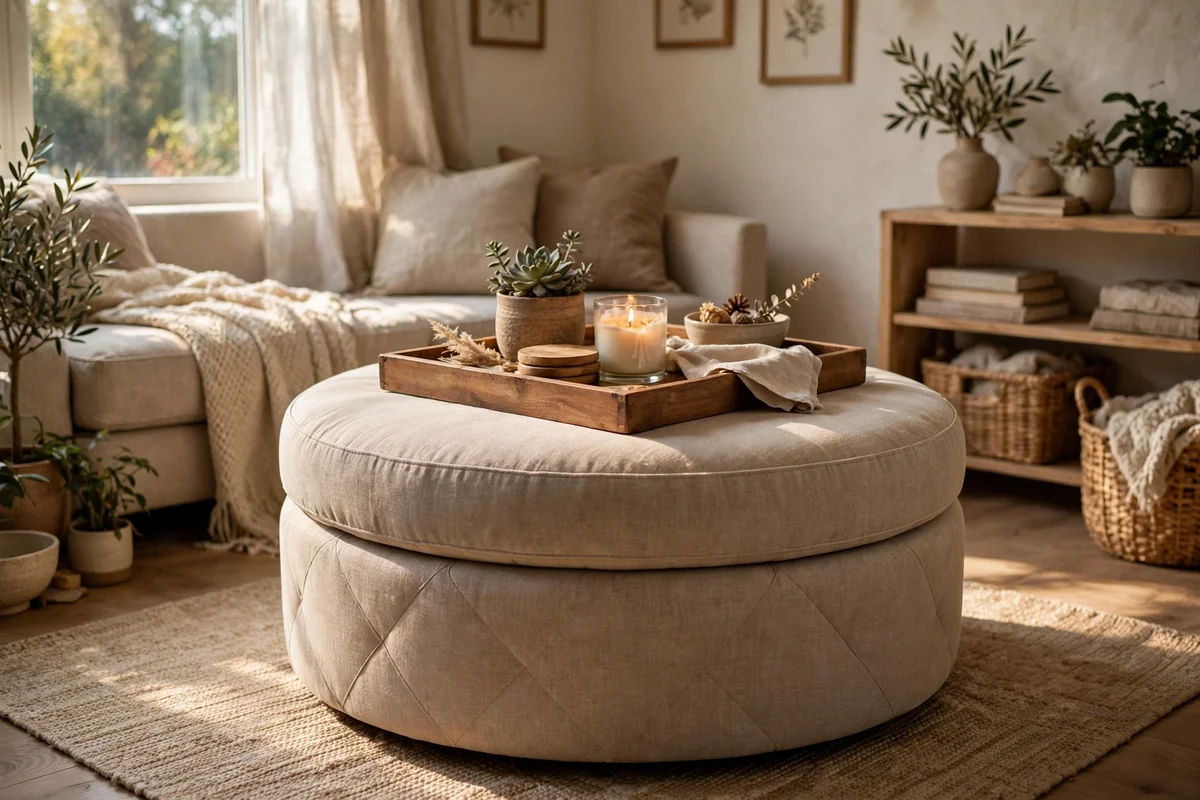
In a small room, every piece should earn its footprint twice. A firm upholstered ottoman around 80 to 100 centimetres across works as a coffee table with a tray on top, as extra seating when guests arrive, and as a hiding place for blankets and board games inside. Its soft edges are kinder than glass or timber in tight walkways where shins pass close.
Choose a durable weave in a tone close to the sofa so the pair reads as one calm suite, or a gentle contrast like warm tan against cream. A lift off lid is easier than a hinged one when a tray lives on top. Keep a folded throw inside rather than on display if you want the room to feel especially uncluttered.
18. Paint the Ceiling a Brighter White Than the Walls
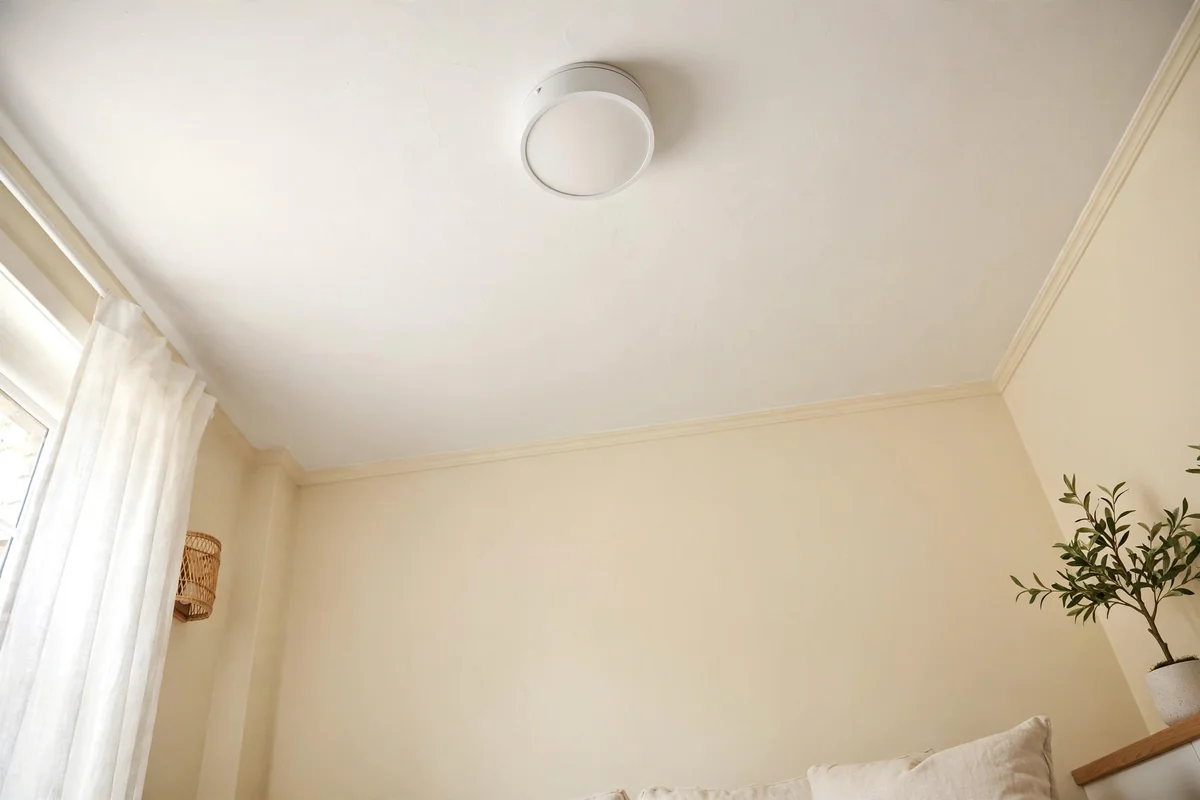
The ceiling is the fifth wall, and in a small room it decides whether the space feels lifted or lidded. Paint it a clean, bright white that is a step lighter than the walls, so daylight bouncing upward returns into the room and the ceiling plane seems to float higher. A flat matte finish hides the imperfections that low ceilings tend to show.
Carry the wall colour a few centimetres onto the ceiling edge only if the walls are very pale, otherwise keep a crisp line at the cornice. Choose a simple flush or semi flush light fitting rather than a long pendant, which would lower the visual ceiling. Wash or repaint marked ceilings before judging the wall colour, because a grey ceiling dulls everything beneath it.
19. Style Open Shelves With Breathing Room Between Pieces
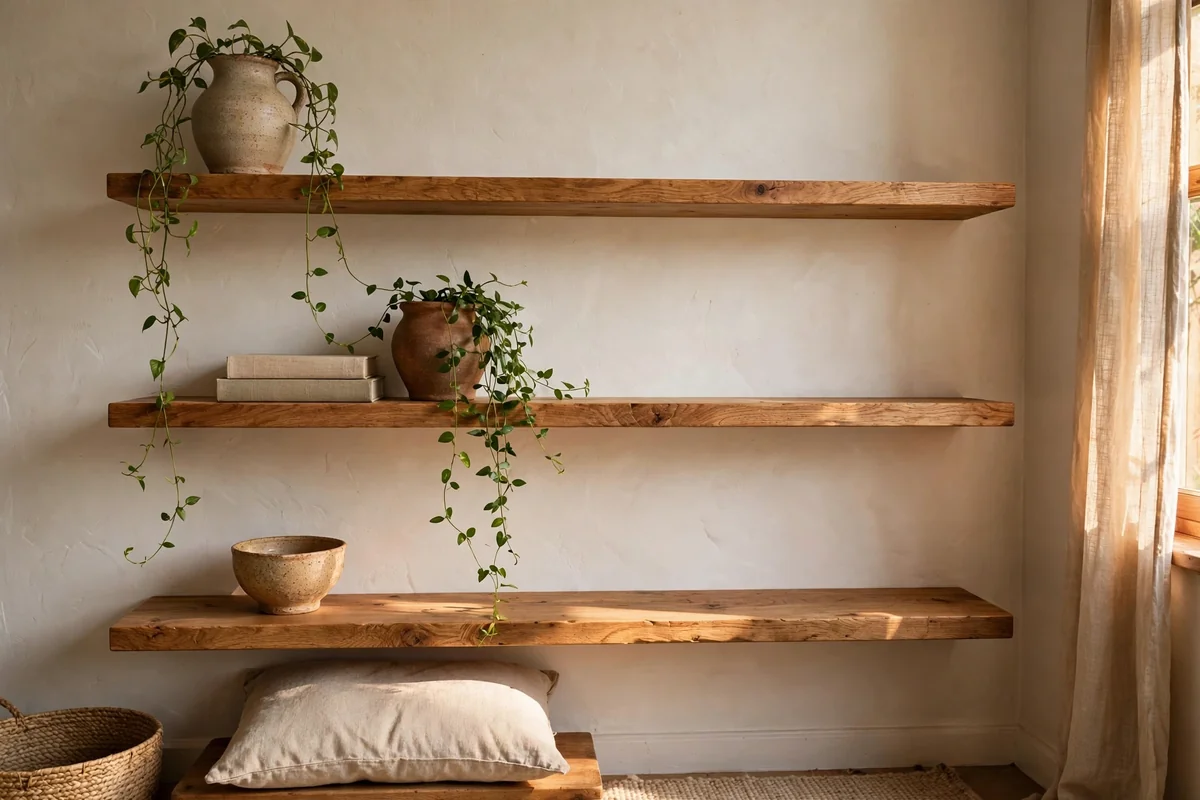
Open shelves can make a small room feel airy or overwhelmed, and the difference is empty space. Fill only about two thirds of each shelf, grouping objects in twos and threes with gaps between the groups. Stack some books horizontally as low plinths and stand others vertically, and let one trailing plant soften a single shelf edge rather than every level.
Keep the objects inside one palette of wood, white, stone and green so the shelves read as texture, not clutter. Put everyday items in the baskets and boxes and reserve the open spots for pieces you enjoy seeing. Step back to the doorway to judge the effect, because shelves are mostly seen from across the room, not up close.
20. Warm the Palette With Honey Oak Accents
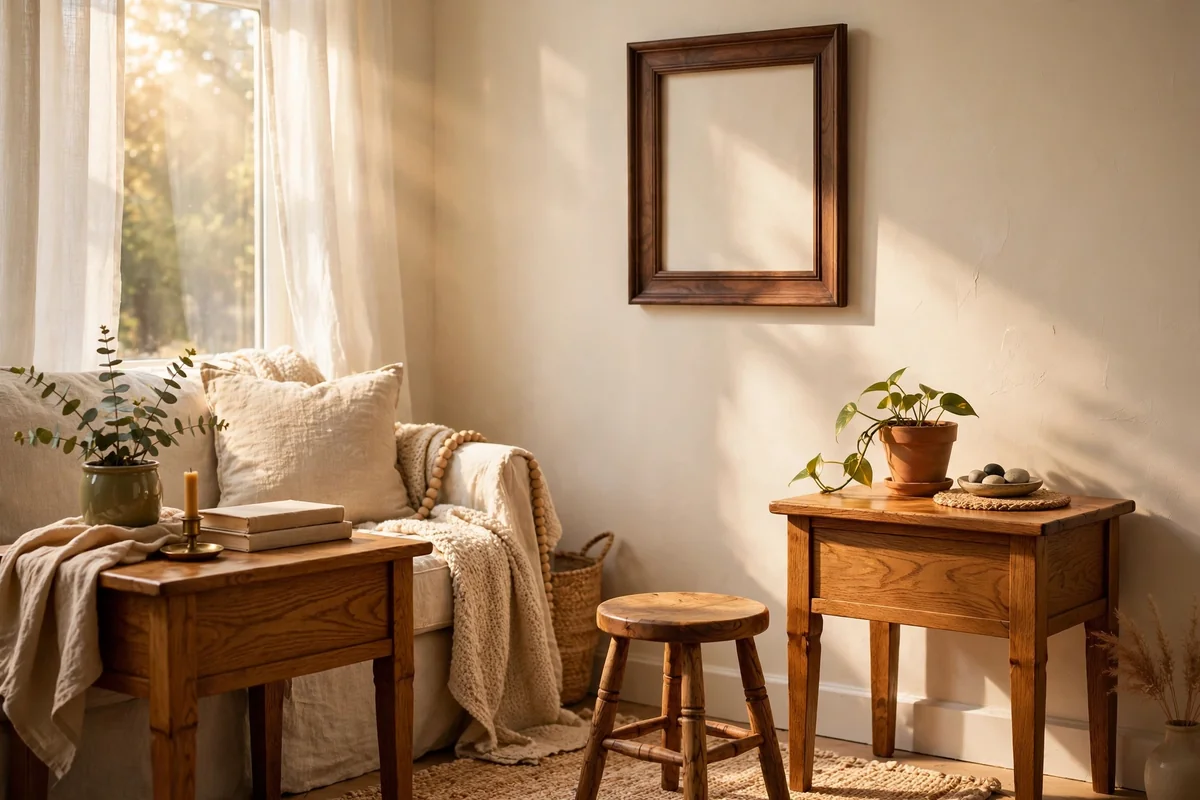
An all pale scheme can drift toward chilly if nothing warms it. Honey oak, warm beech and light walnut bring that warmth without the darkness that shrinks a small room. Use them in the coffee table, a side stool, picture frames and a floor lamp stem, repeating the same wood family two or three times so the room feels gathered rather than matched.
Avoid mixing more than two wood tones in a small space, because competing grains create noise at close range. If existing furniture is dark, lighten the balance with pale textiles on top, like a cream throw over a dark chair. Natural wood also pairs kindly with the woven baskets and linen textures used elsewhere in the room, building one calm material story.
21. Soften Tight Corners With Rounded Furniture
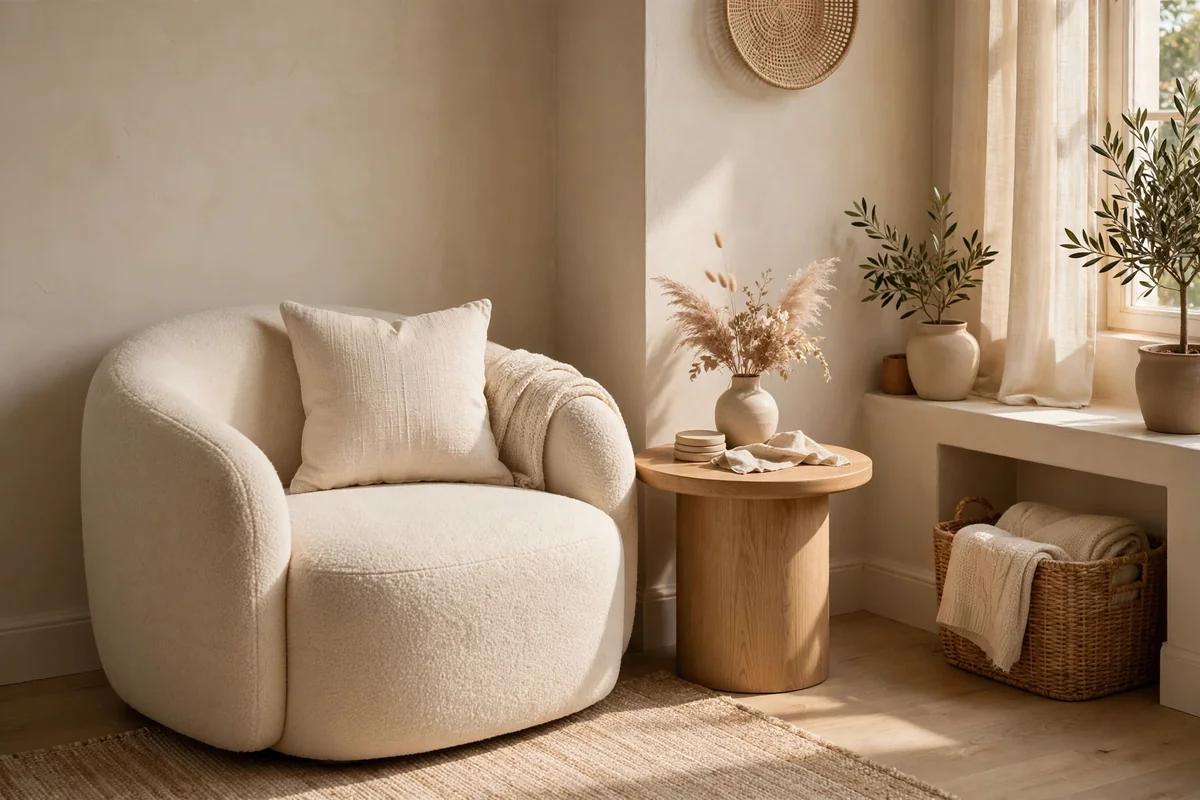
Sharp corners multiply in a small room, and each one is a small interruption to movement and sight. Rounded pieces ease both problems. A curved back armchair, a drum side table and a round or oval coffee table let you slip past comfortably and let the eye travel in smooth loops instead of stopping at hard angles every metre.
Start with the piece closest to the walkway, usually the coffee table, and swap it for an oval or round version of similar size. A round rug can echo the softness, though keep the main rug rectangular if the seating group is long. Rounded shapes are also safer in homes with small children, which makes them a practical as well as visual kindness.
22. Mount the Television Flush to Free the Console
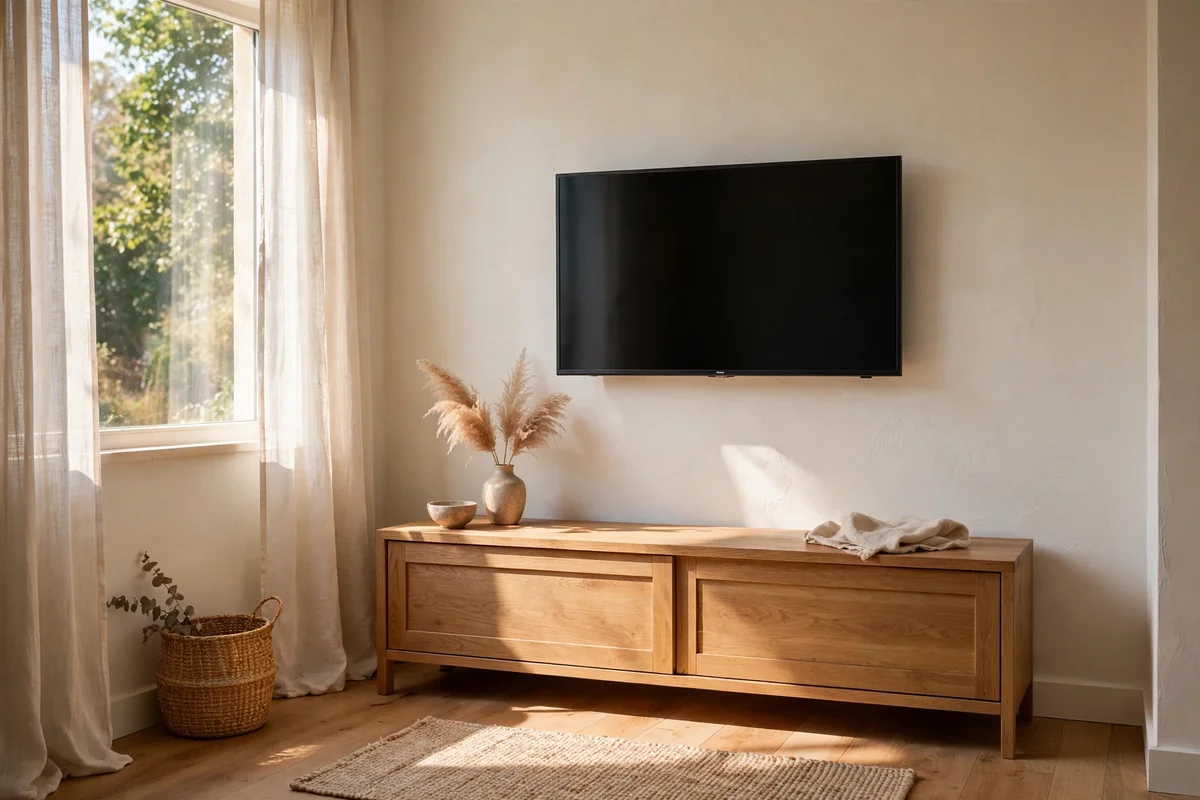
A television standing on a deep stand pushes the whole seating arrangement further into the room. Mounting the screen flush on a slim bracket returns 20 to 30 centimetres of depth, lets you use a shallower console or none at all, and removes the tangle of visible cables when they are run through the wall or a painted trunking channel.
Set the centre of the screen near eye level when seated, around 100 to 110 centimetres from the floor, to avoid a cinema style crick in the neck. Leave a low, uncluttered surface beneath for a soundbar or a single vase, and resist filling it. If renting prevents drilling, a stand with a mounting column gives a similar floating effect without wall fixings.
23. Repeat One Accent Colour in Three Small Places
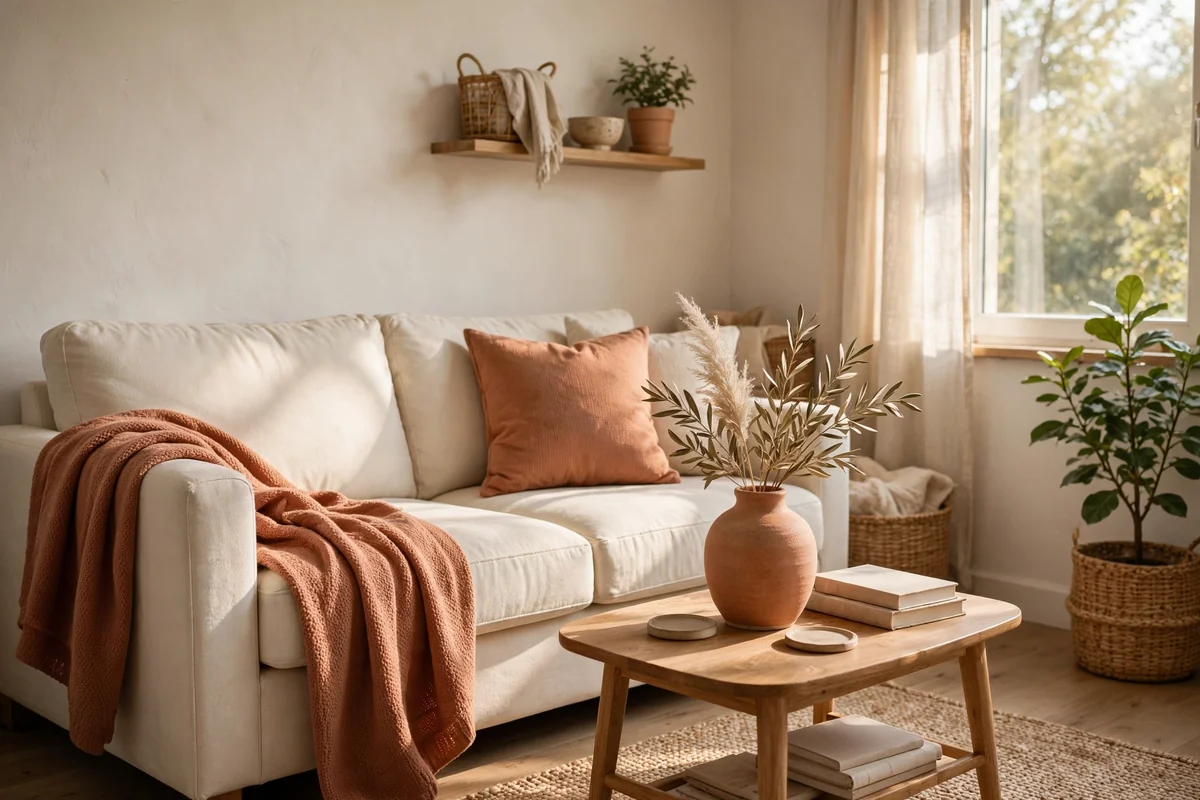
A calm room still needs a note of character, and the safest way to add it is one accent colour repeated three times. Choose a cushion, a ceramic vase and a throw in the same softened shade, like terracotta, sage or dusty blue, and place them in a loose triangle around the room. The repetition looks deliberate and ties the pale scheme together.
Keep each appearance small so the colour seasons the room instead of shouting. If you tire of the shade, three small pieces are cheap to swap with the seasons, moving from spring green to autumn rust. Avoid introducing a second accent until the first feels settled, because two competing colours in a small space quickly undo the calm you built.
A Few Final Thoughts
A bigger feeling living room is rarely about one dramatic purchase. It is the sum of pale walls, furniture that fits, light at three heights and surfaces that stay edited. Work through the ideas in order, live with each change for a few days, and notice how the room feels at the times you use it most. Small rooms reward patience, because every thoughtful centimetre counts twice.
Frequently Asked Questions
What colours make a small living room look bigger?
Warm whites, cream, ivory and pale greige make the strongest difference because they reflect daylight and soften the shadows that gather in corners. Keep the same family of tones across walls, sofa and rug so the eye reads one continuous expanse, and add interest with texture, like linen, wool and woven fibres, rather than with extra colours that break up the space.
Should furniture go against the wall in a small room?
Not always. Pulling the sofa a few inches away from the wall creates a shadow line that reads as extra depth, and grouping the seating around a rug makes the arrangement feel like a planned conversation area. Just keep one clear walkway of at least 75 centimetres so the room still feels easy to cross.
What size rug suits a small living room?
Choose one rug that is large enough for the front legs of the sofa and both chairs to rest on it, which usually means at least 160 by 230 centimetres. Several small rugs fragment the floor and make the room feel busier and smaller, while one large pale rug gathers the seating into a single calm zone.
How can I add storage without bulky furniture?
Build upward and hide things in plain sight. Narrow ladder shelves and shallow built-ins use wall height instead of floor depth, while lidded woven baskets and a storage ottoman swallow blankets, toys and cables. Matching the storage to the room palette keeps it looking like decor, so the room stays restful instead of utilitarian.
Do mirrors really make a small room feel larger?
Yes, when they are large and well placed. A mirror of at least 80 centimetres wide opposite or beside a window reflects daylight and a view back into the room, doubling the sense of depth. Thin frames keep the look light, and leaning an arched mirror adds softness against all the straight lines of a small room.