Home Improvement
23 Small Tree Ideas That Create Beautiful Backyard Privacy
By Anna Wells · · 12 min read
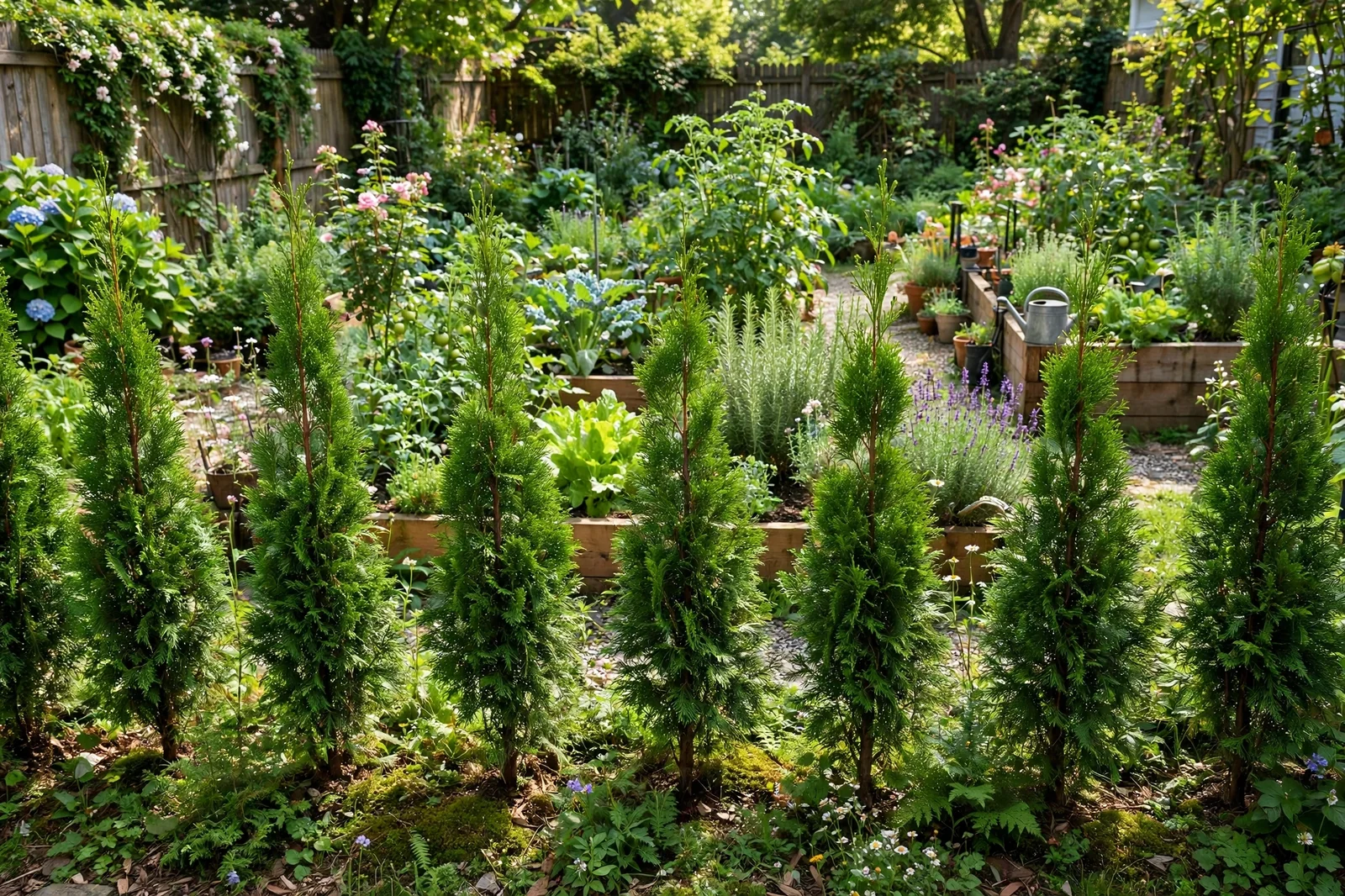
A private garden is one of the greatest comforts of home, and you do not need towering giants to get it. Small privacy trees, generally maturing between 10 and 25 feet, screen windows and patios without overwhelming a modest yard or tangling with power lines. These 23 small trees that create beautiful backyard privacy include fast evergreen screens, flowering ornamentals and tidy columnar forms, each with mature size, growth rate, spacing and care notes so you can plant with confidence.
Privacy trees are an investment in how your garden feels every single day. Before choosing, walk your yard and note the sun exposure, drainage, overhead wires and exactly what you want to block: a neighbor’s window, a street, or just the feeling of being overlooked. Measure the space honestly, because a tree planted too close to the house becomes a pruning chore instead of a pleasure. With the right small tree in the right spot, you will have a living screen that grows more beautiful every year while asking for less and less.
1. Emerald Green Arborvitae
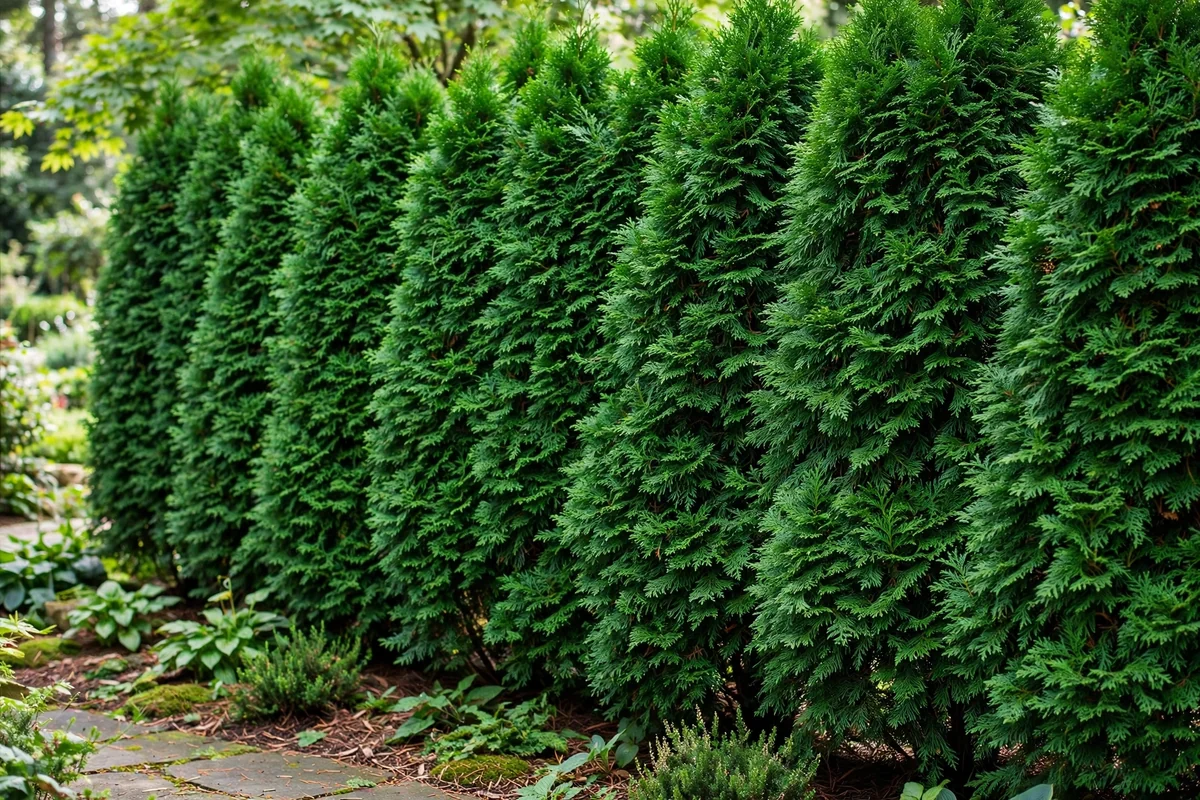
Emerald Green arborvitae is the classic small privacy tree for a reason. This compact evergreen matures at 12 to 15 feet tall and only 3 to 4 feet wide, with dense, rich-green foliage that holds its color through winter. It grows about a foot per year, needs almost no pruning to keep its tidy pyramid shape, and tolerates cold down to zone 3. Plant them 3 to 4 feet apart for a solid hedge that fills in within three to five years.
Arborvitae prefers full sun to light shade and evenly moist, well-drained soil. Water deeply during the first two summers; drought stress shows as browning from the inside out. The most common mistake is planting them against a wall with no air circulation, which invites spider mites. Give each tree its space, mulch 2 to 3 inches deep keeping mulch off the trunk, and this is one of the lowest-maintenance screens you can grow.
2. Leyland Cypress
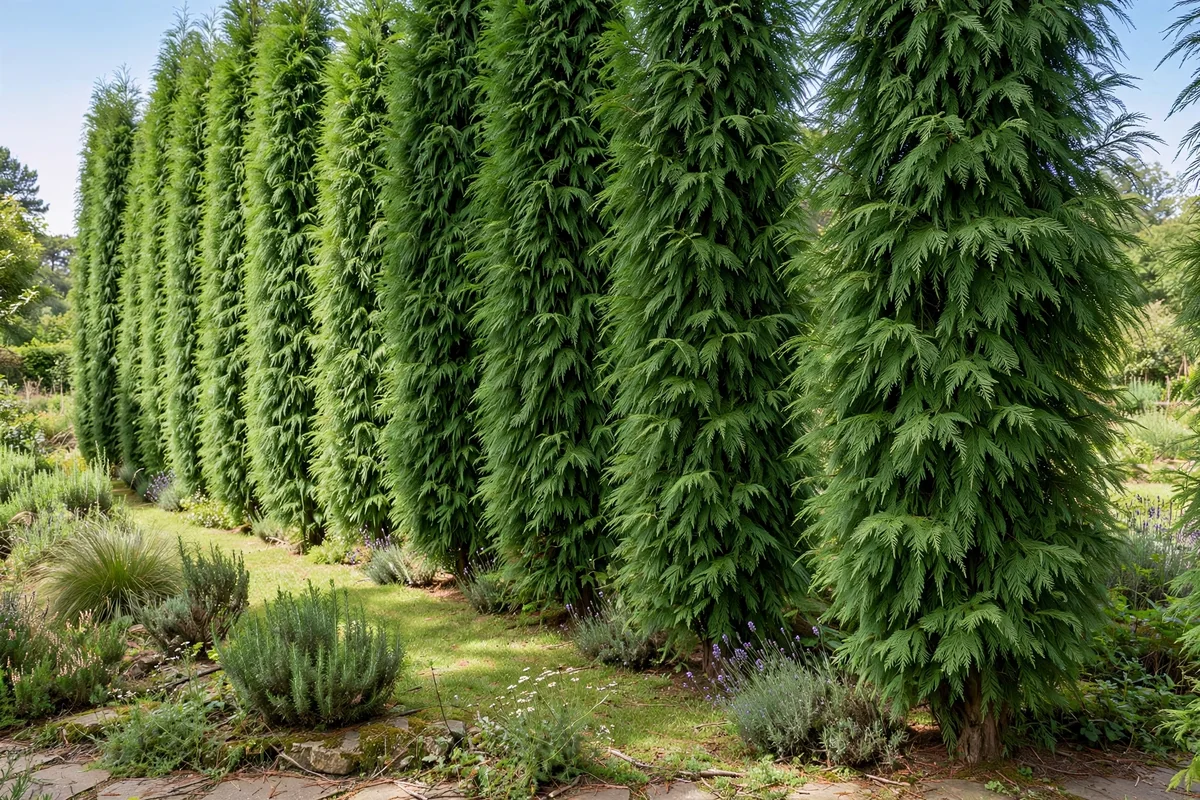
When you need privacy fast, Leyland cypress delivers. This vigorous evergreen can add 3 to 4 feet per year, reaching 20 to 25 feet in a small-yard-friendly form if you shear it annually. Its soft, feathery blue-green foliage makes a lush screen, and it tolerates heat, drought once established, and a range of soils. Space trees 6 to 8 feet apart; they will knit together quickly into a tall hedge.
Speed comes with responsibility. Unpruned Leylands can reach 60 feet, so commit to an annual shearing in late spring to hold your desired height. Plant in full sun with good air circulation to prevent the fungal issues that plague crowded, damp plantings. Avoid planting in soggy ground, and never shear into old brown wood because Leyland does not regrow from leafless branches. For impatient gardeners with room to maintain it, nothing screens faster.
3. Italian Cypress
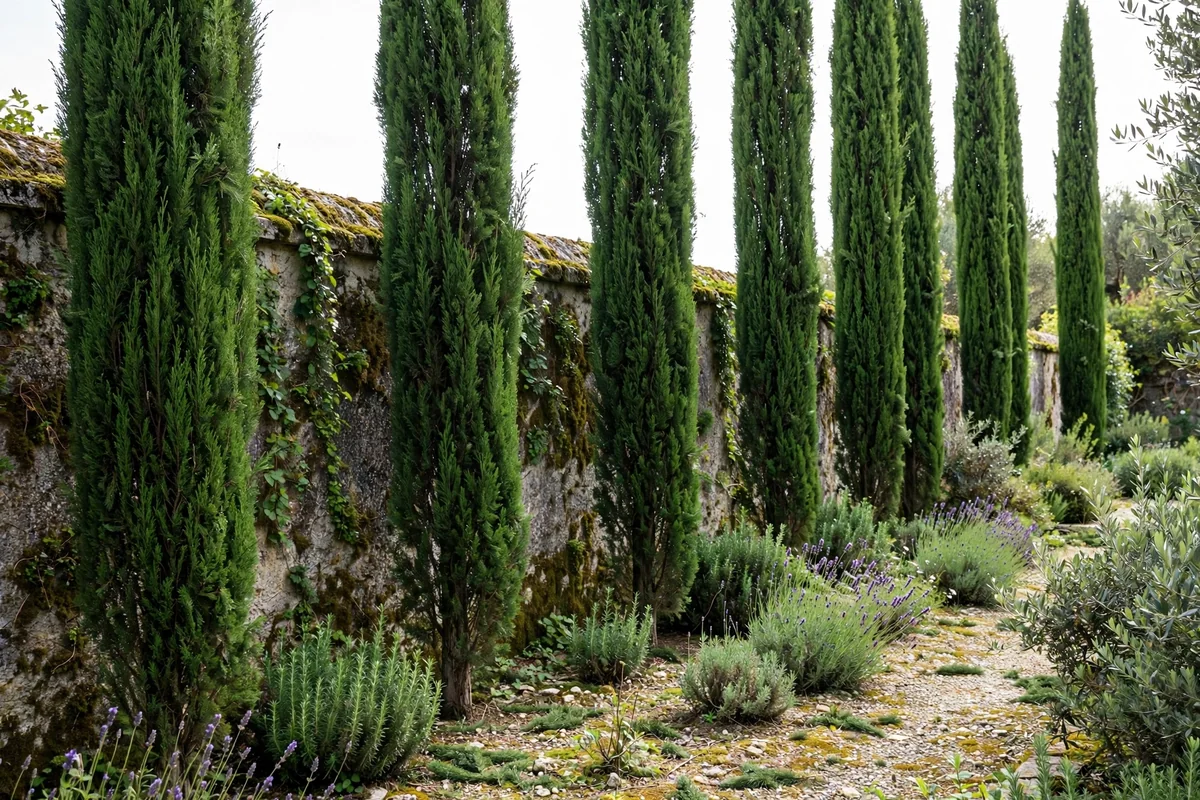
Italian cypress brings Mediterranean drama to privacy planting. Its pencil-slim silhouette rises 20 to 30 feet but stays only 3 to 5 feet wide, making it perfect for narrow side yards where a wide hedge would eat the whole space. The dark green, dense foliage looks formal and sculptural, especially planted in a rhythmic row along a wall or driveway. It thrives in heat and poor soil once established and asks for almost nothing.
This tree demands excellent drainage; wet feet in winter kill more Italian cypress than cold does. Plant in full sun, ideally in slightly raised or sloping ground in heavy clay regions. Space 4 to 6 feet apart for a continuous screen. In zones colder than 7, choose hardier cultivars or plant in sheltered microclimates. The number one mistake is planting Italian cypress in a low, soggy spot and wondering why it browns. Give it sun and drainage and it is nearly indestructible.
4. Nellie Stevens Holly
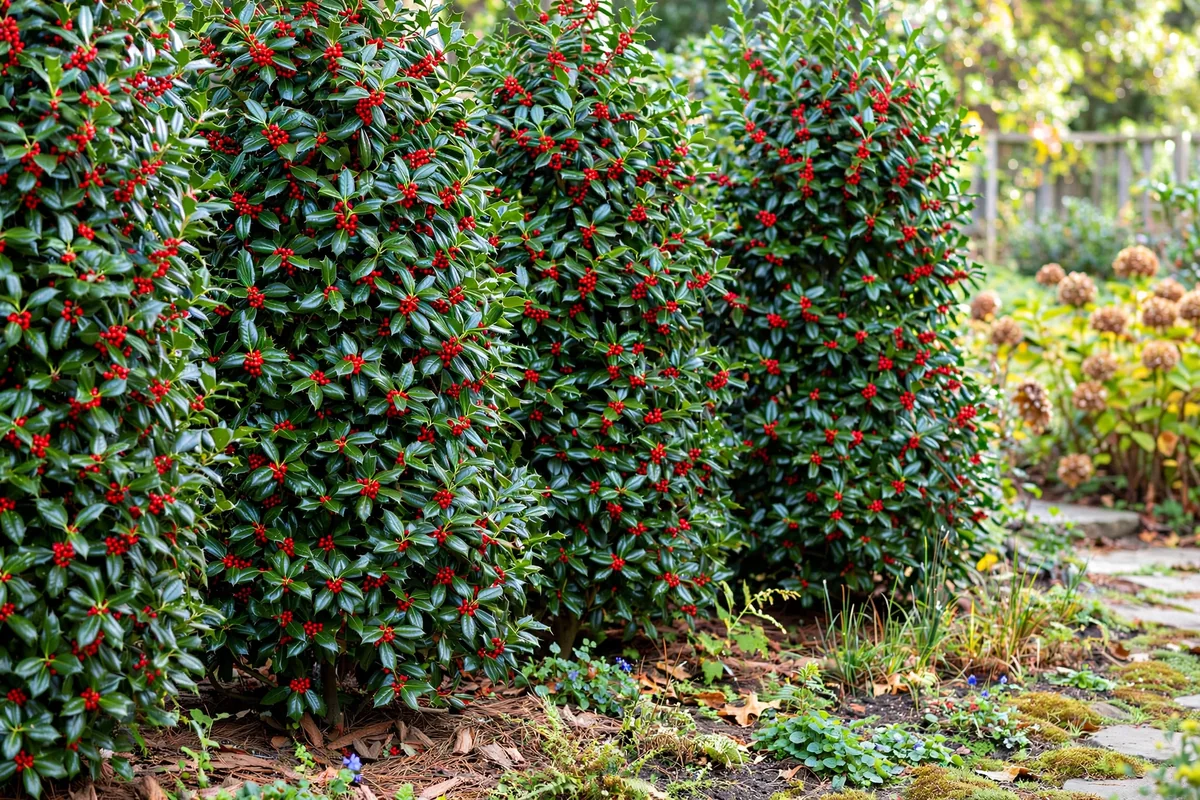
Nellie Stevens holly is a broadleaf evergreen that screens beautifully while feeding winter birds. This dense, pyramidal tree reaches 15 to 25 feet tall and 8 to 12 feet wide, with glossy dark leaves and bright red berries through winter. It grows about 2 feet per year, tolerates heat, drought and poor soil once established, and needs little pruning to look full. Plant 8 to 10 feet apart for a hedge, or use a single specimen to block a specific window.
Hollies prefer slightly acidic, well-drained soil and full sun to part shade. The berries appear on female plants, so buy named female cultivars to guarantee fruit, though one male nearby improves berry set. Wear gloves when pruning; the spiny leaves are sharp. Avoid shearing hollies into tight boxes unless you enjoy the task, since their natural pyramid is already handsome. A common error is planting them in alkaline soil without amendment, which causes yellowing; a soil test first saves trouble.
5. Wax Myrtle
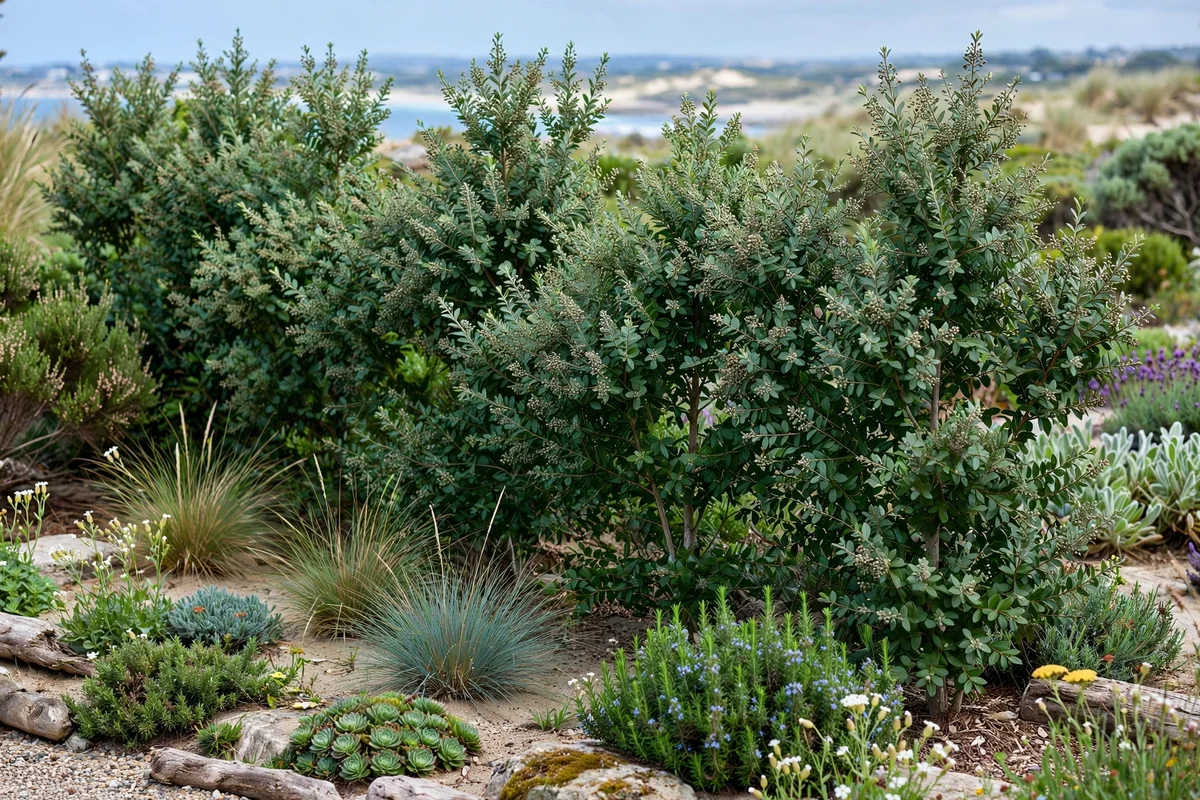
Wax myrtle is a fast, fragrant native evergreen that makes a wonderful informal screen. Growing 10 to 20 feet tall and wide, with olive-green aromatic foliage, it adds 2 to 3 feet per year in warm climates. The foliage releases a pleasant bayberry scent when brushed, and the waxy blue-gray berries feed birds through winter. It tolerates salt spray, drought and poor sandy soil, making it ideal for coastal gardens where fussier trees fail.
Plant wax myrtle in full sun to part shade, spacing 6 to 8 feet apart for screening. It is hardy in zones 7 to 10 and semi-evergreen in colder spots. Prune lightly after flowering if you want a tidier shape, but its loose, airy habit is part of its charm. Watch for sooty mold if aphids appear; a strong jet of water usually solves it. Do not plant female berry-producing trees where falling fruit would stain a patio, a simple siting choice that avoids annoyance.
6. Japanese Privet
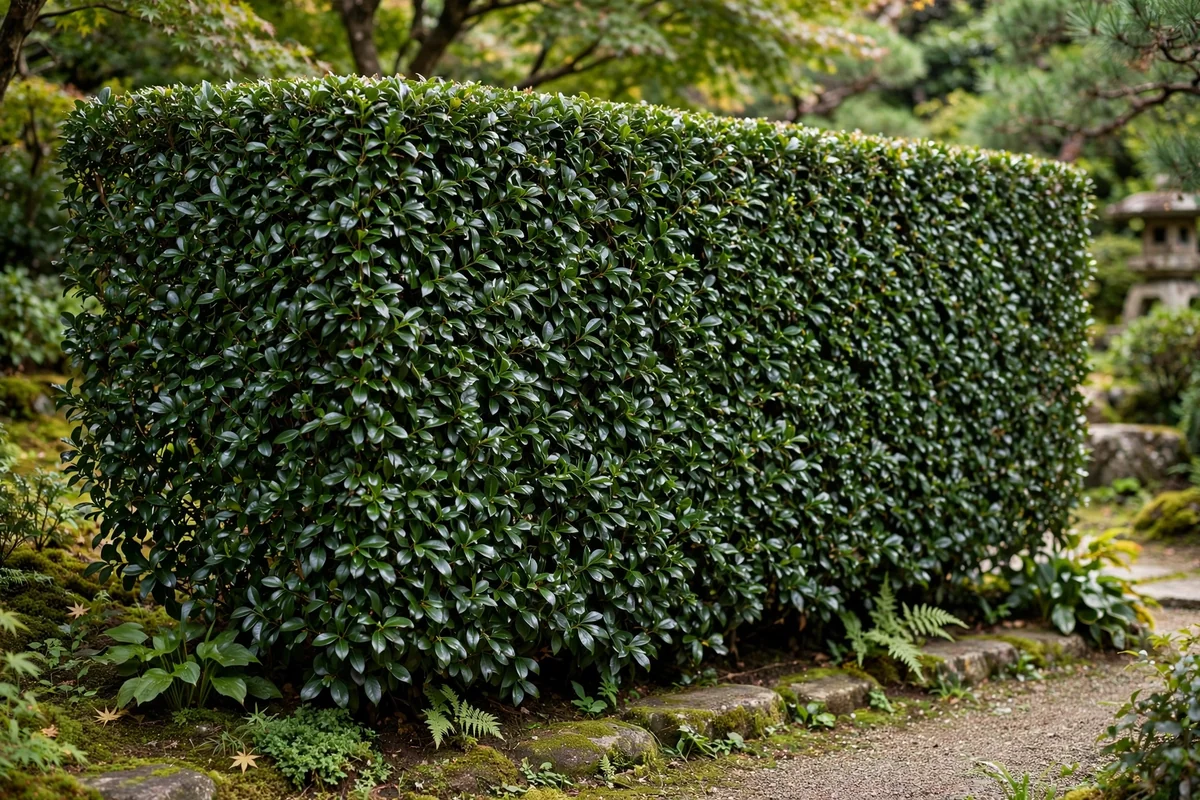
Japanese privet trained as a small tree gives you a dense, glossy evergreen screen with almost no fuss. Left to grow it reaches 10 to 15 feet, but it shears beautifully into a formal hedge of any height. The dark green, leathery leaves look lush year-round, and mature plants produce white flower clusters in spring followed by black berries birds love. It grows moderately fast and tolerates heat, drought, salt and pollution.
This is one of the toughest screening plants for difficult urban sites. Plant 4 to 6 feet apart in full sun to part shade and shear once or twice a year to hold the line. Note that privet can self-seed enthusiastically in warm climates, so choose sterile cultivars where available and remove unwanted seedlings promptly. Avoid planting near natural areas in regions where it is considered invasive. For a formal evergreen hedge on a budget, few plants give this much screen for the price.
7. Cherry Laurel
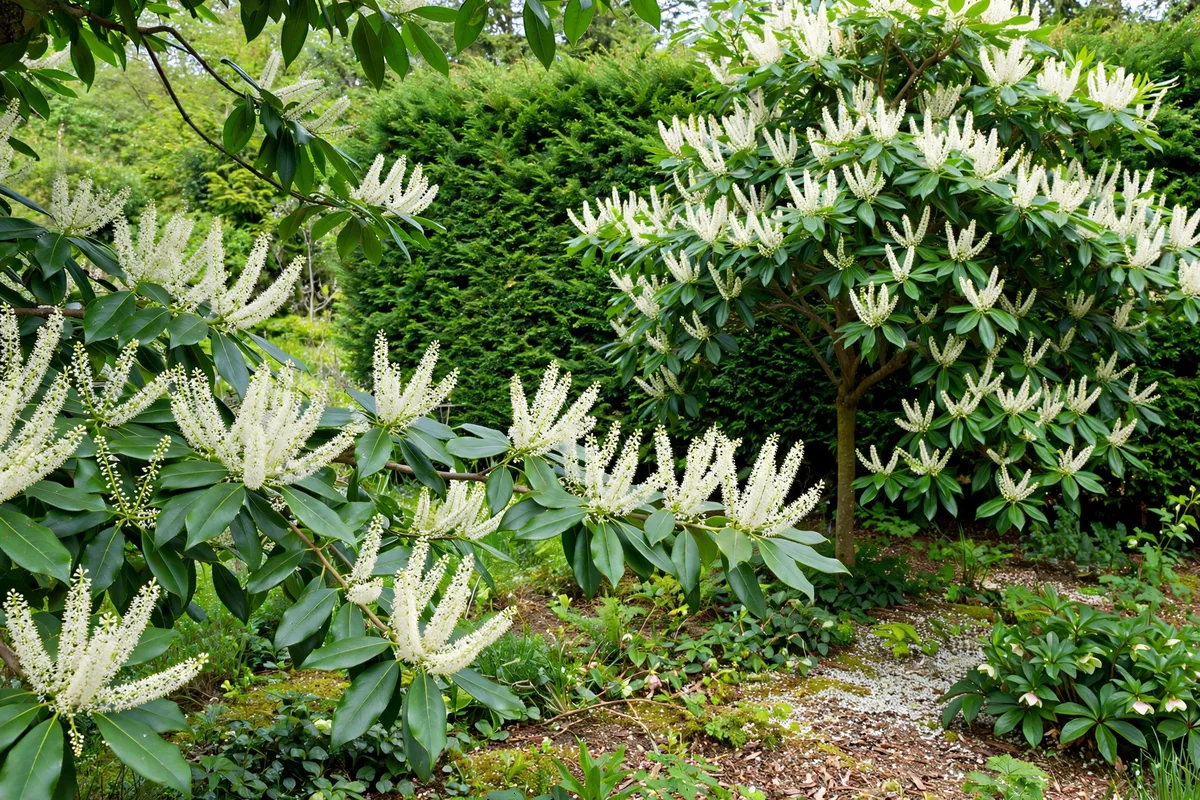
Cherry laurel offers big, glossy evergreen leaves and a lush look that few small trees match. Growing 15 to 25 feet tall, it forms a dense screen with fragrant white flower spikes in spring. It grows quickly, tolerates shade better than most evergreens, and handles urban conditions well. Space plants 6 to 8 feet apart for a hedge, or let one develop into a handsome multi-stem specimen.
Cherry laurel prefers moist, well-drained soil and full sun to full shade, a rare flexibility. Prune after flowering to shape; it responds well to hard pruning if it ever outgrows its space. Important caution: the leaves and seeds contain compounds toxic if ingested, so site it away from areas where small children or pets chew plants. Also avoid planting in waterlogged soil, which causes root problems. Where it is happy, cherry laurel is one of the most luxurious-looking screens available.
8. Skip Laurel
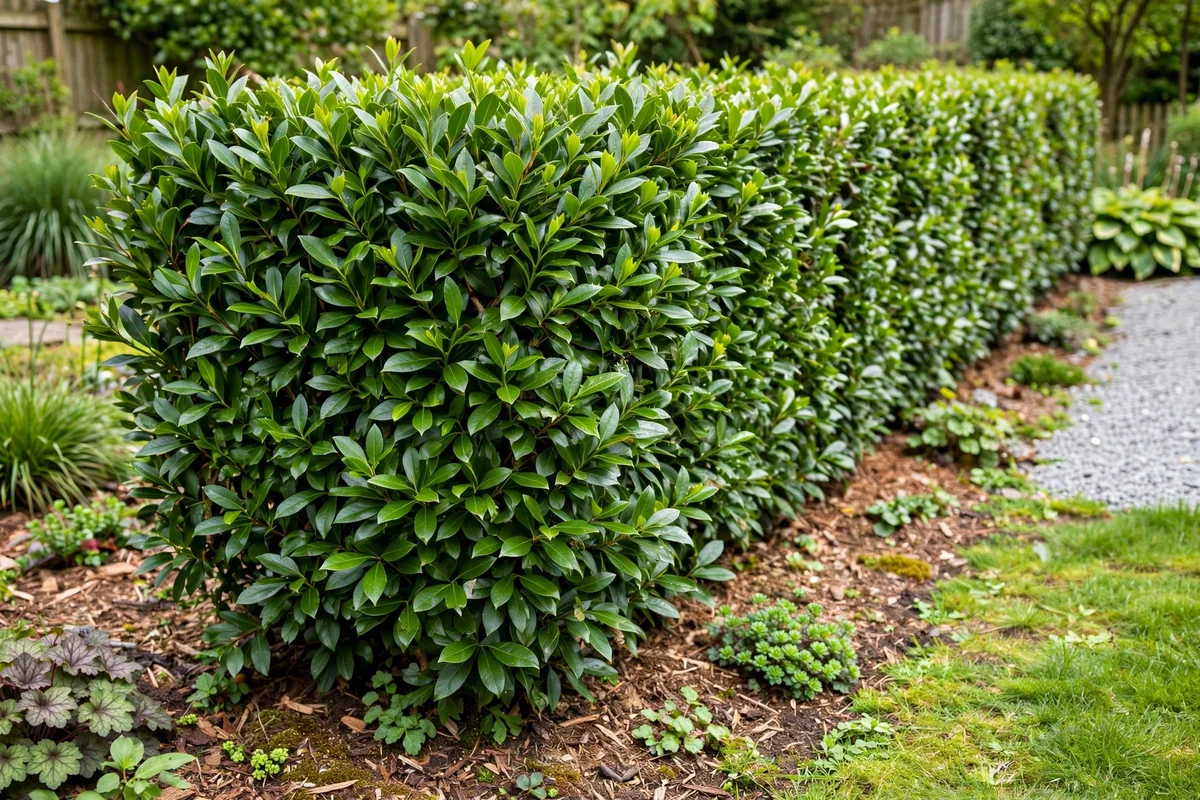
Skip laurel is the refined, compact cousin in the laurel family, maturing at 10 to 18 feet with dense, upright growth. Its narrow form fits smaller gardens where cherry laurel would sprawl, and the glossy foliage stays rich green through winter. It grows moderately fast, about a foot or two per year, and creates an elegant screen with minimal pruning. Space 5 to 7 feet apart for hedging.
Like its relatives, Skip laurel adapts to sun or shade and prefers well-drained soil. It is hardier than English laurel in cold snaps, handling zone 6 winters reliably. Prune lightly in spring to encourage density; it naturally grows upright so heavy shearing is rarely needed. The same toxicity caution applies to leaves and seeds, so consider placement around curious pets. For a narrow evergreen screen with a polished look, Skip laurel is hard to beat.
9. Eastern Red Cedar
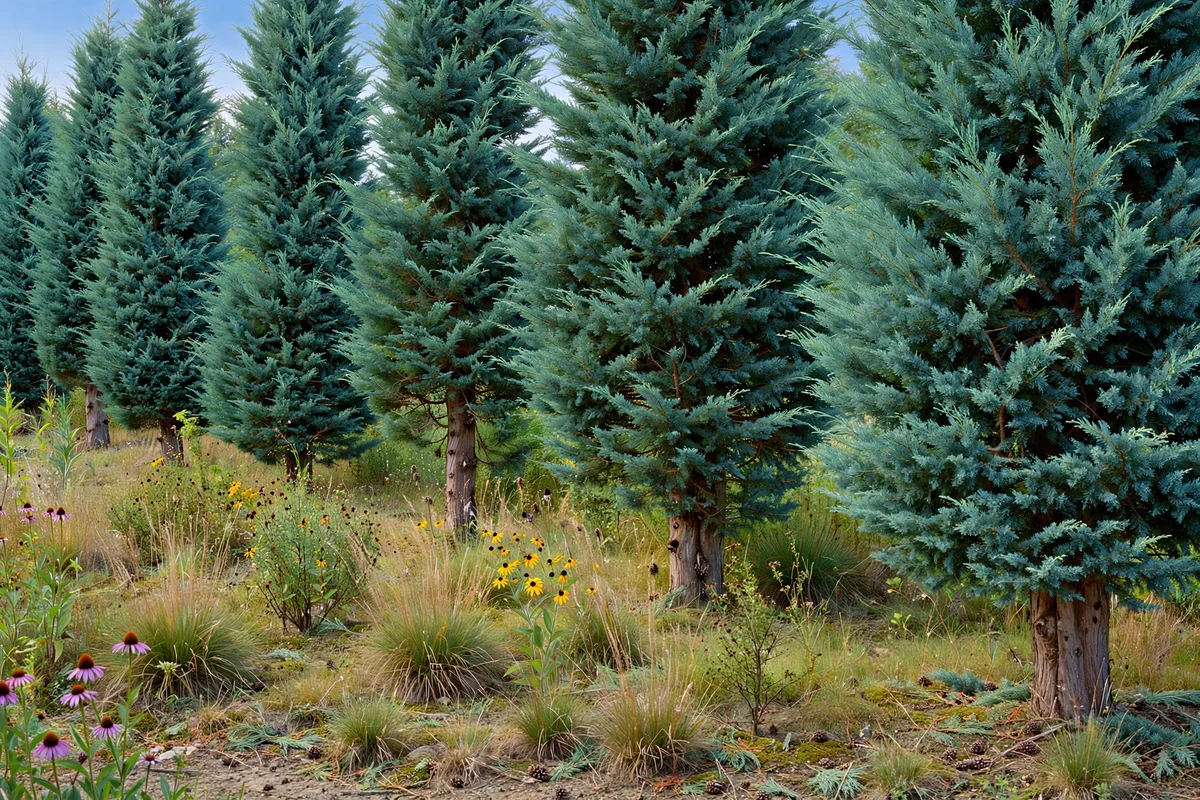
Eastern red cedar is a tough native juniper that laughs at poor soil, drought and neglect. Growing 20 to 40 feet in the wild but easily kept at 15 to 20 feet with occasional pruning, its blue-green foliage and shredding reddish bark give year-round character. Female trees produce dusty blue berries that birds adore. It is hardy from zone 2 to 9 and thrives where pampered ornamentals give up.
Plant in full sun with excellent drainage; red cedar hates wet feet. Space 8 to 12 feet apart for a windbreak-style screen. Do not plant near apple or crabapple trees, since cedar-apple rust cycles between them and disfigures both. Otherwise this is a plant-it-and-forget-it tree. Avoid shearing it into formal shapes, which fights its naturally handsome irregular form. For rural properties, large lots and wildlife-friendly screens, eastern red cedar is unmatched in toughness.
10. Multi-Stem Crape Myrtle
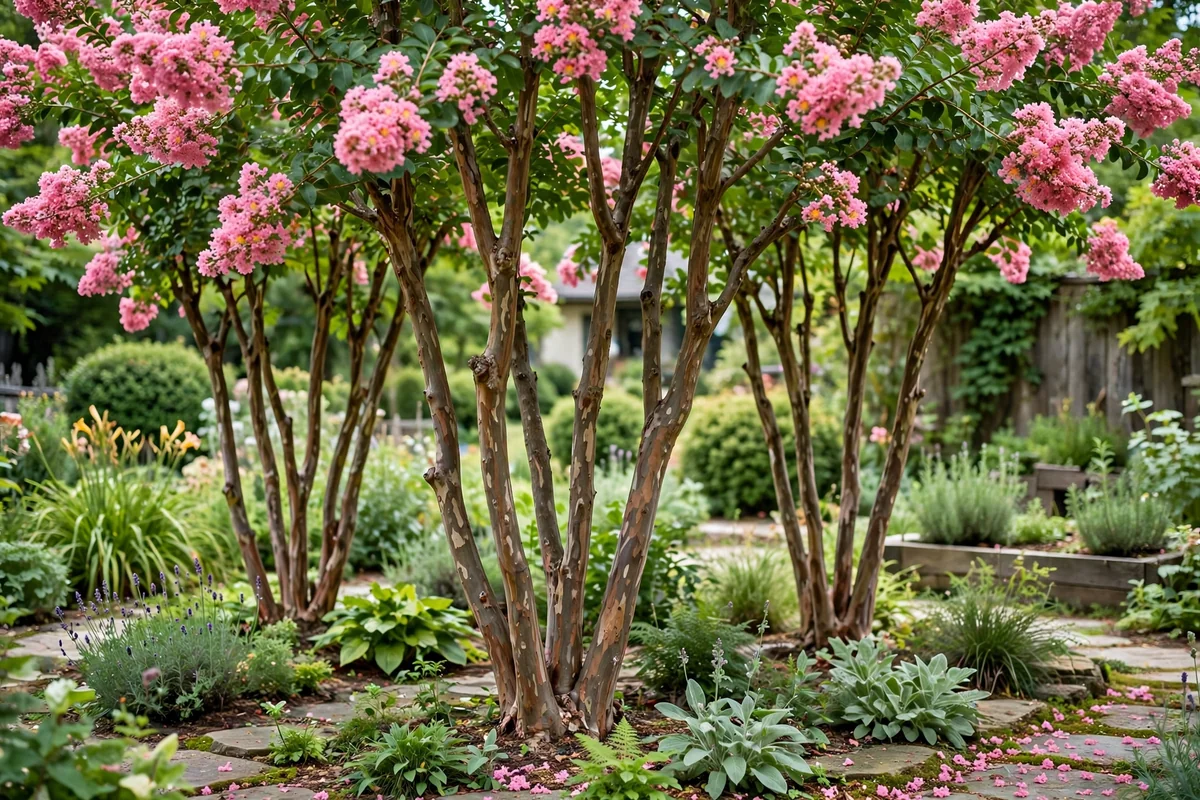
Crape myrtle grown multi-stem becomes a small flowering tree that screens summer patios beautifully. Maturing at 15 to 25 feet depending on cultivar, it offers months of blooms in pink, red, white or purple, plus exfoliating bark and brilliant fall color. It loves heat and sun, tolerates drought once established, and blooms on new wood so pruning is simple. Space 10 to 15 feet apart to let each tree develop its vase shape.
Choose cultivars with disease resistance to avoid powdery mildew, and match mature size to your space since varieties range from 3-foot dwarfs to 30-foot trees. Prune in late winter, removing only crossing branches and spent seed heads; never commit “crape murder” by hacking trunks to stubs, which ruins the form. Plant in full sun for the best flowering. Where winters stay above zone 7, crape myrtle gives you privacy plus three seasons of ornament in one plant.
11. Japanese Maple
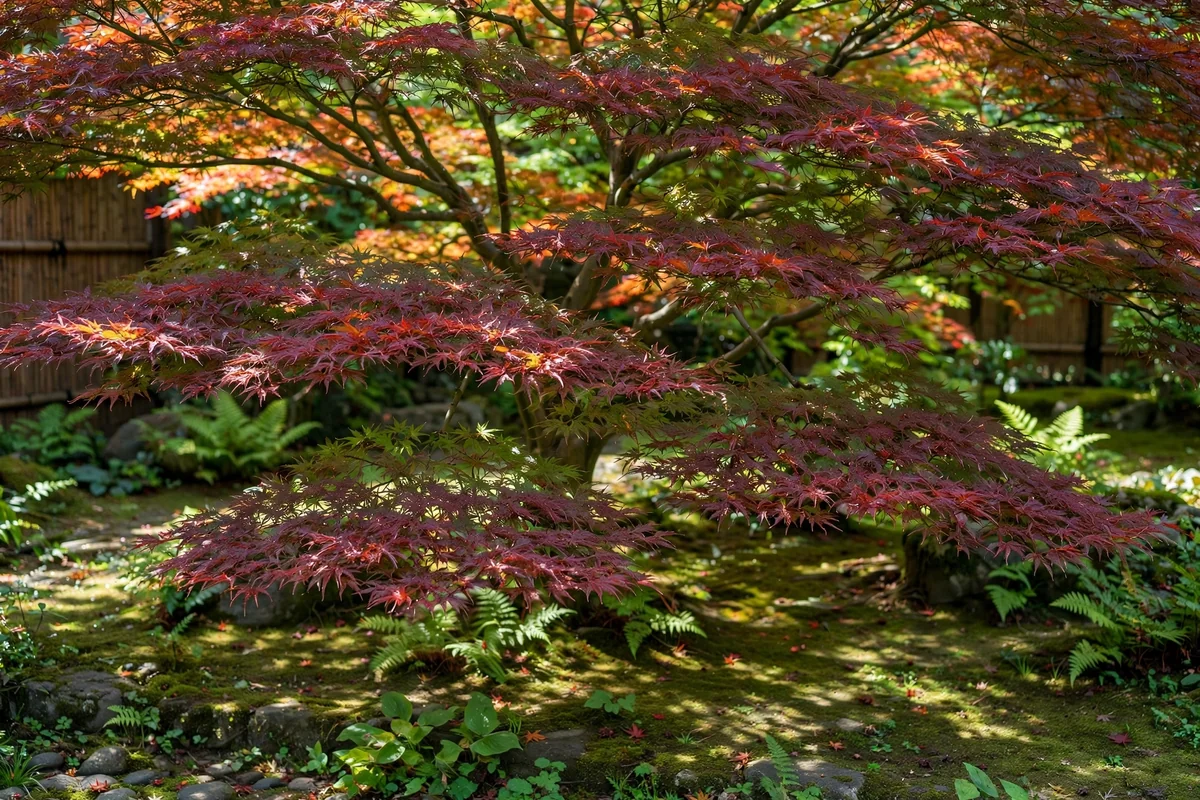
Japanese maple will not build a solid evergreen wall, but layered with other plantings it screens with unmatched grace. Upright cultivars reach 15 to 25 feet, offering dappled summer shade, spectacular fall color and sculptural winter branches. Planted 10 to 15 feet apart in a loose row with evergreen shrubs beneath, they create a living screen that changes beautifully through the seasons. They prefer morning sun and afternoon shade in hot climates.
These trees demand good drainage and consistent moisture; they suffer in compacted, soggy or drought-baked soil. Mulch generously and avoid piling mulch against the trunk. Choose the cultivar for your goal: upright forms like Bloodgood screen overhead, while weeping forms stay low. The biggest mistake is planting a Japanese maple in harsh afternoon sun and wind, which scorches the delicate leaves. Site it thoughtfully and it becomes the most beautiful “privacy tree” in the garden.
12. Sweetbay Magnolia
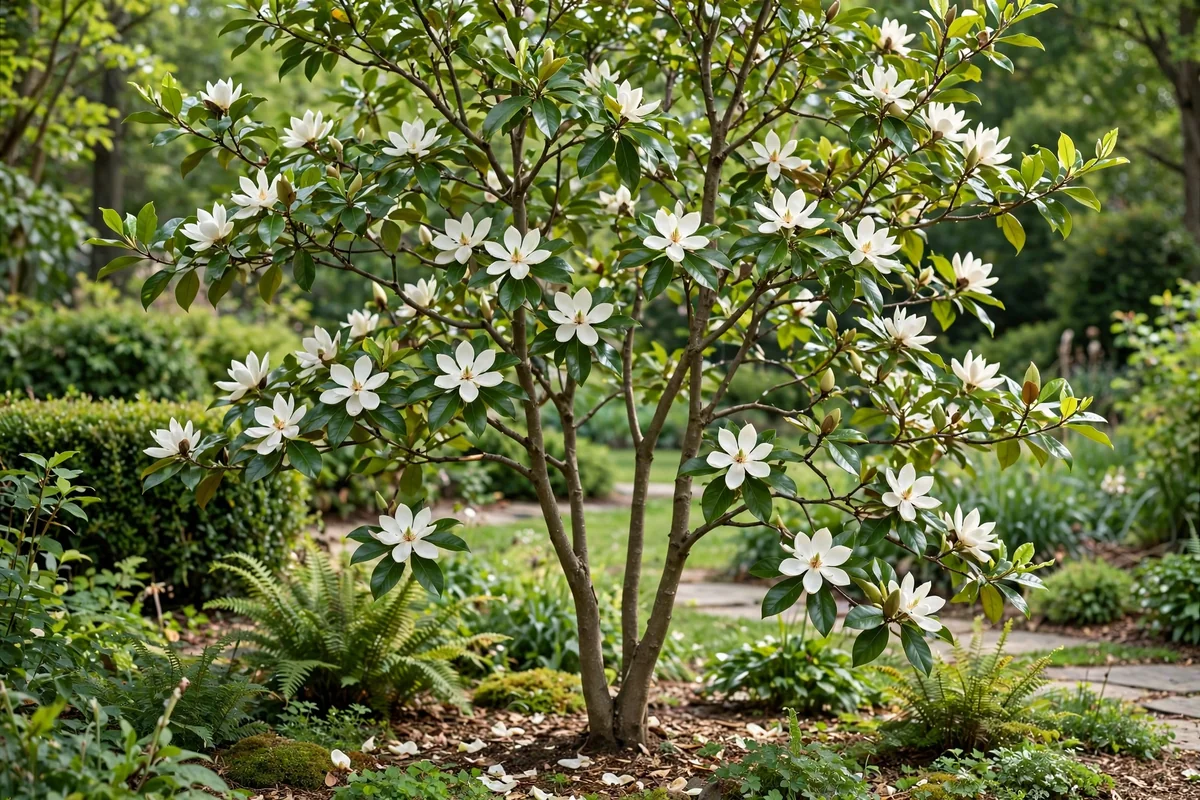
Sweetbay magnolia is a graceful native tree with lemon-scented white flowers in early summer. Growing 15 to 25 feet tall, its glossy green leaves have silvery undersides that shimmer in the breeze, creating a light, airy screen. It tolerates wet soil better than almost any ornamental tree, making it perfect for low spots where other trees drown. In warm zones it is evergreen; in colder zones it is semi-evergreen to deciduous.
Plant sweetbay in full sun to part shade and keep it watered while establishing; it loves moisture. Space 10 to 15 feet apart for a loose screen. Prune minimally, only to remove crossing branches, since its natural multi-stem form is lovely. The flowers attract pollinators and the red seeds feed birds in fall. Avoid planting in dry, windy exposures where the foliage can desiccate. For damp yards that need screening, sweetbay solves two problems at once.
13. Little Gem Magnolia
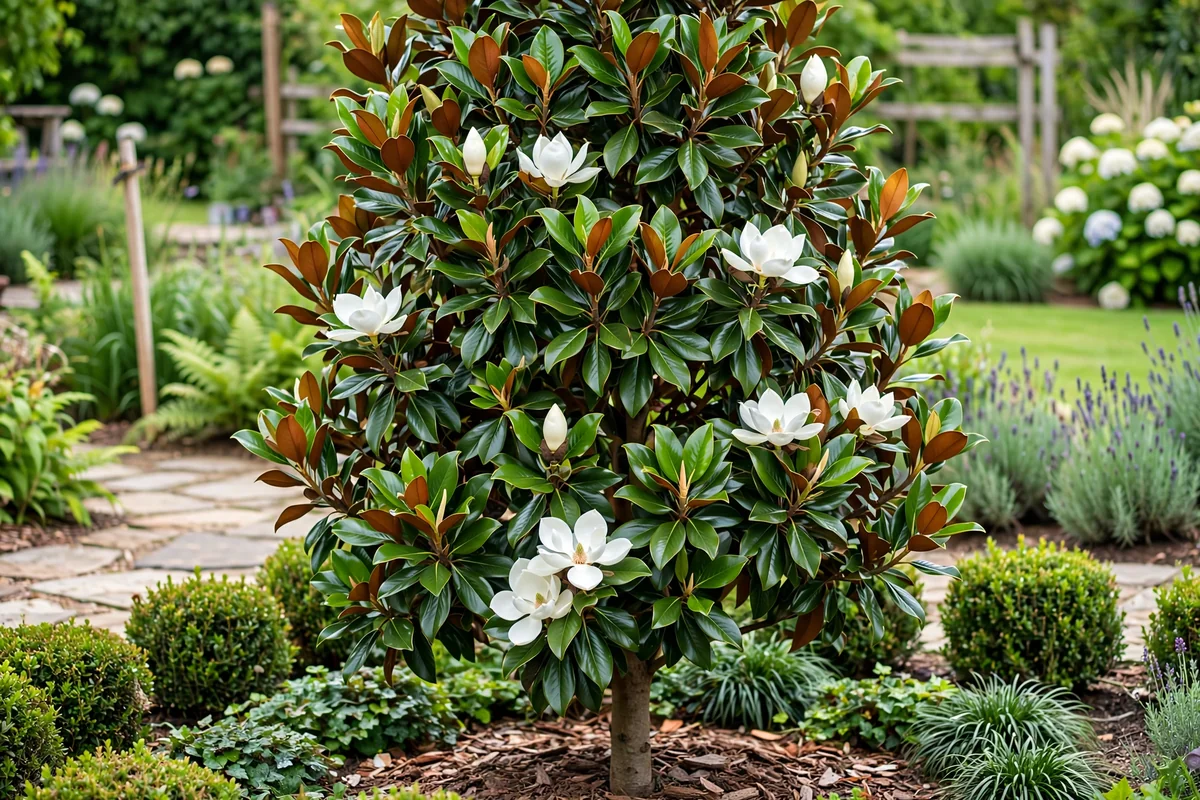
Little Gem is the compact southern magnolia, maturing at 20 to 25 feet with a narrow 10-foot spread that suits smaller lots. Its glossy evergreen leaves have bronze undersides, and it blooms with fragrant white cup-shaped flowers from spring through fall, far longer than spring-only magnolias. It makes a handsome evergreen screen or a single specimen that blocks a neighbor’s view while looking like a million dollars.
Plant in full sun to part shade in well-drained, slightly acidic soil. Space 10 to 12 feet apart for screening. Little Gem is hardy to zone 7 and benefits from a sheltered spot in borderline areas. Water deeply during establishment; mature trees handle drought reasonably well. Leaf drop is continuous but light, so it never looks bare. Avoid planting where falling leaves would clog a pool filter constantly; otherwise this is a low-drama, high-impact privacy tree.
14. Clump River Birch
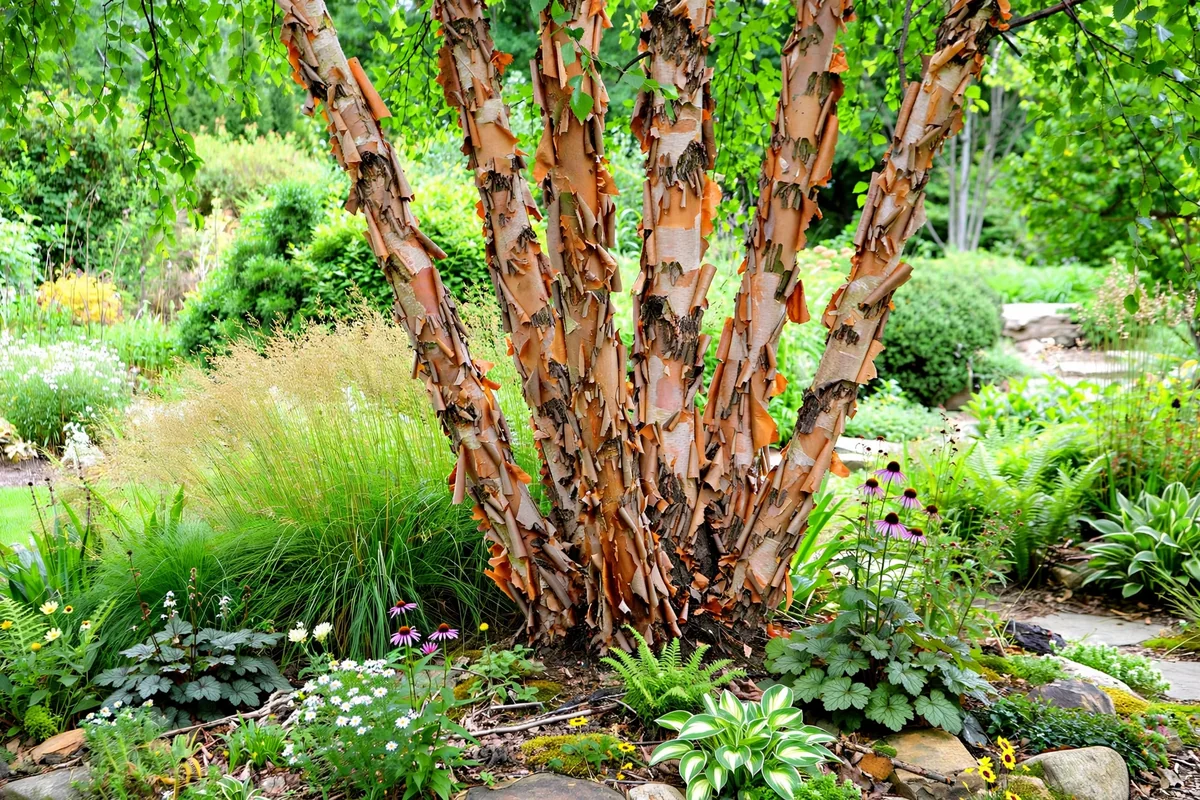
Clump river birch planted in groups creates a fast, airy screen with year-round bark interest. Each clump reaches 25 to 40 feet but the multi-stem form reads as a cluster of small trees, and the peeling cinnamon bark looks beautiful even in winter when the leaves are gone. It grows quickly, tolerates wet soil and clay, and resists the bronze birch borer that kills white-barked birches. Space clumps 15 to 20 feet apart.
River birch loves moisture; in dry soil the leaves scorch and drop. Plant in full sun to part shade and mulch well to keep roots cool. It is deciduous, so pair it with evergreens if winter privacy matters. Prune in late summer or fall to avoid heavy spring sap bleeding. The dappled shade beneath is perfect for hostas and ferns. For a naturalistic screen along a wet property line, nothing beats a row of river birch clumps.
15. Serviceberry
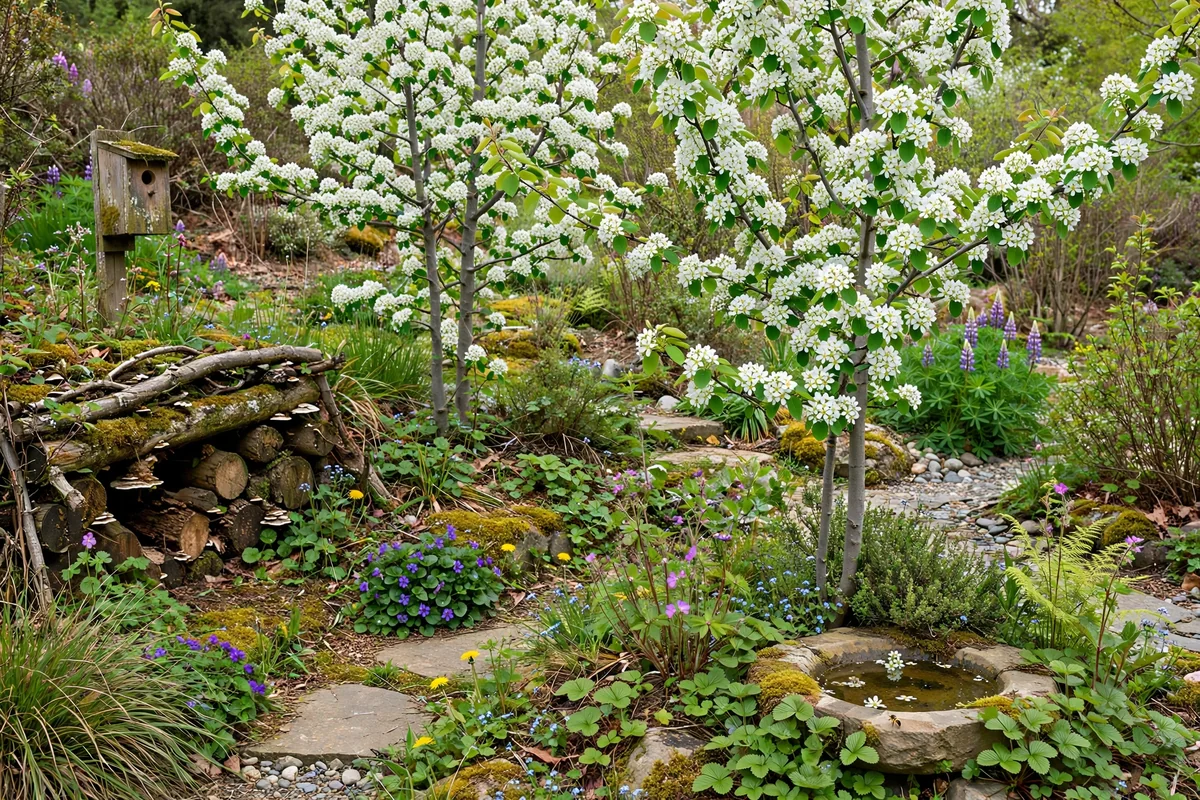
Serviceberry is a native multi-stem tree that earns its place with four seasons of beauty. Growing 15 to 25 feet, it offers white spring flowers, edible summer berries, brilliant orange-red fall color and smooth gray bark in winter. Planted 10 to 15 feet apart in a loose row, serviceberries form an open, wildlife-friendly screen. The berries feed birds, and you can eat them too, they taste like a blueberry-almond cross.
Serviceberry adapts to sun or part shade and most soils, though it fruits best in full sun. It needs little pruning; just remove suckers if you want a tree form rather than a thicket. Watch for cedar-serviceberry rust in areas with junipers nearby, choosing resistant cultivars where it is common. This is not a solid evergreen wall, so use it where seasonal screening plus beauty matters more than year-round opacity, or underplant with evergreen shrubs.
16. Eastern Redbud
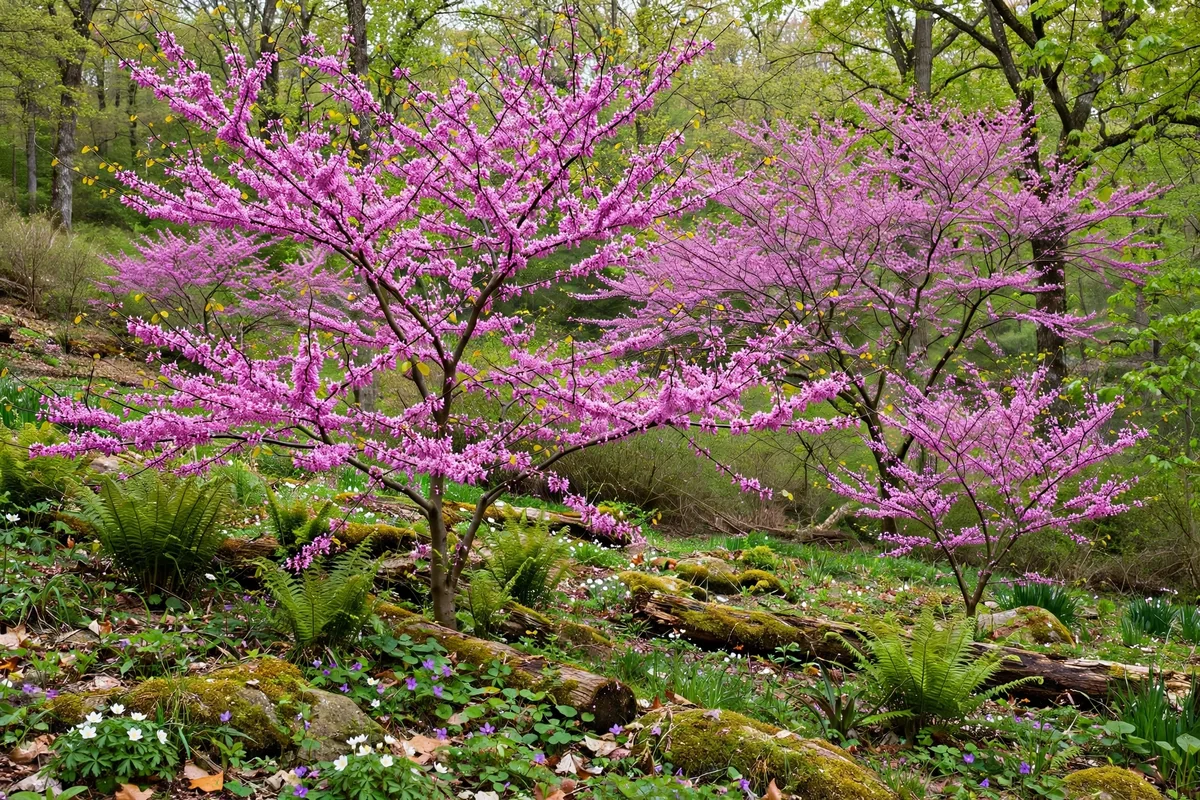
Eastern redbud screens with spectacular spring flowers that appear directly on the branches before the leaves. Maturing at 20 to 30 feet with a broad, layered canopy, it creates filtered privacy with heart-shaped leaves all summer and golden fall color. Planted 15 to 20 feet apart, redbuds form a loose, flowering screen that feels like a woodland edge. They tolerate part shade, which makes them perfect for screening under taller existing trees.
Redbud prefers well-drained soil and does not like constantly wet feet. Water deeply during the first two years, then it handles drought reasonably. Prune after flowering to shape; the natural branching is part of its charm. Avoid planting in highly alkaline soils where chlorosis can yellow the leaves. For spring impact plus summer screening in a native-friendly garden, redbud delivers more delight per square foot than almost any small tree.
17. Flowering Dogwood
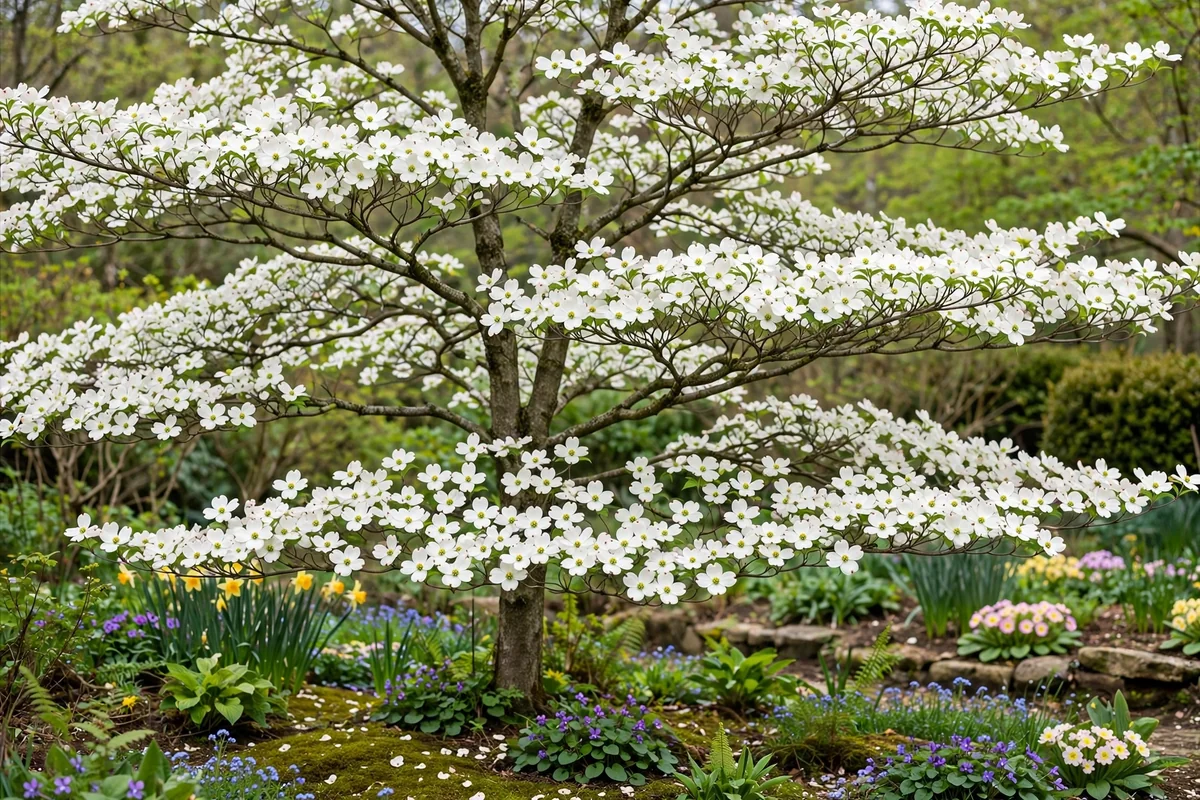
Flowering dogwood brings spring blossoms, summer shade, fall berries and red autumn foliage in one small tree. Growing 15 to 25 feet with a layered, horizontal branching habit, it screens patios and windows with elegance. Planted 15 to 20 feet apart, dogwoods create a graceful, open screen. They thrive in morning sun and afternoon shade, making them ideal for the east side of the house.
Dogwoods need well-drained, slightly acidic soil and consistent moisture; they stress in compacted or drought-prone spots. Mulch widely to protect the shallow roots from mower damage, which is the most common cause of decline. Choose disease-resistant cultivars to avoid anthracnose and powdery mildew. Do not plant in full harsh sun in hot climates. Where it is happy, flowering dogwood is the aristocrat of small screening trees.
18. Camellia in Tree Form
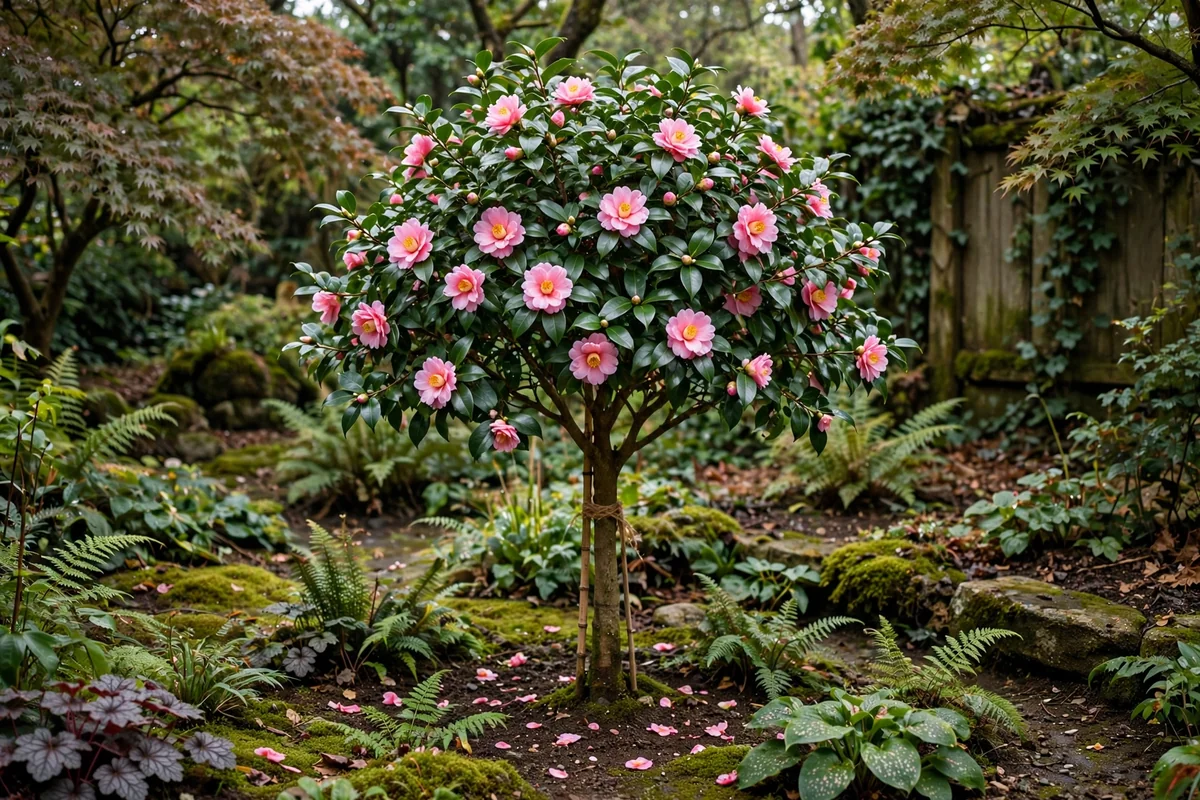
Camellias trained to tree form give you evergreen privacy plus winter flowers, a rare combination. Standard camellias reach 8 to 15 feet, with glossy dark leaves year-round and rose-like blooms from fall through spring depending on variety. Planted 6 to 8 feet apart, they form a flowering evergreen screen perfect for shady side yards where sun-loving hedges fail. They thrive in the dappled light under tall pines.
Camellias demand acidic, well-drained soil rich in organic matter; amend planting holes generously with compost and pine bark. Water consistently, especially while buds form in late summer. Feed with acid-loving plant fertilizer in spring. Protect from harsh morning sun after frosty nights, which damages buds. The spent flowers drop and can look messy on patios, so site flowering screens over mulch beds. For shade gardens that need screening, nothing flowers like a camellia.
19. Loquat
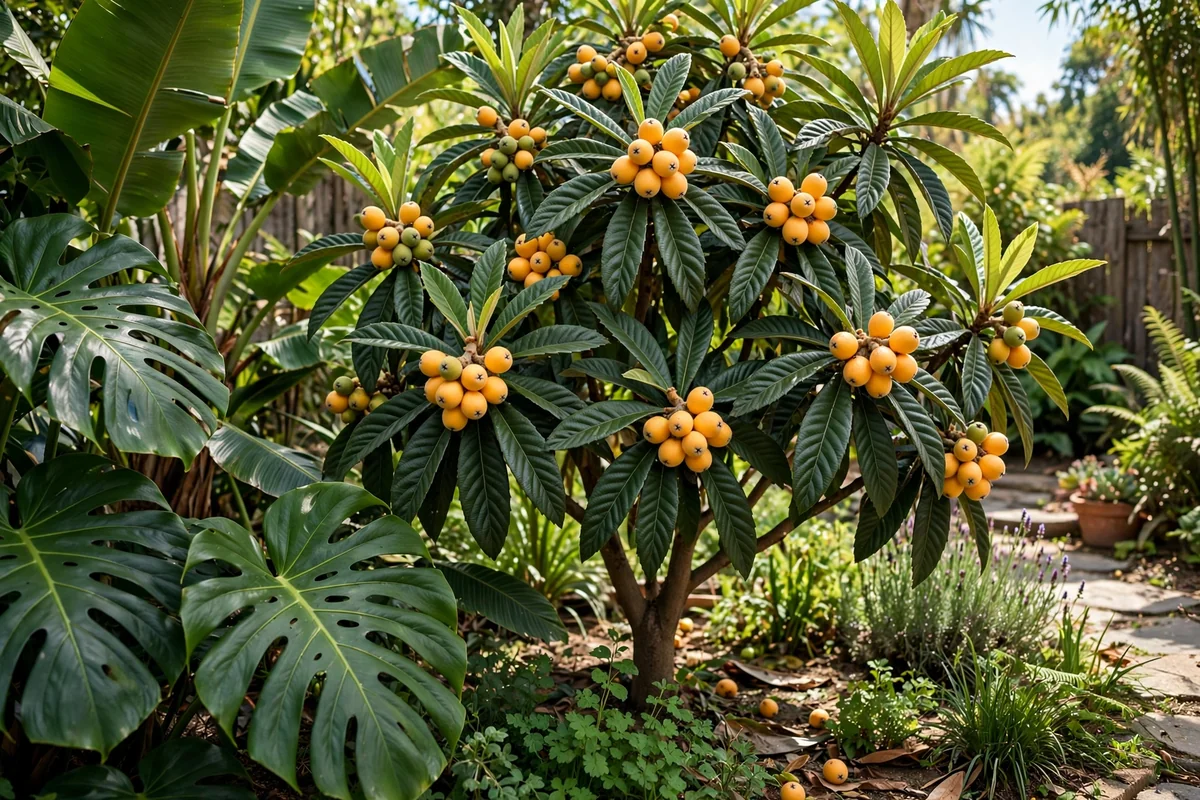
Loquat is an evergreen fruit tree that doubles as a bold privacy screen in warm climates. Growing 15 to 25 feet with large, tropical-looking leaves, it creates a dense, lush barrier while producing sweet apricot-like fruit in spring. It grows quickly, tolerates drought and poor soil once established, and its bold texture brings a resort feeling to ordinary yards. Space 12 to 15 feet apart.
Plant loquat in full sun in zones 8 to 10, in well-drained soil. It needs little pruning; thin crowded branches to let light in. The fruit drops and can stain patios, so plant fruiting trees over mulch or lawn, or choose fruitless ornamental selections. Loquat is sensitive to hard freezes below about 15 degrees, so northern gardeners should treat it as a container plant. Where it thrives, it is privacy, ornament and orchard in one.
20. Small Olive Tree
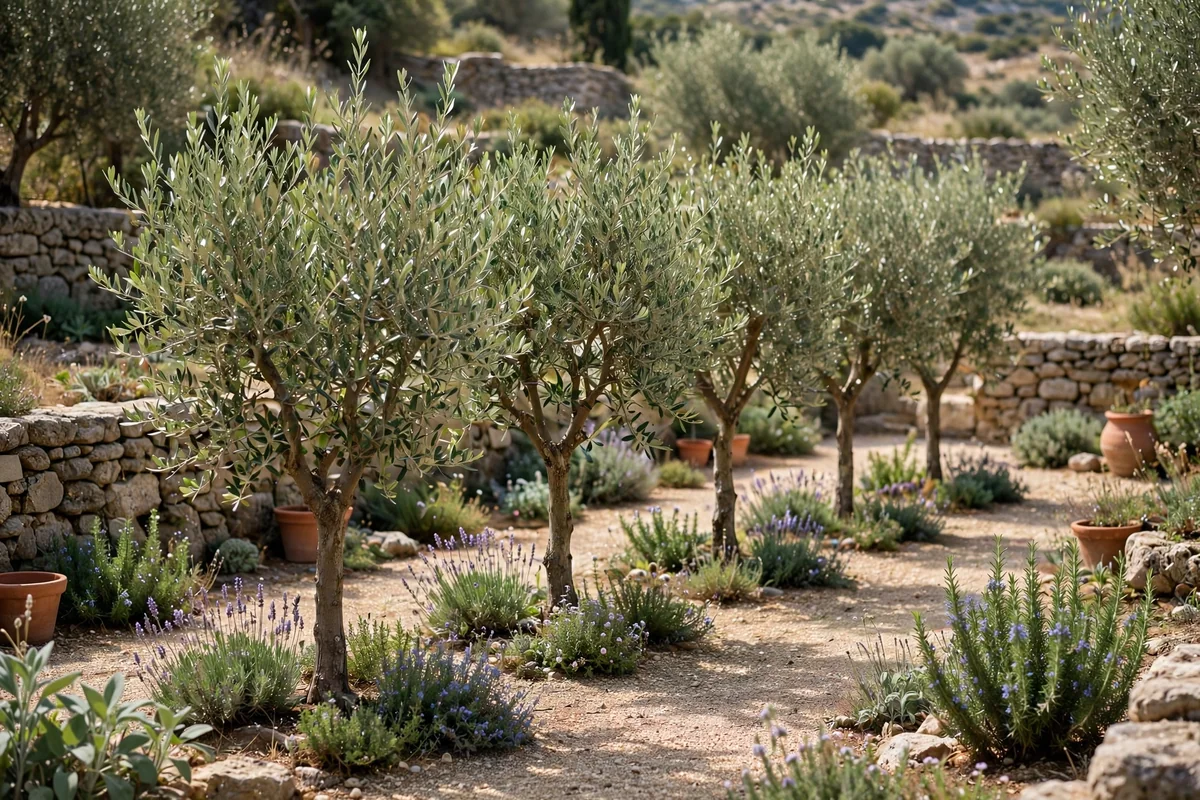
Small olive trees bring silvery Mediterranean elegance to privacy planting. Growing 15 to 25 feet with narrow, gray-green foliage that shimmers in the wind, olives create a light, airy screen that never feels heavy. They are extremely drought tolerant once established, love heat and poor soil, and live for centuries. Plant 10 to 15 feet apart in a row for a grove-like screen.
Olives demand full sun and sharp drainage; they fail in soggy clay. Hardy to about zone 8, they need winter protection in colder areas. Fruiting varieties drop olives that stain paving, so choose fruitless cultivars like Swan Hill for tidy landscapes near patios. Prune lightly to maintain shape; olives respond well to shaping and even topiary. For a sun-baked yard with a Mediterranean soul, an olive screen is timeless.
21. Bay Laurel
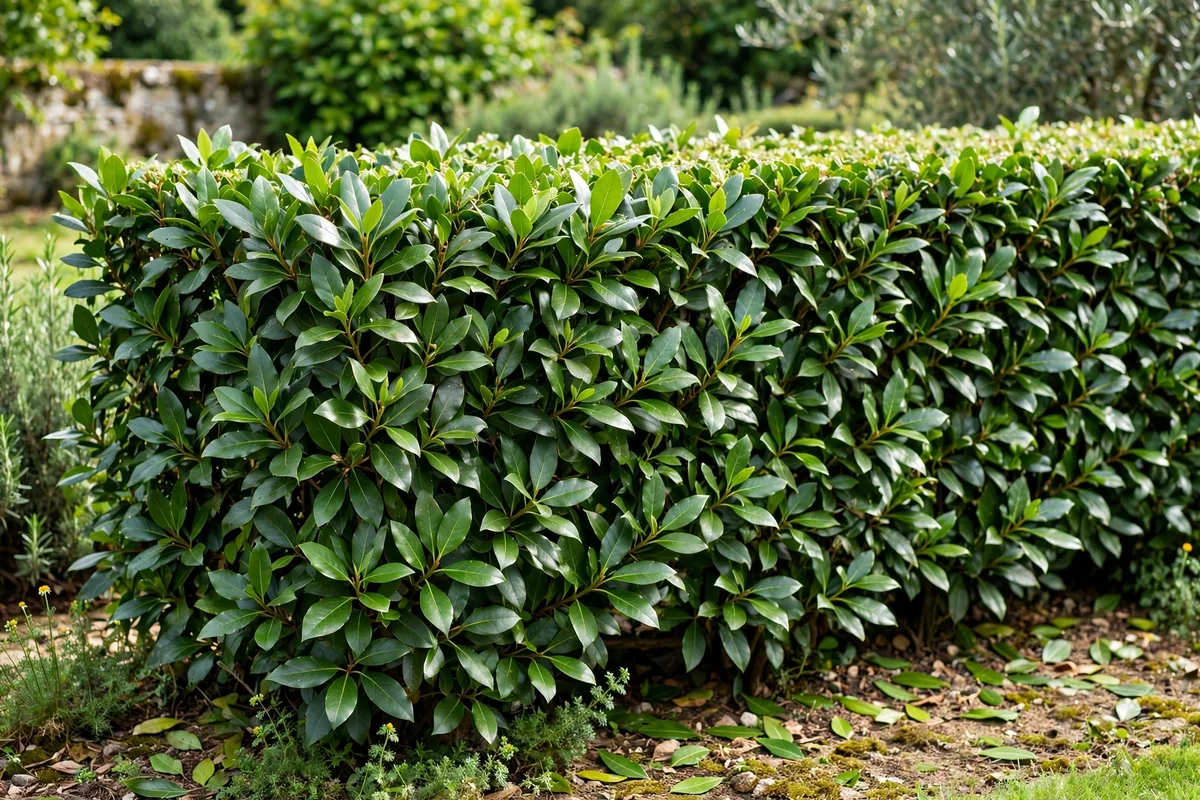
Bay laurel gives you a fragrant, evergreen screen you can also cook with. This dense, glossy-leaved tree reaches 12 to 20 feet but clips beautifully into hedges, cones or standards of any size. The aromatic leaves flavor soups and stews, giving your privacy planting a delicious second job. It grows moderately, tolerates drought once established, and looks polished year-round. Space 5 to 8 feet apart for hedging.
Plant bay in full sun to part shade in well-drained soil; it dislikes waterlogged roots. Hardy to zone 8, it needs winter shelter in colder climates or grows happily in a large container. Shear in spring and midsummer to keep hedges crisp. Watch for scale insects and treat with horticultural oil if they appear. Do not confuse it with toxic cherry laurel; true bay is Laurus nobilis. For the cook who wants privacy, bay laurel is pure pleasure.
22. Red Tip Photinia
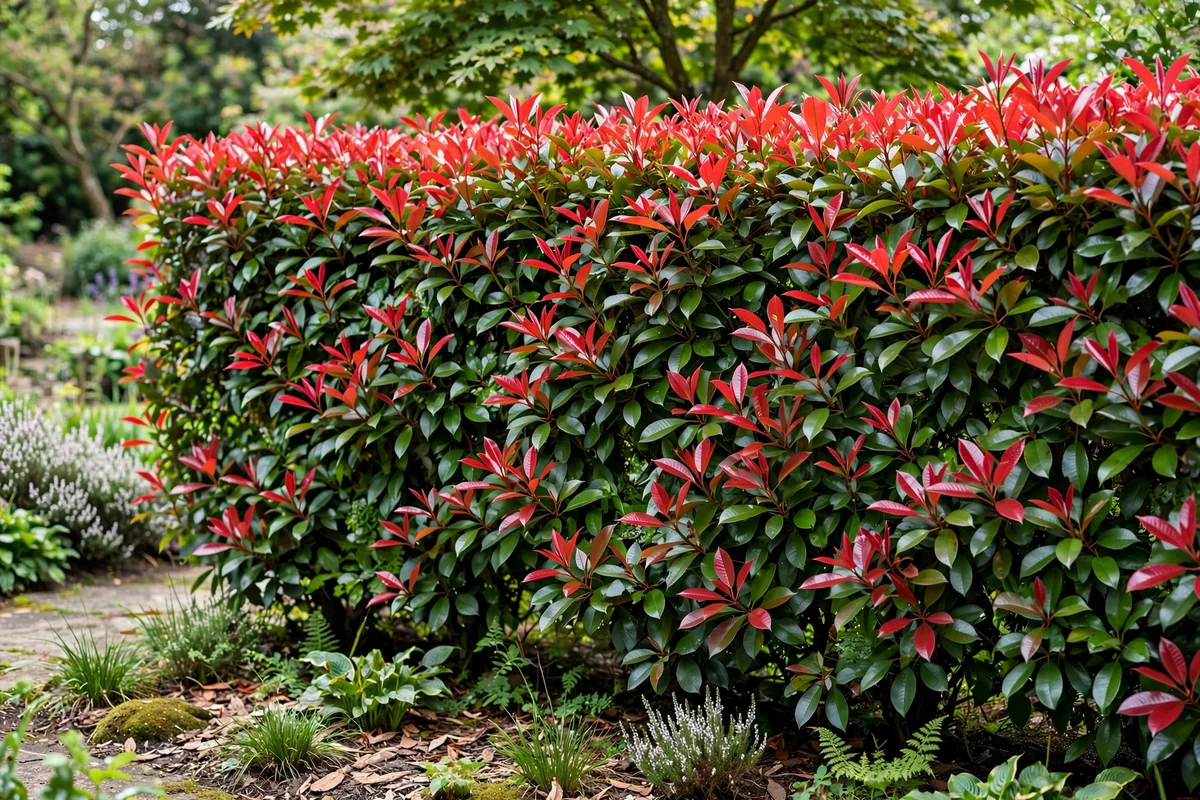
Red tip photinia earns its place with brilliant red new growth that glows against mature green leaves. Growing 10 to 15 feet, it forms a dense evergreen screen quickly and shears into a tidy hedge. The spring foliage show is spectacular, especially against a plain fence or wall. It grows fast, tolerates heat and poor soil, and handles shearing well. Space 5 to 6 feet apart for a solid hedge.
Photinia needs full sun for the best red color and good air circulation to prevent entomosporium leaf spot, its main weakness. Avoid overhead watering and crowded plantings; drip irrigation keeps foliage dry. Prune after the spring growth flush to encourage a second show of red. In humid climates, choose resistant cultivars. Where it stays healthy, red tip photinia gives you a flowering-shrub look with evergreen screening duty.
23. Clumping Bamboo
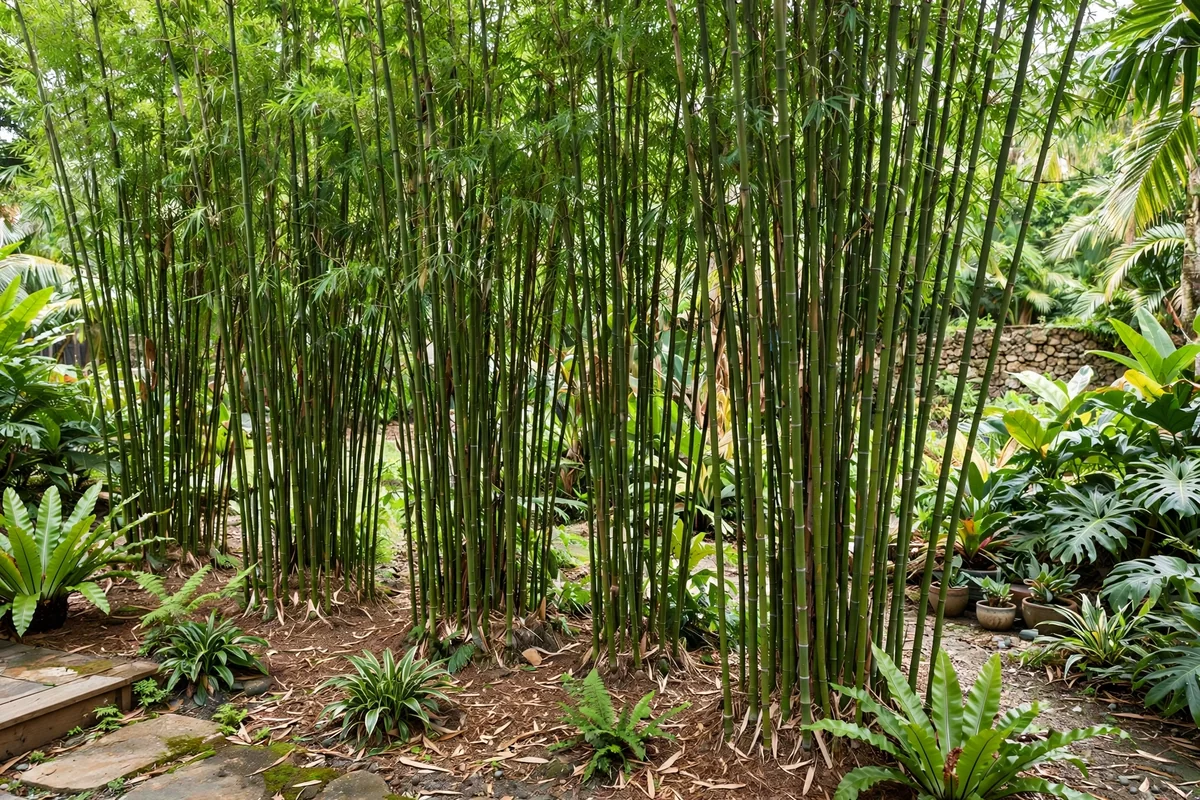
Clumping bamboo is the fastest living screen you can plant without fear of invasion. Unlike running bamboo, clumping types like Bambusa multiplex stay where you put them, forming tight 3 to 5 foot clumps that reach 15 to 25 feet tall. The slender canes and rustling foliage create a tropical, resort-like barrier within two to three growing seasons. Space clumps 4 to 6 feet apart for a continuous screen.
Plant in full sun to part shade in rich, moist, well-drained soil; bamboo is a hungry grower that appreciates compost and regular water. Hardy clumping varieties suit zones 8 to 10, with a few hardy to zone 6. Mulch heavily and feed in spring for the fastest fill. Never substitute running bamboo unless you install a proper root barrier; that mistake has ruined neighborly relations. For near-instant, non-invasive privacy with exotic style, clumping bamboo is unbeatable.
Conclusion
The right small privacy tree turns an exposed yard into a personal retreat without swallowing the garden. Match the tree to your sun, soil and space, plant it properly with room to grow, and water it well that first year. Do that, and your living screen will reward you with beauty, birdsong and blessed seclusion for decades.
Frequently Asked Questions
How far apart should I plant small privacy trees?
Space most small privacy trees at half to two-thirds of their mature width. Fast evergreen screens like arborvitae go 3 to 4 feet apart for a quick hedge, while ornamental trees like redbud need 12 to 15 feet so each keeps its natural shape.
What is the fastest growing small privacy tree?
Leyland cypress and hybrid willows are among the fastest, adding 3 to 4 feet per year in good conditions. Emerald Green arborvitae is slower at about a foot per year but needs almost no pruning, so it catches up in neatness what it lacks in speed.
Can small trees really block a two-story window?
Trees maturing at 20 to 25 feet can screen a second-story window if planted close enough to the house and given time. For faster results, plant a staggered double row or combine a 15-foot tree with a tall trellis and climbing vine for immediate height.
Do privacy trees damage foundations or pipes?
Most small trees are safe planted 10 to 15 feet from the house, but avoid thirsty species like willows near pipes and septic systems. Always call your local utility locator before digging, and check mature root spread for the specific tree you choose.
When is the best time to plant privacy trees?
Fall is ideal in most climates because roots establish over winter before summer heat arrives. Spring planting also works if you water consistently through the first summer. Avoid planting in extreme heat or frozen ground.