Home Improvement
23 Twilight Autumn Garden Ideas That Glow at Dusk
By Anna Wells · · 21 min read
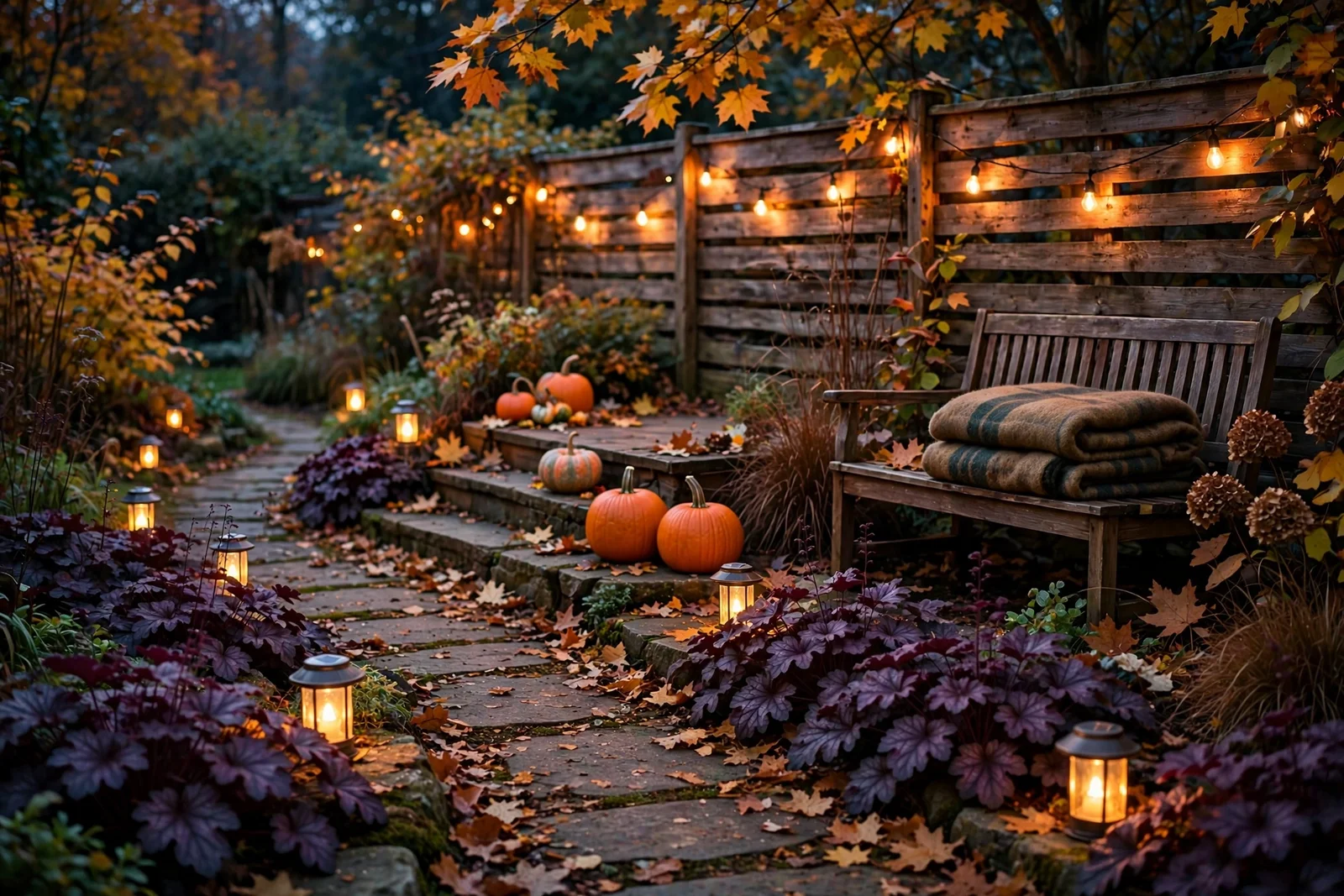
Lanterns, pumpkins and dark foliage turn an ordinary autumn garden into a calm evening retreat. These 23 family safe ideas add glow, scent and warmth for dusk.
There is a short, golden hour in October when the garden belongs to no one else. The light drops low, the air smells of leaves, and every path looks a little mysterious. A few lanterns lit along that path can stretch the evening by hours, turning a quick trip to the bins into a slow wander.
This is about making the autumn garden a room you actually use after dark. Warm light at ankle height, dark purple leaves that deepen as the sun goes, rosemary brushing your sleeve, and a bench with a blanket folded over the back. Nothing fussy, nothing frightening, just a calm outdoor space the whole family enjoys.
Below you will find 23 practical ideas, each one tested against real autumn weather: rain, wind, early sunsets and muddy boots. Every idea names its materials, its placement and its cost, so you can start this weekend with whatever budget you have.
Safety sits at the heart of every suggestion, from candles behind glass to fire bowls with clear distances. Light the lanterns, fold the blanket, and let the garden glow.
1. Line the Garden Path With Solar Lanterns at Even Intervals
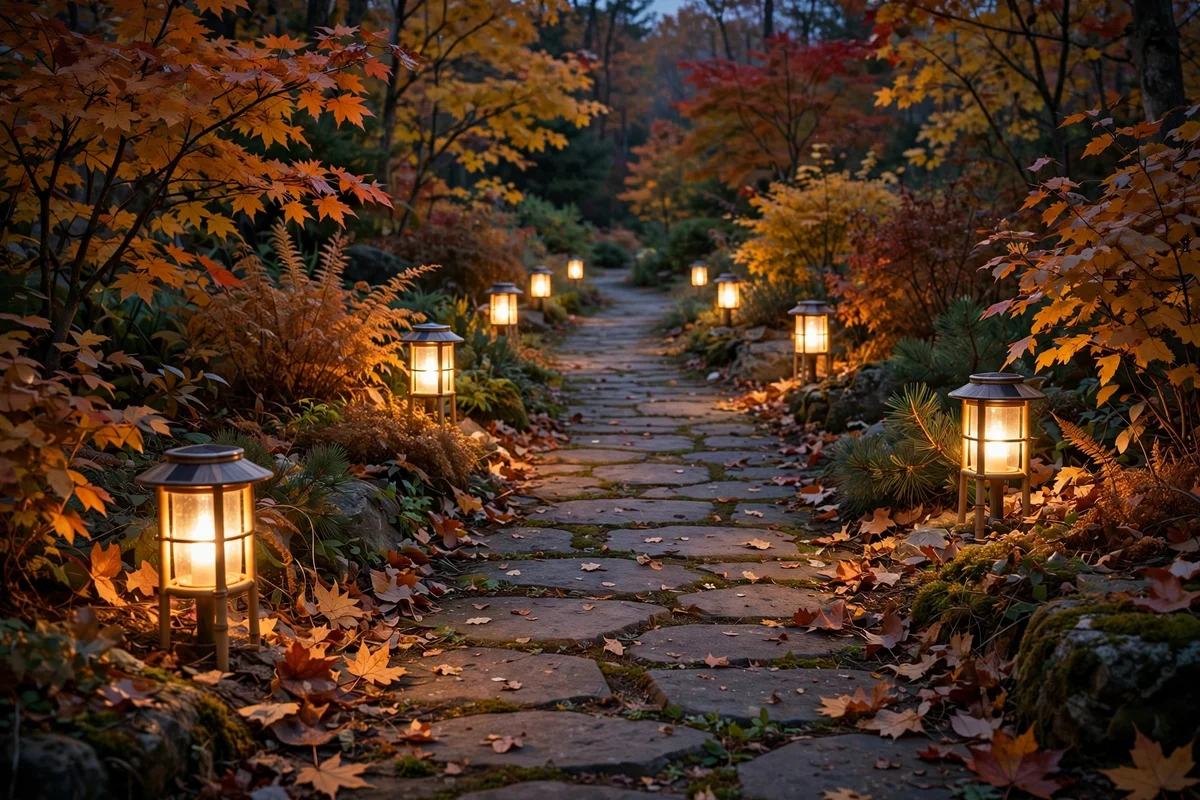
Measure the path and place a solar lantern every 1.8 to 2 metres, alternating sides so the light leads the eye forward in a gentle zigzag. Choose lanterns with warm 2700K LEDs instead of cool white, because amber light flatters copper beech leaves and russet grasses and feels calmer after dark. Push the stake 15 cm into the soil so it holds in autumn wind, and angle the panel toward the south or southwest for the strongest daytime charge.
In October the sun sets early, so check each lantern at dusk and expect six to eight hours of glow from a full charge on a quality model. Wipe the solar panel with a damp cloth once a month, because fallen leaves and dust cut charging fast. The mistake to avoid is crowding ten lanterns near the door and leaving the far half of the path dark. A set of eight good solar lanterns costs 40 to 70 pounds or dollars and lasts several seasons.
2. Set Chunky Pillar Candles in Glass Hurricanes on the Steps
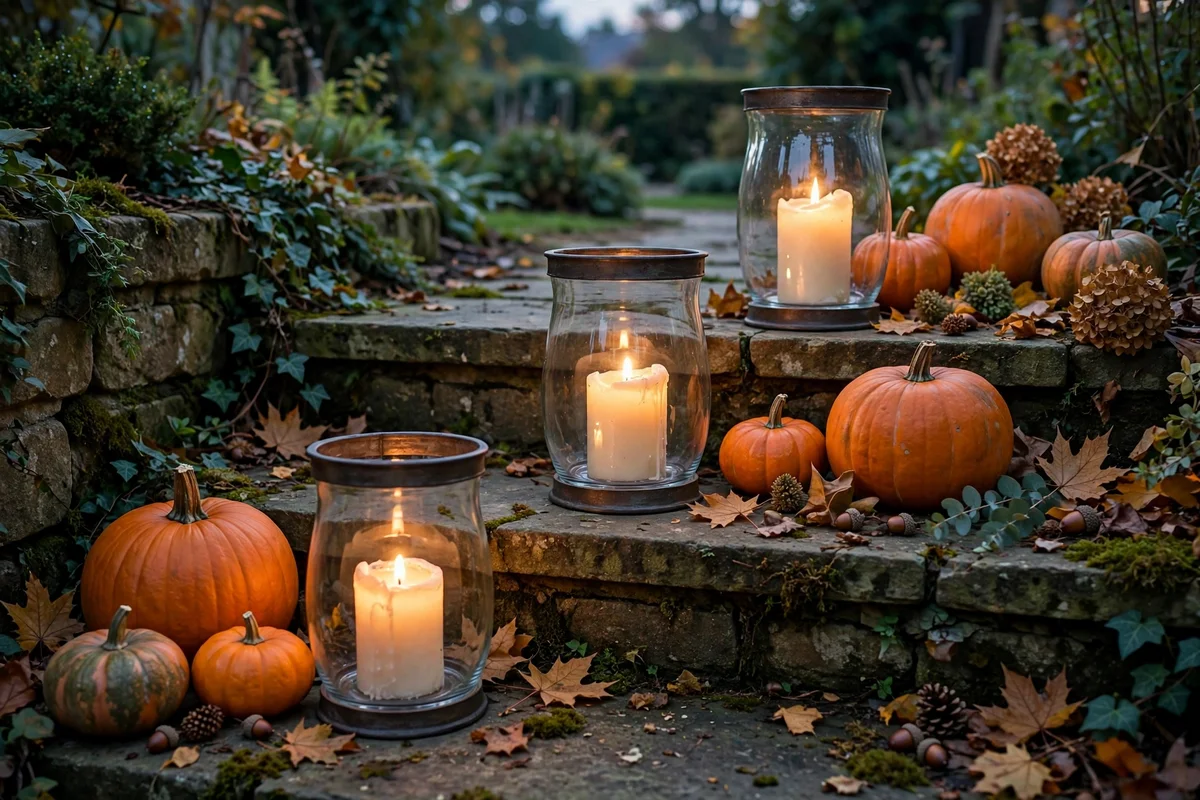
Place three chunky pillar candles, 10 to 15 cm tall, inside tall glass hurricane shades on the widest step, spaced about 30 cm apart. The glass blocks the breeze that snuffs out naked flames and keeps dripping wax off the stone. Use unscented ivory or honey coloured pillars with a burn time of 40 hours or more, and set each hurricane on a small metal tray so hot glass never touches painted wood or a doormat.
Light the candles only when an adult is outside with them, and snuff them before going in for the night. The mistake to avoid is placing hurricanes at the very edge of a step where a sleeve or a passing dog can knock them over; keep them against the wall or the riser. A set of three glass hurricanes plus long burn pillars costs 25 to 45 pounds or dollars, and the pillars can be replaced each autumn.
3. Hang Warm String Lights Along the Fence in a Simple Swag
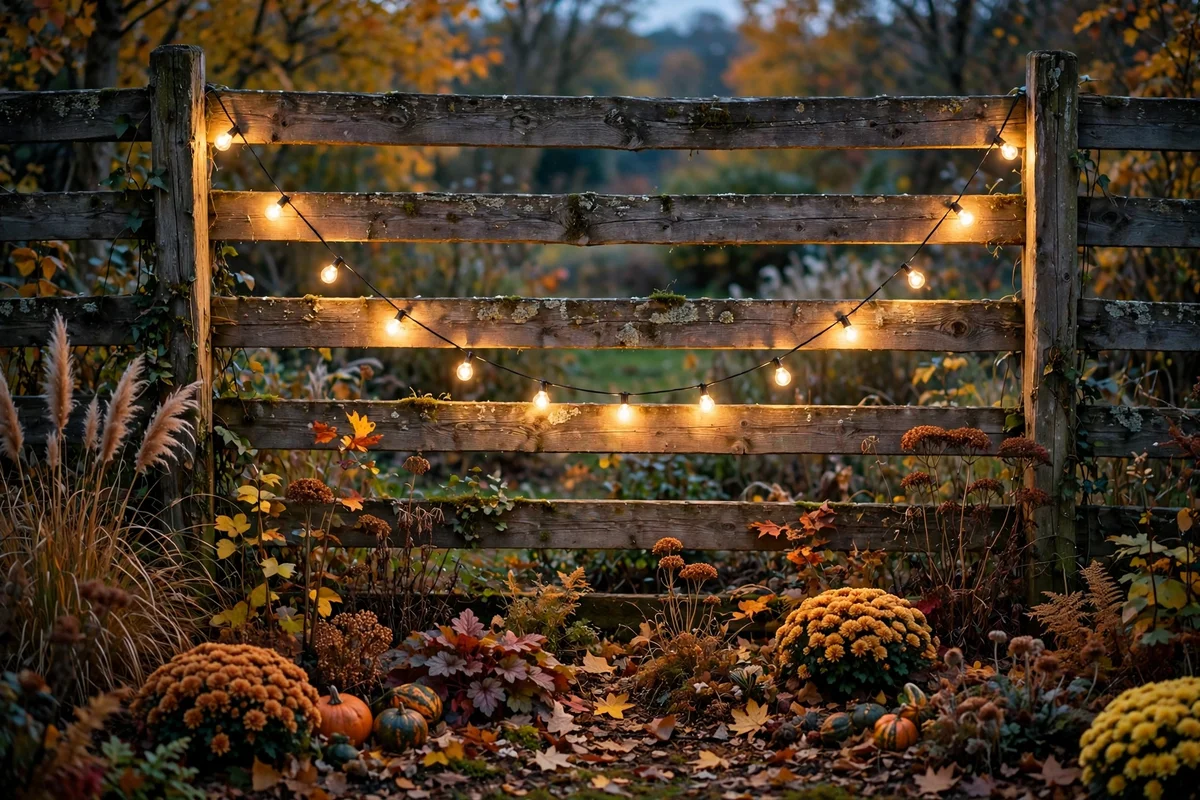
Run one strand of warm white fairy lights along the top of the fence in a relaxed swag, letting it dip 15 to 20 cm between screw-in hooks placed every metre. Keep it plain and classic with a single colour temperature around 2700K, because mixed colours fight the calm mood of an autumn evening. Choose outdoor rated lights with an IP44 rating or better, and plug them into a socket with a weatherproof cover or use a battery pack with a timer.
For a 6 metre fence, a 10 metre strand gives enough slack for gentle swags without pulling tight. The mistake to avoid is wrapping the wire around fence posts in tight spirals, which looks fussy and traps water against the wood. Set the timer to switch on at sunset and off by 11 pm to save power. A quality outdoor strand costs 15 to 35 pounds or dollars, and warm LEDs use very little electricity.
4. Plant Deep Purple Heuchera in Clusters Along the Path Edge
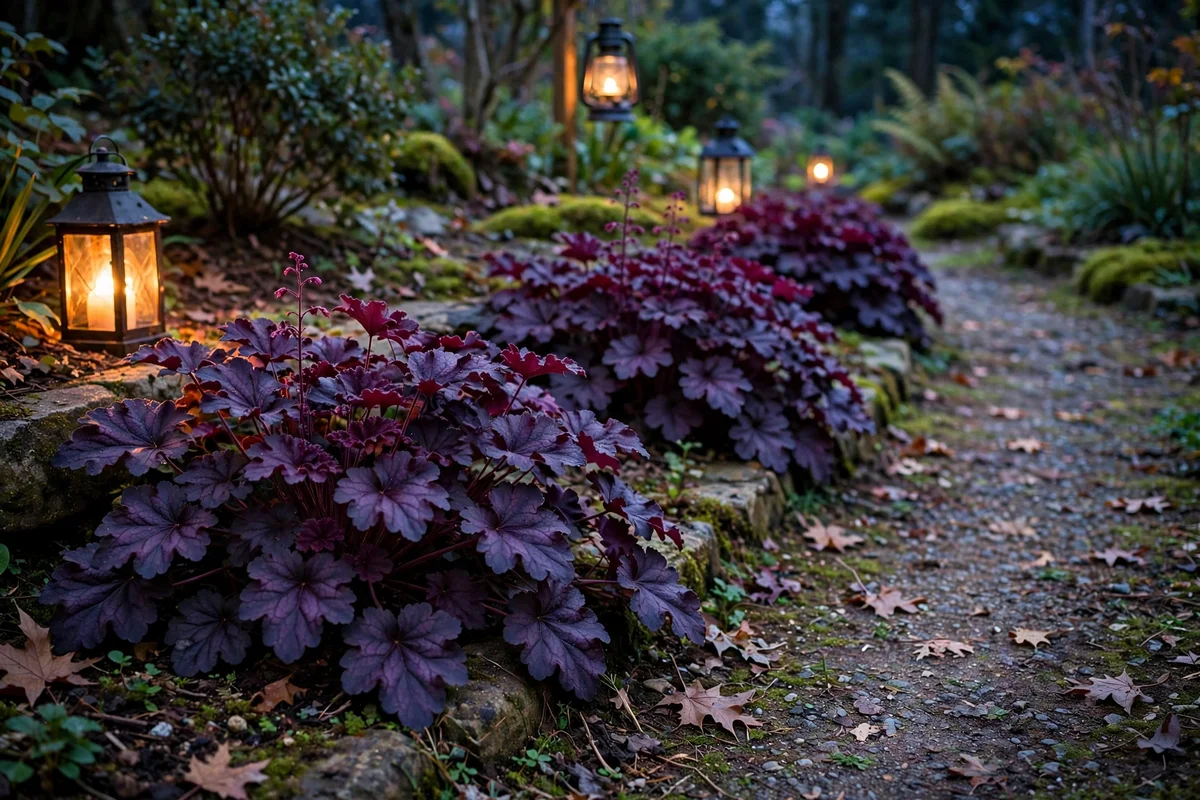
Plant heuchera in clusters of three to five, 25 to 30 cm apart, along the path edge where lantern light will catch the leaves after dark. Deep purple varieties like Obsidian or Palace Purple read almost black at dusk and give the border real depth. Dig each hole twice the width of the pot, mix in a handful of compost, and water well; heuchera hates sitting in soggy soil, so raise heavy clay beds by 10 cm with extra grit.
Space clusters at least a metre apart and fill between them with low green sedums so the dark leaves pop against something lighter. The mistake to avoid is planting heuchera in full shade, where the purple fades to muddy green; they want morning sun and afternoon shade. Each plant costs 5 to 9 pounds or dollars, and dividing the crowns every three years doubles your stock for free.
5. Pot Dark Dahlias in Terracotta by the Garden Gate
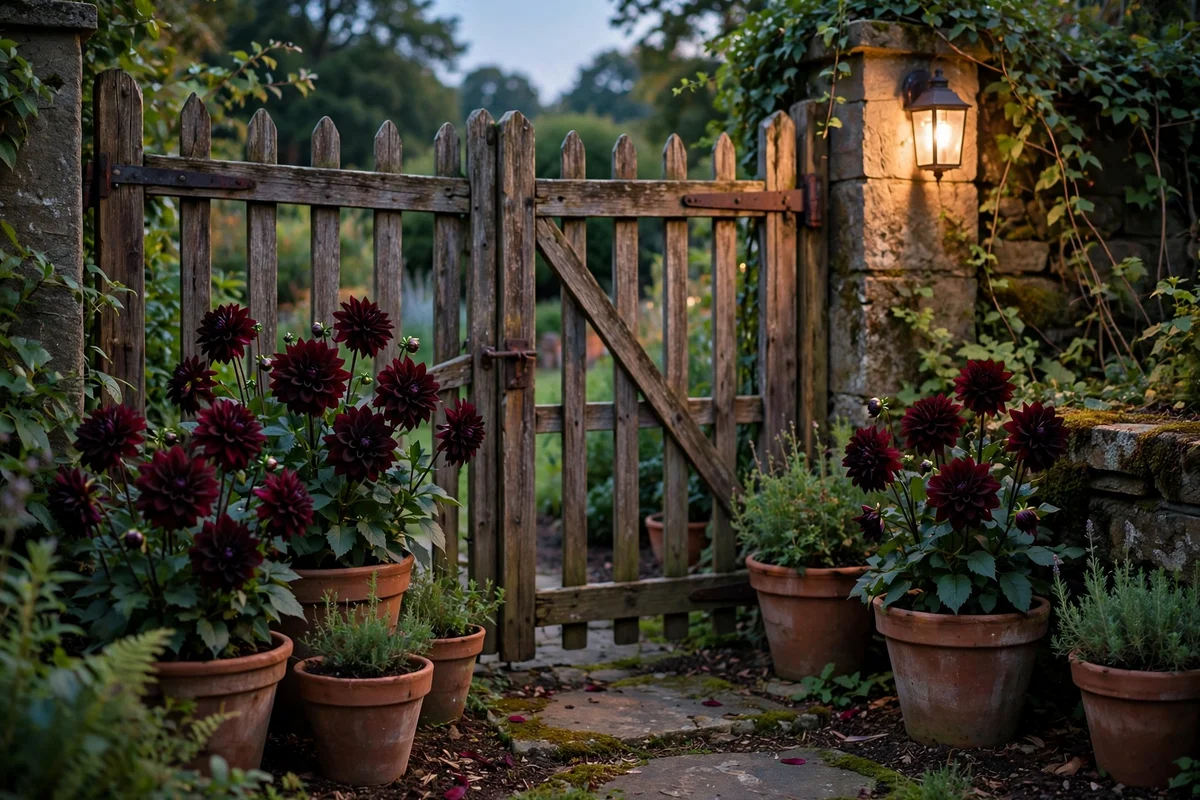
Choose a dark dahlia such as Karma Choc or Arabian Night and pot one tuber per 30 cm terracotta pot by the gate, so the near black blooms glow against the clay at dusk. Fill the pot with loam based compost mixed with a third perlite for drainage, plant the tuber 10 cm deep with the eye facing up, and stake the stem early since autumn winds snap tall growth. Water deeply twice a week rather than a little every day.
Deadhead spent blooms every few days to keep flowers coming until the first hard frost, then lift the tubers and store them in dry compost in a frost free shed. The mistake to avoid is letting the pot sit in a saucer of water, which rots the tuber fast; use pot feet to lift it 2 cm. A 30 cm terracotta pot, compost and one tuber usually total 15 to 25 pounds or dollars.
6. Let Tall Ornamental Grasses Catch the Last of the Light

Plant miscanthus or pennisetum in drifts of three, 60 cm apart, where the low evening sun rakes across them from the side. The seed heads turn to copper silk in October and hold the light long after the beds go dark. Cut nothing back in autumn; the tan plumes stand through winter and give the garden structure. Dig a hole as deep as the root ball, backfill with the native soil, and water once at planting.
Place the tallest grasses, 120 to 150 cm, behind lower heuchera so the dark leaves anchor the airy plumes. The mistake to avoid is planting them right against the path, where arching blades trip ankles in the dark; keep 45 cm of clear mulch between grass crowns and the path edge. Grasses cost 6 to 12 pounds or dollars each and need dividing only every four or five years.
7. Stack Mixed Size Pumpkins on the Front Steps
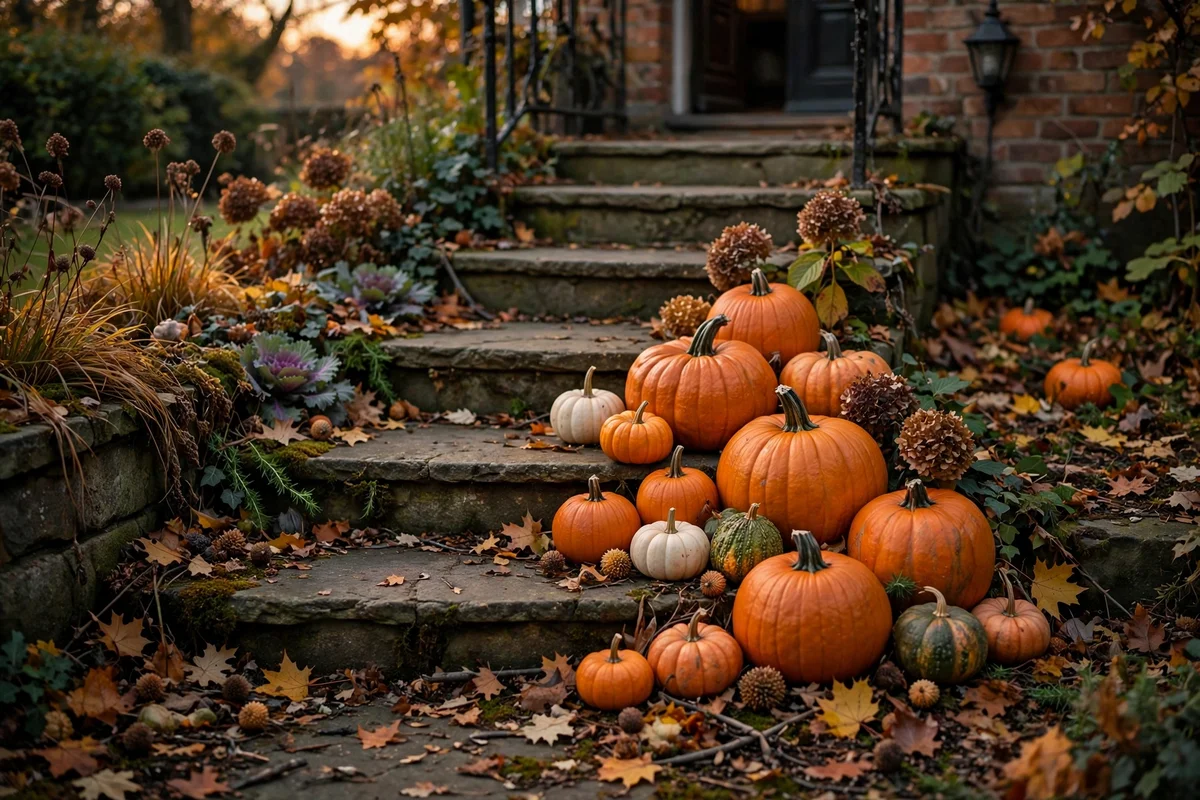
Group five to seven pumpkins on the steps in odd numbers, mixing one large 30 cm specimen with medium 20 cm ones and a few minis tucked between. Place the biggest at the back against the riser and cascade smaller ones forward so the arrangement reads from the street. Choose uncut pumpkins with intact stems, since a cut stem rots fast in damp October air; they last six to eight weeks outdoors in cool weather.
Keep pumpkins off painted wood by sitting them on a coir doormat or a folded piece of burlap, and turn them every two weeks so no side stays damp. The mistake to avoid is stacking them in a perfect symmetrical pyramid, which looks like a shop display; a loose cluster feels like a real harvest. Pumpkins cost 2 to 8 pounds or dollars each from a farm shop, cheaper than a garden centre.
8. Flank the Door With a Lantern and an Oversized Pumpkin
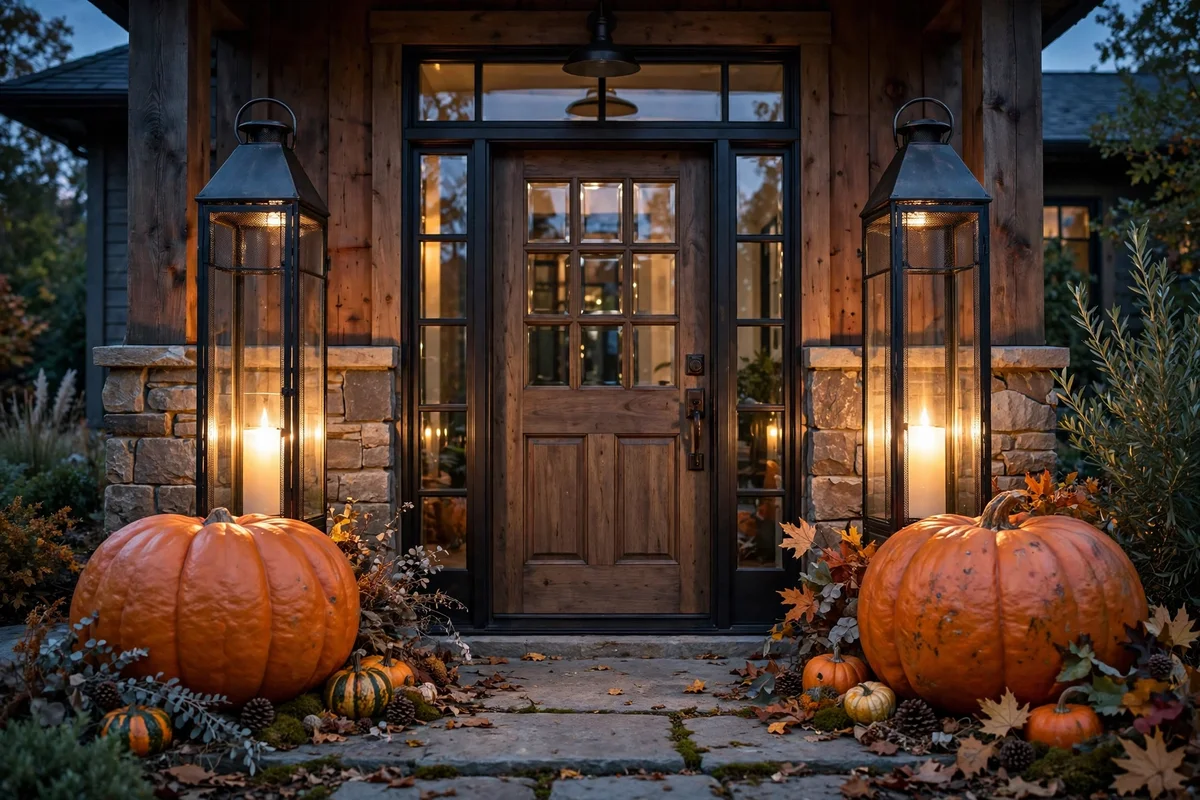
Set one oversized pumpkin, 35 to 45 cm across, on each side of the door with a tall metal lantern beside it, creating a balanced frame that welcomes guests after dark. Light the lanterns with a warm LED pillar candle on a timer so they glow from dusk without anyone remembering to light them. Keep 60 cm of clear walkway between the displays so the path stays safe and easy for prams and wheelchairs.
Anchor each pumpkin on a flat rubber mat so it cannot roll, and choose lanterns with a weighted base or stake them if the spot is windy. The mistake to avoid is blocking the letterbox or the doorbell with the display; deliveries still need to reach you. Two big pumpkins and a pair of 40 cm lanterns cost 35 to 60 pounds or dollars and store flat for next year.
9. Drape a Folded Wool Blanket Over the Garden Bench
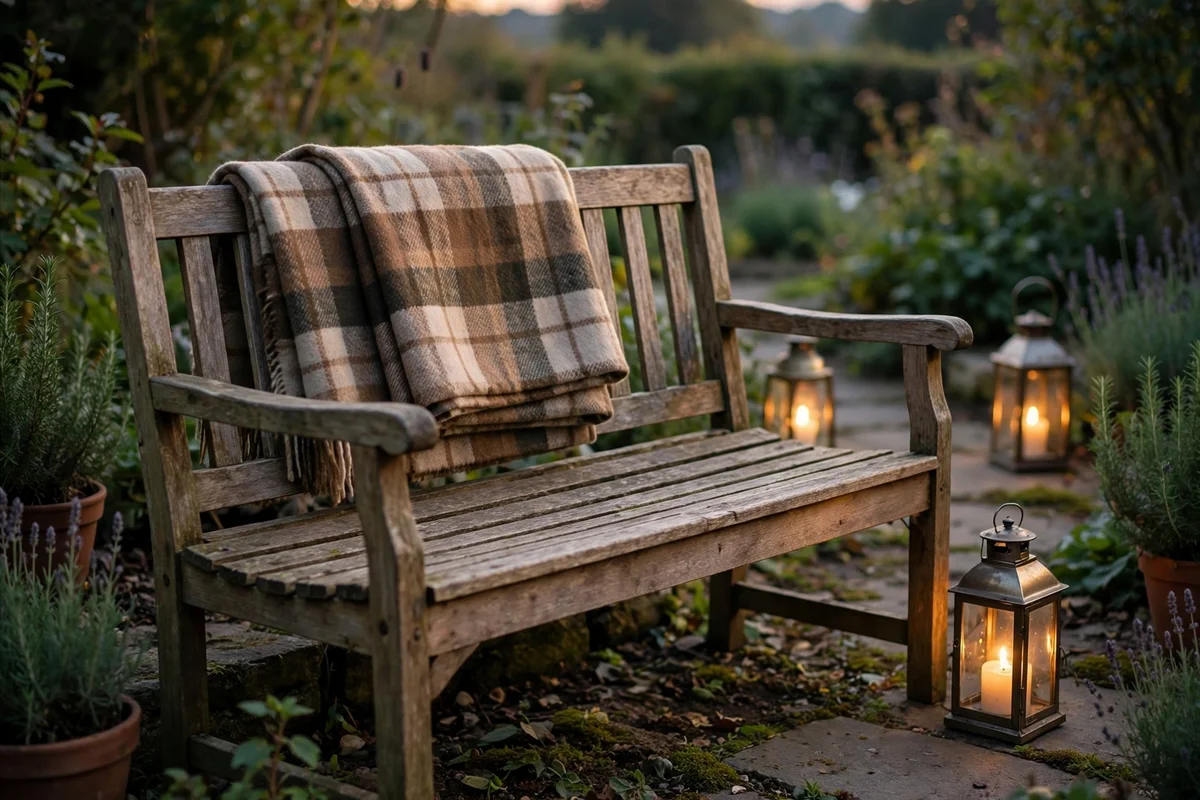
Fold a wool or wool blend throw into thirds lengthways and drape it over the back of the bench, so it hangs evenly and invites someone to sit a while at dusk. Choose a classic check or herringbone in rust, oat or forest green, which suits autumn without shouting. A 130 by 180 cm throw is the right scale for a two seat bench; smaller throws look lost and slip off in the wind.
Bring the blanket indoors when rain is forecast, since even wool suffers if it stays soaked for days; a quick shake and a dry evening restores the loft. The mistake to avoid is leaving a damp throw folded on the bench all week, which stains wood and turns musty. A good wool blend throw costs 25 to 50 pounds or dollars and doubles as an indoor sofa layer through winter.
10. Add a Burnt Orange Cushion to the Bench Seat

Place one or two weatherproof cushions in burnt orange or deep rust on the bench seat, 45 cm square, to echo the pumpkins and the turning leaves. Outdoor foam with a solution dyed acrylic cover dries fast after a shower and holds its colour through an autumn of sun. Tuck the cushions against the back rail so they do not slide, and choose piped edges for a tailored look that lifts a plain wooden bench.
Store cushions in a deck box or bring them under cover on wet nights to stretch their life well past one season. The mistake to avoid is choosing thin indoor cushions for outdoor use; they soak through in one rain and go flat by November. A pair of quality outdoor cushions costs 20 to 40 pounds or dollars, far less than replacing a whole bench set.
11. Site a Fire Bowl on Level Gravel With Clear Distances
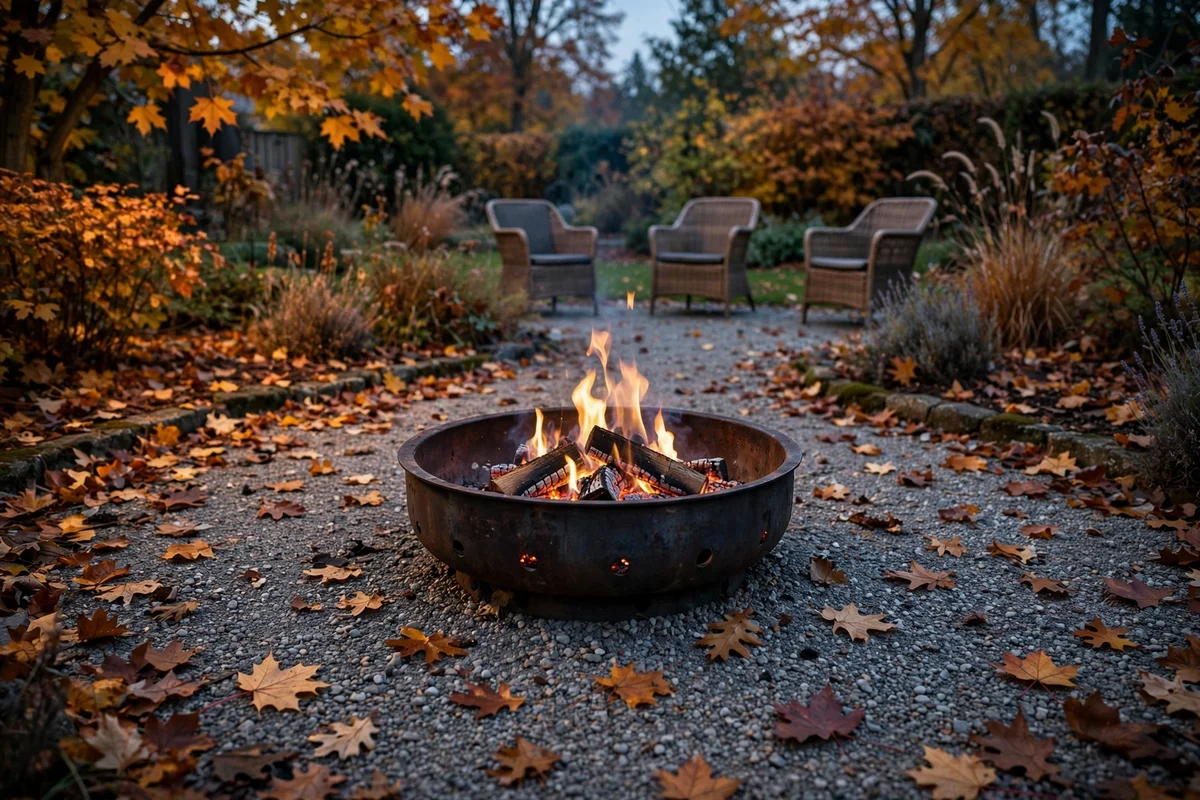
Set the fire bowl on a level gravel or stone pad at least 3 metres from the house, fences, trees and any overhanging branches, since heat and sparks travel further than expected on a still evening. Choose a bowl 60 to 80 cm across on a stable tripod or pedestal base, and keep a 1.5 metre clear ring around it free of cushions, blankets and dry leaves. Gravel underfoot stops sparks landing on grass and is easy to sweep.
Burn only dry seasoned hardwood, keep a metal lid or sand bucket within arm’s reach, and let an adult tend the fire at all times, with children seated well outside the clear ring. The mistake to avoid is lighting a fire bowl on a windy night, when embers can jump the ring in seconds; save it for calm evenings. A steel fire bowl costs 40 to 90 pounds or dollars, and seasoned logs run about 8 to 12 per bag.
12. Place a Chiminea With a Spark Guard Away From Walls
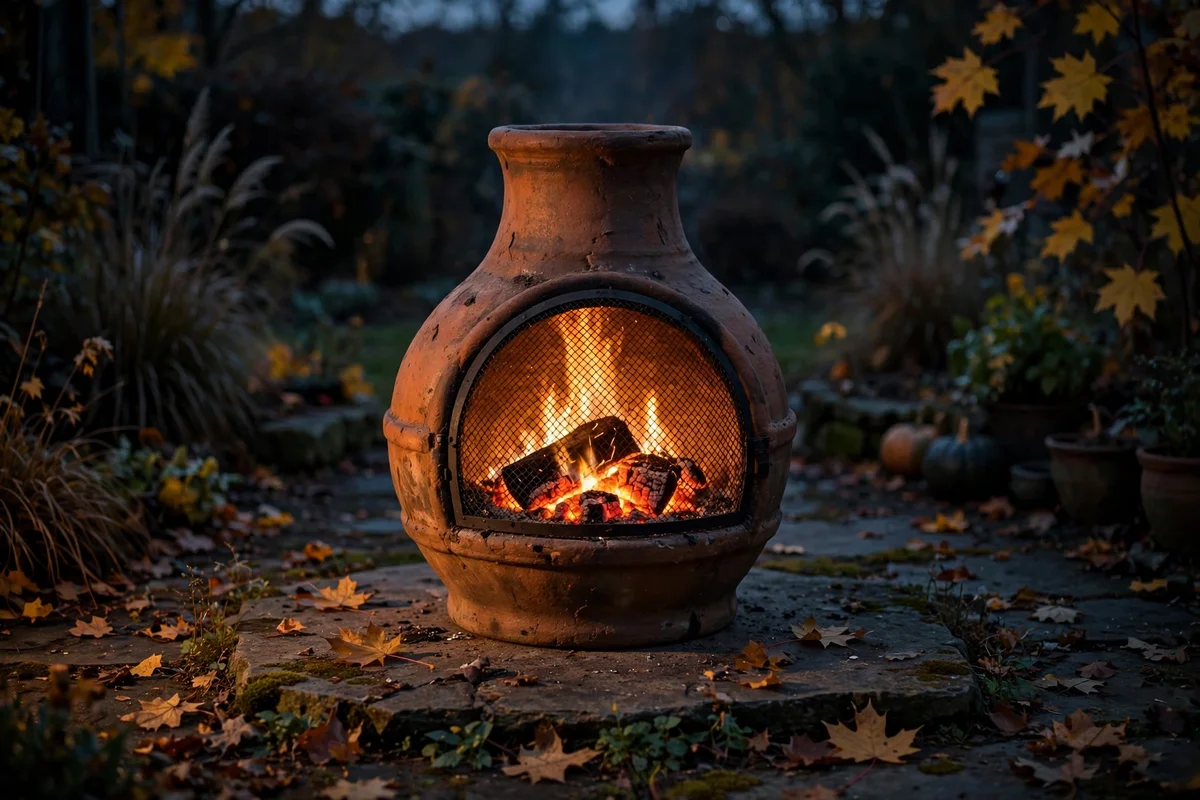
Position a clay or cast iron chiminea at least 3 metres from walls, fences and the house, on a heatproof stone slab rather than directly on decking or grass. The tall chimney directs smoke upward, which suits small gardens, and a spark guard over the mouth stops embers escaping on gusty evenings. Season a new clay chiminea with three small fires before the first full burn, or the body can crack from heat shock.
Keep the fire small, never fill the belly more than half full, and always let it burn down fully before leaving the garden, with an adult present the whole time. The mistake to avoid is moving a lit or still warm chiminea; clay stays hot for hours and the legs can scorch whatever they touch. A good chiminea costs 60 to 120 pounds or dollars, and a cover for winter storage is worth adding.
13. Fill Terracotta Pots With Rosemary Near the Seating Area
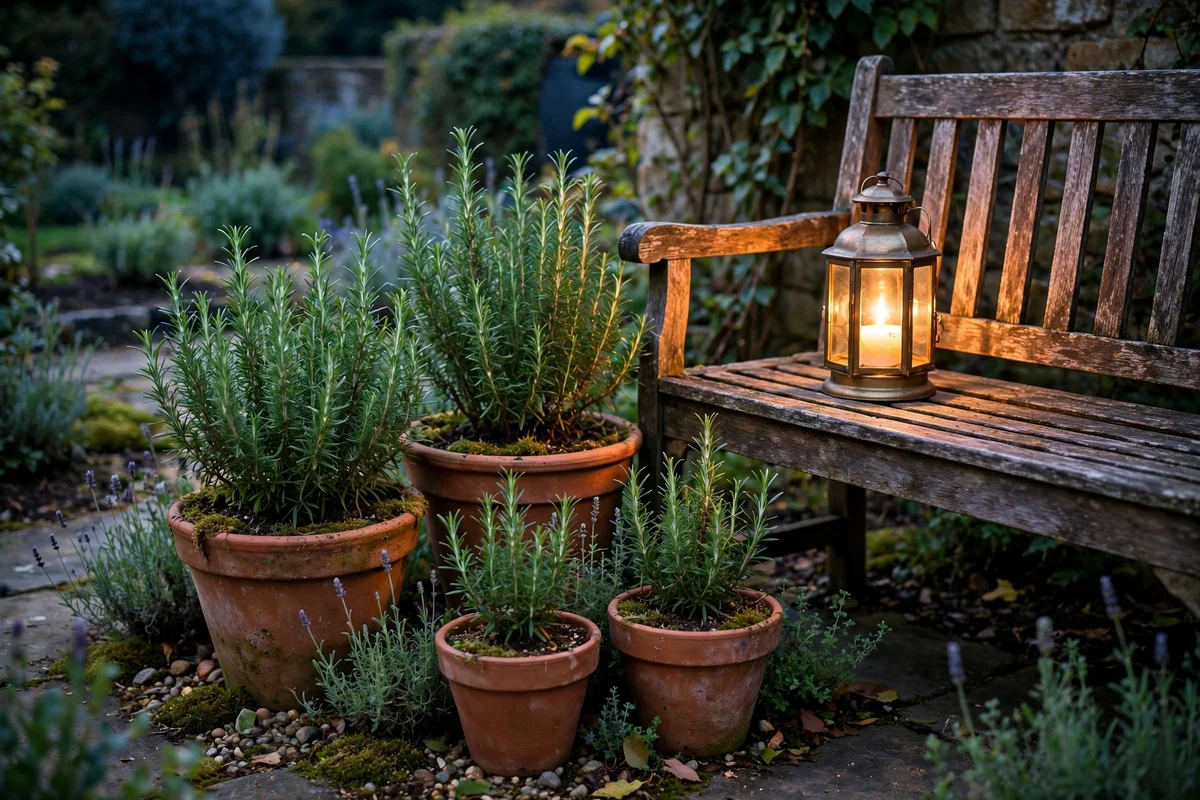
Plant one upright rosemary per 25 cm terracotta pot and set two or three pots within arm’s reach of the bench, where brushing past releases scent on cool evenings. Rosemary is evergreen, so it looks alive long after the dahlias fade, and the grey green needles catch lantern light beautifully. Use gritty compost with a third sharp sand, water only when the top 3 cm is dry, and never let the pot sit in water.
Snip sprigs for the kitchen through autumn, which keeps the plant bushy, and move pots against a south facing wall before hard frost since rosemary dislikes frozen roots. The mistake to avoid is overwatering in October rain; move pots under the porch overhang or tip saucers out weekly. A 25 cm pot, compost and a sturdy rosemary plant cost 10 to 18 pounds or dollars each.
14. Edge the Path With Lavender for Scent at Ankle Height
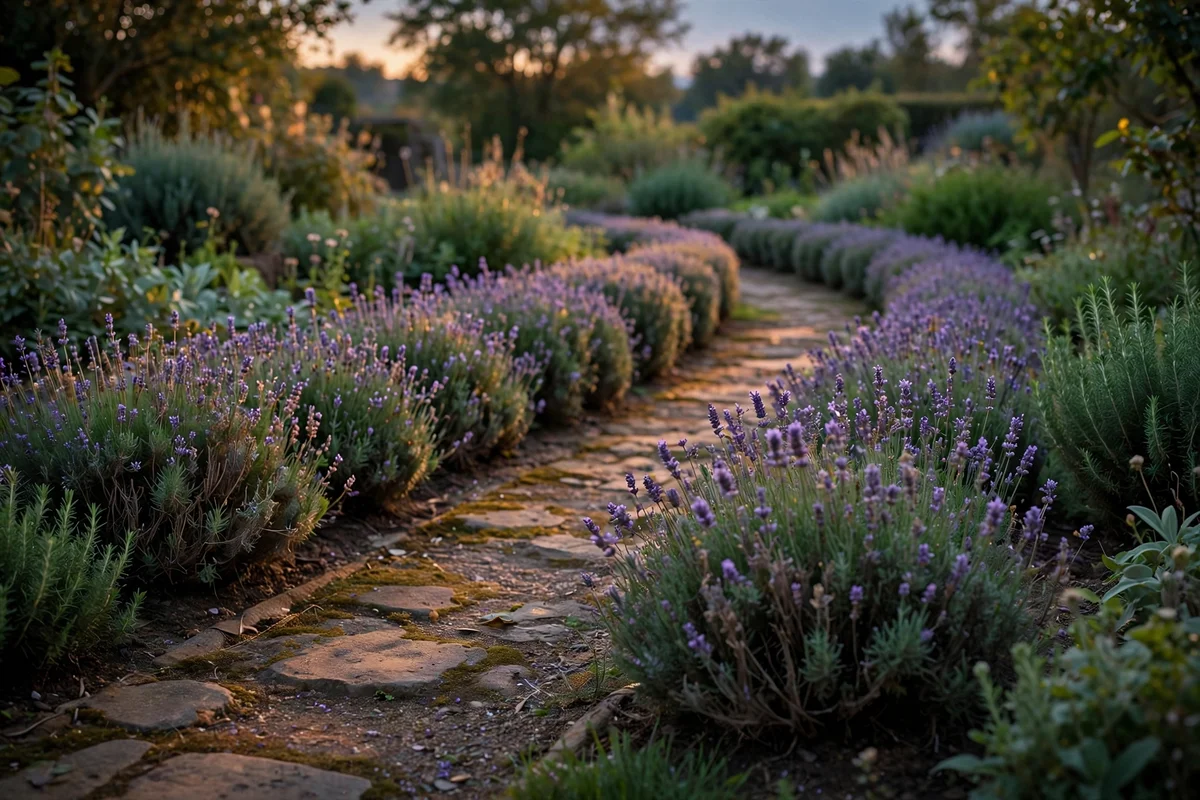
Plant lavender in a low hedge along the path edge, 30 cm apart, so every step brushes scent up on still autumn evenings. English lavender such as Hidcote stays compact at 30 to 40 cm and keeps a neat dome with one trim in late August, after flowering. Dig in grit on heavy soil, since lavender rots in wet clay faster than in cold; a handful of gravel under each plant works wonders.
Cut the hedge back by a third after flowering but never into old wood, or bare stems never resprout. The mistake to avoid is planting lavender in deep shade beside a tall fence, where it goes leggy and scentless; it needs at least six hours of sun. Plants cost 4 to 8 pounds or dollars each, and a 3 metre run of twelve plants transforms an ordinary path.
15. Hang a Metal Lantern From the Porch Beam Over the Steps
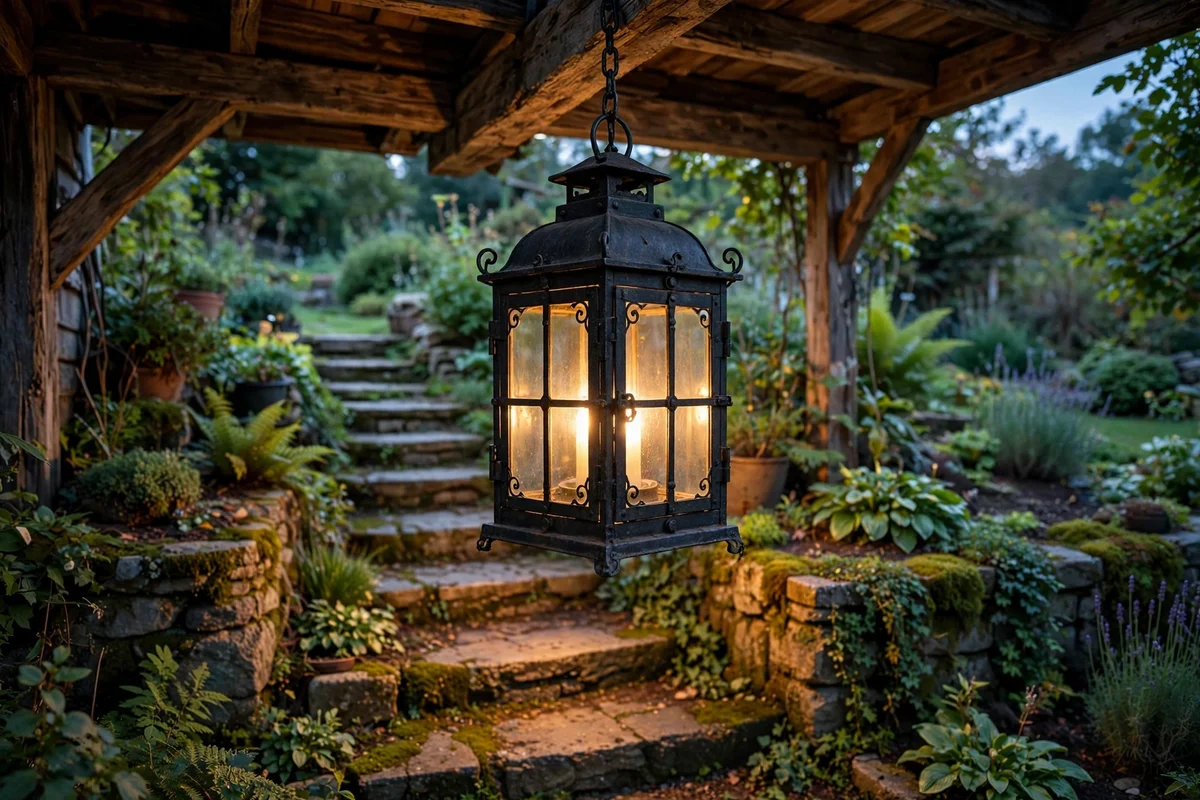
Hang one large metal lantern, 40 to 50 cm tall, from the porch beam on a sturdy hook rated for twice the lantern’s weight, centred over the steps so it lights feet as well as faces. Fit it with a warm LED pillar on a dusk to dawn sensor, giving reliable light from October’s early sunsets without daily fuss. Black or bronze metal suits most porch paint colours and never clashes with pumpkins.
Keep the bottom of the lantern at least 200 cm above the top step so tall guests never duck, and check the hook each autumn for rust or loosening. The mistake to avoid is hanging it where the door swings open; measure the arc first and offset the hook 30 cm to the hinge side. A large metal lantern plus LED candle costs 20 to 40 pounds or dollars.
16. Nest Tealights in Glass Jars Along the Low Garden Wall
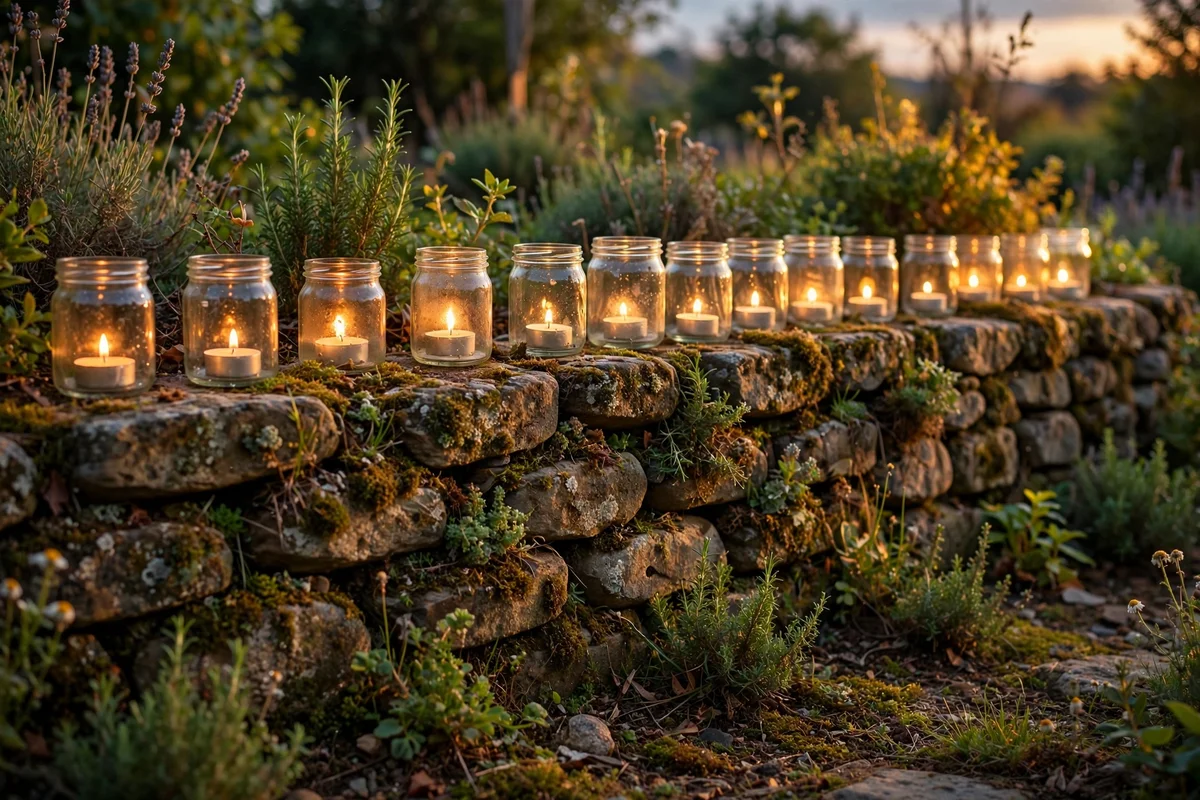
Line the low garden wall with glass jars, one every 40 to 50 cm, each holding a single LED tealight with a warm flicker setting. Use jam jars or plain glass votives 8 to 10 cm tall so the glow sits below the rim and wind cannot tease it out; real flames are fine too, but only when an adult stays in the garden. The row of small glows turns an ordinary wall into a ribbon of light at dusk.
Weigh each jar with a spoonful of sand so it cannot tip, and bring glass indoors before the first hard frost to prevent cracking. The mistake to avoid is spacing jars too far apart, which reads as random clutter; a steady rhythm every half metre looks deliberate. Twenty jars and LED tealights cost under 25 pounds or dollars, especially if you reuse kitchen jars.
17. Aim a Low Uplight at a Small Autumn Tree for Evening Shape
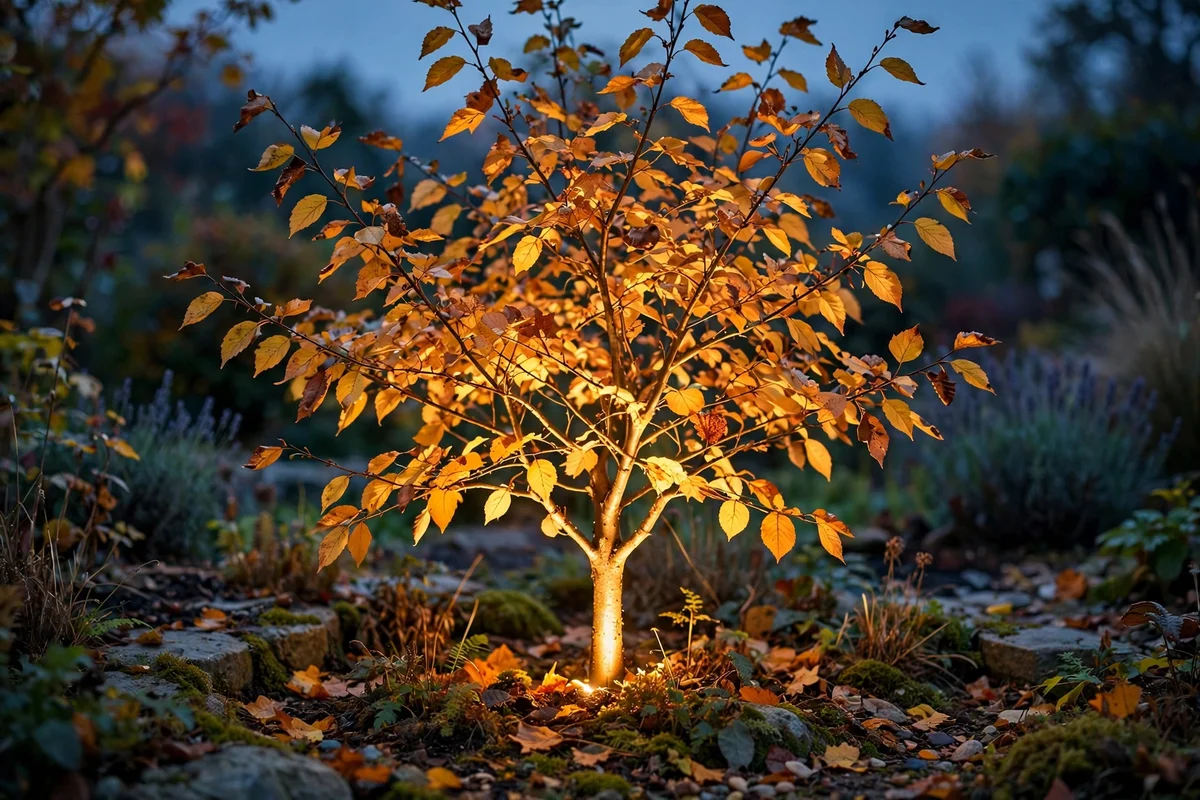
Set a low voltage spike uplight 60 to 90 cm from the trunk of a small maple or amelanchier and angle the beam up through the branches, so the tree becomes a glowing sculpture at dusk. Choose a warm 2700K spot with a narrow 36 degree beam for a crisp shape, and bury the cable 10 cm deep along the bed edge to keep it tidy and safe from spades. One light per tree is plenty.
Point the beam at the trunk rather than straight into the canopy, which flattens the shape; the branches catch enough spill to glow softly. The mistake to avoid is leaving uplights on all night, which wastes power and disturbs wildlife; a timer ending at 11 pm is kinder. A spike uplight kit with transformer costs 30 to 55 pounds or dollars and runs on very little electricity.
18. Weave Plain Fairy Lights Through a Hazel Garden Arch
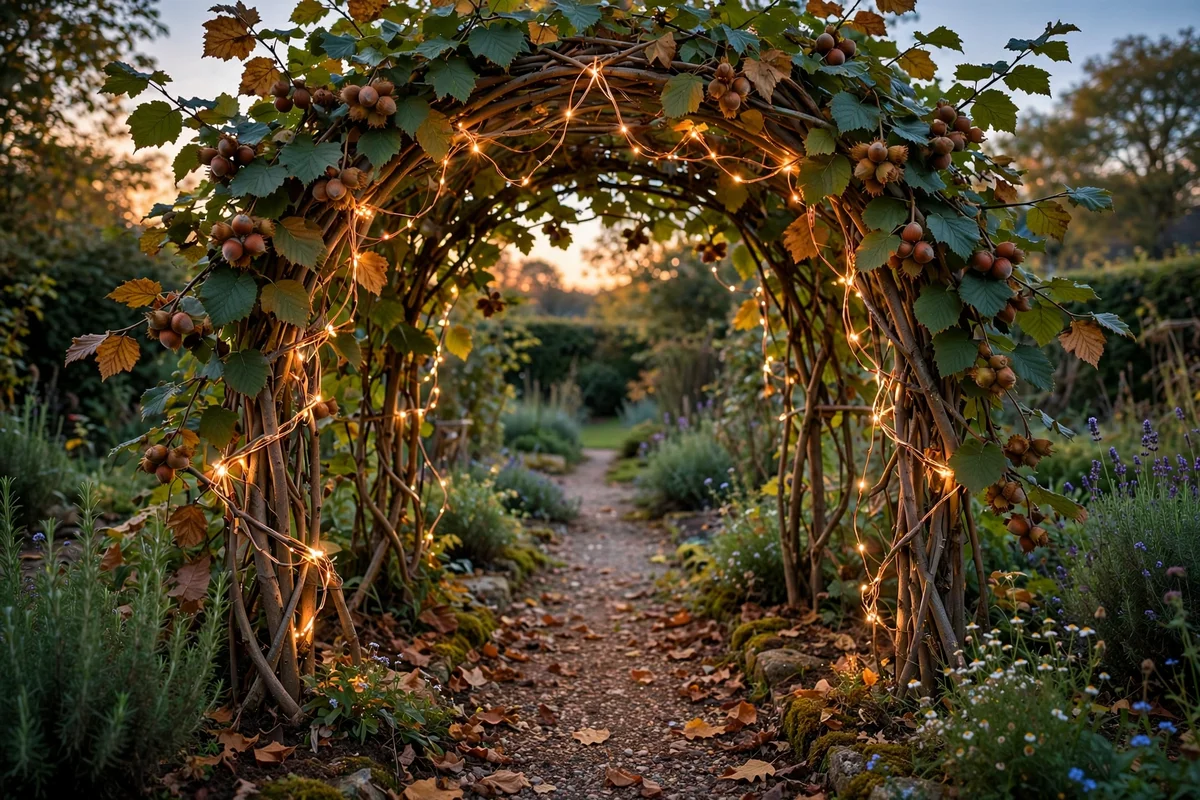
Wrap a single strand of warm fairy lights loosely around a hazel or willow arch, spiralling with 20 to 30 cm gaps so the natural wood still shows between the lights. Keep it plain and classic with steady warm white bulbs, no flashing modes, since the arch frames a walkway and should feel calm. Start at the base on one side, climb to the top, and come down the other side with one continuous 10 metre strand.
Fix the wire with small cable ties every 40 cm, snipped flush so nothing snags sleeves, and choose battery lights with a six hour timer if no socket is nearby. The mistake to avoid is pulling the strand drum tight, which bends young hazel rods and snaps the wire; leave slack everywhere. A 10 metre outdoor fairy light strand costs 12 to 25 pounds or dollars.
19. Set a Lantern Trio in Graduated Heights on the Table
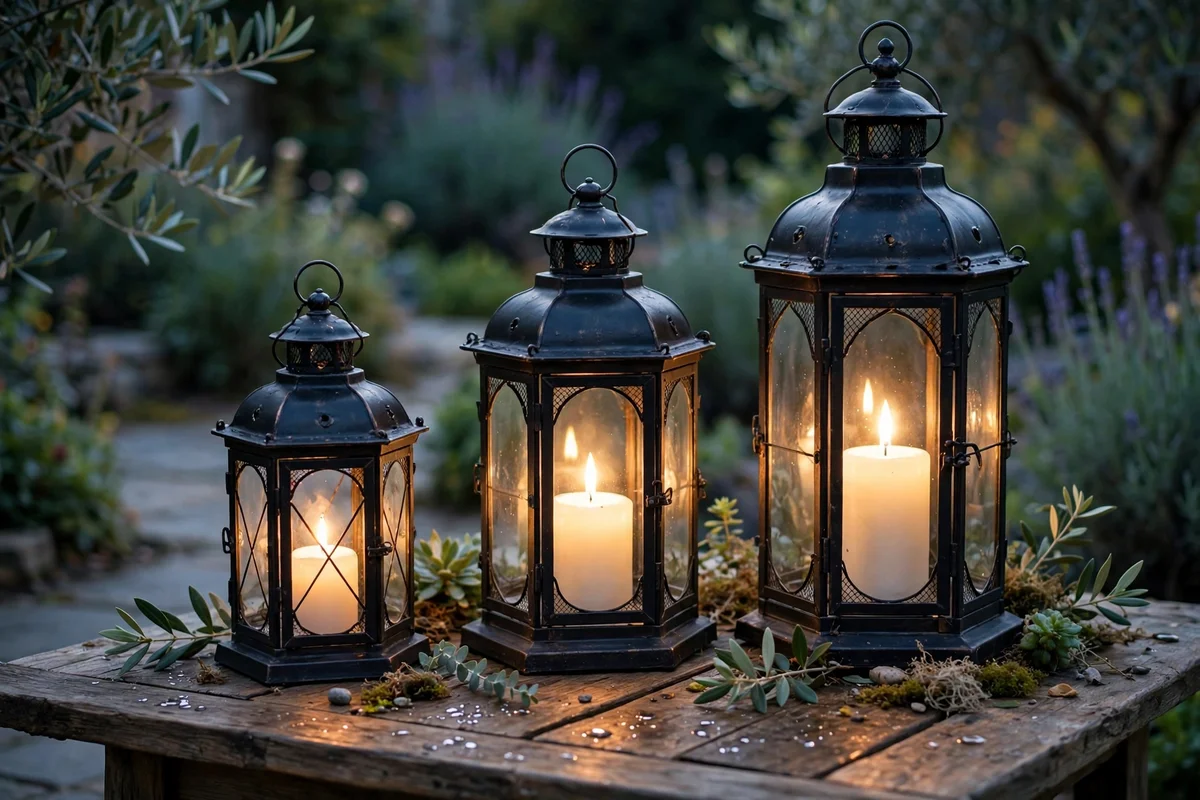
Group three lanterns on the garden table in heights of 25, 35 and 45 cm, placing the tallest at the back and the smallest at the front so the eye steps down naturally. Keep all three in the same finish, such as black metal with clear glass, so the group reads as one set. Fill each with a warm LED candle on the same timer, giving a layered glow that flatters teacups and trailing ivy alike.
Leave 30 cm of clear table space in front of the trio for mugs and plates, and anchor the lanterns with their own weight rather than leaning them against anything. The mistake to avoid is mixing three different styles, which turns a calm trio into a jumble sale; matching shapes in different sizes always wins. A graduated trio costs 25 to 45 pounds or dollars from home stores.
20. Keep a Wicker Basket of Blankets by the Back Door
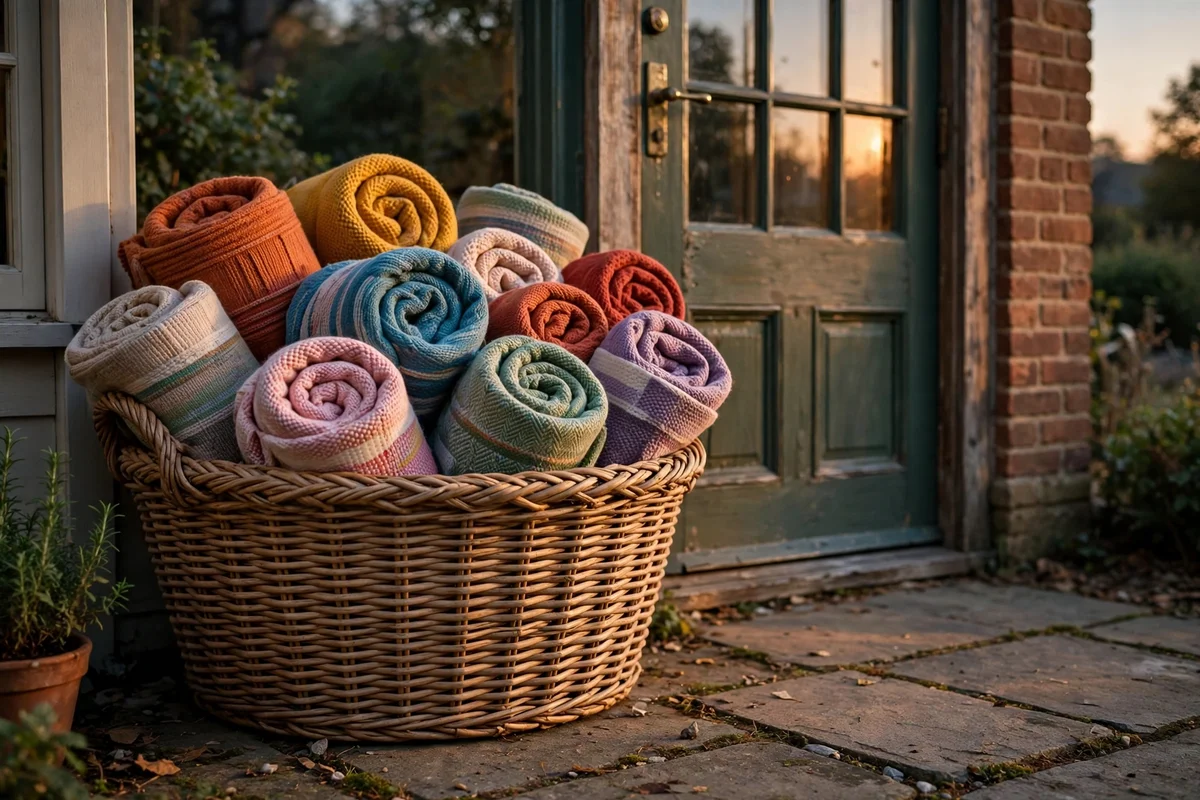
Set a large wicker basket, 50 to 60 cm across, just inside the back door and roll three or four throws inside so family can grab one on the way out to the bench. Rolling rather than folding shows the colours and keeps the basket from overflowing. Choose washable cotton or acrylic throws for this basket, saving the good wool for the bench, since these get dragged across grass and washed often.
Line the basket with a washable cotton liner to protect the wicker from damp throws, and air the basket outside on dry days to stop mustiness. The mistake to avoid is cramming six blankets into a basket sized for three; an overstuffed basket topples when someone pulls the bottom throw. A sturdy wicker basket costs 20 to 35 pounds or dollars and lasts years indoors.
21. Mulch the Beds With Dark Bark to Deepen Dusk Colours
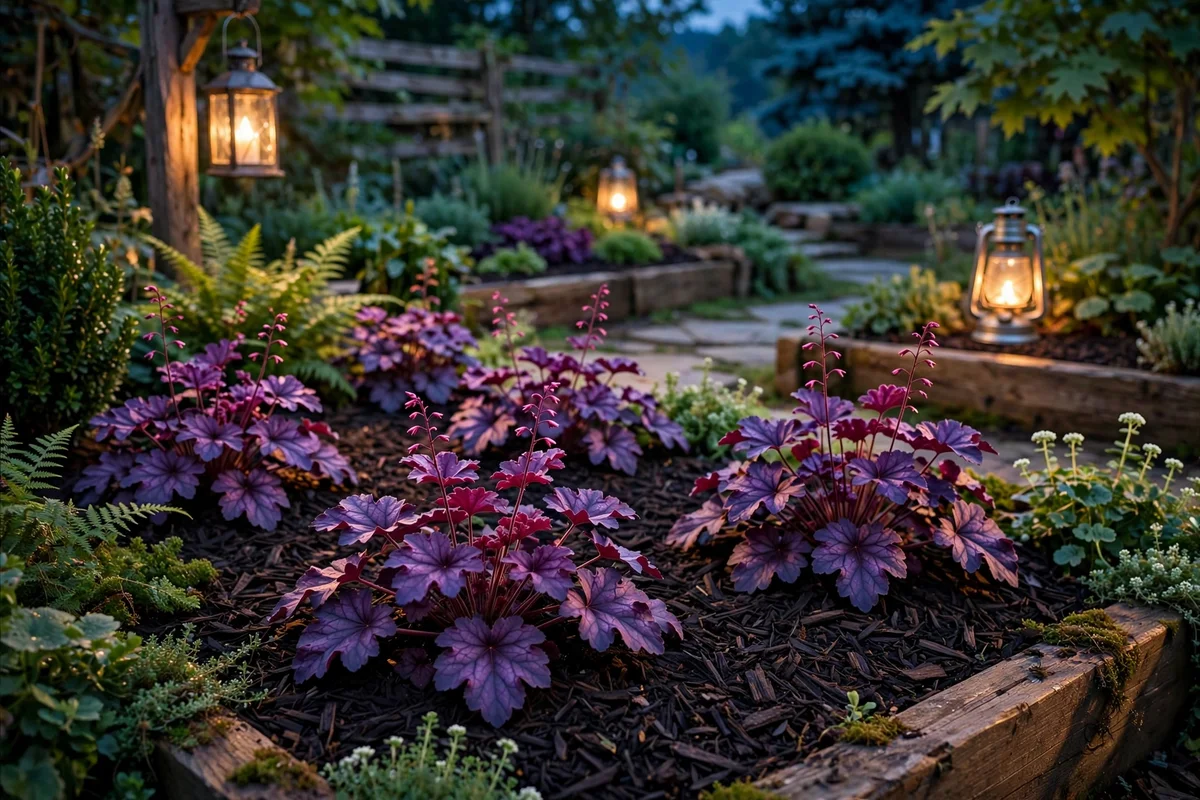
Spread 7 to 10 cm of dark bark mulch over the beds in October, which deepens every colour at dusk and makes purple heuchera and black dahlias stand out like ink. The dark surface also holds daytime warmth and releases it slowly, a small gift on chilly evenings. Keep mulch 5 cm clear of stems and trunks to stop rot, and water the bed well before mulching so moisture is locked in.
A 70 litre bag covers about 1 square metre at this depth, so measure the beds before buying; most gardens need three to six bags. The mistake to avoid is using pale wood chips, which bleach to grey by November and flatten the whole palette; composted dark bark holds its colour. Bags cost 6 to 10 pounds or dollars each, a cheap upgrade for the whole border.
22. Tuck Battery Tealights Inside Hollowed Mini Pumpkins

Hollow out mini pumpkins, 8 to 12 cm across, with a teaspoon, leaving walls 1.5 cm thick, and drop a warm battery tealight inside each for a safe glow that real candles cannot match. Cut the lid with a small star or dot pattern if you like, keeping the design plain and friendly. The tealight’s flicker setting shows through the thin skin beautifully at dusk.
Set the mini pumpkins on a tray or a wide step where they cannot roll, and switch them off when you come inside to save the batteries. The mistake to avoid is using real tealights in hollowed minis; the thin walls dry out and can scorch, so battery only. A bag of six mini pumpkins plus LED tealights costs 8 to 15 pounds or dollars.
23. End the Path With a Planted Urn and One Tall Lantern
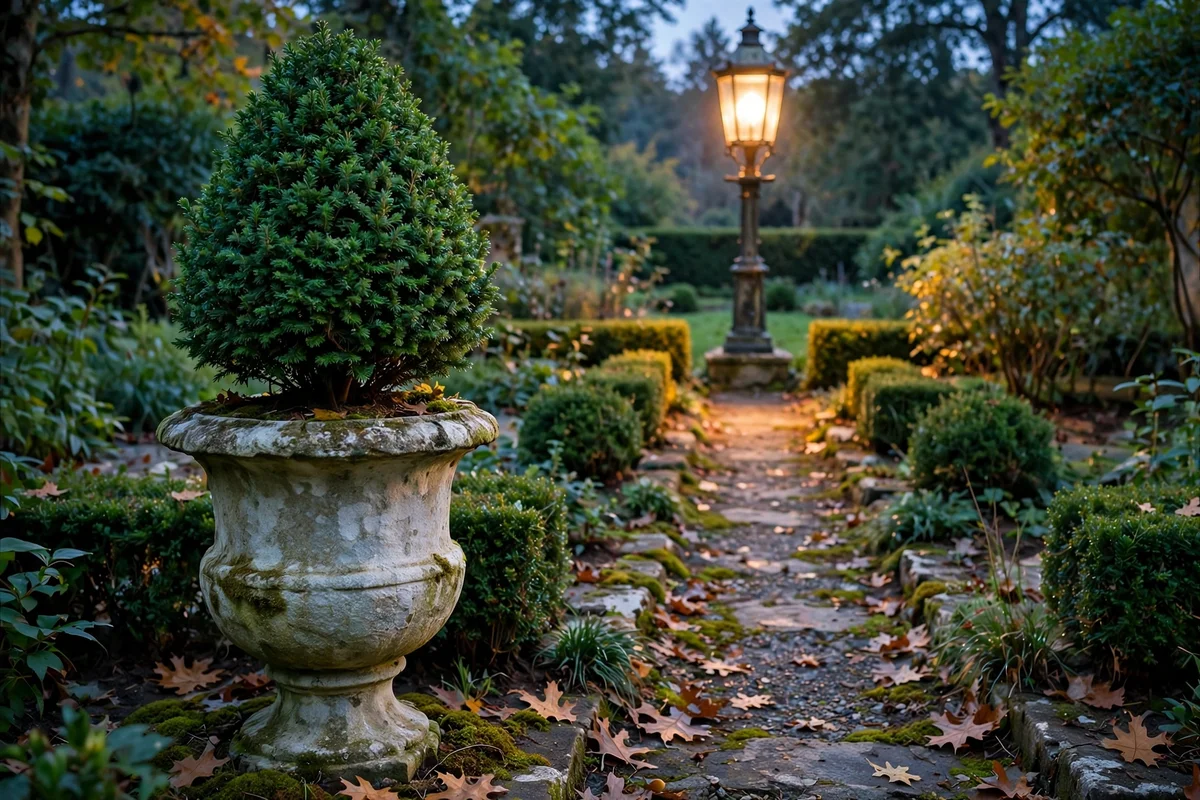
Finish the path with a stone or frostproof ceramic urn, 45 to 55 cm tall, planted with a small evergreen such as a clipped box ball or a dwarf conifer, and stand one tall lantern beside it as a full stop. The evergreen gives the garden something alive through winter, and the lantern marks the destination after dark. Fill the urn with loam based compost and raise it on pot feet for drainage.
Position the urn where the path naturally ends, not halfway along, so it feels like a reward for the walk; a bench or a gate makes a natural terminus. The mistake to avoid is choosing a terracotta urn that cracks in the first frost; frostproof stone or glazed ceramic survives. An urn, plant and tall lantern cost 45 to 80 pounds or dollars together.
A garden that glows at dusk does not need grand gestures, just warm light placed with care, dark leaves for depth, and scents that rise in the cool air. The lanterns along your path, the pumpkins by the door and the blanket on the bench all work together to make October evenings feel like an invitation rather than an ending. Start with the ideas that cost the least and watch which corners of the garden you drift toward after dark.
This week, try the simplest change first: line your path with solar lanterns and set one timer so they greet you at sunset without a thought. That single evening of amber light will show you exactly where the garden wants more glow, and the rest of the ideas can follow one calm weekend at a time. Your autumn garden is ready to shine; all it needs is dusk.
Frequently Asked Questions
How much does it cost to light an autumn garden for evening?
A comfortable dusk garden costs 100 to 250 pounds or dollars for a first autumn. Eight solar path lanterns, one strand of fence lights and a set of LED candles cover the basics for around 120. Add a fire bowl and good throws later; spreading purchases across two paydays keeps it painless. The priciest mistake is buying cheap solar lights that die by December, so spend the lighting budget on fewer, better units.
Are candles safe in a garden where children play?
Yes, with clear rules. Use glass hurricanes or tall lanterns so flames sit behind glass, place every flame at least a metre from play areas and paths, and keep a grown up in the garden whenever candles are lit. Battery LED candles give the same warm glow with zero risk and suit families best. Never leave any flame burning when you go back indoors.
Which string lights survive autumn rain on a fence?
Choose outdoor rated lights marked IP44 or higher, with rubber sealed sockets and a weatherproof plug or a battery box with a timer. Warm white LEDs around 2700K suit autumn best. Hang them with a slight sag rather than drum tight so rain runs off instead of pooling at the sockets. Bring battery boxes under a porch overhang if the fence takes the full force of the weather.
What dark leaved plants cope with autumn frost?
Purple heuchera is hardy to minus 20 degrees and keeps its colour through winter, making it the safest dark leaf for cold gardens. Ornamental grasses stand through frost untouched and look better with a silver edge. Dark dahlias are tender, so treat them as seasonal stars: lift the tubers after the first frost and store them dry. Mulch every bed 7 cm deep before the cold arrives.
How do I keep solar lanterns working in short autumn days?
Angle every panel south or southwest and wipe it clean weekly, since fallen leaves block charging fast. Place lanterns where they catch direct sun between 10 am and 3 pm, avoiding deep fence shade. Quality lanterns store enough charge for six to eight hours even in October. If a spot stays gloomy, swap solar for battery lanterns on a timer there instead of fighting the shade.