Home Improvement
24 English Cottage Office Ideas That Feel Cozy and Collected
By Anna Wells · · 23 min read
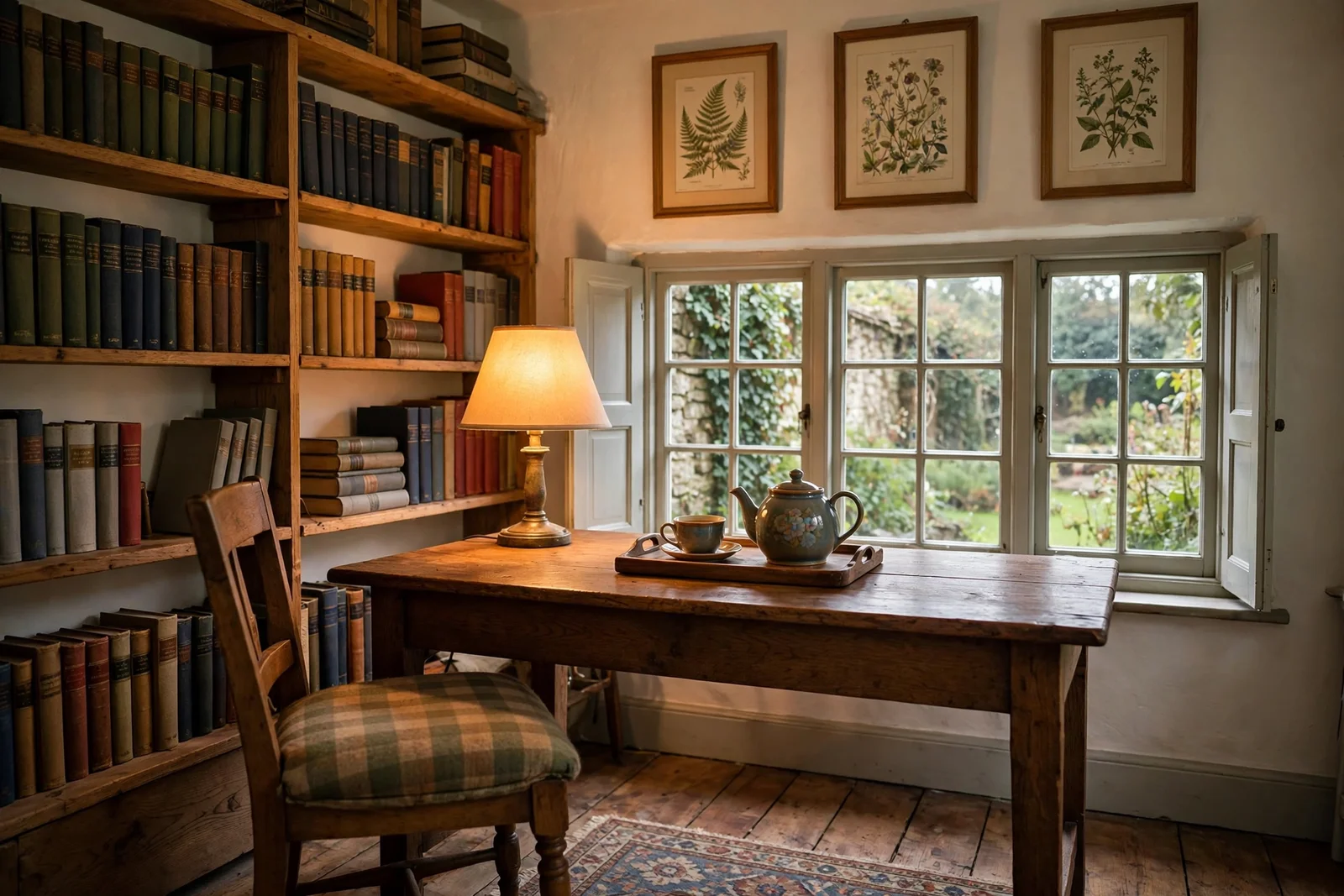
A cozy English cottage office with a wooden desk by the garden window, clothbound books, warm lamplight and tea on a tray.
Morning light comes through the garden window first, catching the edge of the desk and the spines of the books on the shelf. The kettle hums in the next room, the chair creaks a little, and the day of work begins with birdsong instead of traffic. An English cottage office is built from exactly these small, ordinary comforts layered one over another.
This style suits anyone working from home who wants a room that feels collected over time, not decorated in a weekend. The palette is warm wood, cream paint, soft wool and greenery, with every object earning its place. Below you will find 24 concrete ideas, from desk placement and shelving to cushions, rugs, lighting and tea breaks, each one practical and easy to try.
You do not need a large budget or a perfect period property. Most of these ideas use second-hand finds, a tin of paint, or small rearrangements of things you already own. Work through them one weekend at a time, starting with whichever corner bothers you most, and let the room grow gently into itself.
Ready to begin? Each idea below gives sizes, materials, costs and one mistake to avoid, so you can plan with confidence. Start at the top with the desk and window, then move through the sections in order or jump to whatever the room is missing.
1. Place a Solid Wood Desk Facing the Garden Window
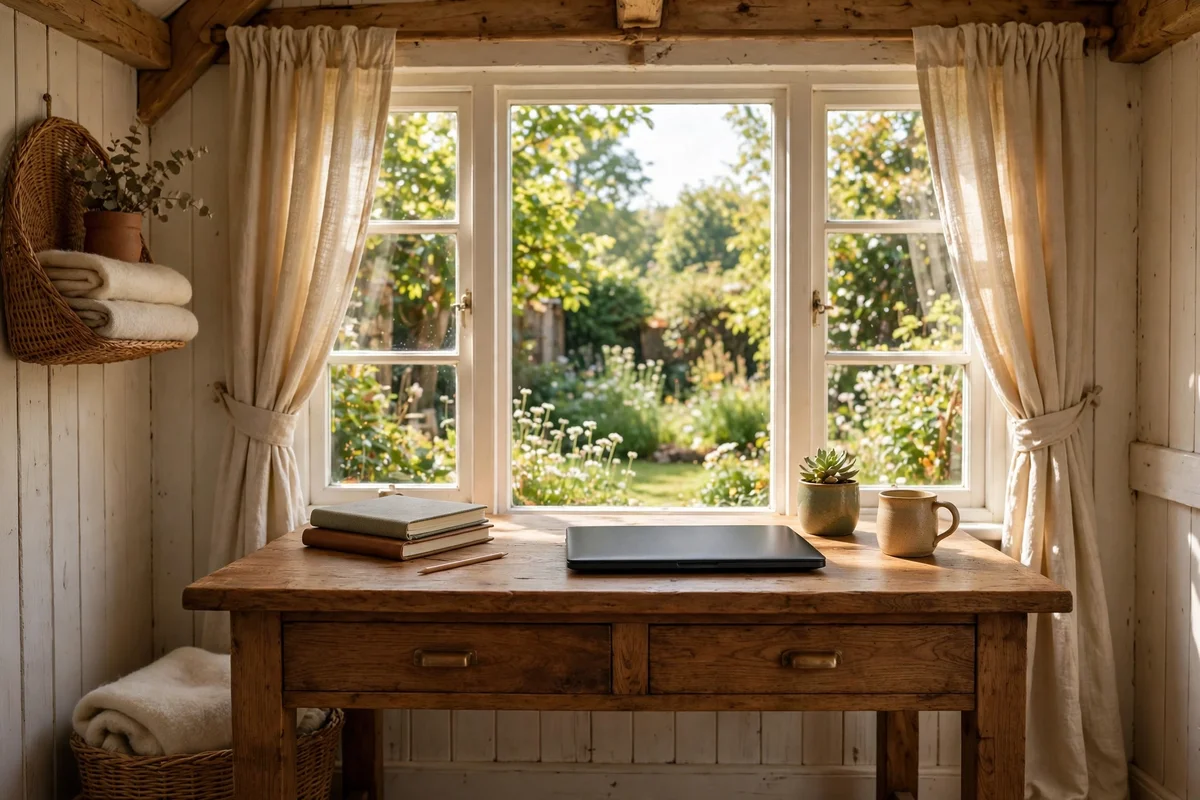
A desk placed squarely in front of a garden window turns work hours into quiet observation of light, leaves and weather. Choose a desk between 110 and 140 cm wide so it fits most cottage window bays without blocking the frame or the curtains. Solid pine or oak suits the room best, since painted tops chip quickly under daily laptop and notebook use. Leave at least 90 cm of floor space behind the chair so you can stand, stretch and step back from the screen comfortably.
Angle the desk a few degrees if afternoon sun hits the screen directly, or add a simple linen blind to soften glare. Keep the windowsill mostly clear, with just one small plant or a candle in a glass holder, so the view stays the frame. The mistake to avoid is pushing the desk hard against the wall beside the window instead; facing the glass gives far better daylight. A solid pine desk from a second-hand shop usually costs 60 to 120 pounds or dollars, often less than new flat-pack.
2. Choose a Pine or Oak Desk With Deep Drawers for Daily Papers
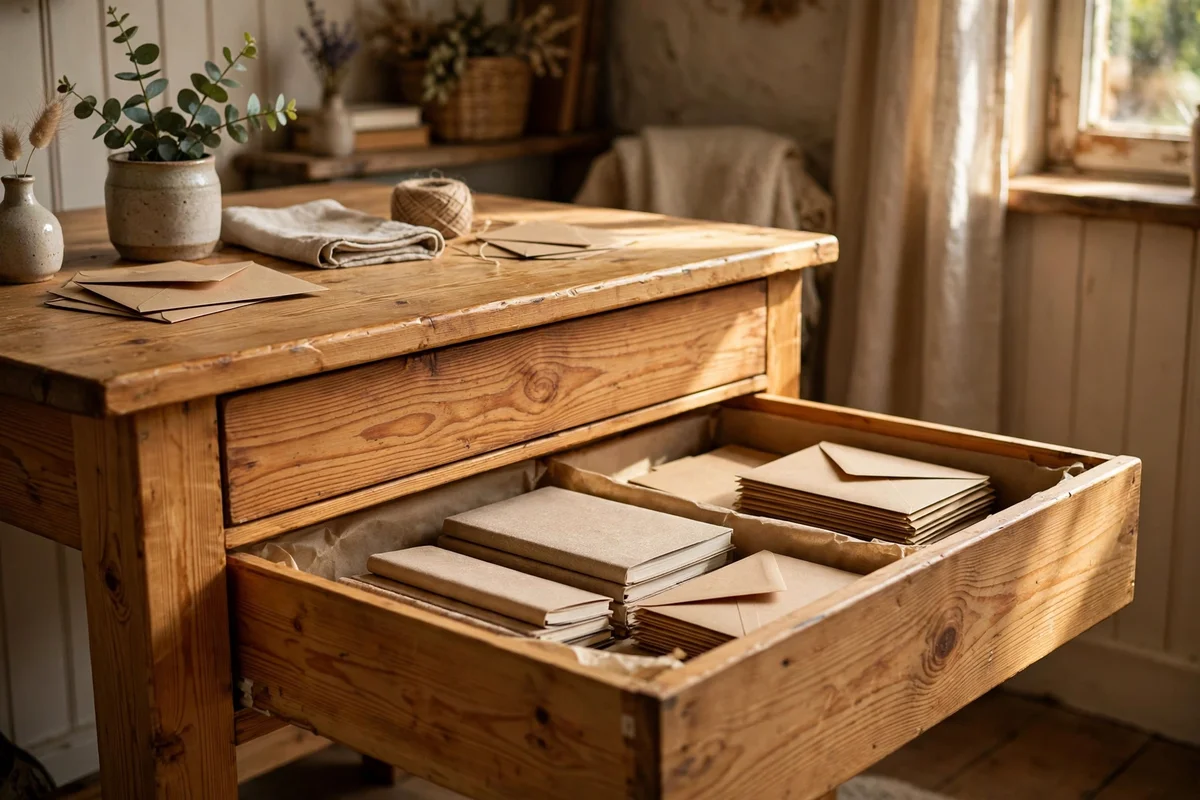
A desk with at least two deep drawers saves the top for real work instead of paper piles. Look for a pine or oak desk between 120 and 150 cm wide with drawers 30 cm deep or more, which swallow notebooks, chargers and envelopes whole. Check that the drawers glide on wood runners or metal slides and sit flat when closed, since warped fronts snag and look untidy. Second-hand desks often need only wax and new knobs.
Line each drawer with a cut of plain kraft paper or linen to protect the wood and hush the rattle of pens. Keep one drawer for current projects and the other for reference, so nothing important drifts into a third pile on the desk. The mistake to avoid is choosing a pretty console table with no storage; it forces clutter onto the surface within a week. New pine desks run 120 to 250 pounds or dollars, with second-hand ones far cheaper.
3. Fit Open Pine Shelves Above the Desk for Clothbound Books
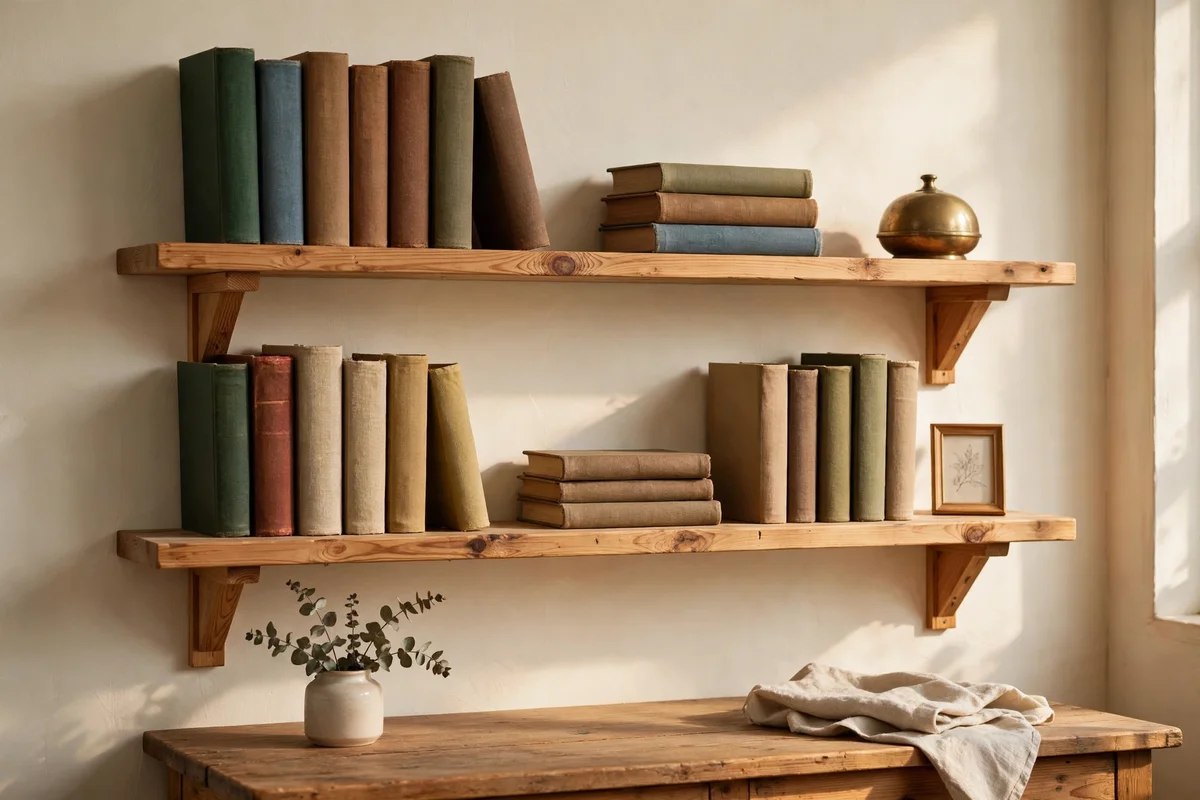
Two open pine shelves above the desk keep favourite books and reference volumes within arm’s reach while leaving the desk top clear. Mount them 35 to 45 cm apart, with the lowest shelf about 50 cm above the desk surface so a monitor or lamp fits beneath. Use solid pine boards at least 20 cm deep and fix into wall studs or masonry anchors, since a full shelf of books can weigh over 15 kg. Sand and wax the boards for a soft, honeyed finish.
Leave one third of each shelf empty so the display breathes instead of looking crowded. Mix in one or two small objects, like a brass paperweight or a tiny framed sketch, but keep books the main story. The mistake to avoid is stacking books more than two deep, which hides titles and collects dust. Two shelves with brackets and screws usually cost 30 to 60 pounds or dollars if you cut and finish the boards yourself.
4. Arrange Clothbound Books by Colour for a Collected Shelf Line

Clothbound books in faded reds, moss greens and warm creams give the shelf its cottage heart, looking gathered over years rather than bought in a set. Group them by colour in small runs of five to eight books, mixing heights so the line rises and falls naturally. Place heavier volumes at the ends of each shelf to steady the rows, and face spines outward so titles stay readable. Charity shops and library sales are the best source, often under a pound or dollar each.
Do not remove dust jackets only to reveal ugly bindings; keep jackets on books you handle often and style bare cloth spines on the rest. Stand one or two special books with the cover facing out, like a picture, to add variety. The mistake to avoid is buying matching sets of brand-new cloth books, which look like stage dressing next to older finds. A genuinely collected shelf of twenty books usually costs 15 to 40 pounds or dollars from second-hand sources.
5. Add a Fringed Fabric Shade Lamp for Warm Evening Light
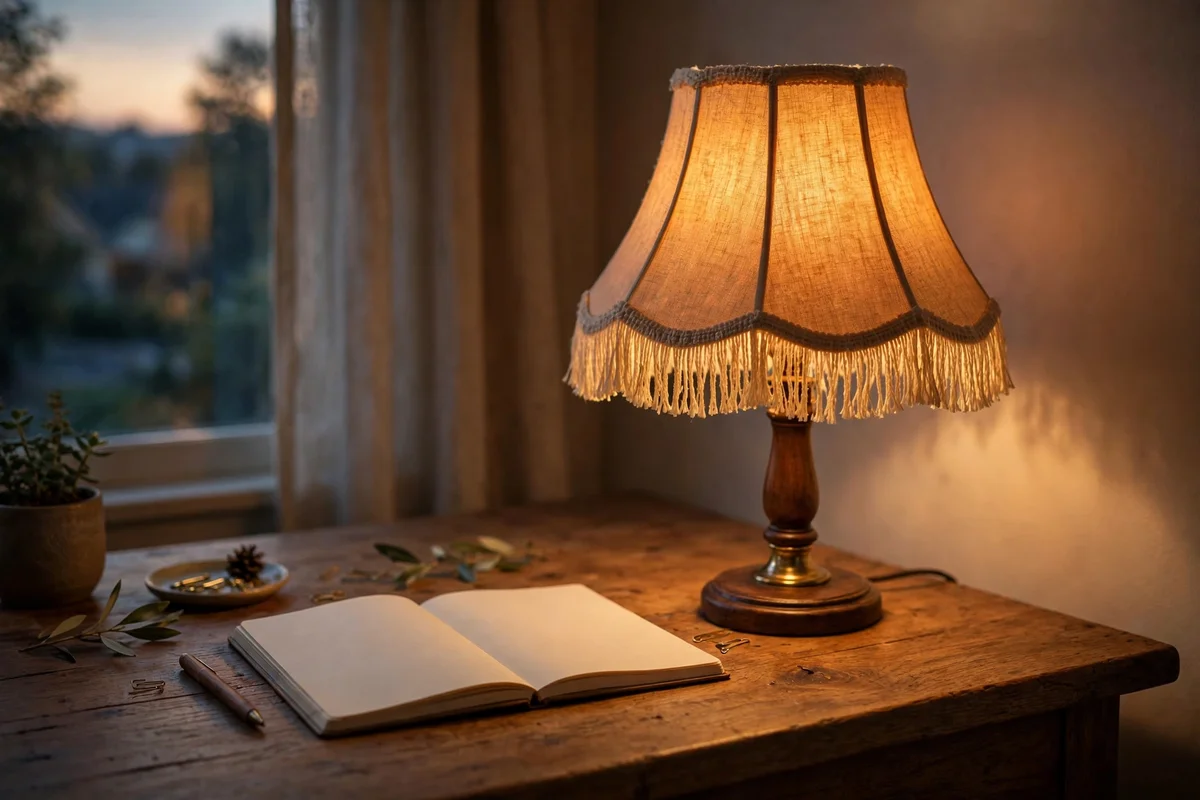
A table lamp with a fringed or pleated fabric shade casts the amber pool of light that makes evening work feel calm and unhurried. Choose a base 35 to 45 cm tall with a shade about 25 cm across, and fit a warm 2700K bulb of 400 to 600 lumens, bright enough to read by but soft at the edges. Place it on the desk corner opposite your writing hand so the light falls across the page without throwing a shadow. Aged brass or wood bases suit the cottage look best.
Put the lamp on a small timer or smart plug so it glows on before dusk and you never work under harsh overhead light. Keep the shade dusted, since fabric shades dim noticeably when dusty, and replace bulbs promptly so one dark evening does not become a habit. The mistake to avoid is choosing a cool white bulb, which turns the whole corner flat and office-like. A good shaded lamp costs 25 to 70 pounds or dollars new, or far less second-hand.
6. Light the Desk With a Bankers Lamp in Forest Green
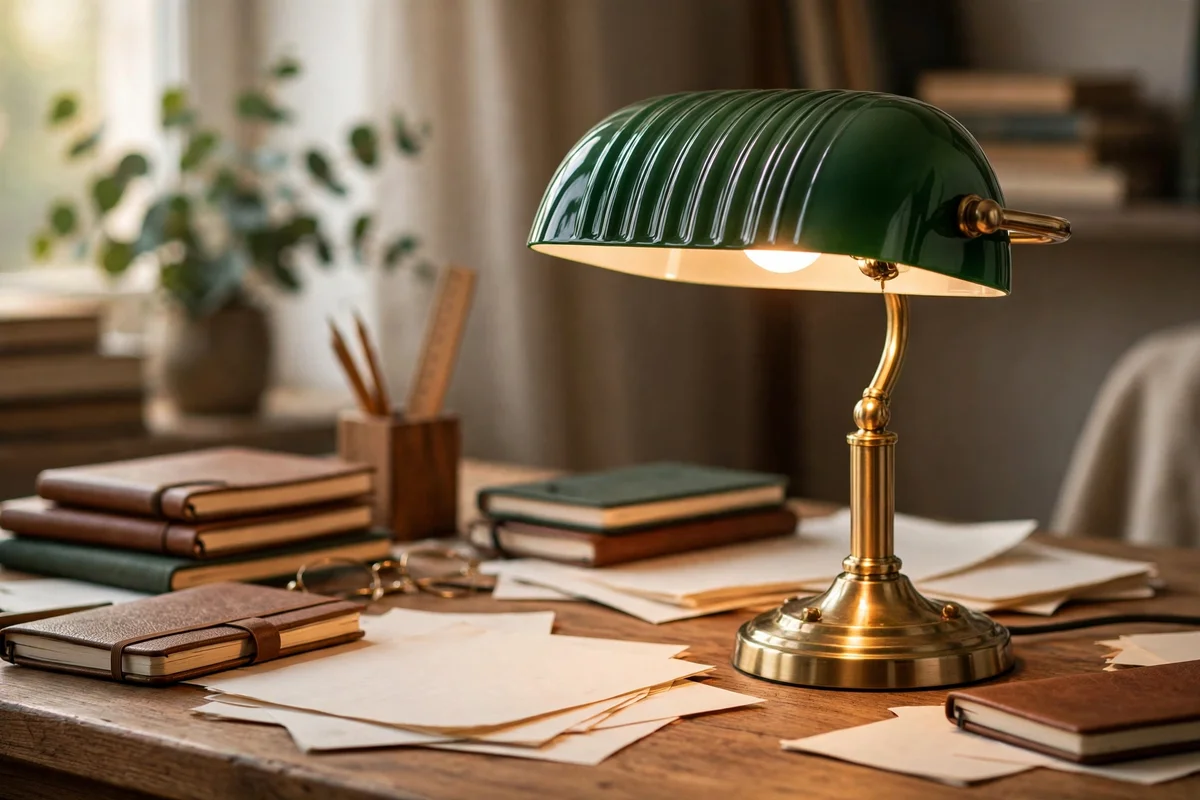
A bankers lamp with its curved forest green shade is a classic study piece that throws a calm, focused pool of light across papers. The traditional design stands 35 to 40 cm tall and shades about 25 cm wide, fitting neatly behind a laptop or beside a stack of notebooks. Choose one with a dimmable LED bulb so evening sessions stay gentle on tired eyes. Brass stems age beautifully and match other cottage metalwork.
Position the shade so its lower edge sits just below your eye line when seated, which keeps the bulb hidden and the glare off your screen. Wipe the shade with a soft dry cloth, since the glass or metal shell shows fingerprints quickly. The mistake to avoid is using the bankers lamp as the only light in the room; pair it with the shaded table lamp or an overhead so corners never go dark. Reproductions cost 40 to 90 pounds or dollars, with vintage originals sometimes similar.
7. Dress the Chair With a Checked Wool Cushion
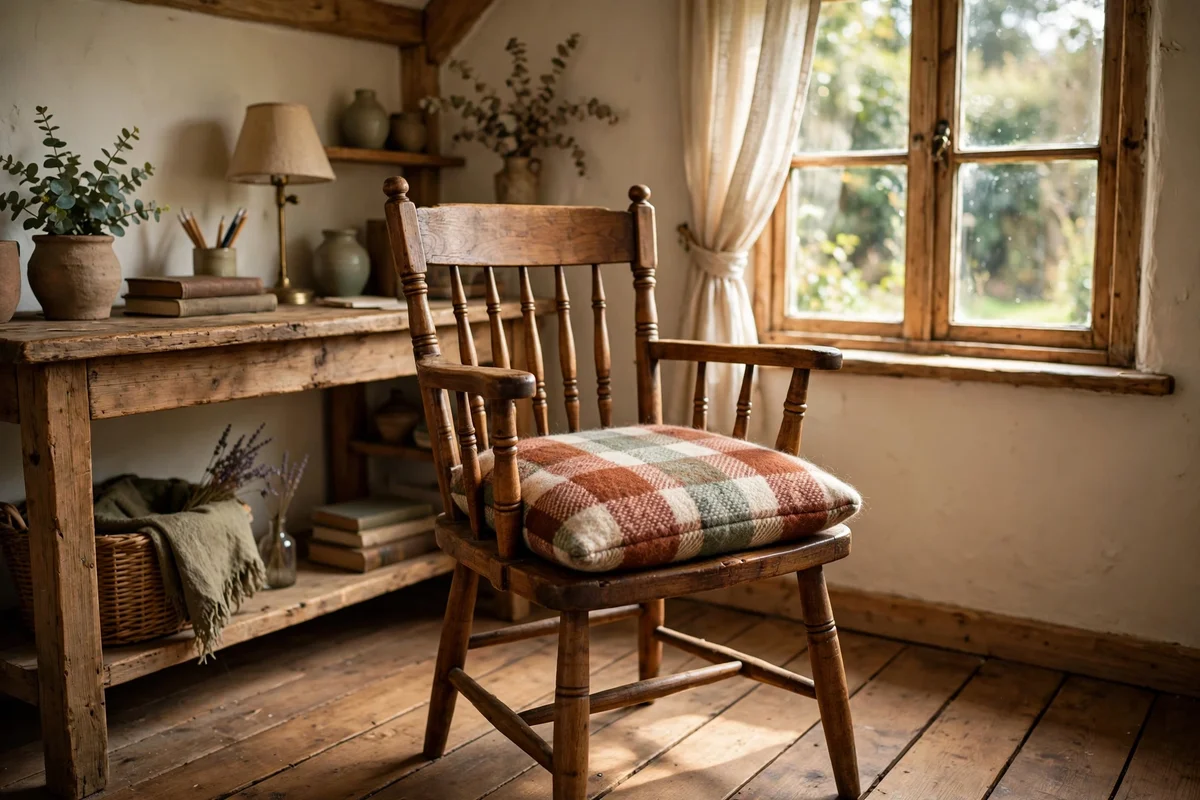
A checked wool cushion on the chair seat adds colour, pattern and honest warmth that leather or plain cotton cannot match. Choose a cushion 40 to 45 cm square with a removable cover in a muted check of rust, sage or charcoal over cream. Wool breathes through long work sessions and springs back instead of flattening like polyester fill. Pick a cover with a hidden zip so you can wash it at the end of each season.
If the chair has a wooden seat, add a second thinner pad beneath the checked cushion for comfort during long days. Fluff the cushion weekly and rotate it end to end so wear spreads evenly. The mistake to avoid is choosing a cushion smaller than 35 cm, which slides around and never stays put. Wool cushion covers run 15 to 40 pounds or dollars, with inner pads a few pounds more if bought separately.
8. Swap Striped Wool Cushions With the Seasons
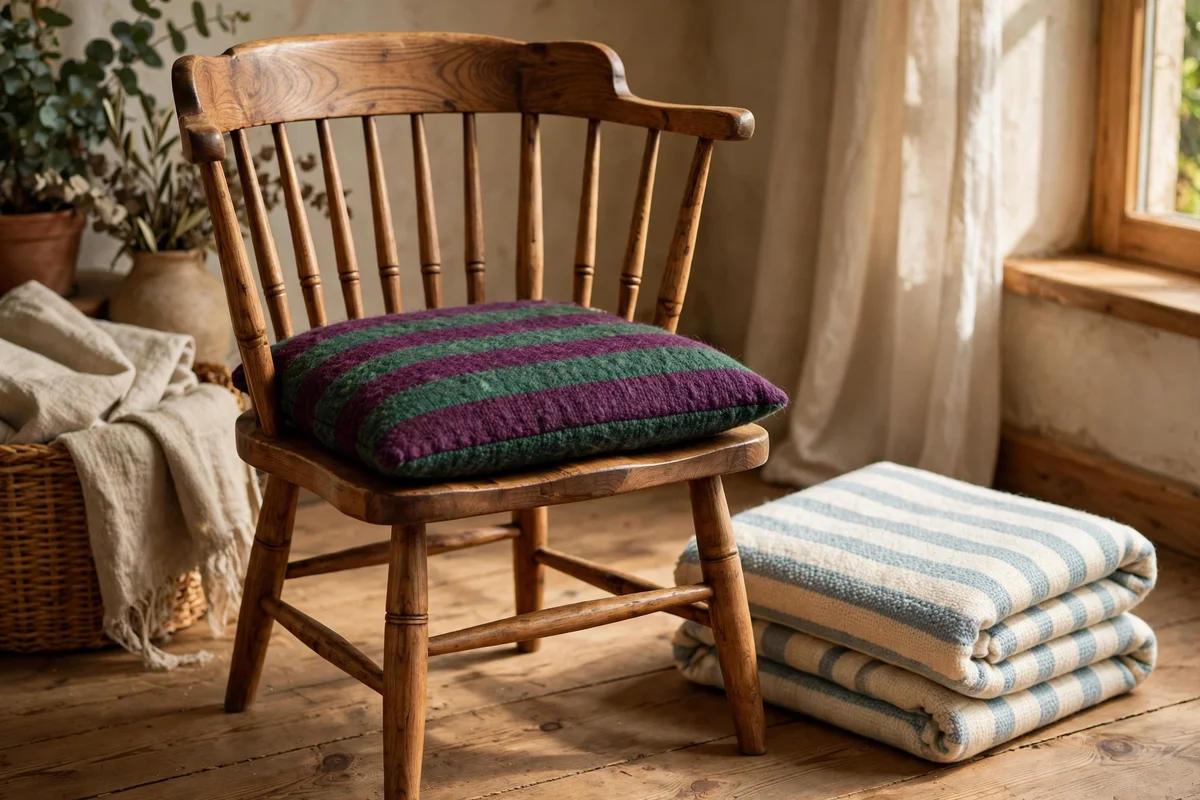
Striped wool cushions give you a simple seasonal rhythm: deeper stripes of plum and forest for autumn and winter, lighter stripes of cream and pale blue for spring. Keep two covers for the same cushion pad and swap them in March and October, which costs far less than buying new cushions outright. Stripes read calm and classic next to checks, so the two patterns mix well on one chair. Look for covers with a brushed, soft finish rather than a scratchy weave.
Store the off-season covers folded in the painted cupboard or a basket, with a lavender sachet to keep them fresh. Give wool covers a gentle shake outside twice a year instead of frequent washing, since wool cleans itself with airing. The mistake to avoid is mixing stripes of clashing scales, such as one bold stripe with one pinstripe; keep stripe widths within the same family. A second striped cover typically costs 12 to 30 pounds or dollars.
9. Lay a Small Patterned Rug Over the Wooden Floorboards
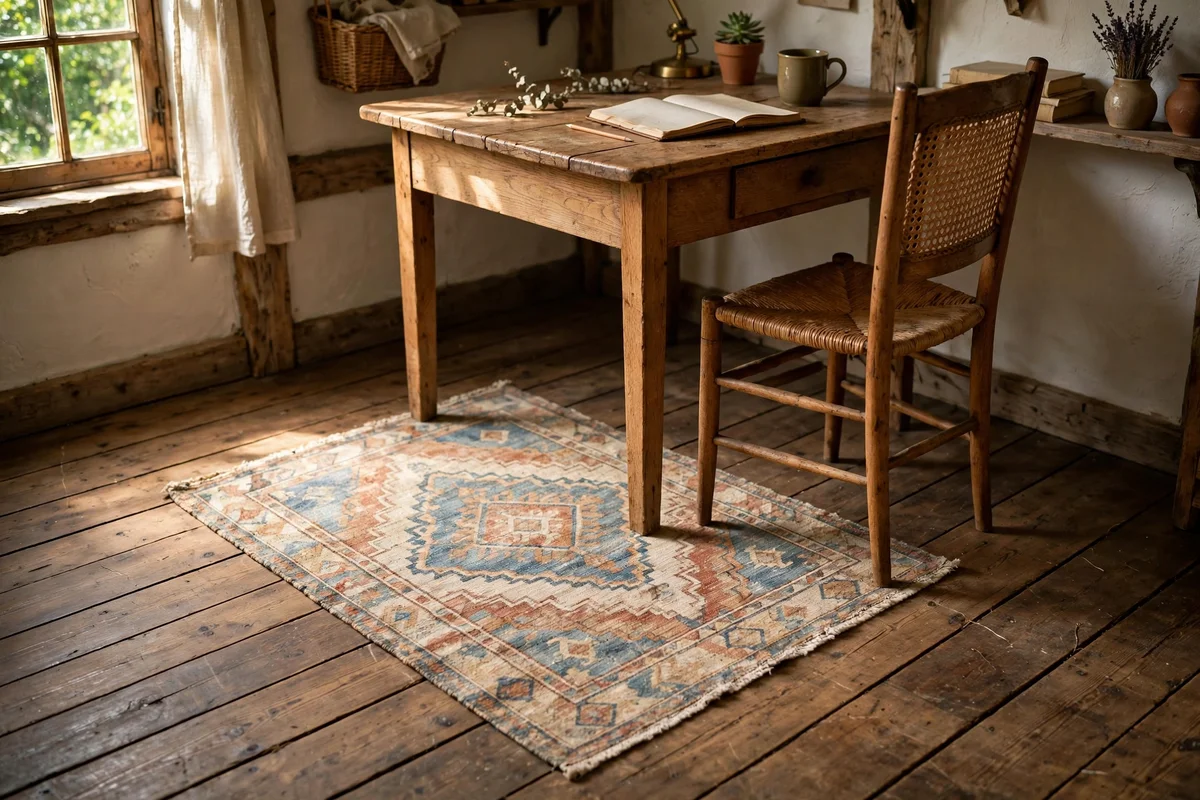
A small rug of 90 by 150 cm under the desk and chair softens cold floorboards and marks the work zone clearly. Choose a flatweave or low-pile wool rug in a faded oriental or simple stripe pattern, since deep pile catches chair castors and drags. Cotton-backed rugs grip bare boards well, but add a thin non-slip underlay if the floor is varnished and glossy. Place the rug so the chair legs stay on it even when you push back.
Vacuum the rug weekly and shake it outside monthly, since dust settles quickly in a worked-in room. Rotate it 180 degrees each season so sunlight fades it evenly rather than in one pale patch. The mistake to avoid is buying a rug too small for the chair’s full roll-back; measure the chair’s footprint first, then add 30 cm all round. A good flatweave in this size costs 40 to 120 pounds or dollars.
10. Layer a Sheepskin Over the Chair Back for Extra Warmth
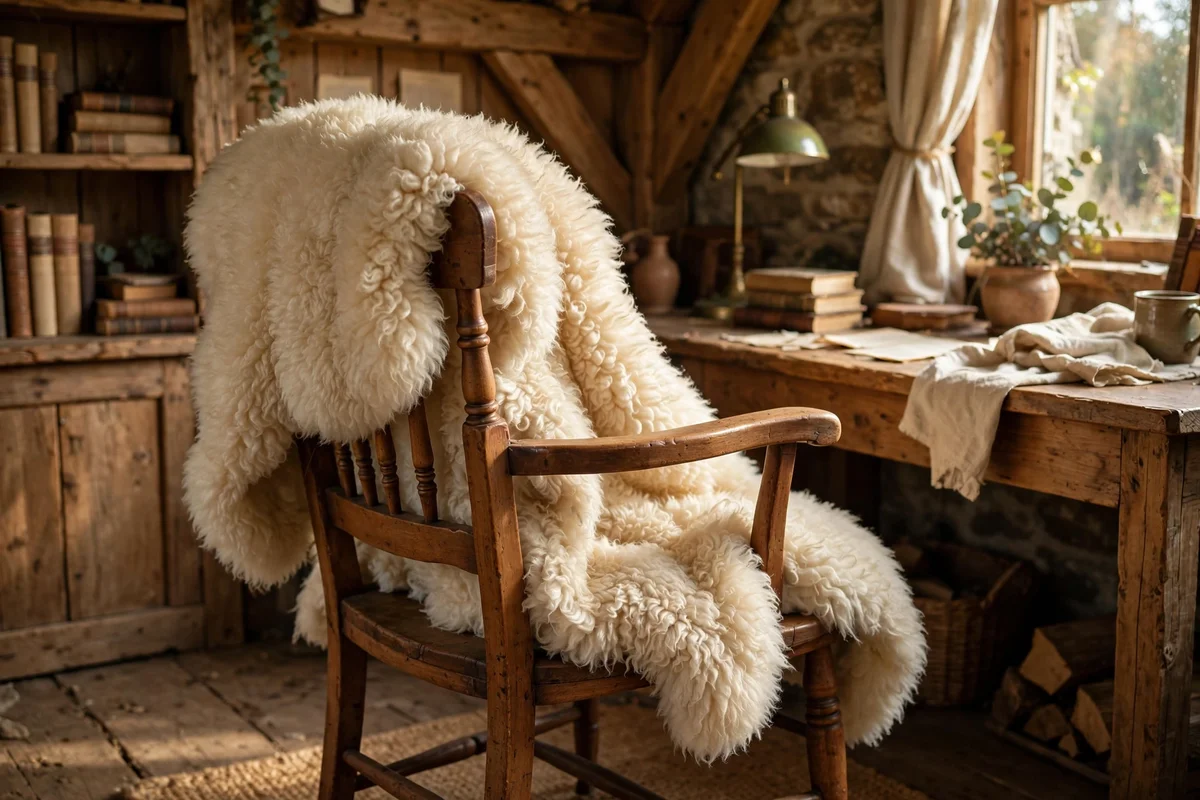
A real or good-quality faux sheepskin draped over the chair back adds instant softness and takes the chill off wooden chairs in winter. Choose a skin about 55 by 90 cm, which drapes over most chair backs without touching the floor. Natural cream or warm grey blends with every cottage palette, while spotted patterns can look busy in a small room. Shake it out weekly and brush with a pet comb to keep the fibres open.
Faux sheepskins suit a family room well and cost a fraction of the real thing, usually 12 to 25 pounds or dollars. If you buy real, check it is ethically sourced as a byproduct and air it outside for a day before bringing it in, since new skins carry a strong smell. The mistake to avoid is letting the skin cover the whole chair seat, which slides and bunches; the back drape stays put and looks far better.
11. Hang Framed Botanical Prints in a Grid Above the Desk
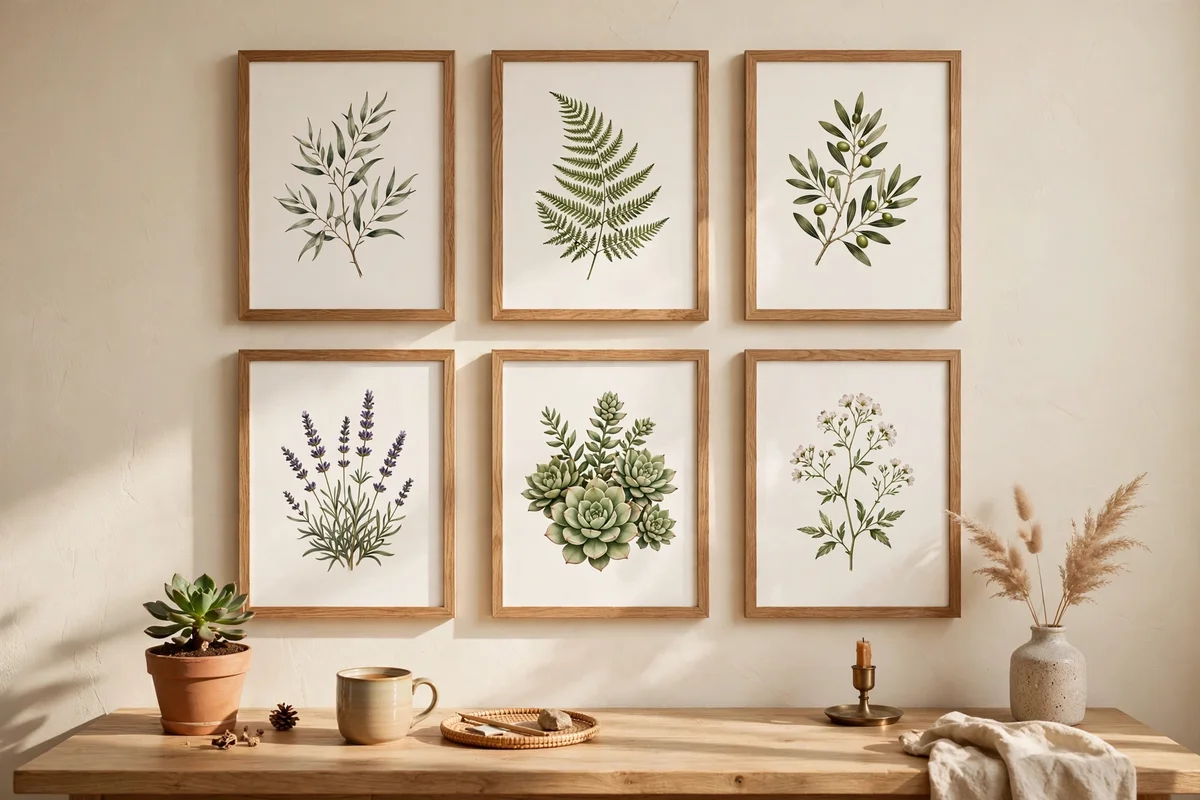
Framed botanical prints bring the garden indoors and give a bare wall above the desk a collected, library feel. Hang four or six prints in a neat grid, each frame 20 by 25 cm with a 5 cm gap between them, centred about 20 cm above the shelf or desk. Matching slim oak or black frames unify the group even when the prints differ. Choose plant studies of herbs, ferns or wildflowers, which suit a cottage office better than tropical leaves.
Use a paper template and a spirit level before hammering a single nail, since a crooked grid ruins the effect instantly. Prints of public-domain botanical plates cost little, often 5 to 15 pounds or dollars each, and second-hand frames can be repainted to match. The mistake to avoid is hanging the grid too high; the centre of the group should sit at or just below eye level when you stand. Total cost for six framed prints usually lands between 40 and 90.
12. Prop a Single Botanical Plate on a Small Oak Easel
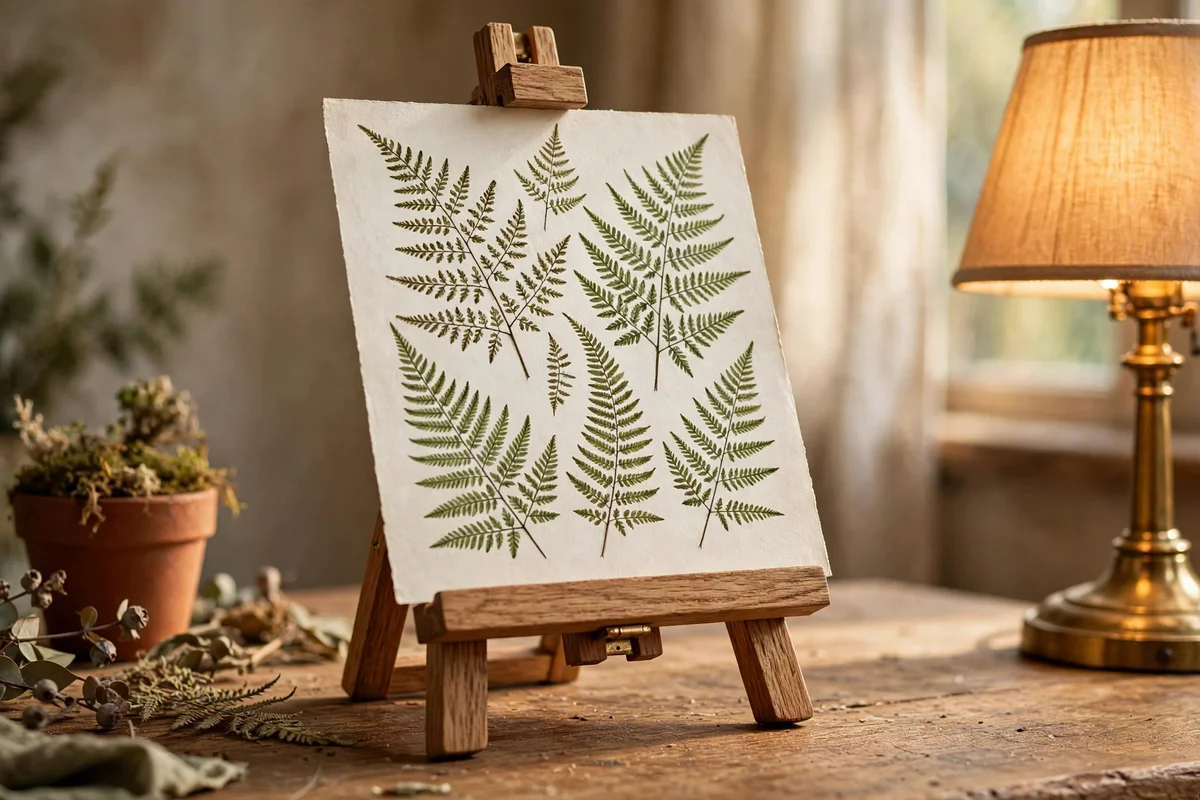
A single botanical plate on a small oak easel makes a gentle focal point on the desk or shelf without the commitment of wall fixings. Choose an easel 15 to 20 cm tall and a plate or art card of similar size, leaning it at a slight angle so it catches the light. A pressed flower study or a simple fern engraving works beautifully, and you can swap the image with the seasons. Place it beside the lamp, where the warm light picks out the fine lines.
Secure the easel with a tiny dot of removable adhesive putty so it never topples onto the keyboard. Keep the plate behind glass or in a clear sleeve if the room gets dusty, since cleaning an exposed print risks smudging. The mistake to avoid is choosing an easel much larger than the picture, which dwarfs the art and looks accidental. A small oak easel plus a good reproduction plate usually costs 10 to 25 pounds or dollars.
13. Set a Teapot and Cup on a Wooden Tray for Work Breaks
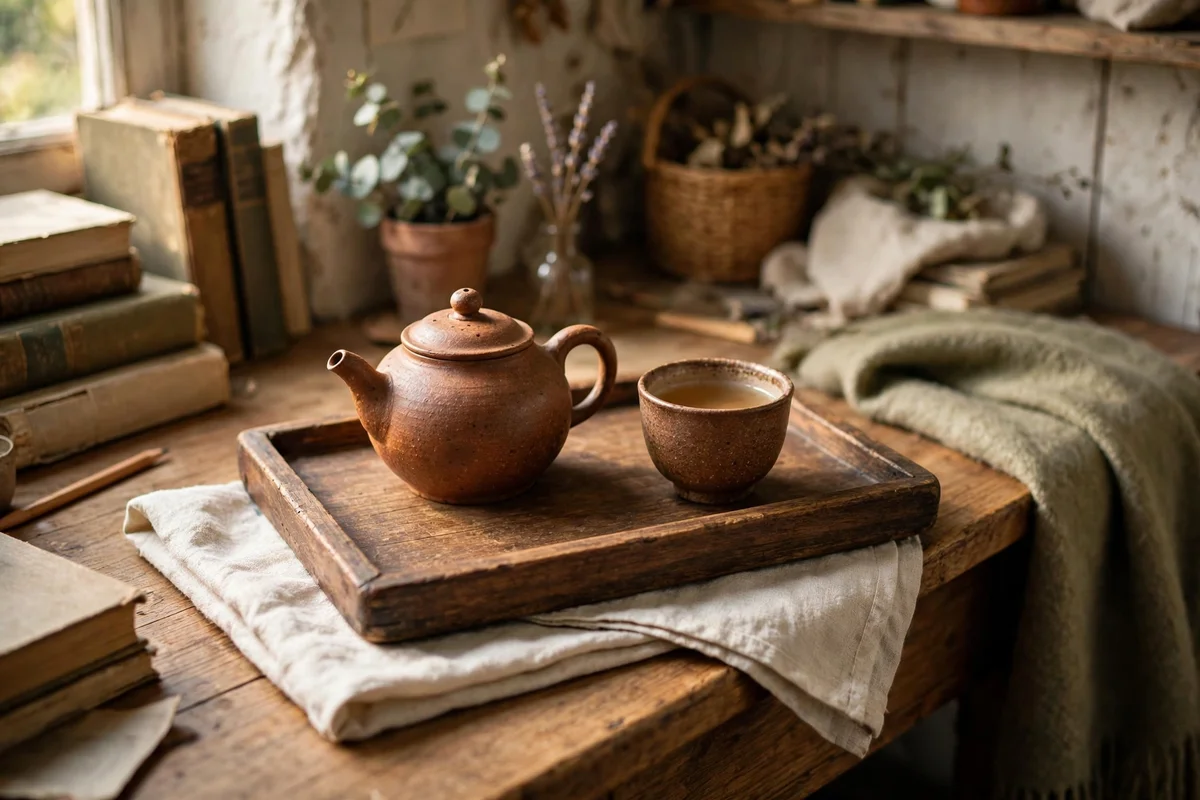
A wooden tray holding a small teapot and a cup turns a hurried break into a proper pause, which is the cottage way of working. Choose a tray 30 by 40 cm that fits on the desk corner or a nearby side table, with raised edges so nothing slides off. A two-cup teapot keeps tea warm for a second cup without constant trips to the kitchen. Earthenware or enamel suits the look, and a folded linen napkin underneath the cup catches drips.
Brew loose leaf or a good bag tea and give it three to five minutes, since a rushed cup never tastes as restful. Rinse the pot with hot water after each use and dry it upside down to stop stains building up. The mistake to avoid is putting the tray on the desk edge where an elbow can catch it; a dedicated corner or stool is far safer. A simple tray, pot and cup set usually costs 20 to 45 pounds or dollars.
14. Keep a Glass Jar of Dates and Nuts Beside the Tea Tray

A glass jar of dates and mixed nuts beside the tea tray gives work breaks a wholesome, family-friendly sweetness without a trip to the kitchen. Choose a jar of one to two litres with a tight wooden or metal lid, which keeps everything fresh for two to three weeks. Fill it with layers of dates, almonds and walnuts so it looks as good as it tastes. A small wooden scoop or spoon on top keeps hands clean.
Refill the jar when it drops to a third full so the display always looks generous rather than picked over. Wipe the jar rim weekly, since sticky fingers leave marks on glass quickly. The mistake to avoid is mixing in anything that spoils fast, like fresh fruit; dried fruit and nuts keep safely at room temperature. A good lidded jar costs 8 to 20 pounds or dollars, and the filling depends on your household’s appetite.
15. Store Papers in Woven Baskets Under the Desk
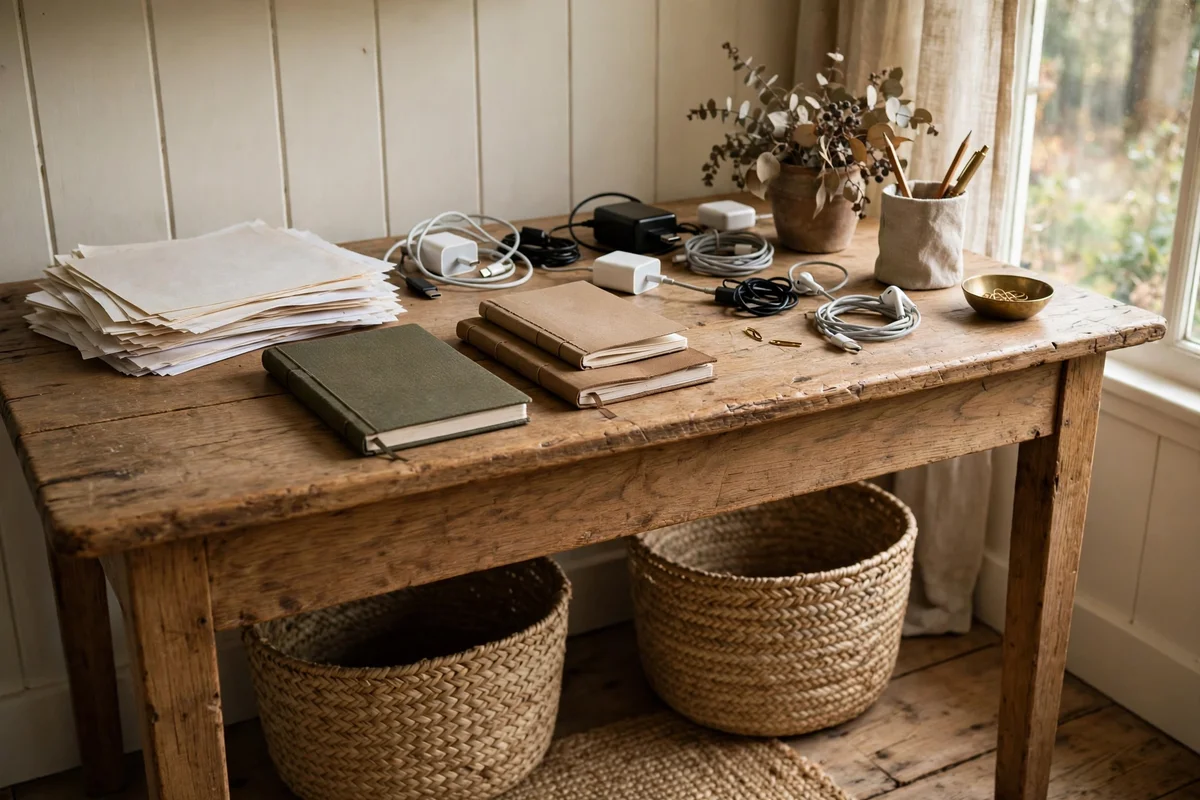
Two or three woven baskets under the desk swallow incoming papers, notebooks and chargers that would otherwise pile on the surface. Choose baskets 30 to 40 cm wide and at least 25 cm tall, in seagrass or water hyacinth, which look warm and hide clutter completely. Label each basket’s job in your head: one for active projects, one for filing, one for stationery. Tuck them on the side of the desk you use least so feet stay comfortable.
Empty the active basket every Friday into a folder or the recycling, so the system never overflows. Dust the basket rims monthly, since woven fibres catch dust in their grooves. The mistake to avoid is buying baskets too tall for the desk gap; measure the clearance first and leave 5 cm of breathing room. Good woven baskets cost 10 to 25 pounds or dollars each, often less in sets of three.
16. Line a Wicker Basket With Linen for Stationery
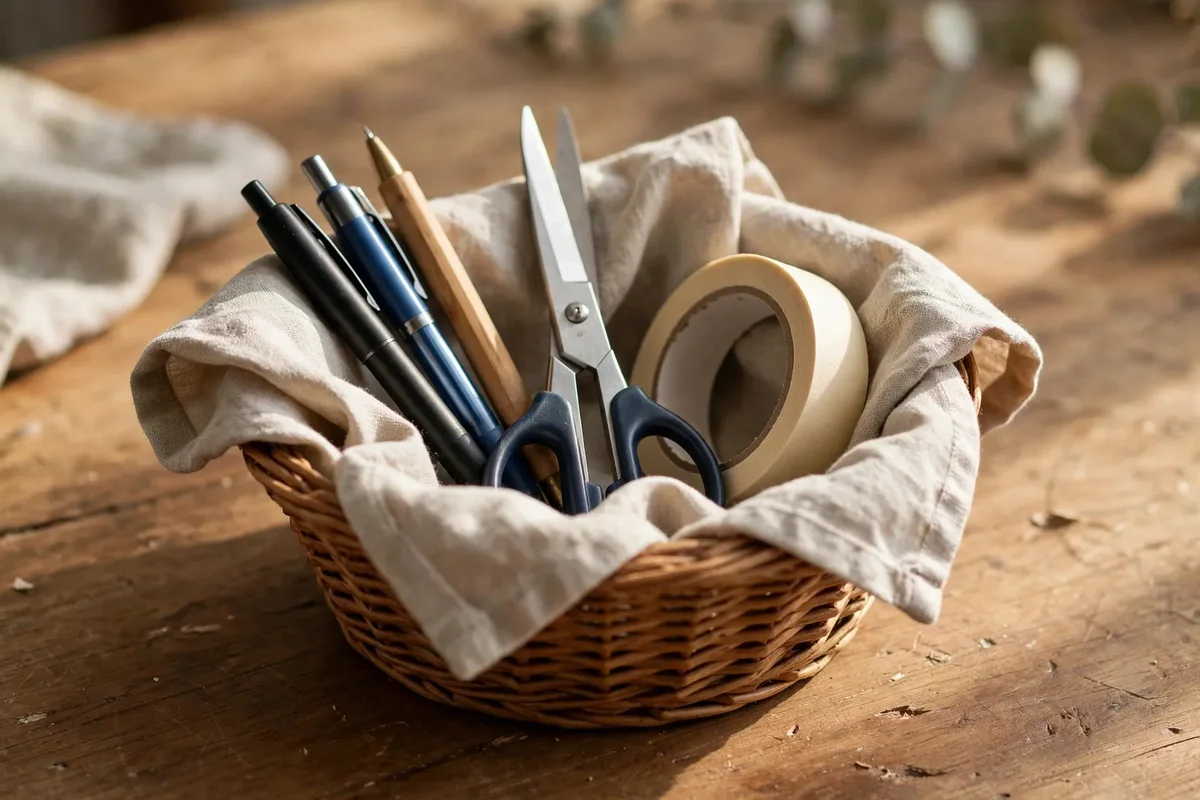
A small wicker basket lined with a linen cloth keeps pens, scissors and tape tidy on the desk while looking far softer than a plastic caddy. Choose a basket about 20 cm square and 12 cm deep, then cut a linen napkin to line the inside with the edges folded over the rim. The cloth stops small items rattling and lifts out for washing. Keep only the tools you reach for daily, so the basket never becomes a junk drawer.
Wash the linen liner every couple of months and replace the napkin when it frays, which costs almost nothing. Wipe the wicker with a damp cloth when dusty, since dry dusting just pushes dirt into the weave. The mistake to avoid is letting the basket fill with broken pens and dried-up markers; audit it monthly and bin the dead ones. A wicker basket and linen napkin together usually cost 8 to 18 pounds or dollars.
17. Paint a Cupboard in Warm Cream for Hidden Office Storage
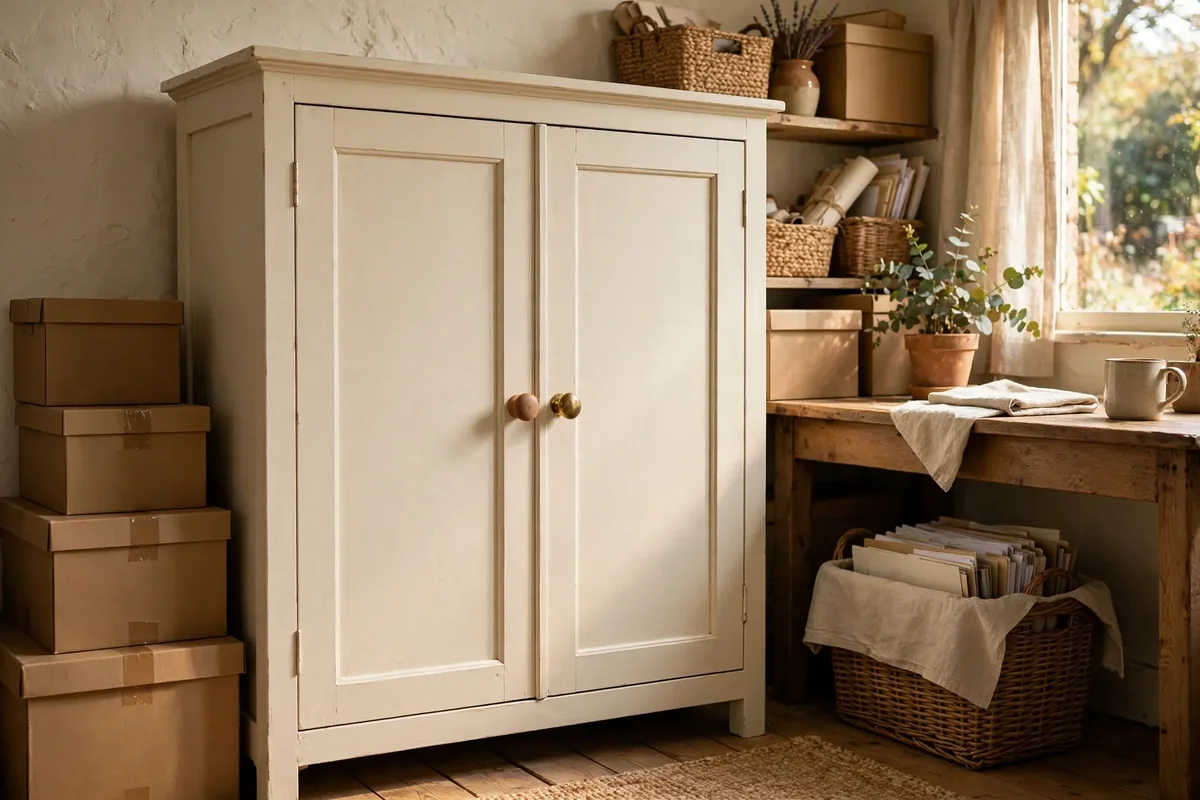
A painted cupboard in warm cream swallows printers, files and supplies that would ruin the room’s calm if left on show. Choose a cupboard 80 to 120 cm wide with adjustable shelves, and paint it with two coats of eggshell in a soft cream like buttermilk or clotted cream. Sand lightly between coats and let each coat dry a full 24 hours for a finish that resists chips. Replace dark knobs with wooden or brass ones to lift the whole piece.
Inside, use small boxes or trays to group cables, paper and cartridges so the cupboard stays as calm as the room. Leave the doors open for an hour after painting to air the smell before filling it. The mistake to avoid is painting in a cold, damp room, where eggshell takes days to cure and stays tacky. A second-hand cupboard plus paint and new knobs usually totals 50 to 110 pounds or dollars.
18. Fit a Small Painted Cabinet Beside the Window for Supplies
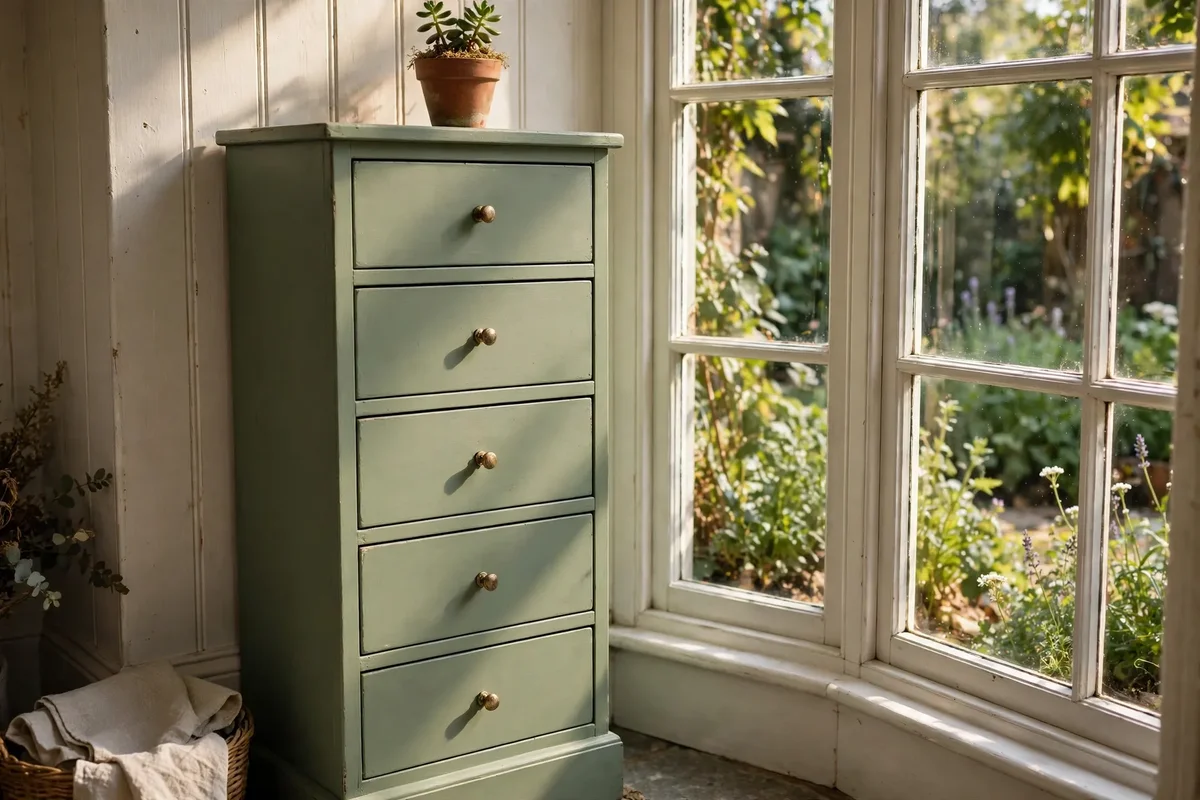
A narrow painted cabinet beside the window holds daily supplies within reach while framing the view like a piece of furniture art. Look for a cabinet 40 to 60 cm wide with two or three shallow drawers, painted in sage green or soft blue to sit gently against cream walls. Keep the top clear except for one small plant, so the cabinet reads as furniture rather than storage. Anchor tall pieces to the wall if children visit the room.
Reserve the top drawer for the week’s essentials and lower drawers for spares, so restocking takes seconds. Touch up paint chips promptly with a small brush kept inside, which stops one chip becoming ten. The mistake to avoid is choosing a cabinet deeper than 35 cm beside a narrow window bay, where it blocks light and looks bulky. Painted cabinets of this size cost 40 to 100 pounds or dollars second-hand, plus a tin of paint.
19. Hang a Wooden Peg Rail for Bags and Headphones
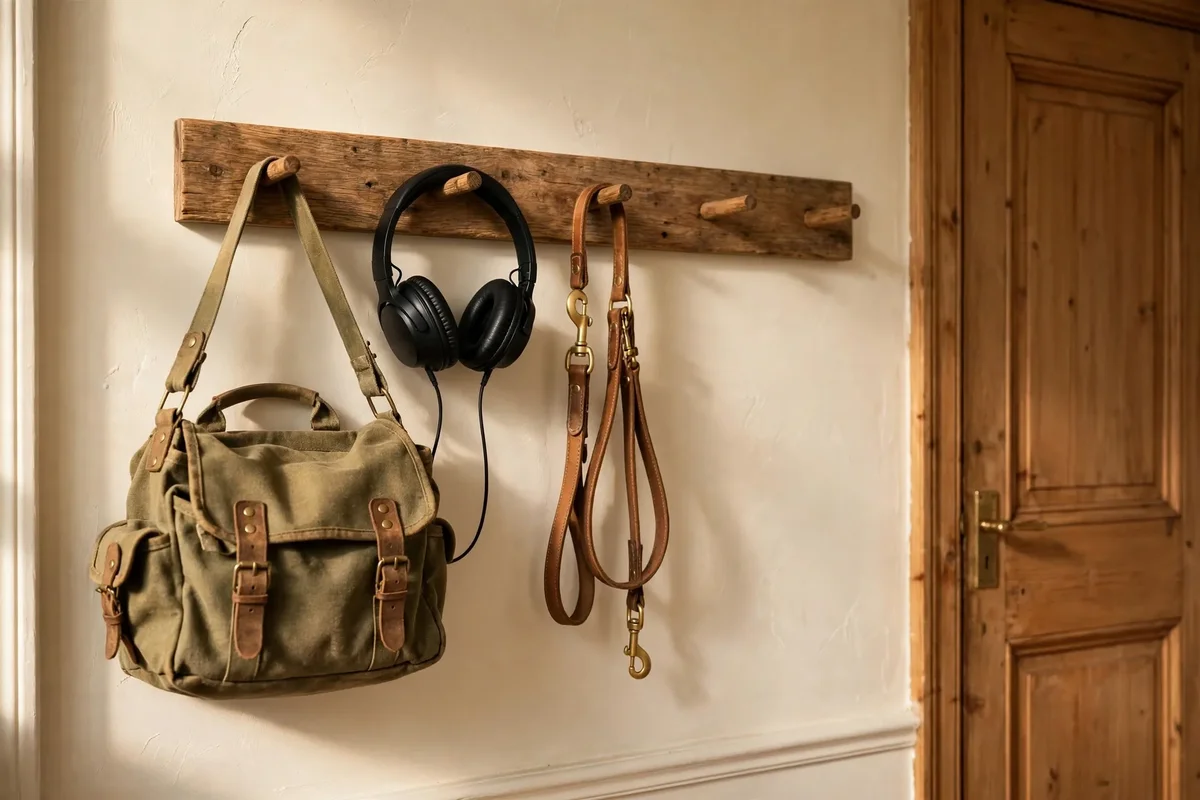
A wooden peg rail on the wall by the door keeps work bags, headphones and the dog lead off the desk and floor. Choose a rail 60 to 90 cm long with five to seven pegs, in oak or beech with a waxed finish, and fix it into studs so it holds real daily weight. Hang the heaviest bag on the peg nearest the wall bracket. A peg rail at shoulder height, about 150 cm from the floor, keeps everything easy to grab.
Leave one peg empty for guests’ coats, which is a small courtesy that costs nothing. Dust the pegs when you dust the shelves, since they collect the same fine layer. The mistake to avoid is overloading one peg with three heavy bags, which loosens the fixings over time; spread the weight across the rail. A solid wood peg rail costs 15 to 35 pounds or dollars, or far less if you make one from a board and dowels.
20. Dress the Window With Linen Cafe Curtains
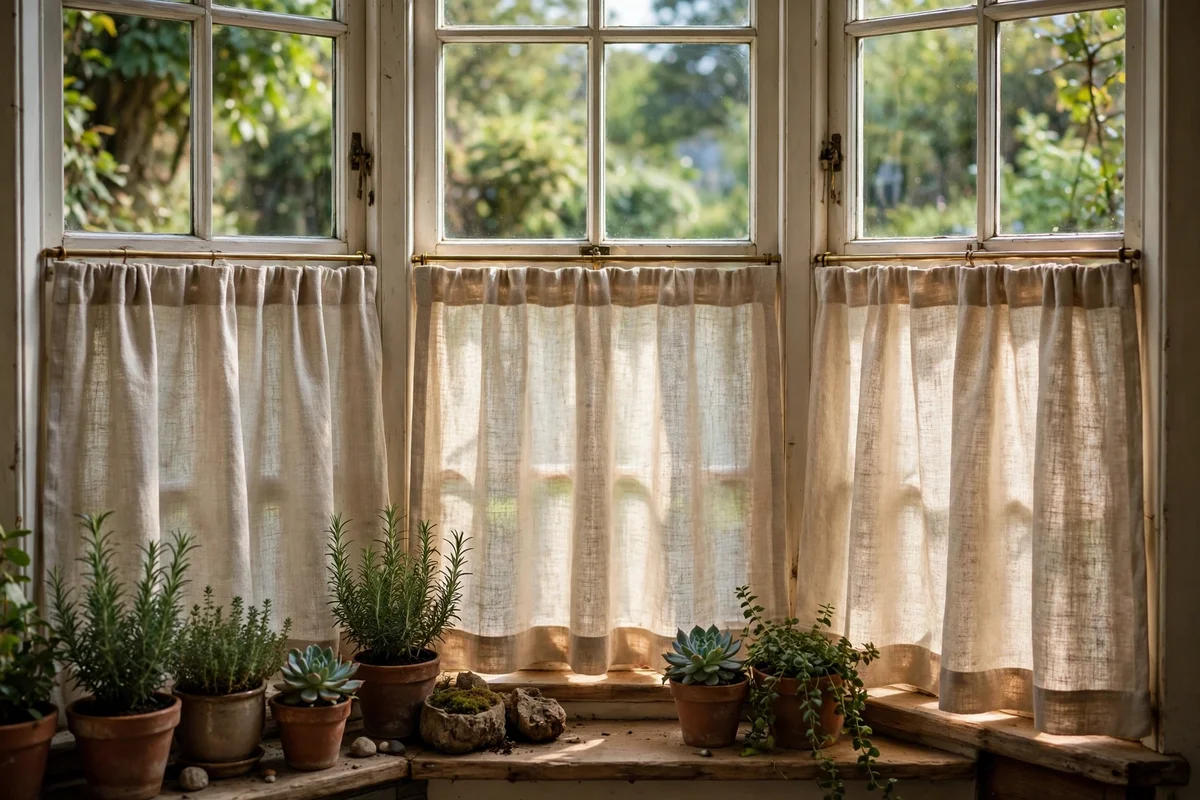
Linen cafe curtains cover the lower half of the garden window, softening the view and filtering light while leaving the sky visible. Hang them on a slim brass or wooden rod fitted at the window’s midpoint, with panels 1.5 times the window width for gentle gathering. Natural or oatmeal linen suits every cottage palette and washes well. Hem them to finish just at the sill so they never trail into work or catch on the desk.
Wash linen curtains twice a year and press while slightly damp for a crisp, relaxed fold. If the window faces a busy path, choose a slightly heavier weave for privacy without losing daylight. The mistake to avoid is hanging full-length curtains in a small office, which swallow wall space and collect dust behind the desk. Cafe curtain panels cost 20 to 60 pounds or dollars a pair, with rods and rings a little extra.
21. Add a Low Bookshelf Bench Beneath the Window
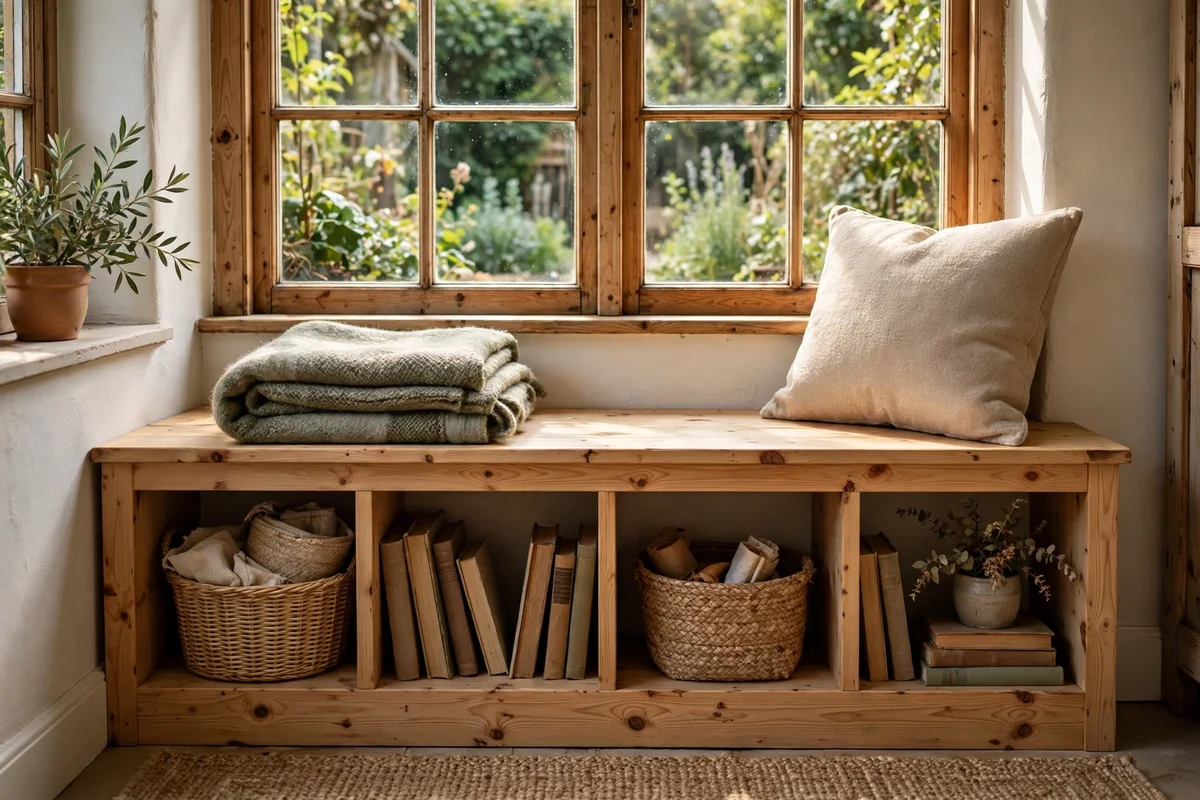
A low bookshelf bench beneath the window doubles as extra seating and as overflow storage for the books that will not fit the wall shelves. Choose a bench 90 to 120 cm wide and 35 to 45 cm tall, with two open cubbies for baskets or upright books. Top it with a folded wool blanket and one cushion so it invites reading breaks. Leave 10 cm of wall gap behind it so curtains hang freely.
Sort the cubbies by use: one for books you are reading now, one for notebooks and spare chargers. Vacuum under and behind the bench monthly, since low furniture traps dust quickly. The mistake to avoid is piling the bench so high with cushions that nobody can sit; one blanket and one cushion is the cottage limit. A simple pine bench costs 50 to 130 pounds or dollars, or less from a second-hand shop.
22. Place a Potted Fern or Rosemary on the Windowsill
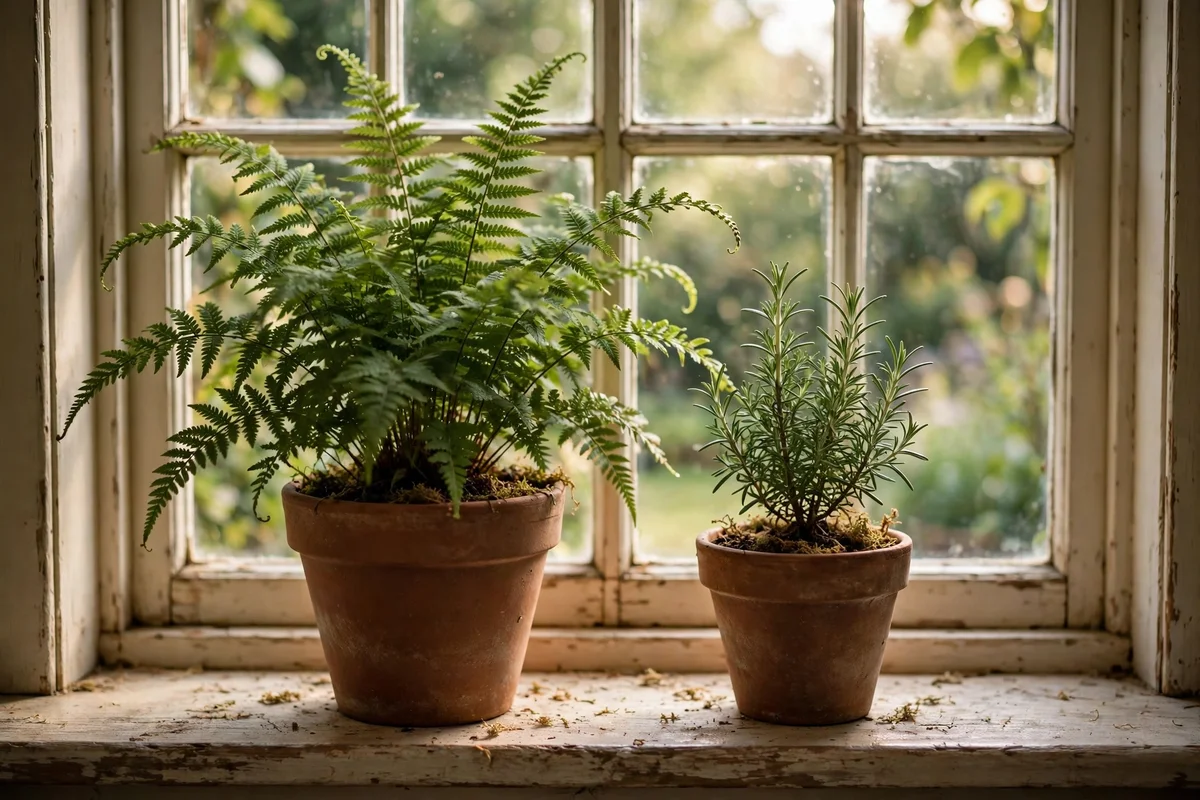
A potted fern or rosemary on the windowsill brings living green into the workday and softens the hard lines of the desk. Choose a pot 12 to 15 cm across in terracotta or cream glaze, with a saucer to protect the wood beneath. Ferns love the indirect light of a garden window, while rosemary needs the sunniest spot you have and perfumes the room when brushed. Water when the top 2 cm of soil feels dry.
Turn the pot a quarter turn each week so growth stays even instead of leaning toward the glass. Feed monthly from spring to autumn with a weak liquid feed, and rest the plant in winter with less water. The mistake to avoid is choosing a thirsty plant you will forget; rosemary survives neglect far better than a fern. A healthy plant in a good pot usually costs 8 to 20 pounds or dollars from a garden centre.
23. Keep a Small Brass Clock on the Desk for Gentle Timekeeping
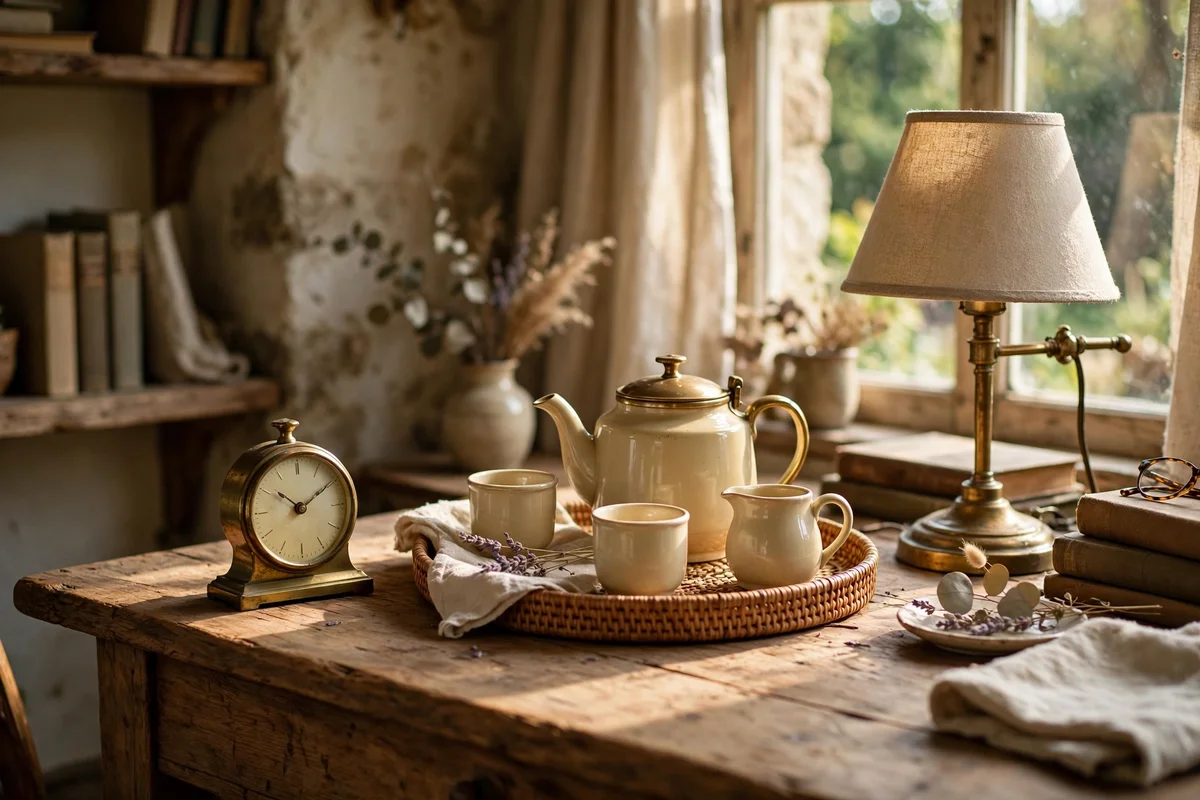
A small brass clock on the desk keeps time without the distraction of a phone screen lighting up every few minutes. Choose a clock 10 to 15 cm tall with a clear cream face and quiet sweep movement, so there is no ticking to break concentration. Place it just behind the teapot tray or beside the lamp, angled slightly toward your chair. Wind-up or battery models both suit, as long as the movement stays silent.
Set the clock five minutes fast if you tend to lose track of time in good work, which is a gentle trick that costs nothing. Dust the glass monthly with a soft cloth, since fingerprints blur the face quickly. The mistake to avoid is buying a loud ticking clock for a quiet study; always check for sweep or silent movement before you buy. A good small brass clock costs 20 to 60 pounds or dollars.
24. Finish the Room With a Wool Throw Over a Reading Chair
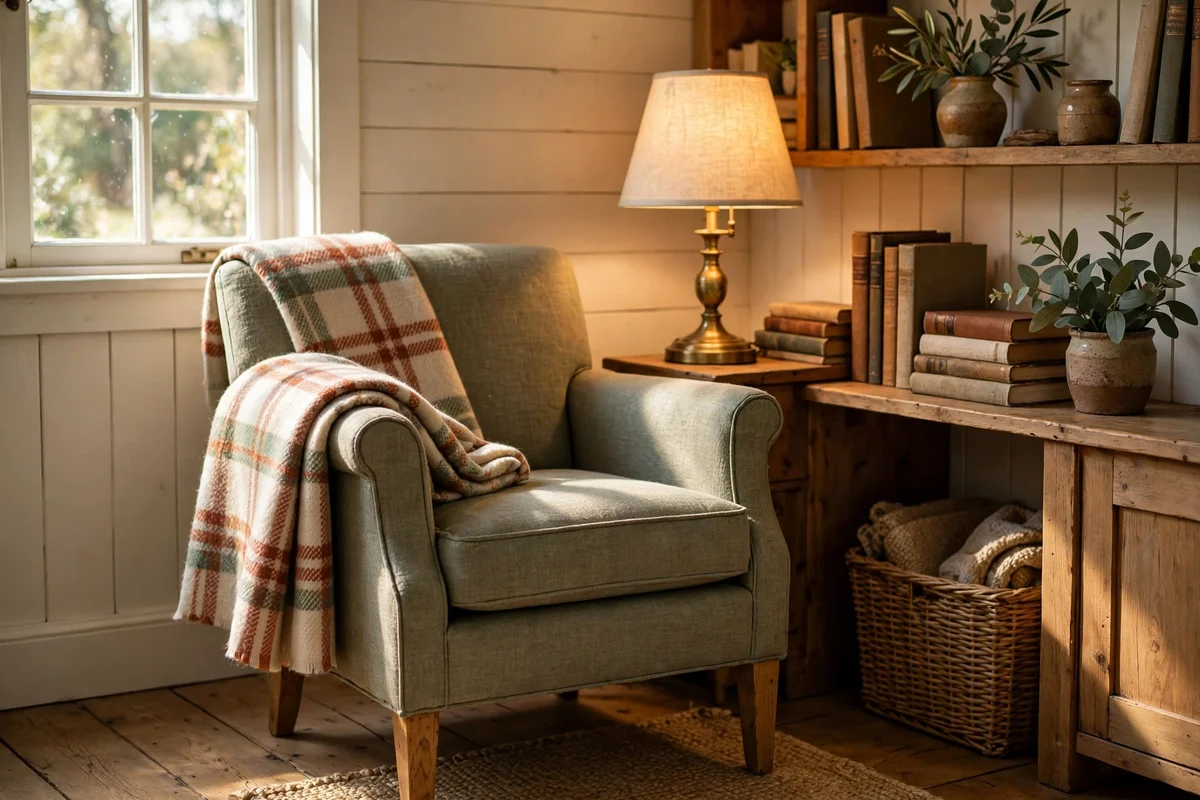
A wool throw folded over the arm of a small reading chair gives the office its final layer of cottage comfort and a place to rest between tasks. Choose a throw 130 by 180 cm in a soft plaid or herringbone of cream, rust and sage, which drapes well without pooling on the floor. Wool regulates temperature, so it warms winter evenings and breathes on mild days. Keep the chair in the corner with the best lamp light for reading.
Fold the throw in thirds so it sits neatly and shows its pattern, rather than bunching it in a heap. Air it outside twice a year and brush off crumbs with a clothes brush instead of washing it often. The mistake to avoid is choosing a throw so thick it never drapes; medium-weight wool looks far more inviting. A good wool throw costs 30 to 80 pounds or dollars, with blends cheaper than pure wool.
An English cottage office comes together slowly, one collected object at a time. The wood desk under the window, the shelf of clothbound books, the warm lamp for evening work and the teapot waiting on its tray all do quiet jobs that make the working day feel gentler. None of these ideas demands a fortune or a renovation, which is exactly why the look stays honest and livable for years.
This week, try the easiest win first: clear the windowsill, then lay a small rug or fold a wool throw over your chair. Small changes like these take under an hour and shift the whole mood of the room. From there, work outward at whatever pace suits you, adding shelves, prints and baskets as you find them, and enjoy watching your office grow into a place you love spending time in.
Frequently Asked Questions
How much does an English cottage office makeover cost?
A gentle refresh costs 150 to 400 pounds or dollars using second-hand finds and paint. A desk, a rug, two cushions and a lamp cover the biggest changes for around 200. Spend more only on pieces you touch daily, like the chair and the desk, since cheap versions wear out fast. Spread purchases over a few months so each choice fits the room you are building.
What size desk fits a small cottage office?
A desk 110 to 140 cm wide and 55 to 65 cm deep suits most small rooms, leaving space to move around it. Measure the wall and the chair’s push-back zone before buying, adding at least 90 cm behind the chair. If the room is very tight, a desk facing the window doubles as a sill, saving a whole wall. Avoid desks deeper than 70 cm in rooms under 8 square metres.
How do I keep a small office from looking cluttered?
Give everything a home: drawers for papers, baskets under the desk, a cupboard for supplies. Keep the desk top to five items or fewer, the lamp, the clock, the tray and two tools, and file the rest nightly. Open shelves look calm when one third stays empty, so resist filling every gap. A weekly five-minute tidy on Friday keeps the system working without effort.
Can I build this look in a rented home?
Yes. Use freestanding furniture, removable peg rails fixed with strong adhesive mounts, and curtains on tension rods so walls stay untouched. Paint is usually off limits, so choose furniture already finished in cream or sage. Keep the original fixings in a labelled bag inside the cupboard for move-out day. Rugs, cushions, baskets and plants all travel with you to the next home.
What lighting works best for a cottage home office?
Layer three sources: daylight from the window by day, a warm shaded lamp for evenings, and a focused bankers lamp for desk tasks. Use 2700K bulbs throughout so every corner glows the same soft amber. Avoid cool white overheads, which flatten the room’s warmth. Put evening lamps on timers so the office greets you with gentle light after dark.