Home Improvement
24 Mattress Stain Removal Hacks That Leave Your Bed Fresh, Clean and Inviting
By Anna Wells · · 21 min read

Mattress stains feel permanent, but most respond well to the right approach. These 24 practical hacks use affordable household products and minimal moisture to lift stains, remove odors, and keep your mattress fresh and inviting.
Mattress stains feel permanent, but most of them respond surprisingly well to the right approach. The real mistake is not the spill itself, it is using the wrong cleaner or soaking the mattress until it takes days to dry. With a few affordable household products and the right technique for each stain type, you can lift marks, reduce odors, and keep your mattress in far better condition.
This guide gathers 24 practical hacks that actually work, from blotting fresh spills and deodorizing with baking soda to treating blood, sweat, coffee, and urine the correct way. Each method uses minimal moisture, protects the fabric and foam, and fits easily into a regular cleaning routine. Work through the ones your mattress needs, always let it dry completely, and you will be amazed how fresh your bed can feel.
1. Blot Fresh Spills Immediately with Dry Cloths
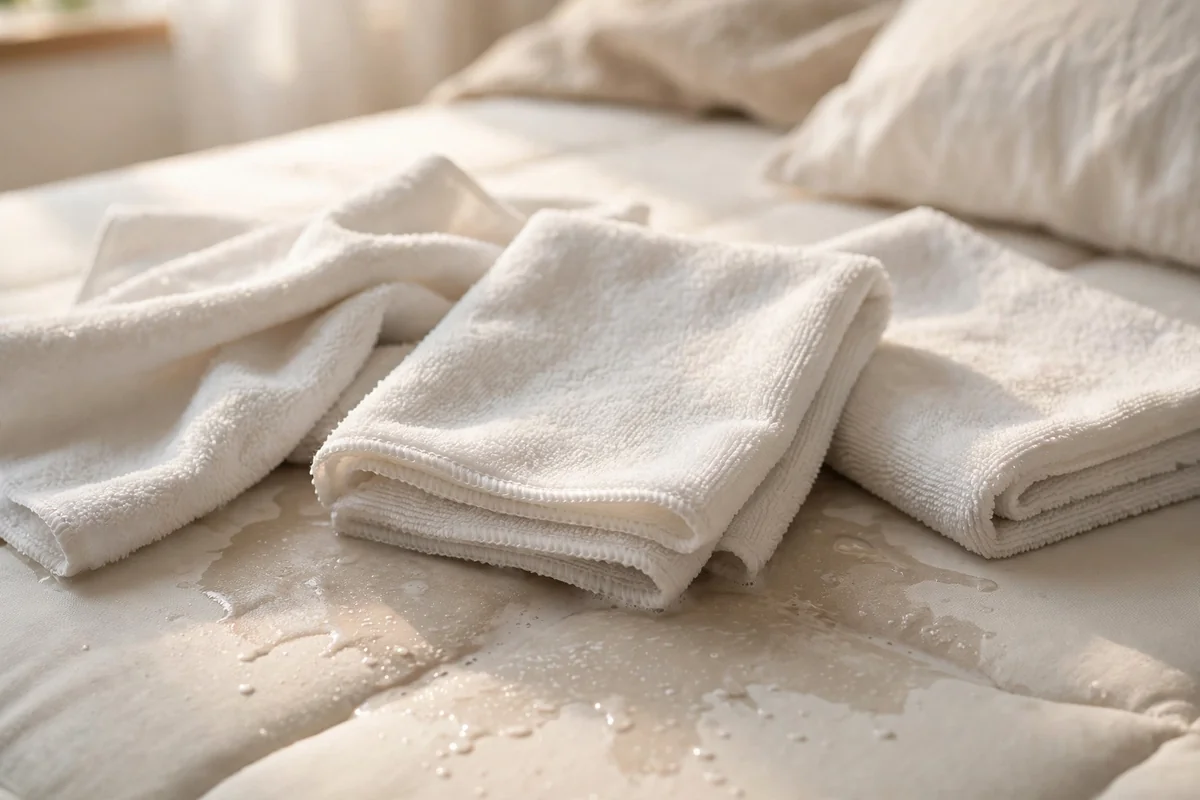
The fastest way to limit a mattress stain uses no cleaner at all. As soon as liquid spills, press several clean microfiber cloths or paper towels firmly onto the spot and lift straight up, repeating with dry sections until almost no moisture transfers. Blotting pulls liquid out of the upper fibers before it sinks deeper, which makes every later cleaning step far more effective.
Never rub a fresh spill, since rubbing pushes moisture deeper into the padding and spreads the stain outward. Avoid pouring water onto the mattress to rinse, because trapped moisture can linger for days and encourage musty odors. Keep a small stack of old towels in the linen closet so you can respond within seconds, because the first five minutes matter more than any product you apply later.
2. Draw Out Moisture with a Baking Soda Blanket
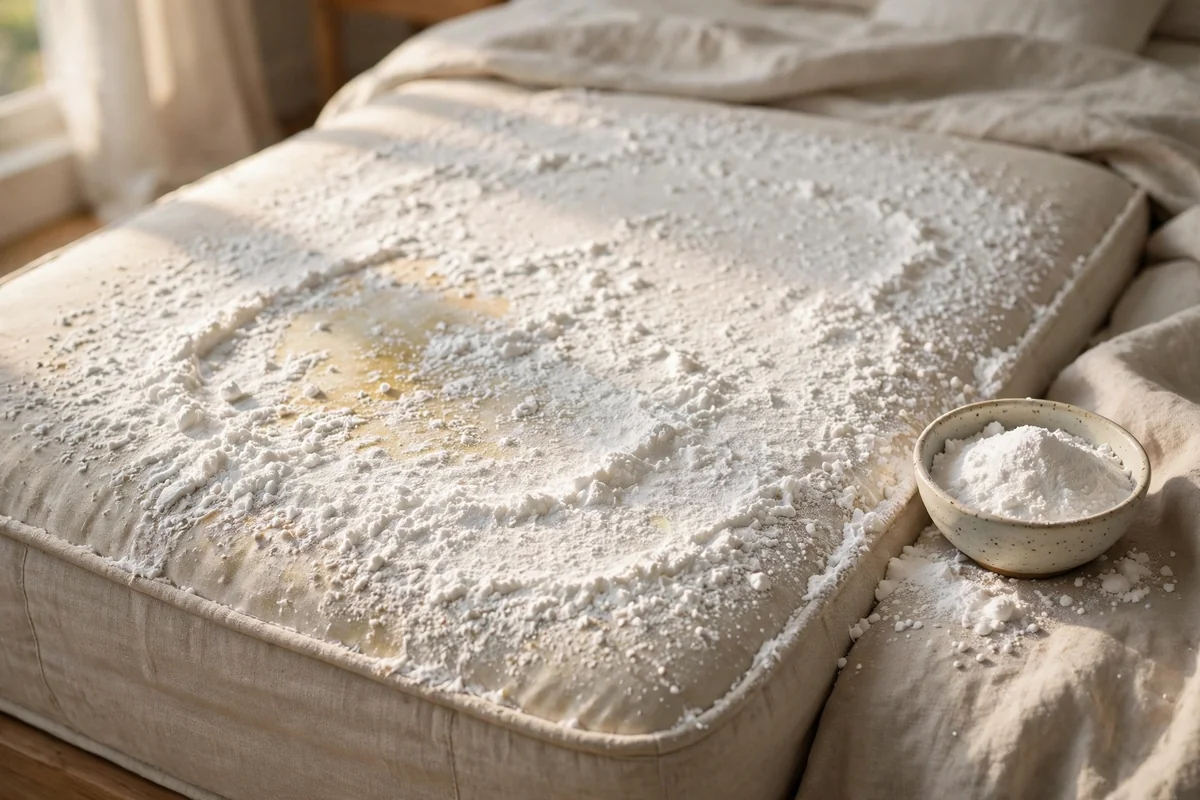
After blotting, cover the damp area generously with plain baking soda, using enough to form a visible white layer over the entire stain. The fine powder draws residual moisture upward and absorbs odors at the same time, which freshens the mattress naturally. Let it rest for at least four hours, or overnight when you have the time, then vacuum every trace away with the upholstery attachment.
Baking soda will not erase every discoloration on its own, but it prepares the surface beautifully for deeper treatments that follow. It is inexpensive, unscented, and safe for most mattress fabrics, making it the gentlest first response you own. Always vacuum thoroughly, because powder left in seams and quilting can feel gritty under sheets. Repeat the treatment after wet cleaning to pull out any remaining dampness.
3. Treat Blood Stains with Cold Water Only
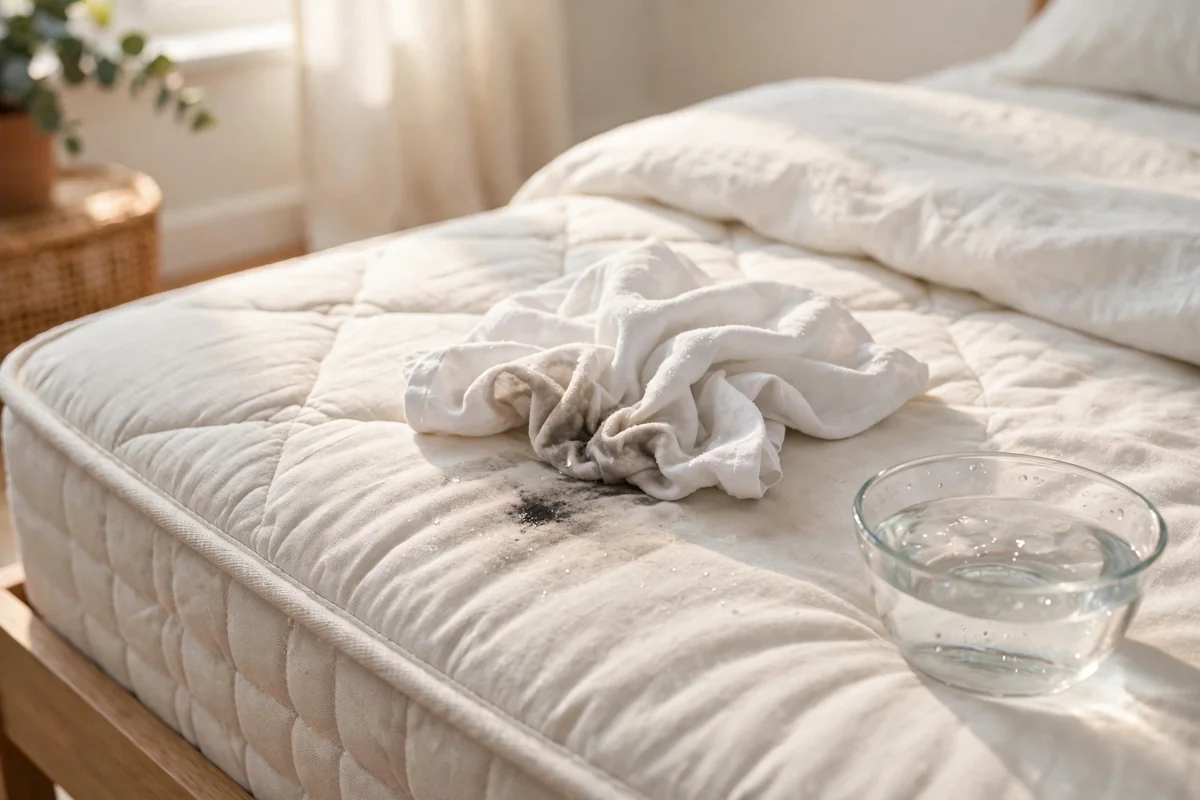
Blood responds to one critical rule: never use hot water. Heat sets the proteins in blood and binds them permanently to fabric fibers, turning a removable mark into a lasting one. Instead, dampen a clean white cloth with cold water and blot the stain gently, working from the outside edge toward the center so the mark does not spread.
For fresh spots, cold water alone often lifts a surprising amount before any cleaner is needed. Work slowly and patiently, rinsing the cloth frequently so you are not redepositing what you just removed. Avoid scrubbing, which can damage the mattress cover without improving results. Once the stain fades, blot the area dry and let it air out completely before remaking the bed.
4. Brighten Yellowed Areas with Diluted Hydrogen Peroxide
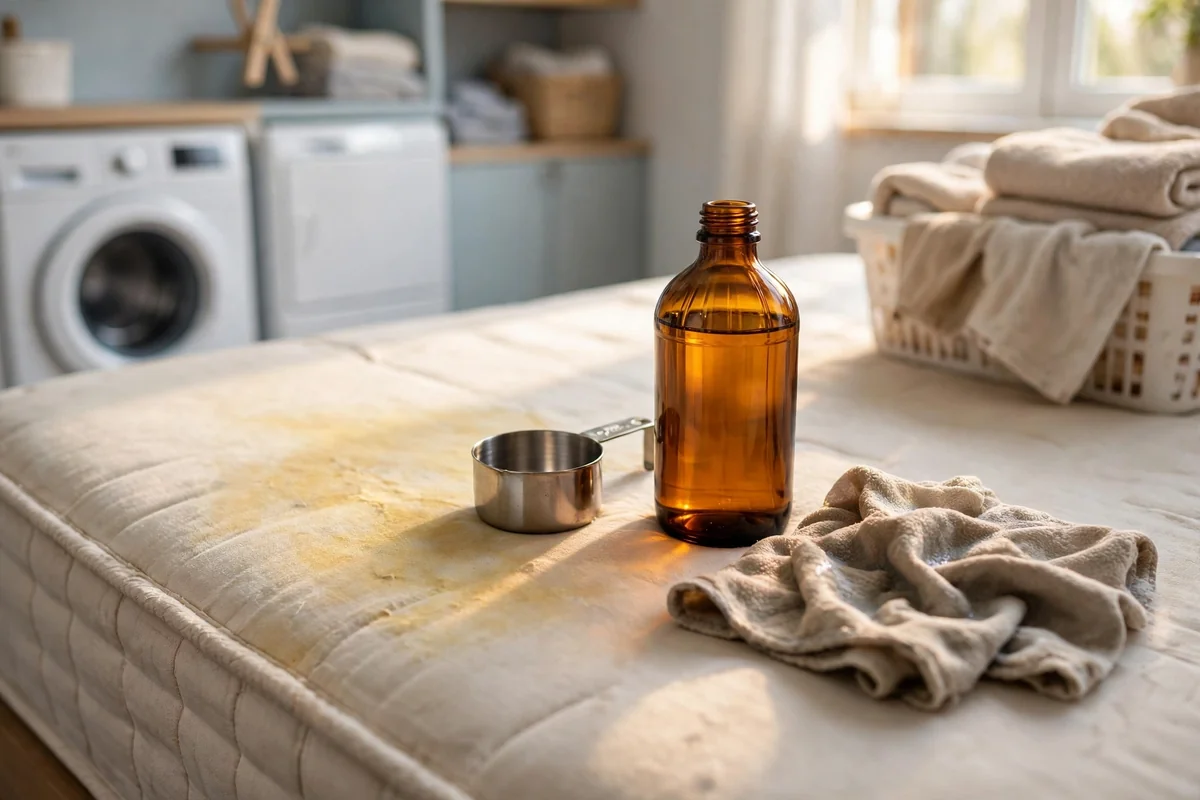
Old sweat stains and yellow discoloration often respond well to diluted hydrogen peroxide. Test it first on a hidden corner, since it can lighten certain fabrics. If the test looks fine, lightly dab the solution onto the stained area with a cloth rather than pouring or spraying it directly. A light application is enough, because soaking the mattress creates drying problems that outweigh any cleaning benefit.
Let the solution sit for about five minutes, then blot firmly with a clean dry towel to lift the loosened discoloration. Follow with a baking soda treatment to absorb any remaining moisture and freshen the area. Repeat the process on separate days for gradual improvement rather than aggressive single sessions. Always allow the mattress to dry fully between treatments, and store peroxide in a dark bottle away from heat.
5. Break Down Organic Stains with Enzyme Cleaners
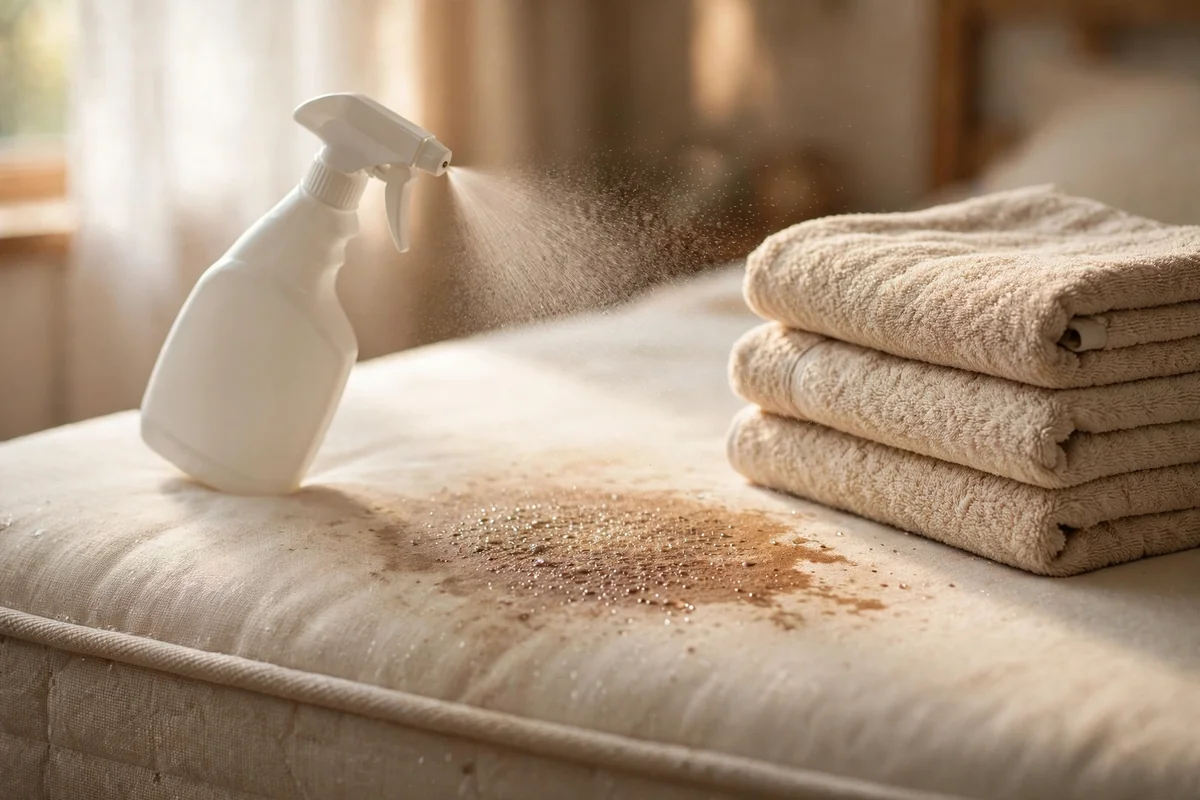
Urine, sweat, vomit, pet accidents, and protein-based food spills need more than ordinary household spray. Enzyme cleaners are formulated to break down the organic material causing both the stain and the lingering odor, rather than merely masking the surface. Choose a product made for upholstery or mattresses, and read the label to confirm it suits your mattress materials.
Apply sparingly, just enough to dampen the stained fibers, then allow the full dwell time stated on the bottle before blotting dry. These cleaners keep working after application, so patience produces better results than reapplying aggressively. Blot thoroughly with dry towels afterward and dry the mattress completely. Keep the room ventilated during treatment, and store the bottle sealed so the enzymes stay active.
6. Lift Light Marks with Whipped Dish Soap Foam
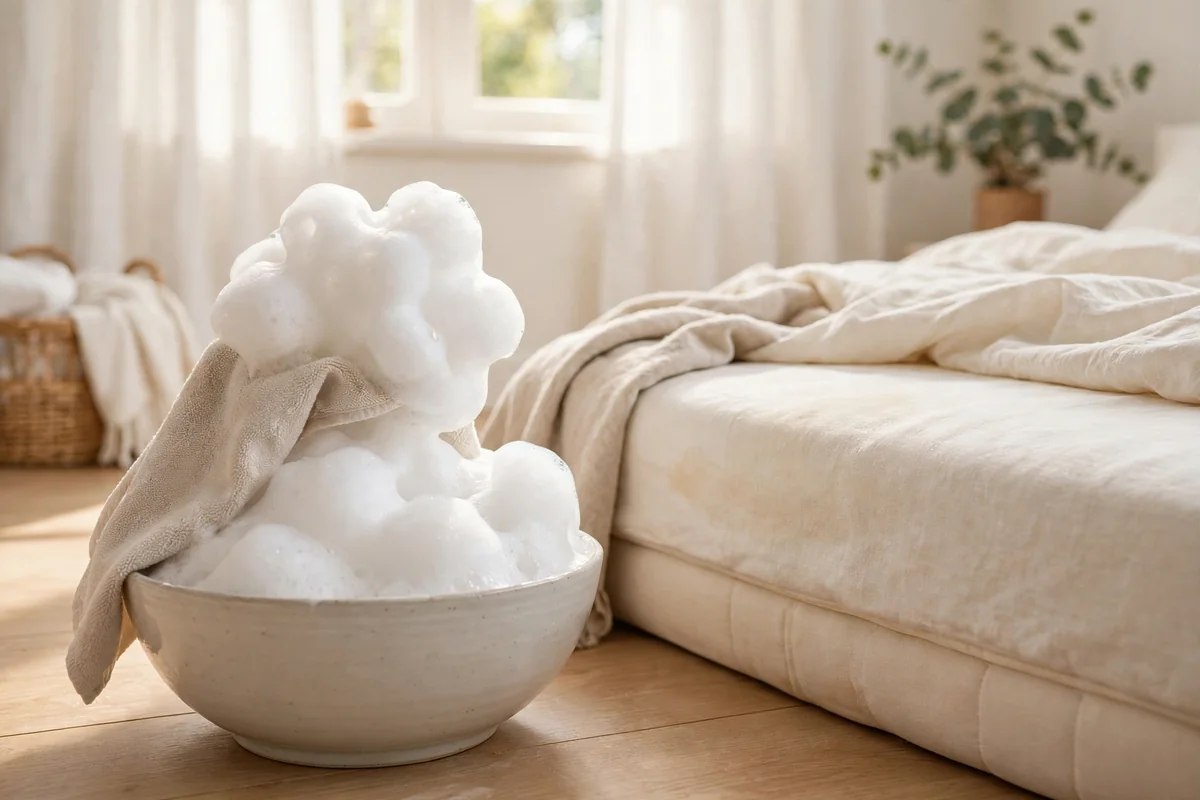
For everyday mystery marks, mix a tiny squirt of mild dish soap into cool water and whisk until thick foam forms. Scoop up only the foam with a clean cloth, never the liquid beneath, and blot the stain gently. This method delivers cleaning power without flooding the mattress, which is the mistake that causes most drying problems.
After the mark lifts, wipe the area with a second cloth barely dampened with plain water to remove soap residue, then blot dry. Soap left in the fibers can attract dust and dull the fabric over time. Use only a pea-sized amount of soap, since more does not clean better and only adds residue. This gentle approach suits light stains on most mattress covers.
7. Vacuum First to Avoid Muddy Residue
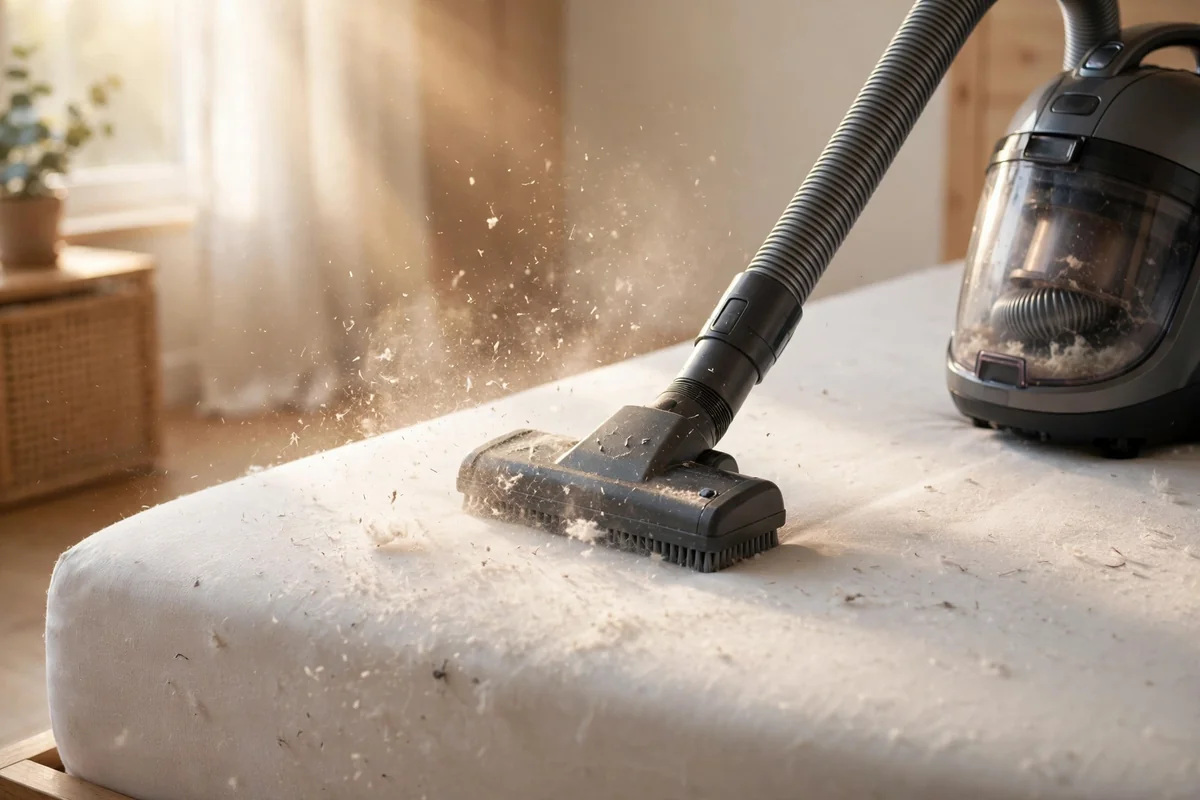
Dust, skin cells, pet hair, and fine particles settle deep into mattress fabric over time. If you start wiping with a damp cloth before removing them, you create a muddy residue that spreads across the surface and makes stains worse. Always vacuum the entire mattress with the upholstery attachment before any wet cleaning, moving slowly so the suction reaches into seams and quilting.
Vacuum again after baking soda treatments, because leftover powder hides in piping and tufting and feels gritty under sheets. Empty the vacuum canister or replace the bag afterward so fine dust does not blow back out. This simple habit leaves the mattress noticeably fresher and helps every stain treatment that follows perform at its best. Make it the opening step of every deep clean.
8. Fade Coffee Rings with a Vinegar Blotting Solution
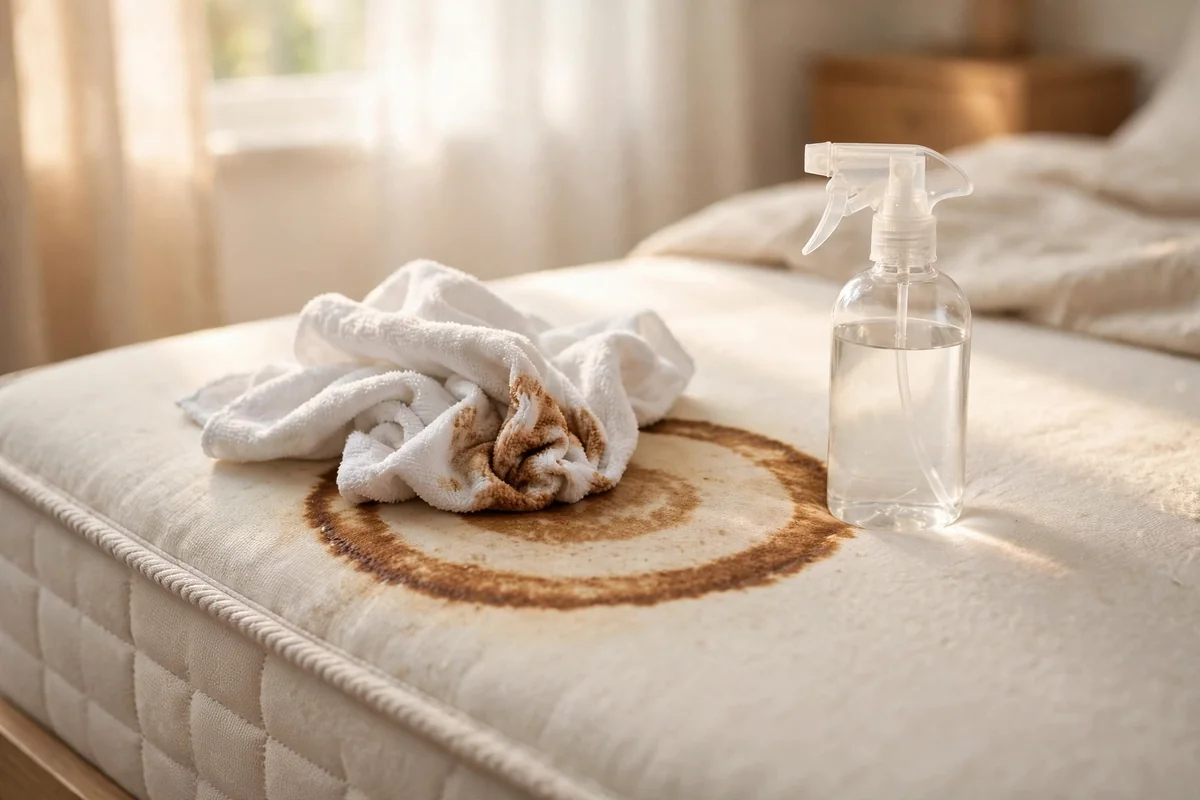
Coffee and tea leave brown rings that look permanent once dry. Mix equal parts distilled white vinegar and cool water, then lightly dampen a microfiber cloth with the solution rather than spraying the mattress directly. Blot from the outside of the ring toward the center, which keeps the stain from spreading while the mild acid slowly loosens the discoloration.
Once the ring fades, blot with a cloth dampened in plain water to remove vinegar residue, then press a dry towel over the spot. The vinegar smell disappears completely as the mattress dries. This method works best on beverage stains that have not been sitting for months. For very old rings, repeat the treatment on separate days instead of scrubbing harder in one session.
9. Brighten Sweat Stains with a Baking Soda Paste
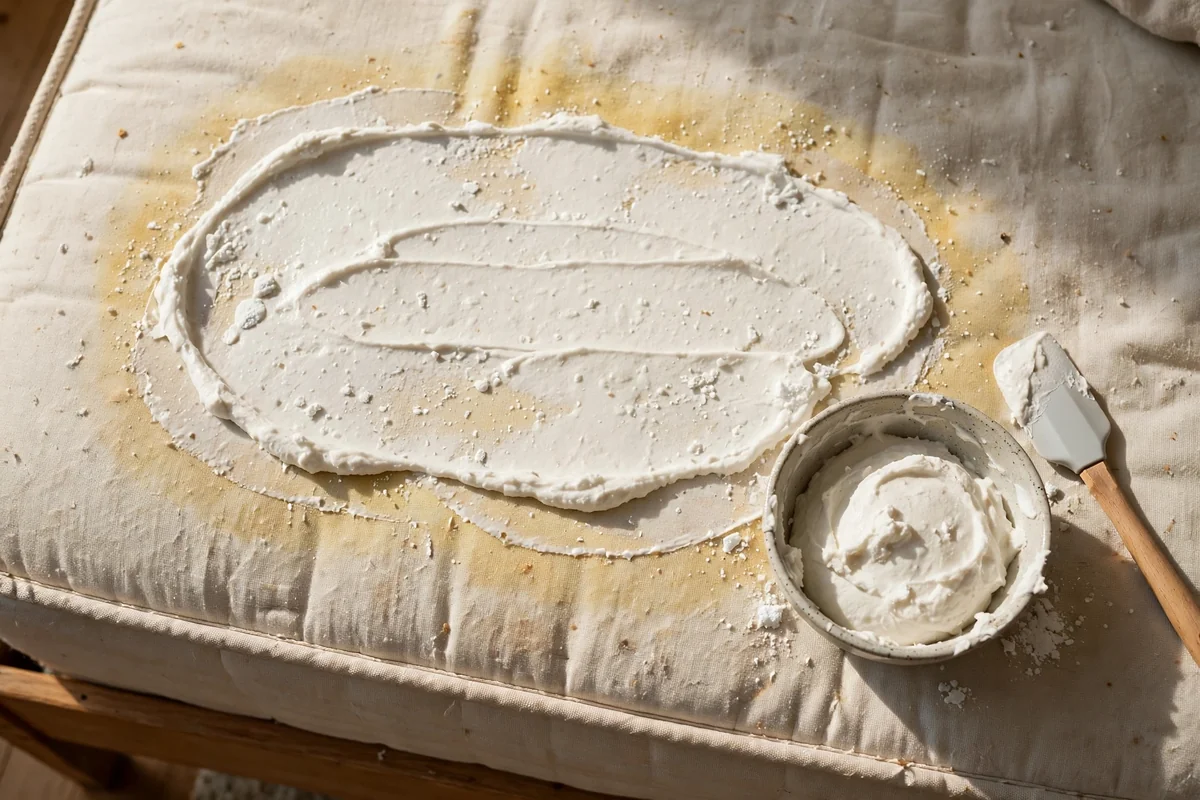
Yellow sweat stains build up gradually, so expect gradual improvement rather than instant removal. Mix baking soda with just enough water to form a thick paste, then spread a thin layer over the stained area without rubbing it into the fabric. Let the paste dry naturally and completely, which allows it to absorb body oils while gently brightening the fibers.
Once the paste has hardened fully, vacuum it away with the upholstery attachment. This treatment does not bleach the mattress, but repeated applications over several weeks steadily lift years of buildup. Avoid the temptation to do it all in one aggressive afternoon, which risks overwetting. Patience and repetition are the real secrets behind this gentle brightening method.
10. Act Fast on Urine with Minimal Moisture
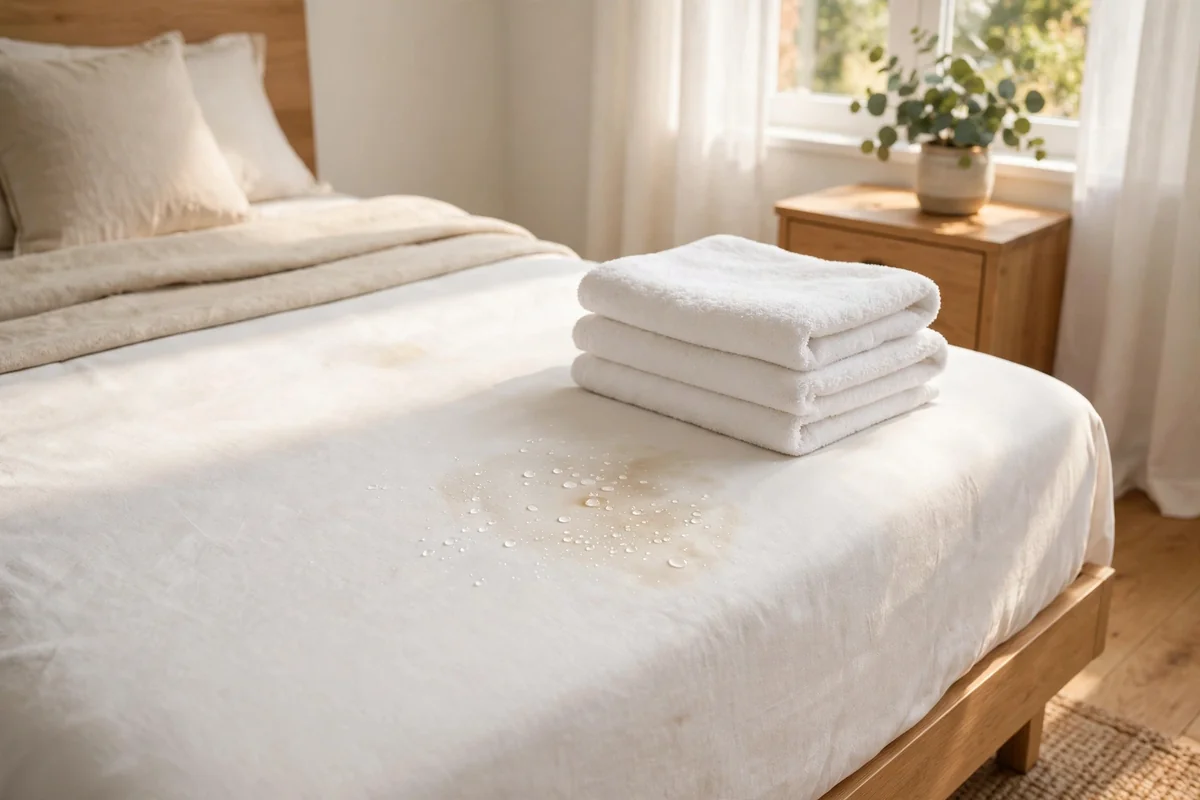
Urine stains are far easier to handle when fresh, so act within minutes whenever possible. Blot away as much liquid as you can with dry towels, pressing firmly and switching to dry sections often. Then apply an enzyme cleaner made for biological stains, using only enough to dampen the fibers. More liquid is never better on a mattress.
Allow the cleaner its full dwell time so the enzymes can break down the compounds causing both stain and odor. Blot thoroughly afterward, then dry the mattress completely with a fan running nearby before remaking the bed. Rushing this step traps moisture that leads to musty smells. For dried accidents, expect to repeat the treatment more than once.
11. Deodorize the Whole Surface with an Overnight Baking Soda Rest
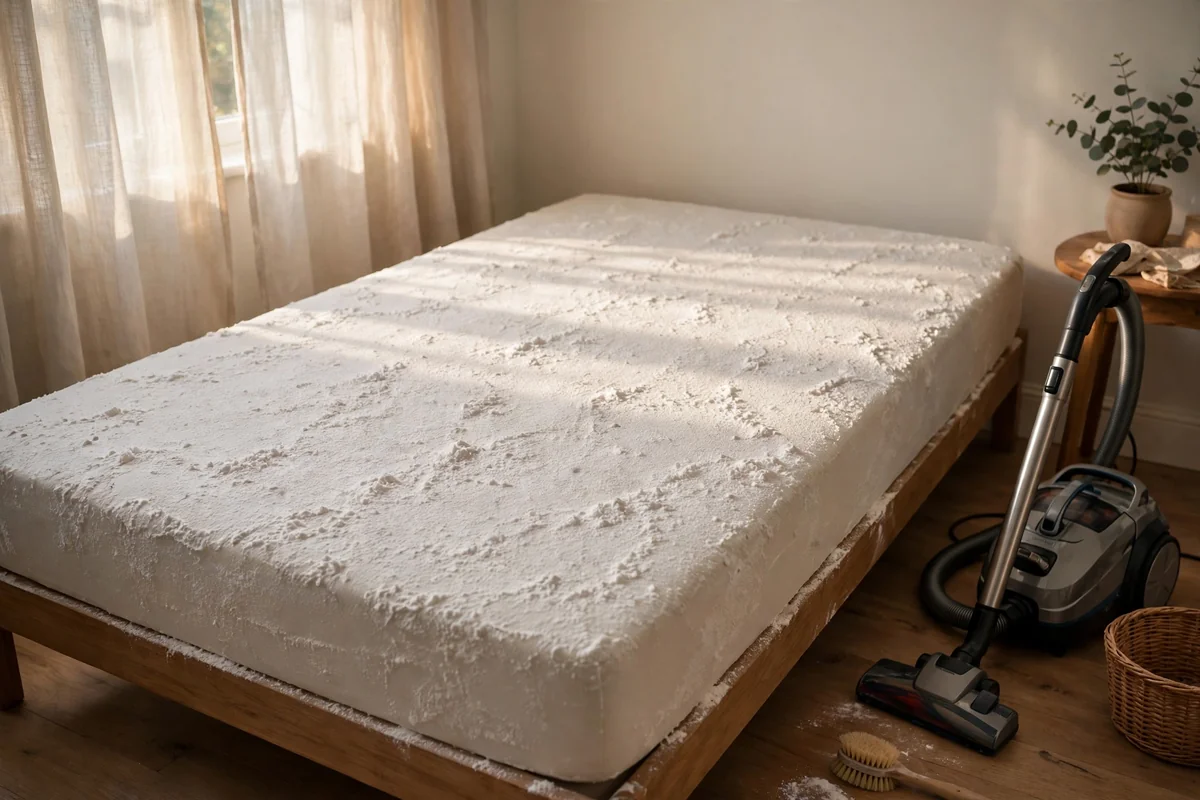
Even without visible stains, mattresses absorb body oils, moisture, and odors over months of use. Every few months, strip the bed and sprinkle an even layer of baking soda across the entire surface. Leave it undisturbed for at least six hours, or overnight when you can, so the powder has time to draw out everything trapped in the fibers.
Vacuum the whole surface slowly and thoroughly afterward, and the mattress will smell noticeably fresher without any scented sprays. This easy maintenance habit takes little effort but makes the whole bed feel cleaner. Do it on a morning when you can leave the bedroom door open, and combine it with washing pillows and airing the duvet for a complete refresh.
12. Agitate Gently with a Soft Upholstery Brush
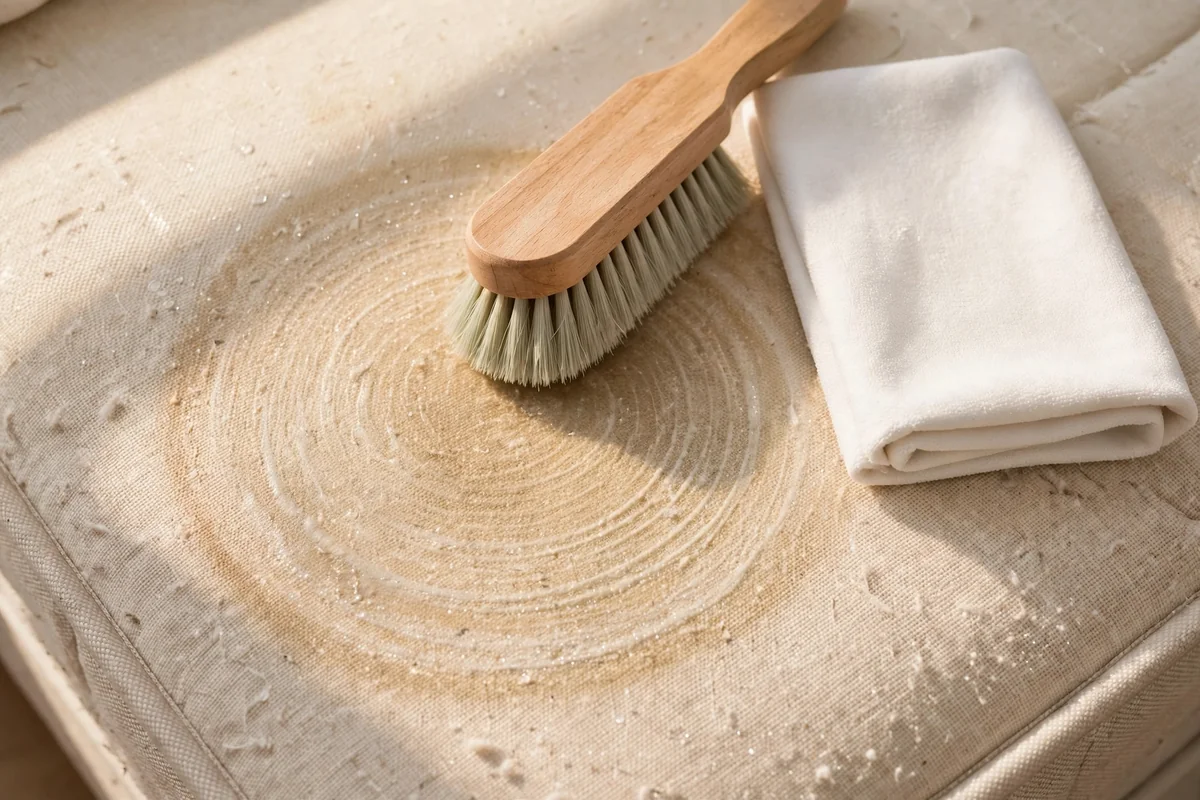
Stubborn stains tempt aggressive scrubbing, but harsh rubbing usually damages the mattress cover while barely improving the mark. A soft upholstery brush or soft-bristled cleaning brush gives you the agitation you need without the harm. Use gentle circular motions over the stained area to loosen dried residue from the fibers.
After lightly brushing, blot the loosened residue away with a clean cloth rather than grinding it back in. This slower approach consistently produces better results while keeping the mattress cover looking smooth and intact. Reserve the brush for dried or set stains, since fresh spills usually need only blotting. Rinse the brush after use so old residue never transfers to the next stain.
13. Dry Thoroughly with Fans and Fresh Air
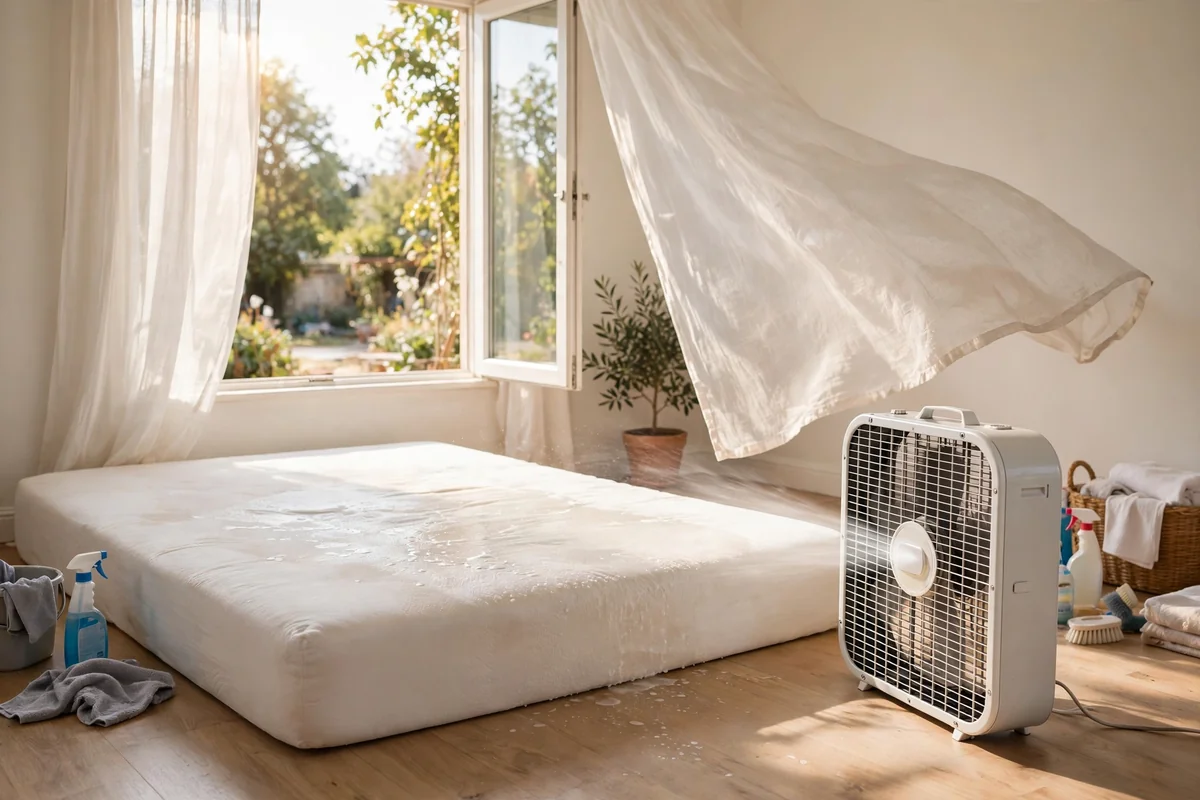
Cleaning is only half the job, because trapped moisture invites mildew, mold, and unpleasant odors. After any wet treatment, position a box fan or oscillating fan so air moves directly across the mattress surface. Keep it running for several hours, even after the surface feels dry to the touch, since inner layers hold moisture longer than you expect.
On dry days, open nearby windows to improve ventilation, and in humid weather run a dehumidifier in the room. Never remake the bed while any dampness remains, since sheets trap moisture against the surface. Taking extra hours to dry completely prevents musty smells and protects every cleaning result you worked to achieve.
14. Guard Your Work with a Washable Mattress Protector
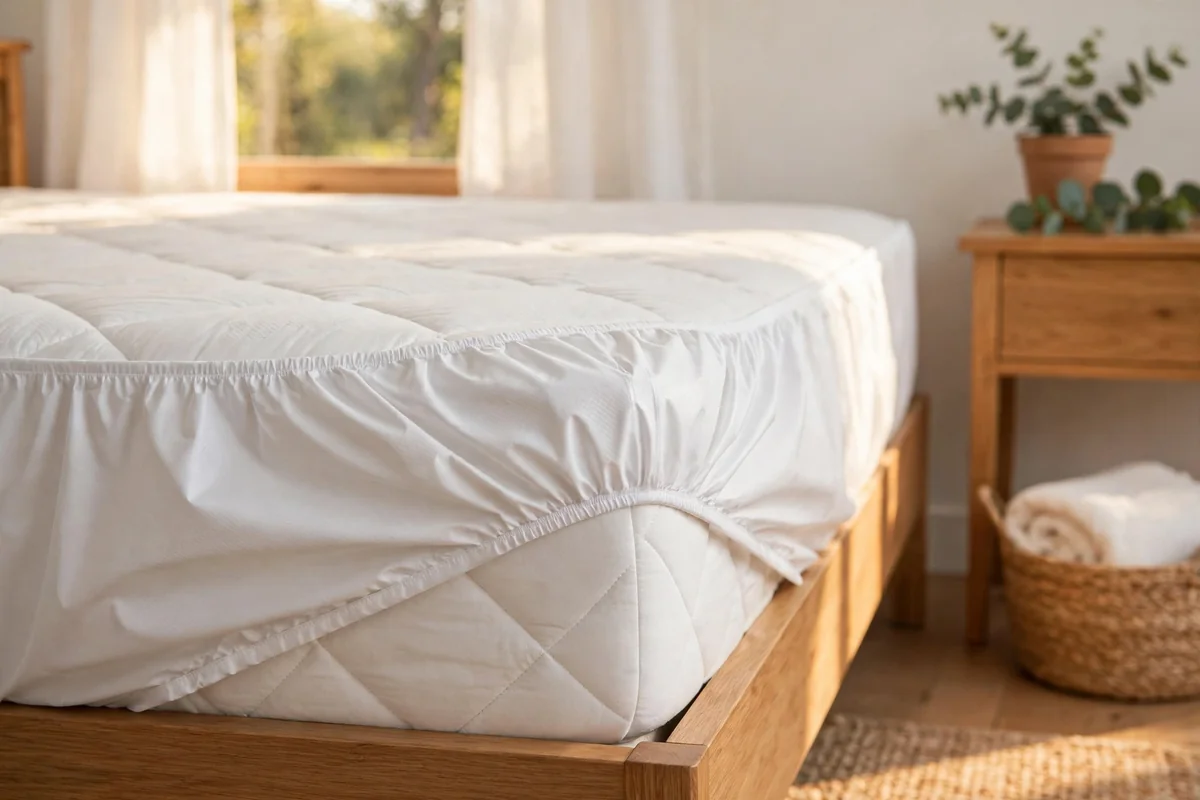
The smartest stain hack prevents future stains entirely. Once your mattress is clean and fully dry, cover it with a high-quality waterproof protector that is machine washable. The next spill, sweat buildup, or accident lands on the protector instead of the mattress, and you simply remove it and wash according to the care label.
A good protector also shields against dust mites, body oils, and allergens while staying quiet and breathable for comfortable sleep. Choose one that fits your mattress depth so it never bunches or slips. Wash it every few months along with your sheets. Starting this habit earlier would have saved countless hours of deep stain removal, so begin as soon as the mattress is clean.
15. Harden Stuck Gum with Ice Before Lifting
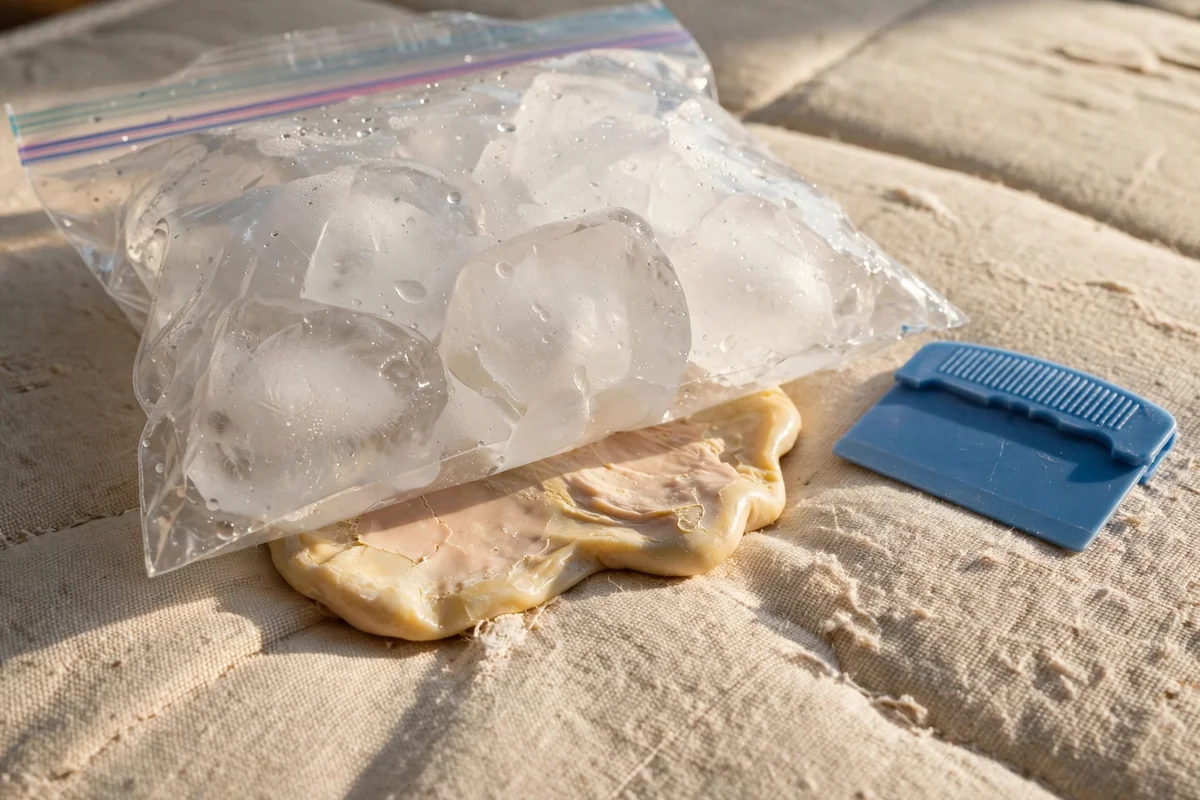
Chewing gum stuck to a mattress stretches deeper into the fabric if you pull at it. Instead, place several ice cubes inside a sealed zip-top bag and hold it against the gum for several minutes until the gum turns completely hard and brittle. Cold makes the gum lose its stickiness, which is the key to removing it cleanly.
Once frozen, gently lift the gum away with the edge of a plastic card or a plastic scraper, never anything sharp that could cut the cover. If tiny bits remain, repeat the freezing rather than forcing them off. This patient method removes the gum without damaging the fabric or leaving sticky residue that would attract dirt later.
16. Dab Makeup Marks with a Touch of Rubbing Alcohol
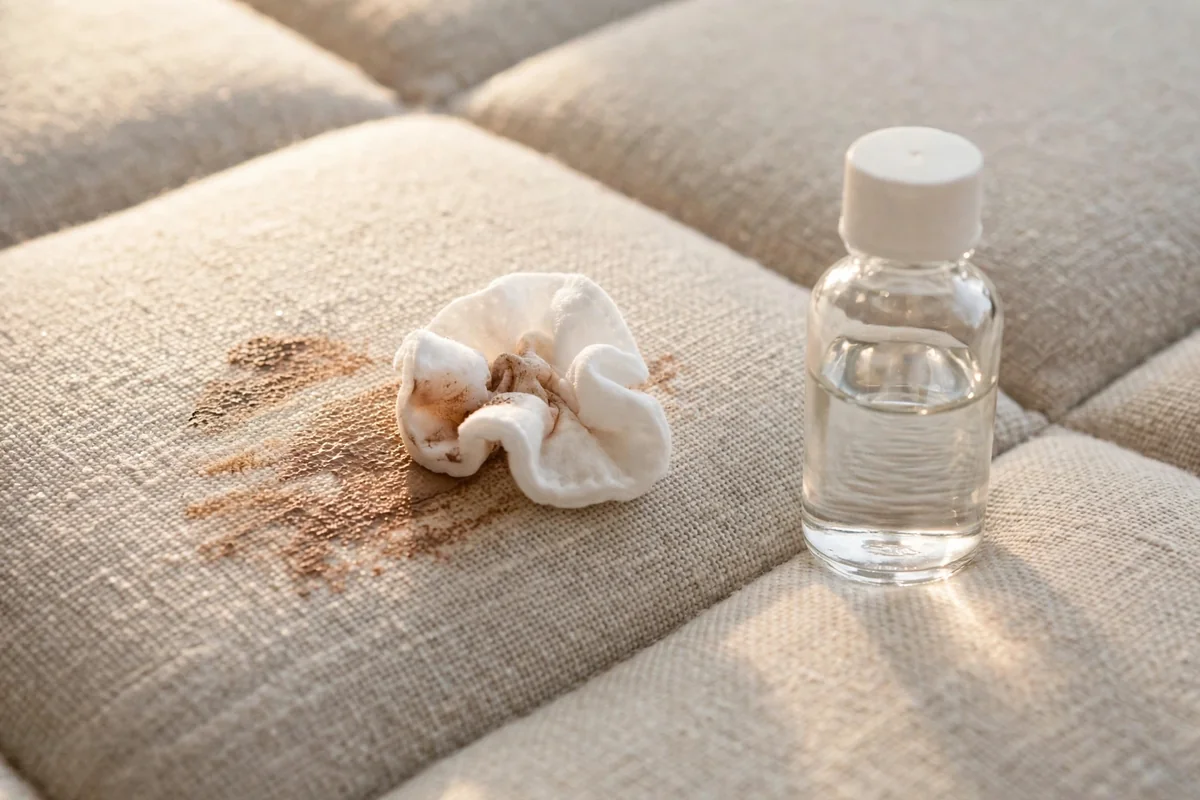
Foundation, mascara, and lipstick leave surprisingly stubborn marks when someone gets ready while sitting on the bed. Lightly dampen a cotton pad or microfiber cloth with a small amount of rubbing alcohol and dab the stain gently instead of rubbing back and forth. The alcohol helps dissolve oil-based cosmetics without soaking the mattress.
Always test on an inconspicuous spot first to confirm the alcohol does not affect the mattress fabric or color. Once the makeup transfers onto the pad, blot with a clean damp cloth to remove residue, then let the area air dry. Using only a small amount keeps excess moisture out of the padding while still tackling the stain effectively.
17. Rotate the Mattress During Deep Cleans
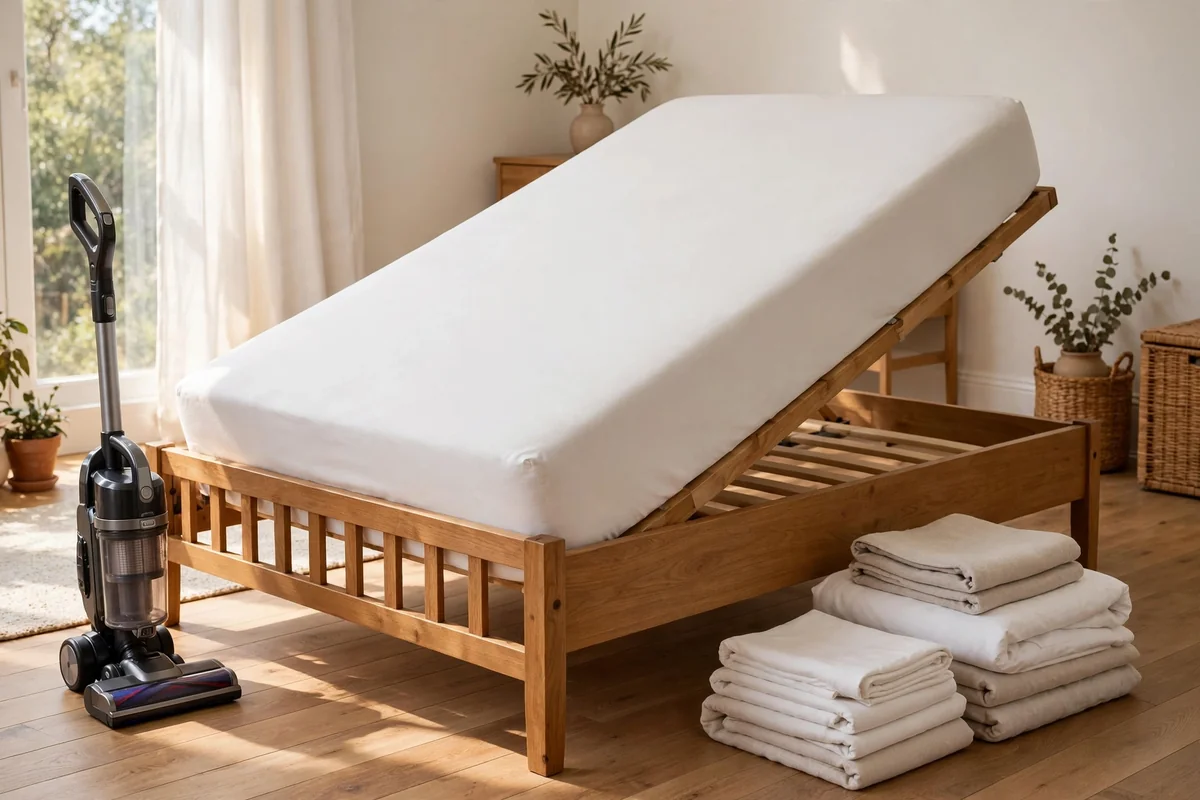
Rotating the mattress distributes wear evenly instead of letting stains and body impressions concentrate in one place. Whenever you deep clean, turn the mattress end to end according to the manufacturer’s guidance. This is especially helpful when two people consistently sleep in the same spots every night. Check whether your model is one-sided before flipping, since many modern mattresses should only be rotated, never turned over.
While the mattress is uncovered, vacuum every side, inspect the seams, and check for hidden stains that might otherwise go unnoticed. Doing the inspection and the cleaning in one session saves time and keeps the mattress wearing evenly for years. Mark your calendar to repeat the rotation every three to six months.
18. Freshen with Gentle Indirect Sunlight

On warm, dry days with low humidity, open the curtains wide so indirect sunlight and fresh air can reach the mattress for a few hours. Good airflow speeds evaporation after cleaning, and gentle sunlight naturally freshens the surface and helps neutralize lingering odors. Even a few hours near a bright window makes a noticeable difference.
Avoid leaving the mattress in intense direct sun all day, because prolonged UV exposure can age some fabrics and foams more quickly. A few hours of gentle light is plenty, and you can rotate the mattress halfway through for even freshening. Combine the airing with an open window for cross ventilation, and the whole bedroom will feel cleaner too.
19. Lift Greasy Food Stains with Cornstarch
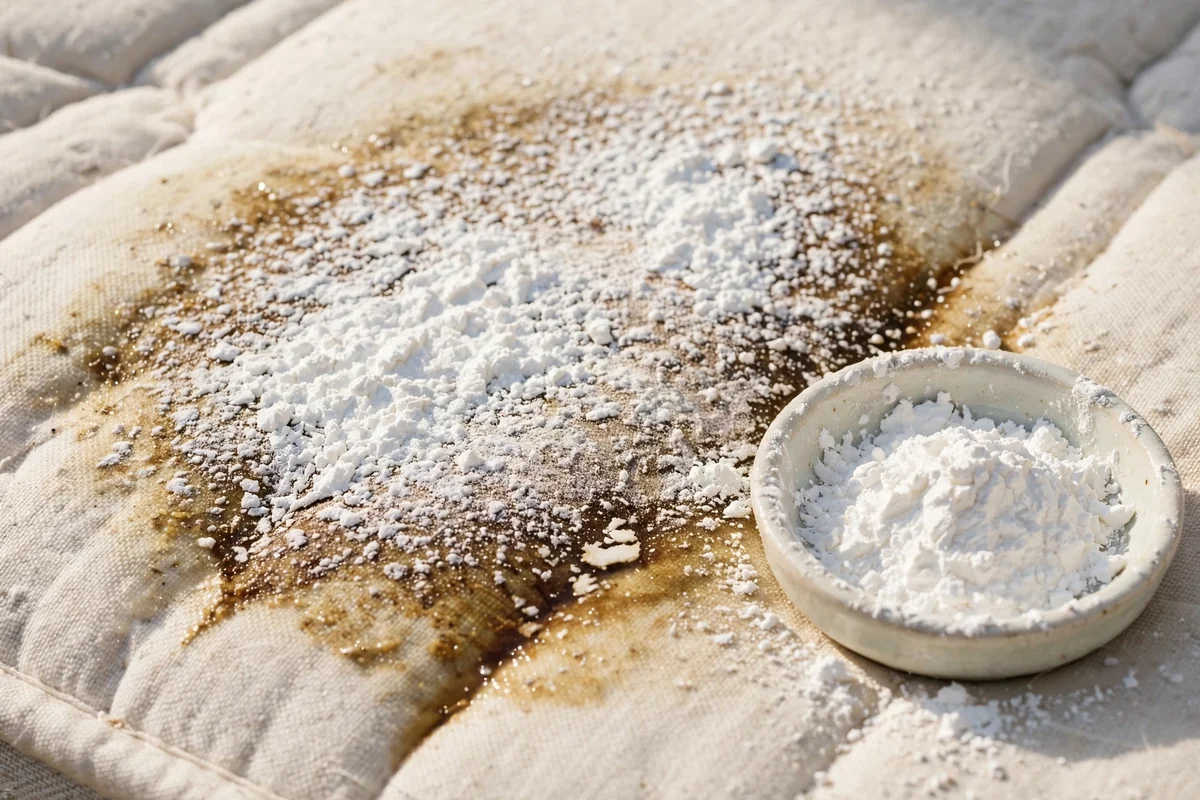
Breakfast in bed sometimes leaves greasy spots that water-based cleaners cannot touch. Sprinkle plain cornstarch generously over the grease and let it sit for several hours, or overnight for older marks. The fine starch absorbs the oil right out of the fibers, much like baking soda does for moisture, leaving the stain far lighter.
Vacuum the powder away completely, then follow with a light dish soap foam treatment if a shadow of the stain remains. Avoid using heat on grease, since warmth can set the oil permanently. For delicate mattress covers, test the cornstarch on a hidden area first. This pantry staple handles buttery fingerprints and oily smudges better than most commercial sprays.
20. Neutralize Lingering Odors with a Light Vinegar Mist
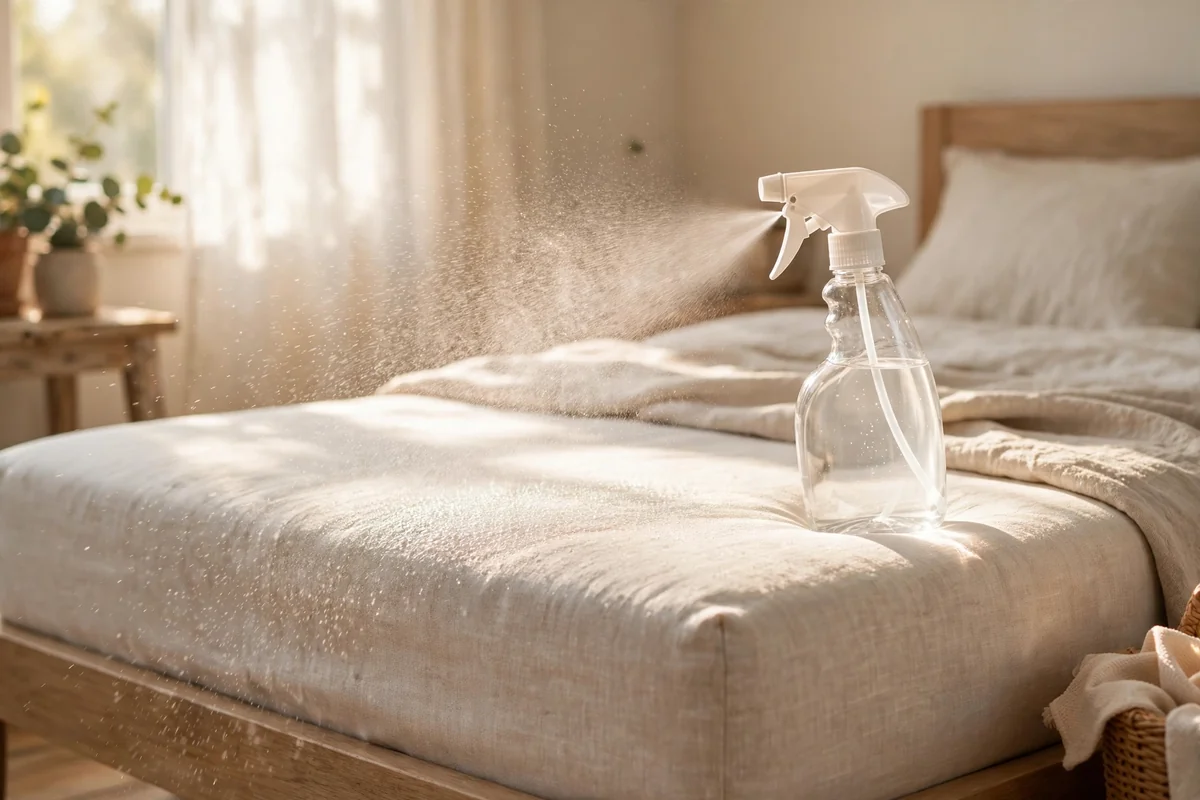
Some odors survive even after the visible stain is gone. Fill a plain spray bottle with distilled white vinegar and mist the mattress surface very lightly from about a foot away, using the finest spray setting. The vinegar neutralizes odor molecules as it evaporates, and the sharp smell fades completely once the mattress dries.
Keep the misting light, since the goal is freshening, not wetting the padding. Follow with an open window or a running fan to speed drying, and finish with a baking soda rest if any odor persists. Avoid scented sprays that merely mask smells, because they can irritate sensitive sleepers. This simple mist works beautifully as the final step of any deep clean.
21. Tackle Mystery Spots with a Salt and Lemon Paste
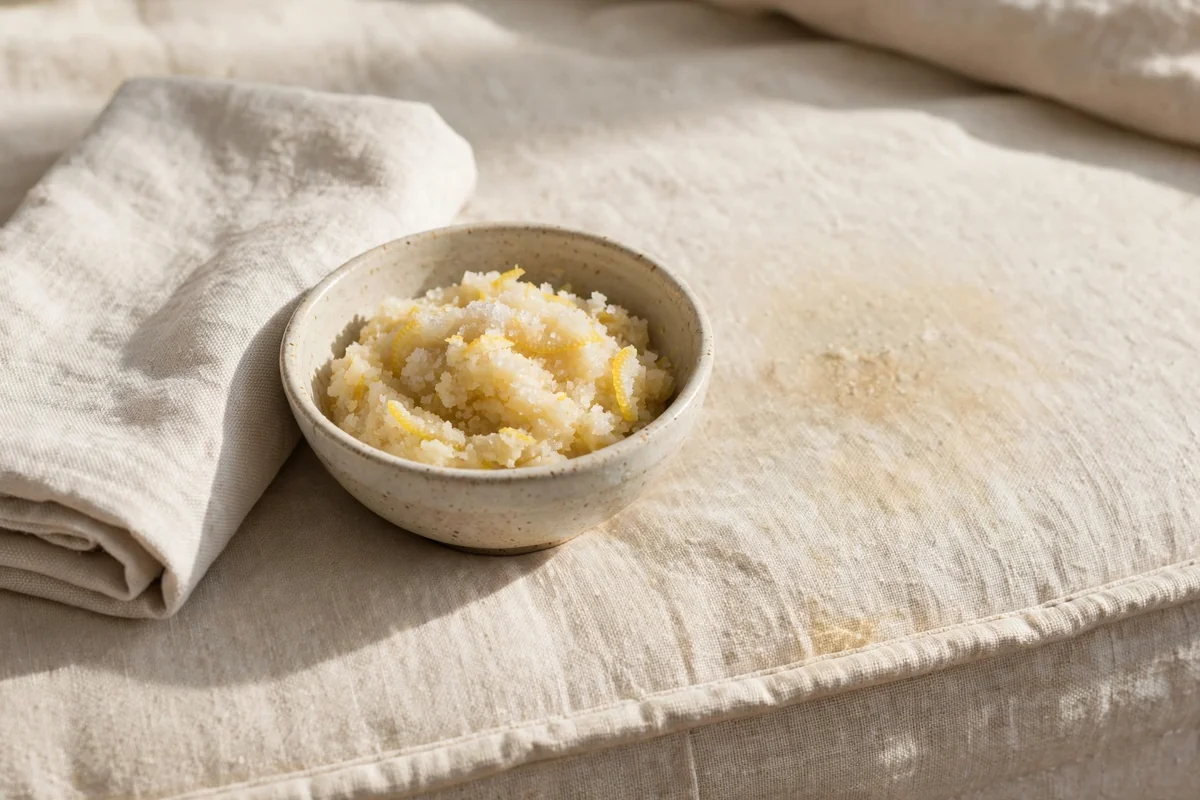
For unidentified light spots, a paste of fine salt and fresh lemon juice offers gentle brightening without harsh chemicals. Mix the two into a spreadable paste, dab a thin layer over the spot, and let it sit for about thirty minutes. The mild acidity of lemon helps lift discoloration while the salt provides the faintest polishing action.
Wipe away the paste with a cloth barely dampened in plain water, then blot dry and air the mattress well. Always test this treatment on a hidden area first, since lemon can lighten some fabrics. Avoid leaving the paste on for hours, which risks overbrightening one spot. For best results, use it on fresh mystery marks before they have time to set.
22. Sanitize Deeply with Careful Steam Cleaning
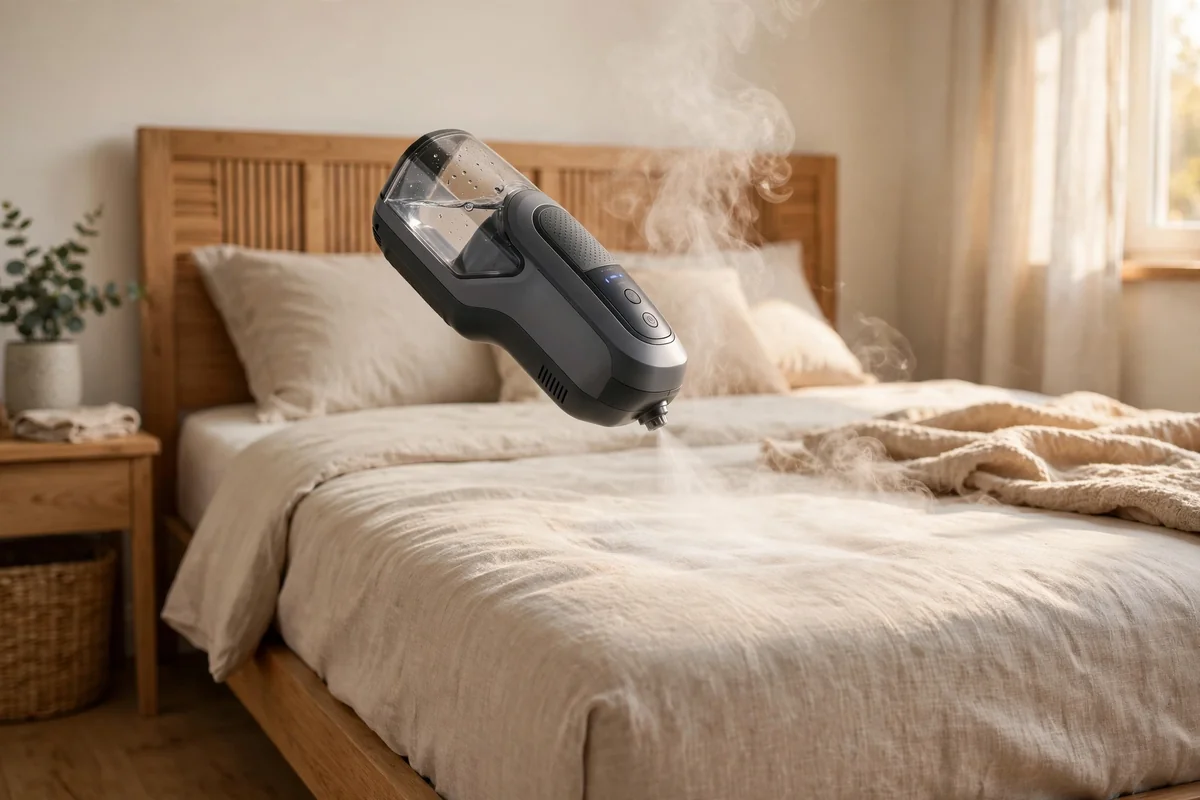
A handheld steam cleaner can sanitize the mattress surface and loosen deep grime without any chemicals. Hold the device a few inches above the fabric and move slowly, letting the steam do the work rather than pressing down. Keep the passes light and brief, since the goal is sanitizing steam, not soaking the padding with condensation.
Check your mattress warranty and care label first, because some materials do not tolerate steam. After steaming, dry the mattress thoroughly with fans and open windows, just as you would after any wet treatment. Work in small sections and let each area dry before moving on. Used carefully, steam leaves the mattress feeling deeply refreshed with no residue at all.
23. Detail the Seams and Piping with Targeted Cleaning
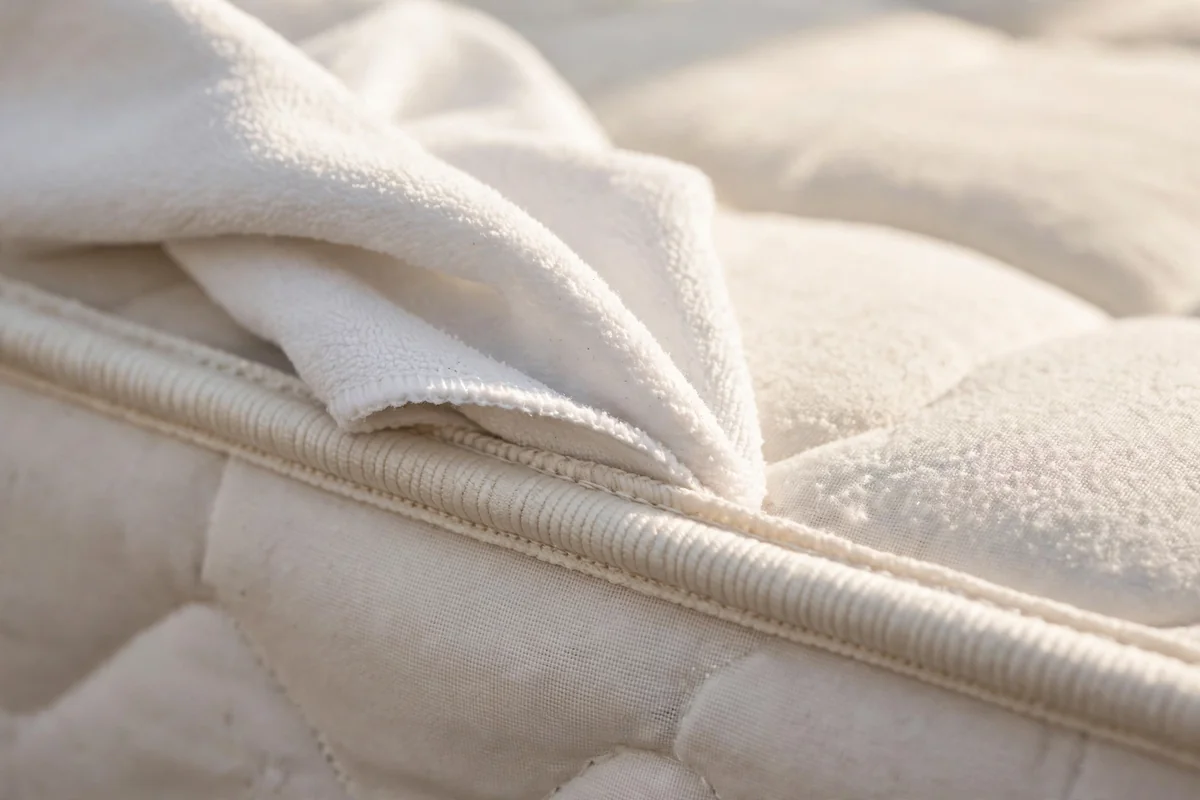
Seams, piping, and tufted buttons collect dust and body oils that general cleaning misses. Wrap a soft white cloth around your finger, dampen it lightly with your chosen cleaner, and trace along each seam with gentle pressure. This targeted detailing reaches the narrow channels where grime hides and where odors often begin.
Work one section at a time and blot each seam dry as you go, since moisture trapped in piping takes longest to evaporate. A soft toothbrush can help with textured welting, but use the lightest touch to avoid fraying the stitching. This finishing detail makes the whole mattress look professionally cleaned and prevents hidden buildup from becoming a bigger problem.
24. Schedule Seasonal Deep Cleans to Stay Ahead of Stains
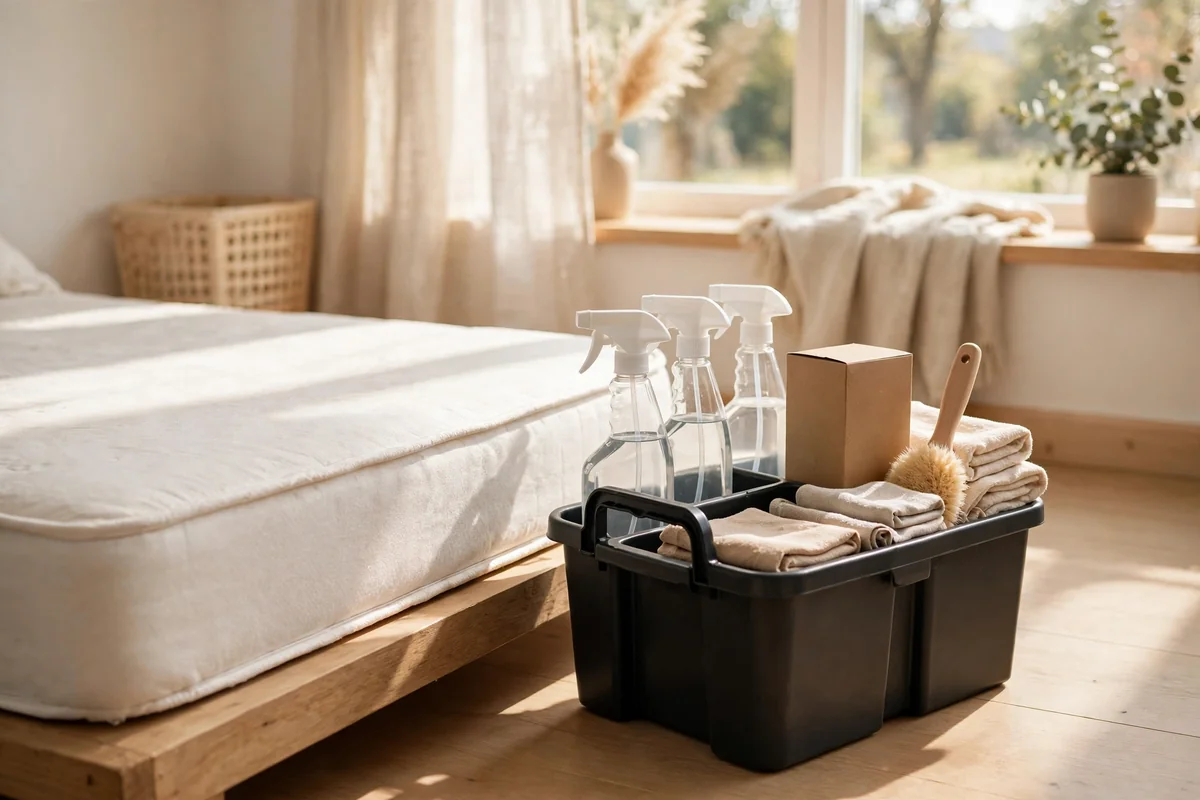
The easiest stains to remove are the ones that never set. Four times a year, strip the bed completely and give the mattress a full routine: vacuum every surface, treat any spots, apply a baking soda rest, and air the room well. Tying the deep clean to the seasons makes it easy to remember and keeps buildup from accumulating.
Keep a simple kit ready so the routine takes under an hour: baking soda, white vinegar, a spray bottle, clean cloths, and the vacuum with its upholstery tool. Inspect the protector each season and replace it when the waterproof layer wears thin. Regular attention means you will rarely face a truly stubborn stain, and your mattress will stay fresh for years longer.
Closing Thoughts
Stain-free mattresses are not about expensive products, they are about quick action, gentle methods, and thorough drying. Keep baking soda and a few clean cloths within reach, protect your work with a washable cover, and schedule those seasonal deep cleans. Your mattress will look better, smell fresher, and serve you comfortably for years to come.
Frequently Asked Questions
How do I get yellow sweat stains out of a mattress?
Treat yellow sweat stains gradually with a baking soda paste: spread a thin layer over the stain, let it dry completely, then vacuum it away. For older discoloration, follow with a light application of diluted hydrogen peroxide, tested on a hidden spot first. Repeat the treatments on separate days rather than scrubbing aggressively, and always let the mattress dry fully between sessions.
Can I use bleach on mattress stains?
Bleach is too harsh for most mattresses and can damage the fabric, break down foam, and leave strong fumes where you sleep. Gentler options like baking soda, white vinegar, diluted hydrogen peroxide, and enzyme cleaners handle nearly every stain safely. If a stain resists all gentle methods, a washable mattress protector will hide it while keeping the bed fresh and hygienic.
How long does a mattress take to dry after cleaning?
Drying time depends on how much moisture you used and the room conditions, but most spot treatments need four to eight hours with good airflow. Run a fan across the surface, open windows on dry days, or use a dehumidifier in humid weather. Never remake the bed while any dampness remains, since trapped moisture leads to musty odors and mildew.
What removes urine smell from a mattress?
Blot up as much liquid as possible, then apply an enzyme cleaner made for biological stains and allow its full dwell time so the enzymes break down the odor compounds. Blot thoroughly and dry completely with a fan. Finish with an overnight baking soda rest to absorb any remaining odor, then vacuum. Avoid steam or heat before the odor is gone, since warmth can set the smell.
How often should I deep clean my mattress?
A full deep clean every three months keeps stains, odors, and dust mites under control: vacuum all surfaces, treat spots, apply a baking soda rest, and air the room. Between deep cleans, address spills immediately and wash your mattress protector regularly. This simple seasonal rhythm prevents buildup and extends the comfortable life of your mattress.