Home Improvement
25 Cozy Garden Fire Pit Ideas That Make Evenings Magical
By Anna Wells · · 13 min read
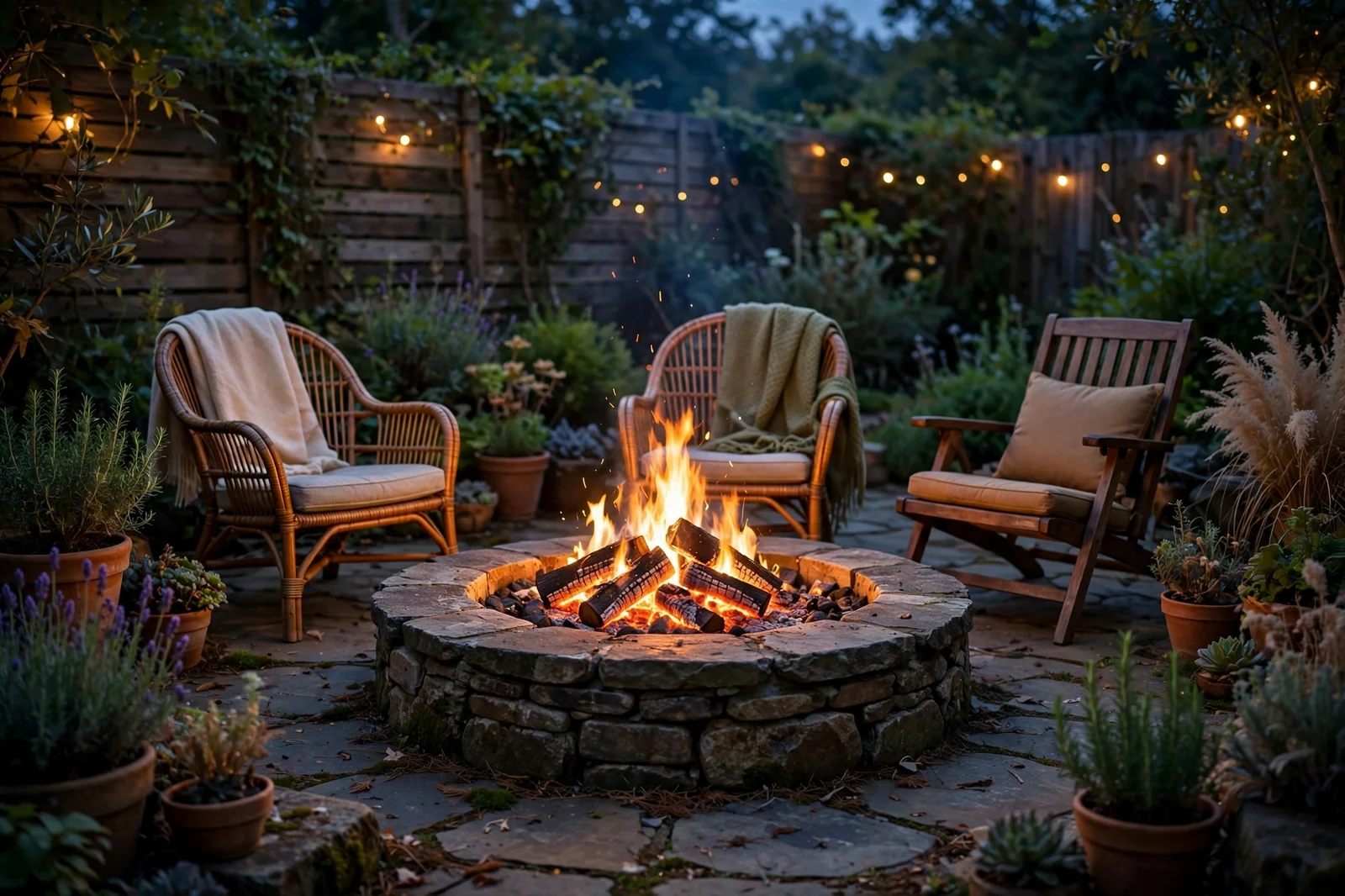
There is something about a fire pit that instantly slows everything down. The moment you step outside, light a fire and sit down, the whole mood shifts: quieter, warmer, easier to enjoy your own space. These 25 cozy garden fire pit ideas will help you design a setup that actually gets used, from simple stone builds and portable bowls to seating arrangements, lighting, safety essentials and the small touches that make evenings around the fire magical.
A garden fire pit is not really about the fire. It is about the evenings: the long conversations, the quiet minutes, the way everyone naturally gathers around warmth and light. The best fire pit setups feel effortless, but a little planning makes the difference between a spot you use weekly and one you forget. These 25 ideas cover the build, the seating, the lighting, the safety and the styling, so your fire pit becomes the most loved corner of your garden.
1. A Simple Stone Fire Pit With Gravel Base
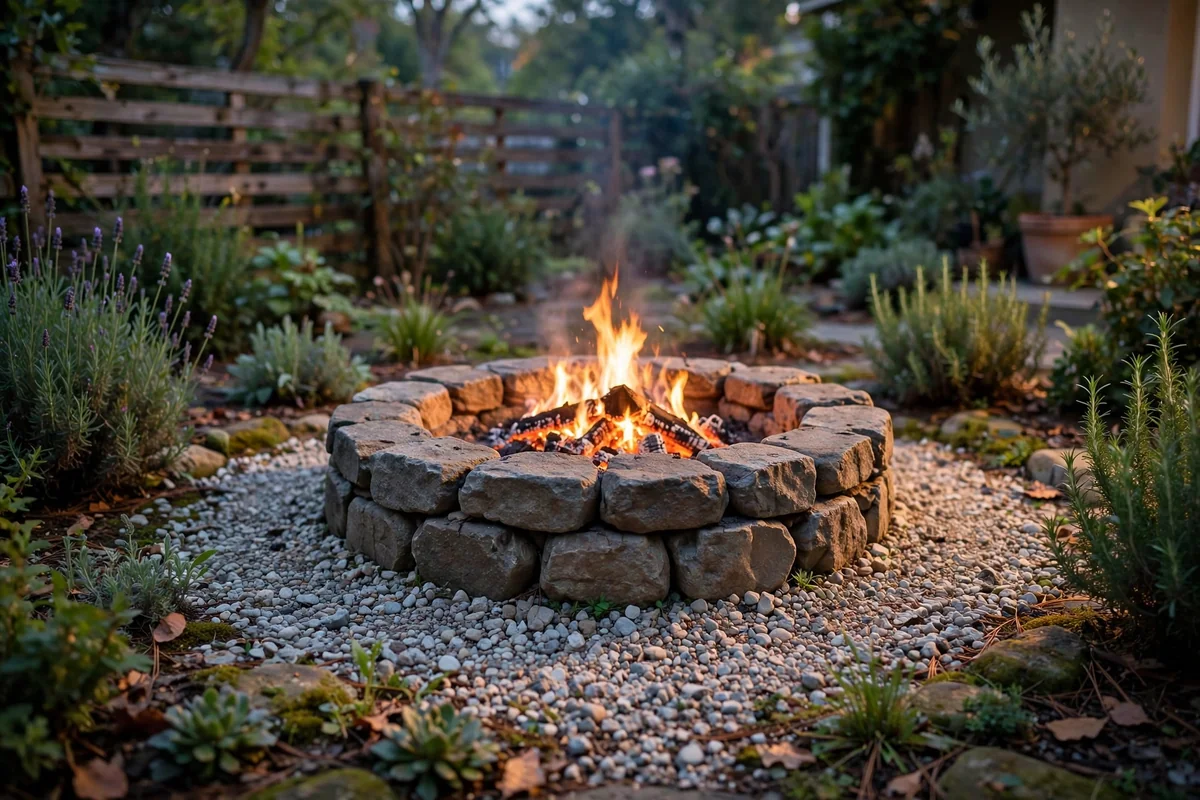
This is one of the easiest ways to start, especially if you do not want a complicated build. A circular stone fire pit paired with a gravel base feels natural and grounded without needing a full patio installation. Gravel drains well and keeps maintenance low, which matters more than you think over time. A 36 to 44-inch diameter ring suits most gardens.
Stack wall stone or fire-rated blocks two to three courses high, no mortar needed for a simple ring. Level a 6-foot gravel circle first. Add a few sturdy chairs around it and you already have a setup that feels calm and inviting. Simple, affordable and genuinely cozy from the first evening.
2. A Built-In Fire Pit With Seating Wall
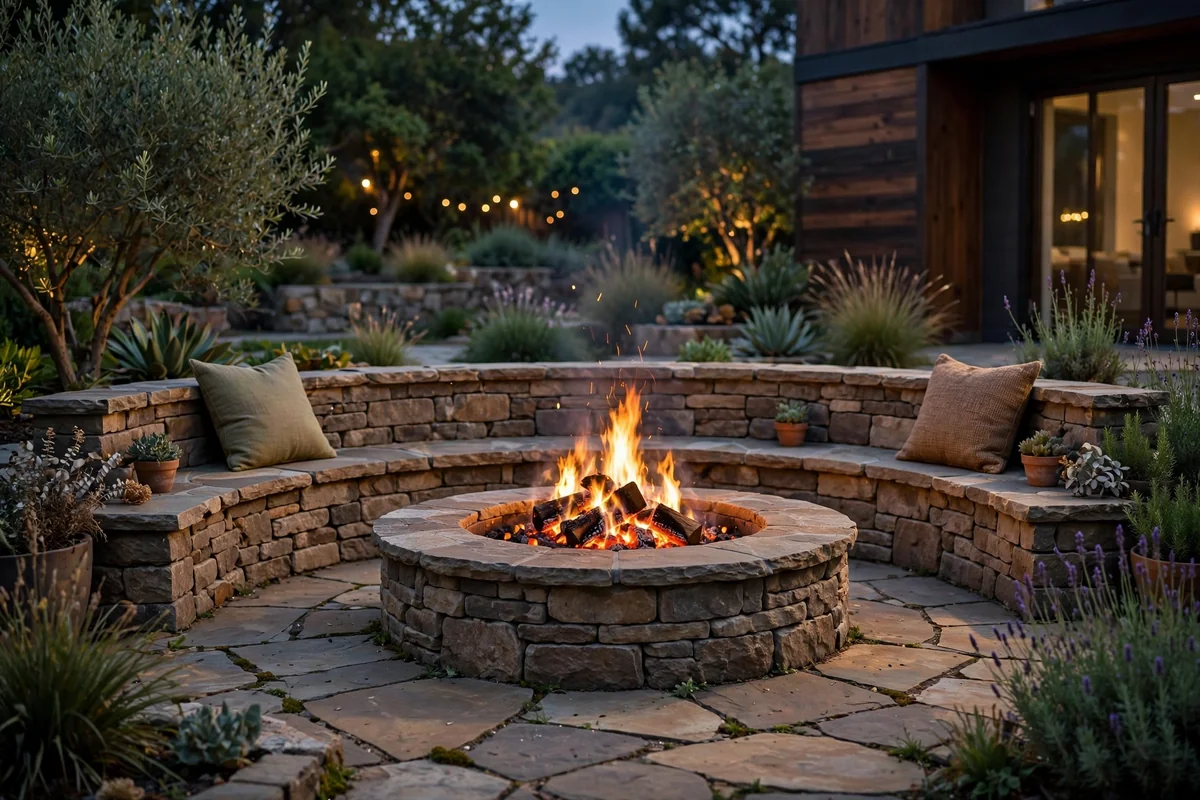
If you want something permanent, a built-in fire pit with a seating wall is the classic choice. The low stone wall, 18 inches high, doubles as seating and defines the space beautifully. Build the wall in a circle or crescent 8 to 10 feet across, leaving generous walking gaps. Use the same stone as the pit for a unified look.
Top the wall with smooth capstones for comfortable sitting. This is a bigger project, but the result feels like a true outdoor room. Add cushions for comfort. A built-in setup anchors the garden’s design and adds real value to the property. Permanent, handsome and made for gathering. Hire a mason if the stonework intimidates you; the result lasts generations.
3. A Portable Steel Fire Bowl
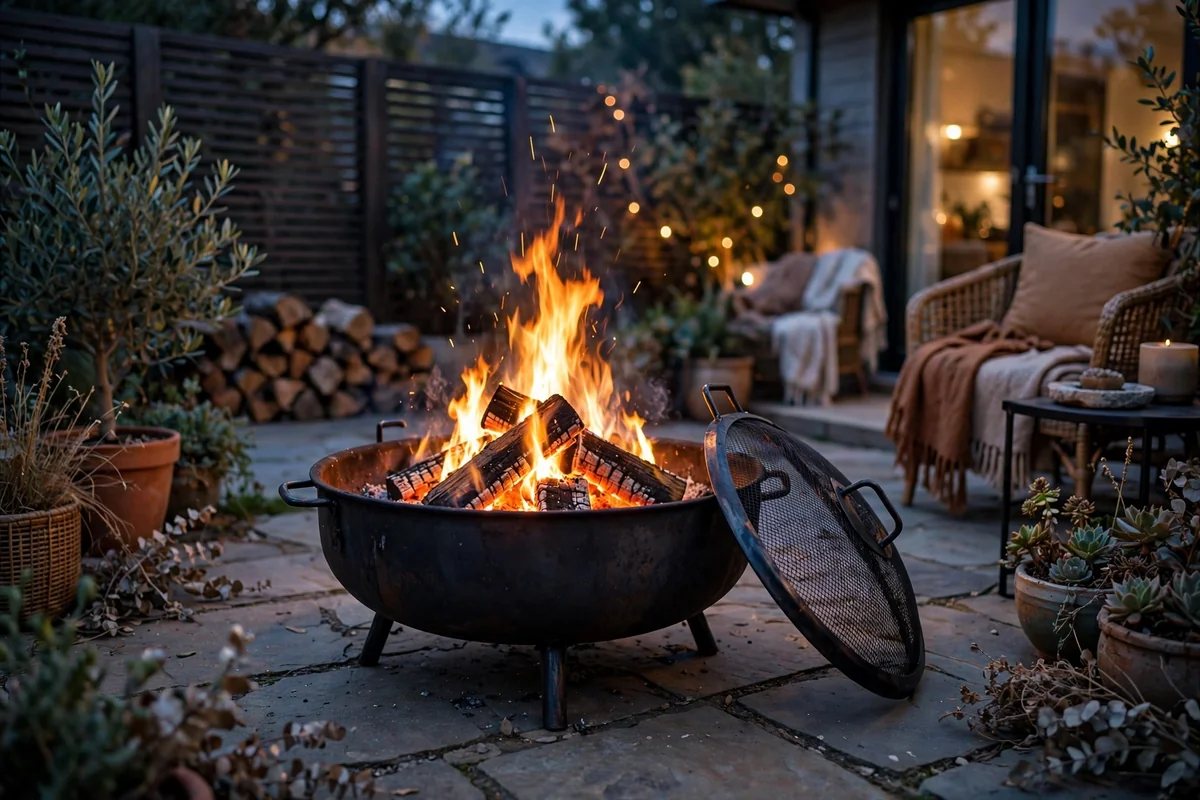
A portable steel fire bowl is the fastest route to firelight. No building, no permits in most areas, and you can move it wherever the evening takes you. Choose a bowl 30 to 36 inches across with sturdy legs and a spark screen included. Steel develops a beautiful patina; cast iron lasts even longer.
Place it on gravel, pavers or bare dirt, never directly on a wooden deck without a heat shield. The portability means you can chase the best spot seasonally. For renters or the commitment-shy, this is the perfect fire pit. Simple, movable and ready tonight. Store it under a cover in winter; steel lasts far longer when kept dry.
4. A Sunken Fire Pit Lounge
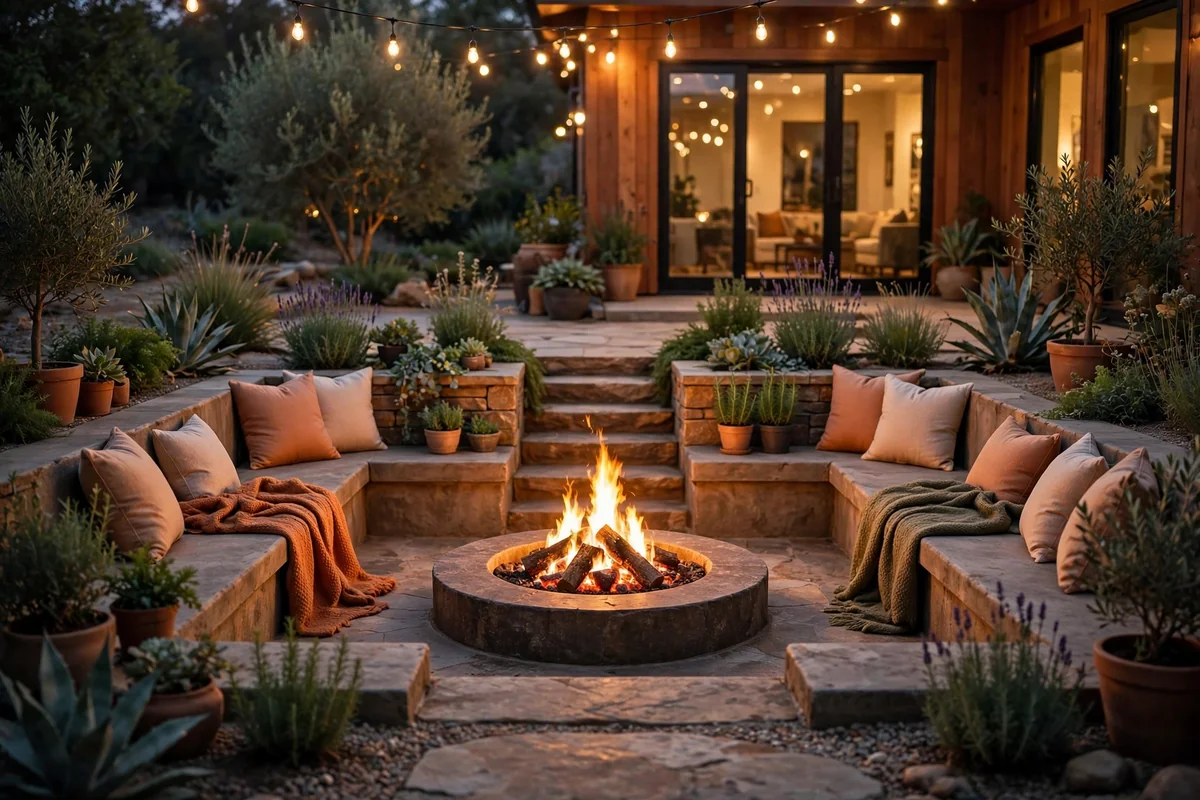
A sunken lounge makes the fire pit feel like a secret retreat. Digging the seating area 18 to 24 inches down creates natural wind protection and an intimate, cocooned feeling. Line the walls with stone or timber and add built-in benches with thick cushions. This is the most dramatic option on the list.
Ensure proper drainage; a sunken pit that collects water is a pond, not a lounge. This suits larger gardens and confident DIYers or professionals. The sunken design blocks wind beautifully, so fires burn steadier. Dramatic, sheltered and unforgettable. Add a gravel floor for drainage and a fire-rated liner for safety.
5. A Fire Pit on the Patio
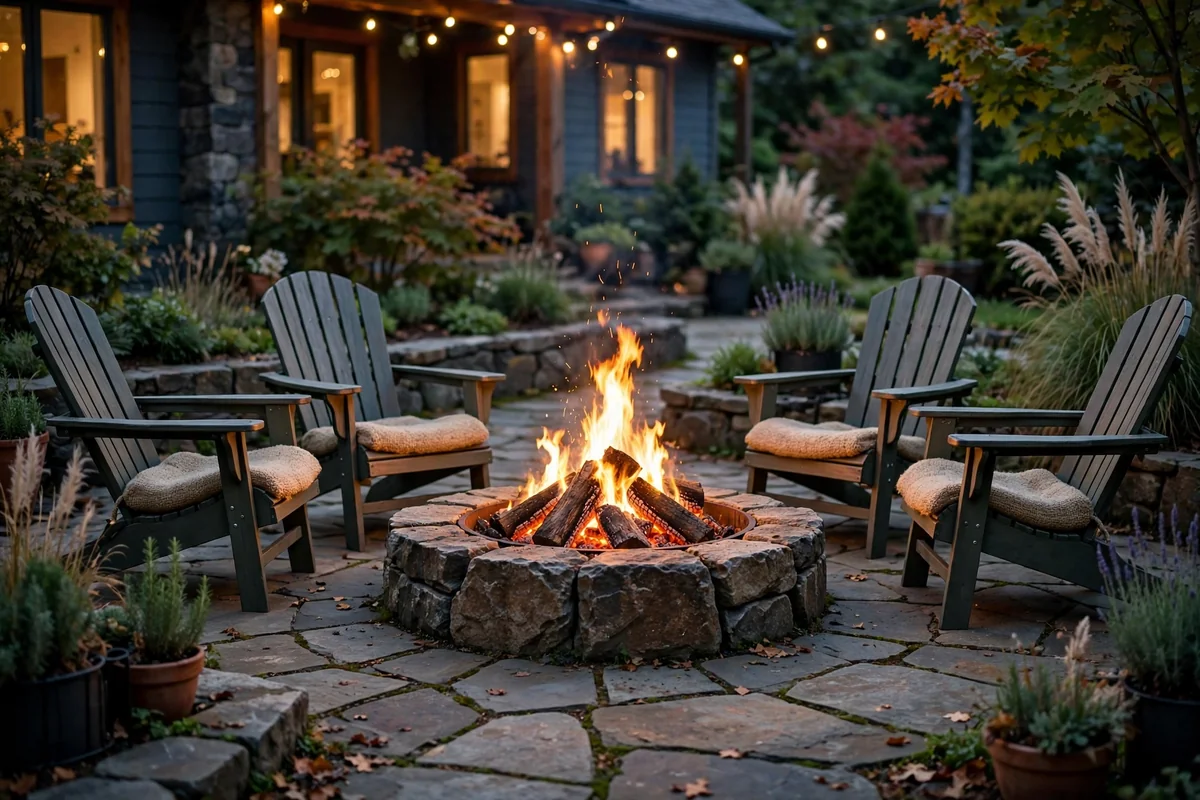
Placing the fire pit on an existing patio is practical and clean. Pavers or concrete handle heat well with a proper fire-rated base underneath. Center the pit with at least 3 feet of clear patio on all sides for chairs and safe movement. A gas fire pit works especially well here, with no ash to stain the pavers.
Keep the patio furniture arrangement flexible so the space works with and without a fire. Sweep ash promptly; it stains. The patio’s hard surface makes cleanup easy and the setting feel intentional. Using what you have is the smartest garden upgrade, and the pit becomes the natural center the patio was missing.
6. Wood-Burning or Gas
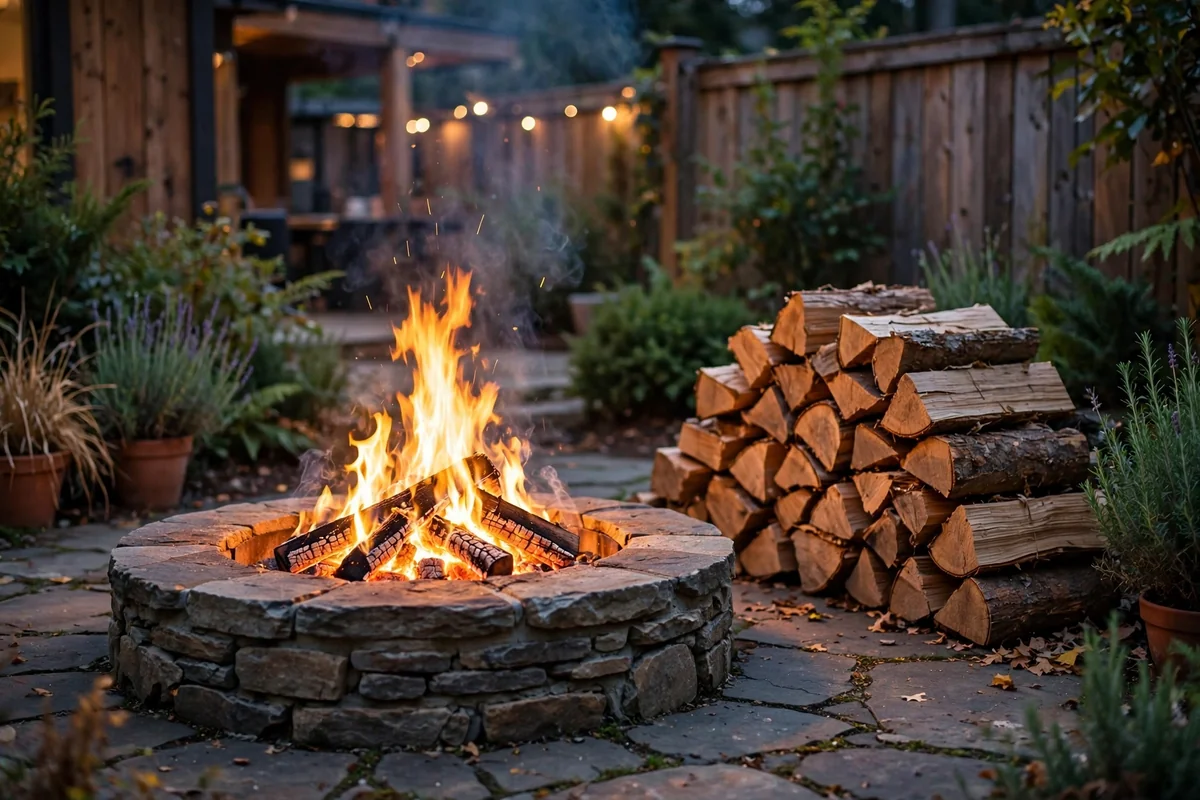
Choosing between wood and gas shapes the whole experience. Wood gives authentic crackle, aroma and radiant heat, but needs dry storage and ash cleanup. Gas lights instantly, burns clean and shuts off with a switch, but needs a gas line or propane tank and lacks the sensory ritual. There is no wrong answer, only your preference.
Consider local burn restrictions; some areas limit wood fires in dry seasons. Gas fire pits often bypass these rules. If you love the process of building a fire, choose wood. If you want warmth at the push of a button, choose gas. Match the fuel to how you actually live.
7. Adirondack Chairs Around the Fire
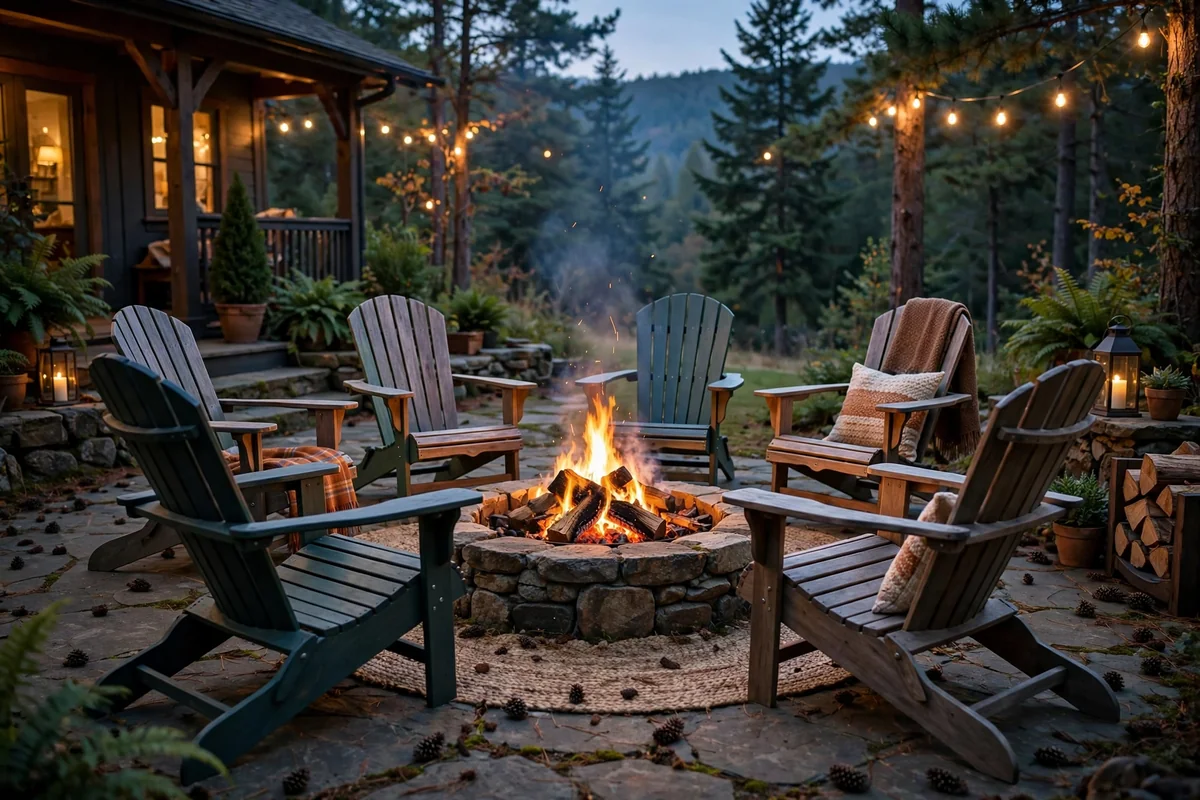
Adirondack chairs are the iconic fire pit seat for good reason. The reclined angle is perfect for fire-gazing, and the wide arms hold drinks and snacks. Wooden Adirondacks weather beautifully; polywood versions need zero maintenance. Place four to six in a circle, each with a clear path to its seat.
Add outdoor cushions for longer evenings. The chairs’ classic shape suits any garden style. They are an investment that pays off every single evening. Nothing says fireside comfort quite like an Adirondack. Look for contoured seats; cheap flat ones are uncomfortable after an hour, so always test-sit before you buy.
8. A Cozy Bench Circle
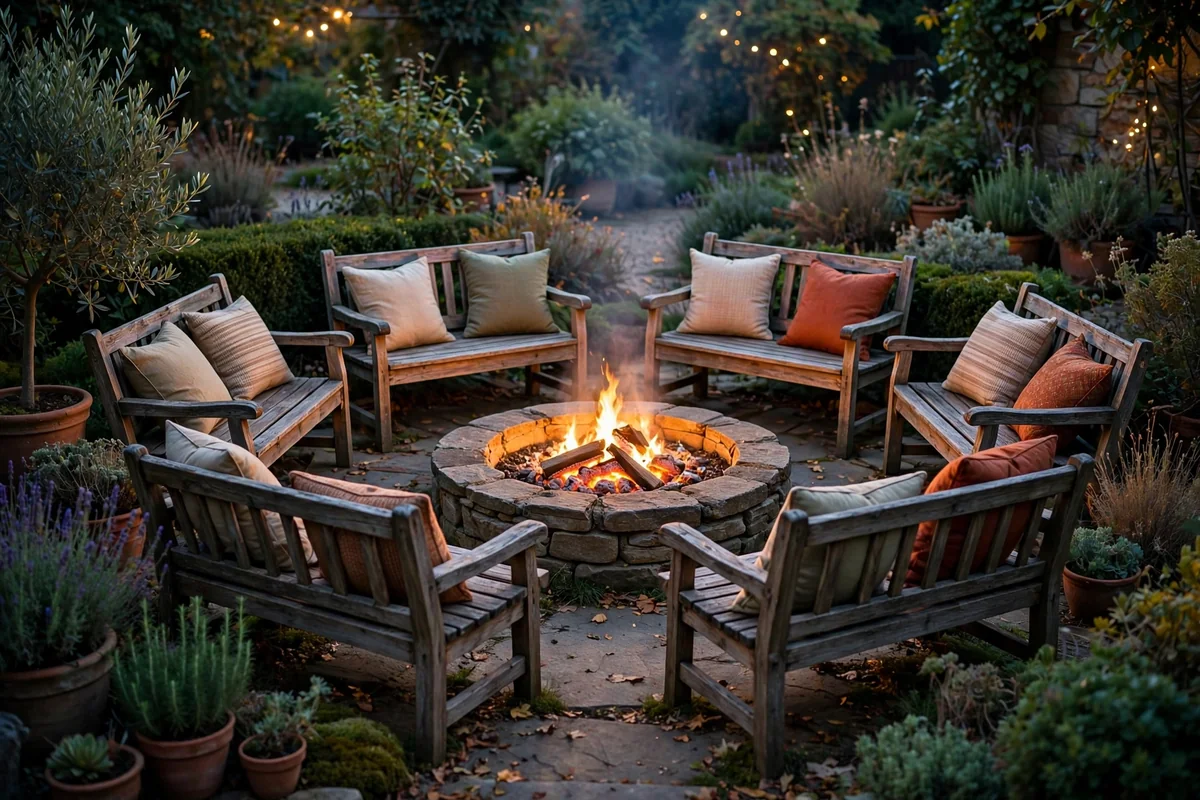
A circle of simple wooden benches creates communal, campfire-style seating. Benches seat more people than individual chairs and encourage the close, conversational feeling fires are for. Build or buy sturdy backless benches 4 to 5 feet long. Arrange them in a full circle with small gaps for entry, and face everyone slightly inward so conversation flows naturally.
Top with cushions and throws for comfort. Benches tuck neatly when not in use. This is the most social seating arrangement. Around a fire, a bench circle feels like the oldest and best kind of gathering. Build them from cedar or redwood; both resist weather beautifully for many years. Oil them annually to keep the color rich and the wood protected.
9. Fire Pit With String Lights
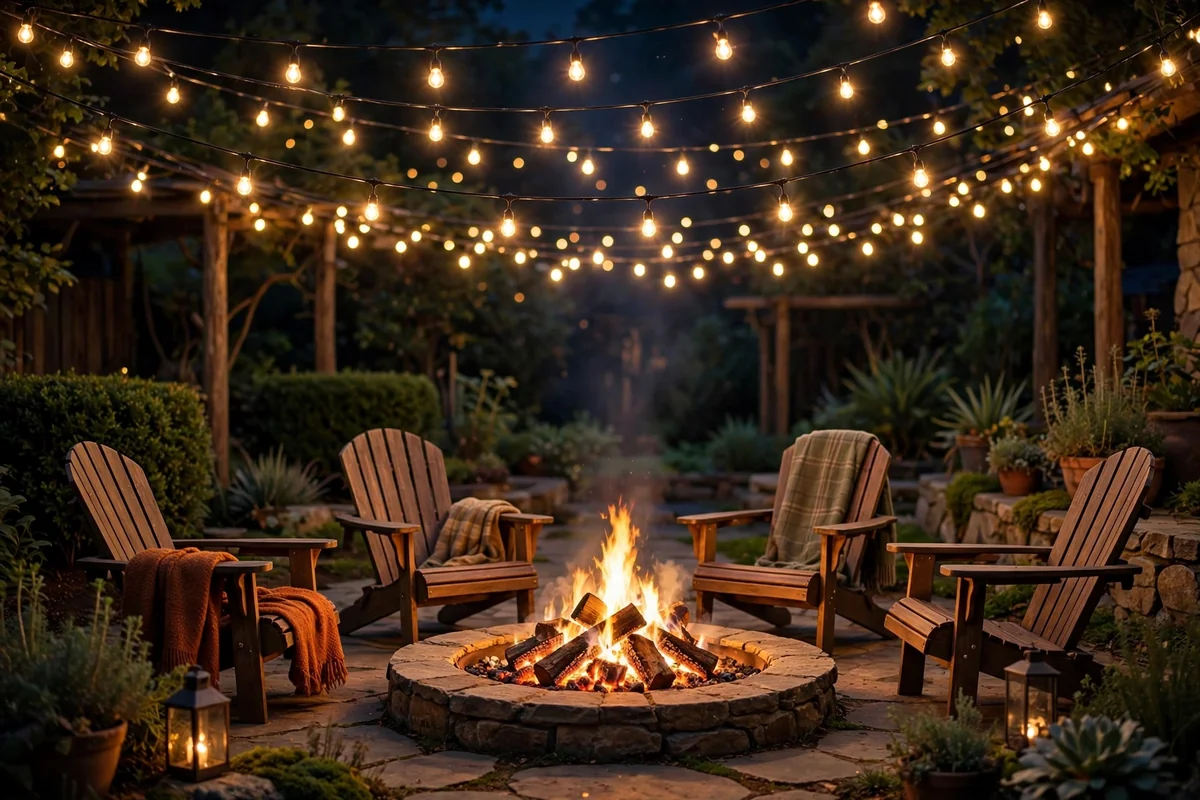
String lights overhead turn a fire pit area into pure magic after dark. Drape warm-white lights between poles, trees or a pergola above the seating area. The combination of firelight below and star-like lights above is unbeatable. Use outdoor-rated lights and secure them well against wind, and the soft glow makes everyone look their best.
Hang lights 8 to 10 feet high so they feel like a canopy, not a ceiling. Solar options work where outlets are scarce. The lights extend the usable evening by hours. This single addition transforms the atmosphere more than any furniture could. Dim them if possible; softer light feels more magical.
10. Rustic Log Seating
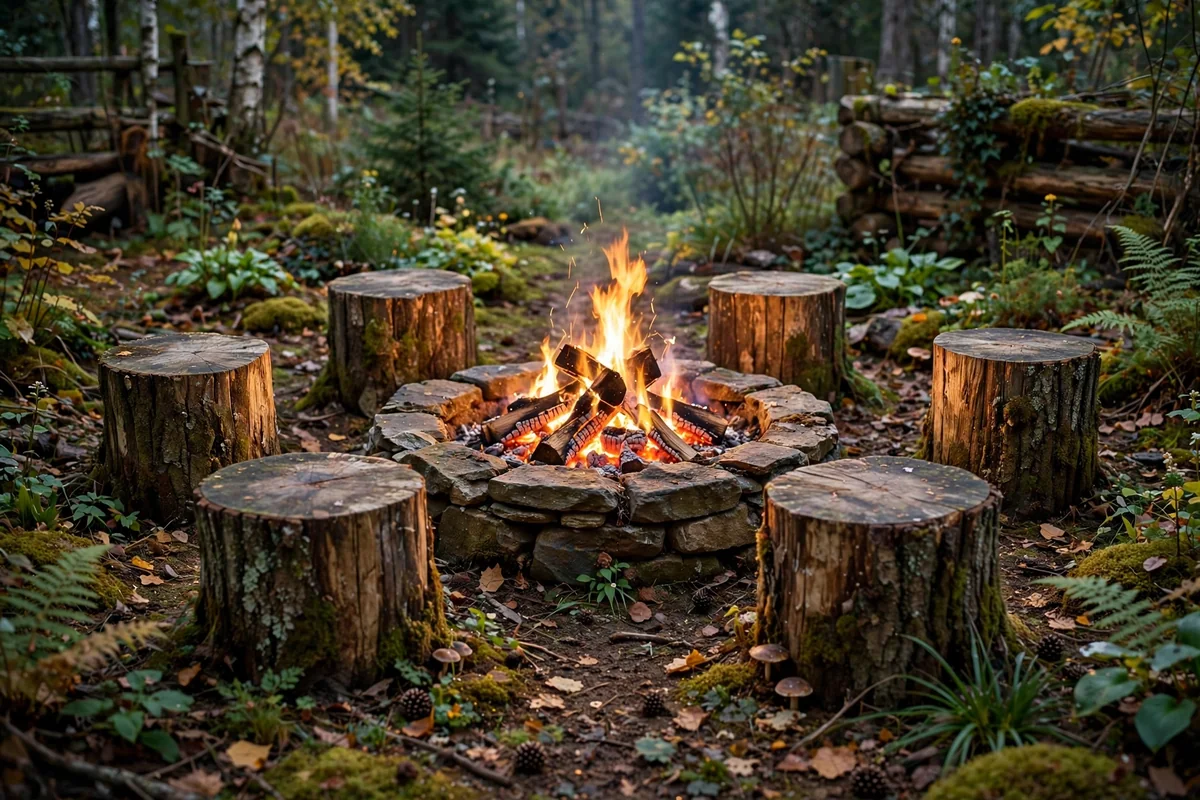
Log stump seats are the most natural fire pit seating of all. Cut hardwood logs 16 to 18 inches tall make sturdy, charming stools that look like they grew there. Sand the tops smooth and seal the ends to slow cracking. Arrange five or six around the pit at comfortable distances.
The logs double as side tables in a pinch. They cost almost nothing if you have a tree service nearby. Against the fire’s glow, log seats look like a woodland clearing. Rustic, free and perfectly at home in a garden. Level each stump carefully; a wobbly seat ruins the whole evening.
11. A Fire Pit Near the Garden Beds
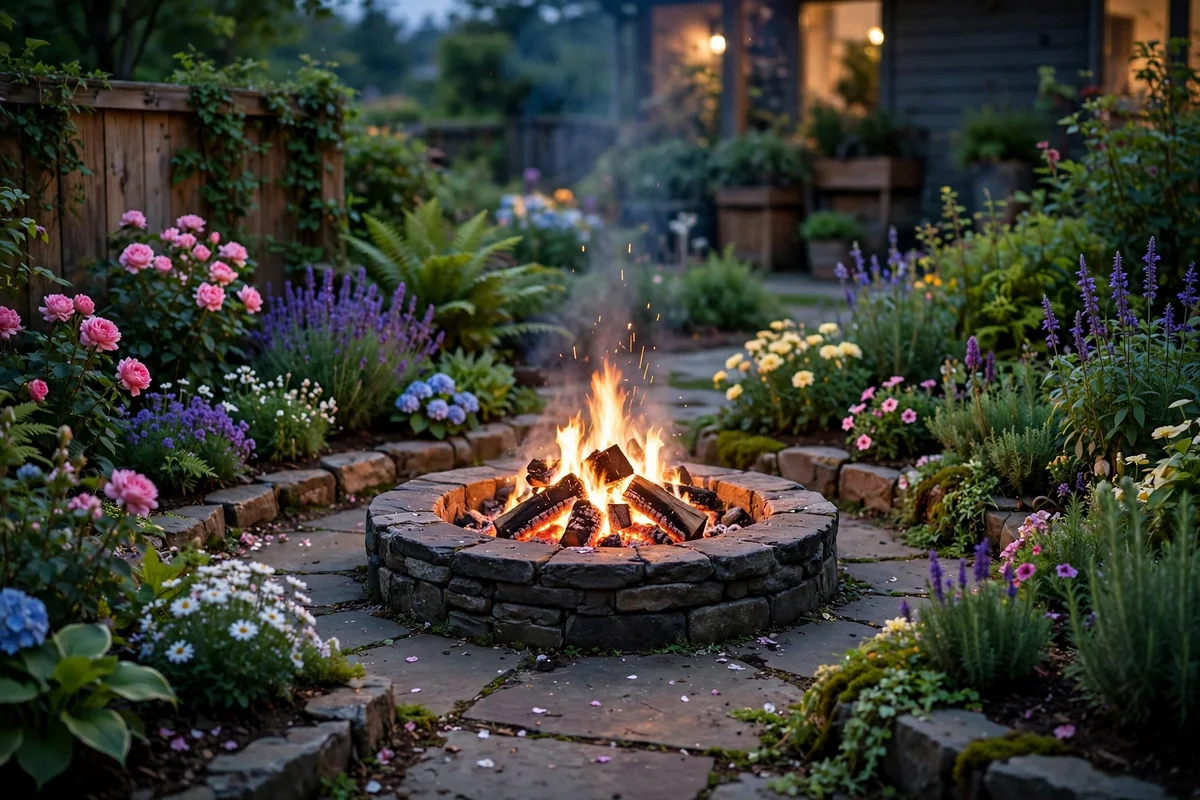
Placing the fire pit near garden beds surrounds the seating with life and color. Flowering plants, herbs and ornamental grasses make the fire area feel like part of the garden, not separate from it. Keep plants at least 6 feet from the flames; heat and sparks damage foliage. Lavender and rosemary nearby add scent to the evening.
The garden provides the backdrop no decor can match. Evening light on flowers around a fire is genuinely beautiful. This placement makes the fire pit feel discovered rather than installed. Nature does the decorating, and the scent of herbs warming in the fire’s radiant heat is simply unforgettable. Plant them where guests will brush past and release the fragrance.
12. A Tabletop Fire Bowl
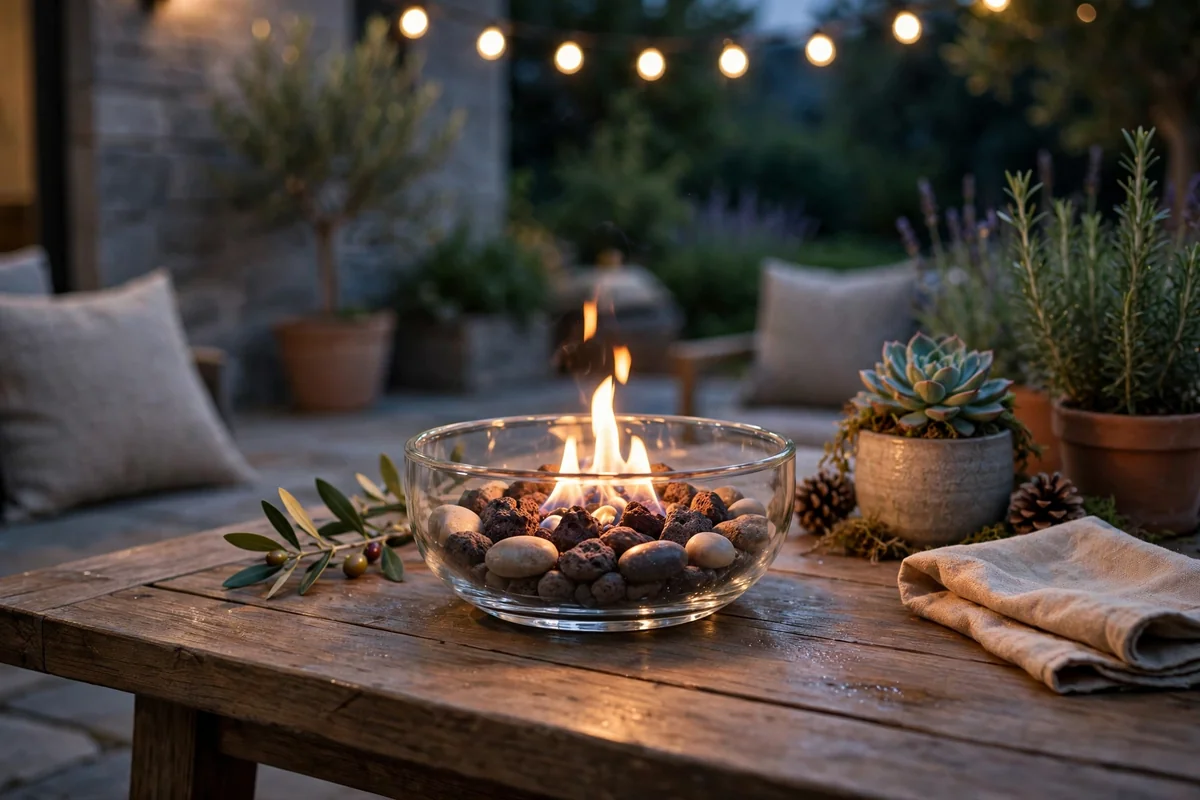
A tabletop fire bowl brings flame to small spaces. These compact bowls, often fueled by clean-burning gel or bioethanol, sit on an outdoor table and provide ambiance without a full fire pit. They suit balconies, small patios and intimate dinners. Keep them centered with clear space around, and never on a wobbly table; stability matters with open flame.
They give atmosphere rather than serious heat; set expectations accordingly. Never leave them unattended and keep away from table edges. For the smallest gardens, this is firelight made possible. Small flame, big mood. Keep a snuffer lid handy; it extinguishes the flame instantly and safely every time. Let the bowl cool completely before moving or covering it.
13. A Fire Pit Under a Pergola
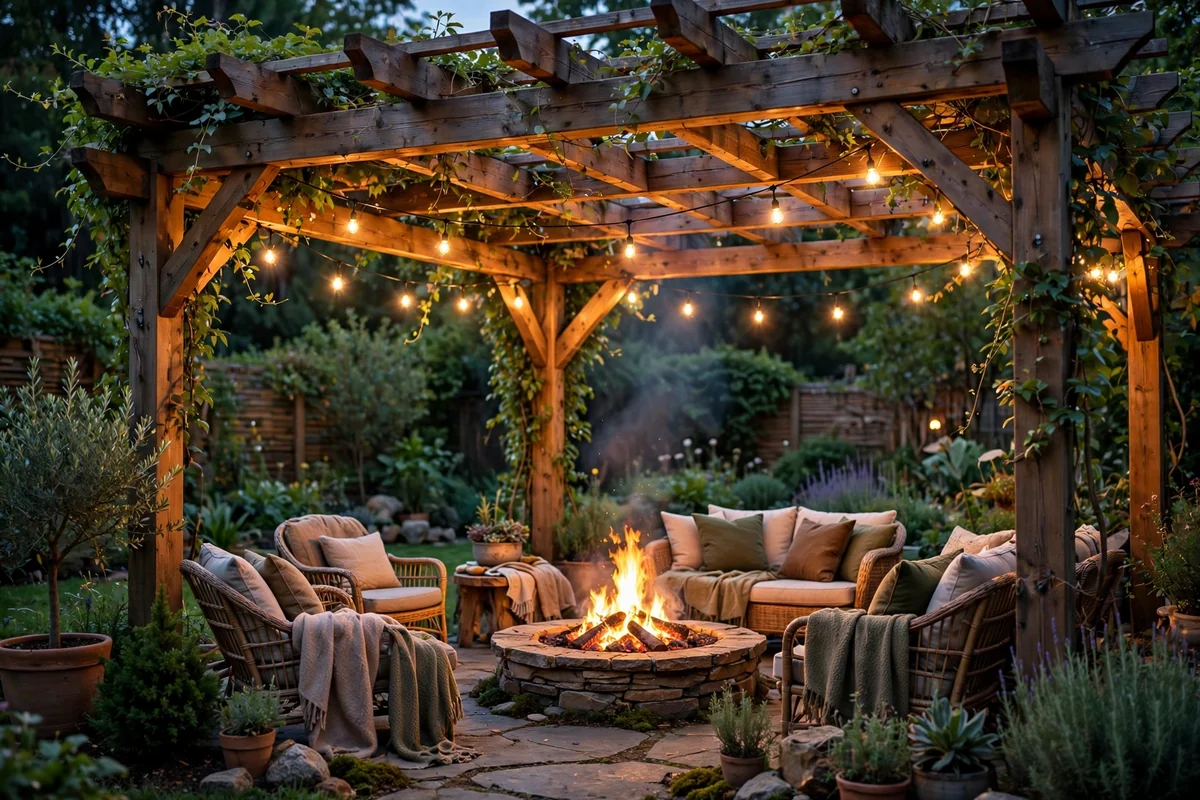
A pergola over the fire pit area creates a defined outdoor room. The structure supports string lights, climbing plants and even curtains for wind protection. Keep the pergola high, at least 10 feet, and never enclose the sides fully; fire needs ventilation. Use only gas or small contained fires under any overhead structure.
Check local codes; many restrict fires under structures. The pergola frames the fire area beautifully and extends the season. With lights and vines, it is the dreamiest setting on this list. Structure, shade and sparkle. Train jasmine or honeysuckle up the posts for evening scent as well as beauty. Keep vines trimmed back from the fire zone for safety.
14. A Snack Station Nearby
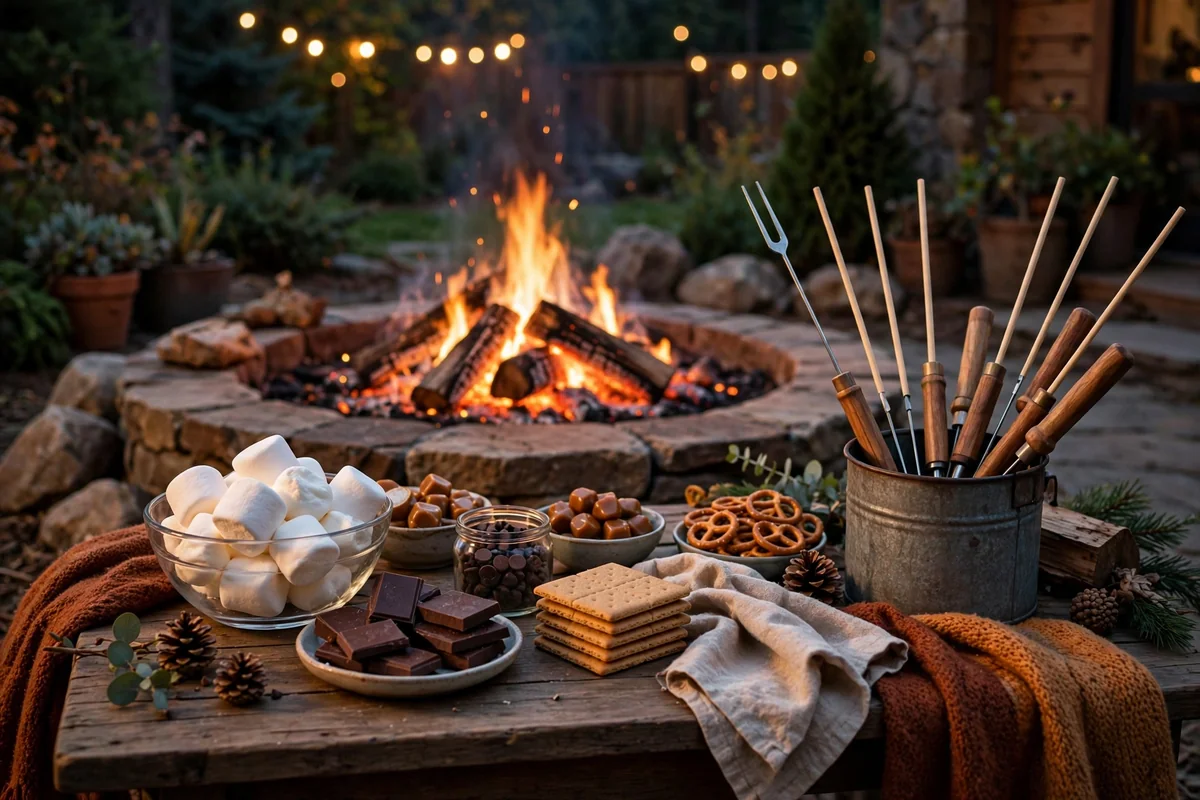
A small snack station near the fire pit keeps evenings flowing. A side table or rolling cart with marshmallows, fruit, nuts and warm drinks means nobody leaves the fireside. Keep it a few feet from the flames for safety. A thermos of cocoa or spiced tea is the classic companion.
Stock roasting sticks in a nearby container. The station makes gatherings feel hosted without effort. Around a fire, simple snacks taste better. This is hospitality in its simplest, warmest form. Add a cooler with cold drinks beside the warm ones; your guests will always love having the choice. Restock the station before each gathering so it never runs empty mid-evening.
15. A Fire Pit on the Deck
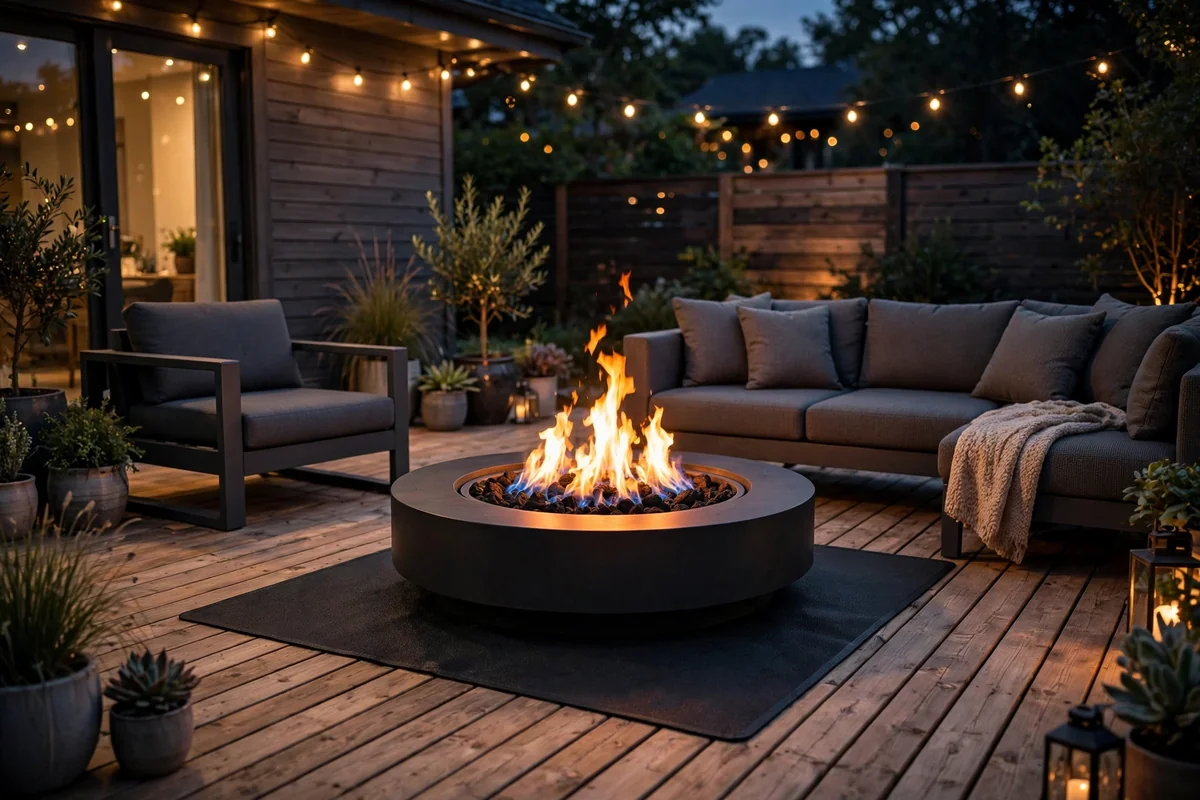
A fire pit on a wooden deck needs careful heat management. Use only gas fire pits or wood bowls on certified heat shields and fire mats; never place flame directly on wood. Keep the same 10-foot clearances and check that your deck’s structure tolerates the setup. Many deck owners choose gas for the control it offers.
Confirm with local codes and your homeowner’s insurance. A deck fire pit extends the deck’s season dramatically. Done right, it is safe and wonderful; done carelessly, it is a risk. Respect the heat and enjoy the reward, and keep a spray bottle handy for stray embers on dry evenings. A quick spritz handles small sparks before they become problems.
16. Stone and Brick Patterns
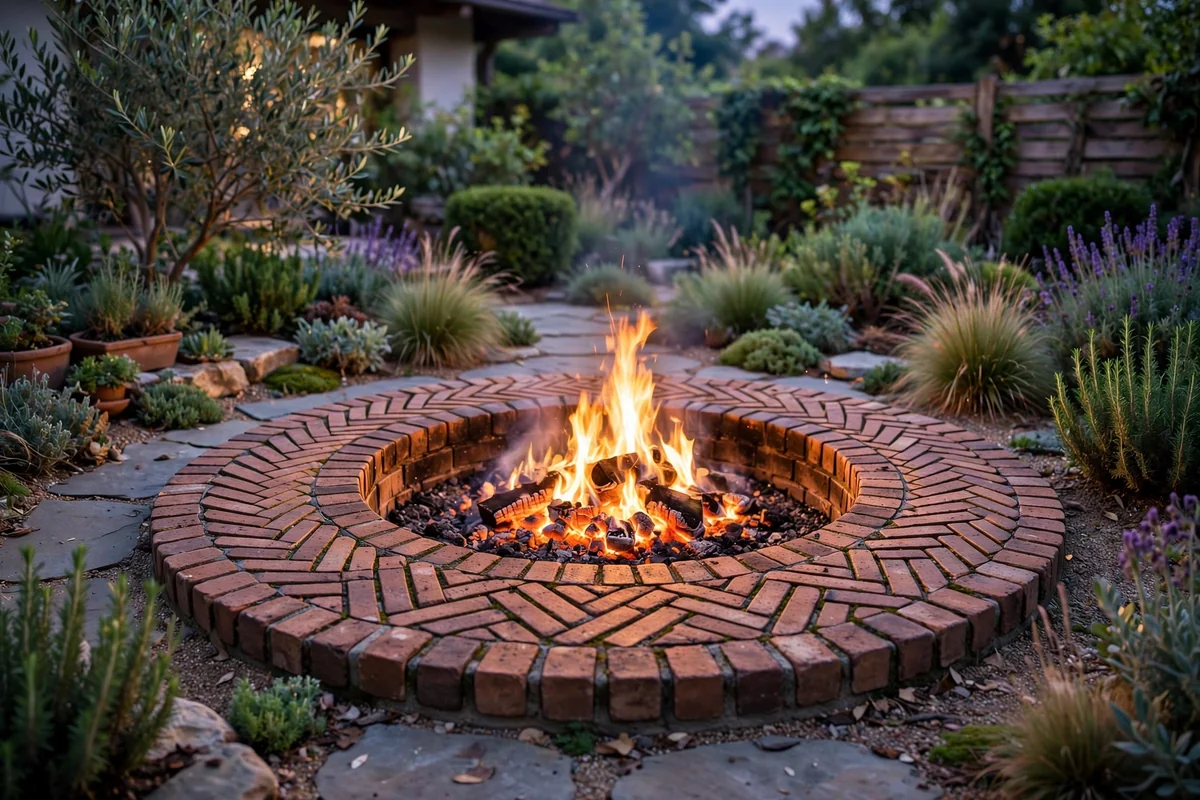
The stonework itself can be the decoration. Herringbone brick, stacked slate or mosaic-patterned stone turns the fire pit into a crafted centerpiece. Choose fire-rated materials for the inner ring; the decorative pattern goes on the outer faces. Even a simple two-tone stone pattern elevates the whole build. Sketch the pattern first; dry-laying the stones saves costly mistakes.
Match the stone to your home’s exterior for cohesion. Good masonry is worth hiring out. A beautifully built pit looks good even unlit, which is most of the time. Craftsmanship shows, and it lasts decades. Ask to see the mason’s previous fire pits before you commit to hiring. Good referrals are worth more than the lowest quote.
17. A Fire Pit With Built-In Storage
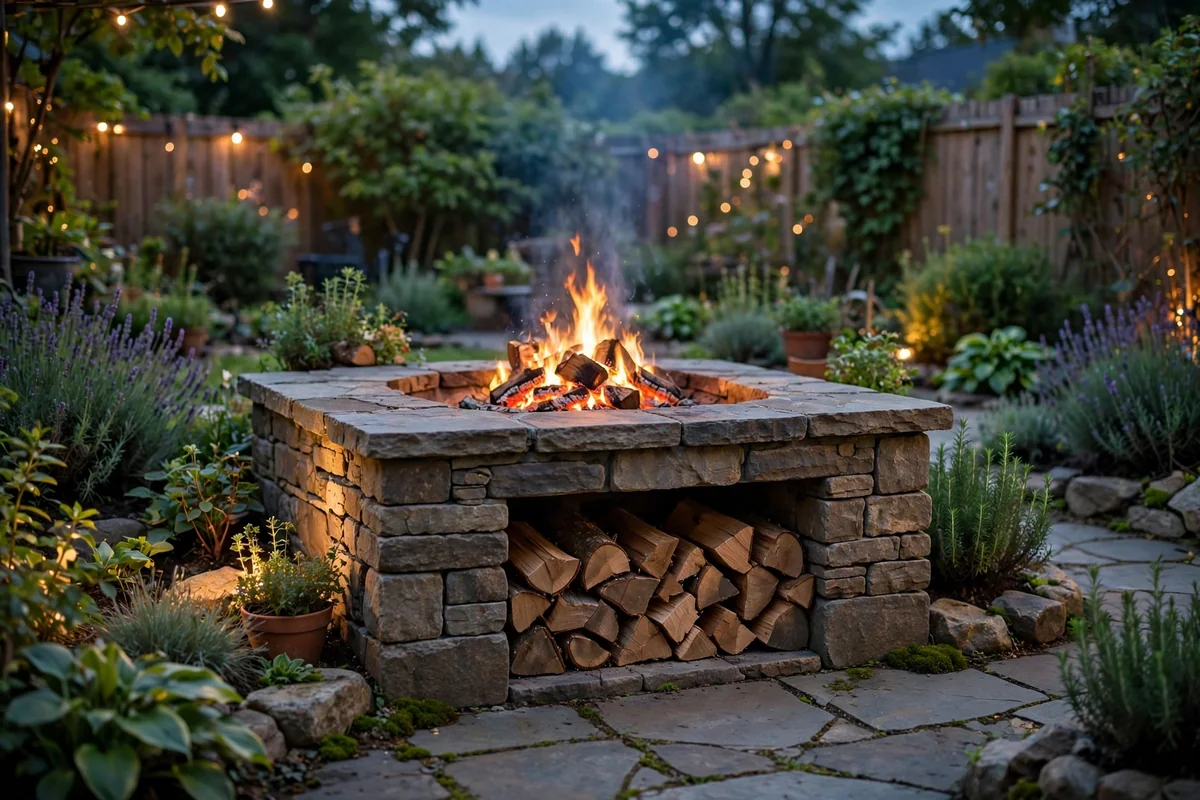
Built-in storage keeps firewood and supplies tidy and close. A stone pit with an integrated wood nook, or a seating wall with a storage hollow, hides the practical stuff beautifully. Keep firewood covered and at least a few feet from the flames. Dry wood burns better and cleaner, and a full wood store means spontaneous fires are always possible.
The storage becomes part of the design rather than an eyesore. Stack wood neatly; a full wood nook looks abundant and inviting. Practical design is beautiful design. Everything in its place, ready for the evening. A neatly stacked wood nook looks abundant and inviting on its own. Rotate the stock so the oldest, driest wood burns first.
18. A Chiminea Style Fireplace
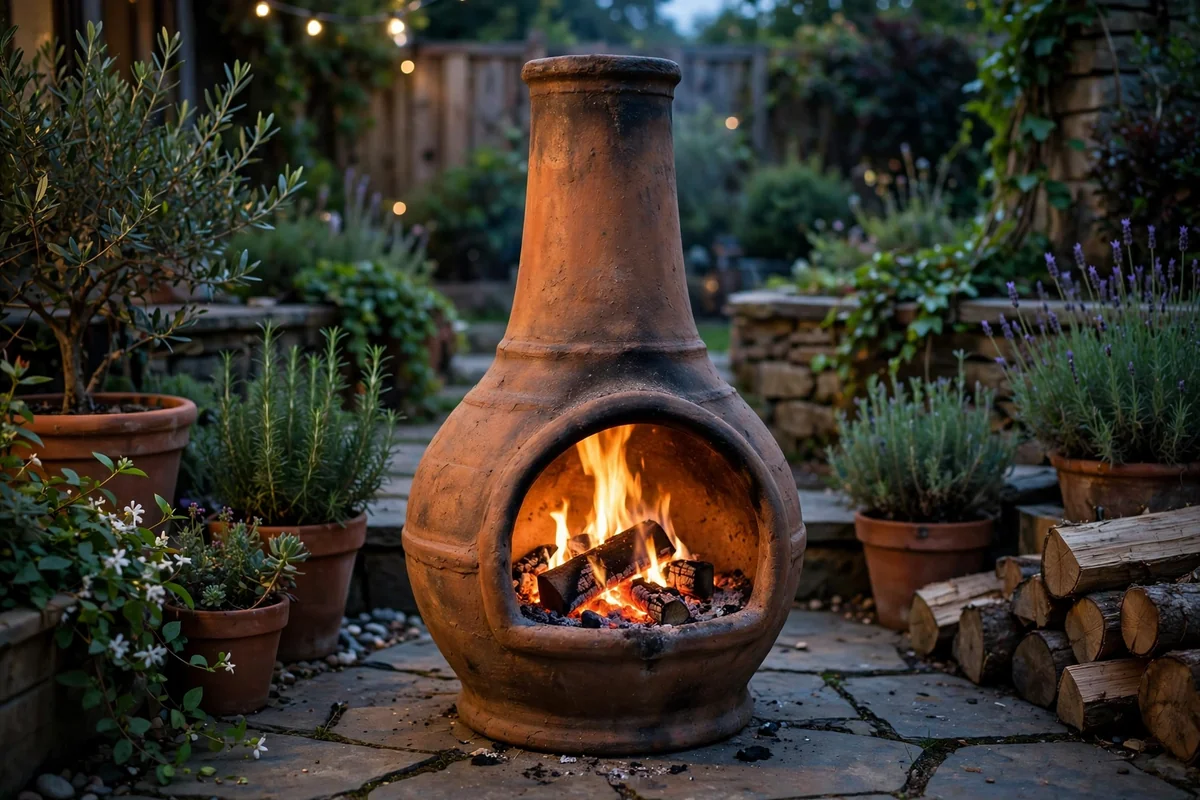
A chiminea offers contained, directional fire with old-world charm. The enclosed clay or steel body directs smoke upward and heat forward, making it ideal for small gardens and patios. Place it on a stable, fireproof base. Chimineas suit intimate seating for two or three, and the contained fire feels safer on breezy evenings.
Cure clay chimineas with small fires first to prevent cracking. The sculptural shape is decor even when cold. For a Mediterranean or rustic garden, nothing fits better. Contained, charming and efficient. Always cover it when not in use, because clay especially hates the repeated freeze-thaw cycles of winter. A fitted cover costs little and adds years to its life.
19. A Fire Pit for Small Gardens
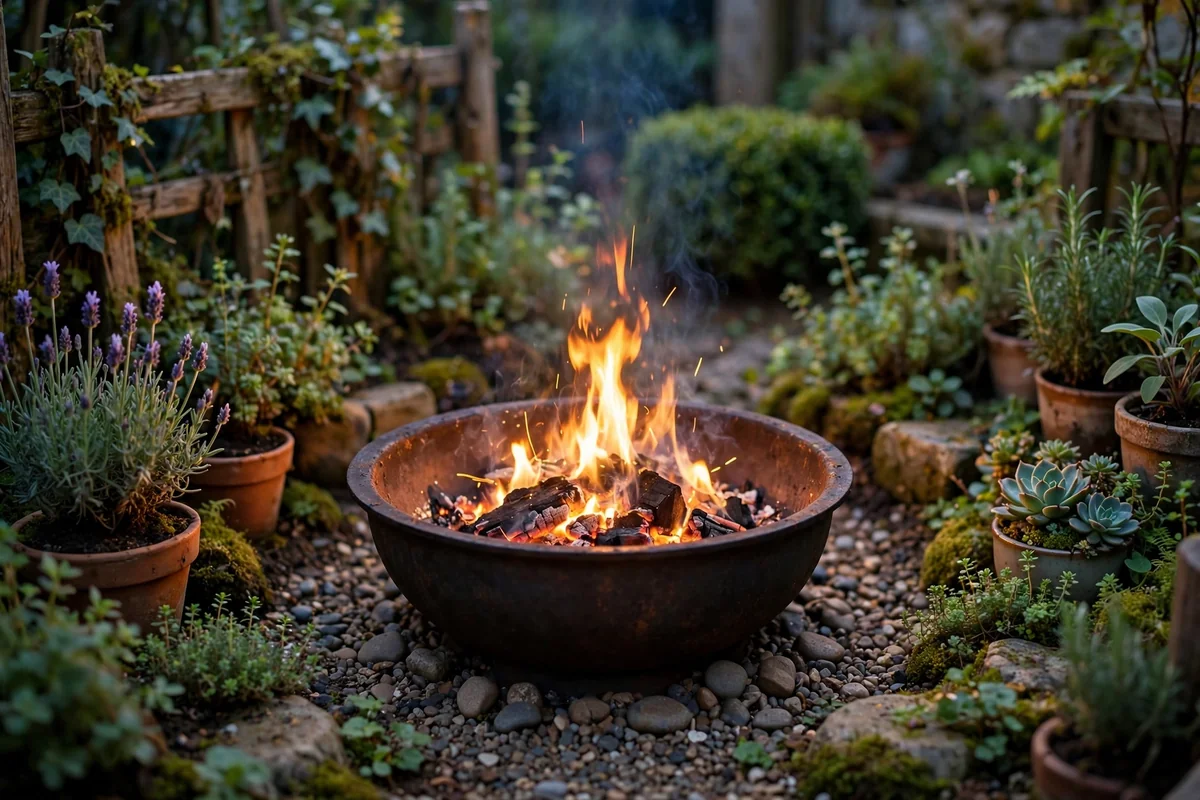
Small gardens deserve firelight too. A compact 24-inch bowl, a chiminea or a tabletop flame fits the tiniest spaces. Keep clearances proportional but never compromise the safety minimums. Two chairs and a small fire create the coziest setup of all, and the small scale makes every evening feel intimate. Even a tiny fire draws people together like nothing else can.
Use vertical elements, string lights and plants, to make the small space feel enveloping. Small fires need less fuel and attention. The intimacy of a tiny fire garden is its own reward. Proof that you do not need acreage for magic. Choose a chiminea for the smallest spaces; its footprint is tiny.
20. Gravel or Pavers Underneath
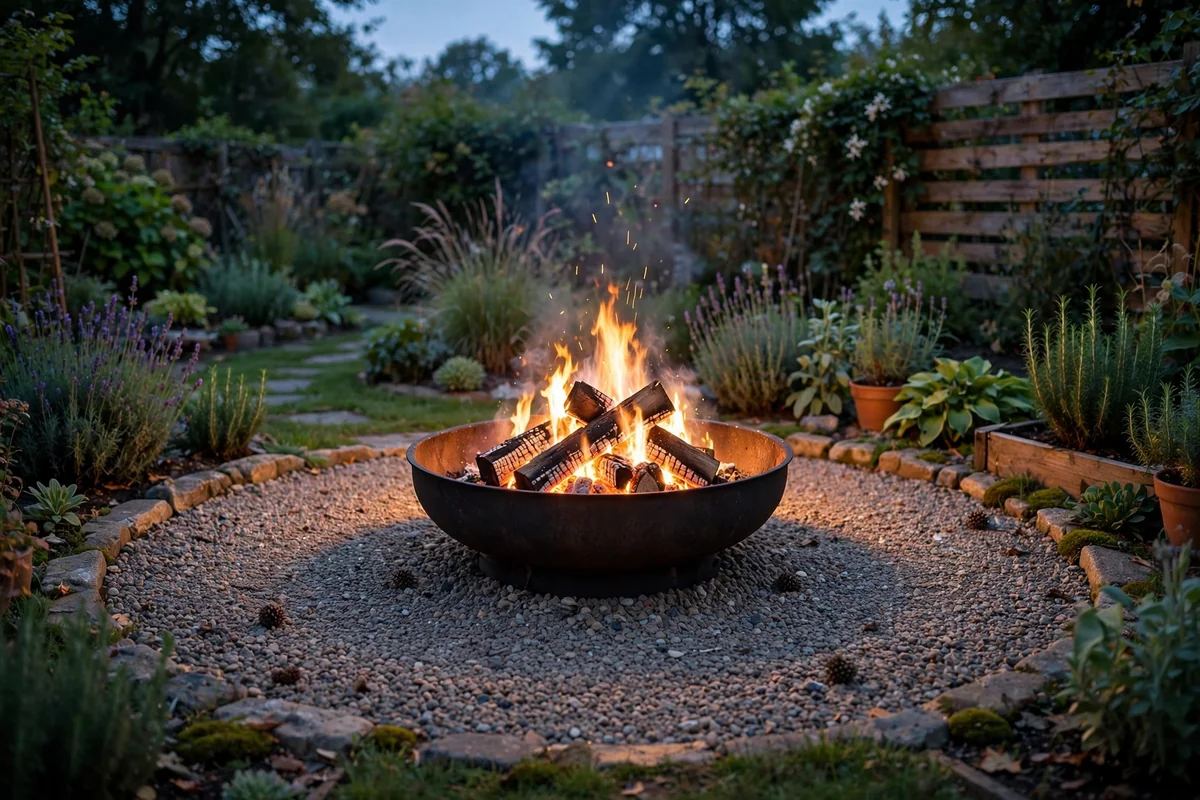
What goes under the fire pit matters. Gravel drains well, is cheap and looks natural; use 3 to 4 inches of compacted gravel in a 6-foot circle. Pavers look more finished and sweep clean, but cost more and need a level base. Both beat bare grass, which scorches and turns to mud.
Extend the base beyond the seating area for a finished look. The ground plane defines the fire zone visually. Choose based on budget and style; both work beautifully. A proper base is the foundation of a proper fire pit. Skimp here and you will be rebuilding the whole thing within two seasons.
21. Wind Protection That Works
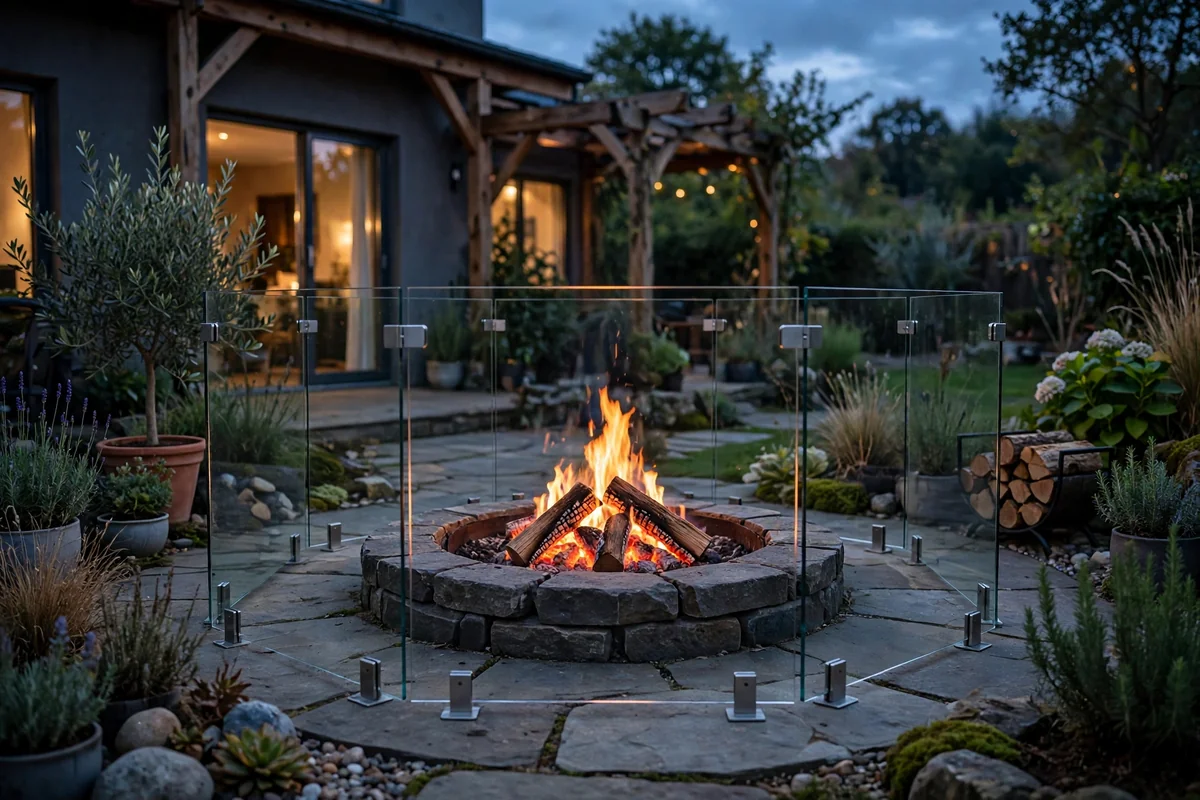
Wind is the enemy of a good fire. Position the pit in a naturally sheltered spot, use low walls, dense hedging or glass wind guards to calm the air. A sunken design blocks wind best. Avoid exposed hilltops and wind tunnels between buildings. Test the spot on a breezy day before building.
Wind guards of tempered glass preserve the view while taming gusts. Calm air means steadier flames, less smoke in faces and safer sparks. A little shelter makes every fire better. Work with the wind, not against it, and your fires will be calmer, safer and far more enjoyable. Observe the spot through different seasons before committing to a build.
22. Fire Pit Safety Essentials
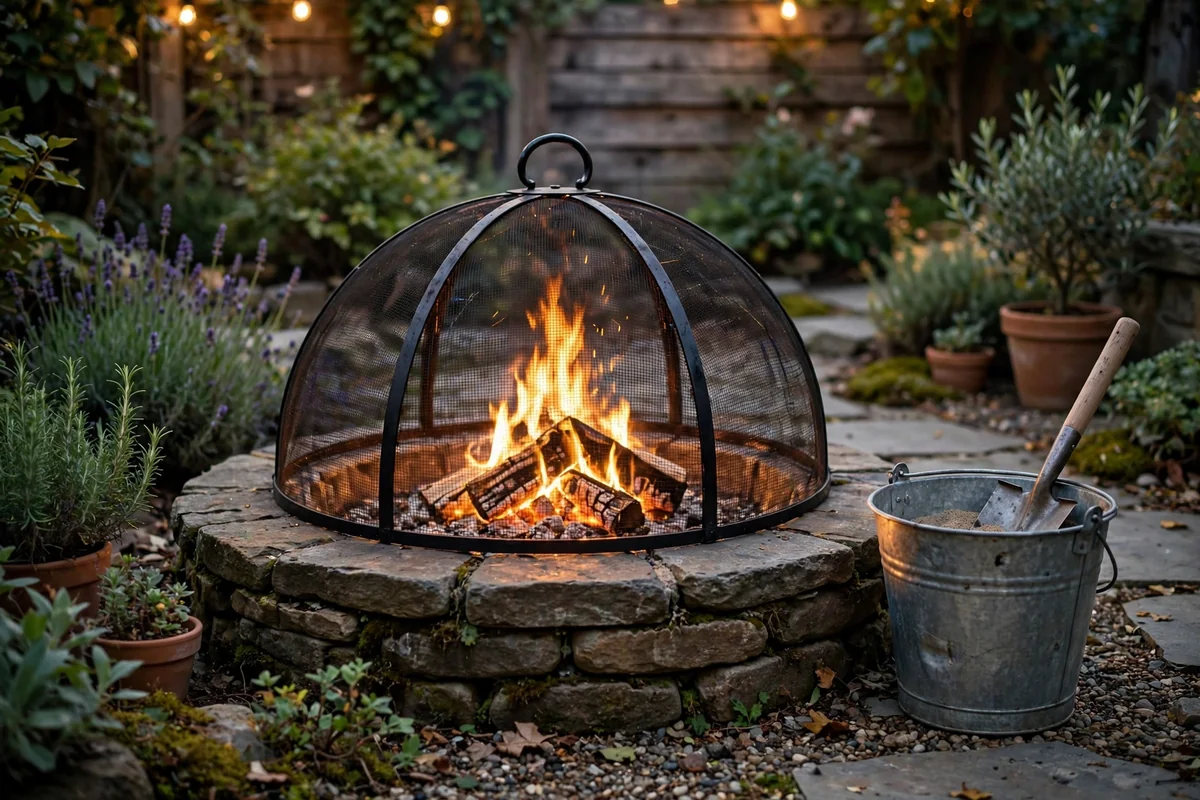
Safety is the unglamorous foundation of every good fire pit. Keep a spark screen on wood fires, a bucket of sand or a hose within reach, and a 3-foot clear zone around the pit. Never leave a fire unattended and fully extinguish it before going inside; embers hide. Teach every family member the rules.
Check local burn bans before lighting, especially in dry seasons. Keep a fire extinguisher rated for outdoor use nearby. These habits take minutes and prevent disasters. The safest fire pit is the one you can relax around completely. Make the rules a family ritual, not a lecture; everyone remembers better that way.
23. Cozy Textiles for Outdoor Evenings
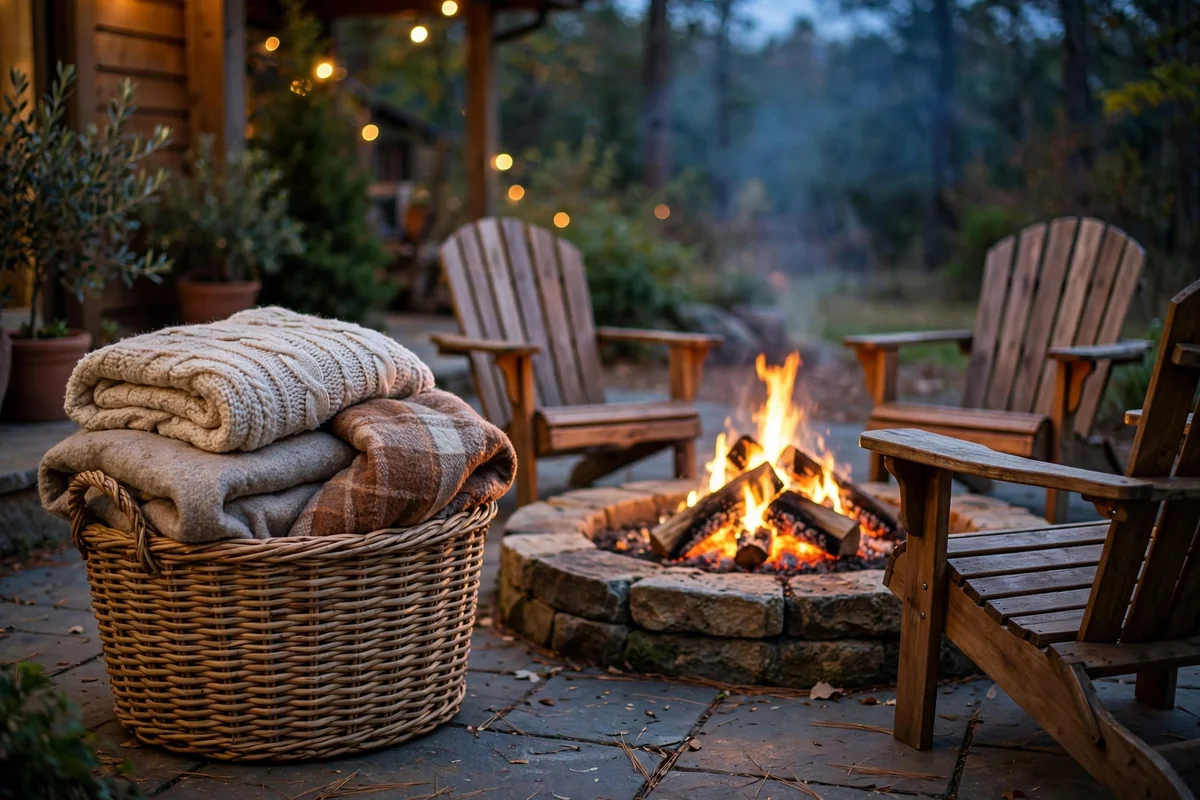
Outdoor textiles make fireside evenings last longer. Keep a basket of washable blankets, outdoor cushions and throws by the seating. The warmth they add extends the season by weeks on each end. Choose weather-resistant fabrics in colors that suit the garden, and wash them at season’s end so they are fresh for spring.
Store textiles in a deck box to protect them. A basket of blankets is also an invitation; guests feel cared for. Against the fire’s glow, layered textiles look irresistibly cozy. Comfort is the whole point of the fire pit, and the basket itself becomes part of the fireside styling. Choose a big woven basket; it holds plenty and looks beautiful doing it.
24. A Fire Pit Near a Water Feature
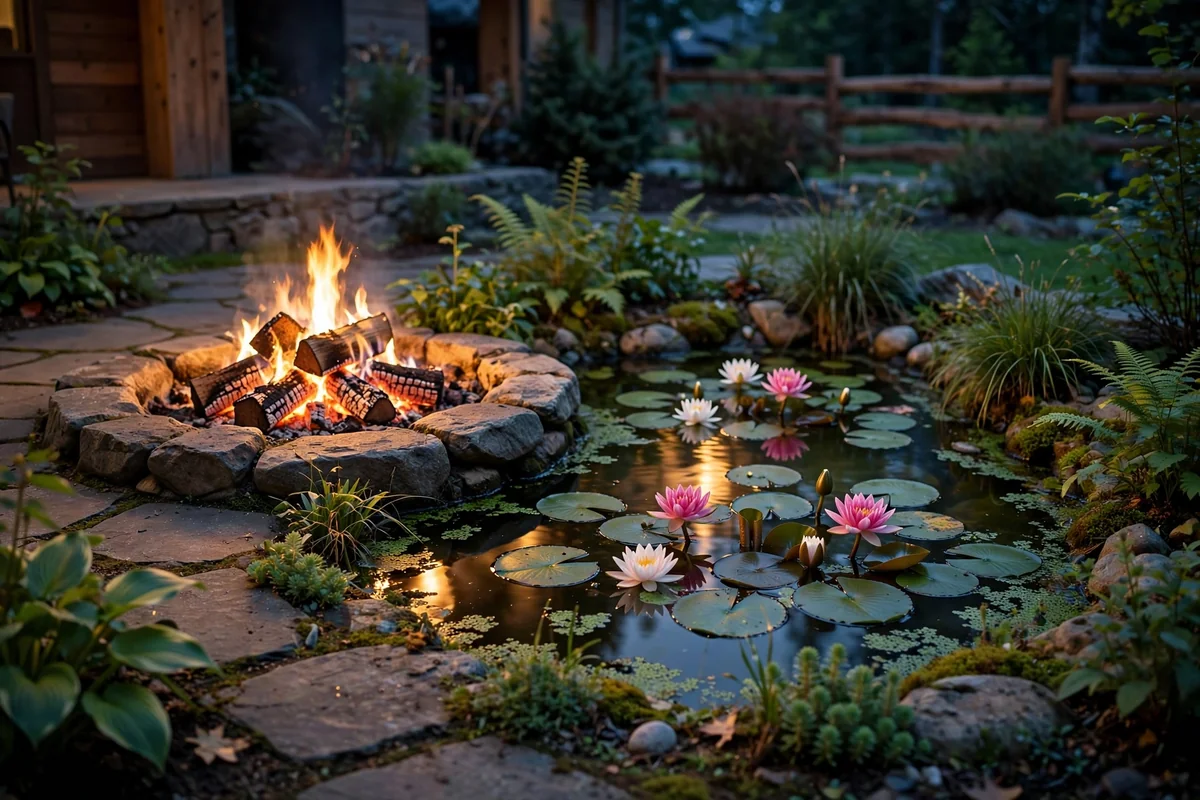
Fire and water together are pure magic. A fire pit near a small pond, fountain or birdbath creates the elemental contrast that makes gardens feel special. Keep the fire at a safe distance from pumps and electrics, and mind the spray. The sound of water plus the sight of flame is deeply calming.
Light the water feature so it glows after dark. The reflections double the beauty. This pairing turns a garden into a retreat. Two elements, one unforgettable corner. Add underwater lights to the water feature so it glows after dark, just like the fire does beside it. The paired glow is the most photographed corner of any garden.
25. Keep It Simple and Safe
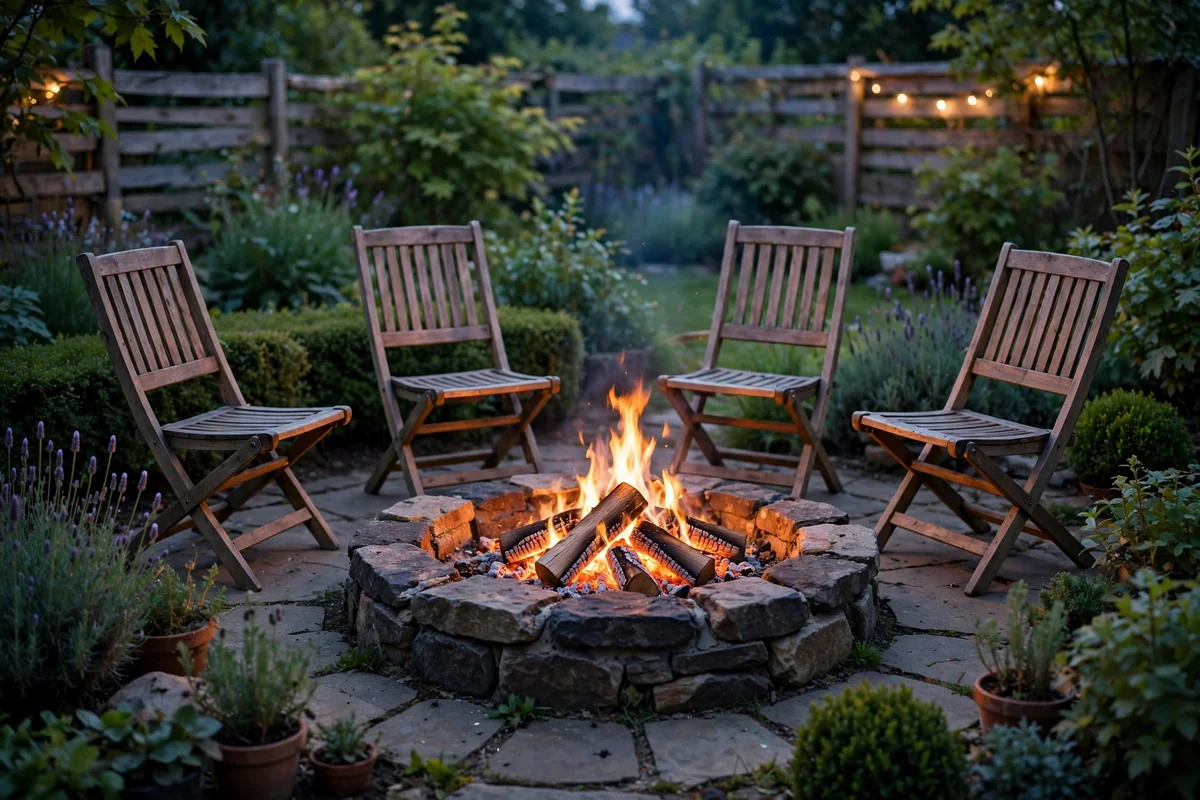
The final principle: keep it simple and safe. The best fire pit setups are not the most elaborate; they are the ones used most. Clear clearances, good seating, dry wood and basic precautions beat fancy features every time. Start simple and add only what you will actually use, and the evenings will take care of themselves.
Do a safety check each season: clearances, equipment, covers. Simplicity means fewer things to maintain and more evenings to enjoy. A simple, safe fire pit is the one that becomes a family tradition. Keep it simple, keep it safe, keep the fire lit. That is the whole secret, and it has always been.
Conclusion
A garden fire pit is an investment in evenings: in slowing down, gathering close and enjoying your own space. Start with the build that fits your garden and budget, arrange seating for conversation, add light and warmth, and never compromise on safety. Do that, and the fire pit will quietly become the most used spot in your home. Here is to many magical evenings ahead.
Frequently Asked Questions
How far should a fire pit be from the house?
Most guidelines recommend at least 10 feet from structures, fences, trees and overhangs. Check your local fire codes, which may require more. Never place a fire pit under low branches or on a wooden deck without a proper heat-safe setup.
Are fire pits safe for families with kids?
Yes, with precautions. Use a spark screen, keep a 3-foot child-free zone, never leave the fire unattended, and teach children fire rules. Gas fire pits with instant shut-off add extra control. Always fully extinguish before going inside.
Wood or gas fire pit: which is better?
Wood gives authentic crackle, aroma and heat, but needs storage and cleanup. Gas lights instantly, burns clean and shuts off with a switch, but needs a gas line or propane tank. Choose based on how much ritual versus convenience you want.
Do I need a permit for a backyard fire pit?
It depends on your area. Many places allow small recreational fire pits without permits, but some cities and HOAs restrict or ban them. Check local ordinances and HOA rules before building; a quick call to your local fire department clarifies everything.
How do you maintain a fire pit?
Remove ash regularly (leave an inch in wood pits for insulation), cover the pit when not in use, check gas lines annually, and inspect stone or metal for cracks. A cover extends the life of any fire pit dramatically.