Living Room
20 Beige Living Room Ideas That Feel Warm, Layered and Calm
By Anna Wells · · 18 min read
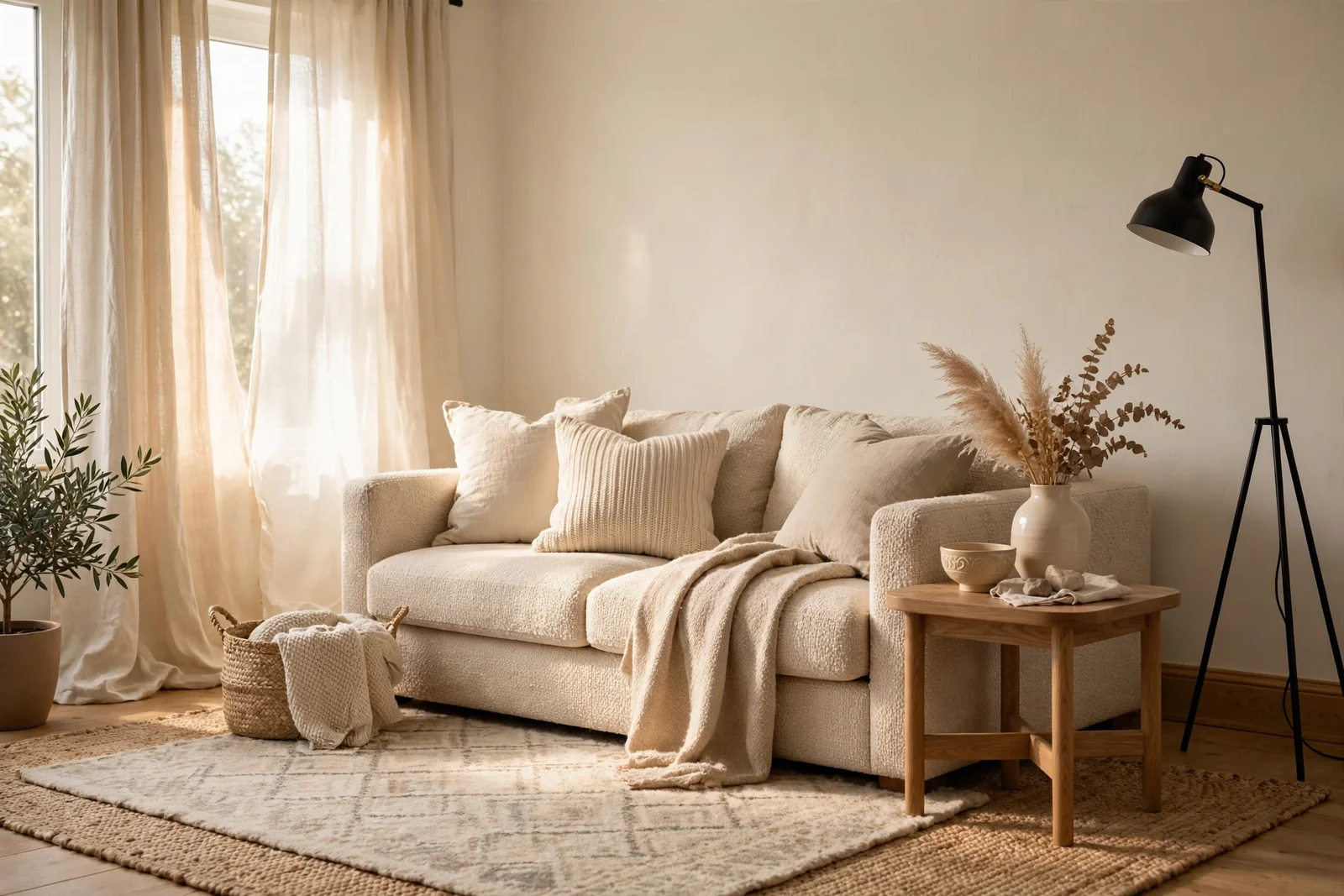
Discover 20 beige living room ideas that layer cream-to-camel tones with rich textures, warm light and family-friendly slipcovers for a calm, welcoming home.
Late afternoon light settles across the sofa, softening every edge it touches. The cream curtains glow, the oatmeal rug looks a shade deeper, and the whole room seems to exhale at once. That is the quiet promise of a beige living room done well: not pale and plain, but warm, layered and calm, a room that welcomes everyone from toddlers to grandparents without fuss or formality.
Beige earns its calm through deliberate layering rather than a single safe shade. This article treats beige as a monochrome scheme in its own right, distinct from broader earth tones. You will find 20 practical ideas that stack at least four beige tones, from pale cream to deep camel, and let texture do the talking: looped weaves, linen, wool, rattan and limewash-effect paint all play their part.
Along the way you will meet the two accents that keep beige from going flat, one solid wood and one black, and learn how warm lighting ties the layers together. There is guidance for adding a single muted green or clay accent if you want one colour, plus a plan for washable slipcovers that keeps the scheme honest for real family life. Every idea names materials, sizes and budgets, so you can begin this weekend.
1. Paint One Wall in a Warm Cream While Keeping the Others Pale
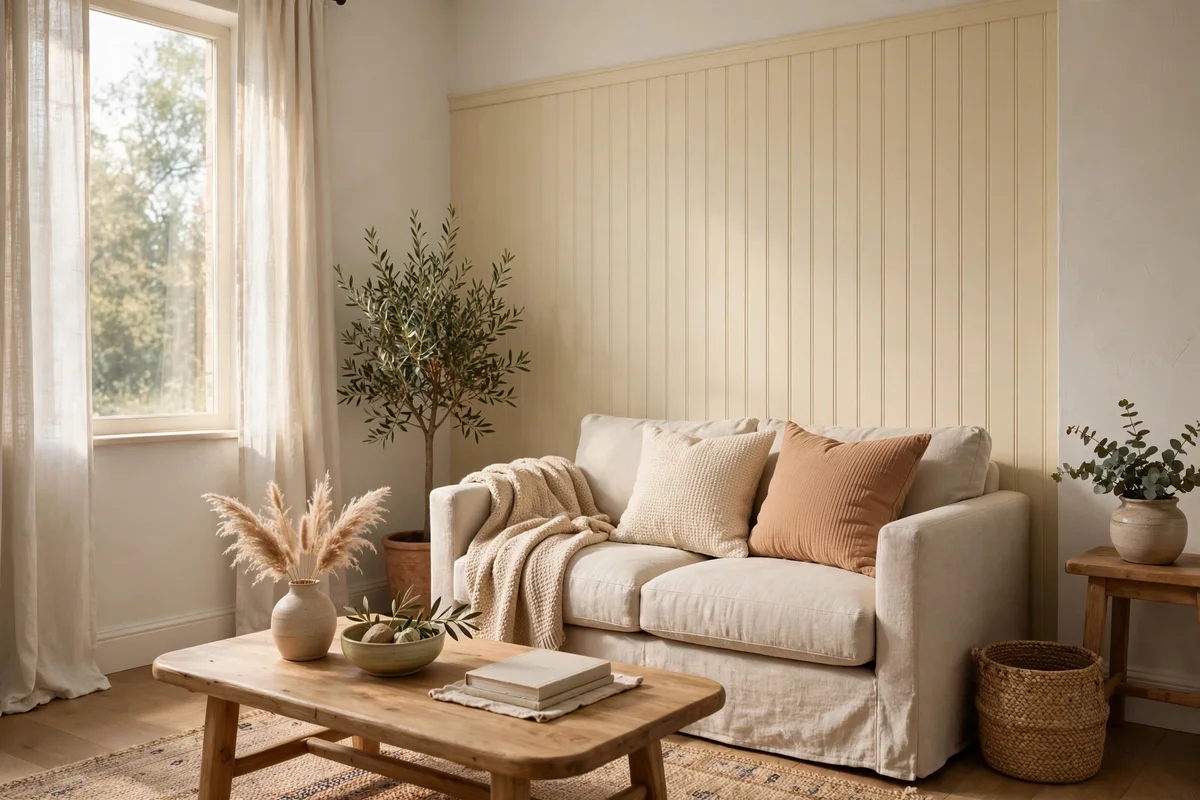
Choose one wall, usually the one behind the sofa, and paint it in a warm cream with a golden undertone rather than a grey one. Keep the other three walls a full shade paler so the feature wall has something to rest against and the room keeps its daylight. Sample at least three tins, paint metre-square patches and study them at morning, noon and evening before you commit to any tin.
The common mistake is a cream that turns pink or grey under lamplight, so test every sample with your evening lamps switched on. Two coats of washable matt emulsion usually cover a standard living room wall, and one feature wall needs roughly 5 litres. Budget projects land under 60 pounds or dollars including a decent roller set, while a mid-range paint with better coverage costs a little more per litre but often needs fewer coats.
2. Choose a Looped-Weave Sofa That Makes Texture the Star
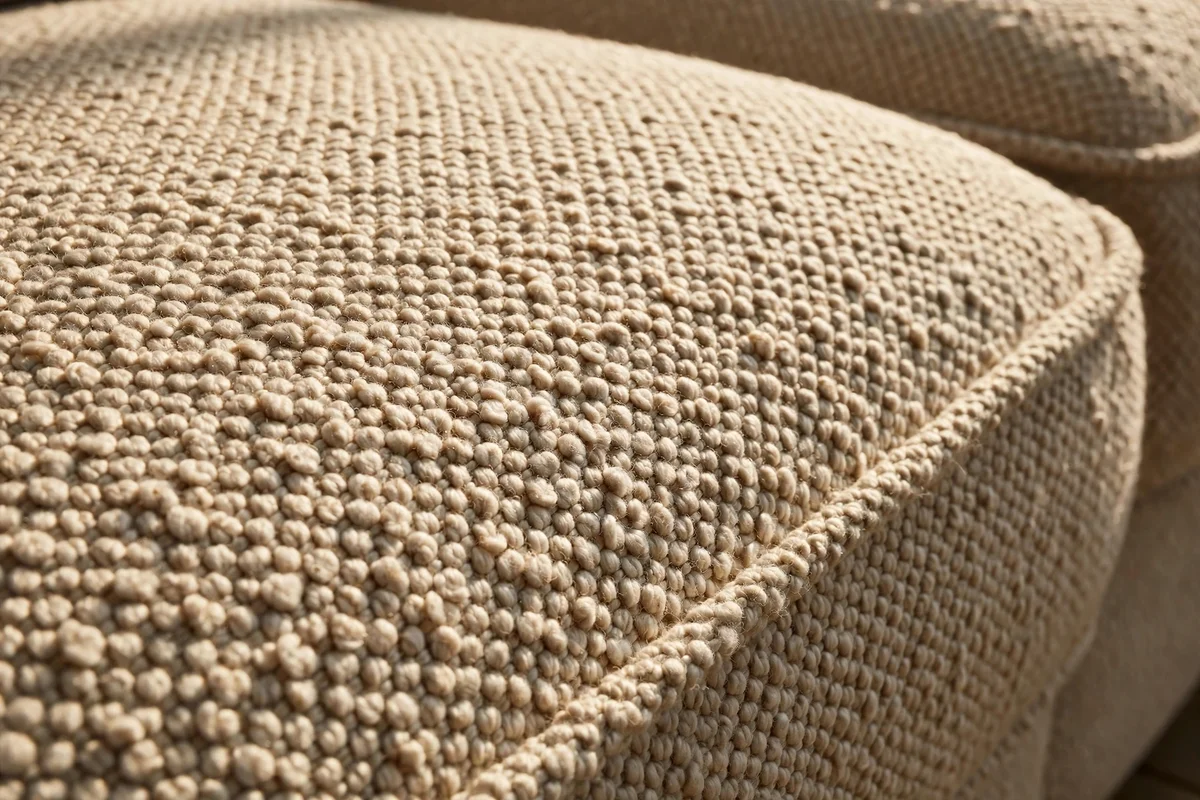
Look for a sofa upholstered in a tightly looped, nubby fabric where small even loops form the surface, the kind of weave that feels like a soft pebble under your hand. This texture does heavy lifting in a beige room because it catches light and shadow, giving plain cream fabric real depth. Sit on it first, since some looped weaves feel rougher than they look, and choose a medium oatmeal tone that hides everyday marks.
Pair the sofa with plainer linen cushions so the looped texture stands out rather than competing with other busy fabrics. A two-seat looped sofa suits most rooms between 200 and 220 cm wide, and slipcover-friendly shapes let you refresh it later. The mistake to avoid is matching it with a looped rug in the same shade, which blurs the layers; let the rug be flatter and the sofa be the texture.
3. Drape a Washable Linen Slipcover Over the Sofa for Family Life
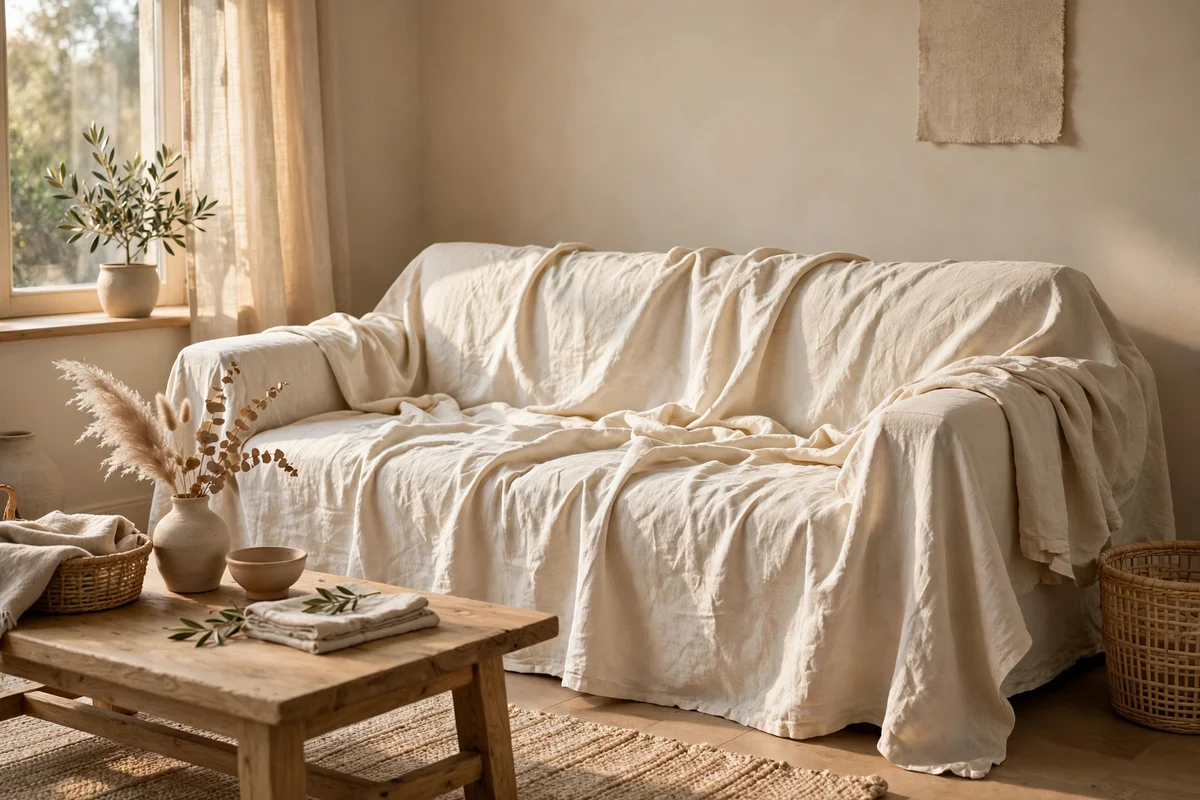
A washable linen slipcover is the honest answer to beige plus children, pets and daily cups of tea. Choose a relaxed-fit cover in natural linen or a linen blend with a stonewashed finish, cut for your exact sofa model or made to measure from the seat, back and arm widths. The slightly crumpled look is the point, so ironing is unnecessary and the cover only looks better with each wash.
Wash the slipcover alone at 30 degrees and line dry it to keep the fibres strong, refitting it while still slightly damp for a smooth drape. Buy a second cover if the budget allows, one in cream and one in oatmeal, so the sofa never sits naked on laundry day. The mistake to avoid is a cover that fits too tightly, since natural linen shrinks slightly; a relaxed fit forgives that.
4. Layer a Wool Rug Over a Larger Natural Fibre Base
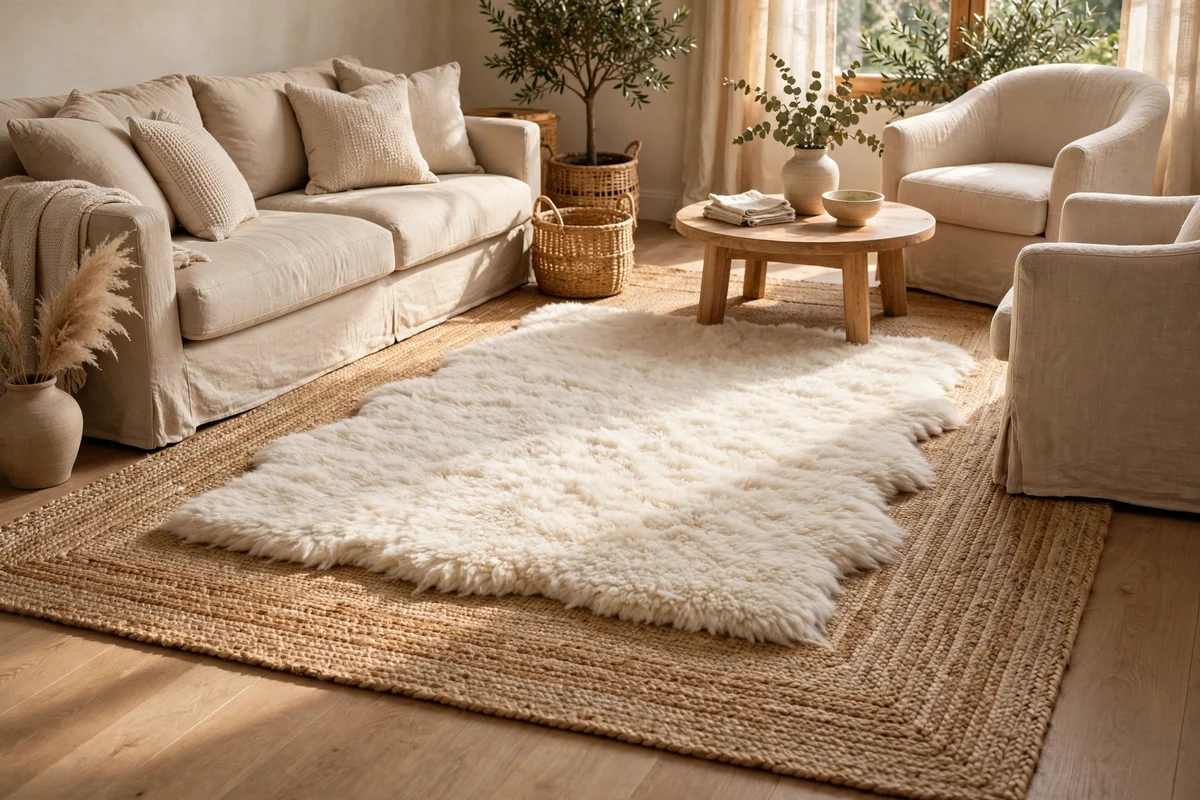
Start with a large flatweave rug in jute or sisal that sits about 15 cm under the front legs of the sofa and armchairs, then lay a softer wool rug on top, offset so 20 to 30 cm of the base shows on two sides. This double layer gives you the hardwearing base for spills and the soft landing your feet actually touch. A 160 by 230 cm wool rug over a 200 by 290 cm base suits most seating arrangements.
Keep both rugs in the beige family but at least two tones apart, for example a pale sand base with an oatmeal wool top, so the layering reads clearly. The mistake to avoid is stacking two thick rugs, which rocks furniture and trips toes; the base should be thin and flat. Budget tip: a natural fibre base plus a smaller quality wool rug often costs less than one huge wool rug.
5. Hang Floor-Length Linen Curtains in a Pale Oat Shade
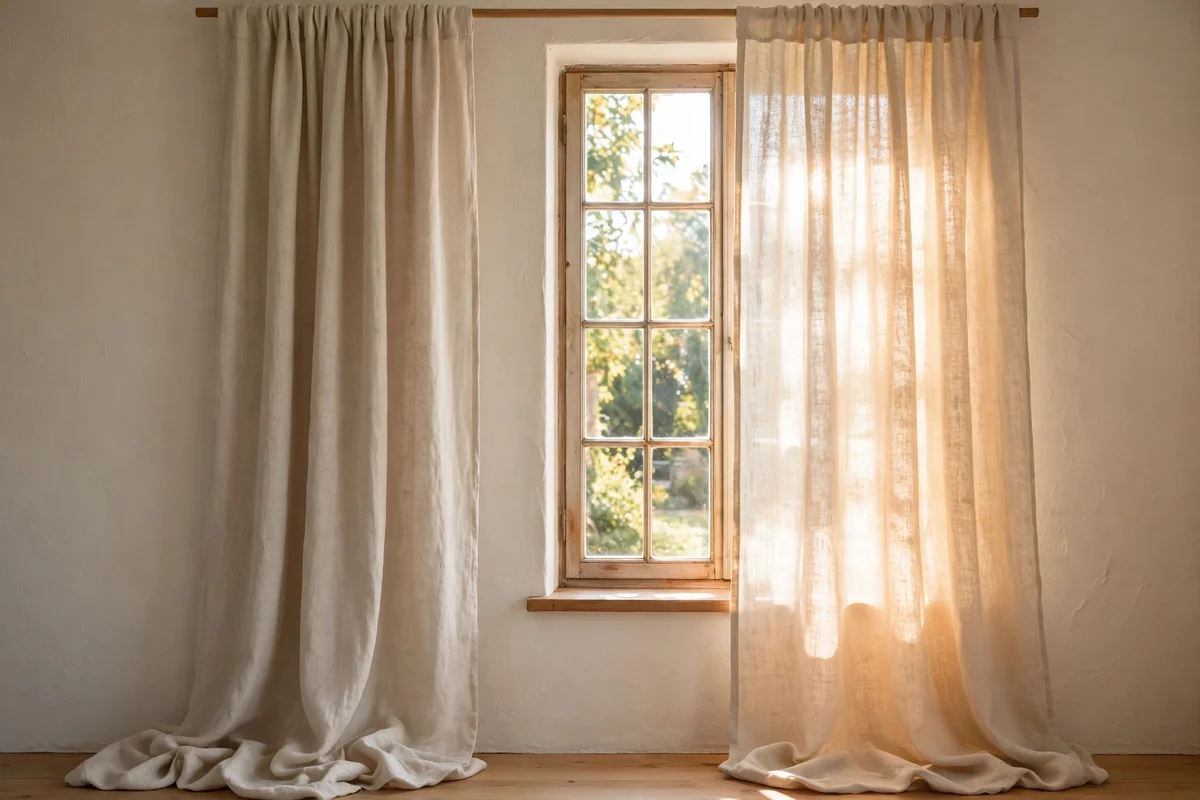
Floor-length linen curtains in pale oat soften the window wall and add the largest single drape of texture in the room. Hang the pole 10 to 15 cm above the frame and extend it 20 cm beyond each side so the stacked panels clear the glass fully. For a gathered look, buy panels totalling one and a half to two times the pole width, and let the hems just brush the floor rather than puddling in a house with pets.
Linen lets daylight filter through as a warm haze while still giving privacy after dark, which suits beige schemes beautifully. Wash panels at 30 degrees twice a year and rehang while damp so gravity smooths the creases. The mistake to avoid is choosing curtains in the exact wall colour, which makes the window disappear; go one tone deeper than the walls for gentle definition.
6. Add a Rattan Accent Chair With a Camel Seat Cushion
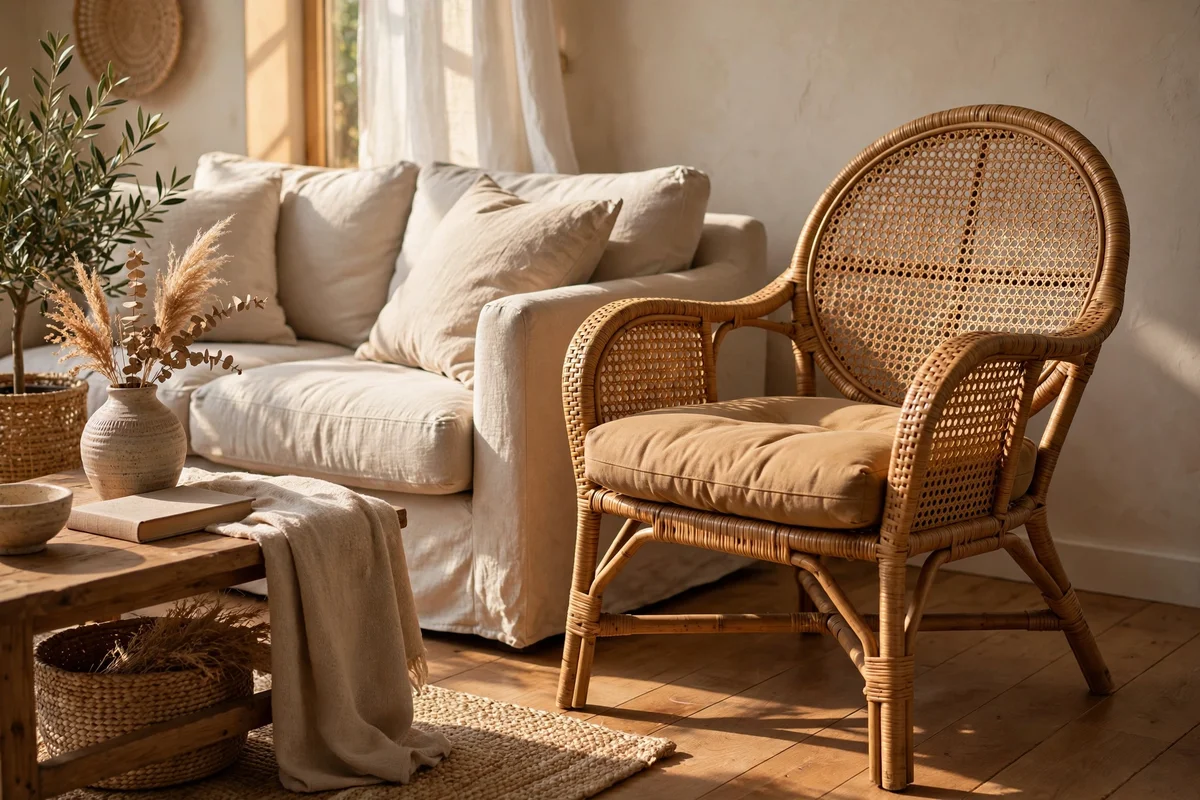
A rattan accent chair brings open woven texture and a honeyed tone that sits naturally inside a beige scheme. Place it at a slight angle to the sofa, roughly 45 degrees, to create a conversational corner without blocking the walkway. Look for a frame in natural, not orange-stained, cane with a tight even weave, and test that the seat sits 40 to 45 cm high so it matches standard sofa height.
Top the chair with a deep camel seat cushion in a washable cotton cover, which links the chair to the room’s darker beige tones. Rattan dislikes constant damp, so keep the chair out of splash zones near open windows in rainy weather. The mistake to avoid is buying rattan that matches the rug too closely; a little contrast between the honey cane and paler fibres keeps the room lively.
7. Place One Solid Oak Side Table Beside the Sofa as the Wood Accent
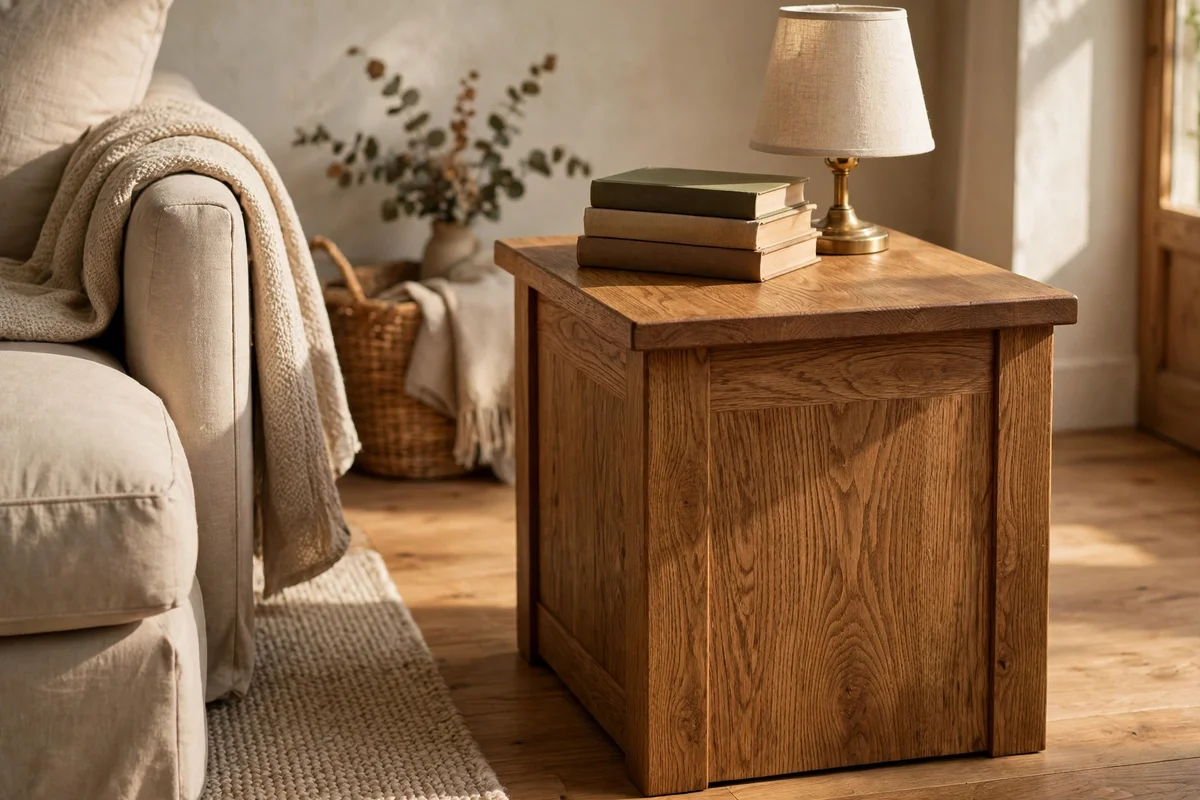
One solid oak side table gives beige the single wood accent it needs to feel grounded and real. Choose a piece 45 to 55 cm tall so its top sits level with the sofa arm, and 40 to 50 cm wide so a lamp and a cup both fit. Oak with a visible grain in a warm honey finish harmonises with cream and camel, while a raw or whitewashed oak can look cold against warm beige, so check the finish in daylight.
Style the top simply: one small lamp or a stack of two books and a small bowl, nothing more. Oil the oak twice a year with a food-safe furniture oil to keep the grain from drying out. The mistake to avoid is adding a second and third wooden piece in matching oak, which turns the one-accent rule into a wooden set; let this table be the only warm wood voice.
8. Stand a Slim Black Floor Lamp in the Darkest Corner
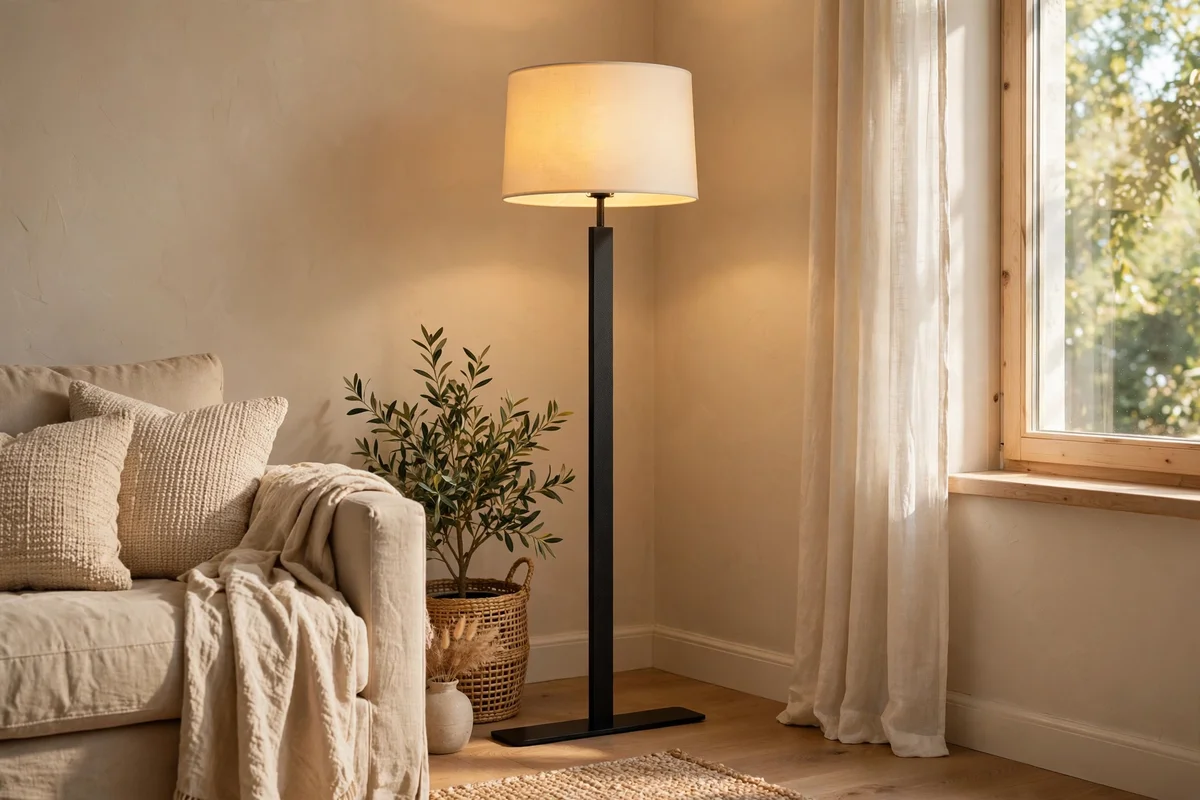
A single slim black floor lamp is the one dark accent that stops beige from drifting into blandness. Stand it in the corner that gets least daylight, ideally 20 to 30 cm from both walls, with the shade top around 150 to 160 cm high so it throws light across the seating area. Choose a matt black finish rather than gloss, since gloss reads as modern and harsh against soft beige textures.
Fit it with a warm 2700K bulb and an ivory or oatmeal drum shade about 30 cm across so the glow stays soft. The black base grounds the corner the way a full stop grounds a sentence. The mistake to avoid is adding matching black frames, black shelves or a black coffee table; one black accent has power precisely because it stands alone among the creams.
9. Finish the Main Wall With a Soft Limewash Effect
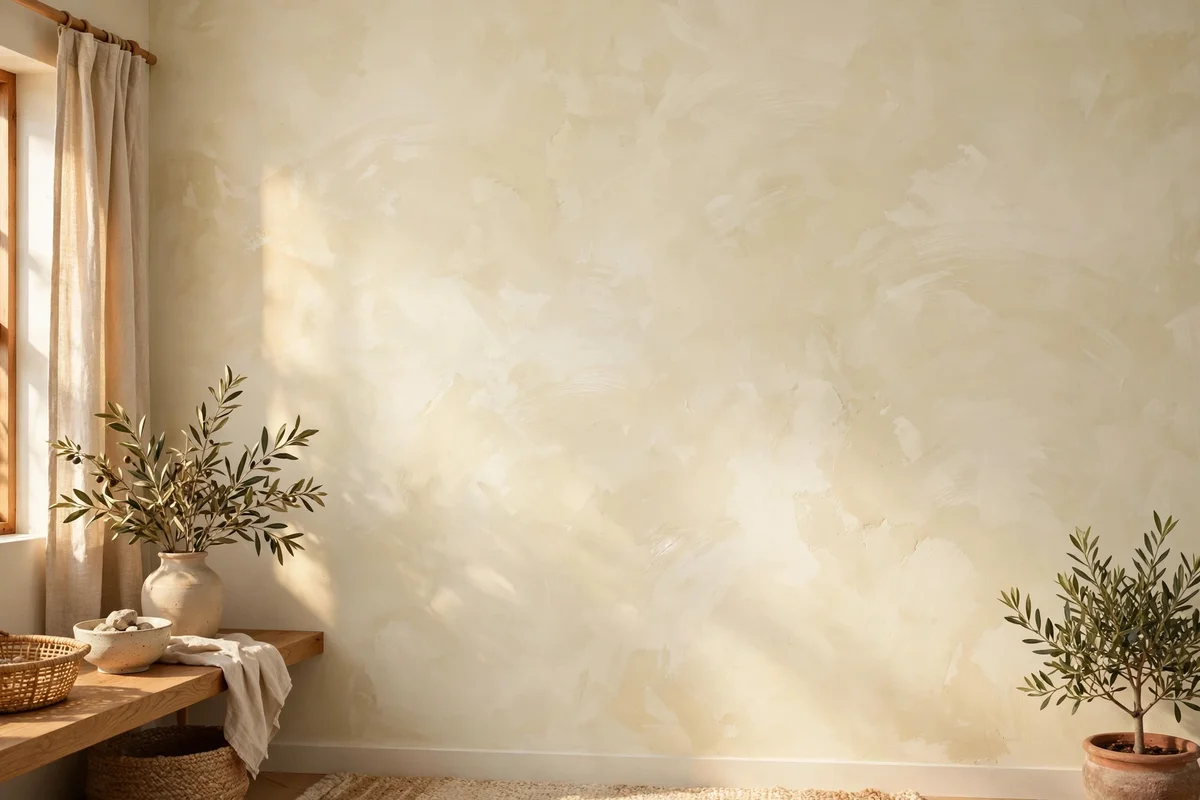
A limewash-effect finish gives the main wall a cloudy, hand-applied texture that flat matt paint cannot match. Work in loose overlapping strokes with a large block brush, building two thin coats and letting the natural movement of the brush create soft tonal shifts. Keep the colour in the pale cream family and let the effect stay subtle; the goal is gentle depth, not a dramatic plaster look.
Test a full square metre in the least-seen corner first, because limewash dries lighter and more mottled than the wet colour suggests. Seal high-touch areas behind the sofa with the manufacturer’s recommended wax if offered. The mistake to avoid is limewashing every wall, which can feel busy in a small room; one wall carries the texture while the others stay calm and flat.
10. Style the Coffee Table With Three Beige Tones in Trays and Books
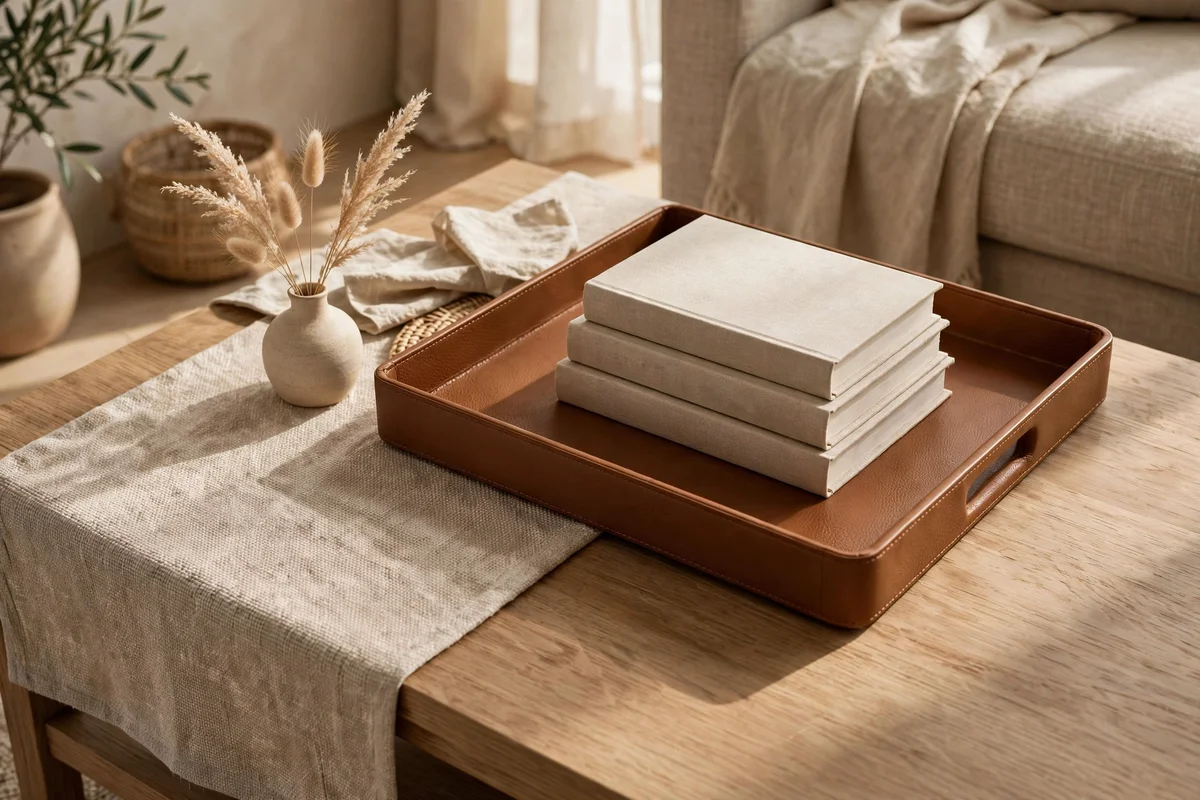
Limit the coffee table to three beige tones arranged in clear zones and the surface stays calm. Set a deep camel tray on one third for remotes and coasters, stack two or three books with oatmeal and sand covers on another third, and leave the final third clear for cups. Keep every object low, under 25 cm, so sightlines across the room stay open from the sofa.
A round tray between 35 and 45 cm suits most rectangular tables and gathers small items that otherwise scatter. Dust the tray weekly and rotate the book stack seasonally for a fresh feel at zero cost. The mistake to avoid is a fourth colour sneaking in through a bright mug or magazine; keep a lidded basket nearby to sweep non-beige clutter out of sight before guests arrive.
11. Fold Wool Throws in Oatmeal and Camel Over the Sofa Arm
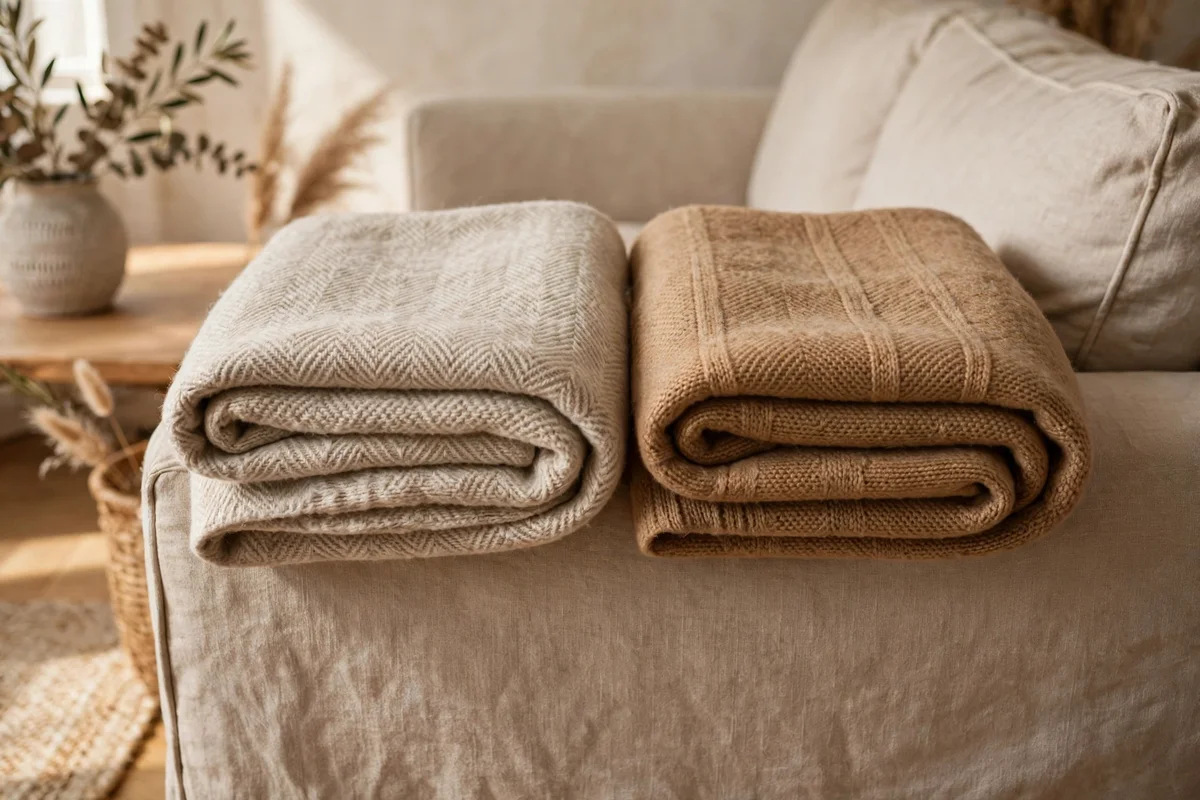
Two wool throws, one oatmeal and one deep camel, folded over the sofa arm give instant layered warmth. Choose throws around 130 by 180 cm so they drape generously without swamping a two-seat sofa, and fold each into thirds lengthways before laying them side by side with 10 cm showing between them. Pure wool or a wool blend holds its loft for years, while acrylic pills quickly and flattens the look.
Keep throws reachable rather than decorative: the family should actually use them on cool evenings. Air them on the line monthly instead of washing, and brush off crumbs with a stiff clothes brush. The mistake to avoid is draping four or five throws at once, which looks like a bedding display; two well-chosen throws in clear tones do more work.
12. Mix Cushions in Four Shades From Pale Cream to Deep Camel
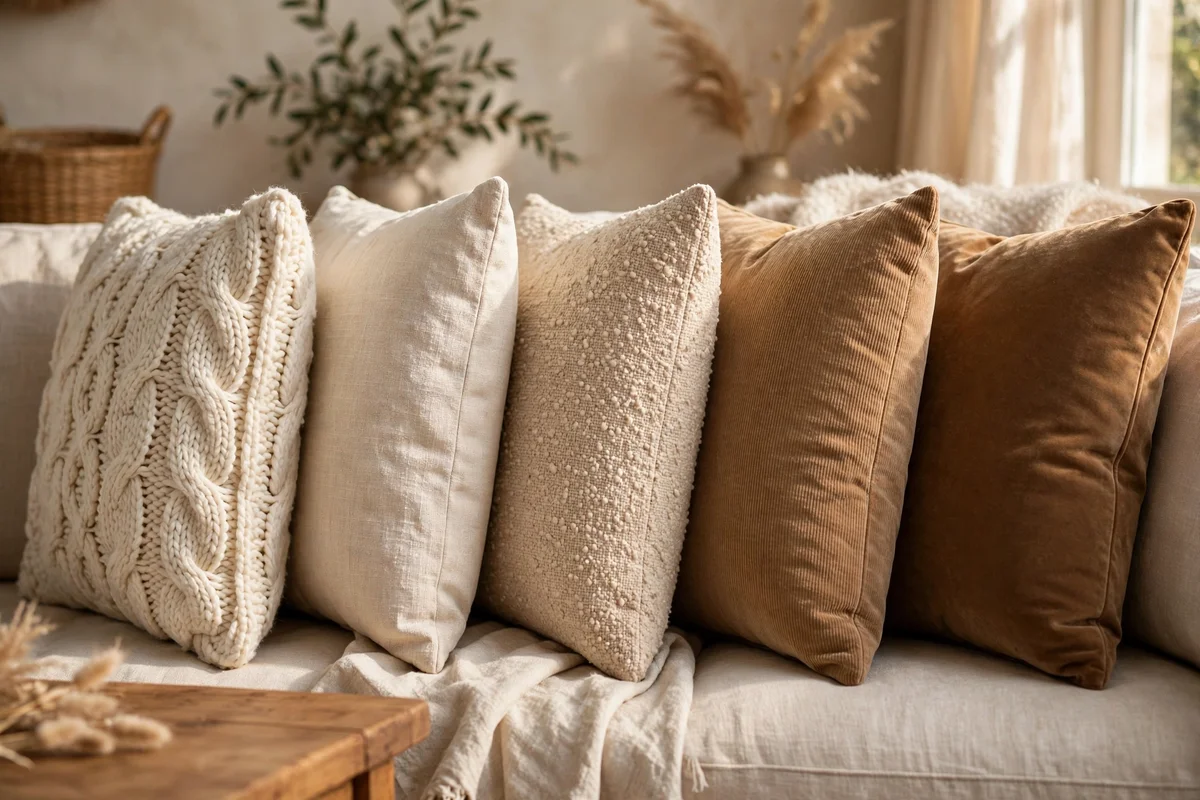
Build the cushion collection as a visible ladder of four tones: pale cream, warm sand, oatmeal and deep camel. Use five cushions on a standard two-seat sofa, two cream at the back corners, two sand in the middle and one camel centred in front, all in different textures such as linen, cotton and a looped weave. Keep sizes generous, 45 to 50 cm square, since small cushions look lost.
Feather or recycled-plastic inserts hold their shape far better than cheap hollowfill, and a simple karate-chop crease down the centre gives a tailored finish. Plump cushions daily and rotate which one takes the most leaning. The mistake to avoid is buying a boxed set of identical cushions; matched sets erase the tone ladder that makes beige interesting.
13. Add a Muted Sage Throw for One Quiet Touch of Green
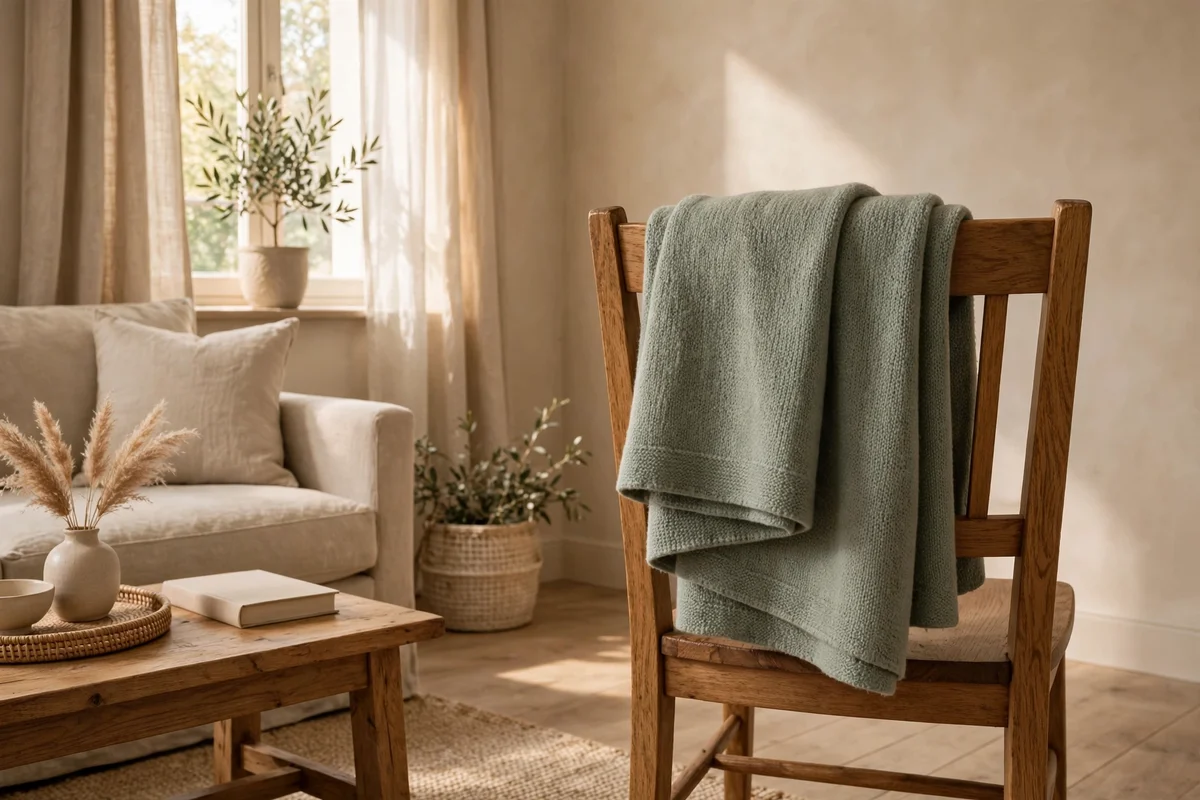
If you want a single colour in the room, let it be muted sage folded over one chair back or the end of the sofa. Sage sits beside beige on the warm side of green and echoes garden views without shouting. Keep it to one textile, a throw or two cushion covers, totalling under a tenth of the room’s visible fabric, so beige stays the undisputed main character.
Wash sage textiles separately the first time since soft green dyes can bleed slightly. Pair the throw with nothing else green in the room; a second green object turns an accent into a theme. The mistake to avoid is choosing a bright or minty green, which clashes with warm beige undertones; hold the fabric against the camel cushion and pick the sage that looks dusty beside it.
14. Set a Fired-Clay Vase on the Mantel as the Single Clay Note
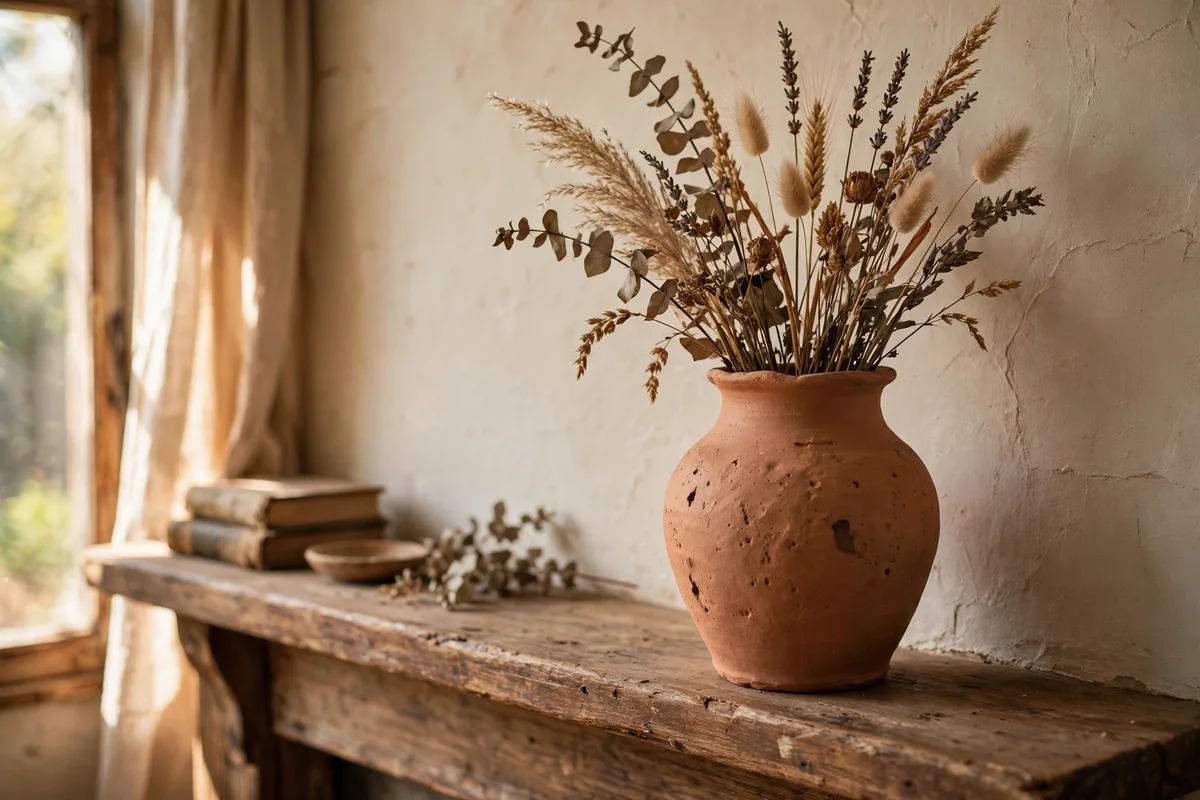
One fired-clay vase in a soft terracotta tone gives the room its optional clay accent without disturbing the calm. Choose a hand-thrown shape 25 to 35 cm tall with a matt unglazed finish, and set it off-centre on the mantel or a shelf at roughly the one-third mark. Leave it empty or add three dried stems, since fresh flowers introduce competing colours that weaken the single-accent rule.
Dust the vase with a dry cloth rather than washing it, because unglazed clay spots with water. If the room has no mantel, the same vase works on the oak side table or a low bookshelf. The mistake to avoid is buying a matching set of three clay pots; one vessel has quiet confidence, while a matching row looks like a shop display.
15. Swap Every Bulb for 2700K Warm White Light
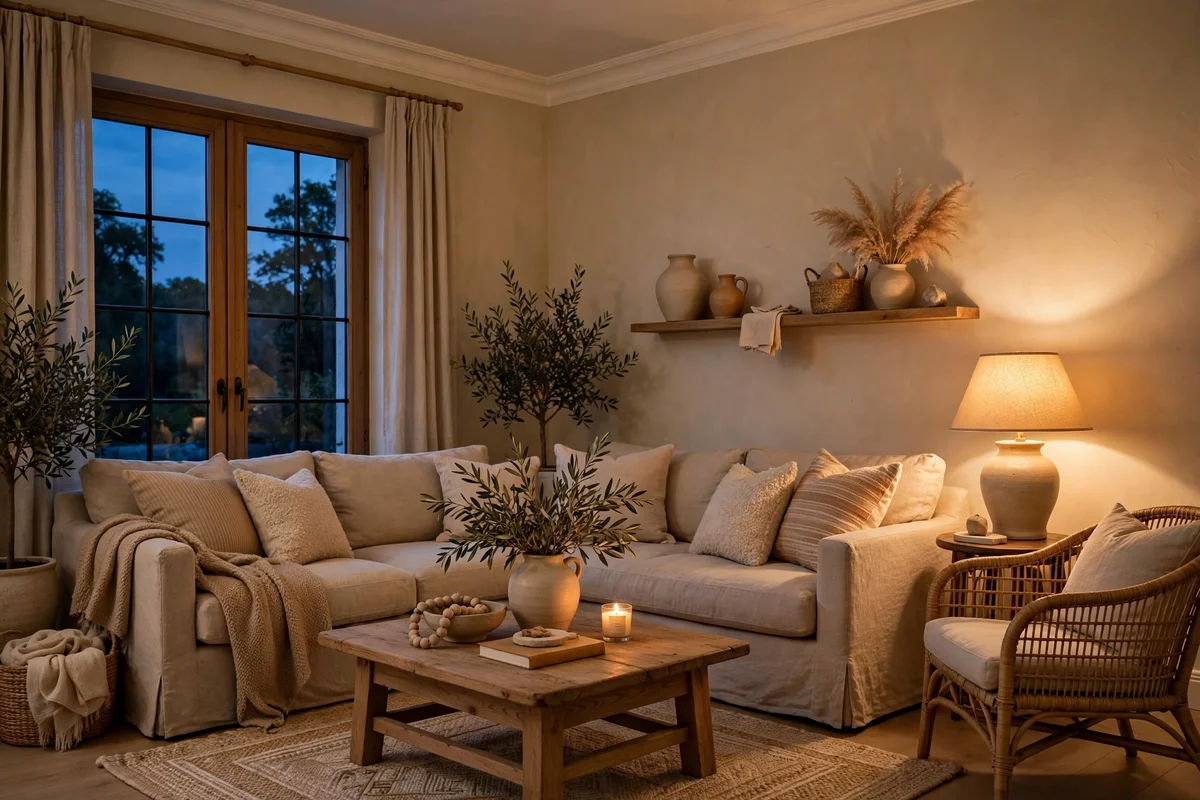
Replace every cool white bulb in the living room with 2700K warm white, which flatters beige tones the way candlelight flatters skin. Check the colour temperature printed on each bulb box before buying, and choose the same 2700K across ceiling, floor and table lamps so the room glows evenly. In a typical living room this means four to six bulbs, a small job that transforms the evening mood completely.
Dimmer switches or dimmable bulbs add a second level of control for film nights and quiet reading. Recycle old bulbs properly rather than binning them. The mistake to avoid is mixing 2700K and 4000K bulbs in one room, which makes beige walls look patchy and grey in the cooler pools of light; consistency matters more than brightness here.
16. Layer a Table Lamp, a Floor Lamp and Candlelight After Dark
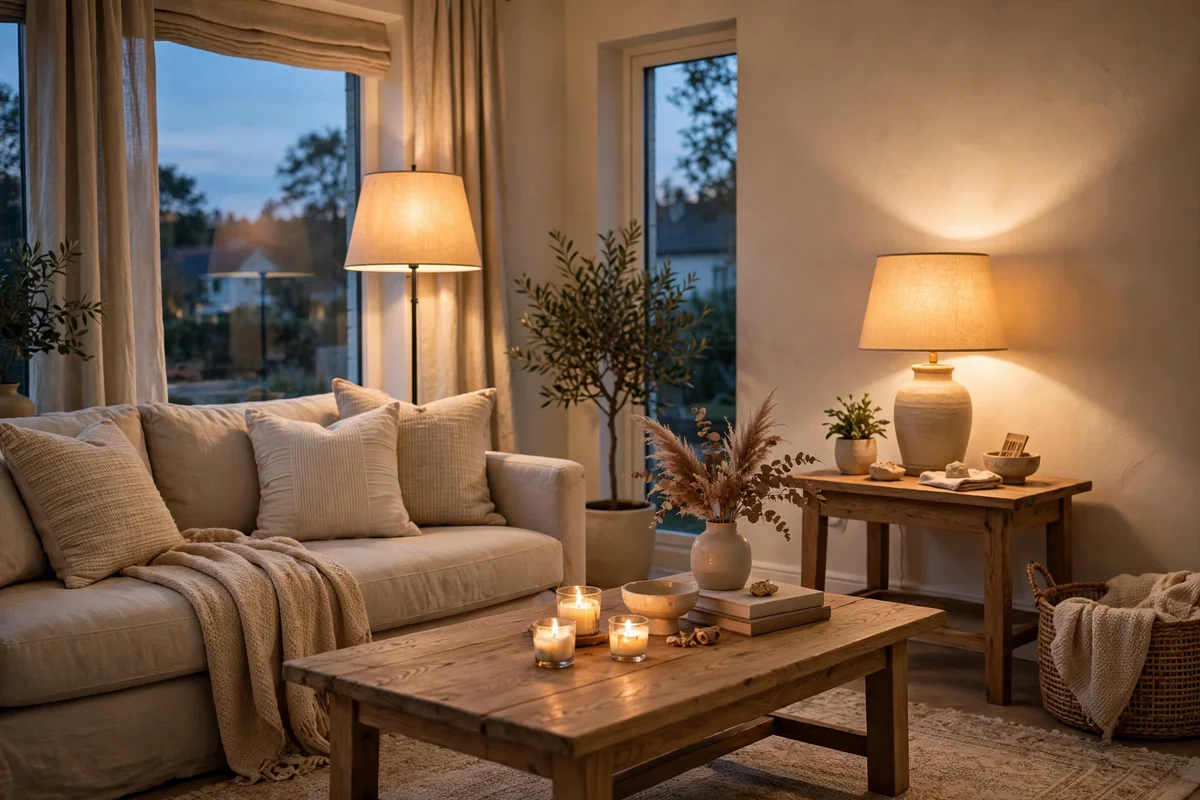
Once the sun sets, light the room in three layers: a table lamp on the console for a low warm pool, the black floor lamp in the corner for height, and two or three unscented candles on the coffee table for flicker. Switch them on in that order as dusk falls so the room deepens gradually instead of snapping from bright to dark. Keep each light source at a different height for a natural spread.
Place candles in sturdy glass holders well away from throws and curtains, never leave them burning unattended, and snuff them before the final lamp goes off. Battery candles with a warm flicker setting work safely in homes with small children. The mistake to avoid is relying on a single overhead ceiling light, which flattens every beige tone into one dull wash.
17. Style Open Shelves With Oatmeal Ceramics and Woven Baskets
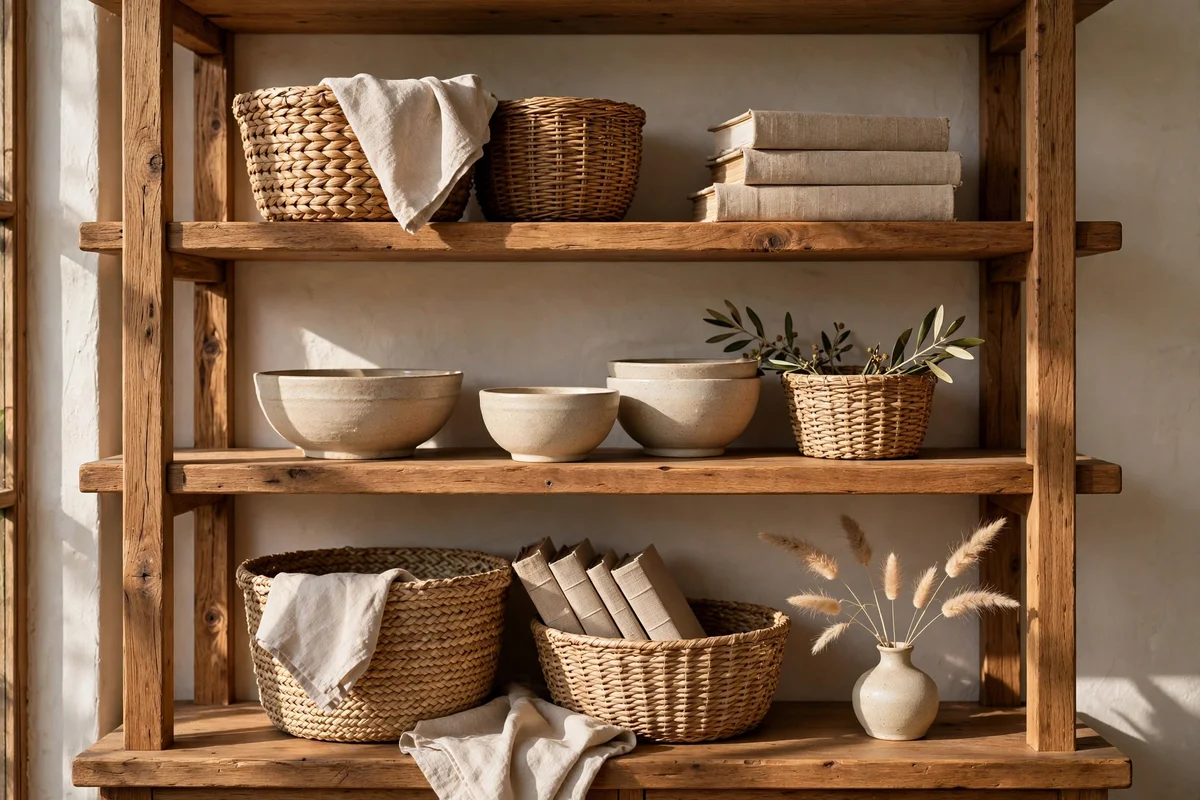
Style open shelves with a rhythm of oatmeal ceramics, woven baskets and a few linen-bound books, leaving a third of each shelf empty. Group objects in odd numbers, three small bowls together or one tall jug alone, and keep every piece inside the beige family from chalk white to deep camel. Baskets between 25 and 35 cm wide hide remote controls and chargers while adding woven texture.
Dust shelves fortnightly with a microfibre cloth, since open storage shows dust quickly against pale ceramics. Step back after styling each shelf and check the silhouette before moving on. The mistake to avoid is filling every centimetre; crowded shelves read as storage, while generous gaps let the beige pieces breathe and look intentional rather than hoarded.
18. Drape a Sheepskin Over the Reading Chair for Soft Evenings
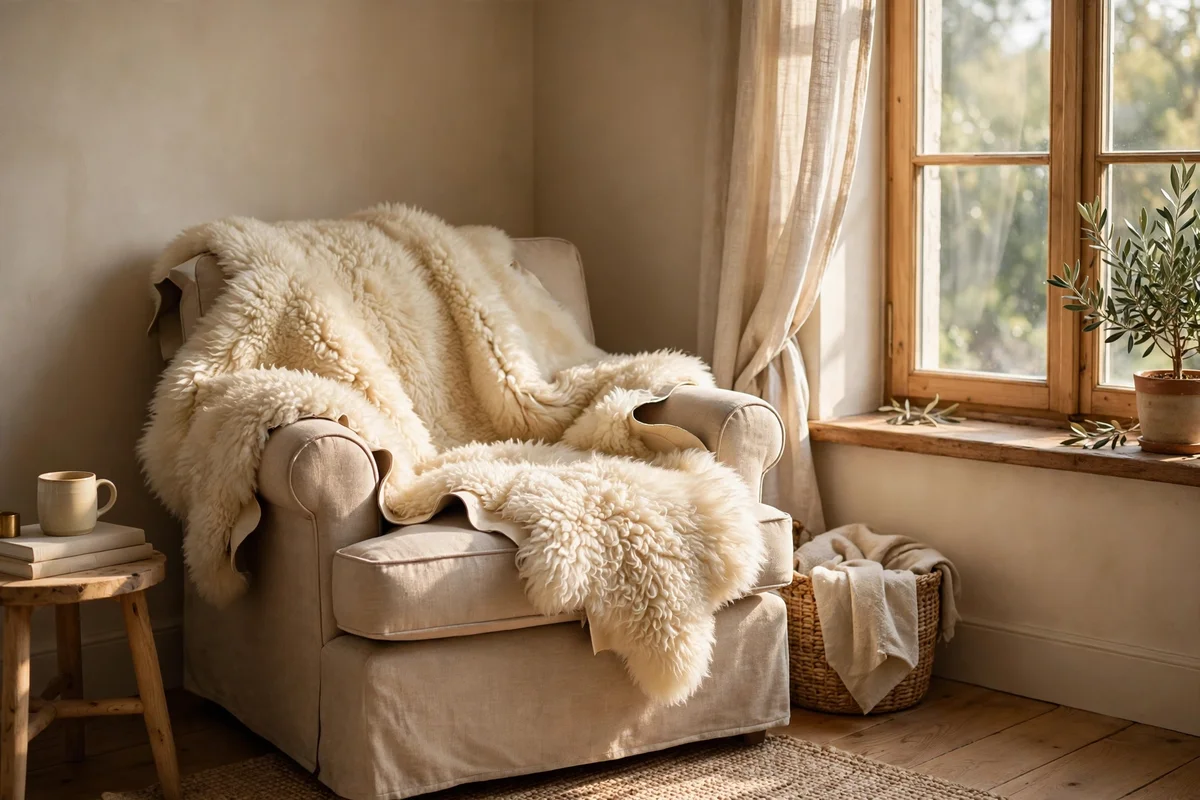
A sheepskin draped over the reading chair adds the softest texture in the room and invites long quiet evenings. Choose a single pelt in natural ivory or light oatmeal, roughly 60 by 90 cm, and lay it over the seat with the longer end falling forward. Real sheepskin regulates temperature beautifully, while a good faux alternative suits tighter budgets and washes more easily.
Shake the sheepskin outdoors monthly and brush the fibres with a wide-tooth comb to keep them lofty. Keep it out of direct midday sun, which yellows pale fibres over time. The mistake to avoid is draping sheepskins over every seat, which turns a luxurious accent into a theme; one pelt on the reading chair is enough for the whole room to feel softer.
19. Pick a Camel Storage Ottoman That Doubles as Extra Seating
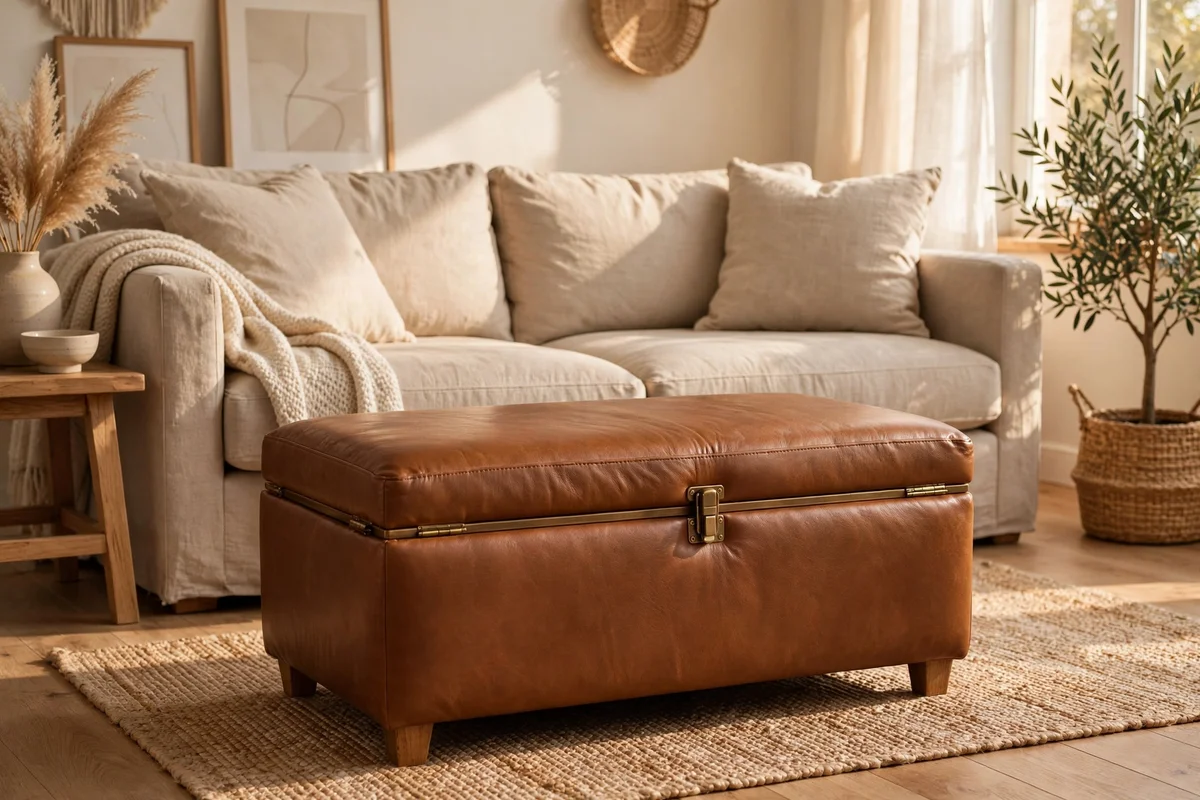
A camel storage ottoman around 80 by 40 cm and 40 cm high works as a footrest, extra seat for guests and hidden storage for throws. Choose one upholstered in a stain-resistant camel fabric with a lift-off or hinged lid, and position it 30 to 40 cm from the sofa front so feet reach it comfortably. The deep camel tone anchors the pale scheme and echoes the darkest cushion.
Store the spare throw and the second slipcover inside so the room tidies in one motion before guests arrive. Vacuum the fabric monthly with an upholstery nozzle. The mistake to avoid is an ottoman that matches the sofa exactly; a tone or two darker gives the floor zone definition and stops the furniture from blending into one beige mass.
20. Match Both Lamp Shades in Warm Ivory for Evening Calm
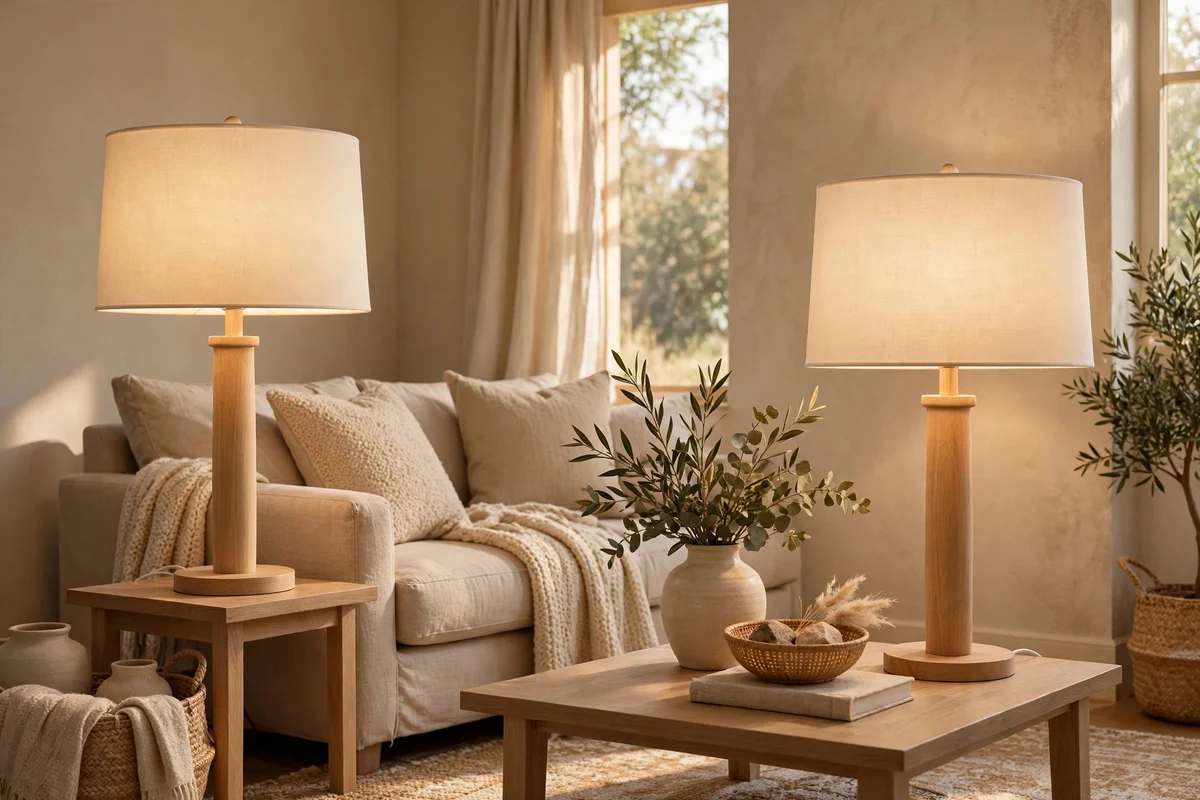
Fit matching warm ivory shades on the table lamp and the black floor lamp so both glow the same colour after dark. Choose drum shades 25 to 30 cm across for the table lamp, in a natural linen or cotton with a warm white lining that throws light downward as well as outward. Matching shades make two different lamps read as one deliberate pair, which calms the whole evening scene.
Replace shades when they yellow or sag, usually every three to five years, and dust them monthly with a lint roller. Keep the shade bottom 5 cm above the bulb to avoid scorch marks. The mistake to avoid is a cool white or grey shade that tints the warm bulb’s glow; ivory keeps the 2700K light honest and the beige walls glowing.
A beige living room earns its calm one layer at a time: four tones from pale cream to deep camel, textures that invite touch, a single wood piece and one black accent to hold the edges. Warm light ties it all together each evening, while a washable slipcover keeps the scheme honest for real family life with children, guests and daily cups of tea.
This week, start with the simplest change and swap every bulb for 2700K warm white, then stand back one evening and watch the room deepen. Once you see how light transforms beige, the cushion ladder, the single wood accent and the black floor lamp will follow naturally. Your calm, layered room will grow from there, one thoughtful layer at a time, until the whole space feels settled and entirely yours.
Frequently Asked Questions
Does a beige living room look boring or flat?
Only when it uses a single shade with no texture. Layer at least four tones from pale cream to deep camel, mix looped weaves, linen, wool and rattan, and add one wood and one black accent for contrast. Warm 2700K lighting keeps every tone glowing. Followed this way, beige looks rich and deliberate, never flat.
What is the cheapest way to start a beige living room scheme?
Begin with paint and textiles, which give the biggest change per pound or dollar. One feature wall in warm cream, a washable oatmeal slipcover and two camel cushions can refresh a whole room for under 150. Add the wool rug and the oak side table later as budget allows. Buying the large pieces first often locks you into tones you later regret.
Will a beige sofa survive children and pets?
Yes, with a washable slipcover in natural linen or a stain-resistant weave. Choose a relaxed fit in oatmeal rather than pale cream, wash it at 30 degrees and keep a spare cover for laundry days. Vacuum weekly with an upholstery nozzle and treat spills at once with a damp cloth. The slipcover, not the sofa, takes the wear.
Which accent colours work best with a warm beige scheme?
Muted sage green and soft fired clay are the two safest choices. Keep the accent to a single textile or one vase, under a tenth of the visible colour in the room, so beige stays dominant. Avoid bright or cool colours, which clash with beige’s warm undertones. Always hold the accent fabric against your camel cushion in daylight before committing.
Is beige a good choice for a small or dark living room?
Yes, provided you lean on the paler end of the range. Keep walls pale cream, choose light oatmeal upholstery and add a large mirror opposite the window to double the daylight. Warm 2700K bulbs in at least three lamps prevent evening gloom. Avoid deep camel on large surfaces in small rooms; save it for cushions and throws.