Living Room
22 Basement Game Room Ideas for Family Nights In
By Anna Wells · · 21 min read
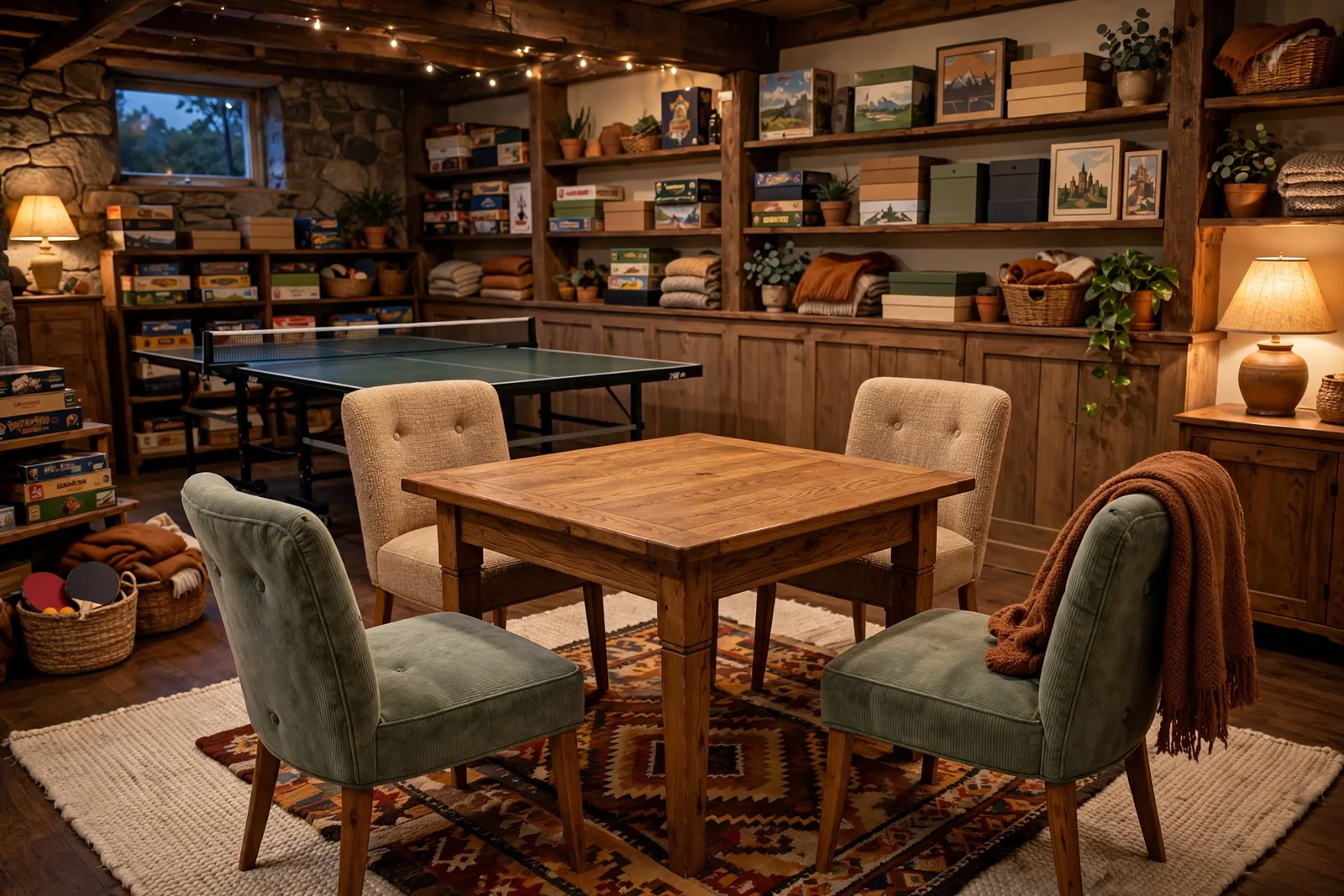
A warm, practical guide to 22 basement game room ideas for family nights in, from the board game table to the puzzle corner and a wholesome refreshment station.
The best family nights start before anyone picks up the dice. Downstairs, the lights are low and warm, a wool rug hushes the concrete floor, and the board game table is already set with four chairs pulled in close. Nobody is staring at a screen. The kettle clicks, someone sorts puzzle pieces into little piles, and the whole evening stretches out easy and unhurried. A basement game room does not need to be large or expensive to give your family this ritual. It needs the right few pieces, placed with care.
This guide walks through 22 concrete ideas that turn an ordinary basement into a recreation room your family actually uses. Every idea is practical and wholesome: board games on a proper table, table tennis and pool for gentle competition, a magnetic dartboard for safe throwing games, a quiet puzzle corner, shelves of games, and a film corner for shared viewing. Drinks are tea, juice and sparkling water, and the whole room stays devoted to good family play.
You will find exact sizes, placement distances, material choices and budget tips in every section, plus the common mistakes that waste money. Most ideas work in a basement between 200 and 400 square feet, and many cost less than a single family dinner out. Read through, pick the two or three that fit your space, and start there. A game room grows best one thoughtful corner at a time.
1. Set a Solid Square Table With Four Comfortable Chairs for Board Games
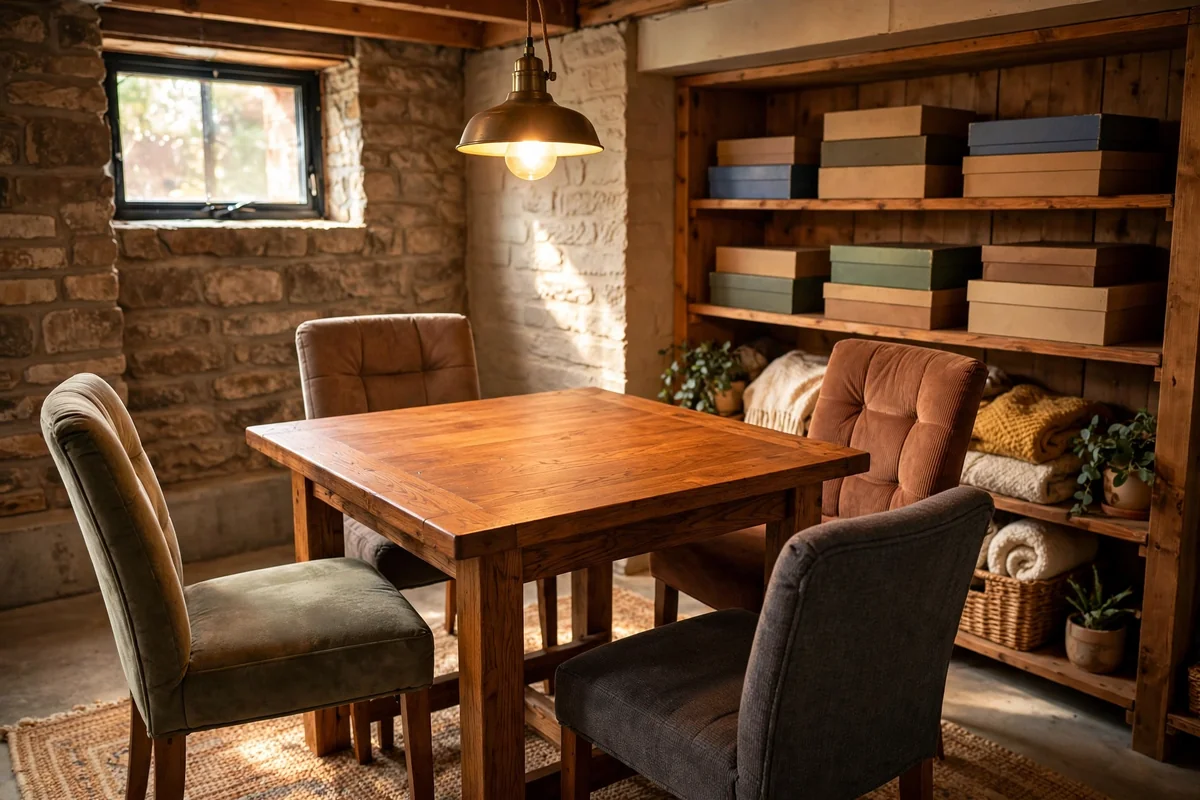
A square table between 90 and 110 cm per side seats four players with elbow room and keeps the board centre within easy reach. Choose solid wood or a wood-look top at least 2.5 cm thick so it stays steady when dice roll and cards slap down. Set it 75 to 90 cm away from the nearest wall so chairs can push back without scraping. Pair it with chairs that have padded seats and a back height of 45 cm or more, since a long strategy game can run two hours.
Place a warm table lamp or a low pendant 60 to 75 cm above the tabletop so every card is readable without glare in anyone’s eyes. Keep a small felt mat in the middle for dice, which cuts noise on hard tops and costs under 10 pounds or dollars. The mistake to avoid is a glass top, which shows every fingerprint and makes pieces slide. Budget tip: a second-hand dining table with four matching chairs often sells for 80 to 150, and a coat of wax makes it feel new.
2. Fit a Folding Table Tennis Table Along the Longest Wall
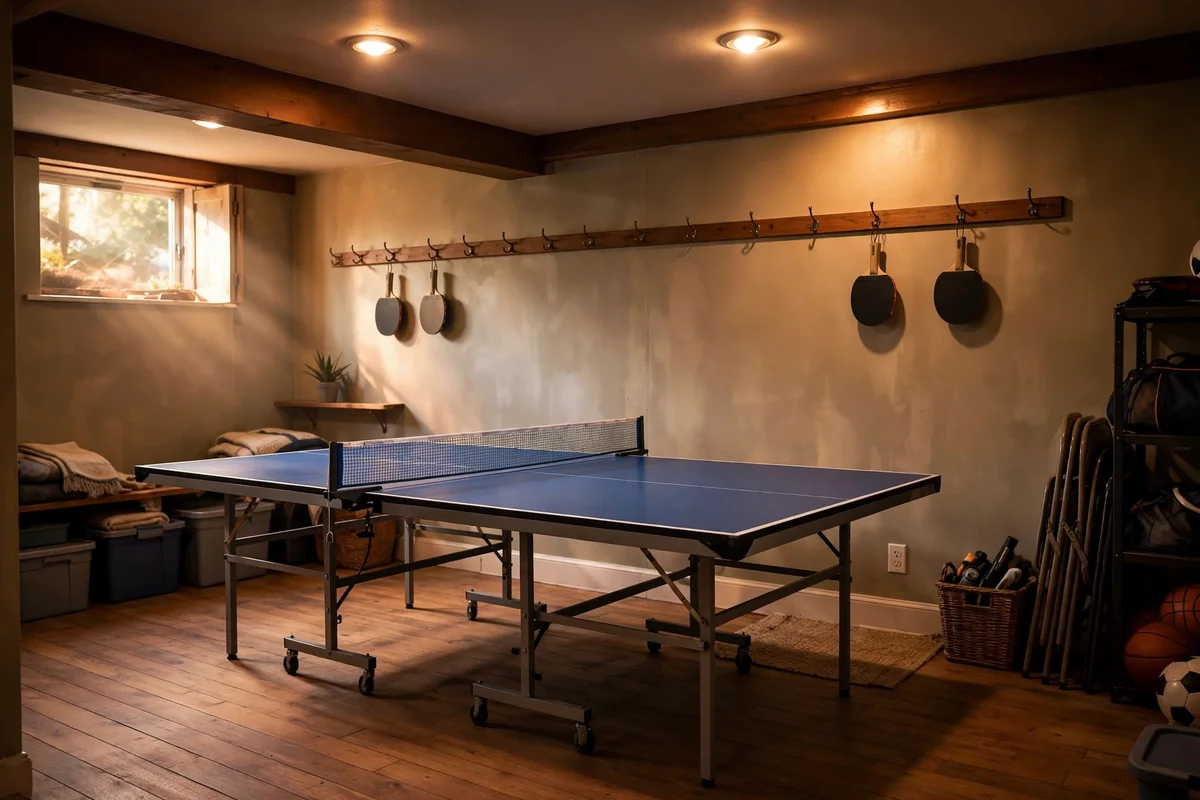
A full table tennis table measures 274 cm long and 152.5 cm wide, so give it at least 120 cm of clear space on each playing end. Folding models with lockable legs collapse to half size or roll flat against the wall in under two minutes, which suits a multi-use basement. Look for a 16 to 19 mm top for a true bounce and legs with adjustable feet, because basement floors are rarely level. Keep spare balls in a wall-mounted mesh pocket.
Store two or three bats on a simple wall hook beside the table and a small bench nearby for water glasses and the score pad. Leave 90 cm along one side so players can circle for wide shots. The mistake to avoid is placing the table under a low duct or beam, since a lobbed ball needs 250 cm of clear height. Budget tip: refurbished folding tables sell for 150 to 300, and a family set of four bats with balls costs under 40.
3. Choose a Pool Table in Warm Felt for Slow Family Play
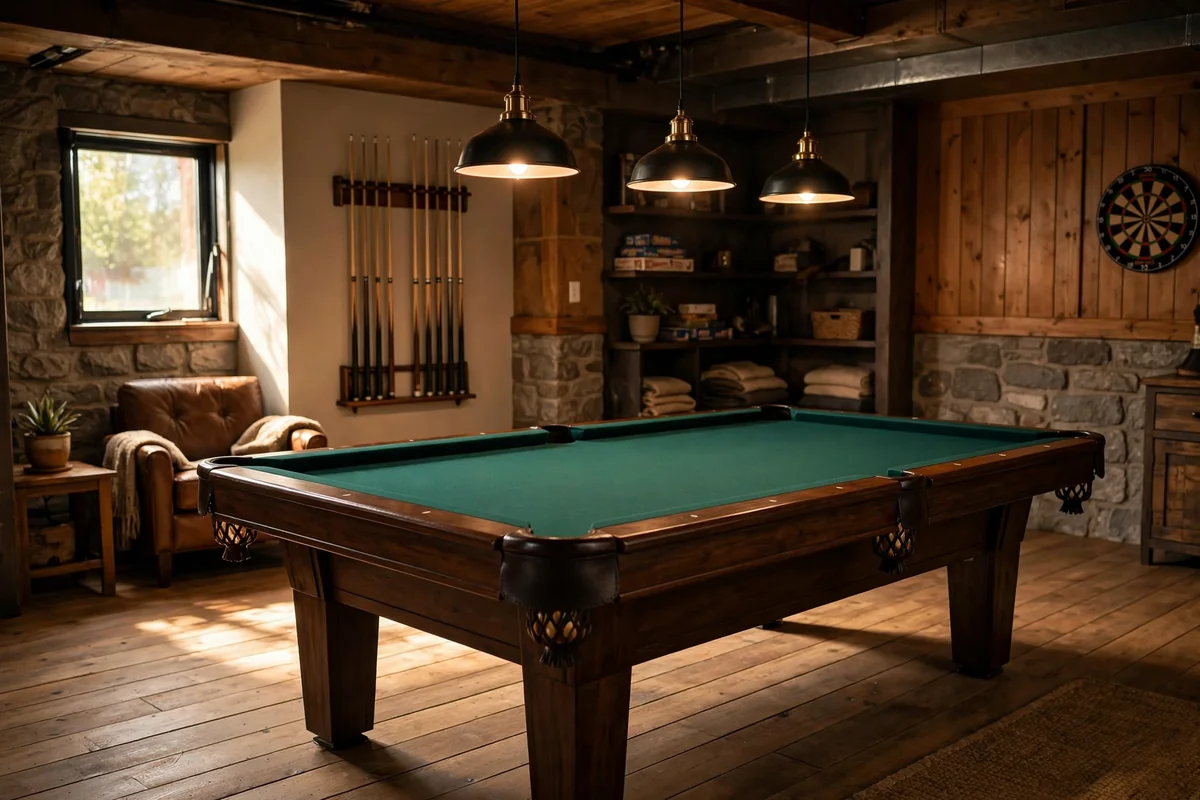
A 7-foot pool table, about 213 by 107 cm of playing surface, fits a basement where players have 140 cm of cue room on every side, so the room needs roughly 5 by 4 metres. Choose warm green, burgundy or camel felt in a wool and nylon blend, which plays evenly and hides chalk dust. Set the table on a level floor and check the slate with a spirit level before first play. A simple wooden triangle and a set of numbered balls complete the basics.
Hang two cue racks on the nearest wall at 150 cm high so cues rest vertically and stay straight. Keep chalk cubes in a small dish and brush the felt weekly with a proper table brush, always stroking toward the pockets. The mistake to avoid is leaning on the table edge mid-game, which loosens the slate over months. Budget tip: quality used 7-foot tables sell for 400 to 800, and new felt costs far less than a new table when it wears.
4. Hang a Magnetic Dartboard Inside a Wooden Cabinet
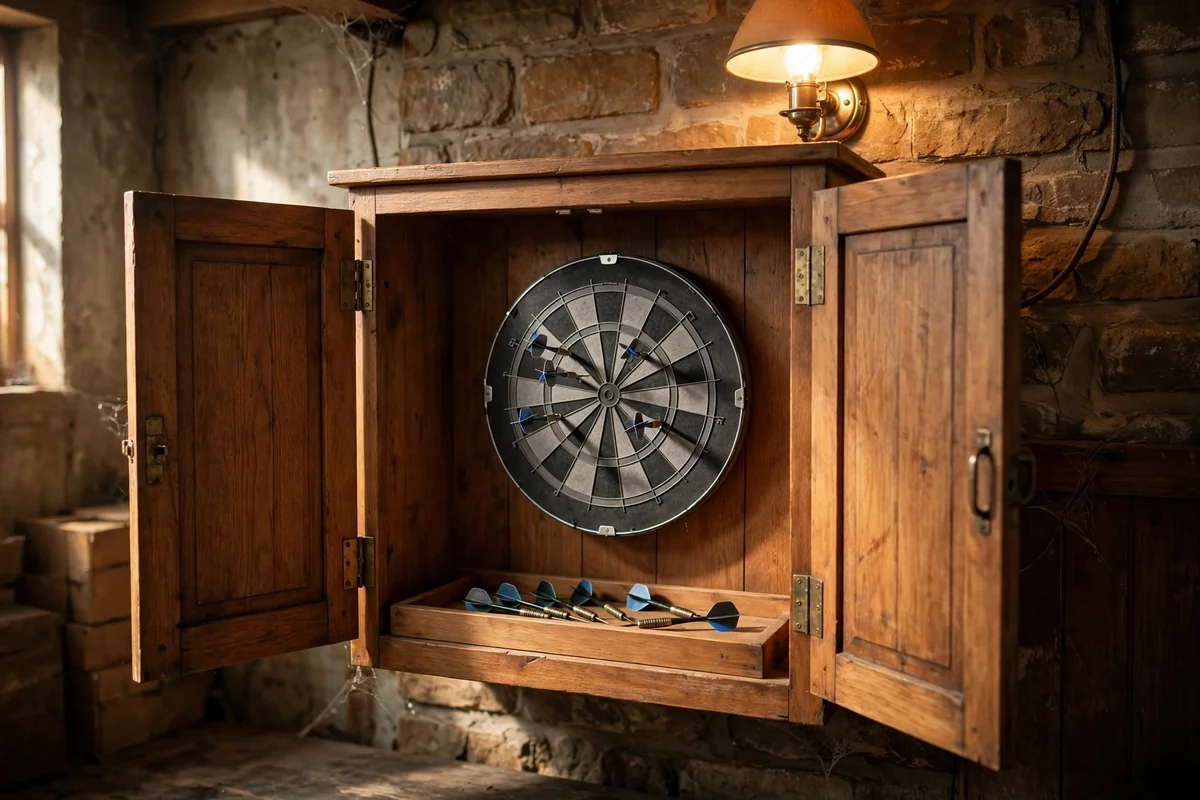
A magnetic dartboard is the safe family choice, since the darts have flat magnetic tips instead of steel points. Hang the board centre at 173 cm from the floor, which is the standard height, and mark the throw line 237 cm away with a strip of floor tape or a small rug edge. Choose a wooden cabinet with doors that close over the board, which protects the wall and keeps darts tidy. The cabinet also frames the board like a piece of furniture.
Keep two full sets of magnetic darts in a small tray inside the cabinet, one set per team, and wipe the board with a dry cloth monthly. Mount the cabinet on a solid wall stud or use heavy-duty anchors, since doors get opened and closed often. The mistake to avoid is hanging the board near a window or a light fixture, where a stray magnetic dart could still knock something over. Budget tip: a cabinet set usually costs 60 to 120, far less than patching drywall later.
5. Build a Puzzle Corner With a Dedicated Table and Sorting Trays
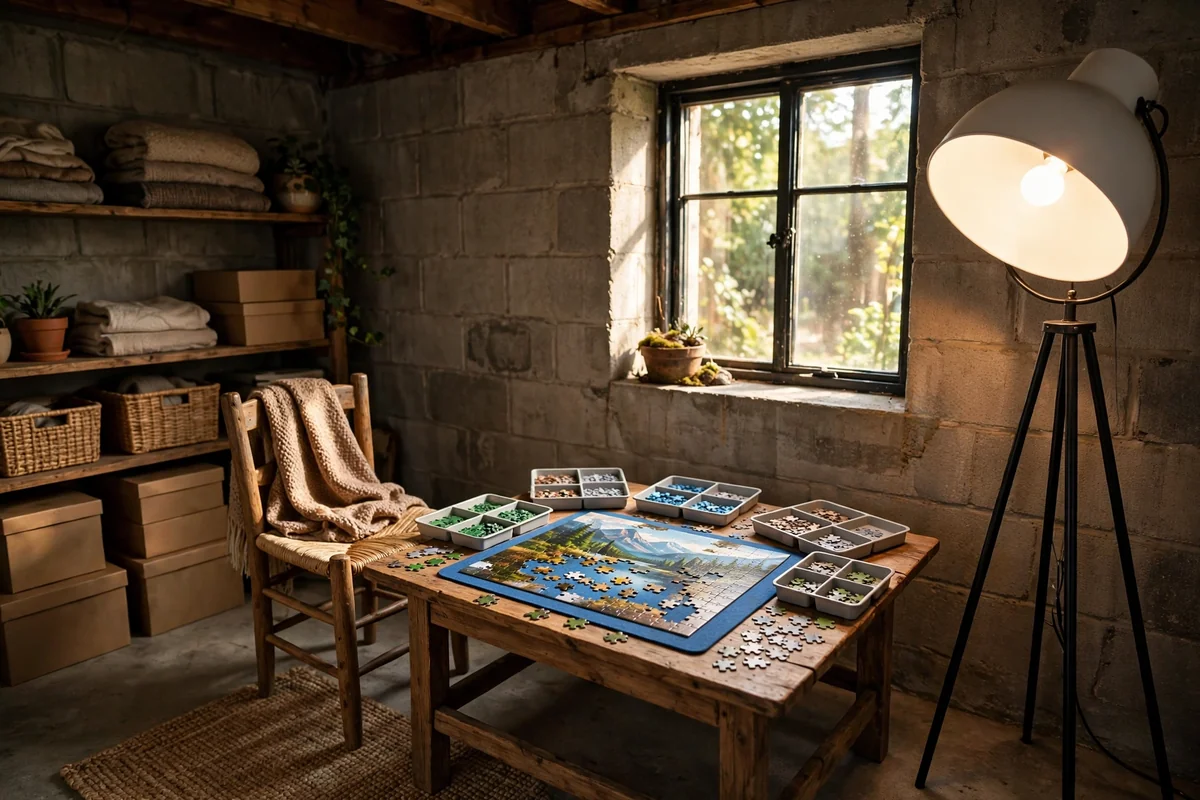
A puzzle table of 90 by 60 cm holds a 1000-piece puzzle with room for sorting trays around the edges. Choose a table with a raised lip or a felt surface so pieces do not slide off when the table is bumped. Place it near a window or under a bright floor lamp, since good light prevents eye strain during long sessions. Add two stackable sorting trays and one small tray for edge pieces, which speeds assembly noticeably.
Store unfinished puzzle boxes on a shelf beside the table and roll a finished puzzle onto a foam board for framing, or glue it with puzzle saver. Keep a small waste bin nearby for torn packaging. The mistake to avoid is starting a 2000-piece puzzle on a table that must also serve dinner, since constant clearing kills momentum. Budget tip: a tilt-top card table works beautifully for under 50, and sorting trays cost under 15 for a set.
6. Line Wall Shelves With Board Games in Plain Unlabelled Boxes
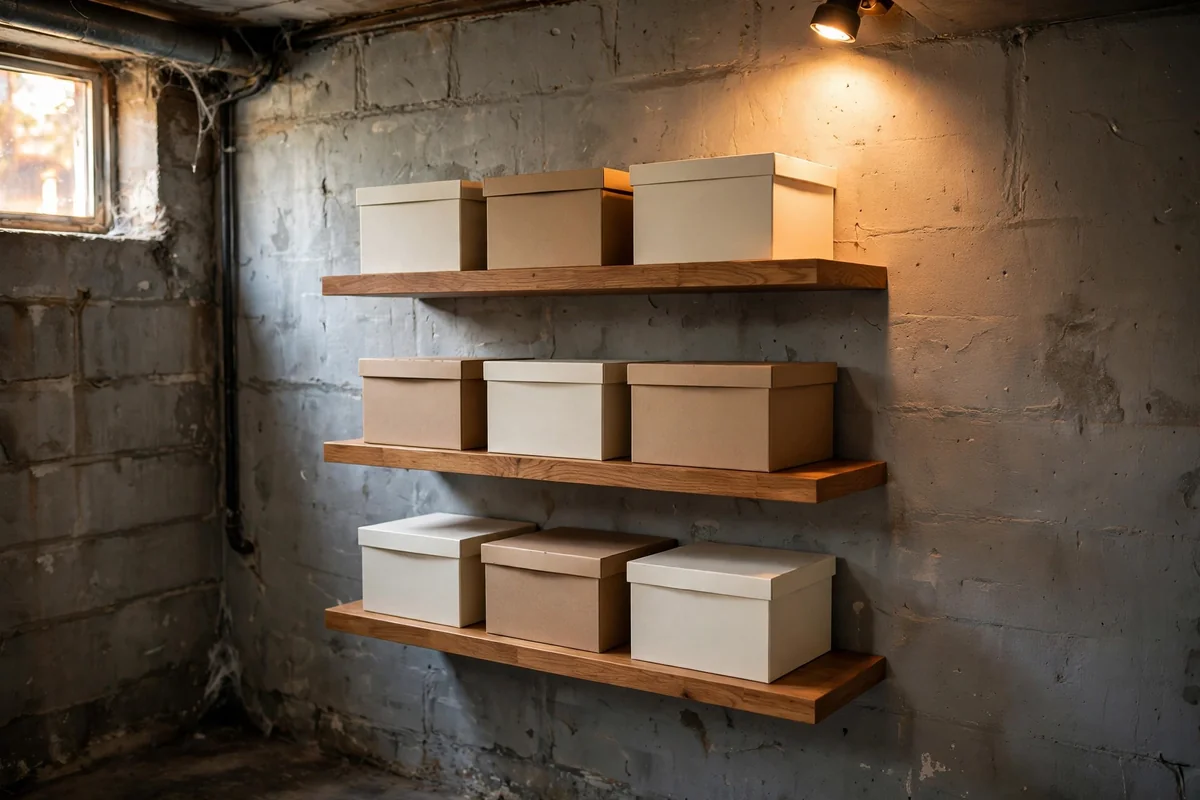
Two or three floating shelves, each 90 to 120 cm long and 28 cm deep, hold a family game collection within reach. Store the games in plain unlabelled storage boxes in matching cream, kraft or sage, which keeps the wall calm instead of visually noisy. Stack boxes no more than two high so the bottom one slides out easily. Fix every shelf into studs with brackets rated for 15 kg, since board games are heavier than they look.
Group boxes by player count or game length rather than alphabet, so choosing Friday’s game takes seconds. Leave one shelf end free for the current game of the week, which invites play without digging. The mistake to avoid is cramming boxes so tightly that pulling one out topples the row. Budget tip: plain kraft boxes cost 2 to 4 each, and three solid pine shelves with brackets usually total under 70.
7. Tuck a Reading Corner Beside the Window With an Armchair and Floor Lamp
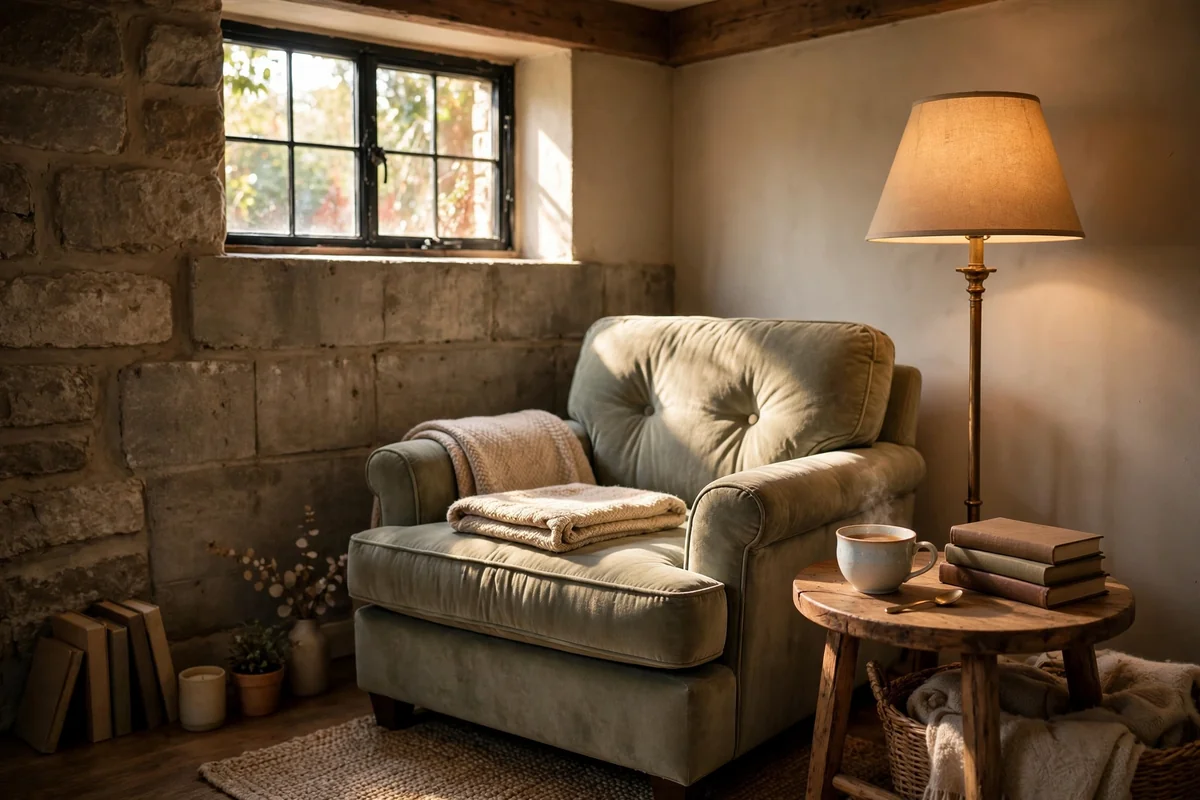
A reading corner needs only about 120 by 120 cm: one armchair with a seat height of 45 cm, a floor lamp with the shade at 140 to 150 cm, and a small side table for tea. Choose a chair with arms wide enough to rest a book on and fabric in a warm neutral that matches the room. Place the lamp slightly behind the chair’s shoulder so light falls over the page without shining in the reader’s eyes.
Add a folded throw over the chair arm and a flat basket underneath for two or three books currently in progress. Keep the window treatment light, since daylight is the best reading light and costs nothing. The mistake to avoid is a lamp with a cool 5000K bulb, which feels clinical at night; choose 2700K warm white. Budget tip: a good floor lamp costs 40 to 80, and a solid second-hand armchair often sells for under 100.
8. Create a Film Corner With the Screen Resting on a Soft Landscape or Off
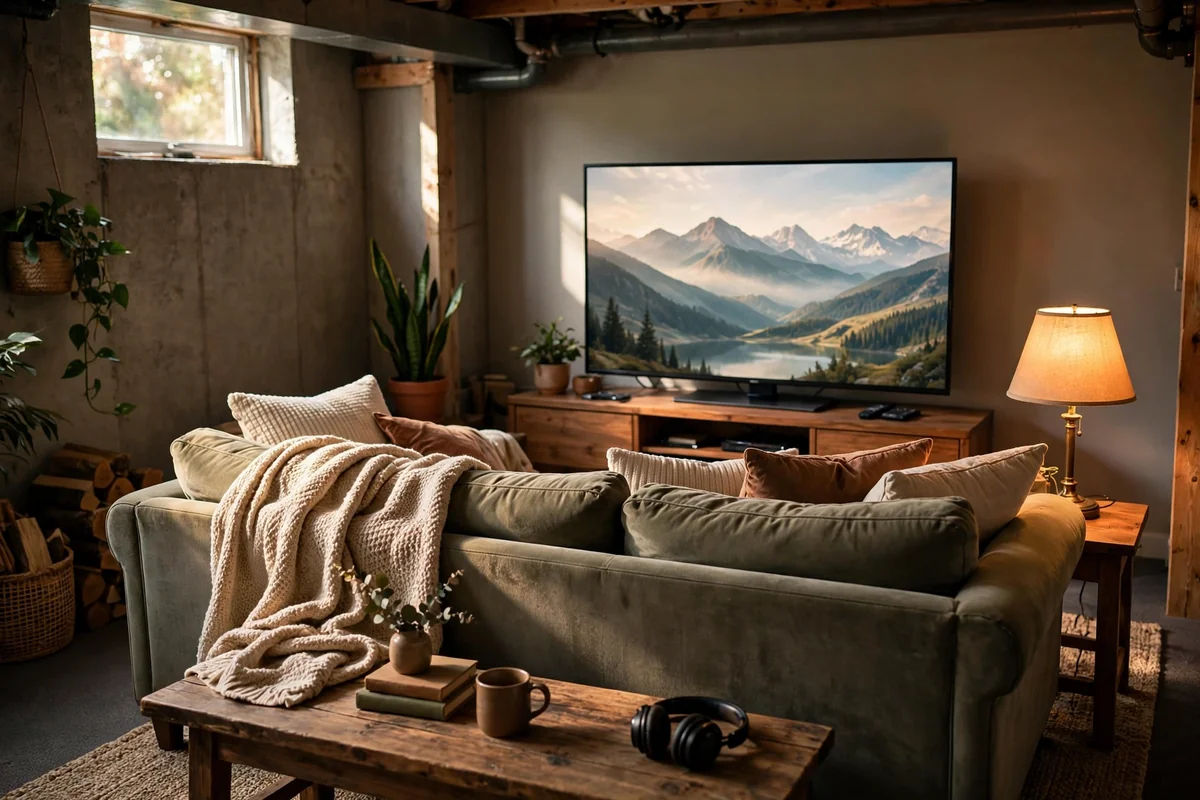
A film corner centres on comfortable seating facing a screen that is either off between viewings or showing a slow, soft landscape scene as gentle decor. Mount the television at 110 to 120 cm to the centre of the screen and sit the sofa 200 to 300 cm away, which suits a 55-inch screen. Keep a media console 40 cm deep below the screen for the player and a small stack of family films. The screen stays a calm object in the room, not a glowing distraction.
Warm the corner with a table lamp at sitting height beside the sofa and a soft throw over one arm, so the space feels like a retreat even when nothing is playing. Use a remote basket so controllers never vanish into cushions. The mistake to avoid is placing the screen opposite a window, where daylight washes out the picture. Budget tip: a simple low console costs 60 to 120, and blackout curtains solve glare for under 50.
9. Layer Two Rugs to Soften Sound and Cushion Feet
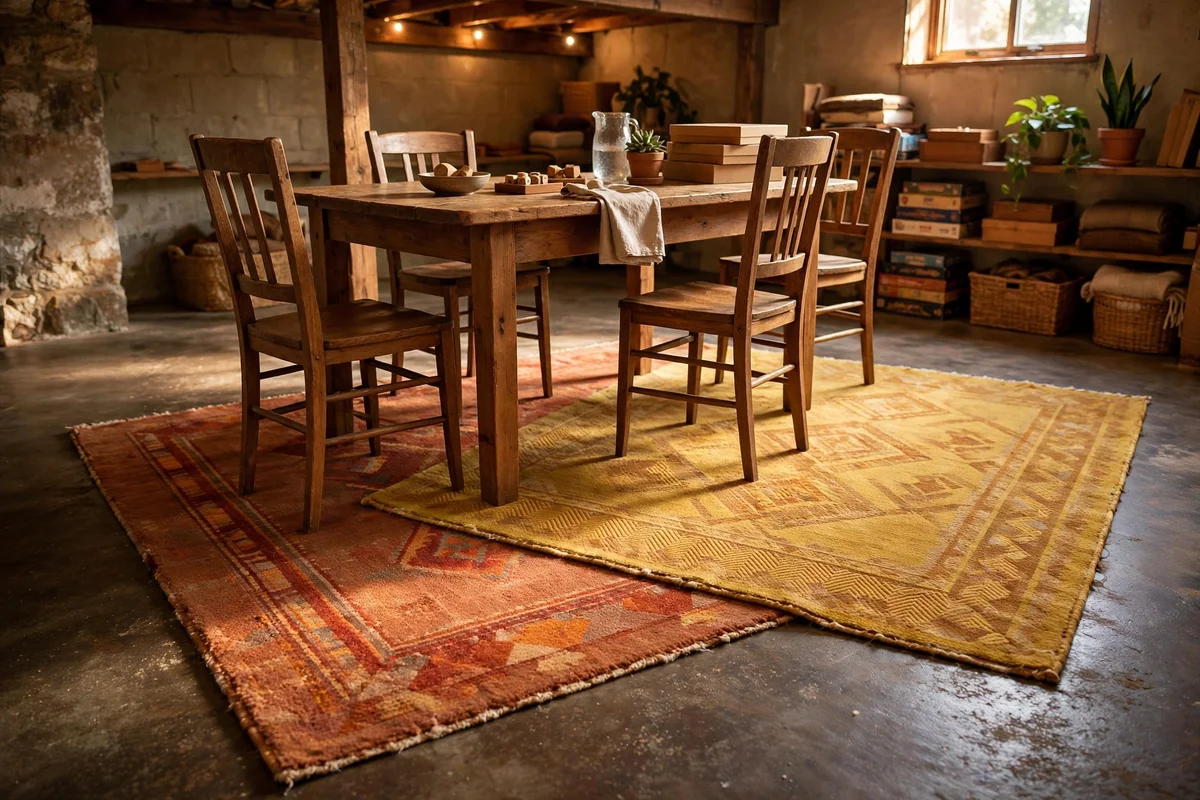
Basement floors are hard and echoing, so layer a large low-pile rug of 200 by 300 cm under the main seating and a smaller 120 by 180 cm rug under the game table. A total pile height of 1 to 2 cm cushions feet and absorbs the clatter of dice, darts and table tennis balls. Choose wool or wool-blend rugs with a dense weave, since they quiet a room far better than thin synthetics. Use rug pads underneath to stop slipping on concrete.
Overlap the rugs by 15 to 20 cm where zones meet, which visually links the seating and play areas into one room. Vacuum weekly and rotate the rugs every few months so wear spreads evenly. The mistake to avoid is a shaggy rug under the game table, where pieces sink and chairs wobble. Budget tip: flatweave wool-look rugs cost 80 to 180 for large sizes, and quality rug pads run about 20.
10. Place Warm Table Lamps at Sitting Height Around the Seating
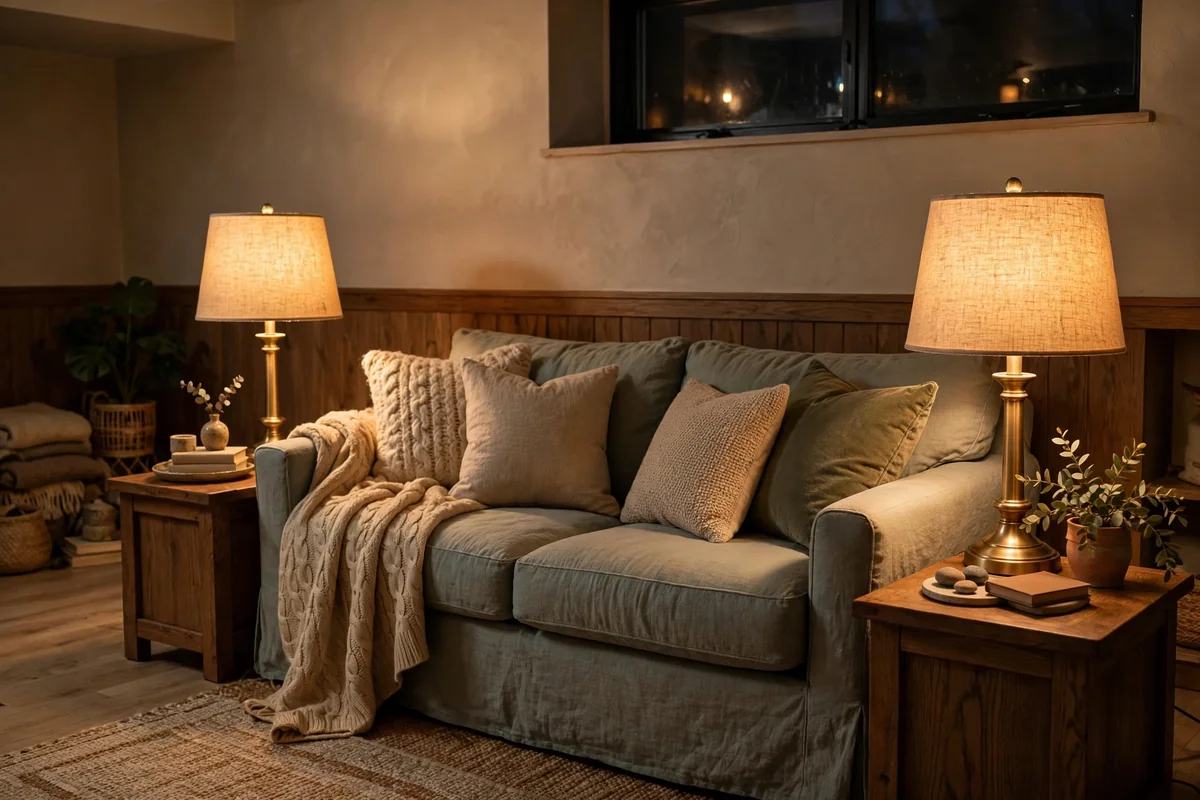
Place two or three table lamps so their shades sit 90 to 110 cm from the floor, roughly at seated eye level, which puts warm light exactly where people gather. Choose opaque or linen shades that glow rather than glare, with 2700K bulbs of 6 to 9 watts LED. Set one lamp on each side table flanking the sofa and one on the media console. The pools of light make the basement feel like evening upstairs, calm and close.
Use plug-in lamps with cord covers along the baseboard rather than rewiring the room. Keep spare bulbs in the storage cabinet so a burnt-out lamp never leaves a dark corner. The mistake to avoid is a single bright ceiling light doing all the work, which flattens the room and strains eyes during card games. Budget tip: matching ceramic or wood lamps cost 25 to 50 each, and LED bulbs use pennies of electricity per evening.
11. Add a Dimmer Switch So Evening Light Can Drop for Game Night
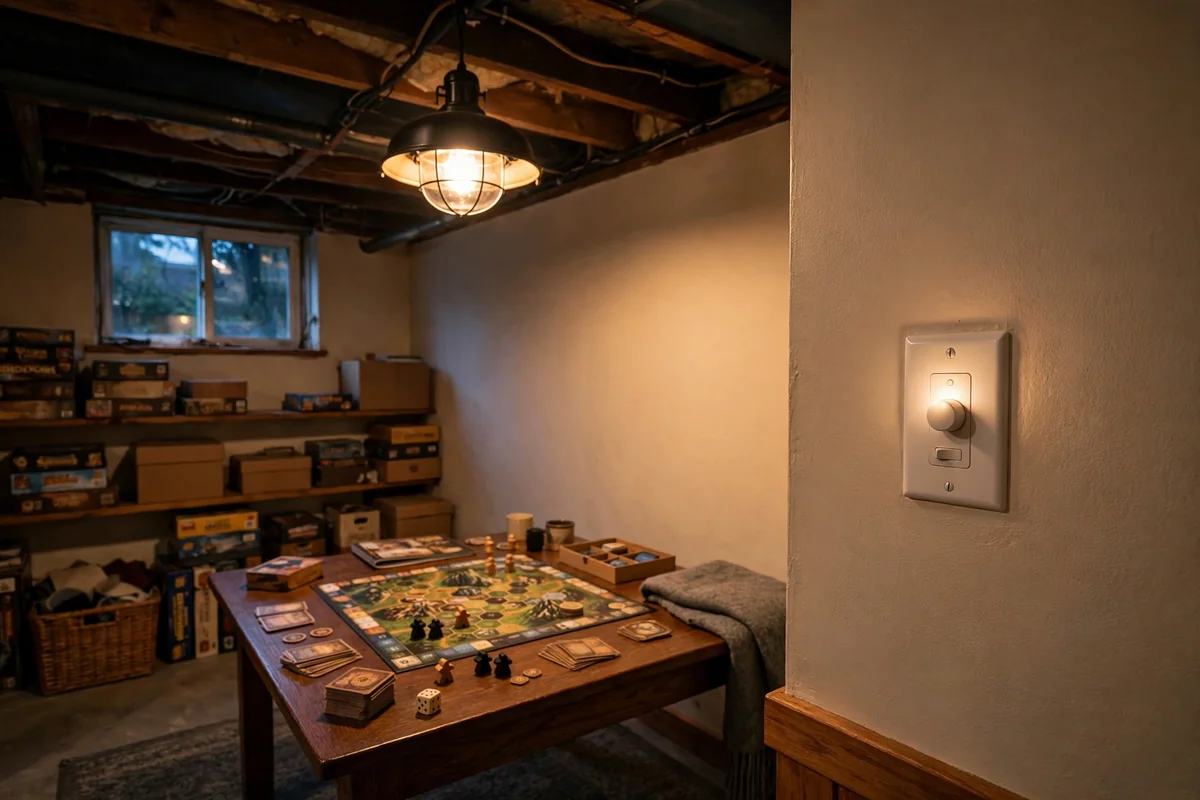
A dimmer on the main ceiling light lets the room shift from bright setup to soft game night with one slide. Choose a trailing-edge dimmer rated for your LED bulbs, since mismatched dimmers cause flicker. Set the daytime level near full for cleaning and puzzle sorting, then drop to 30 to 40 percent for films and evening board games. The change costs little and transforms how the basement feels after dark.
If the wiring feels daunting, plug-in dimmer modules for floor and table lamps give the same effect with no electrician. Mark the family’s preferred evening setting on the switch plate so everyone finds it. The mistake to avoid is dimming below 10 percent on non-dimmable LEDs, which buzz and shorten bulb life. Budget tip: a plug-in dimmer costs under 20, and an electrician-fitted wall dimmer usually runs 60 to 120.
12. Style a Refreshment Station With Tea, Juice and Sparkling Water

Set a small sideboard or serving trolley 80 to 100 cm wide near the seating and stock it for family nights only: a kettle or thermal carafe for tea, two glass carafes for juice, and a crate of sparkling water bottles. Add a tray with cups, a small bowl of dates and a dish of mixed nuts. Keep everything wholesome and family friendly, which keeps the room welcoming for every age. A folded cloth under the carafes catches drips.
Refill the carafes before each game night and wash the cups straight after, so the station is always ready. Keep a small bin beside the cart for bottle recycling. The mistake to avoid is turning the station into a sticky drinks counter, since sticky spills and late caffeine ruin the calm. Budget tip: a simple cart costs 50 to 100, and glass carafes sell for under 15 each.
13. Drop Floor Cushions and a Low Bench for Younger Players
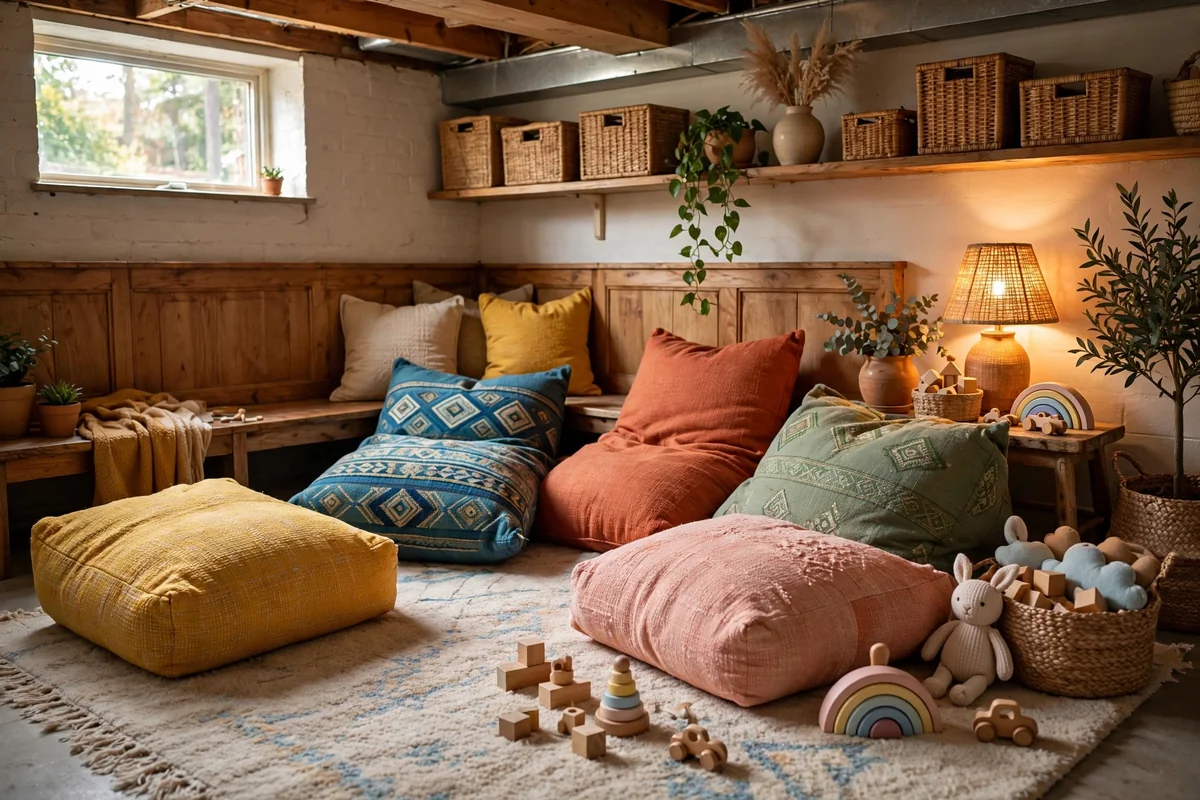
Children and teenagers often prefer the floor, so offer three or four large floor cushions of 60 by 60 cm with removable, washable covers in sturdy cotton or canvas. Place a low bench of 35 to 40 cm height along one wall as overflow seating that doubles as a side table during the day. The cushions pull out for big game nights and stack in a corner when the room needs clearing. Washable covers are essential with juice nearby.
Choose cushion filling of shredded foam or buckwheat hull for support that keeps its shape. Store spare covers in the storage cabinet and rotate them monthly. The mistake to avoid is bean bags with tiny polystyrene beads, which flatten in weeks and scatter everywhere when torn. Budget tip: quality floor cushions cost 25 to 45 each, and a simple pine bench sells for 60 to 100.
14. Mount a Small Chalkboard for Family Tournament Scores
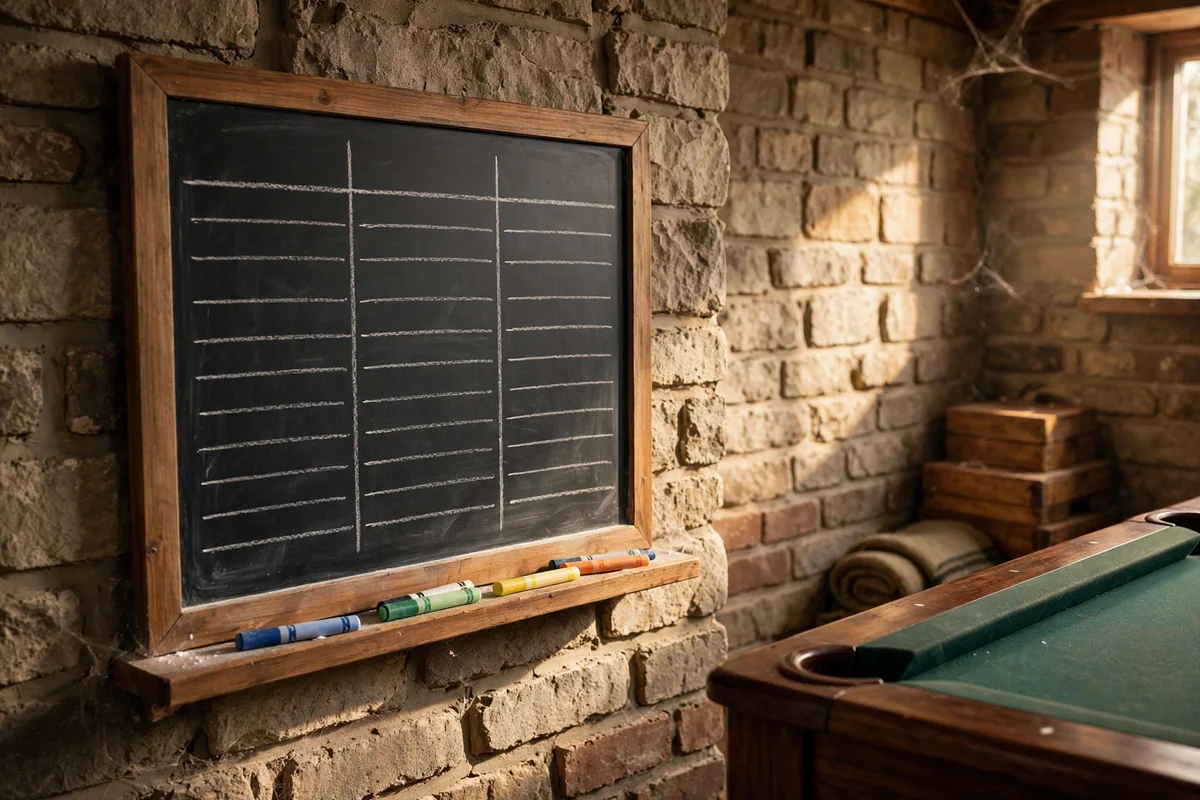
A chalkboard of 60 by 45 cm mounted at 150 cm high beside the game table turns casual play into a running family league. Use chalk markers for crisp lines and list each player’s name down the left with columns for weekly wins. A small ledge holds the markers and an eraser. Updating scores together after each game becomes part of the ritual, and children love watching their column grow.
Photograph the board at the end of each month before wiping it, so the season’s history survives in the family album. Keep spare markers in the storage cabinet. The mistake to avoid is a board so large it dominates the wall; 60 by 45 cm reads clearly from 3 metres without shouting. Budget tip: a framed chalkboard costs 20 to 40, and a set of chalk markers runs under 10.
15. Store Paddles, Cues and Balls in a Closed Oak Cabinet
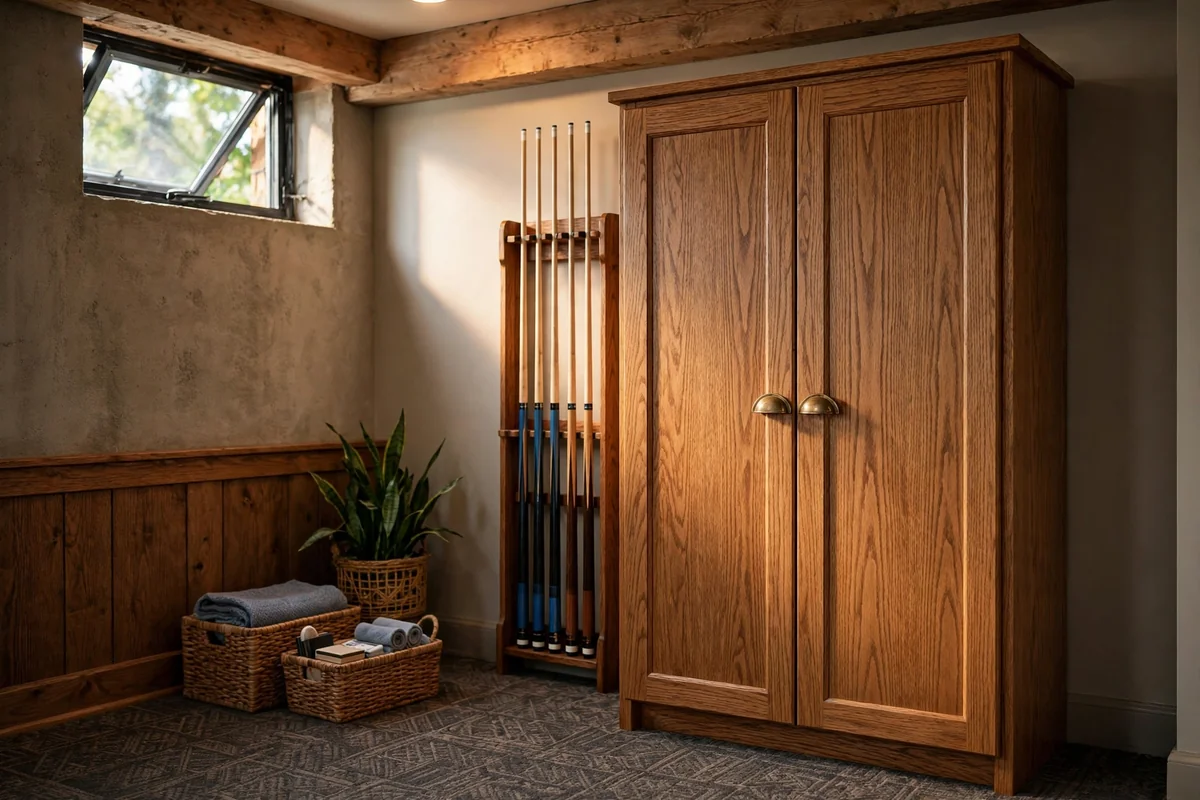
A closed cabinet of 80 to 100 cm wide with two doors keeps cues, paddles, balls and darts out of sight and out of dust. Fit one adjustable shelf at mid height for paddles and balls, and leave the tall lower section for cues stored vertically in a simple rack insert. Oak or oak-look finishes suit the warm basement palette and hide scuffs. Lockable doors are a thoughtful touch if toddlers visit.
Note the contents on a small card inside each door, which stops the family buying duplicate balls. Wipe the cabinet quarterly and check cue tips for wear. The mistake to avoid is an open shelf for this gear, since cues warp in sunlight and balls roll away. Budget tip: a solid second-hand cabinet costs 80 to 160, and a cue rack insert sells for under 25.
16. Keep Throw Blankets in a Woven Basket Beside the Sofa
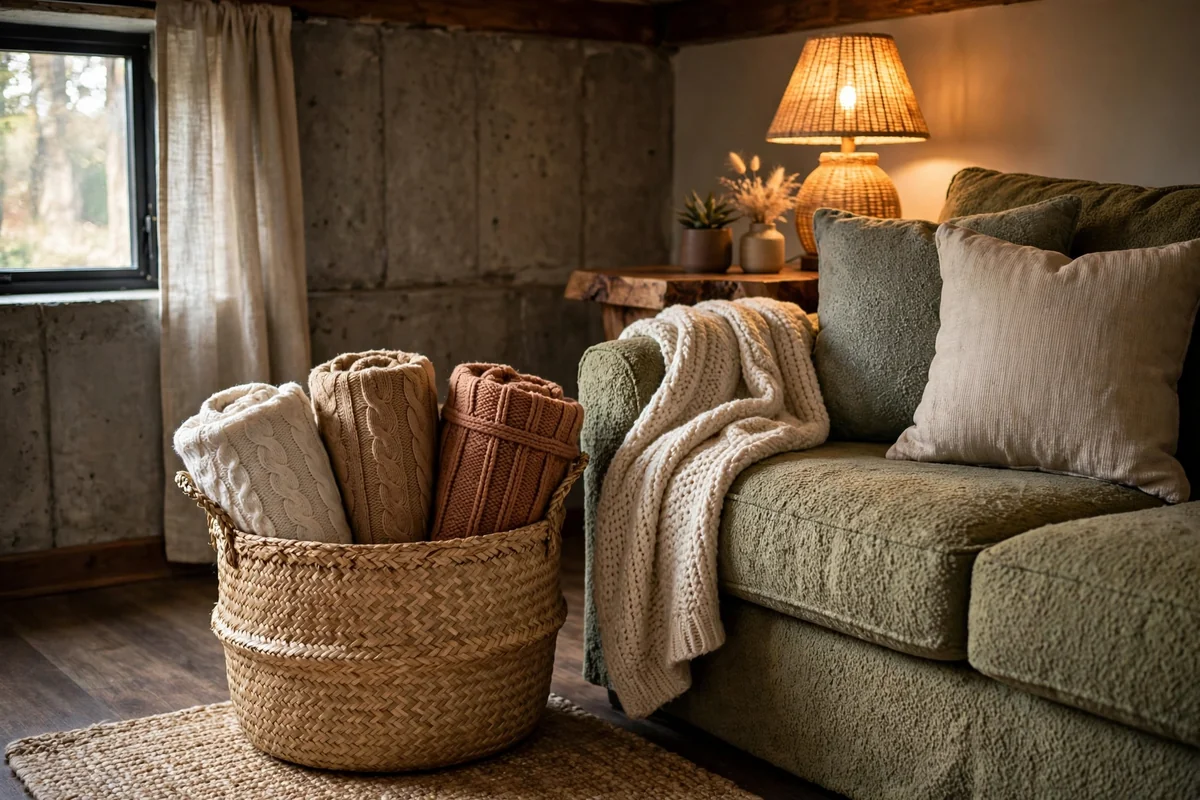
Basements run cool, so keep two or three throw blankets in a woven basket of 50 cm diameter beside the sofa. Choose cotton or wool throws of 130 by 180 cm, which cover a seated adult fully, in colours that echo the rugs. Roll rather than fold each throw so they lift out easily with one hand mid-game. A basket with handles moves to the film corner or the reading chair as needed.
Wash the throws monthly and air the basket in sunlight twice a year to keep it fresh. Keep one lighter throw for summer and two heavier ones for winter. The mistake to avoid is draping all the throws over the sofa back permanently, which looks cluttered and traps dust. Budget tip: cotton throws cost 20 to 35 each, and a sturdy seagrass basket runs 30 to 50.
17. Hang Framed Vintage Game Prints in a Simple Row
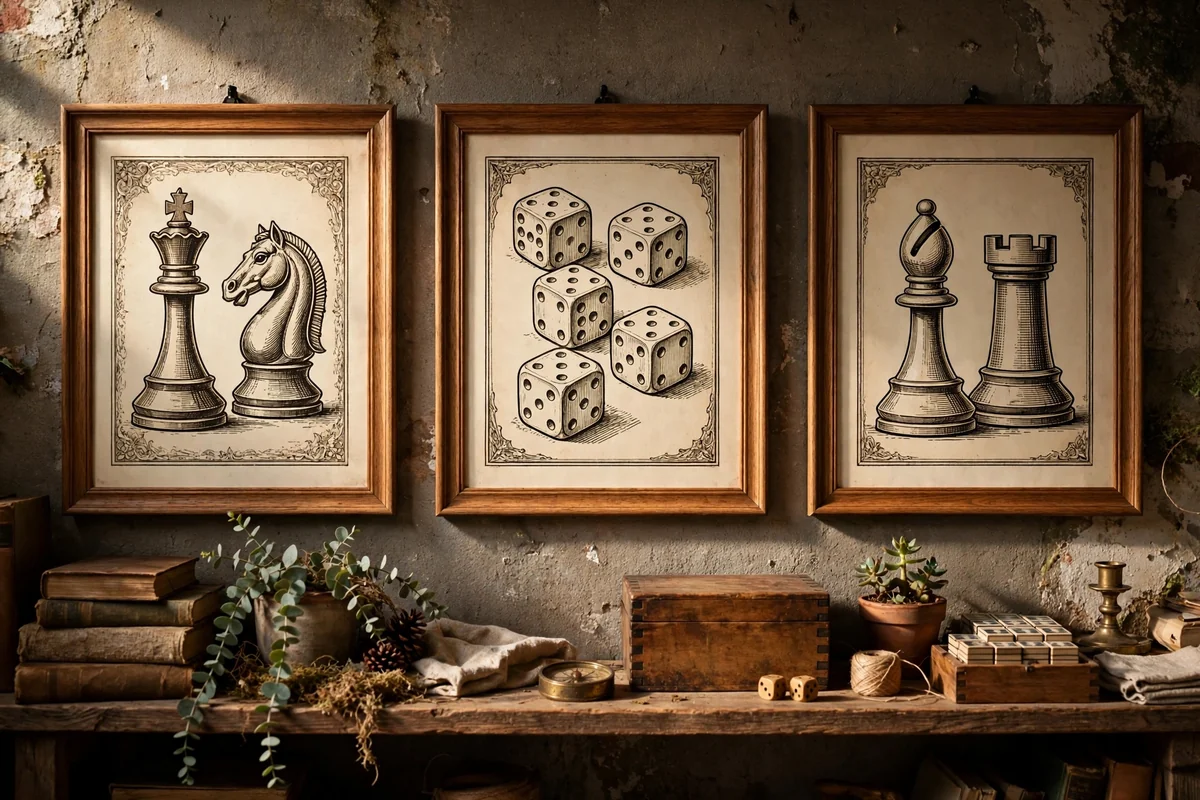
Three framed prints in a horizontal row above the board game shelves add character without clutter. Choose vintage-style illustrations of chess pieces, dice or playing cards in muted inks, each frame 30 by 40 cm with a 5 cm mat. Hang the row with centres at 150 cm high and 10 cm gaps between frames. Matching thin wood frames keep the row calm and let the artwork carry the interest.
Use proper picture hooks rated for the frame weight and a spirit level for the row. Keep the prints strictly family themed, with nothing but landscapes, botanicals and vintage game art. The mistake to avoid is mixing five different frame styles, which turns a simple row into visual noise. Budget tip: printable vintage-style art costs under 10 for a set, and matching frames sell for 8 to 15 each.
18. Add a Low Bookshelf Next to the Puzzle Corner for Game Guides
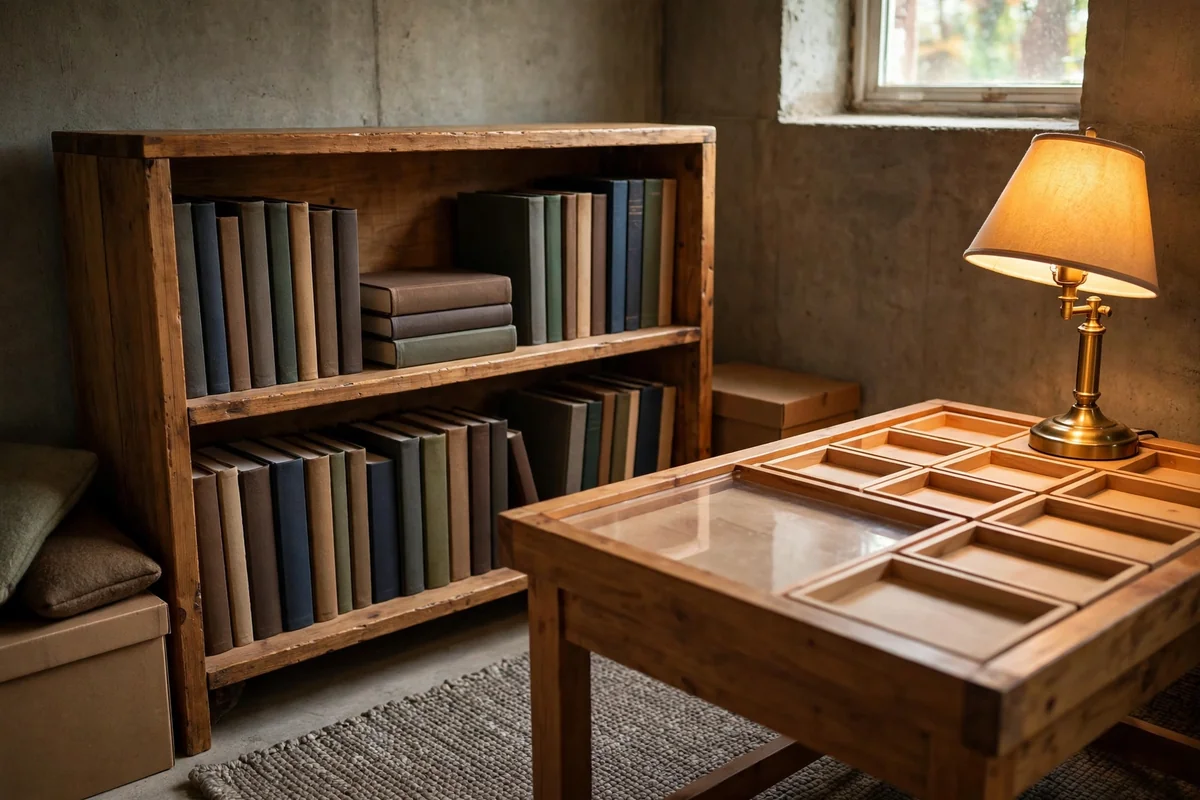
A low bookshelf of 90 cm wide and 75 cm high beside the puzzle table holds rule books, puzzle catalogues and a few strategy guides at a reachable height. Keep the top surface clear as an extra sorting area for large puzzles. Arrange books by game type with the tallest at the ends, which looks tidy and stops leaning. A bookshelf this low doubles as a room divider between the puzzle corner and the main table.
Anchor the shelf to the wall with anti-tip straps, since children climb. Dust the shelves monthly and weed out guides for games the family no longer plays. The mistake to avoid is a tall bookcase in a basement, which can feel looming and blocks light. Budget tip: a solid low bookshelf costs 50 to 90 new, and second-hand ones sell for under 40.
19. Soften the Walls With Fabric Panels or Heavy Curtains
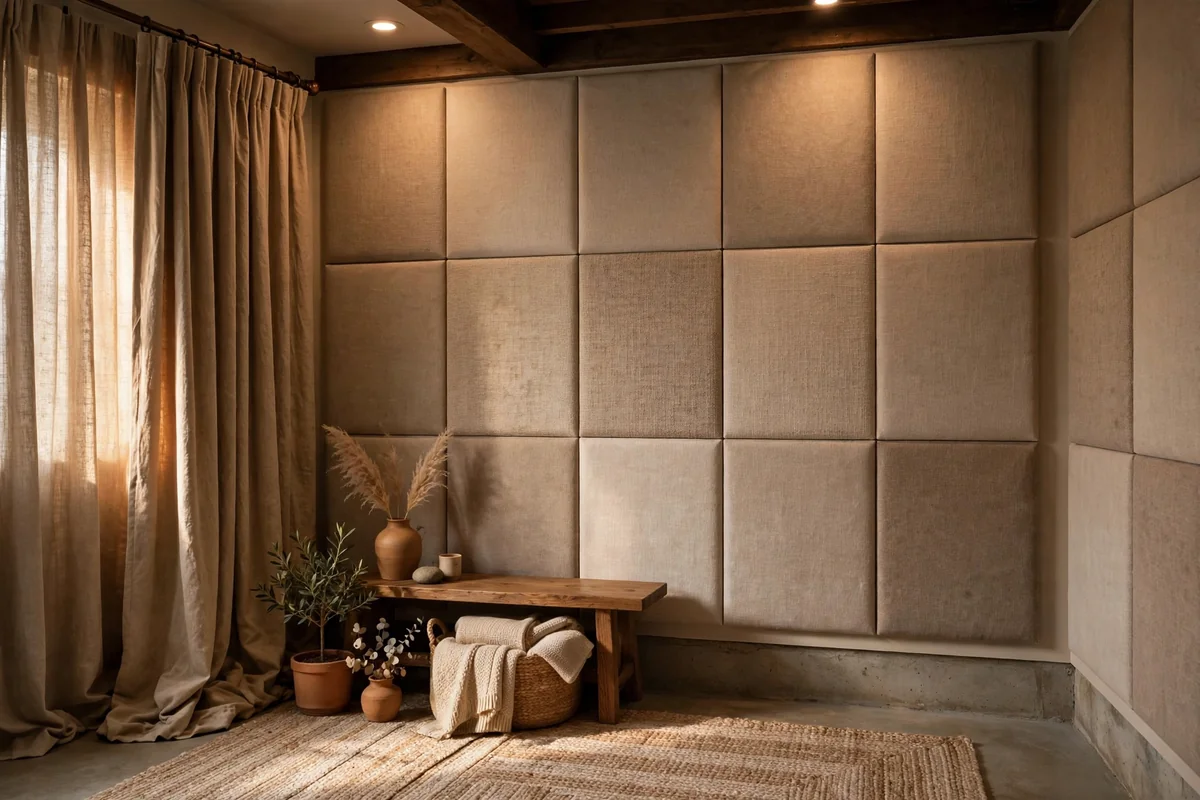
Bare basement walls bounce sound, so hang fabric acoustic panels of 60 by 120 cm on the two longest walls, spaced 30 cm apart. Choose panels in warm neutrals with a noise reduction rating of 0.7 or higher, which noticeably calms dice rolls and excited voices. Alternatively, hang heavy floor-length curtains along one wall, which soften both sound and the concrete feel. Mount panels with removable strips in rented homes.
Keep panels 15 cm above the baseboard so they never wick up floor moisture. Vacuum fabric panels twice a year with an upholstery attachment. The mistake to avoid is foam egg-crate panels, which look makeshift and collect dust. Budget tip: fabric-wrapped panels cost 40 to 80 each, and heavy curtains from a home store run 30 to 60 per panel.
20. Mount a Framed Tournament Bracket Board by the Door
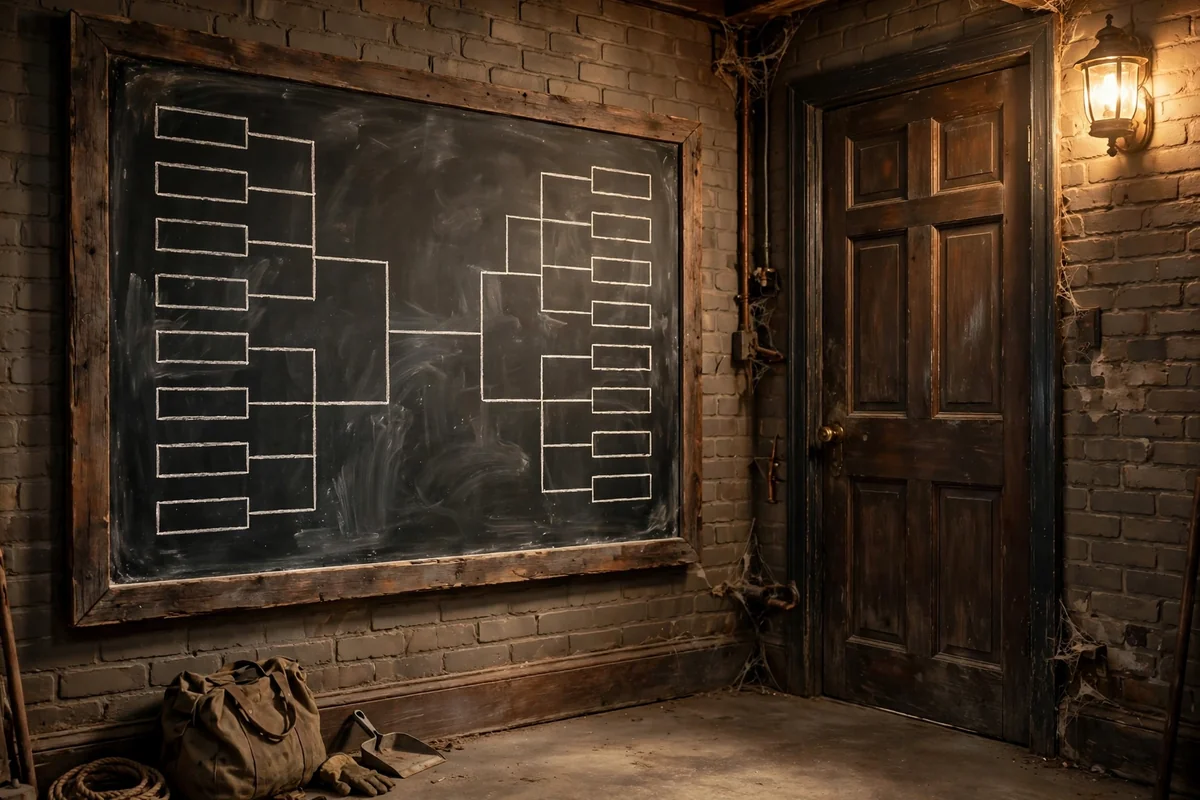
A framed bracket board of 70 by 50 cm by the door organises the family’s seasonal tournaments, from table tennis ladders to board game championships. Draw the bracket in chalk marker on a dark board inside a simple frame, so winners advance with a satisfying wipe and rewrite. Include every family member’s name, which makes even the youngest feel part of the competition. The board greets everyone entering the room.
Reset the bracket each season and photograph the final board before wiping, which builds a lovely archive of family champions. Keep the markers with the chalkboard ledge nearby. The mistake to avoid is a bracket that only adults can reach or read; mount the centre at 140 cm so children follow along. Budget tip: a framed board costs 25 to 45, and seasonal resets cost nothing but ten minutes.
21. Set a Small Card Table With Four Lightweight Chairs
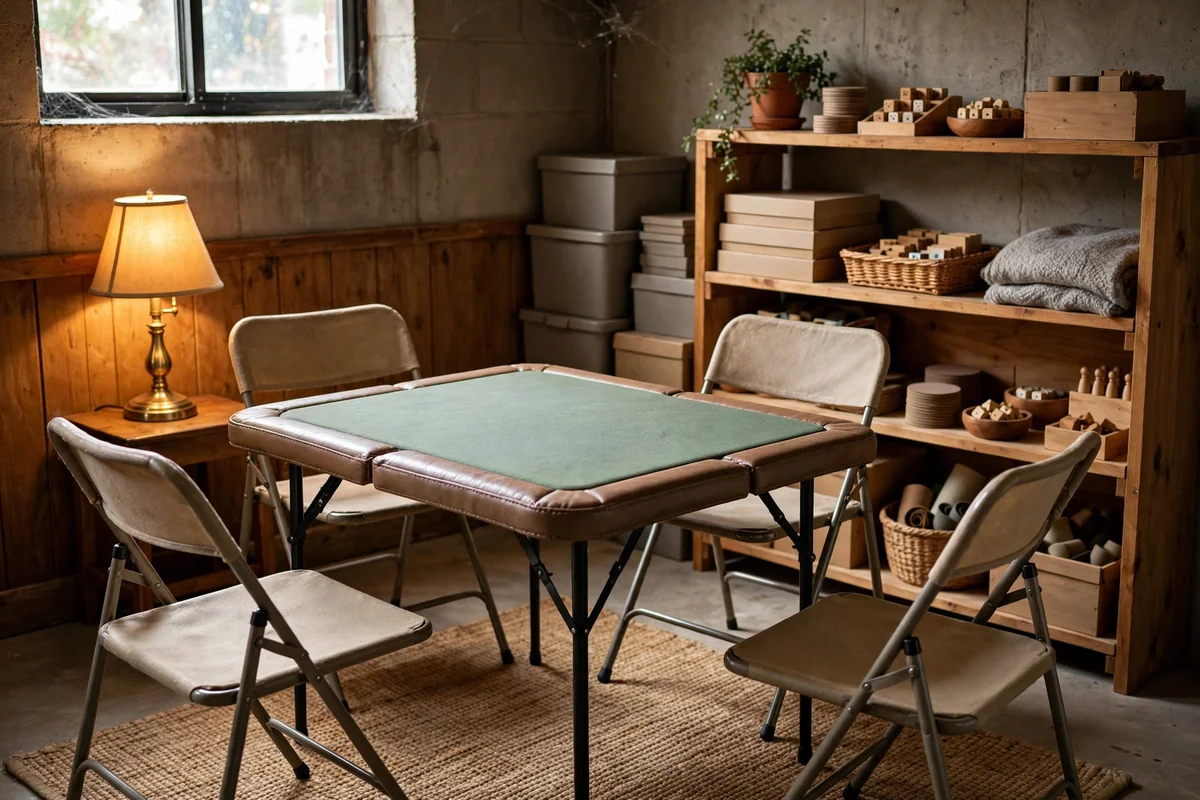
A folding card table of 85 by 85 cm with four lightweight chairs creates a second game station for children’s games or two-player matches. Choose a table with a padded vinyl top, which muffles dice and is easy to wipe after juice spills. Fold the whole set flat against the wall when the main table hosts the big game. Lightweight chairs of 3 to 4 kg each let children set up their own station independently.
Store the folded set behind the storage cabinet or in a 25 cm gap beside the shelves. Check the folding locks yearly so the table never collapses mid-game. The mistake to avoid is a wobbly card table, so test the legs in the shop before buying. Budget tip: a card table with four chairs usually costs 70 to 120 as a set, and second-hand sets sell for under 50.
22. Hang a Low Pendant Directly Over the Game Table
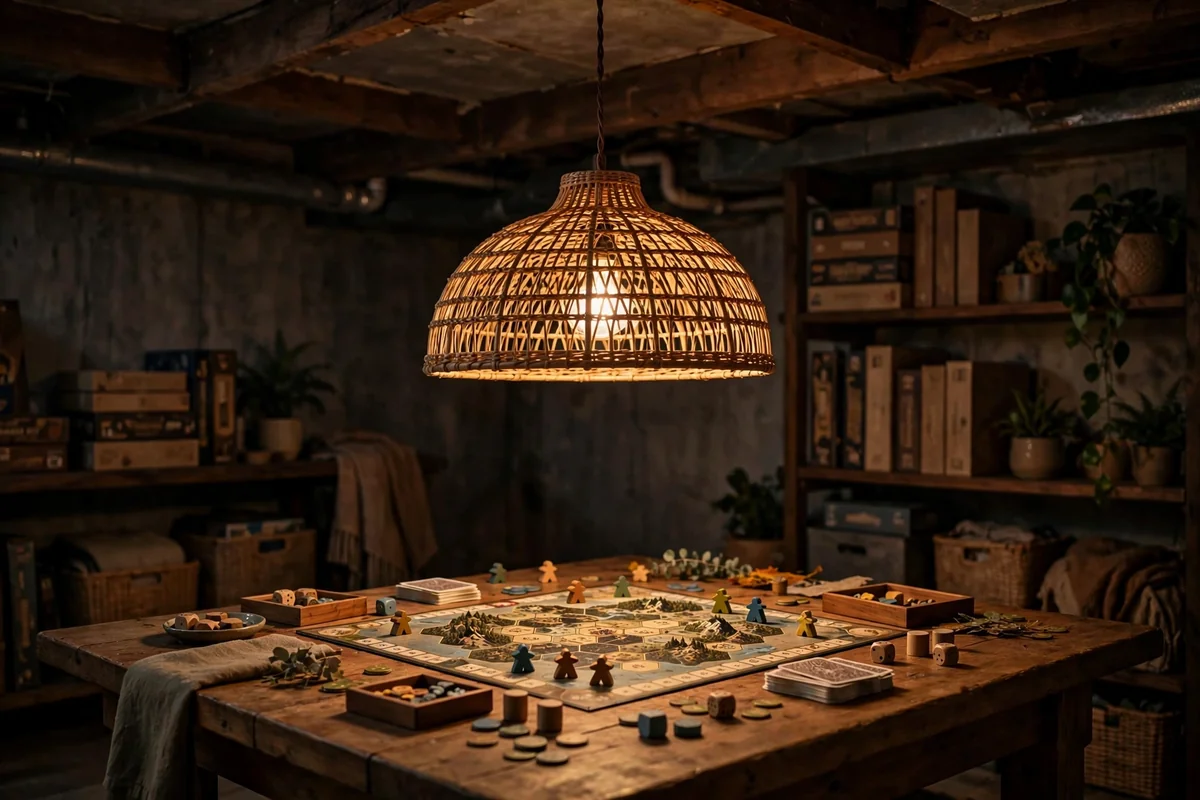
A pendant hung 75 to 90 cm above the game tabletop pools light exactly where cards, boards and puzzle pieces lie. Choose a shade of 30 to 40 cm diameter in rattan, linen or smoked glass, which spreads a warm 2700K glow without harsh edges. Hang it from a ceiling hook with a fabric cord if hardwiring is not possible. The low light marks the table as the room’s heart after dark.
Pair the pendant with a dimmer switch so brightness follows the evening’s mood. Dust the shade monthly, since basement air settles quickly. The mistake to avoid is hanging the pendant higher than 100 cm, where it becomes just another ceiling light and loses its intimate pool. Budget tip: a quality pendant with shade costs 40 to 80, and a plug-in swag kit runs under 25.
A basement game room is built from small, deliberate choices rather than one big purchase. The right table, warm light at sitting height, soft rugs underfoot and a tidy place for every paddle and piece turn a cool downstairs box into the warmest room in the house. Keep the palette calm, the drinks wholesome and the competition friendly, and the room will invite your family in on its own.
This week, try the easiest idea first: set up the refreshment station with tea, juice and sparkling water, and lay out one board game on the dining table as a rehearsal. If the family gathers without being asked, you have your answer. Then add the lighting and the rugs next, one corner at a time, and watch Friday nights change.
Frequently Asked Questions
How much does a basement game room cost to set up?
A cosy setup starts around 300 to 500 pounds or dollars using second-hand tables, rugs and lamps. A mid-range room with a folding table tennis table, a used pool table and new lighting runs 1,000 to 2,500. Spend first on seating and lighting, which you use every visit, and add big-ticket tables later once the family proves the room gets used weekly.
What size basement works for a family game room?
A room of 200 to 300 square feet fits a board game table, a puzzle corner, seating and shelves comfortably. Table tennis needs about 400 square feet including playing space, while a 7-foot pool table wants roughly 5 by 4 metres of clear floor. In smaller basements, choose folding tables and stackable seating so one zone serves several games.
How do I keep a basement game room warm and dry?
Start with a dehumidifier set to 45 to 55 percent humidity, which protects wooden tables, cues and board games from warping. Add layered rugs and heavy curtains for insulation, and keep fabric panels and furniture 15 cm clear of outside walls. A small oil-filled radiator on a timer warms the room an hour before game night without running all day.
Can I build a game room in a rented basement?
Yes, with removable choices. Use freestanding shelves, plug-in lamps and fabric acoustic panels on removable strips instead of fixed wiring. Folding tables and stackable cushions leave no trace. Keep the original light fittings in a labelled box so you can restore them on move-out day, and check the lease before mounting anything heavy like a pool table or dartboard cabinet.
How do I keep all the game pieces and equipment tidy?
Give every category a home: a closed cabinet for cues and paddles, plain boxes on shelves for board games, trays for puzzle pieces and a basket for throws. Return pieces to their homes at the end of each game night, which takes five minutes with the whole family helping. Photograph the tidy room once, and use the photo as the reset target for children.