Living Room
20 Blue and Beige Living Room Ideas That Feel Effortlessly Polished
By Anna Wells · · 11 min read
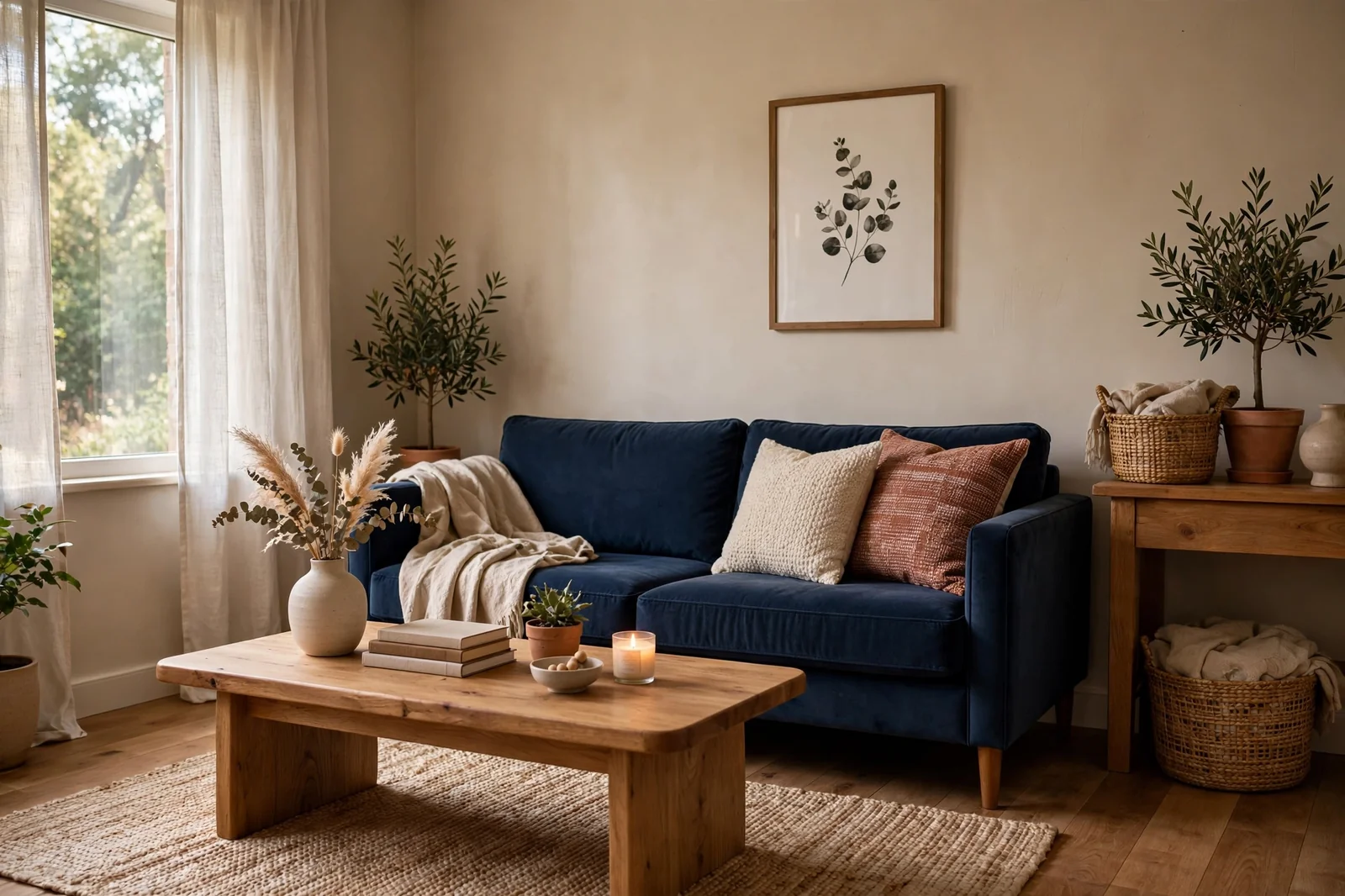
Blue brings calm and depth while beige keeps everything warm and grounded, which is why this pairing works in almost every style from coastal to traditional. Beige also hides everyday life better than bright white, and blue adds personality without making a room feel busy. These 20 blue and beige living room ideas show how to balance the two colors through sofas, walls, rugs, curtains and accents, so your living room feels polished, comfortable and completely livable.
Blue and beige might be the most forgiving color combination in decorating. Blue gives a room soul and depth, beige gives it warmth and practicality, and together they handle everything from sandy coastal cottages to tailored city apartments. The key is proportion: let one color lead and the other support, then layer in texture so the palette feels rich rather than simple. These 20 ideas cover every major surface and style, so you can build the combination around the furniture you already own.
1. Beige Walls With a Navy Sofa
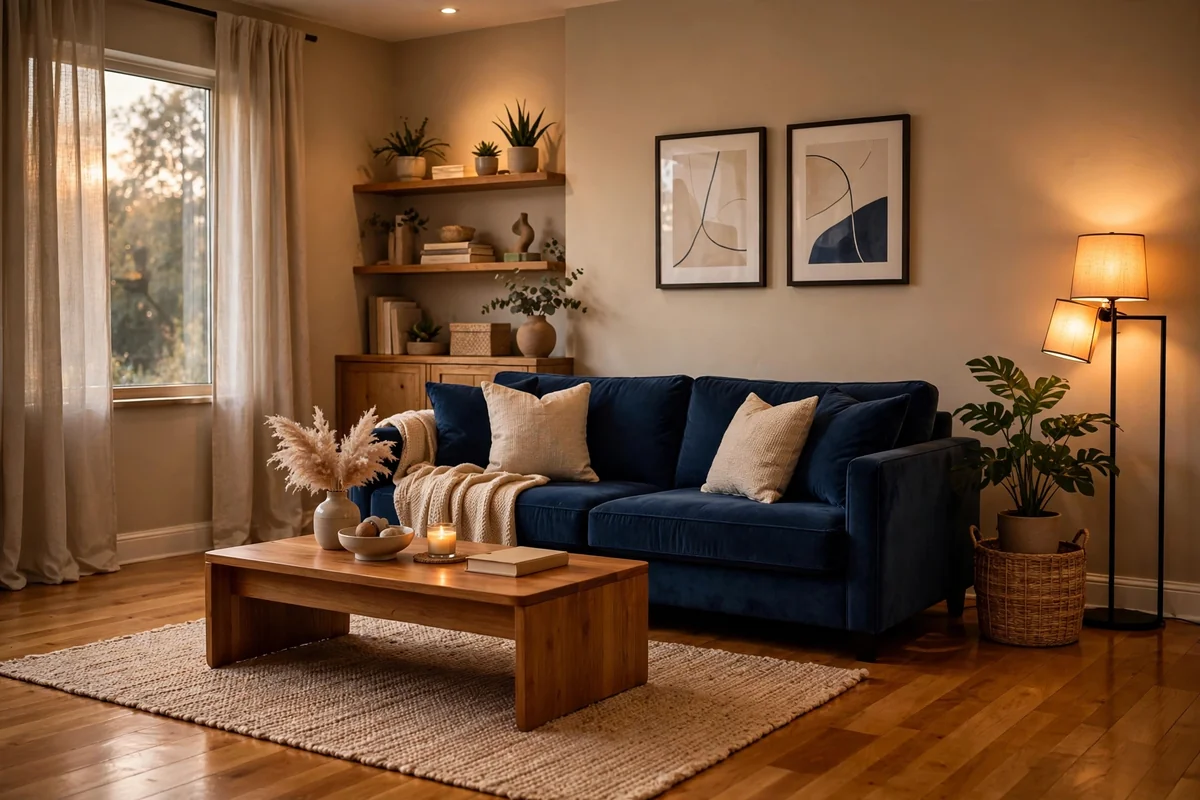
Warm beige walls with a navy sofa is the easiest way to make blue and beige feel intentional. The beige creates a soft, enveloping backdrop while the navy anchors the room with confident contrast. This works beautifully with medium-tone wood floors or light oak, since the wood’s warmth balances the cool blue. Keep the beige walls warm-leaning, think creamy sand rather than gray-beige, so the room glows instead of looking flat.
A navy sofa is a commitment, so choose performance fabric or a washable slipcover in a busy household. Style it with beige and cream pillows plus one patterned pillow that mixes both colors to tie the scheme together. The most common mistake is stopping at the sofa: echo the navy in at least two more spots, like curtains or artwork, so the color feels distributed rather than isolated. Beige walls also make art pop, so this is a great foundation for a gallery wall.
2. A Blue Accent Wall With Beige Furniture
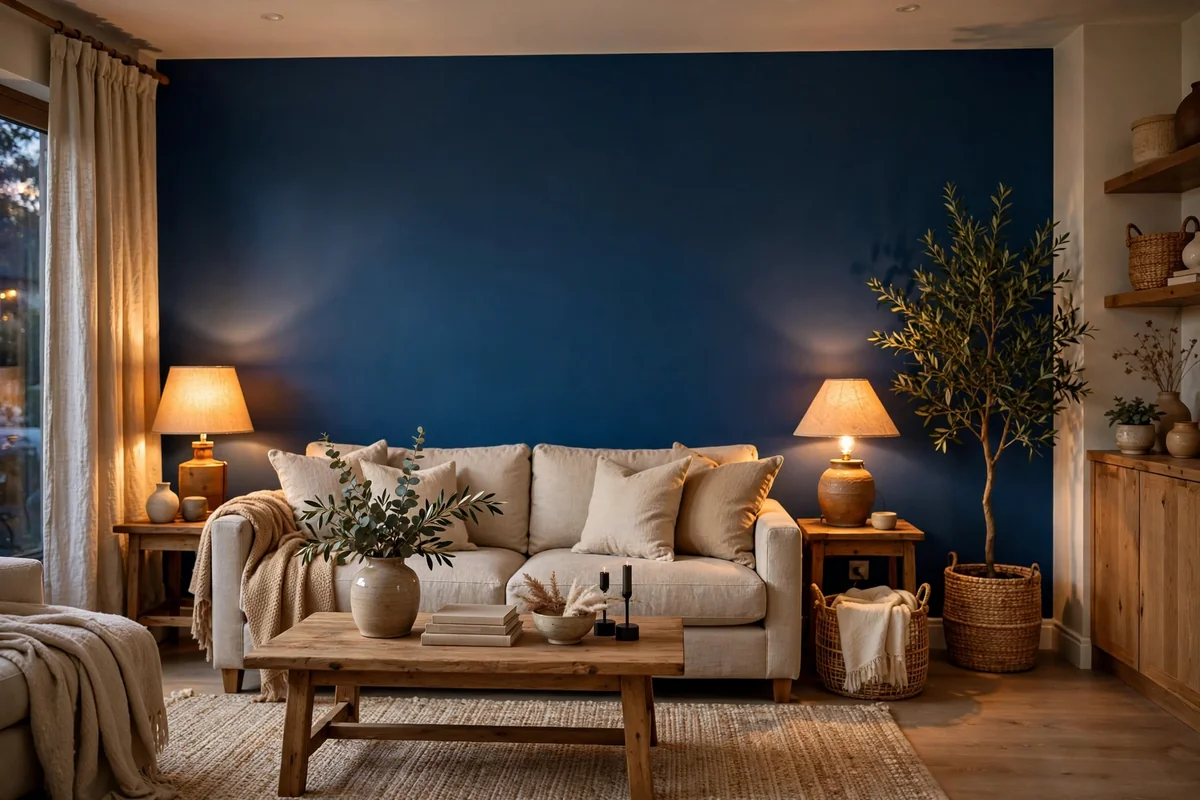
Flip the formula with a blue accent wall behind beige furniture. A deep slate or navy wall makes cream and oatmeal upholstery glow, and the single strong wall gives the room instant architecture. Paint the wall behind the sofa or fireplace for maximum impact. Test large swatches first, since blue shifts dramatically between daylight and lamplight; a color that looks perfect at noon can turn purple-gray at night.
Keep the remaining walls a warm white or soft beige so the accent wall feels special rather than heavy. Beige furniture against blue needs texture to avoid looking washed out: boucle, linen and nubby wool all catch light differently and add depth. Balance the dark wall with warm lighting, at least two table lamps with warm bulbs, and natural wood tones. One caution: in rooms with little natural light, a dark blue wall can feel oppressive, so reserve this move for rooms with good windows.
3. Coastal Blue and Sandy Beige
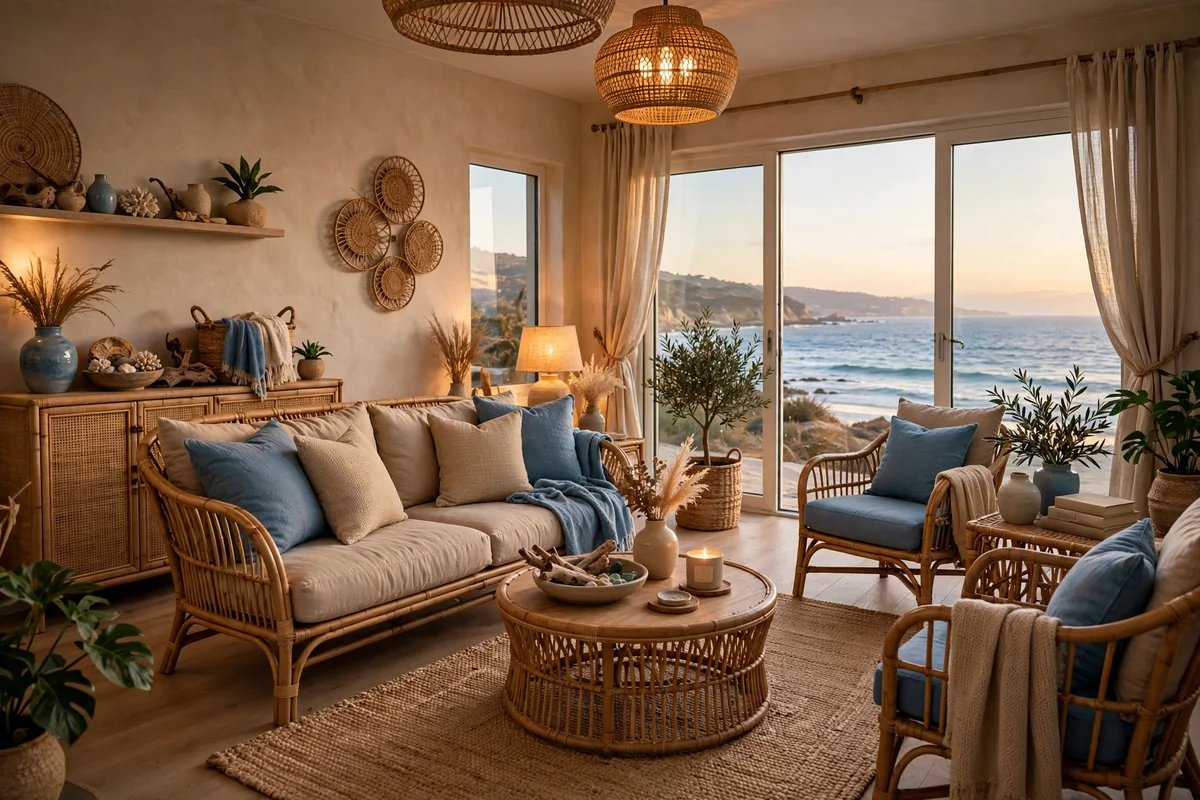
Coastal style is blue and beige in its natural habitat. Think sandy beige walls or upholstery with ocean blues in textiles: striped pillows, a washed-blue throw, seagrass baskets and driftwood tones. The palette should feel sun-bleached and relaxed, so choose muted, dusty blues rather than saturated navy, and beiges with visible warmth. White ceilings and trim keep everything bright and breezy.
Texture does the talking in coastal rooms: jute rugs, linen slipcovers, woven rattan chairs and weathered wood. Avoid literal seashell overload; a few natural touches read as coastal while a room full of anchors reads as theme park. Keep window treatments light and simple, linen panels or woven shades that filter sun beautifully. This look is naturally family friendly since sandy tones hide wear, and it suits open-plan spaces where the living room flows into the kitchen.
4. Navy With Camel Leather
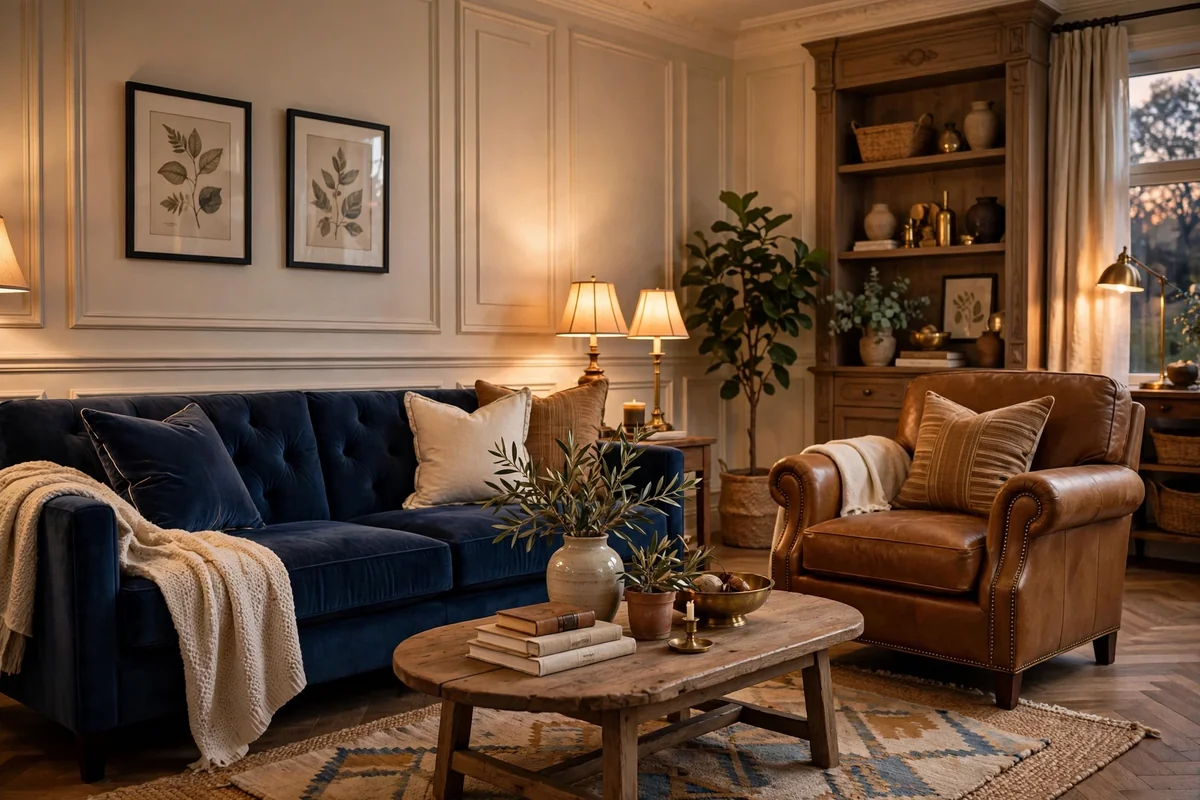
Navy and camel leather is a rich, tailored pairing with a slightly masculine edge. A navy sofa beside a camel leather armchair, or navy walls behind a caramel leather ottoman, creates depth and warmth at once. The leather’s patina adds character that improves with age, which makes this combination perfect for rooms that are meant to be lived in hard. Medium wood tones and brass accents complete the classic look.
You do not need much leather to get the effect: one chair or ottoman introduces the material. Keep the navy deep and true rather than dusty so it holds its own against the strong leather tone. This pairing loves books, so a filled bookshelf or a stack of art books on the coffee table feels right at home. Avoid black leather here; it fights the warmth. Cognac, saddle and honey browns are the sweet spot that harmonize with both navy and beige.
5. Powder Blue With Warm Cream
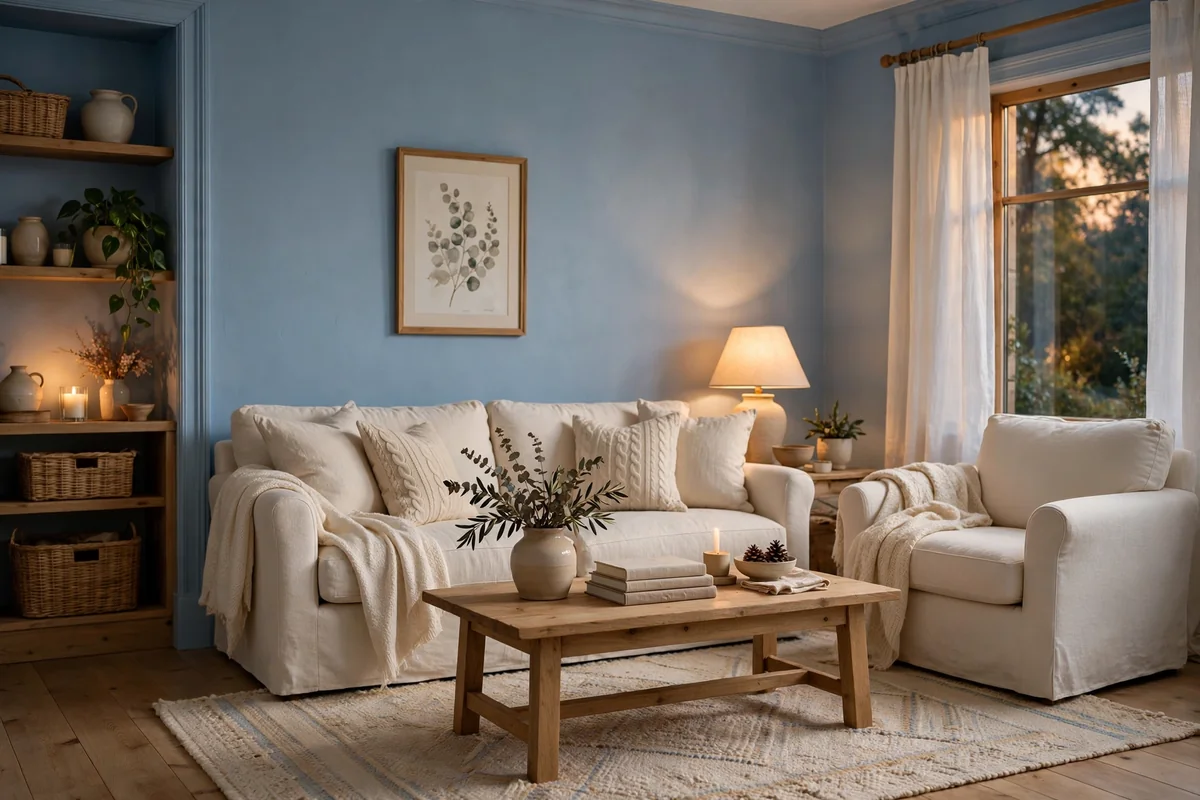
Powder blue with warm cream is the softest version of this palette, perfect for serene bedrooms-adjacent living spaces and small rooms. The pale blue keeps things airy while cream adds a warmth that pure white would lack. Use powder blue on walls or a major upholstery piece and layer creams in curtains, rugs and throws. The result feels like a deep breath: calm, gentle and quietly elegant.
Because both colors are light, add depth through texture and a few mid-tone accents: natural wood, a soft gray-blue pillow, or a touch of brass. Without these, the room can feel washed out. This palette shows dust less than high-contrast schemes but still benefits from regular upkeep on light upholstery. It is a wonderful choice for north-facing rooms where you want to maximize the feeling of light, and it pairs beautifully with white-painted trim and pale wood floors.
6. Striped Blue and Beige Textiles
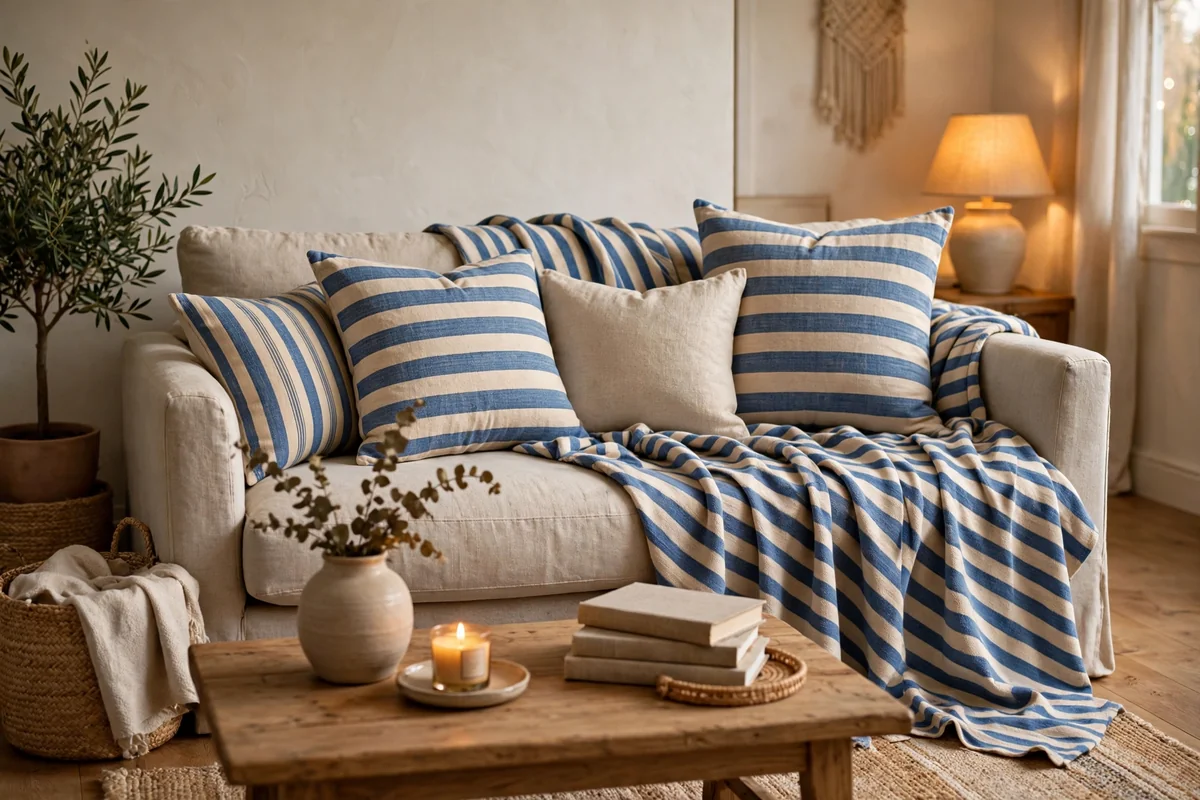
Stripes in blue and beige are timeless: ticking stripes, awning stripes and classic French linens all bring pattern without fuss. Use striped pillows, a striped throw or striped curtains to add rhythm to a solid blue-and-beige room. The pattern scale matters: small ticking stripes feel tailored and traditional, while wide awning stripes lean coastal and casual. Mix one stripe with solid textures rather than combining several patterns.
Striped textiles are an affordable way to test the palette before committing to big pieces. A pair of striped pillow covers or a striped throw costs little and instantly clarifies whether the combination suits your light. Keep stripe colors close to your existing blues and beiges so they blend rather than introduce new hues. One mistake to avoid is mixing stripe scales that clash; if the pillows are narrow ticking, choose a wider stripe for the throw or curtains so each pattern has room to breathe.
7. A Beige Sofa With Blue Pillows
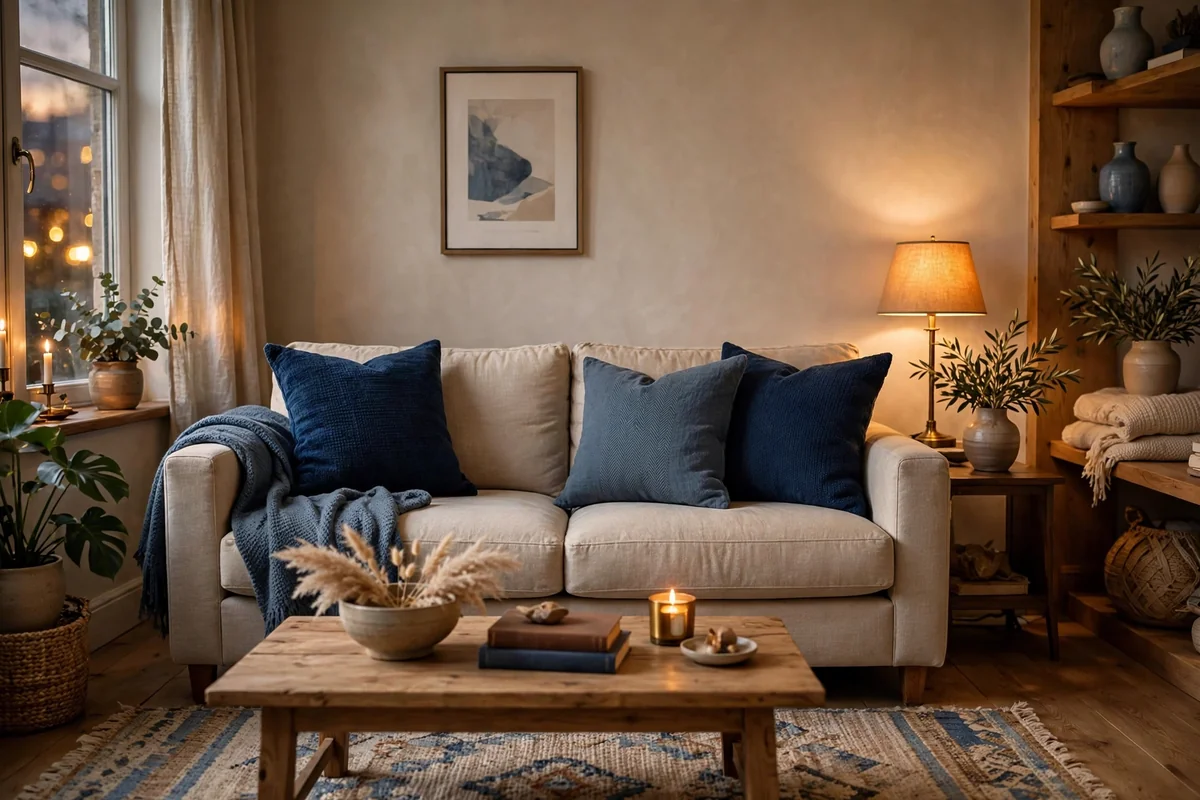
If you already own a beige sofa, blue pillows are the fastest route into this palette. A beige or oatmeal sofa is the perfect neutral canvas: add navy, slate and dusty blue pillows in varied textures and the whole room transforms. Mix sizes, two 20-inch squares, two 18-inch pillows and a lumbar, and include at least one patterned pillow that combines blue and beige to make the mix look deliberate.
This is also the easiest palette to update seasonally: swap the blue pillows for deeper tones in winter and lighter ones in summer while the beige sofa stays constant. Choose pillow covers with zippers for easy washing, since light sofas show everything. Ground the blue pillows by repeating the color elsewhere: a blue throw, a vase, or artwork with blue tones. Without that repetition, pillows can look like an afterthought rather than a scheme.
8. A Blue Rug on a Beige Foundation
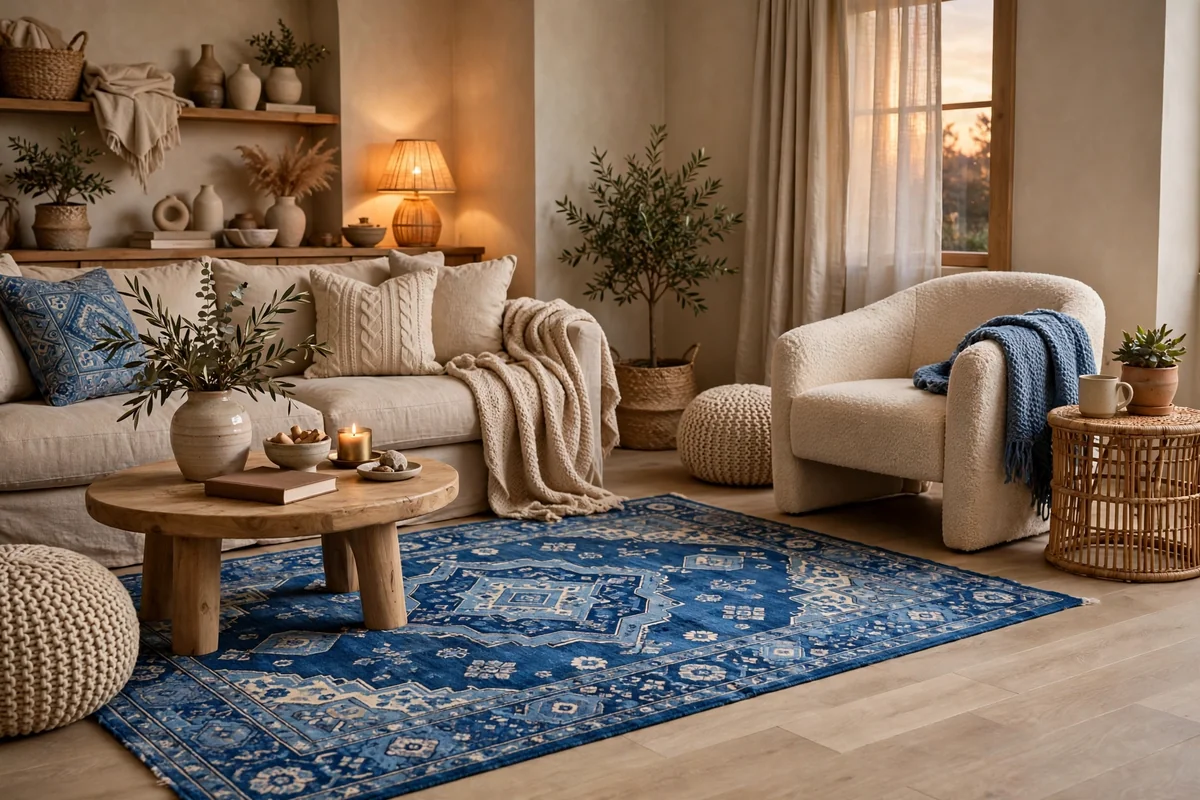
A blue rug on beige flooring or a beige room instantly defines the seating area. Whether it is a vintage-style rug with faded indigo patterns or a modern geometric in navy and cream, the rug becomes the artwork of the floor. Size it generously: 8 by 10 feet lets the front legs of the sofa and chairs rest on it, which unifies the furniture group. A too-small rug makes even beautiful furniture look scattered.
Patterned blue rugs are wonderfully forgiving with crumbs, pet hair and everyday marks, a practical bonus in family rooms. If your rug is the star, keep surrounding textiles quieter so they do not compete. Layer a smaller natural-fiber rug under the coffee table for extra texture if you like the collected look. When shopping, view the rug in your room’s light if possible; blues can shift dramatically, and a rug that looked navy in the store may read teal at home.
9. Woven Natural Textures
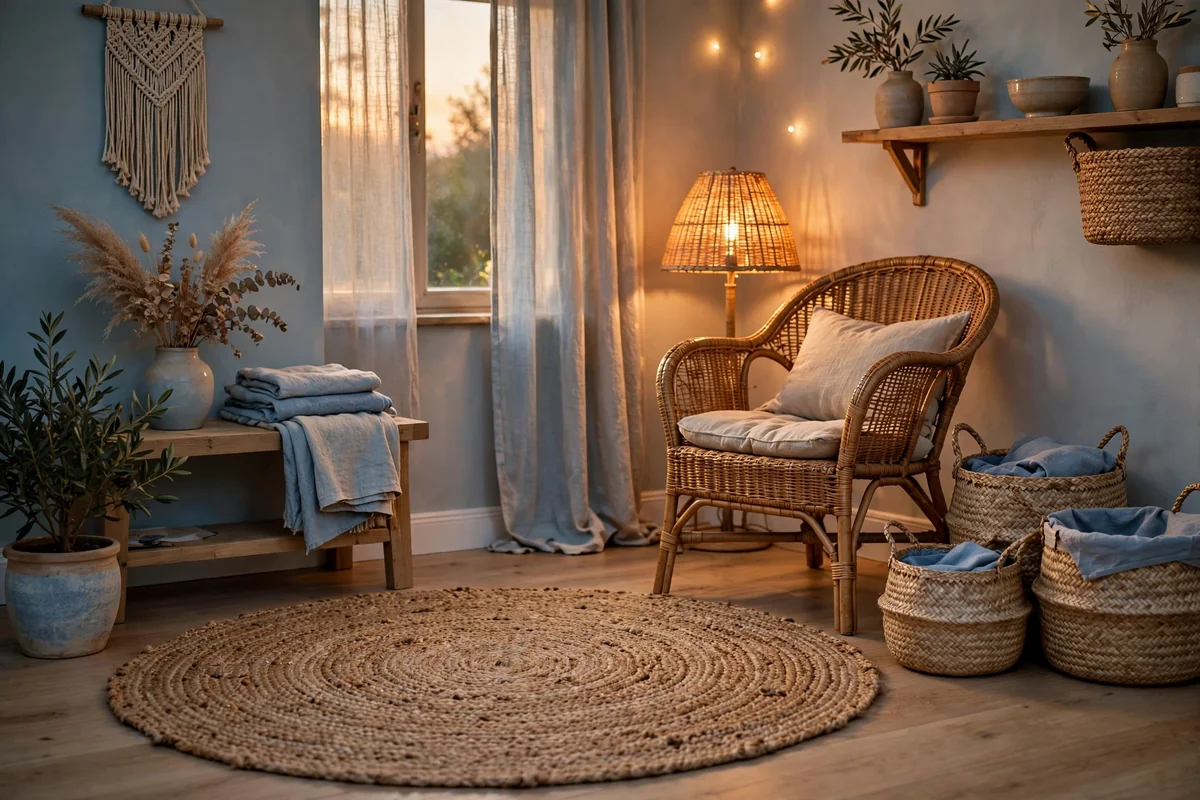
Woven textures, jute, rattan, seagrass and wicker, are the bridge between blue and beige. Their warm, sandy tones harmonize with beige while their organic texture keeps blue from feeling cold or formal. Add a jute rug, rattan armchair, woven baskets for throws and a seagrass pendant light, and the room gains the layered, collected warmth that flat fabrics cannot provide. These materials suit every style from coastal to bohemian to modern organic.
Mix weaves rather than matching them: a chunky jute rug with a fine rattan chair and a smooth woven basket looks curated, while all-identical weaves can feel flat. Natural fibers are durable and age gracefully, though light jute shows spills, so use trays under drinks. Keep the blue elements nearby so the warm textures clearly serve the palette: a navy pillow on the rattan chair or a blue throw in the basket ties it all together.
10. Modern Blue and Greige
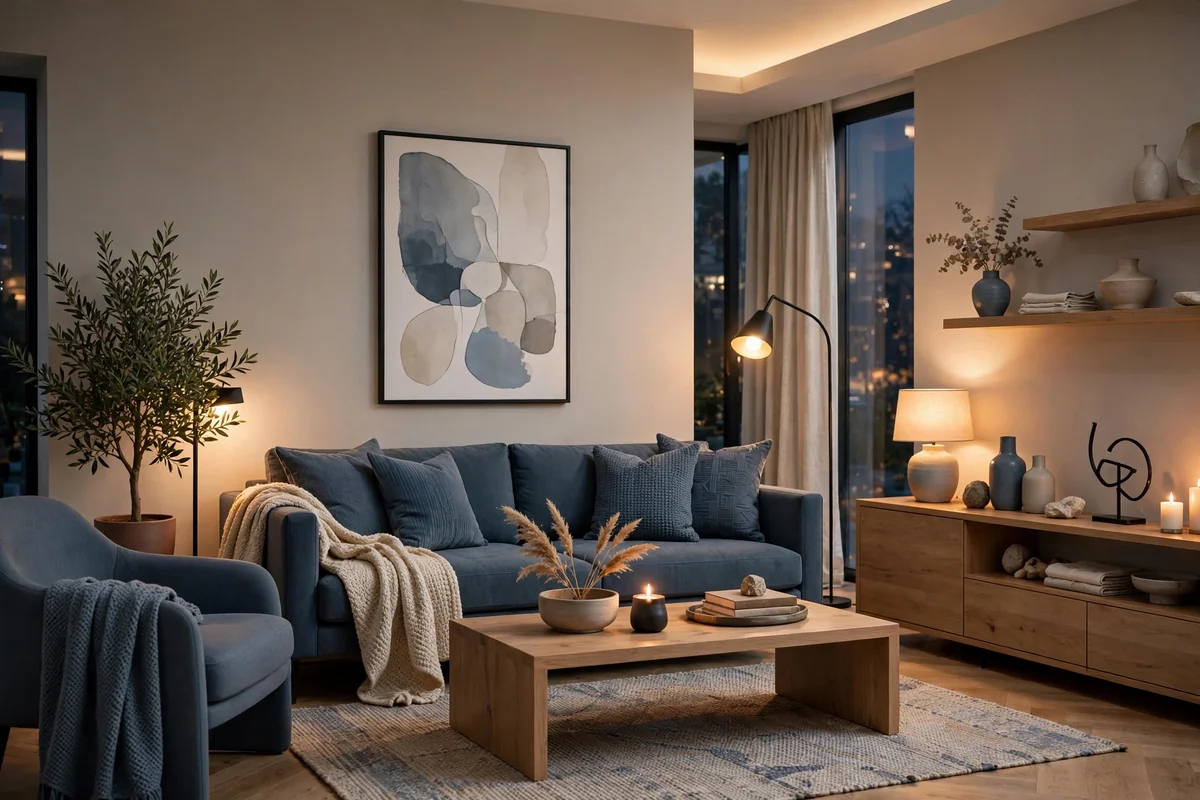
For a contemporary take, pair blue with greige, the gray-beige hybrid that defines modern neutrals. Greige walls or upholstery with slate blue accents feel tailored and current without being cold. Keep lines clean: a streamlined sofa, a simple media console, minimal ornament. The palette’s sophistication comes from restraint, so edit ruthlessly and let a few quality pieces carry the room.
In modern rooms, texture still matters but should be subtle: a low-pile wool rug, smooth linen upholstery, a single nubby throw. Add warmth through wood with visible grain, like white oak, and one warm metal, usually brass or champagne. Lighting should be architectural: a sculptural floor lamp or simple pendants rather than fussy traditional fixtures. Avoid mixing in rustic or ornate pieces that fight the clean aesthetic; consistency is what makes modern palettes feel expensive.
11. Traditional Blue and Beige
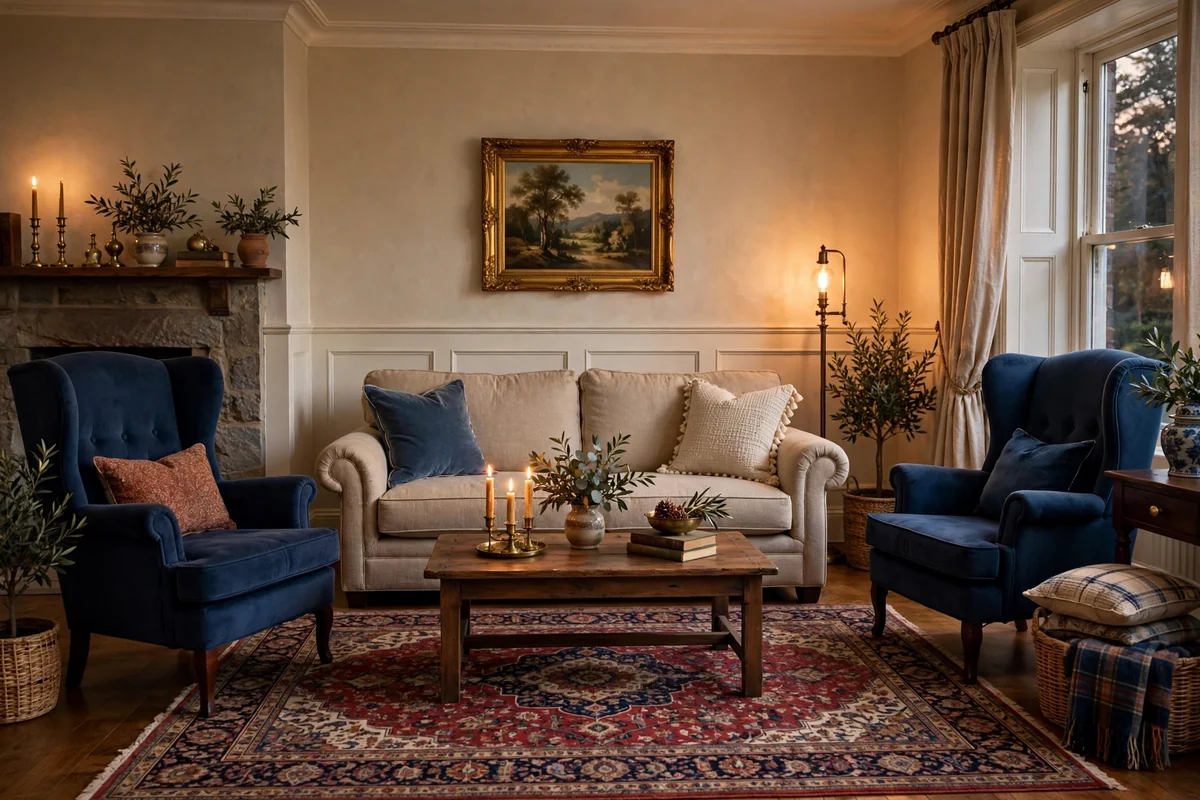
Traditional rooms wear blue and beige like a well-cut suit. Think a rolled-arm beige sofa, navy wingback chairs, a Persian-style rug in blue and cream, and classic brass lamps. Symmetry brings the formality: matching table lamps, paired chairs, balanced artwork. This look has endured for decades because its proportions are inherently pleasing and its colors never shout.
Invest in the pieces that define traditional style: good upholstery, a quality rug, solid wood tables. These rooms reward rich materials, so choose velvet, damask or chenille for at least one showpiece. Keep the blue deep enough to read as a true color; washed-out blues can look insipid in traditional settings. Avoid trendy accessories that will date the room; instead, let classic shapes and honest materials carry it. A traditional blue-and-beige room done well looks as good in twenty years as it does today.
12. Farmhouse Blue Accents
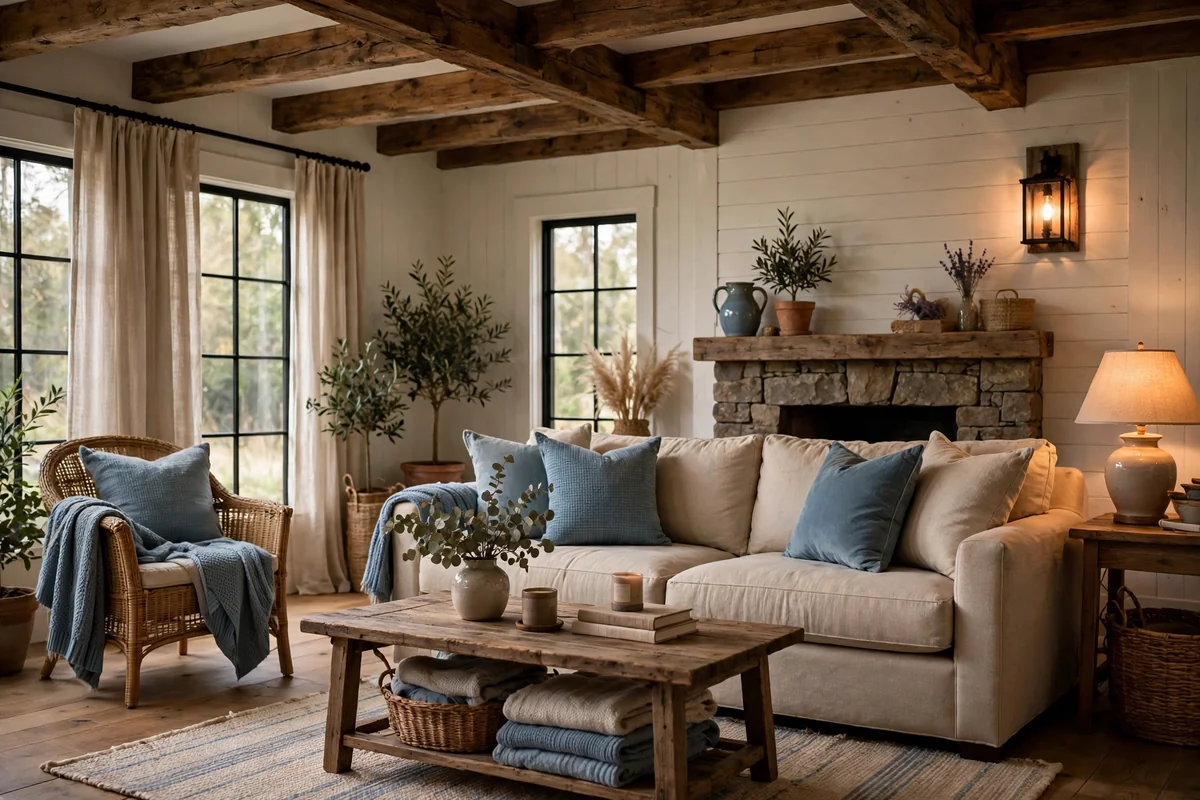
Farmhouse style uses blue as the accent and beige as the comfort. Start with warm beige walls, a comfortable oatmeal sofa and natural wood beams or furniture, then add dusty blue in pillows, a painted side table, grain-sack textiles or a vintage-style rug. The blue should feel collected and a little faded, like a favorite pair of jeans, rather than bold and new.
Distressed and vintage finishes suit this look: a chippy blue cabinet, aged wood frames, iron accents. Keep the overall feeling light and uncluttered; farmhouse curdles into clutter when every surface is decorated. One strong blue moment, like a painted hutch or a set of blue curtains, plus small echoes elsewhere is plenty. This palette is naturally kid and pet friendly since the muted tones hide wear, and it suits open-plan farmhouse spaces where the living room flows into the kitchen.
13. Blue Curtains on Beige Walls
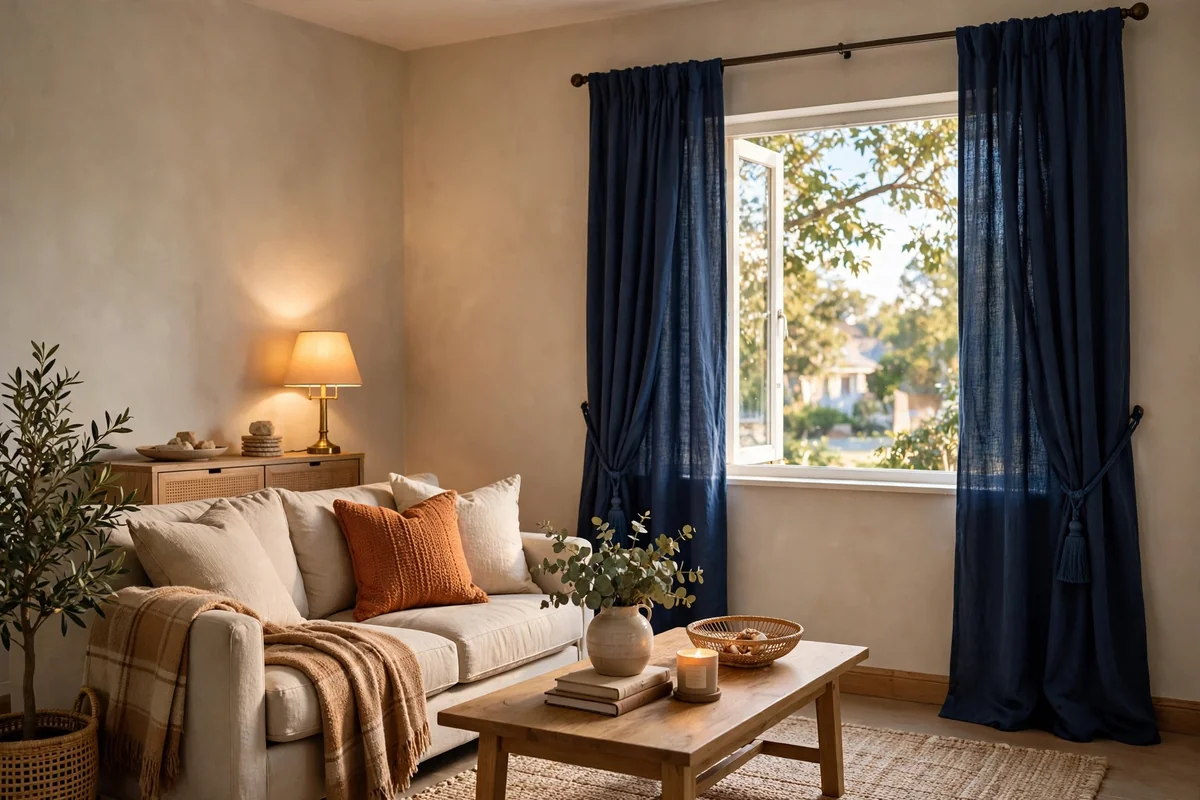
Blue curtains on beige walls frame the windows with color while keeping the room warm. Navy linen panels add drama and light control; dusty blue sheers add softness and glow. Hang the rod 4 to 6 inches above the frame and extend it well beyond the sides so the windows look generous. Full panels, at least twice the window width in fabric, give the color presence.
Choose the blue’s depth based on the room’s light: deep blues need good daylight or strong lamps to avoid gloom, while mid-tone blues work almost anywhere. Echo the curtain color in at least one other textile so the windows do not carry the blue alone. Blue curtains are practical too: darker blues hide dust better than white and provide better light blocking when lined. In rentals, this is a high-impact, fully reversible way to bring the palette to beige walls.
14. Artwork in Blue Tones
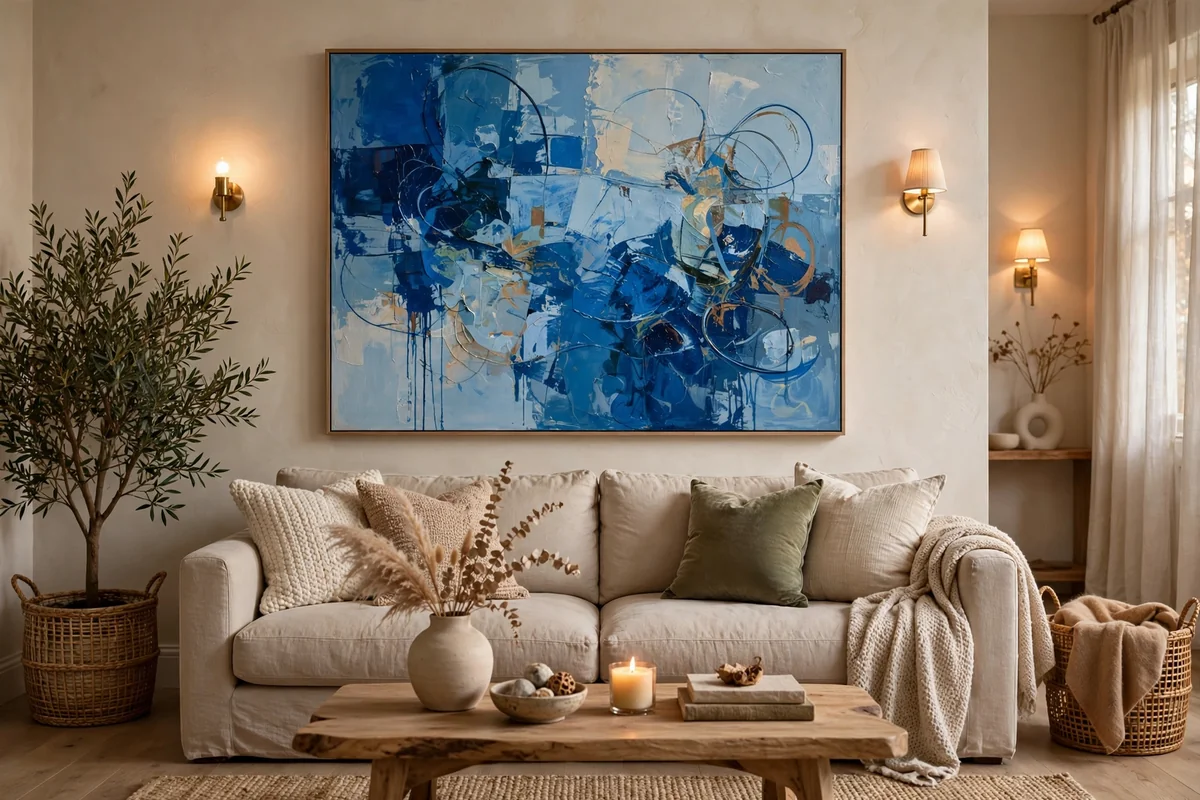
Artwork is the easiest way to distribute blue through a beige room. A large abstract in indigo and cream above the sofa, a pair of coastal prints, or a gallery wall mixing blue-toned pieces gives the eye places to land. Hang the center of a single large piece 57 to 60 inches from the floor, and keep the bottom 6 to 10 inches above the sofa back so art and furniture feel connected.
Choose art that includes your exact beiges as well as blues so it bridges the palette rather than floating separately. Frames matter: natural wood warms the combination, black adds crispness, brass adds a classic glow. If you are not ready to invest in original art, high-quality prints in good frames look wonderful; the frame often matters more than the print. Rotate art seasonally if you like change; it is the lowest-commitment way to refresh the room’s mood.
15. Warm Brass Accents
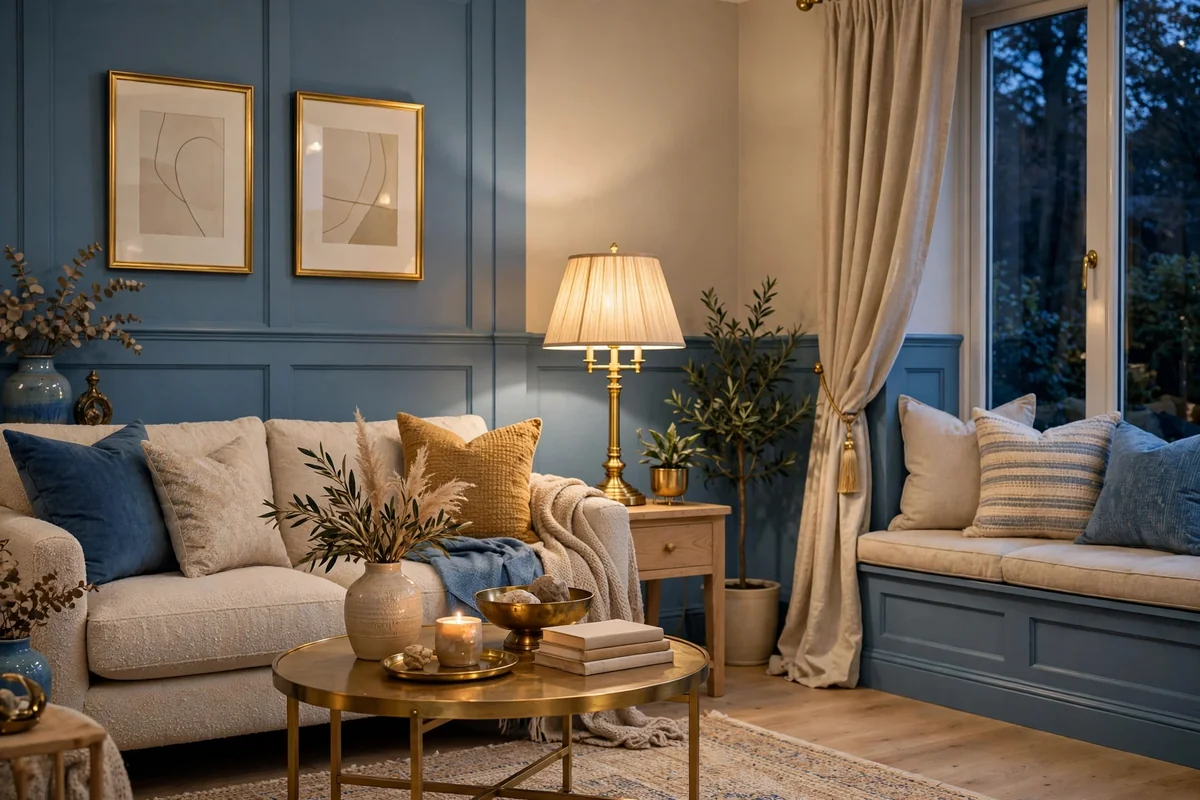
Brass is the jewelry of the blue-and-beige palette. Its warm gold tone flatters both colors: it glows against navy and gleams against beige. Introduce it in lamp bases, picture frames, curtain rods, coffee table legs or a sculptural object. Brushed and aged brass feel relaxed and current; high-polish brass leans traditional. Either way, a little goes a long way, so repeat it three or more times for a deliberate look.
Keep other metals quiet so brass stays the star. Black pairs beautifully with brass for contrast, but adding chrome and nickel into the same small room scatters the eye. Brass also loves natural companions: wood, leather and woven textures all harmonize. Budget tip: vintage brass candlesticks, trays and frames from thrift stores polish up beautifully and cost a fraction of new. Just avoid lacquered pieces that look plasticky; solid brass with a natural patina is the goal.
16. Layered Blue Throws
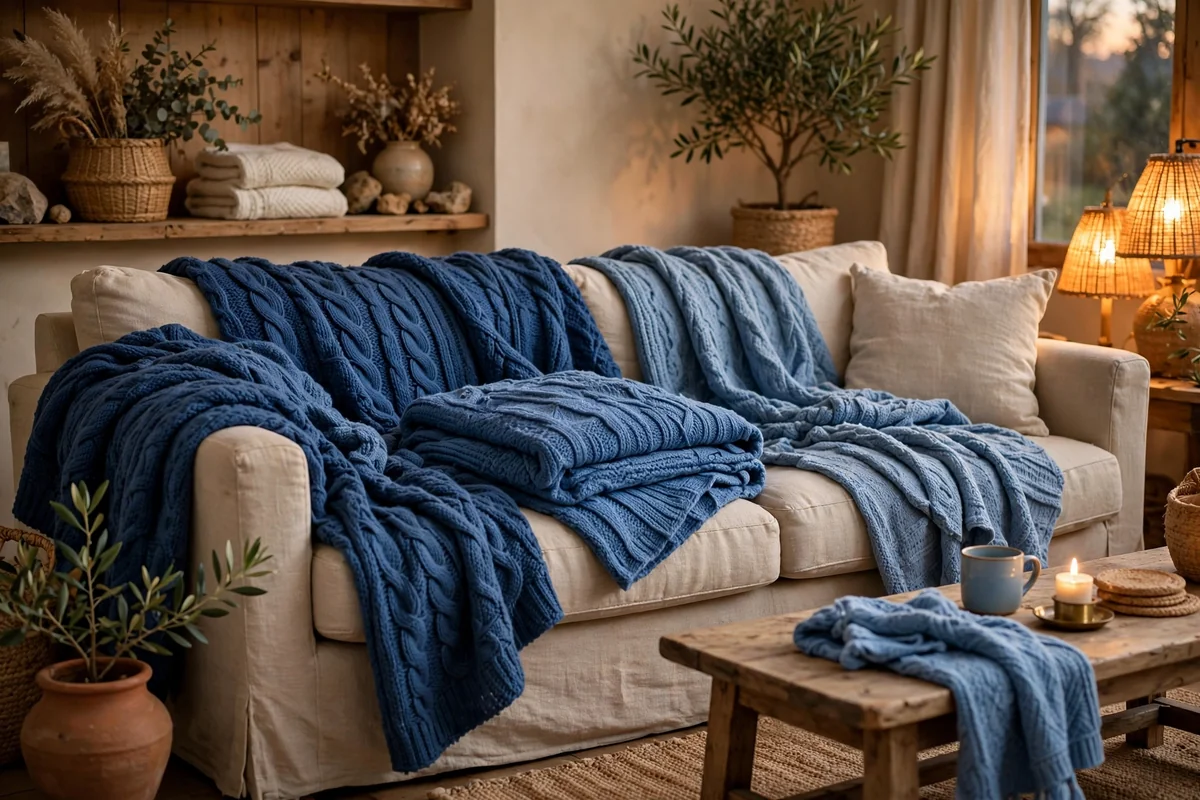
Throws are the low-commitment way to layer blue into a beige room. Drape a navy knit throw over one sofa arm, fold a dusty blue quilt at the foot of a chaise, or stack two throws in different blues on a beige chair. Varied textures, chunky knit, washed linen, soft velvet, keep the layering interesting even when the colors are close. Odd, casual draping looks inviting; perfectly folded throws look staged.
Choose washable fabrics since throws get the most handling of any textile. Wool blends offer warmth without the itch of pure wool, and cotton throws wash easily. Keep one throw within reach of every seat and the room will always feel ready for a cozy evening. A common mistake is buying throws that match too perfectly; slight variation in tone looks collected and personal. Let the blues range from slate to indigo for depth.
17. Beige Sectional With Blue Chairs
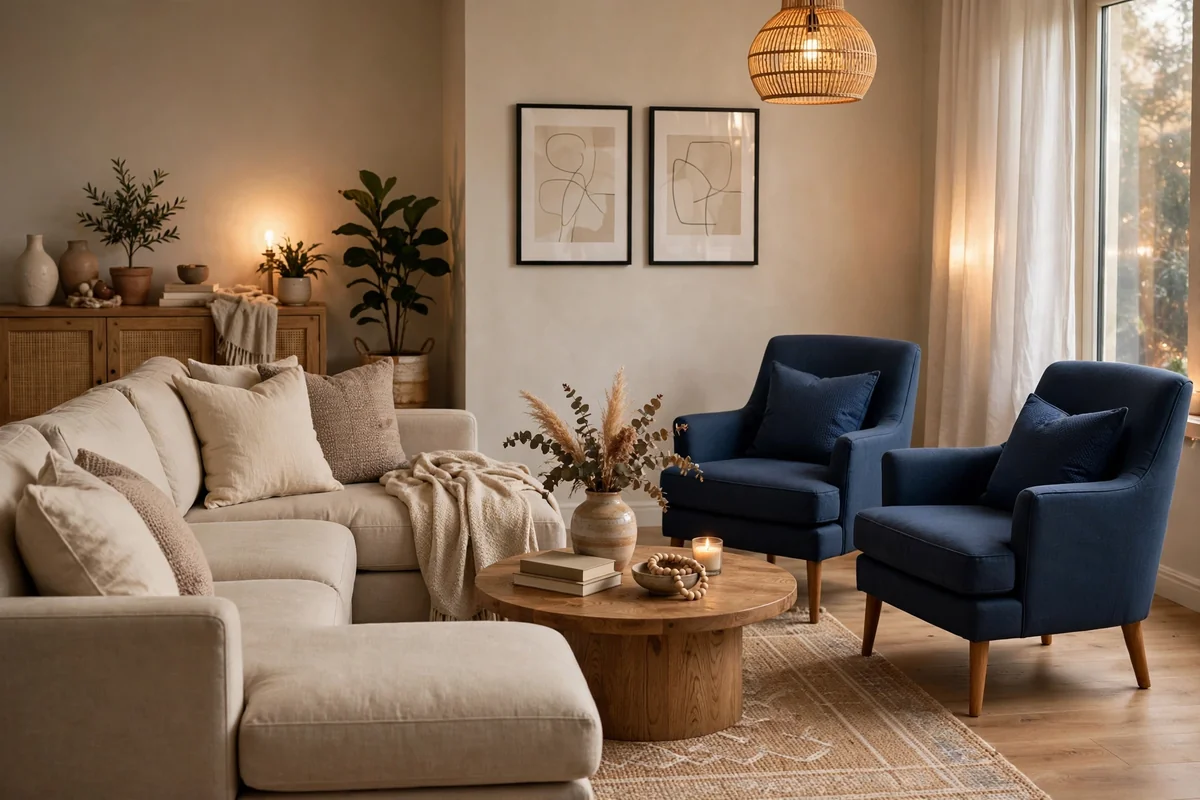
A beige sectional with blue accent chairs balances comfort and color beautifully. The large beige piece keeps the room light and calm while two blue chairs add personality and structure. Place the chairs opposite or perpendicular to the sectional to create conversation, angled slightly inward. Choose chair blues with enough depth to stand up to the sectional’s mass; pale blue chairs can look lost next to a big beige sofa.
Keep the chairs’ style complementary but not identical to the sectional: if the sectional is low and modern, choose chairs with clean lines in a similar scale. A shared element, like wood legs in the same tone or a unifying rug, ties the pieces together. This arrangement is ideal for families because the washable sectional handles daily life while the chairs can be in a richer fabric. Measure carefully: allow 30 to 36 inches for walkways around the group so the room flows.
18. Patterned Blue Wallpaper
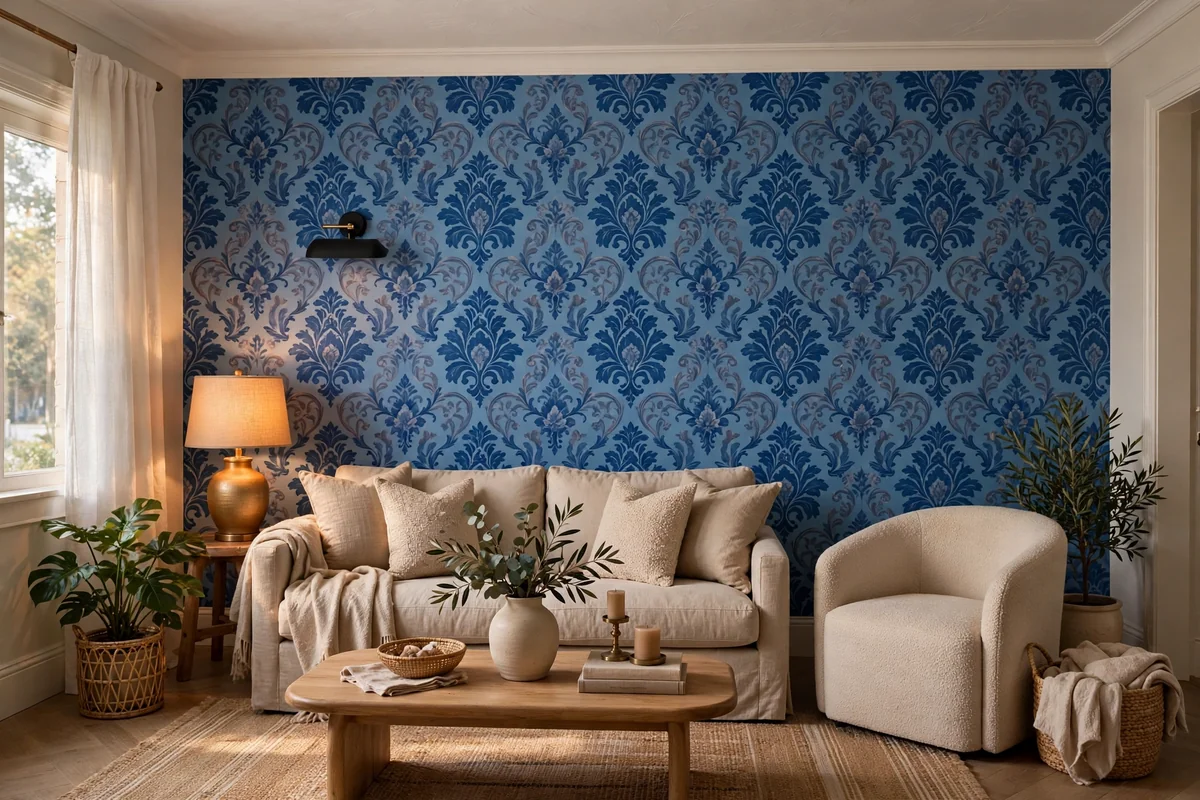
Patterned blue wallpaper makes a confident statement that paint cannot match. A classic damask, a fresh botanical, or a subtle grasscloth-look in blue tones turns one wall into art. Use it behind the sofa or on the fireplace wall where it gets maximum attention. In small rooms, wallpapering a single accent wall adds depth without overwhelming; in large rooms, it can handle a full wall.
Pair patterned wallpaper with quiet beige furnishings so the wall stays the star. Pull one beige tone from the paper for upholstery to create harmony. Removable wallpaper offers the same impact for renters and the commitment-shy, and modern paste-the-wall papers are surprisingly DIY friendly. Order samples and live with them for a few days; patterns change character between daylight and evening. Avoid combining a bold wallpaper with other strong patterns nearby; let it breathe.
19. A Blue and Beige Gallery Wall
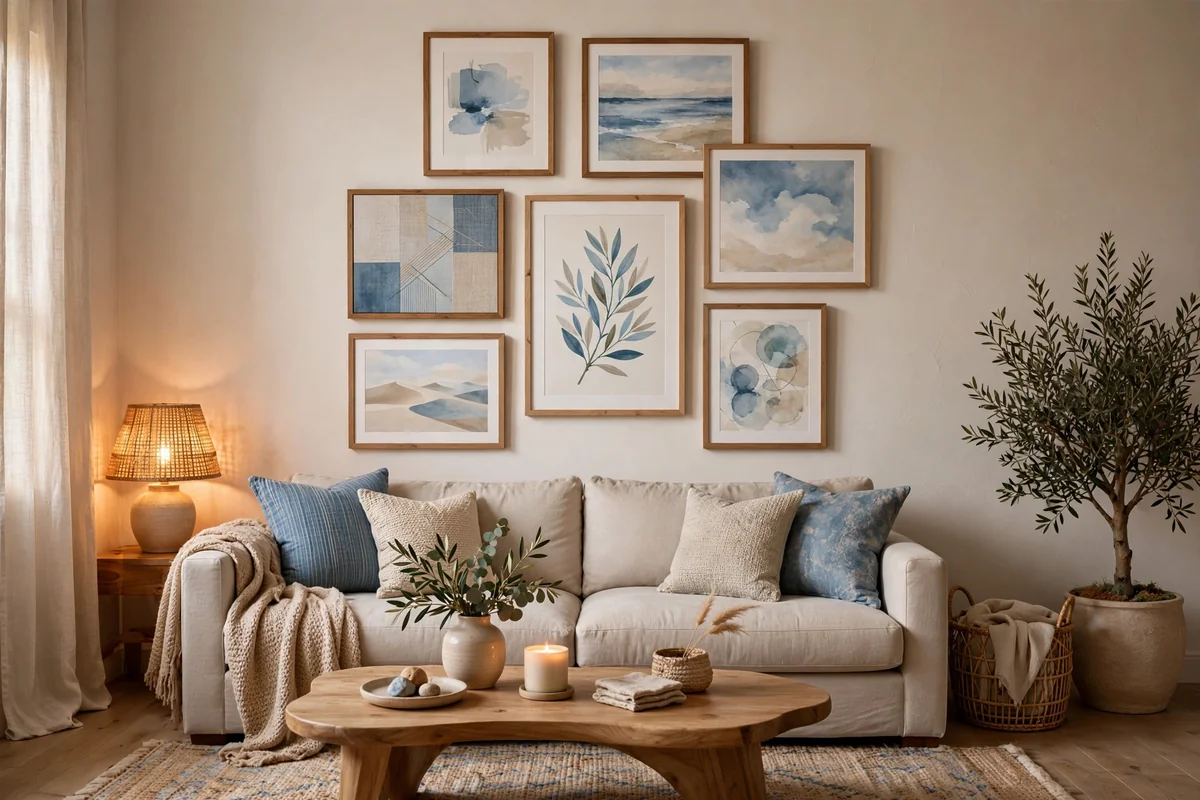
A gallery wall mixing blue and beige art unifies the palette at eye level. Combine abstract prints, vintage landscapes, textile art and personal photos in frames of black, natural wood and brass. Keep a consistent mat color, usually white or cream, so varied pieces feel like a collection. Lay the arrangement on the floor first, spacing frames 2 to 3 inches apart, and photograph it before hanging.
Anchor the gallery with one larger piece around 24 by 30 inches, then build outward with smaller frames. Hang the center at 57 to 60 inches from the floor. A gallery wall is also the perfect place to repeat the room’s exact blues and beiges, which makes the whole scheme feel intentional. Avoid hanging it too high, the most common gallery mistake; it should feel connected to the furniture below, starting 6 to 10 inches above the sofa back.
20. Outdoor Inspired Blues
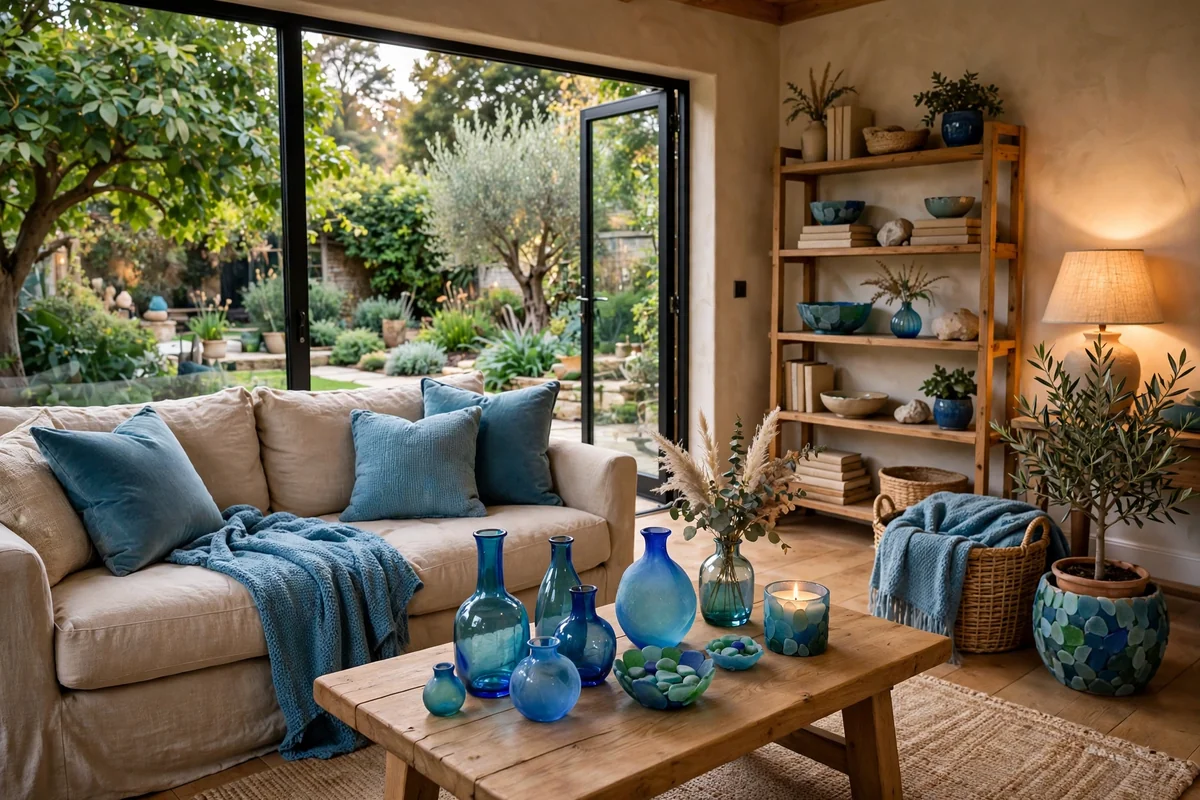
Bring the palette full circle by borrowing blues from the landscape: sea glass, sky, slate and deep water tones paired with sandy beiges. These nature-derived blues feel effortless because our eyes already accept them together outdoors. Use them in textiles and accessories rather than big commitments: a sea-glass vase, slate-blue pillows, a watercolor landscape, a soft blue throw that mimics evening sky.
This approach suits rooms with garden views, where the interior palette can echo what is outside the windows. Keep the blues muted and varied rather than one flat tone; nature never uses a single blue. Greenery is the natural companion here, and plants bridge the indoor-outdoor feeling beautifully. Avoid neon or electric blues that break the natural spell; the goal is the calm of the outdoors, not the buzz of the city. Done well, the room feels like a deep breath.
Conclusion
Blue and beige succeed because they ask so little and give so much: calm from the blue, warmth from the beige, and endless flexibility in between. Start with the pieces you own, add the second color in textiles and art, and layer texture until the room feels rich. Whether you go coastal, traditional or modern, this is a palette that will look as good in ten years as it does today.
Frequently Asked Questions
Do blue and beige go together in a living room?
Yes, beautifully. Blue adds calm and depth while beige adds warmth, so the pairing feels balanced and timeless. It works across coastal, modern, traditional and farmhouse styles, and beige is more forgiving with everyday wear than white.
What shade of blue works best with beige?
Navy and slate blue create striking contrast with beige, while powder blue and dusty blue feel softer and more serene. Choose based on mood: deep blues for drama and coziness, lighter blues for airiness.
How do you keep a blue and beige room from looking flat?
Layer textures and vary the tones. Mix linen, velvet, wool and woven fibers, and use at least three depths of blue and two of beige. Natural wood, brass accents and greenery add the warmth and life that keep the palette interesting.
What rug works with a blue and beige living room?
A natural jute or sisal rug grounds the palette, while a patterned rug in blue and cream adds personality. Size it so the front legs of the sofa sit on it, usually 8 by 10 feet for a standard seating group.
Can blue and beige work in a small living room?
Yes. Use lighter blues and warm beiges to keep the room airy, and let one deeper blue accent, like pillows or a single chair, add depth without closing in the space. Mirrors and good lighting keep the palette bright.