Living Room
20 Coffee Table Styling Ideas That Always Look Pulled Together
By Anna Wells · · 18 min read
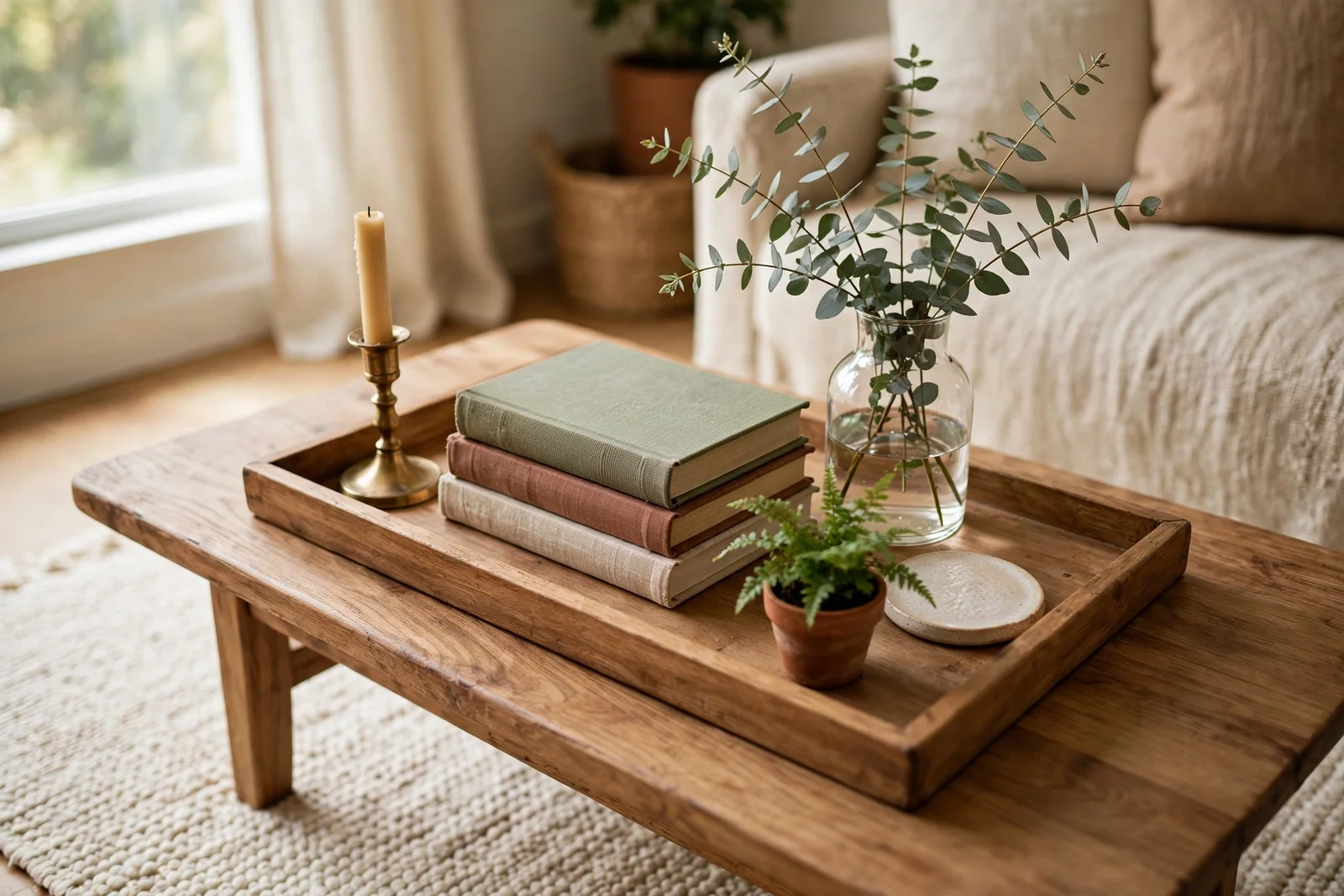
One tray, three heights and honest empty space: a year round method for a coffee table that always looks pulled together, told in twenty practical ideas.
Morning light lands on the coffee table before anything else in the living room, catching the edge of a tray, the curve of a vase, the folded corner of a book. This small stage carries the whole mood of the room, and most of us style it once, then watch it drift into clutter.
The fix is not a shopping trip. It is a simple year round method: one tray to gather everything, three heights to keep the eye moving, one living thing for breath, and honest empty space for mugs, remotes and real evenings. The twenty ideas below walk you through every piece of that method.
Nothing here depends on a season or a trend. The same tray, books and triangle work in January and in July, refreshed in ten minutes with objects you already own. Pick one idea today, try it tonight, and let the table prove the method before you touch the rest.
1. Anchor the Whole Table With One Large Rectangular Tray
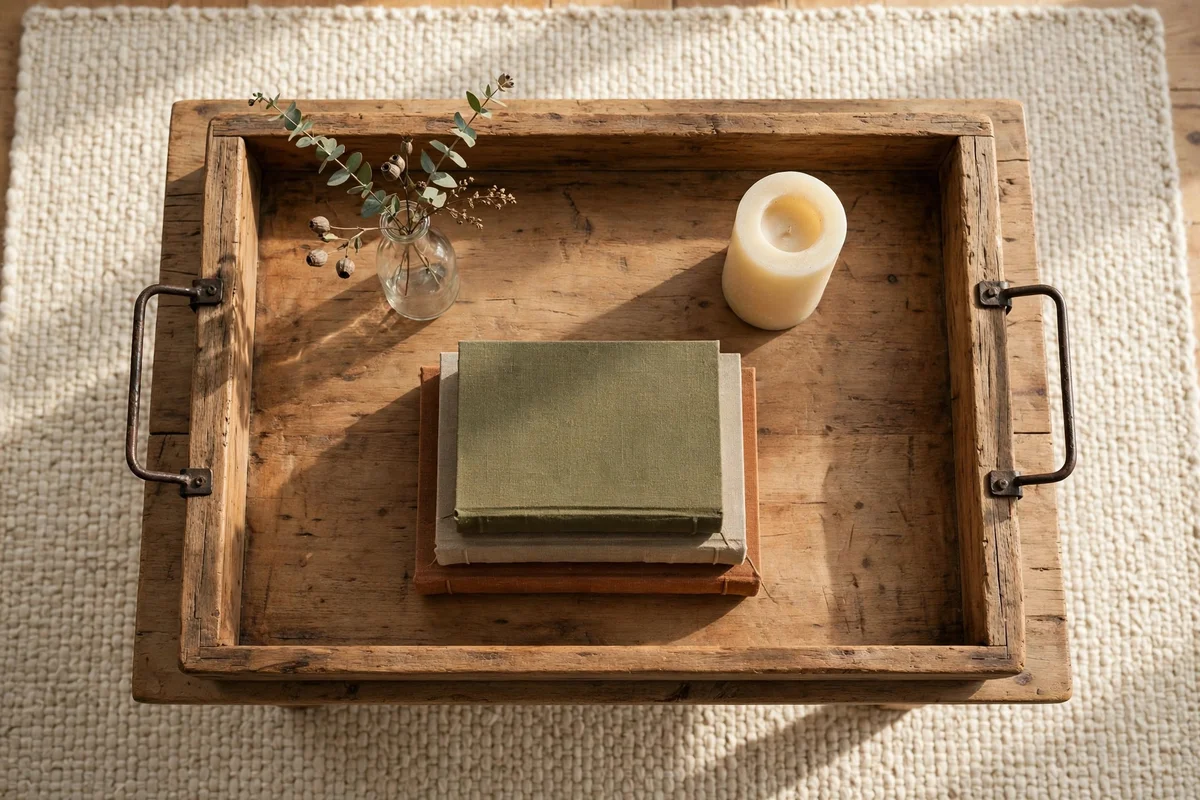
A tray of 50 to 60 cm by 35 to 40 cm anchors a standard coffee table of 110 to 130 cm without crowding it, keeping every object inside one clear boundary. Choose wood for warmth, hammered brass or metal for a cooler palette, or rattan when the room leans minimal. Raised handles matter more than you think: they let you lift the whole arrangement off in one motion when dinner, homework or a board game takes over the surface.
Budget trays from thrift shops and discount home stores cost 10 to 25 pounds or dollars and look identical to pricier ones once styled. The common mistake is choosing a tray barely bigger than a book, which reads as clutter rather than a corral. Leave the tray’s corners slightly loose rather than jammed tight, since a packed tray collects crumbs and dust in the edges and feels busy instead of calm.
2. Stack Two Cloth-Bound Books as a Plain Plinth for Height

Two books with plain cloth covers, each 2 to 3 cm thick, make a sturdy plinth about the height of a small bowl. Neutral covers in cream, oatmeal or sage disappear under a vase or candle so the object above gets the attention. Place the stack slightly off centre on the tray, never dead centre, and turn the spines outward for a finished look. Second-hand bookshops sell suitable clothbound volumes for 2 to 5 pounds or dollars each.
Avoid glossy dust jackets and bright covers, which shout from under your arrangement and break the calm palette. Three books is the maximum; four starts to look like a bookshelf spilled over. The mistake to avoid is stacking books of wildly different sizes, since overhang makes the tower wobble and look unstable. Keep the top book large enough to hold a candle or small dish safely, about 18 cm square at least.
3. Build the Classic Height Triangle: Tall, Medium and Low
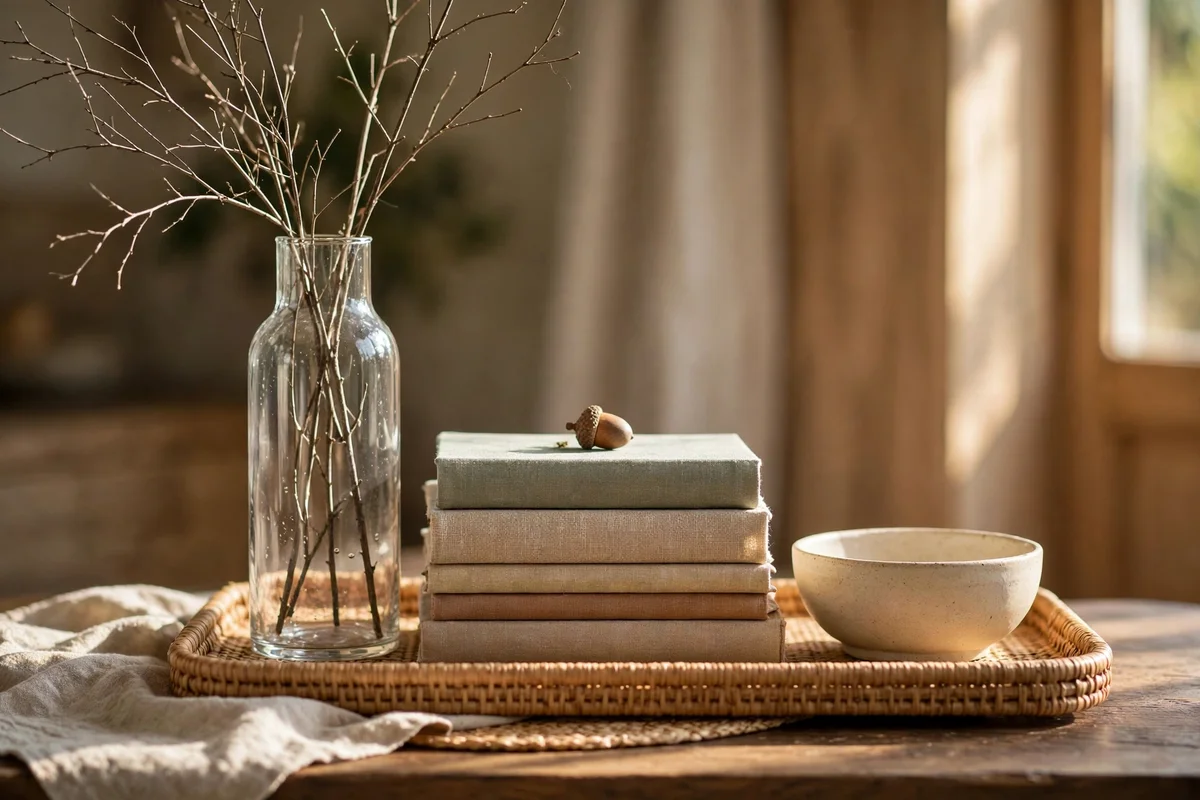
Place a tall element of 35 to 45 cm (a vase with stems or a slim candlestick), a medium one of 18 to 25 cm (a stack of books with a small object), and a low one of 8 to 12 cm (a bowl or dish) in a loose triangle across the tray. The eye travels smoothly from tall to low instead of bouncing between equal heights, which is why designers call this the pulled-together trick. Keep at least 15 cm between objects so each shape reads clearly.
On small tables under 90 cm wide, shrink the triangle to 30, 15 and 8 cm so nothing looms over the sofa. Never place three objects of identical height in a row; the line looks stiff and temporary, like items waiting to be put away. If a tall vase blocks the television from your favourite seat, shorten the stems rather than moving the whole arrangement, since a trimmed stem still gives the triangle its peak.
4. Place One Potted Plant in a Terracotta Pot for Living Green
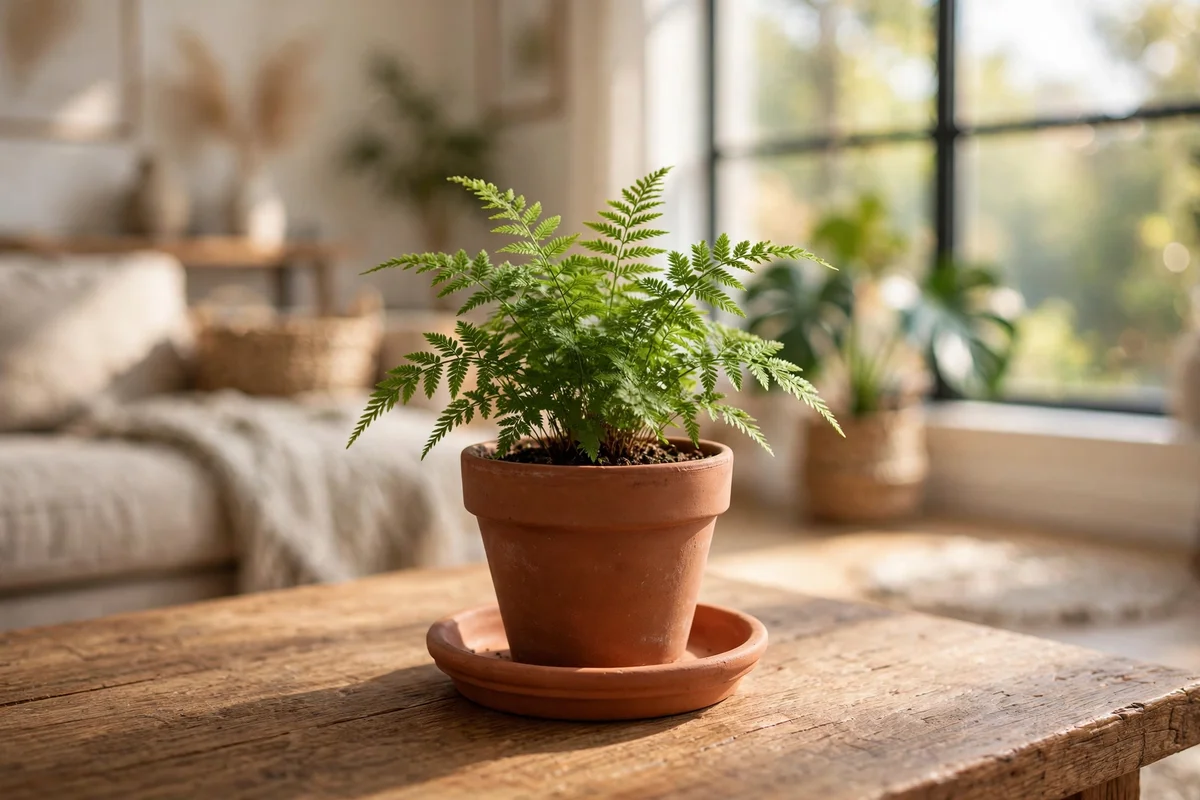
One living plant softens the hard lines of wood and glass better than any other object on the table. Choose a compact variety of 20 to 30 cm in a terracotta pot of 12 to 15 cm diameter: a fern, a pothos or a small olive suits most light conditions. Terracotta breathes and suits any palette from cream to charcoal, and a simple matching saucer protects the table from watering drips.
Water small pots every 7 to 10 days and rotate the pot a quarter turn each week so growth stays even. The mistake to avoid is choosing a plant that doubles in size within months, since a coffee table is no place for a giant that blocks conversation. Budget tip: a 10 cm nursery plant plus a terracotta pot usually costs under 15 pounds or dollars, and it outlasts any bouquet by years.
5. Cut Fresh Stems From the Garden for a Simple Glass Vase
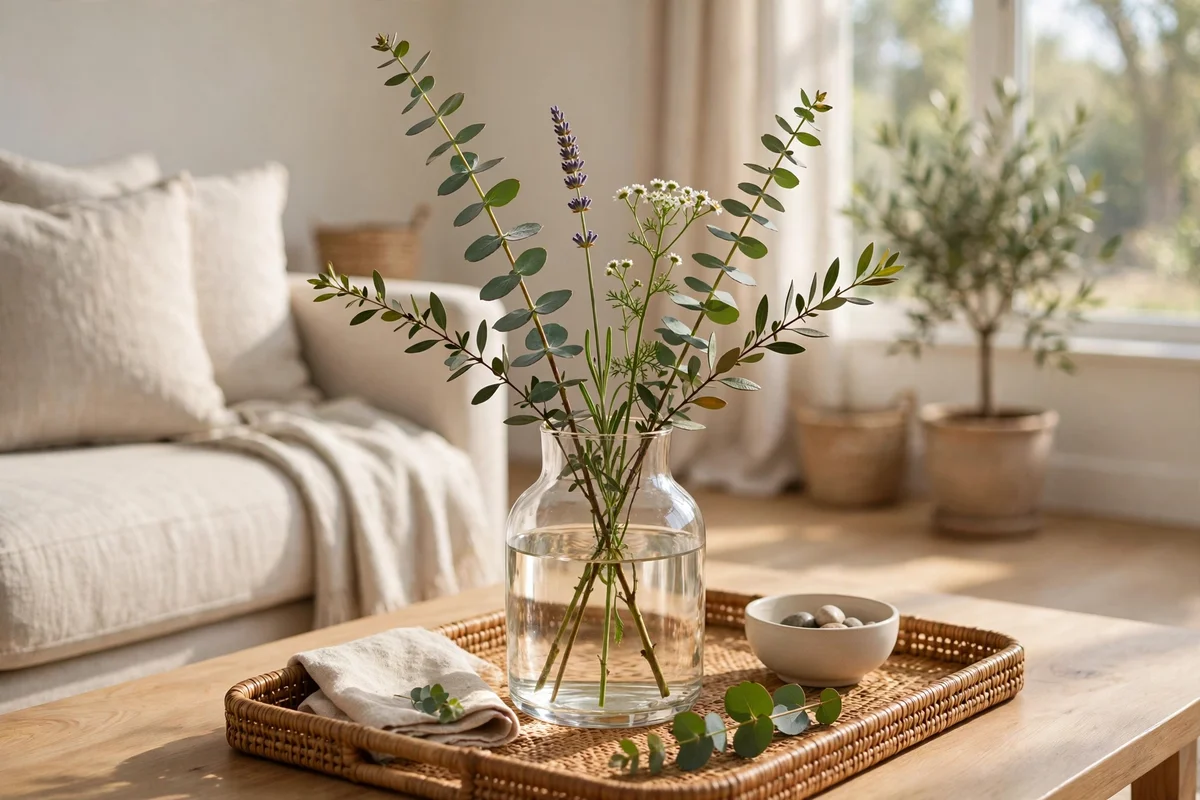
Three to five cut stems in a clear glass vase of 20 to 25 cm bring living colour to the table without a single potted plant. Eucalyptus, olive branches or garden roses all last 7 to 14 days in plain water changed every three days. Trim stems at an angle so they drink well, and vary their heights by 10 cm so the bunch looks gathered rather than engineered. One bunch weekly costs nothing from your own garden or a market stall.
Match the water level to the stem length: stems submerged deeper than a third of their length rot quickly and cloud the vase. The common mistake is stuffing twelve stems into a small neck, which squeezes them flat like a bouquet in transit. If fresh stems are out of reach, dried grasses or branches keep their shape for months and suit the same vase, giving you a year round option with zero watering.
6. Give Pride of Place to One Personal Object With a Story
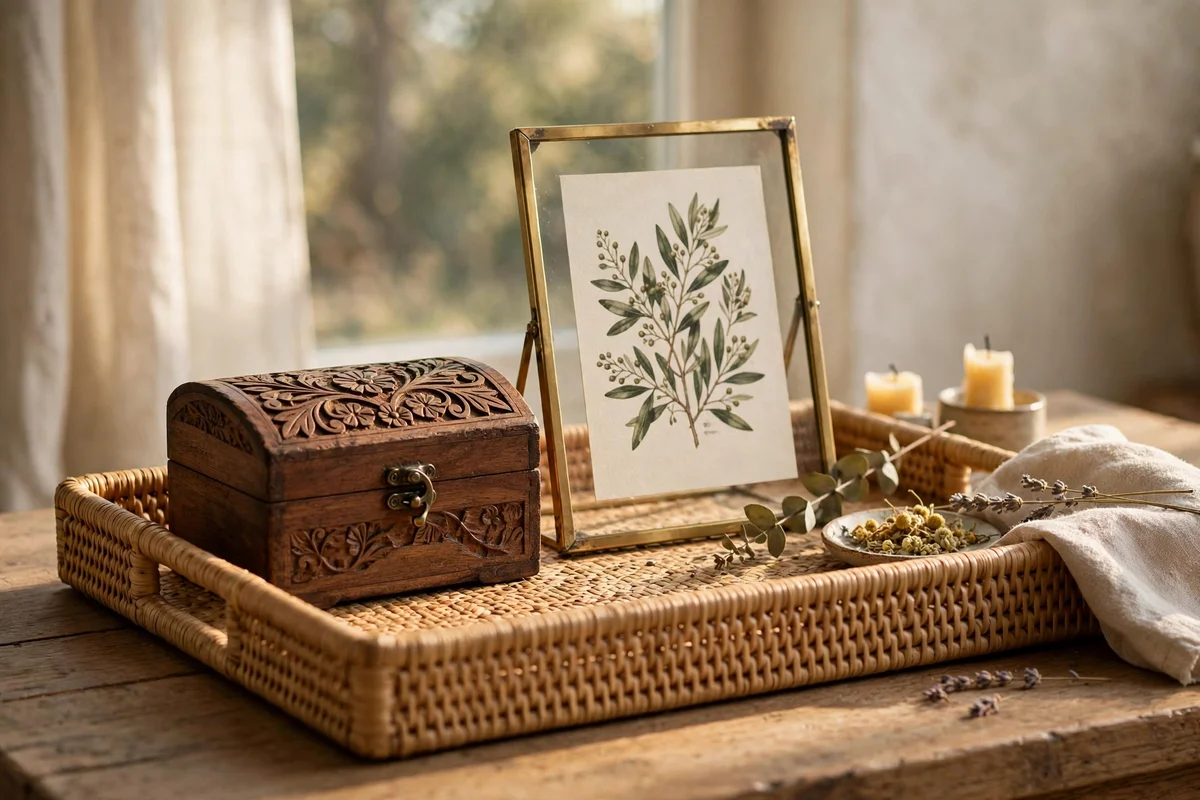
A single meaningful object, a small framed photograph, a ceramic made by a relative, or a carved wooden box, gives the whole table a reason for being. Keep it to 10 to 15 cm so it sits comfortably among the decor without dominating, and place it at the front of the tray where guests naturally look. One story object beats five souvenirs, since a crowded table turns memories into clutter and nobody asks about any of them.
Frame photographs in simple wood or brass frames of 10 by 15 cm rather than bulky plastic stands. The mistake to avoid is adding a new memento after every holiday, which quietly turns the coffee table into a museum shelf. Rotate personal objects seasonally: keep one out, store the rest in a small box nearby, and swap pieces in under a minute when the mood changes.
7. Reserve a Bare Zone on the Tray for Coasters and the Remote
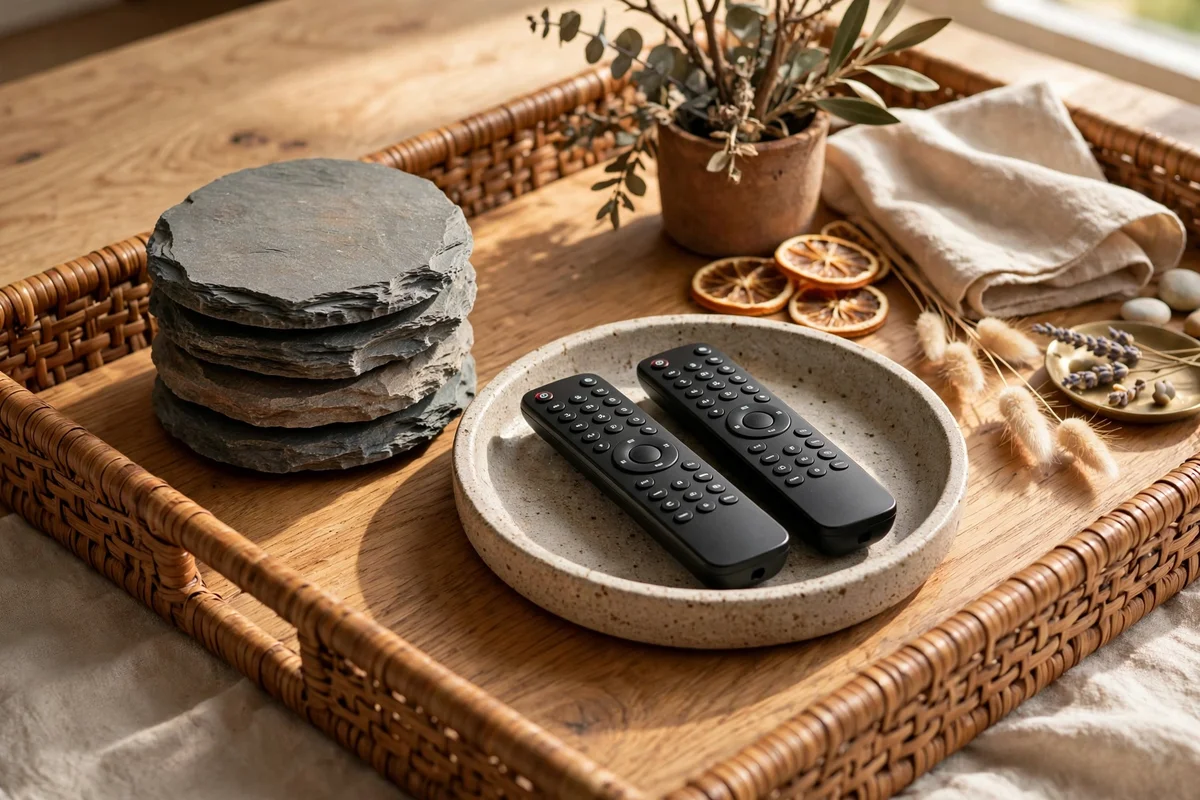
A styled table fails the moment real life has nowhere to land. Leave one corner of the tray, about 20 cm square, deliberately empty for the television remote, phone and coasters. Use a set of four matching coasters in stone, cork or leather stacked neatly at the zone edge so they read as decor instead of clutter. A small remote caddy or shallow dish keeps two remotes together and stops them sliding across the tray.
The mistake to avoid is styling every centimetre and then resenting the table, since a precious arrangement nobody can touch gets ignored and eventually abandoned. Teach the household the rule once: remotes live in the dish, mugs land on coasters, and everything else stays in its zone. A 4 cm deep dish costs under 10 pounds or dollars and saves the tabletop from ring marks permanently.
8. Leave a Landing Spot Where a Mug or Teacup Always Fits
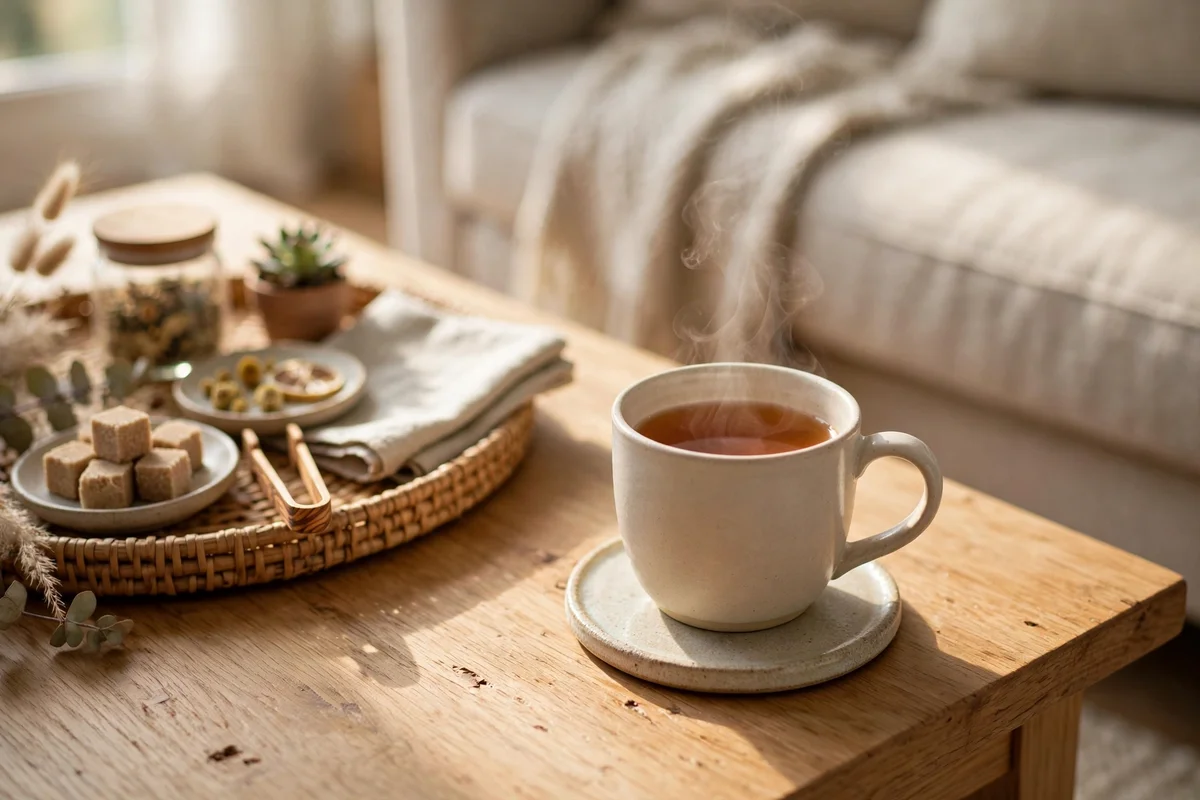
Reserve a 15 cm circle beside the tray where a mug or teacup can sit within easy arm’s reach of the sofa. This empty spot is part of the styling, not a gap you forgot to fill, and it keeps hot drinks off the wood where rings form in minutes. Place a single ceramic coaster at its centre so the spot reads intentional even when the mug is in the kitchen. Measure from the sofa edge: 40 to 50 cm is comfortable reaching distance.
If the table is small, let the mug spot live on the tray corner itself rather than beside it, keeping the rest of the zones unchanged. The mistake to avoid is centring every object and leaving no landing zone, which forces guests to balance cups on book stacks and chair arms. A 12 cm ceramic coaster in a colour pulled from the rug costs 3 to 6 pounds or dollars and protects tables worth far more.
9. Style a Rectangular Table in Two Zones Along Its Length
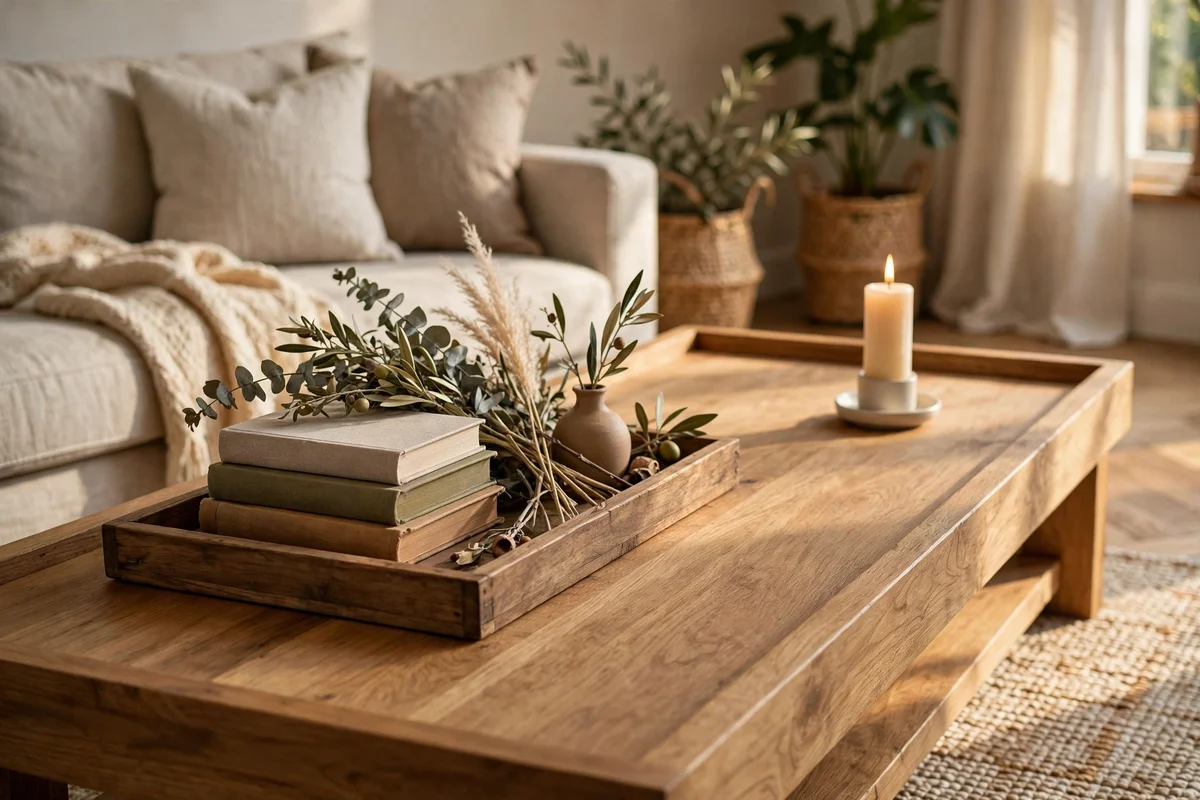
Divide a rectangular table of 110 to 140 cm into two zones: a styled cluster on one half and a functional half with the mug spot and remote dish. The cluster holds the tray, books and stems, while the functional half stays visually calm with just one small object, perhaps a single candle. This split keeps long tables from reading like an airport runway of scattered objects and gives real life a proper home.
For very long tables over 140 cm, use two small clusters of three objects each with 30 cm of breathing space between them. The mistake to avoid is marching identical objects in a row down the centre line, which looks like a parade rather than a home. Budget tip: the two-zone method reuses everything you already own, so it costs nothing to test for a week before buying anything new.
10. Centre a Round Table Around a Single Low Bowl Arrangement
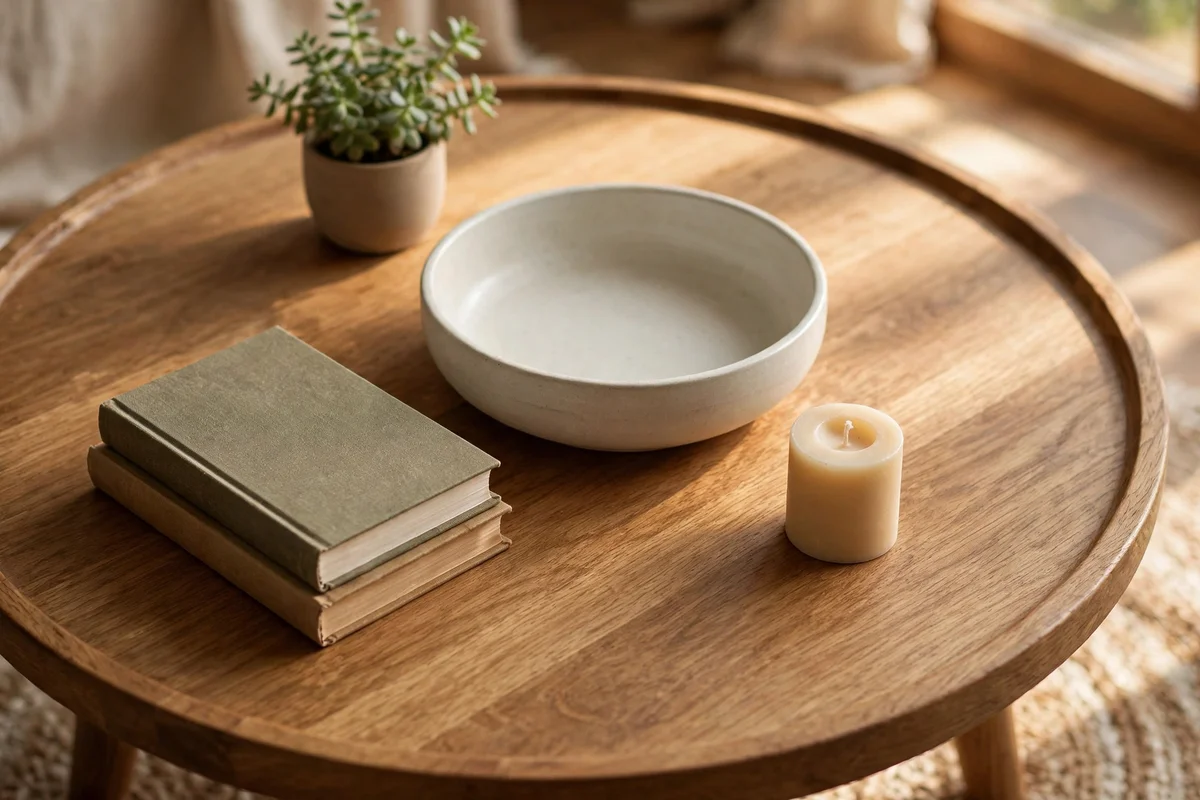
A round table of 80 to 100 cm diameter needs one centred arrangement, not a line of small objects that fight the circle. Set a low bowl of 25 to 30 cm in the middle and build outward with three small pieces at the points of a triangle: a candle, a small plant and a stack of two books. Everything stays 8 cm from the rim so elbows and magazines have room and nothing gets knocked during conversation.
Avoid tall objects on round tables, since anything over 30 cm blocks faces across the circle and shrinks the room visually. The mistake to avoid is pushing the arrangement to one side to free space, which makes the table look lopsided and temporary. If you own only a rectangular tray, layer a round cloth of 40 cm underneath to soften its corners against the table shape.
11. Dress a Storage Ottoman With a Deep Tray and Soft Edges
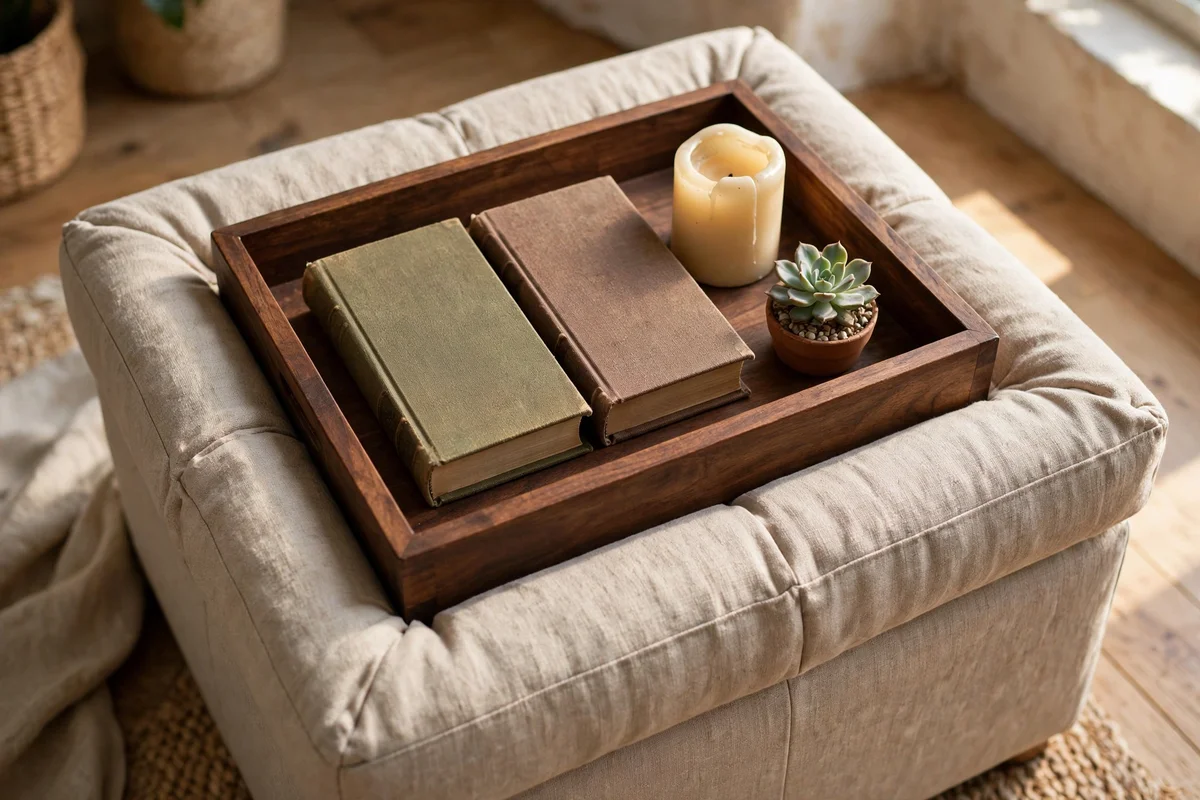
An ottoman coffee table needs a tray with sides at least 6 cm deep, since a flat tray slides on upholstery the first time someone leans on the edge. Choose a tray 10 cm narrower than the ottoman on every side so fabric shows as a soft frame around the hard surface. Inside, stack two clothbound books, add one candle and one small succulent, and leave the rest bare for feet up evenings.
Anchor the tray with a non-slip mat underneath if the ottoman fabric is slick leather or velvet. The mistake to avoid is using a shallow decorative tray meant for hard tables, which tips and spills the moment it shifts. Wood and woven trays forgive knocks better than glass on a soft base. Expect to spend 20 to 40 pounds or dollars for a deep tray with proper sides, a worthwhile single purchase.
12. Refresh the Entire Table in Ten Minutes Using What You Own
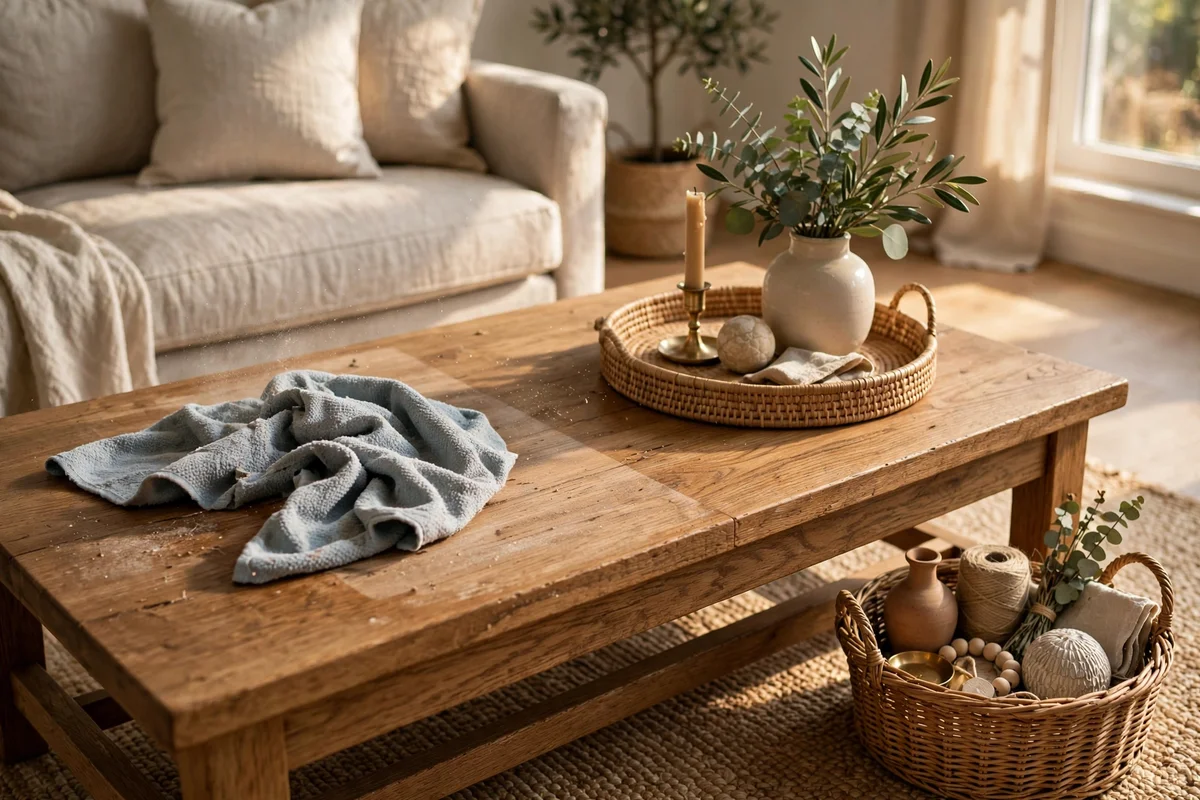
Set a timer for ten minutes, clear everything off the table, and sort pieces into keep, move and remove piles on the sofa. Dust the surface, then rebuild with the height triangle, one living thing and the tray, pulling only from the keep pile and one item from another room. The clear-first step matters most: styling on top of old dust and clutter just shuffles the mess around and the refresh never feels fresh.
Walk the new arrangement around the table and check sightlines from the sofa and the television before finishing. The mistake to avoid is buying something new every time the table feels stale, since swapping in a kitchen vase or a bedroom candle usually does the job for free. Store the remove pile in one labelled box in a cupboard so the next ten-minute refresh has its own stock to draw from.
13. Mix Matte Wood, Honed Stone and Warm Brass in One Palette
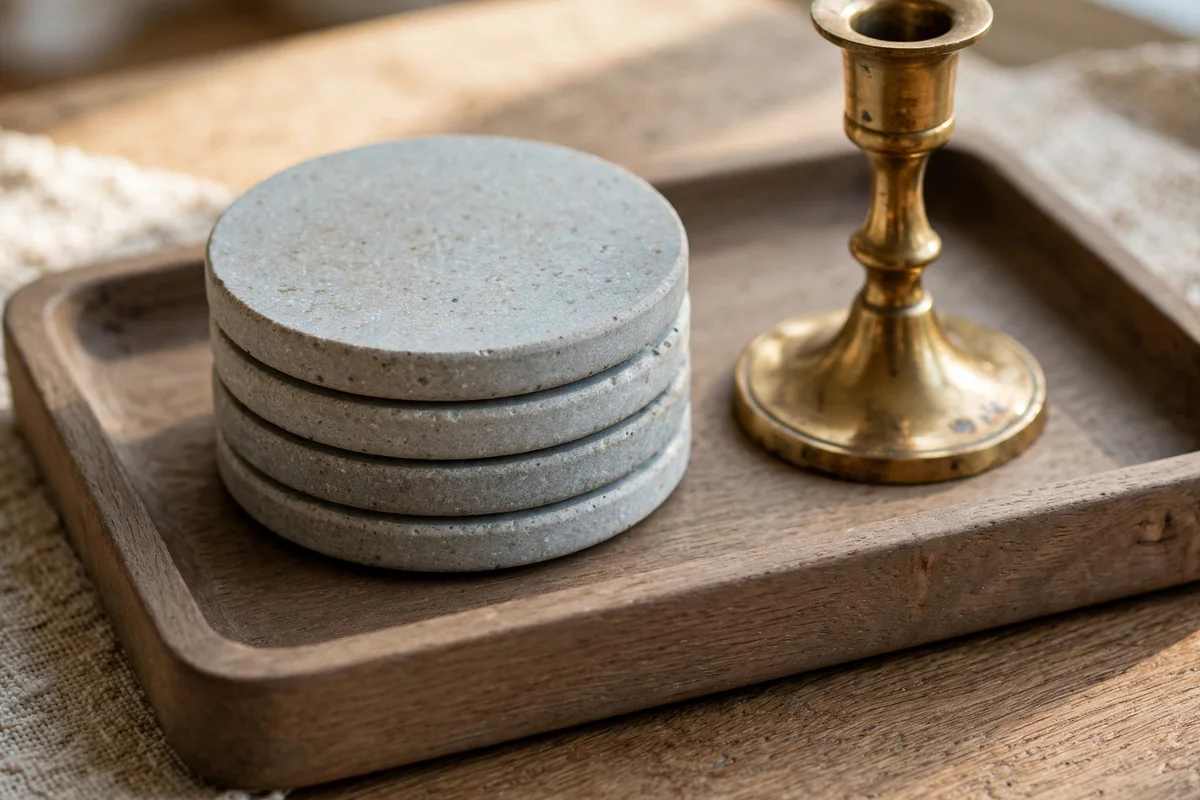
Three finishes in matte textures create richness without shine overload: a wooden tray, a honed stone coaster set and one warm brass candlestick. Matte surfaces forgive dust and fingerprints, which glossy lacquer and chrome never do on a table touched daily. Keep metals to a single warm tone across all pieces so the brass candle, the brass vase and the tray handles read as one family rather than three separate ideas.
Budget tiers work well here: a 15 pound wooden tray, stone coasters from a craft market for 12 pounds, and one brass candlestick from a thrift shop for 8 pounds. The mistake to avoid is mixing brass, chrome and copper in one arrangement, which fragments the palette and makes each piece look accidental. If your room runs cool, swap the brass for brushed nickel and keep the wood warm to hold the balance.
14. Group Decor in Threes: Odd Numbers Always Look Intentional
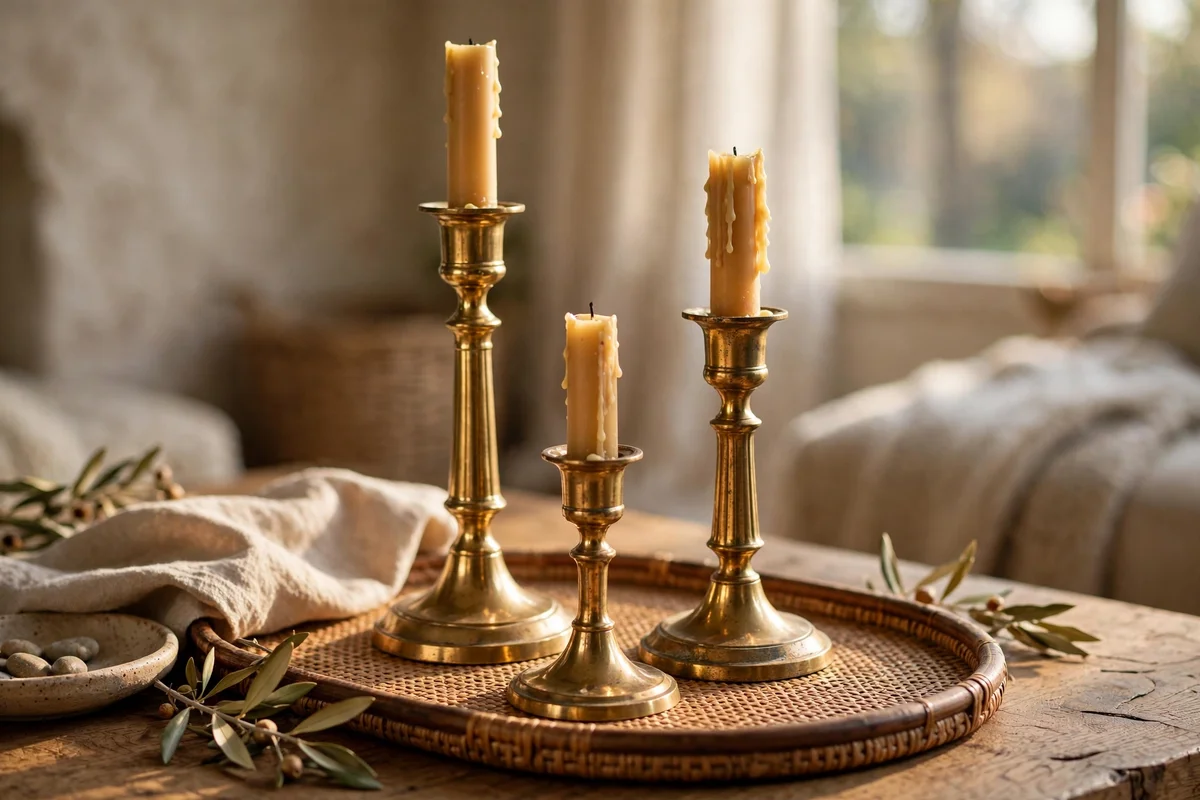
Arrange objects in groups of three or five, since odd numbers force one piece to sit slightly forward and the eye reads the group as designed rather than matched. Try three candlesticks of 20, 15 and 10 cm on the tray, or a book stack, a bowl and a candle in descending heights. Pairs split the eye in two directions and look like bookends waiting for a shelf, so reserve pairs for items that genuinely need a partner, like two matching lamps.
If you own four of something, hide one and style three; the missing piece can rotate in next month. The mistake to avoid is centring the middle object perfectly, since a rigid straight line of three reads just as stiff as a pair. Offset one piece 5 cm forward and the group relaxes instantly. This rule costs nothing and fixes most tables that feel almost right but not quite.
15. Add a Small Lantern or Beeswax Candle for Evening Glow
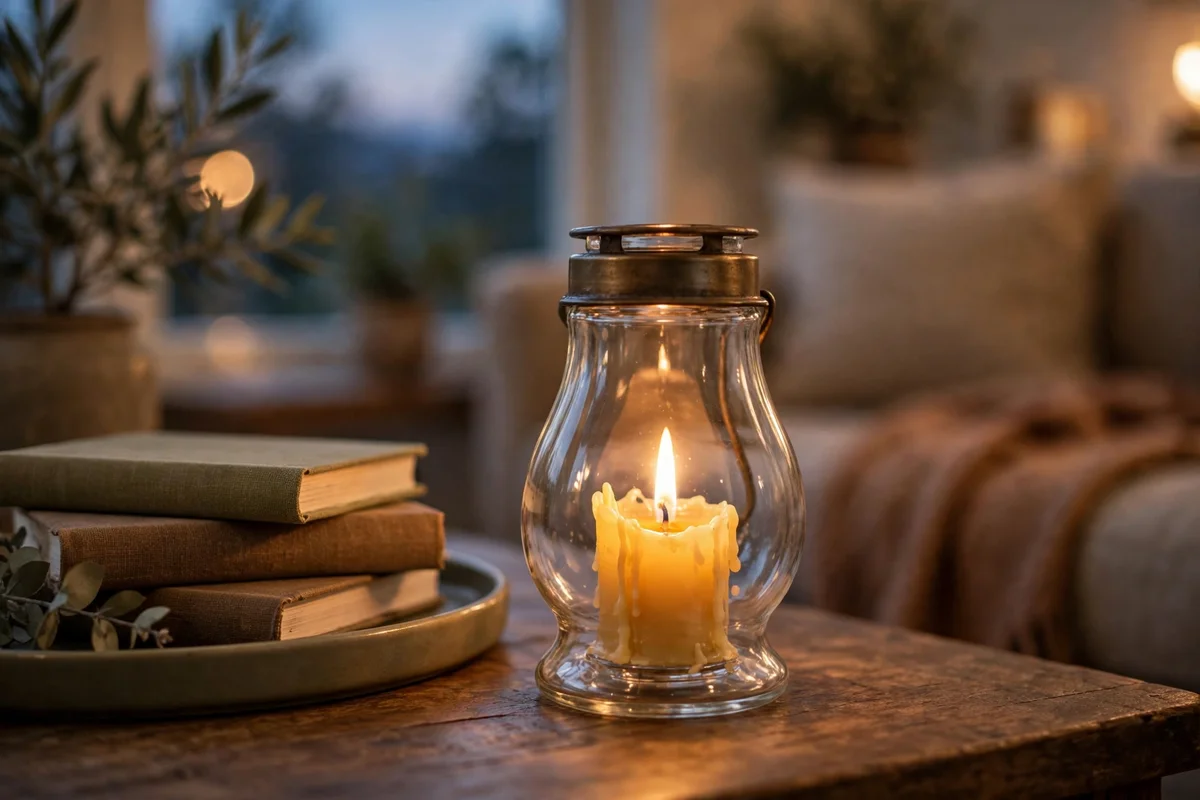
One lantern of 20 to 25 cm or a beeswax pillar candle in a glass hurricane transforms the table after sunset without rewiring anything. Warm light at 2700K or below flatters wood and stone, and a hurricane shade keeps the flame safe from reaching hands and trailing sleeves. Place the lantern in the medium slot of the height triangle so it doubles as structure and atmosphere in a single piece.
Never leave a lit candle unattended and keep flames 30 cm from curtains, paper and dried stems. The mistake to avoid is clustering five candles into a fire hazard that also drips wax across the wood; one confident flame outshines a crowd. A beeswax pillar burns cleaner than paraffin and costs 8 to 15 pounds or dollars, while battery lanterns with timers suit households with small children.
16. Layer a Folded Runner Beneath the Tray for Softness
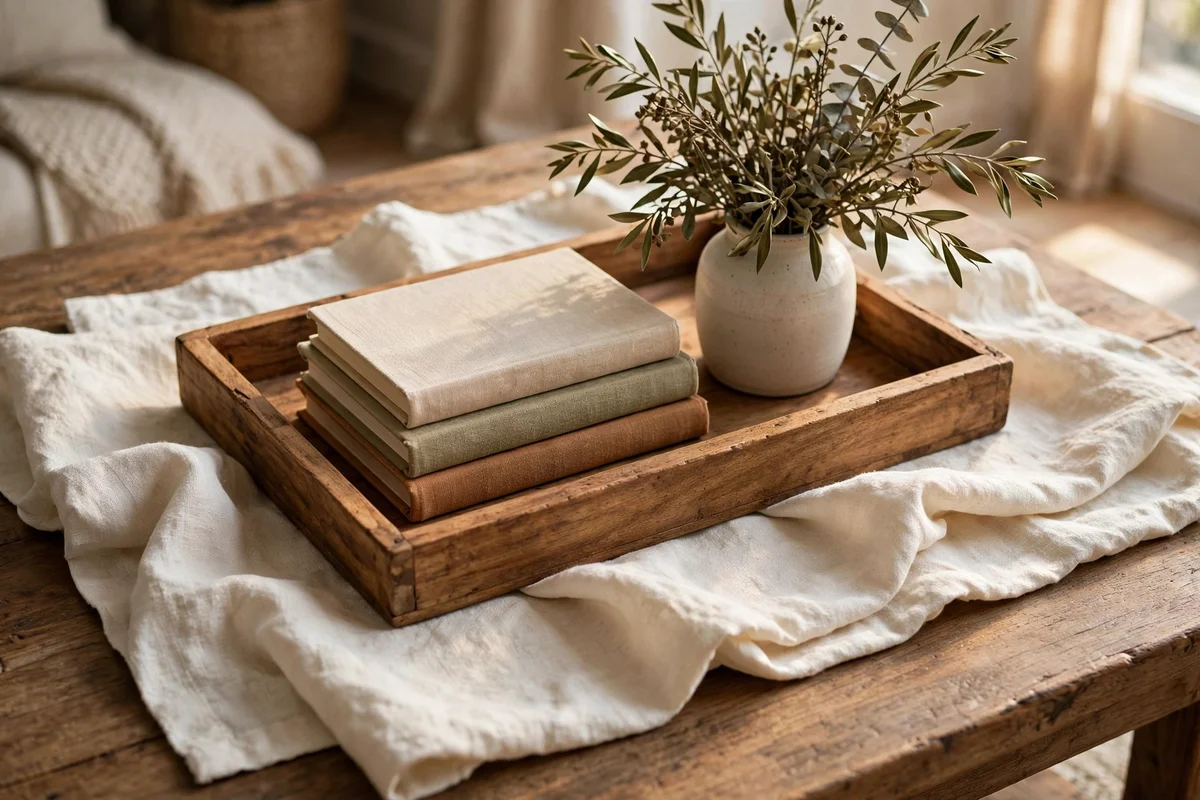
A folded table runner or piece of cloth 70 by 40 cm beneath the tray adds a textile layer that hard tables lack, especially glass and lacquer tops. Linen, washed cotton or a thin wool weave in cream, oat or a quiet stripe suits the year round method, since bolder patterns date quickly. Fold the runner to half its length and let 10 cm show around the tray edges so the textile frames rather than hides the arrangement.
Wash the runner monthly, since coffee tables collect more crumbs and dust than any other surface. The mistake to avoid is draping the cloth diagonally across the whole table, which looks accidental and slides at the first bump. A runner costs 10 to 20 pounds or dollars at home stores, and a folded cotton throw from the linen cupboard works just as well for a zero cost test.
17. Keep Two Thirds Decorated and One Third Calm and Empty
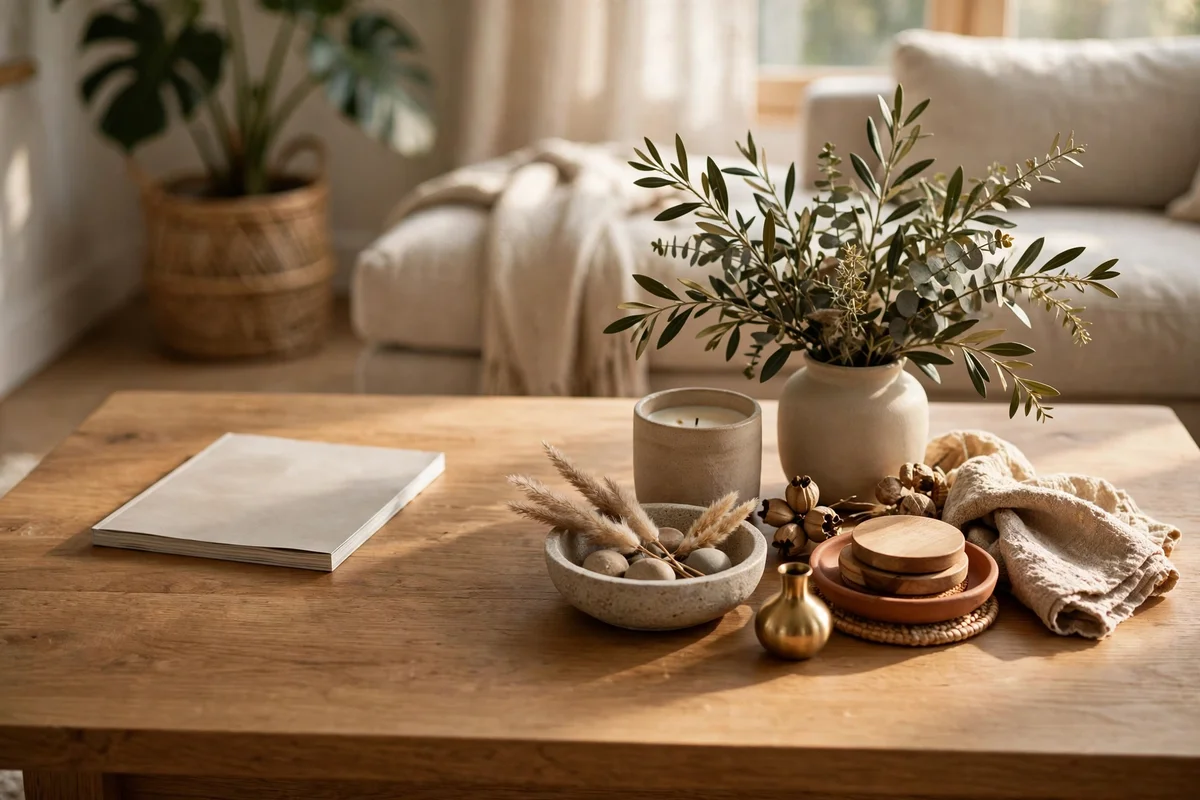
Aim for roughly two thirds of the table surface styled and one third left genuinely empty. The empty third gives the eye a place to rest and keeps the table feeling like furniture rather than a display shelf. On a 120 cm table this means about 40 cm of clear space, enough for a laptop, a magazine or tonight’s tea tray. Empty space is a design decision, not an unfinished corner, so protect it during every refresh.
The mistake to avoid is the slow creep where new objects fill the empty third over months until the table is solid decor. Once a season, clear the table completely and rebuild the ratio from scratch. If the table feels sparse at first, resist adding; live with the breathing room for a week and the calm usually wins you over, saving money and dusting time.
18. Echo the Rug Colours in Frames and Bowls, Not the Walls
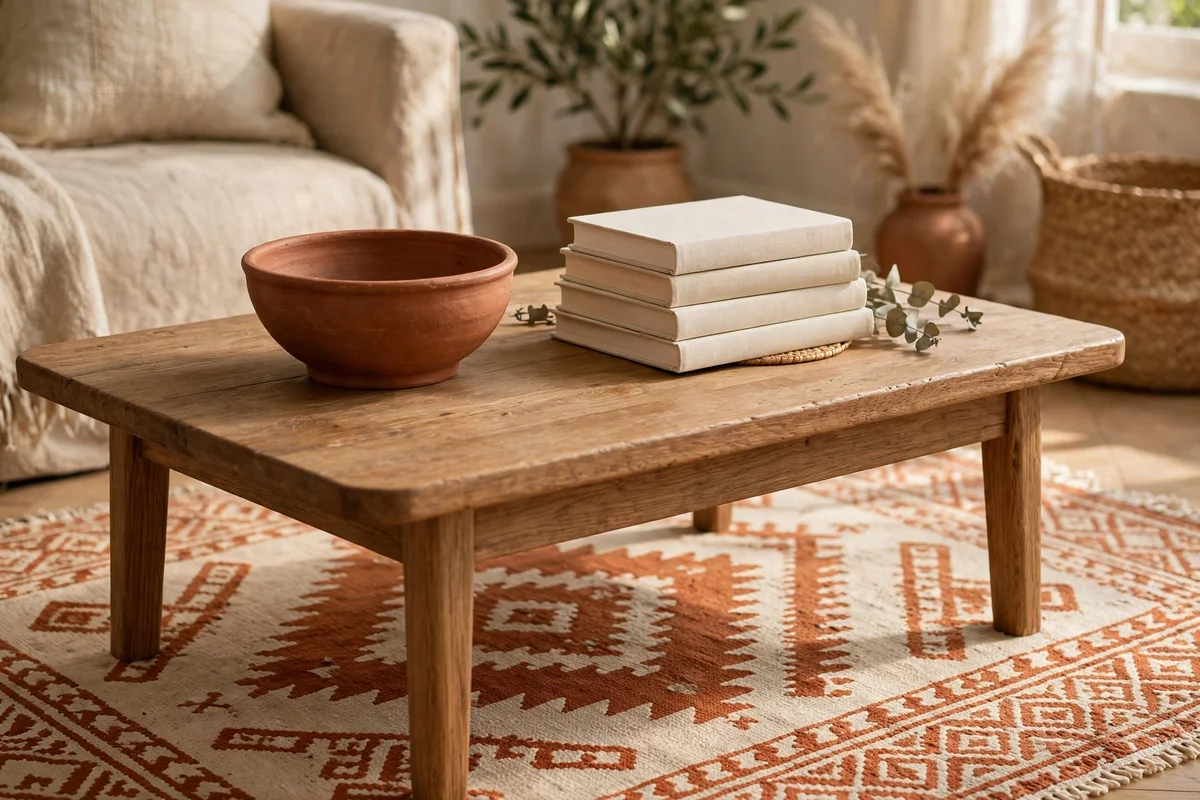
Pull two colours from the rug for small objects, a bowl, a candle or a frame, since the rug sits directly under the table and reads as its foundation. Wall colours sit too far above the tabletop to tie the arrangement together, and matching the walls often washes the table out entirely. If the rug is cream with terracotta motifs, choose a terracotta bowl and a cream book stack and the whole zone harmonises in minutes.
Keep the echo to two colours maximum; three or more turns the table into a sample board. The mistake to avoid is buying objects to match paint you plan to change, since small decor outlasts wall colours by years. A 10 pound bowl in the rug’s accent colour does more for cohesion than a 100 pound wall repaint, so start with the table and work outward.
19. Set a Small Tea Carafe and Two Cups for Ready Hospitality
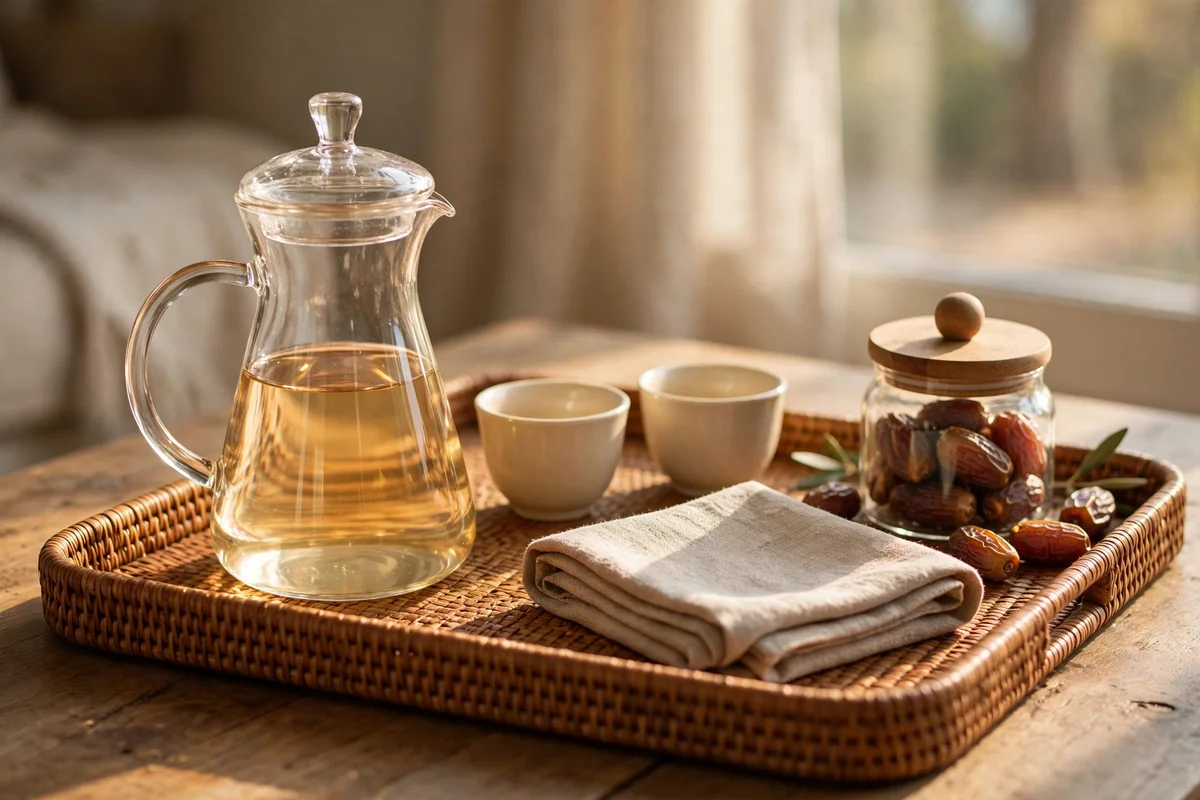
A 500 ml glass carafe with two small cups of 120 ml each turns the coffee table into a hospitality station that suits family gatherings and quiet afternoons alike. Choose clear glass so the tea colour shows, and set the carafe on the tray beside a folded cloth napkin for drips. This arrangement honours the table’s real purpose: welcoming people, not posing for photographs, and it gives guests an easy yes when you offer a pour.
Keep a small lidded jar of dates or dried fruit beside the carafe for a complete welcome that costs little and needs no kitchen trips. The mistake to avoid is choosing a carafe wider than 12 cm, which crowds the tray and tips easily on soft ottomans. Wash the carafe daily if tea sits in it, and budget 15 to 30 pounds or dollars for a heatproof glass set that lasts for years.
20. Edit the Table Back to Five Pieces Before Guests Arrive
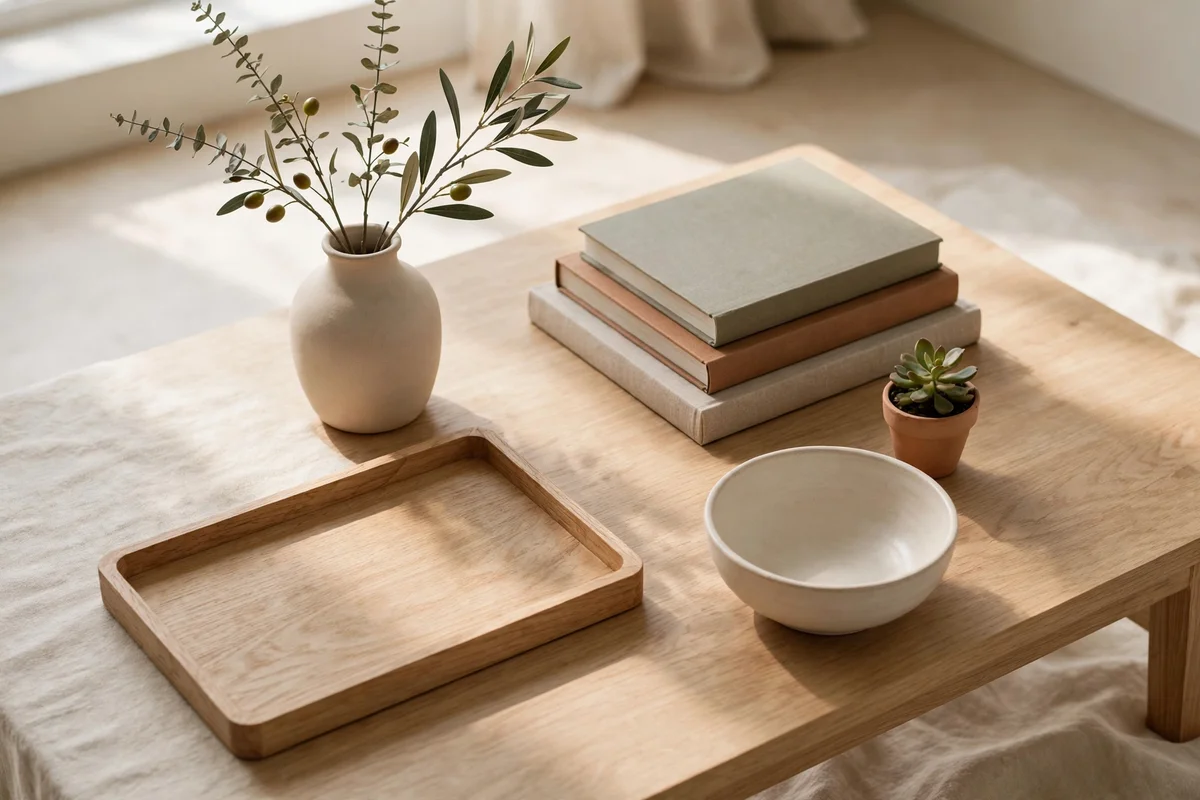
Five pieces is the sweet spot for a lived-in table: the tray, the height triangle’s three elements and one personal object already make four, so add one living thing and stop. Count pieces by silhouette, not by item, so a stack of three books reads as one piece and a candle in a hurricane reads as one piece. This final edit takes two minutes and separates a styled table from a crowded one every single time.
Move the extras to a single staging basket or a nearby shelf rather than stuffing them in drawers, since hidden clutter returns the moment the drawer fills. The mistake to avoid is editing by moving things to another visible surface, which just relocates the crowd. Walk back into the room with fresh eyes after the edit; if the table breathes and every piece earns its place, the job is done.
A pulled-together coffee table comes from method, not money. The tray gathers everything into one boundary, the height triangle keeps the eye moving, the living thing adds breath, and the empty third keeps real life welcome. Run this method once and the table holds together for months with only a stem swap and a dusting here and there. That is the quiet luxury of a table that works as hard as it looks.
Start with the easiest idea this week: clear the table completely, then rebuild with just the tray, three heights and one coaster zone. You will see the difference before the ten minutes are up, and the rest of these ideas wait patiently for the next quiet afternoon. A table that welcomes mugs, remotes and guests equally is never finished, and that is exactly the point.
Frequently Asked Questions
How much does it cost to style a coffee table from scratch?
Between 40 and 100 pounds or dollars buys everything new: a 20 pound tray, a 12 pound terracotta pot with a plant, thrifted books for 6 pounds, and a brass candlestick for 10. Most readers spend nothing, since the ten-minute refresh method reuses objects from other rooms. Buy the tray first; it does the most work of any single piece.
What size tray fits a standard coffee table?
For a table 110 to 130 cm long, choose a tray 50 to 60 cm long and 35 to 40 cm deep, which covers about half the surface and leaves room for a mug spot. On round tables of 90 cm, a 40 cm round or square tray keeps elbows clear. When in doubt, go slightly smaller; an oversized tray reads as a lid rather than a stage.
How do I style a coffee table with small children at home?
Use a deep-sided tray, unbreakable pieces like wood and woven baskets, and battery lanterns instead of real flames. Keep the arrangement to one corner so the rest of the table works for colouring books and snacks. Store the prettier pieces in a staging basket on a high shelf and restyle in two minutes after bedtime; the method adapts rather than fights family life.
How often should I change the coffee table arrangement?
A full ten-minute refresh every two to three months keeps the table feeling current without constant fuss. Swap the living element more often: fresh stems weekly, or rotate the potted plant’s position monthly. Between refreshes, just dust the tray edges and return stray objects to their zones; the structure holds on its own for weeks.
Can I style a coffee table in a small rented living room?
Yes. The method is renter friendly: nothing mounts to walls, and every piece moves with you. Choose a lightweight tray under 2 kg so the table can shift for cleaning, keep heights under 35 cm so the small room feels open, and tie colours to the rug rather than the landlord’s paint. Five well-chosen pieces beat a crowded table in any square footage.