Living Room
20 Cosy Autumn Nook Ideas That Turn Forgotten Corners Into Favourite Places
By Anna Wells · · 17 min read
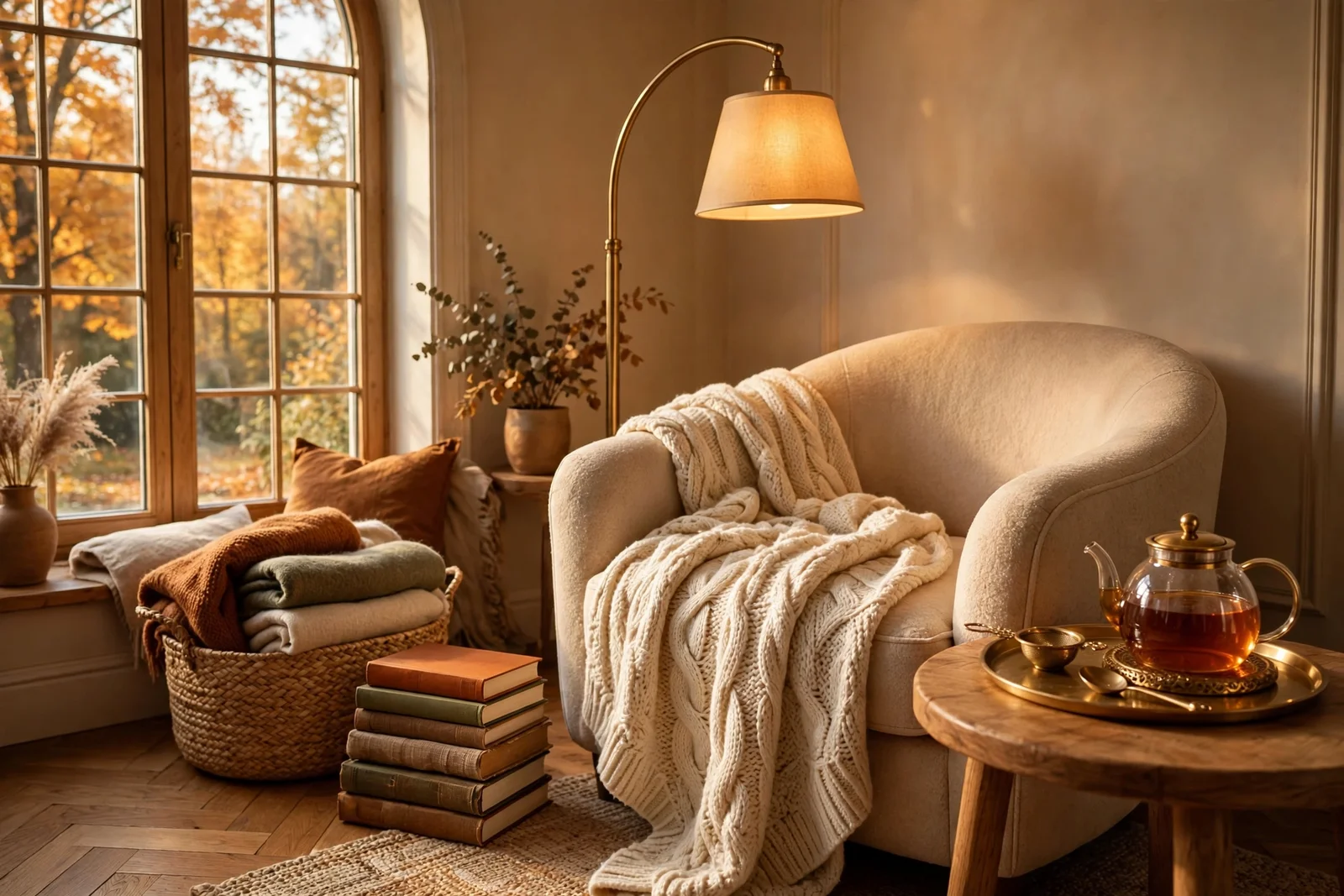
Twenty practical ideas for building a cosy autumn nook: window seats, armchair corners, landings and under-stair spots, with sizes, lighting and budget tips.
The armchair by the window has held a laundry pile all summer, and nobody has sat in it for months. Then October arrives, the afternoon light turns honey coloured, and suddenly that corner looks like the best seat in the house. This is the season when forgotten corners earn their keep, and a little attention turns them into the places everyone reaches for.
A cosy autumn nook asks for very little. It needs a chair worth sitting in, warm light at the right height, one good textile to pull close, and a surface for tea. The twenty ideas below work in window seats, stair landings, bay windows, bedrooms and the quiet gaps under stairs, with options for tiny spaces and corners that have no wiring at all.
Each idea is concrete and practical, with sizes, materials, colour names and budget tips, so you can build your nook across a single weekend. Skim the headings, pick the one that matches your corner, and start there.
By the time the clocks change, you will have a favourite place in the house that simply did not exist in September. That is the quiet magic of an autumn nook.
1. Dress a Deep Window Seat With a Box Cushion and Three Linen Pillows
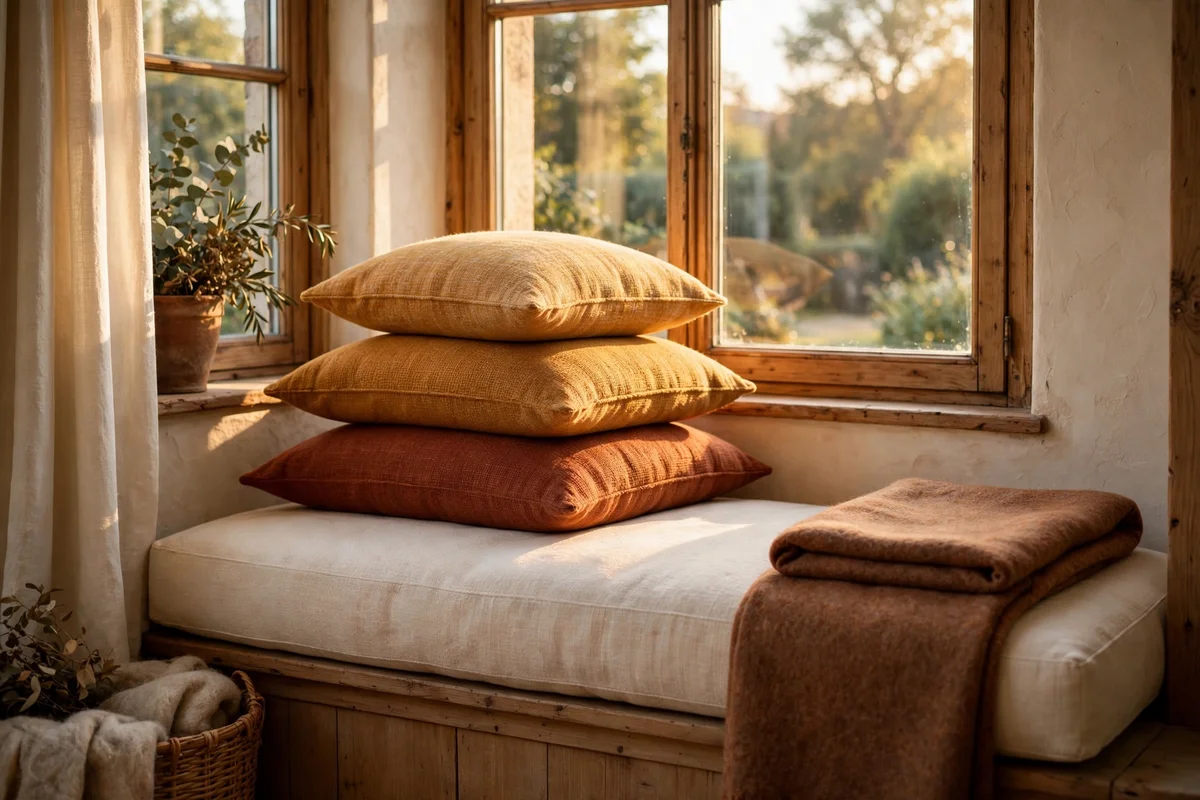
A window seat becomes the favourite spot in the house once it has a proper cushion. Have a box cushion cut 7 to 10 cm thick from dense foam, covered in washable linen or a cotton twill, so it sits level with the seat edge and does not slide. Measure the seat to the nearest centimetre and leave 1 cm clearance on each side for the fabric to relax. Rust, ochre, moss and warm cream all glow in low autumn light.
Add three pillows in descending sizes, roughly 50 cm, 45 cm and 40 cm square, mixing a plain weave with a subtle stripe or herringbone. The common mistake is using cushions so small they look lost; pillows should fill the seat depth from back to front edge. Budget tip: a local upholsterer cuts foam and covers for 40 to 80 dollars or pounds, far cheaper than a custom bench quote.
2. Tuck an Armchair Into a Corner Beside an Arched Brass Floor Lamp
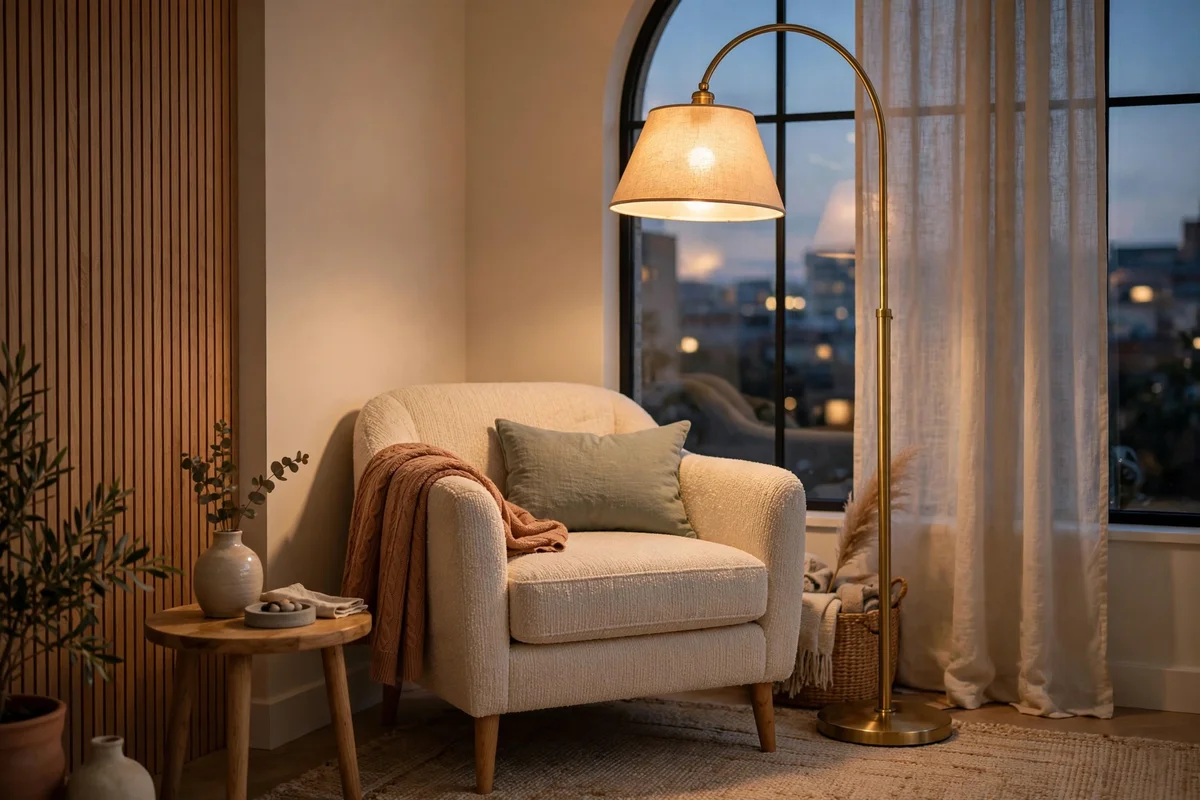
Any dead corner, even 90 by 90 cm, can hold a reading chair if the lamp arcs overhead rather than crowding the side. Choose a compact armchair with a seat depth of 50 to 55 cm and an arched floor lamp whose head reaches 150 to 170 cm high, so light falls on the page without the shade touching the wall. Aged brass or rubbed black metal warms the corner in lamplight.
Pull the chair 15 to 20 cm out from the corner so curtains and cushions behind it breathe, and angle it 10 to 15 degrees toward the room for a welcoming line. Pair with a small footstool if space allows, matching the chair fabric in a warmer tone. The mistake to avoid is pushing the chair hard into the corner, which reads as storage rather than an invitation to sit.
3. Build a Reading Spot Under the Stairs With a Low Bench and Shelves
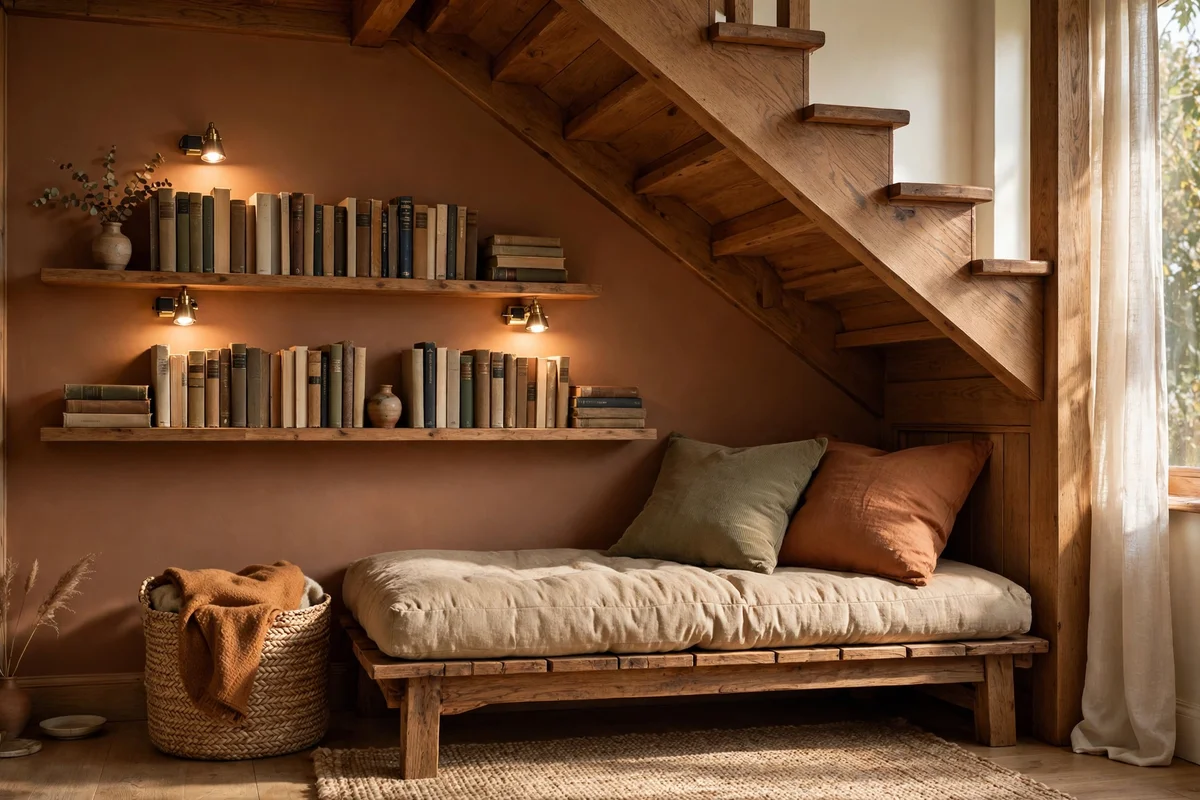
The space beneath a straight staircase often holds 120 to 150 cm of usable depth, enough for a low bench 40 cm high and 90 cm long with a thick seat pad. Paint the back wall a warm shade such as terracotta or deep sage to mark the spot, and fit one or two floating shelves 25 cm deep above the bench for books at arm’s reach. Battery picture lights wash the shelves without wiring.
Leave at least 100 cm of headroom where you sit, and choose a bench with storage inside for blankets and winter wraps. A folded wool throw and one lumbar cushion complete the seat; anything more feels cramped. The mistake to avoid is sealing the space with a door that hides it, since a visible nook gets used and a hidden one gathers clutter.
4. Lay a Tied Cushion Across a Bay Window Bench for a Sunny Perch
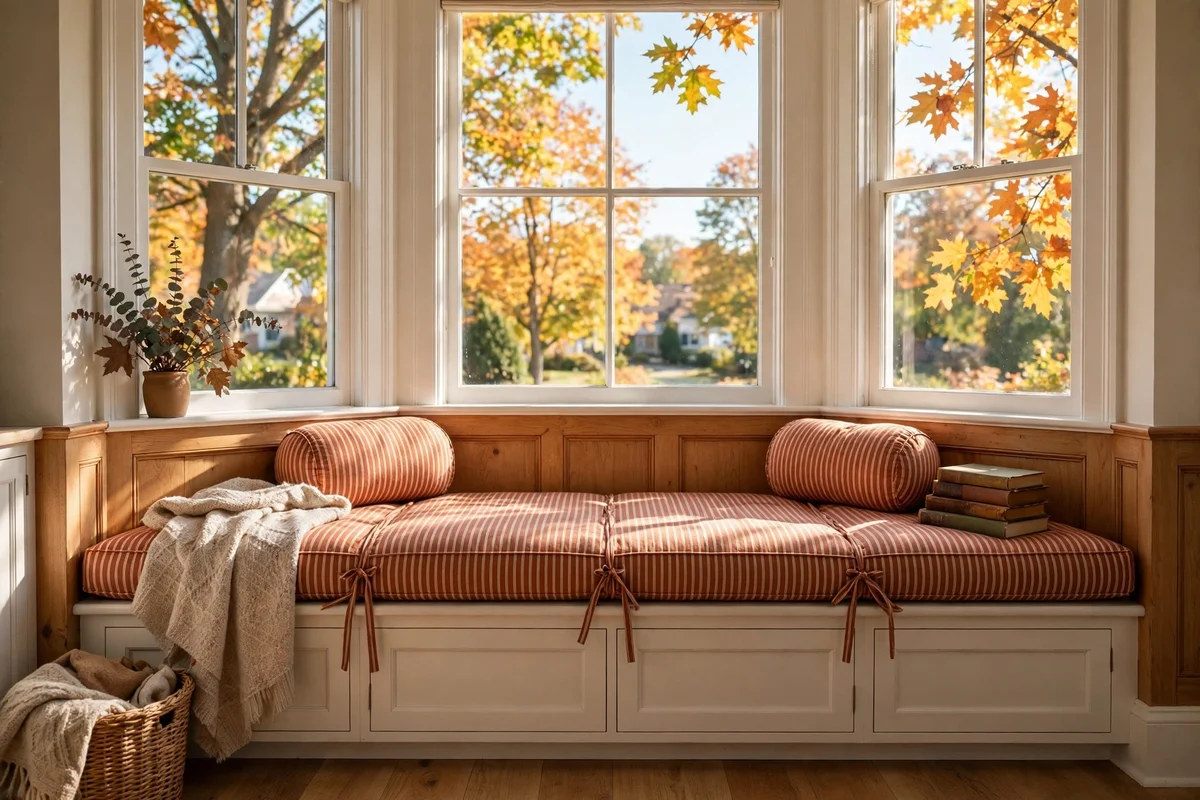
A bay window bench between 150 and 200 cm wide suits a full-length cushion 10 cm thick with fabric ties at the corners, which keeps it from drifting. Choose an outdoor-grade cotton canvas or a sturdy linen blend so daylight does not fade it quickly, and pick a warm pattern such as a rust ticking stripe. Cushions tied rather than loose save you straightening them daily.
Flank the cushion with two round bolsters or a pair of 45 cm square pillows in a deeper tone, like plum or forest green, for contrast against pale walls. A low bookshelf or a stack of books at one end grounds the bench. The mistake to avoid is stuffing the bay so full of cushions that nobody can sit down; leave a clear 60 cm landing zone in the centre.
5. Place a Curved Tub Chair in the Bedroom Corner With a Round Rug
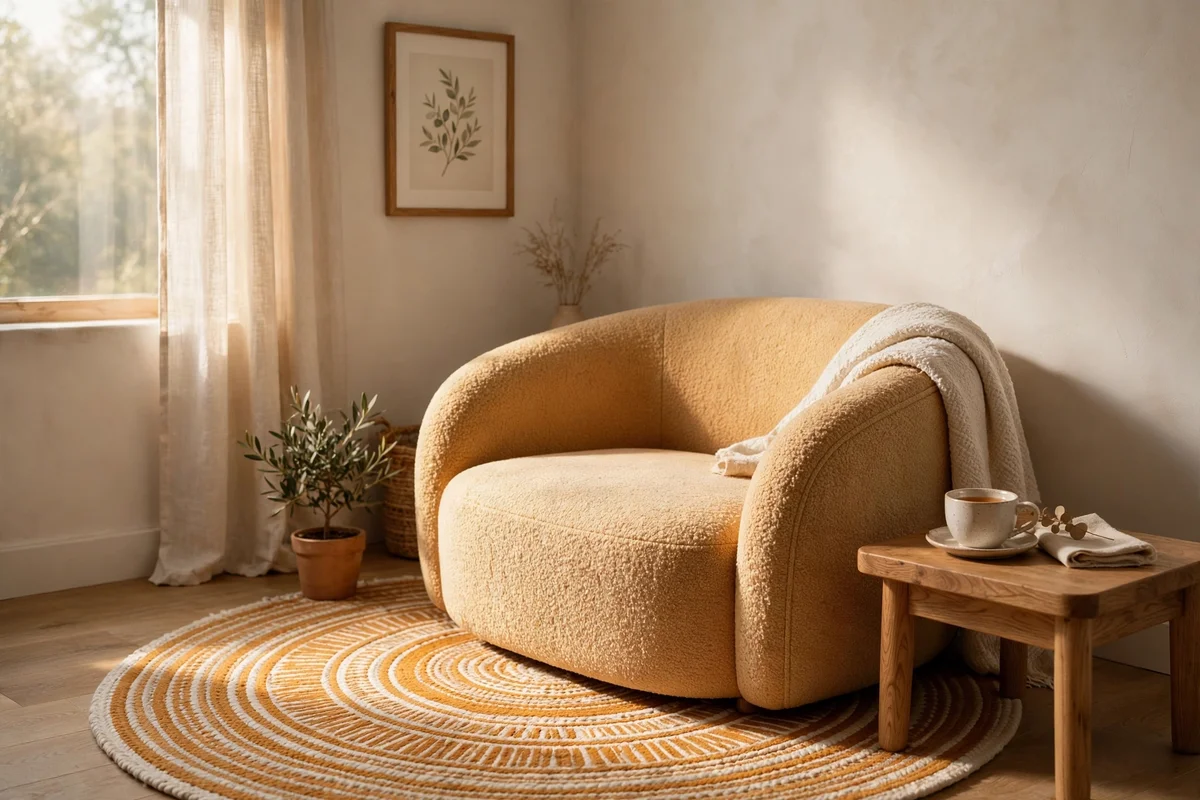
A tub chair 65 to 75 cm wide fits most bedroom corners and its curved back makes a small space feel softer than a square armchair. Set it on a round rug 120 to 150 cm across so the chair legs sit fully on the rug, which warms cold floors and defines the nook. Choose the rug in warm wool or a flatweave with an autumn palette of amber, rust and cream.
Position the chair to face the window or a framed print rather than the bed, giving the corner its own purpose for reading or slow mornings. A small side table 35 to 40 cm across holds tea and a book. The mistake to avoid is placing the chair where the wardrobe door swings; measure the swing arc before you commit and keep 10 cm clear.
6. Turn the Landing Into a Reading Nook With a Compact Chaise
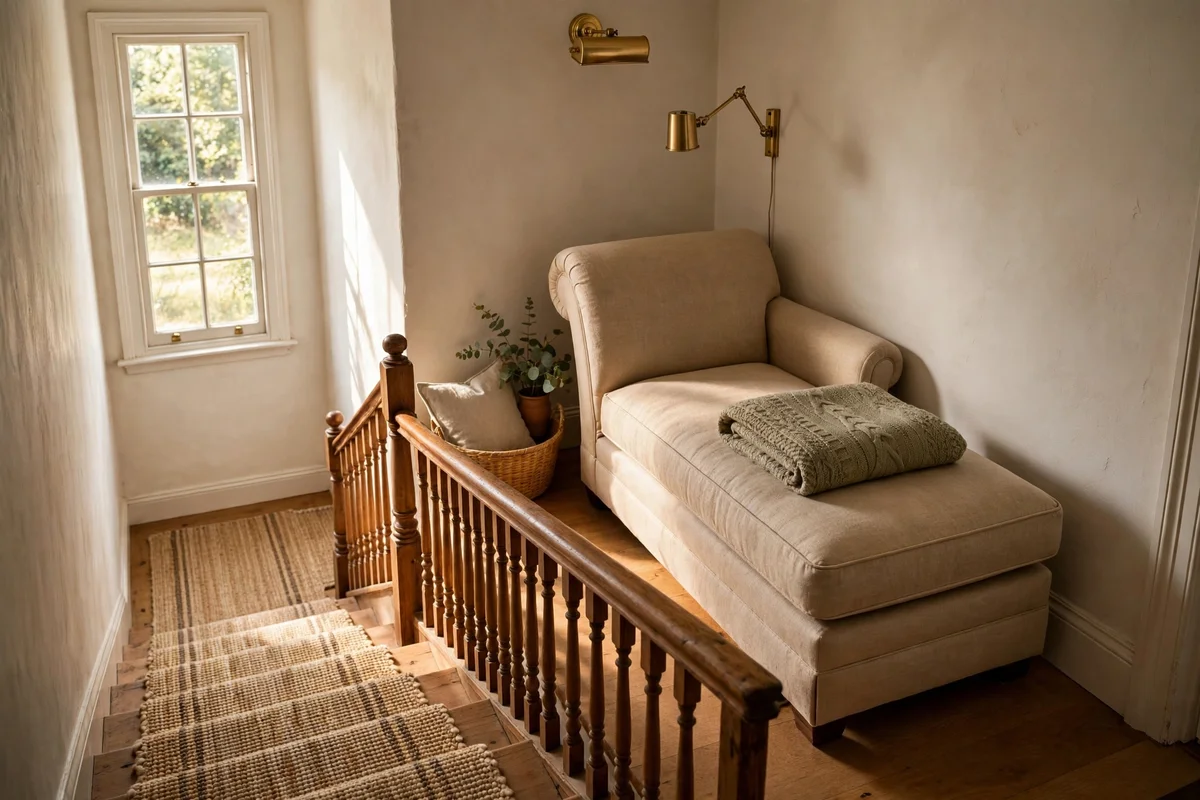
A landing at least 110 cm deep can hold a compact chaise or a small loveseat 120 cm long against the wall opposite the stairs. Anchor it with a runner rug 70 to 90 cm wide, and add a wall-mounted reading light 120 cm above the seat so no floor space is lost. Landings get daylight from the stair window, perfect for afternoon reading.
Add one throw folded in thirds across the foot and a basket for magazines underneath the seat if there is clearance. Keep the passage along the bannister at least 90 cm wide so nobody squeezes past. The mistake to avoid is using a full-size sofa here; oversized furniture blocks the walking line and turns a pleasant landing into an obstacle.
7. Drape a Chunky Knit Throw Over the Chair Arm in a Folded Layer
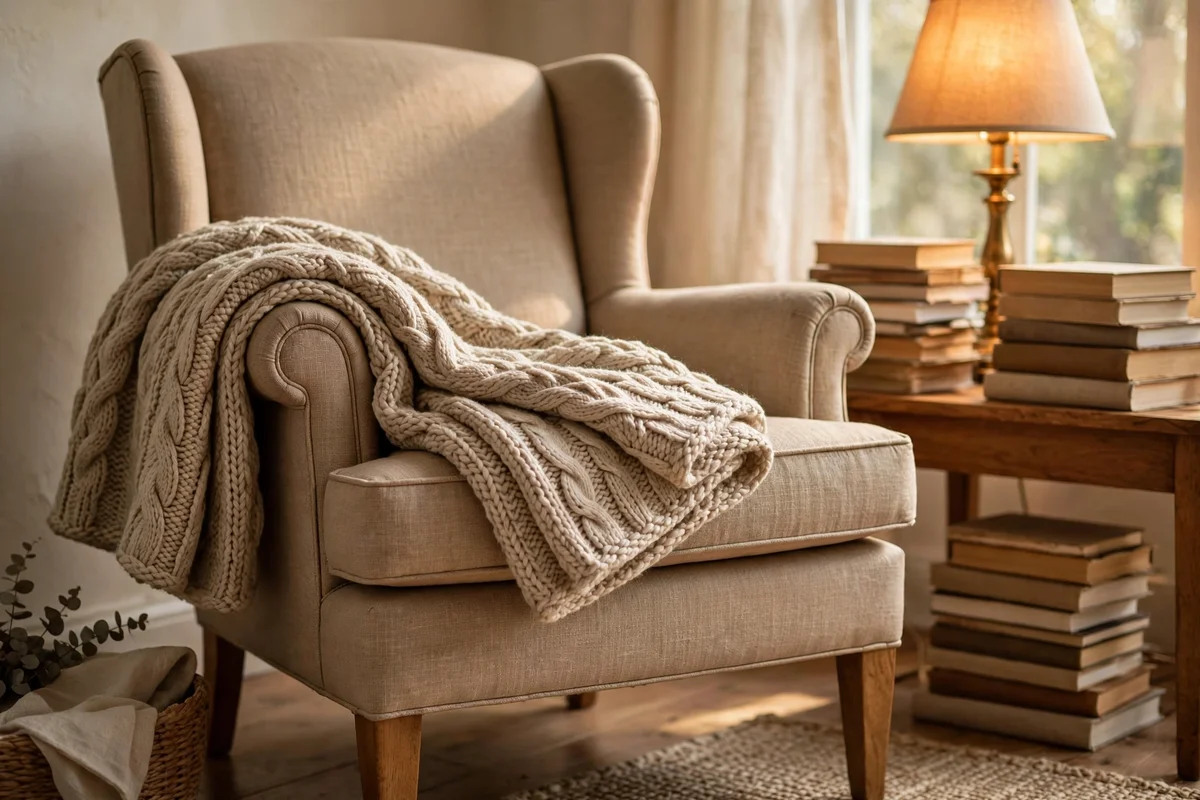
One generous throw changes a plain chair into an autumn invitation. Choose a chunky knit or a woven wool throw 130 by 170 cm, fold it in thirds lengthways and drape it over the chair arm so 40 cm hangs each side. The fold shows the texture without covering the seat. Creams, oatmeal and soft caramel layer well over darker upholstery.
Rotate throws with the weeks: a lighter cotton weave early in the season, a heavy wool one when evenings turn cold. Wash knit throws in cold water and dry flat so they keep their shape. The mistake to avoid is buying a throw too small to fold, since a single thin layer looks skimpy; 130 cm wide is the minimum for a proper draped look.
8. Choose One Oversized Lumbar Cushion in Burnt Orange Linen
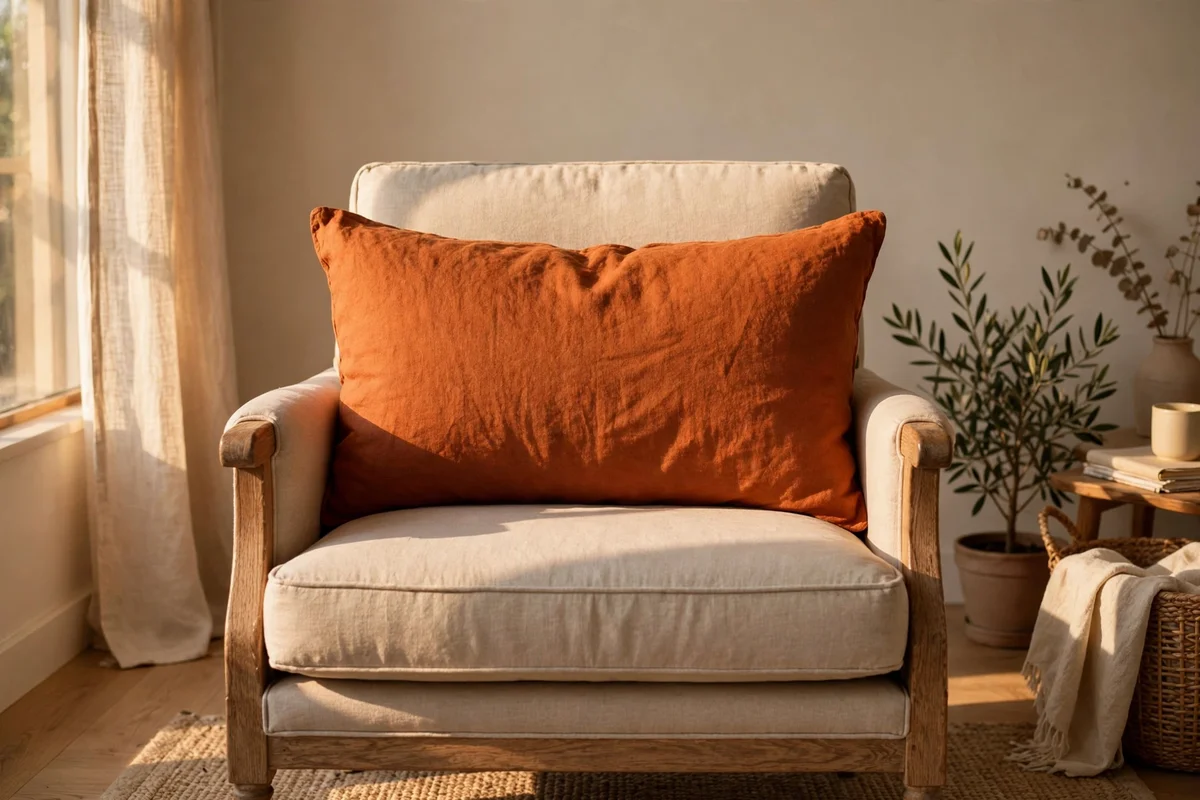
A single lumbar cushion 60 by 35 cm in burnt orange or rust linen supports the lower back and gives the nook its autumn colour in one move. Linen covers breathe better than velvet in a warm corner and they soften beautifully with use. Place it centred against the chair back with smaller plain cushions behind if the seat is deep.
Keep the palette restrained: one strong colour, one neutral, one texture. If the chair is patterned, choose a plain cushion; if the chair is plain, a subtle herringbone weave adds interest. The mistake to avoid is stacking three or four bright cushions together, which fights for attention. One confident cushion, well placed, always looks more settled.
9. Set a Round Oak Side Table Within Arm’s Reach of the Chair
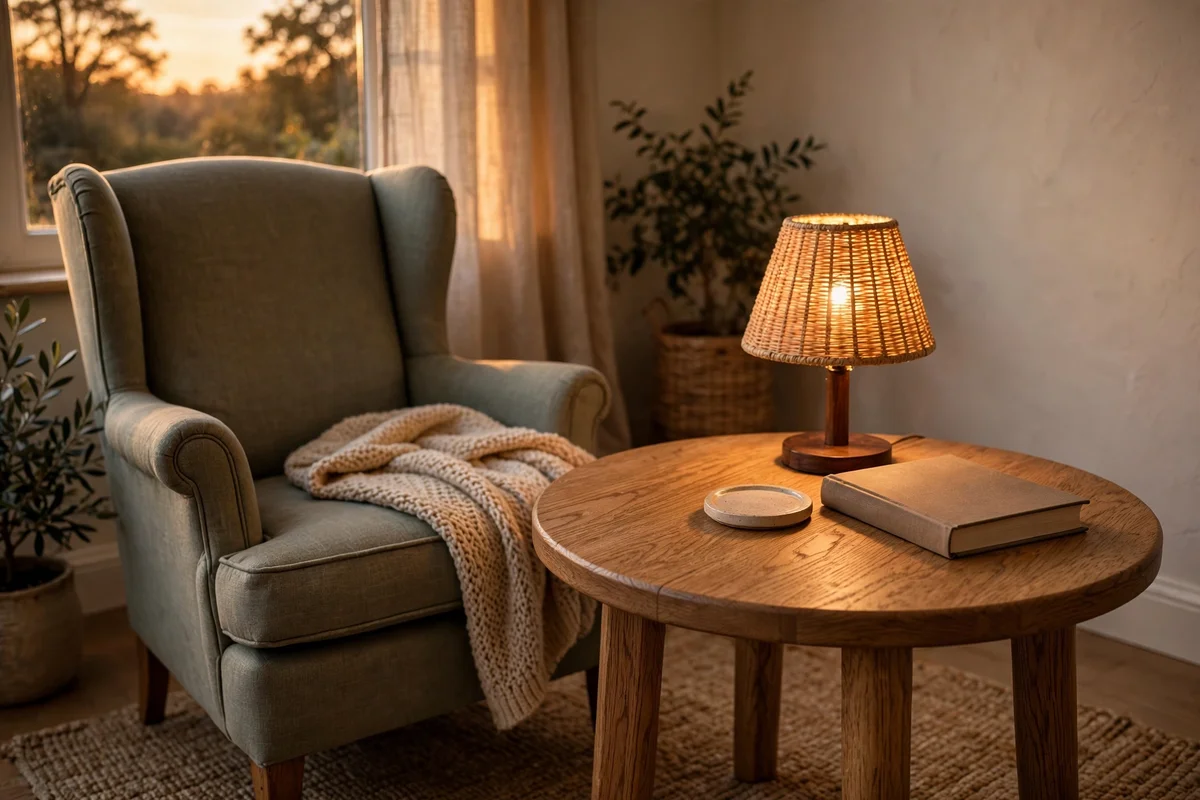
A round side table 35 to 45 cm across and 55 to 65 cm high sits perfectly beside a reading chair, close enough to reach tea without stretching. Oak, walnut or a honey-toned timber brings autumn warmth, and a lower shelf holds the book you are reading now plus a coaster. Round tops suit tight corners since there are no edges to catch hips.
Style it simply: a small lamp or lantern, a coaster, and the current book, leaving half the surface clear. The common mistake is choosing a table as high as the chair arm, which makes reaching awkward; 5 to 10 cm below the arm is the comfortable range. A second-hand wooden side table often costs 15 to 30 dollars or pounds.
10. Warm the Corner With a 2700K Table Lamp on a Plug-In Dimmer
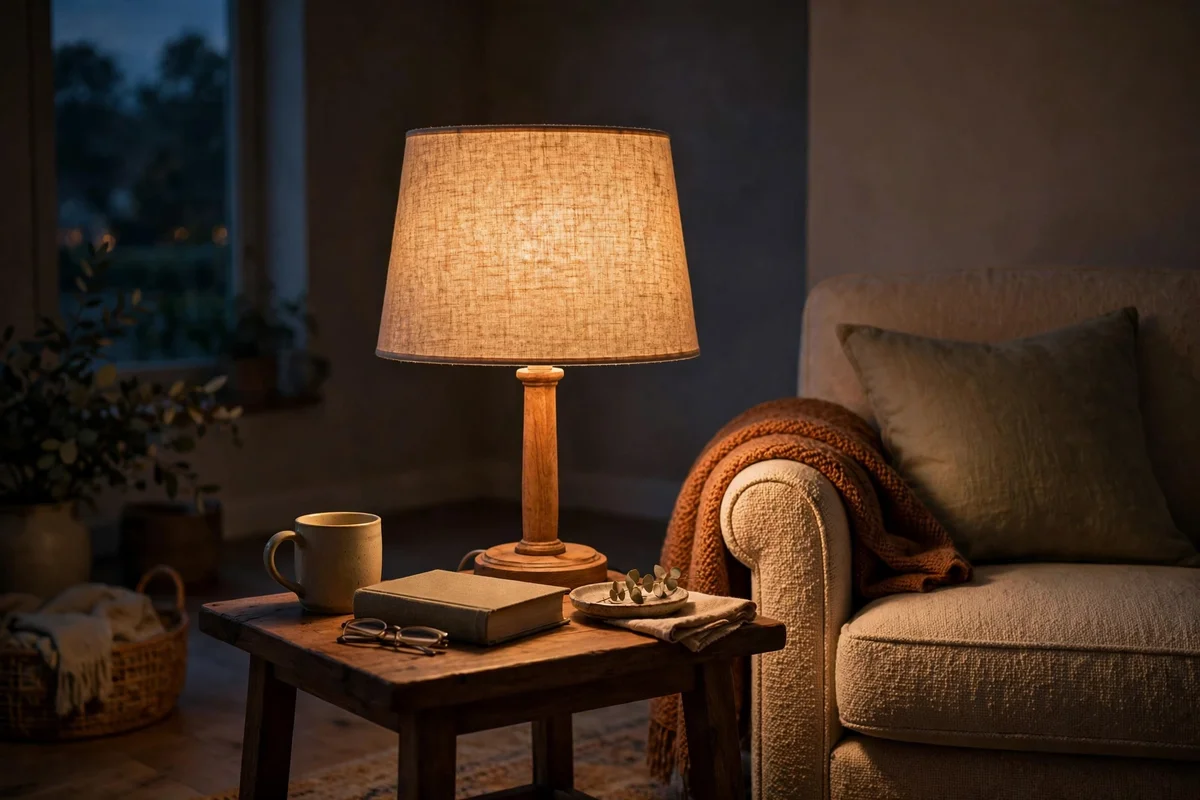
A table lamp with a warm 2700K bulb turns a nook from bright corner to evening refuge in one click. Choose a lamp 35 to 45 cm tall with a linen or cotton shade, which softens the glow, and plug it into an inline dimmer so you can lower the light for winding down. Place the lamp on the side table behind the chair’s reading shoulder.
Keep the shade top 10 to 15 cm above eye level when seated so the bulb never glares. Two warm sources, for example the table lamp plus a candle-style lantern, feel cosier than one bright one. The mistake to avoid is using a daylight 5000K bulb, which flattens warm fabrics and makes the nook feel like a workspace.
11. Stack Four to Six Hardbacks Beside the Chair as a Book Pedestal
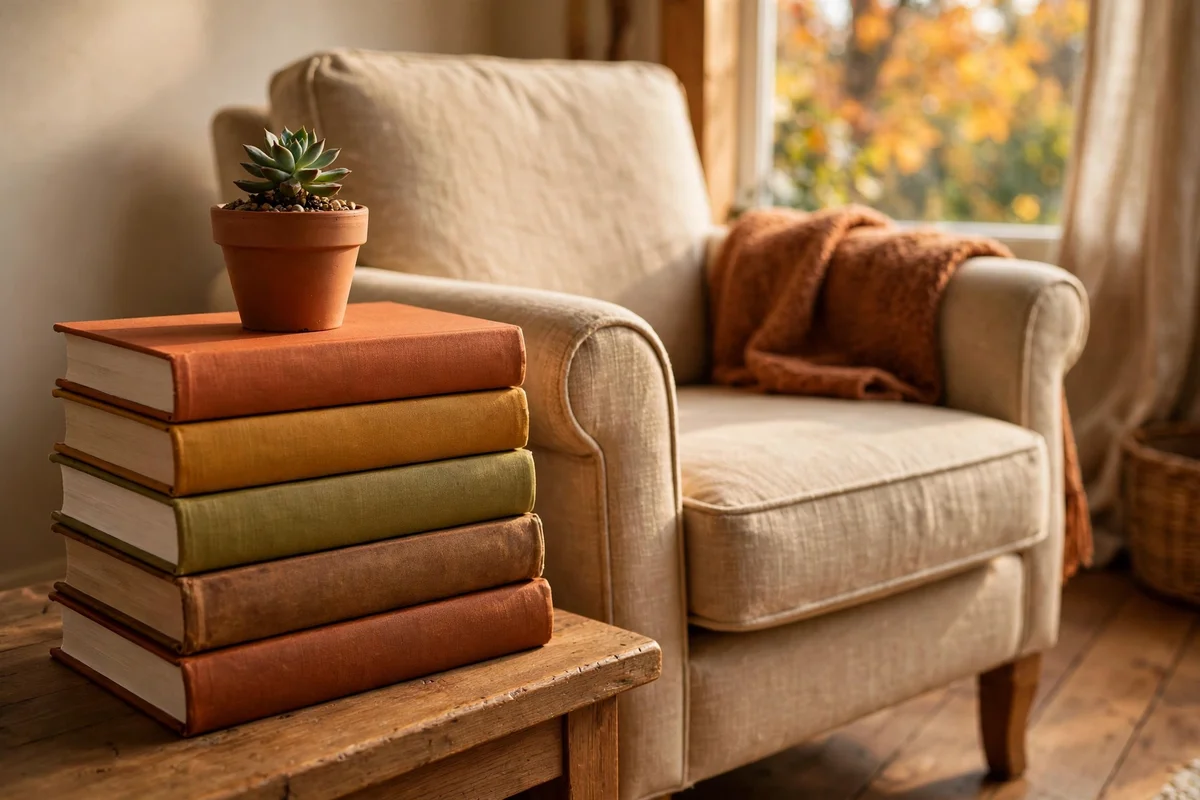
A neat stack of four to six hardbacks, each 3 to 5 cm thick, makes a sturdy side pedestal for a cup of tea or a small plant. Sort the stack largest at the bottom and smallest at the top, aligning the spines on one side for a tidy line. Choose covers in autumn tones, rust, moss, cream and walnut, so the stack reads as decor.
Rotate the top two books seasonally to keep the stack feeling fresh, and dust the pile weekly since horizontal books collect it. Place the stack on the floor beside the chair or on a low stool, never balancing on a chair arm. The mistake to avoid is stacking books you still want to read quickly; keep current reads on the table and use finished favourites for the pile.
12. Style a Brass Tea Tray on the Side Table for Evening Cups
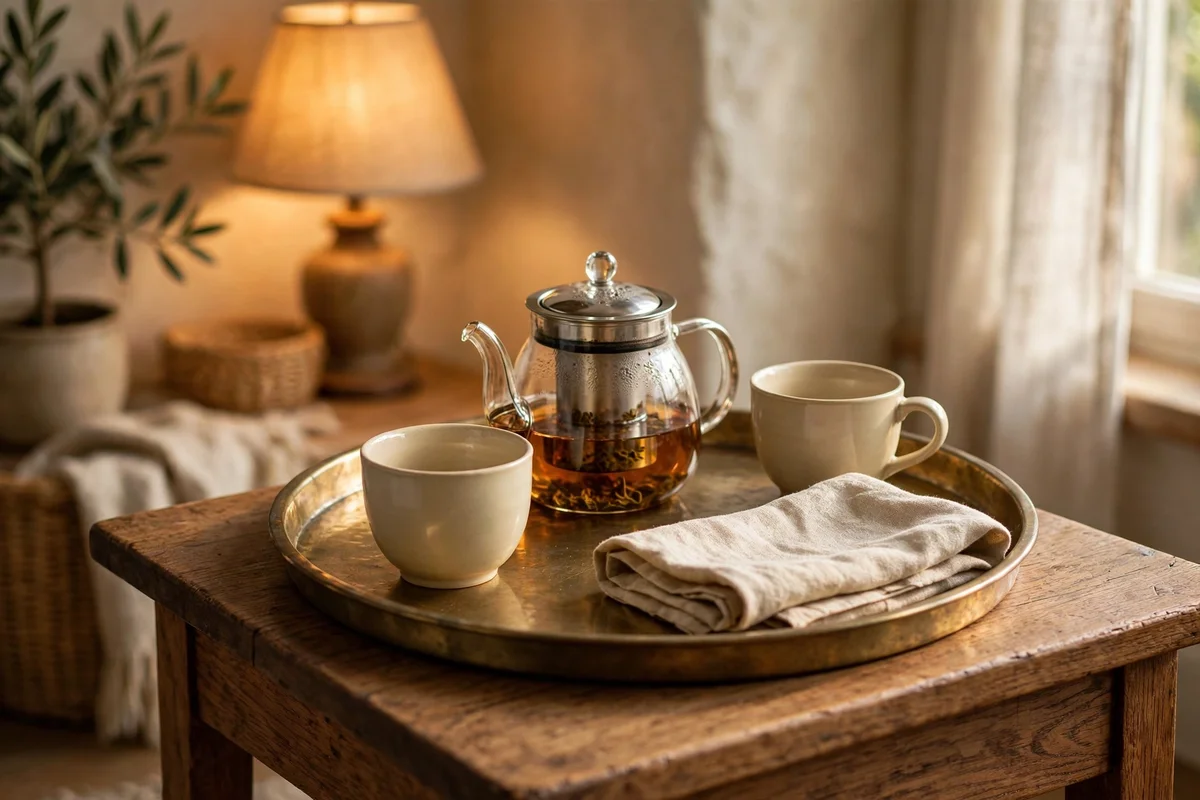
A round brass tray 30 to 35 cm across turns the side table into a proper tea station. Set it with a small glass teapot, two cups and a folded linen napkin, and the nook gains a ritual: tea at the same hour each evening. Brass warms to the lamplight and wipes clean with a dry cloth.
Keep the tray arrangement to four items so cups have landing space, and add a small plate of dates or nuts for a family-friendly treat. In the morning the same tray carries the teapot back to the kitchen in one trip. The mistake to avoid is overfilling the tray until cups rattle; a calm tray holds only what two people would use.
13. Tuck a Seagrass Basket of Folded Blankets Beside the Nook
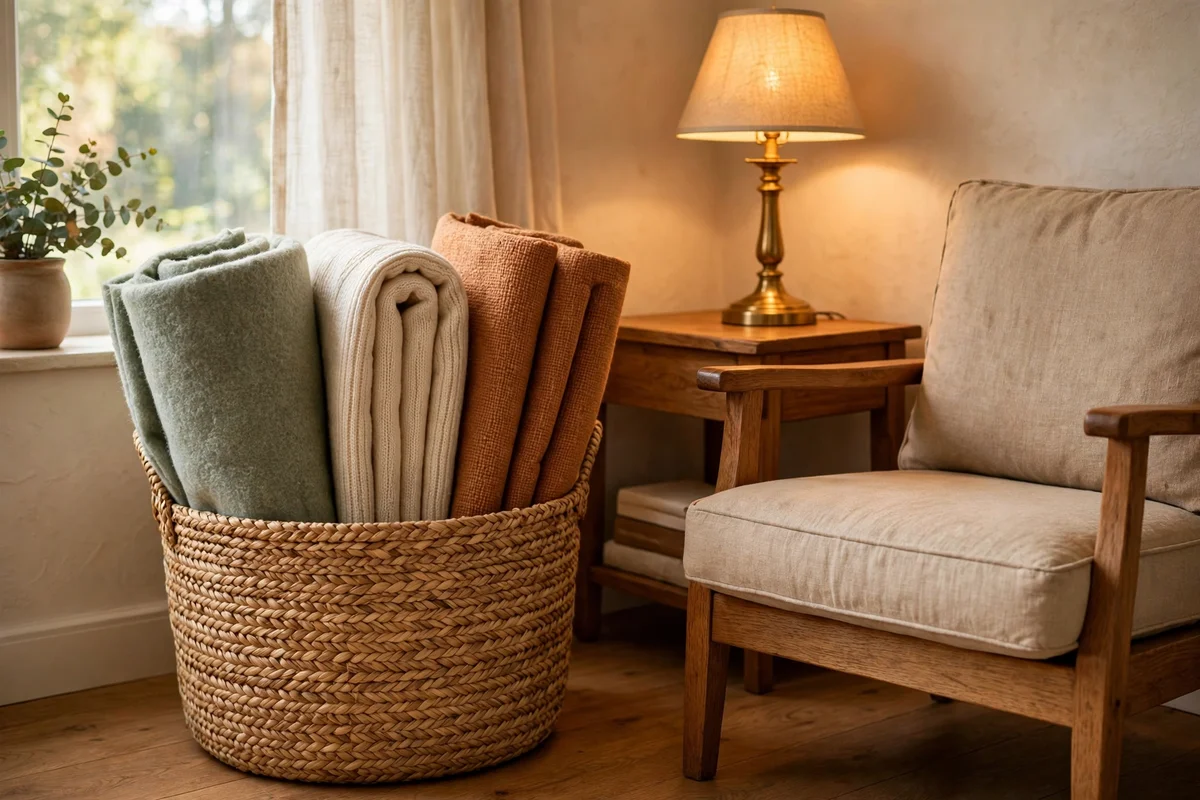
A seagrass or woven willow basket 40 to 50 cm tall beside the chair keeps two or three folded blankets within reach on chilly evenings. Fold each blanket in thirds and stand them upright like files so you can see every pattern, a trick borrowed from linen shops. Natural fibres suit autumn palettes and hide wear well.
Choose a basket with handles so it moves easily to the sofa when guests arrive, and line it with a cotton liner if the weave is rough. Store the heaviest wool blanket at the bottom and lighter throws on top. The mistake to avoid is using the basket as general storage; once toys and papers move in, the blankets stop being reachable and the nook loses its comfort.
14. Claim a 90 cm Alcove With a Floor Cushion and a Clip Light
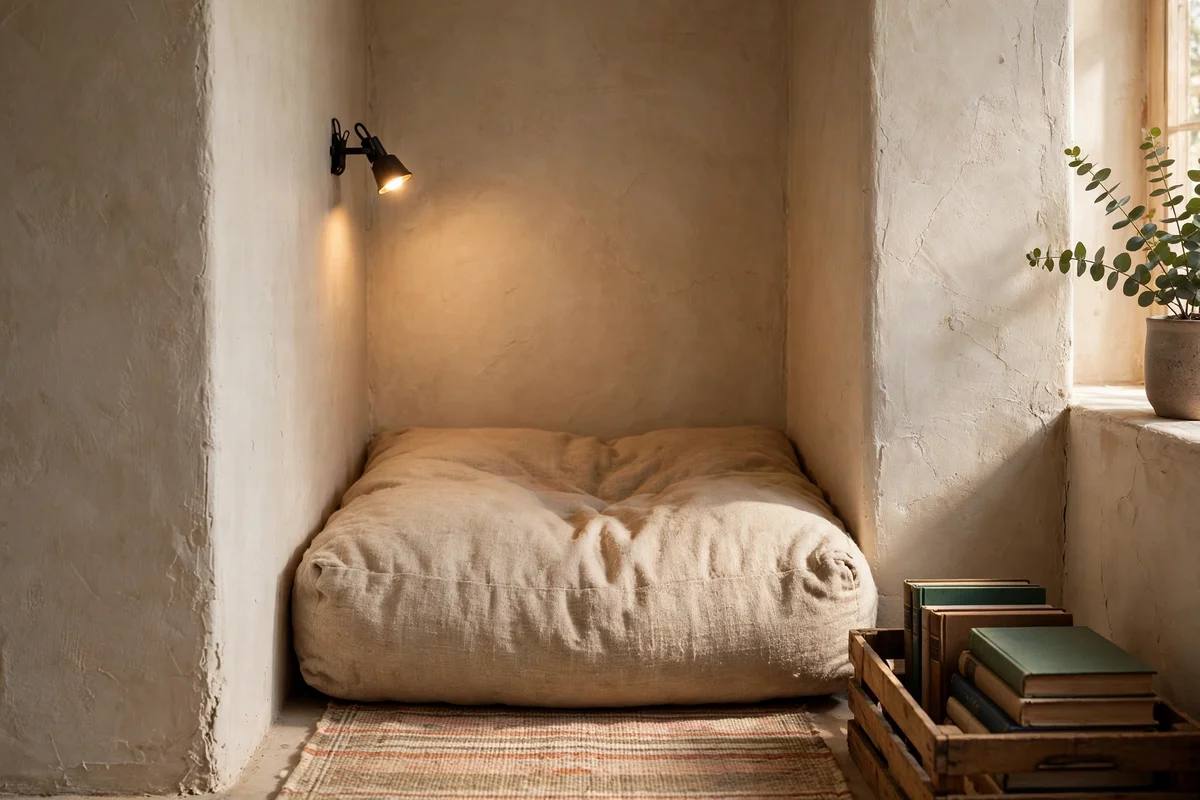
An alcove or chimney recess as narrow as 90 cm still makes a nook with a thick floor cushion 60 by 60 cm and 15 cm deep. Layer a small flatweave rug underneath for insulation, add a clip-on reading light to the nearest shelf or picture rail, and the forgotten gap becomes a reading spot. Floor cushions cost 25 to 45 dollars or pounds.
Add one lumbar pillow against the wall and a low book crate within arm’s reach. Since there is no chair, keep the cushion cover washable and choose a firm foam core that holds its shape. The mistake to avoid is pushing the cushion flat against a cold outside wall; leave 5 cm of air behind it or hang a small textile there to stop damp chill.
15. Light the Corner With Battery Pucks and a Rechargeable Lantern
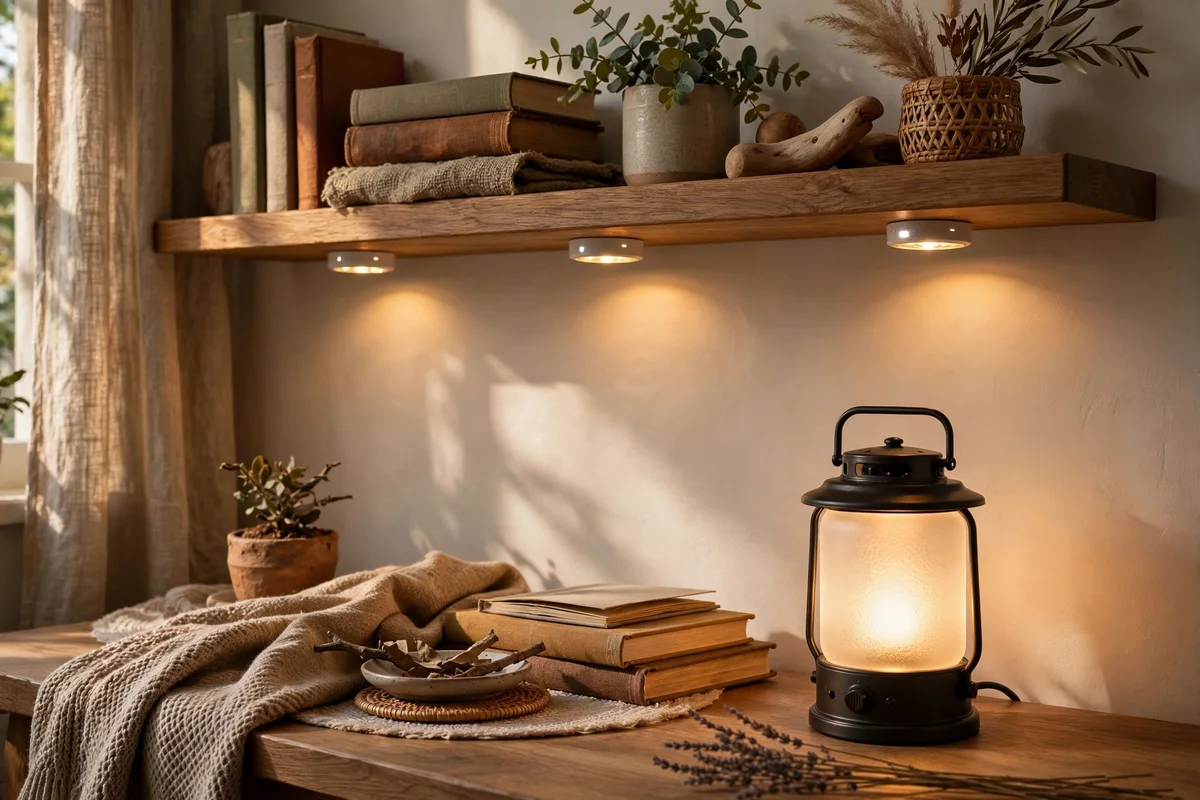
Corners without sockets still glow with three adhesive LED pucks inside a shelf or under a wall cabinet, plus one rechargeable lantern on the table. Choose warm-white pucks around 2700K with a remote or tap control, and a lantern with a frosted glass shade that mimics candlelight. Charge the lantern weekly beside your phone so it is always ready.
Mount the pucks where they wash the wall rather than pointing at the reader, which softens the light and avoids glare. Battery lanterns with a 6 to 8 hour runtime cover a week of evenings. The mistake to avoid is mixing cool and warm sources in one nook; pick 2700K for everything so the corner glows in one consistent warmth.
16. Soften the Corner With a Flatweave Rug and Heavy Linen Curtains
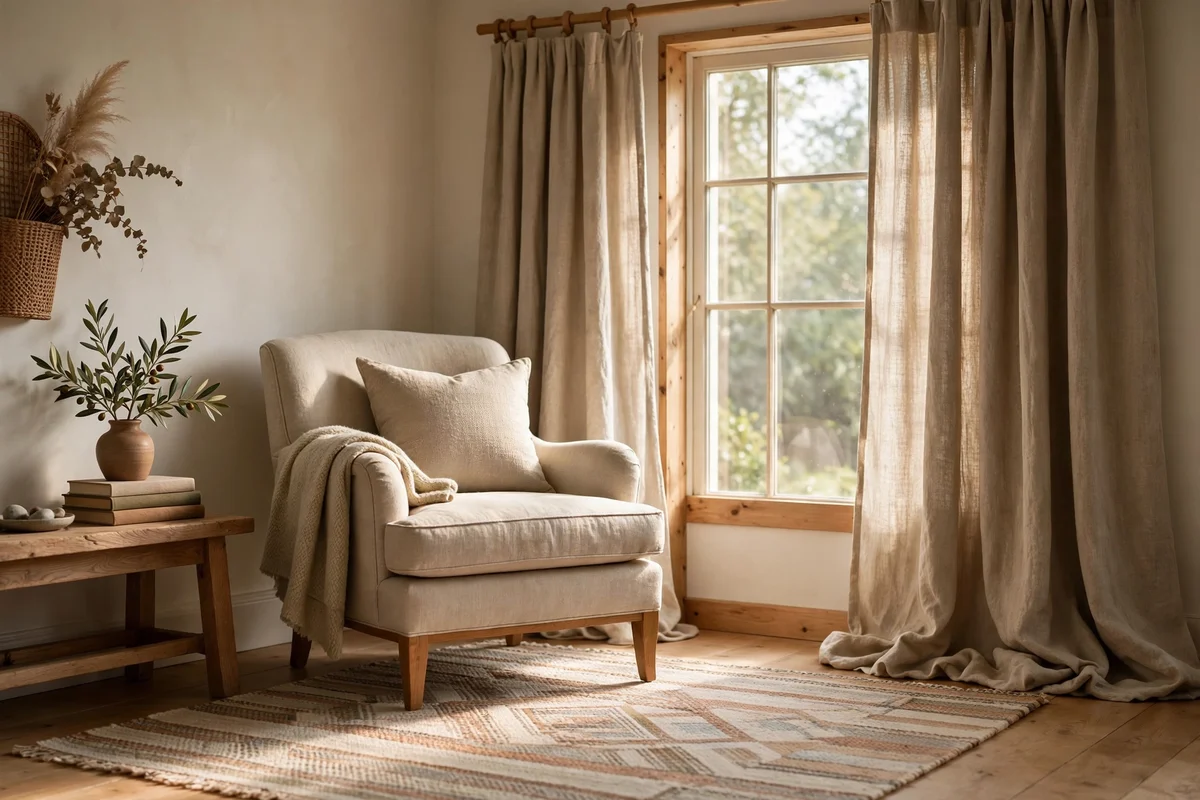
Textiles quiet a nook as much as they warm it. Lay a flatweave rug 120 by 170 cm under the chair to absorb footstep noise, and hang heavy linen curtains that fall 2 to 3 cm onto the floor if the nook sits by a window. Linen panels 140 cm wide each gather softly and soften street sound.
Choose curtain linings in a warm ivory rather than bright white, which keeps the evening glow golden. If full curtains are too much, a single panel on the draughty side does the job. The mistake to avoid is a small rug that floats under only the chair front legs; the rug should extend 20 cm beyond the chair on all used sides.
17. Keep a Clear 75 cm Walkway Past the Nook Chair
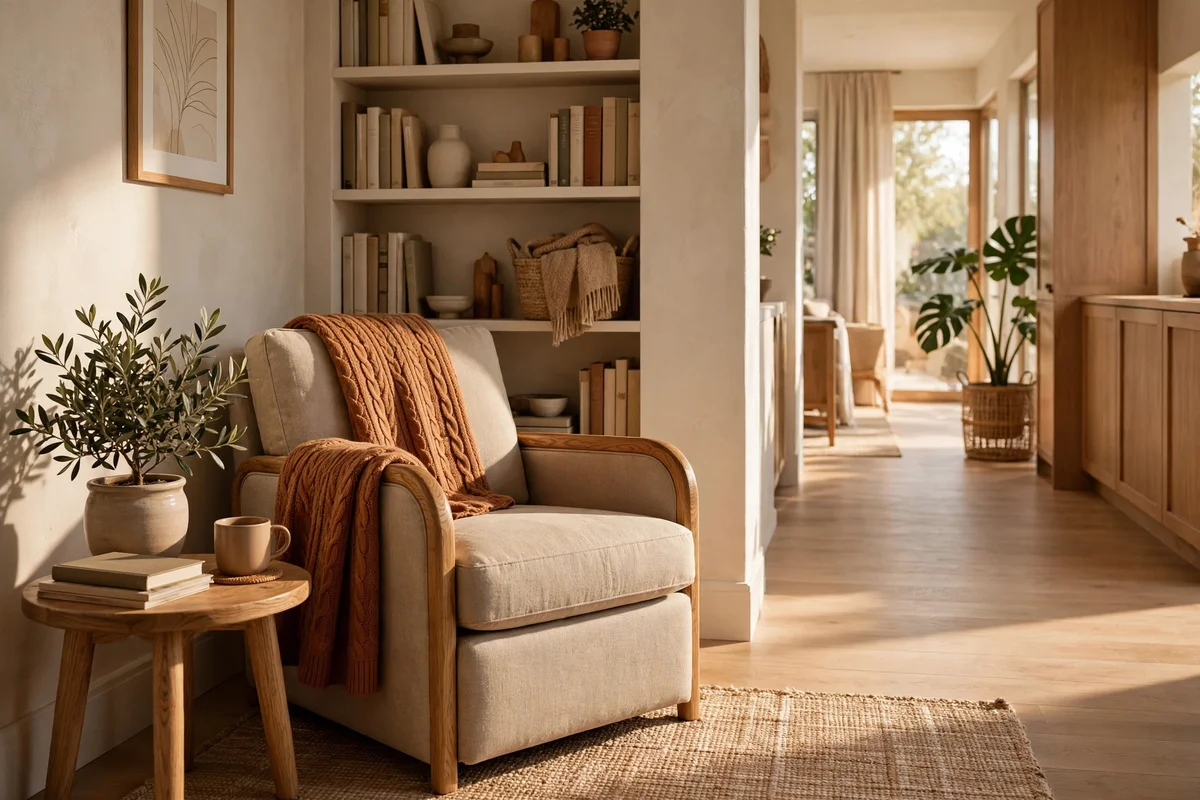
A nook only feels restful when nobody brushes past the chair to get by. Measure 75 cm of clear walking space between the chair edge and the nearest wall or furniture, which lets two people pass comfortably. Shift the chair diagonally rather than square to the wall; angled placement often frees 10 extra centimetres of passage.
If the walkway is tight, choose a chair with a smaller footprint and move the side table to the wall side. Tape the planned outline on the floor with painter’s tape and live with it for two days before buying. The mistake to avoid is squeezing a 90 cm chair into a 70 cm gap, which turns a cosy corner into a daily annoyance.
18. Hang Two Small Framed Prints and a Plug-In Wall Sconce
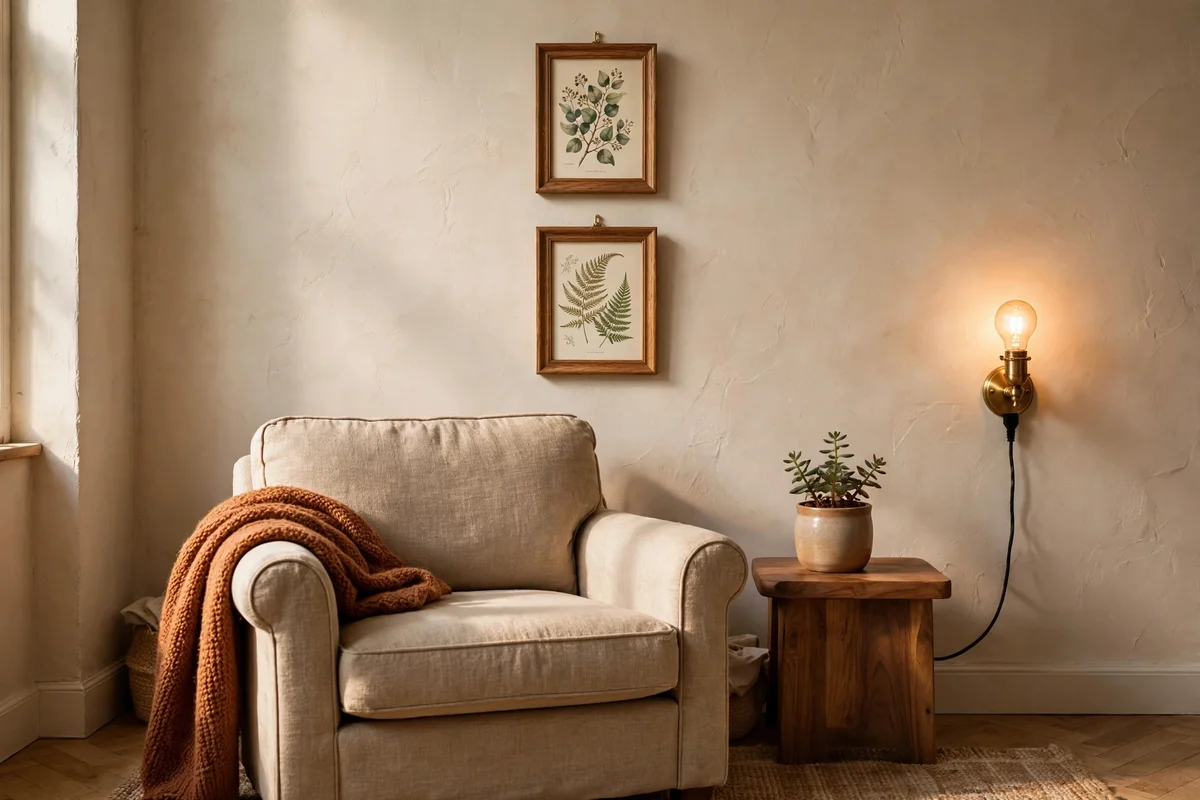
Two framed prints 20 by 25 cm hung in a vertical pair above the nook give a plain corner gallery warmth without a full gallery wall. Choose botanical or landscape subjects in muted autumn tones and simple oak or black frames. A plug-in wall sconce with a fabric cord mounted 130 cm above the seat washes the prints and the page alike.
Hang the lower frame 25 to 30 cm above the chair back so the composition sits in the sightline. Plug-in sconces avoid wiring and their cords can be clipped neatly along the skirting. The mistake to avoid is hanging art too high, where it disconnects from the chair; art should feel like it belongs to the nook, not to the ceiling.
19. Add a Sheepskin Drape Over the Seat for Late Autumn Evenings
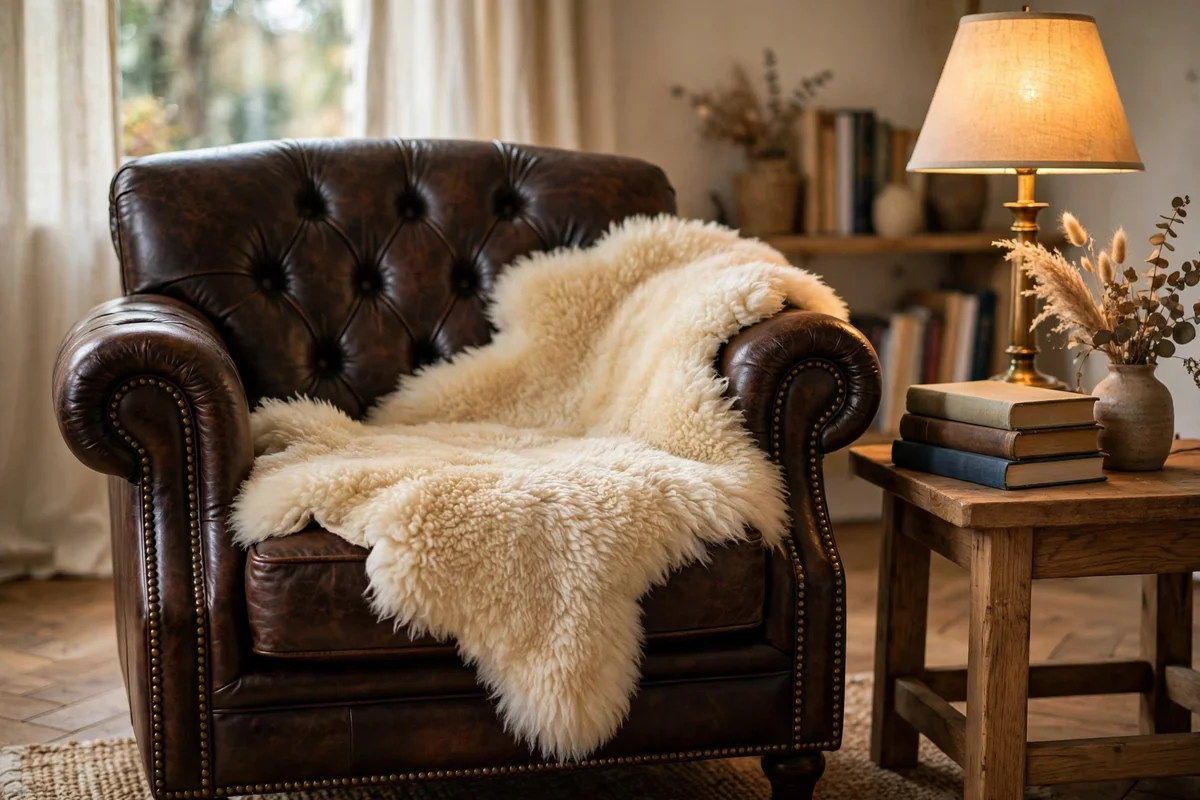
A single sheepskin or a good faux equivalent 60 by 90 cm thrown over the chair seat adds warmth the moment temperatures drop. Drape it loosely so 20 cm hangs over the front edge, softening the seat line and cushioning the legs. Natural cream and warm grey tones blend with any autumn palette.
Shake the skin outside weekly and brush it with a pet brush to keep the pile open. If you prefer not to use real sheepskin, a high-pile faux version in cream gives the same look and washes in the machine. The mistake to avoid is draping sheepskin over a damp or sunlit seat; direct sun yellows the hide and damp encourages odour.
20. Place a Low Bookshelf Behind the Chair as a Headboard Wall
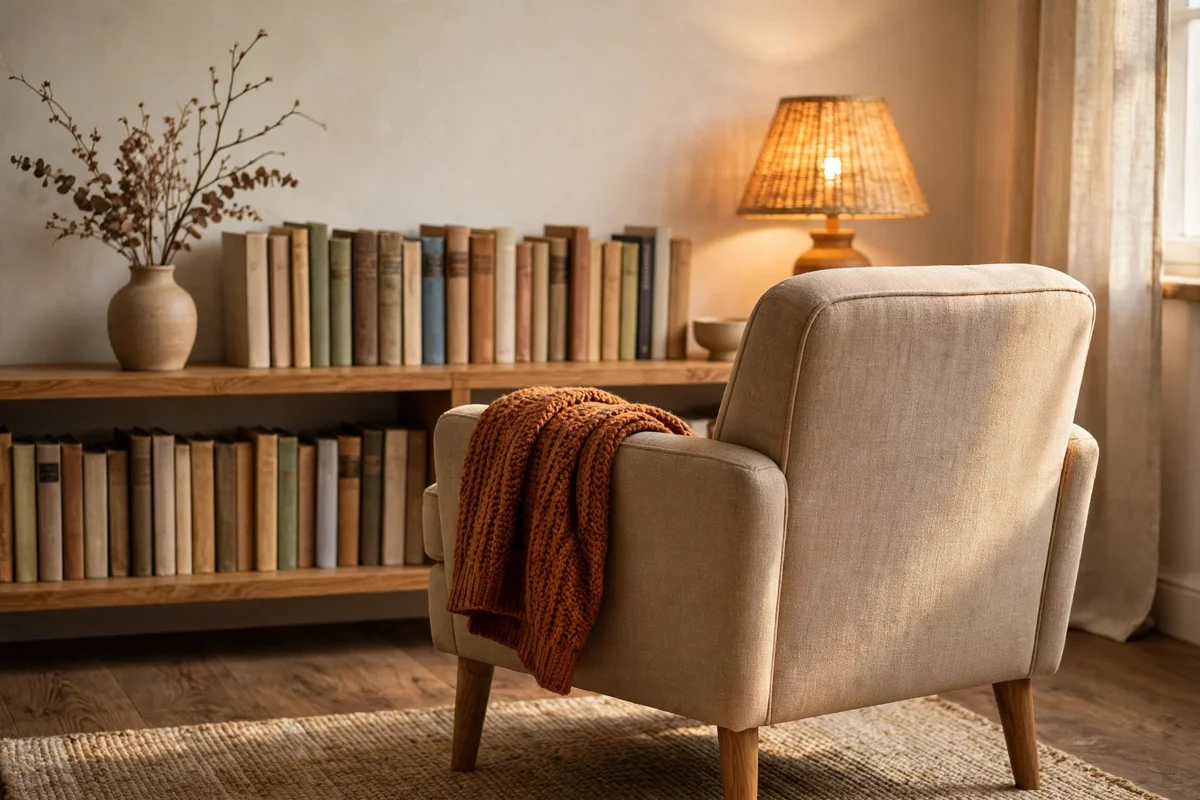
A low bookshelf 80 to 90 cm high set directly behind the chair turns a plain corner into a library nook and gives the chair a visual back. Arrange books with spines aligned and leave one shelf partly clear for a small vase of dried branches or a clock. The shelf doubles as a landing spot for tea if it is level with the chair arm.
Anchor the shelf to the wall with anti-tip brackets, essential where children climb. Keep the heaviest books on the lowest shelf for stability and the lightest at the top. The mistake to avoid is filling every shelf edge to edge, which looks like storage; leave 15 to 20 percent breathing room so the nook reads as a styled corner.
The thread running through every idea here is simple: give an overlooked corner one clear job, then dress it for that job alone. A chair, warm light, a textile to reach for, and a surface for tea will carry you through the whole season. Start with the easiest win, the corner that already has a chair, and let the nook prove itself before you spend on the rest.
Once the evening habit forms, the nook quietly becomes the place everyone gravitates toward, and that is the whole point of it. Keep one basket of blankets full, keep the lamp on a warm bulb, and resist the urge to add more furniture than the corner can hold. A nook stays the favourite precisely because it stays small, so protect its calm by leaving it a little bit unfinished.
Frequently Asked Questions
How much does a cosy autumn nook cost to set up?
Most nooks cost between 60 and 200 dollars or pounds. A floor cushion, a plug-in lamp and a throw from second-hand shops can land under 80, while a new armchair and rug push toward 200. Start with lighting and one textile, since those two purchases create most of the cosy feeling. Buy the chair last, after a week of sitting in the corner tells you the right size.
How can I light a reading nook with no power socket nearby?
Use warm-white battery LED pucks with adhesive mounts inside shelves or under a wall cabinet, plus a rechargeable lantern on the table. Choose 2700K across every source so the glow stays consistent, and pick a lantern with a 6 to 8 hour runtime to cover a week of evenings. Charge it weekly beside your phone. Avoid mixing cool and warm bulbs in one corner.
What size armchair fits a small nook corner?
Look for a chair 65 to 75 cm wide with a seat depth of 50 to 55 cm, which suits corners as small as 90 by 90 cm. Tub chairs and slipper chairs work well because their compact frames sit close to the wall. Measure the chair footprint plus 75 cm of clear walkway beside it before buying, and tape the outline on the floor to test the fit.
Can I create a reading nook in a rented home?
Yes, with damage-free choices. Use plug-in wall sconces and battery lights instead of wired fixtures, adhesive hooks for art, and a freestanding chair and side table that move with you. Tension-rod curtains dress a window without drilling, and a large rug protects the floor while defining the nook. Keep original fixings in a labelled bag for move-out day.
How do I keep a small nook from looking cluttered?
Give every object a job and limit the styling to five pieces: chair, light, textile, surface and one storage basket. Use the rule of three on the side table, and store overflow blankets in the basket rather than draped everywhere. Corral small items on a tray, and edit monthly by removing one thing. A nook feels cosy through warmth and texture, not through quantity.