Living Room
20 Entryway Ideas That Make the Best First Impression
By Anna Wells · · 17 min read
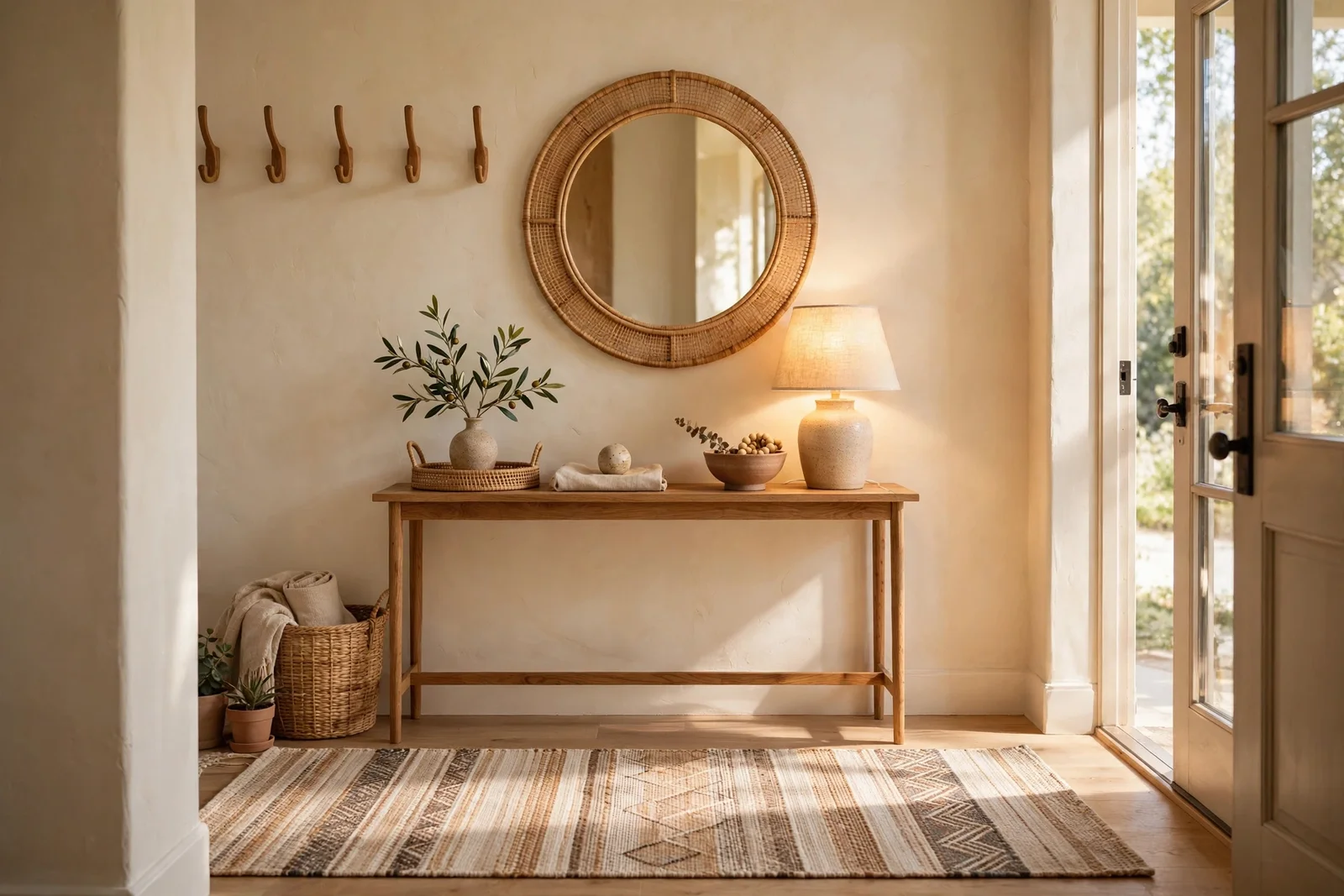
The front door opens and in five seconds a guest reads the whole house. Shoes lined neatly or scattered, keys corralled or lost, light that says welcome or a dark corner that says chaos. These twenty ideas build an entryway that greets well.
Stand on your own doorstep and open the door the way a guest would. Notice the first three things your eyes land on: the floor, the wall opposite the door, and the surface where hands naturally drop keys and post. Those three spots carry the whole first impression, and each one can be improved in under an hour with a single well-chosen change.
The best entryways are not large or expensive. They are simply organised, layered with light, and honest about the weather outside. A tray for keys, hooks at the right heights, a runner that tolerates muddy boots and a mirror that borrows daylight: these quiet moves do more than any expensive furniture set.
This guide walks you through twenty concrete ideas, from a landing strip on a slim console to a five-minute nightly reset that keeps the whole arrangement working. It finishes with a shopping list in three budget tiers, so you can start this weekend with whatever the housekeeping purse allows.
Every idea suits any size of entryway, and each one names sizes, materials and prices so you know exactly what to do. Read them in order or dip into the one that solves your most pressing frustration, then enjoy the calmer arrivals that follow.
1. Set a Clear Landing Strip for Keys and Post on a Slim Console
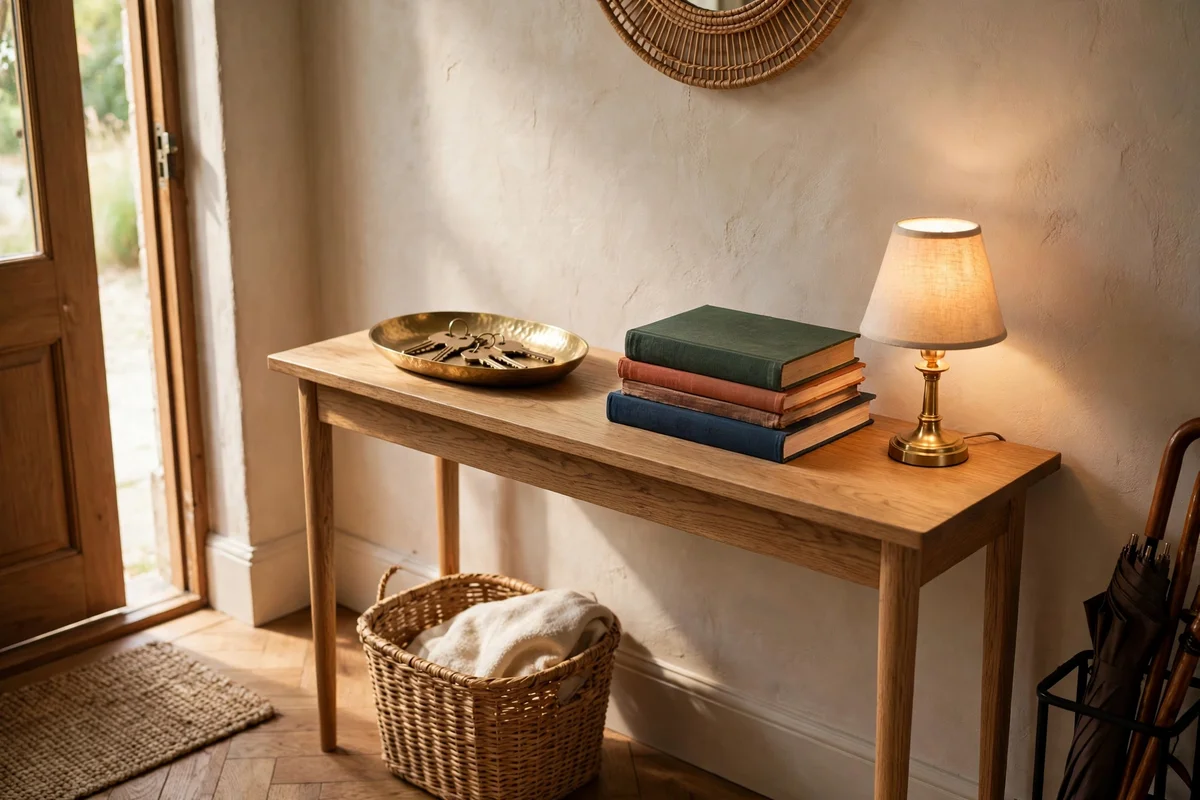
A console between 80 and 120 cm wide gives keys, letters and small daily items one fixed home, which is what stops entryway clutter before it begins. Choose a slim depth of 25 to 30 cm so the piece suits narrow halls while still holding a tray, a lamp and a small plant. Place it against the wall beside the door, never behind the door swing, and keep 90 cm of clear walkway in front of it.
Top the console with a shallow tray no larger than 25 cm across, in oak, stone or hammered metal, and make it the rule that keys land there every evening. Add a stack of two books and one small lamp for height and warmth. The mistake to avoid is letting the console become a second post pile; clear it each night during the reset. Budget tip: a second-hand console plus one tray often totals under 80.
2. Fit Hooks at Two Heights for Adults and Little Ones
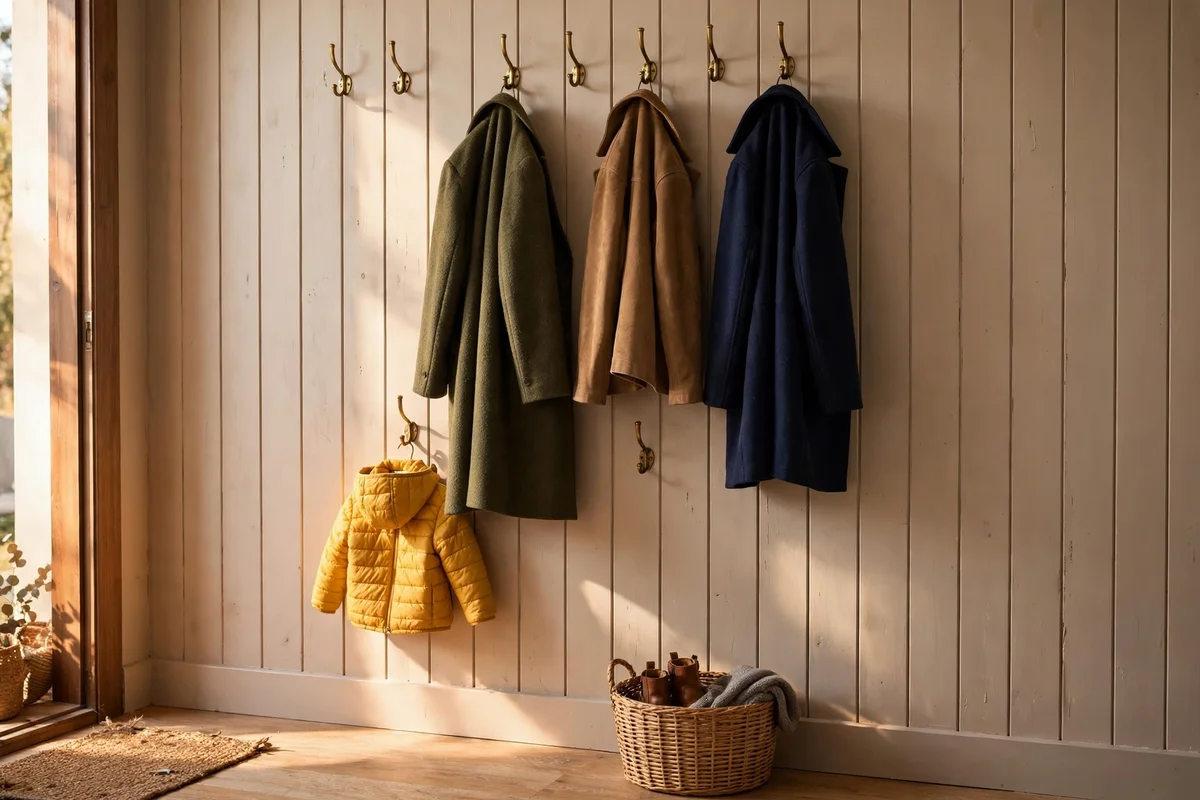
Wall hooks at 170 cm suit adult coats while a second row at 100 cm lets children hang their own jackets and school bags, which teaches tidy habits without nagging. Space hooks 25 to 30 cm apart so coats hang without bunching, and fix every row into studs or proper plaster anchors since a winter coat can weigh 2 kg. Choose matching cast iron, brass or turned wood hooks so the wall reads as one calm line.
Label the low row with small wooden tags if you like, one per child, so each person owns a hook. Keep three spare hooks near the door for guests and delivery bags. The mistake to avoid is a single high row that forces jackets onto the floor; the low row costs little and transforms family life. A set of six matching hooks usually costs 20 to 40 in the budget tier.
3. Place a Bench or Perch for Sitting While Changing Shoes
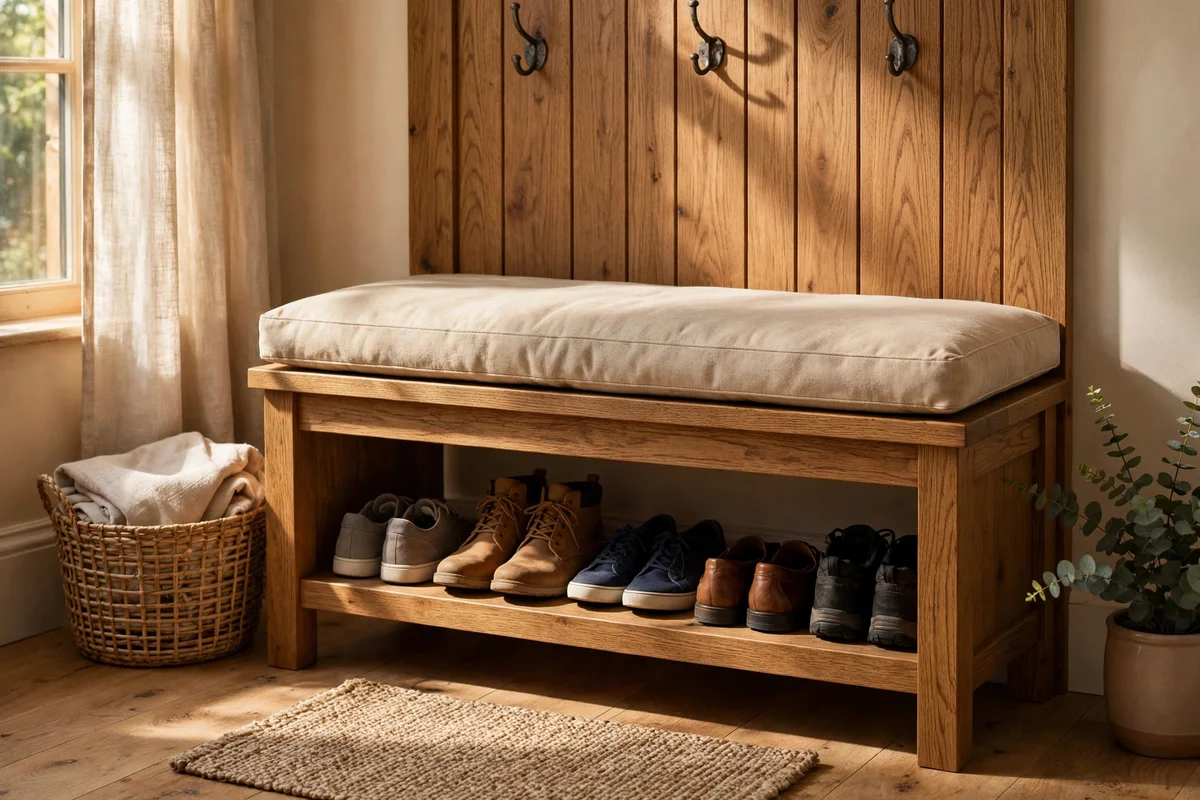
A bench 90 to 120 cm long and 35 to 45 cm high gives everyone a stable perch for boots and shoes, which keeps people upright instead of hopping against the wall. Tuck it under the hooks or opposite the console, leaving at least 75 cm of walkway clear. Choose a solid pine, oak or rattan seat that tolerates wet shoes, and add a lower shelf for the shoes that are actually in use this week.
Pad the seat with a washable cushion 8 to 10 cm thick so the bench doubles as a spot to rest parcels. Limit the under-bench shoes to one pair per person; the rest live in a cupboard. The mistake to avoid is a bench so deep it eats the walkway in a small hall. Budget tip: a simple solid wood bench costs 40 to 70 and outlasts flat-pack versions by years.
4. Hang a Mirror Where It Bounces Daylight Down the Hall
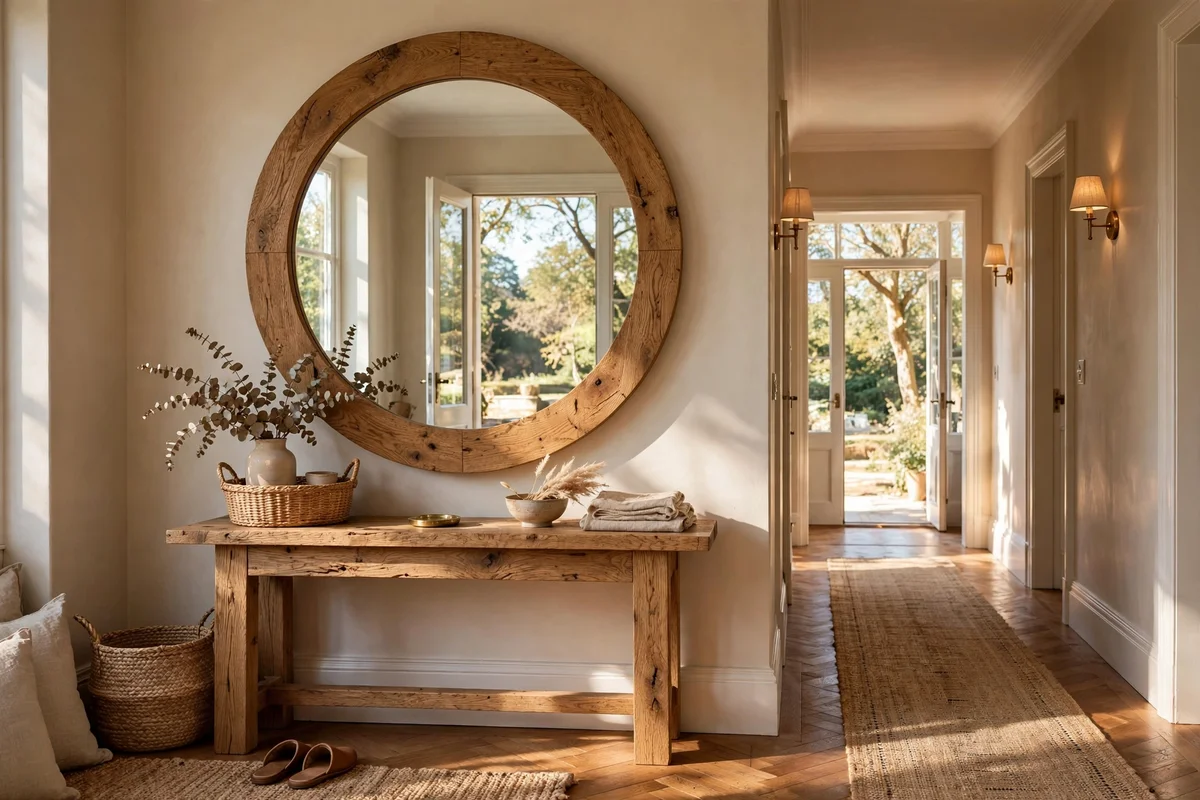
A mirror hung opposite or beside the front door doubles the daylight entering the hall, making small entryways feel twice their size. Choose a round or arched mirror 60 to 90 cm across and hang its centre at 150 cm from the floor, or slightly lower if the household is short. Keep the frame in warm wood, brass or aged oak so it matches the hooks and console hardware.
Angle a large mirror so it reflects a window rather than a blank wall, which is where the light bonus comes from. A final-glance mirror also saves time, since everyone checks their coat before leaving. The mistake to avoid is hanging it where it reflects clutter from an open cupboard; face it toward calm. Budget mirrors in simple oak frames start around 35.
5. Layer Ceiling, Wall and Table Light So Arrivals Never Enter Darkness
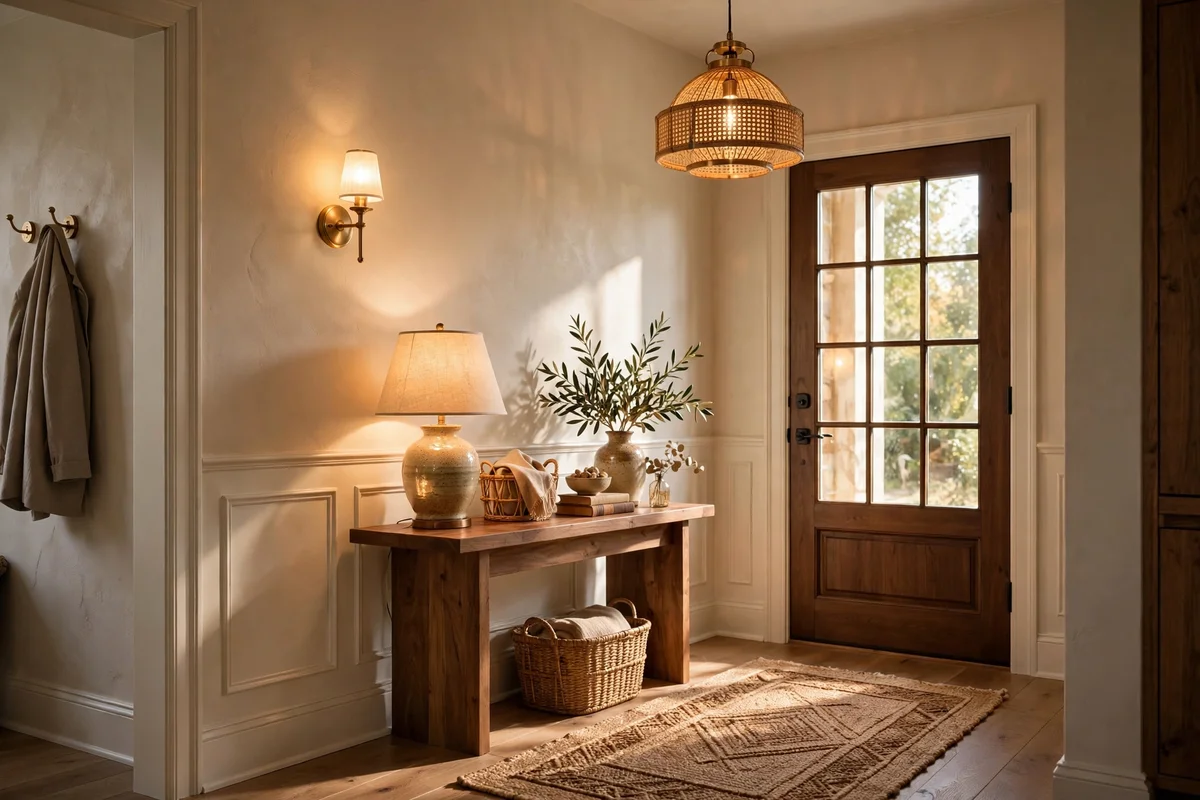
Three light sources at different heights keep the hall welcoming after dark: one ceiling pendant at 200 cm clearance, one table lamp on the console, and either a wall sconce or a small floor uplight in a dark corner. Use 2700K warm bulbs throughout so the entryway glow matches the living room beyond. If the front door has glass, the pendant silhouette becomes part of the street view too.
Put the console lamp on a timer that switches on at dusk, so the hall is lit before anyone arrives home. Wall sconces wired to the same switch as the pendant simplify control. The mistake to avoid is a single harsh overhead bulb that flattens everything; layered low-glare light feels calm. A budget trio (shade, lamp, sconce) usually totals under 100.
6. Lay a Flatweave Runner That Shrugs Off Wet Shoes
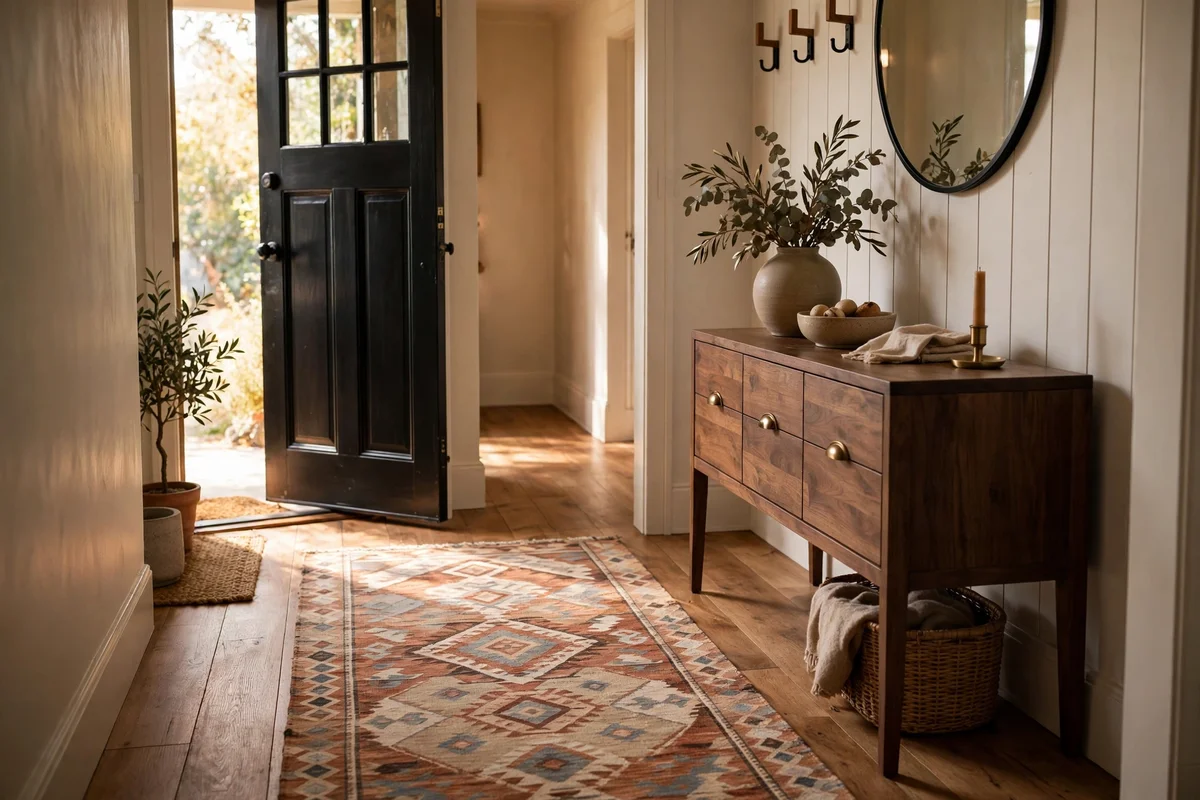
A flatweave cotton or jute runner 70 to 90 cm wide and 150 to 240 cm long protects floors from wet shoes and guides feet along the hall. Keep 15 to 20 cm of floor visible on each side so the runner looks fitted rather than squeezed. Choose a pattern with a darker border or small motif that hides everyday marks, and skip thick pile that traps grit.
Shake the runner outside weekly and machine wash it monthly on a cool cycle, which flatweaves tolerate far better than tufted rugs. A non-slip underlay cut 2 cm smaller than the rug stops it creeping on tiles. The mistake to avoid is a runner so long it bunches at the door threshold. Budget flatweaves start around 25, and jute versions suit summer beautifully.
7. Hang Plain Seasonal Greenery on the Door for a Quiet Welcome
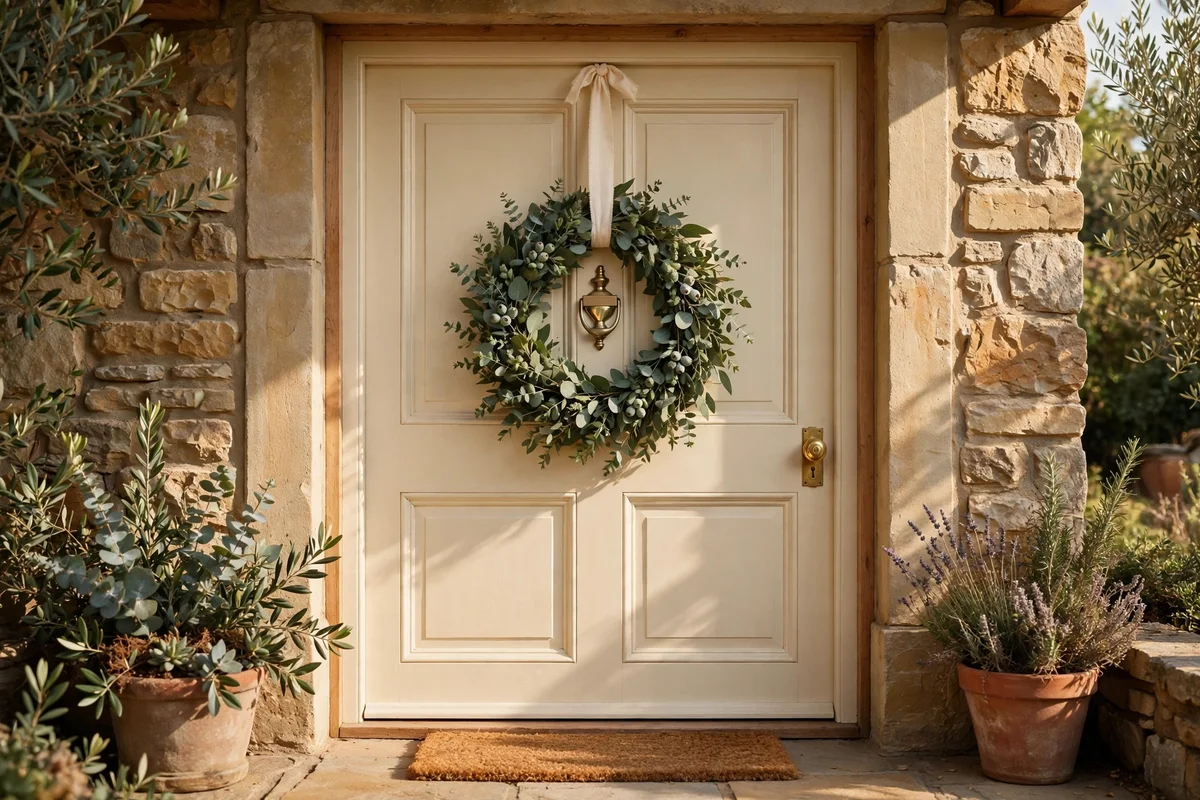
A simple wreath of plain foliage on the front door sets a welcoming tone before the door even opens. Choose olive branches, eucalyptus or plain green garland rather than anything loud, and keep the wreath 40 to 50 cm across so it suits a standard door without overwhelming it. Hang it from a wide ribbon looped over the door top, which needs no fixings and suits renters.
Refresh the greenery with the seasons: fresh eucalyptus in spring, dried grasses in autumn, pine sprigs in winter. A sprig of rosemary tucked into the ribbon adds gentle scent at the threshold. The mistake to avoid is an oversized wreath that blocks the knocker or letterbox. Budget: a homemade plain wreath costs under 15, and dried versions last for months.
8. Keep a Boot Tray With Raised Edges Beside the Door
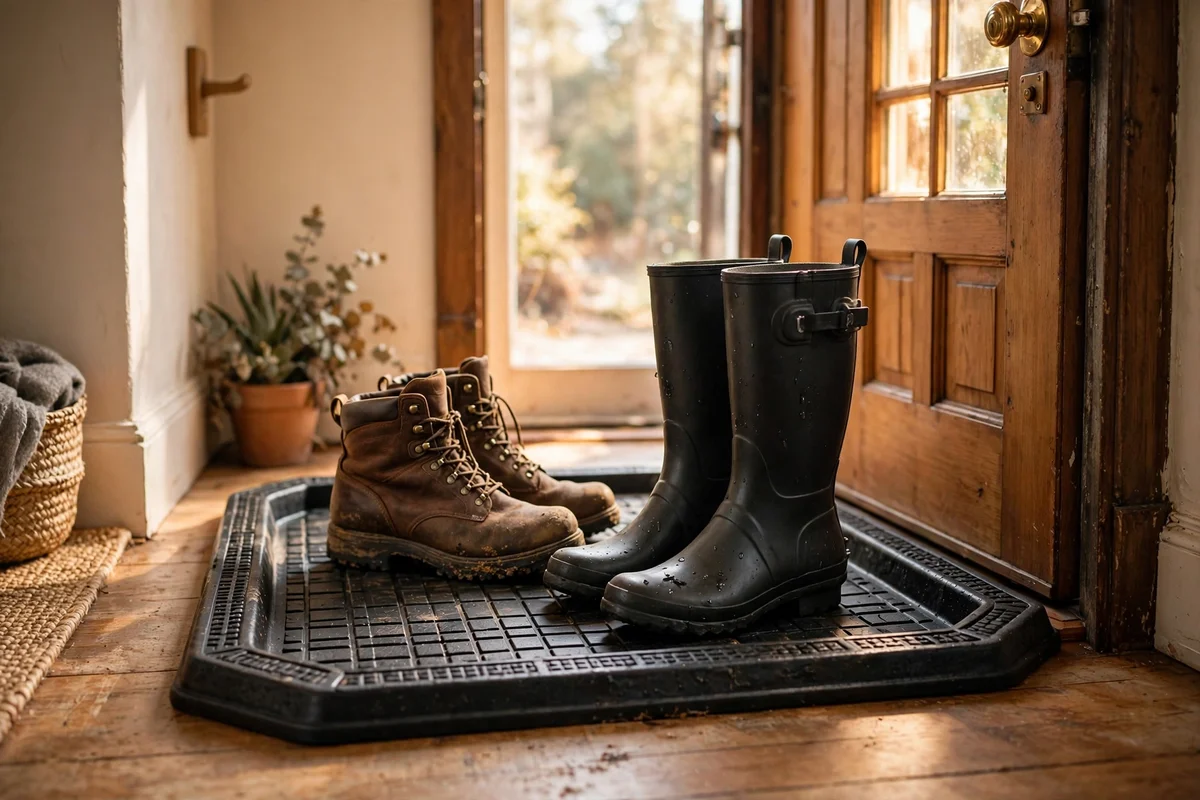
A boot tray 60 to 80 cm wide with a 5 cm raised lip catches water, mud and road salt before they reach the floor, which protects wooden floors through winter. Choose galvanised steel, black rubber or a wooden tray with a metal liner, and place it hard against the door wall where it does not block the door swing. Limit it to the two pairs in daily use so it never becomes a shoe mountain.
Line the tray with a coir insert that can be lifted out and shaken, and wipe the liner weekly so grit does not grind into the finish. In dry months, swap the tray for a folded runner and store it in a cupboard. The mistake to avoid is a flat tray with no lip; meltwater simply runs off the sides. Budget trays cost 15 to 30.
9. Stand an Umbrella Holder Within Arm’s Reach of the Mat
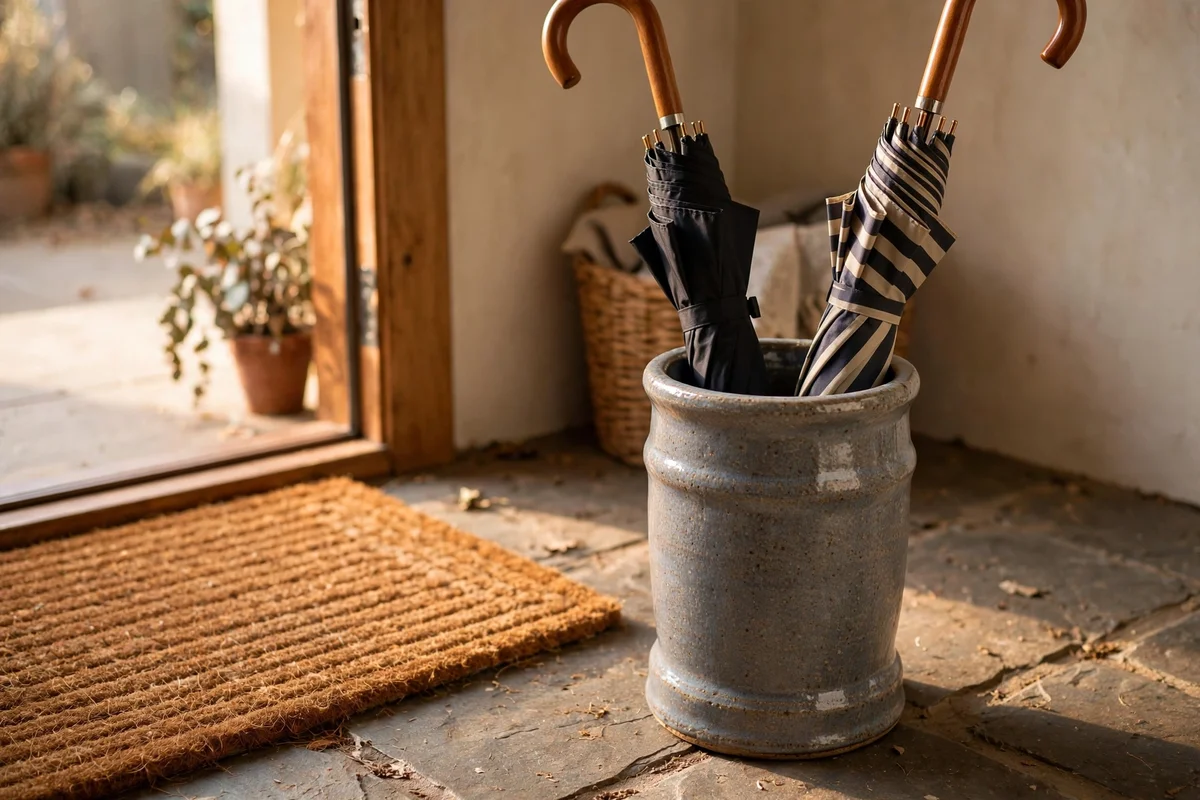
An umbrella holder 45 to 55 cm tall placed beside the front door, within one step of the mat, means wet umbrellas never travel across the house. Choose a weighted ceramic or cast iron stand 20 to 25 cm across so it stays upright when full, and pick one with a removable drip tray or drainage holes at the base. Keep two everyday umbrellas in it and store spares elsewhere.
Empty the drip tray weekly and rinse it monthly to prevent musty smells, since stagnant water collects quickly in rainy weeks. A stand in dark stoneware or brushed metal hides watermarks best. The mistake to avoid is a tall, tippy holder that sheds umbrellas onto the floor every time the door slams. Solid weighted holders cost 20 to 45.
10. Sort Post the Moment It Lands With a Letter Tray and Bin
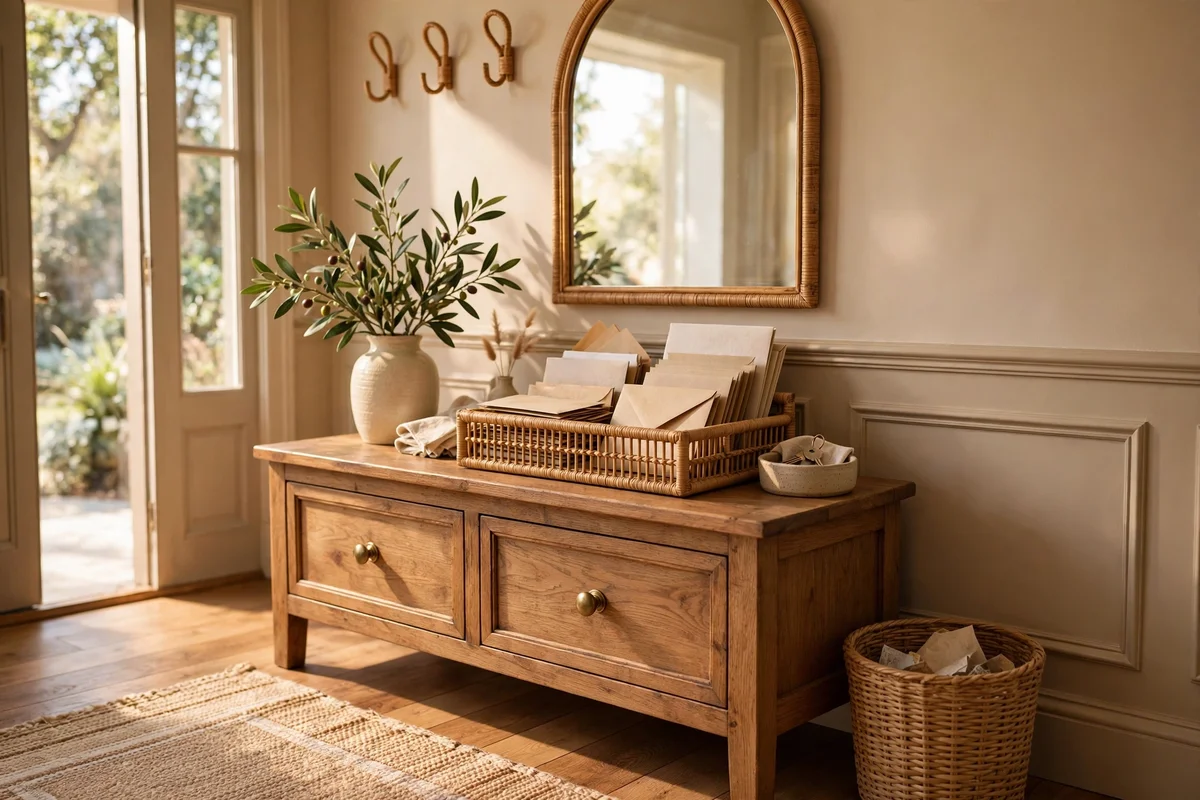
Post left in a pile becomes a chore, so give it a two-part landing system beside the console: a letter tray 25 by 35 cm for items to keep, and a small waste bin or recycling basket for envelopes and flyers. Sort each delivery immediately, recycling junk at once so the tray holds only action items. A wall-mounted pocket 30 cm wide saves surface space in very small halls.
Run a weekly rule that anything still in the tray after seven days is filed, paid or recycled, which keeps the surface clear for the next delivery. A walnut or woven tray looks tidy even half full. The mistake to avoid is a tray without a bin beside it; junk post simply moves to the nearest horizontal surface. A tray and basket pair costs under 30.
11. Choose Two Basket Zones for Hats, Gloves and Seasonal Overflow
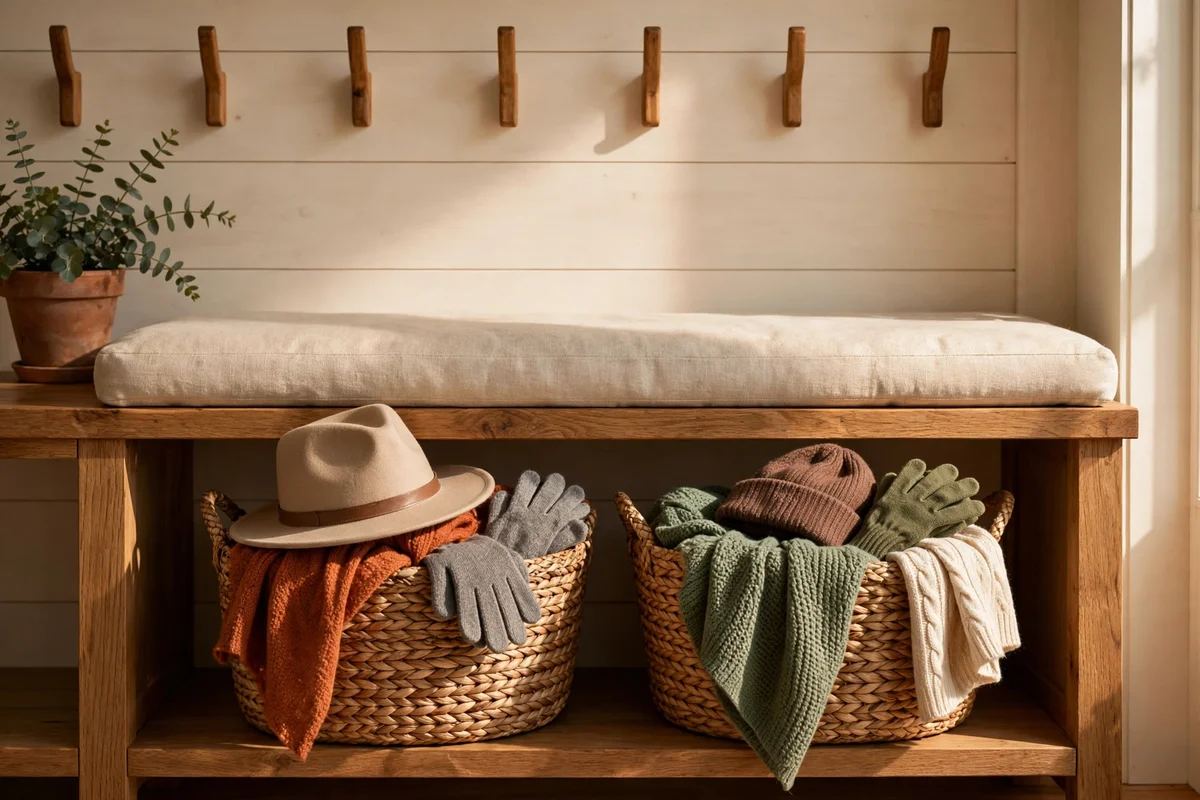
Two baskets, one per adult or per zone, hold hats, gloves, scarves and the small seasonal overflow that otherwise spreads across the console. Choose baskets 30 to 40 cm across with handles, in seagrass, cane or felt, and place them on the bench shelf, under the console or in a hallway cupboard. Assign one basket to winter gear and one to the current season.
Empty both baskets at each season change, washing gloves and rehoming off-season items to a wardrobe. A small label on the handle helps children return things to the right place. The mistake to avoid is baskets so deep that items disappear to the bottom and are bought twice. Two good seagrass baskets cost 25 to 50 together.
12. Give Every Coat a Home With a Narrow Wall Rail
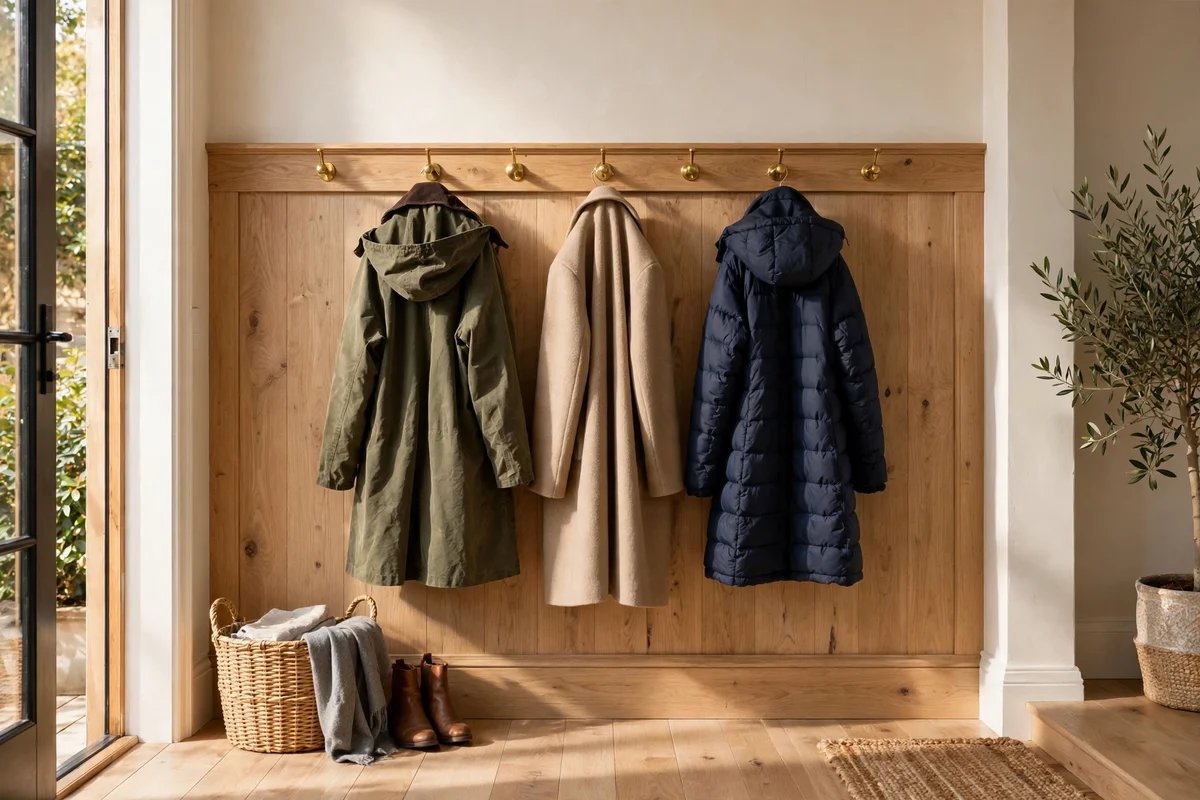
A wall rail 100 to 150 cm long with six to eight pegs holds daily coats without a bulky wardrobe, which suits halls of any size. Mount it at 170 cm on the wall beside the door, leaving 90 cm of clear floor beneath so coats do not drag. Choose oak, walnut or powder-coated metal in a finish that matches the mirror frame, and keep one peg per person plus two for guests.
Rotate heavy winter coats to a wardrobe each spring and hang only current-season layers on the rail, which keeps it airy. Dust the peg tops monthly since they collect lint. The mistake to avoid is a rail longer than the wall allows, forcing coats to bunch behind the door. A solid oak rail with brass pegs costs 45 to 80.
13. Paint or Panel the Wall Behind the Console in a Warm Neutral
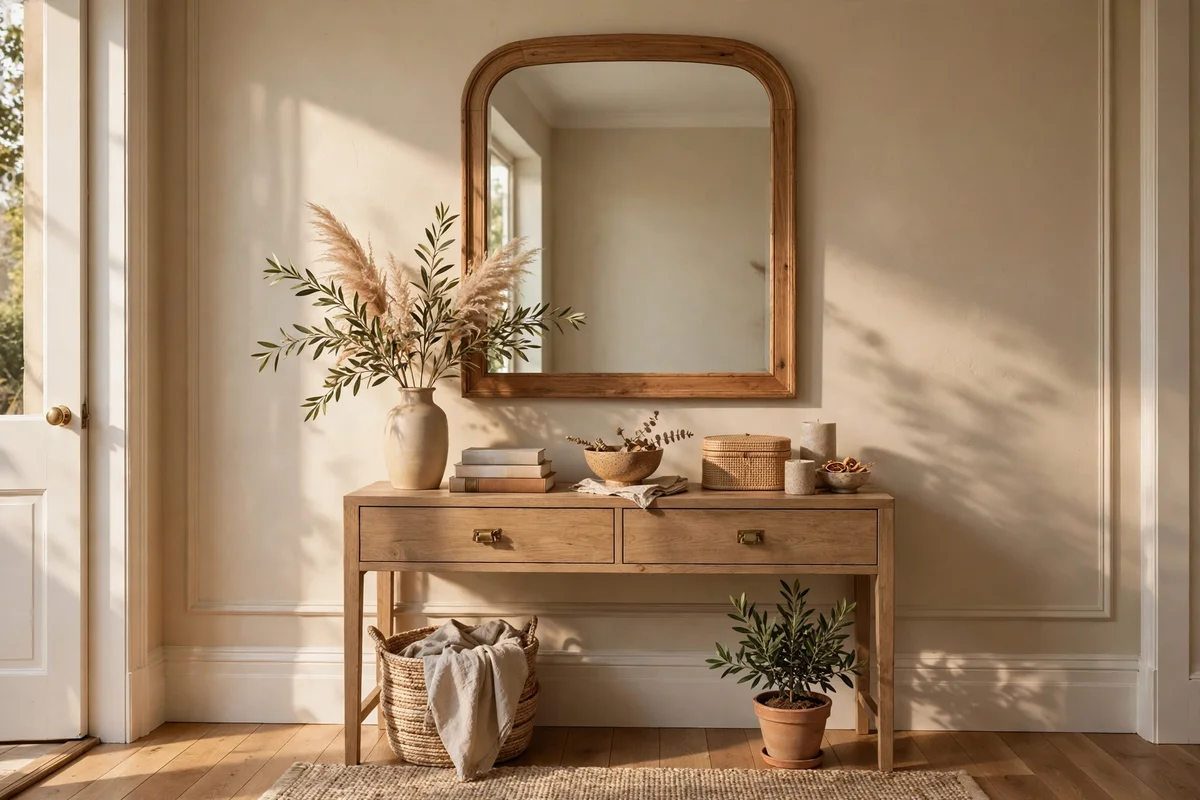
A wall painted in warm white, oatmeal or soft greige behind the console gives the entryway one calm backdrop that makes every object read clearly. Test two sample pots in morning and evening light before committing, since hall light changes sharply through the day. One feature wall is enough; keep the remaining walls the same tone to avoid a busy corridor.
For texture, add simple beadboard or picture-frame panelling up to dado height, painted the same colour as the wall for a quiet heritage look. Use washable eggshell paint so scuffs from bags wipe away. The mistake to avoid is a bold dark colour in a windowless hall, which swallows the little light there is. A wall of paint costs 20 to 40.
14. Add a Small Table Lamp on a Timer for After-Dark Arrivals
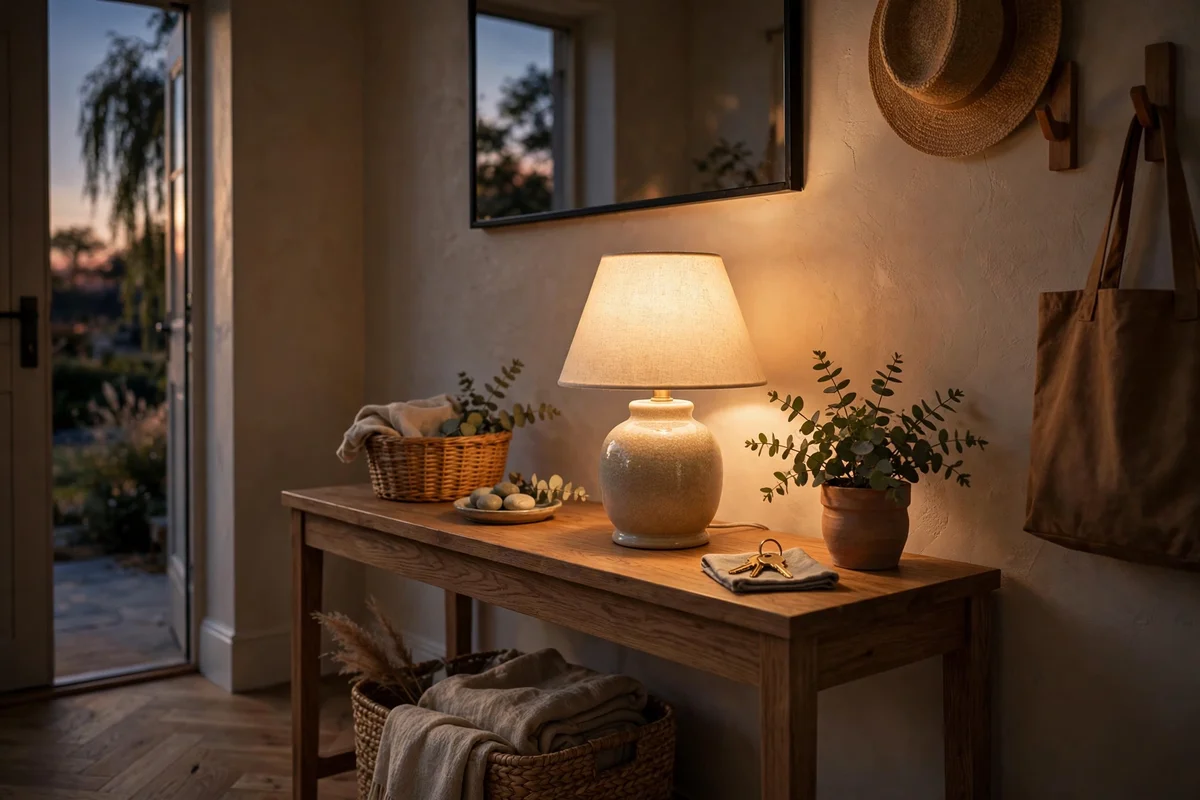
A table lamp 35 to 45 cm tall on the console, switched by a plug-in timer set for dusk, means the hall glows before anyone steps inside. Choose a ceramic or glass base in a warm tone with a linen shade that softens the bulb, and fit a 2700K LED so the light feels like candlelight rather than office glare. The timer pays for itself in comfort within days.
Angle the shade so light washes the wall behind the console, which doubles the perceived glow without a brighter bulb. Set the timer to switch off at bedtime to save energy. The mistake to avoid is a shade too small for the base, which leaks harsh light sideways. A lamp plus timer usually costs 35 to 60.
15. Lay an Outdoor Mat That Scrapes Shoes Before They Step Inside
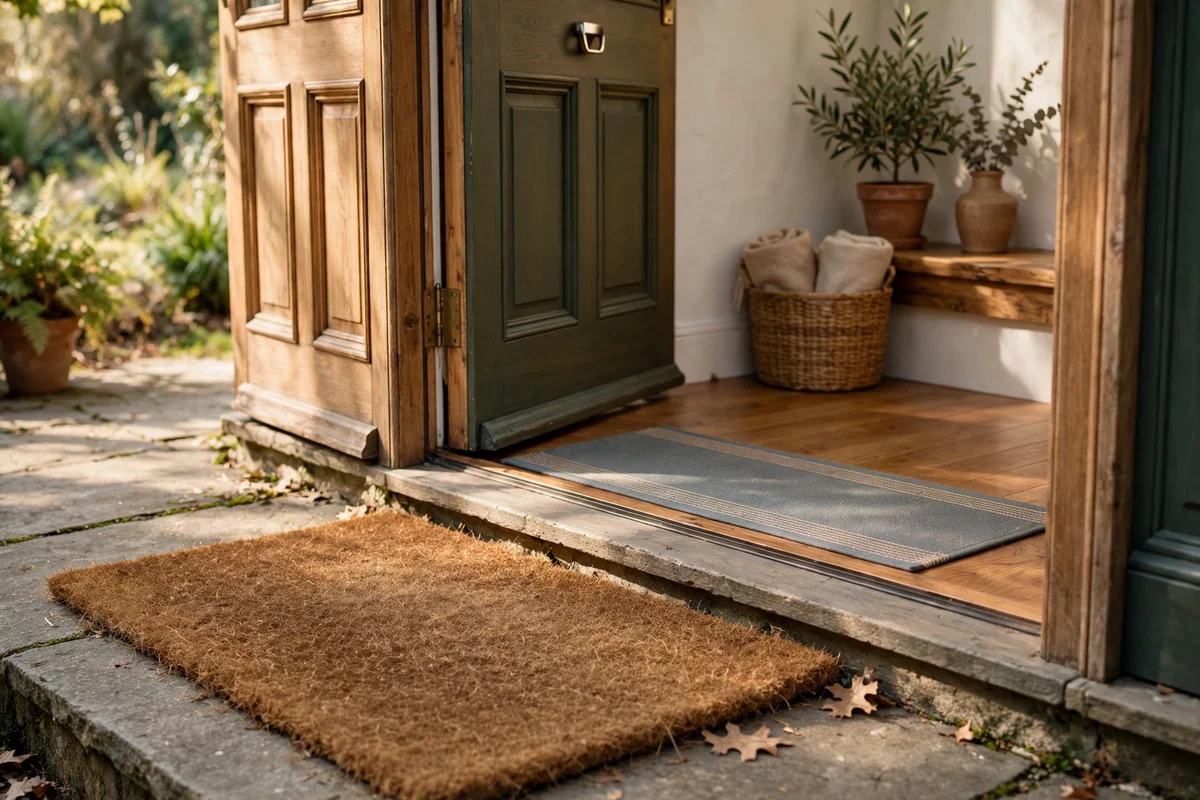
A coir or heavy-duty rubber mat 60 by 90 cm outside the front door scrapes mud and grit before it reaches the indoor runner. Choose a mat with a rough woven surface rather than a decorative flat one, since function comes first at the threshold. Shake it weekly and replace it yearly, because worn bristles stop working long before the mat looks shabby.
Keep a second slim boot mat inside the door for the first two steps, creating a two-stage dirt trap that protects floors far better than one mat alone. Dark coir hides soil between shakes. The mistake to avoid is a small decorative mat that guests step over entirely; 60 cm wide is the minimum that works. Good coir mats cost 15 to 25.
16. Style One Low Bowl of Dried Botanicals for Gentle Scent
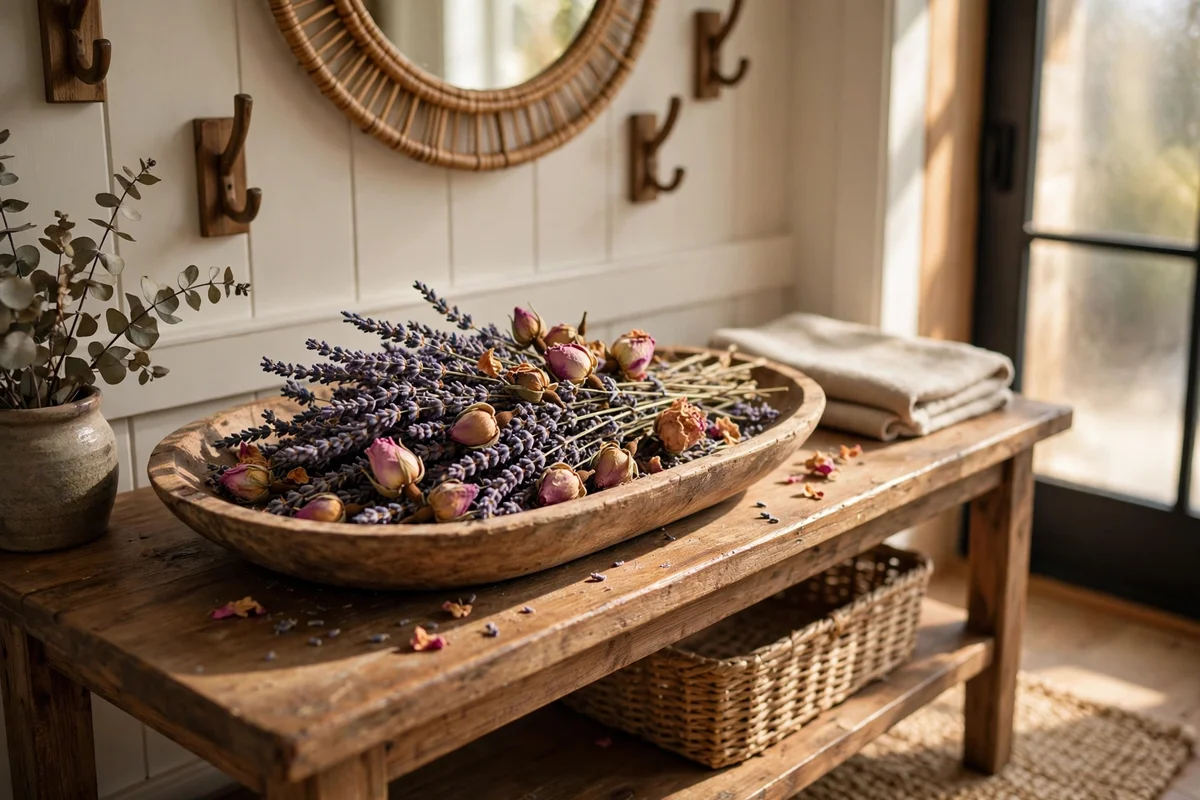
A shallow bowl 20 to 25 cm across filled with dried lavender, rosebuds or eucalyptus pods gives the entryway a soft natural scent without sprays or candles. Place it on the console beside the lamp, where warmth from the bulb gently lifts the fragrance. Refresh the botanicals every three to four months, or add two drops of essential oil to revive a tired bowl.
Keep the bowl low and wide so it never blocks the mirror or the key tray, and choose a wooden or stone bowl that suits the other materials in the hall. Avoid open water diffusers near the door, since they knock over easily. The mistake to avoid is strong synthetic fragrance that greets guests too loudly; dried botanicals stay gentle. A bowl and fill costs 15 to 30.
17. Hang a Single Framed Print at Eye Level for Character
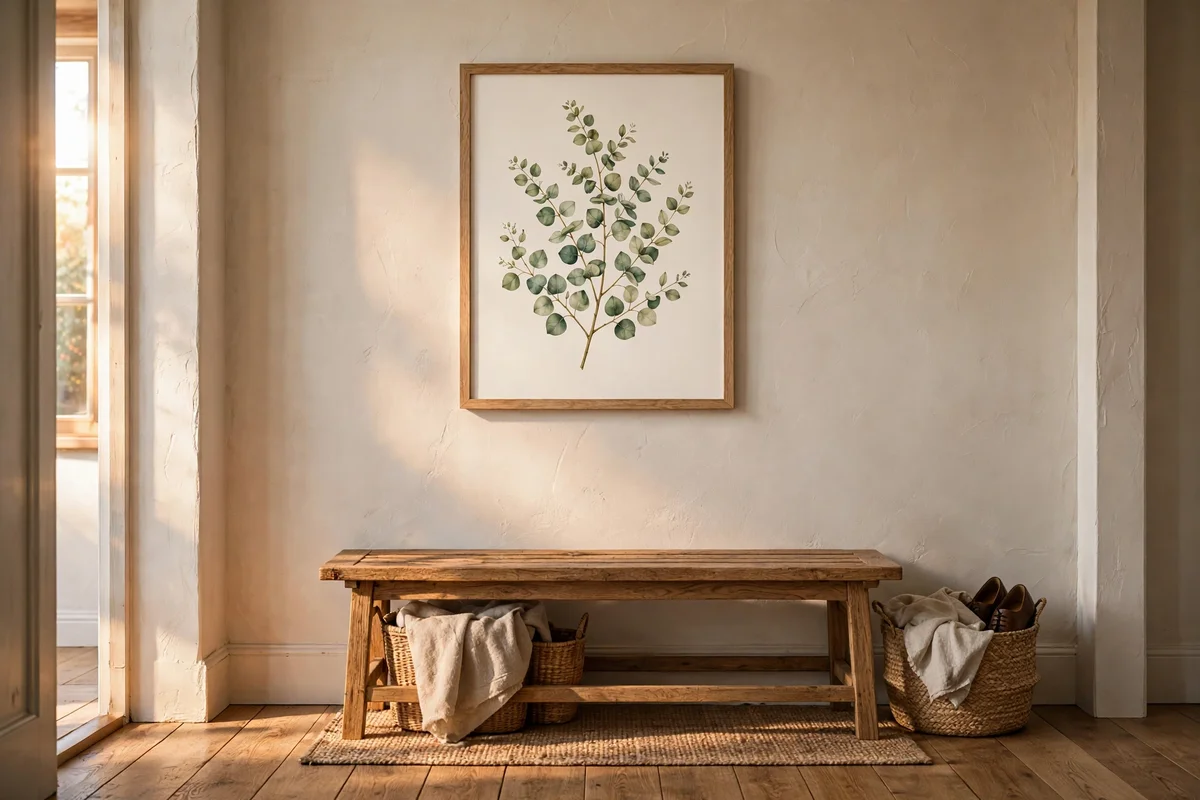
One framed print 40 by 50 cm, hung with its centre at 145 to 150 cm, gives the entryway a point of interest without clutter. Choose a calm subject like a botanical study, an old map or a heritage landscape in muted tones that suit the hall palette. A slim oak or black frame keeps it elegant and lets the art speak.
Hang it on the wall opposite the door so it is the first thing a guest sees, or above the bench where it anchors the seating zone. Dust the glass monthly and check the wire yearly. The mistake to avoid is a gallery wall of mismatched frames in a small hall, which reads as noise. One good framed print costs 25 to 50.
18. Cushion the Bench With a Washable Seat Pad and Folded Throw
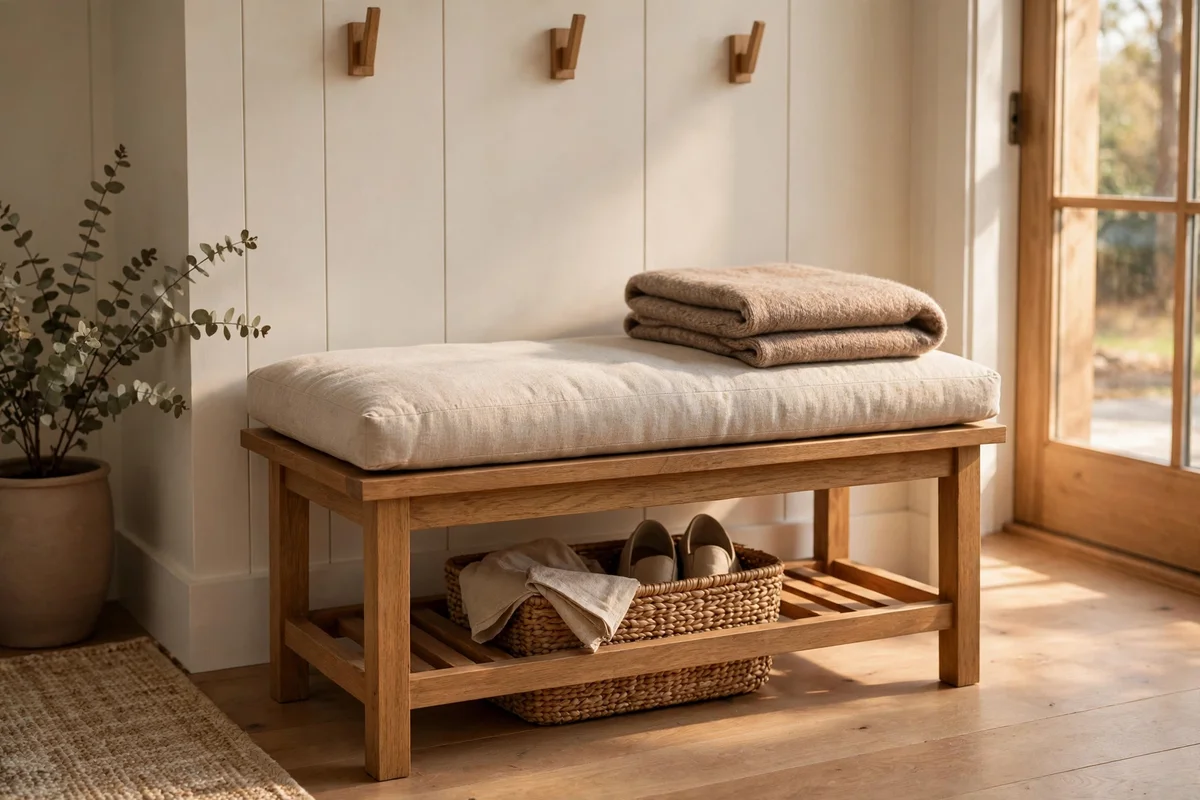
A seat pad 8 to 10 cm thick in a washable cotton or linen cover makes the entry bench genuinely comfortable and survives muddy trousers. Choose a pad cut to the bench top within 2 cm on each side so it stays put, and pick a mid-tone fabric like oatmeal or olive that hides marks. A folded throw in wool or cotton across one end adds softness for guests.
Wash the pad cover monthly and the throw seasonally, and keep a spare cover in the basket zone so the bench is never bare during laundry day. Tuck ties underneath rather than letting them dangle. The mistake to avoid is a white cushion that shows every scuff within a week. A pad and throw together cost 30 to 55.
19. Put the Five-Minute Nightly Reset on Your Household Routine
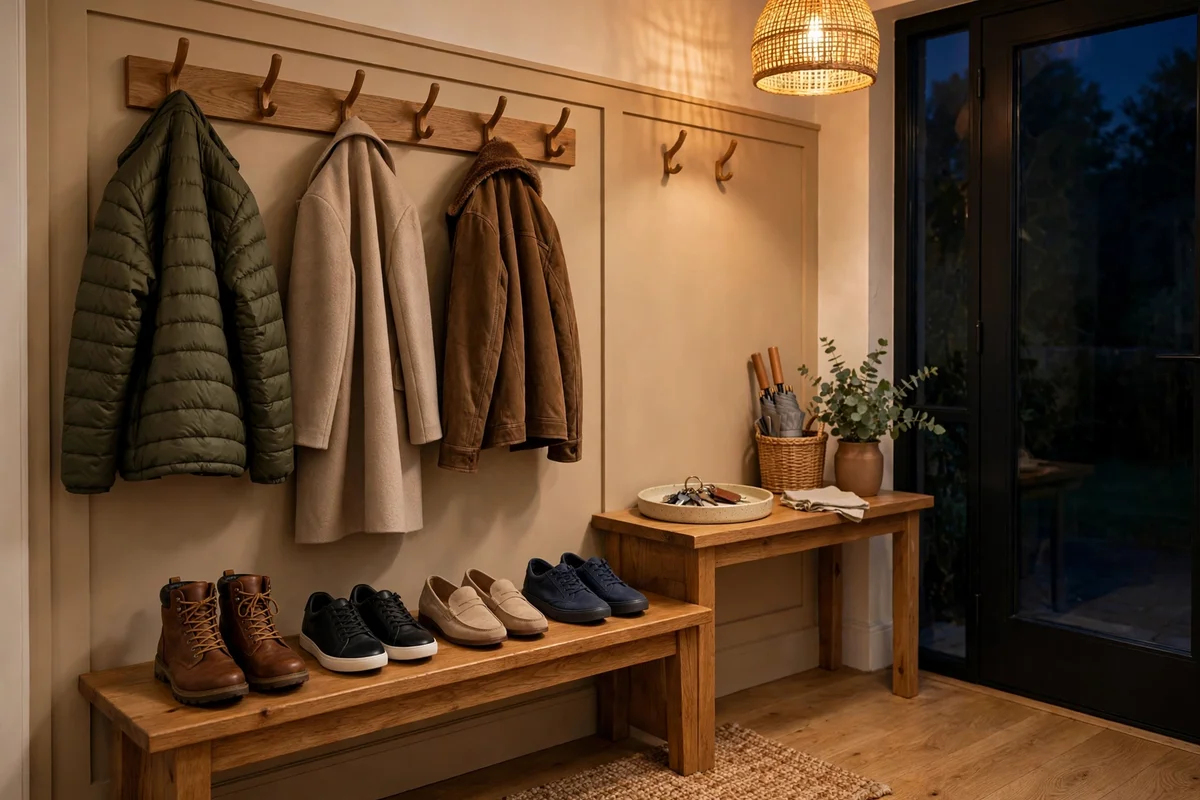
Five minutes each evening keeps the entryway welcoming: return shoes to their shelf, hang coats on their pegs, drop keys in the tray, recycle the day’s junk post and wipe the console with a dry cloth. Set a timer the first week so everyone learns how quick it truly is, and involve children by assigning them their own hook and basket zone. Consistency matters more than perfection.
Once weekly, add two minutes to shake the runner, empty the boot tray and check the umbrella stand, which stops small grime from building into a weekend chore. Keep a folded microfibre cloth in the console drawer so the wipe takes seconds. The mistake to avoid is skipping the reset for a week; clutter returns faster than it leaves. The whole routine costs nothing but attention.
20. Build the Shopping List in Budget, Mid and Investment Tiers
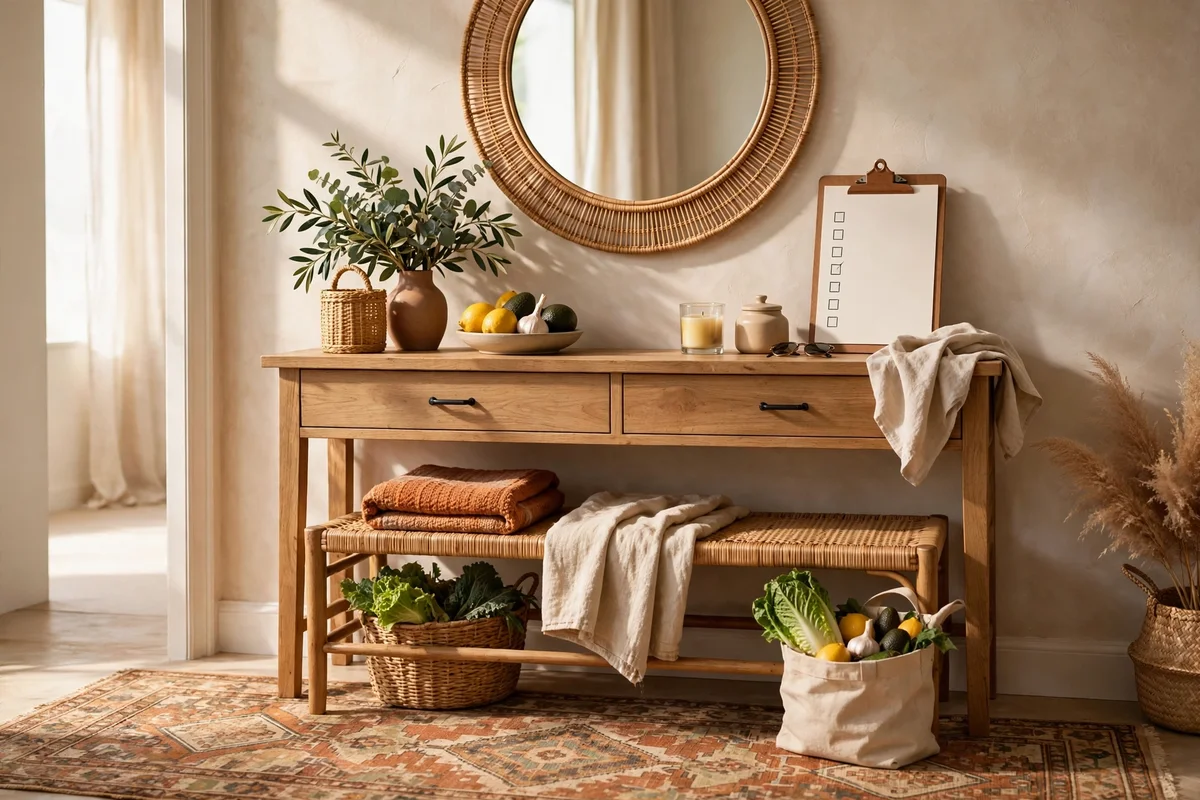
A budget tier under 150 covers the essentials: a coir door mat, a flatweave runner, six hooks, a key tray and a boot tray, mostly from charity shops and high-street stores. The mid tier, 150 to 400, adds a solid oak bench, a round mirror and a timed table lamp, which are the pieces you touch and see daily. List needs in order of impact and buy the top three first.
The investment tier, 400 and above, buys heirloom pieces: a walnut console, an unlacquered brass rail and a hand-knotted wool runner that lasts decades. Buy investment pieces one at a time and live with each for a month before choosing the next. The mistake to avoid is buying everything in one day; the space tells you what it needs once the basics are in.
The best entryway is not the most expensive one; it is the one where every item has a home and the light is already on when you arrive. Keys land in the tray, coats reach their pegs, wet shoes stop at the tray, and the mirror doubles the daylight down the hall. These twenty ideas work together, so each small change makes the next one easier.
Start this week with the single easiest win: fit the hooks at two heights and set the key tray on the console, then keep the five-minute nightly reset for seven days without skipping. When those habits feel natural, layer in the washable runner and the timed table lamp. Small, steady steps turn the busiest corner of the house into its warmest welcome.
Frequently Asked Questions
What does a simple entryway makeover cost?
Between 60 and 400 pounds or dollars for most halls. The essentials (mat, runner, hooks, tray, boot tray) cost under 150, while a bench, mirror and timed lamp push the total toward 400. Buy the pieces you touch daily first, like the bench and hooks, and add decoration last. Living with the basics for two weeks usually prevents one wrong purchase.
How do I make a very narrow hallway feel welcoming?
Keep furniture slim and light in tone: a console no deeper than 30 cm, a flatweave runner with visible floor on both sides, and a mirror that borrows daylight. Wall-mounted hooks and a rail replace bulky wardrobes, and a single warm lamp on a timer keeps the hall glowing. Clear 90 cm of walkway at all times so nobody squeezes past coats.
What is the best flooring protection for a busy family entrance?
A two-stage system works best: a rough coir mat outside the door, a slim mat or boot tray inside, then a washable flatweave runner down the hall. Raised-edge boot trays catch winter meltwater, and a non-slip underlay keeps the runner safe on tiles. Shake mats weekly and machine wash flatweaves monthly on a cool cycle.
How can renters improve an entryway without drilling holes?
Use over-door hooks for coats, a freestanding bench for shoes, and a slim console that needs no fixing. Command-style adhesive hooks hold light items on smooth walls, and a wide ribbon looped over the door hangs a wreath with no screws. Choose pieces you will take with you, like the mirror on a floor easel or a lamp on the console.
How do I keep the entryway tidy with children in the house?
Fit hooks at 100 cm so children can hang their own coats and bags, and give each child one labelled basket for hats and gloves. A boot tray holds their shoes by the door, and a five-minute evening reset with assigned jobs turns tidying into routine. One pair of shoes per person on the bench shelf keeps the floor clear.