Living Room
20 Fall Shelf Decor Ideas That Style Every Shelf Like a Little Autumn Story
By Anna Wells · · 20 min read
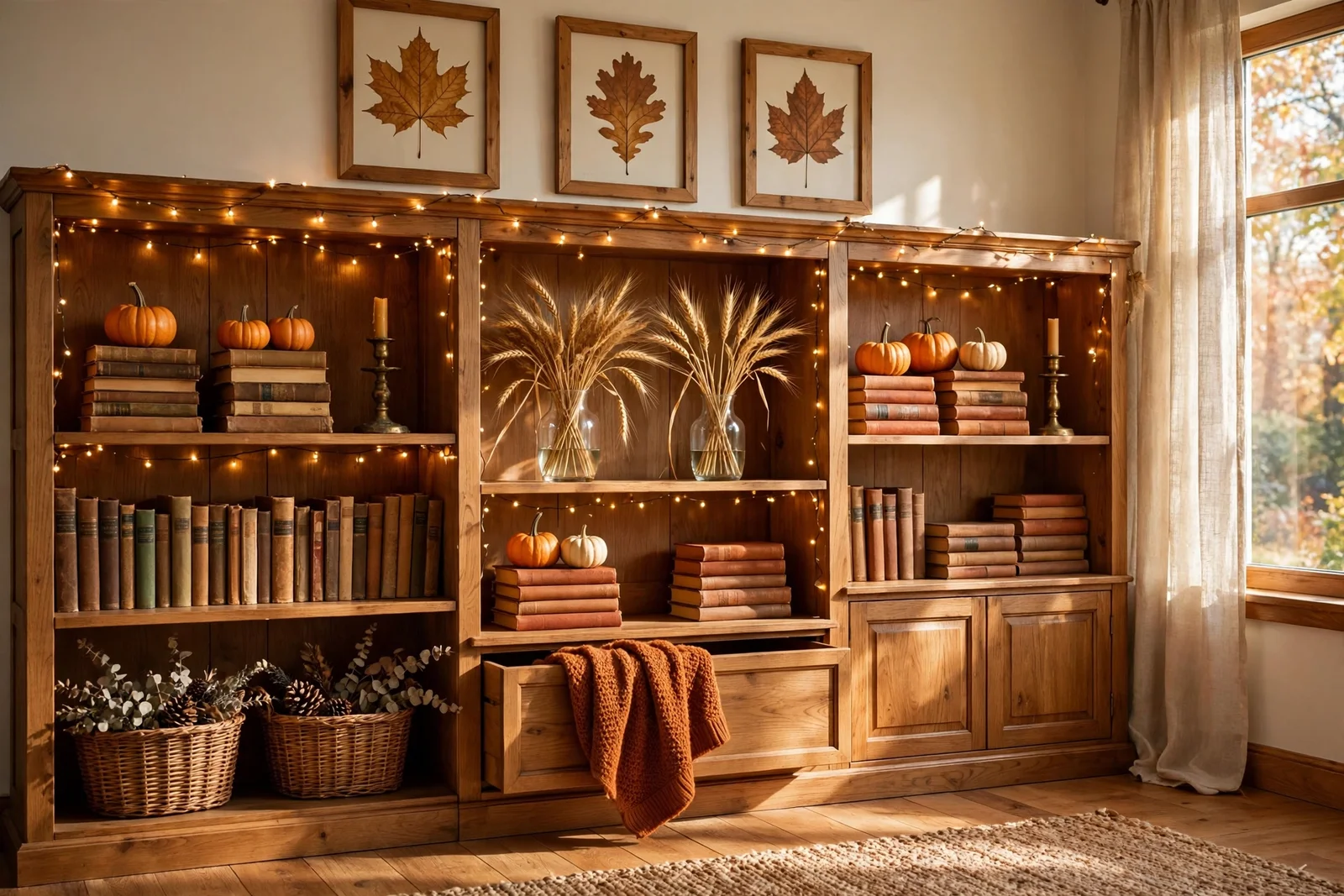
Twenty warm, practical ideas for styling display shelves across the home this autumn, from bookcase vignettes to mantel shelves.
There is a particular October light that turns an ordinary bookcase into something worth staring at. It slants low through the window around four in the afternoon, catches the edge of a brass candlestick, and suddenly the shelf you have walked past all year tells a small story.
Display shelves carry the personality of a home: the living room bookcase, the kitchen open shelves, the console in the entry, the mantel shelf above the fireplace. A few thoughtful changes, pumpkins, dried stems, a lamp with a warm bulb, can turn each one into a little autumn scene.
This guide gathers twenty shelf styling ideas built on simple vignette rules: vary the heights, group objects in threes, mix rough wood with smooth ceramic, and always leave breathing room. Every idea names real sizes, placements and budget friendly sources, so you can style with confidence rather than guesswork.
Start with the shelf you see first when you walk in, keep a ruthless eye on clutter, and let each small vignette tell its own quiet autumn story.
1. Stack Coffee Table Books Horizontally and Top Them With Small Pumpkins

Choose two or three coffee table books between 24 and 30 cm wide and stack them with the largest at the bottom, spines facing out. Place the stack off centre on the shelf, about 10 cm from the shelf end, so it anchors one side of a vignette. Set one small real pumpkin or a ceramic gourd of 8 to 10 cm on top, slightly tilted for a natural look. Keep book covers in warm tones like rust, ochre or cream so the stack reads as one unit.
Add a third smaller book if the shelf is tall, keeping total stack height under 20 cm so the pumpkin still shows above it. Tuck a sprig of dried eucalyptus or a cinnamon stick beside the pumpkin for scent and texture. The mistake to avoid is stacking books with clashing neon covers; cover them in plain kraft paper if needed, which costs almost nothing. Budget tip: charity shops sell large art books for two to five dollars, and mini pumpkins run about one dollar each at farm stands.
2. Group Three Brass Candlesticks at Different Heights on One Shelf
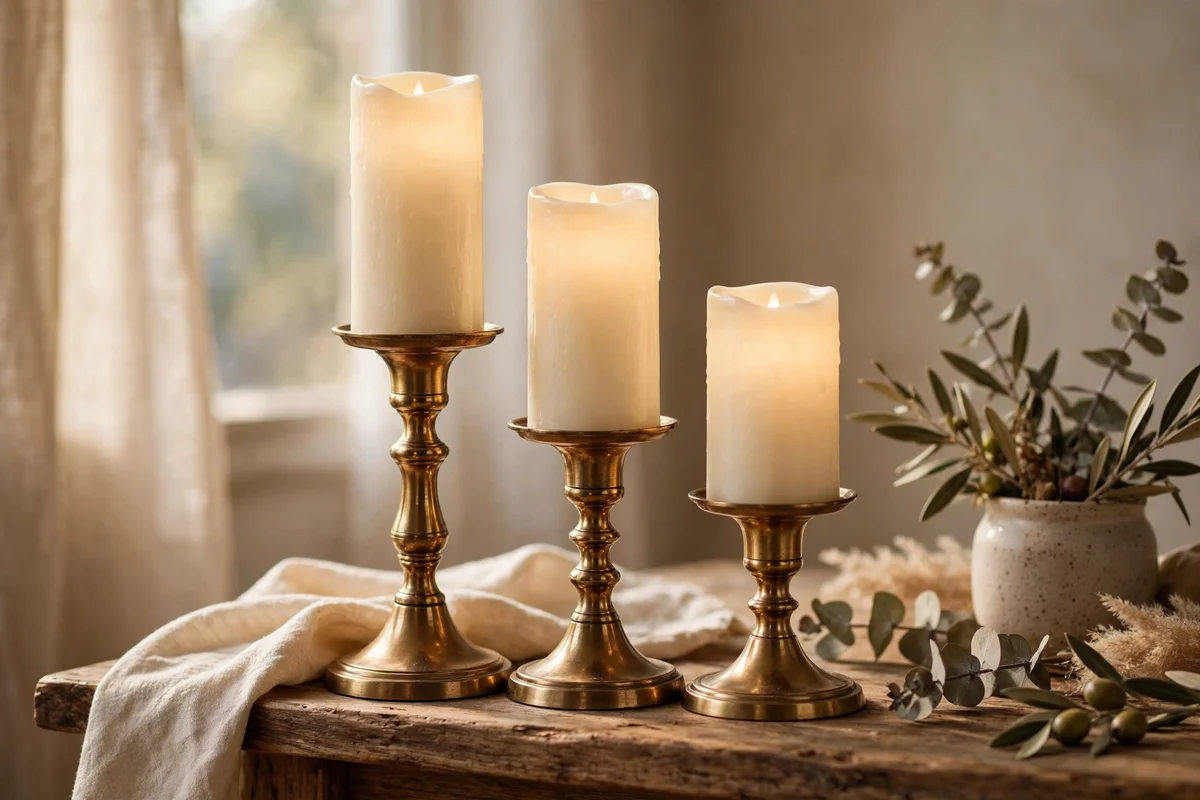
Pick three brass candlesticks measuring roughly 15, 22 and 30 cm so the tallest stands about twice the height of the shortest. Set them close together, about 5 cm apart, at one end of the shelf so they form a single stepped silhouette. Use flameless candles of matching cream colour for safety and a steady glow without worrying about open flames near books or dried stems. Polish the brass lightly once at the start of the season and let the soft patina build naturally through autumn.
Pair the brass trio with one low object on the opposite side of the shelf, like a small stack of books or a ceramic bowl of conkers, to balance the height. Keep at least 10 cm of clear space in front of the candlesticks so their glow reads at night. The common mistake is mixing brass with shiny gold and copper pieces until nothing stands out; stick to brass alone and let one metal do the talking. Budget tip: charity shops and flea markets sell single brass candlesticks for three to eight dollars each.
3. Hang or Lean Small Framed Autumn Prints in Matching Oak Frames
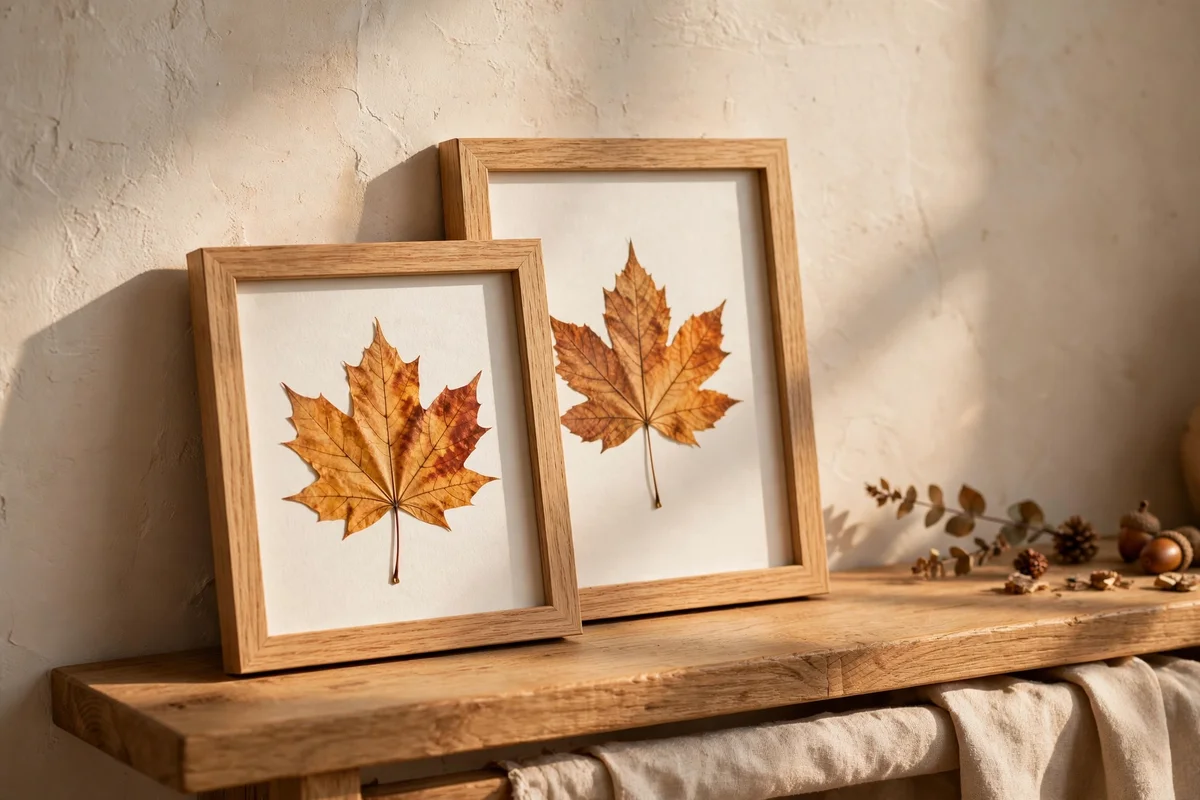
Choose two or three prints of 13 by 18 cm or 20 by 25 cm showing leaves, harvest scenes or quiet woodland paths, and frame them in matching light oak. Lean them against the wall at the back of the shelf, overlapping slightly so the front frame sits about 3 cm ahead of the one behind. Matching frames make different prints read as a set even when the artwork varies. Keep the glass clean with a dry cloth at the start of the season so warm lamplight catches them softly.
If the shelf sits below a wall, hang one larger print of about 30 by 40 cm directly above the shelf centre to anchor the whole arrangement. Keep print colours in an autumn range of amber, rust, sage and cream so they harmonise with pumpkins and dried stems nearby. The mistake to avoid is leaning heavy glass frames on high shelves where they can slide; on upper shelves use small lightweight prints under 300 grams or hang them properly with picture hooks. Budget tip: printable art files cost two to five dollars and look fine in simple frames.
4. Place Dried Wheat Stems in a Tall Glass Vase for Vertical Lift
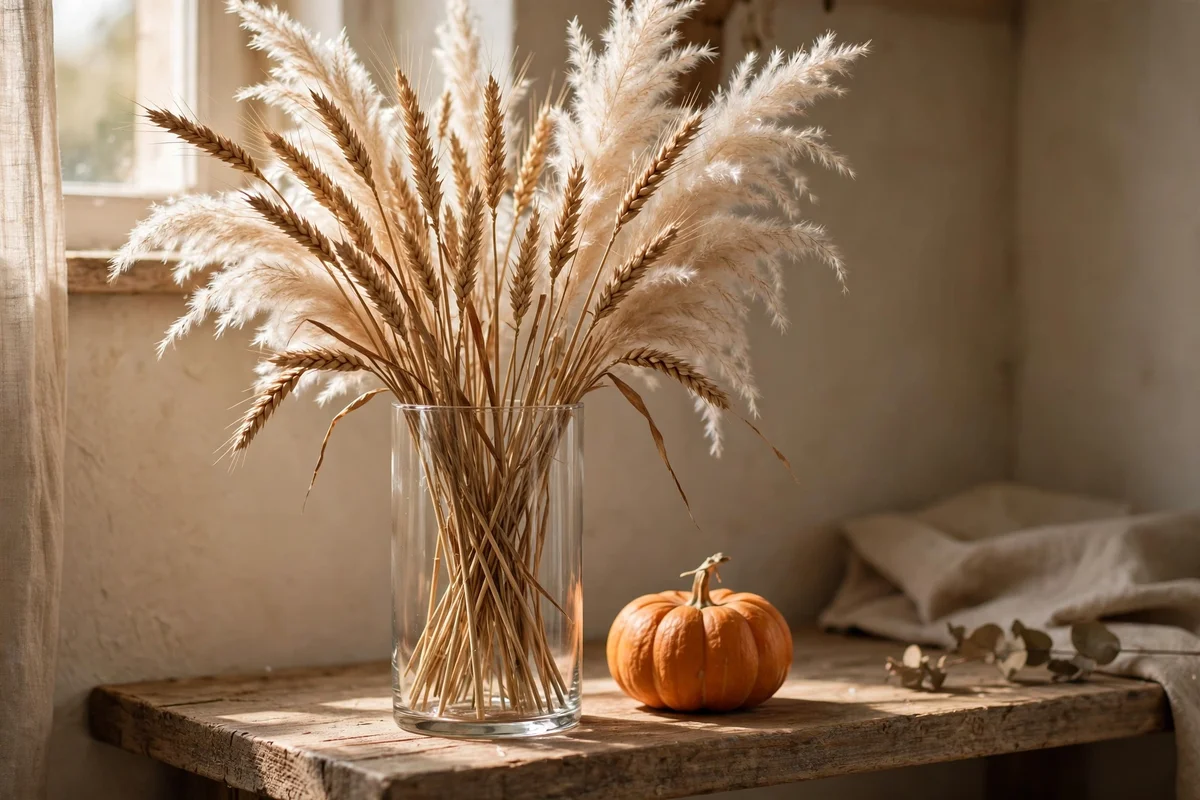
A vase of 25 to 35 cm tall filled with dried wheat, pampas plumes or eucalyptus stems adds the height every shelf vignette needs. Cut the stems so they rise about 15 to 20 cm above the rim, which keeps the arrangement graceful rather than tangled. Place the vase near one end of the shelf so the tall line balances a low pumpkin or book stack at the other end. Clear glass lets the golden stems show through and suits every shelf colour.
Secure tall stems with a small bundle tie near the base so they stand as one calm column instead of splaying out. Replace stems once mid season if they shed, which usually costs three to six dollars for a fresh bunch. The mistake to avoid is placing a tall vase on a shelf the user reaches past daily; choose the end nearest the wall on busy shelves and keep pathways clear. Budget tip: one generous bunch can be split across three shelves, giving each vignette height for the price of one.
5. Slide Woven Baskets Onto the Lowest Shelf for Hidden Storage
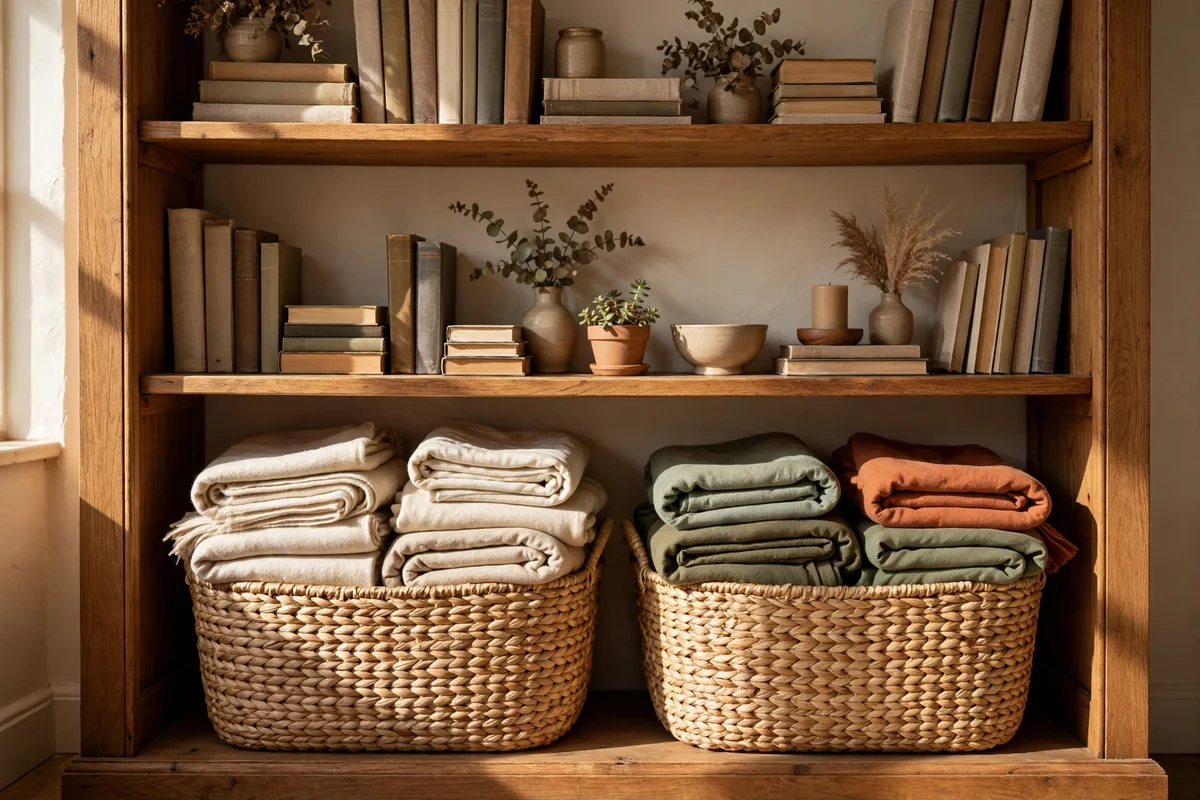
Woven baskets of 30 to 40 cm wide in seagrass, rattan or water hyacinth turn the lowest shelf into calm hidden storage. Slide two or three baskets side by side with about 2 cm between them, fronts aligned neatly with the shelf edge. Fill them with throws, spare candles or children’s autumn craft supplies so everyday clutter disappears. The woven texture adds the natural layer that smooth shelves of books and ceramics often lack.
Choose baskets with a lid or a folded throw draped over the top if the contents are not pretty enough to show. Keep one basket empty at the start of the season as a catch-all for stray toys and post, which saves the styled shelves from slow clutter creep. The mistake to avoid is buying baskets deeper than the shelf; measure shelf depth first and leave 5 cm of clearance so baskets slide in and out freely. Budget tip: large woven baskets run eight to fifteen dollars each and last for years.
6. Leave One Third of Every Shelf Empty for Breathing Room
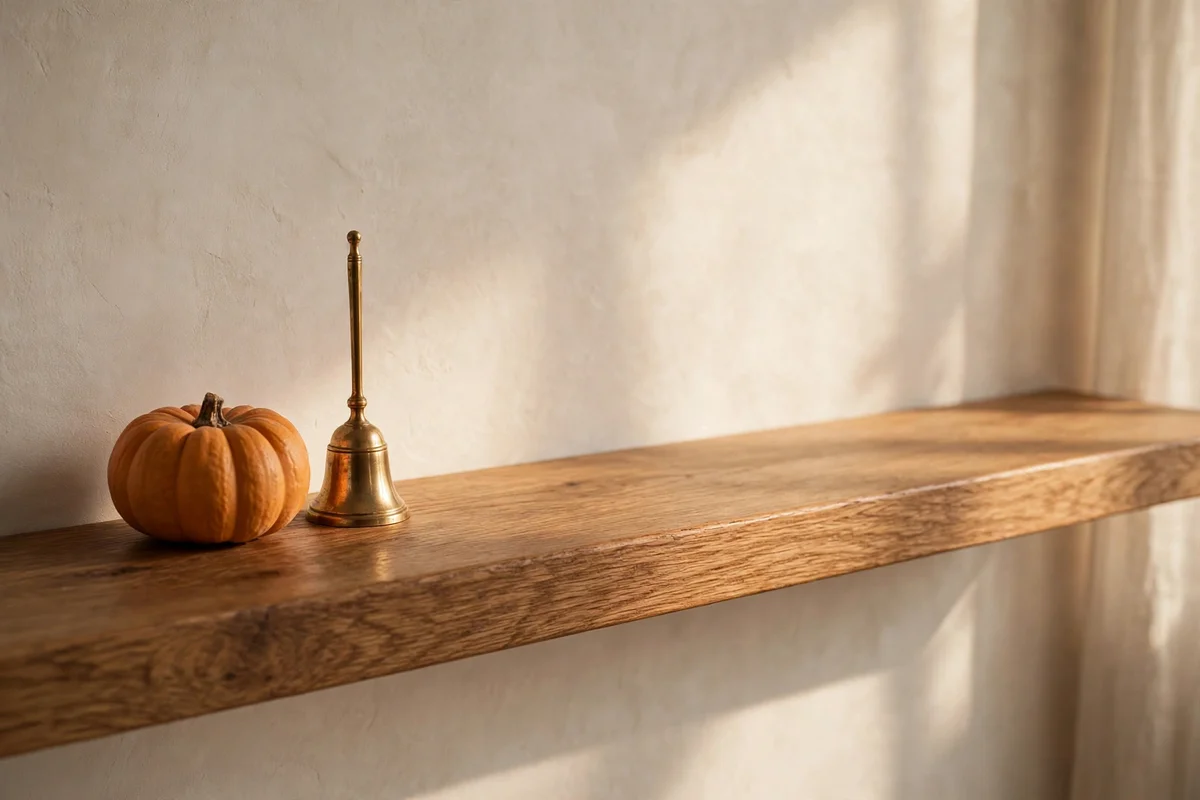
Plan each shelf so roughly one third stays completely clear, because negative space is what makes the decorated two thirds look deliberate. Stand back after styling and check that the eye can rest on at least one plain stretch of shelf, ideally 20 to 30 cm wide, between vignettes. Empty space also makes dusting quicker and keeps small items from sliding behind others. Think of the gap as part of the design, not a shelf you forgot to fill.
On crowded shelves, remove objects one at a time until the shelf feels calm, then stop; most shelves need only five to seven pieces. Keep the empty third consistent across all shelves in one bookcase so the whole unit reads as one composed piece. The mistake to avoid is filling the gap with a tiny trinket that breaks the rhythm; small single items read as clutter, not decoration. Budget tip: this idea costs nothing and often improves the shelf more than anything bought new.
7. Set a Small Brass Lamp at the End of a Dark Bookcase
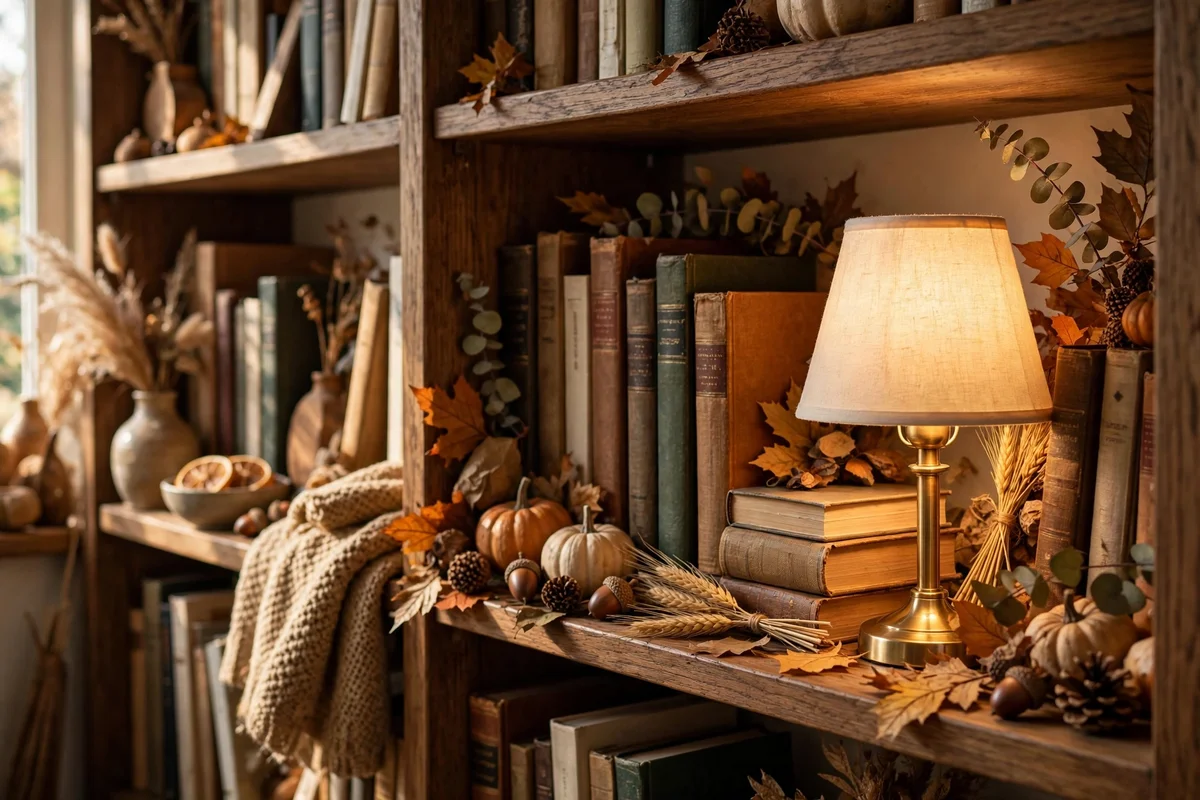
A small table lamp of 25 to 35 cm with a warm 2700K bulb transforms a shadowy bookcase corner into the cosiest spot in the room. Place it at one end of a middle shelf, shade facing slightly outward so light washes across the books and brass pieces. A brass or aged wood base repeats other autumn metals on the shelf. Use a timer plug so the lamp glows from late afternoon to bedtime without anyone remembering to switch it.
Keep the cord tidy by running it along the back edge of the shelf and down behind the bookcase, secured with two small adhesive cable clips. If there is no socket nearby, a battery lantern with a warm glow works just as well for two to three weeks per set of batteries. The mistake to avoid is using a cool white bulb above 4000K, which makes autumn tones look grey and flat. Budget tip: small lamps start around fifteen dollars, and timer plugs cost under ten.
8. Drape Warm Fairy Lights Along the Front Edge of a Floating Shelf
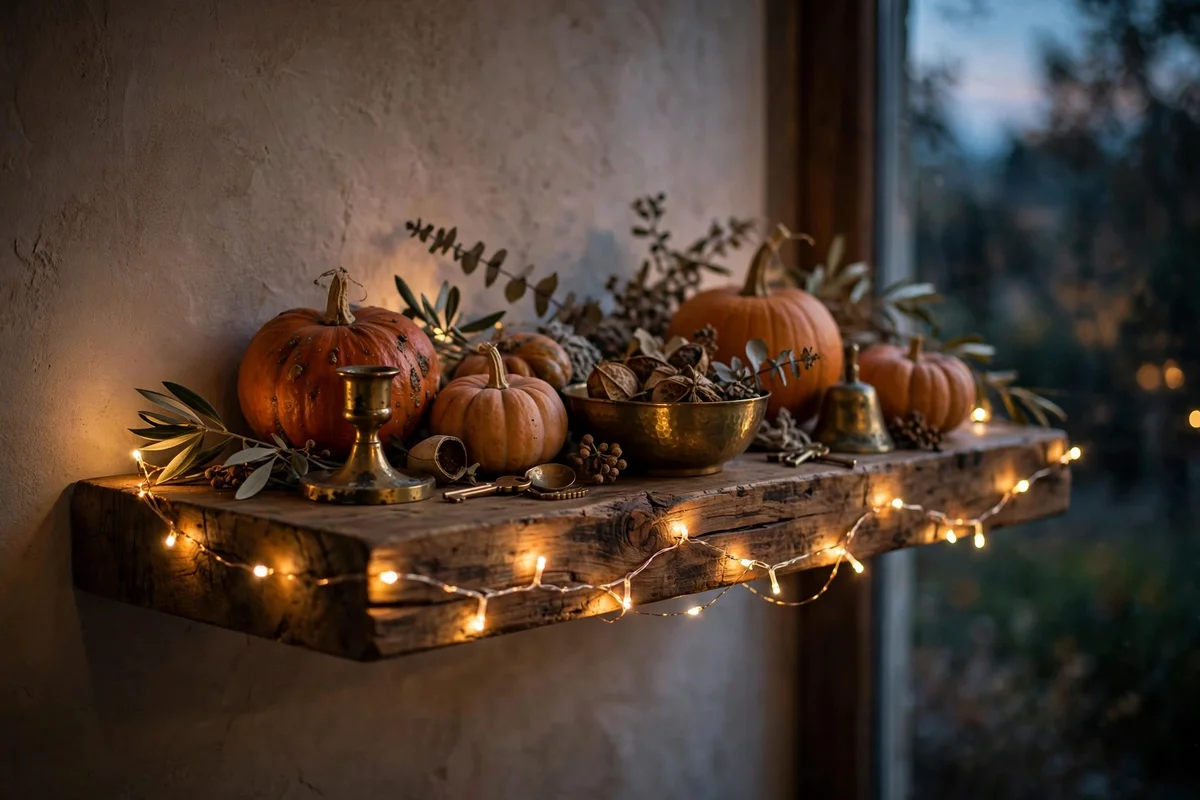
A 2 to 3 metre string of 20 to 30 warm white fairy lights on thin copper wire drapes beautifully along the front edge of a floating shelf. Start at one end, loop the wire loosely with 10 to 15 cm dips, and tuck the battery box behind a book or basket at the back. The tiny lights pick out brass, glass and dried stems after dark and make the whole shelf glow softly. Choose lights with a steady setting rather than flashing for a calm evening feel.
Turn the lights on in early October and run them on a timer for four to six hours each evening so batteries last two to three weeks. Keep the wire clear of dried stems and paper decorations so nothing snags when you lift the lights to change batteries. The mistake to avoid is mixing fairy lights with strongly coloured string lights, which turns the shelf garish; warm white alone keeps the autumn palette elegant. Budget tip: a good copper wire set costs five to nine dollars.
9. Keep Heavy Objects at Child Height and Light Ones Up High
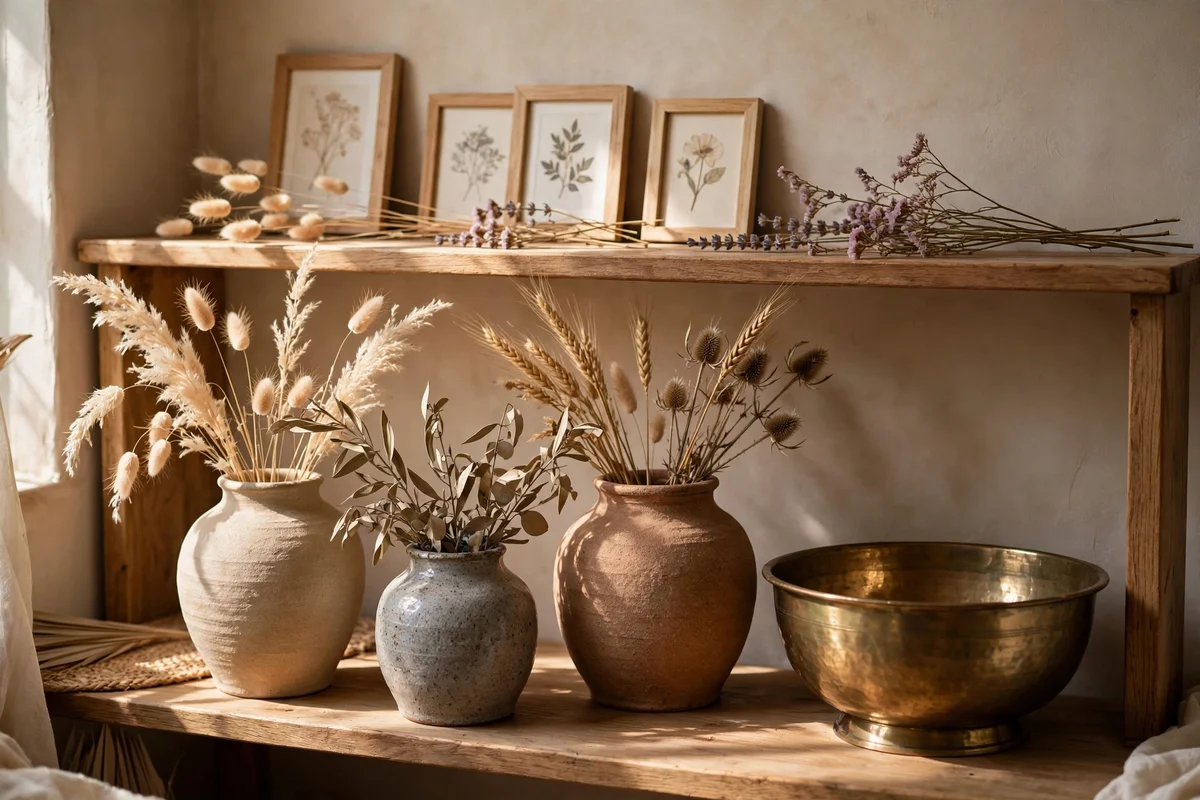
Place heavy ceramics, glass vases and brass pieces on shelves below 90 cm, which is about the reach of small children, so nothing weighty can fall far if bumped. Use museum putty under anything breakable on low shelves, a pea sized blob at each corner that holds firm but removes cleanly. Keep the upper shelves for lightweight dried stems, framed prints and soft textiles that cannot hurt anyone. This one rule keeps styled shelves safe in busy family rooms.
Secure bookcases and tall shelving units to the wall with the anti-tip straps supplied in the box, especially in homes with toddlers who climb. Check that open floating shelves are fixed into studs when they carry anything heavier than books, since a loaded shelf can weigh several kilos. The mistake to avoid is trusting adhesive hooks for heavy objects; they creep off painted walls over time. Budget tip: museum putty and anti-tip straps together cost under twelve dollars.
10. Edit Each Shelf Down to Five Pieces Before Adding Anything New
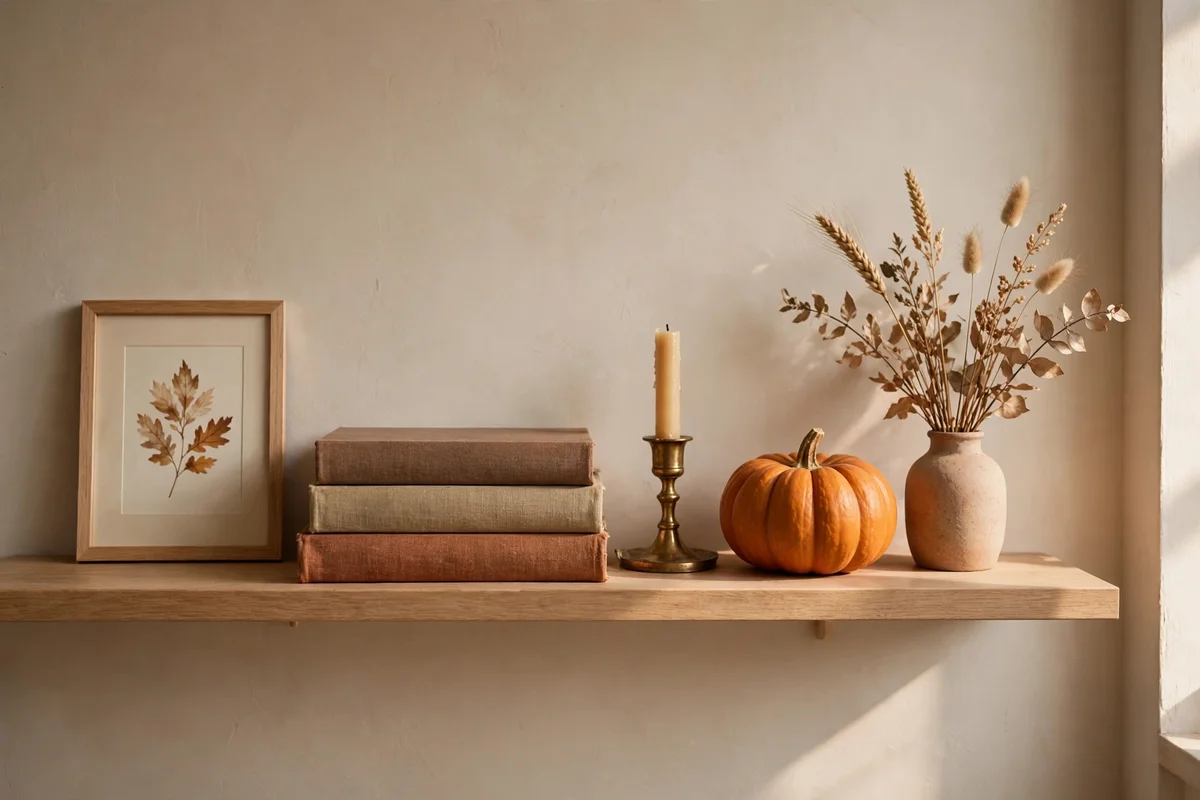
Take everything off one shelf and put back only five pieces you truly love, then live with that for two days before adding anything. This ruthless edit reveals which objects earn their place and which were just filling space. Count a grouped trio of candlesticks or a book stack as one piece, not three. Most shelves look richer with five strong pieces than with twelve small ones competing for attention.
Bag the removed items and store them in a cupboard for a month; anything you do not miss can go to a charity shop or move to another room. Photograph each shelf after editing so you can compare before and after, which makes the improvement obvious. The mistake to avoid is editing in a hurry and tossing pieces with sentimental value; set those aside in a memory box instead. Budget tip: editing costs nothing and usually saves the money you would have spent on filler decor.
11. Line an Entry Console Shelf With a Folded Wool Runner and a Tray
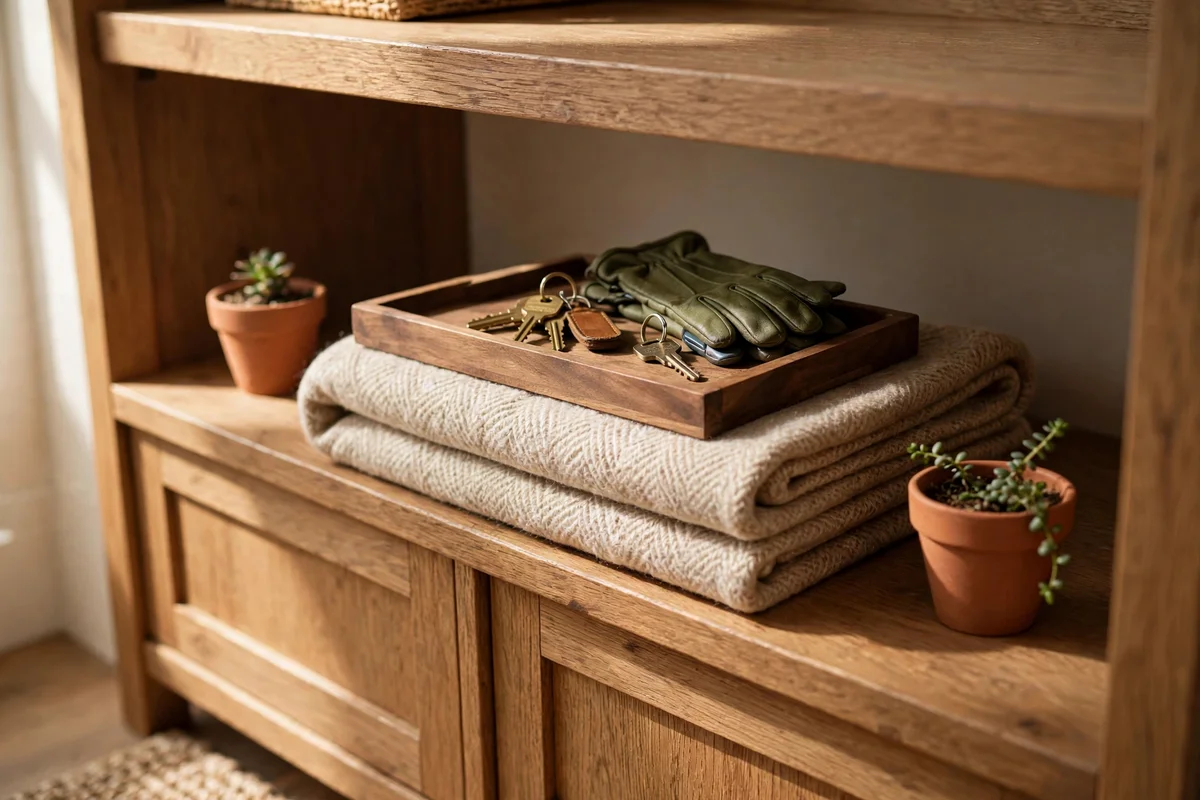
An entry console with a lower shelf doubles as autumn display space. Fold a wool runner or scarf of about 40 by 120 cm into a long strip and lay it along the shelf, letting 10 cm hang over the front edge. Set a shallow wooden tray of 30 to 40 cm in the centre for keys, post and gloves, which keeps the styled surface practical. The fabric layer adds warmth that bare wood or glass shelves often lack in autumn.
Add two matching items flanking the tray, such as small potted succulents in terracotta pots or a pair of short brass candle holders, to create balance. Keep the runner flat and wrinkle free by steaming or ironing it before laying it down. The mistake to avoid is blocking the walkway with items that overhang the shelf; keep everything at least 5 cm inside the shelf edge. Budget tip: a charity shop scarf and a simple wooden tray usually total under twenty dollars.
12. Restyle Kitchen Open Shelves With Jars, Crocks and Mini Gourds
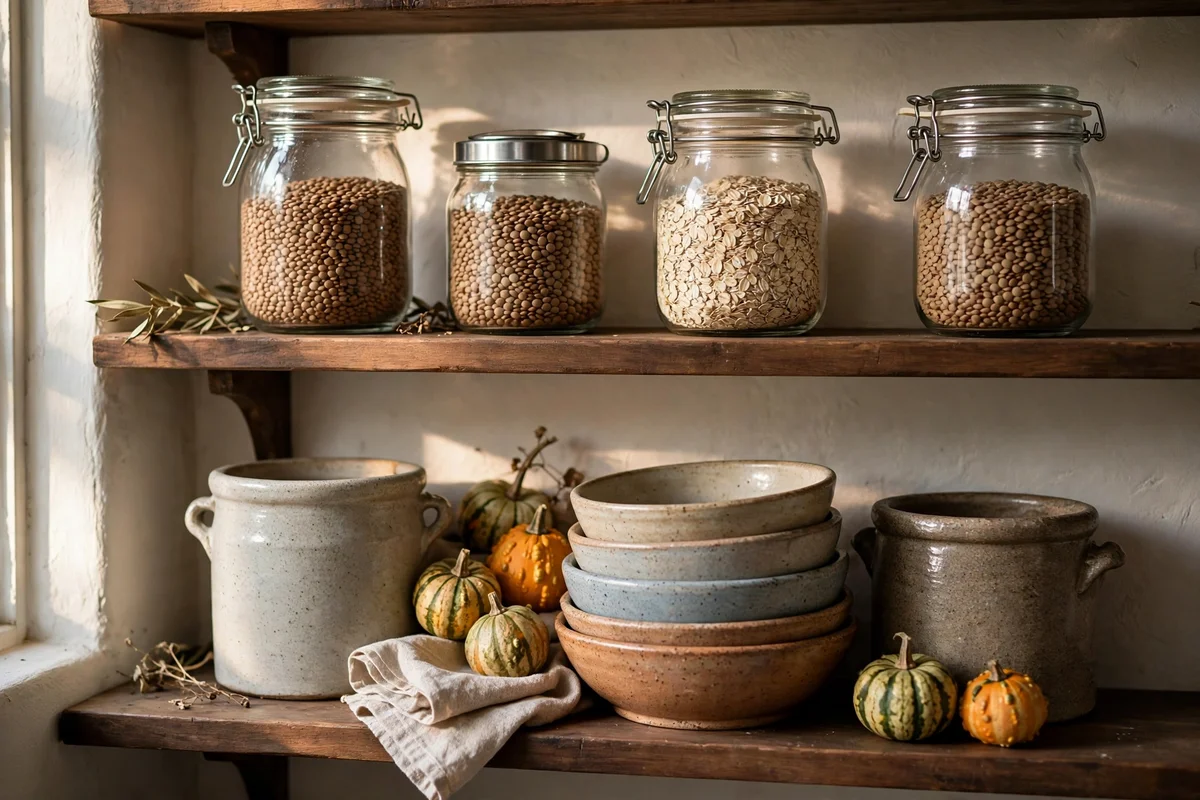
Kitchen open shelves deserve the autumn treatment too. Group clear glass jars of lentils, oats and dried beans in threes, tallest jar at the back, so everyday staples become warm-toned decor. Tuck two or three mini gourds of 5 to 8 cm between a stoneware crock and a stack of small bowls. Keep one shelf zone strictly practical with daily mugs and plates so the kitchen still works hard while looking seasonal.
Wipe jars weekly with a damp cloth, since kitchen shelves gather a light film of cooking grease that dulls glass. Keep anything edible sealed with proper lids and away from the cooker heat, and check best before dates when you restyle. The mistake to avoid is placing pumpkins beside the hob or oven where heat softens them quickly; keep real produce on cool, dry shelves. Budget tip: decanting staples into matching jars costs about two dollars per jar at discount stores.
13. Style a Mantel Shelf With Symmetrical Groups Around a Central Print
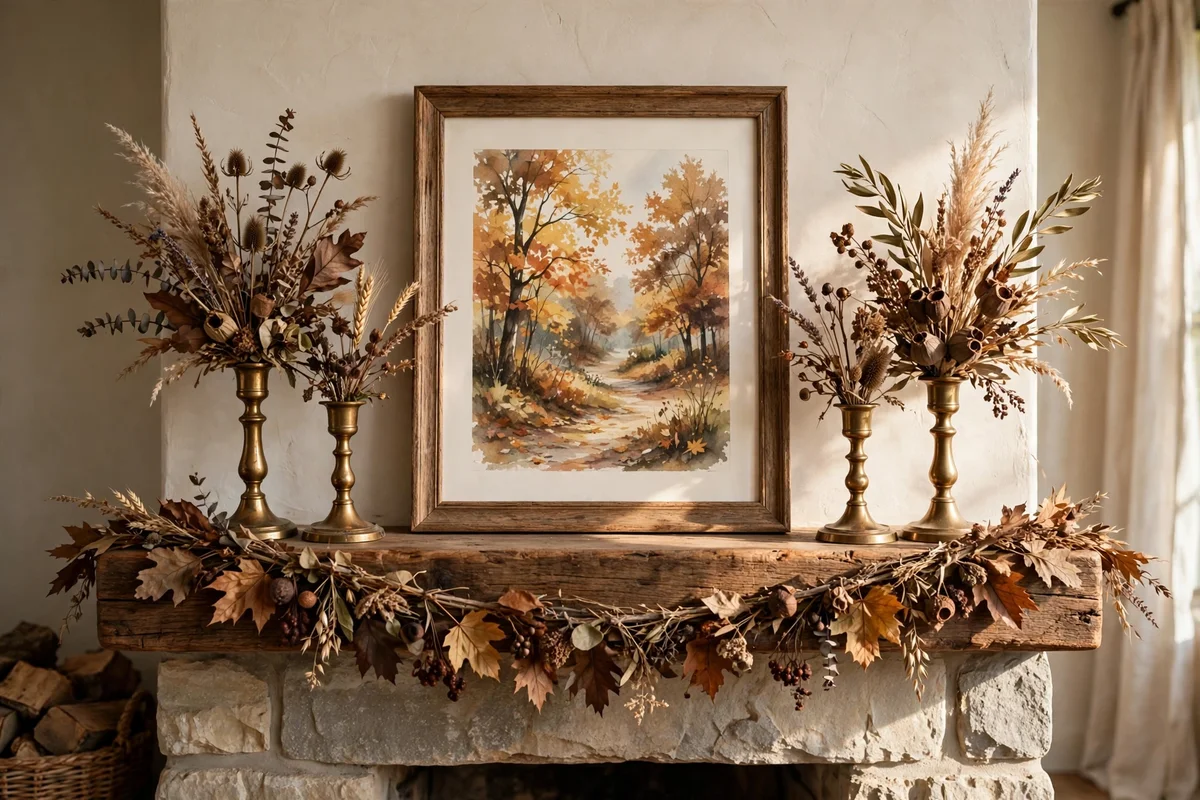
A mantel shelf styles best with calm symmetry. Hang or lean a framed print of 40 to 50 cm wide at the exact centre, then build two matching groups at each end: a tall dried stem arrangement on the left balanced by a tall brass candlestick on the right. Keep both sides within 5 cm of each other’s height so the mantel reads as one composed line. Centre the print 10 to 15 cm above the shelf surface for a settled look.
Layer a thin dried leaf garland along the mantel front edge, securing it with two small clear clips at each end. Keep all decor at least 30 cm from any open flame and use flameless candles on mantels above working fireplaces. The mistake to avoid is perfect mirror symmetry, which looks stiff; vary one small detail, like a slightly different pumpkin size on each side, for a handmade feel. Budget tip: a dried garland costs six to twelve dollars and lasts the whole season.
14. Mix Rough Wood, Smooth Ceramic and Soft Wool in Every Vignette
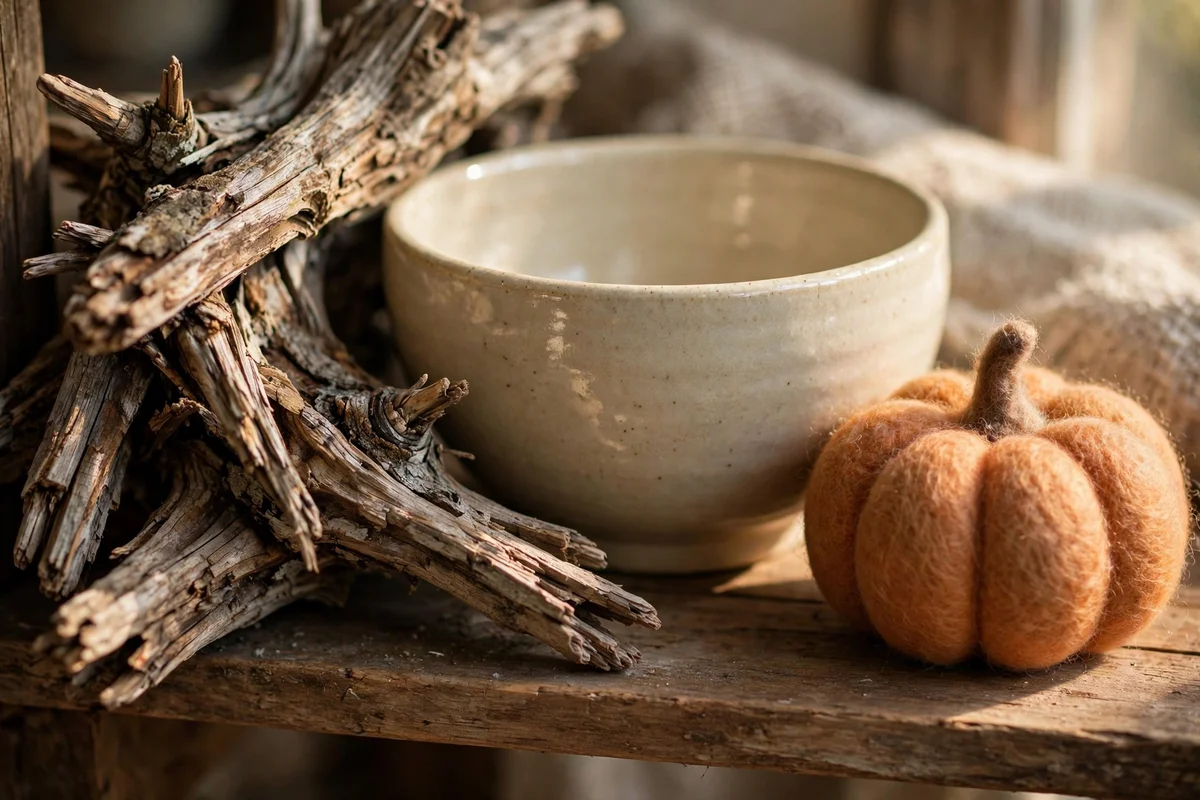
Every shelf vignette feels richer when it mixes three textures: rough wood like a sliced log coaster or driftwood piece, smooth ceramic like a glazed bowl or vase, and soft wool like a folded throw or felted pumpkin. Place the rough piece at the back, the smooth piece in the middle and the soft piece at the front to lead the eye forward. Three textures per vignette is the sweet spot; more than five turns the shelf busy.
Repeat one texture across neighbouring shelves, such as the same wool tone or the same wood finish, to knit the whole bookcase together. Dust rough wood monthly with a dry brush, since it traps more dust than glazed ceramic. The mistake to avoid is placing a rough, splintery piece where hands reach daily; sand any sharp edges or keep rough wood at the back. Budget tip: felted wool pumpkins cost four to seven dollars each and read as pure autumn.
15. Weave a Dried Leaf Garland Along the Back Edge of a Long Shelf
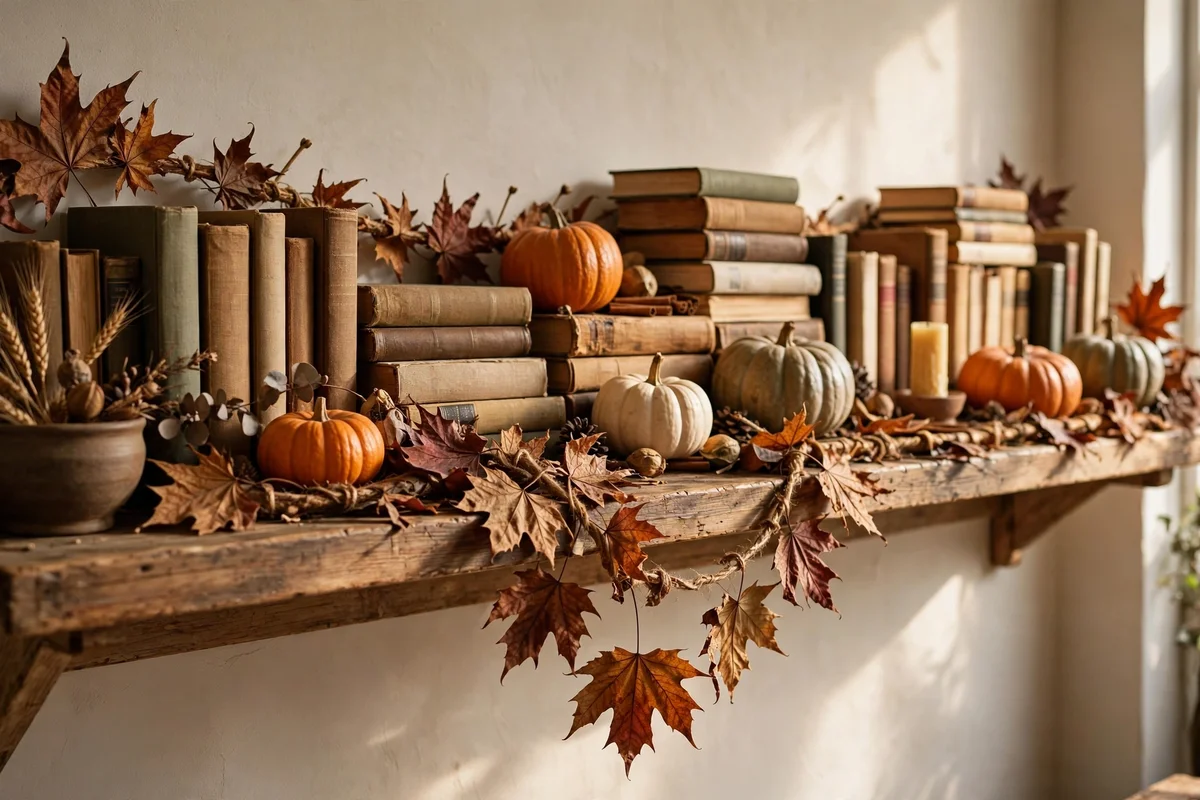
A dried leaf garland of 120 to 150 cm laid along the back edge of a long shelf gives instant autumn without stealing surface space. Choose garlands of maple leaves, oak leaves or dried fern in rust and gold tones, and fluff the leaves gently after unpacking so they look full. Secure both ends behind books or baskets with small clear clips so the garland stays put when you dust around it.
Layer the garland so it drapes 5 to 8 cm down the front of the shelf in one or two places for a relaxed, natural line. Mist lightly with water only if leaves look flat, then let them dry fully before restyling nearby paper items. The mistake to avoid is hanging garlands across shelves you use daily for books; choose display-only shelves or the very top shelf for garlands. Budget tip: dried garlands cost eight to fourteen dollars and store flat for next year.
16. Corral Small Treasures on One Wooden Tray for Instant Calm
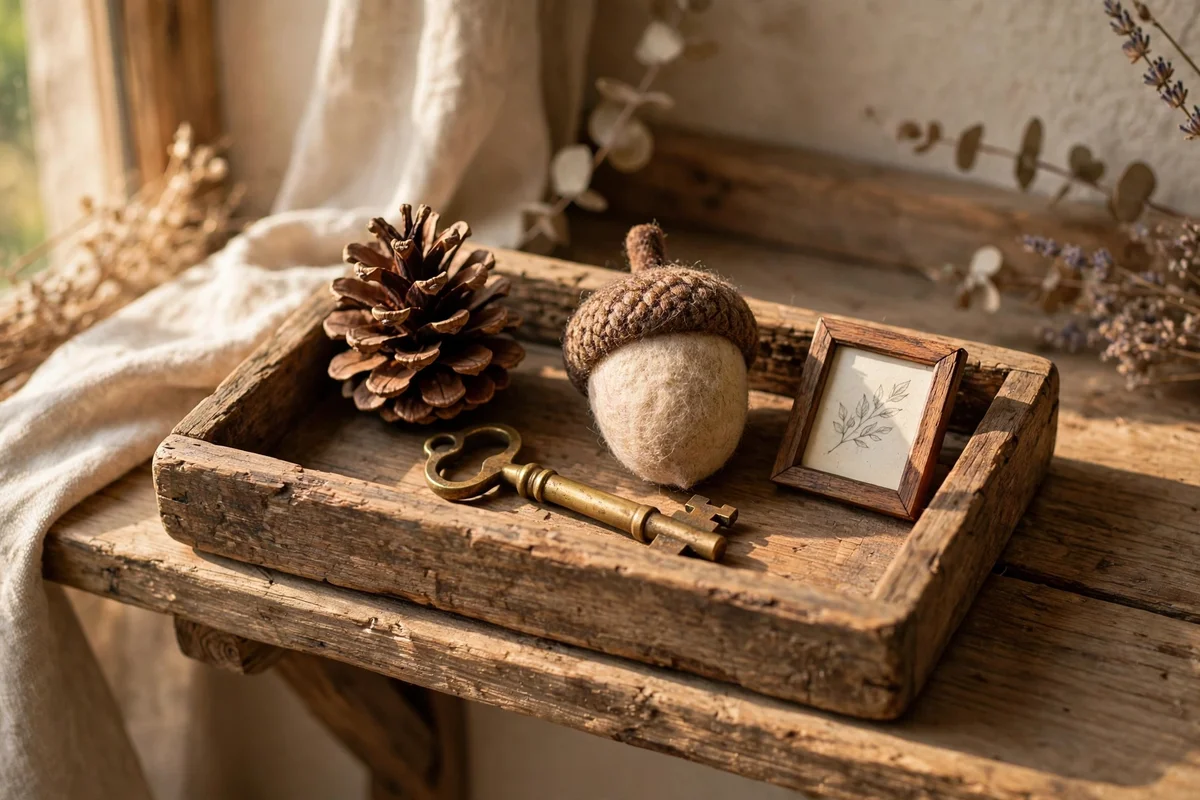
Small objects look cluttered when they stand alone but curated when grouped. Choose a wooden tray of 25 to 35 cm, in oak or walnut, and arrange three to five small treasures inside: a pinecone, a brass key, a felted acorn, a tiny framed sketch. Keep the tray at one end of the shelf with 10 cm of clear space around it so the group reads as a single vignette. The tray edge visually contains everything and stops small pieces migrating across the shelf.
Swap one item in the tray each month, such as trading a pinecone for a dried orange slice in November, to keep the vignette fresh. Oil the wooden tray once a year with food safe mineral oil so it stays rich and protected. The mistake to avoid is overfilling the tray until items pile on each other; if you cannot see the tray surface between pieces, remove one. Budget tip: simple wooden trays start around ten dollars and suit every season.
17. Tuck Cinnamon Bundles and Dried Orange Slices Between the Books
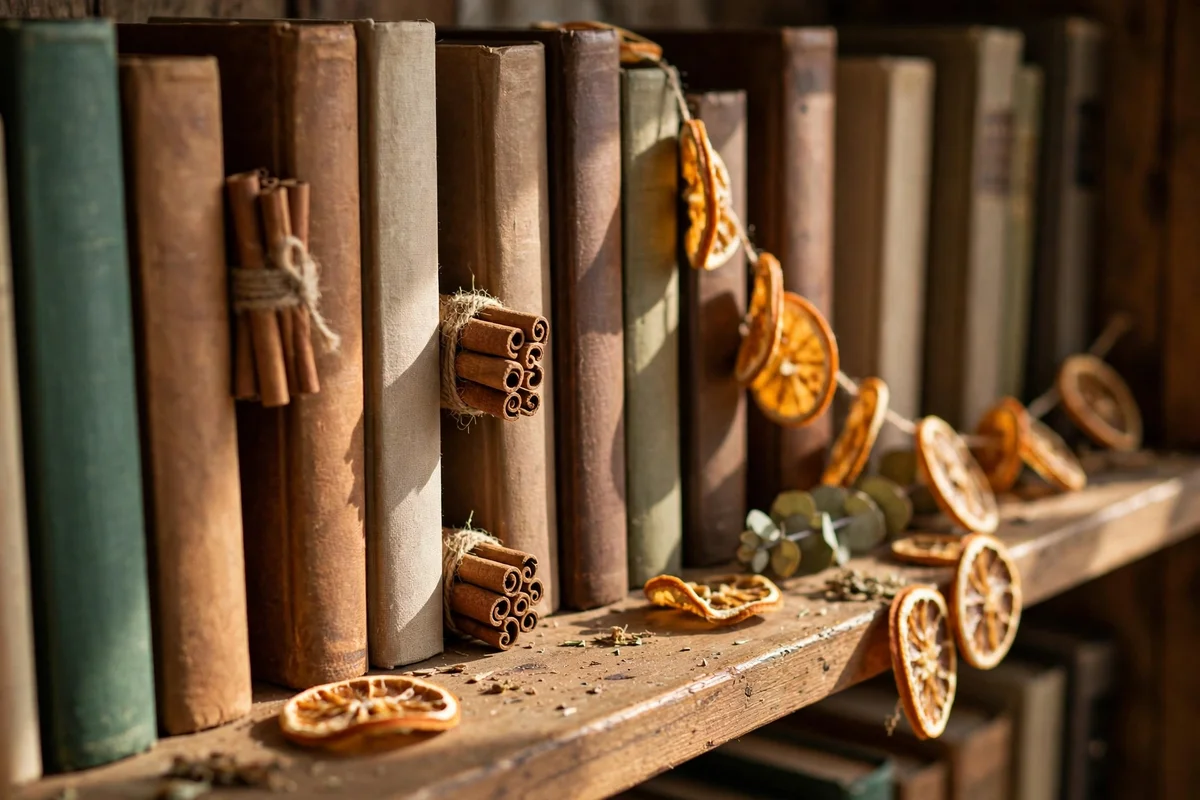
Shelves can smell like autumn without candles or sprays. Tie three cinnamon sticks together with natural twine, making four or five bundles, and tuck them upright between book spines or behind a small pumpkin. Thread dried orange slices onto twine in groups of three and hang them from a shelf edge or drape them over a book stack. The scent is gentle, warm and welcoming, drifting through the room whenever the air stirs.
Replace cinnamon bundles every six to eight weeks, since the scent fades with time, and compost the old ones. Keep dried orange slices away from damp spots and direct steam, which makes them sticky. The mistake to avoid is using scented oils on the wood shelves themselves; oils stain and attract dust, so keep scent elements removable. Budget tip: a bag of cinnamon sticks and a bag of oranges dried at home cost under eight dollars for the whole bookcase.
18. Refresh the Same Shelves in Three Small Monthly Swaps Through Autumn
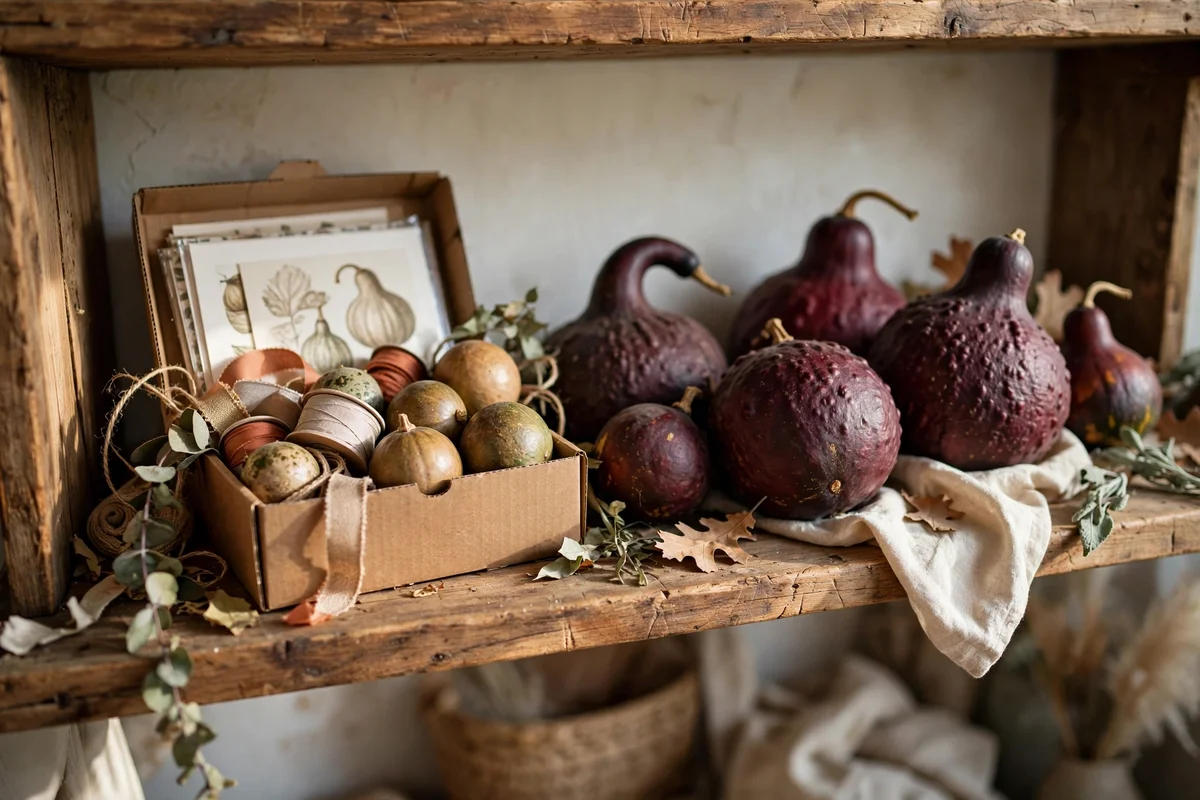
Plan three light refreshes: early October for the full autumn setup, early November for deeper tones and harvest textures, and late November for warm pre-winter comfort. Each refresh swaps only three to five items per shelf, such as trading bright orange pumpkins for deep burgundy gourds or adding a heavier throw to the basket below. Small changes keep the shelves feeling alive without the work of a full restyle.
Keep a small box labelled autumn shelf extras in a cupboard with spare gourds, ribbons and prints so swaps take fifteen minutes, not an afternoon. Photograph each shelf after the October setup so you remember the layout you loved. The mistake to avoid is buying new decor for every refresh; the box system means one autumn’s worth of pieces rotates all season. Budget tip: three planned swaps cost nothing beyond the original pieces if you shop your own box first.
19. Set a Small Round Mirror Behind Objects to Double the Light
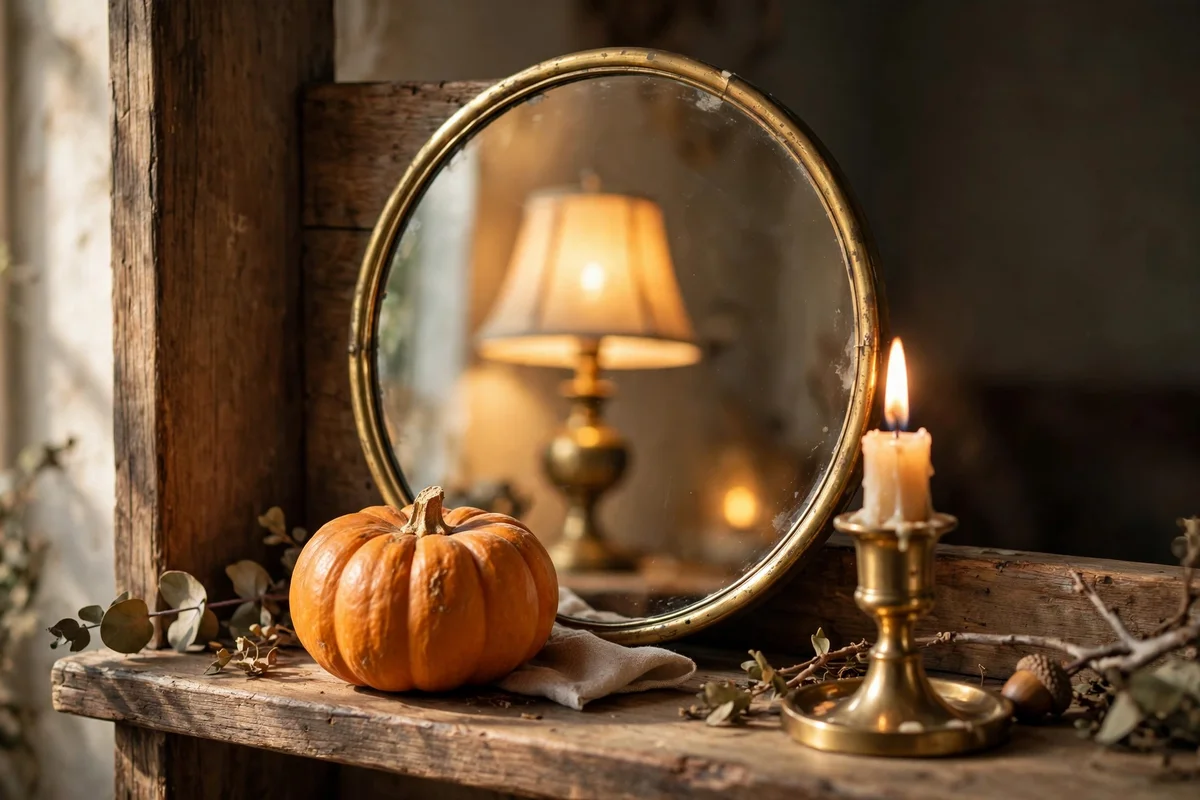
A round mirror of 15 to 20 cm propped at the back of a shelf bounces lamplight and fairy light glow back into the room. Lean it against the wall behind a pumpkin or book stack, tilted slightly forward so it catches the shelf below rather than the ceiling. The reflected light makes brass pieces gleam and deep autumn colours look richer. Choose a simple brass or wood frame that echoes other shelf metals.
Keep the mirror dust free with a weekly wipe, since dust shows clearly on reflective glass and dulls the effect. On dark shelves, pair the mirror with the fairy lights from idea eight so the glow multiplies beautifully. The mistake to avoid is angling the mirror toward a window at night, which creates a harsh dark reflection; angle it toward the lamp or lights instead. Budget tip: small round mirrors cost six to twelve dollars at discount and home stores.
20. Step Back Ten Feet and Photograph Each Shelf Before You Call It Done
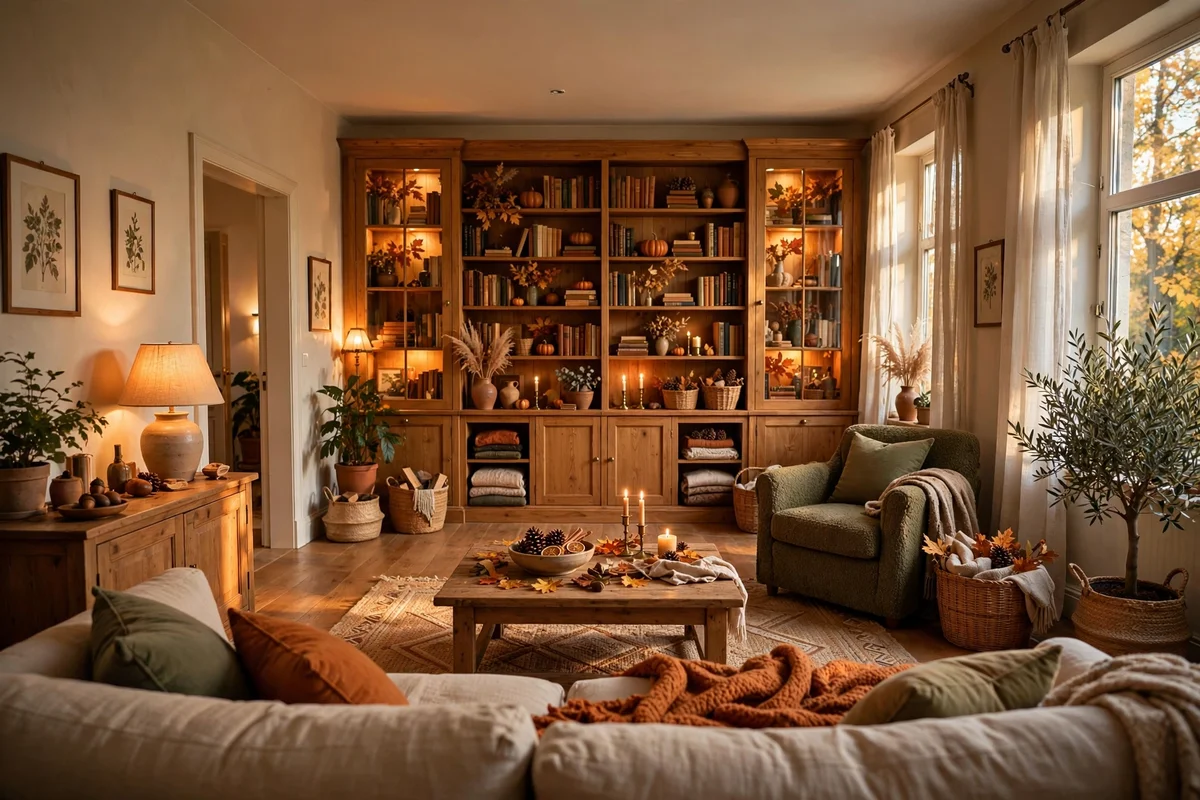
After styling, walk about three metres back and look at the whole bookcase with soft eyes, noticing which shelf feels crowded or dark. Then photograph each shelf with your phone and study the small image, because the camera reveals clutter and uneven heights that the eye forgives in person. Check that tall pieces step down gracefully and that no single colour dominates one shelf. This two minute habit catches most styling mistakes before guests ever see them.
If the photo shows a problem, change just one thing and photograph again; small single edits keep you from unravelling a shelf that was nearly right. Ask for a second opinion on the photo, since fresh eyes spot what habit hides. The mistake to avoid is restyling endlessly without stepping back; three photo rounds is enough for any shelf. Budget tip: this finishing habit is free and works on every shelf in the house.
Autumn shelves work best when they feel collected rather than decorated. A stack of books you already own, three brass pieces gathered over the years, dried stems from a walk, these honest materials carry more charm than anything bought in a rush. Keep the vignette rules close: vary the heights, group in threes, mix textures, and guard that empty third of the shelf like it matters, because it does.
Light is the quiet hero of every shelf you styled today. A small lamp glowing at four in the afternoon, fairy lights looped along a floating shelf, a mirror catching that glow and throwing it back, these small touches turn ordinary shelves into evening landmarks. If you try only one thing this week, add the light first, then stand back and watch the whole bookcase change its mood.
Refresh the shelves once a month as autumn deepens, swapping a few pumpkins for deeper gourds and adding a heavier throw below. The shelves will grow with the season instead of freezing in early October, and each small swap keeps the styling feeling alive. Style slowly, edit ruthlessly, and enjoy the little autumn stories your shelves tell all season long.
Frequently Asked Questions
How many items should I put on one shelf for fall?
Aim for five to seven pieces per shelf, counting a grouped trio or a book stack as one piece. Place them in two or three small vignettes with about 20 to 30 cm of empty space between groups. Shelves wider than 90 cm can hold three vignettes; narrower shelves look best with two. Fewer strong pieces always beat a crowd of small ones.
How do I decorate shelves with small children in the house?
Keep heavy ceramics, glass and brass on shelves below 90 cm so nothing falls far, and secure everything breakable with museum putty. Put lightweight dried stems, framed prints and soft textiles up high. Fix bookcases to the wall with anti-tip straps and keep fairy light wires tucked at the back. Choose flameless candles over open flames everywhere.
What is the cheapest way to style shelves for autumn?
Start with what you own: stack books you already have, gather pinecones and dried leaves from a walk, and print autumn art at home for a few dollars. Charity shops sell brass candlesticks, baskets and large books for two to eight dollars each. One bag of mini pumpkins and a bunch of dried wheat, split across three shelves, usually costs under fifteen dollars total.
How do I light a bookshelf that has no nearby socket?
Use battery operated fairy lights on copper wire, which run two to three weeks per set of batteries on a timer, or a small battery lantern with a warm 2700K glow. Tuck the battery box behind a book at the back of the shelf. A small round mirror propped behind objects will also bounce existing room light across the shelf and make it feel brighter.
When should I change my fall shelf decor through the season?
Set the full autumn look in early October, then make two small refreshes: deeper tones and harvest textures in early November, and warmer pre-winter comfort in late November. Each refresh only swaps three to five items per shelf. Keep a small box of spare gourds, prints and ribbons in a cupboard so each refresh takes about fifteen minutes.