Living Room
20 Fall Shelf Styling Ideas That Layer Pumpkins, Books and Warm Wood
By Anna Wells · · 19 min read
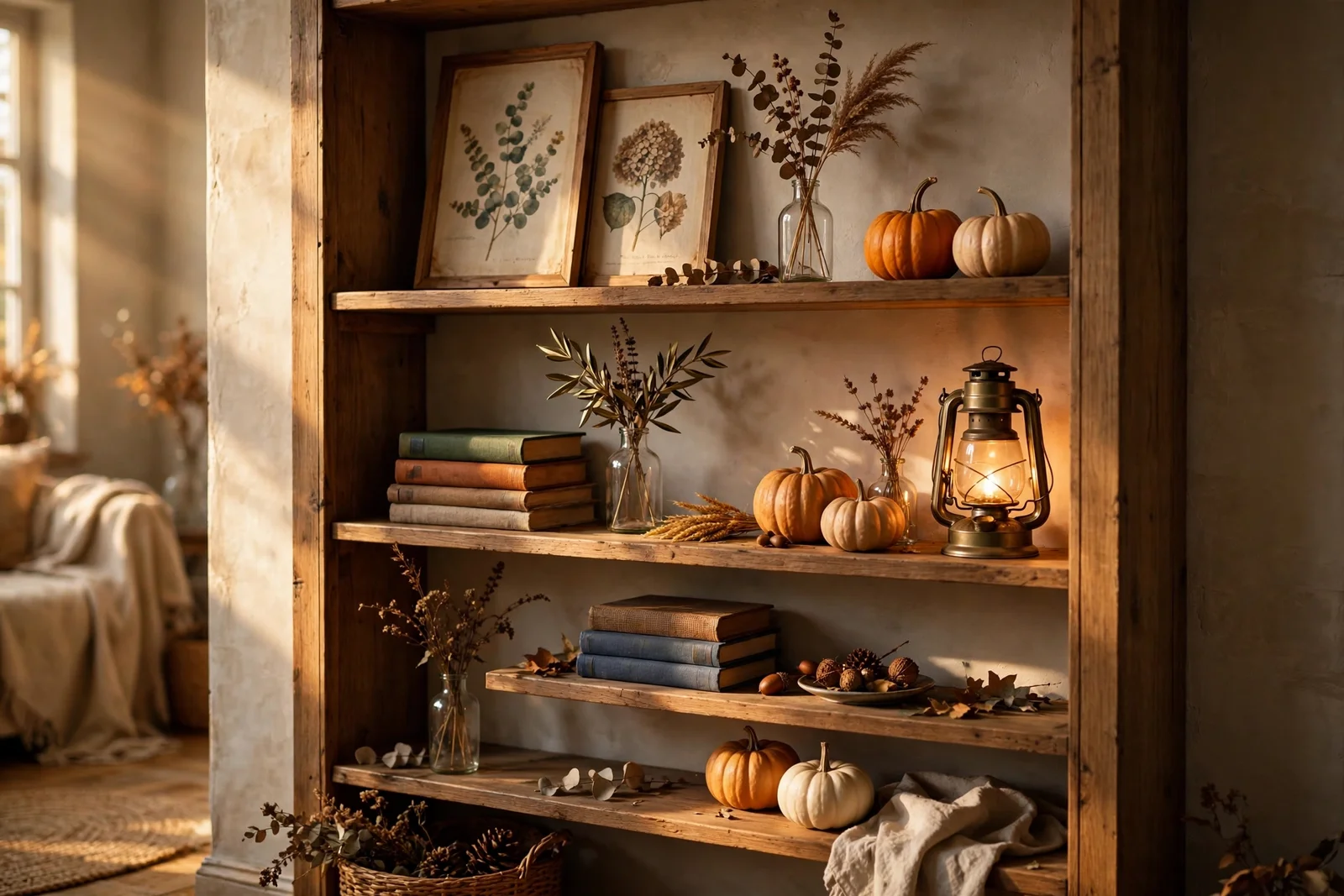
A simple repeat formula for styling shelves this autumn: books as plinths, odd groups of pumpkins, and one warm colour story across every shelf.
There is a particular kind of October afternoon when the light comes in low and gold, and every flat surface in the house seems to ask for a little attention. The shelves notice first. A bare shelf looks suddenly grey and forgotten, while a shelf with two pumpkins and a stack of old books feels like someone cared.
This guide is about the method behind those shelves that always look right. It is not a shopping list and it is not a gallery to copy. It is a working formula: height from stacked books, warmth from small pumpkins in odd numbers, and a colour story kept tight enough that every shelf sings in the same key.
Inside you will find twenty ideas you can apply shelf by shelf, in the kitchen, the dining room and the living room alike. Most need nothing more than what you already own, plus a bag of small pumpkins and a bundle of dried stems. Start with one shelf this afternoon and see how the rest of the room follows.
1. Build Height With a Stack of Books as a Plinth

Every well styled shelf starts with height, and three or four chunky hardback books make the perfect plinth. Aim for a stack between 18 and 28 cm tall, with each book slightly offset for a settled look. Clothbound novels in rust, ochre or deep green cost very little at charity shops. Set a small pumpkin or a bottle of dried stems on top so it rises above its neighbours. Avoid thin paperbacks, which look flimsy and slip; solid books with readable spines give the stack real weight.
Vary the stack from shelf to shelf so the composition does not turn repetitive. Use two books on one shelf and four on the next, and turn the top book to face a different direction each time. If a shelf is narrow, a single thick volume laid flat works as a low plinth for a trio of pinecones. The mistake to avoid is stacking more than five books, which starts to look like storage rather than styling. Budget tip: one afternoon at two charity shops usually finds enough clothbound books for every shelf in the room.
2. Group Small Pumpkins in Threes and Fives
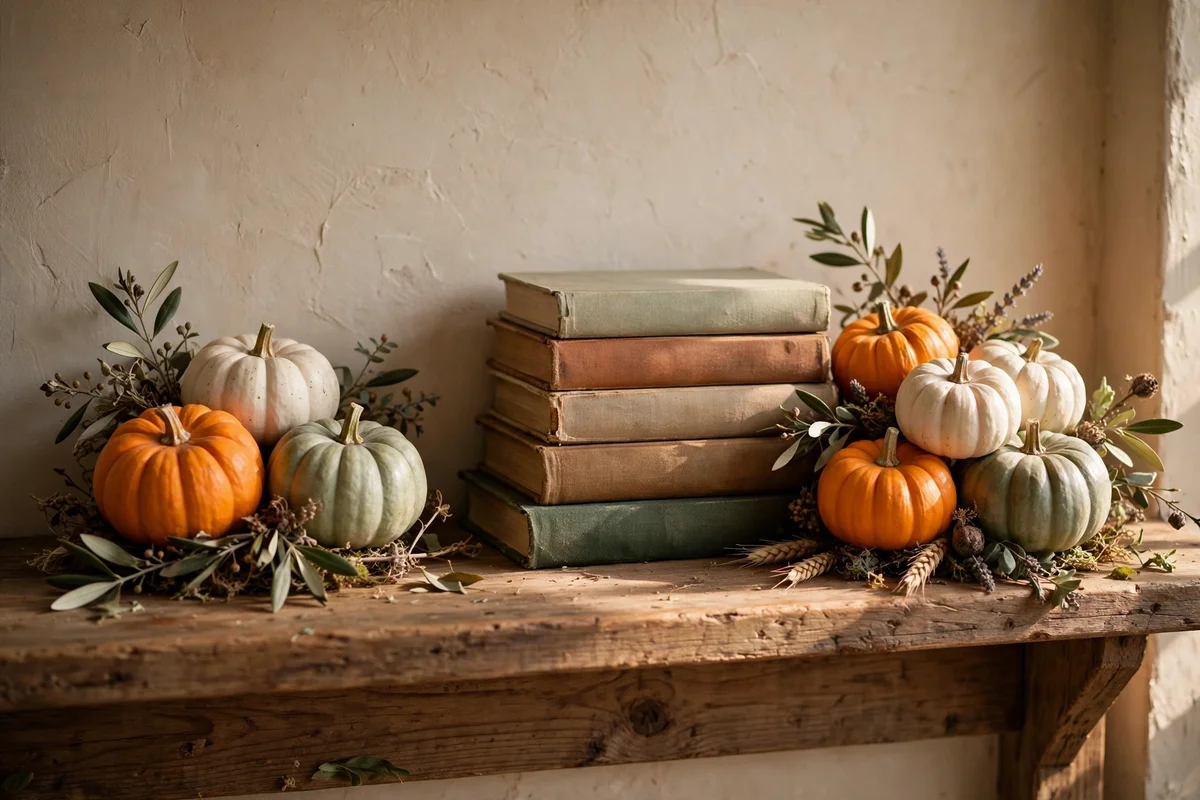
Small pumpkins look best in odd numbers because the eye reads three or five as a natural cluster rather than a paired set. Choose pumpkins between 8 and 15 cm wide, mixing round and squat shapes, and keep the colour within your palette: orange, white and pale green all sit happily together. Nestle them close so their edges almost touch, with one slightly in front of the others. The common mistake is lining pumpkins up in a row like soldiers; a loose triangle always looks softer and more considered.
Mini pumpkins, often called munchkins, are perfect for the gaps that larger pieces leave behind. Tuck two or three into spaces between bottles and books, and let one roll slightly forward on its side for a relaxed, gathered feel. A small bowl of five munchkins in mixed colours makes a complete shelf vignette on its own when space is tight. Budget tip: buy pumpkins at the end of a market day, when stalls often discount a bag of mixed minis to clear the stand.
3. Lean a Botanical Print at the Back of the Shelf
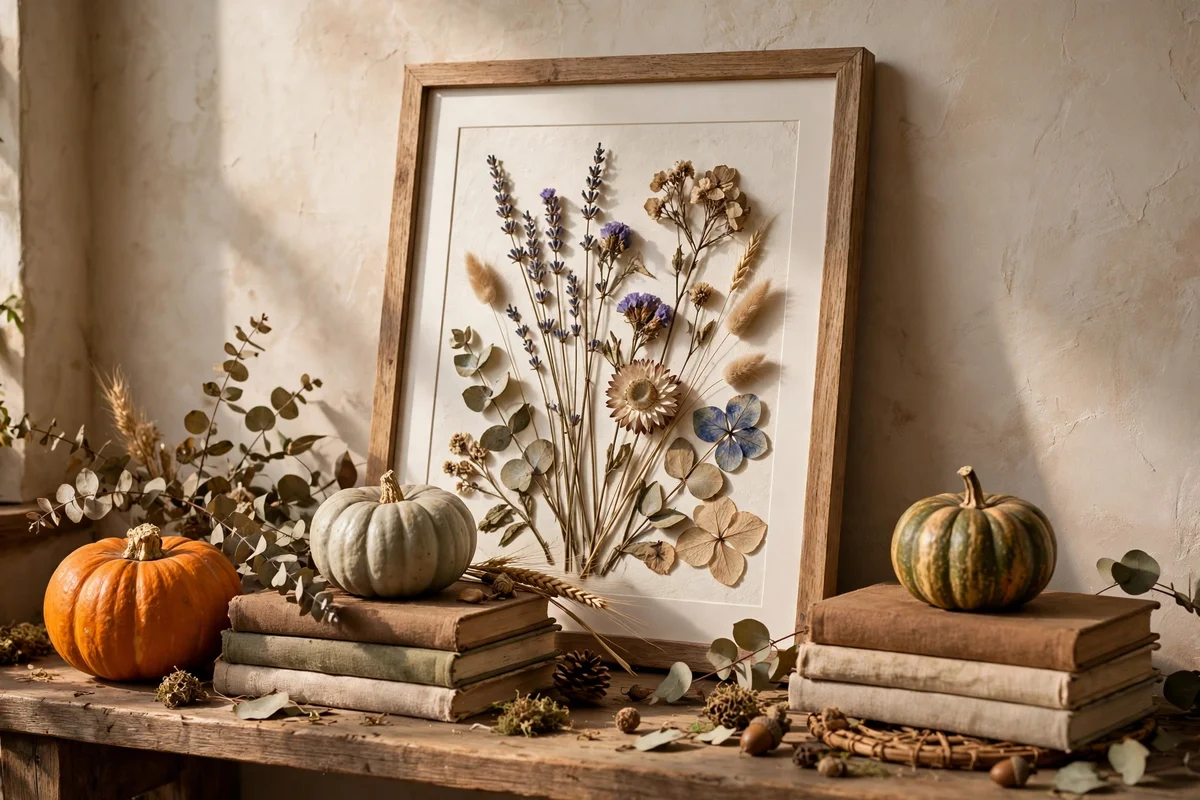
A framed botanical print leaned against the wall at the back of a shelf gives every vignette instant depth. Choose a frame between 20 and 30 cm tall, tall enough to rise above the books and pumpkins in front of it. Dried flower studies, seed heads and autumn leaves all suit the season, and a thin wooden frame in oak or walnut keeps the look warm. Lean the frame at a slight angle rather than standing it dead straight, so it catches the light and feels casually placed.
You can print a botanical study at home on textured paper for very little money, then slip it into a second-hand frame. Black and white prints work beautifully against a warm autumn palette because they let the pumpkins carry the colour. Avoid frames taller than 35 cm on standard shelves, since they crowd the shelf above and the print gets lost. For a cohesive look, use the same frame style on every shelf, even when the prints themselves are different.
4. Set Dried Stems in Small Glass Bottles
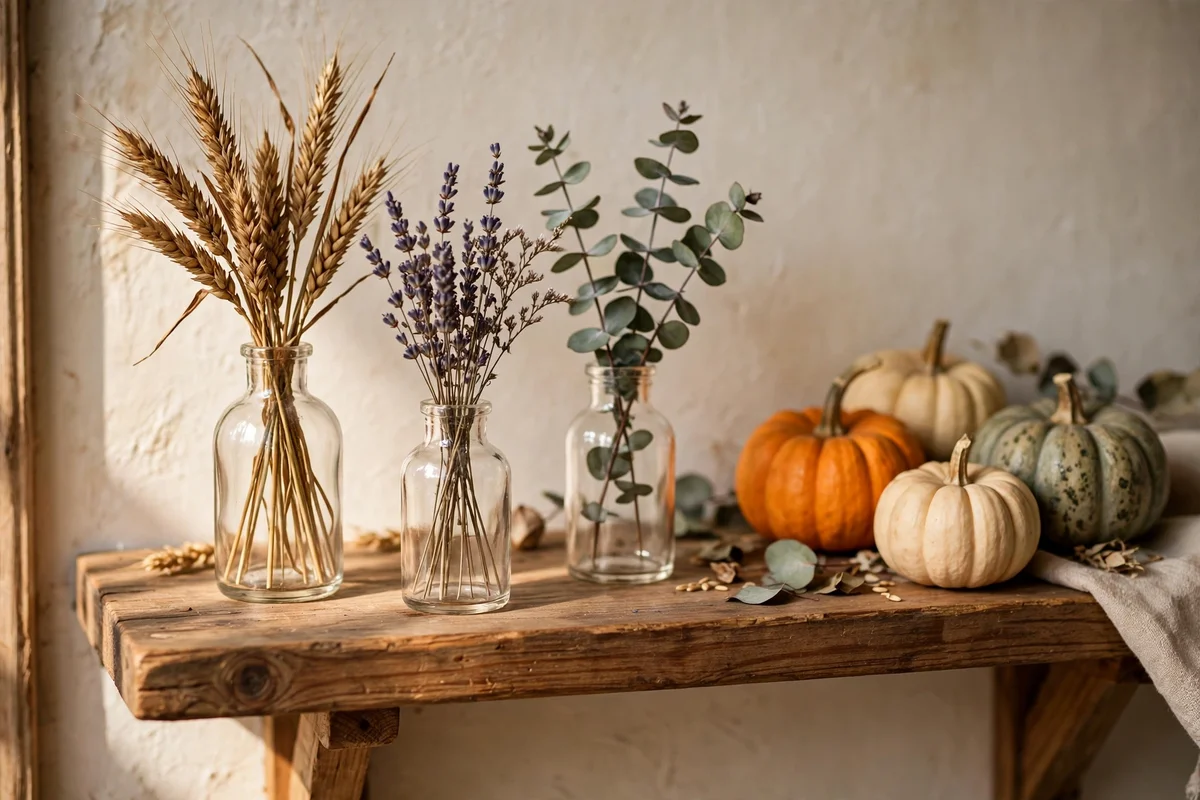
Dried stems bring the one thing pumpkins cannot: height that moves. A cluster of wheat, dried lavender or eucalyptus in a small glass bottle adds vertical lift for almost no money, and it lasts the whole season without watering. Use bottles between 12 and 20 cm tall with narrow necks, which hold the stems upright without fiddling. Three to five stems per bottle is plenty; more than that starts to look like a bunch from a flower shop.
Group bottles in twos and threes of different heights, never in identical sets. A tall amber bottle beside a short clear one reads as collected over time, which is exactly the feeling a heritage shelf needs. Place one bottle near each tall anchor so the verticals echo across the shelf. The mistake to avoid is filling every bottle to the brim; stems should sit at different heights within the group, with the tallest rising about twice the bottle height.
5. Keep the Colour Story to Three Tones or Fewer
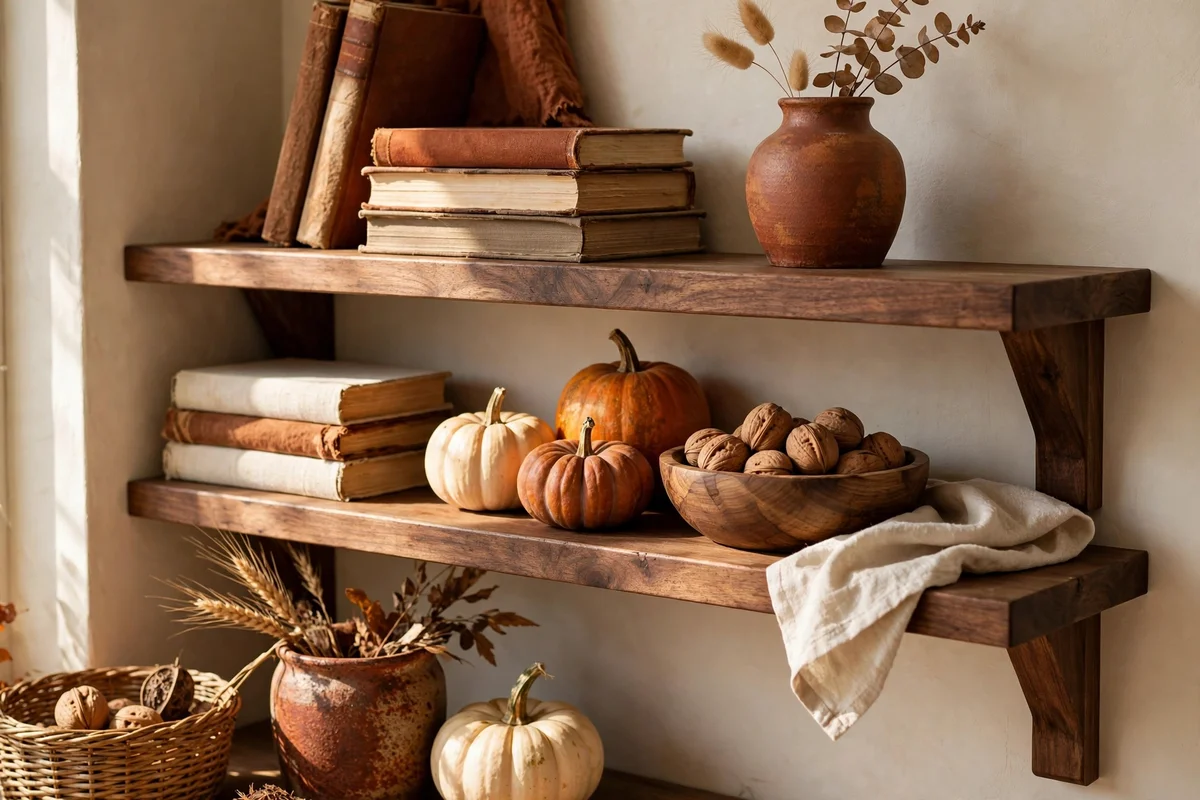
A tight colour story is what separates a styled shelf from a jumble. Pick three tones at most: one dominant, one supporting and one small accent. Warm rust with cream and walnut brown is a classic autumn trio, while sage green with brass and wheat gold feels softer. Every object on the shelf should belong to one of the three tones, or to plain wood or glass, which count as neutrals. Step back often and remove anything that fights the palette.
When you carry the same three tones across every shelf in the room, the whole space feels planned rather than assembled. Use the dominant tone most generously, about sixty percent, the supporting tone for thirty percent, and keep the accent to ten percent. If a gifted ornament clashes with the story, move it to another room for the season rather than squeezing it in. A shelf that breaks its own rules always looks accidental, never artistic.
6. Leave a Third of Each Shelf Empty So It Breathes
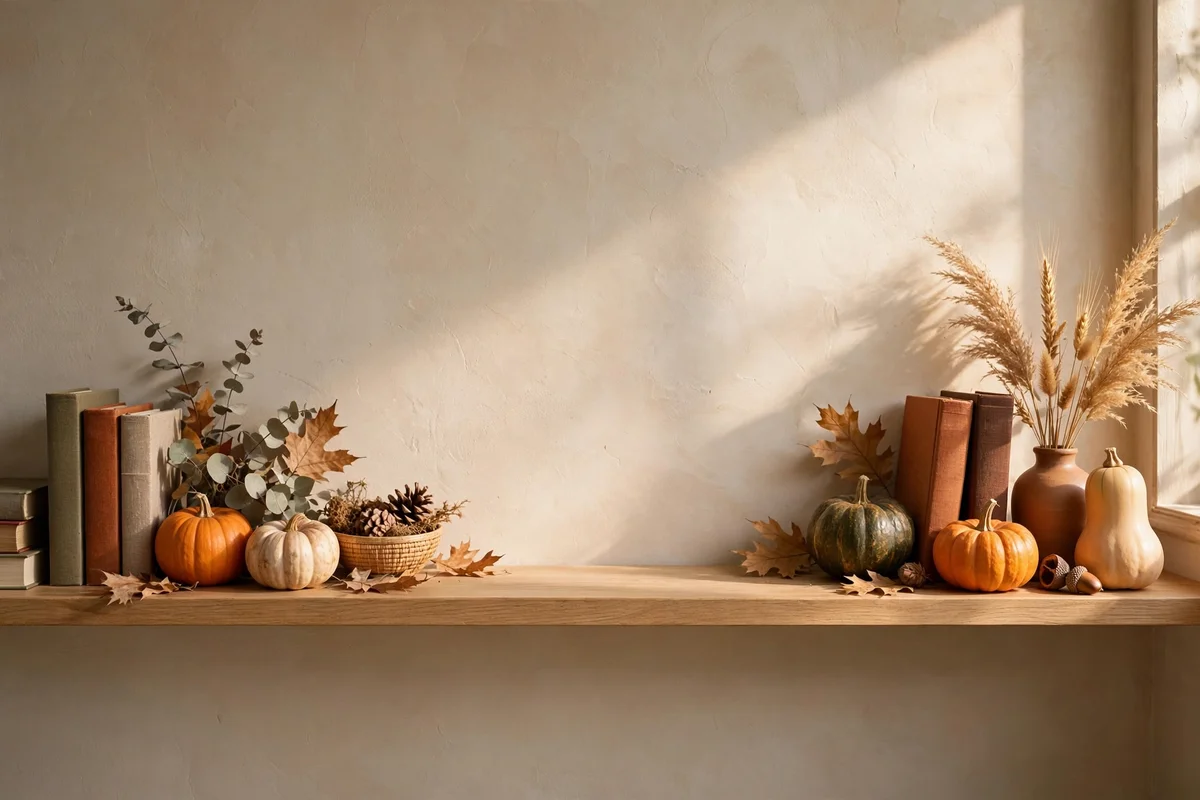
Negative space is not wasted space; it is what lets every object be seen. Aim to leave roughly a third of each shelf completely empty, usually one clear zone between two vignettes. The eye needs these pauses to register the pumpkins, the books and the frames as deliberate choices. A shelf packed edge to edge reads as storage, no matter how pretty the objects are. When in doubt, take one piece away and live with the shelf for a day.
The emptiest shelf in the room is often the most elegant one. Try leaving an entire short shelf with just a single leaned print and one small pumpkin; the restraint draws the eye more than any crowded display. On deep shelves, push vignettes toward the front third and leave the back open so the wood shows through. Avoid the urge to fill a gap the moment you notice it; seasonal styling should feel calm, and calm needs air.
7. Anchor Each Shelf With One Tall Piece at the End
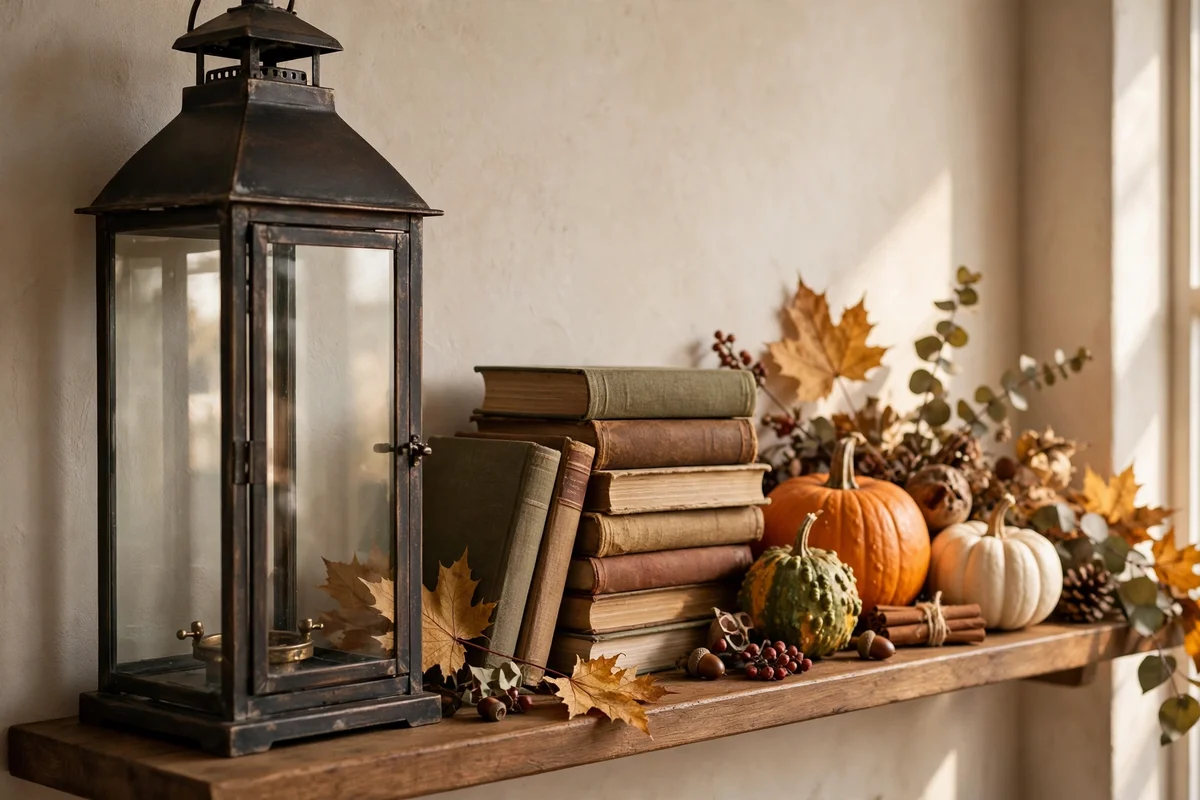
A tall anchor at one end of the shelf stops the eye from sliding off and gives the composition a full stop. A lantern, a tall bottle of stems or a stack of four books all work, provided the piece is clearly the tallest thing on the shelf by at least 10 cm. Place it at the left end of one shelf and the right end of the next to create a gentle zigzag across the whole bookcase. This simple alternation makes even a full wall of shelves feel composed.
The anchor also sets the height for everything else: no other piece should come within 5 cm of its top. Keep the middle of the shelf low and calm, around half the anchor height, so the contrast reads clearly. If your shelf has no genuinely tall object, lean a framed print high at the back and let it do the job. The mistake is placing two tall pieces at opposite ends, which traps the middle and makes the shelf feel boxed in.
8. Mix Tall and Low Objects in a Two to One Rhythm
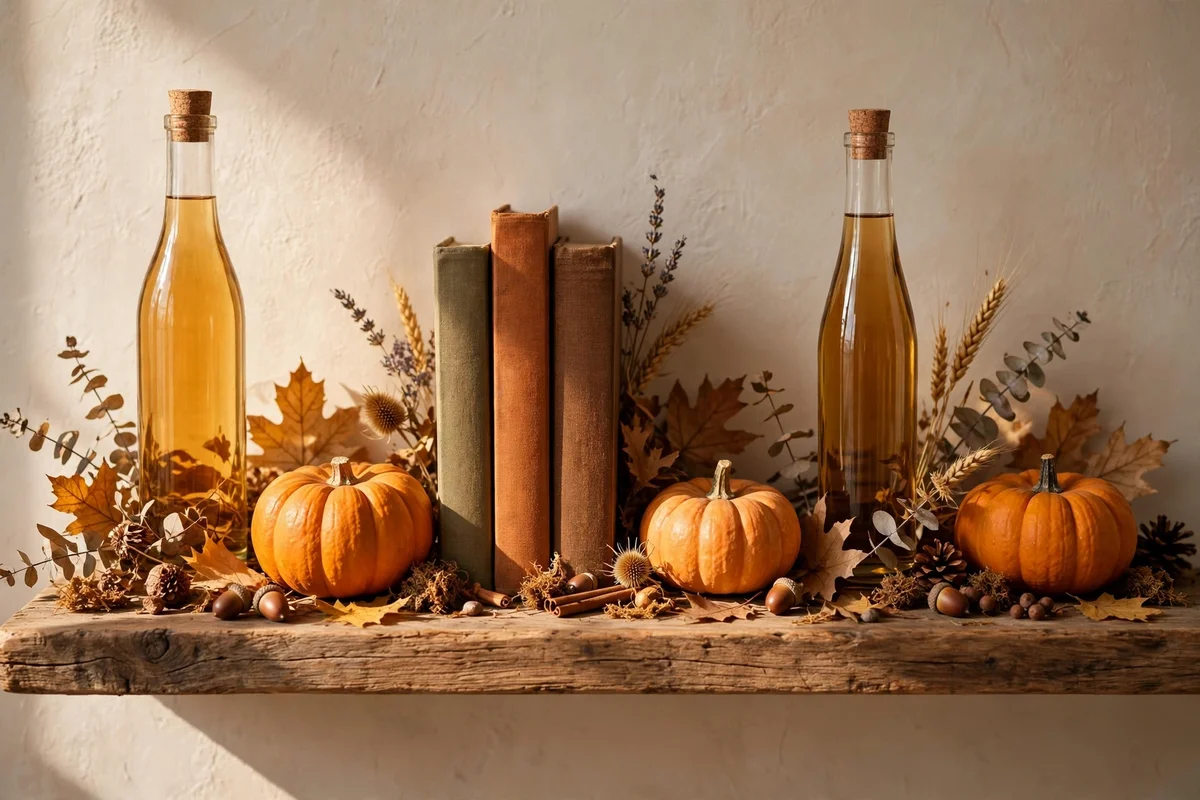
A simple rhythm keeps shelves lively without chaos: for every two tall objects, add one low one, then repeat. Tall means roughly 25 to 40 cm; low means under 12 cm, like a munchkin pumpkin or a short stack of two books. Walk this rhythm along the shelf so the eye moves up, up, down, up, up, down. The pattern feels musical rather than mechanical, especially when the low pieces sit slightly forward of the tall ones.
This rhythm is the secret behind shelves that look styled by a professional. It works because it mirrors how nature arranges things: trees of different heights with low ferns between. Try it on paper first, sketching three tall shapes and their low partners before touching the shelf. If a tall object dominates too much, swap it for one 5 cm shorter rather than removing it entirely; small adjustments beat big rearrangements every time.
9. Repeat One Shape on Every Shelf for Quiet Rhythm
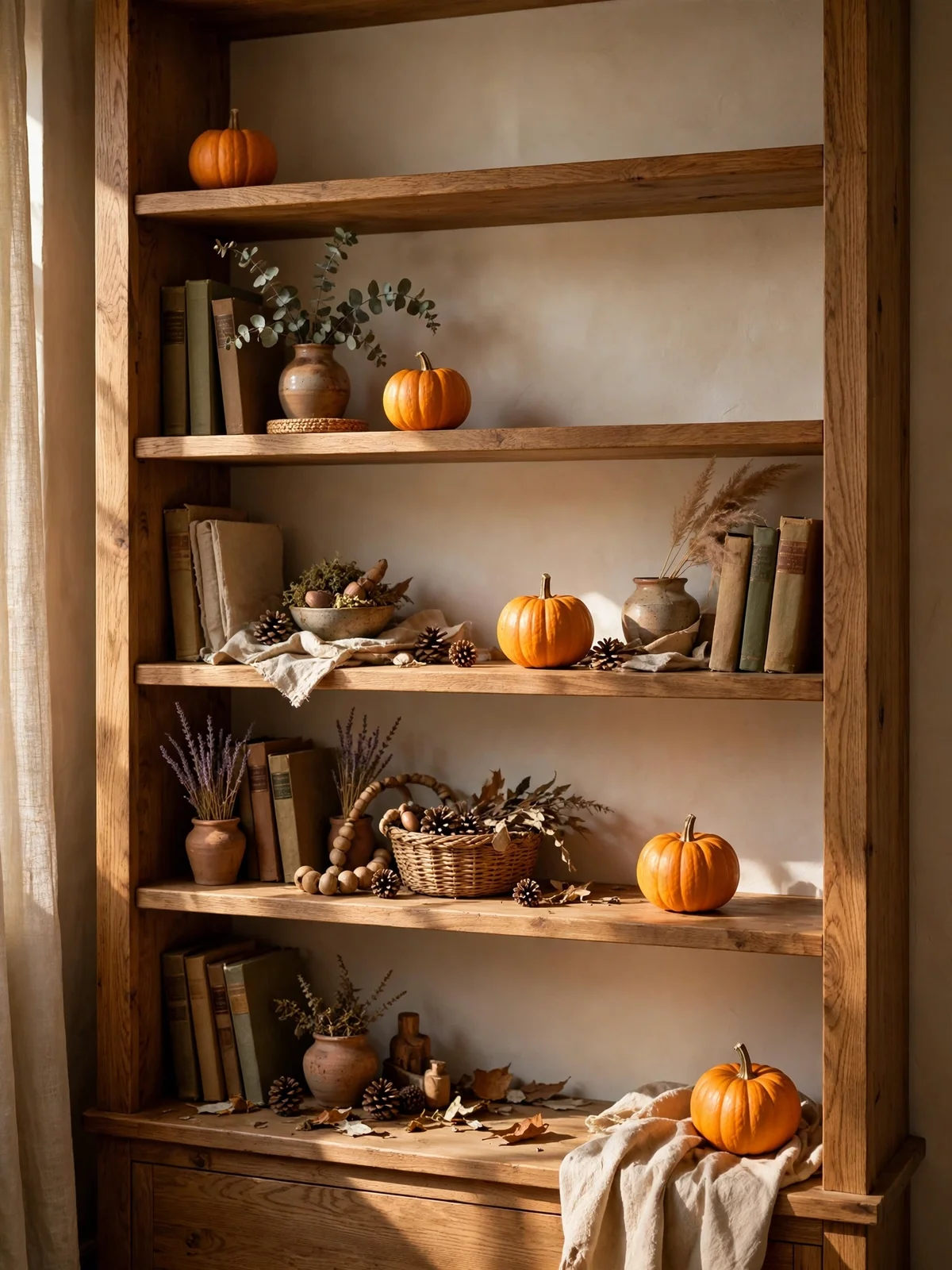
Repetition is the glue of a styled bookcase. Choose one shape and repeat it on every shelf: small round pumpkins, square book stacks, or cylindrical bottles. The repeated shape does not need to be identical, just recognisably the same family. Three pumpkins on the top shelf, two on the middle and one on the bottom still read as one continuous idea. This echo is what makes a roomful of shelves feel like a single design.
Vary the position of the repeated shape so it does not march in a straight column. A pumpkin at the left on the top shelf, in the centre of the middle shelf and at the right of the bottom shelf creates a pleasing diagonal. Keep the colour of the repeated shape constant too, since colour repetition doubles the effect. Avoid introducing a second repeated shape; two echoes compete, while one echo calms.
10. Style Kitchen Open Shelves With Warm Wood and Copper
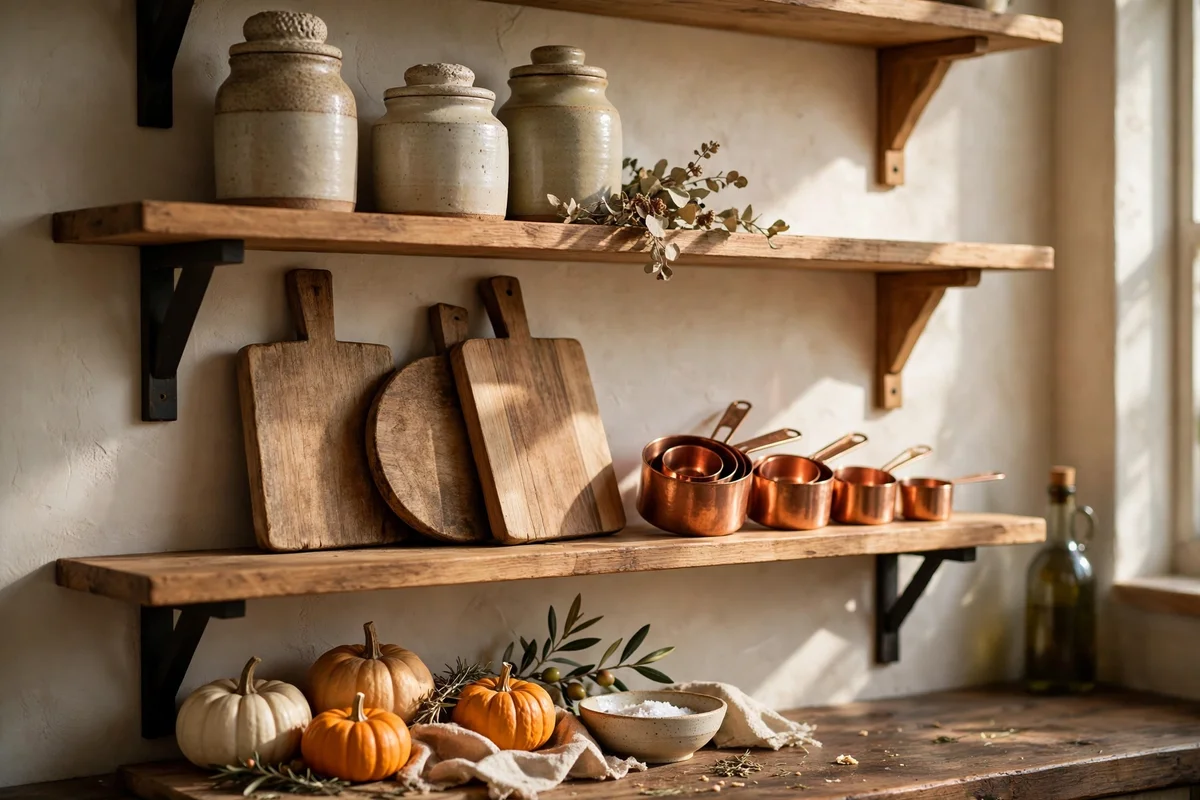
Kitchen open shelves carry the same autumn method with one change: every piece must earn its place by being useful. Style the formula around wooden boards, copper measuring cups and small ceramic jars in your three tones. Lean a small botanical print of herbs at the back of one shelf, and let a stack of two cookbooks act as the plinth for a jar of dried chillies. Keep everyday items, like olive oil and salt, in matching bottles so function becomes decor.
Three small pumpkins on a wooden board make a perfect harvest vignette between the jars. Leave space beside the hob side of the shelving for steam to rise; heat dulls dried stems and softens pumpkins quickly. A wooden bowl of walnuts adds texture and doubles as a genuine snack for the family. The mistake is styling the shelf so full that daily cooking becomes a chore; you should be able to lift any item down with one hand.
11. Dress Dining Room Shelves With Crockery and Autumn Sprigs
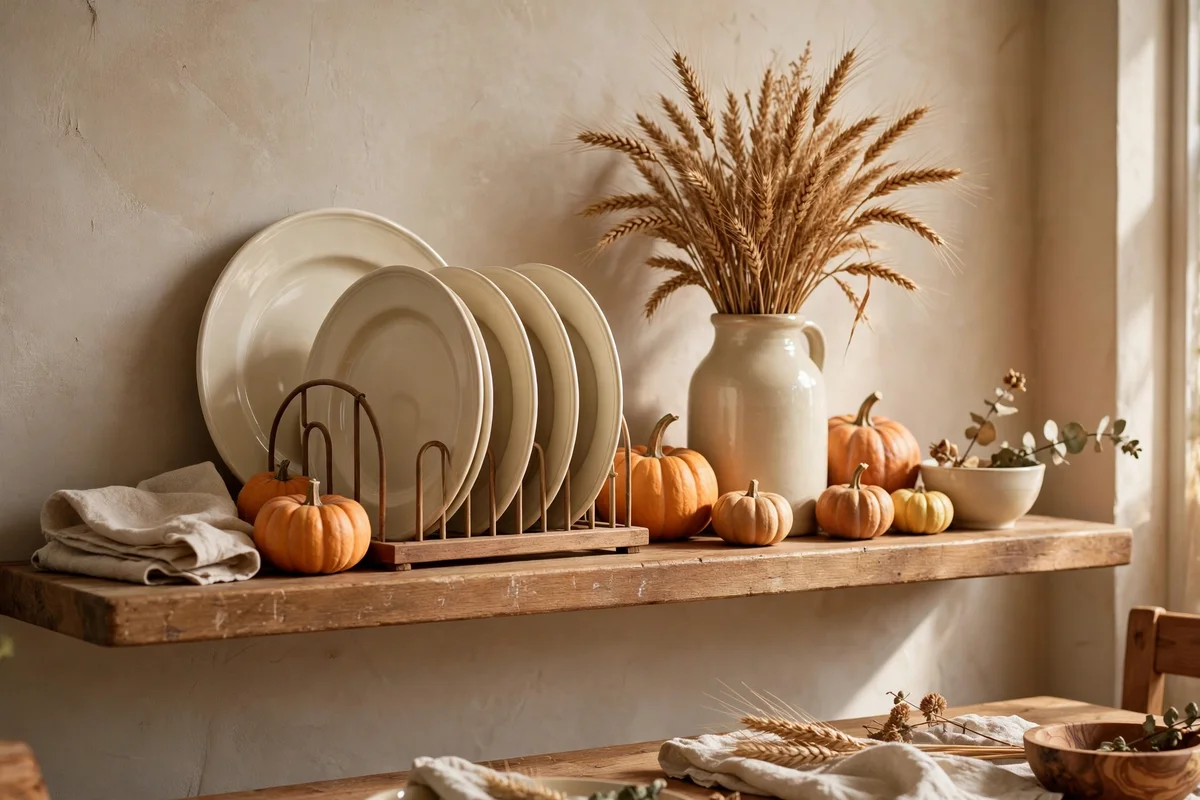
Dining room shelves sit between the kitchen and the table, so they should bridge both worlds. Stand your everyday plates upright in a rack as the tall anchor, then layer the autumn method around them: three pumpkins on stacked cookbooks, a bottle of dried wheat, one leaned print. Cream crockery against a rust and walnut palette looks warm without trying too hard. Keep the styling to the top shelves and leave the lower ones practical for serving pieces.
A low wooden tray holding five munchkin pumpkins makes a centrepiece that can move to the table when guests arrive. Dried hydrangea heads in a squat jug add softness at the end of a shelf of plates. Avoid scented candles near food storage areas; unscented beeswax pillars give the same warm light without competing with dinner. Budget tip: one tray, one jug and a bag of minis style a whole dining shelf for the cost of a takeaway.
12. Bring the Same Formula to the Living Room Bookcase
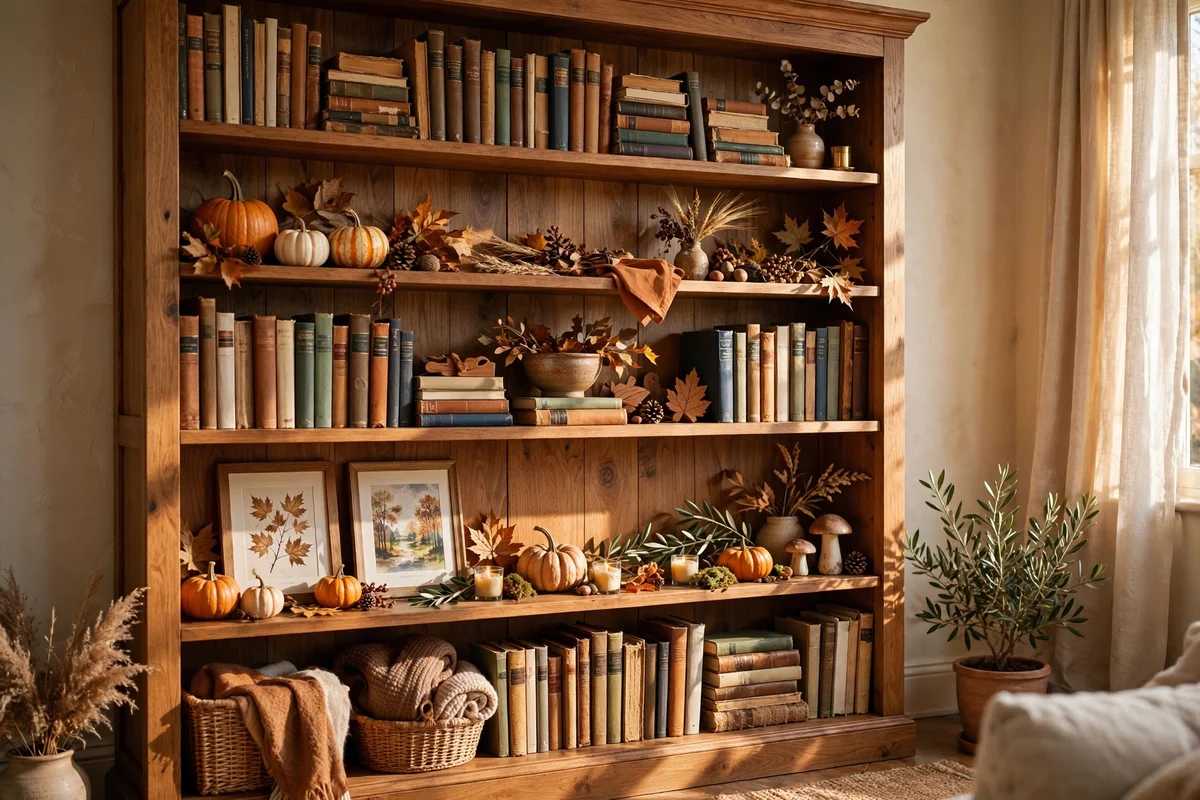
The living room bookcase is where the full formula shines, because it has the most shelves to work with. Dedicate every other shelf to books and style the alternating shelves with the autumn method: plinth, pumpkins, bottles, print, breathing space. Keep the book spines facing out in rough colour groups so they support the palette instead of fighting it. A tall stack of art books at one end of a styled shelf anchors the whole case.
Leave one shelf entirely for family photograph frames among a few pumpkins; personal pieces belong in autumn styling too. Turn some books horizontally to create plinths among the vertical rows, breaking the library look. The mistake to avoid is pushing everything to the back edge; bring vignettes forward by 5 to 8 cm so the shelf feels styled from the front, not lined up for inspection. A bookcase styled this way looks generous, not sparse.
13. Add Texture With a Woven Basket or a Wooden Bowl
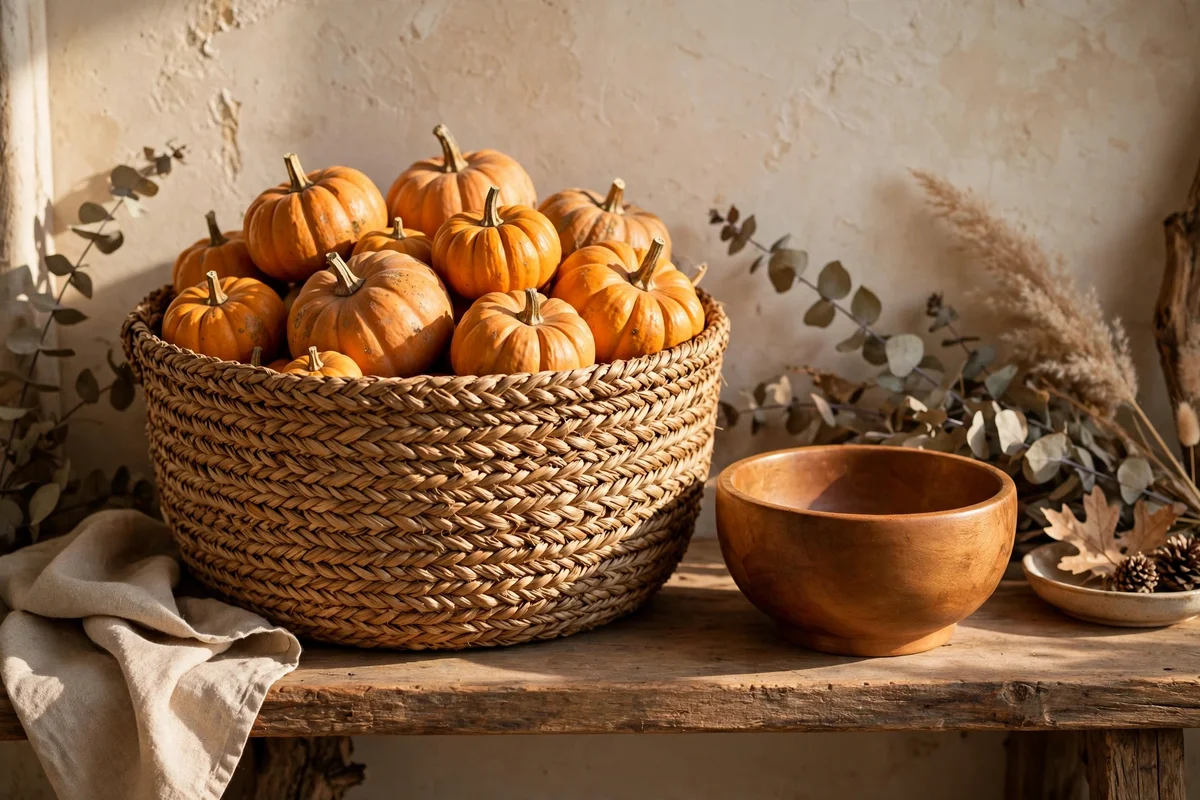
Texture is what makes a shelf feel touchable, and one woven basket or wooden bowl per shelf is enough. A shallow seagrass basket, about 25 cm wide, holds a trio of pumpkins beautifully and adds a golden weave against smooth ceramics. A turned wooden bowl with a visible grain does the same job in a smaller footprint. Place the textured piece slightly forward so its surface catches the light and invites the hand.
Natural textures fade gracefully through the season, which is part of their charm. Wipe wooden bowls with a dry cloth weekly; skip the oil, since a matte finish sits better with dried stems than a glossy one. Baskets can hide clutter too: fill one with spare napkins or seed packets and top it with two pumpkins. Avoid shiny plastic or lacquered finishes here; they reflect light harshly and break the soft autumn mood.
14. Light One Shelf With a Small Lantern or Candle Cluster
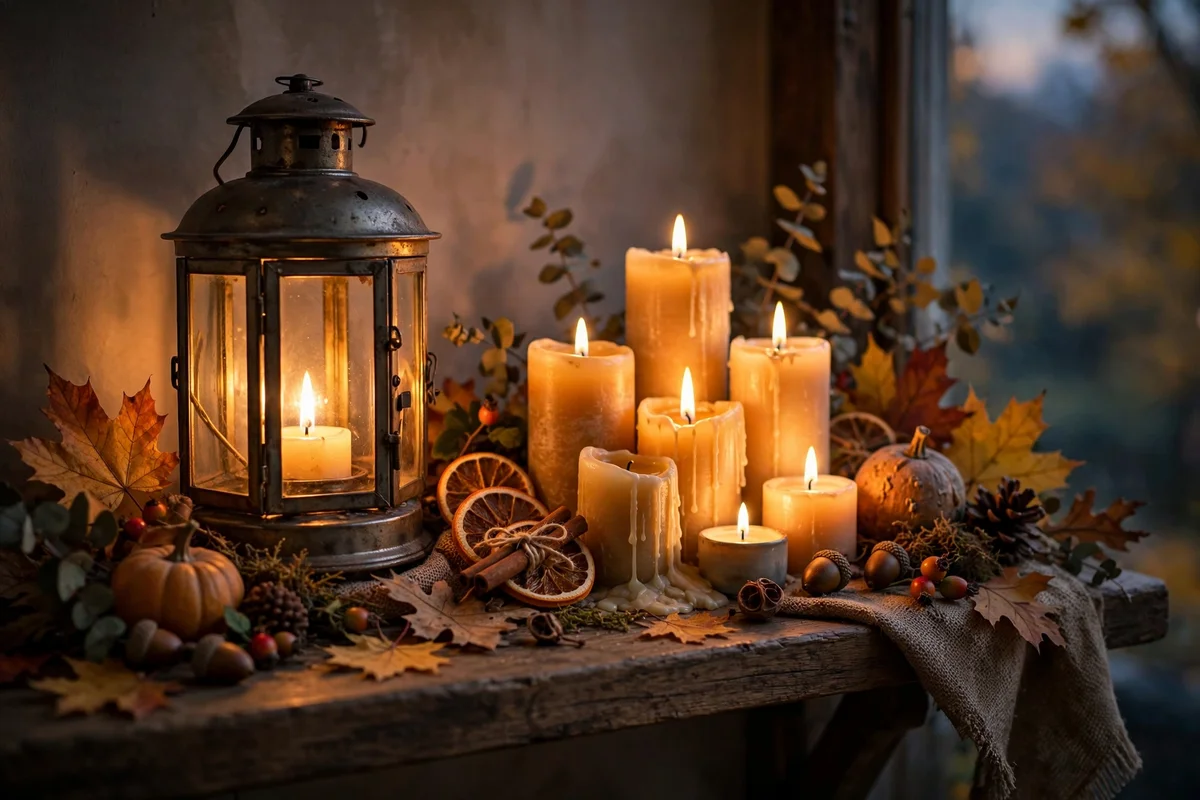
Warm light transforms a shelf after sunset, and one lantern per bookcase is the perfect amount. Choose a glass and metal lantern between 20 and 30 cm tall and place it on the middle shelf, slightly forward of the back wall. Inside, use an unscented pillar candle or a warm white LED pillar; 2700K light flatters wood, brass and pumpkin orange equally. The glow will ripple across the neighbouring shelves and make the whole corner feel gathered.
A cluster of three candles in different heights works just as well and costs less than a lantern. Group them on a small wooden tray for safety, keeping the tallest candle at the back and the wicks at least 8 cm from the shelf above. Never leave real flames unattended, and keep candles well clear of dried stems and paper prints. For homes with little ones, battery candles with a flicker setting give the same evening warmth with zero worry.
15. Use Pinecones and Acorns as Free Autumn Fillers
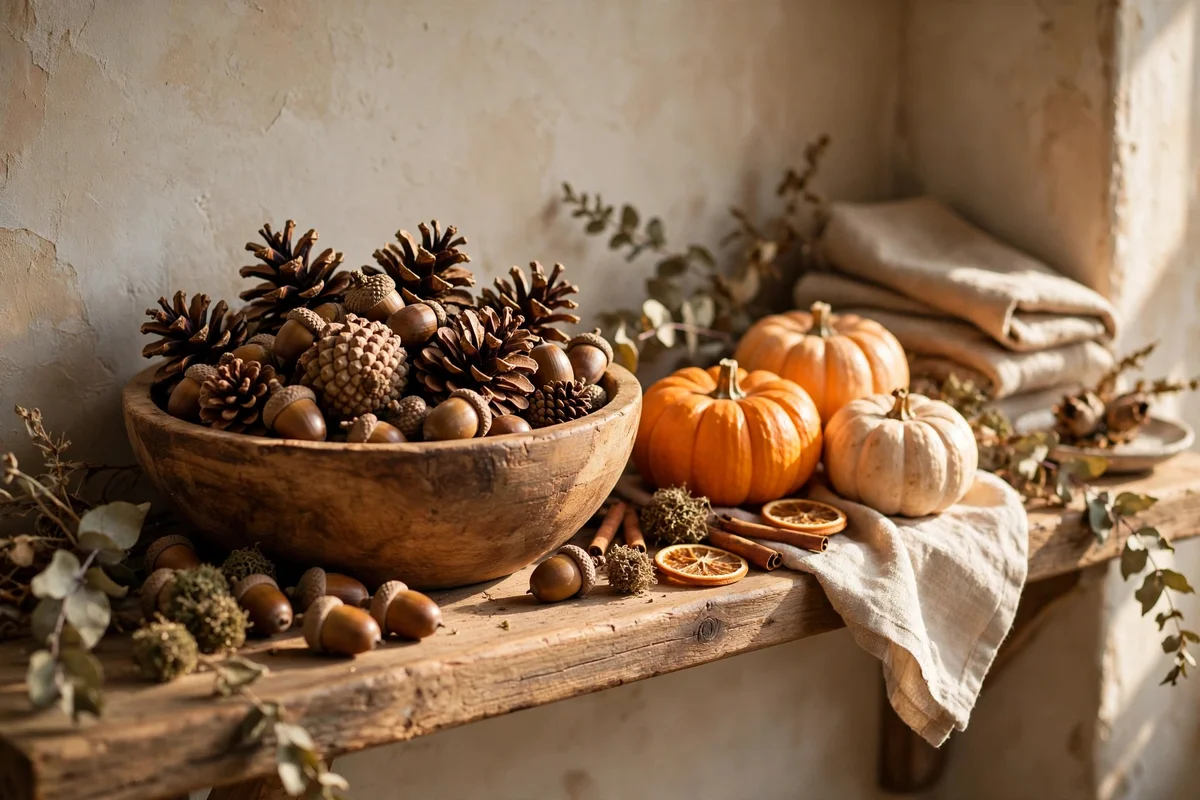
Pinecones and acorns are the budget stylist’s best friends, and a single autumn walk can fill every shelf. Gather cones between 8 and 15 cm long and let them dry on a tray for a week before styling, so they open fully and drop no sap. Place three pinecones in a wooden bowl, or scatter five acorns around the base of a pumpkin stack. Their rough brown texture sits perfectly against smooth pumpkins and glossy glass.
Small children love collecting cones, which makes this a lovely family outing that ends in free decor. Keep the fillers in odd numbers and in one place per shelf; cones scattered everywhere look like clutter, not styling. If a cone crumbles, replace it rather than leaving fragments behind. One basket of gathered cones, topped with two small pumpkins, makes a complete shelf vignette that cost nothing at all.
16. Overlap a Small Frame in Front of a Larger One
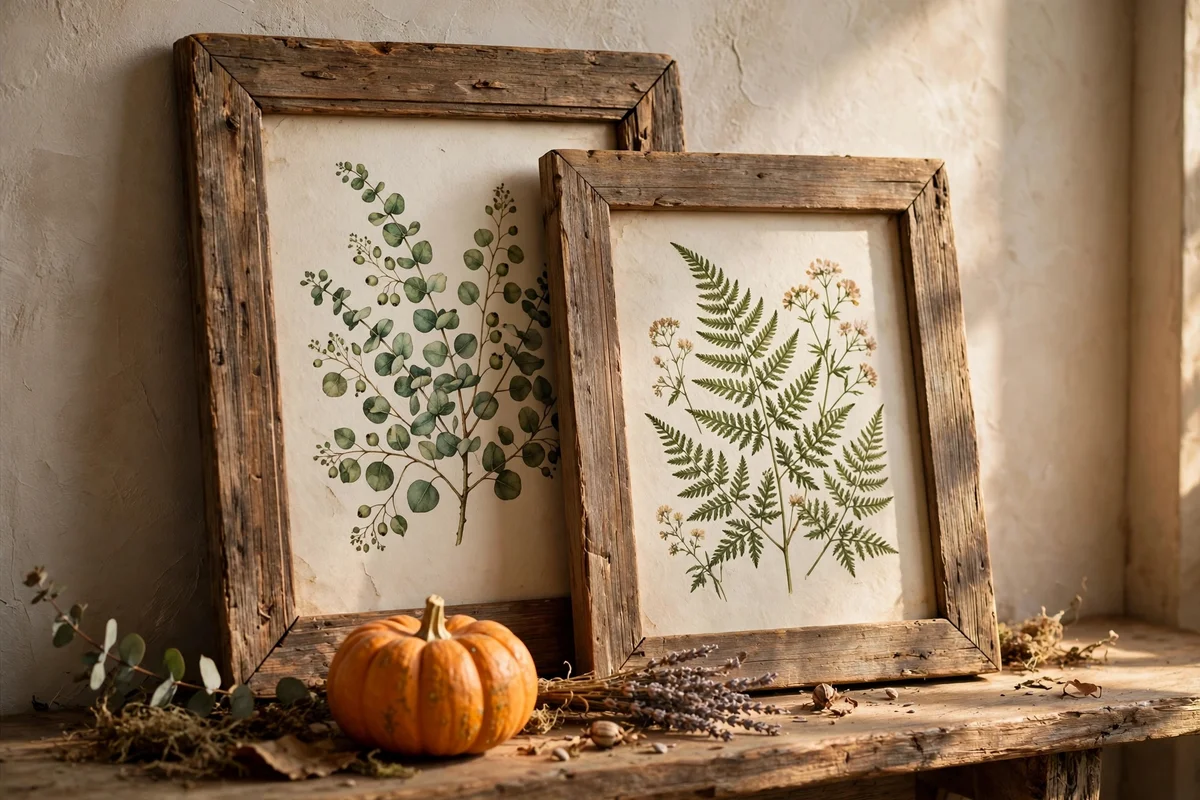
Layering two frames, one in front of the other, creates the depth that single rows of objects never achieve. Lean a 25 to 30 cm botanical print at the back, then overlap a smaller 12 to 15 cm frame in front and slightly to one side. The smaller frame can hold a seed packet illustration, a pressed leaf or a family recipe card. Keep both frames in the same wood tone so the layering reads as intentional rather than accidental.
The front frame should overlap the back one by no more than a third, so both images stay readable. Angle them very slightly toward each other, like two people in quiet conversation. Place a small pumpkin at the base of the front frame to anchor the grouping. Avoid layering three frames deep; two is elegant, three starts to look like a shop display and steals space from the rest of the shelf.
17. Run a Garland of Dried Leaves Along the Top Shelf
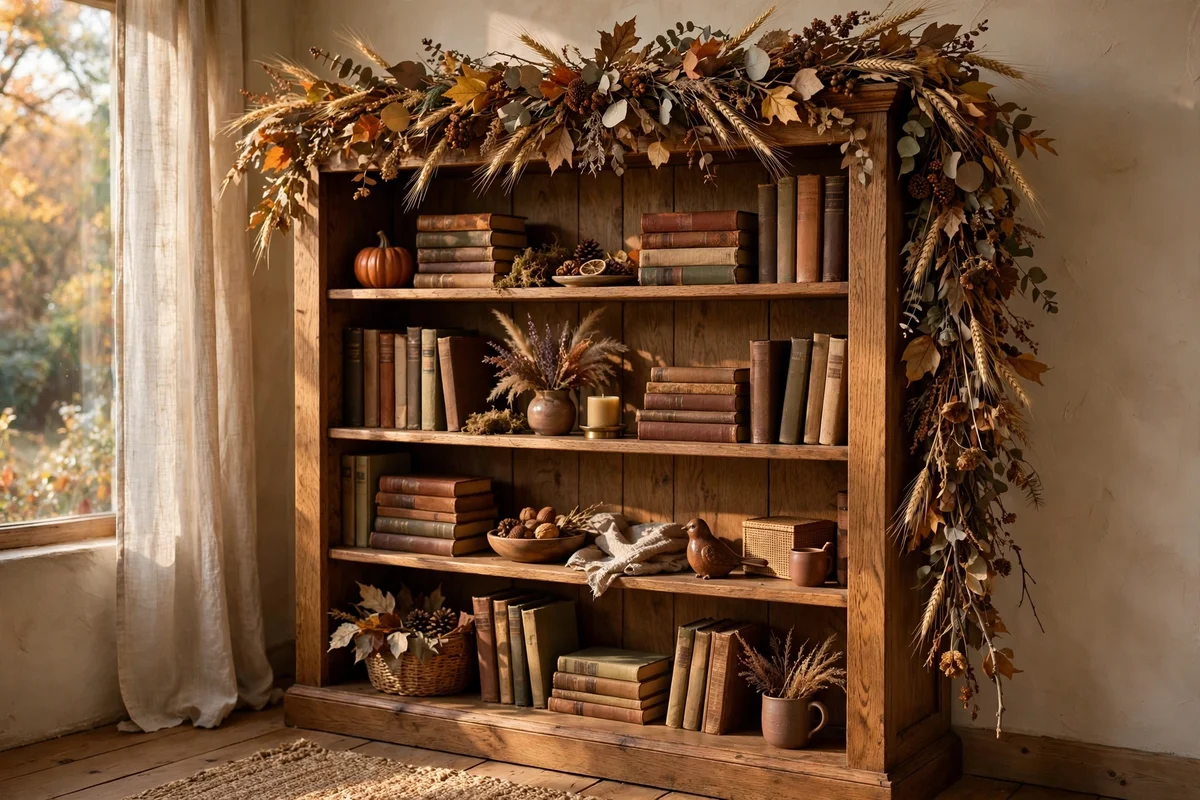
A garland of dried leaves draped along the top shelf ties the whole bookcase together in one gesture. Use a string of dried oak leaves, wheat or eucalyptus about 150 to 180 cm long, and let it dip gently between two fixed points rather than hanging straight. Fix it with small removable hooks behind the shelf edge so no damage shows. The garland should sit above the styled shelves like a quiet crown, never competing with the vignettes below.
Let one end of the garland trail down the side of the bookcase for a relaxed, gathered feel. If leaves look dusty after a few weeks, shake the garland gently outdoors and let it air. Avoid real vines that shed constantly; dried oak leaves and wheat hold their shape for months. A garland like this costs little from a craft market and transforms a plain bookcase into the autumn heart of the room.
18. Copy the Repeat Formula Shelf by Shelf Without Overthinking
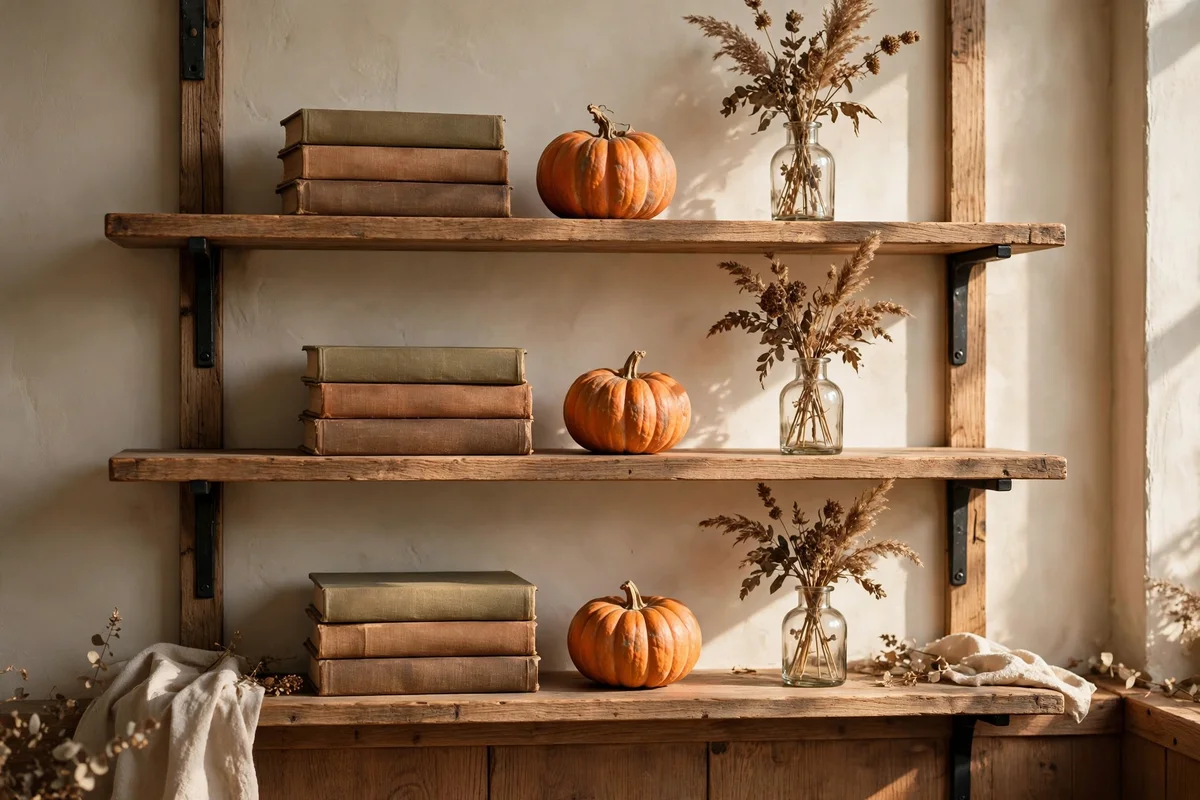
Here is the repeat formula in full: a tall anchor at one end, a book stack plinth, three or five pumpkins, one bottle of dried stems, a leaned botanical print, and a third of the shelf left empty. Work through it shelf by shelf like a recipe, starting with the most visible shelf. Do not rearrange endlessly; place the pieces, step back two metres, and only adjust what genuinely bothers you. Speed keeps the styling fresh and instinctive.
The formula works in the kitchen, the dining room and the living room because it is about rhythm, not matching sets. Swap the print subject or the bottle colour between rooms, but keep the structure identical so the whole home feels connected. If a shelf feels wrong, the cause is almost always a missing anchor or too little empty space. Fix one of those first before moving anything else, and the shelf usually falls into place.
19. Swap Two Pieces Between Shelves Until the Balance Feels Right
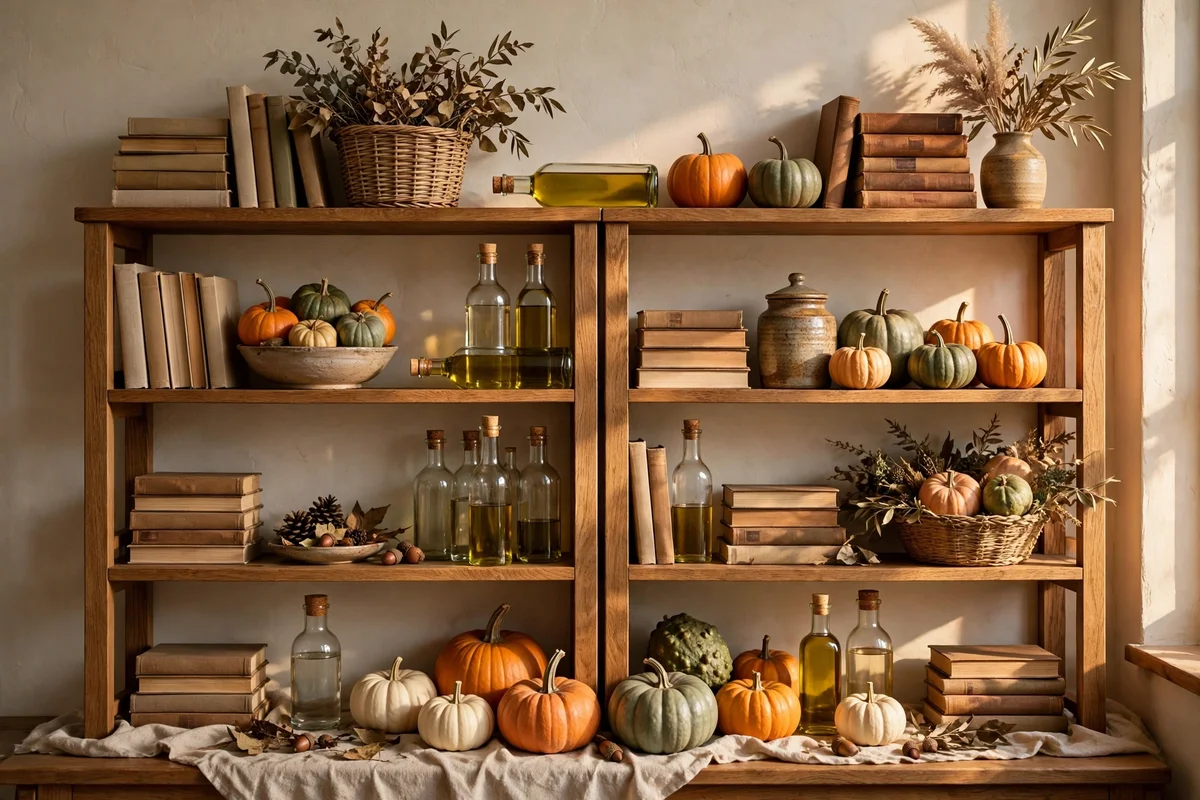
Sometimes one shelf hoards all the warmth while its neighbour looks bare, and the fix is a simple swap. Move two pieces between the shelves: a pumpkin from the full shelf to the bare one, and a book from the bare shelf to the full one. This small exchange redistributes colour and height without starting over. Stand back after each swap and ask which shelf draws your eye; the answer should be neither.
Swapping works best when you trade like for like in size but not in colour. Exchange a rust pumpkin for a cream one, or a tall bottle for a shorter one, so each shelf gains something new. Limit yourself to three swaps per shelf pair; beyond that you are just shuffling. The goal is balance across the whole bookcase, not perfection on a single shelf, and the room will feel calmer for it.
20. Photograph the Shelf and Adjust From What You See
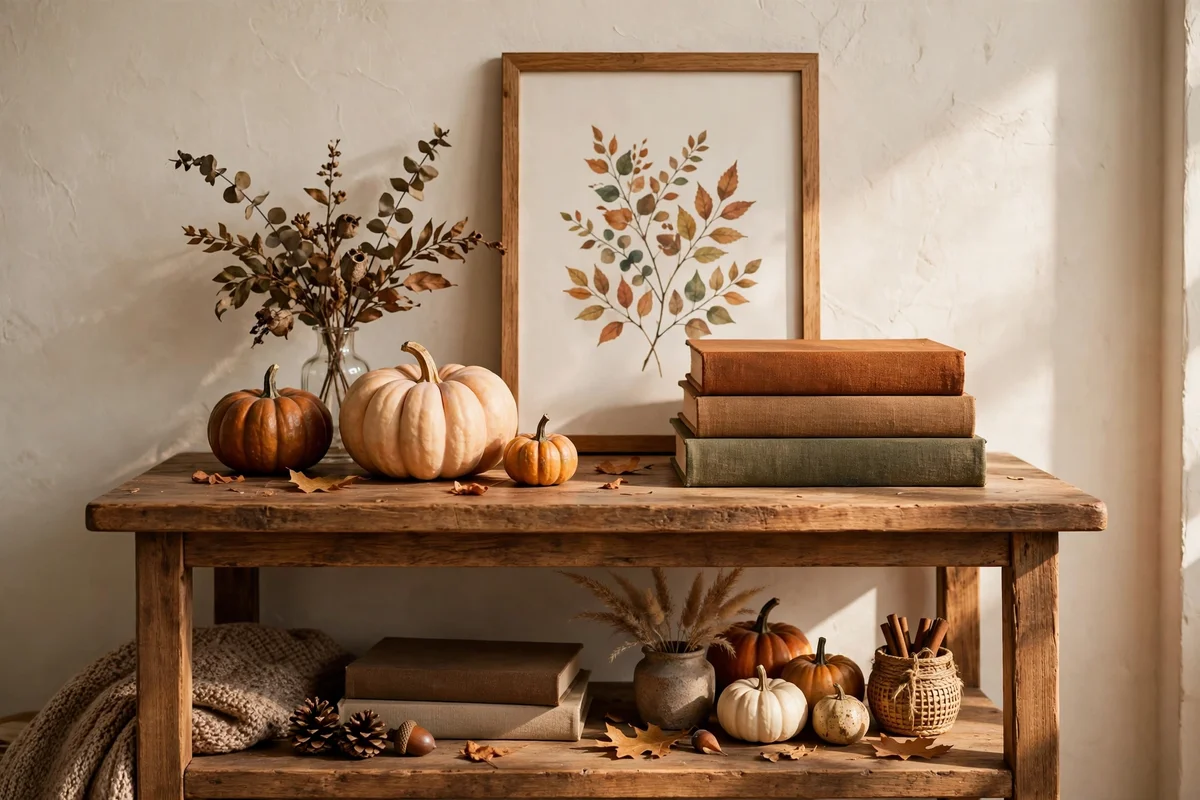
A phone photograph shows your shelf the way a guest sees it, which is almost never how it looks to you. Stand three metres back, take one straight photo, and study it before touching anything. The camera flattens the scene and reveals gaps, clashing colours and leaning stacks that your eyes skip over. Note the two biggest issues, fix those, and photograph again. Two rounds of this usually completes a shelf.
Compare the photo with your tight colour story; anything that pops out of the palette should be the first thing you move. Check that the tall anchors zigzag rather than lining up in a column. Save the before and after photos in one album, because next autumn you will have a personal reference for what worked. The mistake is photographing at an angle; shoot straight on, at shelf height, for an honest view.
Twenty ideas, one method. The beauty of this autumn shelf formula is that it asks very little of you: a few books you already own, a bag of small pumpkins, a bundle of dried stems, and the discipline to leave a third of each shelf empty. Once the rhythm is in your hands, every shelf in the house, from the kitchen boards to the living room bookcase, becomes a small canvas waiting for the same calm treatment.
Start this week with the easiest win: a stack of three books, three small pumpkins, and one bottle of dried stems on the shelf you see first each morning. Photograph it, adjust once, and let it settle for a day. You will find that the calm spreads, and by the weekend you will be reaching for the next shelf without even thinking about it.
Frequently Asked Questions
How many pumpkins should I put on one shelf?
Three to five small pumpkins per shelf is the sweet spot, always in odd numbers. Use larger pumpkins, 12 to 15 cm wide, as the main group and tuck munchkins into gaps. One shelf in five can skip pumpkins entirely and rely on books and stems instead; the variety keeps the room interesting. Count them before you buy so you do not overfill the trolley.
What colours work best for fall shelf styling?
Keep to three tones: a warm dominant like rust or terracotta, a soft supporting tone like cream or wheat, and a deep accent like walnut brown or forest green. Wood and glass count as free neutrals. If your room already has strong colours, match the dominant tone to the sofa or rug so the shelves feel connected to the space.
How do I style shelves in a small living room without clutter?
Use the same formula but shrink it: one book stack, two pumpkins and one bottle per shelf, with half the shelf left empty. Choose lighter tones like cream and wheat so the shelves recede. Style only the top two shelves and leave lower ones for books, so the room breathes at eye level where it matters most.
How much does it cost to style a bookcase for autumn?
Between 15 and 60 pounds or dollars for a full bookcase, depending on what you own already. A bag of small pumpkins and a bundle of dried stems usually cost under 15 together. Charity shop books, second-hand frames and gathered pinecones cover the rest for very little. Spend any remaining budget on one good lantern, which you will reuse every year.
How do I keep dried stems looking good all season?
Keep stems out of direct sun, which bleaches their colour, and away from radiators, which makes them brittle. Dust them with a cool hairdryer once a month. If a stem sheds badly, replace just that stem rather than the whole bunch. Stored dry in a paper bag, most dried stems survive two or three autumns, so this year’s bottles are next year’s head start.