Living Room
20 Japandi Dining Room Ideas Where Simplicity Feels Beautiful
By Anna Wells · · 19 min read
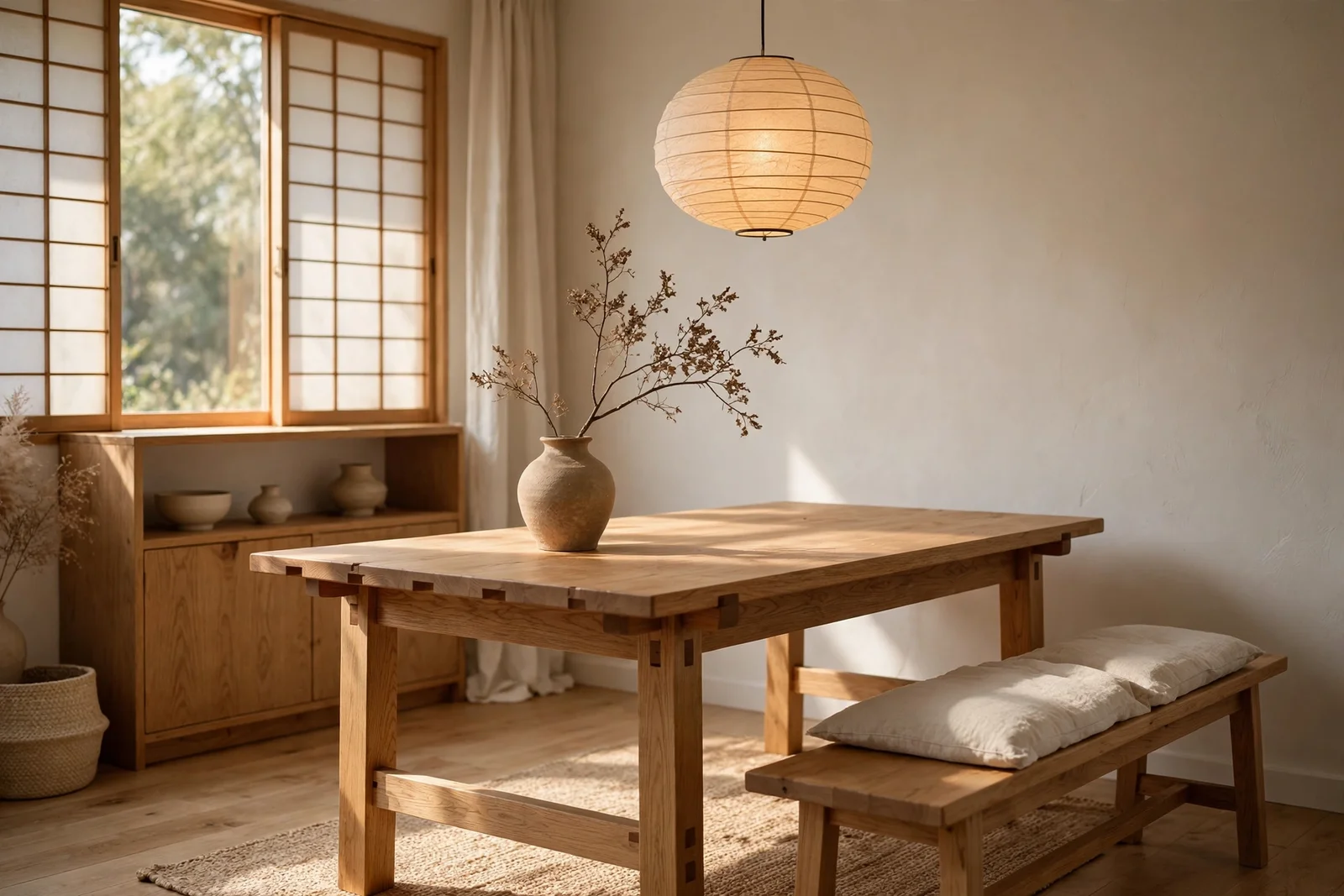
Twenty practical Japandi dining room ideas, from solid oak tables and low hung paper pendants to single branch centrepieces, that bring quiet beauty to everyday meals.
There is a particular hush that falls over a dining room where nothing shouts for attention. Sunlight moves across pale oak, a paper lantern glows softly above the table, and a single branch leans in a clay vase. Nobody designed this room to impress, yet it holds everyone a little longer. That is the quiet power of Japandi, the meeting of Japanese restraint and Scandinavian warmth.
A Japandi dining room asks for less and gives more in return. Fewer objects mean each one matters: the grain of a solid table, the weave of a linen runner, the curve of a handmade bowl. Meals slow down here. Conversation stretches. The room never competes with the people gathered in it.
Below you will find 20 practical ideas for building this calm from scratch, or for softening a room you already own. Each idea names real materials, real measurements and real costs, from hanging a pendant at the right height to oiling a table twice a year. Take what suits your home and leave the rest, because simplicity should never feel like a rulebook.
Start with the table, add light and air, then stop before you want to. Your dining room is closer to calm than you think.
1. Start With a Low Solid Oak Table Showing Honest Joinery
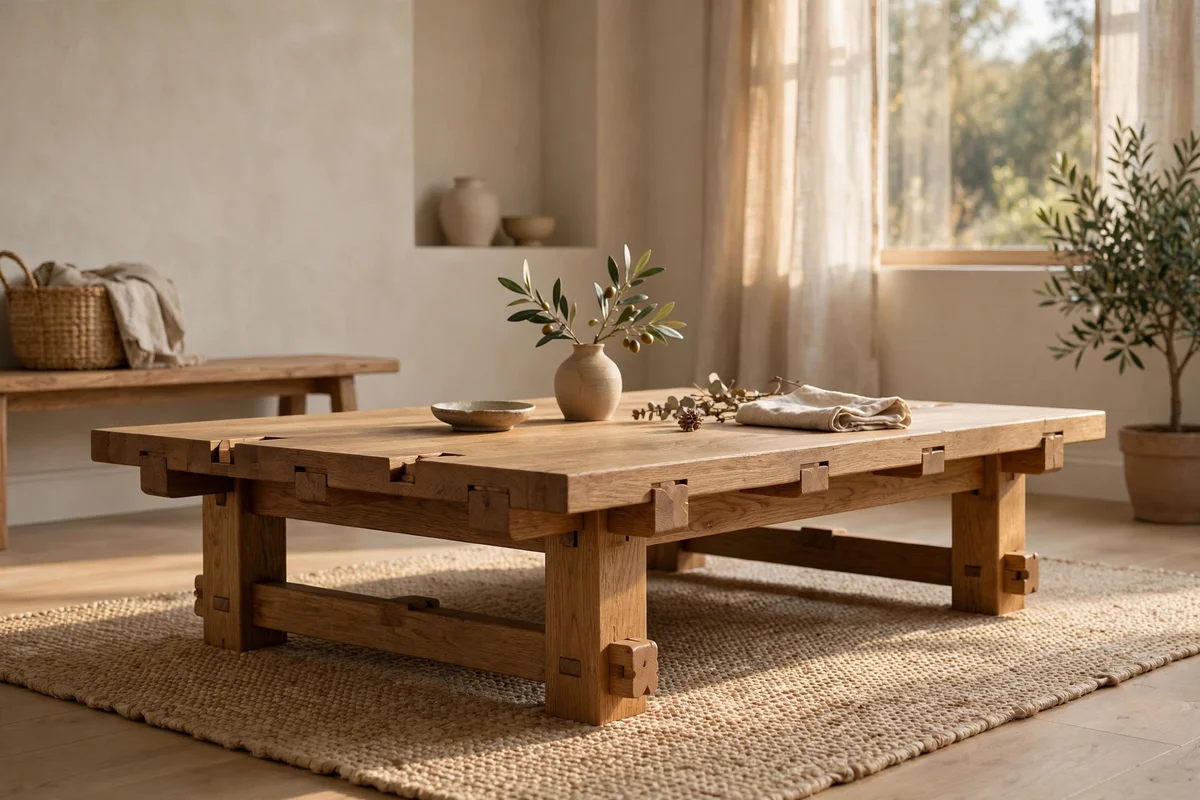
A table with a top between 3 and 4 cm thick in solid oak or ash gives Japandi rooms their grounding weight. Look for visible mortise and tenon joints at the corners rather than metal brackets, since honest joinery is the whole point of the look. A height of 72 to 75 cm keeps dining chairs comfortable, while a slightly lower 70 cm table pairs beautifully with a bench. Length of 160 to 180 cm seats six without crowding, and four legs placed near the corners leave legroom open.
Choose a matte oil or hardwax finish instead of glossy varnish so the grain stays soft under warm light. The common mistake is buying a veneer table with printed grain, which chips at the edges within a year and cannot be repaired. A solid top can be sanded and re-oiled many times, so it lasts decades. Budget tip: solid oak seconds or ex display tables often sell for half price at timber yards, and a fresh coat of oil makes them look new.
2. Size the Table to the Room With Generous Walkway Space
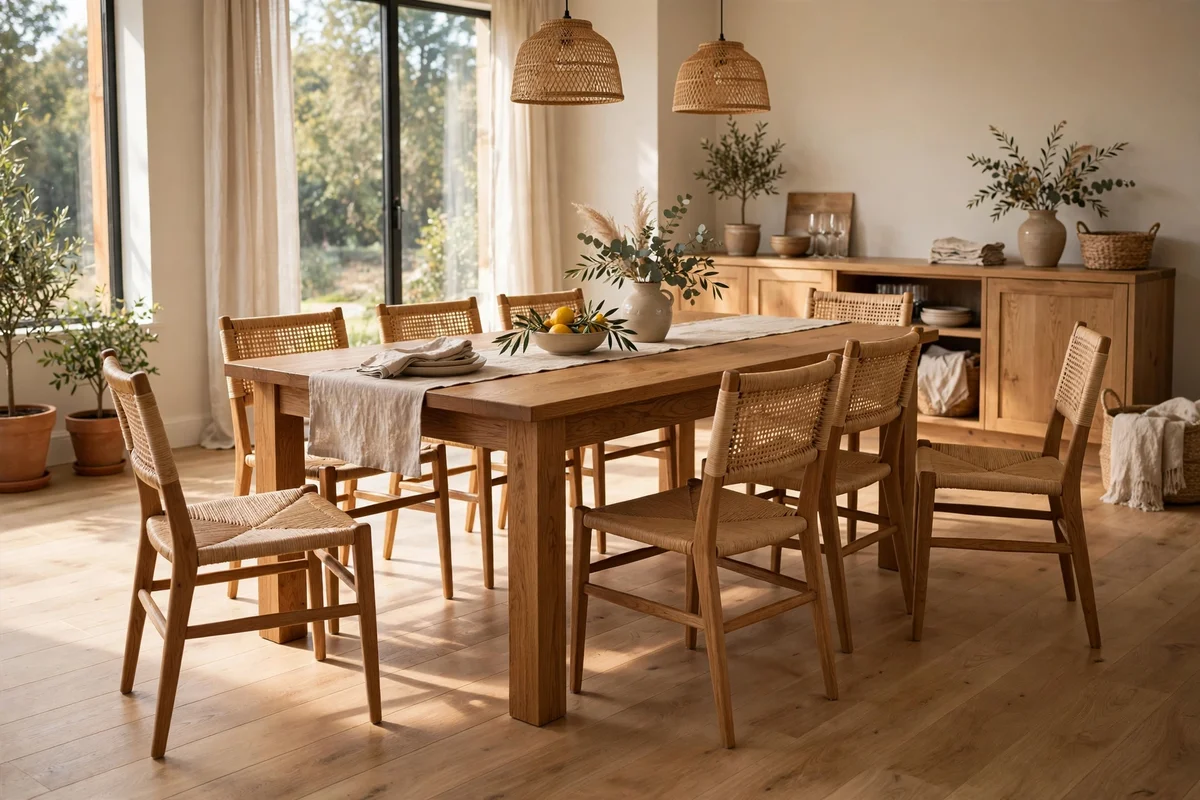
Measure the room before shopping and subtract at least 90 cm of walkway on every side of the table you plan to use. In a 3 by 4 metre room a 160 cm table leaves comfortable pull out space, while a 200 cm table turns corners into bottlenecks. Allow 60 cm of table length per diner and 75 cm of table depth when people sit opposite each other. The mistake to avoid is choosing the biggest table that physically fits, because chairs need room to slide back.
In small dining areas keep the table close to a wall and use the bench on the open side so the room breathes. A drop leaf or extension table at 120 cm closed and 180 cm open handles daily meals and family gatherings alike. Place painter’s tape on the floor in the table’s exact footprint and live with it for three days before ordering. Budget tip: buying the right size once always costs less than replacing a table that never fit.
3. Hang a Woven Pendant About 75 cm Above the Tabletop
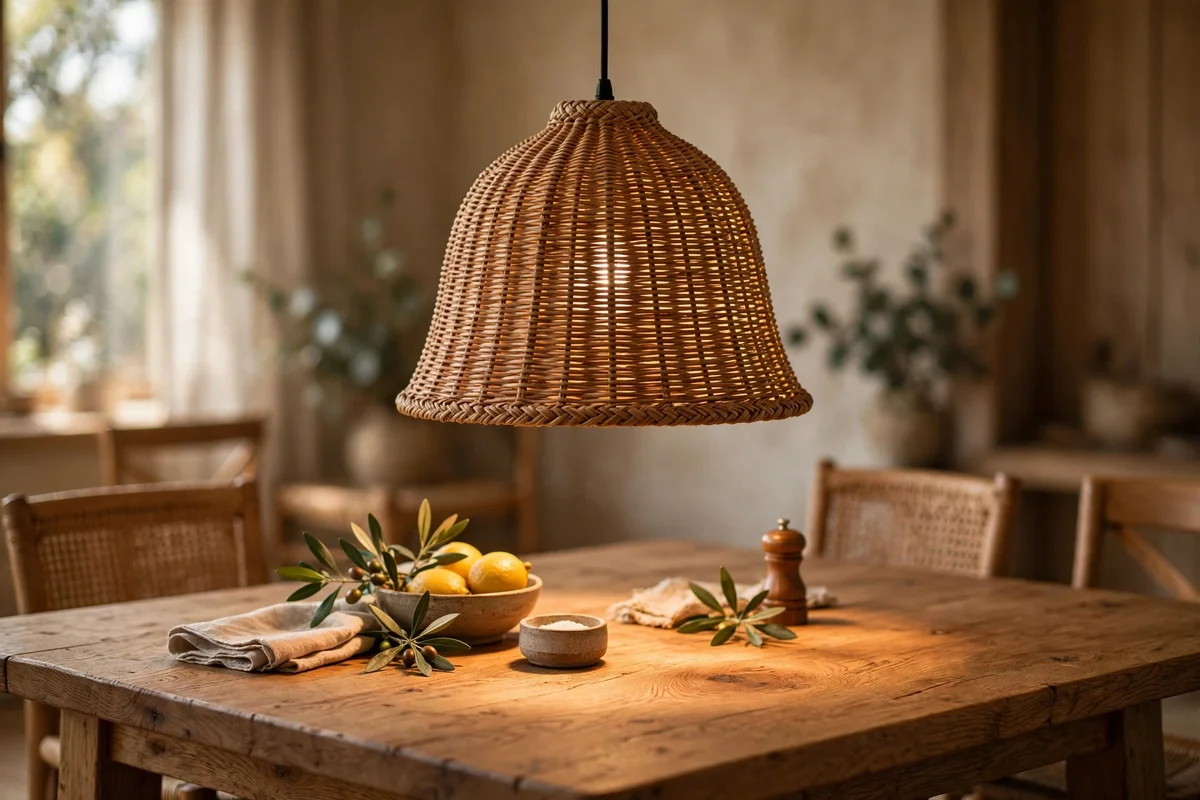
A woven rattan or bamboo shade softens electric light into the warm glow Japandi rooms need. Hang it so the bottom of the shade sits 70 to 80 cm above the tabletop, low enough to pool light on food and faces, high enough that seated diners see under it. For tables longer than 180 cm use two matching pendants spaced evenly along the centre line. Measure from the table surface, not the floor, since table heights vary.
Keep real bulbs at least 15 cm from any woven or natural shade surface, and choose LED bulbs that stay cool to the touch. The mistake to avoid is using a high wattage halogen inside a tight rattan shade, which dries the fibres and creates a fire risk. A 6 to 9 watt warm LED in 2700K gives the glow of a 60 watt bulb without the heat. Budget tip: one well placed pendant beats three cheap ones, so spend on a single good shade.
4. Choose a Paper Shade Hung Low Over the Table Centre
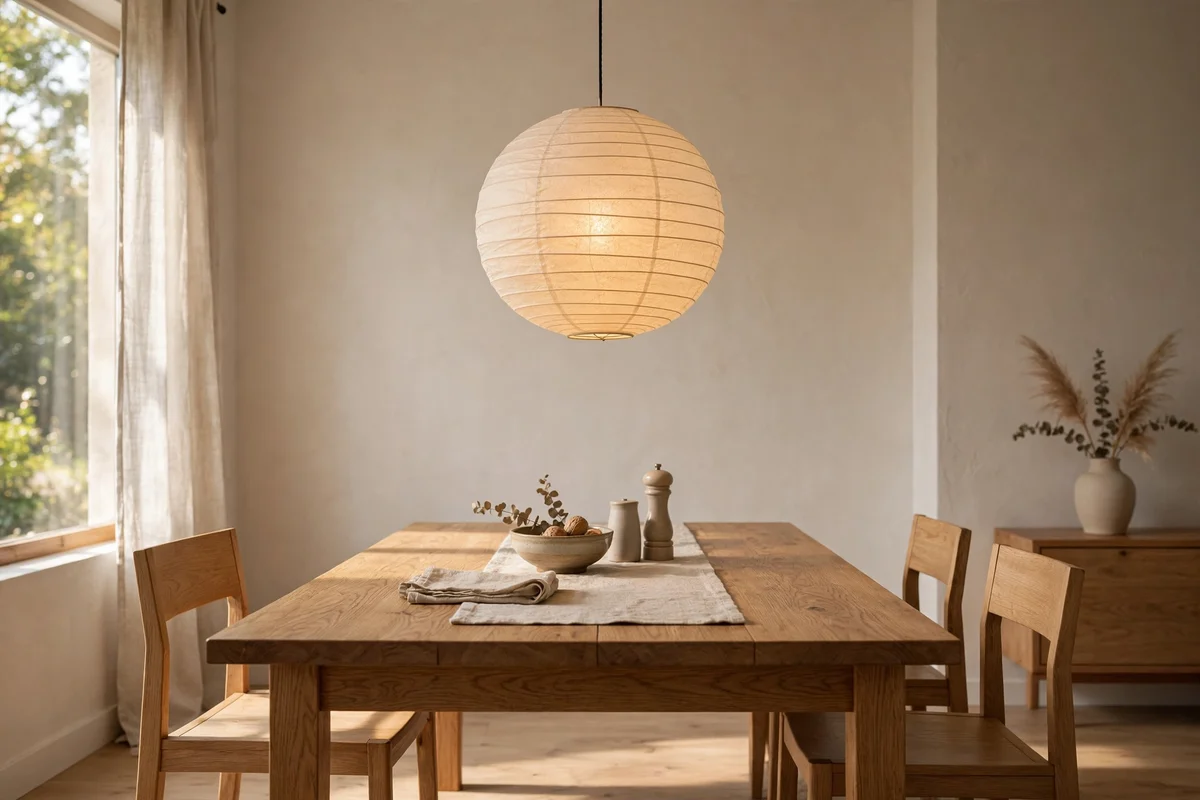
A washi paper lantern shade brings the Japanese half of Japandi to the ceiling in one move. Choose a shade 40 to 55 cm in diameter so it reads as one calm moon over the table, and hang it at the same 70 to 80 cm clearance as woven shades. Paper diffuses light evenly, erasing harsh shadows from faces and plates. Pick off white or natural paper rather than printed patterns, since pattern competes with the room’s quiet mood.
Use only LED bulbs inside paper shades, keeping at least 20 cm between the bulb and the paper, because paper and heat are a poor pair. The mistake to avoid is hanging the shade so low that taller family members brush it when standing, which tears the paper. Dust the shade monthly with a soft dry cloth or a cool hairdryer, never a damp wipe. Budget tip: handmade-look paper lanterns cost very little, so this is the cheapest way to change the room’s whole feeling.
5. Keep a Single Dried Branch as the Only Table Centrepiece
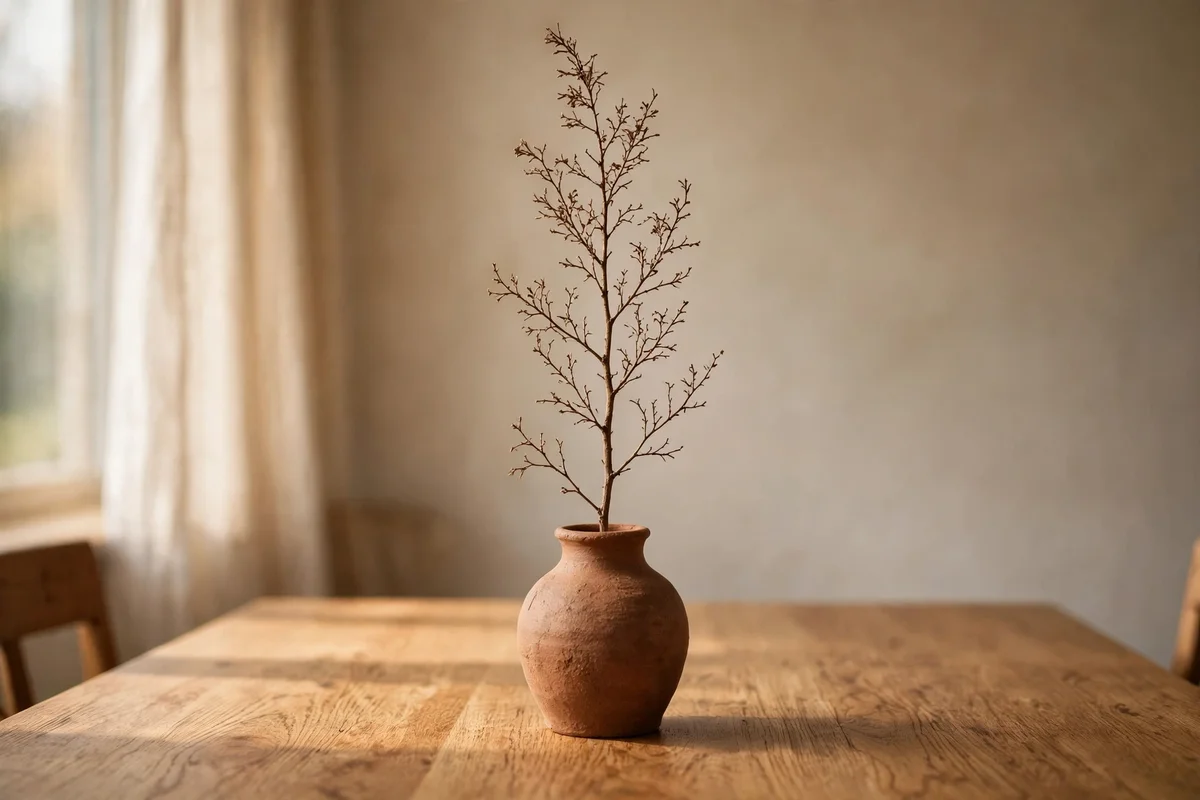
One tall branch in a simple clay or stoneware vase is the only centrepiece a Japandi table needs. Choose a branch 60 to 90 cm tall so it rises above seated eye level without blocking conversation across the table. Dried options like pussy willow, birch twigs or pampas grass last for years and never need water. Place the vase dead centre on tables under 180 cm, or slightly off centre on longer tables to leave room for serving dishes.
The mistake to avoid is adding a second arrangement, candles and a runner all at once, which turns calm into clutter in one move. One object earns its place; three objects start competing. If the table is used for homework or work during the day, keep the vase light enough to lift with one hand. Budget tip: foraged branches cost nothing and look better than shop bought stems, so prune a tree with care and let branches dry indoors for two weeks.
6. Style the Sideboard in Three Quiet Zones Only
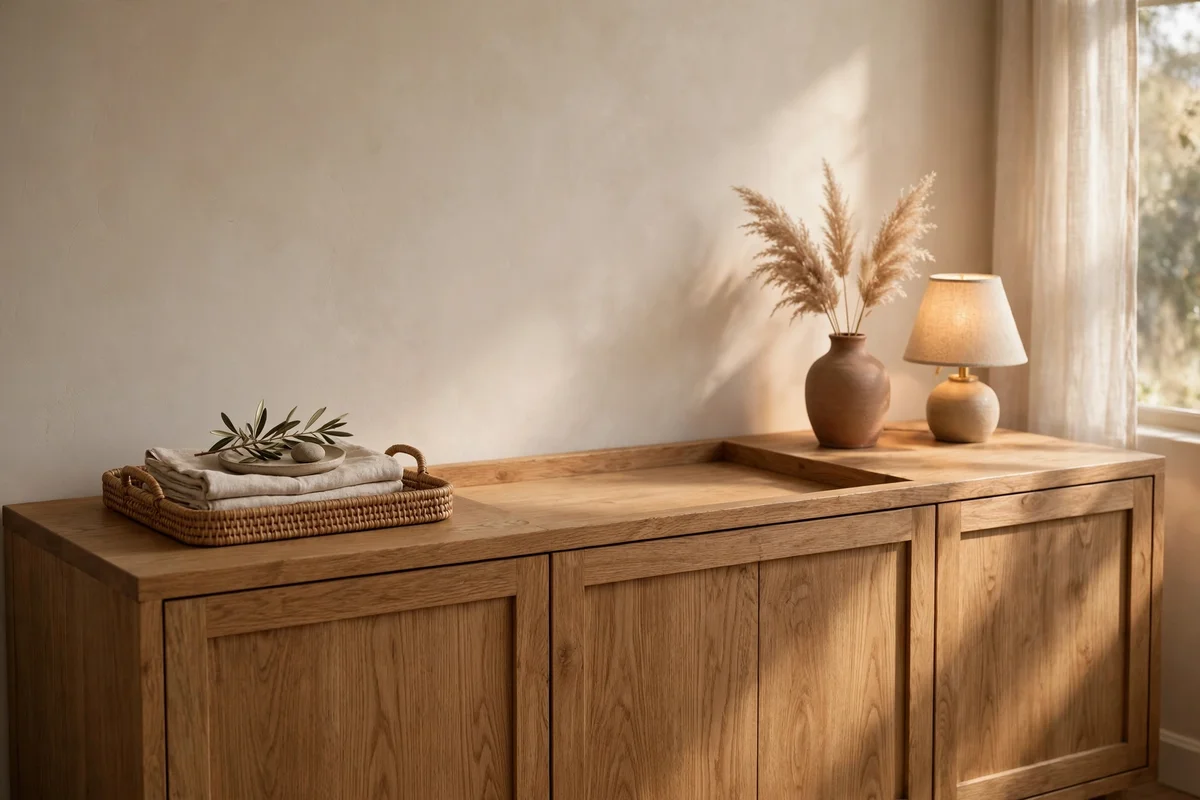
Style a sideboard the way you would edit a sentence: keep only what serves the room. Divide the top into three zones, with a low stack of bowls or a small tray on the left, a single vase or framed print in the middle, and a lamp or candle holder on the right. Leave at least 30 cm of empty surface between zones so each object breathes. A sideboard 120 to 150 cm long and 40 cm deep suits most dining walls.
Hide daily clutter inside the sideboard rather than on top of it, since visible piles undo the whole Japandi effect. The mistake to avoid is lining up seven or eight small objects across the top, which reads as a shop shelf rather than a styled surface. Use the inside for placemats, chargers and serving spoons so setting the table takes one minute. Budget tip: an old oak sideboard from a charity shop, cleaned and oiled, often beats a new flat pack piece for both price and presence.
7. Place a Simple Oak Bench Along One Side of the Table
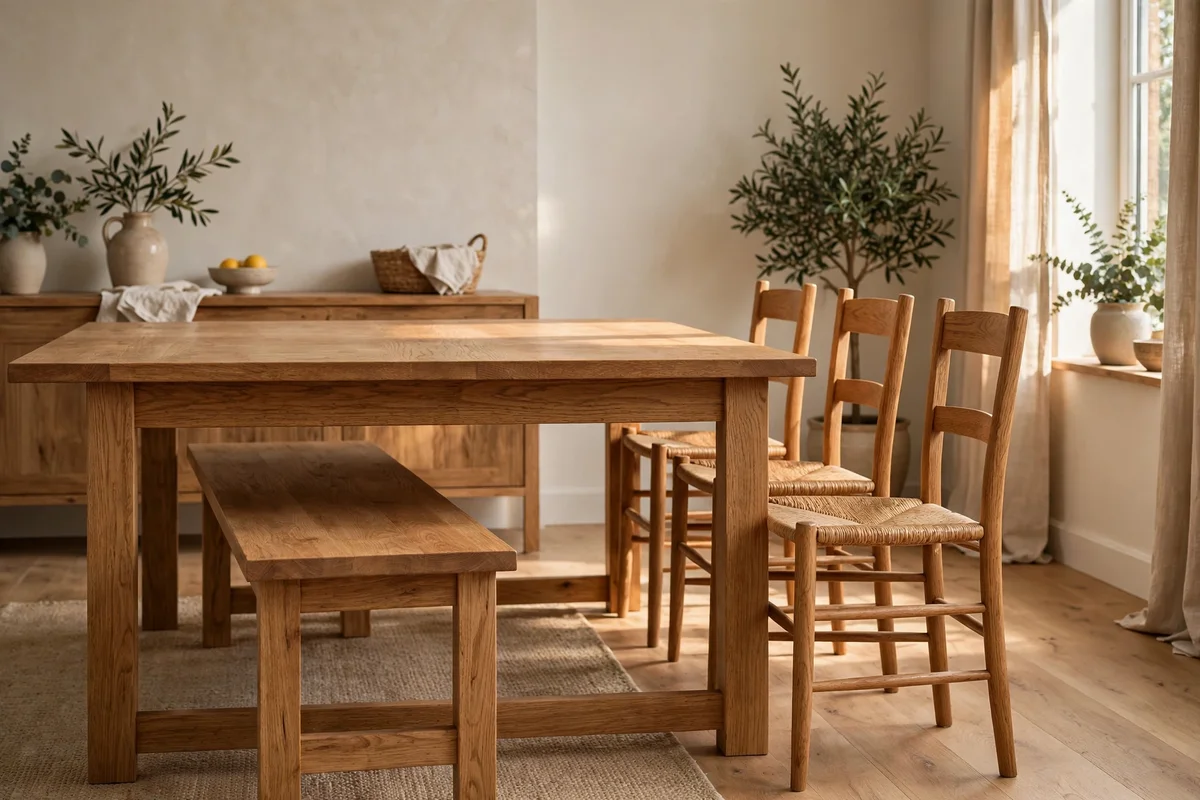
A solid oak bench on one side of the table seats three people in the space of two chairs and slides fully under the table when not in use. Choose a bench 140 to 160 cm long, 28 to 32 cm deep, with a seat height matching the chairs at 45 cm. Simple trestle legs or a single slab base keep the look clean. The bench side suits children and casual meals, while chairs on the other side give back support for longer dinners.
The mistake to avoid is a bench that wobbles, so check that all four legs touch the floor evenly before buying. Add one long thin cushion in natural linen if the seat feels hard, but skip fussy scatter cushions that slide off. A bench also doubles as a serving surface during family gatherings when pushed against the wall. Budget tip: a carpenter can build a simple oak bench from two planks for far less than a designer piece, and it will outlast most chairs.
8. Keep Floor Cushions Spare and Tucked Away
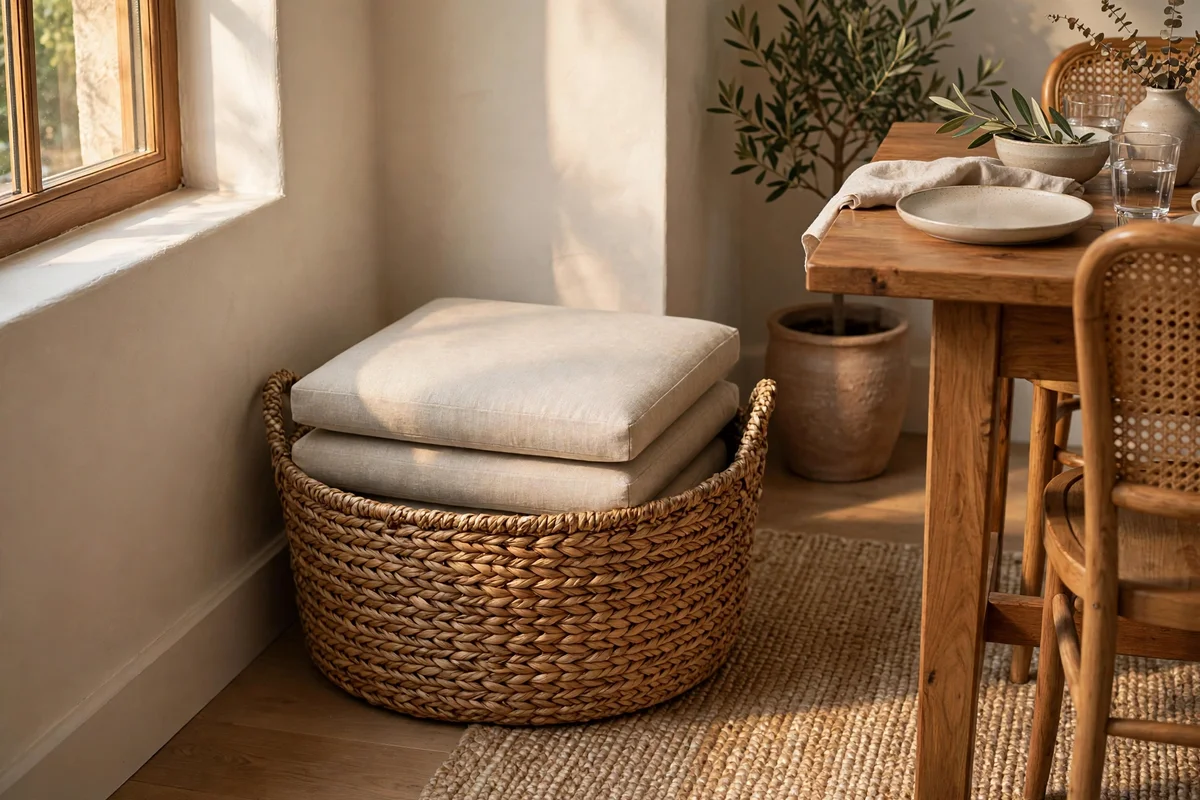
Two or three flat floor cushions in natural cotton or linen give extra seating for family gatherings without filling the room. Choose cushions 50 to 60 cm square and 10 to 15 cm thick, firm enough to sit on comfortably for an hour. Stack them in a corner basket or on the sideboard’s lower shelf when the meal ends so the floor stays clear. Japandi calm depends on empty floor, so cushions should appear only when needed.
The mistake to avoid is buying a whole rainbow set of floor cushions, since five mismatched poufs turn a calm room loud. Keep all cushions in the same neutral tone as the room, off white, oatmeal or soft clay. Washable covers matter because floor cushions meet shoes, crumbs and spills. Budget tip: make simple square covers from two linen tea towels stitched together and stuffed with an old pillow, which costs almost nothing and looks deliberately simple.
9. Build the Palette From Oak, Off White and Clay
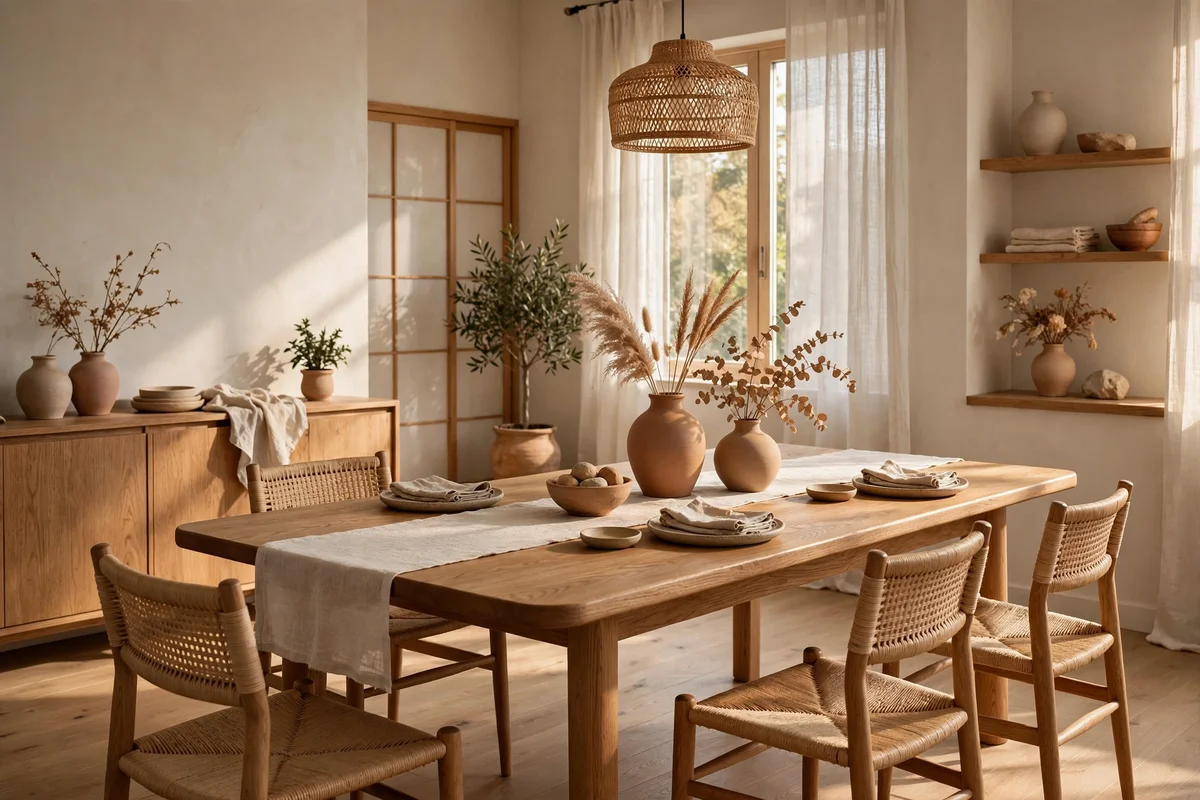
Hold the whole room to three tones: warm oak for wood, off white for walls and textiles, and clay for accents like a vase, a cushion or a serving bowl. A 60-30-10 split works well, with oak and off white sharing most of the room and clay appearing in just a few objects. Paint walls in a warm white with a yellow undertone rather than a cold blue white, since cool whites fight the wood’s warmth. Test paint on the wall beside the table at different times of day.
The mistake to avoid is adding a fourth strong colour, like teal or bright red, which shatters the quiet palette instantly. If you crave variety, shift within the three tones: honey oak beside pale oak, chalk beside oatmeal. Natural materials carry the interest, so grain, weave and glaze matter more than colour. Budget tip: a palette this restrained means almost nothing needs replacing when tastes change, since every new piece in oak or clay already matches.
10. Pair the Bench With Two Low Simple Chairs
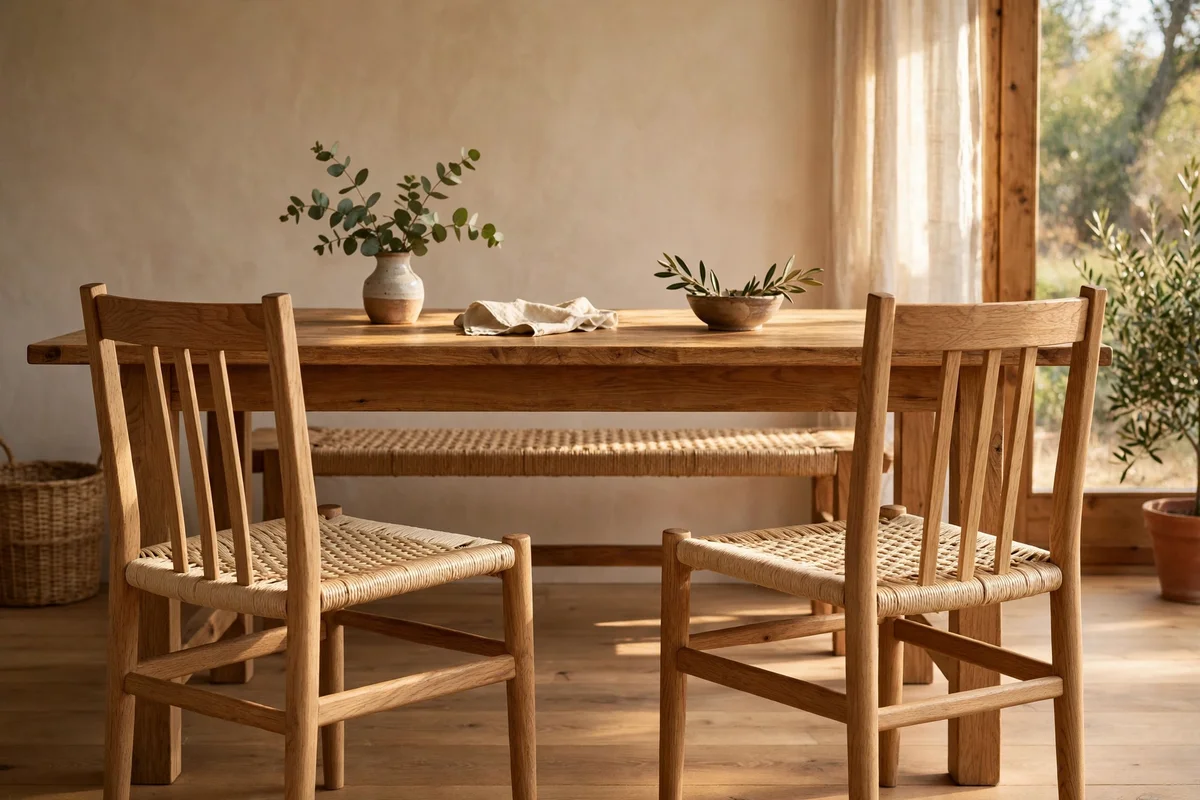
On the side opposite the bench, use two low chairs with simple frames and no armrests so the table line stays clean. Look for seats 45 cm high with a gently curved back 80 to 85 cm from the floor, in oak or ash with a woven paper cord seat. Keep the chairs visually light, since heavy upholstered chairs fight the bench’s simplicity. Four chairs work for longer tables, with one at each end if space allows.
The mistake to avoid is mixing three different chair styles, which turns quiet into chaos around one table. One bench plus one repeated chair design is the Japandi formula. Check that chair and bench seat heights match within 1 cm, or diners feel the difference all evening. Budget tip: buy chairs second hand in matching pairs and refinish them with the same oil as the table, which ties old and new wood together for the cost of a bottle of oil.
11. Dress the Table With a Linen Runner in Natural Tones
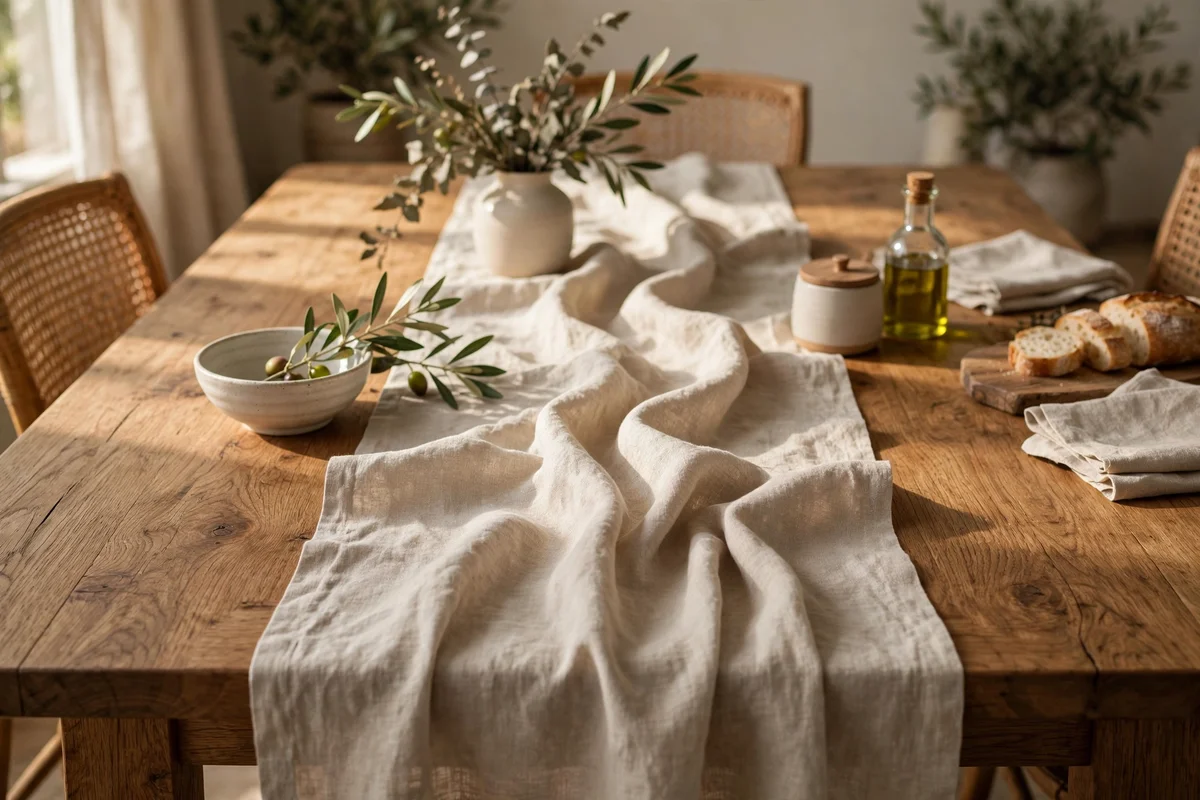
A single linen runner down the table’s centre adds softness without hiding the wood’s grain. Choose a runner 30 to 40 cm wide and long enough to hang 20 to 30 cm over each end of the table. Natural, oatmeal or soft clay tones sit quietly on oak, while white runners show every crumb. Wash the runner before first use, since linen softens with each wash. Skip placemats on busy days and let the runner do all the work.
The mistake to avoid is layering a runner over a tablecloth over placemats, which buries the table completely. Japandi styling shows the material, so one textile layer is enough. Iron the runner while slightly damp for a crisp line, or leave it rumpled for a relaxed look. Budget tip: a length of washed linen from a fabric shop, hemmed at both ends, costs a fraction of a branded runner and can be cut to any table length.
12. Hang One Large Calm Artwork and Leave Walls Bare
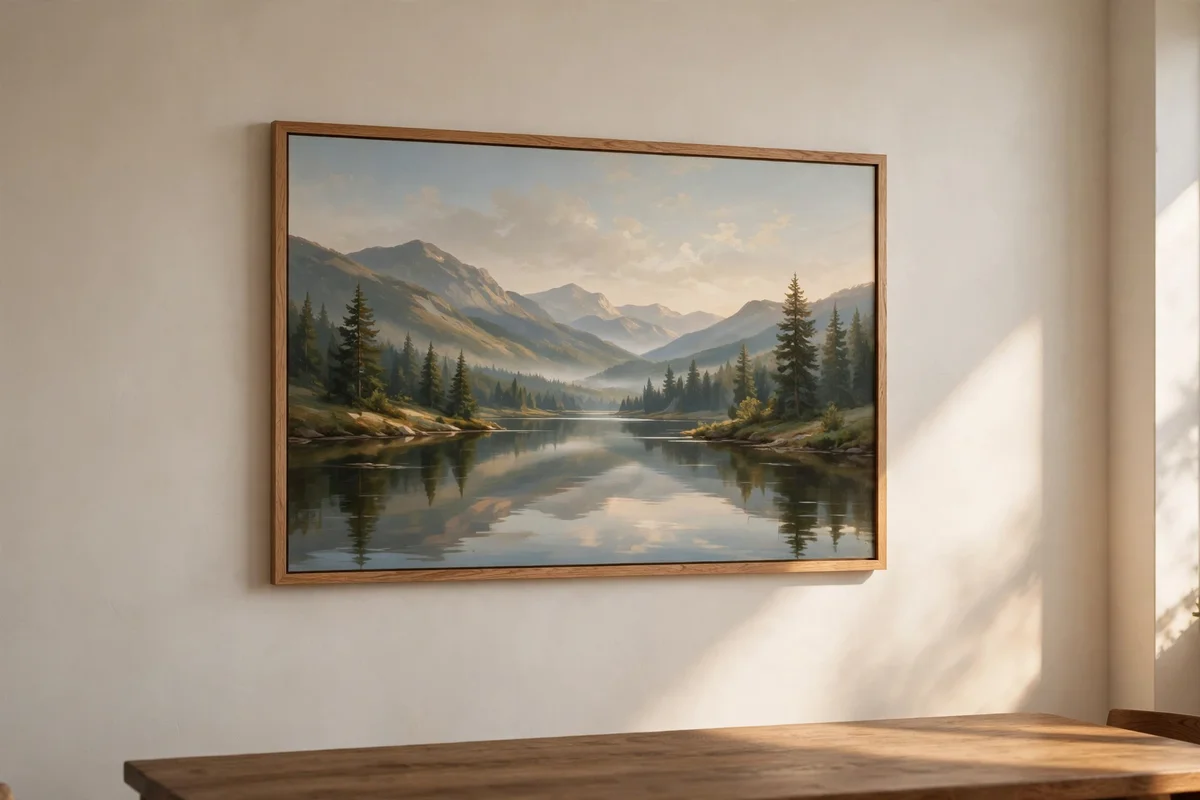
Choose one large artwork for the main wall and leave the other walls bare, since empty wall space is part of the design. A piece 80 to 120 cm wide hung with its centre 145 to 150 cm from the floor suits most dining rooms. Look for quiet subjects: a misty landscape, an abstract wash of clay and stone tones, or a simple ink study. A thin oak frame keeps the art grounded in the room’s material story.
The mistake to avoid is a gallery wall of eight small frames, which scatters attention across the room. One strong piece calms; many small pieces chatter. Hang the art where it can be seen from the table, not behind diners’ heads. Budget tip: large prints from museum shops or open edition art prints cost far less than originals, and a simple oak frame from a craft store finishes the look for very little.
13. Set Every Bulb to Warm 2700K and Add a Dimmer
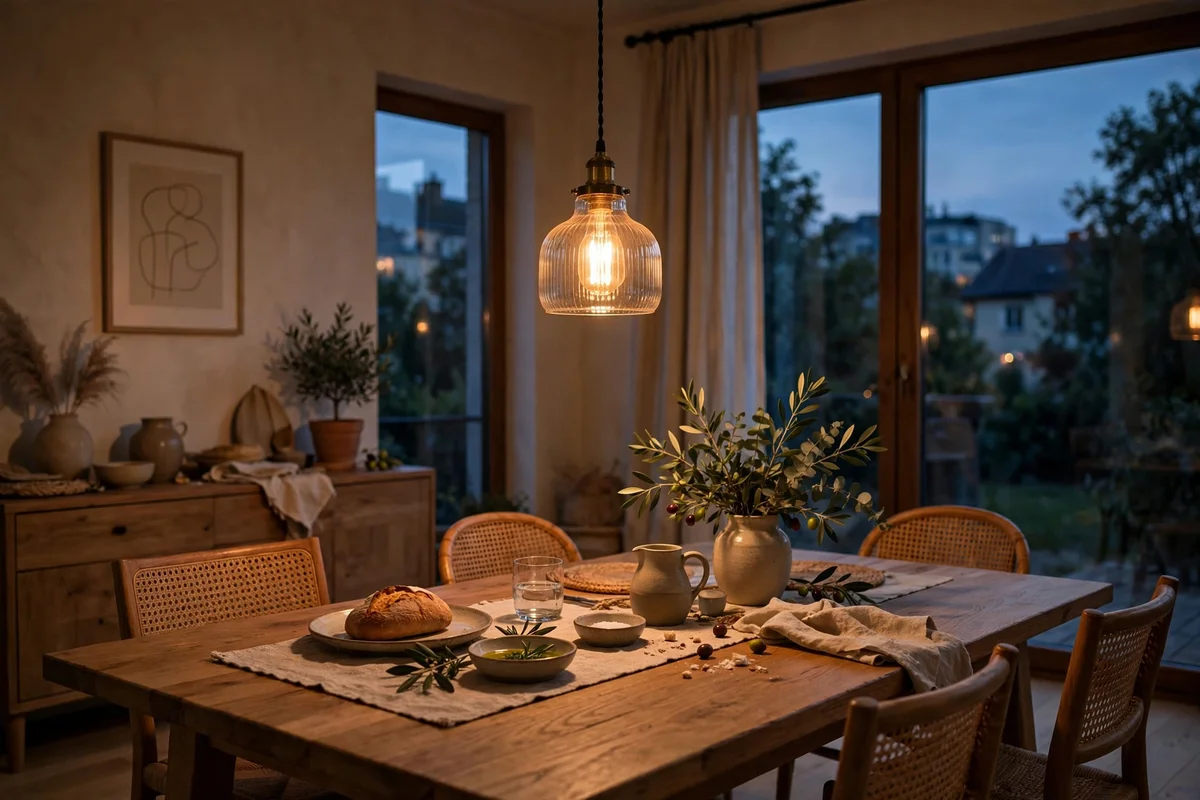
Fit every bulb in the dining room at 2700K, the warm colour of late afternoon sun, and put the pendant on a dimmer switch. Full brightness suits setting the table and clearing up, while a dimmed glow near half power turns dinner into an occasion. Keep wall and pendant light the same colour temperature, since mixed whites make a room feel restless. A simple rotary dimmer costs little and needs no smart system.
The mistake to avoid is a single harsh ceiling light at 4000K or above, which flattens food and faces into a canteen look. If the wiring cannot take a dimmer, use two plug in lamps with warm bulbs on the sideboard instead. Check dimmer and LED bulb compatibility before buying, since mismatched pairs flicker. Budget tip: replacing four bulbs with warm dimmable LEDs and adding one dimmer usually costs less than a new light fitting and changes the mood more.
14. Lay a Flatweave Wool or Jute Rug Under the Table
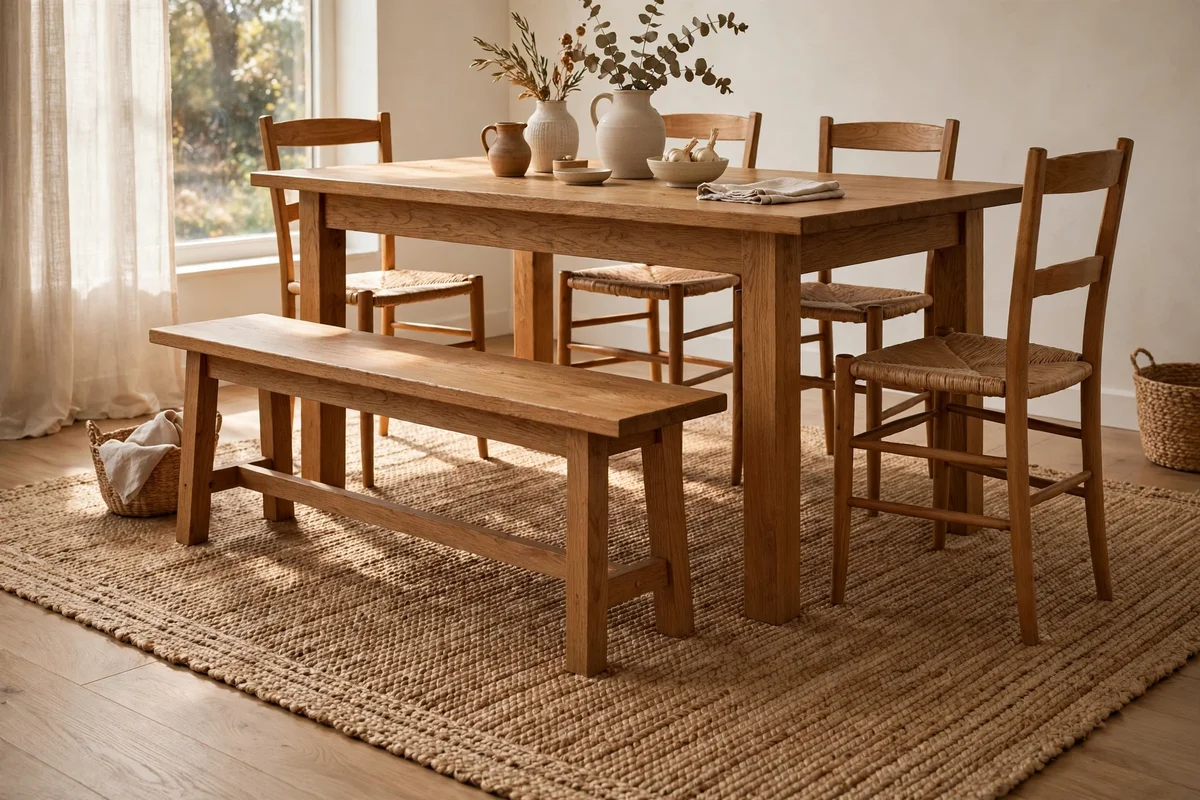
A flatweave rug in jute, wool or cotton grounds the table and softens chair noise on hard floors. Size it so all chair legs stay on the rug when pulled out, which means adding at least 60 cm of rug beyond the table on every side. For a 160 by 90 cm table, a 280 by 210 cm rug works well. Choose a low pile under 1 cm so chairs slide easily and crumbs shake out.
The mistake to avoid is a thick shaggy rug under a dining table, which traps crumbs and stops chairs moving. Natural tones like undyed wool, oatmeal or sand keep the palette calm and hide dust. Use a rug pad underneath on smooth floors to stop slipping. Budget tip: flatweave cotton rugs cost far less than wool and wash easily, making them the practical choice for families with young children.
15. Keep Storage Behind Closed Doors in Clean Lines
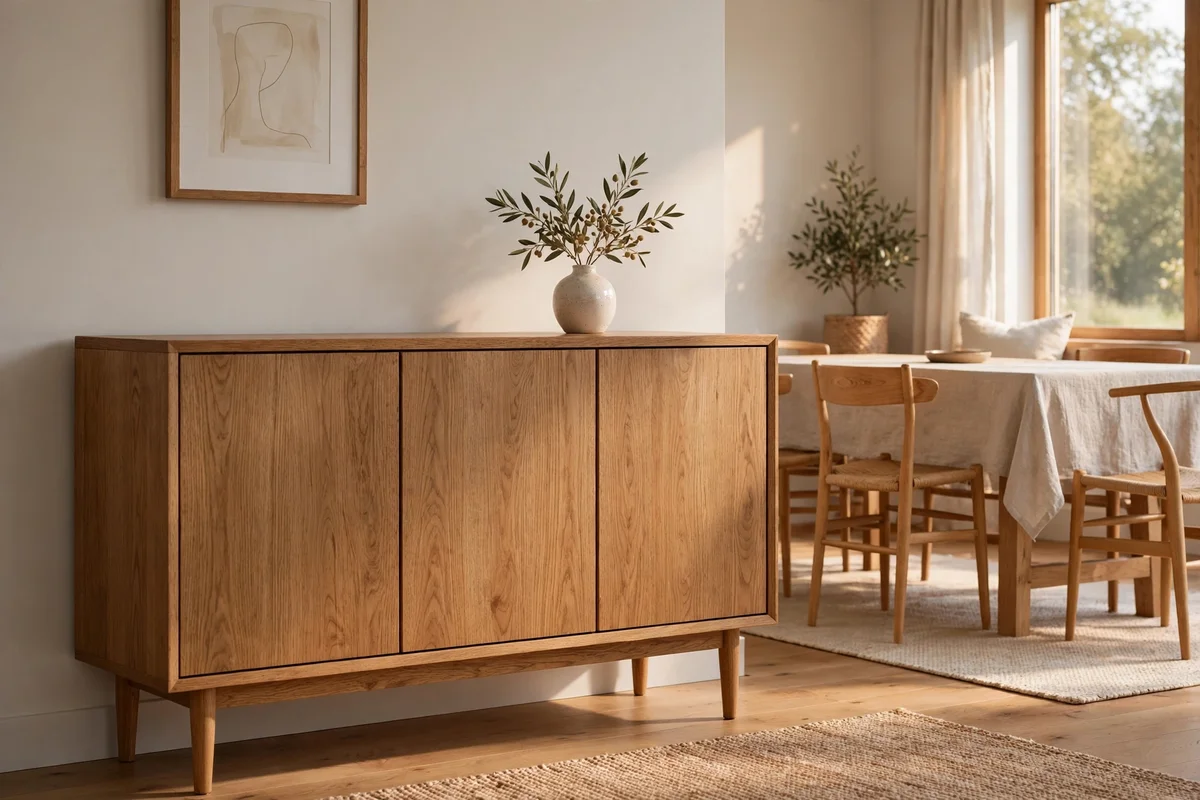
Give everyday dining clutter a closed home so surfaces stay clear. A sideboard with solid doors hides placemats, chargers, candles and serving dishes behind one calm front, while open shelving shows every wobble of daily life. Choose pieces with simple slab doors and discreet handles, in oak or a warm off white lacquer. Keep the top of the sideboard as the only styled surface in the room.
The mistake to avoid is glass fronted cabinets full of mismatched mugs, which read as clutter even when tidy. If you own open shelves, limit them to matching sets and leave half of each shelf empty. Store rarely used serving pieces in another room entirely. Budget tip: contact paper or paint in warm white can calm a busy second hand cabinet front for very little, but solid doors are worth seeking out.
16. Change Only the Branch With Each Season

Let the single branch change with the seasons while everything else stays still. Bare birch twigs suit winter, pussy willow brings spring, a green olive branch fits summer, and dried grasses or seed heads carry autumn. Swap the arrangement four times a year in under five minutes. Keep the same vase every time, since the constant vessel makes the seasonal change feel intentional rather than random.
The mistake to avoid is redecorating the whole room each season, which fights the Japandi love of stillness. One branch is the seasonal signal; the room itself does not change. Dry each season’s branches fully before storing them flat in a tall box for next year. Budget tip: this habit costs nothing beyond the first vase, yet guests notice the change every visit and ask about it.
17. Serve on Handmade Stoneware in Muted Glazes

Serve meals on handmade look stoneware in muted glazes: warm white, oatmeal, soft grey and clay. Plates 27 cm across suit main courses, with 20 cm side plates and small bowls for rice or soup. Keep one matching set for six rather than three mixed sets, since unity on the table matters more than variety. Matte glazes feel softer in the hand and hide small scratches from daily use.
The mistake to avoid is patterned plates in five different designs, which shout over a quiet room. If you love pattern, keep it to one small bowl per setting at most. Stack plates by size inside the sideboard so setting the table stays quick. Budget tip: stoneware seconds with tiny glaze flaws cost a fraction of perfect pieces and look authentically handmade, which suits this style even better.
18. Dress Windows With Sheer Linen for Soft Daylight
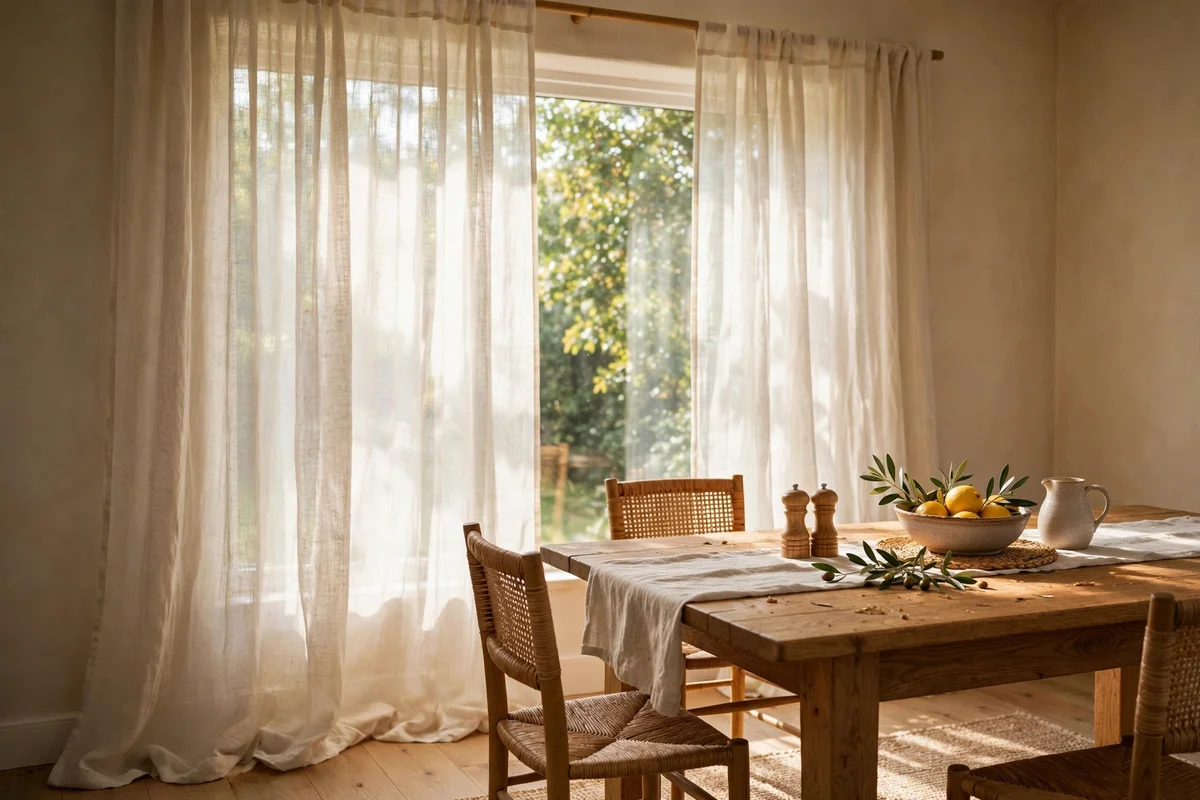
Dress dining room windows with sheer linen curtains that soften daylight without blocking it. Hang the rod 10 to 15 cm above the frame and 10 cm wider on each side so the window looks larger and light wraps around the fabric. Choose natural or off white linen with a loose weave, washed for softness. One panel per window is enough in this style, pulled to one side during the day.
The mistake to avoid is heavy blackout curtains in a dining room, which darken the space and fight the airy mood. Sheers give privacy at a distance while keeping the room bright. Wash linen panels twice a year and hang them damp so they dry smooth. Budget tip: unhemmed linen drops from a fabric shop, clipped to simple rings, cost far less than made to measure curtains and suit the relaxed look perfectly.
19. Oil the Wood Table Twice a Year to Keep It Glowing
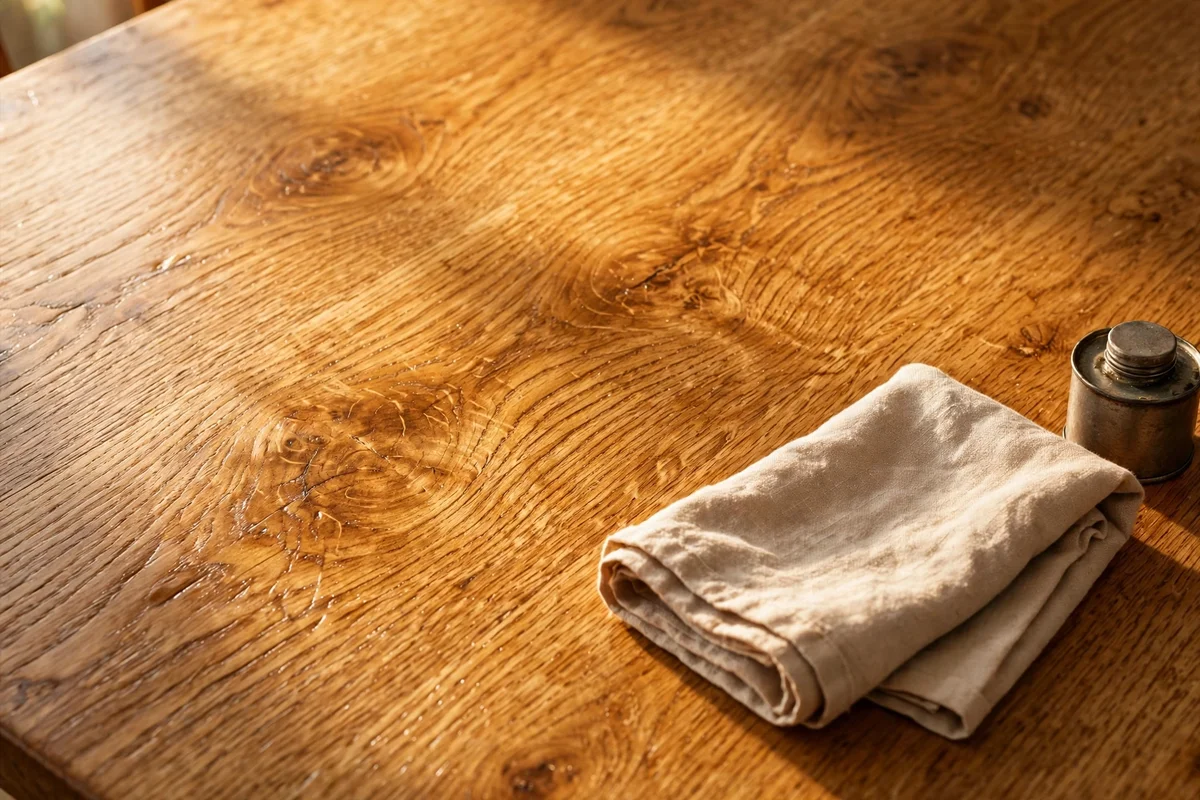
Oil a solid wood dining table twice a year, in spring and autumn, to keep the surface glowing and protected. Clean the top with a damp cloth and let it dry fully, then rub in a thin coat of hardwax oil with a soft cloth, following the grain. Leave it overnight before using the table. This 30 minute job prevents rings, dryness and dull patches far better than any polish.
The mistake to avoid is using silicone sprays or furniture polish, which build up a sticky layer that oil cannot soak through. If the table already has buildup, wipe it with a cloth dampened with white spirit and let it dry before oiling. Use felt pads under the vase and hot mats under dishes to protect the finish daily. Budget tip: one litre of hardwax oil treats a table for years, making this the cheapest maintenance in the house.
20. Leave 90 cm Walkways Around the Table for Easy Flow
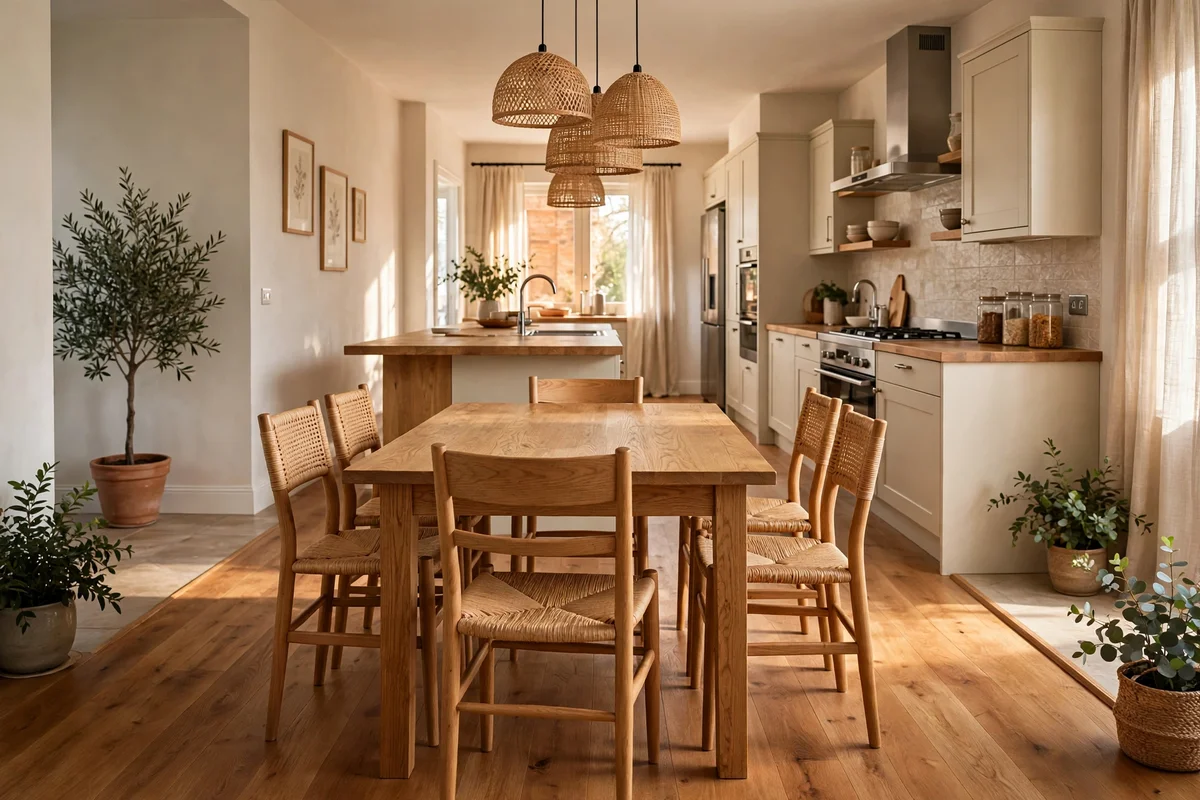
Leave at least 90 cm of clear walkway around every used side of the table so people move without squeezing past chairs. Measure from the table edge to the wall or sideboard, not from the chair, since chairs push back about 50 cm when someone stands. In open plan rooms, use the rug’s edge to mark the dining zone so walkways stay naturally clear. Keep serving paths between kitchen and table straight and uncluttered.
The mistake to avoid is pushing the table against the wall on two sides, which traps diners and kills the room’s flow. Even in a small room, keep two opposite sides open and use the bench where space is tight. Test the layout by walking the serving path with a full tray before finalising positions. Budget tip: good flow costs nothing, yet it makes a modest dining room feel twice as generous.
A Japandi dining room is never finished in a single weekend, and that is the point. Choose the solid table first, hang one good pendant at the right height, and let a single branch do the talking. Each small choice removes a little noise until the room holds you instead of asking from you. Live with every change for a week before adding the next, since calm reveals itself slowly.
This week, try the easiest idea of all: clear the dining table completely and place one branch or a few dried grasses in a simple vase at its centre. Notice how the room changes with almost nothing in it. If that single stem makes dinner feel calmer, you already understand Japandi. Build from there, one honest material at a time, and let simplicity do the beautiful work.
Frequently Asked Questions
What is the right height for a pendant over a dining table?
Hang the bottom of the shade 70 to 80 cm above the tabletop, measured from the table surface. This pools light over food while letting seated diners see each other beneath it. For tables over 180 cm long, use two matching pendants spaced evenly. Keep real bulbs at least 15 cm from woven shades and 20 cm from paper, and choose cool running LEDs for safety.
How much does a Japandi dining room makeover cost?
A calm refresh can cost between 150 and 600 pounds or dollars. A paper lantern shade, a linen runner, one clay vase with dried branches and warm LED bulbs often total under 150. A solid oak table is the big purchase, from 400 second hand to 1,200 or more new. Spend on the table first, since everything else is inexpensive styling.
Which wood suits a Japandi dining room best?
White oak and ash are the classic choices, with their pale warm tones and visible grain. Keep the finish matte with oil or hardwax so the wood feels soft rather than shiny. Avoid dark stains and orange toned varnishes, which fight the calm palette. Match the bench, chairs and sideboard within the same light wood family for a unified, quiet look.
Can a Japandi dining room work in a small space?
Yes, it suits small rooms beautifully because the style loves empty space. Choose a 120 to 140 cm table with a bench that slides underneath, keep floor cushions stacked away, and hang one pendant instead of several. Light oak, off white walls and sheer curtains make the room feel larger. Avoid bulky sideboards; one narrow console with closed doors is enough.
How do I keep a paper pendant shade clean?
Dust it monthly with a soft dry cloth or a cool hairdryer on low, working from top to bottom. Never use water or damp wipes, since moisture weakens the paper and can stain it. Keep the shade away from kitchen steam and open windows in rain. With LED bulbs and gentle dusting, a good paper lantern keeps its glow for many years.