Bedroom
20 Modern Neutral Bedroom Ideas That Feel Calm, Warm and Effortlessly Elegant
By Anna Wells · · 18 min read
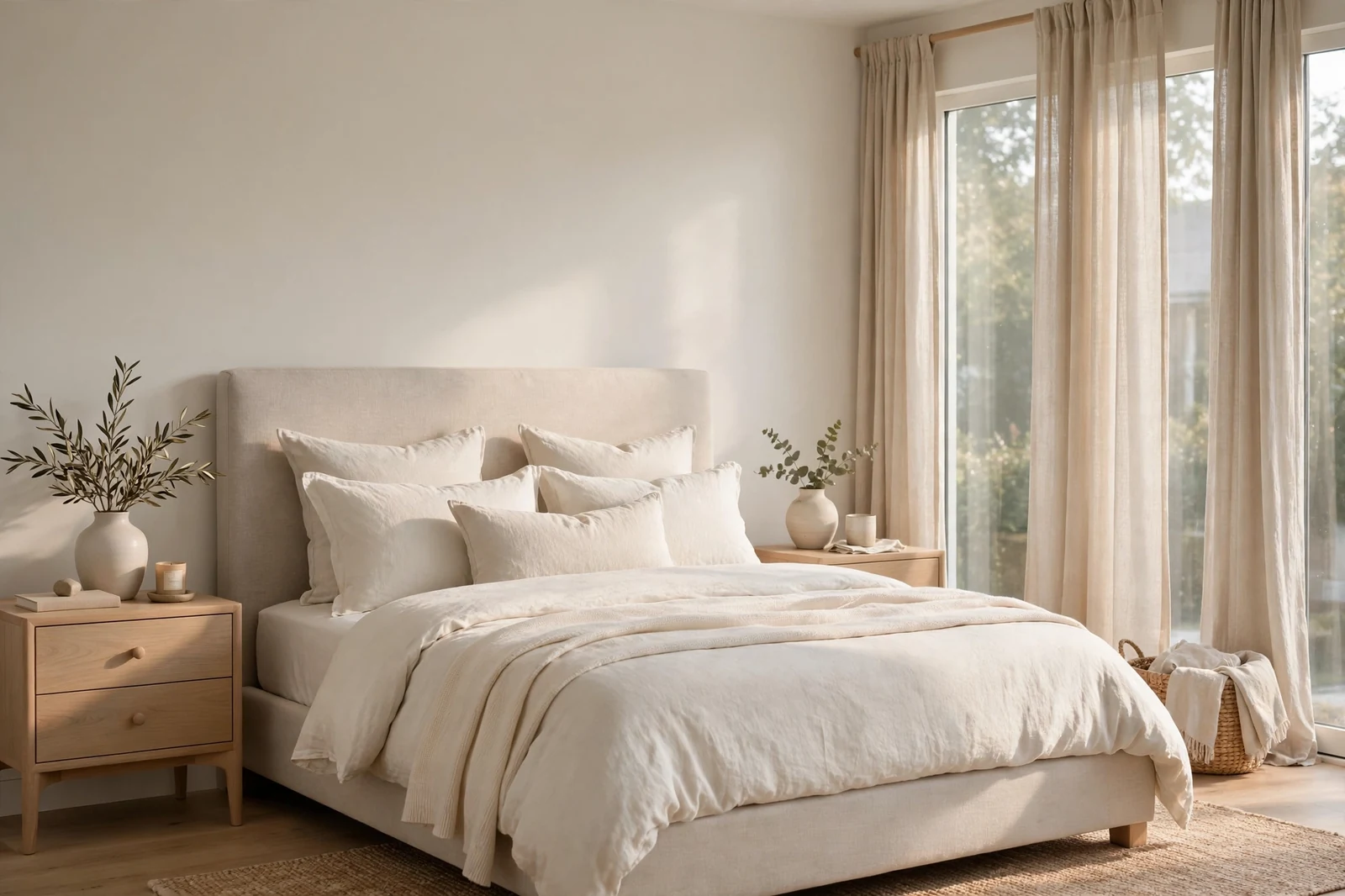
A modern neutral bedroom is more than white walls and beige bedding. These 20 ideas layer warm whites, soft beige, greige, and rich textures into a bedroom that feels calm, warm, and effortlessly elegant.
A modern neutral bedroom is so much more than white walls and beige bedding. When neutrals are chosen with care, cream, mushroom, oatmeal, taupe, and warm gray layer together into a space that feels calm, warm, and quietly luxurious. The secret is variation: enough difference in tone, texture, and material to create depth while keeping the palette restful.
This collection brings together 20 ideas for building that balance, from wall colors and bedding layers to lighting, furniture, and finishing details. Each one is practical as well as beautiful, designed for real bedrooms where comfort matters as much as style. Start with the foundation, add texture generously, and finish with thoughtful details.
1. Start with Creamy Warm White Walls
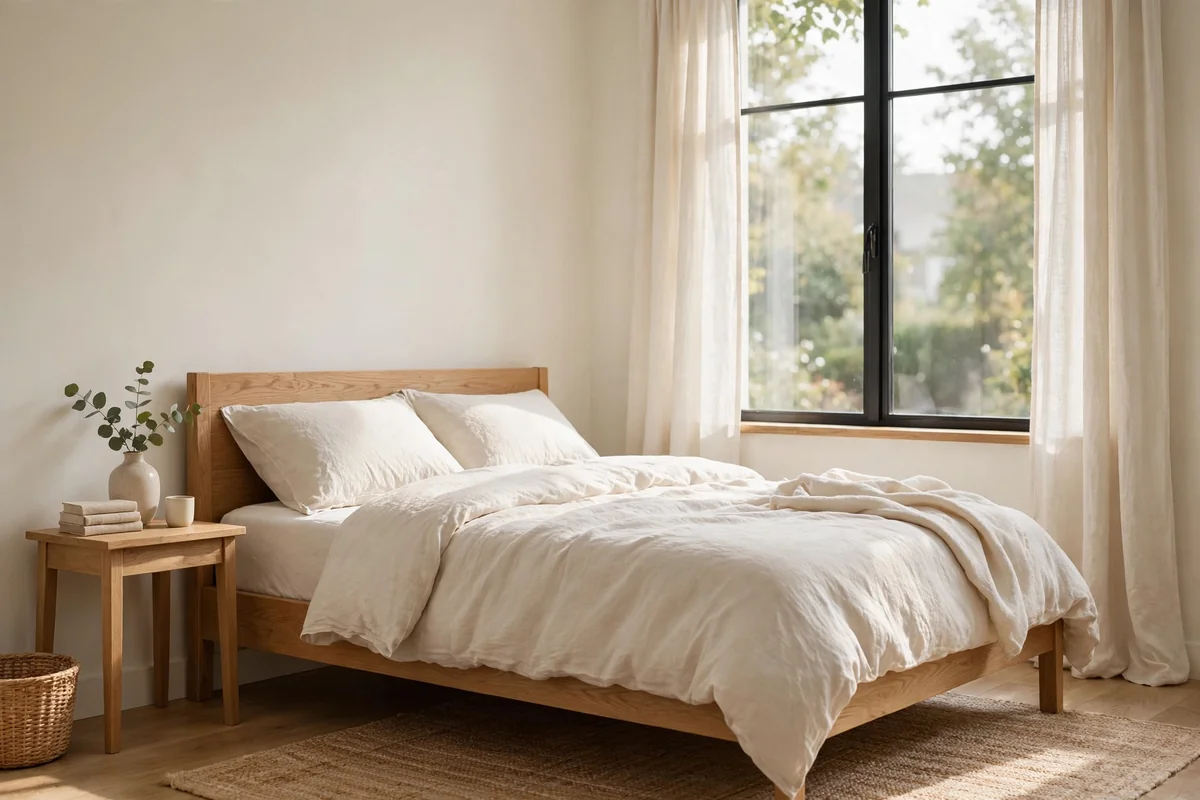
Warm white walls give a neutral bedroom a clean foundation without the stark, clinical feeling of bright blue-white paint. Look for shades with gentle cream, beige, or greige undertones, which stay soft in rooms with limited sunlight. A warm white also adapts easily later, working beautifully with pale oak, dark walnut, black metal, linen, wool, and nearly every muted accent color you might add.
Before painting, brush large samples onto more than one wall and observe them morning, afternoon, and evening. The same neutral can read creamy beside a sunny window and slightly gray in a shadowed corner, so test in the actual room. Once you find a white that stays soft all day, repeat it on the walls and use a slightly cleaner version on the trim for quiet definition.
2. Weave Together Layers of Soft Beige
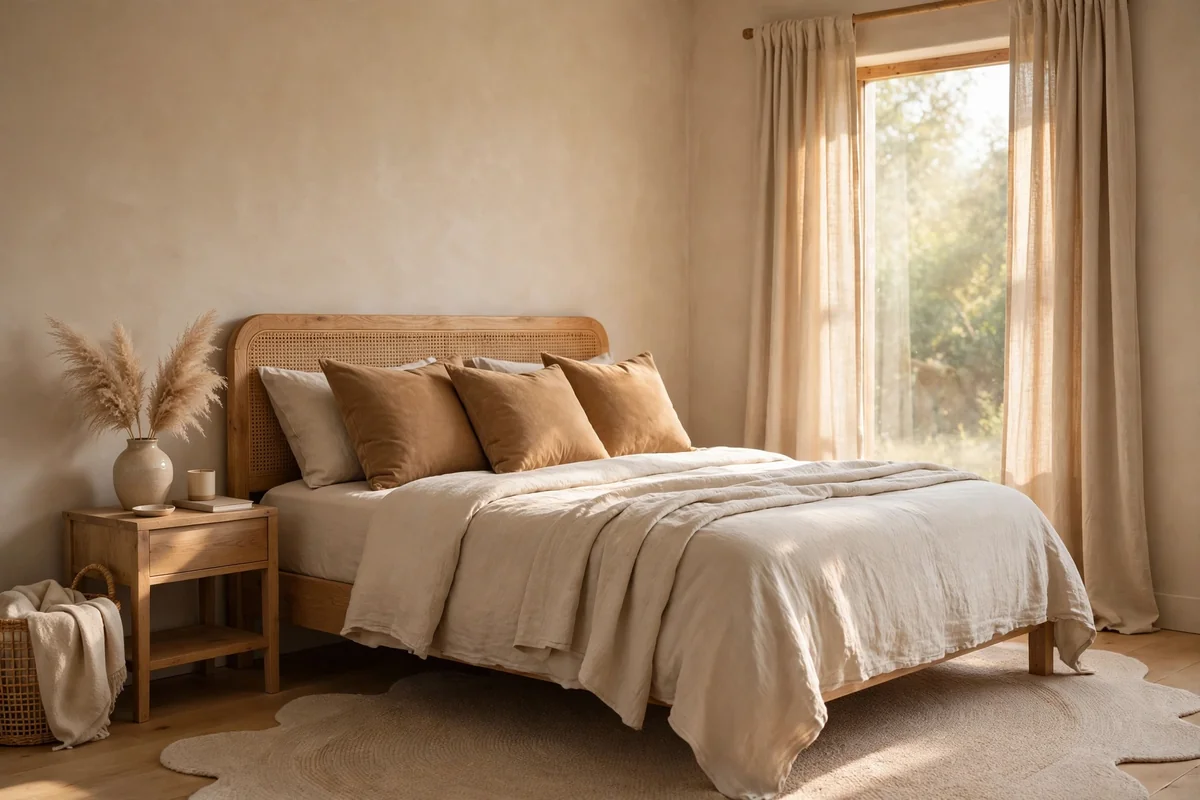
A beige bedroom turns interesting when you stop matching everything perfectly. Combine sand-colored walls, oatmeal sheets, camel pillows, a mushroom rug, and light tan curtains, keeping the tones close enough to feel connected but different enough to avoid flatness. Place the lightest shades around the bed and windows, then bring deeper beige through smaller features like a bench, lamp base, or woven basket.
Texture matters enormously in a mostly beige room because color contrast stays subtle. Pair smooth cotton sheets with a chunky knit throw, a nubby upholstered headboard, finely woven curtains, and a low-pile wool rug. Repeat each beige family at least twice in different materials, so a camel pillow echoes a caramel wood frame. This repetition creates order without making the room look like a showroom.
3. Settle on a Serene Greige Backdrop
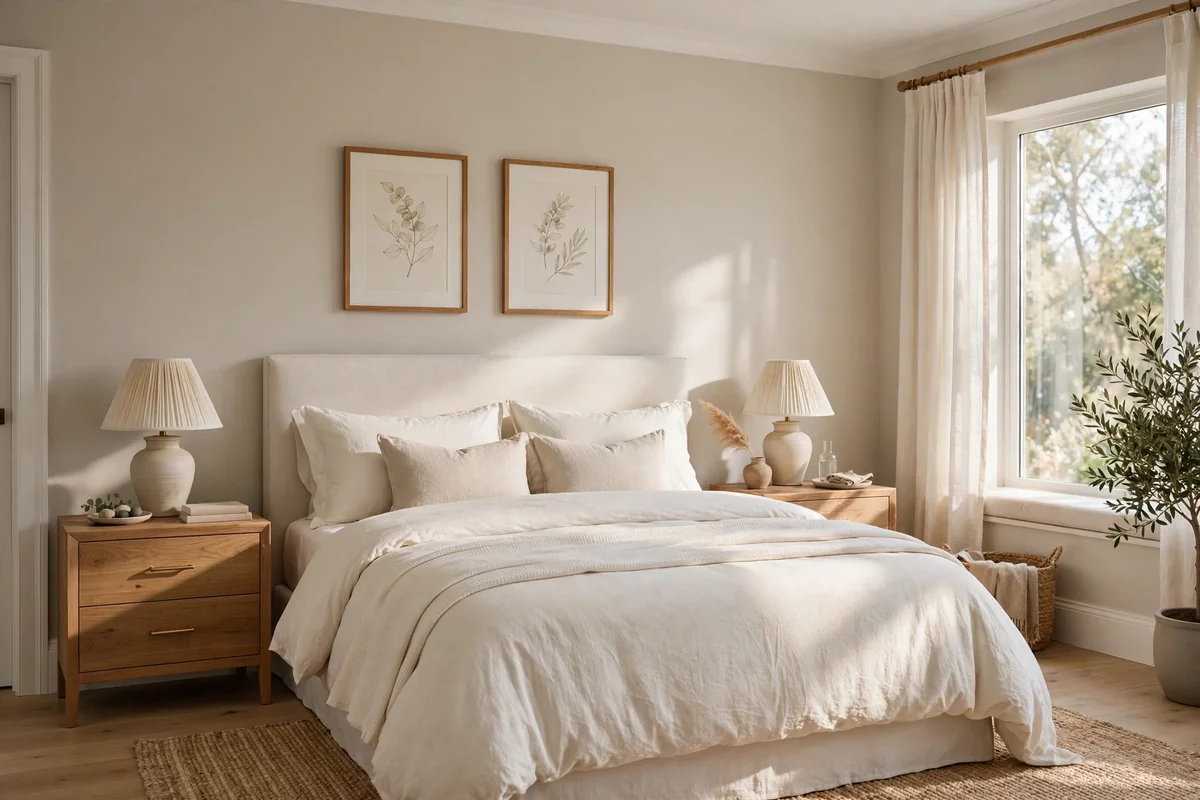
Greige sits between gray and beige, bringing the calm structure of gray together with earthy warmth. It suits bedrooms that already contain white trim, pale wood, or black window frames, softening those contrasts without drawing attention to the walls. A medium-light greige can sharpen architectural details gently while keeping the overall mood restful and modern.
Never choose greige by name alone, since some versions lean violet, green, or pink once on the wall. Paint large test patches to reveal undertones honestly, then keep the rest of the palette warmer with ivory bedding, natural oak, and woven shades. A few dark brown accents prevent the room from drifting into a cool gray scheme. Greige works best as the quiet middle ground, not the only neutral.
4. Anchor the Room with an Upholstered Bed Frame
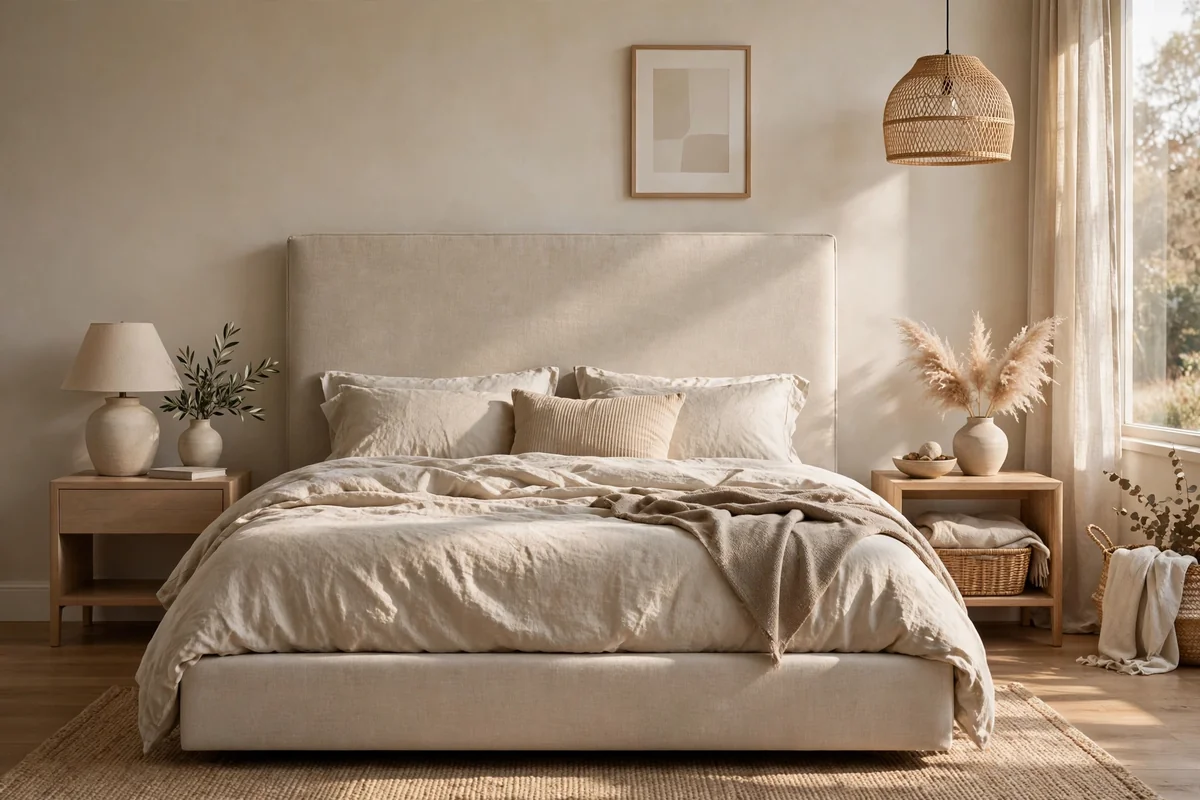
An upholstered bed softens the straight lines found in many modern bedrooms and creates an immediate focal point. Choose simple frames in oatmeal linen, warm gray performance fabric, or textured cream upholstery. A tall rectangular headboard feels architectural, while a gently curved design introduces a softer silhouette. The neutral fabric keeps the large piece substantial without dominating the room.
Study the fabric sample under your bedroom lighting before ordering, since upholstery can look very different at home than in a showroom. A loosely woven fabric adds visible texture, but avoid weaves so open they snag or collect dust. In homes with children or pets, a durable stain-resistant material is worth the investment. Style the bed with generous pillows and a throw placed slightly off-center for a relaxed finish.
5. Warm the Space with Pale Oak Furniture
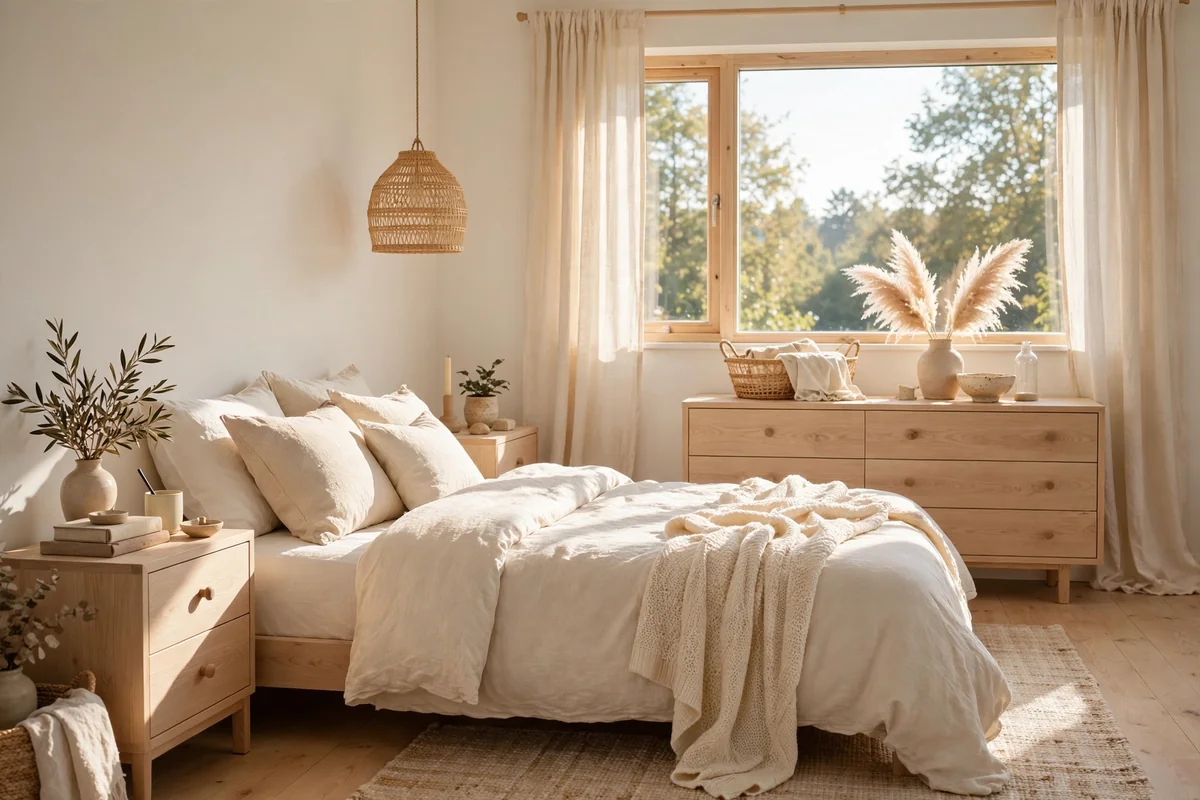
Pale oak contributes warmth without making a neutral bedroom feel visually heavy. Choose a bed, nightstands, or a low dresser with simple fronts and minimal hardware, letting the grain provide natural pattern in the restrained palette. Even a very plain piece feels interesting when the wood shows subtle knots, tonal variation, and a matte finish.
You need not match every wood tone in the room. A pale oak bed works beautifully beside a slightly darker vintage stool, walnut picture frames, or a woven rattan chair. Make the mixture look intentional by repeating each tone: echo light oak nightstands in a bench leg, and balance dark frames with another deep brown detail elsewhere. The result feels collected rather than delivered in one box.
6. Add Depth with Dark Walnut Accents
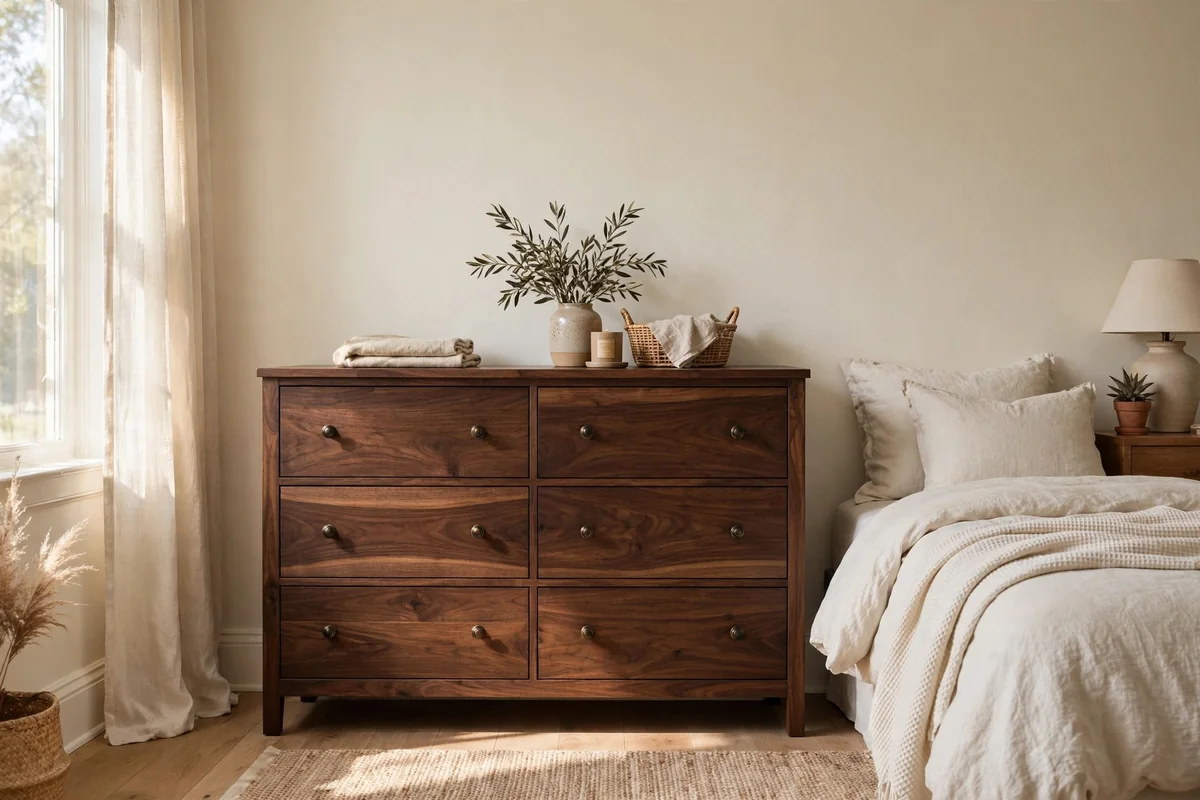
A completely pale bedroom can feel washed out, so dark walnut adds welcome definition. A walnut dresser, bedside table, or bed frame creates a grounded focal point against cream walls and light bedding. The rich brown sharpens the design yet feels softer than black, and daylight reveals its grain beautifully, keeping darker pieces from appearing heavy.
Choose one or two walnut pieces and let them stand out rather than filling the room with dark wood. Balance a dark dresser with a walnut frame above the bed and a small wooden tray on the nightstand, keeping remaining furniture lighter. Place soft materials nearby, like a cream rug or linen curtains, so the contrast feels inviting instead of severe.
7. Wrap the Walls in Cocooning Taupe
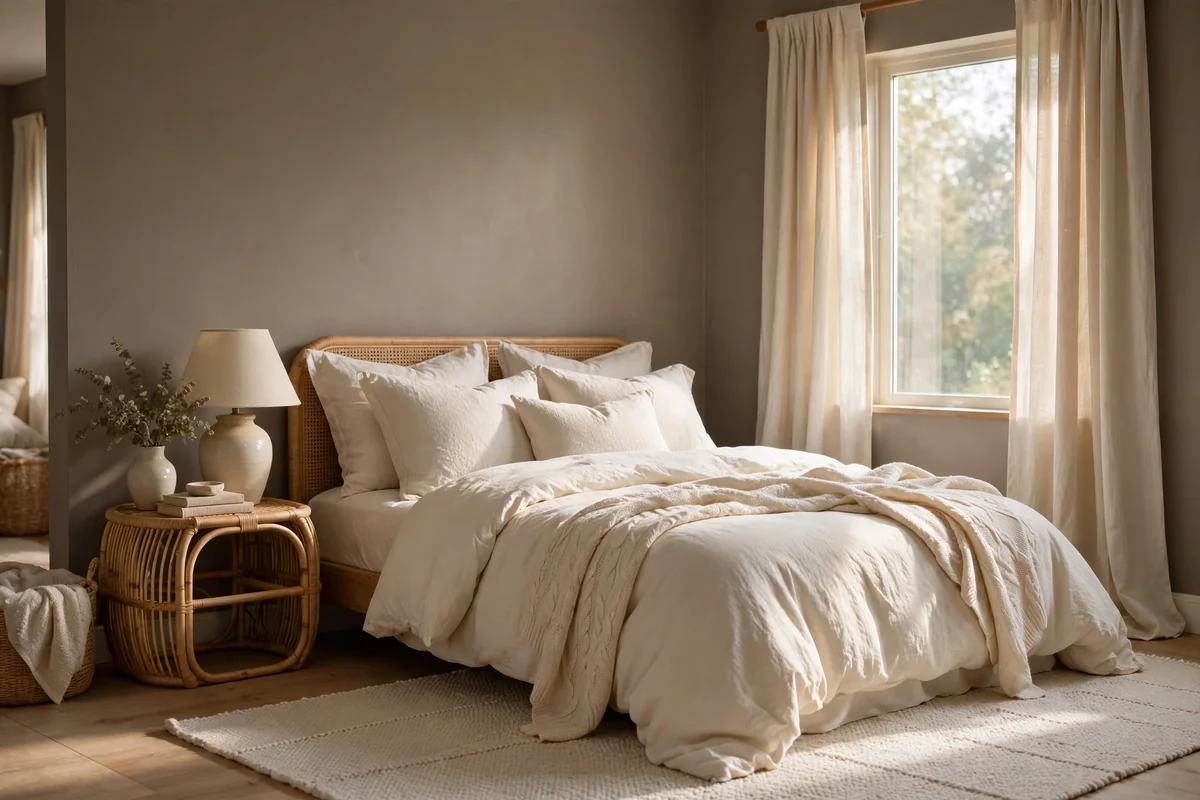
Taupe gives a bedroom more depth than pale beige while staying calm and versatile. A mushroom taupe with brown undertones feels warm and earthy on all four walls, especially in naturally bright rooms. Instead of brilliant white trim, choose a softer off-white or paint the trim in a related tone for a quieter transition that keeps the cocooning effect intact.
Because taupe absorbs more light than white, balance it with lighter fabrics: ivory bedding, creamy curtains, and a pale textured rug prevent gloom. Add small reflective touches like an antique brass lamp or a mirror placed to catch daylight. The result feels cozy from the deeper walls yet bright enough to look fresh, a wonderful approach for making a large bedroom feel intimate.
8. Dress the Bed in Tonal Ivory Layers
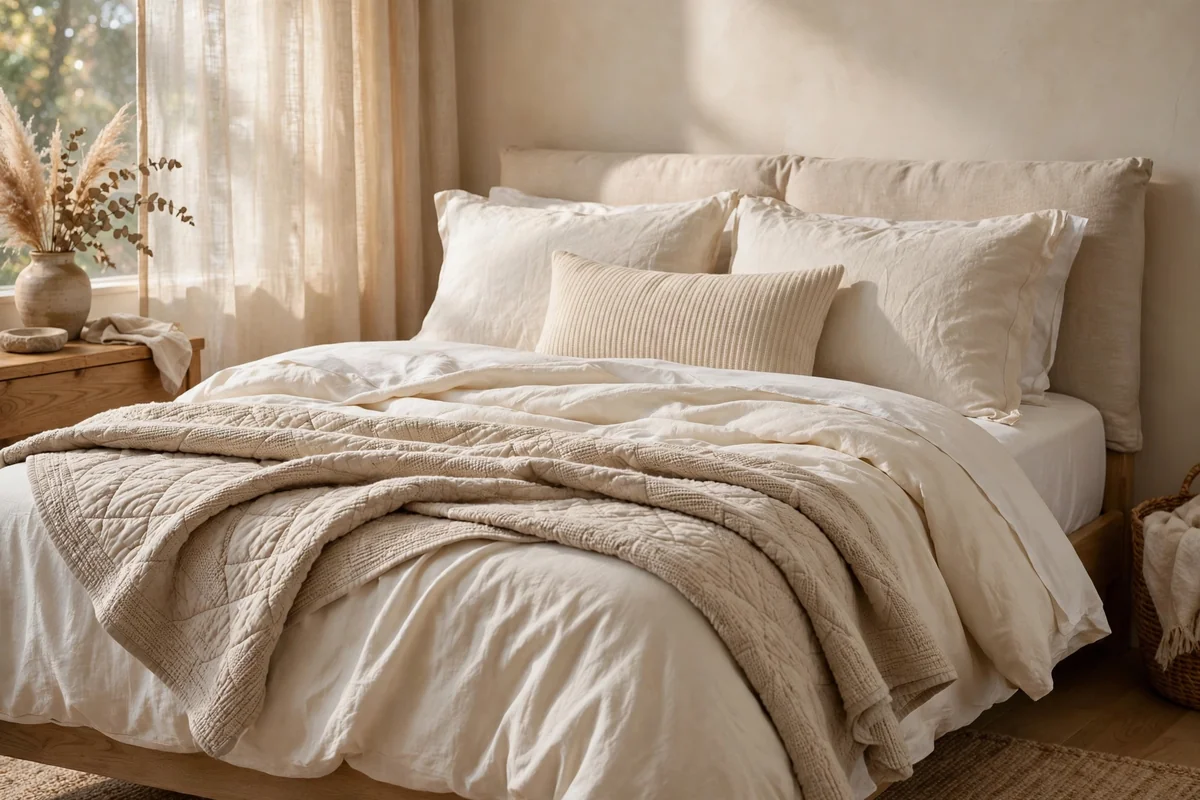
Treat the bedding as a full composition rather than one matching set. Start with comfortable white or ivory sheets, add a duvet in cream, oatmeal, or pale stone, then fold a quilt across the lower third for another layer. Two substantial shams and one lumbar pillow usually feel finished without becoming impractical or requiring nightly rearrangement.
Vary both tone and material so the bed never reads as one flat block of fabric. Crisp cotton beside washed linen creates subtle contrast, while a wool or knit throw adds weight and warmth. Slight wrinkles and relaxed folds are welcome, because they stop neutral bedding from looking overly formal. Fewer, larger pillows keep the bed inviting instead of fussy.
9. Try a Hand-Finished Limewash Feature Wall
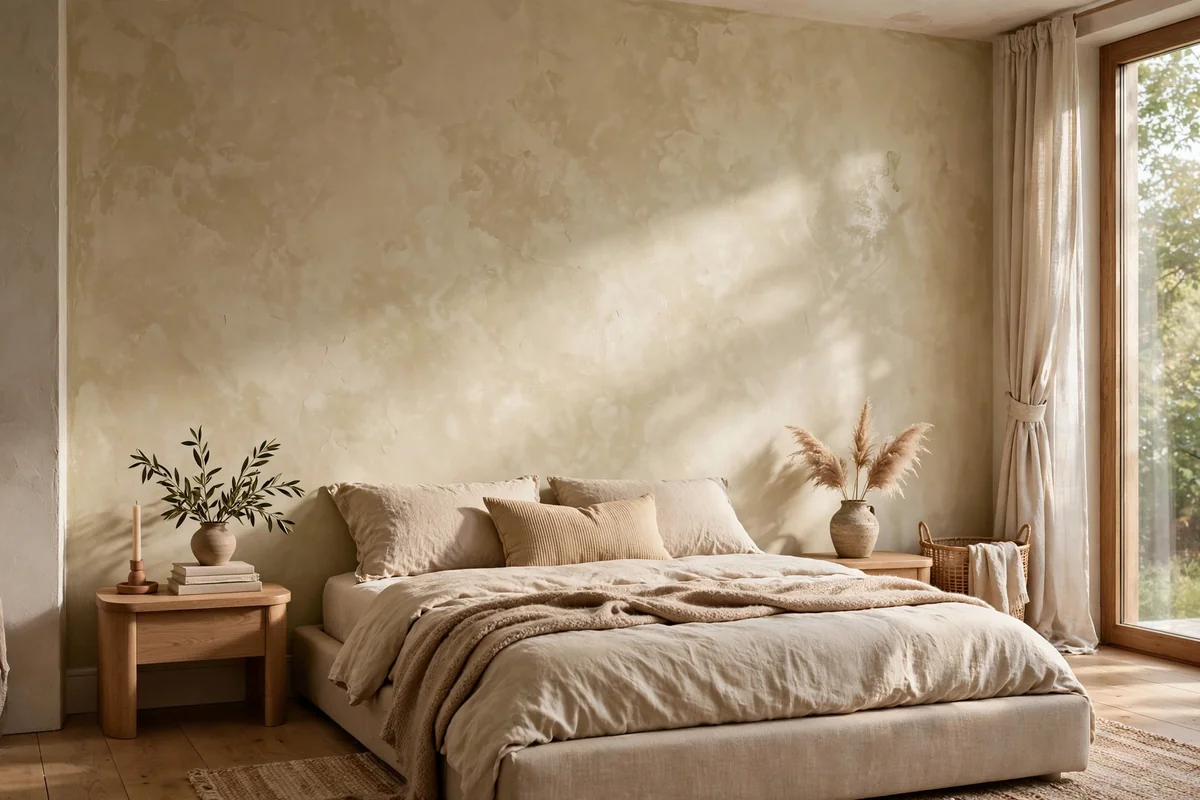
A limewash or Roman clay finish brings quiet movement to a neutral bedroom without conventional pattern. The soft variation shifts as daylight moves across the wall, making it a subtle focal point behind the bed even without artwork. Warm bone, pale putty, and cloudy greige suit the effect, emphasizing texture without drama.
Keep furniture simple so the finish has room to be appreciated: a low upholstered bed, plain linen bedding, and two uncomplicated nightstands are plenty. Make a large sample board first, since hand-applied finishes vary naturally and may dry differently than expected. One accent wall feels crisp and contemporary, while wrapping the whole room creates a softer, enveloping effect.
10. Hang Floor-Length Flax Linen Curtains
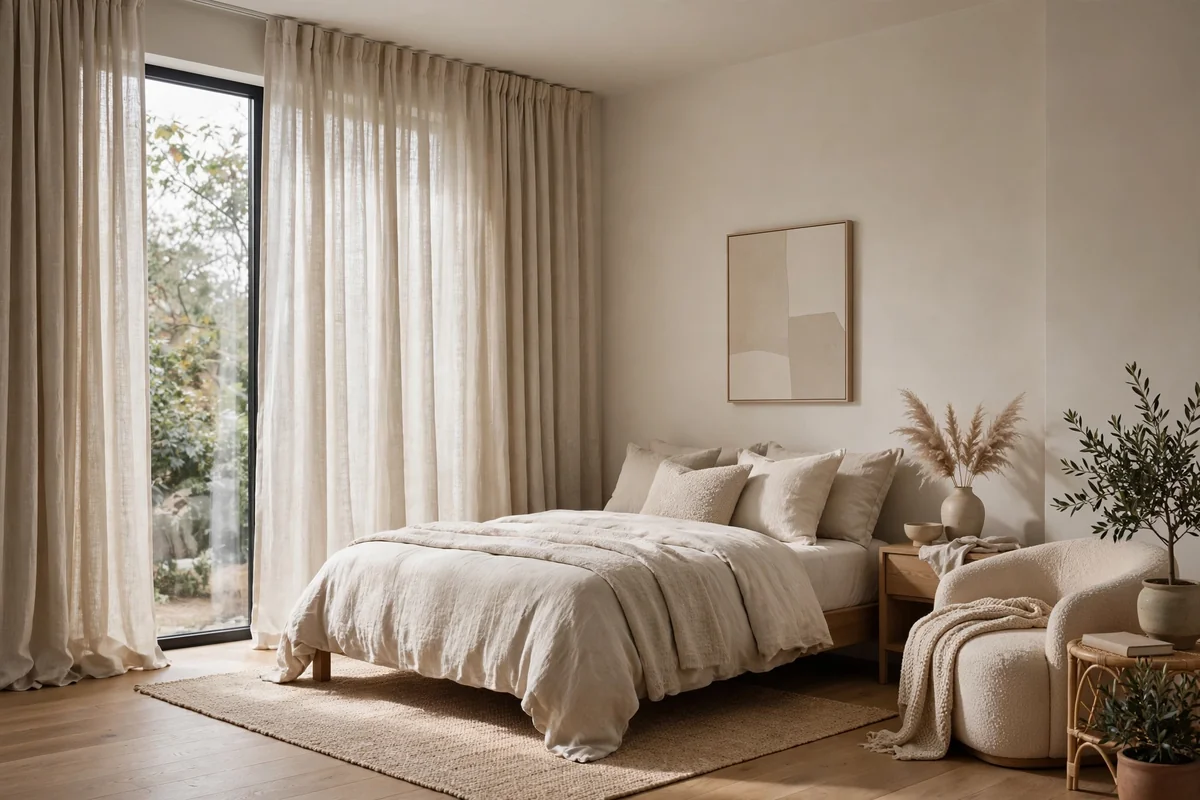
Curtains shape how peaceful a bedroom feels, softening windows and absorbing harsh edges. Hang them as close to the ceiling as practical and let the fabric reach the floor, which draws the eye upward and makes windows appear larger. Linen or linen-look curtains in ivory, flax, or pale taupe bring natural texture while blending into the neutral palette.
Combine light-filtering linen with a concealed blackout shade when you need both privacy and darkness. The linen layer stays decorative by day, while the shade blocks exterior light at night for better rest. Choose a curtain rod that extends beyond the window frame so the panels stack clear of the glass. Full, generous panels always look more luxurious than skimpy ones.
11. Ground Everything with an Oversized Neutral Rug
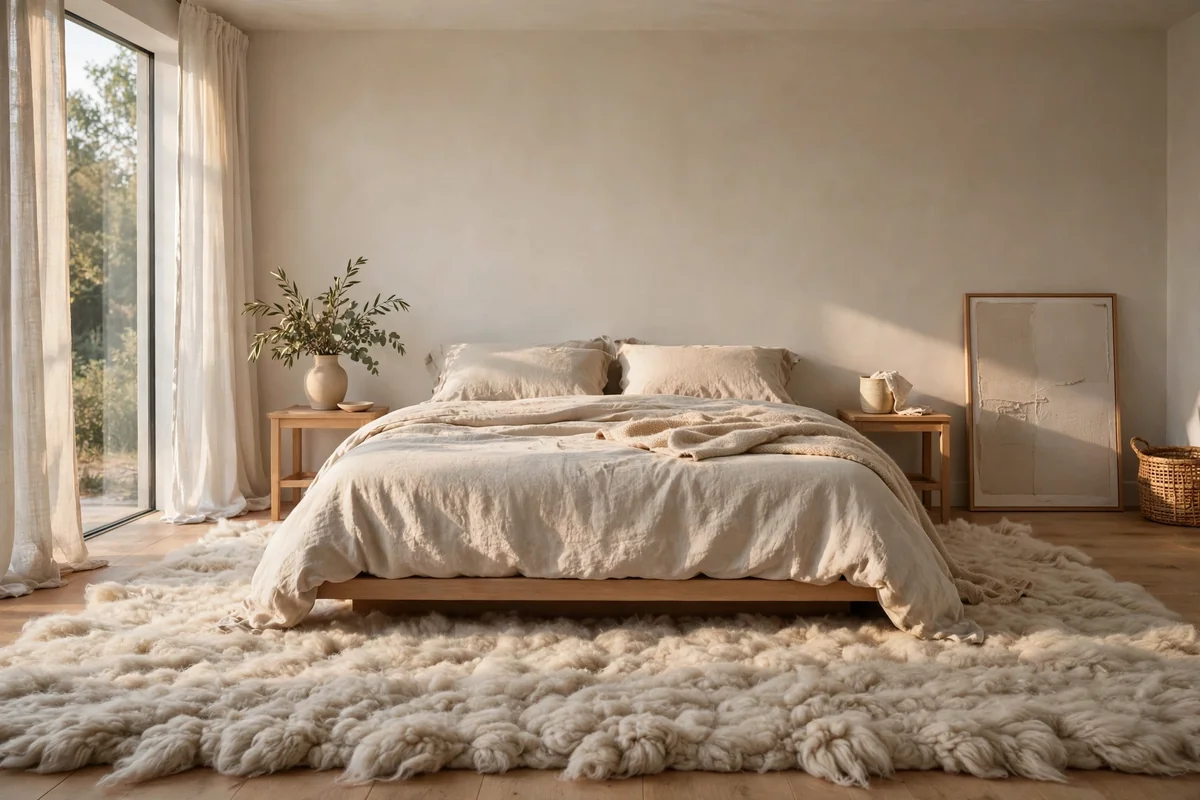
A rug is often what shifts a bedroom from merely attractive to genuinely comfortable. Choose one large enough to extend beyond both sides and the foot of the bed, so your feet land on softness each morning. In smaller rooms, placing the rug beneath the lower two-thirds of the bed still creates a generous, intentional look.
Favor subtle pattern over a flat solid: a faded geometric, tiny broken stripe, or heathered wool texture hides wear and adds depth. Oatmeal, mushroom, and pale gray are more forgiving than bright cream in everyday use. A low or medium pile cleans more easily than shag while still warming the room. Leave at least a foot of bare floor around the rug so the room breathes.
12. Flank the Bed with Matching Wall Sconces
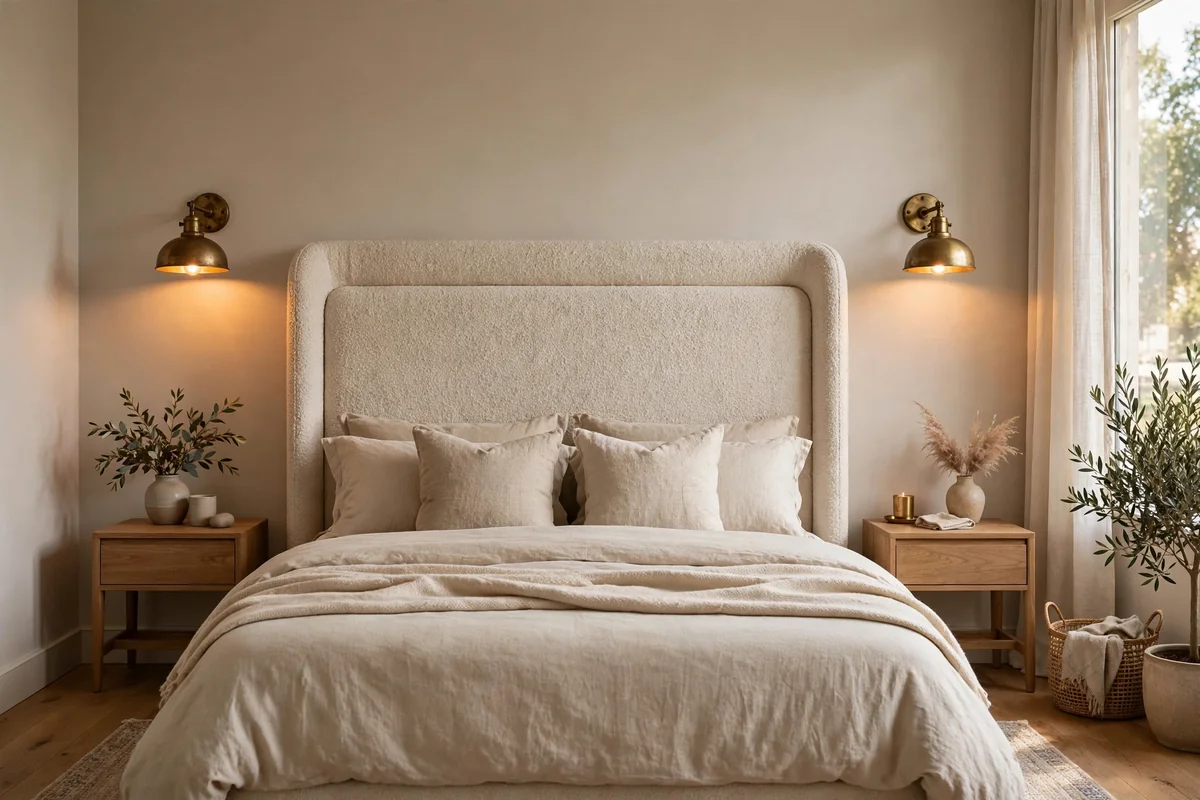
Wall sconces free the nightstands from bulky lamp bases and give the bed an architectural presence. Install one on each side of the headboard, keeping the placement symmetrical even when the rest of the room stays relaxed. Simple plaster, aged brass, matte black, or linen-shaded designs all suit a neutral bedroom beautifully.
Pay attention to bulb temperature as well as brightness, since a lovely fixture feels unpleasant with a harsh cool bulb. Warm, dimmable light suits winding down in the evening. Swing-arm versions are especially useful for readers, directing light exactly where needed without illuminating the whole room. Mount them at a height that clears your shoulder when you sit up in bed.
13. Layer Warm, Dimmable Lighting
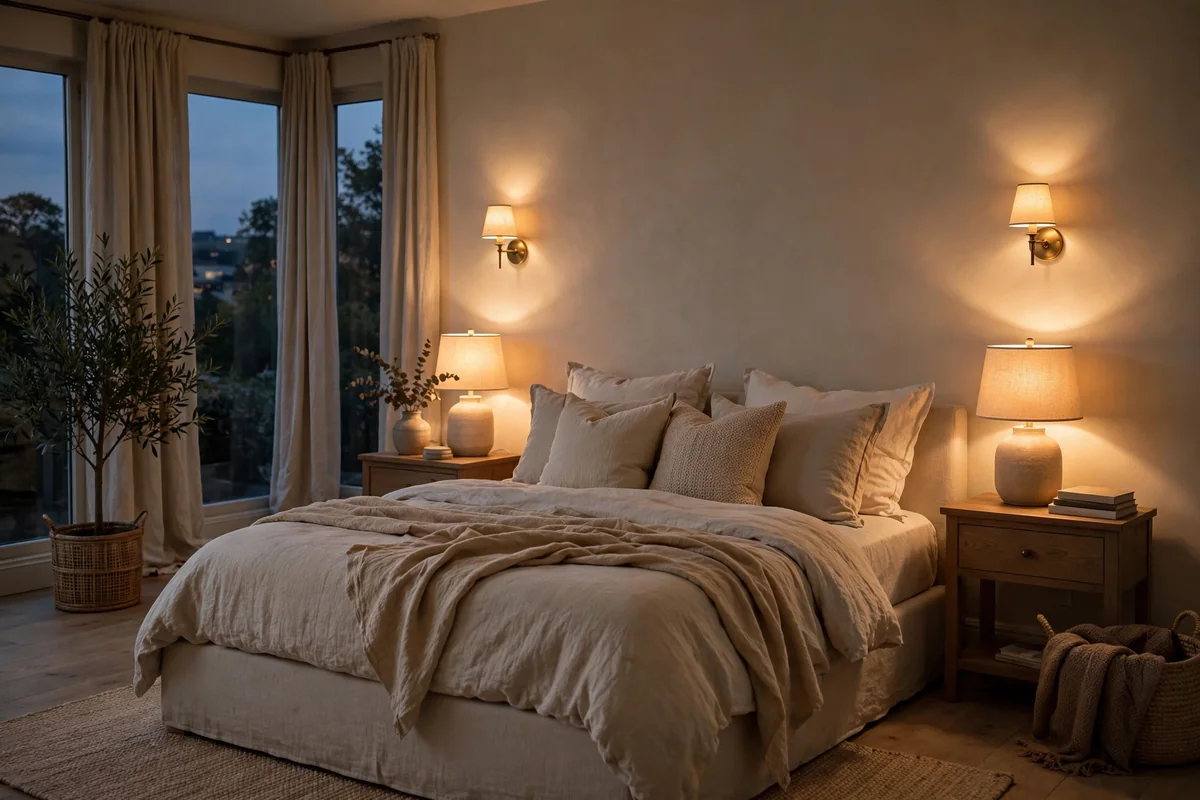
A calm bedroom needs lighting that shifts from useful mornings to soothing nights. Combine overhead, task, and accent sources on dimmers so you can tune the mood: brighter for getting dressed, low and warm for winding down. Table lamps, sconces, and a soft floor lamp together create pools of light that feel intimate rather than flat.
Choose bulbs around 2700K for that golden, relaxing glow, and avoid cool daylight bulbs in the bedroom entirely. Add dimmers to existing fixtures rather than replacing them, which is an affordable upgrade with dramatic effect. Keep cords tidy behind furniture, and place at least one lamp within arm’s reach of the bed so you never cross a dark room at night.
14. Invite Texture with a Boucle Accent Chair
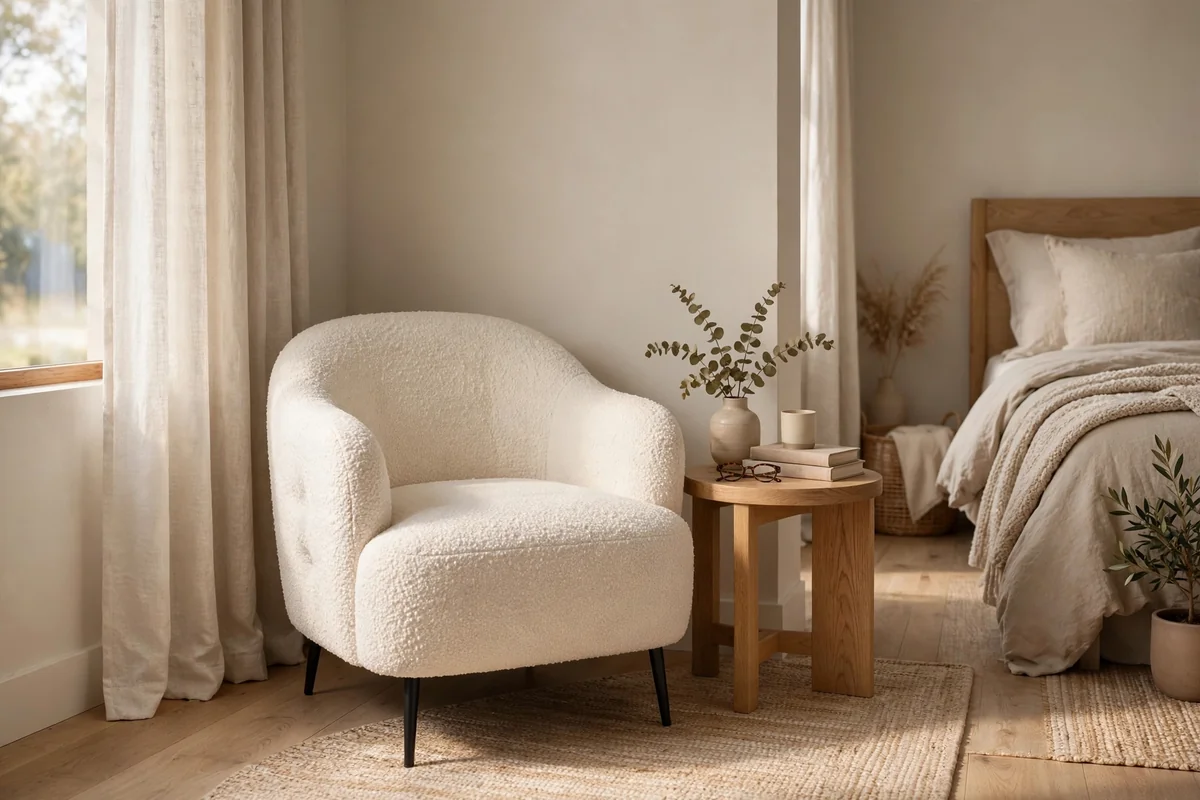
A cream boucle chair adds irresistible texture to a neutral bedroom while offering a spot to read, dress, or simply rest. Its nubby, cloud-like surface catches light beautifully and contrasts with smoother elements like linen bedding and oak furniture. Place it in a corner with a small side table and it instantly creates a destination within the room.
Boucle shows dirt less than flat weaves, but choose a performance fabric if the chair will see daily use. Keep the silhouette compact so it never crowds the bed or blocks walkways, and echo its cream tone in the bedding or rug for cohesion. A small lumbar cushion in a deeper neutral keeps the chair comfortable and visually grounded.
15. Soften Lines with a Curved Headboard
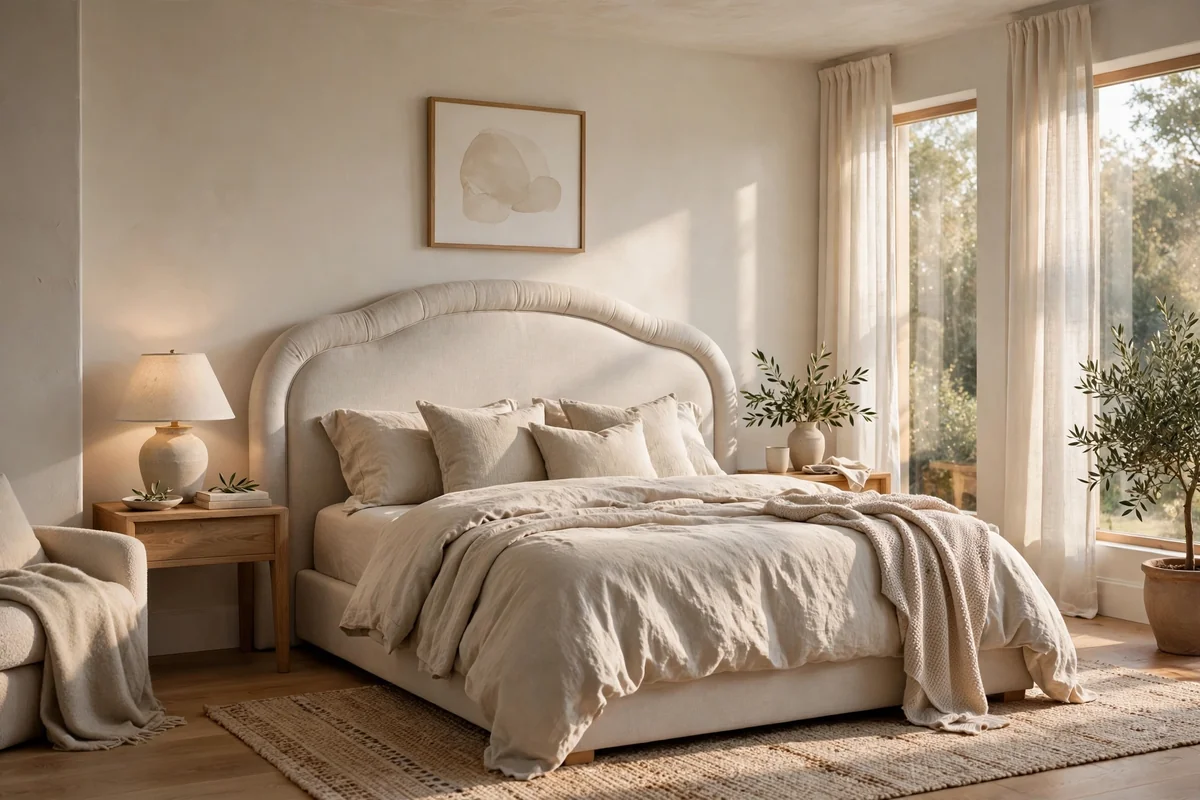
A gently curved headboard introduces a softer silhouette that balances the straight lines of nightstands, dressers, and door frames. In oatmeal or cream upholstery, the curve feels sculptural yet calm, giving the bed presence without visual weight. The rounded form also feels more welcoming, inviting you to lean back with a book.
Keep surrounding shapes simple so the curve remains the star: rectangular nightstands and a low bench provide quiet contrast. Ensure the headboard height suits your pillows, since a very low curve can disappear behind tall Euro shams. A curved headboard pairs beautifully with round mirrors and arched artwork, echoing the soft geometry throughout the room.
16. Hang Oversized Abstract Art in Muted Tones
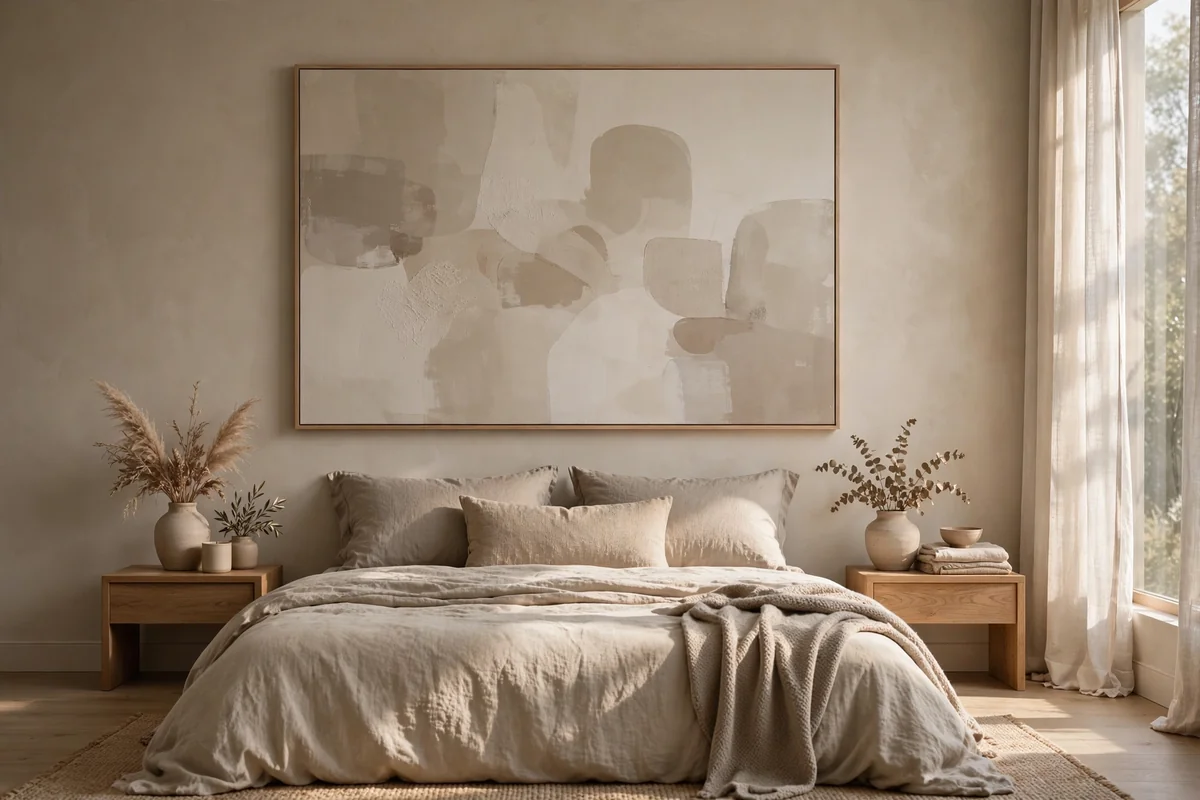
One large abstract piece in muted beige, taupe, and stone tones gives a neutral bedroom a gallery-like calm that small prints cannot match. Hang it centered above the bed, with the bottom edge about six to eight inches above the headboard. The soft, undefined forms add interest without introducing colors that fight the restful palette.
Choose a simple frame, or none at all, so the artwork feels modern and uncluttered. A canvas with visible brush texture adds another layer of tactility to the room. If the art leans warm, echo its deepest tone in a throw or cushion to tie the composition together. Avoid busy, high-contrast pieces, which can energize the room when you want it to soothe.
17. Choose a Low Oak Dresser with Clean Lines
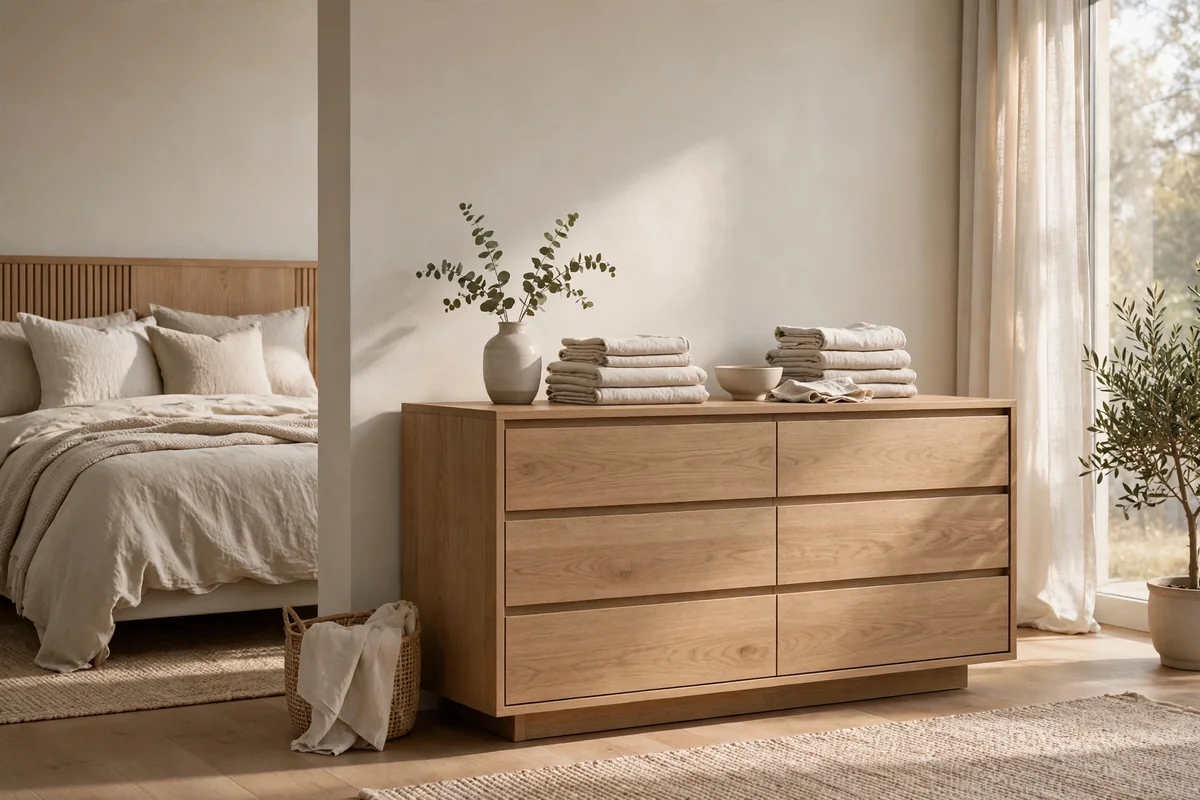
A low oak dresser with simple fronts and minimal hardware keeps a neutral bedroom feeling open and uncluttered. The horizontal line draws the eye across the room, making walls feel wider, while the pale wood adds warmth. Style the top sparingly with a small vase, a folded throw, or a tray that corrals everyday items.
Measure carefully before buying, since an oversized dresser crowds a calm room quickly. Leave breathing space around it rather than pushing it flush against the bed or wall. Inside, use drawer dividers to keep clothing organized, because a serene bedroom depends on hidden order as much as visible beauty. The dresser can also double as a landing spot for a mirror above.
18. Create a Cozy Boucle Reading Nook
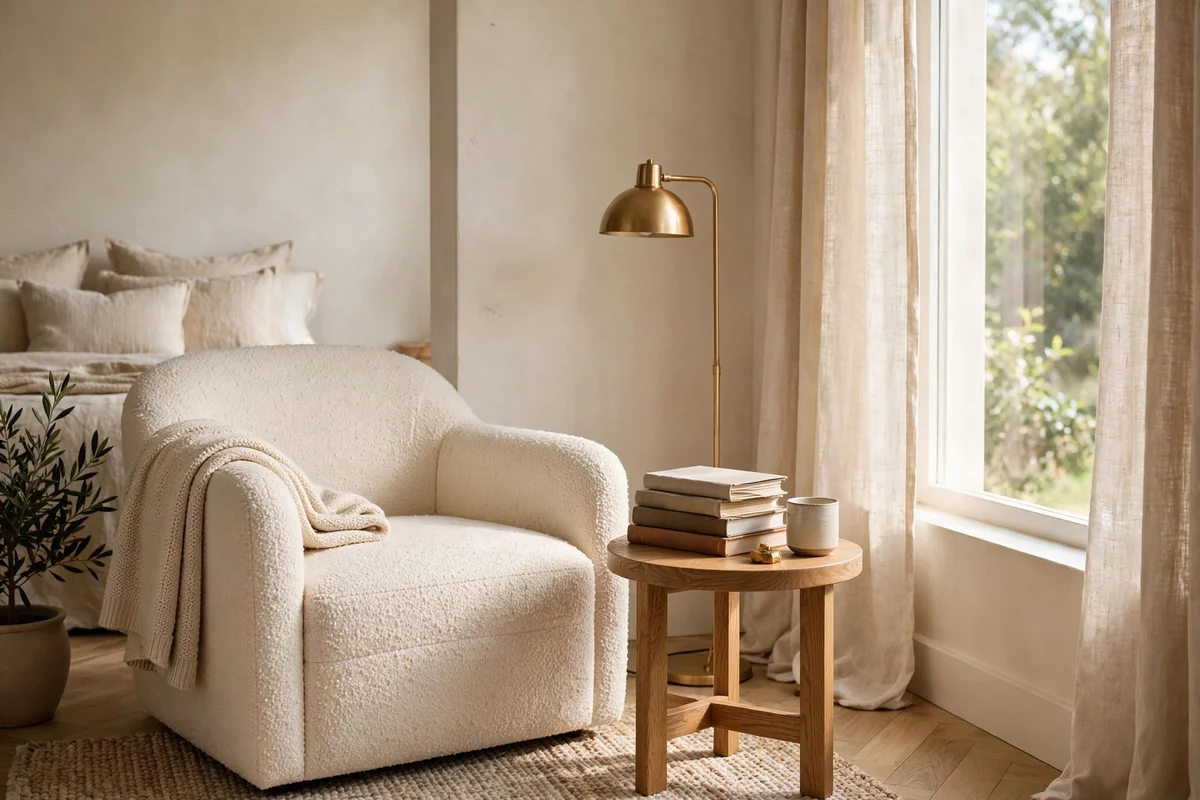
A reading nook turns an unused corner into the most loved spot in the bedroom. Place a cream boucle armchair beside a bright window, add a slim brass floor lamp for evening reading, and tuck a small oak side table nearby for books and tea. A soft throw over the chair arm makes the corner feel finished and inviting.
Keep the nook footprint compact so it never interferes with movement around the bed. A small rug beneath the chair defines the zone and warms your feet. Choose a lamp with a warm bulb and an adjustable head to direct light onto the page. This little retreat encourages slower evenings and gives the bedroom a layered, lived-in feeling.
19. Style Woven Baskets for Soft Storage
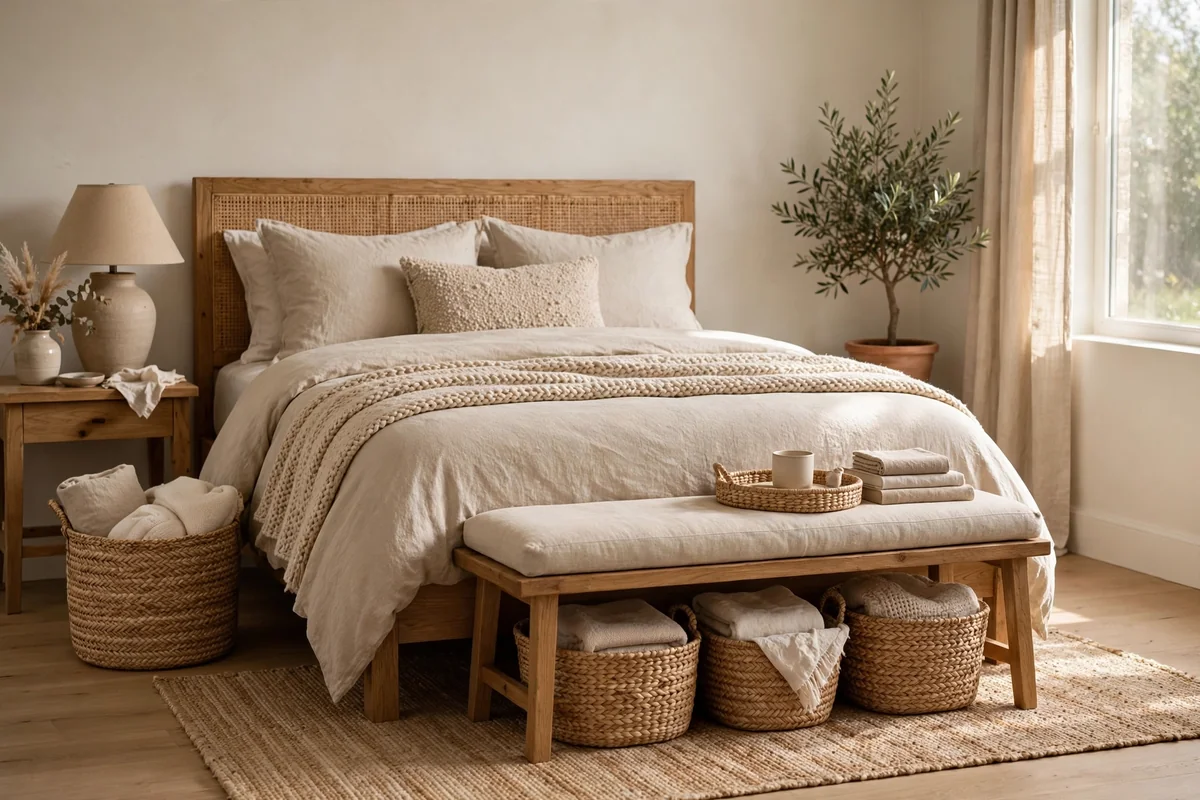
Woven seagrass or rattan baskets bring natural texture while hiding the clutter that ruins a calm bedroom. Tuck a large basket beside the bed for extra throws, slide flat ones under a bench for off-season bedding, and use a small one on the dresser for everyday items. Their organic weave adds pattern without introducing new colors.
Choose baskets with lids for a tidier look, or open weaves when you want to display folded blankets beautifully. Line them with fabric if the weave is rough, which protects delicate throws from snagging. Repeat the basket material at least twice in the room, perhaps with a matching tray or chair, so the storage feels like part of the design rather than an afterthought.
20. Finish with Aged Brass Details
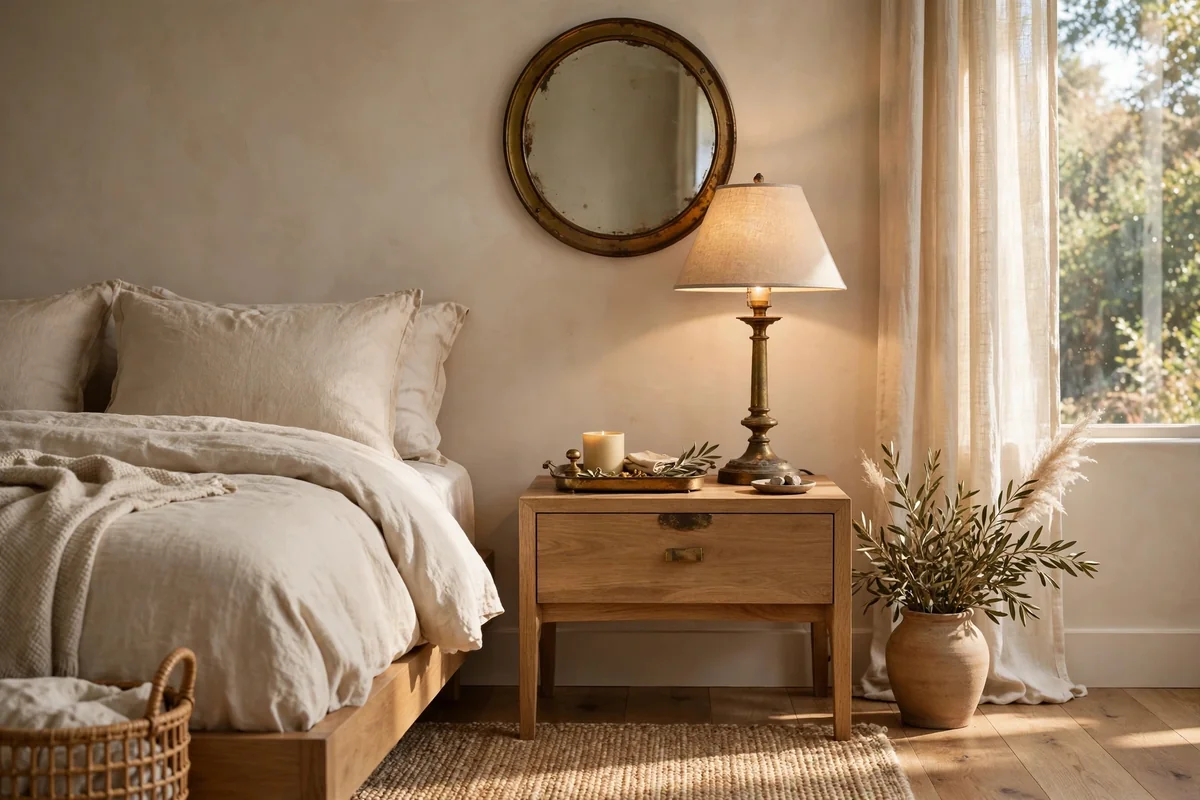
Aged brass details add a quiet gleam that keeps a neutral bedroom from feeling flat. A brass table lamp, a round mirror with a slim brass frame, or a small tray on the nightstand introduces warmth and a hint of heritage. The soft gold tone flatters cream, beige, and taupe far better than shiny chrome.
Use brass sparingly, repeating it two or three times so it reads as intentional rather than scattered. Match the finish across pieces, since mixed brasses can clash. A little patina is welcome and adds character, but polish pieces that look dull or spotty. These small metallic notes give the room its finished, collected-over-time feeling.
Closing Thoughts
Neutral bedrooms reward restraint and reward it beautifully. Keep the palette tight, layer texture with confidence, and let a few well-chosen details do the talking. Whether you repaint a single wall or rethink the whole room, these ideas will help you create a bedroom that feels calm every morning and cozy every night.
Frequently Asked Questions
What colors work best in a modern neutral bedroom?
Warm whites, cream, oatmeal, beige, greige, taupe, mushroom, camel, and soft warm gray form the classic modern neutral palette. Choose shades with warm undertones to avoid a cold or sterile feeling, and test large samples in your room since daylight changes how each color reads. Layer several related tones rather than matching one exactly, and add texture so the restrained palette still feels rich.
How do I keep a neutral bedroom from looking boring?
Texture is the answer: combine smooth cotton, washed linen, nubby boucle, chunky knits, natural wood grain, and woven fibers so the eye always finds something interesting. Vary the tones within your palette, add one deeper accent like dark walnut for contrast, and include a metallic note such as aged brass. Artwork, layered lighting, and thoughtful details complete the depth.
What bedding is best for a neutral bedroom?
Start with comfortable white or ivory sheets, add a duvet in cream or oatmeal, and fold a quilt or throw across the lower third for another layer. Mix materials like crisp cotton and washed linen for subtle contrast, and finish with two shams and a lumbar pillow. Slight wrinkles and relaxed folds keep the bed inviting rather than formal, and fewer, larger pillows look calmer than many small ones.
Can a neutral bedroom work in a small space?
Absolutely, neutrals are ideal for small bedrooms because light tones make walls recede and the room feel larger. Keep furniture low and leggy, use a rug that fits under the lower two-thirds of the bed, and hang curtains high and wide to enlarge the window. Mirrors, warm lighting, and hidden storage keep the small space calm, bright, and uncluttered.
How do I add warmth to a neutral bedroom without adding color?
Warmth comes from materials and light rather than bold color. Add pale oak or walnut wood, woven baskets, a wool rug, and boucle or linen textiles for tactile richness. Switch to warm 2700K bulbs on dimmers, and include aged brass details for a soft golden gleam. Sunlight and layered warm lighting complete the cozy feeling while the palette stays neutral.