Bedroom
22 Nursery Storage Ideas That Keep Baby Spaces Soft, Safe and Wonderfully Tidy
By Anna Wells · · 19 min read
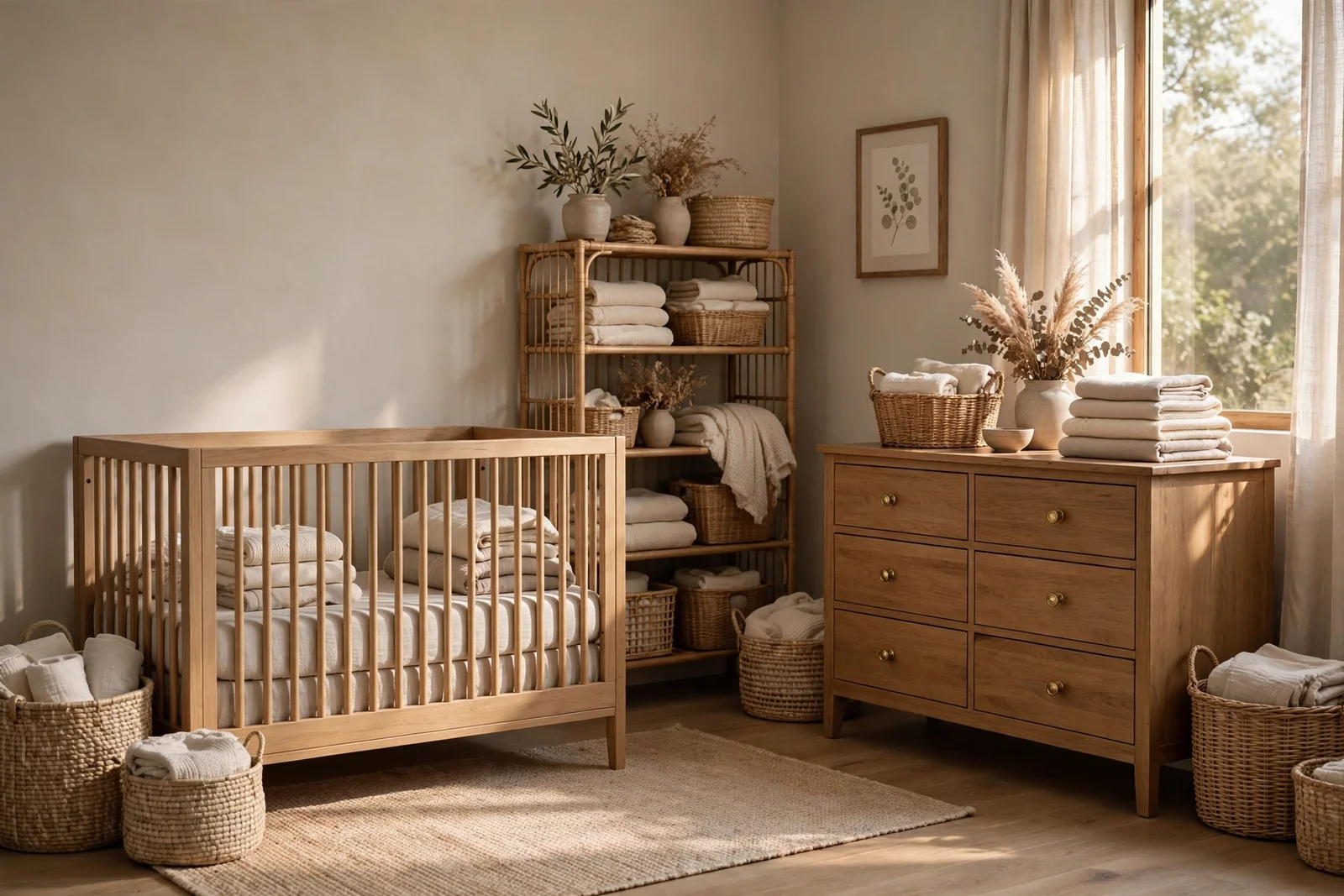
Babies are small, but their belongings are not, so a nursery stays calm when every tiny thing has a safe, simple home within easy reach.
A new baby arrives with a surprising amount of equipment: nappies, muslins, tiny folded clothes, creams, books and blankets all competing for the same few drawers. When storage is planned before the clutter lands, the room keeps its soft, restful feeling, and night time searches for a clean vest become short and calm instead of frantic.
The ideas below favour low, soft and anchored storage over anything tall, heavy or fiddly. Measure before you buy, keep everyday items where you can reach them one handed, and fix every tall or wall mounted piece firmly to studs or proper wall anchors. A nursery that is tidy by design stays tidy with very little daily effort.
1. Low Woven Baskets That Slide Beneath the Cot
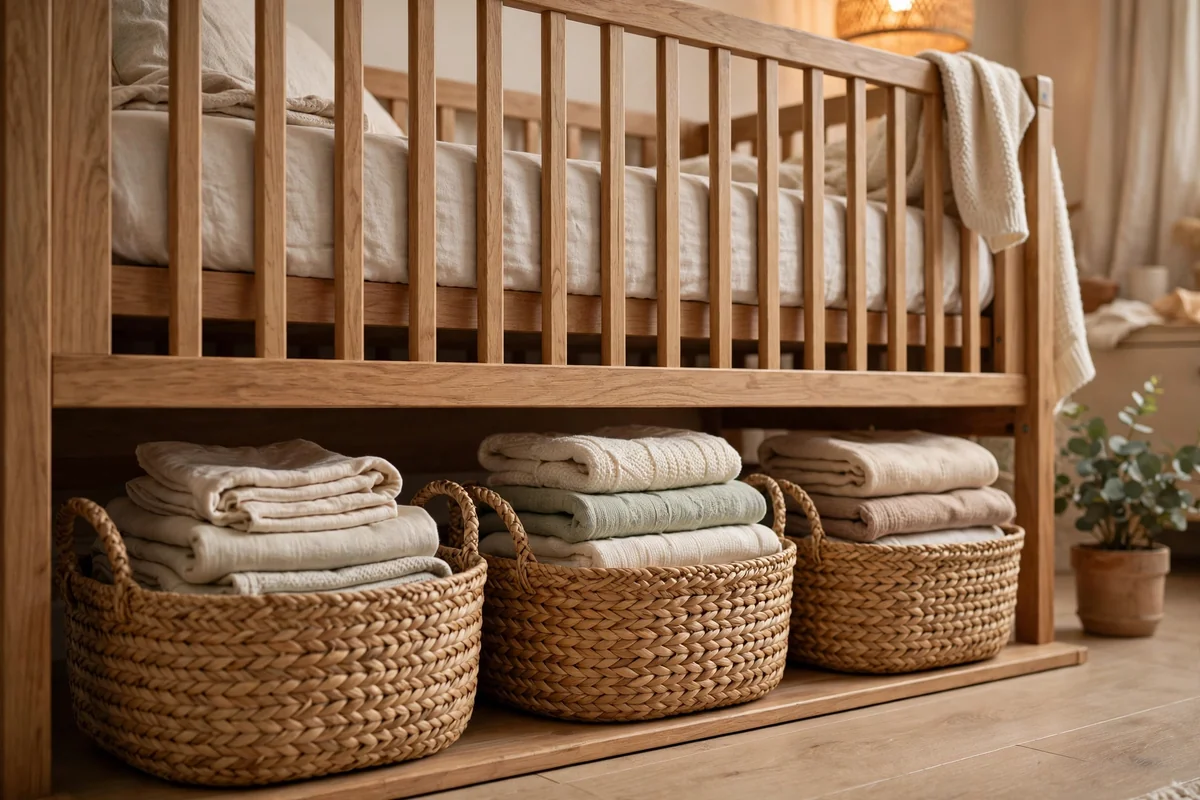
The space under the cot is usually wasted, yet it fits two or three low woven baskets beautifully. Measure the clearance first, since most cots allow about fifteen to twenty centimetres, and choose baskets a little shallower than the gap with handles on the short ends. Seagrass, cotton rope and water hyacinth all slide quietly across carpet or wood.
Fill them with the soft, flat things you reach for at night: spare sheets, swaddles, sleep sacks and extra blankets. Because everything in them is light and soft, there is no safety worry if a basket is pulled out during play later on. As your baby grows, the same baskets can hold soft toys or dressing up clothes without buying anything new.
2. Cube Shelves with Soft Bins at Floor Level
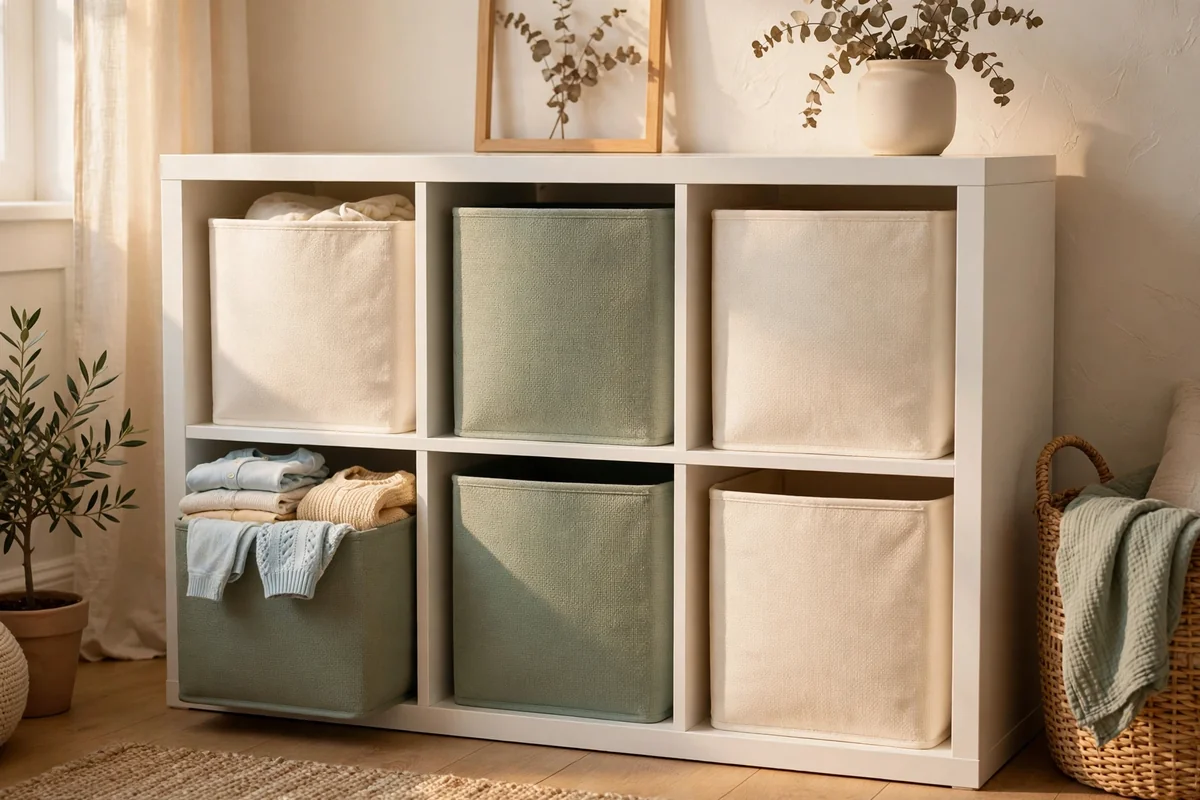
A low cube unit, two cubes high and anchored to the wall, is one of the hardest working pieces a nursery can hold. Fit each cube, usually about thirty three centimetres square, with a soft fabric bin and give every bin one job: nappies, wipes, socks and hats, bibs, or small toys. Soft bins cannot bang little heads the way hard boxes can.
Keep the unit low so nothing heavy sits above your child’s reach, and always use the anti tip strap supplied with flat pack furniture, fixed into a wall stud. Neutral bins in cream, sage or soft grey keep the room calm and hide the cheerful chaos inside. When the baby years pass, the same cubes swallow picture books, puzzles and school bags.
3. A Three Tier Trolley Beside the Changing Mat
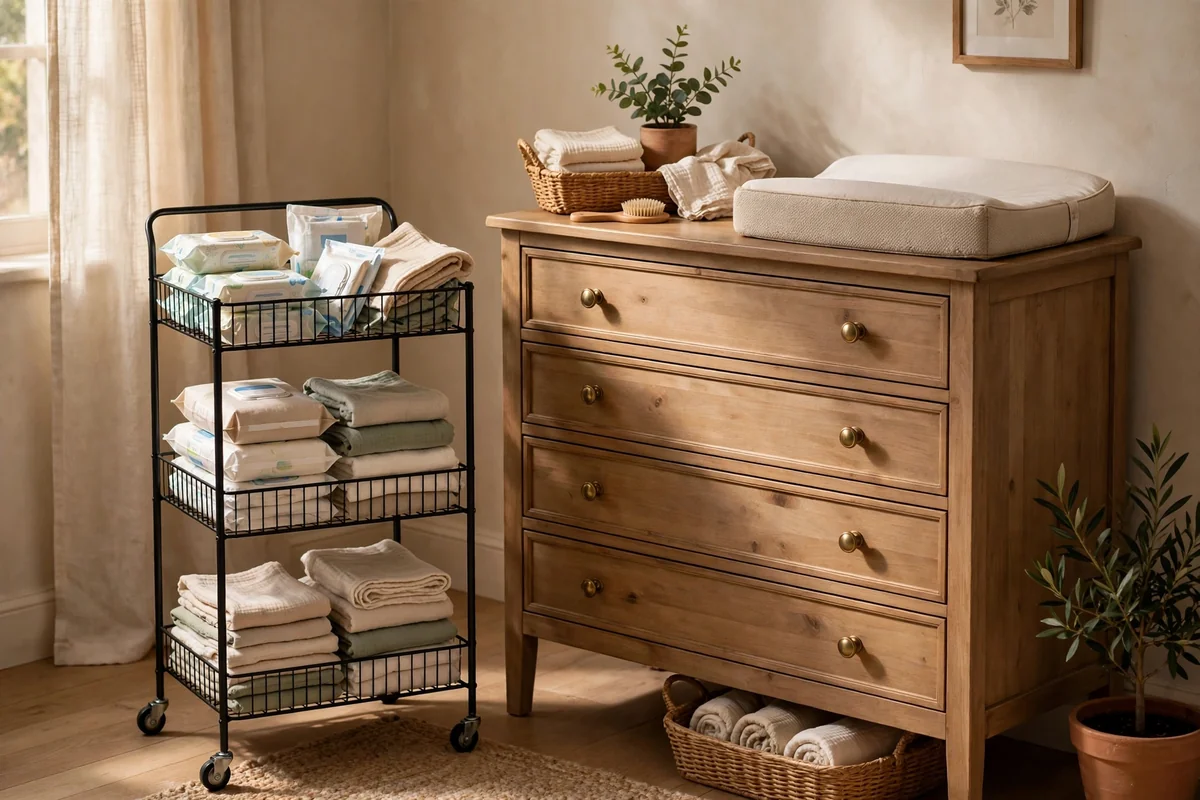
A slim rolling trolley, about forty centimetres wide, turns the awkward gap beside a changing dresser into a complete supply station. Stock the top tier with nappies, wipes and cream, the middle with muslins and spare vests, and the bottom with refills. Everything sits within arm’s reach, which matters when one hand stays on the baby at all times.
Choose a metal or sturdy plastic trolley with smooth rolling casters and rounded edges, and push it flat against the wall when it is not in use so it cannot wander. The same trolley can wheel to the feeding chair at night or into the bathroom for bath time. Wipe the shelves weekly, since cream and powder dust settle surprisingly fast.
4. Anchored Wall Shelves, High and Out of Reach
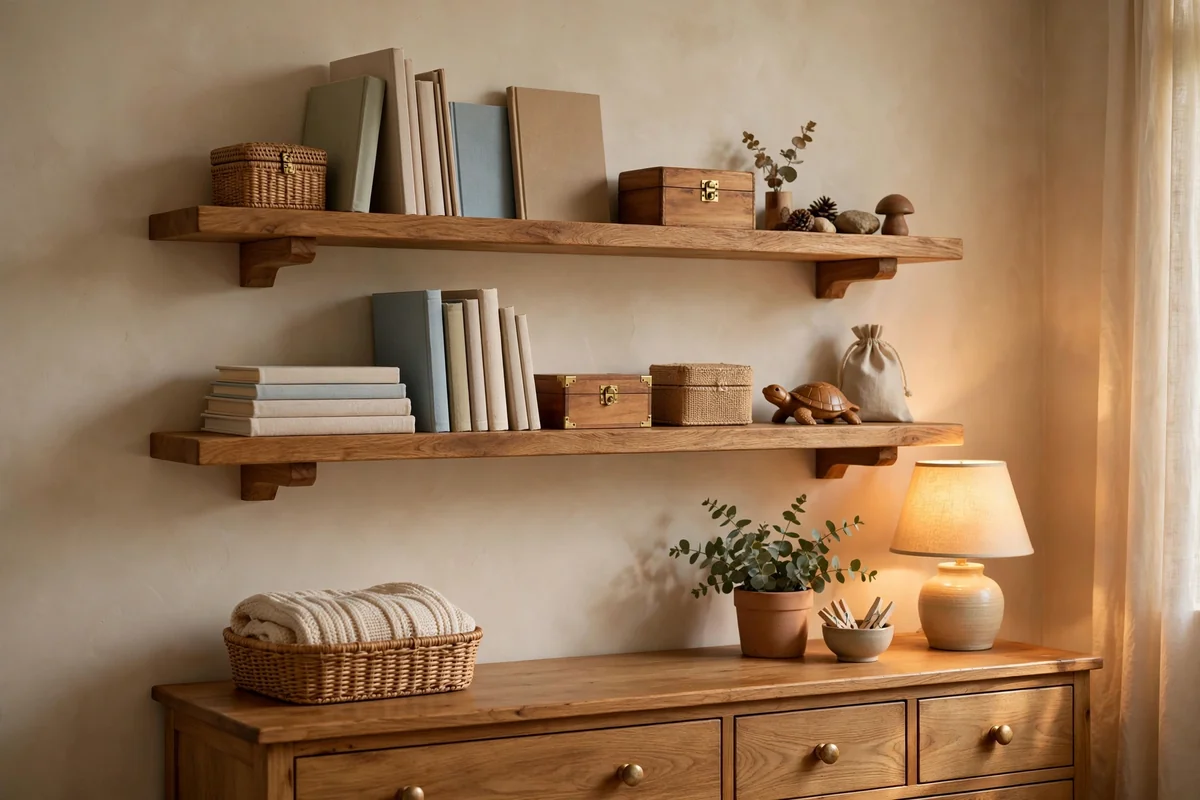
Wall shelves add storage without touching the floor, but in a nursery their placement is a safety decision first and a style decision second. Fit two shelves, sixty to ninety centimetres long, high above the dresser rather than above the cot, and fix them into wall studs or heavy duty anchors rated well beyond the load you plan to store.
Reserve these shelves for light, rarely needed things: keepsake boxes, a few picture books, a framed print or a small basket of muslins. Never store heavy books, ceramics or anything glass above a space where a baby lies or is changed. Check the fixings every few months and tighten at the first sign of movement, however small it seems.
5. Divided Drawers for the Tiniest Clothes
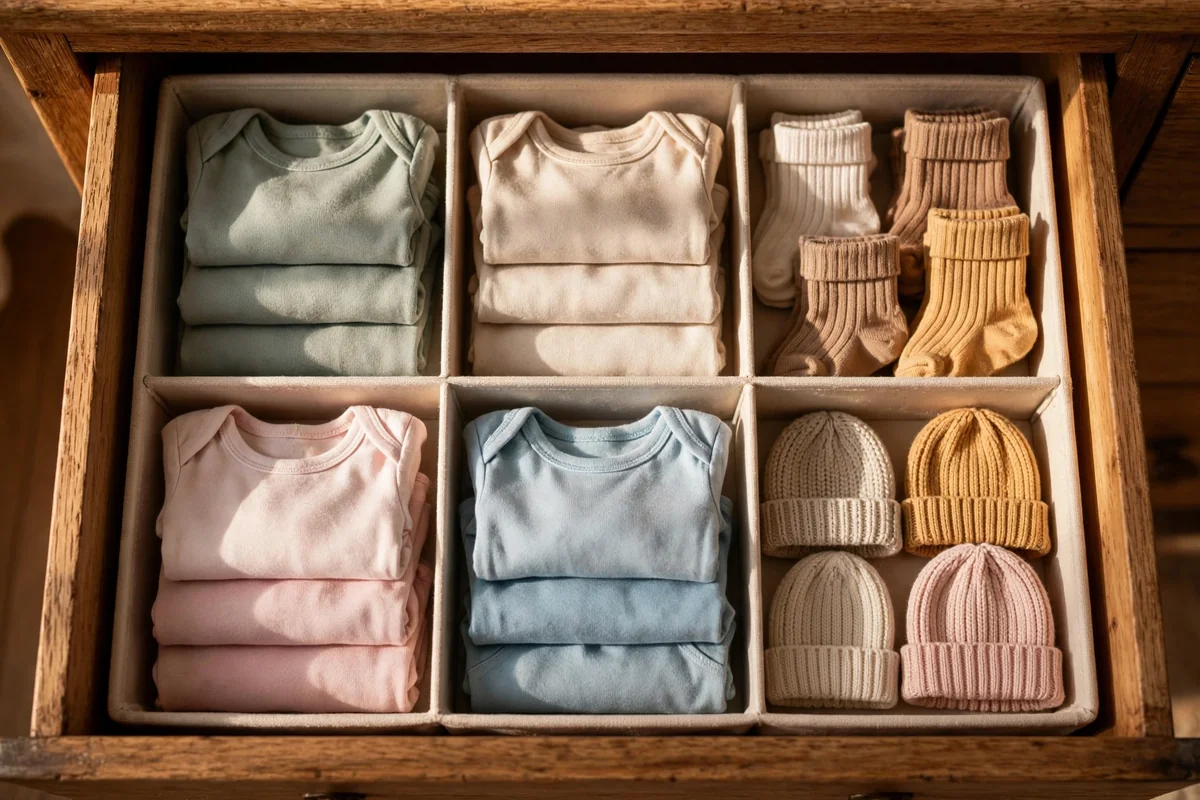
Baby clothes are so small that one deep drawer can swallow a whole wardrobe and return only chaos. Adjustable spring dividers or simple honeycomb inserts split a standard sixty centimetre drawer into sections for vests, sleepsuits, socks, hats and trousers. Roll or file fold each piece upright, so every item is visible at a glance instead of buried in a stack.
Sort the drawer by size as well as type, keeping the current size at the front and the next size behind a divider at the back. Outgrown pieces leave the drawer the moment they are too small, into a labelled box in the wardrobe. Five minutes of sorting after each wash keeps dressing calm, even on the most hurried mornings.
6. Matching Baskets on the Wardrobe Shelves
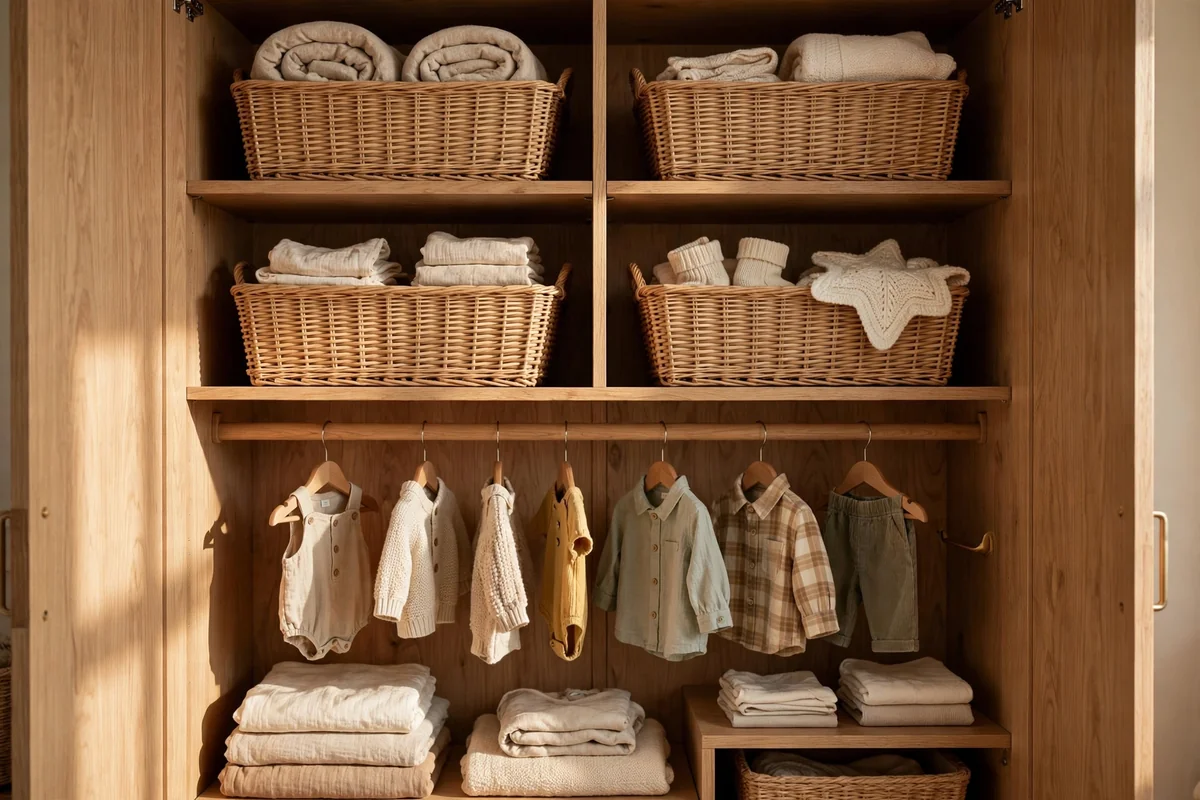
Open wardrobe shelves look messy fastest, because every folded pile leans into its neighbour. A row of matching baskets, one per category, solves it instantly: blankets, spare nappies in the next size, bath towels, seasonal clothes and travel bits. Add a simple picture or word label to each basket front so any helper can put things back in the right place.
Measure shelf depth before ordering, and leave two centimetres of clearance so baskets slide without catching. Woven baskets look warm against painted shelves, while canvas bins fold flat when empty. Keep the heaviest basket, usually books or toiletries, on the lowest shelf, and reserve the top shelf for feather light items only, as later sections explain.
7. Forward Facing Picture Book Rails
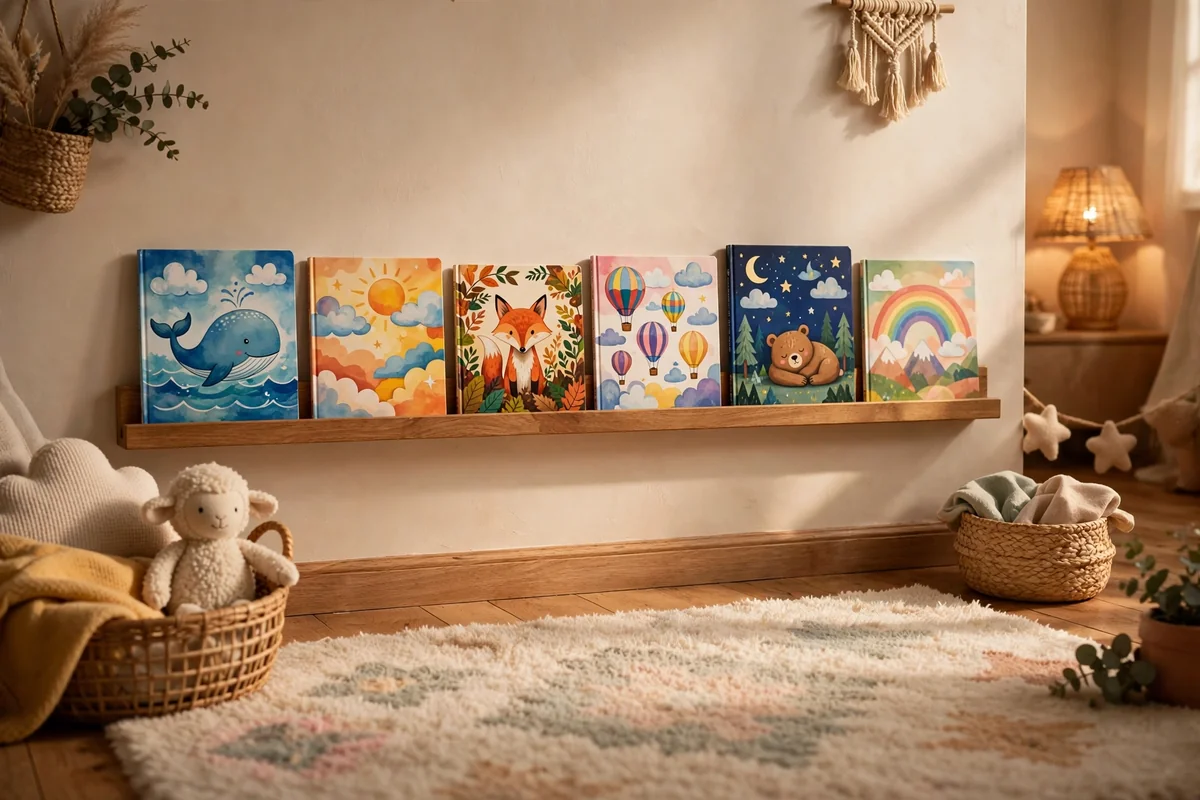
Picture books are too beautiful to hide spine out. A forward facing rail, like a shallow timber ledge about ten centimetres deep, displays covers at child height and turns the reading corner into part of the room’s decoration. Fit rails low, around forty to sixty centimetres from the floor, so a sitting toddler can choose a book independently and safely.
Anchor rails into studs, round off any sharp corners, and display only six to eight books at a time. Rotate the selection weekly from a storage box in the wardrobe, which keeps story time feeling fresh without buying new books. Paperback picture books are light, so a rail carries them easily, but keep heavy hardback treasuries on a low bookcase instead.
8. A Lidded Ottoman That Swallows the Blankets
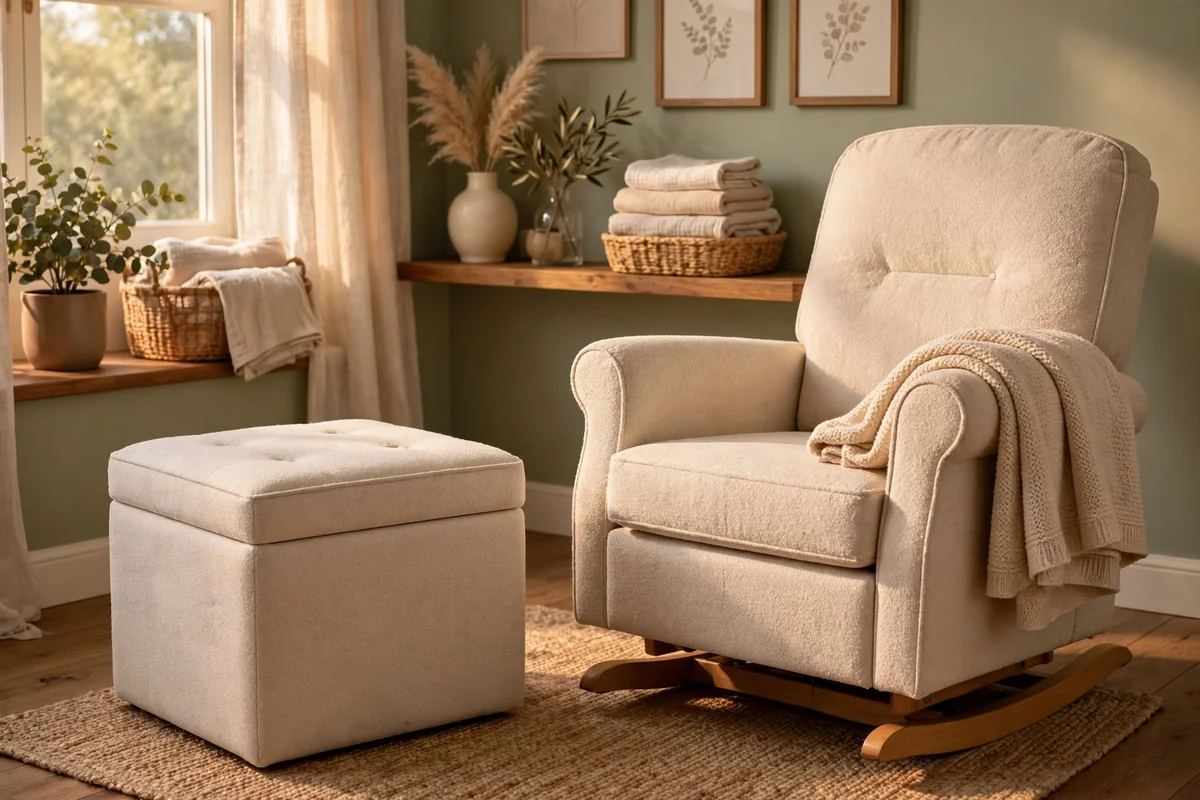
A storage ottoman earns its floor space three times over: a footrest during feeds, an extra seat for visitors, and a hollow belly that hides bulky blankets, spare cushions and large soft toys. Choose one around forty five centimetres high with a padded, upholstered body so there are no hard corners at crawling height anywhere near it.
The lid deserves attention. Look for soft close or fully detachable lids, and avoid heavy hinged lids that could fall on small fingers. Check that the inside has ventilation and no locking mechanism of any kind. An ottoman in washable fabric, in a calm neutral tone, will keep serving the room long after it becomes a child’s bedroom and then a reading nook.
9. A Wooden Peg Rail with Cotton Bags
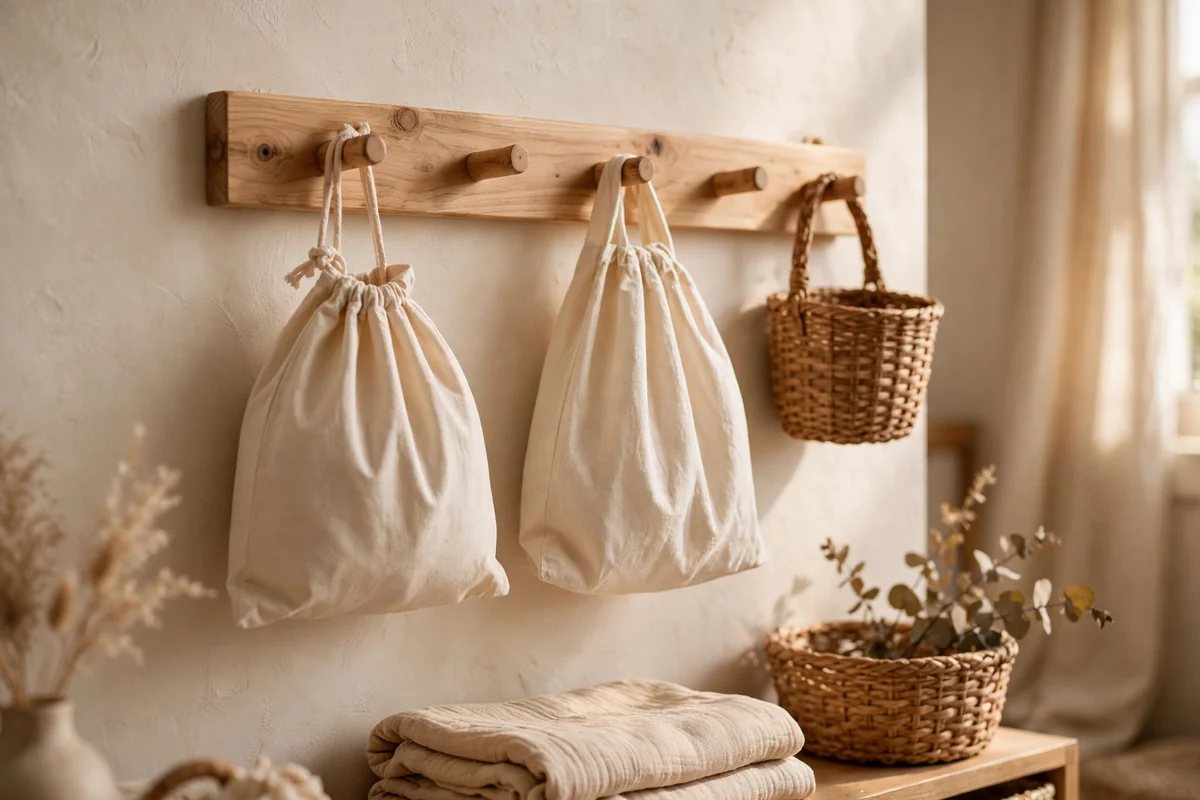
A simple wooden peg rail, mounted at adult shoulder height on a free wall, gives soft things a home without using a single drawer. Hang cotton drawstring bags for bibs, hats, burp cloths and small toys, each bag a different calm colour so contents are easy to guess. The rail itself, in natural wood, adds a handcrafted cottage warmth to the room.
Fix the rail into studs along its whole length, since loaded bags pull steadily downwards, and round pegs are safer than hooks if anyone brushes past. Keep bags light and never hang anything heavy, breakable or with long cords that could loop. When your child is older, the same rail holds a school bag, a sun hat and a dressing gown with no alteration at all.
10. Pocket Storage on the Back of the Door
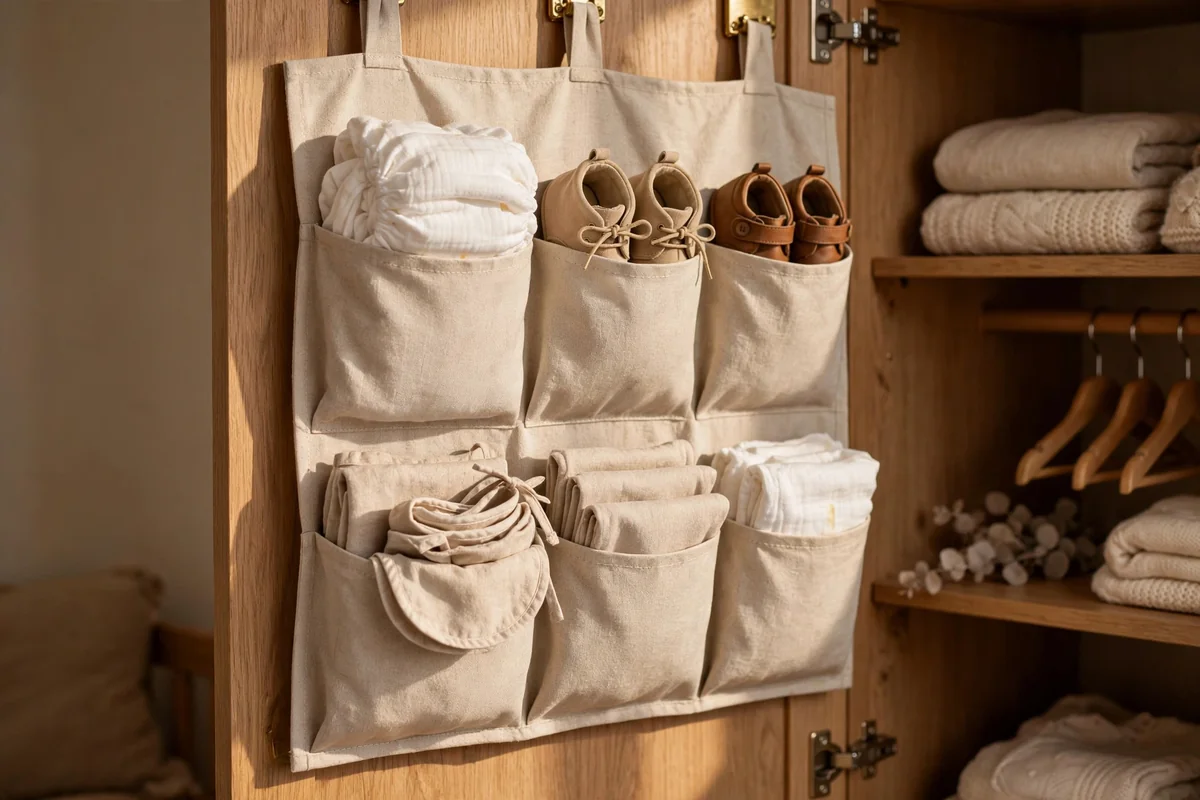
The inside of a wardrobe or nursery door is free storage hiding in plain sight. A fabric pocket organiser with clear or mesh pockets holds the small, losable things: nail scissors in their case, a thermometer, spare dummies in a clean box, hairbrushes, socks and bibs. Nothing in it is heavy, which keeps the door hinges happy and the organiser hanging straight.
Hang it on the inside of the door rather than the room side, so curious toddlers cannot reach the pockets as they grow, and choose flat hooks that let the door close fully. Small toiletries with lids belong in the highest pockets, well out of reach. Give the organiser a shake and a wash every month or two, because door pockets collect dust surprisingly quickly.
11. Lidded Bins for a Calm Toy Rotation
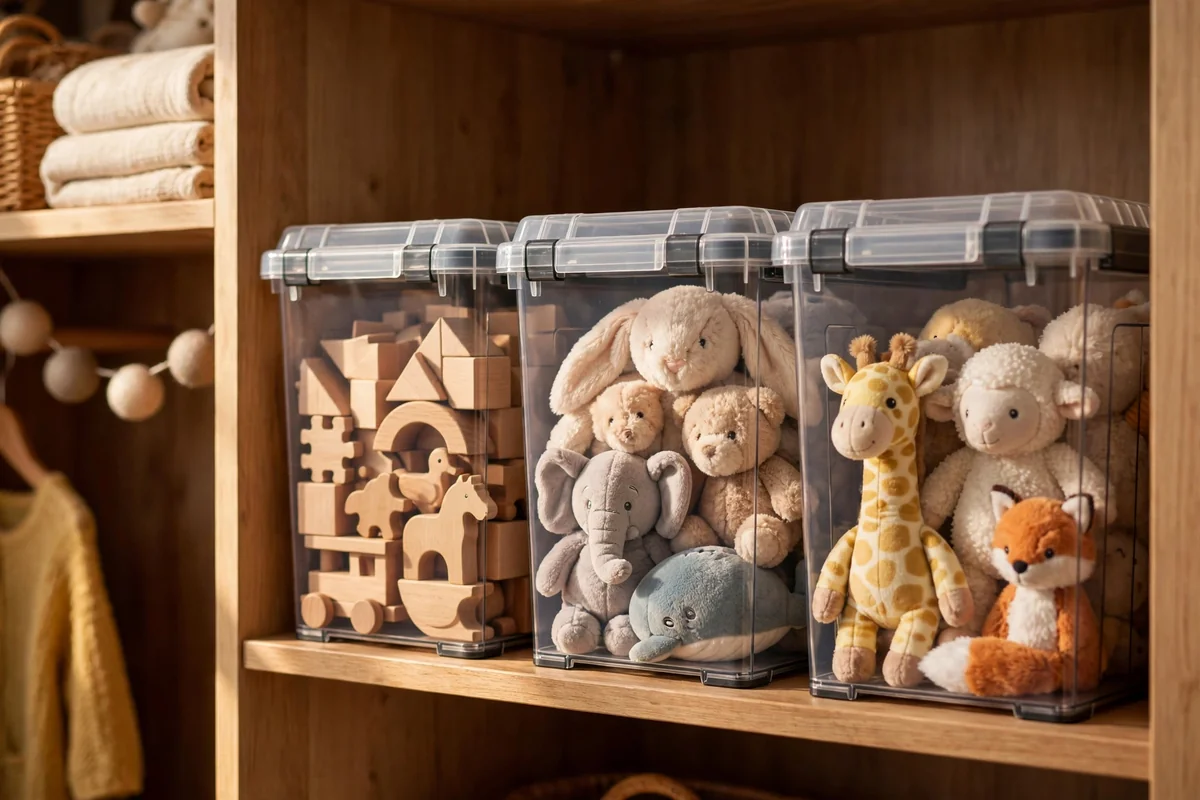
Too many toys at once overwhelms small children and untidies a room in minutes. Keep most toys in lidded bins on a wardrobe shelf, sorted by type: wooden toys, soft toys, rattles and stacking toys, blocks. Leave only one bin’s worth out on the low shelves, and swap the selection every week or two so familiar toys feel new again.
Choose bins with easy lids that cannot seal airtight, in sizes an adult can lift down comfortably when full, and stack no more than three high. Labels with simple pictures help grandparents and babysitters return toys to the right bin. Rotation also protects toys: pieces stay together, batteries get checked, and broken items are spotted and removed before small hands find them.
12. A Window Seat with a Hidden Compartment
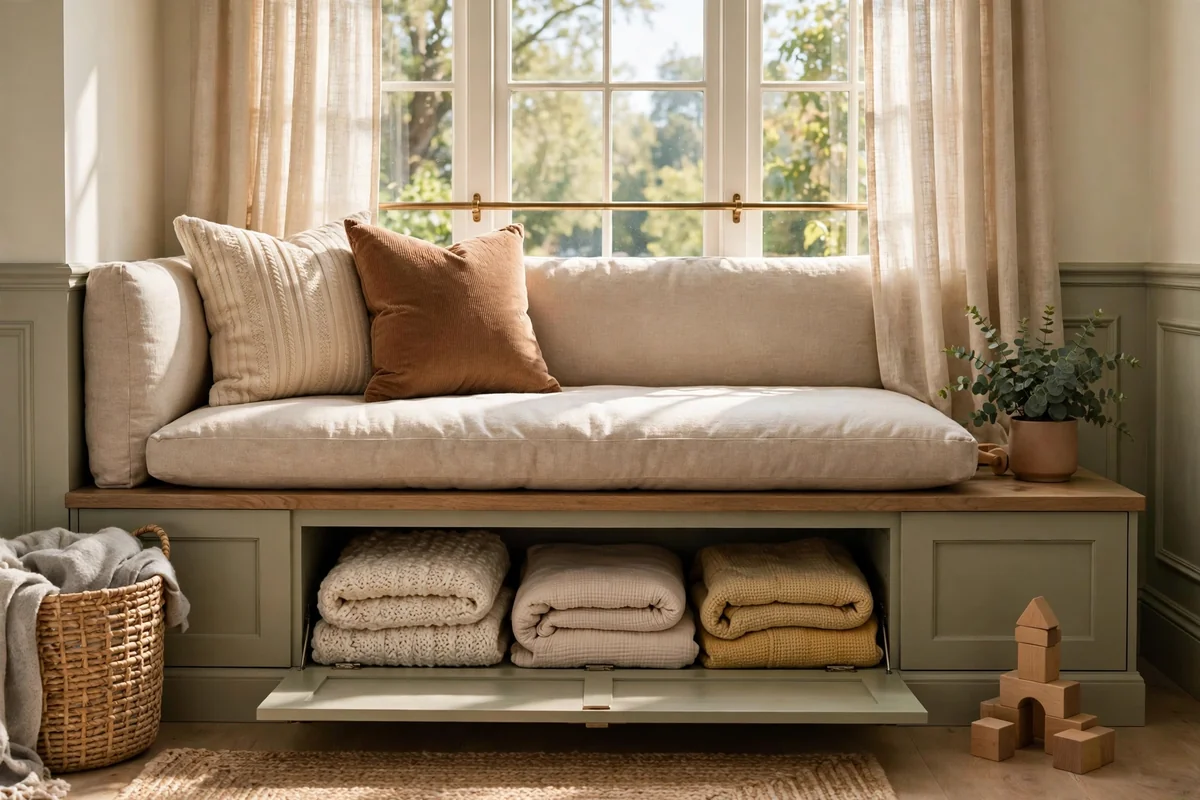
A bench beneath the window turns dead space into the nursery’s biggest storage box. Whether built in or freestanding, a seat around forty five centimetres high with a lift up or drawer base can hold spare blankets, seasonal clothes, a play mat and larger toys that never fit anywhere else. A washable cushion on top makes it the sweetest story spot in the house.
Safety shapes the design: fit slow close hinges or a soft close stay so the lid can never fall, drill ventilation holes in the base as furniture makers do, and never fit a latch or lock. Keep the bench low and stable, and if it is freestanding, anchor it to the wall like any tall piece once a climbing toddler arrives.
13. A Compact Wardrobe Sorted by Size
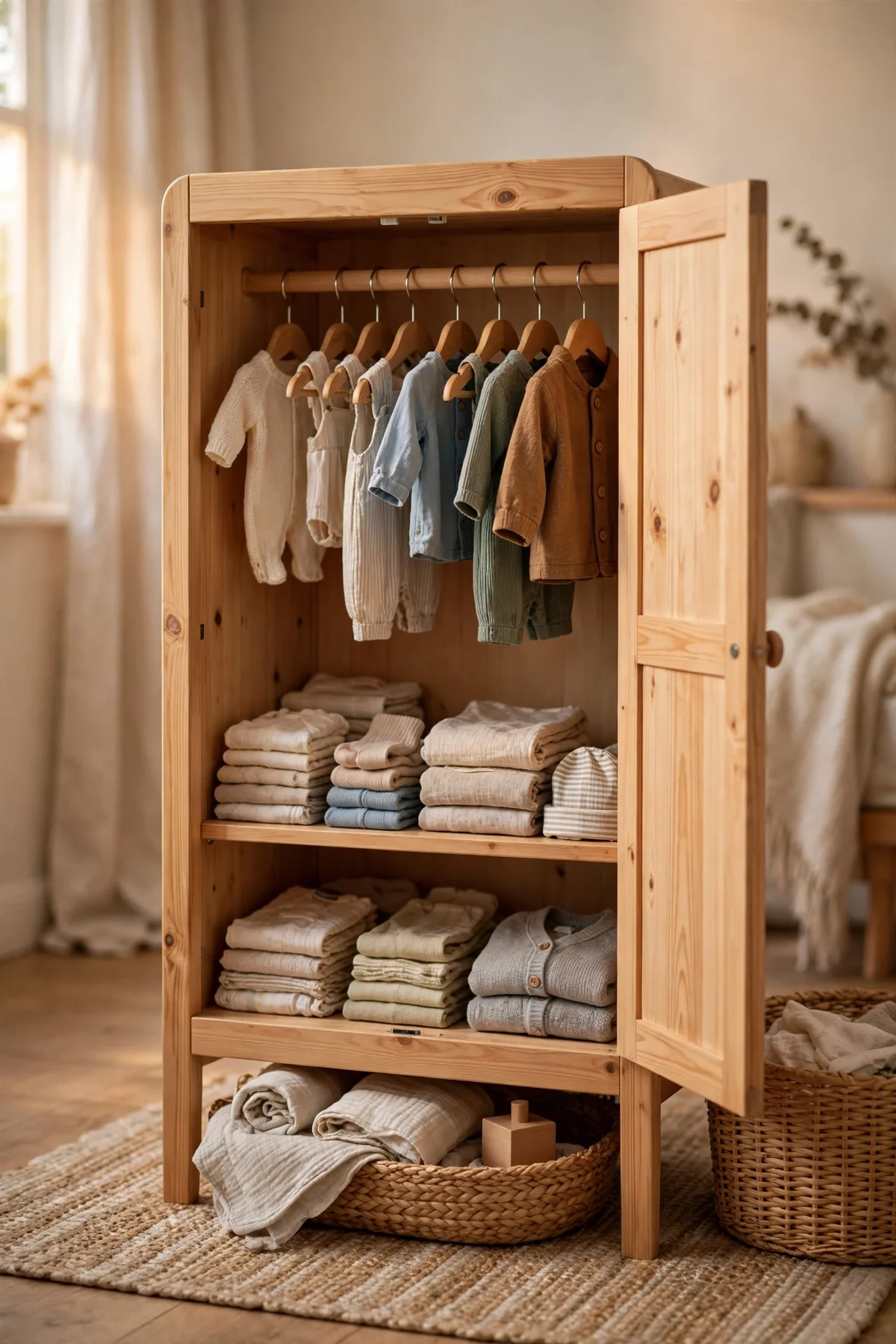
When the nursery has no built in closet, a compact freestanding wardrobe, about one hundred twenty centimetres tall, restores order. Hang clothes in strict size order, current size at the front, with folded stacks on the shelves above and shoes or boxed keepsakes below. The discipline of size order stops lovely outfits being discovered only after they are outgrown.
Anchor the wardrobe to the wall the day it arrives, before a single hanger goes in, because tall narrow furniture is the most tip prone of all. Leave growing room in your system: babies pass through sizes quickly in the first year, so review the rail monthly and move outgrown clothes straight into a labelled storage box for keeping, passing on or donating.
14. Round Size Markers on the Hanging Rail
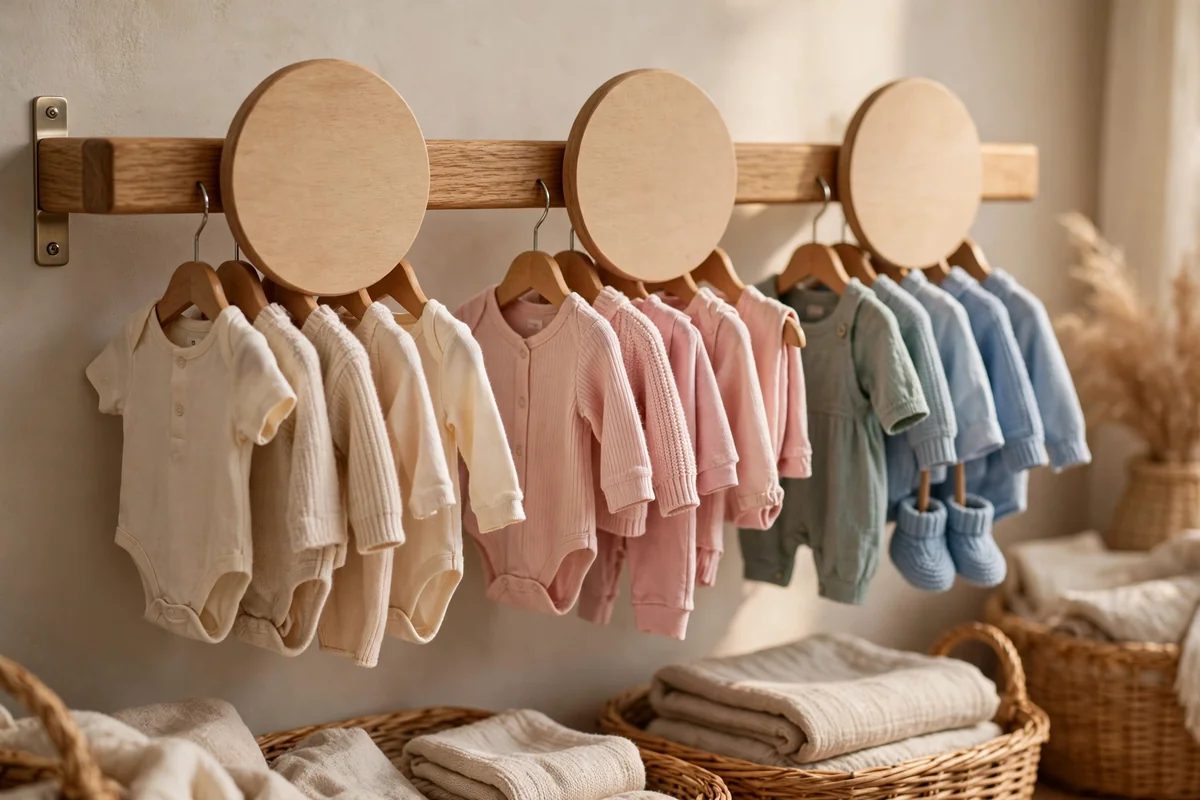
Size markers are the cheapest organisation upgrade in the nursery. Round discs that slip over the hanging rail, marked newborn, nought to three, three to six and so on, divide one rail into clear neighbourhoods. You can buy plain wooden discs and write the sizes yourself, or cut sturdy card circles for a nearly free version that works just as well.
Place the markers after every laundry day, when clothes return to the rail, because the system only works if hangers go back behind the right disc. When a growth spurt arrives, dressing takes seconds: everything behind the current marker fits. The discs also make hand me down sorting painless, since incoming gifts can be hung straight into their future size section.
15. Wall Baskets Fixed Firmly by the Changer
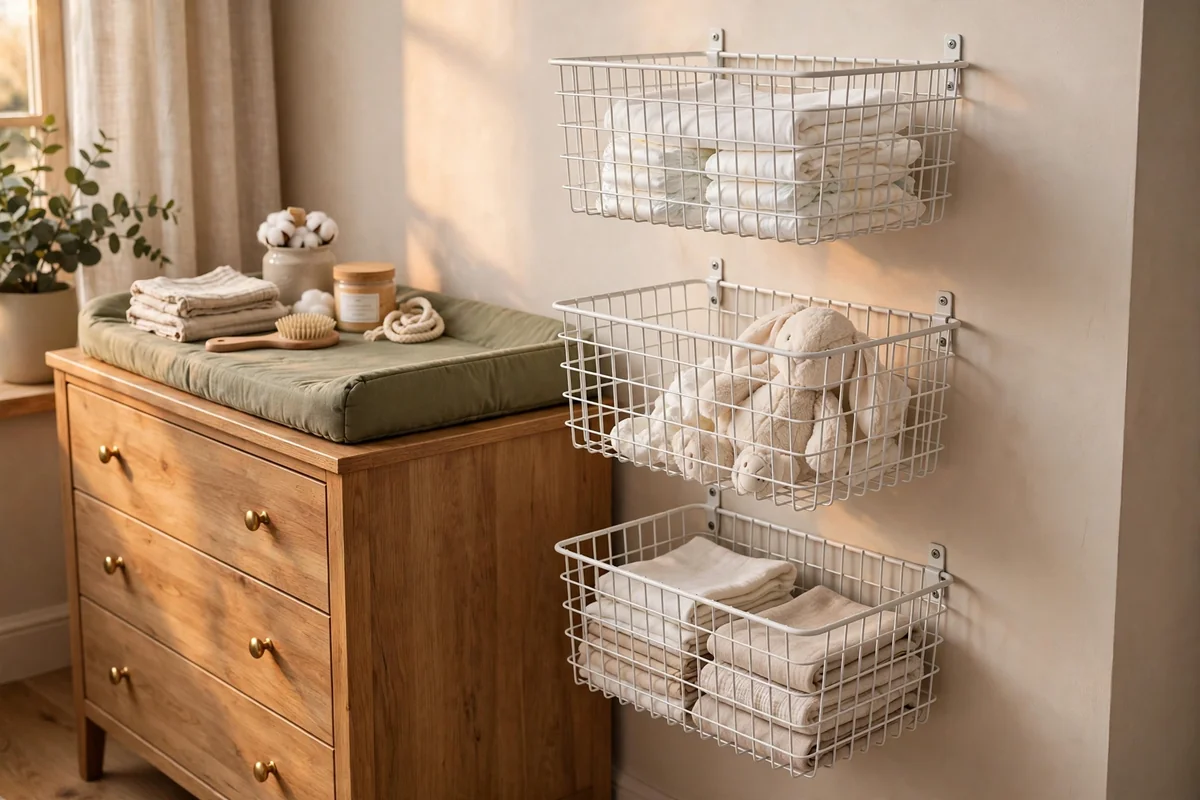
Wire or woven wall baskets beside the changing dresser keep nappies, wipes and spare cloths visible and grabbable without crowding the mat. A row of three baskets, each about thirty centimetres wide, fixed at adult waist height to the side of the changer, never directly above it, means supplies are close but nothing can fall onto the changing surface.
Use the screws and wall plugs suited to your wall type, into studs where possible, and test each basket with a firm downward tug before loading it. Keep basket contents soft and light: cloths, nappies, a spare vest. Creams and bottles live better in a caddy on the dresser itself, where they stand upright and cannot tip through basket gaps onto the floor.
16. One Caddy That Holds the Whole Change
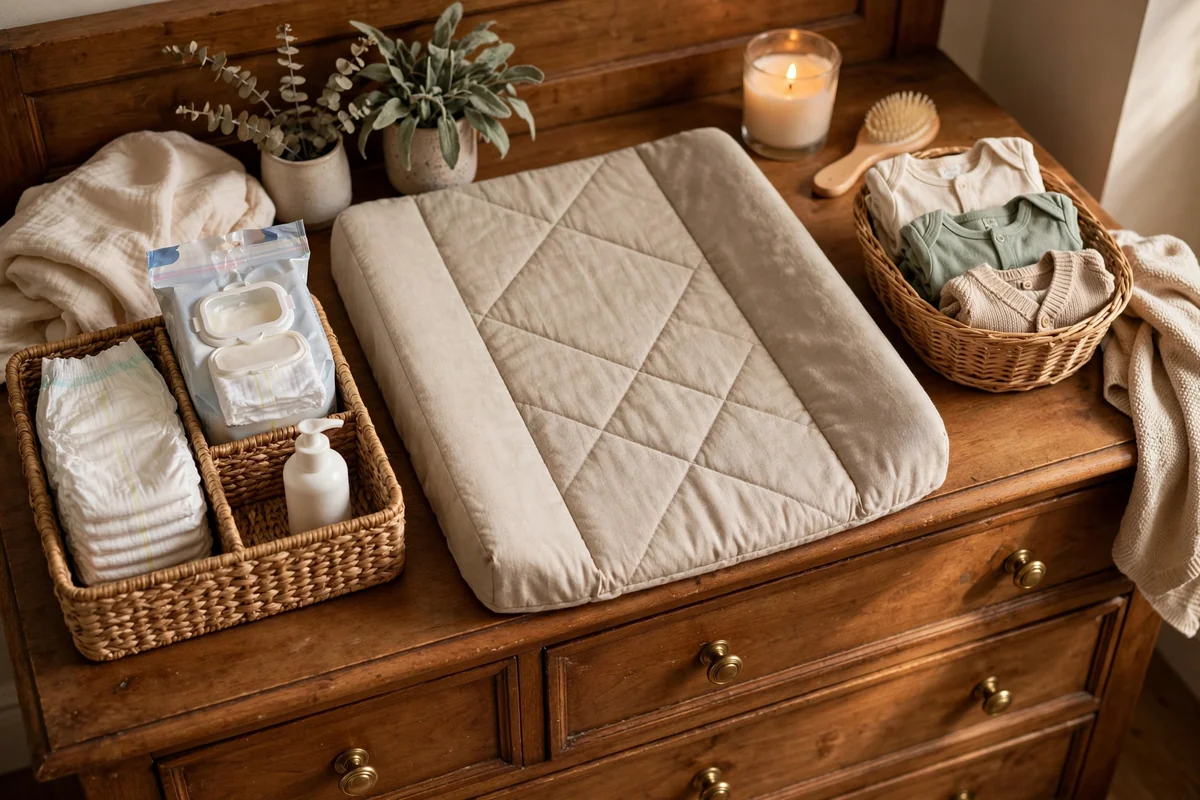
Instead of supplies scattered across three surfaces, gather the whole nappy change into one handled caddy that lives on the dresser: nappies, wipes, cream, nappy sacks, a spare vest and a muslin. A caddy about thirty five centimetres long with divided compartments keeps everything upright and visible, and it can travel to another room or a grandparent’s house in one trip.
Keep a small refill basket inside the wardrobe with the next pack of nappies and wipes, so the caddy is topped up in seconds rather than raided from around the house. Never leave the caddy, or any supplies, on the changing mat itself, and keep creams capped and upright. Restock during a calm moment each evening and mornings become noticeably smoother.
17. Clear Stacking Boxes for Spares and Keepsakes
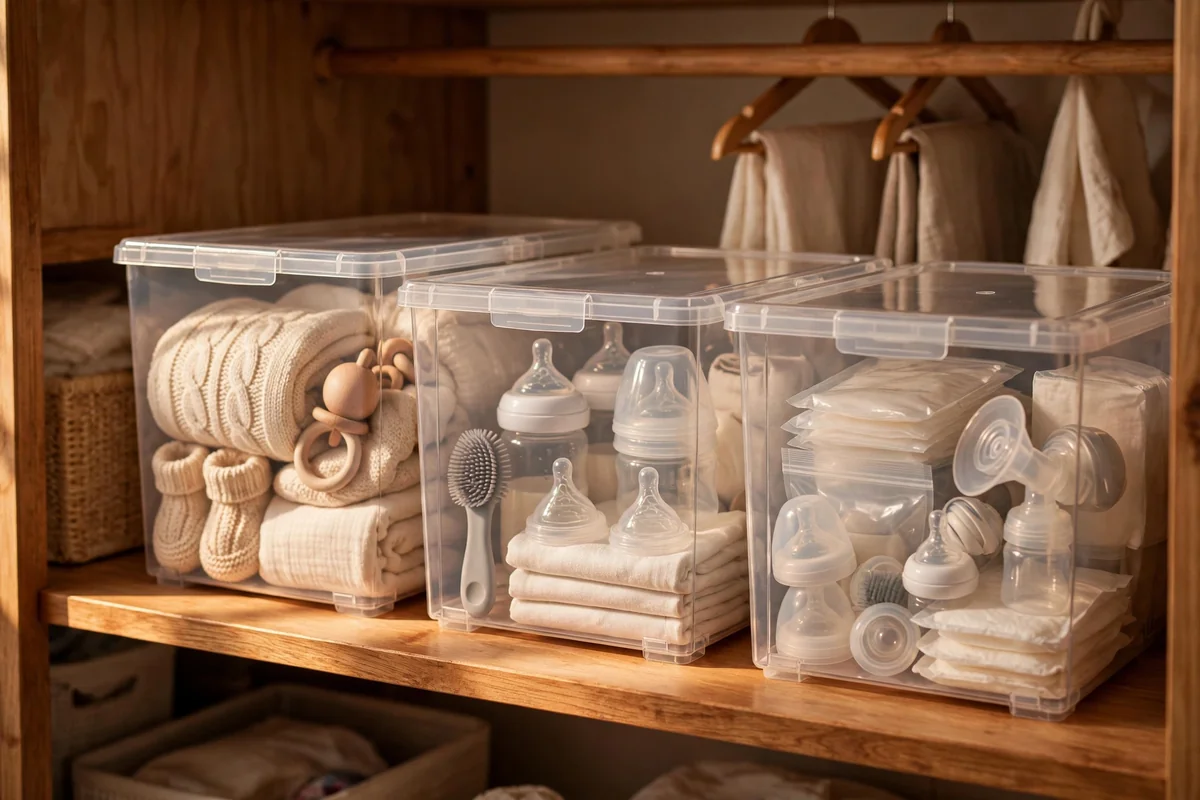
Clear boxes handle the things you need rarely but must find quickly: keepsakes, spare bottles, seasonal bits, next size toiletries and the outgrown clothes waiting to be passed on. Because the contents are visible, nothing is forgotten at the bottom of a dark cupboard. Add a plain label anyway, since labels make sense of a box at arm’s length on a high shelf.
Choose sturdy boxes with lids that clip rather than balance, and stack them no more than three high on a shelf you can reach without stretching. Keep keepsake boxes light and store them up high, while heavier boxes of spares live low. A quick review every season, moving outgrown things on, stops the clear box collection quietly taking over the whole wardrobe.
18. A Dresser That Truly Earns Its Floor Space
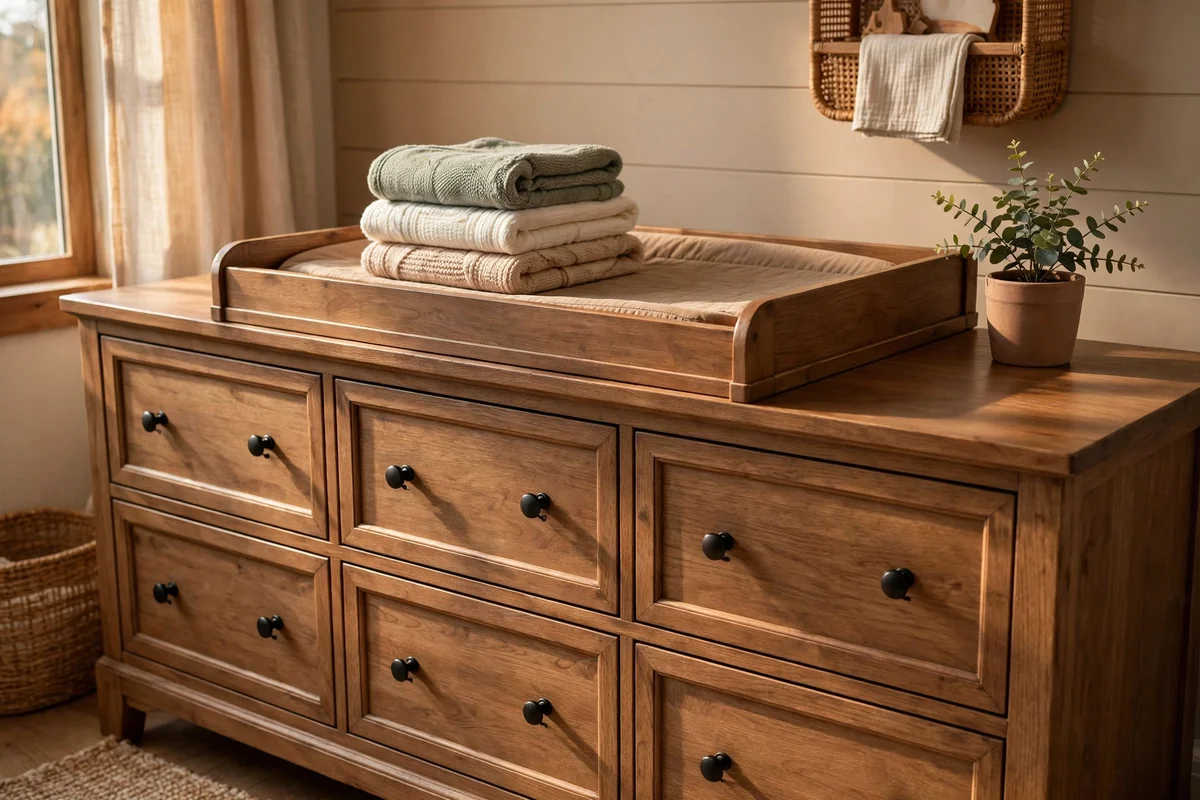
If one piece of nursery furniture deserves the largest share of the budget, it is the dresser with a changing top. A wide dresser, one hundred to one hundred twenty centimetres, gives you a safe changing surface at standing height and three or four deep drawers below, which together replace a changer, a chest and a storage unit in a single footprint.
Look for drawers that glide fully open, so nothing hides at the back, and fit drawer dividers from the first week. Anchor the dresser to the wall without exception, because open drawers shift its balance forward, and never place a television or heavy items on top. When the changing years end, remove the top tray and the same dresser serves a child for a decade.
19. Light Things Only on the Highest Shelf
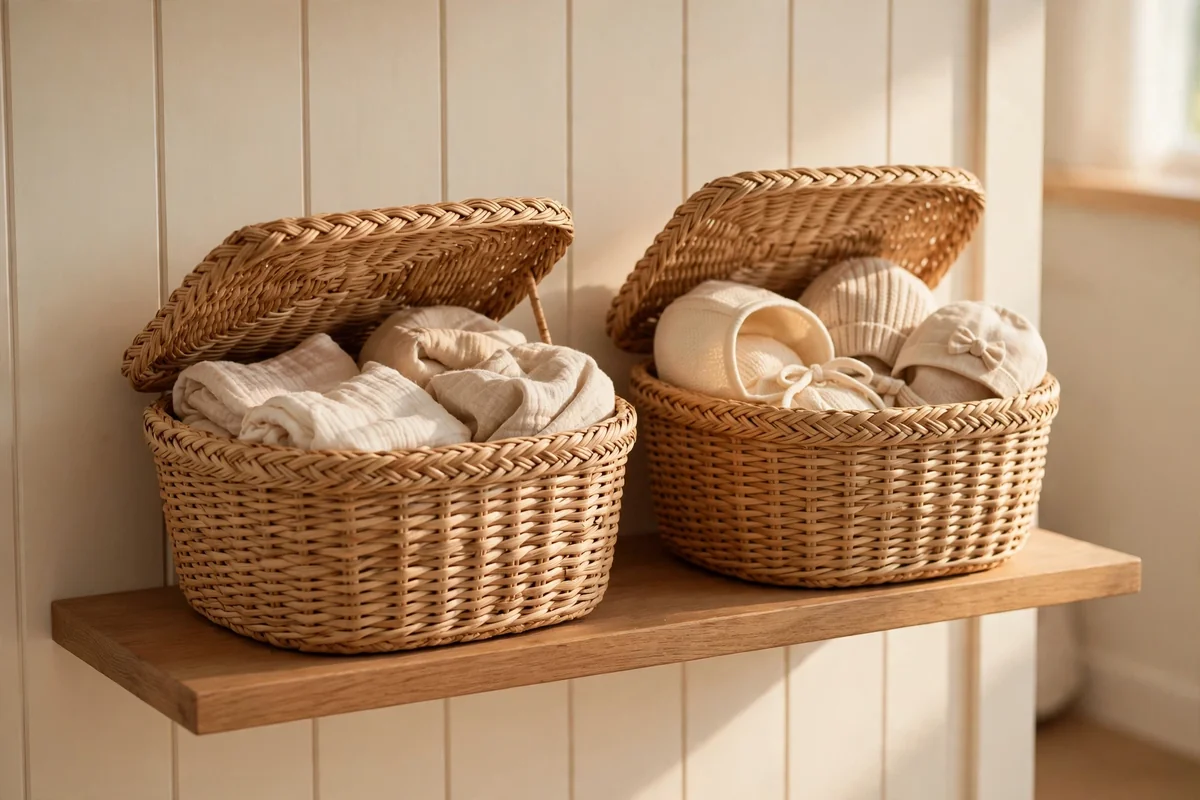
Every nursery has one shelf too high for daily use, and it has a strict rule: only the lightest, softest things may live there. Muslins, hats, spare cot blankets and soft toys are perfect tenants. Books, boxed games, toiletries and anything with weight or hard edges belong low, where lifting them down never means raising something heavy above your head or the baby’s spaces.
Use lidded baskets on high shelves so contents stay dust free and cannot slide off in a heap when the shelf is bumped. Step onto a stable stool, never a chair, when you fetch them, and take one basket down at a time with both hands. This single habit quietly removes the most common falling object risk in the whole room.
20. Strap Every Tall Piece to the Wall
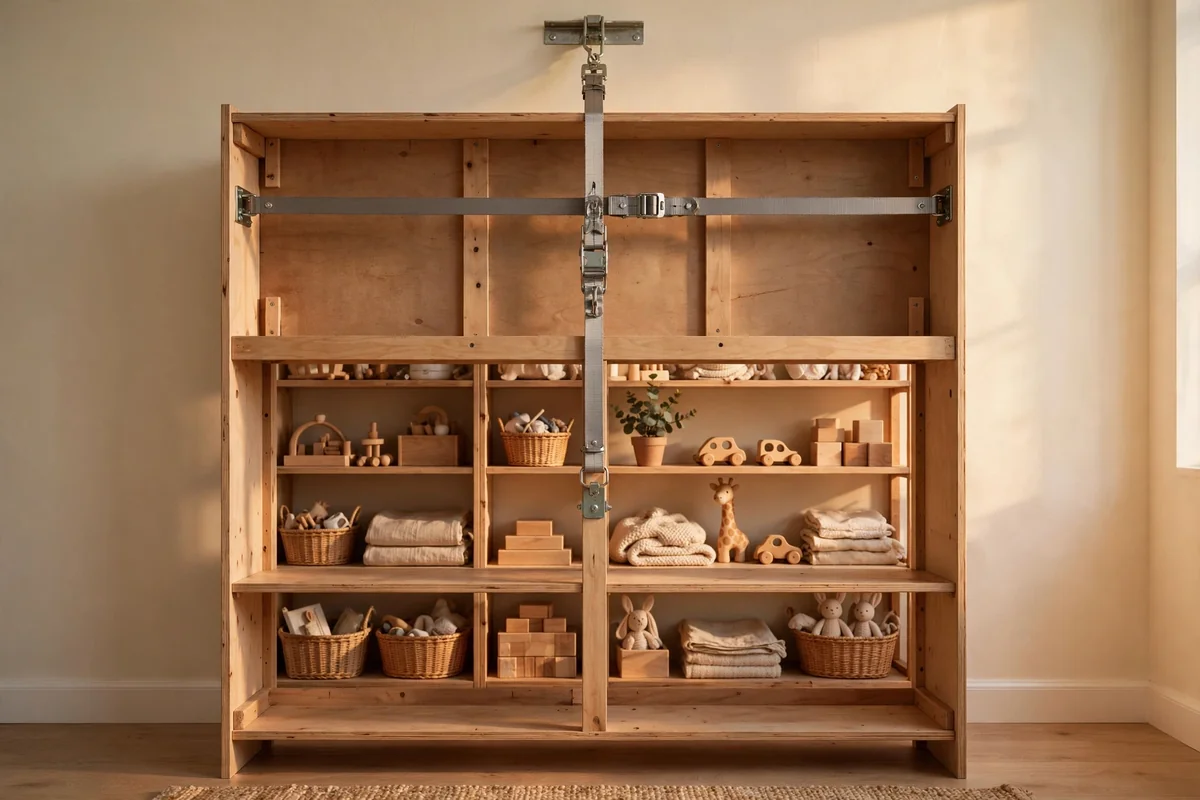
Furniture anchoring is the least decorative idea in this list and the most important. Bookcases, wardrobes, dressers and cube units can all tip if a child climbs open drawers or shelves, so fix every tall piece to the wall with the strap or bracket supplied, screwed into a stud or a proper heavy duty wall anchor.
Do the job on the day each piece arrives, before it is filled, and check the straps twice a year. Keep tempting items like toys and remotes off the tops of tall furniture, since they invite climbing, and keep cords from lamps and monitors completely out of reach, secured along the wall. Ten minutes with a screwdriver protects the calm you have built into the room.
21. A Low Bookcase That Grows With Your Child
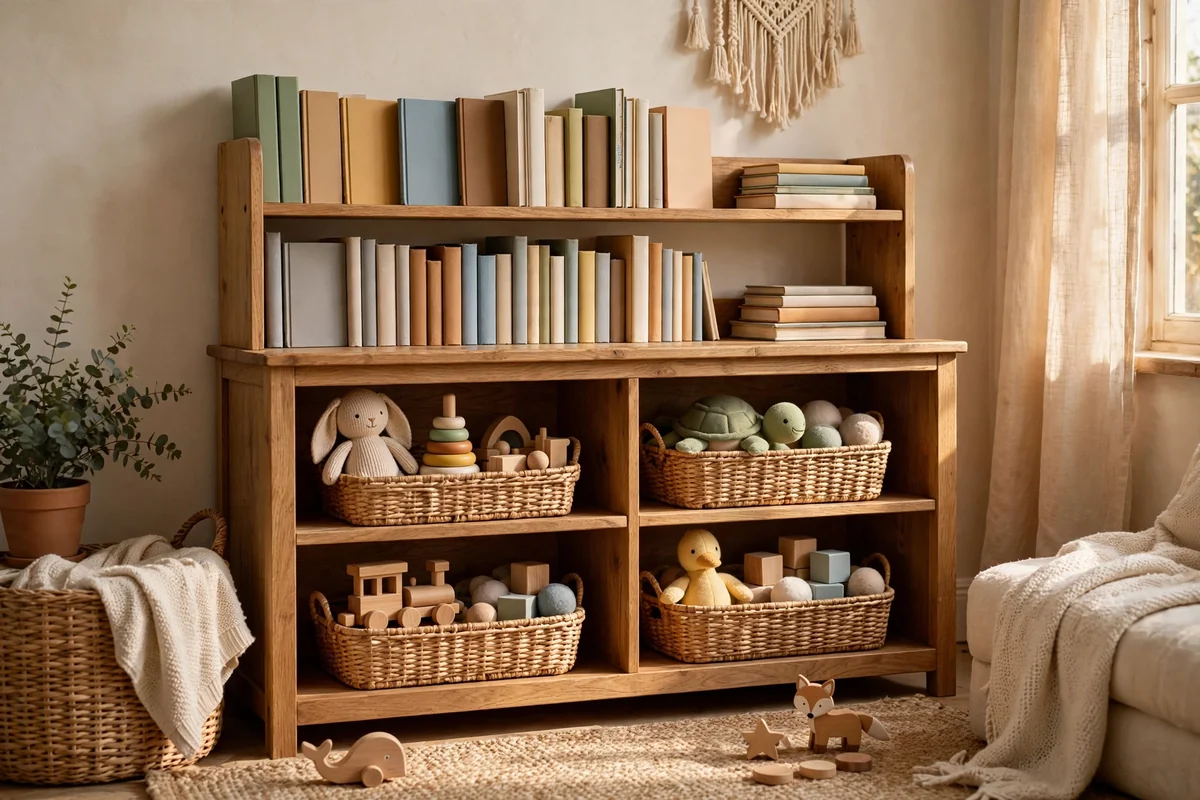
A sturdy low bookcase, no taller than about seventy five centimetres, bridges the baby and toddler years gracefully. In the first year its shelves hold baskets of soft toys and board books. Later, the same shelves become a first library and toy shop your child can use alone, choosing and, with luck, returning things at toddler height.
Anchor it despite its low height, choose solid wood or well made board with rounded edges, and place the heaviest books on the bottom shelf to keep its balance low. Leave one cubby deliberately empty, because a little breathing room keeps the whole unit looking calm and gives new treasures somewhere to land without starting a pile elsewhere.
22. The Night Basket Beside the Feeding Chair
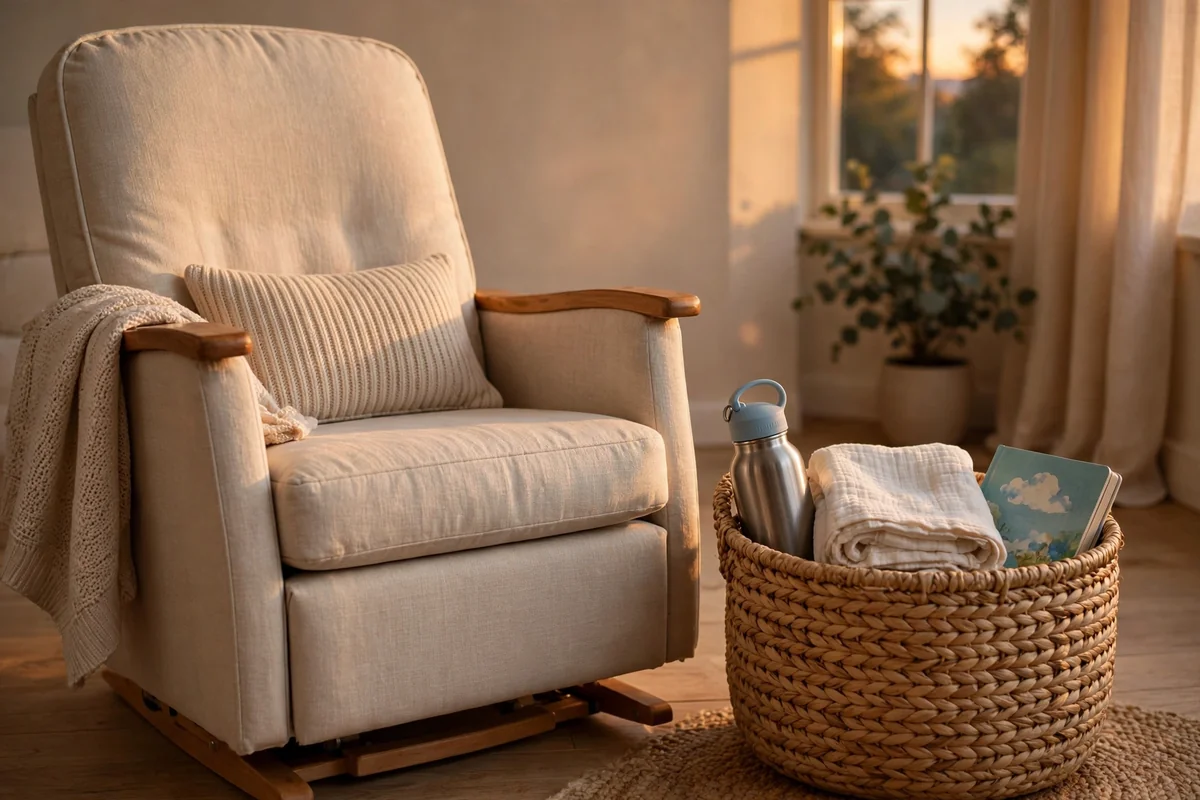
Night feeds go better when everything waits within reach of the chair. A generous woven basket on the floor beside the glider holds a water bottle, a muslin, a small board book, a spare vest in a zip bag and a soft cloth. Nothing in it is breakable, and the basket itself is too soft and low to be any kind of hazard.
Restock the basket each evening as part of the wind down routine, and return anything borrowed during the day. Keep the floor path between bed, chair and changing dresser completely clear at night, with baskets tucked beside furniture rather than in the walkway. Small preparations like this are what make the night hours feel gentle instead of chaotic.
A Few Final Thoughts
A calm nursery is rarely about owning more storage; it is about giving the things you already have a safe, obvious home. Start with the changing station and the drawers, anchor everything tall, and let soft baskets do the rest. The room will stay serene, and so will the hours you spend in it.
Frequently Asked Questions
What is the most important nursery storage safety rule?
Anchor everything. Wardrobes, dressers, bookcases and cube units should be strapped or bracketed to the wall, into studs or suitable heavy duty anchors, on the day they arrive. Alongside anchoring, keep heavy objects off high shelves, never hang shelves or heavy frames above the cot, and secure cords out of reach. These few habits remove the main risks that storage can introduce into a baby’s room.
How do I store baby clothes so they do not get forgotten?
Babies outgrow sizes quickly, so the system has to make size obvious at a glance. Hang clothes in size order behind simple rail markers, file fold drawers by size, and keep only the current size within daily reach. When something is outgrown, move it into a labelled box immediately rather than letting it drift to the back of a drawer, where lovely outfits are so often found a month too late.
What should go on the highest nursery shelf?
Reserve high shelves for light and soft things only: muslins, hats, spare blankets and soft toys, ideally inside lidded baskets that keep dust off and stop items sliding. Anything heavy, hard or breakable, like books, bottles and keepsake boxes with wooden lids, belongs on low shelves where it can be lifted safely at waist height and can never fall far.
Are baskets or boxes better for a nursery?
Each has its place. Baskets are light, quiet and soft edged, which makes them ideal for open shelves, under the cot and anywhere a toddler will later pull them out. Boxes with lids protect contents from dust and stack neatly, so they suit wardrobe interiors, spares and keepsakes. Most calm nurseries use both: baskets for the everyday, boxes for the occasionally.
How can a small nursery fit enough storage?
Think in layers rather than furniture. Use the space under the cot for low baskets, the back of the door for pockets, the wall for rails and baskets, and choose one dresser that combines changing surface and deep drawers. Keep the floor as clear as possible, since a small room feels twice as calm when you can move around it easily during night feeds and changes.