Living Room
20 Small Family Room Ideas That Fit Everyone Without Feeling Cramped
By Anna Wells · · 16 min read
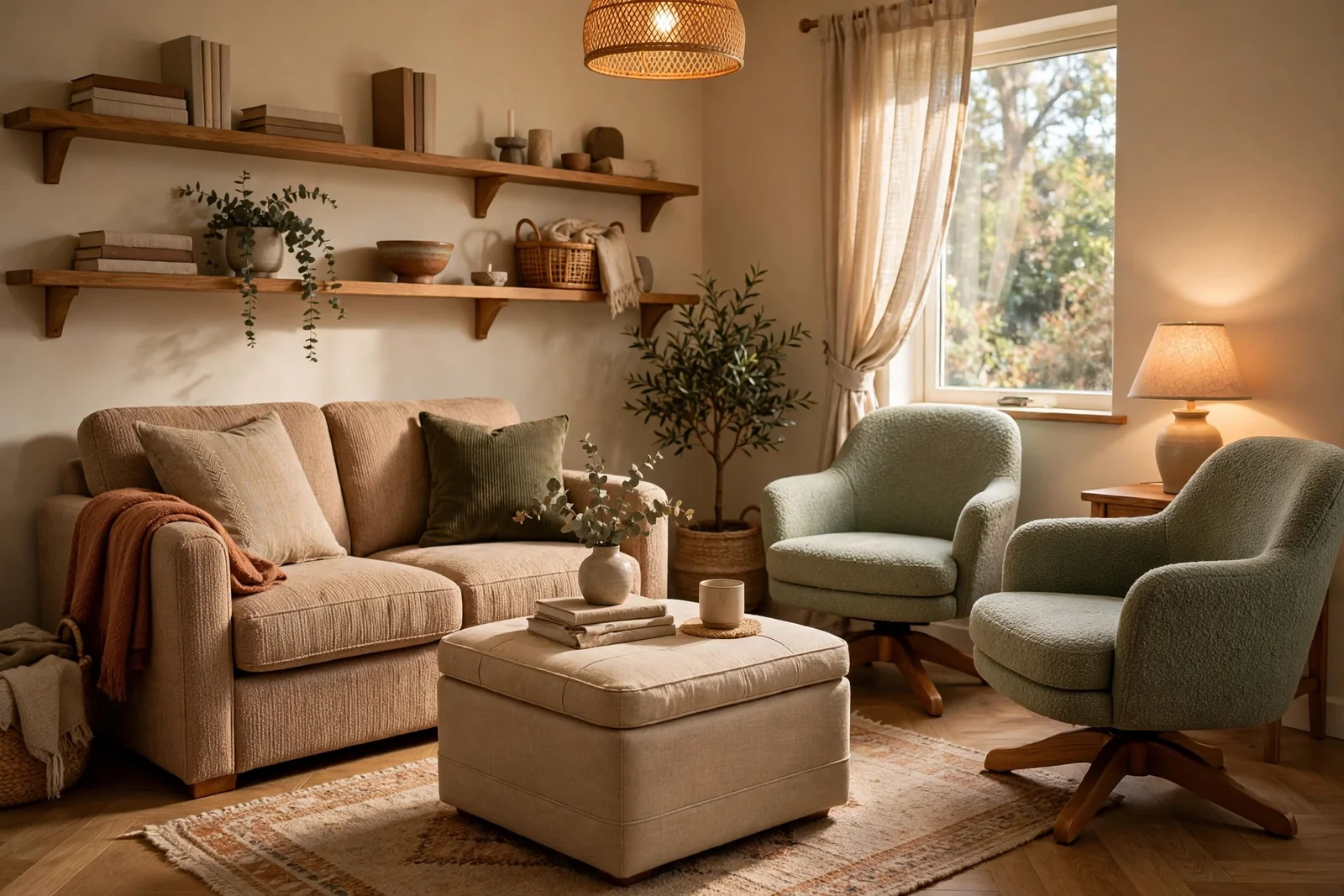
Twenty practical ideas for a compact family room: honest sofa sizes, flexible chairs, hidden storage, washable fabrics, layered light and walkway clearances that keep a small room calm and welcoming.
The hour after dinner decides whether a small family room feels like a squeeze or a sanctuary. Shoes pile by the door, someone claims the good cushion, and a toy car rattles across the floorboards while the kettle boils. In a compact room every centimetre matters, yet the answer is never a bigger house. It is furniture sized honestly and placed with intent.
These twenty ideas treat a small family room as its own design challenge, not a shrunken living room. You will find compact sofas measured in real centimetres, chairs that swivel between conversation and play, storage that hides the chaos, and lighting planned for a tight footprint. Each idea is practical, budget aware, and kind to washable fabrics, so nothing here demands a renovation or a big spend.
Work through them in order, or dip into the ones your room needs most. Start with the walkway clearances, because every other choice gets easier once the paths are decided, then let the seating, storage, and light fall into place around them. Small rooms reward this order: paths first, big pieces second, finishing touches last.
1. Size the Sofa Honestly With a 150 to 180 cm Two-Seater
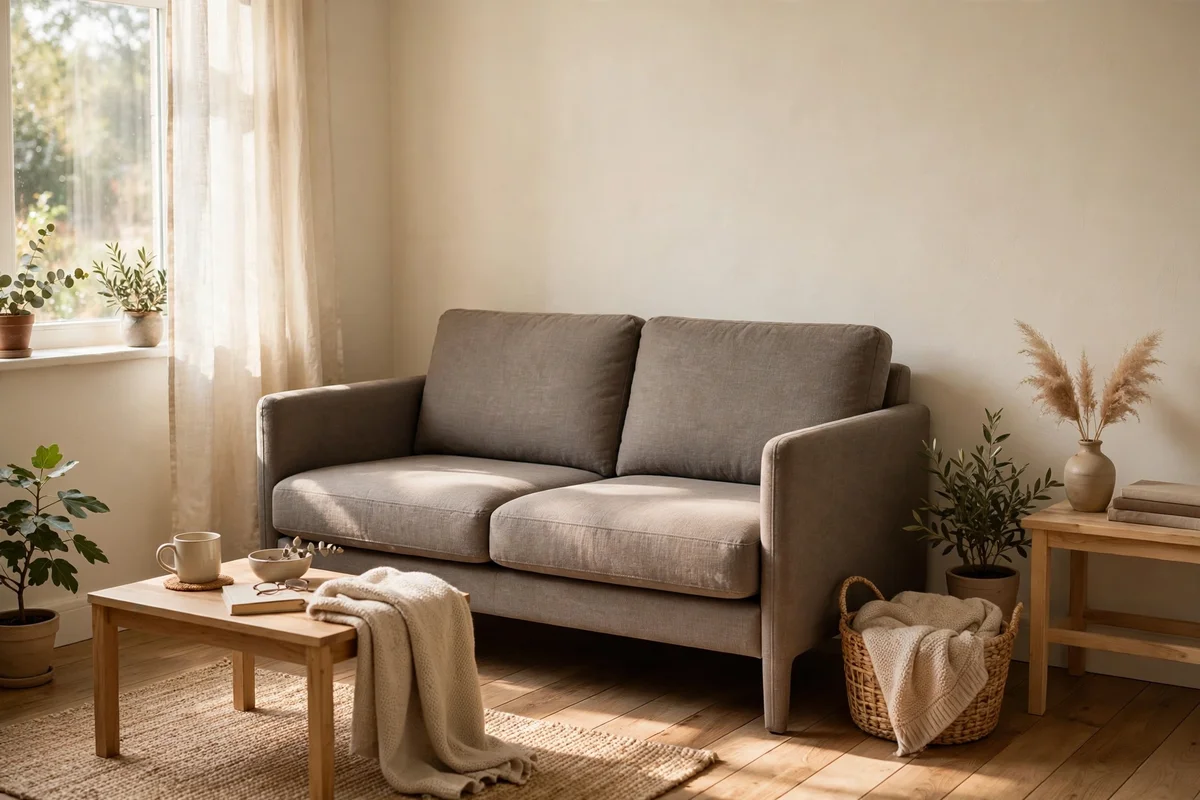
A sofa between 150 and 180 cm wide seats two adults honestly and still leaves wall space in a compact family room. Measure the longest wall first, then subtract at least 60 cm so a side table or walkway fits beside it. Slim arms no wider than 15 cm each keep the seating area generous without stealing footprint. A seat depth of 55 to 60 cm suits most adults and keeps small legs from dangling.
Choose legs 10 to 15 cm tall so the vacuum and lost toy cars glide underneath. The mistake to avoid is buying a 220 cm sofa because it looked right in the showroom; in a 3 by 4 metre room it swallows every walkway. Budget tip: apartment-size two-seaters start near 400 dollars new, while a second-hand frame with good bones often costs under 200 and re-covers beautifully.
2. Pair the Sofa With a Compact Loveseat, Not a Corner Sectional
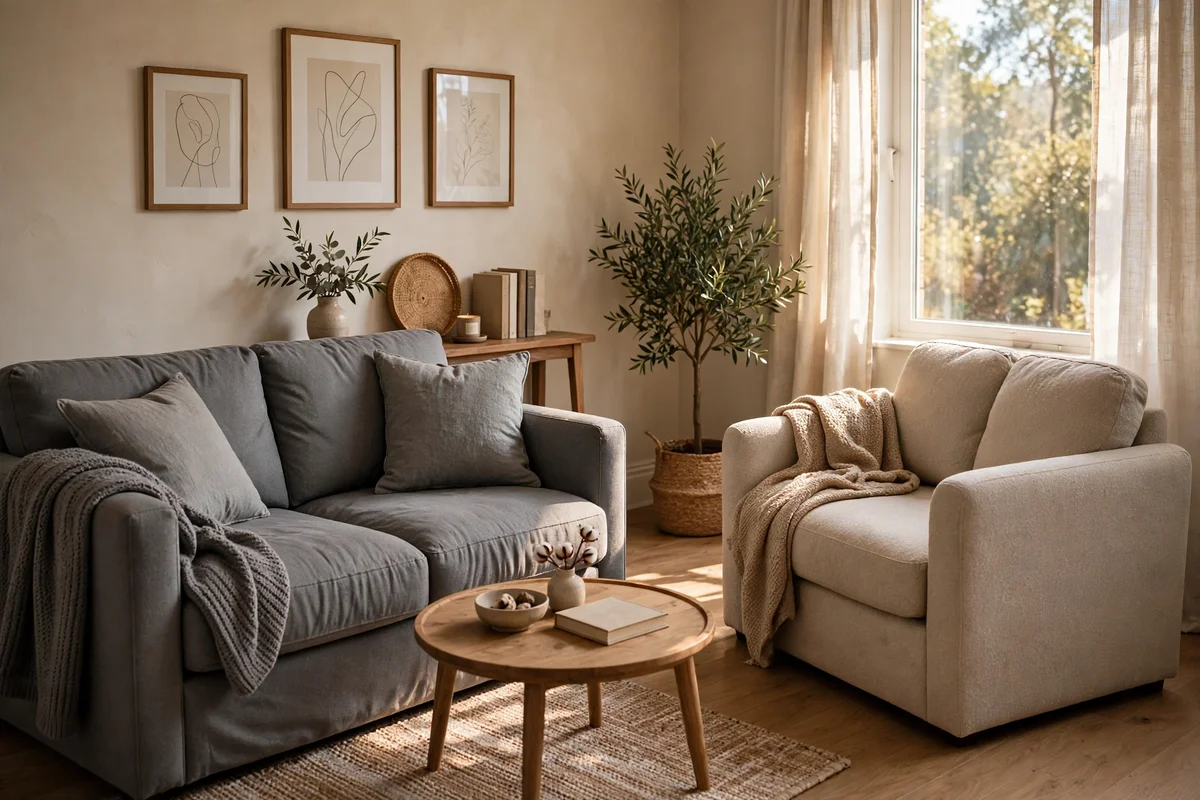
A corner sectional locks a small room into one layout and blocks at least one traffic path. Two separate pieces, a two-seater plus a 120 to 140 cm loveseat, give the same number of seats with a gap you can walk through. Set the loveseat opposite the sofa or at a right angle, leaving 70 cm between their ends for easy movement. Keeping each piece under 180 cm preserves an airy, flexible feel.
Buy both pieces in the same fabric family but different tones, for example oatmeal and warm grey, so the pair reads as planned rather than matched. The mistake is shoving both hard against the walls; pulling each even 5 cm forward softens the silhouette and lets curtains hang behind. Mid-range loveseats run 300 to 600 dollars, while a clean second-hand one often costs less than 150.
3. Turn Two Swivel Chairs Between the Sofa and the Play Corner
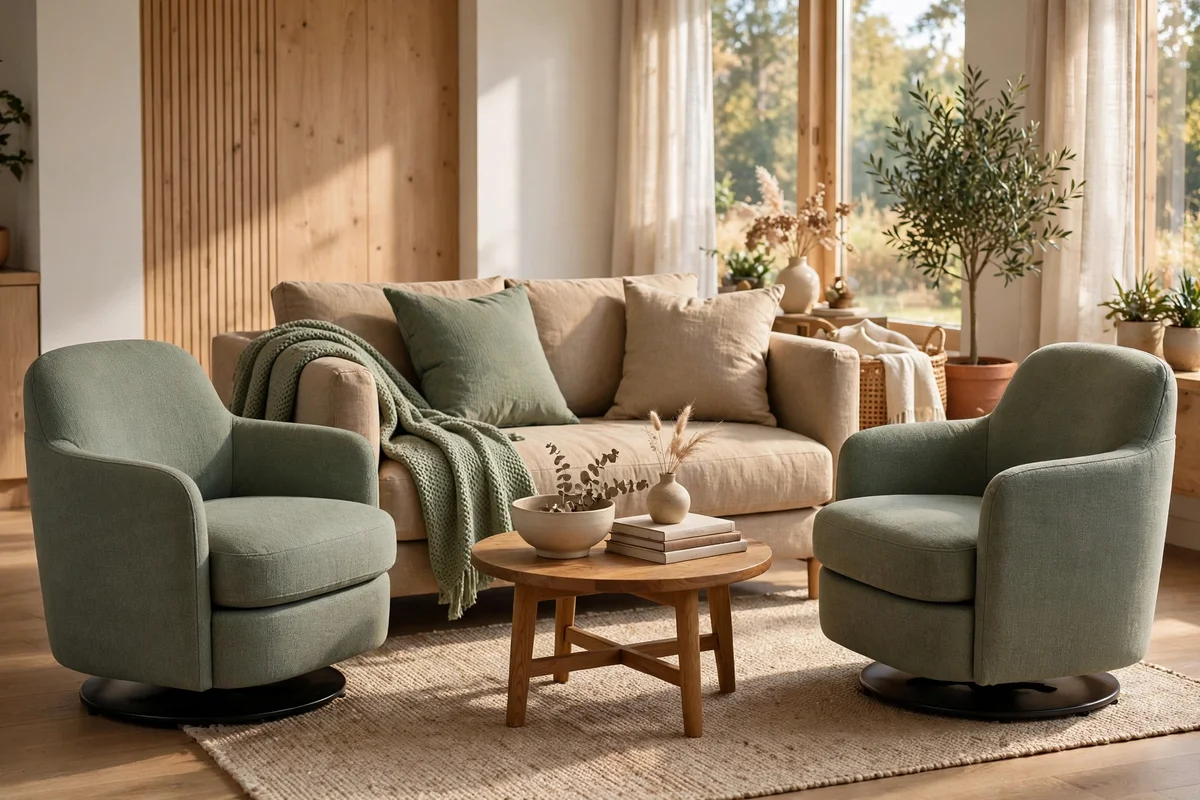
Swivel chairs solve the small family room’s main social puzzle: conversation faces one way while the children play the other. Choose chairs with a full 360-degree base, a seat width of 60 to 65 cm, and a footprint under 75 cm square. Place one at each open end of the seating group so it can face the sofa for talk or spin toward the play rug in a single smooth motion.
Pick a low, stable base rather than a tall pedestal, which tips more easily when children climb aboard. Mid-tone performance fabric hides marks, and a wipeable seat cushion survives snack time. The mistake to avoid is a bulky recliner that needs 90 cm of clearance behind it; true compact swivels work happily with only 15 cm. Budget pairs start near 250 dollars for two.
4. Pick Armless Chairs That Tuck Away When the Room Must Flex
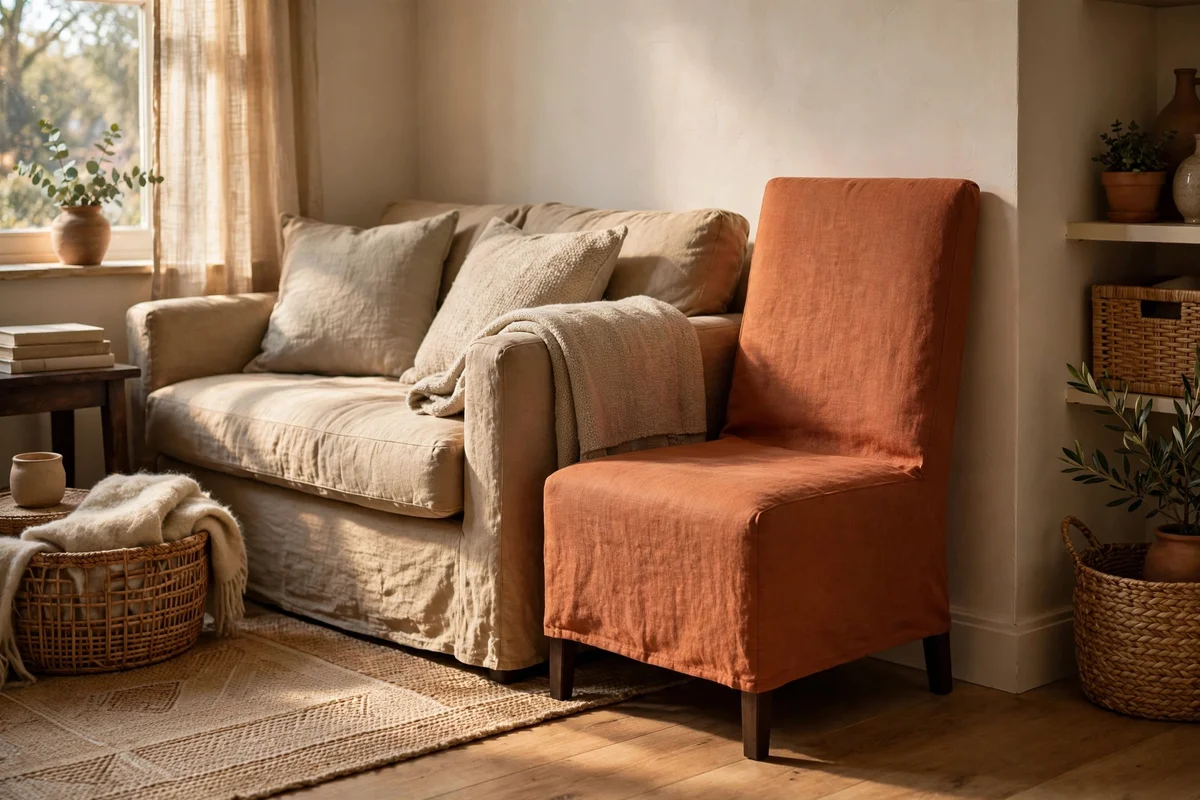
Armless chairs disappear visually where armed chairs dominate a tight room. A slipper chair 55 to 60 cm wide and about 70 cm deep slides beside the sofa, under a console, or into a corner whenever floor space is needed. Without arms the seat feels wider than it measures, so adults sit comfortably. Choose solid wood legs and a firm cushion so the chair survives daily dragging between spots.
Use armless chairs as the flexible fourth and fifth seats at family gatherings, then tuck them away the rest of the week. A pair flanking the storage bench creates a reading nook in seconds. The mistake is buying dining-height chairs by accident; check the seat height is 40 to 45 cm so sitters align with the sofa. Simple slipper chairs cost 80 to 180 dollars each.
5. Run a Storage Bench Along the Shortest Wall
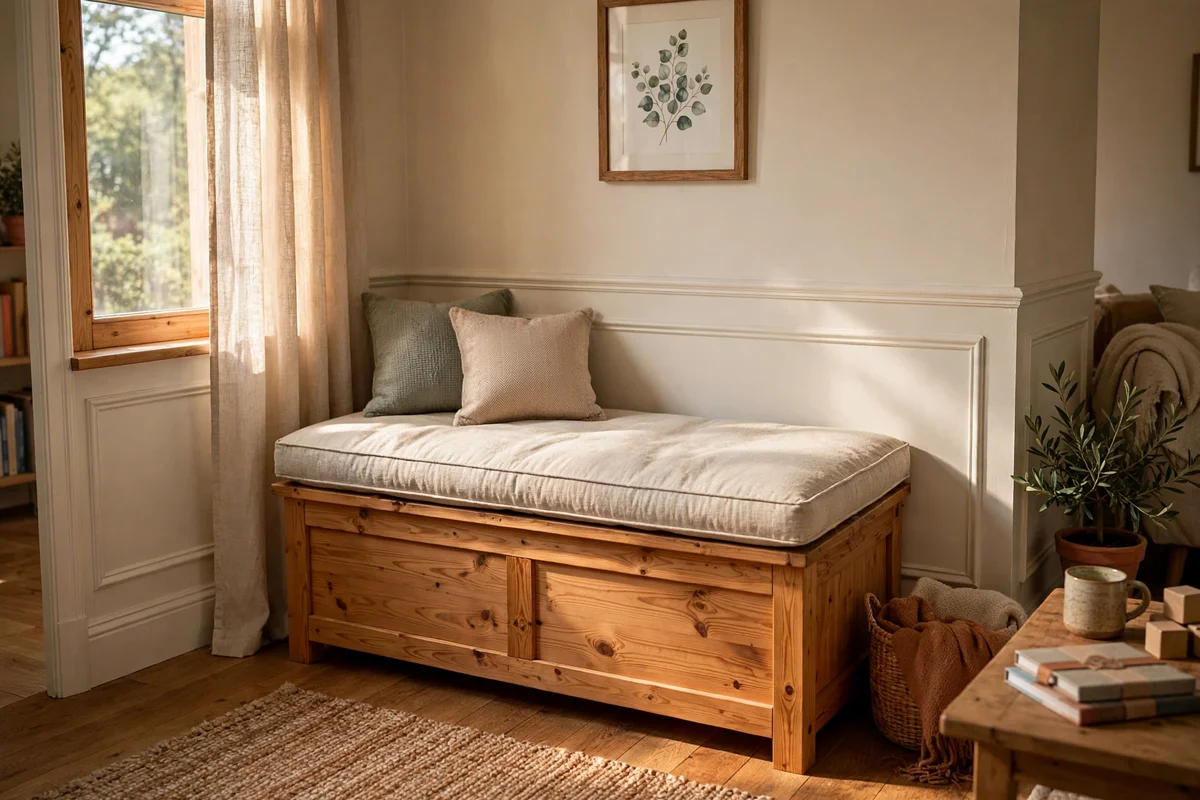
A storage bench along the shortest wall turns dead space into the room’s hardest worker. Choose a bench 90 to 120 cm long, 40 cm deep, and 45 cm high so it doubles as extra seating. Inside, sort toys into two lidded boxes, one for building sets and one for soft toys, so tidy-up takes under five minutes. A hinged lid with a soft-close hinge protects small fingers.
Top the bench with a washable cushion in a mid-tone weave and it becomes the favourite reading seat. Keep the wall above it free for a picture ledge rather than tall storage, which keeps sightlines open. The mistake is buying a bench deeper than 45 cm; it starts blocking the walkway it was meant to serve. Pine and MDF benches run 60 to 150 dollars.
6. Swap the Coffee Table for a Lidded Ottoman With a Tray Top
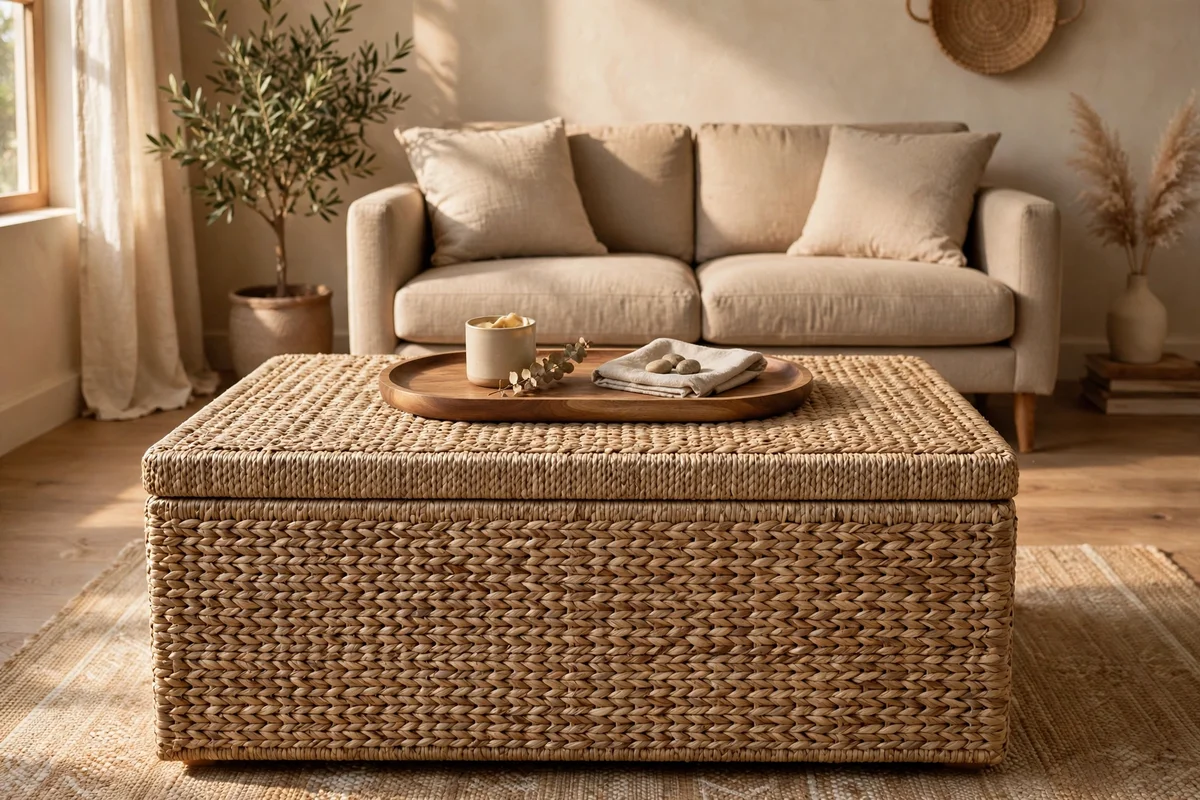
A lidded ottoman replaces the coffee table and hides the clutter a family generates daily. Choose one 90 to 110 cm long and 45 to 50 cm high, matching sofa seat height so feet rest comfortably. Inside it swallows board games, chargers, and the throw blankets that migrate around the house. Set a firm wooden tray on top, about 40 by 60 cm, to hold tea cups and the remote.
The tray lifts off in one motion when the ottoman must become a footrest or extra seat. Pick wipeable faux leather or a washable woven cover, since this surface takes the most abuse in the room. The mistake is choosing an ottoman with a lid that needs two hands to open; a light stay-open hinge matters. Good lidded ottomans cost 120 to 300 dollars.
7. Mount Floating Shelves Above Seat Height Instead of a Bookcase
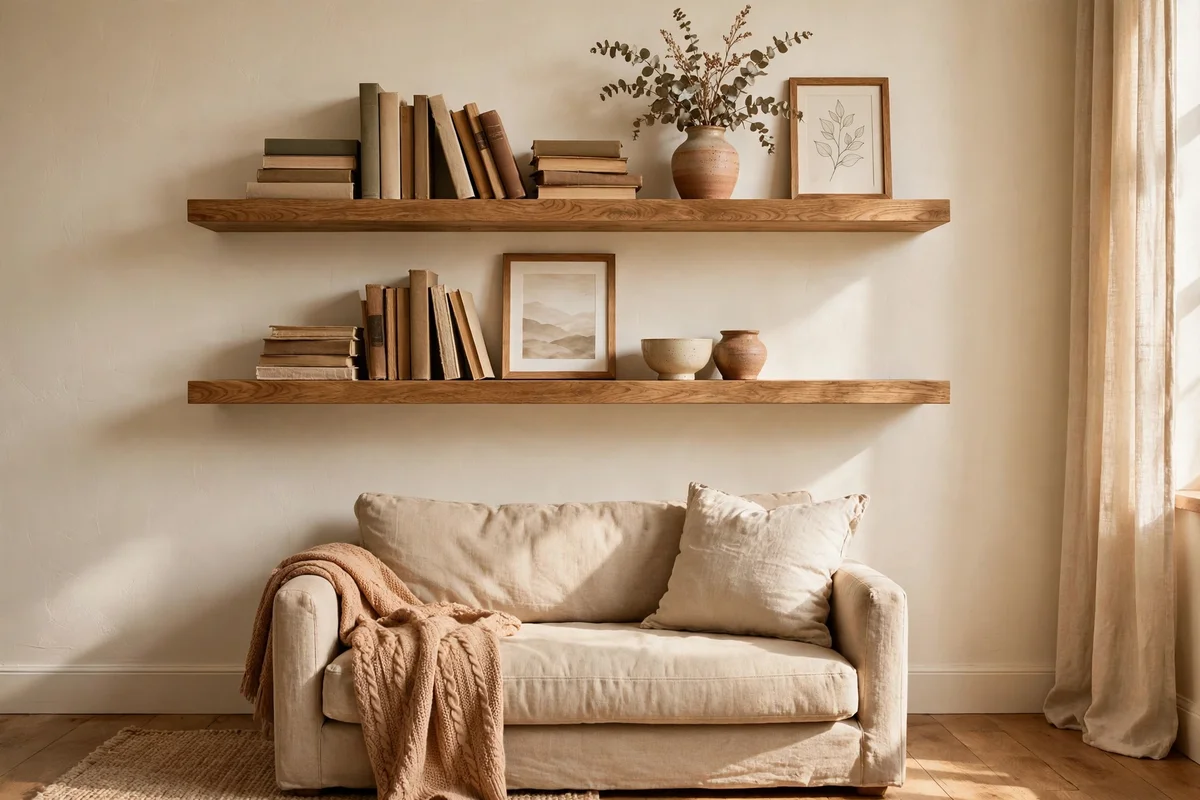
Floor-standing bookcases steal up to 40 cm of precious depth, while floating shelves use only wall space. Mount two shelves 20 cm deep and 80 to 120 cm long at 140 to 160 cm high, above the reach of small hands but within adult sight. Style each shelf with a ratio of roughly two-thirds books to one-third objects: a small vase, a framed print, a ceramic bowl. Fix into studs or use anchors rated for 15 kg.
Keep the lowest shelf’s underside at least 30 cm above the sofa back so cushions never knock items down. The mistake is loading shelves with heavy storage boxes; they belong in the bench or ottoman, not overhead. Solid oak or pine shelves cost 25 to 60 dollars each, and a pair transforms a blank wall into the room’s library without touching the floor.
8. Fit a Slim Picture Ledge for Books and Family Frames
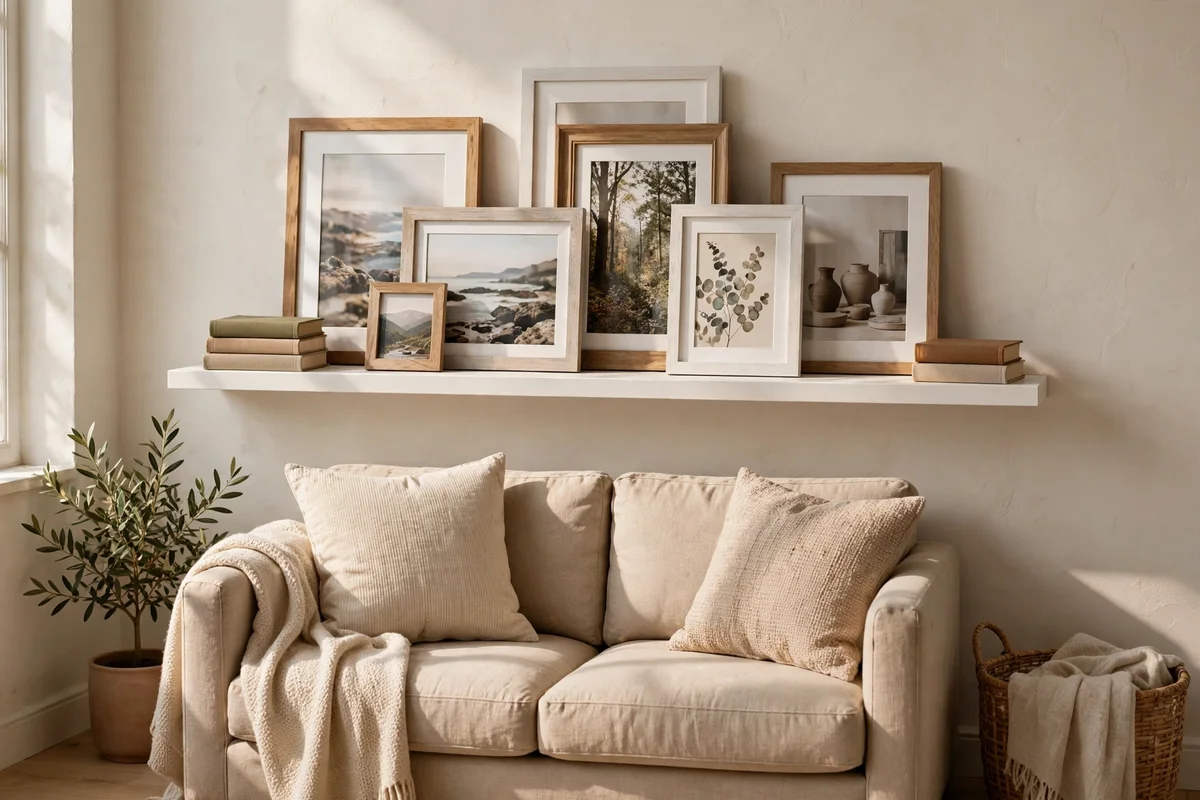
A picture ledge 8 to 10 cm deep holds books and frames without the depth of a shelf. Run one 100 to 150 cm ledge above the sofa at about 150 cm from the floor, layering two rows of frames with the taller ones behind. Rotate children’s artwork and family photographs seasonally; the ledge makes swaps a two-minute job with no new nail holes. Paint it the wall colour so it nearly disappears.
Lean paperbacks along the ledge spine-out between frames for a casual library feel, keeping the total weight under 8 kg. The mistake is lining up frames in a rigid row like soldiers; overlapping heights look calmer and more collected. A pine ledge costs 15 to 30 dollars, and two stacked ledges 25 cm apart double the display without adding clutter.
9. Mark the Play Zone With a Low-Pile Rug That Rolls Away
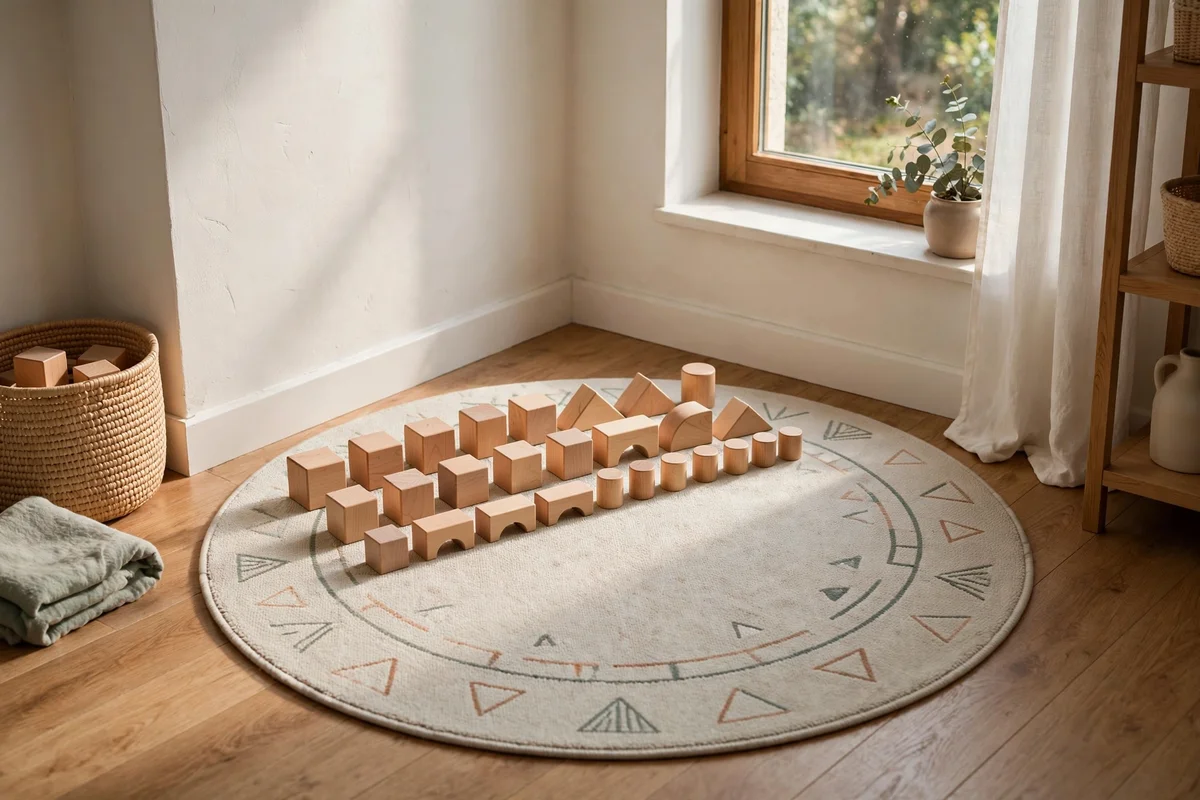
A defined play zone keeps toys from colonising the whole room. Lay a low-pile rug 120 to 150 cm across in a corner near the seating group, close enough for supervision and conversation. Low pile, under 10 mm, lets toy cars roll and blocks stack steadily, and it rolls up in seconds when guests arrive. Choose a washable rug so paint, juice, and muddy footprints rinse out.
Place the rug at least 60 cm from walkways so play does not spill into traffic. Pair it with the lidded baskets from the next idea so everything packs away in under three minutes. The mistake is a shaggy rug that swallows small pieces and resists the vacuum; flat weaves stay practical. Washable play rugs 120 to 150 cm wide cost 40 to 90 dollars.
10. Pack Toys Into Lidded Baskets That Double as Side Tables
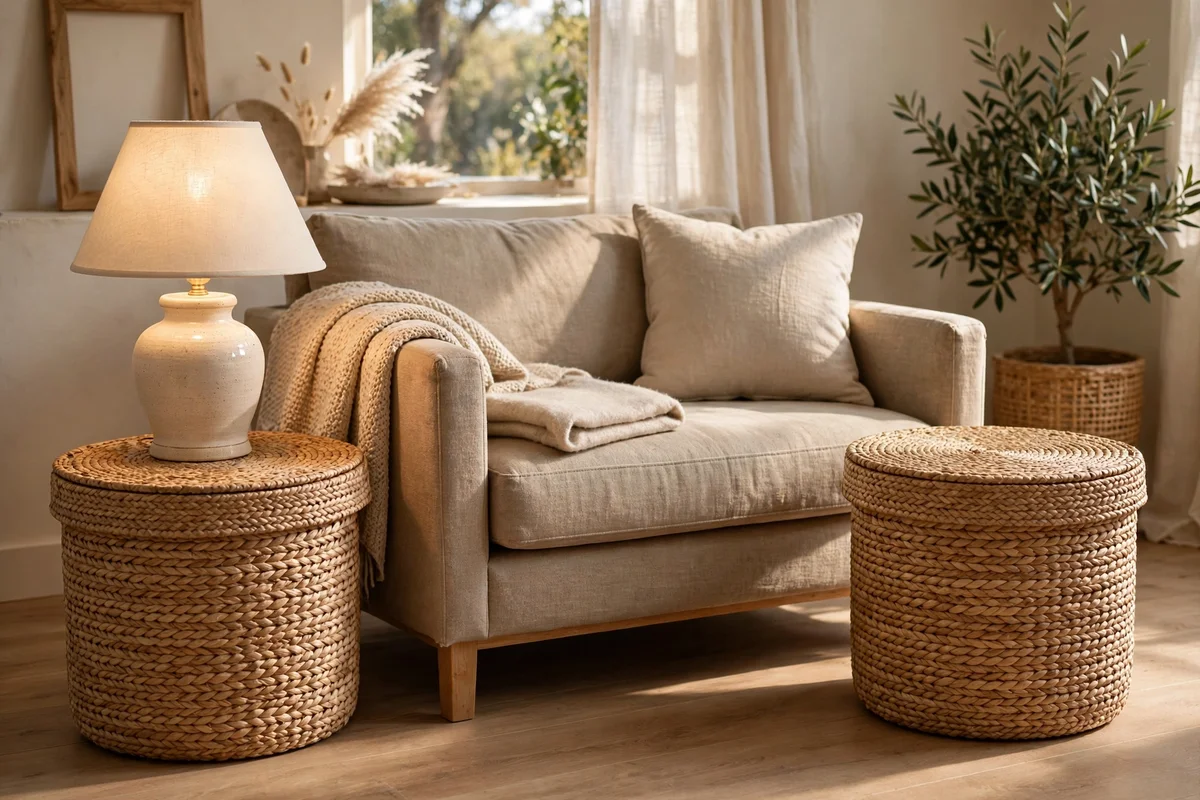
Two lidded baskets, each about 40 cm square and 35 cm tall, hold an entire small toy collection and double as side tables. Sort one basket for building toys and one for dolls, cars, or craft supplies, and label each lid with a simple picture tag children can read. The flat lids take a lamp or a cup of tea, so they earn their floor space twice over.
Choose seagrass or cotton rope baskets with removable washable liners for easy cleaning. The mistake is open-top bins, which look tidy for exactly one day; lids keep the room calm even mid-play. Set a three-minute tidy routine and the baskets fill fast. A pair of good lidded baskets costs 30 to 70 dollars.
11. Dress Every Seat in Machine-Washable Slipcovers
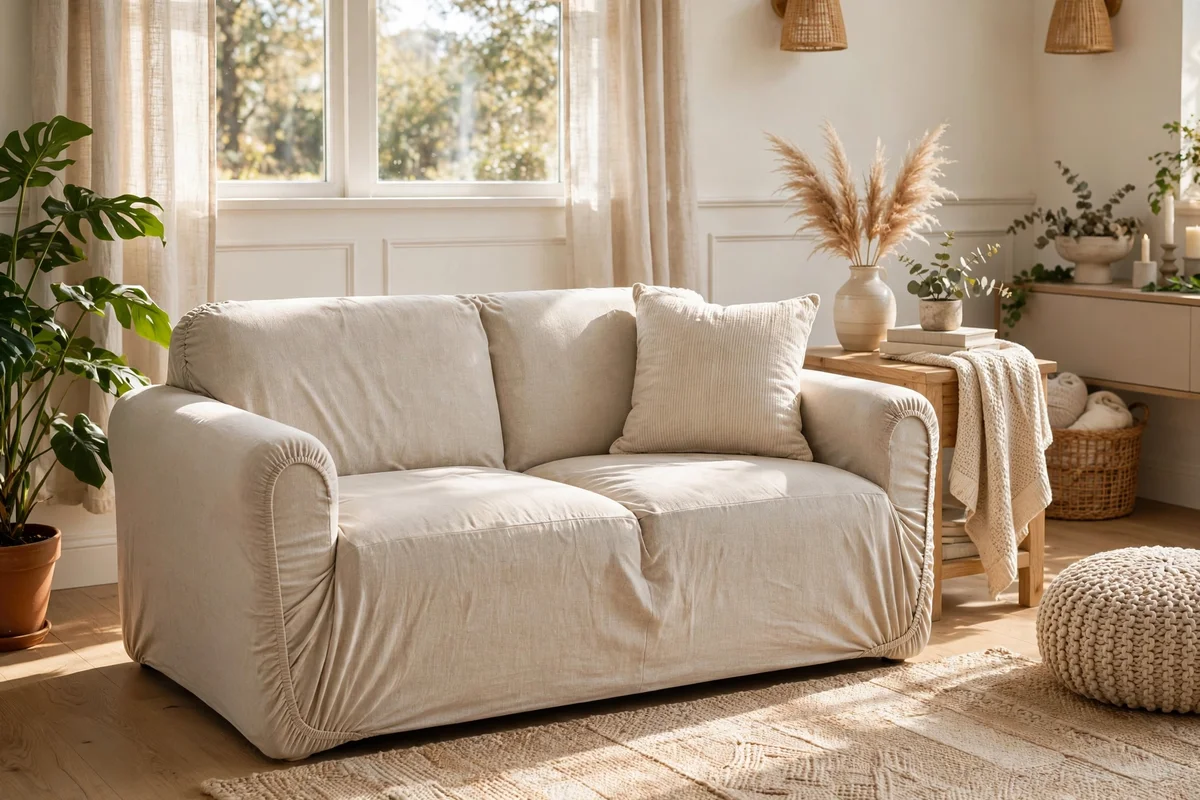
Machine-washable slipcovers are the single best investment for a family room that hosts sticky hands. Choose mid-tone weaves, warm grey, oatmeal, or sage, which hide marks between washes far better than cream or charcoal. Wash covers every four to six weeks on a gentle 30-degree cycle and air-dry to avoid shrinkage. Keep one spare set so the sofa never sits bare on wash day.
Check the slipcover fits like upholstery, not a loose sheet; elasticated corners and ties under the seat keep it neat. The mistake is dry-clean-only velvet on the main family sofa, which turns every spill into a crisis. Cotton and linen-blend slipcovers cost 60 to 150 dollars per seat piece, a fraction of reupholstery.
12. Choose Performance Fabric With a Strong Double Rub Rating
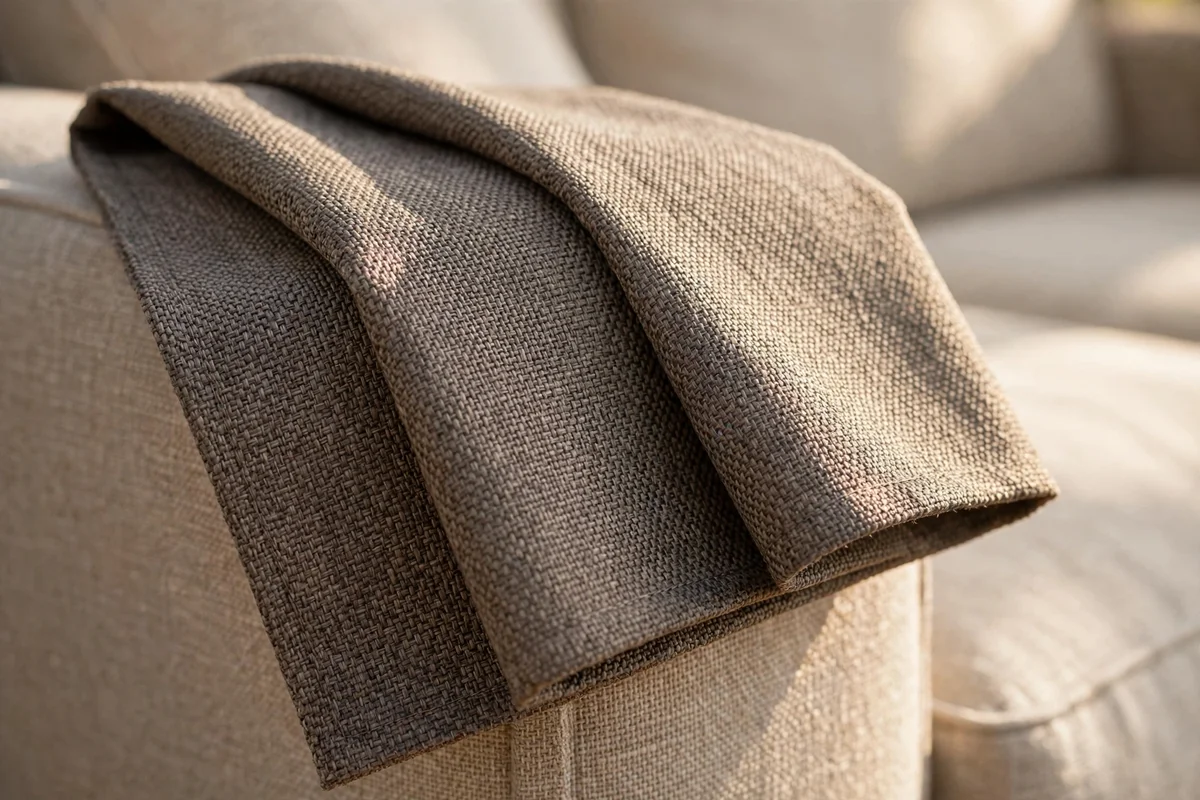
Performance fabric earns its name in a room where children eat, draw, and nap on the furniture. Look for a double rub count above 50,000, which signals fabric tested for heavy domestic use. Solution-dyed acrylics and tightly woven polyesters resist stains and fading while still feeling soft. Ask for a free swatch to test with ketchup and washable marker before committing.
Use performance fabric on the highest-contact pieces, the sofa and swivel chairs, and save budget with standard weaves on little-used corners. The mistake is choosing a beautiful natural linen with no treatment for the main sofa; it stains within a month in real family life. Performance upholstery adds roughly 10 to 20 percent to furniture cost and pays for itself in calm.
13. Layer Three Light Levels Inside One Tight Footprint
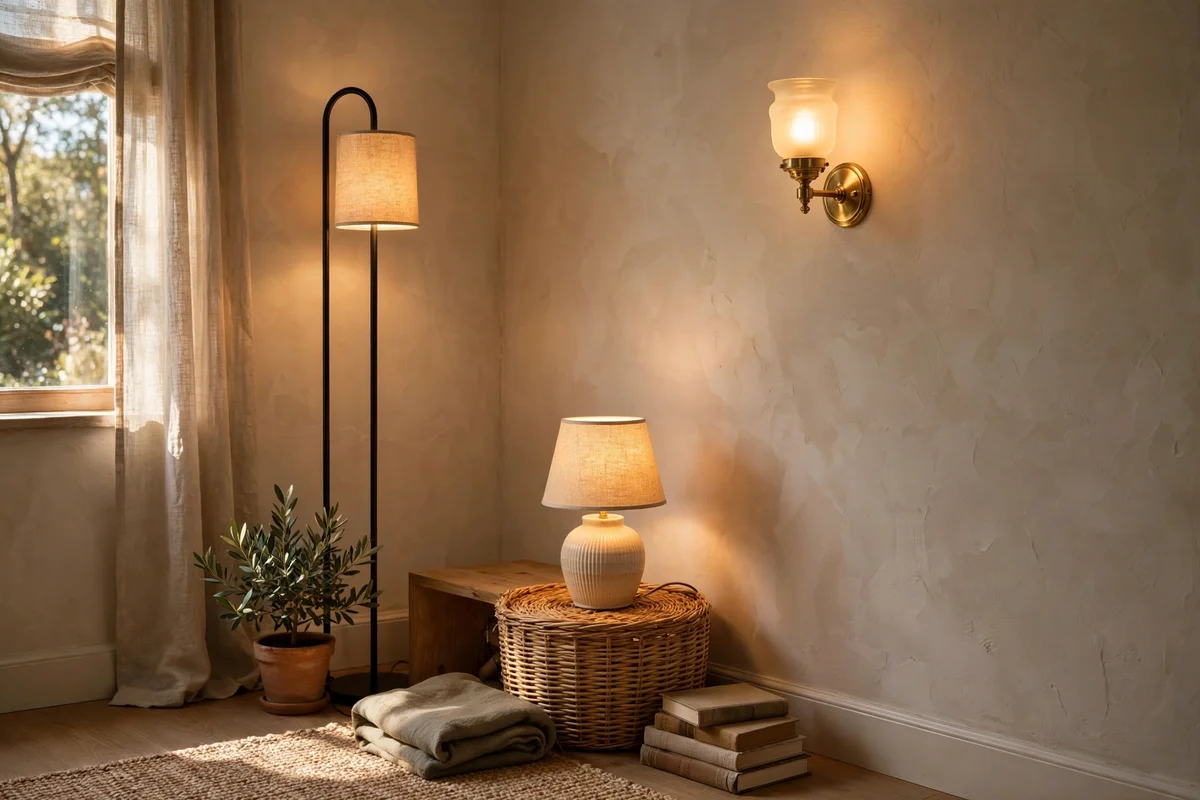
Small rooms need three light levels, not one harsh ceiling bulb. Start with a slim floor lamp in a corner, its shade top at about 150 cm, for general glow. Add a table lamp of 35 to 45 cm on a side table or basket lid for reading pools of light. Finish with a plug-in wall sconce near the seating group for a third layer that costs no floor space at all.
Put each level on its own switch or a simple remote plug so the room shifts from playtime bright to evening calm. The mistake is relying on a single overhead light, which flattens a small room and casts hard shadows. Three modest lamps cost 60 to 150 dollars total second-hand, and warm 2700K bulbs in all three keep the layers harmonious.
14. Use Plug-In Wall Sconces Instead of Bulky Floor Lamps
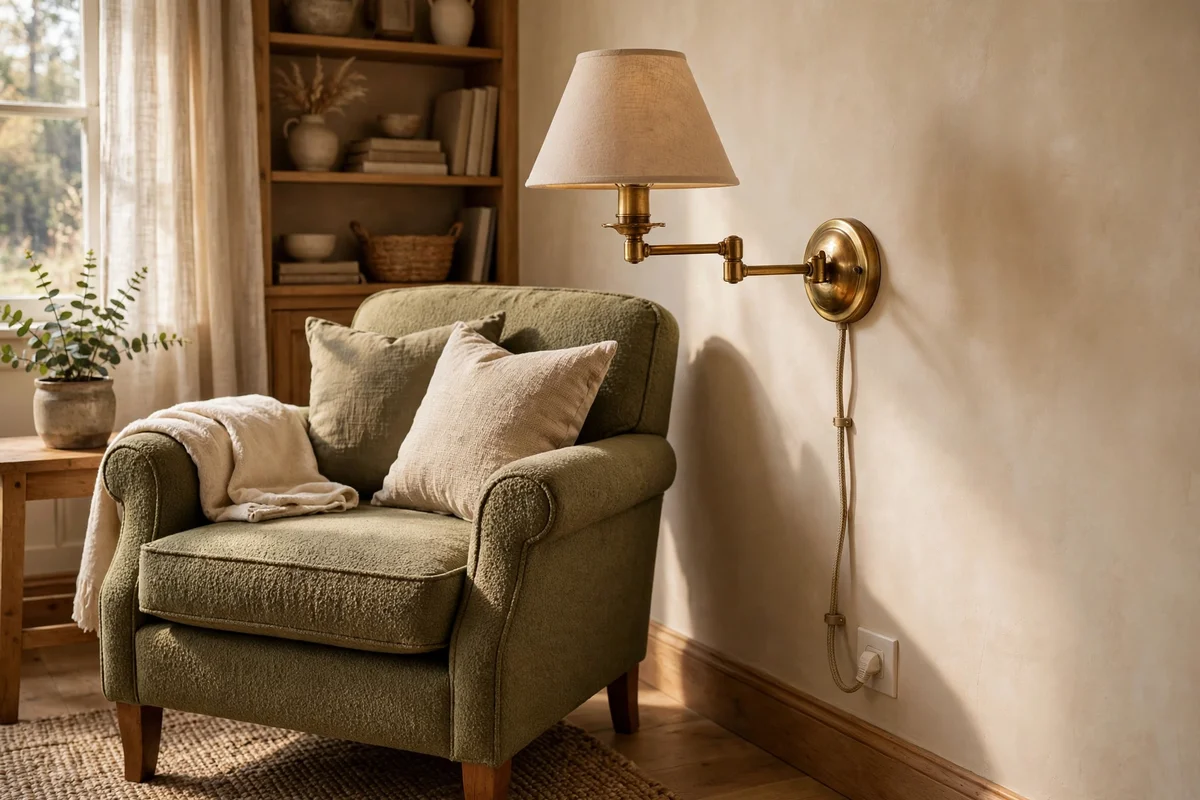
A floor lamp base eats a 30 cm circle of floor that a small room cannot spare. Plug-in wall sconces give the same reading light with zero footprint: mount one 140 to 150 cm high beside each main seat, with the shade bottom just above eye level when seated. Choose swing-arm styles so light aims at a book or folds flat against the wall. The cord drops neatly behind furniture to the nearest outlet.
Use cord covers painted the wall colour for a built-in look with no electrician needed. The mistake is mounting sconces too high, which lights the ceiling instead of the reader; 140 cm from the floor is the sweet spot. Plug-in sconces cost 25 to 60 dollars each, far less than rewiring, and they move with you if you relocate.
15. Zone the Room With Two Rugs: One Rectangular, One Round
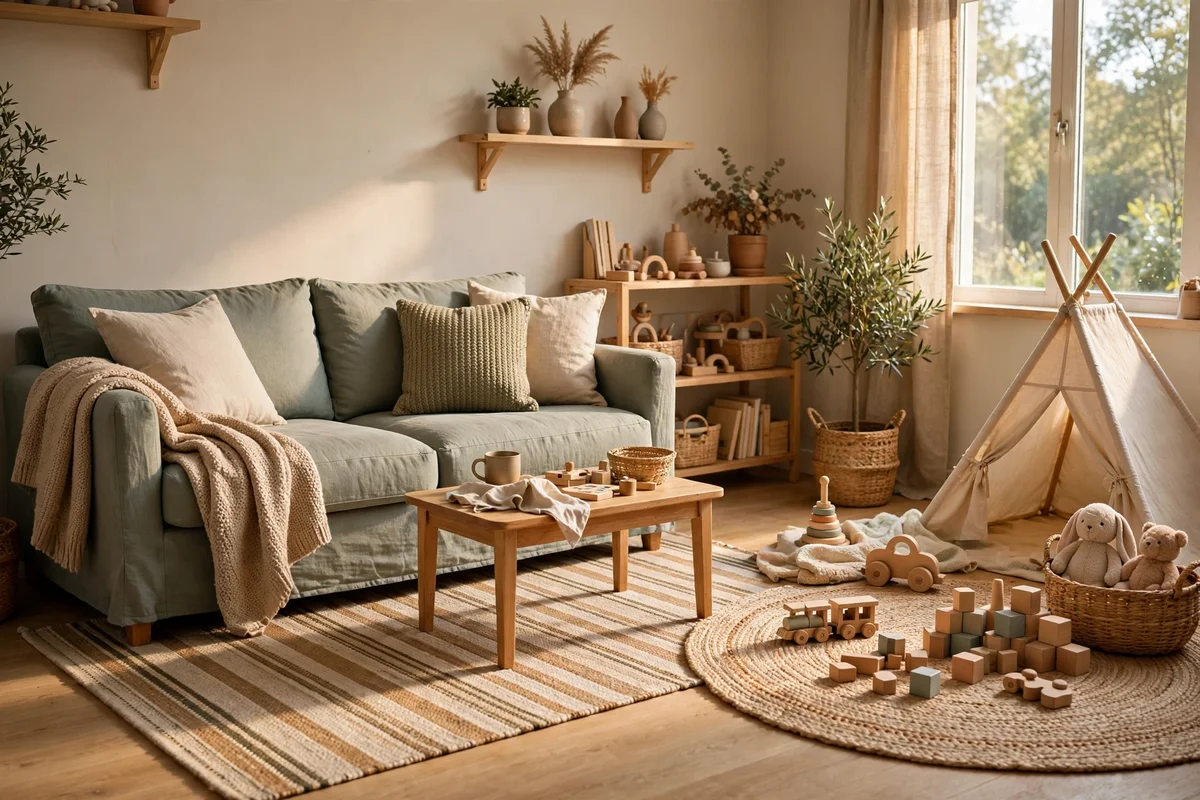
Two rugs zone a small family room better than any furniture arrangement. Lay a flatweave 160 by 230 cm under the sofa and ottoman, with the sofa’s front legs on the rug, to anchor the seating zone. Then place a round 120 cm rug in the play corner to mark the children’s territory. The two shapes read as deliberate zones rather than one room fighting itself.
Keep a 10 to 15 cm gap of bare floor between the rugs so each zone breathes. Choose low-pile, washable weaves for both, since both zones see spills. The mistake is one wall-to-wall-feeling rug that blurs every boundary; two smaller rugs cost less and define more. A pair of flatweaves typically totals 80 to 180 dollars.
16. Keep 70 to 90 cm Walkways Clear Around the Seating Group
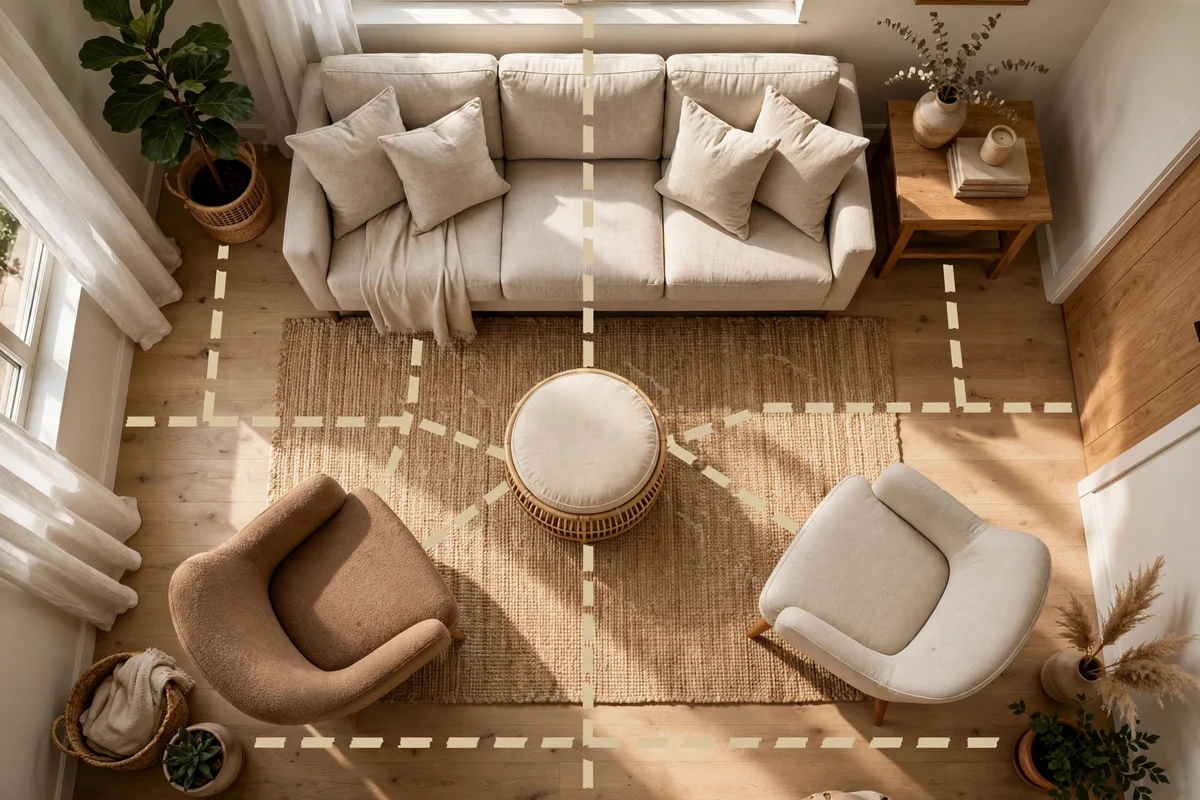
Walkways decide whether a small family room flows or frustrates. Keep the main path, usually from door to window or door to sofa, 70 to 90 cm wide so an adult carrying laundry passes comfortably. Secondary gaps between furniture need at least 50 cm. Mark planned walkways with painter’s tape on the floor before buying anything; the tape never lies about how a 90 cm ottoman really fits.
Measure twice: once with furniture in place and once imagining a child running through with arms out. The mistake is measuring furniture but not the space between pieces, which is where family life actually happens. If a walkway shrinks below 60 cm, swap the piece, not the path; rooms forgive smaller furniture but never blocked routes.
17. Leave 45 to 60 cm Between Sofa and Ottoman for Toy Traffic
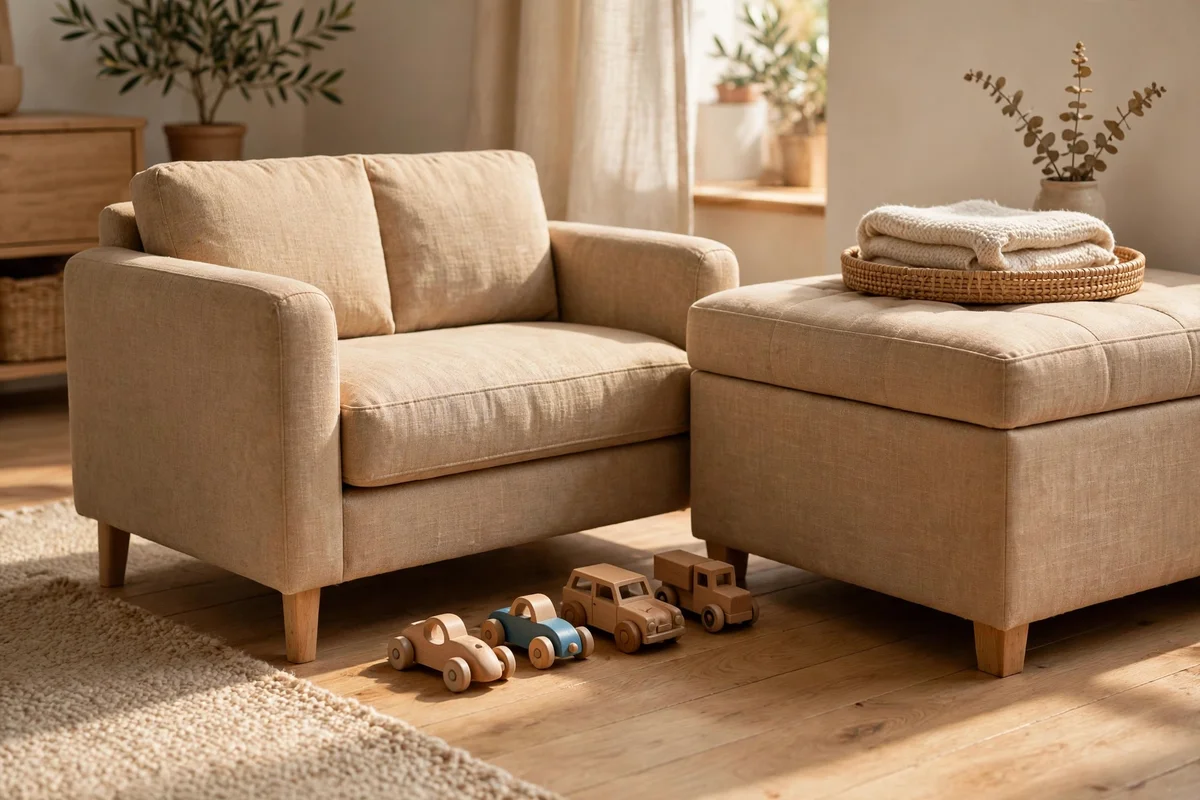
The gap between sofa and ottoman is the room’s busiest runway for toy traffic. Leave 45 to 60 cm there: enough for small feet to pass and toy cars to race, but close enough to rest a cup on the tray. Measure with the ottoman’s lid open, since the swing adds 10 cm. In very tight rooms, choose a 70 cm square ottoman instead of a 110 cm one to protect this corridor.
Teach the family that this strip stays clear, with baskets and the bench handling the overflow. The mistake is pushing the ottoman flush to the sofa for a chaise effect; it kills the walkway and the ottoman’s storage becomes unreachable. A quick weekly check keeps the gap honest as toys migrate. No extra cost, just discipline.
18. Nest Two Small Side Tables Instead of One Large One
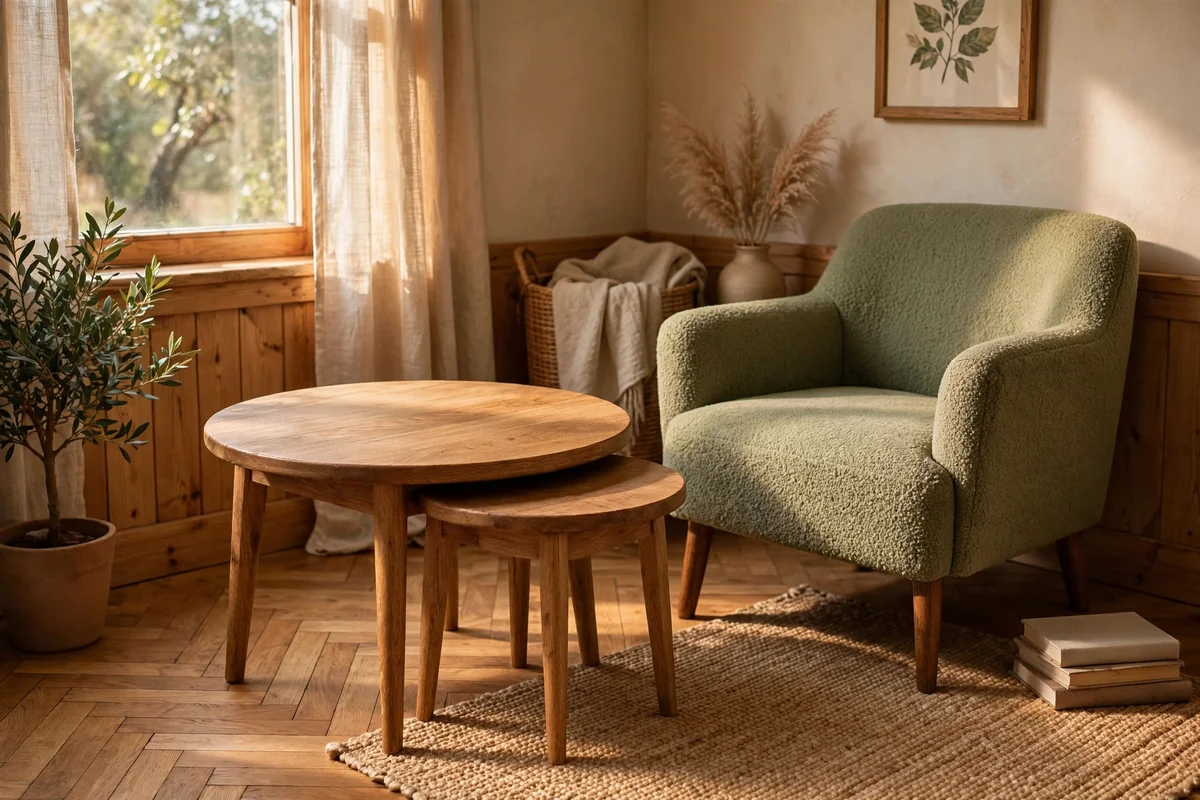
One large side table hogs a corner, while two small nesting tables flex with the family. Choose tables 35 to 40 cm across and 50 to 55 cm high that slide together into a 40 cm footprint when not needed. Pull one beside the swivel chair for evening tea, tuck the other by the bench for a child’s drawing session. Round tops forgive bumped hips better than square corners, and both slide away in seconds.
Pick tables under 4 kg each so children can move them safely without help. The mistake is a heavy marble-topped table that never moves and anchors clutter; lightness is the whole point. Wood or rattan nests cost 40 to 90 dollars a pair, survive years of rearranging, and wipe clean with a damp cloth after craft sessions.
19. Hang Curtains High and Wide to Stretch the Wall
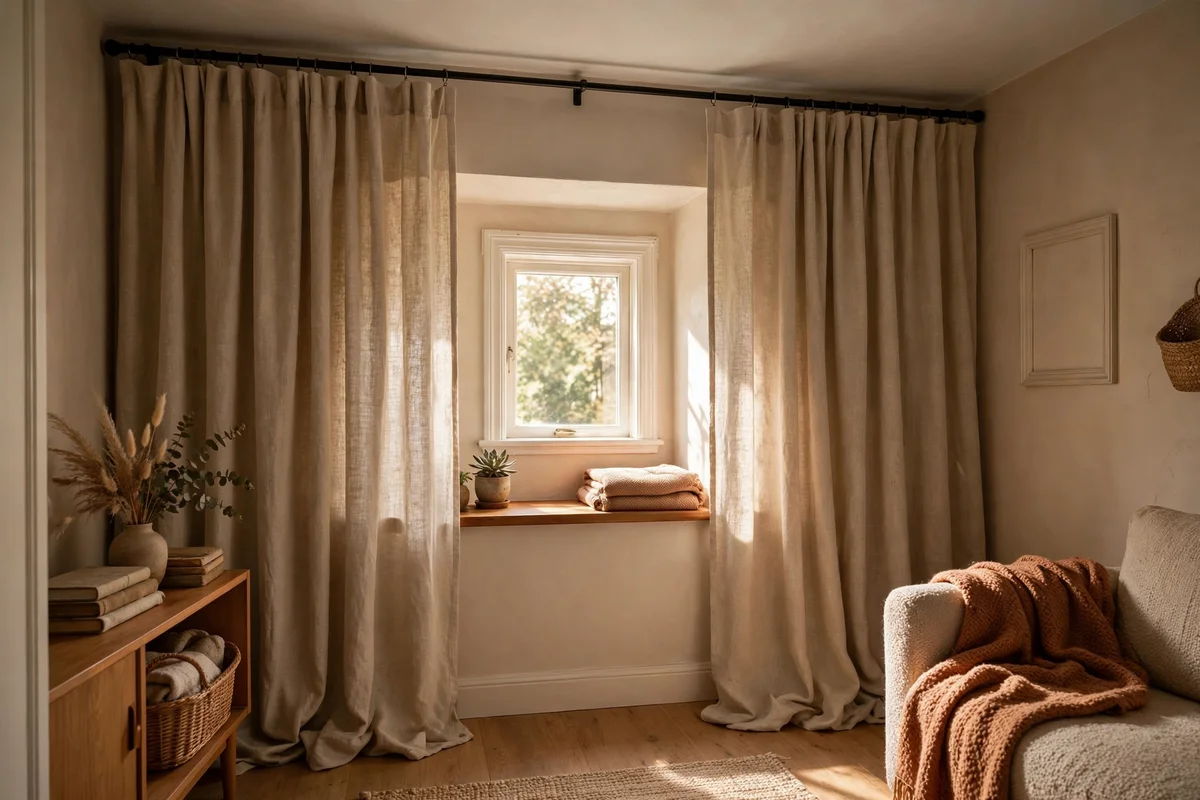
Curtains hung high and wide make a small room’s walls feel taller and wider. Mount the rod 10 to 15 cm below the ceiling and extend it 15 to 20 cm beyond each side of the window frame. Choose panels 1.5 to 2 times the window width so they gather softly even when open. A light linen or cotton in warm white keeps daylight generous.
Let panels just kiss the floor or hover 1 cm above for easy vacuuming around toy zones. The mistake is a rod fitted exactly to the frame with skimpy panels, which shrinks the window visually. Ready-made linen-look panels cost 25 to 50 dollars per pair, and the high-wide trick works on every window in the house.
20. Keep Every Bulb at a Warm 2700K for an Even Evening Glow
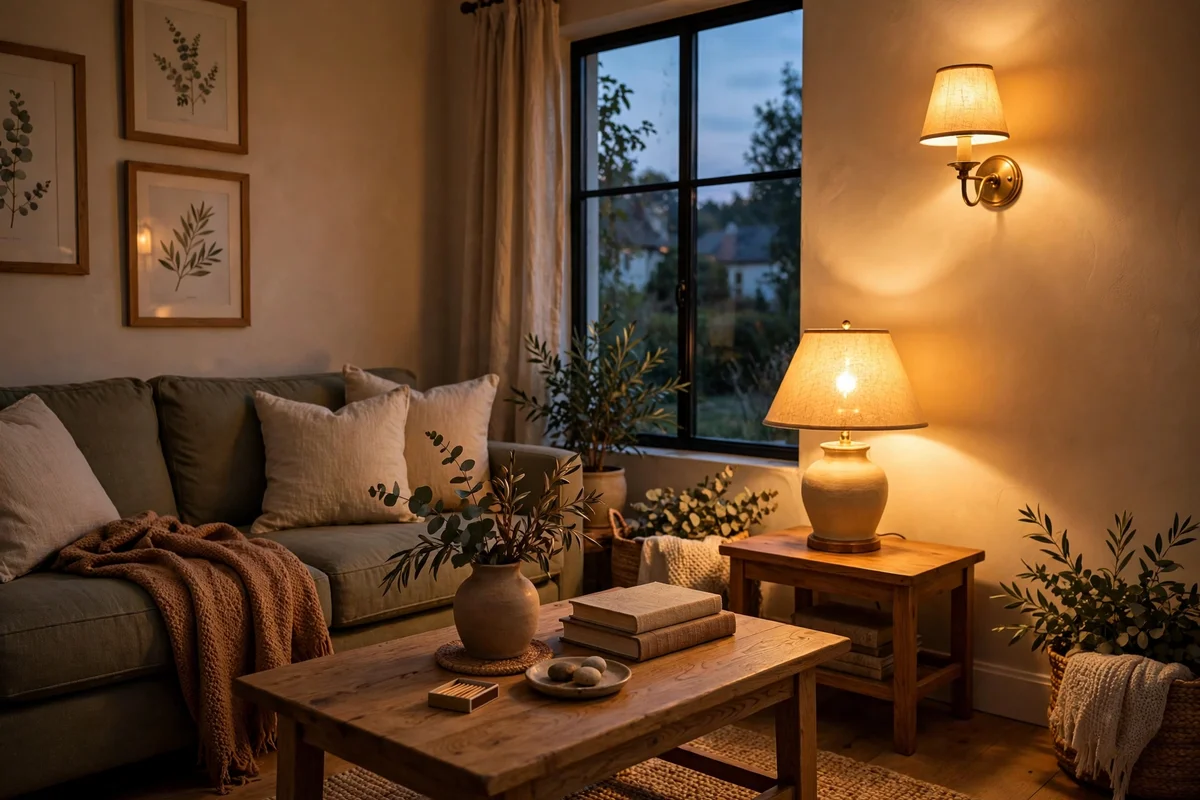
Matching bulb temperature ties layered light together in a tight room. Keep every bulb at warm 2700K, from the floor lamp to the sconces, so the evening glow feels like one continuous blanket rather than patches of cold and warm. Replace any daylight 5000K bulbs first; a single cool bulb ruins the calm. Dimmable warm bulbs let playtime brightness melt into bedtime softness.
Use the same bulb shape family, all globe or all Edison-style, for visual rhythm on open shelves and lamps. The mistake is mixing 2700K and 4000K across layers, which makes even good furniture look mismatched. A full set of warm LED bulbs for a small room costs under 30 dollars and lasts for years.
A small family room succeeds on honesty: furniture that fits the tape measure, storage that closes with a lid, and fabrics that survive the washing machine. These twenty ideas ask for centimetres, not square metres, and each one earns its place by doing two jobs at once. Keep the walkways clear, the lids closed, and the light layered, and the room will feel generous and calm no matter its footprint.
This week, try the easiest win first: pull out the tape measure and mark your walkways with painter’s tape. Seeing the real 70 to 90 cm paths on your own floor makes every later decision, from sofa size to rug placement, almost automatic. Once the paths are true and the clutter has a lidded home, the rest of the room follows naturally.
Frequently Asked Questions
What size sofa actually fits a small family room?
A two-seater between 150 and 180 cm wide suits most compact family rooms. Measure your longest wall, subtract 60 cm for a side table or walkway, and never buy wider than what remains. Slim arms under 15 cm each and 10 to 15 cm legs keep the piece light on its feet.
How do I fit a play area into a small family room?
Claim one corner with a washable low-pile rug 120 to 150 cm across, set at least 60 cm from walkways. Add two lidded baskets for all the toys and a storage bench nearby. The whole zone packs away in under three minutes when guests arrive.
Which fabrics survive children and everyday family life?
Machine-washable slipcovers in mid-tone weaves are the safest choice, washed every four to six weeks. For fixed upholstery, pick performance fabric rated above 50,000 double rubs and test a swatch with ketchup before you buy. Avoid dry-clean-only fabrics on main seating.
How much walkway space does a small family room need?
Keep main paths 70 to 90 cm wide and secondary gaps at least 50 cm. Leave 45 to 60 cm between the sofa and the ottoman for toy traffic. Mark paths with painter’s tape before buying furniture; the tape reveals tight spots instantly.
Can a small family room feel bigger without renovation?
Yes. Hang curtains 10 to 15 cm below the ceiling and 15 to 20 cm wider than the window, use wall-mounted shelves instead of bookcases, and keep every bulb at warm 2700K. Light walls, one rug per zone, and clear walkways do the rest.