DIY Projects
20 Sugar Scrub Recipes for Soft, Smooth Skin Using Pantry Staples
By Anna Wells · · 18 min read
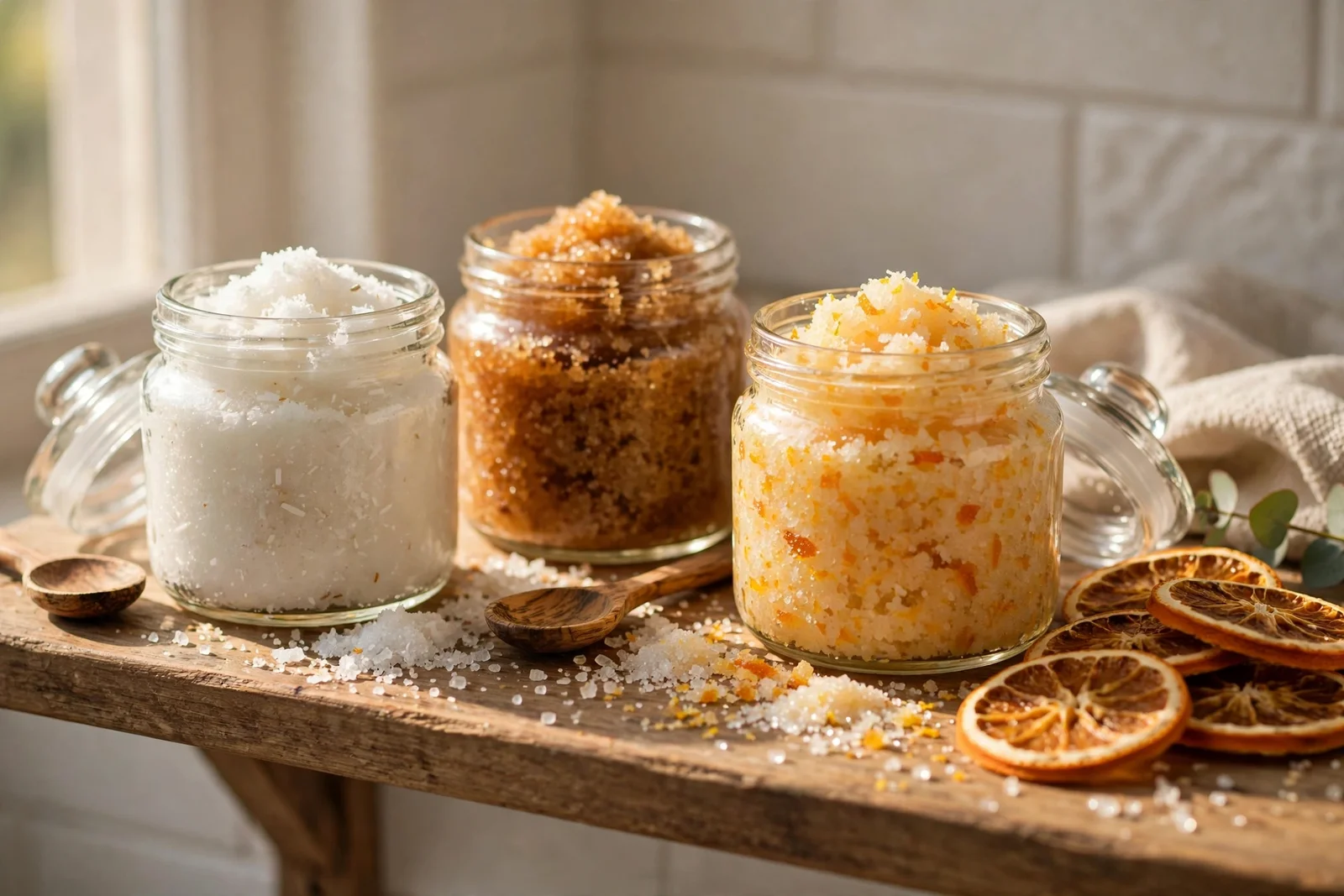
Twenty pantry sugar scrub recipes for soft, smooth skin, made only with plant based staples, plus honest safety notes, storage jars and simple gifting ideas.
Morning light falls across a bathroom shelf lined with small glass jars, and each one holds a different sugar scrub, pale gold, amber brown or flecked with citrus zest. A wooden spoon rests across the rim of the nearest jar, and the whole shelf smells faintly of vanilla and lemon. This is the quiet pleasure of a homemade scrub: simple ingredients, a few minutes of mixing, and a bathroom that feels cared for.
Sugar scrubs work in a straightforward way. Granulated sugar gently buffs away rough, dry patches on arms, legs and feet, while a spoonful of plant oil keeps everything soft and rinses away cleanly. Everything in these twenty recipes comes from an ordinary pantry: white and brown sugar, coconut, olive or almond oil, honey, used coffee grounds, citrus zest, vanilla, and dried herbs or flowers. Nothing synthetic, nothing complicated.
You will find exact ratios for every jar, guidance on fine versus coarse grit for different body areas, and practical storage advice so your scrubs stay fresh. There are also honest safety notes woven through the ideas: patch test first, keep scrubs away from faces and freshly shaved skin, rinse the tub carefully since oil makes floors slippery, and treat these as a simple pleasure, not a medical treatment.
Set aside ten minutes, a mixing bowl and a spoon. The sections below walk through twenty jars, one by one, from the classic two to one ratio to citrus zests, coffee grounds and gift-ready tags. Start with the simplest recipe and work your way through the shelf.
1. Mix Two Parts White Sugar to One Part Coconut Oil in a Squat Glass Jar
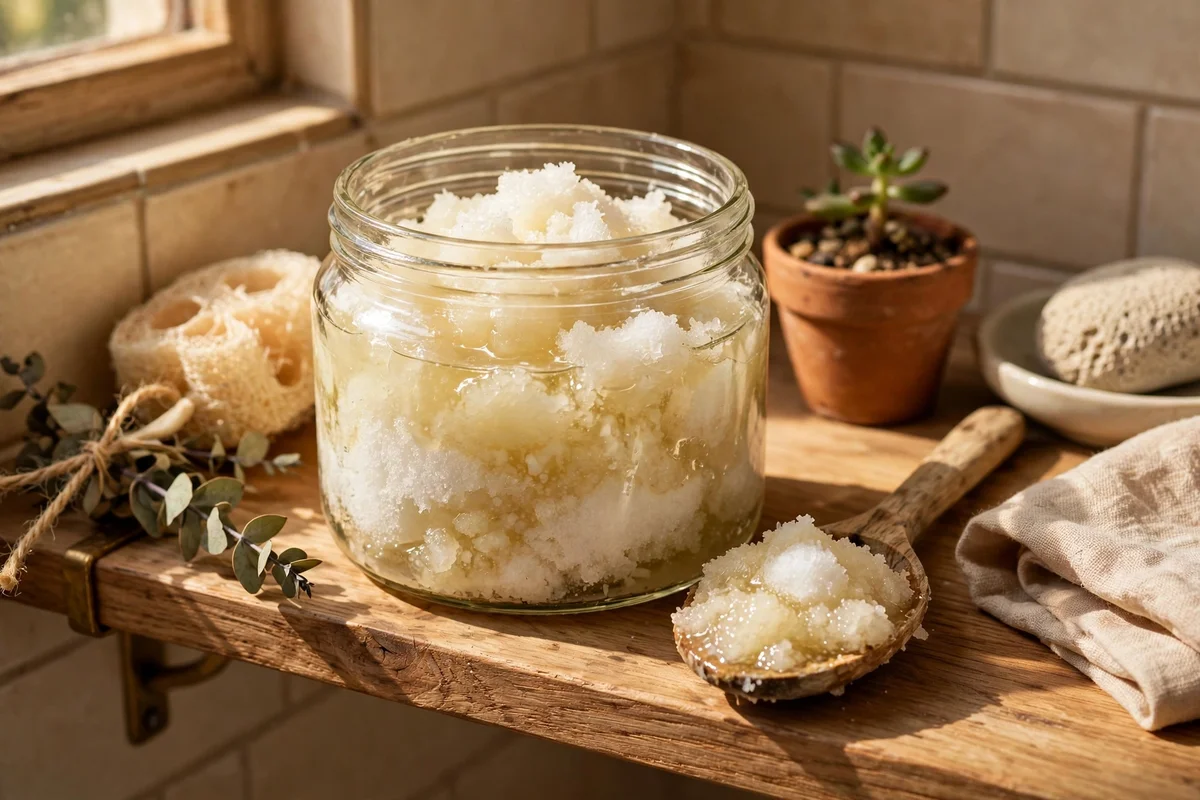
Spoon 200 grams of plain granulated white sugar into a clean mixing bowl, then add 100 grams of softened coconut oil, keeping the classic two to one ratio by weight. Stir with a sturdy spoon for a full minute until every grain is coated and the mixture holds together when pressed. A squat glass jar of about 300 millilitres, with a wide mouth and a snug lid, makes scooping easy and looks tidy on a bathroom shelf.
Scoop the finished scrub into the jar and press it down lightly so no air pockets remain, then wipe the rim clean before closing the lid. Store the jar on a dry corner of the shelf, well away from shower spray, because any water that enters the jar shortens its life quickly. The common mistake is adding extra oil until the mixture floats; a scrub should look like damp sand, not soup. This batch costs little more than the price of the sugar.
2. Stir Brown Sugar With Olive Oil for a Softer Elbow and Knee Scrub
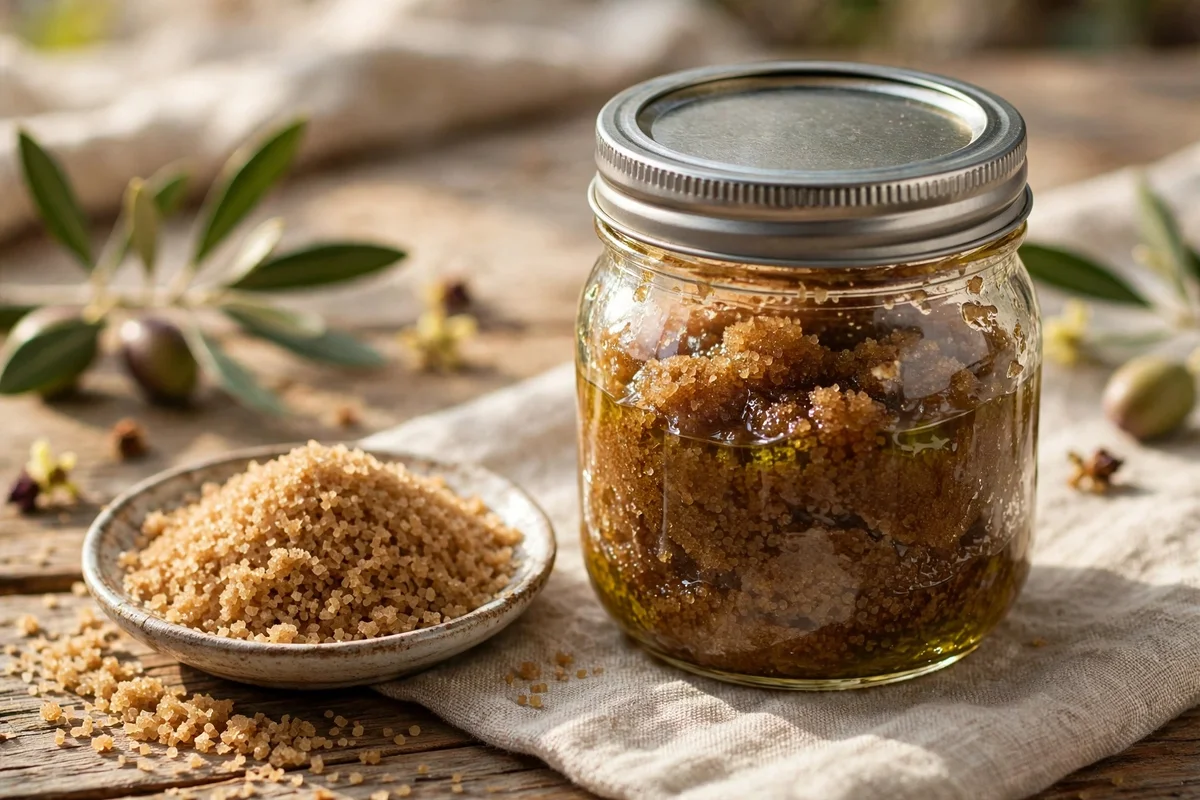
Measure 180 grams of soft brown sugar into a bowl and pour in 90 grams of plain olive oil, keeping the same two to one balance. Brown sugar crystals are slightly smaller and softer than white, which makes this version kinder on rough elbows, knees and heels. Stir for about ninety seconds until the mixture turns a uniform caramel colour and clumps softly when squeezed, then rest it for five minutes so the oil settles through the grains.
Dab a small amount on the inside of your forearm first and wait a day to check for any reaction, since even pantry ingredients can disagree with sensitive skin. Never use scrubs on faces, broken skin or freshly shaved areas, where the grit can sting badly. The mistake to avoid is scrubbing elbows daily; twice a week is plenty. A 250 millilitre jar of this mixture lasts about a month of regular use.
3. Blend Almond Oil and Granulated Sugar in a Wide Mouth 250 ml Jar
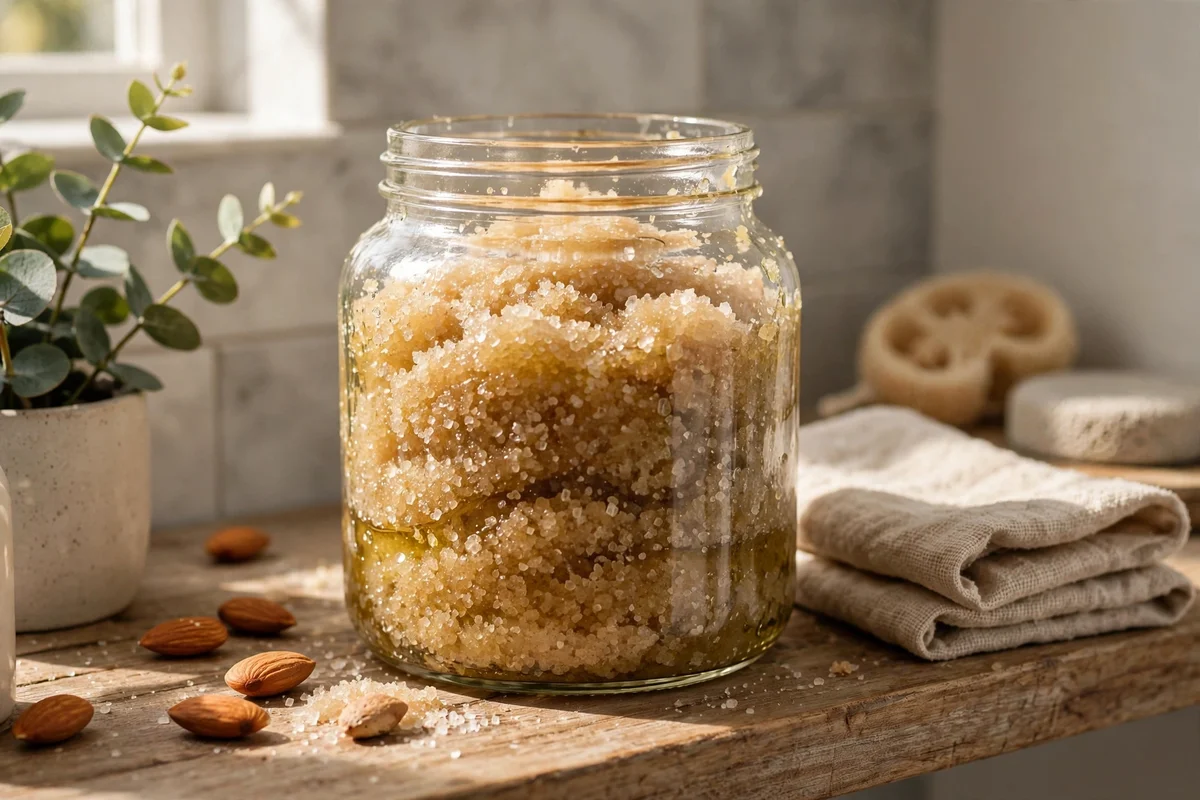
Combine 170 grams of granulated sugar with 85 grams of sweet almond oil in a mixing bowl, stirring until the grains glisten evenly. Almond oil is lighter than coconut oil and rinses away with less residue, which suits anyone who dislikes a heavy oily film after showering. Choose a wide mouth jar of 250 millilitres so a tablespoon scoop reaches the bottom easily, and pick plain glass with no readable label for a clean shelf look.
Press the mixture firmly into the jar and smooth the top with the back of a spoon for a neat finish. Keep the jar closed between uses and always scoop with a dry spoon, because water left in the jar encourages spoilage within days. The budget tip here is simple: almond oil from a grocery store works exactly as well as pricier bottles. Skip scented oils entirely; this recipe stays honest and unscented.
4. Fold Honey Into a Brown Sugar Scrub for a Stickier Shower Shelf Jar
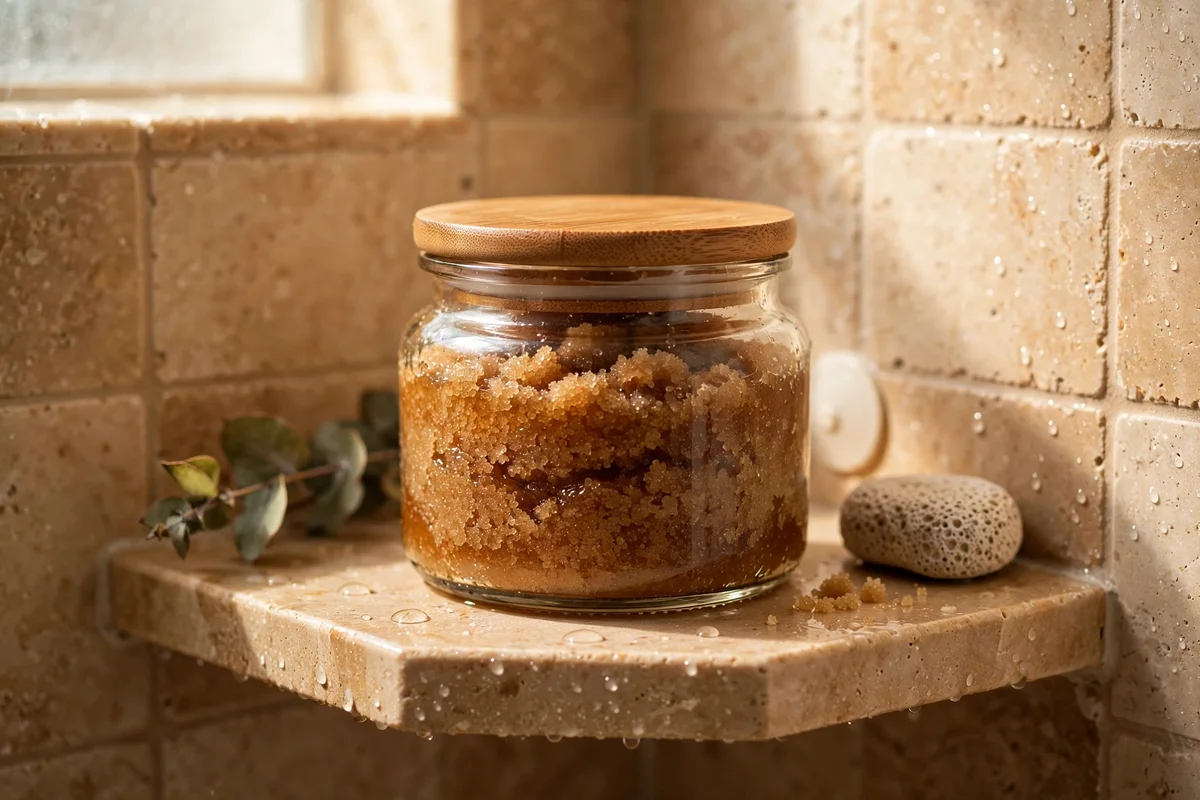
Stir 150 grams of brown sugar with 75 grams of olive oil, then fold in two tablespoons of plain runny honey until the mixture turns glossy and thick. Honey makes the scrub cling to skin a little longer in the shower, which feels pleasant on dry winter legs. Use a jar with a secure screw lid rather than a loose cork top, because honey mixtures can seep toward the rim in warm bathrooms.
Because honey draws in moisture, keep this jar strictly away from steam and always use a completely dry spoon. Plan to use the batch within six weeks, and discard it sooner if it smells fermented or looks watery. The mistake to avoid is doubling the honey for extra stickiness; too much makes the scrub gluey and hard to rinse. One small jar per month is the right scale for this recipe.
5. Combine Used Coffee Grounds and Sugar for a Morning Shower Table Bowl
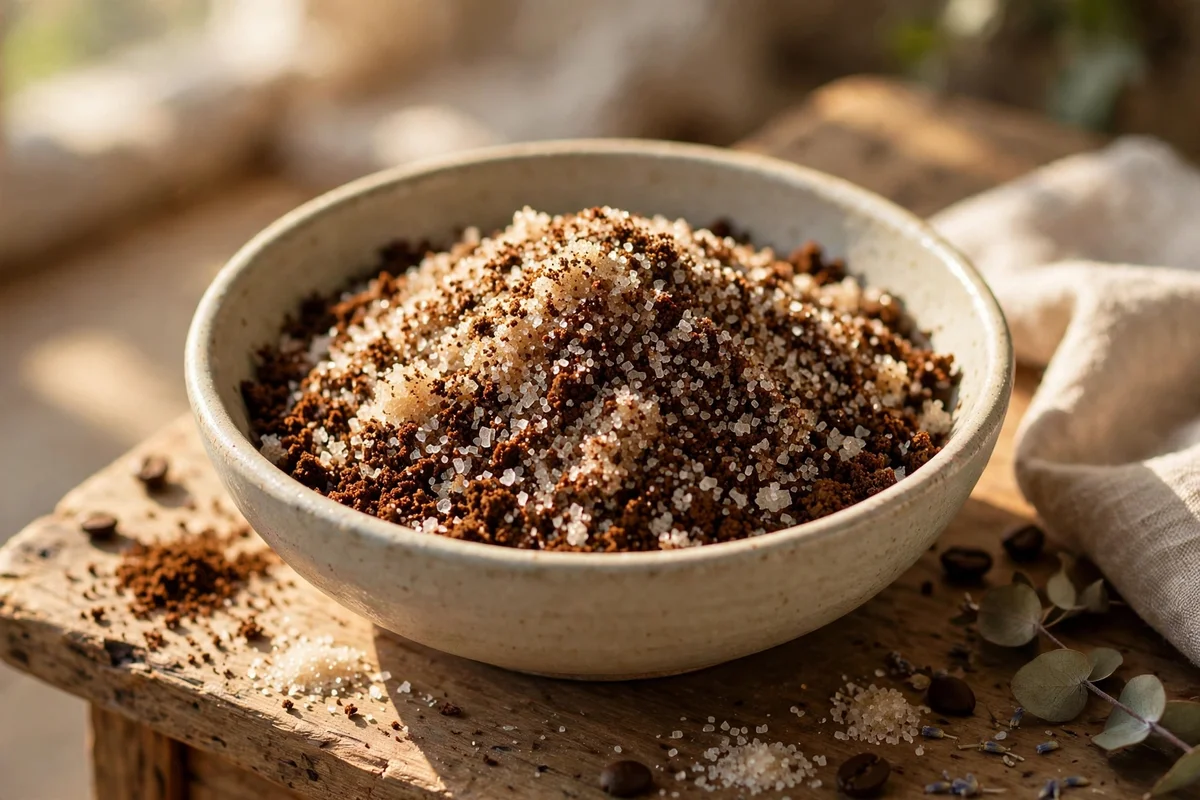
Mix 100 grams of dried used coffee grounds with 100 grams of granulated sugar and 100 grams of coconut oil for a darker, coarser scrub. Dry the grounds on a tray overnight before mixing, since damp grounds spoil the batch quickly. The texture is rougher than plain sugar scrubs, so reserve this one for feet, heels and rough patches on legs, never for tender areas. A low ceramic bowl with a lid suits this rustic mixture well.
Set the bowl on a small side table near the shower rather than inside it, keeping it clear of direct spray. Rinse the tub or shower floor thoroughly after every use, because the combination of oil and coffee grounds makes surfaces very slippery. Use within one month, as coffee mixtures fade fastest. The mistake to avoid is grinding beans extra fine for this; used drip grounds already have the ideal grit.
6. Grate Lemon Zest Into a Citrus Sugar Mix Stored by the Sink
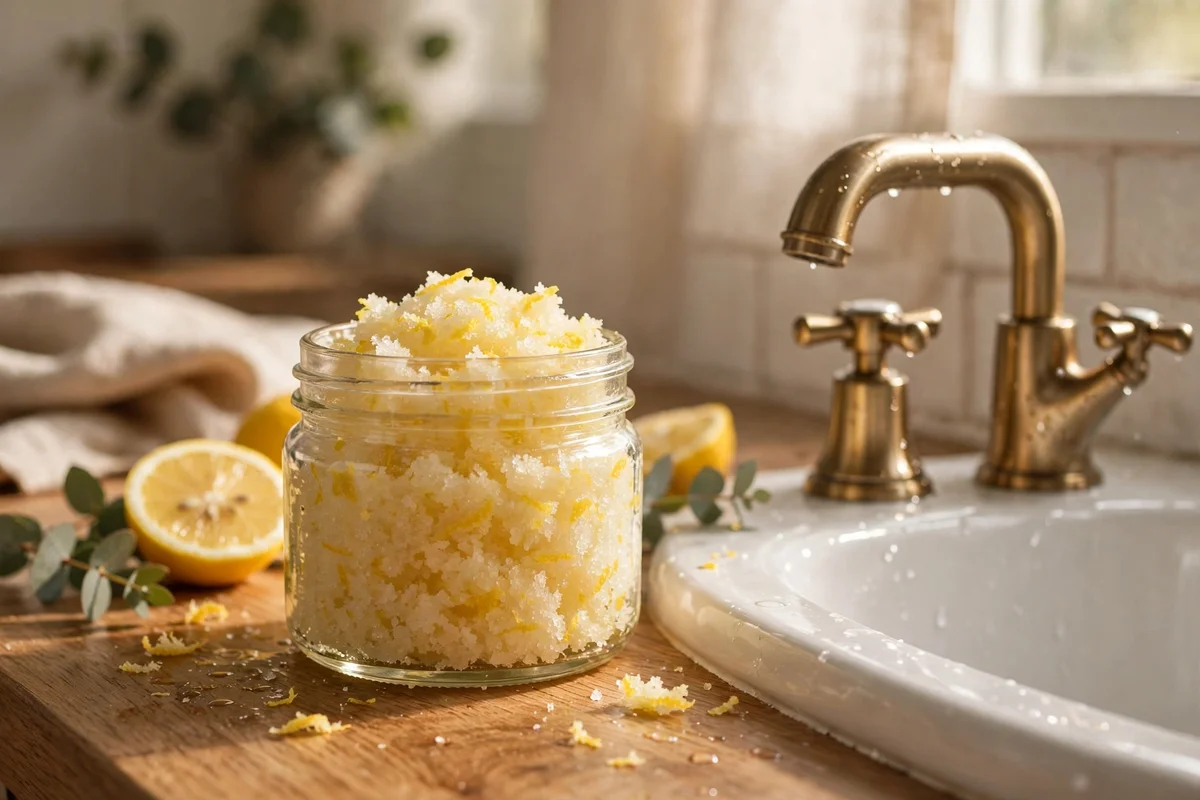
Grate the zest of two fresh lemons, about two tablespoons, into 200 grams of granulated sugar and stir in 100 grams of almond oil. The zest gives the scrub a bright, clean scent with no synthetic fragrance needed. Spread the zest on a plate for an hour before mixing so surface moisture evaporates; wet zest shortens shelf life noticeably. A small 200 millilitre jar by the bathroom sink keeps this cheerful mixture within reach.
Use this citrus scrub on hands and feet only in the evening, and avoid it before long sun exposure, since citrus oils can make skin more sensitive to sunlight. Keep the jar sealed and use it within three weeks, because fresh zest fades quickly. The mistake to avoid is adding lemon juice instead of zest; juice adds water and ruins the texture. Zest alone gives all the scent you need.
7. Whisk Vanilla Bean Specks Into Sugar and Coconut Oil for Gifting
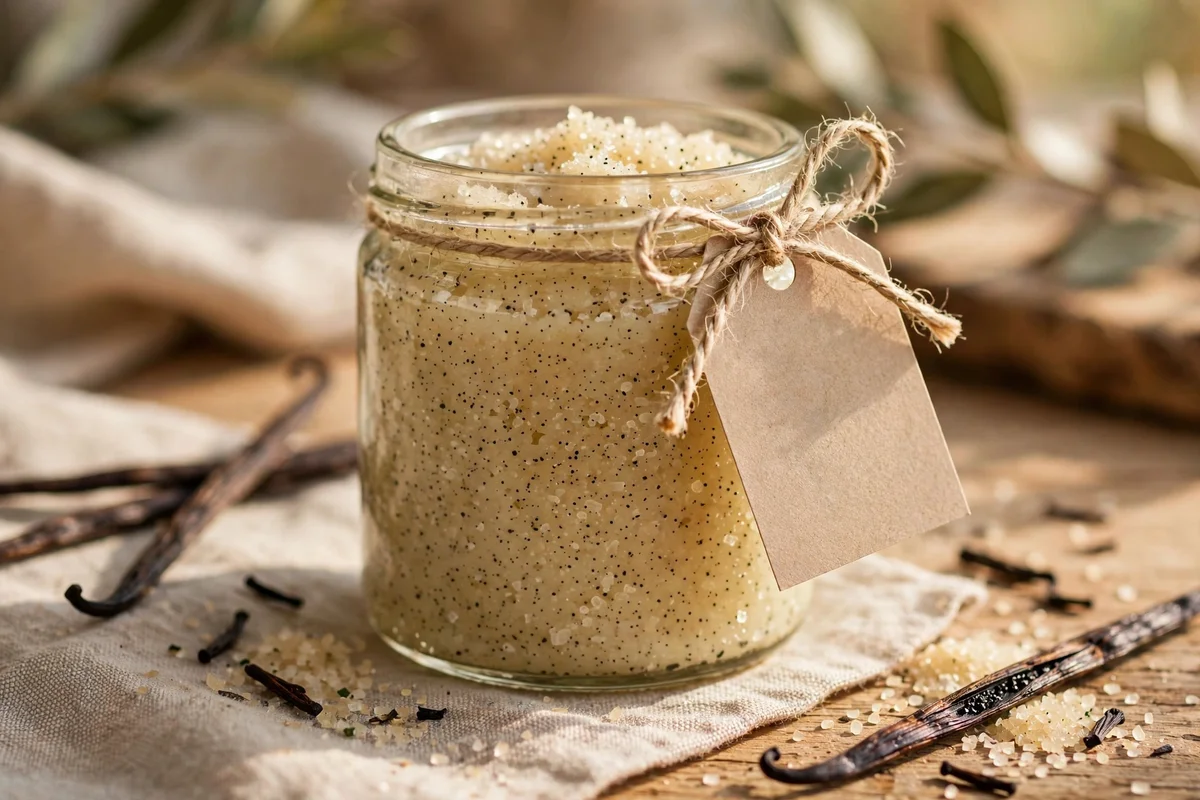
Split half a vanilla pod, scrape out the tiny dark seeds and whisk them into 200 grams of white sugar with 100 grams of melted then cooled coconut oil. The specks look beautiful scattered through the pale scrub, like miniature stars in snow. Real vanilla is a pantry luxury, so reserve this recipe for gifts or special occasions rather than everyday use. Pack it in a small 150 millilitre glass jar with a plain, label free surface.
Tie a plain paper tag around the jar neck with natural twine, and write the scent and the date in pencil on the tag itself, keeping all writing off the glass. Tell the recipient to use it within two months and to keep water out of the jar. The mistake to avoid is using vanilla extract instead of the pod; extract contains alcohol and water, which spoil the dry texture. Pods give scent without the drawbacks.
8. Sprinkle Dried Lavender Buds Into a Pantry Scrub for Evening Calm
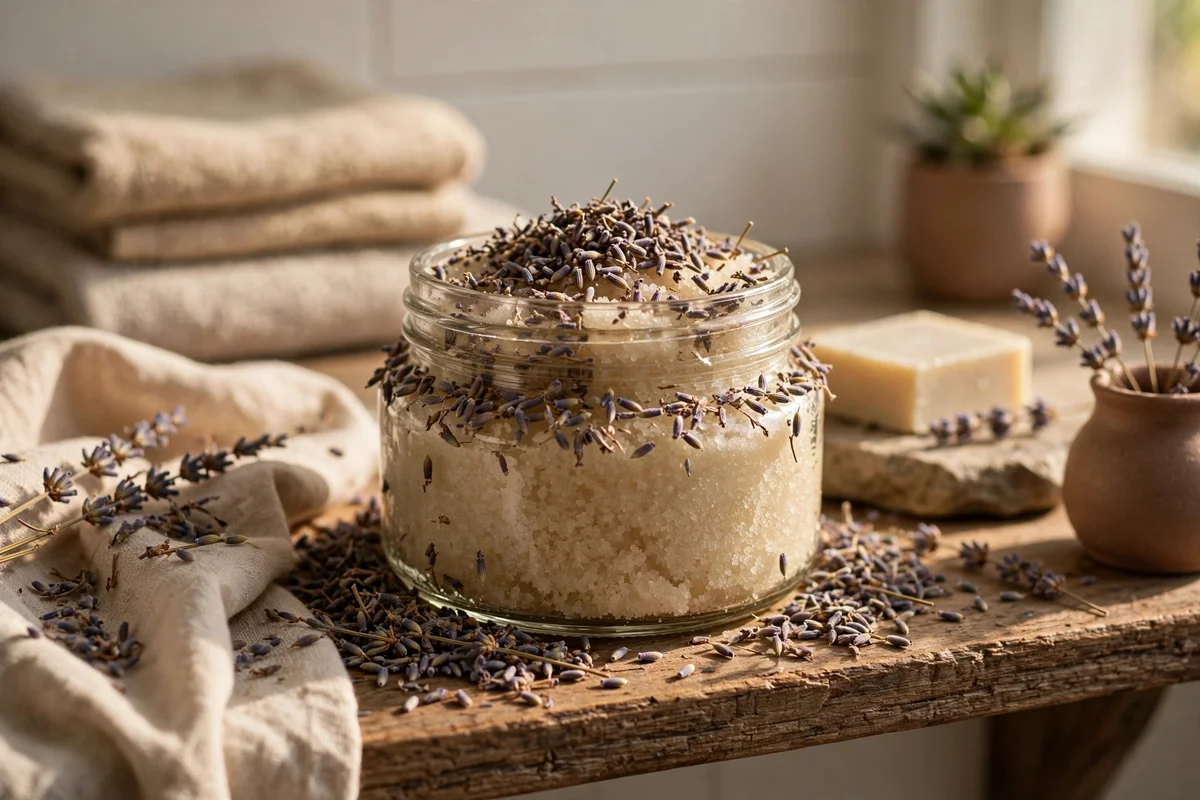
Stir one tablespoon of fully dried lavender buds into 180 grams of granulated sugar and 90 grams of olive oil. The buds add a gentle herbal scent and a pretty purple fleck through the mixture. Make sure the buds are completely dry and food grade, since any lingering moisture or dust affects the jar. This is a lovely evening scrub for feet and legs, stored in a 250 millilitre jar on the lower bathroom shelf.
Crush the buds lightly between your fingers before adding them so they release scent without turning the scrub gritty. Patch test on the inner arm before first use, as even dried flowers can irritate very sensitive skin. Use within two months. The mistake to avoid is using lavender fragrance oil from a craft store; only real dried buds belong in a pantry scrub. Honest ingredients keep the recipe trustworthy.
9. Layer Rose Petals and Sugar in a Tall Glass Jar for the Bathroom Shelf
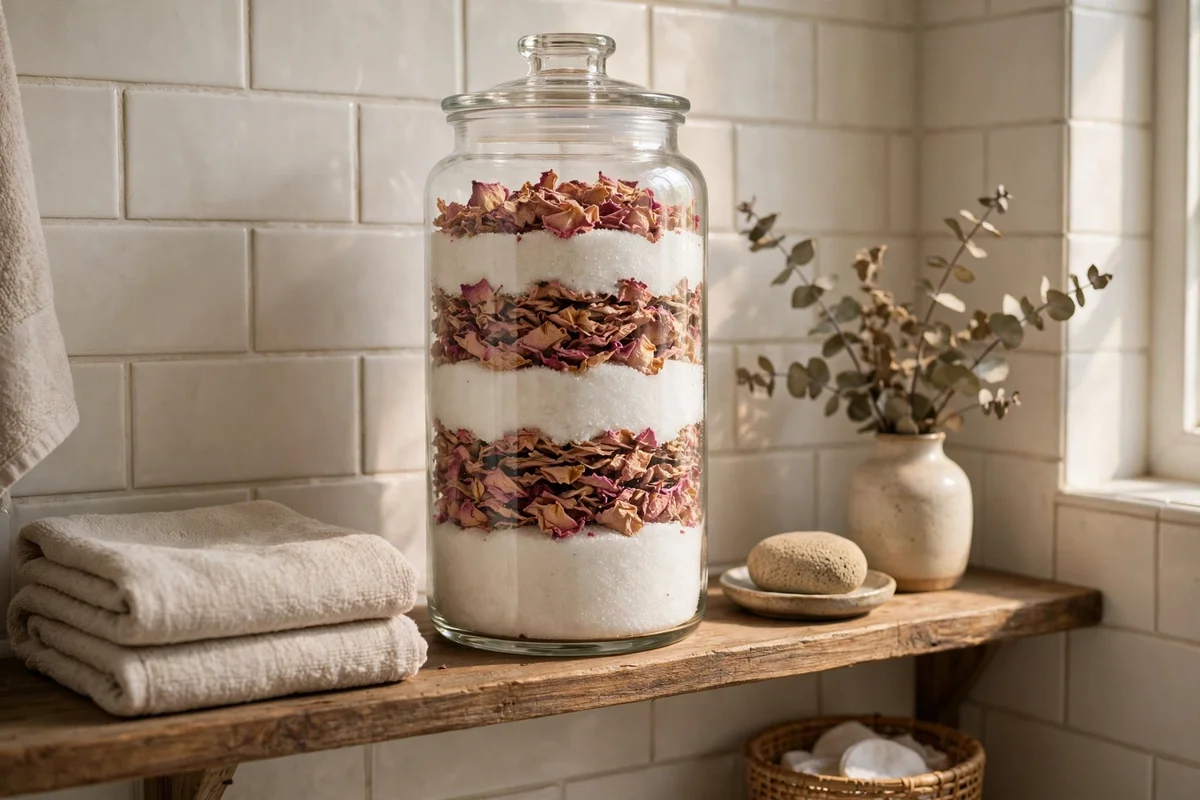
Layer 150 grams of granulated sugar with two tablespoons of dried rose petals in a tall, narrow glass jar, spooning them in alternating bands. The stripes of pink petals against white sugar look striking on an open bathroom shelf, especially beside a small potted plant. Add 75 grams of almond oil only when you are ready to use the jar, pouring it in and stirring gently, so the decorative layers stay crisp during storage.
Keep the dry layered jar sealed for up to three months, then mix in the oil and use the scrub within four weeks. The petals soften in the oil and feel pleasant against skin on legs and arms. The mistake to avoid is using fresh petals, which carry water and will mould inside a sealed jar within days. Only thoroughly dried petals are safe for layering.
10. Mix Fine Sugar Grit for Arms and Coarse Grit for Feet in Twin Jars
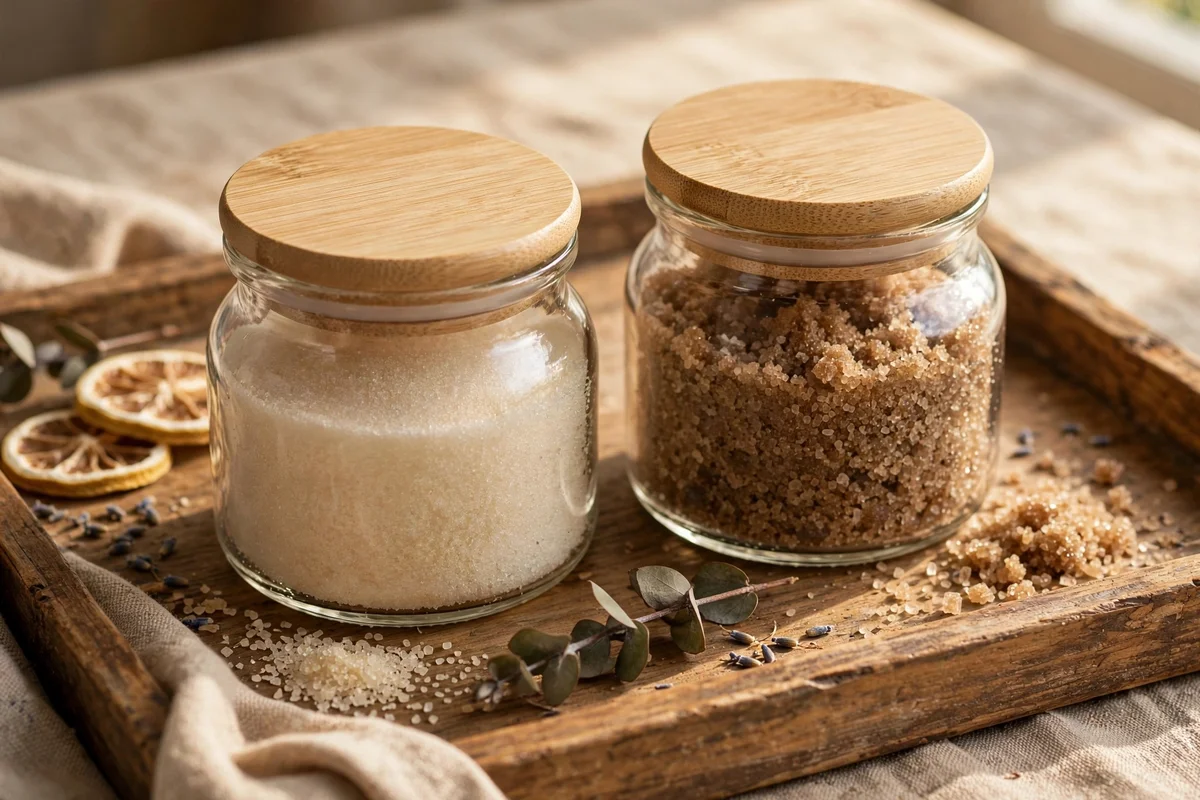
Prepare two small batches side by side: pulse 150 grams of sugar briefly for a finer grit suited to arms and shoulders, and leave 150 grams coarse for feet and heels. Mix each with half its weight in coconut oil, 75 grams per batch. The difference in texture is easy to feel between your fingertips. Two matching 150 millilitre jars, filled side by side on a wooden tray, make the pairing look deliberate and neat.
Mark which jar is which with a tiny dot of pencil on the plain paper tag, never with ink on the glass. Use the fine jar up to three times a week and the coarse jar once or twice, always avoiding faces and freshly shaved skin. The mistake to avoid is swapping the jars by memory; coarse grit on tender areas feels harsh. The twin jar method teaches grit awareness quickly and cheaply.
11. Rest a Small Wooden Spoon Across the Jar on a Ceramic Saucer
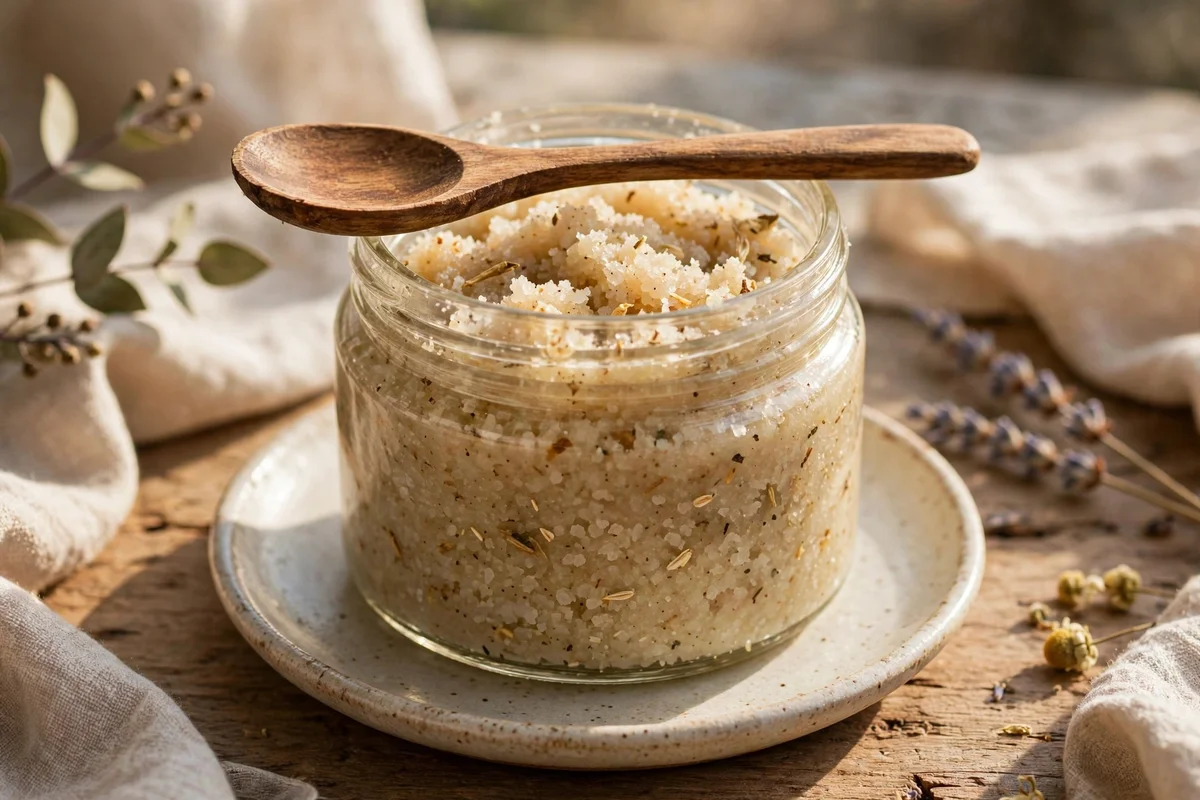
Place each scrub jar on a small ceramic saucer, about 12 centimetres across, and lay a short wooden spoon across the rim between uses. The saucer catches the inevitable oil drips that would otherwise stain a wooden shelf or leave rings on stone. Choose spoons around 10 centimetres long so they balance neatly without tipping into the jar. This simple setup costs almost nothing and keeps the whole shelf tidy.
Wash the wooden spoon with hot soapy water once a week and let it dry fully before returning it to the jar, since a damp spoon carries water into the scrub. Replace the spoon if it ever smells stale. The mistake to avoid is scooping with wet fingers straight from the shower; that single habit shortens a jar’s life more than anything else. A dry spoon every time is the golden rule.
12. Line Up Three Mini Jars With Different Citrus Zests on a Wooden Tray
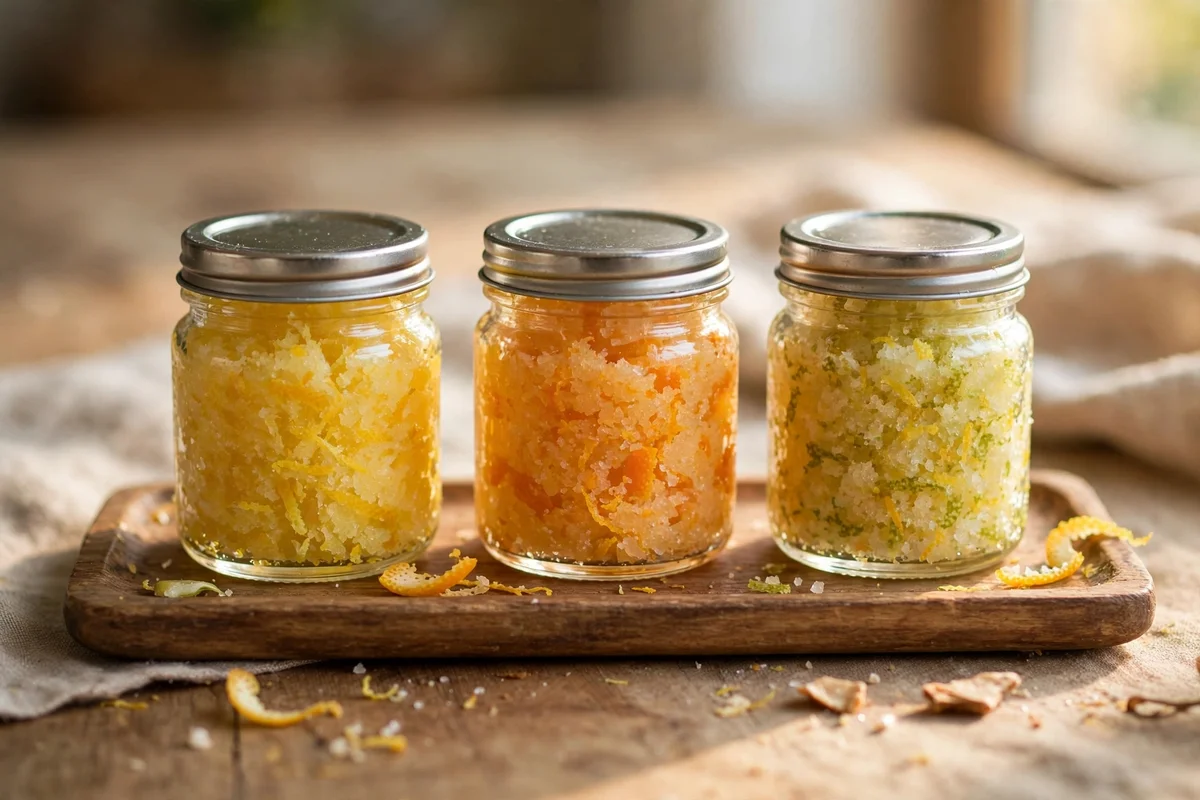
Fill three 100 millilitre jars with the basic two to one sugar and almond oil mix, then stir lemon zest into the first, orange zest into the second and lime zest into the third, one tablespoon of dried zest per jar. Dry each zest on a plate for an hour before mixing. A narrow wooden tray about 30 centimetres long holds the trio neatly and turns three simple jars into a proper display.
Use the trio within three weeks while the zest is still fragrant, starting with whichever scent appeals most that day. Keep the tray on a dry shelf, never inside the shower cubicle. The mistake to avoid is mixing all three zests into one jar for variety; the scents muddle into something indistinct. Separate jars keep each citrus clear and make the little collection feel generous.
13. Store the Scrub Jar Away From Shower Spray on a Dry Corner Shelf
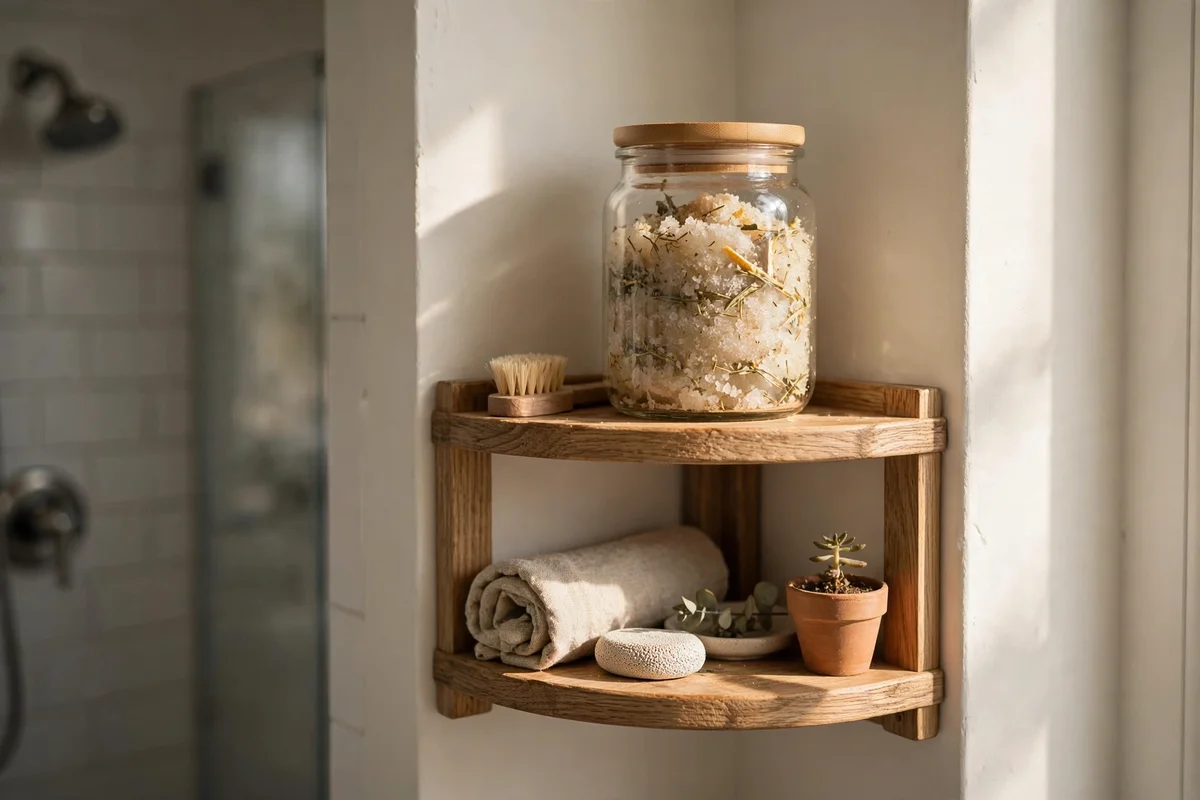
Choose a corner shelf or cabinet section at least an arm’s length from the shower head, where steam and splashes cannot reach. Even a few drops of water introduced over weeks will turn a perfect scrub grainy, then sour. A shelf around chest height keeps jars visible and easy to grab without stretching. If the bathroom is very steamy, store the working jar in a nearby linen cupboard instead.
Open the jar only when the bathroom air has settled after a shower, and close it promptly after scooping. If condensation ever beads inside the lid, wipe it dry at once and consider moving the jar somewhere cooler. The mistake to avoid is keeping the jar on the shower ledge for convenience; that single habit ruins more batches than any recipe error. Dry storage is the whole secret of shelf life.
14. Measure the Two to One Ratio With a Simple Tablespoon Scoop Method
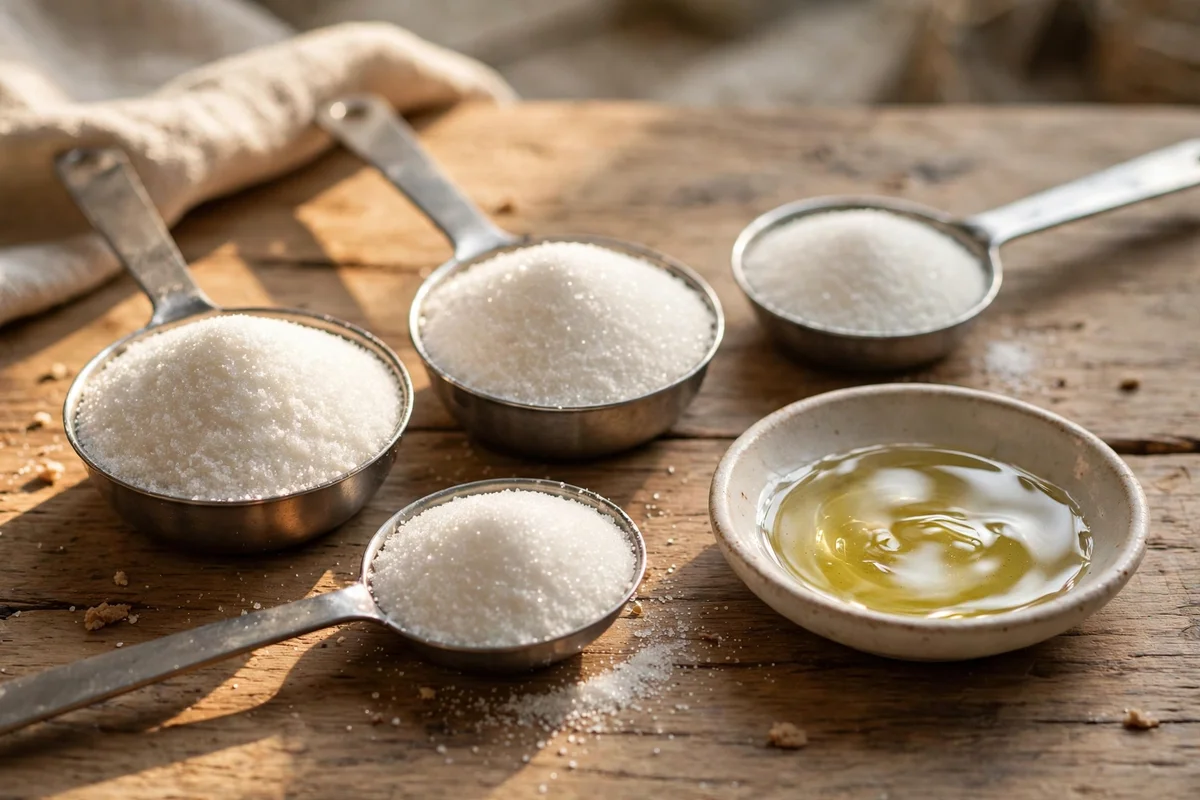
You do not need kitchen scales for a good scrub. Count four level tablespoons of sugar to two level tablespoons of softened oil, which reproduces the two to one ratio closely enough for every recipe here. Level each spoon with the back of a knife for consistency. Mix in a cereal bowl, which gives enough room for thorough stirring without spilling grains across the counter.
Test the texture by squeezing a spoonful: it should clump like damp sand and crumble apart when poked. If it crumbles dry, add oil half a spoon at a time; if it pools oil, add sugar a spoon at a time. The mistake to avoid is measuring oil while it is fully melted and hot, which makes the ratio look right but feel greasy once it cools. Softened, not liquid, is the target.
15. Refresh a Drying Scrub With One Extra Spoon of Oil Before Use
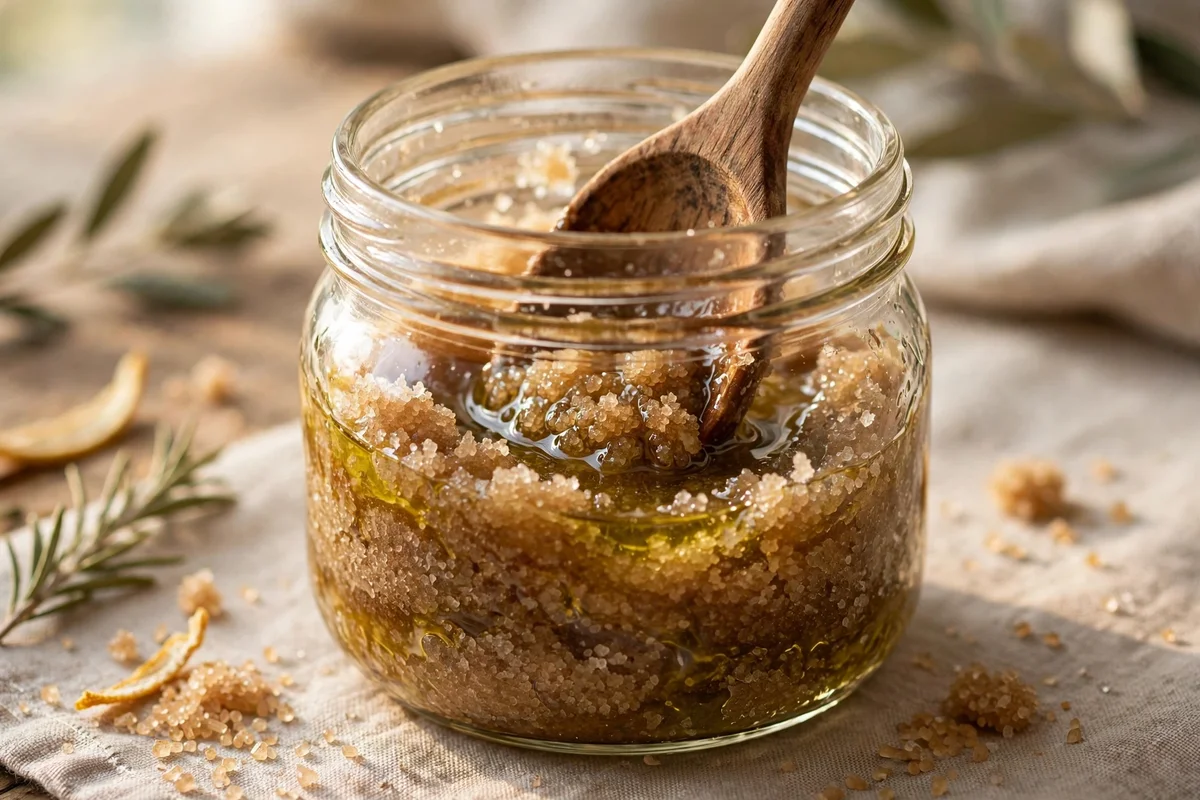
If a jar has sat for two weeks and looks dry or crumbly on top, stir in one tablespoon of fresh oil and mix thoroughly before using. Coconut oil firms up in cool bathrooms, so a winter jar often needs this little revival. Stir for a full thirty seconds so the fresh oil reaches every grain, then smooth the surface again. The scrub should return to its original damp sand texture immediately.
Only refresh a jar that still smells fresh and shows no water damage; a sour smell means the batch must be discarded, not rescued. Never refresh more than twice, and keep the original two month limit from the making date. The mistake to avoid is pouring in a generous glug of oil instead of one measured spoon, which turns the scrub into an oily slick. Small corrections keep the balance right.
16. Tie a Plain Paper Tag With Twine Around the Jar Neck for Gifting
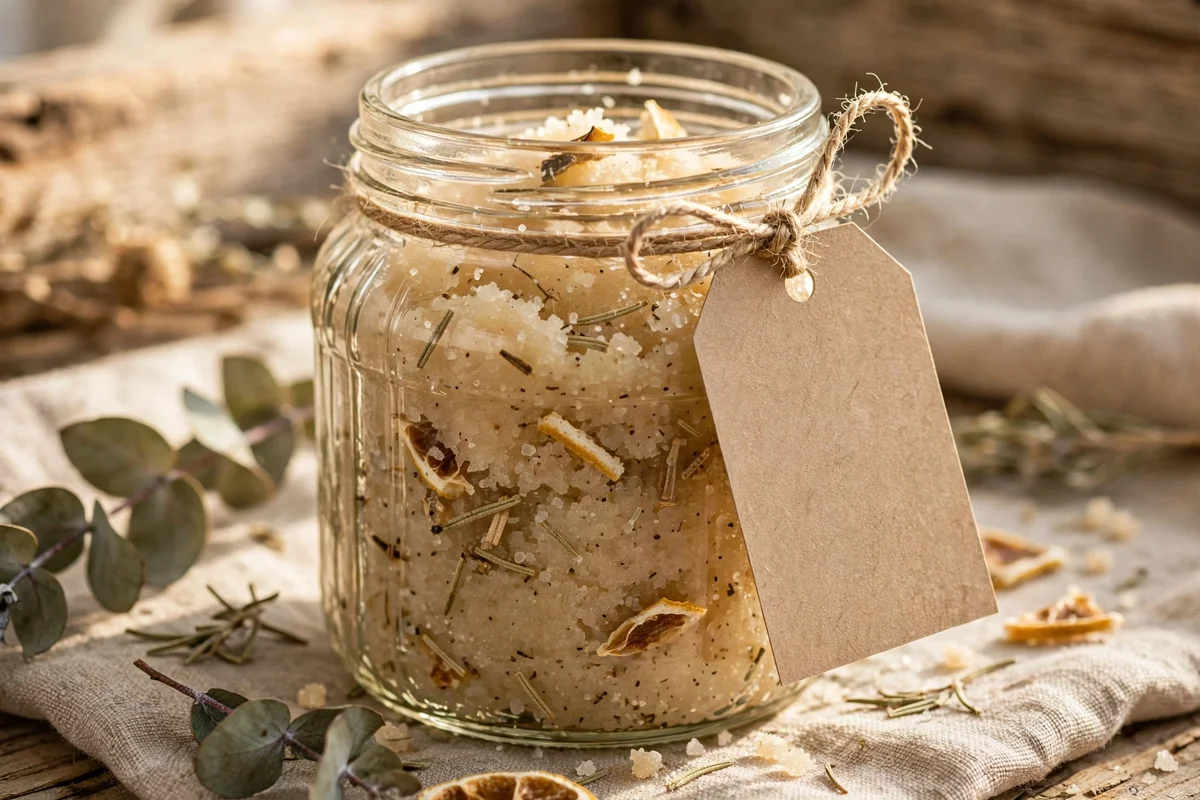
Cut a plain rectangle of kraft paper, about 6 by 4 centimetres, punch a hole in one corner and thread 25 centimetres of natural twine through it. Loop the twine twice around the jar neck and tie a simple bow. Write the scrub scent and the date it was made in soft pencil on the tag, keeping all text on the paper and none on the glass. The result looks handmade and honest.
Add one line on the back of the tag: use within two months, keep water out of the jar. This small instruction protects the recipient and shows care. The mistake to avoid is using printed sticky labels on the glass; they peel in steamy bathrooms and leave residue. A tied tag lifts off cleanly, and the jar stays beautiful enough to reuse afterwards.
17. Write the Scent in Pencil on the Plain Tag to Keep Glass Clean
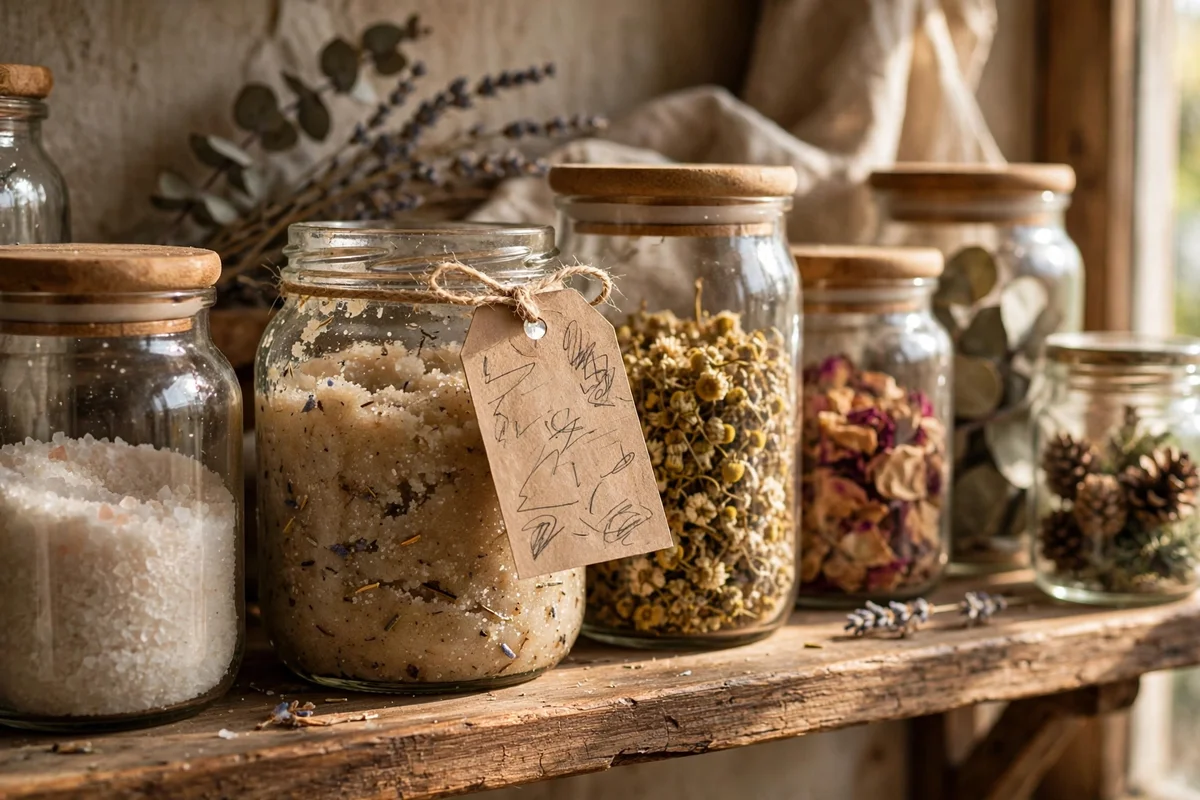
When you make several scrubs at once, identification matters. Write each scent in pencil on its plain paper tag: lemon, coffee, vanilla, lavender. Pencil suits kraft paper well and never bleeds in humidity the way ink can. Keep a second line for the date made, so you always know which jar to finish first. Tags stay legible for months in a normal bathroom.
Store the jars with tags facing forward on the shelf so you can read them at a glance. If a tag ever gets damp, replace it with a fresh one rather than letting soggy paper sit against the jar. The mistake to avoid is writing directly on the glass with marker, which looks messy and resists cleaning. Plain tags in pencil keep every jar looking calm and intentional.
18. Set a Small Ceramic Bowl of Loose Sugar Beside the Main Jar for Display
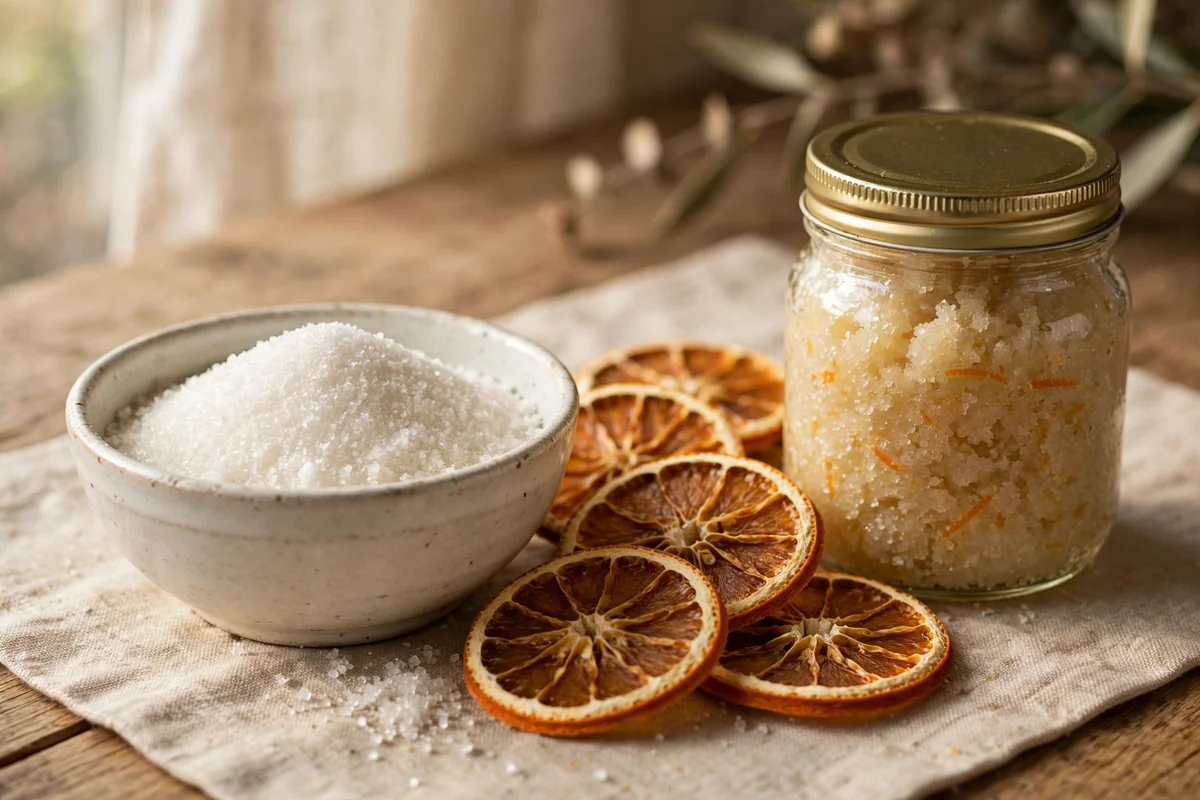
Fill a small ceramic bowl, about 10 centimetres across, with plain granulated sugar and set it beside the working scrub jar on the shelf. Tuck two dried orange slices and a cinnamon stick into the sugar at an angle for a warm still life that echoes the scrub ingredients. This decorative bowl is for display only and never enters the scrub jar, so it stays clean indefinitely.
Dust the bowl lightly each week and replace the sugar every two months so it always looks fresh. Keep the display at the back of the shelf and the working jar at the front for easy reach. The mistake to avoid is letting guests assume the display bowl is the scrub; a tiny plain tag reading display only, in pencil, prevents confusion. Beauty and function stay happily separate.
19. Keep a Dry Cloth Under the Jar to Catch Oil Drips on the Shelf
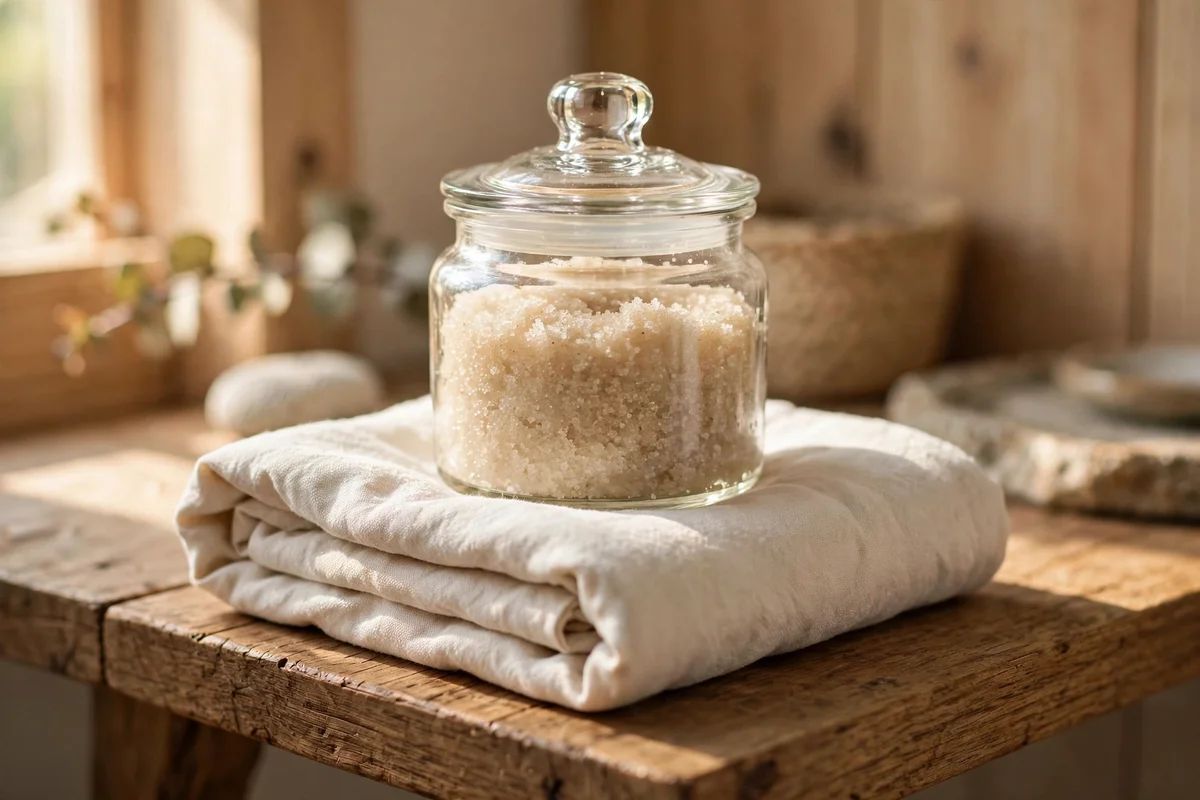
Fold a small cotton cloth into a square about 15 centimetres across and set the scrub jar on top of it. The cloth absorbs the faint oil film that forms around jar bases in warm bathrooms, protecting wooden shelves from stains and stone from slippery patches. Choose a washable cloth in a calm neutral tone so it blends into the shelf rather than shouting for attention.
Launder the cloth with hot water weekly, since oil builds up over time and can turn stale. Keep a spare cloth in the linen cupboard so the jar is never sitting bare while one washes. The mistake to avoid is using a paper napkin instead; paper disintegrates into the oil within days and makes a worse mess. A proper washable cloth lasts for years.
20. Retire the Jar After Three Months and Start a Fresh Small Batch
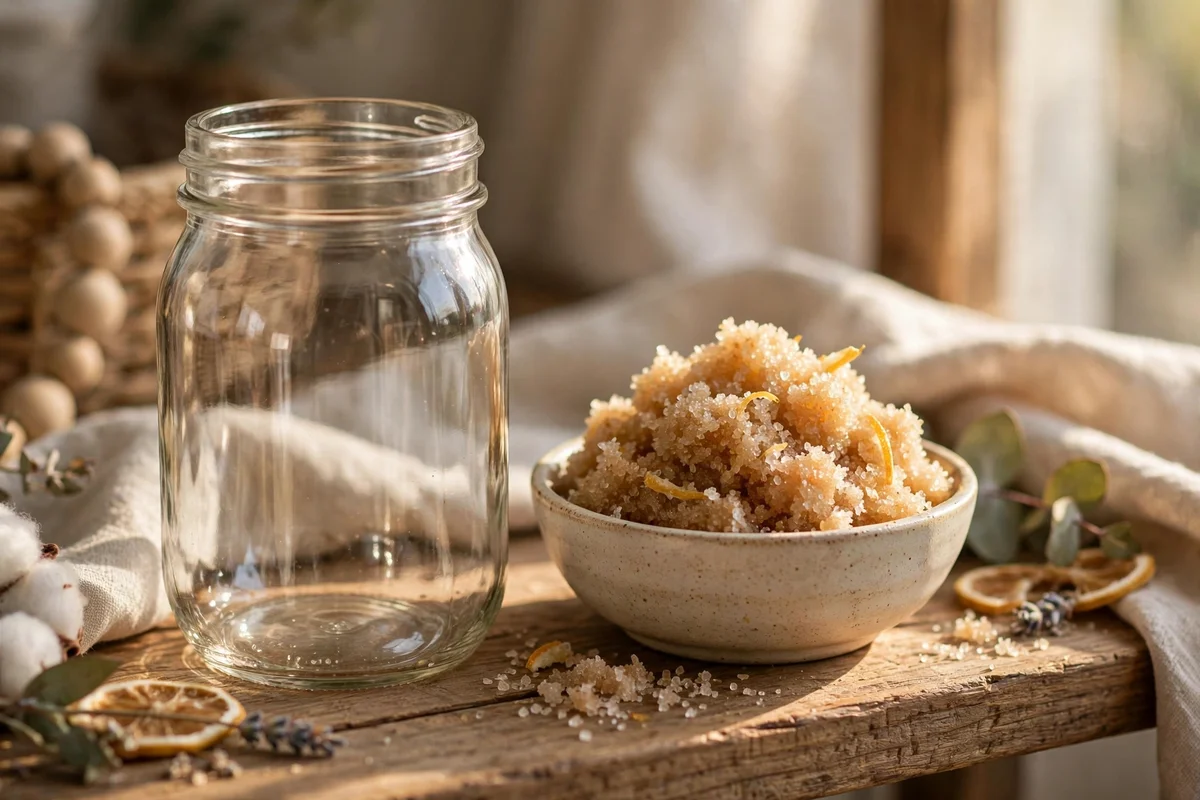
Mark the making date on the plain tag in pencil, and count forward no more than three months for plain sugar and oil scrubs, less for versions with honey, zest or coffee. When the date arrives, discard any remainder, wash the jar in hot soapy water and dry it completely before refilling. Fresh small batches always outperform one giant jar kept too long.
Use the retirement moment to try a new variation: if the last jar was lemon, make the next one vanilla or coffee. Small 150 to 250 millilitre batches mean nothing goes to waste. The mistake to avoid is trusting the sniff test alone; a scrub can smell fine while harbouring moisture damage. The calendar date is the honest measure. Homemade scrubs are a simple pleasure, not a medical treatment, so freshness matters more than thrift.
These twenty jars share one gentle philosophy: honest pantry ingredients, careful ratios and a tidy shelf. From the classic two to one sugar and coconut oil mix to citrus zests, coffee grounds and lavender buds, every recipe uses plant based staples you already own. The safety habits matter as much as the recipes, so keep patch testing, keep water out of every jar and rinse the tub well after each use.
Start this week with the simplest jar of all, the two to one white sugar and coconut oil mix in a squat glass jar. It takes ten minutes, costs very little and teaches you the texture every other recipe builds on. Once that first batch feels familiar, the citrus trio or a gift tagged vanilla jar makes a lovely second project. Soft, smooth skin begins with one honest jar.
Frequently Asked Questions
What is the basic sugar to oil ratio for a homemade scrub?
Use two parts sugar to one part oil by volume, for example four tablespoons of sugar to two of softened coconut, olive or almond oil. The mixture should clump like damp sand when squeezed. Adjust with half spoon additions until the texture feels right, and avoid flooding the bowl with oil.
How long does a homemade sugar scrub keep?
Plain sugar and oil scrubs keep up to three months in a dry jar, while versions with honey, citrus zest or coffee grounds are best used within four to six weeks. Always scoop with a dry spoon, store away from shower spray and discard any batch that smells sour or looks watery.
Can I use a sugar scrub on my face?
No. Facial skin is thinner and more reactive than body skin, and even fine sugar grit can cause redness or tiny scratches there. Keep scrubs to arms, legs, feet and rough patches like elbows and knees. Choose gentle, purpose made products for the face instead of pantry mixtures.
Which sugar works best, white or brown?
White granulated sugar gives a firmer scrub suited to feet and legs, while soft brown sugar feels gentler and suits elbows, knees and arms. Both follow the same two to one ratio with oil. Many people keep both on the shelf and choose by body area.
How do I keep my scrub jar safe and clean?
Store the jar away from shower spray, always scoop with a completely dry spoon and close the lid promptly. Keep water out of the jar entirely, rinse the tub carefully after use since oil makes floors slippery, and retire each batch by the date on its tag.