Living Room
21 Cosy Reading Corner Ideas That Make You Want to Finish the Chapter
By Anna Wells · · 18 min read
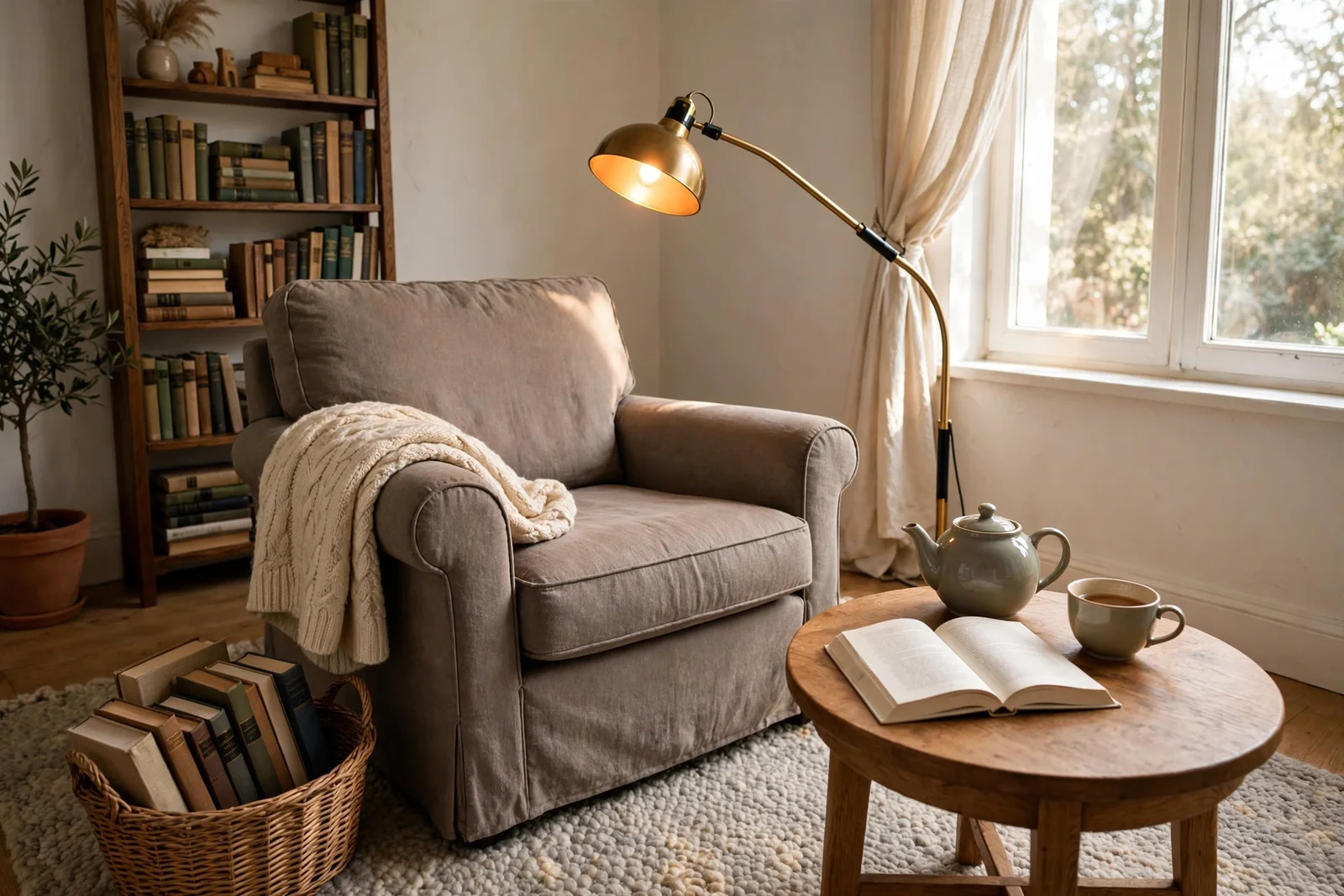
A reading corner is a small promise you make to yourself: one chair, one warm light and books close enough that the next chapter is never a chore to start.
Rain taps the window, the lamp clicks on with its warm amber glow, and the chair is already warm from the afternoon sun. The book waits face down on the side table, exactly where it was left, and the throw is folded over the arm in its familiar thirds. Nothing in this corner asks anything of you except to sit down.
A good reading corner works in January and in July because it is built from adjustable comfort: chair depth that holds you, light that comes from the right shoulder, a table close enough for tea, and textiles that soften both sound and light. These are not expensive ingredients, and most of them are already somewhere in your home.
Below are twenty one ideas that build this corner piece by piece, from choosing the right seat depth and arm height to quieting the room with rugs and curtains. Each one includes sizes, materials, budget tips and one mistake to avoid, so you can start this weekend with whatever space you have.
Pick the easiest idea first, perhaps the warm bulb swap or the basket of next books, and let the corner grow one change at a time. By the time the seventh change is done, you will have a place so comfortable that chapters finish themselves.
1. Choose a Reading Chair With a Deep Seat and Relaxed Arm Height
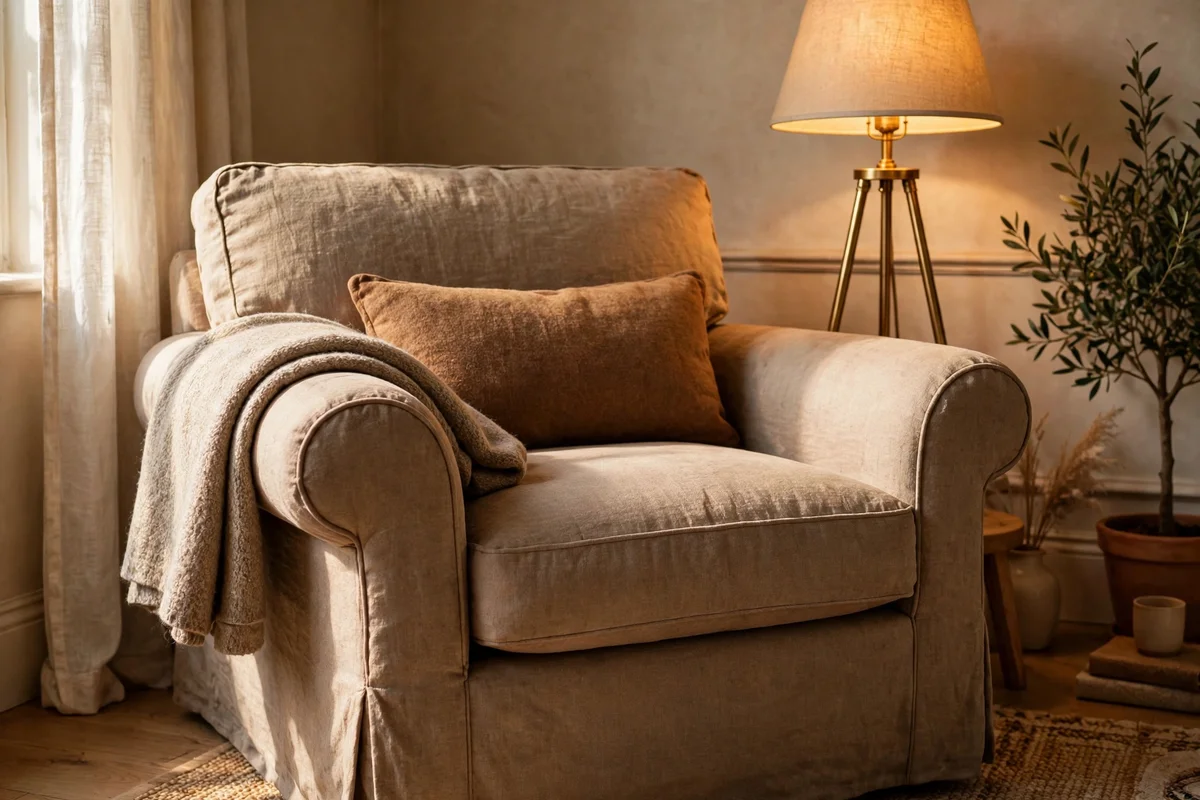
The chair is the corner, so start here. A seat depth of 55 to 60 cm lets you sit back with knees softly bent instead of perched on the edge, and arms 60 to 65 cm from the floor support your elbows at a natural angle. Seat cushions at least 12 cm thick stay comfortable past the first hour. Test any chair with a book in hand: read five pages in the shop, and if you shift before page three, the proportions are wrong for you.
Hardwood frames with spring bases are the investment choice and often outlive two covers of fabric. Budget armchairs under 120 pounds or dollars still serve well if the back reclines slightly, around 100 to 105 degrees. The mistake to avoid is choosing a chair for how it photographs rather than how it holds you. A beautiful chair you abandon after twenty minutes is decoration, not a reading chair.
2. Angle the Chair Toward the Window for the Best Daylight
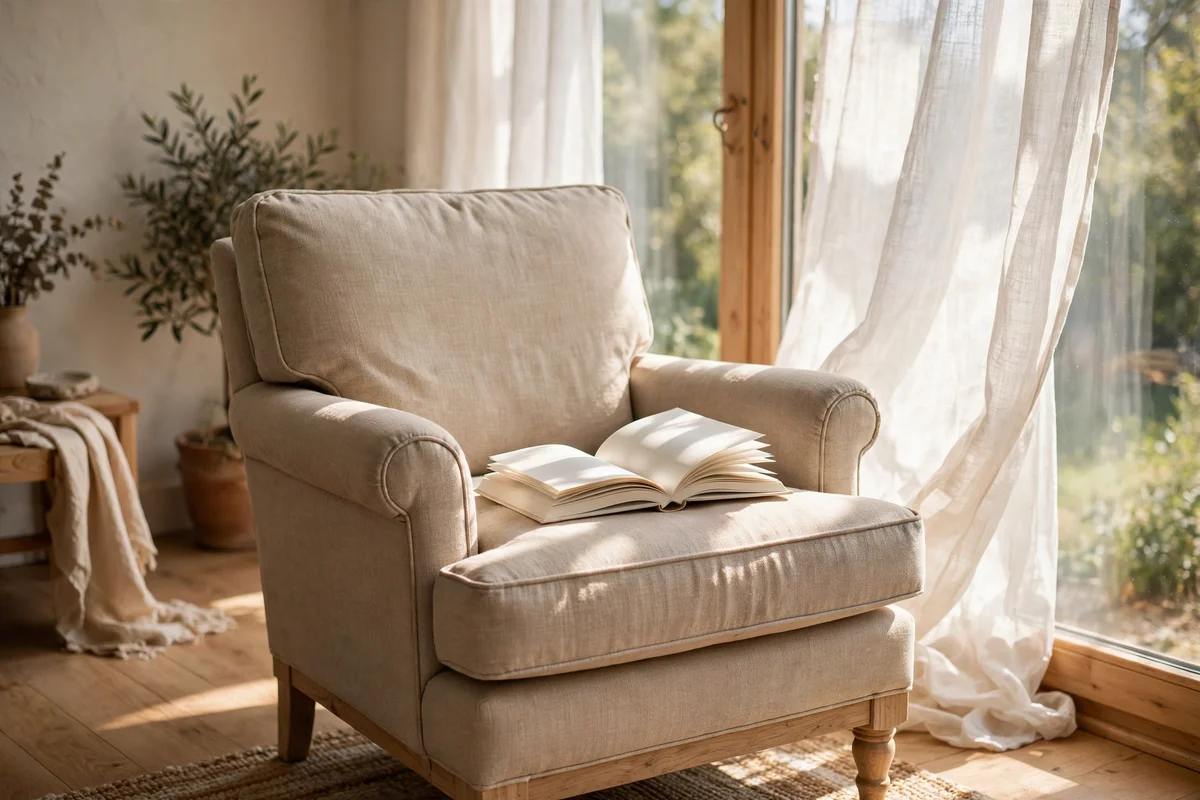
Place the chair at roughly 45 degrees to the window, never with your back to it, so daylight falls across the page without throwing your own shadow on the text. This angle keeps the view visible when you look up, giving your eyes a genuine rest between pages. A distance of 1 to 1.5 m from the glass keeps you close to the light while staying clear of winter draughts.
An east facing window makes mornings the natural reading hour, while a west facing one gives long golden evenings. The mistake is pushing the chair flush against the glass, where condensation and chill undo all the comfort you built. Keep the sightline from chair to window open from knee height up, and tame midday glare with a sheer curtain that softens light without dimming it.
3. Set a Task Lamp So the Light Falls Over Your Shoulder
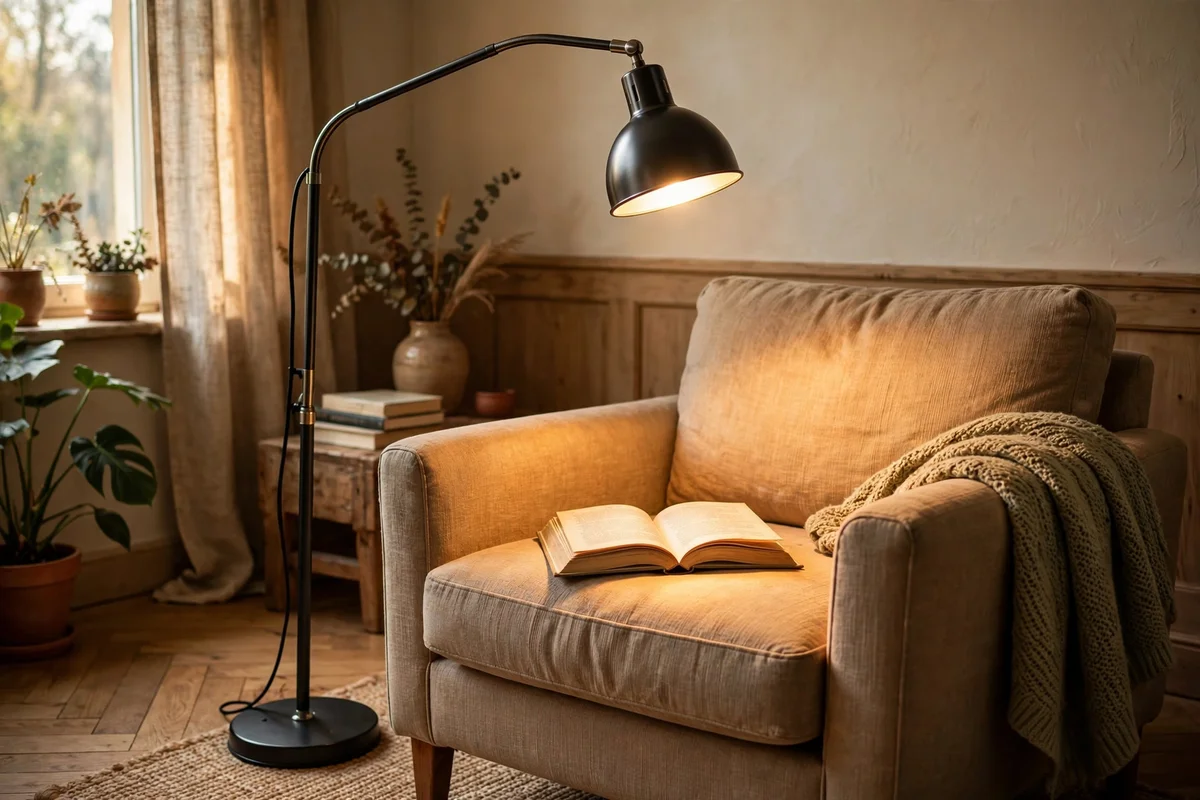
A reading lamp should throw light from behind and slightly above, about 40 to 50 cm above shoulder height when you sit, so the page is lit and your eyes stay out of the beam. Floor lamps with an adjustable arm work well; swing the head until the bright pool lands on the book rather than the chair back. Wall mounted arm lamps save floor space in tight corners and cost little more than a plug in version.
Position the lamp on the side of your non dominant hand, so the pages never sit in the shadow of your own arm. The mistake to avoid is a lamp that shines straight into your eyes from the side table; it causes fatigue within half an hour. Budget tip: a 25 to 45 pound adjustable floor lamp from a home store outperforms a decorative one costing three times as much.
4. Fit Warm 2700K Bulbs in Every Light Near the Chair
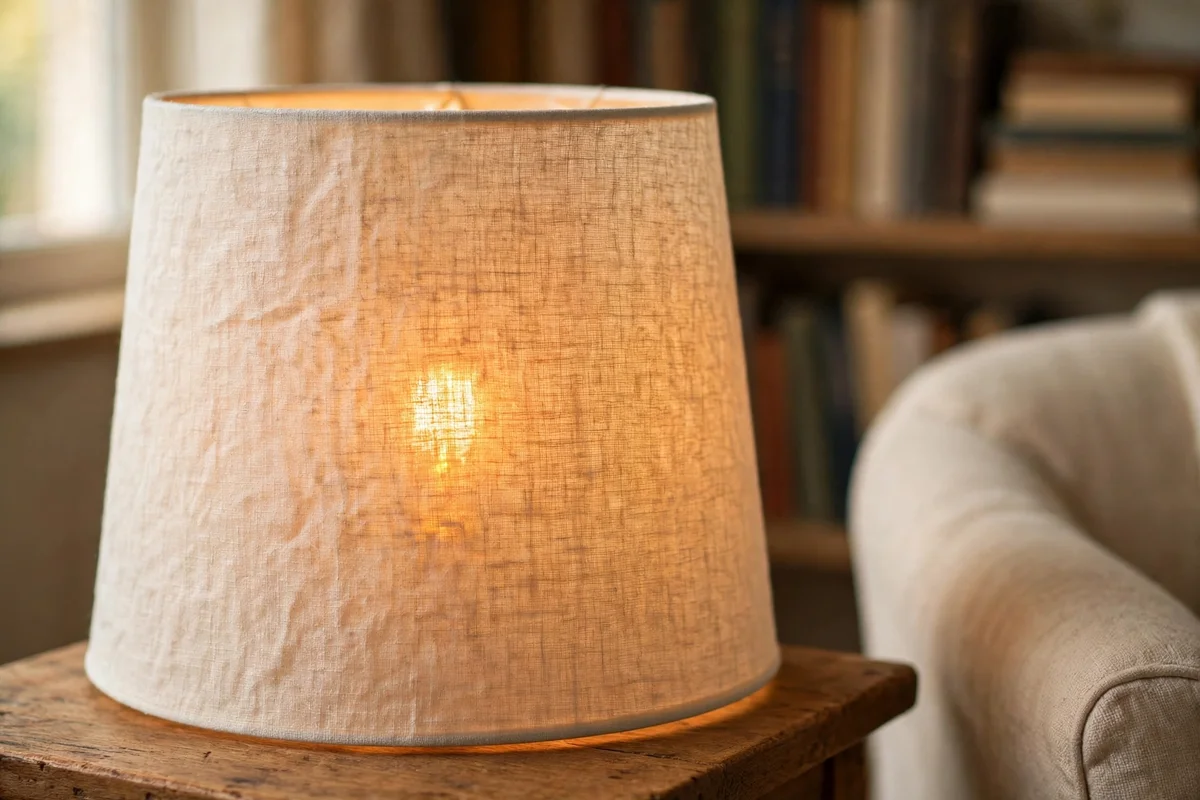
Cool white bulbs flatten a corner and make it feel like a workspace. Swap every bulb near the reading chair for a warm 2700K version, roughly the colour of candlelight, and the nook feels like evening even at noon. An 8 to 10 watt LED gives the brightness of an old 60 watt bulb for only a few pence a day of running cost, so the comfort costs almost nothing.
If someone reads beside you, a dimmable bulb set to half brightness keeps the mood soft without darkening their side of the room. The mistake is mixing bulb colours in one corner: a single cool bulb among warm ones draws the eye and breaks the calm. Change them all at once and keep one spare in the side table drawer, labelled, so a replacement never breaks the scheme.
5. Keep a Round Side Table Within Easy Reach of the Chair
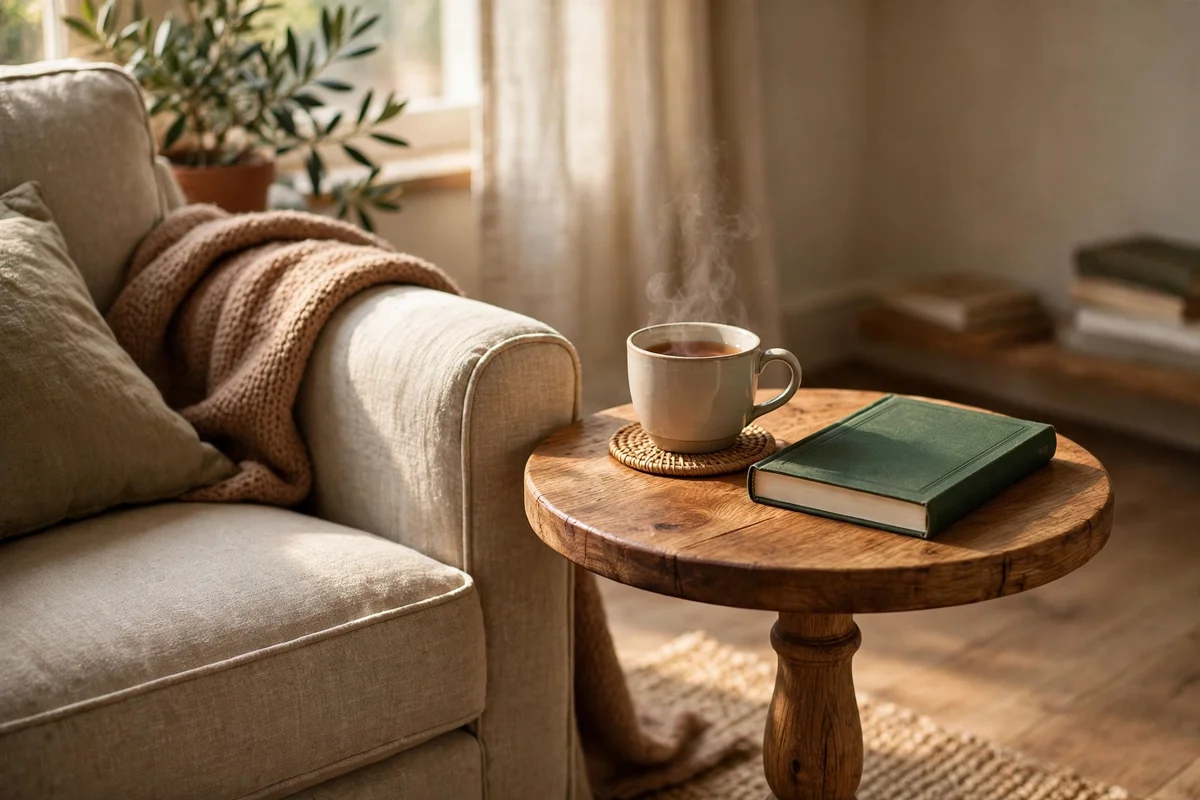
A side table 40 to 50 cm in diameter and about 60 cm high sits perfectly beside an armchair: level with the armrest so a cup slides on without stretching. Round tables forgive small corners because there are no sharp edges to bump in half light. Wood or rattan suits most palettes, and a simple stool or plant stand does the same job for under 20 pounds or dollars.
Give the table two zones: a coaster for the cup on the inner edge nearest you, and a flat spot for the current book resting face down. The mistake is letting the table become a landing strip for post, remotes and chargers; clear it every evening so morning reading starts clean. A small drawer underneath hides bookmarks, reading glasses and a pencil for margin notes.
6. Park a Footstool or Pouf One Knee Length From the Chair
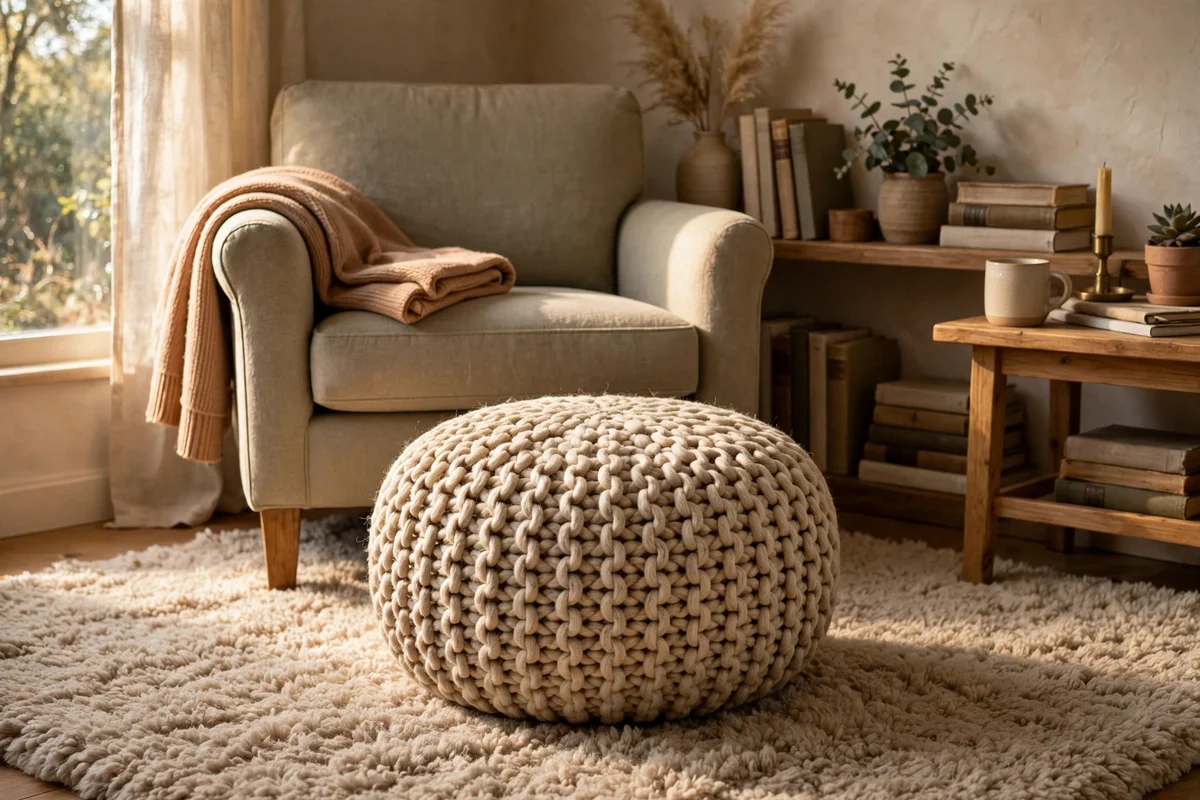
Raising the feet even 25 to 30 cm eases the lower back and tells the body that this sitting is leisure, not work. A matching footstool looks smartest, but a simple pouf in wool or woven cotton, 35 to 45 cm across and 30 to 35 cm high, suits any chair and doubles as a spare seat for guests. Choose firm foam or a dense fill so it keeps its shape under heels.
Place it about one knee length from the chair, close enough that feet reach it without shifting forward. The mistake to avoid is a stool so tall it forces knees above hips; that strains rather than relaxes. Budget tip: a floor cushion in a washable cover costs less than a dedicated stool and stores flat when the corner needs to become a walkway again.
7. Stash the Next Five Books in a Wide Wicker Basket

A low open basket, about 40 cm wide and 25 cm deep, keeps the current and next four books upright beside the chair with spines showing, so choosing the next read takes seconds. Wicker, seagrass or woven cotton lets air move around the books and suits a reading corner better than a plastic crate. Slide it under the side table or against the chair leg, wherever an arm can reach it.
Rotate the basket contents monthly and return finished books to the shelf, so it never becomes a graveyard of half started titles. The mistake is stacking books flat in a deep basket where the bottom titles disappear from memory; stand them upright like a shop display. Charity shops sell sturdy baskets for 5 to 10 pounds or dollars, often in exactly the sizes a reading corner needs.
8. Fix Two Low Floating Shelves for the Current Reading Stack
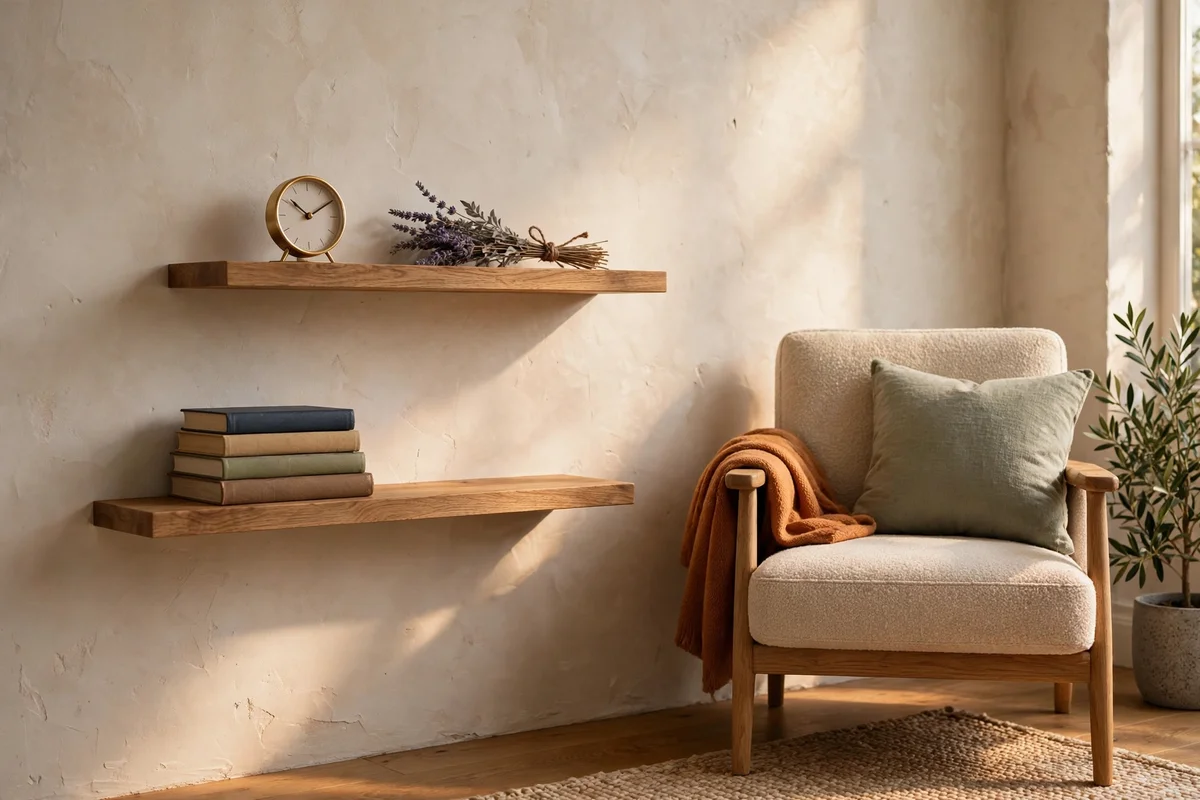
Two floating shelves, each 60 to 80 cm long and mounted 90 to 120 cm above the floor beside the chair, hold the books you are actually reading now, not the whole library. Oak, walnut or painted pine match most corners. Fix into studs or use toggle anchors rated for 10 kg per shelf, since a shelf of hardbacks grows heavy faster than it looks.
Arrange the lower shelf for the current stack of six to eight books, and style the upper one with a small clock, a sprig of dried lavender and one framed print, so storage and decoration share the space. The mistake is hanging shelves above arm’s reach; if you must stand to grab a book, you will stop using the shelf. Keep everything within a seated arm’s length, about 60 cm from the chair.
9. Tuck a Narrow Bookcase Into the Corner Behind the Chair
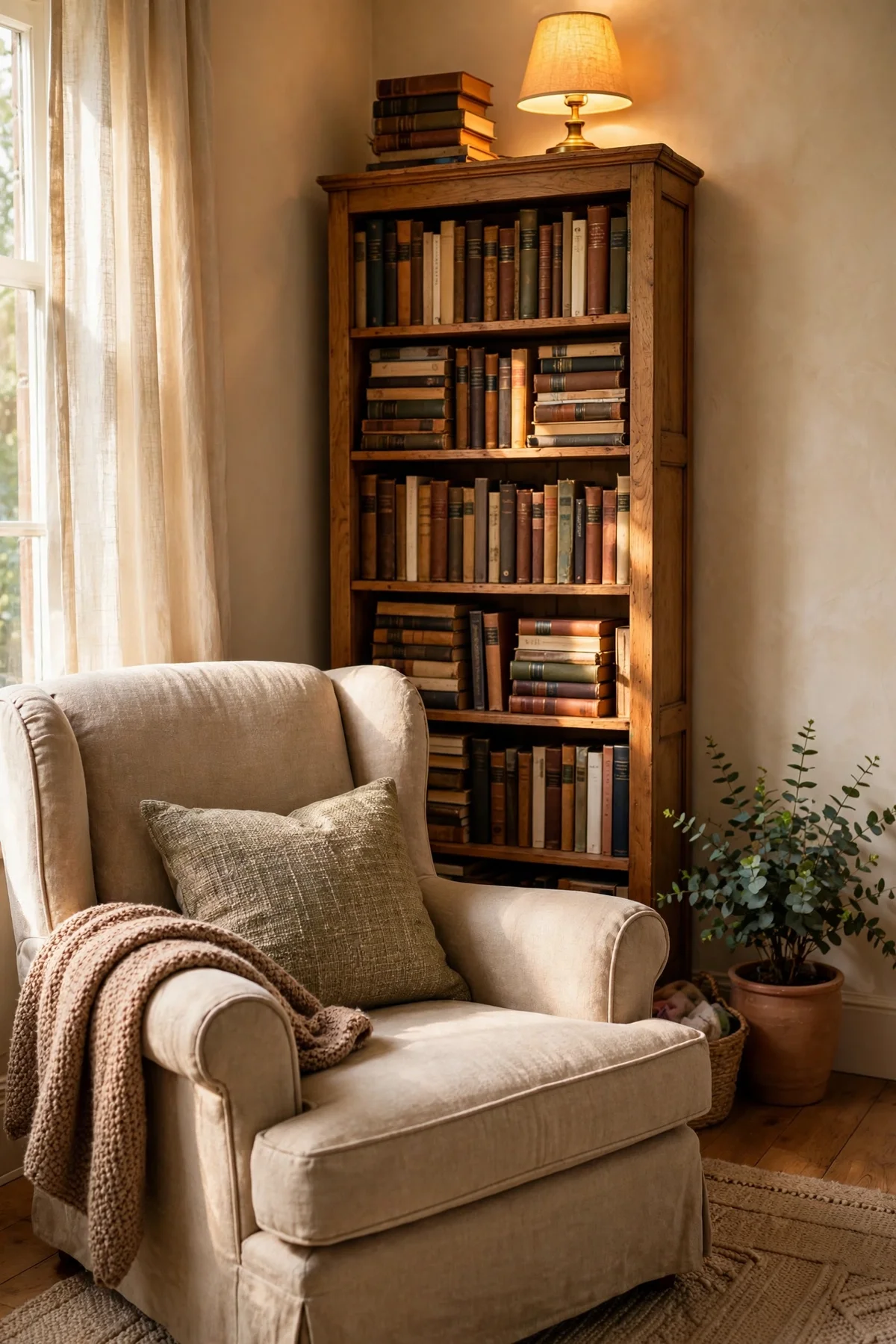
A slim bookcase 40 to 60 cm wide and 150 to 180 cm tall turns the dead wall behind the chair into a personal library. Place it close enough that the chair back nearly touches it, so titles are visible over your shoulder and the corner feels enclosed, like a small room of books. Oak, pine or painted MDF all work, and mid tones suit most light.
Organise by reading order rather than alphabet: current books at eye level, next shelf above, finished or reference titles below. The mistake to avoid is cramming every shelf to the front edge; leave 5 cm of air so spines pull out easily. A 40 cm second hand bookcase painted one warm colour often looks better than a flat pack costing twice as much.
10. Fold a Throw Over the Chair Arm Instead of Draping It Flat
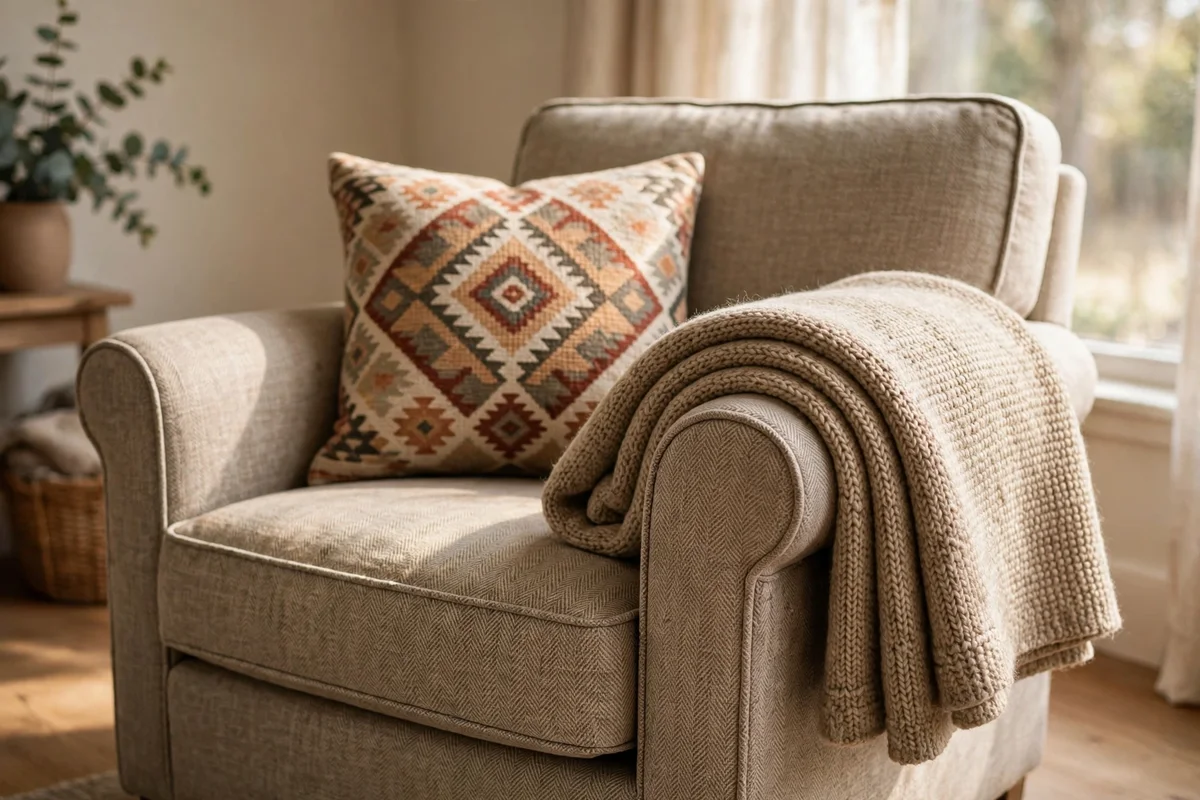
A throw folded in thirds along its length and laid over the chair arm reads tidier than one puddled across the seat, and it lands exactly where hands find it when shoulders cool down. Wool or wool blend, 130 by 180 cm, drapes best because the weight holds the folds. Choose a tone one shade deeper than the chair fabric for a layered, intentional look.
Refold it once a week or it migrates into a heap; thirty seconds of smoothing keeps the corner looking styled. The mistake is choosing a throw so slippery it slides off the arm constantly; silk blends and loose weaves frustrate more than they comfort. A plain wool throw plus one patterned cushion gives more comfort for less money than three small matching items.
11. Support Your Lower Back With One Firm Lumbar Cushion
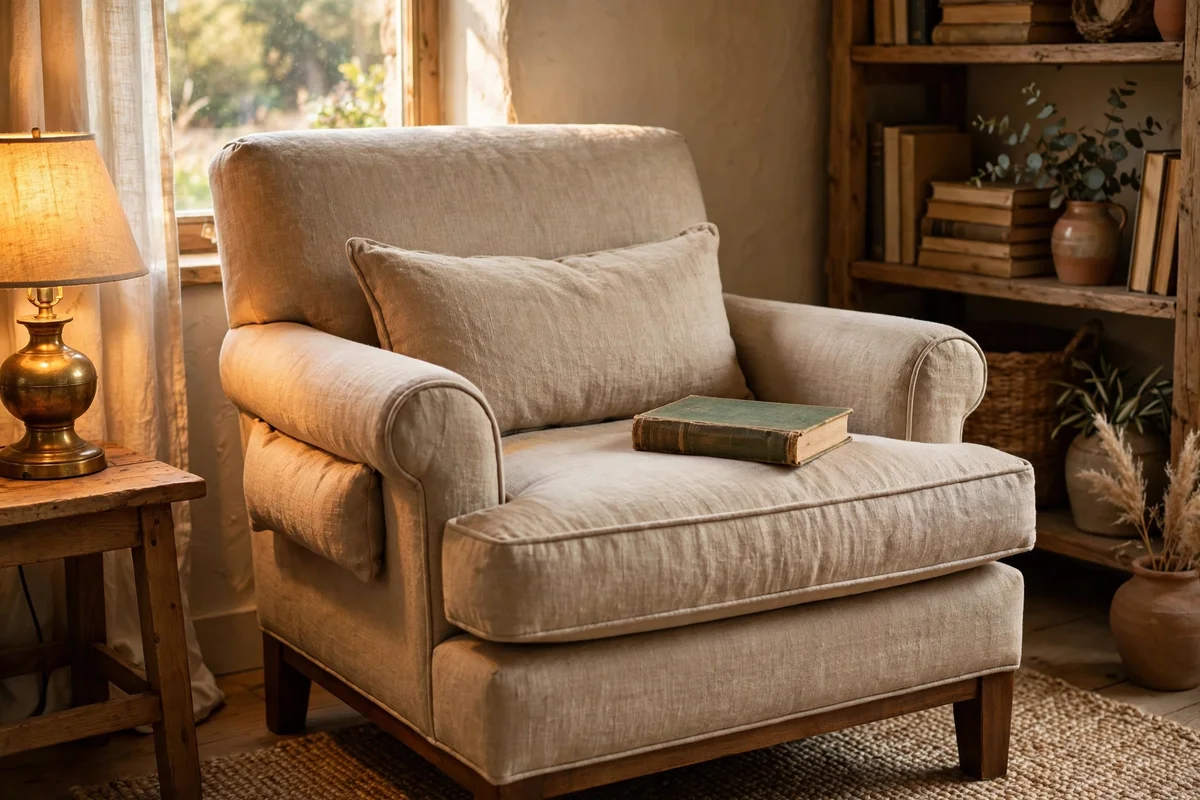
Most armchairs slope back in a way that leaves a gap behind the waist, and an hour of reading turns that gap into an ache. A lumbar cushion 30 by 45 cm, filled with firm foam or buckwheat hulls, fills exactly that space and keeps the spine in its natural curve. Choose a removable, washable cover in cotton or linen so it survives daily use.
Wedge it low at belt height and adjust once after sitting down; it should feel like a hand supporting your back, not a pillow pushing you forward. The mistake is stacking two soft cushions, which collapse and twist the posture worse than none. One firm cushion beats three decorative ones for any reading session longer than twenty minutes.
12. Build the Nook in a Bright Window Corner
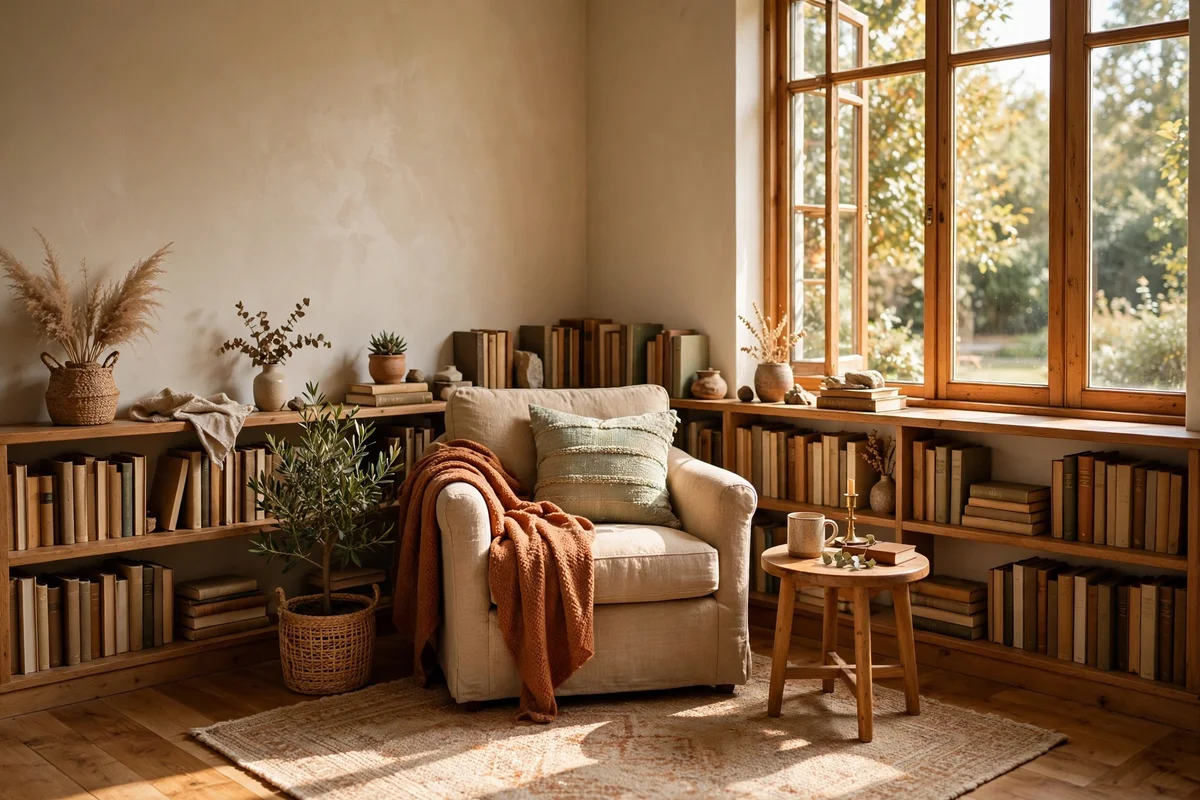
The corner where two walls meet beside a window is the natural home of a reading nook: walls on two sides create enclosure, and glass on one side supplies daylight. You need about 1.2 m of clear floor on each wall for a chair, a table and a footstool to fit without blocking the radiator or the curtain swing. Measure twice before moving any furniture.
In south facing rooms add a light blind for summer afternoons when direct sun overheats the seat; in north facing rooms choose a pale chair fabric so the corner never feels grey. The mistake is blocking the whole window with tall furniture and losing the light that made the corner attractive. Keep the sightline from chair to glass completely open from knee height upward.
13. Claim a Quiet Corner of the Bedroom for Night Reading
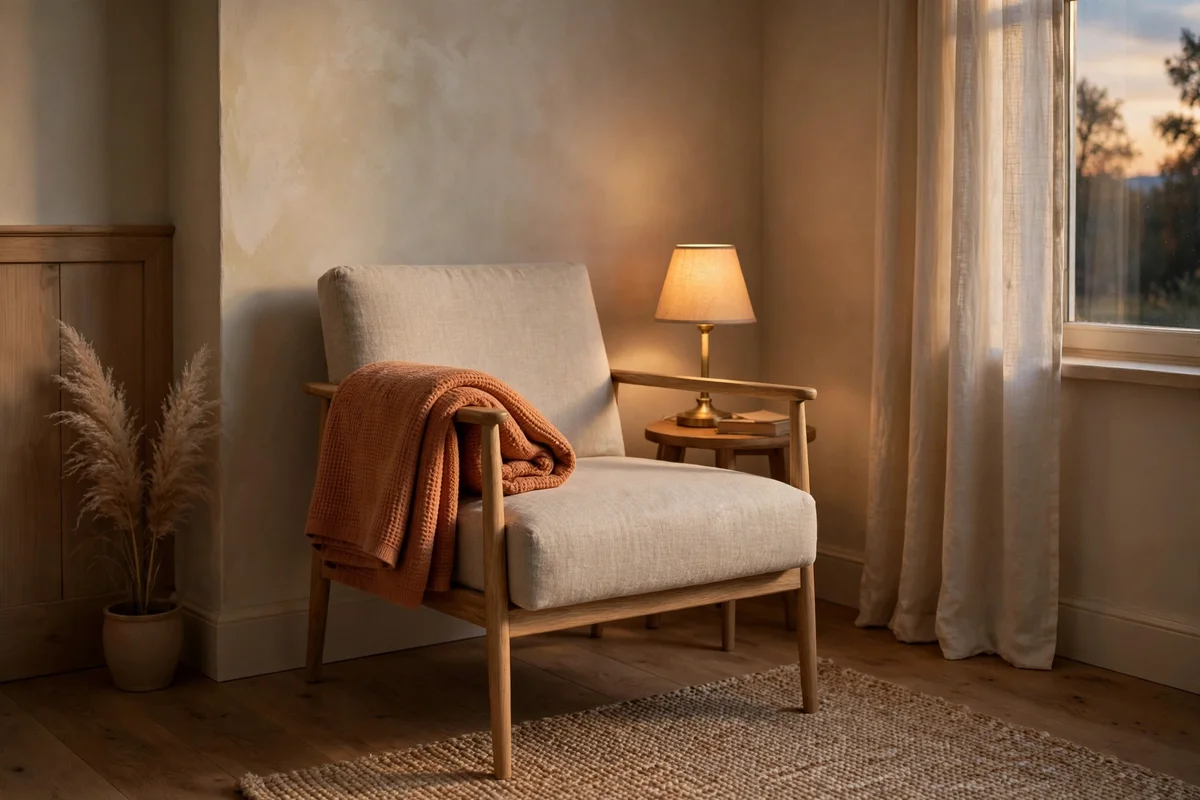
A bedroom corner suits reading at the edges of the day, when the house is quiet and the light is low. It needs only a chair, a small lamp and a screen or plain wall behind it so the bed’s untidy side stays out of sight. Even 90 cm of wall beside a wardrobe is enough for a slim accent chair and a wall mounted lamp.
Keep the nook’s lighting separate from the main ceiling light so reading never wakes anyone else: a warm shaded lamp on a timer or smart plug switches off by itself if you fall asleep mid chapter. The mistake is placing the chair facing the bed; face the window or the wall instead, and remove the temptation to lie down and lose the chapter to a nap.
14. Turn the Cupboard Under the Stairs Into a Book Cave
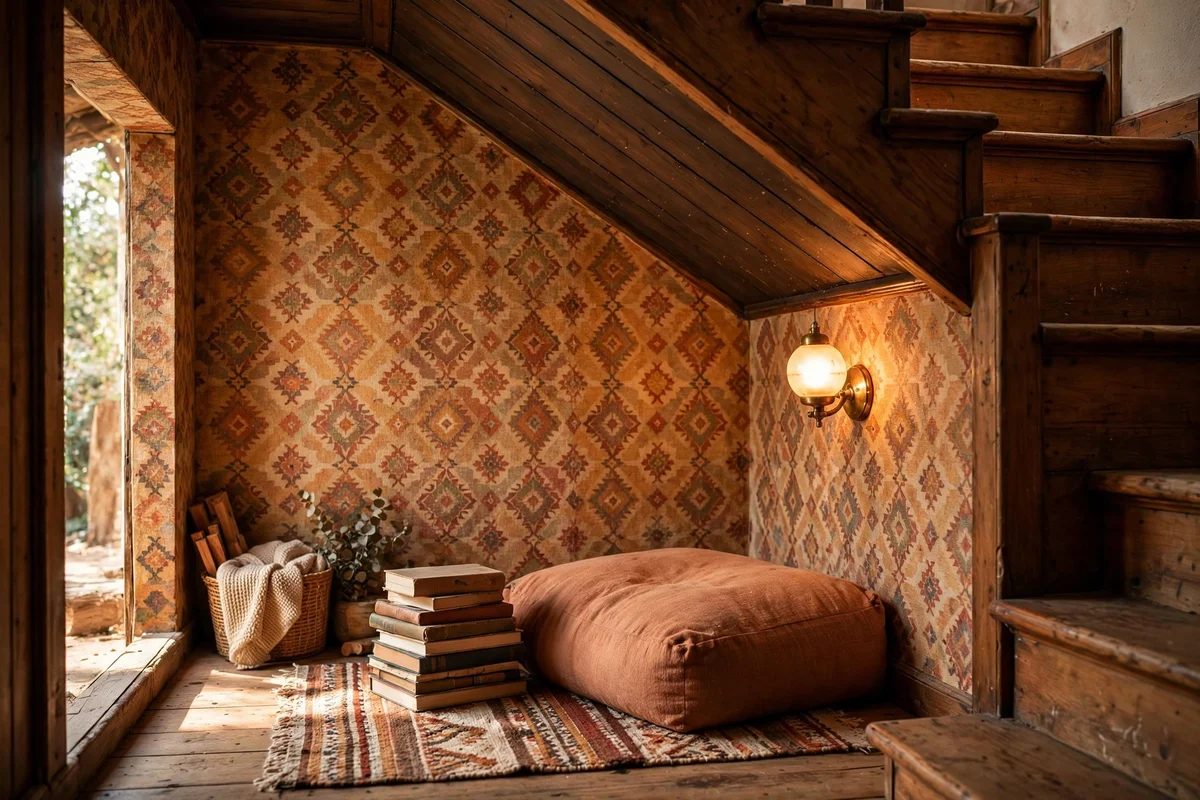
An under stairs cupboard 1.5 m deep or more converts beautifully into an enclosed reading cave, the kind of hideaway that feels made for long stories. Line the walls with peel and stick wallpaper in a warm pattern, add a low cushion seat, and fix a small wall lamp at seated head height. Keep the cupboard door open or remove it so the space never feels trapped.
Sound softens naturally inside, which is half the charm: one rug and two cushions are usually enough to hush it completely. The mistake is wiring heavy electrics without checking headroom; keep it to one low wattage lamp and a battery lantern, and mind the sloping ceiling when standing. Paint, a cushion and a lamp can complete the cave for under 80 pounds or dollars.
15. Lay a Thick Rug Under the Chair to Hush the Corner
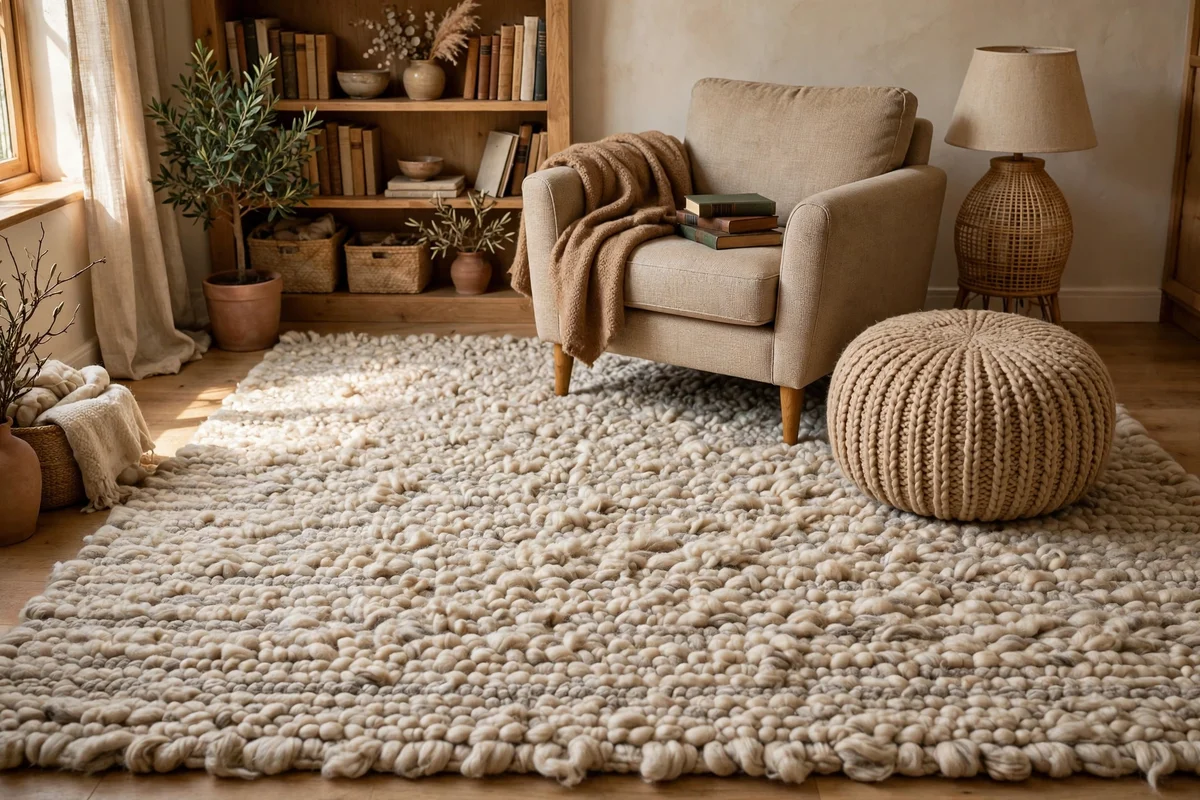
Hard floors bounce sound and make a corner feel exposed. A rug 120 by 180 cm or larger under the chair and footstool absorbs footsteps and voice echo, so the nook feels hushed even in a busy house. Wool or a dense cotton flatweave works best; a pile of 1 to 2 cm is plush underfoot without catching the chair legs when you shift.
Extend the rug at least 30 cm beyond the chair on every side so feet land on softness when you stand. The mistake is a rug too small, which frames the chair like a postage stamp and looks accidental. Layer a small sheepskin over the main rug in winter for extra warmth at the feet; it lifts off easily in summer when the room wants to breathe.
16. Hang Heavy Linen Curtains to Soften Sound and Light
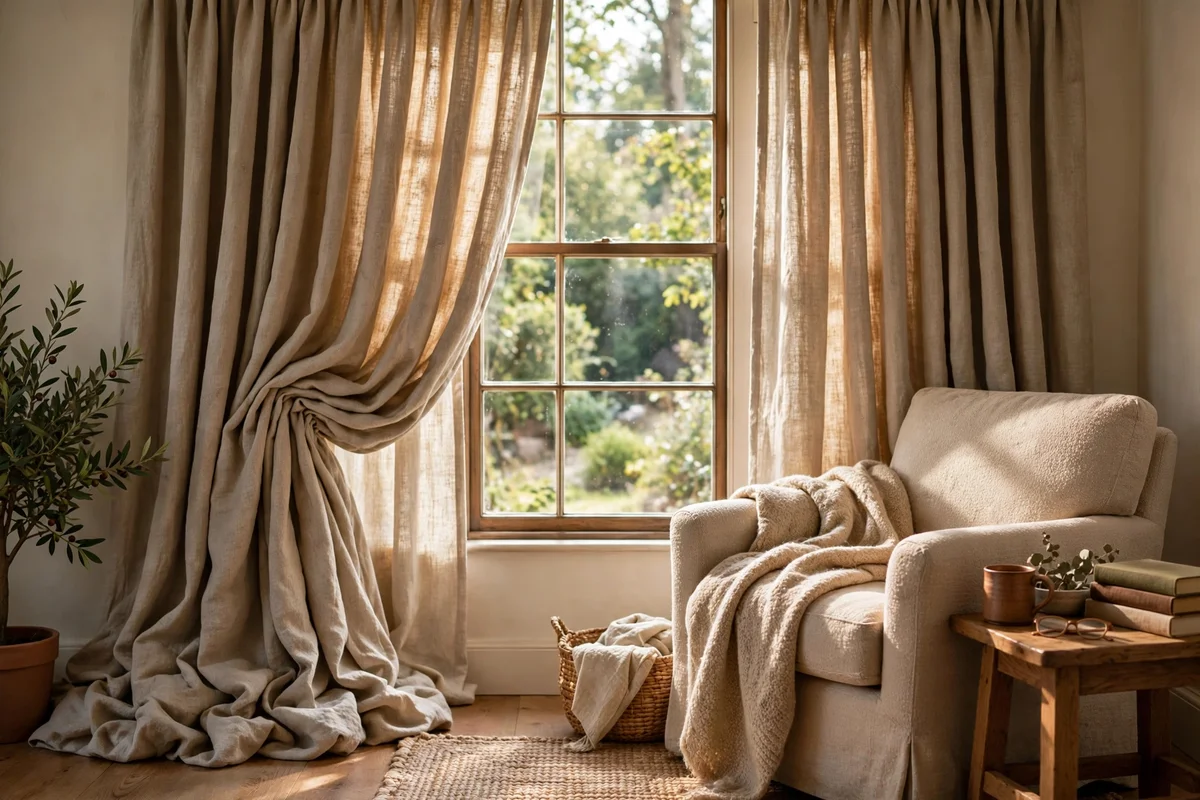
Floor length curtains in heavy linen or cotton velvet, hung 10 to 15 cm above the window frame and extending 15 cm past each side, absorb echo while framing the light. Double the window width in fabric, 1.5 to 2 times gather, for folds deep enough to trap sound. Warm neutrals like oatmeal, clay or sage keep the corner calm and timeless.
Curtains also let you tune the room through the day: drawn against afternoon glare, open for morning sun, half closed for an evening glow. The mistake is choosing sheer or thin cotton purely for looks; light fabric does almost nothing for sound. Washable covers matter where pets share the chair, since paws and claws find curtains first.
17. Set Out a Small Tea Tray for Long Reading Sessions
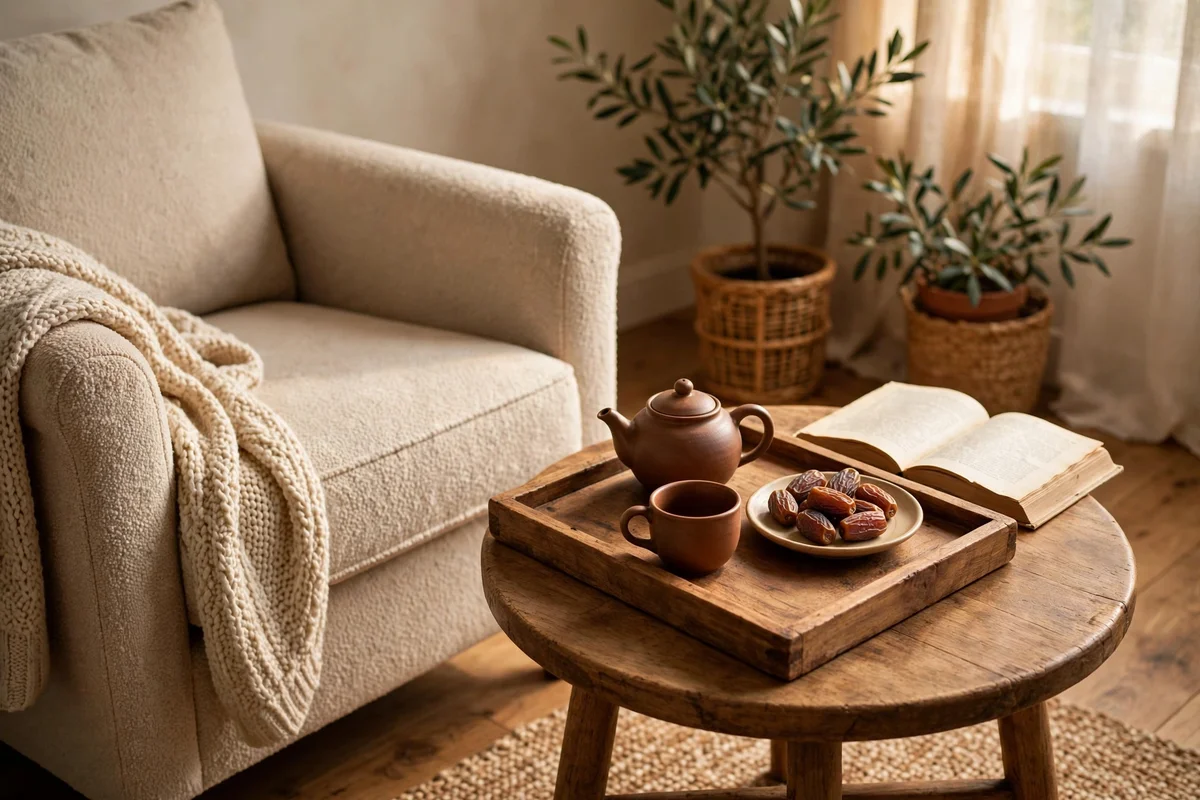
A wooden or lacquered tray 30 by 40 cm on the side table turns tea into part of the ritual: a small teapot or flask, one cup, and a plate of dates or biscuits, all contained so nothing spills on the book. A raised lip of 2 to 3 cm keeps items from sliding when the table is bumped. Bamboo and acacia are light, warm and easy to wipe clean.
Prepare the tray before sitting down; getting up mid chapter to boil the kettle breaks the spell the corner was built to create. The mistake is using a large serving tray that crowds the book off the table; the tray should leave half the surface free. A second hand tray plus one insulated flask costs little and pays for itself within a month of evenings in.
18. Swap Throw Textiles With the Season for Year Round Comfort
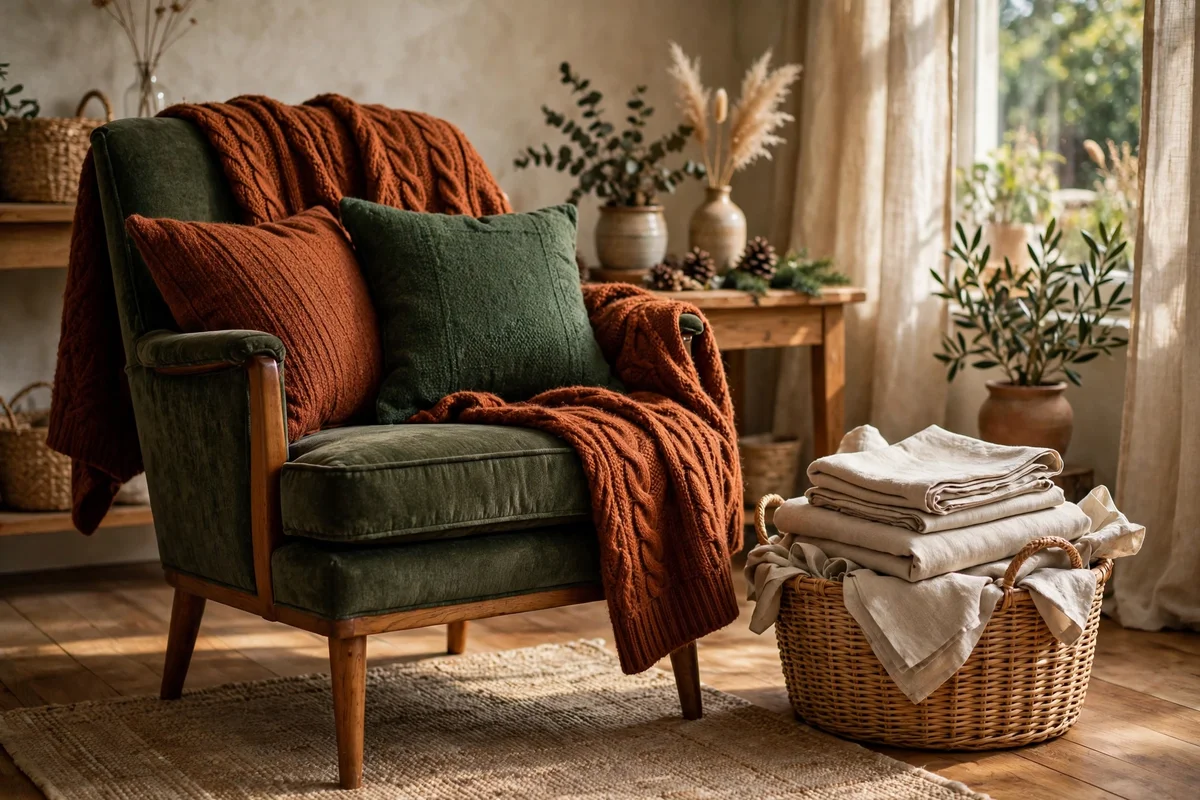
One corner serves all four seasons if its textiles change: heavy wool and flannel from October to March, breathable linen and light cotton from April to September. Store the off season set in a single vacuum bag under the bed or on the bookcase top, labelled, so the swap takes ten minutes. Two sets, each of one throw and two cushions, give all the variety the corner needs.
Colour follows the same rhythm: deep rust, forest and ochre for cold months; sage, cream and soft blue for warm ones. The mistake is leaving winter wool out through a heatwave, when it makes the chair feel uninviting before you even sit. Mark the swap on the calendar with the clock change; it becomes a small seasonal ritual the whole household notices.
19. Hang One Framed Print at Eye Level to Anchor the Corner
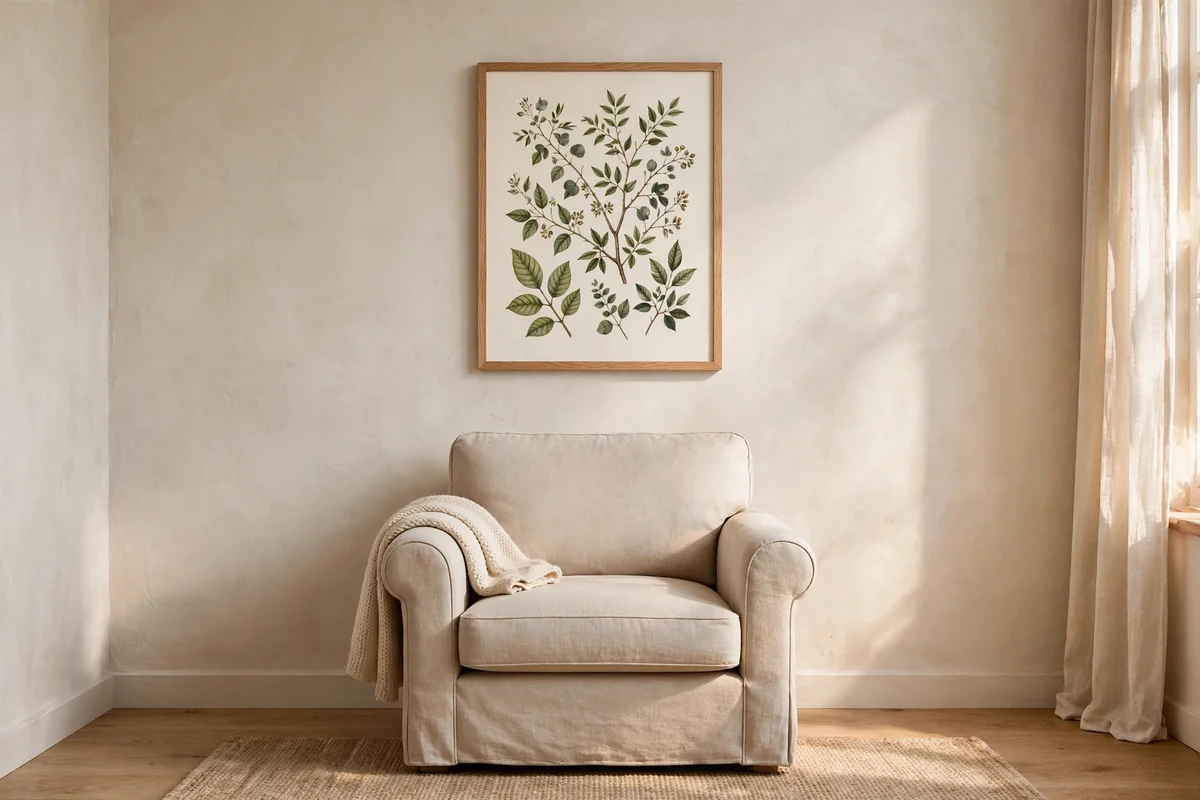
A single framed print, 40 by 50 cm, hung so its centre sits 140 to 150 cm from the floor, gives the corner a focal point and stops the chair floating against an empty wall. Botanical studies, old maps or architectural sketches suit a reading nook’s quiet mood. A slim oak or black frame keeps the look timeless rather than trendy.
If the wall is rented, lean the frame on the bookcase top or hang it from a picture rail hook instead of drilling. The mistake is hanging a whole gallery wall in a small corner; three or four frames compete with the books and the light. One strong image, hung level and centred on the chair, does more work than a crowd.
20. Keep a Soft Blanket Within Arm’s Reach for Cold Evenings
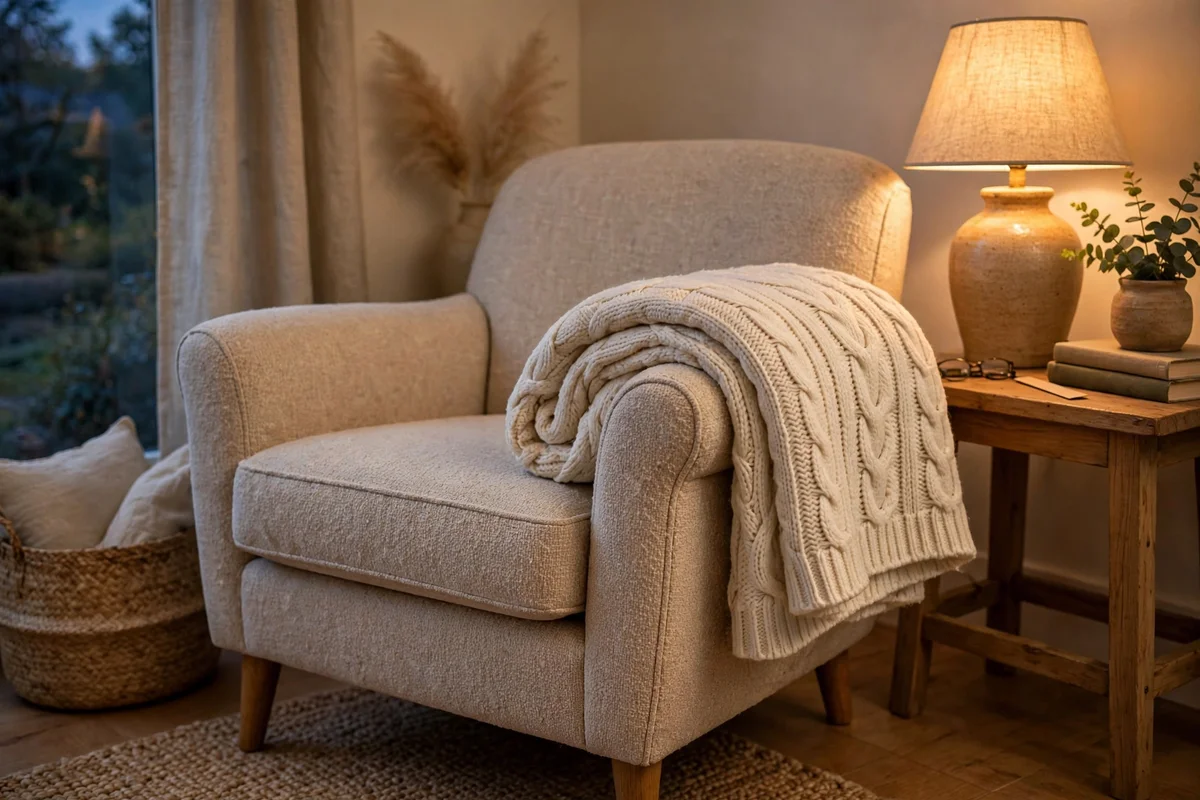
Even the warmest room cools after sunset, and a dedicated reading blanket, a 130 by 170 cm fleece or knitted throw kept folded on the chair arm or in the basket, means comfort never depends on fetching bedding. Knitted cotton breathes on cool evenings; a brushed fleece suits the coldest weeks. One blanket assigned to the chair stays where it belongs.
Fold it the same way each time so it becomes part of the corner’s styling, not a crumpled afterthought. The mistake is borrowing the sofa throw every evening, which guarantees it is never there when wanted and leaves the sofa bare. End of season sales in January and July discount good throws by a third or more; buy the winter one in summer.
21. Add a Slim Lantern for Glow When the Main Lamp Goes Off
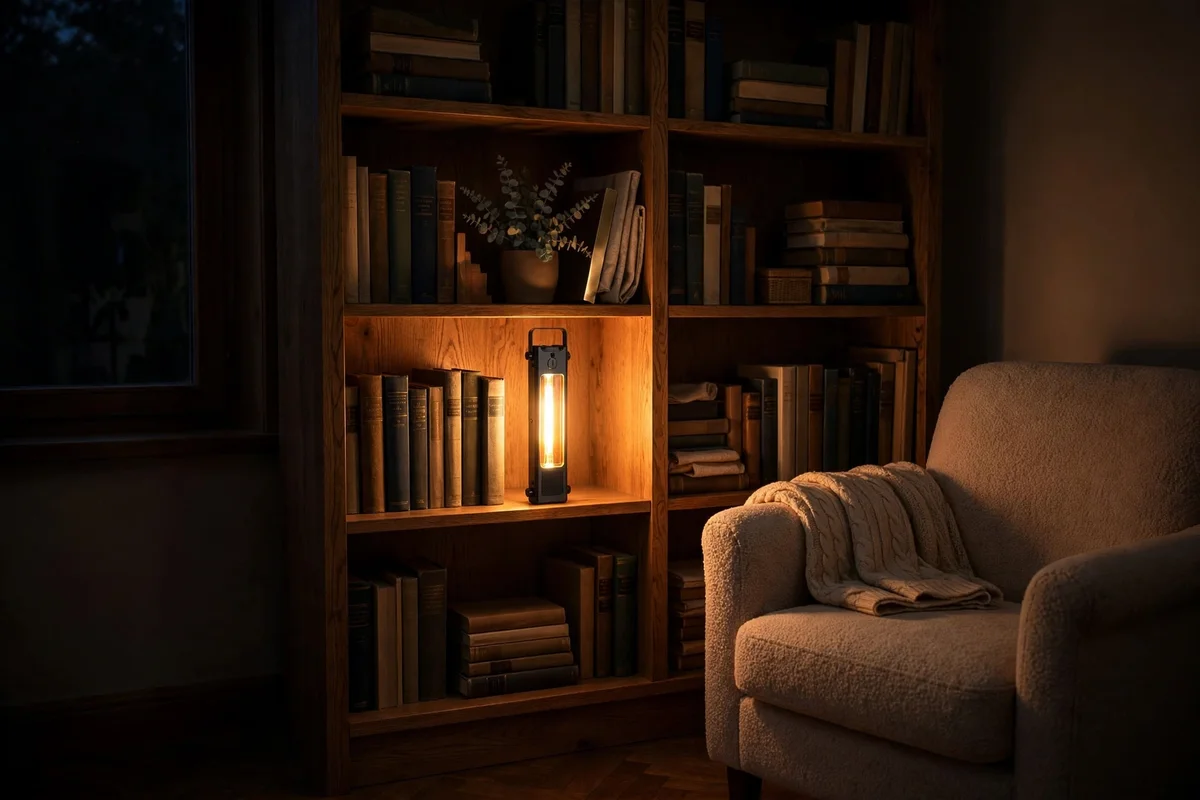
A slim battery lantern or flameless candle, 15 to 25 cm tall, on the top shelf or window ledge gives the corner a low amber glow for the last pages of the night, when the bright task lamp feels like too much. Choose warm 2200K tones and a flicker setting if available; it mimics firelight without any flame, which matters in a corner full of paper and wool.
Rechargeable models with a USB cable cost little to run and switch off on a timer, so falling asleep mid chapter is perfectly safe. The mistake is placing the lantern right beside the book, where uneven light strains the eyes; keep it at least 60 cm away as atmosphere, not task light. One lantern is enough; two or three turn the corner into a display.
A reading corner is never finished in one weekend, and that is the point. Start with the chair that fits your body, then add the warm light, the table within reach and the basket of next books. Each layer makes the last chapter of the evening harder to resist, and the corner quietly becomes the most used seat in the house through every season.
This week, try just one idea: the bulb swap or the folded throw, whichever takes ten minutes or less. Sit down with a book the same evening and notice how the corner feels different already. Small comforts compound week after week, and by the time the wool comes out for winter, you will own a nook that finishes chapters for you.
Frequently Asked Questions
How much does it cost to set up a reading corner?
A simple corner costs 60 to 150 pounds or dollars if you shop second hand: a basket, a warm bulb lamp, a throw and a side table cover the basics. A new armchair adds 120 to 400 depending on quality. Start with lighting and textiles, live with the corner for two weeks, then spend on the chair once you know the proportions you need.
How much space do I need for a reading corner?
About 1.2 by 1.2 m of floor fits a slim armchair, a small side table and a footstool without crowding. Even 90 cm of wall in a bedroom corner works with a compact accent chair and a wall mounted lamp. Measure the chair footprint first, then add 40 cm on the lamp side and 60 cm in front for the footstool.
Can I make a reading corner in a rented home?
Yes. Choose a floor lamp instead of wall wiring, lean a framed print on the bookcase instead of drilling, and use peel and stick wallpaper in an under stairs nook. A freestanding bookcase, a basket and a rug need no fixings at all. Everything moves with you, and nothing touches the walls permanently.
What is the best lighting for reading without wiring?
An adjustable arc or swing arm floor lamp with a warm 2700K LED bulb, positioned so light falls over your reading shoulder. A battery lantern adds evening glow on a timer, and a wall lamp with a plug in cord works where floor space is tight. Avoid overhead ceiling light alone; it casts shadows from your own head onto the page.
How do I stop my reading corner getting cluttered?
Give every object a home: the basket holds only five books, the tray holds the cup, the table drawer holds glasses and bookmarks. Clear the side table each evening and return finished books to the shelf weekly. One rule keeps it calm: if something has no assigned spot in the corner, it does not live there.