Living Room
21 Elegant Fall Living Room Decor Ideas That Feel Refined, Serene and Timeless
By Anna Wells · · 21 min read
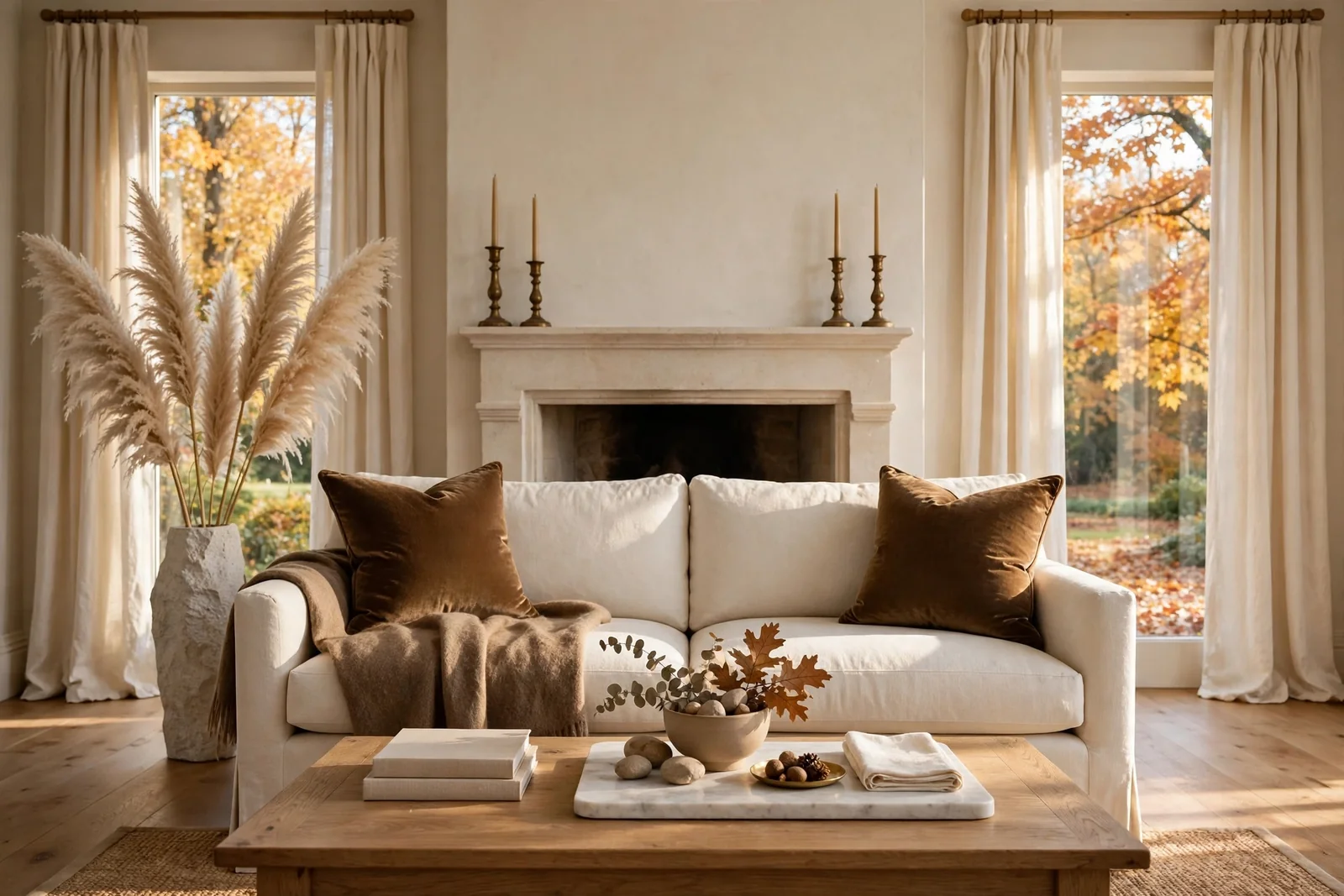
Refined autumn styling for the living room: a quiet palette, honest materials and carefully edited surfaces that feel calm, luxurious and timeless.
Late afternoon light falls across the sofa, and the room feels settled rather than decorated. That is the goal of a refined autumn living room: not a pile of seasonal props, but a calm space where cream walls, warm bronze and a touch of clay do the seasonal work. This article gathers 21 concrete ideas built on restraint, each one practical and each one designed to make the room feel quietly luxurious through autumn.
Restraint starts with subtraction. Before you add anything, walk the room and remove the small things that crept in over summer: the extra remote holder, the fading postcards, the bowl of mismatched beads. Most living rooms improve dramatically once surfaces hold three objects or fewer. Editing first means every piece you do add lands with intention, and the palette of cream, ivory and bronze reads as one composed thought instead of clutter.
Honest materials carry this look. Stone, marble, bronze, linen, wool and wood age gracefully and look better for being touched daily, which is exactly what a living room needs. A single sculptural dried arrangement in a weighty vase says more than five small pumpkin clusters, and two good velvet cushions outlast a pile of cheap printed ones. Spend where your hand lands: the throw, the cushions, the lamp bases, the tray that anchors the coffee table.
Below you will find 21 ideas in a sensible order: palette, textiles, the mantel, surfaces, light and the weekly edit that keeps it all calm. Each one gives real numbers, materials and placement, plus the mistake to avoid. Start with the palette decision this weekend, then add one layer at a time; a refined room is built slowly, not shopped in a single afternoon.
1. Build the Whole Palette From Cream, Ivory, Bronze and Muted Clay
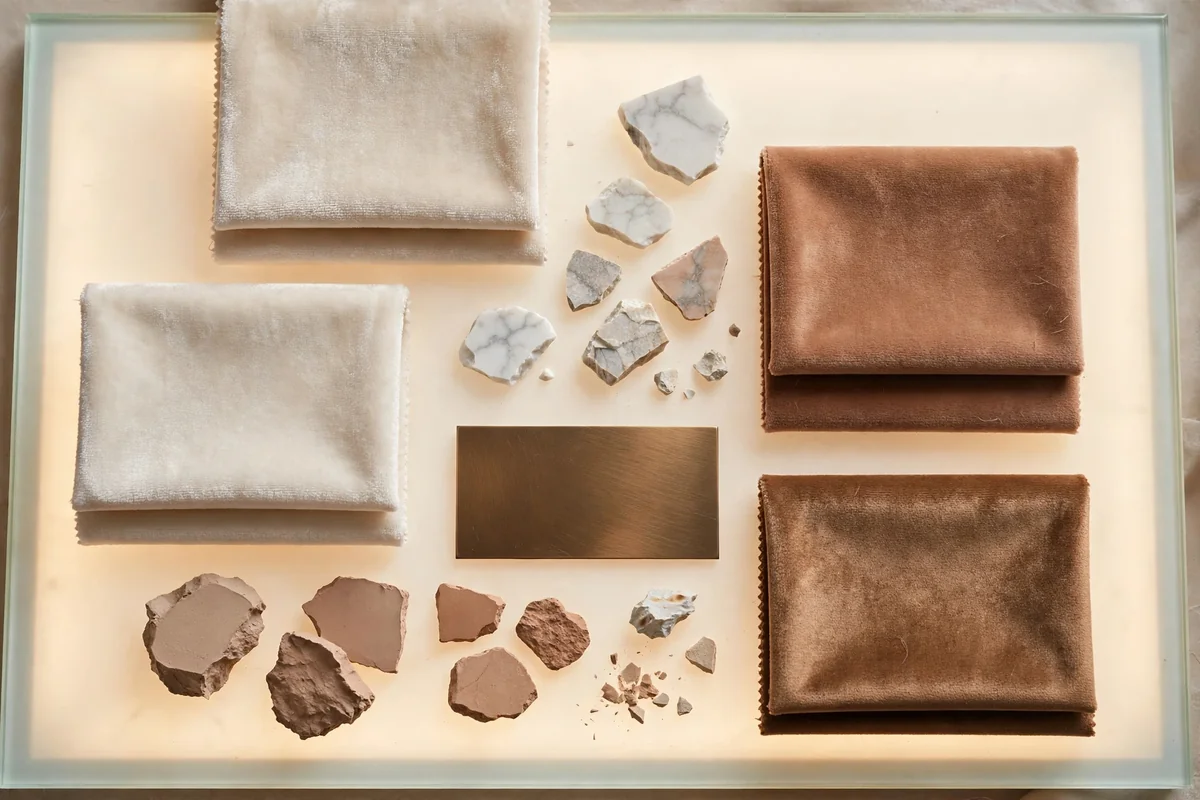
Decide the four colours before you buy anything, and repeat them everywhere: cream walls or large upholstery, ivory curtains and cushions, warm bronze in metal accents, and muted clay in one or two soft furnishings. A ratio of roughly 60 percent cream, 25 percent ivory, 10 percent bronze and 5 percent clay keeps the room light but grounded. When every new item must match one of four colours, impulse buys lose their power and the room stays composed.
Test the clay tone in daylight before committing, because muted clay can swing pink or orange depending on the bulb. Paint a large board and move it between window and sofa across the day. The mistake to avoid is adding a fifth or sixth colour, like sage or navy, which breaks the quiet spell instantly. Budget tip: you do not need new paint; throws, cushion covers and a bronze tray deliver the palette for under 80 pounds or dollars.
2. Drape Two Velvet Cushions in Soft Bronze Over the Sofa
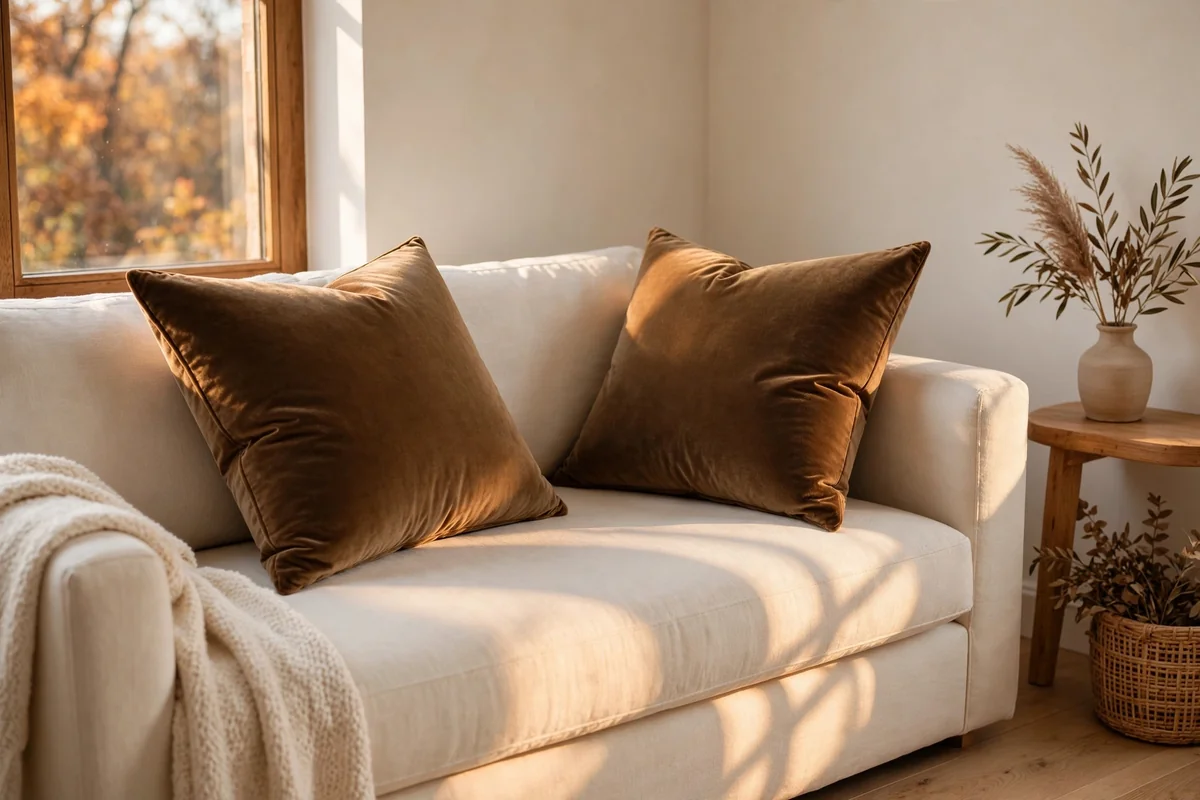
Two cushions in a soft bronze velvet are enough; four or six will crowd a standard three-seat sofa. Choose 45 to 50 cm square cushions with feather or recycled down-alternative inserts so they hold a plump karate-chop crease. Place them upright at each arm, slightly angled toward the centre, and let the rest of the sofa breathe. Bronze velvet catches low autumn light beautifully and reads richer than any printed autumn-leaf pattern.
Mix textures rather than colours: keep the bronze cushions against ivory or cream sofa fabric so the contrast is tonal, not busy. If your sofa is already dark, choose pale champagne velvet instead so the cushions lift the seat. The mistake to avoid is mixing bronze velvet with a second metallic, like silver or gold, on the same sofa. Budget tip: velvet-look covers over existing inserts cost a fraction of new cushions, often 15 to 30 pounds or dollars for two.
3. Place One Sculptural Dried Arrangement in a Tall Stone Vase
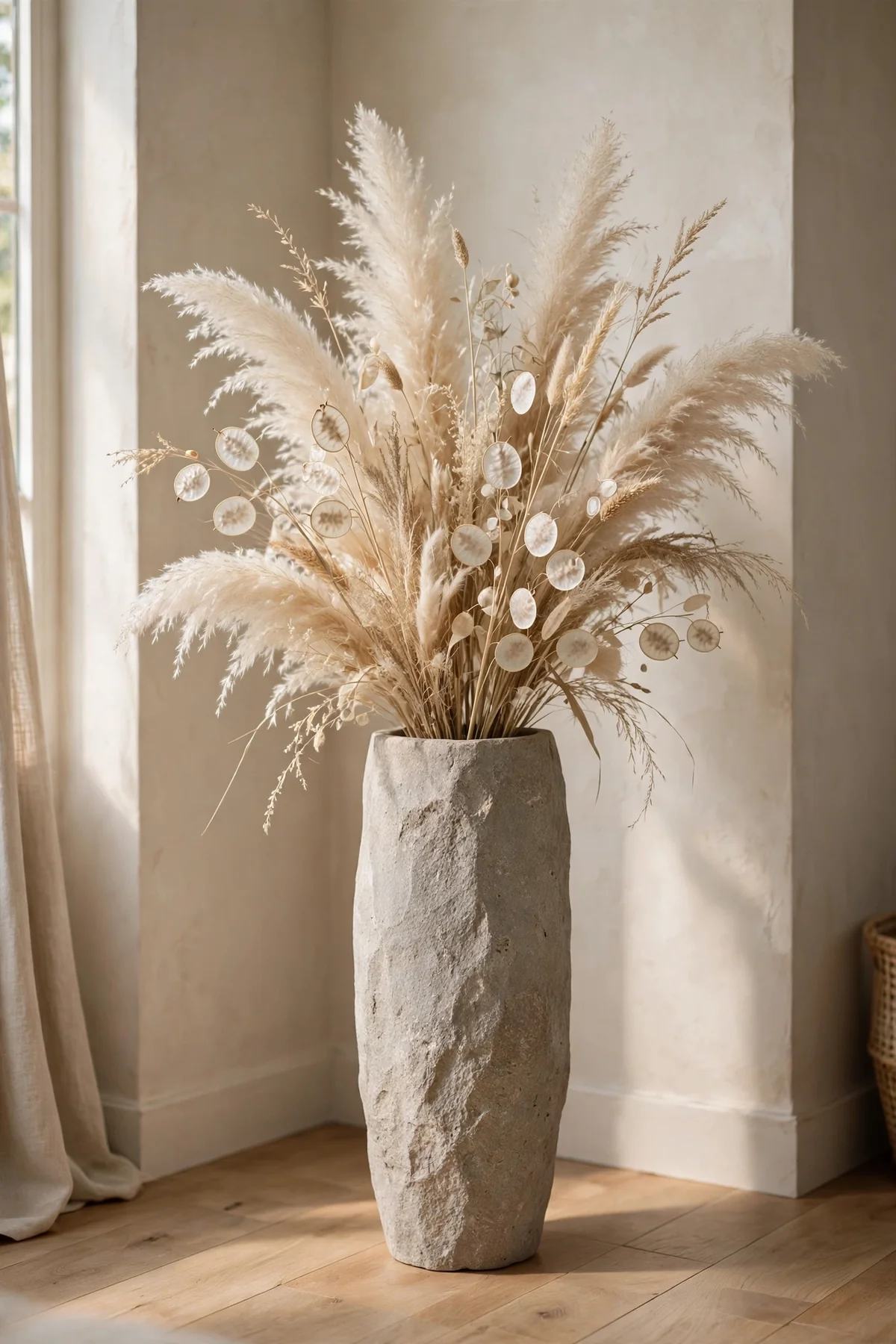
One tall arrangement replaces a whole shelf of small autumn trinkets. Choose a stone or travertine-look vase 40 to 60 cm tall with a narrow neck, and fill it with five to seven dried stems: pampas plumes, dried gypsophila, honesty seed heads, or preserved eucalyptus in muted tones. Cut stems to staggered heights, tallest about one and a half times the vase height, so the silhouette reads as sculpture rather than a bunch of flowers.
Set the vase where it has air around it: a console, a hearth corner, or the floor beside the bookshelf, never crammed between other decor. Stone’s weight anchors the stems, so the arrangement stays upright through the season. The mistake to avoid is mixing dried stems with fresh flowers, which wilt on different timelines and look tired within days. Budget tip: dried stems from a market stall cost little and last for years; store them in tissue each spring and reuse them next autumn.
4. Style the Mantel With a Symmetrical Pair of Bronze Candlesticks
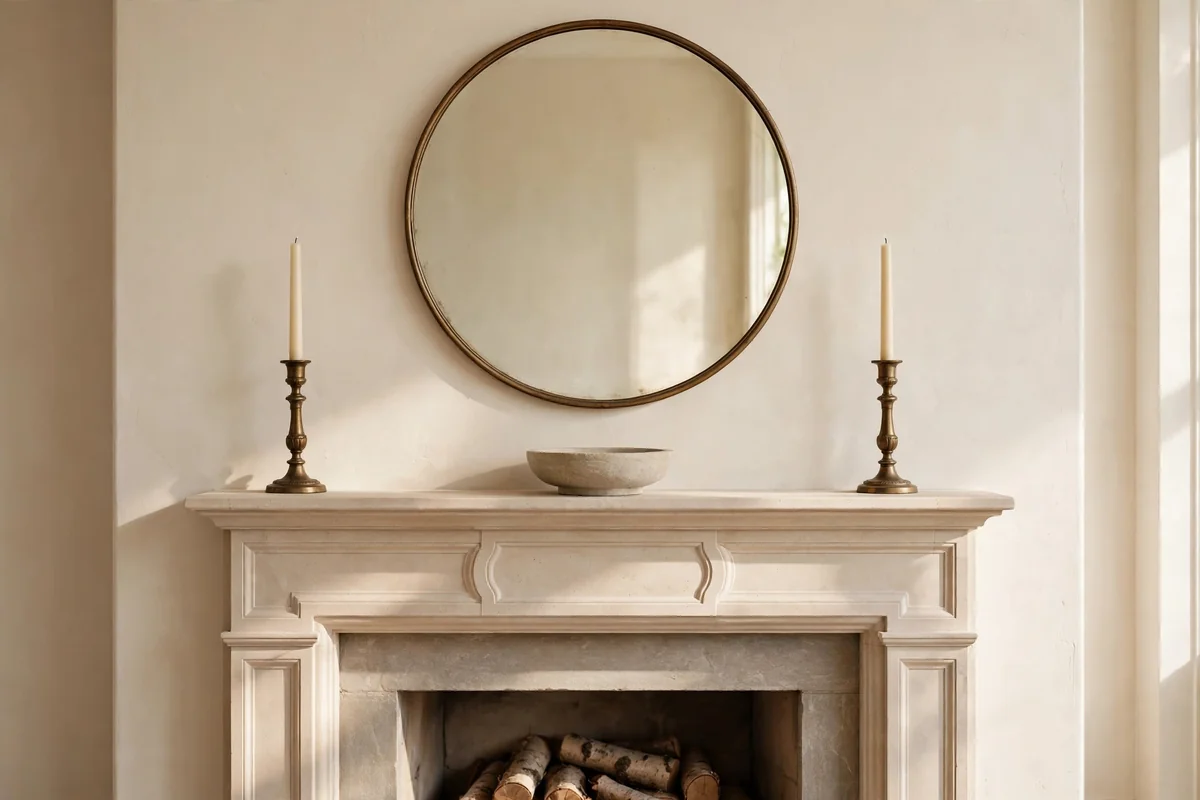
Symmetry gives a mantel instant calm. Place two bronze candlesticks, 25 to 35 cm tall, about 60 to 80 cm apart on the mantel, leaving the centre for one low object like a small stone bowl or a framed print. Keep both candles the same height and colour, ideally ivory or beeswax tone, so the pair mirrors perfectly. This two-plus-one formula works on mantels of any length and photographs beautifully in autumn light.
Add height behind with nothing fussy: a round mirror or one quiet landscape print hung centrally above. Wipe bronze with a soft dry cloth every few weeks; skip liquid polish, since a gentle patina suits the season. The mistake to avoid is filling the mantel with a row of six or seven small objects, which reads as clutter from the sofa. Budget tip: charity shops often stock solid brass or bronze-finish candlesticks for a few pounds or dollars each; mismatched pairs can be sprayed to match.
5. Set a Polished Marble Tray at the Centre of the Coffee Table
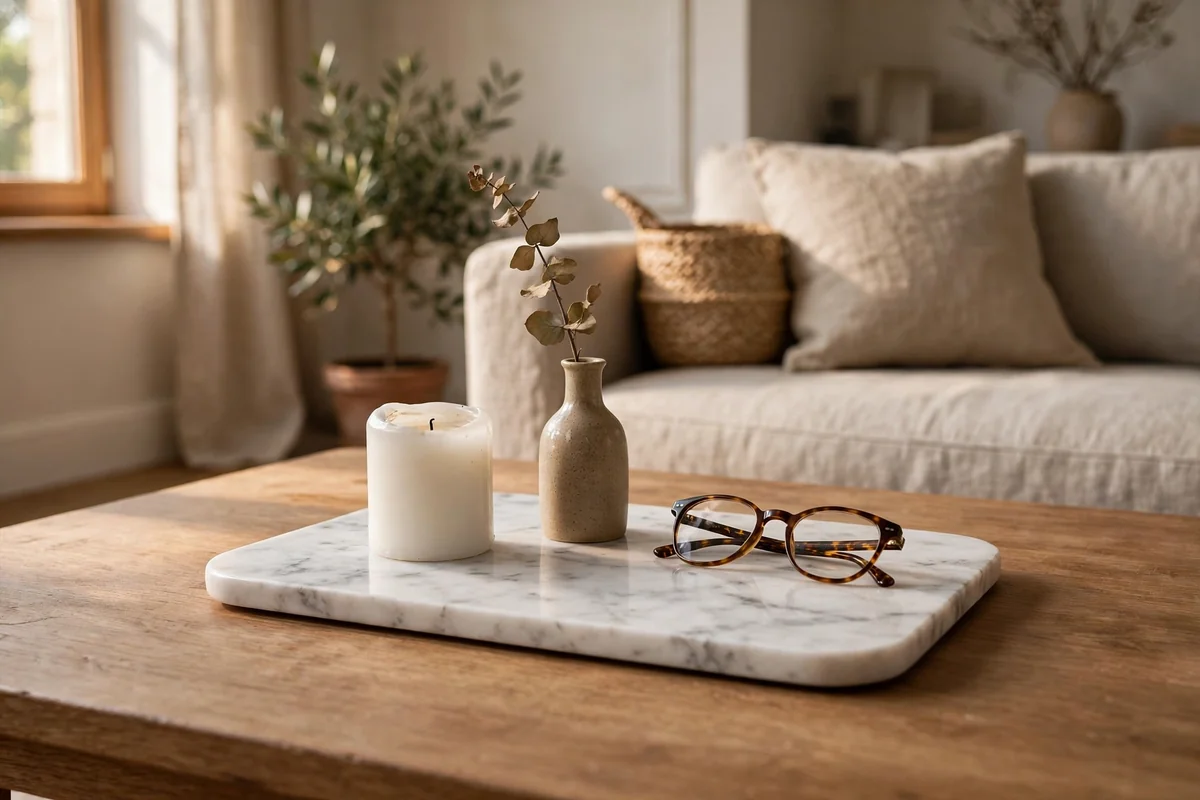
A marble tray, roughly 40 by 30 cm, turns the coffee table from a dumping ground into a composed vignette. Everything small lives on the tray: the remote, a candle, reading glasses, and nothing else. Choose honed white marble with soft grey veining, which suits cream and bronze rooms, and add small felt pads underneath so it never scratches the table. The tray’s hard surface also makes tidying a one-motion sweep.
Style the tray with two or three objects at different heights: a short candle, a small bud vase with a dried stem, and perhaps a slim book. Keep the rest of the table empty so the tray reads as the single focal point. The mistake to avoid is letting the tray become a second junk drawer with coins and receipts. Budget tip: real marble-look trays from home stores cost 20 to 40 pounds or dollars; a marble chopping board works just as well and often costs less.
6. Fold a Muted Clay Wool Throw Across the Sofa Arm
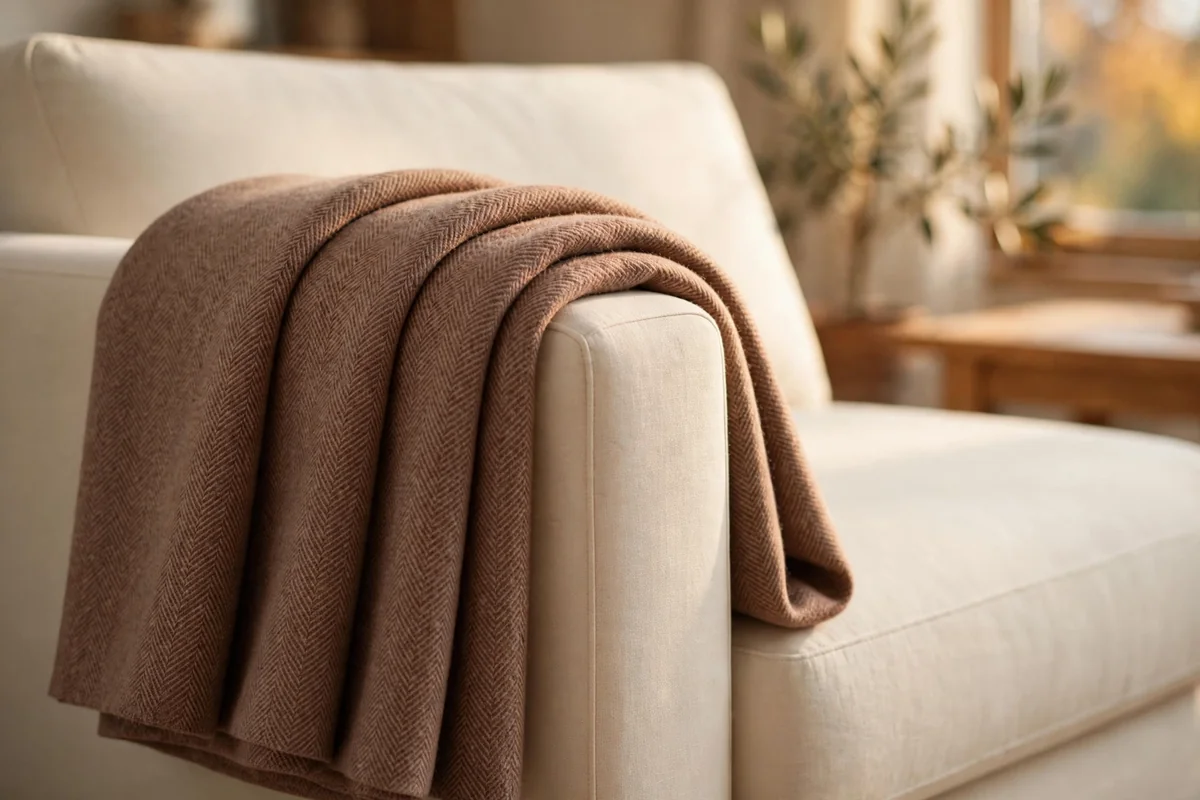
One wool throw in muted clay, folded in thirds lengthwise and laid across a single sofa arm, adds warmth without visual noise. Choose a throw around 130 by 180 cm in a fine twill or herringbone weave; wool drapes better than acrylic and keeps its shape. Keep the throw to one arm only, not both, so it reads as a deliberate accent rather than a blanket pile. The clay tone links the sofa to the bronze cushions without adding another colour.
Store the throw folded when guests arrive if the sofa feels full; a refined room never looks piled with textiles. Wool benefits from airing outside for an hour each month and brushes clean with a soft clothes brush. The mistake to avoid is buying a throw in a bright rust orange that fights the muted palette; clay should feel dusty and soft, like sun-baked earth. Budget tip: end-of-season wool throws from department stores often drop to half price, around 25 to 45 pounds or dollars.
7. Hang Two Ivory-Toned Prints in Slim Brass Frames
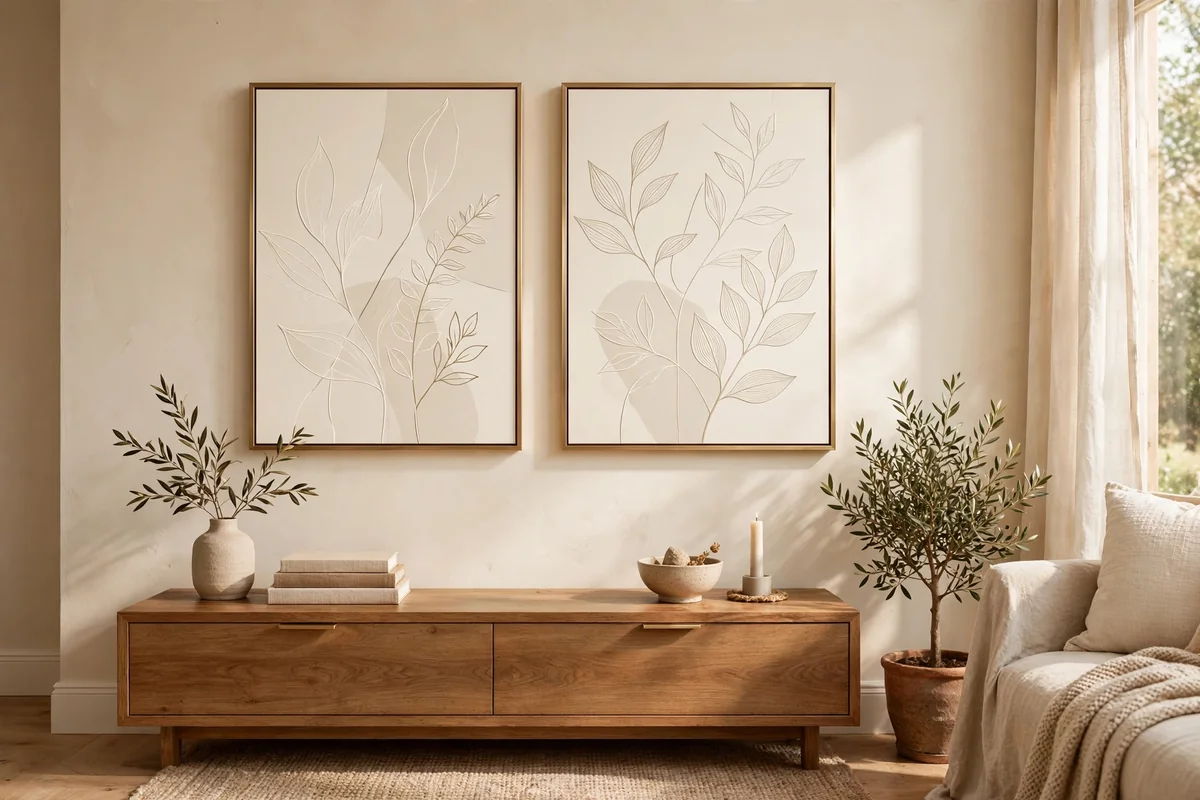
Two framed prints, each 30 by 40 cm, hung side by side with 8 to 10 cm between them, fill an empty wall without busying it. Choose abstract landscapes or botanical studies in ivory, stone and soft umber, printed on matte paper so there is no glare. Slim brass frames pick up the bronze accents elsewhere in the room. Hang the centre of the pair at about 145 cm from the floor, which suits a standing eye line above a sofa or console.
Keep the subject matter quiet: misty fields, bare branches, stone textures, never busy market scenes. Two prints beat a full gallery wall in a refined room, because white space is part of the composition. The mistake to avoid is hanging frames too high, which disconnects them from the furniture below; art should relate to what sits beneath it. Budget tip: printable art from independent designers costs 5 to 15 pounds or dollars, and standard-size frames from discount stores keep the whole project under 50.
8. Lay a Low-Pile Cream Rug With Breathing Room at the Edges
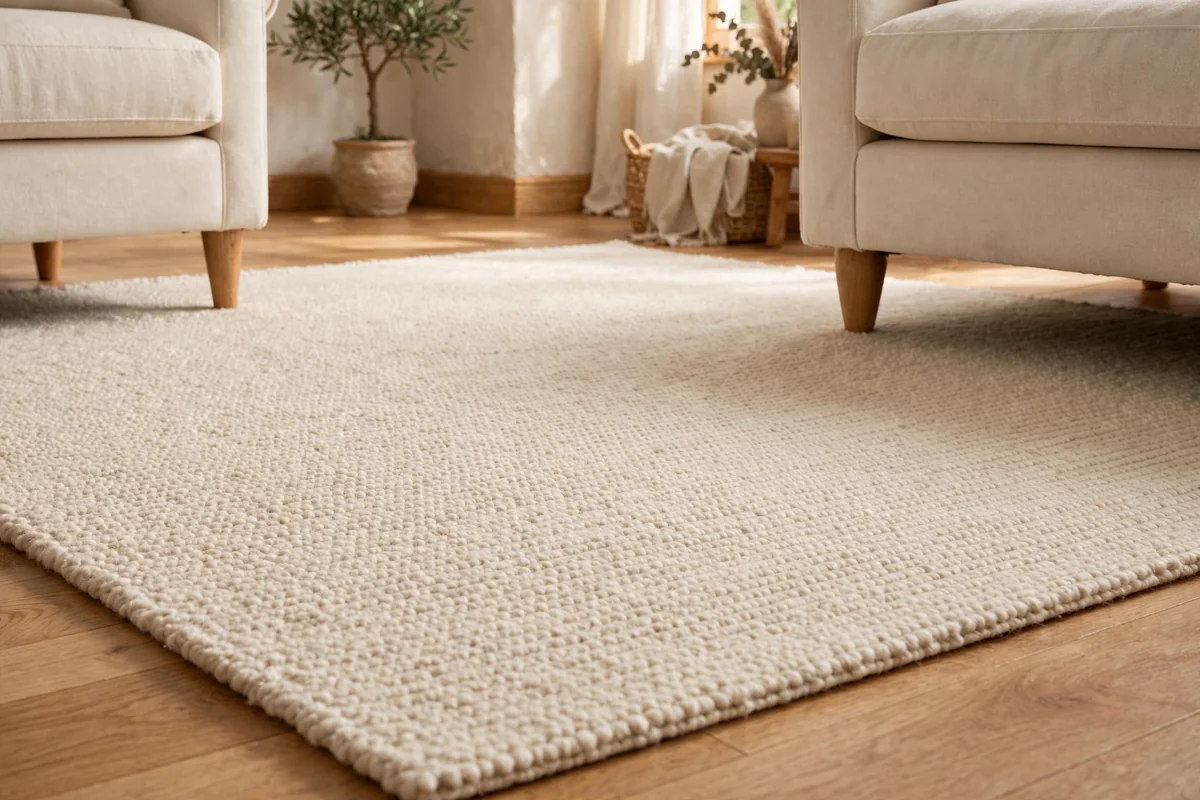
A low-pile wool rug in cream, sized so the front legs of the sofa and armchairs sit on it, grounds the seating area without shouting. Leave 30 to 45 cm of bare floor visible between the rug edge and the walls so the room keeps its airy frame. Low pile matters in autumn, because it sheds less and vacuums easily when leaves come in on shoes. Choose a subtle border or none at all; pattern competes with a quiet palette.
Layer a smaller natural-fibre rug on top for texture if the room feels flat, but keep the top layer at least 60 cm smaller on every side. Rotate the rug 180 degrees halfway through the season to even out sunlight and foot traffic. The mistake to avoid is buying a rug that only fits under the coffee table, which makes the furniture look like it is floating separately. Budget tip: cream flatweave rugs in standard sizes are widely available second-hand and steam clean well.
9. Edit the Coffee Table Down to Three Calm Objects
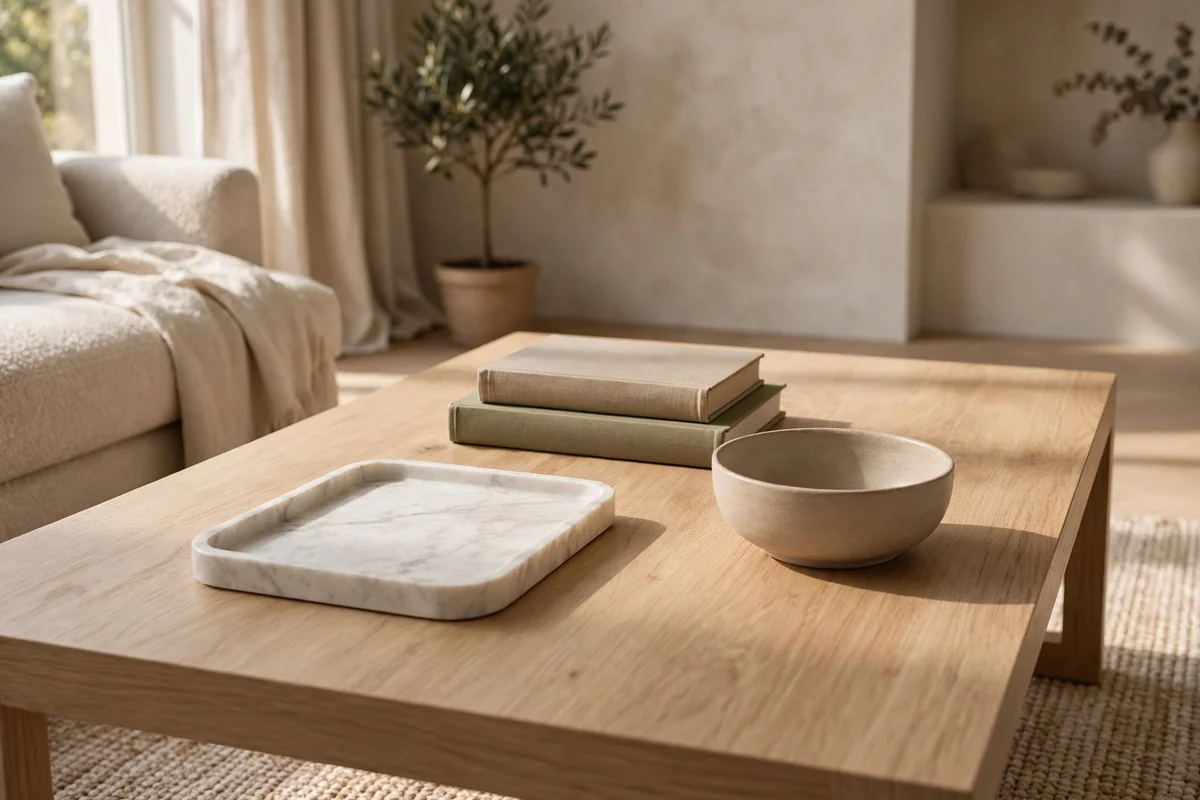
Three objects, no more: the marble tray with its contents counts as one, plus one stack of two books and one low bowl or candle. Arrange them in a loose triangle with at least 15 cm of empty table between each group so the eye can rest. Step back to the doorway and check the silhouette; if anything looks fussy, remove it for a week. A coffee table that is half empty looks intentional, never unfinished.
Corral the daily clutter inside the tray only, and set a house rule that anything left on the table overnight returns to its home each morning. This one habit keeps the whole room feeling edited, because the coffee table sits in the line of sight from every seat. The mistake to avoid is keeping a decorative object you no longer love just because it was expensive. Budget tip: this idea costs nothing; the editing is the luxury, and it takes about ten minutes.
10. Layer Warm Light With Two Table Lamps and One Floor Lamp
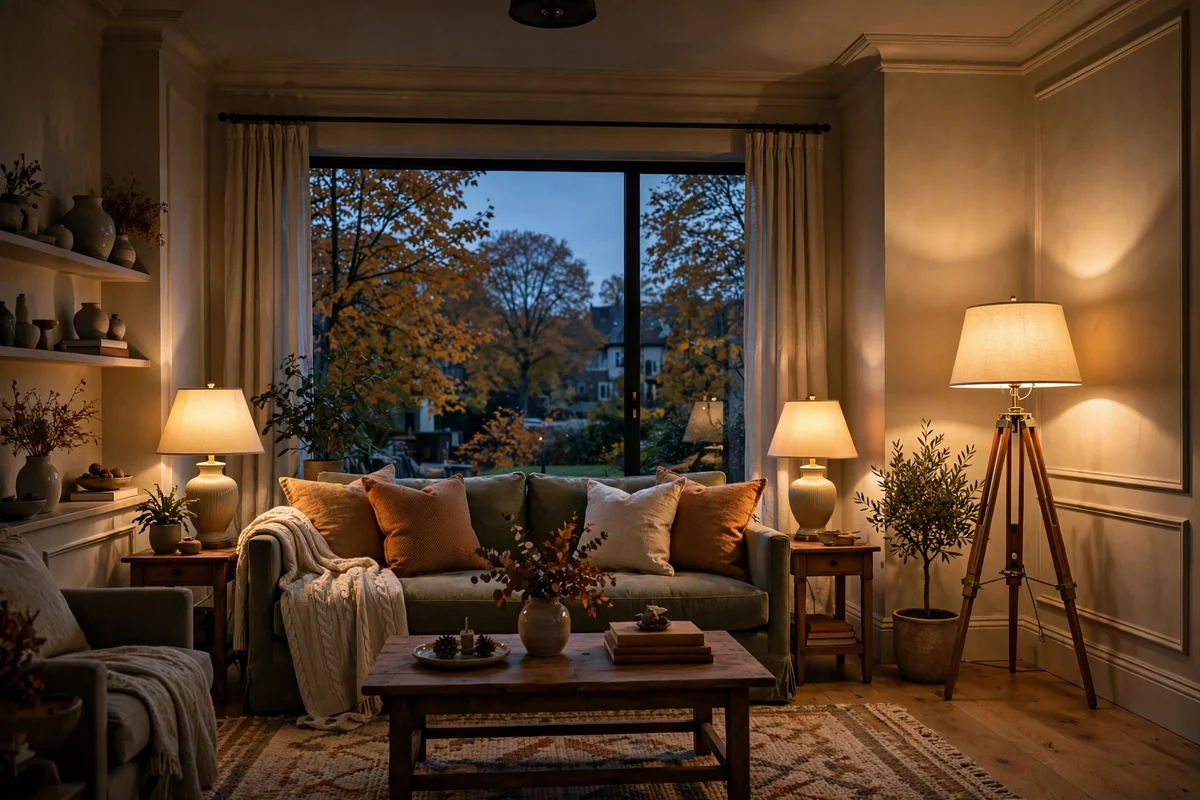
Overhead lights alone flatten a room, so build three pools of warm light instead. Place matching table lamps on the console and a side table, both with cream shades and 2700K bulbs, and add an arc or tripod floor lamp behind the reading chair. Keep every bulb the same warm temperature; mixed colour temperatures make even expensive rooms look unsettled. Aim for each lamp to wash a wall or corner rather than pointing straight down.
Use timers or smart plugs so the lamps switch on at dusk, around 5 pm in mid-autumn, and the room welcomes you already glowing. A dimmer on the floor lamp lets you lower the mood for quiet evenings. The mistake to avoid is one glaring ceiling light left on alongside the lamps, which kills the layered effect. Budget tip: second-hand lamp bases plus new shades and warm LED bulbs usually total 30 to 60 pounds or dollars per lamp.
11. Hang Honest Linen Curtains in Warm Ivory
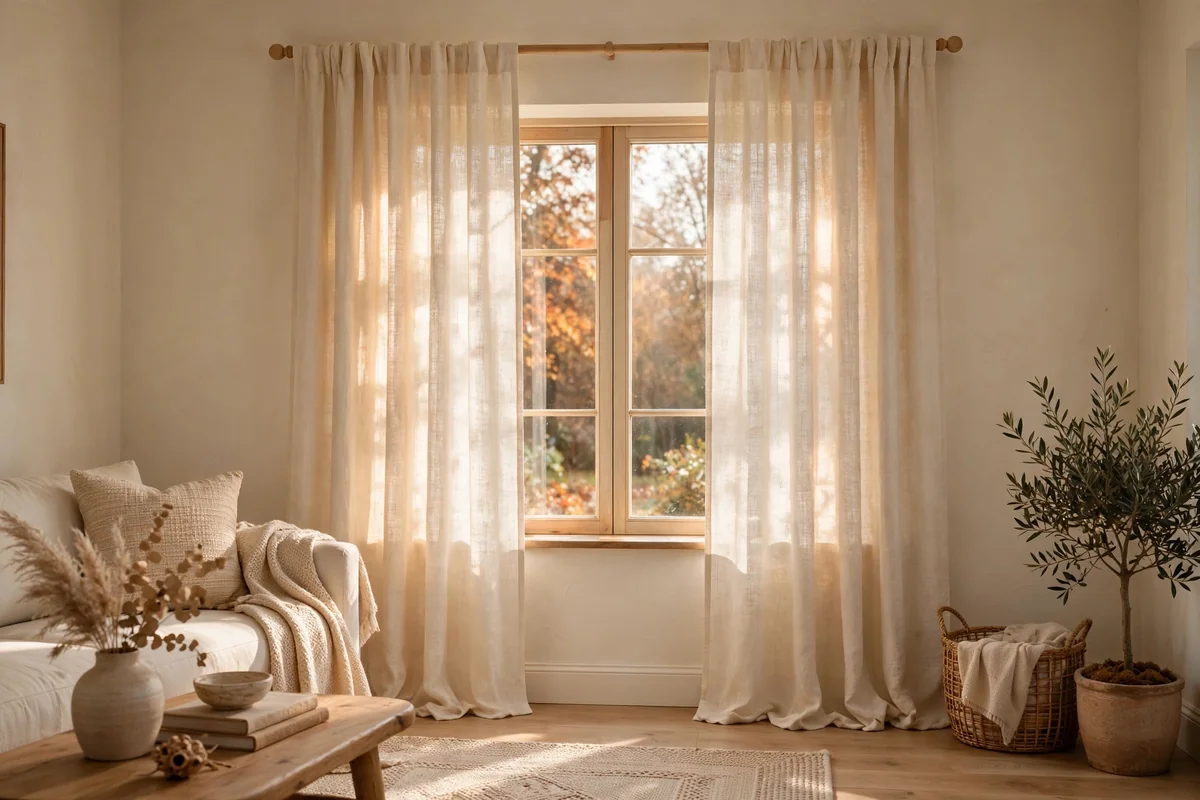
Linen curtains in warm ivory soften the windows and filter autumn light into a gentle glow. Hang the rod 10 to 15 cm above the frame and 15 to 20 cm wider on each side so the panels stack back over the wall, not the glass. Choose a mid-weight linen or linen blend that drapes in soft folds; stiff polyester never moves the same way. Floor-grazing length, just kissing the floor, keeps the line elegant.
Wash linen curtains once at the start of the season and steam them in place; the natural wrinkles are part of the charm, so do not chase crisp pleats. If new linen is beyond budget, wash and rehang what you own and press only the leading edges. The mistake to avoid is short curtains that stop at the sill, which visually chop the wall and cheapen the whole room. Budget tip: ready-made linen-look panels in standard drops often cost 20 to 40 pounds or dollars per pair.
12. Rest a Stone Bowl of Dried Botanicals on the Console
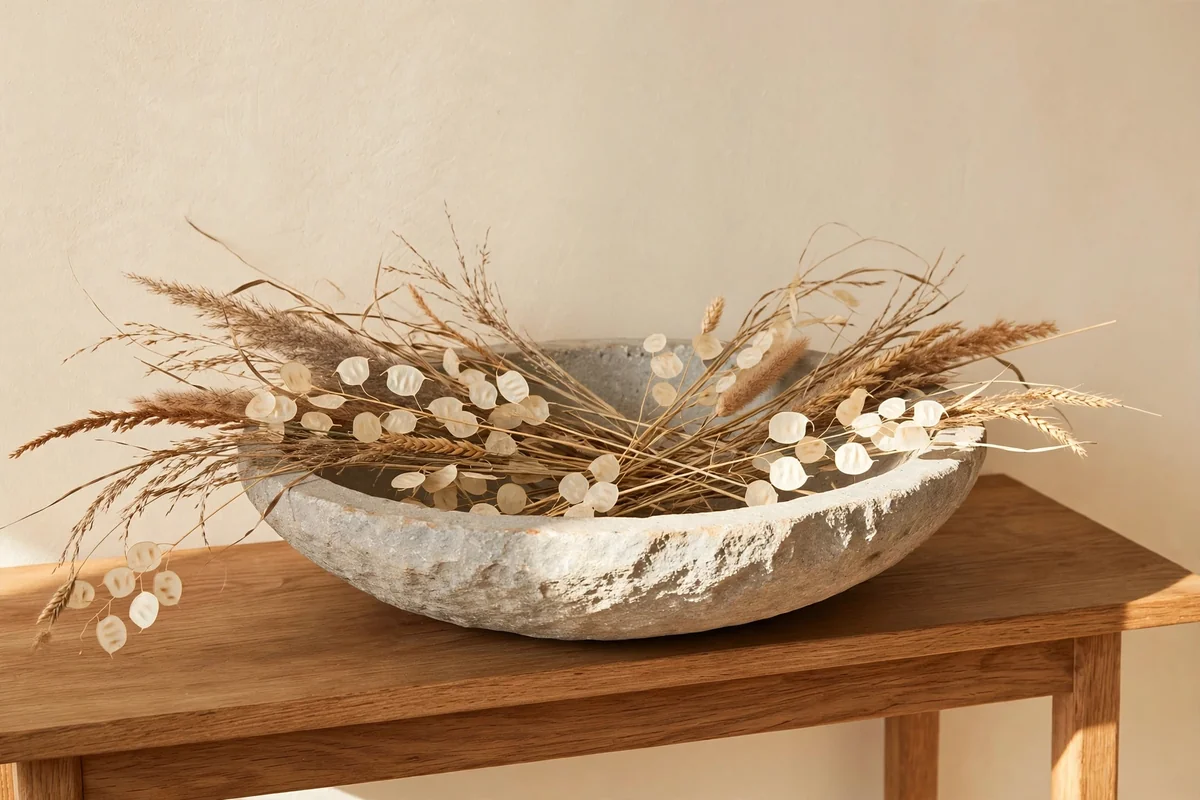
A wide, shallow stone bowl, 25 to 35 cm across, filled with dried botanicals gives the console one calm moment instead of five small ones. Mix honesty seed heads, dried grasses and a few preserved leaves in cream and umber tones; keep everything in the quiet palette. Fill the bowl loosely so stems spill slightly over one edge, which looks natural rather than arranged. One bowl, done well, holds the whole wall.
Dust the botanicals monthly with a cool hairdryer on low, held 30 cm away; dried stems crumble if handled roughly. Refresh the mix each autumn by swapping in two or three new stems and composting the most faded ones. The mistake to avoid is adding pinecones, pumpkins and candles around the bowl until the console looks like a market stall. Budget tip: a stone or stone-look bowl from a home store plus foraged dried grasses costs under 30 pounds or dollars.
13. Balance Two Marble Bookends on the Bookshelf
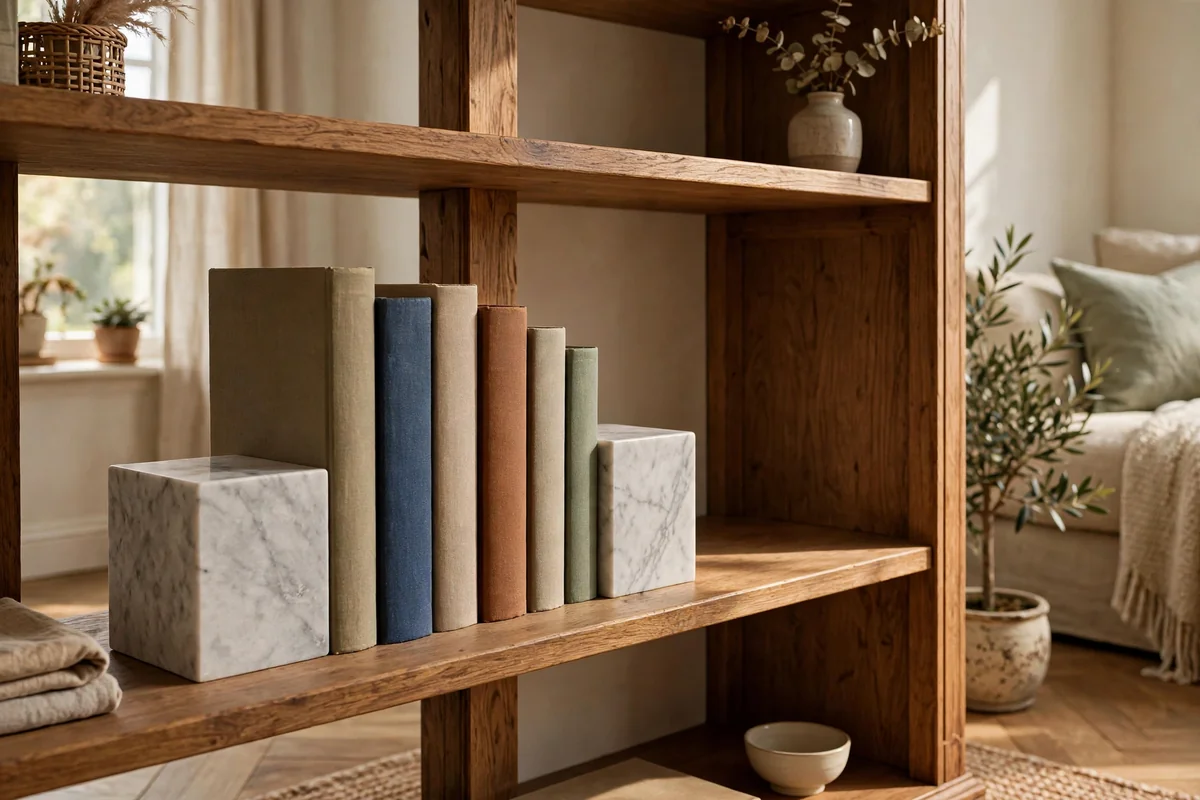
Two solid marble bookends turn a row of books into a small sculpture on the shelf. Choose cube or arch shapes in honed white or travertine marble, each 10 to 15 cm tall, and use them to bracket twelve to fifteen books grouped by height. Leave 20 cm of empty shelf beside the group so the bookends read as a deliberate pause. Marble’s cool tone balances the warmth of bronze and clay elsewhere.
Face one or two favourite covers outward between the bookends for a quiet seasonal note, then turn them back in spring. Dust marble monthly with a damp cloth and dry it fully, since water spots show on honed stone. The mistake to avoid is packing every shelf edge to edge, which makes even beautiful bookends disappear. Budget tip: solid stone bookends from discount home stores run 15 to 35 pounds or dollars a pair and last for decades.
14. Style Each Side Table With One Lamp and One Small Object
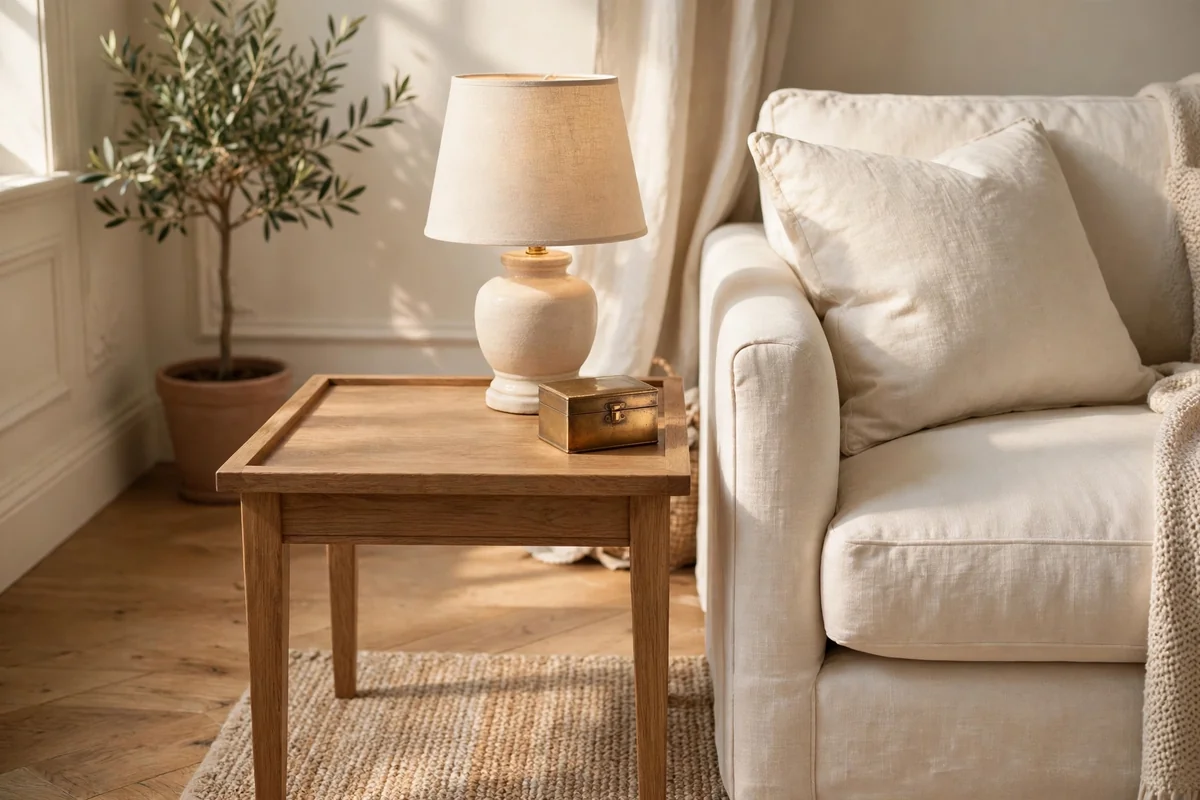
A side table needs only two things: a lamp for evening light and one small object, like a brass box, a short stack of coasters, or a bud vase. Keep the table surface at least half empty so the lamp has visual space around it. Match the lamp height to the sofa arm, roughly 55 to 65 cm, so the shade sits just above seated eye level. Two edited side tables bookend the sofa and make the whole arrangement feel considered.
Run lamp cords down the back leg and secure them with a cable clip so no wire trails across the floor. If a side table is tiny, choose the lamp or the object, not both; a bare lamp on a small table looks calmer than a crowded one. The mistake to avoid is using the side table as a charging station with cables and devices on show. Budget tip: a simple brass-finish box for corralling bits and pieces costs under 15 pounds or dollars.
15. Add a Muted Clay Ottoman as the Room’s Quiet Accent
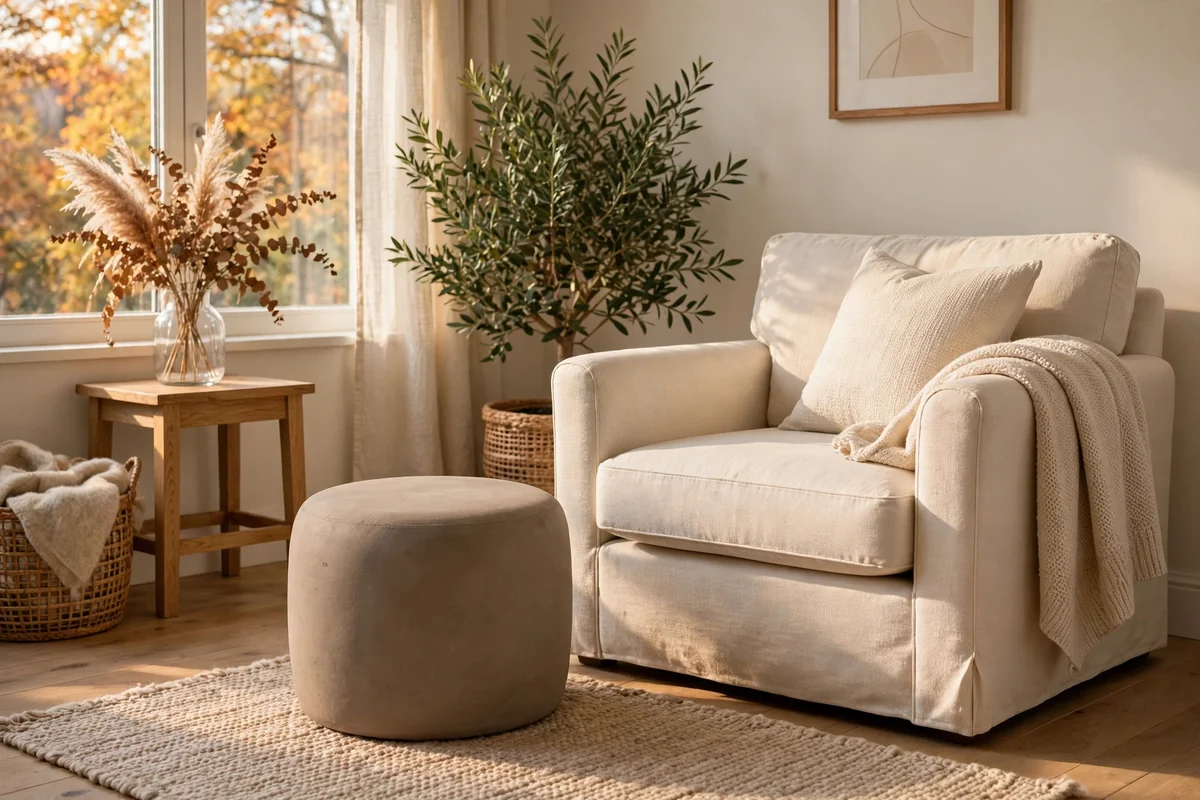
One ottoman in muted clay gives the room its single bold note without breaking the calm. Choose a round or square ottoman 40 to 50 cm across and about 40 cm high, upholstered in a sturdy cotton or wool blend, and tuck it beside the armchair or at the sofa’s end. It works as a footrest, an extra seat and a surface for a tray. Because it is the only clay piece of furniture, it reads as confident, not random.
Keep the ottoman’s lines simple; tufting and nailheads add noise a quiet room does not need. Vacuum the upholstery monthly with an upholstery nozzle and treat spills quickly with a damp cloth. The mistake to avoid is adding a second clay piece, like matching cushions or a throw, which turns the accent into a theme. Budget tip: a good ottoman costs 60 to 140 pounds or dollars; second-hand frames re-covered in clay fabric cost far less.
16. Dress the Hearth With Stacked Logs and a Stone Lantern
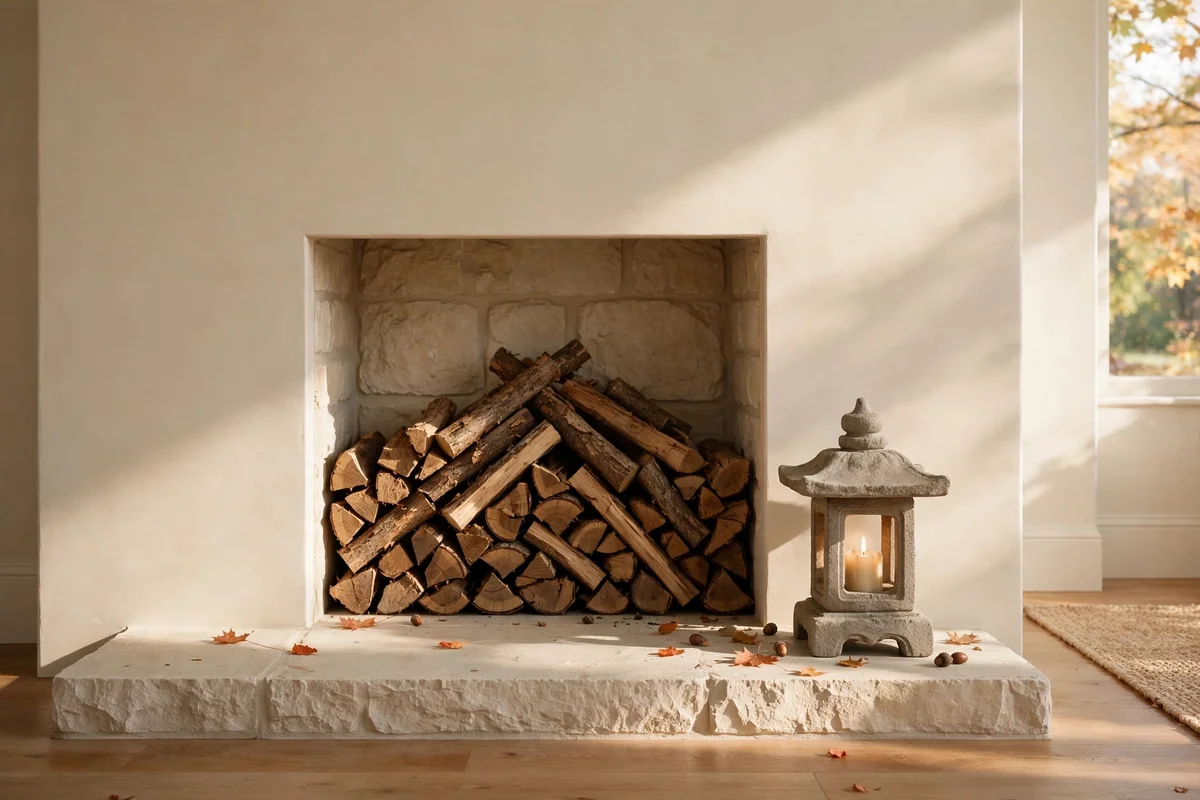
If the fireplace is not lit in early autumn, style the hearth instead of leaving it empty. Stack seasoned logs in a neat crisscross inside the firebox, cut to 25 to 30 cm lengths, and place a stone or concrete lantern with a pillar candle beside the hearth. The logs bring honest texture, and the lantern adds a sculptural shape. Keep everything inside the hearth opening or tight against it so the arrangement looks purposeful.
Choose real wood over fake logs if the fireplace works; if it is purely decorative, birch logs with pale bark look refined against cream walls. Never leave a real flame unattended, and keep the lantern candle battery-operated if children or pets use the room. The mistake to avoid is piling pumpkins and garlands across the hearth, which hides the architecture. Budget tip: a stone lantern costs 20 to 50 pounds or dollars; logs from a local supplier are inexpensive in bulk.
17. Hang a Round Mirror in a Stone-Tone Frame
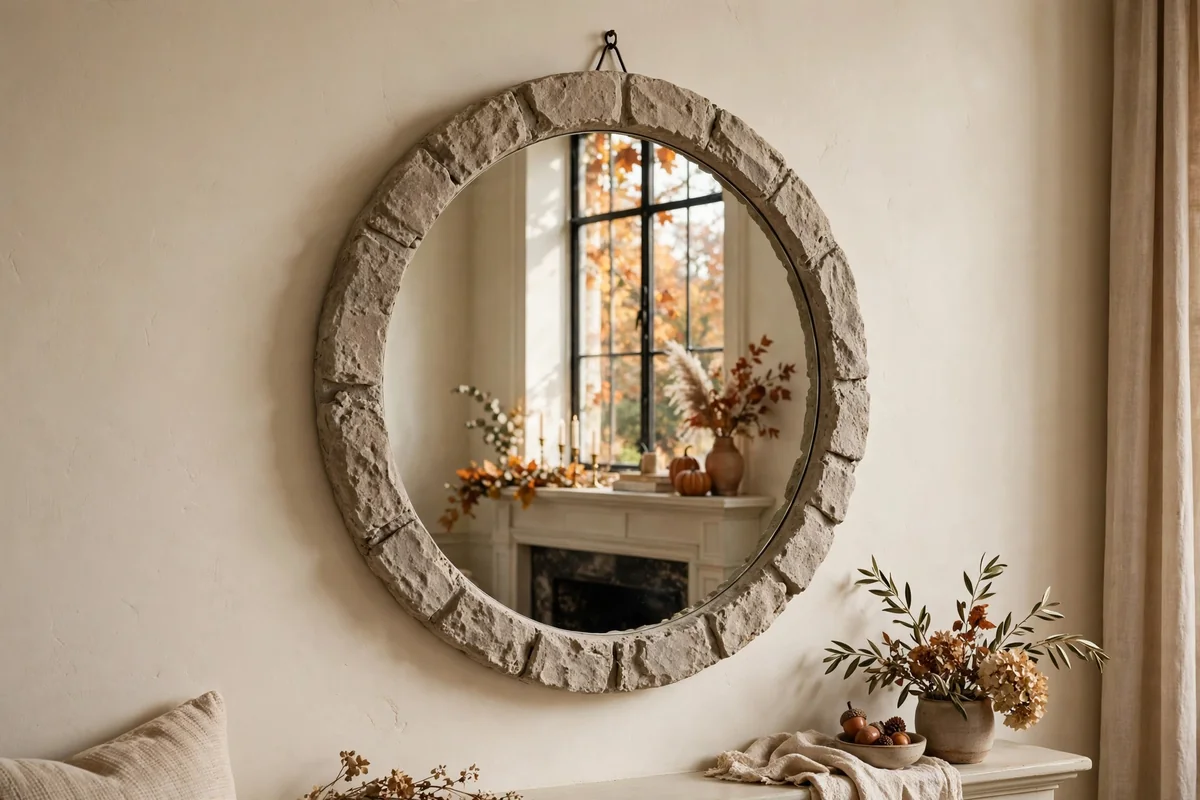
A round mirror, 60 to 80 cm in diameter, hung opposite or beside the window, doubles the autumn light in the room. Choose a frame in a stone tone, travertine look, or pale oak, about 3 to 5 cm wide, so it reads as texture rather than shine. Hang the centre at roughly 150 cm from the floor. The mirror’s reflection becomes a second piece of art, changing with the light through the day.
Keep the mirror clean with a microfibre cloth and plain water; streaks catch the eye in low light. Do not hang it where it reflects clutter, like the television corner or a busy shelf; angle it toward the window or the mantel. The mistake to avoid is pairing the mirror with a second shiny object nearby, which tips the room from warm to glary. Budget tip: round mirrors with stone-look frames are widely stocked from 40 to 90 pounds or dollars.
18. Group Beeswax Candles at Three Different Heights
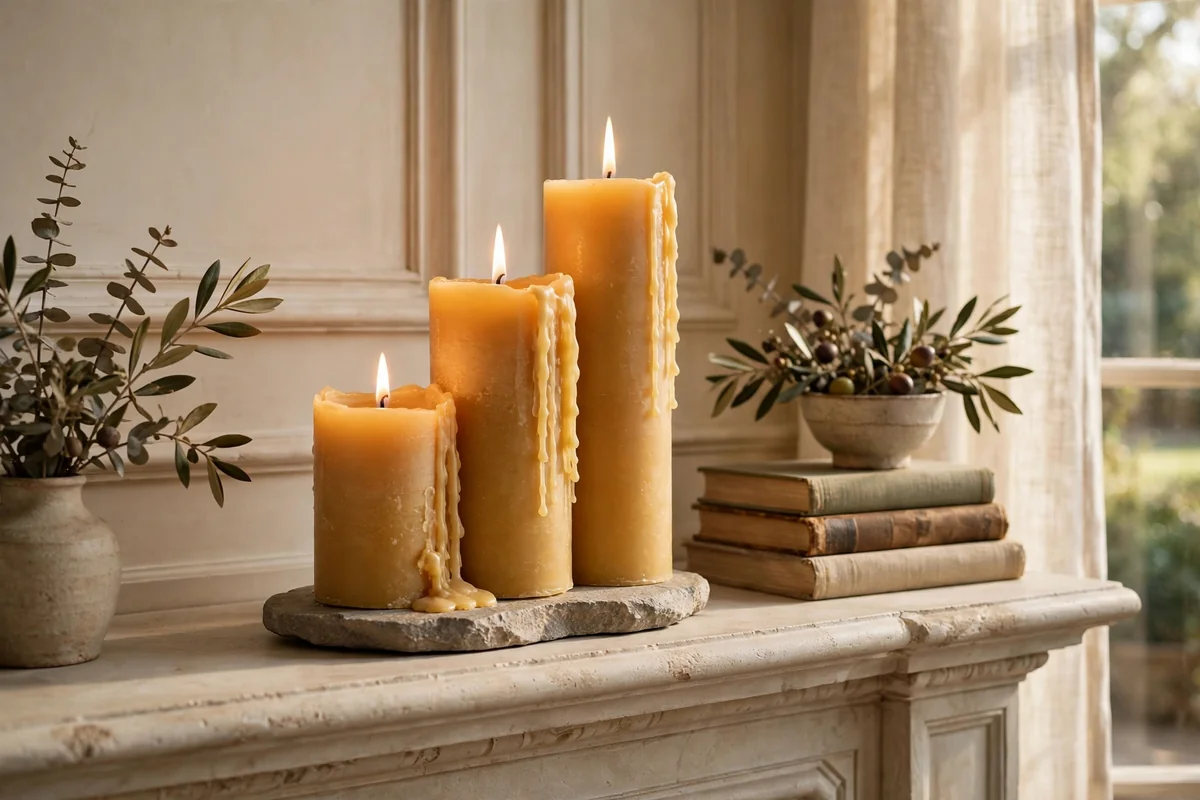
Beeswax candles bring a honeyed tone and a gentle scent that suits a refined room. Group three pillar candles, in heights of roughly 10, 15 and 20 cm, on a small stone or bronze tray on the mantel or coffee table. Keep the candles within 10 cm of each other so they read as one cluster, and trim wicks to 5 mm before lighting for a clean flame. The warm glow flatters every material in the palette.
Burn beeswax candles for at least one hour at a time so the wax pool reaches the edge and the candle burns evenly. Never leave flames unattended, and keep candles 30 cm from curtains and dried stems. The mistake to avoid is scattering single tealights around the room, which looks sparse rather than styled; clusters always read calmer. Budget tip: pure beeswax pillars cost more, around 8 to 18 pounds or dollars each, but burn slowly and scent the room naturally.
19. Keep the Windowsill to Two Small Stone Pots of Herbs
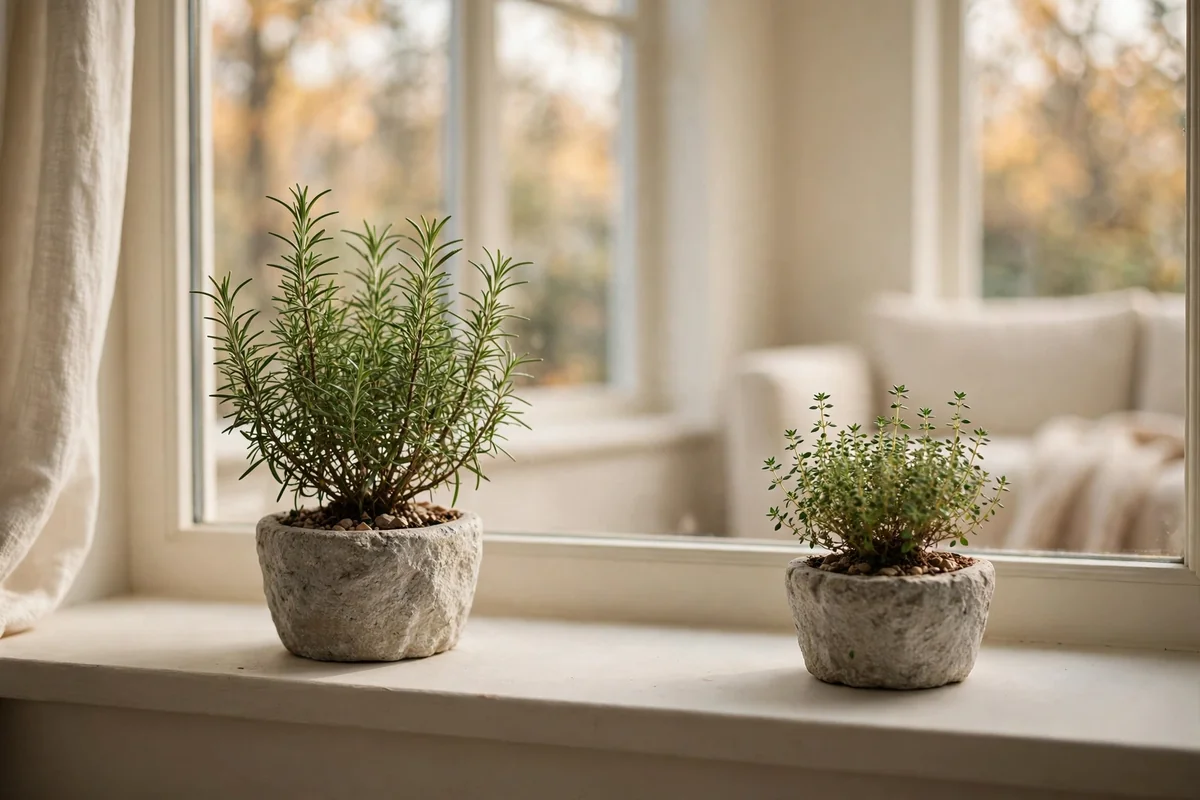
A deep windowsill needs almost nothing: two small stone or concrete pots, 10 to 12 cm wide, planted with rosemary or thyme. Herbs bring a living green note that stays in the quiet palette, and their scent is subtle rather than sweet. Space the pots 20 to 30 cm apart with bare sill between them, and choose pots in slightly different heights for a gentle rhythm. The green reads as freshness, not decoration.
Water herbs sparingly, letting the top 2 cm of soil dry between waterings, and turn the pots weekly so growth stays even. Rosemary and thyme tolerate the cooler sill temperatures of autumn well. The mistake to avoid is adding a row of pumpkins or fairy lights along the sill, which crowds the glass and blocks the light. Budget tip: herb plants from a grocery store cost 2 to 4 pounds or dollars and can be divided into two pots.
20. Fill One Bronze Bowl With Dried Seed Heads
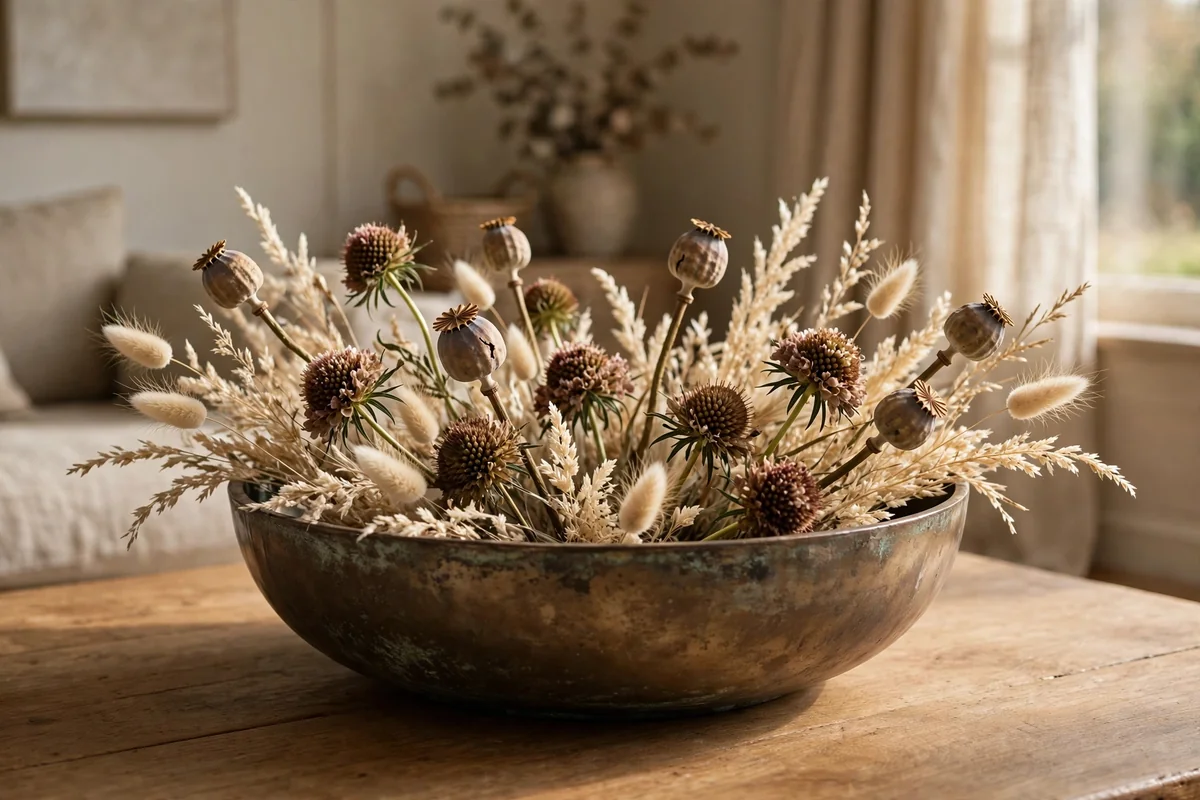
A low bronze bowl, 20 to 30 cm wide, filled with dried seed heads makes a beautiful centrepiece for a dining table that opens into the living room, or for a large coffee table. Use poppy heads, scabiosa pods and dried grasses in cream and bronze tones, arranged loosely so their shapes show. The metallic bowl picks up lamplight and gives the dried material a quiet richness that a plain basket never manages.
Keep the bowl away from high-traffic edges, since dried seed heads shed if knocked. Refresh the arrangement each season by shaking out dust outdoors and replacing the most faded stems. The mistake to avoid is filling the bowl to a mound; stems should sit just above the rim for an edited look. Budget tip: seed heads foraged from gardens or bought as bunches cost 5 to 12 pounds or dollars, and a bronze-look bowl starts around 15.
21. Do a Weekly Ten-Minute Edit of Every Surface
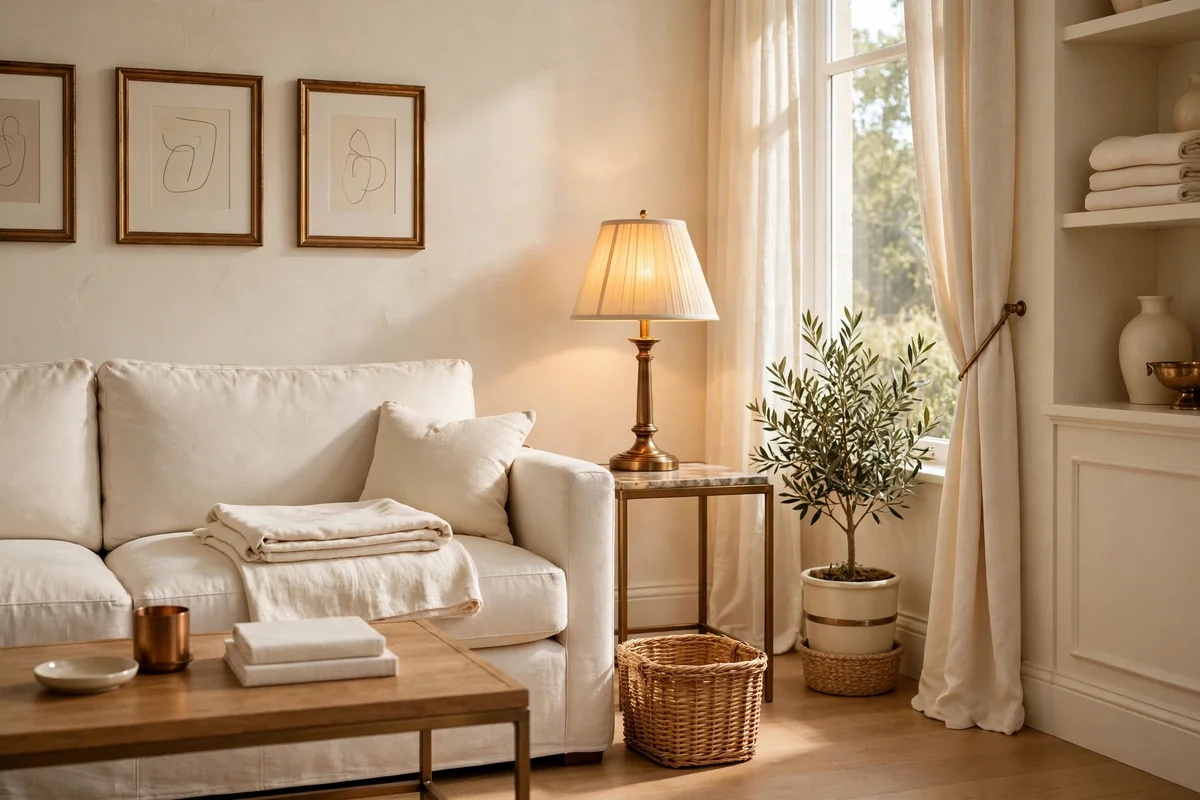
The final idea is a habit, not a purchase. Once a week, carry a small basket through the living room and return every stray object to its home: magazines, chargers, cups, toys. Then check each surface against the three-object rule; anything extra goes into the basket for a month in a cupboard. This ten-minute routine keeps the refined look you built, because autumn clutter accumulates fast with darker evenings and more time indoors.
If an object survives a month in the cupboard without being missed, donate or store it; if you reached for it, find it a permanent home outside the living room. Involve the whole household so the edit takes minutes, not an evening. The mistake to avoid is doing one giant seasonal declutter instead; small weekly edits are gentler and they stick. This habit costs nothing and protects every pound or dollar you spent on the other twenty ideas.
A refined autumn living room is built from decisions, not decorations: a four-colour palette, honest materials, and surfaces that are allowed to breathe. The twenty-one ideas above all point the same way, toward less but better, toward stone and bronze and wool that age gracefully. When the room feels calm on a dark October evening, with lamplight pooling on the marble tray and the bronze cushions catching the last of the day, you will know the editing was worth it.
Start this week with the easiest win: walk the room with a basket and edit every surface down to three objects. That single hour costs nothing and changes the feeling of the space more than any purchase. Then choose your clay accent, order the bronze cushions, and let the palette settle in slowly. A serene, timeless living room is never finished in a day, and that slow layering is exactly what makes it feel like home.
Frequently Asked Questions
How much does an elegant fall living room refresh cost?
Between 100 and 400 pounds or dollars for the full layered look, but you can start far smaller. Editing surfaces costs nothing, two velvet cushion covers run 15 to 30, and a stone bowl with dried stems lands under 40. Spend the most on pieces you touch daily, like the throw and the cushions, and let restraint do the rest.
Can I style an elegant autumn living room in a small space?
Yes, and small rooms suit the refined look especially well. Stick to one dried arrangement, keep the palette to the four colours, and choose a low-pile rug that fits under the front legs of your seating. Mirrors and layered lamps make compact rooms feel larger. Avoid anything oversized: one sculptural piece always beats three small ones in a tight corner.
How do I keep dried arrangements looking good all season?
Keep them out of direct sun, which bleaches the tones, and away from radiators that make stems brittle. Dust monthly with a cool hairdryer held 30 cm away, and handle stems by their bases. Most dried botanicals last two to three seasons if stored in tissue paper over summer. Replace only the most faded stems each autumn rather than buying a whole new bunch.
What colours work best for a refined autumn living room?
Cream and ivory as the base, warm bronze for metal accents, and muted clay as the single deeper tone. This four-colour mix feels seasonal without leaning on orange or red. Keep the ratio roughly 60 percent cream, 25 percent ivory, 10 percent bronze and 5 percent clay. Adding a fifth colour, even a quiet one, usually breaks the calm, so edit ruthlessly.
Are velvet cushions practical with children and pets?
They are more practical than they look if you choose wisely. Performance velvet or cotton velvet brushes clean, and darker bronze tones hide marks better than pale fabrics. Use removable covers so you can wash them, and keep a soft clothes brush handy for pet hair. Avoid silk velvet, which marks easily; a sturdy upholstery-grade velvet stands up to daily family life well.