Living Room
21 Family Room Ideas That Look Beautiful and Still Welcome Everyday Life
By Anna Wells · · 20 min read
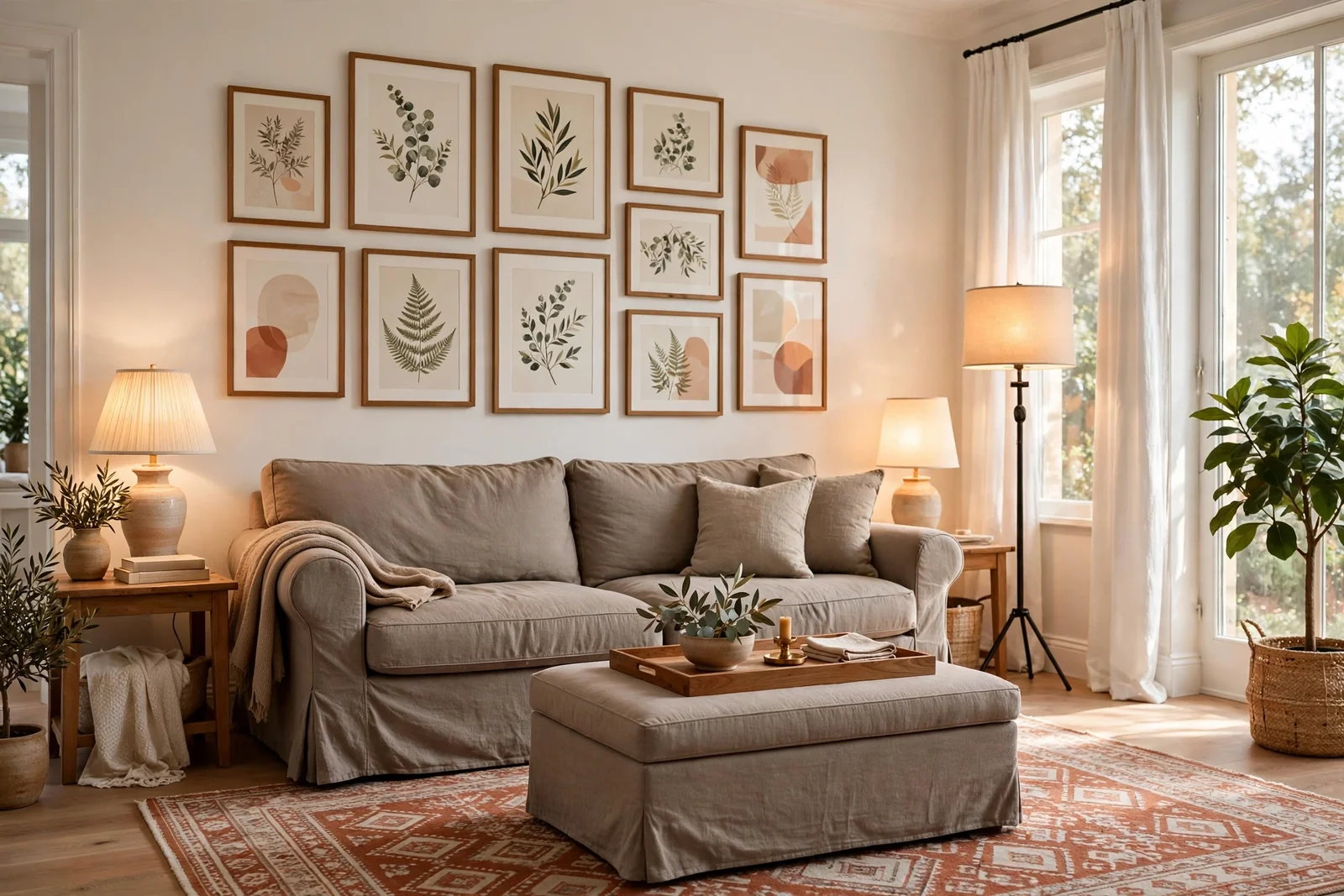
Beautiful rooms that still welcome real life: 21 family room ideas with washable fabrics, hidden storage, layered light and spill-forgiving rugs.
The sofa looked wonderful for exactly one afternoon. Then came the juice box, the dog, and the guests who arrived with sticky toddlers in tow. If your family room has ever felt like a choice between beautiful and livable, these 21 ideas are for you.
They prove a family room can hold its shape under real life. They lean on durable, washable fabrics, hidden storage, layered light and rugs that forgive, so the room keeps looking grown up while children play, guests lounge and pets nap in the sunny corner.
Nothing here asks you to cover the good furniture in plastic or banish the children to another room. Each idea names materials, sizes and rough costs, plus one mistake to avoid, so you can plan a room that photographs well on Saturday and still welcomes Monday evening homework.
Start with the pieces you touch every day, the sofa and the rug, then work outward to storage, light and the small finishing touches. By the end you will have a room that resets in ten minutes and looks like it never saw the mess.
1. Dress the Sofa in Washable Slipcovers You Can Strip in Minutes
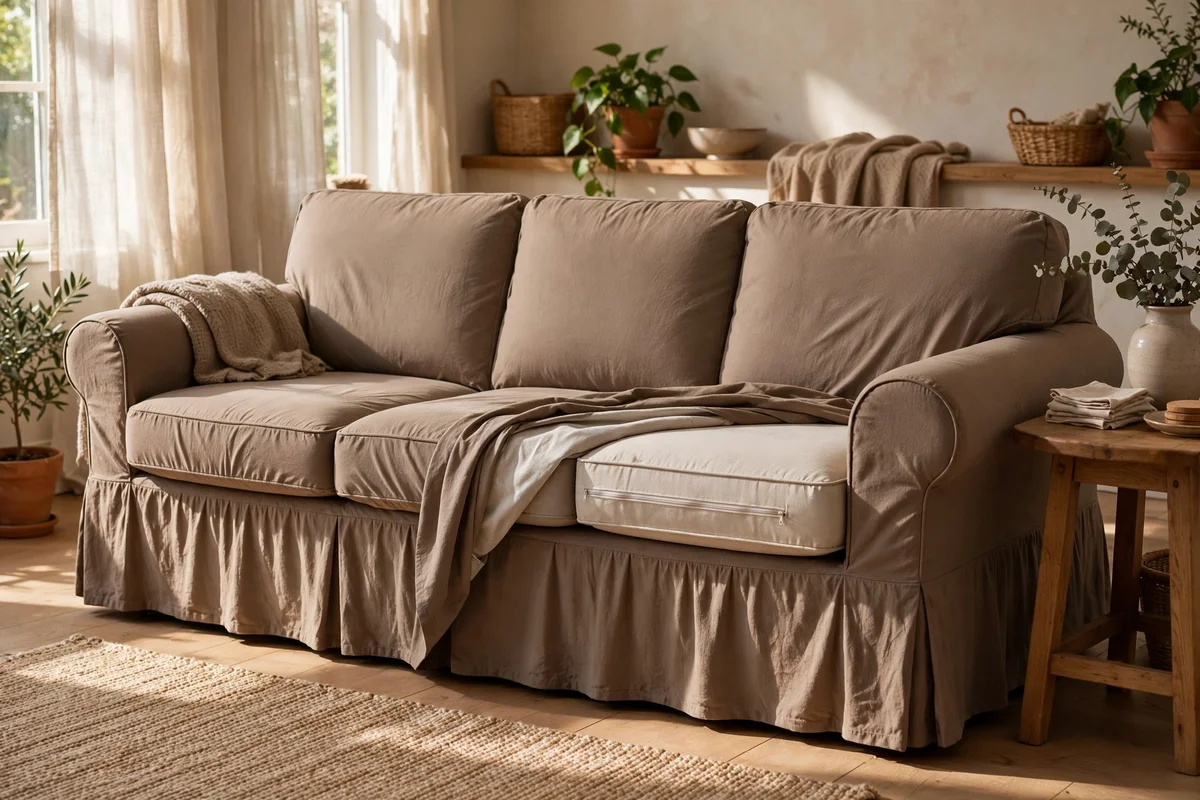
A slipcovered sofa is the workhorse of a family room that must look polished while surviving snacks, pets and muddy paws. Choose a tightly woven cotton or linen blend in a mid-tone neutral such as warm taupe, soft oatmeal or muted sage, which hides light marks between washes. Covers for a standard three-seater cost roughly 150 to 400 dollars or pounds, far less than reupholstery, and most strip off in under five minutes. Wash on a gentle cold cycle every four to six weeks, and keep a spare set so the sofa is never bare.
The mistake to avoid is choosing crisp white slipcovers in untreated cotton, which show every spill within a day and need bleaching to stay bright. Pick pre-washed, garment-dyed fabrics that arrive soft and improve with each wash, and check that zips and ties sit at the back of cushions where small hands tug less. Budget tip: buy the frame second hand and spend the savings on two sets of quality covers. Keep a small upholstery brush nearby to sweep crumbs before they settle.
2. Choose a Performance Fabric Sofa in a Dark or Patterned Weave
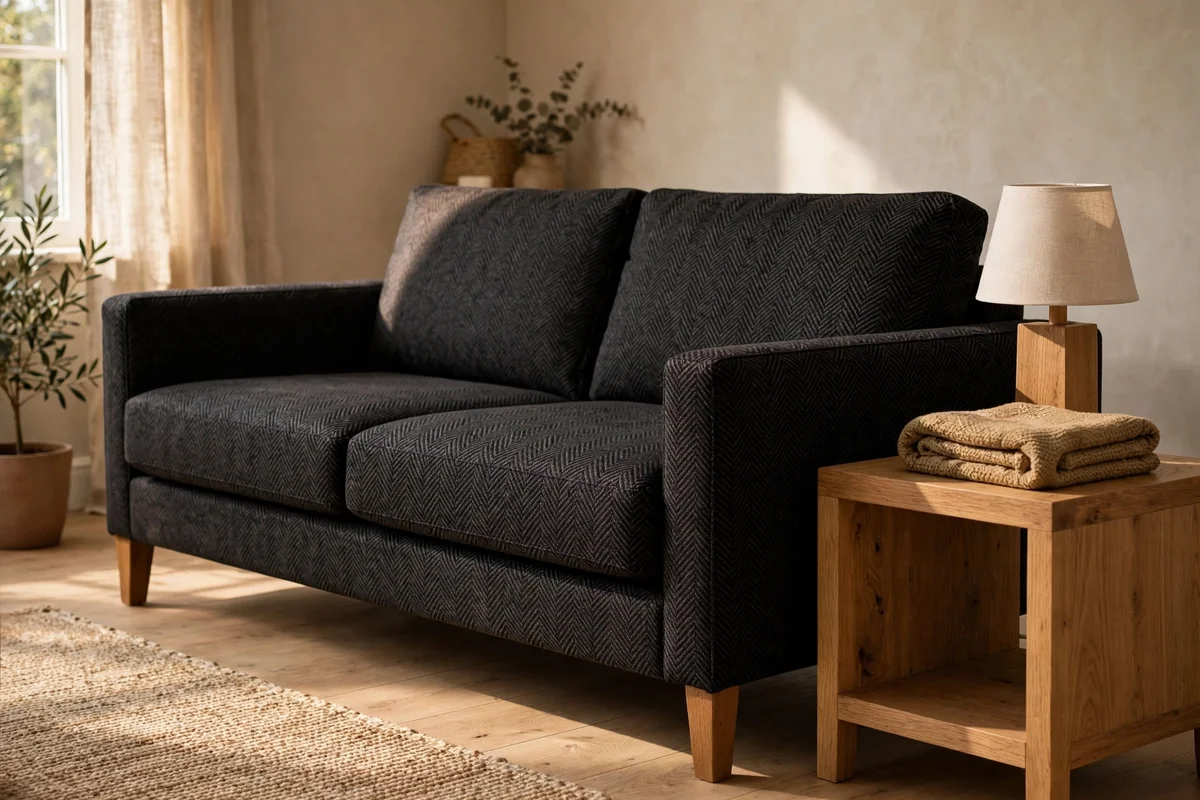
If slipcovers are not your style, order the sofa itself in a performance fabric rated above 30,000 double rubs. Tightly woven polyester blends and solution-dyed acrylics resist stains, claws and fading, and they wipe clean with a damp cloth. A dark charcoal, deep olive or small herringbone pattern camouflages crumbs and pet hair between vacuums, while a clean-lined frame keeps the silhouette refined. Expect to pay 800 to 1,800 dollars or pounds for a quality three-seater in performance weave.
Test before you buy: rub a damp white cloth on the showroom sample and ask the store to spill coffee on a swatch. Many shops will, and the answer tells you more than any label. The mistake to avoid is falling for velvet or silk blends in a busy household; they bruise and watermark within weeks. Budget tip: reupholster only the seat cushions in performance fabric first, since cushions take eighty percent of the wear for a fraction of the cost.
3. Swap a Fragile Glass Coffee Table for a Storage Ottoman
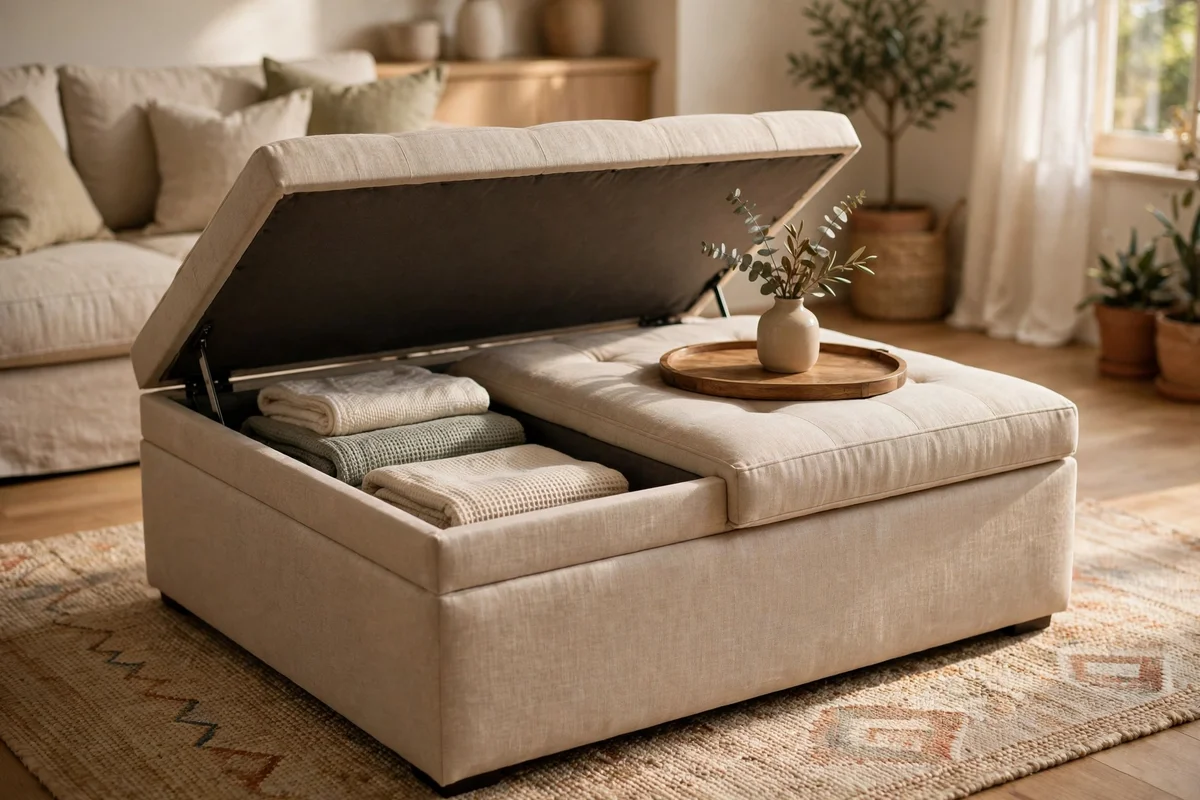
A glass coffee table in a family room is a fingerprint magnet and a hard corner at toddler height. Replace it with a storage ottoman roughly 90 to 110 cm long and 45 to 50 cm deep, upholstered in wipeable faux leather or tight weave fabric. It serves as a footrest, extra seating and a tray table when you add a large tray, and the hollow centre swallows throws, remotes and puzzle pieces. Choose one on castors or with hidden glides so it moves easily across rugs.
Place a tray about 40 cm wide on top for drinks and a small vase, which keeps the surface tidy and removes the excuse for clutter. The mistake to avoid is buying an ottoman without a slow-close lid, since heavy lids pinch small fingers. Budget tip: second-hand ottomans reupholster for a third of the new price, and a simple pine storage trunk dressed with a folded quilt works just as well. Keep one basket inside for each child’s current project.
4. Anchor the Room With a Low-Pile Rug That Forgives Spills
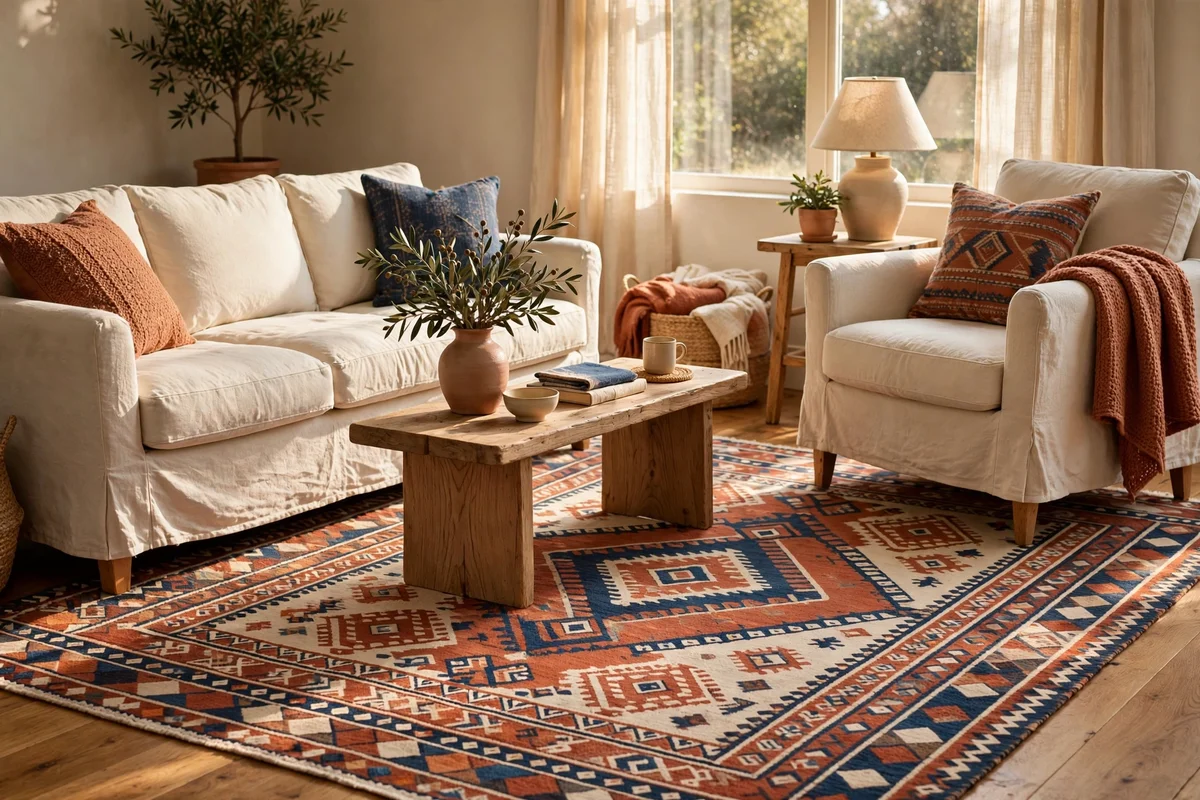
The rug takes the worst of family life, so choose a low-pile or flatweave rug in a patterned wool blend or machine-washable cotton. Patterns in warm terracotta, indigo and cream disguise crumbs and pet hair, while a low pile releases dirt to the vacuum instead of trapping it. Size the rug so the front legs of the sofa and chairs rest on it, often 160 by 230 cm or 200 by 290 cm for a standard seating group. Lay a rug pad underneath for comfort and to stop sliding.
Washable rugs change the maths of ownership: when a spill happens you machine-wash the whole rug instead of spot-scrubbing a stain for an hour. The mistake to avoid is choosing deep shag in a play-heavy room, since toys vanish into it and crumbs settle beyond reach of the vacuum. Budget tip: layer a smaller patterned washable rug over a larger budget jute base for a rich look at half the cost of one large designer piece.
5. Layer Floor, Table and Overhead Light for Calm Evenings
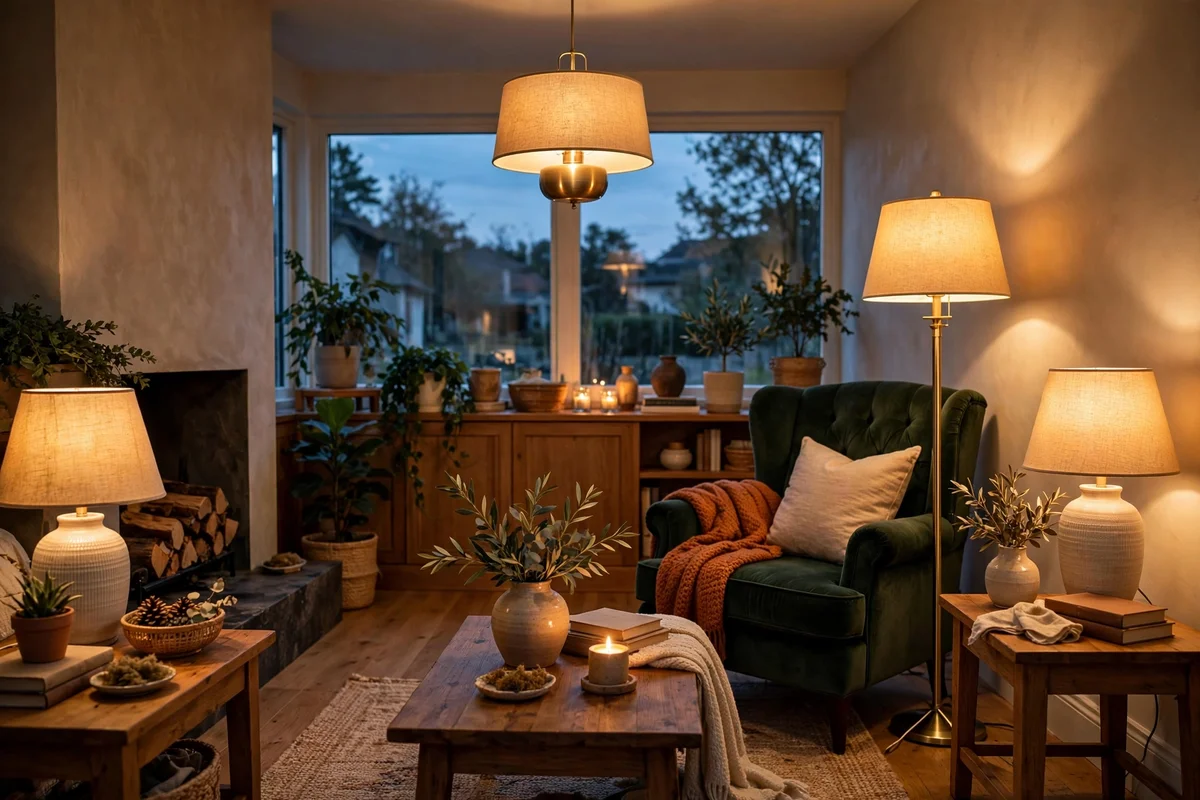
One ceiling light makes a family room feel flat and tired, so build three layers instead. Start with a pendant or ceiling fixture on a dimmer for general glow, add a floor lamp with a reading arm beside the armchair, and place one or two table lamps with 40 to 50 cm shades on side tables. Warm 2700K bulbs flatter wood, fabric and skin alike, and a dimmer lets the same room host homework at six and quiet conversation at nine. Keep all shades at similar heights for visual calm.
Add a slim LED strip behind the television console or inside one shelf for a soft halo that cuts screen glare. The mistake to avoid is relying on cool white daylight bulbs, which make evening rooms feel clinical and harsh. Budget tip: plug-in dimmers cost under 15 dollars or pounds and turn any lamp dimmable without rewiring. Swap bulbs gradually, starting with the lamps you use most, and recycle the old ones responsibly.
6. Fit Closed Cabinets and Baskets for Games and Toys
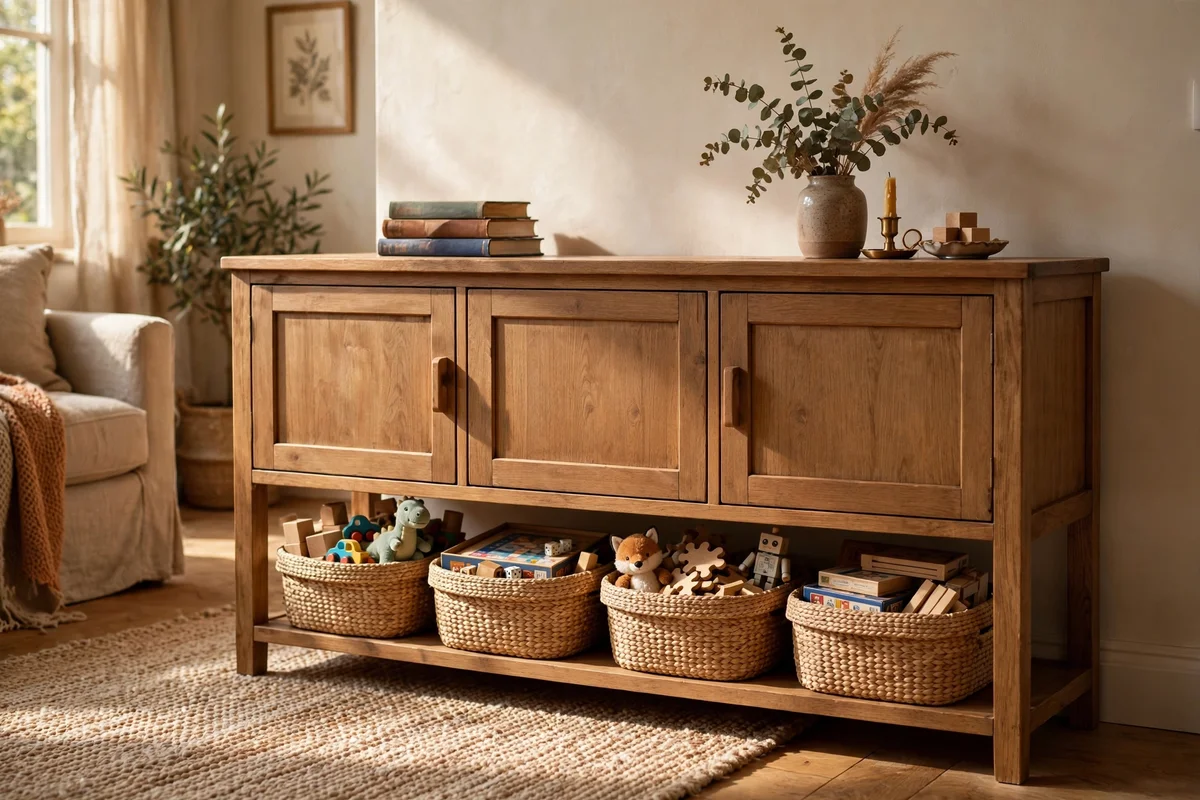
Open shelves full of toys read as clutter within an hour, so give the family room closed storage that looks like grown-up furniture. A low sideboard with doors, 80 to 120 cm wide, holds board games and puzzles while a row of lidded seagrass baskets on the bottom shelf corrals smaller toys. Label each basket with a simple tag, one for building toys, one for art supplies, so tidying becomes a sorting game children can do alone. Keep the doors on soft-close hinges to protect fingers.
Store only the current favourites in the room and rotate the rest from a closet box every month; novelty returns without new purchases. The mistake to avoid is buying open cube shelving and expecting neatness, since cubes demand constant styling to look calm. Budget tip: thrift a solid wood sideboard and paint it in a heritage colour like deep green or navy for a bespoke look under 100 dollars or pounds. Keep one shelf for adult books so the room keeps its grown-up voice.
7. Carve Out a Play Zone With a Low Bookcase Turned Sideways
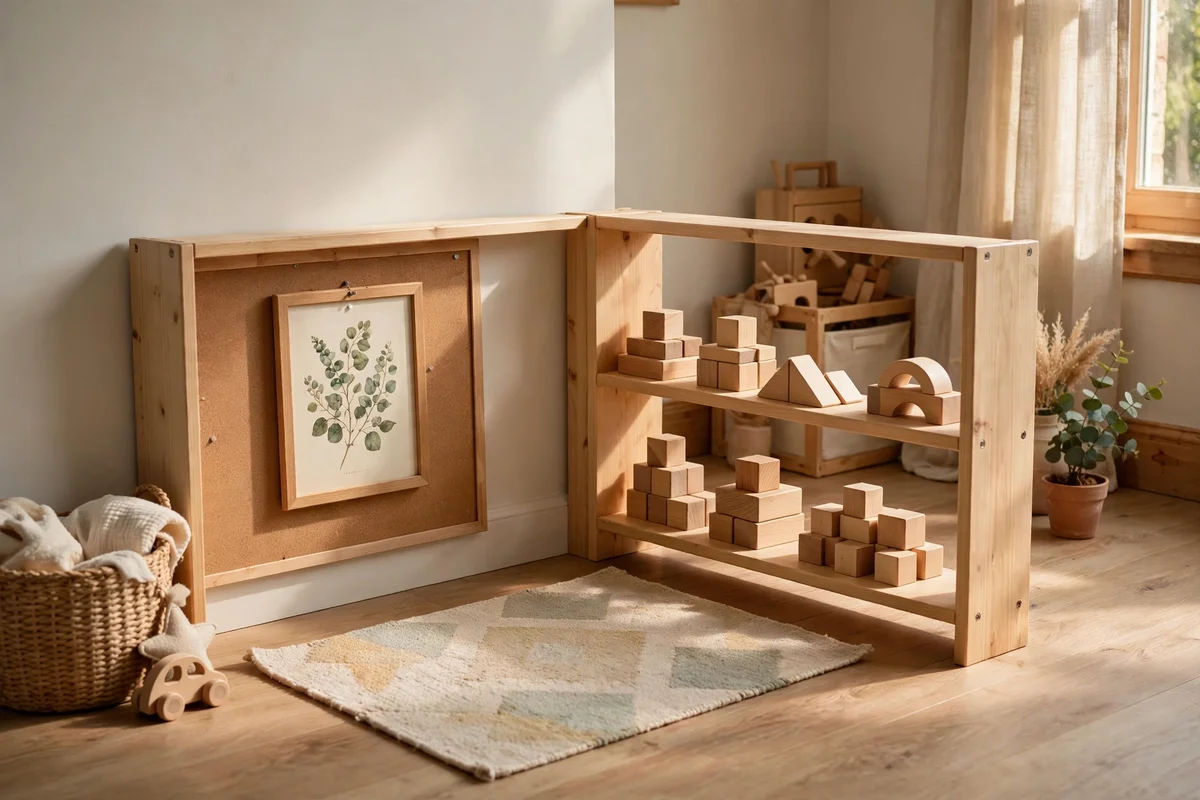
A family room can welcome play without becoming a playroom by zoning one corner. Turn a low bookcase, 70 to 90 cm high, sideways to create a boundary that holds blocks and dolls while keeping sightlines open. Lay a washable play rug about 120 cm square in front of it to mark the zone, and mount a small pinboard or a framed print at child height on the facing wall so the corner feels intentional. This division lets adults hold the sofa zone and children hold theirs.
Anchor the bookcase to the wall with an anti-tip strap, especially if toddlers climb. The mistake to avoid is letting the play zone sprawl across the room, since a defined edge teaches children where tidying stops and starts. Budget tip: a simple cube storage unit costs little and doubles as toy storage with fabric bins. When guests arrive, slide the bins behind the sofa or into the ottoman and the zone melts back into the room.
8. Build a Reading Corner Around a Deep Armchair and a Small Lamp
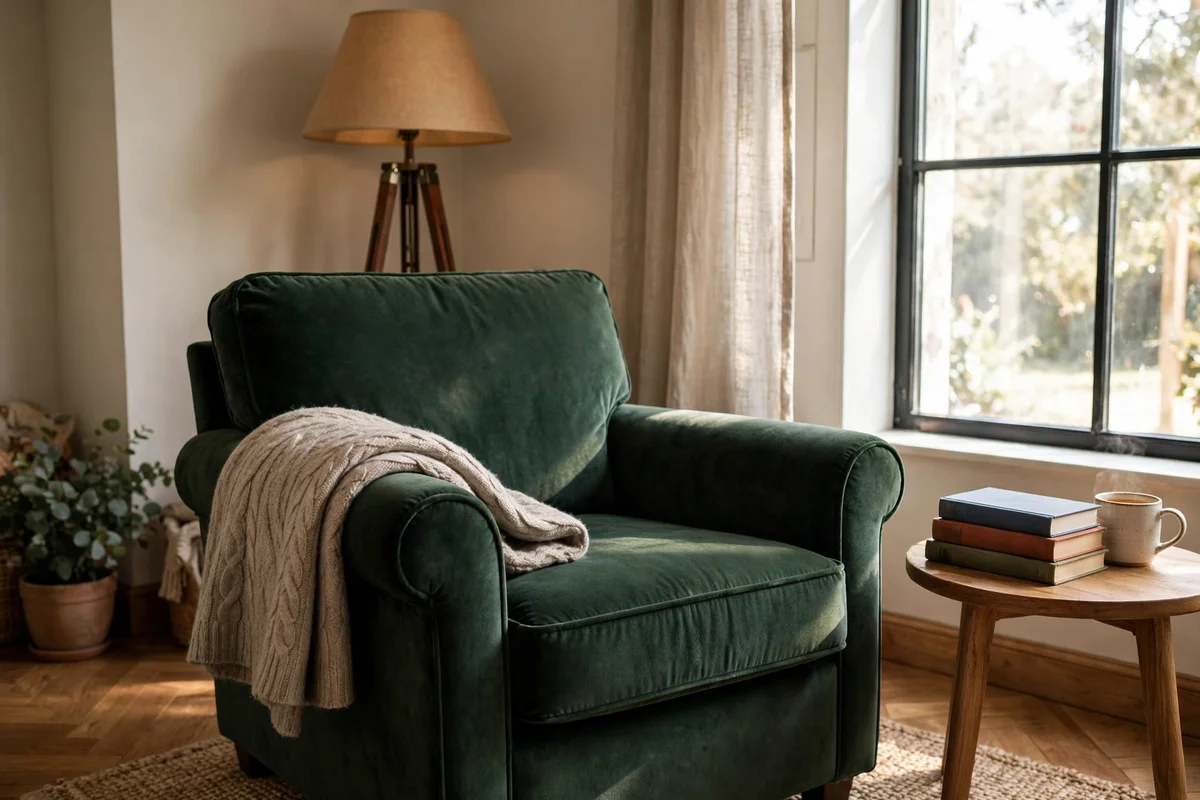
Every family room earns its keep with a corner made for quiet reading. Place a deep armchair with a seat depth of 55 to 65 cm at a slight angle to the window so daylight falls over the shoulder, and add a floor lamp with a warm shade behind it for evenings. A small side table, 35 to 45 cm across, holds tea and a book, while a folded wool throw on the arm invites long chapters. Face the chair into the room so the reader stays part of the family’s evening.
Stack two or three books and a small plant on the side table rather than a crowd of objects, and the corner stays serene. The mistake to avoid is pushing the chair flat against a wall, which isolates the reader and flattens the room’s flow. Budget tip: a quality second-hand armchair plus a new floor lamp usually totals under 250 dollars or pounds. Add a soft rug underneath, at least 100 cm square, to warm the feet and mark the spot.
9. Set the Television Zone With a Low Media Console and Hidden Cords
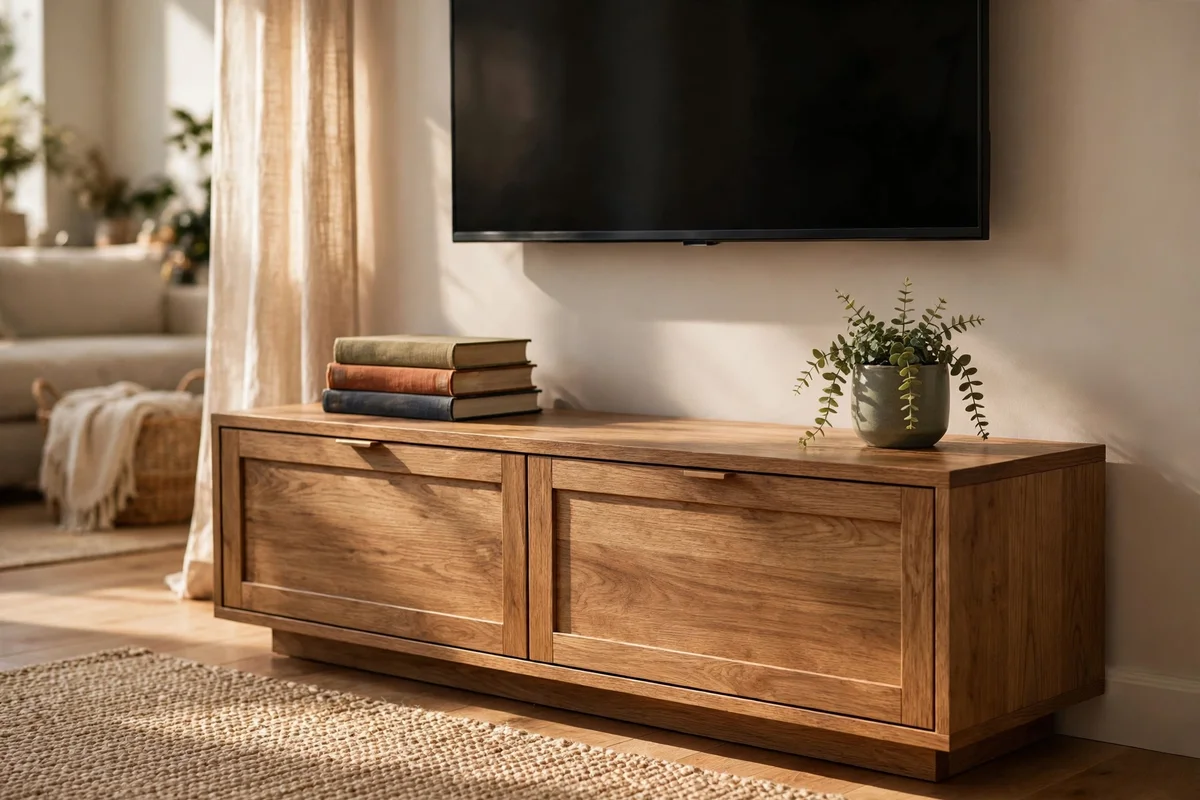
Give the television a proper home on a low media console, 120 to 160 cm wide and 40 to 50 cm high, with closed doors hiding the boxes and consoles. Mount the screen so its centre sits 105 to 120 cm from the floor, roughly eye level from a seated sofa, and route every cord through a cord cover or behind the console to keep the wall tidy. Closed fronts keep remote controls and game controllers out of sight, and soft-close doors protect little fingers.
Flank the console with one low plant or a stack of books so the television reads as part of the room rather than its boss. The mistake to avoid is mounting the screen above the mantel, which forces necks to crane and dominates the room visually. Budget tip: a simple cord-management box and adhesive cable clips cost under 20 dollars or pounds and tame the worst tangle. If renting, a freestanding console with a back panel hides cords with zero drilling.
10. Hang a Gallery Wall of Botanical and Abstract Prints Only

A gallery wall brings gallery calm to a family room when every frame shows art, never photographs of people. Mix botanical prints, fern studies, pressed-flower motifs and soft abstract washes in matching oak or slim black frames, and arrange six to nine pieces in a loose grid with 5 to 8 cm between frames. Keep all prints within one palette, such as sage, clay and cream, so the wall reads as one composition. Hang the centre at 145 to 150 cm, average eye level.
Trace each frame onto kraft paper and tape the templates to the wall first, which avoids a forest of nail holes. The mistake to avoid is mixing frame styles and colours at random, since the wall then looks like a charity-shop stall rather than a collection. Budget tip: print high-resolution public-domain botanical illustrations at a copy shop for a few dollars each, and buy frames in sets of three. One botanical and abstract gallery wall costs under 120 dollars or pounds in total.
11. Paint Walls in Scrubbable Satin That Wipes Clean
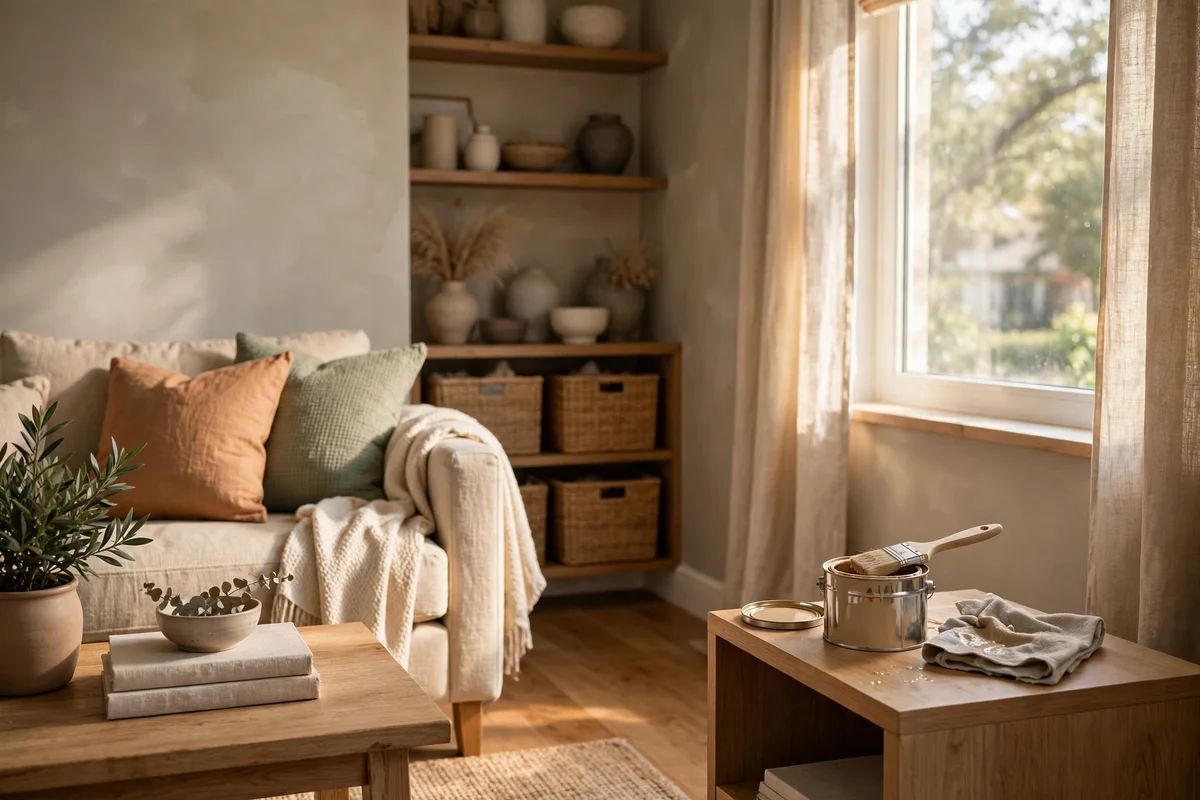
Family room walls take crayon, handprints and the odd food splatter, so choose a scrubbable satin or eggshell finish instead of flat paint. Scrubbable formulas let you wipe marks with a damp cloth and mild soap without burnishing the sheen, and satin reflects a little more light, which suits rooms that run dim in the evening. Pick warm, forgiving colours such as soft putty, pale sage or warm white, which calm a busy room and hide dust better than stark white.
Keep a small tin of the exact colour for touch-ups, labelled with the room and finish on the lid. The mistake to avoid is painting busy rooms in flat matt, which absorbs every fingerprint permanently and needs full repainting within a year. Budget tip: one feature wall in a heritage shade like deep terracotta or forest green costs a single tin and anchors the room. Repaint high-traffic walls every three to four years and they always look fresh.
12. Hang Washable Curtains That Just Kiss the Floor
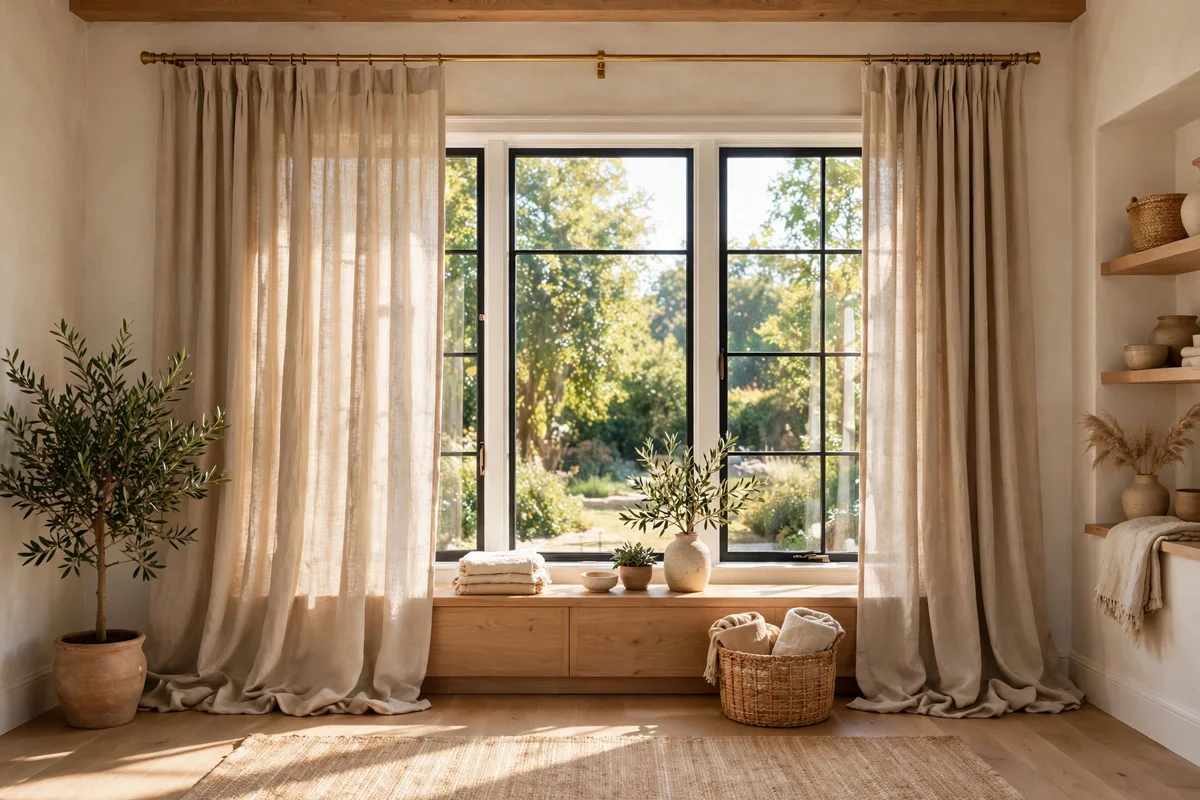
Curtains frame the room and absorb sound, so choose machine-washable cotton or linen blends in a warm neutral or gentle pattern. Hang the rod 10 to 15 cm above the window frame and extend it 10 to 20 cm each side so the curtains stack back fully and the window looks wider. Lengths that just kiss the floor collect less dust and trip fewer toddlers than pooling hems, though a 2 to 3 cm break looks more relaxed and tailored.
Line the curtains with a light cotton lining rather than blackout coating unless you need darkness for naps, since lining adds body without stiffness. The mistake to avoid is hanging the rod exactly at the window top, which squashes the window and makes ceilings feel low. Budget tip: buy curtain panels two sizes too long and hem them with iron-on tape for a custom fit without sewing. Wash the panels twice a year and the room smells fresh.
13. Place a Pair of Drawer Side Tables Beside the Sofa
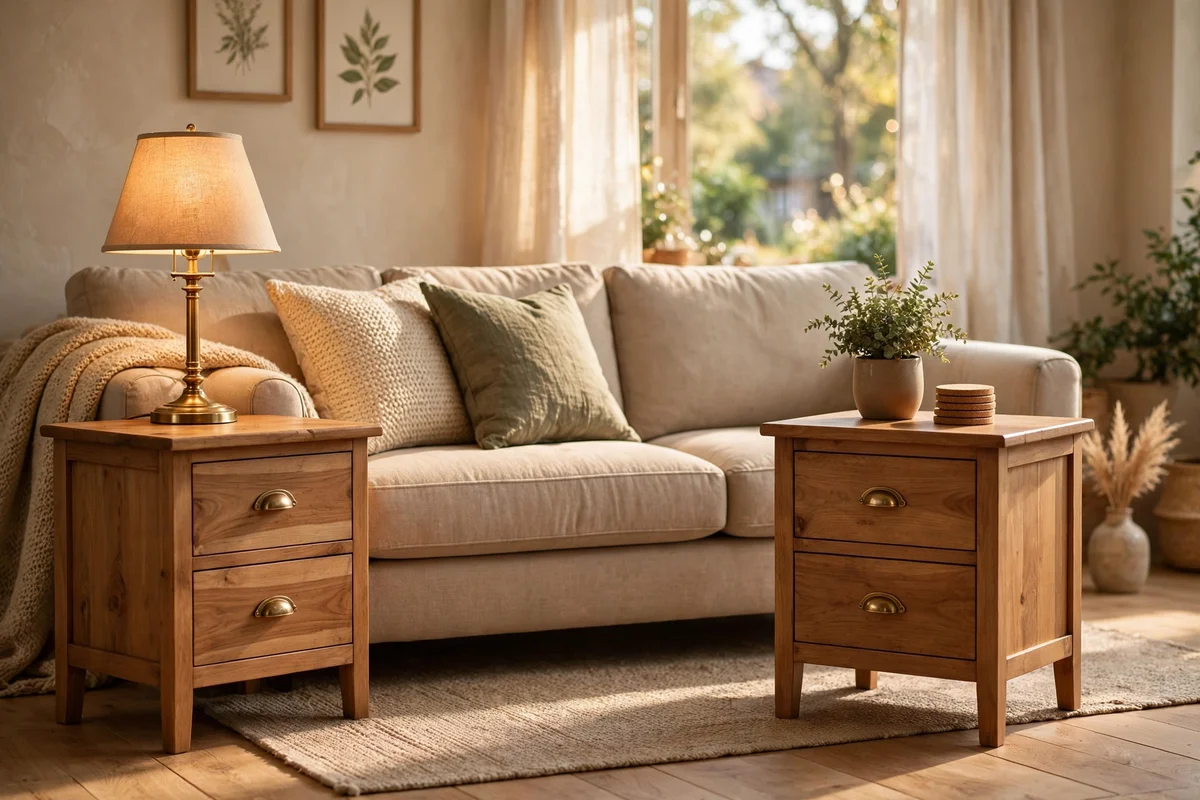
Side tables with drawers earn their footprint in a family room. Choose a pair 45 to 55 cm high with a drawer deep enough for remotes, chargers and reading glasses, and match their finish to the room’s wood tone for calm. One table holds a 40 to 50 cm lamp, the other a small plant and a coaster stack, and both keep the sofa’s arms clear of clutter. Drawers with a 20 cm depth swallow most everyday mess in seconds.
Give each household member a drawer and the nightly reset becomes a one-minute sweep. The mistake to avoid is choosing delicate glass or marble tops in a play-heavy room, since one toy truck ends the experiment. Budget tip: vintage bedside tables work beautifully as side tables and cost a fraction of new living-room pieces. Sand, restain and add new knobs for a custom look under 60 dollars or pounds a pair.
14. Keep a Nightly Reset Basket Beside the Sofa for Fast Tidying
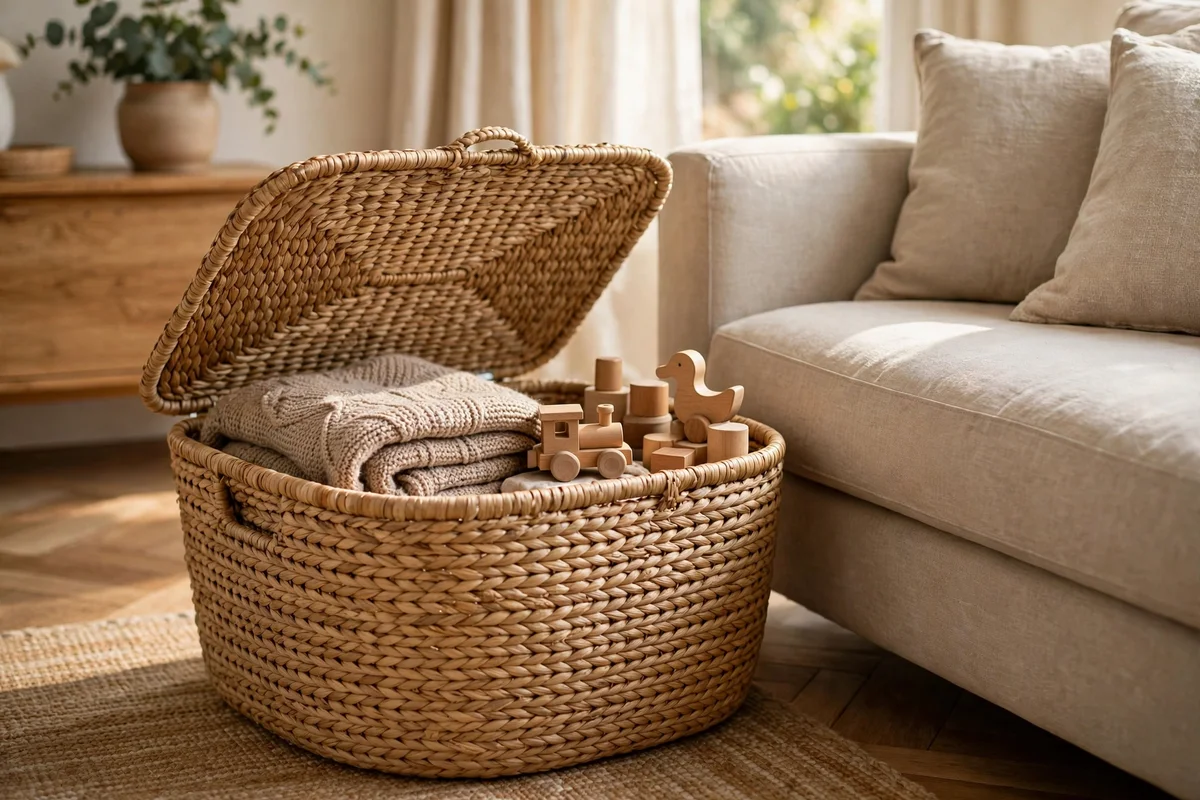
A handsome lidded basket, 40 to 50 cm wide, parked beside the sofa transforms the end-of-day tidy. Toss in stray toys, crayons, remotes and the throw that slid off, then carry it once to redistribute or stash the contents in their homes. Choose seagrass, woven cotton or lidded wood so the basket looks like decor between resets, and keep it within arm’s reach of the main seat so tidying starts without standing up.
Empty the basket every night as part of the reset routine, or it quietly becomes permanent storage. The mistake to avoid is buying a basket too large, since oversized bins invite clutter to accumulate instead of being sorted. Budget tip: any sturdy laundry basket works while you hunt for a prettier one, and thrift stores stock woven baskets for a few dollars each. One basket per floor keeps the habit effortless.
15. Drape Machine-Washable Throws Over the Sofa Arms
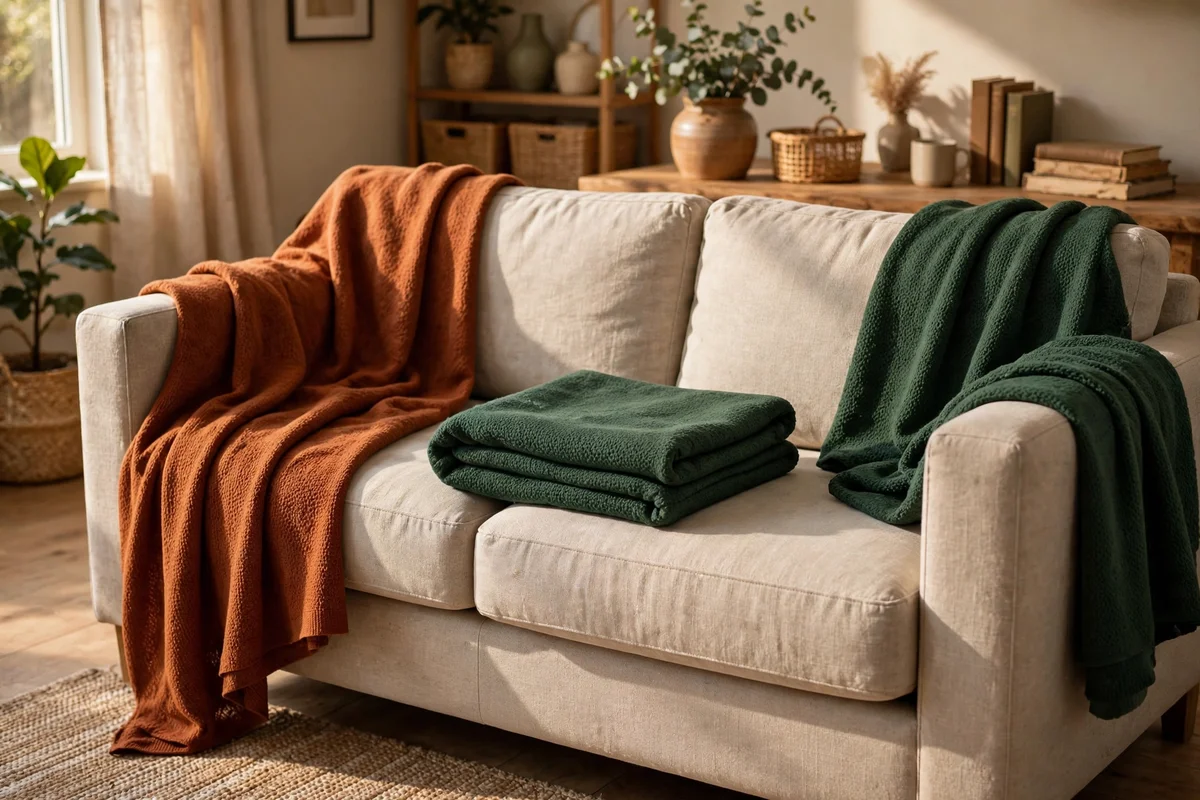
Throws do triple duty in a family room: warmth, colour and a washable layer over the sofa’s most-touched spots. Choose machine-washable cotton or acrylic throws, 130 by 180 cm, in deep tones like rust, forest or navy that forgive marks, and drape one over each sofa arm and one across the ottoman. Layer two different textures, such as a knit and a flatweave, for a collected look that costs little. Wash them monthly and the sofa underneath stays fresher for years.
Fold throws in thirds before draping so they sit neatly instead of sliding to the floor. The mistake to avoid is choosing dry-clean-only wool in a snack-heavy room, since one spill ruins the piece or the cleaning budget. Budget tip: end-of-season throws drop to half price and look just as good in classic colours. Keep a dedicated throw for the dog in a matching tone, and guests will never know the rule.
16. Store Board Books and Magazines in a Low Lidded Bench
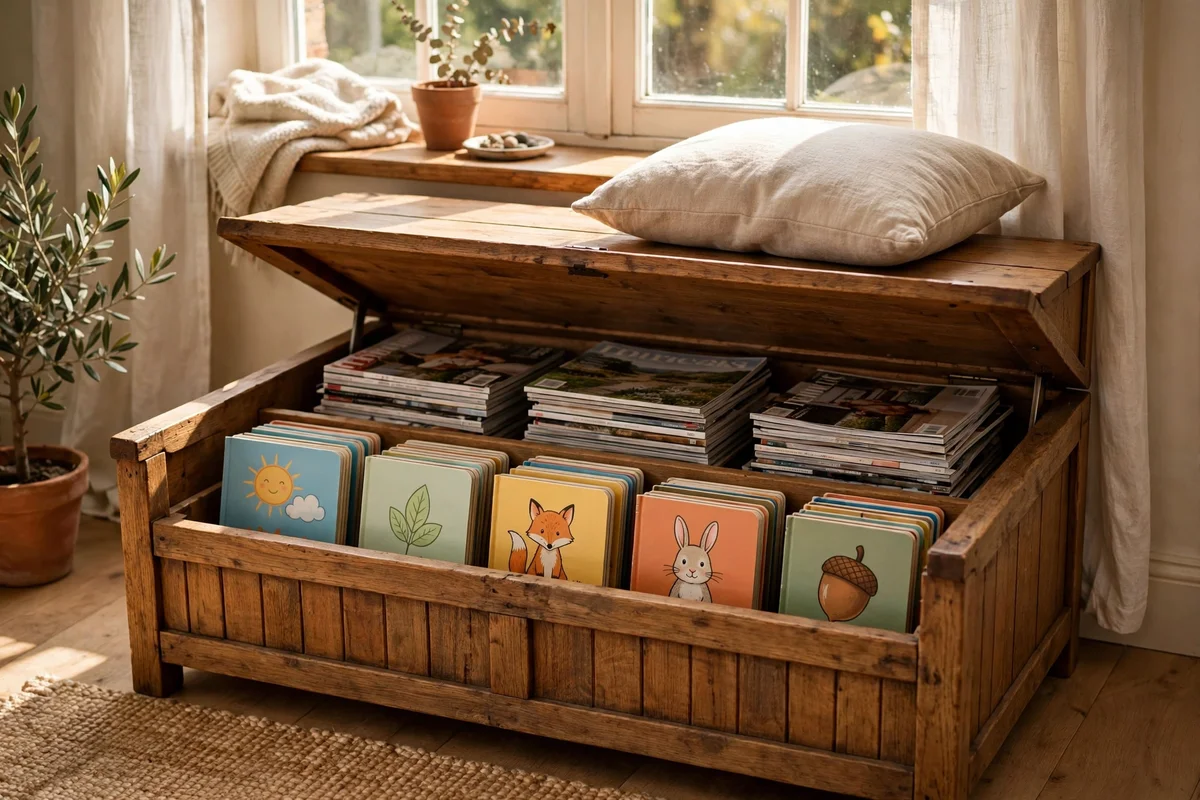
A low lidded bench, 80 to 100 cm wide and 40 to 45 cm high, placed against a free wall or under a window, hides books and magazines while offering extra seating. Store board books spine-up in the front section so small children can choose without tipping everything out, and keep adult magazines and the remote basket in the back. A hinged lid with a soft-close stay opens safely for little hands, and the bench doubles as a reading perch with a cushion on top.
Rotate the book selection monthly from a closet box to keep interest high without buying more. The mistake to avoid is shelving heavy books where toddlers pull them down, since a low closed bench keeps weight contained and stable. Budget tip: a simple pine storage bench costs under 80 dollars or pounds unfinished, and a coat of paint in a room colour makes it look built in. Anchor any tall alternative to the wall.
17. Raise Precious Decor Out of Reach on Wall-Mounted Shelves
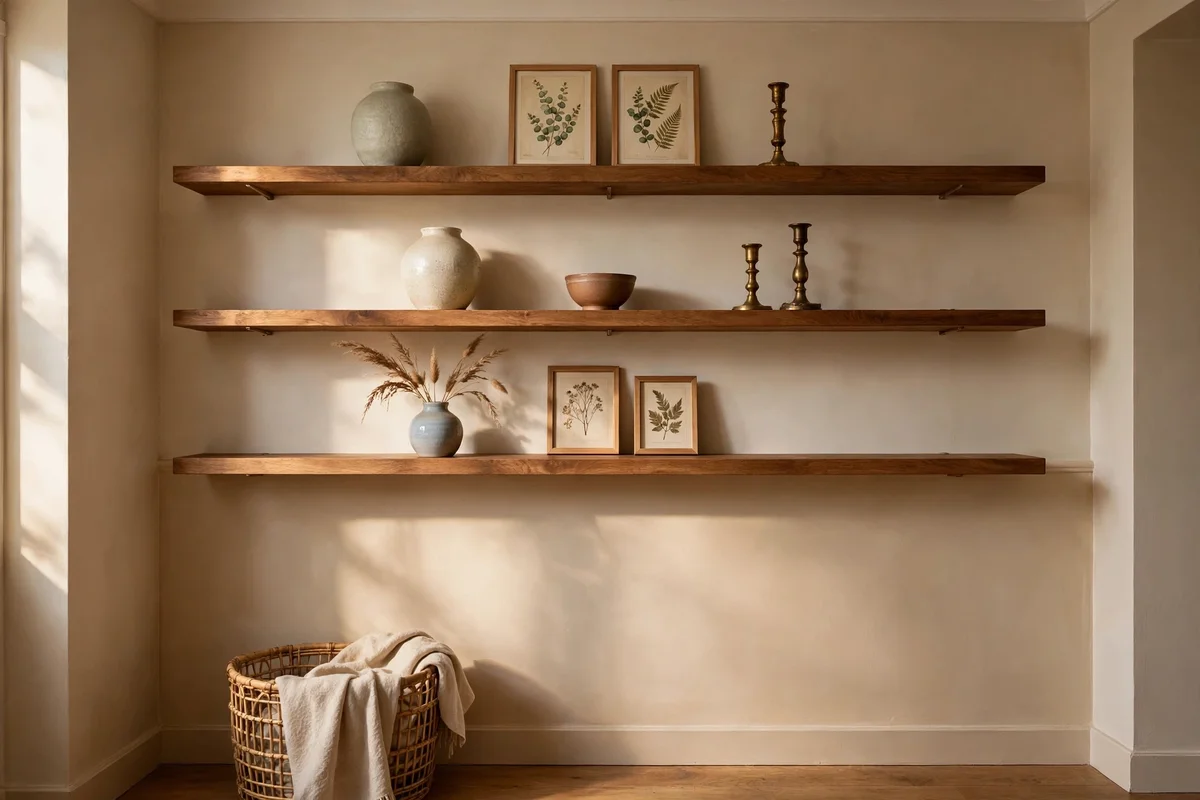
Keep the heirlooms and let the children keep their freedom by moving precious objects up. Mount two or three solid shelves, 60 to 90 cm long, at 160 cm or higher on a wall the family uses daily, and style them with vases, brass candlesticks and framed small prints. Fix brackets into studs so each shelf holds at least 10 kg safely, and leave the lower walls for washable art and reachable baskets. The room keeps its refined layer exactly where small hands cannot reach.
Style shelves with the rule of three: one tall, one medium, one small object per grouping, with breathing space between groups. The mistake to avoid is filling low open shelving with fragile decor in a toddler household, since gravity and curiosity always win. Budget tip: reclaimed wood planks on simple brackets cost little and suit heritage palettes. Dust the shelves monthly with a long-handled duster, since heat rises and so does dust.
18. Choose Soft-Close Drawers and Rounded Furniture Edges
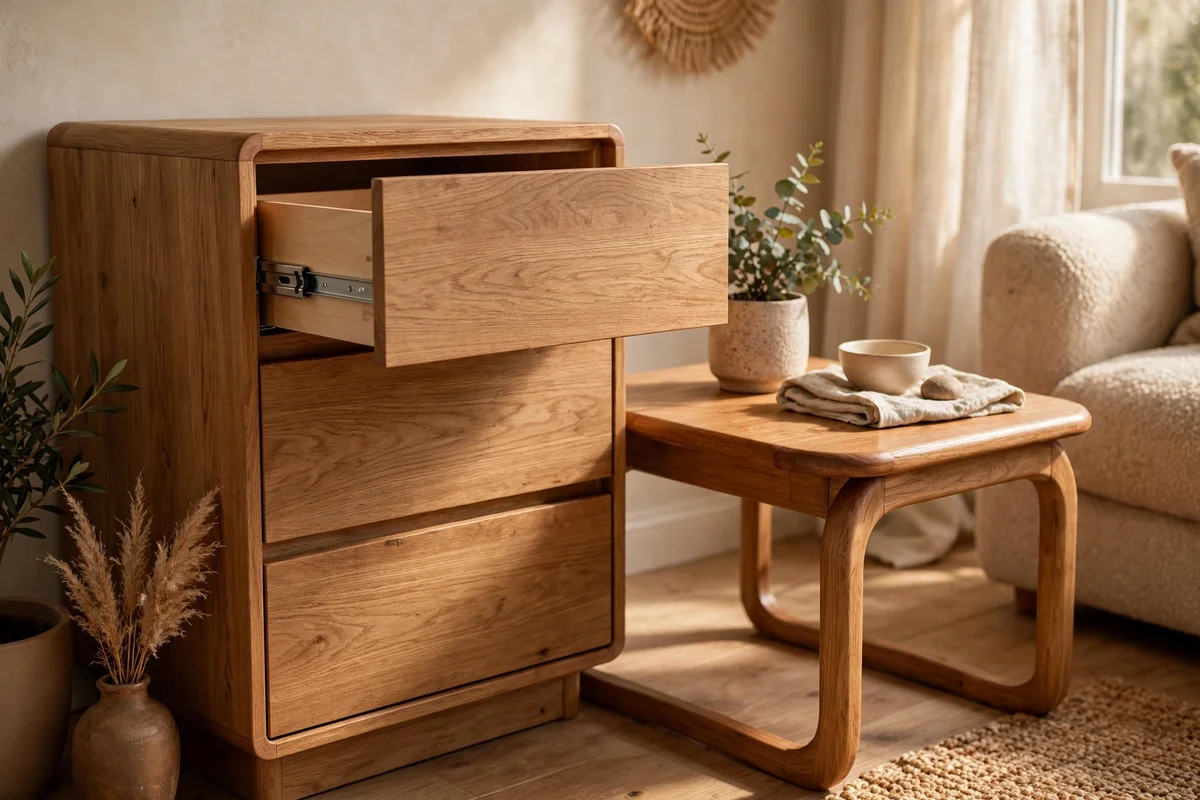
Family-friendly does not mean sacrificing good furniture; it means choosing thoughtful details. Specify soft-close hinges and drawer runners on every new cabinet so doors never slam on fingers, and favour rounded table edges, oval surfaces and curved armchair profiles over sharp corners. These details cost little at purchase, often nothing on mid-range pieces, yet they remove the two most common sources of bumps and pinched fingers in a living space.
Add clear silicone corner guards to any existing sharp edges as a stopgap, replacing them with proper furniture choices over time. The mistake to avoid is assuming children will simply learn to avoid the sharp table, since toddlers learn slowly and bruises come fast. Budget tip: many mid-range flat-pack ranges now include soft-close as standard, so compare specifications before paying a premium. Retrofit soft-close dampers on existing doors for a few dollars each.
19. Style One Grown-Up Vignette on the Mantel or Top Shelf
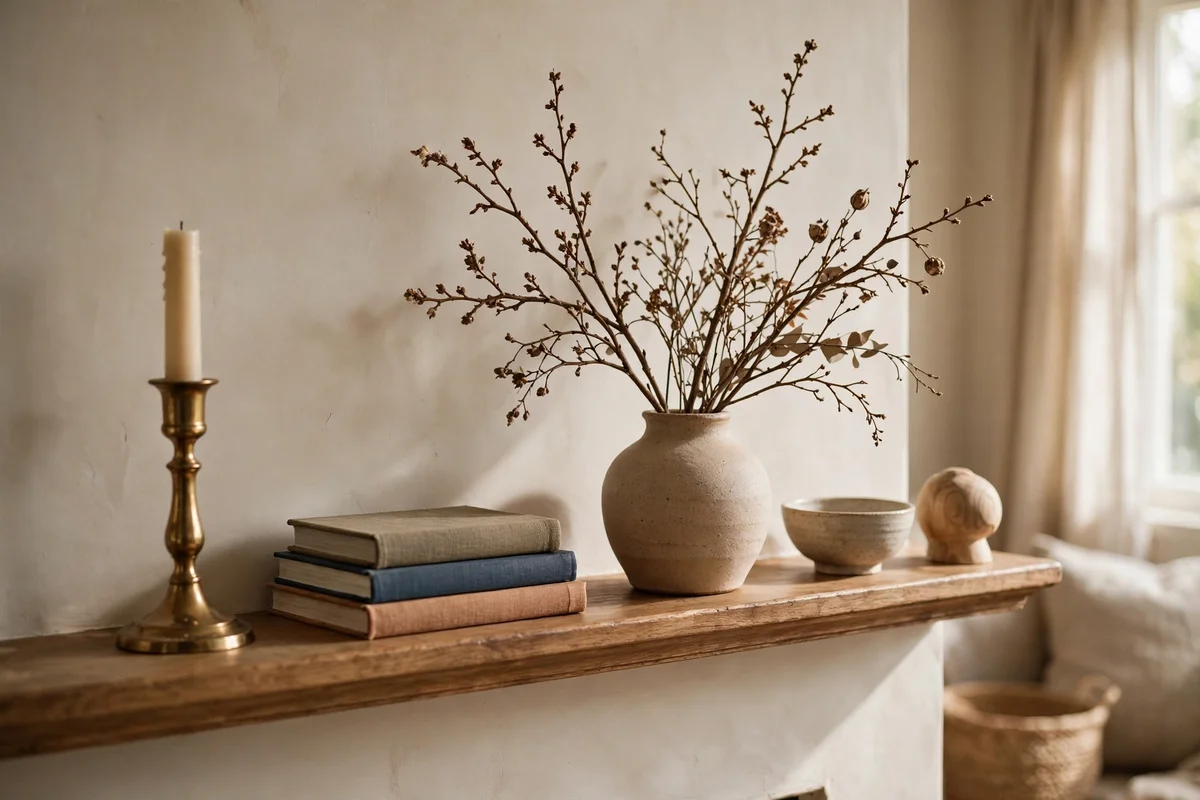
A family room feels designed, not just durable, when one elevated surface stays purely decorative. Style the mantel or the top of the tallest bookcase with a brass candlestick, a small stack of art books and a dried branch or potted fern, keeping every item above 150 cm. This single grown-up vignette tells visitors the room has intention, while the rest of the space works hard for daily life. Refresh it with the seasons: dried grasses in autumn, fresh eucalyptus in spring.
Keep the vignette to five objects or fewer so it reads calm rather than crowded. The mistake to avoid is spreading fragile decor across every surface, since children then have nowhere safe to be children. Budget tip: charity shops yield brass candlesticks and ceramic vases for a few dollars each, and a foraged branch costs nothing. This one shelf satisfies the decorator’s heart for the whole room.
20. Lay a Cushioned Rug Pad Under Every Rug for Comfort and Grip
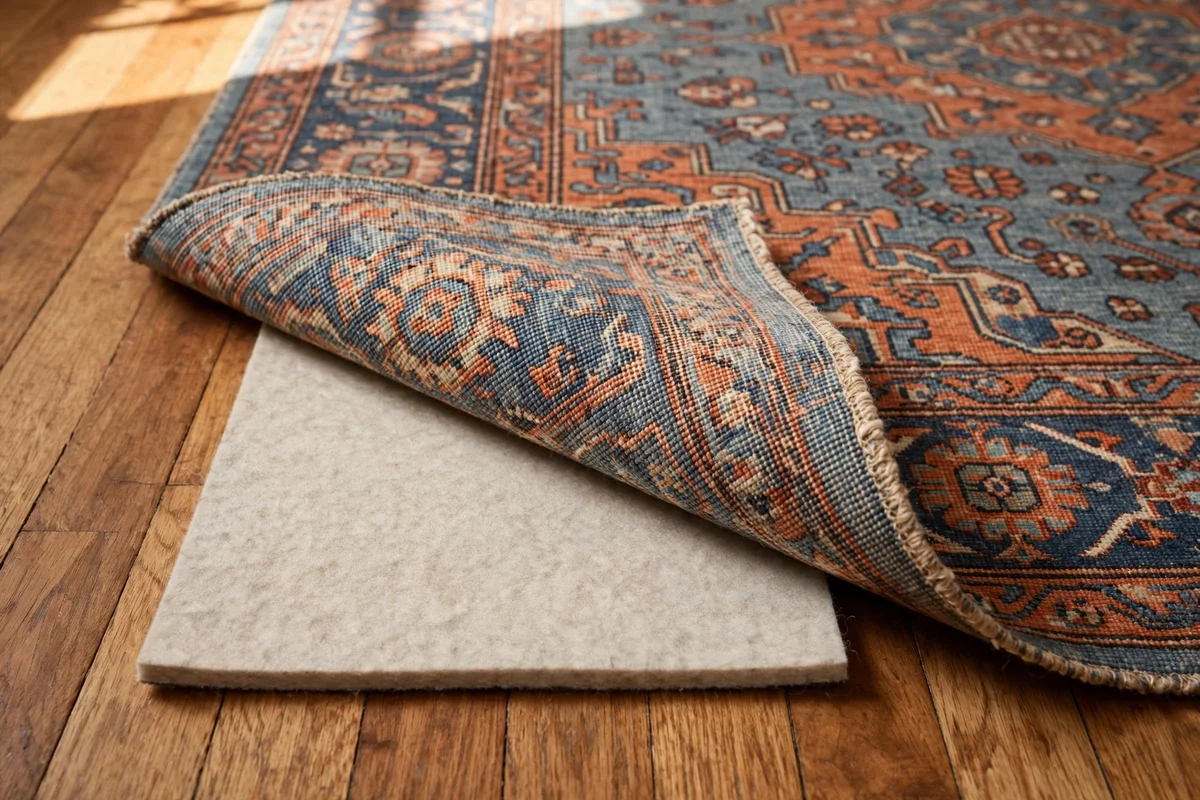
A good rug pad is the invisible upgrade that makes every family room rug feel luxurious and stay put. Choose a dense felt or felt-and-rubber pad, 6 to 8 mm thick, cut 2 to 3 cm smaller than the rug on all sides so no edge peeks out. The pad cushions knees during play, protects the floor from grit and stops the rug creeping across wood or tile, which matters when children race across it daily. Expect 60 to 120 dollars or pounds for a 160 by 230 cm pad.
Vacuum the pad when you lift the rug for seasonal cleaning, since grit trapped beneath grinds into floors. The mistake to avoid is skipping the pad to save money, since an unanchored rug bunches, trips small feet and wears through twice as fast. Budget tip: buy pads slightly large and trim with scissors at home for a perfect fit. Replace pads every five to seven years, when the rubber side starts to crumble.
21. End Each Day With a Ten-Minute Reset Routine
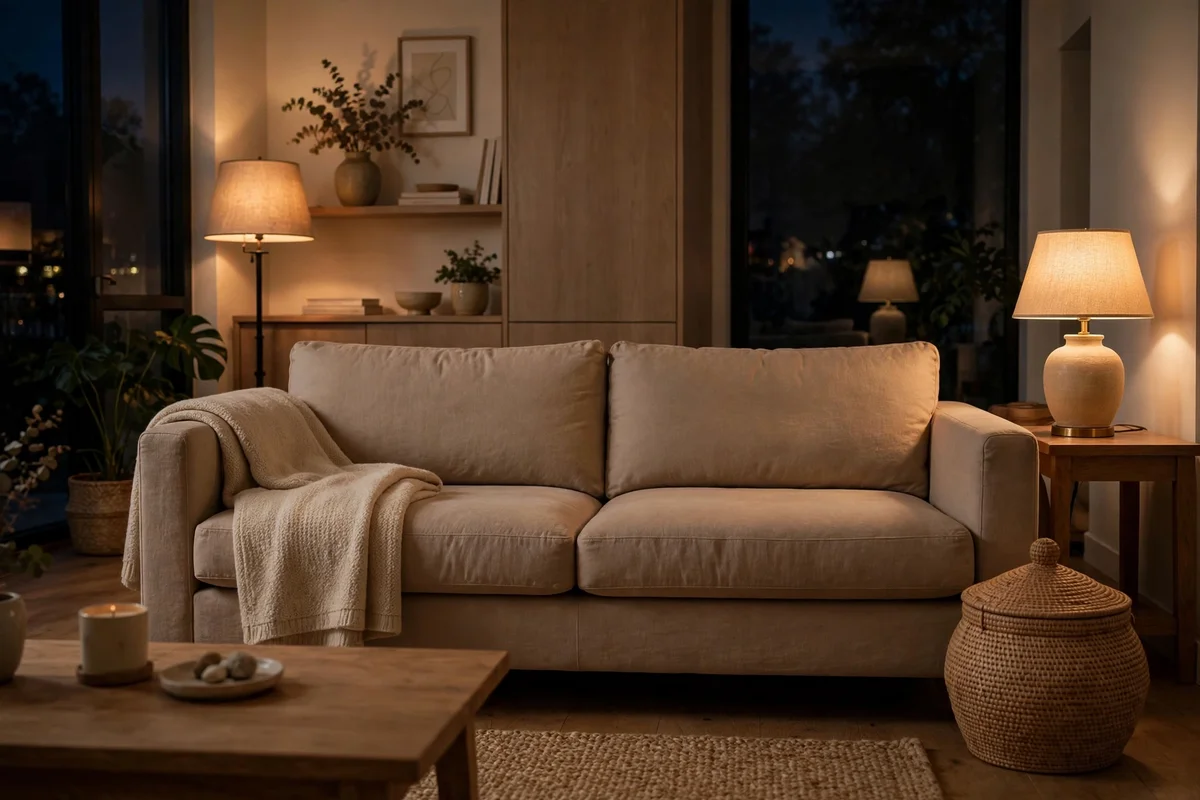
The prettiest family room secret is not a purchase but a habit: a ten-minute nightly reset. Walk the room with the reset basket, return toys to their bins, straighten cushions, fold one throw over the sofa arm and dim the lamps to their evening setting. Involve children with a timer and a simple race, who can sort the fastest, and the chore becomes a game. Ten minutes restores the room to calm and teaches children that tidy has a rhythm.
Keep a small checklist on the inside of a cupboard door for the first month until the routine becomes automatic. The mistake to avoid is attempting a deep clean every night, since the reset only needs to return the room to its morning state, not to perfection. Budget tip: the routine costs nothing and protects every purchase in this list by keeping crumbs and clutter from settling. Waking to a calm room changes how the whole day begins.
A beautiful family room is not a showroom; it is a room that looks calm on Sunday morning and still looks calm after the Sunday chaos. The ideas here share one logic: choose pieces that can be washed, hidden, moved or reset, and the elegance takes care of itself. Start with one change, perhaps the slipcovers or the reset basket, and feel how the room softens.
This week, try the ten-minute nightly reset. Walk the room with a basket, return stray toys to their bins, straighten the cushions, dim the lamps to their evening glow and fold one throw over the sofa arm. Involve the children with a timer so tidying feels like a game. In seven days the routine becomes habit, and your family room will greet every morning looking like itself again.
Frequently Asked Questions
What is the best fabric for a family room sofa with kids?
Performance fabrics and tightly woven cotton slipcovers rank first. Look for rub counts above 30,000, machine-washable covers, and mid-tone colours or small patterns that camouflage marks. Avoid silk, velvet and light linen in untreated form. A spare slipcover set costs less than one professional upholstery clean and keeps the sofa ready between washes.
How do I make a family room look stylish but still kid friendly?
Keep the grown-up look in the shapes and palette, not in fragile materials. Choose clean-lined furniture, a calm colour scheme and one or two refined details like a botanical gallery wall, then make every surface washable or hidden behind closed storage. Guests notice the harmony; children benefit from the softness underneath.
What rug works best for a family room with pets and kids?
A low-pile or flatweave rug in a patterned wool blend or washable cotton forgives spills best. Avoid deep shag, which traps crumbs, and very light solids, which show everything. A rug pad underneath adds comfort and stops sliding. For heavy traffic, machine-washable rugs in 160 by 230 cm are a practical choice.
How can I hide toys without the room looking like a playroom?
Use closed storage that looks like grown-up furniture: a storage ottoman, a low lidded bench, cabinets with doors and lidded baskets. Assign each child one basket, limit visible toys to one tray, and keep the reset basket near the sofa. Closed fronts keep the room calm even mid-play.
What lighting works best for a family room used day and night?
Layer three sources: a ceiling light or pendant on a dimmer for general glow, a floor lamp by the reading chair, and one or two table lamps at about 45 cm shade height. Warm 2700K bulbs flatter everyone. Dimmers let the same room host homework at six and quiet conversation at nine.