Living Room
21 Fireplace Shelf Styling Ideas That Feel Effortless
By Anna Wells · · 17 min read
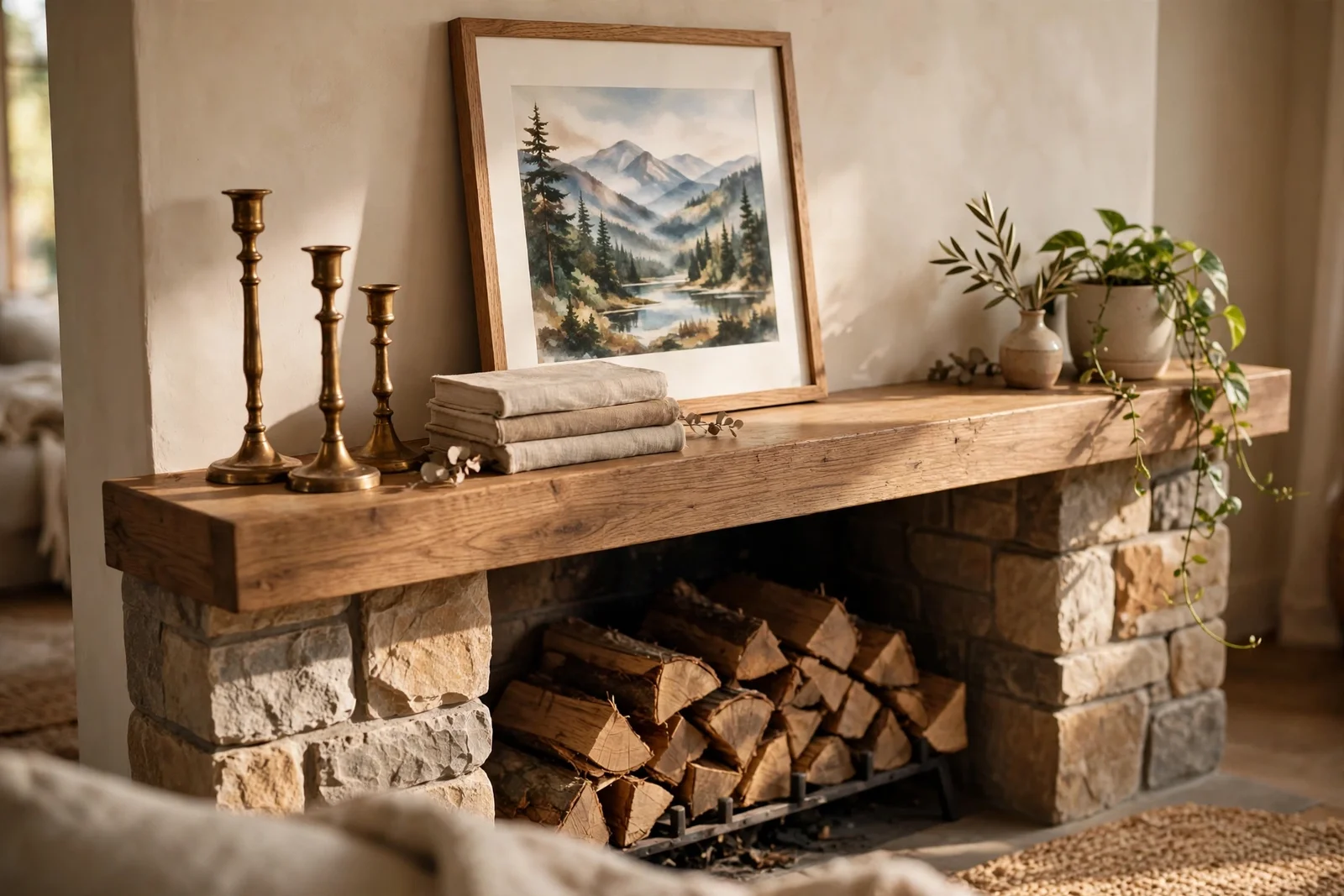
Fireplace shelf styling that looks easy is usually the result of a few honest decisions, made slowly. These 21 ideas give you exact heights, safe clearances and budget tips for a mantel that feels calm in any home.
On a quiet morning, the first thing the living room asks for is a calm centre. The fire may be lit or long cold, but the shelf above it holds the room’s gaze before the kettle has even boiled. A few honest objects, well placed, can make the whole morning feel gathered.
This is not about filling every inch. A mantel shelf styles best when it breathes: one anchor, a few supporting pieces, and space between them. Whether your home is modern, cottage, or somewhere in between, the same bones work.
Below are 21 concrete ideas for fireplace shelf styling and mantel decor ideas that feel effortless rather than arranged. You will find exact heights, safe distances from heat, budget tips, and the small mistakes that undo a good arrangement.
Read through, pick one idea to try this weekend, and let the rest wait. The best mantels are built slowly, one honest piece at a time.
1. Choose One Hero Piece as the Anchor Before Anything Else
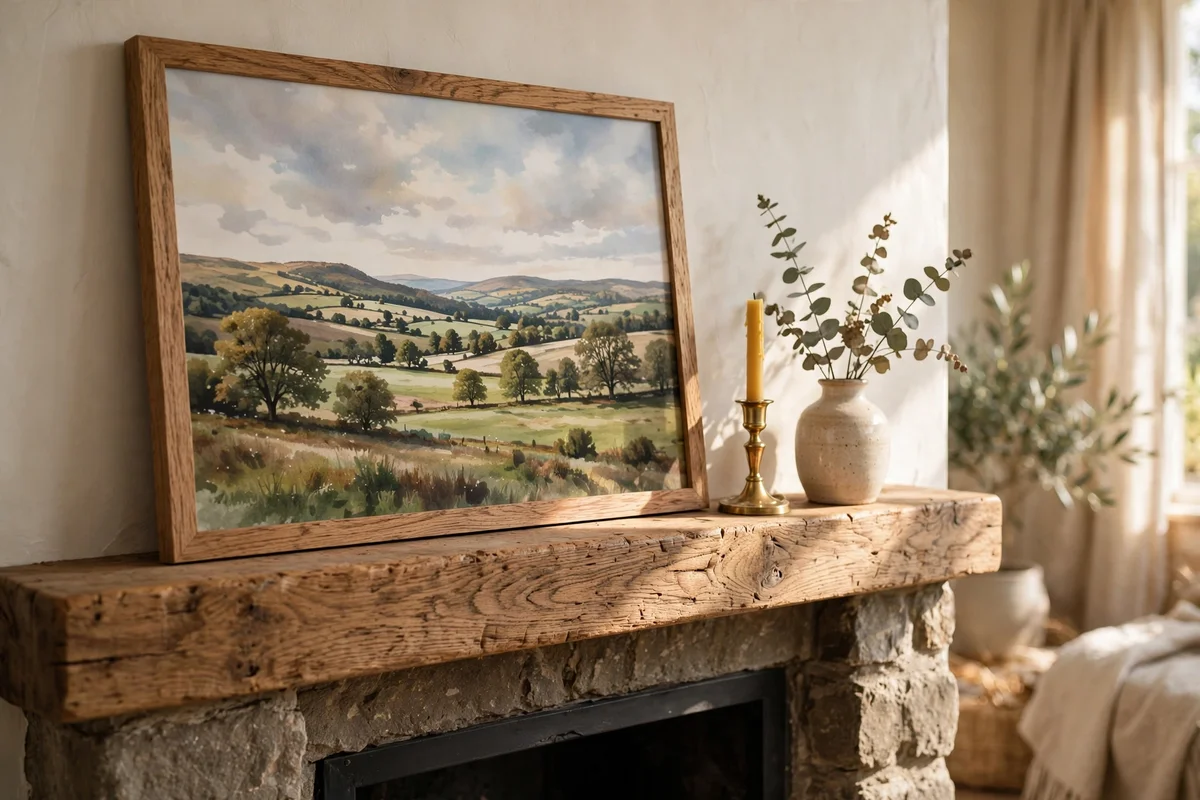
Every calm mantel starts with one decision: which single object leads. Pick a leaning print between 50 and 70 cm tall, a mirror 40 to 60 cm wide, or one sculptural vase 30 to 45 cm high. Place it a hand’s width off centre so the shelf feels arranged rather than stamped. The hero should span roughly one third of the shelf; on a 150 cm mantel that means one piece near 50 cm wide. Flea markets sell the best large frames for under 25.
Once the hero sits, everything else answers to it. Set medium pieces beside it at half to two thirds of its height, and keep small objects near the far end. The mistake to avoid is choosing two equal heroes, which splits the eye and makes the shelf look restless. Step back three metres after placing it; if your gaze lands on the hero first, the anchor is working. Budget tip: one strong thrifted frame beats three small new ones.
2. Try a Symmetrical Layout When the Room Already Feels Busy
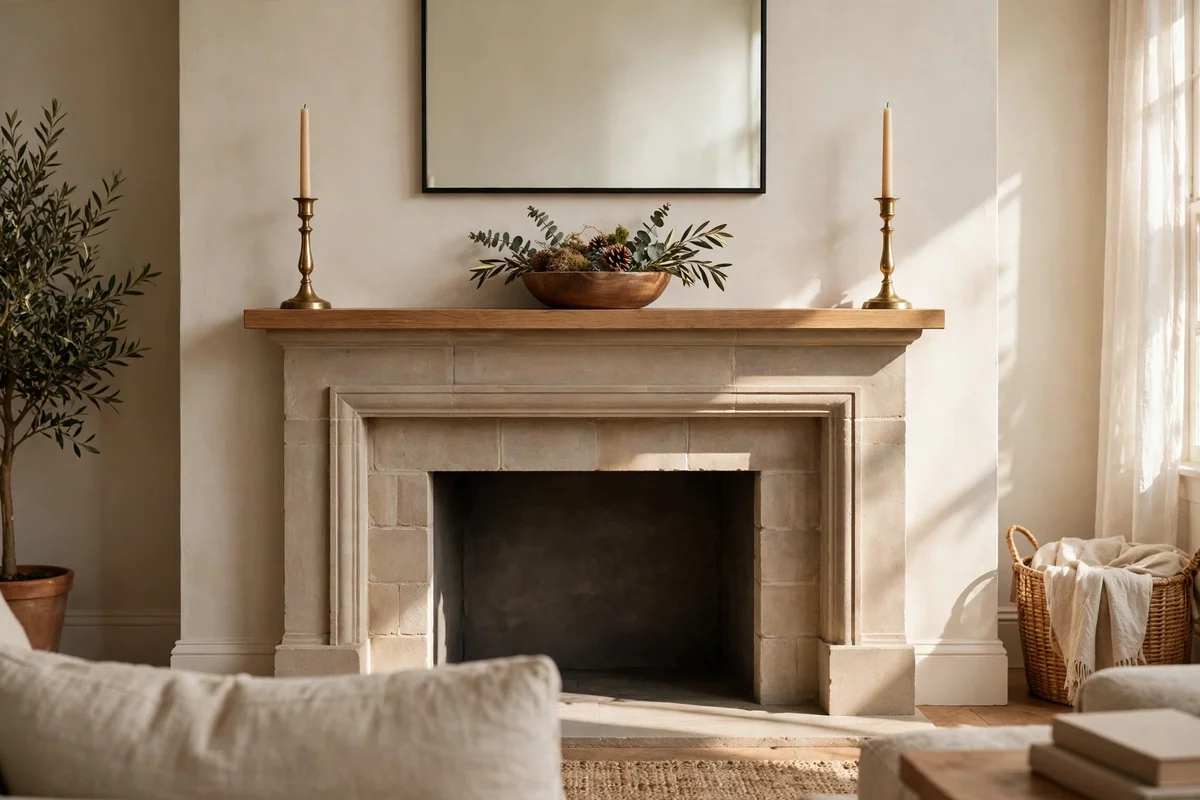
If the room holds pattern, colour, or a busy rug, a symmetrical mantel restores order. Match the ends: two identical candlesticks, two small topiary pots, or two framed prints of the same size. Keep the centre lower than the ends by about 10 to 15 cm so the eye reads a gentle arch. Measure from the shelf edge, placing pairs at equal distances from centre, roughly 25 to 35 cm each side on a standard mantel.
Symmetry does not mean boring. Vary one material between the pairs, for example brass sticks on the left and bronze on the right, while keeping heights identical. The mistake is adding a third matching pair, which turns the shelf into a shop display; four objects total usually suffice. Budget tip: pairs from discount home stores cost little and the repetition makes them look deliberate.
3. Go Asymmetrical on a Wide Shelf to Keep the Eye Moving
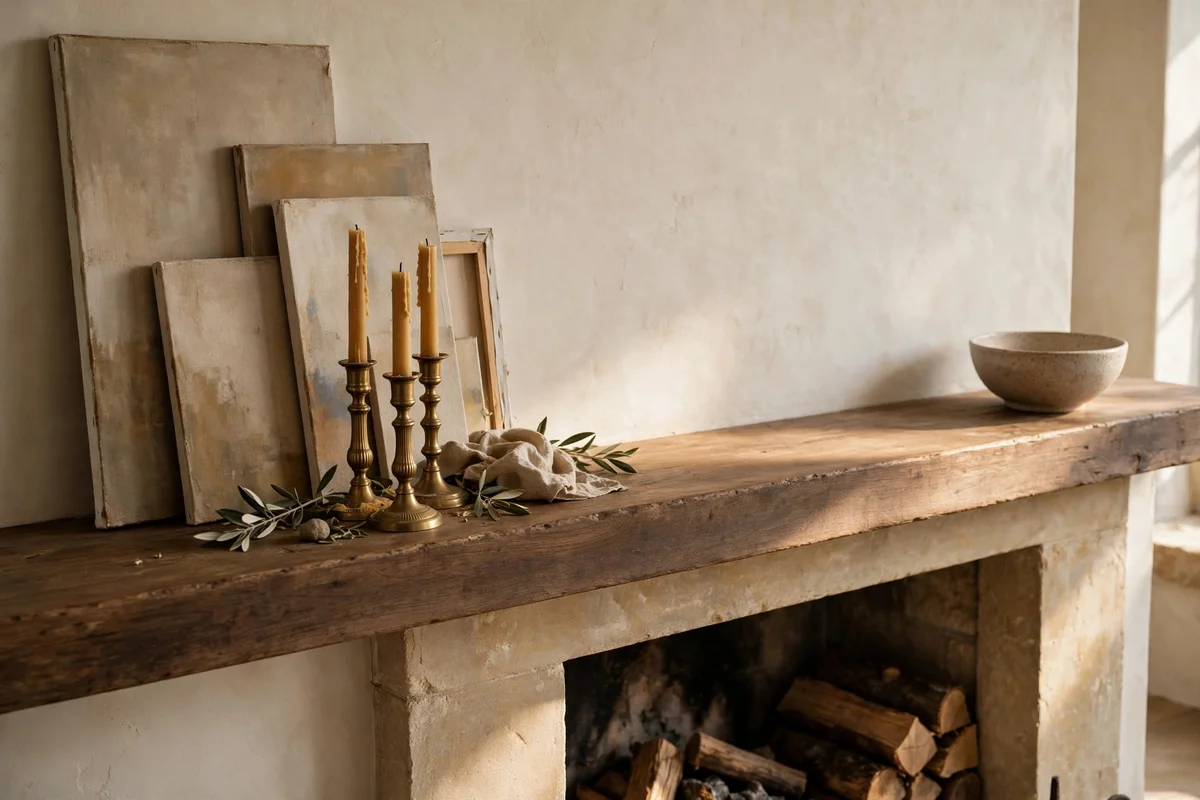
On shelves longer than 180 cm, a one-sided arrangement prevents the middle from sagging visually. Weight one end with a tall leaning print or a cluster of three candlesticks, then taper down to one low bowl at the opposite end. Aim for roughly 70 percent of the visual weight on the heavy side. A good rule: heights should step down by about 10 cm across each zone.
Leave deliberate breathing room, at least 15 to 20 cm of clear shelf, between the tall cluster and the low piece. The mistake to avoid is balancing a tall left with an equally tall right, which quietly becomes symmetry without its calm. Budget tip: asymmetry lets you use odd single finds, the lone vase or single tall candlestick charity shops sell for a few pounds, since matching pairs are unnecessary.
4. Lean One Large Print Against the Wall and Layer Smaller Frames Forward
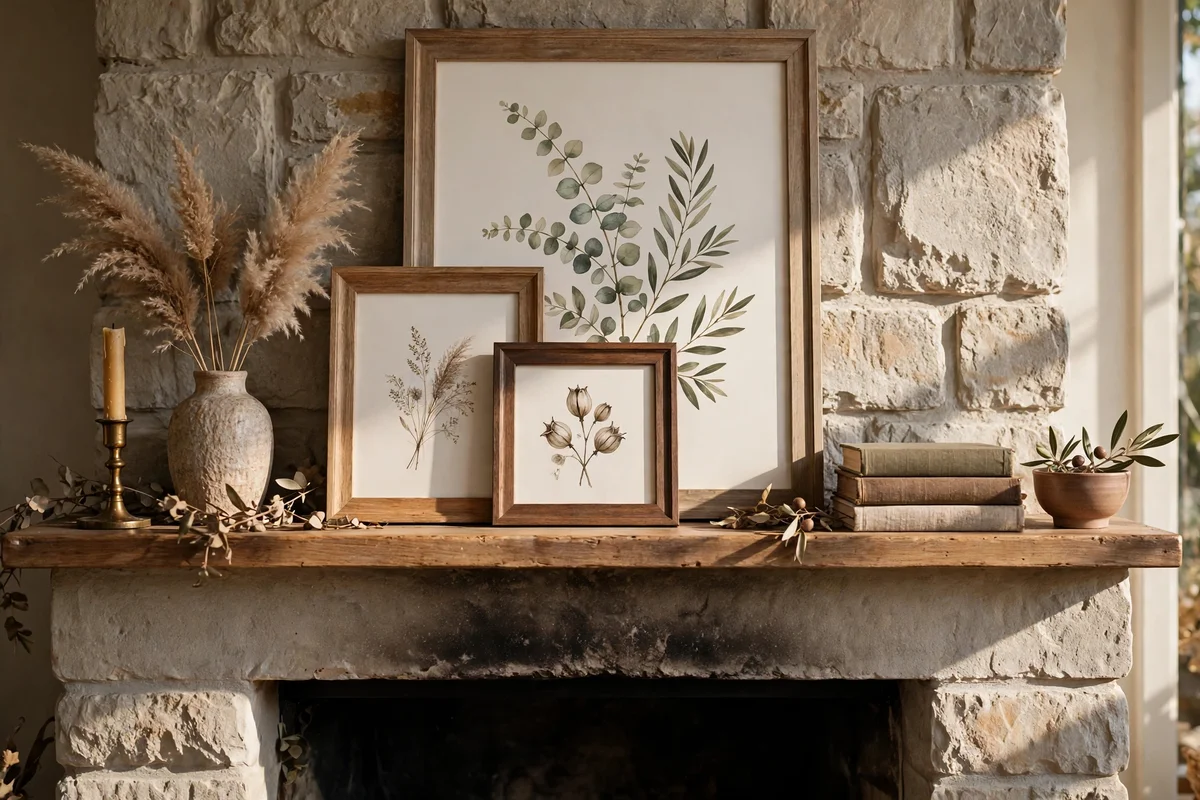
Leaning art feels relaxed because it avoids drill holes and reads casual. Choose a main print 50 to 70 cm tall in a slim wooden frame, and rest it against the wall with a slight tilt, roughly 5 to 8 degrees. In front of it, offset to one side, lean two smaller frames 20 to 30 cm tall, overlapping its lower corner by about a quarter. This layering adds depth without clutter.
Keep the frames the same finish, or the layering looks accidental. Oak on oak or black on black keeps the group united. The mistake is centring every frame directly behind the next so only slivers show; each smaller piece should keep at least half its face visible. Budget tip: print your own photographs at 30 by 40 cm; printing costs little and the art is personal.
5. Line Up Candlesticks in Three Odd Heights at One End
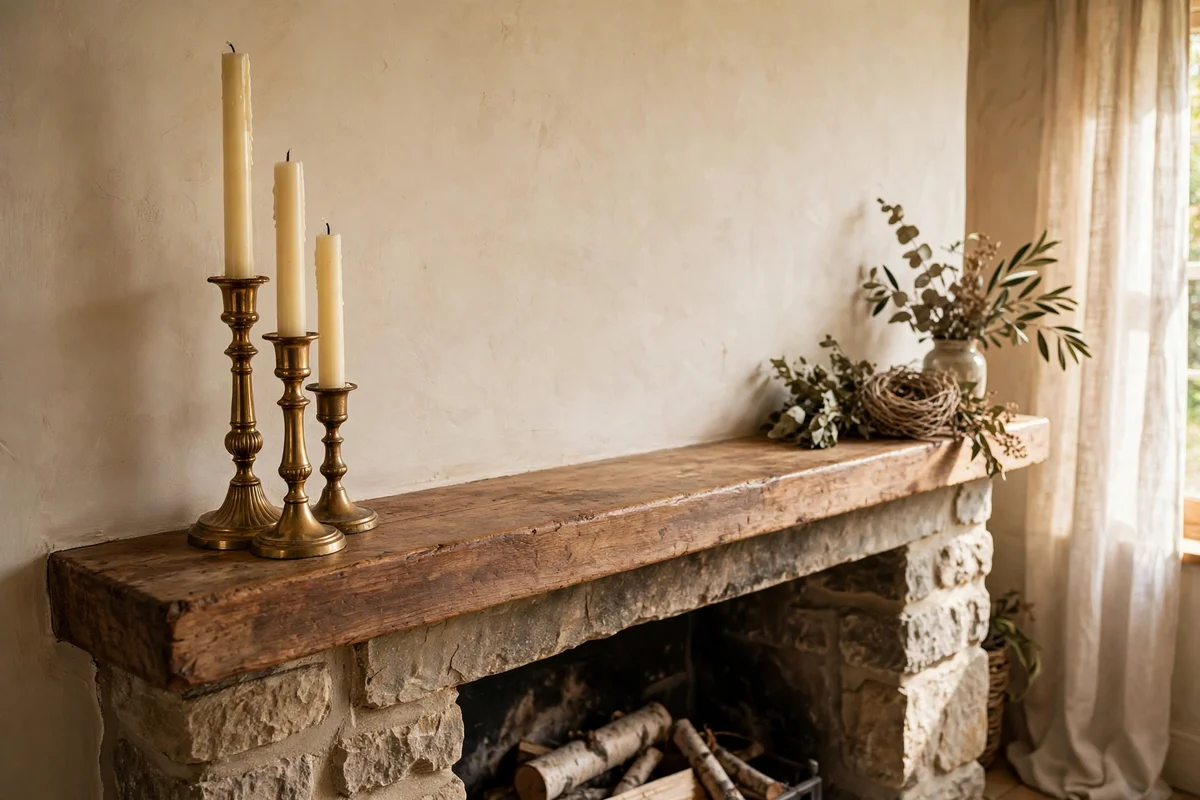
A trio of candlesticks works best in odd numbers and staggered heights. Choose sticks at roughly 15, 23 and 32 cm, and group them tight, about 3 to 5 cm apart, at one end of the shelf. Same material unites them: aged brass, matte black metal, or turned wood. Taper candles in cream or ivory suit every season and cost very little.
Trim wicks to about 5 mm before first lighting so the flame stays small and the wax lasts. On a working fireplace, keep the group at least 45 cm sideways from the firebox edge and never light candles while the fire burns. The mistake is spacing the trio evenly across the shelf, which reads like a waiting line. Budget tip: brass sticks from flea markets polish up beautifully with a soft cloth.
6. Keep Candles Unlit or Behind Glass Near a Working Fire
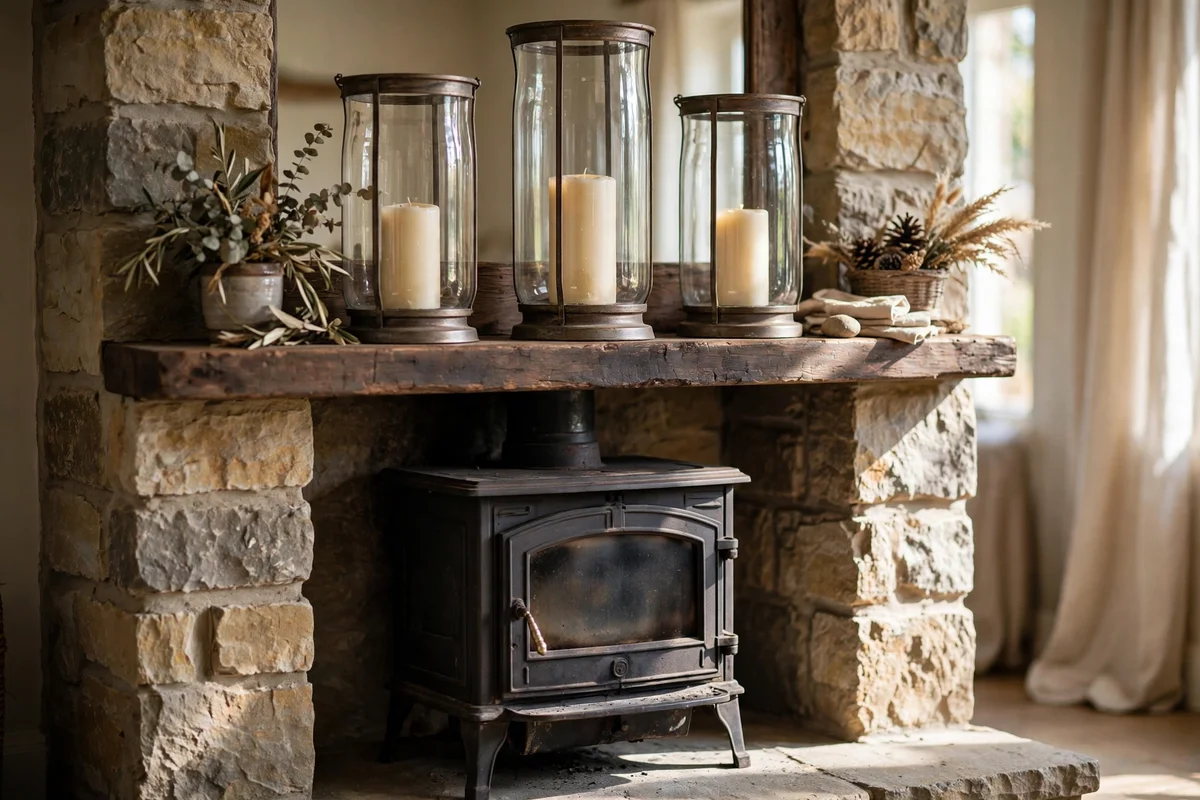
Lit taper candles and a live fire compete for the same air, and draughts make flames lean toward wax and wood. On a working fireplace, keep mantel candles unlit as pure sculpture, or place pillar candles inside glass hurricane lanterns 15 to 20 cm tall. Glass steadies the flame and catches drips. Never leave any lit candle unattended, and never place one on a shelf directly above a burning firebox.
Choose LED pillar candles with a warm 2200K flicker effect for evenings when you want glow without risk; modern versions fool most eyes from three metres away. The mistake is trusting a tall taper in a draughty chimney breast; gusts can push the flame sideways against the frame. Budget tip: a set of three LED pillars usually costs less than one decent hurricane lantern.
7. Set a Low Stack of Two or Three Books as a Plinth
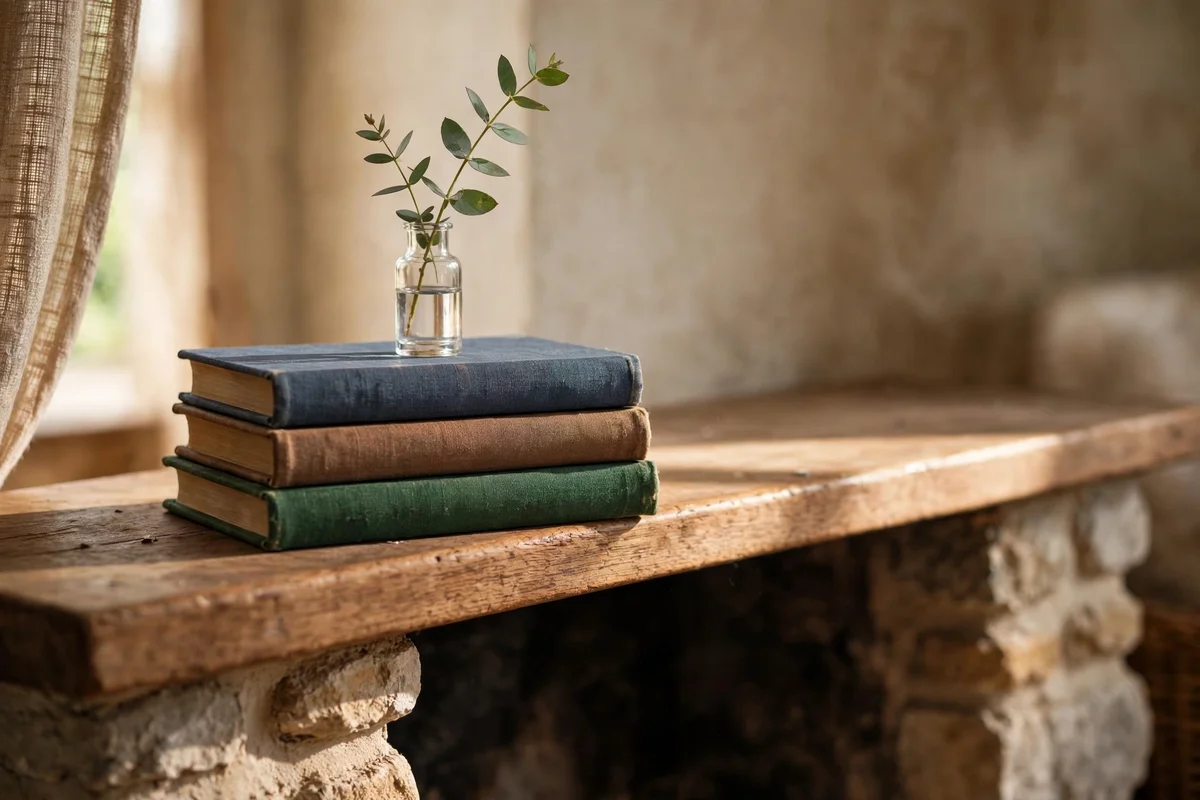
Two or three coffee-table books, 25 to 30 cm long, make a perfect low stage for a small vase or candle. Strip off dust jackets so the spines show plain linen or cloth covers in muted tones. Stack them slightly offset, each book shifted about 1 cm, so the pile looks relaxed rather than squared. Total height should stay under 12 cm, keeping sightlines open across the shelf.
Use the top book as a riser for a tiny object: a shell, a brass dish, or a bud vase with one sprig. The mistake is stacking six or seven books, which turns the plinth into a tower and steals the shelf. Budget tip: charity shops sell hardbacks for almost nothing, and plain covers matter more than titles here. Check spines are sturdy enough to bear a small vase.
8. Place a Trailing Plant at the Shelf Corner, Well Above the Firebox
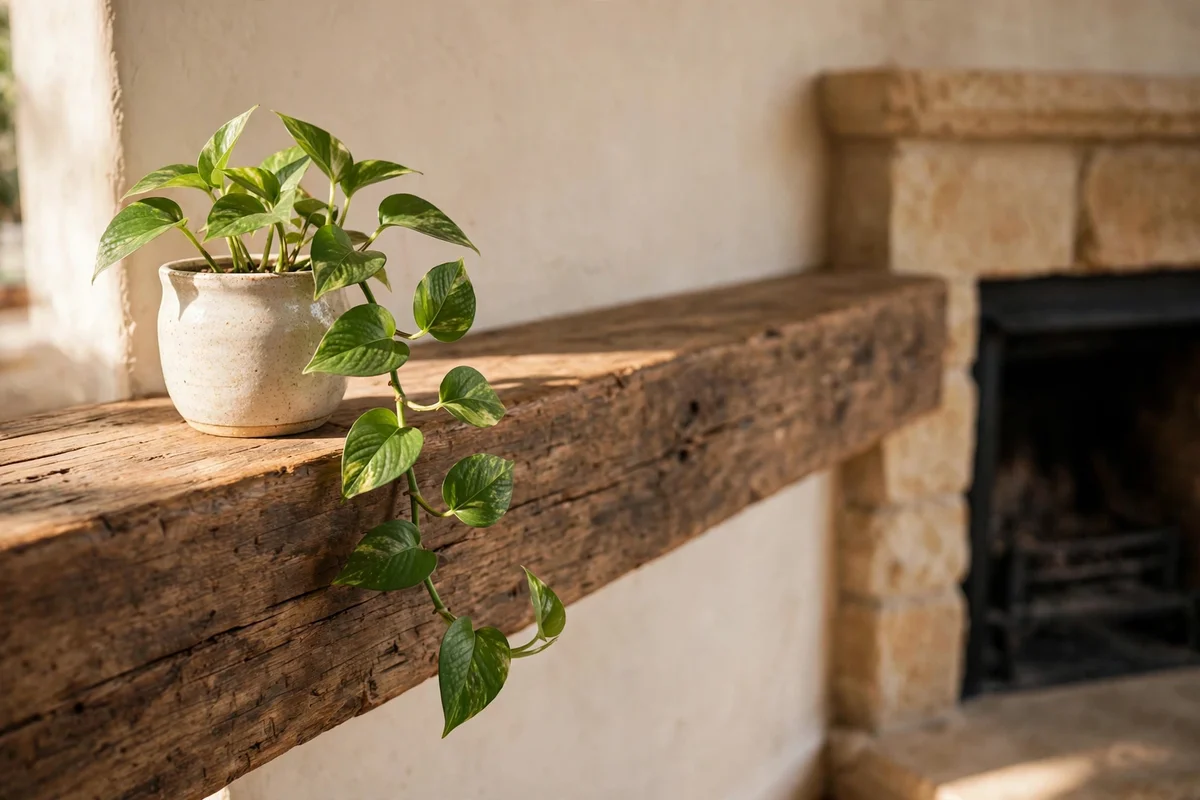
Greenery softens a mantel’s straight line, but trailing plants need strict discipline near a fire. Choose a pothos or string-of-pearls in a pot no wider than 15 cm, and set it at the far end of the shelf, never above the firebox. Keep the plant itself at least 60 cm sideways from any heat source, and trim vines so no leaf ever dangles toward the flames.
Water the plant away from the shelf and let it drain fully, since drips stain wood and stone. The mistake is letting vines trail down the chimney breast, where heat dries leaves and falling foliage lands near the hearth. Budget tip: one healthy pothos from a garden centre, under 10, can be snipped for cuttings that fill other corners free of charge.
9. Reserve Faux Greenery for Shelves Above Unused Fireplaces
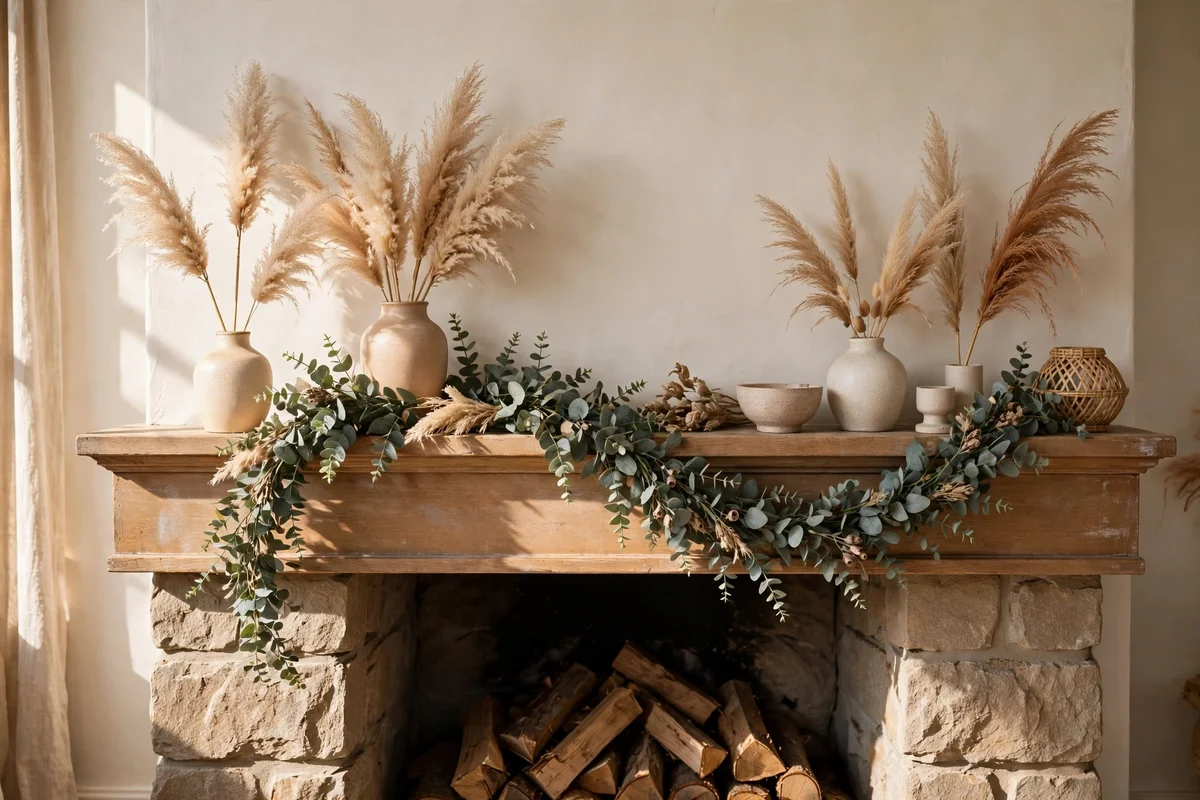
An unused or decorative fireplace takes the safety pressure off, and that is where faux greenery belongs. A good faux eucalyptus garland draped in a loose S along the shelf, about 150 cm long for a standard mantel, brings life with zero watering. Choose garlands with wired stems so you can shape the curve, and check the leaves are matte, since shiny plastic betrays itself in daylight.
Combine the garland with real dried stems, such as pampas or wheat, to blur the line between real and faux. The mistake is placing faux plants above a working fire, where heat can warp plastic and melt fibres. Budget tip: one quality garland costs less than replacing dead real plants three times over. Dust leaves monthly with a dry cloth to keep them looking fresh.
10. Keep Every Fabric Runner and Garland Away From a Lit Fireplace
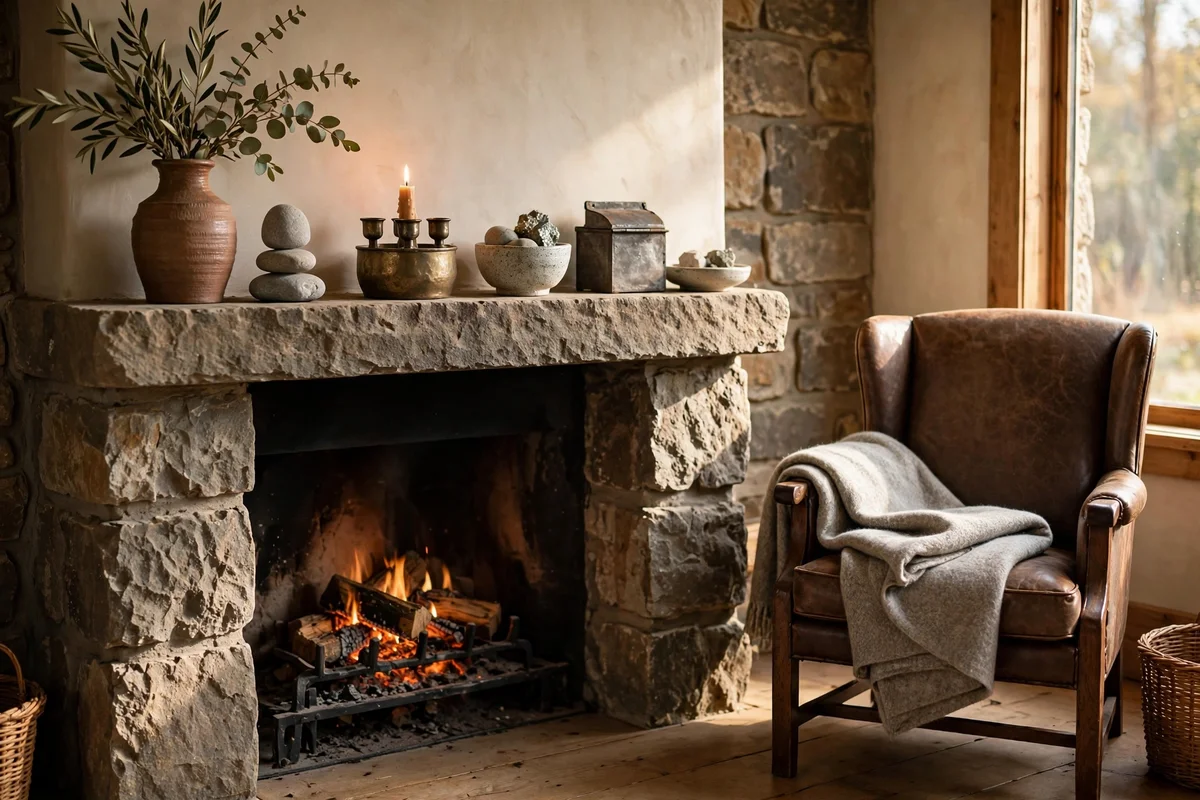
Draped fabrics, runners, and fabric garlands have no place on the shelf above a lit fireplace. Heat rises, sparks travel, and loose cloth can catch without warning. Style the bare shelf instead, or hang garlands only on the hearth wall of an unused fire. If the fireplace burns, keep all textiles at least one metre horizontally from the firebox, including stockings and bunting.
For seasonal warmth without risk, use stone, metal, ceramic and glass on the working shelf, and move textiles to the sofa or armchair nearby. The mistake is assuming a high shelf is safe; rising heat reaches far above the flames. Budget tip: a folded wool throw over the armchair gives the same seasonal feeling with none of the danger.
11. Leave Clearance Between Every Piece and the Flue Opening
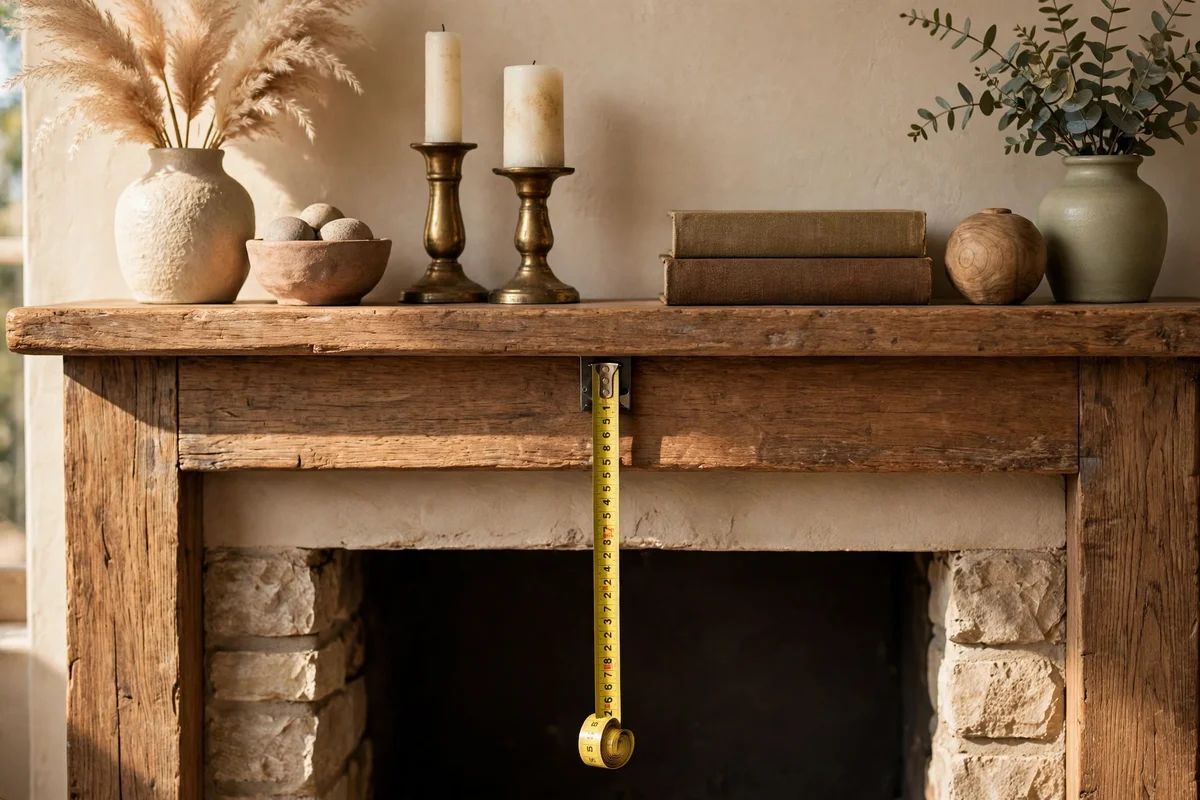
Heat and soot escape around the flue, so every object needs its safe zone. Keep all decor at least 30 cm above and 45 cm sideways from the firebox opening, further for paper prints and dried stems, which catch quickly. Measure from the inner edge of the firebox, not the decorative surround. On shallow shelves under 20 cm deep, keep pieces near the front edge for extra distance from rising heat.
Check the back of frames and the base of vases for soot marks each month in heating season; darkening means the piece sits too close. The mistake is trusting that a tall chimney breast protects the shelf; heat still channels upward along the wall. Budget tip: a small stick-on thermometer on the shelf tells you the true temperature before you place anything precious.
12. Mix One Metal, One Wood and One Ceramic for a Collected Feel
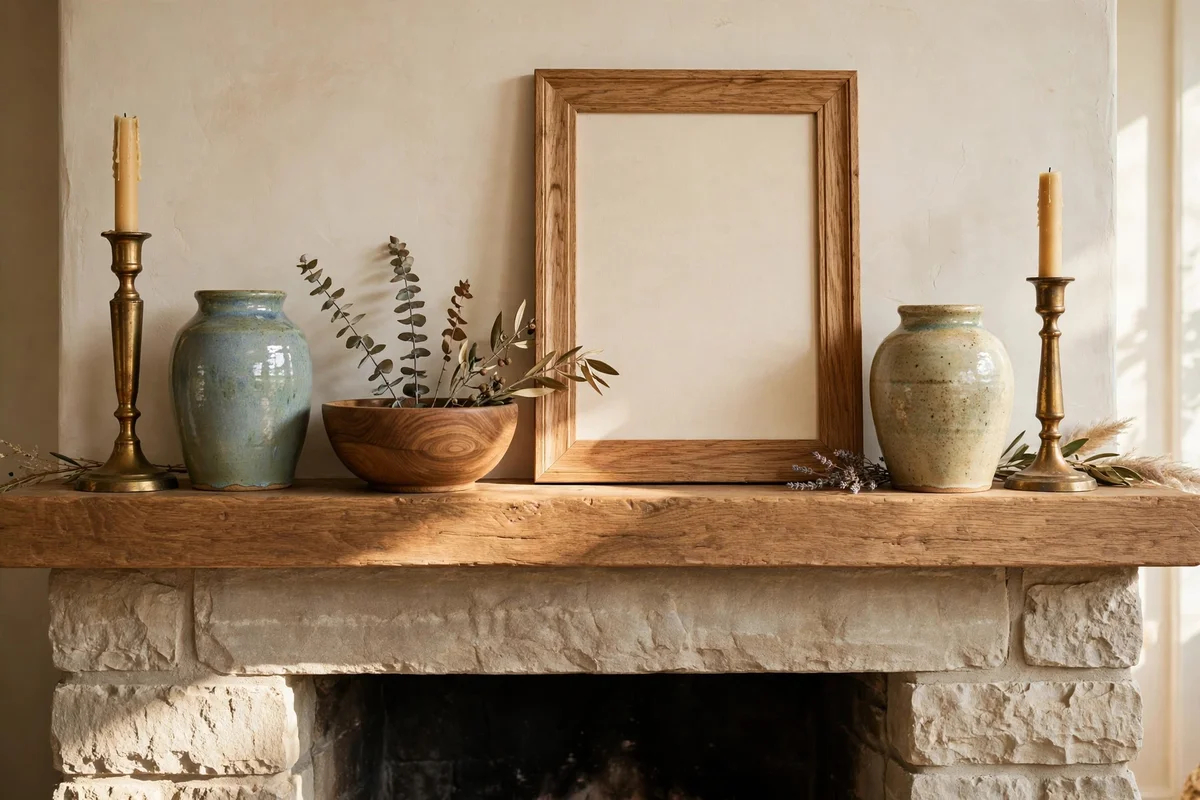
The easiest recipe for an effortless shelf is three materials in balance. Choose one metal, such as aged brass or blackened steel; one wood, such as oak or walnut; and one ceramic, glazed or matte. Distribute them so no single material dominates: a brass candlestick beside a wooden bowl beside a ceramic vase spreads texture across the length.
Repeat each material at least twice for cohesion, for example brass in the candlestick and the clock bezel, wood in the frame and the bowl. The mistake is introducing a fourth or fifth material, which scatters the eye. Budget tip: thrifted brass and wooden finds cost a fraction of new sets, and slight patina adds the heritage character new pieces lack.
13. Style a Shelf Above a Stove With Only Heat-Safe Stone and Metal
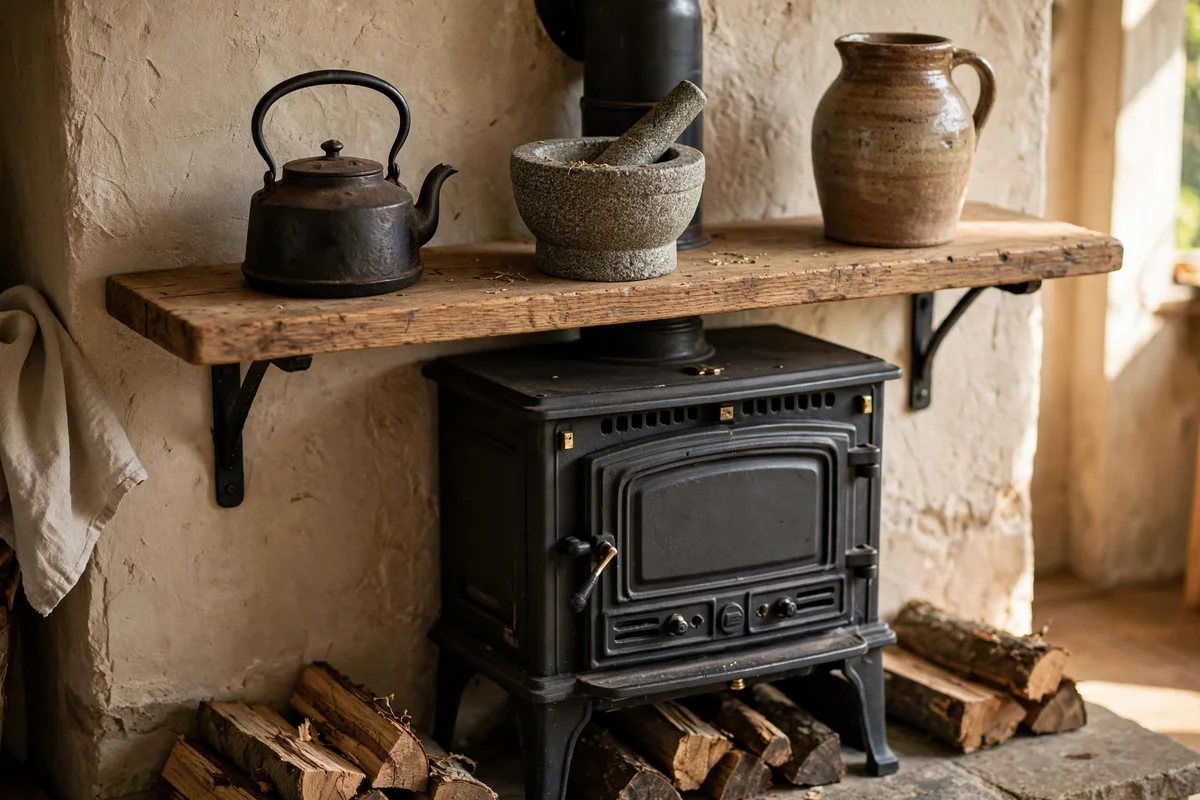
A shelf above a wood-burning stove faces stronger, closer heat than a fireplace mantel, so the rules tighten. Use only stone, cast iron, blackened steel or thick ceramic; never paper prints, dried flowers or candles. Keep pieces at least 60 cm above the stove top and away from the flue pipe, which radiates heat sideways. A small iron kettle or stone mortar fits the setting perfectly.
Wipe the shelf monthly, since stove heat bakes dust into a film that dulls finishes. The mistake is treating the stove shelf like a normal mantel and leaning a framed print there; frames warp and glass can crack with repeated heating. Budget tip: charity-shop cast iron and stoneware cost little, survive the heat for decades, and suit the rustic character of a stove alcove.
14. Dress an Unused Fireplace With Tall Branches and Layered Vessels
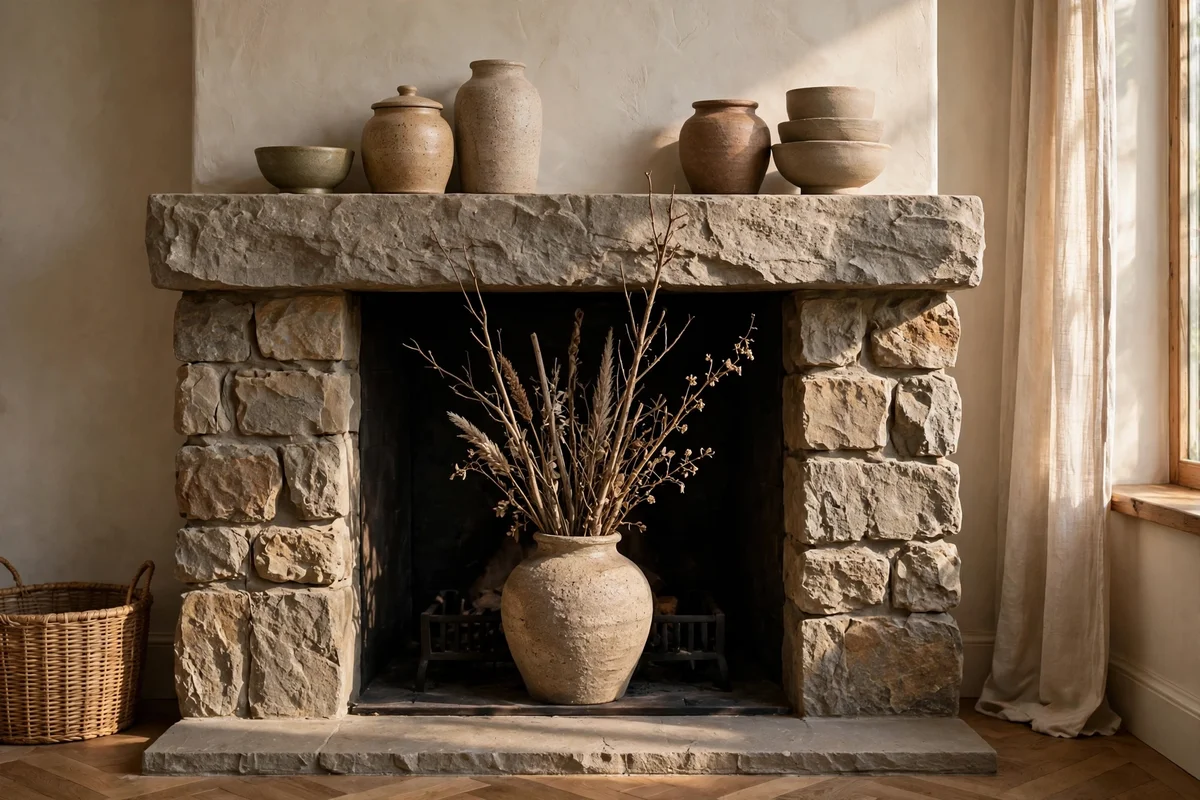
A sealed or decorative fireplace is a styling playground, since nothing burns. Fill the empty firebox with tall branches, 80 to 120 cm, in a weighted ceramic floor vase, so the opening reads as intentional decor. On the shelf above, layer three vessels of descending height: a jug, a bottle and a bud vase, in one colour family such as smoked glass or cream stoneware.
Sweep the firebox clean first and lay a flat basket or linen cloth inside to hide old soot marks. The mistake is leaving the empty firebox black and dusty, which pulls the eye downward from your lovely shelf. Budget tip: foraged branches from a park walk cost nothing; choose straight, interestingly twisted stems and let them dry a week before bringing them in.
15. Swap the Print Each Season but Keep the Same Candlesticks
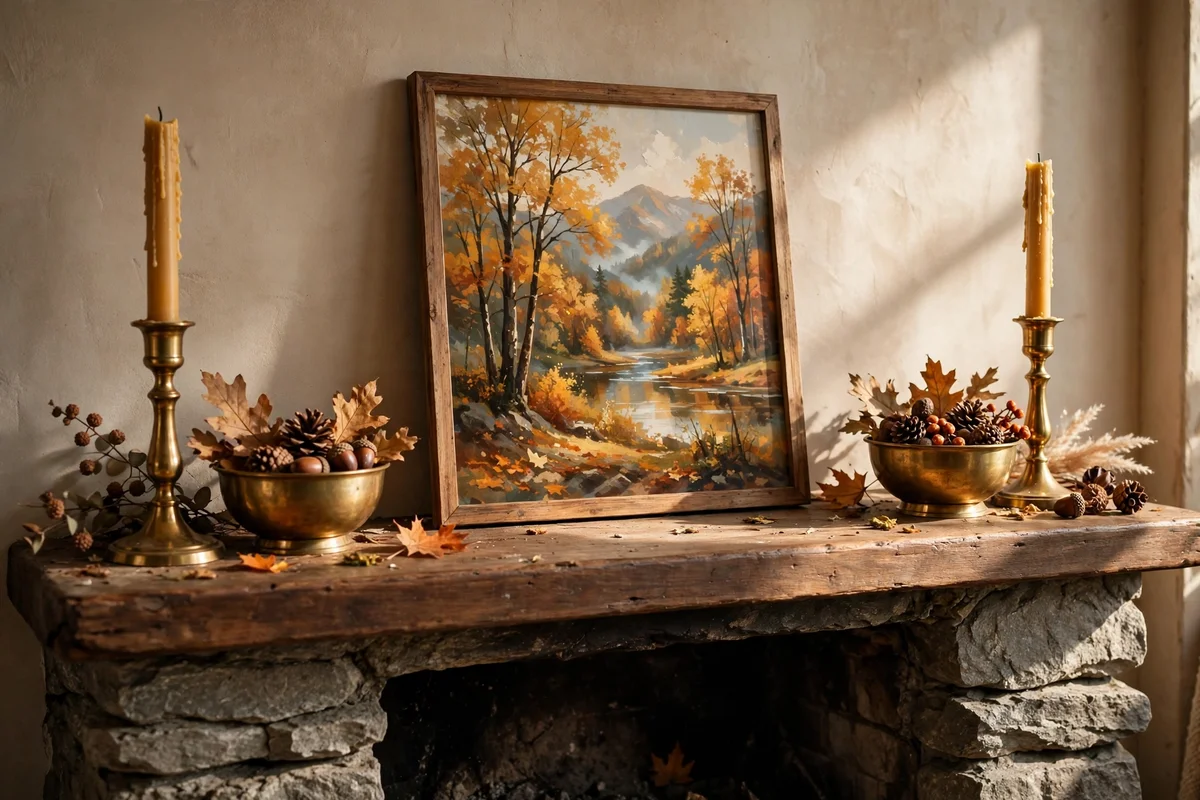
The calmest way to refresh a mantel is to change only one element. Keep your candlesticks, books and bowls exactly where they are, and swap the leaning print for a seasonal one: spring blossom sketches, summer coastal tones, autumn harvest scenes, winter landscapes. A 30 by 40 cm frame fits most shelves and prints cost little, so the swap stays under 15 per season.
Store the off-season prints flat between sheets of tissue in a portfolio folder, never rolled, so they stay crisp. The mistake is redesigning the whole shelf each season, which costs money and never lets the arrangement settle. Budget tip: rotating four prints through one good frame means you buy the frame once and enjoy it all year.
16. Add One Small Seasonal Sprig Instead of Redecorating the Whole Shelf
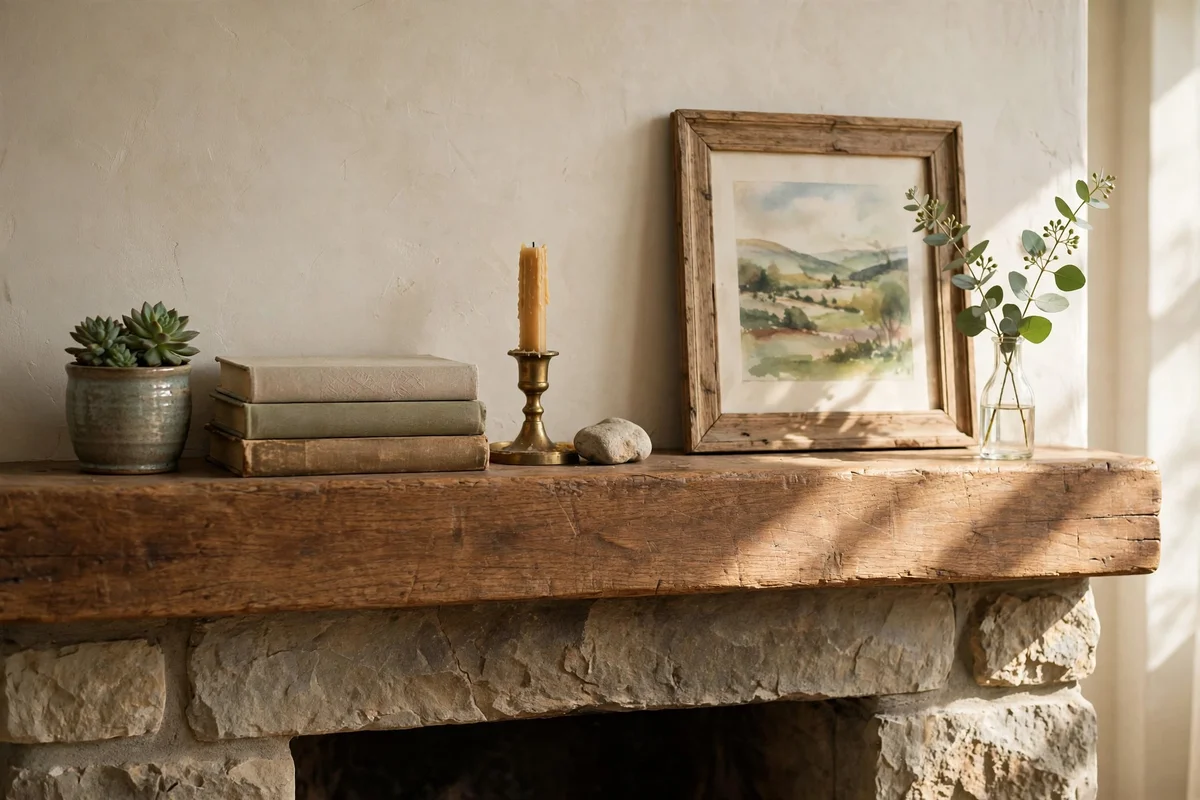
Small seasonal gestures beat full makeovers. Tuck a single sprig of eucalyptus, wheat, cherry blossom or pine into the existing bud vase, depending on the month. One sprig, about 25 to 35 cm, changes the mood without moving anything else. This takes five minutes and keeps the shelf’s bones intact through every season.
Choose dried or fresh-cut sprigs over glittery decorations, which date quickly and shed everywhere. The mistake is adding five seasonal items at once; one sprig reads as taste, five read as clutter. Budget tip: a garden, a park walk, or one stem from a florist, often under 3, covers the whole shelf.
17. Frame the Shelf With Matching Lamps for Evening Warmth
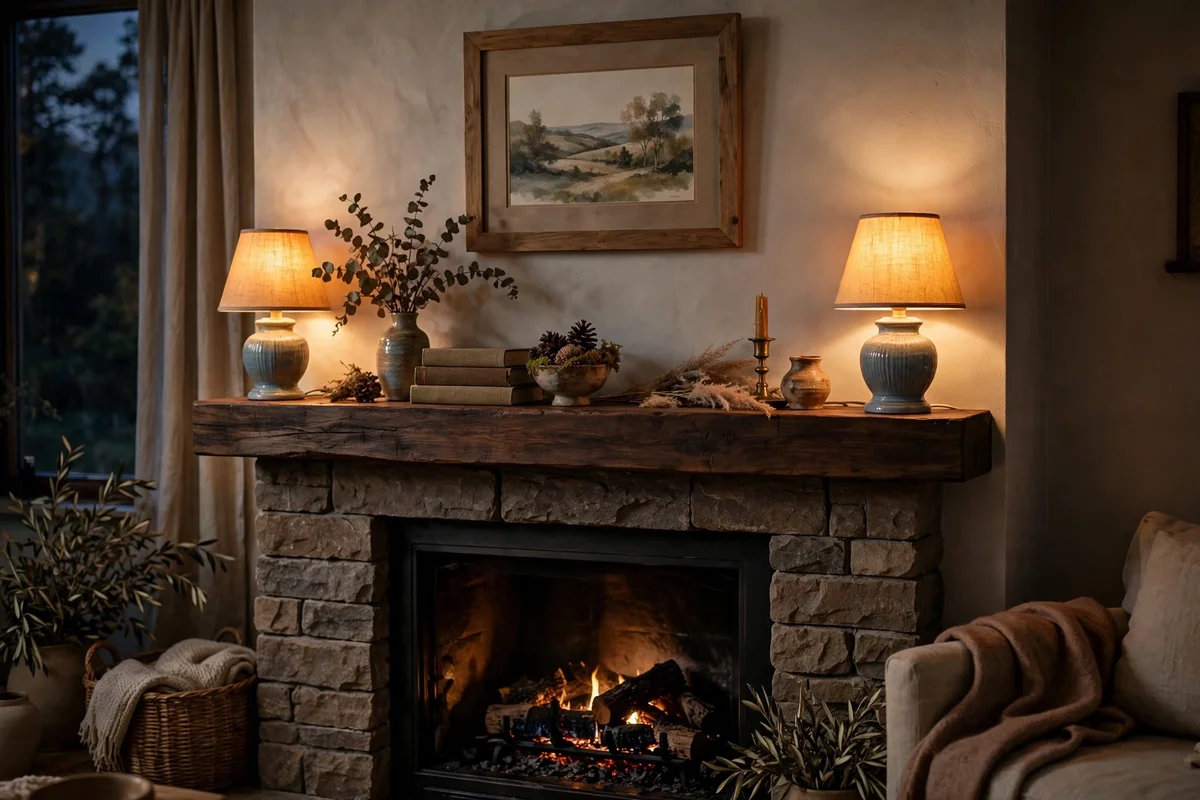
Two small table lamps, 25 to 35 cm tall, placed at the shelf ends turn the mantel into an evening focal point. Choose opaque ceramic or fabric shades that direct light upward and wash the wall in warm glow. Use 2700K bulbs of 4 to 6 watts; bright enough to flatter the decor, soft enough to keep the room restful.
Run cables neatly along the shelf back edge and secure them with small adhesive clips so no wire dangles near the fire. The mistake is choosing lamps taller than the hero piece, which flips the hierarchy and makes the shelf look top-heavy. Budget tip: pairs of small lamps from discount stores often cost under 30 together, and warm bulbs transform the whole room.
18. Set a Vintage Clock Off-Centre as a Gentle Anchor
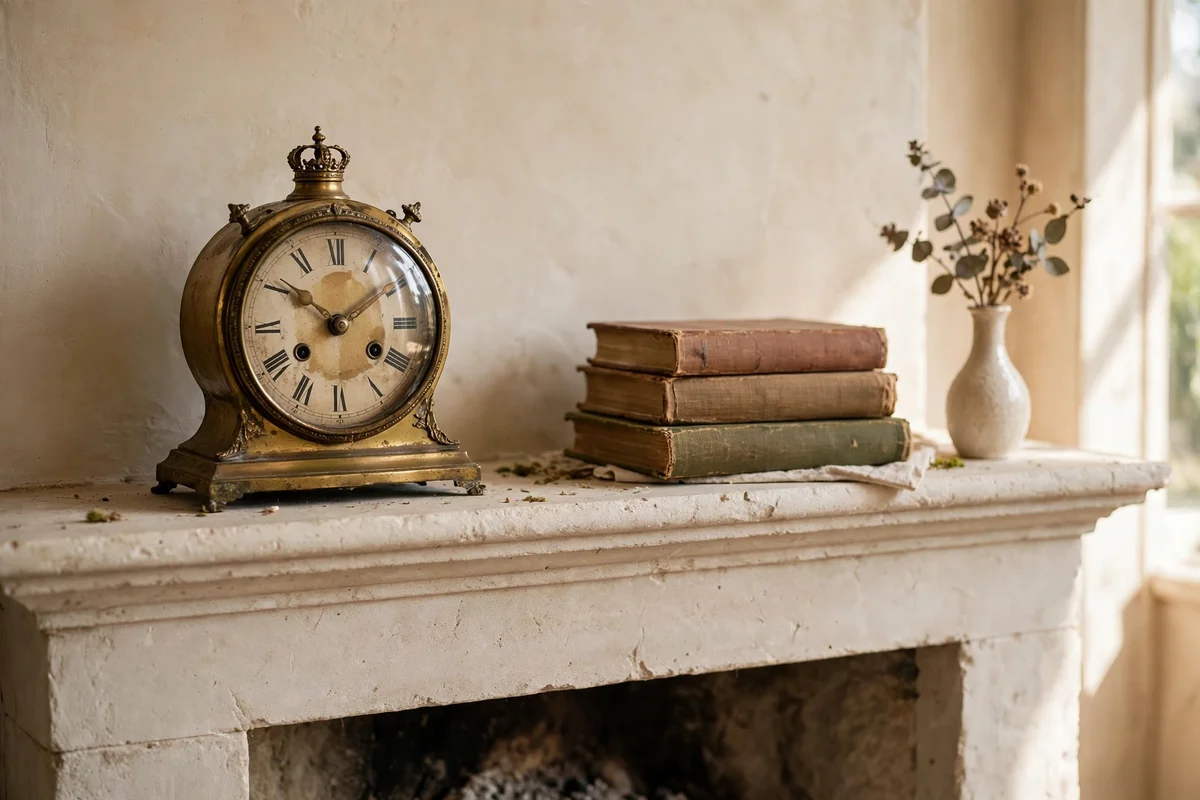
A clock with a 20 to 30 cm face makes a natural mantel anchor, since it earns its place by being useful. Place it slightly off centre, flanked by one lower object each side, such as a small stack of books and a bud vase. Choose a wooden or brass case in a quiet tone; ticking or silent movement is a household preference worth checking before buying.
If the clock ticks loudly, set it on a small felt pad, which muffles the sound against a hard shelf. The mistake is centring the clock dead middle with two identical flanks, which looks like a shop window. Budget tip: charity shops hold brass and wooden clocks for under 15; a new battery usually revives them instantly.
19. Stack Short Bowls or Boxes to Fill the Gaps Between Tall Pieces
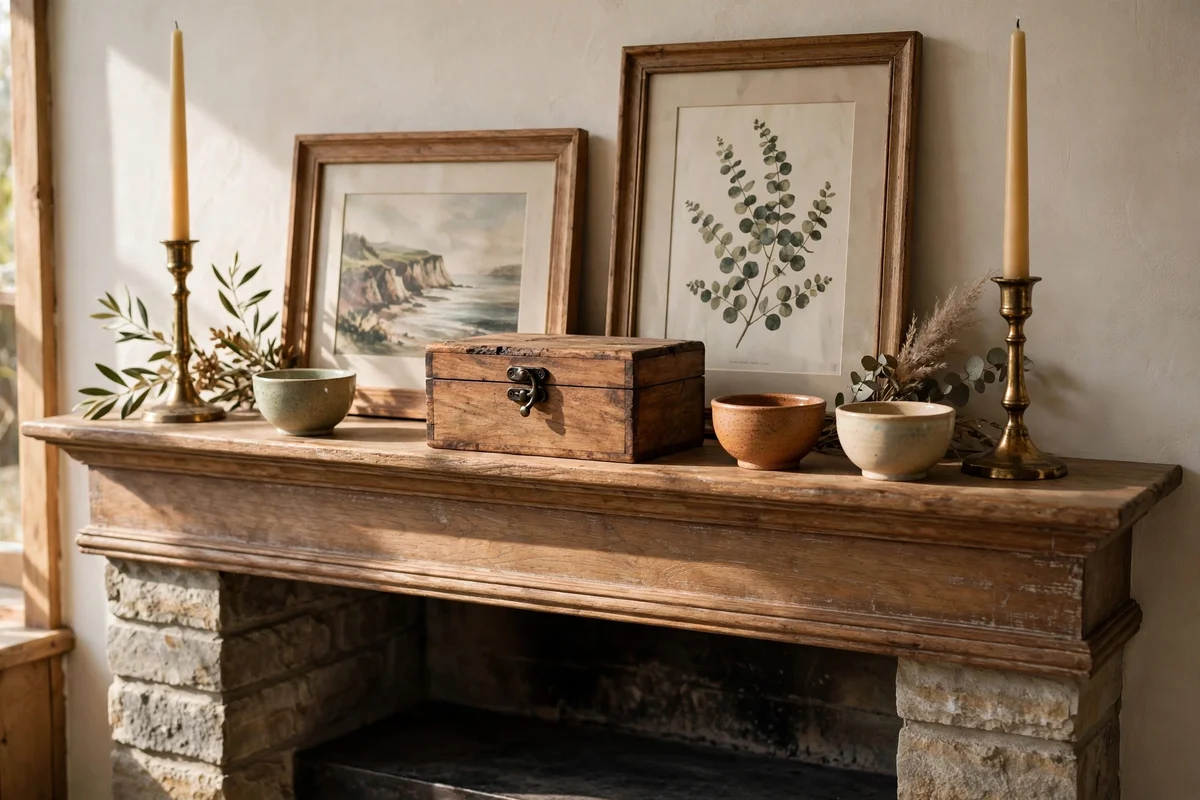
The spaces between tall candlesticks and leaning frames need small anchors, or the shelf feels gappy. Use lidded boxes, small ceramic bowls or brass dishes 8 to 12 cm wide and under 10 cm tall. Place them slightly forward of the tall pieces, about 5 cm closer to the edge, to build gentle depth across the shelf.
Keep the small pieces in the same material family as the tall ones so the shelf reads as one collection. The mistake is filling every gap; two or three small pieces per shelf are plenty, and empty space is part of the design. Budget tip: single bowls and boxes from charity shops cost a few pounds and hold keys or matches usefully.
20. Restyle From Eye Level: Step Back Three Metres Before Final Touches
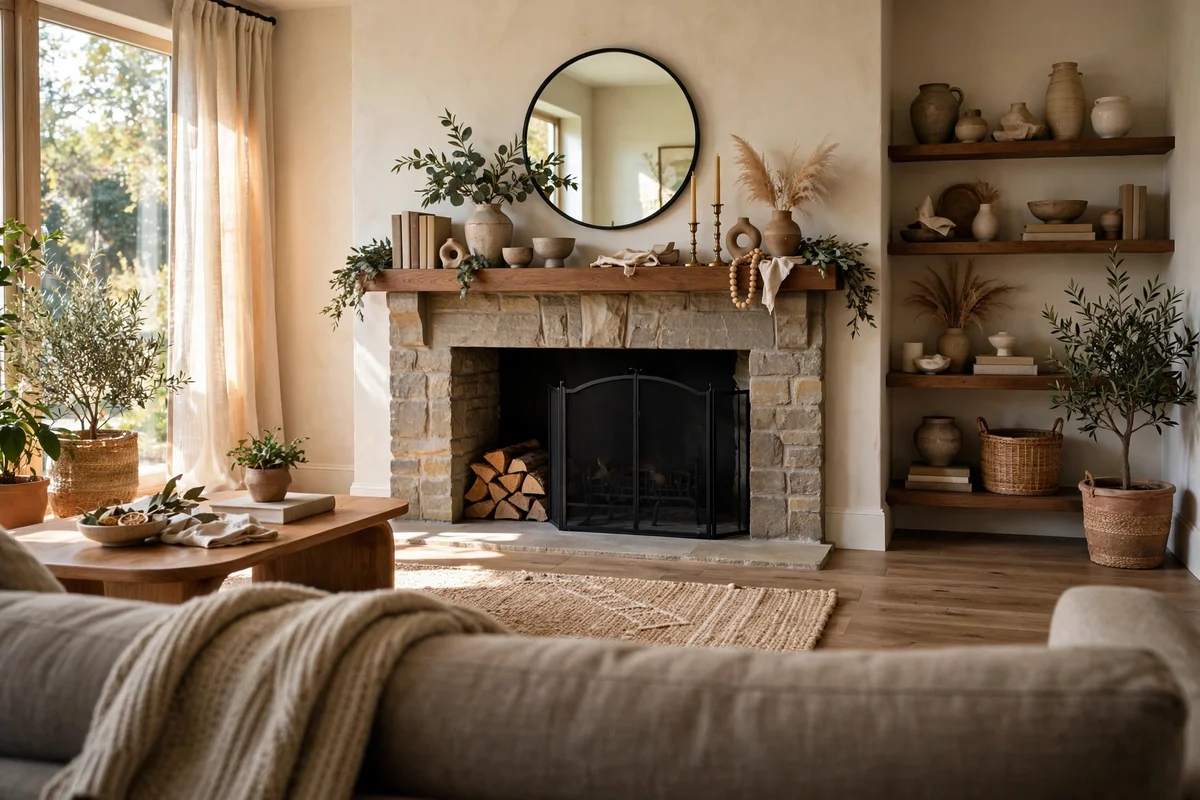
A shelf styled at arm’s length always surprises you from the sofa. After placing everything, step back at least three metres and look at the shelf as one picture. Check three things: heights descend smoothly, no two tall objects crowd the same third, and colours repeat at least twice. Adjust only one piece at a time, then step back again.
Photograph the shelf with your phone; the camera flattens the scene and exposes clutter your eyes forgave. The mistake is fine-tuning objects one by one from inches away, which breaks the overall balance. Budget tip: this step costs nothing and prevents most regretted purchases, since the photo reveals whether you truly need that extra vase.
21. Keep a One In One Out Rule So the Shelf Never Creeps to Clutter
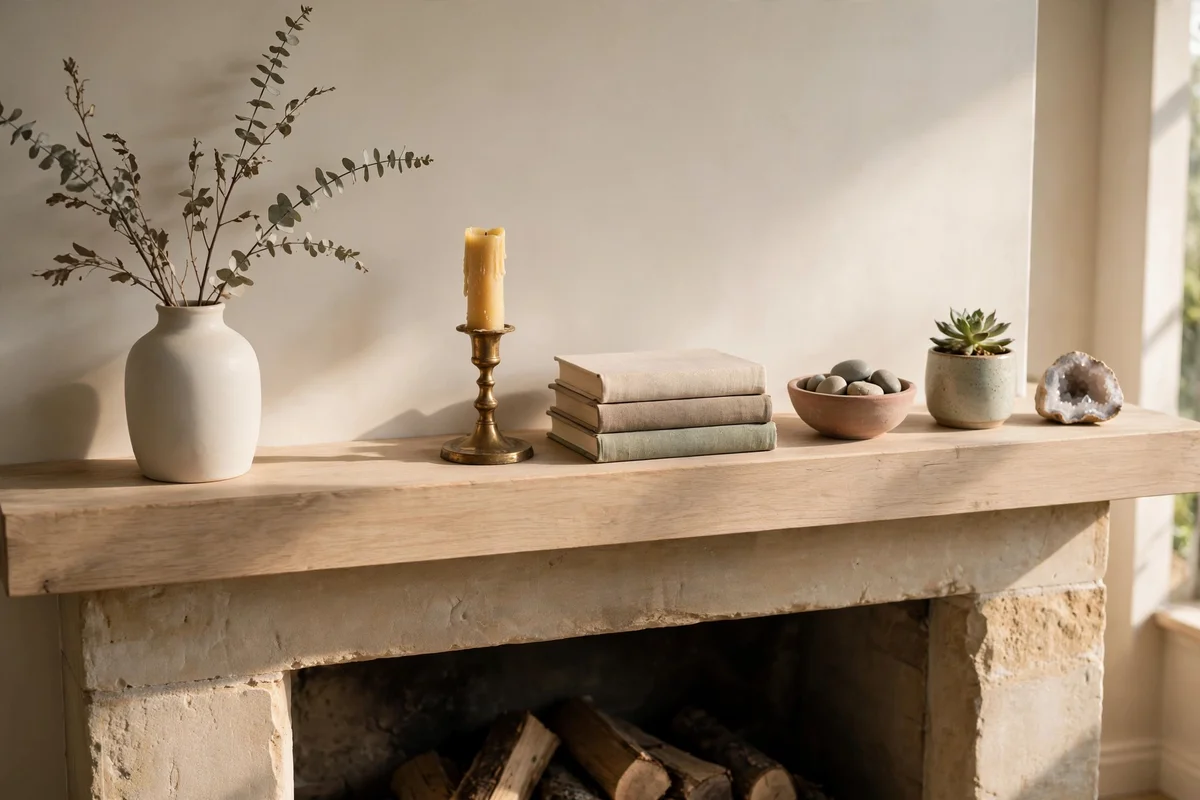
Shelves gather objects the way windowsills gather dust: slowly, then suddenly. Adopt a simple rule: every new mantel piece means one old piece leaves the shelf. Keep a small box in a cupboard for retired decor; nothing is thrown away, just rested. A working shelf holds five to eight objects total; beyond ten, the eye stops seeing individual pieces.
Review the shelf at each season’s sprig swap and remove anything that no longer earns its place. The mistake is sentimental stacking, where every gift and holiday find accumulates. Budget tip: restraint is the cheapest styling tool of all, and a calm shelf makes each remaining piece look more valuable than it was.
A beautiful fireplace shelf is never an accident, though it should always look like one. One steady anchor, a few well-chosen companions, and honest space between them carry more weight than a crowd of decorations. Keep the heat rules at the front of your mind, change one small thing with each season, and let the arrangement settle instead of chasing perfection.
This week, start with the easiest win of the whole set: clear the shelf down to its bones and choose one hero piece to lead. Stand back three metres, trust what you see, and add back only the pieces that truly earn their place on the mantel. Everything else can rest in a cupboard until its season comes, ready and waiting for its turn.
Frequently Asked Questions
How high should decor sit above a working fireplace?
Keep every object at least 30 cm above the firebox opening and 45 cm sideways from it. Paper prints, dried stems and candles need even more room, since they catch quickly. On a shelf directly above the fire, nothing combustible should sit within that zone, and a small thermometer on the shelf shows the real temperature.
What is the cheapest way to style a mantel shelf?
Start with what you own: a leaning print in a frame you already have, a stack of two or three books, and one sprig from the garden. Charity shops supply brass candlesticks, small bowls and vintage clocks for a few pounds each. A full shelf styled this way usually costs under 40, and patience beats a big budget every time.
Can I hang a mirror above a working fireplace?
Yes, with care. Choose a mirror with a wooden or metal frame, hang it on a proper hook fixed into the wall rather than leaning it, and keep it at least 30 cm above the firebox. Check the back for soot marks during the heating season; any darkening means heat is reaching it and the mirror should move higher or further sideways.
How do I style a mantel shelf in a rented home?
Lean art instead of hanging it, since leaning needs no holes at all. Use small battery LED candles rather than wired lamps, and choose decor light enough for adhesive hooks where fixings help. Everything on these 21 ideas comes away cleanly, so keep the original shelf clear and take your pieces with you when you move.
How often should I dust and rearrange the mantel shelf?
Dust the shelf and every object once a month, more often in heating season when soot settles. Rearrange only when something feels off, or at each season’s sprig swap, which gives you a natural moment to review. A quick phone photo from the sofa shows whether the balance still works better than staring at it up close.