Bedroom
21 Loft Bedroom Ideas That Make Open Spaces Feel Intimate
By Anna Wells · · 20 min read
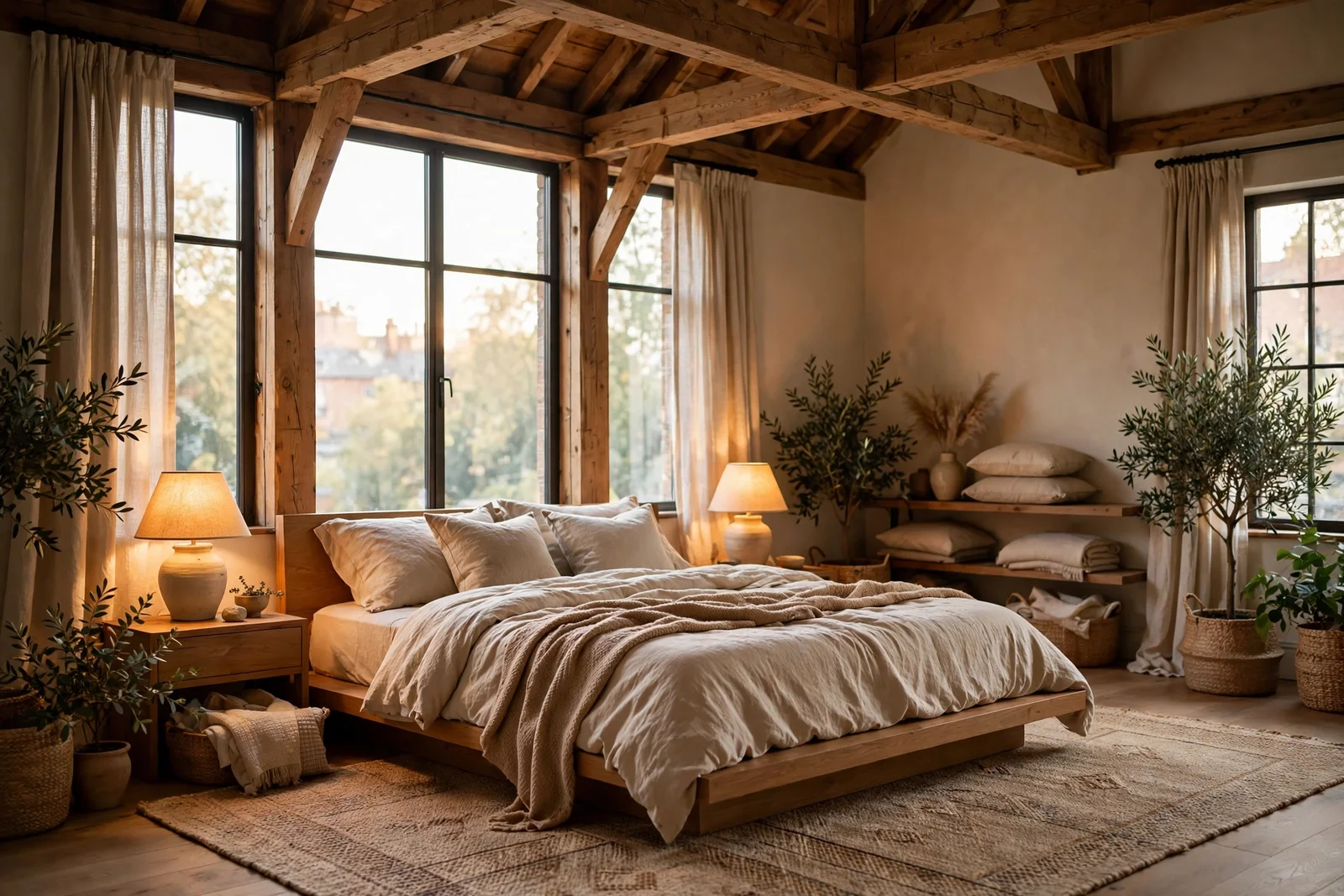
A loft bedroom can feel like the calmest room in the house, all timber beams and soft morning light.
Morning light slides across the wide floorboards and pools on the rug beside the bed. Somewhere below, the kettle clicks off, and the whole loft smells faintly of timber and clean linen. This is the quiet promise of sleeping upstairs in an open space, where the bedroom is not a box with a door but a calm corner of one generous room.
The challenge is making that corner feel intimate without building walls. A low bed on a large rug, a folding screen angled just so, and lamplight instead of a single ceiling glare can turn an echoing space into a restful retreat. The ideas below treat the loft as one room with a sleeping heart, using beams, textiles and honest materials to do the zoning.
You will find twenty-one practical ideas here, each with sizes, materials and budget guidance. They cover layout, light, storage in the eaves, colour discipline, and the honest realities of sound and warmth in open lofts. Whether your loft is a converted attic or a new-build duplex, these ideas will help the sleeping area feel like a true bedroom.
Start with the rug and the lamps, since those two moves change the feeling fastest, then work through storage and colour at your own pace. By the final idea your loft will still be gloriously open, but the bed will sit inside a zone that feels unmistakably like rest.
1. Anchor the Sleeping Area With a Large Low-Pile Rug Under the Bed
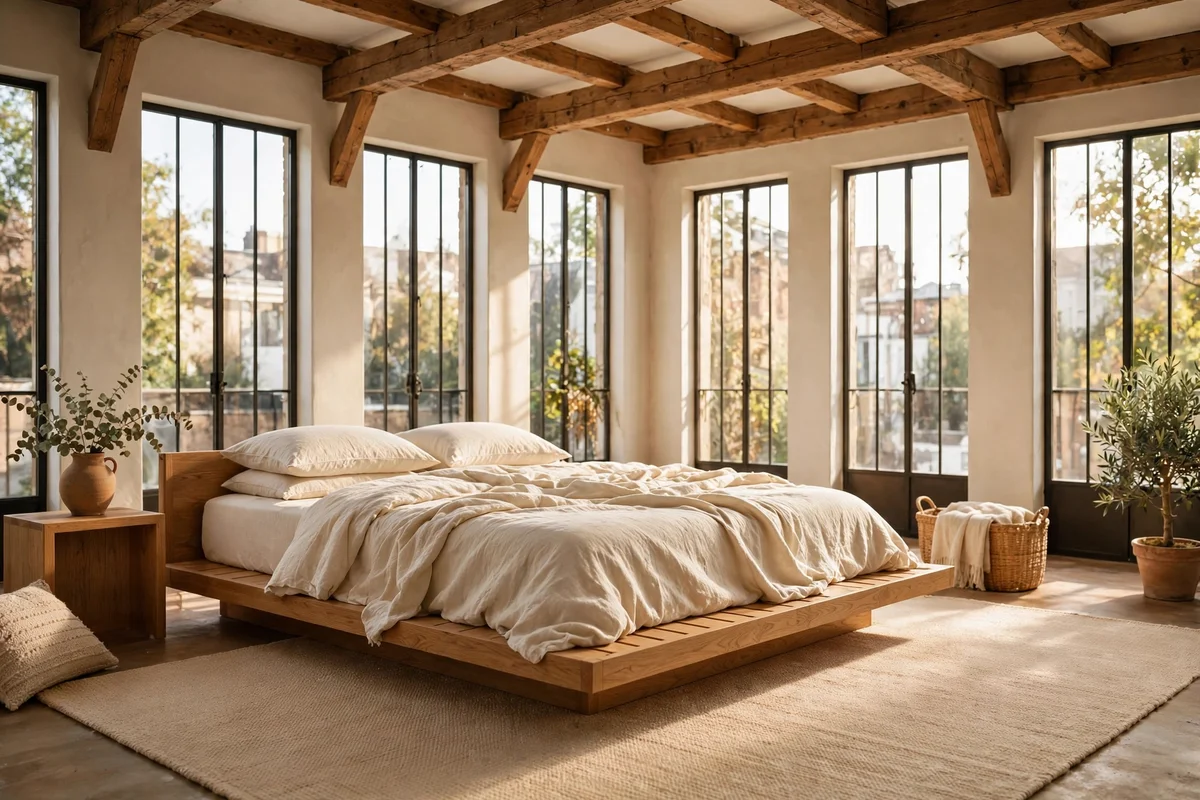
A rug measuring at least 200 by 300 cm under and around the bed draws an unmistakable boundary inside an open loft. Let it extend 60 to 90 cm beyond each side of the bed and 90 cm past the foot, so bare feet land on softness in the morning. Choose a low pile of 8 to 12 mm so doors of nearby drawers clear it, and pick a flat weave or short wool for easy vacuuming. In a 40 to 60 square metre loft, this single rectangle does more to define the bedroom than any piece of furniture.
Repeat one colour from the rug elsewhere in the loft, perhaps in a cushion on the sofa or a throw on the reading chair, and the two zones will feel connected rather than cut apart. Budget tip: a 200 by 290 cm wool-blend rug costs roughly 120 to 220 pounds or dollars, while a cotton flatweave of the same size runs 60 to 100. The mistake to avoid is buying a rug barely wider than the bed, which leaves the sleeping corner looking stranded instead of settled.
2. Set a Low Platform Bed on the Rug to Give the Loft Breathing Room
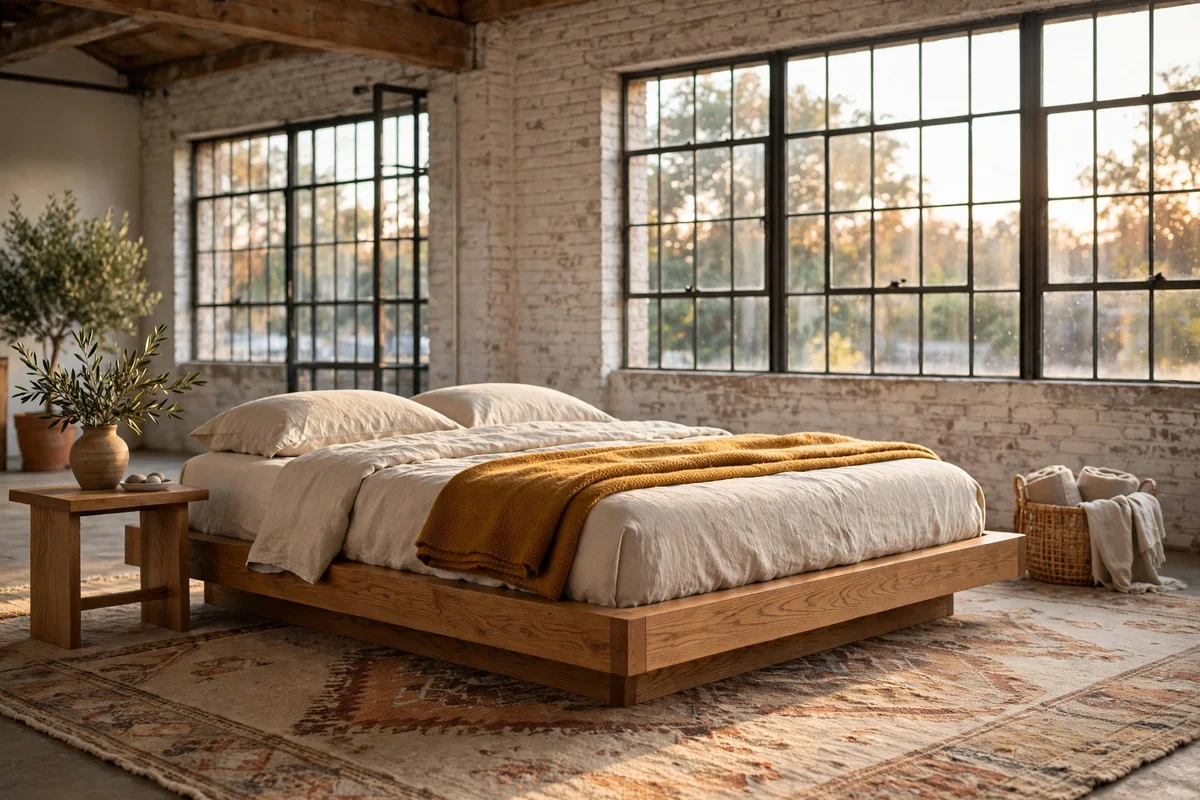
A platform bed 25 to 35 cm off the floor keeps sightlines low and makes a tall loft ceiling feel generous rather than cavernous. Solid timber frames in oak, ash or reclaimed pine suit the honest character of a converted loft, and a platform needs no box spring, which saves 15 to 20 cm of height and about 80 to 150 pounds or dollars. Keep the frame 10 cm wider than the mattress on each side so the bedding drapes without sliding off the edge overnight.
Low beds also soften the visual weight of the bedroom zone, which matters when the whole space is visible from the kitchen or stairs. Add a headboard only 60 to 90 cm tall so it reads as furniture rather than a wall. The common mistake is pairing a tall four-poster with an open loft, which chops the room in half visually. A simple platform frame from solid timber usually costs 250 to 500 pounds or dollars and lasts decades.
3. Place a Three-Panel Folding Screen Beside the Bed as a Soft Divider
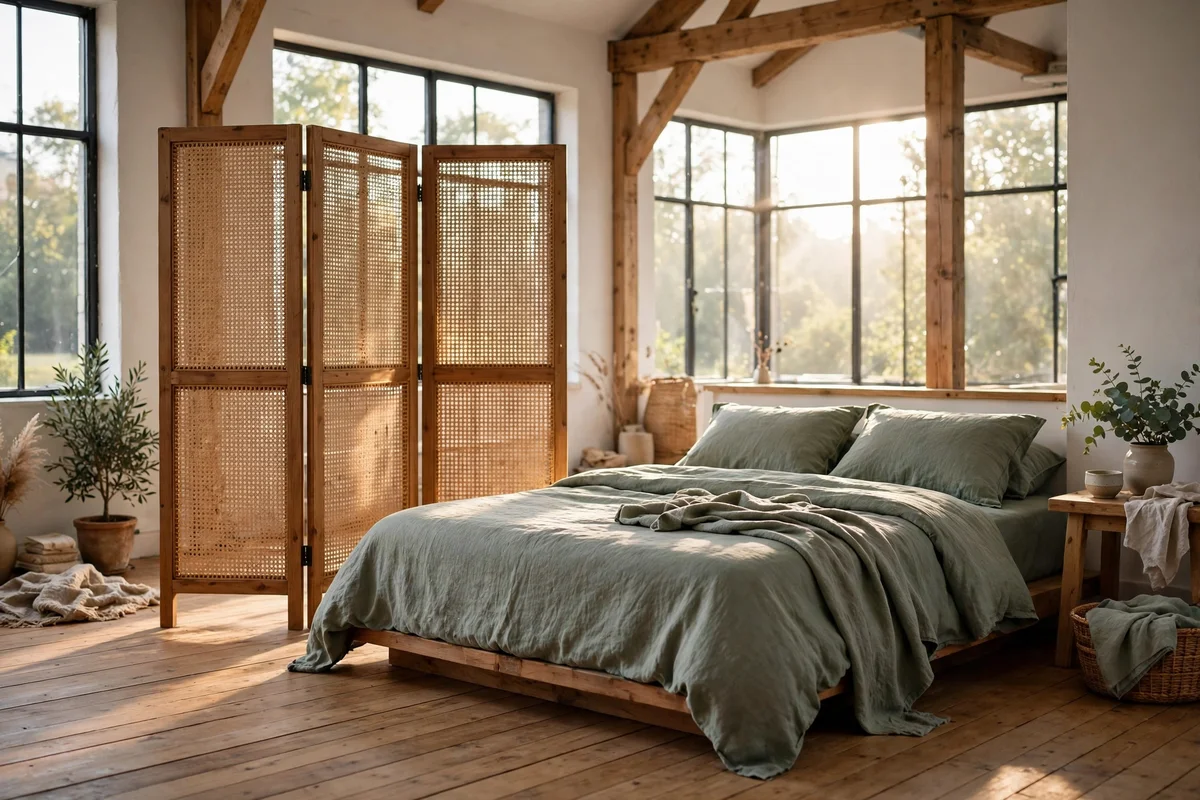
A folding screen 150 to 180 cm tall and about 120 to 150 cm wide when open creates a gentle wall beside the bed without blocking light. Position it at a right angle to the headboard, roughly 60 cm from the mattress edge, so it suggests a private corner while leaving a clear walking path. Choose slatted timber, woven cane or linen panels in a timber frame, all of which filter daylight softly. A vintage screen from a second-hand shop often costs 40 to 90 pounds or dollars.
Because a screen is movable, it suits renters and anyone who rearranges often. Angle the panels slightly rather than folding them flat, which keeps the divider from looking like a flat billboard. The mistake to avoid is a screen taller than the eaves behind it, which looks cramped and top-heavy. Three panels are easier to balance than four, and a weight of 6 to 10 kg means one person can shift it in seconds.
4. Stand an Open Bookcase Sideways to Divide the Bed From the Living Zone
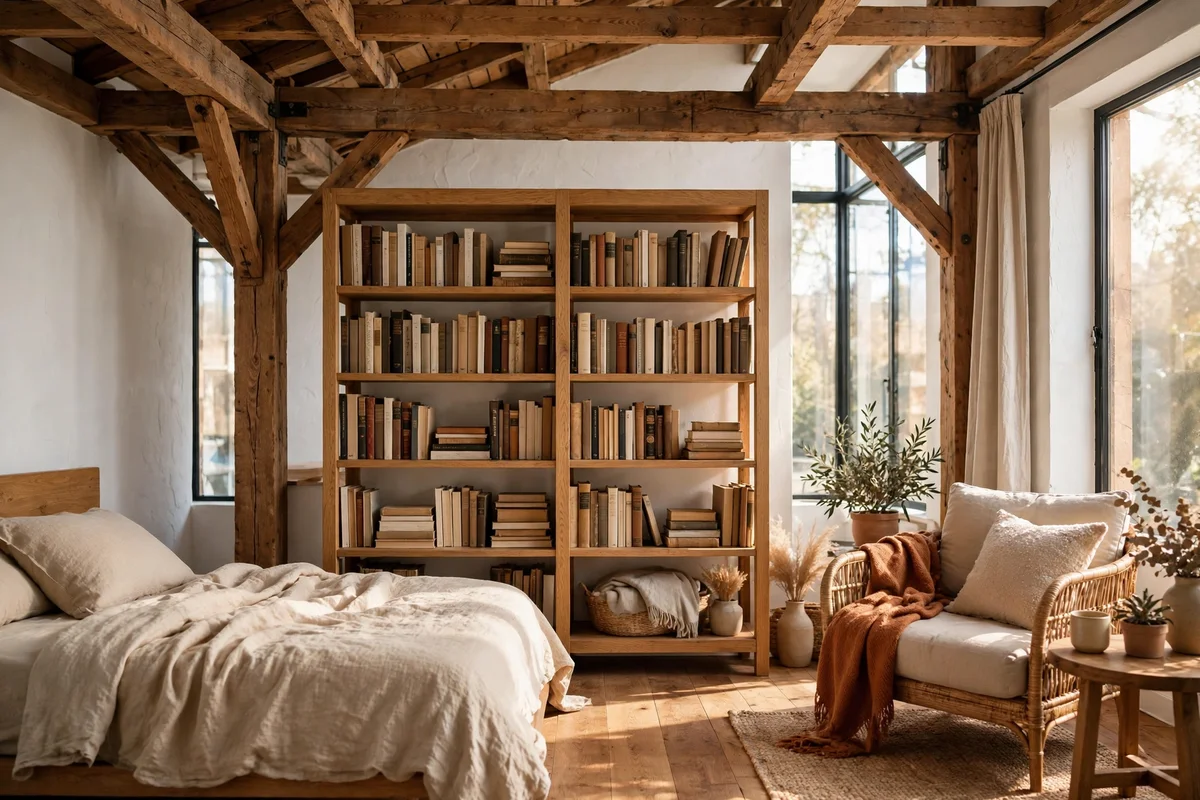
A bookcase 80 to 100 cm wide and 150 to 180 cm tall, turned so its side faces the bed, works as a room divider that still lets light pass. Leave the back off or choose an open-sided design so books and objects are visible from both sides, which keeps the barrier friendly rather than fortress-like. Anchor it to the floor with anti-tip straps if it stands on a rug, since a loaded bookcase can weigh 40 kg or more.
Style the shelves with books spine-out on the living-room side and a small lamp plus a folded blanket on the bedroom side, so each face serves its own zone. Keep the top shelf below eye level when you sit on the bed, about 150 cm, so the loft keeps its airy feel. The mistake to avoid is a tall closed wardrobe used as a divider, which blocks light and turns the bed corner into a cave.
5. Replace One Ceiling Light With Two Bedside Lamps and a Floor Lamp
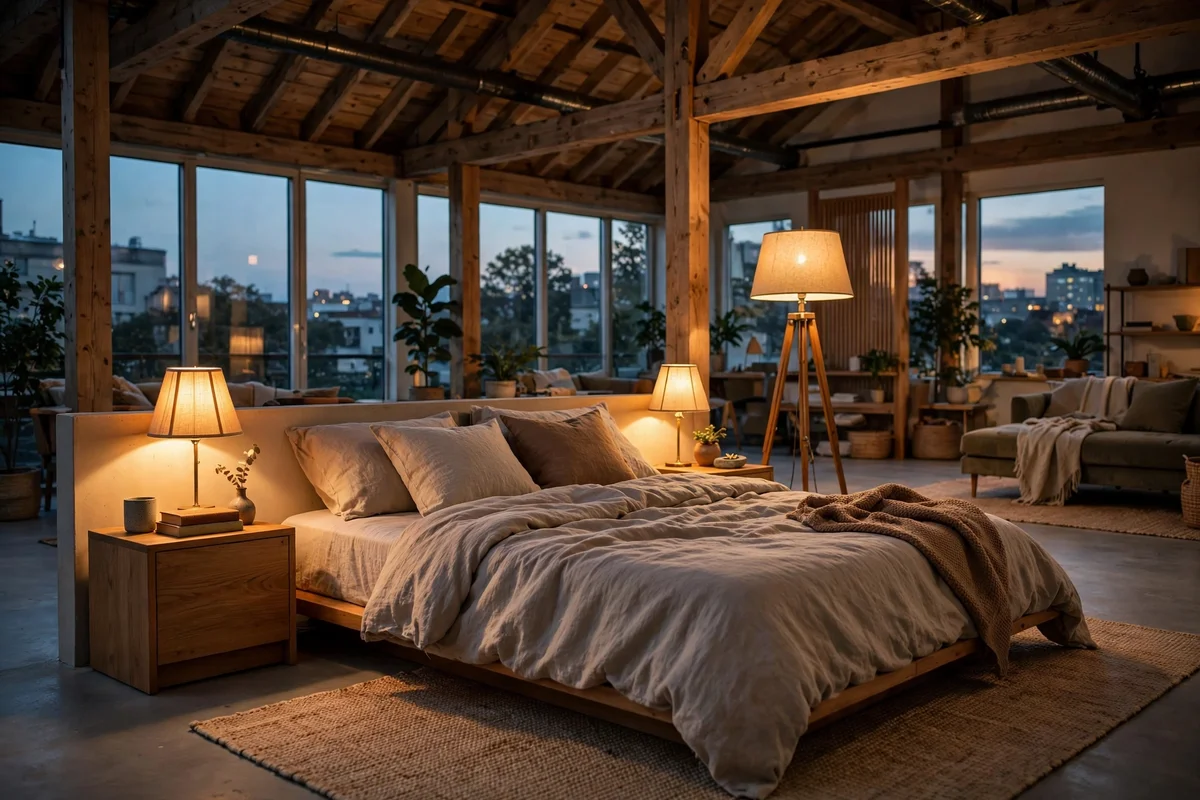
One harsh ceiling fitting washes an open loft flat, while three smaller lamps at different heights build the calm a bedroom needs. Place a table lamp 40 to 55 cm tall on each nightstand with a warm 2700K bulb of 400 to 800 lumens, then add an arc or tripod floor lamp near the foot of the bed for a third pool of light. This triangle of glow defines the sleeping zone after dark more convincingly than any partition.
Put the two bedside lamps on a single remote-controlled plug so both switch off from the bed. Choose fabric or paper shades that throw light sideways rather than straight down, which flatters bedding textures. Budget tip: two matching ceramic lamps plus a simple tripod floor lamp totals 70 to 140 pounds or dollars. The mistake to avoid is mixing colour temperatures; one cool 4000K bulb will undo the warmth of everything else.
6. Layer Three Pools of Warm Light Around the Bed for Evening Calm
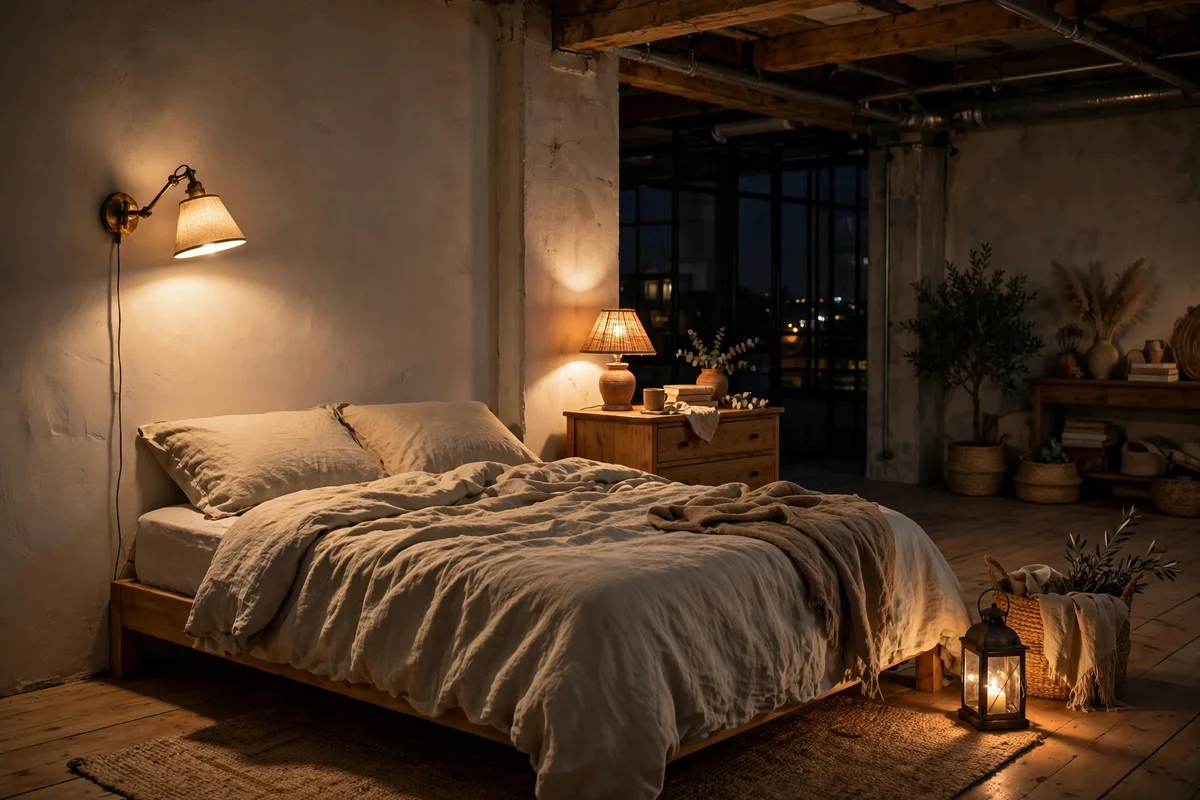
Think of loft bedroom lighting in three layers: a reading light near the pillows, an ambient glow at mid height, and one low accent. A wall-mounted reading arm at 120 to 140 cm above the mattress gives 300 to 500 lumens exactly where a book sits, while a small lamp on the dresser at 90 cm softens the middle distance. A battery candle or low lantern on the floor by the rug edge finishes the scheme with a gentle shimmer.
Keep every bulb at 2700K or warmer and dimmable where possible, since open lofts have little to absorb glare. Wall-mounted arms free up nightstand space, which matters beside a low bed. The mistake to avoid is pointing all three lights at the bed from one side, which creates harsh shadows. Spread them around the rug perimeter instead, and the whole sleeping area will feel wrapped in an even, restful warmth.
7. Let the Exposed Beams Frame the Bed Zone Like a Timber Picture
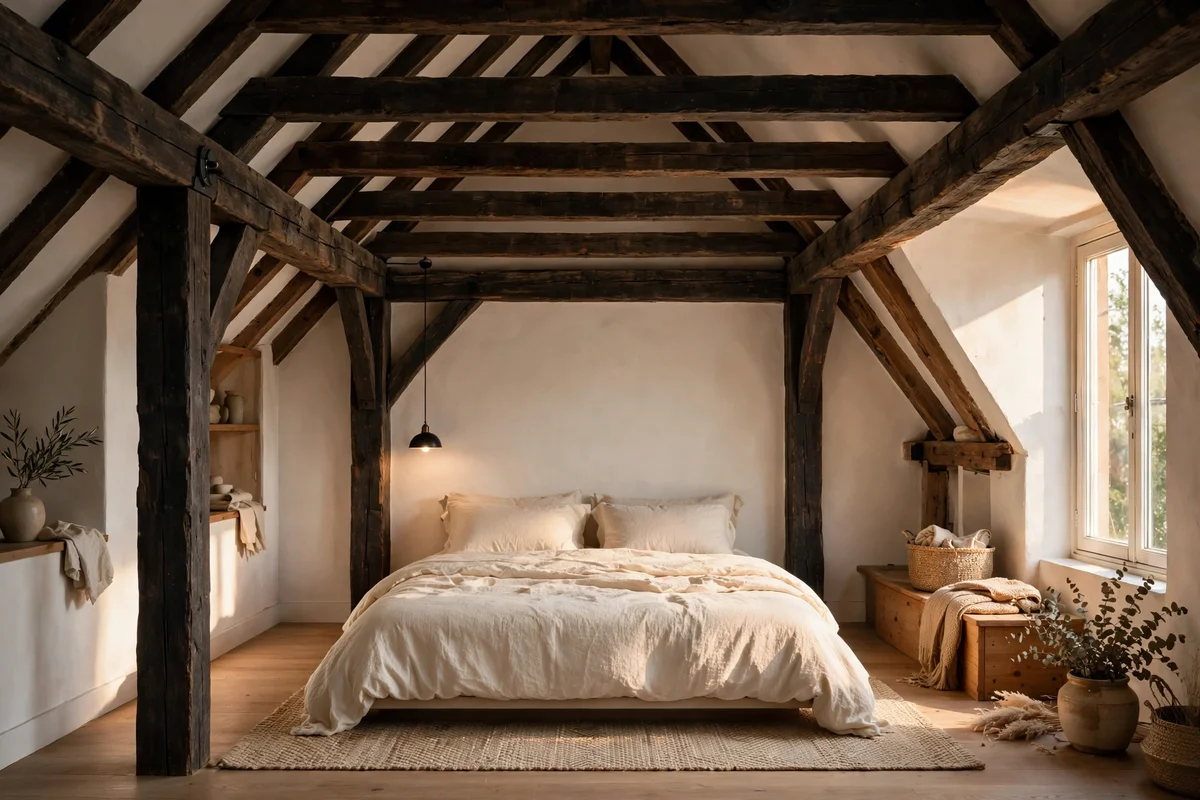
In a converted loft the roof beams are already there, so align the bed between two of them and the structure does the zoning for free. Centre the headboard in the bay between beams 90 to 150 cm apart, and hang a single pendant or a small cluster of bulbs from the beam above the foot of the bed to mark the boundary. Timber beams 15 to 20 cm deep give enough presence to read as a frame without lowering the perceived ceiling.
Keep the beam wood visible rather than painting it; a clear wax or matte oil protects the timber and keeps its honeyed tone. If the beams are dark stained, balance them with pale bedding in cream or oatmeal. The mistake to avoid is centring the bed on a beam so it presses down visually over the pillows. Work with the bays between beams instead, and the architecture will quietly hold the bedroom together.
8. Hang Linen Curtains From Two Beams to Make a Soft Bed Canopy

Two linen curtain panels hung from adjacent beams create a canopy that softens the bed zone without closing it off. Fix slim brass or black metal rods 2 to 3 cm in diameter directly to the beams with cup hooks or brackets, then hang panels that fall to 15 cm above the floor. Choose a loose linen weave in oat, flax or soft white that filters daylight and sways gently, which keeps the canopy feeling airy rather than theatrical.
Tie the panels back to the beams with simple jute rope during the day so the bed stays open to the loft, then let them fall at night for a cocooned feeling. Two panels of 140 cm width each cover a bay of about 250 cm with a soft gather. The mistake to avoid is heavy blackout fabric, which turns the canopy into a tent and blocks the morning light that makes loft living pleasant.
9. Build Shallow Drawers Into the Low Eaves for Hidden Clothing Storage
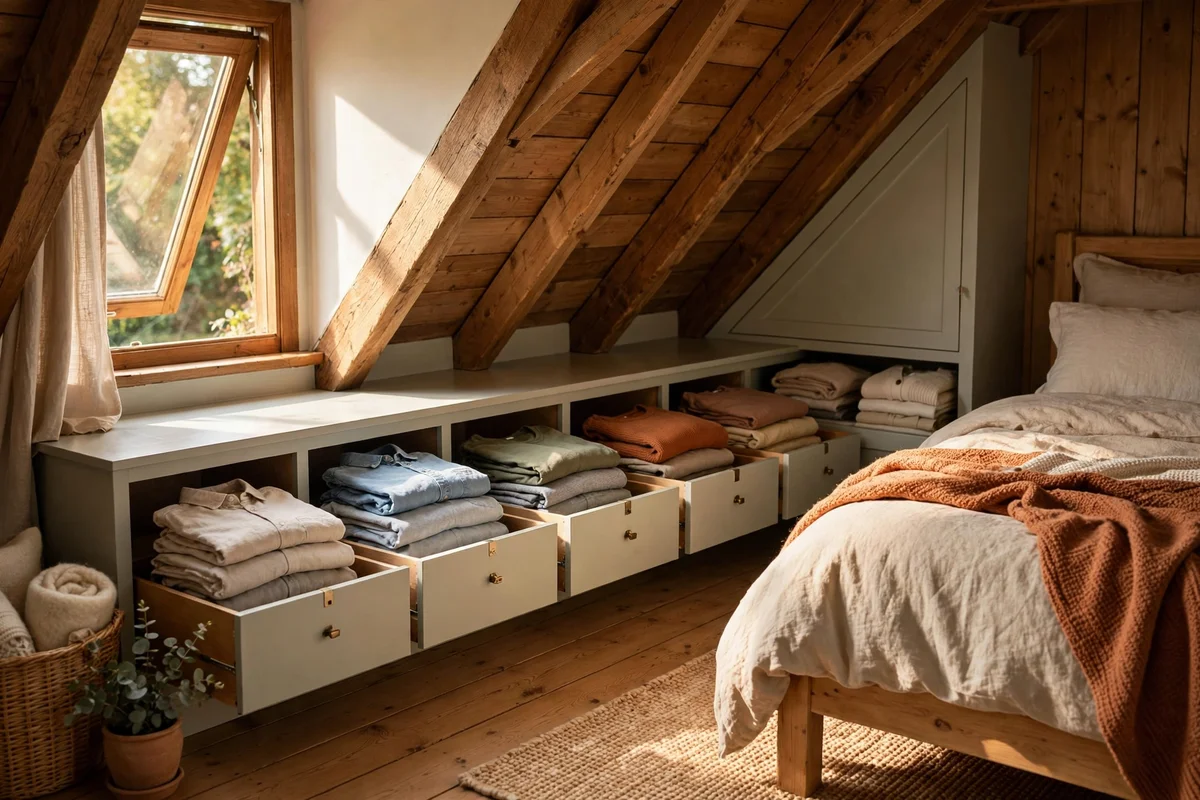
The triangular space where the roof meets the floor is usually wasted, yet it is perfect for shallow drawers 40 to 60 cm deep. Build or commission drawer units that step back as the ceiling drops, keeping the tallest section 90 cm high where headroom allows and tapering to 40 cm at the lowest edge. Soft-close runners rated for 25 kg handle folded clothes and bedding with ease, and painted fronts in the wall colour make the storage disappear.
A run of 240 cm along one eave typically fits six to eight drawers and holds a full wardrobe of folded clothes. Ventilate the units with a 10 mm gap behind so condensation never builds up against the cold roof. The mistake to avoid is deep drawers under the lowest eaves, which become black holes you kneel to reach into. Shallow drawers you can see into from above are the ones you will actually use.
10. Slide Woven Baskets Under the Eaves Edge Where the Roof Gets Low
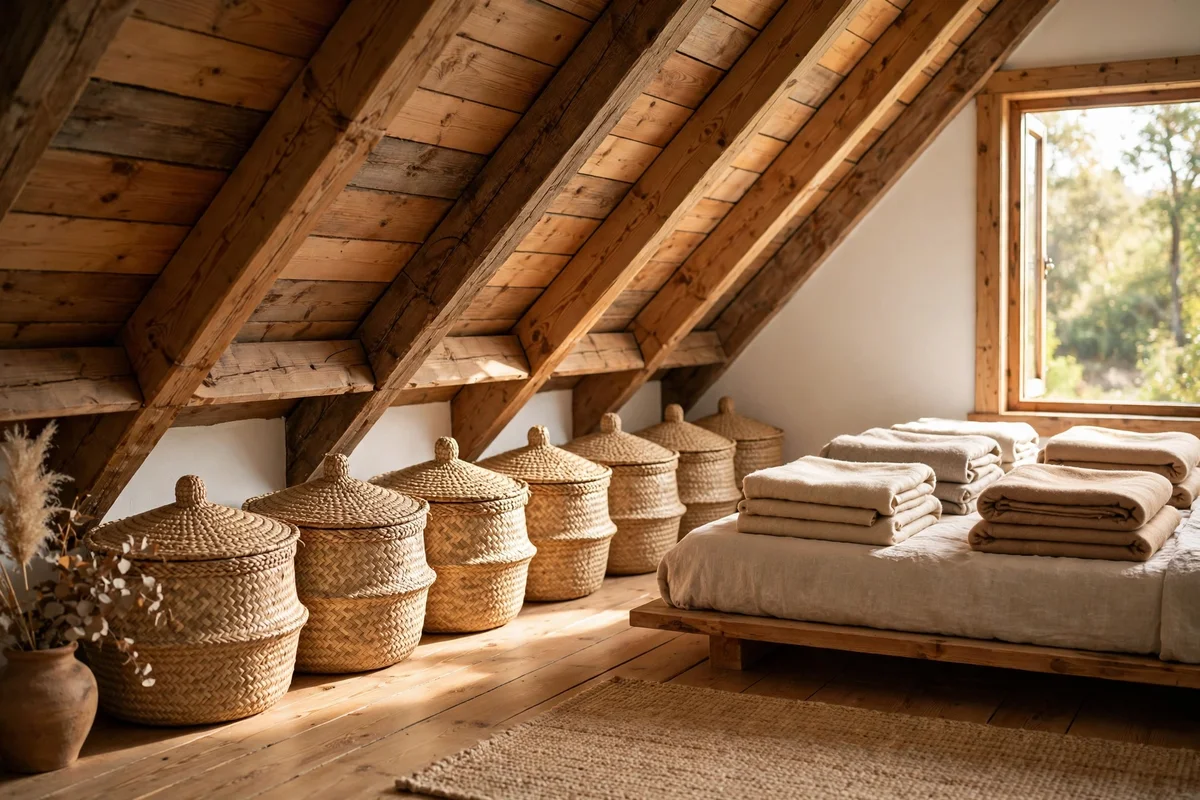
Where the ceiling drops below 80 cm, lidded baskets 40 to 50 cm wide slide neatly into the wedge and hold out-of-season bedding or spare throws. Seagrass, rattan or willow baskets bring a handcrafted texture that suits timber lofts, and a lid keeps dust off the contents. Label each basket with a small tied tag so you can find the winter duvet without pulling out all four.
Leave a 5 cm gap above each basket so you can lift the lid without scraping the ceiling. Two or three matching baskets look calmer than a mixed assortment, and a pair of 45 cm baskets costs 30 to 60 pounds or dollars. The mistake to avoid is plastic storage boxes here; they sweat against cold roof surfaces and look harsh against natural materials. Woven fibres breathe, which keeps stored linen fresh.
11. Repeat Three Calm Colours So the Whole Loft Reads as One Room
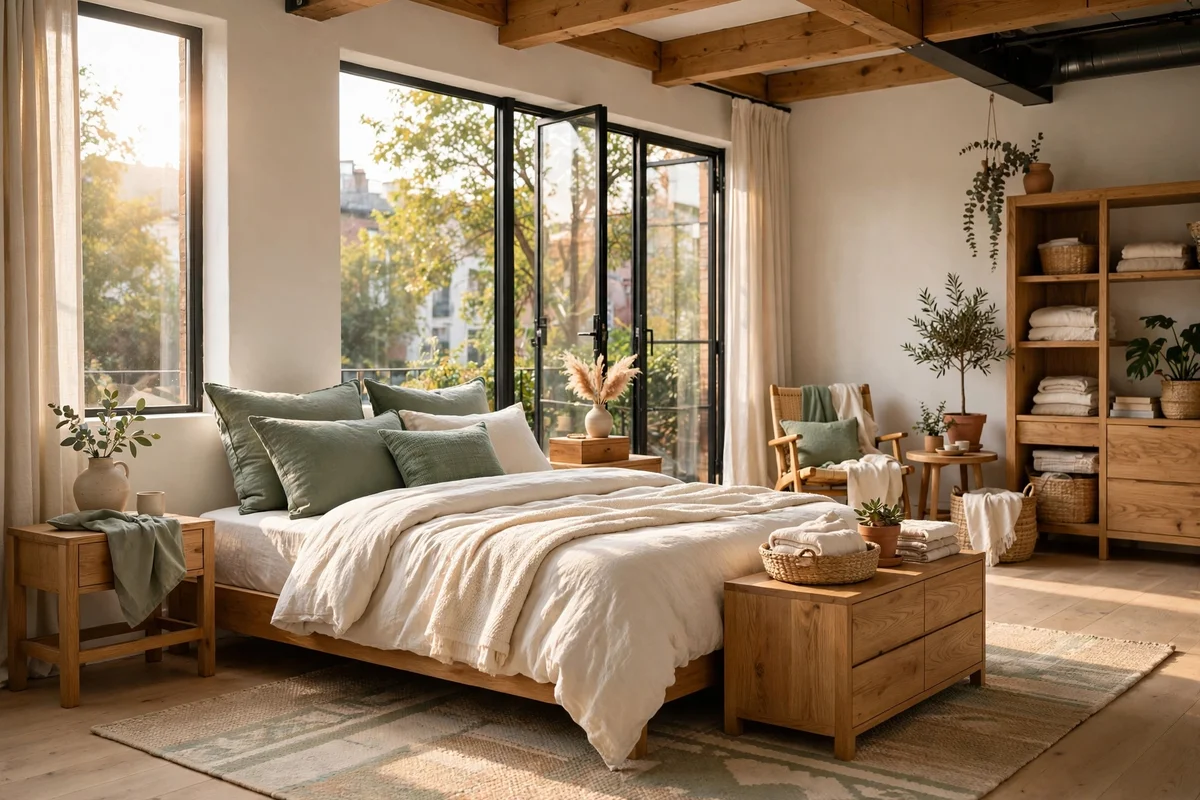
Pick three quiet colours, for example warm white, sage and natural oak, and repeat each one in at least three places across the loft. The bedding might carry the sage, the rug the warm white, and a chair or shelf the oak tone; when every zone shares the same small palette, a 60 square metre open space feels like one calm room instead of three competing ones. Limit accent colours to a single restful tone like dusty blue or clay.
Test the palette by gathering fabric swatches of bedding, curtains and the rug together in daylight before buying. A ratio of roughly 60 percent warm white, 30 percent timber tones and 10 percent sage keeps the scheme balanced. The mistake to avoid is giving the bedroom its own bold colour story, which visually severs it from the rest of the loft. Restraint is what makes the open plan feel intentional.
12. Carry One Floor Finish Across the Loft to Unify the Space
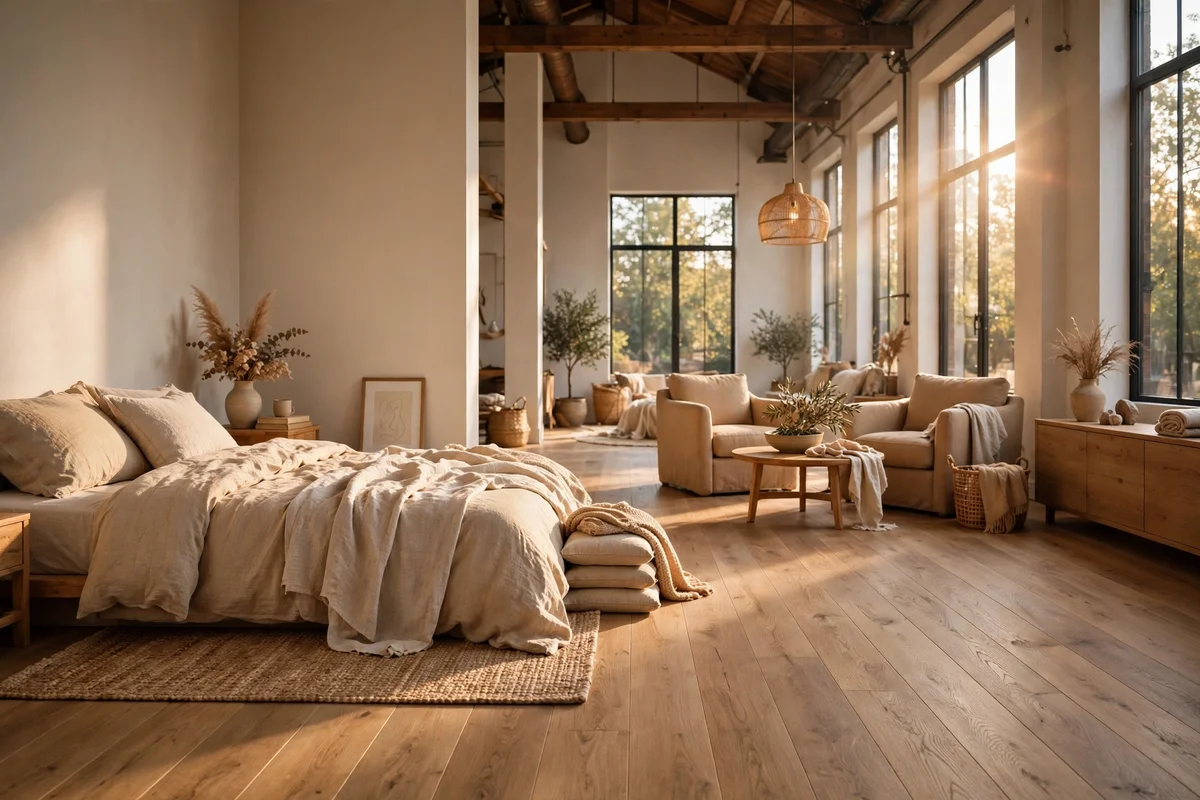
One continuous floor, whether wide-plank oak, pale engineered timber or polished concrete with a matte seal, lets the eye travel uninterrupted and makes the loft feel larger. If the existing floor changes between zones, a single large rug over the bed area and a matching runner toward the living space can fake the same continuity for far less money. Keep thresholds flush and skip any raised border between sleeping and living areas.
For timber floors, boards 14 to 20 cm wide in a natural oil finish suit lofts best and hide dust between cleans. Refinishing 40 square metres costs roughly 800 to 1500 pounds or dollars, while two large rugs achieve a similar visual link for under 300. The mistake to avoid is a different floor in the bedroom corner, which chops the open plan into a patchwork and shrinks every zone.
13. Soften Hard Floors With a Second Flatweave Rug Beyond the Bed Zone
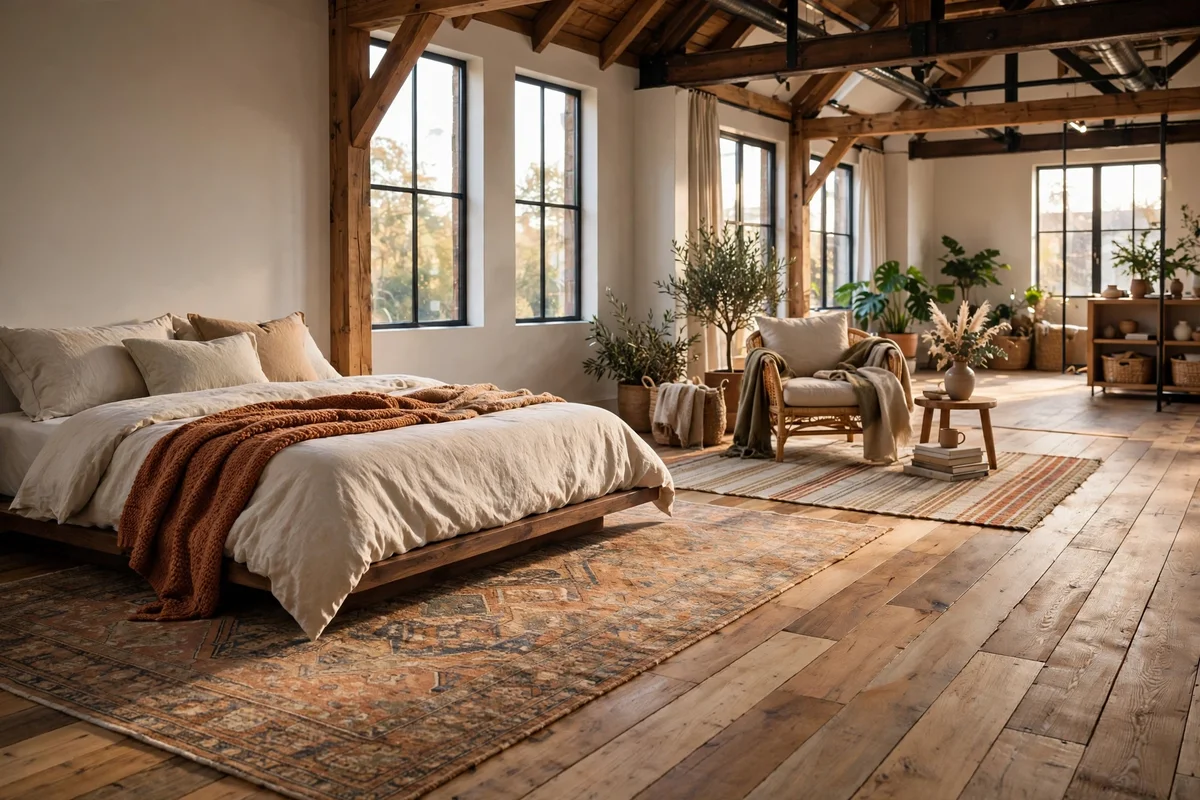
One rug under the bed plus a second flatweave rug in the sitting or dressing corner gives hard loft floors a rhythm of softness. Choose the second rug at 120 by 180 cm or 160 by 230 cm, smaller than the bed rug so the hierarchy stays clear, and keep both in the same colour family with a different pattern scale. Flatweave cotton or wool at 5 to 8 mm thick lies flat under chair legs and costs less than a deep pile.
Position the second rug so its edge sits 30 to 50 cm from the bed rug, leaving a strip of bare floor that reads as a natural walkway. This gap stops the two rugs merging into one blurry expanse. The mistake to avoid is three or more rugs of similar size scattered around, which makes the floor look busy. Two rugs with a clear size difference keep the loft calm and easy to vacuum.
14. Set a Reading Chair and Small Lamp in a Window Corner Away From the Bed
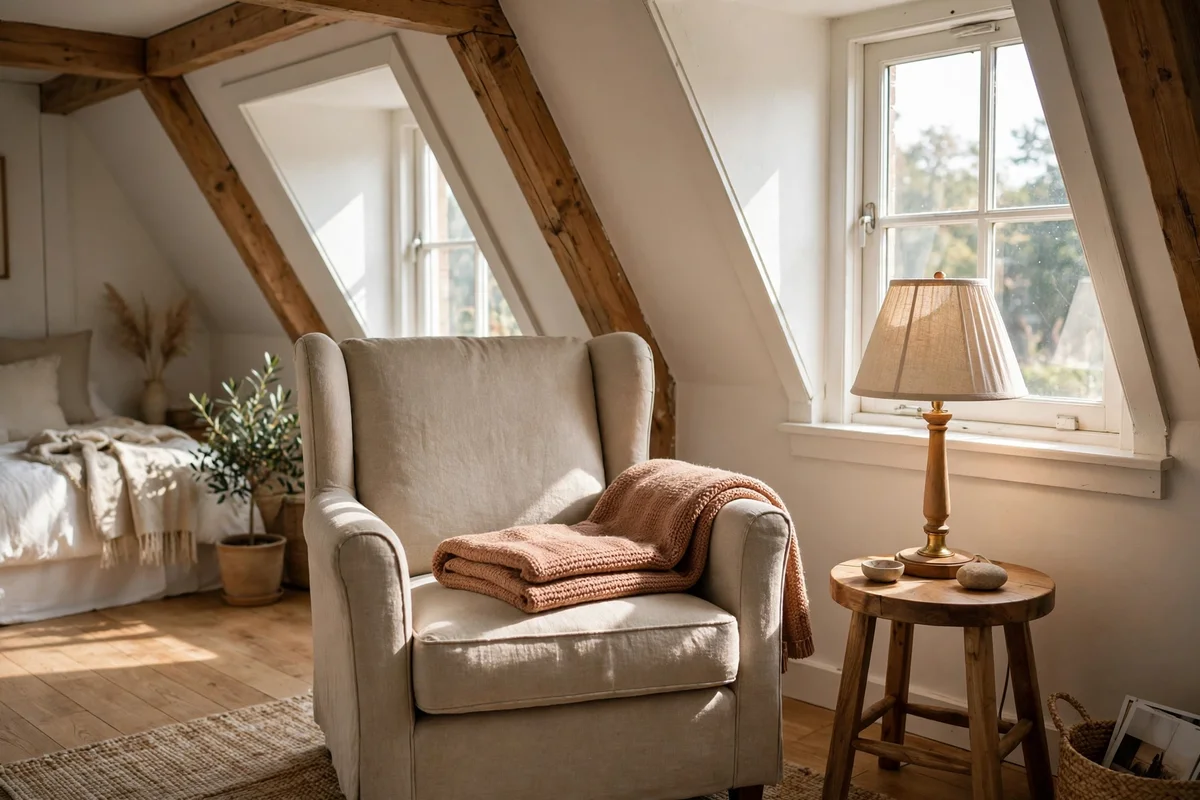
A single armchair 70 to 80 cm wide with a small side table and a 45 cm lamp turns a loft window corner into a quiet retreat separate from the bed. Place the chair at a slight angle to the glass, about 50 cm from the wall, so daylight falls over the shoulder for reading. A wool or linen-upholstered chair in one of the loft’s three palette colours keeps the corner tied to the whole room.
Add a folded throw and a small basket for books beside the chair, and this corner becomes the place for morning tea rather than the bed. The side table needs only a 30 to 40 cm top for a cup and a lamp. The mistake to avoid is pushing the chair flush into the corner, which feels boxed in. A little air behind it keeps the loft’s openness intact while still offering a sense of enclosure.
15. Flank the Bed With Two Matching Nightstands for Symmetry and Storage
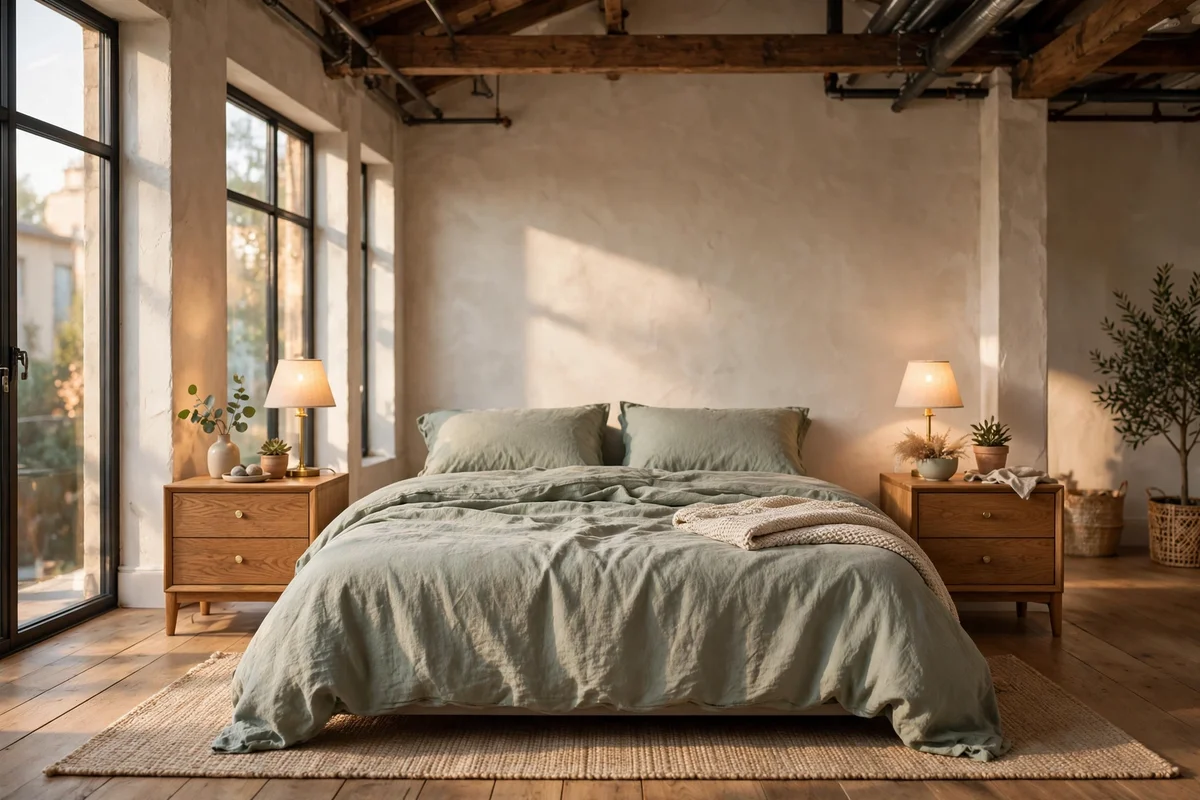
Two matching nightstands 40 to 50 cm wide and 55 to 65 cm tall give the bed a settled, symmetrical frame that the eye reads as intentional. Choose pieces with at least one drawer each for chargers, reading glasses and small personal items, since open lofts show every surface. A 5 cm gap between nightstand and mattress keeps bedding from snagging, and the tops should sit level with or just below the mattress surface.
In timber drawers, cedar or sanded pine liners keep folded items fresh and cost almost nothing. A pair of simple oak nightstands runs 80 to 180 pounds or dollars; second-hand pairs painted in the wall colour are a fine budget route. The mistake to avoid is one nightstand only, which makes the bed look lopsided in a wide open space where both sides are fully visible.
16. Put a Closed Wardrobe on the Far Wall to Keep the Bed Zone Quiet
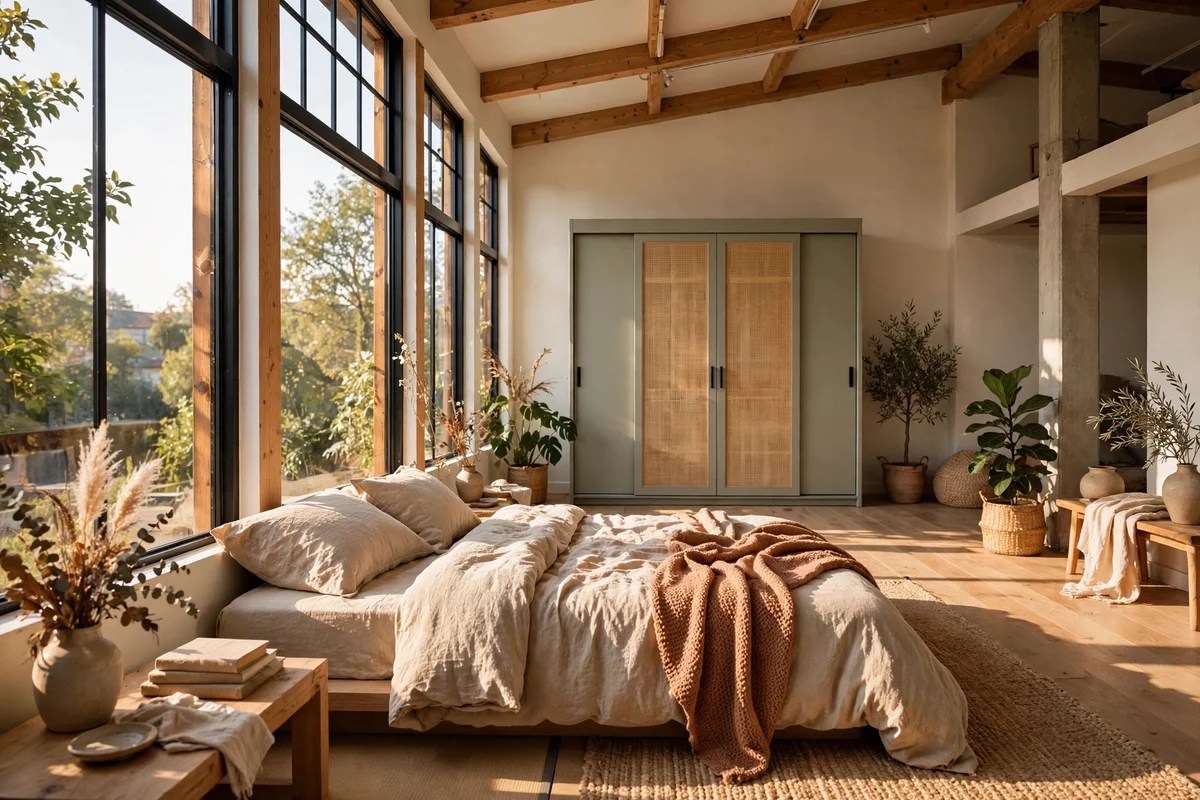
A wardrobe 120 to 180 cm wide and 200 to 220 cm tall belongs on the loft wall farthest from the bed, ideally near the stairs or entry. Keeping clothes storage out of the sleeping zone means the bed corner holds only restful things, and the wardrobe’s tall mass balances the low bed visually across the room. Sliding doors suit lofts because they need no swing space in tight eaves-adjacent walkways.
Inside, use double hanging rails at 100 cm and 200 cm plus two shelves, which fits a full wardrobe in 60 cm of depth. Paint or choose the wardrobe in the loft’s wall colour so it recedes. The mistake to avoid is an open clothing rail beside the bed, which turns the sleeping corner into a laundry display. Closed doors keep the bedroom calm even when the wardrobe behind them is gloriously untidy.
17. Dress the Bed in Stonewashed Linen and a Folded Wool Throw
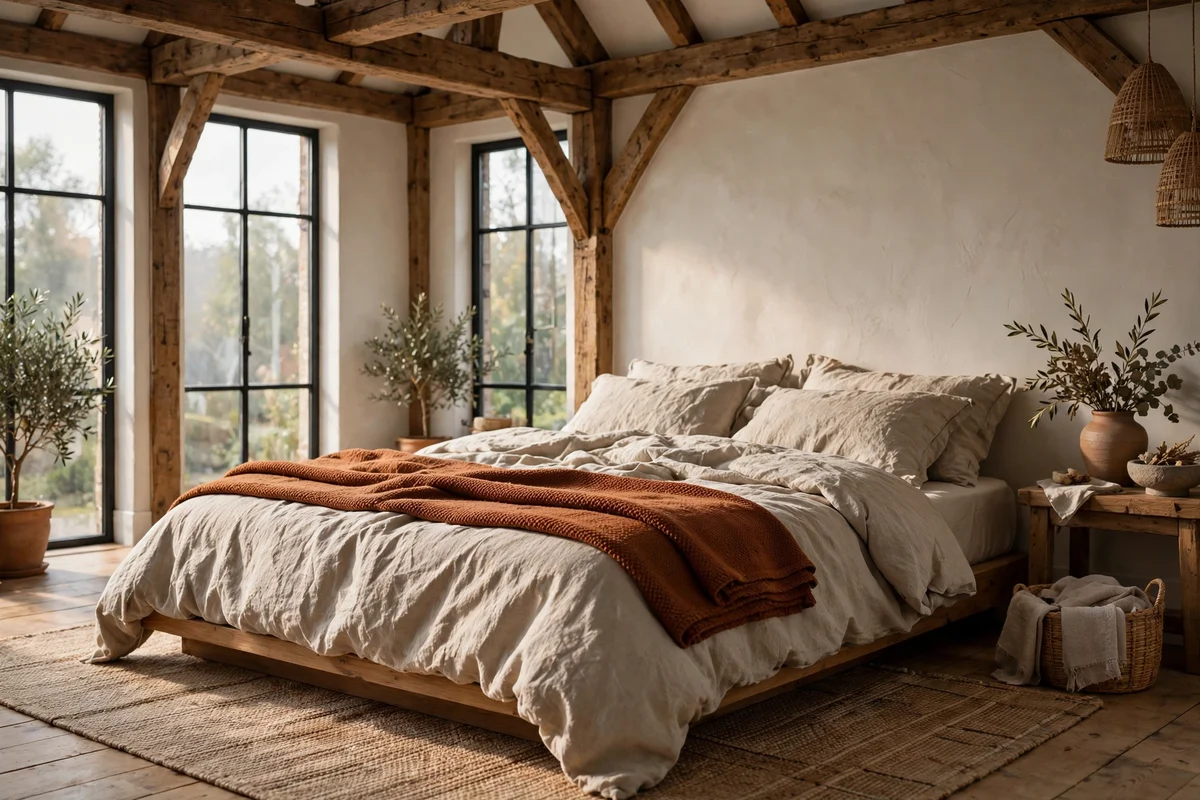
Stonewashed linen in oat, flax or soft sage wrinkles gracefully and suits the relaxed character of a loft far better than crisp percale. A duvet set plus two pillowcases in 100 percent European flax costs 90 to 160 pounds or dollars and softens further with every wash. Layer a folded wool throw 130 by 180 cm across the foot of the bed in a deeper tone like rust or forest, which adds weight and a clear horizontal line the eye can rest on.
Wash linen at 40 degrees with a mild detergent and skip fabric softener, which coats the fibres and dulls their texture. Line-dry when possible; linen dries quickly and needs little ironing if folded warm from the line. The mistake to avoid is a shiny satin or polyester set, which looks cold under loft lighting and slides off a low bed. Matte natural fibres photograph beautifully and feel honest to the touch.
18. Calm Echoes With Soft Furnishings Because Open Lofts Carry Sound
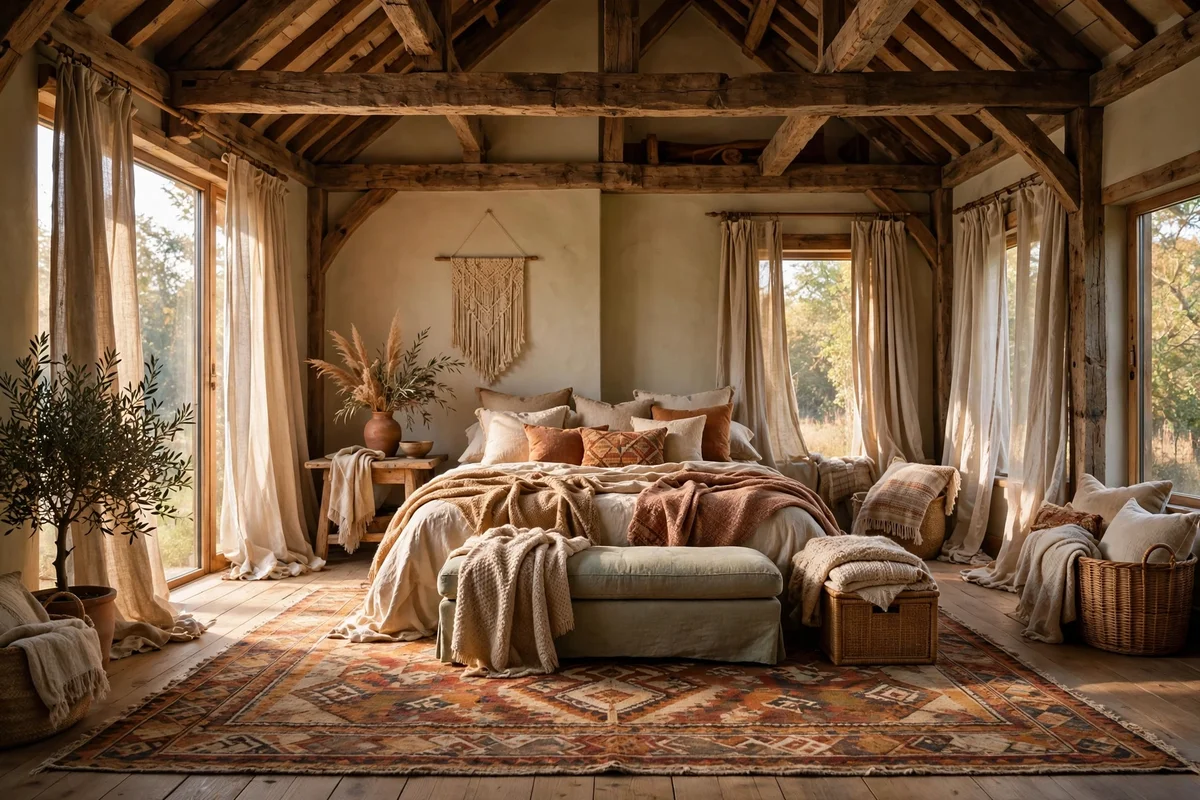
High ceilings and hard surfaces make open lofts echo, so answer with softness: a large rug, upholstered furniture, linen curtains and a fabric headboard each absorb sound. As a rule, cover at least a third of the floor area with rugs or textiles and the echo drops noticeably. A rug pad 8 to 10 mm thick under the bed rug adds both quiet and insulation, and costs 30 to 60 pounds or dollars for a 200 by 300 cm size.
Books on the open bookcase divider double as sound baffles, and a row of cushions along a low windowsill seat breaks up flat reflective surfaces. Test the difference by clapping once before and after adding textiles; the change is immediate. The mistake to avoid is assuming one small rug is enough. In a 50 square metre loft with a 3 metre ceiling, you need generous textile coverage before the room stops sounding like a hall.
19. Keep the Loft Warm With Layered Rugs and Draught-Proofed Windows
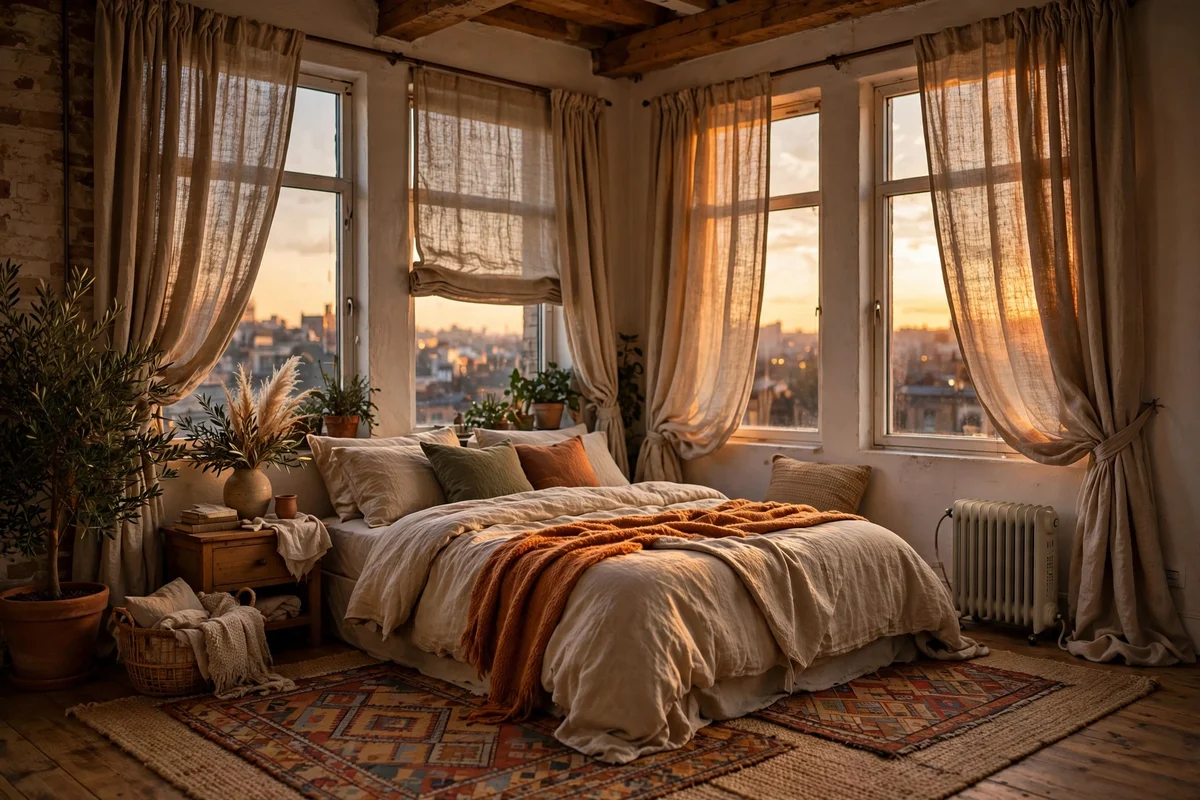
Lofts lose heat through the roof and tall glazing, so layer warmth where you sleep: a rug pad under the bed rug, a wool throw on the bed, and a draught excluder along the stairwell door. Check window seals each autumn; self-adhesive foam draught strips 5 mm thick cost under 10 pounds or dollars per window and cut the chill beside the bed noticeably. Heavy linen curtains drawn at night add an insulating air layer over the glass.
If the loft has one thermostat for the whole space, a small oil-filled radiator 1 to 1.5 kW near the bed zone gives local control on cold nights for about 40 to 70 pounds or dollars. Keep it 60 cm from bedding and curtains. The mistake to avoid is heating the entire loft to bedroom comfort all evening, which wastes energy. Warm the sleeping zone locally and let the living area run a degree or two cooler.
20. Fit a Headboard That Stops Well Below the Beams for Air and Light
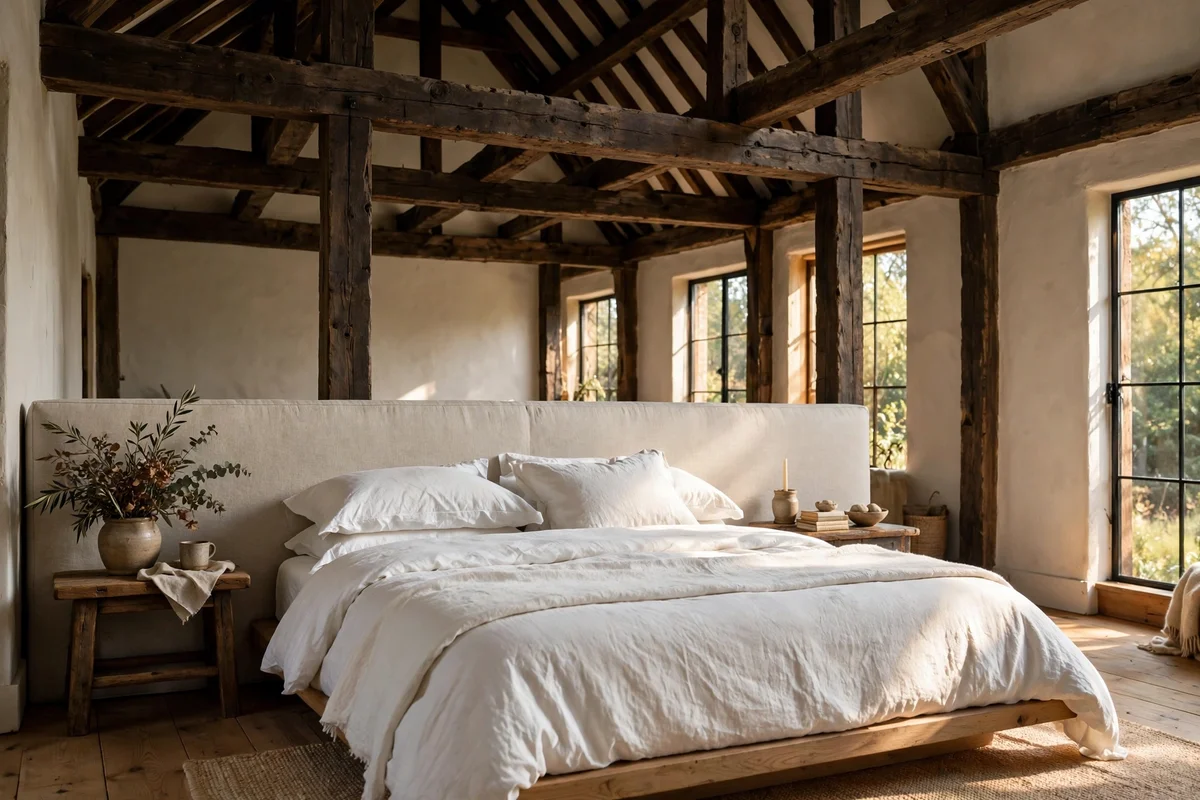
A headboard 60 to 90 cm above the mattress gives the bed a finished back without rising toward the beams and blocking light. Upholstered panels in linen or a simple timber plank design both work; keep the width equal to the mattress or 10 cm wider per side. Fix it to the bed frame rather than the wall so you can move the bed without patching plaster, using bolts through the frame’s head end.
An upholstered headboard also absorbs sound behind the pillows, which helps in an echoing loft. A 150 cm wide linen headboard costs 120 to 250 pounds or dollars ready-made, while three sanded planks on battens make a fine weekend project for under 40. The mistake to avoid is a headboard that climbs past 120 cm, which starts to read as a partition and cuts the airy feeling the loft is prized for.
21. Echo the Bedding Colours in the Curtains and Rug for a Joined-Up Look
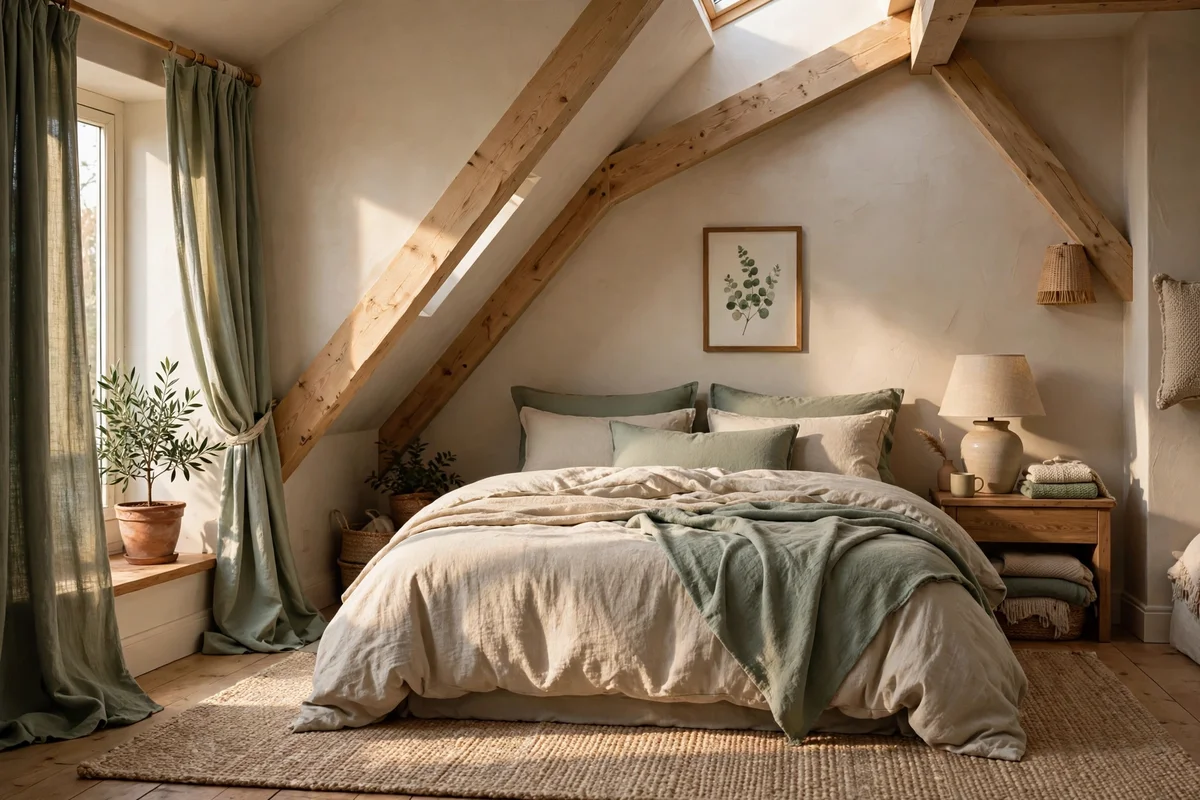
When the curtain fabric picks up the sage of the duvet and the rug carries the oat of the sheets, the sleeping zone feels designed rather than assembled. You need not match exactly; tones within one step on a colour card read as intentional. Order curtain and bedding swatches together and view them in the loft’s own daylight, since north-facing dormers cool every colour by half a shade.
This echo technique costs nothing extra if you plan it before buying, yet it unifies the bed zone more than any single expensive piece. Repeat the deepest tone once more in a small object, like a ceramic vase on the nightstand, to close the loop. The mistake to avoid is introducing a fourth strong colour in the curtains, which breaks the three-colour discipline and makes the bed corner feel separate from the rest of the loft.
The thread running through all twenty-one ideas is restraint: one rug to mark the zone, three colours repeated with discipline, light in pools rather than floods, and storage tucked where the roof runs low. None of these moves needs a builder or a big budget, yet together they turn an open loft from a handsome shell into a bedroom that genuinely invites sleep.
This week, try the simplest change first. Lay a large rug under the bed, switch off the ceiling light, and let two bedside lamps do the evening work. Notice how the sleeping corner draws inward and the rest of the loft settles around it. Once you feel that shift, the remaining ideas become small pleasures to add one by one, at whatever pace suits your home and your budget.
Frequently Asked Questions
How do I make a loft bedroom feel private without building walls?
Use soft dividers rather than solid ones. A folding screen 150 to 180 cm tall, an open bookcase turned sideways, or linen curtains hung from the beams all suggest a boundary while letting light through. Anchor the zone with a rug at least 200 by 300 cm under the bed, and keep sleeping-zone clutter inside closed nightstands so the corner always reads as calm.
What size rug works best under a bed in an open loft?
Choose a rug that extends 60 to 90 cm beyond each side of the bed and about 90 cm past the foot, which usually means 200 by 300 cm for a double bed and 240 by 340 cm for a king. A low pile of 8 to 12 mm keeps nearby drawers and doors clearing easily. In an open loft, a generous rug matters more than in a walled room because it is doing the zoning work.
How can I reduce echo in an open-plan loft bedroom?
Cover at least a third of the floor with rugs or textiles, add a rug pad 8 to 10 mm thick under the main rug, and hang linen curtains at the windows. Upholstered furniture, a fabric headboard and books on open shelves all absorb sound. Clap once before and after adding textiles to hear the difference; most lofts need several soft layers before the echo truly settles.
Are open lofts cold at night, and what helps?
Lofts can lose heat through the roof and tall windows, so layer warmth around the bed: a rug pad under the rug, a wool throw on the bedding, and draught strips on window frames each autumn. A small 1 to 1.5 kW oil-filled radiator near the bed gives local control without heating the whole space. Draw the curtains at night to add an insulating layer over the glass.
Can I fit proper clothes storage into the low eaves?
Yes, with shallow drawers rather than deep ones. Build drawer units 40 to 60 cm deep that step down as the ceiling drops, keeping the tallest part 90 cm high where headroom allows. A 240 cm run fits six to eight drawers, enough for a full wardrobe of folded clothes. Leave a 10 mm ventilation gap behind the units so condensation never builds against the cold roof.