Bedroom
24 Cozy Fall Bedroom Ideas for Deep, Restful Sleep
By Anna Wells · · 21 min read
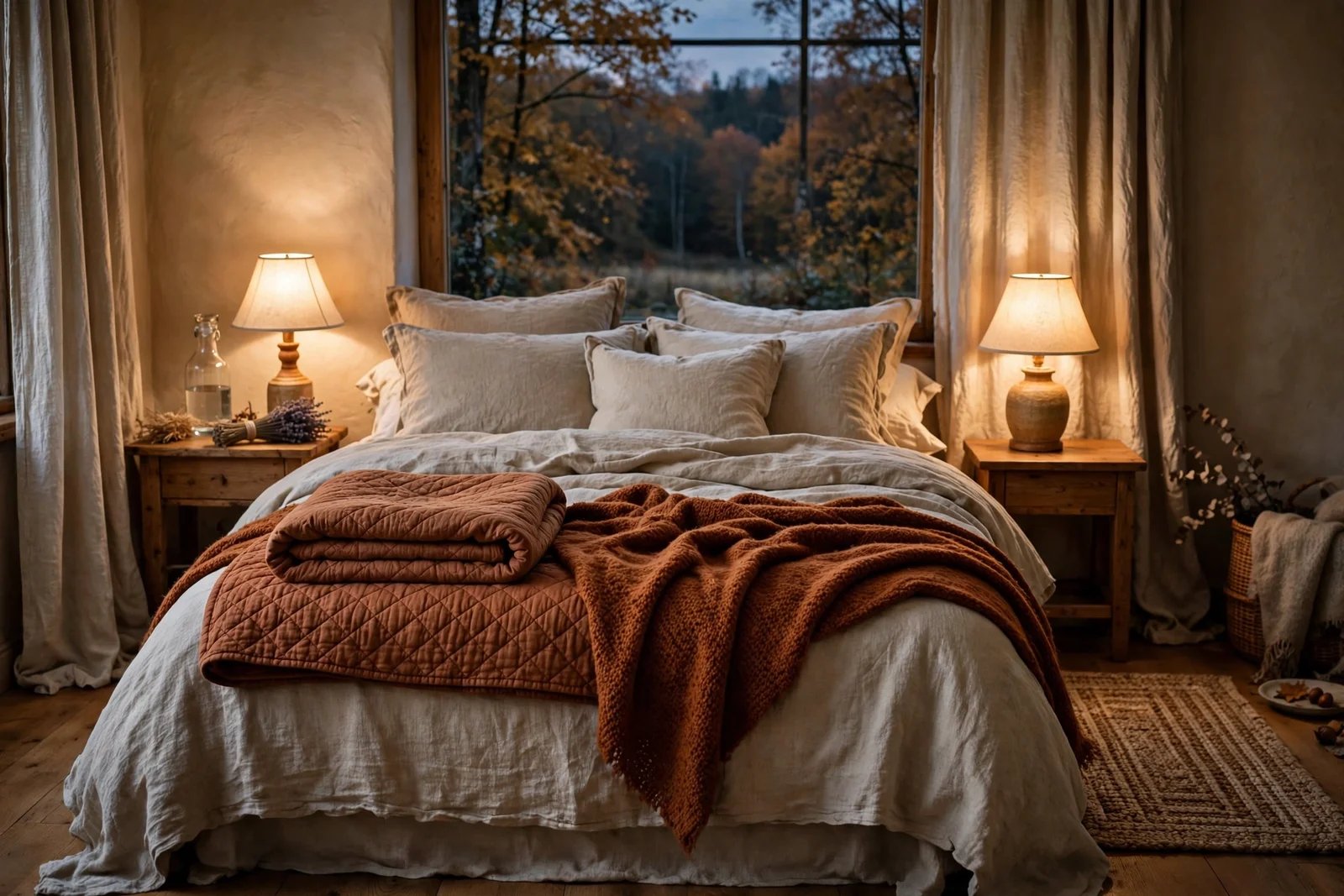
Layered bedding, warm lamplight and calm autumn colour: 24 practical ideas for turning your bedroom into a deep-sleep sanctuary this fall.
There is a particular quiet that settles over a bedroom in October, when the light turns amber by late afternoon and the air carries the faint smell of woodsmoke and dry leaves. It is the season when the bed stops being just a place to sleep and becomes the warmest corner of the house in every sense, the spot everyone drifts toward as the evenings draw in.
A fall bedroom built for deep rest is really built in layers: fabric over fabric, warm colour over calm colour, lamplight instead of overhead glare. Each layer has a small job, and together they tell the body that the day is over and it is safe to let go. Nothing here needs a renovation, only a series of small, deliberate choices.
Below are 24 concrete ideas, from the exact order to stack your bedding to where the rug should sit and how to keep screens out of the room without missing a morning alarm. Every one is practical, most cost very little, and none require redecorating the whole house. Pick the ones that fit your room and your budget.
Start with the bed itself, then work outward to light, colour, scent and corners. By the end you will have a room that does the unwinding for you, night after night, all season long.
1. Lay a Breathable Cotton Sheet as the First Layer
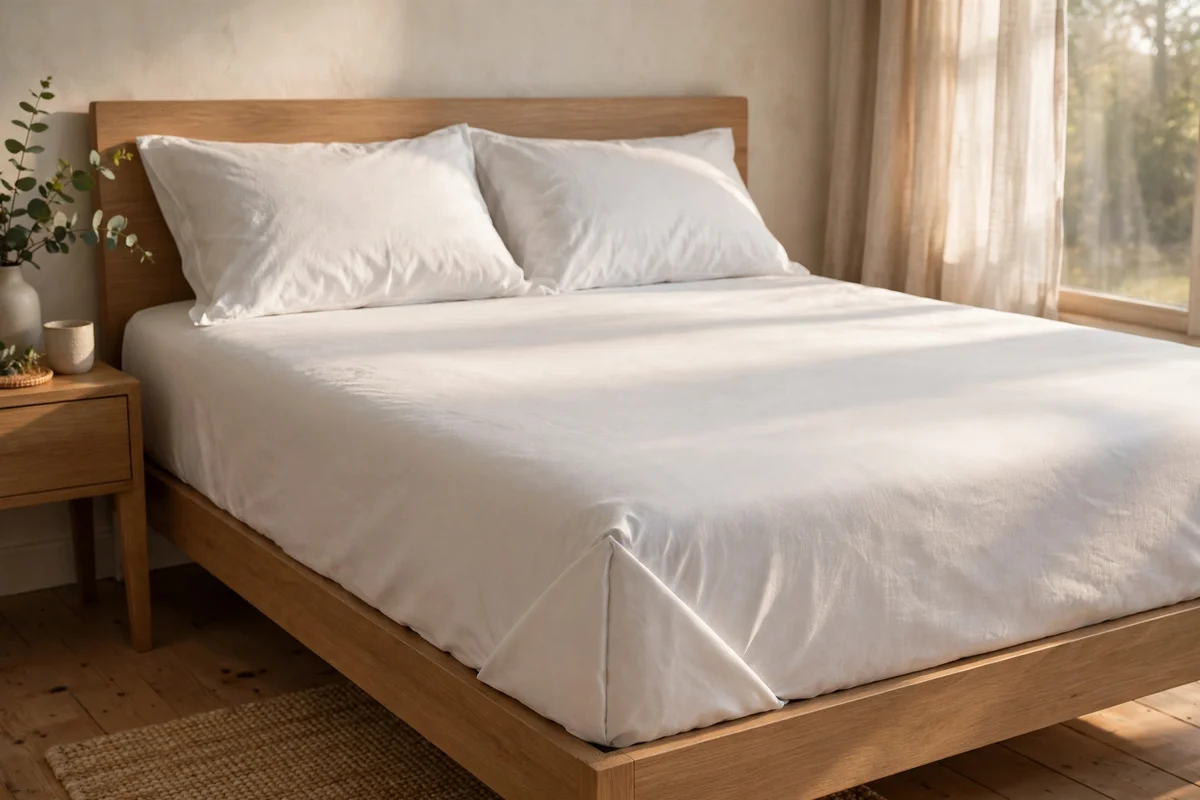
Begin every autumn bed with a 100 percent cotton sheet, ideally percale or sateen between 200 and 400 thread count. Cotton breathes against skin and wicks light moisture as the night air cools, which keeps the heavier layers above it from feeling clammy. Make the bed with hospital corners at the foot and leave the sides loose so you can adjust through the night. Wash sheets weekly in warm water and skip heavy softener, which coats fibres and dulls breathability over time.
The common mistake is a slippery microfibre sheet, which traps heat and fights every natural fibre above it. A solid cotton set costs 25 to 50 pounds or dollars and survives two to three years of weekly washing. Budget tip: buy the sheet in white or oat so it disappears under the visible layers, and let the coloured bedding above carry the seasonal palette instead.
2. Add a Wool Blanket as the Middle Weight
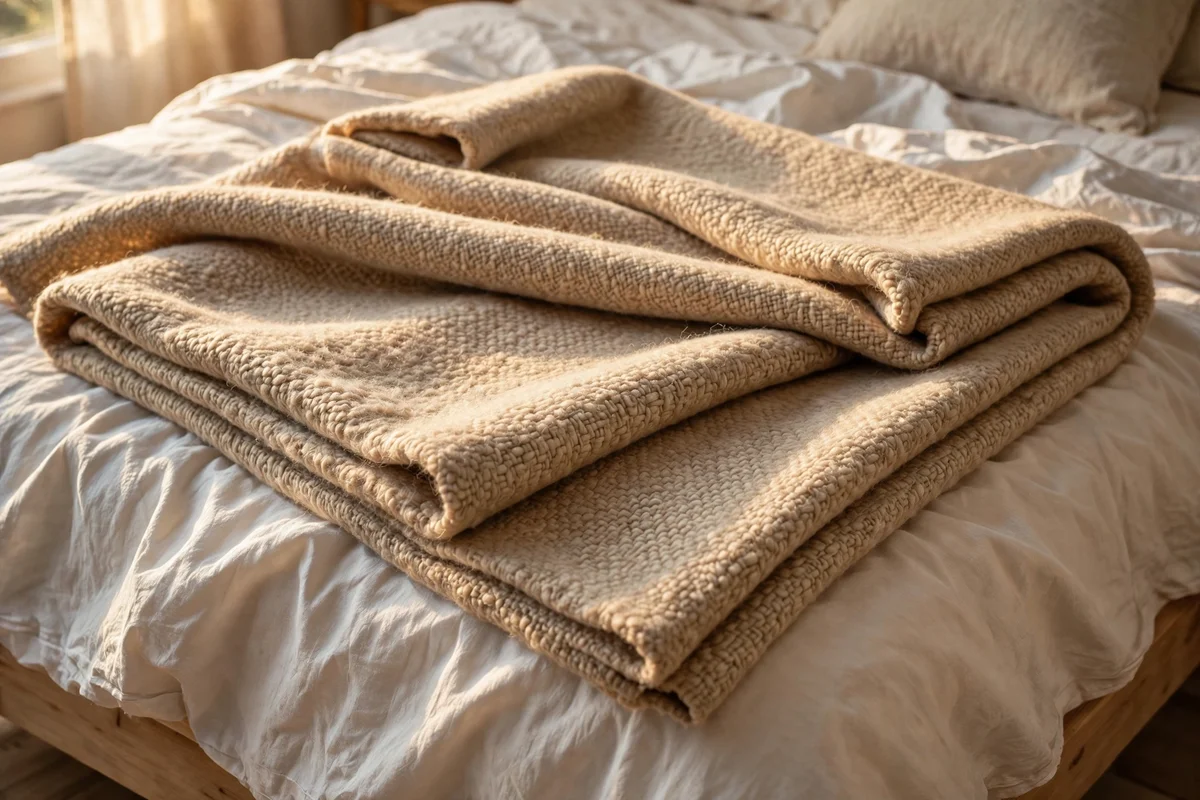
The wool blanket is the middle layer that does the quiet heavy lifting. Wool holds warmth even when slightly damp and releases excess heat, so you stay evenly warm instead of cycling between hot and cold. Look for 60 to 100 percent wool in a flat or twill weave; a blanket of 130 by 180 cm suits a double bed folded double, while 150 by 200 cm covers a king. Lay it flat over the sheet with the top edge folded back about 25 cm for a neat cuff.
Place wool over cotton, never directly on skin, since some wool feels scratchy at the neck. If new wool smells strong, air it on a line for a day before it joins the bed. The mistake to avoid is washing wool hot: use a cool wool cycle and dry flat, or it felts and shrinks. A good wool blanket costs 40 to 90 pounds or dollars and can last a decade, making it one of the best value layers.
3. Fold a Quilt or Coverlet Across the Foot of the Bed
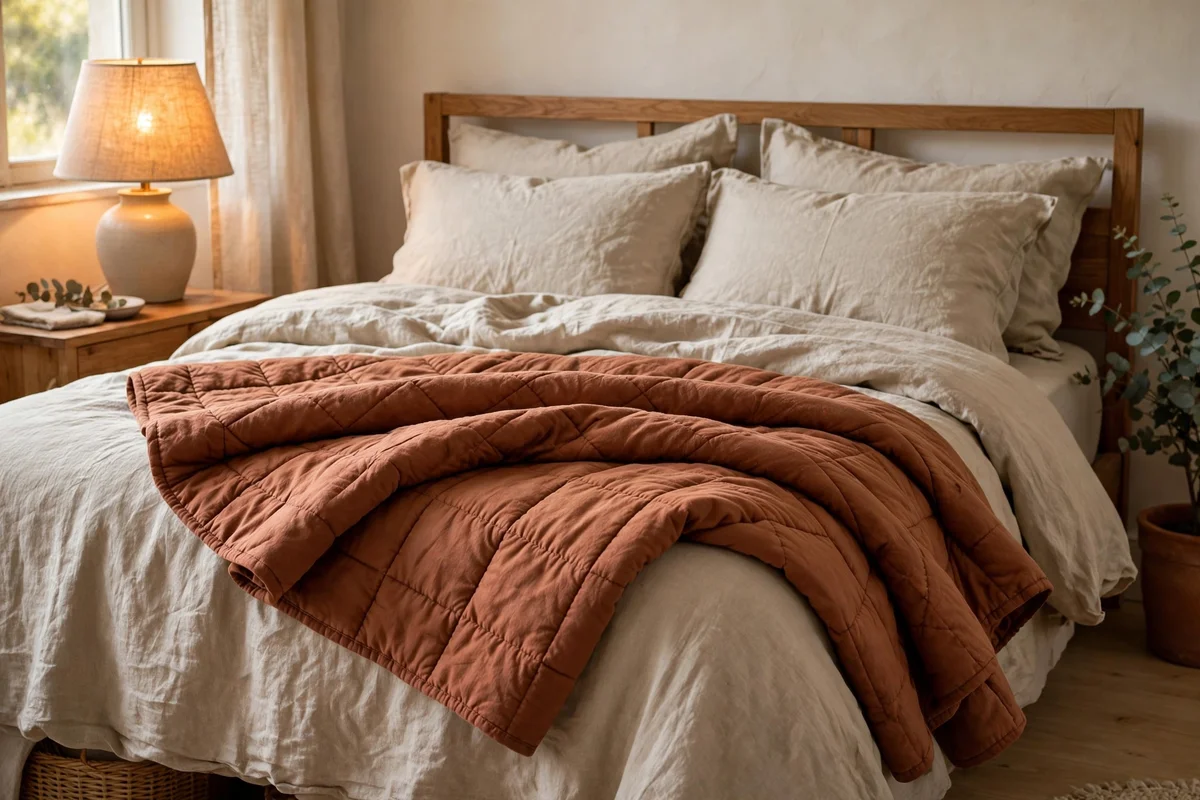
Fold a quilt or coverlet across the foot of the bed, covering roughly the bottom third. This is the most flexible layer in the whole stack: pull it up over your legs on a cold night, fold it back when the room is warm, or wrap it around your shoulders for ten minutes of evening reading. A coverlet of 170 by 220 cm works for a double, 200 by 240 cm for a king. Choose a stitched cotton quilt for texture or a soft washed coverlet for a relaxed drape.
The folded edge should sit straight and even, about 30 to 40 cm up from the foot, so the bed looks deliberate rather than rumpled. The mistake to avoid is a quilt so heavy it traps the whole bed; the foot layer should add warmth only where you want it. Budget tip: a vintage cotton quilt from a charity shop often costs 15 to 30 pounds or dollars and brings pattern no new throw can match.
4. Warm the Walls With a Clay Accent

Clay is the warm colour that reads calm rather than loud: a sunbaked terracotta softened toward brown. Use it as an accent wall behind the bed, or in smaller doses through a painted headboard panel, bedding and artwork. A wall in warm clay makes white trim and oat linen glow against it. If paint feels permanent, start with a clay-coloured throw and two cushions; the effect on the room’s warmth is surprisingly close.
Keep clay to about a quarter of the room’s colour so it warms without pressing in. Pair it with oat, cream and natural wood, which keep the tone earthy instead of fiery. The mistake to avoid is pairing clay with cold grey, which turns it muddy. Sample paint on a large board and watch it in evening lamplight before committing, since clay deepens noticeably under warm bulbs.
5. Keep Oat-Colour Bedding as the Calm Base
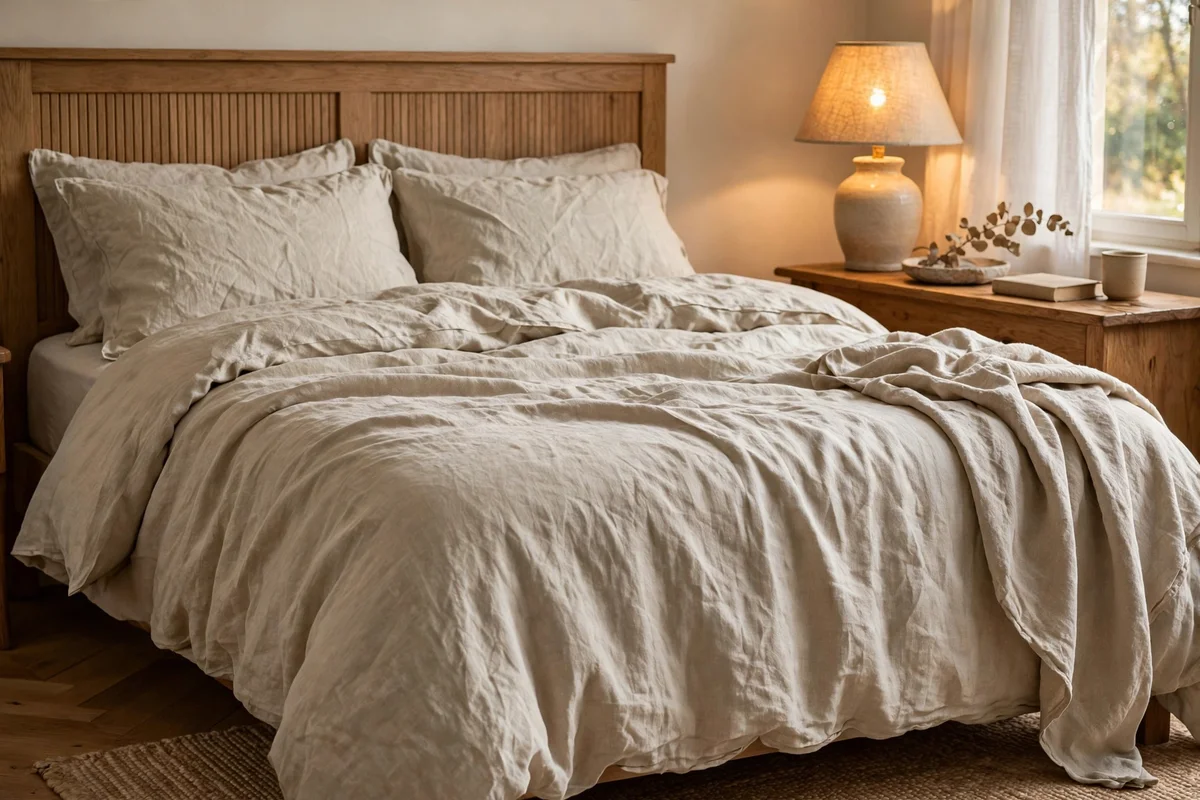
Oat is the quiet base that lets every other autumn colour do its work. A duvet cover or quilt in oatmeal linen or cotton gives the bed a soft, grainy texture and a colour that sits between cream and beige without ever looking flat. Oat reflects warm lamplight beautifully, which makes the whole room feel brighter after dark. Choose stonewashed linen if you like a lived-in crinkle, or a smooth cotton sateen for a cleaner line.
Layer oat bedding with one darker throw and two contrasting cushions so the base never reads as plain. The mistake to avoid is matching everything in oat exactly; mix two or three tones of oat, cream and flax for depth. Budget tip: an oat duvet cover is easy to find second-hand and takes dye well, so a white cover plus a packet of natural-toned dye costs under 15 pounds or dollars.
6. Bring Muted Rust In Through Cushions and Throws
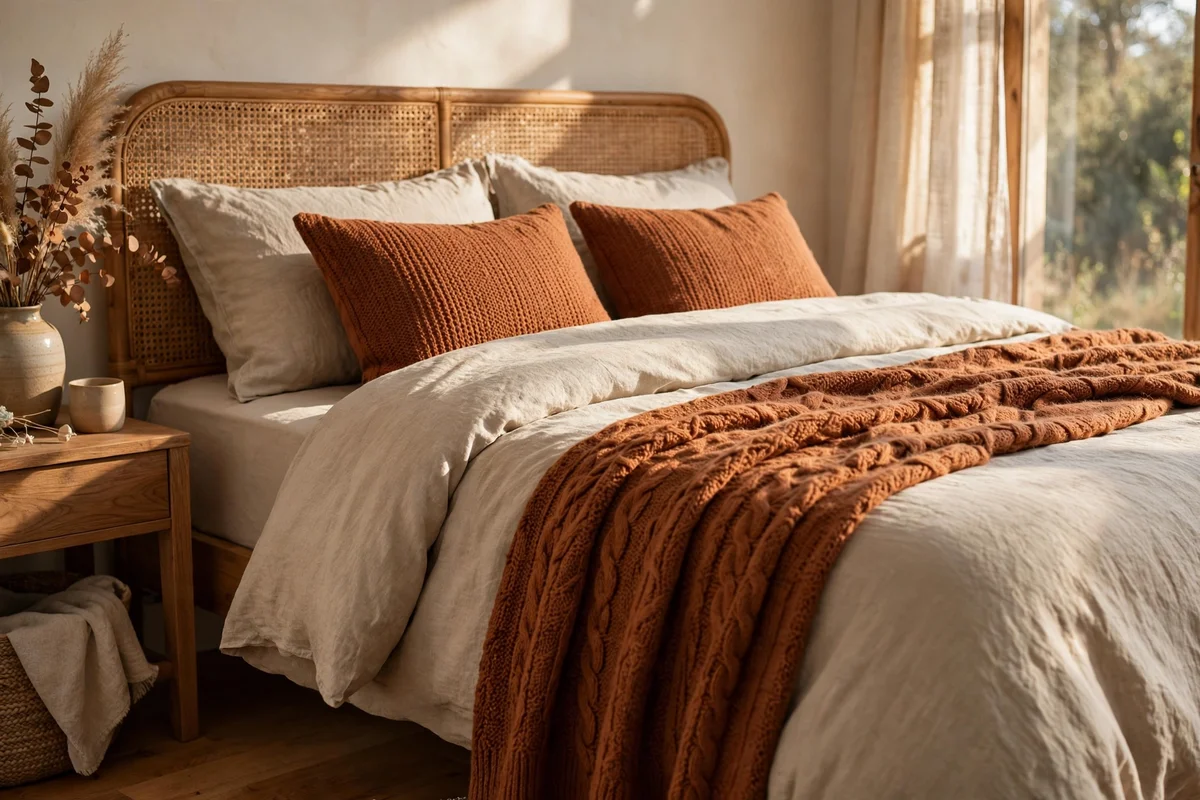
Muted rust is autumn’s signature colour at half volume: think dried leaves and old brick rather than bright orange. Bring it in through two or three cushions, a folded throw at the bed’s foot, or a single piece of art above the dresser. Rust against oat bedding creates the classic fall contrast without any paint. A rust wool throw of about 130 by 180 cm draped diagonally across the bed is often all the room needs.
Use rust as the 10 to 15 percent accent in the room’s colour mix so it stays rich rather than restless. It pairs beautifully with deep olive and natural wood. The mistake to avoid is scattering tiny rust objects everywhere; one or two confident pieces beat six small ones. Budget tip: rust cushion covers cost 8 to 15 pounds or dollars each and can be swapped out again in spring.
7. Ground the Palette With Deep Olive Accents
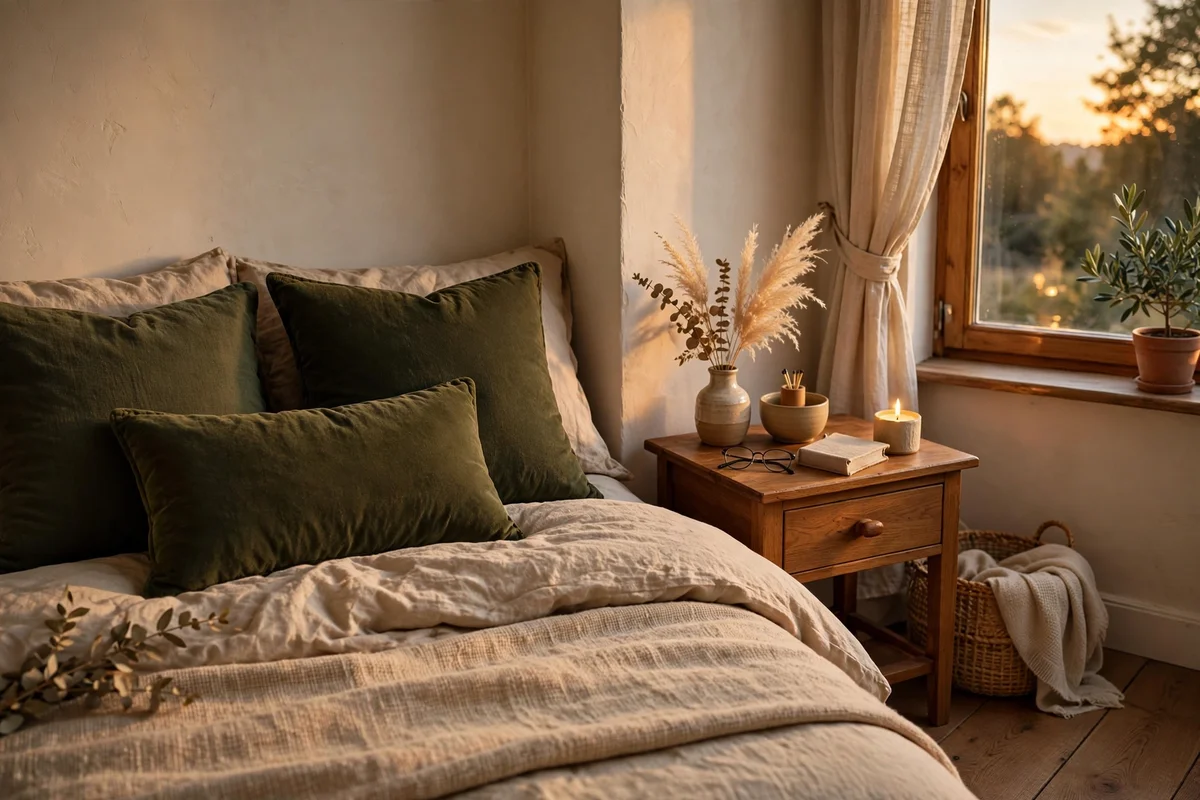
Deep olive grounds the palette the way soil grounds a garden. It is warm enough for autumn yet dark enough to give the room weight and calm. Use it in a single cushion pair, a bedside runner, or the reading chair’s upholstery if you are re-covering. Olive sits comfortably beside clay, rust and oat, and it flatters natural wood better than black or navy. One olive throw folded at the foot can anchor a whole bed.
Keep olive to small doses, roughly 10 percent of the room, since large olive walls can feel heavy in a small bedroom. The mistake to avoid is mixing olive with bright lime green accessories, which shatters the autumn mood. If the room has plants, olive fabric echoes their leaves and ties the whole scheme together. An olive cushion cover usually costs 10 to 18 pounds or dollars.
8. Place a Soft Rug Where Your Feet Land First
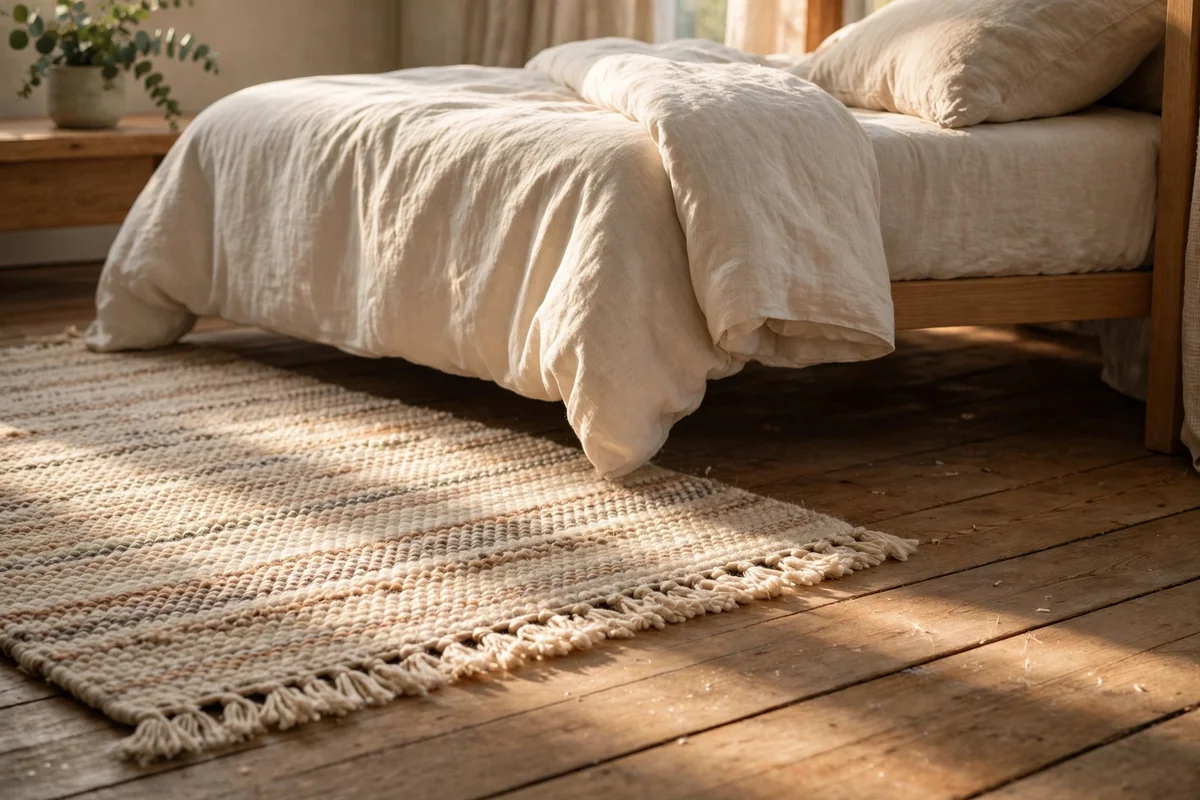
Autumn mornings are won or lost in the first five seconds, when feet meet the floor. Place a soft rug on each side of the bed, about 60 by 90 cm, so the first step lands on warmth instead of cold wood or tile. A low-pile wool or cotton rug is easy to clean and feels kind underfoot. If space is tight, one long runner of 70 by 200 cm along the bed’s side does the same job.
For a full wrap of comfort, a larger rug of 160 by 230 cm tucked two thirds under the bed frames the whole sleeping area and softens noise too. The mistake to avoid is a rug that stops just short of the bedside, leaving a cold strip exactly where you step. Budget tip: flatweave cotton rugs cost 20 to 40 pounds or dollars and wash easily; add a thin felt pad underneath for extra softness.
9. Put a Table Lamp on Each Bedside With a Warm Bulb

Put a table lamp on each bedside table, even in a small room. Two matching lamps create symmetry that the eye reads as calm, and they give both sides of the bed their own pool of light for reading. Choose lamps 40 to 55 cm tall so the shade sits near shoulder height when you are propped on pillows. Fit warm bulbs at 2700K or lower, ideally 9 to 12 watt LED, which glow like candlelight without the heat.
The mistake to avoid is relying on a single bright ceiling light, which flattens the room and keeps the brain alert. Put the lamps on a small timer or smart plug so they switch off 30 minutes after your usual bedtime. Budget tip: matching ceramic or wooden lamp bases from a charity shop plus two warm LED bulbs often totals under 35 pounds or dollars and transforms the evening mood instantly.
10. Choose Shades That Glow From Within
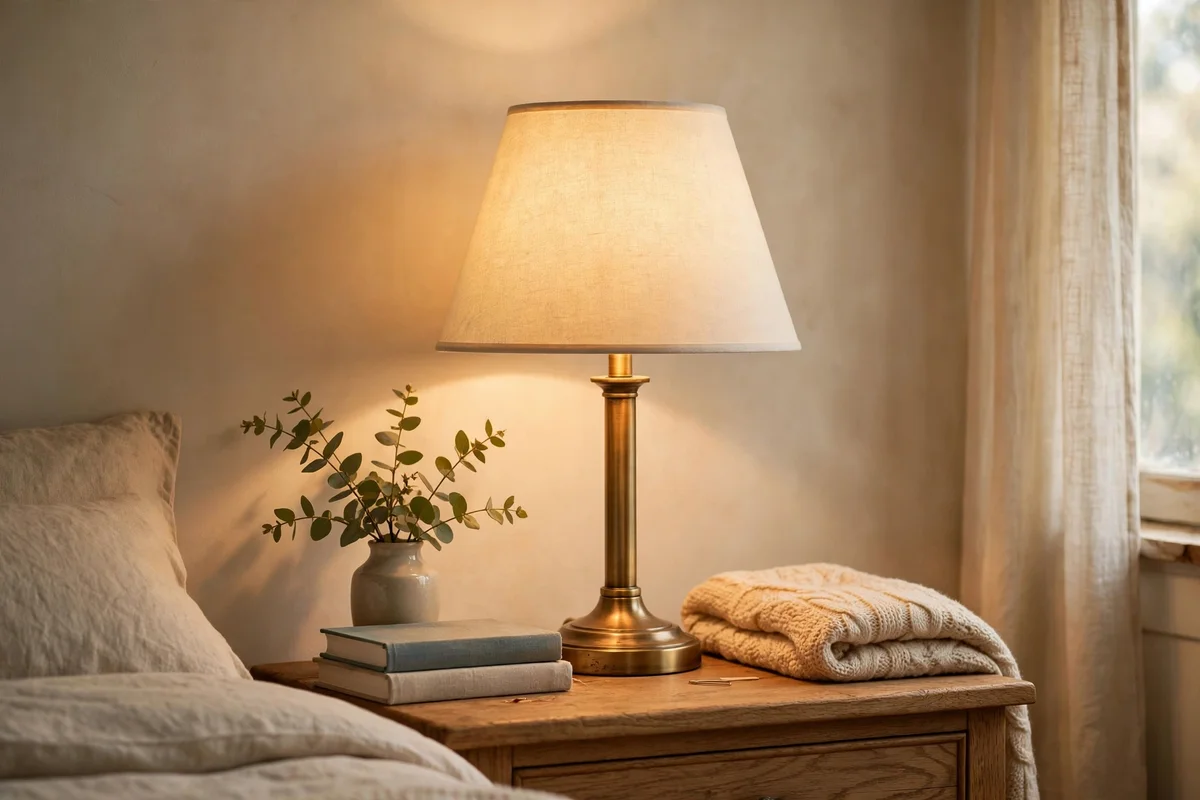
The shade decides whether a lamp glows or glares. Choose fabric shades in cream, oat or soft amber that let light breathe through the weave; the whole shade should light up like a paper lantern. A drum shade 25 to 30 cm across suits most bedside lamps. Hold a shade up to the light before buying: if you can see the bulb’s hard outline through it, the fabric is too thin and will glare.
Line the inside of a favourite shade with a warm-toned diffuser if the light feels too white, or simply switch to a 2200K bulb for extra amber. The mistake to avoid is a dark or metallic shade on a reading lamp, which throws all the light downward and leaves the room’s edges in gloom. Wash fabric shades yearly with a soft brush; dust dulls the glow more than most people expect.
11. Line Linen Curtains With Hidden Blackout Fabric
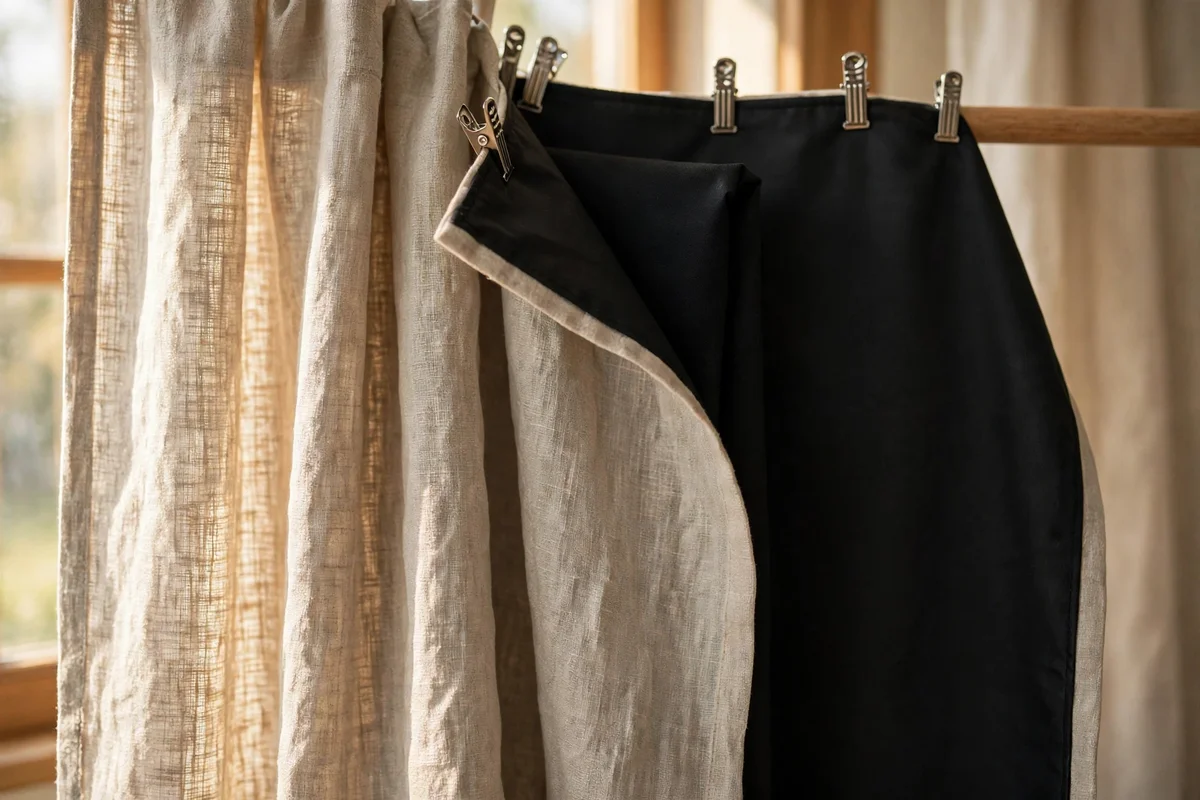
Blackout lining behind linen curtains gives you the best of both seasons: soft, textured fabric by day and true darkness for sleep. A separate lining panel, clipped or sewn to the back of each curtain, blocks the early autumn sunrise and streetlight without changing the linen’s look from inside the room. Measure the curtain and cut the lining 2 cm narrower on each side so it stays hidden.
The mistake to avoid is lining that is too short, which leaves a bright stripe at the sill that wakes light sleepers. Extend the lining to within 5 cm of the floor. Budget tip: ready-made blackout lining panels cost 10 to 20 pounds or dollars per window and clip on in minutes. For renters, a blackout roller blind on a tension rod behind the curtains achieves the same darkness with no sewing.
12. Hang Full-Length Linen Curtains for Soft Texture
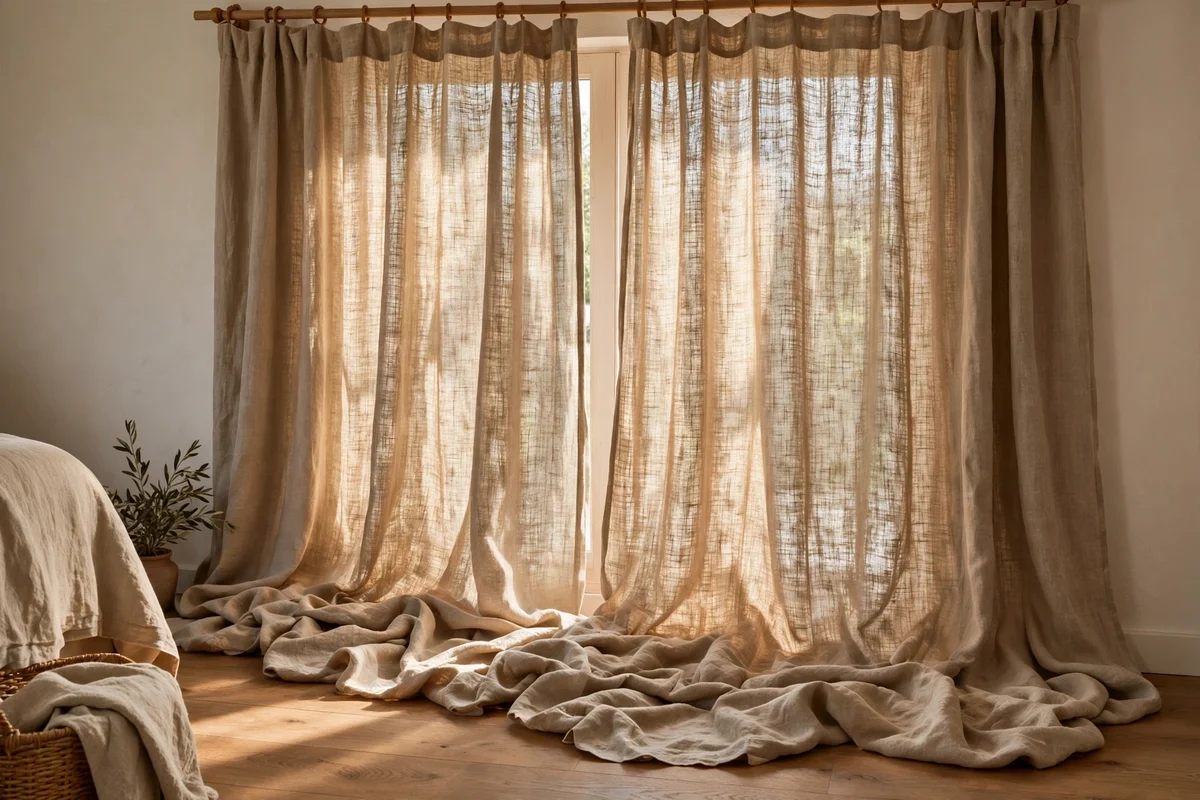
Full-length linen curtains bring the texture autumn bedrooms need: softly crumpled, matte and quietly rustic. Hang them so the hem just kisses the floor or pools 3 to 5 cm; high mounting, with the rod 10 to 15 cm above the frame and 10 cm wider each side, makes the window feel grand. Choose natural, oat or flax tones that filter daylight into a warm haze rather than blocking it.
Linen wrinkles are part of the charm, so skip the iron and let them hang naturally. Wash curtain panels twice a year on a gentle cycle and rehang slightly damp to ease creases. The mistake to avoid is polyester pretending to be linen, which shines under lamplight and cheapens the room. Real linen costs more, around 30 to 60 pounds or dollars per panel, but softens beautifully with every wash.
13. Tuck Dried Lavender Sachets Into Every Drawer
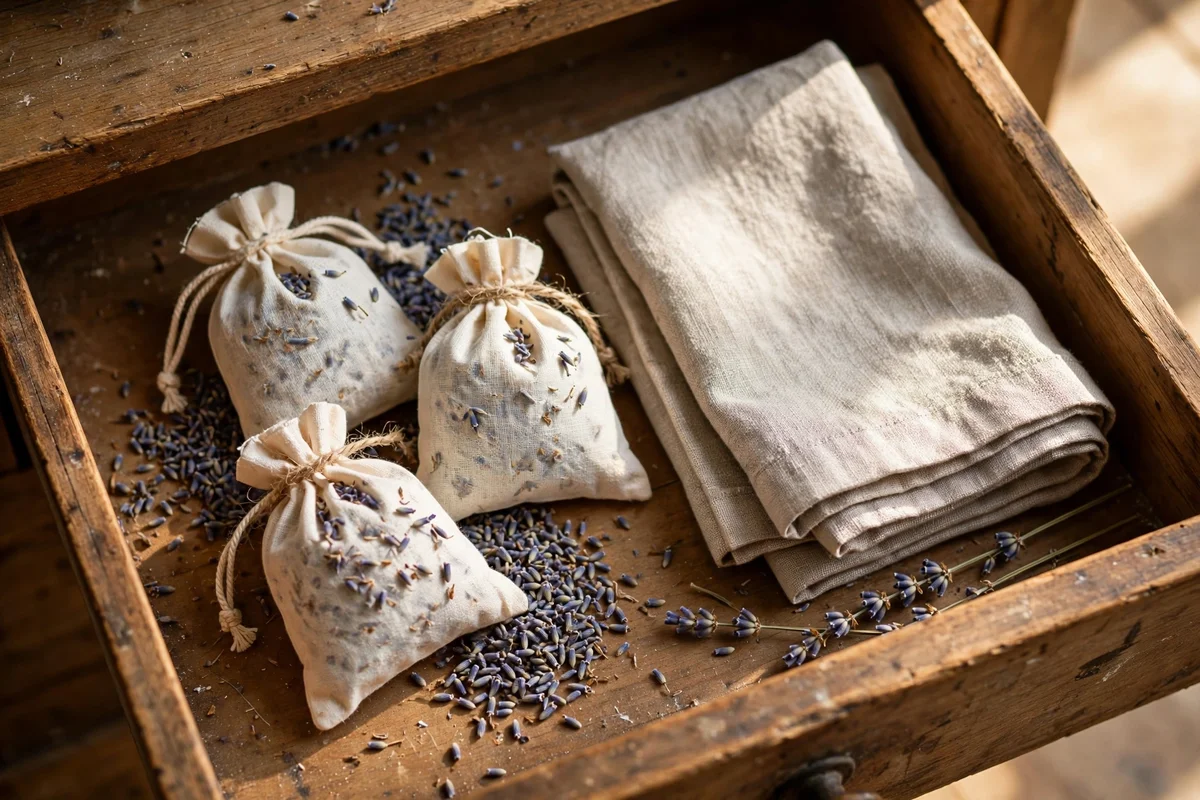
Dried lavender sachets are the natural scent note that suits a sleep room: herbal, dry and faint rather than sweet or heavy. Tuck one sachet into each clothes drawer, one under each pillow, and one inside the linen cupboard. Use sachets filled with dried buds rather than synthetic fragrance, which can smell harsh in a small room. A 10 by 12 cm cotton sachet holds its scent for about six months.
Refresh fading sachets by squeezing them firmly to crush a few buds, which releases the oils again. The mistake to avoid is lavender oil directly on pillowslips, which can stain fabric and irritate skin. Keep sachets away from damp bathrooms so the buds stay dry and fragrant. Budget tip: a bag of dried lavender buds plus small cotton bags costs under 12 pounds or dollars and fills a dozen sachets.
14. Build a Small Reading Chair Corner
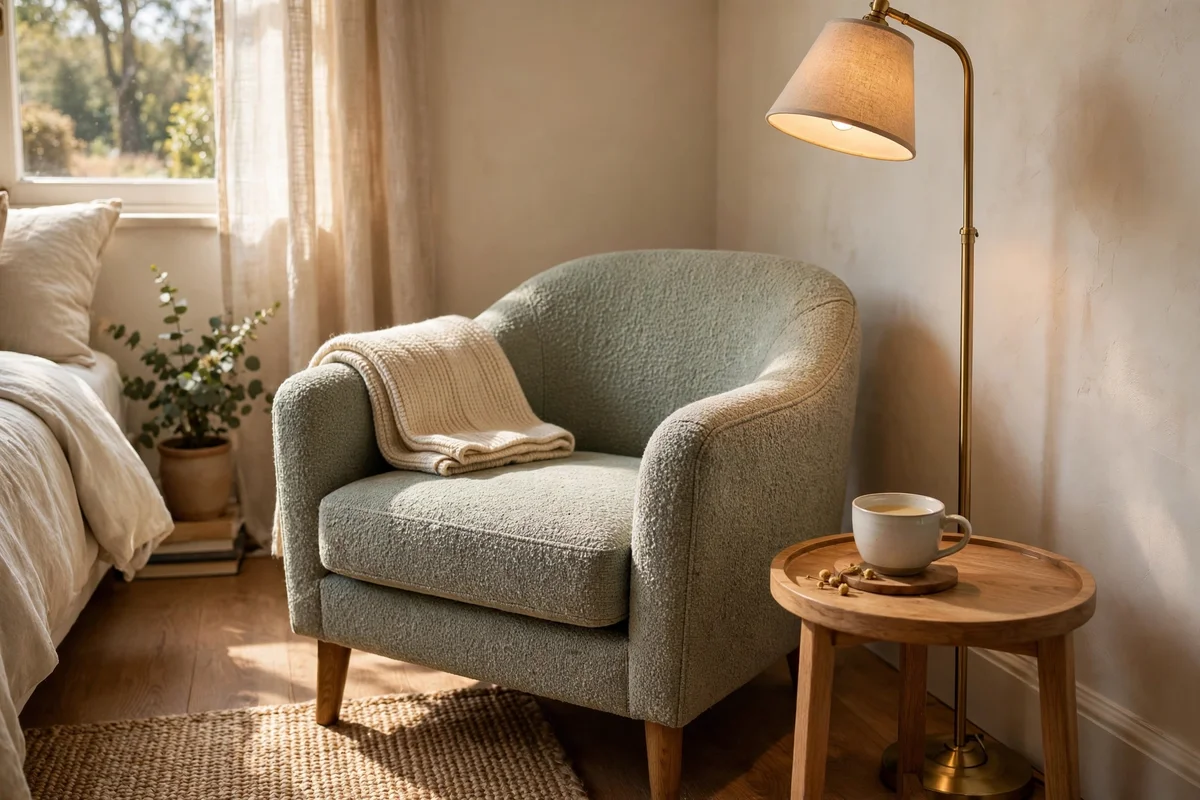
A small reading chair corner turns the bedroom into a room with two moods: sleep and slow evenings. Place a compact armchair, no wider than 70 cm, in a corner near the window with a floor lamp or wall light behind its shoulder. Add a small side table for tea and a folded throw over the arm. The chair should face slightly into the room, not the wall, so the corner feels like a destination.
Keep the corner tight: chair, light, table and throw are enough, and a fifth object usually tips it into clutter. The mistake to avoid is a chair so deep and soft you fall asleep in it before bed, which ruins the night’s sleep. Choose firm upright comfort. Budget tip: a second-hand wooden armchair with a new cushion, plus a simple floor lamp, often totals 40 to 70 pounds or dollars.
15. Swap the Bedside Phone for a Simple Alarm Clock

Swap the phone for a simple alarm clock and the bedroom changes character overnight. A basic digital or twin-bell clock does the one job you actually need from the phone: waking you at the right time. Place it on the nightstand where the phone used to sit, and charge the phone overnight in the hallway or kitchen. Choose a clock with a dimmable display or cover the digits with a cloth if the glow bothers you.
The mistake to avoid is the phone staying on the nightstand ‘just for the alarm’, where one late-night scroll becomes forty minutes. If you need the phone nearby for family emergencies, set it to do-not-disturb with only family calls allowed, and keep it face down across the room. A reliable alarm clock costs 12 to 25 pounds or dollars and removes the bedroom’s biggest sleep thief in a single move.
16. Move Chargers and Screens Out of the Room
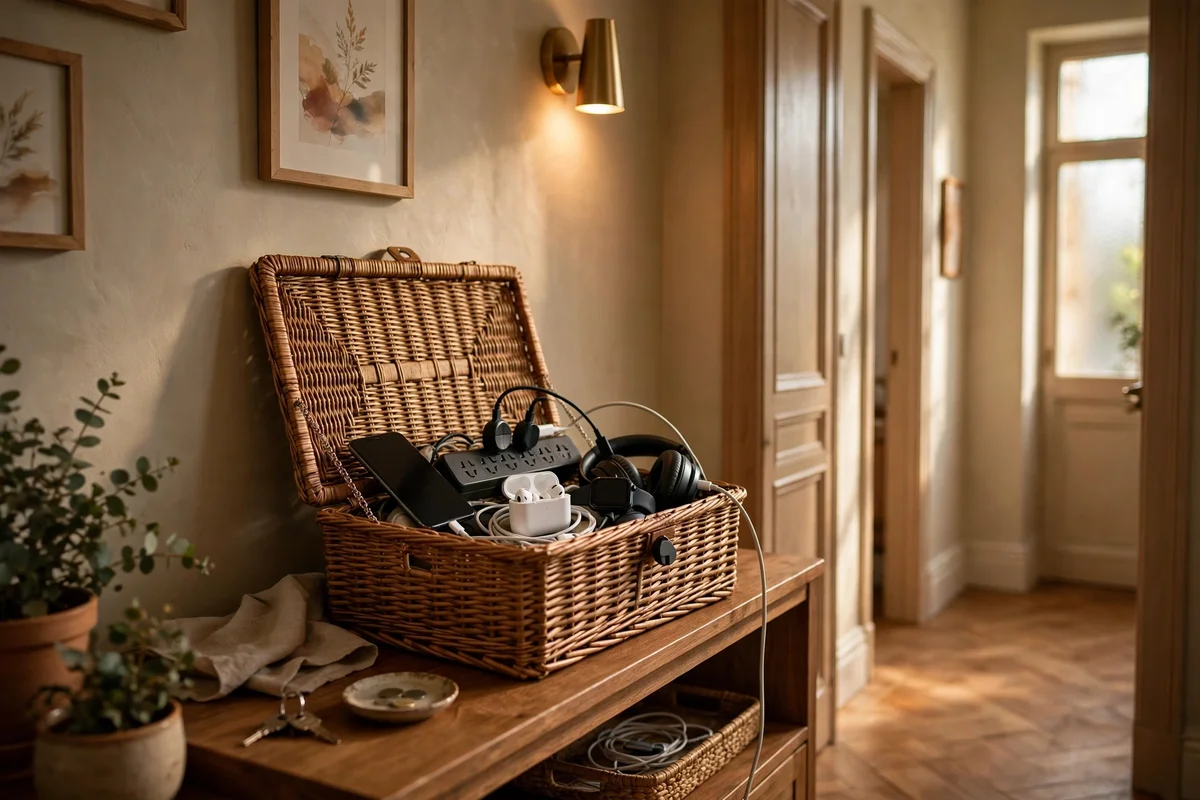
Keeping technology out of the bedroom is easier when everything has a home elsewhere. Set up a small charging station in the hallway or living room: a power strip inside a lidded box or basket where every device sleeps overnight. Move the television out if there is one, or at least unplug it so its standby glow disappears. The room should contain nothing that pings, glows or updates.
The mistake to avoid is moving the phone charger to the hallway while the tablet and laptop stay on the dresser; screens migrate back fast. Be thorough for one week and the habit sticks. If you share the room, agree the rule together so nobody feels policed. Budget tip: a simple lidded basket and a short power strip cost under 20 pounds or dollars and make the new routine feel deliberate rather than deprived.
17. Set Bedside Candles Inside Glass Lanterns Only
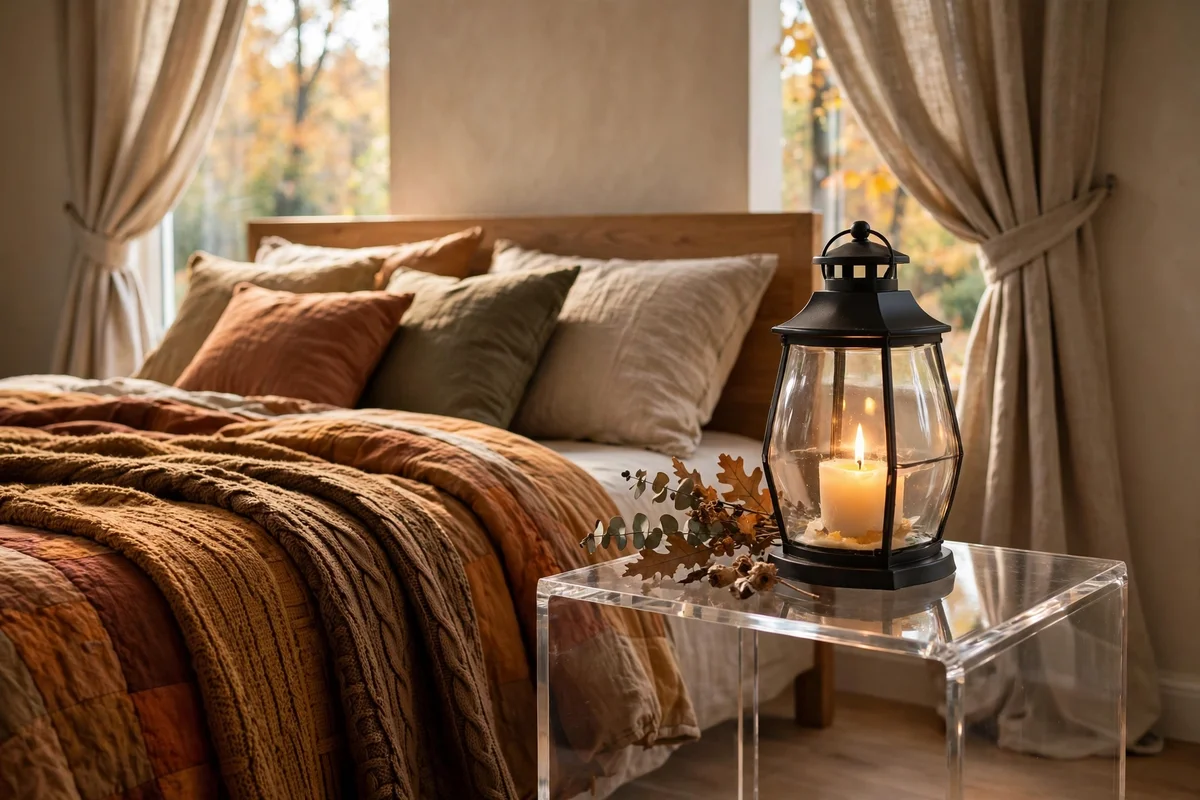
Bedside candles are welcome in a fall bedroom only inside sturdy glass lanterns, never as open flames. A lantern with glass panels and a lid or chimney contains the flame, keeps bedding and curtains at a safe distance, and still throws a beautiful flickering glow. Place the lantern on a clear stretch of nightstand, at least 30 cm from anything flammable, and trim the wick to about 5 mm before lighting for a small steady flame.
The hard rule is simple: never leave a candle lit while you sleep or while you leave the room, and blow it out before the final page of your book. The mistake to avoid is a tall taper in a light holder that a sleepy elbow can topple. Battery candles inside the lantern give the same amber flicker with zero risk and cost 8 to 15 pounds or dollars for a good set.
18. Stack Pillows in Layers for Reading and Sleeping
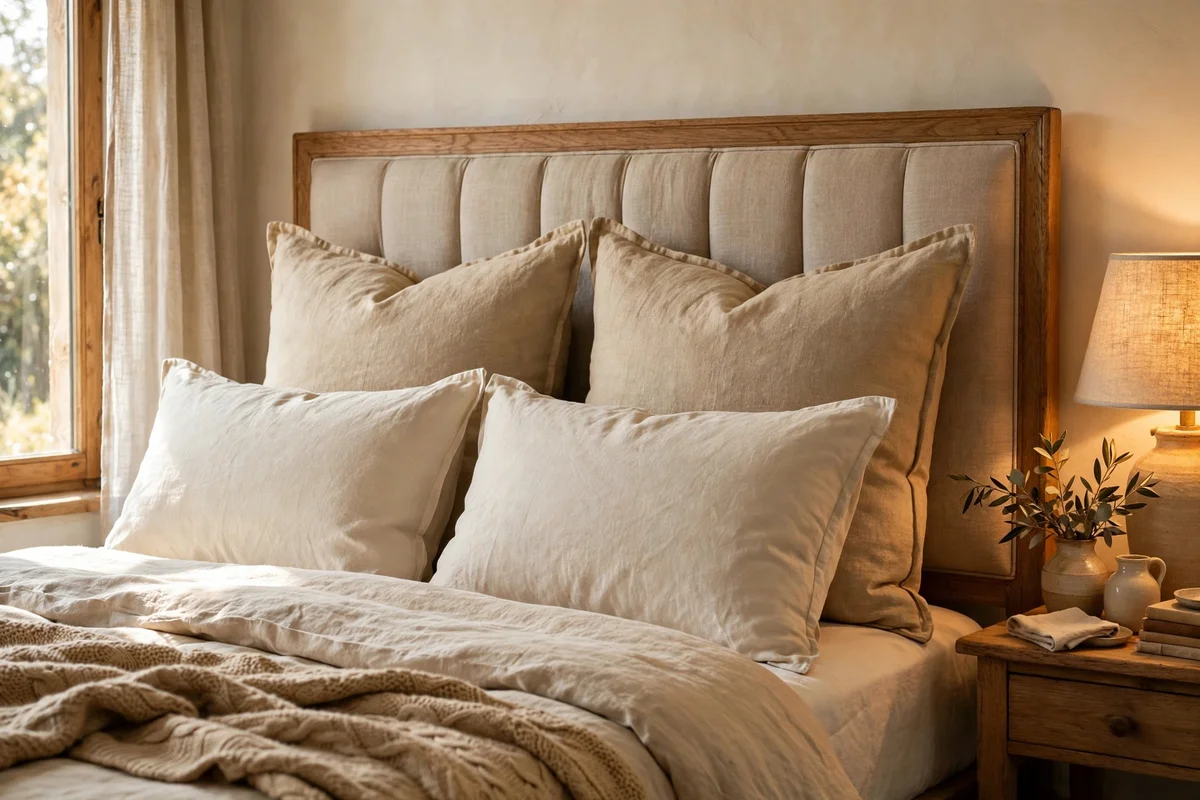
Stack pillows in two layers: sleeping pillows flat for the night, and two or three larger cushions upright against the headboard for reading. European squares of 65 by 65 cm in oat or rust make the best back layer, with standard pillows in front. This setup supports your back during an evening read and strips down to a clean sleeping arrangement in seconds. Use pillow protectors under every case to keep the filling fresh.
The mistake to avoid is a mountain of decorative cushions that takes five minutes to dismantle every night; anything over five pieces becomes a chore. Keep the total to four or five and store the reading cushions in a basket by day if you prefer a minimal bed. Budget tip: good feather or recycled-fibre inserts cost 10 to 20 pounds or dollars each, and new covers refresh them for seasons to come.
19. Choose a Wool Duvet for Steady Overnight Warmth

A wool duvet gives steady overnight warmth that matches autumn’s cool nights. Wool regulates temperature like the blanket layer, holding warmth without the sweaty peaks of synthetic fills, and it stays lofty for years. Choose a medium weight, roughly 10.5 tog, for autumn; many wool duvets state warmth in grams per square metre instead, where 300 to 400 gsm suits the season. Air the duvet over a chair monthly to keep it fresh.
Pair the wool duvet with an oat or rust duvet cover so the seasonal palette shows. The mistake to avoid is buying the warmest winter weight for autumn and then sleeping hot with the window open all night. Match the fill to the season and add the folded quilt at the foot for cold snaps instead. A wool duvet costs 80 to 150 pounds or dollars, an investment that pays back in noticeably better sleep.
20. Keep a Glass Carafe and Cup on the Nightstand

Keep a glass carafe and a small cup on the nightstand and night-time thirst stops meaning a trip to a bright kitchen. A 500 ml to 1 litre carafe with an inverted tumbler as its lid keeps water clean and looks quietly elegant in morning light. Choose plain glass that is easy to wash daily; anything with narrow decoration traps residue. Refill it each evening as part of the wind-down routine.
The mistake to avoid is a tall open glass near the bed’s edge, which one sleepy reach can knock over. Set the carafe toward the back of the nightstand, at least 15 cm from the edge. Budget tip: a simple glass carafe set costs 10 to 18 pounds or dollars, and a small tray underneath catches drips and protects wooden nightstands from water rings.
21. Warm the Room With Natural Wood Tones
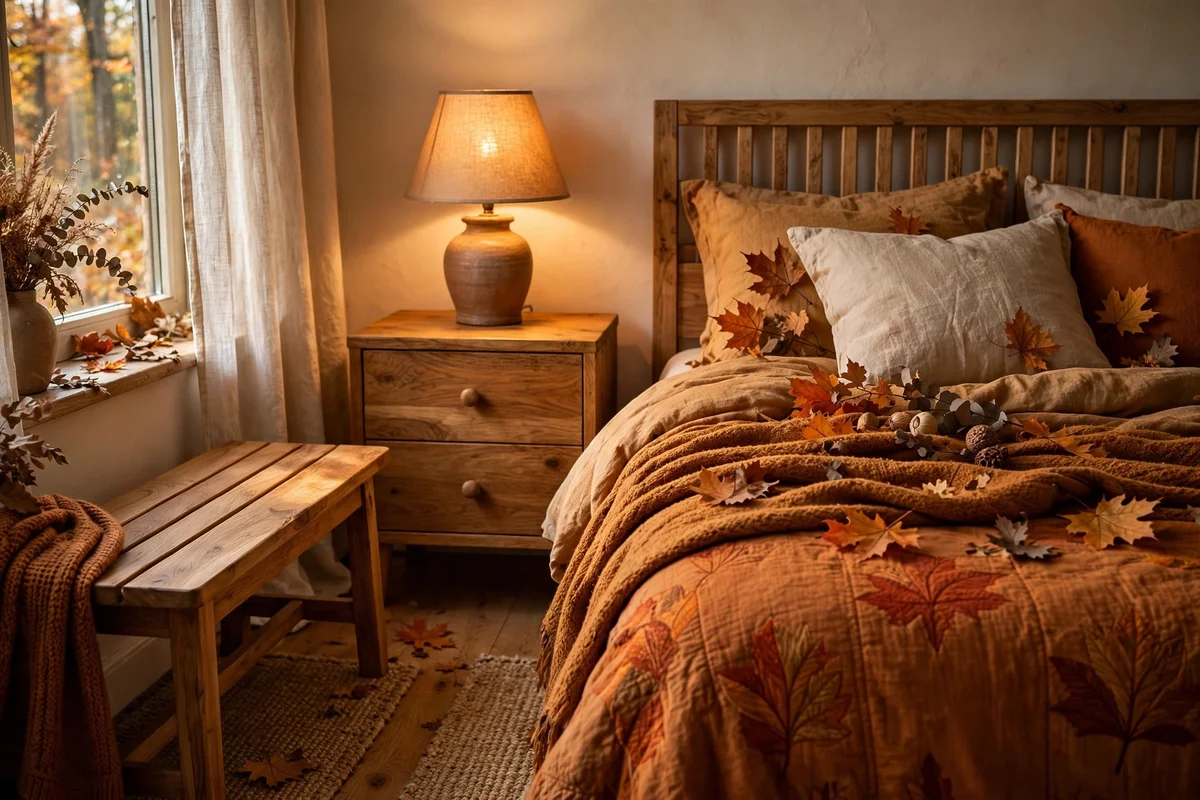
Natural wood tones warm a bedroom the way no paint colour can. An oak or walnut nightstand, a pine bench at the bed’s foot, or simply wooden picture frames bring honeyed grain into the room. Wood absorbs lamplight and gives it back softly, which deepens the autumn mood after dark. If new furniture is out of budget, sand and oil one existing piece; a refreshed top changes the whole corner.
Mix two wood tones at most, for example warm oak with darker walnut, so the room stays harmonious. The mistake to avoid is orange-toned varnish from decades past, which fights the clay and olive palette; a matte oil finish looks far more current. Budget tip: food-safe mineral oil or hardwax oil costs about 10 pounds or dollars and revives tired wood in an afternoon.
22. Swap the Duvet Cover When Autumn Arrives
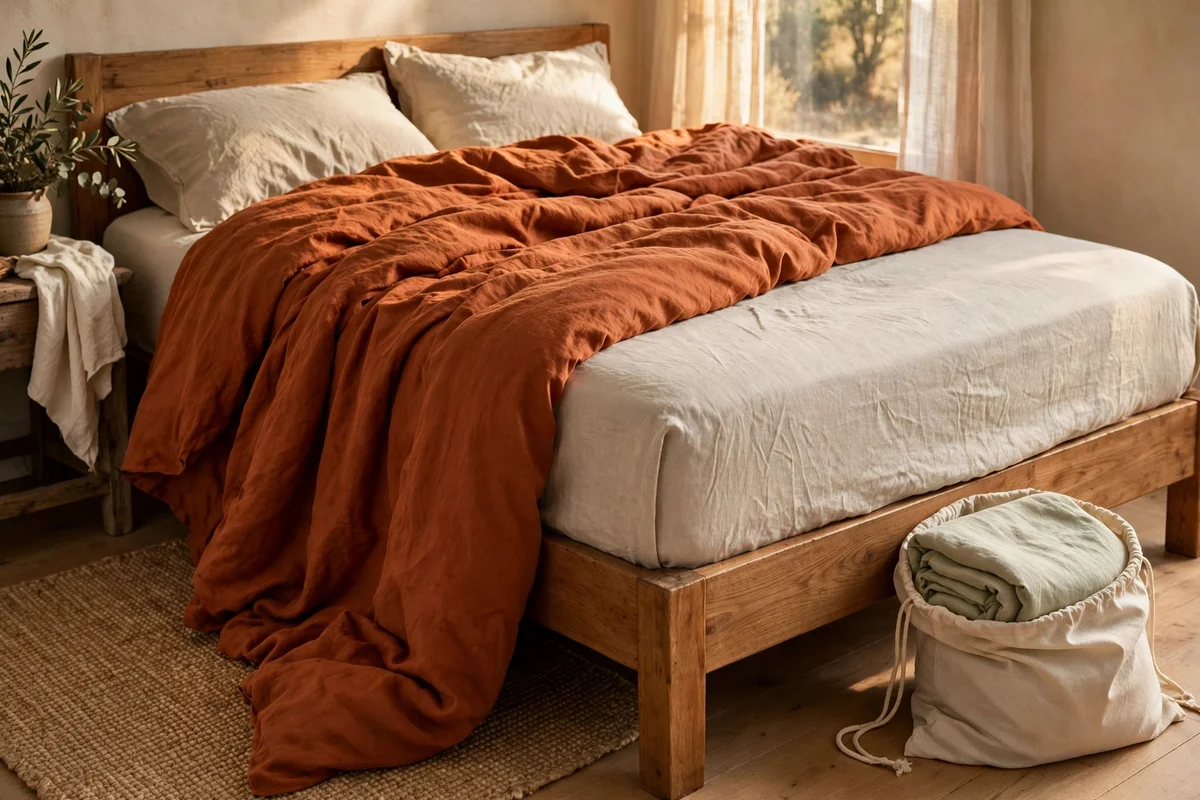
Swap the duvet cover when autumn arrives and the room changes season without any decorating effort. Fold the summer cover into the linen cupboard and dress the bed in oat, rust or deep olive; the deeper tones absorb evening light and make the bed look instantly warmer. This is also the moment to check the duvet’s fill and wash the cover fresh. A seasonal swap takes twenty minutes and resets the room’s mood completely.
Store the off-season cover in a breathable cotton bag, not plastic, so it stays fresh. The mistake to avoid is buying a whole new bedding set each autumn; one cover plus two new cushion covers gives the full effect for a fraction of the price. Budget tip: end-of-summer sales often discount autumnal covers by 30 to 50 percent, so shop the swap in late August.
23. Keep a Woven Basket of Extra Throws Within Reach
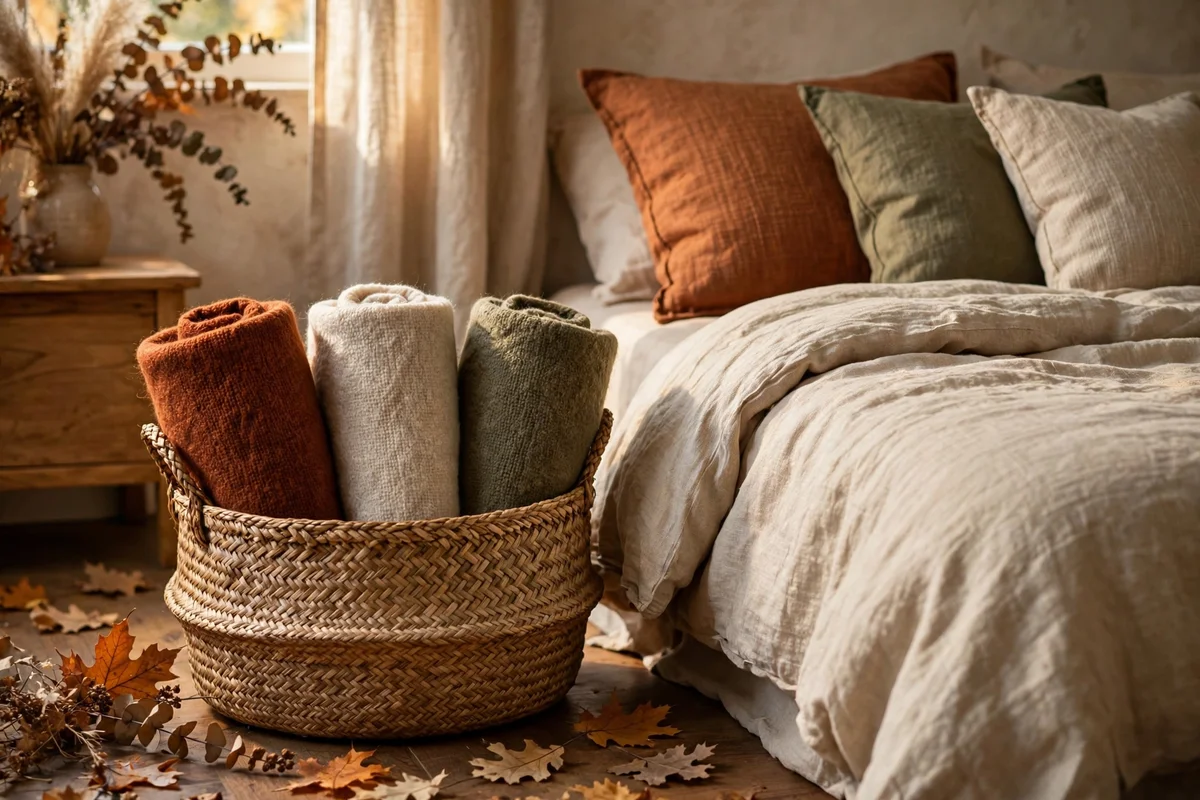
Keep a woven basket of extra throws within arm’s reach of the bed for nights that turn colder than forecast. A round or rectangular seagrass basket about 40 cm across holds two folded throws neatly and looks like decor rather than storage. Place it beside the reading chair or at the bed’s foot. Roll throws instead of folding them to fit more in and to show off their colours.
The mistake to avoid is a basket so deep that the bottom throw never sees daylight; shallow and wide beats tall and narrow. Shake throws outside monthly to keep dust down, and wash them at season’s end. Budget tip: seagrass baskets cost 12 to 25 pounds or dollars at home stores, and charity shops often have them for under 8. Natural and label-free, they suit every autumn palette.
24. Add a Low-Watt Bulb for the Evening Wind-Down
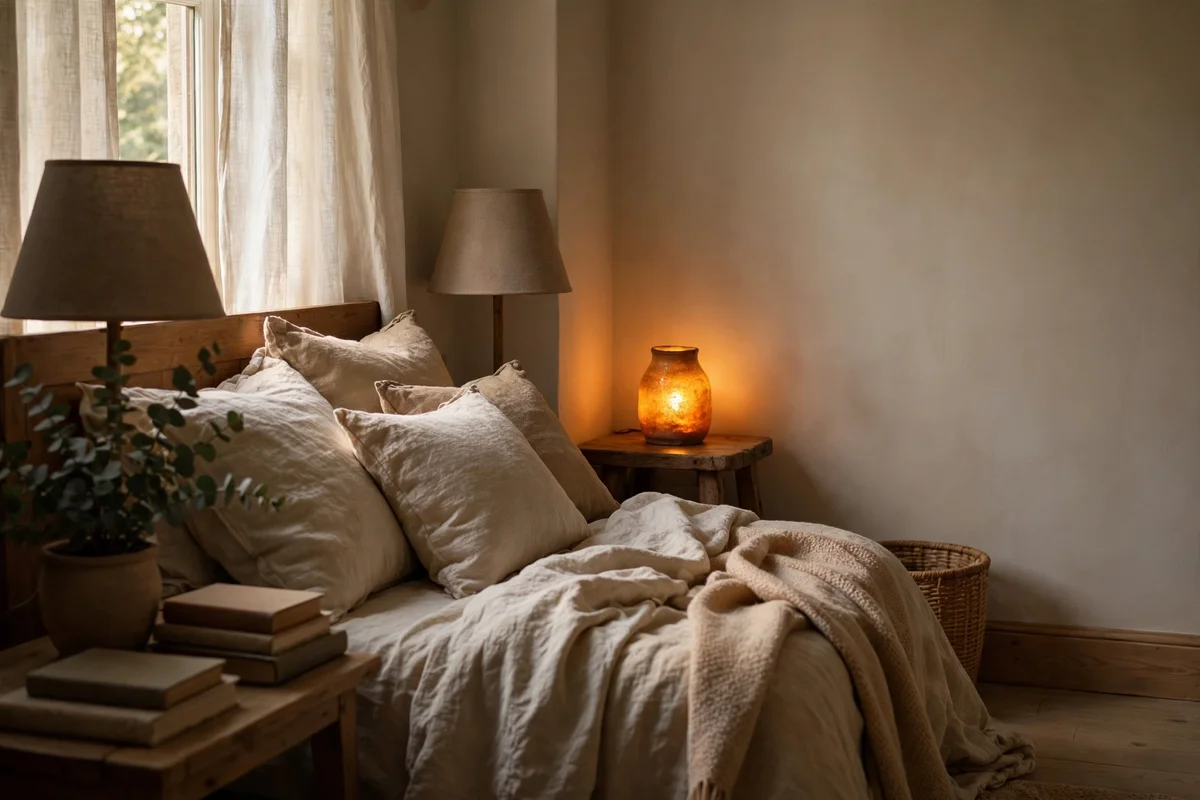
Add a low-watt bulb for the evening wind-down, separate from the reading lamps. A small plug-in lamp, a salt lamp, or a single 4 to 6 watt amber bulb in a shaded corner light gives the room an ember-like glow for the last half hour before sleep. Dim or switch off the brighter lamps first, then let this low light be the room’s final signal that the day is ending.
The mistake to avoid is a so-called relaxing bulb that is still 4000K daylight white; check the packet for 2200K or lower and the word amber or warm. Put this lamp on the same timer as the bedside lamps so nothing stays on all night. Budget tip: an amber LED bulb costs 5 to 10 pounds or dollars, and a simple plug-in base another 8, making this the cheapest idea in the whole guide.
The thread running through all of these ideas is simple: sleep comes easier when the room does the calming work for you. Layered natural bedding, lamplight at 2700K, dark mornings behind lined curtains, lavender in the drawers and no glowing screen by the pillow all remove small frictions you may never have noticed. Each one is a tiny nudge, and together they make the bedroom a place the body trusts.
This week, try the easiest change first: fold a quilt or coverlet across the foot of the bed and move the phone charger to the hallway, with a simple alarm clock on the nightstand instead. Two small moves, one evening, and you will feel the whole room shift. Then add the rest one layer at a time through the season, and let autumn do what it does best.
Frequently Asked Questions
What is the best order for layering bedding in autumn?
Cotton sheet first, then a wool blanket, then the duvet, with a quilt or coverlet folded across the foot. The cotton breathes against skin, wool holds steady warmth without overheating, and the folded layer is easy to pull up on cold nights or push aside when warm.
How much does a cozy fall bedroom refresh cost?
About 80 to 200 pounds or dollars if you shop mid-range. A cotton sheet set, a wool-blend blanket, two warm bulbs and lavender sachets cover the essentials for around 100. Spend more on the duvet and rug, the two things your body touches most. Second-hand baskets and lamps cut the total fast.
Which warm colours stay calm in a bedroom?
Clay, oat, muted rust and deep olive, the four anchors of this guide. Use oat for large areas like bedding, clay or rust for mid-size accents, and deep olive in small doses such as one cushion or a throw. Keep the ratio near 60, 30, 10 so warm tones feel restful, never loud.
How can I darken the room without heavy curtains?
Add blackout lining behind linen curtains, which keeps the soft look while blocking early light. A lining panel clipped or sewn to the back of each curtain costs far less than replacing them. For renters, a tension rod with a blackout roller blind behind the curtains works and leaves no marks.
Is it safe to keep candles in the bedroom?
Yes, with strict rules. Use only candles inside sturdy glass lanterns with a lid or chimney, placed on a clear nightstand away from bedding and curtains. Never leave them lit while you sleep or out of the room, and trim wicks to about 5 mm before lighting. Battery candles give the same glow with zero risk.