Living Room
21 Ways to Make a Small Room Look Bigger and Brighter
By Anna Wells · · 23 min read
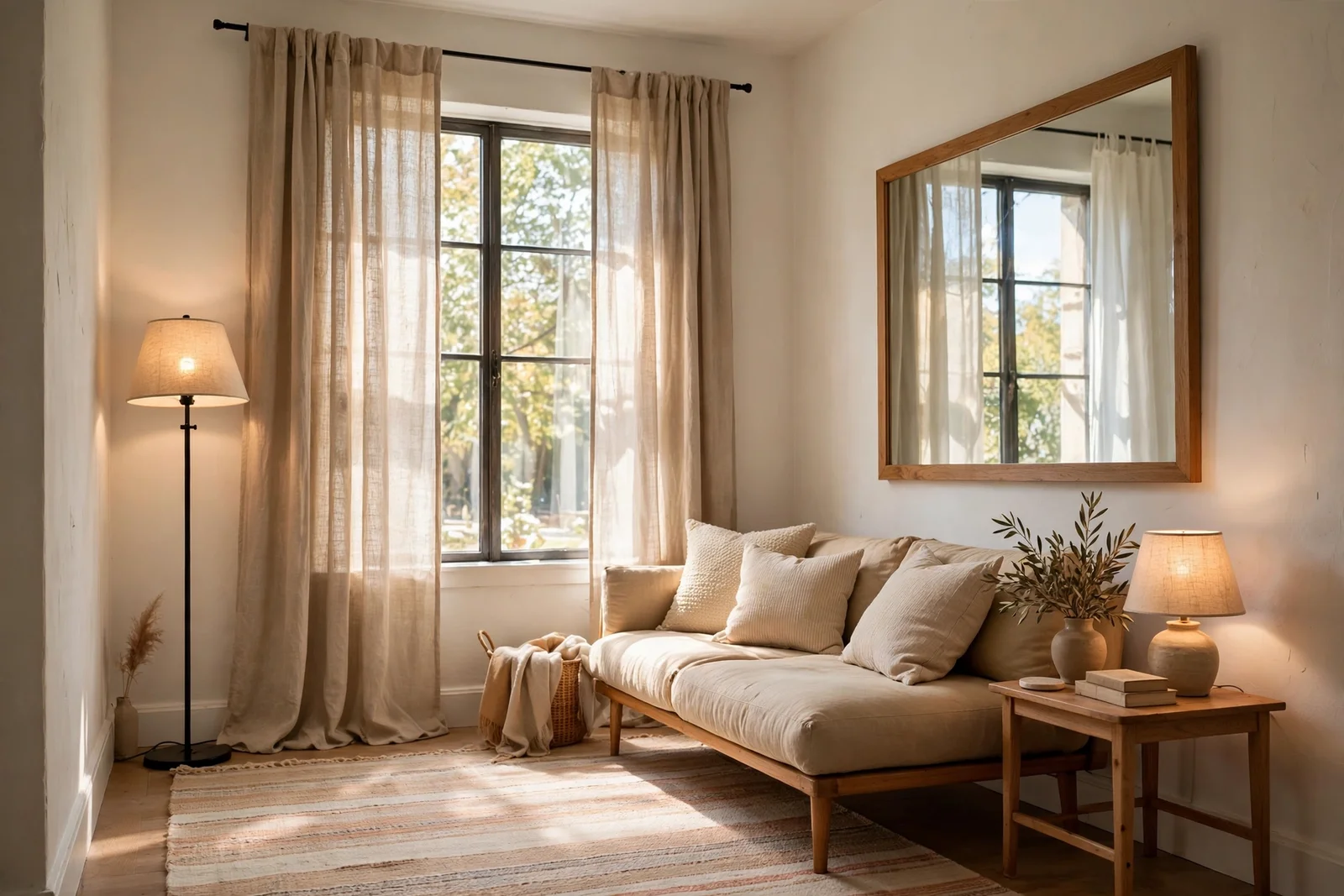
21 practical ideas with measurements and budget tips for making any small room feel bigger and brighter, from paint colours and curtain heights to layered lighting.
There is a particular kind of morning light that makes even the smallest room feel full of promise, a pale wash across the walls before the day begins. If your room never quite catches that feeling, it is rarely about square footage; it is about how light moves, where the eye rests, and which surfaces quietly steal brightness. Small rooms hold enormous potential, because every thoughtful change shows up immediately.
This guide walks through 21 practical ideas that make any small room look bigger and brighter, from paint colours and curtain heights to the way you layer lamps in the evening. Each idea comes with measurements, budget guidance and the before-and-after reasoning that shows why it works. Nothing here requires a renovation or a large spend; most changes take an afternoon and a tape measure.
You will learn how pale warm whites open the walls, why one deep accent kept low adds character without closing the room in, and how a well-placed mirror can double your daylight. We cover furniture with visible legs, rugs sized to anchor rather than float, curtains hung high and wide, and lighting built in three layers instead of one lonely ceiling bulb. By the end, you will know exactly which change to make first in your own room.
Pour a cup of tea, stand in your doorway and read with fresh eyes. Notice where the light stops, which corner feels forgotten, and what sits on the surfaces. Then work through the ideas below one at a time, measuring as you go, and watch your small room grow brighter with every change.
1. Paint the Walls a Pale Warm White and Keep the Ceiling Brightest
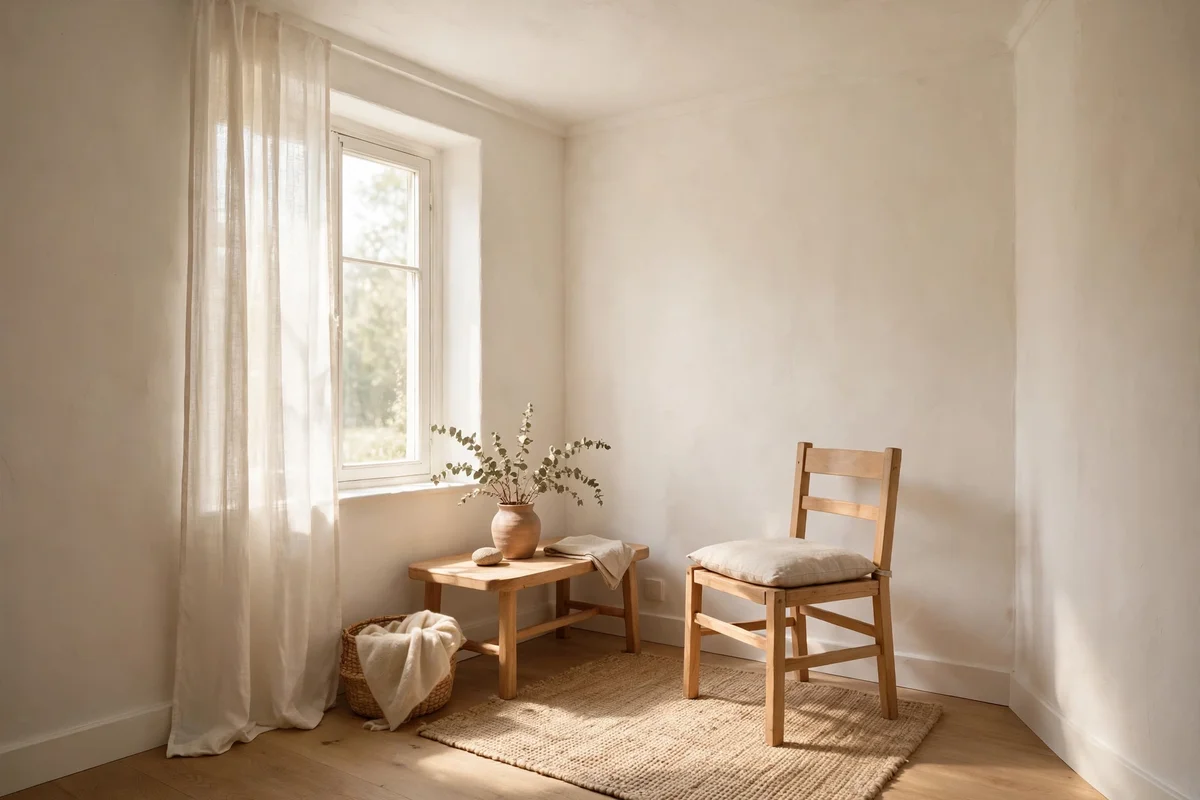
A pale warm white on every wall reflects daylight deeper into the room instead of absorbing it. Choose paints with a yellow or pink undertone, such as ivory, warm plaster or soft buttermilk, and use an eggshell or satin finish rather than flat matt, since flat finishes drink light. The ceiling should sit one to two shades lighter than the walls, because a brighter ceiling reads as lifted and pulls the whole room upward with it.
Before repainting, compare a dark room against the same room in pale white and notice how corners seem to widen. A typical small bedroom needs about 4 to 5 litres of paint for two coats on four walls, which costs a budget 30 to 60 pounds or dollars at most hardware stores. The mistake to avoid is choosing a cool grey white, which can look blue and chilly in low light; test two swatches on the north-facing wall and check them at midday and dusk.
2. Hold One Deep Accent Colour Low Where It Cannot Shrink the Room
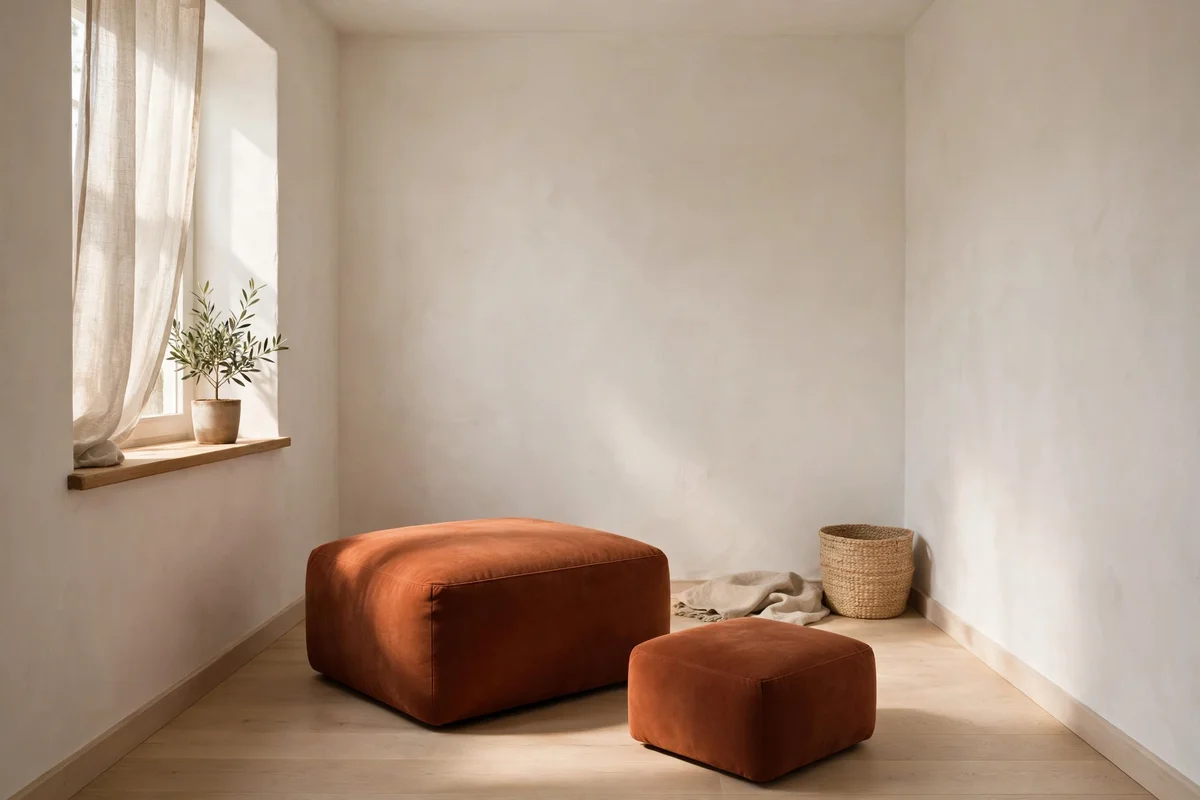
One deeper accent adds character without closing the room in, provided it stays low. A warm terracotta, deep olive or muted clay on a low ottoman, the lower half of a shelving unit or a footstool anchors colour near the floor, where it reads as grounding weight. The eye registers the richness at knee height and still sees pale walls rising above, so the ceiling height feels untouched and the room keeps its airiness.
Keep the accent to roughly 10 percent of the room’s visible surfaces, the classic ratio decorators use for depth without heaviness. A cushion, a throw and one low piece of furniture in the same tone are enough; five or six scattered dark items start to chop the room into pieces. Before and after photos show the difference clearly: the dark accents at floor level make the pale walls look taller by contrast, while the same colours at eye height would lower the ceiling visually.
3. Place a Large Mirror to Reflect the Window, Not a Blank Wall
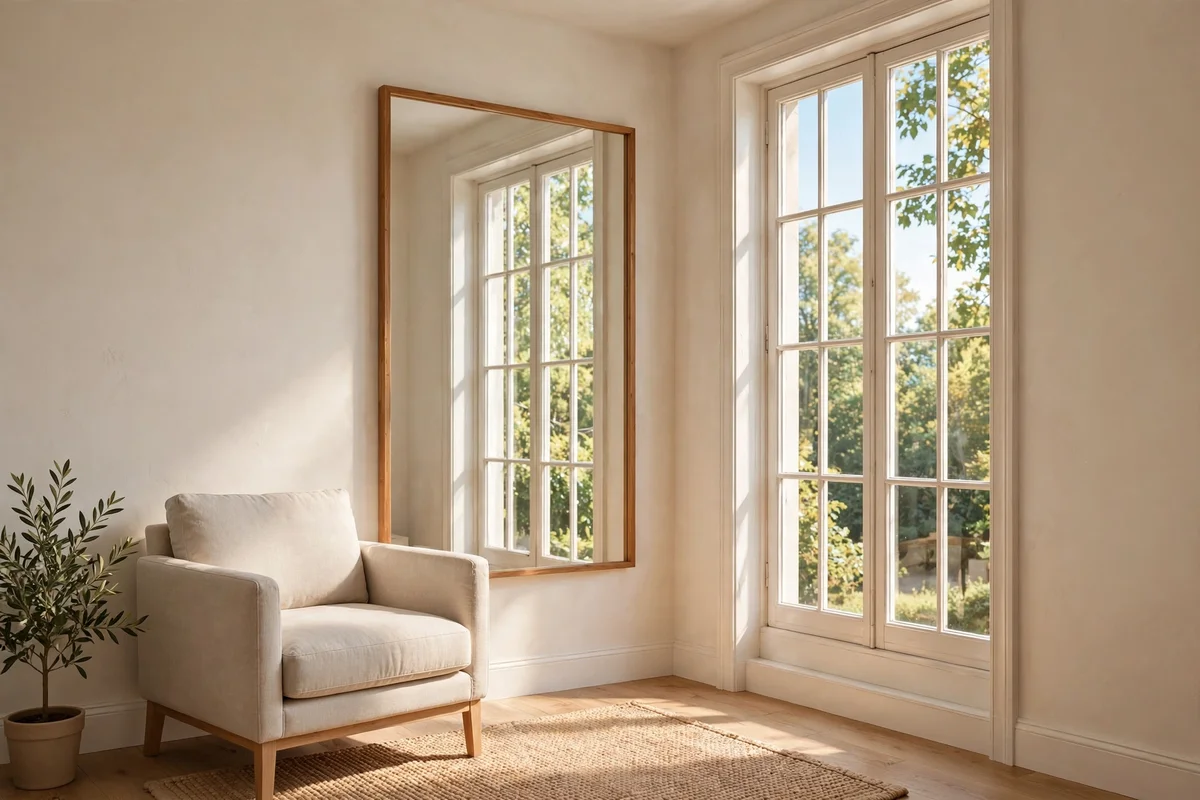
A mirror at least 70 by 100 cm hung on the wall beside or opposite the window bounces daylight across the room instead of swallowing it. Position it so it catches the brightest part of the glass, ideally at a slight angle that reflects the sky rather than the floor. Before, the far corner sat in shadow by mid-afternoon; after hanging the mirror, that same corner receives a soft wash of reflected light that makes the whole room feel twice as wide.
Leaning a full-length mirror against the wall behind a door works if you cannot drill, though a fixed hook holds better on heavy frames. Choose a simple timber or slim metal frame, since chunky ornate frames eat up the reflective area and can feel busy in a small space. The mistake to avoid is mirroring two walls opposite each other, which multiplies clutter instead of light; one generous mirror aimed at the window gives all the brightness you need for about 40 to 90 pounds or dollars.
4. Choose Seating With Slender Legs so the Floor Shows Through
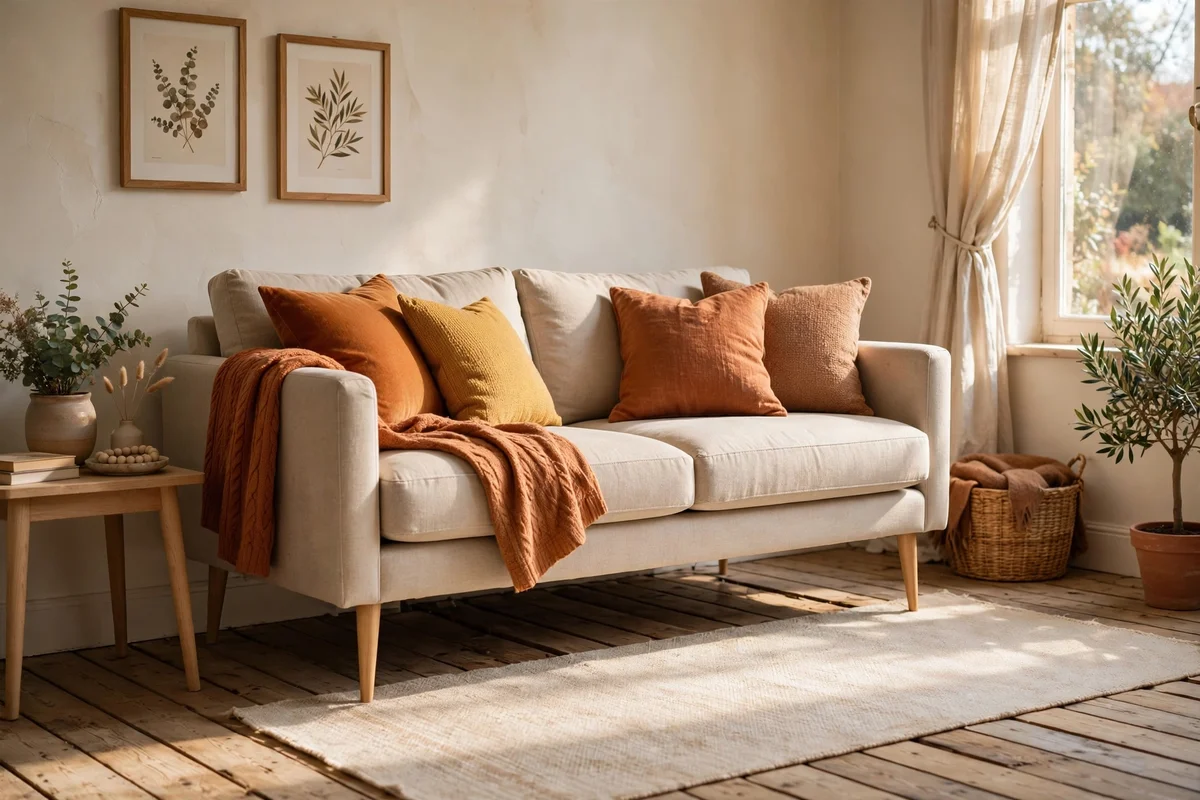
Seating raised on legs of 10 to 15 cm shows the floor running underneath, and that visible stretch of flooring tricks the eye into reading the room as larger. Before switching, a boxy sofa that sat flush on the carpet blocked the eye at floor level; after replacing it with a sofa on tapered oak legs, the same corner of flooring became visible and the seating area felt noticeably more open. Tapered or straight legs in wood or brushed metal both work, since the point is the gap, not the style.
Mid-century style armchairs, simple modern sofas and even bed frames on legs all follow the same rule. Measure the clearance: anything below 8 cm reads as almost solid, while 12 cm and above lets light travel underneath and makes cleaning easier too. A budget swap costs nothing if you fit screw-on replacement legs to an existing frame, and new bun or tapered legs run 15 to 30 pounds or dollars for a set of four. The mistake is pairing leggy seating with a skirted valance or a floor-length throw, which hides the gap and cancels the effect.
5. Hang Curtains High and Wide to Stretch the Window Visually
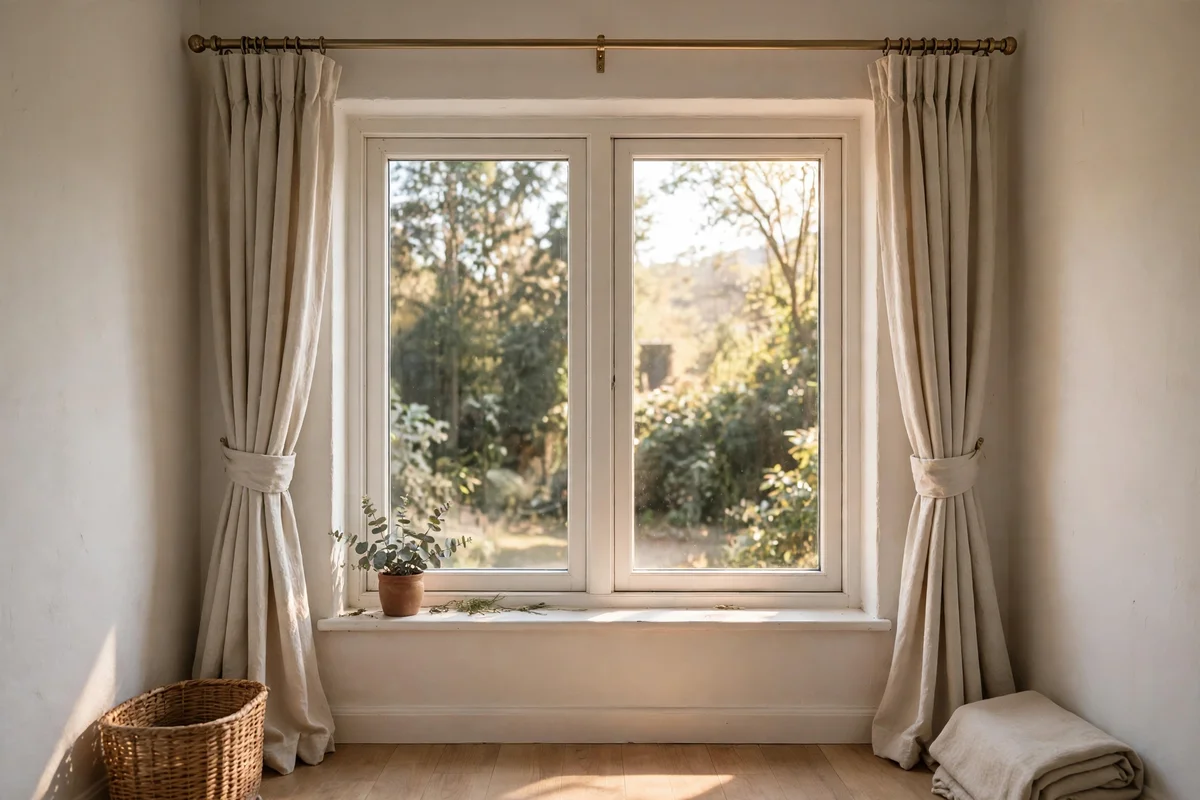
Mount the curtain rod 10 to 15 cm above the window frame and extend it 15 to 25 cm past each side, so the fabric stacks against the wall instead of covering glass. Before, curtains hung level with the frame made the window look exactly as small as it was; after raising and widening the rod, the same window reads as roughly 30 cm taller and 40 cm wider. The fabric should just kiss the floor or break slightly, since floating hems expose a harsh line and pooling hems collect dust.
Choose light fabrics with some body, such as linen blends or washed cotton, which filter daylight softly and keep their shape when stacked back. One panel of 130 to 150 cm width per side usually gathers neatly beside a standard window. The mistake to avoid is heavy velvet or brocade in a dark tone, which visually shrinks the glass and steals light. A full set, rod plus two panels, often costs 50 to 120 pounds or dollars, and rehanging an existing rod at the new height costs nothing at all.
6. Layer Three Light Sources Instead of One Lonely Ceiling Bulb
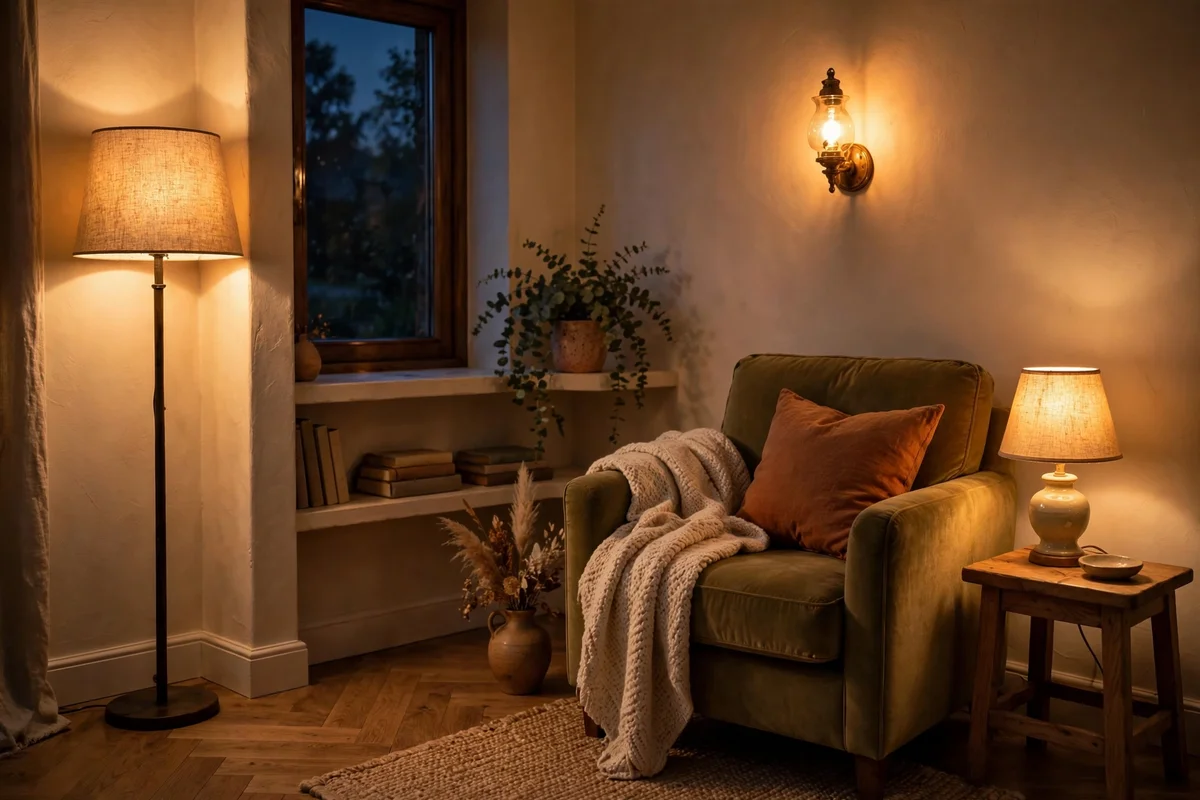
One central ceiling bulb throws flat light that leaves corners dark and makes a small room feel like a box. Layer three sources instead: a floor lamp in the darkest corner, a table lamp near the seating at about 40 to 60 cm tall, and a warm picture light or wall sconce for accent. Before the change, evening light pooled under the ceiling rose and faded at the edges; after layering, the same room glows evenly and every corner feels included in the space.
Keep every bulb at 2700K warm white for a calm glow, and dim each layer separately if your lamps allow it. Floor lamps with linen shades at 140 to 160 cm tall lift light upward, while table lamps at reading height wash nearby walls softly. The mistake to avoid is mixing daylight 5000K bulbs with warm ones, which reads as clinical and clashing. Three lamps need not cost much: charity shops and end-of-line sales often supply a full layered set for 30 to 70 pounds or dollars.
7. Lay a Rug Big Enough to Anchor the Furniture Legs
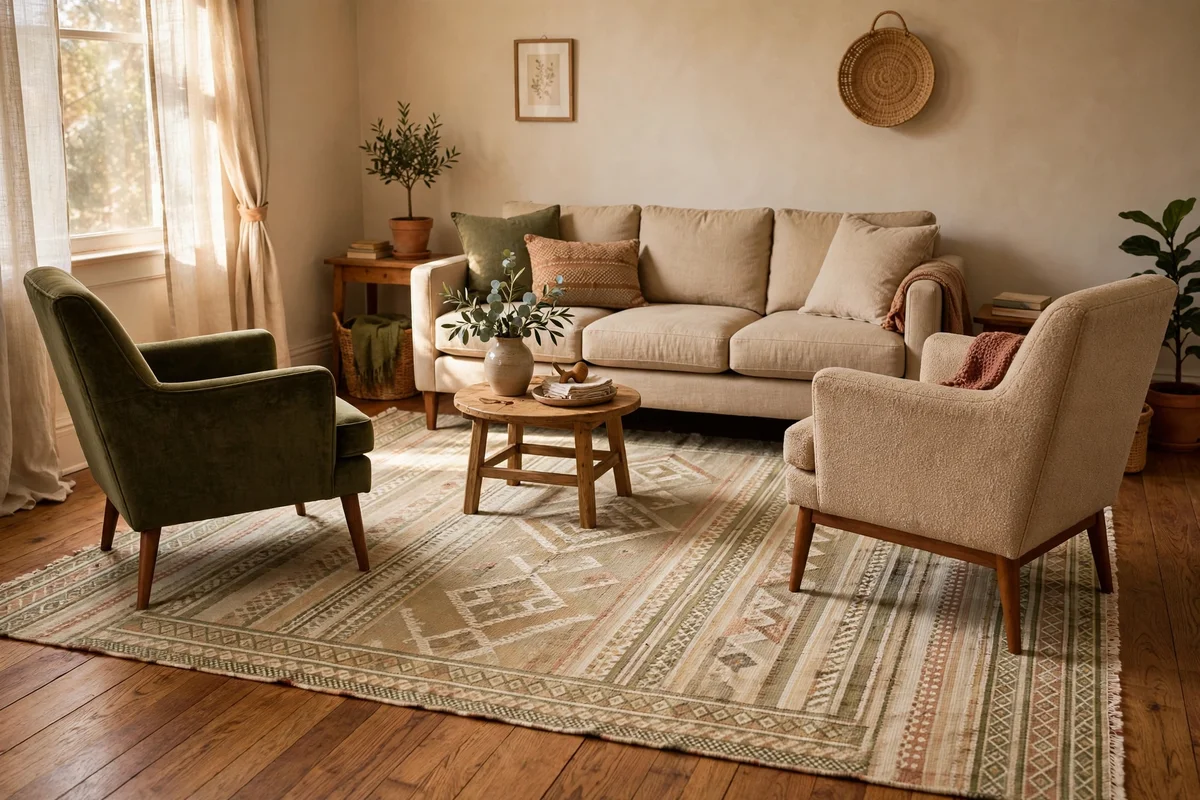
A rug that reaches under the front legs of every seat pulls the furniture into one island and makes the floor feel generous. For a small seating group, measure the layout and choose a rug at least 160 by 230 cm, or 200 by 290 cm if the room allows; before, a 120 by 170 cm mat floated in the middle and chopped the floor into awkward fragments, but after upsizing, the same layout reads as one calm, continuous zone. The eye follows the rug edge around the whole group instead of stumbling on a small square.
Low-pile flatweaves suit small rooms because thick shag visually raises the floor and steals perceived height. Leave 20 to 30 cm of bare floor visible around the rug so the edges breathe, and keep the pattern simple, since busy motifs shrink a space faster than almost anything. A decent flatweave of this size costs 60 to 140 pounds or dollars, and a rug pad underneath stops slipping on smooth floors. The mistake is buying the rug before the furniture arrives; measure first, then buy, because returns on large rugs are rarely free.
8. Keep Furniture Low in Rooms With Tall Ceilings
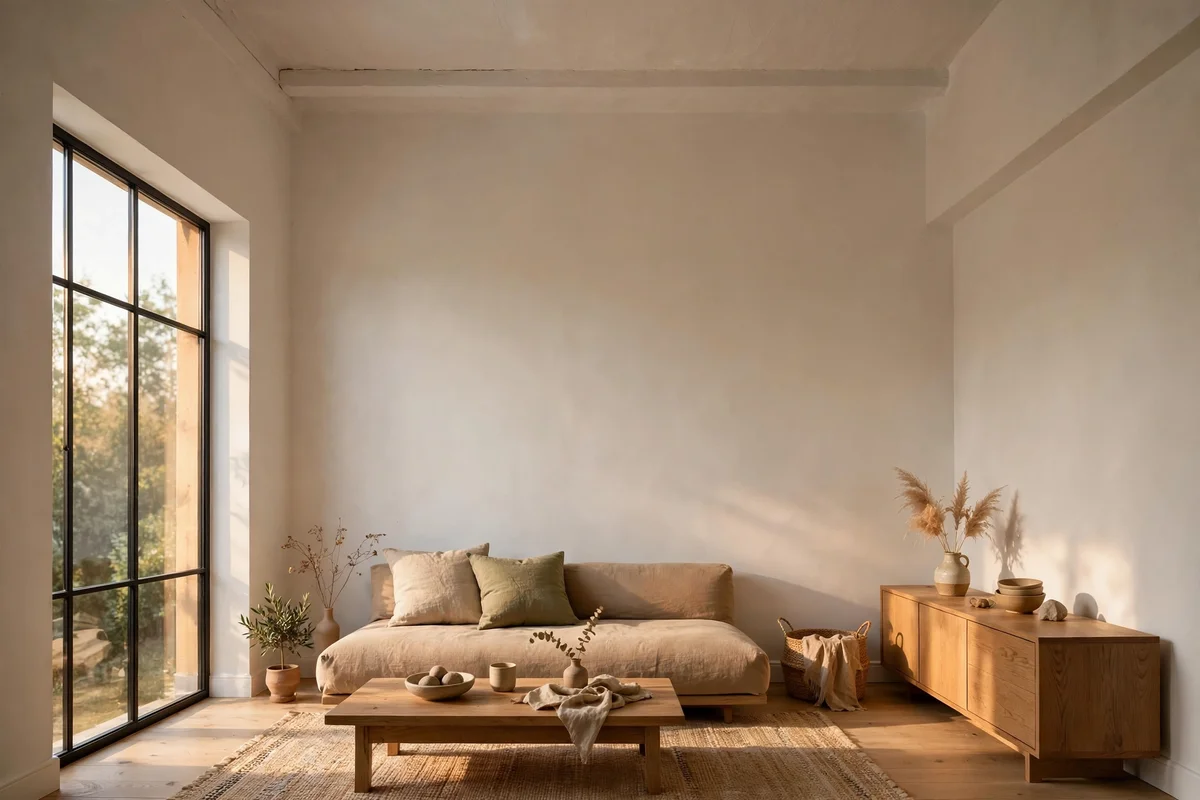
In a room with ceilings of 2.7 metres or more, low furniture keeps the airy volume above the seating and makes the ceiling feel even taller. Choose sofas and armchairs with a back height of 70 to 80 cm, coffee tables around 35 cm, and sideboards no taller than 75 cm, so at least a metre of empty wall shows above them. Before, tall bookcases reaching toward the ceiling chopped the height into compartments; after swapping to low pieces, the same tall room breathes as one open volume.
Leave the upper walls free for one piece of tall art or a mirror hung with its centre at about 150 cm, which guides the eye upward without adding bulk. Keep shelves below the 120 cm line and let negative space do the work; a bare stretch of wall in a tall room is a feature, not a waste. The mistake to avoid is filling the height with stacked storage, which drags the ceiling down visually. Low-profile pieces often cost less than tall ones, since they use fewer materials, so this trick usually saves money as well.
9. Raise Furniture Profiles in Rooms With Low Ceilings
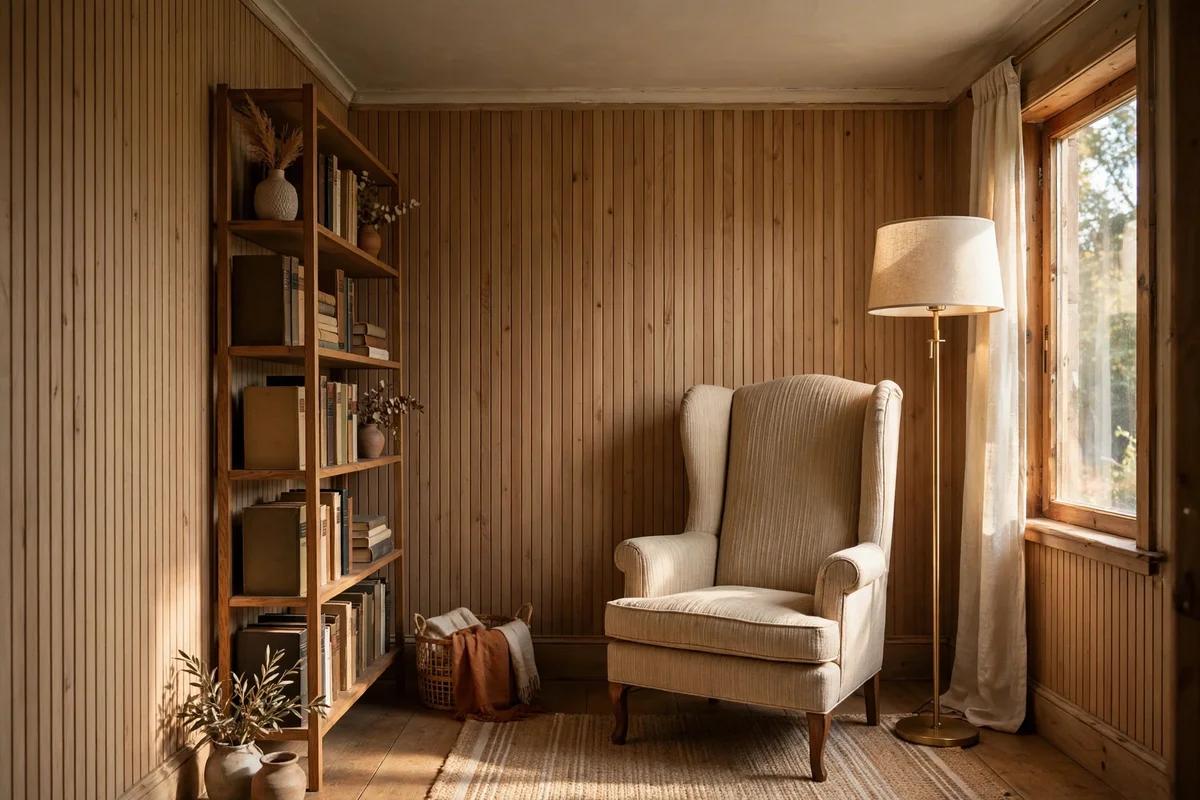
When the ceiling sits at 2.4 metres or lower, taller, more upright furniture redraws the proportions in your favour. Choose armchairs with backs of 85 to 95 cm, a bookshelf of 160 to 180 cm on one wall only, and floor lamps reaching 150 to 170 cm, so vertical lines keep rising and the ceiling reads as higher by comparison. Before, squat seating left a dead band of wall above it that emphasised how low the ceiling hung; after introducing upright pieces, the same room feels properly scaled.
Keep the uprights to two or three tall items, since filling every wall with tall furniture flips the effect and crowds the room. One slim bookcase, one floor lamp and a tall plant create enough upward rhythm; everything else can stay modest. The mistake to avoid is pairing tall pieces with a dark ceiling, which presses down on the room, so keep the ceiling pale and bright. Upright furniture costs the same as low pieces at most price tiers, so this is a proportion trick rather than a spending decision.
10. Clear Every Surface and Store the Rest Behind Closed Doors
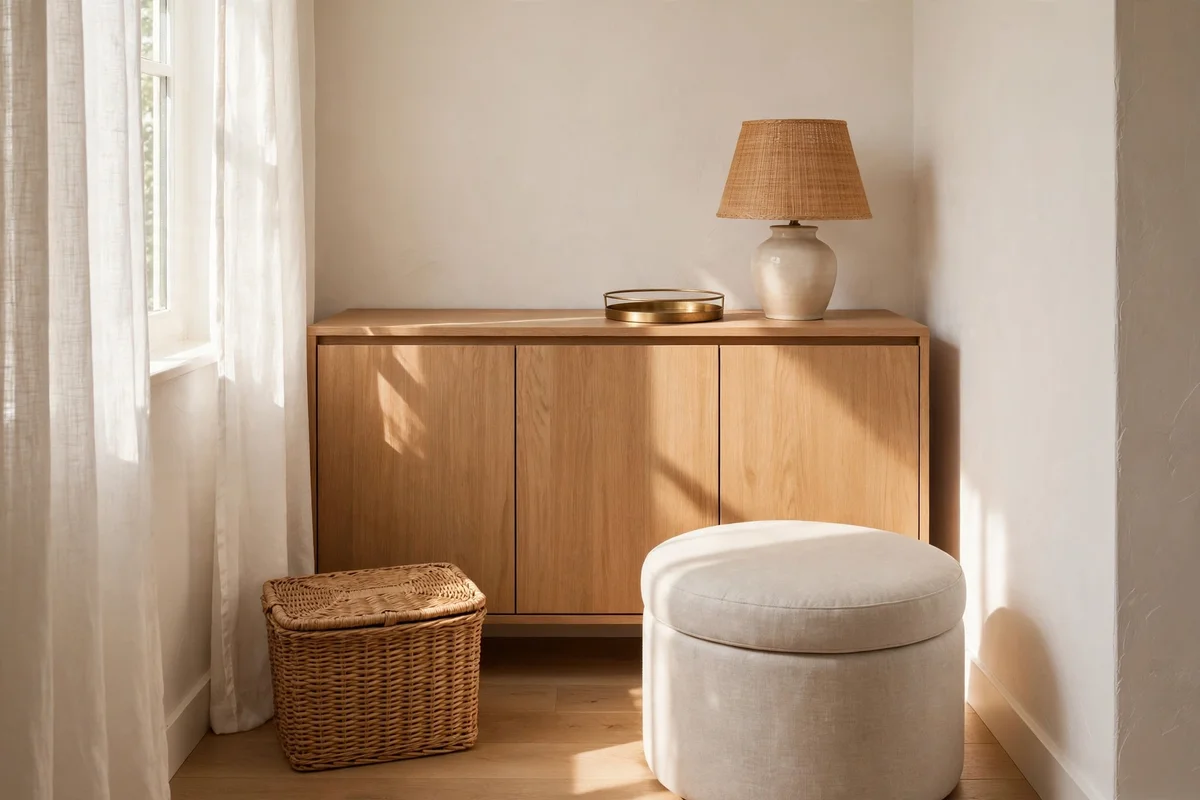
Every uncovered object on a shelf, table or windowsill adds visual noise, and in a small room that noise shrinks the space. Aim to leave at least 60 percent of every horizontal surface empty, keeping only one or two deliberate pieces per surface: a lamp and a small tray, a vase and a book. Before clearing, five or six small objects per shelf made the walls look busy and close; after editing down to two, the same shelves look calm and the room feels wider.
Move the overflow into closed storage: lidded baskets, cupboards with plain fronts, or ottomans with lift-up seats that swallow magazines and remote controls. A single 80 cm sideboard with doors hides more clutter than three open shelves ever could, and plain fronts let the eye glide past. The mistake to avoid is buying open cubes for everything, because they demand constant styling and always look busier. One closed cabinet of 40 by 80 cm costs 70 to 160 pounds or dollars and usually transforms the room more than any decorative object.
11. Use Glass and Open Shelving Sparingly to Protect Sightlines
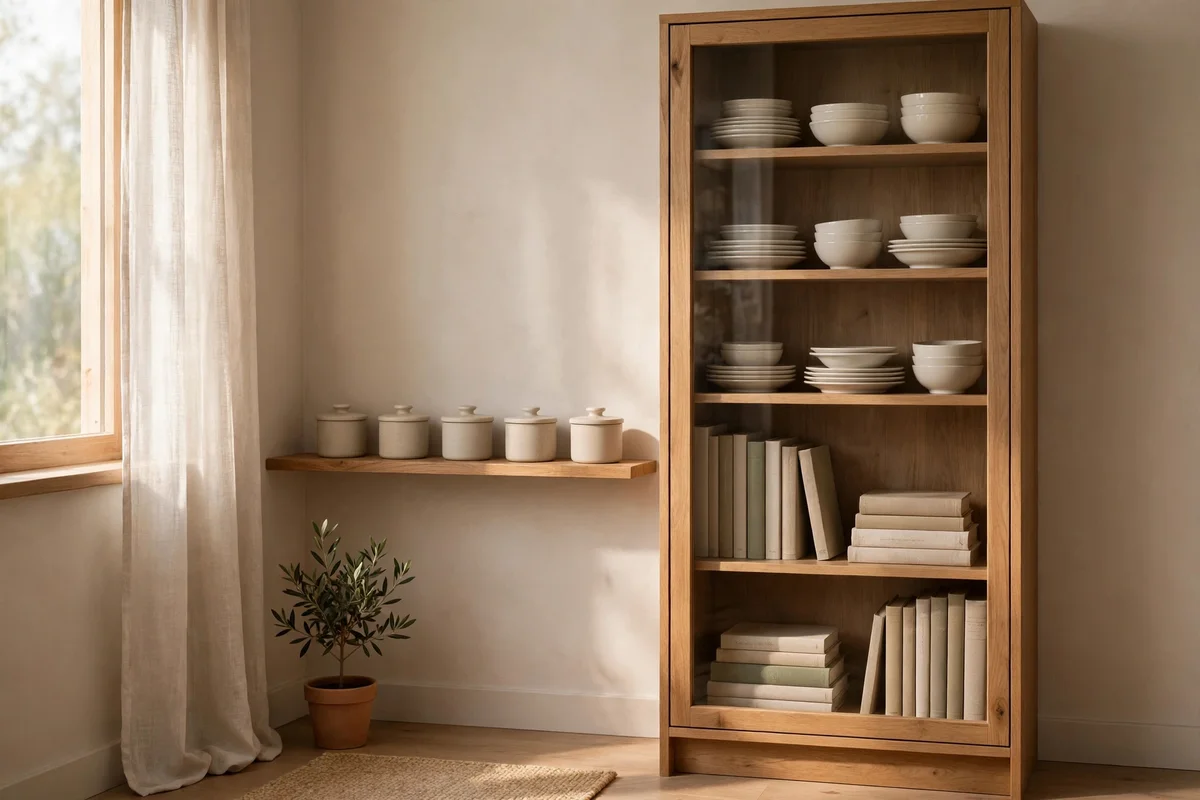
Glass-fronted cabinets and a single open shelf can keep a small room feeling light, but only when used with restraint. Choose one glass-door cabinet of about 60 to 90 cm wide for everyday dishes or books, and keep everything behind the glass neatly spaced with breathing room between objects. Before, solid cupboard doors on every wall made the room feel boxed in; after swapping one cabinet for glass, a sightline passes through the room instead of stopping dead at the wall.
Limit open shelving to one or two short runs of 60 to 90 cm, and style each with only five to seven items in matching tones so the display reads as calm, not chaotic. Deep shelves crowd small rooms, so keep shelf depth to 20 to 25 cm, which holds books and small jars without jutting into the space. The mistake to avoid is glazing every cupboard or opening every shelf, because too much visible content becomes clutter by another name. One glass-fronted cabinet typically costs 80 to 200 pounds or dollars at mid-range stores.
12. Run One Flooring Finish Through to the Hallway for Flow
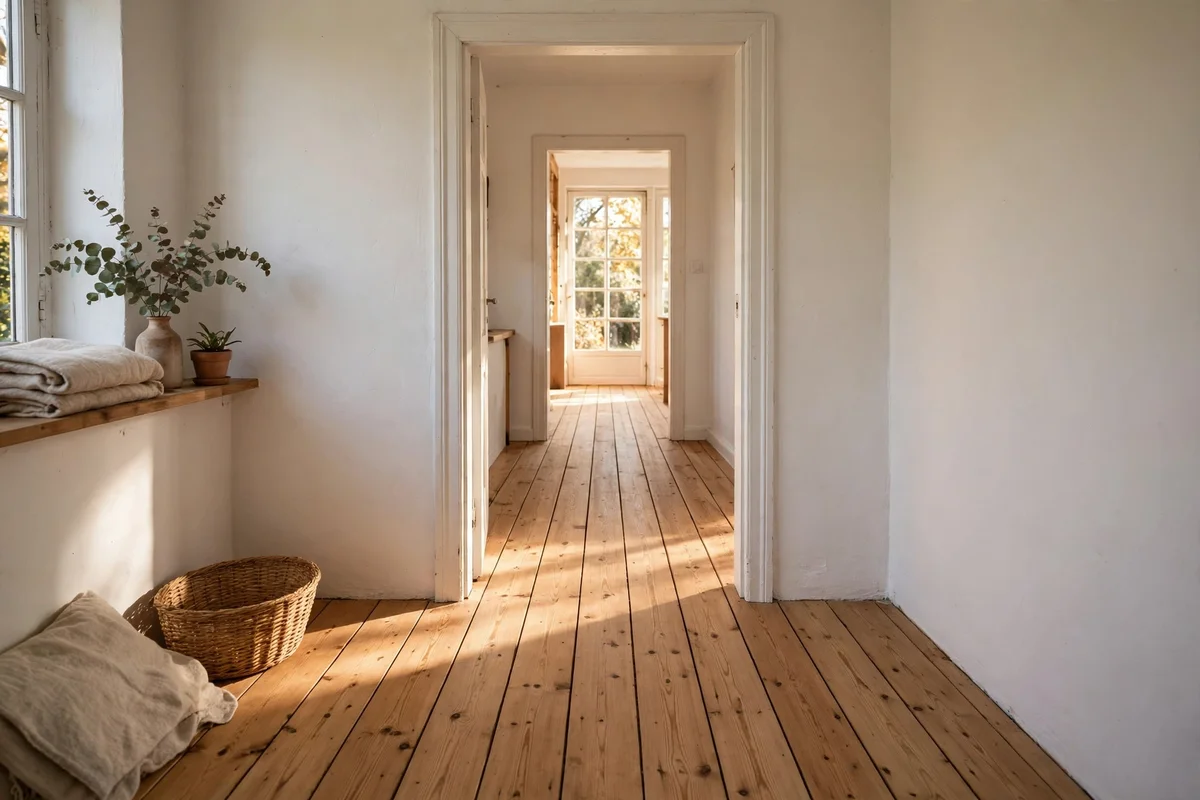
When the flooring runs uninterrupted from the room into the hallway, the eye keeps travelling and the room borrows the hallway’s length. Lay the same boards, tile or vinyl through the doorway with no threshold strip breaking the line, running the planks lengthwise toward the window. Before, a change of flooring at the door cut the room off like a full stop; after running one finish through, the same room feels like part of a longer, flowing space instead of a small sealed box.
Large-format tiles of 60 by 60 cm or planks at least 15 cm wide show fewer joins, and fewer joins read as more space. If replacing floors is out of budget, a long runner in the same tone as the room’s rug can fake continuity through the doorway for 30 to 80 pounds or dollars. The mistake to avoid is a dark border tile around the room edge, which frames the floor like a picture and shrinks it. Renter-friendly peel-and-stick planks in one tone across both areas cost roughly 2 to 4 pounds or dollars per square foot.
13. Paint Doors and Trim the Same Pale Tone as the Walls
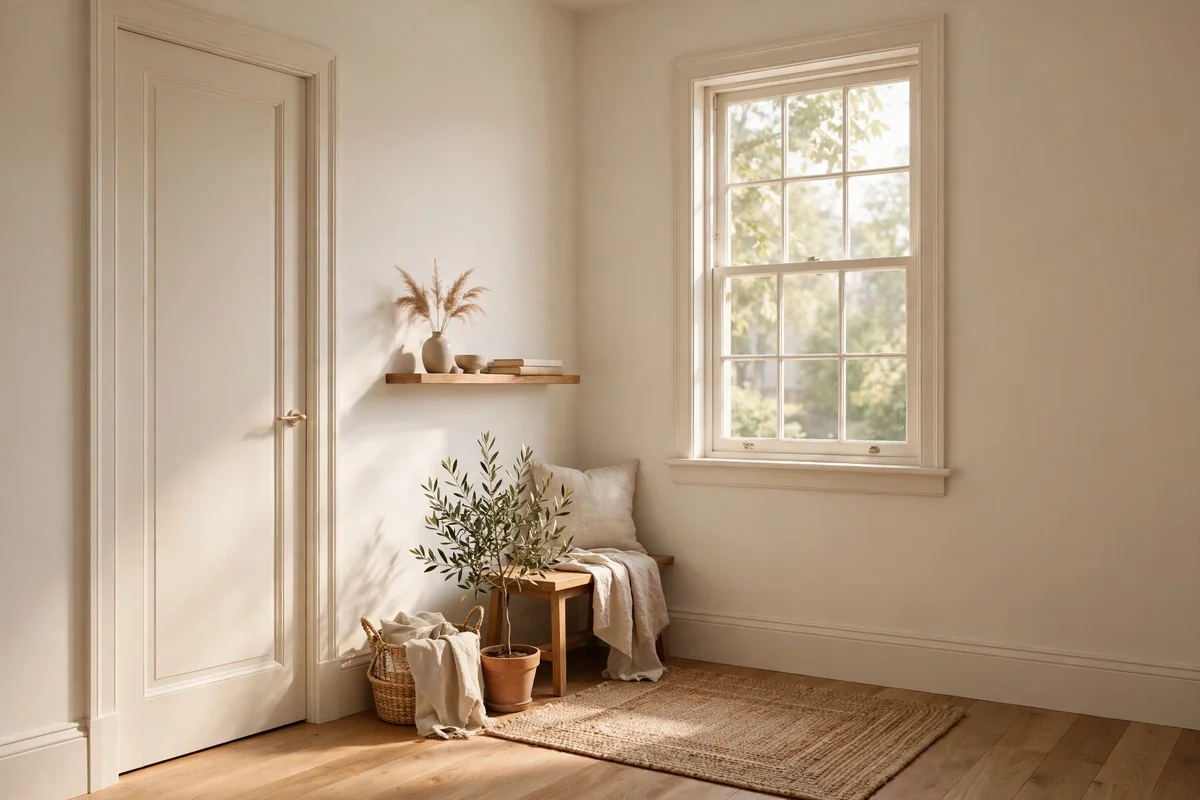
Painting interior doors, skirting and window trim in exactly the same pale tone as the walls erases the visual grid that chops a small room into panels. Before, white gloss trim against coloured walls outlined every door and window like a picture frame, which made each wall read as smaller; after colour-drenching doors and trim in the wall tone, the boundaries soften and the whole room reads as one continuous surface. Use the same paint in a satin or eggshell finish for trim durability.
Keep one sheen step glossier on the trim, for example eggshell walls with satin trim, so doors still wipe clean while the colour stays unified. A standard interior door needs about half a litre of paint for two coats, so colour-drenching the trim in a small room rarely uses more than one extra litre. The mistake to avoid is painting only the door and leaving bright white skirting, which reintroduces the grid you just removed. A litre of matching paint costs 8 to 20 pounds or dollars, making this one of the cheapest transformations on this list.
14. Keep Window Glass Free of Heavy Frames and Busy Trim
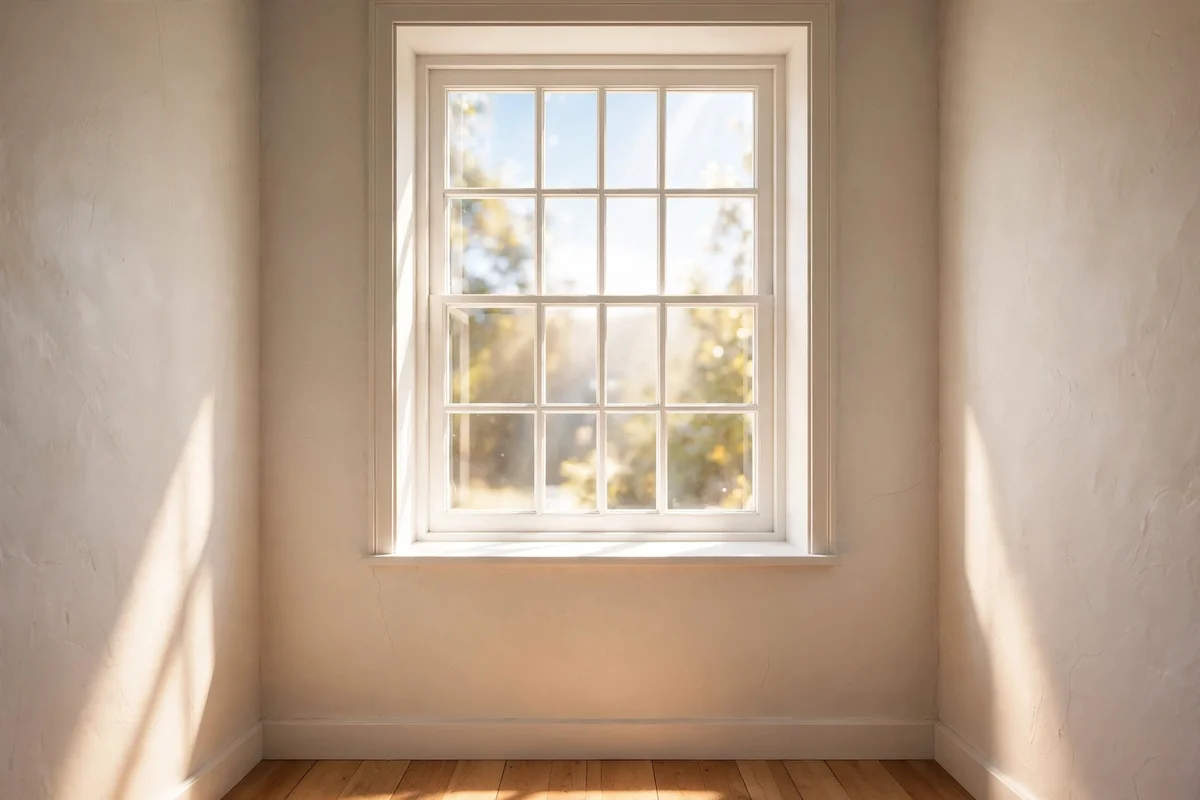
Heavy frames, dark stained trim and busy mullions steal daylight at the very point where the room needs it most. Keep the window reveal painted in the palest wall tone, choose slim frames in white or light timber, and move any chunky plant pots or stacked books off the sill so the full pane stays clear. Before, a sill crowded with objects blocked the lower third of the glass and the room felt dim by noon; after clearing it, daylight reaches 60 to 90 cm deeper into the room.
If the frame itself is dark and cannot be replaced, paint it the wall colour or hang the pale curtain panels just outside the glass so the dark line is softened by fabric. Frosted film on the lower pane adds privacy without curtains that would block light, and costs 5 to 15 pounds or dollars per window. The mistake to avoid is dressing a small window with a wide dark pelmet, which caps the light source and lowers the ceiling visually. Slim blinds inside the recess keep the glass open by day and cost 20 to 50 pounds or dollars.
15. Float Furniture a Few Centimetres Off the Wall
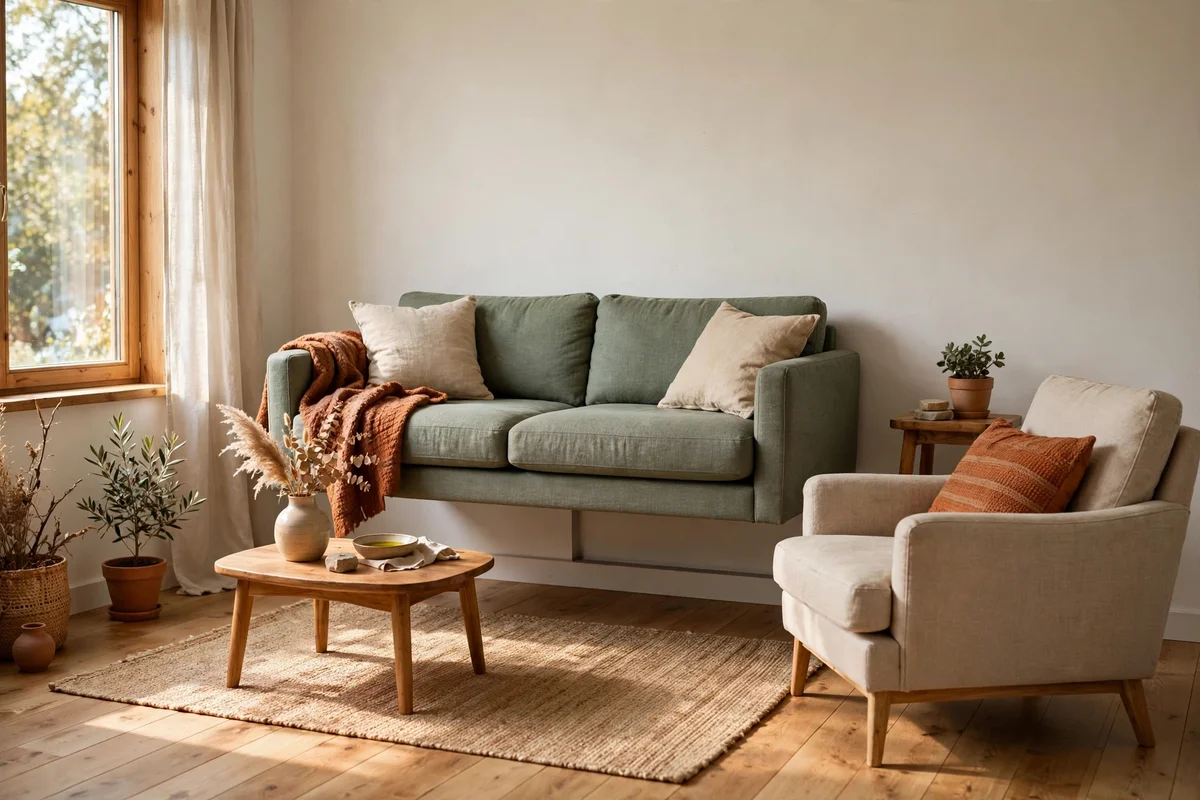
Pushing every piece hard against the walls actually makes a small room feel tighter, because the eye sees one solid perimeter of furniture. Float the sofa or armchairs 5 to 8 cm off the wall instead, which creates a narrow shadow line that reads as breathing room. Before, furniture wedged into the corners formed one continuous block the eye could not move past; after pulling pieces forward slightly, the gaps between furniture and wall let the eye travel and the room feels looser.
This works best for seating and low bookcases, not for tall wardrobes, which must stay fixed safely to the wall. Even 5 cm of gap lets wall colour show through behind a chair, which softens the furniture outline and adds a sense of depth. The mistake to avoid is floating pieces so far out that walkways shrink below 75 cm, since cramped paths undo the airy effect instantly. Cost: nothing, because this trick is pure placement; it takes ten minutes with a tape measure and a willing pair of hands.
16. Draw the Eye Up With Vertical Lines and Tall Artwork
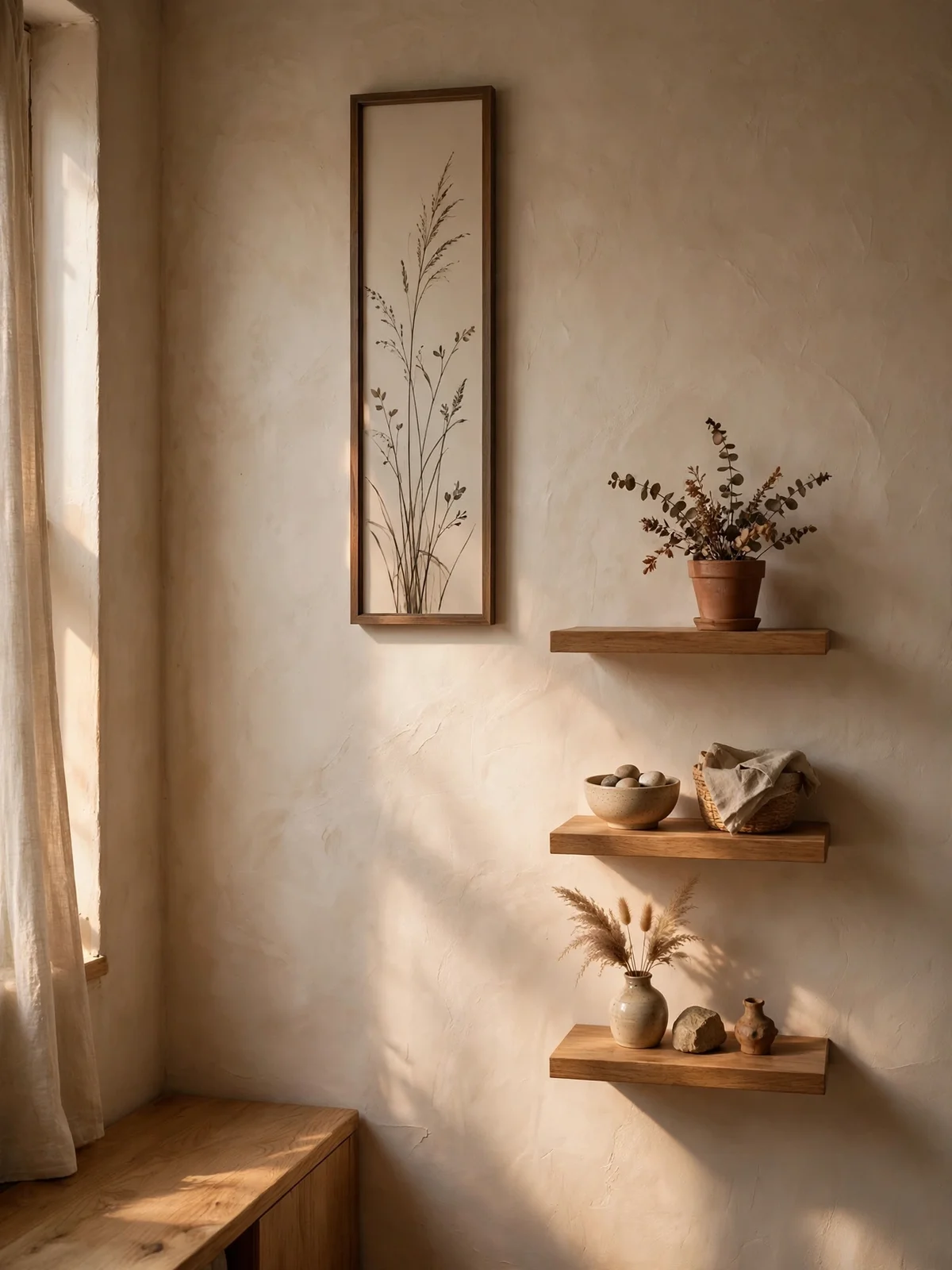
Vertical lines pull the gaze upward, which makes the ceiling feel higher even when it never moves. Hang a tall narrow artwork of about 50 by 120 cm, run three floating shelves in a vertical stack with 35 to 40 cm between them, or choose curtains with a subtle vertical weave. Before, one wide landscape print sat low over the sofa and the room felt squat; after replacing it with a tall piece, the same wall gained upward rhythm and the ceiling seemed to lift.
Floor-to-ceiling bookcases work the same magic, but keep them to one wall and paint them the wall colour so they blend instead of looming. Striped wallpaper on a single wall also draws the eye up, provided the stripes are soft and tone-on-tone rather than high contrast. The mistake to avoid is combining tall art, tall shelves and striped wallpaper all at once, which turns rhythm into noise. One tall element costs little: a narrow framed print of this size runs 25 to 60 pounds or dollars.
17. Swap a Bulky Bookcase for a Slim Picture Ledge
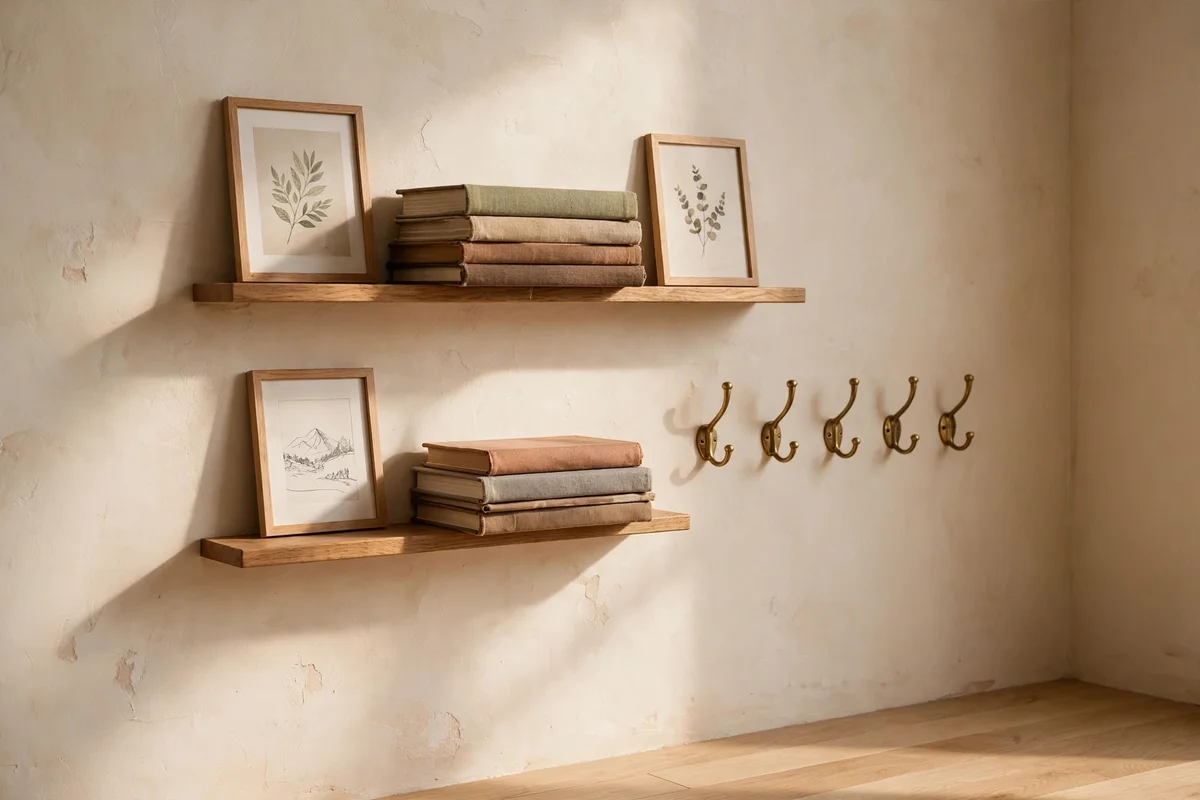
A full bookcase of 90 by 180 cm eats a whole wall and casts the room in shadow, while a slim picture ledge of 8 to 10 cm depth holds the same favourite books and frames in a fraction of the space. Mount two ledges of 80 to 120 cm on one wall, layering small frames in front of books for a collected look. Before, the bulky case dominated the corner and blocked a window’s side light; after the swap, the wall breathes and the room gains roughly half a metre of floor.
Wall hooks take the same principle further: a row of three to five brass or wooden hooks holds bags, hats and throws without any floor footprint at all. Keep hook rows at 150 to 160 cm so everyday items hang within easy reach and the line reads as deliberate decor. The mistake to avoid is replacing the bookcase with many small ledges scattered across every wall, which reads as busy; two ledges on one wall plus one hook row is plenty. Two ledges and five hooks usually cost 30 to 70 pounds or dollars together.
18. Add Reflective Finishes That Bounce Light Around the Room
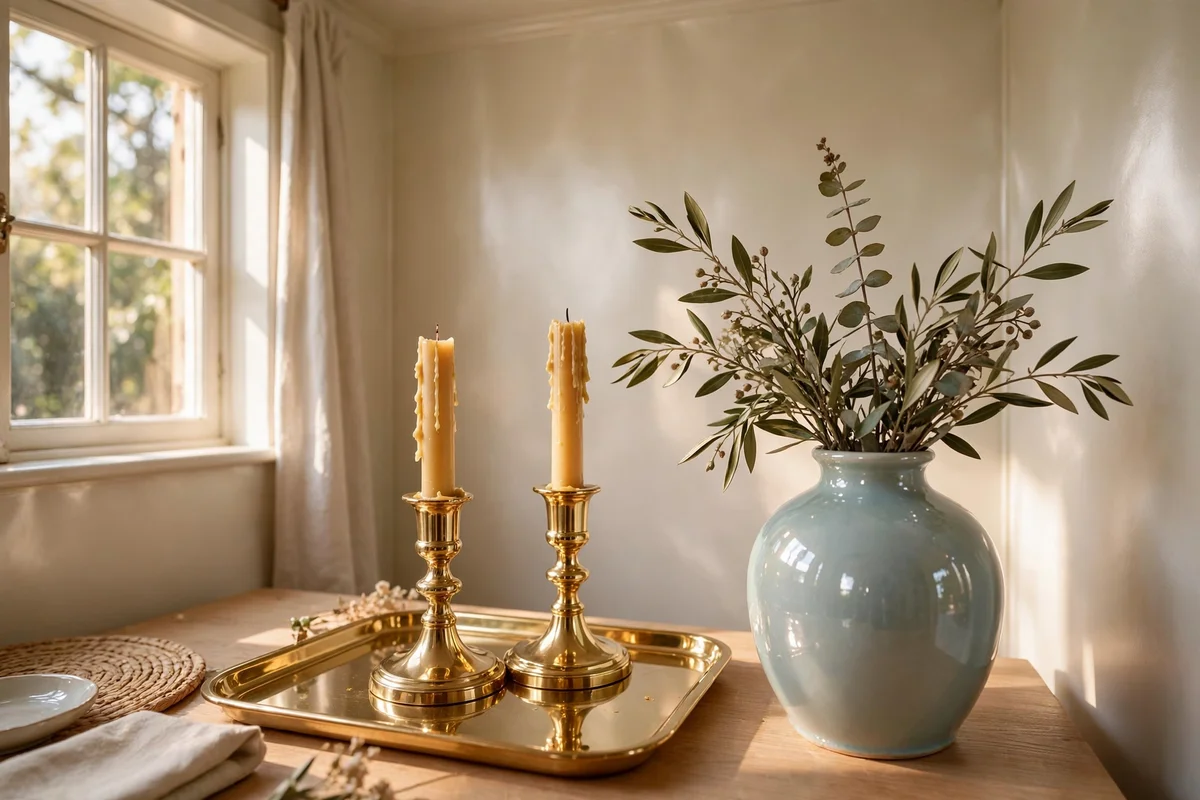
Light that hits a reflective surface bounces onward, which is why satin paint, polished brass and glossy ceramic tile make small rooms glow. Choose eggshell or satin wall paint instead of flat, add a brass tray or picture frame, and consider a glossy tiled splashback or hearth that throws window light back into the room. Before, matt everything absorbed the afternoon sun and the room dulled by four o’clock; after adding reflective finishes, the same light keeps working until evening.
Balance is key: aim for about 20 percent reflective surfaces and 80 percent soft, light-absorbing ones, so the room glows rather than glares. A mirrored tray, two brass candlesticks and a glazed ceramic vase deliver the effect without turning the room into a hall of mirrors. The mistake to avoid is high-gloss flooring under a bright window, which creates harsh hotspots and shows every speck of dust. Satin-finish paint costs the same as flat at most stores, so this brightness often comes free with the repaint.
19. Make the Window Wall the Lightest Wall in the Room
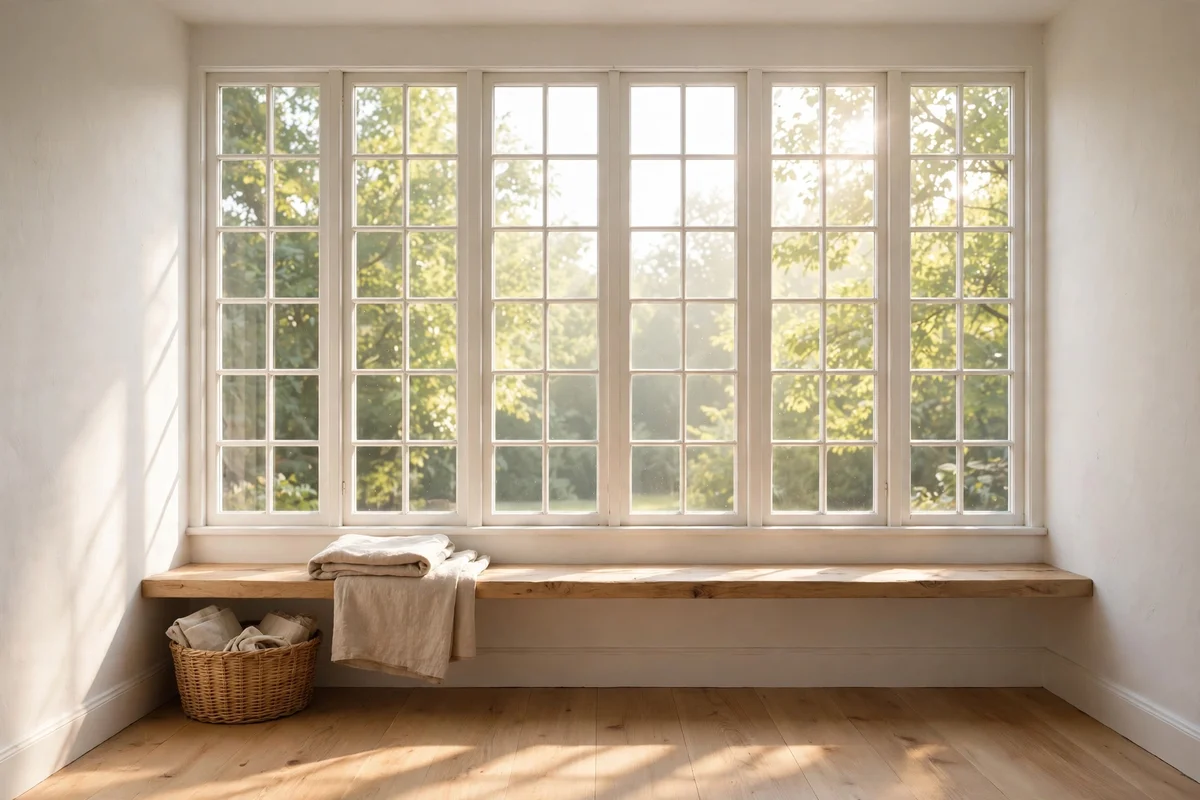
The wall holding the window should be the lightest surface in the room, since it is the first thing lit each morning and sets the tone for everything else. Keep it free of dark furniture backs, heavy shelving and deep-coloured art, and paint it the brightest shade of your palette. Before, a dark wardrobe against the window wall drank the morning light before it could travel; after moving that wardrobe to a side wall, daylight floods the room and reaches the far corners.
Place low furniture only against this wall, such as a 45 cm radiator cover styled with a lamp or a low bench under the sill, so nothing rises to block the glass. If the window wall also holds the radiator, a pale slatted cover painted the wall colour keeps heat flowing while looking seamless. The mistake to avoid is hanging dark curtains on the window wall, which frames the brightest wall in shadow; choose pale panels that match the wall. Moving one wardrobe costs nothing and often changes the room’s light more than any purchase.
20. Trade Table Lamps for Wall Sconces to Free Up Surfaces
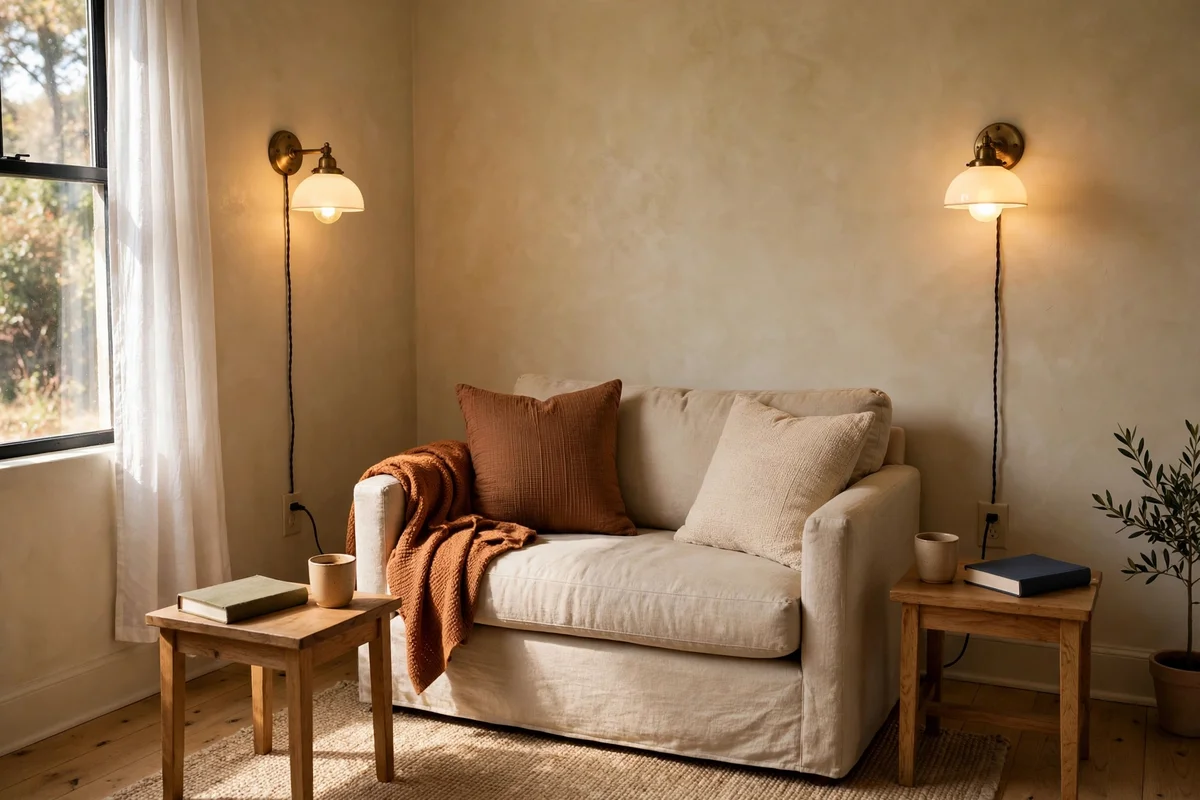
Table lamps eat the surface they sit on, while wall sconces give the same warm light and leave the table free for books, tea and everyday life. Mount a pair of plug-in sconces at 140 to 150 cm from the floor, flanking a sofa or bed, so light washes down softly without a lampshade crowding the surface. Before, two table lamps consumed both bedside tables and the room felt furnished to the edge; after switching to sconces, the same tables breathe and the walls gain a gentle upward glow.
Plug-in sconces need no electrician, just a nearby socket and a cord cover painted the wall colour to hide the cable. Choose swing-arm styles for reading corners, since they angle light exactly where it is needed and fold flat when not in use. The mistake to avoid is mounting sconces too high, above 170 cm, where they spotlight the ceiling instead of the seating zone. A pair of plug-in sconces costs 35 to 90 pounds or dollars, roughly the same as two table lamps, while freeing a full tabletop each.
21. Finish With One Tall Plant Kept Lean and Airy
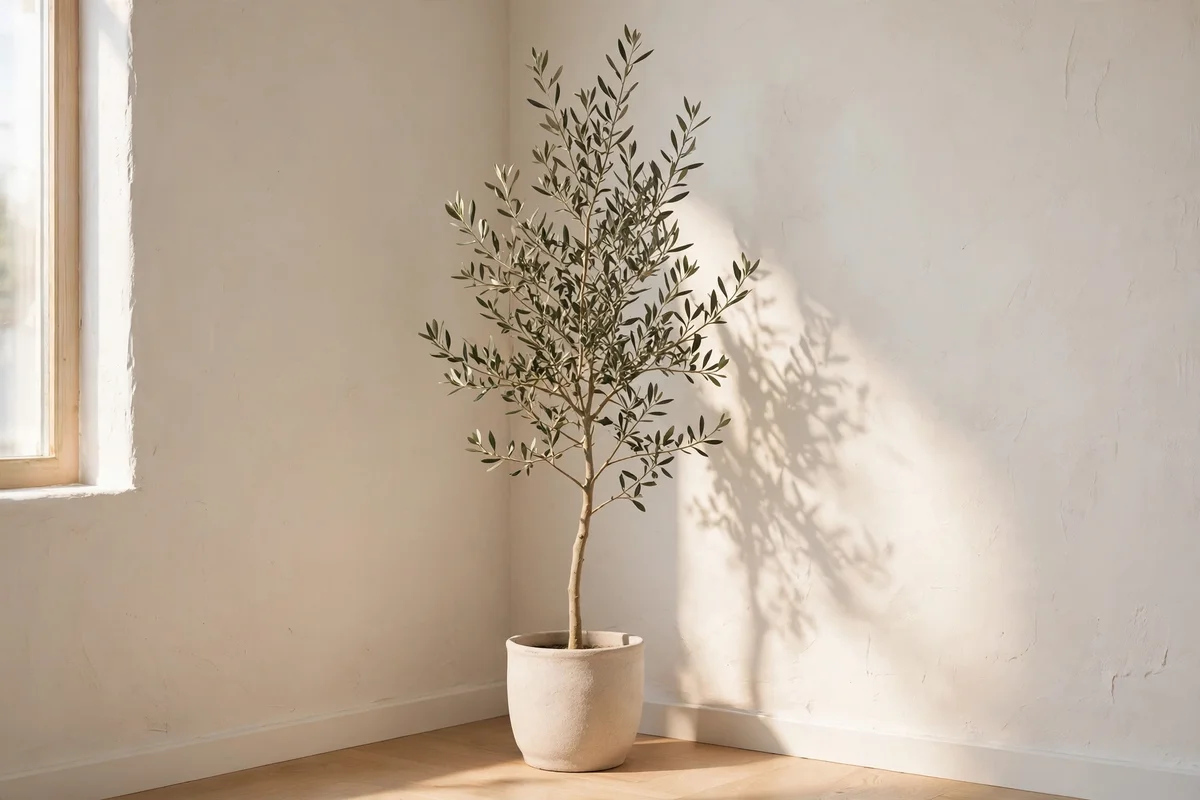
One tall, airy plant brings life into a small room without the heaviness of multiple pots. Choose an olive tree, a tall snake plant or a slim parlour palm in a 25 to 30 cm pot, and place it where it catches daylight but never blocks the window. Before, three or four small pots scattered on sills and shelves chopped the room into fussy fragments; after consolidating to one statement plant, the same room keeps its freshness and the surfaces stay clear.
Keep the plant pruned to a lean silhouette and wipe the leaves monthly so they catch and reflect light instead of gathering dust. A tall plant draws the eye upward, which quietly reinforces the ceiling height you have worked to suggest. The mistake to avoid is choosing a wide, bushy specimen that spreads 60 cm in every direction, since it eats the floor space you just freed. One healthy plant in a simple ceramic pot costs 20 to 50 pounds or dollars and needs only weekly watering.
Making a small room look bigger and brighter comes down to three habits: borrowing light from every window, keeping sightlines open, and choosing pieces that show the floor. The ideas in this guide work together, so each change you make quietly strengthens the next. Start with the easiest win this week, whether that is clearing the windowsill, repainting the trim or pulling the sofa five centimetres off the wall.
If you do just one thing, hang the curtains high and wide this weekend, because no other single change stretches a window so dramatically for so little money. Then, when the light feels better, add the mirror and the rug, and keep editing surfaces until the room breathes. Small rooms reward attention like nowhere else, and yours is about to feel twice the size it was.
Frequently Asked Questions
What paint colour makes a small room look biggest?
A pale warm white with a creamy or pink undertone opens walls best, since it reflects daylight without feeling cold. Keep the ceiling one to two shades lighter than the walls so it reads as lifted. Avoid cool grey whites, which can look blue in low light and actually make the room feel smaller. Two coats on four walls of a small bedroom take about 4 to 5 litres.
How big should a mirror be to brighten a small room?
Choose at least 70 by 100 cm and hang it beside or opposite the window so it catches and throws daylight across the room. Angle it slightly toward the sky rather than the floor for the best effect. One generous mirror aimed at the glass gives all the brightness you need; mirroring two walls just multiplies clutter instead of light.
Does dark furniture make a small room look smaller?
Dark pieces shrink a room only when they sit high on the walls or crowd the window, where they block light and shorten sightlines. One deep accent kept low, like a terracotta ottoman or a walnut footstool, adds welcome depth without closing the room in. Keep the ratio around 10 percent dark to 90 percent pale, and the room stays bright with character.
What size rug works best in a small living room?
Pick a rug at least 160 by 230 cm that slides under the front legs of every seat, so the furniture reads as one island. Smaller mats float in the middle and chop the floor into fragments, which makes the room feel tinier. Leave 20 to 30 cm of bare floor around the edges so the rug breathes, and choose a low-pile flatweave in a simple pattern.
How can I add storage to a small room without cluttering it?
Favour closed storage over open shelves: lidded baskets, plain-fronted cupboards and ottomans with lift-up seats hide everyday items and let the eye glide past. Aim to keep at least 60 percent of every surface empty. If you use open or glass shelving, limit it to one short run of 60 to 90 cm and style it with only five to seven matching items.