Living Room
21 White Couch Living Room Ideas That Feel Warm and Lived In
By Anna Wells · · 11 min read
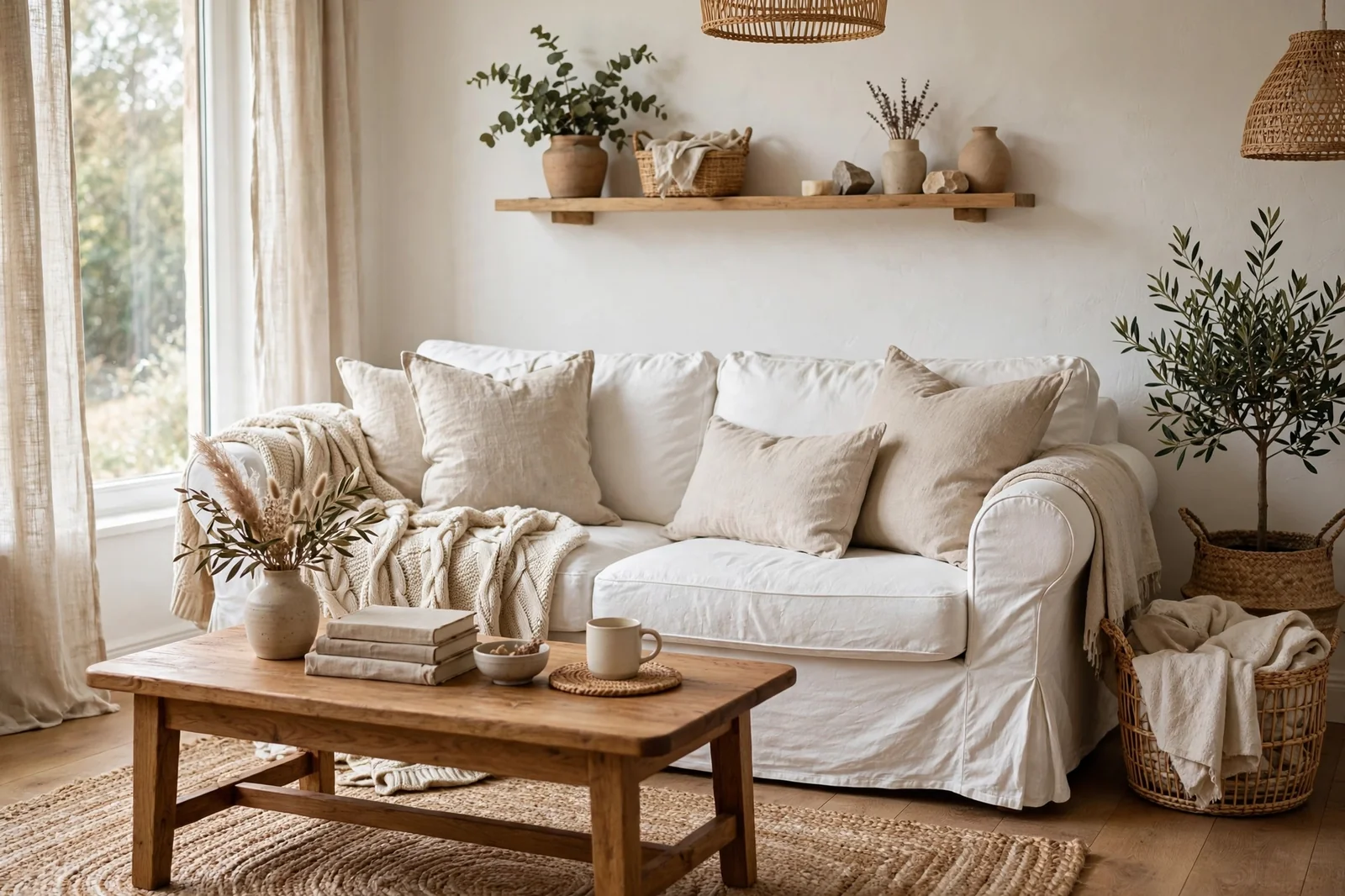
A white couch in a real, lived-in home. It sounds like a contradiction, yet with the right textures, layers and a few easy-clean tricks, white upholstery can be the warmest seat in the house. These 21 white couch living room ideas show how to surround crisp white with creamy neutrals, natural wood, soft lighting and practical fabrics, so your living room feels inviting, cozy and completely you, from quiet mornings to full-house movie nights.
A white couch often gets labeled as impractical, but that reputation belongs to fussy formal rooms, not to warm family homes. With thoughtful layering, forgiving fabrics and honest, touchable textures, white upholstery becomes a calm backdrop that makes every cozy detail around it shine. These ideas focus on real life: washable covers, sturdy rugs, warm wood and lighting that flatters. Whether your style leans modern, farmhouse, coastal or classic, you will find ways to make a white couch feel like the most welcoming seat in the house.
1. Layered Neutrals That Feel Soft, Not Boring
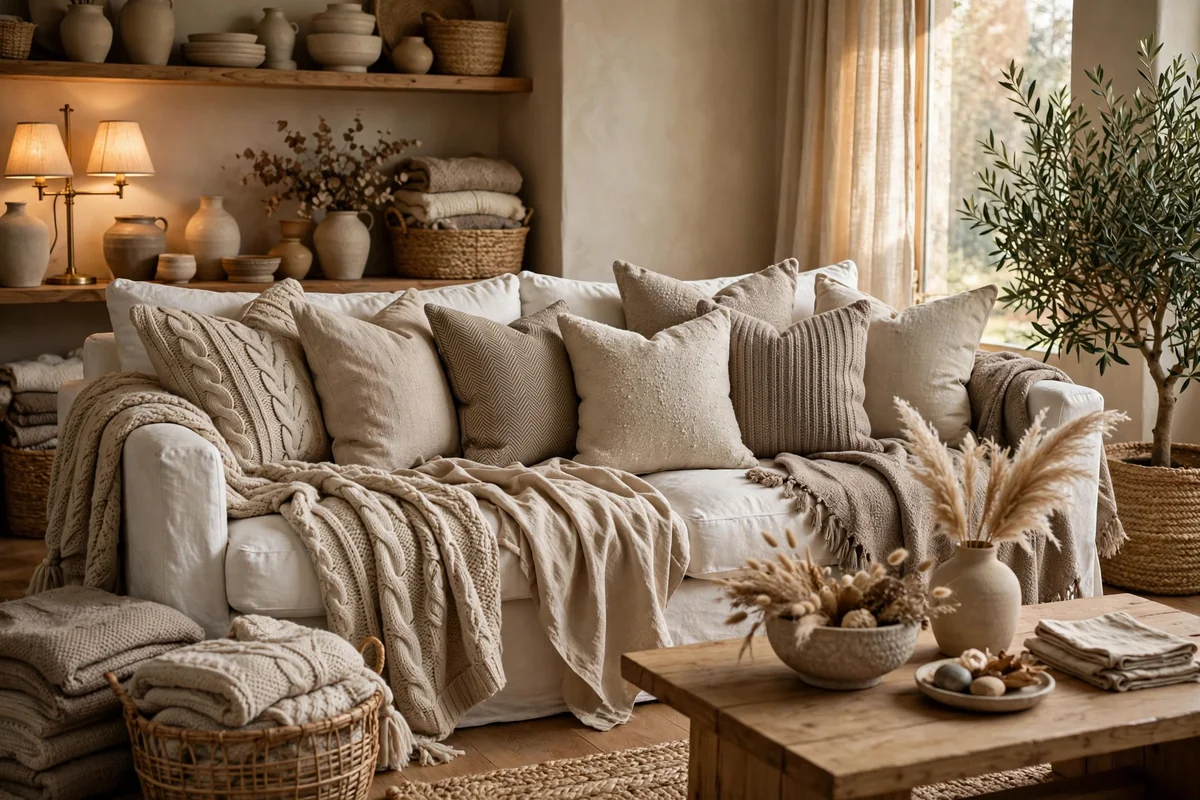
The simplest way to warm up a white couch is to surround it with creamy, oatmeal, beige and warm taupe tones. The secret is texture: when every color sits in the same family, the eye reads the differences in weave and touch instead of color. Pair a linen slipcovered sofa with a chunky knit throw, boucle pillows and a woven wool rug, and the neutral palette feels rich rather than flat. Keep undertones consistent, all warm or all cool, so the layers blend instead of clash.
Budget-wise this is one of the easiest looks to build because neutral textiles are everywhere. Start with what you own, then add one textured piece at a time: a pair of 20 inch linen pillow covers, a knit throw draped over one arm, a small lumbar cushion in nubby boucle. A common mistake is buying everything in the exact same shade of beige, which reads dull. Aim for at least three depths of tone, from ivory through camel, so the white couch stands out crisply against the warmth.
2. Cozy Throws and Pillows in Mixed Textures
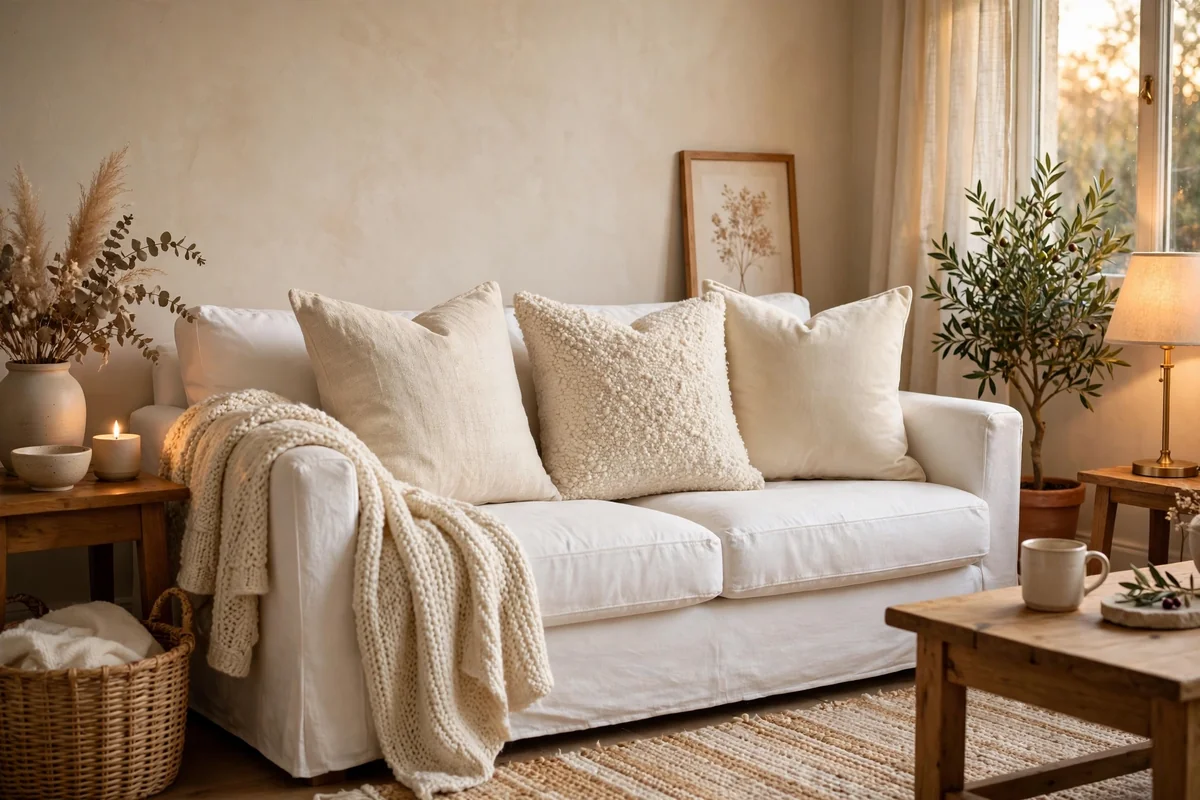
Throws and pillows do the heavy lifting on a white couch because they add the color, pattern and softness that plain white upholstery lacks. Mix at least three textures: smooth linen, nubby boucle or knit, and something with a little sheen like velvet. Odd numbers of pillows look more relaxed than matched pairs, so try five across a standard three-seat sofa. Drape one throw casually over an arm or folded across a seat cushion, never both, to keep the styling effortless.
Washability matters here more than anywhere. Choose pillow covers with hidden zippers so they can go straight in the machine, and pick throws in cotton or washable wool blends rather than dry-clean-only fabrics. A frequent mistake is overstuffing the couch until nobody can sit comfortably. Leave at least 18 inches of clear seat depth on each cushion so the couch invites lounging instead of looking like a display.
3. Slipcovers That Survive Real Life
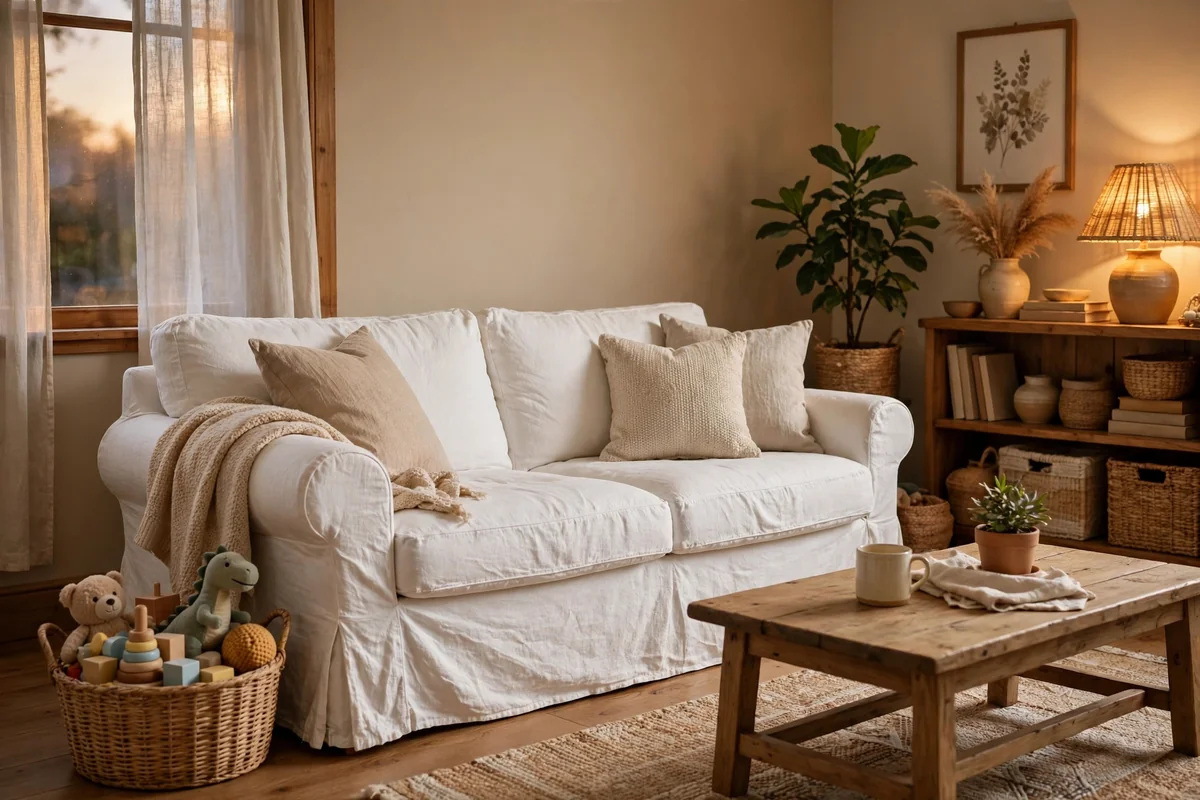
A slipcovered white couch is the most forgiving choice for a busy household. When a spill happens, the cover comes off and goes in the wash, and the couch looks brand new again. Look for slipcovers in heavyweight cotton canvas, linen blends or performance twill with a relaxed, tailored fit. Measure your sofa carefully before ordering: seat width, depth, arm height and back height all matter, and a cover that is two inches too short will never sit right. Keep a spare set if you can, so the couch is never bare on laundry day.
The tailored versus relaxed question is mostly about style. A snug, tailored slipcover reads modern and crisp, while a looser, slightly wrinkled linen cover leans farmhouse and casual. Both wash well. Avoid very thin slipcover fabrics, which bag out quickly and show every lump in the cushions beneath. A midweight fabric around 8 to 10 ounces per square yard holds its shape through dozens of wash cycles.
4. Washable Performance Fabric
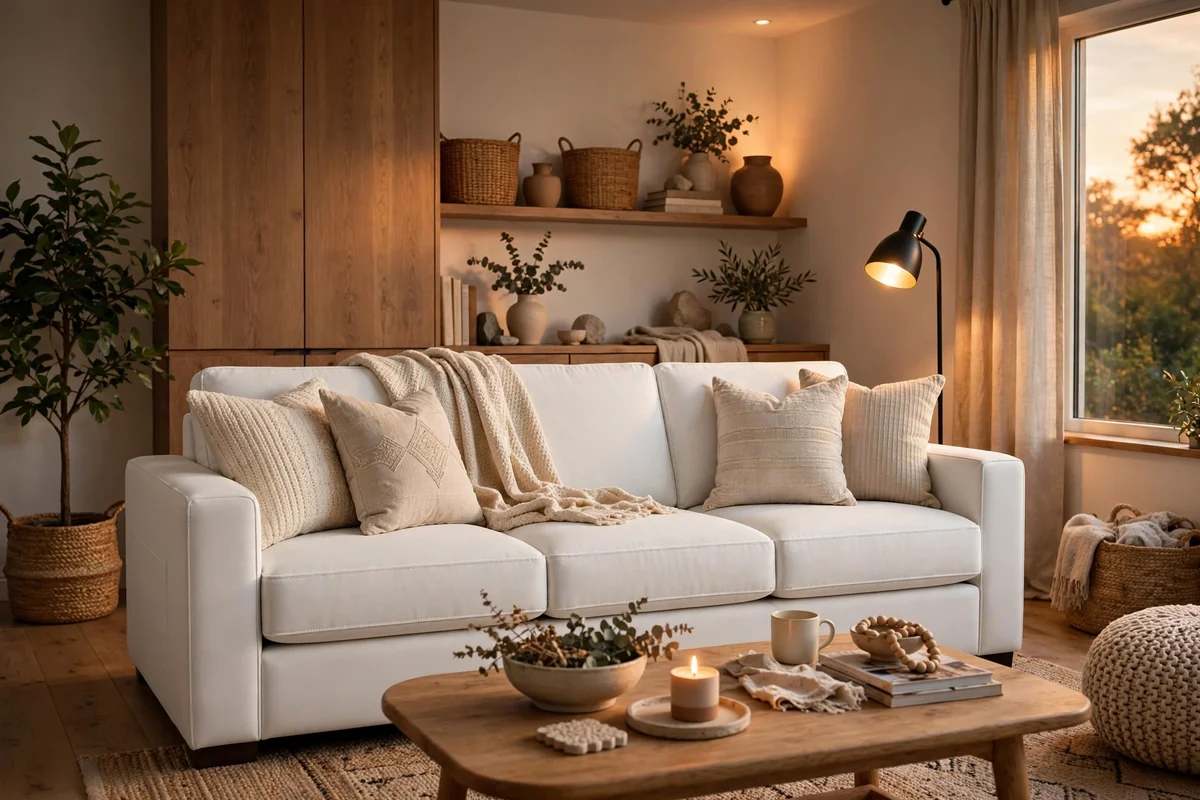
If you prefer an upholstered look over a slipcover, performance fabric is the modern answer to white couch anxiety. These tightly woven fabrics resist stains, repel liquids and often survive bleach-based cleaners without yellowing. When shopping, ask for the fabric’s cleaning code and double rub count: a code W fabric cleaned with water-based solutions and a count above 30,000 double rubs will handle daily family use. Crypton, Revolution and similar branded performance textiles are widely available on sofas at many price points.
Test before you commit by ordering swatches and abusing them: spill coffee, smear a little jam, let the dog sit on one. Wash the swatch in the machine and see what survives. One mistake to avoid is assuming all light fabrics are equal. A loose-weave natural linen stains far more easily than a tight performance weave, even though both look white. Spend the extra money on the fabric grade, because reupholstering later costs far more than the upgrade.
5. Warm Wood Tones Around the White
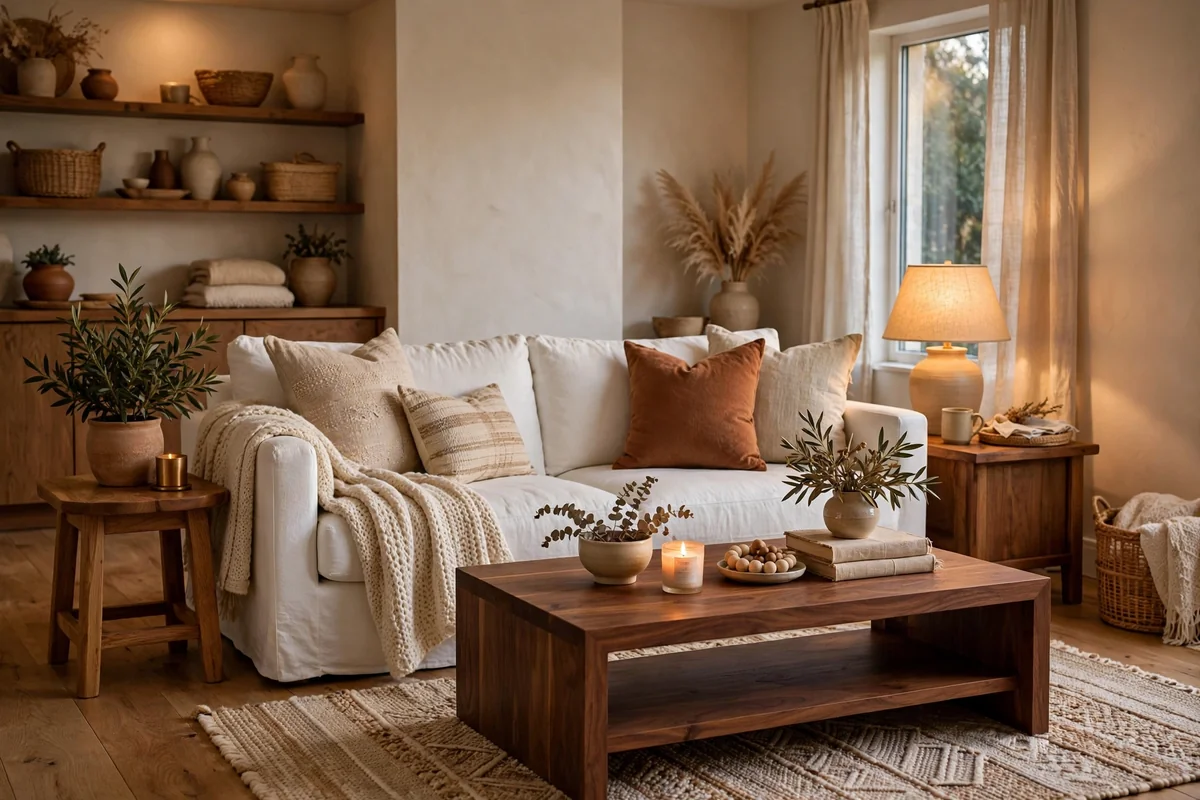
White upholstery can feel cold without the grounding warmth of natural wood. A walnut or oak coffee table, warm-toned side tables and wooden picture frames pull the whole room toward cozy. Medium wood tones work best: very pale woods can blend into the white and disappear, while very dark woods create sharp contrast that suits a bolder look. Place the coffee table 14 to 18 inches from the couch front so there is comfortable legroom without a gap that feels disconnected.
You do not need matching wood furniture. A mix of oak, walnut and even painted pieces looks collected and personal as long as the undertones lean warm. Thrifted wooden side tables are an easy budget win; a light sanding and a coat of furniture oil can revive a tired finish in an afternoon. Avoid glossy lacquered woods next to a white couch, since the shine can feel formal. Matte and satin finishes keep the mood relaxed.
6. A Natural Jute or Woven Rug
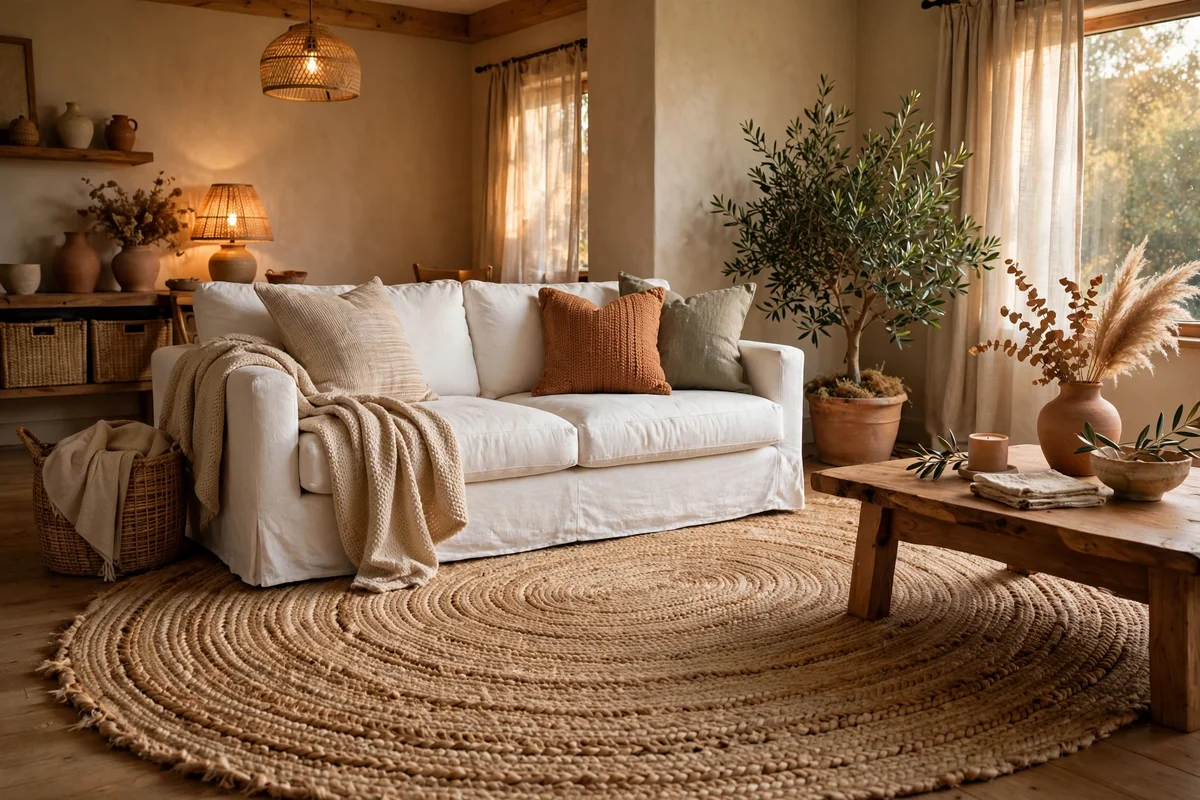
A natural fiber rug is the fastest way to warm up the floor beneath a white couch. Jute, sisal and woven seagrass bring golden, earthy tones and nubby texture that make white upholstery feel intentional instead of stark. Size the rug generously: in most living rooms an 8 by 10 foot rug lets the front legs of the couch and chairs all rest on it, which ties the seating group together. A rug that is too small makes even a beautiful couch look like it is floating.
Natural rugs are forgiving with crumbs and pet hair, and most can be shaken out or vacuumed without a beater bar. Layer a smaller, softer rug on top if jute feels rough underfoot; a 5 by 7 cotton or low-pile wool rug centered on the coffee table adds softness where bare feet land. One caution: jute and light spills are not friends, so keep a washable runner in the highest-traffic path or choose a darker weave if drinks travel through often.
7. Greenery That Breathes Life In

Nothing softens white upholstery like living green. A tall fiddle-leaf fig or olive tree in the corner behind the couch adds height and movement, while trailing pothos on a shelf and a small potted plant on the side table bring life to eye level. Plants break up the pale palette with organic shapes that no textile can imitate. Choose low-maintenance varieties if you are not a confident plant keeper: snake plants, ZZ plants and pothos tolerate low light and irregular watering.
Scale matters. One large plant makes a stronger statement than five tiny ones scattered around, and a planter at least 14 inches wide grounds a tall plant visually. Keep plants a few feet from the couch fabric so watering never splashes the upholstery, and use saucers or cache pots without drainage holes near furniture. If real plants feel risky, a few good-quality faux stems in a ceramic vase still add the color and shape, though nothing beats the real thing for freshness.
8. Warm Brass and Gold Accents
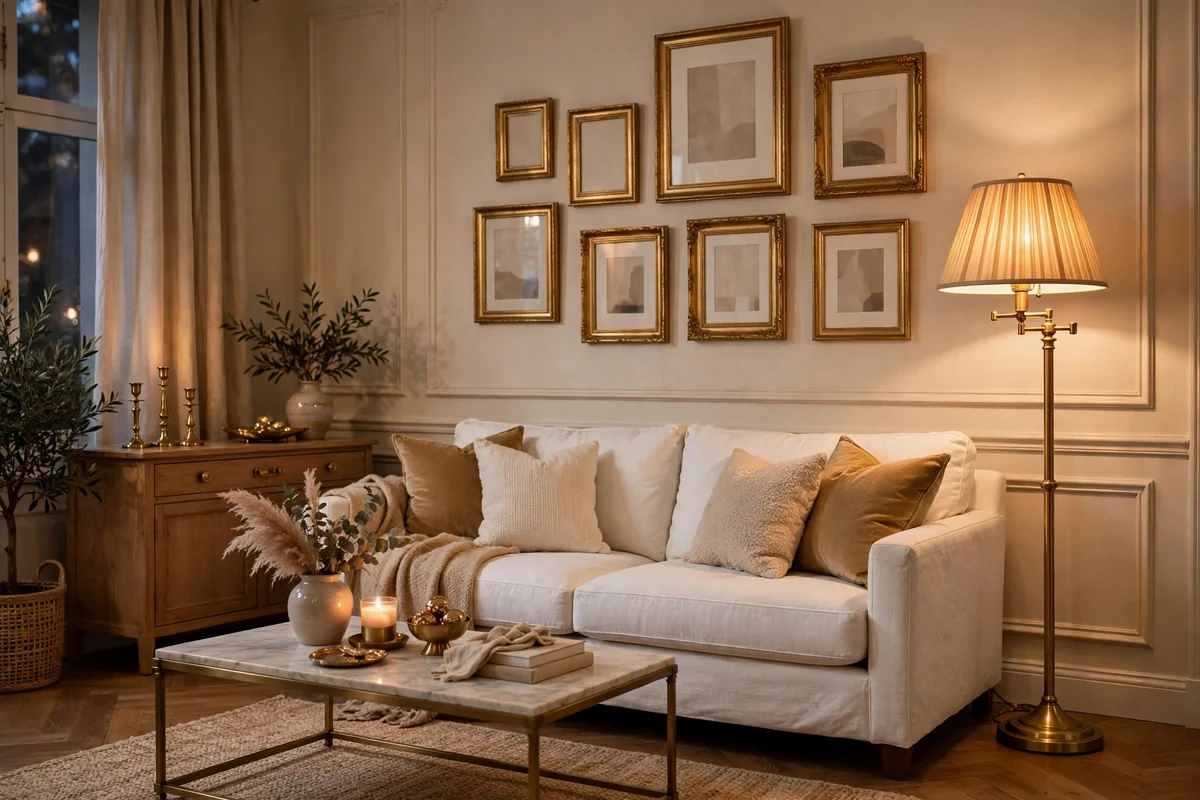
A little warm metal goes a long way against white. Brass and brushed gold picture frames, lamp bases, curtain rods and coffee table legs catch the light and add a quiet glow that white fabric cannot produce on its own. You do not need much: a brass floor lamp arcing over one end of the couch, two gold-framed prints and a small brass tray on the coffee table is plenty. Brushed and aged finishes feel warmer and more relaxed than high-polish chrome-like gold.
Mix metals sparingly. Brass pairs beautifully with black accents for a classic look, but adding chrome and nickel into the same small room can feel scattered. Pick one dominant warm metal and let it repeat at least three times so it looks deliberate. Budget tip: thrift stores are full of solid brass candlesticks and trays that polish up beautifully with a little metal cleaner, giving you the look for a fraction of new prices.
9. Soft, Layered Lighting
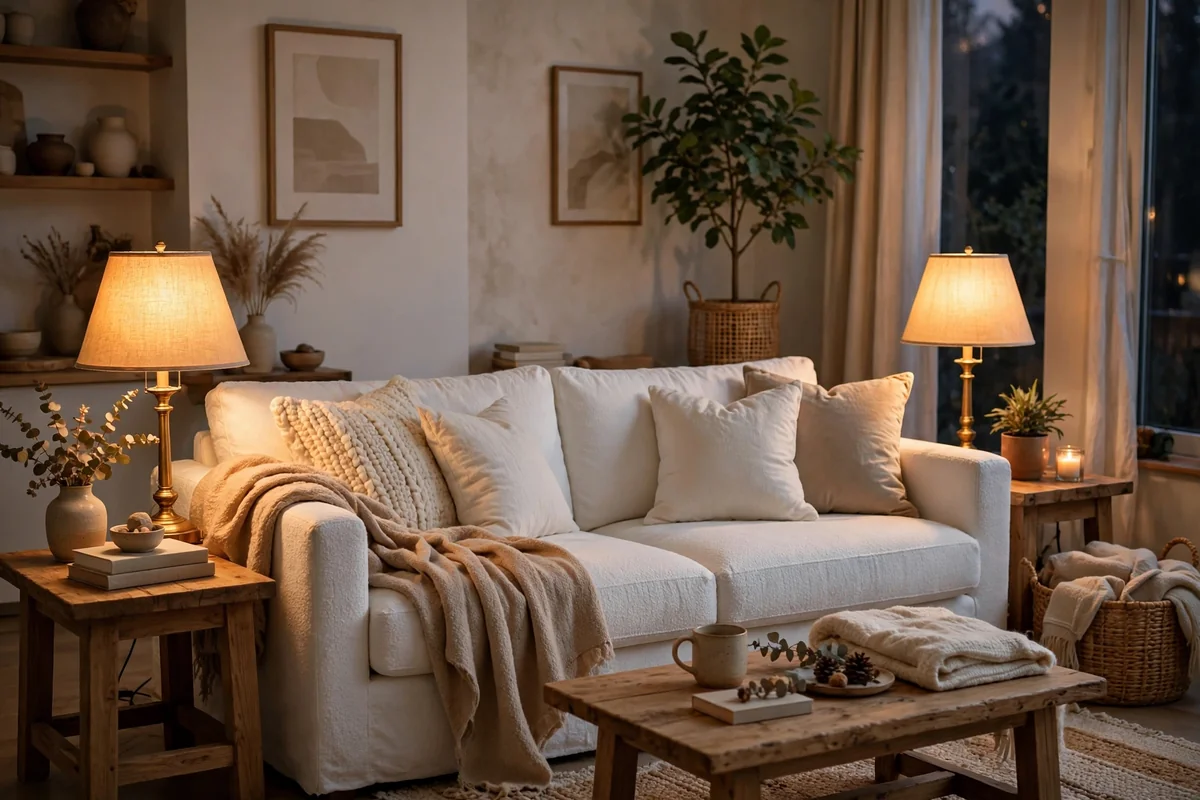
White couches look their best in warm, layered light. Overhead lighting alone creates harsh shadows and makes white fabric look flat, so build three layers: ambient light from a ceiling fixture or floor lamp, task light from table lamps for reading, and accent light from candles or a small picture light. Use warm bulbs around 2700K throughout the room; cooler daylight bulbs can make white upholstery look bluish and clinical, especially in the evening.
Place table lamps at both ends of the couch if space allows, with shades at roughly eye level when seated so the glow flatters faces instead of glaring. Dimmers are worth every penny: a simple plug-in dimmer on a floor lamp lets you shift from bright daytime cleaning mode to soft movie-night glow. Avoid placing a single bright lamp directly behind the couch pointing at the TV wall, which creates an annoying hotspot in your peripheral vision.
10. Leather Touches for Warmth
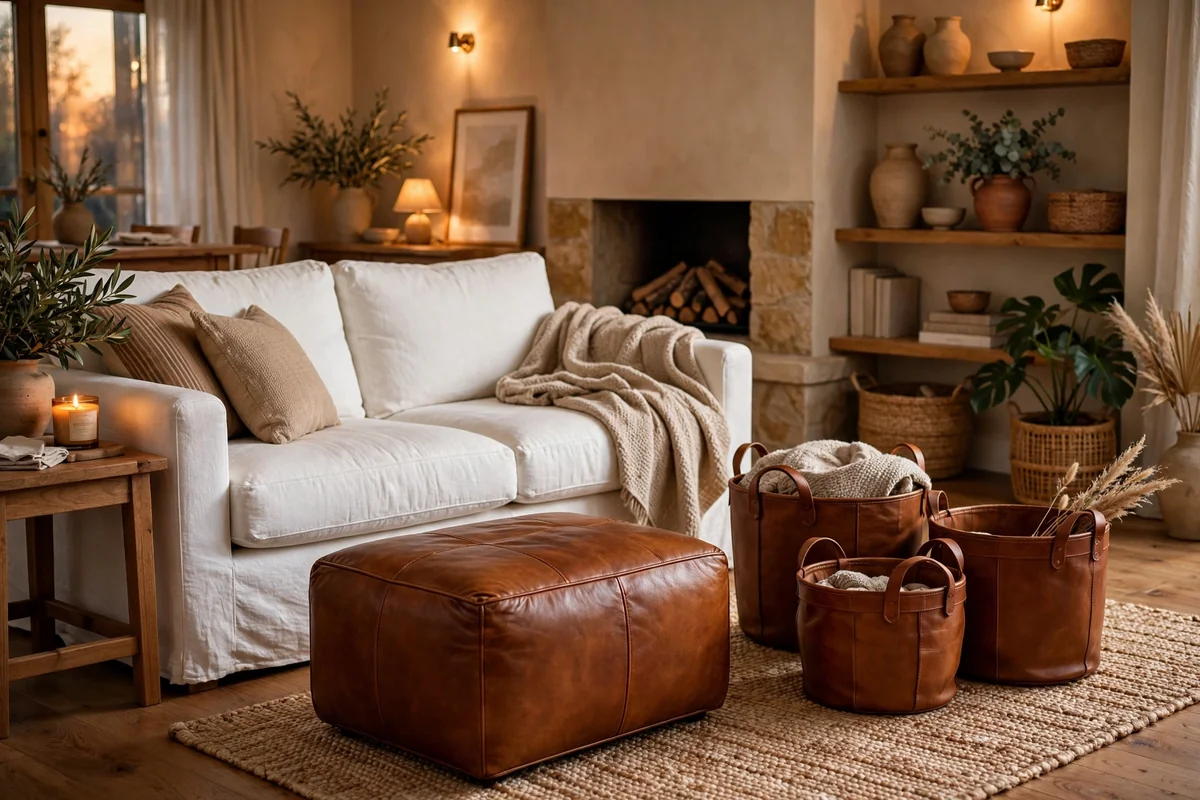
Leather is white upholstery’s best friend because its warm, lived-in surface contrasts beautifully with crisp fabric. A cognac or caramel leather ottoman in front of the couch, a leather magazine sling beside the arm, or even leather-wrapped storage baskets adds richness and age to the room. Leather develops a patina that looks better with use, which sends exactly the right message in a home that is meant to be lived in: wear is welcome here.
You do not need a big investment. A single leather pouf or a pair of leather basket handles on storage cubes introduces the material without committing to a leather chair. Keep leather tones warm: cognac, saddle and honey brown harmonize with white and cream, while black leather can feel stark unless the room already has black accents. Condition leather once or twice a year with a simple leather cream to keep it supple, and keep it out of direct sun so the color stays even.
11. A Gallery Wall Behind the Couch
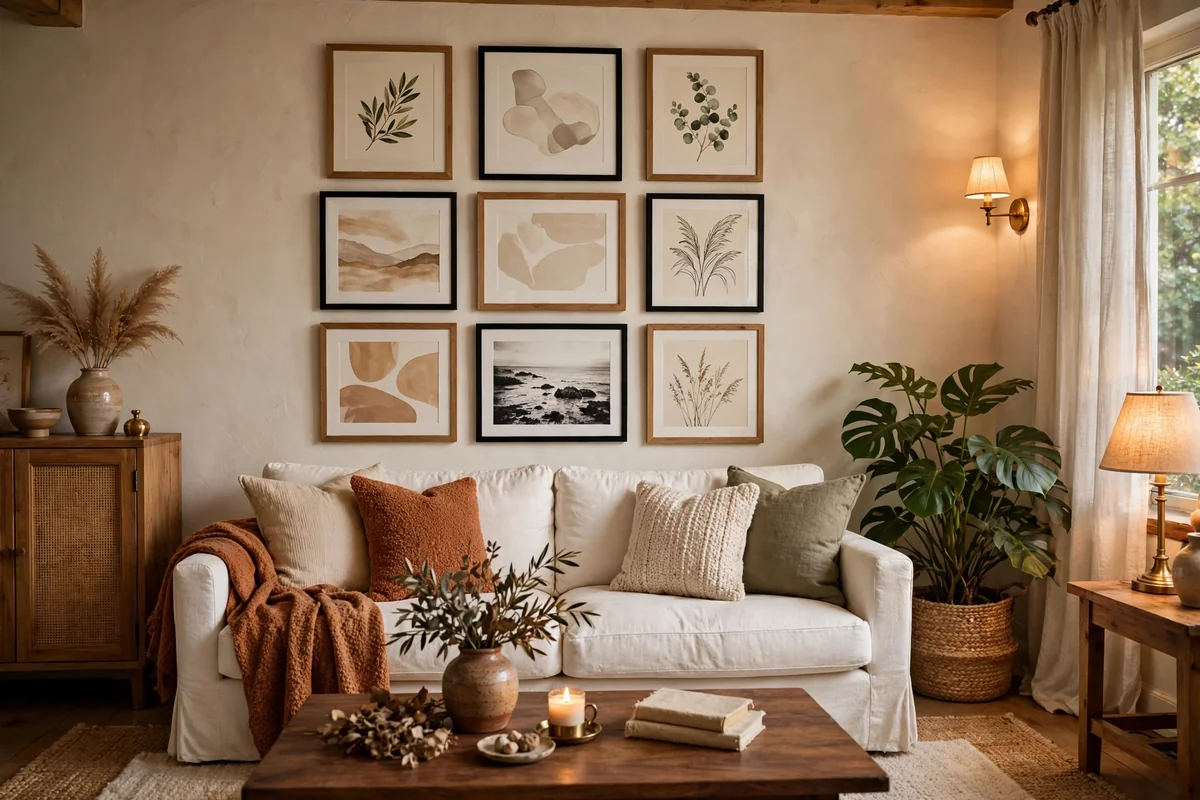
A gallery wall gives a white couch a sense of place and personality. Hang the center of the arrangement 57 to 60 inches from the floor, and keep the bottom of the lowest frame 6 to 10 inches above the couch back so the art feels connected to the furniture. Mix frame styles sparingly: two finishes at most, such as black and natural wood, keeps the wall feeling curated rather than chaotic. Include a mix of sizes, with one larger anchor piece around 24 by 30 inches to ground the composition.
Lay the arrangement on the floor first and photograph it before hammering any nails. Paper templates taped to the wall are even better for testing spacing; aim for 2 to 3 inches between frames for a cohesive look. A common mistake is hanging art too high, which disconnects it from the couch. When in doubt, go lower. Family photos, vintage prints and simple abstract art all work beautifully against the pale backdrop the white couch provides.
12. Knit Poufs and a Soft Ottoman
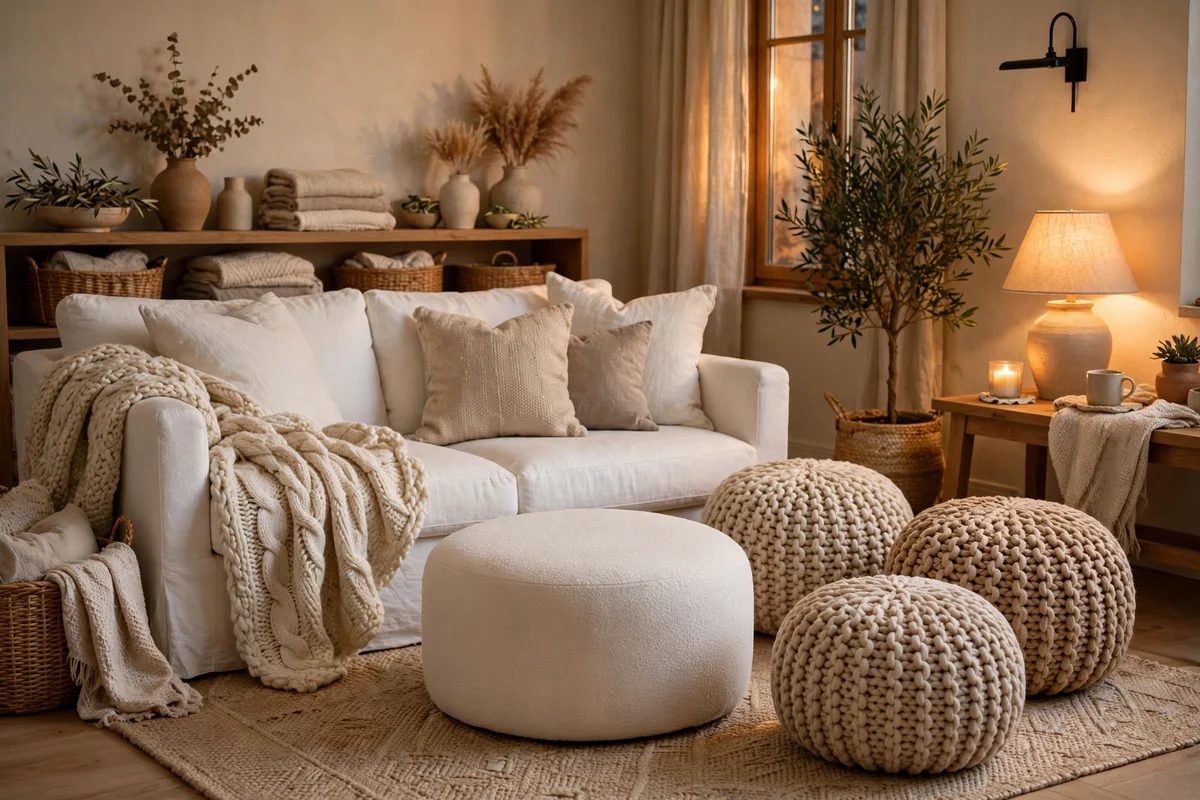
Poufs and ottomans make a white couch zone feel lounge-ready. A pair of knit or woven poufs beside the coffee table offers flexible extra seating that is light enough for kids to drag around, while a large upholstered ottoman can double as a coffee table with a tray on top. Choose poufs around 18 inches in diameter and 14 inches high so they tuck neatly beside or in front of standard seating without blocking walkways.
Texture is the point here, so pick materials with visible weave: chunky knit cotton, Moroccan-style wool, or woven jute. Indoor pouf inserts filled with foam beads hold their shape better than loose-fill options. If the ottoman will serve as a footrest daily, choose a washable cover or a mid-tone fabric that hides wear. Avoid glass or sharp-edged side pieces at footrest height in a family room; soft, rounded forms keep the space safe and relaxed.
13. Warm Window Treatments
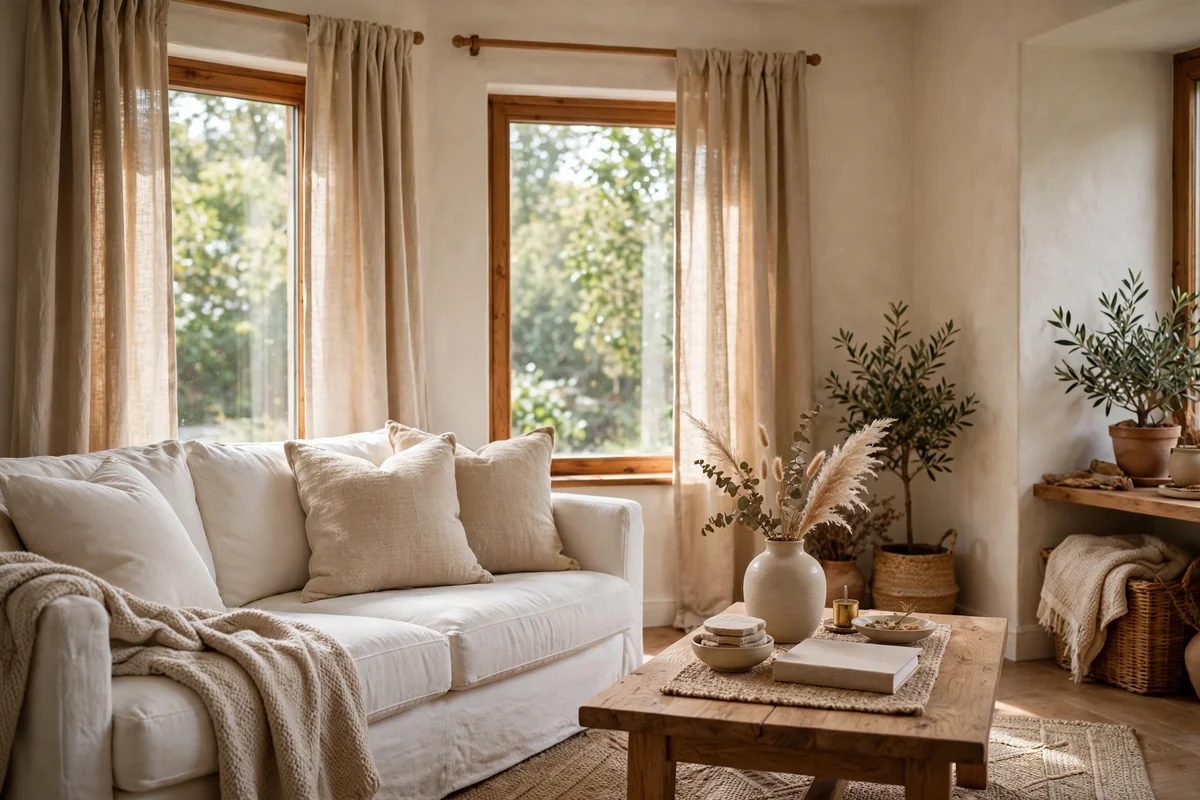
Bare windows or cold blinds can undo all the warmth you have built around a white couch. Linen or cotton curtains in oatmeal, warm white or soft greige filter daylight beautifully and add soft vertical lines that flatter the whole room. Hang the rod 4 to 6 inches above the window frame and extend it 6 to 10 inches beyond each side so the curtains frame the window generously and the glass feels larger. Curtain panels should just kiss the floor or puddle slightly for a relaxed look.
Layer sheers behind heavier panels if you want privacy without losing light during the day. For budget shoppers, ready-made linen-look panels are widely available; buy them longer than you need and hem to fit, since too-short curtains are the most common window mistake. Keep curtain fabric away from direct contact with the couch back if the couch sits under the window, so dust and sun exposure do not mark the upholstery unevenly.
14. Earthy Terracotta Accents

Terracotta is the accent color white couches were made for. Its warm, sunbaked orange-brown enlivens pale upholstery without shouting, and it pairs naturally with the creams, beiges and wood tones already in the room. Introduce it in small doses: two terracotta pillow covers, a handmade-look vase on the coffee table, a folded throw at one end of the couch. Because the color is strong, a little goes a long way, and restraint keeps it elegant.
Terracotta plays well with other warm accents like mustard, rust and olive, so you can build a full autumn-inspired palette if you like. Matte ceramic and clay textures suit the earthy mood better than glossy finishes. If you are nervous about committing, start with a single vase or candle; you can add textiles later once you see how the color behaves in your light. Avoid pairing terracotta with cool grays in the same vignette, since the temperature clash can make both look off.
15. A Cozy Reading Corner
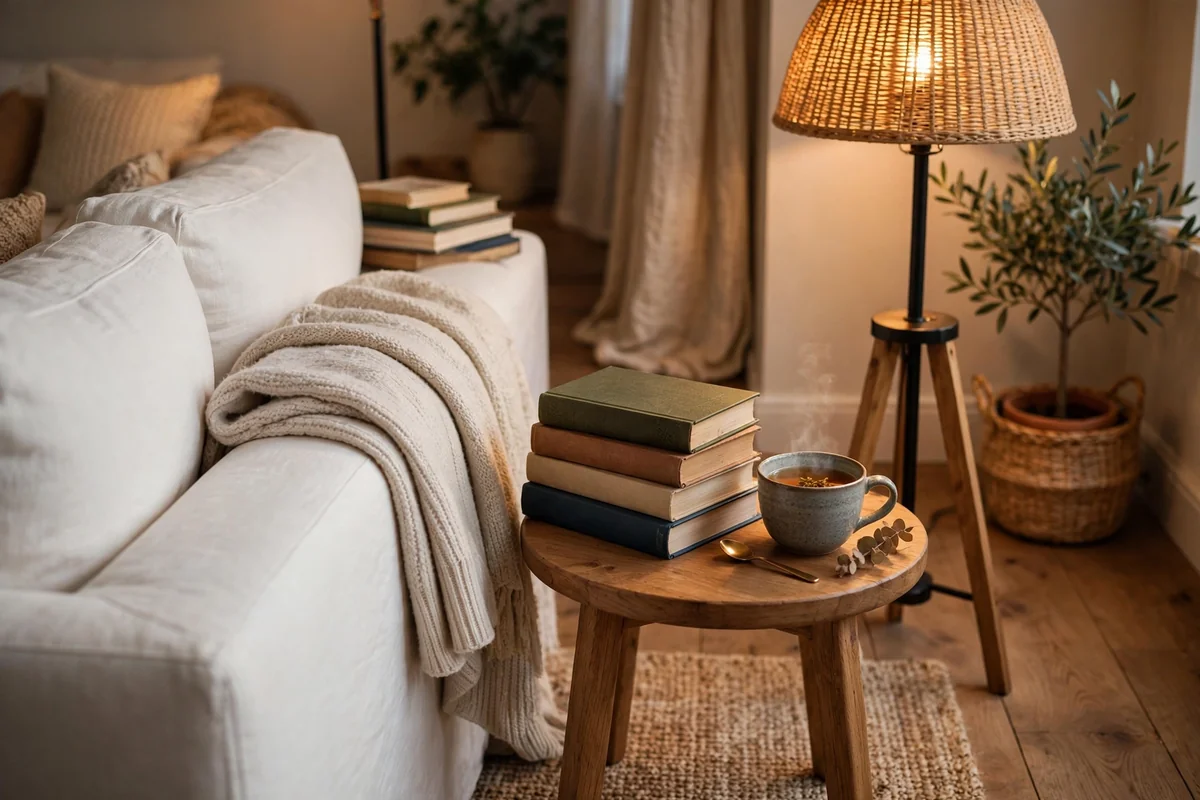
Give one end of the white couch a purpose by styling it as a reading corner. A floor lamp with a warm shade arcing over the arm, a small side table for tea and books, and a soft throw within reach turns an ordinary seat into the most fought-over spot in the house. Position the lamp so light falls over the reader’s shoulder from behind or the side, about 40 to 48 inches from the floor to the bottom of the shade, which lights pages without glare.
A lidded basket beside the table corrals current reads and keeps the corner tidy. If space allows, a small bookshelf or floating shelf within arm’s reach completes the nook. This is also a smart way to use an awkward corner next to the couch that is too small for another chair. Keep the styling simple: lamp, table, throw, books. A reading corner should look inviting at a glance, not staged, so let the current book lie open on the table.
16. Coffee Table Warmth
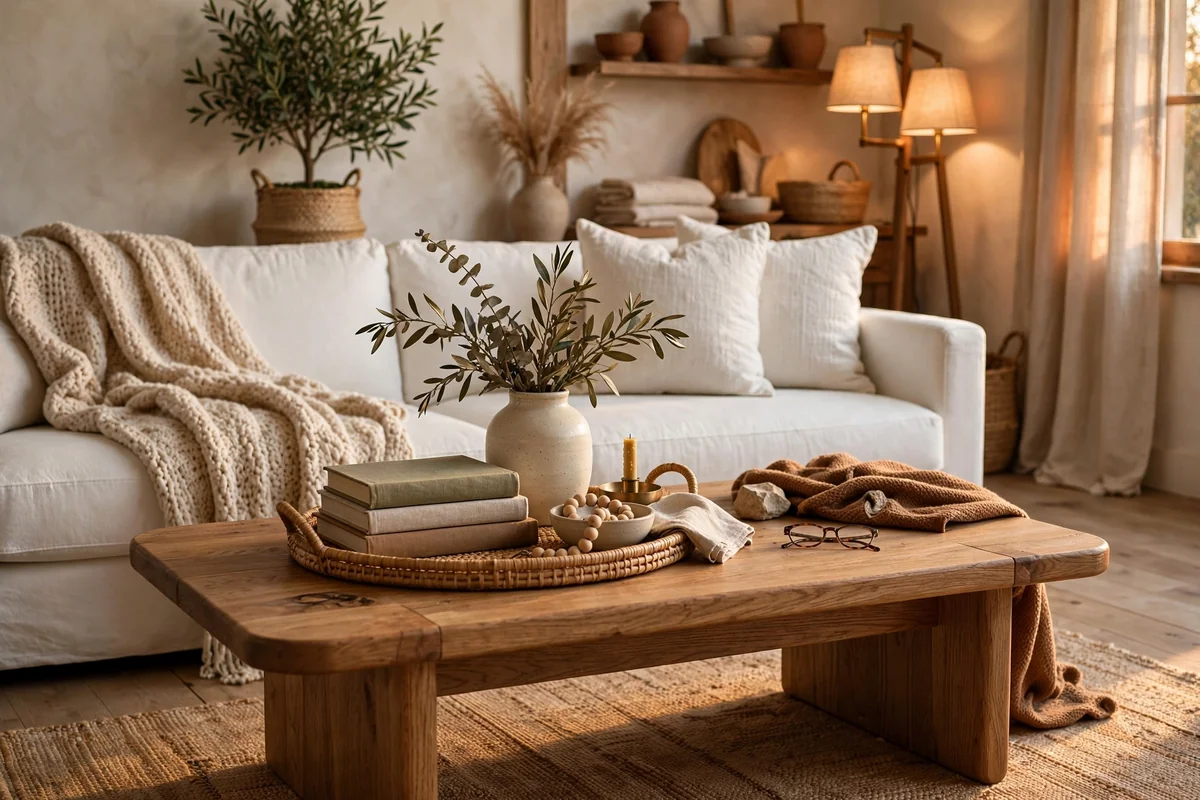
The coffee table is the white couch’s closest companion, so style it with warmth in mind. Start with a tray to corral smaller items, then add three elements of varying height: a low stack of books, a medium vase with stems, and a small candle or sculptural object. Odd numbers and varied heights keep the arrangement interesting. A wooden, rattan or stone tray adds natural texture that echoes the warm materials around the room.
Leave at least a third of the table surface clear so there is room for actual cups and feet. This is the most common coffee table mistake: a fully decorated table looks pretty in photos but frustrates everyone who lives with it. Use coasters or a tray with a wipeable surface to protect the table from rings, and keep one soft element like a small textile box or beaded garland to balance harder materials. Rotate the styling seasonally to keep it feeling fresh.
17. Floating Shelves for Personality
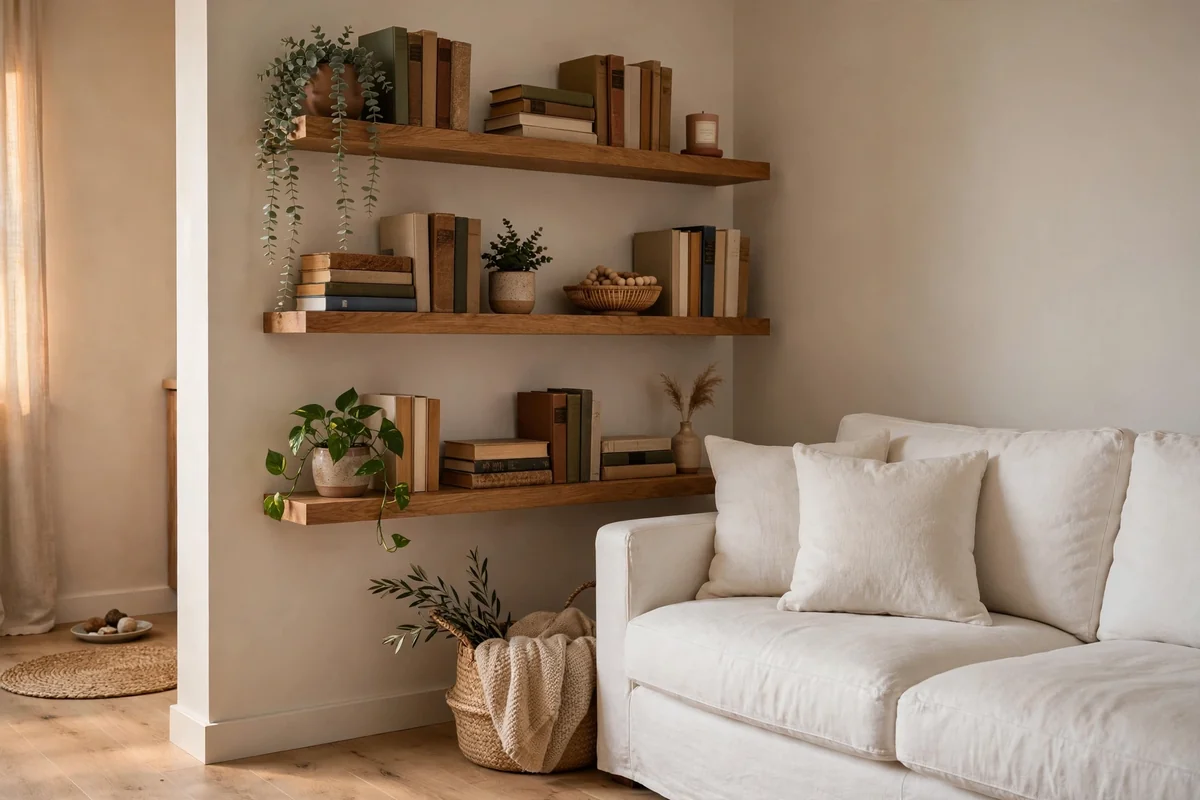
Floating shelves near the white couch add personality without the commitment of a full gallery wall. Two or three solid wood shelves, each 8 to 10 inches deep, mounted with hidden brackets into wall studs, hold books, plants and collected objects beautifully. Space shelves 12 to 18 inches apart vertically so taller items fit comfortably. Style them with the rule of thirds: group objects in odd numbers, mix heights, and leave some breathing room rather than filling every inch.
Anchor shelves properly: a shelf full of books is heavy, so always hit at least two studs per shelf and use brackets rated well above the expected load. Style the shelves to echo the room’s palette, creams, wood tones, a little green, so they feel part of the couch zone rather than random storage. Avoid lining up identical objects in a row, which reads like a shop display. Vary the rhythm and let a few favorite pieces take center stage.
18. Evening Ambience That Glows
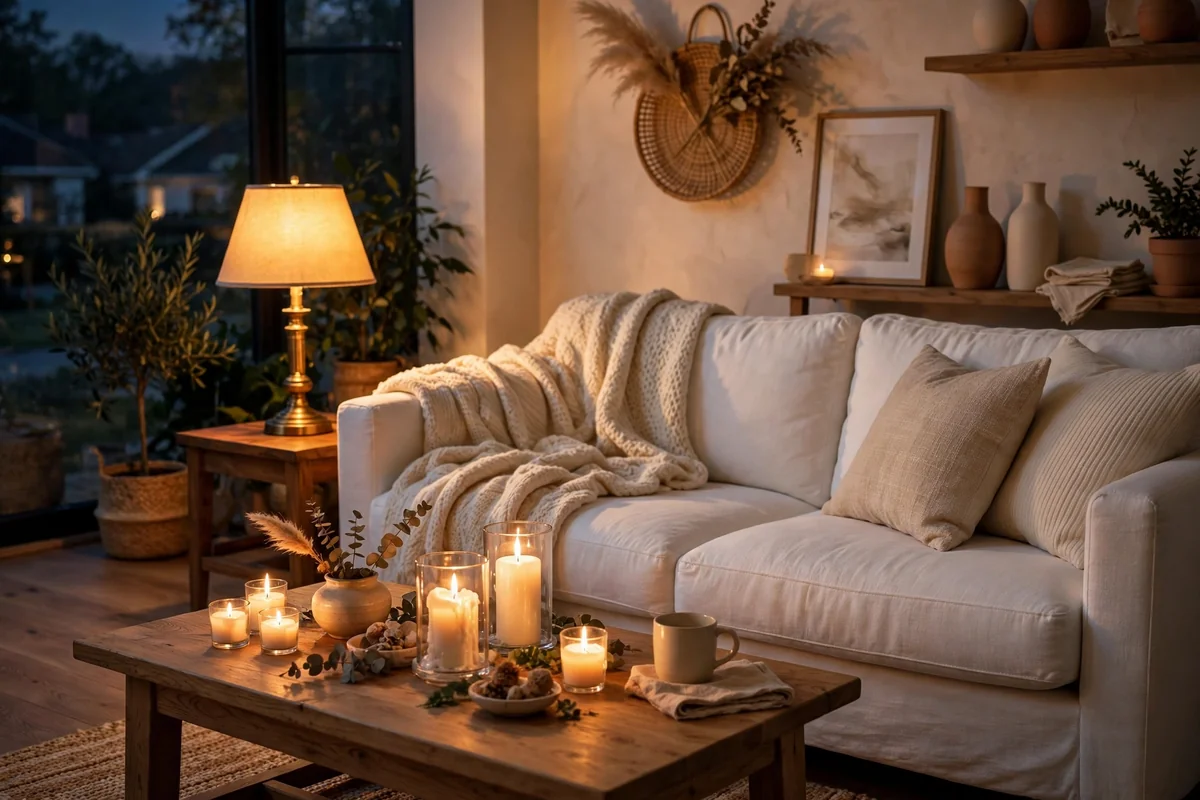
A white couch truly shines after dark when the lighting is right. As daylight fades, switch off the overheads and let table lamps, a floor lamp and candles take over. White fabric bounces warm lamplight around the room, making the whole space feel brighter and more intimate than darker upholstery would. String a few warm-white fairy lights along a shelf or mantel for sparkle, and keep candles in stable holders away from the couch arms and throws.
Smart plugs or a simple remote dimmer make the evening transition effortless: one tap shifts the room from bright to moody. Keep bulb temperatures consistent at 2700K so nothing looks mismatched. A frequent mistake is relying on a single overhead light with a cool bulb, which makes white couches look stark and uninviting at night. Three small warm light sources beat one big cold one every time, and the electricity cost is about the same.
19. Kid and Pet Friendly Setup
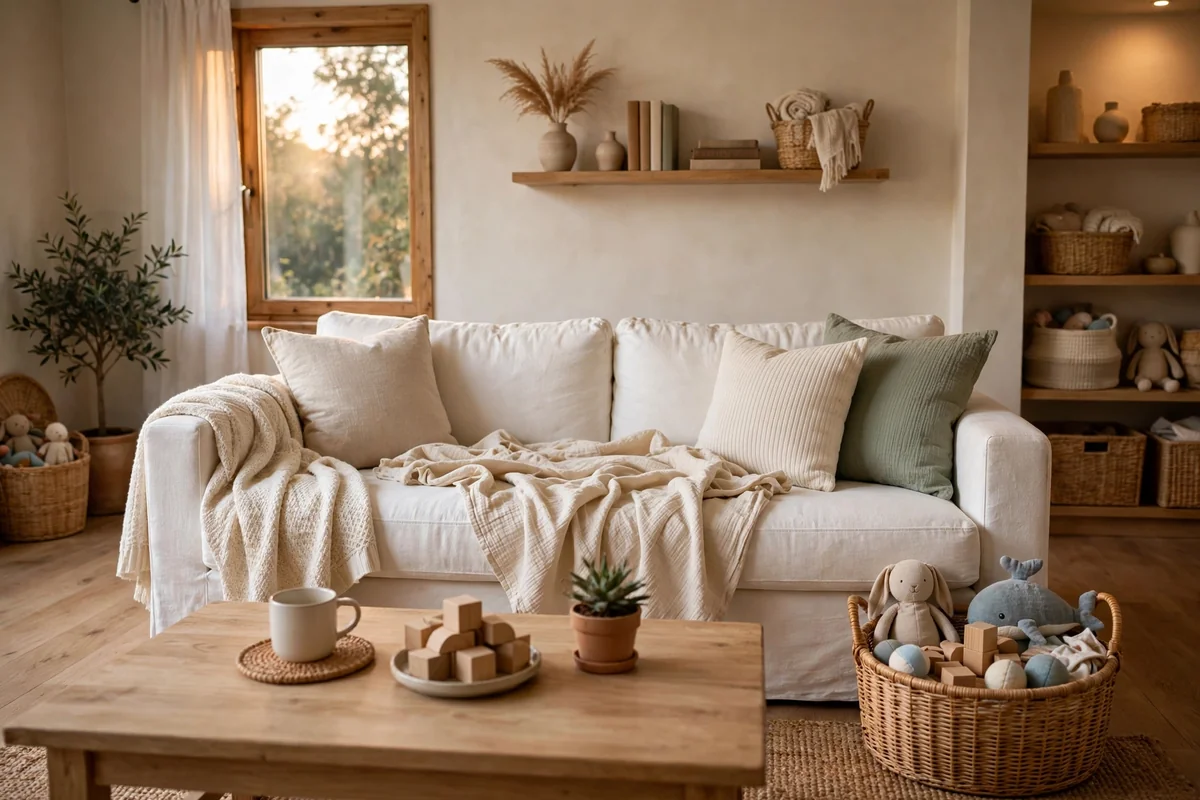
A white couch can absolutely survive kids and pets with a few honest strategies. Washable slipcovers or performance fabric are the foundation. Add machine-washable throws on the most-used seats, keep a lint roller and enzyme cleaner in a nearby basket, and vacuum the couch weekly with an upholstery attachment. Teach the simple rule that snacks stay at the coffee table, not on the cushions, and keep a washable blanket on the dog’s favorite spot.
Choose your white wisely: a warm ivory or natural white hides everyday dust better than a stark blue-white. Patterned or textured weaves camouflage minor marks far better than flat weaves. Avoid placing the couch directly under a window where muddy paws land first, and keep dark pet beds off the white cushions. With these habits, most families find a white couch no harder to maintain than a mid-tone one, and the bright look is worth the small effort.
20. Seasonal Pillow Swaps

One of the quiet joys of a white couch is how easily it reinvents itself with the seasons. Keep a small stash of pillow covers in seasonal palettes: warm rusts and mustards for autumn, deep greens and creams for winter, fresh sage and sky blue for spring, sandy beige and soft coral for summer. Swapping covers takes twenty minutes and costs far less than new pillows if you store the inserts. Fold the off-season covers flat in a labeled bin so they stay crisp.
Let the white couch be the constant while everything around it shifts. You can echo the season in one throw and a vase of stems to complete the change. Avoid buying full new pillow sets each season; covers alone do the job and store flat. A common pitfall is choosing trendy colors that clash with your permanent rug or curtains, so keep at least one neutral pillow in the mix year-round to tie each seasonal palette back to the room.
21. A Warm Wall Color Behind the White
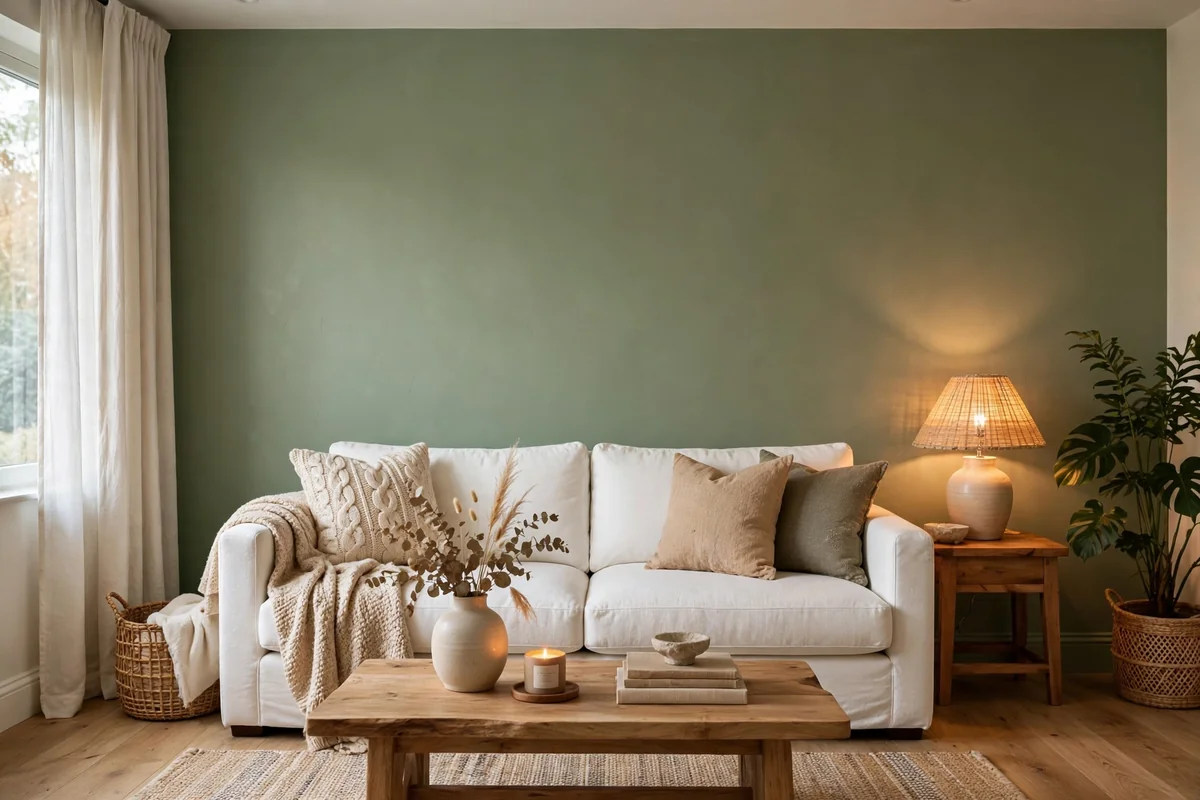
Paint is the most transformative backdrop for a white couch. Warm whites, creamy beiges, soft greige and muted sage let the couch glow without blending into the wall. If you want more drama, a warm charcoal, deep olive or rich caramel accent wall makes the white upholstery pop like art. Test large swatches on the wall and observe them morning and evening before committing, since undertones shift dramatically in different light.
An accent wall behind the couch is the classic placement because it frames the seating area and photographs beautifully. For renters, removable wallpaper or a large-scale fabric panel offers the same effect without paint. Keep the ceiling and trim a clean warm white so the wall color feels intentional. One mistake to avoid is choosing a wall color that matches the couch exactly, which erases all definition. Aim for at least two shades of difference between wall and upholstery so the couch keeps its crisp outline.
Conclusion
A white couch asks for a little thoughtfulness, not a lot of fuss. Layer warm neutrals, choose forgiving fabrics, ground the room with wood and natural rugs, and light it all warmly. Do that, and your white couch becomes what it was always meant to be: the bright, calm, welcoming heart of a home that is genuinely lived in.
Frequently Asked Questions
How do you keep a white couch clean with kids and pets?
Choose washable slipcovers or performance fabric, keep a small cleaning kit nearby, and use throws on the most used seats. A handheld vacuum used weekly stops crumbs and dust from settling in, and most everyday marks lift with mild soap and water if you treat them promptly.
What rug goes best with a white couch?
A natural jute, sisal or low-pile wool rug in beige, oatmeal or soft brown. Size it so the front legs of the couch sit on it, usually 8 by 10 feet for a standard sofa. Natural textures warm up the white and hide everyday foot traffic beautifully.
What wall color works with a white couch?
Warm whites, creamy beiges, soft greige and muted sage all keep a white couch from looking stark. If you prefer drama, a warm charcoal or deep olive accent wall makes the white pop while the surrounding warm decor keeps it cozy.
Which pillows look best on a white couch?
Mix sizes and textures rather than matching sets: two 20 inch linen squares, two 18 inch knit or boucle pillows, and one lumbar cushion. Stick to a warm palette of oatmeal, camel, terracotta and soft green for a layered, collected look.
Is a white couch a bad idea for a small living room?
A white couch is actually excellent for small rooms because it reflects light and looks visually lighter than dark upholstery. Keep the silhouette slim, raise it on visible legs, and use a light rug to keep the floor feeling open and airy.