Living Room
22 Blanket Basket Ideas That Add Cosy Texture to Every Room
By Anna Wells · · 24 min read
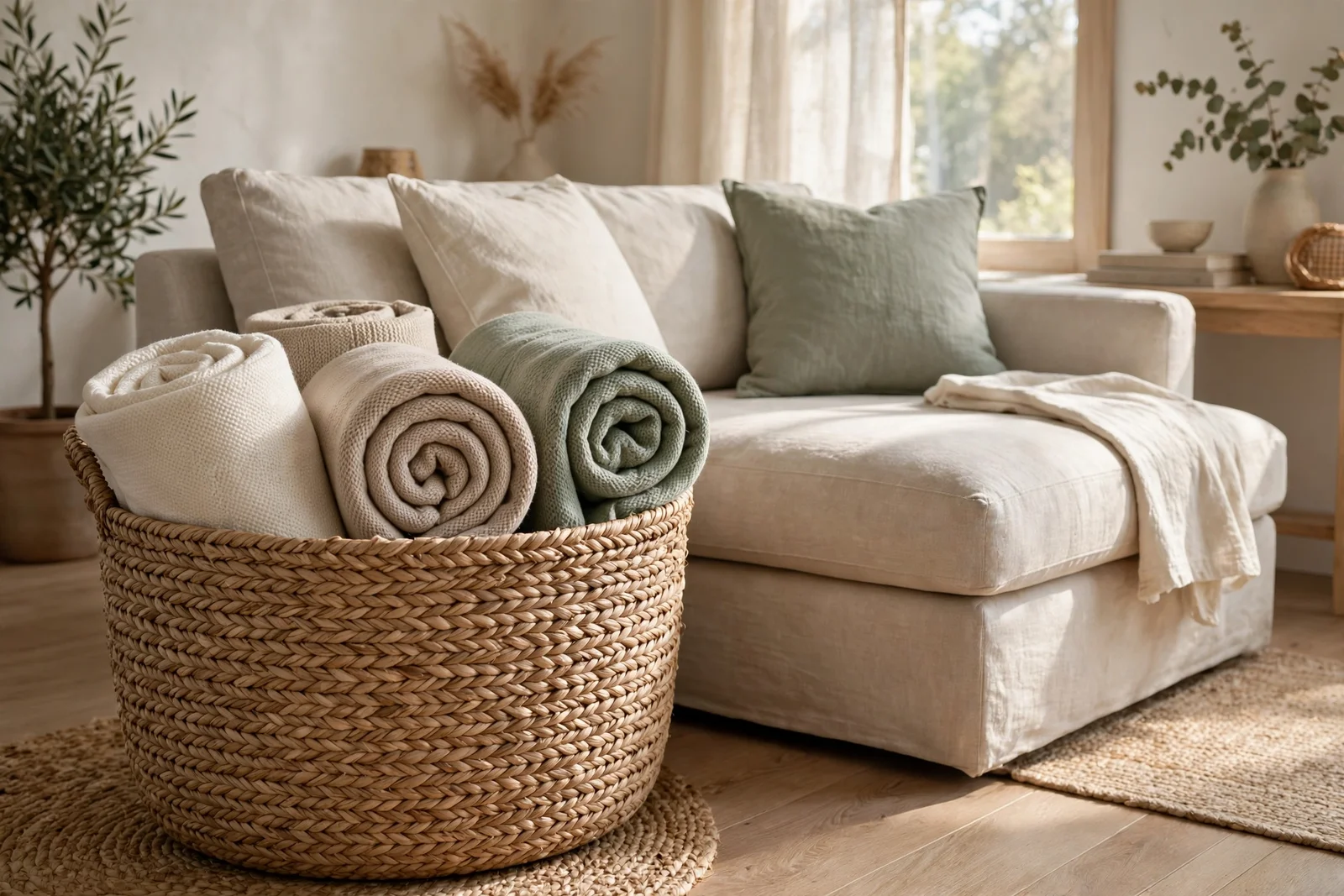
A good blanket basket keeps throws tidy, close at hand and smelling fresh. These 22 ideas cover seagrass, wicker, rattan, wire and fabric baskets, exact sizing for two, four or six throws, rolling and folding tricks, smart placement and a monthly freshening routine.
Every home has the throw problem: one draped over the sofa arm, one sliding off the chair, one crumpled in a heap that never quite looks tidy. Blankets migrate to wherever they were last used, and the room slowly fills with soft clutter. A basket solves it in the simplest possible way, giving every throw a home that is close at hand but out of the visual noise.
But a blanket basket is more than a tidy-up tool. Woven seagrass, honey-toned wicker, smooth rattan, crisp wire and soft fabric each bring their own texture to a room, turning storage into something you actually want to look at. Placed well, a basket of throws becomes a design feature in its own right, adding the layered warmth that makes a living room feel finished.
These 22 blanket basket ideas cover the whole craft: choosing between seagrass, wicker, rattan, wire and fabric, sizing the basket for two, four or six throws, rolling versus folding so the basket looks full but tidy, placing baskets beside sofas, hearths, beds and in guest rooms, running a two-basket system for good and everyday blankets, and a monthly freshening routine that keeps everything smelling clean.
We start where the throws work hardest, beside the sofa, and move through the house one calm corner at a time. Each idea includes concrete sizes, materials and the small mistakes worth avoiding, so you can act on any single one this weekend and see the difference by Sunday evening.
1. Tuck a Seagrass Basket Beside the Sofa Arm for Everyday Throws
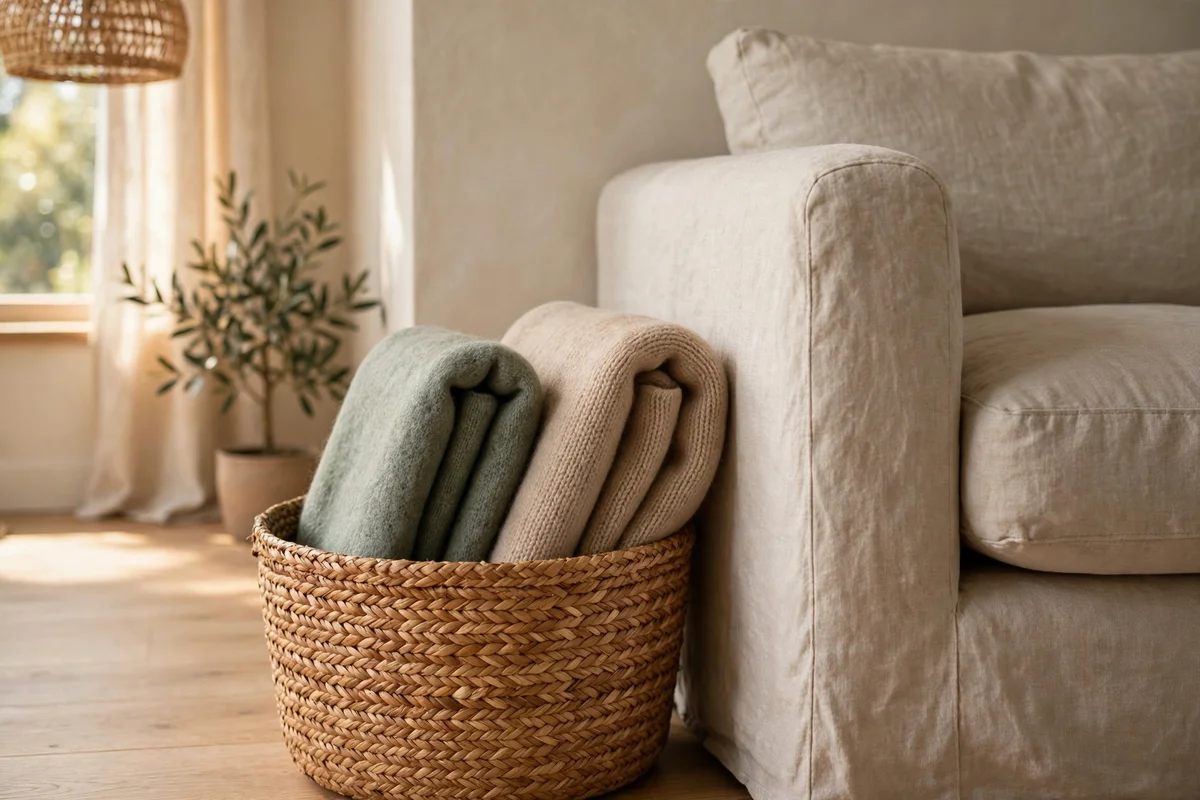
A seagrass basket about 40 cm wide, 35 cm deep and 40 cm tall (16 x 14 x 16 inches) sits neatly beside most sofa arms without crowding the walkway. Seagrass brings a warm honey tone that softens leather and plain linen upholstery, and its tight weave hides dust lines between throws. Choose reinforced handles so the basket keeps its shape under two folded wool throws. Budget versions run 15 to 25 pounds or dollars, while handwoven fair-trade baskets cost 35 to 60. Never place the basket in front of the sofa, where it blocks leg room.
Place the basket on the side of the sofa nearest the door you enter by, so grabbing a throw becomes part of the evening routine. Angle it very slightly toward the room so the weave catches the light. Keep the two throws folded in thirds with the patterned side out, and rotate which one sits on top every week so both get aired and neither fades unevenly. If the basket floor feels damp on stone or tile, set a thin cork mat underneath for protection.
2. Roll Throws Side by Side So the Basket Looks Full and Tidy
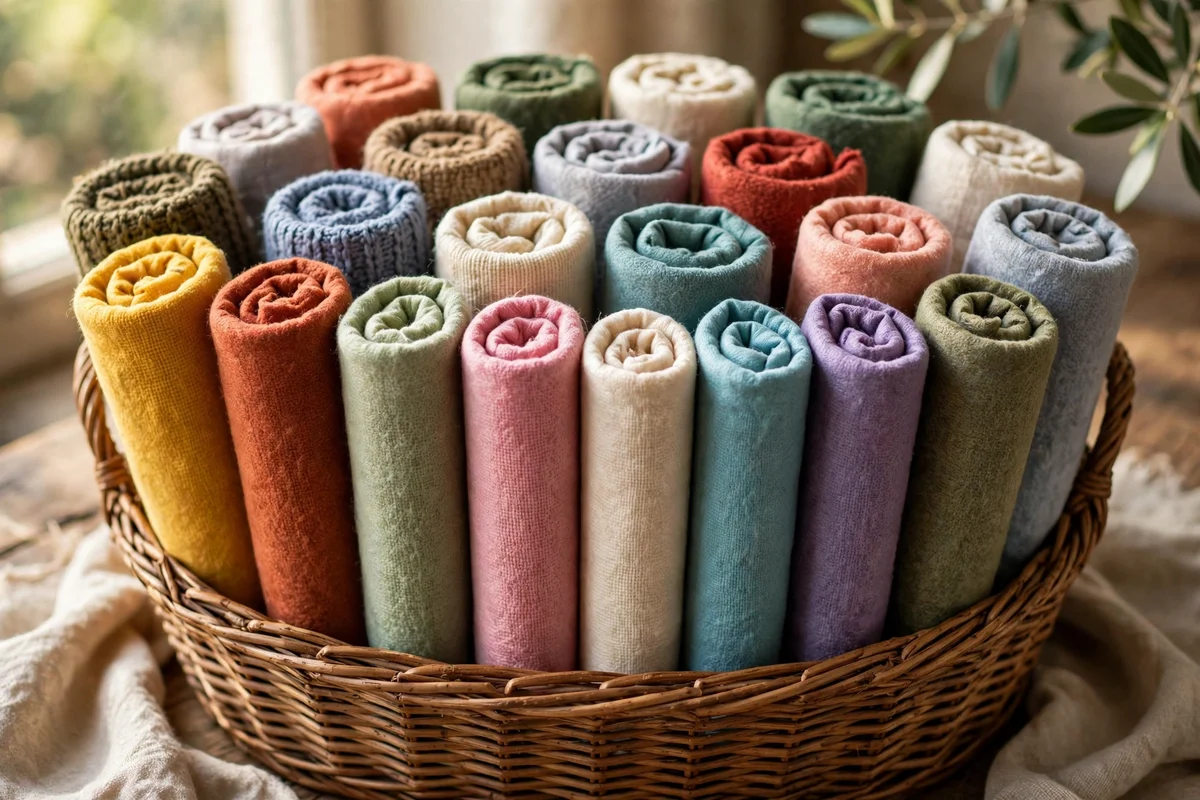
Rolling turns a half-empty basket into one that looks generously full. Lay each throw flat, fold it in half lengthwise, then roll firmly from one short end to the other, tucking the loose edge underneath. Stand the rolls upright side by side like files in a drawer, heaviest wool at the back and lightest cotton at the front. Four medium throws (each about 130 x 170 cm, or 51 x 67 inches) rolled this way fill a 45 cm wide basket completely. This is the simplest of the blanket basket ideas for small spaces.
The mistake to avoid is rolling throws that are even slightly damp, since trapped moisture turns a cosy basket musty within days. Always air throws fully before rolling, and re-roll once a month to stop creases setting permanently into the fabric. Rolling suits chunky knits and fleece best; very thin summer cottons may unroll on their own, so secure those with a simple tuck or a fabric band. A basket of neat rolls also survives curious toddlers better than folded stacks.
3. Set a Wicker Basket by the Hearth for Cold Evening Reach
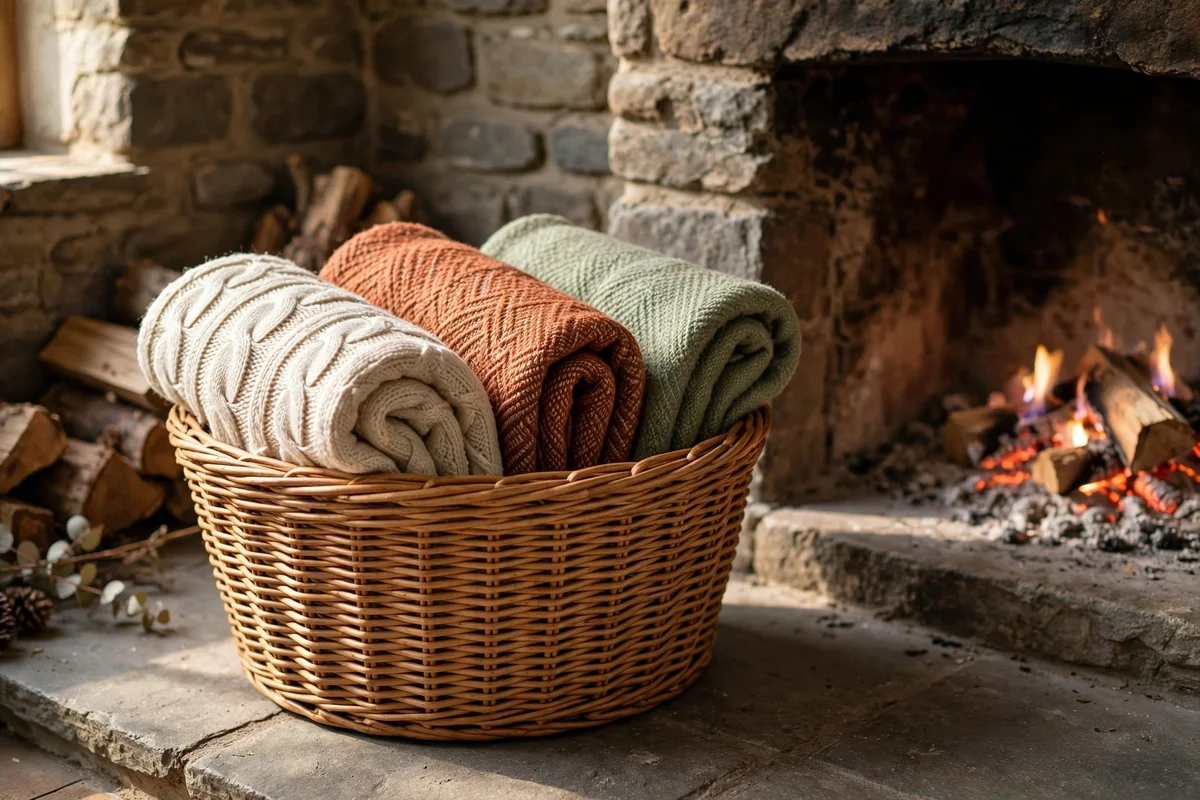
A sturdy wicker basket placed 60 to 90 cm from the fireplace (about two to three feet) keeps throws within arm’s reach without risking heat damage to the weave. Choose a deep round basket around 50 cm in diameter and 45 cm tall, which holds three folded throws or one thick quilt with room to spare. Natural honey-coloured wicker echoes the glow of the fire and hides ash dust better than pale seagrass. Budget tip: sturdy wicker laundry hampers at 20 to 35 pounds or dollars work just as well as purpose-made throw baskets.
Never set any basket closer than 45 cm to an open fire or stove door, and keep a spark guard in place during use, since dry wicker catches quickly. Store only clean, dry throws by the hearth, because smoke scent settles into fabric fast; a lidded basket solves this in homes with a fireplace used nightly. Once a month, shake the throws outdoors and brush ash from the weave with a soft dry brush to keep it fresh.
4. Size the Basket to the Load: Fits for Two, Four or Six Throws
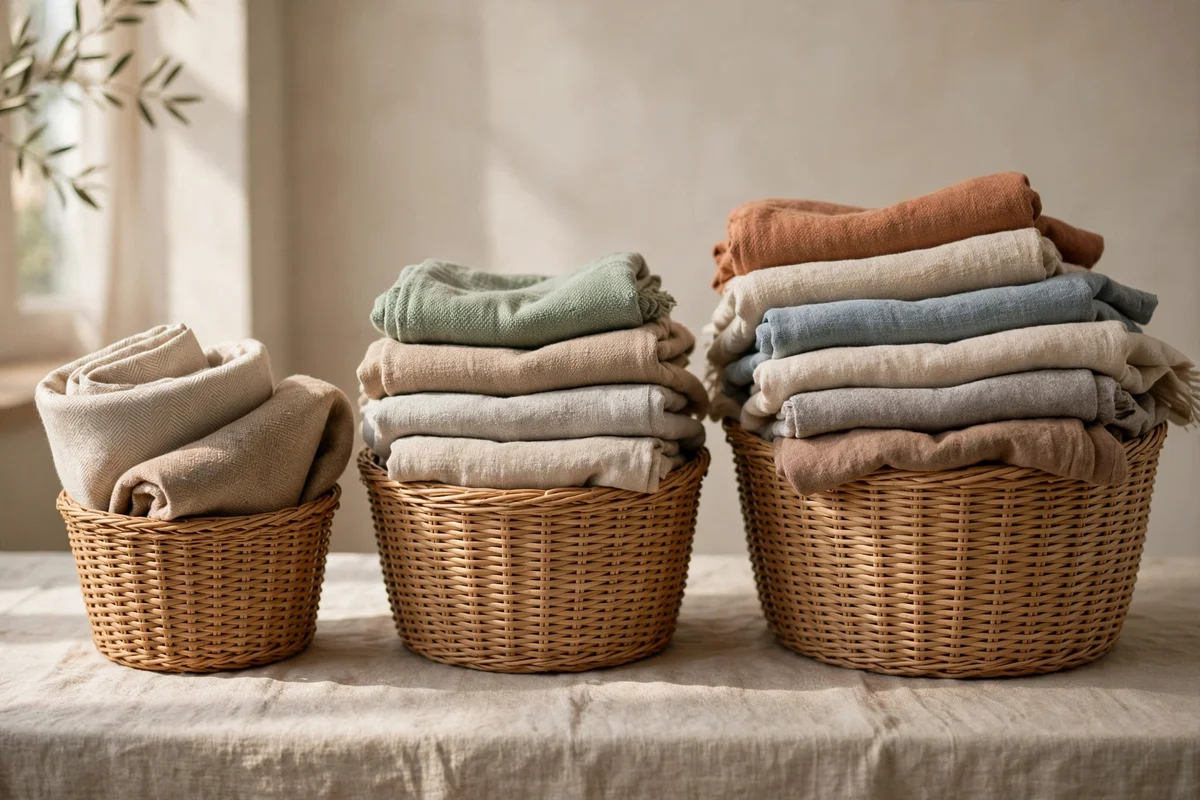
Buying the right size saves floor space. For two standard throws (each roughly 130 x 170 cm), a basket 35 to 40 cm wide, 30 to 35 cm deep and 35 to 40 cm tall works well, about 14 x 13 x 15 inches. For four throws, use 45 to 55 cm wide and 40 to 45 cm tall. For six throws, choose an oversized basket of 55 to 65 cm wide and 45 to 55 cm tall. Measure folded throws first, since a chunky knit can take double the space of a thin cotton one.
The common mistake is buying a basket far too big, which makes two throws look lost and invites clutter to pile on top. A throw blanket storage basket should look about three-quarters full: generous, with enough air for the fabric to breathe. When between sizes, choose the smaller basket and roll rather than fold, since rolls compress the same throws into roughly 20 percent less volume. Always check interior dimensions, because thick woven walls can steal 3 to 4 cm on every side.
5. Place a Rattan Basket in the Bedroom Corner for Night Layers
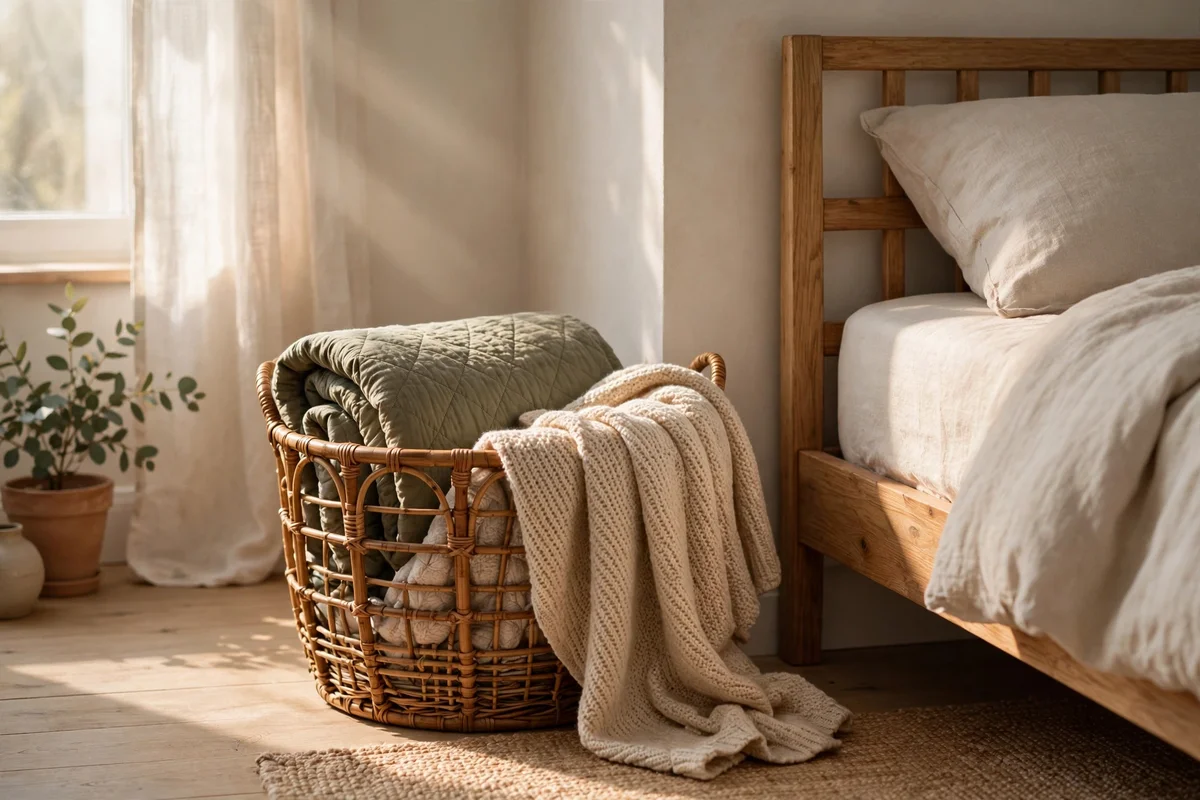
A rattan basket in the corner beside the bed holds the extra layers that make sleep comfortable through the night: one light quilt and one warmer throw for the small hours. A basket of 45 cm diameter and 40 cm height (about 18 x 16 inches) fits most bedroom corners without blocking drawer or wardrobe doors, but measure the swing of any nearby door first. Rattan’s warm brown tones sit beautifully beside oak and walnut bed frames, and the open weave lets bedding air between uses. Mid-range rattan baskets cost 30 to 50 pounds or dollars and last for years.
Keep the basket on the side of the bed farthest from the door so it does not catch the eye from the hallway, which keeps the bedroom feeling calm. Fold the quilt flat at the bottom and drape the throw over the rim so it is easy to grab half-asleep. The mistake to avoid is letting the basket become a laundry hamper: once worn clothes migrate in, the whole corner looks untidy. One quick rule fixes it, only clean spare bedding lives in this basket.
6. Keep a Lidded Fabric Basket in the Guest Room for Spare Bedding
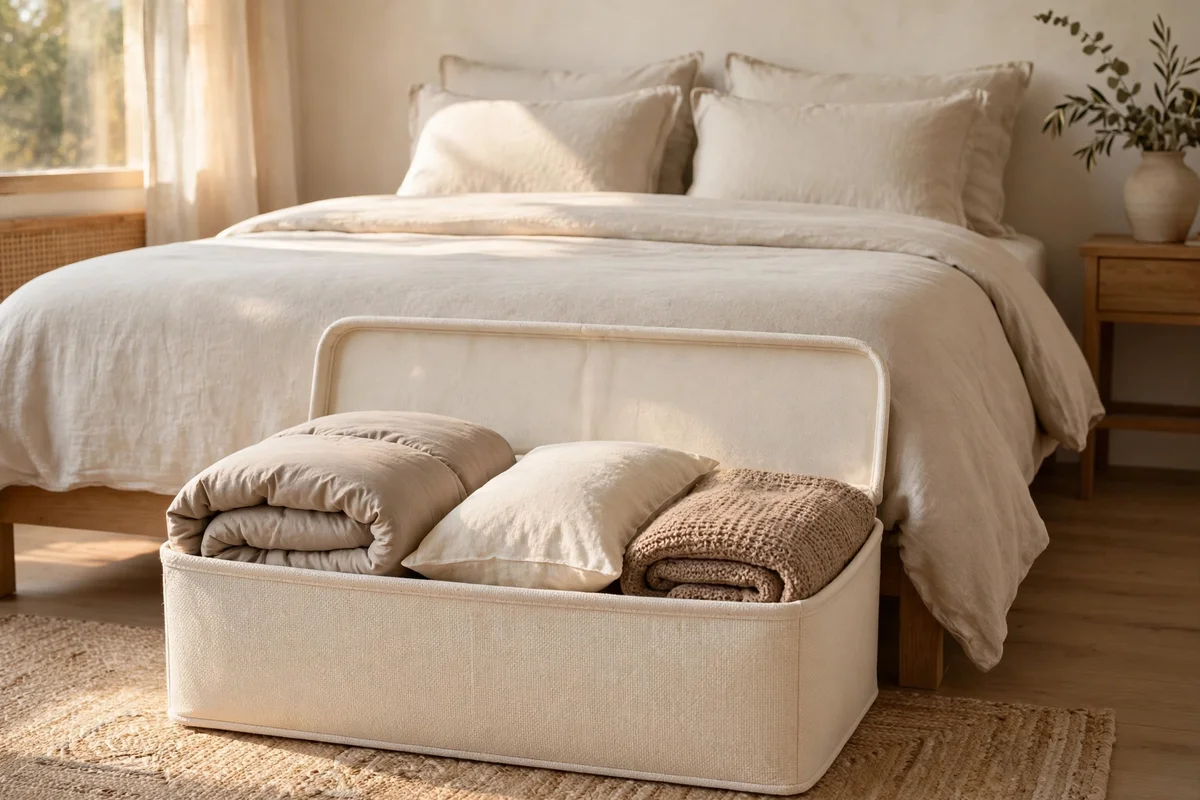
Guests feel cared for when spare bedding waits in a lidded fabric basket at the foot of the bed or inside the wardrobe. Choose a basket around 50 x 35 x 30 cm (20 x 14 x 12 inches) with a firm lid, and fill it with one spare duvet, one extra pillow and a folded throw, freshly laundered. Lidded fabric keeps everything dust-free between visits, which matters in a room that may sit unused for weeks. Canvas and cotton baskets in cream or soft grey cost 12 to 22 pounds or dollars and fold flat when empty.
Add a small handwritten card on top of the pile with the Wi-Fi code and the location of spare towels, since guests rarely ask. Launder the contents before each visit even if the bedding looks unused, because fabric picks up a flat, stale smell in closed rooms. The mistake to avoid is overfilling the basket so the lid will not close, which defeats the dust protection entirely; if it bulges, move the extra pillow to the wardrobe shelf. Refresh a lavender sachet inside each season.
7. Run a Two-Basket System: Good Blankets and Everyday Throws
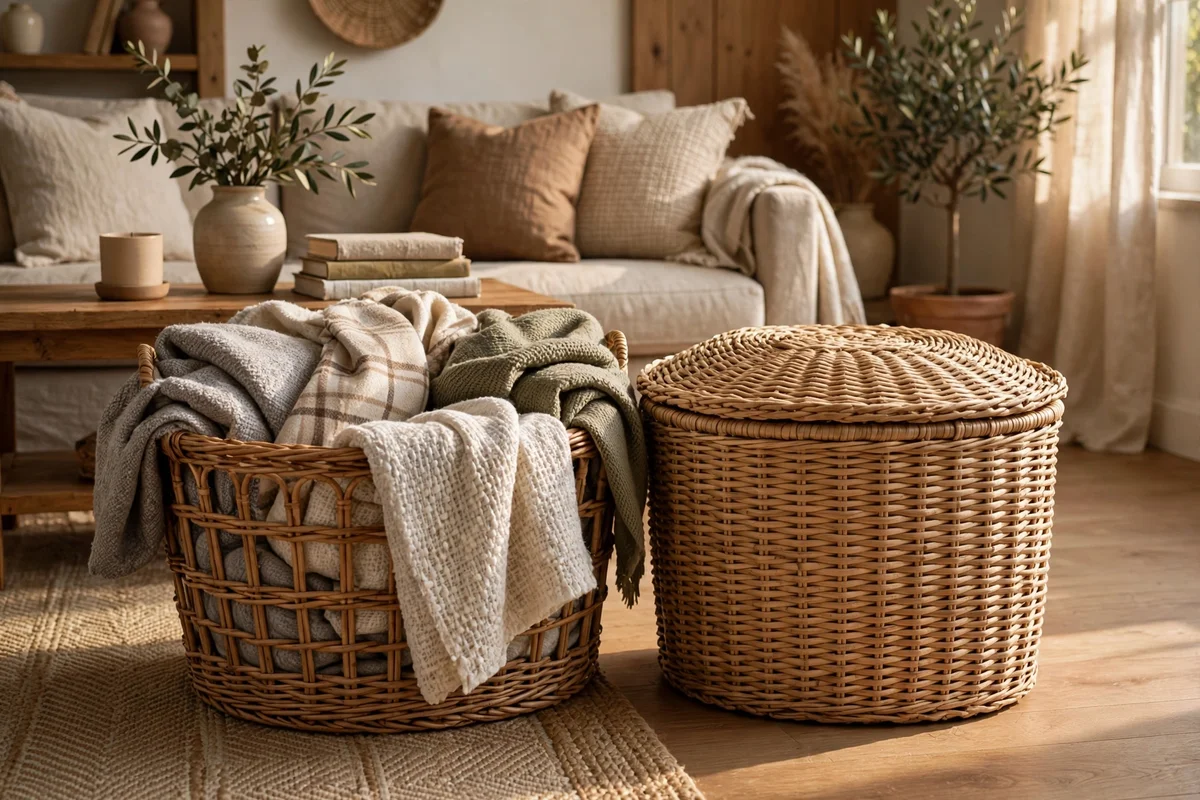
One basket for the good blankets and one for everyday throws solves the oldest storage problem: the heirloom quilt buried under the fleece everyone actually uses. Keep the everyday basket beside the sofa, open-topped for instant access, filled with two or three washable throws in the 15 to 25 pound range. Keep the good basket in the bedroom or a quiet corner, ideally lidded, holding the wool blanket from a grandparent, the wedding gift quilt or the hand-knitted throw. This split protects delicate fibres from daily wear and daily washing.
Label the good basket only in your own mind, never with a sign, since a visible do-not-touch note turns a warm home into a museum. Teach the household the simple rule that the sofa basket is for everyone and the bedroom basket is for special evenings, and the system runs itself. The mistake to avoid is hiding the good blankets where they are never seen or used; textiles kept in the dark for years develop crease damage and a musty smell. Bring the good quilt out once a season, air it for two hours, and enjoy it.
8. Line a Wire Basket With Washed Linen to Protect Delicate Knits
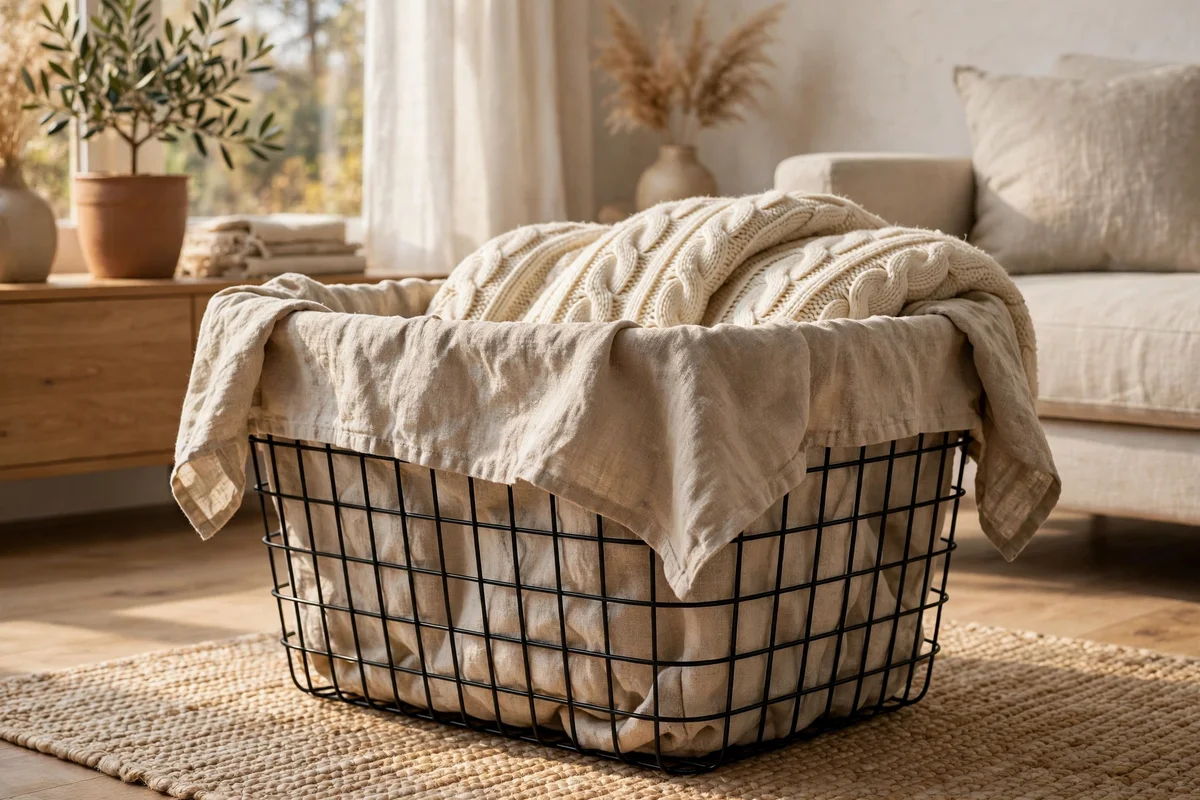
Open wire baskets look striking in modern rooms, but their rough metal edges snag delicate knits and pull threads from crocheted edges. A simple washed-linen liner solves it: cut a square of fabric 10 cm larger than the basket opening on each side, press it in, and fold the excess over the rim. Choose unbleached or stone-washed linen in natural tones, which breathes well and costs 8 to 15 pounds or dollars per metre. The liner also stops small throws slipping through wide wire gaps and collecting dust underneath.
Wash the liner every two months with the throws, since it collects the same body oils and dust. Tuck the folded edge neatly rather than letting it flap, which looks far more considered, and secure it with two small brass clips if it keeps slipping. The mistake to avoid is using a plastic or synthetic liner, which traps moisture against the throws and can leave a musty smell within a fortnight. Of all the blanket basket ideas here, this is the cheapest upgrade and it doubles the life of a wire basket.
9. Style an Oversized Floor Basket in the Family Room
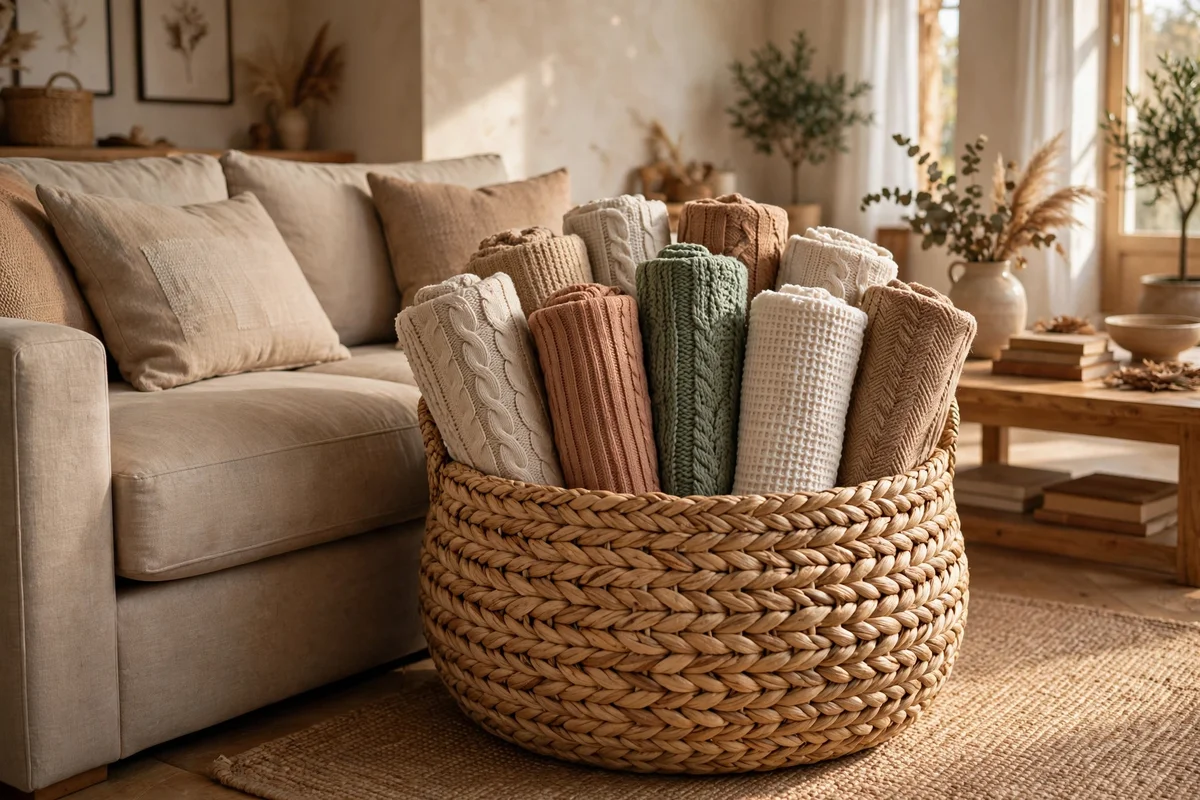
An oversized floor basket of 55 to 65 cm wide and 50 cm tall anchors the family room like furniture and swallows the throw chaos of a busy household. Fill it with four to six throws rolled upright, tallest at the back, so the basket reads as a generous dome of texture, not a laundry pile. Chunky materials like water hyacinth or thick braided seagrass suit the scale; thin weaves look flimsy at this size. Expect to pay 40 to 70 pounds or dollars for a well-made oversized basket, and check the base is reinforced for the weight.
Place it beside the largest sofa or between two armchairs where everyone can reach it, keeping at least 50 cm of walkway clear so nobody trips in the dark. The mistake to avoid is letting the oversized basket become the household lost-property box; toys, magazines and remote controls migrate in within days. Once a week, pull everything out, refold what belongs, and return only the throws. A quick shake of each throw outdoors keeps the family room basket fresh even with daily use.
10. Freshen Throws Monthly So the Basket Always Smells Clean
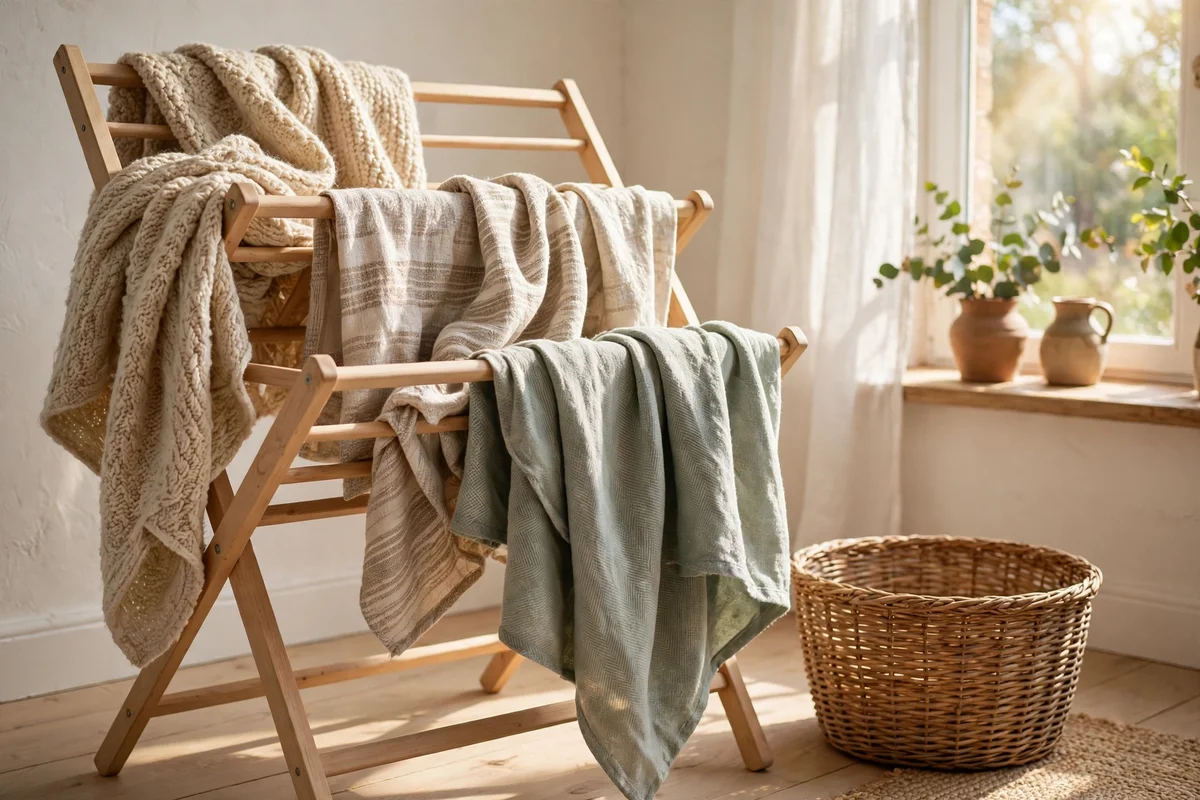
A monthly freshening routine keeps the basket smelling clean without constant washing. On the first weekend of each month, empty the basket completely, shake every throw outdoors, and leave the empty basket in sunlight for an hour, which naturally lifts musty smells from the weave. Wash any throw that smells stale at 30 degrees with a mild detergent, and add half a cup of white vinegar to the rinse for wool and cotton, since it softens fibres and removes odour without perfume. Dry throws fully before returning them, because even slight dampness breeds a musty basket.
Between washes, tuck a small muslin sachet of dried lavender or cedar shavings at the bottom of the basket, and replace it every three months. The mistake to avoid is masking smells with heavy fabric sprays, which build up on fibres and attract dust, making the problem worse within weeks. If one throw always smells musty, it may be stored too tightly; give it more air space or move it to a second basket. This routine takes twenty minutes and transforms how the whole room feels.
11. Fold the Top Throw in Thirds for a Crisp Visible Drape

The throw on top of the basket sets the tone for the whole arrangement, so fold it with care. Lay it flat, fold both long edges into the centre so the throw is in thirds, then fold the short ends in once more to make a neat rectangle about 40 cm wide. Drape this rectangle over the basket rim with 25 to 30 cm hanging outside, patterned side facing the room. This crisp drape looks intentional rather than tossed, and it shows off the prettiest throw while the plainer ones hide beneath.
Choose the top throw for the season: a cream cable knit in winter, a striped cotton in summer. Refold the drape once a week, since daily handling softens the edges into a slump, and rotate which throw gets the starring role so fading stays even. The mistake to avoid is draping a throw wider than the basket rim, which slides off at the slightest touch and ends up on the floor. A throw folded to two-thirds of the rim width stays put and still shows its pattern generously.
12. Slide a Tall Narrow Basket Into the Corner the Sofa Leaves Empty
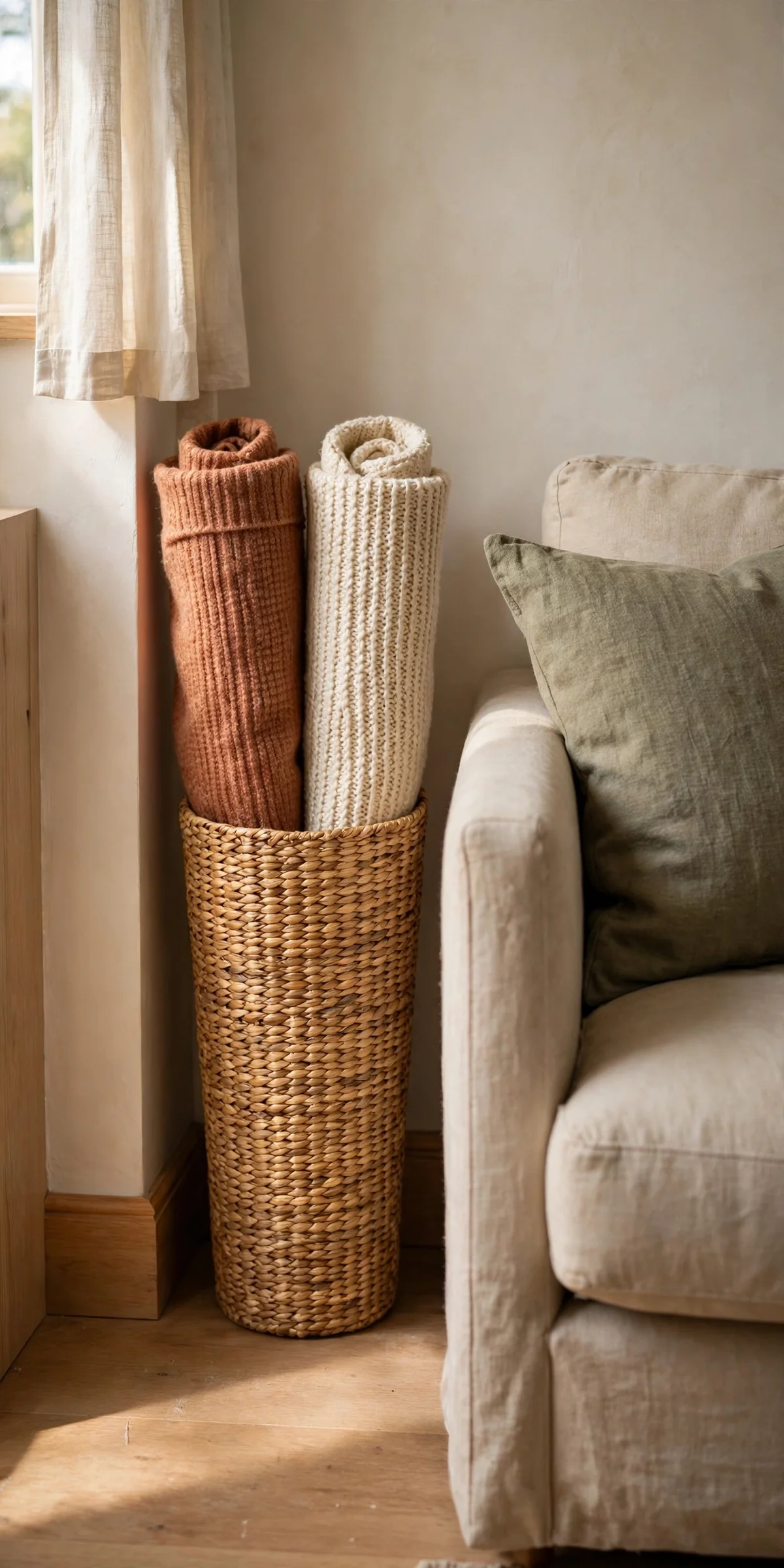
Most living rooms have a dead corner beside the sofa where nothing fits, and a tall narrow basket fills it perfectly. Look for a basket 30 to 35 cm wide, 30 cm deep and 50 to 60 cm tall (about 13 x 13 x 22 inches), which holds two rolled throws upright with room for a small cushion on top. The vertical shape draws the eye upward and balances a low sofa, adding height without a plant stand’s bulk. Seagrass and slim rattan both work; avoid wire, since the narrow shape makes wire look like a waste bin.
Measure the corner twice before buying, because a basket even 3 cm too wide will scrape the wall or jut into the walkway. Keep the throws rolled rather than folded in a narrow basket, since folded stacks wedge against the sides and become impossible to pull out. The mistake to avoid is filling the top with clutter once the throws settle; one small trailing plant or a folded spare cushion is the limit. This narrow basket for blankets living room corners is a renter-friendly fix that needs no drilling.
13. Match the Basket Weave to the Room: Seagrass, Wicker or Rattan
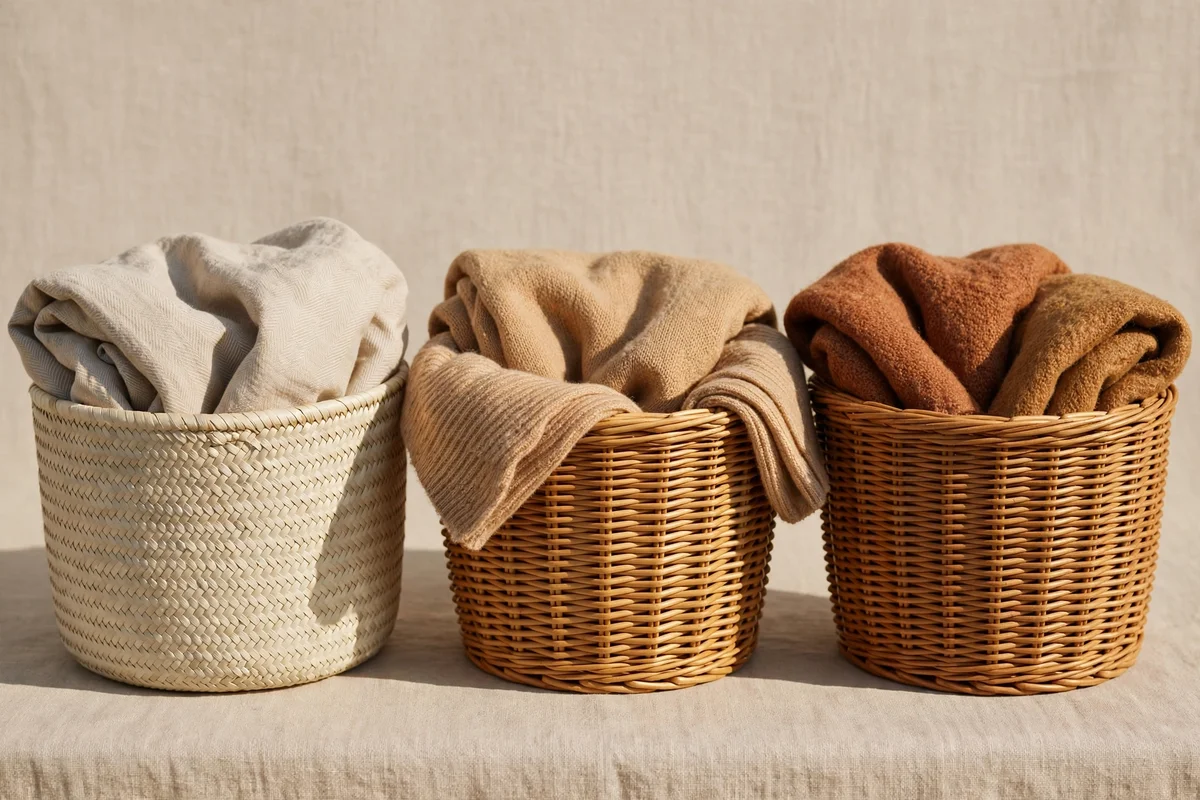
Each weave has a personality, and matching it to the room keeps the basket feeling designed rather than accidental. Seagrass, with its pale green-gold tone and fine texture, suits calm neutral rooms with linen sofas and oak floors. Wicker, warmer and chunkier, belongs in traditional rooms with fireplaces, leather chairs and dark wood. Rattan, with its smooth golden-brown poles, bridges modern and classic, pairing well with both grey fabric sofas and mid-century sideboards. Hold the basket against the room’s largest furniture piece before deciding; if the tones clash there, they will clash everywhere.
For a cohesive look, repeat the basket material once elsewhere in the room, perhaps a small seagrass tray on the coffee table or a rattan mirror frame, so the basket feels part of a scheme. The mistake to avoid is mixing three different weaves in one small room, which reads as clutter no matter how tidy the throws are. If you already own mismatched baskets, move the odd one to another room rather than forcing it to work. Material harmony makes the biggest visual difference for the least money.
14. Carry a Handled Basket Between the Living Room and Bedroom
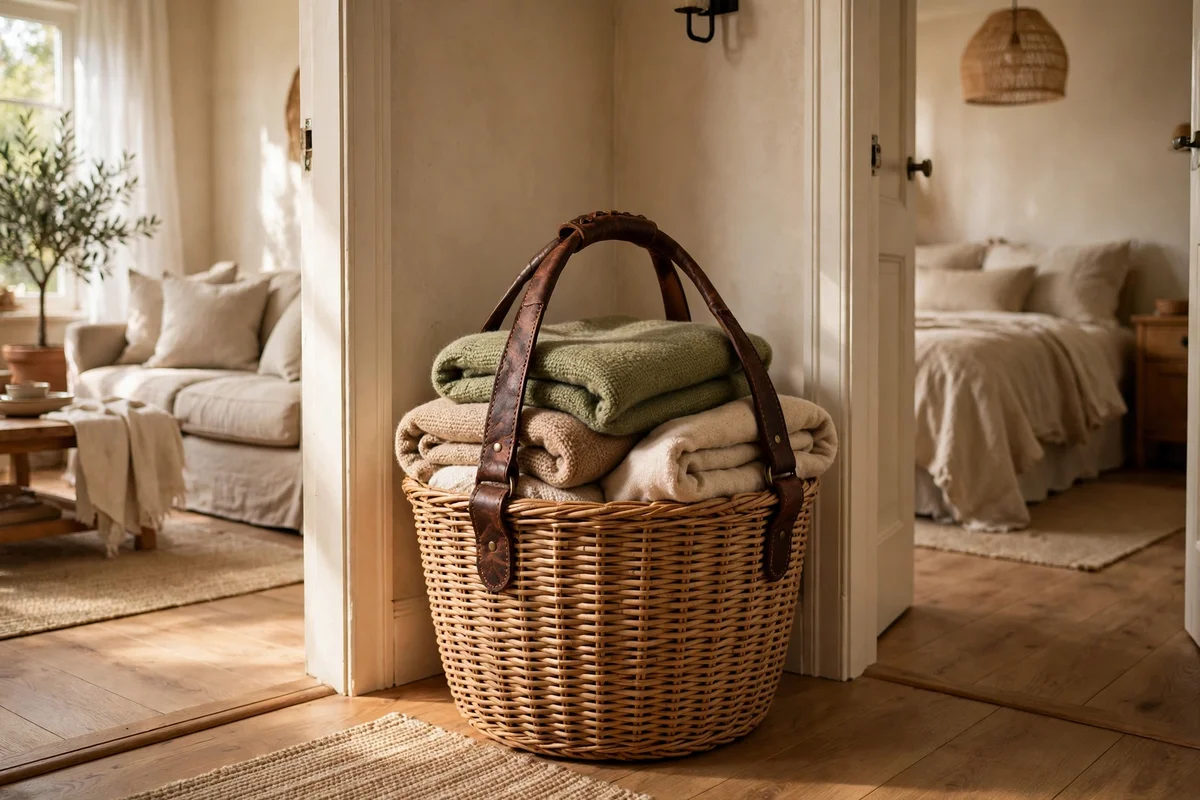
A basket with strong woven or leather handles turns throw storage into something portable, which matters on cold nights when the bedroom needs the living room’s warmest quilt. Choose a medium basket of 45 x 35 x 35 cm with handles rated for at least 5 kg, since three throws plus a quilt weigh more than they look. Test the handles in the shop by lifting with a firm grip; stitched leather handles outlast glued ones by years. This portable approach suits open-plan homes where one basket serves two rooms through the day.
Keep the portable basket’s contents to two throws and one light quilt so it stays liftable with one hand while the other steadies a door. The mistake to avoid is overloading it until the handles strain and the weave distorts, which ruins the basket within months. When the basket lives in the bedroom overnight, set it beside the bed rather than on it, so the throws stay within reach without crowding the pillows. A handled basket also travels well to the garden room on mild evenings.
15. Hide Everyday Clutter in a Lidded Basket With a Wooden Top
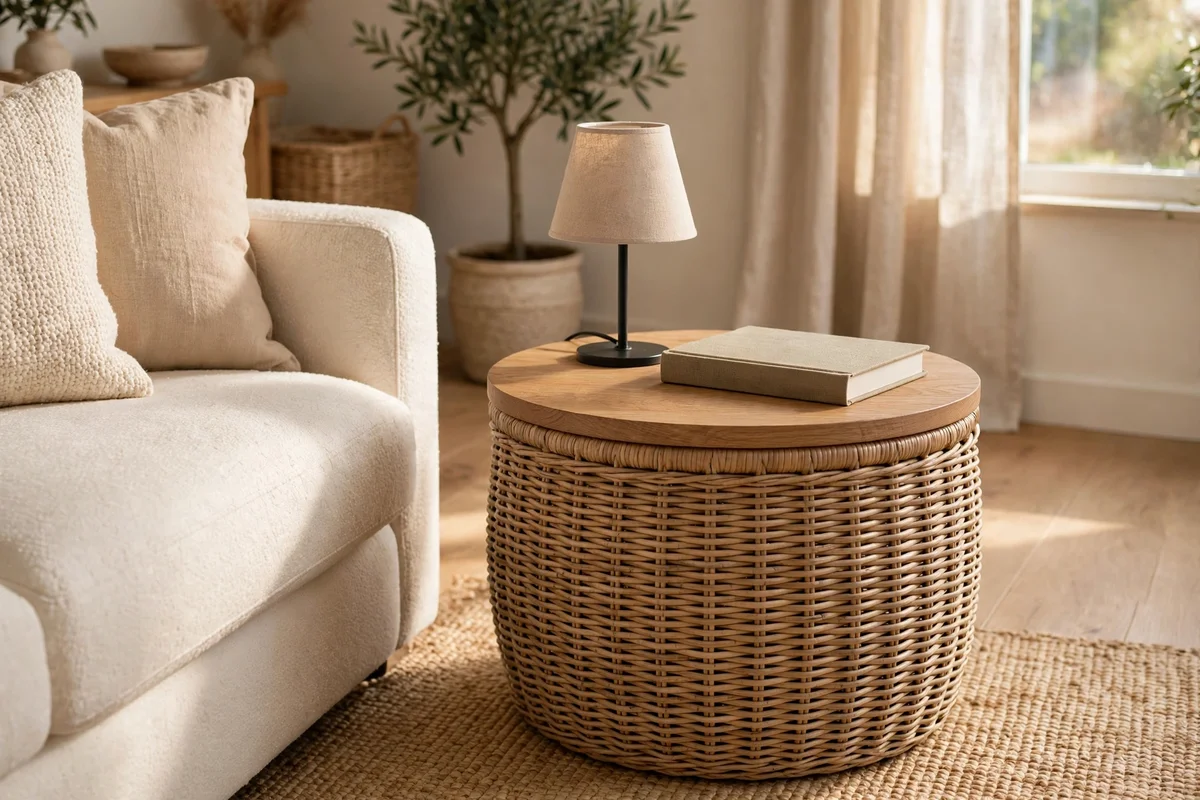
A lidded basket with a solid wooden top does double duty: it stores four folded throws and serves as a side table for a lamp, a book and a cup of tea. Look for a basket 50 cm wide, 35 cm deep and 40 cm tall with a flat, sturdy lid that sits flush. The closed lid hides the clutter of remotes, chargers and reading glasses that gathers beside every sofa, keeping the room calm even on busy days. Prices run 35 to 60 pounds or dollars; the wooden top should be sealed or oiled to resist ring marks.
Inside, store the throws folded flat in two stacks of two so the lid closes without pressing the fabric, since compressed throws take on a squashed look. The mistake to avoid is treating the lidded basket as a general junk box; once cables and old magazines move in, the throws migrate out and the system collapses. Keep a small tray on the wooden top to corral the lamp and cup, which protects the wood and looks deliberate. This is the tidiest of the blanket basket ideas for small living rooms.
16. Rotate the Basket Seasonally: Light Throws In, Heavy Quilts Out
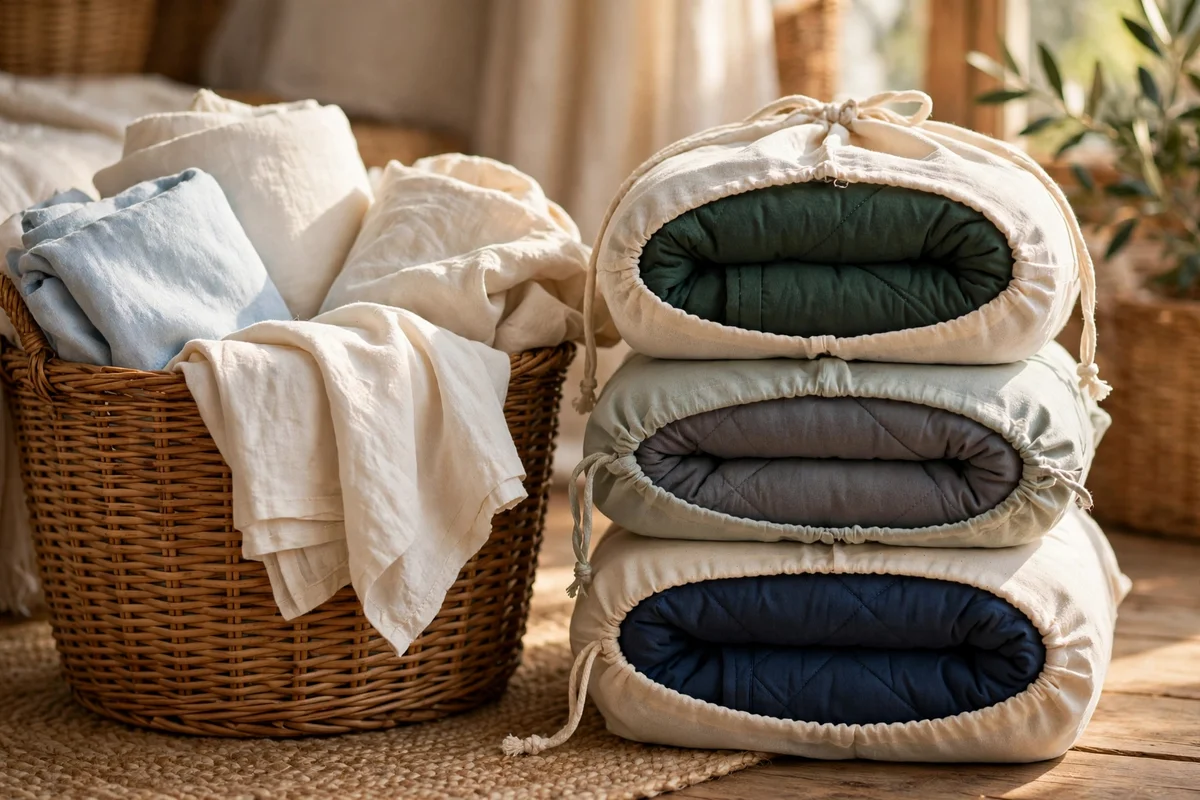
A seasonal rotation keeps the basket relevant all year and stops heavy winter quilts from hogging space through summer. In late March, swap the two heaviest throws for lighter cotton or linen ones in the 200 to 300 gsm range, and store the winter quilts in breathable cotton bags in a cupboard. In early October, reverse the swap, bringing back wool and fleece in the 400 to 600 gsm range. Mark the changeover on the calendar so it becomes a habit rather than a chore, and wash everything before it goes into storage.
The mistake to avoid is storing off-season throws in plastic bags, which trap moisture and can yellow light fabrics within a season. Breathable cotton storage bags cost little and protect far better. While the basket is empty for the swap, wipe the interior with a dry cloth and leave it in sunlight for an hour. This seasonal rhythm also gives you a natural moment to retire worn throws; if a throw has pilled beyond rescue, replace it rather than storing a problem for next year.
17. Pair an Open Wire Basket With a Cream Knit for Quiet Contrast
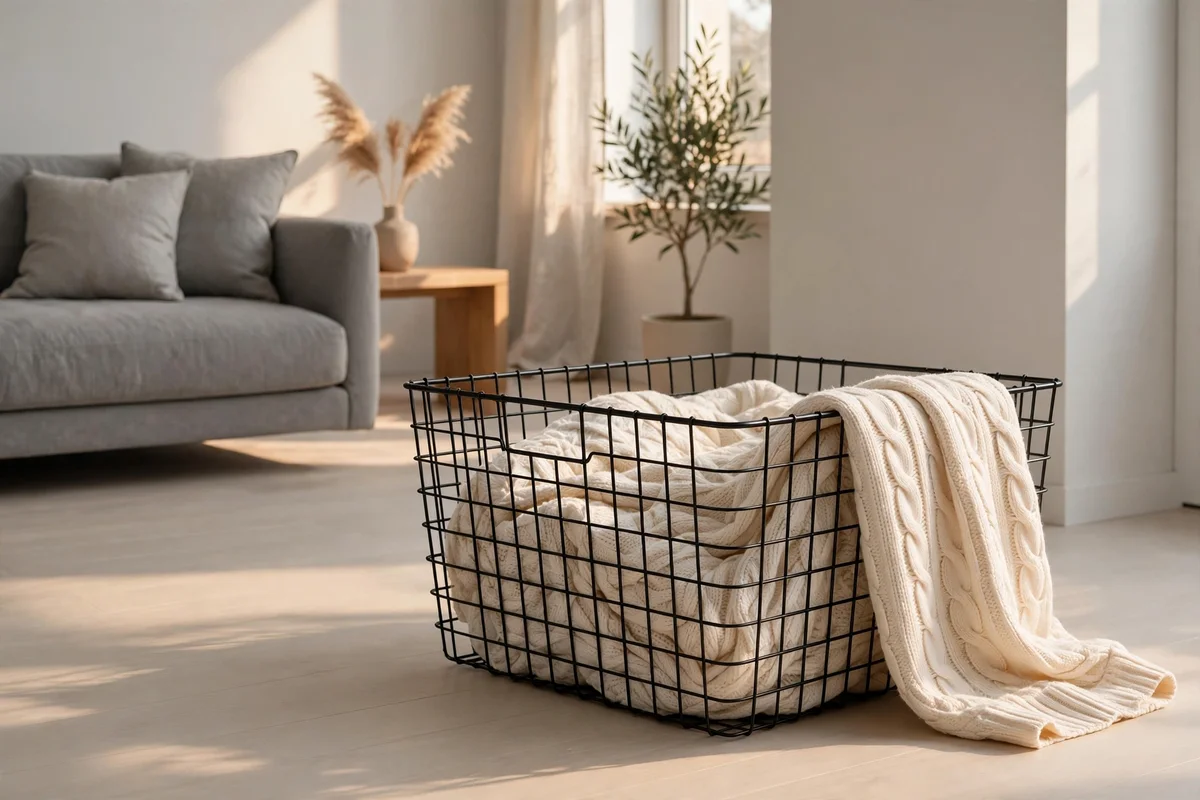
An open wire basket in matte black or aged bronze brings a crisp modern edge, and a cream cable-knit throw softens it into something welcoming. The contrast of hard metal lines against soft wool is what makes this pairing work in contemporary living rooms with grey sofas and pale floors. Choose a wire basket 45 cm wide and 40 cm tall with a grid no wider than 5 cm, so throws cannot slip through, and line it with washed linen as described earlier to protect the knit. Wire baskets cost 20 to 40 pounds or dollars.
Keep the colour palette tight: cream, soft grey and one warm wood tone in the room, so the black wire reads as an accent rather than a harsh interruption. The mistake to avoid is overfilling a wire basket, since bulging throws press through the grid and look messy from every angle; three throws is the comfortable maximum. Dust the wire monthly with a dry cloth, because dark metal shows every fibre. This throw blanket storage basket suits minimalist rooms where a woven basket would feel too rustic.
18. Set a Small Fabric Basket by the Reading Chair for One Favourite
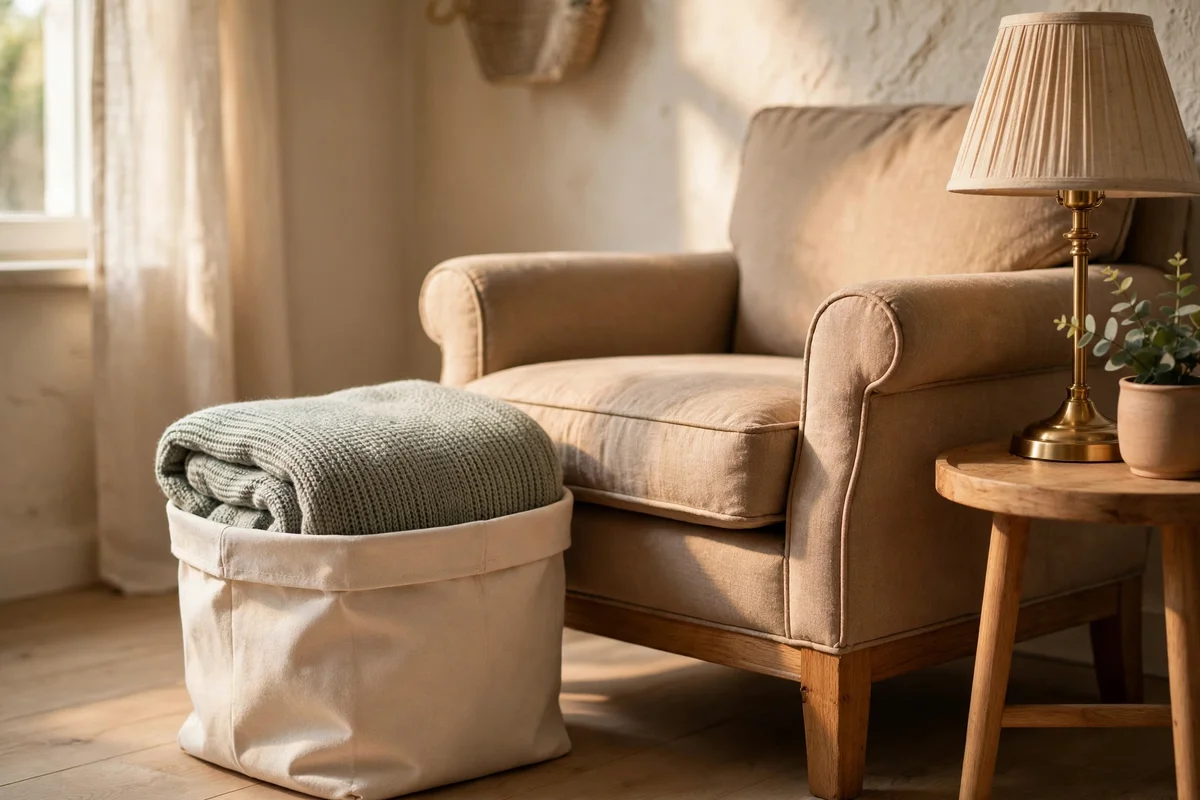
A reading chair deserves its own small basket holding one favourite throw, folded and ready, which turns an ordinary corner into a personal retreat. A soft fabric basket 30 cm wide and 30 cm tall (about 12 inches) fits beside most armchairs without dominating the space, and its soft sides will not bruise shins in tight corners. Choose canvas or quilted cotton in a colour that echoes the chair’s cushion, and keep exactly one throw inside: the one you actually reach for. This is the simplest blanket basket idea to start with and the easiest to keep tidy.
The mistake to avoid is letting the small basket collect a second and third throw until it overflows; the charm of this idea is its restraint. When the throw needs washing, the empty basket is a visible reminder to put it straight back. Place the basket on the chair’s dominant-hand side, about 20 cm from the chair leg, so the throw is reachable without standing. A small fabric basket also works beside a child’s reading corner, scaled down to hold one small blanket.
19. Layer Two Throws and One Quilt in a Deep Four-Throw Basket
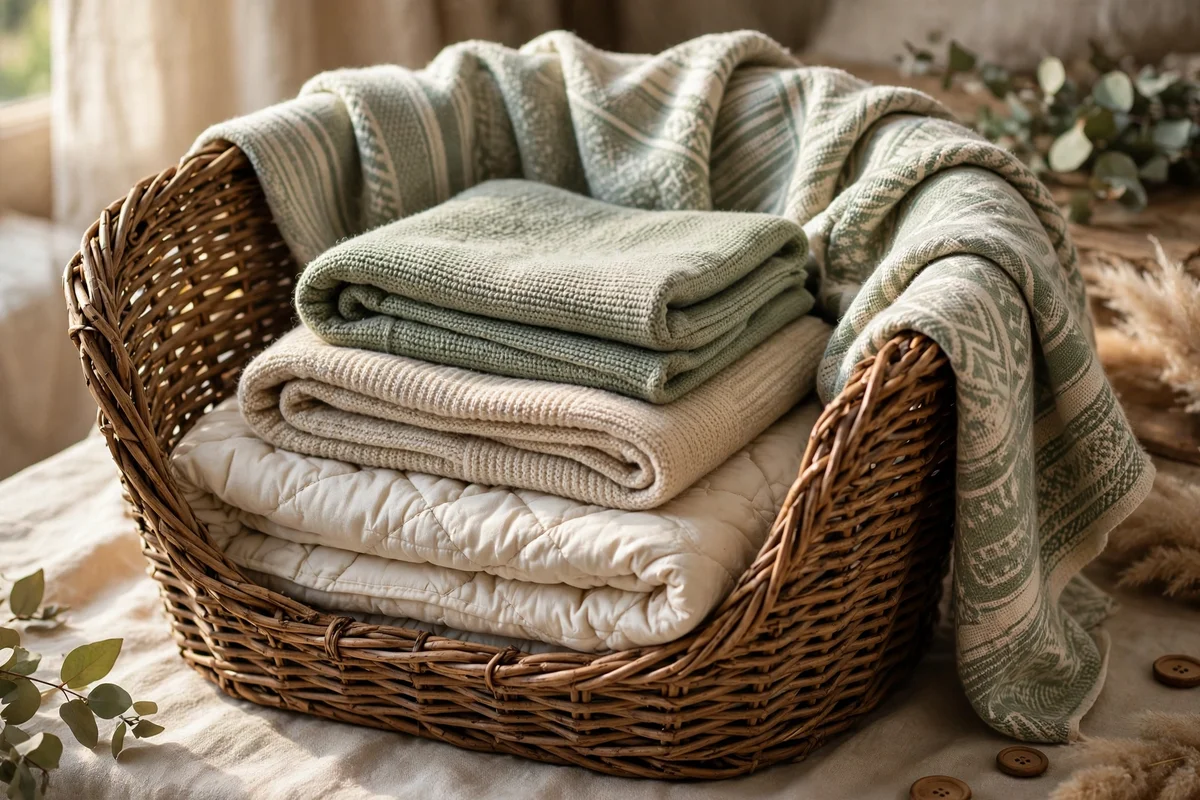
A deep basket of 50 cm wide, 40 cm deep and 45 cm tall holds the perfect family evening kit: two medium throws and one light quilt, layered for easy grabbing. Fold the quilt flat at the bottom as the base layer, place the two throws folded in thirds on top, and finish with the prettiest throw draped over the rim. This layering means the heaviest item never has to be lifted out to reach the lighter ones, and the basket looks abundant without being stuffed. The whole kit should weigh under 6 kg so the basket keeps its shape.
Choose the three pieces in coordinating tones, perhaps oatmeal, sage and cream, so the layered basket reads as one calm palette. The mistake to avoid is stacking more than three layers, since the bottom quilt becomes unreachable and the top throws slide off in a heap. Once a fortnight, pull the layers out and refold, which airs the quilt and stops the bottom layer developing a permanent crease. This deep-basket layering is the most practical of these blanket basket ideas for households of three or more.
20. Choose Open Tops for Daily Throws and Lids for Occasional Ones
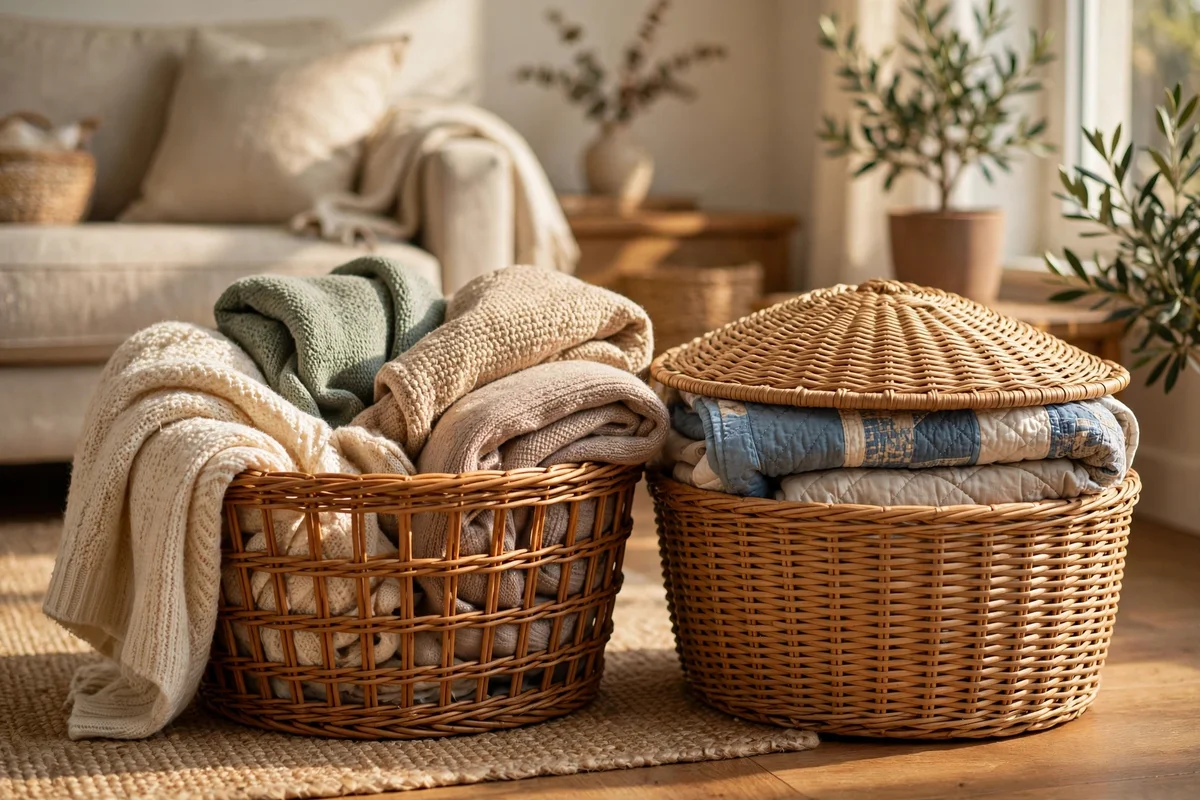
Match the basket’s top to how often you reach inside. Open-topped baskets suit the two or three throws used every single day, because nothing slows down the evening routine like lifting a lid with a sleeping child in your arms. Lidded baskets suit the occasional-use collection: the guest quilt, the good wool blanket, the seasonal spares. A good rule is that any throw used more than four times a week lives open, and anything used less lives lidded. This simple sorting keeps the daily basket inviting and the stored throws protected.
If you love the look of lids but use the throws daily, choose a basket with a lid that lifts off completely and can rest against the wall during the evening, then replace it at bedtime. The mistake to avoid is putting daily throws in a lidded basket out of tidiness, since the lid soon stays off permanently and the basket looks worse than an open one would. Be honest about your habits: the best throw blanket storage basket is the one that matches how your household actually lives, not how a catalogue lives.
21. Air Throws Outdoors on a Dry Day Before Returning Them
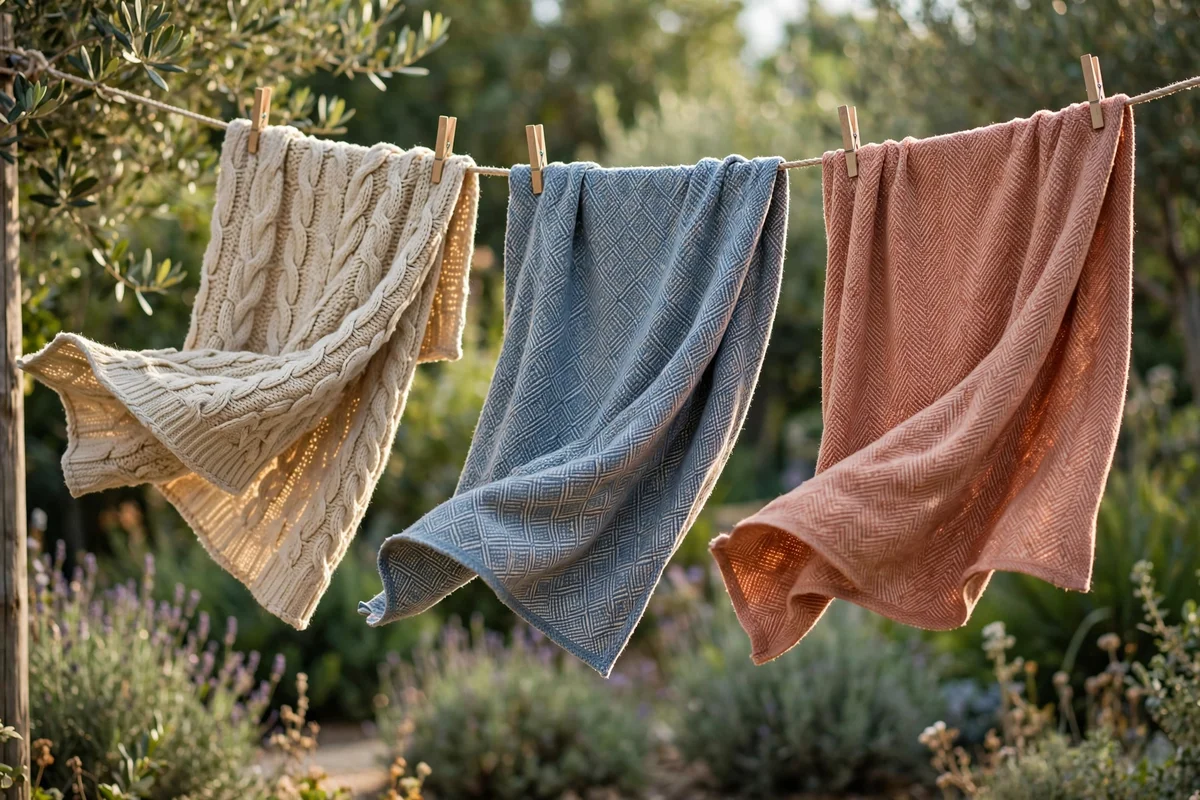
Nothing refreshes throws like two to three hours in moving outdoor air on a dry, breezy day. Drape each throw over a clean clothes line or airer, spaced so air reaches both sides, and bring them in before evening damp settles, usually by late afternoon. Sunlight naturally brightens whites and creams, but limit direct sun to one hour for coloured throws to avoid fading. This outdoor airing removes the stale indoor smell that builds up in any basket over weeks of use, and it costs nothing at all.
The mistake to avoid is airing throws on a damp or pollen-heavy day, which leaves them damper or dustier than before; check the forecast and choose a dry day with a light breeze. Shake each throw firmly before hanging and again when taking it in, which lifts dust from the weave. While the throws air, leave the empty basket by an open window. Make this a monthly habit through spring and summer, and your basket for blankets living room corner will smell as fresh as laundry day.
22. Anchor the Mantel Corner With a Natural Basket for Autumn Texture
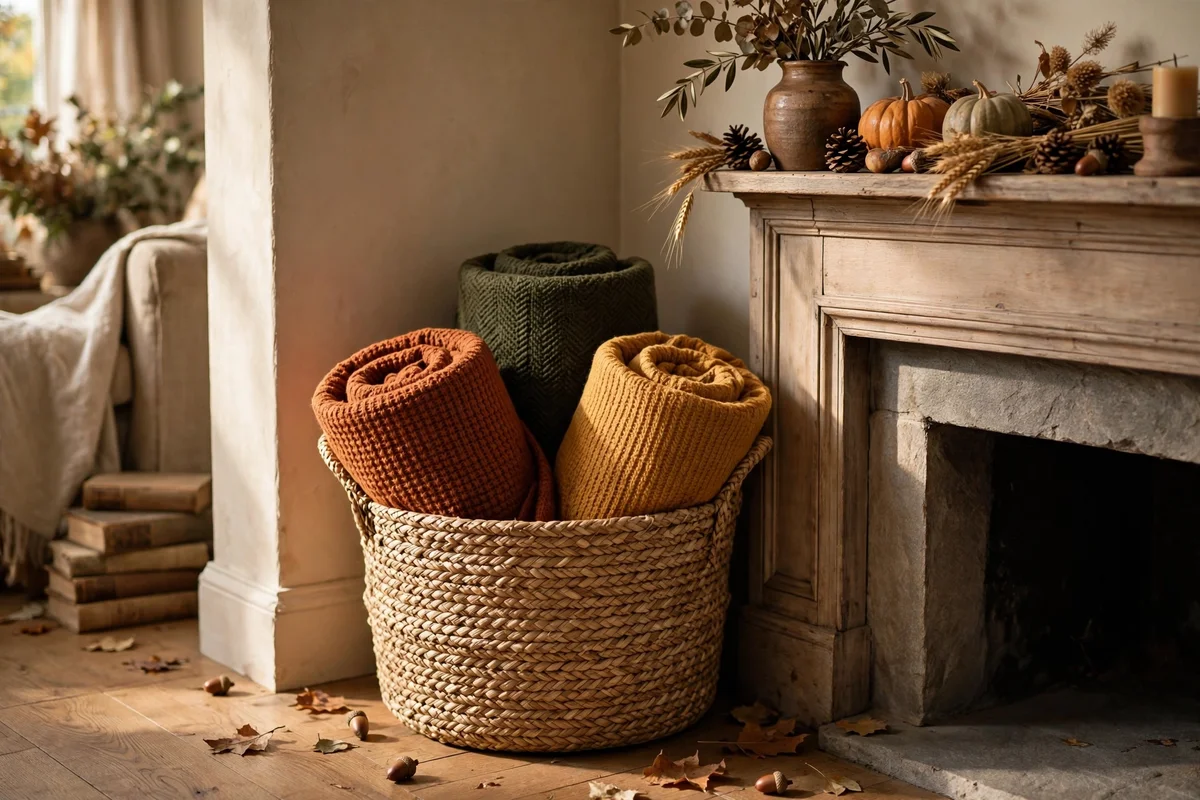
A natural seagrass or wicker basket tucked into the corner beside the mantel brings autumn texture into the living room without a single seasonal ornament. Fill it with two throws in warm tones, perhaps rust, ochre or deep olive, rolled upright so their colours show like a small harvest display. A basket 40 cm wide and 45 cm tall balances a standard mantel without competing with whatever sits on the shelf above. This is texture as decoration: the weave and the wool do all the work, and the arrangement stays beautiful from October through March.
Keep the basket at least 30 cm from the mantel’s edge so it reads as a separate, deliberate placement rather than an afterthought. The mistake to avoid is filling the mantel corner with a basket plus pumpkins, candles and garlands all at once, which turns texture into clutter; let the basket carry the season alone. When spring arrives, swap the warm throws for cream and sage and the same basket feels fresh again. A basket for blankets is furniture, not just storage.
These 22 blanket basket ideas share one simple principle: a basket works hardest when it matches your real life. Size it to the throws you own, choose the weave that suits your room, roll or fold to fit the shape, and keep a monthly freshening routine so every throw smells clean. Start with the single most-used spot in your home, usually beside the sofa, and get that one basket exactly right before adding another.
This week, try just one thing: empty your current throw pile, air the blankets for an afternoon, and set them back in a right-sized basket with the prettiest one draped over the rim. That single hour of care changes how the whole room feels, and it costs nothing at all. Once the sofa basket is sorted, the bedroom, hearth and guest room will follow naturally, one calm corner at a time.
Frequently Asked Questions
What size basket do I need for four throw blankets?
A basket around 45 to 55 cm wide and 40 to 45 cm tall holds four standard throws folded in thirds. Rolling instead of folding fits the same four throws into a slightly smaller basket, since rolls use about 20 percent less volume. Always measure your thickest throw first, because a chunky knit takes double the space of a thin cotton throw.
Should I roll or fold blankets in a basket?
Roll throws when the basket is small or you want it to look full, since upright rolls fill gaps and keep every throw visible. Fold throws in thirds when the basket is deep and you want a calm, layered look with a pretty drape over the rim. Never store throws damp either way, because trapped moisture turns the basket musty within days.
How do I stop my blanket basket smelling musty?
Empty and air the basket monthly, shake each throw outdoors, and dry everything fully before it goes back. Wash stale throws at 30 degrees with half a cup of white vinegar in the rinse, which removes odour without perfume. Tuck a dried lavender or cedar sachet at the bottom and replace it every three months for lasting freshness.
Where is the best place for a blanket basket in the living room?
Beside the sofa arm on the side nearest the door you enter by, so grabbing a throw becomes part of the evening routine. Keep at least 50 cm of walkway clear and never place it in front of the sofa where it blocks leg room. A second basket by the hearth, 60 to 90 cm from the fire, keeps throws warm and within reach.
Are lidded or open blanket baskets better?
Open baskets suit the two or three throws used daily, since nothing slows the evening routine like lifting a lid. Lidded baskets suit occasional-use bedding like guest quilts and good wool blankets, keeping them dust-free for weeks. Match the top to your habits: any throw used more than four times a week should live open.