Living Room
22 Fall Living Room Ideas That Instantly Warm Up the Room
By Anna Wells · · 20 min read
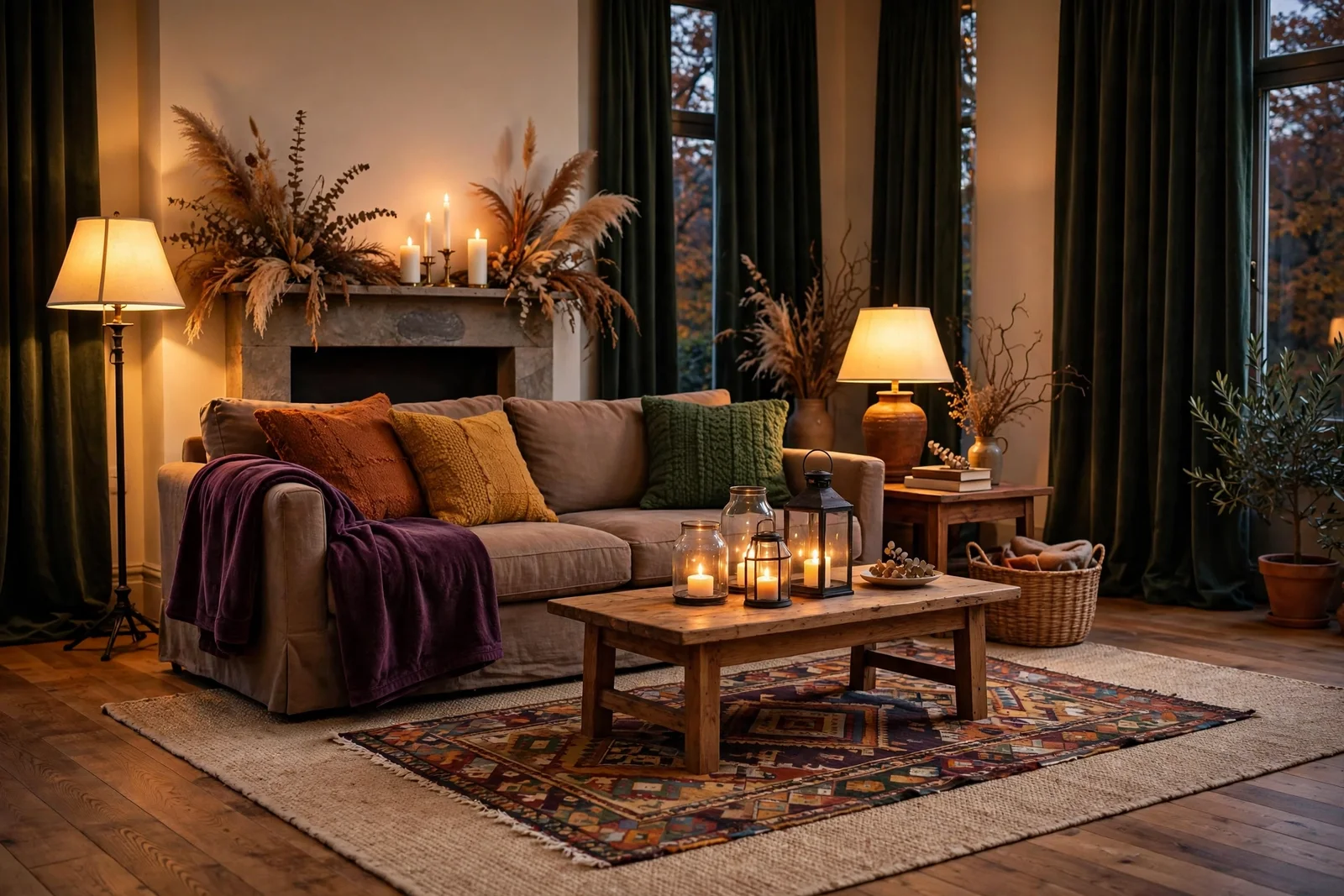
Twenty-two practical ideas for warming up your living room this fall: layers of wool and brushed cotton, low golden lighting, draft proofing that looks good, and a one-weekend order of work.
There is a particular moment in October when the evenings turn and the living room starts to feel like a room you pass through rather than a room you settle into. The light fades earlier, the floor feels colder underfoot, and the pale cushions that looked so fresh in June suddenly seem thin and chilly.
The fix is not a full redecoration. Warming a room for autumn is about layers, light and heat: softer textiles in deeper colours, lamps that glow low and golden, and a rug that meets your feet before the cold floor does. Small changes, made in the right order, change how a room feels within days.
This guide gives you twenty-two concrete ideas you can work through in a single weekend, from swapping cushion covers to drawing heavier curtains at dusk. Each one names the materials, the sizes and the rough cost, plus the mistake that wastes money most often.
Pick the five that suit your room and your budget, and by Sunday evening your living room will feel like the warmest place in the house. Start with light, finish with layers, and enjoy the glow.
1. Swap Summer Cushion Covers for Wool and Brushed Cotton
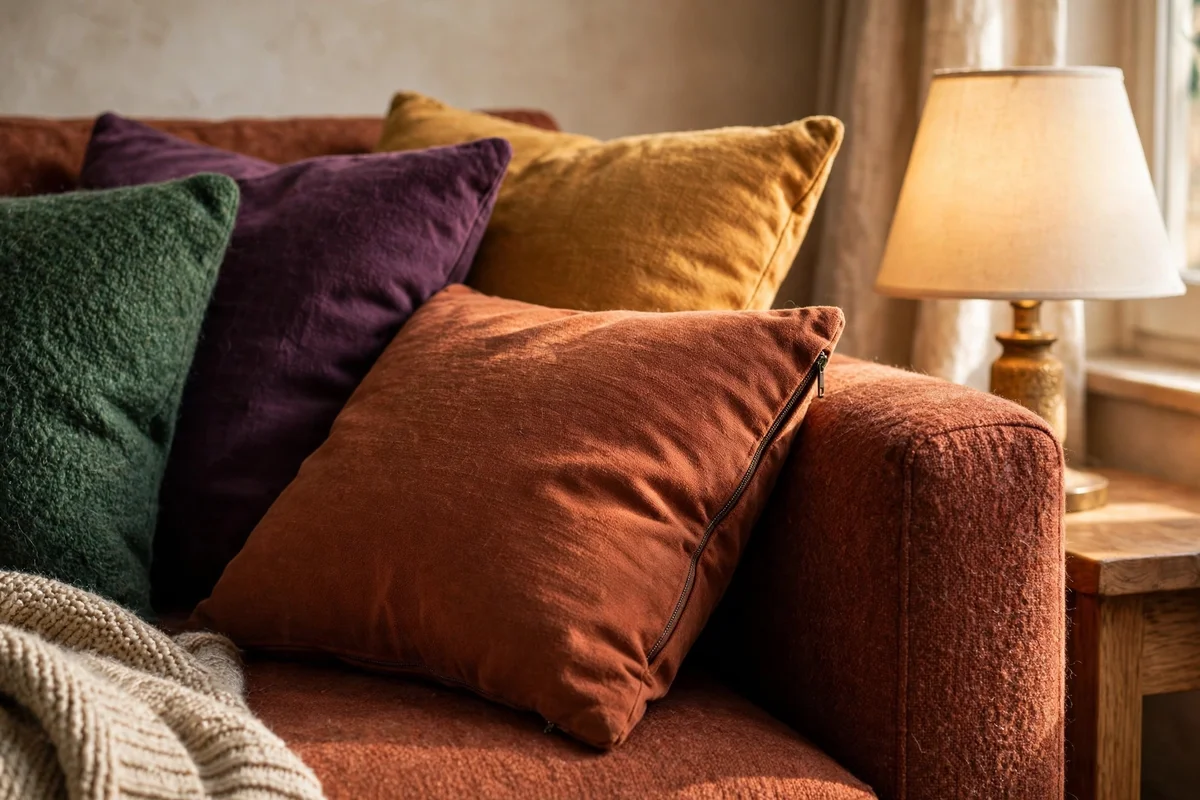
Trade the pale linen and cotton cushion covers of summer for wool or brushed cotton in autumn tones such as rust, ochre, forest green or deep plum. Standard sofa cushions take 45 cm square covers, while deep armchair seats suit 50 cm squares; buy covers with hidden zips and fill them with feather or recycled fibre inserts so they keep their shape. Keep two covers per cushion so one set is always in the wash.
Budget around 8 to 15 per cover for brushed cotton and 18 to 30 for wool, and you can re-cover a three-seat sofa for under 80. The mistake to avoid is buying every cushion in the same fabric, which flattens the look; mix two textures, for example wool and brushed cotton, in three or four related colours. Replace covers all at once rather than one by one so the sofa reads as a deliberate autumn refresh.
2. Drape One Deep Toned Throw Over Every Seat
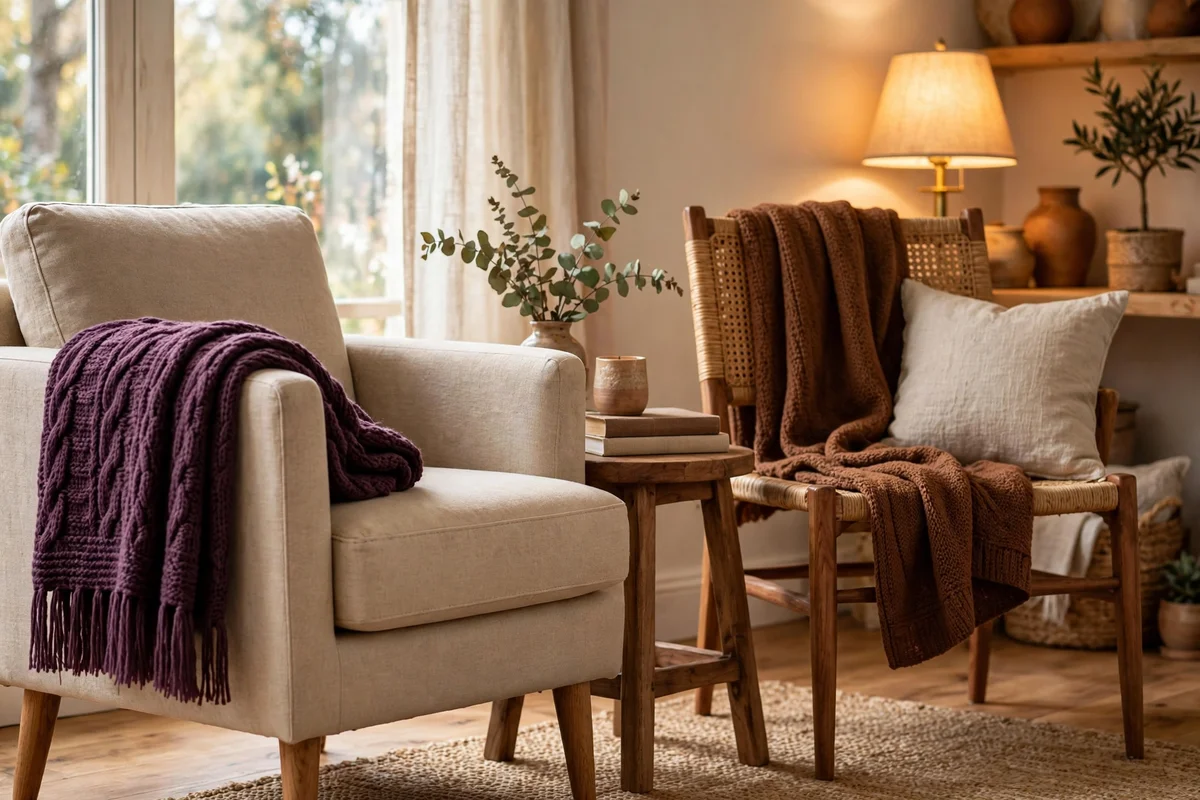
Give each seat its own deep toned throw in plum, chestnut, forest or burnt sienna so warmth is within arm’s reach wherever someone sits. Choose throws around 130 by 170 cm for sofas and 100 by 130 cm for armchairs, in chunky knit, brushed wool or cotton waffle weave. Fold each throw into thirds lengthwise and drape it over one arm or the back corner of the seat.
One throw per seat looks generous and costs less than re-covering cushions, typically 20 to 45 each for wool blends at high street prices. The mistake is piling three throws on the sofa and none on the armchair, which makes the room feel lopsided; distribute them evenly. Wash throws once before autumn so they are soft and ready, and keep a spare folded in a basket for the coldest evenings.
3. Replace Cool White Bulbs With Warm 2700K Ones
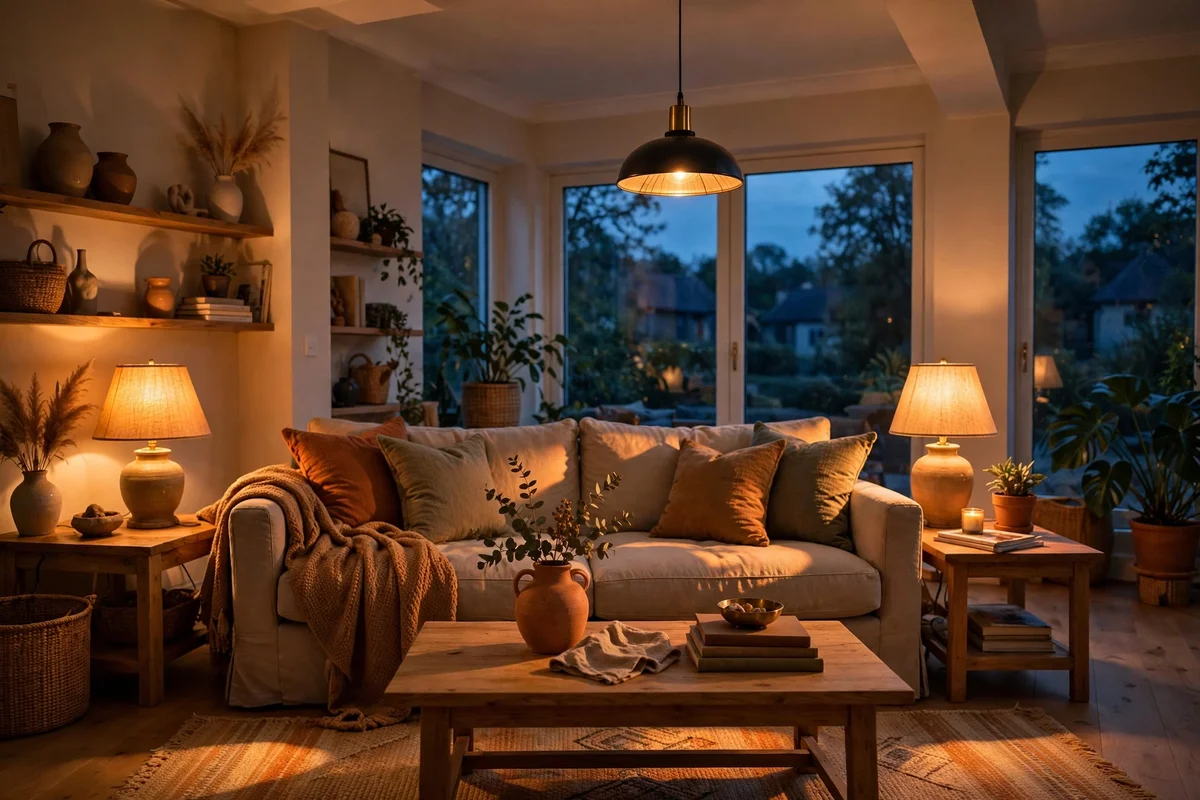
Cool white bulbs above 4000K make autumn rooms feel clinical, so replace every living room bulb with warm white at 2700K or lower, ideally 2200K for lamps. Swap all bulbs in the room at once, including ceiling pendants and shaded lamps, because a single cool bulb will undo the glow of the rest. Choose dimmable LEDs so brightness can drop with the evening; a 7 to 10 watt LED matches an old 60 watt bulb while using far less energy.
This is the cheapest transformation in the whole list, often under 20 for a full room of LED bulbs, and it takes less than half an hour. The mistake to avoid is mixing colour temperatures, for example a warm lamp beside a cool pendant, which makes the room feel unsettled. Check the Kelvin rating printed on the bulb or box before buying, and keep one spare warm bulb in a cupboard.
4. Set Shaded Lamps at Low, Middle and Corner Heights
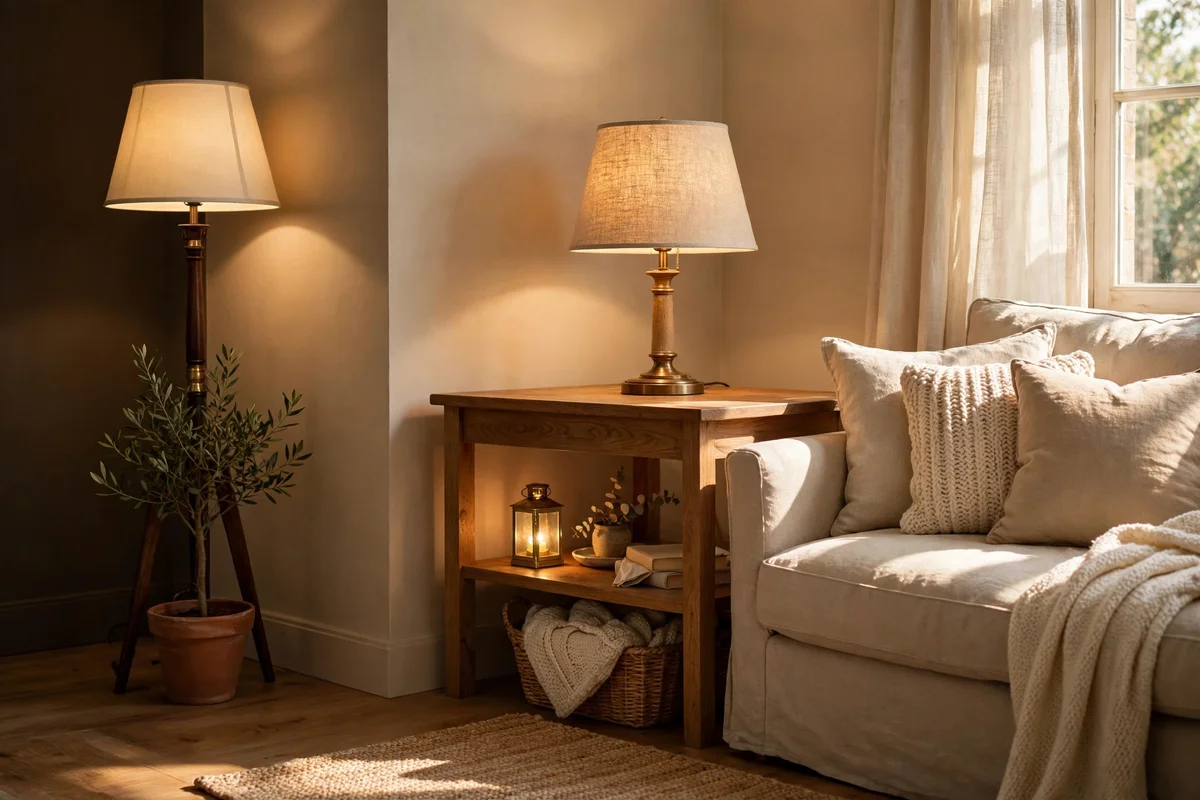
Light warms a room most when it comes from three heights, so arrange a floor lamp, a table lamp and one small lamp or lantern in a far corner. Use fabric shades in cream, oatmeal or linen that soften the bulb behind them, and keep shades between 20 and 30 cm tall so the light pools downward rather than glaring outward. Place the tallest light in the darkest corner and the lowest on a side table beside the main seat.
Three shaded lamps beat one bright ceiling light every time, and second-hand lamp bases cost 10 to 25 at charity shops, with new shades around 12 to 20. The mistake is pointing every lamp upward or using bare bulbs, which hardens shadows instead of softening them. Aim all three at seating areas rather than the walls, and switch the overhead light off by seven so the lamps carry the room.
5. Layer a Warm Rug Over Cold Hard Floors
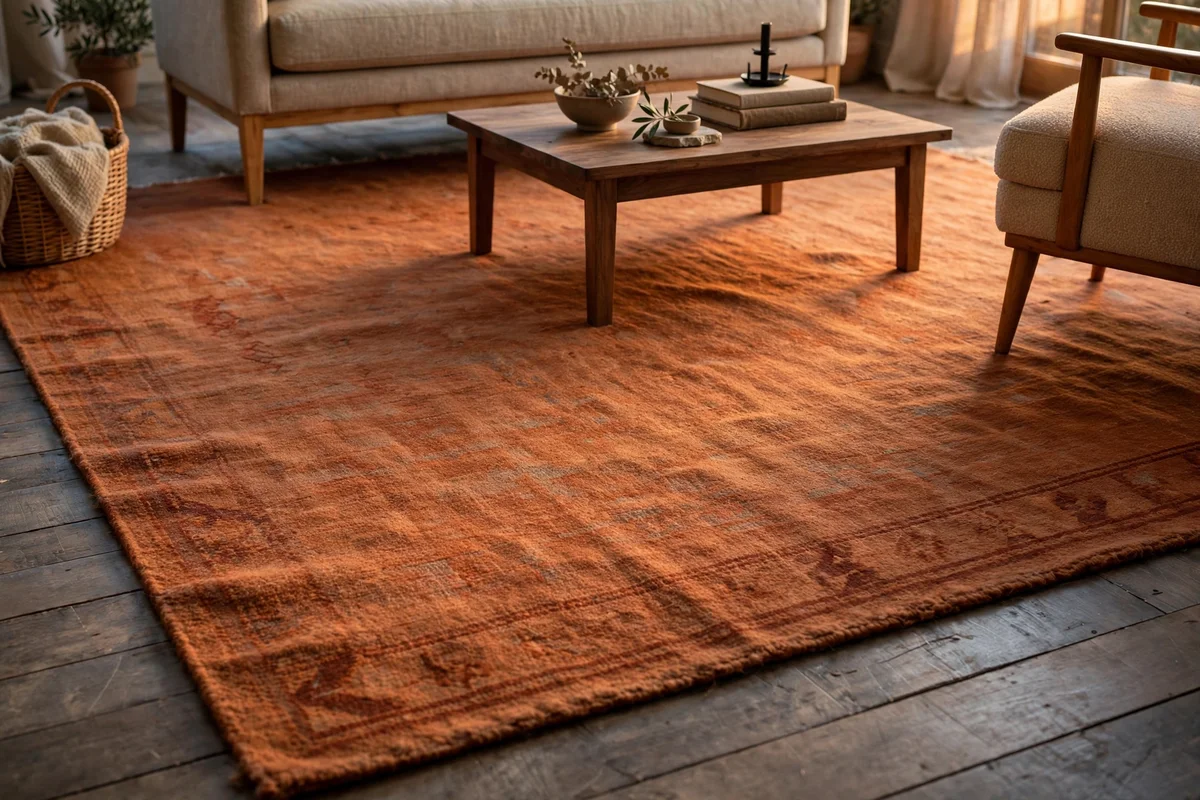
A rug is the fastest way to warm cold wood, tile or laminate, because it insulates the floor where your feet actually land. Choose a rug large enough to sit under the front legs of the sofa and chairs, which usually means 160 by 230 cm for a compact room or 200 by 290 cm for a larger one. Low pile wool or wool blend rugs feel warmest underfoot and shed less than shaggy styles, while flatweave cotton suits homes with pets or young children.
Use a non-slip rug pad underneath so the rug stays flat and adds an extra layer of insulation, which also protects hard floors. Budget 80 to 200 for a good sized wool blend rug, or start with a smaller 120 by 170 cm rug centred on the coffee table for under 60. The mistake is buying a rug that is too small, which makes the room feel colder and more cramped; when in doubt, go one size up.
6. Stop Drafts With Linen Door Snakes
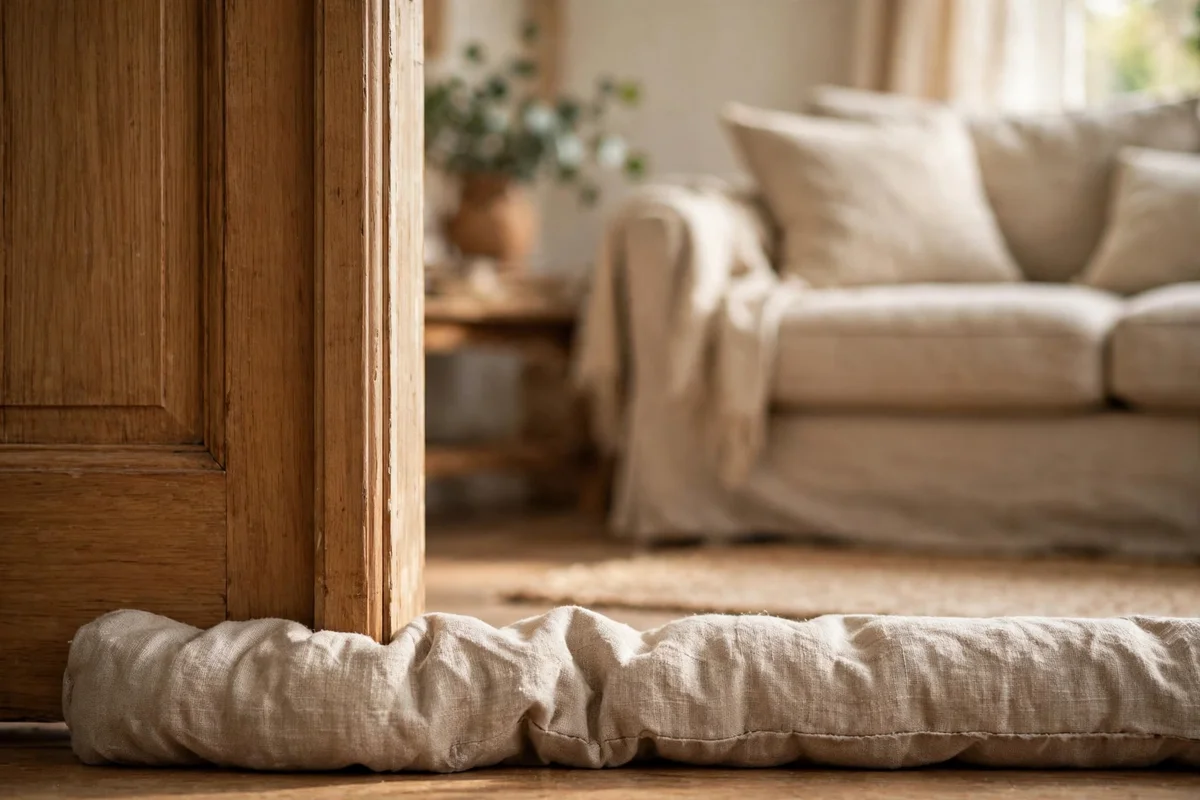
Cold air slips under doors and ruins even the cosiest room, so place a linen door snake along the base of every external or hallway door. Fill a fabric tube 90 to 100 cm long with dried rice, wheat or clean sand, then finish it with a natural linen cover that matches your cushions so it looks like decor rather than a draught excluder. Two snakes cover most living room doors, and the weighted fill moulds itself to uneven floors better than foam.
Handmade snakes cost little more than the fabric and filling, while ready-made linen versions run 15 to 30 each. The mistake to avoid is buying a thin, lightweight snake that a child or pet can shove aside; fill yours firmly and test that it blocks the gap fully on a windy evening. Pair door snakes with sealed letterbox brushes for the biggest gain in comfort per pound spent.
7. Seal Leaky Window Edges With Fabric or Felt Stoppers
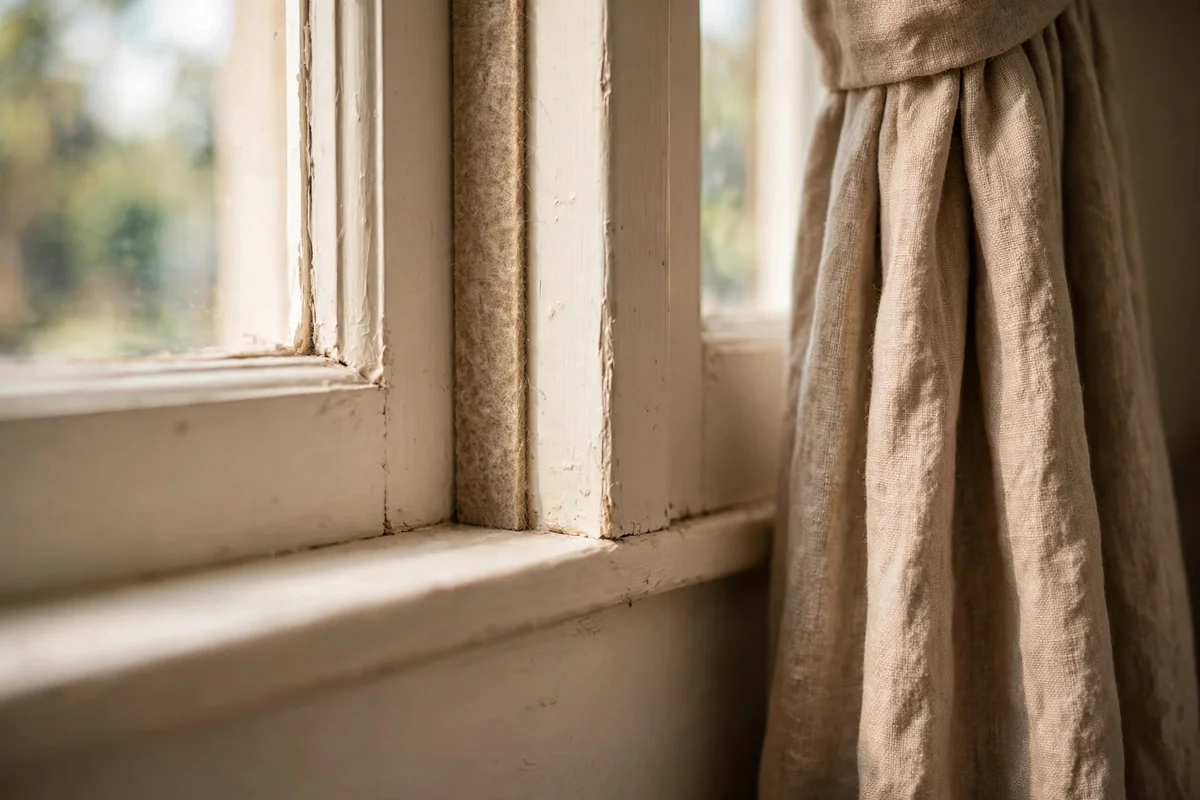
Old windows leak surprising amounts of warm air, so press adhesive felt or foam weather strips into the gaps where sashes meet the frame. Measure the gap with a folded strip of paper first, because strips come in 2, 3 and 5 mm thicknesses and the wrong size either falls out or stops the window closing. Clean the frame with warm soapy water and let it dry fully before sticking, or the strips peel off within weeks.
For windows you never open, roll a length of thick fabric into the gap or hang a slim quilted draught excluder from the sill. A full set of strips for a living room with two windows costs 10 to 20 and one Saturday morning of work. The mistake is sealing windows shut that you need for ventilation; leave one trickle vent or a slightly open top sash so the room still breathes and condensation stays low.
8. Group Candles Safely Inside Glass Lanterns
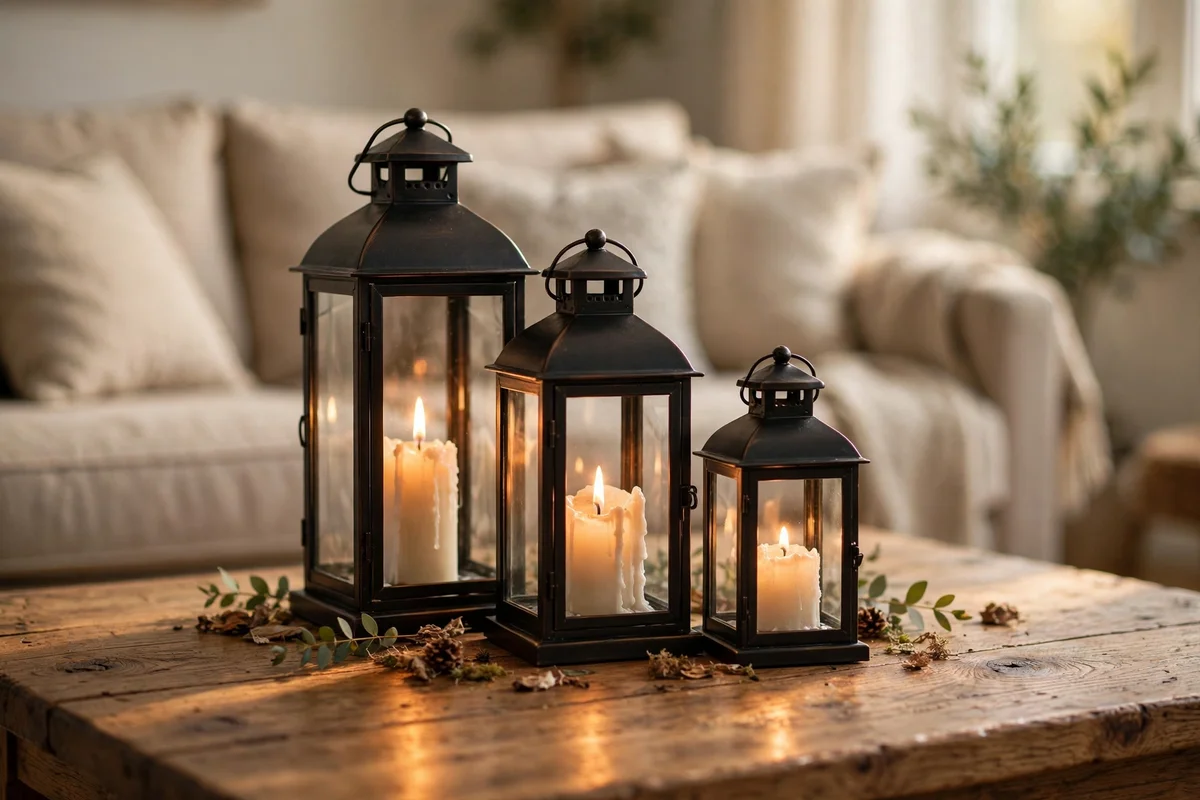
Candlelight adds a flickering warmth no bulb can copy, but loose candles near curtains and throws are a hazard, so group them inside glass or metal lanterns. Cluster three lanterns of different heights, for example 20, 30 and 40 cm, on the coffee table or a wide windowsill, keeping them at least 30 cm from curtains, cushions and paper. Use real wax candles with cotton wicks, or good quality LED pillars if children or pets share the room.
Trim wicks to 5 mm before lighting so candles burn cleanly without soot on the glass, and never leave them burning unattended or while you sleep. A set of three lanterns costs 25 to 60 depending on size and material, and candles last for many evenings when burned an hour at a time. The mistake is scattering single candles around the room, which spreads risk and weakens the effect; one grouped cluster reads as a deliberate warm heart.
9. Hang Heavier Curtains and Draw Them at Dusk
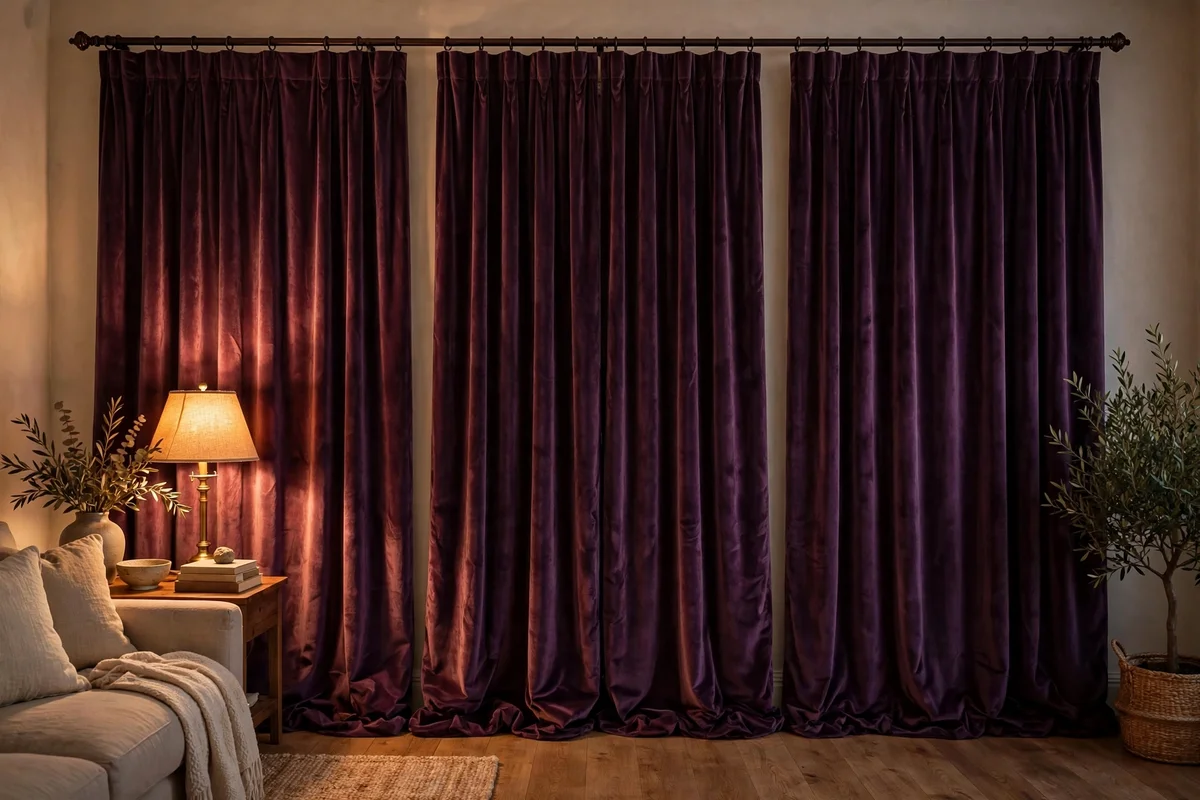
Glass loses heat fast after dark, so replace light summer sheers with heavier curtains in velvet, lined cotton or wool blend, and draw them the moment the light fades. Curtains should hang from a rod 10 to 15 cm wider than the window on each side so the fabric stacks back fully by day, and the hem should just kiss the floor or puddle by 2 cm for maximum draught blocking. Line budget curtains yourself with thermal lining for a fraction of the cost of ready-made thermal pairs.
A pair of ready-made thermal lined curtains costs 40 to 90 depending on width, while thermal lining fabric adds about 15 to the project. The mistake is choosing curtains exactly the width of the window, which leaves gaps at the edges where cold air pours in; always size up. Make drawing the curtains at dusk part of the evening routine, like locking the door, and the room will hold its warmth hours longer.
10. Fit a Dimmer Switch to Control Evening Glow
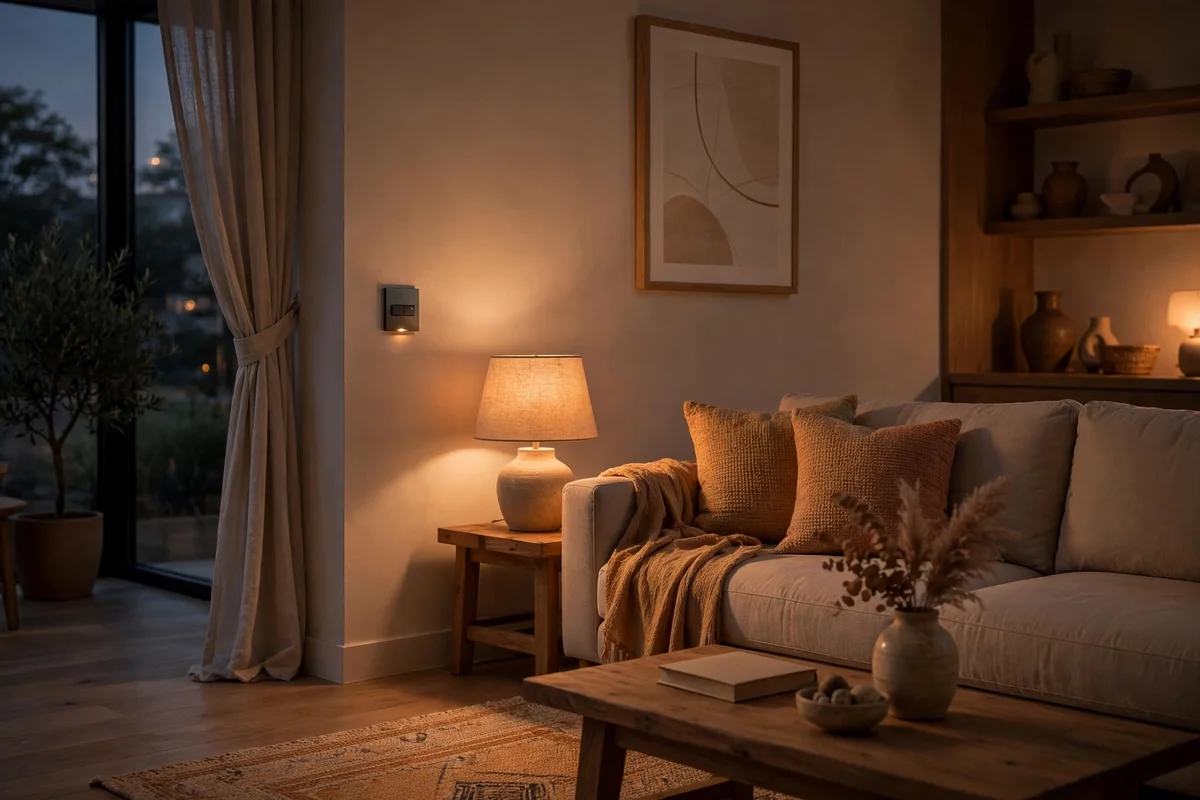
Fixed bright light fights autumn cosiness, so fit a dimmer switch on the living room’s main light circuit and drop the level to around a third by evening. Choose a trailing edge dimmer rated for LEDs and check it matches your bulbs, since mismatched pairs buzz or flicker. If rewiring is not an option, a plug-in dimmer on a floor lamp gives the same effect for under 20 without touching the electrics.
An electrician fits a standard dimmer in under an hour for roughly 40 to 70 including the part, making it a solid investment in daily comfort. The mistake is dimming non-dimmable bulbs, which shortens their life and produces an annoying flicker; check the packaging first. Set a simple household rule that the big light goes low at seven, so the room shifts into its evening mood without anyone thinking about it.
11. Style the Mantel With Dried Stems and Tall Candles
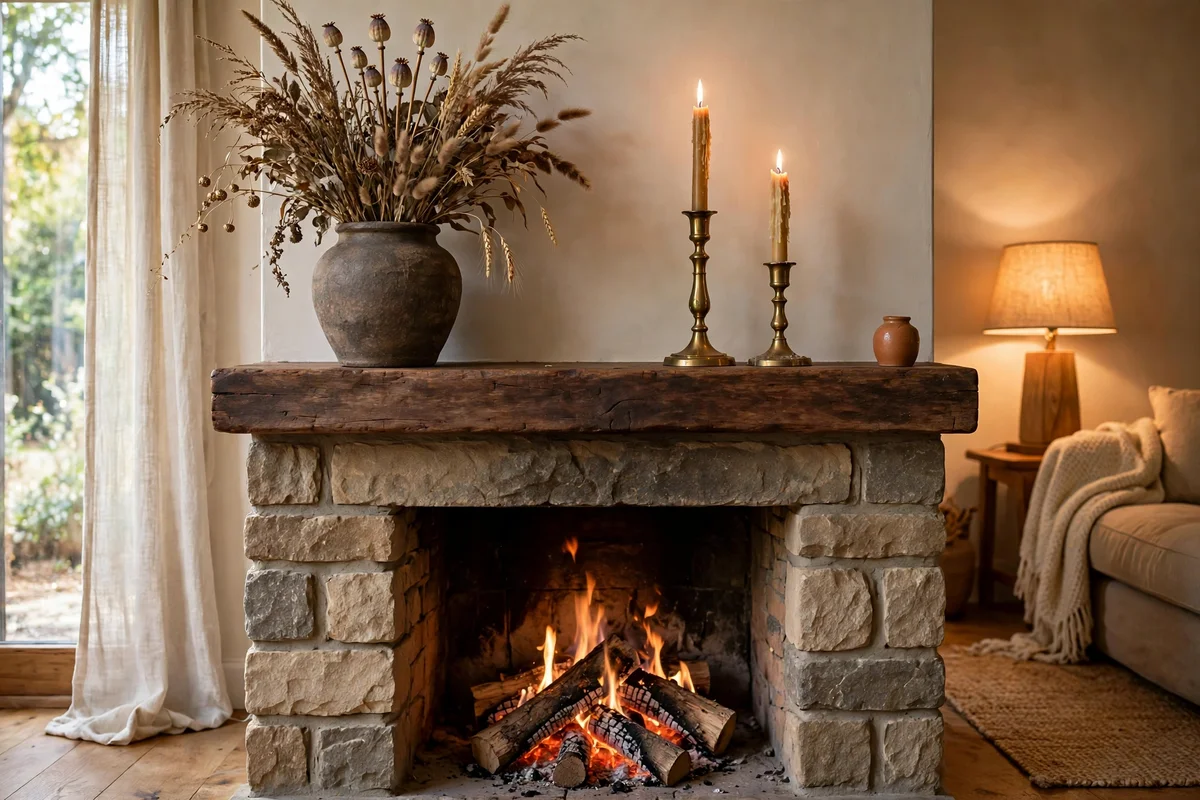
A mantel is the natural focal point of a living room, so style it for autumn with dried stems, tall candles and one warm toned object. Arrange dried grasses, seed heads or preserved eucalyptus in a heavy vase 25 to 35 cm tall, flanked by two candlesticks of different heights holding 20 to 25 cm dinner candles. Keep everything at least 15 cm from any working fire opening and anchor the arrangement so it cannot be knocked over.
Dried stems cost 10 to 20 a bunch and last for years if kept out of direct sun, while a pair of brass or wooden candlesticks runs 15 to 40. The mistake is lining up a dozen small objects along the mantel, which reads as clutter; three to five pieces in an odd numbered group stays calm. Refresh the water-free arrangement each October and it becomes a small seasonal ritual the whole household recognises.
12. Tuck a Woven Basket of Spare Throws Beside the Sofa
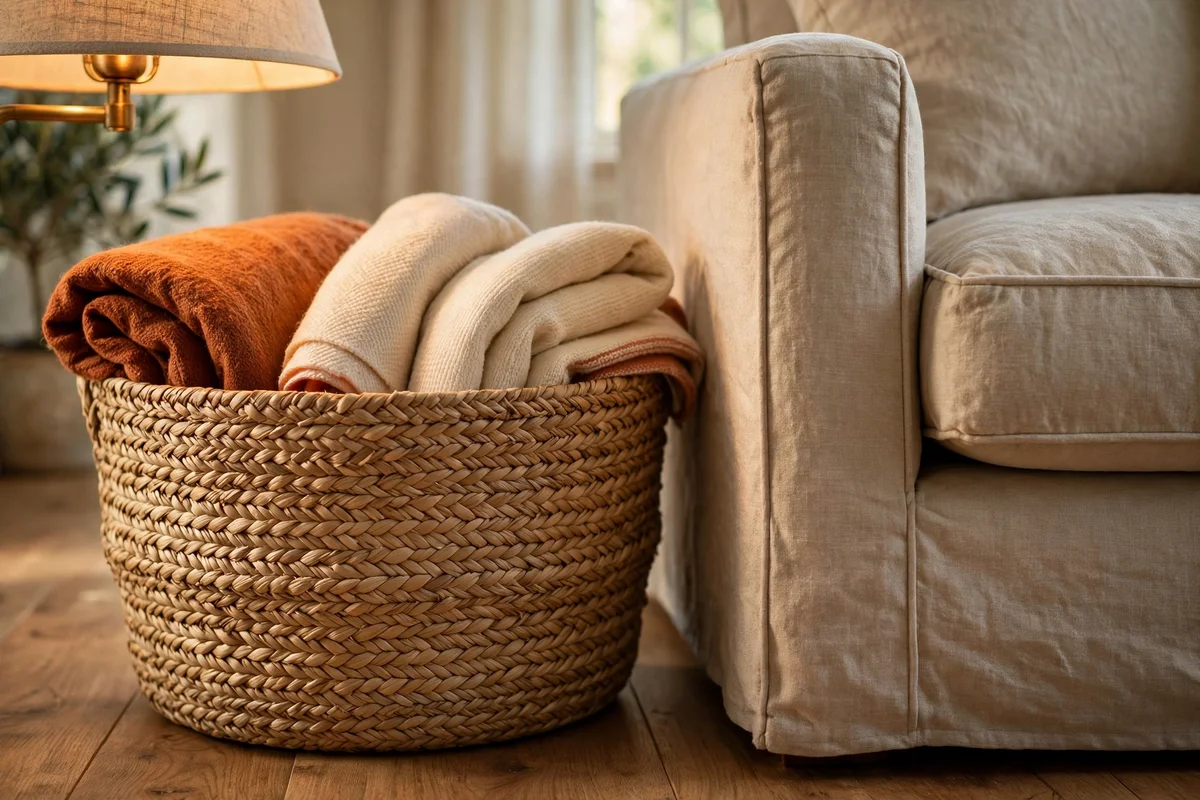
Keep two or three spare throws folded in a large woven basket beside the sofa so guests and family can layer up without leaving the room. Choose a basket 40 to 50 cm wide with a sturdy weave in seagrass, willow or jute that stands up to daily use, and fold throws loosely so the colours show. Place the basket within arm’s reach of the sofa end so it functions like a warmth station rather than decoration.
A good sized basket costs 25 to 50 and the throws inside are the ones you already own, so this idea adds almost nothing to the budget. The mistake is cramming the basket so full that throws spill out and look untidy; two or three folded pieces is plenty. Shake the basket out monthly to clear dust, and rotate which throw sits on top so one pattern does not fade faster than the rest.
13. Rest a Wooden Tray With Tea Things on the Ottoman
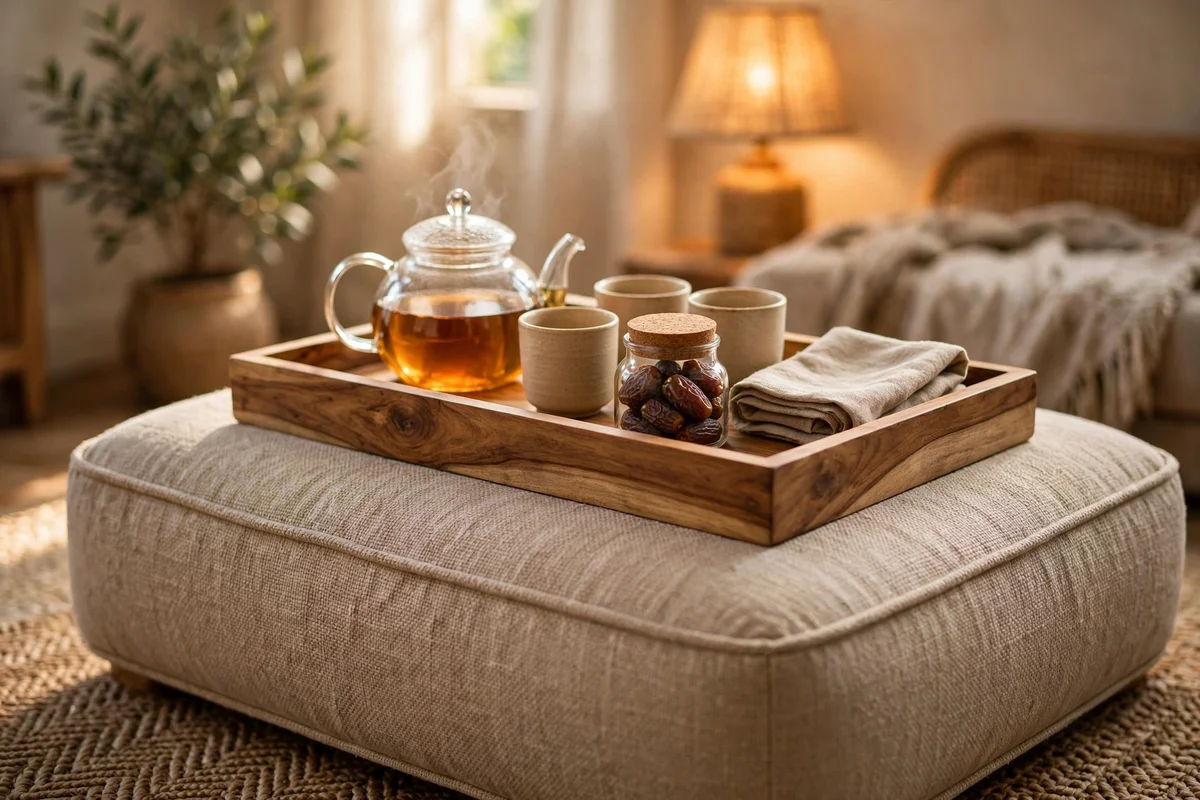
A wooden tray on the ottoman or coffee table turns autumn evenings into a small tea ritual and adds warm wood tones to the room. Set a 40 by 30 cm tray with a glass teapot, two or three cups, a small jar of dates or nuts and a folded linen napkin, keeping everything within one contained zone. Acacia, walnut or olive wood trays suit the season and wipe clean with a damp cloth after use.
A solid wooden tray costs 20 to 40 and doubles as serving ware for family gatherings, so it earns its place year round. The mistake is letting the tray become a dumping ground for remote controls and post; clear it back to tea things each evening so it stays inviting. A warm drink in hand makes a room feel cosier at no extra heating cost, which is the quiet genius of this small setup.
14. Warm the Palette With Brass and Copper Accents
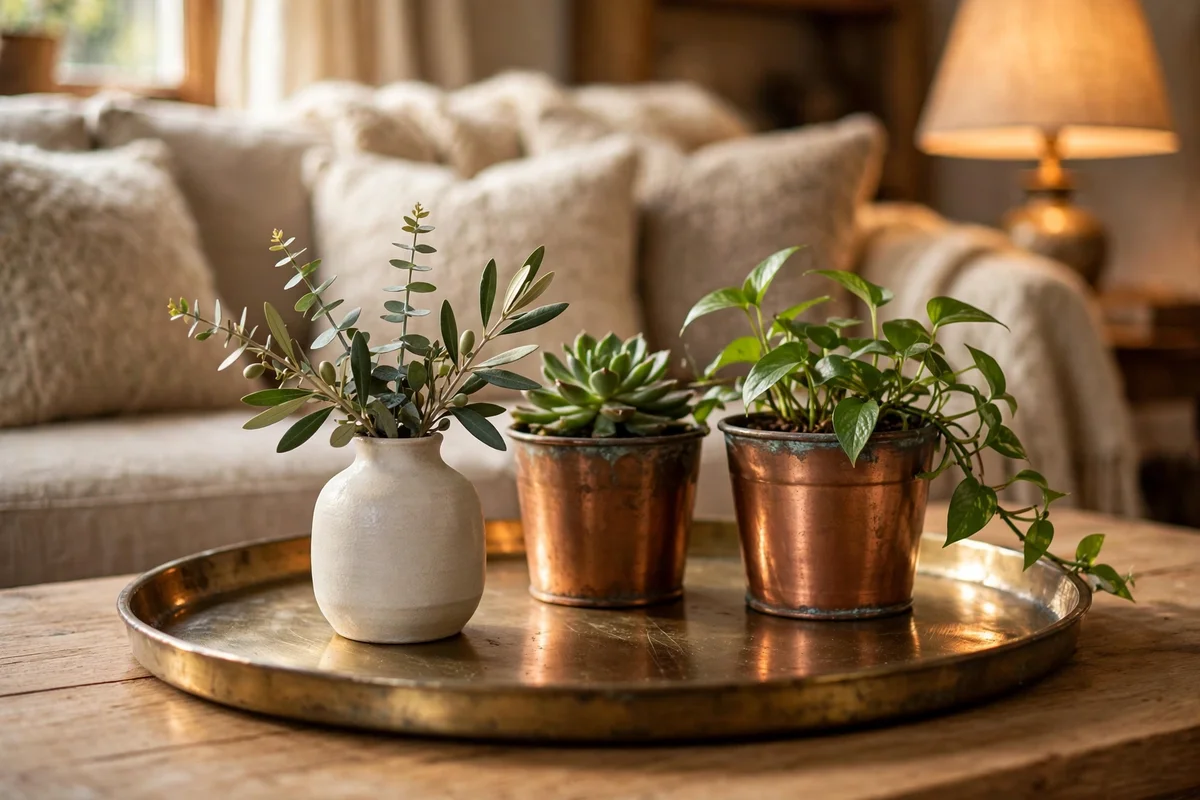
Warm metals like brass and copper reflect lamplight in a way that silver and chrome never do, so swap a few cool toned accessories for warmer ones. A brass picture light, two copper plant pots or a brushed brass tray on the coffee table is enough to shift the room’s temperature. Keep finishes brushed or aged rather than mirror polished, since softer metal sits more comfortably beside wool and wood in an autumn scheme.
Second-hand brass trays and candlesticks cost 8 to 20 each at flea markets, making this one of the cheapest visual warm ups available. The mistake is mixing four different metals in one room, which reads as indecision; pick brass or copper and repeat it three times across the room. Wipe warm metals with a dry cloth only, because harsh polish strips the patina that gives them their depth.
15. Add a Chunky Knit Pouf for Soft Extra Seating
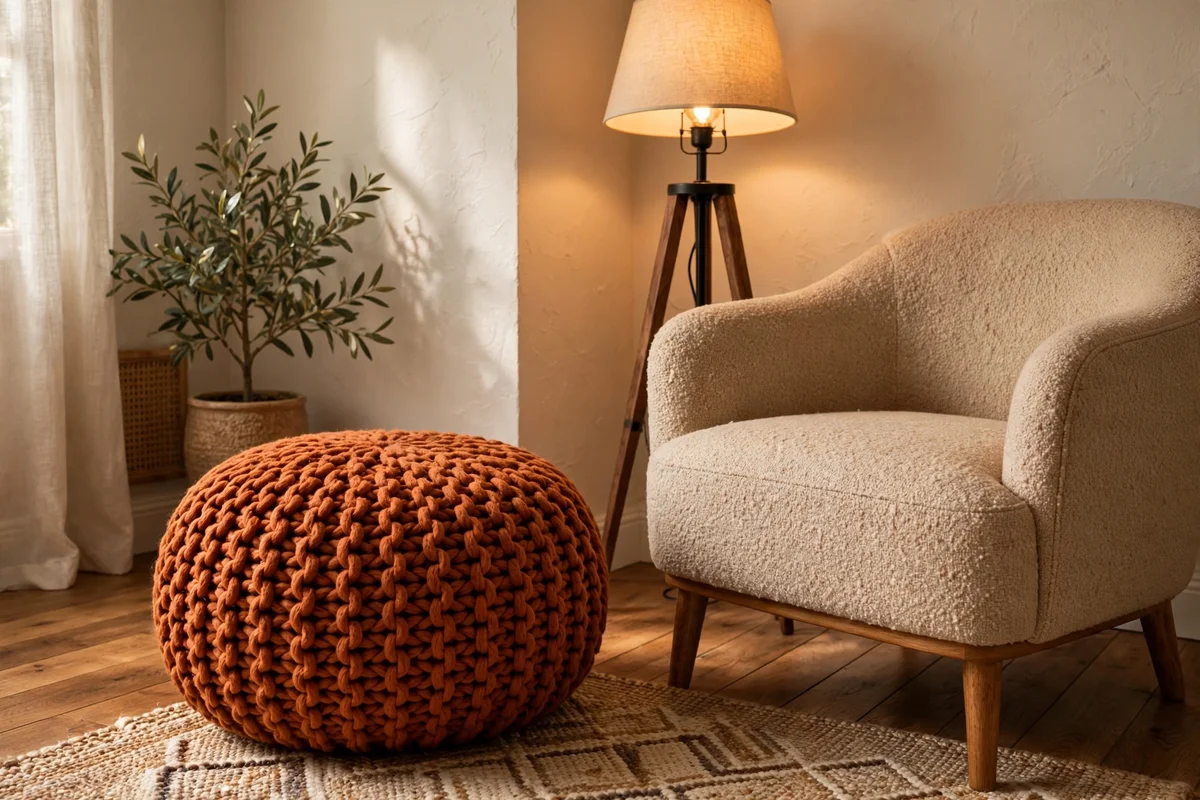
A chunky knit pouf in cream, rust or mustard adds a soft, warm perch for feet or extra guests without the bulk of another chair. Look for a pouf 40 to 50 cm across and 30 to 35 cm high with a removable cover you can wash, filled with polystyrene beads or recycled filling. Place it beside the armchair or at the end of the sofa where it doubles as a footrest on cold evenings.
Knit poufs cost 30 to 60 ready-made, or under 20 if you knit one from chunky yarn and a simple pattern. The mistake is choosing a pouf too light to stay put; sit on it before buying and check it does not slide on hard floors. Keep one corner of the pouf near the lamp glow so it reads as part of the seating group rather than a stray afterthought.
16. Swap Cool Prints for Warm Toned Artwork
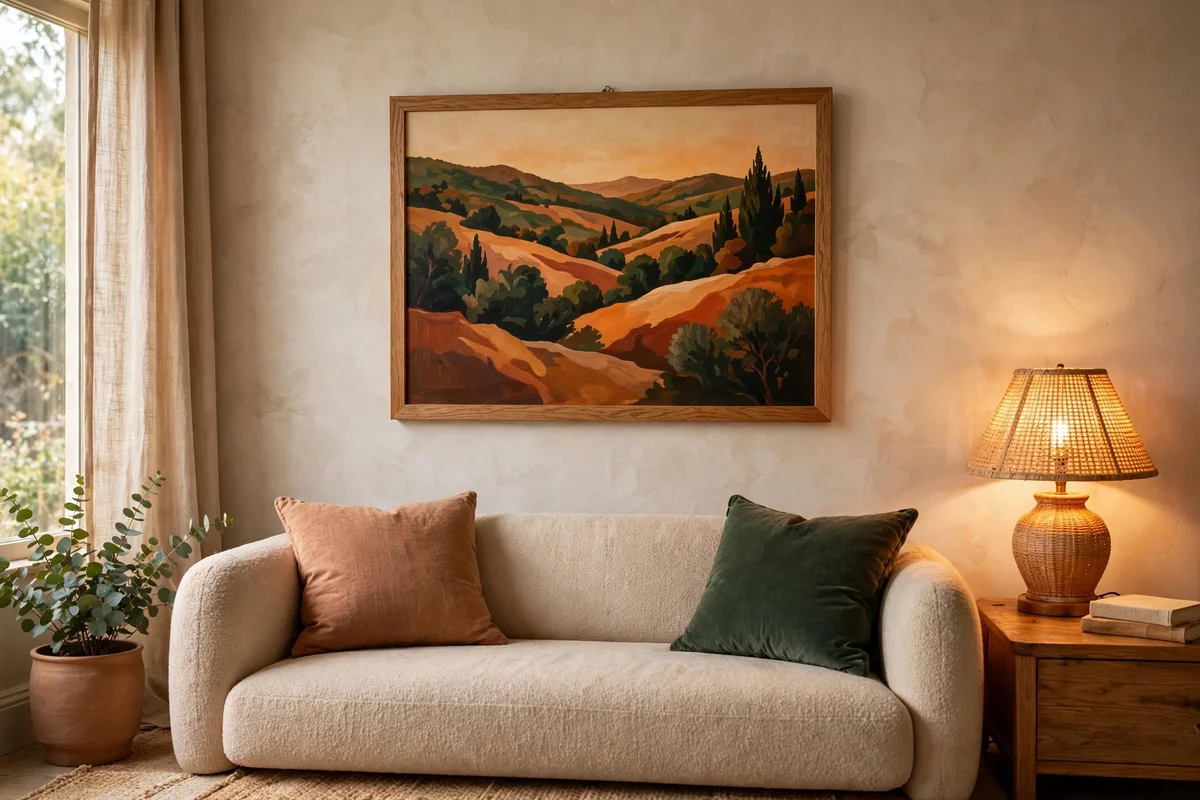
Pale blue and grey prints cool a room down, so swap them for artwork in amber, terracotta, ochre or deep green for the autumn months. You do not need new frames: print seasonal artwork to fit your existing frames at A4 or A3 size and rotate the originals back in spring. Hang the warmest piece above the sofa or mantel at eye level, roughly 145 cm from the floor to the centre of the frame.
Home printed art costs a few pounds per sheet plus the frames you own, while thrifted landscape prints in warm tones run 5 to 15 each. The mistake is hanging tiny frames on a big wall, which gets lost; group three small prints together or choose one statement piece 60 cm or wider. Warm art works hardest after dark, when lamplight picks up its golden tones.
17. Layer a Smaller Patterned Rug Over a Large Neutral One
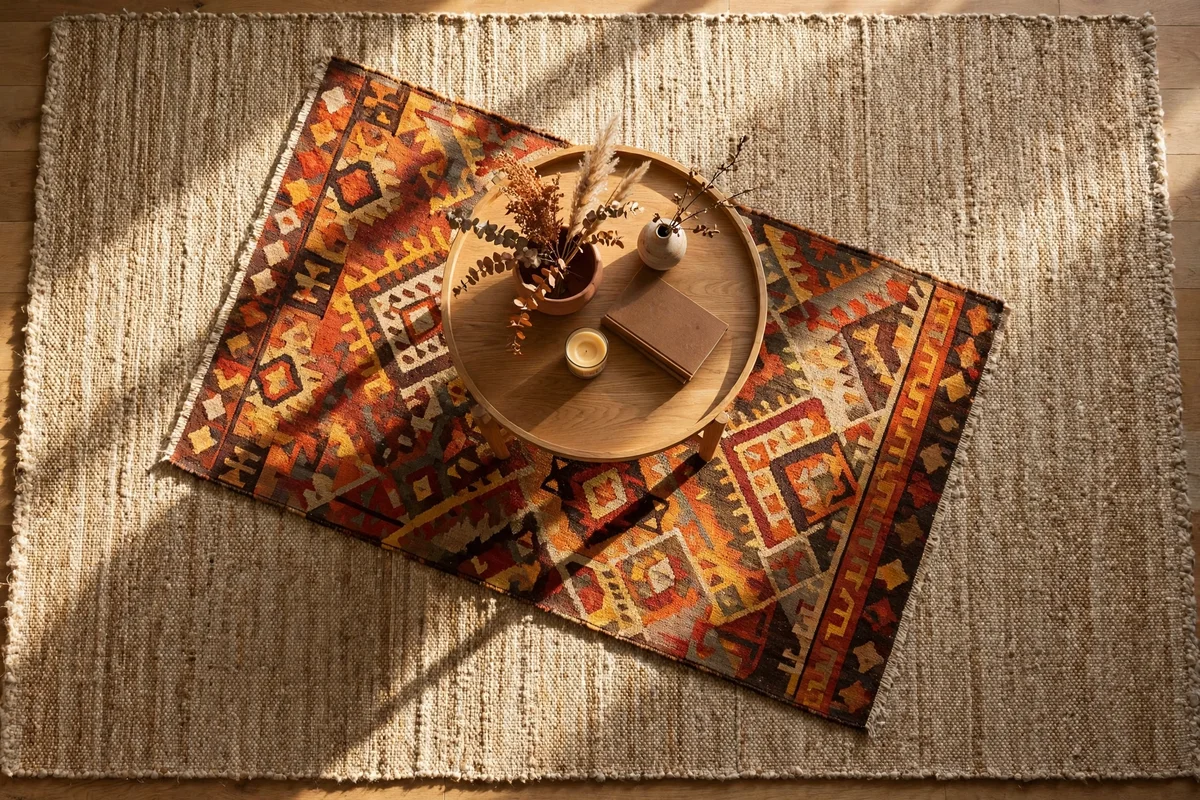
If you already own a large neutral rug, lay a smaller patterned rug 120 by 170 cm on top at a slight angle to add depth and warmth without replacing anything. Centre the top layer on the coffee table zone so it grounds the seating, leaving 20 to 30 cm of the base rug visible around the edges like a frame. Flatweave or low pile top rugs grip best and avoid a trip hazard at the edge.
A patterned top layer costs 40 to 90 second-hand or new, far less than replacing a full size rug. The mistake is layering two thick rugs, which slides and bunches; keep the top layer thin and add a non-slip pad between the layers. This trick also hides worn patches on an older base rug, extending its life by several years while the room feels freshly styled.
18. Build a Reading Corner With a Floor Lamp and Wool Throw
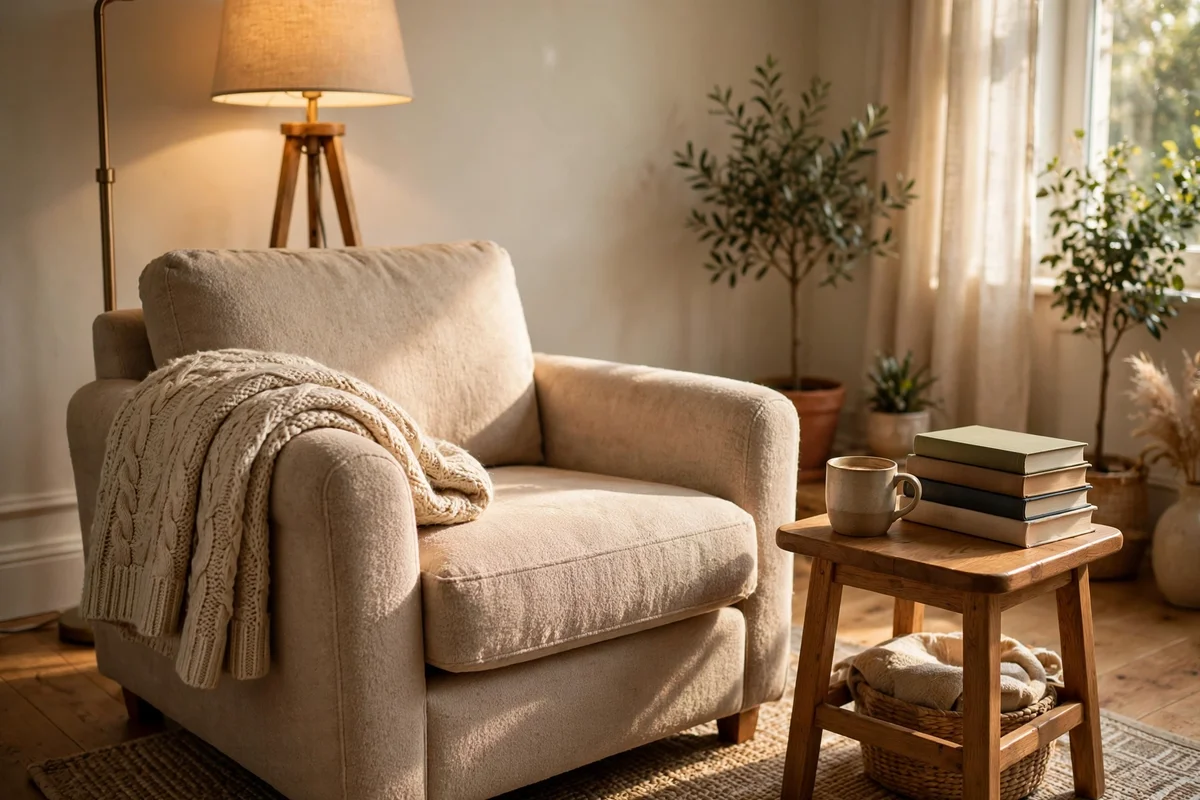
Turn an unused corner into a reading spot with an armchair angled toward the room, a floor lamp behind it and a wool throw folded over the arm. Give the chair about 90 cm of clear space on each side so it feels intentional rather than squeezed in, and position the lamp so light falls over the reader’s shoulder from behind. A small side table for a cup and a book completes the corner for under the cost of a night out.
A decent reading floor lamp costs 35 to 70, and the chair and throw can come from elsewhere in the house. The mistake is placing the lamp in front of the chair, which shines in the reader’s eyes instead of onto the page; always light from behind and slightly above. This corner becomes the most fought-over seat in the house by November, so make sure the throw is a washable one.
19. Keep the Heater Clear for Safe Steady Warmth
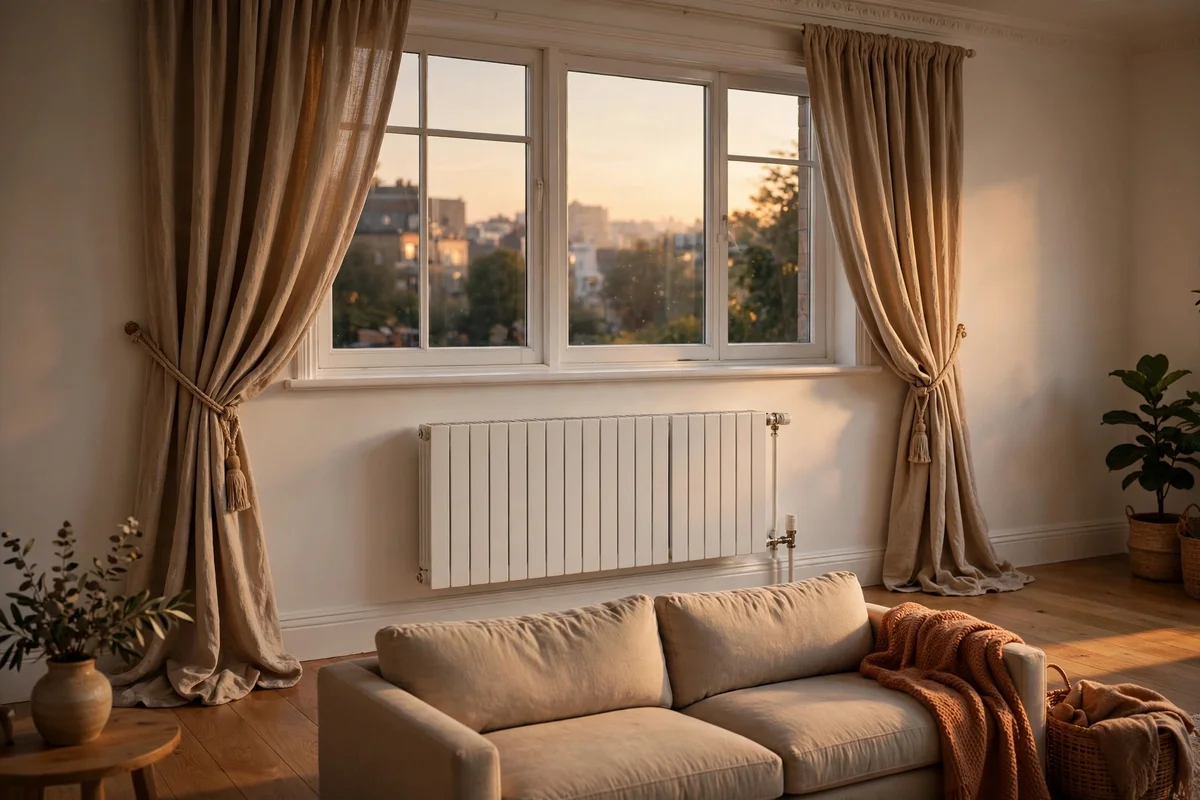
Radiators and space heaters warm a room far better when nothing blocks them, so pull the sofa and curtains at least 15 to 20 cm clear of every heat source. Check that long curtains do not drape over radiators, tucking hems behind if needed, and keep throws, baskets and paper well away from portable heaters. A clear heater circulates warm air freely and costs nothing to run more efficiently than it already does.
While you are at it, bleed radiators before the cold sets in so trapped air does not leave cold spots at the top. The mistake to avoid is drying laundry on radiators in the living room, which blocks heat and pushes damp air into the space; dry clothes elsewhere. A thermostatic valve set to medium in the living room, higher only in the coldest snaps, keeps comfort steady without waste.
20. Stash Everyday Clutter in Lidded Baskets for Calm
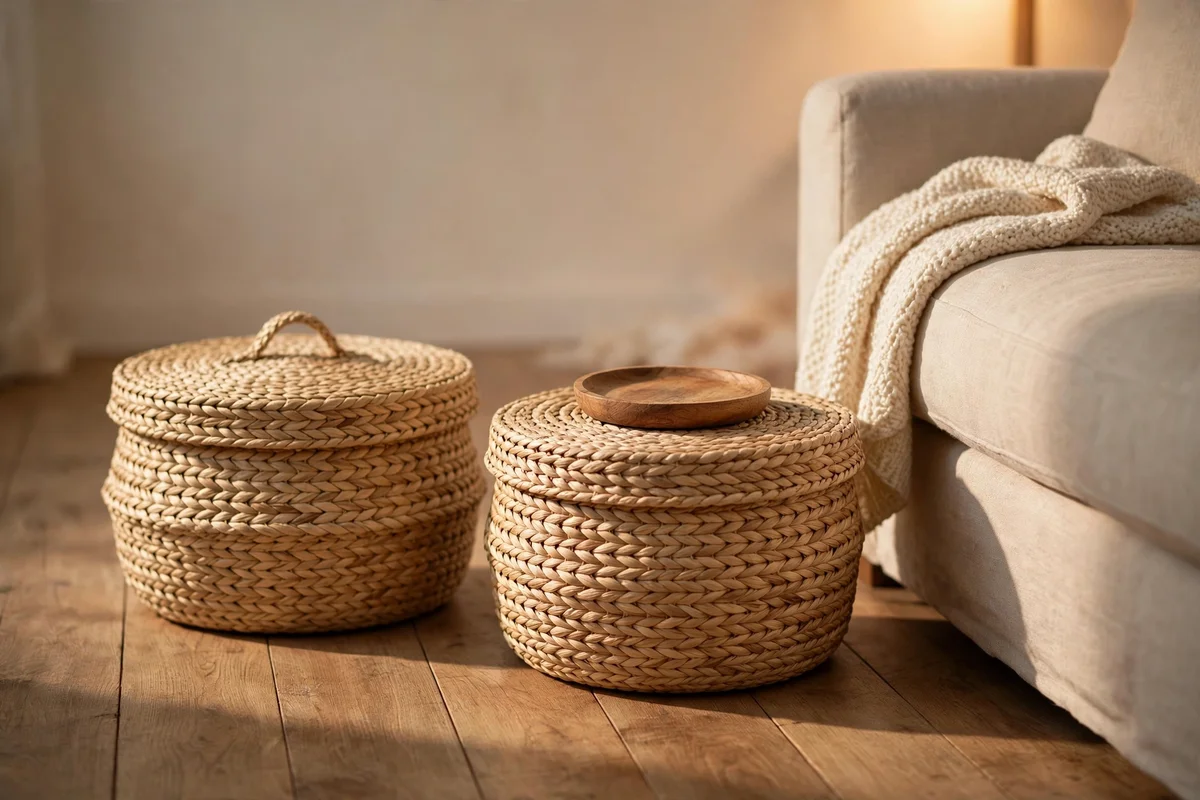
A warm room still feels restless if remote controls, chargers and magazines sprawl across every surface, so give clutter a home in two or three lidded baskets. Choose baskets 30 to 40 cm wide in willow or seagrass with lids that lift off easily, and assign one to each seating zone so tidying takes seconds. Keep one basket by the sofa for remotes and another near the reading corner for books and reading glasses.
Lidded baskets cost 15 to 30 each and double as side tables when topped with a tray. The mistake is buying baskets with no lids, which just displays the clutter in a prettier container; lids are what create the calm. Empty and wipe each basket once a month so they never become junk drawers, and the room will hold its peaceful evening mood with almost no effort.
21. Warm the Room to Three Budget Tiers, From 60 to 400
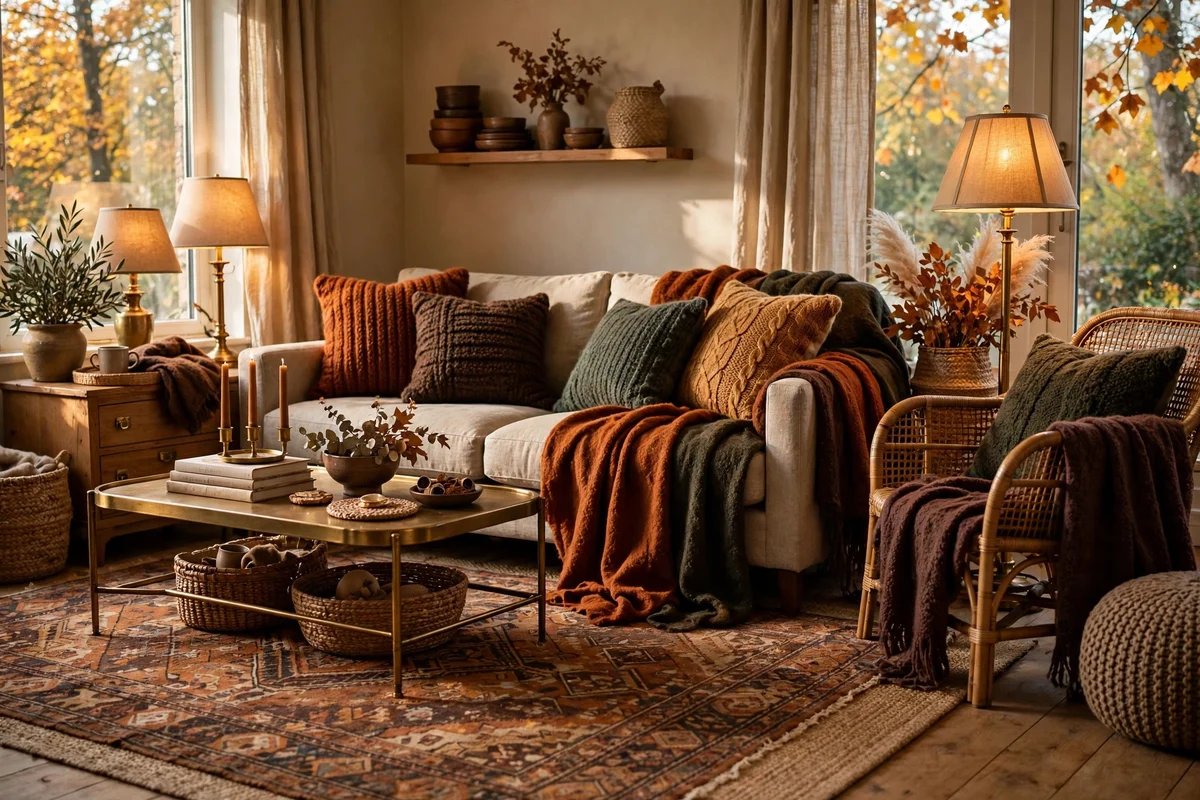
Work to the budget you have, because warmth comes in tiers. At around 60, swap all bulbs to warm LEDs, buy a linen door snake and print warm artwork for existing frames. At around 150, add cushion covers, one deep toned throw and a set of lantern candles. At around 400, invest in a quality wool rug, thermal lined curtains and a dimmer switch fitted by an electrician. Each tier stands alone as a complete warm up.
The mistake across all budgets is spending on decoration before fixing light and drafts, because pretty layers cannot compensate for a cold blue glow or a whistling door. Buy in the order this guide lists ideas: light first, then heat, then textiles. Spread purchases over two paydays if needed, and check charity shops and flea markets first, since baskets, brass and lamps cost half as much second-hand.
22. Follow a One Weekend Order of Work, Light First Then Layers
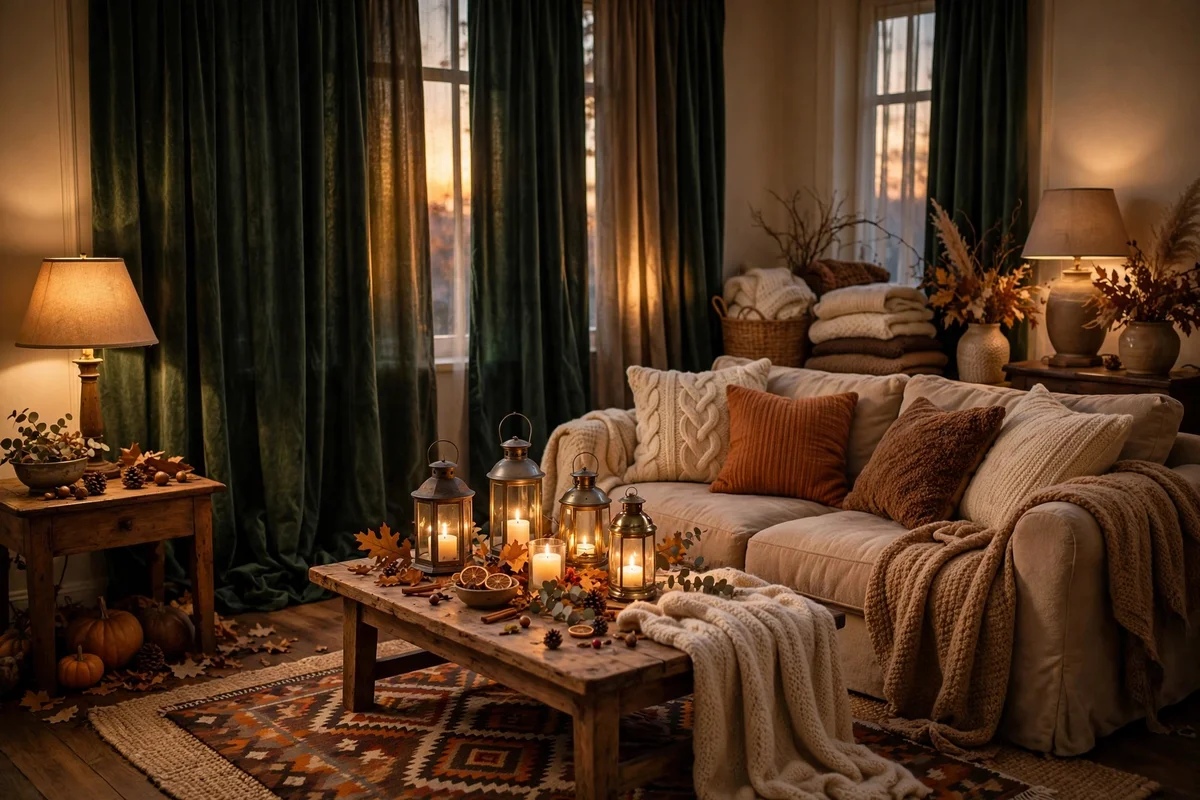
Tackle the room in the right order across one weekend and every change builds on the last. Saturday morning, swap bulbs and seal window drafts; Saturday afternoon, hang the heavier curtains and position the door snakes. Sunday morning, lay the rugs, style the mantel and lanterns, then swap cushion covers and throws last so they stay clean. Fit the dimmer whenever your electrician or your confidence allows.
Sunday evening, draw the curtains at dusk, dim the lights and light the lantern candles to test the room’s new mood in one go. The mistake is starting with cushions and art, which look lovely for an hour but cannot fix a room that is still cold and harshly lit. Work from light to heat to layers, and by Sunday night the living room will feel like the warmest room in the house.
A warm autumn living room is built from simple layers rather than expensive makeovers: low golden light, textiles you can sink into, and drafts stopped before they chill the air. You do not need to do all twenty-two ideas; even five of them, done well, will change how the room feels after dark. Keep the palette deep, the light low and the kettle close, and let the season settle in around you.
Start this week with the easiest win of the set: swap every bulb to warm white and draw the curtains at dusk. It costs little, takes under an hour, and you will feel the difference on the very first evening. From there, add one layer each weekend, and by the time the first frost arrives, your living room will be the room everyone drifts toward.
Frequently Asked Questions
How much does it cost to warm up a living room for fall?
Between 60 and 400, depending on how far you go. Warm LED bulbs, a door snake and printed artwork cost around 60 and already transform the feel of the room. Add cushion covers, a throw and lantern candles for about 150. A full warm up with a wool rug, thermal curtains and a dimmer reaches 400, but each tier works on its own, so start small and add layers when you can.
What colour temperature should living room bulbs be for autumn?
Choose 2700K or lower for a genuinely warm glow; 2200K gives the golden light of old filament bulbs. Anything above 3000K reads as cool and fights the cosy mood you are building. Swap every bulb in the room to the same temperature, including the ceiling light, and use dimmable LEDs so you can drop the brightness further in the evening.
Can I warm up my living room if I rent?
Yes, almost everything in this guide is renter friendly. Bulbs, throws, cushion covers, rugs, door snakes and lanterns all move with you. Hang heavier curtains on a tension rod inside the window frame to avoid drilling, and use a plug-in lamp dimmer instead of rewiring. Keep the original bulbs and curtain hooks in a labelled box so you can restore the room on moving day.
How do I keep candlelight safe around children and pets?
Group candles inside sturdy glass or metal lanterns with lids or tall sides, and place the cluster on a stable surface at least 30 cm from curtains, throws and paper. Trim wicks to 5 mm so flames stay small and clean. Never leave candles burning unattended, and consider good quality LED pillar candles in the lanterns for households with toddlers or curious pets.
What size rug warms a living room best?
Big enough to sit under the front legs of the sofa and chairs: 160 by 230 cm for compact rooms and 200 by 290 cm for larger ones. A rug that is too small makes the room feel colder and more cramped. Add a non-slip pad underneath for extra insulation, and if you already own a neutral rug, layer a smaller patterned one on top for depth without buying a full size replacement.