Living Room
22 Moody Floral Fall Decor Ideas for a Rich, Collected Home
By Anna Wells · · 23 min read
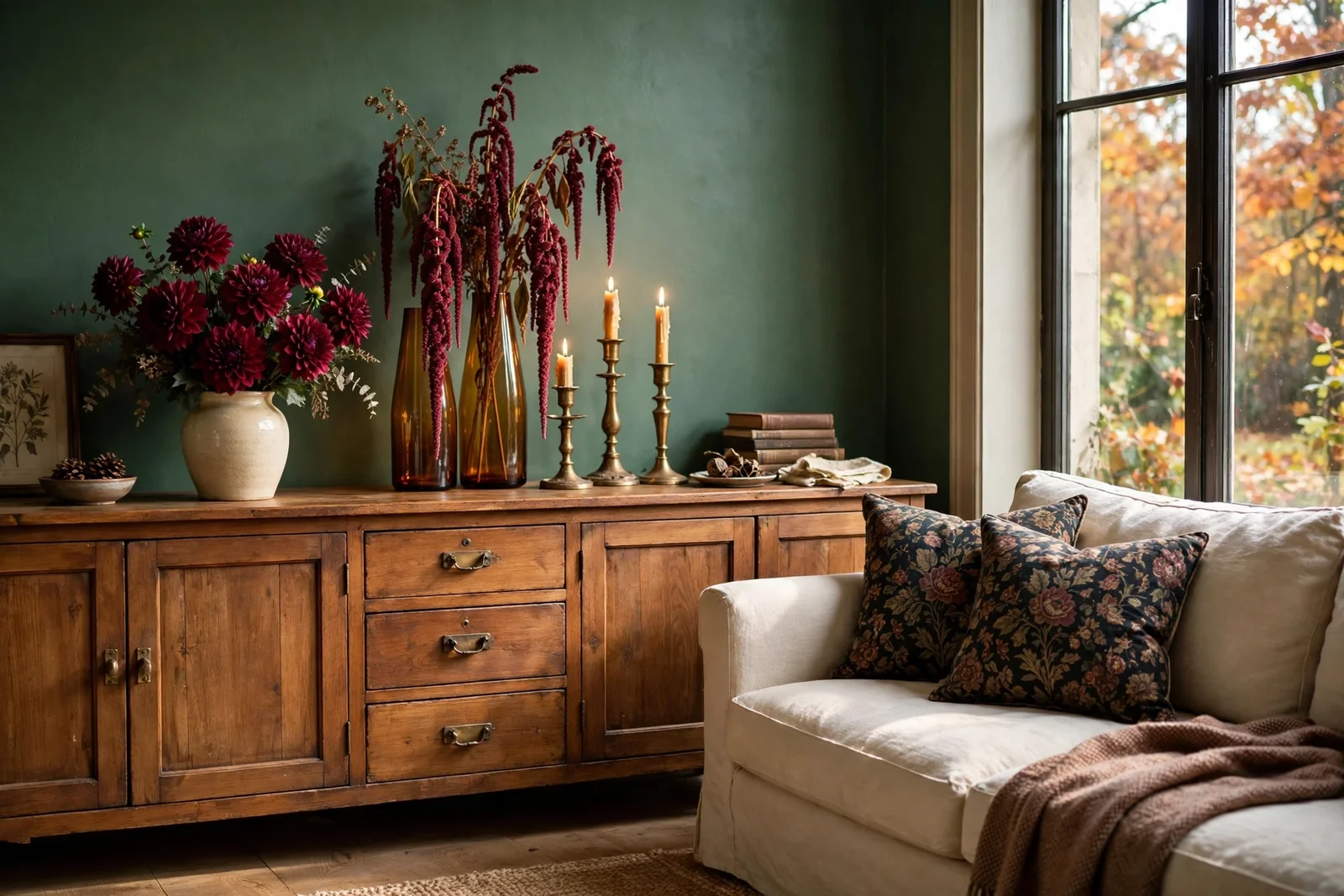
Amber glass, dried blooms and deep plum dahlias: 22 moody floral fall decor ideas that make a living room feel rich, collected and warm.
By mid October the garden is nearly done, yet the light turns soft and golden in a way that flatters deep colours. A few burgundy dahlias still stand tall among the fading leaves, and that is the exact mood this look is built on: rich, gathered and calm, like a room that has been loved for years. These ideas bring that feeling indoors without tipping the room into gloom.
The palette is simple to hold in your head. Think plum, burgundy, rust and smoke, set against cream walls and warm wood, with candlelight doing the heavy lifting in the evenings. Amber glass and dried seed heads add the collected texture, while one floral print per room keeps the pattern calm. Below you will find 22 concrete ideas, each with sizes, quantities and costs, so you can start this weekend and finish before the first frost.
Every idea here works in an ordinary living room, with no special tools and no styling degree. Some cost less than a bunch of supermarket flowers, others are small investments in pieces you will reuse for years. Work through them at your own pace, and remember the golden rule of this style: balance every dark bloom with cream, glass or candlelight, and the room will always feel warm, never heavy.
Ready to begin? Gather your vases and a pair of sharp scissors, and start with whichever idea suits the room you have. Each one stands alone, so you can do a single corner in an afternoon or layer the whole look over a month.
1. Set Dried Amaranthus and Statice in Tall Amber Glass Vases
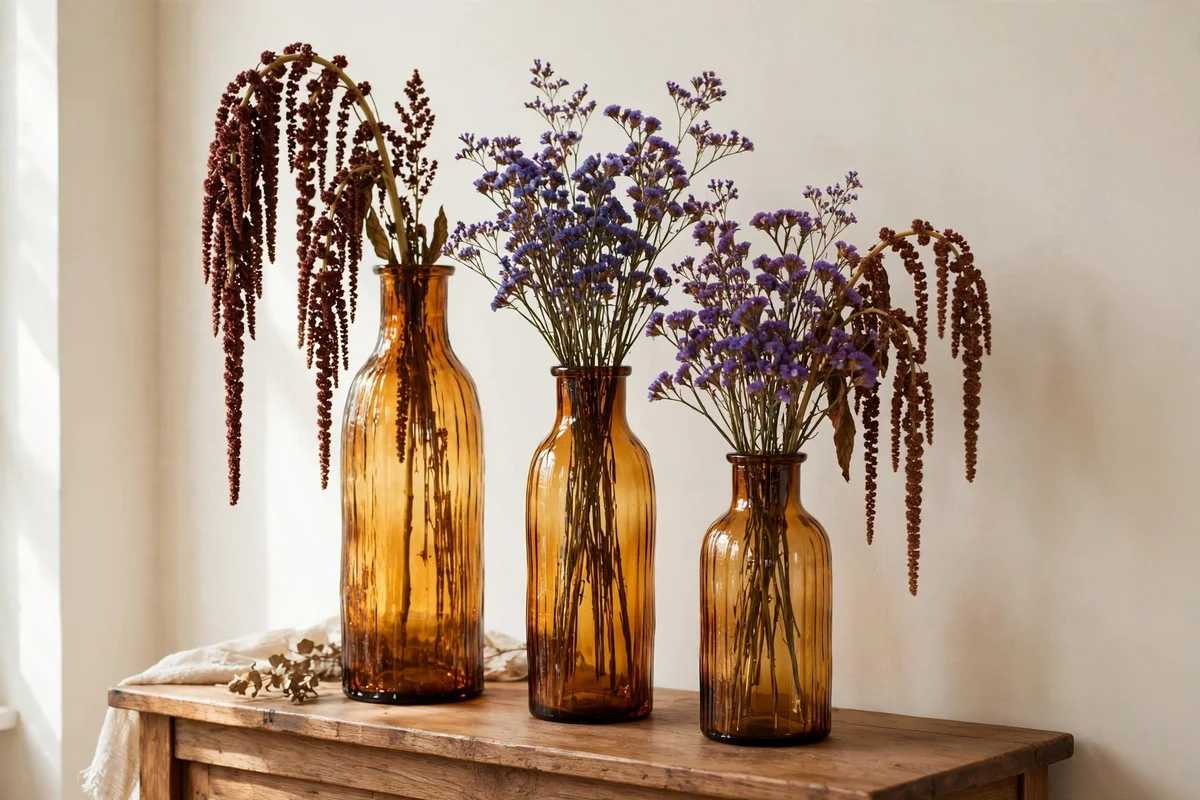
Choose two amber glass vases between 40 and 55 cm tall and place them on opposite ends of a console or mantel. Fill each with three or four dried amaranthus stems, which trail naturally, plus five or six stems of deep purple statice for structure. The amber glass warms the burgundy tones and glows when daylight passes through it. Trim stems so the tallest flower sits about 20 cm above the vase rim. Dried amaranthus keeps its colour for months, so this is a one time styling that lasts the whole season.
Buy bunches rather than single stems to keep costs down; a full dried amaranthus bunch usually costs 8 to 12 pounds or dollars and fills one tall vase. Keep vases at least 30 cm away from radiators and direct heat, since dry stems become brittle and shed faster. The mistake to avoid is adding water out of habit; dried stems in water grow mould within days. Dust the arrangement every few weeks with a cool hairdryer held 30 cm away, using the lowest setting.
2. Fill a Wide Smoke Glass Bowl With Plum Dried Hydrangeas
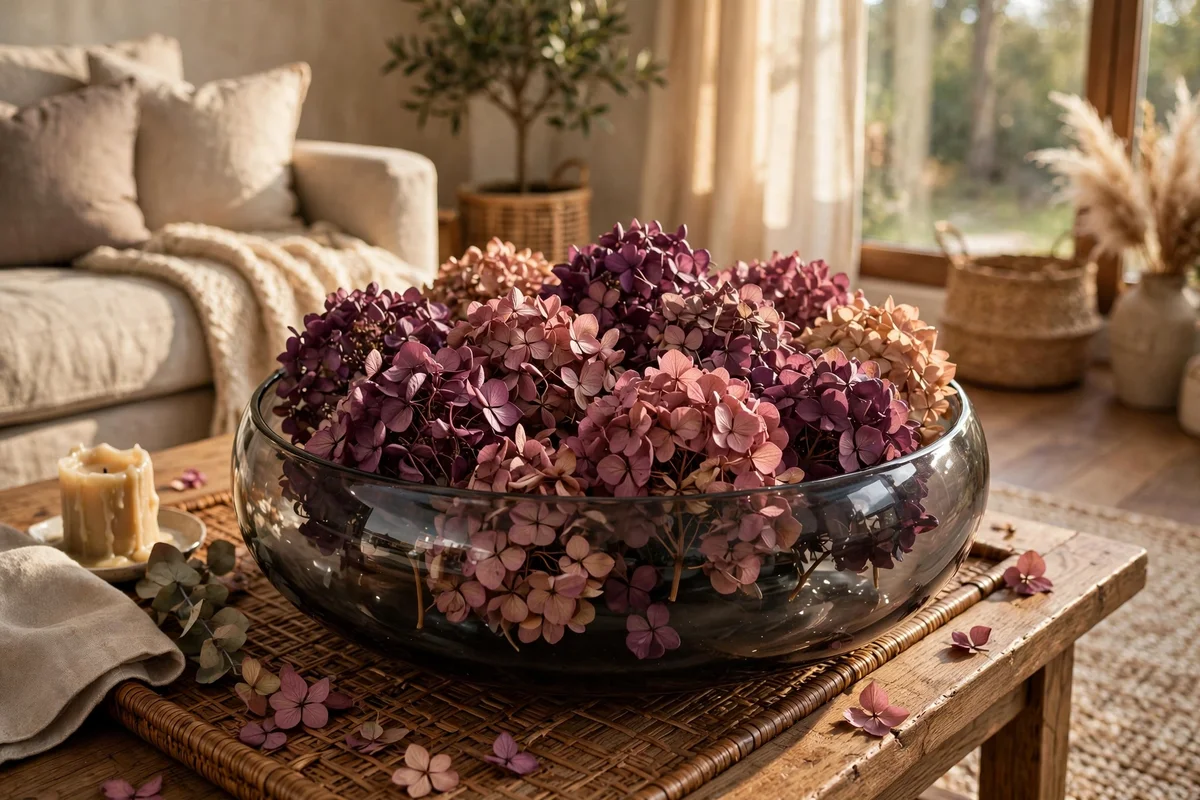
A low smoke glass bowl between 25 and 35 cm wide makes a perfect base for dried hydrangea heads in plum and dusty rose. Cut the stems to 10 to 15 cm so the heads rest just above the rim, and pack seven to nine heads tightly so none of the foam or bowl interior shows. Smoke glass softens the look, turning strong plum tones into something hazy and calm. Place the bowl in the centre of the coffee table, on a tray at least 40 cm wide to catch any shedding petals.
Dried hydrangeas cost 3 to 6 pounds or dollars per stem, and seven stems fill the bowl generously. Buy heads in two close shades, such as plum and antique rose, so the arrangement has depth without looking spotty. The mistake to avoid is misting dried hydrangeas with water to revive them; it makes petals go limp and brown within a day. Keep the bowl away from open windows on windy days, since the light heads can topple and scatter.
3. Arrange Fresh Burgundy Dahlias in a Low Wide Vase
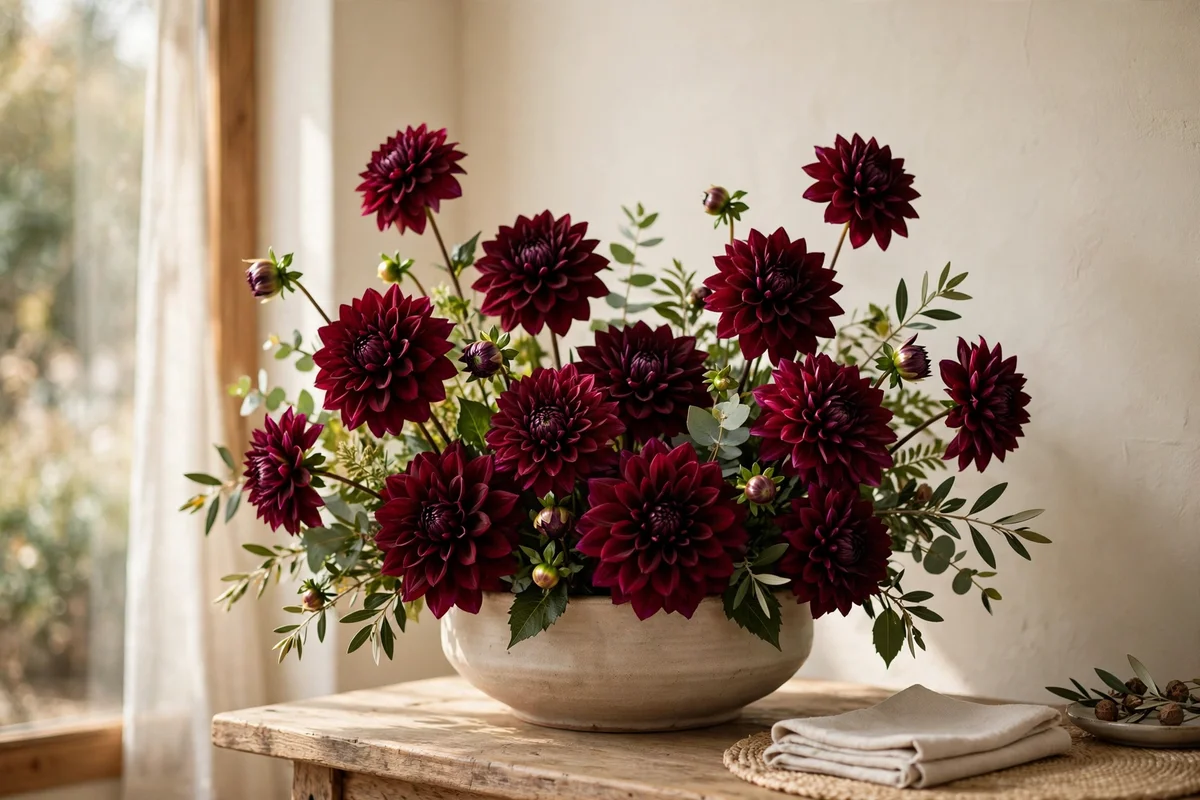
Burgundy dahlias are the heart of this look, and a low vase shows them best. Choose a vase 12 to 18 cm tall with a wide mouth, and cut nine to twelve dahlia stems to staggered lengths between 20 and 35 cm. Strip every leaf that would sit below the waterline, since leaves rot fast and cloud the water. Arrange the darkest blooms in the centre and let a few lighter buds trail toward the rim. Change the water every two days and dahlias will hold for five to seven days.
Buy dahlias at a market or farm shop in late season for 1 to 2 pounds or dollars per stem, roughly half the florist price. Recut each stem at a sharp angle every time you change the water, removing 2 cm, so the flowers keep drinking. The mistake to avoid is placing the vase above a radiator or beside a fruit bowl; heat and ripening fruit both shorten dahlia life to two or three days. A cool spot away from drafts gives the longest display.
4. Pair Plum Garden Roses With a Cream Stoneware Pitcher
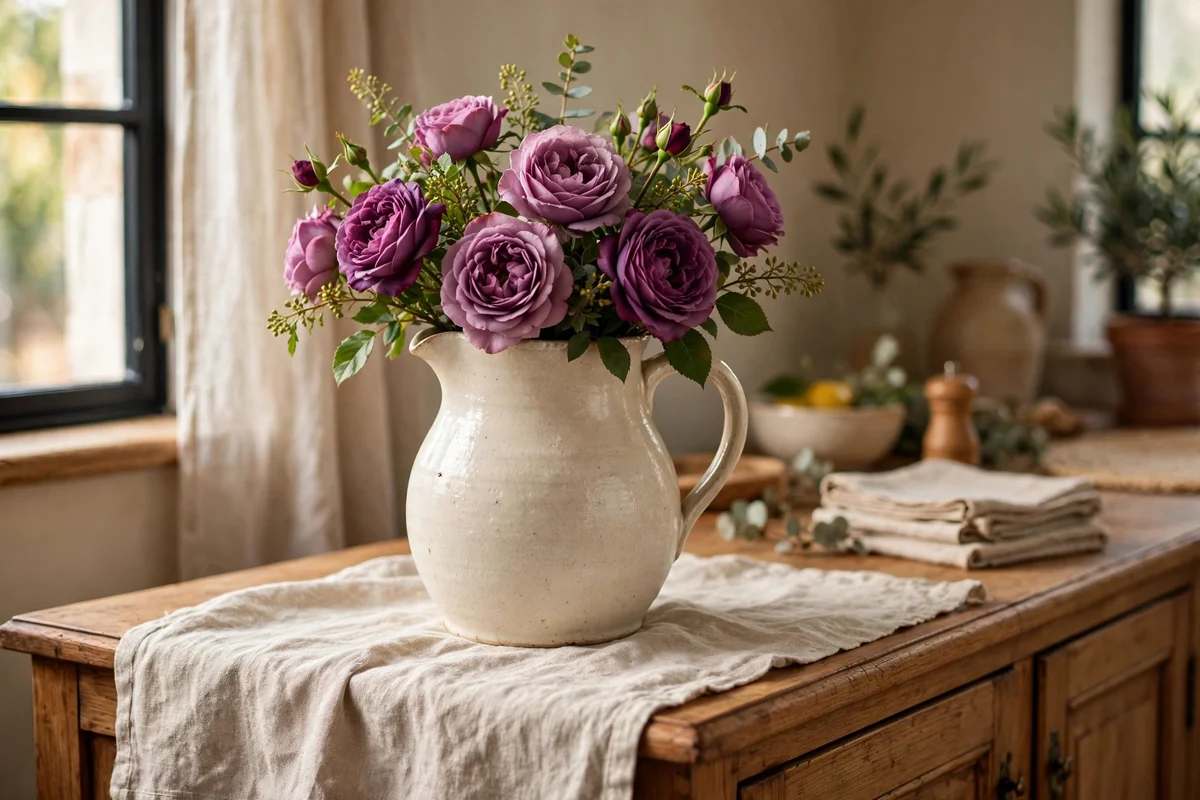
A cream stoneware pitcher turns plum garden roses into a still life. Look for a pitcher 20 to 28 cm tall with a generous belly, since garden roses have full heads that need space. Place five to seven stems, cut to 25 to 40 cm, and let two blooms lean over the spout for that natural, just gathered feel. Set the pitcher on the dining sideboard or a hall console, with a linen cloth or wooden board underneath to protect the surface from drips.
Garden roses at the supermarket cost 4 to 8 pounds or dollars for a bunch of ten, and they open wider than standard roses. Remove the outer guard petals, which are often bruised, so the inner bloom shows cleanly. The mistake to avoid is overcrowding the pitcher; more than seven stems crush the heads and the arrangement loses its airy shape. If roses start to droop after four days, float the heads in a shallow bowl for a second life.
5. Dress the Sofa With Cushions in One Dark Floral Pattern
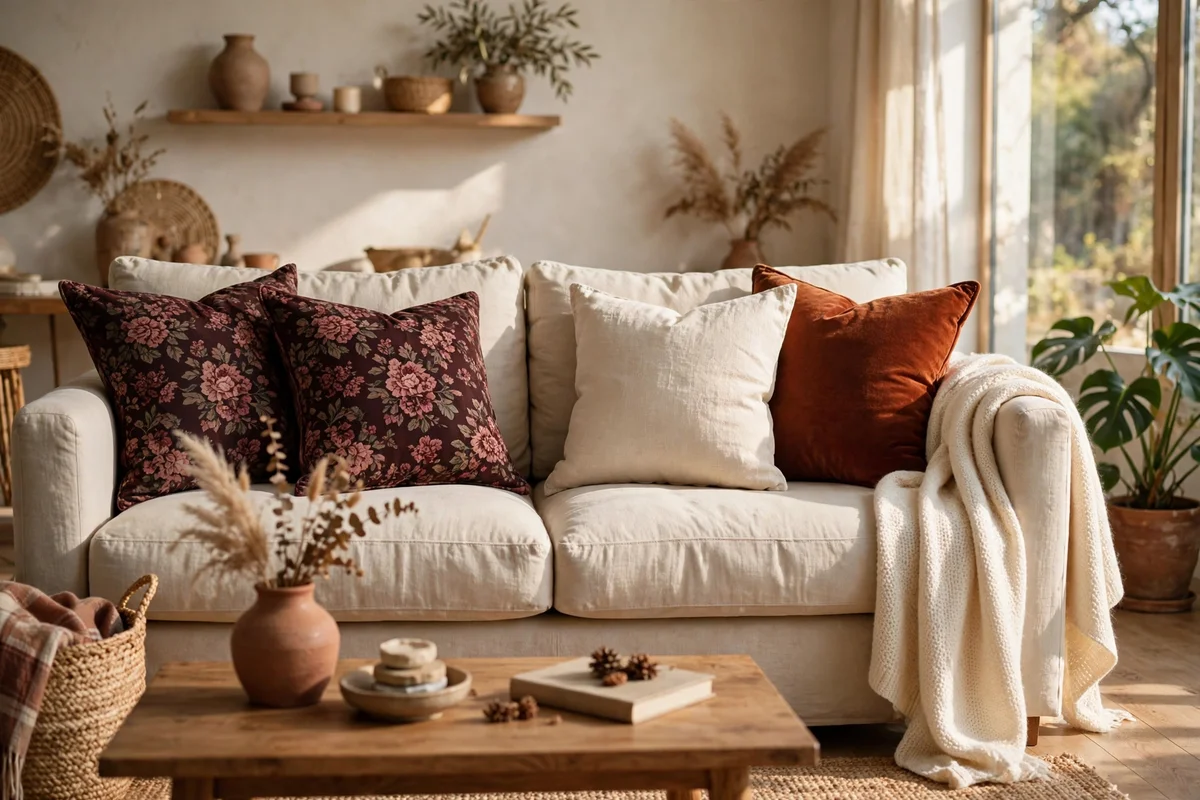
Pattern discipline is what keeps this look collected. Choose one dark floral fabric, such as a burgundy rose or plum botanical print, and buy two cushions in that exact pattern, both 45 to 50 cm square. Place them at the sofa corners, then add two plain cushions in cream linen and one in rust velvet for depth. Keeping to one pattern per room stops the eye from jumping, and the plain cushions give the dark print room to breathe.
Cushion covers in a good dark floral print cost 15 to 35 pounds or dollars each; buy covers only and reuse inserts you already own to halve the cost. Check that both patterned cushions come from the same dye lot by ordering together, so the backgrounds match exactly. The mistake to avoid is adding a second floral pattern, even a small one, on the same sofa; two competing prints make the room feel busy instead of calm. One pattern, repeated with confidence, is the whole trick.
6. Hang a Single Dark Floral Curtain Panel in the Corner
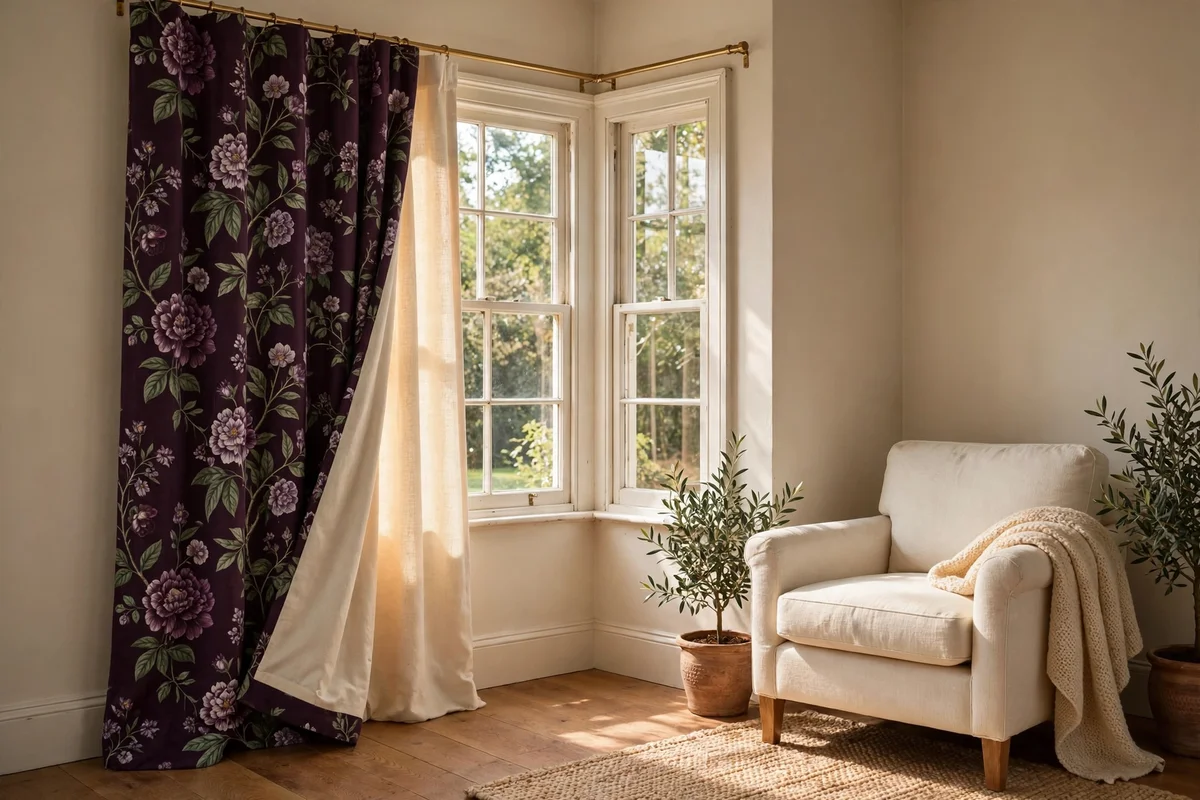
One dark floral curtain panel can carry the whole pattern story for a room, so the sofa and chairs stay plain. Hang it on a slim brass or black rod, mounted 10 to 15 cm above the window frame and extending 15 to 20 cm beyond each side, so the panel stacks back neatly. A panel 140 cm wide in a plum or burgundy botanical print suits a corner window or the narrow window beside a fireplace. Line it in cream cotton so the pattern glows softly when backlit.
A single lined panel costs 40 to 90 pounds or dollars, far less than dressing every window. Choose a print where the background is dark green or ink rather than black, which can read flat in daylight. The mistake to avoid is hanging the panel too short; the hem should just kiss the floor, not hover 10 cm above it, or the whole window looks unfinished. If you rent, use a tension rod inside the frame and keep the original blinds untouched.
7. Back a Plum Arrangement With a Moody Green Painted Wall
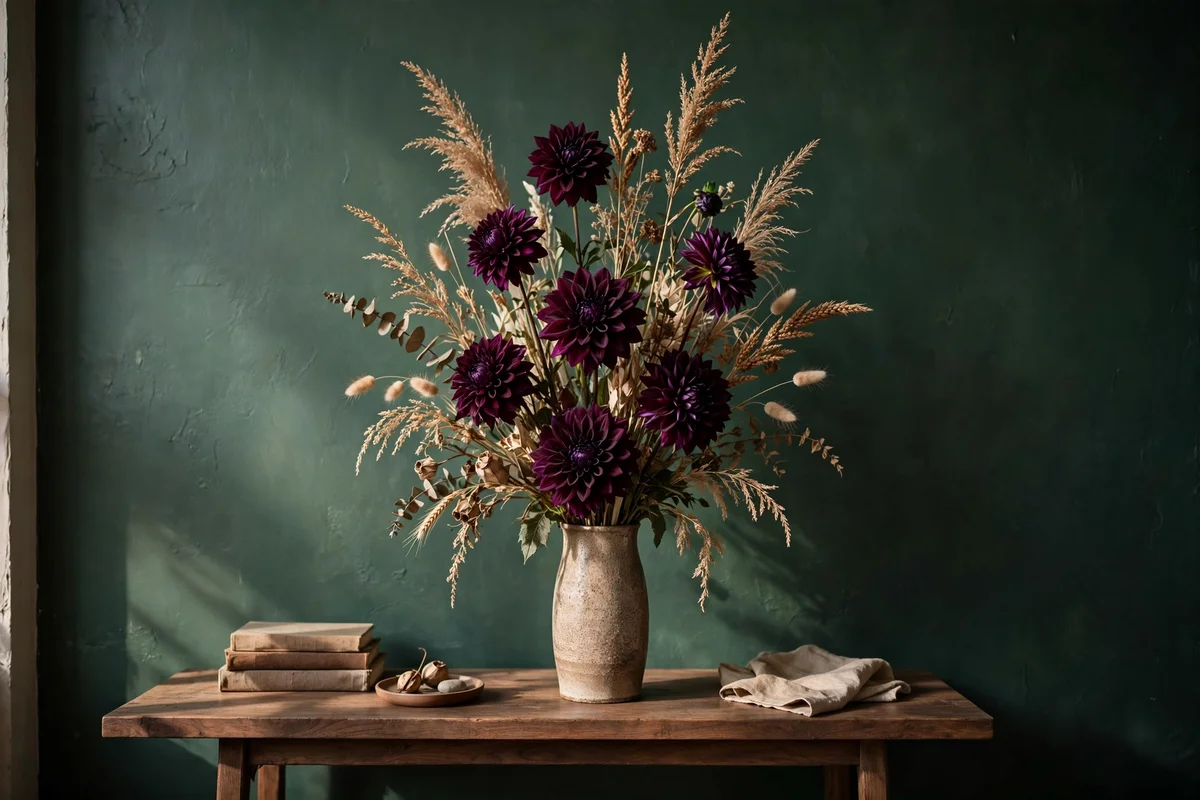
Deep green walls make plum and burgundy flowers look richer, almost like a still life painting. Paint one wall, ideally behind a console or sideboard, in a moody green with a matte finish; a 3 by 2.5 metre wall needs about 2.5 litres for two coats. Set a tall arrangement of plum dahlias, dried grasses and dark foliage in front of it, keeping at least 25 cm between the stems and the wall so shadows fall softly. The contrast reads as heritage and calm, never theatrical.
Sample pots cost 5 to 8 pounds or dollars; paint two large test squares and live with them for three evenings before committing, since green shifts dramatically under lamplight. If painting feels too permanent, a large canvas in deep green behind the arrangement gives the same effect and moves with you. The mistake to avoid is pairing the green wall with more green stems only; without the plum and burgundy, the corner turns flat and loses the moody floral contrast.
8. Set a Tall Cream Flower Vase Against an Inky Blue Wall
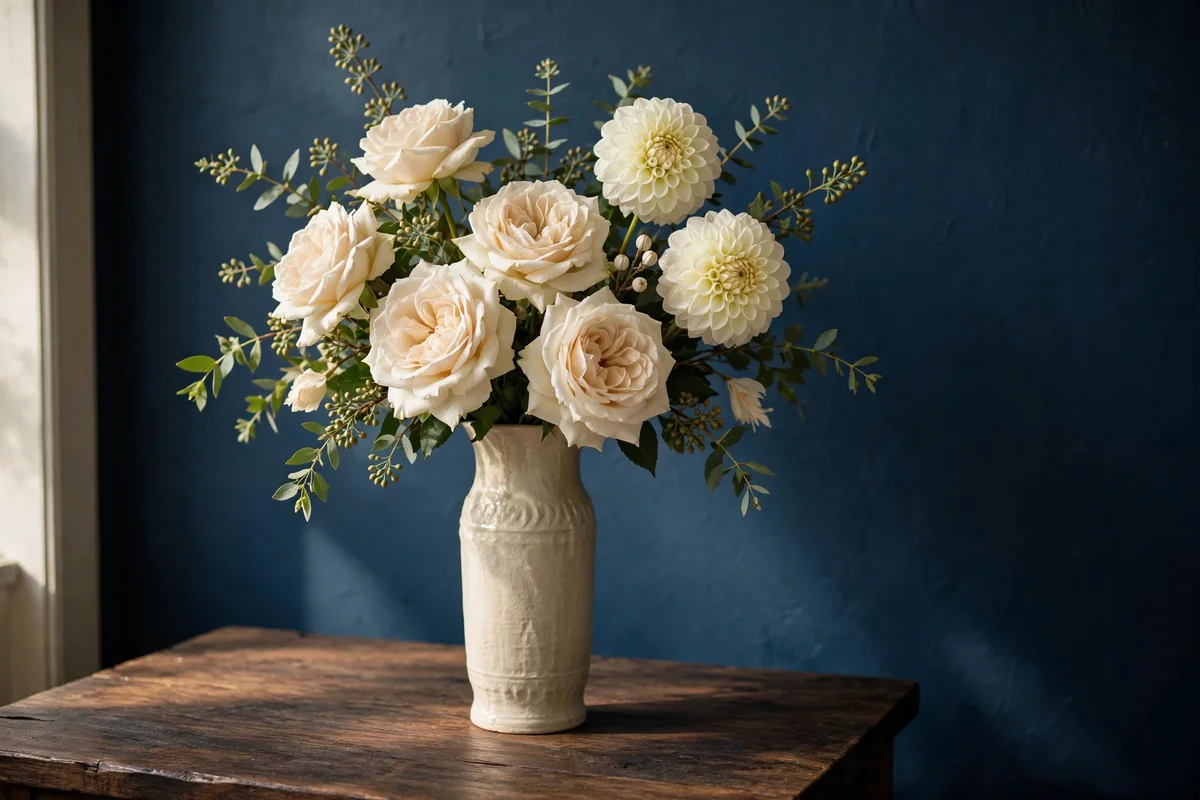
An inky blue wall needs a lighter floral moment to balance it, and cream flowers do the job beautifully. Fill a tall vase, 50 to 70 cm, with cream garden roses, ivory dahlias or white anemones, cut to heights that clear the rim by 30 to 40 cm. Place it on a dark wood side table against the blue wall so the pale blooms catch the eye first. This single light note stops the dark wall from feeling heavy and gives the whole room a place to rest.
Cream blooms cost the same as coloured ones, so this is a styling choice, not a budget one. A tall vase in smoke or clear glass keeps the arrangement feeling light against the saturated wall. The mistake to avoid is adding dark flowers to this particular vase; the point is contrast, and mixing in burgundy here muddies the effect. Keep this vase purely pale, and let the darker arrangements live on the opposite side of the room.
9. Hang a Dried Flower and Seed Head Wreath on the Door
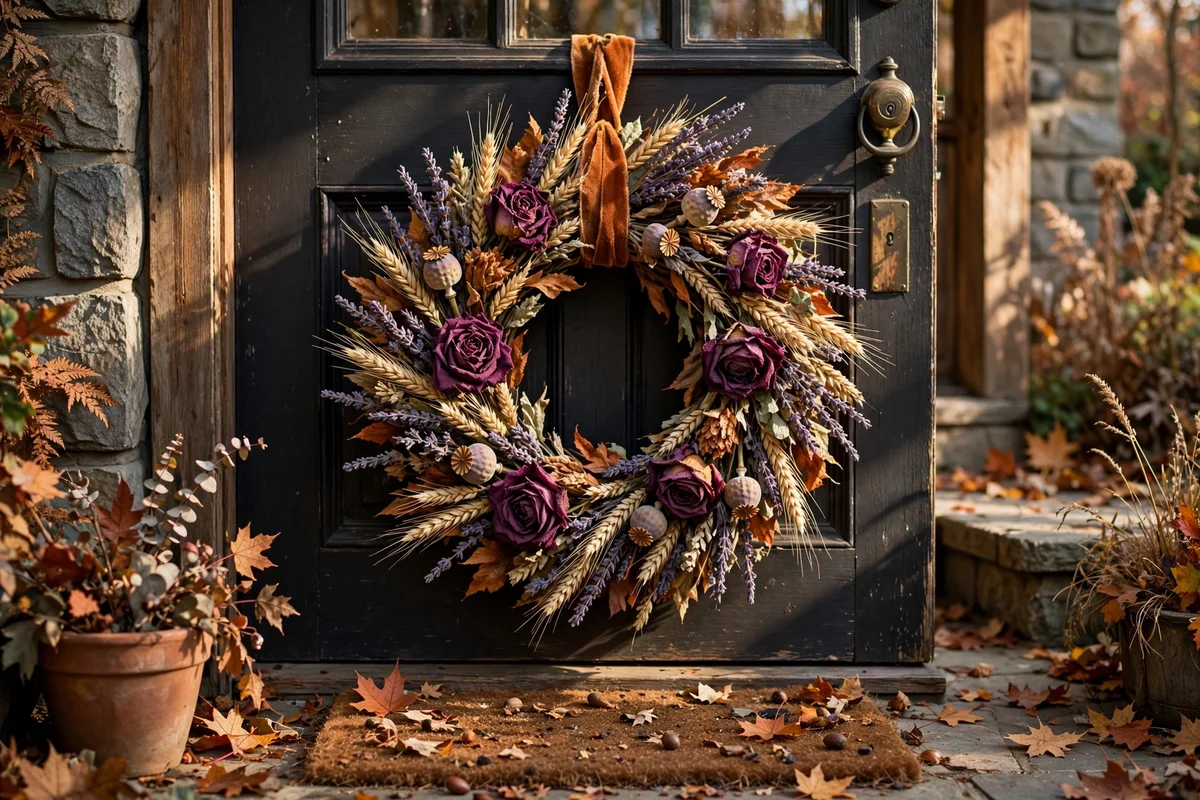
A wreath of dried flowers and seed heads welcomes the season without the fuss of fresh foliage. Choose one 35 to 45 cm across, built on a grapevine or straw base, with dried roses, lavender, wheat and poppy seed heads in plum, rust and cream. Hang it on the front door with an over-door hook so no nails are needed, centring it at eye level, about 150 cm from the ground. It will last the whole autumn and well into winter.
Handmade dried wreaths cost 25 to 60 pounds or dollars; making your own from a 10 pound base and gathered seed heads is the budget route. Hang the wreath under a porch roof if you have one, since driving rain can spot dried petals. The mistake to avoid is hanging it where the door bangs against it; one season of slamming shatters brittle seed heads. A small felt pad behind the wreath stops it knocking against the door.
10. Frame Three Botanical Plates Above the Console Table
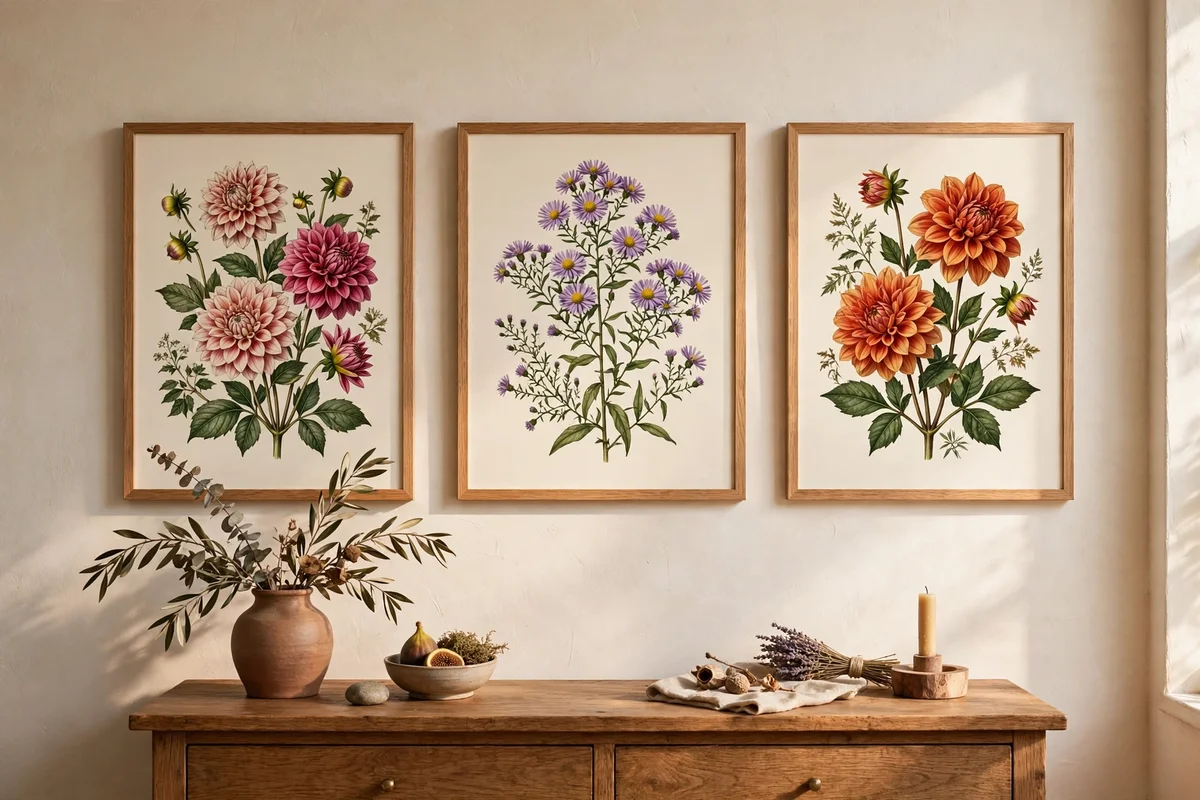
Botanical plates, the old book illustrations of flowers with no text, suit this style perfectly. Choose three prints of autumn flowers such as dahlias, asters or chrysanthemums, each 25 by 35 cm, and frame them identically in thin oak or black frames. Hang them in a row above the console table, with 8 to 10 cm between frames and the centre of the row at about 150 cm from the floor. Identical framing turns three separate prints into one deliberate gallery.
Vintage style botanical prints cost 8 to 20 pounds or dollars each from print shops, and simple frames add 10 to 15 each. Pick prints where the background is aged cream rather than bright white, so they sit softly against the wall. The mistake to avoid is mixing frame styles across the row; one oak and two black frames look like leftovers. Buy the three frames together, hang with a paper template first, and step back before fixing the nails.
11. Lean Oversized Floral Art Prints Against the Mantel
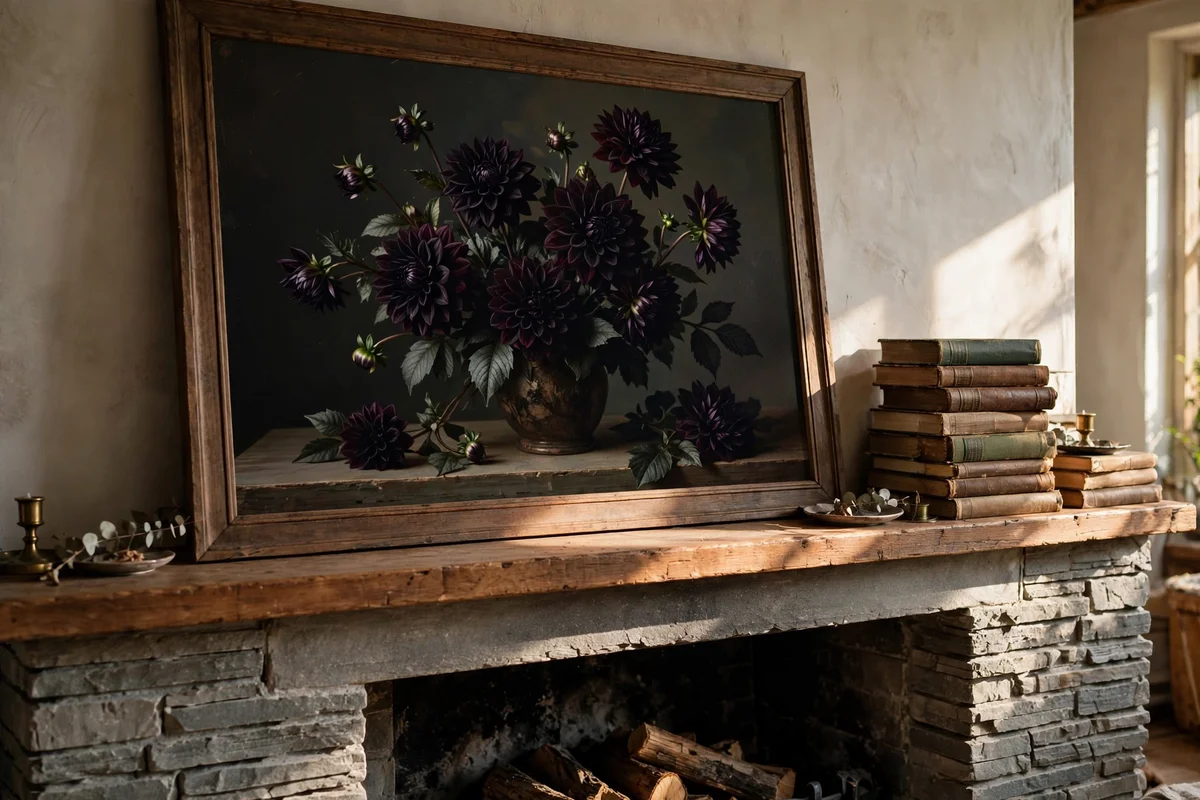
An oversized floral print, 60 by 80 cm or larger, leaned against the mantel wall gives instant presence without a single nail. Choose a still life of dark blooms, dahlias or peonies on a shadowy background, and frame it in a deep wood frame at least 4 cm wide. Lean it so the base sits 10 to 15 cm in front of the wall, overlapping a smaller framed print or a stack of books at one side. The casual lean keeps a large dark artwork feeling relaxed rather than formal.
Large prints cost 30 to 70 pounds or dollars, with the frame often costing as much as the print. Check the print in daylight before framing, since dark backgrounds can look muddy under shop lighting. The mistake to avoid is leaning the frame where a door swings or children run past; one knock can crack the glass and dent the frame. Anchor it with a small clear bumper behind the top edge so it cannot slide forward.
12. Soften Deep Toned Florals With a Cream Wool Throw
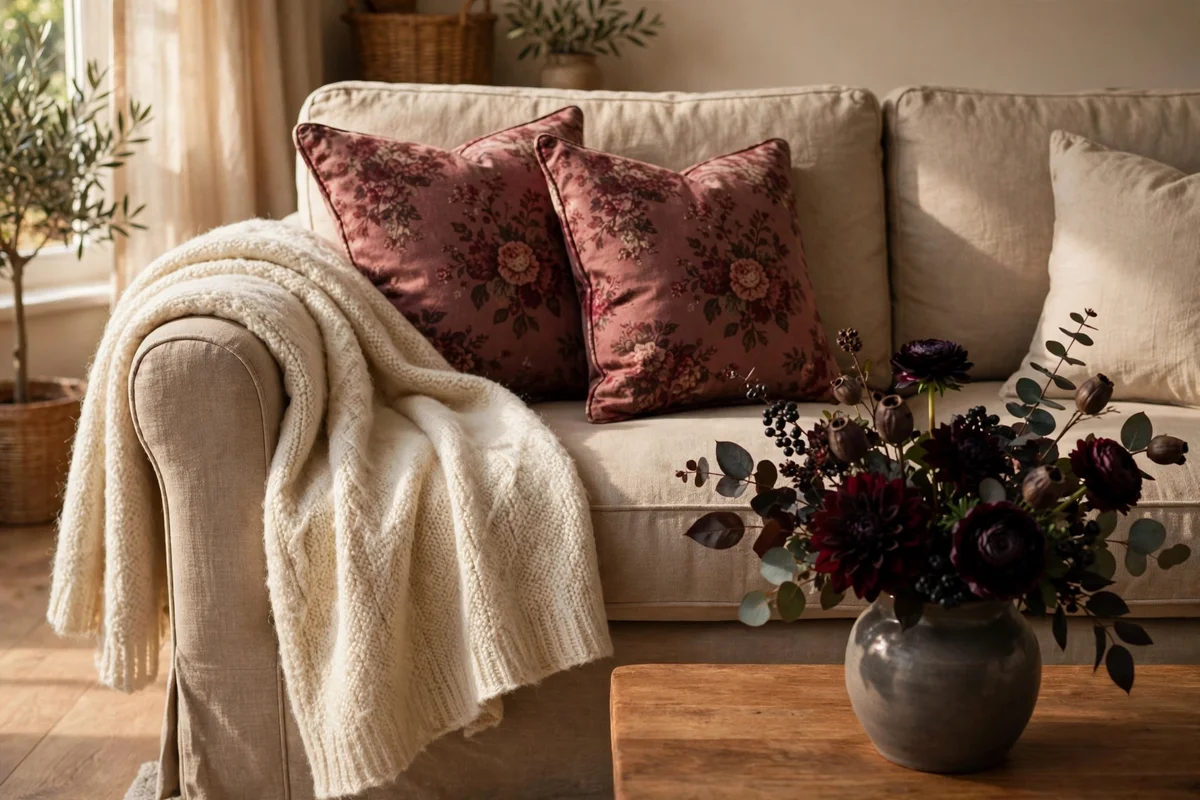
Every dark floral scheme needs its cream counterweight, and a wool throw is the simplest one. Drape a cream or oatmeal throw, about 130 by 180 cm, over the arm of the sofa nearest your darkest arrangement. Fold it in thirds lengthways first so it hangs in a neat band rather than a rumpled heap. The pale wool catches lamplight beautifully and gives the eye a resting place between the burgundy cushions and the deep blooms on the table.
A good wool throw costs 35 to 80 pounds or dollars; lambswool blends wash well and stay soft. Choose cream over pure white, which can look stark against plum and burgundy. The mistake to avoid is draping the throw over the patterned cushions themselves, hiding the one floral print you chose so carefully. Let the throw live on the arm or the seat edge, touching the pattern but never covering it, so dark and light sit side by side.
13. Light Three Candle Heights Beside a Dahlia Centerpiece
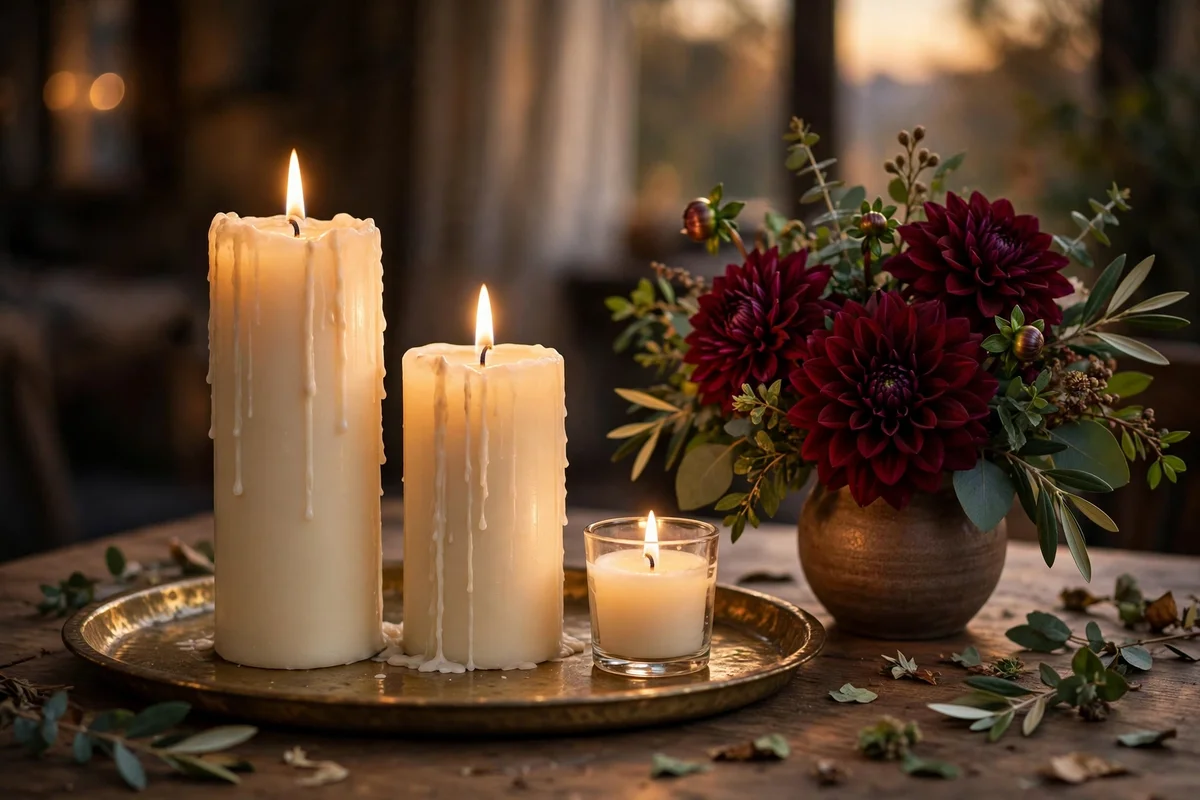
Candlelight is what keeps dark florals warm instead of heavy, and three heights look far better than one. Group a tall pillar of 20 cm, a medium of 14 cm and a small votive beside your dahlia centerpiece, all in cream or beeswax tones, on a wooden or brass tray at least 35 cm across. Keep every flame at least 15 cm from the nearest petal and never leave the group burning unattended. In the evening the flames will gild the burgundy petals beautifully.
Beeswax and soy pillars cost 6 to 15 pounds or dollars each and burn cleaner than paraffin. Odd numbers of candles read as styled rather than symmetrical, so three or five beats four. The mistake to avoid is mixing strong scents near flowers; a heavily fragranced candle can clash with the natural scent of roses and give the room a muddled smell. Choose unscented or very lightly scented candles, and let the flowers provide the fragrance.
14. Line the Hearth With Candles and a Dried Rosebud Trail
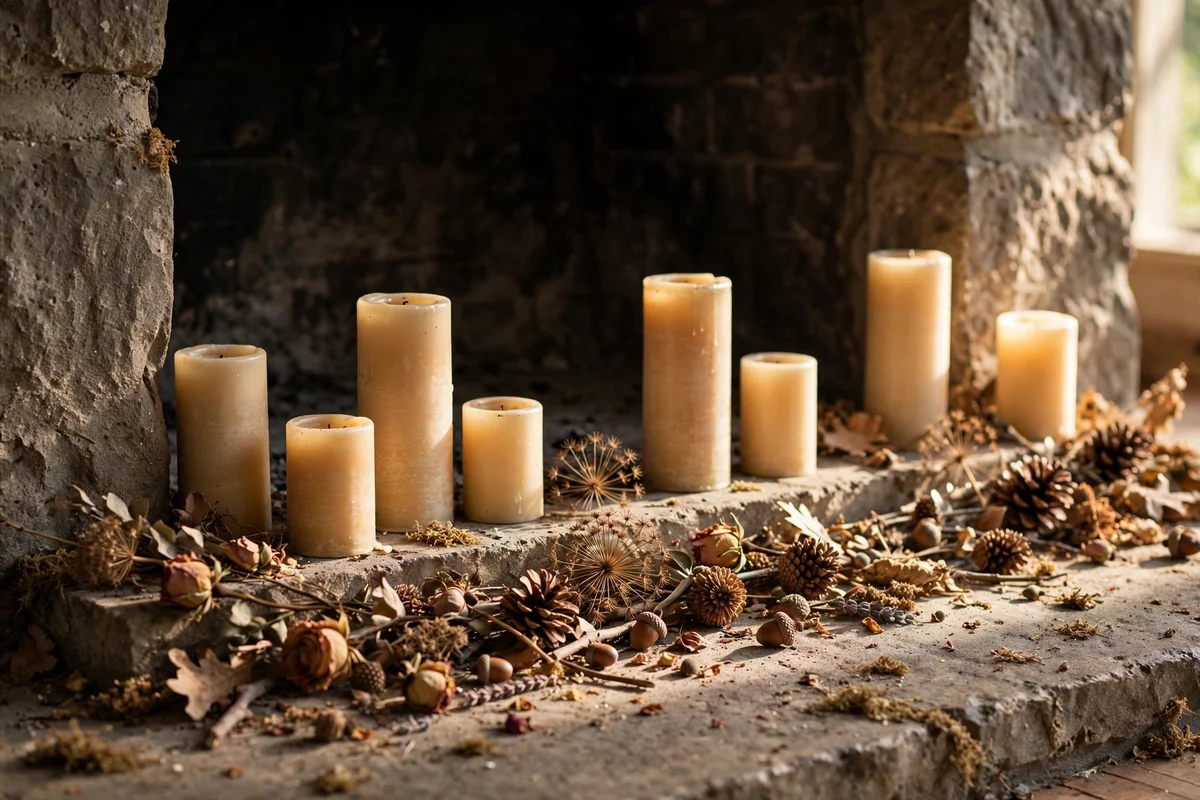
An unused fireplace hearth is a natural stage for autumn styling. Line the back of the hearth with five to seven pillar candles in mixed heights, then trail dried rosebuds, seed heads and small pinecones along the front edge in a loose line about 10 cm deep. Keep all dried material at least 30 cm from any candle flame, and never light the hearth arrangement if the fireplace is in use. The mix of flame and dried texture fills an empty fireplace with quiet warmth.
Dried rosebuds cost 5 to 10 pounds or dollars per bag, and one bag trails a full hearth with plenty left over. Use battery candles in the back row if small children visit often; they remove the worry entirely. The mistake to avoid is stacking dried material against candle glass; even unlit, the clutter looks messy, and lit, it is a fire risk. Leave clear air around every flame, sweep fallen petals weekly, and replace any rosebuds that crumble.
15. Drape a Dried Seed Head Garland Along the Stair Rail
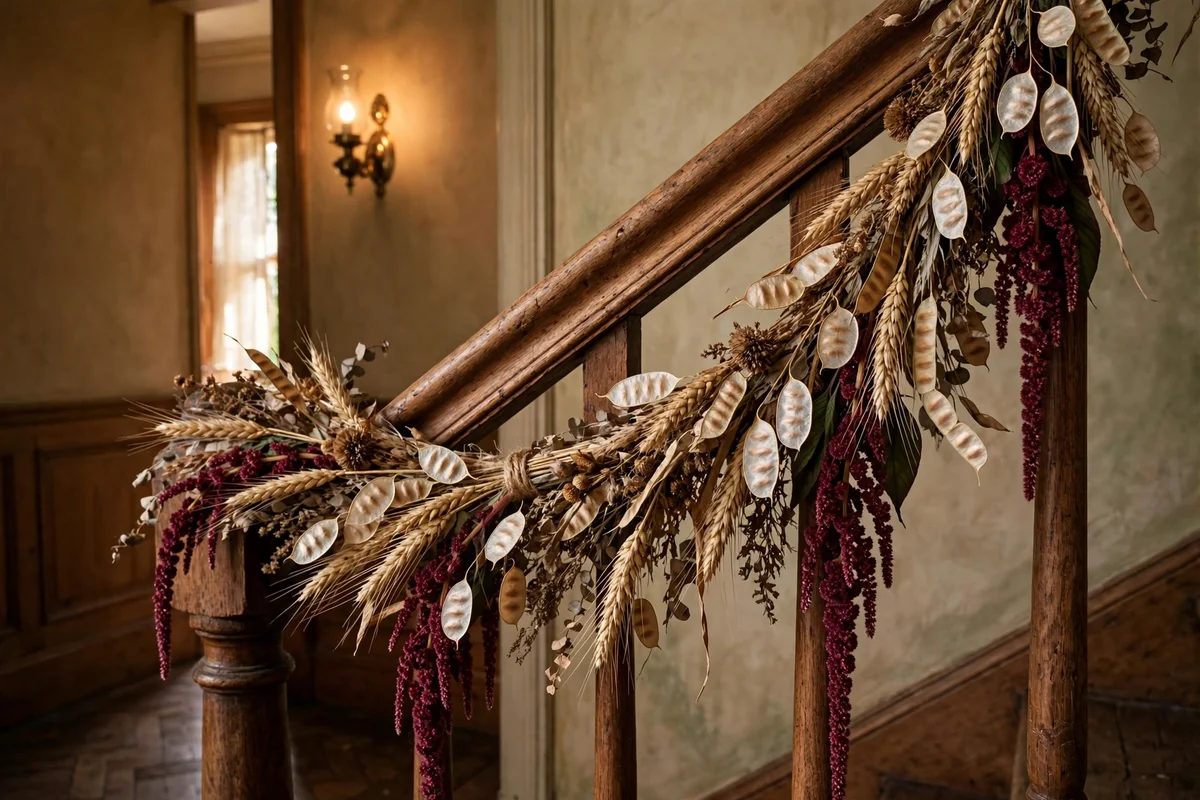
A garland of dried seed heads brings the moody floral look to the hallway without blocking light. Choose a garland 180 to 220 cm long made of wheat, honesty seed pods, dried grasses and burgundy amaranthus, and drape it along the stair rail so it swags gently between the newel posts. Fix it with natural twine at three points, tying loosely so the stems are not crushed. The seed heads catch lamplight in the evening and glow softly.
Ready made dried garlands cost 30 to 55 pounds or dollars; a handmade one from gathered roadside grasses costs almost nothing but an afternoon. Hang it high enough that hands brushing past do not snap the stems, at least 140 cm above the stair tread. The mistake to avoid is wiring the garland too tightly to the rail; tight ties crush hollow stems and the garland sheds within days. Loose twine loops, checked weekly, keep it full all season.
16. Anchor the Coffee Table on a Smoke Glass Floral Tray
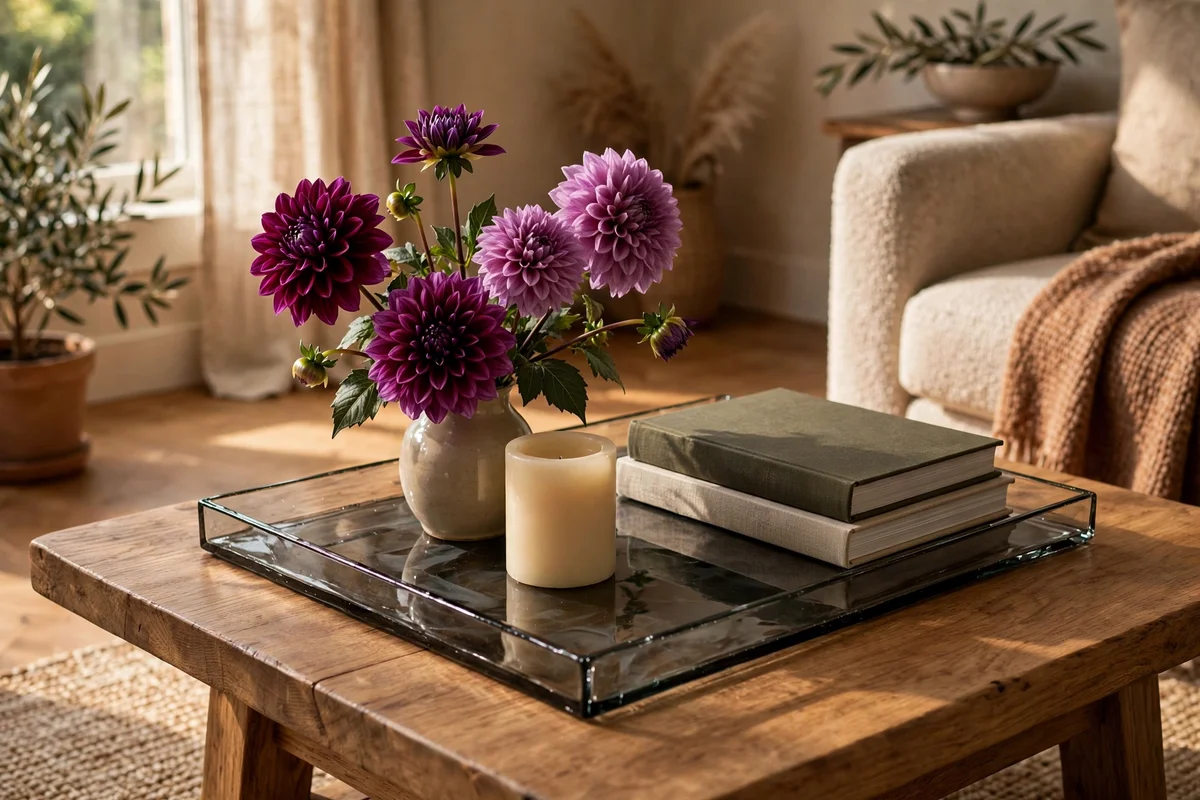
A large smoke glass tray turns a scattered coffee table into one composed still life. Choose a tray 45 to 60 cm across, and set a small vase of plum dahlias, a cream candle and a stack of two art books on it, leaving a third of the tray empty so the arrangement can breathe. The smoke glass tones down the wood beneath and ties the dark blooms to the room. Wipe the tray weekly with a damp cloth, since dust shows fast on dark glass.
Smoke glass trays cost 25 to 50 pounds or dollars; a dark wooden tray gives a similar anchoring effect for less. Keep the total height of the arrangement below 35 cm so conversation flows across the table. The mistake to avoid is filling every centimetre of the tray; a crowded tray reads as clutter, while three objects with breathing room read as styled. If the table is small, drop the books and keep just the vase and candle.
17. Dress the Sideboard With a Burgundy Runner and Rose Vase
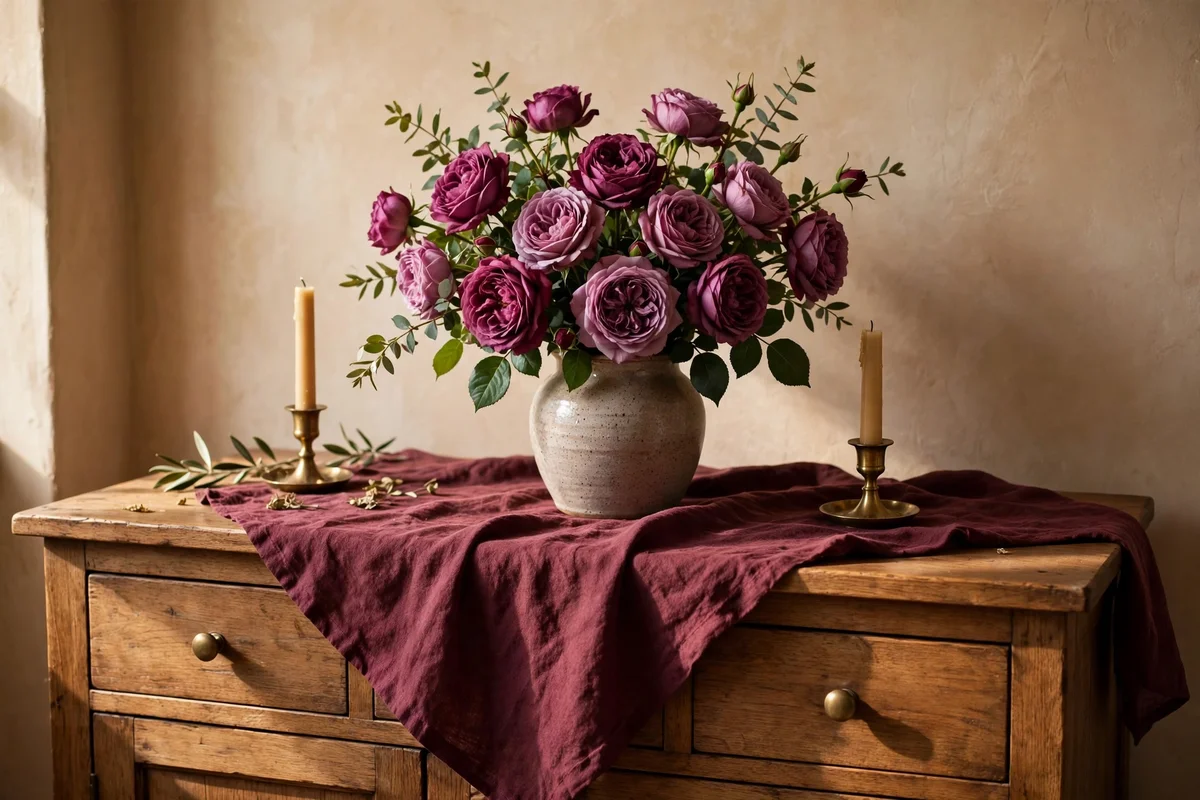
A burgundy table runner gives the sideboard a seasonal foundation in one move. Choose a runner 30 to 40 cm wide and long enough to overhang each end by 20 to 25 cm, in a matte cotton or linen so it does not shine under lamplight. Centre a vase of plum garden roses on it, flanked by two small brass candlesticks. The deep red runner echoes the roses and makes the whole sideboard feel intentional, even if the drawers inside are chaos.
Runners cost 15 to 35 pounds or dollars; a length of burgundy linen from a fabric shop, hemmed at home, is the cheapest route. Press the runner before laying it, since creases from the packet spoil the effect. The mistake to avoid is choosing a shiny satin runner; under candlelight it glares and cheapens the roses. Matte fabric absorbs the light instead, letting the blooms and brass do the glowing while the runner stays quietly in the background.
18. Stack Books Under a Bud Vase of Plum Garden Roses
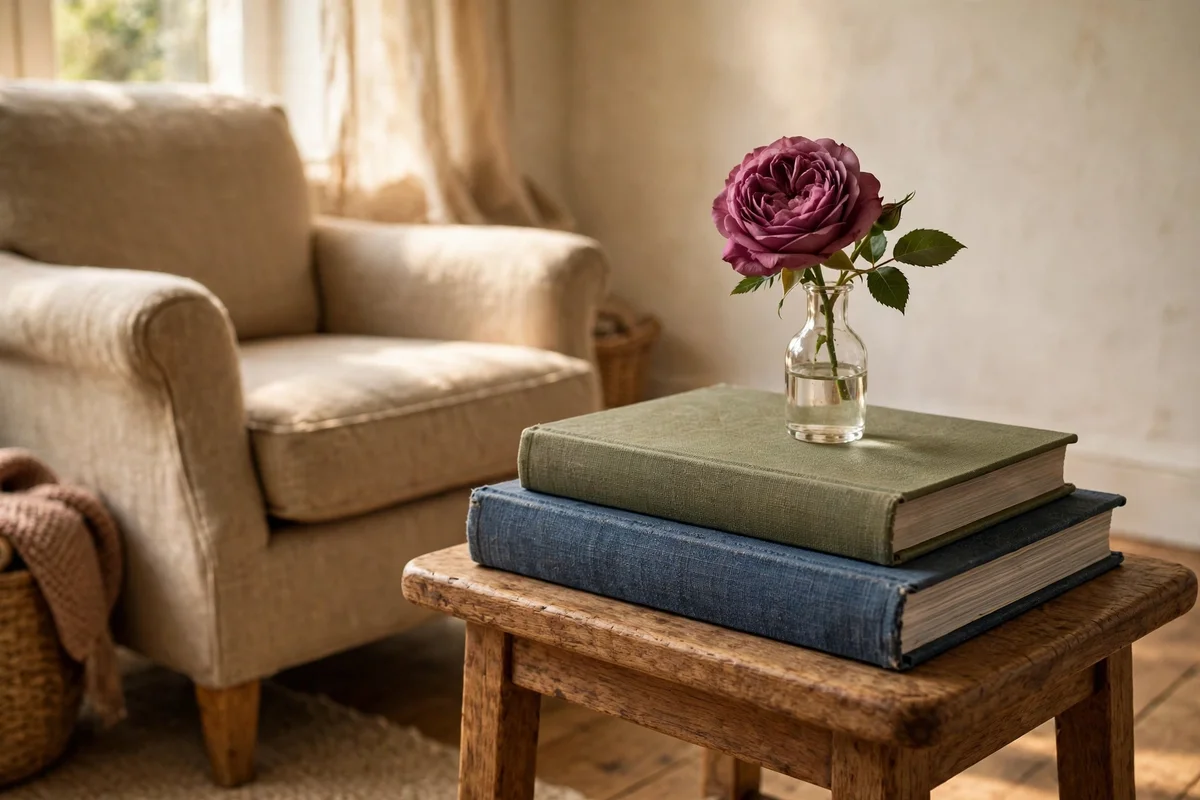
A small stack of books is the easiest pedestal for a single stem. Pile two or three art or garden books on the side table, largest at the bottom, and set a bud vase with one plum garden rose on top. The stack should total 12 to 18 cm high so the bloom sits at eye level when you are seated nearby. Choose book spines in cream, rust or deep green so the colours join the room scheme rather than fighting it.
This idea costs nothing if the books are already on your shelf; a simple bud vase costs 5 to 12 pounds or dollars. Change the single rose every four to five days, since one stem shows its age fast. The mistake to avoid is stacking the books too high; above 20 cm the vase turns wobbly and one bump sends rose water across the pages. Keep the stack low and steady, and put a small felt pad under the vase.
19. Place a Dried Posy in Amber Glass on the Windowsill
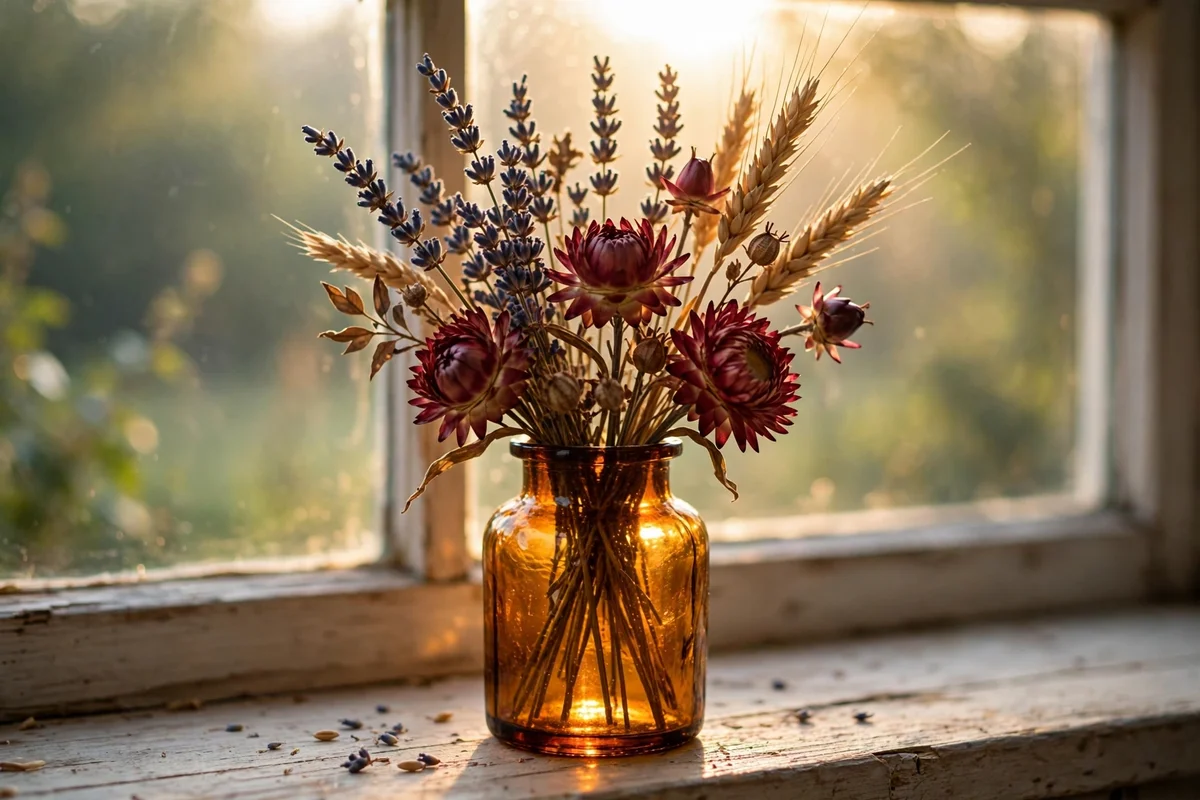
A windowsill posy is the smallest idea in this set and the best place to start. Take a small amber glass, 10 to 15 cm tall, and fill it with a loose handful of dried stems: lavender, wheat, a few burgundy strawflowers and one dark seed head for height. Keep the posy below 30 cm total so it does not block the light. Morning sun through amber glass throws a honey coloured glow across the sill, which is pure autumn.
Small amber glasses cost 4 to 10 pounds or dollars at vintage shops, and dried stem bundles split across three or four posies. Turn the posy every week so the same side does not face the sun and bleach. The mistake to avoid is letting condensation from the window sit under the glass; wipe the sill dry, since trapped damp can mark painted sills. A small cork coaster under the glass protects the paint invisibly.
20. Press Dried Petals and Ferns in a Deep Box Frame
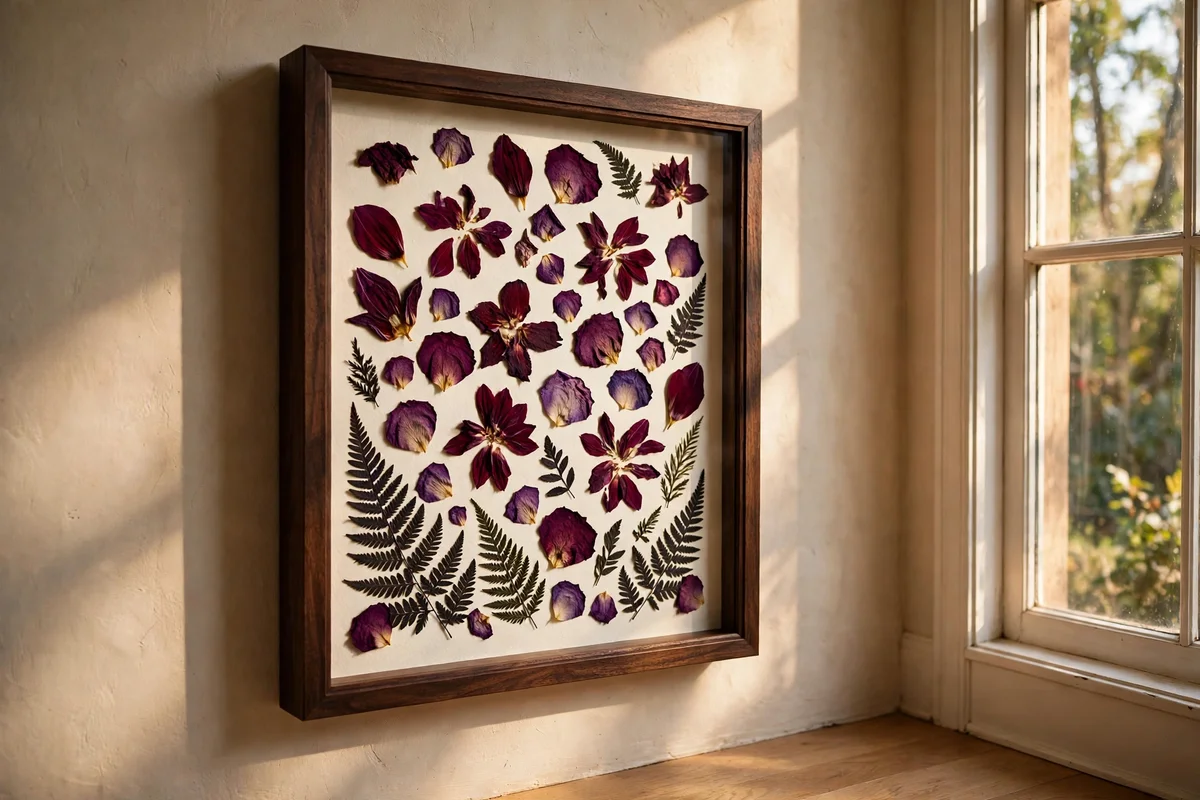
Pressed flowers in a deep box frame bring the garden indoors in the most delicate way. Press burgundy dahlia petals, plum rose petals and a few dark ferns between blotting paper under a heavy book for two to three weeks. Arrange them on cream card inside a box frame 30 by 40 cm with at least 3 cm of depth, so the petals cast tiny shadows. Hang it in a hallway or beside a window where side light shows the texture.
Box frames cost 12 to 25 pounds or dollars; pressing your own petals costs nothing but patience. Pick petals on a dry day and press the same afternoon, since wilted petals press brown. The mistake to avoid is using a shallow photo frame; pressed petals need the air gap of a true box frame or they crush against the glass. Seal the back with tape to keep dust out, and keep the frame out of direct sun.
21. Swap One Lampshade for a Dark Floral Drum Shade
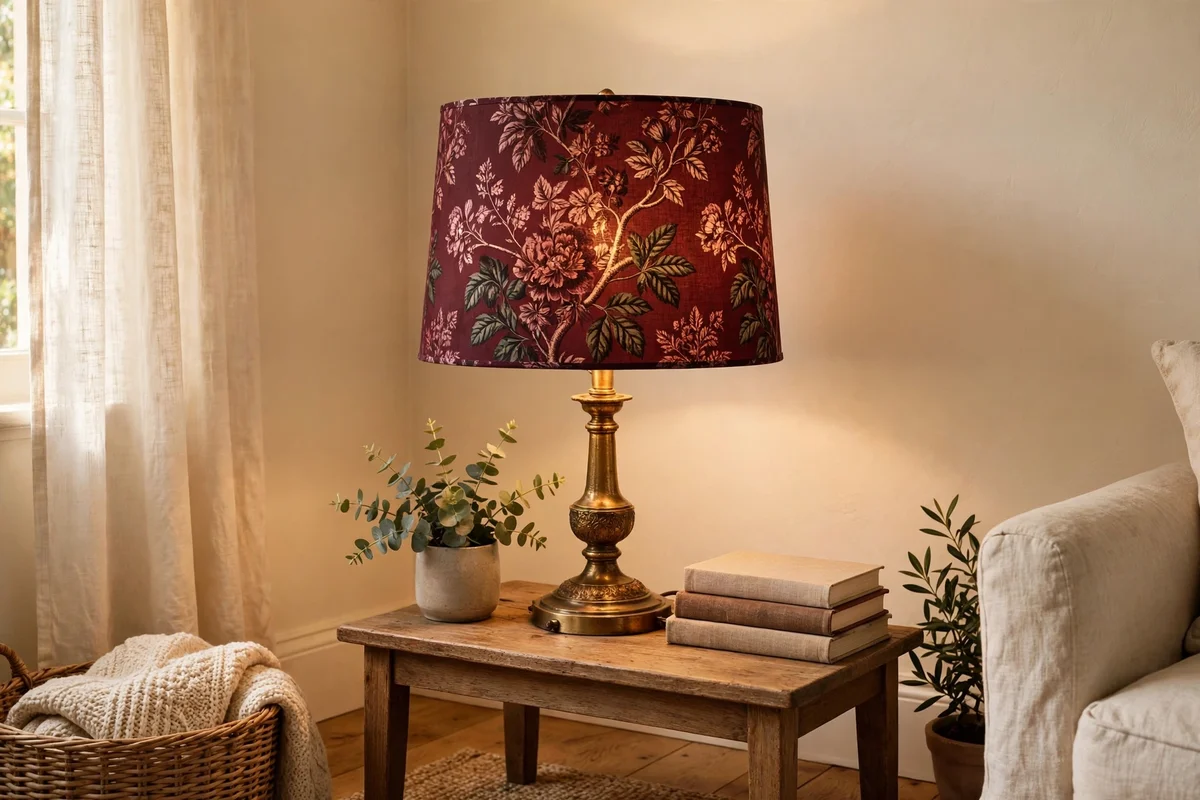
A dark floral lampshade changes the whole mood of a corner after dark. Swap the shade on one table lamp for a drum shade 30 to 40 cm across in a burgundy or plum botanical print, keeping the other lamps in the room plain cream. Use a warm 2700K bulb of 8 to 10 watts so the pattern glows softly rather than glaring. The printed shade throws patterned light onto the wall behind it, which feels rich and layered in the evening.
Printed drum shades cost 25 to 55 pounds or dollars; keep the old shade stored flat so you can swap back in spring. Check the shade fits your lamp harp or uses a European fitter before buying, since a wrong fitting wobbles. The mistake to avoid is using a cool white bulb; at 4000K and above the floral print looks harsh and the warm mood collapses. Warm light is non negotiable with dark patterns, so check the bulb box before you buy.
22. Keep a Weekly Fresh Bloom Bowl in the Reading Nook
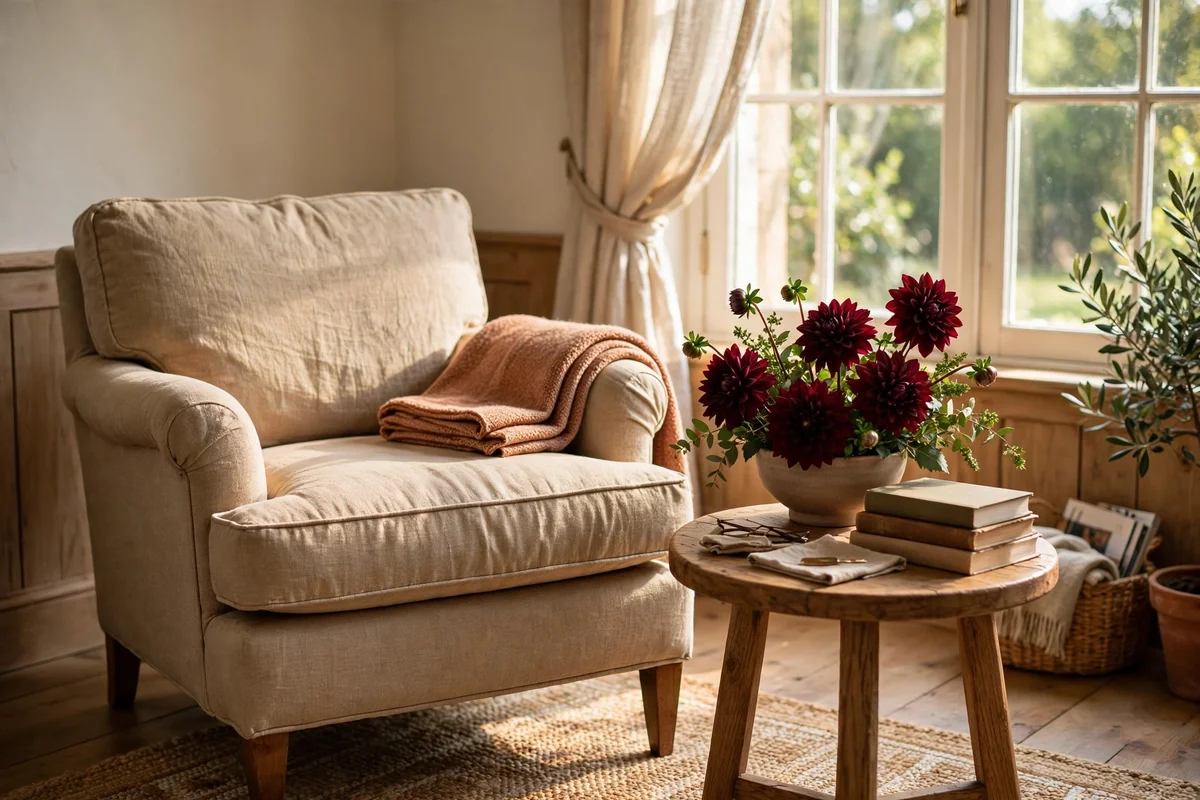
A reading nook deserves its own small floral ritual. Keep a shallow bowl, 20 to 25 cm across, on the side table beside your chair, and fill it each week with whatever is in season: burgundy dahlias in October, dried seed heads as the garden fades. Float short stems in 5 cm of water or stand them in a flower frog for height. The weekly refresh takes ten minutes and gives the quietest corner of the room a living, changing heart.
A weekly market bunch costs 5 to 10 pounds or dollars and often fills both the nook bowl and a bud vase elsewhere. A metal flower frog costs about 8 pounds and lasts for years, holding short stems upright in shallow water. The mistake to avoid is letting the bowl sit empty for weeks; an empty vase reads as forgotten, while even three dried stems keep the ritual alive. Set a phone reminder for the same morning each week until it becomes habit.
When the last candle is lit and the deep blooms sit against their cream backdrop, the room should feel gathered rather than decorated. That is the real test of this style. If one corner feels heavy, add cream or candlelight rather than removing flowers. Keep the amber glass where daylight can pass through it, refresh the fresh stems weekly, and let the dried pieces carry the room through winter. A collected home is never finished; it simply gets richer with each small, deliberate addition.
The easiest first step is the windowsill posy from idea nineteen: one small amber glass, a handful of dried stems, five minutes. Do that this week and live with it for a few days. Notice how the amber warms the light and how the deep tones ask for cream nearby. Then add one idea at a time, always in pairs of dark and light, until the room holds the mood on its own. By the time the clocks change, you will have a living room that feels like autumn itself.
Frequently Asked Questions
How much does moody floral fall decor cost for a living room?
A single corner costs between 15 and 40 pounds or dollars: one amber vase, a bunch of dried stems and a few candles cover it. A full living room refresh usually lands between 80 and 200, depending on whether you buy cushions or prints. The dried pieces are the best value, since they last the whole season. Spend the most on vases and frames, because you will reuse them every autumn.
Will dark florals make my living room feel heavy or gloomy?
Only if they stand alone. The rule in this style is one dark element to one light element: a plum arrangement beside a cream vase, dark cushions with a cream throw, deep blooms lit by candles. Keep walls light if the room is small, and let daylight reach the flowers. Most rooms feel warmer, not darker, because the deep colours absorb harsh light and the cream and candlelight return a soft glow.
Can I mix dried and fresh flowers in one arrangement?
Yes, and it is one of the best tricks in this look. Build the base from dried stems like statice, amaranthus or seed heads, then add five to seven fresh dahlia or rose stems in a small water tube tucked inside. The dried base lasts for months while you swap the fresh stems weekly. Never let dried stems sit in water, and keep fresh tubes upright so they do not leak onto dry material.
How do I use dark floral patterns in a small living room?
Keep to one pattern per room and use it in small doses. Two cushions in a dark floral print are enough; pair them with plain cream cushions and a light throw. A single curtain panel or one framed print can carry the pattern instead of the sofa. Mirrors opposite the window double the daylight, and a cream rug underfoot stops the dark tones from closing the room in.
How long do dried flower arrangements actually last?
Well kept dried arrangements hold their colour for six to twelve months. Keep them out of direct sun, which bleaches burgundy and plum tones within weeks, and away from radiators and damp rooms. Dust monthly with a cool hairdryer on the lowest setting held 30 cm away. When stems start shedding heavily or colours fade to grey, compost them and refresh. Grasses and seed heads usually outlast the flowers by several months.