Living Room
22 Vintage Cottage Decor Ideas That Feel Collected Over Time
By Anna Wells · · 20 min read
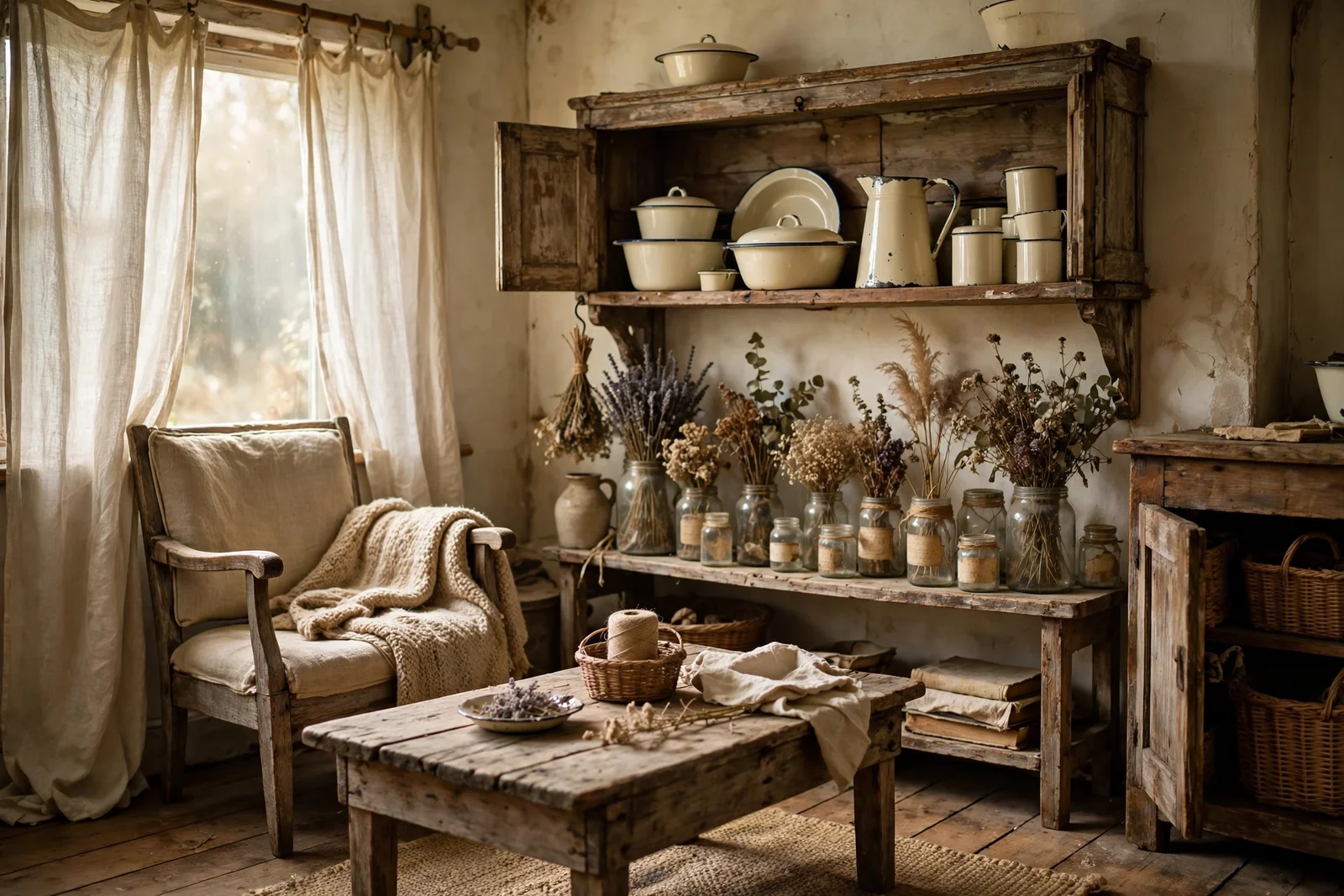
Warm, practical ideas for a vintage cottage look built slowly from honest secondhand finds, aged wood, enamelware and dried flowers, so your home feels gathered over time.
Morning light comes through the window and lands on a chipped enamel jug, a folded pile of washed linen, and a bunch of dried lavender tied with garden string. Nothing in the room matches exactly, yet everything belongs together. That quiet sense of belonging is the heart of a collected cottage, and it cannot be bought in one afternoon. It is gathered, one honest piece at a time.
A vintage cottage room feels lived in because it was lived in, by you and by the people before you. The chair has a worn arm from years of reading, the table shows faint rings from family meals, and the curtains are soft from a hundred washes. These marks are not flaws. They are the room’s memory, and they give new houses a history they never had.
This guide gives you twenty two concrete ideas for building that feeling on purpose. You will learn where to find honest pieces, what to check before money changes hands, how to clean without erasing patina, and how one colour thread keeps mixed eras calm. Every idea includes sizes, materials, costs and the mistake to avoid.
Start where you are, with what you already own. The slowest room in the house is usually the one that ends up loved the longest. Read through, pick one idea to try this week, and let the rest wait for the markets, the charity shops and the family attics to surprise you.
1. Begin With One Inherited Piece and Let the Room Gather Around It
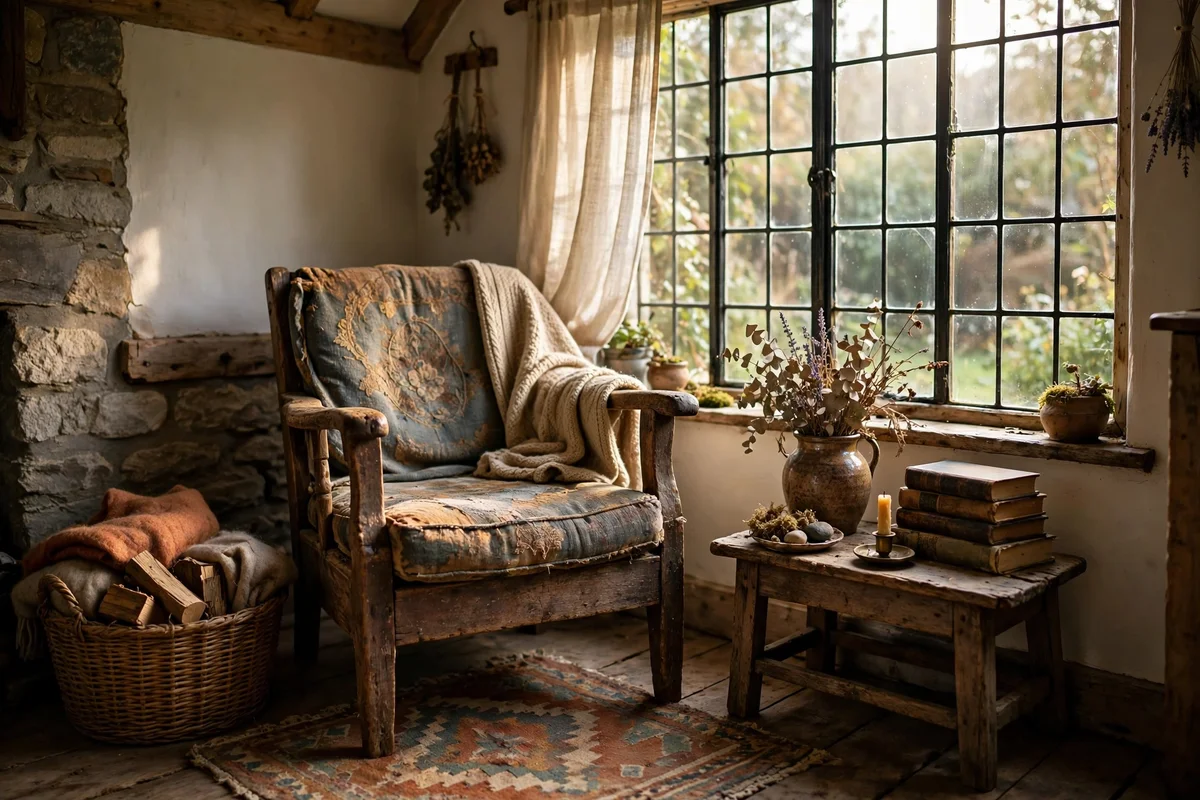
Choose the one piece that already carries your family story: a grandmother’s armchair, a battered pine dresser, or the rug that lived in your parents’ hallway. Place it first and let it set the room’s scale and colour mood before anything else arrives. An armchair 80 to 90 cm wide anchors a reading corner, while a dresser 120 to 150 cm long anchors a dining wall. Building around an existing piece stops random purchases and keeps the room honest from the start.
An inherited piece costs nothing but transport, so spend your decorating money on what supports it, like a fresh cushion cover or a small lamp. The mistake to avoid is hiding the heirloom because it looks worn; the worn edges are the whole point. A light clean with mild soap and a soft cloth is enough. Live with the piece for two weeks before deciding what it needs beside it.
2. Line a Shelf With Cream Enamelware Jugs and Bowls
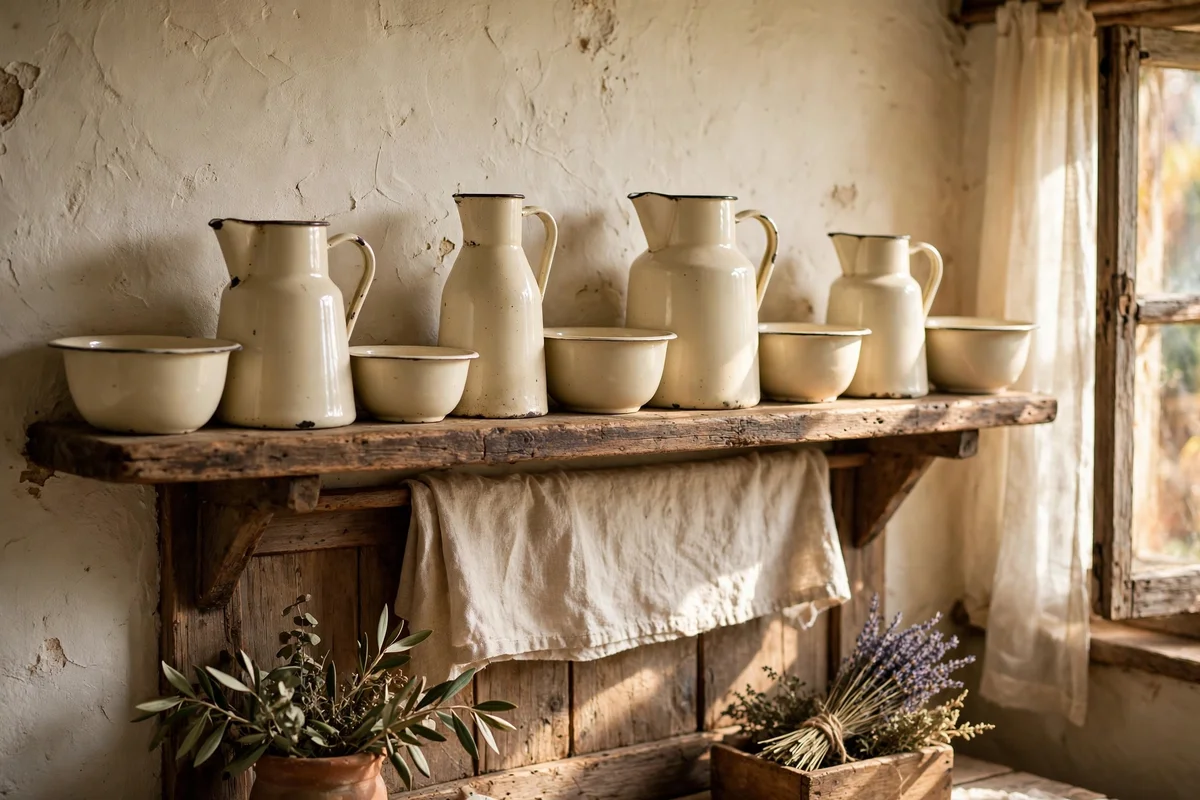
Cream enamelware with a thin blue or green rim is the backbone of cottage shelves. Fit one open shelf 20 to 25 cm deep at about 150 cm from the floor so jugs and bowls sit at eye level without crowding. Group three to five pieces in a row, mixing a tall jug of 25 cm with smaller bowls, and leave one gap so the shelf can breathe. Chipped edges are expected and welcome; deep cracks that flex are not.
Secondhand enamelware usually costs 3 to 10 pounds or dollars per piece at charity shops, far less than new reproduction sets. Wash finds in warm soapy water, dry them fully, and never soak them for hours, since water seeps under chips and starts rust. The mistake to avoid is buying a full matching set new; the charm of enamelware comes from pieces gathered across years and places.
3. Use Stoneware Crocks for Utensils, Flowers and Everyday Storage
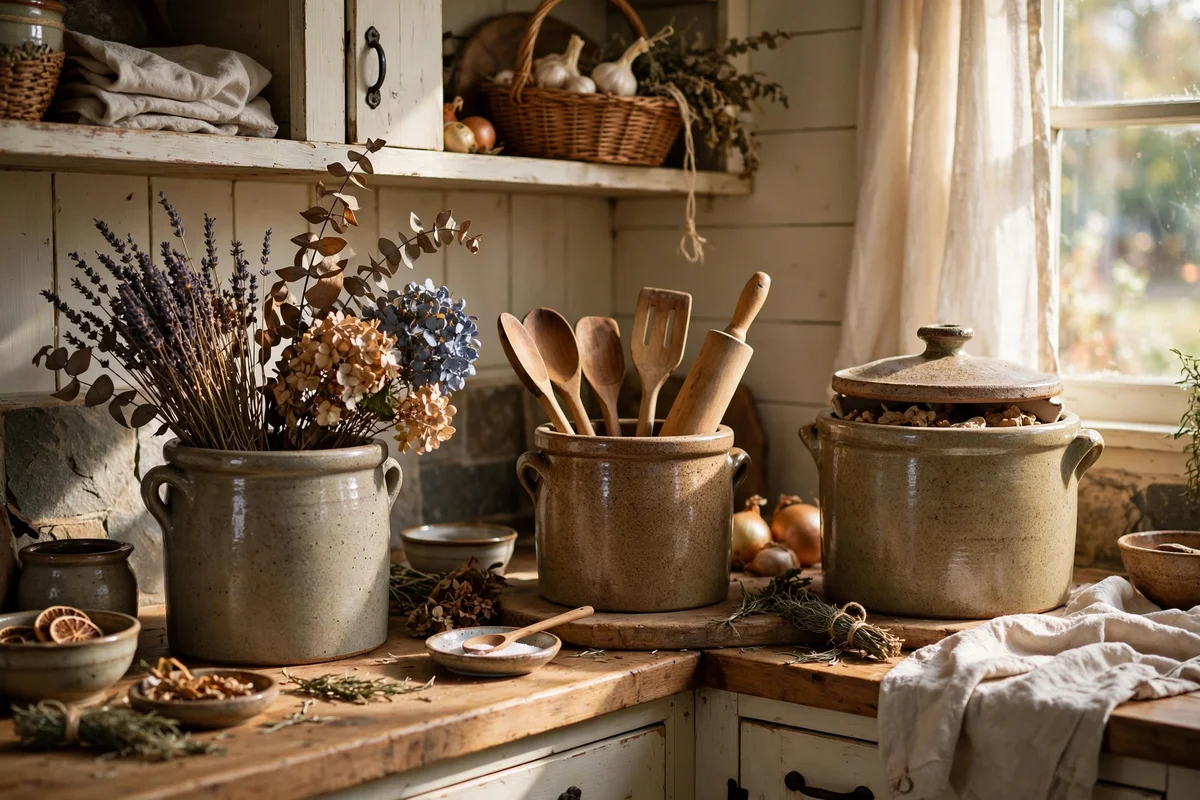
Heavy stoneware crocks in grey, cream or soft brown bring farmhouse weight to a kitchen or shelf. A crock 20 to 30 cm tall holds wooden spoons and spatulas within arm’s reach of the stove, while a wider one of 25 cm diameter swallows rolled tea towels or dried flowers. Their thick walls and salt-glaze finish suit the cottage palette without trying, and they are almost impossible to knock over.
Check every crock for hairline cracks by tapping it gently; a clear ring means it is sound, a dull thud means it is damaged. Prices run 8 to 25 pounds or dollars at flea markets depending on size and age. The mistake to avoid is filling a cracked crock with water for flowers, since slow seepage ruins the shelf below. Use a glass jar inside as a liner and the problem disappears.
4. Choose an Aged Oak Side Table and Let the Patina Stay
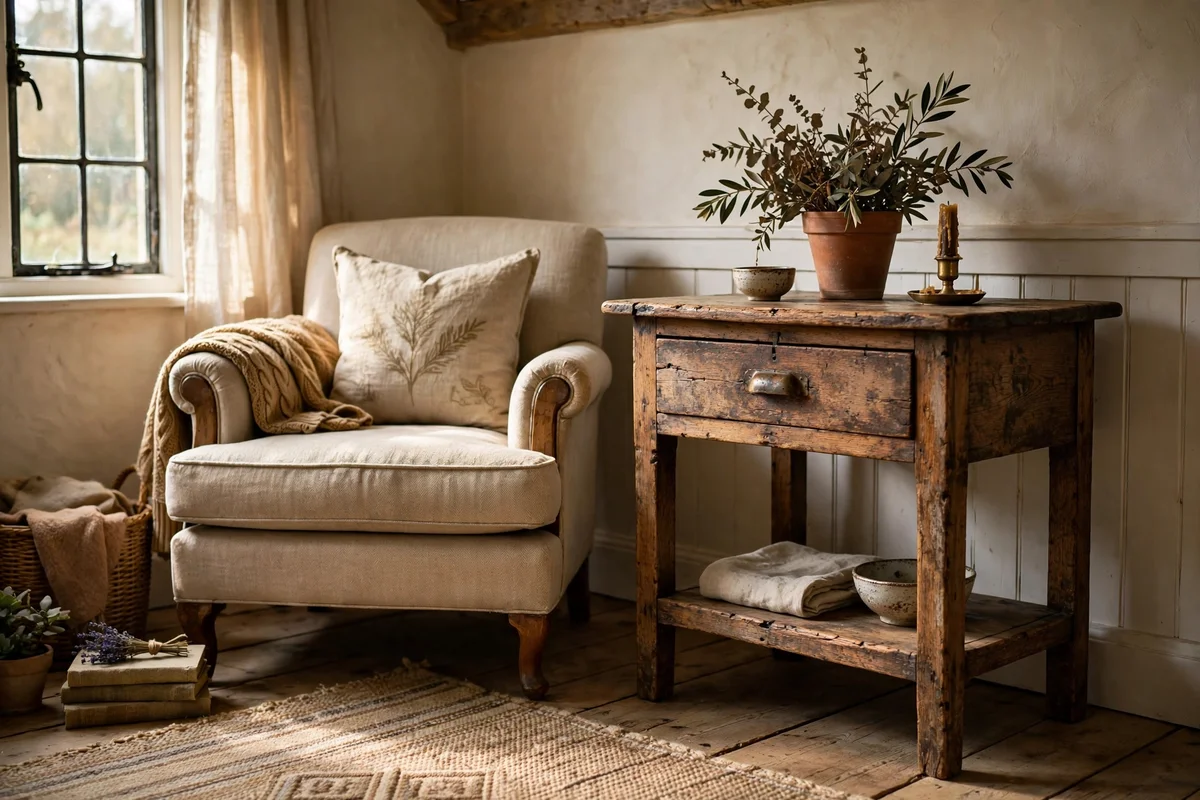
A small oak side table, 45 to 55 cm square and about 60 cm high, is the workhorse of a cottage living room. It holds a lamp, a cup of tea and a folded throw without dominating the space. Look for honeyed or greyed wood with a soft sheen that comes only from years of handling and waxing. Water rings and faint scratches are the patina; they tell you the table was loved, not neglected.
Resist the urge to sand it back to bare wood or paint it white. Instead, feed the surface twice a year with a thin coat of clear furniture wax buffed with a soft cloth. A solid oak table of this size costs 20 to 60 pounds or dollars secondhand. The mistake to avoid is placing hot mugs directly on unwaxed old wood; one cork mat or folded cloth keeps new rings from joining the old.
5. Hang Washed Linen Curtains That Filter Light Softly
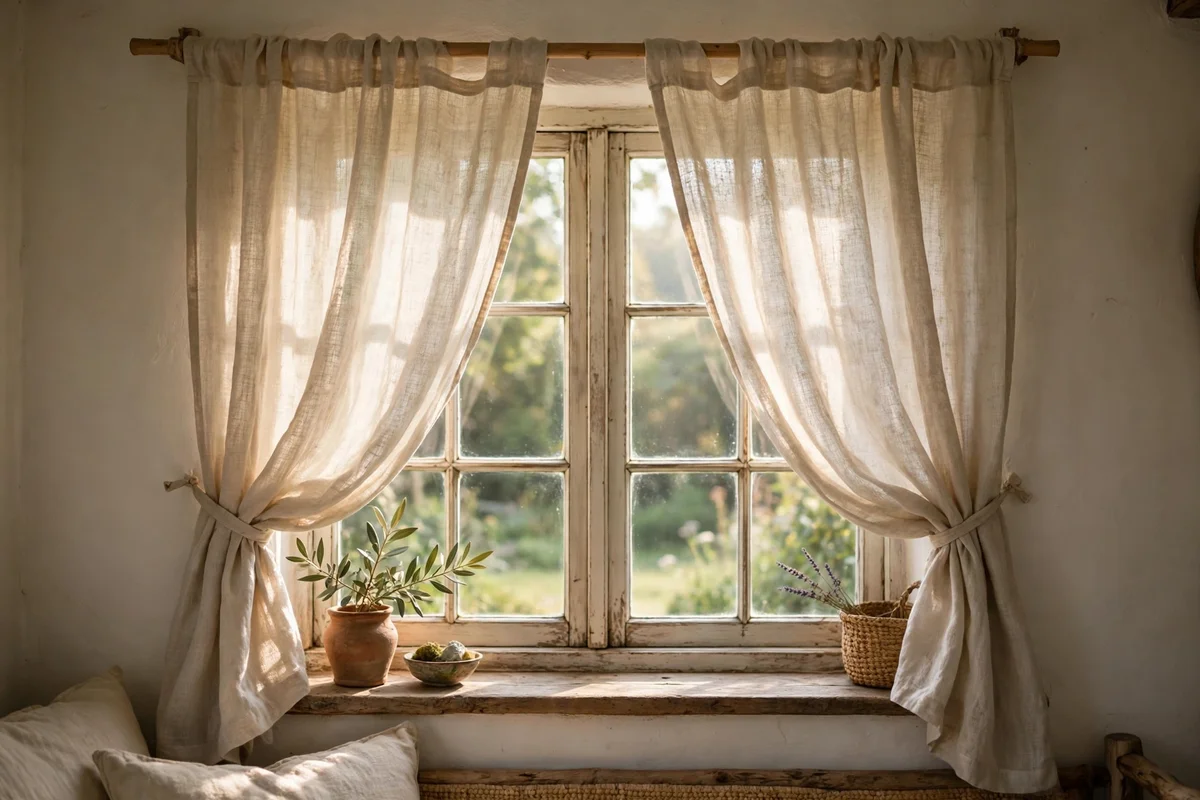
Washed linen curtains give windows the soft, rumpled look that defines cottage calm. Measure the window, then buy panels one and a half to two times the width for a gentle gather, hanging them from a wooden or black metal rod set 10 to 15 cm above the frame. A length that just kisses the sill suits kitchens; floor length with a 2 to 3 cm break suits living rooms. Choose natural, oatmeal or soft white.
Pre-washed linen shrinks less and feels softer from day one, though it costs a little more, around 25 to 50 pounds or dollars per panel. Wash at 30 degrees and hang slightly damp so creases fall out naturally. The mistake to avoid is ironing linen flat; crisp curtains fight the relaxed cottage mood. Embrace the wrinkles, because they are the texture you paid for.
6. Dress the Table With a Plain Lace Runner Over Natural Wood
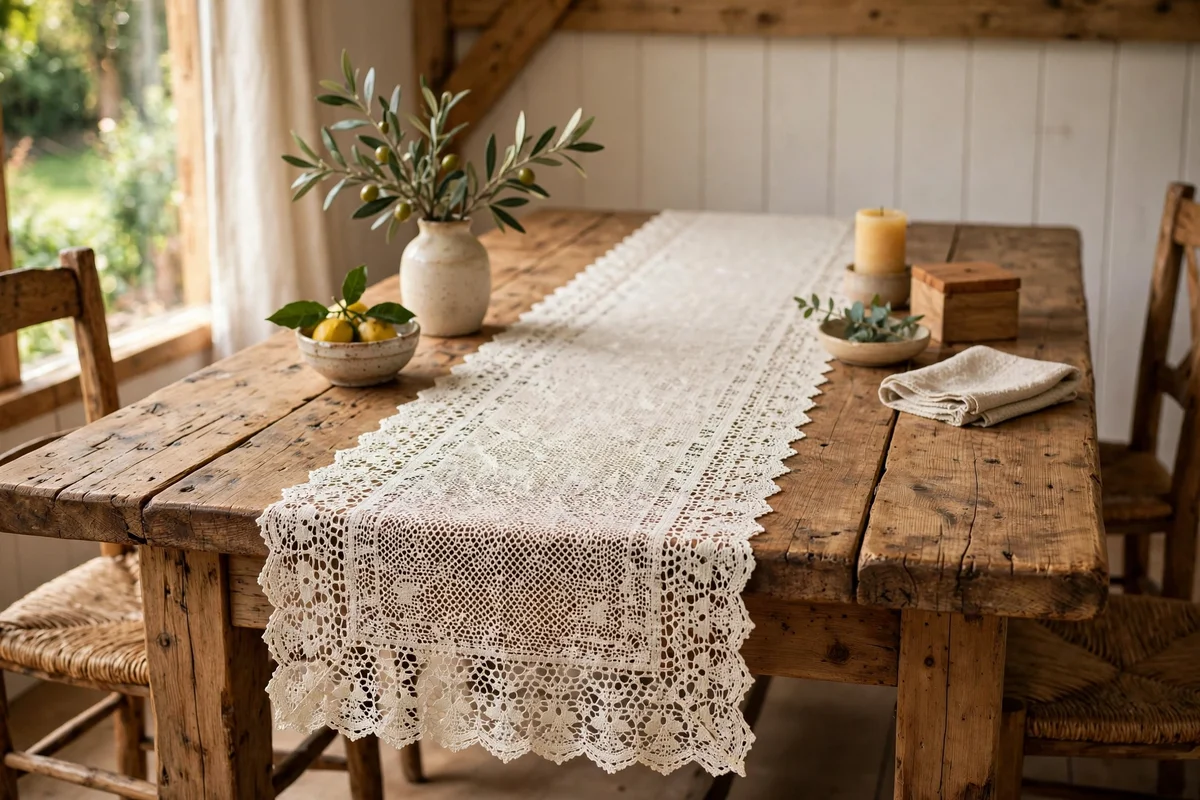
A plain lace runner, 30 to 40 cm wide with 20 to 25 cm of overhang at each end, softens a wooden dining table without hiding it. Ivory or unbleached cotton lace suits pine, oak and painted tables alike, and the open weave lets the wood grain show through. Layer it over a bare table for everyday meals, or over a plain cloth in natural linen when guests come.
Real cotton lace washes well at 30 degrees inside a mesh bag and lasts for decades, while cheap polyester lace snags and shines. Charity shops sell lace runners for 2 to 6 pounds or dollars, often handmade. The mistake to avoid is choosing lace with a fussy floral pattern in bright white; it reads as costume rather than calm. Plain, slightly aged lace gathers the room instead of shouting.
7. Fill Old Jars With Dried Lavender, Wheat and Grasses

Dried flowers are the cottage bouquet that never wilts and never needs watering. Gather five to seven stems of lavender, wheat, pampas grass or honesty into an old jam jar, milk bottle or stoneware jug, and trim the stems so the heads sit 10 to 15 cm above the rim. A trio of jars in different heights on a windowsill or mantel gives more charm than one large arrangement.
Keep dried flowers out of direct sun, which bleaches colour in a few months, and away from steamy kitchens, which makes stems go limp. A light shake outdoors removes dust every few weeks. Bunches cost 3 to 8 pounds or dollars at markets, or nothing if you dry your own in a dark airy shed for two weeks. The mistake to avoid is spraying them with hairspray; it yellows the petals and attracts dust.
8. Mix Eras Calmly by Repeating One Quiet Colour Thread
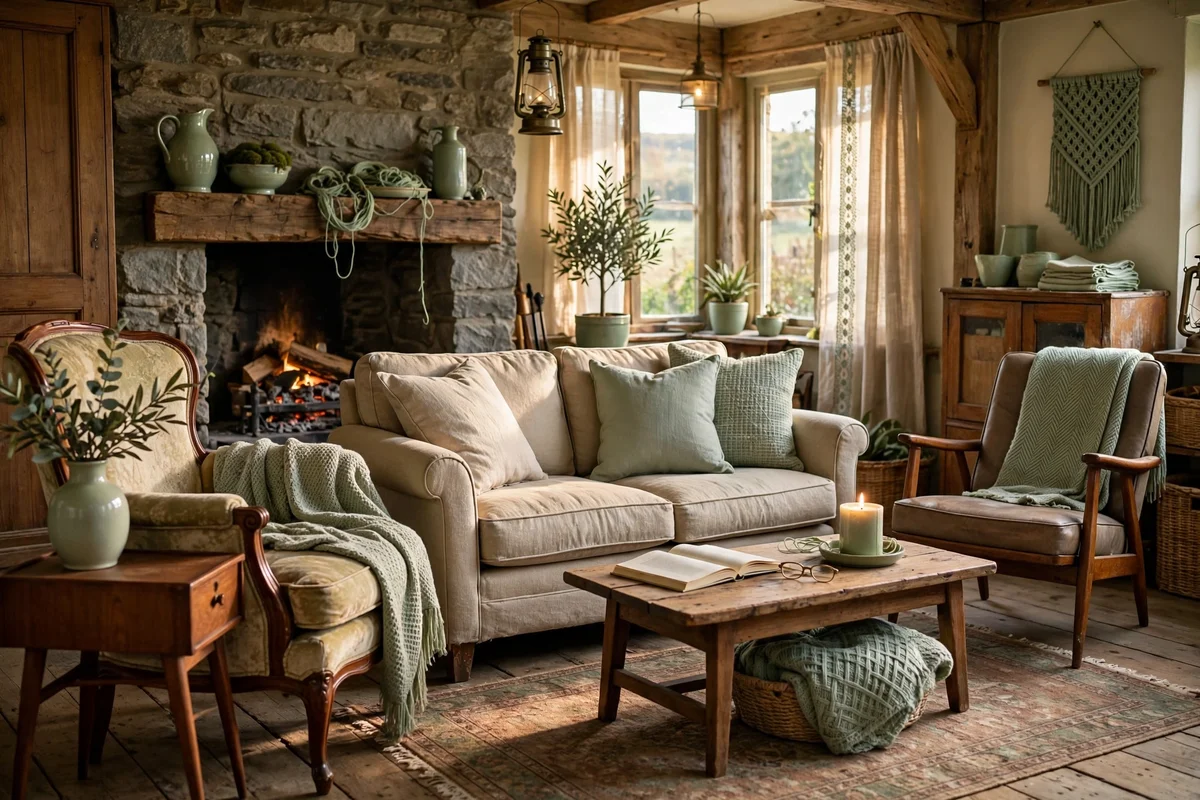
A room can hold a Victorian chair, a 1960s sideboard and a modern lamp without looking confused if one quiet colour repeats through them all. Choose a thread like warm cream, soft sage or dusty blue, then let it appear in the cushion on the old chair, the paint inside the sideboard and the shade of the new lamp. Three touches of the same colour are enough to make different eras feel like family.
Keep the thread to roughly one fifth of what the eye sees so it reads as a whisper, not a theme. Wood tones should stay within one family, honey with honey or grey with grey, rather than fighting each other. The mistake to avoid is adding a second strong colour to rescue a dull corner; it usually doubles the noise. Move one existing piece before buying anything new.
9. Ask Family First: The Best Pieces Often Come Free From Attics
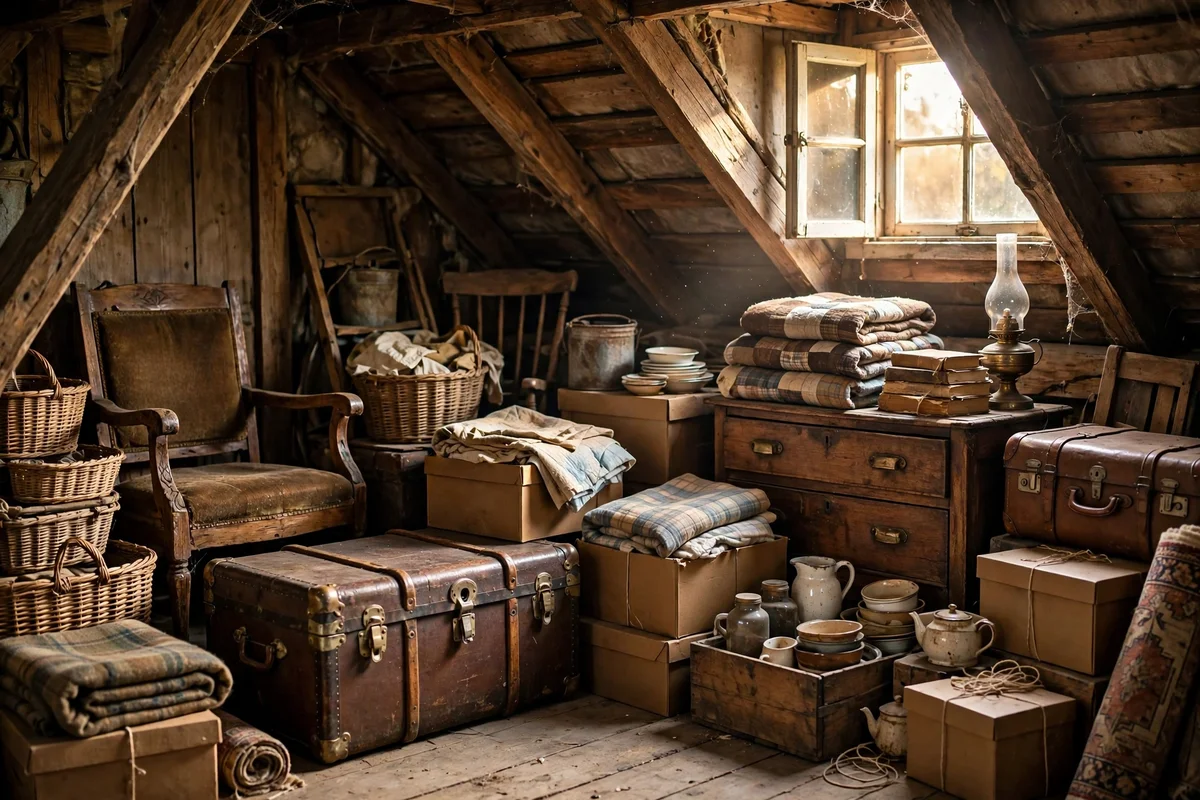
Before spending a penny, ask parents, grandparents, aunts and neighbours what sits unused in their attics, garages and spare rooms. A spare chair, a box of old crockery or a rolled rug often waits for someone who wants it. Offer to help sort and clear in exchange, and bring blankets and rope for safe transport. Most families are delighted when a loved piece goes to a home that will use it.
Write down the story of each piece while the giver remembers it, even a single sentence on a card kept in a drawer. That note turns a free chair into an heirloom. The mistake to avoid is taking everything offered out of politeness; a piece you do not love becomes clutter in a month. Accept only what fits your space and your colour thread, and thank them warmly for the rest.
10. Shop Charity Stores Early and Check Every Shelf Twice
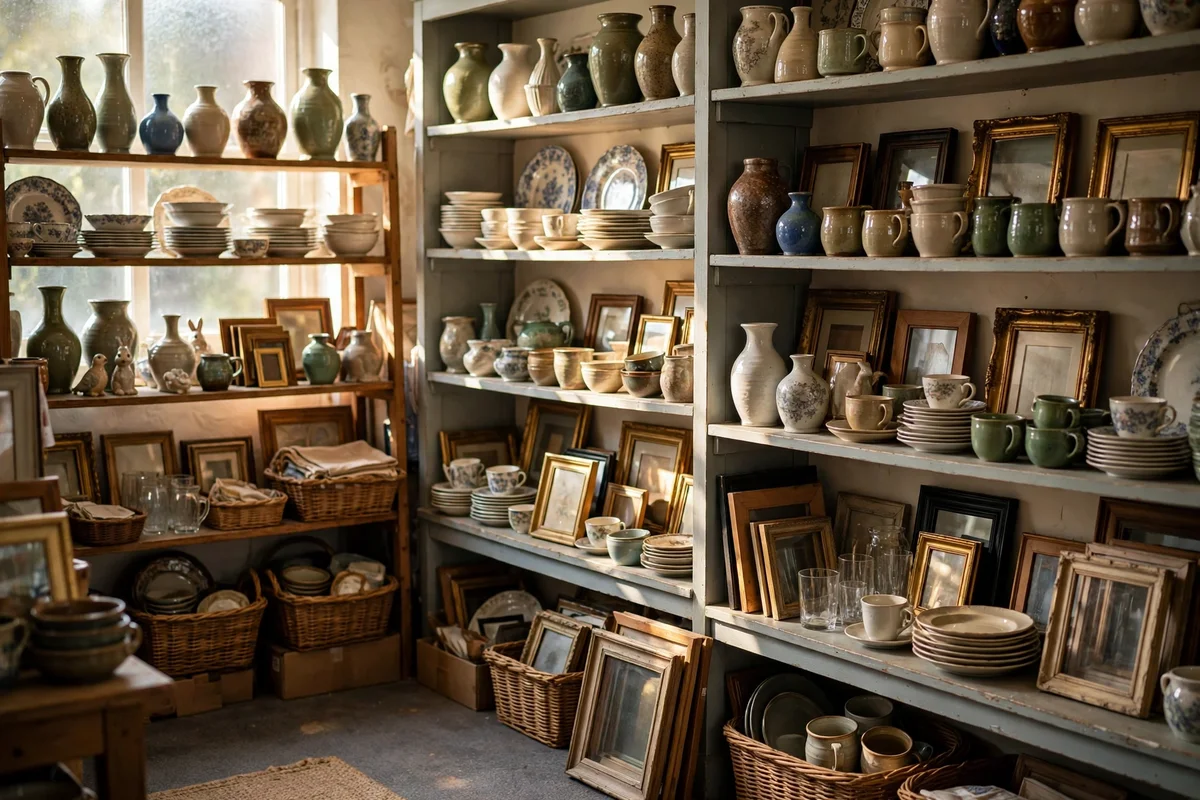
Charity shops are the cottage decorator’s best hunting ground, and weekday mornings are the golden hour, when new donations from the weekend hit the shelves. Walk every aisle twice, because good pieces hide behind ugly ones and stock turns over within hours. Carry a small tape measure and your room’s key dimensions on a card, so a 45 cm side table is a yes and a 70 cm one is an easy no.
Check the furniture corner first, then housewares, then textiles, since the best value usually sits in that order. Prices stay low, with most small decor pieces between 1 and 8 pounds or dollars. The mistake to avoid is buying because something is cheap rather than because it fits; a two pound vase in the wrong colour still costs you shelf space. Leave it for the next hunter.
11. Work Flea Markets Slowly and Haggle Gently Near Closing Time
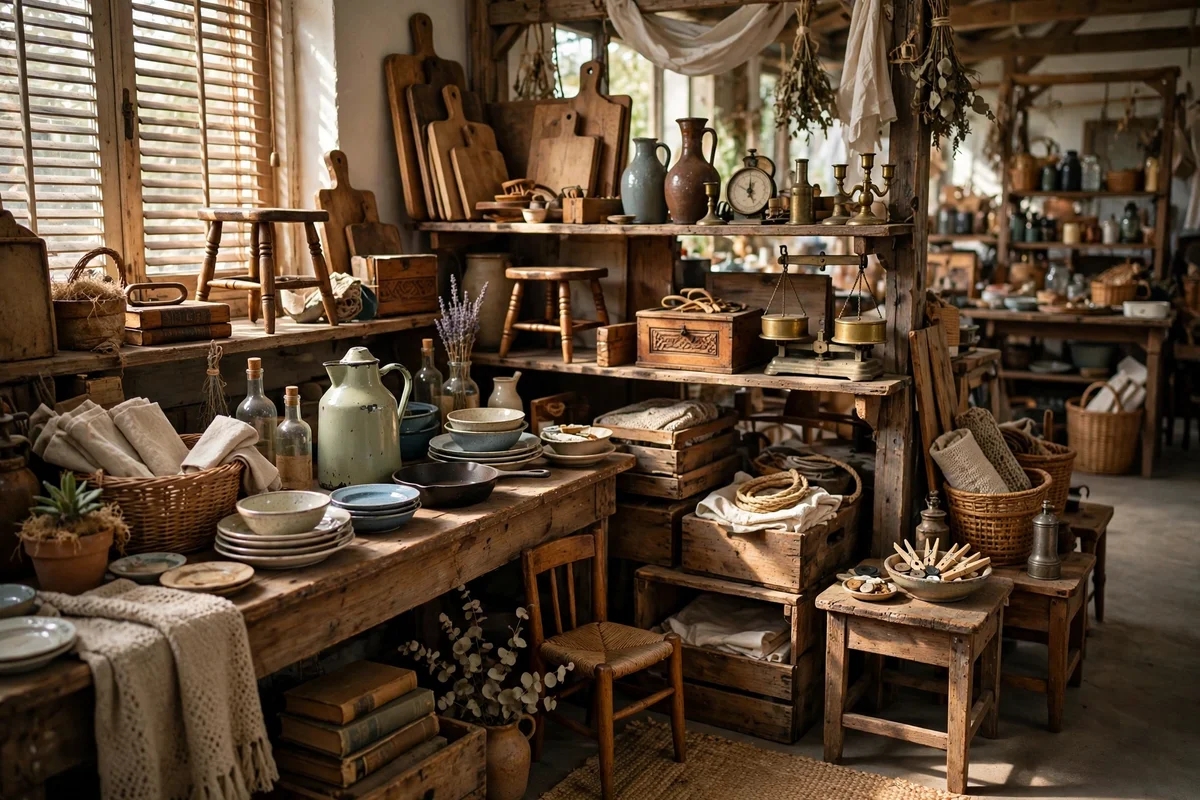
Flea markets and antique fairs reward slow walkers. Do one full lap without buying to learn the prices, then a second lap to choose. Sellers expect gentle haggling, especially in the last hour when packing up feels better than carrying stock home. Offer about twenty percent below the ticket price with a smile, and be ready to meet in the middle. Cash in small notes makes every deal smoother.
Bring your measurements, a tote bag and patience, and inspect pieces in daylight before paying. Good market days yield enamelware, baskets and small wooden furniture for 5 to 30 pounds or dollars. The mistake to avoid is falling in love loudly; the seller hears your excitement and the price firms up. Stay calm, admire quietly, and walk away once if you need to think.
12. Smell Every Secondhand Soft Furnishing Before You Pay
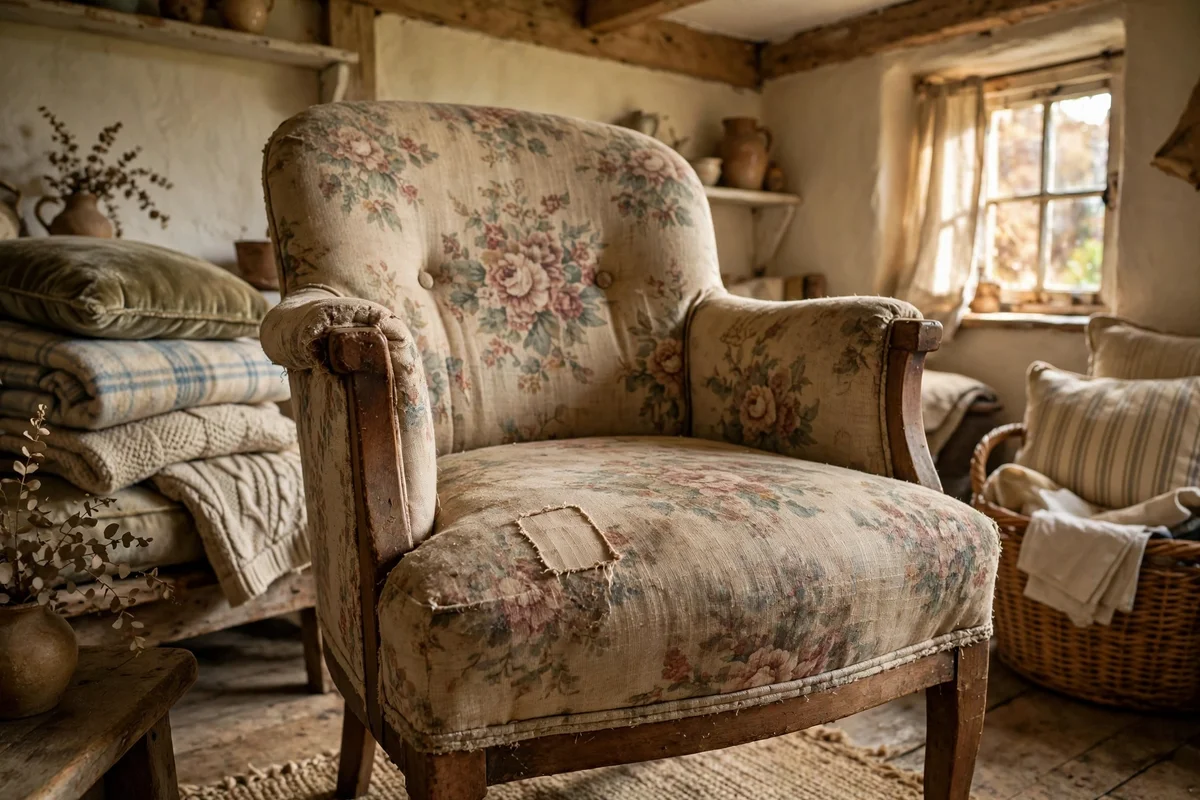
Your nose is the most honest tool at a secondhand sale. Press your face close to any upholstered chair, cushion, rug or curtain and breathe in deeply. Musty, smoky or damp smells sink into foam and fibres and can take months of airing to leave, if they ever do. A faint dusty smell is fine and lifts after one wash or a day outside, but a sharp sour note means you should walk away.
For pieces that pass the test, air them outdoors for a full day and sprinkle bicarbonate of soda over upholstery, leaving it four hours before vacuuming. Washable covers go through a 30 degree cycle with a cup of white vinegar in the rinse. The mistake to avoid is assuming febreeze and hope will fix a truly damp piece. Smell first, pay second, and never feel rushed by the seller.
13. Test Stability and Joints on Every Old Chair and Table
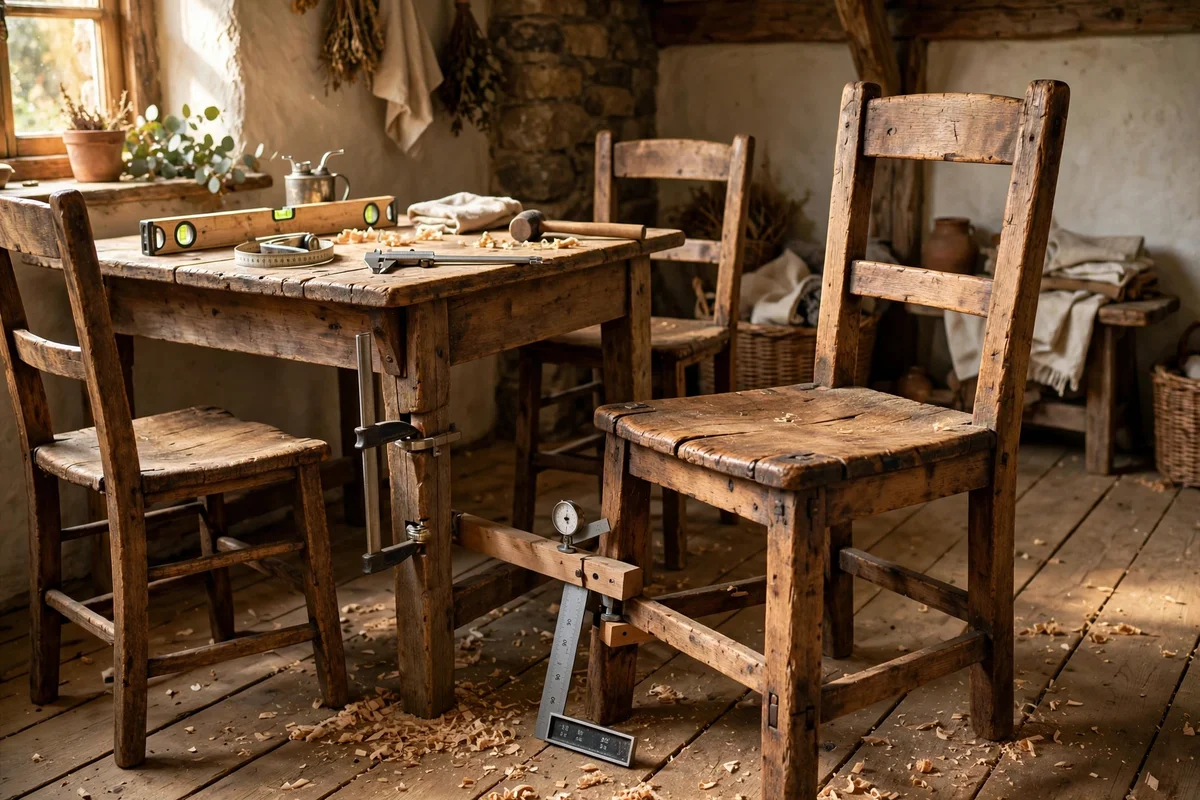
Old furniture earns its place only if it still does its job. Sit in every chair and rock gently side to side, then lift one leg slightly to feel for wobble. Press down firmly on table corners and open every drawer fully; they should glide without sticking or dropping. Loose joints that creak can often be fixed with wood glue and a clamp left overnight, which is a one evening job.
Look underneath for woodworm holes, tiny round openings with fine dust, and reject pieces with active infestation. A sturdy but wobbly chair at 10 to 20 pounds or dollars is a bargain if the joints just need regluing. The mistake to avoid is buying a beautiful but broken chair for display only; cottage style is for living in. Every piece should be strong enough for daily use.
14. Treat Very Old Painted Pieces With Caution Over Lead Paint
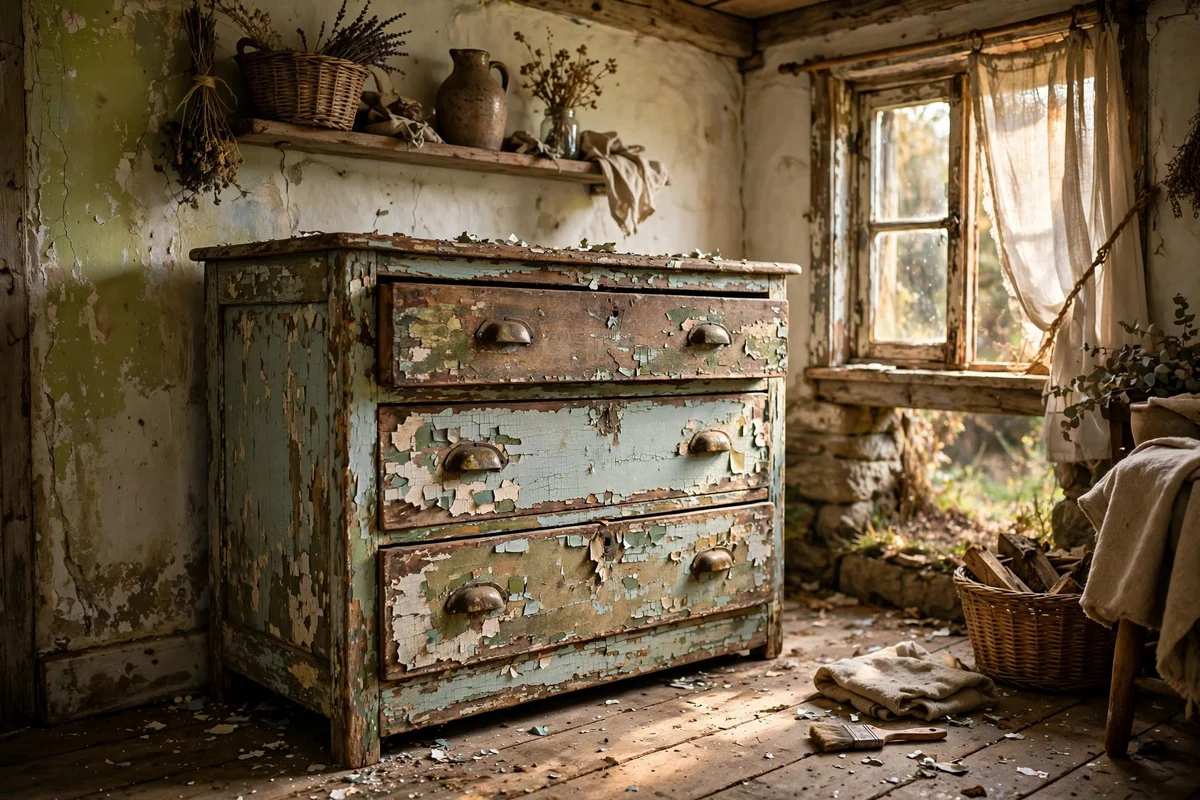
Paint made before the 1960s can contain lead, which is harmful if its dust is breathed or swallowed, so treat very old painted dressers, cots and chairs with respect. Buy an inexpensive lead test kit and swab a hidden patch before any sanding or stripping. If the test is positive, do not sand, scrape or burn the paint off; either leave the finish sealed as it is or ask a professional refinisher.
A sealed, intact old paint finish is generally safe to live with, and a coat of clear furniture wax adds another barrier while keeping the aged look. Keep flaking painted pieces away from children’s rooms and food areas. The mistake to avoid is enthusiastically sanding a charming old dresser on day one. Test first, and let a positive result guide you toward sealing rather than stripping.
15. Clean Vintage Finds Gently So the Patina Survives
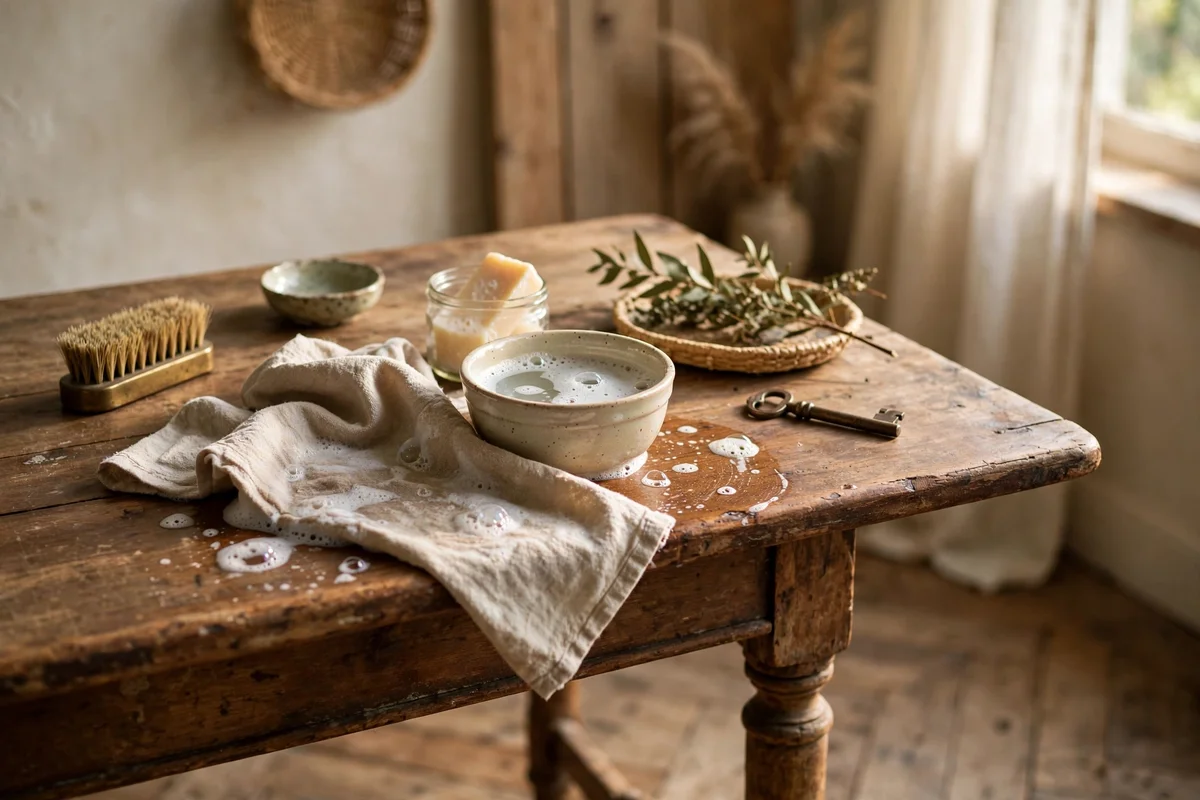
Patina is the soft glow that decades of handling leave on wood, metal and stone, and harsh cleaning erases it in minutes. Start every vintage find with the gentlest method: a soft cloth barely dampened with warm water and a drop of mild soap. Wipe, then dry at once, and see how it looks before reaching for anything stronger. Most pieces need nothing more than this first careful pass.
Never use bleach, abrasive pads or strong solvents on aged surfaces, since they strip colour unevenly and leave bright patches. For sticky grime, lay a damp cloth over the spot for ten minutes to soften it first. The mistake to avoid is polishing brass or copper to a mirror shine; the soft aged tone is worth more in a cottage room. Clean to cared for, never to brand new.
16. Pick One Colour Thread and Let It Run Through Every Corner
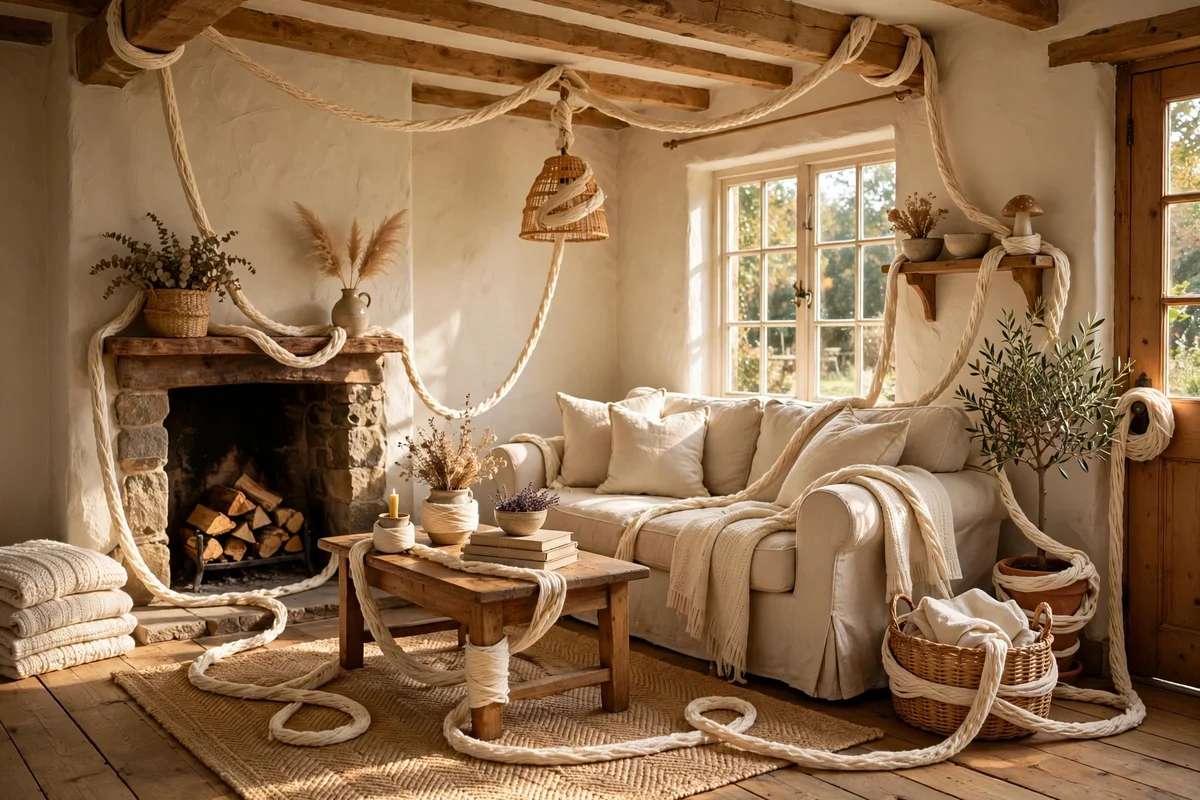
One repeated colour is what turns a jumble of secondhand finds into a calm, collected room. Warm cream is the easiest thread: it appears in enamelware, linen curtains, a painted chair and a woven rug without any of them matching exactly. Sage green, dusty blue or soft clay work the same way. Walk each room and count your thread; three to five appearances tie everything together quietly.
Keep the thread muted rather than bright, because strong colour shouts while soft colour hums. If a beloved piece breaks the thread, place it beside something that carries it, like a cream cushion on a dark chair. The mistake to avoid is introducing a second thread to fix a corner that feels dull; it splits the room in two. Strengthen the one thread instead.
17. Layer a Flatweave Rug Over a Worn One for Cottage Softness
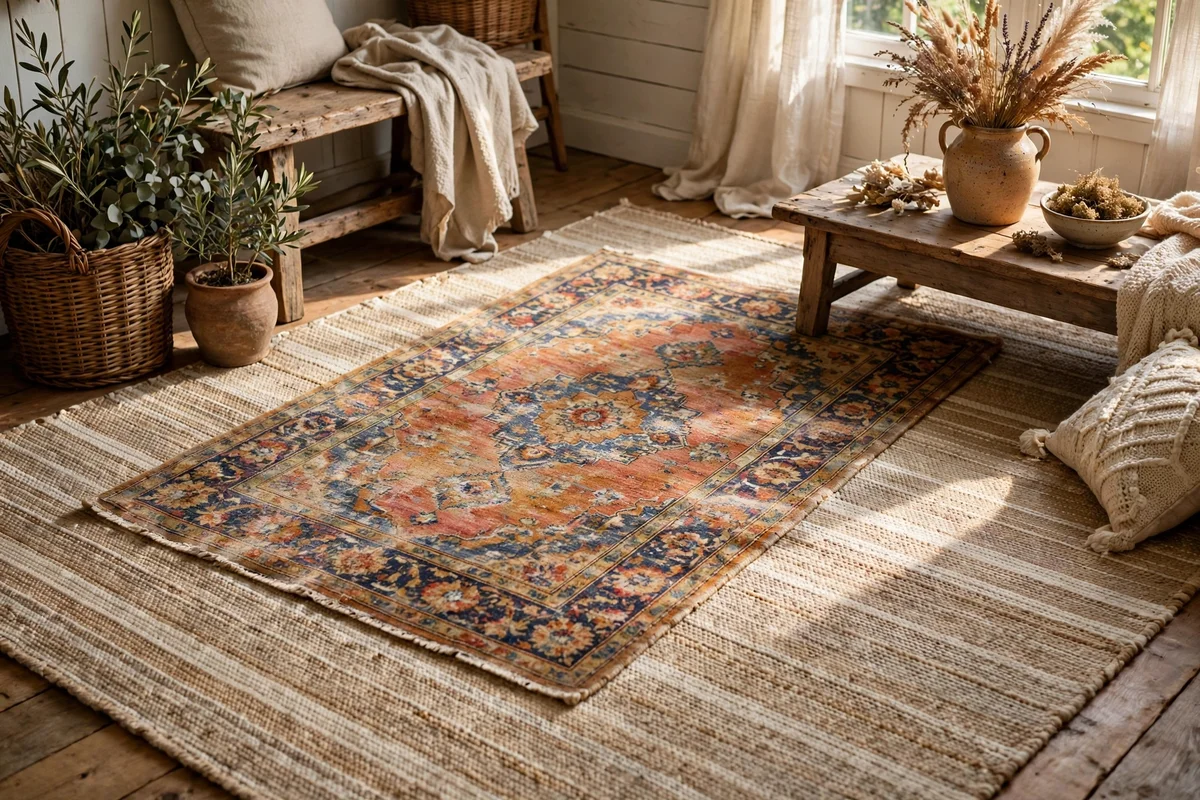
Layering rugs is the fastest way to make a bare floor feel cottage soft. Start with a large, inexpensive flatweave or jute rug, about 160 by 230 cm, then lay a smaller vintage or vintage style rug of 120 by 170 cm on top at a slight angle. The bottom layer adds warmth and protects the floor, while the top layer brings pattern and history exactly where feet land.
Keep both rugs low pile so doors still open and chairs still slide, and use a thin non slip pad between layers if they creep. Secondhand rugs cost 15 to 50 pounds or dollars depending on size and material; always air them outside for a day before laying. The mistake to avoid is layering two busy patterns that fight; let one rug carry the pattern and the other stay nearly plain.
18. Stack Old Wooden Crates as Low Shelving and Toy Storage
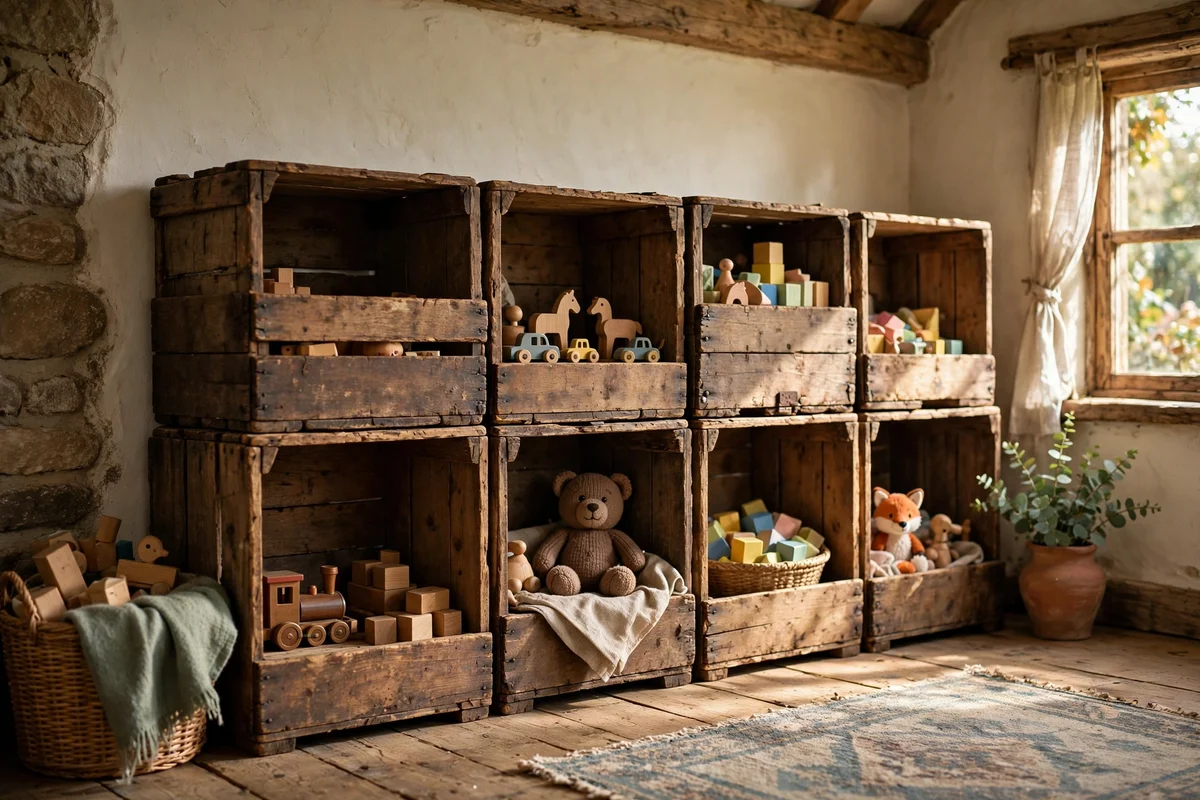
Old wooden fruit and wine crates stack into the most honest cottage shelving there is. Sand any splinters smooth with medium sandpaper, wipe them clean, and stack two or three on their sides against a wall, fixing the stack to the wall with a simple bracket for safety. A standard crate of about 40 by 30 cm holds folded throws, children’s toys or a row of paperbacks perfectly.
Line the crate bottoms with a scrap of washed linen or plain cotton so small items do not snag on the wood. Crates cost 3 to 8 pounds or dollars each at markets, or nothing from a friendly grocer. The mistake to avoid is stacking them high without fixing them to the wall; a climbing child can topple a tall tower. Keep stacks to three high and anchor every one.
19. Frame Small Vintage Prints in Mismatched Aged Frames
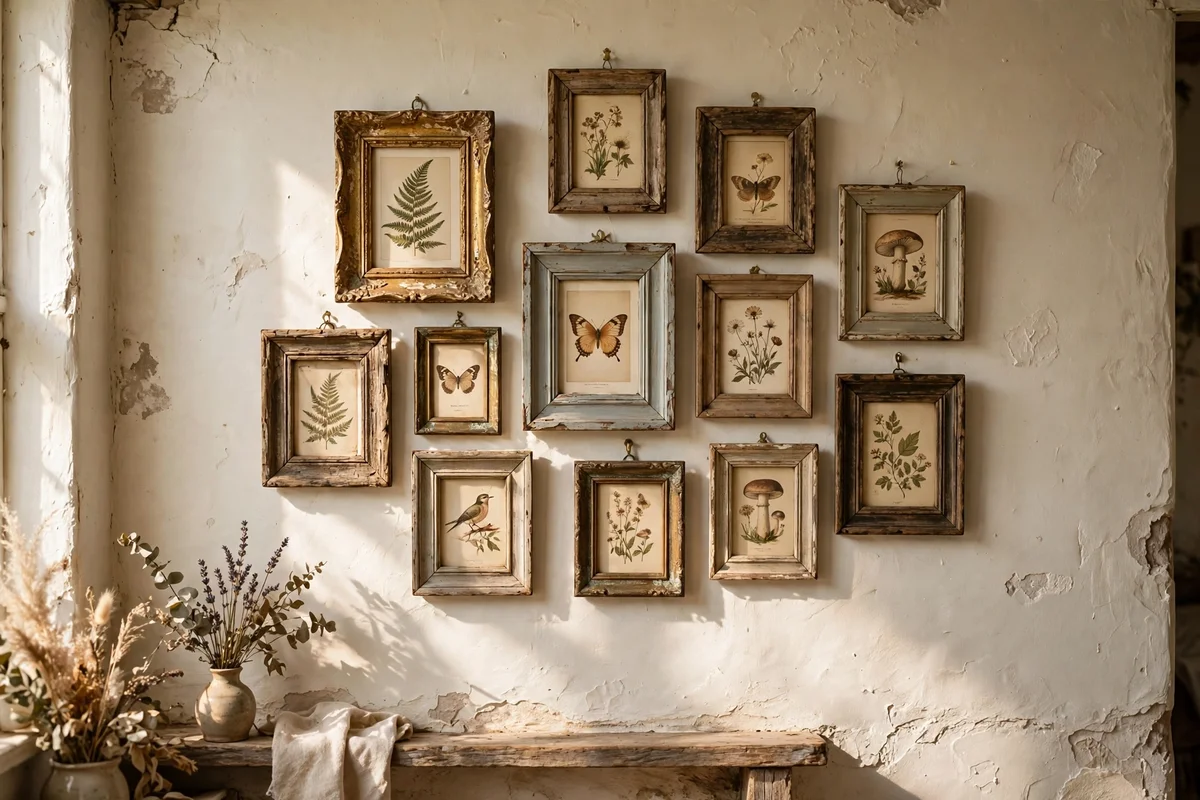
Small vintage prints, botanical plates, old maps and faded photographs, look entirely at home in mismatched aged frames. Gather frames of different woods and gilt finishes from charity shops for 1 to 4 pounds or dollars each, and unite them with matching cream mounts cut to fit. Hang three to five prints in a loose cluster with 5 to 8 cm between them, keeping the centre at about 145 cm from the floor.
Plain glass protects prints from dust, and keeping them out of direct sun stops fading. If a frame’s backing is missing, cut a firm card to size and tape it neatly. The mistake to avoid is hanging one tiny print alone on a large wall, where it looks lost. Group small pieces together and they gain the presence of one large artwork for a fraction of the cost.
20. Light Evenings With Hurricane Lanterns and Plain Candles
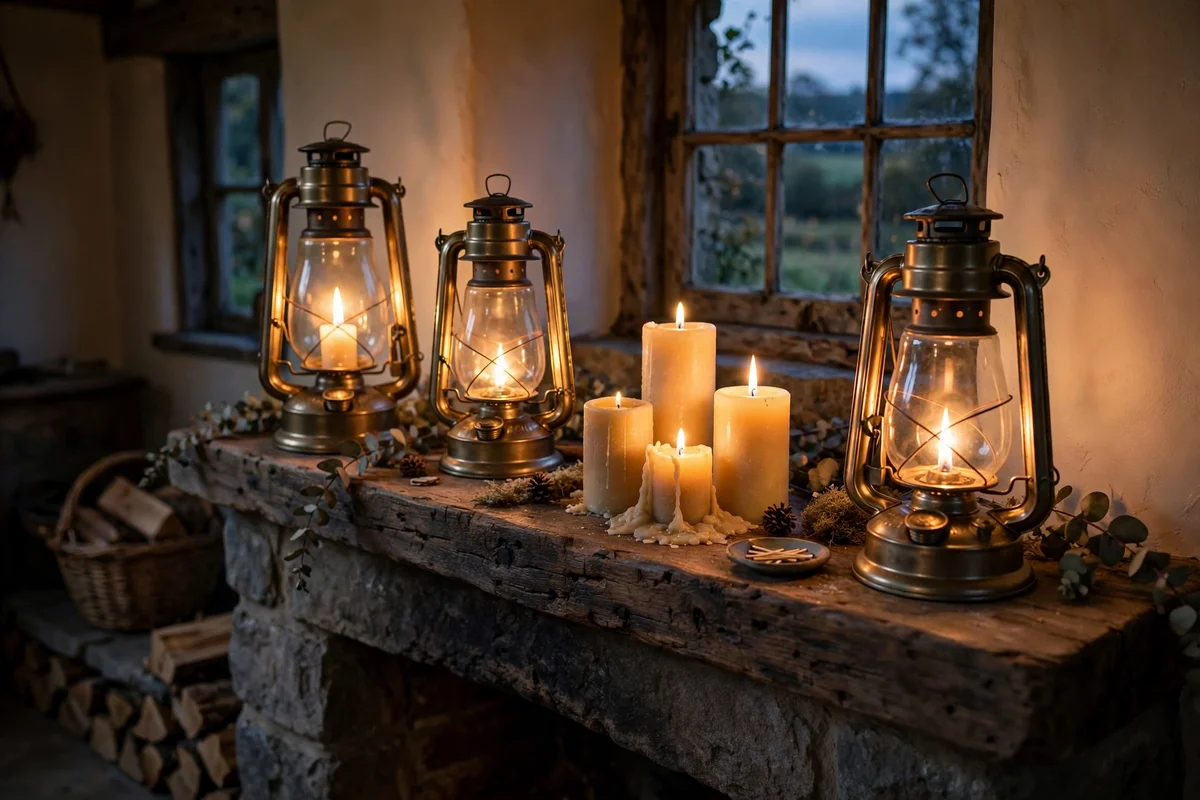
Hurricane lanterns give cottage evenings their glow: a glass chimney around a candle or oil flame that steadies the light and throws soft shadows. Place one 25 to 30 cm lantern on the mantel, one on the dining table and one by the front door, and the whole house feels lit from within. Plain ivory candles suit the look best; scented ones are fine if the fragrance is simple, like beeswax or plain vanilla.
Keep every flame at least 30 cm from curtains, dried flowers and wooden shelves, and never leave them burning in an empty room. Battery candles with a warm 2700K glow are a sensible choice for shelves children can reach. The mistake to avoid is buying ornate coloured lanterns that fight the calm palette; plain glass and simple metal age gracefully and suit every season.
21. Corral Clutter in Woven Baskets That Age Gracefully
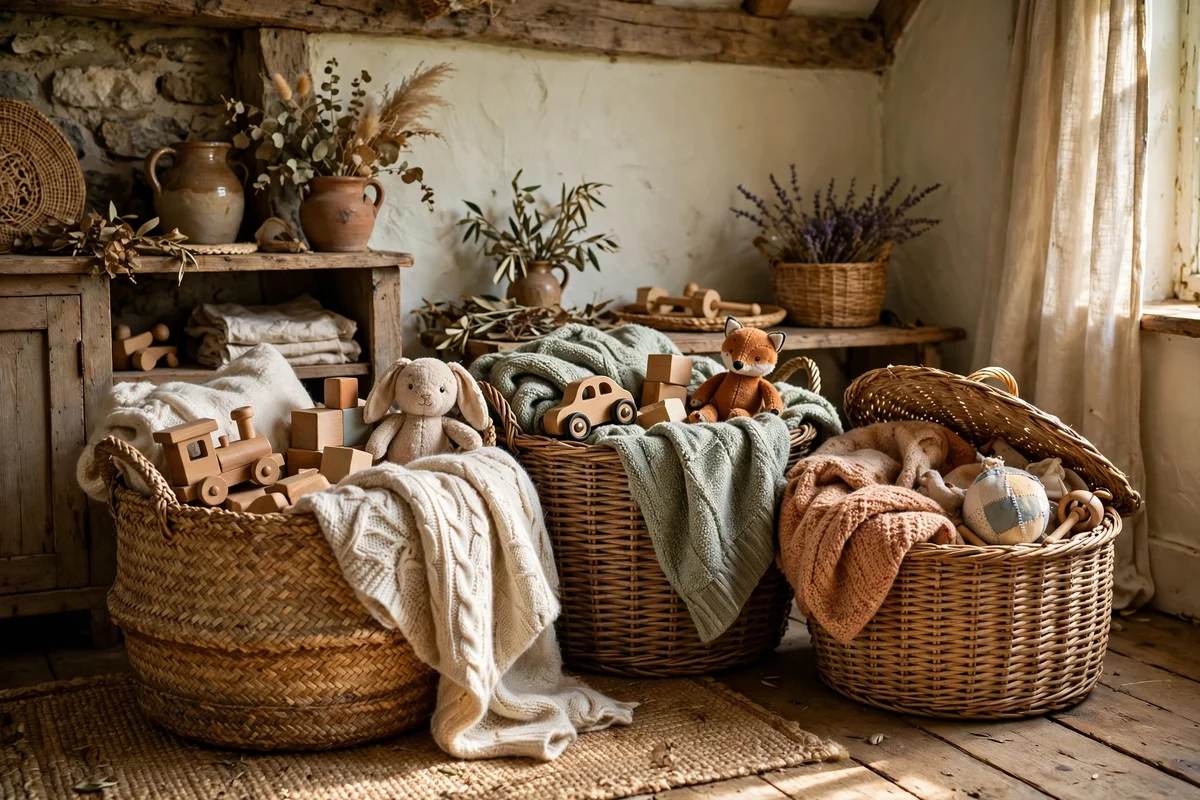
Woven baskets in willow, seagrass or rattan swallow the everyday clutter that ruins a calm room. A deep basket of 35 to 45 cm holds folded throws by the sofa, a medium one of 25 to 30 cm gathers children’s toys, and a shallow tray basket keeps keys and post by the door. Their honeyed tones deepen with age, so they look better in five years than on day one.
Check the weave for broken strands before buying, since a snag will catch clothing; a dab of wood glue fixes small breaks neatly. Secondhand baskets cost 2 to 8 pounds or dollars and wash clean with a damp cloth. The mistake to avoid is buying baskets too small for the job; an overflowing basket looks messier than no basket. Measure your clutter pile first, then buy one size up.
22. Style a Slow-Gathered Mantel With No Rush and No Rules
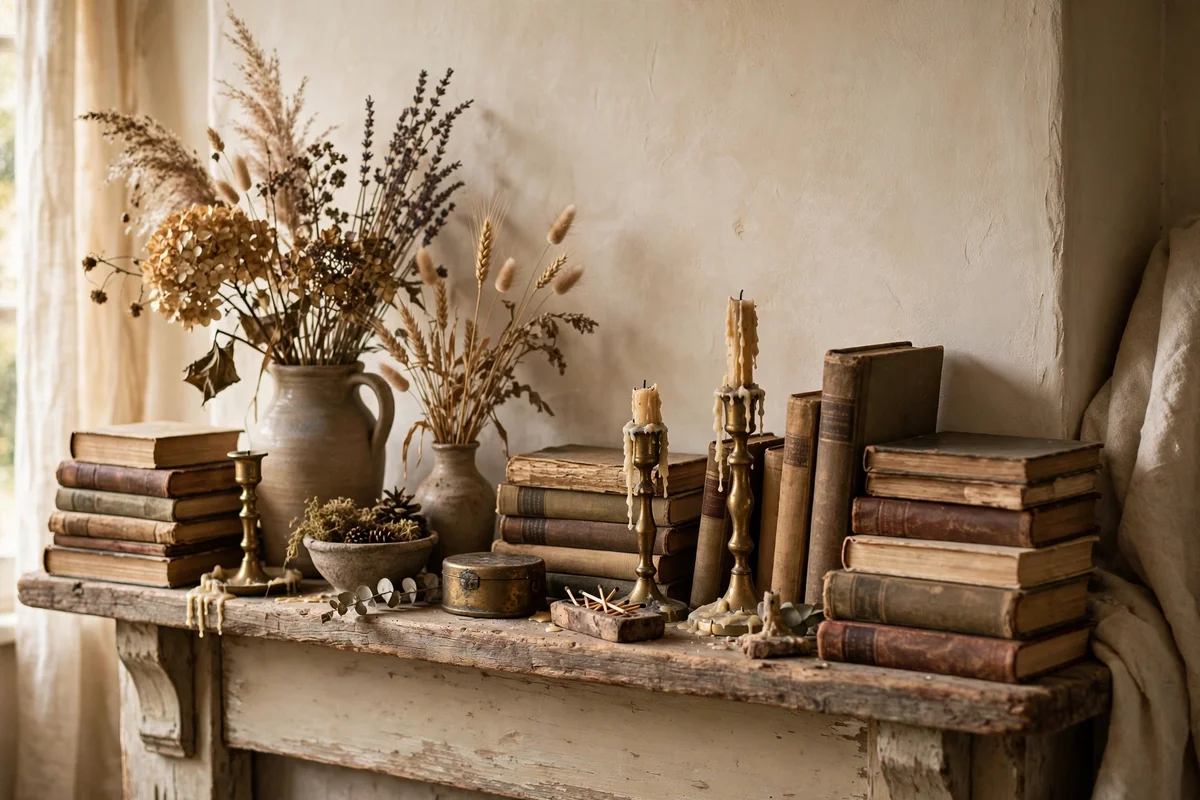
A cottage mantel should look like it gathered itself over years, because the best ones did. Start with one tall anchor at one end, like a 40 cm jug of dried flowers or a leaning framed print, then add pieces in odd numbers at varied heights: candlesticks, a small stack of old books, a stoneware bowl. Step back three metres after each addition and let your eye tell you what is missing.
Leave breathing room between objects; a mantel with seven well spaced pieces looks richer than one crowded with fifteen. Change one small thing with each season, a sprig of fresh greenery in spring or a pinecone in winter, so the display stays alive. The mistake to avoid is styling it all in one afternoon from one shop; instant mantels look staged. Let yours gather slowly, piece by piece.
A collected cottage is never finished, and that is its quiet joy. Each market visit, each family attic and each charity shop shelf adds one more honest piece to the story, and the room grows warmer without ever looking decorated. Keep your one colour thread in mind, protect the patina you love, clean gently, and let the slow pace of gathering do the styling for you. Start with the piece you already love most and build outward from there, one honest find at a time.
This week, try the easiest idea first: ask one relative what sits unused in their home, or spend twenty minutes in a charity shop with your measurements in hand. One jug, one basket or one small frame is enough to begin. The gathered feeling follows naturally once the first honest piece finds its place, and the second will follow sooner than you think.
Frequently Asked Questions
How much does it cost to decorate a room in vintage cottage style?
Between 100 and 400 pounds or dollars for a full room if you buy mostly secondhand, and far less if family pieces fill the big slots. Spend first on what you touch daily, like a sturdy chair and good curtains, and let small decor wait for market finds. The dearest mistake is buying everything new at once, which costs triple and skips the collected feeling entirely.
How do I stop mixed vintage pieces from looking messy?
Repeat one quiet colour through the room in three to five places, keep wood tones within one family, and leave breathing space between objects. A cream thread through curtains, enamelware and a cushion ties different eras together calmly. If a corner still feels noisy, remove one item before adding anything new, since editing beats buying.
Is it safe to use very old painted furniture?
Paint from before the 1960s may contain lead, so test with an inexpensive kit before sanding or stripping. A sealed, intact finish is generally safe to live with, and clear wax adds another barrier. Keep flaking painted pieces away from children’s rooms and food areas, and never sand a positive piece yourself; sealing or a professional refinisher is the safe route.
How do I clean vintage finds without ruining the patina?
Start with a soft cloth barely dampened with warm water and a drop of mild soap, then dry at once. Avoid bleach, abrasive pads and strong solvents, which strip aged surfaces unevenly. For sticky spots, rest a damp cloth on the area for ten minutes first. Clean to cared for, never to brand new, and let brass and copper keep their soft aged tone.
Where is the best place to find vintage cottage pieces cheaply?
Family attics first, since the best pieces are often free, then charity shops on weekday mornings and flea markets near closing time for gentle haggling. Flea markets suit furniture and enamelware, charity shops suit small decor and textiles. Always carry your room measurements, smell soft furnishings before paying, and test every joint on old wooden furniture.