Living Room
22 Vintage Halloween Decor Ideas With Old World Autumn Charm
By Anna Wells · · 21 min read
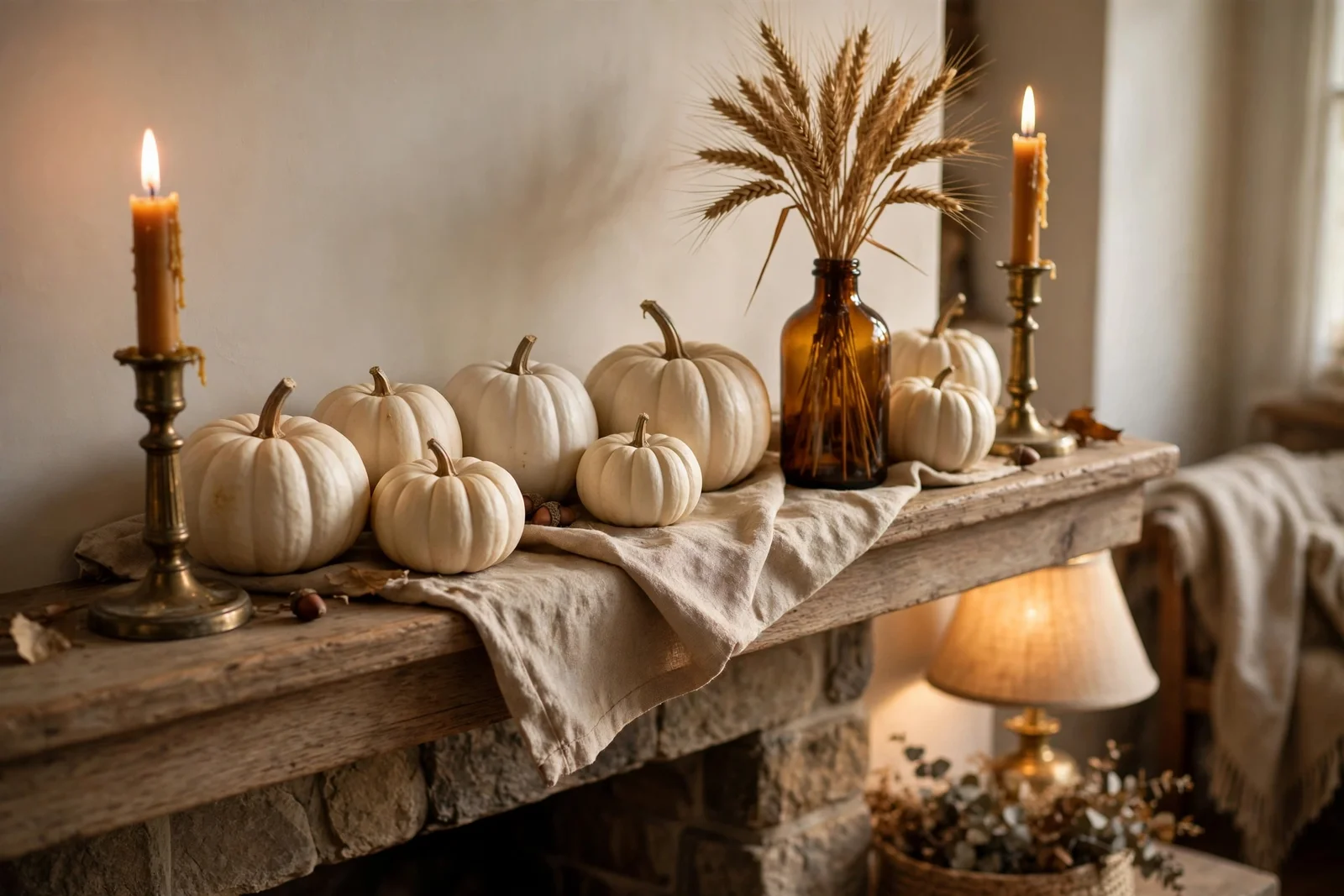
Cream pumpkins, brass candles and dried botanicals bring old world autumn charm to a family friendly Halloween harvest home.
October light turns honey gold in the late afternoon, and it falls across the mantel in a way that makes the whole living room feel like an old photograph. The air smells faintly of dried leaves, the evenings draw in a little earlier, and the house seems to ask for something warm and gathered. This is the season when vintage charm feels most at home, and Halloween becomes simply a harvest evening worth celebrating.
Below you will find 22 concrete decorating ideas built around cream and white pumpkins, black and amber accents, dried botanicals, brass candlesticks, lanterns and old books. Every idea names real materials, sizes and placements, with budget tips and one common mistake to avoid. Nothing here is frightening or startling; the whole collection treats Halloween as a gentle autumn harvest celebration the whole family can enjoy.
Work through the ideas one room corner at a time, starting wherever the family gathers most. Many of them cost under 30 and take less than an hour, so the house can be ready well before the end of October. Gather your pumpkins, dust off the brass, and let the season settle in slowly.
1. Gather Cream and White Pumpkins on the Mantel in a Loose Line
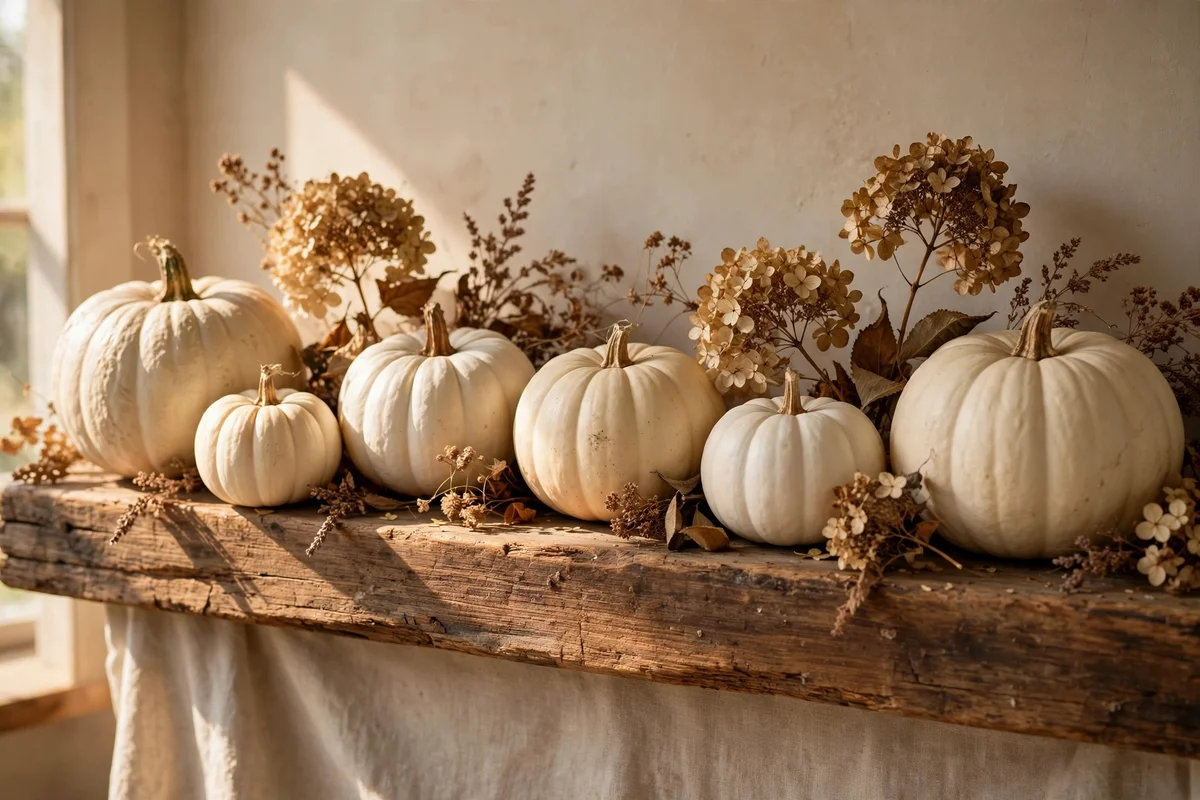
A row of five to seven pumpkins in cream, ivory and pale green tones turns a plain mantel into a harvest focal point in under twenty minutes. Choose real or good quality faux pumpkins between 10 and 20 cm across, and vary the heights so the line rises and falls naturally. Place the largest pumpkin slightly off centre and angle the stems in different directions, then tuck dried hydrangea sprigs between the gaps for texture. Keep the palette strictly neutral so the display reads vintage rather than novelty.
Dust the pumpkins with a dry cloth before arranging and the display will hold from early October through November. A runner of natural linen or hessian under the pumpkins, about 15 cm wider than the mantel shelf, adds a soft base and protects the paint. The common mistake is buying every pumpkin the same size and colour, which looks like a shop display instead of a gathered harvest. Budget tip: mix two real pumpkins with faux ones from a discount store, and the whole mantel costs under 30.
2. Line Up Brass Candlesticks With Tapered Amber Candles
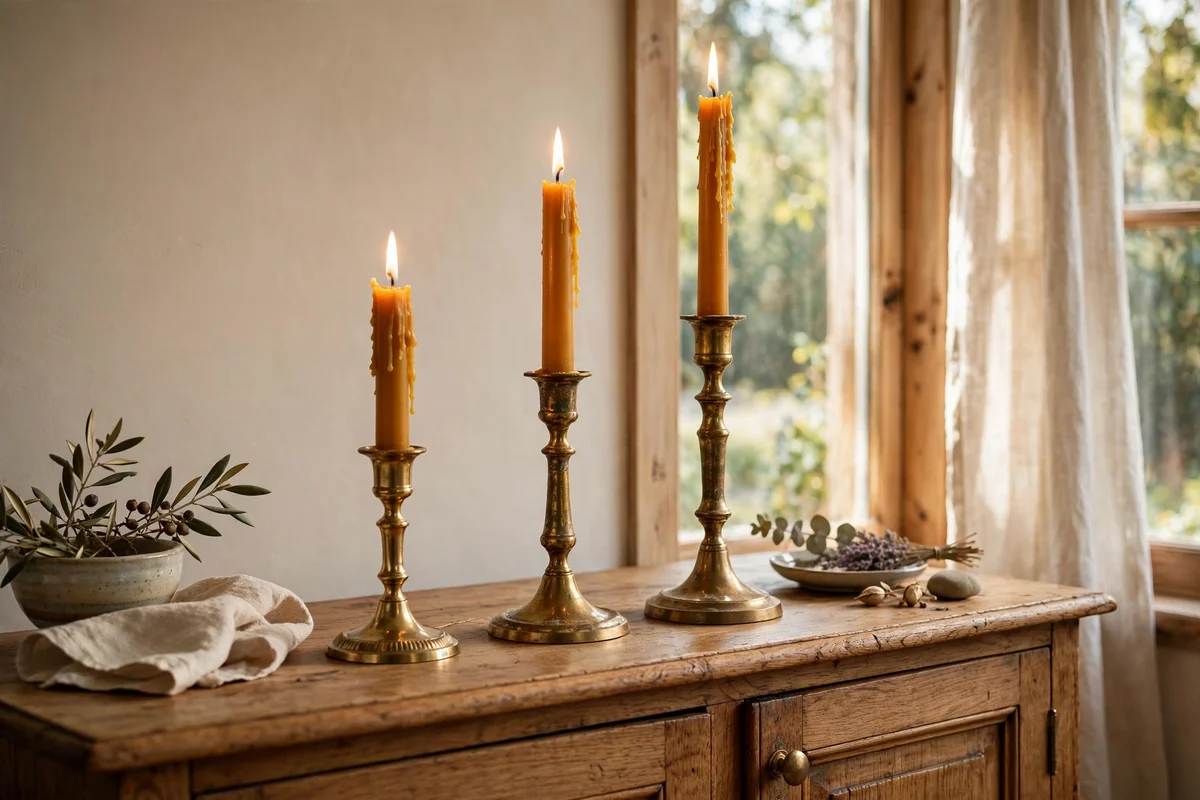
Three brass candlesticks of graduating heights, roughly 15, 22 and 30 cm, create a graceful rhythm on a sideboard or window sill. Pair them with amber or honey-coloured taper candles about 25 cm long, which cast a warm glow without any harsh brightness. Keep the brass slightly unpolished so the soft patina reads old world rather than new, and wipe dust away with a dry cloth each week. Space the sticks 10 to 12 cm apart so each flame has breathing room.
Never leave burning candles unattended, and keep flames at least 30 cm from curtains, paper garlands or dried flowers. For households with small children, battery candles in amber glass holders give a similar glow with no open flame, and good ones flicker convincingly. The mistake to avoid is mixing polished chrome holders with aged brass, which breaks the quiet vintage mood. A set of three second-hand brass sticks plus tapers usually costs between 15 and 35.
3. Fill a Plain Glass Bottle With Dried Grasses and Wheat Stems
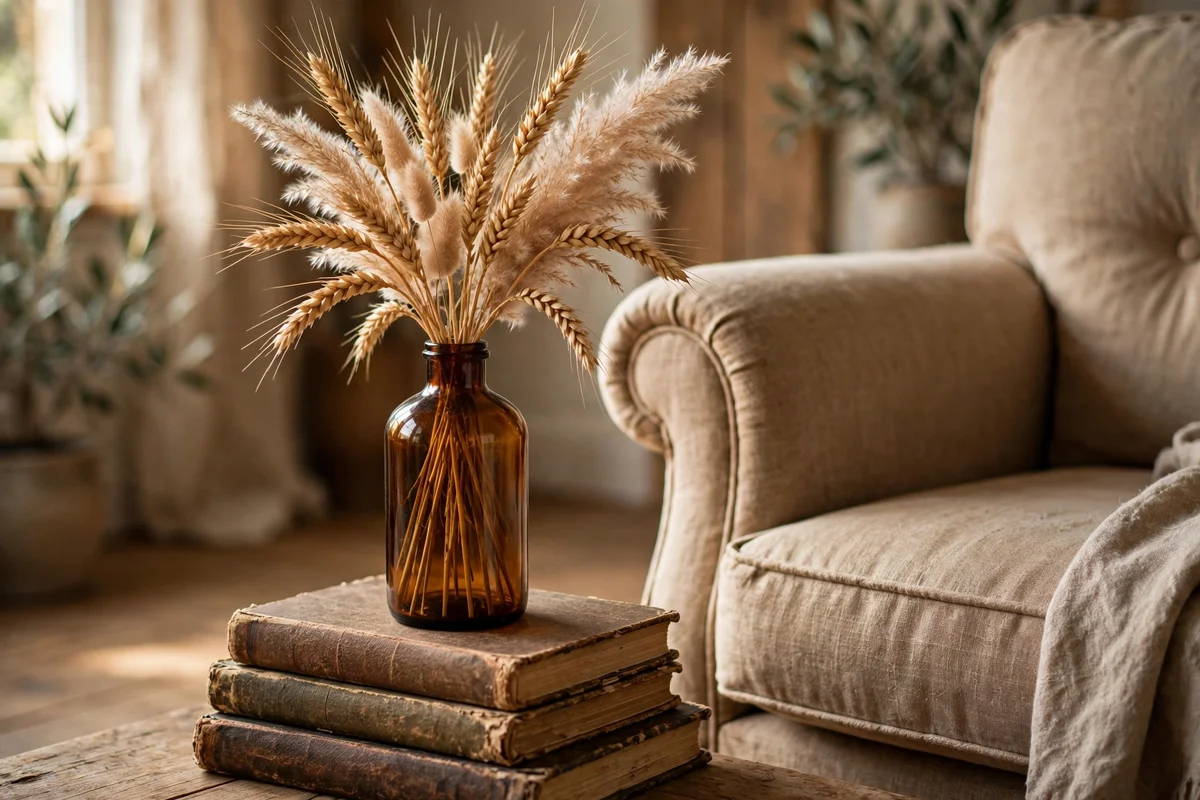
An unlabeled glass bottle, 25 to 35 cm tall, becomes an elegant vase when filled with dried wheat, pampas plumes or bleached ruscus. Use seven to nine stems, cut so the tallest stands about twice the bottle height, and fan them gently so the arrangement looks full from every angle. Place the bottle on a stack of old books or a small wooden stool beside an armchair, where the seed heads catch the evening light. Amber or green glass suits the harvest palette best.
Dried stems last for years if you keep them out of direct sun, which bleaches the colour unevenly, and away from radiators that make them brittle. Shake each bundle gently outdoors once a month to release dust, and never spray them with water. The common mistake is cramming in too many stems, which makes the bottle look stuffed instead of graceful; start with fewer and add one at a time. A bundle of dried wheat and a charity-shop bottle together cost under 12.
4. Drape a Corn Husk Garland Across an Interior Doorway
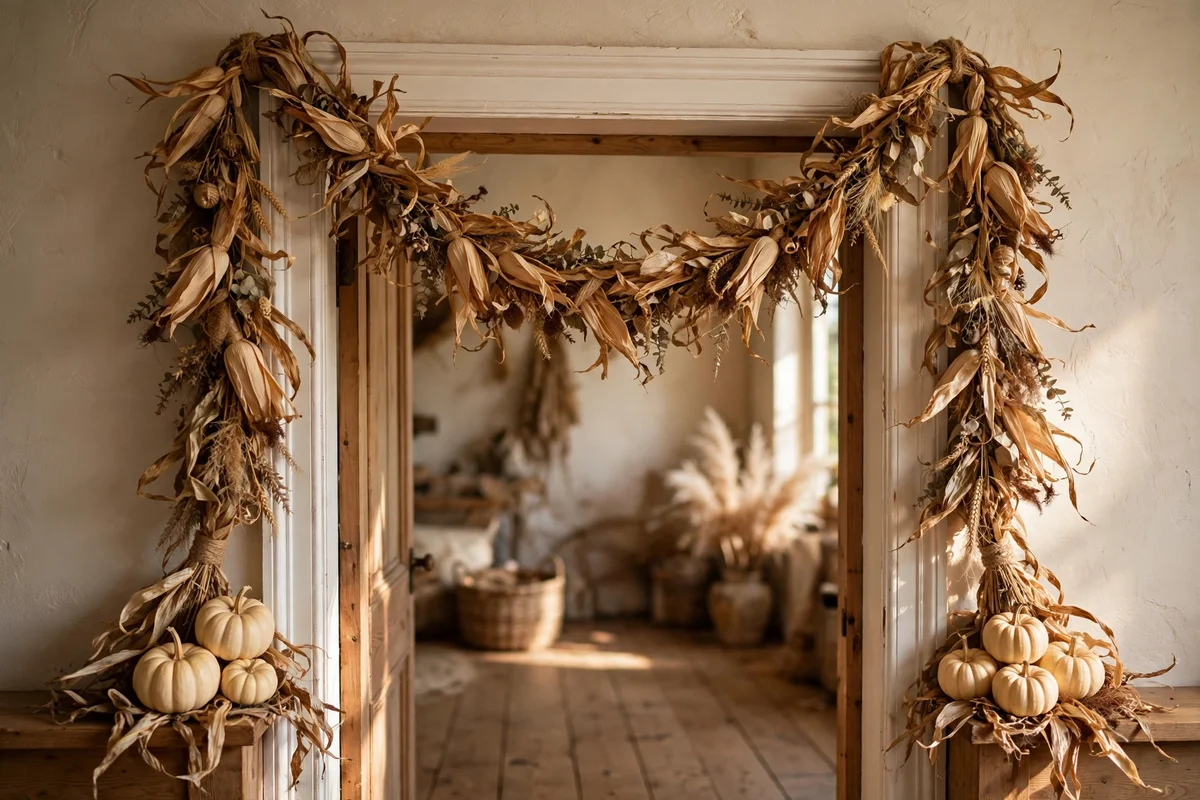
A garland of dried corn husks, about 180 cm long, draped in a soft swag over a doorway brings farmhouse harvest charm indoors. Hang it on two small removable hooks set 10 cm in from each side of the frame, and let the centre dip 25 to 30 cm for a relaxed curve. Twist the husks around a jute cord so the layers overlap, and add three or four small cream pumpkins wired to the ends. The golden tan tones glow beautifully against white or sage painted woodwork.
Make or buy the garland in late September so the husks stay supple enough to shape without cracking. If a husk snaps, spritz the back with water and wait ten minutes before bending it again. The mistake to avoid is hanging the garland where the door swings through it, which shreds the husks within days; choose a cased opening or a doorway that stays open. A ready-made husk garland of this length usually costs between 18 and 30.
5. Layer Cheesecloth and Linen Over a Sideboard Vignette
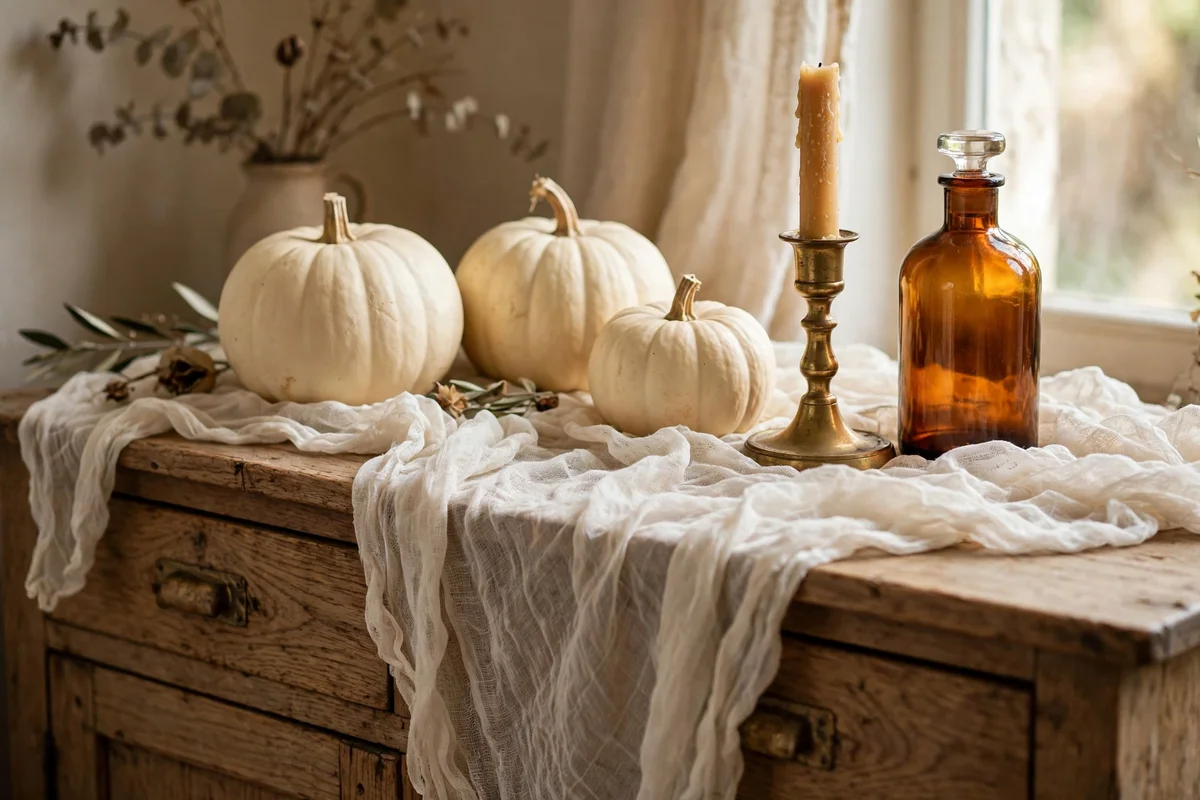
A length of undyed cheesecloth, roughly 90 by 120 cm, draped loosely over a sideboard softens every object placed on it and gives an instant vintage layer. Fold it twice for opacity, let the edges fall 15 to 20 cm over the front, and arrange cream pumpkins, a brass candlestick and one amber bottle on top. The gauzy weave catches lamplight and makes ordinary objects look gathered and deliberate. Wash the cloth in cool water so it stays soft and unbleached.
Keep the cheesecloth away from open flames, since the loose weave catches easily; use battery candles if the vignette sits near a lit taper. Ironing is unnecessary, because the gentle wrinkles are part of the old world look. The common mistake is pulling the cloth drum tight like a tablecloth, which loses all the softness; leave it billowed and slightly uneven. A metre of cheesecloth from a craft shop costs around 4 to 8 and covers a whole sideboard.
6. String a Paper Leaf and Pumpkin Garland Along the Shelves
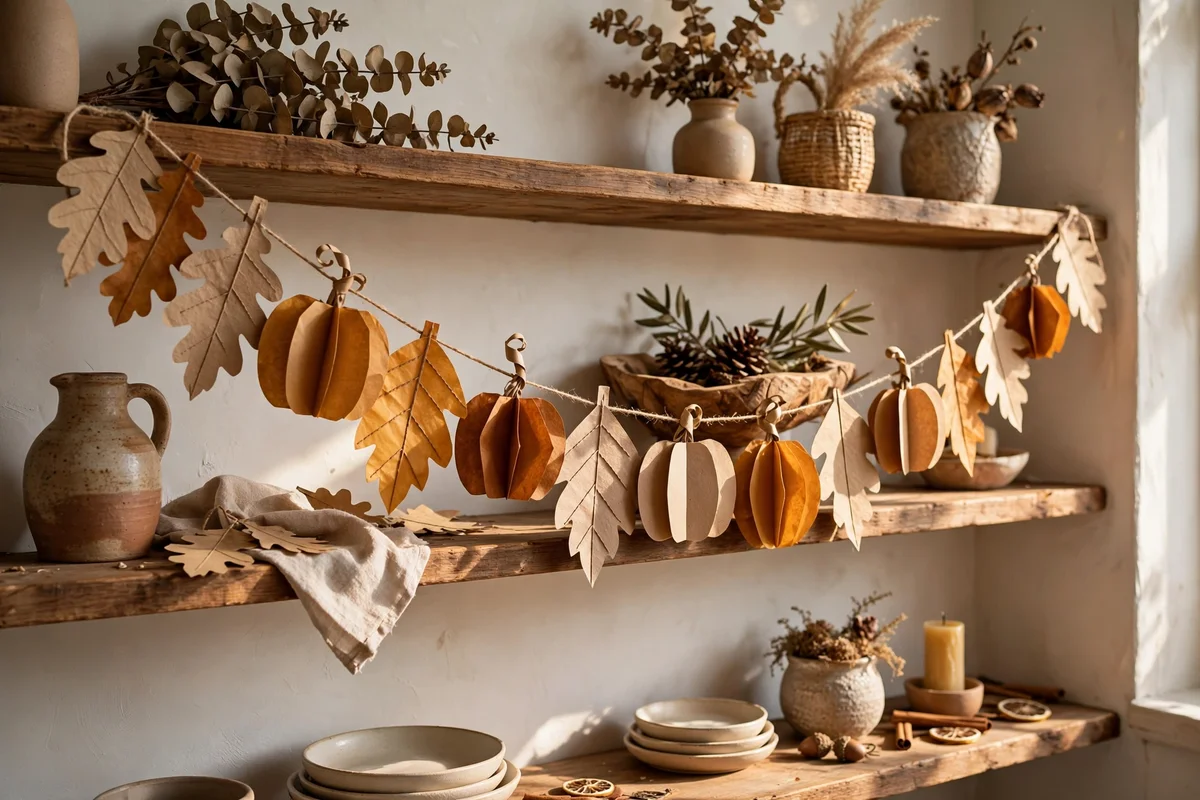
A handmade paper garland in leaf and pumpkin shapes, each piece 8 to 12 cm, adds quiet vintage pattern to open shelves or a mantel edge. Cut the shapes from kraft paper, cream card and one sheet of deep amber, and thread them on natural twine with 6 to 8 cm between pieces so the shapes can turn freely. A garland of 20 shapes spans about 200 cm, enough for one shelf. Lightly curl the pumpkin shapes around a pencil for gentle dimension.
Draw one leaf and one pumpkin template on card and reuse them, so every shape matches and the garland looks crafted rather than random. Hang it with small removable clips rather than tape, which tears paint when October ends. The mistake to avoid is cutting shapes too small; pieces under 5 cm disappear against a busy shelf. A packet of card, twine and clips costs under 10, and one afternoon of cutting makes two or three garlands.
7. Stack Old Books as a Stand for a Small Pumpkin Display
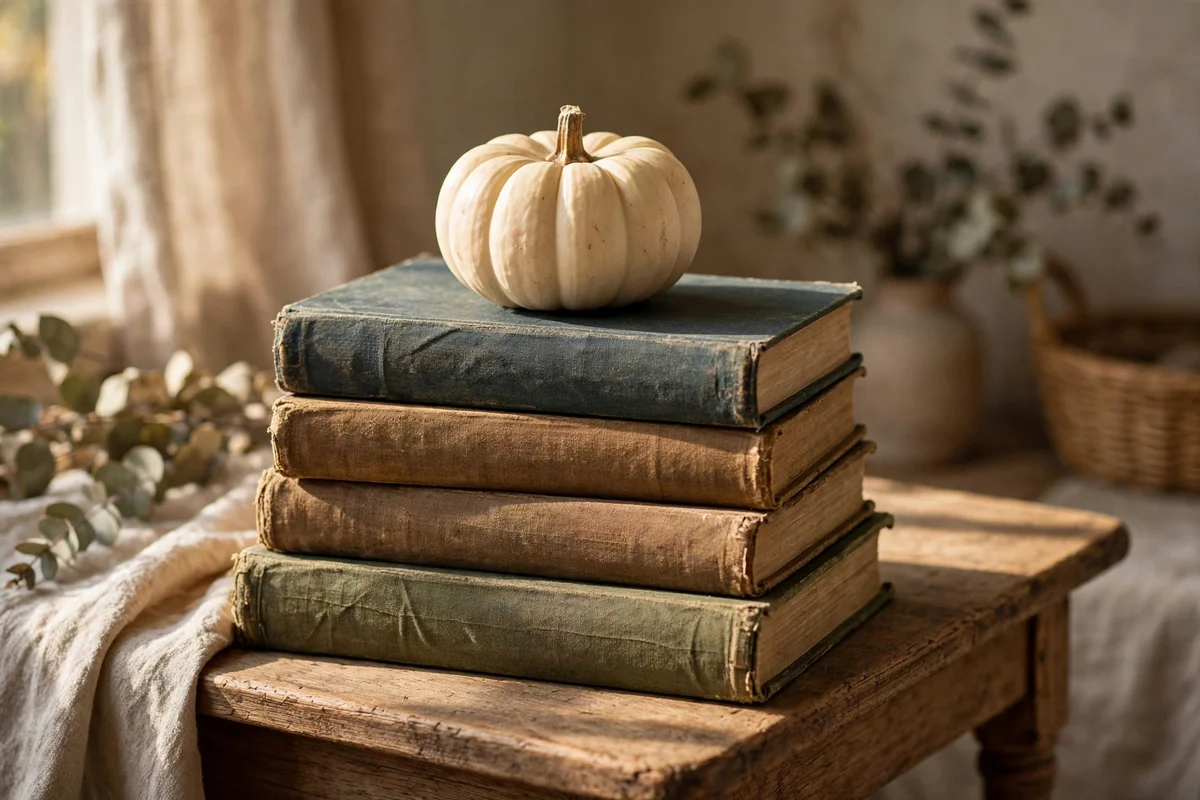
Three or four old hardback books, stacked largest to smallest, make a charming plinth for a single cream pumpkin. Choose clothbound books in muted tones, brown, olive or faded red, and turn the spines outward so the titles show as quiet texture. The stack should reach 15 to 20 cm high, lifting the pumpkin to eye level on a side table. Tie the stack with a length of natural twine if it feels wobbly, which also looks beautifully old fashioned.
Charity shops sell suitable old books for 1 to 3 each, so the whole stack costs less than one new ornament. Check the pages for damp or musty smells before bringing them home, and air them near an open window for a day if needed. The common mistake is stacking glossy modern paperbacks, which break the vintage mood instantly; only cloth or leather bindings belong here. Place a small square of felt under the stack to protect polished wood.
8. Set a Pair of Lanterns Flanking the Front Door Steps
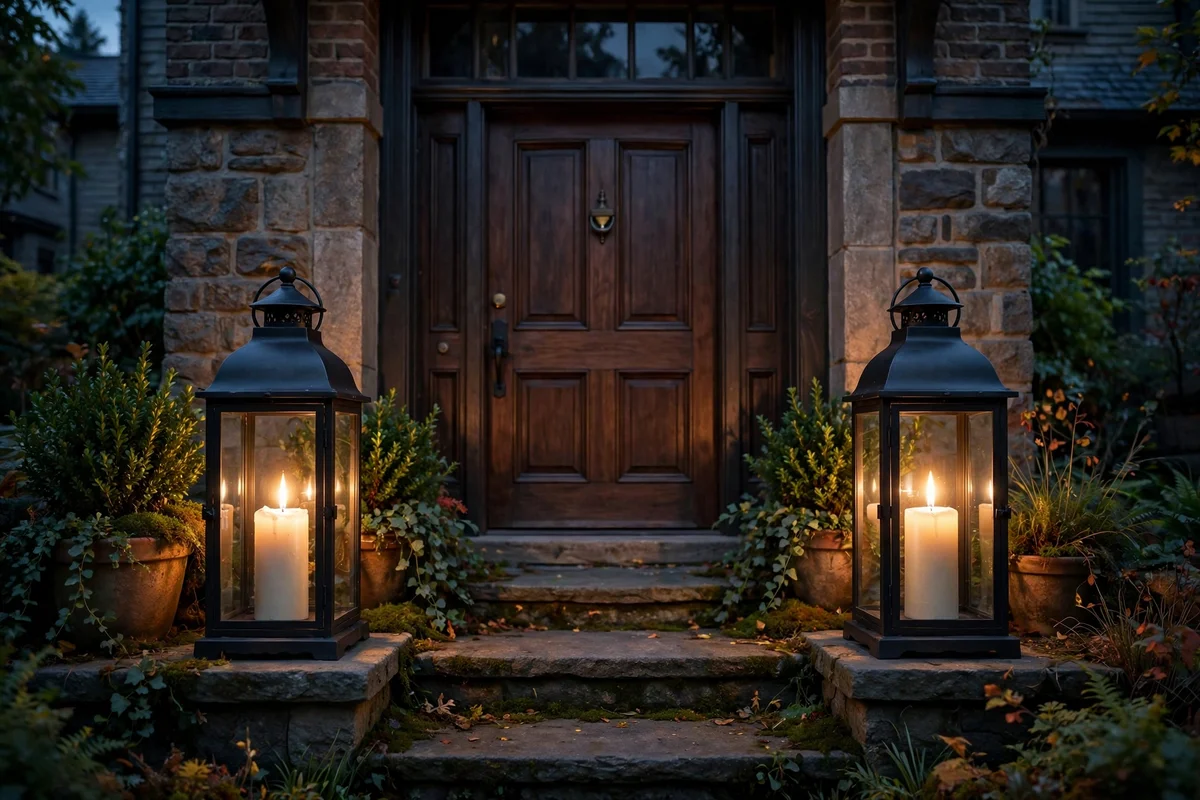
Two matching lanterns, 30 to 40 cm tall, placed one step below each side of the front door create a welcoming harvest entrance. Choose black metal or aged bronze frames with clear glass panels, and set a chunky pillar candle or a warm LED candle inside each. The lanterns read best when they sit on the same level, so shim one with a flat stone if the steps are uneven. Light them at dusk from early October for the full effect.
Use LED candles outdoors so wind never blows the display out, and choose ones with a timer that switches on at dusk automatically. Wipe the glass panels with a damp cloth every two weeks, since dust dulls the glow quickly outside. The mistake to avoid is choosing lanterns so small they vanish against the doorway; 30 cm is the minimum for a standard door. A pair of simple metal lanterns usually costs between 20 and 45.
9. Dress the Sofa With Black and Amber Cushion Covers
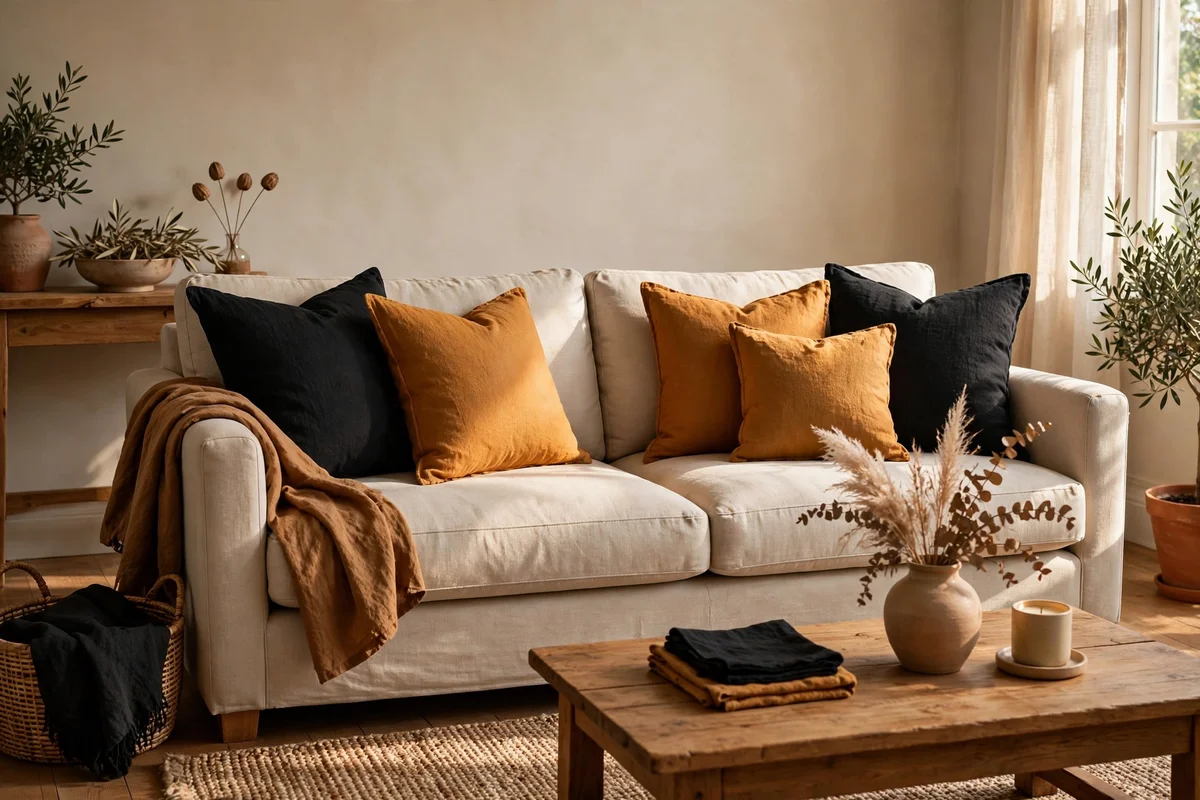
Two black and two amber cushion covers on a neutral sofa give a quiet nod to the season without any novelty prints. Choose covers 45 by 45 cm in linen or washed cotton, and keep the pattern solid or very subtly striped so the colour does the talking. Arrange them with the amber pair at the outer ends and the black pair inside, which frames the seating area softly. The deep tones look especially rich against cream or oatmeal upholstery.
Swap the covers in early October and store them folded with a lavender sachet so they smell fresh next year. Wash linen covers inside out in cool water to protect the dye, and dry them flat to keep the shape. The mistake to avoid is buying cushions in every autumn colour at once, which turns the sofa into a patchwork; two colours maximum keeps it calm. Four good quality covers usually cost between 24 and 60.
10. Build a Porch Welcome With Pumpkins and One Lit Lantern
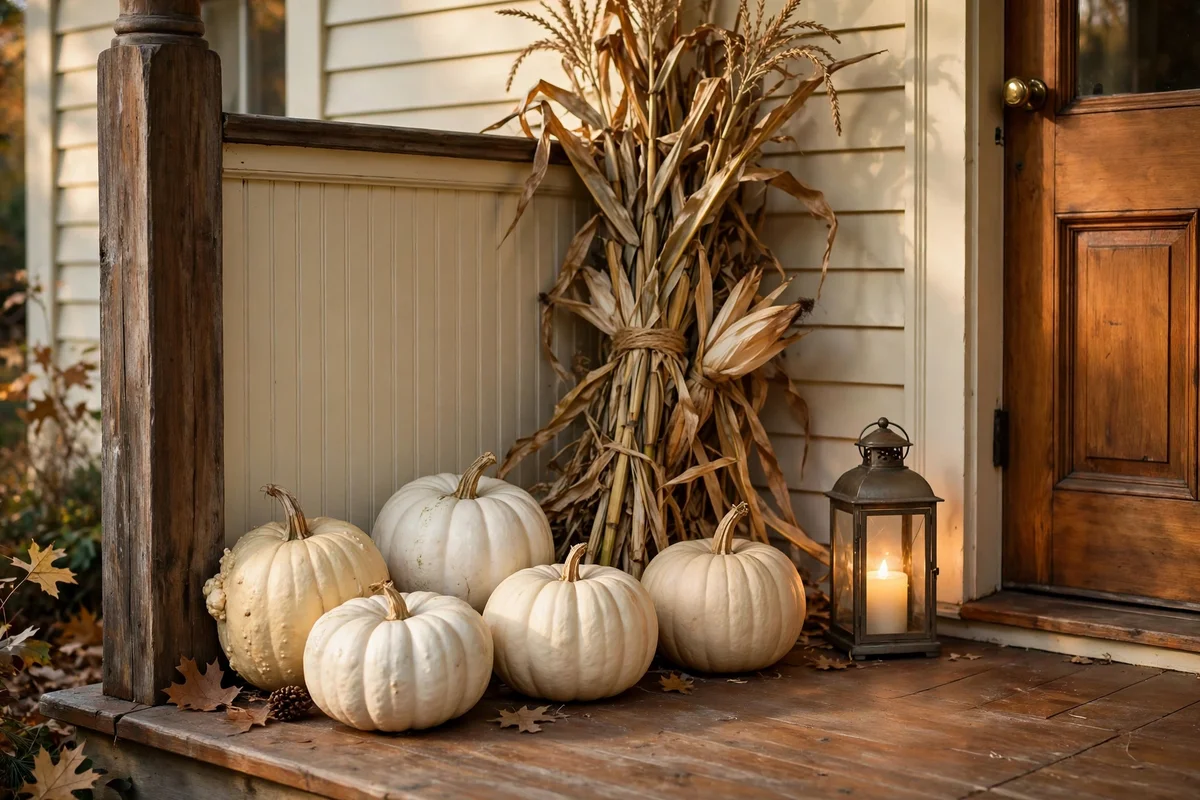
A cluster of five pumpkins in cream, white and soft orange beside one lit lantern makes the porch feel genuinely welcoming. Vary the sizes from 12 to 30 cm and set the tallest at the back against the wall, with the smallest tilted forward for a natural tumble. Keep the arrangement to one side of the door so the path stays clear, and tuck dried corn stalks behind the tallest pumpkin for height. Waterproof LED candles keep the lantern glowing in any weather.
Choose real pumpkins with intact stems and no soft spots, and they will last four to six weeks on a covered porch. Turn each pumpkin a quarter turn every week so one side never sits in damp, which prevents early rot. The mistake to avoid is blocking the door swing or narrowing the path below 90 cm, which annoys every visitor. Five real pumpkins plus one lantern usually total between 25 and 50.
11. Arrange a Wooden Tray of Pumpkins and Dried Blooms as a Table Centerpiece
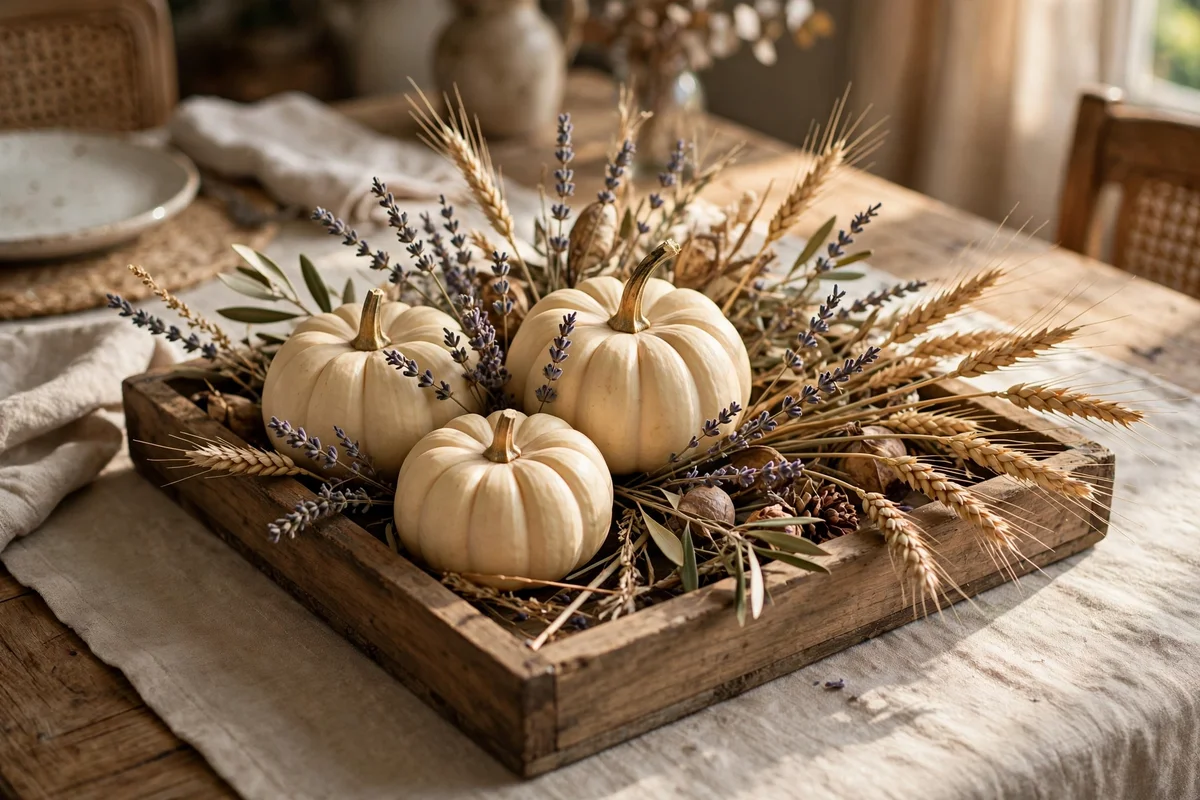
A rectangular wooden tray, 40 to 50 cm long, corralled with small pumpkins and dried blooms makes a centrepiece that never topples at the table. Line the tray with a folded linen napkin, then set three cream pumpkins of 8 to 12 cm along the centre and fill the gaps with dried lavender, wheat and seed heads. The tray keeps everything contained and lifts away in seconds when the table is needed for a meal. Choose unvarnished wood for an honest vintage feel.
Keep the tray away from the table edge by at least 20 cm on each side so elbows never catch it during dinner. Refresh the dried flowers once a season, since colours fade after a few months in bright rooms. The mistake to avoid is building the centrepiece so tall it blocks conversation across the table; keep everything under 25 cm high. A simple wooden tray plus pumpkins and dried stems usually costs between 20 and 40.
12. Place Tall Dried Branches in a Ceramic Urn by the Fireplace
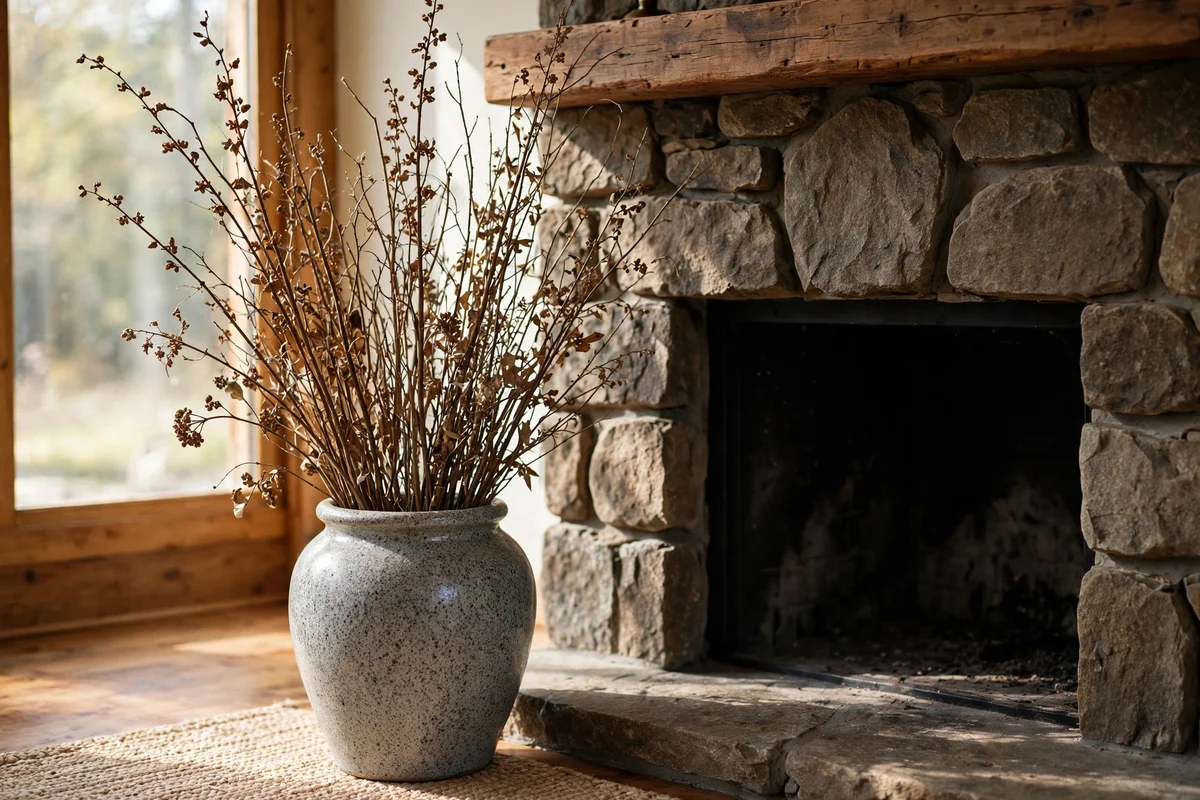
A ceramic urn or large jug, 40 to 55 cm tall, filled with bare branches or dried eucalyptus stems brings sculptural height to a fireplace corner. Use five to seven branches, each 90 to 120 cm long, and arrange them so they lean at slightly different angles for a natural silhouette. Cream, stone or speckled glazes suit the harvest palette and let the branch shapes stand out. Weight the base with clean gravel if the branches make the urn top heavy.
Gather branches from your own garden after pruning, which costs nothing and guarantees they are fully dry. Check each branch for insects before bringing it indoors, and leave them in a garage for a week if you are unsure. The mistake to avoid is placing the urn where the fireplace door opens into it, which knocks the branches over; allow 60 cm of clearance. A charity-shop urn plus gathered branches is often a project under 15.
13. Run a Linen Runner Down the Dining Table With an Autumn Vignette
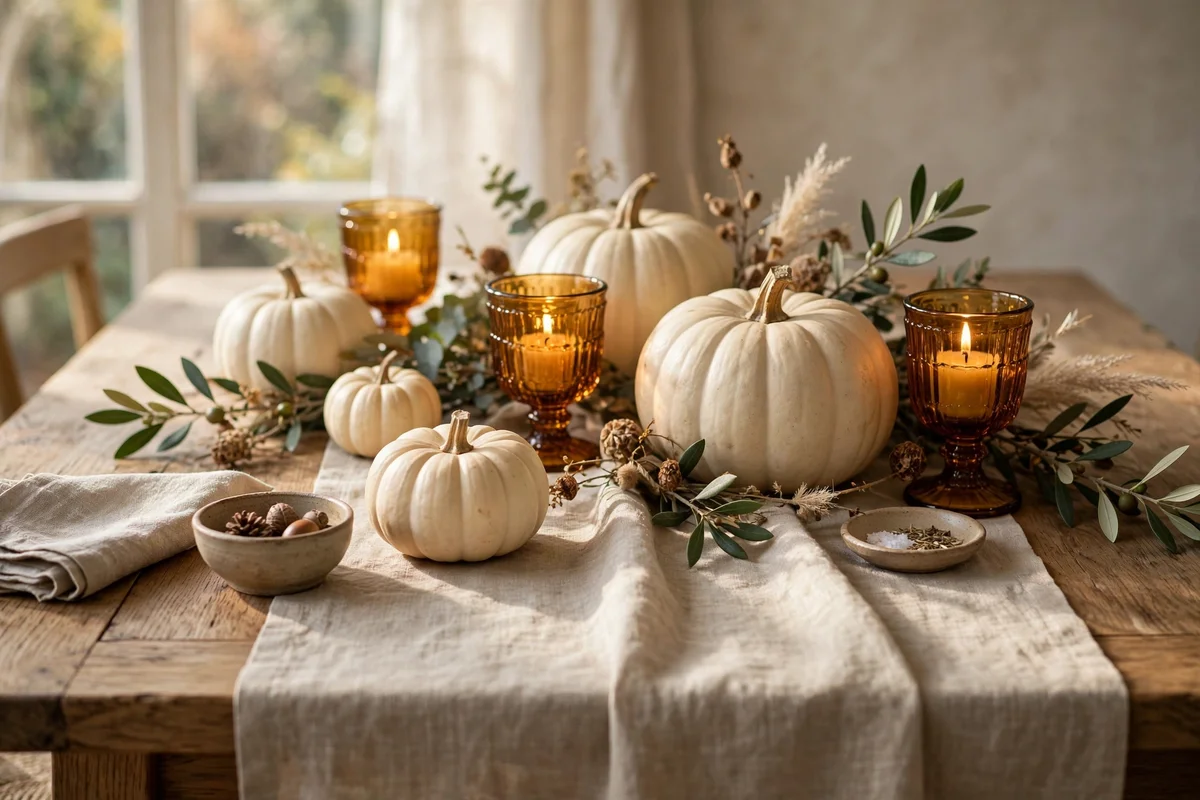
A natural linen runner, 30 to 40 cm wide and 40 cm longer than the table, grounds a seasonal dining display. Centre three cream pumpkins of descending size along the runner and add two amber glass candle holders and a small bundle of dried wheat tied with twine. Keep the vignette low, under 20 cm, so guests can see each other across the table. The raw linen edge, left unhemmed, adds to the old world charm.
Wash the runner in cool water with mild soap and dry it flat so the fibres stay soft and the colour remains natural. Store it rolled rather than folded to avoid hard creases that show through the display. The mistake to avoid is choosing a runner so wide it covers the whole table; 30 to 40 cm leaves wood visible on both sides, which is the point. A metre and a half of linen from a fabric shop usually costs between 12 and 25.
14. Turn Plain Glass Bottles Into Glowing Candle Holders
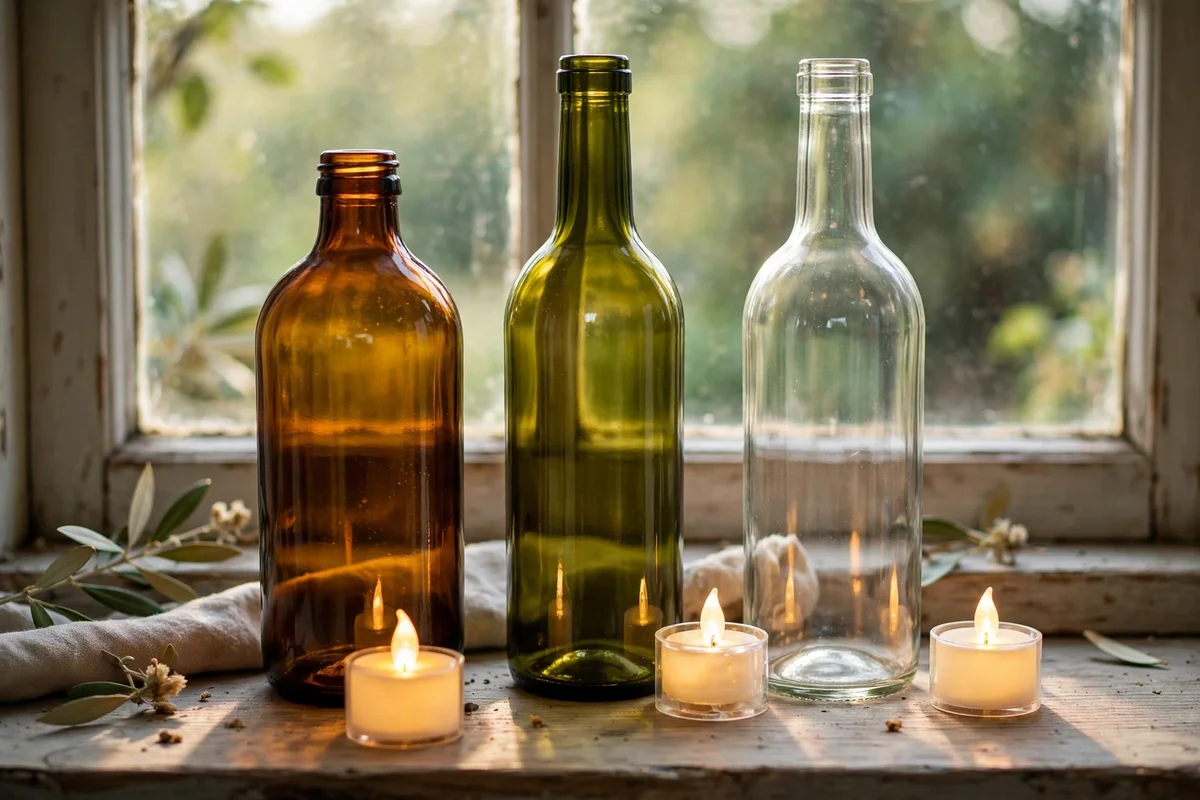
Plain glass bottles without labels, 20 to 30 cm tall, become gentle lanterns when each holds a slim LED candle. Group three bottles of different heights on a windowsill or hearth, and the glass will scatter the warm light across the wall behind. Amber, olive and clear glass work best together, since the slight colour variation looks collected over time. Remove any sticky residue with warm soapy water before displaying them.
LED candles are essential here, since real flames inside narrow bottles overheat the glass and soot the interior. Choose LEDs with a warm 2200K tone rather than cool white, which would shatter the vintage mood. The mistake to avoid is using painted or frosted bottles, which block the light instead of scattering it; plain clear or tinted glass is the goal. A set of three recycled bottles plus LED candles usually costs under 15.
15. Wrap the Staircase Banister With a Vintage Paper Garland
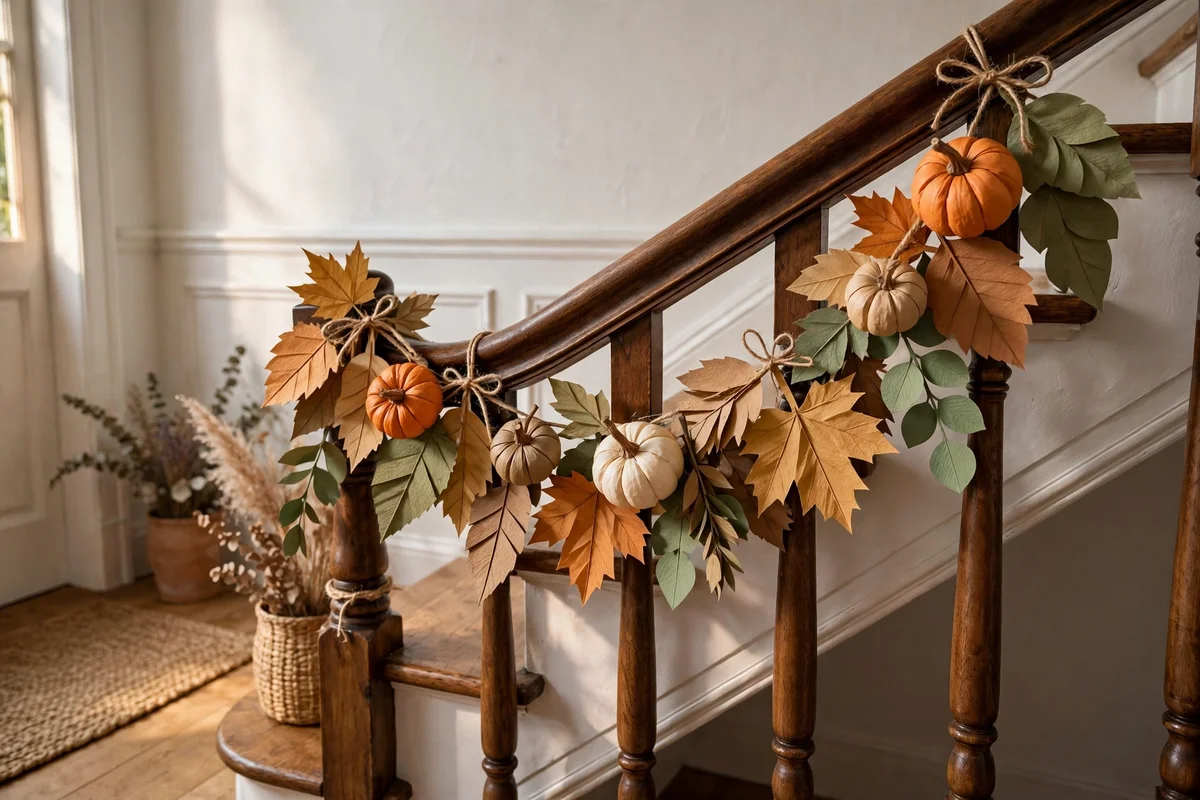
Wind a paper leaf and pumpkin garland loosely around the banister newel posts and let it swag between them for a gentle harvest welcome. A garland of 240 to 300 cm suits most staircases, with the deepest swag dipping 30 cm below the handrail. Tie it at three points with natural twine so it cannot slide, and add two small dried flower posies where the swags meet the posts. The shapes turn softly as people pass, which adds quiet movement.
Keep the garland clear of the handrail grip, since hands brushing past daily will tear paper shapes within a week. Attach it to the outer face of the balusters instead, where it can be admired without being touched. The mistake to avoid is using sticky tape on painted woodwork, which lifts paint when the season ends; twine ties or removable clips are kinder. One long paper garland and twine usually cost under 12.
16. Group Three Pumpkins of Different Sizes Beside the Hearth
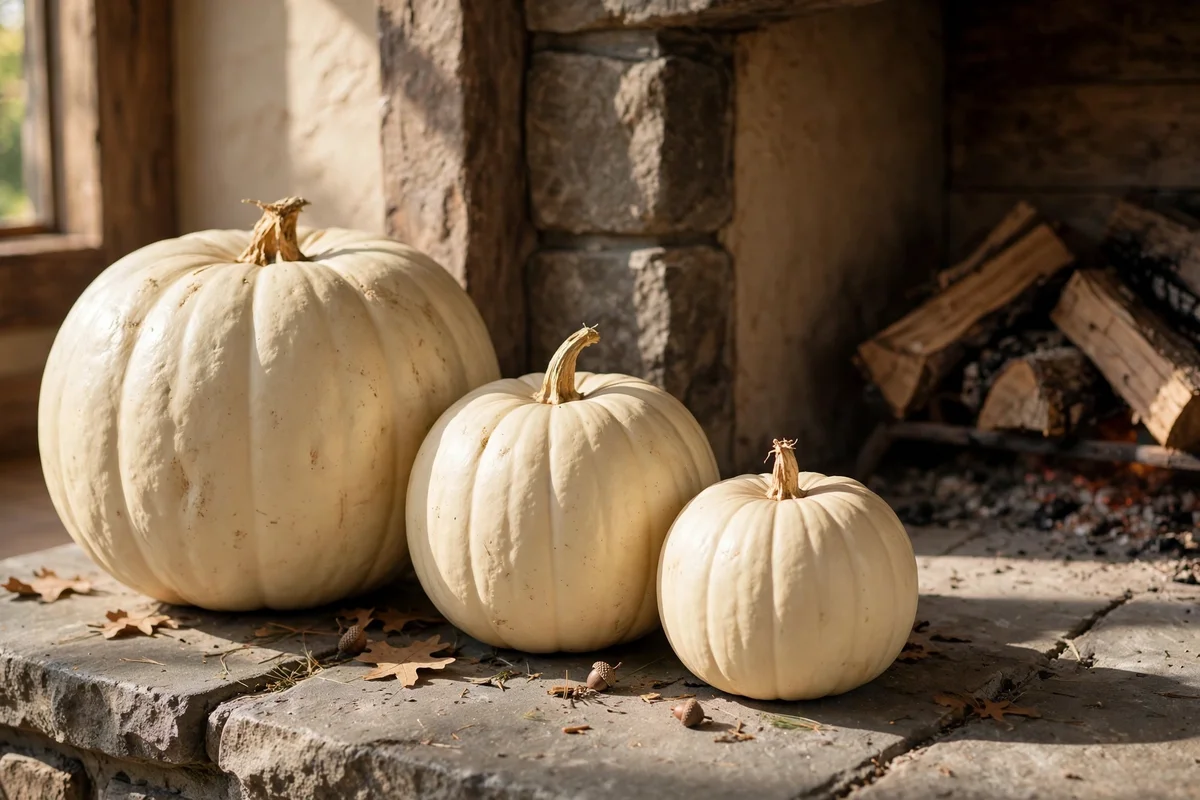
Three pumpkins in cream, ivory and pale sage, sized roughly 30, 20 and 12 cm, stacked or grouped beside the hearth look effortlessly gathered. Place the largest directly on the hearthstone, the medium one on a low wooden crate, and the smallest tilted against the pair. The stepped heights echo the fireplace shape and draw the eye upward to the mantel. Choose pumpkins with flat bases so nothing wobbles on the stone.
Keep pumpkins at least 50 cm from the firebox opening, since heat and stray sparks dry the skins and shorten their life. Real pumpkins last three to five weeks indoors at normal room temperature. The mistake to avoid is painting real pumpkins with thick craft paint, which traps moisture and makes them rot from the inside; choose naturally pale varieties instead. Three good sized pumpkins usually cost between 10 and 20.
17. Style a Brass Tray With Candles and Dried Seed Heads
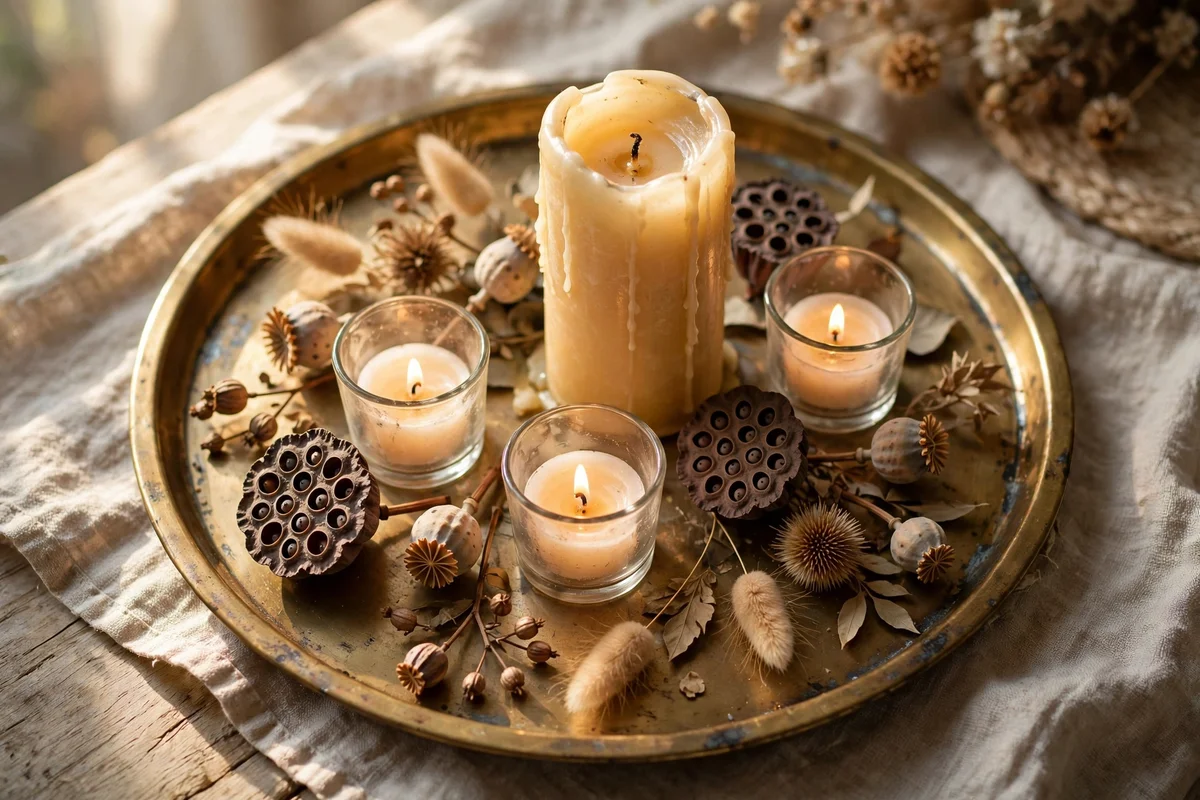
A round brass tray, 30 to 35 cm across, becomes a portable harvest vignette when filled with candles and dried seed heads. Set one pillar candle of 10 cm in the centre, surround it with three shorter votives, and tuck dried honesty, poppy heads and wheat between them. The aged brass reflects candlelight warmly and suits cream pumpkins placed alongside. Carry the tray to the dining table for meals, then back to the sideboard after.
Keep all flames at least 10 cm from the dried seed heads, since dry material catches quickly, or swap the votives for LED versions. Polish the tray once a season with a soft dry cloth and skip harsh chemicals that strip the aged finish. The mistake to avoid is overfilling the tray until the candles hide; each element should be visible from above. A second-hand brass tray plus candles and dried stems usually costs between 18 and 35.
18. Hang a Harvest Wreath of Dried Leaves on the Front Door
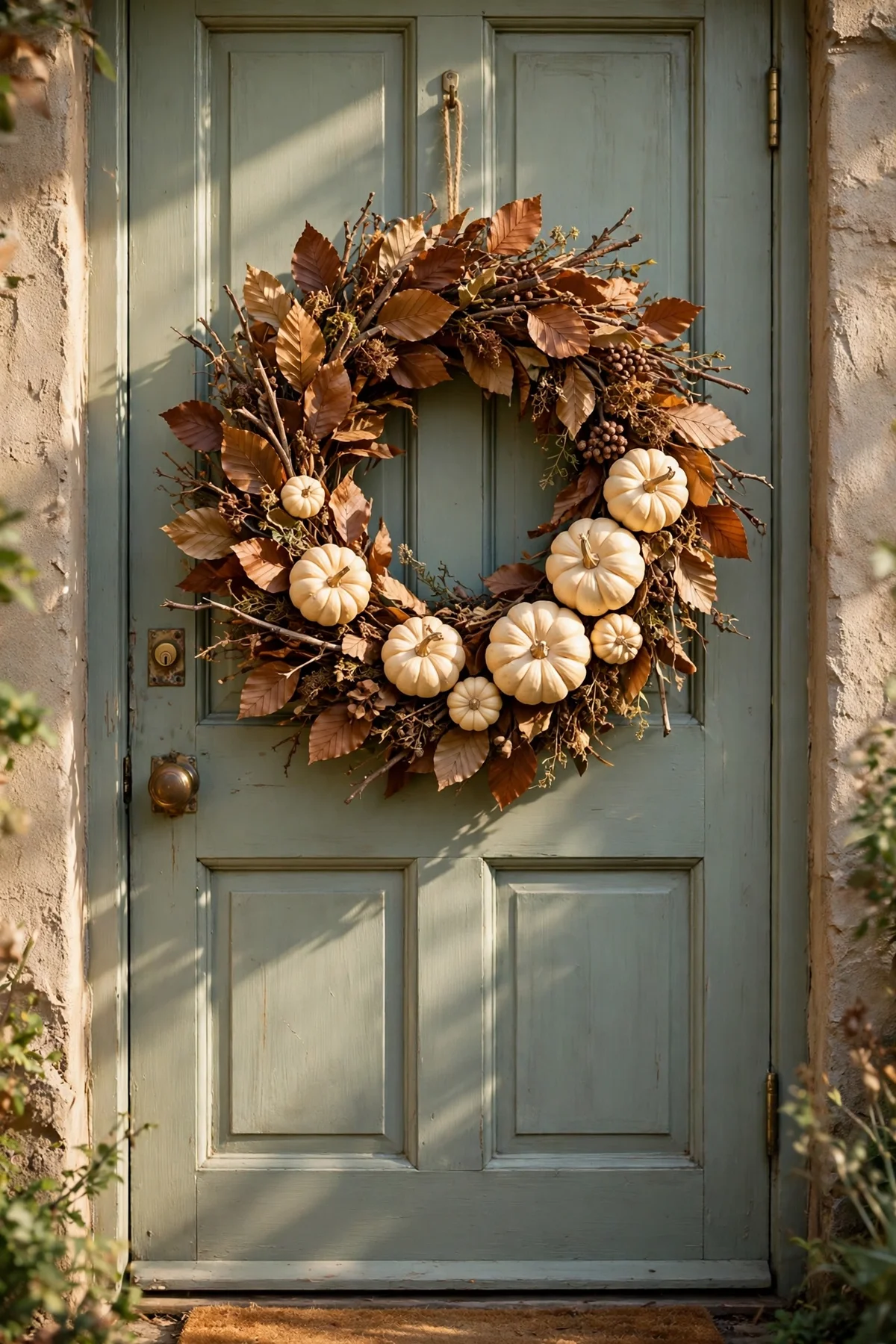
A wreath of dried beech leaves, grasses and cream mini pumpkins, 40 to 50 cm across, welcomes guests with harvest texture instead of anything startling. Build it on a natural vine base and wire the dried elements in overlapping layers so no base shows through. Hang it at eye level, about 150 cm from the ground, on a simple hook over the door. The muted golds and tans suit black, green or red painted doors equally well.
Hang the wreath on a covered porch or inside the hallway, since rain and strong wind shred dried leaves within days. Mist the leaves lightly with hairspray before hanging to reduce shedding. The mistake to avoid is making the wreath so thick it stops the door closing; keep the depth under 15 cm. A vine base plus dried materials usually costs between 15 and 30, and the wreath lasts several seasons indoors.
19. Set Black Taper Candles on a Linen-Draped Console
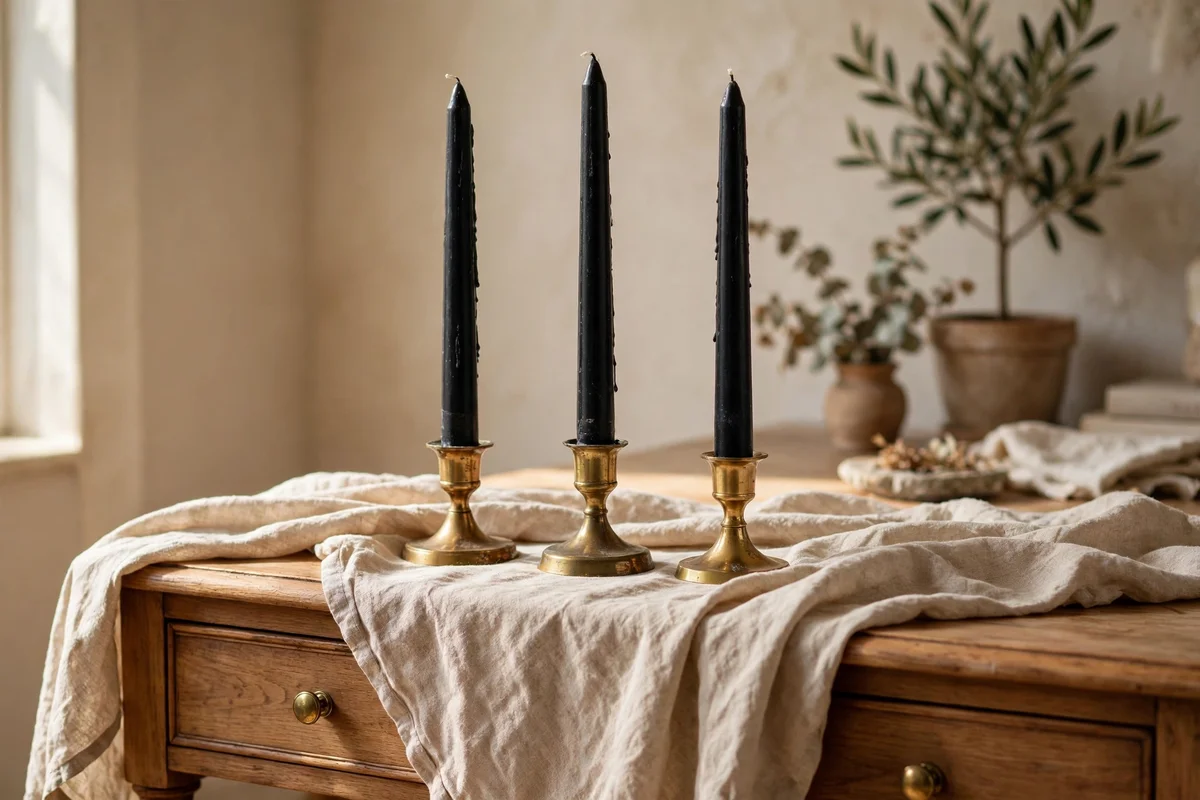
Three black taper candles in simple brass or wooden holders bring quiet drama to a console table dressed with linen. Choose tapers 25 to 30 cm long and holders with a stable 8 cm base so nothing tips on the soft cloth. Set the candles at the back of the console with a small cream pumpkin and a stack of two old books in front, which keeps the composition balanced. The black against natural linen reads classic rather than stark.
Burn black tapers only when you are in the room, and trim the wicks to 5 mm before lighting so the flames stay small and clean. Drips show on linen, so choose quality tapers with a slow even burn. The mistake to avoid is placing the candles at the front edge where sleeves catch them; the back third of the console is the safe zone. Three black tapers and simple holders usually cost between 12 and 25.
20. Tuck Small Cream Pumpkins Into Open Shelf Displays
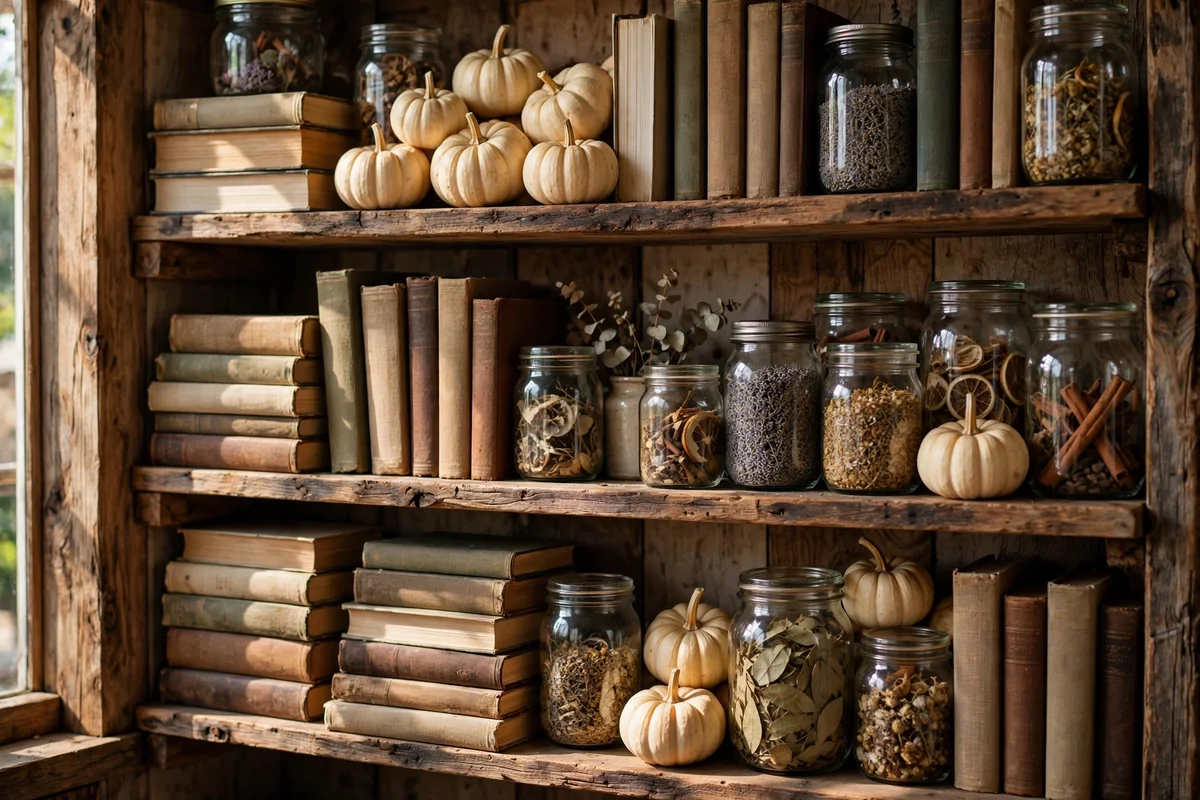
Mini cream pumpkins, 6 to 10 cm across, tucked between books and jars on open shelves add seasonal rhythm to everyday storage. Place one pumpkin per shelf, set slightly forward of the books, so the eye travels in a gentle zigzag up the unit. Pair them with a small amber bottle or a folded linen cloth to keep the shelf from looking random. The pale pumpkins glow softly against dark wood or painted shelving.
Faux mini pumpkins work best on shelves, since real ones eventually soften and can mark the wood. Dust them with a soft brush monthly, and store them in tissue paper after the season so the paint stays smooth. The mistake to avoid is lining up a pumpkin on every shelf in a rigid row, which looks staged; vary the positions left, centre and right. A bag of six faux mini pumpkins usually costs between 8 and 15.
21. Layer a Cozy Throw and Pumpkin Cluster on the Reading Chair
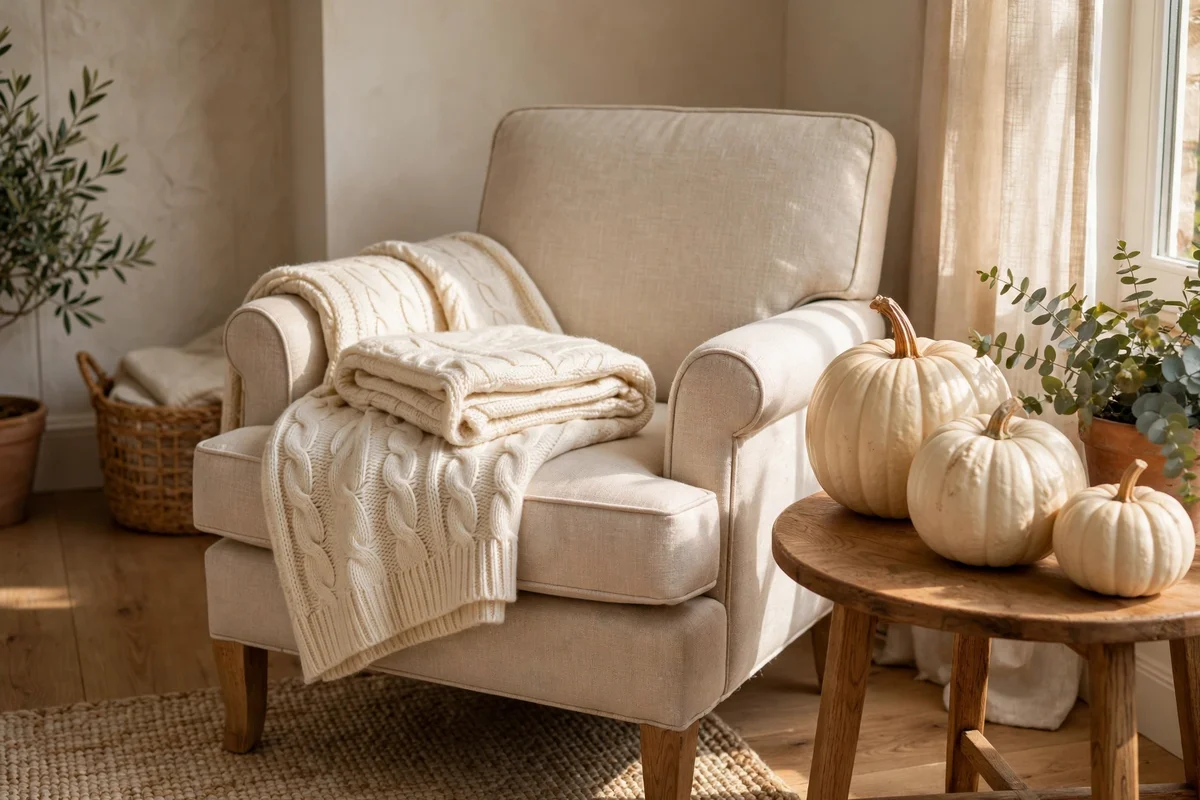
A folded wool throw in cream or soft rust across the arm of a reading chair, paired with two small pumpkins on the side table, makes the corner feel ready for long autumn evenings. Choose a throw 130 by 180 cm in lambswool or a wool blend, and drape it so one end pools slightly on the seat. Add a brass candlestick with an amber taper on the side table, placed at the back so books and tea stay at the front.
Air the throw outdoors for an hour before the season starts so it smells fresh, and brush it weekly to keep the pile smooth. Keep the candle away from the throw edge by at least 30 cm, or use a battery candle for complete peace of mind. The mistake to avoid is choosing a throw in a bright novelty print, which fights the calm vintage palette; solid or subtly striped weaves belong here. A good wool blend throw usually costs between 30 and 70.
22. Finish the Entryway Table With a Lantern, Books and One Pumpkin
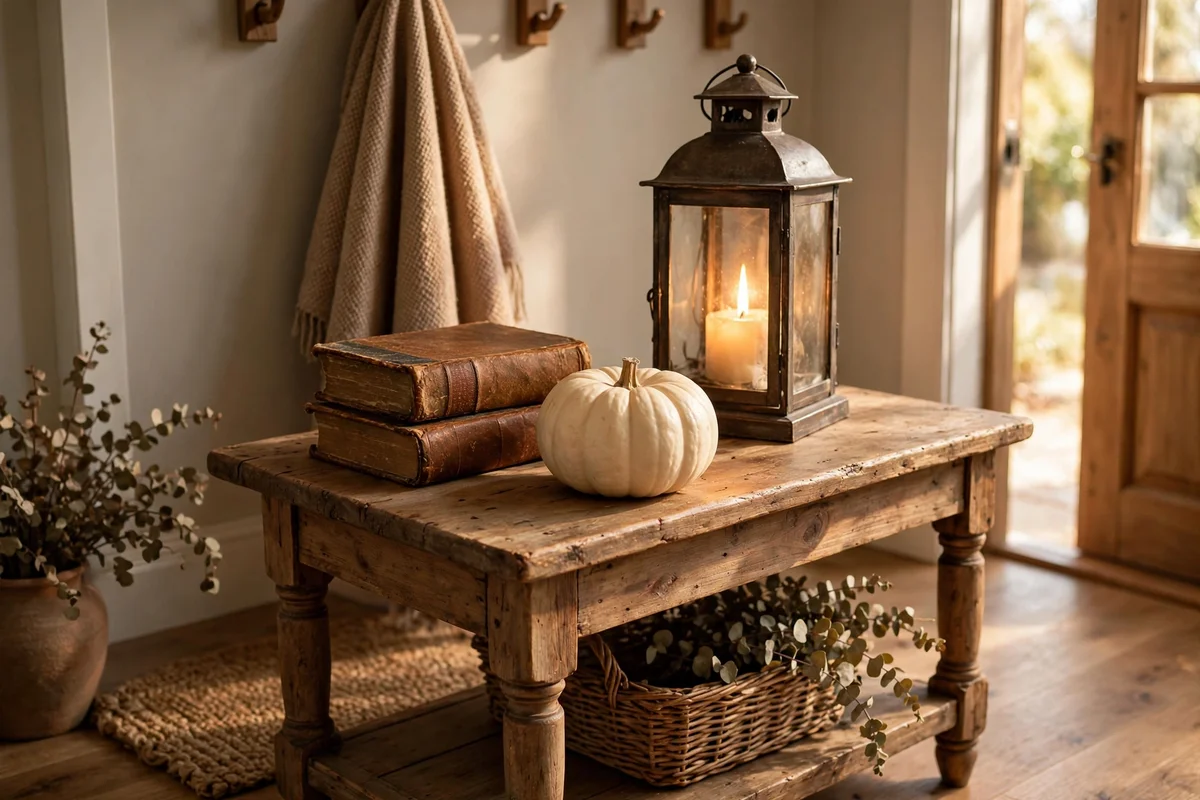
A single lantern, a stack of two old books and one medium cream pumpkin finish an entryway table with quiet harvest confidence. Place the lantern, 25 to 35 cm tall, at the back corner with a warm LED candle inside, the books slightly forward, and the pumpkin of 15 to 18 cm at the front edge. The three heights step down toward the visitor, which feels naturally welcoming. A folded linen cloth under the group softens the wood.
Keep the entryway arrangement slim, no deeper than 25 cm, so bags and keys still fit on the table. Wipe the lantern glass weekly, since entryways collect dust fast, and check the LED timer still works each month. The mistake to avoid is adding a fourth or fifth object, which turns a calm welcome into clutter; three pieces are enough. A lantern, two books and one pumpkin usually total between 20 and 40.
The thread running through all 22 ideas is restraint: cream pumpkins instead of bright orange, dried stems instead of plastic, brass and linen instead of anything loud. When every corner of the living room speaks the same quiet harvest language, the house feels settled and warm rather than decorated for a single night. Pick the palette once, repeat it everywhere, and the whole season will feel calm.
This week, start with the easiest win: group three cream pumpkins of different sizes beside the hearth or on the mantel, and add one brass candlestick with an amber taper. It takes twenty minutes, costs very little, and it will show you how the whole palette feels in your own light. Once that corner glows, the rest of the ideas will follow naturally, one quiet vignette at a time.
Frequently Asked Questions
How much does it cost to decorate a living room in vintage harvest style for October?
Most households spend between 60 and 150 for a full living room, depending on what they already own. Cream pumpkins, dried stems and a paper garland cover the basics for around 40. Brass candlesticks and lanterns are the pieces worth buying well, since they return every autumn. Buy the pumpkins first, live with them for a week, then add candles and textiles so nothing is wasted.
Where can I find cream and white pumpkins?
Farm shops and market stalls stock the widest range of pale varieties, such as Baby Boo, Casper and Lumina, from late September. Supermarkets carry a smaller selection in October, usually at lower prices. For faux pumpkins that last for years, craft shops and online home stores offer good quality sets. Choose pumpkins with firm skins and intact stems, and avoid any with soft spots.
How do I keep dried botanicals looking good all season?
Keep dried stems out of direct sunlight, which bleaches them unevenly, and away from radiators that make them brittle. Shake each bundle gently outdoors once a month to release dust. Never spray them with water or place them in damp rooms. Stored upright in a cool, dark cupboard after the season, good quality dried wheat, grasses and seed heads will look fresh for two or three years.
Are black accents suitable for a family living room in October?
Yes, when they are used sparingly and paired with warm neutrals. Black taper candles, cushion covers or lantern frames add depth and make cream pumpkins stand out, which is a classic vintage combination. Keep black to roughly one fifth of the display and balance it with amber, brass and linen. Avoid anything with a frightening motif; plain black shapes read as elegant, not alarming.
Can I reuse these decorations next year?
Almost everything in this collection is reusable. Faux pumpkins, brass candlesticks, lanterns, linen runners and glass bottles last for many seasons if stored clean and dry. Paper garlands survive one or two seasons when kept flat in a box with tissue. Only real pumpkins and fresh dried stems need replacing, and dried stems often last two or three years. Pack everything in labelled boxes in early November.