Crafts
22 Wooden Fall Decor Ideas That Feel Timeless and Handmade
By Anna Wells · · 20 min read
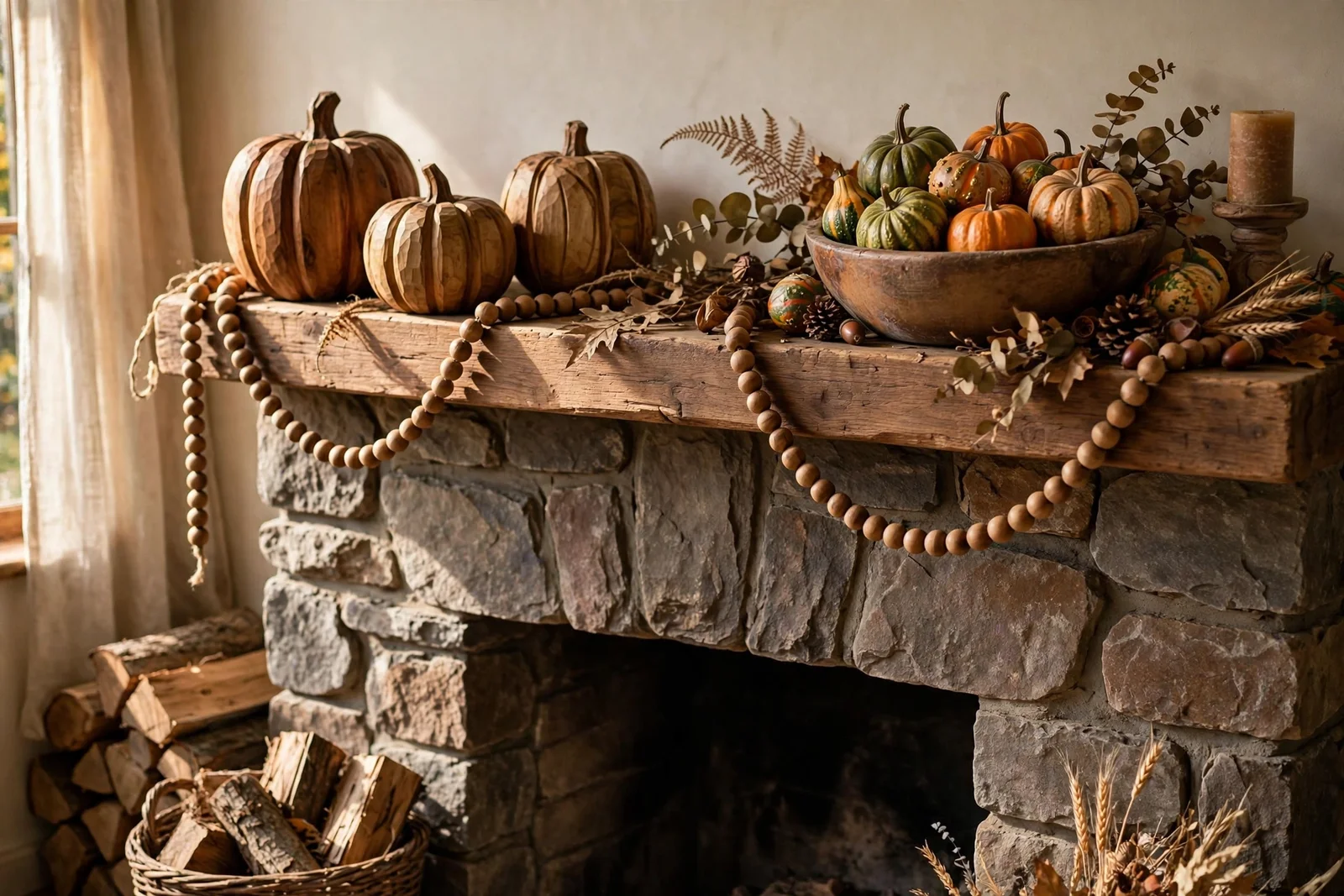
Real wood brings a warmth to autumn decorating that no other material matches. These 22 ideas show how to use wooden pumpkins, bead garlands, dough bowls and crates in every room.
There is a particular warmth that only real wood brings into a room, and autumn is the season that lets it shine. Picture the low golden light of an October afternoon moving across a carved wooden pumpkin on the mantel, catching the grain of a walnut bead garland, settling into the soft curve of a dough bowl filled with gourds. Nothing about this kind of decorating feels loud or temporary. It feels like the house itself has exhaled and settled in for the cooler months.
Wooden fall decor works because it borrows from nature without pretending to be it. Turned pumpkins echo the real harvest on the doorstep, but they last for decades. A crate that once held apples can hold rolled blankets by the fire all winter. The pieces are honest about what they are: solid, simple, and made to be handled, dusted, and rearranged year after year.
This guide walks through 22 concrete ways to use wooden autumn pieces in the living room, kitchen, dining room, entryway and porch. You will find exact sizes, placement distances, finish pairings and budget tips, plus the one mistake to avoid in each idea. Whether you buy a few carved pumpkins or gather a whole crate of finds, the warmth of real wood will carry the season for you.
1. Stack Turned Wooden Pumpkins in Threes on the Mantel
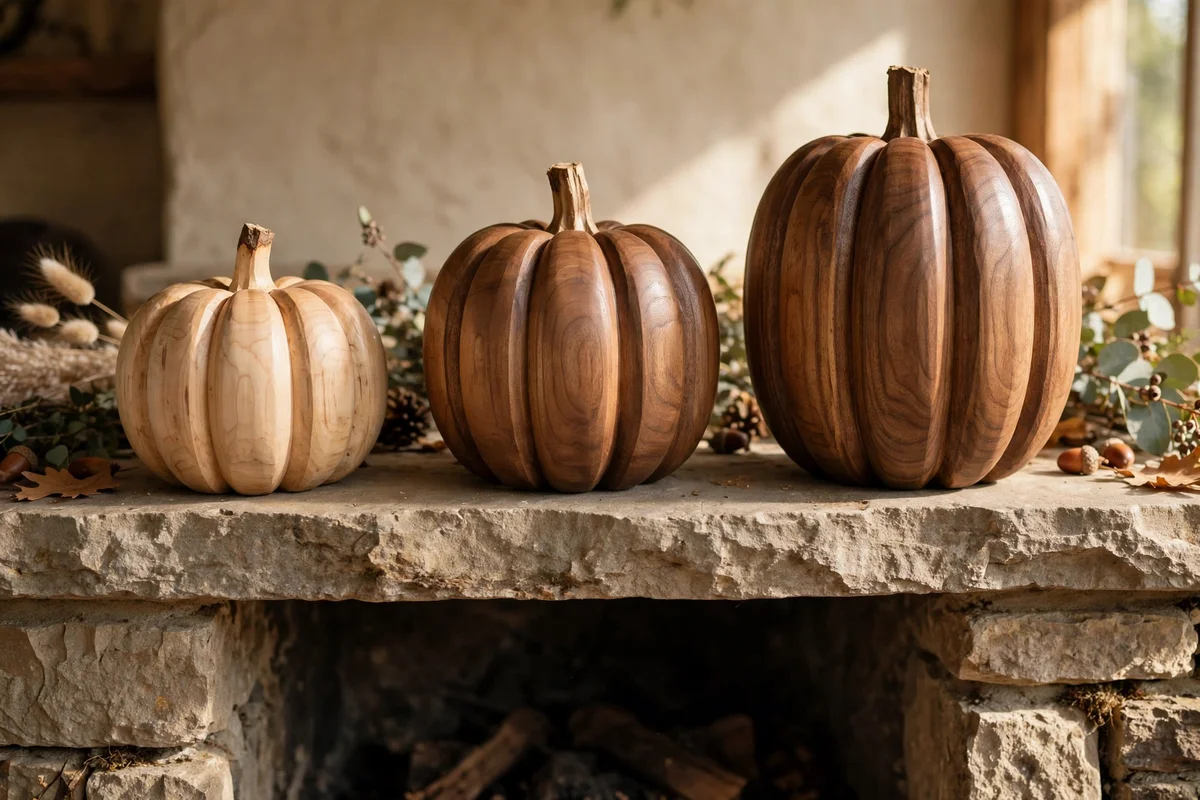
Groups of three work because the eye reads an odd number as natural rather than staged. Choose turned wooden pumpkins in three heights, for example 12, 18 and 24 cm, so the cluster forms a gentle staircase. Keep the finishes close: all natural oak, or all stained in warm walnut, so the trio reads as one family. Set the group toward one end of the mantel rather than dead centre, which leaves room for a garland or candle to balance the other side.
Turned pumpkins cost less than carved ones, with simple lathe-made versions starting around 8 to 15 pounds or dollars at craft markets. The mistake to avoid is mixing glossy varnished pumpkins with matte unfinished ones in the same cluster; the shine difference fights. Dust them with a dry cloth each week, since mantel warmth attracts a fine grey film. At season’s end, wrap each pumpkin in tissue and store them upright so the stems never snap.
2. Drape a Wooden Bead Garland Along the Fireplace Mantel
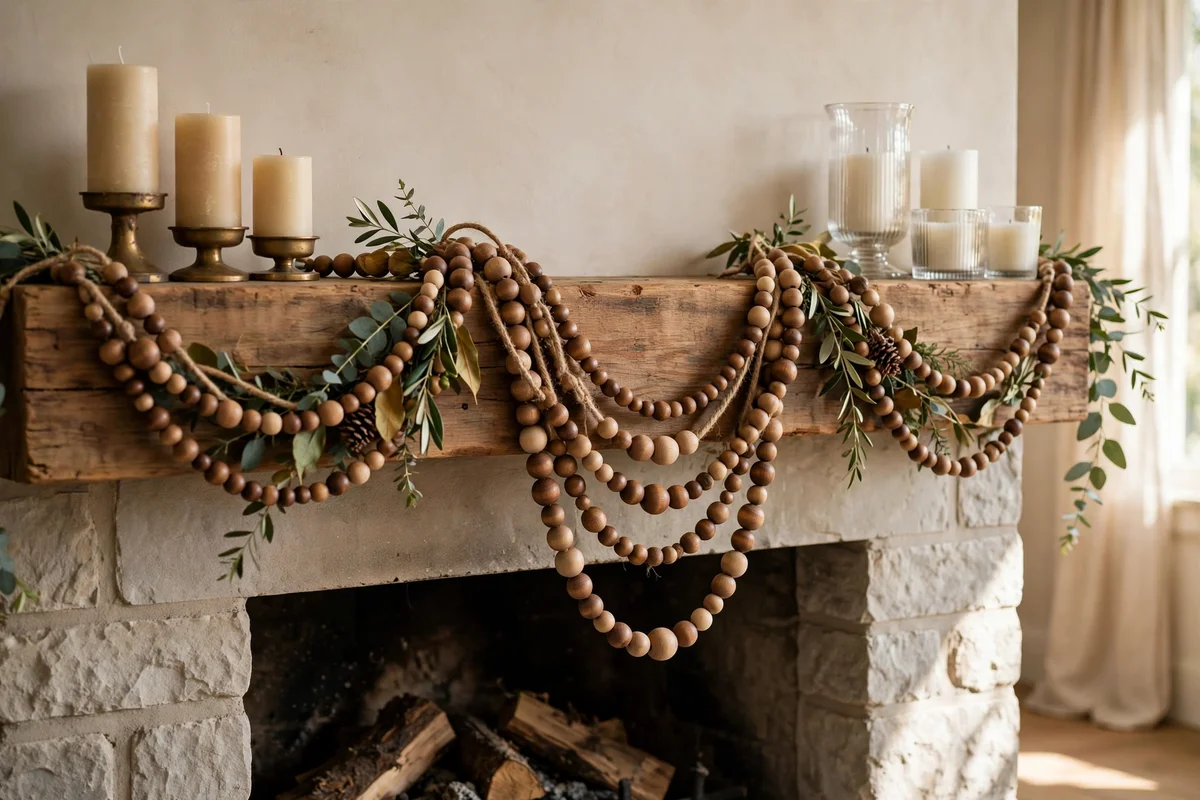
A garland of wooden beads between 120 and 180 cm long suits most mantels without pooling on the floor. Drape it in a loose swag, letting the centre dip about 10 to 15 cm below the ends, and let one end trail over the mantel edge for an easy, unstudied look. Natural beech beads read fresh and rustic, while darker stained beads feel more traditional and grounded. Space the swag so it sits just in front of any candles, never touching a flame.
Bead garlands are usually a budget buy at 10 to 25 pounds or dollars, and many come with a small wooden tassel on each end. The mistake to avoid is stringing it flat and tight like a picture-frame cord; a swag with some slack looks relaxed and handmade. If the beads rattle against a stone mantel, place a strip of felt underneath. After autumn, the same garland suits a winter tree or a spring shelf.
3. Fill a Carved Dough Bowl With Mini Gourds and Pinecones
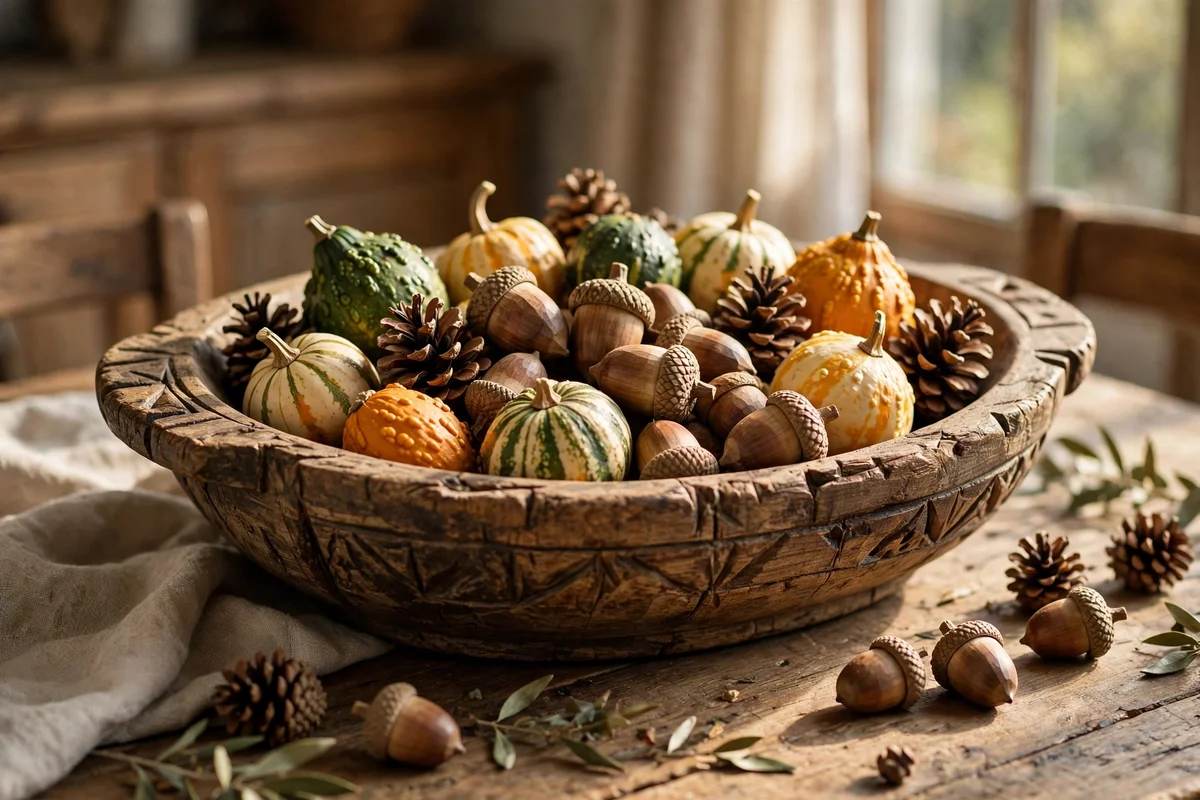
A wooden dough bowl between 40 and 60 cm long makes a generous autumn centrepiece with almost no arranging skill needed. Fill it with a mix of mini gourds, dried pinecones and a few small wooden acorns so the textures vary. Aim for roughly two parts gourds to one part pinecones, and let a couple of pieces spill slightly over the rim so the bowl looks gathered rather than packed. Keep real gourds dry by resting them on a paper liner inside the bowl.
Dough bowls range from 20 pounds or dollars for simple pine versions to 60 and above for hand-carved vintage style. The mistake to avoid is piling the fill so high that the bowl’s lovely curved shape disappears; the rim should stay visible all around. Swap the gourds for pine boughs in December and citrus in spring, and the bowl earns its storage space all year.
4. Tuck a Wooden Crate Beside the Hearth With Rolled Blankets
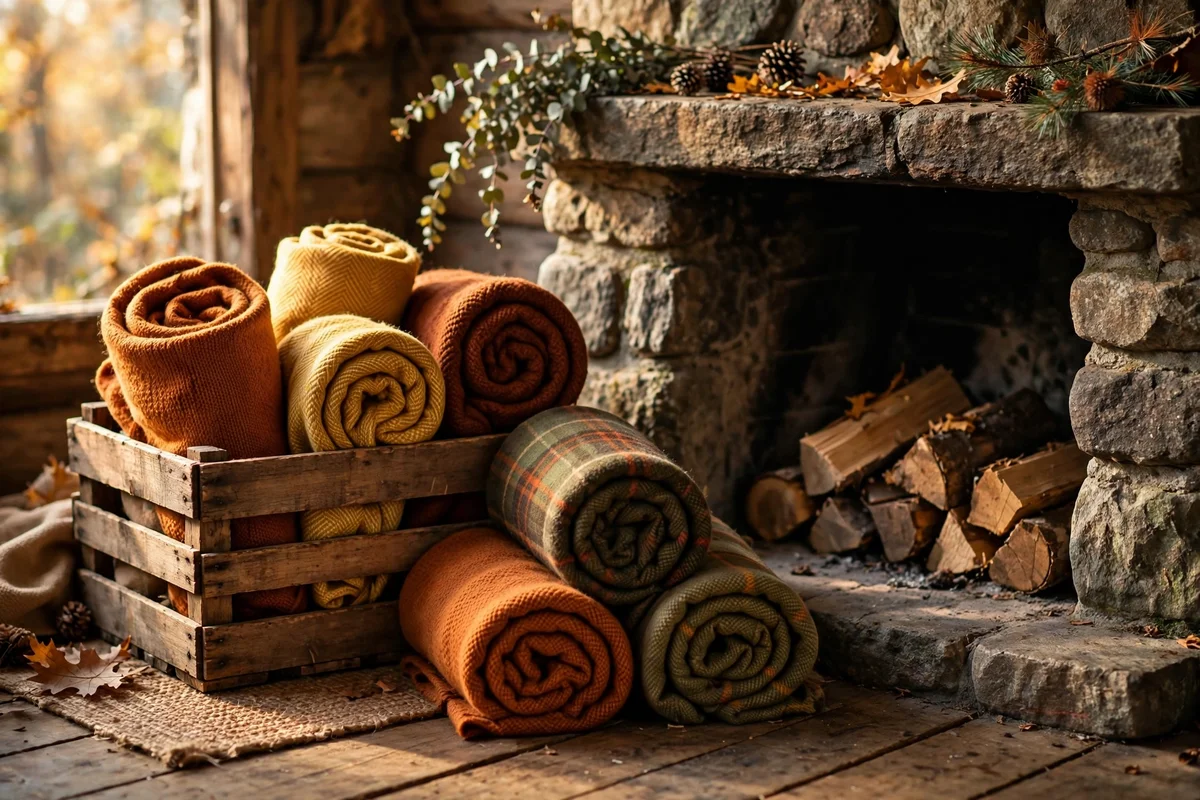
A wooden crate about 35 to 45 cm square holds three or four rolled throws neatly beside the fireplace or sofa. Choose an apple crate or a simple slatted box in a warm mid-tone wood, and roll each blanket into a tight cylinder so the folds face outward. Stand the rolls upright so guests can see the colours and pull one out without toppling the rest. A folded throw draped over the crate’s edge softens the straight wooden lines.
Second-hand crates often cost under 15 pounds or dollars at markets, or you can buy new unfinished ones and stain them yourself. The mistake to avoid is stuffing the crate so full that blankets crease and the wood bows; leave a finger’s width of breathing room. Keep the crate at least 60 cm from the fireplace opening for safety. In spring it can hold magazines or kindling instead.
5. Stack Decorative Logs in a Wooden Crate for a Hearth Display
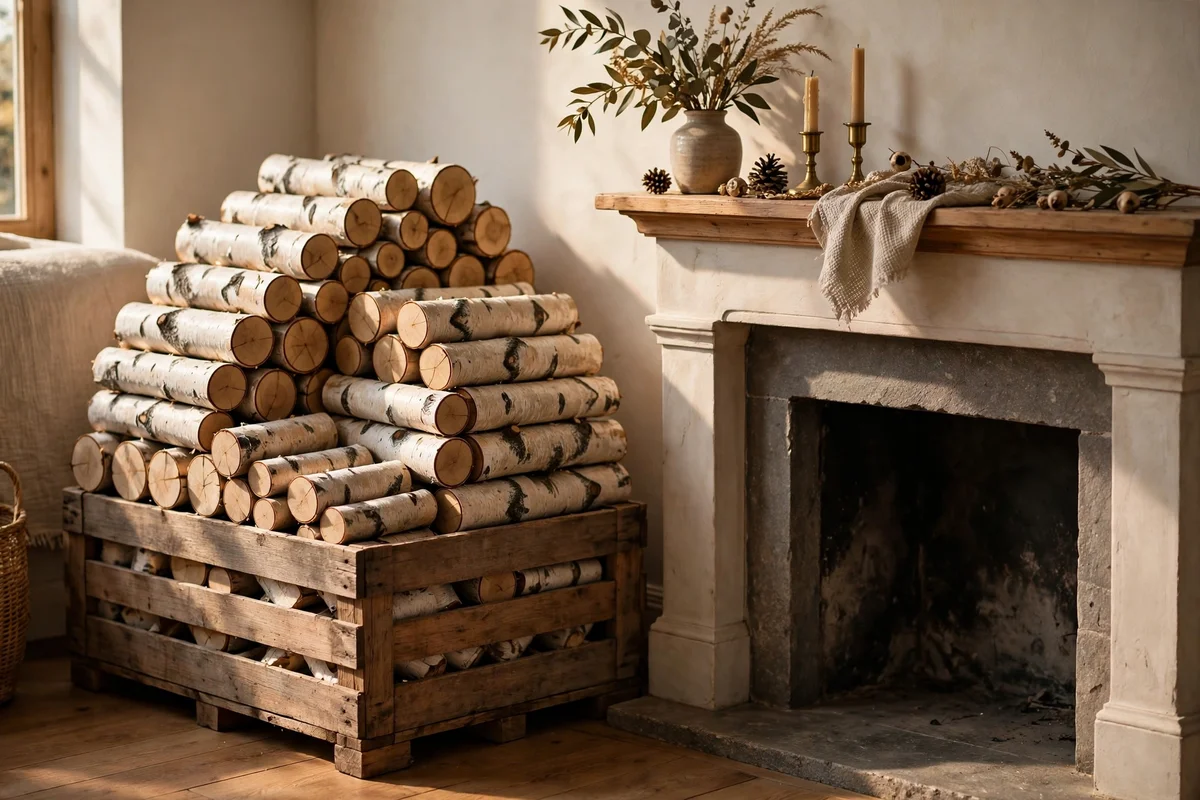
A crate of neatly stacked decorative logs brings hearth warmth to homes without a working fireplace. Choose clean birch or pale pine logs, 20 to 30 cm long, and stack them in alternating directions like a miniature woodpile inside the crate. Five to eight logs fill a standard crate without overflowing. Set the crate beside the mantel or under a console table where the pale bark catches lamplight.
Decorative logs are sold in bundles of six or twelve, usually 12 to 20 pounds or dollars per bundle. The mistake to avoid is using real firewood with bark that sheds; kiln-dried decorative logs stay clean indoors. Never place them inside an active fireplace, as they are decoration only. A light dusting with a dry brush once a month keeps the bark looking fresh.
6. Layer Wooden Cutting Boards Against the Kitchen Splashback
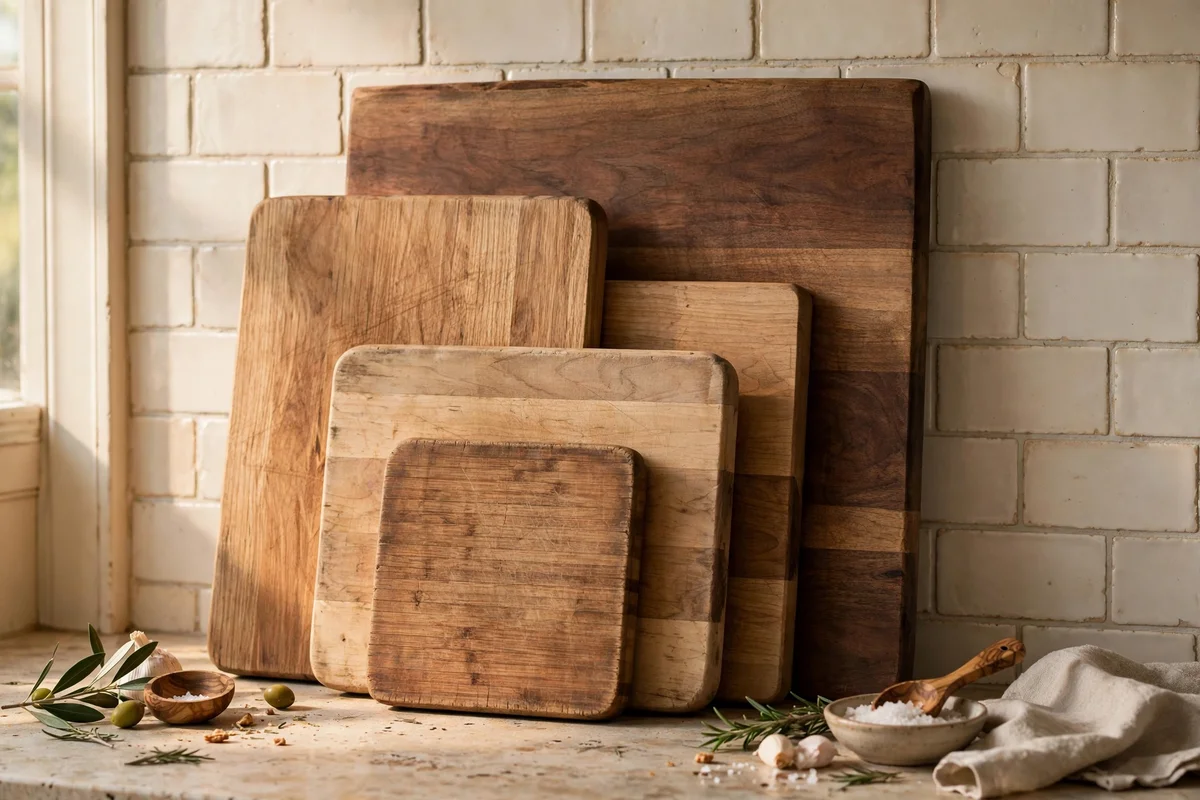
Two or three wooden cutting boards in different sizes, leaned against the splashback, turn a plain counter into a warm display. Place the tallest board, around 45 to 55 cm, at the back and a smaller 30 cm board in front, slightly off-centre. Mix shapes: one rectangular, one round, one with a handle. Keep all boards at least 15 cm from the hob so steam and splatter never reach them.
Unfinished acacia and olive wood boards start around 10 pounds or dollars each, and thrifted boards cost far less. The mistake to avoid is using your daily chopping board in the display; pick boards reserved for showing, since knife scars and stains spoil the look. Oil display boards with food-safe mineral oil twice a season to keep the grain rich and stop them drying out.
7. Set Wood Slice Chargers Beneath Dinner Plates
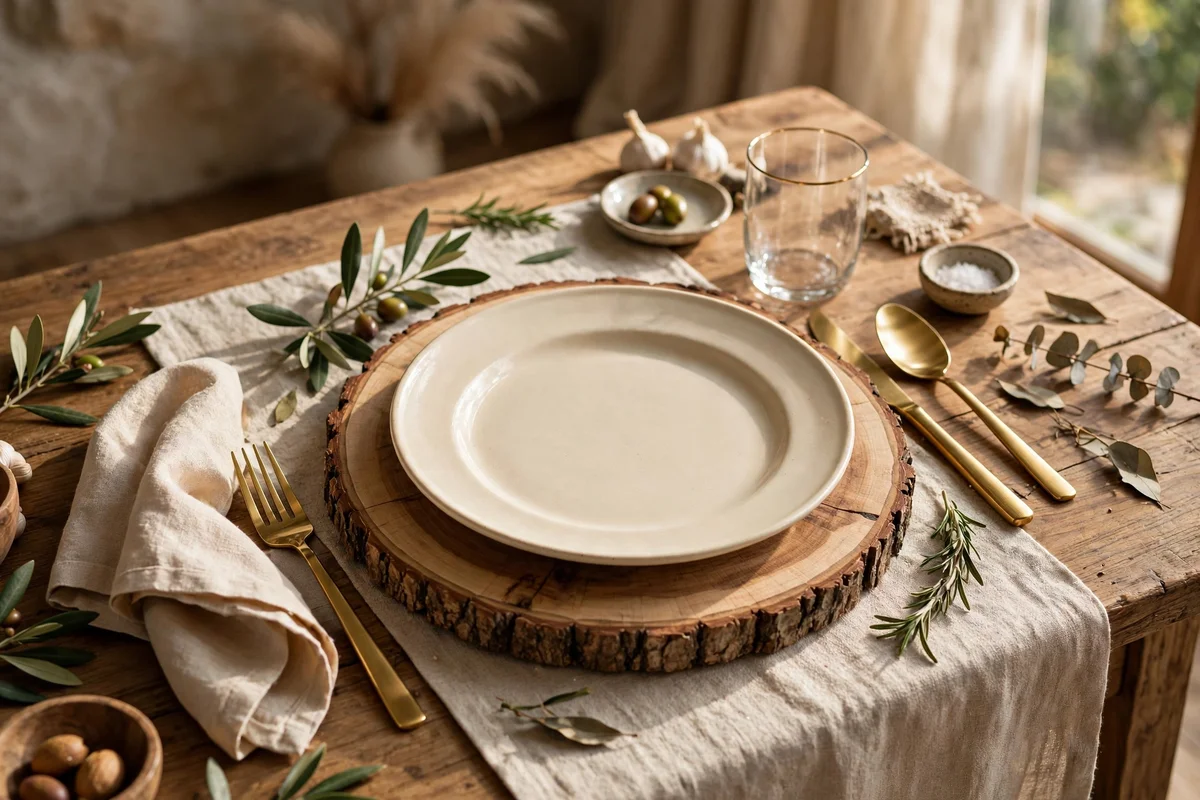
Chargers cut from wood slices, about 28 to 33 cm across, give each place setting a rustic frame. Choose slices around 1.5 to 2 cm thick with the bark edge left on for character, and seal them with a food-safe oil or lacquer so they wipe clean. Set one under each dinner plate at autumn gatherings, or leave a set on the table all season as permanent decor. They pair beautifully with cream stoneware and linen napkins.
A set of four wood slice chargers usually costs 18 to 35 pounds or dollars online or at craft fairs. The mistake to avoid is serving food directly on unsealed slices; always use them under plates, since the raw edge can harbour crumbs. Wipe with a damp cloth after use and never soak them, or the slices may crack. Store flat with paper between each slice.
8. Scatter Plain Wood Acorns and Leaves Down the Table Runner
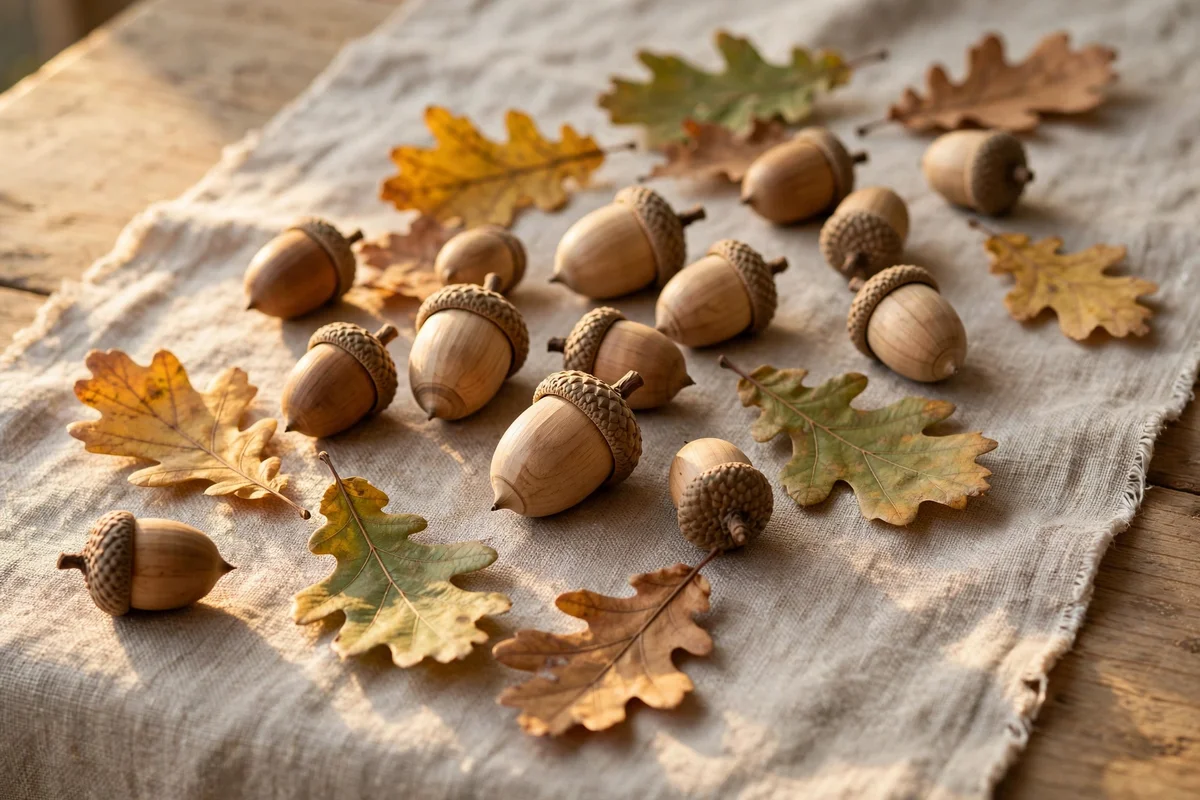
Small wooden acorns and leaves in plain unfinished wood make a charming scatter along a dining table runner. Spread 15 to 25 pieces down the centre of a 180 cm table, clustering them in groups of three or five rather than spacing them evenly. The bare wood tone works with any tablecloth colour, from deep rust to natural linen. Let a few pieces tumble slightly off the runner onto the bare table for an effortless feel.
Bags of mixed wooden acorns and leaves cost 6 to 12 pounds or dollars and last for years. The mistake to avoid is using too many pieces; a sparse scatter looks gathered by hand, while fifty pieces look like a craft explosion. Keep them away from the serving dishes so they never touch food. Collect them in a small linen pouch after each gathering for easy reuse.
9. Lay a Bead Garland Over a Decorative Bowl on the Coffee Table
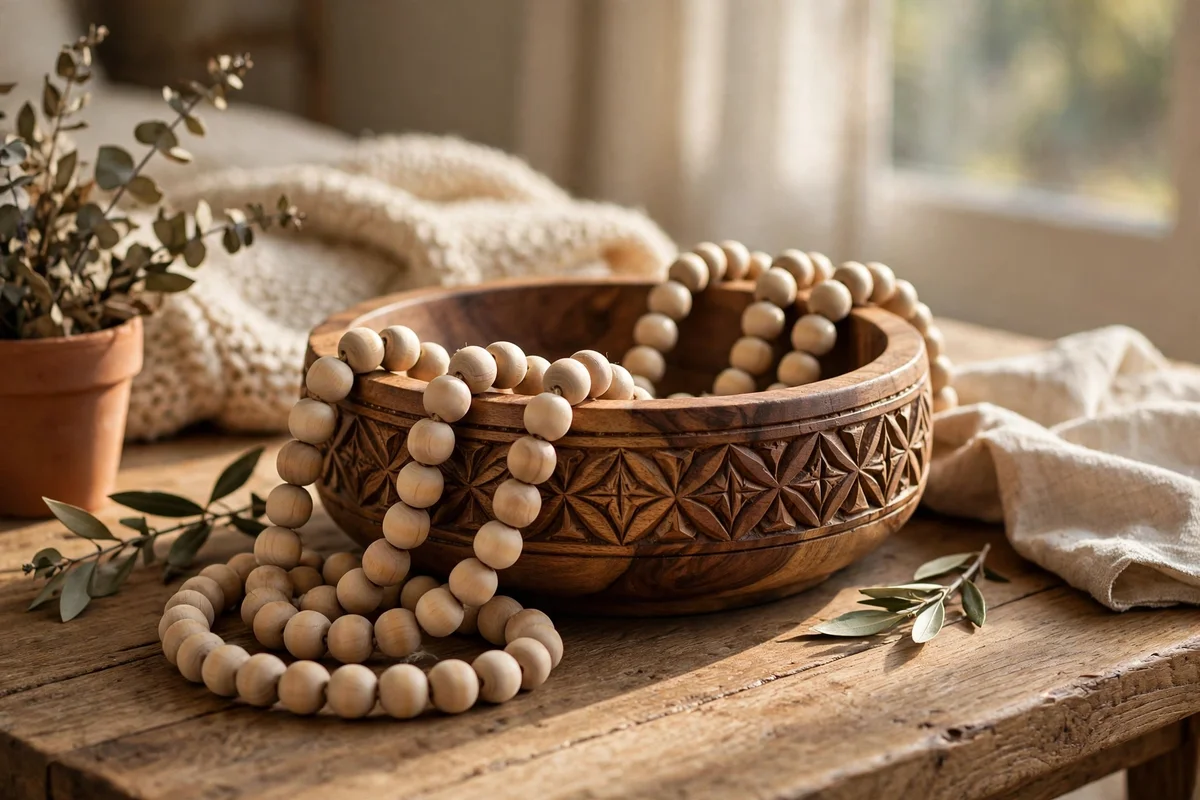
A wooden bead garland coiled loosely over an upturned bowl or a wide shallow basket makes an easy coffee table centrepiece. Use a garland of 90 to 120 cm so it drapes over the bowl and pools slightly on the table without sliding off. Choose beads around 2 to 3 cm across for a presence you can see from the sofa. A wooden bowl in a contrasting tone underneath gives the garland something to nestle against.
This is one of the cheapest autumn styling tricks, often under 20 pounds or dollars for both pieces. The mistake to avoid is placing the arrangement where elbows land; keep it to one side of the coffee table if you use the table daily. A small wooden pumpkin or a pinecone tucked into the coil adds a focal point. Lift the garland weekly and wipe the table to stop dust settling.
10. Line Carved Wooden Pumpkins Down the Dining Table Centre
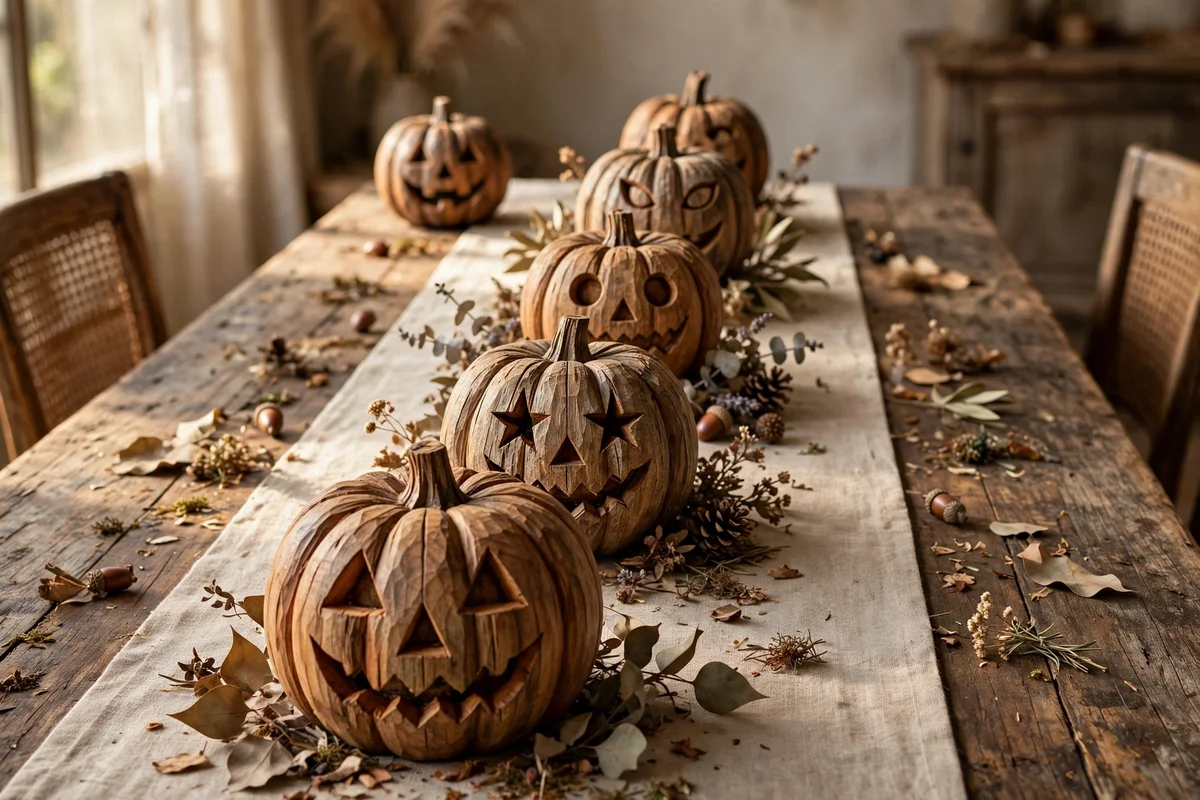
A row of carved wooden pumpkins down the centre of the dining table sets an autumn mood for everyday meals and gatherings alike. Use five to seven pumpkins between 8 and 15 cm tall, alternating heights and spacing them about 12 cm apart. Keep them on a narrow runner or a strip of linen so they read as one line. Plain carved pumpkins in natural wood suit both pale and dark table finishes.
Small carved pumpkins cost 5 to 12 pounds or dollars each, so a full row stays affordable. The mistake to avoid is blocking sightlines; keep every pumpkin under 18 cm tall so guests can see each other across the table. For gatherings, slide two pumpkins aside to make room for serving dishes. At the end of the season they store neatly in a single box.
11. Rest a Dough Bowl of Gourds on the Entry Console
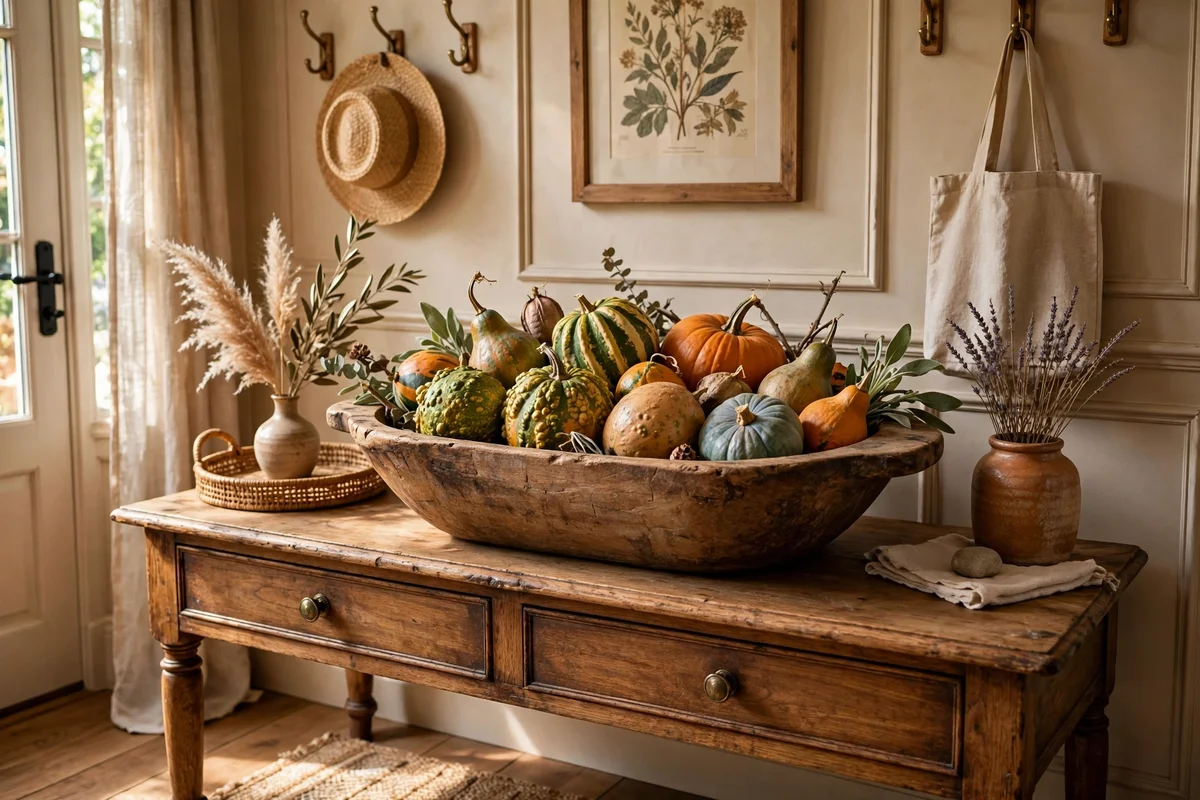
The entryway is the first hello of the home, and a dough bowl of autumn pieces sets the tone in seconds. Choose a bowl 35 to 50 cm long that leaves at least 20 cm of clear console surface on each side for keys and a small tray. Fill it with mini gourds, wooden acorns and a few dried stems, keeping the tallest piece under 25 cm so it never blocks a mirror above. A folded runner or a small mat underneath protects the console top.
This one bowl often becomes the entryway’s whole autumn story, costing 25 to 50 pounds or dollars in total. The mistake to avoid is filling it so wide that it blocks the walkway; console bowls should sit flush against the wall side. Refresh the gourds mid-season if any soften, since real gourds fade faster than wooden pieces. The bowl itself transitions easily into winter greenery.
12. Lean a Wooden Ladder Against the Wall With Autumn Throws
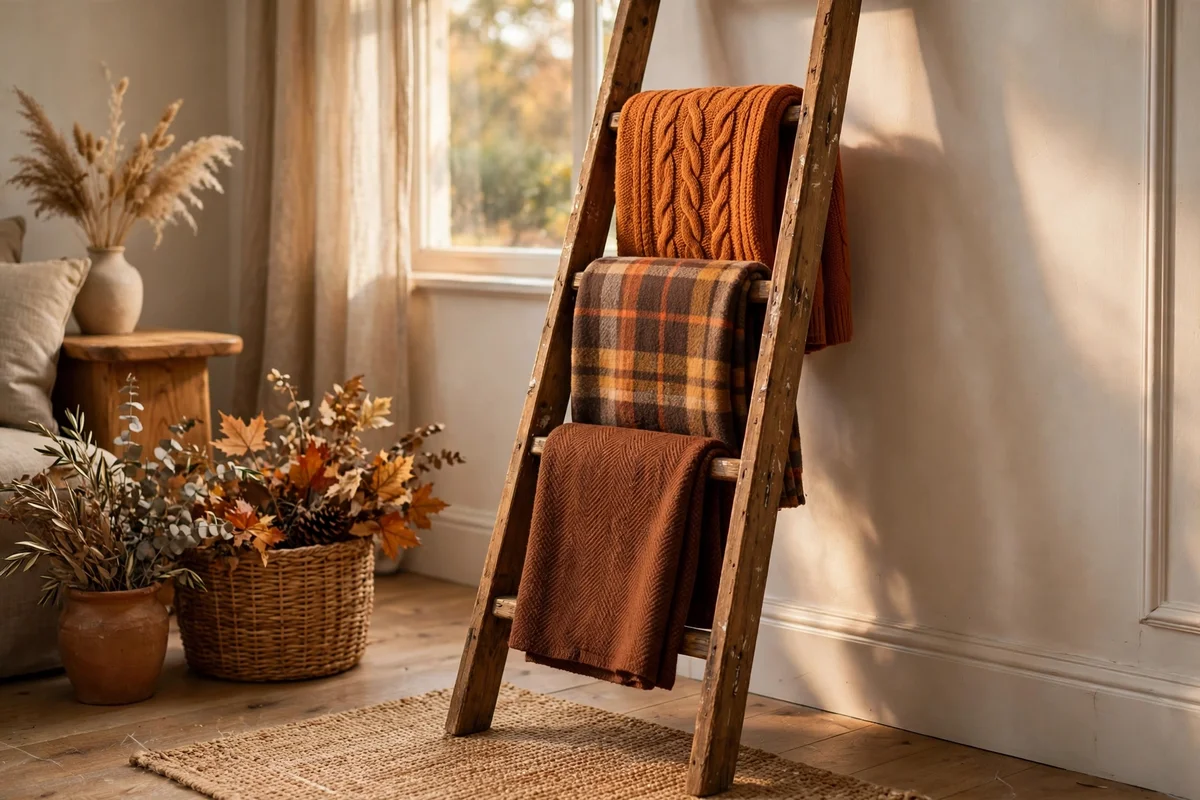
A small wooden ladder, 120 to 150 cm tall, leaned at a gentle angle against the wall, gives throws a beautiful home. Choose a ladder with rungs at least 30 cm wide so folded blankets rest securely, and lean it with the feet about 25 cm out from the wall for stability. Drape two or three autumn throws in rust, cream and olive over alternating rungs. A basket of pinecones at the base completes the picture.
Decorative wooden ladders cost 25 to 60 pounds or dollars, or you can sand and stain an old step ladder. The mistake to avoid is using a ladder with loose rungs for heavy wool blankets; test each rung first, since a dropped blanket pulls the whole display down. Secure the top to the wall with a small hook if you have children or pets. Never climb a decorative ladder.
13. Stand Tall Branches With Wooden Leaves in a Wooden Vase
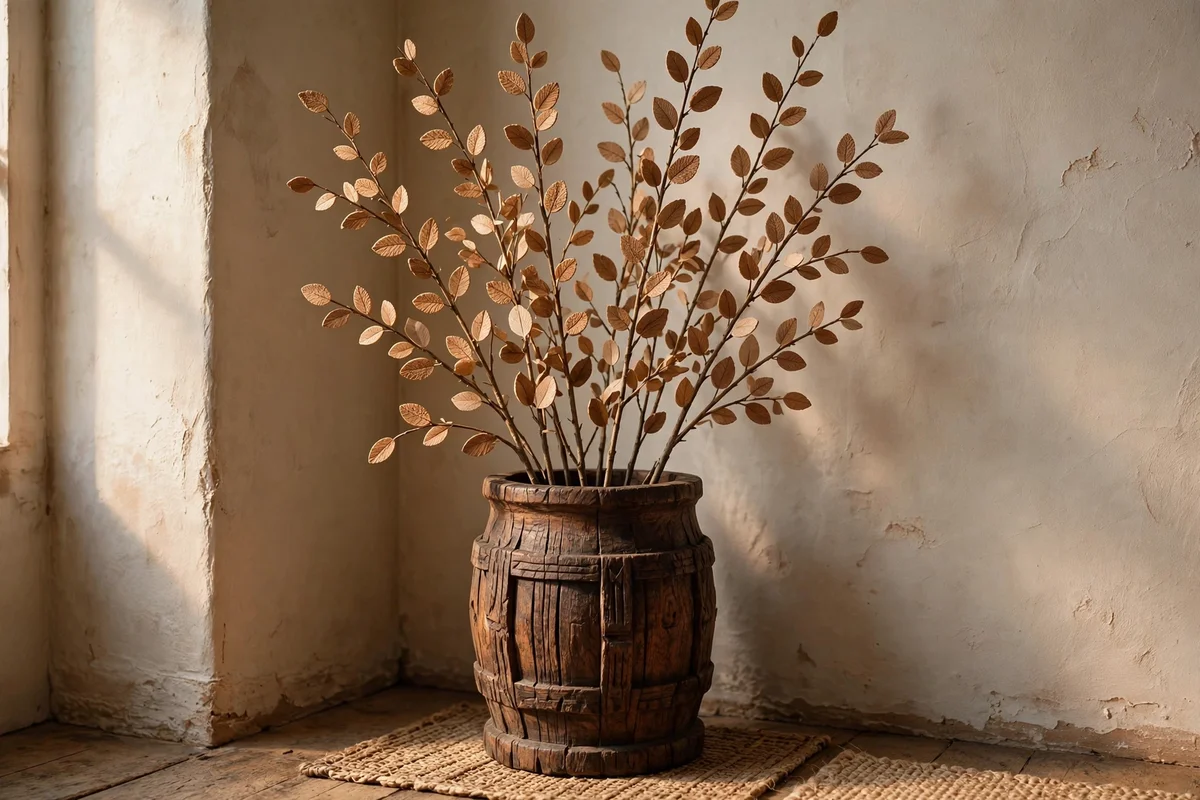
Tall bare branches hung with small wooden leaves bring height and movement to a corner. Choose branches 80 to 120 cm long and a heavy wooden vase or crock at least 25 cm tall so the arrangement cannot tip. Tie five to ten wooden leaves along the branches with natural twine, spacing them unevenly for a handcrafted feel. Set the vase on the floor in an empty corner or on a side table beside the sofa.
Branches are free from the garden, and wooden leaves cost 5 to 10 pounds or dollars per bag. The mistake to avoid is using a light vase with tall branches; one knocked branch can send the whole thing over, so weight the base with a stone if needed. Keep the display away from high-traffic doorways. After autumn, replace the leaves with wooden stars for winter.
14. Mix Light Oak and Dark Walnut Tones in One Vignette
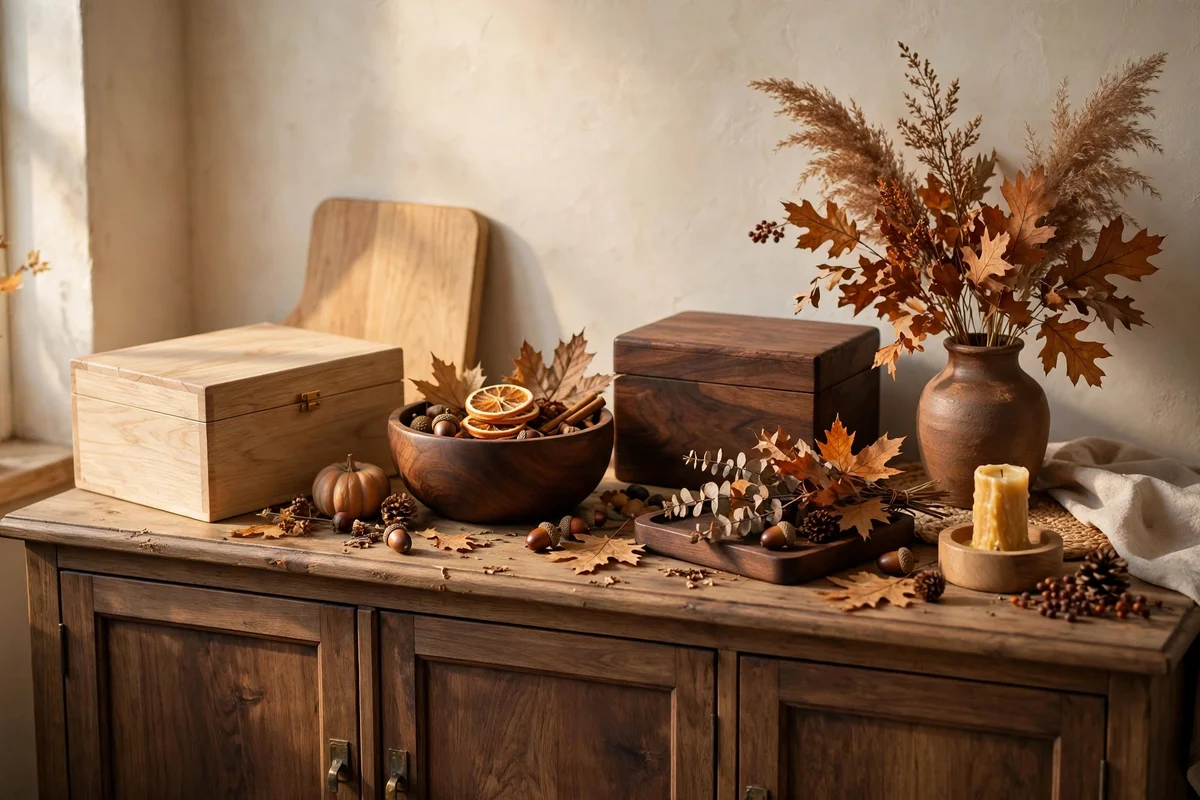
Mixing wood tones keeps an autumn display from looking flat, as long as one tone leads. Choose a dominant tone, for example light oak for 60 percent of the pieces, and let dark walnut fill the remaining 40 percent as accent. Keep the undertone consistent: pair warm-toned woods together and cool-toned woods together, since a pinkish cherry next to an orange pine will clash. Repeating each tone at least twice in a vignette makes the mix look intentional.
This approach costs nothing if you shop your own home first; most people already own two wood tones. The mistake to avoid is introducing a third tone, which usually tips the balance from curated to chaotic. If a piece clashes, a quick coat of matte stain unifies it in an afternoon. Step back three metres to judge the mix; vignettes are viewed from across the room, not up close.
15. Place Wood Trivets Under Hot Dishes at Gatherings
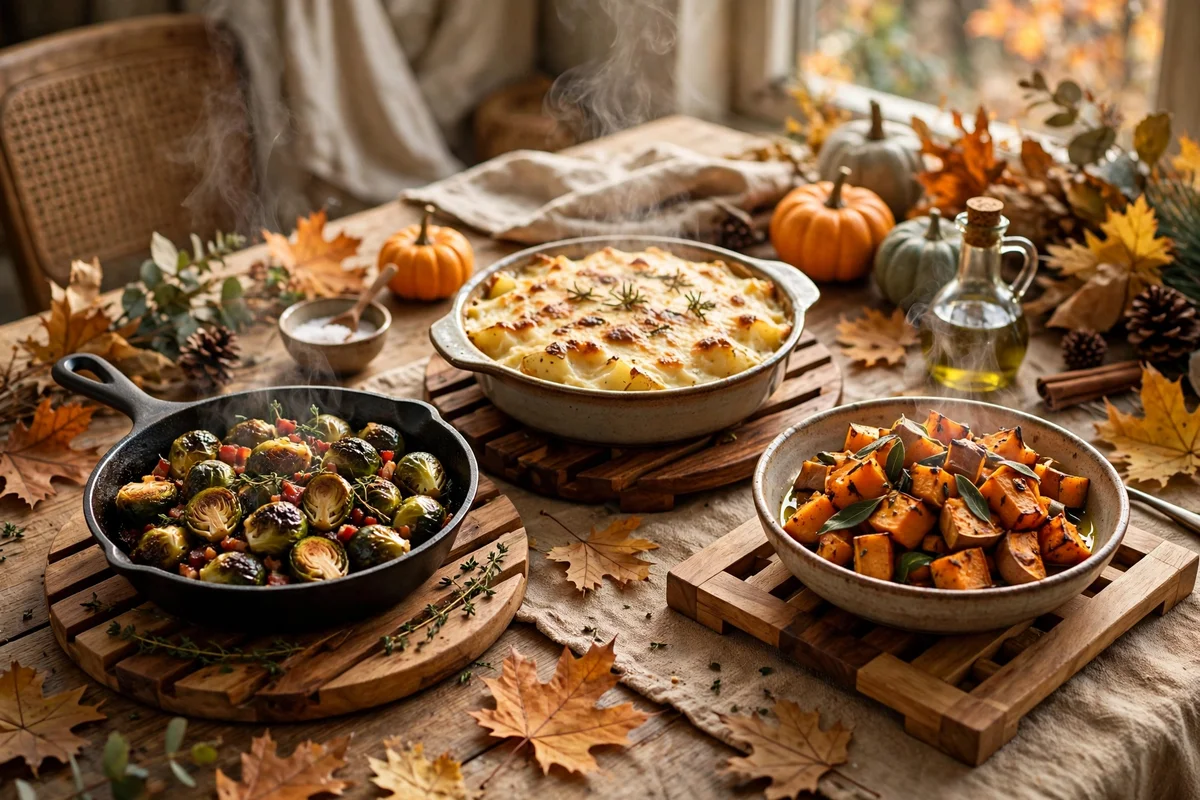
Wooden trivets protect the table and add to the autumn story at family meals. Choose trivets at least 20 cm across, thick enough to keep heat from reaching the wood table, and place one at every spot where a hot dish will land. Round acacia trivets with a small handle look inviting beside the serving dishes. Keep two spare trivets stacked at the table end for dishes that arrive later.
Sets of three or four wooden trivets cost 12 to 25 pounds or dollars and last for years. The mistake to avoid is using thin decorative slices as trivets; heat from a roasting tin can scorch them and mark the table below. Wipe trivets with a damp cloth after the meal and oil them occasionally. Plain trivets suit every season, so they are not just an autumn buy.
16. Top a Wooden Tray With Candles and Small Pumpkins
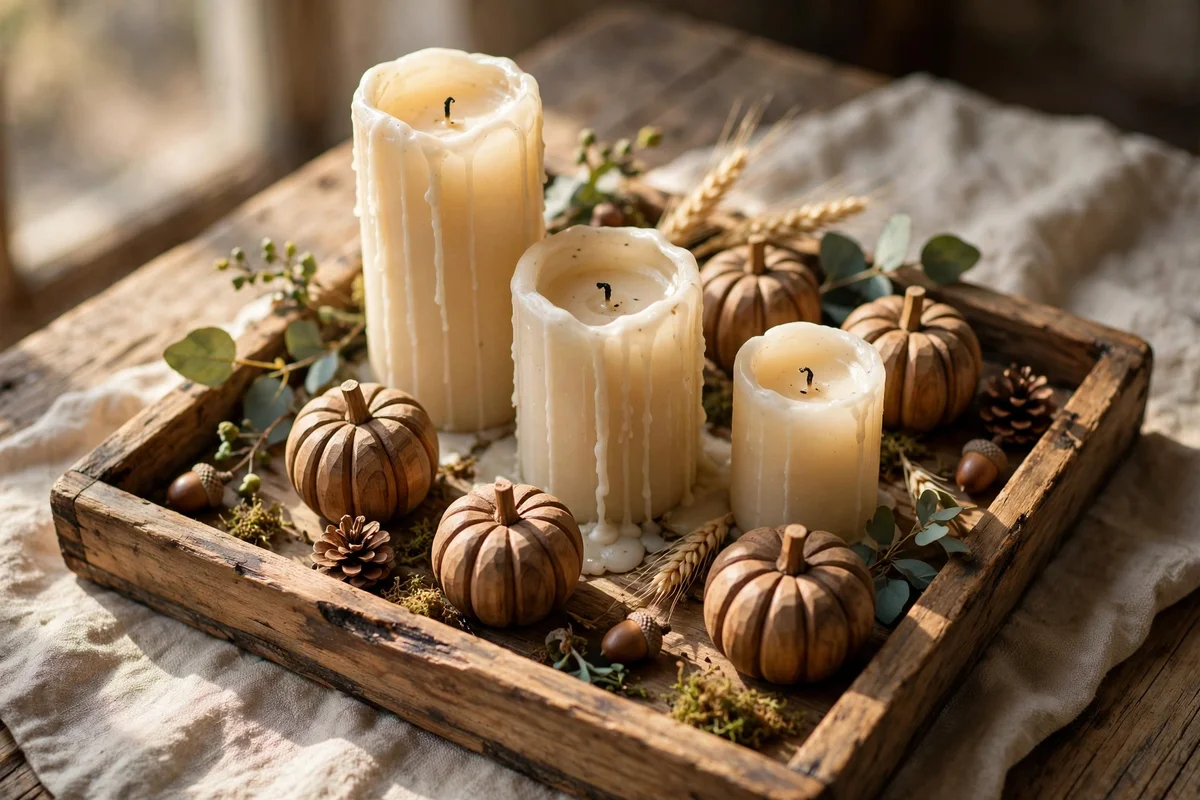
A wooden tray turns a handful of small pieces into one finished arrangement you can move in seconds. Choose a tray 35 to 50 cm across with a low rim, and place two or three pillar candles of different heights at one end. Tuck four or five small wooden pumpkins and acorns around the candle bases, keeping every flame at least 8 cm from any wood piece. A sprig of dried wheat laid across the tray adds a harvest note.
Trays start around 15 pounds or dollars, and the whole arrangement often costs under 40. The mistake to avoid is leaving lit candles unattended on a wooden tray; use LED pillars if the tray sits where children or pets pass. Extinguish real candles before the wax pool reaches the tray surface. Carry the whole tray to the dining table when guests arrive for instant atmosphere.
17. Line the Windowsill With a Row of Carved Wooden Pumpkins
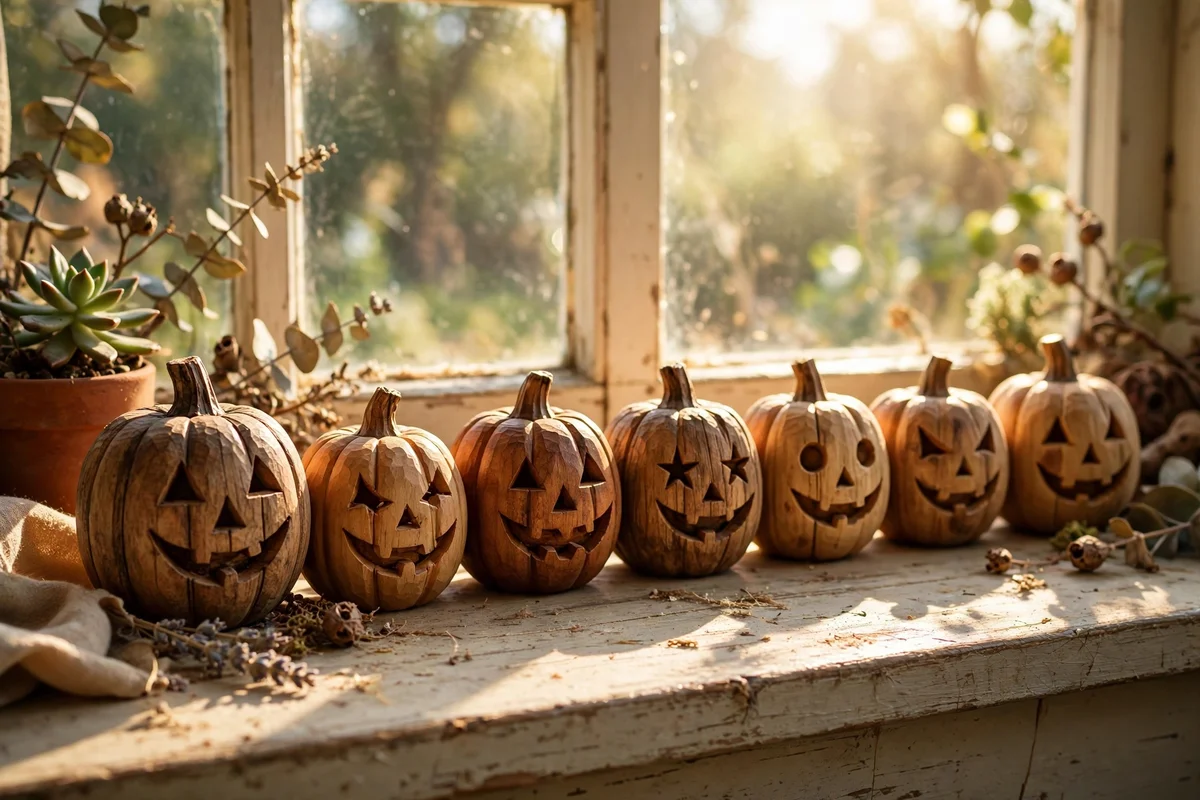
A sunny windowsill lined with carved wooden pumpkins catches light beautifully through autumn afternoons. Choose pumpkins between 6 and 12 cm tall so they never block the glass, and space them about 5 cm apart along the sill. Plain wood pumpkins glow amber in backlight, while whitewashed ones look crisp against a dark frame. Keep the row to a single line; two rows look crowded on most sills.
Small pumpkins for windowsills cost 4 to 10 pounds or dollars each, making this a gentle project. The mistake to avoid is placing real gourds in direct sun, where they fade and soften within weeks; wooden pumpkins never fade, which is their whole advantage here. Dust the sills monthly, since window ledges gather grime. Rotate the pumpkins a quarter turn now and then for even light exposure.
18. Fill a Tall Wooden Vessel With Dried Branches and Wheat
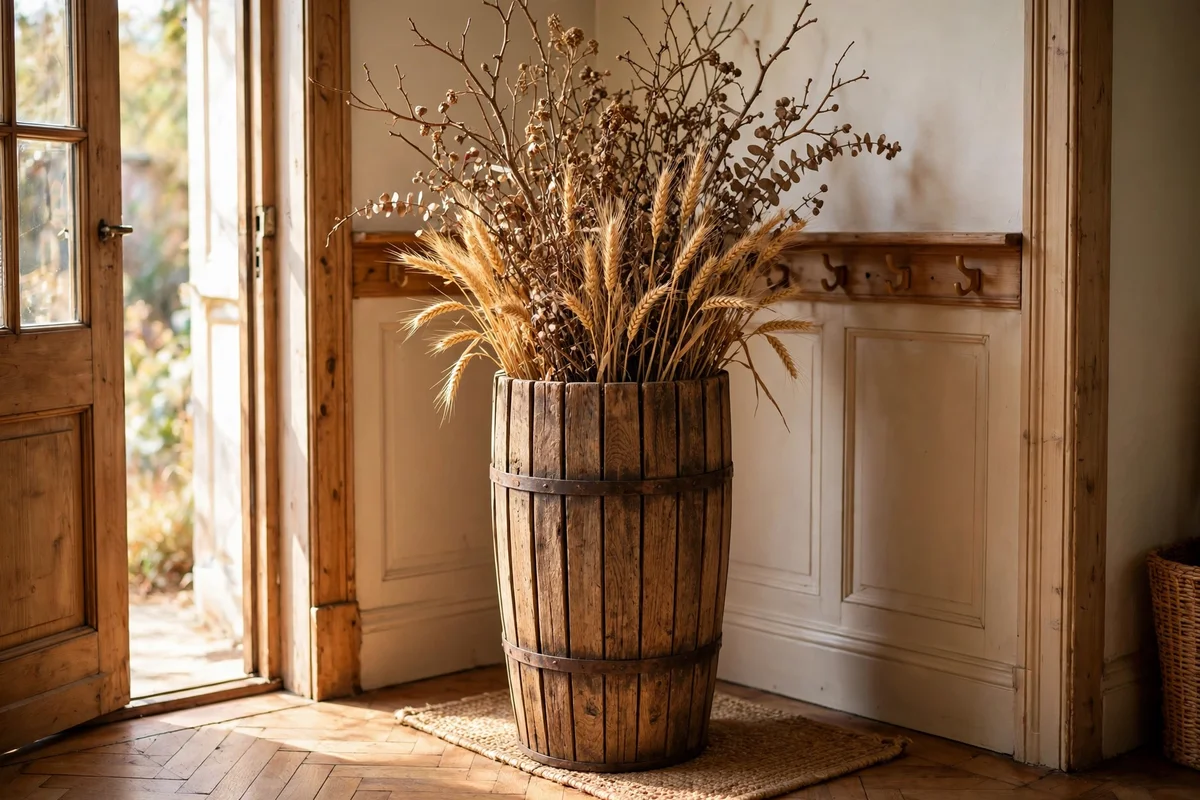
A tall wooden vessel filled with dried branches and wheat stalks gives an entryway or dining corner instant harvest height. Choose a vessel 40 to 60 cm tall and branches 100 to 130 cm long so the arrangement stands at least twice the vessel’s height. Mix three branch types, for example curly willow, dried eucalyptus and wheat, in a ratio of roughly half wheat to half branches. Fan the stems outward so the silhouette stays open and airy.
Dried bundles cost 10 to 20 pounds or dollars, and the vessel is often the only real expense. The mistake to avoid is cramming too many stems in; twenty stems look abundant, while forty look stuffed. Keep dried arrangements away from open flames and radiators, since they are flammable. Shake the vessel gently outdoors each month to release dust without breaking the stems.
19. Style a Wooden Step Stool as a Small Autumn Side Table
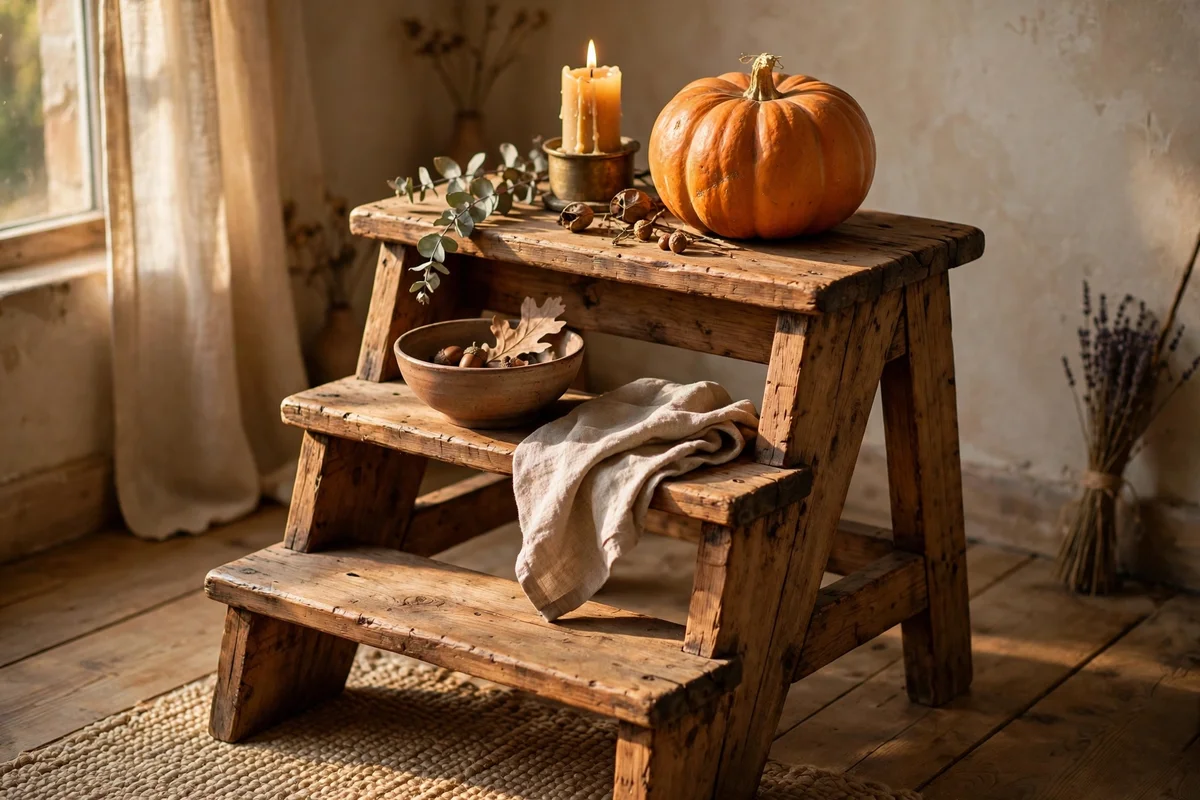
A sturdy wooden step stool, 40 to 50 cm tall, makes a charming side table for autumn pieces in a tight corner. Choose a stool with a flat top at least 30 cm across, and set a small carved pumpkin, a short stack of books and a candle on top. Tuck a folded throw over the lower step for softness. The stool works beside an armchair, at the end of a hallway, or flanking the front door.
Vintage step stools cost 15 to 40 pounds or dollars at flea markets, and new ones start around 20. The mistake to avoid is overloading the top; three small items read as styled, while six read as storage. Test that the stool stands level before decorating, since wobble topples candles. When autumn ends, the stool returns to its useful life in the kitchen or pantry.
20. Keep a Wooden Box of Kindling as Rustic Decor
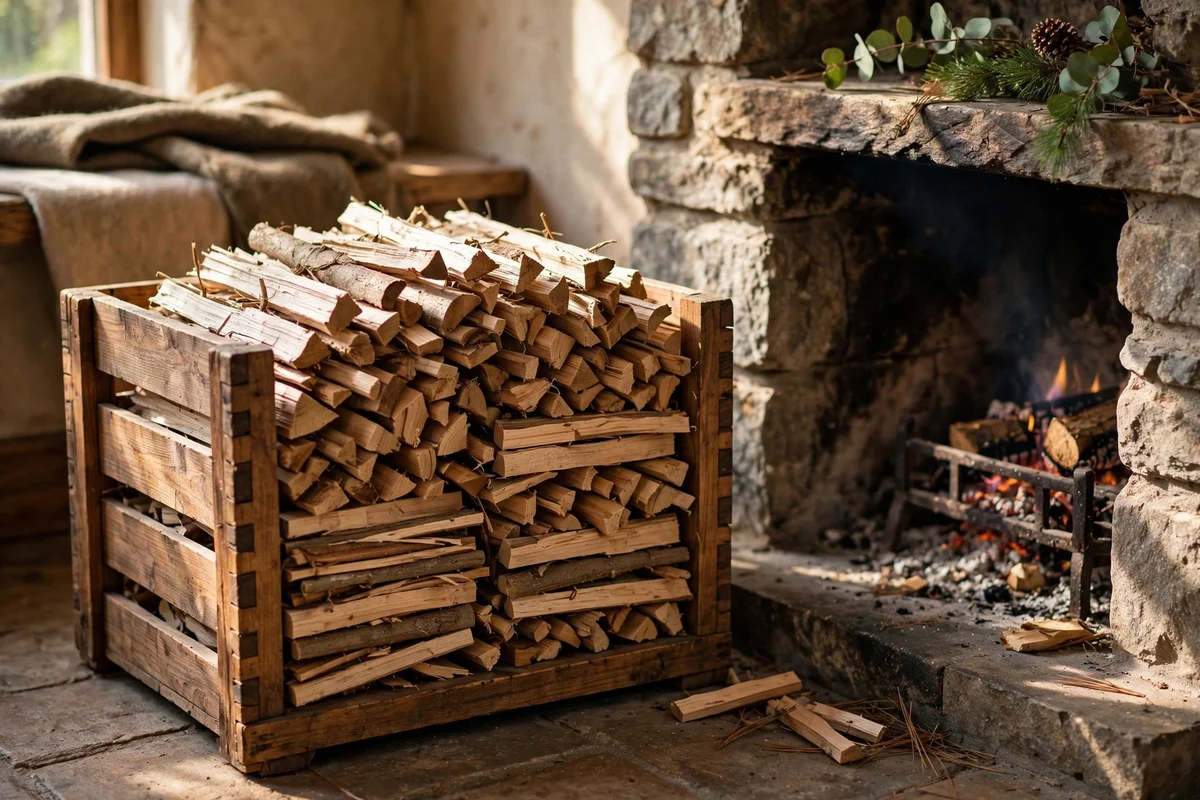
A small wooden box of kindling sticks beside the fireplace looks purposeful even in homes that burn candles instead of logs. Choose a box 25 to 35 cm long and fill it with clean, evenly cut kindling sticks about 20 cm long, stacked in neat rows. A leather or rope handle on the box adds a handcrafted touch. Set it on the hearth or on the floor just beside the fireplace tools.
Kindling boxes cost 15 to 30 pounds or dollars, and a bundle of decorative kindling is usually under 10. The mistake to avoid is storing kindling in a damp spot, where it warps and grows musty; keep the box in a dry corner of the hearth. Never use decorative kindling as actual fire fuel unless it is sold for burning. A few pinecones tucked on top soften the straight lines of the sticks.
21. Arrange a Wooden Tiered Tray With Mini Pumpkins and Candles
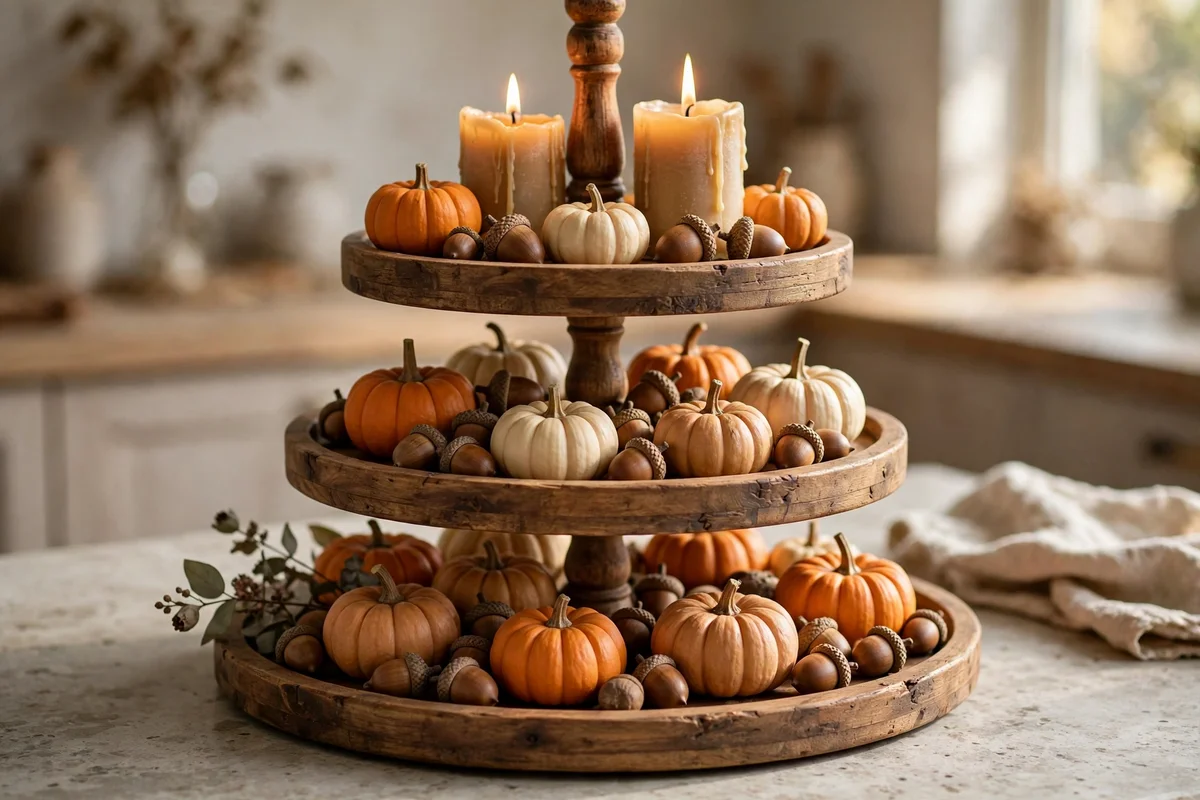
A two or three tier wooden tray packs a whole autumn display into 30 cm of counter space. Start with the largest items on the bottom tier: two or three mini pumpkins and a short candle. Place smaller pieces above: wooden acorns, a tiny garland coil and a tea light holder. Keep each tier to three or four items so nothing feels crowded. A tiered tray suits a kitchen island, a sideboard or a bathroom counter.
Tiered trays cost 20 to 45 pounds or dollars, and filling them uses pieces you may already own. The mistake to avoid is building all three tiers at the same height; vary the heights across tiers so the eye travels upward. Anchor the tray on a small runner or mat so it does not scratch the counter. Restyle the same tray with pinecones and candles for winter in minutes.
22. Finish the Porch With a Large Wooden Pumpkin by the Door
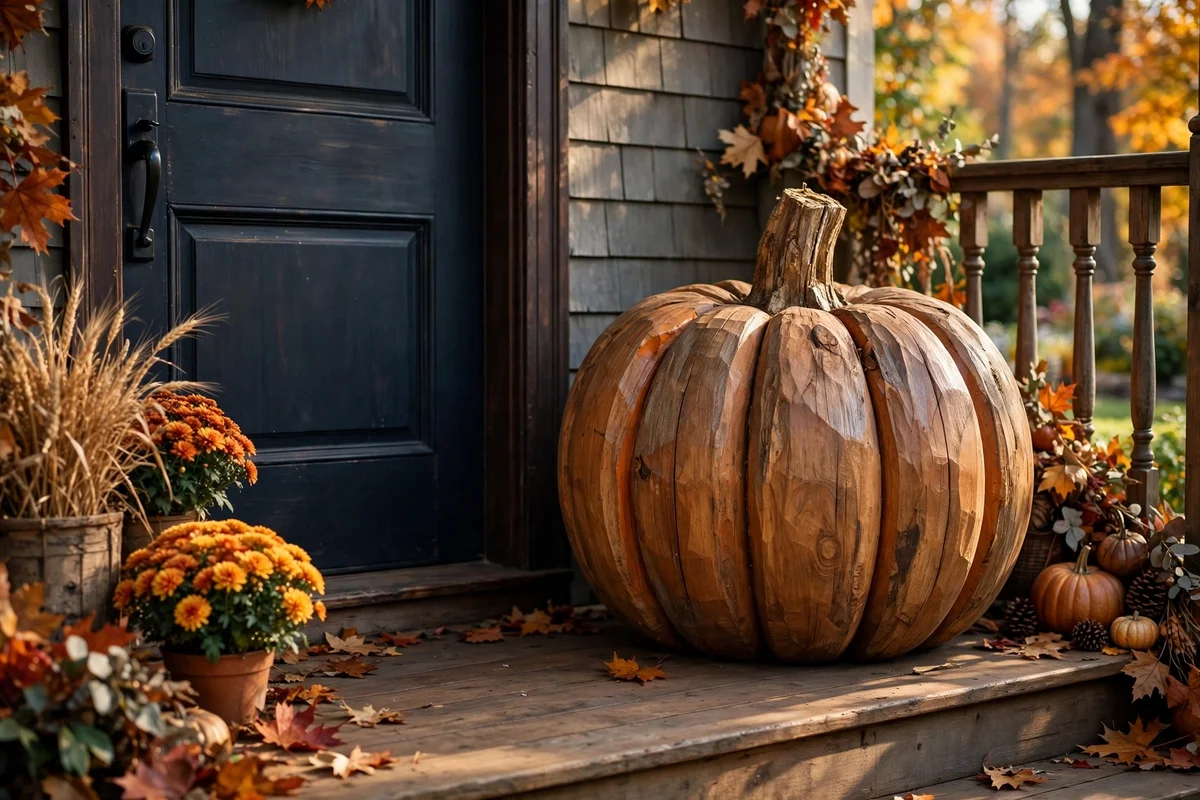
One oversized wooden pumpkin by the front door says autumn louder than a dozen small decorations. Choose a pumpkin 40 to 60 cm across and set it slightly to one side of the door, not dead centre, so the entrance stays welcoming. A weather-sealed wooden pumpkin survives rain, but bring it under the porch overhang during heavy storms. Pair it with a simple doormat and a lantern for a finished look.
Large wooden pumpkins cost 40 to 90 pounds or dollars, the investment piece of this list. The mistake to avoid is buying an unsealed indoor pumpkin for the porch; one wet week can swell and crack the wood. Check the base sits level so it never rocks in wind. After the season, store it in a dry shed or garage wrapped in an old sheet.
The beauty of wooden fall decor is how quietly it works. A row of carved pumpkins, a bead garland softening the mantel, a dough bowl of gourds on the console: none of it shouts, and all of it lasts. These pieces ask for almost nothing beyond a weekly dusting, and they return the favour by making every room feel gathered in and ready for the cooler months.
If you try just one idea this week, start with the bead garland on the mantel or the coffee table. It is the smallest spend on this list, it takes five minutes to arrange, and it changes the feel of a room instantly. Add one wooden pumpkin beside it, and you have the beginning of an autumn collection that will greet you warmly for years to come.
Frequently Asked Questions
How much does it cost to decorate a living room with wooden fall decor?
Between 40 and 120 pounds or dollars covers a full living room look. A bead garland, three turned pumpkins and a dough bowl of gourds usually total around 70. Start with one focal piece like the mantel cluster, live with it for a week, then add a second piece only if the room still feels bare.
Can I mix different wood tones in one autumn display?
Yes, and it usually looks richer than matching everything. Keep one tone dominant, about sixty percent of the pieces, and let a second tone accent the rest. Match warm undertones with warm, and cool with cool. Repeat each tone at least twice in the display so the mix looks deliberate rather than accidental.
How do I care for wooden pumpkins and decor pieces?
Dust them weekly with a dry soft cloth, since shelves and mantels collect a fine grey film. Keep pieces out of direct prolonged sunlight to stop finishes fading. Oil unfinished wood with food-safe mineral oil once or twice a season. Wrap pumpkins in tissue and store them upright so stems never snap.
Are wooden fall decorations safe around candles and fireplaces?
Keep wooden pieces at least 20 cm from any open flame, and never let candles touch wood or bead garlands. Use LED pillar candles inside wooden trays or near dried arrangements. Decorative logs and kindling are for display only and should never go into an active fireplace. Always extinguish real candles before leaving the room.
Where can I find affordable wooden fall decor pieces?
Craft markets, charity shops and flea markets are the best sources for turned pumpkins, crates and dough bowls at low prices. Online marketplaces sell bead garlands and wood slices in sets. Unfinished wooden acorns and leaves cost very little and take stain well. Buying plain pieces and finishing them yourself often halves the cost.