Living Room
23 Cozy Fall Decorating Ideas That Make Home Feel Warm
By Anna Wells · · 18 min read
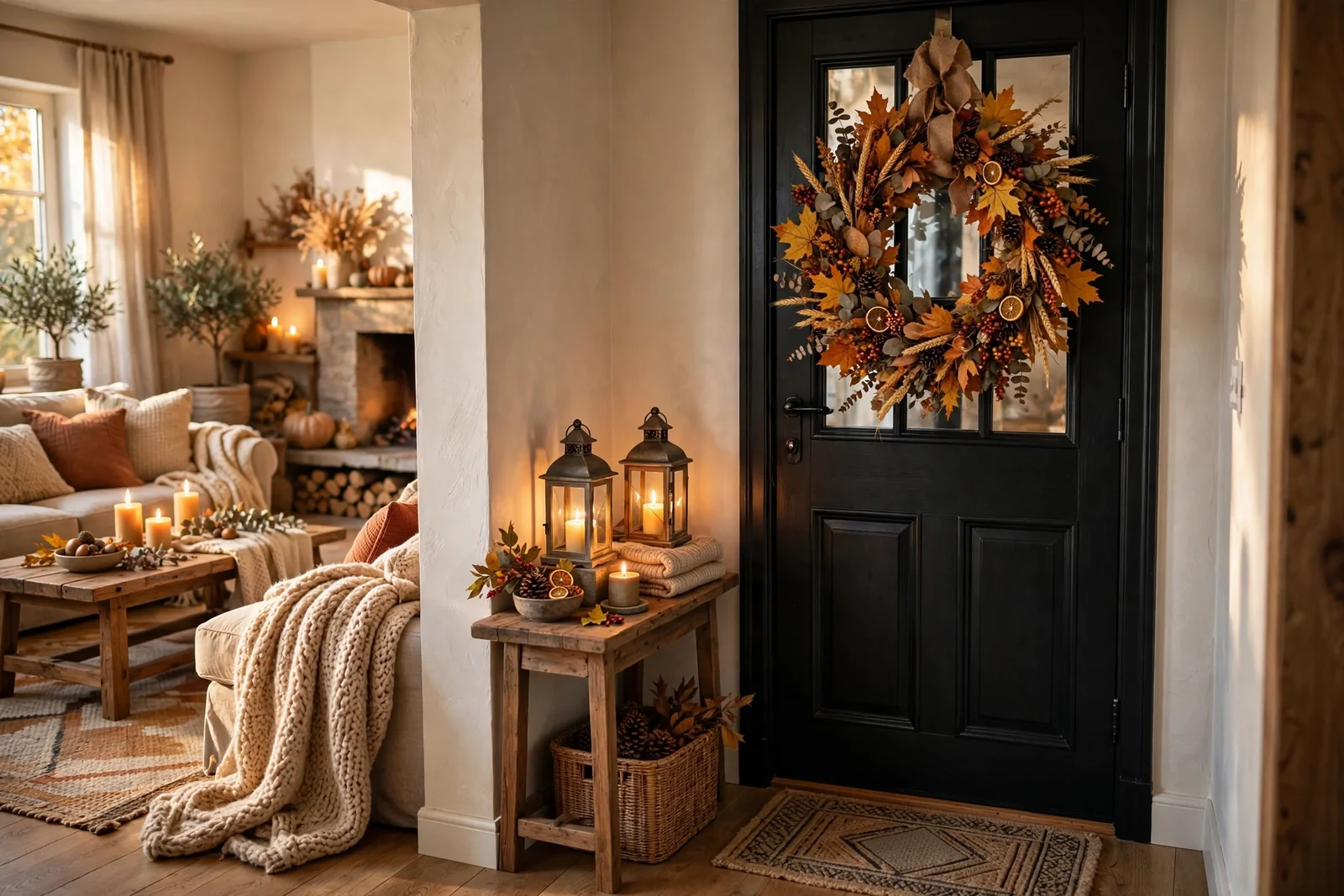
23 cozy fall decorating ideas that bring warmth to every room, from a harvest wreath at the door to brushed cotton bedding and beeswax candlelight.
There is a particular afternoon in October when the light turns amber and the house seems to ask for a little more warmth. The kettle goes on earlier, the evenings pull in, and every room could do with a softer layer. That is the moment this collection of ideas is made for.
A warm autumn home is not about filling every corner with decoration. It is about small, deliberate touches repeated with care: a wreath at the door, wool where your hands land, candlelight instead of harsh bulbs, and the gentle scent of orange and cinnamon drifting from the stove.
Below are 23 cozy fall decorating ideas that walk you through the whole house, from the entryway to the bedroom to the bathroom. Each one is practical, budget friendly and easy to try this weekend, and together they make every room feel connected, calm and quietly ready for the season.
1. Hang a Harvest Wreath on the Front Door at Eye Level
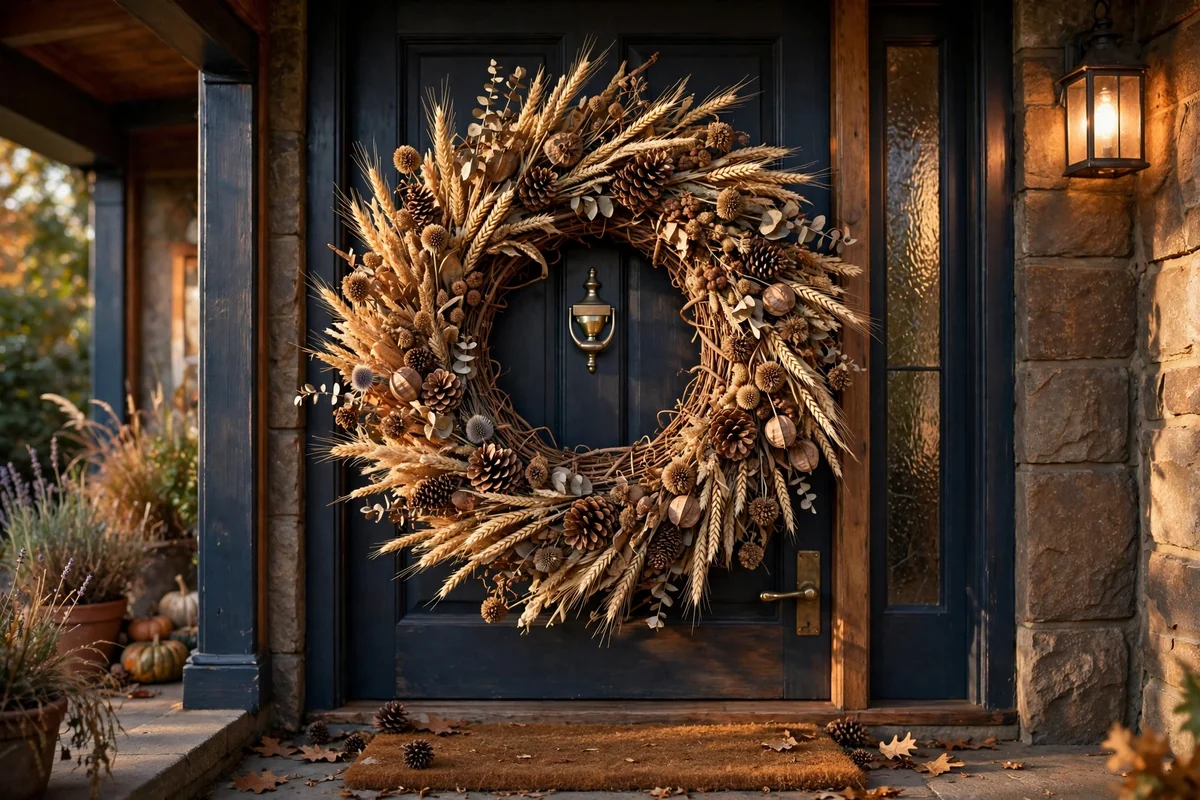
A wreath between 50 and 60 cm across suits a standard front door and reads clearly from the pavement. Hang it so the centre sits roughly 150 cm from the ground, which is eye level for most visitors, using an over-door hook or a suction hook rated for at least 3 kg on glazed panels. Choose dried wheat, seed heads and small pinecones on a grapevine base instead of glossy plastic berries. Natural materials age gracefully through the whole season.
The mistake to avoid is hanging the wreath too high, where it floats disconnected above the door furniture. Keep the handle and letterbox clearly visible beneath it, then step back three metres to check the balance before fixing anything permanently. A craft-market wreath costs 15 to 25 pounds or dollars, while a hand-tied florist version runs 40 to 60. Store it flat in a box with tissue paper and it will last for years.
2. Place a Pair of Lanterns Flanking the Entry Console
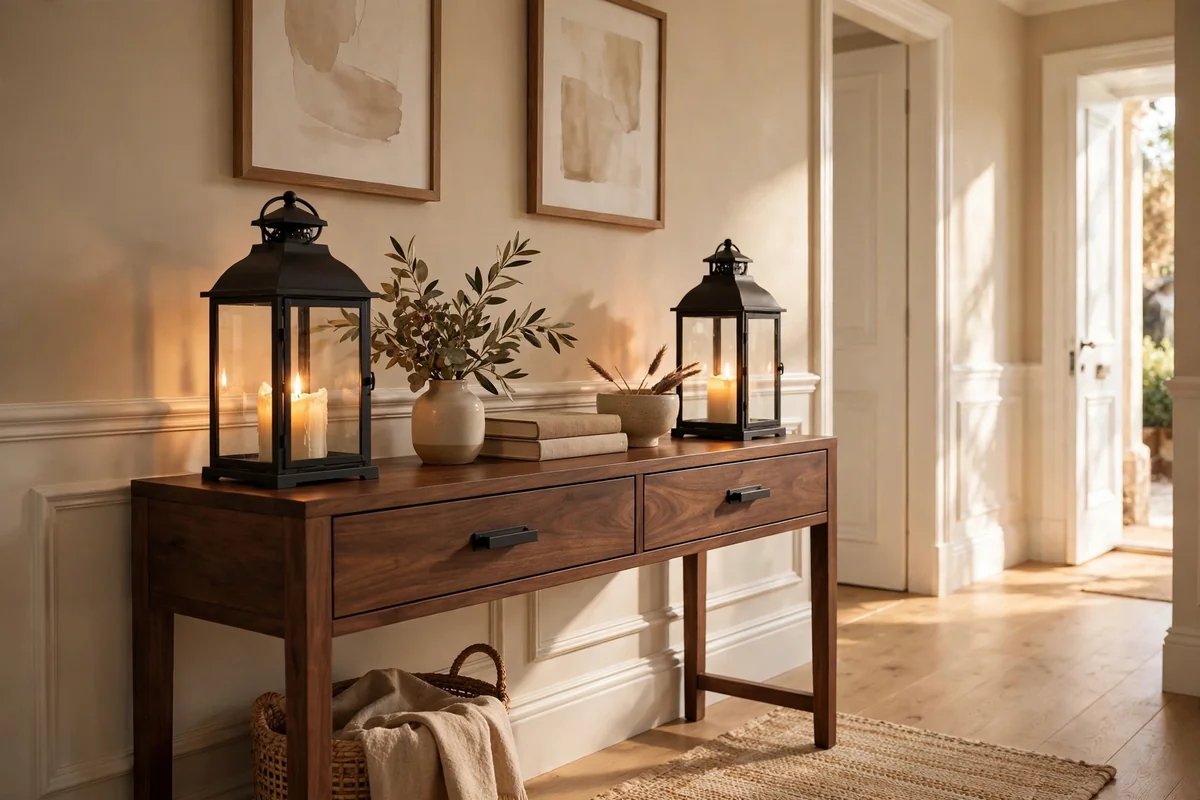
Two lanterns between 25 and 35 cm tall, one at each end of the entry console, give the hallway a calm symmetrical glow. Choose black metal or pale oak frames with clear glass panels so the light spreads softly. Inside each, set a beeswax pillar candle or a warm 2700K LED candle on a timer if you leave the house often. Keep the pair identical in size and finish so they read as one deliberate line.
Set each lantern on a small tray or cork mat to protect the console top from heat and wax drips. The common mistake is mixing one tall lantern with one short, which makes the entry feel lopsided. Budget tip: matching lanterns from a home store usually cost 12 to 20 pounds or dollars each. Never place a lit lantern beside hanging coats or curtains, and blow out real flames before bed.
3. Lay a Flatweave Runner in Rust and Ochre Down the Hall
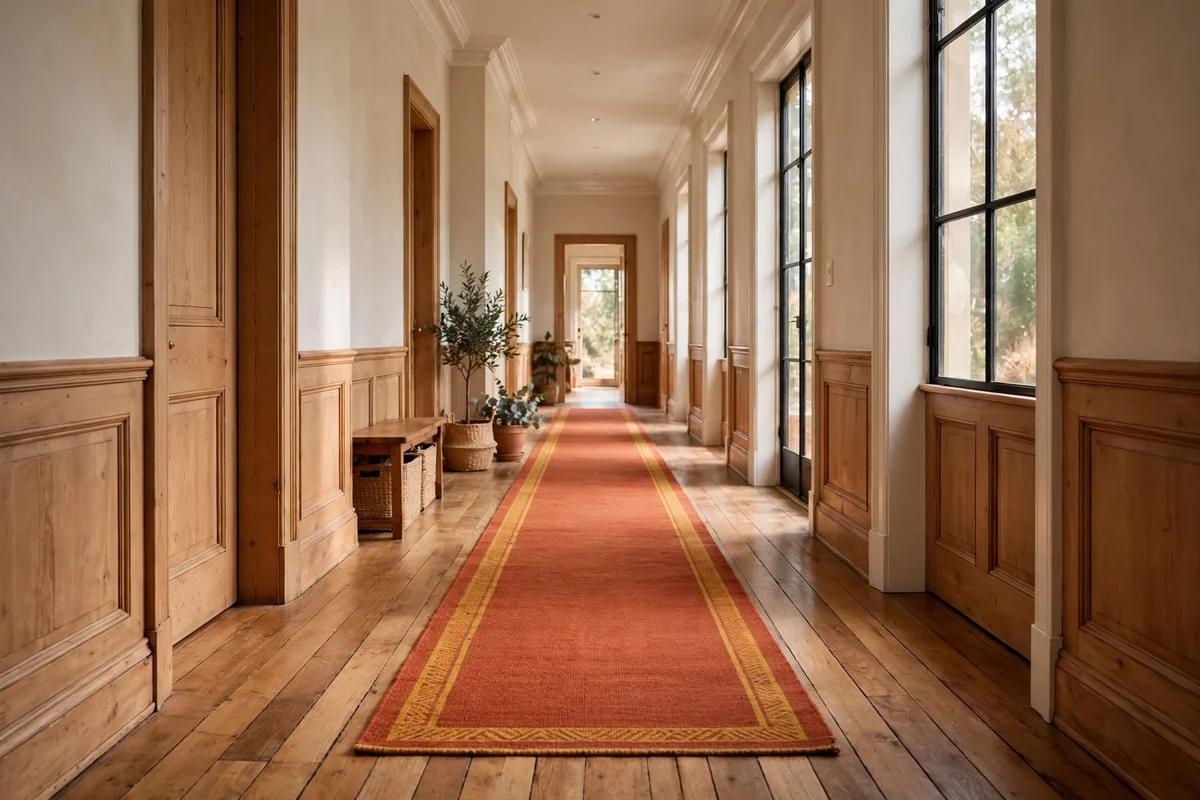
A flatweave runner 60 to 80 cm wide and long enough to leave 15 cm of floor showing at each end pulls the eye down the hallway. Choose a tight cotton weave in rust with an ochre border, which hides dust far better than cream. Lay a thin non-slip pad underneath so the runner never creeps on wooden floors. The low profile also means doors swing clear without catching.
The mistake to avoid is a runner that stops halfway down the hall, which chops the space in two. Measure the full length first, then buy. A cotton flatweave runner in this size costs 30 to 60 pounds or dollars, and most survive a gentle machine wash. Shake it outside weekly rather than vacuuming daily, since the flat weave releases crumbs easily with one good shake.
4. Lean a Warm Oak Serving Board Against the Kitchen Splashback
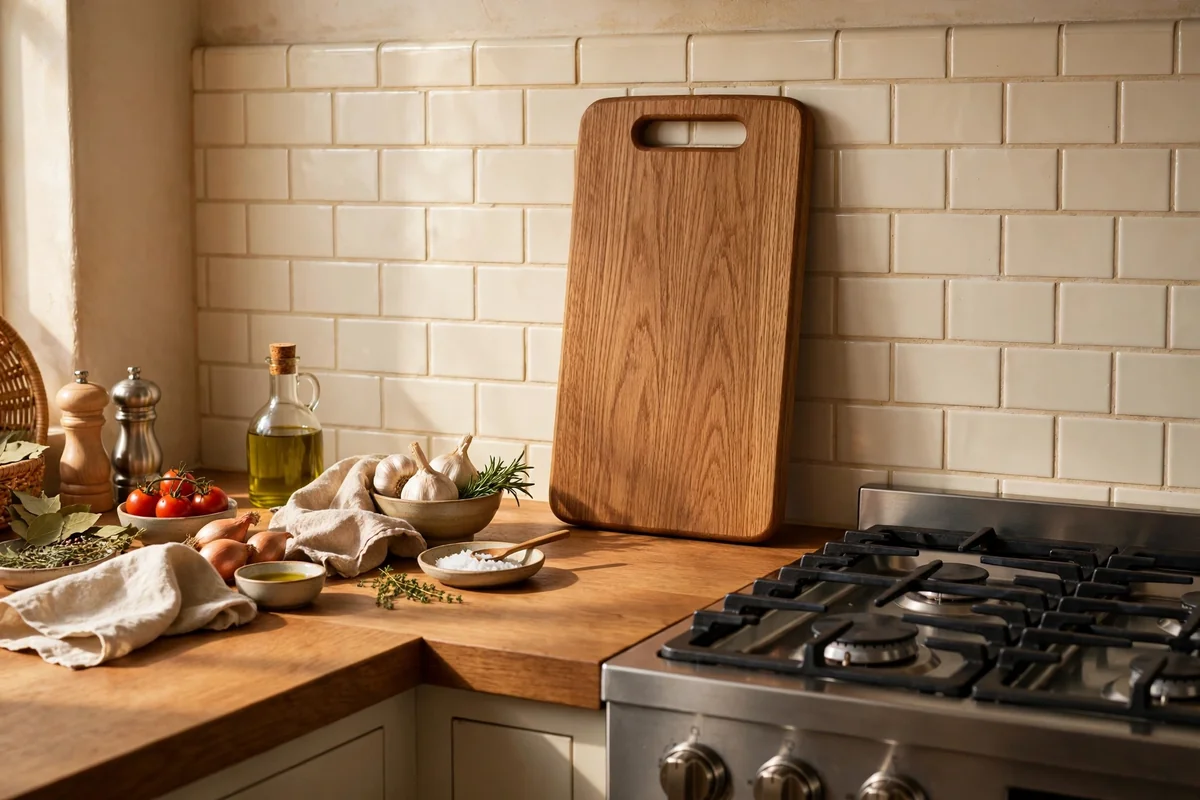
A solid oak serving board about 40 cm long and 25 cm wide, leaned against the splashback at a slight angle, adds instant warmth beside the hob. Rub it with food-safe mineral oil once so the grain glows, and choose a board with a leather hanging loop for a crafted detail. It turns an empty stretch of counter into a styled moment without taking the board out of daily use.
Keep the board at least 30 cm from an open gas flame and never lean it where splattering oil lands. The mistake to avoid is choosing a thin decorative board that warps the first time it is washed. A proper 2 cm thick oak board costs 20 to 35 pounds or dollars and doubles as a cheese board for guests. Re-oil it monthly to keep the surface rich.
5. Simmer Orange Peel and Cinnamon on the Stove for Scent
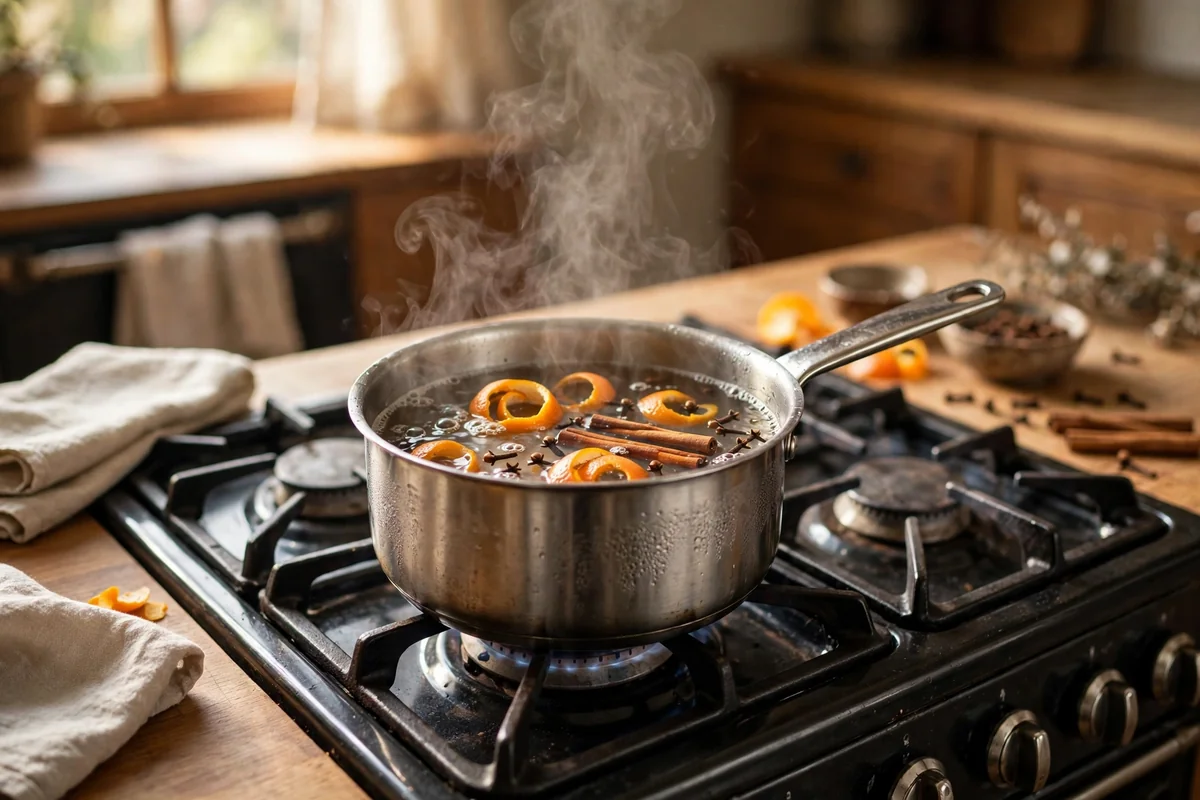
Fill a small saucepan with the peel of two oranges, two cinnamon sticks, four whole cloves and about one litre of water. Bring it barely to a simmer, then keep it on the lowest heat for two to three hours, topping up the water whenever it drops by half. The steam carries a gentle spiced-orange scent through the kitchen and into neighbouring rooms. It costs pennies and uses scraps you would otherwise throw away.
Never let the pot boil dry, since scorched peel smells bitter and can damage the pan. Set a phone timer for every 45 minutes as a reminder to check the water level. The mistake to avoid is cranking the heat high for a stronger scent, which cooks the fragrance off in minutes instead of hours. Compost the used peel and spices afterwards, and start fresh each day you want the scent.
6. Stack Mixed-Wood Boards Within Reach of the Stove
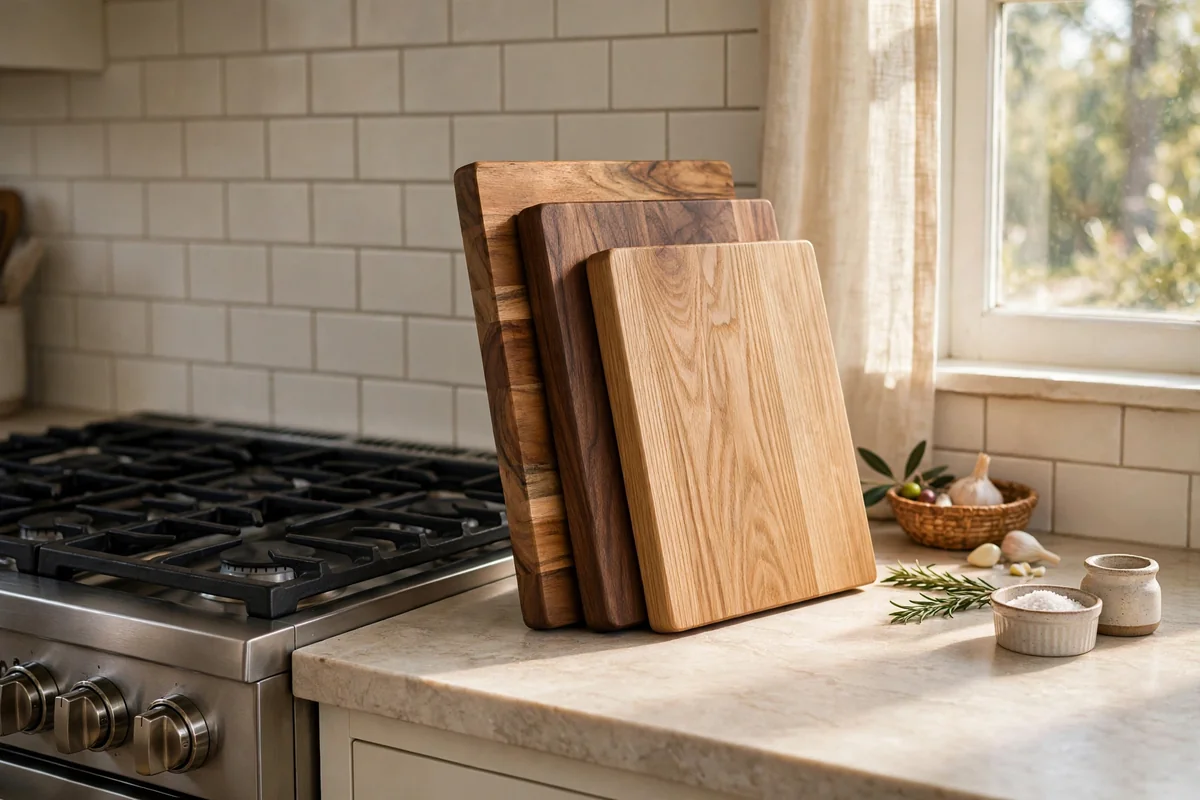
Stack two or three boards in mixed woods, for example oak, walnut and acacia, on the counter nearest the stove. Vary the lengths between 30 and 45 cm and lean the tallest at the back so each grain shows. This little stack reads as warm decor all day and puts the right board within reach at cooking time. Wipe them down after use and stand them upright to dry fully.
The mistake to avoid is stacking boards while they are still damp, which traps moisture and warps the wood. Give each one an hour of air before stacking. A set of three mixed-wood boards costs 25 to 45 pounds or dollars, or start with one good oak board and add others over time. Oil all of them with the same food-safe oil so the tones stay harmonious.
7. Layer a Quilted Runner Down the Centre of the Dining Table
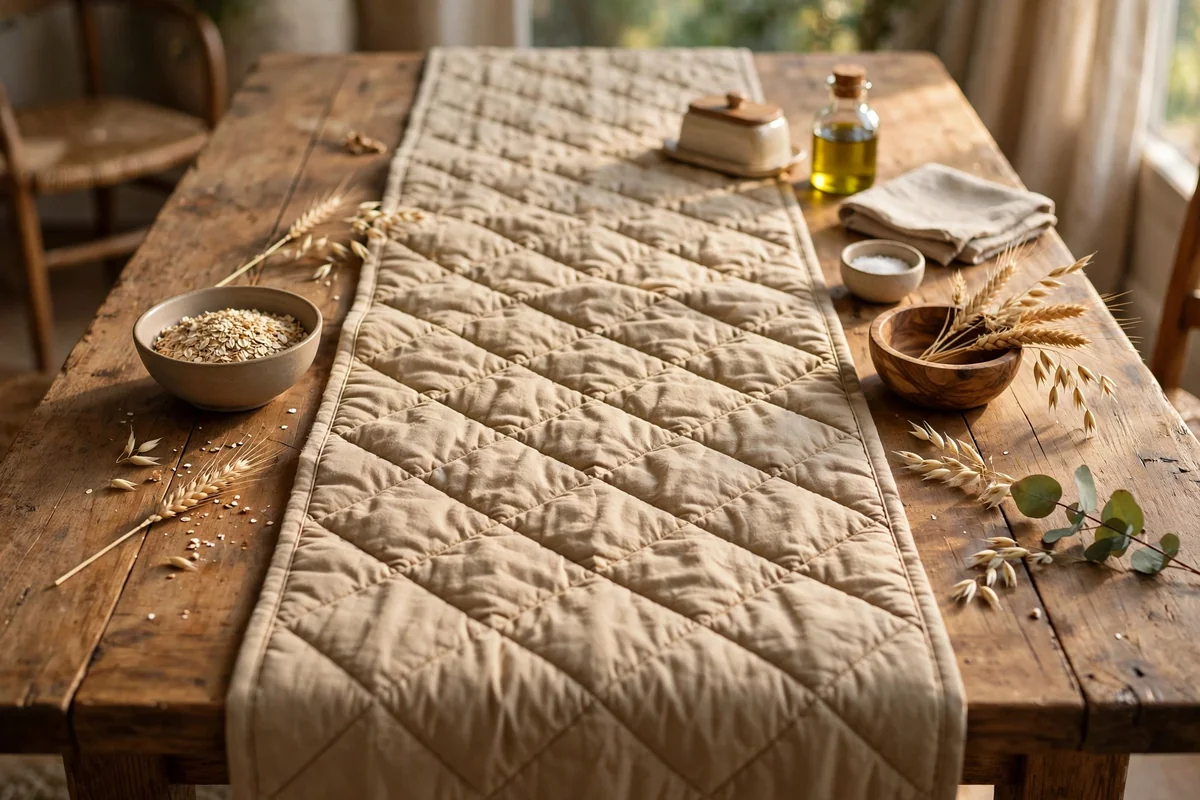
A quilted runner 35 to 45 cm wide, with 25 to 30 cm of overhang at each end of the table, softens a hard dining surface beautifully. Choose quilted cotton in wheat, oat or soft rust tones, since the stitching adds the texture that makes a table feel dressed even before plates arrive. Centre it carefully and smooth out any folds so it lies flat.
The mistake to avoid is a runner so narrow it disappears under the centrepiece. Measure your table width first and pick a runner at least one third of it. A quilted cotton runner costs 20 to 40 pounds or dollars and usually machine washes well. Layer it over a plain linen tablecloth for formal dinners, or let it sit directly on wood for everyday meals.
8. Set a Low Bowl of Pinecones and Dried Oranges as the Centrepiece
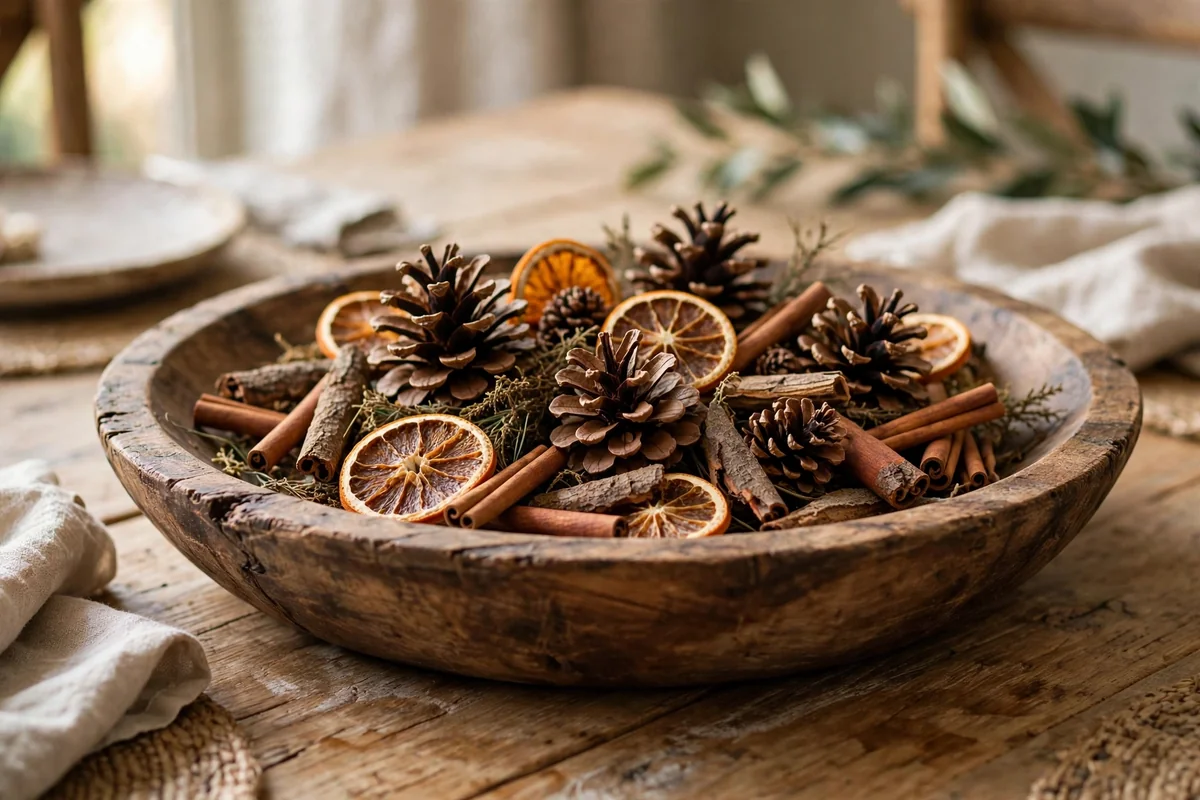
Choose a low, wide bowl 25 to 30 cm across in wood, stoneware or hammered metal, and fill it with eight to twelve pinecones mixed with five to seven dried orange slices. Keep the whole arrangement under 15 cm tall so conversation flows easily across the table. Tuck a few cinnamon sticks between the cones for a faint scent when the room warms up.
Dry orange slices yourself by baking 5 mm rounds at 90 degrees Celsius for about three hours, turning once, which costs almost nothing. The mistake to avoid is a tall centrepiece that forces guests to peer around it all evening. Gather pinecones on a walk for free, brushing off dirt first. Refresh the bowl monthly by swapping in new dried slices.
9. Fold a Wool Throw Over the Back of Each Dining Chair
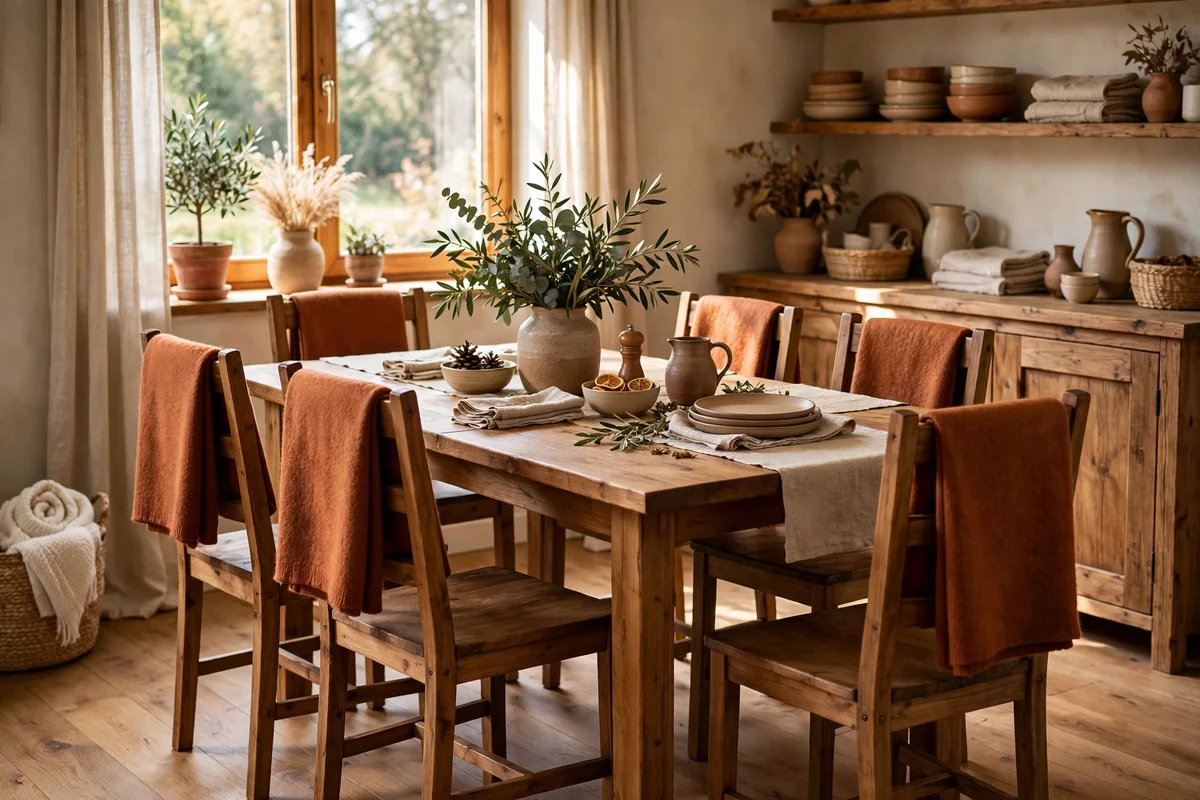
Fold a wool or wool-blend throw into thirds lengthwise and drape it over the back of each dining chair, letting 30 to 40 cm hang down the back. Choose rust, ochre or a quiet plaid that echoes the table runner. The chairs suddenly look dressed for the season, and guests can pull a throw around their shoulders on chilly evenings.
The mistake to avoid is throws so long they trail on the floor and collect dust. A 130 by 170 cm throw folded well stays clear of the ground on standard chairs. Budget tip: buy two throws and dress every other chair if funds are tight, since the rhythm still reads as intentional. Shake them outside weekly to keep crumbs at bay.
10. Swap Bedroom Sheets for Brushed Cotton in Warm Oatmeal
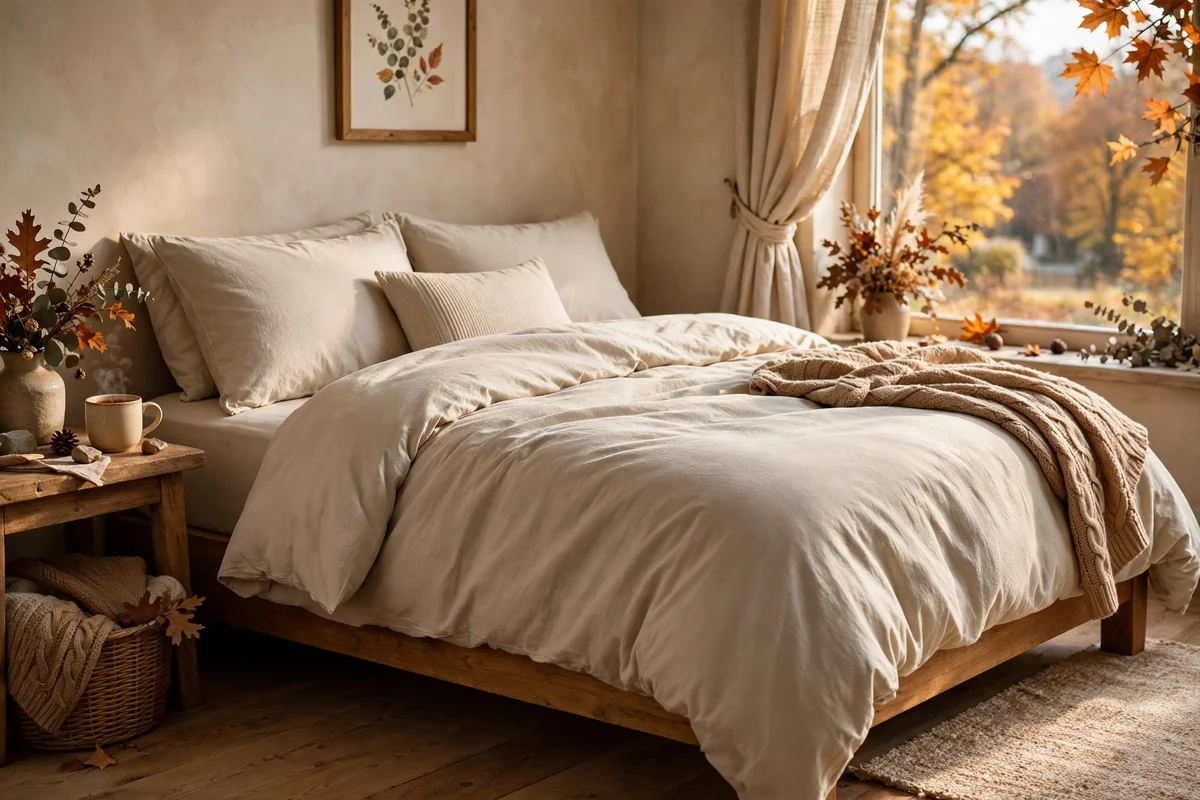
Swap smooth summer cotton for brushed cotton sheets in warm oatmeal or soft camel, which feel noticeably cosier from the first night. Choose a fitted sheet plus duvet cover set in 100 percent brushed cotton, and wash the set once before use to lift the fibres. The lightly napped surface traps warmth without the weight of flannel, ideal for autumn nights.
The mistake to avoid is pairing warm oatmeal sheets with a stark white duvet cover, which breaks the cosy palette. Keep every bedding layer in the same warm family. A brushed cotton set costs 40 to 80 pounds or dollars depending on size. Budget tip: change just the duvet cover and pillowcases first, since they show the most, and add the fitted sheet later.
11. Fold a Second Quilt Across the Foot of the Bed
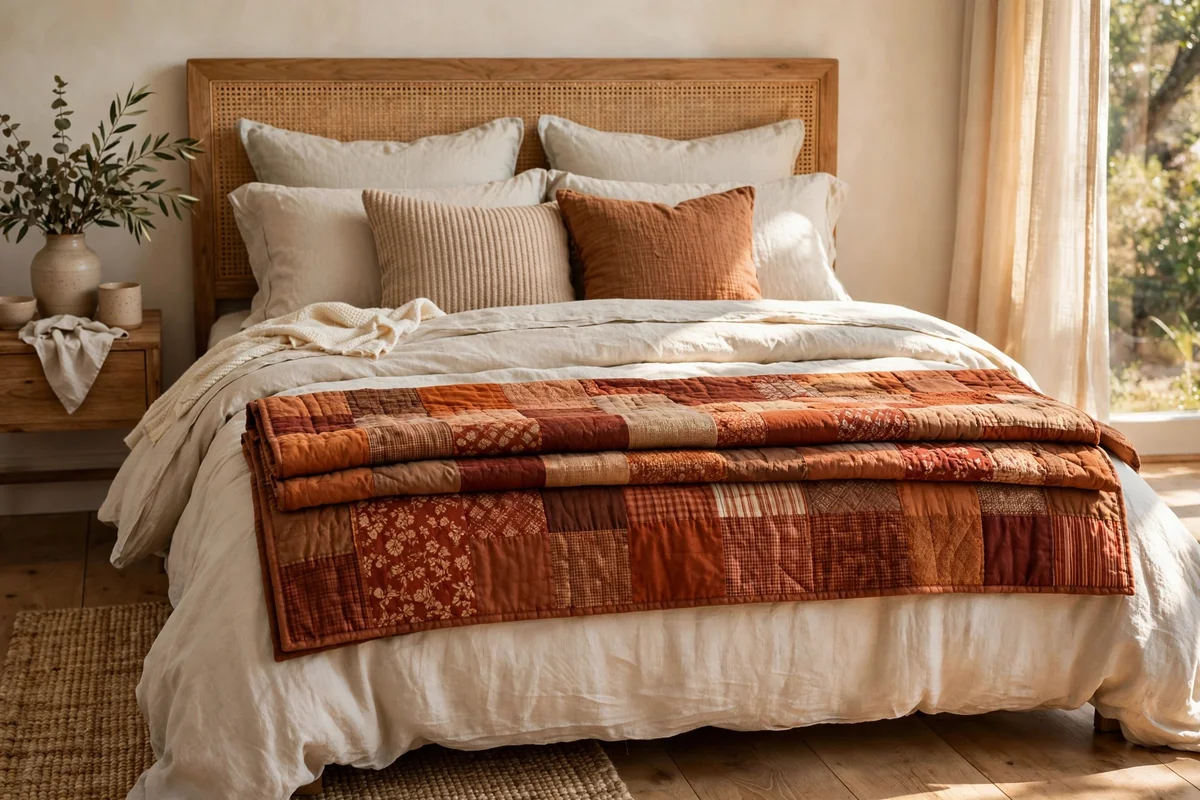
Fold a second quilt into thirds and lay it across the foot of the bed, covering the bottom third of the mattress. Choose a wholecloth or simple patchwork quilt in an autumn print or solid rust, sized about 150 by 200 cm for a double bed. It adds real warmth for cold feet at night and gives the bed a layered, styled look by day.
The mistake to avoid is a quilt so thick the bed looks lumpy and feels heavy to sleep under. Pick a light summer-weight quilt for this layer, since its job is looks plus a little extra warmth. Prices run 35 to 70 pounds or dollars. Fold it back each morning in one smooth motion to keep the bedroom tidy with almost no effort.
12. Add Two Cushions in Burnt Sienna to the Pillow Lineup
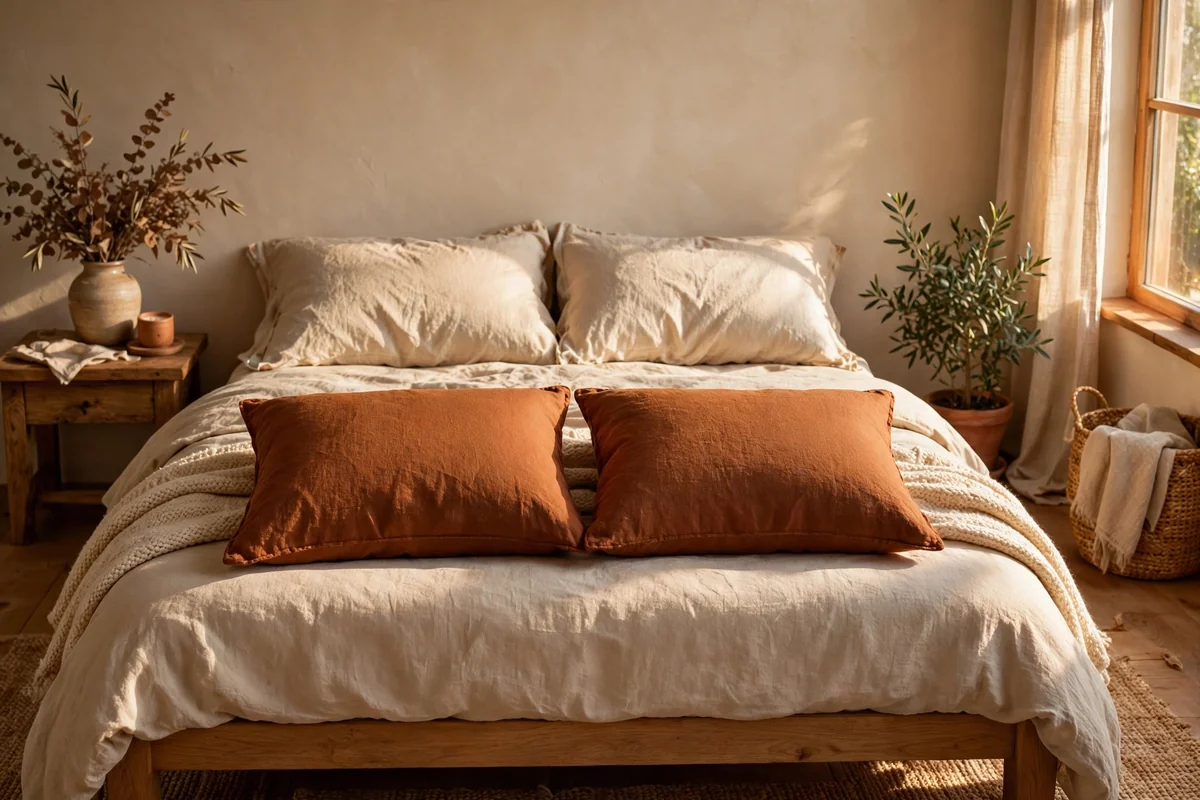
Add two 45 by 45 cm cushions in burnt sienna or deep terracotta in front of your sleeping pillows, keeping the total cushion count to four or fewer. Choose linen or cotton covers with a feather or recycled filling for a soft, lived-in plumpness. The warm colour pulls the whole bed into the autumn palette without changing the duvet.
The mistake to avoid is a tower of six or eight cushions that must be cleared every night, which quickly becomes a chore. Two is enough for colour and comfort. Cushion covers cost 10 to 20 pounds or dollars each, so this is a small spend with a big visual payoff. Fluff them with a quick shake each morning.
13. Warm the Bedroom Floor With a Small Rug by the Bedside
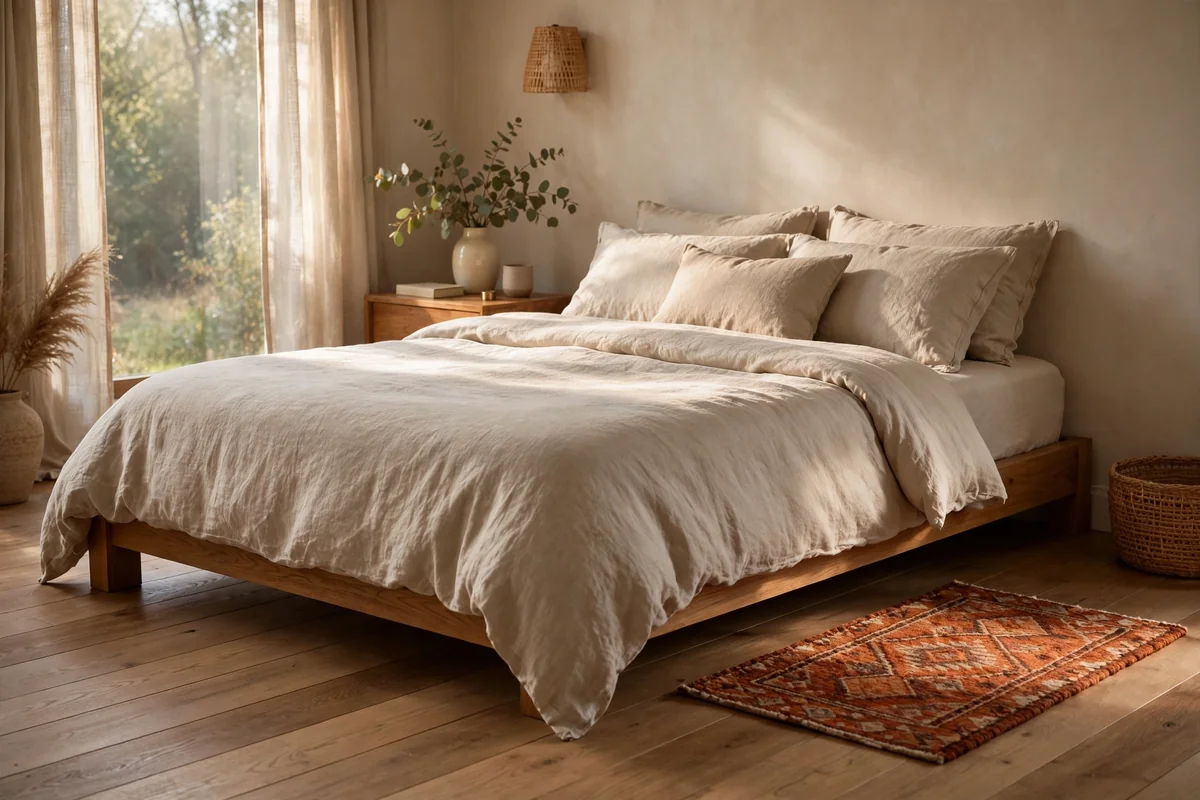
Lay a low-pile wool rug about 80 by 150 cm beside the bed where your feet land each morning, or run a matching pair on both sides of a double bed. Choose a warm pattern with rust or ochre notes that echoes the bedding. The soft landing makes cold floors bearable and finishes the bedroom as deliberately as any other room.
The mistake to avoid is a rug that slides on hard floors, which is both annoying and unsafe. Always use a thin non-slip pad cut 2 cm smaller than the rug all round. A wool bedside rug costs 40 to 90 pounds or dollars. Vacuum weekly on a low setting and rotate it every few months for even wear.
14. Replace Bathroom Hand Towels With Autumn-Toned Cotton Sets
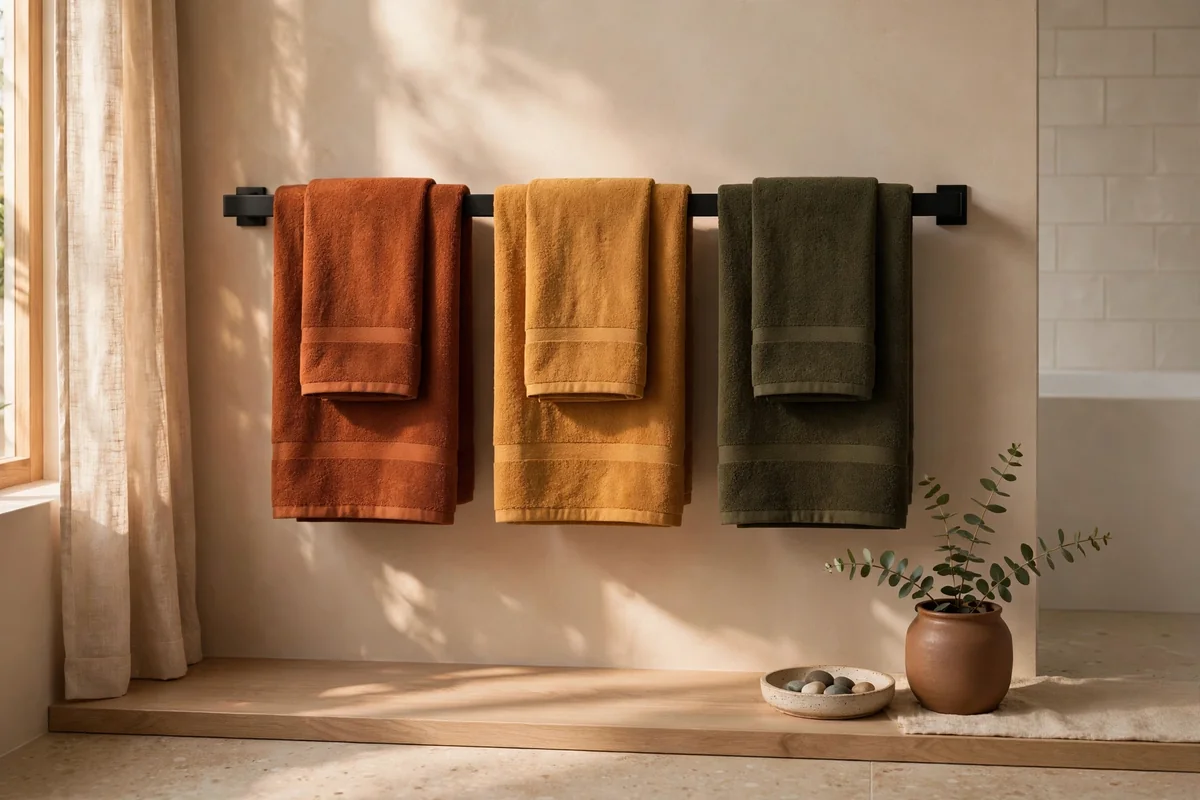
Replace everyday hand towels with a set of four cotton towels, each about 40 by 60 cm, in autumn tones like rust, ochre and deep olive. Choose 500 GSM or higher for a thick, thirsty feel, and fold each in thirds over the rail so the stripe or border shows. Matching the set makes even a small bathroom feel considered.
Wash new coloured towels separately twice before first use, since deep dyes can bleed. The mistake to avoid is mixing one new rust towel with three faded old ones, which looks accidental rather than styled. A set of four good cotton hand towels costs 20 to 35 pounds or dollars. Replace bath towels in the same tones when budget allows.
15. Set a Wooden Tray on the Vanity With Soap and Dried Stems
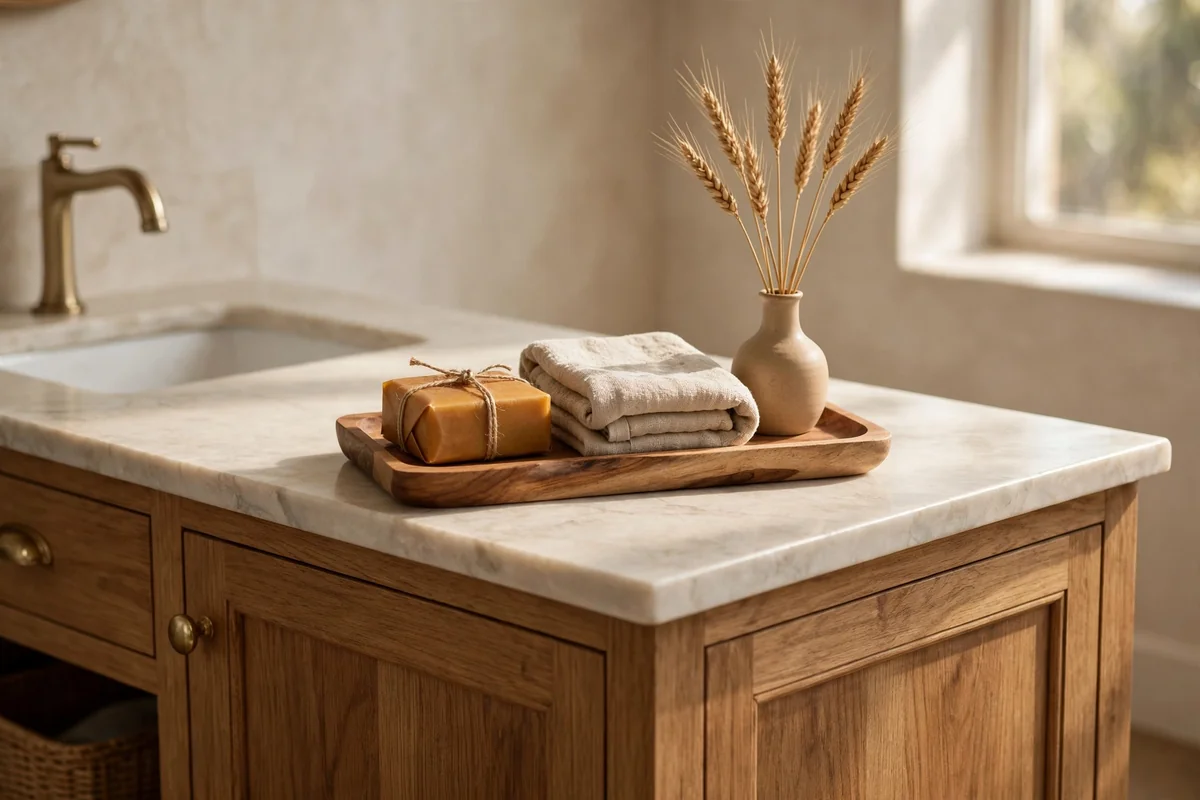
Set a small acacia tray about 25 by 15 cm on the vanity, away from the direct splash zone, and arrange a bar of soap in amber paper, a folded spare hand towel and a tiny bud vase with three dried wheat stems. The tray corrals the bits and pieces that usually scatter across the counter. Everything stays dry, tidy and warmly styled.
The mistake to avoid is crowding a narrow vanity with a tray that leaves no room for daily use. Measure first and keep the tray to one side. A wooden tray costs 12 to 25 pounds or dollars, and dried stems last for months. Swap the soap seasonally, choosing honey or oat scents that suit the autumn mood.
16. Light Beeswax Candles in the Living Room Every Evening
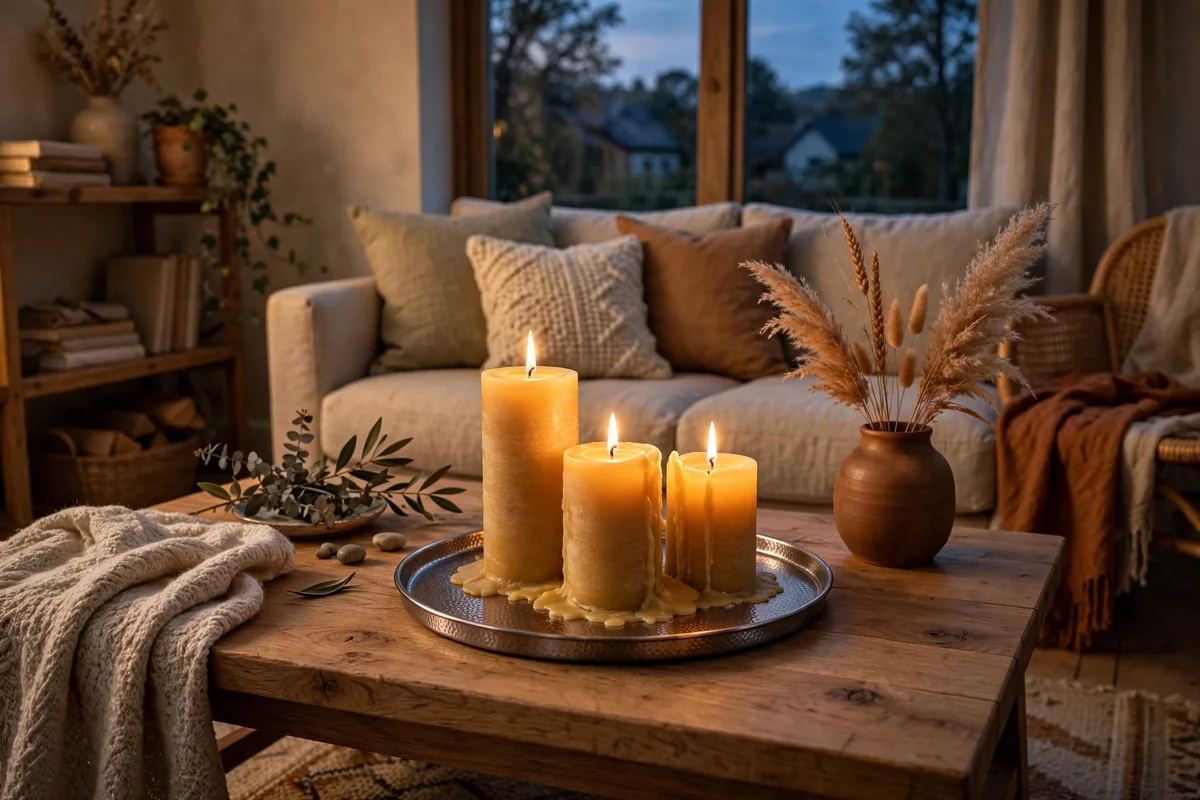
Each evening, light two or three beeswax pillar candles 7 to 10 cm in diameter on a heatproof tray in the living room. Beeswax burns with a warm golden flame and a faint honey scent, with none of the synthetic fragrance of plug-in sprays or scented gels. Place the tray on the coffee table or mantel where the glow reaches the seating area.
Trim the wick to 5 mm before each lighting so the flame stays small and soot-free. The mistake to avoid is leaving candles burning in an empty room, so make lighting them part of your evening wind-down and snuff them before bed. Beeswax pillars cost more than paraffin, about 8 to 15 pounds or dollars each, but burn longer and cleaner.
17. String Dried Orange Slices Across the Mantel on Plain Twine
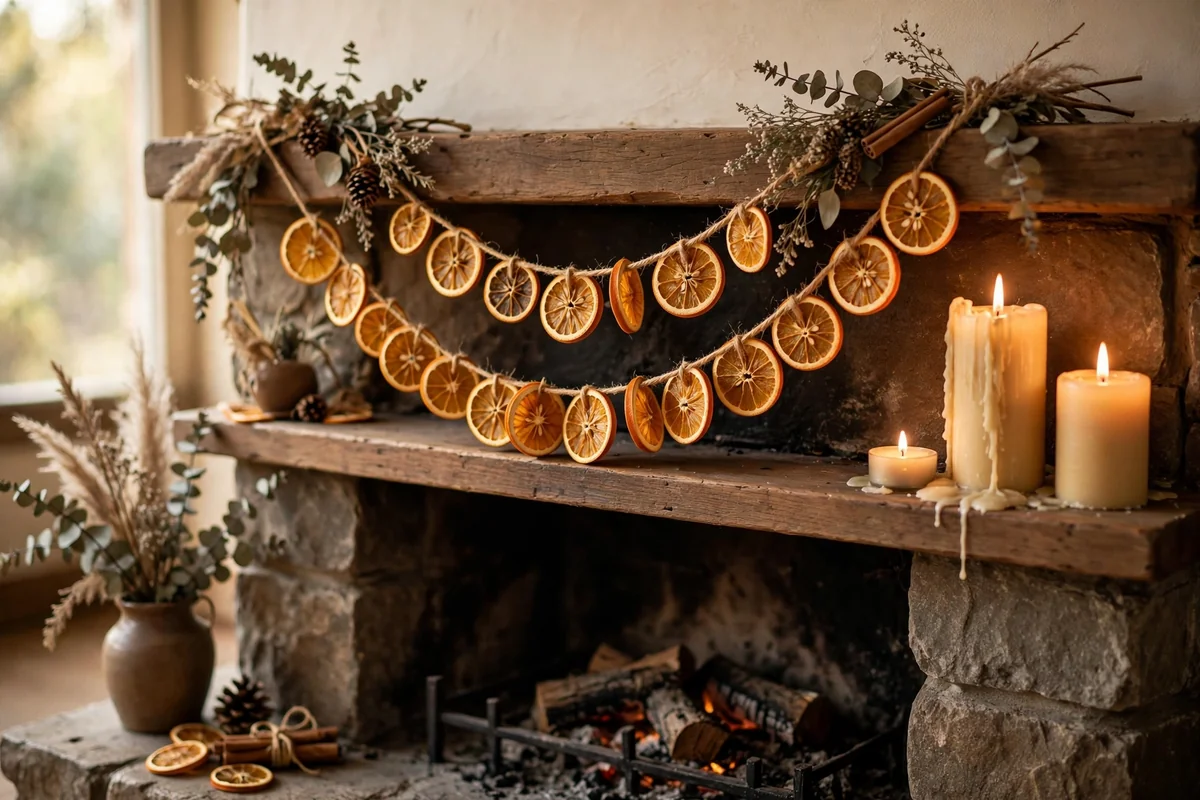
Thread eight to ten fully dried orange slices onto 120 cm of plain jute twine using a large needle, spacing them about 10 cm apart. Drape the garland across the mantel with a gentle 15 cm dip in the middle, fixing each end with a small removable hook. The translucent slices glow beautifully when candlelight sits nearby.
Only use slices dried completely crisp, since any moisture leads to mould within days. The mistake to avoid is hanging the garland where it touches a hot mantel shelf above a working fire. This project costs almost nothing beyond the oranges and twine. The same garland works across a window, where daylight shines through the slices.
18. Repeat a Chunky Wool Throw in Every Main Room
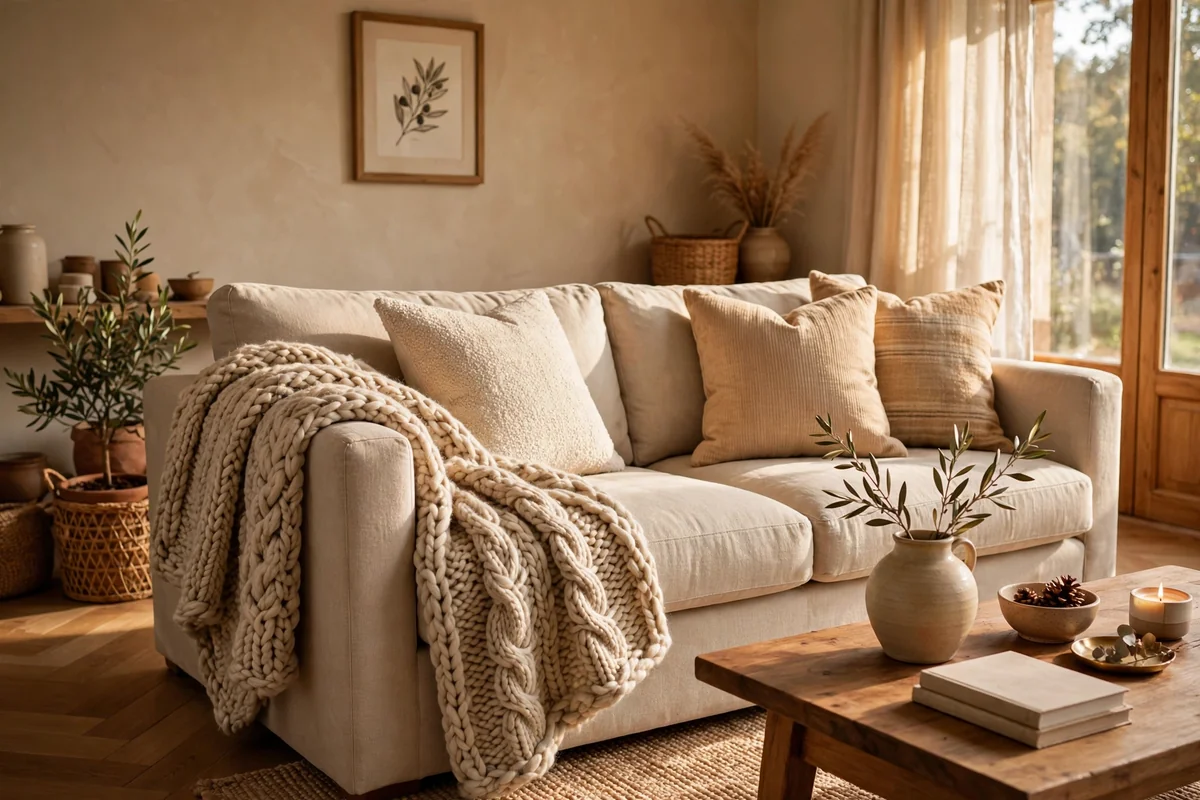
Choose one chunky knit wool throw and buy three or four in the same colour, placing one on the living room sofa, one on the bedroom bed, one over a dining chair and one in the reading corner. The repeated texture is what makes separate rooms feel like one connected home. Stick to a single warm neutral, like oatmeal or rust, for the set.
The mistake to avoid is buying similar but not identical throws, since clashing undertones break the thread. Buy them together from the same dye lot. Chunky knit throws cost 25 to 50 pounds or dollars each, so watch for multi-buy offers. Wash them rarely and air them outside instead to keep the knit fresh.
19. Carry an Amber Glass Vase of Dried Wheat From Entry to Dining
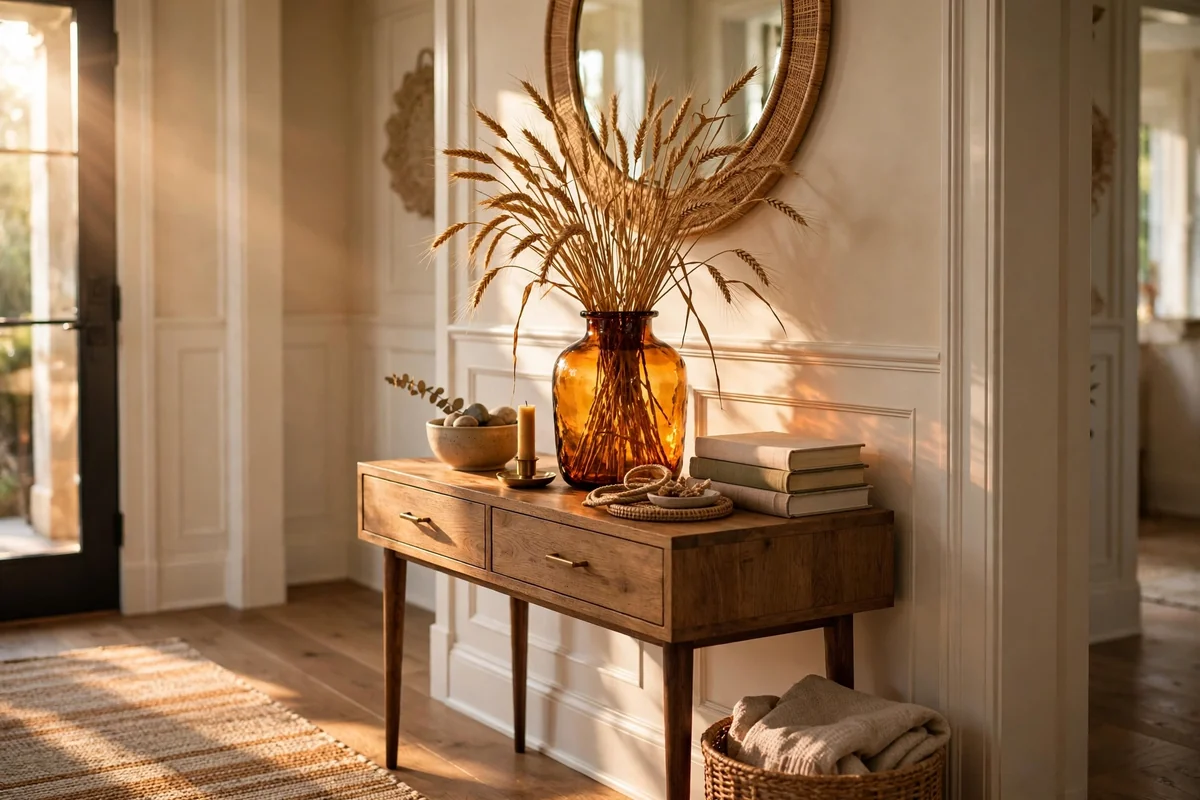
Fill an amber glass vase about 25 cm tall with eight to ten dried wheat stems and set it on the entry console. Then place a smaller matching vase with five stems on the dining sideboard. The repeated shape and material link the two rooms, and the wheat catches the light with a soft golden shimmer. Dried stems need no water and no care.
The mistake to avoid is mixing amber glass with clear glass vases nearby, which dilutes the effect. Keep the amber pair as the only glass feature in each spot. A small amber vase costs 8 to 15 pounds or dollars, and a bunch of dried wheat runs 5 to 10. Trim stems to slightly different heights for a natural look.
20. Place a Small Woven Basket of Chestnuts in Each Sitting Room
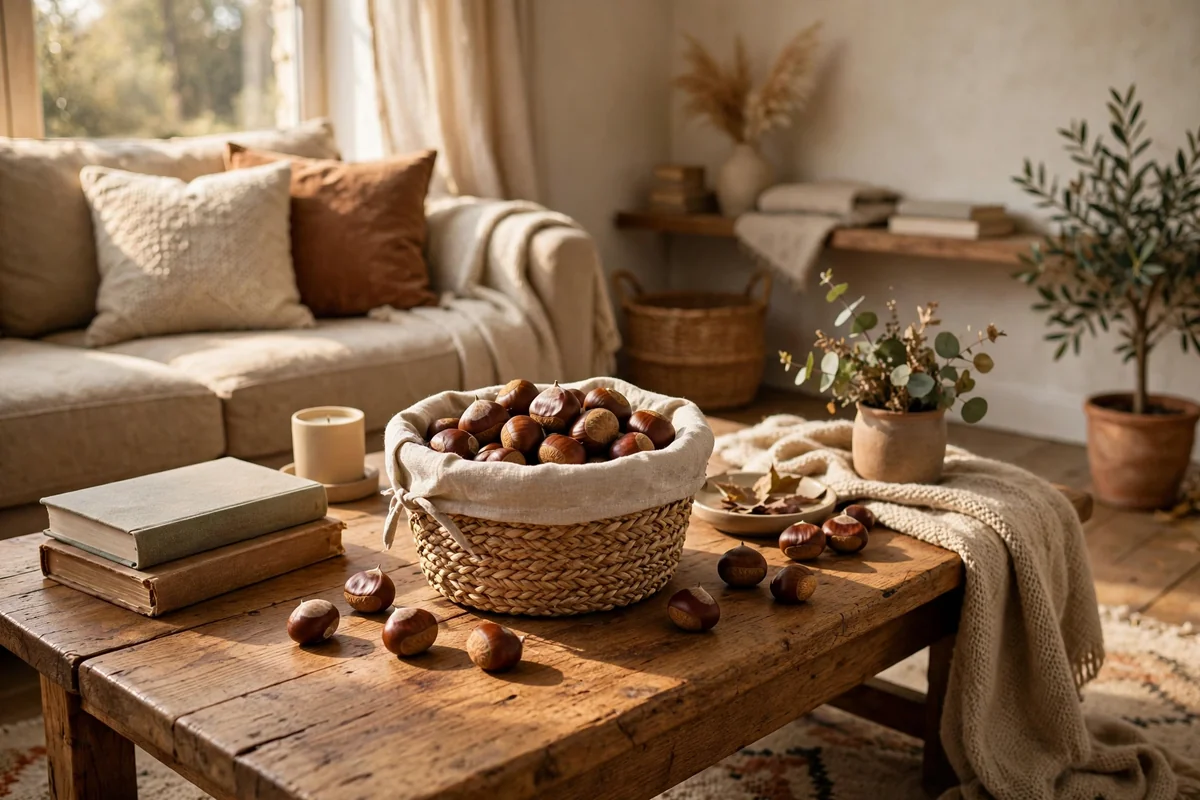
Set a small woven seagrass basket about 20 cm across on the coffee table and fill it with chestnuts or conkers, then repeat a smaller basket on a living room side table or the hallway shelf. The natural harvest fill suits the season and costs nothing if you gather them on an autumn walk. Line the basket with a linen napkin to stop rolling.
Brush the chestnuts clean and let them dry for a day before arranging, since damp shells can mark surfaces. The mistake to avoid is placing the basket where small children play unsupervised, since chestnuts are a choking hazard. Keep them on higher surfaces in family homes. Replace any cracked ones through the season to keep the display fresh.
21. Repeat Brass Candle Holders in the Hall and Living Room
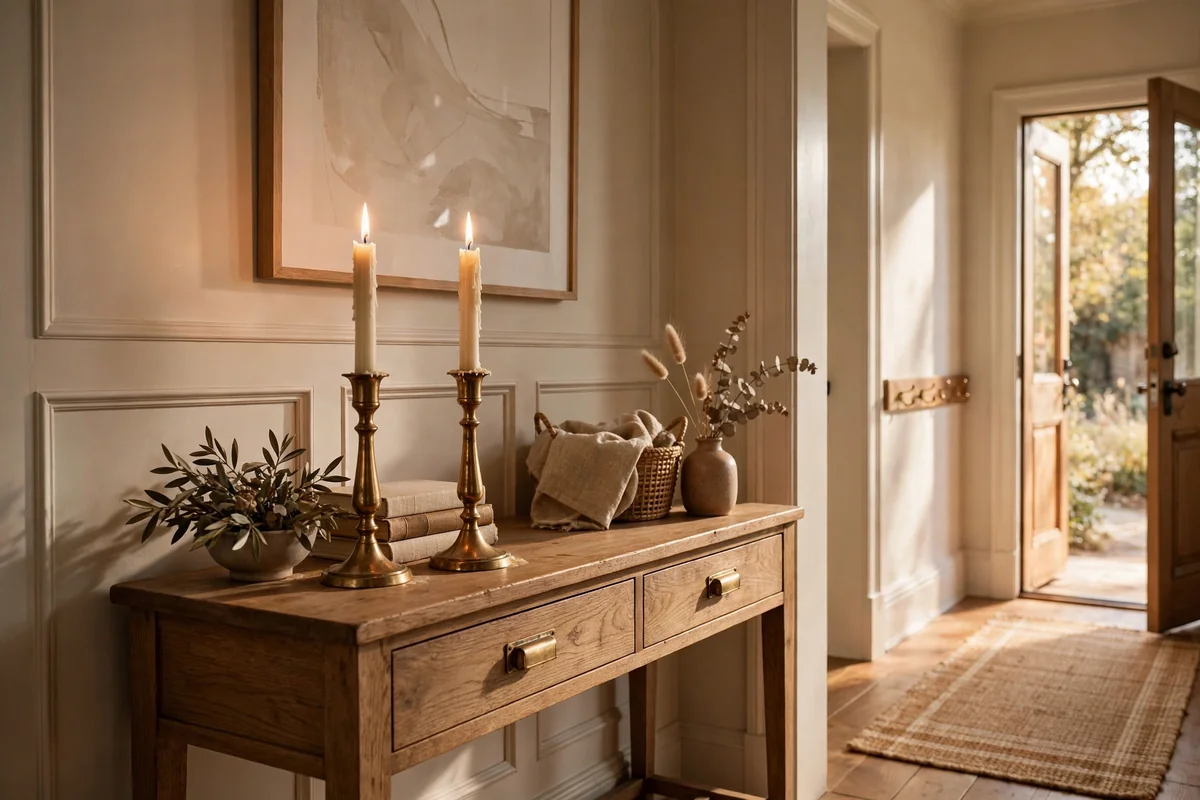
Place a pair of unlacquered brass candlesticks 20 to 25 cm tall on the hallway console, and repeat the same pair on the living room mantel or shelf. The matching metal draws a quiet line between the two spaces, and brass glows warmly in candlelight. Choose simple tapered shapes that suit both classic and modern rooms.
The mistake to avoid is mixing polished brass in one room with antique brass in the other, since the tones will fight. Buy all four from the same range. Brass candlesticks cost 15 to 30 pounds or dollars per pair. Let unlacquered brass develop its soft patina, wiping with a dry cloth only, since that aged finish is part of the charm.
22. Hang a Mini Autumn Swag on Two Interior Door Handles
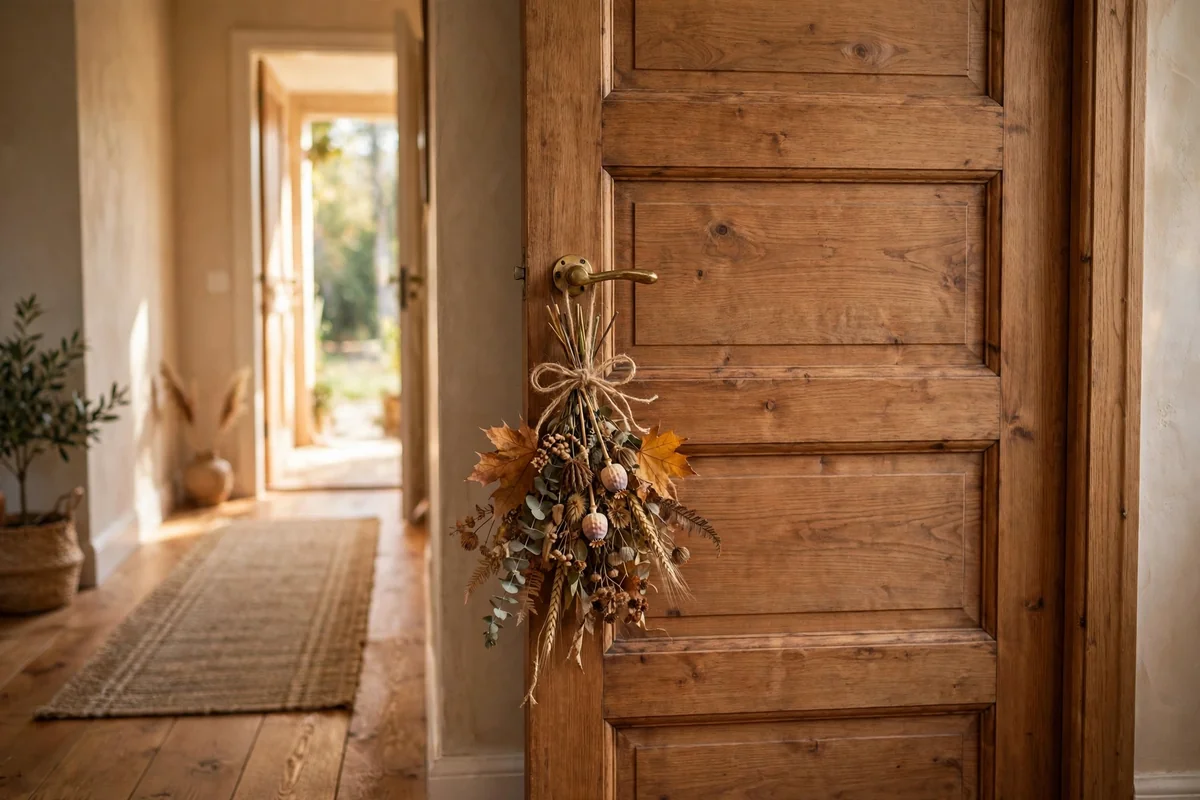
Tie a mini autumn swag about 25 cm long from dried leaves, seed heads and a little jute twine, and hang one on the bedroom door handle and one on the living room door handle inside the house. The small scale suits interior doors, adding a whisper of the season each time you enter a room. Keep the swag flat so the door still closes easily.
The mistake to avoid is a bulky swag that jams the door or sheds leaves across the floor. Bind stems tightly and trim any loose bits before hanging. Each swag costs under 10 pounds or dollars in materials, or gather stems on a walk for free. Refresh them once mid-season by shaking off dust outside.
23. Echo Rust and Ochre in Every Room of the House
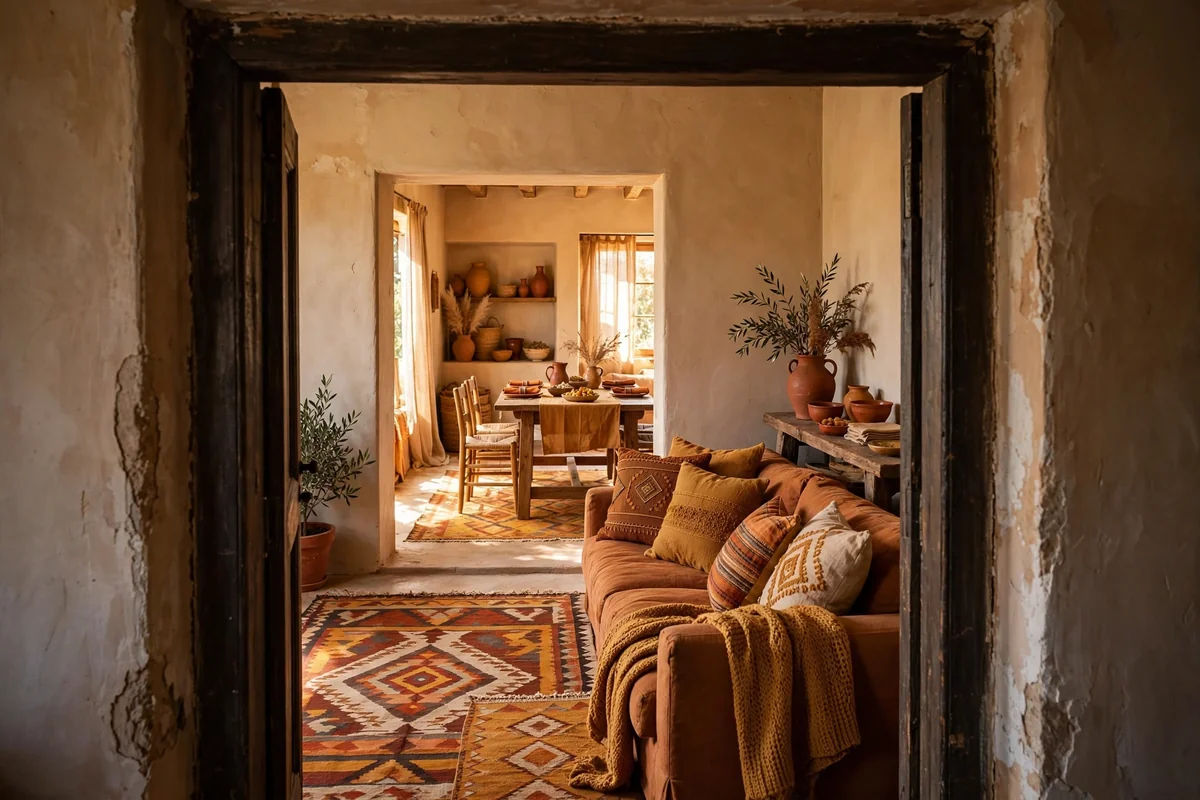
Pick two anchor colours, rust and ochre, and echo them in every room: the hallway runner, a kitchen tea towel, the dining cushions, the bedroom quilt fold and the bathroom hand towels. Aim for roughly 60 percent warm neutrals, 30 percent your anchor colours and 10 percent deep accents like walnut wood. This quiet repetition is what makes a house feel styled as a whole.
The mistake to avoid is introducing a third strong colour, like forest green or navy, which breaks the thread and scatters the eye. If you crave variety, vary the texture instead: wool, linen, wood and brass in the same two hues. Shop your home first, moving existing rust and ochre pieces between rooms before buying anything new.
A warm autumn home grows from repetition rather than quantity. When the same wool, the same brass and the same two colours appear in the hallway, the kitchen and the bedroom, the whole house starts to feel like one thoughtful place instead of five separate rooms. You do not need to do all 23 ideas at once; even half of them will shift the mood noticeably.
Start this week with the easiest win: simmer orange peel and cinnamon on the stove for an afternoon and swap the bathroom hand towels for autumn tones. Those two small changes cost almost nothing and touch the senses of scent and sight at once. Then add one idea each weekend, and by the time the clocks change, your home will feel wrapped in the season.
Frequently Asked Questions
How much does a whole-home fall refresh realistically cost?
Between 80 and 250 pounds or dollars if you buy most pieces new, but far less if you shop your home first. The biggest costs are usually throws and bedding, at 25 to 80 each. Wreaths, dried oranges, pinecones and simmer pots cost almost nothing. Start with scent, towels and one throw, then add a piece each week to spread the spend.
How can I make my home smell like fall without synthetic sprays?
Simmer orange peel, cinnamon sticks and cloves in water on the lowest heat for two to three hours, topping up the water as needed. Add beeswax candles in the evening for a faint honey warmth, and tuck dried orange slices or cinnamon sticks into bowls around the rooms. These natural scents layer gently without the headache that synthetic sprays can bring.
Will warm fall colours work in a small flat?
Yes, and they can make a small space feel cosier rather than darker. Keep walls and large furniture in warm neutrals, then add rust and ochre in small doses: a runner, two cushions, one throw and autumn hand towels. Repeat the same two colours in each room so the flat feels connected, and use mirrors and warm bulbs to keep the light soft.
How do I keep every room feeling connected?
Repeat one texture and two colours through the whole home. A chunky wool throw in the same colour on the sofa, bed and dining chair, plus rust and ochre accents in each room, creates a quiet thread. Match metals too, such as brass candlesticks in the hall and living room. When the eye meets familiar materials in each doorway, the house feels like one place.
Are pinecones, chestnuts and dried oranges safe around children and pets?
They are safe as decor if placed thoughtfully. Keep small items like chestnuts and cloves on high shelves or inside closed bowls, since they are choking hazards for toddlers and some pets may chew them. Pinecones can be sharp, so keep them out of play areas. Never leave simmer pots or lit candles unattended, and keep both well out of reach.