Living Room
23 Fall Lighting Ideas That Make Evenings Feel Golden
By Anna Wells · · 23 min read
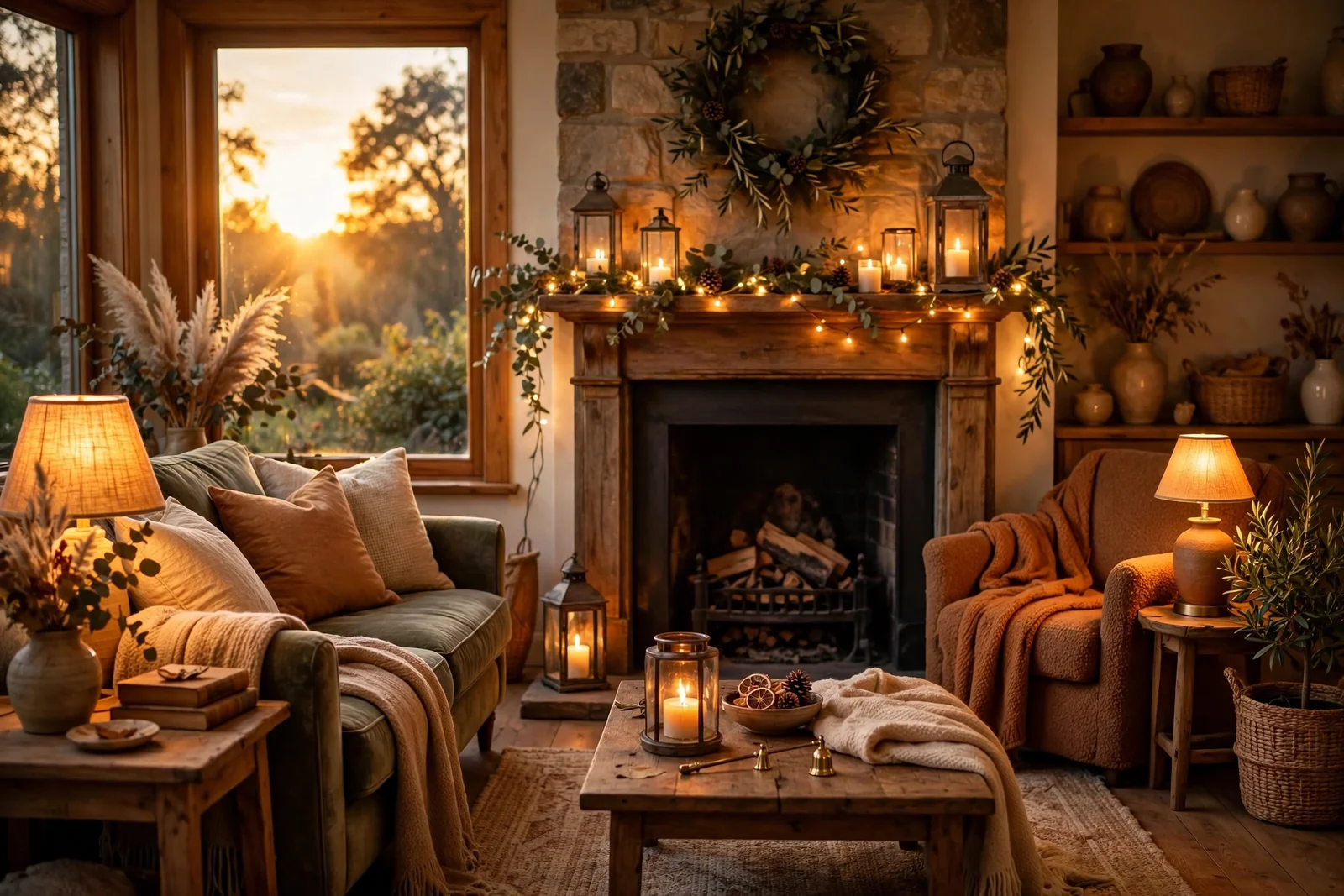
Warm bulbs, linen shades, lanterns and timers: twenty three small lighting moves that turn autumn evenings golden.
October evenings arrive earlier every week, and the living room asks for a different kind of light. The thin white glare that suited summer afternoons feels suddenly harsh at half past six, when the curtains are drawn and supper dishes sit cooling in the kitchen. What the room needs is not more light but warmer light, the sort that pools softly on armrests and makes a wool throw look worth sinking into.
Warm light changes how a room behaves. Faces look kinder in 2700K glow, timber deepens to honey, and the evening stretches because nobody wants to leave a pool of lamplight for the brightness of the kitchen. Lighting designers call this the layering habit: several low, warm sources instead of one hard ceiling bulb, each placed where people actually sit, read and talk. Fall is the season to practise it, because the dark comes early and stays.
This collection gathers twenty three small, practical moves that turn an ordinary living room into a golden evening room. Every idea names the bulb, the shade, the placement and the price tier, so you can act on one tonight with what you already own and plan the rest across the season. Nothing here needs an electrician or a ladder taller than a step stool.
Begin with the single change that matters most, the colour of your bulbs, then work outward through shades, candles, string lights and clever timer plugs. By the final idea you will have a room that lights itself at dusk and asks nothing of you except to choose the chair closest to the lamp.
1. Change Every Living Room Bulb to 2700K Warm White
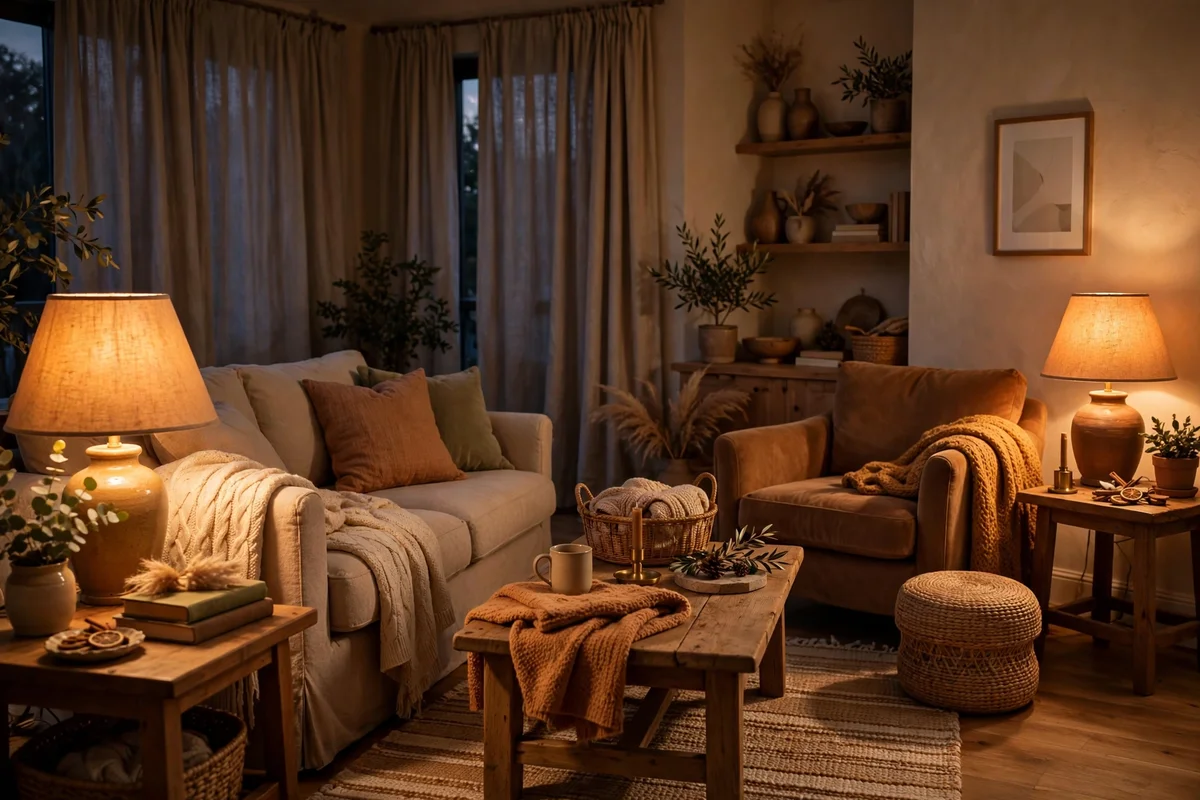
Most living rooms arrive with bulbs between 4000K and 6500K, the crisp white of offices, and that single fact is why evenings feel flat. Buy 2700K LED bulbs for every socket you use after sunset: table lamps, the floor lamp, the hallway. A standard 60 watt equivalent costs two to four pounds or dollars, uses about nine watts, and lasts a decade of evenings. The change takes five minutes and no tools beyond a step stool.
Keep the old cooler bulbs in a labelled box for task corners like the sewing basket or the desk, where accuracy beats atmosphere. The mistake to avoid is mixing temperatures in one view: a 2700K lamp beside a 5000K downlight reads as dirty rather than warm, so change every bulb the eye catches in a single sitting. Budget tip: multipacks of eight bring the price below two each, and warm bulbs suit renters because nothing about the fitting changes.
2. Fit a 2200K Amber Bulb in the Reading Lamp
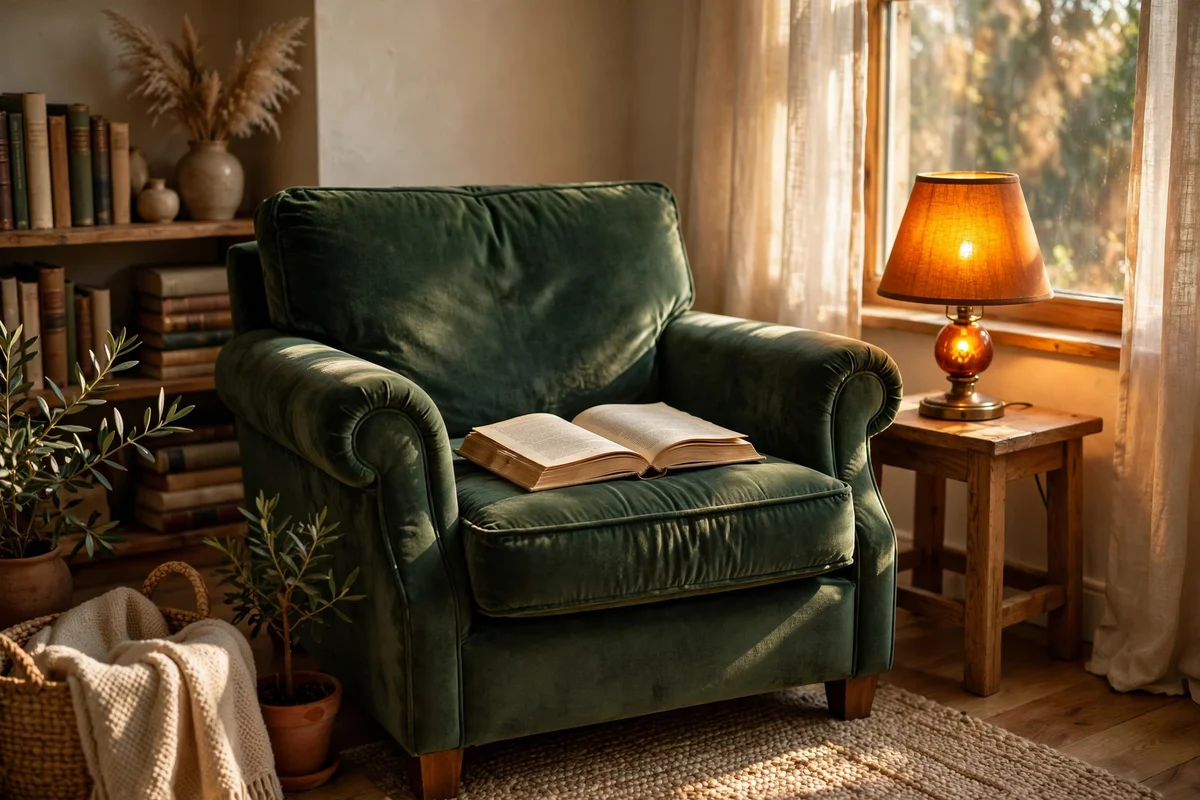
In the chair where you read, go one step warmer than the rest of the room with a 2200K amber bulb, the colour of candlelight without the flame. Amber bulbs typically give 200 to 400 lumens, enough for a novel but not for paperwork, which is exactly right for winding down. Look for a filament style LED with a warm amber glass envelope; it looks handsome in an open shade and costs six to ten pounds or dollars.
Reserve this lamp for the last hour of the day and switch it on instead of the brighter room lights once supper is cleared. The contrast between the deep amber pool and the softer 2700K background is what makes evenings feel layered rather than flat. The mistake to avoid is fitting amber bulbs everywhere, which turns the room murky; one amber accent among warm white lamps is the ratio that works, roughly one in four.
3. Swap Cool Summer Shades for Natural Linen
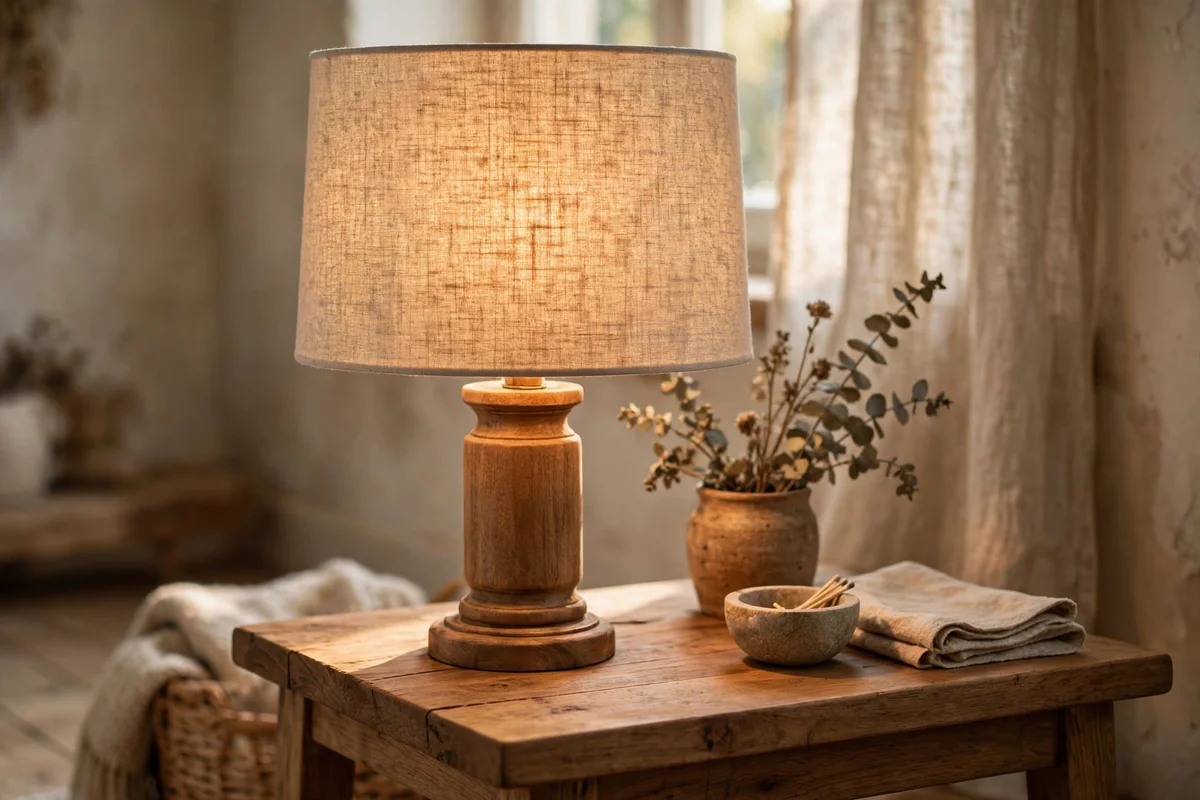
Summer often leaves behind cool white or pale grey shades that throw a clinical light, so October is the moment to retire them to the linen cupboard. Natural linen shades, undyed or in oatmeal, filter a 2700K bulb into a soft golden wash and show the weave beautifully when lit. Measure the shade you are replacing, height and top and bottom diameter, and match within two centimetres so the harp and finial still fit. A 30 cm drum shade suits most table lamps.
Linen is a mid tier fabric, usually 25 to 45 pounds or dollars per shade, and it survives years of use because the weave hides dust better than smooth silk. The mistake to avoid is buying a shade so dark that it eats the light; hold it to a window and if you can barely see through it, choose the next size up or a lighter colour. Wash dusty shades with a cool hairdryer on low, never a damp cloth, which spots the fabric.
4. Choose Parchment Shades for a Honey Toned Glow
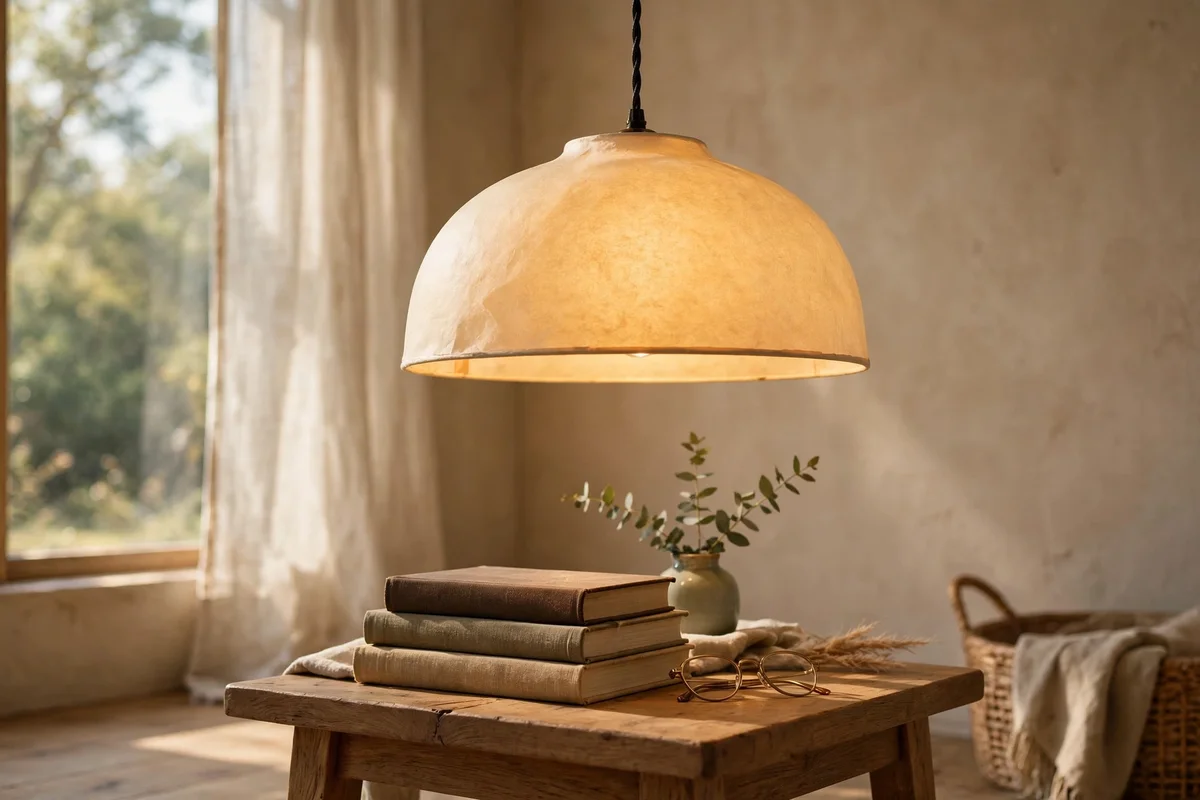
Parchment, the warm cream material of old library shades, turns even an ordinary bulb into something that looks lit from within. It glows with a honeyed tone no white shade can copy, and it suits rooms with timber furniture, leather chairs and brass details. Choose parchment for a pendant over the side table or a pair of wall sconces, where the glow reads at eye level. Prices run 30 to 60 pounds or dollars for a well made shade.
Parchment darkens slightly with age, which most owners consider an improvement, but keep shades away from radiators because heat dries the material and makes it brittle. The mistake to avoid is pairing parchment with a cool bulb, which cancels the honey effect entirely and looks grey; always fit 2700K or warmer. A budget route is a parchment effect paper shade at a fraction of the price, replaced every two or three years when it fades.
5. Pair Two Linen Drum Shades on the Sofa Side Tables
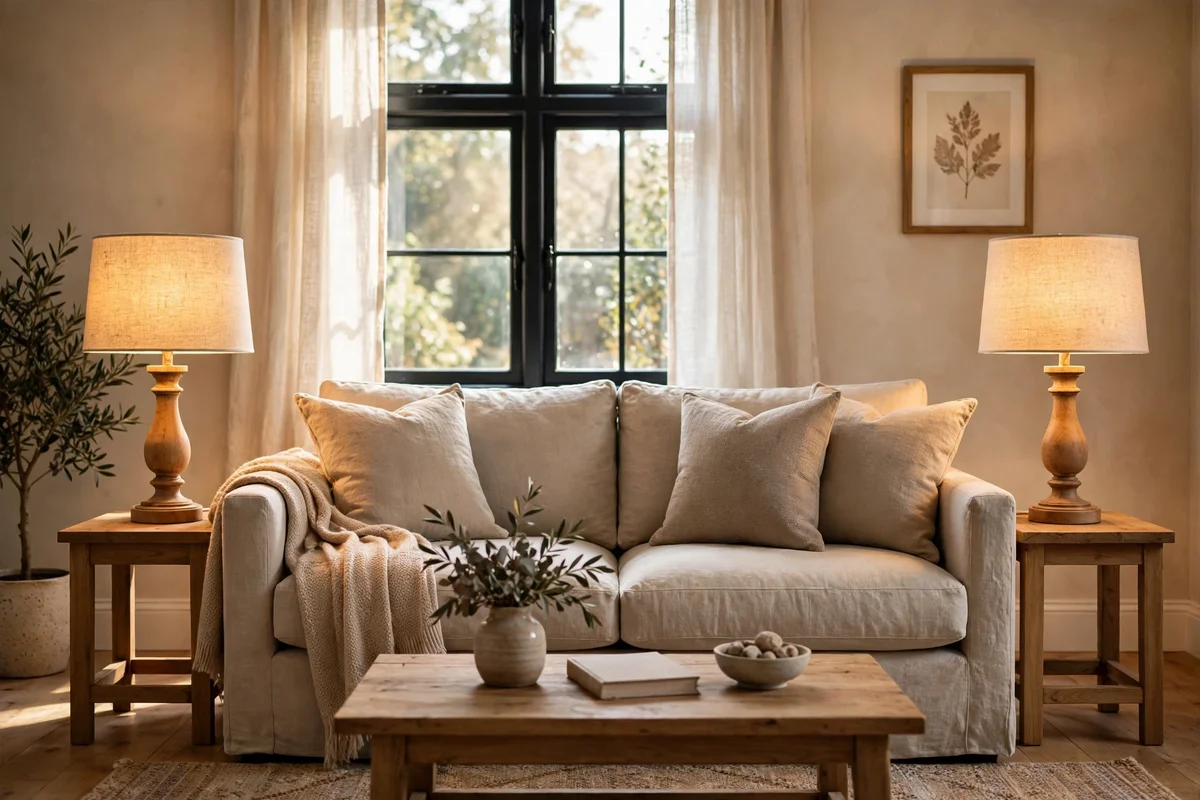
Two matching linen drum shades, one on each sofa side table, give the living room its evening backbone. Drums between 25 and 35 cm in diameter suit tables of 55 to 65 cm height, keeping the bulb hidden below eye level when you sit. Natural linen with a 2700K bulb on each side frames the sofa in symmetrical warmth, which reads as calm and intentional. Buy the pair together so the weave and colour match exactly.
Set both lamps on one timer plug so they switch on together at dusk without a thought. The mistake to avoid is choosing shades with different heights, which breaks the symmetry and draws the eye; even three centimetres of difference shows. Budget tip: plain white cotton drums from a home store can be wrapped in a linen-look fabric for under ten pounds or dollars each, and nobody sees the difference once lit.
6. Group Pillar Candles Inside a Glass Lantern on the Hearth
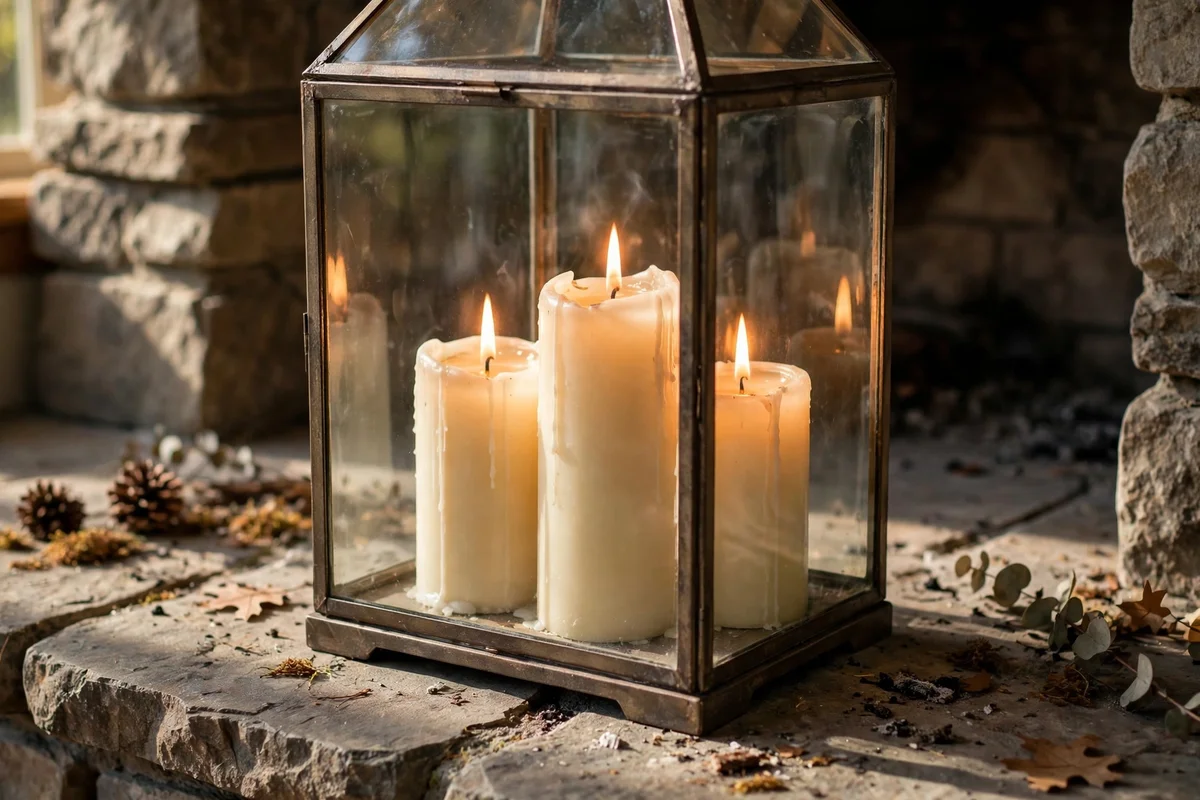
A glass lantern holding three pillar candles turns the hearth into the warmest spot in the room. Choose pillars of 7.5 cm diameter in staggered heights, 10, 15 and 20 cm, inside a lantern at least 30 cm tall so the flames sit well below the top. Ivory, unscented pillars burn cleanest and suit every colour scheme. Light them with a long match or a taper, and let the glass magnify the glow across the whole fireplace surround.
Fire safety is the whole point of the lantern: the glass contains sparks and draughts, but placement still matters. Set the lantern on the stone hearth or a heatproof tray, at least 30 cm from curtains, cushions and paper, and never leave burning candles unattended or burning while you sleep. Snuff each pillar with a snuffer rather than blowing, which sprays wax. Trim wicks to 5 mm before every lighting so flames stay small and soot stays off the glass.
7. Line Three Lanterns of Different Heights Along the Mantel
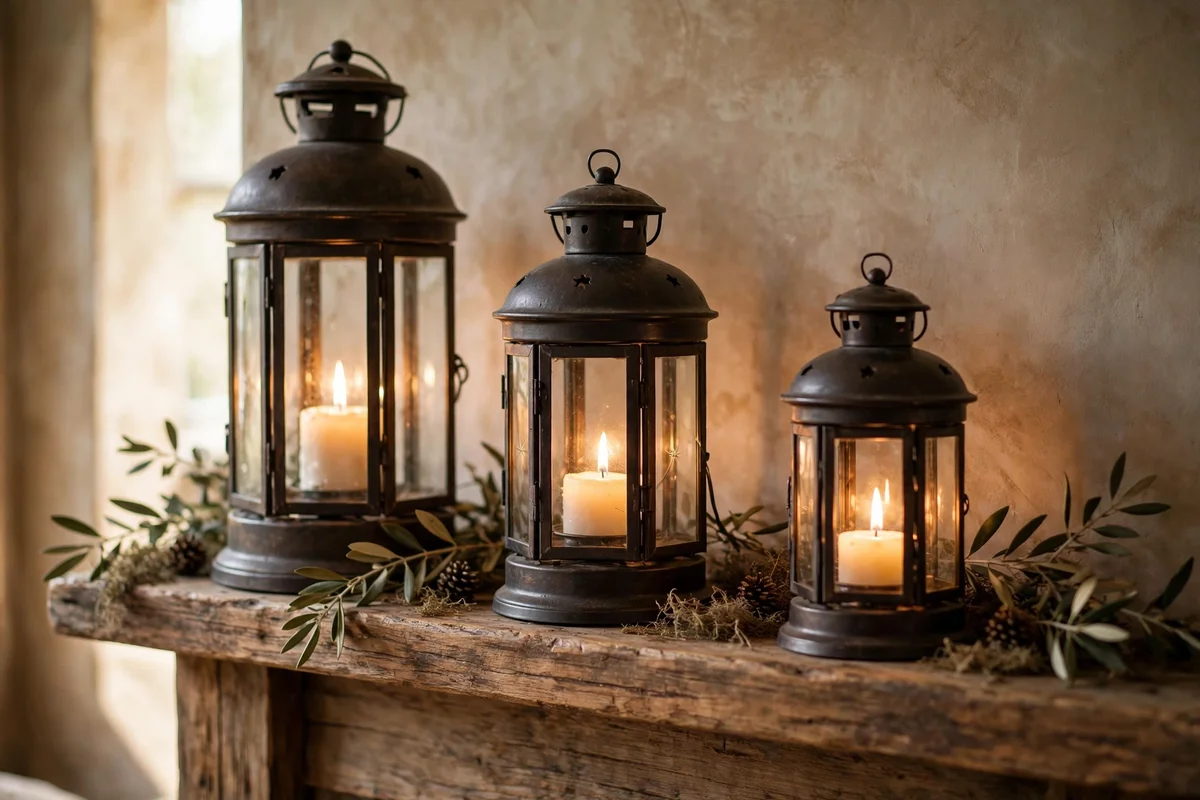
Three lanterns in descending heights, for example 40, 30 and 22 cm, spaced 15 cm apart along the mantel shelf, make a skyline of warm light. Keep the style consistent, all black metal frames or all brushed brass, and vary only the height. Use one pillar per lantern, unscented ivory, so the glow is even rather than competing. This arrangement photographs beautifully and costs little: simple metal lanterns run 12 to 25 pounds or dollars each.
Mantel candles need strict discipline because heat rises and decorations gather. Keep every lantern at least 30 cm from dried foliage, paper garlands and wooden picture frames, and check that the shelf is level so nothing tips. Never leave the trio burning when you leave the room, and teach everyone in the house that the mantel is a no touch zone once lit. Extinguish with a snuffer, let the glass cool for twenty minutes, then move lanterns only by their handles.
8. Set Glass Hurricanes on the Coffee Table for Late Evenings
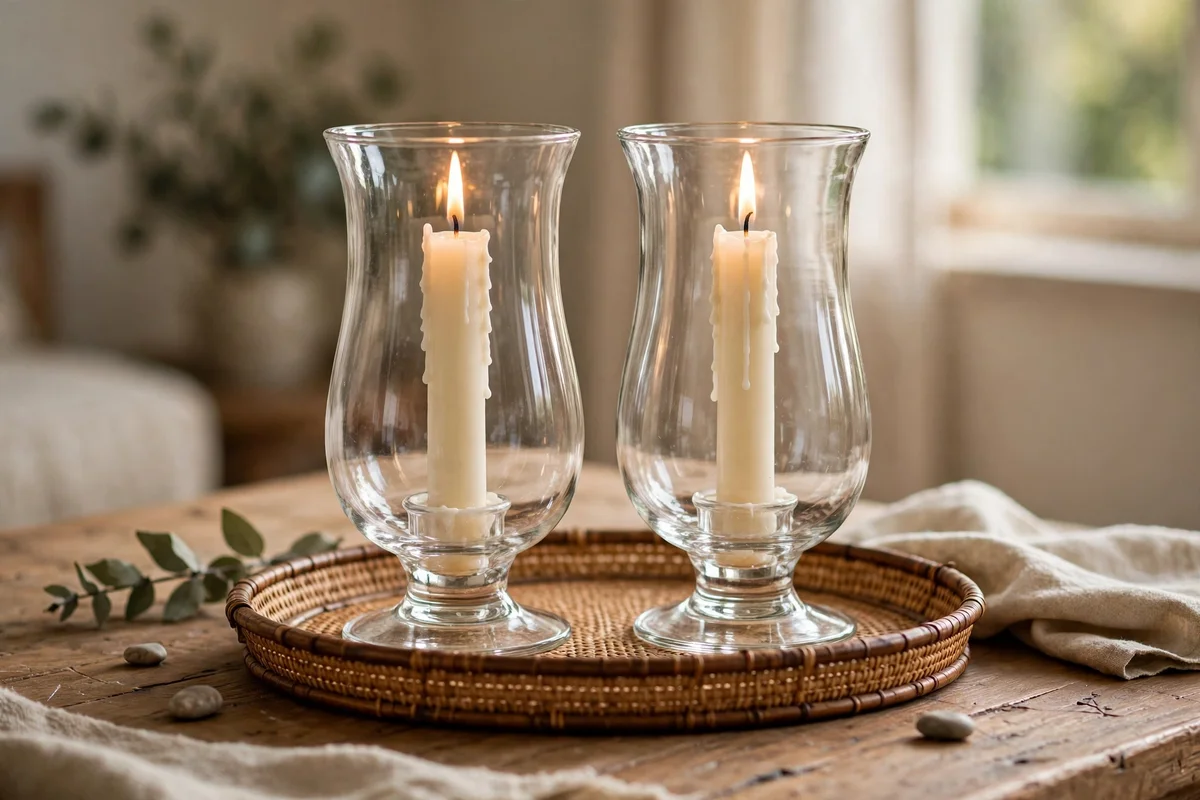
Glass hurricanes, the tall cylinders that shield a candle from draughts, bring candlelight down to table level where conversation happens. Place two hurricanes of 25 and 35 cm on a tray in the centre of the coffee table, each holding a 15 cm taper or a short pillar. The tray catches wax drips and lets you move the whole arrangement in one lift when tea arrives. Ivory tapers in clear glass suit both modern and traditional rooms.
Coffee table candles sit closest to sleeves, books and remotes, so the rules tighten. Keep flames at least 20 cm from anything that can catch, never place hurricanes near the table edge where an elbow can knock them, and extinguish before you leave the room for more than a few minutes. A hurricane is not a fireproof box: if the glass cracks, retire it, because a cracked cylinder can split with heat. Blow out tapers only after the wax pool cools.
9. Drape Plain Warm String Lights Along the Mantel

A string of plain warm white fairy lights, no colours and no flashing modes, draped along the mantel is the definition of classic autumn light. Choose a 5 metre strand with 50 to 100 tiny LEDs in 2700K, and swag it in gentle loops between two anchor points rather than stretching it tight. Weave it through a simple garland of dried wheat or eucalyptus if you like, but the lights alone on bare timber are enough. Battery strands cost 8 to 15 pounds or dollars.
The mistake that turns this partyish is overdoing it: one strand is elegant, three strands is a funfair. Keep the timer box hidden behind a stack of books and set the lights to switch on at dusk and off at eleven, so the mantel greets you every evening without a thought. Check the wire yearly for fraying, and keep the strand clear of real candle flames by at least 30 cm, since fine wires and open flames never mix.
10. Run Warm String Lights Around the Window Frame
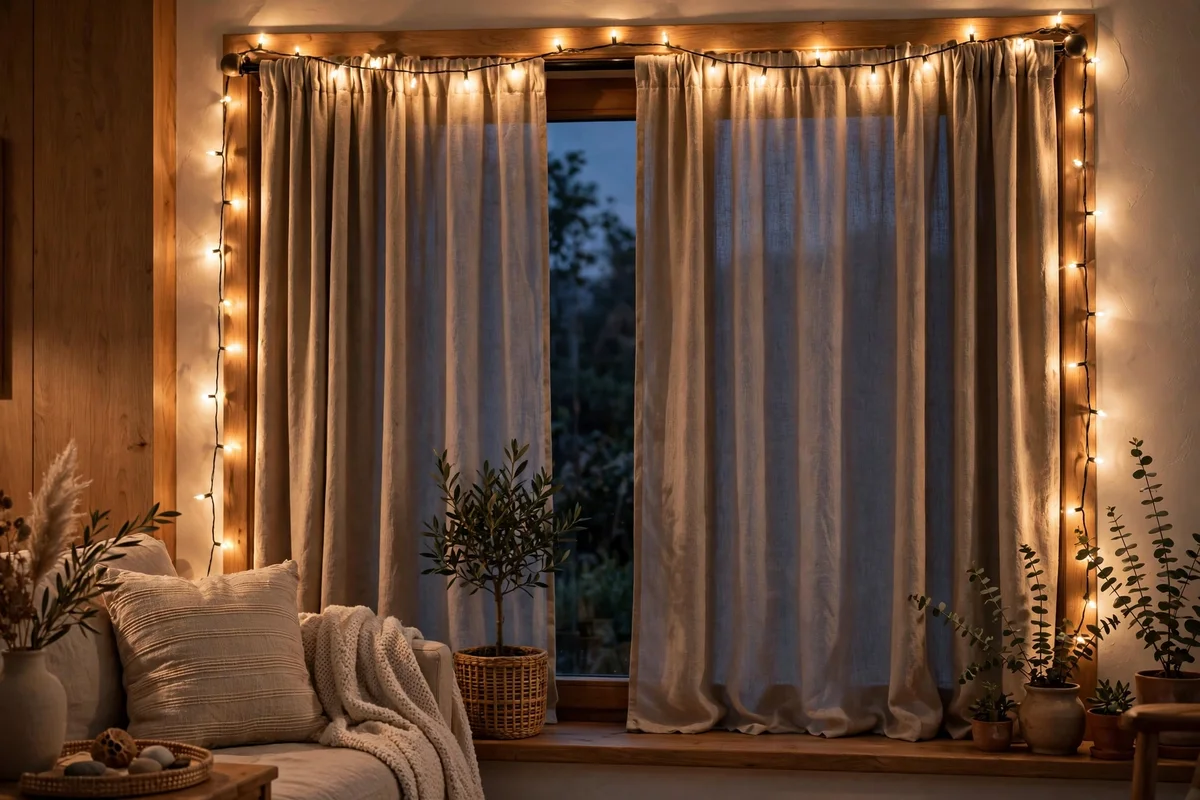
Framing a window with warm string lights turns the glass into a golden picture once the curtains close. Run one 10 metre strand around the inside of the frame, fixed with small clear adhesive clips every 30 cm, and let the lights sit just inside the curtain line. Use warm white only, steady burn, and keep the strand clear of fabric hems by 10 cm. Mains powered strands with a built in timer suit windows best, since batteries die midwinter.
Renters can do this without a single hole: adhesive clips peel off cleanly and the whole strand packs into a drawer in January. The mistake to avoid is wrapping the lights around the curtain pole instead of the frame, which tangles fabric and light and looks messy. Set the timer for dusk to midnight on the evenings you are home most, and switch the strand off when you travel. One strand per window is plenty; more reads as decoration for a party.
11. Coil String Lights Inside a Large Glass Vase
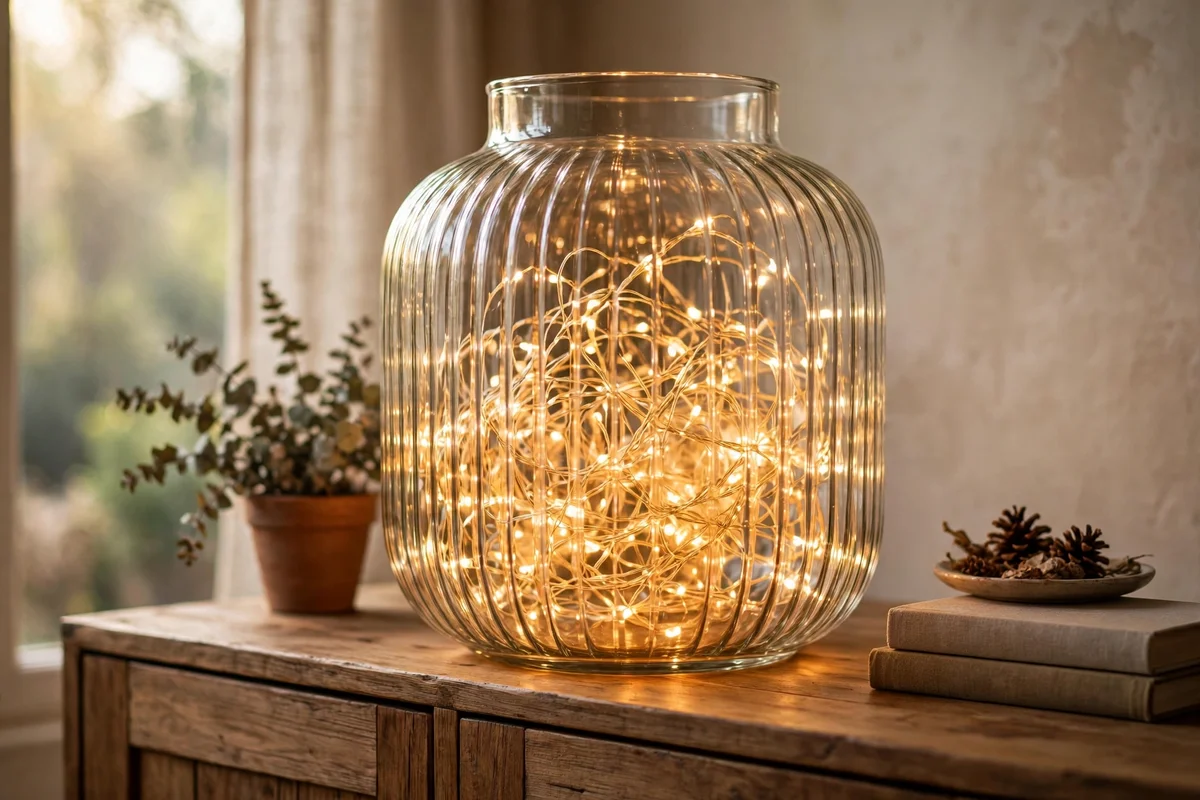
A large glass vase, 30 to 40 cm tall, filled with a loose coil of warm string lights becomes a glowing sculpture on a sideboard. Drop the battery pack into the base first, then feed the strand in handful by handful so the lights distribute through the whole vessel. Clear, amber or smoky glass all work; ribbed glass breaks the light into lovely lines. This is a fifteen minute project costing under 20 pounds or dollars, and it needs no wiring at all.
Keep the vase away from table edges and out of the path of swinging school bags, since a glowing object invites curious hands. The mistake to avoid is cramming the strand too tightly, which creates hot bright knots instead of an even glow; looseness is the whole trick. Replace batteries every three to four weeks of nightly use, or switch to a USB strand plugged into a timer so the vase lights itself at dusk.
12. Add a Plug In Dimmer to the Main Floor Lamp
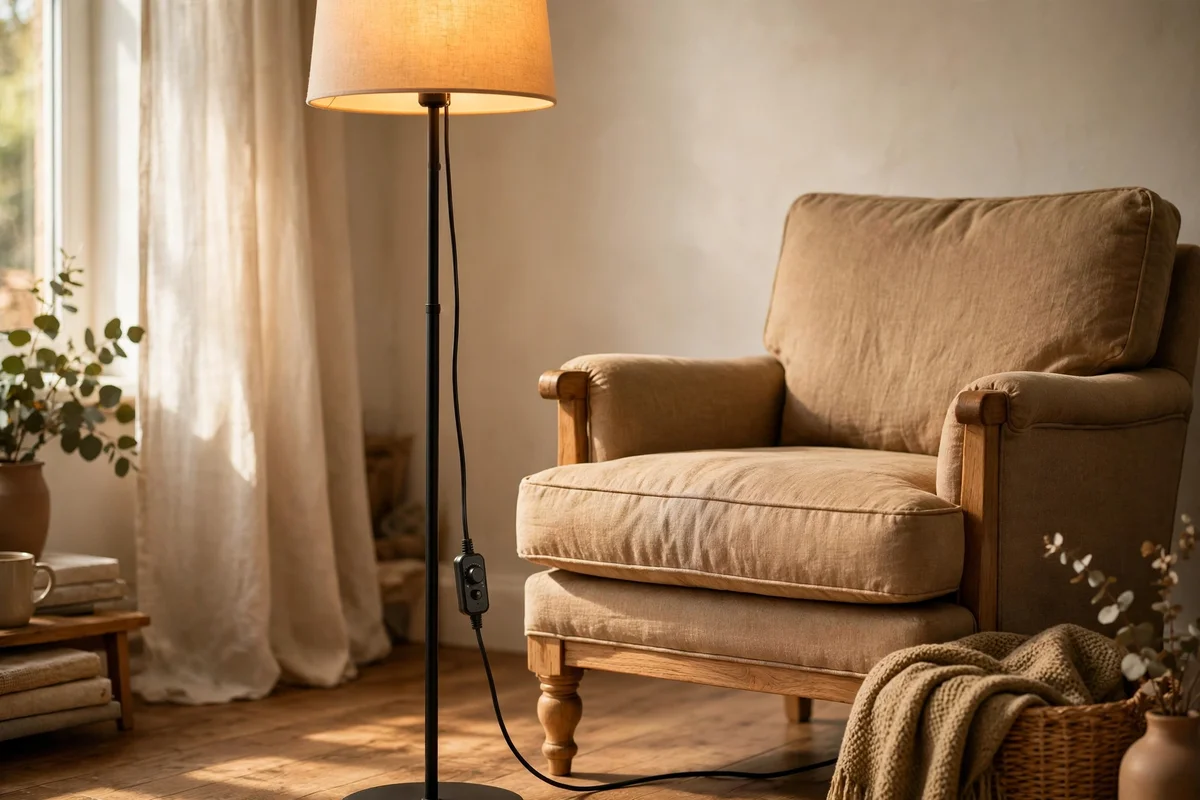
A plug in dimmer, the small inline box that sits between the socket and the lamp plug, turns any ordinary floor lamp into a mood lamp. Spend 10 to 20 pounds or dollars on one rated for LED bulbs, plug the lamp through it, and slide from full brightness for tidying down to a low ember glow for the last hour of the evening. No wiring, no electrician, and it moves house with you. Check the dimmer is LED compatible before buying.
Pair the dimmer with a 2700K bulb and the low end of the range goes properly golden, since dimmed warm LEDs shift even warmer as they dim. The mistake to avoid is a cheap non LED dimmer, which makes bulbs buzz and flicker; the packaging must say LED or trailing edge. Set the lamp high for the evening news and slide it low when the tea comes out; your eyes adjust in minutes and the room feels like it exhales.
13. Put the Evening Lamps on Timer Plugs for Dusk
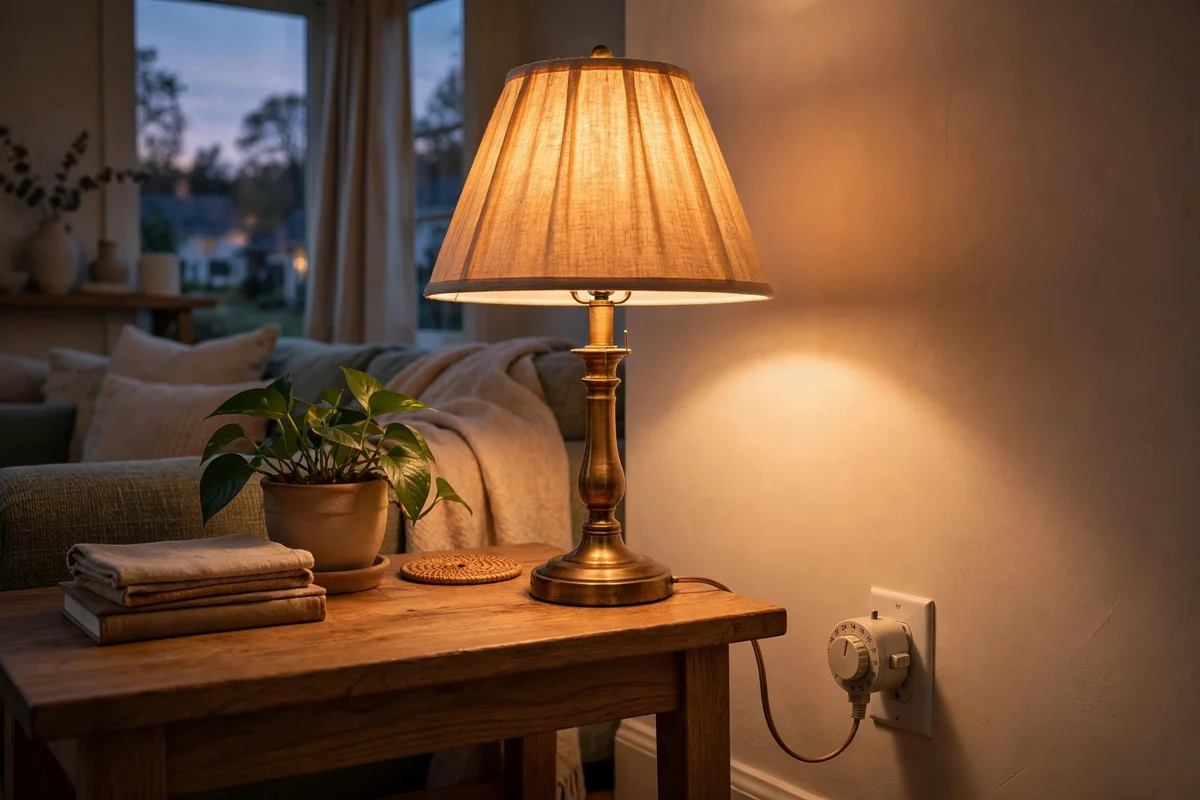
Timer plugs are the quiet heroes of autumn: small adapters that switch a lamp on at dusk and off at bedtime, automatically, every day. Set two or three living room lamps on one schedule, on at sunset and off at 23:00, and the room glows whether you are home or still on the train. Digital timers cost 8 to 15 pounds or dollars; smart plugs cost a little more and let you adjust from the sofa.
Check your plugs twice a year when the clocks change, since dusk shifts by hours between October and December. The mistake to avoid is putting a candle warmer or anything with a heating element on a timer meant for lamps; timers are for lights only. Budget tip: one timer plug moved between the living room lamp in winter and the hallway lamp in summer covers the whole year, so buy one good one instead of three cheap ones.
14. Time the Hallway Lamp to Greet You at Sunset
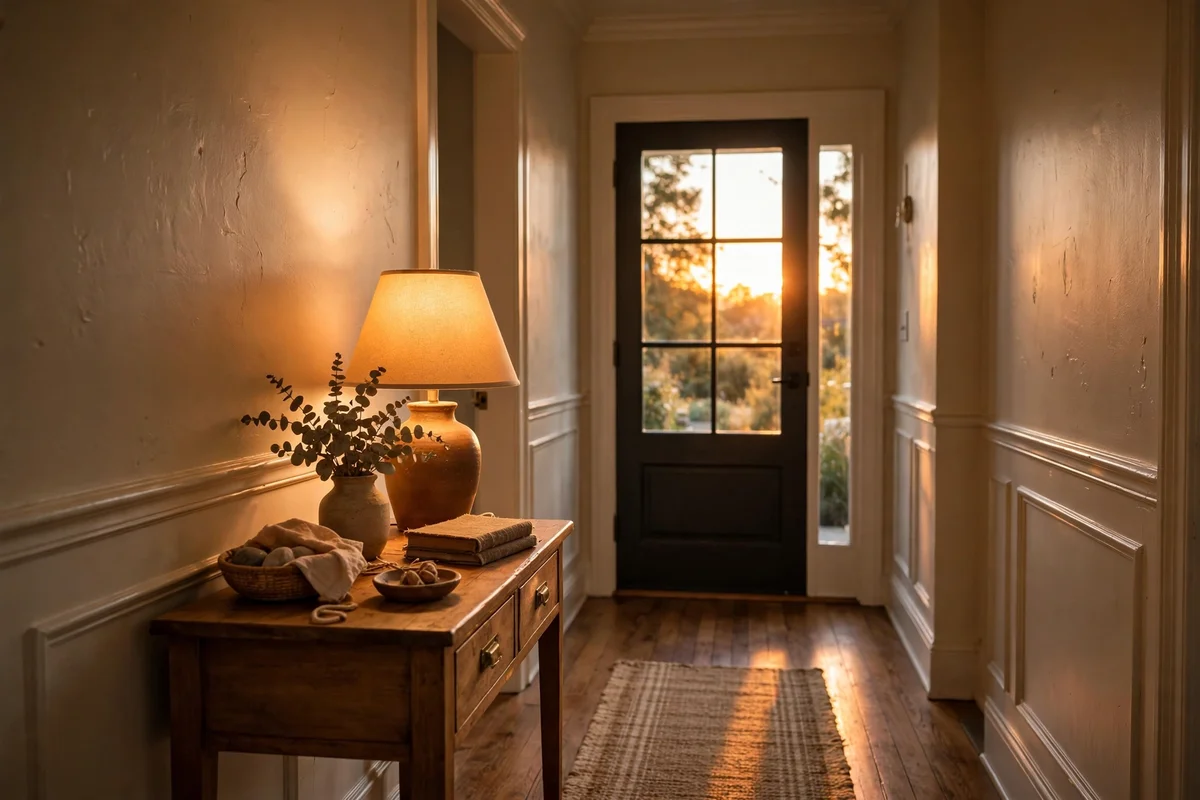
The hallway is the first room you see and the one most people leave dark, which makes the whole house feel unwelcoming after sunset. Put the hallway lamp on its own timer plug set for fifteen minutes before sunset, and you will step into warm light instead of fumbling for a switch. A 2700K bulb in a small shaded lamp on the console table is all it takes. Hallways need only 200 to 300 lumens to feel safe and golden.
Match the hallway bulb temperature to the living room so the two rooms flow into each other without a colour clash at the doorway. The mistake to avoid is a bright cool security style bulb in the hall, which makes the warm living room look dim by comparison. If the hallway has no socket, a battery powered LED picture light above a small framed print gives the same greeting for under 15 pounds or dollars, with batteries changed monthly.
15. Tuck a Small Uplight Behind the Tallest Plant
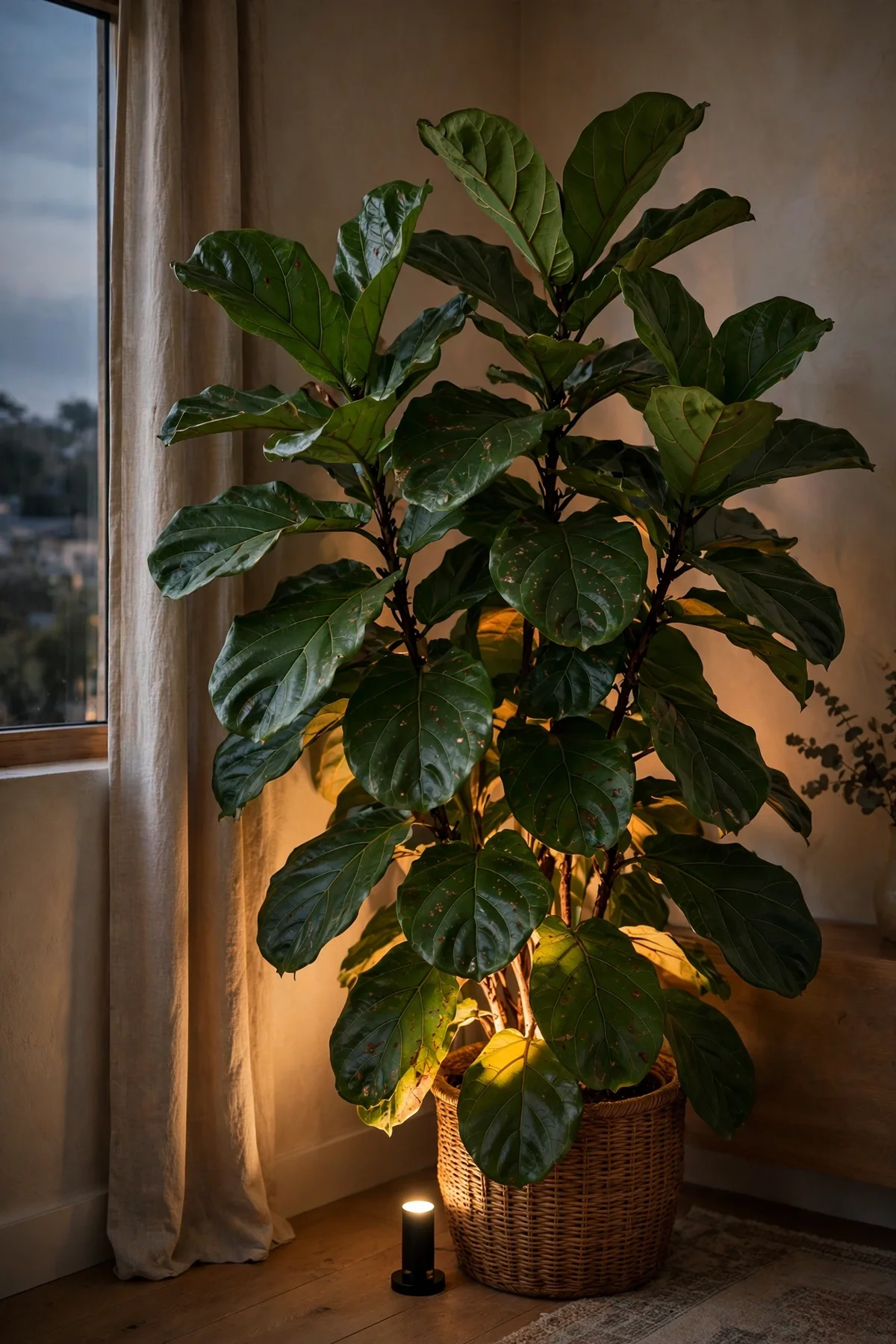
Every living room has a dark corner where the evening pools and the plants sulk. Tuck a small LED uplight, a puck or a short spot of 5 to 10 watts, on the floor behind the tallest plant and aim it up through the leaves. The foliage throws dancing shadows on the ceiling and the corner stops being a black hole. Battery uplights cost 10 to 20 pounds or dollars; mains spots with a timer cost a little more.
Choose 2700K so the uplight matches the lamps, and keep the fitting hidden behind the pot where nobody sees the hardware. The mistake to avoid is aiming the light at a white wall instead of through the plant, which makes a harsh bright patch; leaves are what soften it. Water the plant first and place the light second, so you never splash an electrical fitting. One uplight per dark corner is enough; two corners usually cover a standard room.
16. Wash the Bookshelf Back Panel With a Warm Uplight
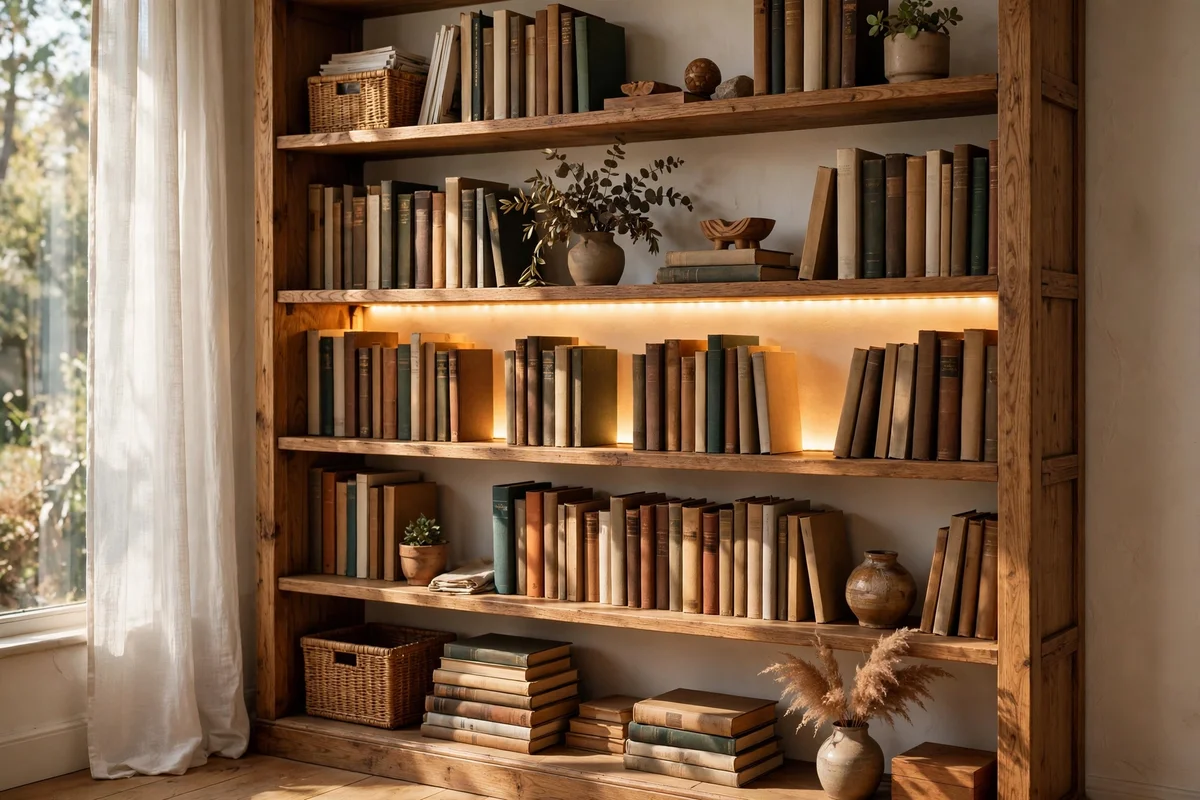
The back panel of a bookshelf is a blank canvas that begs for warm light. Fix a short LED strip or a battery puck light along the underside of one shelf, aimed at the panel behind the books, and the whole bookcase glows from within. Warm 2700K strips cost 10 to 18 pounds or dollars for two metres and stick with their own adhesive. Hide the strip behind the front lip of the shelf so only the glow shows.
Light the shelf that holds your favourite spines, usually the middle one at eye level, and leave the others dark for contrast. The mistake to avoid is cool white strips, which make timber shelves look grey and book cloth look washed out; warmth is everything here. If the strip has a remote, keep the dimmer setting at half or below, since bookcase light should whisper rather than shout. Renters can use battery strips with zero damage to the furniture.
17. Angle the Floor Lamp Upward to Bounce Light Off the Ceiling
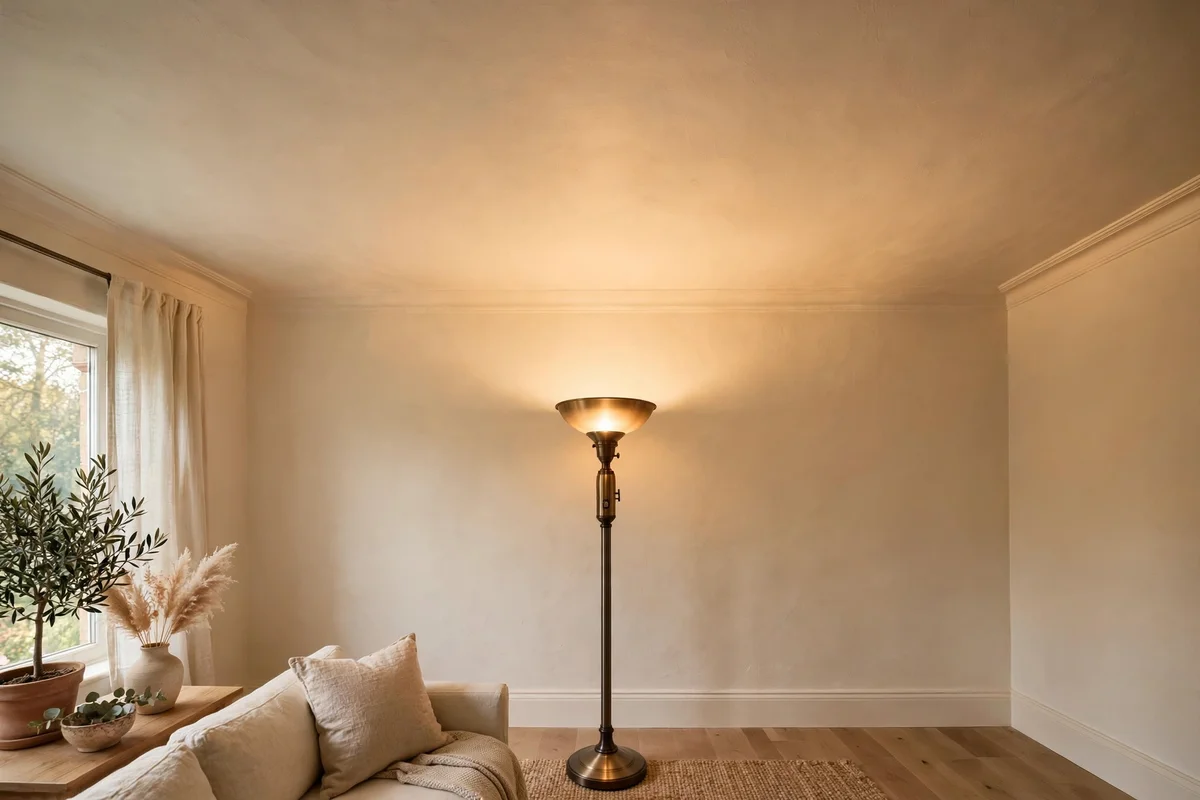
Point the shade of a tall floor lamp upward and the ceiling becomes a giant soft reflector, filling the room with gentle indirect light. Arc lamps and pharmacy style lamps do this naturally; with a straight torchiere, simply angle the head or fit an upward shade. One 800 lumen 2700K bulb bounced off a white or cream ceiling lights a whole seating area without a single hard shadow. This is the oldest lighting designer trick in the book.
Cream or warm white ceilings bounce best; a dark ceiling swallows the light and needs a brighter bulb or a different plan. The mistake to avoid is placing the lamp where the upward beam hits a ceiling fan, which chops the light into moving stripes. Keep the lamp at least a metre from walls so the spread stays even. Budget tip: a simple 150 cm torchiere with an upward shade costs 25 to 40 pounds or dollars and transforms a flat room.
18. Keep a Salt Lamp Glowing in the Darkest Corner
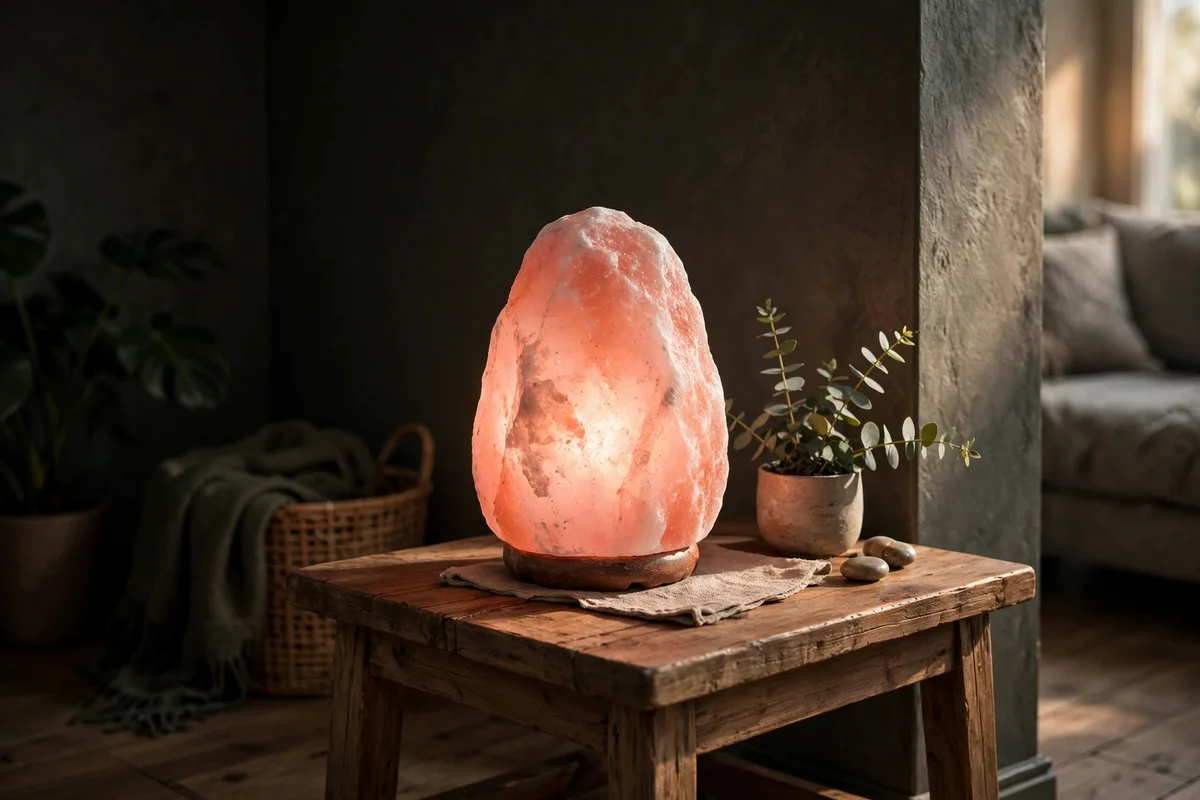
A salt lamp, the rough hewn block of pinkish crystal on a timber base, gives the steadiest amber glow in the house. It never flickers, never needs attention, and throws a deep orange light that flatters every corner it sits in. Place one on a low bookshelf or a side table in the corner that stays dark even after the lamps are on. A 2 to 3 kg lamp suits a small room; larger rooms take 4 to 5 kg.
Salt lamps draw moisture from the air, so set them on a coaster or a small tray to protect polished wood from the damp ring they leave. The mistake to avoid is leaving one switched off for weeks in a humid room, when it can weep and stain; if you travel, wrap it in a plastic bag. Budget tip: genuine lamps cost 15 to 30 pounds or dollars, and suspiciously cheap ones are often dyed resin, so buy from a seller who names the mine source.
19. Place Candles in the Unused Firebox for Fireplace Glow
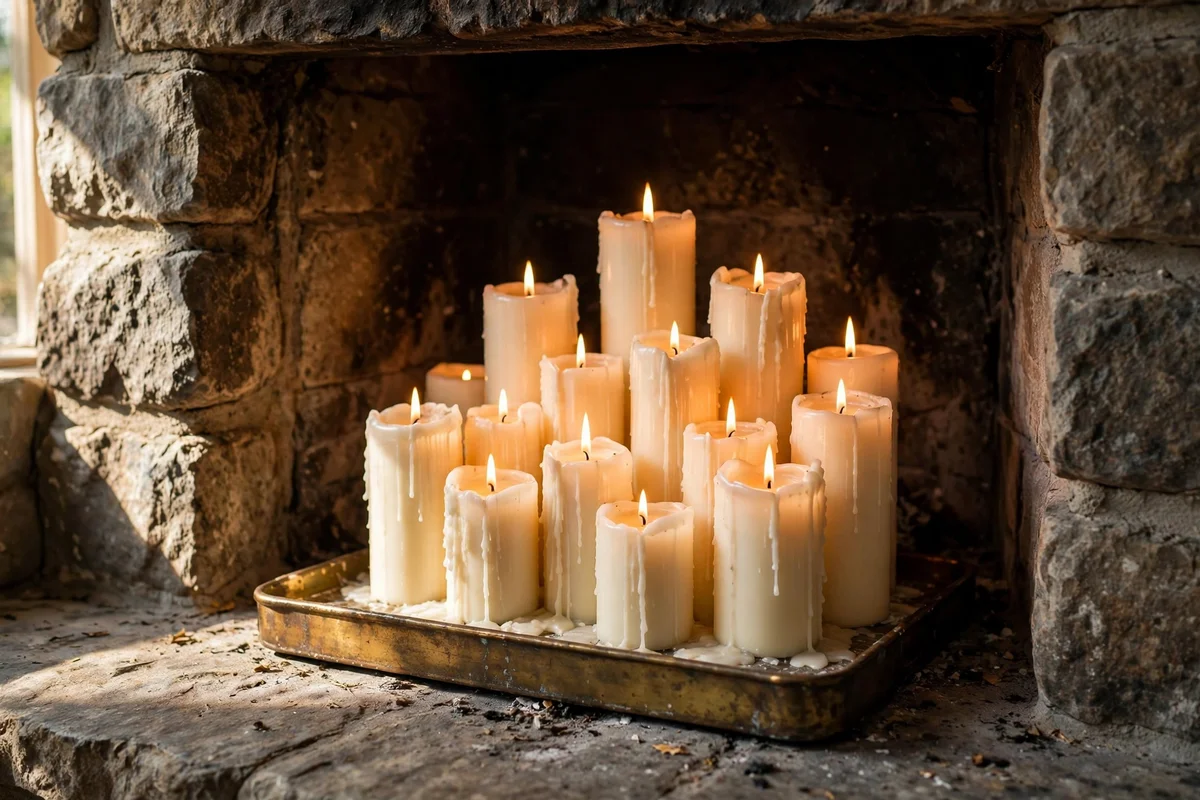
An unused fireplace in autumn is a wasted stage, so fill the firebox with a cluster of pillar candles on a bed of heatproof sand or small pebbles. Five to seven pillars in mixed heights, 10 to 25 cm, grouped tightly, give the depth of a real fire without the smoke. Line the firebox floor with a metal tray first to catch every drip. Ivory pillars against blackened brick look timeless, and the glow reaches further than you expect.
A firebox of candles demands the strictest safety of all, because the chimney draws air and feeds flames. Keep the cluster well inside the opening, at least 30 cm from the mantel shelf above and any surround timber, and never light them when the flue damper is closed. Never leave them burning unattended, and make sure every candle is fully out, wicks cold, before bed. If children visit, this arrangement comes out entirely; no exceptions.
20. Trade Real Tea Lights for Flickering LED Candles
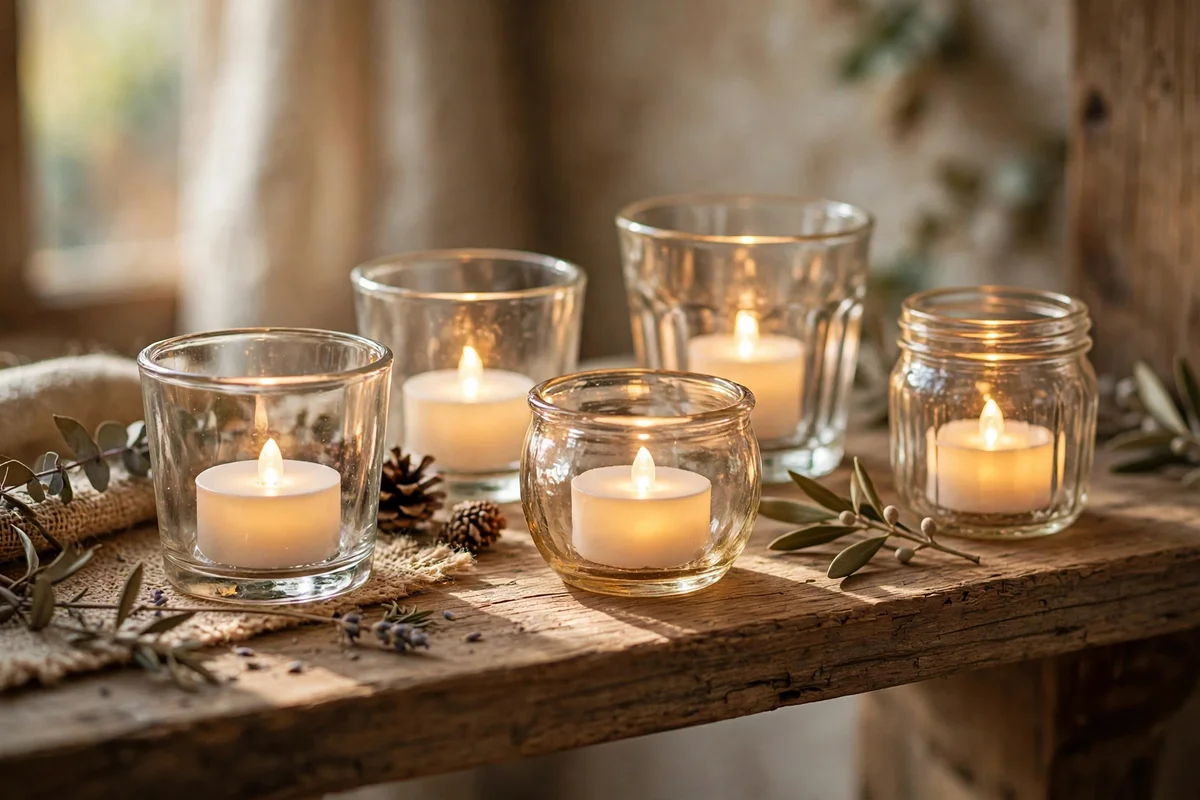
Real tea lights on open shelves are an accident waiting for a sleeve, so trade them for quality flickering LED tea lights. The good ones have a warm 2700K colour and an irregular flicker that reads as flame from two metres away; the cheap blue white ones fool nobody. Drop them into glass holders, brass cups or ceramic dishes exactly as you would real tea lights. A pack of twelve costs 8 to 12 pounds or dollars and runs for months on coin batteries.
Use LED tea lights anywhere little hands reach: low shelves, the coffee table, the bathroom counter. The mistake to avoid is buying the ultra cheap multipacks, whose cold light and mechanical blink ruin the effect; spend the extra two pounds for warm flicker. Keep spare coin batteries in the drawer with the candles so a dead tea light never sits dark for a week. When the flicker motor wears out after a year or two, recycle the units with small electronics.
21. Use LED Pillars Inside Lanterns Where Children Play
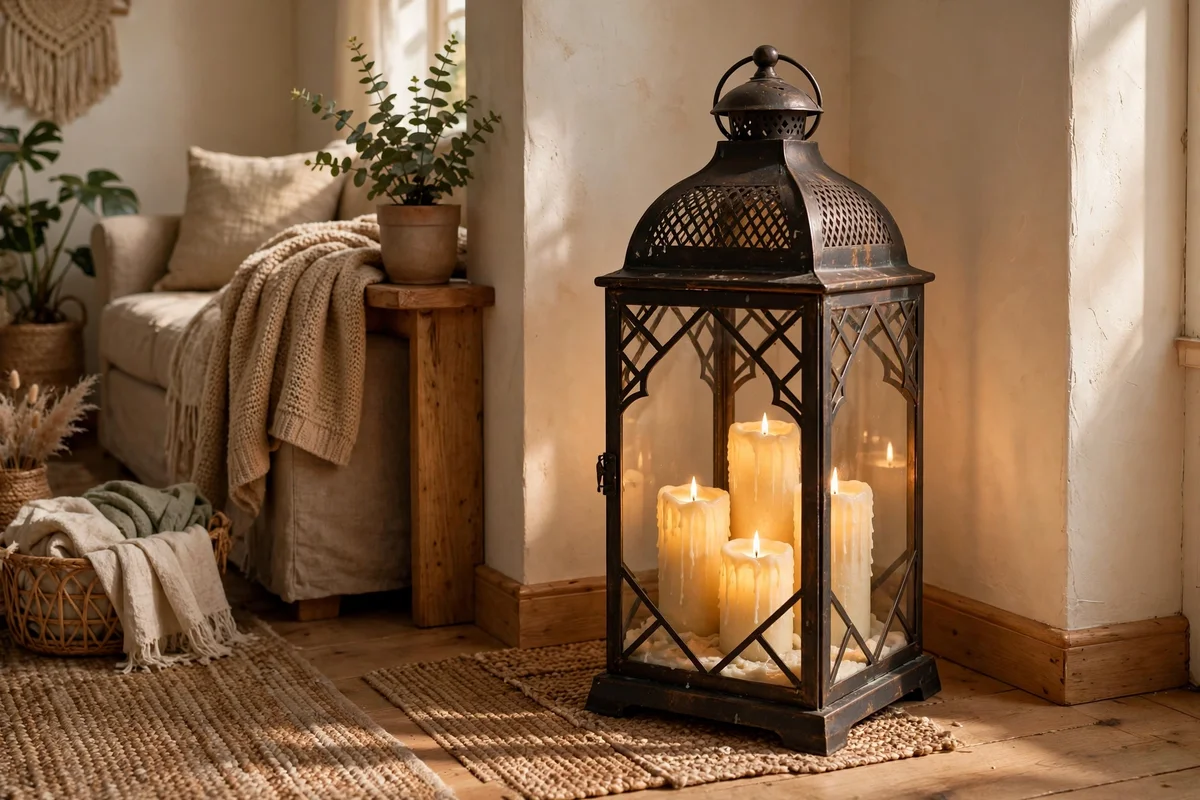
Lanterns are magnets for toddlers, so in rooms where children play, fill them with LED pillar candles instead of real ones. Good LED pillars are wax coated, 7.5 cm in diameter, with a warm 2700K glow and a flame shaped tip that flickers convincingly behind glass. They run on AA batteries or USB, switch on with a remote, and stay cool to the touch no matter how long they burn. A pair costs 12 to 20 pounds or dollars.
Set the LED pillars on the same timer as the lamps so the lanterns glow at dusk with zero effort and zero risk. The mistake to avoid is mixing real and LED candles in one lantern, which looks odd and defeats the purpose; commit the whole lantern to flame free. Keep real candles for high shelves and the dining table after bedtime, well out of reach, and enjoy the lanterns at floor level without a second thought.
22. Layer a Lamp and a Candle Cluster in the Reading Corner
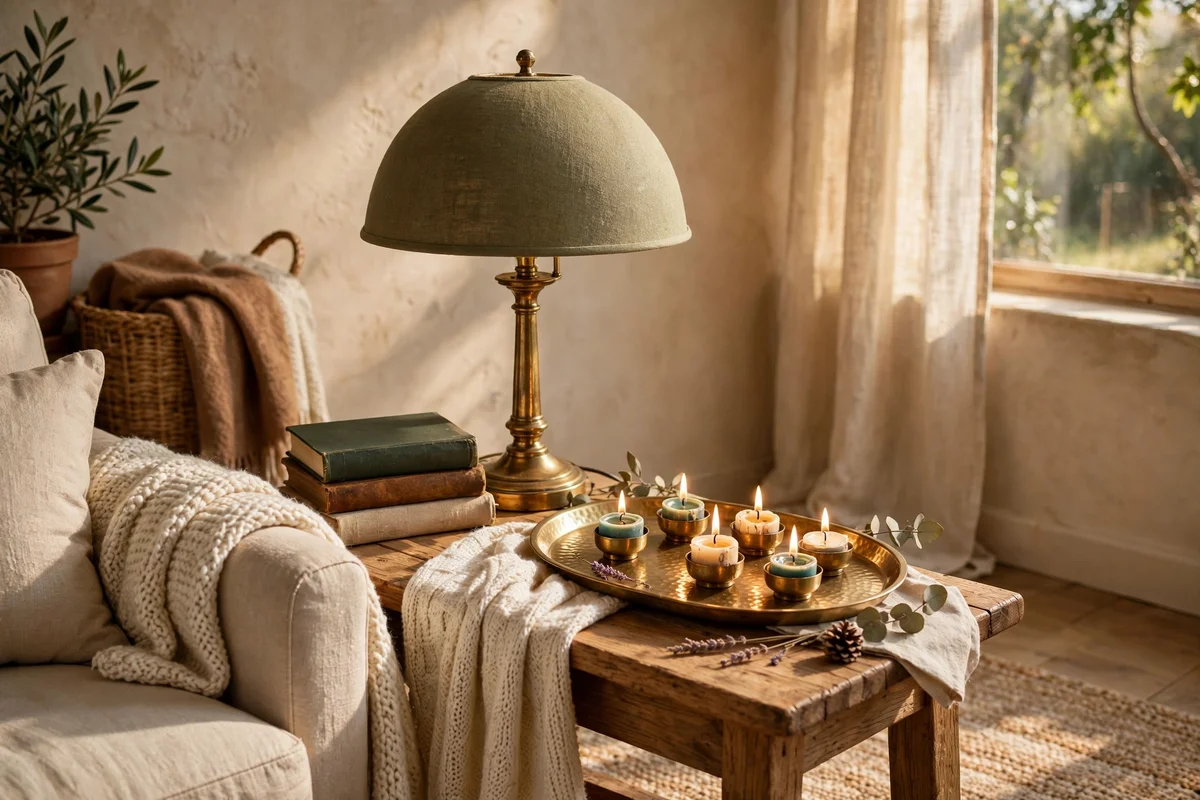
A reading corner earns its keep when it holds two kinds of light: a shaded table lamp for reading and a small cluster of candles or LED tea lights for atmosphere. Place the lamp on the side table at 40 to 45 cm above the seat, and set three tea lights on a brass tray on the lower shelf or the windowsill beside it. The lamp does the work, the candles do the feeling, and together they make the chair the most fought over seat in the house.
If the corner sits near curtains, use LED tea lights in the cluster and keep real candles for the tray at least 30 cm from fabric. The mistake to avoid is a single overhead light over the reading chair, which casts your own shadow across the page; light should come from the side or slightly behind. Add a small timer plug to the lamp so the corner is already glowing when you sit down with your book at nine.
23. Fit a Warm Nightlight Along the Hallway Runner Route
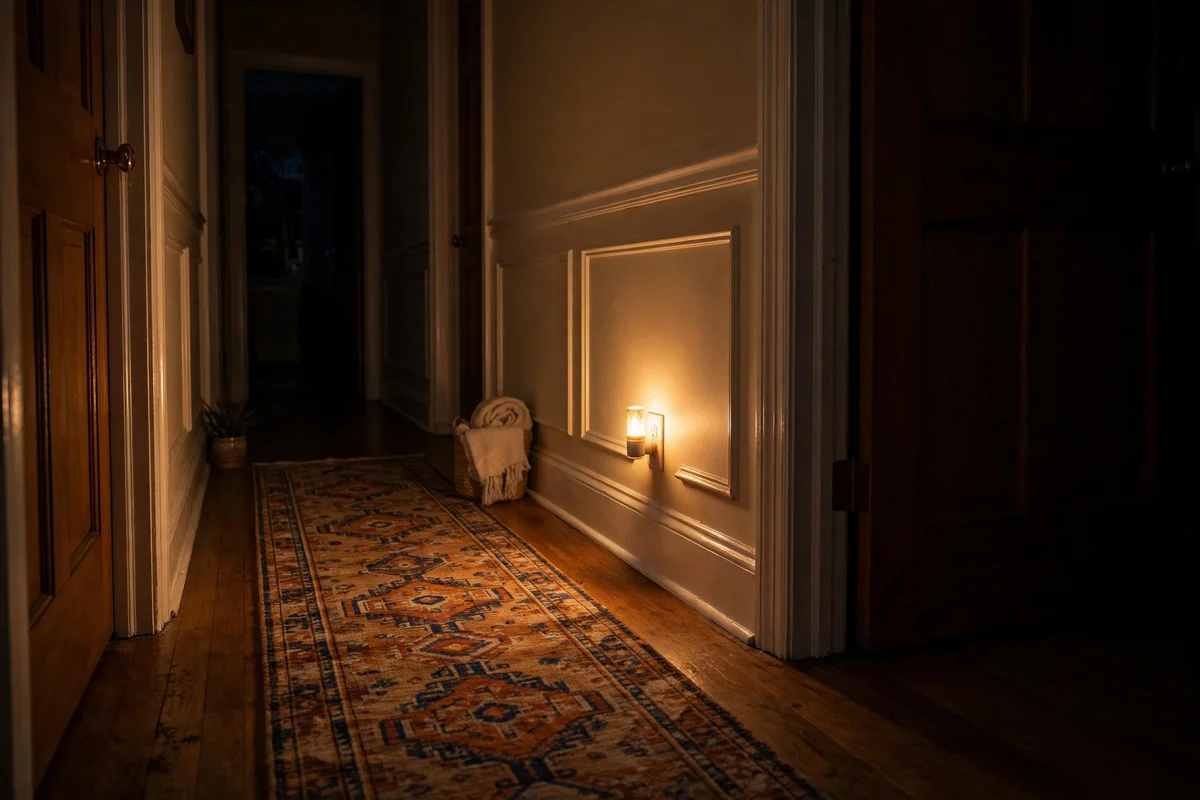
The last light of the evening should be the gentlest: a warm nightlight on the route from the living room to the bedrooms. Choose a 2700K plug in nightlight with a dusk sensor, 5 to 10 lumens, and place it low on the hallway wall where it guides feet without waking anyone. The soft pool on the runner makes midnight trips calm instead of startling. Nightlights cost 5 to 10 pounds or dollars and use almost no electricity.
Avoid the cool blue nightlights sold for nurseries; they read as clinical and can make the hallway feel colder than darkness. The mistake to avoid is placing the nightlight at eye level, where it glares; knee height or lower is the rule, ideally behind a small console leg or a plant pot. One per hallway is enough, and the dusk sensor means you never touch it again after the first fitting.
Golden evenings are not bought in one shopping trip; they are layered, one warm bulb and one timer plug at a time. The ideas above share a single habit: several low, warm sources instead of one hard light, each placed where life actually happens. Start with the bulb swap, because nothing else reads as warm while a cool bulb still burns in the same view. Then let the shades, the lanterns and the string lights follow across the season.
This week, try the easiest win first: fit a plug in dimmer or a timer plug to the lamp you use most, and watch the room light itself at dusk. It costs less than a takeaway supper and changes the feel of every evening that follows. Once you see the difference, the linen shades and the lantern cluster will start choosing themselves.
Frequently Asked Questions
What bulb temperature makes a living room feel warm in autumn?
Buy 2700K for every lamp you use in the evening; it is the warm white that flatters timber, fabric and faces. For one accent lamp, try 2200K amber, which glows like candlelight. Avoid anything above 3000K after sunset, since cool bulbs cancel every other warm choice in the room. Match all visible bulbs to the same temperature so the light reads as one calm layer.
Are candles safe to use with children in the house?
Real candles and small children do not mix at floor or table level, so use quality LED candles in lanterns and hurricanes where children play; they stay cool and switch off by remote. Keep real candles on high shelves and the dining table, always inside glass, never unattended, and fully out before bed. Teach children that lit candles are never touched, and store matches out of reach.
How much does it cost to warm up a living room’s lighting?
About 40 to 80 pounds or dollars covers the essentials: a multipack of 2700K bulbs, one timer plug and a string of warm fairy lights. Linen shades and lanterns are the mid tier, 25 to 45 each, and a plug in dimmer sits under 20. Start with bulbs and the timer, since those two changes deliver most of the effect, then add shades and candles across the season.
Can I do these lighting ideas in a rented home?
Yes, almost everything here is renter friendly. Bulbs, shades, plug in dimmers and timer plugs need no wiring and move with you. String lights fix with removable adhesive clips that peel off cleanly. Battery uplights and LED strips need no sockets at all. The only caution is real candles: check your tenancy agreement, since some landlords restrict open flames, and LED candles remove the question entirely.
How do I keep string lights looking classic instead of partyish?
Use one strand of plain warm white lights per feature, steady burn only, never colour changing or flashing. Drape in loose swags rather than tight zigzags, and keep them to one or two spots: the mantel or one window, not both plus the bookcase. Hide the battery box or timer behind books, and set a dusk timer so they glow like lamplight rather than decoration.